
XR-M510 - Car radio SONY - Free user manual and instructions
Find the device manual for free XR-M510 SONY in PDF.



| Brand | Sony |
| Model | XR-M510 |
| Product type | Car stereo with CD player |
| Dimensions (W x H x D) | 178 x 50 x 160 mm |
| Weight | 1.2 kg |
| Power supply | 12 V DC (vehicle) |
| Power consumption | Max. 10 A |
| Output power | 4 x 45 W (max) |
| Supported audio formats | Audio CD, CD-R/RW, MP3 |
| Radio receiver | AM/FM with RDS |
| FM frequency range | 87.5 – 108 MHz |
| AM frequency range | 531 – 1602 kHz |
| Main functions | CD player, RDS tuner, 2-channel preamp, auxiliary input (mini-jack) |
| Equalizer | Presets (Rock, Pop, Jazz, etc.) |
| Display | Backlit LCD screen |
| Maintenance and cleaning | Clean with a soft, dry cloth. Do not use solvents. |
| Safety | Protective fuse (10 A) in the power harness |
| Spare parts and repairability | Parts available from authorized Sony dealers. Repair recommended by a professional. |
| Included accessories | Mounting kit, wiring harness, remote control (depending on version) |
Frequently Asked Questions - XR-M510 SONY
User questions about XR-M510 SONY
0 question about this device. Answer the ones you know or ask your own.
Ask a new question about this device
Download the instructions for your Car radio in PDF format for free! Find your manual XR-M510 - SONY and take your electronic device back in hand. On this page are published all the documents necessary for the use of your device. XR-M510 by SONY.
USER MANUAL XR-M510 SONY
FM/MW/LW Cassette Car Stereo
Operating Instructions GB
For installation and connections, see the supplied installation/connections manual.
Thank you for purchasing this Sony Cassette Player. This unit lets you enjoy a variety of features using the following controller accessory:
Supplied accessory
Card remote commander RM-X96
Optional accessory
Rotary commander RM-X4S
In addition to the cassette playback and radio operations, you can expand your system by connecting an optional CD/MD unit*1. When you operate this unit or a connected optional CD unit with the CD TEXT function, the CD TEXT information will appear in the display when you play a CD TEXT disc*2.
1 You can connect a CD changer, an MD changer, a CD player, or an MD player.
2 A CD TEXT disc is an audio CD that includes information such as the disc name, artist name, and track names. This information is recorded on the disc.
Precautions
- If your car was parked in direct sunlight resulting in a considerable rise in temperature inside the car, allow the unit to cool off before operating it.
- If no power is being supplied to the unit, check the connections first. If everything is in order, check the fuse.
- If no sound comes from the speakers of a two-speaker system, set the fader control to the centre position.
- When a tape is played back for a long period, the cassette may become warm because of the built-in power amplifier. However, this is not a sign of malfunction.
If you have any questions or problems concerning your unit that are not covered in this manual, please consult your nearest Sony dealer.
To maintain high quality sound
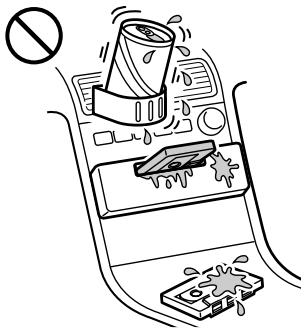
If you have drink holders near your audio equipment, be careful not to splash juice or other soft drinks onto the car audio. Sugary residues on this unit or cassette tapes may contaminate the playback heads, reduce the sound quality, or prevent sound reproduction altogether.
Cassette cleaning kits cannot remove sugar from the tape heads.
Notes on Cassettes
Cassette care
- Do not touch the tape surface of a cassette, as any dirt or dust will contaminate the heads.
- Keep cassettes away from equipment with built-in magnets such as speakers and amplifiers, as erasure or distortion on the recorded tape could occur.
- Do not expose cassettes to direct sunlight, extremely cold temperatures, or moisture.
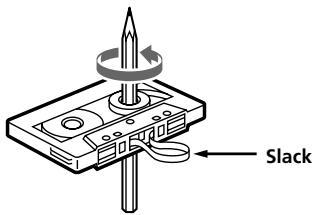
- Slack in the tape may cause the tape to be caught in the machine. Before you insert the tape, use a pencil or similar object to turn the reel and take up any slack.
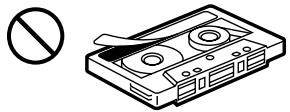
Distorted cassettes and loose labels can cause problems when inserting or ejecting tapes. Remove or replace loose labels.
- The sound may become distorted while playing the cassette. The cassette player head should be cleaned after each 50 hours of use.
Cassettes longer than 90 minutes
The use of cassettes longer than 90 minutes is not recommended except for long continuous play. The tape used for these cassettes is very thin and tends to stretch easily. Frequent playing and stopping of these tapes may cause them to become entangled in the cassette deck mechanism.
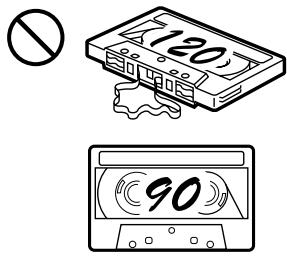
Table of Contents
This Unit Only
Location of controls 5
Getting Started
Resetting the unit 8
Security release settings 8
Turning the unit on/off 9
How to use the menu 9
Setting the clock 10
Cassette Player
Listening to a tape 11
Playing a tape in various modes 12
Radio
Memorising stations automatically
— Best Tuning Memory (BTM) 13
Memorising only the desired stations 13
Receiving the memorised stations 14
RDS
Overview of the RDS function 15
Displaying the station name. 15
Retuning the same programme automatically -Alternative Frequencies (AF) 16
Listening to traffic announcements 17
Preseting the RDS stations with the AF and TA data 18
Locating a station by programme type 19
Setting the clock automatically 20
Other Functions
Labelling the rotary commander 20
Using the rotary commander 21
Adjusting the sound characteristics 23
Attenuating the sound 23
Changing the sound and display settings .... 23
Boosting the bass sound D-bass 24
Selecting the spectrum analyser 25
Adjusting the sound and frequency of the equalizer preamplifier 25
With Optional Equipment
CD/MD Unit
Playing a CD or MD 26
Playing tracks repeatedly
— Repeat Play 28
Playing tracks in random order Shuffle Play 28
Labelling a CD
— Disc Memo 29
Locating a disc by name -List-up 30
Selecting specific tracks for playback Bank 31
DAB
Overview of DAB 32
Basic operations of DAB 32
Presetting DAB services automatically BTM 33
Presetting DAB services manually
— Manual Preset Memory 34
Listening to a DAB programme 35
Settings on the audio reception 36
Locating a DAB service by programme type (PTY) 36
Additional Information
Maintenance 37
Dismounting the unit 38
Specifications 39
Troubleshooting guide 40
Location of controls
Card remote commander RM-X96
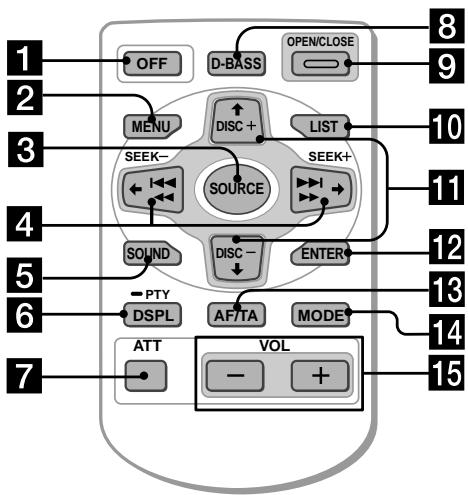
Refer to the pages listed for details.
1 OFF button 9, 11
2 MENU button 10, 12, 13, 14, 16, 18, 20, 24, 25, 27, 28, 29, 31, 33, 34, 36
3 SOURCE (TUNER/TAPE/CD/MD) button 9,11,13,14,25,26,30,32,33
4 ← / → (SEEK/AMS-/+)buttons 9,10,11,12,14,16,20,23,24,25,27,28, 29,31,32,34,36 Automatic Music Sensor (I/▶I) 11,27 Manual search (▶▶) 27 Seek 14
5 SOUND button 23
DSPL/PTY (display mode change/programme type) button 19,26,27,29,36
7 ATT (attenuate) button 23
8 D-BASS button 24
9 OPEN/CLOSE button 11
10 LIST button 29, 30, 35
11 ↑/↓ (DISC/PRST +/-) buttons
9, 10, 12, 13, 14, 16, 18, 19, 20, 24, 25, 27, 28, 29, 30, 31, 32, 33, 34, 36
During radio reception: Preset stations select 14
During CD/MD playback: Disc change 27
12 ENTER button 10, 12, 13, 14, 16, 18, 19, 20, 24, 25, 27, 29, 30, 31, 33, 34, 35, 36
13 AF/TA button 16, 17, 18
14 MODE button 11, 12, 13, 14, 26, 30, 32, 33 During tape playback: Playback direction change 11 During radio reception: BAND select 13, 14 During CD/MD playback: CD/MD unit select 26
15 VOL (Volume adjust) buttons
A unit turned off by pressing OFF for two seconds cannot be operated with the card remote commander unless SOURCE on the unit is pressed or a cassette is inserted to activate the unit first.
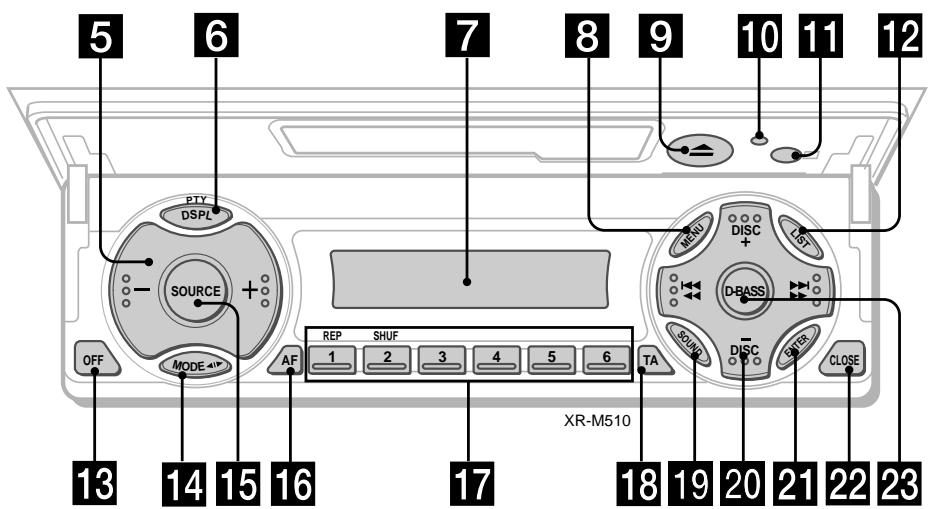
Location of controls
Security side

Operation side
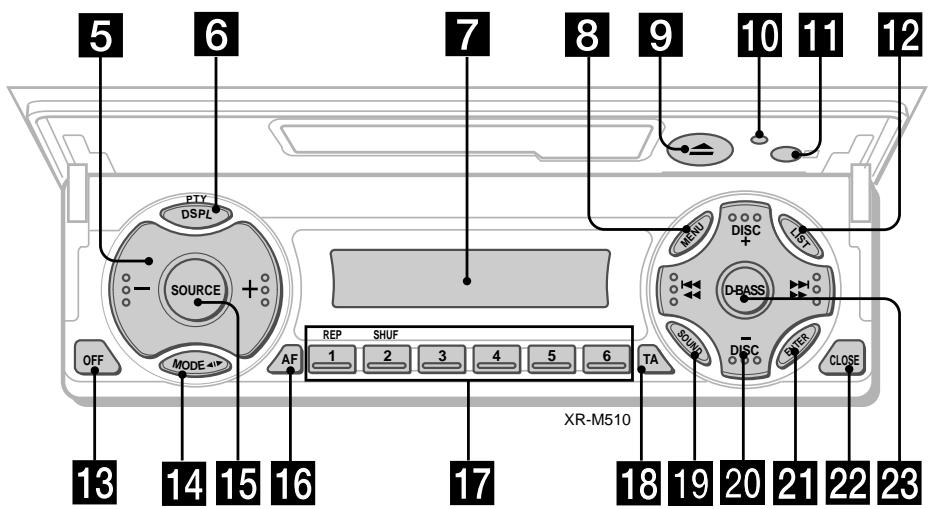
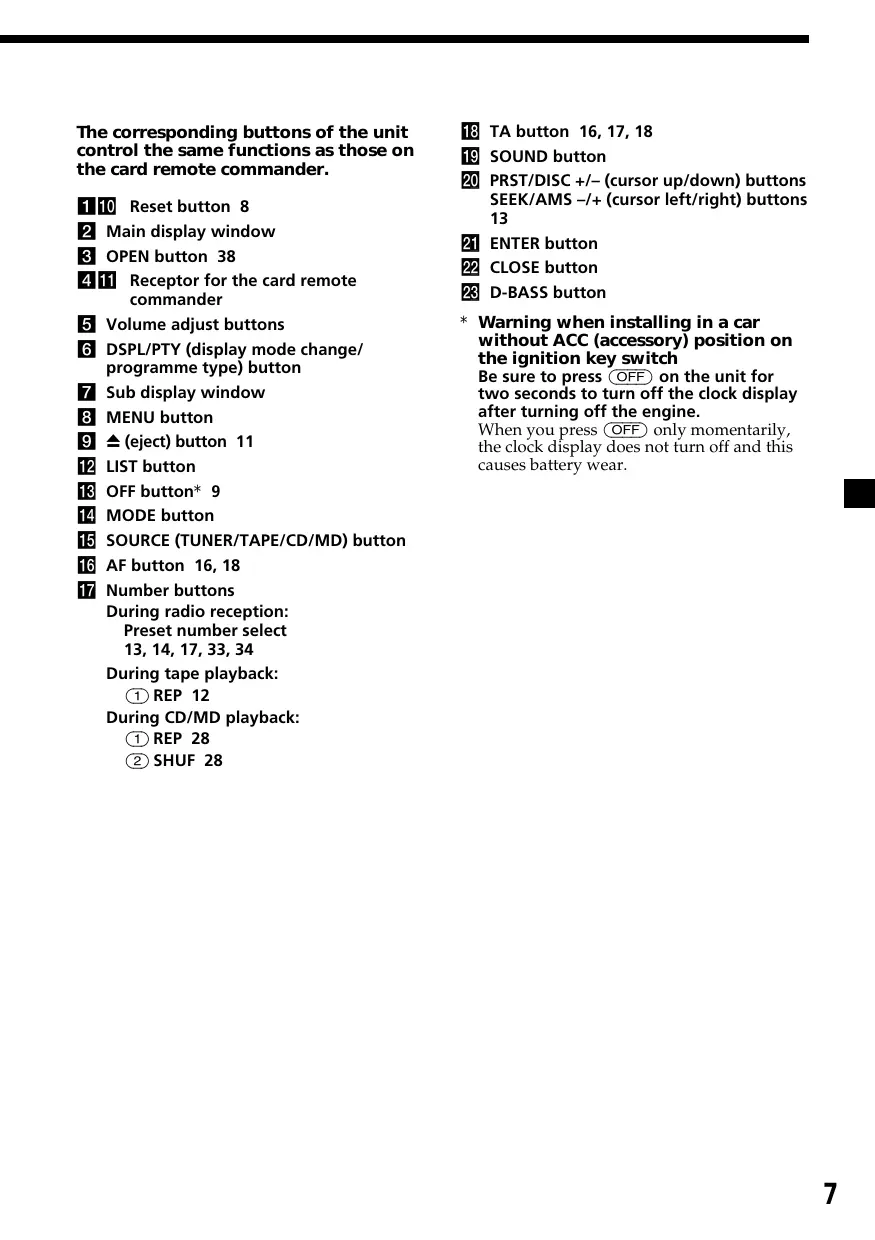
The corresponding buttons of the unit control the same functions as those on the card remote commander.
10 Reset button 8
2 Main display window
3 OPEN button 38
4 Receptor for the card remote commander
5 Volume adjust buttons
6 DSPL/PTY (display mode change/programme type) button
7 Sub display window
8 MENU button
9 (eject) button 11
12 LIST button
18 OFF button* 9
14 MODE button
15 SOURCE (TUNER/TAPE/CD/MD) button
16 AF button 16, 18
Number buttons
During radio reception: Preset number select 13, 14, 17, 33, 34
During tape playback:
① REP 12
During CD/MD playback:
① REP 28
② SHUF 28
18 TA button 16, 17, 18
19 SOUND button
20 PRST/DISC + / - (cursor up/down) buttons SEEK/AMS - / + (cursor left/right) buttons 13
2 ENTER button
22 CLOSE button
23 D-BASS button
- Warning when installing in a car without ACC (accessory) position on the ignition key switch Be sure to press OFF on the unit for two seconds to turn off the clock display after turning off the engine.
When you press OFF only momentarily, the clock display does not turn off and this causes battery wear.
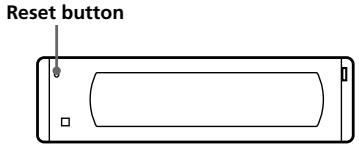
Resetting the unit
Before operating the unit for the first time or after replacing the car battery, you must reset the unit.
Press the reset button with a pointed object, such as a ballpoint pen.
Note
Pressing the reset button will erase the clock setting and some memorised functions.
Security release settings
Do the following initial settings before you operate the unit for the first time, after replacing the car battery, or after resetting the unit.
Be sure to make these settings, otherwise the front panel remains disabled and you will be unable to operate the unit.
1 Press the reset button.
"Code in" appears.
2 Press the buttons on the card remote commander, and send the security code.
Please refer to the supplied insert for details on the security code buttons.
When the code has been confirmed, the display changes to clock, and you can operate the unit normally.
Notes
- When you leave the car, take the card remote control with you.
- If you forget the security code, consult your Sony Service Centre. Be sure to bring the card remote control with you.
Turning the unit on/off
Turning on the unit
Press (SOURCE) or insert a cassette in the unit. For details on operation, refer to page 11 (cassette player) and page 13 (radio).
Turning off the unit
Press OFF to stop tape playback or FM/ MW/LW reception (the key illumination and display remains on).
Press OFF for two seconds to completely turn off the unit.
Note
If your car has no ACC position on the ignition key switch, be sure to turn the unit off by pressing OFF for two seconds to avoid car battery wear.
How to use the menu
This unit is operated by selecting items from a menu.
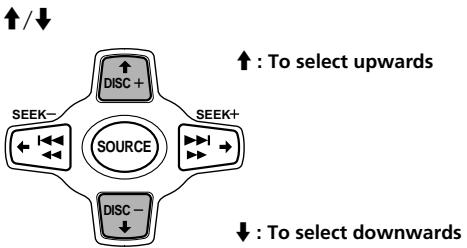
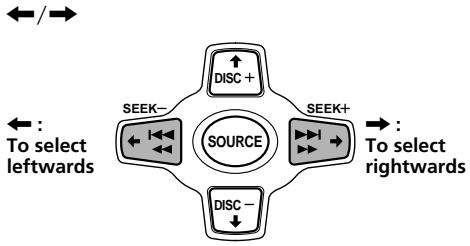
To select, first enter the menu mode and choose / (up/down), or choose ← / → (left/right).
Setting the clock
The clock uses a 24-hour digital indication.
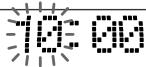
Example: To set the clock to 10:08
1 Press (MENU), then or repeatedly until "Clock" appears.
Clock
1 Press ENTER.
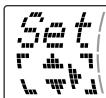
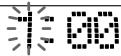
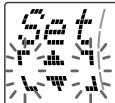
The hour indication flashes.
Press or to set the hour.
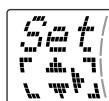
3 Press →
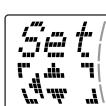
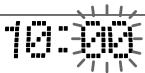
The minute indication flashes.
Press or to set the minute.

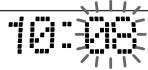
2 Press ENTER.
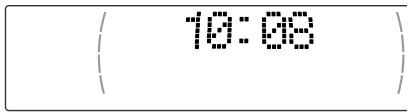
The clock starts.
Tips
- You can use the convenient CT function to set the clock automatically (page 20).
- When the D.Info mode is set to "on," the time is always displayed (except for some functions of SA mode) (page 23).
Listening to a tape
1 Press (OPEN/CLOSE) of the card remote commander and insert a cassette. Playback starts automatically.
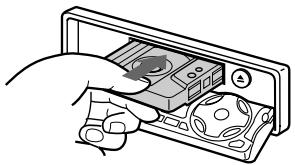
2 Press (OPEN/CLOSE) of the card remote commander to close the front panel.
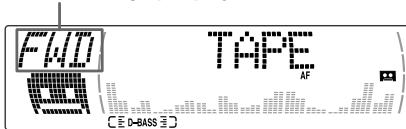
If a cassette is already inserted, to start playback, press SOURCE repeatedly until "FWD" or "REV" appears.
The side facing up is played.
The side facing down is played.
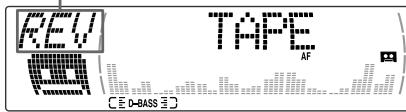
Tip To change the tape's playback direction, press MODE)
| To | Press |
| Stop playback | OFF |
| Eject the cassette | OPEN/CLOSE then▲ |
Fast-winding the tape
During playback, press and hold or .
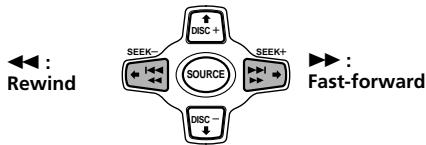
To start playback during fast-forwarding or rewinding, press MODE (▶).
Locating a specific track
Automatic Music Sensor (AMS)
During playback, press I or momentarily for each track you want to skip.
You can skip up to nine tracks at one time.

Note
The AMS function may not work when:
the blanks between tracks are shorter than four seconds
- there is noise between tracks
- there are long sections of low volume or quiet sections.
In the Motion Display mode, all the items are scrolled in the display one by one in order.
Tip
The Motion Display mode can be turned off. (See "Changing the sound and display settings" on page 23.)
Playing a tape in various modes
You can play the tape in various modes:
- Repeat (Repeat Play) repeats the current track.
- NR (Dolby NR) lets you select the Dolby* NR B system.
- Metal lets you play a metal or CrO2 tape.
- B.Skip (Blank Skip) skips blanks longer than eight seconds.
- ATA (Automatic Tuner Activation) turns on the tuner automatically when fast-winding the tape.
- Dolby noise reduction manufactured under license from Dolby Laboratories. "DOLBY" and the double-D symbol ☐ are trademarks of Dolby Laboratories.
1 During playback, press (MENU).
2 Press or repeatedly until the desired item appears.
Each time you press , the item changes as follows:
Repeat → NR → Metal → B.Skip → ATA
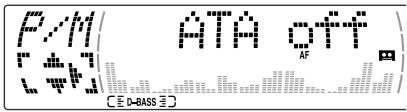
3 Press → to select "on."
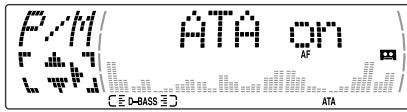
Play mode starts.
4 Press ENTER.
To return to normal playback mode, select "off" in step 3.
Tip While the ATA function is activated, the display (TAPE ↔ TUNER) can be changed by pressing DSPL/PTY
Playing tracks repeatedly
— Repeat Play
1 During playback, press (MENU).
2 Press or repeatedly until "Repeat" appears.
3 Press → repeatedly until "Repeat on" in the display appears.
Repeat on ↔ Repeat off
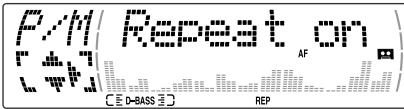
Repeat Play starts.
To return to normal playback mode, select "Repeat off" in step 3.
Tips
- If you select the mode using the buttons on the unit, press (REP) repeatedly until the desired mode appears.
- During repeat playback, press MODE. "REP" disappears from the display and repeat mode is cancelled.
Memorising stations automatically
Best Tuning Memory (BTM)
The unit selects the stations with the strongest signals and memorises them in the order of their frequencies. You can store up to 6 stations on each band (FM1, FM2, FM3, MW, and LW).
Caution
When tuning in stations while driving, use Best Tuning Memory to prevent accidents.
1 Press SOURCE repeatedly to select the tuner.
Each time you press (SOURCE), the source changes as follows:

- If the corresponding optional equipment is not connected, this item will not appear.
2 Press MODE repeatedly to select the band.
Each time you press MODE, the band changes as follows:

3 Press (MENU), then press or repeatedly until "BTM" appears.
4 Press ENTER.
The unit stores stations in the order of their frequencies on the number buttons.
A beep sounds when the setting is stored.
Notes
- The unit does not store stations with weak signals. If only a few stations can be received, some number buttons will retain their former setting.
- When a number is indicated in the display, the unit starts storing stations from the one currently displayed.
Memorising only the desired stations
You can preset up to 18 FM stations (6 each for FM1, 2, and 3), up to 6 MW stations, and up to 6 LW stations in the order of your choice.
1 Press (SOURCE) repeatedly to select the tuner.
2 Press MODE repeatedly to select the band.
3 Press or of the unit to tune in the station that you want to store on the number button.
4 Press the desired number button (① to ⑥) of the unit until "MEM" appears.
The number button indication appears in the display.
Note
If you try to store another station on the same number button, the previously stored station will be erased.
Receiving the memorised stations
1 Press SOURCE repeatedly to select the tuner.
2 Press MODE repeatedly to select the band.
3 Press (preset up) or (preset down) repeatedly to receive the stations in the order they are stored in the memory.
Tip
If you memorising the station using the buttons on the unit, press the number button (① to ⑥) on which the desired station is stored.
If you cannot tune in a preset station
Press ← or → to search for the station (automatic tuning).
Scanning stops when the unit receives a station. Press ← or → repeatedly until the desired station is received.
Note
If the automatic tuning stops too frequently, press
(MENU), then press or repeatedly until
"Local" (local seek mode) is displayed. Then press
to select "Local on." Press (ENTER).
During local reception and station selection,
"LCL Seek" appears in the display.
Only the stations with relatively strong signals will be tuned in.
Tip
If you know the frequency of the station you want to listen to, press and hold ← or → until the desired frequency appears (manual tuning).
If FM stereo reception is poor
— Monaural Mode
1 During radio reception, press (MENU), then press or repeatedly until "Mono" appears.
2 Press → until "Mono on" appears.
The sound improves, but becomes monaural ("ST" disappears).
3 Press ENTER.
To return to normal mode, select
"Mono off" in step 2.
In the Motion Display mode, all the items are scrolled in the display one by one in order.
Tip
The Motion Display mode can be turned off. (See "Changing the sound and display settings" on page 23.)
In the Motion Display mode, all the items are scrolled in the display one by one in order.
Overview of the RDS function
Radio Data System (RDS) is a broadcasting service that allows FM stations to send additional digital information along with the regular radio programme signal. Your car stereo offers you a variety of services. Here are just a few: retuning the same programme automatically, listening to traffic announcements, and locating a station by programme type.
Notes
- Depending on the country or region, not all of the RDS functions are available.
- RDS may not work properly if the signal strength is weak or if the station you are tuned to is not transmitting RDS data.
Displaying the station name
The name of the current station lights up in the display.
Select an FM station (page 13).
When you tune in an FM station that transmits RDS data, the station name appears in the display.
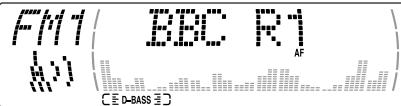
Note
The * indication means that an RDS station is being received.
Tip
The Motion Display mode can be turned off. (See "Changing the sound and display settings" on page 23.)
Retuning the same programme automatically
Alternative Frequencies (AF)
The Alternative Frequencies (AF) function automatically selects and retunes the station with the strongest signal in a network. By using this function, you can continuously listen to the same programme during a long-distance drive without having to retune the station manually.
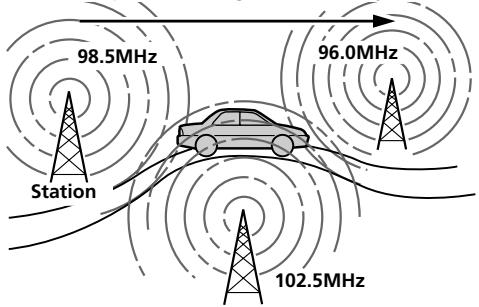
Frequencies change automatically.
1 Select an FM station (page 13).
2 Press / TA repeatedly until "AF on" appears.
The unit starts searching for an alternative station with a stronger signal in the same network.
Tip
If you select the mode using the buttons on the unit, press AF until "AF on" appears.
Changing the display item
Each time you press / TA , the item changes as follows:

- Select this to turn on both the AF and TA functions.
Tips
Each time you press (AF) on the unit, the item changes as follows: AF on ↔ AF off
Each time you press on the unit, the item changes as follows: TA on ↔ TA off
Notes
- When there is no alternative station in the area and you do not need to search for an alternative station, turn the AF function off by pressing (AF/TA) repeatedly until "AF TA off" appears.
- When "NO AF" and the station name flash alternately, it means that the unit cannot find an alternative station in the network.
- If the station name starts flashing after selecting a station with the AF function on, this indicates that no alternative frequency is available. Press ← or → while the station name is flashing (within eight seconds). The unit starts searching for another frequency with the same PI (Programme Identification) data ("PI Seek" appears and no sound is heard). If the unit cannot find another frequency, "NO PI" appears, and the unit returns to the previously selected frequency.
Listening to a regional programme
The "REG on" (regional on) function lets you stay tuned to a regional programme without being switched to another regional station. (Note that you must turn the AF function on.) The unit is factory preset to "REG on," but if you want to turn off the function, do the following.
1 During radio reception, press (MENU), then press ↑ or ↓ repeatedly until "REG" appears.
2 Press → until "REG off" appears.
3 Press ENTER.
Note that selecting "REG off" might cause the unit to switch to another regional station within the same network.
To return to regional on, select "REG on" in step 2.
Note
This function does not work in the United Kingdom and in some other areas.
Local link function (United Kingdom only)
The Local Link function lets you select other local stations in the area, even if they are not stored on your number buttons.
1 Press a number button of the unit that has a local station stored on it.
2 Within five seconds, press the number button of the local station again.
3 Repeat this procedure until the desired local station is received.
Listening to traffic announcements
The Traffic Announcement (TA) and Traffic Programme (TP) data let you automatically tune in an FM station that is broadcasting traffic announcements even if you are listening to other programme sources.
Press / TA repeatedly until "TA on" or "AF TA on" appears.
The unit starts searching for traffic information stations. "TP" appears in the display when the unit finds a station broadcasting traffic announcements. When the traffic announcement starts, "TA" flashes. The flashing stops when the traffic announcement is over.
Tips
- If the traffic announcement starts while you are listening to another programme source, the unit automatically switches to the announcement and goes back to the original source when the announcement is over.
- If you select the mode using the buttons on the unit, press until "TA on" appears.
Note
"NO TP" flashes for five seconds if the received station does not broadcast traffic announcements. Then, the unit starts searching for a station that broadcasts it.
To cancel the current traffic announcement
Press / TA
To cancel all traffic announcements, turn off the function by pressing AF/TA until "TA off" appears.
Presetting the volume of traffic announcements
You can preset the volume level of the traffic announcements beforehand so you won't miss the announcement. When a traffic announcement starts, the volume will be automatically adjusted to the preset level.
1 Select the desired volume level.
2 Press / TA for two seconds.
"TA" appears and the setting is stored.
Receiving emergency announcements
If an emergency announcement comes in while you are listening to the radio, the programme will automatically switch to it. If you are listening to a source other than the radio, the emergency announcements will be heard if you set AF or TA to on. The unit will then automatically switch to these announcements no matter which source you are listening to at the time.
Preseting the RDS stations with the AF and TA data
When you preset RDS stations, the unit stores each station's data as well as its frequency, so you don't have to turn on the AF or TA function every time you tune in the preset station. You can select a different setting (AF, TA, or both) for individual preset stations, or the same setting for all preset stations.
Presetting the same setting for all preset stations
1 Select an FM band (page 13).
2 Press / TA repeatedly to select either "AF on," "TA on" or "AF TA on" (for both AF and TA functions).
Note that selecting "AF TA off" stores not only RDS stations, but also non-RDS stations.
Tip
If you select the mode using the buttons on the unit, press (AF) and/or (TA) to select "AF on" and/or "TA on."
Note that selecting "AF off" or "TA off" stores not only RDS stations, but also non-RDS stations.
3 Press (MENU), then press or repeatedly until "BTM" appears.
4 Press ENTER.
"BTM" flashes.
Presetting different settings for each preset station
1 Select an FM band, and tune in the desired station.
2 Press / TA repeatedly to select either "AF on," "TA on" or "AF TA on" (for both AF and TA functions).
Tip
If you select the mode using the buttons on the unit, press (AF) and/or (TA) to select "AF on" and/or "TA on."
3 Press the desired number button of the unit and hold until "MEM" appears.
Repeat from step 1 to preset other stations.
Tip
If you want to change the preset AF and/or TA setting after you tune in the preset station, you can do so by turning the AF or TA function on or off.
Locating a station by programme type
You can locate the station you want by selecting one of the programme types shown below.
| Programme types | Display |
| News | News |
| Current Affairs | Affairs |
| Information | Info |
| Sports | Sport |
| Education | Educate |
| Drama | Drama |
| Culture | Culture |
| Science | Science |
| Varied | Varied |
| Popular Music | Pop M |
| Rock Music | Rock M |
| Easy Listening | Easy M |
| Light Classical | Light M |
| Classical | Classics |
| Other Music Type | Other M |
| Weather | Weather |
| Finance | Finance |
| Children's Programmes | Children |
| Social Affairs | Social A |
| Religion | Religion |
| Phone In | Phone In |
| Travel | Travel |
| Leisure | Leisure |
| Jazz Music | Jazz |
| Country Music | Country |
| National Music | Nation M |
| Oldies Music | Oldies |
| Folk Music | Folk M |
| Documentary | Document |
| Not specified | None |
Note
You cannot use this function in some countries where no PTY (Programme Type selection) data is available.
Press (DSPL/PTY) during FM reception until "PTY" appears.
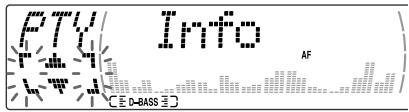
The current programme type name appears if the station is transmitting the PTY data. "---" appears if the received station is not an RDS station, or if the RDS data has not been received.
2 Press or repeatedly until the desired programme type appears.
The programme types appear in the order shown in the table. Note that you cannot select "None" (Not specified) for searching.

3 Press ENTER.
The unit starts searching for a station broadcasting the selected programme type.
Setting the clock automatically
The CT (Clock Time) data from the RDS transmission sets the clock automatically.
1 During radio reception, press (MENU), then press ↑ or ↓ repeatedly until "CT" appears.
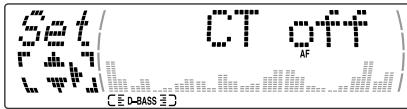
2 Press ⇒ repeatedly until "CT on" appears.
The clock is set.
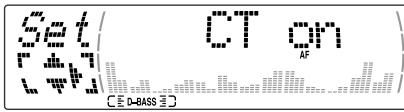
3 Press ENTER to return to the normal display.
To cancel the CT function
Select "CT off" in step 2.
Notes
- The CT function may not work even though an RDS station is being received.
- There might be a difference between the time set by the CT function and the actual time.
Other Functions
You can also control this unit with the rotary commander (optional).
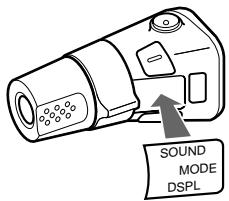
Labelling the rotary commander
Depending on how you mount the rotary commander, attach the appropriate label as shown in the illustration below.
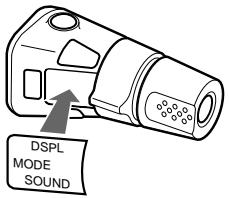
Using the rotary commander
The rotary commander works by pressing buttons and/or rotating controls.
You can also control the optional CD or MD units with the rotary commander.
By pressing buttons (the SOURCE and MODE buttons)
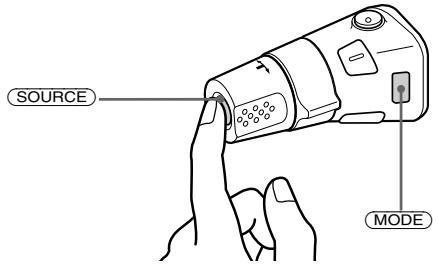
Each time you press SOURCE, the source changes as follows:
TUNER → CD* → MD* → TAPE
Pressing MODE changes the operation in the following ways;
- Tuner: FM1 → FM2 → FM3 → MW → LW
- CD unit*: CD1 → CD2 → ...
- MD unit*: MD1 → MD2 → ...
-
Tape: playback direction
-
If the corresponding optional equipment is not connected, the item will not appear.
By rotating the control (the SEEK/AMS control)
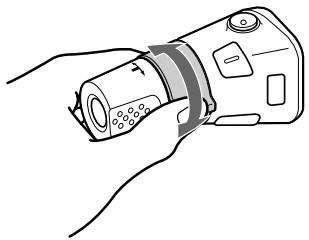
Rotate the control and release it to:
- Locate the beginnings of tracks on the tape. Rotate and hold the control, and release it to fast-wind the tape. To start playback while fast-winding the tape, press MODE.
- Locate a specific track on a disc. Rotate and hold the control until you locate the specific point in a track, then release it to start playback.
- Tune in stations automatically. Rotate and hold the control to find a specific station.
By pushing in and rotating the control (the PRESET/DISC control)
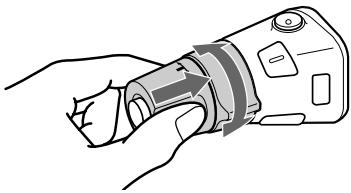
Push in and rotate the control to:
- Receive the stations memorised on the number buttons.
- Change the disc.
Other operations
Rotate the VOL control to adjust the volume.
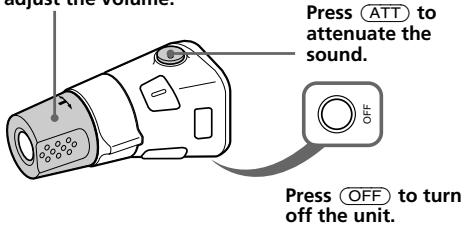
Note
When installing in a car without ACC (accessory) position on the ignition key switch, press OFF for two seconds to turn off the clock display after turning off the engine.
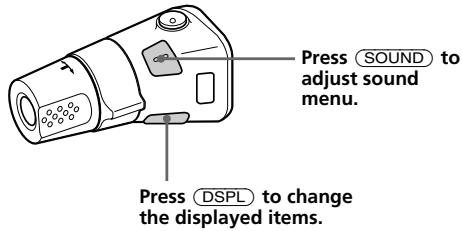
Tip
While the ATA function is activated, the display (TAPE TUNER) can be changed by pressing DSPL.
Changing the operative direction
The operative direction of controls is factory-set as shown below.
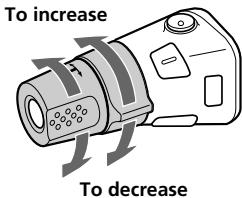
If you need to mount the rotary commander on the right hand side of the steering column, you can reverse the operative direction.
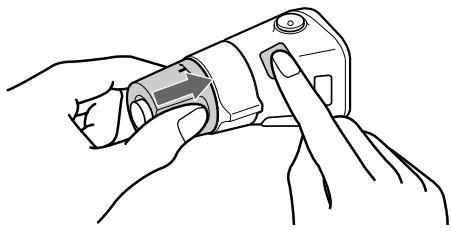
Press SOUND for two seconds while pushing the VOL control.
Tip
You can also change the operative direction of these controls with the unit (see "Changing the sound and display settings" on page 23).
Adjusting the sound characteristics
You can adjust the bass, treble, balance, and fader.
You can store the bass and treble levels independently for each source.
1 Select the item you want to adjust by pressing SOUND repeatedly.
Each time you press (SOUND), the item changes as follows:
BAS (bass) → TRE (treble) → BAL (left-right) → FAD (front-rear)
2 Adjust the selected item by pressing ← or → .
When adjusting with the rotary commander, press (SOUND) and rotate the VOL control.
Note
Adjust within three seconds after selecting the item.
Attenuating the sound
Press ATT on card remote commander or the rotary commander.
"ATT on" appears momentarily.
To restore the previous volume level, press ATT again.
Tip
When the interface cable of a car telephone is connected to the ATT lead, the unit decreases the volume automatically when a telephone call comes in.
Changing the sound and display settings
The following items can be set:
Set (Setting)
- Clock (page 10).
- CT (Clock Time) (page 20).
- Beep — to turn the beep sound on or off.
- RM (Rotary Commander) — to change the operative direction of the rotary commander.
— Select "norm" to use the rotary commander as the factory-set position.
— Select "rev" when you mount the rotary commander on the right side of the steering column. - English/Spanish/Portuguese/Swedish — to change the display language to English, Spanish, Portuguese or Swedish.
Dis(Display)
- D.Info (Dual Information) — to display the clock and the play mode simultaneously (on), or to display the information alternately (off).
SA (Spectrum Analyzer) to change the display pattern of the equalizer display (page 25). -
Dimmer — to change the brightness of the display (When the Illumination terminal connected).
-
Select "on" to dim the display.
-
Select "off" to deactivate Dimmer.
-
Contrast — to adjust the contrast if the indications in the display are not recognisable because of the unit's installed position.
-
M.Dspl (Motion Display) — to turn the motion display on or off.
A.Scrl (Auto Scroll) (page 27).
continue to next page →
1 Press (MENU).
2 Press or repeatedly until the desired item appears.
Each time you press , the item changes as follows:
Example
Clock → CT → Beep → RM → English/ Spanish/Portuguese/Swedish → D.Info → SA → Dimmer → Contrast → M.Dspl 1 → A.Scr 2
1 When no CD or MD is playing, this item will not appear.
2 When the radio is off, or when no tape, CD, or MD is playing, this item will not appear.
Note
The displayed item will differ depending on the source.
Tip
You can easily switch among categories ("Set," "Snd" (Sound), "P/M" (Play Mode) and "Dis") by pressing or for two seconds.
3 Press → to select the desired setting (Example: on or off).
4 Press ENTER.
After the mode setting is complete, the display returns to normal playback mode.
Boosting the bass sound
D-bass
You can enjoy a clear and powerful bass sound. The D-bass function boosts the low frequency signal and high frequency signal with a sharper curve than conventional bass boost.
You can hear the bass line more clearly even while the vocal volume remains the same. You can emphasize and adjust the bass sound easily with the D-BASS button.

Adjusting the bass curve
Press D-BASS repeatedly to select the desired bass curve.
As the D-BASS number increases so does the effect.
D-BASS 1 D-BASS 2 D-BASS 3 D-BASS off
Note
The bass sound may distort at same volume. If the bass sound distorts, select less effective bass curve.
Selecting the spectrum analyser
The sound signal level is displayed on a spectrum analyser. You can select a display pattern from 1 to 6, or the automatic display mode.
1 Press SOURCE to select a source (tuner, tape, CD, or MD).
2 Press (MENU).
3 Press or repeatedly until "SA" appears.
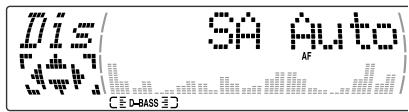
4 Press ← or ⇒ repeatedly to select the desired setting.

- All of these display patterns appear one by one automatically.
5 Press ENTER.
Adjusting the sound and frequency of the equalizer preamplifier
This unit can also control an optional equalizer preamplifier.
This lets you add some effects to the sound field of the currently selected source.
For details, refer to the instructions manual supplied with the equalizer preamplifier.
With Optional Equipment
CD/MD Unit
This unit can control external CD/MD units. If you connect an optional CD unit with the CD TEXT function and the custom file function, the CD TEXT information will appear in the display when you play a CD TEXT disc.
Playing a CD or MD
1 Press (SOURCE) repeatedly to select CD or MD.
2 Press MODE until the desired unit appears.
CD/MD playback starts.
When a CD/MD unit is connected, all the tracks play from the beginning.
Changing the display item
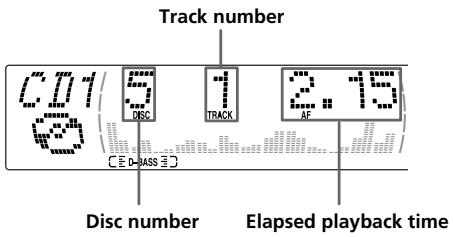
Each time you press DSPL/PTY during CD, CD TEXT, or MD playback, the item changes as follows:
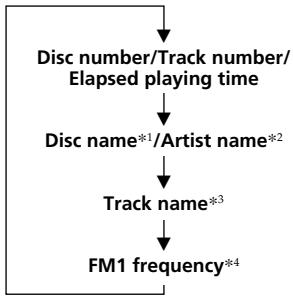
1 If you have not labelled the disc or if there is no disc name prerecorded on the MD, "NO D.Name" appears momentarily in the display.
2 If you play a CD TEXT disc, the artist name appears in the display after the disc name. (Only for CD TEXT discs with the artist name.)
3 If the track name of a CD TEXT disc or MD is not prerecorded, "NO T.Name" appears momentarily in the display.
4 While the AF/TA function is activated.
After you select the desired item, the display will automatically change to the Motion Display mode after a few seconds. In the Motion Display mode, all the items are scrolled in the display one by one in order.
Tip
The Motion Display mode can be turned off. (See "Changing the sound and display settings" on page 23.)
Automatically scrolling a disc name
— Auto Scroll
If the disc name, artist name, or track name on a CD TEXT disc or MD exceeds 10 characters and the Auto Scroll function is on, information automatically scrolls across the display as follows:
- The disc name appears when the disc has changed (if the disc name is selected).
- The track name appears when the track has changed (if the track name is selected).
If you press DSPL/PTY to change the display item, the disc or track name of the MD or CD TEXT disc is scrolled automatically whether you set the function on or off.
1 During playback, press (MENU).
2 Press or repeatedly until "A.Scr" appears.
3 Press → to select "A.Srl on."
4 Press ENTER.
To cancel Auto Scroll, select "A.Scrl off" in step 3.
Note
For some discs with very many characters, the following cases may happen:
Some of the characters are not displayed Auto Scroll does not work.
Locating a specific track
Automatic Music Sensor (AMS)
During playback, press ← or → momentarily for each track you want to skip.
←(I←): To locate preceding tracks
→ ( 1) : To locate succeeding tracks
Locating a specific point in a track
- Manual Search
During playback, press and hold ← or
→ . Release when you have found the desired point.
←(△):To search forward
→ ( ) : To search backward
Switching to other discs
During playback, press or .
The desired disc in the current unit begins playback.
(DISC +): For succeeding discs
↓ (DISC-) : For preceding discs
Playing tracks repeatedly
— Repeat Play
You can select:
- Repeat 1 - to repeat a track.
- Repeat 2 - to repeat a disc.
1 During playback, press (MENU).
2 Press or repeatedly until "Repeat" appears.
3 Press → repeatedly until the desired setting appears in the display.
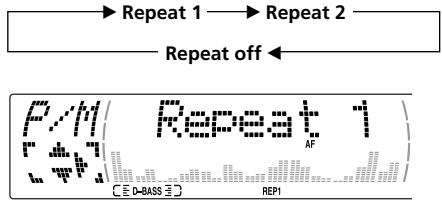
Repeat Play starts.
To return to normal play mode, select "Repeat off" in step 3.
Tip
If you select the mode using the buttons on the unit, press (REP) repeatedly until the desired mode appears.
Playing tracks in random order — Shuffle Play
You can select:
- Shuf 1 - to play the tracks on the current disc in random order.
- Shuf 2 – to play the tracks in the current unit in random order.
- Shuf All* - to play all the tracks in all the units in random order.
1 During playback, press (MENU).
2 Press or repeatedly until "Shuf" appears.
3 Press → repeatedly until the desired setting appears in the display.
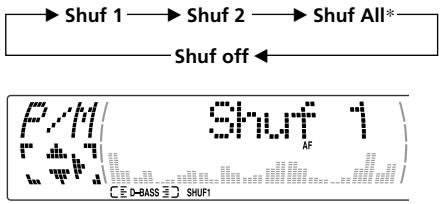
Shuffle Play starts.
- "Shuf All" is only available when you connect two or more optimal CD/MD units.
To return to normal play mode, select "Shuf off" in step 3.
Tip
If you select the mode using the buttons on the unit, press (2) (SHUF) repeatedly until the desired mode appears.
Labelling a CD — Disc Memo (For a CD unit with the custom file function)
You can label each disc with a personalised name. You can enter up to eight characters for a disc. If you label a CD, you can locate the disc by name (page 30) and select the specific tracks for playback (page 31).
1 Start playing the disc you want to label.
2 Press (MENU), then press ↑ or ↓ repeatedly until "Name Edit" appears.
3 Press ENTER. Name edit mode
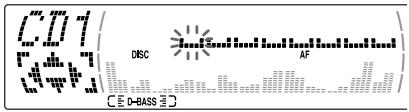
4 Enter the characters.
Press repeatedly to select the desired characters.
(A → B → C → ... Z → 0 → 1 → 2 → ... 9 → + → - →* → / → → gt; → lt; → . →_ ind)
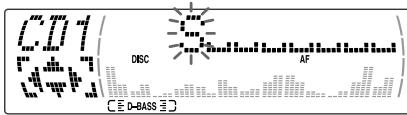
If you press repeatedly, the characters will appear in reverse order.
If you want to put a blank space between characters, select "L
Press → after locating the desired character.
The next character flashes.
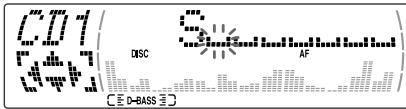
If you press ← , the previous character flashes.
Repeat steps 1 and 2 to enter the entire name.
5 To return to normal CD play mode, press ENTER.
Tip There is another way to start labelling a CD. Press LIST for two seconds instead of steps 2 and 3. You can also complete the operation by pressing LIST for two seconds instead of step 5.
Displaying the disc memo
Press DSPL/PTY during CD or CD TEXT disc playback.
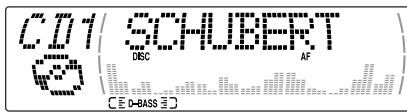
Each time you press DSPL/PTY during CD or CD TEXT disc playback, the item changes as follows:
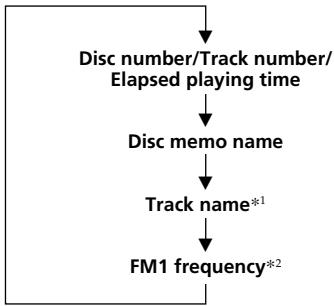
1 If you connect an optional CD unit with the CD TEXT function, the CD TEXT information will appear in the display when you play a CD TEXT disc.
2 While the AF/TA function is activated.
Erasing the disc memo
1 Press SOURCE repeatedly to select "CD."
2 Press MODE repeatedly to select the CD unit with the custom file function.
3 Press (MENU), then press ↑ or ↓ repeatedly until "Name Del" appears.
4 Press ENTER.
5 Press or repeatedly to select the disc name you want to erase.
6 Press ENTER for two seconds.
The name is erased.
Repeat steps 5 and 6 if you want to erase other names.
7 Press (MENU) twice.
The unit returns to normal CD play mode.
Notes
- When a personalised label is erased, the original CD TEXT information will appear in the display.
- When you erase all of the disc names, "No Data" appears in step 6.
Locating a disc by name
List-up (For a CD unit with the custom file function or an MD unit)
You can use this function for discs that have been assigned a custom name. For more information on disc memo names, refer to "Labelling a CD" (page 29).
1 Press LIST.
The name assigned to the current disc appears in the display.
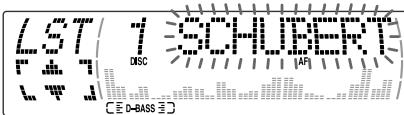
When you assign a disc memo name to a CD TEXT disc, it takes priority over the original CD TEXT information.
2 Press (DISC+) or (DISC-) repeatedly until you find the desired disc.
3 Press ENTER to play the disc.
Notes
- The track names are not displayed during MD or CD TEXT disc playback.
- If there are no discs in the magazine, "NO Disc" appears in the display.
- If a disc has not been assigned a custom file, "****" appears in the display.
- If the disc information has not been read by the unit, "?" appears in the display. To load a disc, first press the number button, then choose the disc that has not been loaded.
- Some letters cannot be displayed during MD or CD TEXT disc playback.
Selecting specific tracks for playback — Bank
(For a CD unit with the custom file function)
If you label the disc, you can set the unit to skip or play the tracks of your choice.
1 Start playing the disc you want to label.
2 Press (MENU), then press ↑ or ↓ repeatedly until "Bank Sel" appears.
3 Press ENTER Bank edit mode
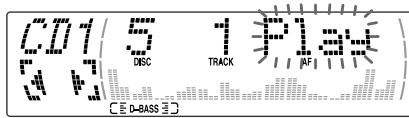
4 Label the tracks.
Press ↔ or → repeatedly to select the track you want to label.
Press ENTER repeatedly to select "Play" or "Skip."
5 Repeat step 4 to set "Play" or "Skip" for all the tracks.
6 Press (MENU) twice.
The unit returns to normal CD play mode.
Notes
- You can set "Play" and "Skip" for up to 24 tracks.
- You cannot set "Skip" for all the tracks on a CD.
Playing specific tracks only
You can select:
"Bank on" — to play the tracks with the "Play" setting.
"Bank inv" (Inverse) — to play the tracks with the "Skip" setting.
1 During playback, press (MENU), then press ↑ or ↓ repeatedly until "Bank" appears.
2 Press → repeatedly until the desired setting appears.


3 Press ENTER
Playback starts from the track following the current one.
To return to normal play mode, select "Bank off" in step 2.
Overview of DAB
DAB (Digital Audio Broadcasting) is a new multimedia broadcasting system that transmits audio programmes with a quality comparable to that of CDs. This is made possible by the use of a microcomputer in the DAB tuner which uses the radio signals sent from multiple aerials and multi-path signals (reflected radio waves) to boost the strength of the main signal. This makes DAB almost immune to radio interference even in a moving object such as a car.
Each DAB station bundles radio programmes (services) into an ensemble which it then broadcasts. Each service contains one or more components. All ensembles, services, and components are identified by name, so you can access any of them without having to know their frequencies.
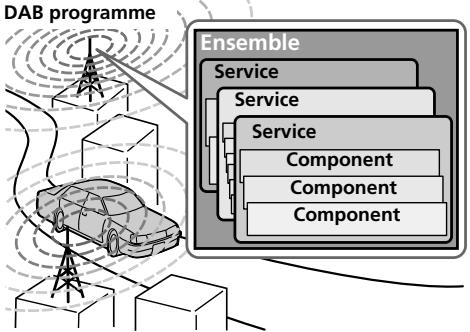
Notes
- The DAB system is actually in a testing phase. This means some services have not been sufficiently defined or are presently being tested. At present, such services are not supported by the optional DAB tuner unit XT-100DAB.
- DAB programmes are broadcast in Band-III (174 to 240 MHz) and L-Band (1,452 to 1,492 MHz), with each band divided into channels (41 in Band-III and 23 in L-Band). One ensemble is broadcast per channel by each DAB station.
- When you change the mode from FM3 to DAB, all the AF TA modes stay active.
- When you change any of the AF TA modes in DAB, that mode stays active in FM1.
Basic operations of DAB
Searching for the Ensemble and Service
Automatic Tuning
1 Press (SOURCE) repeatedly to select the tuner.
2 Press MODE repeatedly to select "DAB."
3 Press and hold ← or → until "Seek +" or "Seek -" appears.
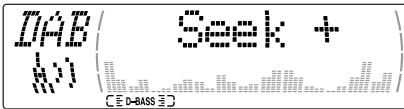
4 Press ← or → to search the desired service.
Note
The "..." indication flashes while the unit is searching for the Ensemble.
Selecting the Ensemble
- Manual Tuning
If you know the channel number of Ensemble, follow the procedure below to tune in.
1 Press SOURCE repeatedly to select the tuner.
2 Press MODE repeatedly to select "DAB."
3 Press or until "Ch. XXX" appears.
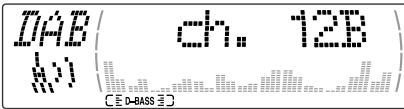
4 Press or repeatedly until the desired channel number appears.
Tips
- More than one channel may broadcast the same Ensemble.
- If you select the Ensemble service but cannot receive it, the "..." indication flashes.
Receiving the memorised services
Following procedure is available after presetting the service. For details on presetting the services, refer to "Presetting DAB services automatically" (page 33), and "Presetting DAB services manually" (page 34).
1 Press (SOURCE) repeatedly to select the tuner.
2 Press MODE repeatedly to select "DAB."
3 Press or repeatedly to select the preset service.
Tip
There is another way to receive the preset service. Press the number buttons (① to ⑥) of the unit on which the desired service is stored.
The receiving mode of the DAB tuner is displayed according to the chart below:
| Indication | Level | Receive mode |
| (flash) | 0 | cannot receive |
| 1 | poor reception | |
| 2 | so-so | |
| 3 | moderate | |
| 4 | good reception |
Presetting DAB services automatically - BTM
The BTM (Best Tuning Memory) function picks out DAB ensembles and automatically assigns the services within the ensembles to preset service numbers. The unit can preset up to 40 services. If services have been previously set, the BTM function operates under the following conditions:
- If you activate the BTM function while listening to a preset service, the unit will store detected services (by overwriting) only to preset numbers higher than that of the current present service.
- If you activate the function while listening to a service that is not preset, the unit will replace the contents of all preset numbers.
- In both cases above, if the unit detects a service that is identical to one already preset, the previously stored service remains unchanged and the newly detected service is not preset.
1 While listening to a DAB programme, press (MENU).
2 Press or repeatedly until "BTM" appears.
3 Press ENTER.
A beep sounds when the service is stored. After activating the BTM function, the unit tunes the service assigned in the preset memory 1 automatically.
Note
If the unit can only tune in a few services, the BTM function may not assign services to all the preset service numbers.
Presetting DAB services manually — Manual Preset Memory
You can also preset DAB services manually or delete a service which is already preset. Note that up to 40 services (preset either by the BTM function or manually) can be preset to the unit's memory.
1 While listening to a DAB programme, press (MENU).
2 Press or repeatedly until "PresetEdit" appears, then press ENTER.
3 Select the service and the preset number you want to preset.
Press or → to select the service.
Press or to select the preset number.
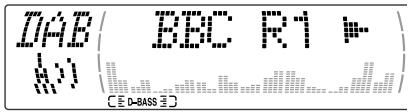
3 Press ENTER.
4 Press or to select "Over Wrt."
Each time you press , the edit command changes as follows:

- "Insert" does not appear if the maximum number of services (40) is already preset in memory.

To preset other services, repeat steps 3 and 4.
5 Press ENTER.
Replacing the services in preset memories
Press or to select "Over Wrt" in step 4, then press ENTER.
Adding the services in preset memories
Press or to select "Insert" in step 4, then press ENTER.
Erasing the services in preset memories
Press or to select "Delete" in step 4, then press ENTER.
Tip
There is another way to preset the service. After receiving the service, press the number buttons (1 to 6) of the unit until a beep sounds.
Listening to a DAB programme
Follow the procedure below to tune in a DAB programme manually. You can also store DAB services in the unit's memory for instant tuning (see "Presetting DAB services automatically (BTM)" on page 33).
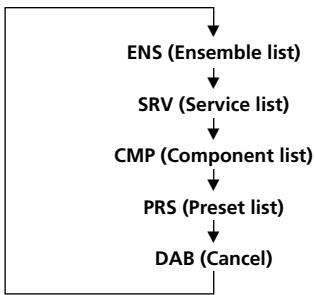
1 While listening to a DAB programme, press LIST repeatedly until the Ensemble List appears.
2 Press or until the desired ensemble appears, then press ENTER.
3 Press LIST repeatedly to until the Service List appears.
4 Press or repeatedly until the desired service appears, then press ENTER.
5 Press LIST repeatedly until the Component List appears.
6 Press or until the desired component appears, then press ENTER.
Tip To check the name of the current component, ensemble or service, press LIST repeatedly until the respective list appears in the display. The name of the currently selected item flashes.
Changing the display item
When you press LIST once, the list selected last time appears. Each time you press LIST, the list changes as follows:
Automatic updating of the ensemble list
When you perform the BTM function for the first time, all the ensembles available in your area are automatically stored. When you perform the BTM function again, the contents of these lists are updated in accordance with the conditions described on page 32.
An ensemble is added to the respective list when it is received during Automatic Tuning or Manual Tuning but is unlisted. An unlisted ensemble is also deleted from the respective list when:
- you select an ensemble from the list, but it cannot be received.
- you perform Automatic Tuning or Manual Tuning to receive a listed ensemble, service, or the component, but it cannot be received.
Settings on the audio reception
DAB can contain multi-channel audio. You can select main or sub-channel for reception. Also, if you turn on the DRC (Dynamic Range
Control) function, the dynamic range on the service which supports DRC can automatically be extended.
The following items can be set:
- Main/Sub — to selects channel between "Main"(main-cannel) and "Sub"(sub-cannel).
- DRC — to turn on or off the function.
1 While listening to a DAB programme, press (MENU).
2 Press or repeatedly until "DRC" or "Main (or Sub)" appears.
3 Press ← or → to select the desired setting (Example: "on" or "off").
4 Press ENTER.
Note
"Main (or Sub)" appears in the menu only when the unit is receiving a multi-channel programme.
Locating a DAB service by programme type (PTY)
You can use the PTY (Programme type selection) function to tune in the programme you want.
1 While listening to a DAB programme, press DSPL/PTY.
2 Press or repeatedly to select the programme type.
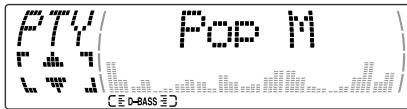
The programme types appear in the order shown on the page 19.
3 Press ENTER.
Maintenance
Fuse replacement
When replacing the fuse, be sure to use one matching the amperage rating stated on the original fuse. If the fuse blows, check the power connection and replace the fuse. If the fuse blows again after replacement, there may be an internal malfunction. In such a case, consult your nearest Sony dealer.
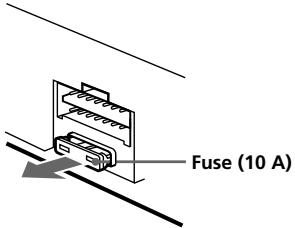
Warning
Never use a fuse with an amperage rating exceeding the one supplied with the unit as this could damage the unit.
Replacing the lithium battery
When the battery becomes weak, the range of the card remote commander becomes shorter. Replace the battery with a new CR2025 lithium battery.
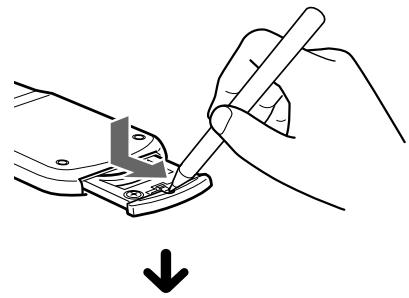
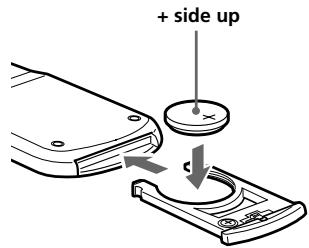
Notes on lithium battery
- Keep the lithium battery out of the reach of children. Should the battery be swallowed, immediately consult a doctor.
- Wipe the battery with a dry cloth to assure a good contact.
- Be sure to observe the correct polarity when installing the battery.
- Do not hold the battery with metallic tweezers, otherwise a short-circuit may occur.
WARNING
Battery may explode if mistreated.
Do not recharge, disassemble, or dispose of in fire.
Dismounting the unit
With the front panel open
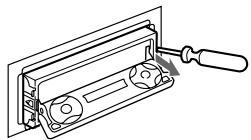
1 Press (OPEN) of the unit, then press the clip inside the front cover with a thin screwdriver, and gently pry the front cover free.
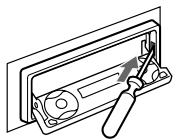
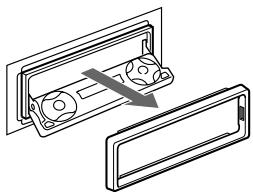
2 Repeat step 1 on the left side. The front cover is removed.
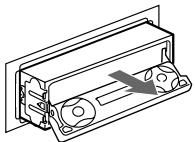
3 Use a thin screwdriver to push in the clip on the left side of the unit, then pull out the left side of the unit until the catch clears the mounting.
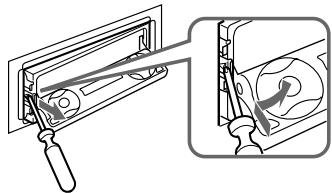
4 Repeat step 3 on the right side.
5 Slide the unit out of the mounting.
If the front panel does not open because of a blown fuse
1 Press the clip inside the front cover with a release key (supplied), and pry the front cover free.
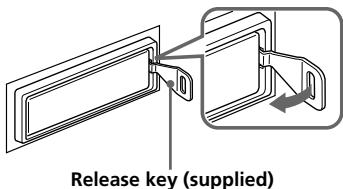
2 Repeat step 1 on the left side. The front cover is removed.
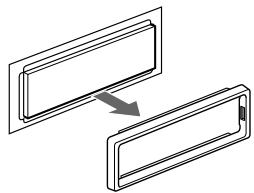
3 Use a release key to push in the clip on the left side of the unit, then pull out the left side of the unit until the catch clears the mounting.
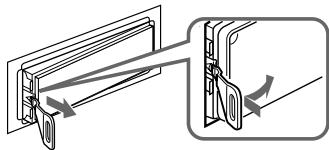
4 Repeat step 3 on the right side.
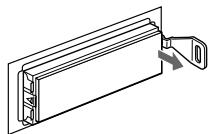
5 Slide the unit out of the mounting.
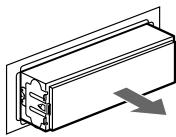
Specifications
Cassette player section
Tape track
4-track 2-channel stereo
Wow and flutter
0.08% (WRMS)
Frequency response
30 - 20,000Hz
Signal-to-noise ratio
| Cassette type | Dolby B NR | Dolby NR off |
| TYPE II, IV | 67 dB | 61 dB |
| TYPE I | 64 dB | 58 dB |
Tuner section
FM
Tuning range
87.5-108.0MHz
Aerial terminal
External aerial connector
Intermediate frequency
10.7 MHz/450kHz
Usable sensitivity
8 dBf
Selectivity
75 dB at 400 kHz
Signal-to-noise ratio
66 dB (stereo),
72
72 dB (mono)
Harmonic distortion at 1kHz
0.6% (stereo),
Separation
0.3% (mono)
Frequency response
35 dB at 1 kHz
30 - 15,000Hz
MW/LW
Tuning range
MW: 531 - 1,602 kHz
Aerial terminal
LW: 153 - 279 kHz
Intermediate frequency
External aerial connector
Sensitivity
10.7 MHz/450 kHz
Power amplifier section
Outputs
Speaker outputs
Speaker impedance
4-8ohms
Maximum power output
50W× 4 (at 4 ohms)
General
Outputs
Audio output (2)
Power aerial relay control lead
Power amplifier control lead
Inputs
Telephone ATT control lead
Tone controls
Illumination control lead
Power requirements
Bass ± 9 dB at 100Hz
Treble ± 9 dB at 10kHz
Dimensions
12 V DC car battery (negative earth)
Approx. 178× 50× 182mm (w / h / d)
Mounting dimensions
Approx. 182× 53× 163mm (w / h / d)
Mass
Approx. 1.3kg
Supplied accessories
Card remote commander RM-X96
Optional accessories
Parts for installation and connections (1 set)
Rotary commander RM-X4S
BUS cable (supplied with an RCA pin cord)
RC-61 (1m) , RC-62 (2m)
CD change (10 discs) CDX-848X, CDX-646
CD changer (6 discs) CDX-T68X, CDX-T67
MD changer (6 discs) MDX-65
Source selector
XA-C30
DABtuner unit XT-100DAB
Digital equalizer preamplifier
XDP-210EQ, XDP-4000X
Design and specifications are subject to change without notice.
Troubleshooting guide
The following checklist will help you remedy the problems you may encounter with your unit. Before going through the checklist below, check the connections and operating procedures.
General
| Problem | Cause/Solution |
| No sound. | ·Cancel the ATT function. ·Set the fader control to the centre position for two-speaker systems. ·Press ⊙ of the VOL buttons to adjust the volume. |
| The contents of the memory have been erased. | ·The power cord or battery has been disconnected. ·The reset button was pressed. →Store again into the memory. |
| The sound is noisy. | You are using a mobile phone. |
Tape playback
| Problem | Cause/Solution |
| The sound is distorted. | The tape head is contaminated. →Clean the head with a commercially available dry-type cleaning cassette. |
| The AMS does not operate correctly. | ·There is noise in the space between tracks. ·A blank space is too short (less than four seconds). ·A long pause, or a passage of low frequencies or very low sound level is treated as a blank space. |
Radio reception
| Problem | Cause/Solution |
| Preset tuning is not possible. | • Store the correct frequency in the memory. • The broadcast signal is too weak. |
| Automatic tuning is not possible. | • The broadcast signal is too weak. → Use manual tuning. • The local seek mode is set to “on.” → Set the local seek mode to “off” (page 14). |
| The stations cannot be received. The sound is hampered by noises. | Connect a power aerial control lead (blue) or accessory power supply lead (red) to the power supply lead of a car's aerial booster. (When your car has built-in FM/MW/LW aerial in the rear/side glass only.) |
| The “ST” indication flashes. | • Tune in the frequency accurately. • The broadcast signal is too weak. → Set to Mono mode (page 14). |
RDS
| Problem | Cause/Solution |
| The SEEK starts after a few seconds of listening. | The station is non-TP or has a weak signal. →Press (AF/TA) to select “AF TA off.” |
| No traffic announcements. | •Activate “TA.” •The station does not broadcast any traffic announcements despite being TP. →Tune to another station. |
| PTY displays “None.” | The station does not specify the programme type. |
CD/MD playback
| Problem | Cause/Solution |
| The sound skips. | A dirty or defective disc. |
| Cannot turn off the “-” indication. | You cannot label CDs unless you connect a CD unit with the custom file function. →Press LIST for two seconds. |
The following indications will flash for about five seconds, and an alarm sound will be heard.
Error displays (when an optional CD/MD unit is connected)
| Display | Cause | Solution |
| NO Mag | The disc magazine is not inserted in the CD/MD unit. | Insert the disc magazine in the CD/ MD unit. |
| NO Disc | No disc is inserted in the CD/MD unit. | Insert discs in the CD/MD unit. |
| NG Discs | A CD/MD cannot play because of some problem. | Insert another CD/MD. |
| Error*1 | A CD is dirty or inserted upside down.*2 | Clean or insert the CD correctly. |
| An MD does not play because of some problem.*2 | Insert another MD. | |
| Blank*1 | No tracks have been recorded on an MD.*2 | Play an MD with tracks recorded on it. |
| PushReset | The CD/MD unit cannot be operated because of some problem. | Press the reset button of the unit. |
| Not Ready | The lid of the MD unit is open or MDs are not inserted properly. | Close the lid or insert the MDs properly. |
| High Temp | The ambient temperature is more than 50°C. | Wait until the temperature goes down below 50°C. |
1 When an error occurs during playback of a CD or MD, the disc number of the CD or MD does not appear in the display.
2 The disc number of the disc causing the error appears in the display.
If the above-mentioned solutions do not help improve the situation, consult your nearest Sony dealer.
Bienvenido!
1 OFF-knappen 9, 11
2 MENU knappen 10, 12, 13, 14, 16, 18, 20, 24, 25, 27, 28, 29, 31, 33, 34, 36
3 SOURCE-knappen (TUNER/TAPE/CD/MD) 9,11,13,14,25,26,30,32,33
4 ← / → (SEEK/AMS-/+)knappar 9,10,11,12,14,16,20,23,24,25,27,28, 29,31,32,34,36
5 SOUND-knappen 23
6 DSPL/PTY-knappen (andra visningslauge/programtyp) 19,26,27,29,36
7 ATT (dampning) knapp 23
8 D-BASS-knappen 24
9 OPEN/CLOSE-knappen 11
10 LIST-knappen 29, 30, 35
11 ↑/↓ (DISC/PRST +/-) knappar 9, 10, 12, 13, 14, 16, 18, 19, 20, 24, 25, 27, 28, 29, 30, 31, 32, 33, 34, 36
12 ENTER knappen 10, 12, 13, 14, 16, 18, 19, 20, 24, 25, 27, 29, 30, 31, 33, 34, 35, 36
13 AF/TA-knappen 16, 17, 18
14 MODE-knappen 11, 12, 13, 14, 26, 30, 32, 33
Notas sobre as cassettes
Distortion harmonica a 1 kHz
0,6% (estereo),
0,3% (mono)
12 PIAJKTPO ENTER 10, 12, 13, 14, 16, 18, 19, 20, 24, 25, 27, 29, 30, 31, 33, 34, 35, 36
13 PAnjKtpo AF/TA 16,17,18
14 PAnKtpo MODE 11, 12, 13, 14, 26, 30, 32, 33
Kata tnv avanapaywyk kaetac: Alambda kateuohuvoc avanapaywync 11
Kata tn padioqwvi klny: Emloyn BAND (muavtc) 13, 14
Kata tn avanapaywyh CD/MD: Emloyn ouokcuins CD/MD 26
15 PAnktpa VOL (Puθμion εvταης)
Av anevpyoonoi t n ouakeun piocovtac to pNkTPO OFF yia duo deutepolentta, dEv npopeite va aeitoupyoTe Tn ouakeun mTo aoupuato tnAeipiotnpio niv evpyoOnoTe Tn ouakeun,piocovtac to pNkTPO SOURCE TnC ouakeunc h Eia kaoetata otn ouakeun.
Oεσηχειριστηριων
IIεuρασαλεις
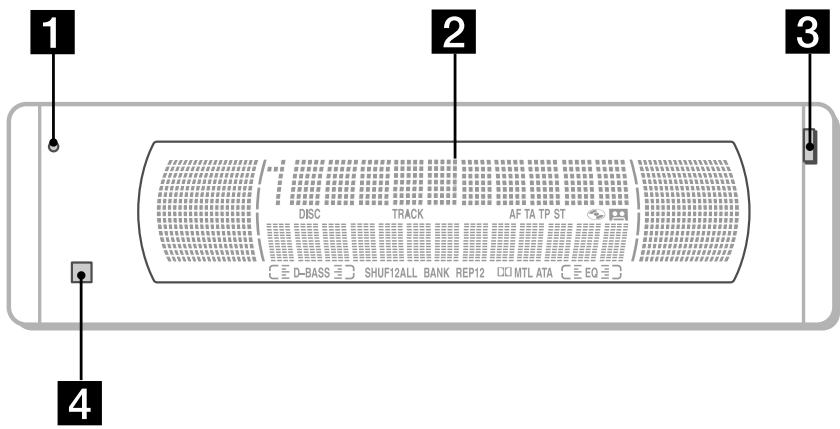
IIεuραλειουργiaς
Ta avriatoia nnktpa tnc ouakeunc
eEyxouv tic idec aeitoupyic onwc ekeiva
tou aupatou tnexepiotnpiou.
10 PAnKtpo Reset 8
2 Kupio npapatoe vdeltae
3 PAnjKtpo OPEN 38
41 Λεκτης ασύρματου τηλεχειριστηριού καρτας
5 PnKtpa pOthionc EvtaonC
6Πληκτρo DSPL/PTY (αλλayης λειτουργίας Θθόνης/Tιπου προγράματος)
7 Δu ρ npapo eov
3 PnKToPO MENU
9PiAaKToPo (Eaywy)11
12 PAnjKtpo LIST
13 PnKtpo OFF* 9
11nKtpo MODE
15 PAnjKToPO SOURCE (AEKTHs/KAsETA/ CD/MD)
16 PnjkTpo AF 16,18
17 ApiOHTIKA PAnKtpa
KataTn paioovikn Ayn: Emloyapoiou npoovtovioevwv 13,14,17,33,34
Kata tyn avanapayyn kaetac:
① REP 12
Kata nv avanapaywyi CD/MD:
① REP 28
② SHUF 28
Avanapaywyn εvoc CD n MD
Wow & flutter 0,08% (WRMS)
Anokpion ouxvotntac
30-20.000 Hz
Aoyoc nmuatoc/OpuBo (S/N)
| TÜlimits káostac | Dolby B NR | Xwpić Dolby NR |
| TYPE II, IV | 67 dB | 61 dB |
| TYPE I | 64 dB | 58 dB |
Δ τ η
FM
- FM/MW/LW CASSETTE CAR STEREO
- SUPPLIED ACCESSORY
- OPTIONAL ACCESSORY
- PRECAUTIONS
- TO MAINTAIN HIGH QUALITY SOUND
- NOTES ON CASSETTES
- CASSETTE CARE
- CASSETTES LONGER THAN 90 MINUTES
- TABLE OF CONTENTS
- THIS UNIT ONLY
- GETTING STARTED
- CASSETTE PLAYER
- RADIO
- RDS
- OTHER FUNCTIONS
- WITH OPTIONAL EQUIPMENT
- CD/MD UNIT
- DAB
- ADDITIONAL INFORMATION
- LOCATION OF CONTROLS
- RESETTING THE UNIT
- NOTE
- SECURITY RELEASE SETTINGS
- 1 PRESS THE RESET BUTTON
- 2 PRESS THE BUTTONS ON THE CARD REMOTE COMMANDER, AND SEND THE SECURITY CODE
- NOTES
- TURNING THE UNIT ON/OFF
- TURNING ON THE UNIT
- TURNING OFF THE UNIT
- HOW TO USE THE MENU
- SETTING THE CLOCK
- TIPS
- LISTENING TO A TAPE
- FAST-WINDING THE TAPE
- LOCATING A SPECIFIC TRACK
- TIP
- PLAYING A TAPE IN VARIOUS MODES
- PLAYING TRACKS REPEATEDLY
- REPEAT PLAY
- MEMORISING STATIONS AUTOMATICALLY
- CAUTION
- 1 PRESS SOURCE REPEATEDLY TO SELECT THE TUNER
- 2 PRESS MODE REPEATEDLY TO SELECT THE BAND
- 3 PRESS (MENU), THEN PRESS OR REPEATEDLY UNTIL "BTM" APPEARS
- 4 PRESS ENTER
- MEMORISING ONLY THE DESIRED STATIONS
- RECEIVING THE MEMORISED STATIONS
- IF YOU CANNOT TUNE IN A PRESET STATION
- OVERVIEW OF THE RDS FUNCTION
- DISPLAYING THE STATION NAME
- RETUNING THE SAME PROGRAMME AUTOMATICALLY
- ALTERNATIVE FREQUENCIES (AF)
- 1 SELECT AN FM STATION (PAGE 13)
- 2 PRESS / TA REPEATEDLY UNTIL "AF ON" APPEARS
- CHANGING THE DISPLAY ITEM
- LISTENING TO A REGIONAL PROGRAMME
- LOCAL LINK FUNCTION (UNITED KINGDOM ONLY)
- LISTENING TO TRAFFIC ANNOUNCEMENTS
- PRESS / TA REPEATEDLY UNTIL "TA ON" OR "AF TA ON" APPEARS
- TO CANCEL THE CURRENT TRAFFIC ANNOUNCEMENT
- PRESETTING THE VOLUME OF TRAFFIC ANNOUNCEMENTS
- 1 SELECT THE DESIRED VOLUME LEVEL
- 2 PRESS / TA FOR TWO SECONDS
- RECEIVING EMERGENCY ANNOUNCEMENTS
- PRESETING THE RDS STATIONS WITH THE AF AND TA DATA
- PRESETTING THE SAME SETTING FOR ALL PRESET STATIONS
- PRESETTING DIFFERENT SETTINGS FOR EACH PRESET STATION
- LOCATING A STATION BY PROGRAMME TYPE
- SETTING THE CLOCK AUTOMATICALLY
- TO CANCEL THE CT FUNCTION
- LABELLING THE ROTARY COMMANDER
- USING THE ROTARY COMMANDER
- BY PRESSING BUTTONS (THE SOURCE AND MODE BUTTONS)
- PRESSING MODE CHANGES THE OPERATION IN THE FOLLOWING WAYS
- BY ROTATING THE CONTROL (THE SEEK/AMS CONTROL)
- ROTATE THE CONTROL AND RELEASE IT TO
- BY PUSHING IN AND ROTATING THE CONTROL (THE PRESET/DISC CONTROL)
- PUSH IN AND ROTATE THE CONTROL TO
- OTHER OPERATIONS
- CHANGING THE OPERATIVE DIRECTION
- ADJUSTING THE SOUND CHARACTERISTICS
- ATTENUATING THE SOUND
- CHANGING THE SOUND AND DISPLAY SETTINGS
- SET (SETTING)
- DIS(DISPLAY)
- 1 PRESS (MENU)
- 2 PRESS OR REPEATEDLY UNTIL THE DESIRED ITEM APPEARS
- EXAMPLE
- 3 PRESS → TO SELECT THE DESIRED SETTING (EXAMPLE: ON OR OFF)
- BOOSTING THE BASS SOUND
- D-BASS
- ADJUSTING THE BASS CURVE
- SELECTING THE SPECTRUM ANALYSER
- ADJUSTING THE SOUND AND FREQUENCY OF THE EQUALIZER PREAMPLIFIER
- PLAYING A CD OR MD
- AUTOMATICALLY SCROLLING A DISC NAME
- AUTO SCROLL
- LOCATING A SPECIFIC POINT IN A TRACK
- MANUAL SEARCH
- SWITCHING TO OTHER DISCS
- PLAYING TRACKS IN RANDOM ORDER — SHUFFLE PLAY
- LABELLING A CD — DISC MEMO (FOR A CD UNIT WITH THE CUSTOM FILE FUNCTION)
- DISPLAYING THE DISC MEMO
- ERASING THE DISC MEMO
- LOCATING A DISC BY NAME
- SELECTING SPECIFIC TRACKS FOR PLAYBACK — BANK
- PLAYING SPECIFIC TRACKS ONLY
- OVERVIEW OF DAB
- BASIC OPERATIONS OF DAB
- SEARCHING FOR THE ENSEMBLE AND SERVICE
- SELECTING THE ENSEMBLE
- MANUAL TUNING
- RECEIVING THE MEMORISED SERVICES
- PRESETTING DAB SERVICES AUTOMATICALLY - BTM
- PRESETTING DAB SERVICES MANUALLY — MANUAL PRESET MEMORY
- REPLACING THE SERVICES IN PRESET MEMORIES
- ADDING THE SERVICES IN PRESET MEMORIES
- ERASING THE SERVICES IN PRESET MEMORIES
- LISTENING TO A DAB PROGRAMME
- AUTOMATIC UPDATING OF THE ENSEMBLE LIST
- SETTINGS ON THE AUDIO RECEPTION
- LOCATING A DAB SERVICE BY PROGRAMME TYPE (PTY)
- MAINTENANCE
- FUSE REPLACEMENT
- WARNING
- REPLACING THE LITHIUM BATTERY
- NOTES ON LITHIUM BATTERY
- DISMOUNTING THE UNIT
- WITH THE FRONT PANEL OPEN
- IF THE FRONT PANEL DOES NOT OPEN BECAUSE OF A BLOWN FUSE
- SPECIFICATIONS
- CASSETTE PLAYER SECTION
- TUNER SECTION
- FM
- MW/LW
- POWER AMPLIFIER SECTION
- GENERAL
- TROUBLESHOOTING GUIDE
- BIENVENIDO
- NOTAS SOBRE AS CASSETTES
- OΕΣΗΧΕΙΡΙΣΤΗΡΙΩΝ
- AVANAPAYWYN ΕVOC CD N MD
- Δ Τ Η
Brand : SONY
Model : XR-M510
Category : Car radio