HK 64 S (IX)1 - Cooker INDESIT - Free user manual and instructions
Find the device manual for free HK 64 S (IX)1 INDESIT in PDF.


User questions about HK 64 S (IX)1 INDESIT
0 question about this device. Answer the ones you know or ask your own.
Ask a new question about this device
Download the instructions for your Cooker in PDF format for free! Find your manual HK 64 S (IX)1 - INDESIT and take your electronic device back in hand. On this page are published all the documents necessary for the use of your device. HK 64 S (IX)1 by INDESIT.
USER MANUAL HK 64 S (IX)1 INDESIT
Built-in cooking tables Installation and use
R = radiant simple, RO = radiant ovale, RD = radiant double
Advice and recommendations
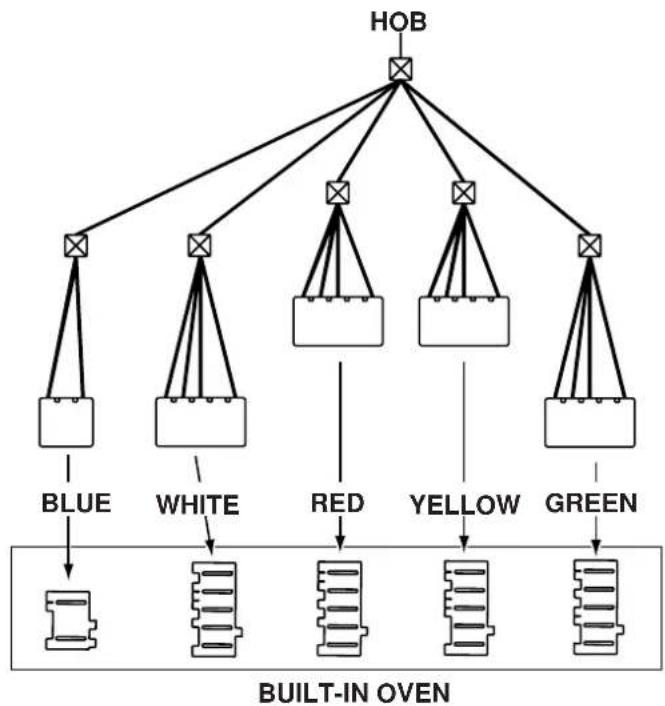
This appliance can only work if it has been connected to a specific oven, listed on the sheet included in the documents pouch.
This appliance was designed for non-professional, household use.
- Before using the appliance, read the instructions in the owner's manual carefully since it contains all the instructions you require to ensure safe installation, use and maintenance. Keep this owner's manual in a safe place for future reference.
- When you have removed the packing, check whether the appliance is intact. If you have any doubts, contact a qualified professional before using the appliance.
- Never leave the packing components (plastic bags, polystyrene foam, nails, etc.) within the reach of children since these are a source of potential danger.
- The appliance must be installed by a qualified technician in compliance with the instructions provided by the manufacturer.
- The latter denies all responsibility for improper installation which may harm persons and animals and damage property.
- The electrical safety of this appliance can only be guaranteed if the latter is correctly and efficiently earthed, in compliance with regulations on electrical safety. Always ensure that this vital safety measure has been taken. If you have any doubts, call in a qualified technician to check the electrical system thoroughly.
- The manufacturer denies all responsibility for damage resulting from a system which has not been earthed correctly.
- Before powering the appliance, check whether the technical characteristics featured on the appliance data plate correspond with those of the mains electrical system.
- Check that the current load of the mains supply and of the power sockets is suitable for the maximum power of the appliance, indicated on the appliance data plate. If in doubt, contact a qualified professional.
- This appliance must only be used for the purpose for which it was expressly designed. Any other use (such as heating a room for example) is considered to be improper and consequently dangerous.
-
The manufacturer denies all responsibility for damage resulting from improper or incorrect use of the appliance.
-
Certain fundamental rules must be followed when using electrical appliances. The following are of particular importance:
-
do not touch the appliance with wet or damp hands,
- never use the appliance when barefoot,
- never use extensions,
- never pull on the power supply cable or the appliance itself to unplug it from the mains socket,
- never leave the appliance exposed to atmospheric agents (rain, sun, etc.),
-
do not allow children or persons who are not familiar with the appliance to use it without supervision.
-
Always unplug the appliance from the mains or switch off the main switch before cleaning or performing any cleaning or maintenance operations.
- If the surface of the glass cracks, unplug the appliance immediately. For any repairs, contact only an authorised after-sales service centre and demand original spare parts. Failure to comply with the above may compromise the safety of the appliance.
- Cut the power supply cable after disconnecting it from the power mains when you decide not to use the appliance any longer. Also make all potentially dangerous parts of the appliance safe, above all for children who could play with the appliance.
- The glass ceramic hob is resistant to thermal and mechanical shocks. However, it may break due to a shock caused by a sharp object, such as a tool for example. In this case, unplug the appliance immediately and contact an authorised after-sales service centre to have it repaired.
- Remember that the heating area stays hot for at least half an hour after being turned off; please refrain from placing any cookware or other items on the cooking zone while still hot.
- Do not turn on the heating zones if aluminium foil or plastic items have been placed on the hob surface.
- Do not go near the heating zones when these are still hot.
- If you use small electric appliances near the hob, make sure their power supply cable does not come into contact with the hot parts of the hob.
- Make sure all pan handles are always pointing inwards towards the centre of the hob to prevent any accidental spills.
First use: the glue used on the hob seals may leave greasy traces on the glass surface. We recommend you wipe these off before using the appliance, with the aid of a non abrasive cleaner. During the first few hours of use, you may detect a smell of rubber, which will disappear quickly.
Installation and fastening
The following instructions are intended for a qualified fitter to guide him/her along the installation, adjustment and technical maintenance procedures as correctly as possible and in full compliance with the applicable norms in force. Important: unplug the hob before all operations.
Installation
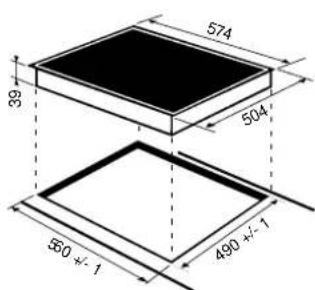
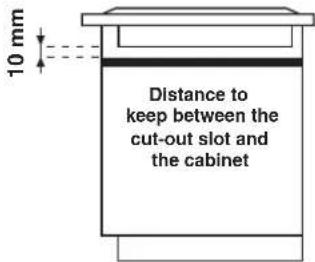
- This hob can be built into a worktop simply by cutting out the corresponding slot.
- The worktop must be made with a material designed to withstand a temperature of approximately 100^ .
- The hob must be positioned at a minimum distance of 40mm from the back wall and 600mm from any other vertical surfaces, in order to allow adequate ventilation and to prevent the surfaces around the appliance from overheating.
CE
This appliance conforms with the following European Community Directives:
- 73/23/EEC of 19/02/73 (Low Voltage) and subsequent amendments;
- 89/336/EEC of 03/05/89 (Electromagnetic compatibility) and subsequent amendments;
- 93/68/EEC of 22/07/93 and subsequent amendments;
-2002/96/EC
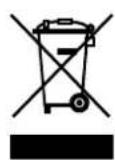
The European Directive 2002/96/EC on Waste Electrical and Electronic Equipment (WEEE), requires that old household electrical appliances must not be disposed of in the normal unsorted municipal waste stream. Old appliances must be collected separately in order to optimise the recovery and recycling of the materials they contain and reduce the impact on human health and the environment. The crossed out "wheeled bin" symbol on the product reminds you of your obligation, that when you dispose of the appliance it must be separately collected. Consumers should contact their local authority or retailer for information concerning the correct disposal of their old appliance.
Fastening
Very important: It is vital that you ensure the glass ceramic hob is built into a perfectly flat supporting surface.
Deformations due to improper fastening could alter the characteristics of the hob and compromise its performance.
The fastening springs are fastened by screws (see diagram).
It is vital that these screws be kept accessible at all times.
Insert the hob into the cut-out slot, applying pressure all along the perimeter of the hob frame so that the latter adheres fully to the worktop.
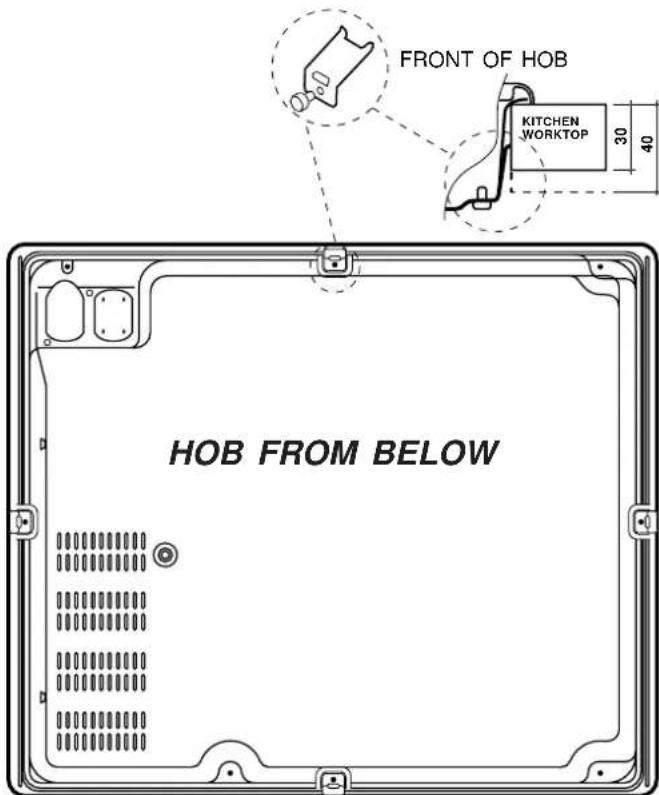
REAR SPRING ASSEMBLY
Technical characteristics
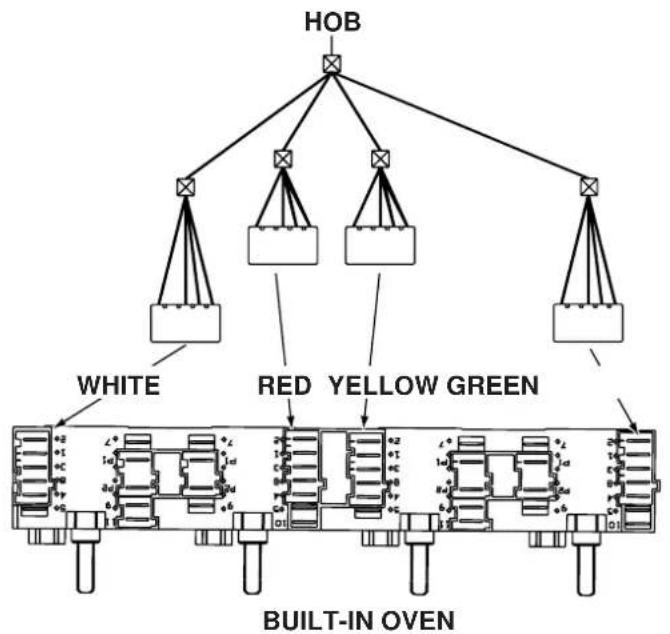
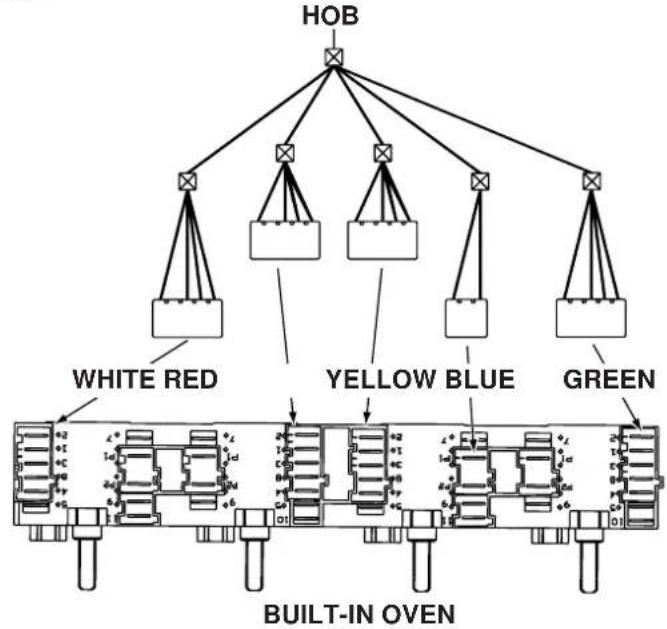
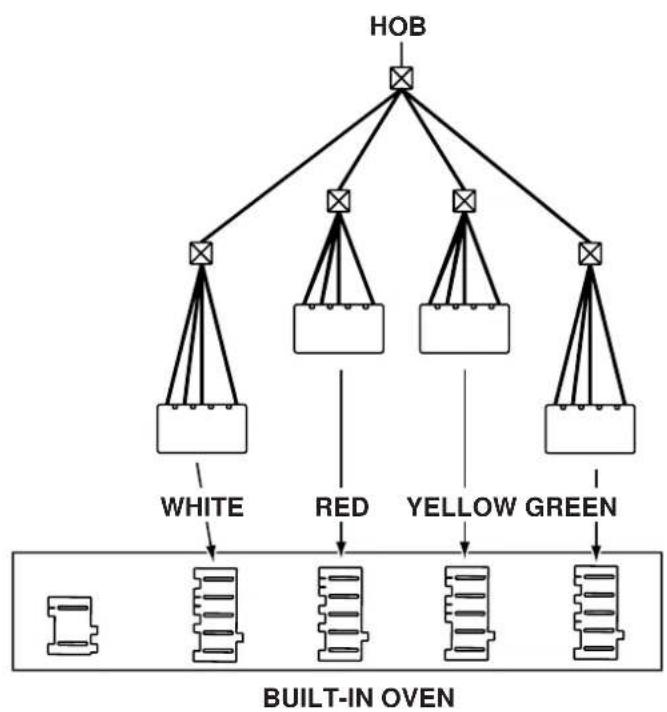
Connecting the hob to the oven
This appliance can only work if it has been connected to a specific oven, listed on the sheet included in the documents pouch.
HK 64 - HK 64 CL - HK 64/1 HK 64 R - HK 64 S - HK 64 DO - HK 64 S CL
HK 64 R/1-HK 64 RD0/1-HK 64 RD-HK 64 RD CL
Cooking zone description and use
Radiant zones
This type of burner consists of several coils that guarantee the even distribution of heat over the bottom of the pan and ensure the success of all cooking on low heat: simmering, sauces or reheating.
| HOBS HK 64 S - HK | 64 S CL HK 64 R - HK 64 R/1 HK 64 - HK 64 CL - HK 64/1 | |||||
| Cooking zones | Power (in W) | Diameter (in mm) | Power (in W) | Diameter (in mm) | Power (in W) | Diameter (in mm) |
| Back right | R 1200 140 | R 1200 140 | R 1200 | 140 | ||
| Front right | R 1700 180 | R 1700 180 | R 1700 | 180 | ||
| Back left | R 2100 210 | R 1700 180 | R 1700 | 180 | ||
| Front left | R 1200 140 | R 1200 140 | R 1200 | 140 | ||
| Overall power | 6200 | 5800 | 5800 | |||
| HOBS | HK 64 DO HK 64 R DO/1 | HK 64 R D HK 64 R D CL | ||
| Cooking zones | Power (in W) | Diameter (in mm) | Power (in W) | Diameter (in mm) |
| Back right | RO 1000/1800 | 140*250 | R 1200 | 140 |
| Front right | R 1400 160 | R 1800 180 | ||
| Back left | R 1200 140 | R 1200 140 | ||
| Front left | RD 1000/2300 | 120/210 | RD 1000/2200 | 210 |
| Overall power | 6900 | 6400 | ||
R = simple radiant, RO = oval radiant, RD = dual radiant
The tables below feature information on how to use the zones to their full potential.
HK 64 DO - HK 64 R DO/1 - HK 64 RD - HK 64 RD CL
| Power Type of dish |
| 1 Melted butter or chocolate |
| 2/3 Reheating liquids |
| 4/5 Preparation of creams and sauces |
| 6/7 Cooking stews, blanquette, desserts |
| 8/9 Cooking pasta and rice |
| 10/11 Sealing meat, fish, omelettes |
| 12 Fried food |
HK 64 - HK 64 R - HK 64 S - HK 64 CL
HK 64 S CL - HK 64/1 - HK 64R/1
| Power Type of dish | |
| 0 | off |
| 1 cooking greens, fish | |
| 2 | steaming potatoes, cooking soups, chickpeas, beans |
| 3 | steaming potatoes, cooking soups, chickpeas, beans |
| 4 for roasting (moderate) | |
| 5 for roasting (high) | |
| 6 for browning, to bring large volumes to the boil | |
As long as the temperature of the cooking zones remains above 60^ , even after use, the residual heat indicators stay on to prevent the risk of burns.
The HK 64 hob does not feature any residual heat indicators.
The control knobs
These are situated on the oven control panel and allow for the continuous control of the power setting of each cooking zone (from 1 to 12 or from 1 to 6).
Extendable cooking zone control
Extendable cooking zones (concentric or oval) are indicated on the glass hob surface by a dual heating zone. To use the smaller zone only, set the control knob to between 1 and 12 according to the desired heating power.
To use the large zone, set the knob to and then adjust it to the desired heating power.
Maintenance and care
Advice on using your appliance
To get the best from your hob, it is vital that you follow a few fundamental rules during cooking and when preparing food.
- Use pans with a flat bottom so they adhere fully to the heating zone.
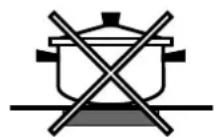
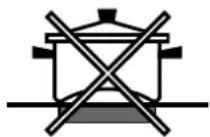
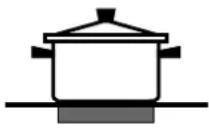
- Always use pans whose diameter covers the cooking zone fully so that all the available heat can be used.
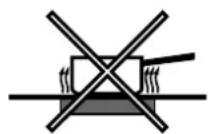
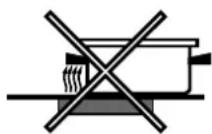
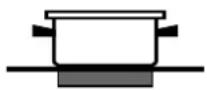
- Make sure the pan base is always clean and dry, to guarantee good contact and long life for the cooking zones and pans alike.
- Avoid using pans used normally on gas burners. The concentration of heat on gas burners can warp the bottom of the pan, consequently you would never obtain the desired result when using the pan on the glass ceramic hob.
- Never leave a cooking zone on without a pan on it as the maximum heat level would be reached very quickly, which could damage the heating elements.
- The glass ceramic hob is resistant to thermal and mechanical shocks. However, it may break due to a shock caused by a sharp object. In this case, unplug the appliance immediately and contact an authorised after-sales service centre to have it repaired.
Always keep your hob clean. Before proceeding with maintenance operations, check that all the cooking zones are turned off and have cooled down completely.
Stainless steel frame (only on some models)
Stainless steel can stain as an effect of enduring contact with limescale in water or as an effect of highly aggressive detergents (containing phosphorus). We recommend you rinse and dry it thoroughly after maintenance. It is preferable to remove any water spills immediately.
Hob care
The vitroceramic glass used for the heating surface is smooth and poreless and it is also resistant to thermal shocks and to mechanical shocks under normal conditions of use. In order to preserve these properties, we recommend you care for your hob as follows:
for ordinary maintenance, just wipe it with a damp sponge and dry it thoroughly using paper towels.
- If the hob is dirty, rub clean using a special cleaner suitable for vitroceramic glass, rinse off and dry thoroughly.
- food residue and dirt can be removed using a special scraper. Do this as soon as possible, do not wait for the hob to cool down in order to avoid incrustations. For excellent results, use a special stainless steel wool pad for vitroceramic glass cleaning soaked in soapy water.
- When the hob is clean, you can apply a special product for the care and protection of the same: this type of product leaves an invisible film on the surface of the hob to protect the same against any spills and boiled-over food. It is best if you do this when the hob is lukewarm or cold.
- Make sure you always rinse the hob with clean water and dry it thoroughly: otherwise the cleaning products could become encrusted onto the hob during subsequent cooking.
Recommendations
- Never use abrasive or corrosive substances, such as aerosol cleaners for grills and ovens, stain removers or rust removers, scouring powders and abrasive sponges: even the delicate ones could scratch the hob surface irreversibly.
- We recommend you keep all items which could melt away from the hob, such as plastic utensils, sugar or products with a high sugar content. Should liquid boil over onto the hob surface, remove it immediately (while the hob is still hot) using a razor blade scraper, in order to avoid damaging the surface.
- Use this hob exclusively for cooking. Do not place items on the hob when the same is not in use. Do not use the hob as a work surface (by placing lids, saucepans or dishcloths on it, for example), nor as a chopping board.
- Never leave aluminium wrappers, aluminium foil and plastic cookware on the hob when hot or still warm.
- Do not use steam cleaners or high pressure cleaners to clean your appliance.
