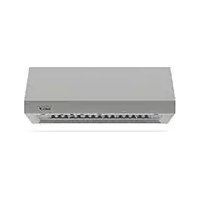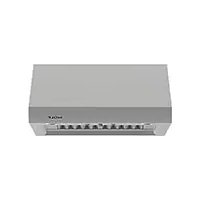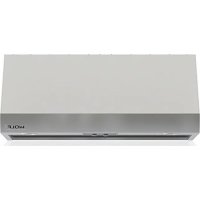
VW36S - Basket WOLF - Free user manual and instructions
Find the device manual for free VW36S WOLF in PDF.


| Brand | Wolf |
| Model | VW36S |
| Category | Ventilation hood |
| Installation type | Wall or island |
| Electrical supply | 110/120 V AC, 60 Hz, dedicated 15 A circuit |
| Duct diameter | 6 in (152 mm) round |
| Air discharge | Vertical with backdraft damper |
| Installation height | 24 in to 36 in (610-914 mm) above countertop |
| Filters | Removable metal filters |
| Controls | Electronic, multiple speeds |
| Blower | Internal, in-line or remote (depending on configuration) |
| Material | Stainless steel |
| Maintenance | Regular cleaning of filters and hood |
| Safety | Grounding required; installation by a qualified professional |
| Replacement parts available | Filters, blower, ducts, mounting brackets |
| Customer service | Wolf factory certified: 800-222-7820 |
Frequently Asked Questions - VW36S WOLF
User questions about VW36S WOLF
0 question about this device. Answer the ones you know or ask your own.
Ask a new question about this device
Download the instructions for your Basket in PDF format for free! Find your manual VW36S - WOLF and take your electronic device back in hand. On this page are published all the documents necessary for the use of your device. VW36S by WOLF.
USER MANUAL VW36S WOLF
SPECIFICATIONS, INSTALLATION, AND MORE

Contents
3 Cooktop Ventilation Hood
4 Specifications
6 Installation
10 Troubleshooting
Features and specifications are subject to change at any time without notice. Visit wolfappliance.com/specs for the most up-to-date information.
Important Note
To ensure this product is installed and operated as safely and efficiently as possible, take note of the following types of highlighted information throughout this guide:
IMPORTANT NOTE highlights information that is especially important.
CAUTION indicates a situation where minor injury or product damage may occur if instructions are not followed.
WARNING states a hazard that may cause serious injury or death if precautions are not followed.
IMPORTANT NOTE: Throughout this guide, dimensions in parentheses are millimeters unless otherwise specified.
IMPORTANT NOTE: Save these instructions for the local electrical inspector.
Product Information
Important product information, including the model and serial number, are listed on the product rating plate. The rating plate is located under the left side of the hood, above the filters (filters must be removed). Refer to the illustration below.
If service is necessary, contact Wolf Factory Certified Service with the model and serial number. For the name of the nearest Wolf Factory Certified Service or for questions regarding the installation, visit the Product Support section of our website, wolfappliance.com, or call Wolf Customer Care at 800-222-7820.
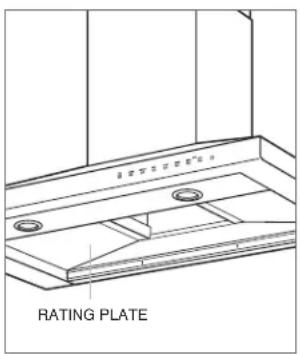
Rating plate location
IMPORTANT INSTRUCTIONS
WARNING
TO REDUCE THE RISK OF FIRE, ELECTRIC SHOCK, OR INJURY TO PERSONS, OBSERVE THE FOLLOWING:
a) Installation work and electrical wiring must be done by qualified person(s) in accordance with all applicable codes and standards, including fire-rated construction.
b) Sufficient air is needed for proper combustion and exhausting of gases through the flue (chimney) of fuel burning equipment to prevent back drafting. Follow the heating equipment manufacturer's guideline and safety standards such as those published by the National Fire Protection Association (NFPA), and the American Society for Heating, Refrigeration and Air Conditioning Engineers (ASHRAE), and the local code authorities.
c) When cutting or drilling into the wall or ceiling, do not damage electrical wiring and other hidden utilities.
d) Ducted fans must always be vented to the outdoors.
Installation Requirements
Wolf cooktop ventilation hoods are recommended for use with Wolf induction, electric, and gas cooktops and integrated modules. For ranges and rangetops, a Wolf pro ventilation hood is recommended.
These hoods have a telescopic chimney flue. A flue extension is available through an authorized Wolf dealer.
Installation of the cooktop hood should be 24" (610) to 36" (914) from the bottom of the hood to the countertop.
Wall and island hoods require an internal, in-line, or remote blower assembly, avail able through an authorized Wolf dealer. For local dealer information, visit the find a showroom section of our website, wolfappliance.com.
Consult a qualified HVAC professional for specific installation and ducting applications.
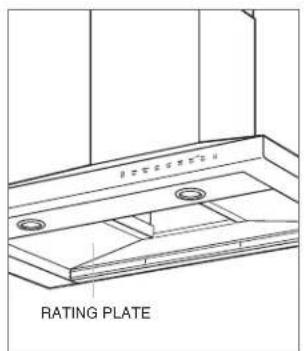
Rating plate location
Electrical Requirements
Installation must comply with all applicable electrical codes.
For wall hoods, locate the electrical supply within the shaded area shown in the illustration below. Allow a minimum 12" (305) Romex® wire for connection. For island hoods, locate the electrical supply on the ceiling inside the top of the hood. Allow a minimum 6' (1.8 m) Romex® wire for connection. A separate circuit servicing only this appliance is required.
ELECTRICAL REQUIREMENTS
Electrical Supply grounded, 110/120 VAC, 60 Hz
Service 15 amp dedicated circuit
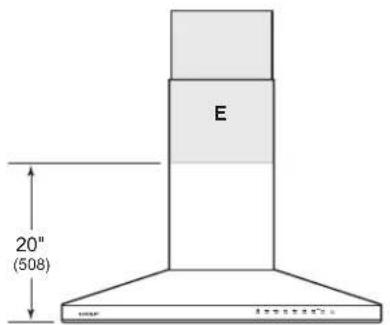
24" (610) TO 36" (914) BOTTOM EDGE TO COUNTERTOP
Electrical location—all wall hoods
Ducting
WARNING
To reduce the risk of fire, use only metal ducting.
IMPORTANT NOTE: Consult a qualified HVAC professional for specific installation and ducting applications.
Cooktop ventilation hoods accommodate a 6" (152) round duct. Use only rigid metal ducting.
A straight, short duct run is most effective and will ensure proper performance. If the duct run exceeds 50' (15 m), a higher CFM blower may be required to maintain proper air flow. A remote blower installed on a short duct run may increase the potential for noise.
Internal and in-line blowers require a roof or wall cap. Connect ducting to the cap and work back towards the hood. Use sheet metal screws and aluminum tape or high temperature duct tape to seal joints between ducting sections.
Cooktop hoods include a backdraft damper. Local codes may require the use of an additional backdraft and/or make-up air damper. Contact your local HVAC professional for specific requirements.
A make-up air damper is available through an authorized Wolf dealer. For local dealer information, visit the find a showroom section of our website, wolfappliance.com.
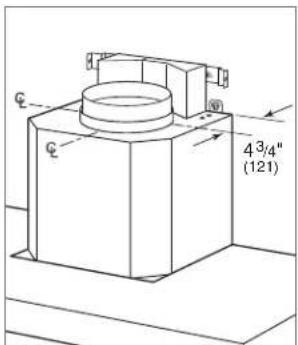
Vertical discharge
CAUTION
To reduce the risk of fire and to properly exhaust air, be sure to duct air outside. Do not vent exhaust air into spaces within walls or ceilings or into attics, crawl spaces, or garages.
CAUTION
To reduce the risk of fire and electrical shock, only install this range hood with remote blower models rated a maximum of 3A suitable for use with solid state speed control or internal blowers manufactured by Wolf, "Blower—300 CFM" or "Blower—600 CFM".
Installation
WALL HOOD
IMPORTANT NOTE: The hood is wired for an internal blower. If an in-line or remote blower will be used, refer to In-Line/Remote Blower Wiring on page 9.
If an internal blower will be used, install the blower prior to mounting the hood. Refer to page 8 for internal blower installation.
1 Mark the centerline for the location of the two mounting holes using dimensions shown in the chart and illustration below. Additional wall framing is recommended in this location. If wall framing is not available, the use of wall anchors is recommended. Install the mounting screws so there is approximately 14 " (6) gap between the screw head and the wall. Position the two mounting brackets for the chimney flue, then install using two mounting screws per bracket. Refer to the illustration below.
MOUNTING LOCATION A
Black Hood 12 ^3/4 " (324)
Stainless Hood 16 ^3 /s" (416)
Glass Hood 12 ^9/16 " (319)
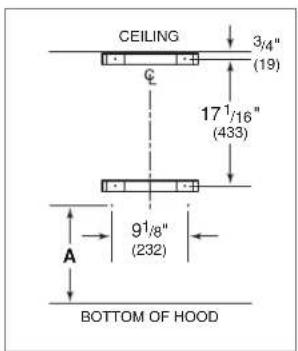
Mounting location
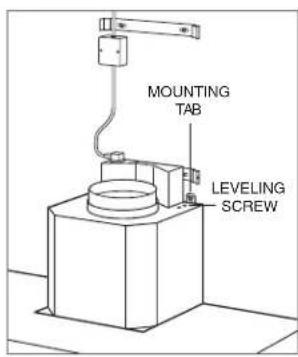
2 Place the mounting tabs over the mounting screws. Use the leveling adjustment screws to ensure the hood is level. Refer to the illustration below.
3 Place the backdraft damper on the round discharge then install 6" (152) round metal ducting (not provided) to the damper and seal with aluminum tape.
4 Mount the electrical box to the wall using the screws provided.
5 Insert the power supply from the home and the cord provided into the electrical box.
6 Make electrical connections and install the cover.
7 Insert the plug into the receptacle on the top of the hood.
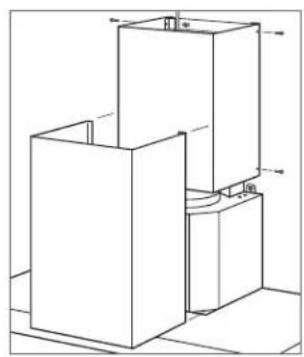
8 Secure the upper chimney flue to the mounting brackets using the screws provided. Refer to the illustration below. Place the lower chimney flue over the upper, then lower until it rests on the hood.
natural_image
Technical line drawing of a multi-tiered mechanical or architectural component (no text or symbols)Mount and level hood Install telescopic flue
Installation
ISLAND HOOD
IMPORTANT NOTE: The hood is wired for an internal blower. If an in-line or remote blower will be used, refer to In-Line/Remote Blower Wiring on page 9.
If an internal blower will be used, install the blower prior to mounting the hood. Refer to page 8 for internal blower installation.
1 Mark the centerline for the location of the four mounting holes using dimensions shown in the illustration below. Use the template provided to mark the mounting support locations, then use a 1¼" drill bit to create a hole for the electrical power supply.
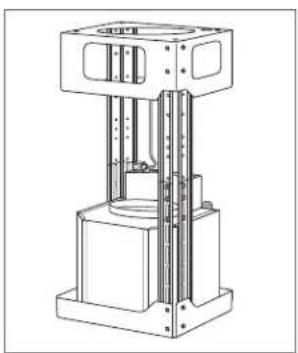
2 Place the four mounting screws into the ceiling, then position the support frame on those screws. Once the support frame is in place, tighten the screws.
3 Determine the desired height of the support frame and adjust the height by removing the four screws. Once the desired height is achieved, reinstall and tighten the screws.
4 Place the damper on the support frame then attach ducting to the damper.

Mounting location
natural_image
Technical line drawing of a mechanical press or actuator device (no text or symbols visible)Support frame
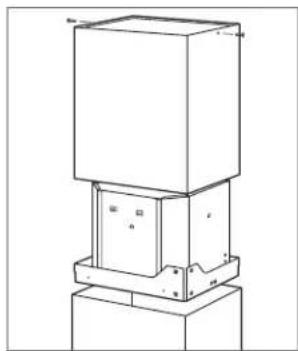
5 Slide the upper chimney flue onto the support frame and attach to the support frame using the screws provided. Refer to the illustration below. Slide the lower chimney flue over the upper and temporarily secure in this position using adhesive tape.
6 Raise the hood to the support frame and connect the hood to the support frame with the four screws provided. Refer to the illustration below.
7 Insert the two prong connector from the hood into the receptacle on the support frame.
8 Mount the electrical box to the wall using the support.
9 Insert the power supply from the home into the electrical box.
10Make electrical connections and install the cover.
11 Insert the plug into the receptacle on the top of the hood.
12Once wiring connections are complete, remove the adhesive tape securing the lower chimney flue, then lower until it rests on the hood.
WARNING
Failure to install the screws or fixing device in accordance with these instructions may result in electrical hazards.
natural_image
Technical line drawing of a mechanical assembly with a central block and mounting base (no text or symbols)Install telescopic flue
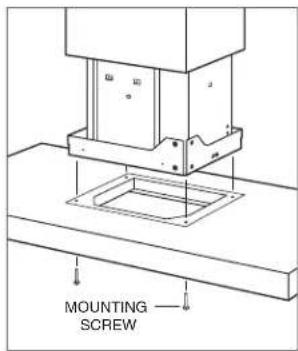
Mount hood
Installation
INTERNAL BLOWER
IMPORTANT NOTE: The blower must be installed and plugged in prior to making the electrical connection to the hood.
For models with a bottom panel, the panel must be removed prior to installing the blower. Refer to the illustration below.
1 Remove the filters.
2 For model VW30S, remove the screw cover and screw to remove the spacer. Refer to the illustration below.
3 Insert the three-prong plug from the blower wire into the hood receptacle. Refer to the illustration.
4 Insert the blower by aligning the round discharge on the blower with the discharge on the hood.
5 Insert the plug from the blower wire into the receptacle on the blower. Refer to the illustration.
6 Secure the blower to the hood using the two mounting screws provided.
7 For model VW30S, install the spacer, screw, and cover.
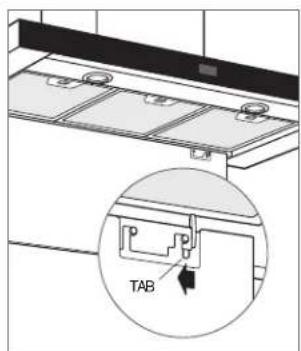
Bottom panel removal
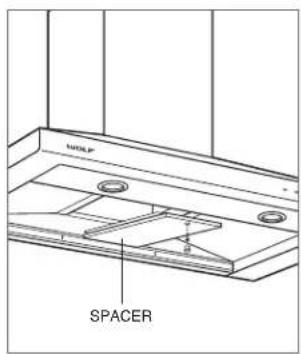
Spacer removal (model VW30S)
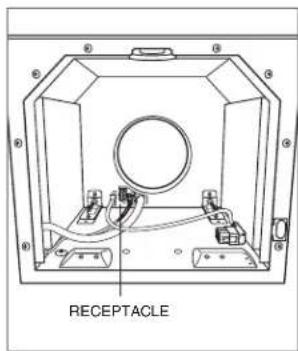
Hood receptacle
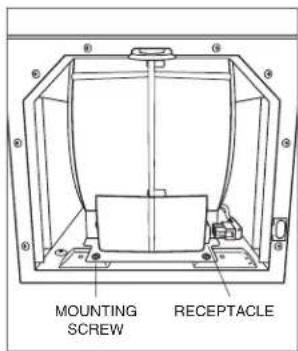
Mount blower
Wiring Connections
IN-LINE/REMOTE BLOWER WIRING
1 Remove the top cover of the electrical box by extracting the two screws. Refer to the illustration.
2 Remove one of the round knockouts using a flat blade screwdriver.
3 The terminal block is wired for an internal blower. For in-line and remote blowers, the existing blue and brown wires must be removed and placed in the two left positions to accommodate the in-line or remote blower wire. Refer to the illustration.
4 Insert Romex ^® wire from the in-line or remote blower through the knockout and secure using an approved cord stain relief.
5 Connect white to blue, black to brown and green to the ground screw. Refer to the illustration.
6 Verify all wires are secure and not pinched between the cover, and install the cover.
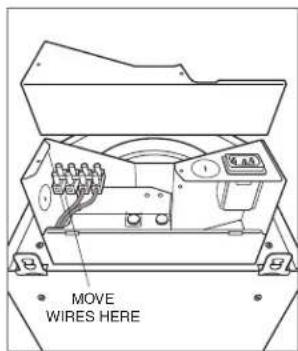
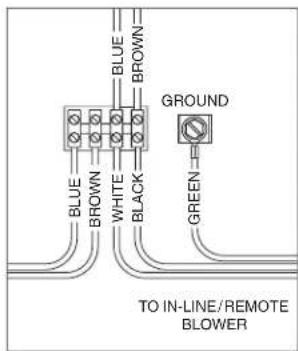
Wiring location In-line/remote blower wiring
Troubleshooting
IMPORTANT NOTE: If the ventilation hood does not operate properly, follow these troubleshooting steps:
- Verify electrical power is supplied to the ventilation hood.
- Verify proper wiring connections.
- If the ventilation hood does not operate properly, contact Wolf Factory Certified Service. Do not attempt to repair the hood. Wolf is not responsible for service required to correct a faulty installation.
Sub-Zero, Sub-Zero & Design, Sub-Zero & Snowflake Design, Dual Refrigeration, The Living Kitchen, Great American Kitchens The Fine Art of Kitchen Design, Wolf, Wolf & Design, Wolf Gourmet, W & Design, red colored knobs, Cove, and Cove & Design are registered trademarks and service marks of Sub-Zero Group, Inc. and its subsidiaries. All other trademarks are property of their respective owners in the United States and other countries.
Contenido
natural_image
Technical line drawing of a mechanical assembly with no visible text or symbolsnatural_image
Technical line drawing of a mechanical press or actuator device (no text or symbols visible)Marco de soporte
natural_image
Technical line drawing of a mechanical assembly with a central block and mounting base (no text or symbols)Instale el tubo telescópico
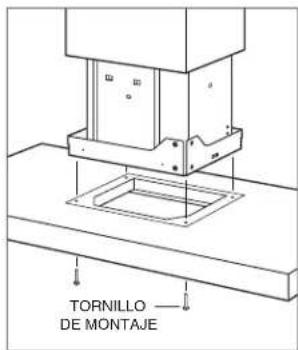
Instale la campana
Instalación
EXTRACTOR INTERNO
natural_image
Technical line drawing of a mechanical assembly with no visible text or symbolsnatural_image
Technical line drawing of a mechanical press or actuator device (no text or symbols visible)Cadre d'appui
natural_image
Technical line drawing of a mechanical assembly with a central block and mounting base (no text or symbols)WOLF APPLIANCE, INC. P.O. BOX 44848 MADISON, WI 53744 WOLFAPPLIANCE.COM 800.222.7820
825480 REV-E 4/2020