WIXXL 105 (EX) 60HZ.C - Washing machine INDESIT - Free user manual and instructions
Find the device manual for free WIXXL 105 (EX) 60HZ.C INDESIT in PDF.



| Product type | Washing machine |
| Brand | Indesit |
| Model | WIXXL 105 (EX) 60HZ.C |
| Dimensions (W x H x D) | 59.5 cm x 85 cm x 53.5 cm |
| Load capacity | 1 to 7 kg |
| Drum volume | 52 liters |
| Maximum spin speed | 1000 rpm |
| Water pressure | Min 0.05 MPa (0.5 bar) - Max 1 MPa (10 bar) |
| Power supply | 220-240 V ~ 50/60 Hz (see rating plate) |
| Wash programs | Cotton (90°C, 60°C, 40°C), Synthetics (60°C, 40°C, 30°C), Wool (40°C), Delicates (30°C), Sports, Express 30', Rinse, Spin, Drain |
| Additional functions | Delayed start (up to 9h), Stain removal, Easy iron, Extra rinse |
| Safety | Door locked during operation, automatic stop, overflow protection |
| Noise level | Not specified |
| Energy consumption | See energy label |
| Cleaning and maintenance | External cleaning with damp cloth, detergent drawer cleaning, door maintenance, pump cleaning (prechamber accessible through front panel) |
| Water connection | 3/4 gas tap, compliant pressure |
| Electrical connection | Grounded socket, 13 A fuse |
| After-sales service | Contact the dealer or authorized service center, provide model and serial number |
| Standards | CE compliant (89/336/EEC, 2006/95/EC) |
Frequently Asked Questions - WIXXL 105 (EX) 60HZ.C INDESIT
User questions about WIXXL 105 (EX) 60HZ.C INDESIT
0 question about this device. Answer the ones you know or ask your own.
Ask a new question about this device
Download the instructions for your Washing machine in PDF format for free! Find your manual WIXXL 105 (EX) 60HZ.C - INDESIT and take your electronic device back in hand. On this page are published all the documents necessary for the use of your device. WIXXL 105 (EX) 60HZ.C by INDESIT.
USER MANUAL WIXXL 105 (EX) 60HZ.C INDESIT
Installation, 2-3-4-5
Unpacking and levelling
Electric and water connections
The first wash cycle
Technical details
GB
Washing machine description, 6-7
Control panel
Leds
WIXXL 105
Starting and Programmes, 8
Briefly: how to start a programme
Programme table
Personalisations, 9
Setting the temperature
Setting the spin speed
Functions
Detergents and laundry, 10
Detergent dispenser
Bleach cycle
Preparing your laundry
Special items
Precautions and advice, 11
General safety
Disposal
Saving energy and respecting the environment
Care and maintenance, 12
Cutting off the water or electricity supply
Cleaning your appliance
Cleaning the detergent dispenser
Caring for your appliance door and drum
Cleaning the pump
Checking the water inlet hose
Troubleshooting, 13
Service, 14
Before calling for Assistance

INDESIT
!Keep this instruction manual in a safe place for future reference. Should the appliance be sold, transferred or moved, make sure the instruction manual accompanies the washing machine to inform the new owner as to its operation and features.
!Read these instructions carefully: they contain vital information on installation, use and safety.
Unpacking and levelling
Unpacking
- Unpack the washing machine.
- Check whether the washing machine has been damaged during transport. If this is the case, do not install it and contact your retailer.
-
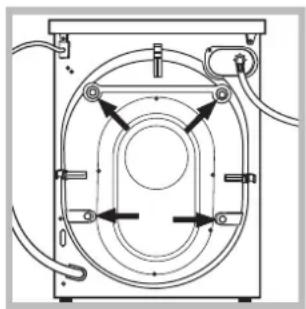
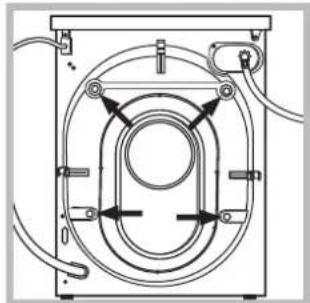
Remove the 4 protective screws and the rubber washer with the respective spacer, situated on the rear of the appliance (see figure).
-
Seal the gaps using the plastic plugs provided.
- Keep all the parts: you will need them again if the washing machine needs to be moved to another location.
!Packaging materials are not children's toys.
Levelling
- Install the washing machine on a flat sturdy floor, without resting it up against walls, furniture cabinets or other.
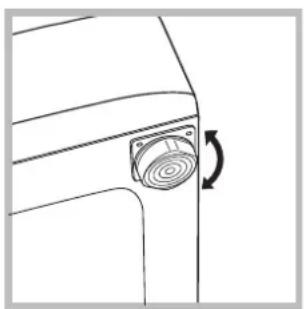
- If the floor is not perfectly level, compensate for any unevenness by tightening or loosening the adjustable front feet (see figure); the angle of inclination, measured according to the worktop, must not exceed 2^ .
Levelling your appliance correctly will provide it with stability and avoid any vibrations, noise and shifting during operation. If it is placed on a fitted or loose carpet, adjust the feet in such a way as to allow enough room for ventilation beneath the washing machine.
Electric and water connections
Connecting the water inlet hose
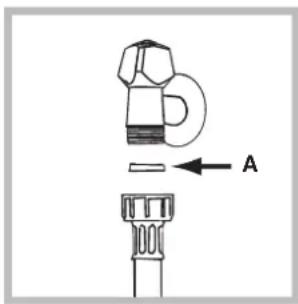
-
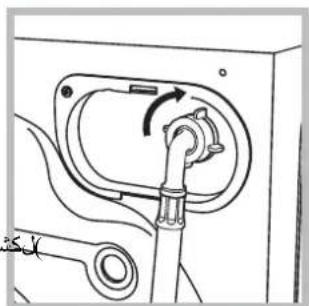
Insert seal A into the end of the inlet hose and screw the latter onto a cold water tap with a 3/4 gas threaded mouth (see figure). Before making the connection, allow the water to run freely until it is perfectly clear.
-
Connect the other end of the water inlet hose to the washing machine, screwing it onto the appliance's cold water inlet, situated on the top right-hand side on the rear of the appliance (see figure).
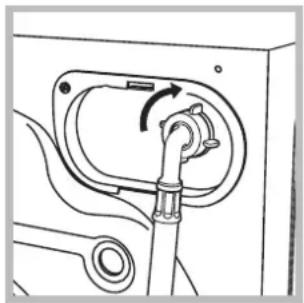
- Make sure there are no kinks or bends in the hose.
The water pressure at the tap must be within the values indicated in the Technical details table (on the next page).
If the water inlet hose is not long enough, contact a specialist store or an authorised serviceman.
! Never use hoses that have already been used.
Connecting the drain hose
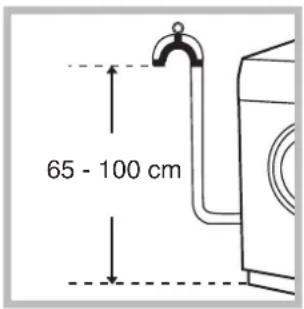
Connect the drain hose, without bending it, to a draining duct or a wall drain situated between 65 and 100cm from the floor;
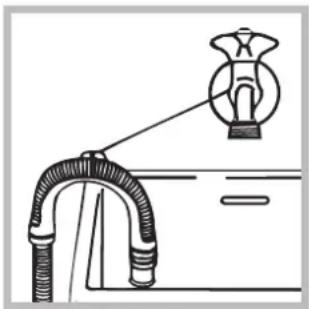
alternatively, place it over the edge of a basin, sink or tub, fastening the duct supplied to the tap (see figure). The free end of the hose should not be underwater.
We advise against the use of hose extensions; in case of absolute need, the extension must have the same diameter as the original hose and must not exceed 150~cm in length.
Electric connection
Before plugging the appliance into the mains socket, make sure that:
- the socket is earthed and in compliance with the applicable law;
- the socket is able to sustain the appliance's maximum power load indicated in the Technical details table (see page 5);
- the supply voltage is included within the values indicated on the Technical details table (see page 5);
- the socket is compatible with the washing machine's plug. If this is not the case, replace the socket or the plug.
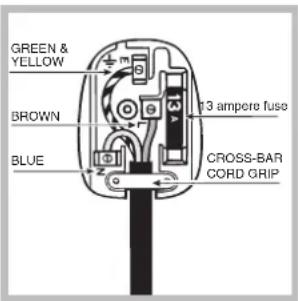
Your appliance is now supplied with a 13 amp fused plug it can be plugged into a 13 amp socket for immediate use. Before using the appliance please read the instructions below.
WARNING - THIS APPLIANCE MUST BE EARTHED. THE FOLLOWING OPERATIONS SHOULD BE CARRIED OUT BY A QUALIFIED ELECTRICIAN.
Replacing the fuse:
When replacing a faulty fuse, a 13 amp ASTA approved fuse to BS 1362 should always be used, and the fuse cover re-fitted. If the fuse cover is lost, the plug must not be used until a replacement is obtained.
Replacement fuse covers:
If a replacement fuse cover is fitted, it must be of the correct colour as indicated by the coloured marking or the colour that is embossed in words on the base of the plug. Replacements can be obtained directly from your nearest Service Depot.
Removing the plug:
If your appliance has a non-rewireable moulded plug and you should wish to re-route the mains cable through partitions, units etc., please ensure that either:
the plug is replaced by a fused 13 ampere re-. wearable plug bearing the BSI mark of approval. or:
the mains cable is wired directly into a 13 amp cable outlet, controlled by a switch, (in compliance with BS 5733) which is accessible without moving the appliance.
Disposing of the plug:
Ensure that before disposing of the plug itself, you make the pins unusable so that it cannot be accidentally inserted into a socket.
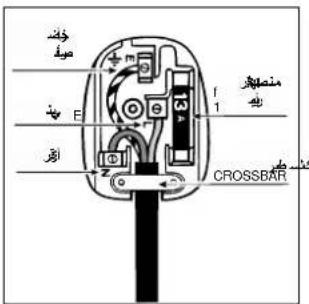
Instructions for connecting cable to an alternative plug: Important: the wires in the mains lead are coloured in accordance with the following code:
Green & Yellow Earth
Blue Neutral
Brown Live
As the colours of the wires in the lead may not correspond with the coloured markings identifying the terminals in your plug, proceed as follows: Connect Green & Yellow wire to terminal marked E or ± or coloured Green or Green & Yellow. Connect Brown wire to terminal marked L or coloured Red.
Connect Blue wire to terminal marked N or coloured Black.
If a 13 amp plug (BS 1363) is used it must be fitted with a
13 amp fuse, either in the plug or adaptor or at the distribution board.
If you are in any doubt the electrical supply to your machine, consult a qualified electrician before use. How to connect an alternative plug:
The wires in this mains lead are coloured in accordance with the following code:
BLUE NEUTRAL (N) BROWN LIVE (L)
GREEN & YELLOW EARTH (E)
Disposing of the appliance:
When disposing of the appliance please remove the plug by cutting the mains cable as close as possible to the plug body and dispose of it as described above.
The washing machine should not be installed in an outdoor environment, not even when the area is sheltered, because it may be very dangerous to leave it exposed to rain and thunderstorms.
! When the washing machine is installed, the mains socket must be within easy reach.
! Do not use extensions or multiple sockets.
The power supply cable must never be bent or dangerously compressed.
The power supply cable must only be replaced by an authorised serviceman.
Warning! The company denies all liability if and when these norms are not respected.
The first wash cycle
Once the appliance has been installed, and before you use it for the first time, run a wash cycle with detergent and no laundry, setting the 90^ programme without a pre-wash cycle.
| Technical details | |
| Model | WIXXL 105 |
| Dimensions | 59.5 cm wide85 cm high53,5 cm deep |
| Capacity | from 1 to 7 kg |
| Electric connections | please refer to the technical data plate fixed to the machine |
| Water connections | maximum pressure 1 MPa (10 bar)minimum pressure 0.05 MPa (0.5 bar)drum capacity 52 litres |
| Spin speed | up to 1000 rpm |
| Control programmes according to EN 60456 directive | programme 2; temperature 60°C;run with a load of 7 kg. |
| CE | This appliance is compliant with the following European Community Directives:- 89/336/CEE of 03/05/89(Electromagnetic Compatibility) and subsequent amendments- 2006/95/CE (Low Voltage) |
GB
Washing machine description
GB

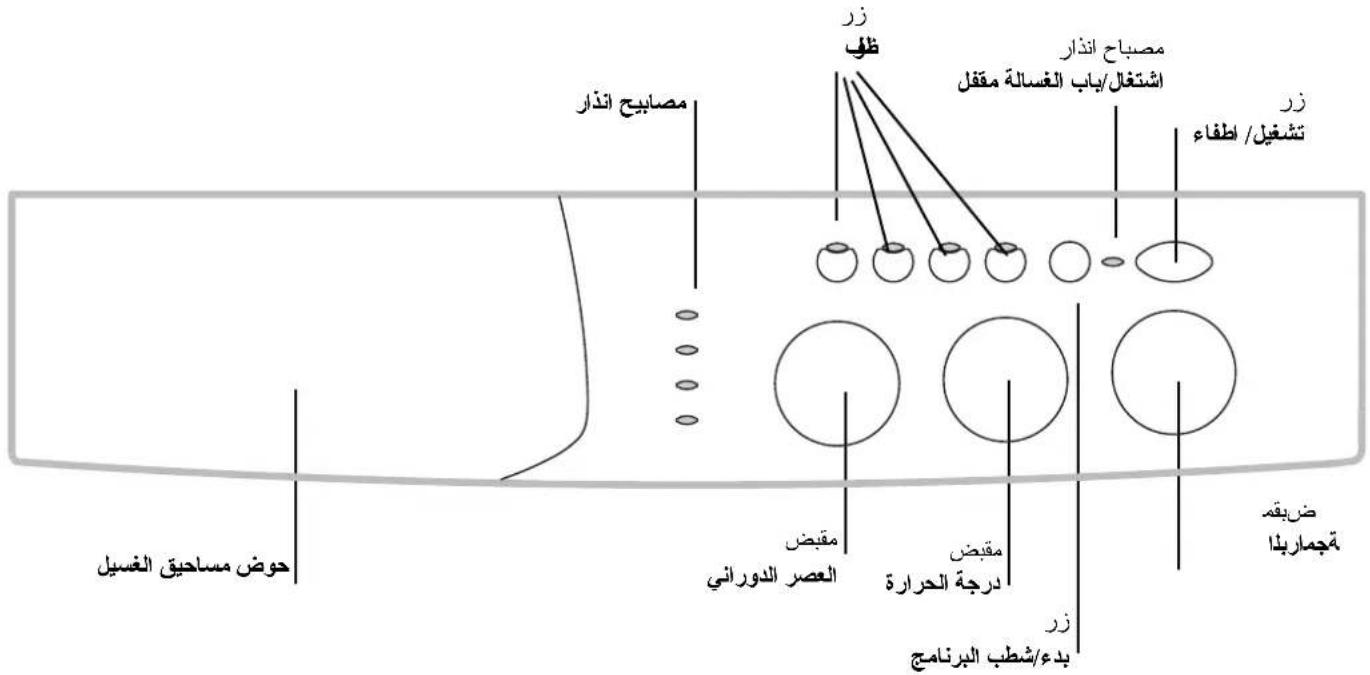
Control panel
Detergent dispenser: to add detergent and fabric softener (see page 10).
LEDS: to find out which wash cycle phase is under way. If the Delay Timer function has been set, the time left until the programme starts will be indicated (see page 7).
SPIN SPEED knob: to set the spin speed or exclude the spin cycle completely (see page 9).
FUNCTION buttons: to select the functions available. The button corresponding to the function selected will remain on.
TEMPERATURE knob: to set the temperature or the cold wash cycle (see page 9).
START/RESET button: to start the programmes or cancel any incorrect settings.
ON-OFF/DOOR LOCK Led: to find out whether the washing machine is on and if the appliance door can be opened (see page 7).
ON/OFF button: to turn the washing machine on and off.
PROGRAMME knob: to select the wash programmes. The knob stays still during the cycle.
Leds
The LEDs provide important information.
This is what they can tell you:
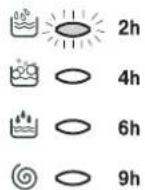
Delay set:
If the Delay Timer function has been enabled (see page. 9), once you have started the programme, the LED corresponding to the delay set will begin to flash:
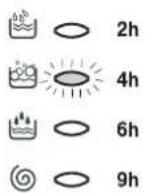
As time passes, the remaining delay will be displayed, and the corresponding LED will flash:
Once the set delay is complete, the flashing LED will turn off and the programme set will start.
Cycle phase under way:
During the wash cycle, the LEDs gradually illuminate on to indicate the cycle phase under way:




Note: during draining, the LED corresponding to the Spin cycle phase will be turned on.
Function buttons
The FUNCTION BUTTONS also act like LEDs. When a function is selected, the corresponding button is illuminated.
If the function selected is incompatible with the programme set, the button will flash and the function will not be enabled.
If you set a function that is incompatible with another function you selected previously, only the last one selected will be enabled.

ON-OFF/DOOR LOCK led
If this LED is on, the appliance door is locked to prevent it from being opened accidentally; to avoid any damages, wait for the LED to flash before you open the appliance door.
The rapid flashing of the ON-OFF/DOOR LOCK Led together with the flashing of at least one other LED indicates there is an abnormality (see page 13).
Starting and Programmes
GB
Briefly: starting a programme
- Switch the washing machine on by pressing button (1). All the LEDs will light up for a few seconds and the ON-OFF/DOOR LOCK Led will begin to flash.
- Load your laundry into the washing machine and shut the appliance door.
- Set the PROGRAMME knob to the programme required.
- Set the wash temperature (see page 9).
-
Set the spin speed (see page 9).
-
Add the detergent and any fabric softener (see page 10).
- Start the programme by pressing the START/RESET button. To cancel it, keep the START/RESET button pressed for at least 2 seconds.
- When the programme is finished, the ON-OFF/DOOR LOCK Led will flash to indicate that the appliance door can be opened. Take out your laundry and leave the appliance door ajar to allow the drum to dry thoroughly. Turn the washing machine off by pressing button (1).
Programme table
| Type of fabric and degree of soil | Programmes | Tempe- rature | Detergent | Fabric softener | Stain removal option/bleach | Cycle length (m inutes) | Description of wash cycle | |
| pre- wash | wash | |||||||
| Standard | ||||||||
| Cotton: Extremely soiled whites (sheets, tablecloths, etc.) | 1 | 90°C • | • • | 170 | Pre-wash, wash cycle, rinse cycles, intermediate and final spin cycles | |||
| Cotton: Extremely soiled whites (sheets, tablecloths, etc.) | 2 | 90°C • | • | Delicate/ Traditional | 155 | Wash cycle, rinse cycles, intermediate and final spin cycles | ||
| Cotton: Heavily soiled whites and fast colours | 2 | 60°C • | • | Delicate/ Traditional | 153 | Wash cycle, rinse cycles, intermediate and final spin cycles | ||
| Cotton: Heavily soiled whites and delicate colours | 2 | 40°C • | • | Delicate/ Traditional | 115 | Wash cycle, rinse cycles, intermediate and final spin cycles | ||
| Cotton: Slightly soiled whites and delicate colours (shirts, jumpers, etc.) | 3 | 40°C • | • | Delicate/ Traditional | 85 | Wash cycle, rinse cycles, intermediate and final spin cycles | ||
| Synthetics: Heavily soiled fast colours (baby linen, etc.) | 4 | 60°C • | Delicate | 85 | Wash cycle, rinse cycles, anti- crease or delicate spin cycle | |||
| Synthetics: Heavily soiled fast colours (baby linen, etc.) | 4 | 40°C • | Delicate | 75 | Wash cycle, rinse cycles, anti- crease or delicate spin cycle | |||
| Synthetics: Delicate colours (all types of slightly soiled garments) | 5 | 40°C • | Delicate | 70 | Wash cycle, rinse cycles, anti- crease or delicate spin cycle | |||
| Wool | 6 | 40°C • | • | 55 | Wash cycle, rinse cycle, delicate spin cycle | |||
| Very delicate fabrics (curtains, silk, viscose, etc.) | 7 | 30°C • | • | 55 | Wash cycle, rinse cycles, anti- crease or draining cycle | |||
| Tim e 4 you | ||||||||
| Cotton: Heavily soiled whites and fast colours | 8 | 60°C • | • | 60 | Wash cycle, rinse cycles, intermediate and final spin cycles | |||
| Cotton: Slightly soiled whites and delicate colours (shirts, jumpers, etc.) | 9 | 40°C • | • | 50 | Wash cycle, rinse cycles, intermediate and final spin cycles | |||
| Synthetics: Delicate colours (all types of slightly soiled garments) | 10 | 40°C | • | • | 40 | Wash cycle, rinse cycles, delicate spin cycle | ||
| Synthetics: Delicate colours (all types of slightly soiled garments) | 11 | 30°C • | • 30 | Wash cycle, rinse cycles and delicate spin cycle | ||||
| Sport | ||||||||
| Sports shoes (MAX. 2 pairs) | 12 | 30°C | • | • | 5 | 0 | Cold wash (without detergents), wash cycle, rinse cycles, and delicate spin cycle | |
| Fabrics for sportswear (Tracksuits, shorts, etc.) | 13 | 30°C • | • 60 | Wash cycle, rinse cycles, intermediate and final spin cycles | ||||
| PARTIAL PROGRAMMES | ||||||||
| Rinse • | Delicate/ Traditional | 31 | Rinse cycles and spin cycle | |||||
| Spin cycle | 12 | Draining and spin cycle | ||||||
| Drain | 2 | Draining | ||||||
Notes
-For programmes 8 and 9, we advise against exceeding a wash load of 3.5kg
-For programme 13 we advise against exceeding a wash load of 2kg
-For the anti-crease function: see Easy iron, opposite page. The information contained in the table is purely indicative.
Special programme
Daily (programme 11 for Synthetics) is designed to wash lightly soiled garments in a short amount of time: it only lasts 30 minutes and allows you to save on both time and energy. By setting this programme (11 at 30^ ), you can wash different fabrics together (except for woollen and silk items), with a maximum load of 3kg .
We recommend the use of liquid detergent.
Setting the temperature
Turn the TEMPERATURE knob to set the wash temperature (see Programme table on page 8).
The temperature can be lowered, or even set to a cold wash ( 8).
GB
Setting the spin speed
Turn the SPIN SPEED knob to set the spin speed for the programme selected.
The maximum spin speeds for each programme are as follows:
Programmes Maximum spin speed
Cottone 1000 rpm
Synthetics 800 rpm
Wool 600 rpm
Silk no
The spin speed can be lowered, or the spin cycle can be excluded altogether by selecting symbol

The washing machine will automatically prevent you from selecting a spin speed higher than the maximum speed for each programme.
Note: to avoid excessive vibrations, before every spin cycle the machine distributes the load in a uniform manner by continuously rotating the drum at a speed which is slightly faster than the normal washing speed.
When, despite repeated attempts, the load is still not evenly distributed, the machine spins at a lower speed than the set frequency.
If the load is excessively unbalanced, the machine attempts to distribute it instead of spinning.
The balancing attempts may extend the total duration of the cycle, up to a maximum of 10 minutes.
Functions
To enable a function:
- press the button corresponding to the desired function, according to the table below;
- the function is enabled when the corresponding button is illuminated.
Note: The rapid flashing of the button indicates that the corresponding function cannot be selected for the programme set.
| Function Effect | Effect Comments | Enabled with programmes: | |
| Delay Timer | Delays the start of the wash by up to 9 hours. | Press the button repeatedly until the LED corresponding to the desired delay is turned on. The fifth time the button is pressed, the function will be disabled. N.B.: Once you have pressed the Start/Reset button, the delay can only be decreased if you wish to modify it. | All |
| Stain removal | Bleaching cycle designed to remove the toughest stains. | Please remember to pour the bleach into extra compartment 4 (see page 10). This function is incompatible with the EASY IRON function. | 2, 3, 4, 5, Rinse cycle. |
| Easy iron | This option reduces the amount of creasing on fabrics, making them easier to iron. | When this function is set, programmes 4, 5, 7 will end with the laundry left to soak (Anti-crease) and the Rinse cycle phase LED will flash. - to conclude the cycle, press the START/RESET button; - to run the draining cycle alone, set the knob to the relative symbol and press the START/RESET button. This function is incompatible with the STAIN REMOVAL function. | 3, 4, 5, 7, 8, 9, 10, Rinse cycle. |
| Extra Rinse | Increases the efficiency of the rinse. | Recommended when the appliance has a full load or with large quantities of detergent. | 1, 2, 3, 4, 5, 8, 9, 10, 12, 13, Rinse cycle. |
Detergents and laundry
GB
Detergent dispenser
Good washing results also depend on the correct dose of detergent: adding too much detergent won't necessarily make for a more efficient wash, and may in fact cause build up on the interior of your appliance and even pollute the environment.
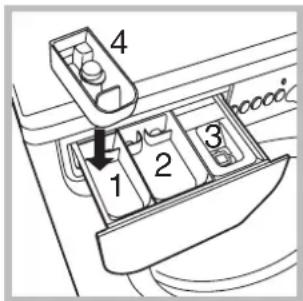
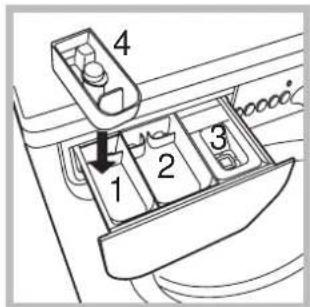
Open up the detergent dispenser and pour in the detergent and fabric softener, as follows.
compartment 1: Detergent for pre-wash (powder)
Before pouring in the detergent, make sure that extra compartment 4 has been removed.
compartment 2: Detergent for the wash cycle (powder or liquid)
Liquid detergent should only be poured in immediately prior to the wash cycle start.
compartment 3:Additives (fabric softeners, etc.)
The fabric softener should not overflow from the grid.
extra compartment 4: Bleach
! Do not use hand wash detergent because it may form too much foam.
Bleach cycle
! Traditional bleach should be used on sturdy white fabrics, and delicate bleach for coloured fabrics, synthetics and for wool.
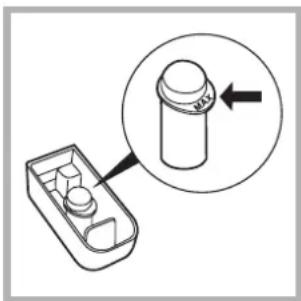
Place extra
compartment 4,
provided, into
compartment 1.
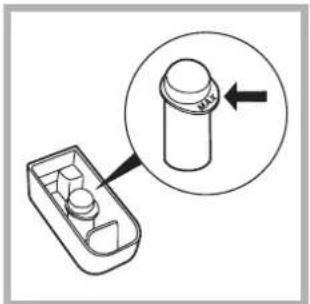
When pouring in the
bleach, be careful not to
exceed the "max" level indicated on the central pivot (see figure).
To run the bleach cycle alone, pour the bleach into extra compartment 4, enable the Stain removal option (see page 9) and set the Rinse programme. To bleach during a wash cycle, pour in the detergent and fabric softener, set the desired programme and enable the Stain removal option (see page 9).
The use of extra compartment 4 excludes the possibility of using the pre-wash cycle.
Preparing your laundry
-
Divide your laundry according to:
-
the type of fabric/the symbol on the label.
-
the colours: separate coloured garments from whites.
-
Empty all pockets and check for loose buttons.
-
Do not exceed the weight limits stated below, which refer to the weight when dry;
Sturdy fabrics: max 7 kg
Synthetic fabrics: max 3 kg
Delicate fabrics: max 2 kg
Wool: max 1,5 kg
How much does your laundry weigh?
1 sheet 400-500 g
1 pillow case 150-200 g
1 tablecloth 400-500 g
1 bathrobe 900-1,200 g
1 towel 150-250 g
Special items
Curtains: fold curtains and place them in a pillow case or mesh bag. Wash them separately without exceeding half the appliance load. Use programme 7 which excludes the spin cycle automatically.
Quilted coats and windbreakers: if they are padded with goose or duck down, they can be machine-washed. Turn the garments inside out and load a maximum of 2 - 3kg repeating the rinse cycle once or twice and using the delicate spin cycle.
Wool: for best results, use a specific detergent, taking care not to exceed a load of 1,5kg
The washing machine was designed and built in compliance with the applicable international safety regulations. The following information is provided for your safety and should consequently be read carefully.
General safety
- This appliance has been designed for non-professional, household use and its functions must not be changed.
- This washing machine should only be used by adults and in accordance with the instructions provided in this manual.
- Never touch the washing machine when barefoot or with wet or damp hands or feet.
- Do not pull on the power supply cable to unplug the appliance from the electricity socket. Pull the plug out yourself.
- Do not open the detergent dispenser while the appliance is in operation.
- Do not touch the drain water as it could reach very high temperatures.
- Never force the washing machine door: this could damage the safety lock mechanism designed to prevent any accidental openings.
- In the event of a malfunction, do not under any circumstances touch internal parts in order to attempt repairs.
- Always keep children well away from the appliance while in operation.
- The appliance door tends to get quite hot during the wash cycle.
- Should it have to be moved, proceed with the help of two or three people and handle it with the utmost care. Never try to do this alone, because the appliance is very heavy.
- Before loading your laundry into the washing machine, make sure the drum is empty.
Disposal
-
Disposing of the packaging material: observe local regulations, so the packaging can be re-used.
-
Disposing of an old washing machine: before scrapping your appliance, cut the power supply cable and remove the appliance door.
Saving energy and respecting the environment
Environmentally-friendly technology
If you only see a little water through your appliance door, this is because thanks to the latest Ariston technology, your washing machine only needs less than half the amount of water to get the best results: an objective reached to respect the environment.
Saving on detergent, water, energy and time
- To avoid wasting resources, the washing machine should be used with a full load. A full load instead of two half loads allows you to save up to 50% on energy.
- The pre-wash cycle is only necessary on extremely soiled garments. Avoiding it will save on detergent, time, water and between 5 and 15% energy.
- Treating stains with a stain remover or leaving them to soak before washing will cut down the need to wash them at high temperatures. A programme at 60^ instead of 90^ or one at 40^ instead of 60^ will save up to 50% on energy.
- Use the correct quantity of detergent depending on the water hardness, how soiled the garments are and the amount of laundry you have, to avoid wastage and to protect the environment: despite being biodegradable, detergents do contain ingredients that alter the natural balance of the environment. In addition, avoid using fabric softener as much as possible.
- If you use your washing machine from late in the afternoon until the early hours of the morning, you will help reduce the electricity board's peak load. The Delay Timer option (see page 9) helps to organise your wash cycles accordingly.
- If your laundry has to be dried in a tumble dryer, select a high spin speed. Having the least water possible in your laundry will save you time and energy in the drying process.
Cutting off the water or electricity supply
- Turn off the water tap after every wash. This will limit the wear of your appliance's water system and also prevent leaks.
- Unplug your appliance when cleaning it and during all maintenance operations.
Cleaning your appliance
The exterior and rubber parts of your appliance can be cleaned with a soft cloth soaked in lukewarm soapy water. Do not use solvents or abrasives.
Cleaning the detergent dispenser
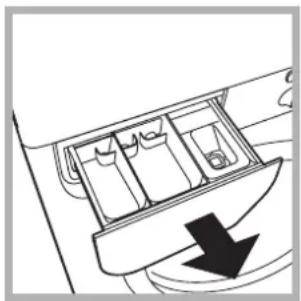
Remove the dispenser by pulling it out (see figure).
Wash it under running water; this operation should be repeated frequently.
Caring for your appliance door and drum
- Always leave the appliance door ajar to prevent unpleasant odours from forming.
Cleaning the pump
The washing machine is fitted with a self-cleaning pump that does not require any maintenance. Sometimes, small items (such as coins or buttons) may fall into the pre-chamber that protects the pump, situated in the lower part of the same.
! Make sure the wash cycle has ended and unplug the appliance.
To access the pre-chamber:
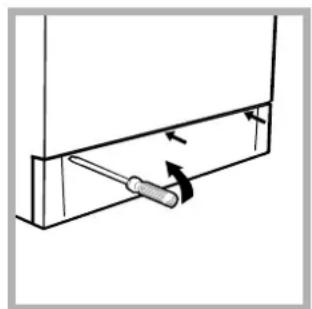
-
using a screwdriver, remove the cover panel on the lower front of the washing machine (see figure);
-
unscrew the lid rotating it anticlockwise (see figure): a little water may trickle out. This is perfectly normal;
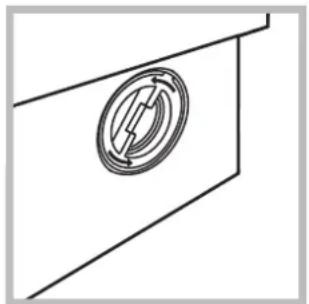
-
clean the interior thoroughly;
-
screw the lid back on;
-
reposition the panel, making sure the hooks are securely in place before you push it onto the appliance.
Checking the water inlet hose
Check the water inlet hose at least once a year. If you see any cracks, replace it immediately: during the wash cycles, water pressure is very strong and a cracked hose could easily split open.
! Never use hoses that have already been used.
Your washing machine could fail to work. Before calling for Assistance (see page 14), make sure the problem can't easily be solved by consulting the following list.
Problem
The washing machine won't start.
The wash cycle won't start.
The washing machine fails to load water.
The washing machine continuously loads and unloads water.
The washing machine does not drain or spin.
The washing machine vibrates too much during the spin cycle.
The washing machine leaks.
The ON-OFF/DOOR LOCK Led flashes rapidly at the same time as at least one other LED.
There is too much foam.
Possible causes/Solution:
- The appliance is not plugged into the socket, or not enough to make contact.
- There has been a power failure.
The appliance door is not shut properly.
- The (I) button has not been pressed.
- The START/RESET button has not been pressed.
The water tap is not turned on.
- A delayed start has been set (using the Delay Timer, see page 9).
- The water inlet hose is not connected to the tap.
The hose is bent.
The water tap is not turned on.
- There is a water shortage.
- The water pressure is insufficient.
- The START/RESET button has not been pressed.
- The drain hose is not fitted between 65 and 100cm from the floor (see page 3).
The free end of the hose is underwater (see page 3). -
The wall drainage system doesn't have a breather pipe. If the problem persists even after these checks, turn off the water tap, switch the appliance off and call for Assistance. If the dwelling is on one of the upper floors of a building, there may be drain trap problems causing the washing machine to load and unload water continuously. In order to avoid such an inconvenience, special anti-drain trap valves are available in shops.
-
The programme does not foresee the draining: some programmes require enabling the draining manually (see page 8).
-
The Easy iron option is enabled: to complete the programme, press the START/RESET button (see page 9).
The drain hose is bent (see page 3).
The drain duct is clogged.
The drum was not unblocked correctly during installation (see page 2).
- The washing machine is not level (see page 2).
- The washing machine is closed in between furniture cabinets and the wall (see page 2).
- The water inlet hose is not screwed on correctly (see page 2).
-
The detergent dispenser is obstructed (to clean it, see page 12).
The drain hose is not secured properly (see page 3). -
Switch off the machine and unplug the appliance; wait for approximately 1 minute then switch it on again. If the problem persists, contact Assistance.
-
The detergent is not suitable for machine washing (it should bear the definition "for washing machines" or "hand and machine wash", or the like).
- You used too much detergent.
Before calling for Assistance:
- Check whether you can solve the problem on your own (see page 13);
- Restart the programme to check whether the problem has been solved;
- If this is not the case, contact an authorised Technical Service Centre on the telephone number provided on the guarantee certificate.
!Always request the assistance of authorised servicemen.
Notify the operator of:
the type of problem;
the appliance model (Mod.);
the serial number (S/N).
This information can be found on the data plate situated on the rear of the washing machine.
1. 2 = 0
19-1836
jai jao jao jao jao jao jao
Dolalolglgld
确指 x1 = 2,x2 = - 4
291 1
1.
L
1.
S OBC = S COD + S BOC - S BOC
1_2 + 2 + 2 = 3
23.
Jnss
23.
24.
24
24.
1
24awolw
2
10 : 2 : 3 : 4
- 1
JLa Jgai jia Jia Jia Jia Jia Jia Jia Jia Jia Jia Jia Jia Jia Jia Jia Jia Jia
1y
aillll 2
all jaiy aay y all y all y all
alil jll aai j j j j j
3.1
J 1 J 1
J 1 J 1
J 1 J 1
J 1 J 1
J 1 J 1
J 1 J 1
J 1 J 1
1 5
J 1
- 10
jlll jlll jlll l 1
aaiy 1
(aiiiaaannn) jaiiai
aal aai y
ailllll llll llll llll llll llll
1
1
Jgall all gals, Jus Jus Jus Jus Jus Jus Jus Jus Jus Jus Jus Jus Jus Jus Jus Jus Jus Jus Jus Jus Jus Jus Jus Jus Jus Jus Jus Jus Jus Jus Jus Jus Jus Jus Jus Jus Jus Jus Jus Jus Jus Jus Jus Jus Jus Jus Jus Jus Jus Jus Jusk
()
1 1 1 1 1 1 1 1 1 1 1 1 1 1 1 1 1 1 1 1 1 1 1 1 1 1 1 1 1 1
L 1
J 1
J 1
Jusie Jusie Jusie Jusie Jusie Jusie Jusie Jusie
00 1
y
:()
y
(N) (jj)
(L)
(E)
1
j j
()
ybi yj yj 11i.
laas
i j k l n a d y g b i e k s k l g j k l k j k j k j k j k j k j k j k j k j k j k j k j k j k j k j k j k j k j k j k j k j k j k j k j
A. jol g o j j b aal jia wabll jolgc jj
J 1
()
Jgbi dI 1
1
a
- 124, 125
J 1
1
a
WIXXL 105
10.2019.59.1
85
jiahao 53
75
24.5(6)(0)
4
a
(10) 1
0.05 ÷ ( 12 + 13 - 13) = 14
1
1006
juaa 1
A
山 60
ai a ai 分母最小值为 k .
J 1
美
EN 60456
J
3 2
:Asjaiai
jia 2 jie jie la
y 1


2
L 150
15g j 131 131 131 131 131 131 131 131 131 131 131 131 131 131 131 131 131 131 131 131 131 131 131 131 131 13
wlll 111, j
()
Jaaalj Jaaal g aal jaiy lglglaaag

y 1
LsAaBaaal
Jaaal jaoa aag 1gaae 2j gaiy bai y daii 1
aibill Joc Jy jiaall jjolal.2
J 1
| الإستعمال | الإستعمال | الإستعمال | الإستعمال |
| 日消息 | 日消息 | 日消息 | 日消息 |
| 日消息 | 日消息 | 日消息 | 日消息 |
| 日消息 | 日消息 | 日消息 | 日消息 |
| 日消息 | 日消息 | 日消息 | 日消息 |
| 日消息 | 日消息 | 日消息 | 日消息 |
| 日消息 | 日消息 | 日消息 | 日消息 |
| 日消息 | 日消息 | 日消息 | 日消息 |
| 日消息 | 日消息 | 日消息 | 日消息 |
| 日消息 | 日消息 | 日消息 | 日消息 |
| 日消息 | 日消息 | 日消息 | 日消息 |
| 日消息 | 日消息 | 日消息 | 消息 |
| 1-12-10-9-8 | 2-3-4-5-6-7-8-9-10-11-12-13-14-15-16-17-18-19-20-21-22-23-24-25-26-27-28-29-30-31-32-33-34-35-36-37-38-39-40-41-42-43-44-45-46-47-48-49-50-51-52-53-54-55-56-57-58-59-60-61-62-63-64-65-66-67-68-69-70-71-72-73-74-75-76-77-78-79-80-81-82-83-84-85-86-87-88-89-90-91-92-93-94-95-96-97-98-99-100-101-102-103-104-105-106-107-108-109-110-111-112-113-114-115-116-117-118-119-120-121-122-123-124-125-126-127-128-129-130-131-132-133-134-135-136-137-138-139-140-141-142-143-144-145-146-147-148-149-150-151-152-153-154-155-156-157-158-159-160-161-162-163-164-165-166-167-168-169-170-171-172-173-174-175-176-177-178-179-180-181-182-183-184-185-186-187-188-189-190-191-192-193-194-195-196-197-198-199-200-201-202-203-204-205-206-207-208-209-210-211-212-213-214-215-216-217-218-219-220-221-222-223-224-225-226-227-228-229-230-231-232-233-234-235-236-237-238-239-240-241-242-243-244-245-246-247-248-249-250-251-252-253-254-255-256-257-258-259-260-261-262-263-264-265-266-267-268-269-270-271-272-273-274-275-276-277-278-279-280-281-282-283-284-285-286-287-288-289-290-291-292-293-294-295-296-297-298-299-300-301-302-303-304-305-306-307-308-309-310-311-312-313-314-315-316-317-318-319-320-321-322-323-324-325-326-327-328-329-330-331-332-333-334-335-336-337-338-339-340-341-342-343-344-345-346-347-348-349-350-351-352-353-354-355-356-357-358-359-360-361-362-363-364-365-366-367-368-369-370-371-372-373-374-375-376-377-378-379-380-381-382-383-384-385-386-387-388-389-390-391-392-393-394-395-396-397-398-399-400-401-402-403-404-405-406-407-408-409-410-411-412-413-414-415-416-417-418-419-420-421-422-423-424-425-426-427-428-429-430-431-432-433-434-435-436-437-438-439-440-441-442-443-444-445-446-447-448-449-450-451-452-453-454-455-456-457-458-459-460-461-462-463-464-465-466-467-468-469-470-471-472-473-474-475-476-477-478-479-480-481-482-483-484-485-486-487-488-489-490-491-492-493-494-495-496-497-498-499-500-501-502-503-504-505-506-507-508-509-510-511-512-513-514-515-516-517-518-519-520-521-522-523-524-525-526-527-528-529-530-531-532-533-534-535-536-537-538-539-540-541-542-543-544-545-546-547-548-549-550-551-552-553-554-555-556-557-558-559-560-561-562-563-564-565-566-567-568-569-570-571-572-573-574-575-576-577-578-579-580-581-582-583-584-585-586-587-588-589-590-591-592-593-594-595-596-597-598-599-600-601-602-603-604-605-606-607-608-609-610-611-612-613-614-615-616-617-618-619-620-621-622-623-624-625-626-627-628-629-630-631-632-633-634-635-636-637-638-639-640-641-642-643-644-645-646-647-648-649-650-651-652-653-654-655-656-657-658-659-660-661-662-663-664-665-666-667-668-669-670-671-672-673-674-675-676-677-678-679-680-681-682-683-684-685-686-687-688-689-690-691-692-693-694-695-696-697-698-699-700-701-702-703-704-705-706-707-708-709-710-711-712-713-714-715-716-717-718-719-720-721-722-723-724-725-726-727-728-729-730-731-732-733-734-735-736-737-738-739-740-741-742-743-744-745-746-747-748-749-750-751-752-753-754-755-756-757-758-759-760-761-762-763-764-765-766-767-768-769-770-771-772-773-774-775-776-777-778-779-780-781-782-783-784-785-786-787-788-789-790-791-792-793-794-795-796-797-798-799-800-801-802-803-804-805-806-807-808-809-810-811-812-813-814-815-816-817-818-819-820-821-822-823-824-825-826-827-828-829-830-831-832-833-834-835-836-837-838-839-840-841-842-843-844-845-846-847-848-849-850-851-852-853-854-855-856-857-858-859-860-861-862-863-864-865-866-867-868-869-870-871-872-873-874-875-876-877-878-879-880-881-882-883-884-885-886-887-888-889-890-891-892-893-894-895-896-897-898-899-900-901-902-903-904-905-906-907-908-909-910-911-912-913-914-915-916-917-918-919-920-921-922-923-924-925-926-927-928-929-930-931-932-933-934-935-936-937-938-939-940-941-942-943-944-945-946-947-948-949-950-951-952-953-954-955-956-957-958-959-960-961-962-963-964-965-966-967-968-969-970-971-972-973-974-975-976-977-978-979-980-981-982-983-984-985-986-987-988-989-990-991-992-993-994-995-996-997-998-999-1000- 1010 1011 1012 1013 1014 1015 1016 1017 1018 1019 1020 1021 1022 1023 1024 1025 1026 1027 1028 1029 1030 1031 1032 1033 1034 1035 1036 1037 1038 1039 1040 1041 1042 1043 1044 1045 1046 1047 1048 1049 1050 1051 1052 1053 1054 1055 1056 1057 1058 1059 1060 1061 1062 1063 1064 1065 1066 1067 1068 1069 1070 1071 1072 1073 1074 1075 1076 1077 1078 1079 1080 1081 1082 1083 1084 1085 1086 1087 1088 1089 1090 1091 1092 1093 1094 1095 1096 1097 1098 1099 1100 1101 1102 1103 1104 1105 1106 1107 1108 1109 1110 1111 1112 1113 1114 1115 1116 1117 1118 1119 1120 1121 1122 1123 1124 1125 1126 1127 1128 1129 1130 1131 1132 1133 1134 1135 1136 1137 1138 1139 1140 1141 1142 1143 1144 1145 1146 1147 1148 1149 1150 1151 1152 1153 1154 1155 1156 1157 1158 1159 1160 1161 1162 1163 1164 1165 1166 1167 1168 1169 1170 1171 1172 1173 1174 1175 1176 1177 1178 1179 1180 1181 1182 1183 1184 1185 1186 1187 1188 1189 1200 - |
aaiiaai ai 4
gall ylll gannn nnnn nn nnnn nnnn nnnn nnnn nnnn nnnn nnnn nnnn nnnn nnnn nnnn nnnn nnnn nnnn nnnn nnnn nnnn nnnn nnnn nnnn nnnn nnnn nnnn nnnn nnnn nnnn nnnn nnnn nnnn nnnn nnnn nnnn nnnn nnnn
a 1 g a 1 1
a@j3j5)
jL 4 4
2) Refresh (y) 7
Jennell Jannell
gul 1
aal aal aal aal aal aal aal aal aal
glial jglial jg 1glial glial
1 1
52 111111111
ps1.5 allwll Jg:
JSSS
500-400 1
pJ200-150 sLg e Lbc 1
500-400 1
1200-900 1
250-150 1
Aolai
laalglalglalai jyj yj lglgolglalglgglgglgglgglgglg
J 7 10
aJ 1sall Jaae aJgai
a 1
ailllll jll llll llll aia iil lllll
aee 3-2e
auiuui
jia jil jai jai jai jai jai jai jai jai jai jai jai jai jai jai jai jai jai jai jai jai jai jai jai jai jai jai jai jai jai jai jai jai jai jai jai jai jai jai jai jai jai jai jai jai jai jai jai jai jai jai jali jali jali jali jali jali jali jali
1.5 2 3
a a a a a a a a a a a a a a a a a a a a a a a a a a a a a a a a a
aalwlll 1
jua juaa
jll jss
J 1
Bulj 1
(6)
4 1
(Jilu gj)gall jwll gals:2
Aillll jia jia hao aaiy jilial
(a):3
aill 2
a:4 a
3.5608929147 1
aulllll laiyall g ailll ayell ayll jayll piai ylll laiyall
aagaae aae
4.5
j 2000
Ji 1
Jall max 1
S ACD = S COD + S_ CDA
()
a 1
auiipjgluai
a a a a a a a a a a a a a
J 1
J 1
ailll al jal, aylal lal 10:
jajg. jaygsl aall, cll. jas
JalS llaa jaii laa i aia gds
50
jia jia jia 2120 wu wu wu wu wu wu wu wu wu wu
y
aalall jai 10g aaiia 10gaiia gaiia
a
#
Jaiuui jie jie jie jie jie jie
1 1
a 1
J 1
Slll (sill) 15
jll Jd jll jll jll jll jll
yie 1
Jaaal Jaaa, Jla Jla aagallll Jgai jy
jie jie jie jie jie jie jie jie jie jie jie jie jie jie jie jie jie jie jie jie jie
j
Ae Jd j 10
j 1
-
#
: 1alil al go wol
Jz jz 1yabz Jz 1yabz 5.5
a
Lgaii Lgaii gaii j. Liagai i yaiia yaiia aaiai
| Jahre | 1985 | 1986 | 1987 | 1988 | 1989 | 1990 | 1991 |
| 1 | 24 | 23 | 24 | 23 | 23 | 23 | 23 |
| 2 | 23 | 23 | 23 | 23 | 23 | 23 | 23 |
| 3 | 23 | 23 | 23 | 23 | 23 | 23 | 23 |
| 4 | 23 | 23 | 23 | 23 | 23 | 23 | 23 |
| 5 | 23 | 23 | 23 | 23 | 23 | 23 | 23 |
| 6 | 23 | 23 | 23 | 23 | 23 | 23 | 23 |
| 7 | 23 | 23 | 23 | 23 | 23 | 23 | 23 |
| 8 | 23 | 23 | 23 | 23 | 23 | 23 | 23 |
| 9 | 23 | 23 | 23 | 23 | 23 | 23 | 23 |
| 10 | 23 | 23 | 23 | 23 | 23 | 23 | 23 |
| 11 | 23 | 23 | 23 | 23 | 23 | 23 | 23 |
| 12 | 23 | 23 | 23 | 23 | 23 | 23 | 23 |
| 13 | 23 | 23 | 23 | 23 | 23 | 23 | 23 |
| 14 | 23 | 23 | 23 | 23 | 23 | 23 | 23 |
| 15 | 23 | 23 | 23 | 23 | 23 | 23 | 23 |
| 16 | 23 | 23 | 23 | 23 | 23 | 23 | 23 |
| 17 | 23 | 23 | 23 | 23 | 23 | 23 | 23 |
| 18 | 23 | 23 | 23 | 23 | 23 | 23 | 23 |
:aiialiaillglslj
aall aal yall aal all as 100 100
: aIill lal gall 1ghci
(Mod)
(S/N) jll lulill
a aal lal n aaiiial ai biaai iie aaiai iaii iaii iai iai iai

Français
Sommaire
Installation, 30-31-32-33
Causes / Solutions possibles:
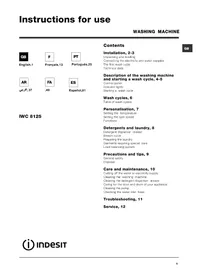
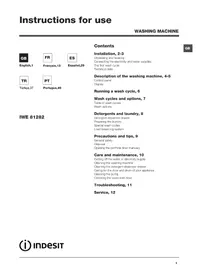
- Installation, 2-3-4-5
- Washing machine description, 6-7
- Starting and Programmes, 8
- Personalisations, 9
- Detergents and laundry, 10
- Precautions and advice, 11
- Care and maintenance, 12
- Troubleshooting, 13
- Unpacking and levelling
- Unpacking
- Levelling
- Electric and water connections
- Connecting the water inlet hose
- Connecting the drain hose
- Electric connection
- Replacing the fuse:
- Replacement fuse covers:
- Removing the plug:
- Disposing of the plug:
- Green & Yellow Earth
- Blue Neutral
- Brown Live
- BLUE NEUTRAL (N) BROWN LIVE (L)
- GREEN & YELLOW EARTH (E)
- The first wash cycle
- Washing machine description
- Leds
- Delay set:
- Cycle phase under way:
- Function buttons
- ON-OFF/DOOR LOCK led
- Starting and Programmes
- Briefly: starting a programme
- Programme table
- Notes
- Special programme
- Setting the temperature
- Setting the spin speed
- Programmes Maximum spin speed
- Functions
- Detergents and laundry
- Detergent dispenser
- compartment 1: Detergent for pre-wash (powder)
- compartment 2: Detergent for the wash cycle (powder or liquid)
- compartment 3:Additives (fabric softeners, etc.)
- extra compartment 4: Bleach
- Bleach cycle
- Preparing your laundry
- How much does your laundry weigh?
- Special items
- General safety
- Disposal
- Saving energy and respecting the environment
- Environmentally-friendly technology
- Saving on detergent, water, energy and time
- Cutting off the water or electricity supply
- Cleaning your appliance
- Cleaning the detergent dispenser
- Caring for your appliance door and drum
- Cleaning the pump
- Checking the water inlet hose
- Problem
- Possible causes/Solution:
- Before calling for Assistance:
- Notify the operator of:
- 2 = 0
- 19-1836
- 1
- 23.
- 24.
- 2
- auiipjgluai
- #
- Sommaire
- Installation, 30-31-32-33
- Causes / Solutions possibles:
Brand : INDESIT
Model : WIXXL 105 (EX) 60HZ.C
Category : Washing machine