AVTL 83 (EU) - Washing machine HOTPOINT-ARISTON - Free user manual and instructions
Find the device manual for free AVTL 83 (EU) HOTPOINT-ARISTON in PDF.



User questions about AVTL 83 (EU) HOTPOINT-ARISTON
0 question about this device. Answer the ones you know or ask your own.
Ask a new question about this device
Download the instructions for your Washing machine in PDF format for free! Find your manual AVTL 83 (EU) - HOTPOINT-ARISTON and take your electronic device back in hand. On this page are published all the documents necessary for the use of your device. AVTL 83 (EU) by HOTPOINT-ARISTON.
USER MANUAL AVTL 83 (EU) HOTPOINT-ARISTON
Unpacking and levelling, 2
Electric and water connections, 2-3
The first wash cycle, 3
Technical details, 3
GB
Washing machine description, 4-5
Control panel, 4
How to open and shut the drum, 5
Leds, 5
Starting and Programmes, 6
Briefly: how to start a programme, 6
Programme table, 6
Personalisations, 7
Setting the temperature, 7
Setting the spin cycle, 7
Functions, 7
AVTL 83
Detergents and laundry, 8
Detergent dispenser, 8
Bleach cycle, 8
Preparing your laundry, 8
Special items, 8
Woolmark Platinum Care, 8
Precautions and advice, 9
General safety, 9
Disposal, 9
Saving energy and respecting the environment, 9
Care and maintenance, 10
Cutting off the water or electricity supply, 10
Cleaning your appliance, 10
Caring for your appliance door and drum, 10
Cleaning the pump, 10
Checking the water inlet hose, 10
Cleaning the detergent dispenser, 10
Troubleshooting, 11
Service, 12
Before calling for Assistance, 12

GB
!Keep this instruction manual in a safe place for future reference. Should the appliance be sold, transferred or moved, make sure the instruction manual accompanies the washing machine to inform the new owner as to its operation and features.
!Read these instructions carefully: they contain vital information on installation, use and safety.
Unpacking and levelling
Unpacking
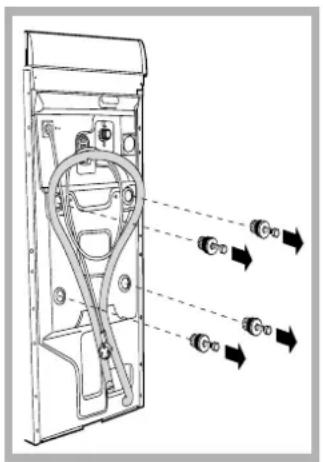
- Unpack the washing machine.
- Check whether the washing machine has been damaged during transport. If this is the case, do not install it and contact your retailer.
-
Remove the four protective screws and the rubber washer with the respective spacer, situated on the rear of the appliance (see figure).
-
Seal the gaps using the plastic plugs provided.
- Keep all the parts: you will need them again if the washing machine needs to be moved to another location.
Warning: should the screws be re-used, make sure you fasten the shorter ones at the top.
!Packaging materials are not children's toys.
Levelling
Your machine may make a considerable amount of noise if the two front feet have not been adjusted correctly.
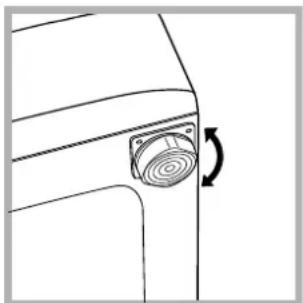
- Install the washing machine on a flat sturdy floor, without resting it up against walls, furniture cabinets or other.
- If the floor is not perfectly level, compensate for any unevenness by tightening or
loosening the adjustable front feet (see figure); the angle of inclination, measured according to the worktop, must not exceed 2^ .
Levelling your appliance correctly will provide it with stability and avoid any vibrations, noise and shifting during operation. If it is placed on a fitted or loose carpet, adjust the feet in such a way as to allow enough room for ventilation beneath the washing machine.
Electric and water connections
Connecting the water inlet hose
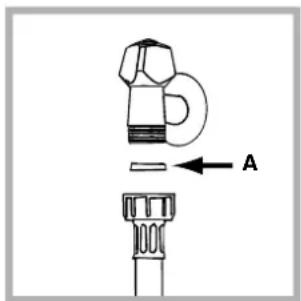
- Insert seal A into the end of the inlet hose and screw the latter onto a cold water tap with a 3/4 gas threaded mouth (see figure).
Before making the connection, allow the water to run freely until it is perfectly clear. -
Connect the other end of the water inlet hose to the washing machine, screwing it onto the appliance's cold water inlet, situated on the top right-hand side on the rear of the appliance (see figure).
-
Make sure there are no kinks or bends in the hose.
The water pressure at the tap must be within the values indicated in the Technical details table (on the next page).
If the water inlet hose is not long enough, contact a specialist store or an authorised serviceman.
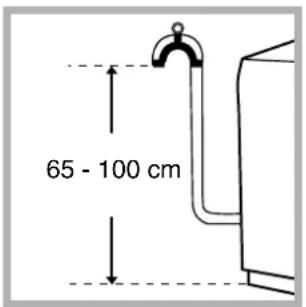
Connecting the drain hose
Connect the drain hose, without bending it, to a draining duct or a wall drain situated between 65 and 100cm from the floor;
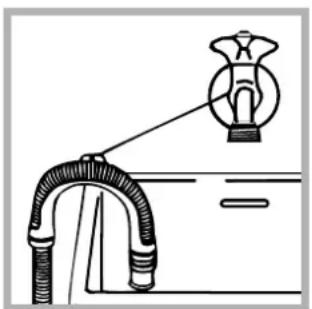
underwater.
alternatively, place it over the edge of a basin, sink or tub, fastening the duct supplied to the tap (see figure). The free end of the hose should not be
! We advise against the use of hose extensions; in case of absolute need, the extension must have the same diameter as the original hose and must not exceed 150 cm in length.
Electric connection
Before plugging the appliance into the mains socket, make sure that:
- the socket is earthed and in compliance with the applicable law;
- the socket is able to sustain the appliance's maximum power load indicated in the Technical details table (on the right);
- the supply voltage is included within the values indicated on the Technical details table (on the right);
- the socket is compatible with the washing machine's plug. If this is not the case, replace the socket or the plug.
The washing machine should not be installed in an
outdoor environment, not even when the area is sheltered, because it may be very dangerous to leave it exposed to rain and thunderstorms.
! When the washing machine is installed, the main socket must be within easy reach.
! Do not use extensions or multiple sockets.
The power supply cable must never be bent or dangerously compressed.
The power supply cable must only be replaced by an authorised serviceman.
Warning! The company denies all liability if and when these norms are not respected.
The first wash cycle
Once the appliance has been installed, and before you use it for the first time, run a wash cycle with detergent and no laundry, setting the 90^ programme without a pre-wash cycle.
| Technical details | |
| Model | AVTL 83 |
| Dimensions | 40 cm wide 85 cm high 60 cm deep |
| Capacity | from 1 to 5 kg |
| Electric connections | Please refer to the technical data plate fixed to the machine. |
| Water connections | maximum pressure 1 MPa (10 bar) minimum pressure 0.05 MPa (0.5 bar) drum capacity 42 litres |
| Spin speed | up to 800 rpm |
| Control programmes according to EN 60456 directive | programme 3; temperature 60°C; run with a load of 5 kg. |
| CE | This appliance is compliant with the following European Community Directives: - 89/336/CEE of 03/05/89 (Electromagnetic Compatibility) and subsequent amendments - 2006/95/CE (Low voltage) - 2002/96/CE |
GB
Control panel
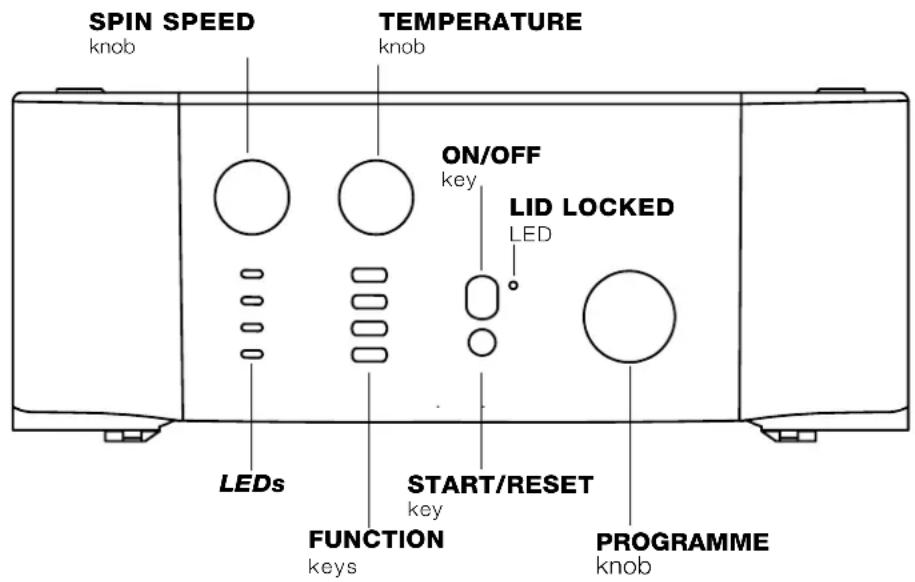
Detergent dispenser to add detergent and fabric softener (see page 8).
LEDs to find out which wash cycle phase is under way. If the Delay Timer function has been set, the time left until the programme starts will be indicated (see page 5).
SPIN SPEED knob to set the spin speed or exclude the spin cycle completely (see page 7).
FUNCTION keys to select the functions available. The button corresponding to the function selected will remain on.
TEMPERATURE knob to set the temperature or the cold wash cycle (see page 7).
ON/OFF key to turn the washing machine on and off.
START/RESET key to start the programmes or cancel incorrect settings.
ON-OFF/LID LOCK led, to find out whether the washing machine is on (flashing) and if the lid may be opened (see page 5).
PROGRAMME knob to set the programmes (see page 6).
The knob stays still during the cycle.
ON-OFF/LID LOCK led:
If this LED is on, the appliance Lid is locked to prevent it from being opened accidentally; to avoid any damages, you must wait for the lamp to flash before you open the Lid.
The rapid flashing of the ON-OFF/LID LOCK Led together with the flashing of at least one other LED indicates there is an abnormality (see page11).
How to open and to close the drum
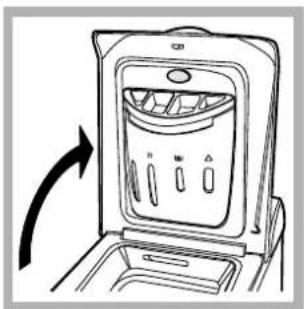
Fig. 1
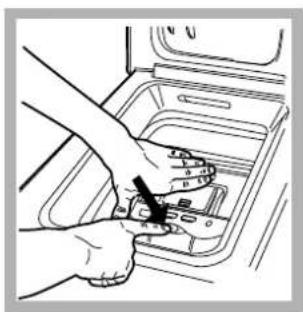
Fig. 2
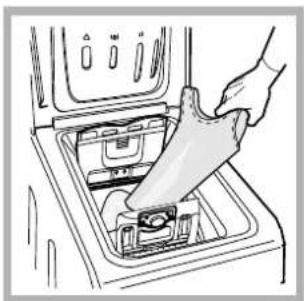
Fig. 3
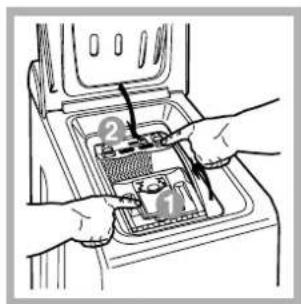
Fig. 4
Leds
The LEDs provide important information.
This is what they can tell you:
Cycle phase under way:
During the wash cycle, the LEDs gradually illuminate on to indicate the cycle phase under way:

Pewash

Wash

Binse

Spin cycle
Note: during draining, the LED corresponding to the Spin cycle phase will be turned on.
A) Opening (Fig.1).
Lift the external lid and open it completely.
B) Then open the drum using both hands as shown in Fig. 2:
-
press the button indicated by the arrow in Fig. 2 lightly downwards, with one hand firmly resting on the doors to prevent them from suddenly opening and hurting your fingers;
-
therefore follow the appliance doors along as these unhook and open easily.
C) Loading the washing machine. (Fig. 3).
- close the drum fully by first shutting the front door followed by the rear one;
- then ensure the hooks on the front door are perfectly housed within the seat of the rear door;
- after the hooks have clicked into position, press both doors lightly downwards to make sure they do not come loose;
- finally shut the external lid.
Function keys
The FUNCTION KEYS also act like LEDs.
When a function is selected, the corresponding button is illuminated.
If the function selected is incompatible with the programme set, the button will flash and the function will not be enabled.
If you set a function that is incompatible with another function you selected previously, only the last one selected will be enabled.
Starting and Programmes
GB
Briefly: starting a programme
- Switch the washing machine on by pressing button . All the LEDs will light up for a few seconds and the ON-OFF/DOOR LOCK Led will begin to flash.
- Load your laundry into the washing machine, add the detergent and any fabric softener (see page 8) and shut the appliance door.
- Set the PROGRAMME knob to the programme required.
-
Set the wash temperature (see page 7).
-
Set the spin speed (see page 7).
- Start the programme by pressing the START/RESET button. To cancel it, keep the START/RESET button pressed for at least 2 seconds.
- When the programme is finished, the ON-OFF/DOOR LOCK Led will flash to indicate that the appliance door can be opened. Take out your laundry and leave the appliance door ajar to allow the drum to dry thoroughly. Turn the washing machine off by pressing button
Programme table
| Type of fabric and degree of soil | Program-mes | Wash temper- at. | Detergent | Fabric softener | Bleaching /option Bleach | Cycle length (minutes) | Description of wash cycle | |
| Pre- wash | Wash | |||||||
| Cotton | ||||||||
| Extremely soiled whites (sheets, tablecloths, etc.) | 1 | 90°C • | • • 1 | 55 | Pre-wash, wash cycle, rinse cycles, intermediate and final spin cycles | |||
| Extremely soiled whites (sheets, tablecloths, etc.) | 2 | 90°C • | • | Delicate/ Tradit ional | 147 | Wash cycle, rinse cycles, intermediate and final spin cycles | ||
| Heavily soiled whites and fast colours | 3 | 60°C • | • | Delicate/ Tradit ional | 157 | Wash cycle, rinse cycles, intermediate and final spin cycles | ||
| Heavily soiled whites and fast colours | 4 | 40°C • | • | Delicate/ Tradit ional | 96 | Wash cycle, rinse cycles, intermediate and final spin cycles | ||
| Slightly soiled whites and delicate colours (shirts, jumpers, etc.) | 5 | 30°C • | • | Delicate/ Tradit ional | 88 | Wash cycle, rinse cycles, intermediate and final spin cycles | ||
| Synthetics | ||||||||
| Heavily soiled fast colours (baby linen, etc.) | 6 | 60°C • | • | Delicate | 97 | Wash cycle, rinse cycles, anti- crease or delicate spin cycle | ||
| Heavily soiled fast colours (baby linen, etc.) | 7 | 50°C • | • | Delicate | 93 | Wash cycle, rinse cycles, anti- crease or delicate spin cycle | ||
| Delicate colours (all types of slightly soiled garments) | 8 | 40°C • | • | Delicate | 83 | Wash cycle, rinse cycles, anti- crease or delicate spin cycle | ||
| Delicate colours (all types of slightly soiled garments) | 9 | 30°C • | • | 33 | Wash cycle, rinse cycles and delicate spin cycl | |||
| Delicate | ||||||||
| Wool | 10 | 40°C • | • | Delicate | 48 | Wash cycle, rinse cycles and delicate spin cycle | ||
| Very delicate fabrics (curtains, silk, viscose, etc.) | 11 | 30°C • | • | 55 | Wash cycle, rinse cycles, anti- crease or draining cycle | |||
| PARTIAL PROGRAMMES | ||||||||
| Rinse | • | Rinse cycles and spin cycle | ||||||
| Delicate rinse cycle | • | Rinse cycles, anti-crease or draining | ||||||
| Spin cycle | Draining and heavy duty spin cycle | |||||||
| Delicate spin cycle | Draining and delicate spin cycle | |||||||
| Draining | Draining | |||||||
Notes
For the anti-crease function: see Easy iron, opposite page. The information contained in the table is purely indicative.
Special programme
Daily 30^ (programme 9 for Synthetics) is designed to wash lightly soiled garments in a short amount of time: it only lasts 30 minutes and allows you to save on both time and energy. By setting this programme (9 at 30^ ), you can wash different fabrics together (except for woollen and silk items), with a maximum load of 3 kg.
We recommend the use of liquid detergent.
Setting the temperature
Turn the TEMPERATURE knob to set the wash temperature (see Programme table on page 6).
The temperature can be lowered, or even set to a cold wash.

Setting the spin speed
Turn the SPIN SPEED knob to set the spin speed for the programme selected.
The maximum spin speeds for each programme are as follows:
Programmes Maximum spin speed
Cottone 800 rpm
Synthetics 800 rpm
Wool 600 rpm
Silk no
The spin speed can be lowered, or the spin cycle can be excluded altogether by selecting symbol .
The washing machine will automatically prevent you from selecting a spin speed higher than the maximum speed for each programme.
To avoid excessive vibrations, before every spin cycle the machine distributes the load in a uniform manner by continuously rotating the drum at a speed which is slightly faster than the normal washing speed. When, despite repeated attempts, the load is still not evenly distributed, the machine spins at a lower speed than the set frequency. If the load is excessively unbalanced, the machine attempts to distribute it instead of spinning.
The balancing attempts may extend the total duration of the cycle, up to a maximum of 10 minutes.
Functions
To enable a function:
- press the button corresponding to the desired function, according to the table below;
- the function is enabled when the corresponding button is illuminated.
Note: The rapid flashing of the button indicates that the corresponding function cannot be selected for the programme set.
| Function | Effect Comments | Enabled with | programmes: |
| Super Wash | Allows for an impeccable wash, visibly whiter than a standard Class A wash. | This function is incompatible with the RAPID function. | 1, 2, 3, 4, 5, 6, 7, 8 |
| Easy iron T | This option reduces the amount of creasing on fabrics, making them easier to iron. | When this function is set, programmes 6, 7, 8, 11 and Delicate rinse will end with the laundry left to soak (Anti-crease) and the Rinse cycle phase LED will flash. - to conclude the cycle, press the START/RESET button; - to run the draining cycle alone, set the knob to the relative symbol and press the START/RESET button. | All programmes except for 1, 2, 9, 10 and Draining. |
| Rapid Cut | Its the duration of the wash cycle by 30%. | This function is incompatible with the SUPER WASH function. | 1, 2, 3, 4, 5, 6, 7, 8 Rinses |
| Extra Rinse | Increases the efficiency of the rinse. | Recommended when the appliance has a full load or with large quantities of detergent. | 1, 2, 3, 4, 5, 6, 7, 8, and Rinse cycles. |
GB
Detergents and laundry
GB
Detergent dispenser
Good washing results also depend on the correct dose of detergent: adding too much detergent won't necessarily make for a more efficient wash, and may
in fact cause build up on the interior of your appliance and even pollute the environment.
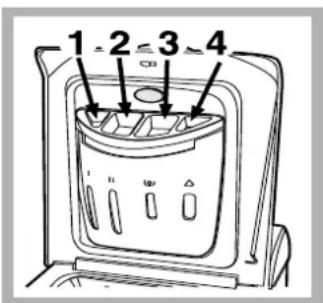
Open up the detergent dispenser and pour in the detergent and fabric softener, as follows.
compartment 1: Detergent for pre-wash
compartment 2: Detergent for the wash cycle (powder or liquid)
It is recommended that you place liquid detergent directly into the compartment using the appropriate dosing cup.
compartment 3: Additives (softener, etc.)
When pouring the softener in compartment 3, avoid exceeding the "max" level indicated. The softener is added automatically into the machine during the last wash. At the end of the wash programme, some water will be left in compartment 3. This is used for the inlet of denser fabric softeners into the machine, i.e. to dilute the more concentrated softeners. Should more than a normal amount of water remain in compartment 3, this means the emptying device is blocked. For cleaning instructions, see page 10.
compartment 4: Bleach
! Do not use hand wash detergent because it may form too much foam.
Bleach cycle
Traditional bleach should be used on sturdy white fabrics, and delicate bleach for coloured fabrics, synthetics and for wool.
When pouring in the bleach, be careful not to exceed the "max" level indicated on compartment 4.
To run the bleach cycle alone, pour the bleach into compartment 4 and set the Extra Rinse option
Preparing your laundry
-
Divide your laundry according to:
-
the type of fabric/the symbol on the label.
-
the colours: separate coloured garments from whites.
-
Empty all pockets and check for loose buttons.
-
Do not exceed the weight limits stated below, which refer to the weight when dry:
Sturdy fabrics: max 5 kg
Synthetic fabrics: max 2.5 kg
Delicate fabrics: max 2 kg
Wool: max 1 kg
How much does your laundry weigh?
1 sheet 400-500 g
1 pillow case 150-200 g
1 tablecloth 400-500 g
1 bathrobe 900-1,200 g
1 towel 150-250 g
Special items
Curtains: fold curtains and place them in a pillow case or mesh bag. Wash them separately without exceeding half the appliance load. Use programme 11 which excludes the spin cycle automatically.
Quilted coats and windbreakers: if they are padded with goose or duck down, they can be machine-washed. Turn the garments inside out and load a maximum of 2 - 3kg repeating the rinse cycle once or twice and using the delicate spin cycle.
Trainers: remove any mud. They can be washed together with jeans and other tough garments, but not with whites.
Wool: for best results, use a specific detergent, taking care not to exceed a load of 1kg
Woolmark Platinum Care
As gentle as a hand wash.

WOOLMARK PLATINUM CARE
Hotpoint Ariston sets a new standard of superior performance that has been endorsed by The Woolmark Company w
the prestigious Woolmark Platinum Care brand. Look for the Woolmark Platinum Care logo on the washing machine to ensure you can safely and effectively wash wool garments labelled as "hand wash" (M.0303):
Set programme 10 for all "Hand wash" garments, using the appropriate detergent (max load 1kg ).
The washing machine was designed and built in compliance with the applicable international safety regulations. The following information is provided for your safety and should consequently be read carefully.
General safety
- This appliance has been designed for non-professional, household use and its functions must not be changed.
- This washing machine should only be used by adults and in accordance with the instructions provided in this manual.
- Never touch the washing machine when barefoot or with wet or damp hands or feet.
- Do not pull on the power supply cable to unplug the appliance from the electricity socket. Pull the plug out yourself.
- Do not open the detergent dispenser while the appliance is in operation.
- Do not touch the drain water as it could reach very high temperatures.
- Never force the washing machine door: this could damage the safety lock mechanism designed to prevent any accidental openings.
- In the event of a malfunction, do not under any circumstances touch internal parts in order to attempt repairs.
- Always keep children well away from the appliance while in operation.
- The appliance door tends to get quite hot during the wash cycle.
- Should it have to be moved, proceed with the help of two or three people and handle it with the utmost care. Never try to do this alone, because the appliance is very heavy.
- Before loading your laundry into the washing machine, make sure the drum is empty.
Disposal
- Disposing of the packaging material: observe local regulations, so the packaging can be re-used.
- Disposal of old electrical appliances
- The European Directive 2002/96/EC on Waste Electrical and Electronic Equipment (WEEE), requires that old household electrical appliances must not be disposed of in the normal unsorted municipal waste stream. Old appliances must be collected
separately in order to optimise the recovery and recycling of the materials they contain and reduce the impact on human health and the environment. The crossed out "wheeled bin" symbol on the product reminds you of your obligation, that when you dispose of the appliance it must be separately collected.
Consumers should contact their local authority or retailer for information concerning the correct disposal of their old appliance.
- Disposing of an old washing machine: before scrapping your appliance, cut the power supply cable and remove the appliance door.
Saving energy and respecting the environment
Environmentally-friendly technology
If you only see a little water through your appliance door, this is because thanks to the latest technology, your washing machine only needs less than half the amount of water to get the best results: an objective reached to respect the environment.
Saving on detergent, water, energy and time
- To avoid wasting resources, the washing machine should be used with a full load. A full load instead of two half loads allows you to save up to 50% on energy.
- The pre-wash cycle is only necessary on extremely soiled garments. Avoiding it will save on detergent, time, water and between 5 and 15% energy.
- Treating stains with a stain remover or leaving them to soak before washing will cut down the need to wash them at high temperatures. A programme at 60^ instead of 90^ or one at 40^ instead of 60^ will save up to 50% on energy.
- Use the correct quantity of detergent depending on the water hardness, how soiled the garments are and the amount of laundry you have, to avoid wastage and to protect the environment: despite being biodegradable, detergents do contain ingredients that alter the natural balance of the environment. In addition, avoid using fabric softener as much as possible.
- If your laundry has to be dried in a tumble dryer, select a high spin speed. Having the least water possible in your laundry will save you time and energy in the drying process.
GB
Cutting off the water or electricity supply
- Turn off the water tap after every wash. This will limit the wear of your appliance's water system and also prevent leaks.
- Unplug your appliance when cleaning it and during all maintenance operations.
Cleaning your appliance
The exterior and rubber parts of your appliance can be cleaned with a soft cloth soaked in lukewarm soapy water. Do not use solvents or abrasives.
Cleaning the detergent dispenser
Remove the dispenser by raising it and pulling it out (see figure).
Wash it under running water; this operation should be repeated
frequently.
Caring for your appliance door and drum
Always leave the appliance door ajar to prevent unpleasant odours from forming.
Cleaning the pump
The washing machine is fitted with a self-cleaning pump that does not require any maintenance.
Sometimes, small items (such as coins or buttons) may fall into the pre-chamber that protects the pump, situated in the lower part of the same.
Make sure the wash cycle has ended and unplug the appliance.
To recover any objects that have fallen into the pre-chamber:
-
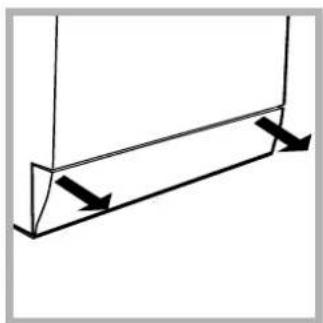
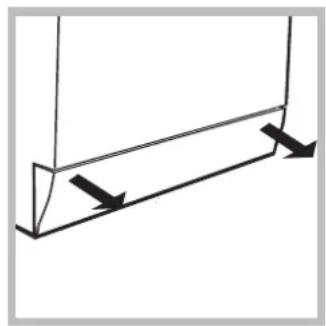
remove the plinth at the bottom on the front side of the washing machine by pulling from the side with your hands (see diagram); (see figure);
-
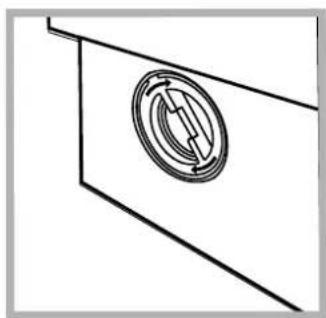
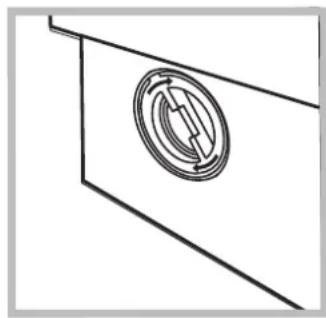
unscrew the lid rotating it anticlockwise (see figure): a little water may trickle out. This is perfectly normal;
-
clean the interior thoroughly;
-
screw the lid back on;
-
reposition the panel, making sure the hooks are securely in place before you push it onto the appliance.
Checking the water inlet hose
Check the water inlet hose at least once a year. If you see any cracks, replace it immediately: during the wash cycles, water pressure is very strong and a cracked hose could easily split open.
! Never use hoses that have already been used.
How to clean the detergent dispenser
Disassembly:
Press lightly on the large button on the front of the detergent dispenser and pull it upwards (fig. 1).
Cleaning:
Then clean the dispenser under a tap (fig. 3) using an old toothbrush and, once the pair of siphons inserted in the top of compartments 1 and 2 (fig. 4) have been pulled out, check whether the same are not clogged and then rinse them.
Reassembly:
Do not forget to reinsert the pair of siphons into the special housings and then to replace the dispenser into its seat, clicking it into place (fig. 4, 2 and 1).
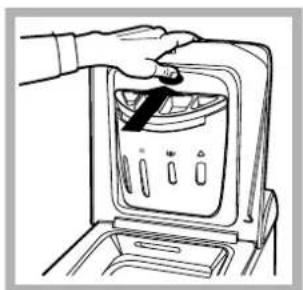
Fig.1 Fig.2
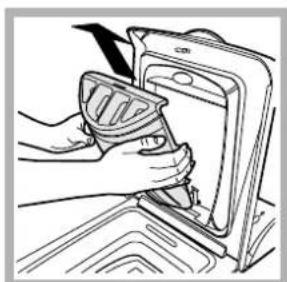
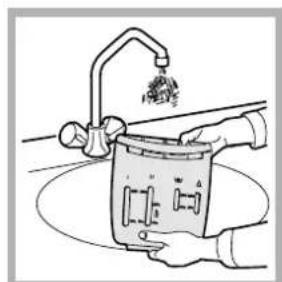
Fig. 3
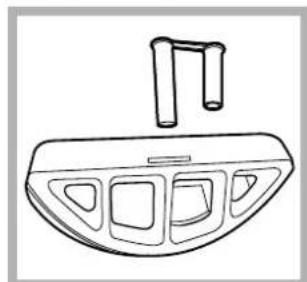
Fig. 4
Your washing machine could fail to work. Before calling for Assistance (see page 12), make sure the problem can't easily be solved by consulting the following list.
Problem
The washing machine won't start.
The wash cycle won't start.
The washing machine fails to load water.
The washing machine continuously loads and unloads water.
The washing machine does not drain or spin.
The washing machine vibrates too much during the spin cycle.
The washing machine leaks.
The ON-OFF/DOOR LOCK Led flashes rapidly at the same time as at least one other LED.
There is too much foam.
Possible causes/Solution:
- The appliance is not plugged into the socket, or not enough to make contact.
-
There has been a power failure.
-
The appliance Lid is not shut properly. The Lid locked Led flashes.
- The button has not been pressed.
-
The START/RESET button has not been pressed.
The water tap is not turned on. -
The water inlet hose is not connected to the tap.
The hose is bent.
The water tap is not turned on. - There is a water shortage.
- The water pressure is insufficient.
-
The START/RESET button has not been pressed.
-
The drain hose is not fitted between 65 and 100cm from the floor (see page 3).
The free end of the hose is underwater (see page 3). - The wall drainage system doesn't have a breather pipe.
If the problem persists even after these checks, turn off the water tap, switch the appliance off and call for Assistance. If the dwelling is on one of the upper floors of a building, there may be drain trap problems causing the washing machine to load and unload water continuously. In order to avoid such an inconvenience, special anti-drain trap valves are available in shops.
- The programme does not foresee the draining: some programmes require enabling the draining manually (see page 6).
- The Easy iron option is enabled: to complete the programme, press the START/RESET button (see page 7).
The drain hose is bent (see page 3). -
The drain duct is clogged.
-
When the machine is installed, the locking screws for the oscillating assembly are still in place. Remove the screws (see page 2).
The washing machine is not level (see page 2). -
The washing machine is closed in between furniture cabinets and the wall (see page 2).
-
The water inlet hose is not screwed on correctly (see page 2).
- The detergent dispenser is obstructed (to clean it, see page 10).
-
The drain hose is not secured properly (see page 3).
-
Switch off the machine and unplug the appliance; wait for approximately 1 minute then switch it on again. If the problem persists, contact Assistance.
-
The detergent is not suitable for machine washing (it should bear the definition "for washing machines" or "hand and machine wash", or the like).
- You used too much detergent.
GB
Before calling for Assistance:
- Check whether you can solve the problem on your own (see page 11);
- Restart the programme to check whether the problem has been solved;
- If this is not the case, contact an authorised Technical Service Centre on the telephone number provided on the guarantee certificate.
If the machine has been installed or used incorrectly, you may be charged for the maintenance callout service.
!Always request the assistance of authorised servicemen.
Notify the operator of:
the type of problem;
the appliance model (Mod.);
the serial number (S/N);
This information can be found on the data plate situated on the rear of the washing machine.

Français
Sommaire
Installation, 14-15
Raccordements hydrauliques
pression maxime 1 MPa (10 bar)
pression minimale 0.05 MPa (0,5 bar)
capacité du tambour 42 litres
Vitesse d'essorage
Causes / Solutions possibles:
INHnKaTOp BKJIIOUcEHNE/JIOK 3A6JIOKpOBAH MInaET, KOrJa CTnpaJIbHa MaunHa BkJIIOUeHa, I rOpNT, He MInaRae,ecnI JIOK He 3a6JIOKpOBaH (cmompmb cmp.29).
PykoTka Bb6opa PPOPAMM cnjxnt dna Bb6opa nporpamm (cmompemb cmp. 30).
B npoecce BblonHeHn nporpammb pykoTka octaetc HenoDbNkHoH.
-0 INHdkaTop BKJIIOUeHNE/JIOK 3ABJIOKINPOBAH:
TopuHn HndkaTOp 03Haayet,TO NOK 3a6NknpoBaH BO n36eKaHne erO cnuyauHOro OTkpBbAHn. BO n36eKaHne NOBpExdHn nepeTe KAKOTkpbl TIOK, HeoXoDmO DoKDaTbC, KOrda 3amrAet INHdkaTOp.
!Yactoe MuraHne HndkaTopa BKIOUOHEHNE/IOK 3ABIOKOPOBAH OHOBpeMeHHo CIO6bIM dpyHM HndkaTopOM 03Haayet HeNCpabHOCtB (CMompembcmp.35).
Kak OTKpbItb n 3aKpbItb 6apa6aH
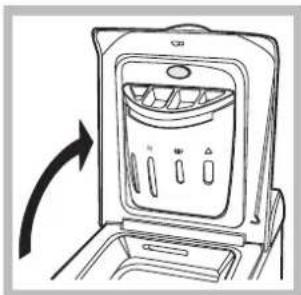
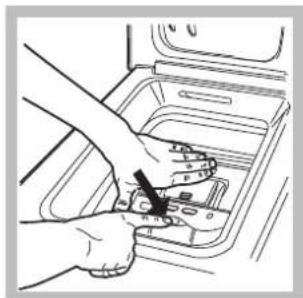
Fig.2
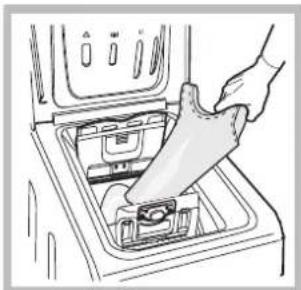
Fig.1
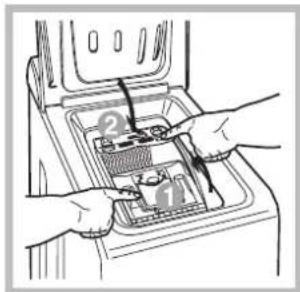
Fig. 3 Fig. 4
INHdkaTopbI
HnKaToPb Co6aOT noB3OBaTeIO BaxHbIe CBeHeH.
3NaueHnHnKaTopoB:
Tekyuaa pa3a uknla:
B npoecce zukna ctnpkn nHdkatopbl 6ydyT 3aropatbcr OINH 3a dpYHM, NOKa3bIBa y a3y BbINOJIHeHH nporpaMMbl:

BepauptehnaCTnpka

Gnnpka

BolnockaHne

OTKUM
PnmeaHne: B npouecce cInBa 3aropntc HnDKaTOp, COOTBetCTByuOuN uKny OTXnMa.
A)OTKpblBAHNE(pnc.1).
IOnHIMnTe BHeuHIOKpbUkY INONHOCTbOe OTKPOiTc.
6) 3aTeM, nCnoJIb3yI o6e pyKn, OTKpoIte 6apa6aH, KaK noka 3aHO Ha pnc. 2:
-HaXMMTe KhoNky, 6o3HaueHHyU cTpeKoH a pnc.2, cner Ka BHN3,
DpyroynpnpdeepknbabDBepbTakBn36eKeTe BHe3aHOrO OTKpbBaHmN DBepOK n 3aueMneHnnaIbueB); DBepbI paCenrTcN JERKO OTKPOIOTC.
B)3AΓPy3KA CTNPAJIbHOI MAUINHbl (pnc.3).
Γ)3AKPbIBAHNE(pnc.4).
-3akpoTe nonHocb6apab6an, onyckra chauaIa nepeHIOO DBepuy, a 3aTEM 3aHIO;
-3aTeM ydoCTOBepebTecb, YTO KpOKn nepeHnei DBepcI TOHO BOUIN B npEHa3HaueHHBe MeCtHa 3aHHei DBepCe;
- NOCNE TORO, KAK KPIOKN 3aUeKNHJYNCb, HAXMNTe Obe DBePcbl CJIerKa BHN3, YTO6bI y6eINTbcra OHN 3aKpbITb IIOHTHO;
-Ⅰ, HakoHeL, 3aKpOte BHeUHIO KpbIiKy.
KhoNk Bb6opa yHKuM
KHONK BbIbOPA ΦYHKUIN TaKKe YBnIOTcN HdNKaTopamN.
Pn BbIope 3aropaetc COOTBETCTBYUa Ka.
Ecnn Bb6paHna yHKnra RbIeTc HecOBMeCTmOc 3aDaHHo nporpAMMo, KHOka 6yDet MrraTb, n TaKa aYHKnra He 6yDet AKTNBupoBaHa.
Ecnn6yndT BbIbpaHa fynKnna, HecOBmecTnma C pyro, pahee BblbpaHHo fynKnne, octaHETcBKnIOeHHo ToJbKO nocJeHnBaBbIbpaHHa fynKnna.
3anyck maunhbl. Iporpammbi
CIS
KpaTKe HnCtpyKcH: POpAOK 3aNycKa npOrpaMMbl
- BkHIOHTe CTnpaIbHyIO MaUInHy, HauKaB Ha KOnIky .Bce INdNkaTOpbl 3aTogPraTcRa HeckOJIbKO CeKyHn, 3aTeM nOrachyT, INdNakTOp BKIOUQEHNE/IIOK 3A5JOKIPOBAH NaHET MIRAtb.
2.3arpy3nte 6eJIbe B 6apa6aH, 3acbInbTe CTnpaJIbHOe BeIecTOBIO6abKn (CMOTpnte Ctp.32),3akpoTKe KpbIuKN 6apa6aHa N BHeuHn IIOK. - Bb6paTb npn nOmoU pyKoTkn Bb6opa IPOrPAMM
HyKHyI npOrpaMMy.
- BbIbpaTb TemnepaTy p CTnPK (CM.cmp.31).
- Bb6paTb ckopocTb OTXnMa (cm. cmp. 31).
- 3anyctnte nporpaMMy, Haxab KhoNky NYCK/C5POC (Start/Reset).
IINr OTMeHbI 3anycka depKHTe HaxaToH KhoNky NYCK/ CBPOC (Start/Reset) B TeueHne 2-x ceKyHd. - No 3aBepseHn nporpammbi nHnIkaTOp BKIOUOHEHNE/ IIOK 3A6I0KNPOBAH 3amraet, cnHaHn3npy, yTO MOxHO OTkpblb IIOK. BbHyTB 6enbe n OCTaBnTB IIOK NOlyOTKpbITbIM dIy cyuKn 6apabHa. BbIKIOHTb CTpaJIbHyO MaunHy, Haxab KONky
Ta6JIuca nporpaMM
MaunHa npoun3BODNT OTXKIM C 60Jee Hn3KoC KcopoCTbIO.
Pn HeBO3MOXHOCT6aJIaHCnPOKMaIHa 3aMeHReT OTxIM OePAuNeB aJIaHCnPOBKn.
Bo3MOxHbIe nonbltkn 6anaHcnpOBKn Moryr npOanTb obSyuIO npOdoJKNtBbHocT bKJa MaKc. Ha 10 MNHT.
Функцин
Pa3nHbIe yHKcIn CTnPK MaunHbI NO3BOJIaOT DOCTNcJKeJaEMO YnCTOTbI N 6eIN3HbI BaWero 6JIb. Iopraok Bblbopa yHKcIn:
- HaxKaTb KHOKny HxKHOIyHKcII B COOTBETCTBm C npNBedeHHOH HXKe Ta6JIuCe;
- BKHIOeHHe COOTBeTCTByIOSeI KHOJKN O3HaayeT, YTO yHKUNA AKTNBnPOBaHa.
IpmeHHe: Yactoe MHaHne KONKn O3Haayet, yTo daHHa FyHKuHa He MOKeT 6bItb aKTINBupObaHa dJa3aHaHO nporpaMMbl.
JyueKa 3: Oo6aBKn (ononacknBaTeIb n T.d.)
Korda Bbl HauBaTe OonoackBateB B yeyKy 3, o6paaute BHNMaHne, YTO6bI He npeBbICntb MaKcImaHbHbI ypoBeHb, yka3aHHbI OTMeTKoJ «max».
OnonacknBaTeJIb abTomatNueckn noJaetcB 6apabah B npoucece nocJeHero ononacknBaHn.
No 3aBepweHnn nporpaMMbl cTnpKn B yaeKe 3 0ctaetc BOda. OHa Heo6xOdIma dIy nOdaun B 6apabah ouehb ryctbix ononacknBaTeNei, T.e. Ipa36abJHHeN KOHcHTpOpOBaHHbIX ononacknBaTeNei.
Ecnn B yaeKe 3 ocTaHETc BObl 6OJbWe HopMaJIbHOro, 3TO 3NaHT, YTO KaHaI CnIBa 0nonacknBaTeJIb B 6apabah 3acOpInC. CMotpnte 0ncahne qNCTKn yeeK Ha cTp.34.
Jyeyka 4: Lnk0t6eBnBaHn
06bHbI OTBeNBaTeB nCNoJb3yETcA Dn npOuHbIX 6eBix TkaHe, DeNkathbI - Dn uBeTHbIX, CHTeTneCKnx TkaHe N dJa WepCTn. He 3aNBaTe OTBeNBaTeB B ayeKy-dO3aTop 4 Bblwe OTMeTKI «MaKc.» (CMompue pucyHOK). Dn oCyueCTBneHn rToIbKO OTBeNBaHn Haene Te OTBeNBaTeB B ayeKy 4 n BBiBepnte FyHKunn DononHHTbeHoe noNockaHne
!He nCnoJb3yIte MOIOUIne CpeDCTBa, npEHa3HaueH HbIe IpyHOn CTnPK - 06pa3yOuAraC O6NJbHna neHa yXyUaAe pe3yIbTaT CTnPK N MoKet BBIEcTN I3 CTPOr CTnpaJIbHyO MaUHy.
Iodrotobka 6eJbA
- Pa36epnte 6eJIbe:
-B COOTBETCTBUN C TINOM TKAHN / O6O3HaueHn Ha 3TNKETKe
- no ΒBETy: OTdEnIte ΒBETHoe 6eIbe O T 6enoro.
-
BbIbTe n3 KapMaHOB BCE npEmdetbl npOBepbTe XopoWo nn DePkatayroBu.
-
He npeBbIaIe MaKcMaIbHoe HopMbI 3arpy3Kn 6apa6aHa, yKa3aHHbIe InCyXOrO 6enb:
IpoUHbIe TkaHN: MaKc. 5 Kr
CHTeTnueckne TkaHn:MaKc.2,5Kr

WOLUMARK PLATINUM CARE
Hotpoint Ariston yCTaHOBn HOBb CTaHdap TBblcOKo3ΦΦeKTHBaHO CTnPK, npu3HaHHb KOMpHaHne WOolmark c npeTVKHO mapKo WOolmark Platinum Care. Ecn Ha BaWee CTnpaHbHO MaunHe NMeetc JorOTn WOolmark Platinum Care, B
HeM MoKHO CTnPaTb COTnHbIM pe3yIbTaTOM UepCTrHbIe N3- DeJIHa H3TNIKeTke KOTOpBX HaNtCAHO «TOJIbKO pyHra CTnPka》(M.0303).
Bb6epntnporpammy10nBxN3dJIc 3TKeTKoI P yHnaCTnPKA>( nncnoJb3yHTe CneuaNbHbIe cpeCTBa dnn CTnPKn Wepctn (MaKc 1 K).
!CTnpaIbHaMaHnHa CnpoeKtnpObaHa nI3roTOBHeHa B COOTBeTCTBm C MekdyHapOdHbIMn HOpMaMn 6e30NaCHOCTN. BHIMATEJIbHO npouHTaIte HactoUne npedynpeXeHHn, coCTaJIeHHbIe B cIeJx BaWei 6e30NaCHOCTN.
Obune npabnla 6e3onacnoctn
Длгдомашeroинспьзованя.ДанhoeизделеняВлгетсбытOBыm3лжкрпрпборom,He npedHa3haueHHbIMДлгnpoфeccnoHaJIbHorO nCNoIb3OBaHn.3anpeuaetcMoDnФицрobatb erOункци.
- CtnpaIbHa MaunHa DoJnxHa IcNoIb3OBaTbC TaIbKO B3PocblIM NnCaAM, Co6JIIOdaIOUIMN INCTpyKcIM, npBBeDeHHBe B daHOM pyKOBOdCTBE.
- He kacaTecb pa6oTaUoSeMaunHbI, ecn Baun pyKn nn HOrn cbIpBle; He noJb3yntecb 606pyDobAHem 6ocnKOM.
-He TAHNTe 3a NITaIOUcN KabeIb, YTO6bl BbIHytB BNJKy H3 po3ETKn: BepuTEcb 3a BNJKy.
He OTKpbBaIte paacpeJeNTeIb MOIOx cpeCTB BO Bpempa60TbMaunHbl.
He kacaTecb cNbaem BoDbl, ee TemnepaTypa MoKet 6blb OeHb BICOKO.
- PnOcTaHOBKe MaunHbI pa36JIOKIpOBKa 3aMka DBePcbl CpaBaTbIbAet C TpeXMHyTHOH 3aepKkoH. He NtTaIeTcB OTKpbITb DBepy B 3Tom npomexkyTke BpemEHn (a Tem 60onee BO Bpemra paboTObl 6OpPyDoBaHH!): 3TO MOKe T NOBpeDntb MexAHn3M 6NoKIpOBKn.
Bcnyae HncnpaBHOCTn npn IIO6bIX O6CTOATENb-CTbax He KacaTecb BHyTpEHHX YAcTei MaUNHbl, NbitAocb NOuHHtBe ee.
Cneinte, T06bI Detn He npnbJnxKaIncb Ka paboTaIOuE CTnpaBHO MaunHe.
B npoecce ctnpkn Dbepua ctnpaHbHm MaunHbIMoKet HarpBeBaTcra.
- Ecn Heo6xOUMO nepemecntb CTnpaIbHyIO MaunHy, BblONHnTe 3Ty OenpaUHO BDBOEM NIN BTPoEM C npedeIbHOO cTOpoxKHOCTbIO. HNKOrda He nbItaIteCb NOHNrB MaunHy B OOnHOy - o6opydOBaHne Ype3BbUaHNo TjXeJeoe.
- IpeepnomeueHnem B CTnpaIbHyIO MaunHy 6eIb y6eIntecb, yTO6bl 6apaban 6bl npct.
ytnnn3aun
-
YHNUTOXKeHne yNaKOBOUHO MaTePnAna: co6IIOaIte DeNCTByUOuNE Tpe6OBaHnRA NO yTININ3aCnnyNaKOBouHbIX MaTePnAnOB.
-
YtunnaucnA CTAPoN CTnpaJIbHOm MaUNHbI: nepeD cdaeM MaUNHb I yTINb OBpeKbTe NITaIOUm Ka6 BeN b CHIMNTe DBepuy.
3KoHOMn 3Heprnn n OxpaHa OkpyXaHoue Cpebl
3KoJorUHnayTexHOJOrn
C HOBO TexHONorne Ariston Bbl 3aTpaTnte BoDbl B Dba pa3a MehBwe, a 3ΦΦeKT OT CTnPK 6yDet B DBA pa3a Bblwe! Bot noey My Bbl He MoKTe BNDetb Body uepe3 DBepuy: ee oueh MaNo. 3To 3abota 06 OkpyXaHOSe CpeDe 6e3 OTKa3a OT MaKcImaJIbHOH YNCTOTbl. IN BDO6abOK KO BCemy, Bbl 3KOHOmITE 3JNEKTPnYecCTBO.
3KoHOMn MOOx CpeDcTB, BObl, 3NeKtpo-3Heprnn n BpeMeHN
-ДяЗКОHOMп pecypcoB CJIeDyeT MaKcIMaJIbHo 3arpykaTb CTnpalbHyIO MaUINHy. OINH UKNCTnPKI nPn NOHOn 3aIpy3Ke BMECTO DByX UKNIOB C HANOIOBNHy 3aIpyxKeHHbIM 6apab6AHOM N03BOJAreT C3KOHOMNTb Do 50% 3neKtpo3Heprnn.
LInKn npedBapnteJbHOn CTnPK Heo6xOIM TOnbKo Dnry OueHb rpa3Horo 6enb. Pn zuKne npedBapnteJbHOn CTnPK paXoDyETc8 6onbwe CTnpaJbHOro nopoWka, BpeMeHH, BoDbI Ha 5-15% 6onbwe 3NeKTpo3Heprnn.
Ecnn Bbl obpa6oTaTe NnTHa NtHOBbIOBnTeJIeM nn 3amOHTe 6JIbe nepeC TnPKo, 3TO nOMoxET n3-6EkaTb CTnPKn npn BBICOKx TemnepaTpyax. NcnoJb30BaHHe nporpAmMbI CTnPKn npn 60^ BmecTo 90^ nnn 40^ BmecTo 60^ nO3BOJraT CkOHOMTb Do 50% 3NeKtpo3Heprnn.
-Праиьнаяdo3ировka CTиральНо rpoшkaВЗвсIMOCNTNOTJXeCTKoCTNBOДы,CTeNEH3aRpy3HENnOBbema3arpykaemOrO6JIbYnomoraetI36ExKaTbHepaunHOHaBHorOPacxOdaMOUcero CpeDCTBaN3aRpy3HEnnOKpykaUSeiCpeДы:XOTa CTnpalbHbIe NopoWKn IABNIAOTc6nopaJIraEaMbIMN,ONHcoDEPKaTBeuCECTBa,OTpNiataJIbHoBnIHOUHne Ha 3KoJIOTn. Kpme TOrO,no BO3-MoxKHOCTN36eRaTeNCNoJIb30BaTbONOLackINBaTeJIn.
- IcnoIb3ObaHne CTnpaIbHO MaunHbI yTpom nnBuepepOM yMeHbIHT NIKOByH Harpy3ky Ha 3NeKtpoCetb.
- Ecnn 6eIbe DoJNHO cyuTbcB a bTOMaTHuecko cyuKe, Heo6xoJIMo Bbl6paTb 60JIbUyIO CKOpOCTb OTKIma. INTeHCnBbIOTKIM C3KOHOMNT BpEma n 3JIeKTPo3HeprnIO npn aBTOMaTHuecko cyuKe.
CIS
OTKJIIOUeHHe BOdBi N 3JNEKTPnueCTBa
- IpeekpbIbaiTe BODonpoBOHbI KpaH nocJe KaJdoi CTnPK. TaKIM o6pa3OM cokpaUaEcTcN 3HOC BOOnpoBOHO CnCTeMbI CTnpaJIbHO MaunHbI N yctpaHaeTcBepoTHOCTb IpoteueK.
Bcerda BbHMaIte BNkY n3 po3ETN nepei MoKoI n 06cnyXnBaHnem MaunHbl.
YxOa3a CTnpaIbHO MaunHO
BHeHnne n pe3nHOBBie qactn MaunHBi OuyuaTe MraKoTKaHbIO C TeNIOI MbJbHO BDOI. He nCnoIb3yIte pactbOpnteIN nn a6pa3nBhble qHCTaune cpeDCTBa.
YxOa 3a DBepue MaunHbI n6apa6aHOM
- Pocne kaxdoi CTnPKIOCTABJTe IDBepuy MaunHbI nonyOTKpIToI BO n36eXaHne 06pa3OBaHnB 6apabae HnpeyTHbIX 3anaxOB nnnecHn.
UHCTka Hacoca
CTnpaIbHaMaunHaIMeetCnBHOHAcOCcamOOnuOeOraTuna,KOTOpbIHe Tpe6yET OuncKnIInoco6oro 06cnxKbAHn.ODnako MeKne npedMetbl(MoHTbI,nyroBnUcIbI dp.)MOrTy CnyauHo nonactbHacoc.Inx n3Bneuen Haoc o6opydoBaH《yIOBnteJeM》一ΦnIbTpOM,DOCTyn K KOtOpomy 3akpbIT HxNKeH nepdNe INaHeNbIO.
!y6eINTEcB,YTOUKNCTnPK3aKOHnJSc,NOTKHOHTeObOpyIOBaHHeOTceTn.
KakdoctaTb npedMeTb,ynabWne B npoctpaHCTBO Mekdy 6apa6aHom N KOKyXOM MaunHbI:
- CHIMITE HIXHNI
PNNHTYC B nepeDHei
YACTN CTIPAHBHO
MaUNHBI, NOTAHyB
OBeMN pykAMn 3a ero
Kpar (CMompume
puCyHOK); - BbBepHnTe KpbIuKy
fNtpa, Bpauae ee
npOTNB YacBOB CTpeJIK (cm.puc.): n3
HACOCA MOKeT BblNTbCRA HEMHOROBODJI 3TO HopMaIbHOE ABJeHne. - TuaTeIbHo npounctnte HnBtp N3HyTpN;
- 3aBepHnTe KpbIuKy o6paTHo;
5.yctaHOBnTe Ha MeTo NpeEHNIO NaHEnb, PneBapnteJIbHo y6eINBwncb, YTO KpIKN BOUJN B COOTBETCTBYUJNe neTJN.
CTnpaIbHa MaunHa He 3aJINaBeT BODy.
CTnpaIbHaMaunHa HenpepbIBHO 3aINBaET CNNBaeT BDOy.
CTnpaJIbHaMaUHHe npOn3BO-NT CInB N OTKMM.
CunbHaB Bn6paun npoOTKmE.
PpoTeKn B0dbI n3 CTnpaBHO mawHbI.
INHdkaTop BKIOUOYEHE/IIOK 3AEBIOKPOBAH qacto mraet OHOBpeMeHHO CJIIO6bIM dpyrIM INHdkaTopOM.
H36bIToHoe neHOo6pa3OBaHne.
Bo3MOxHbIe npuHHb / MeToDbI ycTpaHeHn:
BvIka He BCTabJIeHa B pO3eTKy IITN BCTaJIeHa IIIOxo, He OBeCeHbBa KOHTaKTA.
B DOME OTKJIIOUeHO 3JIeKTPnueCTBO.
- JIIOK IIIOXO 3aKpbIT (MIRaET INHINKAtOp BIOKINPOBKN IIOKA).
-He6binaHaxataKhONka
- He bila haxata khoika NYCK/CBPOC (Start/Reset).
-3akpbIT KpaH NOdaH BObl.
- 3aJIbHNoI ShHaHr He NpOcEiHHe K KpaHy.
-卍nahr nepexkaT.
-3akpbIT KpaH NOdaH BObl.
B DOME HET BOJBI. - HeioctaTochoe BoDOnpBoOHDHoe daBneHne.
- He 6blya haxata KhoNka NYCK/C5POC (Start/Reset).
CnBHOI nlaHr pacnoJIOXeH Hxke 65 nn BbIe 100 cm. ot noa (cM. c. 27).
Koheu cInBHOro UHaRa nOpyKeH B BOy (cM. c. 27).
- HacteHHbI CNiB He NmEeT CNiBHOI Tpy6bl.
Ecnn CnINBHOI UHaHRCPTPOeH B KaHaIIIN3aLIHO, IMeTe BBNDy, YTO Ha BepXHXX 3TaXax MOKeT COZdaBaTbCRA «CnOHHbI 3oΦeKT» — MaUNHa OJHOBpeMeHHO CInBAeT N3aINBaET BOY. IINrpeIOBtBpaUeHnIOIO6HOrO 3oΦeKTA yCTaHaBNI- BAETC CneuaJIbHbIKIaNaH (aHTNCFOH).
- BbI6paHna nporpamma He npeDycmatPnBaet CnIB BObl - nra HeKOTopbIX nporpamm Heo6xOdmo BKJIOuHTb CnIB BpyHyTO (CM c. 30).
- Aktnu3npoBaHa DoonHnTehBHa FyHKun JIerKa IraKka: nna 3a-BepueHn nporpaMMb HaxMnte KhoNky NYCK/C6POC (Start/Reset) (cM. c. 31).
CnBHOI nnHr nepexkat (cM. c. 27) nnn 3acopen. - 3acop B kaHann3aun.
-Пиустановке CTирально Машинь 6аразан 6ыл pa3блкюраьн Heпра-Bильно (cM. c. 26).
CTnpaJIbHaMaIHa nIOxo BbIpOBHeHa (CM.C.26).
- 3a3op Mexky MaunHOH N CTeho/Me6beNbI HeIOCTaTOueH (cm. c. 26).
-ПлохоЗakpenнeзаиньнoiшаHR(raиkaHa KOHc eшанг HeHnToHO 3aTMyu HENpabUNbHo yctaHOBNeHa npoknaKa (cM. c. 26).
- PacnpedeIeIeJIb MOIOUx CpeIcTB 3a6NT OCTaTKAMN MOIOUX CpeIcTB (O uIcTe pacnpedeIeIeJIe CM. c. 34).
-ПлloxоЗакpenненспьнoiшланг (cM. c. 27).
- BbIKIOHTe MaLIHy I BbIHbTe UTenCeJIbHyIO BVNIky I3 3NeKTpopo3eTKI, NOIOXdITe 1 MHNyTu BHOBB BKIIIOHTe MaLIHy.
EcnHnncnpaBHOCTb He yctpaHReTc8, o6paTntecb B Texnueeckm CepBnC.
-Исноьзуетсmaошee cpeCTBO,HENOДXODЯшeeДЯ ABTOMaTNUeCKNX CTnpaNbHbIX MaUHH C ppoHTaIbHoI 3arpy3KoI.
-Переторбовka moюцero cpeicBa.
CIS
Ipeed Tem kak o6paTntbca B ABTopn3ObaHHbI CepBncHbI ueHTp:
- Y6eIntecb, yTO bbl He moKeTe ycTpaHtB HeNCnPabHocTb camOCToTeJIbHO (cM. c. 35).
- 3anycntte nporpaMMMy NOBTOpHOn DnI pyOBepKn IcnpaBHOCTM MaunHbI.
B npotnbHOM cnuyae o6paTntecb B ABtOpn3oBaHHbI CepBnchbI ueHtp no TeNefoHy, yka3aHHomy B rapaHTnHOM DOkymeHTe.
He nonb3yumecb ycnyamau luu, He ynonHomoyehhbix Ppu3o0dumem. Ppu pemohme mpe6yume ucnnoh3o8aunr opuaunhaNbHbix 3anaChbix qacmei.
Pn o6paueHn B ABTOpH3OBaHHbI CepBnCHbI ueHTp coo6uHTe:
TNHEnCnpaBHOCTN;
HOMep rapaHTnHOro DOKyMeHtA (cePBnCHOH KHNKIn, cepBnCHORO cettnfNkata n T.I.).
- MoDJIb MaUHbI (MoJ.) n cepuHbI Homep (S/N), yka3aHHbIe B INHΦopMaunOHHO Ta6JIuKe, paCNOJOKeHHoHa 3aDHne NaHeN CTnpaJIbHO MauHbI.
ES
Espanol
Sumario
Instalación, 38-39
Ekkivnoon kai npoypaumata, 66
Ev ouvtouia: ekkvno n evoc Tpoypapmuos, 66
NivakacTowTPOypaMaTow,66