EasyManual
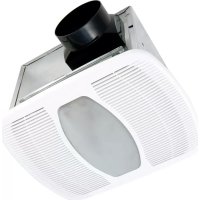
BFQL50 - Basket Air King - Free user manual and instructions
Find the device manual for free BFQL50 Air King in PDF.


User questions about BFQL50 Air King
0 question about this device. Answer the ones you know or ask your own.
Ask a new question about this device
Download the instructions for your Basket in PDF format for free! Find your manual BFQL50 - Air King and take your electronic device back in hand. On this page are published all the documents necessary for the use of your device. BFQL50 by Air King.
USER MANUAL BFQL50 Air King
IMPORTANT INSTRUCTIONS -
OPERATING MANUAL
Models: BFQL50, BFQL70, BFQL120

Exhaust Fan

READ AND SAVE THESE INSTRUCTIONS
READ CAREFULLY BEFORE ATTEMPTING TO ASSEMBLE, INSTALL, OPERATE OR MAINTAIN THE PRODUCT DESCRIBED. PROTECT YOURSELF AND OTHERS BY OBSERVING ALL SAFETY INFORMATION. FAILURE TO COMPLY WITH INSTRUCTIONS COULD RESULT IN PERSONAL INJURY AND/OR PROPERTY DAMAGE!

RETAIN INSTRUCTIONS FOR FUTURE REFERENCE.



GENERAL SAFETY INFORMATION
When using electrical appliances, basic precautions should
always be followed to reduce the risk of fire, electric shock and
injury to person, including the following:





WARNING: TO REDUCE THE RISK OF FIRE, ELECTRIC SHOCK AND INJURY TO PERSON, OBSERVE THE FOLLOWING:
a) Use this unit only in the manner intended by the manufacturer. If you have questions, contact the manufacturer.
b) Before servicing or cleaning the unit, switch power off at service panel and lock the service disconnecting means to prevent power from being switched on accidentally. When the service disconnecting means cannot be locked, securely fasten a prominent warning device, such as a tag, to the service panel.
WARNING: TO REDUCE THE RISK OF FIRE, ELECTRIC SHOCK AND INJURY TO PERSON, OBSERVE THE FOLLOWING:
a) Installation work and electrical wiring must be done by qualified person(s) in accordance with all applicable codes and standards, including fire-related construction.
b) Sufficient air is needed for proper combustion and exhausting of gases through the flue (chimney) of fuel burning equipment to prevent back drafting. Follow the heating equipment manufacturer's guideline and safety standards such as those published by the National Fire Protection Association (NFPA) and the American Society for Heating, Refrigeration, and Air Conditioning Engineers (ASHRAE), and the local code authorities.
c) When cutting or drilling into wall or ceiling, do not damage electrical wiring and other hidden utilities.
CAUTION: FOR GENERAL VENTILATING USE ONLY. DO NOT USE TO EXHAUST HAZARDOUS OR EXPLOSIVE MATERIALS AND VAPORS.
d) Ducted fans must always be vented to the outdoors.
e) If this unit is to be installed over a tub or shower, it must be marked as appropriate for the application and be connected to a GFCI (Ground Fault Circuit Interruptions) - protected branch circuit.
f) This unit must be grounded.
g) To avoid motor bearing damage and noisy and/or unbalanced impellers, keep drywall spray, construction dust, etc. off power unit.
h) Read all instructions before installing or using exhaust fan.
i) Suitable for use with electronic speed control device.

WARNING: DO NOT USE IN KITCHENS.
WARNING: THE DUCTING FROM THIS FAN TO THE OUTSIDE OF THE BUILDING HAS A STRONG EFFECT ON THE AIR FLOW, NOISE AND ENERGY USE OF THE FAN. USE THE SHORTEST, STRAIGHTEST DUCT ROUTING POSSIBLE FOR BEST PERFORMANCE, AND AVOID INSTALLING THE FAN WITH SMALLER DUCTS THAN RECOMMENDED. INSULATION AROUND THE DUCTS CAN REDUCE ENERGY LOSS AND INHIBIT MOLD GROWTH. FANS INSTALLED WITH EXISTING DUCTS MAY NOT ACHIEVE THEIR RATED AIRFLOW.
SAVE THESE INSTRUCTIONS
INSTALLATION INSTRUCTIONS
CAUTION: MAKE SURE POWER IS SWITCHED OFF AT SERVICE PANEL BEFORE STARTING INSTALLATION.
SECTION 1
Preparing the Exhaust Fan
- Unpack fan from the carton and confirm that all pieces are present. In addition to the exhaust fan you should have:
1 - Grill with Light Lens
1 - Damper Assembly (attached)
1 - Mounting Bracket
1-LED Lamp
1-Hardware Bag
1 - Electrical Connector
4-Wire Nuts
1 - Instruction/Safety Sheet
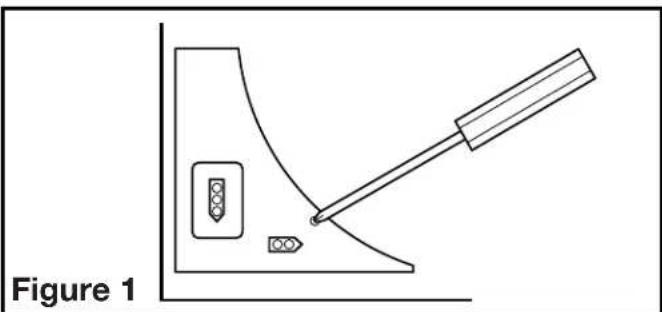
- Remove the wire compartment cover and store in the carton until needed so it does not get damaged or lost (Figure 1).
- Choose the location for your fan. To ensure the best air and sound performance, it is recommended that the length of ducting and the number of elbows be kept to a minimum, the radius of each elbow be as large as possible for the installation, and that insulated hard ducting be used. Larger duct sizes will reduce noise and airflow restrictions.
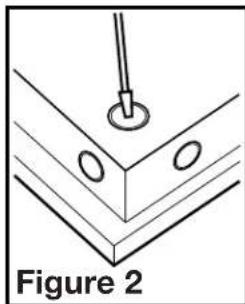
- Select the most convenient electrical knockout and remove using a straightblade screw driver (Figure 2).
- No additional vibration deadening materials are needed for this fan.
SECTION 2
New Construction
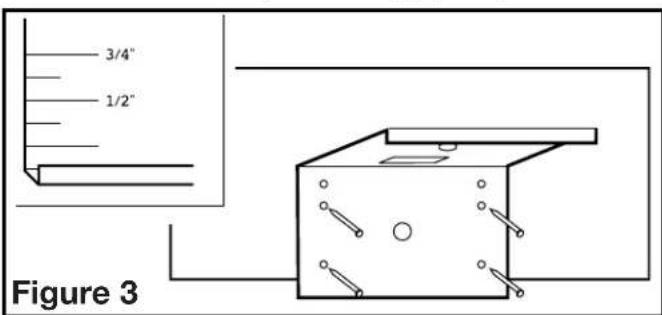
- Using the gauge on the mounting bracket, line up the bracket on the joist so the bottom of the fan will be flush with the finished ceiling. Nail or screw the bracket in place securely (Figure 3).
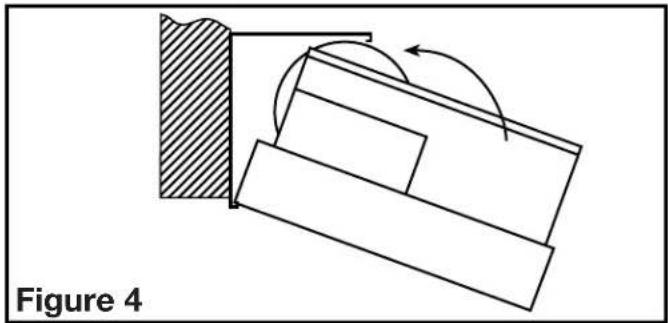
- Snap the fan body into the bracket (Figure 4). The fan can be snapped into position with the duct collar facing to the left or the right depending which is most convenient.
SECTION 3
Existing Construction
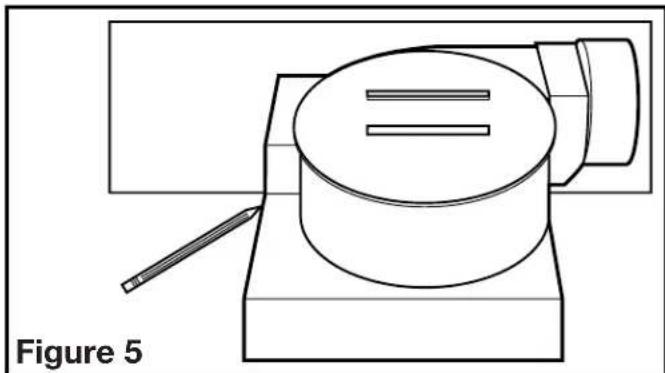
- Position housing against the joist or stud and trace an outline of the housing onto the ceiling/wall material. Set housing aside and cut opening, being careful not to cut or damage any electrical or other hidden utilities (Figure 5).
- Line up the bracket on the joist so the bottom of the fan will be flush with the finished ceiling. Nail or screw the snap-in bracket in place securely (Figure 3).
- Snap the fan body into the bracket (Figure 4). The fan can be snapped into position with the duct collar facing to the left or the right depending which is most convenient.
SECTION 4
Ducting
NOTE: 4" OR LARGER RIGID DUCT IS RECOMMENDED FOR BEST PERFORMANCE.

CAUTION: ALL DUCTING MUST COMPLY WITH LOCAL AND NATIONAL BUILDING CODES.
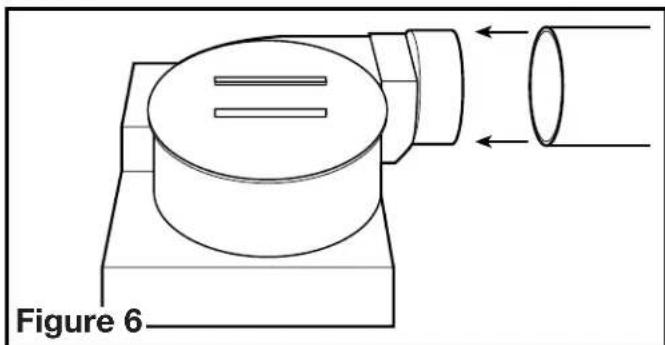
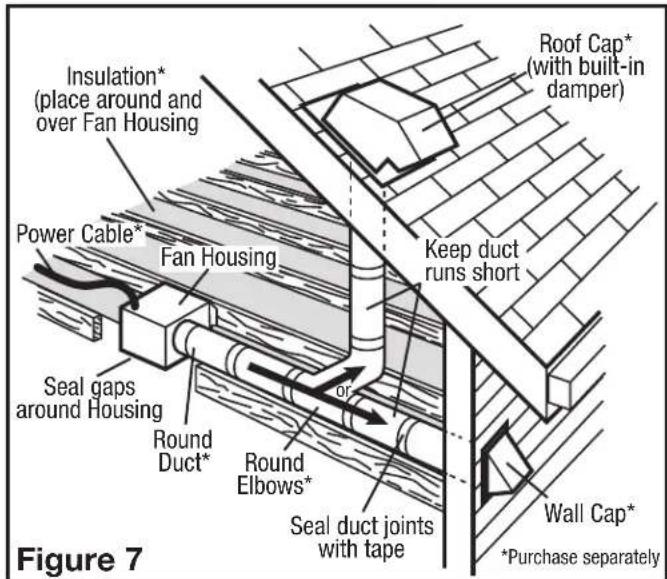
- Connect the ducting to the fan's duct collar (Figure 6). Secure in place using tape or screw clamp. Always duct the fan to the outside through a wall or roof cap. It is recommended that low restriction termination fittings be used.
- Ensure duct joints and exterior penetrations are sealed with caulk or other similar material to create an air-tight path to minimize building heat loss or gain and to reduce the potential for condensation. Place/ wrap insulation around duct and/or fan to in order to minimize possible condensation buildup within the duct, as well as building heat loss or gain (Figure 7).
SECTION 5 Wiring
CAUTION: MAKE SURE POWER IS SWITCHED OFF AT SERVICE PANEL BEFORE STARTING INSTALLATION.
CAUTION: ALL ELECTRICAL CONNECTIONS MUST BE MADE IN ACCORDANCE WITH LOCAL CODES, ORDINANCES, OR NATIONAL ELECTRICAL CODE. IF YOU ARE UNFAMILIAR WITH METHODS OF INSTALLING ELECTRICAL WIRING, SECURE THE SERVICES OF A QUALIFIED ELECTRICIAN.
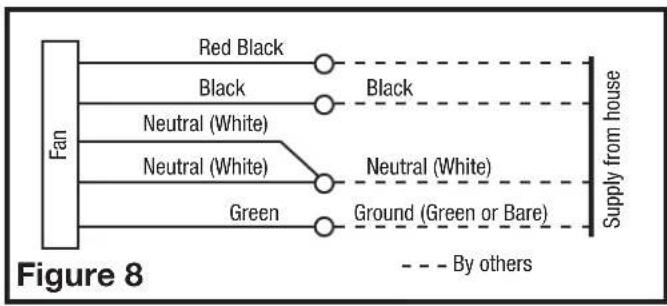
1. Wiring Fan/Light Independently: Run wiring from an approved wall switch carrying the appropriate rating. One neutral (white), one ground (green or bare copper), and two hot (black lead connected to the switch). Secure the electrical wires to the housing with an approved electrical connector. Make sure you leave enough wiring in the box to make the connection to the fan's receptacle.
1a. From where you have access to inside the fan's junction box, connect the one white wire from the house to both the white wire from the fan's light receptacle and the white wire from the fan's exhaust receptacle. Connect the first black wire from the wall switch to the black wire from the fan's light receptacle. Connect the second black wire from the switch to the fan's exhaust receptacle. Connect the ground wire from the house to the green wire from the fan's receptacle (Figure 8). Use approved methods for all connections.
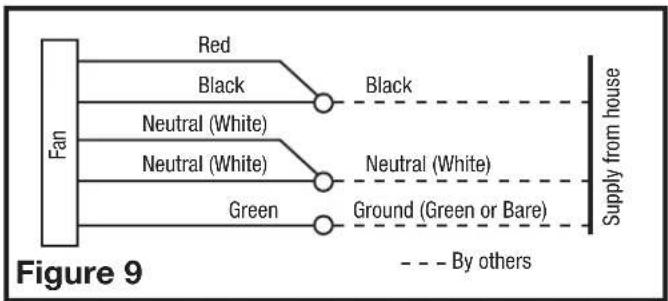
- Wiring Fan/Light together: Run wiring from an approved wall switch carrying the appropriate rating. One neutral (white), one ground (green or bare copper), and one hot (black lead connected to the switch). Secure the electrical wires to the housing with an approved electrical connector. Make sure you leave enough wiring in the box to make the connection to the fan's receptacle.
2a. From where you have access to inside the fan's junction box, connect the one white wire from the house to both the white wire from the fan's light receptacle and the white wire from the fan's exhaust receptacle. Connect the black wire from the wall switch to both the black wire from the fan's light receptacle and the black wire from the fan's exhaust receptacle. Connect the ground wire from the house to the green wire from the fan's receptacle (Figure 9). Use approved methods for all connections.
SECTION 6 Completing the Installation
- Use a sealant appropriate for contact with the building materials present and for the temperature requirements of the installation to prevent air leakage from unconditioned spaces is recommended. If gaps between unit housing and ceiling are great, additional material (backing rod, ceiling material) may be required.
NOTE: This fan is rated for direct insulation contact (Type IC) and it is recommended that this fan be completely covered by insulation in order to reduce heat loss or gain to unconditioned space.
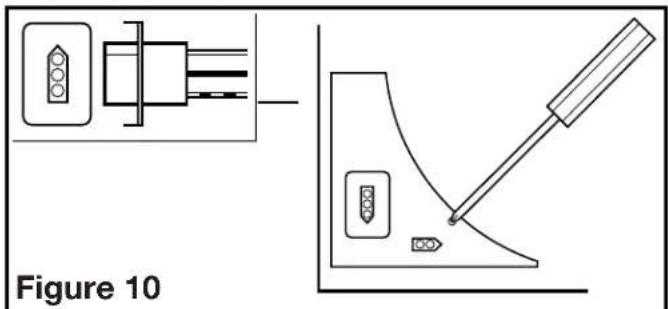
2. Reinstall the fan's wire compartment cover. Rotate the blower wheel by hand to ensure it spins freely. Plug the fan's quick connect motor cord into the receptacle. This cord will only fit one way into the receptacle (Figure 10).
NOTE: If using this fan to meet ASHRAE 62.2 requirements, locate the label inside the fan housing and fill in the appropriate information.
- Install the grill/lens/light reflector, by first removing the lens from the grill (there are two tabs on either side that hold the lens in place). Then remove the acorn nut and the lock washer which are installed on the reflector mounting bolt in the fan housing. Adjust the height of the reflector mounting bolt so that the grill will be tight up against the finished ceiling and less than 1/4 of the reflector mounting bolt protrudes through the reflector. Secure the reflector bolt's position by tightening the factory installed nut against the motor clip (Figure 11).
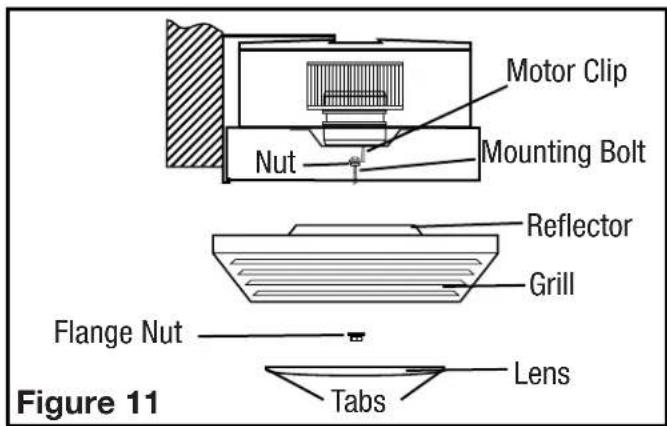

CAUTION: FAILURE TO SECURE THE REFLECTOR BOLT MAY RESULT IN A RATTLING OR HUMMING NOISE.
- After the reflector bolt is secure, raise the grill/reflector up into position and plug the reflector into the appropriate receptacle. Secure the assembly to the reflector bolt using the acorn nut and lock washer. Install the included LED lamp into the lamp holder by lining up the pins on the lamp base to the socket of the lamp holder and turning the lamp body clockwise until the lamp snaps into place and is firmly seated in the lamp holder (Figure 12).
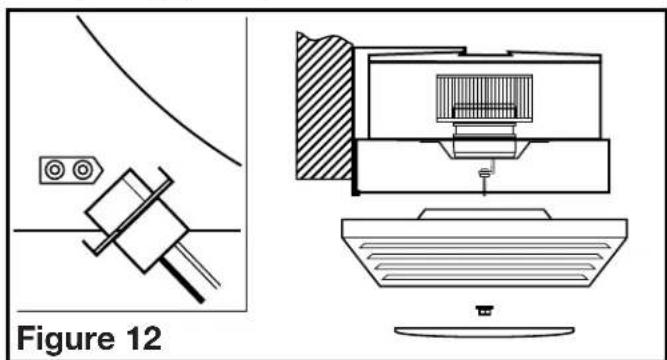
- Reinstall the lens into the grill.
- Restore power and test your installation.
SECTION 7 Use and Care


CAUTION: MAKE SURE POWER IS SWITCHED OFF AT SERVICE PANEL BEFORE SERVICING THE UNIT.

CAUTION: ALLOW BULB TO COOL BEFORE REPLACING.
Changing the Lamp
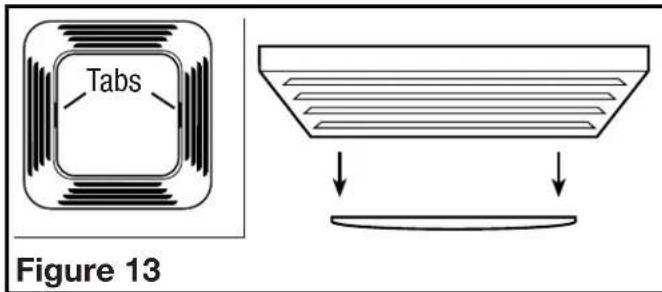
Remove the light lens by squeezing at the tabs and pulling down (Figure 13). Remove lamp by gently twisting the lamp base counterclockwise while applying outward pressure. Installation is the reverse of removal. Replace with a compatible GU24 LED lamp.
Cleaning the Grill
Remove grill and use a mild detergent, such as dishwashing liquid, and dry with a soft cloth. NEVER USE ANY ABRASIVE PADS OR SCOURING POWDERs. Completely dry grill before reinstalling. Refer to instructions in Section 6 Finishing the Installation, to reinstall grill.
Cleaning the Fan Assembly
Unplug the motor cord from receptacle. Wipe all parts with a dry cloth or gently vacuum the fan. NEVER IMMERSE ELECTRICAL PARTS IN WATER. Plug the motor cord back in and restore power.
Troubleshooting Guide
| Trouble Probable Cause Suggested Remedy | ||
| 1. Fan does not operate when the switch is on. | 1a. A fuse may be blown or a circuit tripped. 1b. Connector plug from motor is not plugged in. 1c. Wiring is not connected properly. 1d. Motor has stopped operating. | 1a. Replace fuse or reset circuit breaker. 1b. Turn off power to unit. Remove Grill and plug motor into receptacle in housing. Restore power to unit. 1c. Turn off power to unit. Check that all wires are connected. 1d. Replace motor. |
| 2. Fan is operating, but air moves slower than normal. | 2. Obstruction in the exhaust ducting. | 2. Check for any obstructions in the ducting. The most common are bird nests in the roof cap or wall cap where the fan exhausts to the outside. |
| 3. Fan is operating louder than normal | 3a. Motor is loose. 3b. Fan blade is hitting housing of unit. | 3a. Turn off power to unit. Remove grill and check that all screws are fully tightened. Restore power to unit. 3b. Call your dealer for service. |
LIMITED WARRANTY
WHAT THIS WARRANTY COVERS: This product is warranted against defects in workmanship and/or materials.
HOW LONG THIS WARRANTY LASTS: This warranty extends only to the original purchaser of the product and lasts for five (5) years from the date of original purchase or until the original purchaser of the product sells or transfers the product, whichever first occurs.
WHAT AIR KING WILL DO: During the warranty period, Air King will, at its sole option, repair or replace any part or parts that prove to be defective or replace the whole product with the same or comparable model.
WHAT THIS WARRANTY DOES NOT COVER: This warranty does not apply if the product was damaged or failed because of accident, improper handling, installation, or operation, shipping damage, abuse, misuse, unauthorized repairs made or attempted. This warranty does not cover shipping costs for the return of products to Air King for repair or replacement. Air King will pay return shipping charges from Air King following warranty repairs or replacement
ANY AND ALL WARRANTYES, EXPRESSED OR IMPLIED (INCLUDING, WITHOUT LIMITATION, ANY IMPLIED WARRANTY OF MERCHANTABILITY), LAST FIVE YEARS FROM THE DATE OF ORIGINAL PURCHASE OR UNTIL THE ORIGINAL PURCHASER OF THE PRODUCT SELLS OR TRANSFERS THE PRODUCT, WHICHEVER FIRST OCCURS AND IN NO EVENT SHALL AIR KING'S LIABILITY UNDER ANY EXPRESS OR IMPLIED WARRANTY INCLUDE (I) INCIDENTAL OR CONSEQUENTIAL DAMAGES FROM ANY CAUSE WHATSOEVER, OR (II) REPLACEMENT OR REPAIR OF ANY HOUSE FUSES, CIRCUIT BREAKERS OR RECEPTACLES. NOTWITHSTANDING ANYTHING TO THE CONTRARY, IN NO EVENT SHALL AIR KING'S LIABILITY UNDER ANY EXPRESS OR IMPLIED WARRANTY EXCEED THE PURCHASE PRICE OF THE PRODUCT AND ANY SUCH LIABILITY SHALL TERMINATE UPON THE EXPIRATION OF THE WARRANTY PERIOD.
Some states and provinces do not allow limitations on how long an implied warranty lasts, or the exclusion or limitation of incidental or consequential damages, so these exclusions or limitations may not apply to you. This warranty gives you specific legal rights. You may also have other rights which vary from state to state and province to province. Proof of purchase is required before a warranty claim will be accepted.
CUSTOMER SERVICE:
Toll-Free (800) 465-7300
Our Customer Service team is available to assist you with product questions, service center locations, and replacement parts. They can be reached Monday through Friday, 8am-4pm Eastern. Please have your model number available, as well as the type and style (located on the label inside of your product).
Please do not return product to place of purchase.
www.airkinglimited.com
PARTS FOR DISCONTINUED, OBSOLETE AND CERTAIN OTHER PRODUCTS MAY NOT BE AVAILABLE. DUE TO SAFETY REASONS, MANY ELECTRONIC COMPONENTS AND MOST HEATER COMPONENTS ARE NOT AVAILABLE TO CONSUMERS FOR INSTALLATION OR REPLACEMENT.
Installer: Installation Date:
Place of Purchase: Model Number:
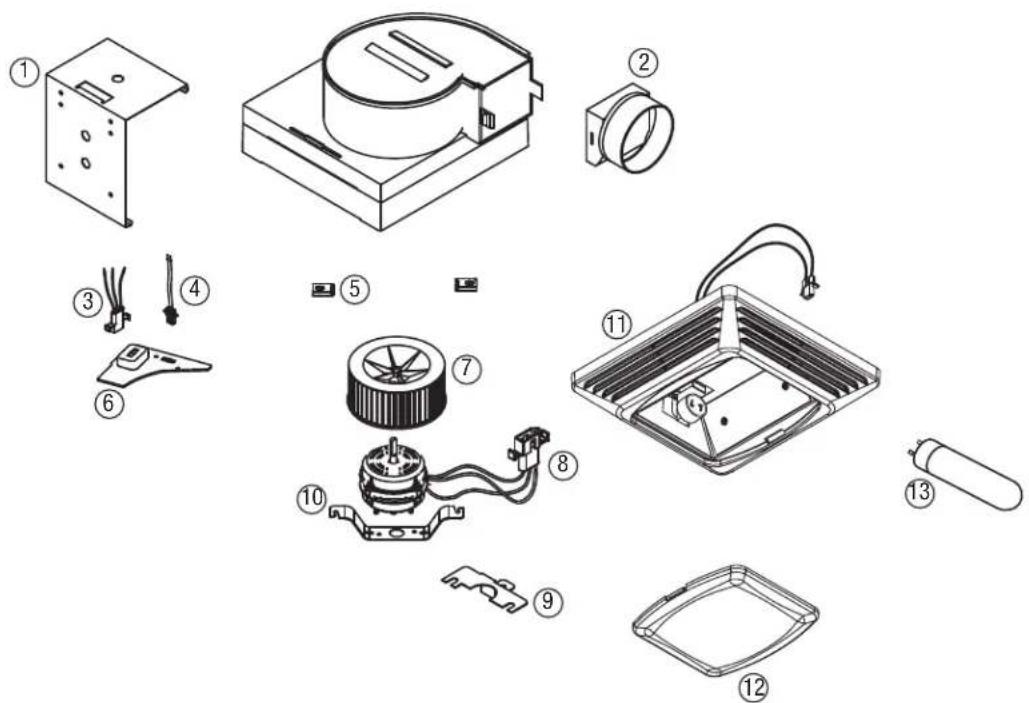
REPLACEMENT PARTS DIAGRAM
| # Qty. | Description Replacement Part # | |
| 1 | 1 | Snap-In Bracket 5S2205027 |
| 2 | 1 | Damper Assembly 5S2299054 |
| 3 | 1 | Fan Receptacle 5S2205004 |
| 4 | 1 | Light Receptacle 5S1201012 |
| 5 | 2 | Clip 5S2205025 |
| 6 | 1 | Wire Cover 5S2205040 |
| 7 | 1 | Blower Wheel 5S2299004 |
| 8 | 1 | Motor - BFQL50, BFQLA50 5S2205035 |
| 1 | Motor - BFQL60 5S2205036 | |
| 1 | Motor - BFQL70 5S2205037 | |
| 1 | Motor - BFQL80 5S2205034 | |
| 1 | Motor - BFQL120, BFQLA120 5S2299002 | |
| 9 | 1 | Reflector Bracket 5S2205029 |
| 10 | 1 | Motor Bracket 5S2299003 |
| 11 | 1 | Grill Assembly 5S9205030 |
| 12 | 1 | Light Lens 5S2205031 |
| 13 | 1 | LED Lamp 5S1299725 |
INSTRUCTIONS IMPORTANTES -
MODE D'EMPLOI
Ventilation Products