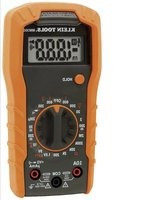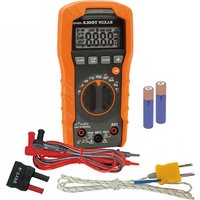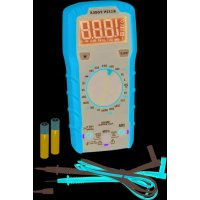
MM325 - Multimeter Klein Tools - Free user manual and instructions
Find the device manual for free MM325 Klein Tools in PDF.



| Product Type | Manual Range Digital Multimeter |
| Brand | Klein Tools |
| Model | MM325 |
| Dimensions | 162.7 × 79.4 × 46.6 mm (6.41 × 3.13 × 1.83 in) |
| Weight | 250 g (8.8 oz) |
| Power Supply | 2 AAA batteries |
| Display | 3 1/2 digit digital LCD, 2000 counts |
| Sampling Frequency | 2 samples per second |
| Measurement Functions | AC/DC voltage, DC current, resistance, battery test, diode test, continuity |
| DC Voltage Range | 200.0 mV to 600 V |
| AC Voltage Range | 200.0 V to 600 V (50-60 Hz) |
| DC Current Range | 200.0 μA to 10 A |
| Resistance Range | 200.0 Ω to 2 MΩ |
| Basic Accuracy | ±(0.5% to 2.0% + digits) depending on function |
| Special Features | Data hold (HOLD), backlight, auto-off (15 min), audible continuity indicator, test lead alert LED |
| Safety | CAT III 600 V, double insulation, 2 m drop protection |
| Fuses | 200 mA/600 V (cat. 69031) and 10 A/600 V (cat. 69032), fast-acting |
| Operating Temperature | 0 °C to 40 °C |
| Storage Temperature | -10 °C to 60 °C |
| Relative Humidity | < 80% non-condensing |
| Operating Altitude | Up to 2000 m |
| Cleaning | Lint-free cloth, no solvents or abrasives |
| Warranty | See www.kleintools.com/warranty |
Frequently Asked Questions - MM325 Klein Tools
User questions about MM325 Klein Tools
0 question about this device. Answer the ones you know or ask your own.
Ask a new question about this device
Download the instructions for your Multimeter in PDF format for free! Find your manual MM325 - Klein Tools and take your electronic device back in hand. On this page are published all the documents necessary for the use of your device. MM325 by Klein Tools.
USER MANUAL MM325 Klein Tools
text_image
Grid of 12 black square icons representing electronic components and indicators including voltage, ammeter, resistor, test, lightbulb, battery, and LCD display.ESPAÑOL pág. 13
FRANÇAIS p. 25

text_image
KLEIN® TOOLS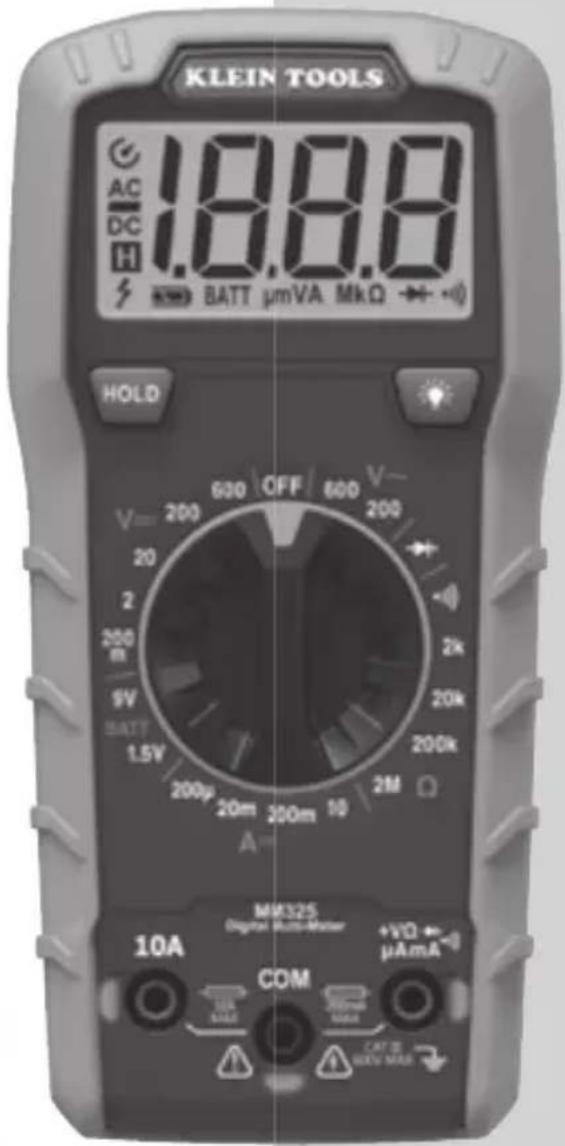
text_image
KLEIN TOOLS AC DC H 18.88 BATT μmVA MkΩ -+ -+0 HOLD 600 OFF 600 V- 200 20 2 200 m 9V BATT 1.5V 200μ 20m 200m 10 A 2M Ω MM325 Original Multi-Master 10A COM +VD - μAmA 10A A-16S 200mA AMOS CAT Ⅲ MAX 10A
text_image
CE UK CA

GENERAL SPECIFICATIONS
Klein Tools MM325 is a manual-ranging multimeter that measures AC/DC voltage, DC current, and resistance. It can also test batteries, diodes, and continuity.
- Environment: Indoors. DO NOT expose to moisture, rain, or snow.
- Operating Altitude: 6562 ft. (2000m)
- Relative Humidity: <80% non-condensing
- Operating Temp: 32^ to 104^ (0° to 40°C)
• Storage Temp: 14° to 140°F (-10° to 60°C)
• Accuracy: Values stated at 65° to 83°F (18° to 28°C) - Temp Coefficient: 0.1 x (Quoted Accuracy) per °C above 28°C or below 18°C, corrections are required when ambient working temp is outside of Accuracy Temp range
- Dimensions: 6.41" × 3.13" × 1.83" (162.7 × 79.4 × 46.6 mm)
• Weight: 8.8 oz. (250 g)
• Calibration: Accurate for one year - Standards: IEC EN 61010-1, 61010-2-030, 61010-2-033. IEC EN 61326-1, 61326-2-2.
Conforms to UL STD.61010-1, 61010-2-030, 61010-2-033.
Certified to CSA STD.C22.2 NO. 61010-1, 61010-2-030, 61010-2-033. - Pollution degree: 2
- Accuracy: ± (% of reading + # of least significant digits)
- Drop Protection: 6.6 ft. (2m)
- Safety Rating: CAT III 600V, Class 2, Double insulation
CAT III: Measurement category III is applicable to test and measuring circuits connected to the distribution part of the building's low-voltage MAINS installation.
Specifications subject to change.
ELECTRICAL SPECIFICATIONS
| Function Range Resolution Accuracy | |||
| DC Voltage (V DC) | 200.0mV 0.1mV | ±(0.5% + 3 digits)2000r | |
| 20.00V 0.01V | |||
| 200.0V 0.1V | ±(0.8% + 3 digits) | ||
| 600V 1V | |||
| AC Voltage (V AC) 50 to 60Hz | 200.0V | 0.1V ±(1.0% + 3 digits) | |
| 600V | 1V ±(1.2% + 5 digits) | ||
| DC Current (A DC) | 200.0μA 0.1μA | ±(1.0% + 5 digits)20.00 | |
| 200.0mA 100μA | |||
| 10.00A 10mA ±(2.0% + 5 digits) | |||
| Resistance | 200.0Ω 0.1Ω | ±(0.8% + 3 digits) | |
| 2000Ω 1Ω | |||
| 20.00kΩ 0.01kΩ | |||
| 200.0kΩ 0.1kΩ | |||
| 2000kΩ 1kΩ ±(1.0% + 3 digits) | |||
| Battery Test | 9V 10mV | ±(1.0% + 2 digits) | |
| 1.5V | 1mV | ||
• Diode Test: Approx. 1.0mA, open circuit voltage 2.0V DC
• Continuity Check: Audible signal <50Ω
- Battery Test: 9V (approx. 20mA, 450Ω load); 1.5V (approx. 15mA, 100Ω load)
• Sampling Frequency: 2 samples per second
- Overload: "OL" indicated on display, overload protection 600V RMS in all settings
- Polarity: "-" on display indicates negative polarity
• Display: 3 ½ digit, 2000 Count LCD
⚠️ WARNINGS
To ensure safe operation and service of the meter, follow these instructions. Failure to observe these warnings can result in severe injury or death.
- Before each use verify meter operation by measuring a known voltage or current.
- Never use the meter on a circuit with voltages that exceed the category based rating of this meter.
- Do not use the meter during electrical storms or in wet weather.
- Do not use the meter or test leads if they appear to be damaged.
- Use only with CAT III or CAT IV rated test leads.
- Probe assemblies to be used for MAINS measurements should meet EN61010-031 standard, rated CATIII 600V, 10A or better.
- Ensure meter leads are fully seated, and keep fingers away from the metal probe contacts when making measurements.
- Do not open the meter to replace batteries while the probes are connected.
- Use caution when working with voltages above 25V AC RMS or 60V DC. Such voltages pose a shock hazard.
- To avoid false readings that can lead to electrical shock, replace batteries when a low battery indicator appears.
- Do not attempt to measure resistance or continuity on a live circuit.
- Always adhere to local and national safety codes. Use personal protective equipment to prevent shock and arc blast injury where hazardous live conductors are exposed.
SYMBOLS ON METER
AC Alternating Current DC Direct Current
Ω Resistance (in Ohms) Ground
Diode Audible Continuity
Fuse (with rating below symbol) Double Insulated Class II
Backlight Read Instructions i
Warning or Caution: To ensure safe operation and service of this meter, follow all warnings and instructions detailed in this manual.
Risk of Electrical Shock: Improper use of this meter can lead to risk of electrical shock. Follow all warnings and instructions detailed in this manual.
SYMBOLS ON LCD
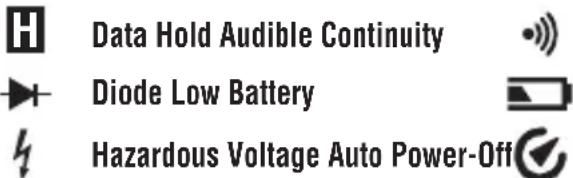
text_image
Data Hold Audible Continuity Diode Low Battery Hazardous Voltage Auto Power-OffFEATURE DETAILS
text_image
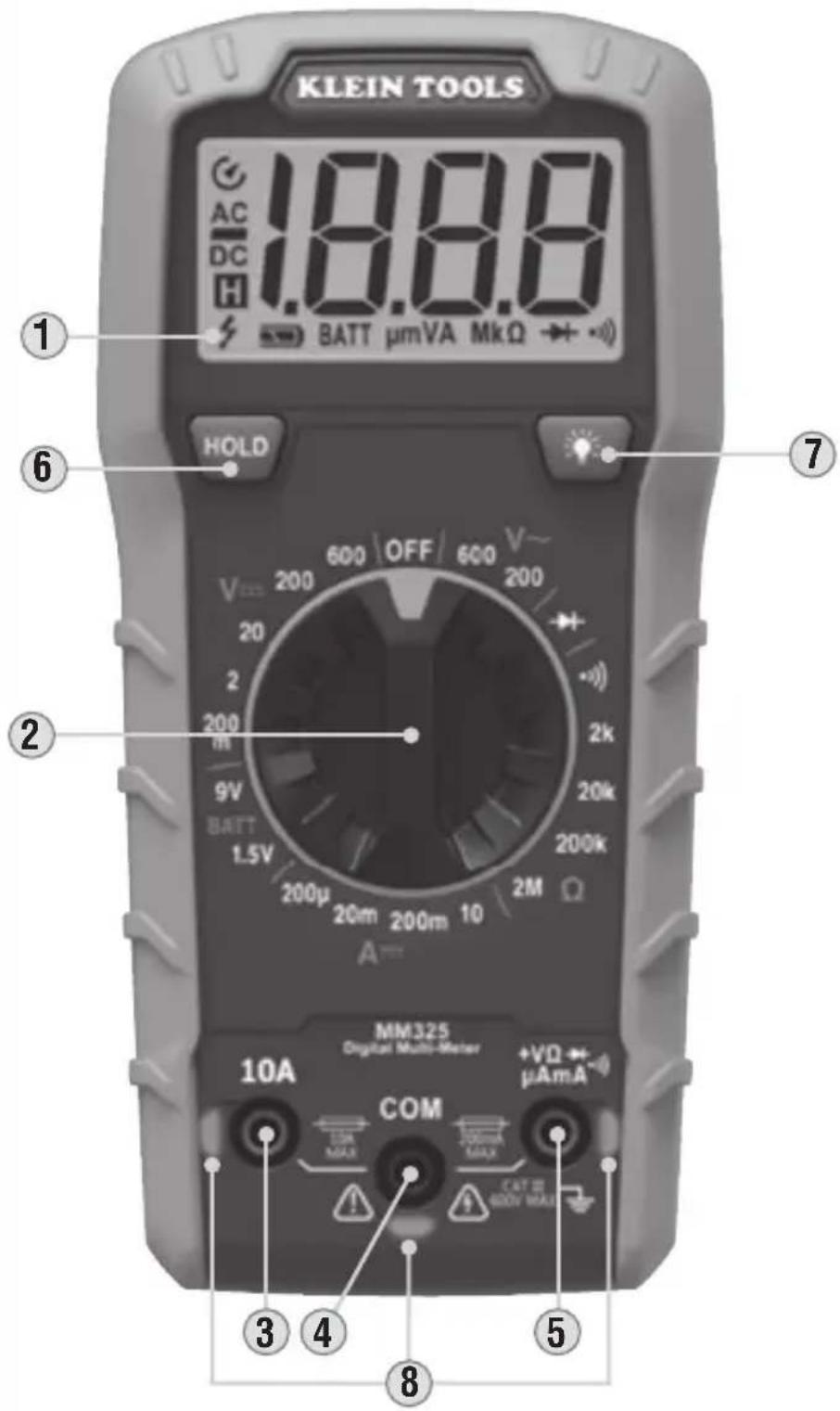
KLEIN TOOLS 18.8.8 AC DC H BATT μmVA MkΩ HOLD 600 OFF 600 V~ 200 200 2 200 9V BATT 1.5V 200μ 20m 200m 10 A= MM325 Digital Multi-Meter +VD μAmA COM 10A 3 4 5 3 4 8NOTE: There are no user-serviceable parts inside meter.
- 2000 count LCD display
- Function selector switch
- "10A" jack
- "COM" jack
- "VΩ" jack
- "HOLD" (Data Hold) button
- Backlight button
- Lead Alert LEDs
FUNCTION BUTTONS
ON/OFF
Power-ON: Rotate the Function Selector switch ② from the OFF setting to any measurement setting.
Power-OFF: Rotate the Function Selector switch ② to the OFF setting.
Auto Power-OFF: By default, the meter will automatically Power-OFF after 15 minutes of inactivity. Reactivate meter by pressing any button. To deactivate the automatic Power OFF feature, power the meter ON with the "HOLD" button 6 depressed. When automatic Power OFF is deactivated, the Auto Power-OFF symbol will not be visible in the display.
HOLD (DATA HOLD)
Press the "HOLD" button ⑥ to hold the measurement on the display. Press again to release the display and return to live measuring.
BACKLIGHT
Press and hold the Backlight button ⑦ for more than one second to turn the backlight on or off. Backlight automatically turns off after approximately 3 minutes.
LEAD ALERT LEDs
When the Function Selector switch ② is rotated to a measurement setting, the Lead Alert LEDs ⑧ will illuminate green to ensure that the test leads are inserted into the appropriate jacks. The lights will automatically turn off after 2 minutes. To disable the Lead Alert LEDs ⑧, power the meter ON while holding the Backlight button ⑦.
NOTE: Lead Alert function will reactivate by default when the meter powers OFF or when the Function Selector switch is rotated.
OPERATING INSTRUCTIONS
CONNECTING TEST LEADS
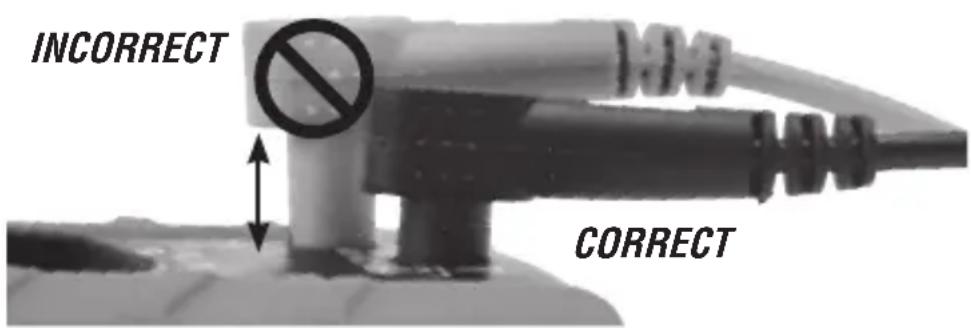
Do not test if leads are improperly seated. Results could cause intermittent display readings. To ensure proper connection, firmly press leads into the input jack completely.
text_image
INCORRECT CORRECTOPERATING INSTRUCTIONS
TESTING IN CAT III / CAT IV MEASUREMENT LOCATIONS
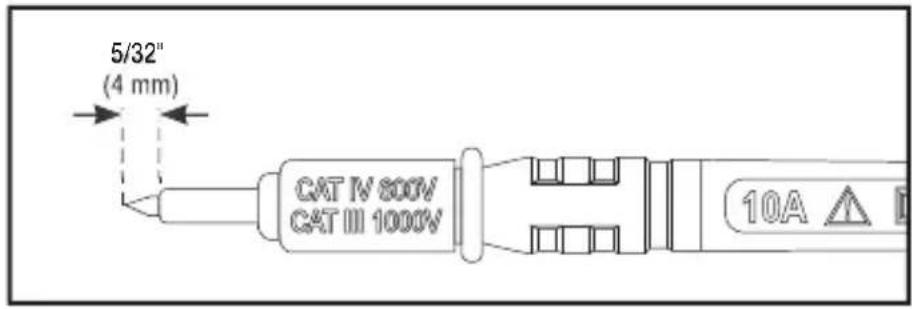
Ensure the test lead shield is pressed firmly in place. Failure to use the CAT III / CAT IV shield increases arc-flash risk.
text_image
5/32" (4 mm) CAT IV 800V CAT III 1000V 10ATESTING IN CAT II MEASUREMENT LOCATIONS
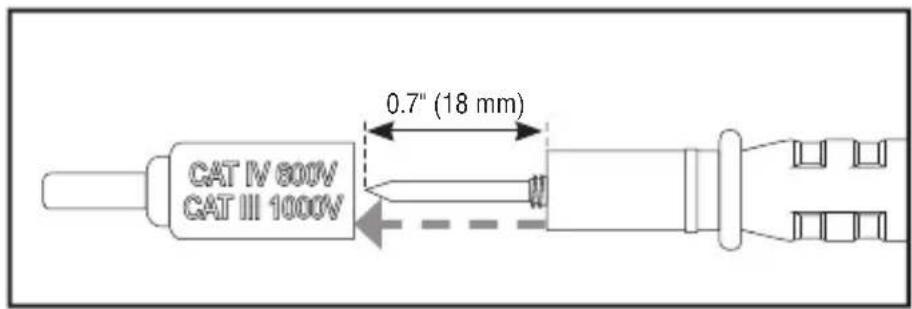
CAT III / CAT IV shields may be removed for CAT II locations. This will allow testing on recessed conductors such as standard wall outlets. Take care not to lose the shields.
text_image
CAT IV 800V CAT III 1000V 0.7" (18 mm)AC VOLTAGE (LESS THAN 600V)
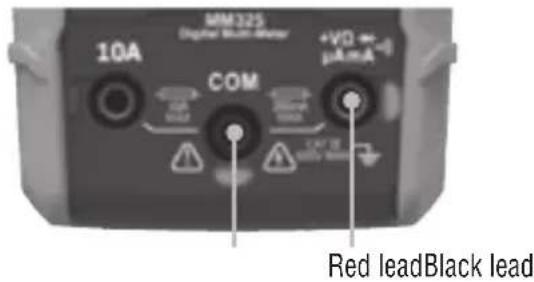
- Insert RED test lead into VΩ jack ⑤, and BLACK test lead into COM jack ④, and rotate Function Selector Switch ② to the highest V AC (V\~) setting (600V).
- Measure voltage and rotate the Function Selector Switch to successively lower V AC (V\~) settings to obtain higher resolution measurements.
NOTE: The hazardous voltage indicator will appear for voltages >30V.
NOTE: Do not attempt to measure more than 600V or 200mA.
text_image
MM325 10A Diode: Black leader +V0 → μA mA⁻¹ COM Red leadBlack lead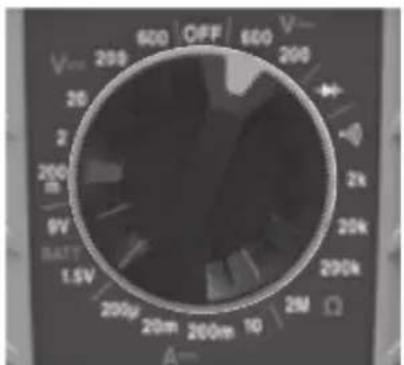
text_image
600 OFF 600 V- 299 200 20 4+ 2 2k 200 m 9V 200k BATT 200k 1.5V 3M 200μ 20m 200m 10 AmmDC VOLTAGE (LESS THAN 600V)
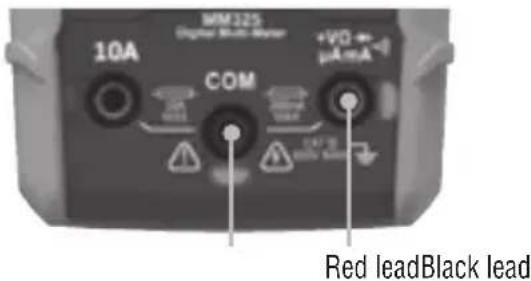
- Insert RED test lead into VΩ jack 5, and BLACK test lead into COM jack 4, and rotate Function Selector Switch 2 to the highest V DC (V⋯) setting (600V).
- Measure voltage and rotate the Function Selector Switch to successively lower V DC (V---) settings to obtain higher resolution measurements.
NOTE: When in a voltage setting and the test leads are open, readings of order mV may appear on the display. This is noise and is normal. By touching the test leads together to close the circuit the meter will measure zero volts.
NOTE: The hazardous voltage indicator will appear for voltages >30V.
NOTE: Do not attempt to measure more than 600V or 200mA.
text_image
MM125 Digital Multimeter 10A COM +V0 → μA mA Red lead Black lead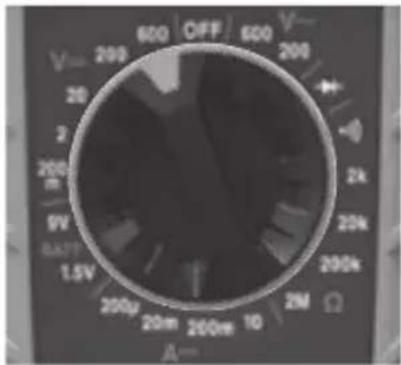
text_image
600 OFF 600 200 20 2 200 m 9V 8A1F 1.5V 200μ 20m 200m 10 A- 2M ΩDC CURRENT 200mA to 10A
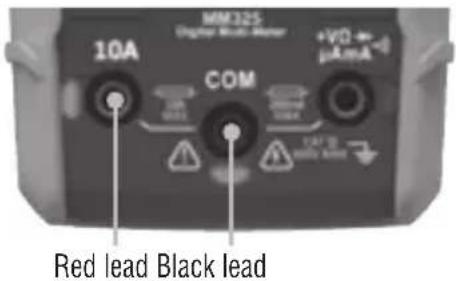
- For DC currents more than 200mA and less than 10A, insert RED test lead into 10A jack ③, and BLACK test lead into COM jack ④, and rotate Function Selector Switch ② to the 10A DC setting.
text_image
MM325 Display Mode Meter 10A COM +V0 ← -0 μA.mA Red lead Black lead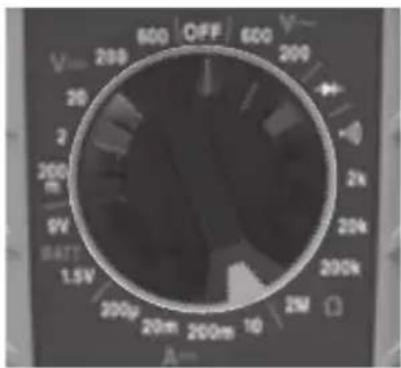
text_image
600 OFF 600 280 200 200m 2k 9V 20K BATY 200K 1.5V 2M 200V 20m 200m 10 A-OPERATING INSTRUCTIONS
DC CURRENT LESS THAN 200mA
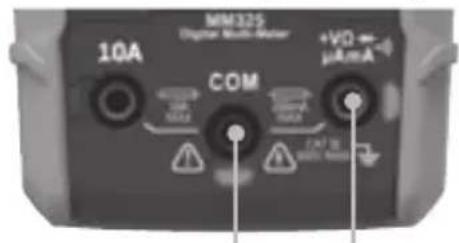
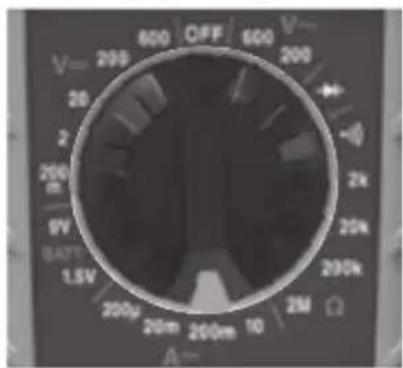
- For mA DC currents less than 200mA, insert RED test lead into VΩ jack ⑤, and BLACK test lead into COM jack ④, and rotate Function Selector Switch ② to the highest mA DC setting (200mA).
text_image
MM325 Digital Multi-Water 10A COM +VDD μA.mA 10A COM 10A 10A 10A 10ARed leadBlack lead
text_image
600 OFF 600 V- 299 200 20 2k 2 20k 200m 9V 200k BATT 1.5V 2M 200μ 20m 200m 10 A-- To measure current: Remove power from circuit, open circuit at measurement point, connect meter in-series in the circuit using the test leads, and apply power to circuit.
NOTE: If measuring mA, the Function Selector Switch ② may be rotated to successively lower mA DC settings to obtain higher resolution measurements.
Do not attempt to measure more than 10A.
When measuring currents greater than 6A, a measurement time of 30 seconds followed by 10 minutes of recovery time is recommended.
RESISTANCE MEASUREMENTS
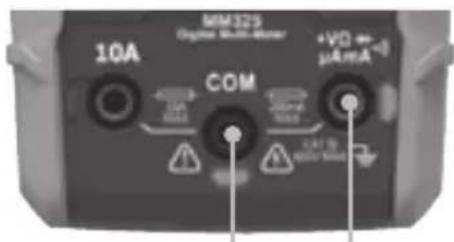
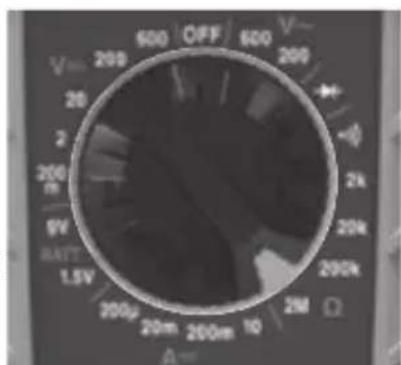
- Insert RED test lead into VΩ jack 5, and BLACK test lead into COM jack 4, and rotate Function Selector Switch 2 to the highest Ω setting (2MΩ).
- Remove power from circuit.
- Measure resistance by connecting test leads to circuit and rotating the Function Selector Switch 2 to successively lower settings to obtain higher resolution measurements.
text_image
MM325 Engine Multi-pressor 10A COM +VΩ → μA mA⁻¹ ΔΩ ΔΩ ΔΩ CAT B controlRed leadBlack lead
text_image
600 OFF 600 V~ 200 200 2k 200 200k 2M Ω V~ 200 20 200m 200m 10 RATI 1.5V 200μ ANOTE: When in a Resistance setting and the test leads are open (not connected across a resistor), or when a failed resistor is under test, the display will indicate O.L. This is normal.
DO NOT attempt to measure resistance on a live circuit.
OPERATING INSTRUCTIONS
CONTINUITY
-
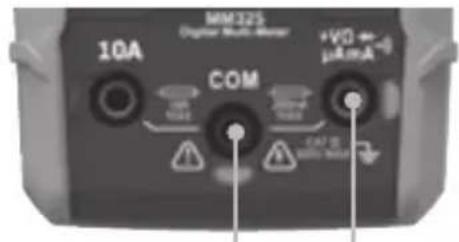
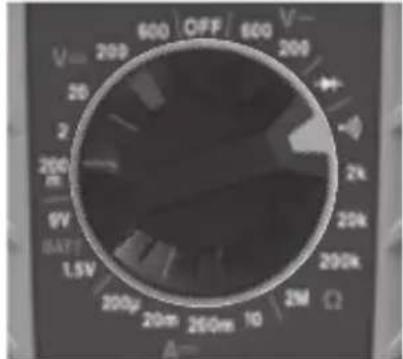
Insert RED test lead into VΩ jack 5 and BLACK test lead into COM jack 4, and rotate Function Selector Switch 2 to the -setting.
-
Remove power from circuit.
-
Test for continuity by connecting conductor or circuit with test leads. If resistance is measured less than 100 , an audible signal will sound and display will show a resistance value
indicating continuity. If circuit is open, display will show "OL".
text_image
MM325 Digital Multi-Mechan 10A COM +V μA.mA CAT 8 MOS: MDDRed leadBlack lead
text_image
600 OFF 600 V- 200 200 200 2k 20k 200k 200k Ω 1.5V 200μ 20m 260m 10 A-
DO NOT attempt to measure continuity on a live circuit.
DIODE TEST
-
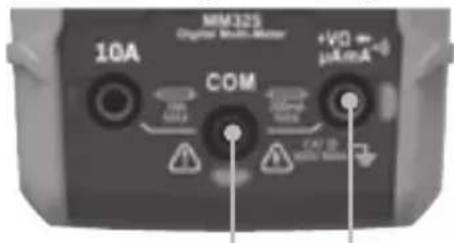
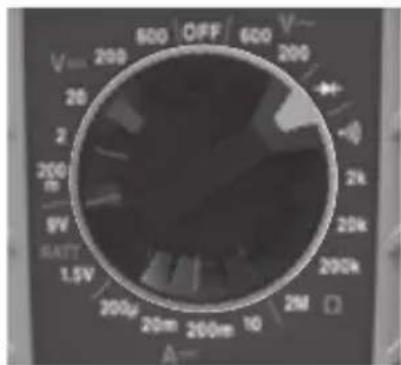
Insert RED test lead into VΩ jack ⑤ and BLACK test lead into COM jack ④, and rotate Function Selector Switch ② to the -setting.
-
Touch test leads to diode. A reading of 200-700mV on display indicates forward bias, OL indicates reverse bias. An open
device will show OL in both polarities. A shorted device will show approximately 0mV.
text_image
MM325 Digital Multi-Motor 10A COM +VΩ → μA mA⁻¹Red leadBlack lead
text_image
600 OFF 600 V~ 200 200 2 200 m 9V RATTY 1.5V 200M 200m 10 A~ 2k 20k 200k 2MBATTERY TEST
-
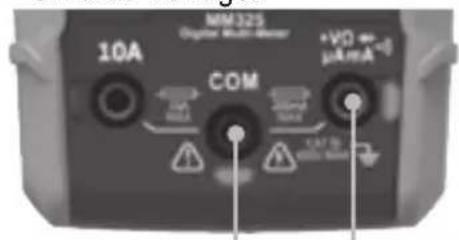
Insert RED test lead into VΩ jack ⑤ and BLACK test lead into COM jack ④, and rotate Function Selector Switch ② to the 1.5V or 9V battery test setting.
-
Connect BLACK lead to negative, and RED lead to positive terminal of battery.
-
Measure voltage on display, batteries in good condition should be within approx. 10% of rated voltage.
text_image
MM325 Digital Multi-Accrer 10A COM +VD → μA mA⁻¹ ΔV ΔV ΔV ΔV ΔV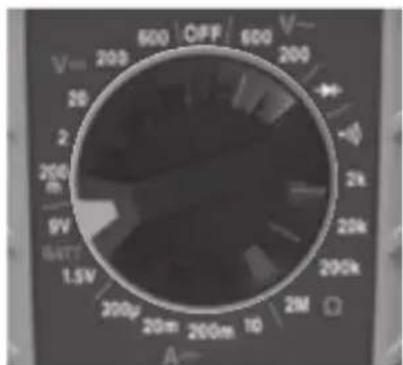
text_image
600 OFF 600 V~ 200 200 20 2k 2 200 m 200k 9V 200k BAT1 1.5V 2M 300V 20m 200m 10 A~MAINTENANCE
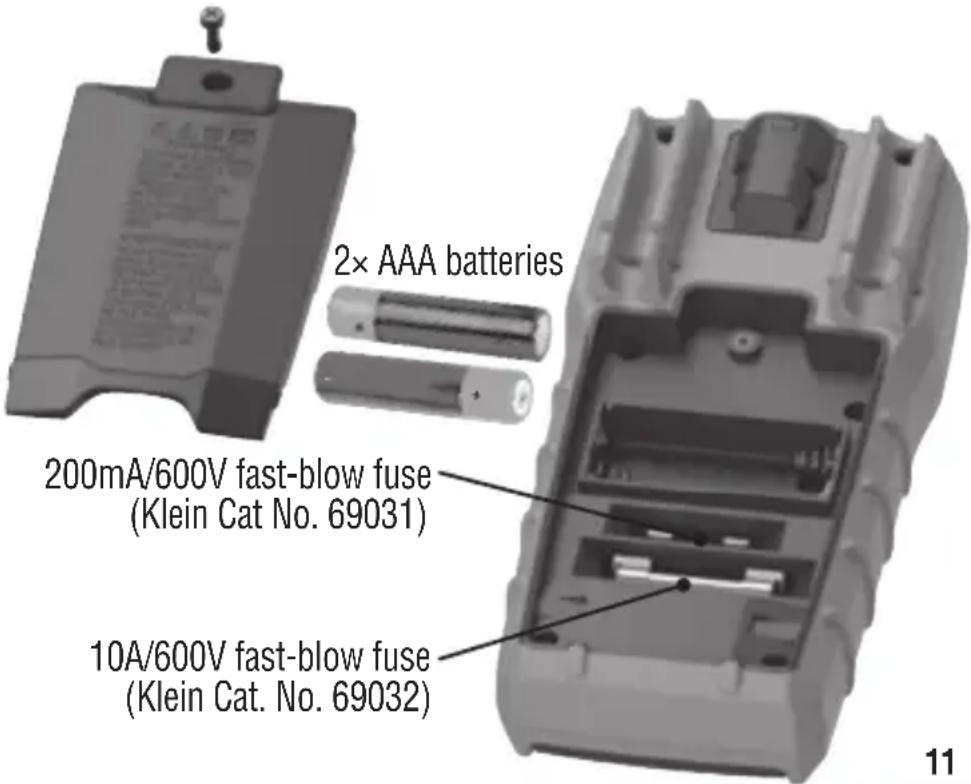
BATTERY REPLACEMENT
When the indicator is displayed, the batteries must be replaced.
- Remove screw from battery door.
- Replace 2 x AAA batteries (note proper polarity).
- Replace battery door and fasten securely with screw.
⚠️ To avoid risk of electric shock, disconnect leads from any voltage source before removing battery door.
⚠️ To avoid risk of electric shock, do not operate meter while battery door is removed.
FUSE REPLACEMENT
A fuse may blow if more than 200mA is applied to the VΩ jack ⑤, or more than 10A is applied to the 10A jack ③. To access fuses:
- Remove screw from battery door.
- Replace blown fuse(s) with:
VΩ (μA/mA) jack ⑤: 200mA/600V fast-blow, interrupting rating 1kA (Klein Cat. No. 69031)
10A jack ③: 10A/600V fast-blow, interrupting rating 10kA (Klein Cat. No. 69032)
- Replace battery door and fasten securely with screw.
⚠️ To avoid risk of electric shock, disconnect leads from any voltage source before accessing fuses.
⚠️ To avoid risk of electric shock, do not operate meter while back housing is removed.
text_image
2× AAA batteries 200mA/600V fast-blow fuse (Klein Cat No. 69031) 10A/600V fast-blow fuse (Klein Cat. No. 69032)CLEANING
Be sure meter is turned off and wipe with a clean, dry lint-free cloth. Do not use abrasive cleaners or solvents.
STORAGE
Remove the batteries when meter is not in use for a prolonged period of time. Do not expose to high temperatures or humidity. After a period of storage in extreme conditions exceeding the limits mentioned in the General Specifications section, allow the meter to return to normal operating conditions before using.
FCC & IC COMPLIANCE
See this product's page at www.kleintools.com
for FCC compliance information.
Canada ICES-003 (B) / NMB-003 (B)
WARRANTY
Do not place equipment and its accessories in the trash. Items must be properly disposed of in accordance with local regulations. Please see www.epa.gov/recycle for additional information.
CUSTOMER SERVICE
KLEIN TOOLS, INC.
450 Bond Street
Lincolnshire, IL 60069
1-800-553-4676
customerservice@kleintools.com
www.kleintools.com
text_image
Grid of 12 black square icons representing electronic components and indicators including voltage, ammeter, resistor, test, lightbulb, battery, and LCD display.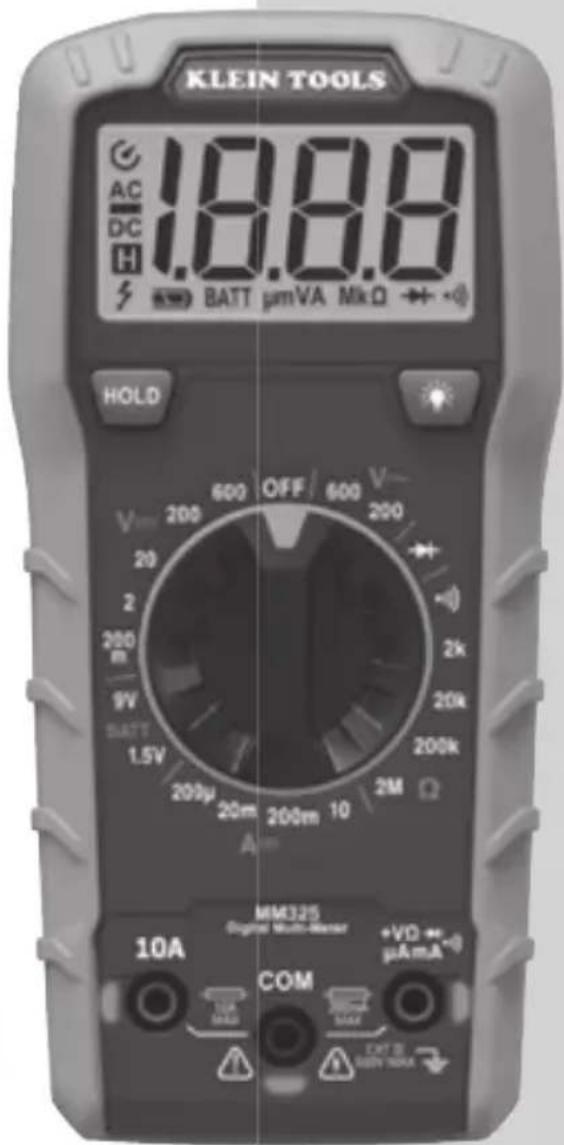
text_image
KLEIN TOOLS AC DC H BATT μmVA MkΩ HOLD 600 OFF 600 V 200 200 2k 200 200k 200μ 20m 200m 10 2M MM325 Digital Multi-Meter +VD++ μAmA 10A COM 10A MAX EXT B MIN 10ACE UK CA

Intertek
5000573
KLEIN® TOOLS
CAT III
600 V
BOTÓN "HOLD" (RETENER)
text_image
Grid of 12 black square icons with standard electronic symbols and labels including V, A, Ω, mV, mA, μA, HOLD, TEST, lightbulb, LED, APO, and a battery symbol.
text_image
KLEIN TOOLS AC DC H BATT μm VA Mk Ω HOLD 600 OFF 600 V~ 200 200 20 2k 200 20k 200μ 200k 1.5V 2M 200μ 200m 10 A= MM325 Digital Multi-Meter +VD++ μAmA 10A COM 10A MAX OUT B MAXCE UK CA

Intertek
5000573
KLEIN® TOOLS
CAT III
600 V