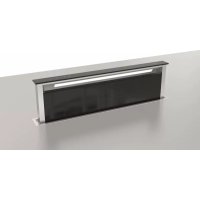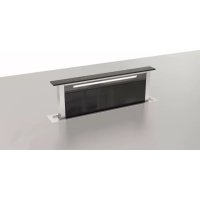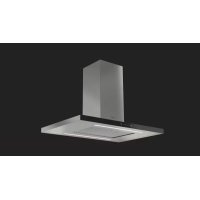
FTIHD 960 TC BK X - Basket Fulgor Milano - Free user manual and instructions
Find the device manual for free FTIHD 960 TC BK X Fulgor Milano in PDF.



User questions about FTIHD 960 TC BK X Fulgor Milano
0 question about this device. Answer the ones you know or ask your own.
Ask a new question about this device
Download the instructions for your Basket in PDF format for free! Find your manual FTIHD 960 TC BK X - Fulgor Milano and take your electronic device back in hand. On this page are published all the documents necessary for the use of your device. FTIHD 960 TC BK X by Fulgor Milano.
USER MANUAL FTIHD 960 TC BK X Fulgor Milano
natural_image
Simple diagram showing a black object above a horizontal bar with three wavy lines below, no text or symbols present.FTIHD 960 TC X
FTIHD 960 TC BKX
FTIHD 960 TC WHX
CAPPA DA CUCINA
HOOD
HOTTE DE CUSINE
CAMPANA DE COCINA
KÜCHENHAUBE
FULGOR
MILANO
natural_image
Diagram of a mechanical or fluidic system with directional arrows indicating flow or movement, no text or symbols present.1
natural_image
Diagram of a mechanical or structural component with directional arrows indicating flow or movement, no text or symbols present.2
natural_image
3D diagram of a computer ventilation grille with an upward arrow indicating airflow or ventilation direction (no text or symbols)3
4
text_image
Fig. 5.1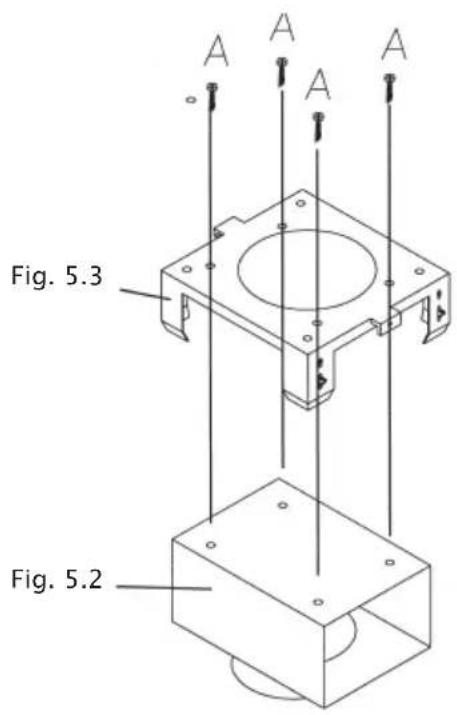
text_image
A A A Fig. 5.3 Fig. 5.25
text_image
Fig. 6.2 A A Fig. 6.1 A A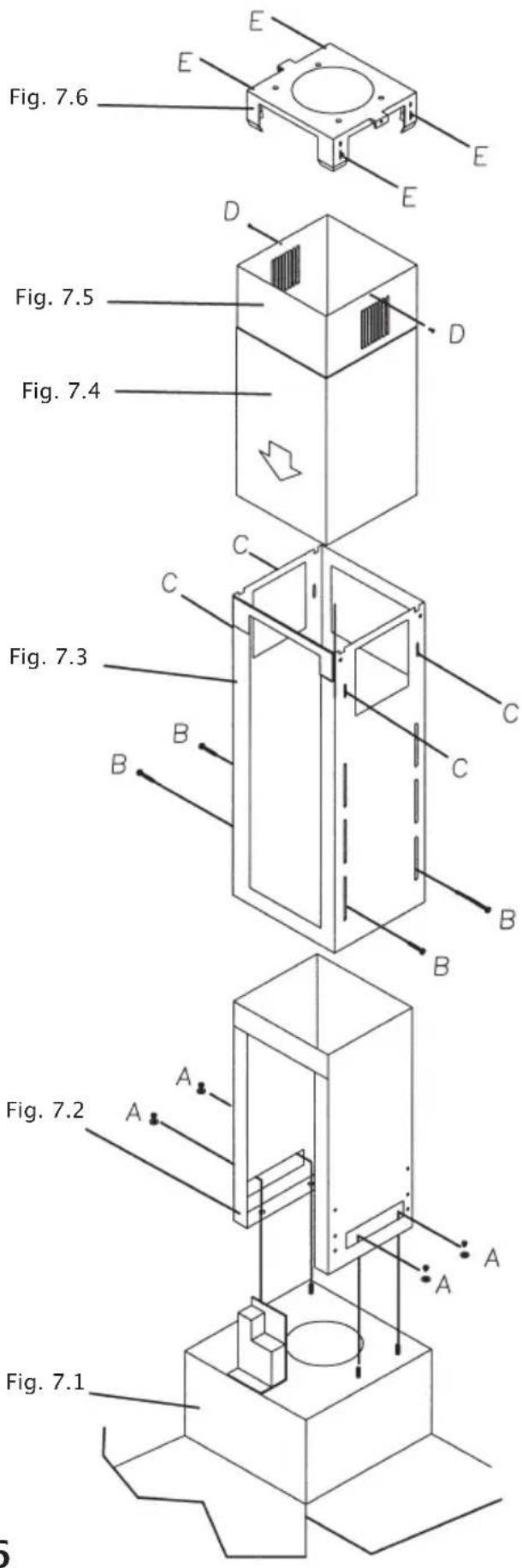
6
| [XY5] |  |  |  |  |  |
 |  |  |  |  | |
| 7 | |||||
 |  |  |  |  |  |
 |  |  |  |  |  |
| 8 | |||||
 | |||||
| 9 | |||||
INDICE
IT
Avvertenze
Versioni d'uso
Installazione
Funzionamento
Manutenzione
AVVERTENZE
this appliance can be used by children aged from 8 years and above and persons with reduced physical, sensory or mental capabilities or lack of experience and knowledge if they have been given supervision or instruction concerning use of the appliance in a safe way and understand the hazards involved.
Children shall not play with the appliance.
Cleaning and user maintenance shall not be made by children without supervision.
If the supply cord is damaged, it must be replaced by the manufacturer, its service agent or similarly qualified persons in order to avoid a hazard.
There is a fire risk if cleaning is not carried out in accordance with the instructions;
Do not flambé under the range hood.
The air must not be discharged into a flue that is used for exhausting fumes from appliances burning gas or other fuels (not applicable to appliances that only discharge the air back into the room);
This appliance and its accessible parts are likely to become very hot if used in combination with cooking devices.
In case of installation with gas hobs the cooker surface and the inferior part of the cooker hood must be at a minimun di! stance of 65 cm.
To evacuate the air outlet, please comply with the pertaining rules given by competent authorities.
When performing the electrical connections on the appliance, please make sure that the power supply is provided with earth connection and that voltage values correspond to those indicated on the label placed inside the appliance itself.
If the supply cord is damaged, it must be replaced by the manufacturer, its service agent or similarly qualified persons in order to avoid a hazard.
Before carrying out any cleaning or maintaining operations, the appliance needs to be removed from the electric grid.
If the appliance is not provided with a non-separable flexible cable and plug, or with another device ensuring disconnections from the grid, with an opening distance between the contacts of at least 3 mm, then such disconnecting devices must be supplied within the fixed installation.
If the fixed appliance is endo wed with a supply cord and a plug, the appliance has to be put in a place where the plug can be reached easily.
Before carrying out the installation of the appliance, please check that all components are not damaged. In such a case, make contact with your retailer and do not proceed with the installation.
Should the product show any anomaly, disconnect the appliance from the power supply.
When the range hood and appliances supplied with energy other than electricity are simultaneously in operation, the negative pressure in the room must not exceed 4 Pa (4 x 10⁻⁵ bar).
USES
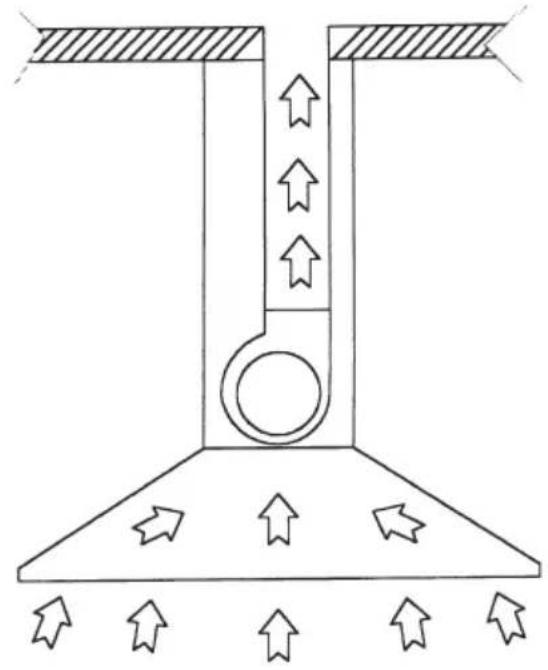
The appliance is already arranged both for filtering and for suction performances.
* In its filtering version (Fig. 1), the air and fumes conveyed by the appliance are depured both by a grease filter and by an active coal filter, (to be purchased as accessories) and put again into circulation through the side-grids of the chimney. For this version an air deflector (to be purchased as accessories) placed on the superior part of the pipe and allowing air-recycling is necessary (Fig.1).
* In its sucking version (Fig. 2), fumes are directly conveyed outside, through an evacuation duct connected with the superior part of the wall or the ceiling. Both coal filter and air deflector are not necessary in this case.
INSTALLATION
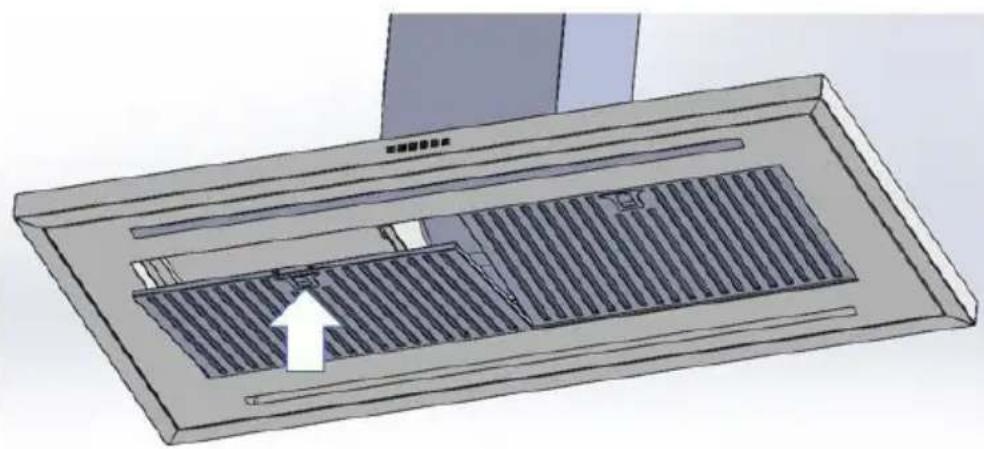
* Before installing the appliance, in order not to damage the appliance itself, the metal grease filter should be removed. Such filter can be removed by pushing the special filter handle toward the back side of the cooker hood and turning it downwards so to unfasten it from its slot (Fig. 3).
Attention: at least two people are needed to perform the installation.
Before fixing the hood, place the electric feeding properly into the ornamental pipe and place a hole for air evacuation in case of a sucking version.
\* Suction model
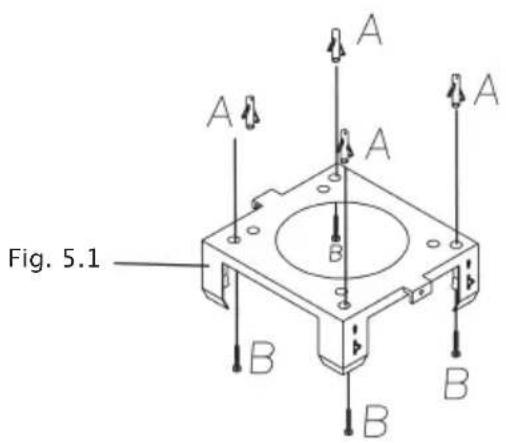
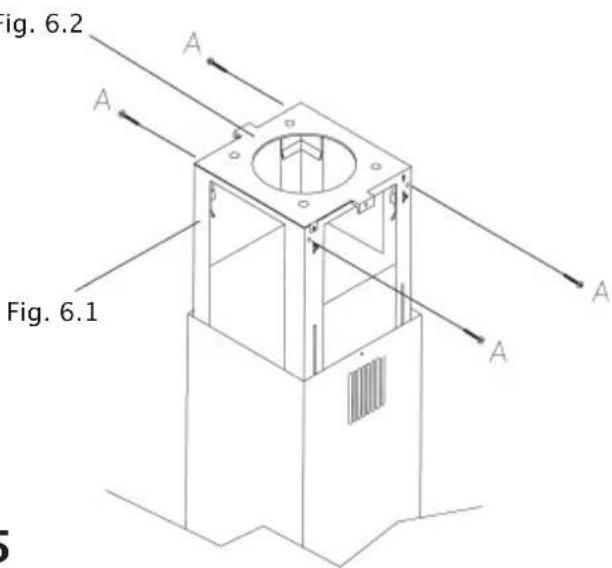
Place the upper plate (Fig. 4.1) on the ceiling. Drill 4 holes, 8 mm each, just next to the slots. Insert the plastic dowels into the holes (Fig. 4.1-A) and screw up the plate on the ceiling (Fig. 4.1-B). Then fasten the lower structure (Fig. 7.2) on the hood by making its holes and the metric-thread screws welded on the fan support coincide (Fig. 6.1). Insert the washers and nuts provided (Fig. 6.2-A) and screw with an appropriate tool. Connect the drainpipe to the power unit nozzle and fix securely with a hose clamp. Insert the upper structure (Fig. 6.3) into the lowest one and adjust its height as required by matching it with the cooking top's minimum height. Tighten the two structures securely with the screws provided (Fig. 6.3-B). Insert the two extension tubes (Fig. 6.4 & Fig. 6.5) from above the two structures by making them come down to the appropriate hood seat. Lift the hood together with the structure and the extension tubes to make the four springs (Fig. 6.6-E) hook to the slots (Fig. 6.3-C). Then tighten the two elements securely (Fig. 5.1 & Fig. 5.2) with the safety screws (Fig. 5.2-A) and connect the hood tube to the drain hole.
Make the electrical connections.
\*Filtering model
Place the upper plate (Fig. 4.1) on the ceiling. Drill 4 holes, 8 mm each, just next to the slots. Insert the plastic dowels into the holes (Fig. 4.1-A). Fix the baffle (Fig. 4.2) to the upper bracket (Fig. 4.3) with the four self-tapping screws provided (Fig. 4.3 A). Screw up the plate together with the baffle (Fig. 4.1 B). Then fasten the lower structure (Fig. 6.2) on the hood by making its holes and the metric-thread screws welded on the fan support coincide (Fig. 6.1). Insert the washers and nuts provided (Fig. 6.2-A) and screw with an appropriate tool. Connect the drainpipe to the power unit nozzle and fix securely with a hose clamp. Insert the upper structure (Fig. 6.3) into the lowest one and adjust its height as required by matching it with the cooking top's minimum height. Tighten the two structures securely with the screws provided (Fig. 6.3-B). Insert the two extension tubes (Fig. 6.4 & Fig. 7.5) from above the two structures by making them come down to the appropriate hood seat. Lift the hood together with the structure and the extension tubes to make the four springs (Fig. 6.6-E) hook to the slots (Fig. 6.3-C). Then tighten the two elements securely (Fig. 5.1 & Fig. 5.2) with the safety screws (Fig. 5.2-A) and connect the hood tube to the baffle's lower hole.
Make the electrical connections. (For versions with display only) Lift the lower pipe until the cable strap coming out of the sucking unit is uncovered and connect it to the display cable strap. Put down the lower pipe while paying attention it is being properly introduced into the hood. Lift the upper tube (Fig. 6.5) up to the ceiling and insert the two self-tapping screws (Fig. 6.5-D).
Warning!
Before connecting the flexible exhausting pipe to the motor, make sure the stop valve, which is on the air outlet of the motor, can swing.
WORKING
FTIHD 960 TC X - FTIHD 1260 TC X (Fig. 8)
A: Light switch on/off
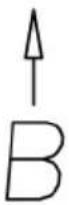
B: Motor switch on/off (1st rate level)
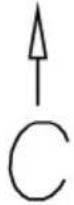
C: 2nd rate level switch
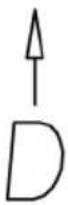
D: 3rd rate level switch
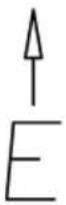
E: 4th rate level switch
F: 10 - minutes timer
Mod. SIL TC - Touch Control version (Dis. 9)
A: Light switch On/Off
B: Reduce speed
C: Luminous telltale
D: Increase speed
E: 10 - minute timer
The products are endowed with an electronic device which allows the automatic switching off after 4 hours working from the last operation.
TIMING
As a result of the new EU65 “Energy label” and EU66 “Ecodesign” regulations issued by the European Commission, which came into force as from January 1st, 2015, our products have been adapted to comply with these new requirements. All of the models complying with the energy label requirements, are equipped with new electronics including a timer device for suction speeds control, when the air capacity exceeds 650m^3/h . Internal motor models, with maximum air capacity higher than 650m^3/h , are equipped with a timer device that automatically switches the suction speed from 4th to 3rd speed, after 5 minutes operation. If the appliance is working at 3rd speed, it is automatically switched to 2nd speed, after 7 minutes operation. Operation speeds can also be changed during operation.
The energy consumption of the appliance in stand – by mode is lower than 0.5W.
MAINTENANCE
* An accurate maintenance guarantees good functioning and long-lasting performance.
* Particular care is due to the grease filter panel. It can be removed by pushing its special handle toward the back-side of the cooker hood and turning the filter downwards so to unfasten it from its slot (Fig. 3A).
To insert the filter just perform the opposite operation.
After 30 hours working (model SIL-Module luxury version), the push button control panel will signal the saturation of the grease filter by lighting all the buttons.
In the SILTC models (Touch Control Version) the grease filter saturation is signalled by the flashing of the two central push buttons (Fig. 16C). Press the timer button to reset 🔒.
The grease filter needs cleaning by regular hand-washing or in dishwasher every two months at least or depending on its use.
* To clean the appliance itself tepid water and neutral detergent are recommended, while abrasive products should be avoided. For steel appliances specialized detergents are recommended (please follow the instructions indicated o the product itself to obtain the desired results).
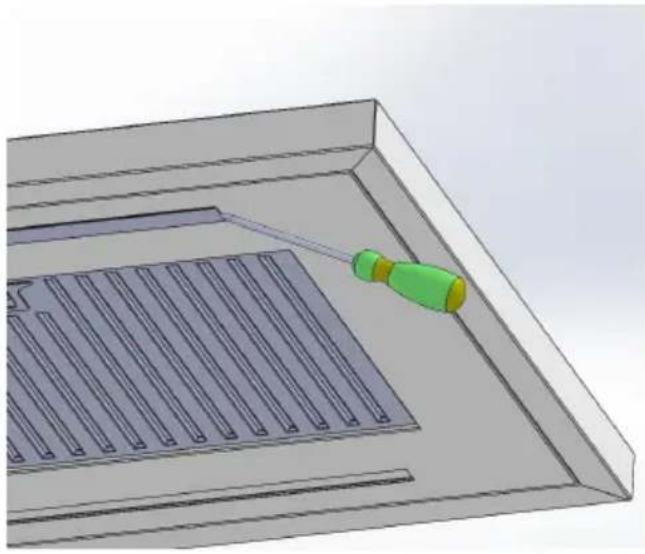
Substitution of the LED bar:
Using an appropriate tool, remove the LED bar from its seat (refer to Fig. 9), disconnect it electronically using the appropriate con nector then substitute it with a LED bar with same characteristics.
INDEX
F
Attention
The symbol on the product or on its packaging indicates that this product may not be treated as household waste. Instead it shall be handed over to the applicable collection point for the recycling of electrical and electronic equipment. By ensuring this product is disposed of correctly, you will help prevent potential negative consequences for the environment and human health, which could otherwise be caused by inappropriate waste handling of this product. For more detailed information about recycling of this product, please contact your local city office, your household waste disposal service or the shop where you purchased the product. This appliance is marked according to the European directive 2012/19/EC on waste electrical and electronic equipment (WEEE).