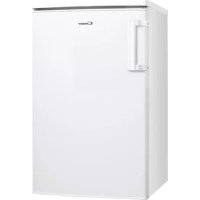
CCTOS 502WHN - Fridge CANDY - Free user manual and instructions
Find the device manual for free CCTOS 502WHN CANDY in PDF.


| Product Type | Refrigerator with freezer compartment |
| Brand | Candy |
| Model | CCTOS 502WHN |
| Climate Class | SN, N, ST, T (10 °C to 43 °C) |
| Refrigerant | R600a (isobutane) |
| Insulation | Cyclopentane |
| Power Supply | 220-240 V / 50 Hz |
| Interior Lighting | Incandescent bulb (max 15 W) – replacement by a professional |
| Temperature Control | Dial from 1 to 6 (recommended: 3-4) |
| Defrost Type | Manual |
| Reversible Door | Yes (instructions provided) |
| Interior Compartments | Dairy compartment, glass shelf, fruit and vegetable drawer |
| Recommended Cleaning | Baking soda and warm water |
| Safety | Child lock not available; magnetic door seal |
| Warranty (EU) | 2 years minimum |
| Spare Parts Availability | Thermostats, sensors, boards, lamps: 7 years; handles, hinges, shelves: 7 years; door seals: 10 years |
| Intended Use | Household only (food storage) |
| Manufacturer | Haier Europe / Candy |
Frequently Asked Questions - CCTOS 502WHN CANDY
User questions about CCTOS 502WHN CANDY
0 question about this device. Answer the ones you know or ask your own.
Ask a new question about this device
Download the instructions for your Fridge in PDF format for free! Find your manual CCTOS 502WHN - CANDY and take your electronic device back in hand. On this page are published all the documents necessary for the use of your device. CCTOS 502WHN by CANDY.
USER MANUAL CCTOS 502WHN CANDY
SAFETY INFORMATION....3
SCRAPPING OLD APPLIANCES 13
Conformity 13
ENERGY SAVING....14
PRODUCT OVERVIEW....15
Climate Class 15
USE....16
Starting to use....16
Temperature-control knob 16
Tips for storing food in the fridge 16
INSTALLATION INSTRUCTIONS....17
Positioning 17
Door Space Requirements 17
Leveling the Unit.... 17
Door reversibility....17
Changing the Light (optional) 18
CLEAN AND MAINTAINANCE 19
Cleaning and care 19
Defrost 19
Usage stop 19
TROUBLESHOOTING 20
Thank you for purchasing this product.
Before using your refrigerator, please carefully read this instruction manual in order to maximize its performance. Store all documentation for subsequent use or for other owners. This product is intended solely for household use or similar applications such as:
- the kitchen area for personnel in shops, offices and other working environments
- on farms, by clients of hotels, motels and other environments of a residential type
-at bed and breakfasts (B & B) - for catering services and similar applications not for retail sale.
This appliance must be used only for purposes of storage of food, any other use is considered dangerous and the manufacturer will not be responsible for any omissions. Also, it is recommended that you take note of the warranty conditions.
SAFETY INFORMATION
This guide contains many important safety information. Please, we suggest to keep these instructions in a safe place for easy reference and for a good experience with the appliance. The refrigerator contains refrigerant gas (R600a: isobutane) and insulating gas (cyclopentane), with high compatibility with the environment, that are, however, inflammable.
Caution: risk of fire
If the refrigerant circuit should be damaged:
- Avoid opening flames and sources of ignition.
● Thoroughly ventilate the room in which the appliance is situated
WARNING!
- Care must be taken while cleaning/carrying the appliance to avoid touching the condenser metal wires at the back of the appliance, as you might injure your fingers and hands or damage your product.
- This appliance is not designed for stacking with any other appliance. Do not attempt to sit or stand on top of your appliance as it is not designed for such use. You could injure yourself or damage the appliance.
- Make sure that mains cable is not caught under the appliance during and after carrying/moving the appliance, to avoid the mains cable becoming cut or damaged.
- When positioning your appliance take care not to damage your flooring, pipes, wall coverings etc. Do not move the appliance by pulling by the lid or handle. Do not allow children to play with the appliance or tamper with the controls. Our company declines to
accept any liability should the instructions not be followed.
- Do not install the appliance in humid, oily or dusty places, nor expose it to direct sunlight and to water.
- Do not install the appliance near heaters or inflammable materials.
-
If there is a power failure do not open the lid. Frozen food should not be affected if the failure lasts for less than 20 hours. If the failure is longer, then the food should be checked and eaten immediately or cooked and then refrozen.
-
Do not connect the appliance to the electricity supply until all packing and transit protectors have been removed.
- Leave to stand for at least 4 hours before switching on the product, to allow compressor oil to settle if transported horizontally.
- Before performing any operation, unplug the power cord from the power socket.
- On delivery, check to make sure that the product is not damaged and that all the parts and accessories are in perfect condition.
- If in the refrigeration system a leak is noted, do not touch the wall outlet
and do not use open flames. Open the window and let air into the room.
Then call a service center to ask for repair.
- Do not use extension cords or adapters.
- Do not excessively pull or fold the power cord or touch the plug with wet hands.
- Do not damage the plug and/or the power cord; this could cause electrical shocks or fires.
- If the supply cord is damaged, it must be replaced by the manufacturer, its service agent or similarly qualified person in order to avoid a hazard.
- Do not place or store inflammable and highly volatile materials such as ether, petrol, LPG, propane gas, aerosol spray cans, adhesives, pure alcohol, etc. These materials may cause an explosion.
- Do not place objects and/or containers filled with water on the top of the appliance.
- We do not recommend the use of extension leads and multi-way adapters.
- Do not dispose of the appliance on a
fire. Take care not to damage, the cooling circuit/pipes of the appliance in transportation and in use. In case of damage do not expose the appliance to fire, potential ignition source and immediately ventilate the room where the appliance is situated.
- Do not use electrical appliances inside the food storage compartments of the appliance, unless they are of the type recommended by the manufacturer.
- Do not damage the refrigerant circuit.
- Do not use mechanical devices or other means to accelerate the defrosting process, other than those recommended by the manufacturer.
- Do not use electrical appliances inside the food storage compartments, unless they are of the type recommended by the manufacturer.
- Do not touch internal cooling elements, especially with wet hands, to avoid cracks or injuries.
- Maintain the ventilation openings in the appliance enclosure or in the built-in structure, free of obstruction.
- Do not use pointed or sharp-edged
objects such as knives or forks to remove the frost.
- Never use hairdryers, electrical heaters or other such electrical appliances for defrosting.
- Do not scrape with a knife or sharp object to remove frost or ice that occurs. With these, the refrigerant circuit can be damaged, the spill from which can cause a fire or damage your eyes.
- Do not use mechanical devices or other equipment to hasten the defrosting process.
- Absolutely avoid the use of open flame or electrical equipment, such as heaters, steam cleaners, candles, oil lamps and the like in order to speed up the defrosting phase.
- Never use water to wash the compressor position, wipe it with a dry cloth thoroughly after cleaning to prevent rust.
- It is recommended to keep the plug clean, any excessive dust residues on the plug can be the cause offire.
- The product is designed and built for domestic household use only.
- The guarantee will be void if the product is installed or used in
commercial or non-residential domestic household premises.
- The product must be correctly installed, located and operated in accordance with the instructions contained in the User Instructions Booklet provided.
- The guarantee is applicable only to new products and is not transferable if the product is resold.
- Our company disclaims any liability for incidental or consequential damages.
- The guarantee does not in any way diminish your statutory or legal rights.
- If you are discarding an old product with a lock or latch fitted to the door, ensure that it is left in a safe condition to prevent the entrapment of children.
- This appliance can be used by children aged from 8 years and above and by persons with reduced physical, sensory or mental capabilities or with a lack of experience and knowledge; provided that they have been given adequate supervision or instruction concerning how to use the appliance in a safe way and understand the hazards involved.
• Children should not play with the appliance. Cleaning and user
maintenance should not be made by children without supervision.
- Locks: If your Fridge/Freezer is fitted with a lock, to prevent children being entrapped keep the key out of reach and not in the vicinity of the appliance. If disposing of an old Fridge/Freezer break off any old locks or latches as a safeguard.
- Children aged from 3 to 8 years are allowed to load and unload this appliance.
WARNING! When positioning the appliance, ensure the supply cord is not trapped or damaged.
WARNING! Do not locate multiple portable socket-outlets or portable power supplies at the rear of the appliance.
- To avoid contamination of food, please respect the following instructions
- Opening the door for long periods can cause a significant increase of the temperature in the compartments of the appliance.
- Clean regularly surfaces that can come in contact with food and accessible
drainage systems.
- Clean water tanks if they have not been used for 48h; flush the water system connected to a water supply if water has not been drawn for 5 days.
- Store raw meat and fish in suitable containers in the refrigerator, so that it is not in contact with or drip onto other food.
- Two-star frozen-food compartments(if they are presented in the appliance) are suitable for storing pre-frozen food, storing or making ice-cream and making ice cubes.
- One-, two- and three -star compartments (if they are presented in the appliance) are not suitable for the freezing of fresh food.
- If the appliance is left empty for long periods, switch off, defrost, clean, dry and leave the door open to prevent mould developing within the appliance. WARNING! During using, service and disposal the appliance, please pay attention to symbol as left side, which is located on rear of appliance (rear panel or compressor). It's risk of fire warning symbol. There are flammable materials in refrigerant pipes and compressor.
Please be far away from fire source during using, service and disposal.
• FOR a free standing appliance: this refrigerating appliance is not intended to be used as a built-in appliance
- ANY replacement or maintenance of the LED lamps is intended to be made by the manufacturer, its service agent or similar qualified person.
- THE appliance has to be unplugged after use and before carrying out user maintenance on the appliance.
- WARNING: Please scrap the refrigerator according to local regulators for it uses flammable blowing gas and refrigerant.
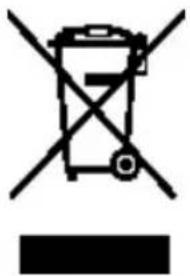
SCRAPPING OLD APPLIANCES
natural_image
Pure electrical circuit lines without any symbols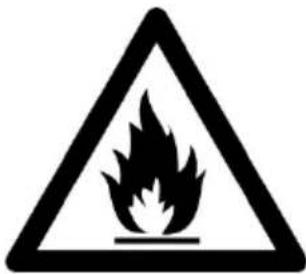
text_image
Warning sign depicting a flame symbol in a triangular frame, indicating hazardous material hazard.This appliance is marked according to the European directive 2012/19/EU on Waste Electrical and Electronic Equipment (WEEE).
WEEE contains both polluting substances (which can cause negative consequences for the environment) and basic components (which can be re-used). It is important to have WEEE subjected to specific treatments, in order to remove and dispose properly all pollutants, and recover and recycle all materials.
Individuals can play an important role in ensuring that WEEE does not become an environmental issue; it is essential to follow some basic rules:
- WEEE should not be treated as household waste;
- WEEE should be handed over to the relevant collection points managed by the municipality or by registered companies. In many countries, for large WEEE, home collection could be present.
In many countries, when you buy a new appliance, the old one may be returned to the retailer who has to collect it free of charge on a one-to-one basis, as long as the equipment is of equivalent type and has the same functions as the supplied equipment.
Conformity
By placing the CE mark on this product, we are confirming compliance to all relevant European safety, health and environmental requirements which are applicable in legislation for this product.
ENERGY SAVING
For better energy saving we suggest :
- Installing the appliance away from heat sources and not exposed to direct sunlight and in a well-ventilated too.
- Avoid putting hot food into the refrigerator to avoid increasing the internal temperature and therefore causing continuous functionality of the compressor.
- Do not excessively stuff foods so as to ensure proper air circulation.
• Defrost the appliance in case there is ice to facilitate the transfer of cold. - In case of absence of electrical energy, it is advisable to keep the refrigerator door closed.
- Open or keep the doors of the appliance open as little as possible
- Avoid adjusting the setting to temperatures too cold.
- Remove dust present on the rear of the appliance
- Refrigerating appliances might not operate consistently (possibility of defrosting of contents or temperature becoming too warm in the frozen food compartment) when sited for an extended period of time below the cold end of the range of temperatures for which the refrigerating appliance is designed.
- Effervescent drinks should not be stored in food freezer compartments or cabinets or in low-temperature compartments or cabinets, and some products such as water ices should not be consumed too cold;
- Take the precautions necessary to prevent an undue rise in the temperature of the frozen food while defrosting the refrigerating appliance, such as wrapping the frozen food in several layers of newspaper.
- A rise in temperature of the frozen food during manual defrosting, maintenance or cleaning could shorten the storage life.
- Opening the door for long periods can cause a significant increase of the temperature in the compartments of the appliance.
- Clean regularly surfaces that can come in contact with food and accessible drainage systems.
- Clean water tanks if they have not been used for 48 h; flush the water system connected to a water supply if water has not been drawn for 5 days.
- Store raw meat and fish in suitable containers in the refrigerator, so that it is not in contact with or drip onto other food.
- If the refrigerating appliance is left empty for long periods, switch off, defrost, clean, dry, and leave the door open to prevent mould developing within the appliance.
PRODUCT OVERVIEW
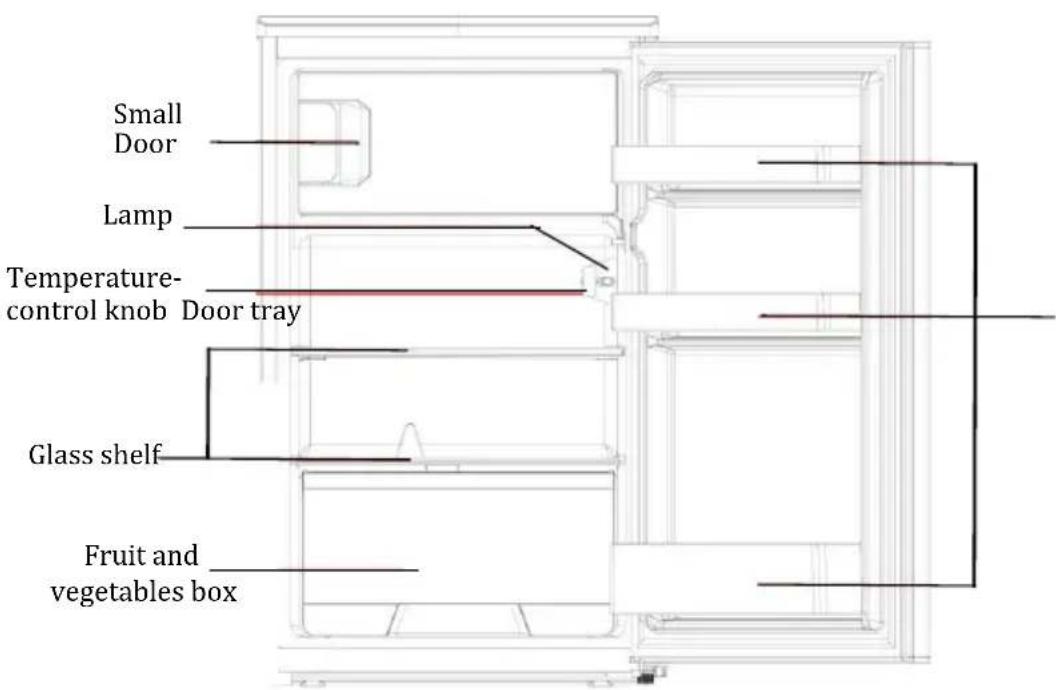
text_image
Small Door Lamp Temperature- control knob Door tray Glass shelf Fruit and vegetables box*The picture above is only for reference. The actual configuration will depend on the physical product or statement by the distributor *The most energy-saving configuration requires drawers, food box and shelves to be positioned in the product, please refer to the above pictures.
Climate Class
The appliance is designed to operate at the limited range of ambient temperature, depending on climate zones. Do not use the appliance at the temperature out of the limit. Climate class of your appliance is indicated on the label with technical description inside the fridge compartment.
| Climate Class | Amb. T. (°C) | Amb. T. (°F) |
| SN | From 10 to 32 | From 50 to 90 |
| N | From 16 to 32 | From 61 to 90 |
| ST | From 16 to 38 | From 61 to 100 |
| T | From 16 to 43 | From 61 to 110 |
- extended temperate: 'this refrigerating appliance is intended to be used at ambient temperatures ranging from 10 °C to 32 °C';
- temperate: 'this refrigerating appliance is intended to be used at ambient temperatures ranging from 16 °C to 32 °C';
- subtropical: 'this refrigerating appliance is intended to be used at ambient temperatures ranging from 16 °C to 38 °C';
- tropical: 'this refrigerating appliance is intended to be used at ambient temperatures ranging from 16 °C to 43 °C';
USE
Starting to use
Before starting to use the appliance:
- Keep the refrigerator still for half an hour before connecting it to power supply
- Before storing food in the refrigerator, it shall run for 2-3 hours, or for above 4 hours if the ambient temperature is high
- Check that the interior is dry and air can circulate freely at the rear
- Clean the refrigerator ad recommended under "TAKE CARE" section (electric parts of the refrigerant can only be wiped by dry cloth)
Temperature-control knob
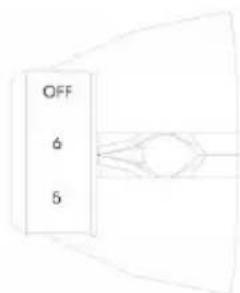
*The picture is only for reference. The actual configuration will depend on the physical product or statement by the distributor
- The temperature-control knob is located on the right hand side wall of the refrigerator interior
- The number "1, 2, 3, 4, 5, 6" do not mean a specific temperatures, the lower the number is, the higher the temperature inside will be and verse versa.
- When the thermostat control knob is set to OFF, the refrigerator will not be running.
- Under the normal operating condition (in spring and autumn), it is recommended to set at Model 3 or 4.
- In winter when the ambient temperature is low, it is recommended to set at Model 5 or 6.
- In summer when the ambient temperature is high, it is recommended to set at Model 2 or 3.
text_image
OFF 6 5Tips for storing food in the fridge
- Take extra care with meat and fish: cooked meats should always be stored on a shelf above raw meats to avoid bacterial transfer. Keep raw meats on a plate which is large enough to collect juices and cover it with cling film or foil.
- Leave space around food: this allows cold air to circulate around the Fridge, ensuring all parts of the Fridge are kept cool.
- Wrap up food: to prevent transfer of flavors and drying out, food should be separately packed or covered. Fruit and vegetables need not be wrapped.
- Pre-cooked food should be cooled properly: allow pre-cooked food to cool down before placing in the Fridge. This will help to stop the internal temperature of the Fridge from rising.
- Shut the door: to prevent cold air escaping, try to limit the number of times you open the door. When retuning from shopping, sort foods to be kept in your Fridge before opening the door. Only open the door to put food in or take it out.
- The appliance is suitable for storage of a variety of fruits, vegetables, beverages and other food consumed in the short term. Suggested storage time 3 days to 5 days.
- The glass shelves can be adjusted up or down for a reasonable amount of storage space and easy use
INSTALLATION INSTRUCTIONS
Before use, remove all packing materials, including bottom cushions, foam pads and tapes inside of the refrigerator; tear off the protective film on the doors and the refrigerator body
Positioning
- Avoid placing the appliance near cookers, radiators or in direct sunlight.
- Install the appliance in a well-ventilated indoor place
- The appliance should be located on a smooth surface.
- It is forbidden to use the refrigerator outdoors.
- Do not locate the freezer in moisty or watery space to avoid the metal parts rusty. Do not spray water to the freezer, to avoid reduction of insulating effect and current leakage.
- The top space of the refrigerator shall be greater than 30cm, the back space from the wall shall be more than 10 cm to facilitate heat dissipation
Door Space Requirements
The unit's door must be able to open fully as shown. Spare enough space for convenient opening of the doors and drawers.
W×D≥890×1005mm
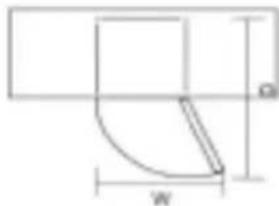
text_image
W θLeveling the Unit
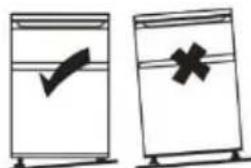
To do this, adjust the two leveling feet at the front of the unit. If the unit is not level, the door and magnetic seal alignments will not be covered properly. Make sure that the foot touches the ground before use.
Adjusting procedures:
a. Turn the feet clockwise to raise the refrigerator;
b. Turn the feet counterclockwise to lower the refrigerator;
c. Adjust the right and left feet based on the procedures above to a horizontal level
text_image
Two labeled diagrams showing a checkmark and a cross symbol inside liquid-filled containers, likely indicating inspection or rejection.Door reversibility
- Power off the refrigerator and remove all objects from the door tray
- Fix the door with tape
natural_image
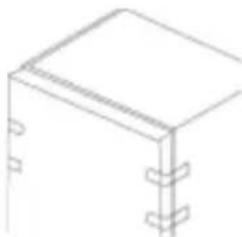
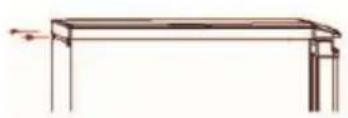
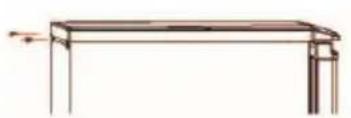
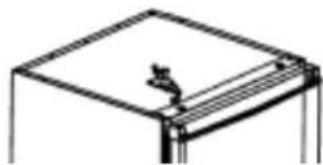
Isometric line drawing of a rectangular frame with two side connectors (no text or symbols)- Unscrew the top cover screws and remove the top cover
-
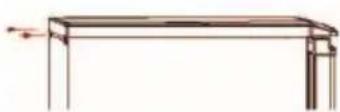
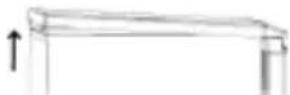
Unscrew the upper hinge screws and remove the upper hinge
-
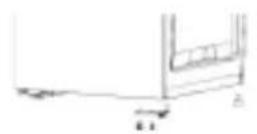
Remove the door, unscrew the bottom hinge screws and remove the bottom hinge. After this, level the feet.
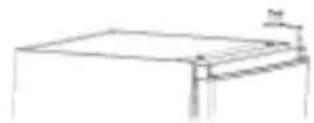
natural_image
Simple line drawing of a rectangular object with a vertical line and a small protrusion labeled 'M' (no text or symbols beyond the label)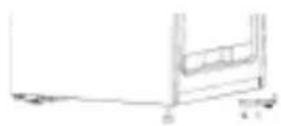
-
Fix the leveling feet, and the bottom hinge on the opposite side
-
Assemble the door stopper and the axle sleeve on the opposite side
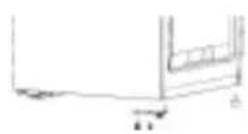
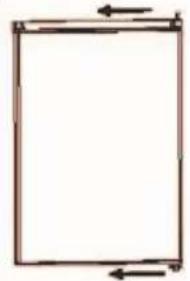
natural_image
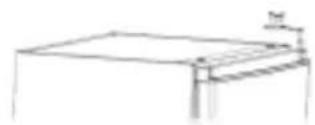
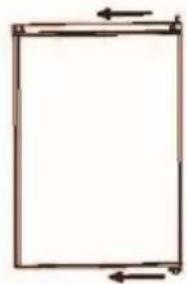
Simple rectangular frame with arrows indicating direction (no text or symbols)- Put down the door on the bottom hinge vertically. Fix the upper hinge and the top cover of the refrigerator
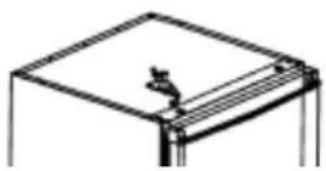
natural_image
Simple line drawing of a rectangular frame with a small object on top, no text or symbols present.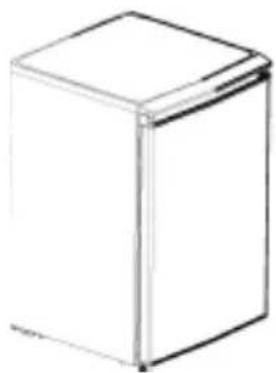
natural_image
Simple line drawing of a rectangular box (no text or symbols)Changing the Light (optional)
Any replacement or maintenance of the LED lamps is intended to be made by the manufacturer, its service agent or similar qualified person.
Replacement of incandescent lamps:
- Disconnecting the power supply before carrying out the bulb replacement
- Hold and remove the light bulb cover.
• Dismantle the old bulb by unscrewing ii counterclockwise. - Replace by a new bulb (Max. 15W) by screwing ii clockwise, and make sure it is fixed in the bulb holder lightly.
• Reassemble the light cover and re-connect your Fridge to the power supply.
CLEAN AND MAINTAINANCE
Cleaning and care
- Dusts behind the refrigerator and on the ground shall be timely cleaned to improve the cooling effect and energy saving.
- Check the door gasket regularly to make sure there are no debris.
- Clean the door gasket with a soft cloth dampened with soapy water or diluted detergent.
• The interior of the refrigerator should be cleaned regularly to avoid odor - Please turn off the power before cleaning interior, remove all foods, drinks, shelves, drawers, etc.
- Use a soft cloth or sponge to clean the inside of the refrigerator, with two tables spoons of baking soda and a quart of warm water. Then rinse with water and wipe clean. After cleaning, open the door and let it dry naturally before turning on the power.
- For areas that are difficult to clean in the refrigerator (such as narrow sandwiches, gaps or corners), it is recommended to wipe them regularly with a soft rag, soft brush, etc. and when necessary, combined with some auxiliary tools (such as thin sticks) to ensure no contaminants or bacterial accumulation in these areas.
- Do not use soap, detergent, scrub powder, s pray cleaner, etc., as these may cause odors in the interior of the refrigerator or contaminated food.
- Clean the bottle frame, shelves and drawers with a soft cloth dampened with soapy water or diluted detergent. Dry with a soft cloth or dry naturally.
- Wipe the outer surface of the refrigerator with a soft cloth dampened with soapy water, detergent, etc., and then wipe dry.
- Do not use hard brushes, clean steel balls, wire b rushes, abrasives(such as tooth pastes), organic solvents (such as alcohol, acetone, banana oil, etc.), boiling water, acid or alkaline items, which may damage the cooler surface and interior. Boiling water and organic solvents such as benzene may deform or damage plastic parts.
- Do not rinse directly with water or other liquids during cleaning to avoid short circuits or affect electrical insulation after immersion.
Defrost
• Power off the refrigerator.
- Remove the food from the refrigerator and place it properly to prevent food from melting.
- Clear the drain pipe (to use soft materials to prevent damage to the liner), Prepare the water containers for defrosting. (pay attention to clean the compressor compartment water draining tray, avoiding overflow to the ground).
- You can use the natural temperature for the natural defrost, you can also use the ice shovel to eliminate the frost (lo use plastic or wooden ice shovel, for avoiding damage to the liner or pipe)
- You can also use the appropriate amount of hot water to speed up the defrost, with a dry towel to dry the water after defrosting.
• After defrosting, put back the foods in cabinet, and power on the refrigerator.
Usage stop
- Power failure: In case of power failure foods inside the appliance can be kept for several hours; during the power failure reduce doors opening and don't put other food inside the appliance
- Long-time nonuse: Turn off the refrigerator, remove all food, clean the appliance and leave the lid open to avoid possible formation of condensation, mold, or odors
- Moving: Before moving the appliance, take all objects out, fix all parts with tape, tighten the leveling feet, close the doors and seal them. During transport, do not lay the appliance upside-down or horizontally. The inclination during movement shall be no more than 45'.
TROUBLESHOOTING
You may try to solve the following simple problems by yourself. If the problem cannot be solved, please contact the after-sales department.
| Problem | Solution |
| Failed operation | Check that the appliance is connected to power or that the plug is in well contactCheck that the voltage is not to lowCheck that there is no power failure or that partial circuits have not tripped |
| Odor | Odorous foods shall be wrapped tightlyCheck whether there is any rotten foodClean the inside of the refrigerator |
| Long-time operation of the compressor | Long-time operation of the refrigerator is normal when the ambient temperature is highIt is not suggested having too much food in the appliance at the same timeFood shall be cooled before being put into the applianceThe doors shall not be opened to frequently |
| Light fails to get lit | Check whether the refrigerator is connected to power and whether the illuminating light is damagedHave the light replaced by a specialist |
| Doors don’t close properly | Check whether the door is stuck by food packagesCheck whether the refrigerator is tilted |
| Loud noise | Check whether the refrigerator is placed stablyCheck whether accessories are placed in the proper location |
| Door seal fails to be tight | Remove foreign matters on the door sealHeat the door seal and then cool it for restoration |
| Water pan overflows | Too much food is stored, or the stored food contains too much water, resulting in heavy defrostingThe doors are not closed properly |
| Hot housing | Heat dissipating of the built-in condenser via housing is normalIf the compressor shuts down, provide ventilation to facilitate heat dissipation |
| Surface condensation | Condensation on the exterior surface and door seals of the refrigerator is normal when the ambient humidity is too high.Wipe the condensation with a towel |
| Abnormal noise | Buzz: the compressor may buzz during operation, particularly upon start and stop. This is normalCreak: refrigerant flowing inside the appliance may produce creak. This is normal |
SOMMARIO
natural_image
Warning symbol of a flame inside a triangle (no text or numbers)natural_image
Pure geometric diagram showing a rectangle with a curved cutout and dimension label 'W' (no text or symbols beyond basic geometry)text_image
Two labeled diagrams showing a checkmark and a cross symbol inside water-filled containers, likely indicating inspection or verification steps.natural_image
Isometric line drawing of a rectangular frame with two side connectors (no text or symbols)natural_image
Simple rectangular frame with arrows indicating direction (no text or symbols)natural_image
Simple line drawing of a rectangular frame with supports and a small object on top (no text or symbols)
natural_image
Simple line drawing of a rectangular box (no text or symbols)natural_image
Warning symbol of a flame inside a triangle (no text or numbers)text_image
Two labeled diagrams showing a checkmark and a cross symbol inside water-filled containers, likely indicating inspection or verification.natural_image
Isometric line drawing of a rectangular frame with two side connectors (no text or symbols)natural_image
Simple rectangular frame with two arrows indicating horizontal and vertical motion (no text or symbols)natural_image
Simple line drawing of a rectangular frame with a small object on top, no text or symbols present.
natural_image
Simple line drawing of a rectangular box (no text or symbols)natural_image
Warning symbol of a flame inside a triangle (no text or numbers)text_image
Diagram showing two containers with checkmarks and a cross symbol indicating failure or rejection.natural_image
Isometric line drawing of a rectangular frame with two side connectors (no text or symbols)natural_image
Simple line drawing of a table with legs and a side table, no text or symbols present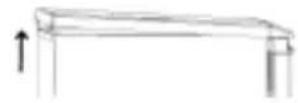
natural_image
Simple rectangular frame with arrows indicating direction (no text or symbols)natural_image
Simple line drawing of a rectangular frame with a small object on top, no text or symbols present.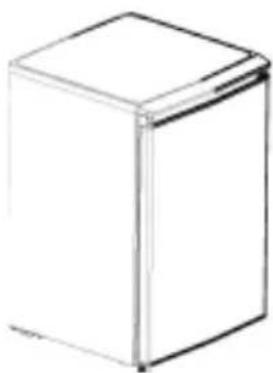
natural_image
Simple line drawing of a 3D rectangular box (no text or symbols)ČIŠTĚNÍ A PÉČE
Čištění a péče
natural_image
Warning symbol of a flame inside a triangle (no text or numbers)text_image
Two labeled diagrams showing a checkmark and a cross symbol inside water-filled containers, likely indicating inspection or status.natural_image
Isometric line drawing of a mechanical component with mounting holes (no text or symbols)natural_image
Simple line drawing of a table with legs and a side table, no text or symbols present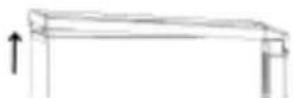
natural_image
Simple line drawing of a rectangular object with a small protrusion and a dimension label '20' (no text or symbols)
natural_image
Simple rectangular frame with two arrows indicating left and right sides (no text or symbols)natural_image
Simple line drawing of a rectangular frame with a small object on top, no text or symbols present.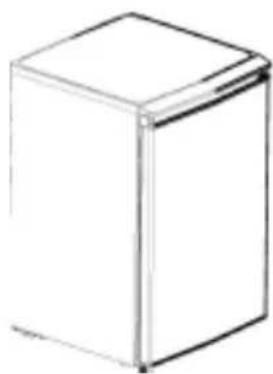
natural_image
Simple line drawing of a rectangular box (no text or symbols)natural_image
Warning symbol of a flame inside a triangle (no text or numbers)text_image
Two labeled diagrams showing a checkmark and a cross symbol inside water-filled containers, likely indicating inspection or rejection.natural_image
Isometric line drawing of a rectangular frame with two side clips and a vertical gap (no text or symbols)natural_image
Simple rectangular frame with arrows indicating direction (no text or symbols)natural_image
Simple line drawing of a rectangular frame with a small object on top, no text or symbols present.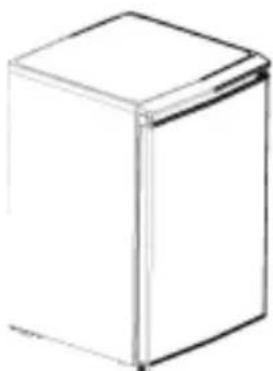
natural_image
Simple line drawing of a rectangular box (no text or symbols)LIMPIEZA Y MANTENIMIENTO
INSTRUCTIONS D'INSTALLATION....128
natural_image
Warning symbol of a flame inside a triangle (no text or numbers)text_image
Two labeled diagrams showing a checkmark and a cross symbol inside water-filled containers, likely indicating inspection or status.natural_image
Isometric line drawing of a rectangular frame with two side connectors (no text or symbols)natural_image
Simple line drawing of a table with legs and a side arm, no text or symbols present
natural_image
Simple rectangular frame with two arrows indicating left and right sides (no text or symbols)natural_image
Simple line drawing of a rectangular frame with a small object on top, no text or symbols present.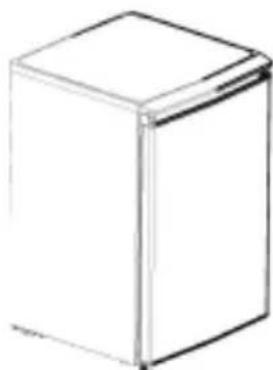
natural_image
Simple line drawing of a rectangular box (no text or symbols)NETTOYAGE ET ENTRETIEN
natural_image
Warning symbol of a flame inside a triangle (no text or numbers)Ovaj uređaj označen je sukladno Direktivi 2012/19/EZ o otpadnoj električnoj i elektroničkoj opremi (WEEE).
text_image
Two labeled diagrams showing a checkmark and cross symbols inside water-filled containers, likely indicating inspection or verification steps.natural_image
Isometric line drawing of a mechanical component with mounting holes (no text or symbols)- Odvijte vijke gornjeg poklopca i uklonite gornji poklopac.
natural_image
Simple line drawing of a table with legs and a curved top, no text or symbols present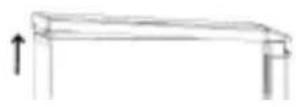
- Odvijte vijke gornje šarke i uklonite gornju šarku
- Uklonite vrata, odvijte vijke donje šarke i uklonite donju šarku. Nakon toga poravnajte nožice.
natural_image
Simple line drawing of a rectangular object with a vertical line and a small protrusion, no text or symbols present.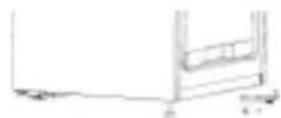
- Fiksirajte nožice za izravnavanje i donju šarku na suprotnoj strani.
- Sastavite zaustavnik vrata i rukavac osovine na suprotnoj strani.
natural_image
Simple rectangular frame with arrows indicating direction (no text or symbols)natural_image
Simple line drawing of a rectangular frame with a small protrusion on top (no text or symbols)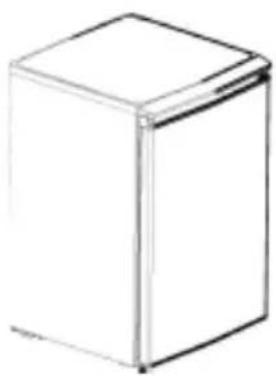
natural_image
Simple line drawing of a rectangular box (no text or symbols)ČIŠĆENJE I ODRŽAVANJE
natural_image
Warning symbol of a flame inside a triangle (no text or numbers)text_image
Two identical diagrams showing a checkmark inside a container and a cross inside, likely indicating selection or confirmation.natural_image
Isometric line drawing of a rectangular frame with two side connectors (no text or symbols)natural_image
Simple rectangular frame with arrows indicating direction (no text or symbols)natural_image
Simple line drawing of a rectangular frame with a small object on top, no text or symbols present.
natural_image
Simple line drawing of a rectangular box (no text or symbols)TISZTÍTÁS ÉS ÁPOLÁS
Tisztítás és ápolás
text_image
Warning sign depicting a flame symbol in a triangular shape, commonly used to indicate hazardous materials or hazard.text_image
Two labeled diagrams showing a checkmark and a cross symbol inside water-filled containers, likely indicating inspection or verification.natural_image
Isometric line drawing of a rectangular frame with two side connectors (no text or symbols)natural_image
Simple line drawing of a table with legs and a side arm, no text or symbols present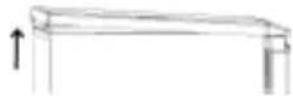
natural_image
Simple rectangular frame with arrows indicating direction (no text or symbols)natural_image
Simple line drawing of a rectangular frame with supports and a small object on top (no text or symbols)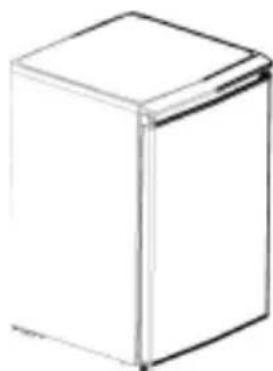
natural_image
Simple line drawing of a 3D rectangular box (no text or symbols)REINIGING EN ONDERHOUD
-Take off the doors.
natural_image
Warning symbol of a flame inside a triangle (no text or numbers)text_image
Two labeled diagrams showing a checkmark and a cross symbol inside water-filled containers, likely indicating inspection or verification.natural_image
Isometric line drawing of a rectangular frame with two side clips and a vertical slot, no text or symbols present.natural_image
Simple rectangular frame with arrows indicating direction (no text or symbols)natural_image
Simple line drawing of a rectangular frame with a small protrusion on top (no text or symbols)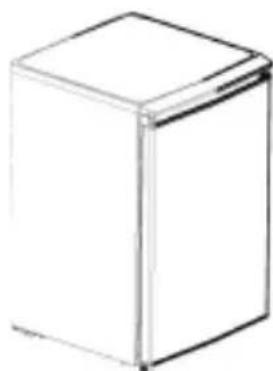
natural_image
Simple line drawing of a rectangular box (no text or symbols)CZYSZCZENIE I PIELEGNACJA
natural_image
Warning symbol of a flame inside a triangle (no text or numbers)text_image
Two identical diagrams showing a checkmark inside a container and a cross inside, likely indicating selection or confirmation.Substituir a luz (opcional)
natural_image
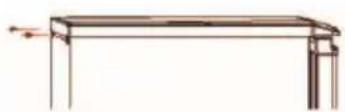
Isometric line drawing of a rectangular frame with two side clips and a vertical slot, no text or symbols present.- Desenrosque os parafusos da tampa superior e remova a tampa superior
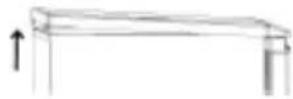
natural_image
Simple rectangular frame with arrows indicating direction (no text or symbols)- Coloque a porta na dobradiça inferior na vertical. Fixe a dobradiça superior e a tampa superior do frigorífico
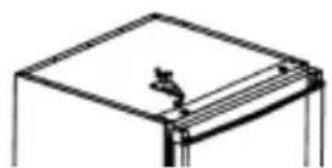
natural_image
Simple line drawing of a rectangular frame with a small object on top, no text or symbols present.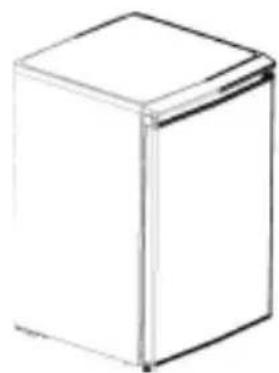
natural_image
Simple line drawing of a 3D rectangular box (no text or symbols)LIMPEZA E CUIDADOS
Limpeza e cuidados
natural_image
Warning symbol of a flame inside a triangle (no text or numbers)text_image
Two labeled diagrams showing a checkmark and a cross symbol inside water-filled containers, likely indicating inspection or verification.natural_image
Isometric line drawing of a rectangular object with four corner clips (no text or symbols)- Odvijte vijake zgornjega pokrova in ga odstranite
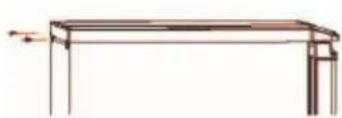
natural_image
Simple line drawing of a table with legs and a side table, no text or symbols present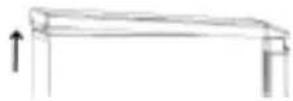
natural_image
Simple rectangular frame with arrows indicating direction (no text or symbols)natural_image
Simple line drawing of a rectangular frame with a small protrusion on top, no text or symbols present.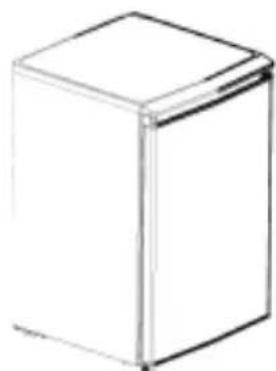
natural_image
Simple line drawing of a 3D rectangular box (no text or symbols)ČIŠČENJE IN NEGA
Čiščenje in nega
natural_image
Warning symbol of a flame inside a triangle (no text or numbers)text_image
Two labeled diagrams showing a checkmark and a cross symbol inside water-filled containers, likely indicating inspection or verification.natural_image
Isometric line drawing of a rectangular frame with two side connectors (no text or symbols)- Odyrnite vijke gornjeg poklopca i uklonite gornji poklopac
natural_image
Simple line drawing of a table with legs and a side arm, no text or symbols present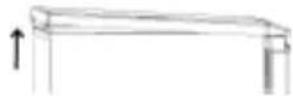
-
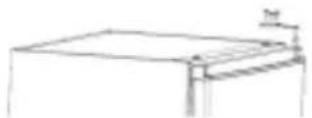
Odvrnite vijke gornje šarke i uklonite gornju šarku
-
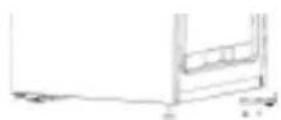
Uklonite vrata, odvrnite vijke donje šarke i uklonite donju šarku. Nakon ovoga poravnajte stopala.
-
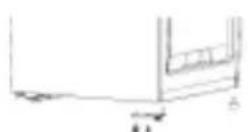
Učvrstite stopala za poravnavanje i donju šarku na suprotnoj strani
-
Sklopite zaustavljač vrata i osovinski rukav na suprotnu stranu
natural_image
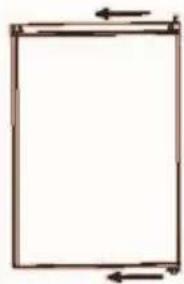
Simple rectangular frame with arrows indicating direction (no text or symbols)- Spustite vrata vertikalno na donju šarku. Pričvrstite gornju šarku i gornji poklopac frižidera
natural_image
Simple line drawing of a rectangular frame with a small object on top, no text or symbols present.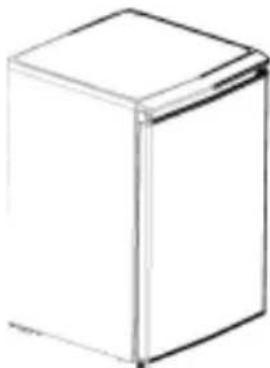
natural_image
Simple line drawing of a rectangular box (no text or symbols)ČIŠĆENJE I ODRŽAVANJE
natural_image
Symbol of a trash bin crossed with diagonal lines and a blank rectangular block below (no text or labels)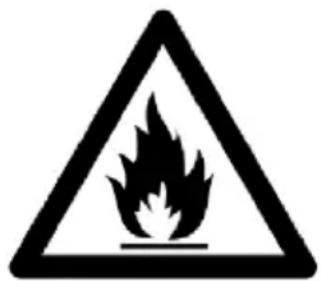
text_image
Warning sign depicting a flame symbol in a triangular shape, indicating hazardous materialnatural_image
Pure geometric diagram with curved and straight lines, no text or symbols presenttext_image
Two labeled diagrams showing a checkmark and a cross symbol inside water-filled containers, likely indicating inspection or verification steps.natural_image
Isometric line drawing of a rectangular frame with corner clips (no text or symbols)natural_image
Simple line drawing of a table with legs and a side post, no text or symbols present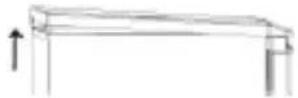
natural_image
Simple line drawing of a rectangular object with a vertical line and a small protrusion at the top (no text or symbols)
natural_image
Simple rectangular frame with arrows indicating direction (no text or symbols)natural_image
Simple line drawing of a geometric structure with a central object and supports (no text or symbols)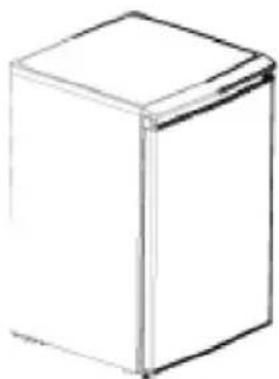
natural_image
Simple line drawing of a 3D rectangular box (no text or symbols)POKYNY PRE INŠTALÁCIU....289
Umiestnenie....289
natural_image
Warning symbol of a flame inside a triangle (no text or numbers)POKYNY PRE INŠTALÁCIU
text_image
Two labeled containers with checkmarks and crosses, likely indicating inspection or status indicators.natural_image
Isometric line drawing of a rectangular frame with two side clips and a flat top (no text or symbols)natural_image
Simple line drawing of a table with legs and a side arm, no text or symbols present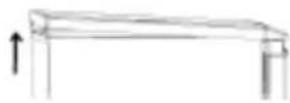
-
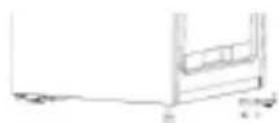
Odšraubujte šrauby horného krytu a odstráňte horný kryt.
-
Odstráňte dvere, odšraubujte šrauby dolného závesu a odstráňte dolný záves.. Potom vyrovnajte nohy.
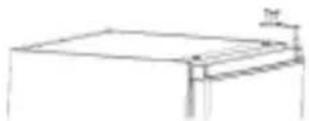
natural_image
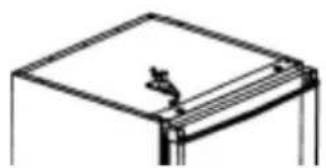
Simple rectangular frame with arrows indicating direction (no text or symbols)- Zvisle nasad'te dvere na dolný záves. Pripevnite horný záves a horný krytchladničky.
natural_image
Simple line drawing of a rectangular frame with a small protrusion on top (no text or symbols)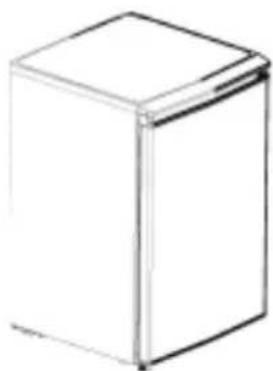
natural_image
Simple line drawing of a rectangular box (no text or symbols)ČISTENIE A STAROSTLIVOST
FOR appliances without a 4-star compartment: this refrigerating appliance is not suitable for freezing foodstuffs
FOR a free standing appliance: this refrigerating appliance is not intended to be used as a built-in appliance
FOR Wine Coolers: this appliance is intended to be used exclusively for the storage of wine
FOOD STORAGE
Position different food in different compartments according to be below table
| Refrigerator compartment | Type of food |
| Door or balconies of fridge compartment | ·Foods with natural preservatives, such as jams, juices, drinks, condiments.·Do not store perishable foods |
| Crisper drawers (salad drawer) | ·Fruits, herbs and vegetables should be placed separately in the crisper bin·Do not store bananas, onions, potatoes, garlic in the refrigerator |
| Fridge shelf – middle | ·Dairy products, eggs |
| Fridge shelf – top | ·Foods that do no need coocking, such as ready-to-eat foods, deli meats, leftovers. |
| Freezer drawer(s)/tray | ·Foods for long-term storage·Bottom drawer for raw meet, poultry, fish·Middle drawer for frozen vegetables, chips.·Top tray for ice cream, frozen fruit, frozen baked goods. |
- It's suggested to set the temperature at 4^ C in the fridge compartment, and, whether possible, at -18^ C in the freezer compartment.
- For most food categories, the longest storage time in the fridge compartment is achieved with colder temperatures. Since some particular products (as fresh fruits and vegetables) may be damaged with colder temperatures, it is suggested to keep them in the crisper drawers, whenever present. If not present, maintain an average setting of the thermostat.
- For frozen food, refer to the storage time written on the food packaging. This storage time is achieved whenever the setting respects the reference temperatures of the compartment (one-star -6°C, two stars -12°C, three stars -18°
POSITIONING
Install the appliance at a location where the ambient temperature corresponds to the climate class indicated on the rating plate of the appliance:
- Extended temperate (SN): ‘this refrigerating appliance is intended to be used at ambient temperatures ranging from 10 °C to 32 °C’
- Temperate (N): ‘this refrigerating appliance is intended to be used at ambient temperatures ranging from 16 °C to 32 °C’
- Subtropical (ST): ‘this refrigerating appliance is intended to be used at ambient temperatures ranging from 16 °C to 38 °C’
- Tropical (T): ‘this refrigerating appliance is intended to be used at ambient temperatures ranging from 16 °C to 43 °C’
AVAILABILITY OF SPARE PARTS
“Thermostats, temperature sensors, printed circuit boards and light sources are available for a minimum period of seven years after placing the last unit of the model on the market. Door handles, door hinges, trays and baskets for a minimum period of seven years and door gaskets for a minimum period of 10 year, after placing the last unit of the model on the market”.
GUARANTEE
Minimum guarantee is: 2 years for EU Countries, 3 years for Turkey, 1 year for UK, 1 year for Russia, 3 years for Sweden, 2 years for Serbia, 5 years for Norway, 1 year for Morocco, 6 months for Algeria, Tunisia no legal warranty required.
TECHNICAL ASSISTANCE
To contact the technical assistance, visit our website: https://corporate.haier-europe.com/en/ Under the section “website”, choose the brand of your product and your country. You will be redirected to the specific website where you can find the telephone number and form to contact the technical assistance
For further information about the product, please consult https://eprel.ec.europa.eu/ or scan the QR on the energy label supplied with the appliance