HGM 30 K.C IX - Cooker INDESIT - Free user manual and instructions
Find the device manual for free HGM 30 K.C IX INDESIT in PDF.


User questions about HGM 30 K.C IX INDESIT
0 question about this device. Answer the ones you know or ask your own.
Ask a new question about this device
Download the instructions for your Cooker in PDF format for free! Find your manual HGM 30 K.C IX - INDESIT and take your electronic device back in hand. On this page are published all the documents necessary for the use of your device. HGM 30 K.C IX by INDESIT.
USER MANUAL HGM 30 K.C IX INDESIT
Built-in cooker Installation and use
Congratulations on choosing an Indesit appliance, which you will find is dependable and easy to use. We recommend that you read the instructions in this owner's manual carefully before use for the best performance and to extend the life of your appliance, as it will provide you with all the instructions you require to ensure its safe installation, use and maintenance. Always keep this owner's manual close to hand since you may need to refer to it in the future. Thank you.
Close-up view
A. Control Panel
B. Dripping Pan or Baking Sheet
C. Oven Rack
D. Electric hotplate
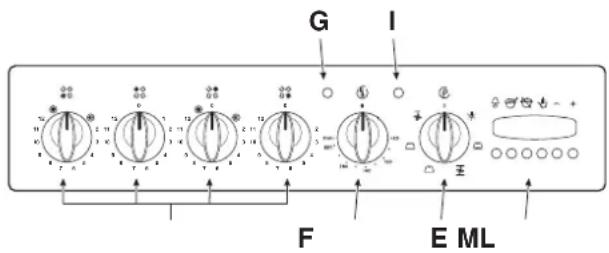
E. Cooking mode selection knob
F.Electric hotplate knobs
G. Electric hotplate indicator light
H. Guides for sliding the racks or dripping pan in and out
1. Oven indicator light (only on certain models) - When lit, it indicates the oven is heating up to the temperature set.
L. Cooking temperature selection knob
M. Electronic programmer - Allows you to programme the desired cooking mode by selecting the cooking time and the end cooking time. It can also be used as a timer.
text_image
G I F E ML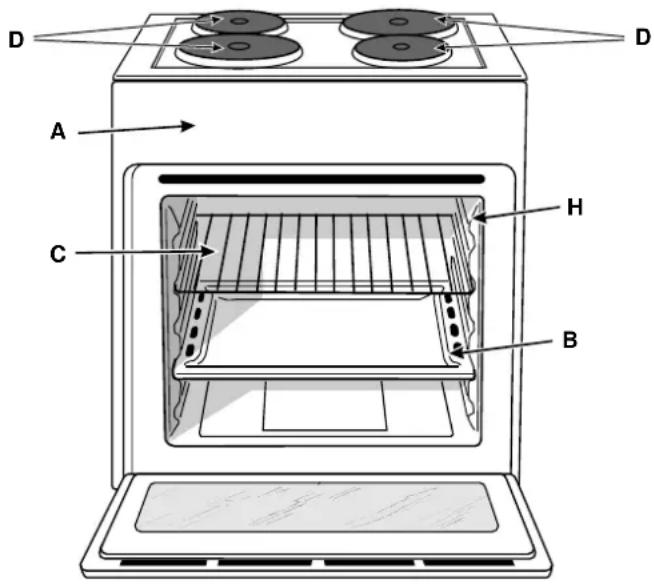
text_image
D A C H B DHow to use your oven
This multi-function oven combines the advantages of traditional convection ovens with those of the more modern fan assisted models in a single appliance.
It is an extremely versatile appliance that allows you to choose easily and safely between 5 different cooking modes. The various features offered by the oven are selected by means of selector knob "E" and thermostat "L" situated on the control panel.
Notice: The first time you use your appliance, we recommend that you set the thermostat to the highest setting and leave the oven on for about half an hour with nothing in it, with the oven door shut. Then, open the oven door and let the room air. The odour that is often detected during this initial use is due to the evaporation of substances used to protect the oven during storage and until it is installed.
Notice: Place the dripping pan provided on the bottom shelf of the oven to prevent any sauce and/or grease from dripping onto the bottom of the oven only when grilling food or when using the rotisserie (only available on certain models). For all other types of cooking, never use the bottom shelf and never place anything on the bottom of the oven when it is in operation because this could damage the enamel. Always place your cookware (dishes, aluminium foil, etc. etc.) on the grid provided with the appliance inserted especially along the oven guides.
Nota: Should the appliance be equipped with an electronic programmer, to use the electric oven, just press button (the "symbol will appear on the display) before selecting the desired cooking function.
Convection Mode
Position of thermostat knob "L": between 60°C and Max. On this setting, the top and bottom heating elements come on. This is the classic, traditional type of oven which has been perfected, with exceptional heat distribution and reduced energy consumption. The convection oven is still unequalled when it comes to cooking dishes made up of several ingredients, e.g. cabbage with ribs, Spanish style cod, Ancona style stockfish, tender veal strips with rice, etc. Excellent results are achieved when preparing veal or beef-based dishes as well (braised meats, stew, gou-lash, wild game, ham etc.) which need to cook slowly and require basting or the addition of liquid. It nonetheless remains the best system for baking cakes as well as fruit
and cooking using covered casserole dishes for oven baking. When cooking in convection mode, only use one dripping pan or cooking rack at a time, otherwise the heat distribution will be uneven. Using the different rack heights available, you can balance the amount of heat between the top and the bottom of the oven. Select from among the various rack heights based on whether the dish needs more or less heat from the top.
Fan Assisted Mode
Position of thermostat knob "L": Between 60°C and Max. The heating elements, as well as the fan, will come on. Since the heat remains constant and uniform throughout the oven, the air cooks and browns food uniformly over its entire surface. With this mode, you can also cook various dishes at the same time, as long as their respective cooking temperatures are the same. A maximum of 2 racks can be used at the same time, following the instructions in the section entitled: "Cooking On More Than One Rack". This fan assisted mode is particularly recommended for dishes requiring a gratin finish or for those requiring considerably prolonged cooking times, such as for example: lasagne, pasta bakes, roast chicken and potatoes, etc... Moreover, the excellent heat distribution makes it possible to use lower temperatures when cooking roasts. This results in less loss of juices, meat which is more tender and a decrease in the loss of weight for the roast. The fan assisted mode is especially suited for cooking fish, which can be prepared with the addition of a limited amount of condiments, thus maintaining their flavour and appearance.
Desserts: the fan assisted mode is also perfect for baking leavened cakes.
Moreover, this mode can also be used to thaw quickly white or red meat and bread by setting the temperature to 80 °C . To thaw more delicate foods, set the thermostat to 60 °C or use only the cold air circulation feature by setting the thermostat to 0 °C .
"Top" oven
Position of thermostat knob "L": Between 60°C and Max. The top heating element comes on.
This mode can be used to brown food at the end of cooking.
Grill
Position of thermostat knob "L": Max
The top central heating element comes on.
The extremely high and direct temperature of the grill makes it possible to brown the surface of meats and roasts while locking in the juices to keep them tender. The grill is also highly recommended for dishes that require a high temperature on the surface: beef steaks, veal, rib steak, filets, hamburgers etc...
Some grilling examples are included in the “Practical Cooking Advice” paragraph.
Fan Assisted Grill
Position of thermostat knob "L": between 60°C and 200°C. The top central heating element and the fan come on. This combination of features increases the effectiveness of the unidirectional thermal radiation of the heating elements through forced circulation of the air throughout the oven.
This helps prevent food from burning on the surface, allowing the heat to penetrate right into the food. Excellent results are achieved with kebabs made with meats and vegetables, sausages, ribs, lamb chops, chicken in a spicy sauce, quail, pork chops, etc.
This mode is also ideal for cooking fish steaks, like swordfish, tuna, grouper, stuffed cuttlefish etc.
The oven light
Set knob "E" to the symbol to turn it on. It lights the oven and stays on when any of the electrical heating elements in the oven come on.
Cooling ventilation
In order to cool down the exterior of the appliance, some models are equipped with a cooling fan which comes on automatically when the oven is hot.
When the fan is on, a normal flow of air can be heard exiting between the oven door and the control panel.
Note: When cooking is done, the fan stays on until the oven cools down sufficiently.
Description
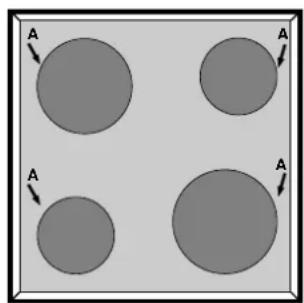
The cooker can be combined with hobs featuring 4 electric hotplates (Fig. A), with traditional glass ceramic hobs (Fig. B) or with glass ceramic hobs with extendable cooking zones (Fig. C).
natural_image
Four gray circles arranged in a 2x2 grid with arrows pointing inward, no text or symbols present.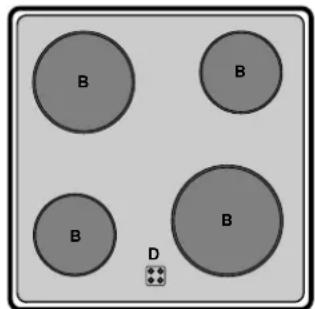
A Cast iron electric hotplates
B Radiant cooking zones
C Extendable radiant cooking zones
D Residual heat indicator lights, one for each cooking zone: these indicate that the temperature of the corresponding zone is above 60^ C, even if the cooking zone itself is switched off (only available on certain models)
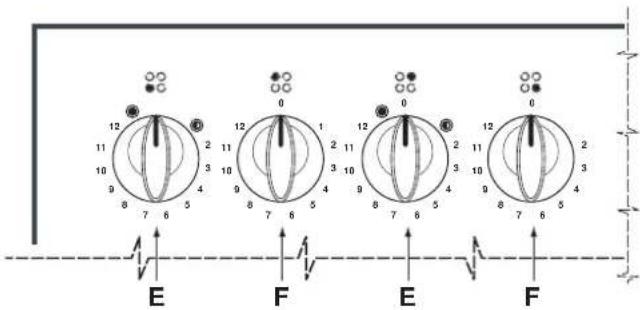
E Special control knobs
F Traditional control knobs
text_image
12 11 10 9 8 7 6 5 4 3 2 1 0 12 11 10 9 8 7 6 5 4 3 2 12 11 10 9 8 7 6 5 4 3 2 12 11 10 9 8 7 6 5 4 3 2 12 11 10 9 8 7 6 5 4 3 2 12 11 10 9 8 7 6 5 4 3 0 12 11 10 9 8 7 6 5 4 3Description of the cooking zones
Traditional cooking zones are made up of circular heating elements. They turn red approximately ten seconds after they have been turned on.
Extendable radiant cooking zones.
These operate in a similar way to traditional cooking zones, and can be recognised for their extendable heating zone (see Fig. C). You can turn on only the smaller inner cooking zone or both.
- Traditional cooking zone control knobs. Each cooking zone is fitted with a control knob allowing you to select from 12 different temperature settings from a minimum of 1 to a maximum of 12.
- Special cooking zone control knobs. These control knobs allow you to choose from two different power levels, both adjustable from a minimum setting of 1 to a maximum setting of 12. Turn the knob clockwise from 1 to 12 to set the lower power level. Turn the knob to the travel limit stop ( ), which is indicated by a slight click, to enable the maximum power level, which in turn can be adjusted between 12 and 1 by turning the knob anticlockwise. To restore the minimum power level, turn the knob and set it back to the zero setting. With glass ceramic hobs featuring extendable cooking zones (see Fig. C), the first part of the knob travel enables the smaller (inner) cooking zone, to enable both cooking zones and thus have an extended cooking zone, turn the knob to setting ( ) and then select the desired power level from 12 to 1.
Electric hotplate indicator light (G)
This light comes on when any of the electrical hotplates on the hob have been turned on.
| Set. | Radiant Burner |
| 0 | Off |
| 1 | To melt butter and chocolate. |
| 2 | To heat liquids. |
| 3 | |
| 4 | For creams and sauces. |
| 5 | |
| 6 | For cooking at the boiling point. |
| 7 | |
| 8 | For roasts. |
| 9 | |
| 10 | For boiling large pieces of meat. |
| 11 | |
| 12 | For frying. |
| For utilising both cooking areas. |

Warnings for using the glass ceramic hob
To get the best from your hob, here are a few helpful tips to keep in mind during cooking or when preparing food.
- Use flat-bottomed pans to ensure the same adhere fully to the cooking zone.
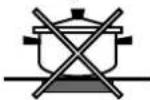
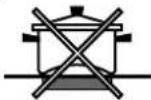
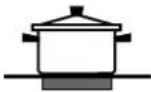
- Use pans whose diameter is sufficient to cover the hotplate fully, so as to guarantee the use of all the available heat.
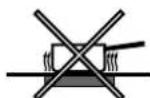
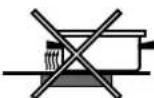
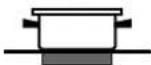
- Make sure the bottom of the pan is always clean and dry, to ensure correct contact and a long life for your hotplates and pans.
- Do not use the same pans you used on gas burners. The concentration of heat on gas burners may deform the bottom of the pan, and so the desired effect will never be obtained if you subsequently use the pan on the glass ceramic hob.
- Never leave a cooking zone on without a pan on it, as the zone would heat up almost immediately, causing damage to the heating elements.
- Do not forget that the cooking zone stays hot for at least half an hour after it has been turned off, take care not to inadvertently place pans or items on the hot zone.
- Do not turn the cooking zones on if there is any aluminium foil or plastic material on the hob.
Do not get too close to the hot hob.
Warnings before using your hob for the first time:
The glue used for the seals leaves greasy streaks on the glass during storage. We advise you to remove these before using the appliance, using an ordinary
detergent (non abrasive cream polish). You may detect the smell of rubber upon first use; this will disappear quickly.
- The glass ceramic hob can withstand sudden temperature changes and shocks. Nevertheless, it may break if you strike it with a sharp object. In this case, unplug it immediately and call for technical assistance to request its repair.
Electronic Cooking Programmer
The programmer makes it possible to preset the oven and the grill in terms of:
- delay start with a preset length of time for cooking;
- immediate start with a preset length of time for cooking;
- timer.
Button functions:
: Timer with hour and minutes;
: Length of cooking time;
: End cooking time;
: Manual change;
: Change time (backwards);
: Change time (forwards).
How to Reset the Digital Clock
After the appliance has been connected to the power source or following a power outage, the clock display will begin to blink and read: 0:00
- Press the and buttons at the same time. Then use (within 4 seconds) the and buttons to set the exact time.
Use the button to move the time forwards.
Use the + button to move the time backwards.
The time can also be changed in the following two ways:
- Repeat all of the foregoing steps.
- Press the button, and then use the and buttons to reset the time.
Manual Operation Mode for the Oven
After the time has been set, the programmer is automatically set to manual mode.
Note: Press the button to return the oven to manual mode after every "Automatic" cooking session.
Delayed Start Time with Preset Cooking Length
The length and the end cooking times must be set. Let us suppose that the display shows 10:00.
- Turn the oven control knob to the cooking setting and temperature desired (example: convection oven at 200^ C).
- Press the ____ and the use (within 4 seconds) the ____ and buttons to set the length of the cooking time. Let us suppose that 30 minutes was set for the length of the cooking time. In this case, the display will show:
Release the button, and within 4 seconds, the current time will reappear with the symbol and "auto."
-
Press the button, and then use the and buttons to set the end cooking time. Let us suppose that it is 13:00
-
Release the button and the display will show the current time within 4 seconds:
When "auto" is lighted, it indicates that the length and end cooking time have been preset to operate in automatic mode. At this point, the oven will turn on automatically at 12:30 in order to finish the cooking session within 30 minutes. When the oven is on, the symbol (cooking pot) will appear on the display for the entire length of the cooking process. The button can be pressed at any time to display the setting for the length of the cooking time, while the button can be pressed to display the end cooking time.
At the end of the cooking time, an acoustic signal will sound. Press any button it turn it off (except the _ and _ buttons).
Immediate Start Time with Preset Cooking Length
When only the length of the cooking time is set (points 1 and 2 of the paragraph entitled, "Delayed Start Time with Preset Cooking Length"), the cooking session starts immediately.
Cancelling a Preset Cooking Time
Press the button, and use the button to set the time to:
Then press the manual cooking mode button .
Timer Feature
The timer can be used to count down from a given length of time. This feature does not control when the oven comes on
or turns off, but, rather, it only emits an acoustic signal when the preset time has run out.
Press the button, and the display will read:
[NO TEXT]
Then use the and buttons to set the desired time. Release the button, and the timer will start at that second. The display will show the current time.
At the end of the preset time, an acoustic signal will sound, which can be turned off by pressing any button (except the and buttons), and the symbol will turn off.


Changing and Cancelling Settings
- The settings can be changed at any time by pressing the corresponding button and using the or button.
- When the length setting for the cooking time is cancelled, the end cooking time setting is also cancelled, and vice versa.
- When in automatic cooking mode, the appliance will not accept end cooking times prior to the start cooking time proposed by the appliance itself.
How to Keep Your Oven in Shape
Before cleaning your oven, or performing maintenance, disconnect it from the power supply.
To extend the life of your oven, it must be cleaned frequently, keeping in mind that:
- Do not use steam equipment to clean the appliance.
- the enamelled or stainless steel parts should be washed with lukewarm water without using any abrasive powders or corrosive substances which could ruin them; Stainless steel could get stained. If these stains are difficult to remove, use special products available on the market. After cleaning, it is advisable to rinse thoroughly and dry.
- the inside of the oven should preferably be cleaned immediately after use, when it is still warm, with hot water and soap; the soap should be rinsed away and the interior dried thoroughly. Avoid using abrasive detergents (for example cleaning powders, etc...) and abrasive sponges for dishes or acids (such as limescale-remover, etc...) as these could damage the enamel. If the grease spots and dirt are particularly tough to remove, use a special product for oven cleaning, following the instructions provided on the packet.
- if you use your oven for an extended period of time, condensation may form. Dry it using a soft cloth.
- there is a rubber seal surrounding the oven opening which guarantees its perfect functioning. Check the condition of this seal on a regular basis. If necessary, clean it and avoid using abrasive products or objects to do so. Should it become damaged, please contact your nearest After-sales Service Centre. We recommend you avoid using the oven until it has been repaired.
- never line the oven bottom with aluminium foil, as the consequent accumulation of heat could compromise the cooking and even damage the enamel.
- clean the glass door using non-abrasive products or sponges and dry it with a soft cloth.
- the electric hotplates should be cleaned with a damp cloth and lubricated with a little oil while still warm;
How to remove the oven door
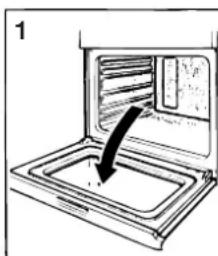
For a more thorough clean, you can remove the oven door. Proceed as follows:
- open the door fully;
- lift up and turn the small levers situated on the two hinges;
- grip the door on the two external sides, shut it slowly but not completely;
- pull the door towards you, pulling it out of its seat;
Reassemble the door by following the above procedures backwards.
natural_image
Diagram of a microwave oven with a black arrow indicating airflow direction (no text or symbols)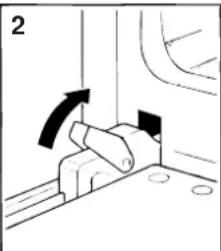
natural_image
Mechanical assembly diagram showing a lever mechanism with directional arrows (no text or labels)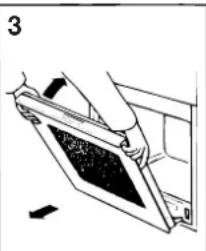
natural_image
Diagram of a hand holding a device with a black screen, showing internal components and an arrow indicating direction (no text or symbols)Replacing the Oven Lamp
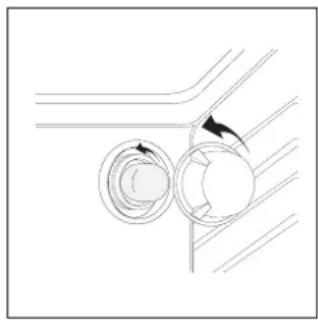
- Disconnect the oven from the power supply by means of the omnipolar switch used to connect the appliance to the electrical mains; or unplug the appliance if the plug is accessible;
- Remove the glass cover of the lamp-holder;
-
Remove the lamp and replace with a lamp resistant to high temperatures (300°C) with the following characteristics:
-
Voltage: 230/240 V
- Wattage 25W
- Type E14
- Replace the glass cover and reconnect the oven to the mains power supply.
natural_image
Diagram showing two circular components with directional arrows, no text or symbols presentCleaning the hob
Before you start cooking, make sure the hob surface is clean, wiping it with a damp cloth if necessary to remove any dust or food residue.
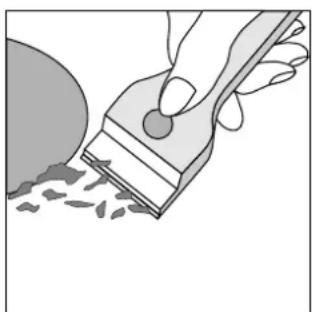
The hob surface must be cleaned regularly with a solution of warm water and a non-abrasive cleaner. You should clean glass ceramic hob surfaces regularly, using a special product. First remove all grease and spills from the hob surface with an appropriate scraper, such as (see
Fig. A.) (not provided).
CERA
Clean the hob while still warm; use a special cleaning product and some kitchen roll (see Fig. B). Then rub with a damp cloth and dry thoroughly.
natural_image
Illustration of a hand using a paintbrush to brush residue in a granular material (no text or symbols)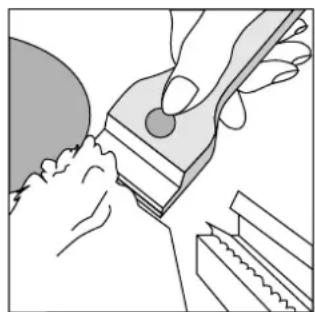
natural_image
Illustration of hands using a tool to apply material to a surface (no text or symbols visible)Fig. A Fig. B
Aluminium foil, plastic or synthetic items that may have been accidentally melted, as well as sugar or highly sugary food should be removed immediately from the hot cooking zone using a scraper. Special cleaning products leave a clear surface layer which prevents dirt from adhering to the hob. This layer also protects the surface from any damage caused by highly sugary foodstuffs. In no case whatsoever should abrasive sponges or products be used, nor chemically aggressive cleaning products such as oven cleaner sprays or stain removers.
| Glass ceramic hob cleaners | Available from |
| Window scraper Razor blade scrapers | DIY Stores |
| Replacement blades DIY Stores | supermarkets, chemists |
| COLLO lunetaHOB BRITEHob CleanSWISSCLEANER | Boots, Co-op stores, department stores, Regional Electricity Company shops, supermarkets |
| Selector knob setting | Food to be cooked | Weight (in kg) | Cooking rack position from bottom | Preheating time (minutes) | Thermostat knob setting | Cooking time (minutes) |
| 1 Convection | Duck | 1 | 3 | 15 | 200 | 65-75 |
| Roast veal or beef | 1 | 3 | 15 | 200 | 70-75 | |
| Pork roast | 1 | 3 | 15 | 200 | 70-80 | |
| Biscuits (short pastry) | - | 3 | 15 | 180 | 15-20 | |
| Tarts | 1 | 3 | 15 | 180 | 30-35 | |
| 2 Fan assisted | Pizza (on 2 racks) | 1 | 2-4 | 15 | 220 | 15-20 |
| Lasagne | 1 | 3 | 10 | 200 | 30-35 | |
| Lamb | 1 | 2 | 10 | 180 | 50-60 | |
| Roast chicken + potatoes | 1 | 2-4 | 10 | 180 | 60-75 | |
| Mackerel | 1 | 2 | 10 | 180 | 30-35 | |
| Plum-cake | 1 | 2 | 10 | 170 | 40-50 | |
| Cream puffs (on 2 racks) | 0.5 | 2-4 | 10 | 190 | 20-25 | |
| Biscuits (on 2 racks) | 0.5 | 2-4 | 10 | 180 | 10-15 | |
| Sponge cake (on 1 rack) | 0.5 | 2 | 10 | 170 | 15-20 | |
| Sponge cake (on 2 racks) | 1.0 | 2-4 | 10 | 170 | 20-25 | |
| Savoury pies | 1.5 | 3 | 15 | 200 | 25-30 | |
| 3 Top Oven | Browning food to perfect cooking | -3/4 | 15 220 - | |||
| 4 Grill | Soles and cuttlefish | 1 | 4 | 5 | Max | 8-10 |
| Squid and prawn kebabs | 1 | 4 | 5 | Max | 6-8 | |
| Cod filet | 1 | 4 | 5 | Max | 10 | |
| Grilled vegetables | 1 | 3/4 | 5 | Max | 10-15 | |
| Veal steak | 1 | 4 | 5 | Max | 15-20 | |
| Cutlets | 1 | 4 | 5 | Max | 15-20 | |
| Hamburgers | 1 | 4 | 5 | Max | 7-10 | |
| Mackerels | 1 | 4 | 5 | Max | 15-20 | |
| Toasted sandwiches | n.° 4 | 4 | 5 | Max | 2-3 | |
| 5 Fan assisted grill | Grilled chicken | 1.5 | 3 | 5 | 200 | 55-60 |
| Cuttlefish | 1.5 | 3 | 5 | 200 | 30-35 |
NB: cooking times are approximate and may vary according to personal taste. When cooking using the grill or fan assisted grill, the dripping pan must always be placed on the 1st oven rack from the bottom.
Practical Cooking Advice
The oven offers a wide range of alternatives which allow you to cook any type of food in the best possible way. With time you will learn to make the best use of this versatile cooking appliance and the following directions are only a guideline which may be varied according to your own personal experience.
Preheating
If the oven must be preheated (this is generally the case when cooking leavened foods), the "fan assisted" mode / can be used to reach the desired temperature as quickly as possible in order to save on energy.
Once the food has been placed in the oven, the most appropriate cooking mode can then be selected.
Cooking on More Than One Rack
If you have to cook on more than one rack at the same time, use only the "fan assisted mode" / which is the only one that is appropriate for this type of cooking.
- The oven is fitted with 5 racks. During fan assisted cooking, use two of the three central racks; the lowest and highest racks receive the hot air directly and therefore delicate foodstuffs could be burnt on these racks.
- As a general rule, use the 2nd and 4th rack from the bottom, placing the foodstuffs that require greater heat on the 2nd rack from the bottom. For example, when cooking meat roasts together with other food, place the roast on the 2nd rack from the bottom and the more delicate food on the 4th rack from the bottom.
- When cooking foodstuffs that require differing times and temperatures, set a temperature that is somewhere between the two temperatures required, place the more delicate food on the 4th rack from the bottom and take the food requiring less time out of the oven first.
- Use the dripping pan on the lower rack and the grid on the upper;
Using the Grill
This multi-function oven offers you 2 different grilling modes only and exclusively with the oven door shut.
Use the "grill" mode / , placing the food under the centre of the grill (situated on the 3rd or 4th rack form the bottom) because only the central part of the top heating element is turned on.
Use the bottom rack (1st from the bottom), placing the dripping pan provided to collect any sauce and/or grease and prevent the same from dripping onto the oven bottom. When using this mode, we recommend you set the thermostat to the highest setting. However, this does not mean you cannot use lower temperatures, simply by adjusting the thermostat knob to the desired temperature.
Setting / , "fan assisted grill", is extremely useful for grilling foods rapidly, as the distribution of heat makes it possible not only to brown the surface, but also to cook the bottom part.
Moreover, it can also be used for browning foods at the end of the cooking process, such as adding that gratin finish to pasta bakes, for example.
When using this mode, place the grid on the 2nd or 3rd oven rack from the bottom (see cooking table) then, to prevent fat and grease from dripping onto the bottom of the oven and thus smoke from forming, place a dripping-pan on the 1st rack from the bottom.
Important: always use the grill with the oven door shut. This will allow you both to obtain excellent results and to save on energy (approximately 10%).
When using this mode, we advise you to set the thermostat to 200^ C, as it is the most efficient way to use the grill, which is based on the use of infrared rays. However, this does not mean you cannot use lower temperatures, simply by adjusting the thermostat knob to the desired temperature.
Therefore the best results when using the grill modes are obtained by placing the grid on the lower racks (see cooking table) then, to prevent fat and grease from dripping onto the bottom of the oven and smoke from forming, place a dripping-pan on the 1st oven rack from the bottom.
Baking Cakes
When baking cakes, always place them in a preheated oven. Make sure you wait until the oven has been preheated thoroughly (the red light "I" will turn off). Do not open the oven door during baking to prevent the cake from dropping. In general:
Pastry is too dry
Increase the temperature by 10^ C and reduce the cooking time.
Pastry dropped
Use less liquid or lower the temperature by 10^ C.
Pastry is too dark on top
Place it on a lower rack, lower the temperature, and increase the cooking time.
Cooked well on the inside but sticky on the outside
Use less liquid, lower the temperature, and increase the cooking time.
The pastry sticks to the pan
Grease the pan well and sprinkle it with a dusting of flour or use greaseproof paper.
I used more than one level (in the function "ventilated oven") and they are not all at the same cooking point
Use a lower temperature setting. It is not necessary to remove the food from all the racks at the same time.
Cooking Pizza
For best results when cooking pizza, use the "fan
assisted “_ / _ mode:
- Preheat the oven for at least 10 minutes;
- Use a light aluminium pizza pan, placing it on the grid supplied with the oven. If the dripping pan is used, this will extend the cooking time, making it difficult to get a crispy crust;
- Do not open the oven door frequently while the pizza is cooking;
- If the pizza has a lot of toppings (three of four), we recommend you add the mozzarella cheese on top halfway through the cooking process.
- When cooking pizza on two racks, use the 2nd and 4th with a temperature of 220^ and place the pizzas in the oven after having preheated it for at least 10 minutes.
Cooking Fish and Meat
When cooking white meat, fowl and fish, use temperature settings from 180 °C to 200 °C.
For red meat that should be well done on the outside while tender and juicy in the inside, it is a good idea to start with a high temperature setting (200°C-220°C) for a short time, then turn the oven down afterwards.
In general, the larger the roast, the lower the temperature setting. Place the meat on the centre of the grid and place the dripping pan beneath it to catch the fat.
Make sure that the grid is inserted so that it is in the centre of the oven. If you would like to increase the amount of heat from below, use the low rack heights. For savoury roasts (especially duck and wild game), dress the meat with lard or bacon on the top.
Safety Is A Good Habit To Get Into
To maintain the efficiency and safety of this appliance, we recommend that you do the following:
- only call the Service Centres authorised by the manufacturer
• always use original spare parts
- When handling the appliance, we recommend you always use the purpose provided handles recessed into the sides of the oven to prevent harming people or damaging the appliance itself.
- This appliance is designed for non-professional, household use and its functions must not be changed.
• These instructions are only valid for the countries whose symbols appear on the manual and the serial number plate. - The electrical system of this appliance can only be used safely when it is correctly connected to an efficient earthing system in compliance with current safety standards.
- When the appliance is in use, the heating elements and some parts of the oven door become extremely hot. Make sure you don't touch them and keep children well away.
The following items are potentially dangerous, and therefore appropriate measures must be taken to prevent children and the disabled from coming into contact with them:
- Controls and the appliance in general;
- Packaging (bags, polystyrene, nails, etc.);
- The appliance itself, immediately after use of the oven or grill due to the heat generated;
- The appliance itself, when no longer in use (potentially dangerous parts must be made safe).
Avoid the following:
- Touching the appliance with wet parts of the body;
- Using the appliance when barefoot;
- Pulling on the appliance or the supply cable to unplug it from the electrical outlet;
- Improper or dangerous operations;
- Obstructing the ventilation or heat dissipation slots;
- Allowing power supply cables of small appliances to come into contact with the hot parts of the appliance;
- Exposing the appliance to atmospheric agents such as rain, or sunlight;
- Using the oven for storage purposes;
-
Using flammable liquids near the appliance;
-
Using adapters, multiple sockets and/or extension leads;
- Attempting to install or repair the appliance without the assistance of qualified personnel.
Qualified personnel must be contacted in the following cases:
- Installation (following the manufacturer's instructions);
- When in doubt about operating the appliance;
- Replacing the electrical socket when it is not compatible with the appliance plug.
Service Centres authorised by the manufacturer must be contacted in the following cases:
- If in doubt about the soundness of the appliance after removing it from its packaging;
- If the power supply cable has been damaged or needs to be replaced;
- If the appliance breaks down or functions poorly; ask for original spare parts.
It is a good idea to do the following:
- Only use the appliance to cook food and nothing else;
- Check the soundness of the appliance after it has been unpacked;
- Disconnect the appliance from the electrical mains if it is not functioning properly and before cleaning or performing maintenance;
- When left unused, unplug the appliance form the electricity mains and turn off the gas tap (if foreseen);
- Use oven gloves to place cookware in the oven or when removing it;
- Always grip the oven door handle in the centre as the extremities of the same may be hot due to any hot air leaks;
- Make sure the knobs are in the “•”/“o” position when the appliance is not in use.
- Cut the power supply cable after disconnecting it from the mains when you decide not to use the appliance any longer.
- The manufacturer may not be held responsible for any damage due to: incorrect installation, improper, incorrect and irrational use.
Instalation
The appliance must be installed only by a qualified person in compliance with the instructions provided.
The manufacturer declines all responsibility for improper installation which may harm persons and animals and damage property.
Important: The power supply to the appliance must be cut off before any adjustments or maintenance work is done on it.
Installation of Built-in Ovens
In order to ensure that the built-in appliance functions properly, the cabinet containing it must be appropriate. The figure below gives the dimensions of the cut-out for installation under the counter or in a wall cabinet unit.
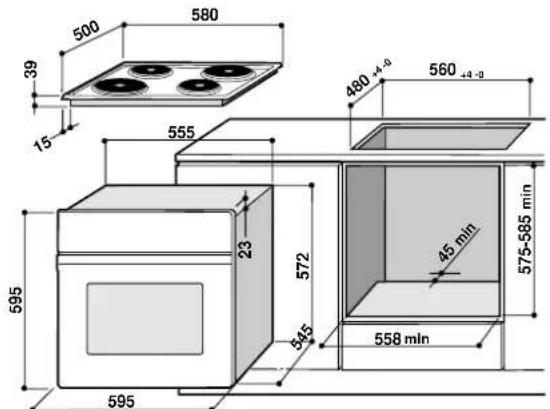
text_image
500 580 39 15 555 480 +4 560 +4 -3 595 23 572 45 min 575-585 min 545 558 min 595N.B.: Installation in compliance with the consumption declaration
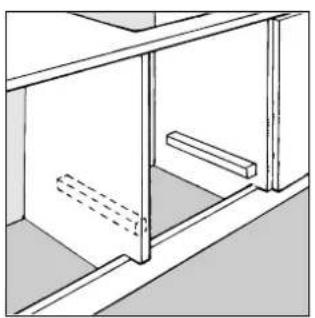
In order to ensure adequate ventilation, the back panel of the cabinet unit must be removed. Installing the oven so that it rests on two strips of wood is preferable. If the oven rests on a continuous, flat surface, there must be an aperture of at least 45 x 560 mm.
natural_image
Technical line drawing of a cabinet or shelf assembly with no visible text or symbols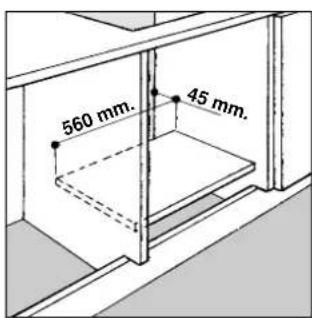
text_image
560 mm. 45 mm.The panels of the adjacent cabinets must be made of heat-resistant material. In particular, cabinets with a veneer exterior must be assembled with glues which can withstand temperatures of up to 100 °C.
In compliance with current safety standards, contact with the electrical parts of the oven must not be possible once it has been installed.
All parts which ensure the safe operation of the appliance must be removable only with the aid of a tool.
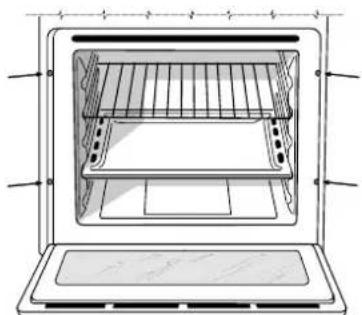
To fasten the oven to the cabinet, open the door of the oven and attach it by inserting the 4 wooden screws into the 4 holes located on the perimeter of the frame.
natural_image
Diagram of an oven with internal grating and door, showing no text or symbolsElectrical Connection
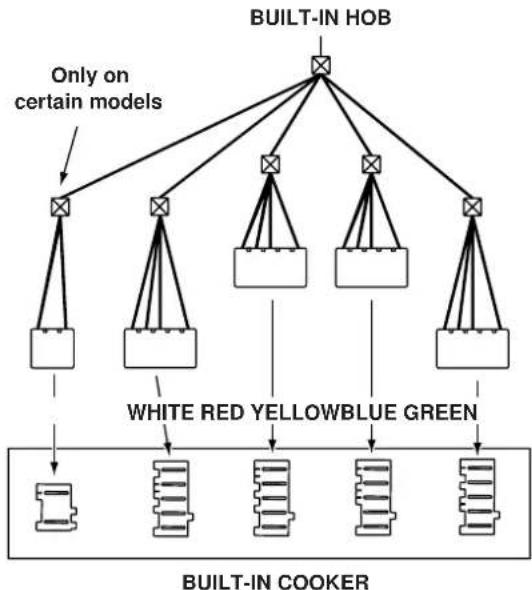
The cooker must be connected to the mains electricity supply. The hob is connected to the cooker using a special connector. The cookers are designed to operate on alternating current featuring the supply voltage and frequency indicated on the appliance data plate.
flowchart
graph TD
    A["BUILT-IN COOKER"] --> B["White Red YELLOWBLUE GREEN"]
    A --> C["White RED YELLOWBLUE GREEN"]
    A --> D["White RED HOB"]
    B --> E["Only on certain models"]
    C --> F["Only on certain models"]
    D --> G["Only on certain models"]
Fitting on a Power Supply Cable
Opening the terminal board:
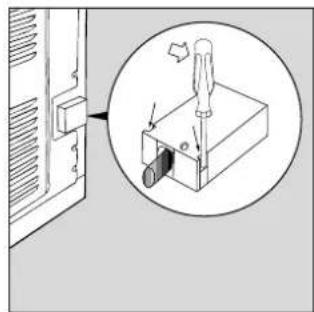
• Using a screwdriver, prise on the side tabs of the terminal board cover;
- Pull open the cover of the terminal board.
natural_image
Diagram showing a screwdriver inserted into a device component, with an inset magnified view of the component (no text or symbols present)To install the cable, proceed as follows:
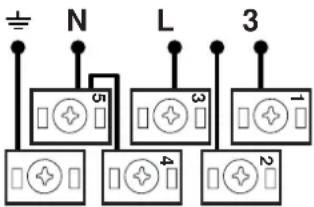
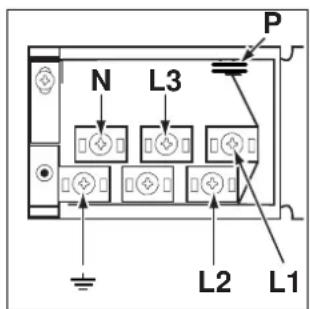
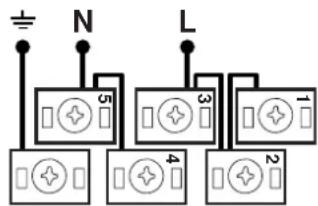
- unscrew the wire clamp screw and the contact screws Note: the jumpers are factory-set for a three-phase 400V connection (fig. D).
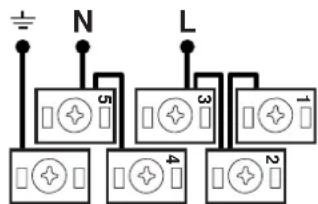
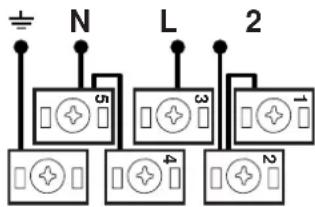
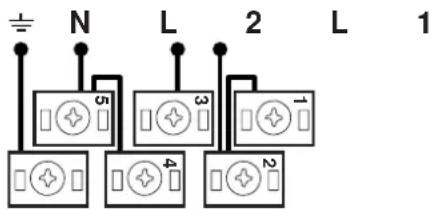
- to make the electrical connections illustrated in fig. F and fig. G, use the two jumpers housed in the box (fig. E - reference "P")
- fasten the supply cable in place with the clamp and close the cover of the terminal board.
400V 3N\~
H05RR-F 5x2.5 CEI-UNEL 35363
text_image
N L 3 5 3 1 4 2Fig. D
text_image
N L3 P L2 L1Fig. E
230V 1N\~
H07RN-F 3x4 CEI-UNEL 35364
text_image
N L 5 3 1 4 2Fig. F
400V 2N\~
H05RR-F 4x2.5 CEI-UNEL 35363
text_image
N L 2 5 3 1 4 2Fig. G
Connecting the supply cable to the mains
Install a standardised plug corresponding to the load indicated on the data plate. When connecting the cable directly to the mains, install an omnipolar circuit-breaker with a minimum contact opening of 3 mm between the appliance and the mains. The omnipolar circuit breaker should be sized according to the load and should comply with current regulations (the earth wire should not be interrupted by the circuit breaker).
The supply cable should be positioned so that it does not reach a temperature of more than 50^ C with respect to the room temperature, anywhere along its length.
Before making the connection, check that:
- The electrical safety of this appliance can only be guaranteed if the cooker is correctly and efficiently earthed, in compliance with regulations on electrical safety. Always ensure that the earthing is efficient; if you have any doubts call in a qualified technician to check the system. The manufacturer declines all responsibility for damage resulting from a system which has not been earthed.
- Before plugging the appliance into the mains, check that the specifications indicated on the date plate (on the appliance and/or packaging) correspond to those of the electrical mains system of your home.
- Check that the electrical capacity of the system and sockets will support the maximum power of the appliance, as indicated on the data plate. If you have any doubts, call in a qualified technician.
- If the socket and appliance plug are not compatible, have the socket replaced with a suitable model by a qualified technician. The latter, in particular, will also have to ensure that the cross section of the socket cables are suitable for the power absorbed by the appliance. The use of adapters, multiple sockets and/or extensions, is not recommended. If their use cannot be avoided, remember to use only single or multiple adapters and extensions which comply with current safety regulations. In these cases, never exceed the maximum current capacity indicated on the single adapter or extension and the maximum power indicated on the multiple adapter. The plug and socket must be easily accessible.
Technical Specifications
Inner dimensions of the oven:
Width 43.5 cm
Depth 40 cm
Height 32 cm
Inner Volume of the Oven:
56 litres
ENERGY LABEL
Directive 2002/40/EC on the label of electric ovens Norm EN 50304
Energy consumption for Natural convection
heating mode: Convection
Declared energy consumption for Forced convection Class
heating mode: _ Fan assisted
Voltage and Frequency of Power Supply:
230V/400V \~ 3N 50Hz 8850W

This appliance conforms with the following European Economic Community directives:
- 73/23/EEC of 19/02/73 (Low Voltage) and subsequent modifications;
- 89/336/EEC of 03/05/89 (Electromagnetic Compatibility) and subsequent modifications;
- 93/68/EEC of 22/07/93 and subsequent modifications.
text_image
G I F L E M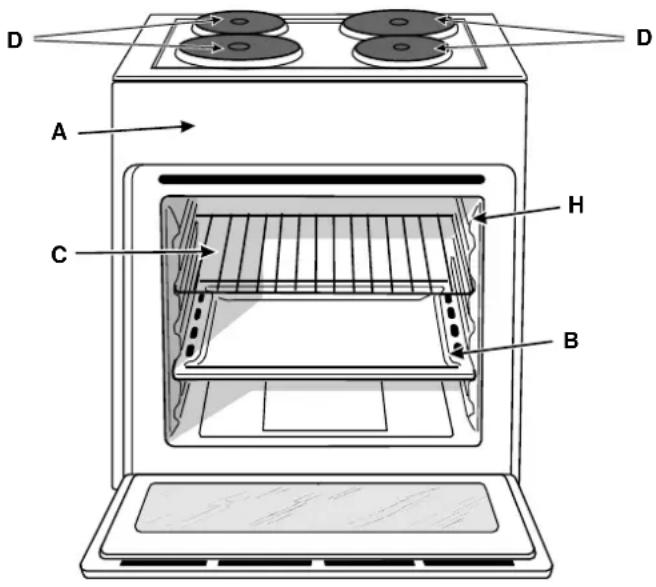
text_image
D A C H B DMode d'emploi
natural_image
Simple line drawing of an oven with a downward arrow indicating cooling or ventilation (no text or symbols)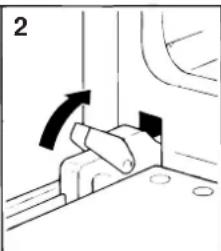
natural_image
Diagram of a mechanical device with an arrow indicating rotation, no text or symbols present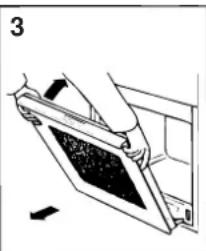
natural_image
Illustration of a person using a tablet device to interact with a screen (no text or symbols visible)natural_image
Diagram showing two circular components with directional arrows, no text or symbols presentnatural_image
Illustration of a hand using a paintbrush to brush residue in a circular container (no text or symbols)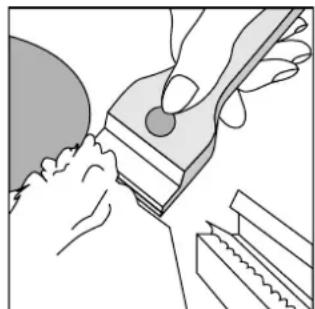
natural_image
Illustration of hands using a tool to apply material to a surface (no text or symbols visible)Fig. A Fig. B
natural_image
Technical line drawing of a cabinet or shelf assembly with two horizontal bars and a dashed-line floor (no text or symbols)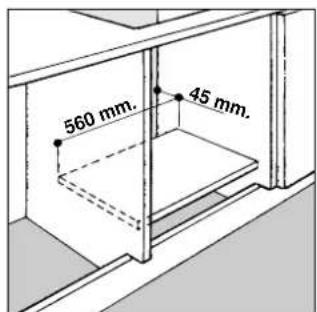
text_image
560 mm. 45 mm.natural_image
Line drawing of an open oven with internal rack and door (no text or symbols)natural_image
Diagram showing a screwdriver inserted into a device component, with an inset magnified view of the component (no text or symbols present)text_image
G I F L E M
text_image
D A C H B DHet Gebruik
natural_image
Four gray circles arranged in a 2x2 grid with arrows pointing inward, no text or symbols present.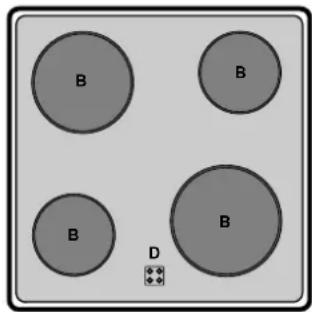
text_image
Diagram illustrating three steps of a kitchen appliance: opening, pressing down, and cutting into a slide.natural_image
Diagram showing two circular components with curved arrows indicating motion or rotation, no text or symbols presentReinigen kookplaat
natural_image
Illustration of a hand using a tool to brush or brush onto a surface, with no visible text or symbols.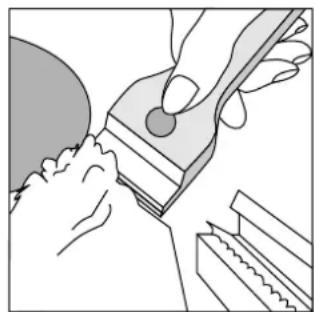
natural_image
Illustration of hands using a tool to apply material to a surface (no text or symbols visible)Afb. A Afb. B
text_image
560 mm. 45 mm.natural_image
Line drawing of an open oven with internal grating and ventilation slots (no text or symbols)natural_image
Diagram showing a screwdriver inserted into a component, with an inset magnified view of the component (no text or symbols present)text_image
G I F E ML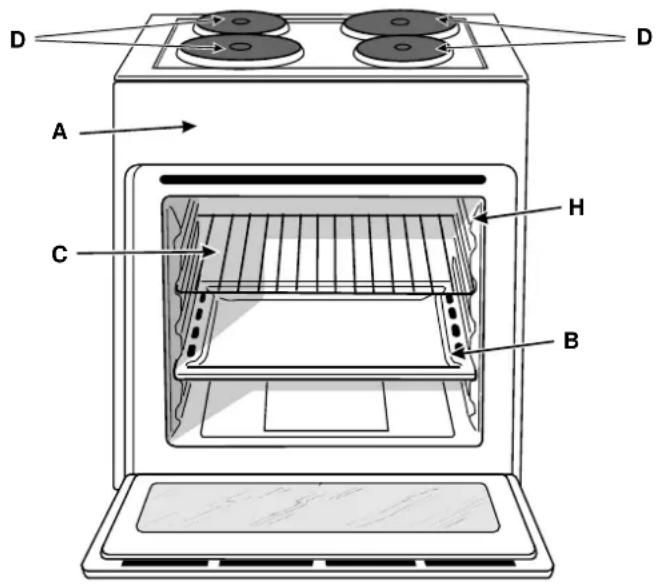
text_image
D A C H B Dnatural_image
Four gray circles arranged in a 2x2 grid with arrows pointing inward, no text or symbols present.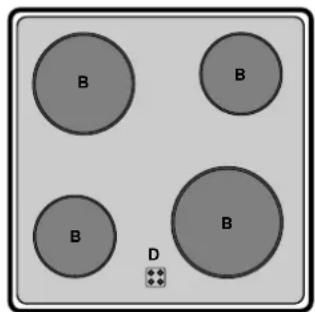
natural_image
Line drawing of an oven with a black arrow pointing to the interior (no text or symbols)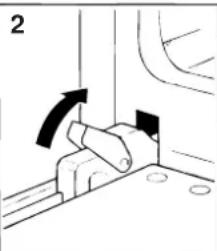
natural_image
Mechanical assembly diagram showing a rotating component with an arrow indicating motion (no text or symbols)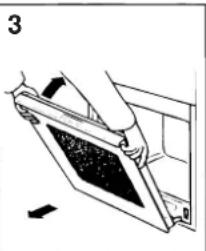
natural_image
Illustration of a hand holding a tablet device with a black screen, no text or symbols visiblenatural_image
Pure technical diagram showing two circular components with directional arrows, no text or symbols presentnatural_image
Illustration of a hand using a paintbrush to brush residue in a granular material (no text or symbols)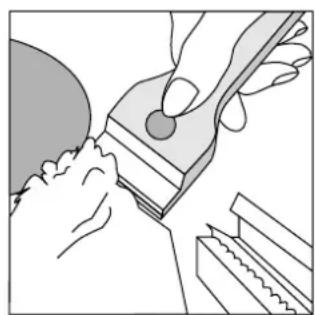
natural_image
Illustration of hands using a tool to apply material or tools to a surface (no text or symbols visible)Abb. A Abb. B
natural_image
Technical line drawing of a cabinet or shelf assembly with no visible text or symbols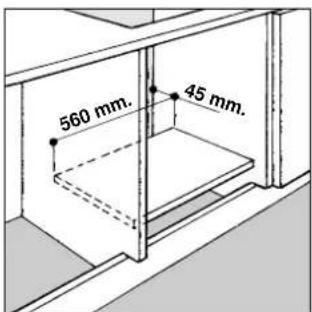
text_image
560 mm. 45 mm.natural_image
Line drawing of an oven with internal grating and ventilation duct (no text or symbols)Elektroanschluss
natural_image
Diagram showing a screwdriver inserted into a mechanical component, with an inset magnified view of the component (no text or symbols present)natural_image
Four gray circles arranged in a 2x2 grid with arrows pointing to each circle (no text or symbols)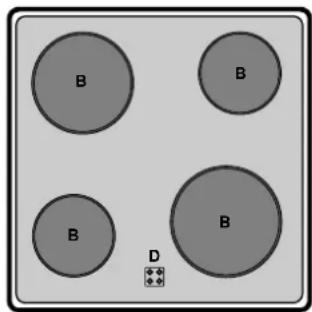
natural_image
Diagram of an oven with a downward arrow indicating a process or removal (no text or symbols present)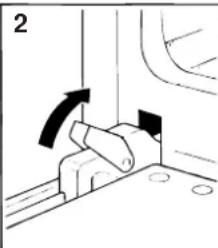
natural_image
Mechanical assembly diagram showing a lever mechanism with an arrow indicating motion (no text or symbols present)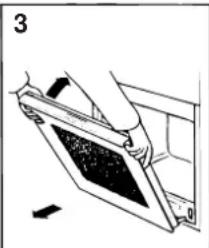
natural_image
Diagram of a door handle with a slide, showing mechanical components and a small arrow indicating direction (no text or symbols)natural_image
Diagram of a mechanical component with rotating parts and directional arrows (no text or symbols)natural_image
Illustration of a hand using a tool to brush or brush over scattered debris (no text or symbols)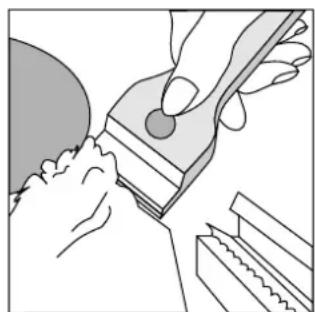
natural_image
Illustration of hands using a tool to apply material to a surface, with no visible text or symbolsE_IK · A_E_IK · B
natural_image
Technical line drawing of a cabinet or shelf with two horizontal bars and a dashed-line floor (no text or symbols)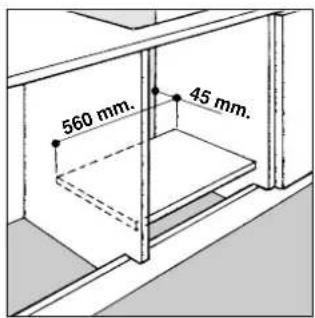
text_image
560 mm. 45 mm.natural_image
Technical line drawing of an oven with internal grating and ventilation duct (no text or symbols)Ηλεκτρική σύνδεση
natural_image
Diagram showing a screwdriver inserted into a component, with an inset magnified view of the component (no text or symbols present)text_image
Eik' D N L3 P L2 L1Eik' E
230V 1N\~
H07RN-F 3x4 CEI-UNEL 35364
text_image
N L 5 3 1 4 2Eik' F
400V 2N\~
H05RR-F 4x2.5 CEI-UNEL 35363
text_image
N L 2 L 1 5 3 1 4 2Eik' G
