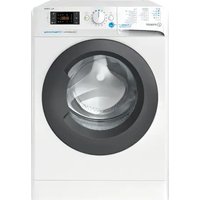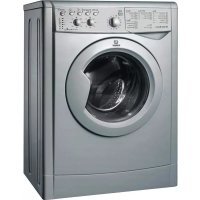
WIXL 85 S (EX) - Washing machine INDESIT - Free user manual and instructions
Find the device manual for free WIXL 85 S (EX) INDESIT in PDF.



| Product Type | Washing Machine |
| Brand | Indesit |
| Model | WIXL 85 S (EX) |
| Dimensions (W x H x D) | 59.5 x 85 x 53.5 cm |
| Wash Capacity | 6 kg max |
| Maximum Spin Speed | 800 rpm |
| Power Supply | 220-240 V ~50 Hz |
| Water Pressure | 0.05 - 1 MPa (0.5 - 10 bar) |
| Wash Programs | 13 programs: Cotton, Synthetics, Wool, Sports, Express 30', Rinse, Spin, Drain |
| Special Functions | Delayed Start, Stain Removal, Easy Ironing, Extra Rinse |
| Loading Type | Front |
| Door Lock | Yes, with indicator light |
| Filtration System | Self-cleaning pump with accessible pre-chamber |
| Noise Level (Wash/Spin) | Not specified |
| Energy Class | Not specified |
Frequently Asked Questions - WIXL 85 S (EX) INDESIT
User questions about WIXL 85 S (EX) INDESIT
0 question about this device. Answer the ones you know or ask your own.
Ask a new question about this device
Download the instructions for your Washing machine in PDF format for free! Find your manual WIXL 85 S (EX) - INDESIT and take your electronic device back in hand. On this page are published all the documents necessary for the use of your device. WIXL 85 S (EX) by INDESIT.
USER MANUAL WIXL 85 S (EX) INDESIT
Unpacking and levelling
Electric and water connections
The first wash cycle
Technical details
Washing machine description, 4-5
Control panel
Leds
Starting and Programmes, 6
Briefly: how to start a programme
Programme table
Personalisations, 7
Setting the temperature
Setting the spin speed
Functions
Detergents and laundry, 8
Detergent dispenser
Bleach cycle
Preparing your laundry
Special items
Precautions and advice, 9
General safety
Disposal
Saving energy and respecting the environment
Care and maintenance, 10
Cutting off the water or electricity supply
Cleaning your appliance
Cleaning the detergent dispenser
Caring for your appliance door and drum
Cleaning the pump
Checking the water inlet hose
Troubleshooting, 11
Service, 12
Before calling for Assistance

INDESIT
GB
!Keep this instruction manual in a safe place for future reference. Should the appliance be sold, transferred or moved, make sure the instruction manual accompanies the washing machine to inform the new owner as to its operation and features.
!Read these instructions carefully: they contain vital information on installation, use and safety.
Unpacking and levelling
Unpacking
- Unpack the washing machine.
- Check whether the washing machine has been damaged during transport. If this is the case, do not install it and contact your retailer.
-
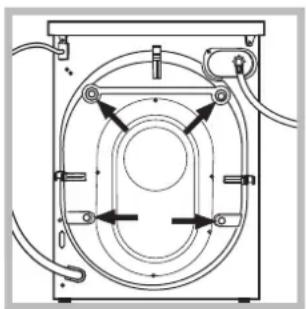
Remove the 4 protective screws and the rubber washer with the respective spacer, situated on the rear of the appliance (see figure).
-
Seal the gaps using the plastic plugs provided.
- Keep all the parts: you will need them again if the washing machine needs to be moved to another location.
!Packaging materials are not children's toys.
Levelling
- Install the washing machine on a flat sturdy floor, without resting it up against walls, furniture cabinets or other.
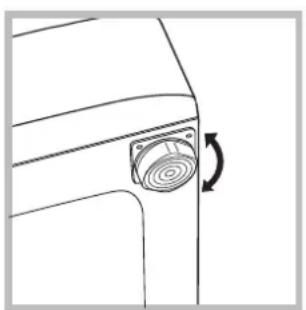
- If the floor is not perfectly level, compensate for any unevenness by tightening or loosening the adjustable front feet (see figure); the angle of inclination, measured according to the worktop, must not exceed 2^ .
Levelling your appliance correctly will provide it with stability and avoid any vibrations, noise and shifting during operation. If it is placed on a fitted or loose carpet, adjust the feet in such a way as to allow enough room for ventilation beneath the washing machine.
Electric and water connections
Connecting the water inlet hose
-
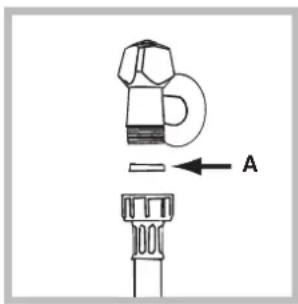
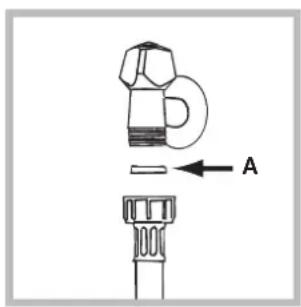
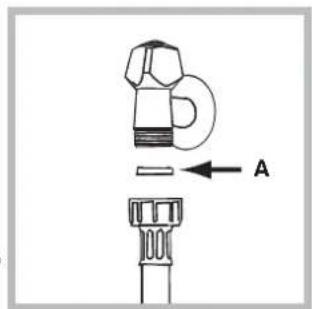
Insert seal A into the end of the inlet hose and screw the latter onto a cold water tap with a 3/4 gas threaded mouth (see figure). Before making the connection, allow the water to run freely until it is perfectly clear.
-
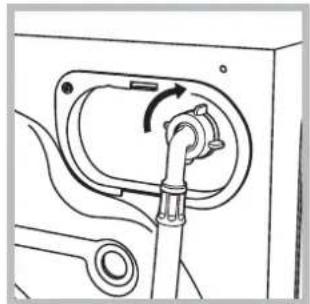
Connect the other end of the water inlet hose to the washing machine, screwing it onto the appliance's cold water inlet, situated on the top right-hand side on the rear of the appliance (see figure).
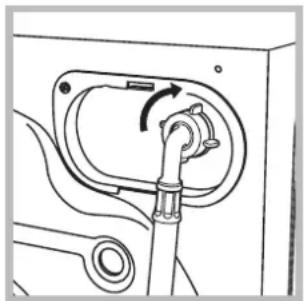
- Make sure there are no kinks or bends in the hose.
The water pressure at the tap must be within the values indicated in the Technical details table (on the next page).
If the water inlet hose is not long enough, contact a specialist store or an authorised serviceman.
! Never use hoses that have already been used.
Connecting the drain hose
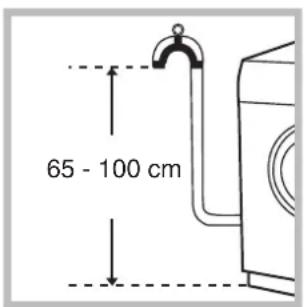
Connect the drain hose, without bending it, to a draining duct or a wall drain situated between 65 and 100cm from the floor;
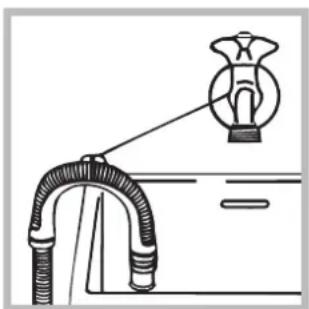
alternatively, place it over the edge of a basin, sink or tub, fastening the duct supplied to the tap (see figure). The free end of the hose should not be underwater.
We advise against the use of hose extensions; in case of absolute need, the extension must have the same diameter as the original hose and must not exceed 150~cm in length.
Electric connection
Before plugging the appliance into the mains socket, make sure that:
- the socket is earthed and in compliance with the applicable law;
- the socket is able to sustain the appliance's maximum power load indicated in the Technical details table (on the right);
- the supply voltage is included within the values indicated on the Technical details table (on the right);
- the socket is compatible with the washing machine's plug. If this is not the case, replace the socket or the plug.
The washing machine should not be installed in an outdoor environment, not even when the area is sheltered, because it may be very dangerous to leave it exposed to rain and thunderstorms.
! When the washing machine is installed, the mains socket must be within easy reach.
! Do not use extensions or multiple sockets.
The power supply cable must never be bent or dangerously compressed.
The power supply cable must only be replaced by an authorised serviceman.
Warning! The company denies all liability if and when these norms are not respected.
The first wash cycle
Once the appliance has been installed, and before you use it for the first time, run a wash cycle with detergent and no laundry, setting the 90^ programme without a pre-wash cycle.
| Technical details | |
| Model | WIXL 85 S |
| Dimensions | 59.5 cm wide 85 cm high 53.5 cm deep |
| Capacity | from 1 to 6 kg |
| Electric connections | please refer to the technical data plate fixed to the machine |
| Water connections | maximum pressure 1 MPa (10 bar) minimum pressure 0.05 MPa (0.5 bar) drum capacity 52 litres |
| Spin speed | up to 800 rpm |
| Control programmes according to EN 60456 directive | programme 2; temperature 60°C; run with a load of 6 kg. |
| CE | This appliance is compliant with the following European Community Directives: - 89/336/CEE of 03/05/89 (Electromagnetic Compatibility) and subsequent amendments - 2006/95/CE (Low Voltage) - 2002/96/CE |
Washing machine description
GB
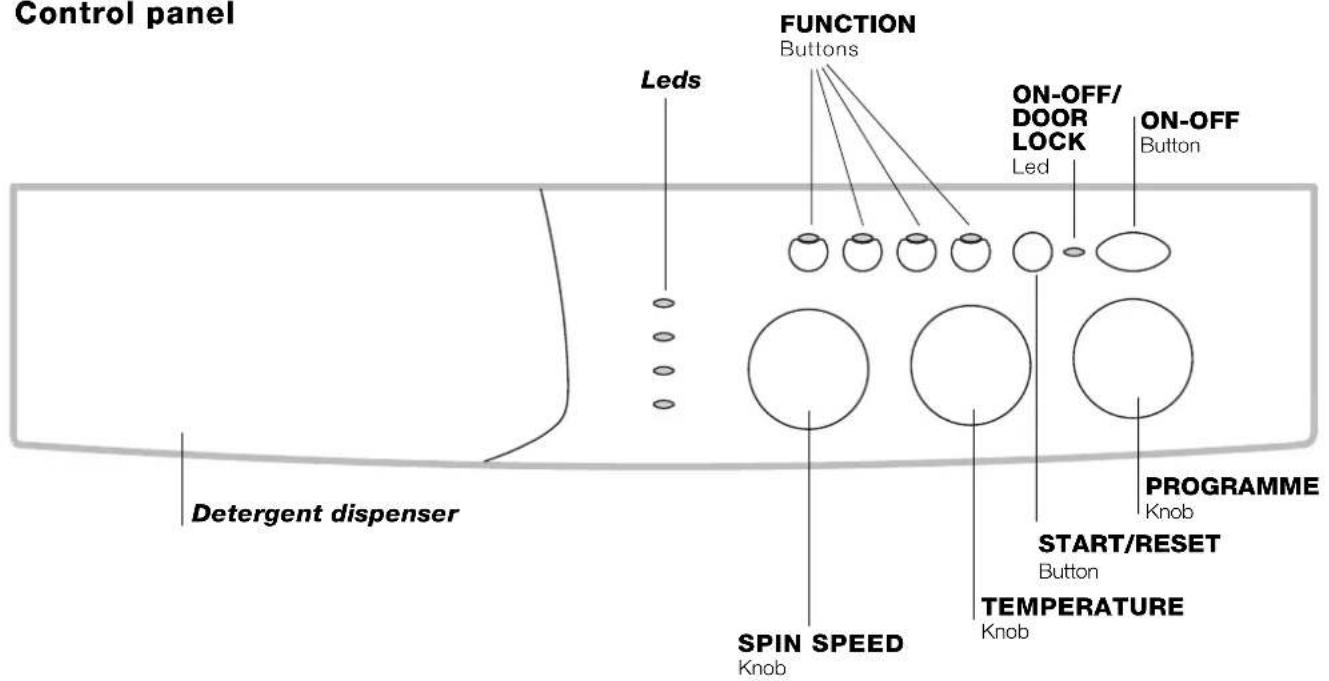
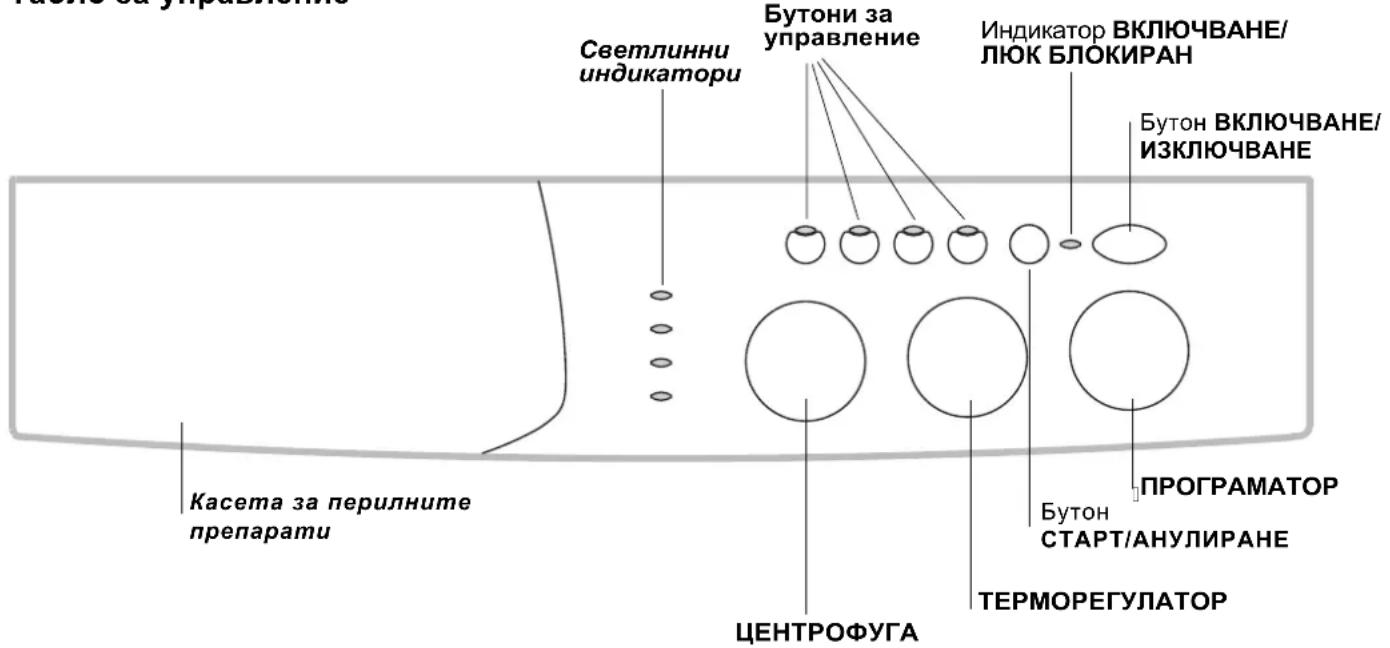
Control panel
Detergent dispenser: to add detergent and fabric softener (see page 8).
LEDS: to find out which wash cycle phase is under way. If the Delay Timer function has been set, the time left until the programme starts will be indicated (see page 5).
SPIN SPEED knob: to set the spin speed or exclude the spin cycle completely (see page 7).
FUNCTION buttons: to select the functions available. The button corresponding to the function selected will remain on.
TEMPERATURE knob: to set the temperature or the cold wash cycle (see page 7).
START/RESET button: to start the programmes or cancel any incorrect settings.
ON-OFF/DOOR LOCK Led: to find out whether the washing machine is on and if the appliance door can be opened (see page 5).
ON/OFF button: to turn the washing machine on and off.
PROGRAMME knob: to select the wash programmes. The knob stays still during the cycle.
Leds
The LEDs provide important information.
This is what they can tell you:
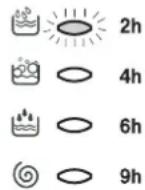
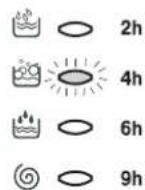
Delay set:
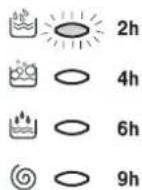
If the Delay Timer function has been enabled (see page. 7), once you have started the programme, the LED corresponding to the delay set will begin to flash:
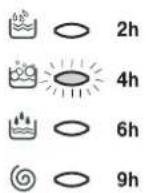
As time passes, the remaining delay will be displayed, and the corresponding LED will flash:
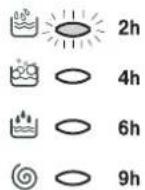
Once the set delay is complete, the flashing LED will turn off and the programme set will start.
Cycle phase under way:
During the wash cycle, the LEDs gradually illuminate on to indicate the cycle phase under way:


Note: during draining, the LED corresponding to the Spin cycle phase will be turned on.
Function buttons
The FUNCTION BUTTONS also act like LEDs. When a function is selected, the corresponding button is illuminated.
If the function selected is incompatible with the programme set, the button will flash and the function will not be enabled.
If you set a function that is incompatible with another function you selected previously, only the last one selected will be enabled.

ON-OFF/DOOR LOCK led:
If this LED is on, the appliance door is locked to prevent it from being opened accidentally; to avoid any damages, wait for the LED to flash before you open the appliance door.
The rapid flashing of the ON-OFF/DOOR LOCK Led together with the flashing of at least one other LED indicates there is an abnormality (see page 11).
Starting and Programmes
Briefly: starting a programme
- Switch the washing machine on by pressing button (I). All the LEDs will light up for a few seconds and the ON-OFF/DOOR LOCK Led will begin to flash.
- Load your laundry into the washing machine and shut the appliance door.
- Set the PROGRAMME knob to the programme required.
- Set the wash temperature (see page 7).
-
Set the spin speed (see page 7).
-
Add the detergent and any fabric softener (see page 8).
- Start he programme by pressing the START/RESET button. To cancel it, keep the START/RESET button pressed for at least 2 seconds.
- When the programme is finished, the ON-OFF/DOOR LOCK Led will flash to indicate that the appliance door can be opened. Take out your laundry and leave the appliance door ajar to allow the drum to dry thoroughly. Turn the washing machine off by pressing button (1).
Programme table
| Type of fabric and degree of soil | Programmes | Tempe- rature | Detergent | Fabric softener | Stain removal option/bleach | Cycle length (m inutes) | Description of wash cycle | |
| pre- wash | wash | |||||||
| Standard | ||||||||
| Cotton: Extremely soiled whites (sheets, tablecloths, etc.) | 1 | 90°C • | • • | 167 | Pre-wash, wash cycle, rinse cycles, intermediate and final spin cycles | |||
| Cotton: Extremely soiled whites (sheets, tablecloths, etc.) | 2 | 90°C • | • | Delicate/ Traditional | 152 | Wash cycle, rinse cycles, intermediate and final spin cycles | ||
| Cotton: Heavily soiled whites and fast colours | 2 | 60°C • | • | Delicate/ Traditional | 150 | Wash cycle, rinse cycles, intermediate and final spin cycles | ||
| Cotton: Heavily soiled whites and delicate colours | 2 | 40°C • | • | Delicate/ Traditional | 142 | Wash cycle, rinse cycles, intermediate and final spin cycles | ||
| Cotton: Slightly soiled whites and delicate colours (shirts, jumpers, etc.) | 3 | 40°C • | • | Delicate/ Traditional | 99 | Wash cycle, rinse cycles, intermediate and final spin cycles | ||
| Synthetics: Heavily soiled fast colours (baby linen, etc.) | 4 | 60°C • | Delicate | 80 | Wash cycle, rinse cycles, anti- crease or delicate spin cycle | |||
| Synthetics: Heavily soiled fast colours (baby linen, etc.) | 4 | 40°C • | Delicate | 71 | Wash cycle, rinse cycles, anti- crease or delicate spin cycle | |||
| Synthetics: Delicate colours (all types of slightly soiled garments) | 5 | 40°C • | Delicate | 71 | Wash cycle, rinse cycles, anti- crease or delicate spin cycle | |||
| Wool | 6 | 40°C • | • | 50 | Wash cycle, rinse cycles and delicate spin cycle | |||
| Very delicate fabrics (curtains, silk, viscose, etc.) | 7 | 30°C • | • | 52 | Wash cycle, rinse cycles, anti- crease or draining cycle | |||
| Tim e 4 you | ||||||||
| Cotton: Heavily soiled whites and fast colours | 8 | 60°C • | • | 60 | Wash cycle, rinse cycles, intermediate and final spin cycles | |||
| Cotton: Slightly soiled whites and delicate colours (shirts, jumpers, etc.) | 9 | 40°C • | • | 50 | Wash cycle, rinse cycles, intermediate and final spin cycles | |||
| Synthetics: Delicate colours (all types of slightly soiled garments) | 10 | 40°C | • | • | 40 | Wash cycle, rinse cycles, delicate spin cycle | ||
| Synthetics: Delicate colours (all types of slightly soiled garments) | 11 | 30°C • | • 30 | Wash cycle, rinse cycles and delicate spin cycle | ||||
| Sport | ||||||||
| Sports shoes (MAX. 2 pairs) | 12 | 30°C | • | • | 5 | 0 | Cold wash (without detergents), wash cycle, rinse cycles, and delicate spin cycle | |
| Fabrics for sportswear (Tracksuits, shorts, etc.) | 13 | 30°C • | • | 63 | Wash cycle, rinse cycles, intermediate and final spin cycles | |||
| PARTIAL PROGRAMMES | ||||||||
| Rinse • | Delicate/ Traditional | Rinse cycles and spin cycle | ||||||
| Spin cycle | Draining and spin cycle | |||||||
| Drain | Draining | |||||||
Notes
-For programmes 8 and 9, we advise against exceeding a wash load of 3.5kg
-For programme 13 we advise against exceeding a wash load of 2kg
-For the anti-crease function: see Easy iron, opposite page. The information contained in the table is purely indicative.
Special programme
Daily (programme 11 for Synthetics) is designed to wash lightly soiled garments in a short amount of time: it only lasts 30 minutes and allows you to save on both time and energy. By setting this programme (11 at 30^ ), you can wash different fabrics together (except for woollen and silk items), with a maximum load of 3kg .
We recommend the use of liquid detergent.

Setting the temperature
Turn the TEMPERATURE knob to set the wash temperature (see Programme table on page 6).
The temperature can be lowered, or even set to a cold wash ( ).
GB

Setting the spin speed
Turn the SPIN SPEED knob to set the spin speed for the programme selected.
The maximum spin speeds for each programme are as follows:
Programmes Maximum spin speed
Cottone 800 rpm
Synthetics 800 rpm
Wool 600 rpm
Silk no
The spin speed can be lowered, or the spin cycle can be excluded altogether by selecting symbol

The washing machine will automatically prevent you from selecting a spin speed higher than the maximum speed for each programme.
Note: to avoid excessive vibrations, before every spin cycle the machine distributes the load in a uniform manner by continuously rotating the drum at a speed which is slightly faster than the normal washing speed.
When, despite repeated attempts, the load is still not evenly distributed, the machine spins at a lower speed than the set frequency.
If the load is excessively unbalanced, the machine attempts to distribute it instead of spinning.
The balancing attempts may extend the total duration of the cycle, up to a maximum of 10 minutes.
Functions
To enable a function:
- press the button corresponding to the desired function, according to the table below;
- the function is enabled when the corresponding button is illuminated.
Note: The rapid flashing of the button indicates that the corresponding function cannot be selected for the programme set.
| Function Effect | Comments | Enabled with programmes: | |
| Delay Timer | Delays the start of the wash by up to 9 hours. | Press the button repeatedly until the LED corresponding to the desired delay is turned on. The fifth time the button is pressed, the function will be disabled. N.B.: Once you have pressed the Start/Reset button, the delay can only be decreased if you wish to modify it. | All |
| Stain removal | Bleaching cycle designed to remove the toughest stains. | Please remember to pour the bleach into extra compartment 4 (see page 8). This function is incompatible with the EASY IRON function. | 2, 3, 4, 5, Rinse cycle. |
| Easy iron | This option reduces the amount of creasing on fabrics, making them easier to iron. | When this function is set, programmes 4, 5, 7 will end with the laundry left to soak (Anti-crease) and the Rinse cycle phase LED will flash. - to conclude the cycle, press the START/RESET button; - to run the draining cycle alone, set the knob to the relative symbol and press the START/RESET button. This function is incompatible with the STAIN REMOVAL function. | 3, 4, 5, 7, 8, 9, 10, Rinse cycle. |
| Extra Rinse | Increases the efficiency of the rinse. | Recommended when the appliance has a full load or with large quantities of detergent. | 1, 2, 3, 4, 5, 8, 9, 10, 12, 13, Rinse cycle. |
Detergents and laundry
GB
Detergent dispenser
Good washing results also depend on the correct dose of detergent: adding too much detergent won't necessarily make for a more efficient wash, and may in fact cause build up on the interior of your appliance and even pollute the environment.
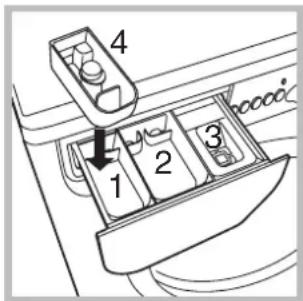
Open up the detergent dispenser and pour in the detergent and fabric softener, as follows.
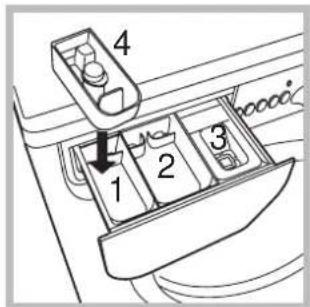
compartment 1: Detergent for pre-wash (powder)
Before pouring in the detergent, make sure that extra compartment 4 has been removed.
compartment 2: Detergent for the wash cycle (powder or liquid)
Liquid detergent should only be poured in immediately prior to the wash cycle start.
compartment 3:Additives (fabric softeners, etc.)
The fabric softener should not overflow from the grid. extra compartment 4: Bleach
! Do not use hand wash detergent because it may form too much foam.
Bleach cycle
! Traditional bleach should be used on sturdy white fabrics, and delicate bleach for coloured fabrics, synthetics and for wool.
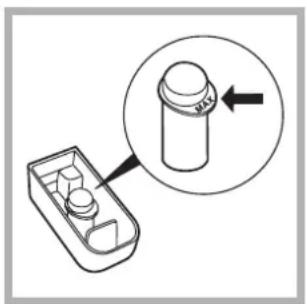
Place extra
compartment 4, provided, into compartment 1.
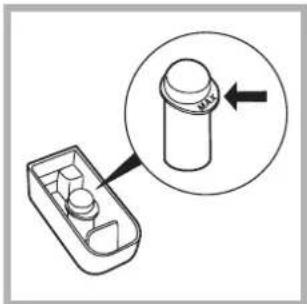
When pouring in the bleach, be careful not to exceed the "max" level indicated on the central pivot (see figure).
To run the bleach cycle alone, pour the bleach into extra compartment 4, set the Rinse programme and enable the Stain removal option (see page 7).
To bleach during a wash cycle, pour in the detergent and fabric softener, set the desired programme and enable the Stain removal option (see page 7).
The use of extra compartment 4 excludes the possibility of using the pre-wash cycle.

Preparing your laundry
-
Divide your laundry according to:
-
the type of fabric/the symbol on the label.
-
the colours: separate coloured garments from whites.
-
Empty all pockets and check for loose buttons.
-
Do not exceed the weight limits stated below, which refer to the weight when dry:
Sturdy fabrics: max 6 kg
Synthetic fabrics: max 2.5 kg
Delicate fabrics: max 2 kg
Wool: max 1,5 kg
How much does your laundry weigh?
1 sheet 400-500 g
1 pillow case 150-200 g
1 tablecloth 400-500 g
1 bathrobe 900-1200 g
1 towel 150-250 g
Special items
Curtains: fold curtains and place them in a pillow case or mesh bag. Wash them separately without exceeding half the appliance load. Use programme 7 which excludes the spin cycle automatically.
Quilted coats and windbreakers: if they are padded with goose or duck down, they can be machine-washed. Turn the garments inside out and load a maximum of 2 - 3kg repeating the rinse cycle once or twice and using the delicate spin cycle.
Wool: for best results, use a specific detergent, taking care not to exceed a load of 1,5kg
The washing machine was designed and built in compliance with the applicable international safety regulations. The following information is provided for your safety and should consequently be read carefully.
General safety
- This appliance has been designed for non-professional, household use and its functions must not be changed.
- This washing machine should only be used by adults and in accordance with the instructions provided in this manual.
- Never touch the washing machine when barefoot or with wet or damp hands or feet.
- Do not pull on the power supply cable to unplug the appliance from the electricity socket. Pull the plug out yourself.
- Do not open the detergent dispenser while the appliance is in operation.
- Do not touch the drain water as it could reach very high temperatures.
- Never force the washing machine door: this could damage the safety lock mechanism designed to prevent any accidental openings.
- In the event of a malfunction, do not under any circumstances touch internal parts in order to attempt repairs.
- Always keep children well away from the appliance while in operation.
- The appliance door tends to get quite hot during the wash cycle.
- Should it have to be moved, proceed with the help of two or three people and handle it with the utmost care. Never try to do this alone, because the appliance is very heavy.
- Before loading your laundry into the washing machine, make sure the drum is empty.
Disposal
- Disposing of the packaging material: observe local regulations, so the packaging can be re-used.
- The European Directive 2002/96/EC on Waste Electrical and Electronic Equipment, requires that old household electrical appliances must not be disposed of in the normal unsorted municipal waste stream. Old appliances must be collected separately in order to optimise the recovery and recycling of the materials they contain and reduce
the impact on human health and the environment. The crossed out "wheeled bin" symbol on the product reminds you of your obligation, that when you dispose of the appliance it must be separately collected.
Consumers should contact their local authority or retailer for information concerning the correct disposal of their old appliance.
Saving energy and respecting the environment
Environmentally-friendly technology
If you only see a little water through your appliance door, this is because thanks to the latest Indesit technology, your washing machine only needs less than half the amount of water to get the best results: an objective reached to respect the environment.
Saving on detergent, water, energy and time
- To avoid wasting resources, the washing machine should be used with a full load. A full load instead of two half loads allows you to save up to 50% on energy.
- The pre-wash cycle is only necessary on extremely soiled garments. Avoiding it will save on detergent, time, water and between 5 and 15% energy.
- Treating stains with a stain remover or leaving them to soak before washing will cut down the need to wash them at high temperatures. A programme at 60^ instead of 90^ or one at 40^ instead of 60^ will save up to 50% on energy.
- Use the correct quantity of detergent depending on the water hardness, how soiled the garments are and the amount of laundry you have, to avoid wastage and to protect the environment: despite being biodegradable, detergents do contain ingredients that alter the natural balance of the environment. In addition, avoid using fabric softener as much as possible.
- If you use your washing machine from late in the afternoon until the early hours of the morning, you will help reduce the electricity board's peak load. The Delay Timer option (see page 7) helps to organise your wash cycles accordingly.
- If your laundry has to be dried in a tumble dryer, select a high spin speed. Having the least water possible in your laundry will save you time and energy in the drying process.
Cutting off the water or electricity supply
- Turn off the water tap after every wash. This will limit the wear of your appliance's water system and also prevent leaks.
- Unplug your appliance when cleaning it and during all maintenance operations.
Cleaning your appliance
The exterior and rubber parts of your appliance can be cleaned with a soft cloth soaked in lukewarm soapy water. Do not use solvents or abrasives.
Cleaning the detergent dispenser
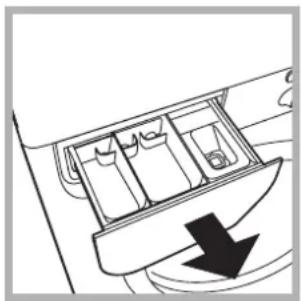
Remove the dispenser by pulling it out (see figure).
Wash it under running water; this operation should be repeated frequently.
Caring for your appliance door and drum
- Always leave the appliance door ajar to prevent unpleasant odours from forming.
Cleaning the pump
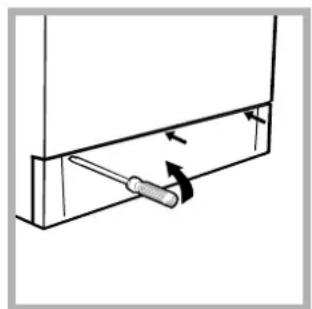
The washing machine is fitted with a self-cleaning pump that does not require any maintenance. Sometimes, small items (such as coins or buttons) may fall into the pre-chamber that protects the pump, situated in the lower part of the same.
! Make sure the wash cycle has ended and unplug the appliance.
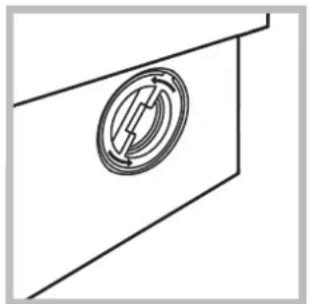
To access the pre-chamber:
-
using a screwdriver, remove the cover panel on the lower front of the washing machine (see figure);
-
unscrew the lid rotating it anticlockwise (see figure): a little water may trickle out. This is perfectly normal;
-
clean the interior thoroughly;
-
screw the lid back on;
-
reposition the panel, making sure the hooks are securely in place before you push it onto the appliance.
Checking the water inlet hose
Check the water inlet hose at least once a year. If you see any cracks, replace it immediately: during the wash cycles, water pressure is very strong and a cracked hose could easily split open.
! Never use hoses that have already been used.
Your washing machine could fail to work. Before calling for Assistance (see page 12), make sure the problem can't easily be solved by consulting the following list.
Problem
The washing machine won't start.
The wash cycle won't start.
The washing machine fails to load water.
The washing machine continuously loads and unloads water.
The washing machine does not drain or spin.
The washing machine vibrates too much during the spin cycle.
The washing machine leaks.
The ON-OFF/DOOR LOCK Led flashes rapidly at the same time as at least one other LED.
There is too much foam.
Possible causes/Solution:
- The appliance is not plugged into the socket, or not enough to make contact.
- There has been a power failure.
The appliance door is not shut properly.
- The (I) button has not been pressed.
- The START/RESET button has not been pressed.
- The water tap is not turned on.
- A delayed start has been set (using the Delay Timer, see page 7).
-
The water inlet hose is not connected to the tap.
-
The hose is bent.
- The water tap is not turned on.
- There is a water shortage.
- The water pressure is insufficient.
-
The START/RESET button has not been pressed.
-
The drain hose is not fitted between 65 and 100cm from the floor (see page 3).
The free end of the hose is underwater (see page 3). -
The wall drainage system doesn't have a breather pipe. If the problem persists even after these checks, turn off the water tap, switch the appliance off and call for Assistance. If the dwelling is on one of the upper floors of a building, there may be drain trap problems causing the washing machine to load and unload water continuously. In order to avoid such an inconvenience, special anti-drain trap valves are available in shops.
-
The programme does not foresee the draining: some programmes require enabling the draining manually (see page 6).
-
The Easy iron option is enabled: to complete the programme, press the START/RESET button (see page 7).
The drain hose is bent (see page 3).
The drain duct is clogged.
The drum was not unblocked correctly during installation (see page 2).
- The washing machine is not level (see page 2).
- The washing machine is closed in between furniture cabinets and the wall (see page 2).
- The water inlet hose is not screwed on correctly (see page 2).
-
The detergent dispenser is obstructed (to clean it, see page 10).
The drain hose is not secured properly (see page 3). -
Switch off the machine and unplug the appliance; wait for approximately 1 minute then switch it on again. If the problem persists, contact Assistance.
-
The detergent is not suitable for machine washing (it should bear the definition "for washing machines" or "hand and machine wash", or the like).
- You used too much detergent.
GB
Before calling for Assistance:
- Check whether you can solve the problem on your own (see page 11);
- Restart the programme to check whether the problem has been solved;
- If this is not the case, contact an authorised Technical Service Centre on the telephone number provided on the guarantee certificate.
!Always request the assistance of authorised servicemen.
Notify the operator of:
the type of problem;
the appliance model (Mod.);
the serial number (S/N).
This information can be found on the data plate situated on the rear of the washing machine.
ES
Espanol
Sumario
Instalación, 14-15
CBeTINHHn INHdkaTopn
BkIIOUbaHe n nporpaMn, 42
KpaTko OINcAHHe: BKJIIOUBaHe Ha nPoIpaMa
Tabnua c npoqrarnite
PpOrrpaHpaHe cnopeI nOtpe6HoCTnTe, 43
3aabaHa TeMnepaypata
3aabaheHa ceHtpopyrata
Функции
PepnHn npenapatn TbKaHn, 44
Kaceta nepnHnTe npenapatn
UnkblnHa n36eIbAne
Pa3npedeJnHe Ha npaHeto
CneuФино npahe
Mepkn 3a 6e3onacHocT npenopbKn,45
Obui npedeoxpaHntHm Mepkn
PpeToIaBaHe
CnecTBAHe n ona3BaHe Ha OKoJHaTa CpeDa
PoaepbXka n noocTbaHe, 46
CnnpaHe Ha BOData N n3KnIOUcBaHe Ha
eJIeKtpo3axpaHbHaHTo
TOnuInCTBaHe Ha nepaIIHaTa MaIINHa
IounCTBaHe Ha kacetata 3a nepinHnte npenapatn
IopdpbKKaHaJIOKaHa Ka3aHa
IounCTBaHe Ha nomnata
Cbpb3BaHe Ha Mapkyu Ka Bm BoDOnpOBoHaTa MpeKa
-
NocTabete ynIbTHeHneTo "A" B KpaHa Mapkyua 3a CTydeHata BOda n ro 3aBnTe KbM KpaHa 3a CTydeHata BOda Ha 3/4" (eux quypama). IpeDi Da rO CBpbKeTe n3TOUeTe BOdaTa, DOKATO Ce n36nCTpn.
-
CbpxTe Mapkyua 3a CTyHeHaTa BOa KbM nepaHata MaunHa, KaTO rO 3aBnTe KbM uyepe, pa3noJOnKeH Ha Tb6a, rope BJaCHO (eux fuaypama).
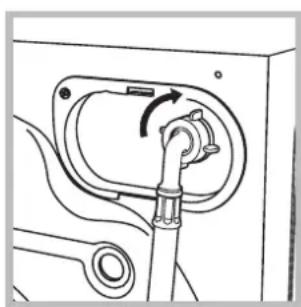
- Bhimaba Te Mapkya da He ce nperebba nnpeynba.
!HaJIraHTo NO BOJOpBoOHaTa MPeKa Tpr6Ba Da 6bDe B rpaHnIte, yka3aHN B Ta6JIuCaTa C TexHnuecknte daHHN (6ux cne6aama cmpaHuua).
!AkoIbIKNHaTaHa3axpaHbauNmaKyuHe e IDOCTaTbUHa,ceO6bpHeTe KbM CneuaJn3npaH MaRa3NH NIN KbM OTOpu3npaH TexHk.
!Hnkora He n3noJ3BaIe Beue n3noJ3BaH mapKyu.
Cbpb3BaHe Ha Mapkya 3a MpbchTa Boda
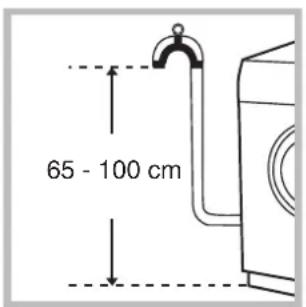
Cbpxte Mapkya 3a Mpbchata Boda,6e3 da ro npereBbaTe,KbM KaHn3aunOHHaTa Tpb6a nn KbM Tpb6ata 3a OTBeXdaHe B CTeha,pa3noJoxEHN OT NOda Ha BVcOuHnA Mejdy 65 n 100 cm;
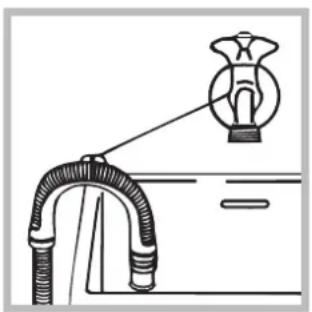
IIN IIOIpeTe B Kpa
Ha MNBkata Nn BaHaTa,
KATO BbpXeTe BOaCy 3a
KpHa (6ux fUeypama).
CBo6OHNr KpaH a
MapKyua 3a MpbCHaTa
BOJa He TpRbBa Da 6bDe
NOTOneH BB BOaTa.
!He ce npenopbya n3noJ3BaHeTo Ha ydbJnxTeHnHa Mapkyu.Ako e Heo6xOAnMo, ydbJnxTeJIaT Tp8Ba Da IMA cbIyra DnaMeTp b KaTO opunHaHnHa N da He HauBnAba 150 cm.
Cbpb3BaHe KbM eJektpueckaTa Mpeka
Ipei Da CbpxKeTe eencela B KOHTaKta, npoBepTe dann:
-KoHTaKTbTe 3a3eMeH CbrrnacHO DeIcTbaaata HOpMa;
KOHTaKTbT MoKe Da NoeMe MaKcMmaJIHaTa MOuHocT Ha HatoBapBaHe Ha MaUHata, yKa3aHa B Ta6nIcATA C TexHnueckTe daHHn (Eux cneDeauama cmpaHuca);
3axpaHbauoTo HnpeXeHne e B rpaHuNTe Ha yka3aHOTo B tabnUcaTa C TexHuYeCKnte daHHN (eux cneobauama cmpahuua);
- KOHTaKTbT OTROBapHa Ha Zencela Ha nepaJIHaTa MaunHa. B npOTuBeH cnyaH 3ameHeTe Zencela NNKOHTa.
!NepaHaTaMaunHaHeceMOHTnpaHaOTKpntO, DOpnNoHabec,3aUToeMHoroOnaCHOdaCe OCTaBnHaBnHHeTOHaatmocΦepHnTeycIOBvI.
!3aMOHTnpaHaTa nepaHa MaunHa eNeKtpuecknT KOHTAKT Tp6Ba Da 6bJe NecHO DocbneH.
!He n3non3BaIte yIbJnxnteIu nn pa3KnIOHnTeI.
!Ka6eBbT He Tp6Ba Da 6bDe orbHaT nn nCnneckaH.
!3axpaHbauT Ka6eI Tp8Ba Da ce 3aMeHa cAmOT OTOpuHpaHnTexHnU.
BHMaHHe!ΦuMaTa OTXBbPnBA BcKaKaBa OTROBOpHOCT B CnyaHTe, B KOUTo Te3n HOpMn He ce Cna3BaT.
PbBo npaHe
CneMOnTnpaHTo, npEn ynoTpe6a, HanpaBeTe eINH zKbN Ha npaHe C nepuJeH npenapat, Ho 6e3 dpexn, KaTO 3aJaTe nporpaMaTa Ha 90^ 6e3 npednpaHe.
| Теки既可以不可以 | |
| Мода я | WIXL 85 S |
| Раимери | шрипа 59,5 см Височиа 85 см Дьлбочиа 53,5 сm |
| Вмост immост | от 1 до 6 кг. |
| Ельсторіеско Зхр ранвае | Виж tabелкова схарakterісятікіtte, поставения на машина |
| Зхранвае с вODа | разсамно налягане 1 Мр (10 bar) Минимално налягане 0,05 Мр (0,5 bar обem на kasана 52 лintра |
| Скорost на центroфу ratа | do 800 оборoting/Minhyta |
| Пэрор Amn 3a п探测ка съласноHopma EN 60456 | пэрorationа 2 ;Temnéратура 60°; Извршени c 6 кг паHE. |
| CE | Прална та машина сьответCTBA на следнице Бероевский поpektivism: -89/336/CEE ot 03/05/89 (3a eльсторіогин'tha сьвмост immoc't) и посlementышип'te Изменения -2006/95/CE (за Нско нар'veгенье) -2002/96/CE |
Описné на пекална за машина
BG
Ta6no 3a ynpabJeHne
Kacemama 3a nepunHume npenapamu: cnykni 3a 3apeXdahe c nepuHN npenapatn, oMeKOTNeiN u dp. (eux cmp. 44).
CBeTnnHHn HndkaTopn: 3a npocneJaBaHe n3bIhHeHneTo Ha nporpaMaTa 3a npaHe. AKe e n36paHa yHKuYrTa Delay Timer (taMep 3a 3aDaBaHe Yaca Ha BKNIOUbaHe Ha nporpaMaTa) Ice ce NOKaxe BpeMeTo, KOeTO OCTaba Do BKNIOUbaHeTo Ha nporpaMaTa (Bux cmp.41).
UeHTPOΦyΓA: 3a BKNIOUBAHe NJIIN N3KNOUBAHe Ha UeHTPOΦyraTAt (Bux cmp. 43).
BtoHn 3a npabHeHne: 3a n36Op Ha fYHKunTe. 3a n36paHaT a FyHKUa Iue CBeTHe 6yToHbT.
TEPMOPEYJATOP: 3a 3aabahe Ha TemnepaTypata nn 3a cTydeHo npaHe (euk cmp. 43).
Бутон CTAPT/Анларане: 3aстпане Ha nporpaNTe nIи 3a aHypapae Na norpeшно 3адаDEHOTO.
HnDkaTop BKNIOUBAHE/IIOK BLOKUPAH:3a HΦopMaun DaJIn nepaHaTa MaunHa e BKNIOUeHa N daJN IIOKbT MoKe Da ce OTBOpN (Eux cmp.41).
ByToH BKJIIOUBAHE/M3KJIIOUBAHE: 3a BKJIIOUBAHe N I3KJIIOUBAHe Ha nepaHaTa MaunHa.
PPOPAMATOP:3a 360pHa nporpaMITE.
No BpeMe Ha n3bJIHeHne Ha nporpaMaT, KJIouyBt
OCTaBA HeNOdBnHexE.
CBeTnnHHn HndNkaTopn
HnDkaTopHe HocT BaxHa nHΦopMaun. ETo KaKBO CbOuBaBAT:
YacbT 3a BkIIOUBaHe Ha nporpamata:
Pn n36pahe Ha yHKunraDelay Timer (vac 3a BkIIOUbaHe Ha nporpamata) (bux cmp.43)c BKIOUbaHETo Ha MaUNHaTa 3aONuHE da npIMrBa INDkATOpbt 3a n36paHOTo 3abARe:
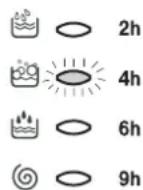
C TeueHne Ha BpeMeTo OCTaTbKbT Do HauaNoTo Ha nporpamata ige ce n3o6pa3raBa C npumrBaHe Ha cbOTBeTHn INdikaTOP:
Cne KaTo n3Teue BpeMeTo 3a OTnaraHe Ha n3NbHHeHNeTo, pNIMrBaunrCTBeTnHeH INdKATOp Ue yrache H n36paHaTa nporpama Ue ce cTapTnpa.
Tekyu#n #a3n:
IIO BpeMe Ha zukbna Ha paBoTa INHnKaTOpnte Ie CBETBaT NocNeIOBATEJHO, 3a Da NOKa3BaT eTannte OT n3NbJIHeHHeTo Ha npOrpaMaTa:
BG

FpeDnpahe

中pahe

3nnakBaHe

HeHTpOpyra
3a6eIekka: no BpeMe Ha a3aTa Ha OTTuHa He HbOdaTt cBtHe HnDnKaTOpbT 3a a3aTa Ha UeHTPOpyrata.
BytoHn 3a ynpabHeHne
BSYTOHNTE 3A YNPABJIENHE N3bJIHBaT pOJrTa Ha INDkaTopi.
C n36paHTo Ha eHa yHKun CBeTba cBOTBETHnA T 6yTOH.
Ako n36paHaTAtyHKunE HecbBmecTIma CbC 3aJaHeHaTnporpama 6yToHbT Ue npMnRbAn yHKUraT HMA Da Ce BKnIOu.
B cnya,Ye ce 3aadae yHKU,KOTo e HecbBmecTtMa C npyra, PpeDbapnteJHo n36paHa, Ue octaHe AKTNbHc amo nocnEHaTa n36paHa.
1 HdkaTop BKIOUBAHE/JIOK BLOKUPAH:
CBeTeuIHTNIDKATOp NOKa3Ba,Ye IIOKbTe 6JNOknpaH 3a I36yBaHe Ha ClyuHaHOTMy OTBaprHe.
3a n368BaHe Ha 5eTn e Heo6xOdmo Da ce n3uKa HndkaTOpbT da npMmHne npedn da Ce OTBOpn JIOKbT.
!БьрзOTnpIMMnBaHeHaHnDnKaTopa3aBKIIIOUBAHE/BIOKNPAHEHAJIOKA3aeHOcTOBaHaNoHe Oue edIN HnDnKaTOp CnHaJIIN3npa 3a nobpeda (Bux cmp.47).
KpaTko OINcAHne: BkJIIOUcBaHe Ha npOrpama
1.Да ce BKNIOH nepaHaTa MaUNHa c HATNCKaHe Ha 6yToHa (I).BcNKn INdNKaTOPn Ie CBeTHaT 3a HANKO CeKHyDn, CneT ToBa Ie yrachat N INdNKaTOBt BKIOUOBAHE/IIOK BLOKINPAH Ie 3aNoYHe Da npMmRBa.
2. 3apeTe npexnte 3a npaHe n 3aTbopeTe JIOka.
3. C PINOPOPAMATOPA ce 3aDaBa JKeJaHaTa nporpama.
4. 3aIaBaCe TempepaTa 3a npaHe (eux cmp. 43).
5. 3aaba ce ckopocTt Ha ueHTpOpyrata (buk cmp. 43).
- Изсанete праха и доньнITEпнite пpenapatn (bux cmp. 44).
- CtaptnpaTe nporpamata, KaTo HATnCHte 6yToHa CTAPT/AYUINPAHE. 3a aHynipaHe HATnCHte 6yToHa CTAPT/AYUINPAHE nohe 3a 2 ckyHdn.
8.BKpaHa nporpamata HINdkaTopbT BKIOUBAHE/ JIKOK 6JOKPAH npncBETba, noka3Baikn, ye JIOKbT MoKe da ce OTBOpN. N3BaXda ce npaHeTo n JIOKbT Ce ocTabra JeKO OTBOpEH, 3a da N3cbXhe Ka3aHa. NepaHaTa MaunHa ce N3KJIIOUBA c HaNTsKaHe Ha 6yToHa (1).
Ta6JIuca c nporpamnte
| Ви这样做不出来 Замberявае | Порог. | Темп. разуа | Першени нpenapat | Омекотел | Опциь Претар прOTИ пETHA / ИзбELБА, пpenapat | Проблуж- ТЕНЮСТ ha цИкъla (MI HYN) | Описане haцьба ha пранe | |
| праз- пранe | пра- нe | |||||||
CTaHdapTHN
He 3anooyBa uKbJa Ha npaHe.
- ΜεπεπβT He e BκημογeH KβM eηεκτρινεκκη KOHTaKT ΑΠη He e Σθόβe BκημογeH, 3a Da πρανι KOHTaKT.
- HЯMaTe TOK BkBcU.
JIIOKbT He e do6pe 3aTbopeH. - ByToHbT ① He e 6nHaTncchat.
- ByTohbt CTAPT/AHYJINPAHE He e 6nHaTncHaT.
KpaHbT 3a BODaTa He e OTBOpH.
3aandaen e yac 3a cTaptnpaHe Ha nporpamata (eux cmp. 43).
IepaHaTa MaunHa He ce NbJHn C Boda.
MapkybT 3a CtydHaTa BOda He e CBbp3aH KbM KpaHa.
MapkybTe nperebHaT.
KpaHbT 3a BOda He e OTBopeH.
- HЯма BOda no BOДоПрOBODHaТа Мрека.
- HanraheTo e HeoctaTbHc.
- ByToHbT CTAPT/AHYJNIPAHE He e 6nHaTnchAeT.
IepaHaTa HenpeKbChato ce nbln Hn3ToyBa.
MapkybT 3a mpbchata BODa He e MOHTnpaH MeKdy 65 n 100 cm ot 3emrTa (Buk cmp. 39).
KpaTHaMapkya3aMpchataB0daeNToHENBBB0daTa(ekcmp.39).
KaHann3aunOHnHaTtpb6aBCTeHaTa HmaOTdyuHHK.
Ako cne Te3n npOBepK np6mBt He ce pa3peu 3aTbOpeTe KpaHa 3a BODaTa, n3KnIOte NepaHATA MaUNHa nNo3BbHeTe B cepBn3a. Ako KINIeTO Bn Ce HAMpa Ha NocJeHNTE eTxKn Ha CrpaDATA, HAnraHeTo HA CTyDeHa BA OMOe Da e HNCKo, nopAdn KoETo nepaHATA MaUNHa HENPeKbCHaTO Ce NbJHn N3TOUBa. 3a N368rBaHe Ha TOBa HeyDo6CTBO B TbProBcKaT MPEXa Ce PpEnPaT NOxOJaUN Bb3BpaTHN KlaNaHn.
IepaHaTa He ce n3ToUBa nnHe ueHTpOpyrnpa.
- Порогама Т He npeDbvKJa n3ToUBaHe: C hЯКон поррамn Tpr6Ba Da ce n3BbPwBa pbuHo (euk cmp. 42).
BknouheHa e yHkunra 3a necho n3rnaXdaHe: 3a da 3abpwn nporpaata, HATNCHTe 6yTohCTAPT/AYUNPAHE (bux cmp.43).
MapkybT 3a mpbchata B0da e npeyneH (euk cmp. 39).
KaHajin3aunOHHaTa Tpb6a e 3anyuSha.
IepaHaTbN6pnpa Mhoro no BpeMe Ha ceHTpofoynpahe.
-При мотгда Казань.T He e 6ил OБлКИран павилно (Стр.38).
- Пералната машина He e HNBeNUpaHa (6ux cmp. 38).
- IepaJIHaTa MaIiHa e npITnChaTa Meky Me6eN n cTeHa (BxK cmp. 38).
IepaHaTa mMa Teu.
MapkybT 3a CTydeHaTa BOda He eo6pe CBbp3AH (Bux cmp. 38).
Kacetata 3a nepinHnTe npenapatn e 3anyueHo (3a noHcTbaHoTo My bLk cmp.46).
MapkybT 3a Mpbchata B0a He e Cbbp3aH do6pe (Bux cmp. 39).
HnDnKaTOpBt BKJIOUOBAHE/JIOK BLOKINPAH Mra 6bp30 eNHOBpeMeHHo c noHe oue eEHN HnDnKaTOp.
- ɪn3kʌŋʊyæte ānpaɪnHЯтɑʌɪn3Baɪdete Úeɪncεŋa OT KɔntaɪkTa,ɪn3aɪkaɪnTe OKoNo 1 MɪnHytaɪ N OTHOBO R Bkʌŋʊyæte. Ako Hɛn3πpəBHoCtTa npɔɒbʌjKæba, oɒbɒpheæce Kæm ĀcpBn3Ho 06cnyXbaHe.
06pa3yBa ce TBbpe MHoro nHa.
- PepnHnT npenapat He e 3a aBtOMaTHHa nepaHa (Tp6Ba Da HMa HaDnC "3a aBtOMaTHHa nepaHa", "3a npaHe Ha pKa N 3a aBTOMaTHHa nepaHa" nIIN NOobEn HaDnC).
-03nupaHTo e 6nIO TBbpe RoJMAO.
Ppei da ce CbpxKeTe c OToPi3npaHn cepBn3:
- Поберете дani можerte да pa3peшITE camи поблema (bux cmp. 47);
BknHouTe OTHOBo nporpaMaTa n npoBepeTe daHn Heyno6CTBOTo e OTcPaHeHO;
B npotnbH cnyaH ce o6bprHeTe KbM OToPn3npaHnaTexHnueckn cepBn3 Ha TeNefoHHn Homep, nocoyeHa rapaHnOHHata KapTa.
!Hikora He ce oBpbuaTe KbM HeOTOp3npaHn TexHn.
Cbo6eTe:
Tuna Ha npo6nema;
- MoDeJa Ha MaUHnHa (Mod.);
- cepinHnH omep (S/N).
Ta3n HhOpmaunCe Hampa Ha 6pnuHa ta6eJka, pa3noJoxHe Ha rbp6a Ha nepaHata MaunHa.

Français
Sommaire
Installation, 50-51
Causes / Solutions possibles:
Jiayjai jiujiu JiuLiu
7
i
72
S APQ = S AOB + S_ OBC
1

WIL 85 S
J 1 J 1 1 1 1 1 1 1 1 1 1 1 1 1 1 1 1 1 1 1 1 1 1 1 1 1 1 1 1 1 1 1 1 1
jgl jy gcll jg 1
Jlall all yw wae aal 1g21.1
Aa A aal 4/3 jau aaiy dya ola yu (jll) jle
Jall 1s jil jy L
Jn aia cia g
all all 2
all all jaiy jaiy jaiy
aii all jaiy jaiy jaiy
(1)
a a a a a a a a a a a a a
y
aay aee aee aee aee aee aee aee aee aee aee
(分)
jai) jaii jia jia jia jia jia jia jia jia jia jia jia jia jia jia jia jia jia jia

Laeie lalal jg START/RESET gaiy
a
13 13
(1) all 15
Deyer 1
a 1
wlll 101, j 101
Jls Js 1
()
Ailso
y j 1
A
Jaaal 1


c 1
J 1 J 1 1 1 1 1 1 1 1 1 1 1 1 1 1 1 1 1 1 1 1 1 1 1 1 1 1 1 1 1 1 1 1 1 1 1 1 1 1 1 1 1 1 1 1 1 1 1
12
Jolcogoojgaiy jilu
J 1 J 1
aalal aalal yai jao aai aai jai jai jai jai jai jai jai jai jai jai jai jai jai jai jai jai jai jai jai jai jai jai jai jai jai jai jai jai jai jai jai jai jai jai jai jai jai jai jai jai jai jai jai jai jai jai jai jai jai jai
a a a a a a a a a a a a a a a a a a a a
35 102
ailllll 1
a 1.3
2675 jbi) 111s
aaii i aaii i aaiia aaiia aaiia aaiia aaiia aaiia aaiia aaiia aaiia aaiia aaiia aaiia aaiia aaiia aaiia aaiia aaiia aaiia aaiia aaiia aaiia aaiia aaiia aaiia aaiia aaiia aaiia aaiia aaiia aaiia aaiia aaiia aaiia aaiia
gauail
8.30 90 分
山
800
4
600
Y
Jallll jlll llll llll llll llll
#
a 1
LsAaBaaBaaBaaBaaBaaBaa
Jaaal gssgall aagll lalal 2y jil yabgl yal al 1
aill aie Jy jiaall jjolal.2
aal aal aal aal aal aal aal aal aal
glullllglallgeaiyglalllglal:
121 15
a 1
2.5 All Weir
2 1
ps1.5 allwll Jg:
JSSLLI J
500-400 1
pJc200-150 sLsG Lbc 1
500-400 1
1200-900 1
250-150 1
Aolai
102g 102g 102g 102g 102g 102g 102g 102g 102g 102g 102g 102g 102g 102g
J 7 10
aJ 1sall Jaae aJgai
a 1
ailllll jll llll llll aia iil lllll
aee 3-2e
auiuui
jssu j jgul gusul uall jutti jalgl juaa:
1.5 2 j j j j j j j j j j j j j j
a a a a a a a a a a a a a a a a a a a a a a a a a a a a a a a a a
aalwlll 1
Jua Juaa Juaa
jieell jzssg, 1
J 1
(6)
4 1
(Jilu gj)gall jwll gals:2
aillll jiai jia iaiy
(Ajgl. Cua) yolol jolol:3
aaii
a:4 a
3.5608929147 1
aulllll llllll glllllll aallll paae allll
aagaae aae
4a
j 000000000000000000000000000
Ji 1
Jmax 1
S ACD = S COD + S_ CDA
()
a 1
auiipjglglaia
a a a a a a a a a a a a a
J 1
J 1
ailll al jal, aylal lal 10:
jglg jglg 111111
JalS llaa jaii laa i aia 1
50
jia jia jia 2120 wu wu wu wu wu wu wu wu wu
y
aalall jai 10g aaiia 10gaiia gaiia
a
#
Jaiuui jie jie jie jie jie jie
1 1
a 1
J 1
Slll (sill) 15
jll Jd jll jll jll jll jll
yie 1
Jaaal Jaa Jla Jlaa aall a Jaa Jaa Jaa Jaa
jie jie jie jie jie jie jie jie jie jie jie jie jie jie jie jie jie jie jie jie jie
j
Ae Jd j 10
j 1
-
#
: 1alil al go wol
Lgaii Lgaii gaii j. Liagai i yaiia yaiia aaiai
aalal) aalal alal alal alal alal
Jll Kill Cilal all, al p call Jil all Jie
Aasssssssssssssssssssssssssssssssssssss
aall aal yall aal as 1n nn nnnn nn nnnn
:a1111111111
(Mod)
(S/N) jll lulill
a aal aal aal aal aal al aal al al al al al al al