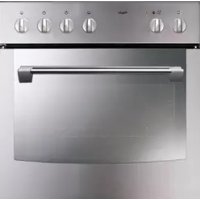
OST350RVS - Oven Pelgrim - Free user manual and instructions
Find the device manual for free OST350RVS Pelgrim in PDF.


| Product type | Built-in oven (compatible with gas hob) |
| Brand | Pelgrim |
| Model | OST350RVS |
| Category | Oven |
| Power supply | 230 V, 50 Hz, 2.2 kW |
| Connection type | Fixed, cable H05RRF 5 conductors (1.5 or 2.5 mm²), 15 A plug |
| Cooking functions | Conventional (top and bottom heat), bottom heat, top heat, grill, grill with rotisserie |
| Accessories included | Grid, drip tray, integrated rotisserie, 4-level guides |
| Interior lighting | Yes, turns on automatically |
| Interior material | Enamel |
| Door | Glass, manual closing |
| Cleaning | Manual, soapy water: enamel parts, chrome, plastic/glass, door gasket |
| Safety | Glass up to 100 °C, do not cover bottom with aluminium, clean sugary stains immediately |
| Installation | Built-in, requires a certified installer for the electrical connection |
| Compliance | Directive 89/336/EEC (electromagnetic compatibility), WEEE recycling |
| Cooling | Automatic cooling fan after use at high temperature |
Frequently Asked Questions - OST350RVS Pelgrim
User questions about OST350RVS Pelgrim
0 question about this device. Answer the ones you know or ask your own.
Ask a new question about this device
Download the instructions for your Oven in PDF format for free! Find your manual OST350RVS - Pelgrim and take your electronic device back in hand. On this page are published all the documents necessary for the use of your device. OST350RVS by Pelgrim.
USER MANUAL OST350RVS Pelgrim
This appliance is marked according to the European directive 2002/96/EC on Waste Electrical and Electronic Equipment (WEEE). By ensuring this product is disposed of correctly, you will help prevent potential negative consequences for the environment and human health, which could otherwise be caused by inappropriate waste handling of this product.
The symbol on the product, or on the documents accompanying the product, indicates that this appliance may not be treated as household waste. Instead it shall be handed over to the applicable collection point for the recycling of electrical and electronic equipment. Disposal must be carried out in accordance with local environmental regulations for waste disposal. For more detailed information about treatment, recovery and recycling of this product, please contact your local city office, your household waste disposal service or the shop where you purchased the product.

When you have read these instructions for use, you will quickly be aware of all the facilities the appliance can offer you. You can read about safety and how you should look after the appliance. In addition you will find environmental tips and instructions that can help to save energy.
Keep the instructions for use and the installation instructions. Any later user of this appliance could benefit from them.
Enjoy your cooking!
Table of contents
■Appliance description 18-19
For your safety 20
Things to watch for 20
Before use of the oven 20
Possibilities 21-22
Cookers 21
Oven 21
Grill 22
Use 23-26
Baking tips 23
Roasting 24
Grilling 25
Browning 26
Grill set DR200 26
■ Maintenance 27
Cleaning 27
Installation 28-31
Disposal of packaging and appliances . 32
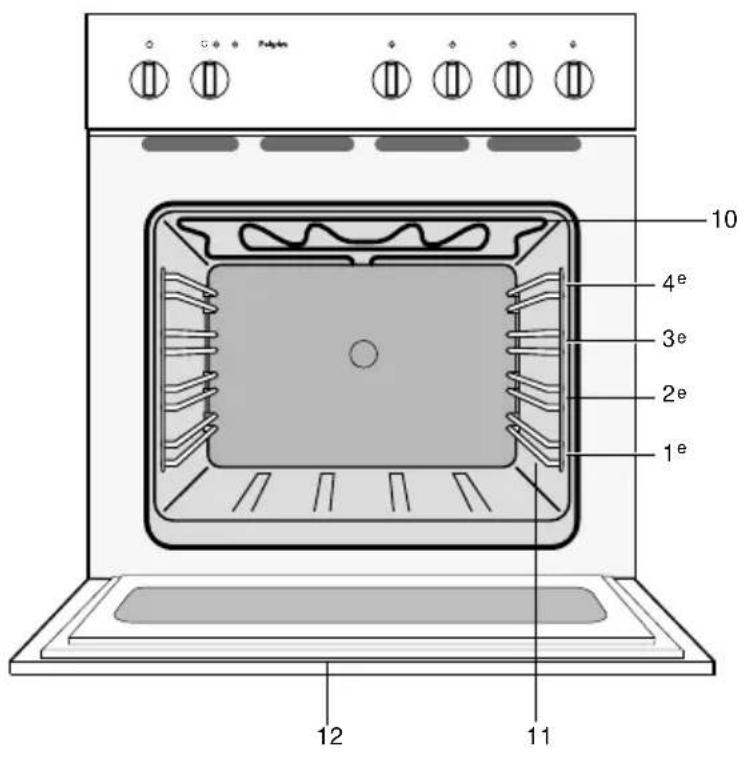
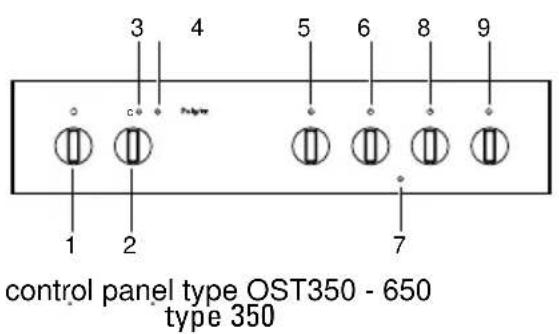
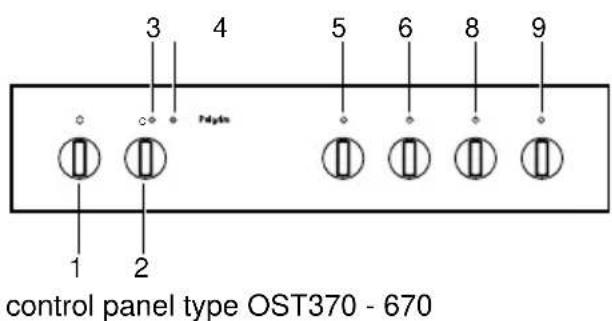
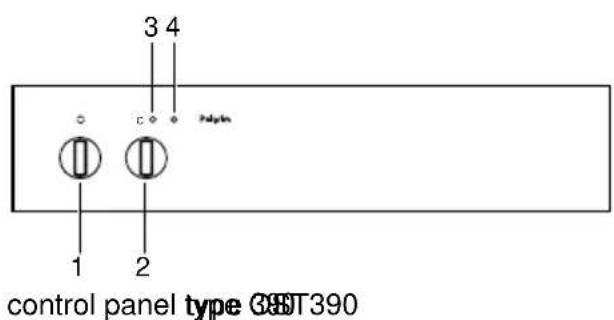
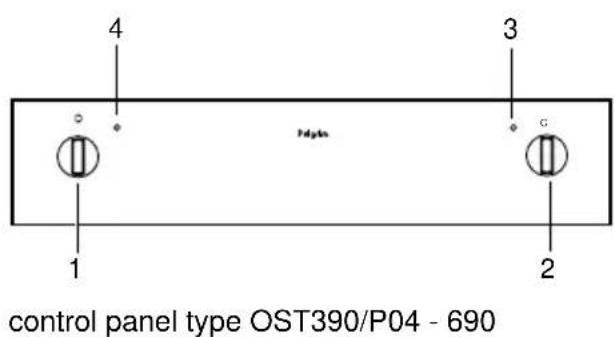
Appliance description
1 - oven knob
2 - control knob oven temperature
3 - indicator light oven temperature
4 - indicator light oven
5 - control knob front left cooking zone
6 - control knob rear left cooking zone
7 - spark ignition gas hob
8 - control knob rear right cooking zone
9 - control knob front right cooking zone
10 - upper heating element for heating/ grilling
11 - ledges on four levels
12 - oven door
Things to watch for
The appliance should only be connected by a qualified fitter (see electrical connection).
- Disconnect the appliance before starting with cleaning or reparation. Preferably by taking the plug out of the socket or by turning off the mains switch.
The glass oven door can heat up (to a max. of 100^ ) when using the oven at maximum temperature for a long time (e.g. during grilling). Act with care if children are nearby.
Grease and oil are flammable when overheated. Stay near the cooker when preparing dishes.
Cords to electrical appliances - e.g. a mixer - can get caught between the door of the convector oven or may accidentally touch the cooking zones.
Always cool the oven with a closed oven door.
Always grill with a closed oven door.
Before use of the oven
Prepare for use
Remove all accessories from the oven and clean them thoroughly using a dishwashing detergent. Switch on the closed, empty oven at the maximum temperature for about thirty minutes, after which the grilling element should be switched on for a period of fifteen minutes. Let the oven cool off and clean it with warm water.
Please note:
When the oven is heated to a high temperature for the first time, you will smell a "new appliance" odour. This is to be expected.
No aluminium foil on the oven base
- Never cover the base of the oven with aluminium foil and do not put baking tins on the base of the oven. The foil will block the heat, damaging the enamel, and the baking result will therefore not be satisfactory.
Clean immediately
Spilled foods with sugar or fruit juices, such as prune juice or rhubarb, may affect the colour of the enamel. Spills of this type should be cleaned immediately.
Cookers
Combi-oven 370 can only be combined with a Pelgrim electrical cooker or a Pelgrim ceramic cooker. Combi-oven 350 can be combined with a Pelgrim gas cooker. These cookers have separate operating instructions.
Tip
Switch on the cooker zones one at a time at the highest setting before using for the first time. This will remove the "new appliance" odour.
Using pans
Use only pans with a solid, even, preferably thick bottom, especially when cooking or frying at high temperatures (deep-fat frying, for example). Uneven pan bottoms will extend the cooking periods and require more energy.
Always use lids
When cooking without a lid, energy is wasted.
Points to pay attention to when cooking on an electric or ceramic hob
Salty water and wet pan bottoms will damage the cooker. Make sure the cooker zones are always dry. If food boils over, always clean immediately.
Heat is optimally transferred when the pan and the cooker zone are the same size.
Oven
Oven lighting
The oven lighting will switch on. This is the best setting for cleaning the oven.
Conventional
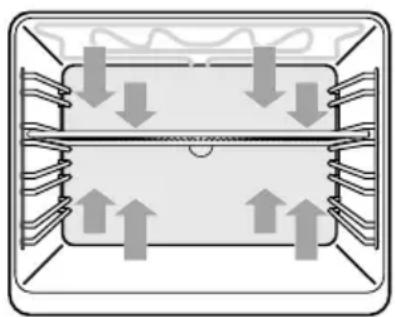
fig. 1
The dish is heated by the radiation heat of the upper and lower elements. Because the heat comes both from the upper and the lower element, the position in the oven is important. Usually the dish should be put in the middle of the oven. Do not open the door at the beginning of the process. Chances are the freshly risen pastry subsides.
When preparing puff-pastry recipes, such as cream puffs, meringue pastries, soufflés, breads, cakes, pizzas and biscuits, the best results will be achieved by using the upper and lower heating elements.
Condensation
When roasting or baking, condensation will develop, in particular when preparing bread, pizzas, pre-fried chips, etc. This is to be expected. When baking or roasting on multiple levels simultaneously, more condensation will develop.
Bottom heat
This function is advised for dishes of which the bottom need good cooking. The bottom of the dishes are thoroughly cooked. Before the end of the cooking process is reached (when there is still a quarter of the cooking time left), turn the function knob to bottom heat. Turn the temperature knob to its maximum setting. The dish will then be heated mainly by the bottom element, but will continue to brown on top.
Upper heat
This setting is suitable for a giving a short extra burst of heat to soufflés, meringues, etc., to thoroughly cook them. At the end of the cooking process, turn the function knob to the top-heat setting. Turn the temperature knob to its maximum setting.

Grill
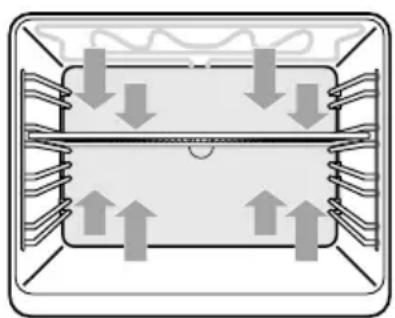
fig. 2
For grilling of dishes without spitbar.
The dishes are heated by the radiation heat of the combined grill/backing element. The thermostat also sets the grill. The element will not continuously light, but only from time to time. The dishes get a crispy brown crust. When grilling, you should set the temperature knob to the maximum setting. This also applies when you use the rotisserie grill set. The glass oven door can heat up (to a max. of 100^ ) when using the oven at maximum temperature
for a long time (e.g. during grilling). Act with care if children are nearby.
Always grill with a closed oven door.
Grill + rotisserie
Place the grill rack in the second ledge from the top. Place a roasting rack in the ledge beneath it, and on that a baking pan with water to catch the drippings.
Place the chicken or rolled roast on the rotisserie. Ensure that the weight is evenly distributed. You can secure the meat with the pins. Place the rotisserie on the rack and stick the rotisserie prong in the hole of the rotisserie motor at the back of the oven. When the oven is turned on, the rotisserie rotates beneath the grill element, causing it to brown evenly. The rotisserie motor is a standard feature of this oven.
Attention!
Do not leave the door ajar while the oven is cooling down after grilling. The furniture front may be damaged by the heat that is released.
Housing cooling
The housing cooling is equipped with a temperature controlled cooling fan. After use of the oven at high baking or frying temperatures, the cooling fan continues to operate for a while - even if the oven has been switched off - in order to cool the oven sufficiently. After some time, the cooling fan automatically switches itself off. It is automatically switched on again if the temperature in the oven rises too much as a result of the heat still present in the oven.
Baking tips
Oven levels
Depending on the height of the pastry or cookies, place the baking sheet on the first or second level from bottom. Tins should be placed on a rack on the first or second level from the bottom.
Tins are important
In particular in ovens with upper and lower heating elements, the material from which the tin is made is extremely important. The best tins are made from black tin or are lined with a special synthetic material: these tins absorb the heat the quickest and can shorten the baking time.
How to test whether or not a cake is cooked:
Prick a skewer into the cake at its thickest point about 10 minutes before the end of the given baking time. If the skewer remains dry and no cake mixture sticks to it you can turn off the oven and use the residual heat to let the cake cook thoroughly.
The cake has not risen proper
Use less liquid next time or set the temperature 10^ lower or cook for a longer period of time. You should adhere exactly to the mixing times given in your cookery book.
The cake has sunk in the middle
The cake has risen beautifully at the edges but sunk in the middle. Do not grease the sides of the cake tin. Loosen the cake carefully with a knife after baking.
The cake is too dark on the top
Put the cake on a lower ridge in the oven, set a lower temperature, bake the cake for a little longer and, perhaps, use black baking tins.
The cake is too dark on the bottom
Put the cake on a higher ridge in the oven and set a lower temperature.
The souffle is much too dark on top
Remove the crust. Grill the top for a moment to give a golden brown crust to the souffle. Do not use Parmesan cheese: this type of cheese browns too quickly and will taste bitter. Next time put the dish a little lower in the oven and set the temperature 10^ lower.
The biscuits stick to the baking sheet
Slide the baking sheet back into the oven for a moment and then remove the biscuits immediately.
The cake will not turn out of the tin.
Carefully loosen the edge with a sharp knife.
Turn the tin upside down again and cover with a cold, damp cloth a couple of times. Next time grease and flour the tin well.
Roasting
If the meat is covered when roasted, e.g. in a casserole, it will retain its juices and little or no smoke will develop. When roasted in an open roasting tin it will brown and crisp more quickly.
The oven's roasting tin is ideal for roasting large joints, weighing over 1kg
The table below applies only when you put the dishes into a cold oven. When using top and bottom heat the dishes should be put on to the second ridge.
Roasting table
| Meat weigh in kg temp in °C time in mins. | ||
| Sirloin beef 1 200 - 220 100 - 120 | ||
| Fillet of beef 1 220 - 240 35 - 45 | ||
| Roastbeef 1 220 - 240 35 - 45 | ||
| Pork 1 180 - 200 100 - 120 | ||
| Cured side of pork 1 200 - 220 80 - 100 | ||
| Game 1 190 - 210 90 - 120 | ||
| Veal 1 190 - 210 100 - 120 | ||
| Lamb 1,5 180 - 200 90 - 120 | ||
| Poultry | 1 180 - 200 50 - 60 | |
| 2 180 - 200 120 - 150 | ||
| 4 170 - 190 150 - 180 | ||
| Fish | 1,5 | 180 - 200 35 - 55 |
The figures in this table are guidelines.

Grilling
Place the roasting sheet on the first level in the oven.
Place the grill sheet in the middle of the oven.
- Close the door and turn the knob to the grill setting.
Dark meat such as beef, game and mutton will brown more quickly than light meat, such as veal, pork and poultry. Light meat and fish filets will not be as brown on the outside, even when they are done to juicy perfection on the inside.
Smoke caused by burning grease will often develop when meat is grilled directly on the rack. The smoke development can be minimised by filling the roasting sheet with water and placing it underneath the grill rack. This will, of course, result in increased condensation.
Timetable for surface grilling
| Grill meat ridge level time in mins. | ||
| Steak 4 10 - 12 | ||
| Schnitzel / chops 4 12 - 16 | ||
| Meat balls 3 14 - 18 | ||
| Bratwurst 3 16 - 20 | ||
| Fillet of fish 4 14 - 16 | ||
| Toast 4 2 - 4 | ||
The figures in this table are guidelines.
Browning
To brown and crisp the outside of meat, switch the grill element on for a few moments. Wait until the top is golden brown.
Small pieces of meat
Grilled meat will retain its natural flavour if it is not coated with oil before grilling.
Large pieces of meat
These are best brushed with a thin coating of oil or butter to prevent the surfaces exposed to the heat from drying out.
Grilling using grill set DR 200 (see fig. 3)
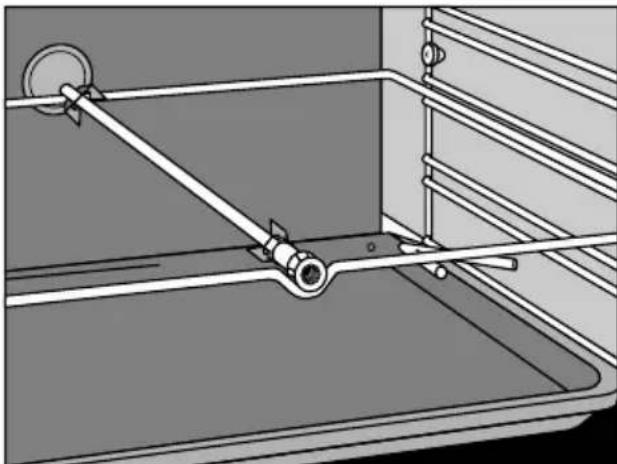
fig. 3
The grill set DR 200 is available as an oven accessory. This set can be used for spit roasting. The food will rotate underneath the grilling element, enabling it to brown evenly. The rotation motor is built into the oven.
Cleaning
Enamelled parts
The inside of the oven door, the side panels, the base of the oven, the baking sheet and the roasting tin are all completely enamelled. These are best cleaned with hot, soapy water or a little liquid detergent; rinse well with clean water.
Chrome
Clean the ridges, the rack and the control panel with hot soapy water or a little liquid detergent, rinse with clean water.
Plastic/glass
Clean the handle and knobs with soapy water or Glassex.
Sealing rubber
Clean with hot soapy water and rinse with clean water.
A tip
Cleaning the oven regularly will prevent stubborn stains.
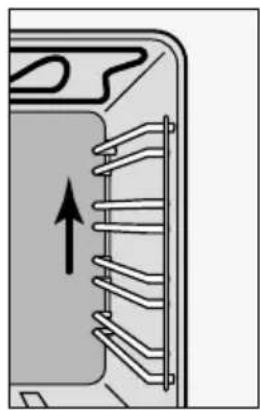
fig. 4
If you want to thoroughly clean the oven, the ledges can be removed by pushing the edges upwards and lift them from the hook.
Installation
General
When the appliance does not have a connecting cable and plug, then it may be connected to the mains only by an approved installer.
Please note:
The power rating and required mains voltage are shown on the rating plate at the back of the oven. Connection should take place according to national and local regulations.
After installation the wall socket and plug must be accessible at all times.
To connect the appliance a fixed connection has to be made. The wire which is coloured green and yellow must be connected to the terminal which is marked by the letter E or the earth symbol which is coloured green, or green and yellow. The wire which is coloured blue must be connected to the terminal which is marked by the letter N or which is coloured black. The wire which is coloured brown must be connected to the terminal which is marked by the letter L or which is coloured red. If the input of the appliance exceeds 3kW , the appliance has to be connected to an outlet with a rated current exceeding 13 Amp.
Electrical connection
230V-50Hz
The appliance should always be earthed.
Uase good quality cable for connecting e.g. H05RRF, 1,5 or 2,5mm^2 with 3 or 5 cores, depending on the regulations.
With following colour code:
brown = phase L
blue = phase N
green/yellow = earth()
black = neutral or phase
Depending upon the wiring diagram, you can use the black cores for neutral or a phase.
The cable must have a plug suitable for a nominal load of at least 15 A.
If you want to make a fixed connection, ensure that a multi-pole switch with a distance between contacts of 3 mm is installed in the supply cable.
Wiring diagrams
There is a label showing the wiring diagrams on the underside of the appliance.
Supply terminals
The terminal block is at the back on the right, on top of the oven casing. You can reach the terminals after removing the terminal block cover. You can make the cross connections needed using the jumpers on the termina block. Do not forget to secure the cable with the cable clamp.
Electrical connection
Two or three phases.
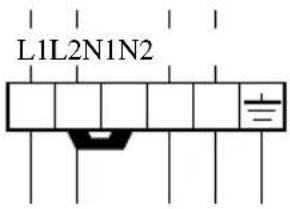
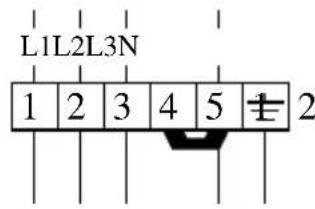
Combination of oven 350 with Pelgrim cooker (see fig. 5)
If the oven is built under a hob, it is recommended that you leave a space of about 1 cm between the top of the dashboard and the underside of the worktop.
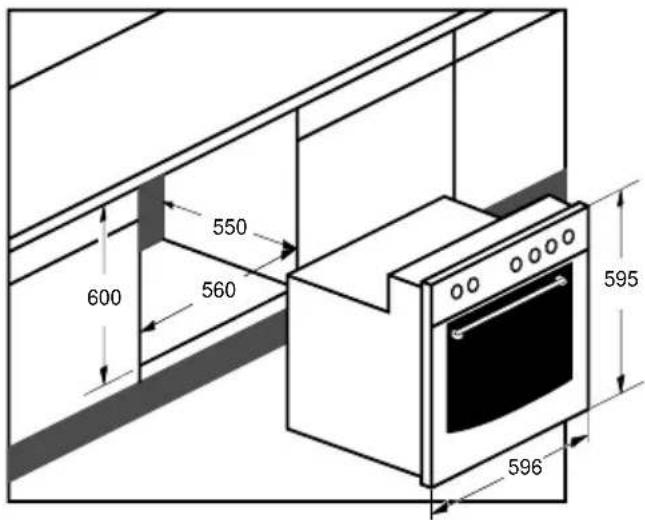
fig.5
Connect the oven to the electricity supply.
Slide the oven 2/3 into the cupboard.
Remove the protective devices that secure the cardan joints during transport (see fig. 6).
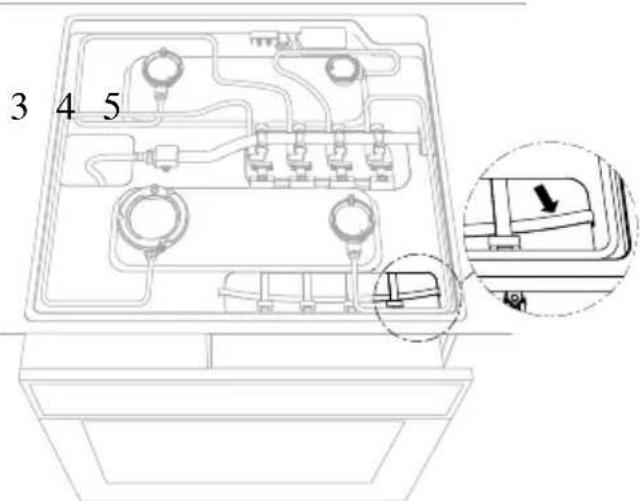
fig. 6
Slide the cardan joints onto the oven's tap pins and snap them in place (fig. 7).
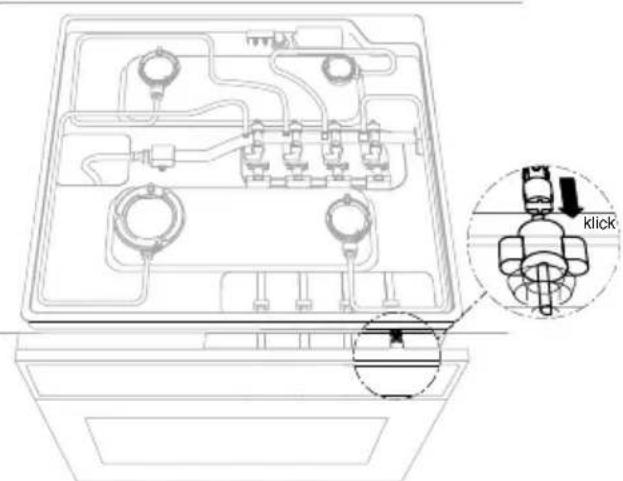
fig.7
First fit the plastic caps in the holes of the oven frame and then screw the oven to the kitchen cabinet.
Check that the cardan joint is working.
Combination of the 350 oven with the Pelgrim GKV106 gas hob
When the oven is built in under the GKV106 gas hob, the spark ignition box of the hob must be fitted to the attachment plate at the back of the dashboard of the oven.
- Remove the middle control knobs of the dashboard by pulling them towards you (see fig. 8, 1).
- Remove the screws (see fig. 8, 2), in order to detach the cardan holders and the attachment plate.
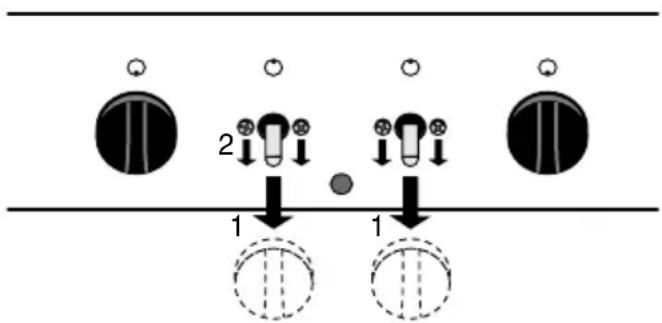
fig. 8
- Remove the decorative knob from the attachment plate.
- Fit the spark ignition box to the attachment plate.
- Screw the attachment plate and the cardan holders firmly onto the dashboard again (see fig. 9). Take care that the cardan holders are fitted in the correct position.
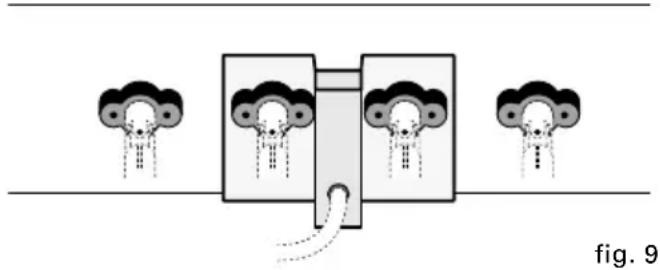
- Replace the control knobs.
Solo oven 390 (see fig. 10)
Connect oven to the electrical mains.
Slide the oven into the cupboard.
Open the oven door and fasten the oven with two screws on each side wall.
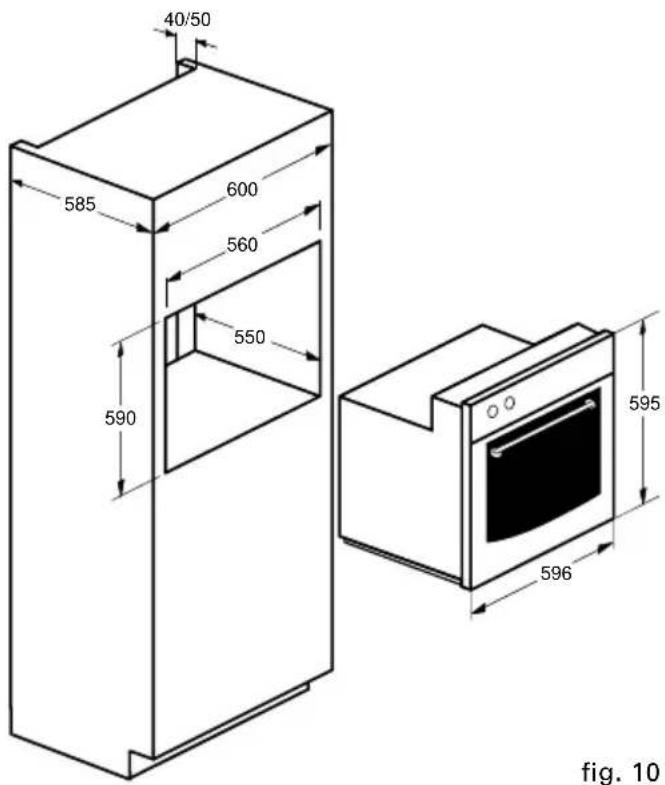
fig. 10
Connect the oven to the electrical mains and connect the cooker's 15-pole plug to the oven's counter-plug.
Now slide the oven into the cupboard.
First fit the plastic caps in the holes of the oven frame and then screw the oven to the kitchen cabinet.
Technical data
| oventype 390 370 350 | |||
| model | |||
| solo-oven■— | — | ||
| combi-oven with cooker - electric gas | |||
| electrical connection | |||
| 230 V■—■ | |||
| 230 V - 380 V/400 V —■— | |||
| 50 Hz■ | ■ | ||
| nominal power kW | 2.2 | 9.2 2.2 | |
Combination of the 370 oven and the Pelgrim electrical or ceramic cooker (see fig. 5)
If the oven is built under a hob, it is recommended that you leave a space of about 1 cm between the top of the dashboard and the underside of the worktop.
After the electrical or ceramic cooker has been installed in accordance with the instructions supplied with the appliance:
Disposal of packaging and appliances
The packaging of the appliance is recyclable. It is made up off:
cardboard
polyethylene
CFC free polystyrene (PS rigid foam)
polypropylene straps around the box
Please dispose of these materials in a responsible way in accordance with the regulations of your local authority.
Your local authority will also be able to give you information about disposing disused household appliances in a responsible way.
This appliance complies the regulations concerning electromagnetic compatibility in directive 89/336/EEC.