TEA500 - Drill Tanaka - Free user manual and instructions
Find the device manual for free TEA500 Tanaka in PDF.


| Product type | Two-operator mechanical auger |
| Brand | Tanaka |
| Model | TEA-500 |
| Power source | 2-stroke gasoline engine |
| Displacement | 50 cm³ (3.05 cubic inches) |
| Ignition | Electronic |
| Spark plug | NGK BM-6A or BMR-6A |
| Fuel tank capacity | 1 liter (33.8 fl oz) |
| Fuel mixture | Unleaded gasoline 89 octane + 2-stroke oil (25:1 to 50:1) |
| Dimensions (L × W × H) | 1200 × 600 × 490 mm (47.2 × 23.6 × 19.3 in) |
| Weight | 17 kg (37.4 lb) |
| Max. auger diameter | 12 in (305 mm) |
| Engine speed | 6500 rpm |
| Output shaft speed | 197 rpm (reduction ratio 33:1) |
| Clutch | Automatic dry centrifugal type |
| Sound pressure level LpA | 100.4 dB(A) (per ISO 22868) |
| Sound power level LwA | 112 dB(A) (per ISO 22868, 2000/14/EC) |
| Vibrations (left hand) | 5.1 m/s² |
| Vibrations (right hand) | 5.8 m/s² |
| Vibration uncertainty | 1.5 m/s² |
| Gear lubrication | Multipurpose grease (via fitting every 50 h) |
| Governor lubrication | Oil weight #30 (EP lithium), capacity 16 ml |
| Safety | Mandatory wearing of goggles, hard hat, hearing protection and snug-fitting clothing |
| Daily maintenance | Clean exterior, check auger centering and sharpening, tighten fasteners |
| Weekly maintenance | Check starter, clean spark plug (gap 0.6 mm), check gearbox grease level |
Frequently Asked Questions - TEA500 Tanaka
User questions about TEA500 Tanaka
0 question about this device. Answer the ones you know or ask your own.
Ask a new question about this device
Download the instructions for your Drill in PDF format for free! Find your manual TEA500 - Tanaka and take your electronic device back in hand. On this page are published all the documents necessary for the use of your device. TEA500 by Tanaka.
USER MANUAL TEA500 Tanaka
natural_image
Technical line drawing of a mechanical pump assembly with hoses and control elements (no text or labels)
Read the manual carefully before operating this machine.
natural_image
Mechanical assembly diagram showing a motor with attached springs and levers (no text or symbols)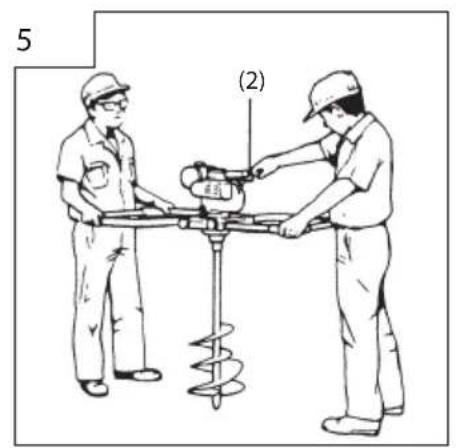
natural_image
Technical line drawing of two spark plugs, labeled (4) and (5), with no text or symbols on the plugs themselves.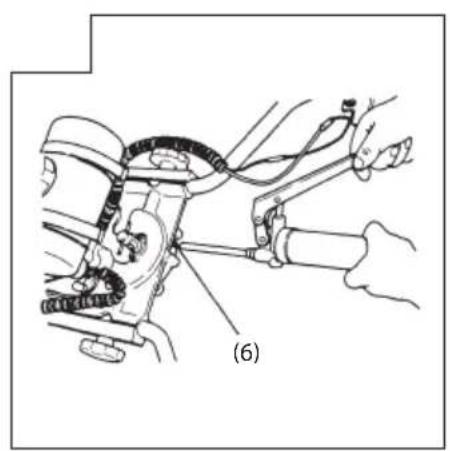
natural_image
Mechanical assembly diagram showing linkage between two components (no text or symbols)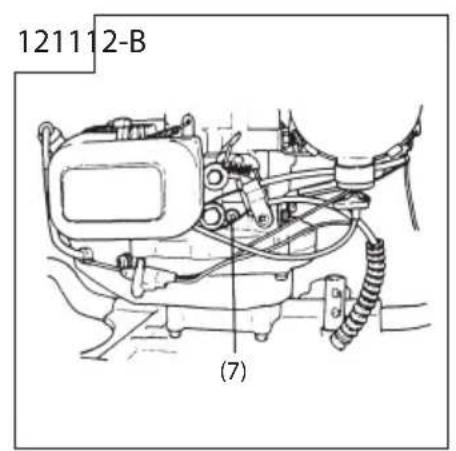
natural_image
Line drawing of a person operating a mechanical pump or scrubber device (no text or symbols visible)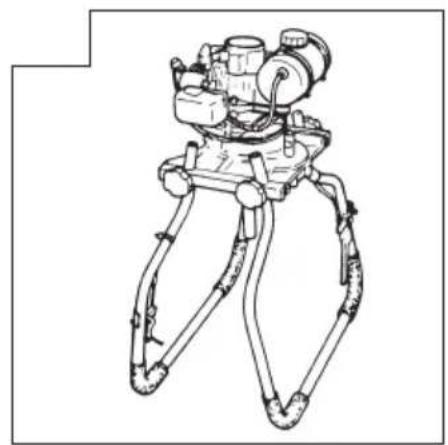
natural_image
Technical line drawing of a mechanical device with articulated limbs and internal components (no text or symbols)Meanings of symbols
NOTE : Some units do not carry them.
| symbols⚠ WARNINGThe following show symbols used for the machine. Be sure that you understand their meaning before use. | |
 | It is important that you read, fully understand and observe the following safety precautions and warnings. Careless or improper use of the unit may cause serious or fatal injury. |
 | Read, understand and follow all warnings and instructions in this manual and on the unit. |
 | Always wear eye, head and ear protectors when using this unit. |
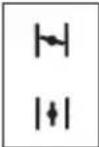 | Explains choke position. Upper sign indicates choke closed and the lower fully open. |
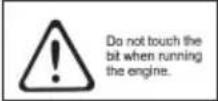 | Do not touch the bit when running the engine. |
| Before using your machineRead the manual carefully.Check that the cutting equipment is correctly assembled and adjusted.Start the unit and check the carburetor adjustment. See "Maintenance". | |
Index
What is what? 2
Warnings and safety instructions 3
Specifications.... 5
Operating procedures 6
Maintenance.... 8
What is what?
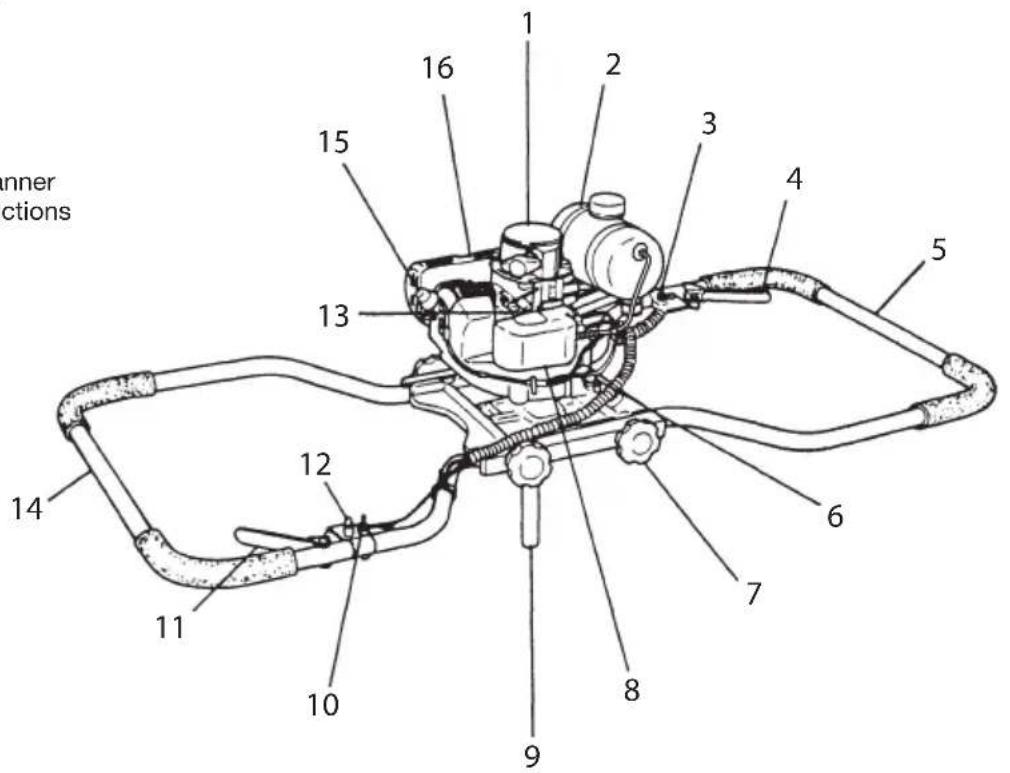
Since this manual covers several models, there may be some difference between pictures and your unit. Use the instructions that apply to your unit.
- Recoil starter
- Fuel tank
- Stop switch
- Throttle trigger
- Handle
- Lock pin
- Handle knob
- Air cleaner
- Drive shaft
- Stop switch
- Throttle trigger
- Lock button
- Carburetor
- Handle
- Spark plug
- Muffler
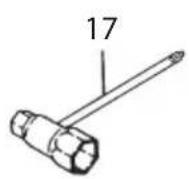
- Combi box spanner
- Handling instructions

natural_image
Isometric line drawing of a closed book with visible page lines and cover (no text or symbols)Warnings and safety instructions
Sure that anyone operating this machine has read and fully understands this manual and it's content. Failure to follow all safety instructions can result in serious injury or death.
Operator safety
• Always wear a safety face shield or goggles.
- Always wear heavy, long pants, boots and gloves. Do not wear loose clothing, jewelry, short pants, sandals or go barefoot. Secure hair so it is above shoulder length.
- Do not operate this unit / machine when you are tired, ill or under the influence of alcohol, drugs or medication.
- Never let a child or inexperienced person operate the machine.
- Wear hearing protection. Pay attention to your surroundings. Be aware of any bystanders who may be signaling a problem. Remove safety equipment immediately upon shutting off engine.
- Wear head protection.
- Never start or run the engine inside a closed room or building. Breathing exhaust fumes can kill.
- Keep handles free of oil and fuel.
- Keep hands away from drilling equipment.
- Do not grab or hold the unit by the drilling equipment.
- When the unit is turned off, make sure the drilling attachment has stopped before the unit is set down.
- When operation is prolonged, take a break from time to time so that you may avoid possible whitefinger disease which is caused by vibration.
- Be sure to check all fasteners on the machine to ensure that nothing can come loose during operation.
- Be sure that the area you intend to dig is free of any obstacles and obstructions. Some items may be buried beneath the surface, such as electric wiring, water lines, etc. If you have doubts about their location-consult your local utility experts.
- This auger is designed to bore through earth. Never attempt to bore through any solid objects such as wood, rock or metal.
- Never alter or replace the pin securing the auger bit to the power head. Using anything other than the original pin can result in injury.
- This model is designed to accept an auger bit with a maximum diameter of 12 inches. Never attempt to use a larger bit with this machine.
- Prior to starting be sure that both operators are in a position to firmly grasp both handles and are able to gain secure footing. Never operate on steep inclines where the potential to fall is increased.
- Holes created by this machine can be dangerous to others. Never leave a hole unattended where it may create a safety hazard.
WARNING!
Antivibration systems do not guarantee that you will not sustain whitefinger disease or carpal tunnel syndrome.
Therefore, continual and regular users should monitor closely the condition of their hands and fingers. If any of the above symptoms appear, seek medical advice immediately.
WARNING!
If you are using any medical electric/electronic devices such as a pacemaker, consult your physician as well as the device manufacturer prior to operating any power equipment.
Unit / machine safety
- Inspect the entire unit/machine before each use. Replace damaged parts. Check for fuel leaks and make sure all fasteners are in place and securely tightened.
- Replace parts that are cracked, chipped or damaged in any way before using the unit/machine.
- Keep others away when making carburetor adjustments.
- Use only accessories as recommended for this unit/machine by the manufacturer.
WARNING!
Never modify the unit/machine in any way. Do not use your unit/machine for any job except that for which it is intended.
Fuel safety
- Mix and pour fuel outdoors and where there are no sparks or flames.
- Use a container approved for fuel.
- Do not smoke or allow smoking near fuel or the unit/machine or while using the unit/machine.
- Wipe up all fuel spills before starting engine.
- Move at least 3 m away from fueling site before starting engine.
- Stop engine before removing fuel cap.
- Empty the fuel tank before storing the unit/machine. It is recommended that the fuel be emptied after each use. If fuel is left in the tank, store so fuel will not leak.
- Store unit/machine and fuel in area where fuel vapors cannot reach sparks or open flames from water heaters, electric motors or switches, furnaces. etc.
WARNING!
Fuel is easy to ignite or get explosion or inhale fumes, so that pay special attention when handling or filling fuel.
Drilling safety
- Do not drill any material other than that for which is intended.
- Inspect the area to be drilled before each use. Remove objects which can be thrown or become entangled.
- For respiratory protection, wear an aerosol protection mask when drilling the area after insecticide is scattered.
- Keep others including children, animals, bystanders and helpers outside the 5 m hazard zone. Stop the engine immediately if you are approached.
- This machine requires two operators at all times. Never attempt to use this machine with only one operator, or to alter the controls to allow use by only one operator.
- Hold the unit/machine firmly with both hands.
- Keep firm footing and balance. Do not over-reach.
- Keep all parts of your body away from the muffler and drilling attachment when the engine is running.
- When relocating to a new work area, be sure to shut off the machine and ensure that all cutting attachments are stopped.
- Never place the machine on the ground when running.
- Always ensure that the engine is shut off and any cutting attachments have completely stopped before clearing debris or removing grass from the cutting attachment.
- Always carry a first-aid kit when operating any power equipment.
- Never start or run the engine inside a closed room or building and/or near the inflammable liquid. Breathing exhaust fumes can kill.
Maintenance safety
- Maintain the unit/machine according to recommended procedures.
- Disconnect the spark plug before performing maintenance except for carburetor adjustments.
- Keep others away when making carburetor adjustments.
- Use only genuine Tanaka replacement parts as recommended by the manufacturer.
CAUTION!
Do not disassemble the recoil starter. You may get a possibility of personal injury with recoil spring.
Transport and storage
- Carry the unit/machine by hand with the engine stopped and the muffler away from your body.
- Allow the engine to cool, empty the fuel tank, and secure the unit/machine before storing or transporting in a vehicle.
- Empty the fuel tank before storing the unit/machine, It is recommended that the fuel be emptied after each use. If fuel is left in the tank, store so fuel will not leak.
- Store unit/machine out of the reach of children.
- Clean and maintenance the unit carefully and store it in a dry place
- Make sure engine switch is off when transporting or storing.
- When transporting in a vehicle or storage, cover bit with bit cover or rug.
If situations occur which are not covered in this manual, take care and use common sense. Contact Tanaka dealer if you need assistance. Pay special attention to statements preceded by the following words:
WARNING!
Indicates a strong possibility of severe personal injury or loss of life, if instructions are not followed.
CAUTION!
Indicates a possibility of personal injury or equipment damage, if instructions are not followed.
NOTE!
Helpful information for correct function and use.
ENGINE
Model TEA-500 (2-Man Power Auger)
Engine Type ……Forced air-cooled, two cycle gasoline
Displacement (ml) 50 (3.05 cu in.)
Ignition System ········Electronic
Spark Plug NGK BM-6A or BMR-6A
Carburetor Diaphragm type
Fuel ·······Mixture of gasoline and two-cycle oil (25\~50:1)
Fuel Tank Capacity (1) ·s·s1 (33.8 fl.oz)
Starting ....Recoil Starter
REDUCTION GEAR
Clutch ······Dry automatic, centrifugal type
Gears Spur gears
Reduction Ratio 33:1
Drive Shaft Speed ·······6500 min ^1 Engine / 197 min ^-1 Drive shaft
Drive Shaft (dia.) (mm) 25.4 (1 in) (USA)
LUBRICANT
Gear Grease
Governor ········#30 weight oil
DIMENSIONS
(L × W × H) (mm) · 1200 × 600 × 490
(47.2 × 23.6 × 19.3 in.)
WEIGHT (kg) 17 (37.4 lbs)
AUGER SIZE Up to 12 inch diameter
Sound pressure level LpA (dB (A)) ····100.4
by ISO22868
Uncertainty (dB (A)) 0.3
Sound power level Lw measured (dB(A))··
by ISO22868
Sound power level LwA (dB (A)) ······112
by 2000/14/EC
Vibration level (m/s ^2 ) ······Left - 5.1
by ISO22867 Right - 5.8
Uncertainty (m/s²) 1.5
NOTICE: The specifications are subject to change without notice.
Operating procedures
1. Assembling
1) Loosen 4 handle knobs about one inch wide to fold out both handles. Excessive loosening causes knobs to come off. (Fig. 1)
(1) One inch
(2) Handle knob
2) After extension of both handles, tighten the 4 knobs firmly. (After every initial operation, additional tightening is required.)
3) For installation of auger, put powerhead on the ground. Put auger on drive shaft. Aligning each hole of drive shaft and auger, insert the two provided fixing pins into the holes and fix them with snap pins using pliers. (Fig. 2)
(3) Drive shaft
(4) Snap pin
(5) Fixing pin
NOTE:
While your auger powerhead adaptor has two holes for mounting anger bits, some auger bits may only have one hole. Both auger bits (one hole or two holes) are suitable for use with this powerhead.
2. Selection of a suitable auger
1) Choose an auger according to material to be bored. (Example) of ice boring, use an ice auger. When boring the earth, use one for earth boring. (For more information, ask your nearest dealer).
3. Filling the fuel

WARNING!

- Do not use fuel with more than 10% ethanol in this unit.
Use of fuel, such as E15 (15% ethanol), E20 (20% ethanol), E85 (85% ethanol), may cause problems including overheating, premature deterioration of fuel lines and carburetors. Use of fuel with more than 10% ethanol may result in personal injury or property damage. Use of fuel with more than 10% ethanol will void the product warranty. Check the ethanol level before purchasing fuel for this unit.

WARNING!
- The power auger is equipped with a two-stroke engine. Always run the engine on fuel, which is mixed with oil. Provide good ventilation, when fueling or handling fuel.
- Fuel contains highly flammable and it is possible to get the serious personal injury when inhaling or spilling on your body. Always pay attention when handling fuel. Always have good ventilation when handling fuel inside building.
Fuel
• Always use branded 89 octane unleaded gasoline.
- Use genuine two-cycle oil or use a mix between 25:1 to 50:1, please consult the oil bottle for the ratio or Tanaka dealer.
- Only for the state of California at 50:1.
- If genuine oil is not available, use an anti-oxidant added quality oil expressly labeled for air-cooled 2-cycle engine use(JASO FC GRADE OIL or ISO EGC GRADE). Do not use BIA or TCW (2-stroke water-cooling type) mixed oil.
- Never use multi-grade oil (10 W/30) or waste oil.
• Always mix fuel and oil in a separate clean container.
(6) 1: Oil
(7) 25\~50: Gasoline
Always start by filling half the amount of fuel, which is to be used.
Then add the whole amount of oil. Mix (shake) the fuel mixture. Add the remaining amount of fuel.
Mix (shake) the fuel-mix thoroughly before filling the fuel tank.
Fueling
WARNING!
• Always shut off the engine before refueling.
- Slowly open the fuel tank, when filling up with fuel, so that possible over pressure disappears.
- Tighten the fuel cap carefully, after fueling.
- Always move the unit at least 3 m (10 ft.) from the fueling area before starting.
• Always Wash any spilled fuel from clothing immediately with soap.
- Be sure to check any fuel leaking after refueling.
Before fueling, clean the tank cap area carefully, to ensure that no dirt falls into the tank. Make sure that the fuel is well mixed by shaking the container, before fueling.
4. Starting
1) Switch on both stop switches. (M.Parts)
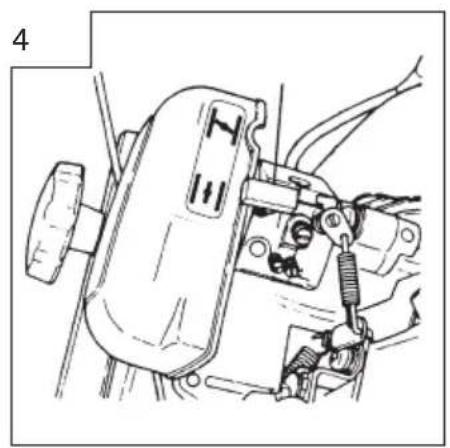
2) Turn choke lever (1) to CHOKE position. (Fig. 4)
3) Pull throttle lever and push on lock-button, then slowly release the throttle lever. This will lock the throttle. Meanwhile, the other operator must keep squeezing the other throttle lever fully.
(M.Parts)
4) Operator at starter handle side pulls recoil starter briskly taking care to keep the handle in your grasp and not allowing it to snap back. (Fig. 5)
(2) Starter handle
5) When you hear the engine want to start, return choke lever to RUN position (open). Then pull the recoil starter briskly again. (Fig. 4)
NOTE:
If engine does not start, repeat procedures from 2 to 5.
6) After starting the engine, pull the throttle lever to release lock button.
Then, allow the engine about 2-3 minutes to warm up before subjecting it to any load.
NOTE:
To accelerate the engine both throttle levers must be pulled at the same time. As soon as one operator releases throttle lever, it decelerates engine. (This is normal condition)
CAUTION:
It is not recommended that the cable adjuster be touched as it is factory adjusted.
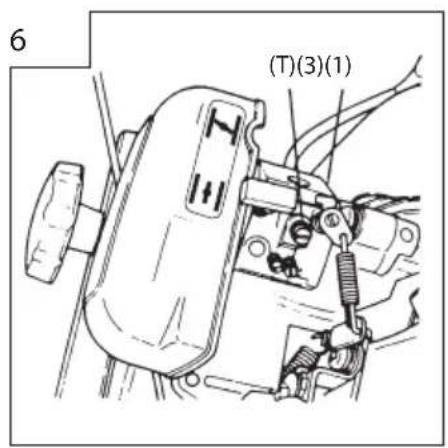
5. Carburetor adjustment (Fig. 6)

WARNING!
Never start the engine without the complete clutch cover. Otherwise the clutch can come loose and cause personal injuries.
In the carburetor, fuel is mixed with air. When the engine is test run at the factory, the carburetor is adjusted. A further adjustment may be required, according to climate and altitude. The carburetor has one adjustment possibility:
T = Idle speed adjustment screw.
Idle speed adjustment (T)
Check that the air filter is clean. When the idle speed is correct, the cutting attachment will not rotate. If adjustment is required, close (clockwise) the T-screw, with the engine running, until the cutting attachment starts to rotate. Open (counter-clockwise) the screw until the cutting attachment stops. You have reached the correct idle speed when the engine runs smoothly in all positions well below the rpm when the cutting attachment starts to rotate. If the bit still rotates after idle speed adjustment, contact Tanaka dealer.
(T) Idle adjusting screw
(3) Carburetor

WARNING!
When the engine is idling the cutting attachment must under no circumstances rotate.
NOTE!
Some models sold areas with strict exhaust emission regulation do not have high and low speed carburetor adjustments. Such adjustments may allow the engine to be operated outside of their emission compliance limits. For these models, the only carburetor adjustment is idle speed.
For models that equipped with low and high speed adjustments; carburetors are pre set at the factory
Minor adjustments may optimize performance based on climate, altitude, etc. Never turn the adjustment screws in increments greater than 90 degrees, as engine damage can result from incorrect adjustment If you are not familiar with type of adjustment-assistance Tanaka dealer.
6. Drilling
1) Both operators must hold the handle firmly with both hands and stand firmly on solid ground so that you may not be swung by the unit. (Fig. 5)
2) Locate the edge of auger right on the spot to dig and then drive the auger at full throttle for digging. This is an easy job thanks to the built-in centrifugal clutch. (Fig. 5)
3) Raise auger slightly after every few inches of digging to relieve pressure and clean out the hole.
4) The clutch is made to slip when the auger is overloaded. When this happens, raise the auger slightly to ease load.

WARNING!
While drilling, the auger may twist suddenly and forcefully if it contacts large rocks, roots, or other hidden obstacles.
Release throttle trigger immediately, and lift auger out of hole. Clear the obstacles to prevent damage, and then resume drilling.
5) When abnormal vibration or noise is generated, stop the engine and inspect the unit.
CAUTION:
Since TEA-500 is designed as a TWO-PERSON auger, never attempt to make auger work with only one throttle lever control.
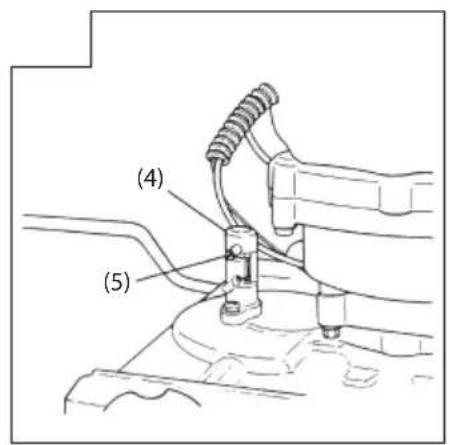
6) When auger is stuck while digging, and hard to pull out from ground, stop engine and lock the auger by the lock pin which may make the job easier. (Fig. 8)
(4) Lock pin
(5) Lock pin handle
(The lock pin setting is made by turning powerhead slightly while pushing the pin. Then twist the pin handle clockwise to lock.)
7. Stopping
1) One or both of the two operators release throttle lever gradually to an idle position, then turn off stop switch or button. (M.Parts)
NOTE:
In case of an emergency, just turn off stop switch immediately.
2) Close fuel cock and drain fuel system for prolonged storage.
Maintenance
1. Periodical check
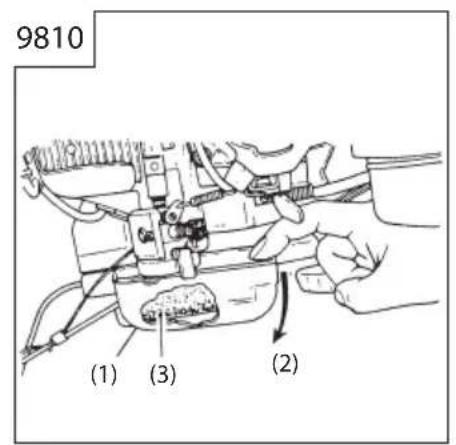
1) Clean the air cleaner element with soap and water and dry before reuse. (Fig. 9)
(1) Air cleaner cover
(2) Pull to remove air Cleaner cover
(3) Air cleaner element
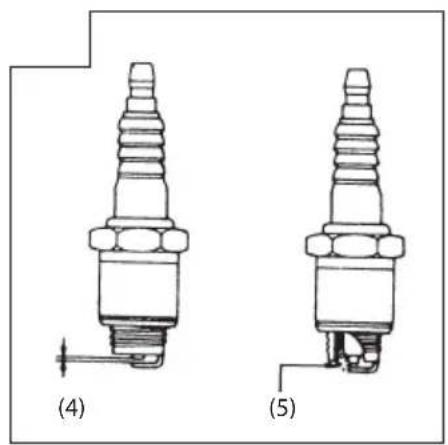
2) Scrape off the carbon from the spark plug gap. (Standard gap is 0.60 mm or 0.023 in.) (Fig.10)
(4) 0.60 mm .023 in
(5) Remove carbon or oil
3) Inspect carefully for any fuel or oil leaks.
4) Check all nuts, bolts, screws, etc. making sure they are tightened.
5) Since the clutch shoes will wear after a long period of use, it should be checked occasionally.
2. Lubrication
1) Lubricate gear case by pumping multi-purpose grease through grease fitting every 50 hours of operation. (Fig. 11)
(6) Grease fitting
2) Engine speed governor is lubricated with # 30 weight oil (EP lithium). The capacity is 0.5 fl.oz. (16ml) and should be checked every 50 hours of use at the level check screw. (Fig. 12)
(7) Level check screw
When unscrewing the check screw, keep the screw side up.
3. Governor adjustment
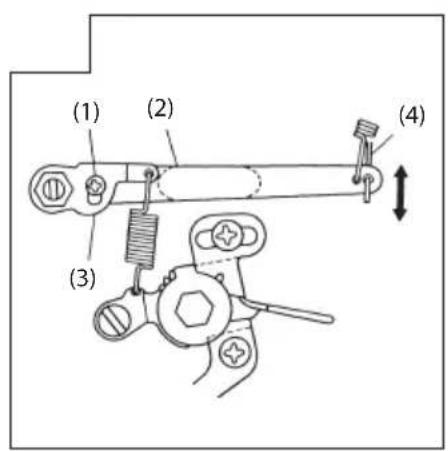
1) Frist with the engine off, loosen screw A (1). Pull up governor outer lever (2) and push down governor spring lever (3), then at the same time retighten the screw A (Fig. 12B)
NOTE:
After above procedure, make sure the throttle (4) on the carburetor gets either of the idle position or the full open position.
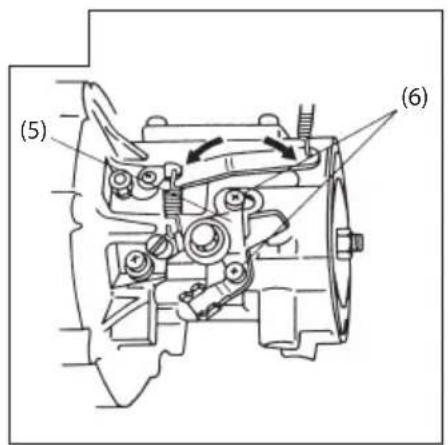
2) To adjust governor, loosen screws (6) which holds control lever assembly (5) to crankcase and move the assembly left or right to obtain the maximum speed of 6500 rpm (Moving control lever assembly to left gives higher rpm and moving to right, lower rpm) (Fig. 12C)
NOTE:
Always adjust throttle wire end play before governor adjustment.
CAUTION:
Do not adjust to run more than 6500 rpm.
3) Governor hunting (Varying rpm)
- Hunting occurs with insufficient warm up of engine.
- When the governor spring, governor rod or governor rod spring moves improperly, hunting may occur. Check and clean.
- If governor rod spring becomes stretched, hunting may occur. Handle with care or replace.
- If the gosoline and oil mix ratio is not correct, hunting may occur. Ratio should be from 25:1 to 50:1.
- When fuel tank or petcock is clogged with dirt or old fuel, hunting may occur. Check and clean.
- When there is insufficient oil in the governor, the weights will not operate properly, resulting in hunting. Check and refill with gear oil.
- If the high speed screw on the carburetor is improperly adjusted, hunting may occur. Adjust properly.
4. Other features
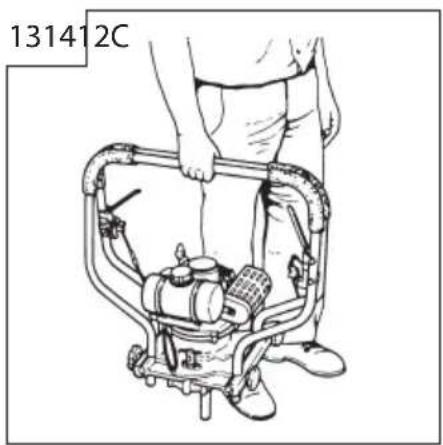
1) By folding the handle bars upward, they can be used as a carrying handle. (Fig. 13)
2) By folding the handle downward, they become a stand for storage. (Fig. 14)
5. Maintenance schedule
Below you will find some general maintenance instructions. For further information please contact Tanaka dealer.
Daily maintenance
- Clean the exterior of the unit.
- Check that the drilling attachment is properly centred, sharp, and without cracks. An offcentred bit induces heavy vibrations that may damage the unit.
- Chock that the drilling attachment is sufficiently tightened.
- Check that nuts and screws are sufficiently tightened.
Weekly maintenance
- Check the starter, especially cord.
- Clean the exterior of the spark plug.
- Remove the spark plug and check the electrode gap. Adjust it to 0.6 ~mm or change the spark plug.
- Check that the air intake at the starter is not clogged.
- Check that the angle gear is filled with grease up to 3/4.
- Clean the air filter.
Monthly maintenance
- Rinse the fuel tank with gasoline, and clean fuel filter.
- Clean the exterior of the carburetor and the space around it.
Quarterly maintenance
- Clean the cooling fins on the cylinder.
- Clean the fan and the space around it.
- Clean the muffler of carbon.
CAUTION
Clining of cylinder fins, fan and muffler shall be done by a Tanaka dealer.
natural_image
Illustration of a closed book with visible page lines and a small number 18 on the right side (no text or symbols on the pages)natural_image
Illustration of a closed book with visible page lines and a page number 18 (no text or symbols on the pages)Carburador ········Tipo diafragma
Some dust created by power sanding, sawing, grinding, drilling, and other construction activities contains chemicals known to the State of California to cause cancer, birth defects or other reproductive harm. Some examples of these chemicals are:
- Lead from lead-based paints,
- Crystalline silica from bricks and cement and other masonry products, and
- Arsenic and chromium from chemically-treated lumber.
Your risk from these exposures varies, depending on how often you do this type of work. To reduce your exposure to these chemicals: work in a well ventilated area, and work with approved safety equipment, such as those dust masks that are specially designed to filter out microscopic particles.
AVERTISSEMENT:
Minato-ku, Tokyo 108-6020, Japan
Distributed by
Hitachi Koki U.S.A., Ltd.
3950 Steve Reynolds Blvd.
Norcross, GA 30093
Hitachi Koki Canada Corp.
450 Export Blvd. Unit B,
Mississauga ON L5S 2A4