SamplePad 4 - Computer drum ALESIS - Free user manual and instructions
Find the device manual for free SamplePad 4 ALESIS in PDF.



| Product Type | Electronic Drum (Computer) |
| Brand | Alesis |
| Model | SamplePad 4 |
| Power Supply | Included AC adapter (DC input) |
| Built-in Pads | 4 single-zone pads with LED |
| Display | LCD (parameter display) |
| Card Reader | SD/SDHC up to 32 GB (FAT32) |
| Audio Outputs | Main output (left/right 6.35 mm), headphone output (6.35 mm) |
| External Trigger Input | 1 Trig In input (6.35 mm TRS/TS) |
| Connectivity | USB/MIDI for data and sample transfer |
| Sample Formats | 16-bit WAV mono/stereo, sample rates 48k, 44.1k, 32k, 22.05k, 11.025k |
| Capacity per Kit | Up to 14 MB of samples per kit |
| Dynamic Levels | 2 layers (A and B) per pad/trigger with velocity range |
| Metronome | Built-in, tempo 30-280 bpm, multiple time divisions |
| Mute Groups | 16 groups for muting between pads |
| MIDI Functions | Receive/transmit channels, program change, clock |
| Pad Curve | 8 adjustable sensitivity curves |
| Auto Power Off | 30 min, 60 min, or disabled |
| Safety | Read the safety instructions booklet before use |
| Maintenance and Cleaning | Clean with a dry cloth |
Frequently Asked Questions - SamplePad 4 ALESIS
User questions about SamplePad 4 ALESIS
0 question about this device. Answer the ones you know or ask your own.
Ask a new question about this device
Download the instructions for your Computer drum in PDF format for free! Find your manual SamplePad 4 - ALESIS and take your electronic device back in hand. On this page are published all the documents necessary for the use of your device. SamplePad 4 by ALESIS.
USER MANUAL SamplePad 4 ALESIS
User Guide (English)
Introduction
- Make sure all items listed in the Box Contents are included in the box.
- READ SAFETY INSTRUCTION BOOKLET BEFORE USING THE PRODUCT.
- Study the connection diagram.
Box Contents
SamplePad 4
Power Adapter
User Guide
Safety Instructions & Warranty Information Booklet
Support
For product registration, visit alesis.com.
For the latest information about this product (system requirements, compatibility information, etc.), visit alesis.com/samplepad-4.
For additional product support, visit alesis.com/support.
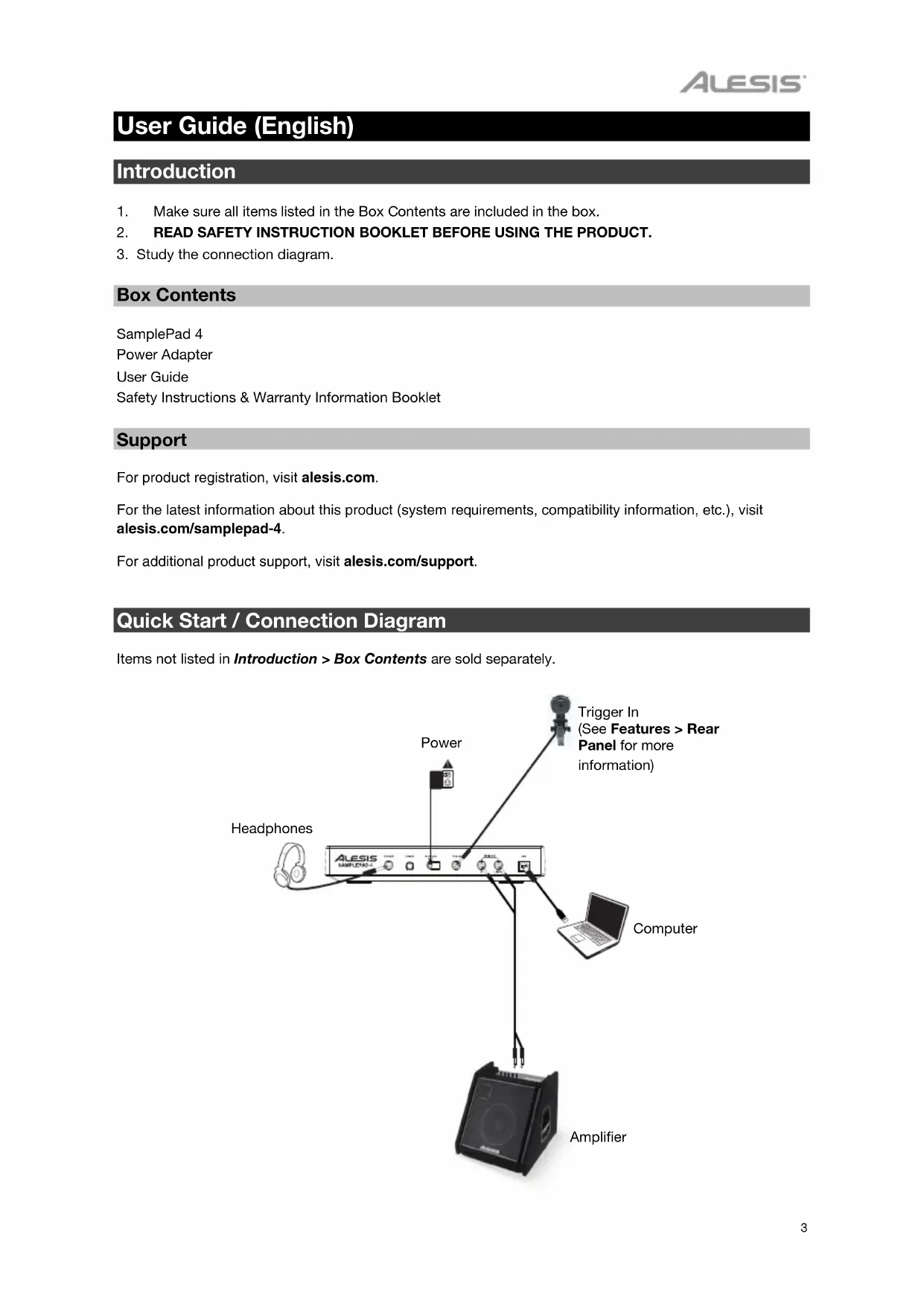
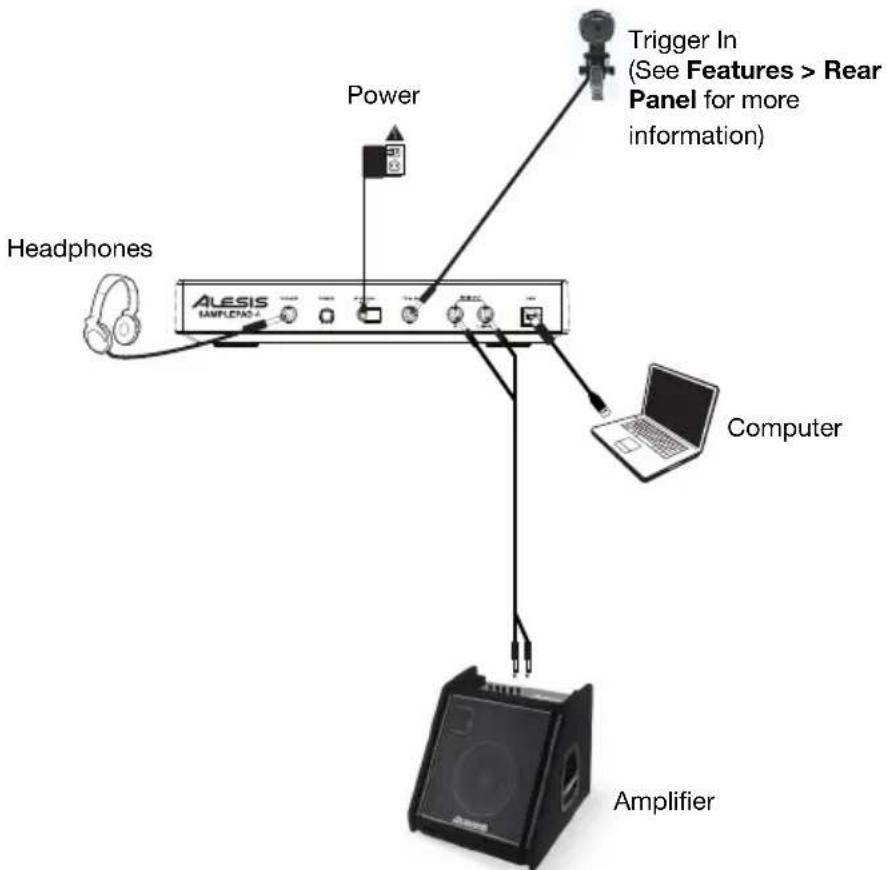
Quick Start / Connection Diagram
Items not listed in Introduction > Box Contents are sold separately.
Features
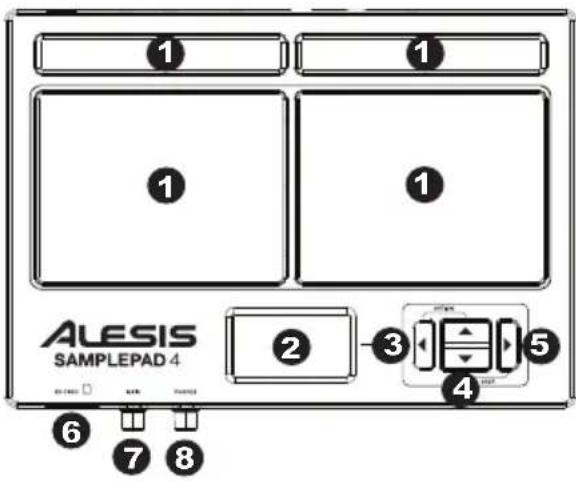
Top Panel
- Pad: Strike these single-zone pads with a drumstick. A LED around the pad will illuminate when that pad is struck.
- LCD: Displays the current parameters and other operations.
- Cursor Left: Press this button to decrease the value of a parameter.
- Cursor Up/Down: Press these buttons to move up and down through the available parameters or menu options.
- Cursor Right: Press this button to increase the value of a parameter or enter a submenu.
- SD Card Slot: Insert a standard SD card (not included) containing .WAV samples into this slot.
- Main Volume: Adjusts the overall volume level for the Main Out.
- Phones Volume: Adjusts the overall volume level for the Phones Out.
WARNING: Put on your headphones or turn on your speakers only AFTER turning on SamplePad 4.
Rear Panel

- Phones Out: Connect a pair of 1/4" headphones to this output.
- Power Switch: Press this button to turn SamplePad 4 on. Hold this button for two seconds and release to turn SamplePad 4 off.
- DC Input: Connect the included power adapter here, then connect the adapter to wall power.
- Trig In: Connect a dual-zone or single-zone drum pad, cymbal pad, or trigger to this input using a 1/4" TRS cable for dual-zone or a 1/4" TS cable for single-zone. You can use this input to trigger samples assigned to the EXT 1A and EXT 1B trigger location of each kit on SamplePad 4.
- Main Out: Use standard 1/4" cables to connect this output to a speaker or amplifier system. (For mono sound, connect a cable only to the Left output.)
- USB/MIDI Port: Connect SamplePad 4 to a computer to send and receive MIDI data or load samples to the SD card.
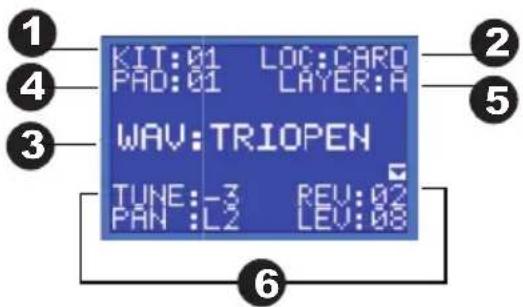
LCD Screen
- Kit: Displays the name of the kit that is currently being edited.
- Sample Location: Displays the location of the sample assigned to the velocity layer being edited.
- Sample Name: Displays the sample that is currently assigned to the velocity layer of the trigger location being edited.
- Trigger Location: Displays the trigger location that is currently being edited.
- Velocity Layer: Displays the velocity layer of the trigger location that is currently being edited.
- Other Parameters: Displays the tuning, sensitivity, panning, reverb, level, MIDI Note, mode, and mute group parameters of the velocity layer that is currently being edited.
Basic Operations
Selecting the Kit:
- Press the Cursor Up or Cursor Down buttons to highlight the kit number.
- Press the Cursor Left or Cursor Right buttons to scroll through the available kits.
- Hold down the Cursor Left or Cursor Right buttons to rapidly scroll through the kits.
Assigning a Sample to a Pad or Ext. Trigger:
- Move the cursor to the Trigger Location parameter by pressing the Cursor Up or Cursor Down buttons.
- Use the Cursor Left or Cursor Right buttons to select the pad or ext. trigger that you would like to assign the sample to.
- Move the cursor to the Sample Location parameter by pressing the Cursor Up or Cursor Down buttons.
- Use the Cursor Left or Cursor Right buttons to select the location of the sample that you would like to assign. (internal or card)
- Move the cursor to the Sample Name parameter by pressing the Cursor Up or Cursor Down buttons.
- Use the Cursor Left or Cursor Right buttons to browse the internal memory or SD card and select the sample that you would like to assign to this trigger location.
Velocity Layers:
You can load up to 2 samples (referred to as Layers) per 1 pad or trigger input. The 2 Layers are referred to as A and B and they can only be accessed if you are using samples from a SD card (LOC:CARD). You can select a velocity range setting (shown as Vel: 000-127) for each of these layers, so that each sample will only trigger when a pad or external trigger is struck with that velocity amount. If multiple layers are set to the same velocity range on a pad or external trigger input, they will both trigger at the same time when the pad or external trigger is struck.
To assign a sound to one of the layers of a pad or ext. trigger:
- Move the cursor to the Sample Location parameter by pressing the Cursor Up and Cursor Down buttons.
- Use the Cursor Left or Cursor Right buttons to set the Sample Location to LOC:CARD.
- Move the cursor to the Layer parameter by pressing the Cursor Up or Cursor Down buttons.
- Use the Cursor Left or Cursor Right buttons to select the layer that you would like to configure.
- Move the cursor to the "Vel:" parameter by pressing the Cursor Up or Cursor Down buttons.
- Use the Cursor Left or Cursor Right buttons to adjust the velocity range to configure when the sample assigned to this layer should play.
- Move the cursor to the Sample Name parameter by pressing the Cursor Up or Cursor Down buttons.
- Use the Cursor Left or Cursor Right buttons to browse the SD card and select the sample that you would like to assign to this layer.
Sample File Requirements
Please note the following file requirements:
• The samples files must be 16-bit, mono or stereo .WAV files.
- You can use a SD card or SDHC card with a capacity up to 32 GB.
- The .WAV file must be located in the root (main) directory of the card and not in any folders. We recommend formatting your SD card to a FAT32 file system (if it is not already) and naming your sample files according to this format. Basically, this means:
- Do not use these characters: " * / \ : < > ? |
- Do not use spaces.
- Limit your file name to 8 characters (excluding the file extension, ".WAV").
- You can assign up to 14 MB worth of samples per kit (the sample library on your SD card can be larger, of course). Also, please note that a sample's size will be rounded up when loaded (e.g., a 2.1 MB sample on the SD card will be treated as a 3 MB sample when it is assigned to a pad).
- The max number of files that can be located in the root directory is 512.
- When a .WAV file is selected, it will take a few seconds to load into the memory.
- SamplePad 4 supports mono or stereo .WAV files, with a sample rate of 48K, 44.1K, 32K, 22.05K, and 11.025K.
- When there is no SD card inserted, it is not possible to select the card location.
Editing Layer Parameters
To adjust the pitch of a sample:
- Strike a pad or ext. trigger.
- Move the cursor to the TUNE area by pressing the Cursor Up or Cursor Down buttons.
- Then press the Cursor Left or Cursor Right button to adjust the tuning. [-4, -3, -2, -1, 0, 1, 2, 3, 4]
To adjust the reverb level of a sample:
- Strike a pad or ext. trigger.
- Move the cursor to the REV (Reverb) area by pressing the Cursor Up or Cursor Down buttons.
- Then press the Cursor Left or Cursor Right button to adjust the reverb level. [0-10]
To adjust the sensitivity of the pad or ext. trigger:
- Strike a pad or ext. trigger.
- Move the cursor to the SENS (Sensitivity) area by pressing the Cursor Up or Cursor Down buttons.
- Then press the Cursor Left or Cursor Right buttons to adjust the sensitivity level. [1-8]
To adjust the volume level of a sample:
- Strike a pad or ext. trigger.
- Move the cursor to the LEV (Level) area by pressing the Cursor Up or Cursor Down buttons.
- Then press the Cursor Left or Cursor Right button to adjust the level. [0-10]
To adjust the panning of a sample:
- Strike a pad or ext. trigger.
- Move the cursor to the PAN area by pressing the Cursor Up or Cursor Down button.
- Then press the Cursor Left or Cursor Right button to adjust the pan position. [L4, L3, L2, L1, CTR, R1, R2, R3, R4]
To adjust the MIDI note sent by the Trigger Location:
- Strike a pad or ext. trigger.
- Move the cursor to the MIDI area by pressing the Cursor Up or Cursor Down button.
- Then press the Cursor Left or Cursor Right button to adjust the MIDI note number. [00-127]
Note: The MIDI note does not have an effect on the internal sound.
To adjust the Mode of the pad or ext. trigger:
- Strike a pad or ext. trigger.
- Move the cursor to the MODE area by pressing the Cursor Up or Cursor Down buttons.
- Then press the Cursor Left or Cursor Right buttons to select the mode.
Select from the following mode options:
- PLY (Polyphonic)
Each new pad or ext. trigger strike will trigger the assigned sample and overlap the sound from the previous strike of the same trigger location.
- MON (Monophonic)
Each new pad or ext. trigger strike will trigger the assigned sample and stop the sound from the previous strike of the same trigger location.
- LOP (Loop)
After a pad or ext. trigger is struck, the sample will continue to playback from the beginning after it reaches the end of the sample. To stop the loop, strike the pad or ext. trigger again.
- STP (Stop)
After the pad or ext. trigger is struck, all samples currently being played by SamplePad 4 will be muted.
- TMP (Tempo)
Strike the pad or ext. trigger several times in the TMP mode to set the tempo of the metronome.
- CLK (Clock)
Strike the pad or ext. trigger to start or stop the metronome (click) playback.
Mute Groups
Normally, when you strike a pad or ext. trigger when another pad is playing back, the samples of these two pads will be played back overlapped. With the mute group function, you can stop the playback of the sample of a pad when you strike another pad or ext. trigger. For example, you can simulate a hi-hat by setting an open hi-hat sound to one pad, and then setting a closed hi-hat sound to another pad. Then after setting both pads to the same mute group, these sounds will mute each other out, similar to a real hi-hat.
To assign a pad or ext. trigger to a mute group:
- Strike one of the pads or ext. trigger that you want to assign to a Mute Group.
- Move the cursor to the MGRP (Mute Group) area by pressing the Cursor Up or Cursor Down buttons and use the Cursor Left or Cursor Right buttons to select a Mute group. [1-16]
- Strike another pad or ext. trigger, navigate to the MGRP, and use the Cursor Left or Cursor Right buttons to set this pad to the same number you set for the first pad.
Options Menu
SamplePad 4's Options menu contains global settings that affect the overall operation as well as system-related information and functions.
To enter the Options menu and change these global settings:
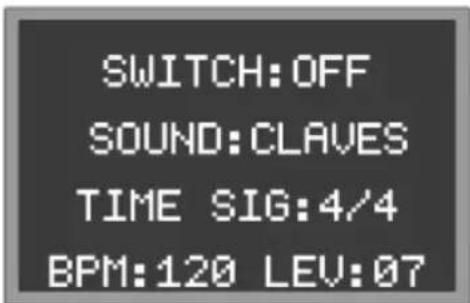
- Press and hold the Cursor Up and Cursor Left buttons for 2 seconds to enter the main Options menu.
- Press the Cursor Up and Cursor Down buttons to highlight the submenu that you would like to enter, then press Cursor Right to enter the submenu.
- Press Cursor Up and Cursor Down to highlight the parameter that you would like to enter, then press Cursor Left and Cursor Right to edit the parameter.
- To exit a submenu or the main Options menu, press and hold Cursor Up and Cursor Left for 2 seconds.
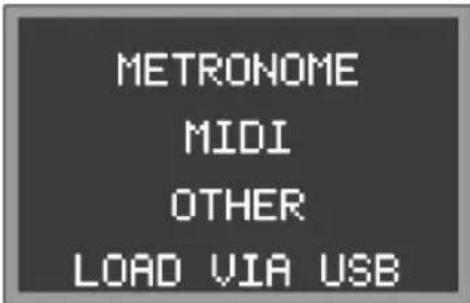
To save the global parameters set in the Options menu:
- Press and hold the Cursor Down and Cursor Right buttons for 2 seconds to enter the main Save menu.
- Press the Cursor Up and Cursor Down buttons to highlight SAVE GLOBAL SETTINGS > SAVE GLOBAL.
- Press Cursor Right to enter the SAVE GLOBAL SETTINGS submenu.
- Press the Cursor Up and Cursor Down buttons to highlight YES and press Cursor Right to save the global settings.
- To exit the SAVE GLOBAL SETTINGS submenu, press the Cursor Down button until Exit is highlighted, and then press the Cursor Right button. Alternatively, press and hold the Cursor Down and Cursor Right buttons to exit this menu.
Metronome
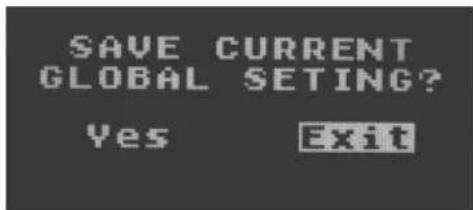
- Switch: Turns the metronome on or off.
• Sound: Selects the sound of the metronome from Metronome, Claves, Sticks, Cowbell, and Beep. - Tempo: Adjusts the tempo of the metronome from 30-280 BPM (Beats per Minute).
• Level: Adjusts the volume of the metronome from 0-10. - Time: Adjusts the time signature for the metronome. The available time signatures to select from are 1/2, 1/4, 1/8, 1/16, 2/2, 2/4, 2/8, 2/16, 3/2, 3/4, 3/8, 3/16, 4/2, 4/4, 4/8, 4/16, 5/2, 5/4, 5/8, 5/16, 6/2, 6/4, 6/8, 6/16, 7/2, 7/4, 7/8, 7/16, 8/2, 8/4, 8/8, 8/16, 9/2, 9/4, 9/8, and 9/16.
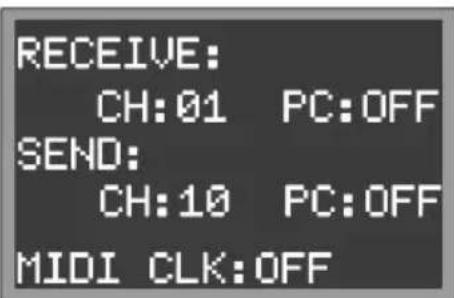
MIDI
- Receive Channel: Sets the MIDI channel that SamplePad 4 will receive MIDI data. The available parameters are All, or individual MIDI channels 1-16.
- Send Channel: Sets the MIDI channel that SamplePad 4 will send MIDI data. The available parameters are individual channels 1-16.
- Receive Program Changes: Sets whether SamplePad 4 will react to program change messages received on the MIDI Receive Channel. The available parameters are Yes and No.
- Send Program Changes: Sets whether SamplePad 4 will send program changes over the MIDI Send Channel when a kit is changed. The available parameters are Yes and No.
- MIDI Clock: Sets whether the SamplePad 4 will send or receive MIDI Clock. This feature can also be set to OFF.
Load Samples/Kits Via USB
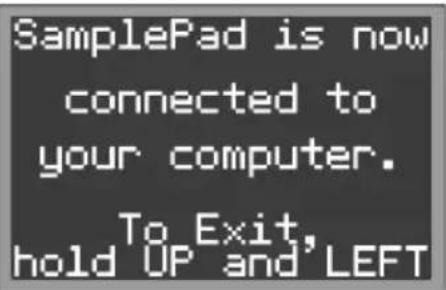
- After this feature is selected, SamplePad 4 will connect to your Mac or PC via the USB connection for easy SD card management. To exit this mode, hold Cursor Left and Cursor Up on SamplePad 4 for two seconds.
Other
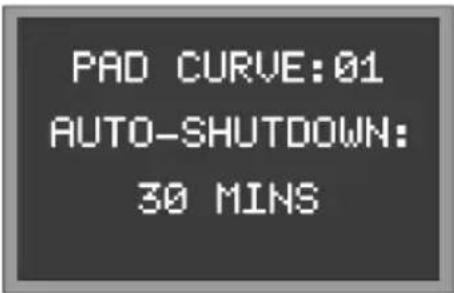
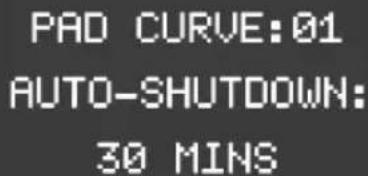
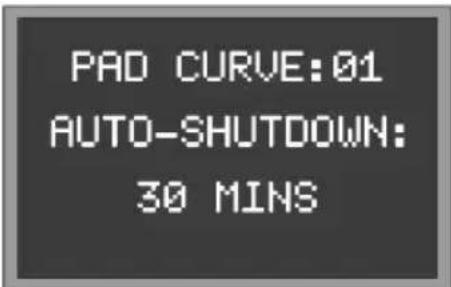
- Pad Curve: Selects the velocity curve sensitivity setting (1-8) to be used across all of the internal pads. You can audition the Pad Curve by striking a pad while changing this setting.
- Auto-Shutdown Time: Selects how long SamplePad 4 will remain powered on if there is no activity. Select from 30 minutes, 60 minutes, or Off (SamplePad 4 will remain powered on until you manually power it off).
Saving a Kit
- Select the kit on the main screen that you have edited and would like to save.
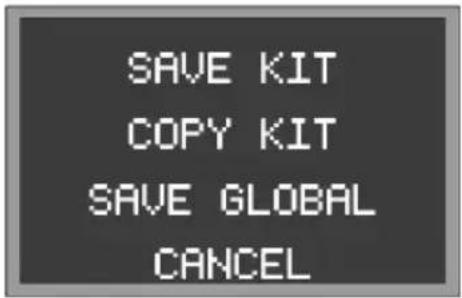
- Press and hold the Cursor Down and Cursor Right buttons for 2 seconds simultaneously to enter the Save menu.
- Move the cursor to the SAVE KIT option by pressing the Cursor Up or Cursor Down buttons.
- Press Cursor Right to enter the SAVE KIT submenu.
- Press Cursor Up or Cursor Down to highlight "Yes" and then press Cursor Right to save the kit.
- To exit the SAVE KIT submenu, press the Cursor Down button until Exit is highlighted, and then press the Cursor Right button. Alternatively, press and hold the Cursor Down and Cursor Right buttons to exit this menu.
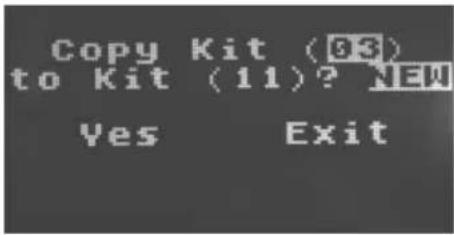
Copying a Kit
- Press and hold the Cursor Down and Cursor Right buttons for 2 seconds to enter the Save menu.
- Move the cursor to the COPY KIT option by pressing the Cursor Up or Cursor Down buttons.
- Press Cursor Right to enter the COPY KIT submenu.
- Press Cursor Left or Cursor Right to select the kit that you would like to copy.
- Press Cursor Down and then press Cursor Left or Cursor Right to select the location that you would like to copy the kit to.
- Press Cursor Down to highlight Confirm > highlight Yes, and then Cursor Right to copy the kit.
- To exit the COPY KIT submenu, press the Cursor Down button until Exit is highlighted, and then press the Cursor Right button. Alternatively, press and hold the Cursor Down and Cursor Right buttons to exit this menu.
Factory Reset
To reset the internal kits and global settings to the factory default settings, hold the Cursor Left and Cursor Right buttons while powering on the SamplePad 4. This will not affect samples or kits stored on your SD card.
Metrónomo
Guardado de un kit
Métronome
Autre
Metronomo
Altra
Metronom
Technical Specifications
| Power | 9V DC, 500 mA, center-positive |
| Dimensions(width x depth x height) | 10.25" x 7.5" x 2.5"26 cm x 19.1 cm x 6.4 cm |
| Weight | 2.55 lbs.1.2 kg |
| SD Card Specs | Supports SD/SDHC cards up to 32 GB with a FAT32 file system |
| Supported File Type | 16-bit, mono or stereo .WAV files with a sample rate of 48K, 44.1K, 32K, 22.05K, or 11.025K. |
Specifications are subject to change without notice.
Trademarks and Licenses
Alesis is a trademark of inMusic Brands, Inc., registered in the U.S. and other countries.
SD is a trademark of SD-3C, registered in the U.S. and other countries.
All other product or company names are trademarks or registered trademarks of their respective owners.
alesis.com
- USER GUIDE (ENGLISH)
- INTRODUCTION
- BOX CONTENTS
- SUPPORT
- QUICK START / CONNECTION DIAGRAM
- FEATURES
- TOP PANEL
- REAR PANEL
- LCD SCREEN
- BASIC OPERATIONS
- SELECTING THE KIT
- ASSIGNING A SAMPLE TO A PAD OR EXT. TRIGGER
- VELOCITY LAYERS
- TO ASSIGN A SOUND TO ONE OF THE LAYERS OF A PAD OR EXT. TRIGGER
- SAMPLE FILE REQUIREMENTS
- EDITING LAYER PARAMETERS
- TO ADJUST THE PITCH OF A SAMPLE
- TO ADJUST THE REVERB LEVEL OF A SAMPLE
- TO ADJUST THE SENSITIVITY OF THE PAD OR EXT. TRIGGER
- TO ADJUST THE VOLUME LEVEL OF A SAMPLE
- TO ADJUST THE PANNING OF A SAMPLE
- TO ADJUST THE MIDI NOTE SENT BY THE TRIGGER LOCATION
- TO ADJUST THE MODE OF THE PAD OR EXT. TRIGGER
- MUTE GROUPS
- TO ASSIGN A PAD OR EXT. TRIGGER TO A MUTE GROUP
- OPTIONS MENU
- METRONOME
- MIDI
- LOAD SAMPLES/KITS VIA USB
- OTHER
- SAVING A KIT
- COPYING A KIT
- FACTORY RESET
- METRÓNOMO
- GUARDADO DE UN KIT
- MÉTRONOME
- AUTRE
- METRONOMO
- ALTRA
- METRONOM
- TRADEMARKS AND LICENSES
- ALESIS.COM
Brand : ALESIS
Model : SamplePad 4
Category : Computer drum