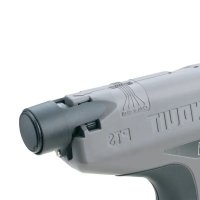
KPTSTL - Pneumatic drill Panduit - Free user manual and instructions
Find the device manual for free KPTSTL Panduit in PDF.



| Product type | Pneumatic tool |
| Brand | Panduit |
| Model | KPTSTL |
| Dimensions (L x H) | 239 mm x 162 mm |
| Recommended air pressure | 5.2 bar (75 PSIG) |
| Maximum air pressure | 6.2 bar (90 PSIG) |
| Air consumption | 0.043 l/s @ 5.2 bar |
| Sound level | 65 dB |
| Vibration level | 1.2 m/s² |
| Blade lifespan | 100,000 cycles |
| Compatible tie types | Sub-min (1.8 mm), MIN (2.5 mm), INT (3.6 mm), STD (4.8 mm) |
| Tension adjustment range | 0-8 (scale) |
| Air supply | Dry, oil-free compressed air |
| Main function | Automatic installation, tensioning, and cutting of cable ties |
| Available spare parts | Replacement blade (KGTSBLD), protective cover (KPTSTL), blade guard (WB27359D01) |
| Required safety equipment | Safety glasses, hearing protection, gloves |
| Routine maintenance | Daily cleaning of the blade and gripper area |
| Intended use | Installation of cable ties on wire harnesses |
Frequently Asked Questions - KPTSTL Panduit
User questions about KPTSTL Panduit
0 question about this device. Answer the ones you know or ask your own.
Ask a new question about this device
Download the instructions for your Pneumatic drill in PDF format for free! Find your manual KPTSTL - Panduit and take your electronic device back in hand. On this page are published all the documents necessary for the use of your device. KPTSTL by Panduit.
USER MANUAL KPTSTL Panduit
U.S.A. Technical Support
Panduit Electrical Headquarters
16530 W. 163rd Street, Lockport, IL 60441
Tel: 1-800-777-3300
Panduit Europe · EMEA Service Center
Almelo, Netherlands
Tel: +31 546 580 452
Fax: +31 546 580 441
Guadalajara, Jalisco, Mexico
Tel: 52 (333) 666 2501
Fax: 52 (333) 666 2510
The PTS Tool installs Panduit Subminiature, Miniature (MIN), Intermediate (INT), and Standard (STD) cross section cable ties. The tool pneumatically tensions the cable tie to a tool-controlled tension, and cuts off the tip.
TOOL SPECIFICATIONS
Weight: 17.3 oz. (490 gr.)
Dimensions*: 9.42" (239mm) Long X 6.38" (162mm) High
- Dimensions in parentheses are metric; all dimensions are approximate, and for reference only.

GENERAL SAFETY PRACTICES
- For multiple hazards, read and understand the safety instructions before installing, operating, repairing, maintaining, changing accessories on, or working near the pneumatic tool. Failure to do so can result in serious bodily injury.
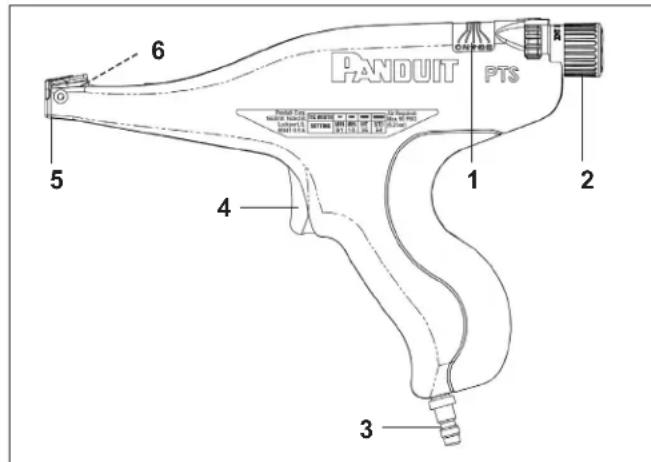
PTS PNEUMATIC TOOL
-
Tension Indicator
-
Trigger
-
Selector Knob
-
Nose
-
Quick Disconnect Fitting
-
Gripper
-
Only qualified and trained operators should install, adjust or use the pneumatic tool
- DO NOT modify this pneumatic tool. Modifications can reduce the effectiveness of safety measures and increase the risks to the operator
- DO NOT discard the safety instructions; give them to the operator
- DO NOT use the pneumatic tool if it has been damaged
- Tools shall be inspected periodically to verify that the ratings and markings required by this part of ISO 11148 are legibly marked on the tool. The employer/user shall contact the manufacturer to obtain replacement marking labels when necessary
DO NOT use tool for purposes not intended. Unexpected tool movement or breakage of tool may cause injuries to hand - Unsuitable postures may not allow counteracting of normal or unexpected movement of the tool
| For multiple hazards, read and understand the safety instructions before installing, operating, repairing, maintaining, changing accessories on, or working near the pneumatic tool. | |
| Safety glasses must be worn at all times by all persons within ten (10) feet of any part of the system. CAUTION: Be aware of the ejection of cable tie scrap from tool. | |
| DO NOT use tool on live electrical sources. | |
| CAUTION! Pinch Point. Keep hands and fingers clear. | |
| DO NOT use tool in an explosive atmosphere. | |
| Ear protection should be worn when operating the tool. |
Projectile Hazards:
- Disconnect the pneumatic tool from the energy source when changing inserted tools or accessories
- Always wear impact-resistant eye protection during operation of the tool. The grade of protection required should be assessed for each use
- Ensure that the workpiece is securely fixed
- Be aware that working on brittle material can cause harmful splinters
Operating Hazards:
- Use of the tool may expose the operator's hands to hazards, including impacts, cuts, abrasions and heat; wear suitable gloves to protect hands
- Operators and maintenance personnel shall be physically able to handle the bulk, weight and power of the tool
- Hold the tool correctly; re ready to counteract normal or sudden movements and have both hands available
- Maintain a balanced body position and secure footing; avoid awkward or off-balanced postures, change posture during extended tasks; this can help avoid discomfort and fatigue
- Use only lubricants recommended by the manufacturer
- Be aware of the risk of a whipping compressed air hose
Repetitive Motion Hazards:
- When using a pneumatic tool to perform work-related activities, the operator can experience discomfort in the hands, arms, shoulders, neck or other parts of the body
- While using a pneumatic tool, the operator should adopt a comfortable posture while maintaining secure footing and avoiding awkward or off-balance postures. The operator should change posture during extended tasks; this can help avoid discomfort and fatigue
- If the operator experiences symptoms such as persistent or recurring discomfort, pain, throbbing, aching, tingling, numbness, burning sensations or stiffness; these warning signs should not be ignored. The operator should tell the employer and consult a qualified health professional
Workplace Hazards:
- Slips, trips and falls are major causes of workplace injury. Be aware of slippery surfaces caused by use of the tool and also of trip hazards caused by the air line or hydraulic hose
- Proceed with care in unfamiliar surroundings. There can be hidden hazards, such as electricity or other utility lines
- Ensure that there are no electrical cables, gas pipes, etc., which can cause a hazard if damaged by use of the tool.
Additional Safety Instructions:
Air under pressure can cause severe injury. Always shut off air supply, drain hose of air pressure and disconnect tool from air supply when not in use, before changing accessories or when making repairs
- Whipping hoses can cause severe injury. Always check for damaged or loose hoses and fittings
DO NOT exceed the maximum air pressure stated on the tool
- Never carry a pneumatic tool by the hose
Periodic Maintenance:
Make sure tool is clean before each use.
NOTE: In the interest of higher quality and value, Panduit products are continually being improved and updated. Consequently, pictures may vary from the enclosed product.
SETUP
- Connect 1/8" NPT male fitting of PPH10 Air Supply Hose to 1/8" NPT female port of PL289N1 Filter/Regulator.
- Connect 1/8" female quick disconnect socket end of Air Supply Hose to 1/8" male quick disconnect fitting at end of PTS Tool.
- Connect filter/regulator to main NON-LUBRICATED air supply and set regulator at 75 PSIG (5.2 bar). See Air Supply specifications on next page.
OPERATION
- Reading the tension knob from the top of the tool, rotate the knob to select the cross section of cable ties to be installed.
MIN-M: Approx. 0.098'' (2.5mm) wide cable ties
(Submin: Approx. 0.070" (1.8mm) wide cable ties)
INT-I: Approx. 0.142" (3.6mm) wide cable ties STD-S: Approx. 0.190" (4.8mm) wide cable ties
If necessary, further adjust tension per Tension Adjustment instructions below.
- Loop cable tie around bundle and insert the tip through the head. Pull the tie up snug on the bundle by hand.
- Insert the strap of the cable tie into the side of the tool. With the nose of the tool flush to the cable tie head, squeeze the trigger to tighten the cable tie. Typically, only one depression of trigger is necessary for cable tie cut-off.
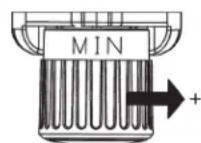
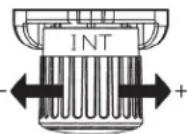
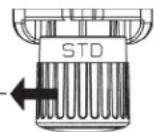
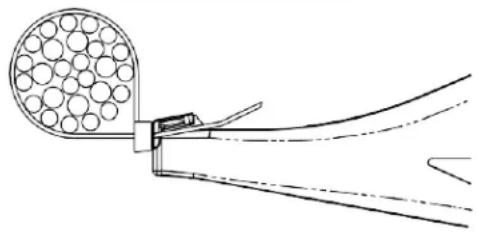
TENSION ADJUSTMENT
There is a tension indicator on the top of the tool. The tension setting can be changed by turning the fine adjustment knob:
0-3 for MIN; 3-5 for INT; and 6-8 for STD
(0-1 for Subminiature ties)
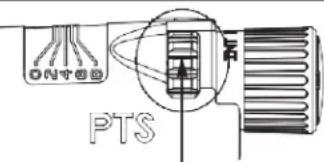

Fine Adjustment Knob
DAILY TOOL INSPECTION
- Visually inspect nose area for foreign matter and cable tie scrap. Keep this area clear of foreign matter.
- Visually inspect applied cable ties for correct tension and cut-off to verify the working condition of the blade and gripper.
| PTS Replacement Kits and Accessories Available • Contact Panduit for more information | |
| KGTSBLD | Blade Replacement Kit - For replacement of a worn blade |
| KPTSTL | Tool Tension Locking Kit - May be installed to prevent adjustment of the tension knob |
| PHCAQ | Adapter Fitting for Hose (PPH10) - 1/4" Male Quick Disconnect (to regulator). |
| PHCAT | Adapter Fitting for Hose (PPH10) - 1/4" NPT Male Connection (to regulator). |
| WB27359D01 | Blade Guard Housing - For replacement of a worn blade guard |
TECHNICAL SPECIFICATIONS - Air Supply
| ITEM DESCRIPTION | |
| Recommended regulated air pressure supplied to tool (pressures other than recommended may result in unsatisfactory operation): | Regulator settings: 75 PSIG (5,2 bar) with a max. 10 PSI (0,7 bar) drop. MAXIMUM 90 PSIG (6,2 bar). |
| Air consumption at 30 cycles per minute: | .091 cfm @ 75 PSIG (0,043 l/sec @ 5,2 bar) |
| Line pressure supplied to regulator: | Minimum 70 PSIG (4,8 bar), Maximum 90 PSIG (6,2 bar) |
| Filter/regulator requirements: | 5 micron maximum element rating, 5 PSI (0,3 bar) maximum pressure drop @ 70 PSIG (4,8 bar) inlet pressure and 12 cfm (5,7 l/sec) flow minimum. |
| Lubrication for air supply: | Air line lubricators are NOT to be used. |
| Recommended filter/regulator unit (supplied by user) with 1/8" NPT ports and 1/4" quick disconnect (industrial interchange) plug: | Recommended source: Panduit Part Number PL289N1 EU Panduit Part Number: MK-06 |
| Recommended main air supply hose (10 ft.), (supplied by user) from filter/regulator to tool (supplied by user); includes a 1/8" NPT male connector (to regulator) and a 1/8" quick disconnect socket (to tool): | Recommended source: Panduit Part Number PPH10 EU Panduit Part Number: PPH10G |
OTHER SPECIFICATIONS
| DESCRIPTION | VALUE |
| Life cycle of the blade under normal operating conditions | 100,000 cycles |
| Sound Level: Measured sound level per ISO 15744 | 65 dB |
| Vibration Level: Measured vibration level per ISO 20643 | 1.2 m/s² |
TROUBLESHOOTING
| SYMPTOM | POSSIBLE CAUSE | CORRECTIVE ACTION |
| Tool will not operate. | No air pressure at tool. | Verify that air supply is “on”, and that connections are good, to be sure that tool is receiving air. |
| Tool will not cut off cable tie. | A. Air pressure too low.B. Tool has reached end of stroke.C. Tool cutter blade is broken or dull. | A. Check air supply regulator for proper adjustment.Increase air pressure if necessary.B. Release trigger and squeeze again.C. Replace blade using KGTSBLD Blade Replacement Kit. |
| Gripper will not return to forward position. | Material wedged in nose area. | Depress and hold the trigger to actuate the tool.The gripper should remain in it's back position.Once actuated, carefully remove the material from the nose area.Once your hand is clear from the nose and gripper, you may safely release trigger. |
| Cable tie is slipping in gripper. | Gripper is worn or damaged. | Contact Panduit |
| Cable tie is too loose on bundle. | A. Tool tension setting is too low.B. Operator holding tool at angle to bundle.C. Tool is held away from bundle by previously installed cable tie,harness support, or other object on bundle.D. Tool is pulled on as tie is being tensioned. | A. Check tension knob for proper setting for specific cable tie being applied (See Tension Adjustment).B. Hold tool perpendicular to bundle in both directions.C. Do not install cable ties too close to other cable ties,harness supports or other objects on bundle.D. Allow tool to seek its own position as the tie is being tensioned. |
| Cable tie is too tight on bundle. | Tool tension setting is too high. | Check tension knob for proper setting for specific cable tie being applied (See Tension Adjustment). |
| Cable ties will not stay on bundle. | Wire bundle exceeds maximum diameter for specific cable tie being applied. | Operator should dress the wires to result in a more compact bundle. |
| Air leaks from tool. | A. Loose or bad fittings.B. Worn or bad hoses.C. Worn or bad air cylinder assembly. | Contact Panduit |
Brand : Panduit
Model : KPTSTL
Category : Pneumatic drill