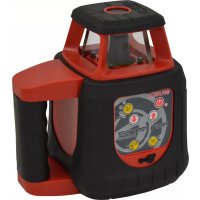
Decacross - Laser level FUTECH - Free user manual and instructions
Find the device manual for free Decacross FUTECH in PDF.



| Technical Features | Line laser level, accuracy of 1 mm at 10 m, range of 20 m, laser class II. |
|---|---|
| Usage | Ideal for leveling, marking, and layout work in construction and renovation. |
| Maintenance and Repair | Regularly check battery condition, clean lenses with a soft cloth, avoid shocks. |
| Safety | Use protective glasses if necessary, do not direct the laser beam into eyes. |
| General Information | Lightweight, compact design, battery powered, 2-year warranty. |
Frequently Asked Questions - Decacross FUTECH
User questions about Decacross FUTECH
0 question about this device. Answer the ones you know or ask your own.
Ask a new question about this device
Download the instructions for your Laser level in PDF format for free! Find your manual Decacross - FUTECH and take your electronic device back in hand. On this page are published all the documents necessary for the use of your device. Decacross by FUTECH.
USER MANUAL Decacross FUTECH
Congratulations for choosing this FUTECH instrument. FUTECH provides qualitatif high precision instruments. Contributions from professional end users enable us to offer innovative, easy-to-use equipment.
FUTECH DECACROSS
Professional laser lines/cross with ultra visible laser beams due to the use of powerful laser diodes. Automatic levelling using a pendulum system with magnetic damper. Magnetic damping enables greater stability and faster levelling of the pendulum system..
IMPORTANT!
Read the instructions for use carefully before using the instrument. Keep them in a safe place for consultation when necessary.
Whether on or off, keep the instrument out of reach of children. This equipment is a high quality precision instrument which must be handled with care. Avoid shocks and vibration. After use, always replace the instrument in its carrying bag. Make sure that the bag and instrument are dry; otherwise condensation may occur in the device. Make sure that the windows are free of dirt, and clean them using a soft cloth and a glass cleaning device only. Always use the locking device during transportation. Regularly inspect the accuracy of the instrument, especially when starting any major square-setting work. You have the sole responsibility for the accuracy of your work. Do not use any optical equipment such as a magnifying glass to view the laser beam, and take care to remove all reflecting objects to avoid damage to the eye. Locate the laser in such a way that it is not possible for any person to look at the laser beam (intentionally or otherwise). Under no circumstances take the instrument apart, since this may expose you to powerful laser radiation. The laser may only be used for the projection of laser lines. Do not use the instrument in rain or near flammable materials. Technical modification or alterations to the instrument may be carried out without prior notice. The manufacturer's responsibility shall in no case exceed the value of the costs of repair or replacement of the instrument. Respect the environment and do NOT discard the instrument or batteries in household waste. Take them to a recycling centre.
First steps
Remove any protective films.
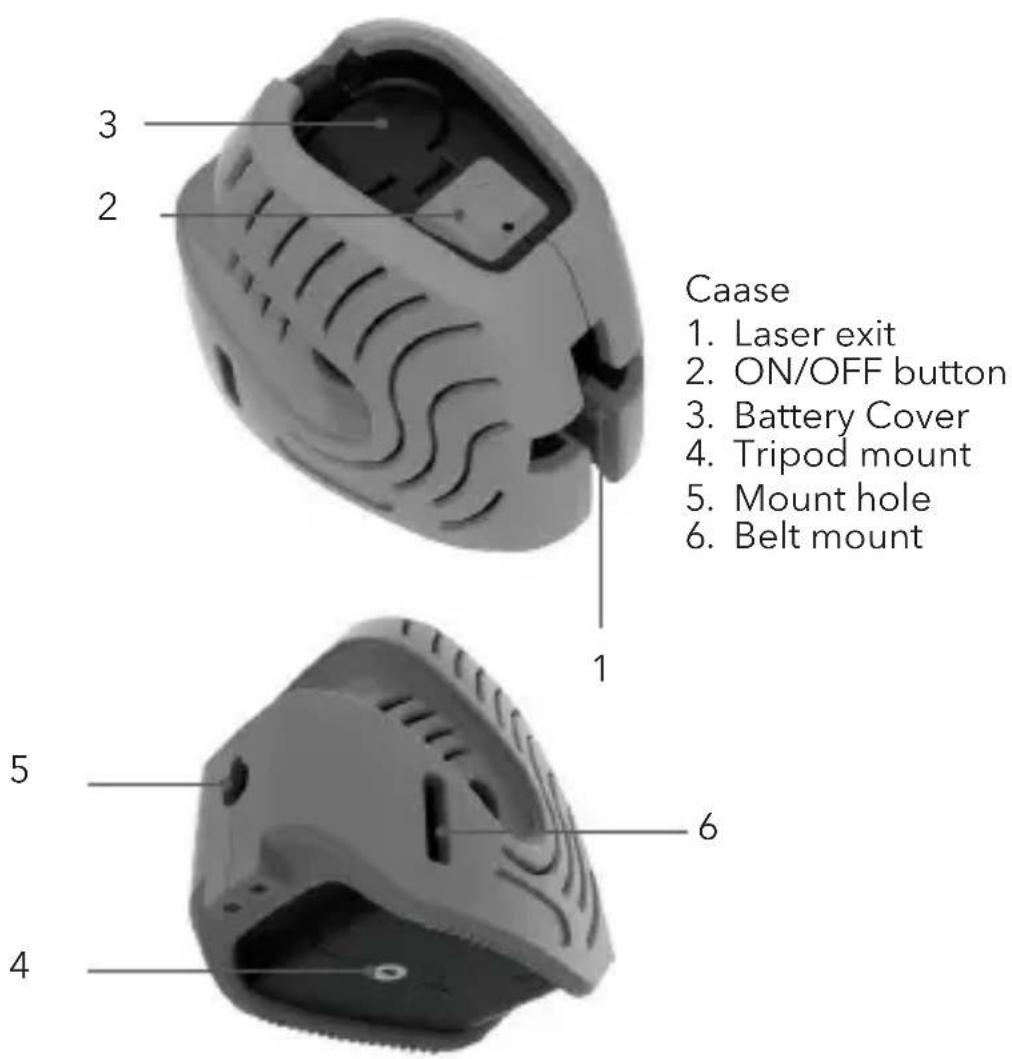
Open the battery compartment and insert batteries. Respect the indicated polarity.
Make sure that the instrument is not on too much of a slope (within 4,5^ ). If the slope of the instrument should exceed 4,5^ , the lasers will flash automatically.
Horizontal and vertical leveling
Push the ON/OFF button to turn on the device. Both laserlines, horizontal and vertical, are visible.
Make sure that the instrument is not on too much of a slope (within 4,5^ ). If the slope of the instrument should exceed 4,5^ , the lasers will flash automatically.
Turn off the device
To turn off the device, push the on/off button.
GENERAL
Description
The following directions should enable the person responsible for the device, and the person who actually uses the equipment, to anticipate and avoid operational hazards. The person responsible for the device must ensure that all users understand these directions and adhere to them.
Adverse Use
Use of the device without instruction.
Use outside of the intended limits.
Disabling safety features.
Removal of hazard notices.
Opening the device using tools, for example screw- driver, unless this is specifically permitted for certain functions.
Modification or conversion of the device.
Use after misappropriation.
Use of devices with obviously recognizable damages or defects.
Use with accessories from other manufacturers without the prior explicit approval of FUTECH.
Inadequate safeguards at the work site, for example when using on or near roads.
Deliberate dazzling of third parties.
Controlling of machines, moving objects or similar monitoring application without additional control and safety installations.
WARNING
Adverse use can lead to injury, malfunction and damage. It is the task of the person responsible for the equipment to inform the
user about hazards and how to counteract them. The device is not to be operated until the user has been instructed on how to work with it.
LIMITS OF USE
Environment
Suitable for use in an atmosphere appropriate for permanent human habitation: not suitable for use in aggressive or explosive environments.
DANGER
Local safety authorities and safety experts must be contacted before working in hazardous areas, or in close proximity to electrical installations or similar situations by the person in charge of the device.
RESPONSIBILITIES
Manufacturer of the device
Laseto N.V., Belgium, BE0808.043.652, hereinafter referred to as FUTECH, is responsible for supplying the device, including the user manual and original accessories, in a completely safe condition.
Manufacturers of non FUTECH accessories for the device are responsible for developing, implementing and communicating safety concepts for their devices, and are also responsible for the effective-ness of those safety concepts in combination with the FUTECH device.
Person in charge of the device
The person in charge of the device has the following duties To understand the safety instructions on the device and the instructions in the user manual.
To be familiar with local regulations relating to safety and accident prevention.
To inform FUTECH immediately if the device and the application becomes unsafe.
-
The person responsible for the device must ensure that it is used in accordance with all instructions. This person is also accountable for the training of personnel who uses the device and for the safety of the equipment in use.
-
The absence of instructions, or the inadequate application of instruction, can lead to incorrect or adverse use, and can increase the risk for accidents with far-reaching human, material, financial and environmental consequences.
-
All users must respect the safety instructions.
-
Watch out for erroneous measurement results if the device has been dropped or has been misused, modified, stored for long periods or transported.
Periodically carry out test measurements and perform the field adjustments indicated in the user manual, particularly after the device has been subjected to abnormal use and before and after important measurements.
-
If the device is used with accessories, for example masts, staffs, poles, you may increase the risk of being struck by lightning.
-
Do not use the device during a thunderstorm.
-
Inadequate securing of the working site can lead to dangerous situations, for example in traffic, on building sites, and at industrial installations.
-
Always ensure that the working site is adequately secured. Adhere to the regulations governing safety and accident prevention and road traffic.
-
If the accessories used with the device are not properly secured and the device is subjected to mechanical shock, for example blows or falling, the device may be damaged or people may sustain injury.
-
When setting-up the device, make sure that the accessories are correctly adapted, fitted, secured, and locked in position. Avoid subjecting the device to mechanical stress.
-
During the transport, shipping or disposal of batteries it is possible for inappropriate mechanical influences to constitute a fire hazard.
-
Before shipping the device or disposing of it, discharge the batteries by running the device until they are flat. When transporting or shipping batteries, the person in charge of the device must ensure that the applicable national and international rules
and regulations are observed. Before transportation or shipping, contact your local forwarder or freight transport company.
- High mechanical stress, high ambient temperatures or immersion into fluids can cause leackage, fire or explosions of the batteries.
- Protect the batteries from mechanical influences and high ambient temperatures. Do not drop or immerse batteries into fluids.
- Short circuited battery terminals can overheat and cause injury or fire, for example by storing or transporting in pockets if battery terminals come in contact with jewellery, keys, metallized paper or other metals.
- Make sure that the battery terminals do not come into contact with metallic objects.
- During the operation of the device there is a hazard of squeezing extremities by moving parts.
- Keep extremities in a safe distance from the moving parts. If the device is improperly disposed of, the following can happen:
If polymer parts are burnt, poisonous gases are produced which may impair health.
If batteries are damaged or are heated strongly, they may explode and cause poisoning, burning, corrosion or environmental contamination.
By disposing the device irresponsibly you may enable unauthorized persons to use it in contravention of the regulations, exposing themselves and third parties to the risk of severe injury and rendering the environment liable to contamination.
- The device must not be disposed with household waste.
Dispose the device appropriately in accordance with the national regulations in force in your country.
LASER CLASSIFICATION
General
The following directions (in accordance with the state of the art - international standard IEC 60825-1(2007-03) and IEC TR 60825-14 (2004-02)) provide instruction and training information to the person responsible for the device and the person who actually uses the equipment, to anticipate and avoid operational hazards. The person responsible for the
device must ensure that all users understand these directions and adhere to them.
Devices classified as laser class 1, class 2 and class 3R do not require
laser safety officer involvement, protective clothes and eyewear,
special warning signs in the laser working area if used and operated as defined in this user manual due to the low eye hazard level.
Devices classified as laser class 2 or class 3R may cause dazzle, flash blindness and afterimages, particularly under low ambient light conditions.
ACCURACY CONTROL
Monitor horizontal levelling
- Choose a room ± 10 m long
- Place the instrument next to wall no. 1.
- Switch on the instrument and let it start levelling.
- Mark the horizontal line in the middle of the cross on wall no 1.
- Turn the instrument through 180^ and mark the laser beam in the middle of the cross on wall no. 2.
- Move the instrument as close as possible to wall no. 2.
- Adjust the height of the laser so that the middle of the laser cross is on the wall no. 2 marker.
- Then turn the instrument through 180^ and note the difference between the middle of the laser cross and the marker on wall no. 1.
- This difference should not exceed 4mm
- NB: The tolerance depends on the distance of the walls between which the inspection has been carried out. This distance should be multiplied by 2. Hence, if the instrument has an accuracy of 4mm / 10m , then in our example the calculation is: 10m distance × 2 = 20m . Tolerance is 8mm / 20m .
Vertical laser line
Place the instrument approximately 5m from a wall.
Place a 2 m long plumb-line against the wall.
Switch on the instrument and let it self-level.
Place the vertical laser line on the plumb-line.
This should be 2mm in our example.
DECACROSS
NB: If your instrument does not reach the required tolerance, it should be returned to your service centre or to your reseller for service. Repairs carried out by unauthorised personnel will automatically expire the guarantee.
| Laser wavelength 635nm/Class II - < 1 mW | |
| Accuracy ± 4 mm/10 m | |
| Levelling range 4,5° | |
| Levelling Pendulum | |
| Battery life 30 h. | |
| Power supply 2x 1,5V LR6 (AA) batteries | |
| Dimensions 110 mm x 68 x 97 mm | |
| Operating range ± 20 m | |
DECACROSS
NL FRE EN DE
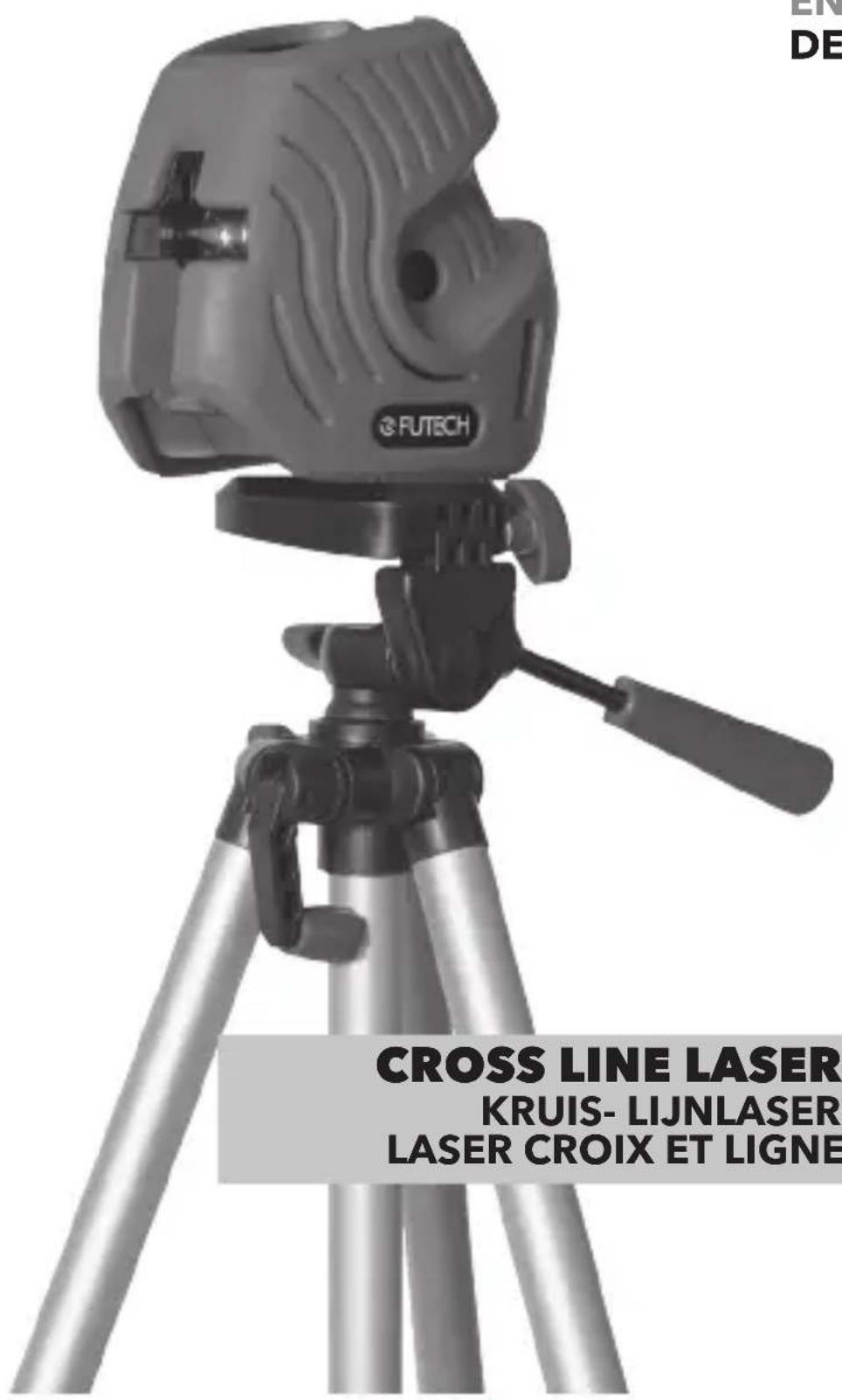
CROSS LINE LASER
KRUIS- LIJNLASER
LASER CROIX ET LIGNE