Digitensio BP 3BQ13 - Blood pressure monitor Marque Verte - Free user manual and instructions
Find the device manual for free Digitensio BP 3BQ13 Marque Verte in PDF.


| Product type | Automatic wrist blood pressure monitor |
| Brand | Green Brand |
| Model | Digitensio BP 3BQ13 |
| Measurement method | Oscillometric |
| Measurement range SYS/DIA | 30 to 280 mmHg |
| Pulse measurement range | 40 to 200 beats/min |
| Blood pressure accuracy | ±3 mmHg |
| Pulse accuracy | ±5% of reading |
| Memory | Automatic storage of the last 60 measurements |
| Display | Liquid crystal display |
| Built-in clock | Yes, with date and time |
| Arrhythmia detection | Yes (IHD) |
| Dimensions (cuff included) | 80 × 71 × 62 mm |
| Weight (with batteries and cuff) | 139 g |
| Power supply | 2 AAA 1.5 V batteries (alkaline recommended) |
| Wrist circumference | 13.5 to 19.5 cm |
| Operating temperature | 10 to 40 °C, 15 to 95% RH max |
| Storage temperature | -20 to 55 °C, 15 to 95% RH max |
| Maintenance | Clean with a dry, soft cloth; cuff can be cleaned with soapy water (do not wash) |
| Warranty | 3 years (excluding batteries) |
| Recalibration | Every 2 years by a specialist |
| Standards | NF EN 1060-1/-3/-4, IEC 60601-1, IEC 60601-1-2, directive 93/42/EEC |
Frequently Asked Questions - Digitensio BP 3BQ13 Marque Verte
User questions about Digitensio BP 3BQ13 Marque Verte
0 question about this device. Answer the ones you know or ask your own.
Ask a new question about this device
Download the instructions for your Blood pressure monitor in PDF format for free! Find your manual Digitensio BP 3BQ13 - Marque Verte and take your electronic device back in hand. On this page are published all the documents necessary for the use of your device. Digitensio BP 3BQ13 by Marque Verte.
USER MANUAL Digitensio BP 3BQ13 Marque Verte
Wrist Watch Blood Pressure Monitor Instruction Manual

Read the instructions carefully before using this device.
Batteries and electronic instruments must be disposed of in accordance with the locally applicable regulations, not with domestic waste.

Type BF applied part.
Table of contents
1. Introduction
1.1. Features of the BP 3BQ1-3
1.2. Important information about self-measurement
2. Important information on the subject of blood-pressure and its measurement
2.1. How does high/low blood-pressure arise?
2.2. Which values are normal?
2.3 What can be done, if regular high/low values are obtained?
2.4. IHD - Pulse Arrhythmia Detection
3. The various components of the blood-pressure monitor
4. Putting the blood-pressure monitor into operation
4.1. Inserting the batteries
4.2. Reading the set date
4.3. Setting the time and date
5. Carrying out a measurement
5.1. Before the measurement
5.2. Common sources of error
5.3. Fitting the cuff
5.4. Measuring procedure
5.5. Discontinuing a measurement
5.6. Memory - storage and recall of the measurements
5.7. Clear all values
6. Error messages/malfunctions
7. Care and maintenance, recalibration
8. Guarantee
9. Reference to standards
10. Technical specifications
1. Introduction
1.1. Features of the BP 3BQ1-3
The blood-pressure monitor BP 3BQ1-3 (with integrated time/date display) is a fully automatic, digital blood-pressure measuring device for use on the wrist, which enables very fast and reliable measurement of the systolic and diastolic blood-pressure as well as the pulse frequency by way of the oscillometric method of measuring.
The device offers a very high and clinical tested measurement accuracy and has been designed to provide a maximum of user-friendliness.
Before using, please read through this instruction manual carefully and then keep it in a safe place. For further questions on the subject of blood-pressure and its measurement, please contact your doctor.
Attention!
1.2. Important information about self-measurement
- Do not forget: self-measurement means control, not diagnosis or treatment. Unusual values must always be discussed with your doctor. Under no circumstances should you alter the dosages of any drugs prescribed by your doctor.
The pulse display is not suitable for checking the frequency of heart pacemakers! - In cases of cardiac irregularity (Arrhythmia), measurements made with this instrument should only be evaluated after consultation with the doctor.
Electromagnetic interference:
The device contains sensitive electronic components (Microcomputer). Therefore, avoid strong electrical or electromagnetic fields in the direct vicinity of the device (e.g. mobile telephones, microwave cookers). These can lead to temporary impairment of the measuring accuracy.
2. Important information on the subject of blood-pressure and its measurement
2.1. How does high/low blood-pressure arise?
The level of blood-pressure is determined in a part of the brain, the so-called circulatory centre, and adapted to the respective situation by way of feedback via the nervous system.
To adjust the blood-pressure, the strength and frequency of the heart (Pulse), as well as the width of circulatory blood vessels is altered. The latter is effected by way of fine muscles in the blood-vessel walls.
The level of arterial blood-pressure changes periodically during the heart activity: During the «blood ejection» (Systole) the value is maximal (systolic blood-pressure value), at the end of the heart's «rest period» (Diastole) minimal (diastolic blood-pressure value).
The blood-pressure values must lie within certain normal ranges in order to prevent particular diseases.
2.2 Which values are normal?
Blood pressure is too high if at rest, the diastolic pressure is above 90mmHg and/or the systolic blood-pressure is over 140mmHg . In this case, please consult your doctor immediately. Long-term values at this level endanger your health due to the associated advancing damage to the blood vessels in your body.
Should the systolic blood-pressure values lie between 140mmHg and 160mmHg and/or the diastolic blood-pressure values lie between 90mmHg and 100mmHg , likewise, please consult your doctor. Furthermore, regular self-checks will be necessary.
With blood-pressure values that are too low, i.e. systolic values under 100mmHg and/or diastolic values under 60mmHg , likewise, please consult your doctor.
Even with normal blood-pressure values, a regular self-check with your blood-pressure monitor is recommended. In this way you can detect possible changes in your values early and react appropriately.
If you are undergoing medical treatment to control your blood pressure, please keep a record of the level of your blood pressure by carrying out regular self-measurements at specific times of the day. Show these values to your doctor. Never use the results of your measurements to alter independently the drug doses prescribed by your doctor.
Table for classifying blood-pressure values (units mmHG) according to World Health Organization:
| Range Systolic | Blood Pressure | Diastolic Blood Pressure | Measures |
| Hypotension lower than 100 lower than 60 Consult | 100 lower than 60 Consult | it your doctor | |
| Optimal range between 100 and 120 between 60 and 80 Self-check | |||
| Normal rangeNbetween 120 and 130 between 80 and 85 Self-check | |||
| High-normal range between 130 and 140 between 85 and 90 Consult your doctor | |||
| Mild hypertension between 140 and 160 between 90 and 100 Consult your doctor | |||
| Moderate hypertension between 160 and 180 between 100 and 110 Consult your doctor | |||
| Severe hypertension higher than 180 higher than 110 Consult your doctor | |||
| immediately |
Further information
- NIf your values are mostly standard under resting conditions but exceptionally high under conditions of physical or psychological stress, it is possible that you are suffering from so-called «labile hypertension». Please consult your doctor if you suspect that this might be the case.
- Correctly measured diastolic blood-pressure values above 120mmHg require immediate medical treatment.
2.3. What can be done, if regular increased/low values are obtained?
a) Please consult your doctor.
b) Increased blood-pressure values (various forms of hypertension) are associated long- and medium term with considerable risks to health. This concerns the arterial blood vessels of your body, which are endangered due to constriction caused by deposits in the vessel walls (Arteriosclerosis). A deficient supply of blood to important organs (heart, brain, muscles) can be the result. Furthermore, with long-term continuously increased blood-pressure values, the heart will become structurally damaged.
c) There are many different causes of the appearance of high blood pressure. We differentiate between the common primary (essential) hypertension, and secondary hypertension. The latter group can be ascribed to specific organic malfunctions. Please consult your doctor for information about the possible origins of your own increased blood pressure values.
d) There are measures which you can take, not only for reducing a medically established high blood pressure, but also for prevention. These measures are part of your general way of life:
A) Eating habits
- Strive for a normal weight corresponding to your age. Reduce overweight!
- Avoid excessive consumption of common salt.
- Avoid fatty foods.
B) Previous illnesses
Follow consistently any medical instructions for treating previous illness such as:
Diabetes (Diabetes mellitus)
- Fat metabolism disorder
Gout
C) Habits
- Give up smoking completely
Drink only moderate amounts of alcohol - Restrict your caffeine consumption (Coffee)
D) Physical constitution:
After a preliminary medical examination, do regular sport.
- Choose sports which require stamina and avoid those which require strength.
- Avoid reaching the limit of your performance.
- With previous illnesses and/or an age of over 40 years, please consult your doctor before beginning your sporting activities. He will advise you regarding the type and extent of types of sport that are possible for you.
2.4. IHD - Pulse Arrhythmia Detection

Appearance of the Arrhythmia indicator
The appearance of this symbol signifies that a certain pulse irregularity was detected during the measurement. The result can vary from your normal blood pressure. As a rule this is not a cause for concern; however, if the symbol appears more frequently (e.g. several times per week on measurements performed daily) or if it suddenly appears more often than usual, we recommend you inform your doctor.
Please show your doctor the following explanation:
Information for the doctor on frequent appearance of the Arrhythmia indicator The Digitensio BP 3BQ1-3 device is an oscillometric blood pressure measuring device that also analyses the pulse frequency during measurement. The accuracy of this device has been clinically validated.
If pulse irregularities occur during measurement, the arrhythmia symbol is displayed after the measurement. If the symbol appears more frequently (e.g. several times per week on measurements performed daily) or if it suddenly appears more often than usual, we recommend the patient to seek medical advice.
The device does not replace a cardiac examination, but serves to detect pulse irregularities at an early stage.
3. The various components of the blood-pressure monitor
The illustration shows the blood-pressure monitor BP 3BQ1-3, consisting of:
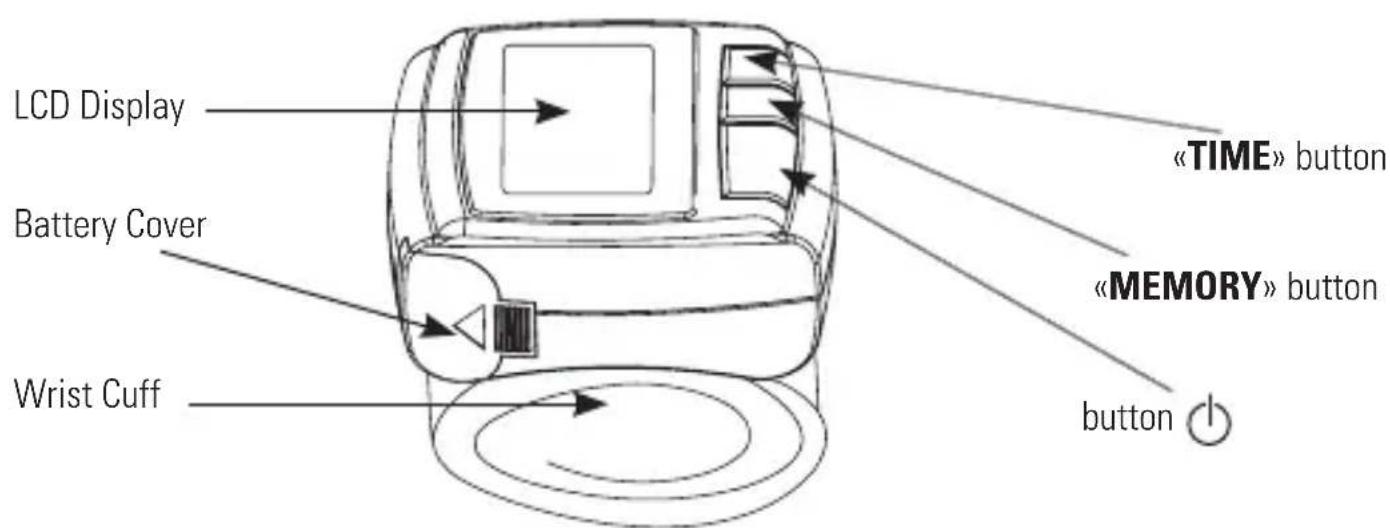
Wrist cuff Type WC1 13.5-19.5 cm, for wrist circumference of 13.5 to 19.5 cm.
4. Putting the blood-pressure monitor into operation
4.1. Inserting the batteries
After you have unpacked your device, first insert the batteries. (see illustration).
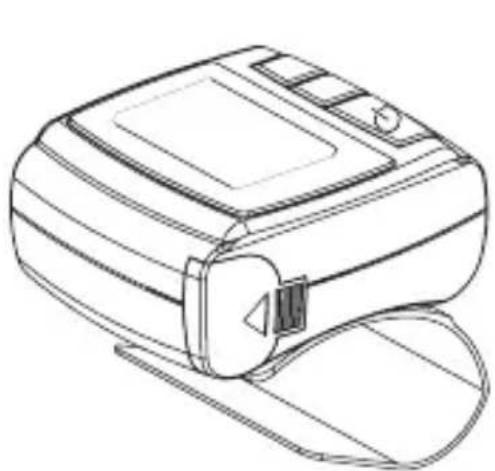
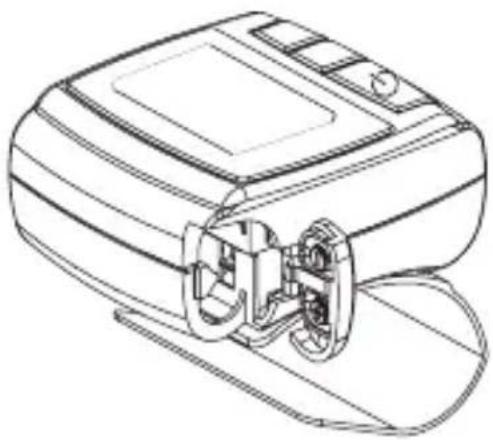
a) Remove cover as illustrated
b) Insert the batteries (2 x size AAA 1.5V), thereby observing the indicated polarity.
c) If the battery warning appears in the display, the batteries are empty and must be replaced by new ones.
Attention!
- After the battery warning appears, the device is blocked until the batteries have been replaced.
- Please use «AAA» Long-Life or Alkaline 1.5V Batteries. The use of 1.2V Accumulators is not recommended.
- If the blood-pressure monitor is left unused for long periods, please remove the batteries from the device.
Functional check: Press and hold the button to test all the display elements. When functioning correctly all segments appear.
4.2. Reading the set date
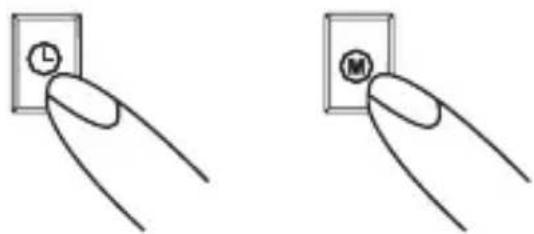
Please press the «TIME» key.
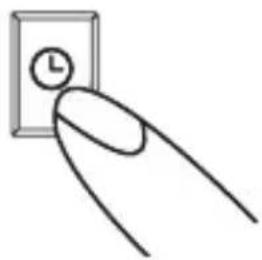
4.3. Setting the time and date
This blood-pressure monitor incorporates an integrated clock with date display. This has the advantage, that at each measurement procedure, not only the blood-pressure values are stored, but also the exact moment of the measurement.
After new batteries have been inserted, the clock begins to run from the following setting: 2005-01-01 00:00 O'clock.
You must then re-enter the date and current time. For this, please proceed as follows (Example: Entering 2006-08-15 Time 08:30 o'clock):
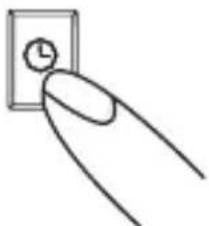
1) Press the «TIME» button for at least 3 seconds. The display now indicates the set year, during which the last two characters blink.
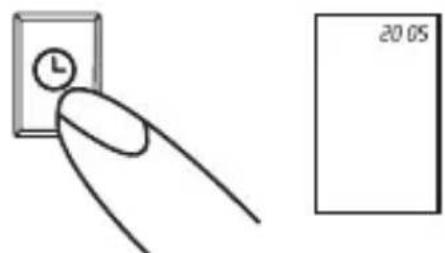
2) The correct year can be entered by pressing the «Memory» button. (Example: 1 x press)
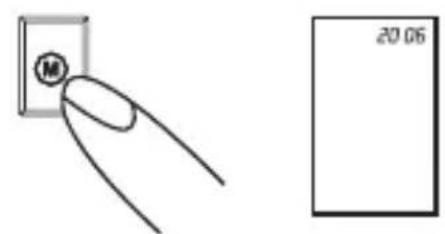
3) Press the «TIME» button again. The display now switches to the current date, during which the first character (month) blinks.
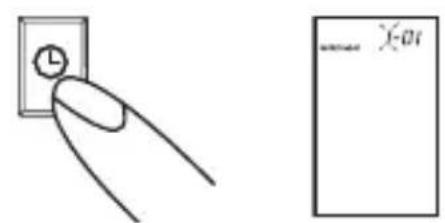
4) The corresponding month can now be entered by pressing the «Memory» button. (Example: 7 x presses)
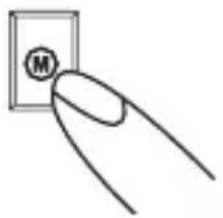
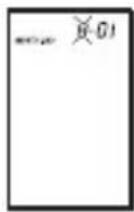
5) Press the «TIME» button again. The last two characters (day) are now blinking.
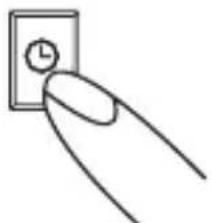
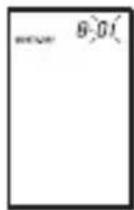
6) The corresponding day can now be entered by pressing the «Memory» button. (Example: 14 x presses)
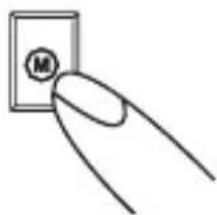
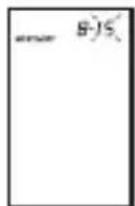
7) Press the «TIME» button again. The display now switches to the current time, during which the first character (Hour) blinks.
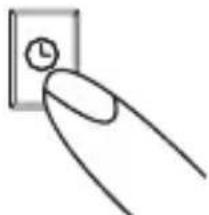
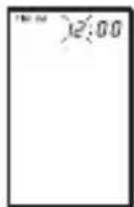
8) The corresponding hour can now be entered by pressing the «Memory» button. (Example: 8 x presses)
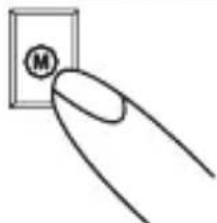
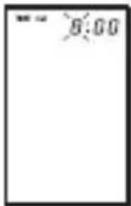
9) Press the «TIME» button again. The last two characters (Minutes) now blink.
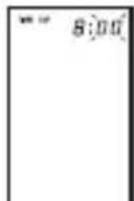
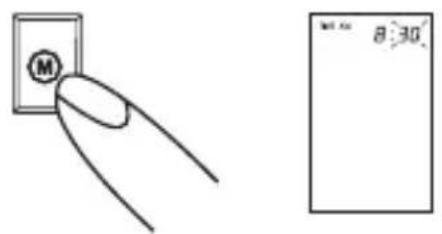
10) The exact time can now be entered by pressing the «Memory» button. (Example: 30 x presses)
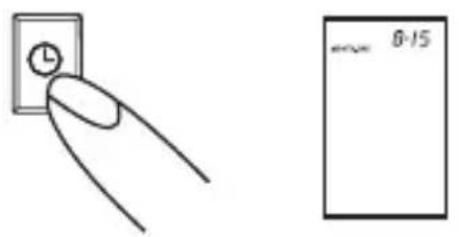
11) NNNow after all settings have been made, press the «TIME» button once again. The date is briefly displayed and then the time. The input is now confirmed and the clock begins to run.
Further Information
With each press of the button («TIME», «Memory») one input is made (e.g. switching over from hours to minutes mode, or altering the value by +1).
However, if you keep the respective button depressed, you can switch more quickly to the desired mode, or find the desired value respectively.
5. Carrying out a measurement
5.1.Before the measurement:
- NAvoid eating, smoking as well as all forms of exertion directly before the measurement. All these factors influence the measurement result. Try and find time to relax by sitting in an armchair in a quite atmosphere for about ten minutes before the measurement.
- NMeasure always on the same wrist (normally left).
- NAttempt to carry out the measurements regularly at the same time of day, since the blood-pressure changes during the course of the day.
5.2. Common sources of error
Note: Comparable blood-pressure measurements always require the same conditions! These are normally always quiet conditions.
- All efforts by the patient to support the arm can increase the blood-pressure. Make sure you are in a comfortable, relaxed position and do not activate any of the muscles in the measurement arm during the measurement. Use a cushion for support if necessary.
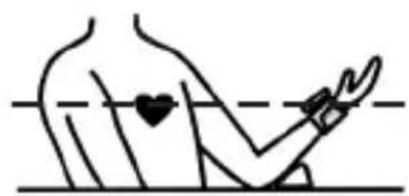
- If the wrist artery lies considerably lower (higher) than the heart, an erroneously higher (lower) blood-pressure will be measured! (Each 15cm difference in height results in a measurement error of 10mmHg !
- A loose cuff causes false measurement values.
- With repeated measurements, blood accumulates in the respective arm, which can lead to false results. Correctly executed blood-pressure measurements should therefore first be repeated after a 5 minute pause or after the arm has been held up in order to allow the accumulated blood to flow away (after at least 3 minutes).
5.3. Fitting the cuff
a) Remove all eventual objects and jewellery (e.g. wristwatch) from the wrist in question. Draw the cuff over the wrist. (normally and the left side).
b) The distance between the cuff and the hand should be approx. 10mm
c) Secure the cuff with the Velcro fastener, so that it lies comfortably and not too tight, whereby no space should remain between the cuff and the wrist.
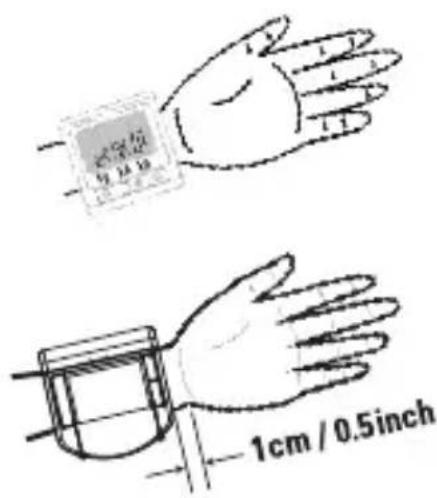
d) Lay the arm on a table, with the palm upwards. Support the arm a little with a rest (cushion), so that the cuff rests at about the same height as the heart. Take care, that the cuff lies free. Remain so for 2 minutes sitting quietly, before beginning with the measurement.
5.4. Measuring procedure
After the cuff has been appropriately positioned, the measurement can begin:
a) Press the button the pump begins to inflate the cuff. In the display, the increasing cuff-pressure is continually displayed.
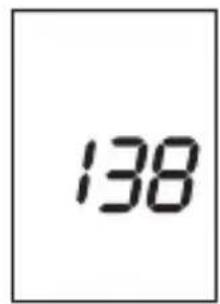
b) After reaching the inflation pressure, the pump stops and the pressure slowly falls away. The cuff-pressure (large characters) is displayed during the measurement. When the device has detected the pulse, the heart symbol in the display begins to blink and a beep tone is audible for every pulse beat.
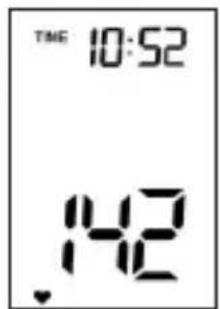
c) When the measurement has been concluded, a long beep tone sounds. The measured systolic and diastolic blood-pressure values as well as the pulse frequency are now displayed.
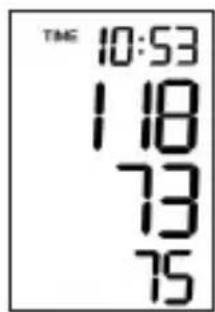
Example (Fig.): Systole 118, Diastole 73, Pulse 75
The measurement results are displayed, until you switch the device off. If no button is pressed for 1 minute, the device switches automatically off, to save the batteries.
5.5. Discontinuing a measurement
If it is necessary to interrupt a blood pressure measurement for any reason (e.g. the patient feels unwell), the button can be pressed at any time. The device then immediately lowers the cuff-pressure automatically.
5.6. Memory - storage and recall of the measurements
The blood-pressure monitor automatically stores each of the last 60 measurement values. By pressing the «Memory» button, you come into direct average memory reading, then the last measurement (MR60) as well as the further last 59 measurements (MR2, MR3, ..., MR60) can be displayed one after the other.
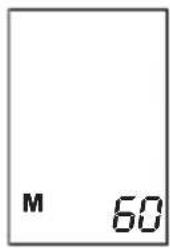
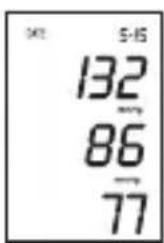
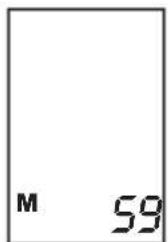
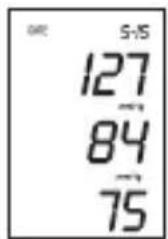
(M60: Values of the last measurement)
(M59-M1: Values of the measurement before MR1)
Further information
Measurements should not occur soon after each other, since otherwise, the results will be falsified. Wait therefore for several minutes in a relaxed position, sitting or lying, before you repeat a measurement.
5.7. Clear all values
Memory full

When the memory has stored 60 results, the display shows «Full M» after a measurement. From this point onwards, a new measured value is stored by over-writing the oldest value.
Clear all values
If you are sure that you want to permanently remove all stored values, hold down the «Memory»-button (the instrument must have been switched off beforehand) until «CL» appears and then release the button. To permanently clear the memory, press the «Memory»-button while «CL» is flashing. Individual values cannot be cleared.
6. Error messages/malfunctions
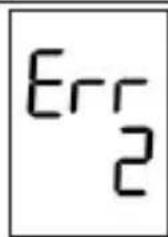
If an error occurs during a measurement, the measurement is discontinued and a corresponding error code is displayed (Example: Error No. 2).
| Erreur n° | Cause(s) possible(s) |
| Err 1 | The systolic pressure was determined but afterwards the cuff pressure fell below 20 mmHg. This situation can occur, for example, if the tube becomes unplugged after N Nthe systolic blood pressure has been measured. Further possible cause: No pulse has been detected. |
| Err 2 | Unnatural pressure impulses influence the measurement result. Reason: The arm was moved during the measurement (Artefact). |
| Err 3 | Inflation of the cuff takes too long. The cuff is not correctly seated or the hose connection is not sealed. |
| ERR 5 | The measured reading indicated an unacceptable difference between systolic and diastolic pressures. Take another measurement following directions carefully. Contact your doctor if you continue to get unusual readings |
| HI | The pressure in the cuff is too high (over 300 mmHg) OR the pulse is too high (over 200 beats per minute). Relax for 5 minutes and repeat the measurement.* |
| LO | The pulse is too low (less than 40 beats per minute). Repeat the measurement.* |
- Please consult your doctor, if this or any other problem occurs repeatedly.
Other possible malfunctions and their elimination
If problems occur when using the device, the following points should be checked and if necessary, the corresponding measures are to be taken:
| Malfunction Remedy | |
| The display remains empty when the instrument is switched on although the batteries are in place. | 1. Check whether the batteries are installed with the correct polarity and correct if necessary. 2. If the display is unusual, re-insert batteries or exchange them. |
| The device frequently fails to measure the blood pressure values, or the values measured are too low (too high). | 1. Check the positioning of the cuff. 2. Measure the blood pressure again in complete peace and quiet under observance of the details made under point 5. |
| Every measurement results in different values although the device functions normally and the values displayed are normal. | ● NPlease read the following information and the points listed under «Common sources of error». Repeat the measurement. |
| The blood pressure values measured differ from those measured by the doctor. | ● NRecord the daily development of the values and consult your doctor about them. |
Further Information
The level of blood-pressure is subject to fluctuations even with healthy people. Important thereby is, that comparable measurements always require the same conditions (Quiet conditions)! If, in spite of observing all these factors, the fluctuations are larger than 15mmHg , and/or you hear irregular pulse tones on several occasions, please consult your doctor. You must consult your specialist dealer or chemist if there are technical problems with the blood-pressure instrument. Never attempt to repair the instrument yourself! Any unauthorised opening of the instrument invalidates all guarantee claims!
7. Care and maintenance, recalivration
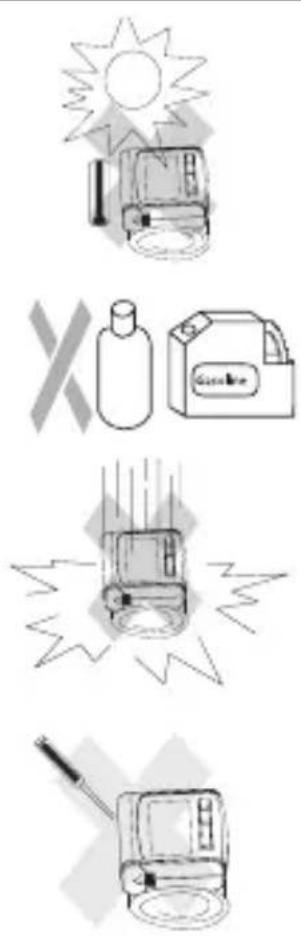
a) Do not expose the device to either extreme temperatures, humidity, dust or direct sunlight.
b) Clean the device with a soft, dry cloth. Do not use petrol, thinners or similar solvent. Spots on the cuff can be removed carefully with a damp cloth and soapsuds. The cuff must not be washed!
c) Do not drop the instrument or treat it roughly in any way. Avoid strong vibrations.
d) NNever open the device! Otherwise the manufacturer calibration becomes invalid!
e) The cuff contains a sensitive air-tight bubble. Handle this carefully and avoid all types of straining through twisting or buckling.
Periodical recalibration
Sensitive measuring devices must from time to time be checked for accuracy. We therefore recommend a periodical inspection of the static pressure display every 2 years.
Your specialist dealer would be pleased to provide more extensive information about this.
8. Guarantee
The blood-pressure monitor BP 3BQ1-3 is guaranteed for 3 years from date of purchase.
(Excepted batteries)
This guarantee includes the instrument and the cuff. The guarantee does not apply to damage caused by improper handling, accidents, not following the operating instructions or alterations made to the instrument by third parties.
The guarantee is only valid upon presentation of the guarantee card filled out by the dealer.
Name and company address of the responsible dealer:
9. Reference to standards
Device standard: Device corresponds to the requirements of the European standard for non-invasive blood-pressure monitor: EN 1060-1/-3 /-4, IEC 60601-1
Electromagn.
compatibility: Device fulfils the stipulations of the European standard IEC 60601-1-2 (EMC)
This device complies with the requirements of the Medical Device Directive 93/42/EEC.
10. Technical specifications
Weight: 139g (with batteries + cuff)
Size: 80 × 71 × 62 mm (including cuff)
Storage temperature: -20 to +55^ ; 15 to 95% relative humidity maximum
Operation temperature: 10 to 40^ ; 15 to 95% relative humidity maximum
Display: LCD-Display (Liquid Crystal Display)
Measuring method: oscillometric
Pressure sensor: capacitive
Measuring range:
SYS/DIA: 30 to 280mmHg
Pulse: 40 to 200 per minute
Cuff pressure display range: 0-299 mmHg
Memory: Monitoring last 60 measurements automatically
Measuring resolution: 1mmHg
Accuracy: Pressure within ± 3mmHg Pulse ± 5% of the reading
Power source: 2 dry cells (Batteries) UM-4, size AAA 1.5V
Accessories: storage case
Technical alterations reserved!