55562 Ce 68 II SBB Electric Freight - Model making Märklin - Free user manual and instructions
Find the device manual for free 55562 Ce 68 II SBB Electric Freight Märklin in PDF.


Frequently Asked Questions - 55562 Ce 68 II SBB Electric Freight Märklin
User questions about 55562 Ce 68 II SBB Electric Freight Märklin
0 question about this device. Answer the ones you know or ask your own.
Ask a new question about this device
Download the instructions for your Model making in PDF format for free! Find your manual 55562 Ce 68 II SBB Electric Freight - Märklin and take your electronic device back in hand. On this page are published all the documents necessary for the use of your device. 55562 Ce 68 II SBB Electric Freight by Märklin.
USER MANUAL 55562 Ce 68 II SBB Electric Freight Märklin
What is a Crocodile?
Enthusiasts applied the name of this exotic reptile to the type Ce 6/8 heavy electric locomotives which were built starting in 1919 principally for the Gotthard line. The locomotives have since then become legendary and have thereby achieved something which otherwise is only permitted of steam locomotives: The lessening of the distance between man and machine.
Technicians and historians as well as railroads rate these locomotives as milestone in the history of technology and symbols of progress. When these units were built, they were viewed as a persuasive solution to a difficult problem of railroad technology.
The scholars argue over when and why the locomotives were given their nickname. It is most unlikely that they will ever be able to ascertain whether it was to long nose pieces, the power from them, the articulated design or even the color - brown at first, green later.
Because of difficulties in obtaining fuel and supplies, the Swiss Federal Railroads decided in 1918 to electrify all heavily used lines in their network.
The famous Crocodile Ce 6/8 evolved because of the demands required on such lines as the Gotthard Route, which required two round trips between ArthGoldau and Chiasso within 28 hours while dragging 430 tons uphill and easing 850 tons downhill on grades not exceeding 10% .
Two companies, SLM (Swiss Locomotive and Machine Foundry Winterthur) and MFC (Machine Foundry Oerlikon), constructed 33 units of this legendary engine during the years 1919 -1922. Technical characteristics of these beauties included its axles and triangular coupling frames. Each truck was driven by two motors which transmitted power through a common hidden shaft whose crank ends were connected at one end with the triangular coupling frame and the other end with the original swinging auxiliary axleshaft.
The main advantage of this method was in its performance, since instead of the usual sloping rod drive, just the horizontal forces of the counter shaft were transmitted of the wheels.
The Ce 6/8" was able to maintain 1648 kW (2240hp) at 36 kmph (21 mph), and had a top running speed of 65 kmph (39 mph). Its service weight was 128 tons.
No. 14 253 is still used for fan trips out of Erstfeld. Special markings of this historic model locomotive Ce 6 / 8'' are, in addition to the brown paint scheme, black trucks and frames as well as 4 operating cab doors.
Braking was done by two sets of brake shoes per driving axle which are activated either by a Westinghouse air brake or by manual brakes. While the air brake mechanism controlled all four sets, manual mechanism controlled only those at either respective end. For extra traction when pulling heavy loads, sand boxes were installed at each end.
The 33 locomotives built by SLM and MFO prior to 1922 continued in regular service on the Gotthard Route. But the ever increasing demands for more powerful and faster locomotives in addition to the breakdowns of the 4 motors, prompted the railroad management to rebuild 13 engines. Thus, during the years 1942-1947, the engines also received new detailing, along with the construction of new motors and stronger frames. The locomotives not rebuilt were eventually reassigned to yard duty.
Improvements in electric motor construction resulted in more powerful motors, even though they were of lighter weight. In fact, it was rumored to be 70% better. This, of course, translated into a welcome improvement in the ability to serve the important Gotthard Route. The new rebuilds were classed Be 6/8" and were capable of 2679kW (3640 hp) at 45 kmph (23 mph) and had a new top speed of 75 kmph (45 mph). Service weight was reduced by 2 tons despite the use of heavier materials in some of the modifications.
At the ends, an extended platform resulted in different bufferplanks, although the older rod buffers and gangways remained the bearing shaft of the notched coupling rods could only be positioned rigidly against the original spring suspension. The doors at either end leading to the motors were sealed shut and the door knobs removed. No changes were applied to the regular cab doors.
An additional modification was the addition of a train heater with outlets at either end so that the Crocodiles could be used in passenger service.
Equally indispensable were the headlights, speedometer, tail lights, "Signum" train control system and other controls as well as the additional braking mechanisms.
Along with the continued progress in technical developments and the increasing demands exerted on the Crocodiles after 1947, the Be 6/8" underwent more modifications.
Now the locomotives feature newer buffers and the old gangway plates were removed in favor of switchmen's steps with broad plates and twin yellow grab bars.
In addition, one cab door per cab was removed along with the hinges and knobs.
The warning signs for High Tension were also replaced, both on the body and the pantographs. General reporting marks remained unchanged.
Les crocodiles
This locomotive has a built-in multi-train electronic circuit and offers these features:
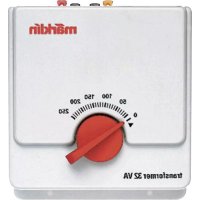
- Optional operation with DC power (max. ±18 volts DC), AC power (with Märklin 32 VA transformer), with Märklin Delta (only with the 6607 Delta Station), Märklin Digital (only with the Control Unit), or Märklin Systems (Mobile Station, Central Station).
- The mode of operation is automatically recognized.
80 multi-train addresses can be set. Address that set at the factory: 68 - Mfx technology for the Mobile Station / Central Station. Name set at the factory: Ce 6/8 II
- Adjustable acceleration/Braking delay (ABV).
- Adjustable maximum speed.
Volume can be changed for the sound effects - The model is designed for operation on Märklin 1 Gauge track. As the consumer you assume the risk for operating on other makes of track.
- Minimum radius for operation: 1020 ~mm / 40 - 3 / 16^ .
- Märklin claw couplers front and rear. You may have operations problems if you use other makes of couplers.
Maintenance procedures that become necessary with normal operation of the locomotive are described below. Please see your authorized Märklin dealer for repairs or spare parts.
No warranty or damage claims shall be accepted in those cases where parts neither manufactured nor approved by Märklin have been installed in Märklin products or where Märklin products have been converted in such a way that the non-Märklin parts or the conversion were causal to the defects and / or damage arising. The burden of presenting evidence and the burden of proof thereof, that the installation of non-Märklin parts or the conversion in or of Märklin products was not causal to the defects and / or damage arising, is borne by the person and / or company responsible for the installation and / or conversion, or by the customer.
SafetyWarnings
- This locomotive is to be used only with an operating system designed for it (Marklin 6646/6647 AC transformer, Marklin Delta, Marklin Digital or Marklin Systems).
- This locomotive must never be supplied with power from more than one transformer.
- Pay close attention to the safety warnings in the instructions for your operating system.
- This locomotive should only be opened by adults for the purpose of maintenance work or changing the address on the decoder.
-
Under no circumstances should transformers rated for an input of 220 volts be connected to the American 110 volt household current system.
-
Caution:
Regardless of whether model is standing still or in motion, never grasp the drive rods and valve gear with your fingers. You may possibly pinch and injure your fingers!
| Controllable Functions | 6647 | 6021 | 1 60652 5 central station 60212 | f0 f8 f8 f0 |
| Headlights/marker lights | Continuously on | function + off | Headlight button Button on f0 with symbol | |
| Engineer's cab lighting | f1 | Button 1 with symbol Button f1 with symbol | ||
| Operating sounds | - | f2 | Button 3 with symbol Button f2 with symbol | |
| Sound effect: long whistle blast | - | f3 | Button 4 with symbol Button f3 with symbol | |
| Switching range (only ABV) | - | f4 | Button 2 with symbol Button f4 with symbol | |
| Sound : locomotive coupling up to train | - | - | Button 6 with symbol Button f5 with symbol | |
| Sound: compressed air | - | - | Button 7 with symbol Button f6 with symbol | |
| Sound effect: short whistle blast | - | - | Button 5 with symbol Button f7 with symbol | |
| Sound: station platform announcements | - | - | Button 8 without symbol Button f8 with symbol | |
| Sound: brakes squealing | - | - | Button f9 with symbol | |
| Sound: blower motor | - | - | - Button f10 with symbol | |
| Sound: air pump | - | - | - Button f11 with symbol | |
| Sound effect: pantograph | - | - | - Button f12 with symbol | |
The registration time for the mfx decoder can last up to 2 minutes, when you are running the locomotive with the Mobile Station or the Central Station.
Fonctionnement
Connections between the track layout and the transformer
Rail joiners must fit well on the rails of the track to which they are joined to avoid voltage drop on the layout. We recommend that you install feeder wires every 2 to 3 meters (7 to 10 feet) using the 5654 feeder clips.
Operating the locomotive on grades
In contrast to the prototype a locomotive on a model railroad can operate up steeper grades. As a general rule a grade should be no steeper than 3% . In extreme situations a maximum grade of 5% is permissible, keeping in mind that the locomotive's tractive effort will be less. The beginning and the end of the grade must always work gradually up to maximum grade for the route. The maximum allowable difference in grade between two track sections, each with a minimum length of 300mm (11 - 3 / 4^) is 1 to 1.5 percent.
Setting Locomotive Parameters with the Control Unit
- Requirement: Setup as in diagram on page 24. Only the locomotive to be changed can be on the track.
- Press the "Stop" and "Go" at the same time until "99" blinks in the display.
- Press the "Stop" button.
- Enter the locomotive address,80
- Hold the control knob in the reverse direction area. While holding the control knob here, press the "Go" button.
- The headlights on the locomotive will blink slowly. If they don't, repeat Step 2.
- Enter the register number for the parameter to be changed (=> List on page 26).
- Active the change of direction
- The headlights will blink rapidly.
- Enter the new value (= > List on page 26).
11.Active the change of direction. - The headlights will blink slowly (exception: factory reset)
- Enter the next parameter setting from 6 or end with 14.
- End the process by pressing the "Stop" button. Then press the "Go" button.
Changing Locomotive Parameters with the Control Unit.
Operation with the Mobile Station / Central Station
- Set the locomotive on the track. The locomotive automatically registers itself in the locomotive list.
The locomotive will not communicate back to the controller when: the speed bar on the Mobile Station blinks. the mfx symbol has a line beneath it on the Central Station. -
Taking the locomotive out of the locomotive list:
-
Remove the locomotive from the track.
- Delete the locomotive entry.
It is not necessary to change the address.
Changing Locomotive Parameters with the Mobile Station
-
Select the locomotive from the locomotive list.
-
Change to the submenu "EDIT LOC".
-
Go to the submenu "VMAX" (maximum speed), "ACC" (acceleration), "DEC" (brakes),
"VOL" (volume) or
"RESET" (resetting the decoder to factory default settings)
- Enter the new value and accept it into the system.
Please note the information in the instructions for the Mobile Station / Central Station.
This locomotive can also be used outdoors. We do not recommend running the locomotive in bad weather (snow or rain).
The mechanism and the electronic circuit are protected against spraying water. The locomotive cannot be run through water.
We recommend that you check the locomotive over after running in outdoors and that you dry it with a cloth or clean in with a brush if necessary. Never clean the locomotive with running water.
Important: Cleaning fluids can attack the finish and lettering for the locomotive and damage them.
Always grasp the locomotive with both hands to take it out of its packaging, as shown below.
The automatic couplers can be removed if the locomotive is to be used as a static display. This locomotive really comes into its own as a display model with the reproduction prototype couplers and brake hoses that are included with it.
Setting up the locomotive for overhead line operation
The locomotive must stand with the marked side on the rail which forms the return for the overhead line. The brown lead wire to the driving unit is locked together with the undercontact rail to this rail at the branch track.
With 2 driving units, such an independent 2nd train operation on the same track is possible if one locomotive is switched to "overhead line" and the other to "under-contact rail".
Remove center housing
Remove front housing
Retirer les capots
The locomotive should be oiled before operating it for the first time, after the first 30 hours of operation and then after every 100 hours of operation.
Graissage
Changing non-skid tires
Changing light bulbs
Changing pick-up shoes
This device complies with Part 15 of the FCC Rules.
Operation is subject to the following two conditions:
(1) This device may not cause harmful interference, and
(2) this device must accept any interference received, including interference that may cause undesired operation.