TFP240A - Fridge PROLINE - Free user manual and instructions
Find the device manual for free TFP240A PROLINE in PDF.



User questions about TFP240A PROLINE
0 question about this device. Answer the ones you know or ask your own.
Ask a new question about this device
Download the instructions for your Fridge in PDF format for free! Find your manual TFP240A - PROLINE and take your electronic device back in hand. On this page are published all the documents necessary for the use of your device. TFP240A by PROLINE.
USER MANUAL TFP240A PROLINE
Koelingscompartment 19
Vriezer 19
REINIGING EN ONDERHOUD 20
Ontdooien 21
Koelingscompartment 21
Vriezercompartment 21
Lamp Vervangen 22
TRANSPORT EN WIJZIGING VAN DE INSTALLATIEPOSITIE 22
Richting Deuopening Veranderen 22
VOORDAT U EEN BEROEP DOET OP DE KLANTENSERVICE 23
DE ONDERDELEN VAN HET APPARAAT EN DE COMPARTIMENTEN 25
DEEL 1. VOORDAT U HET APPARAAT GAAT GEBRUIKEN
Ontdooien Koelingscompartment
Safety Instructions 39
Safety warnings 40
41
USING THE APPLIANCE 42
Thermostat Setting 42
Accessoires 42
Ice tray 42
ARRANGING FOOD IN THE APPLIANCE 43
Refrigerator Compartment 43
Freezer Compartment 43
CLEANING AND MAINTENANCE 43
Defrosting 44
Replacing The Light Bulb 45
SHIPMENT AND REPOSITIONING 45
Reversing the door 46
BEFORE CALLING YOUR AFTER SALES SERVICE 48
THE PARTS OF THE APPLIANCE AND THE COMPARTMENTS.....50
TROUBLESHOOTER 51
DO'S DON'TS 52
SPECIFICATIONS 53
PART - 1. SAFETY INFORMATION
- Check that the voltage marked on the rating p
- Failure to use the correct voltage will render the to the appliance.
- The manufacturer accepts NO responsibility for on the rating plate.
This appliance is intended for domestic use warranty and might be dangerous.
This appliance is intended for indoor use of appliance shall not be exposed to rain. - The mains plug shall be the main disconnect times.
ate matches that of your local supply .guarantee Void and may cause damageusing any other voltage than that markedonly; any other use may invalidate theonly, do not use or store outdoors. Thisdevice and shall remain operable at all
- A short power-supply cord is provided to reduce the risk of a tripping hazard.
- To disconnect from the mains completely, turn the appliance OFF, then remove the plug from wall outlet.
- Do not immerse the appliance, its lead or plug in water or any other liquid.
- Remove all food and unplug from the supply when not in use and before cleaning the appliance.
- If the mains lead becomes damaged, it must be replaced by the manufacturer, its service agent or similarly qualified person with a specially prepared lead of the same type and rating to avoid a hazard.
- Do not operate the appliance with a damaged cord or plug or after the appliance malfunctions or has been damaged in any way.
- Do not let cord hang over edge of the surface, or touch hot surfaces.
- Do not place the appliance on or near hot surfaces, or in direct sunlight.
Children must be supervised to make sure they do not swing on the door. - Accessible surfaces may get hot when in use, use handles and knobs at all times.
- Always attach a plug to the appliance, and then plug it into the wall outlet and switch on.
- If you are discarding an old appliance with a lock or catch fitted to the door, ensure that it is left in a disabled condition to avoid the entrapment of young children when playing.
- As old refrigeration appliances may contain CFC's which will damage the ozone layer, when disposing of any refrigeration appliance please contact your local waste disposal department for advice on the correct method of disposal.
- This appliance is not intended for use by persons (including children) with reduced physical, sensory or mental capabilities, or lack of experience and knowledge, unless they have been given supervision or instruction concerning use of the appliance by a person responsible for their safety.
- Children should be supervised to ensure that they do not play on or near the appliance.
- This appliance is for refrigerating food and making ice cubes.
REFRIGERANT
- The refrigerating gas contained in the circuit of this appliance is Isobutene (R600a); it causes a low level of pollution but is inflammable.
CAUTION:
- Extreme caution must be used when moving the appliance.
WARNING:
- Do not damage the refrigerant circuit.
- Do not use sharp or pointed objects such as knives to remove ice when defrosting.
- Do not use mechanical devices or other means to accelerate the defrosting process, other than those recommended by the manufacturer.
- Do not use electrical appliances inside the food storage compartments of the appliance, unless they are of the type recommended by the manufacturer.
- If the appliance is installed in a carpeted area, do not let the carpet block the ventilation holes in the base of the unit, adjust the levelling feet after a few hours to compensate for carpet movement.
- Keep ventilation openings, in the appliance enclosure or the built in structure clear of obstructions.
Installing and Operating your Fridge
- Operating voltage for your fridge is 220 - 240V at 50Hz .
- Mains cord of your fridge has a grounded plug. This plug should be used with a grounded mains socket fitted with a 13A fuse minimum. If no socket is available, have one installed by a qualified electrician.
- We do not take the responsibility of the damages that occur due to ungrounded usage.
- Do not install this appliance near a heat source such as ovens, radiators or other refrigerating appliances or expose it to direct sunlight.
- It should never be used outdoors exposed to rain.
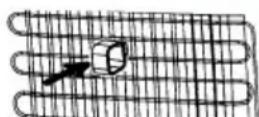
- Fit the plastic wall spacers to the condenser at the back of the to ensure it is installed the correct distance from the wall.
- If the appliance is located next to kitchen cabinets, leave a space of 2 cm between them.
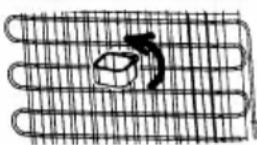
- Install the distance adjustment plastic (the part with black vanes at the rear) by turning it 90^ to prevent the condenser from touching the wall.
- The adjustable front legs should be levelled to an appropriate height to allow your appliance to operate in the correct way. You can adjust the legs by turning them clockwise or anti-clockwise. This should be done before placing food in the appliance.
- Before using your fridge freezer, wipe all parts with warm water with a tea spoonful of sodium bicarbonate, and then rinse with clean water and dry.
Before Using your Fridge Freezer
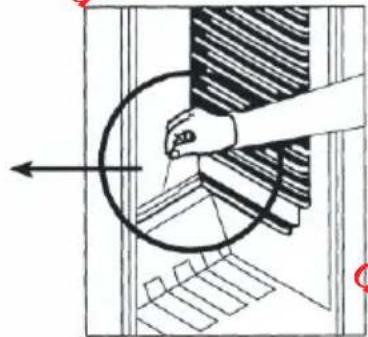
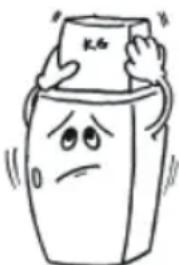
- When it is operated for the first time or after transportation, keep your fridge freezer in the upright position for 3 hours to allow the refrigerant to settle otherwise damage to the compressor may occur.
- Your fridge may emit an odor when it is operated for the first time; the smell will fade when your fridge starts to cool.
PART - 2. USING THE APPLIANCE
Thermostat Setting
Larder refrigerators can cool to below 5^
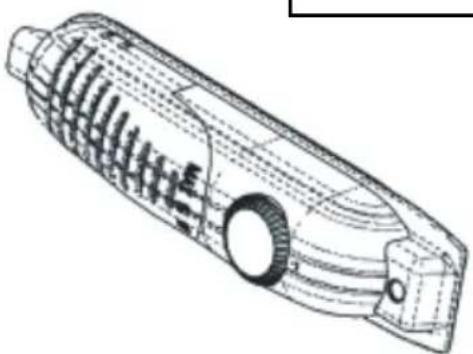
- The thermostat automatically regulates the internal temperature of the refrigerator compartment. By rotating the knob from position « 1 » to « 5 », colder temperatures can be obtained.
- The « 0 » position switches the refrigerator off.
- The recommended NORMAL setting is position 3.
- If the refrigerator internal compartment temperature is not cold enough, set the thermostat control to a higher setting.
- Note that; the ambient temperature, temperature of the freshly stored food and how often the door is opened, affects the temperature in the refrigerator compartment. If required, change the temperature setting.
- The first time the refrigerator is plugged in to the wall outlet, set the thermostat control to 5 and leave the refrigerator running for 24 hours before adding food to the compartments.
- Do not open the door within this time.
- If the unit is switched off or unplugged, you must allow at least 5 minutes before restarting or re-plugged the unit in order not to damage the compressor.
Storage of fresh food in the refrigerator
- Food should always be covered tightly with foil airtight containers. This will prevent food from of some foods transferring to milder ones.
, plastic film, placed in bags or stored indehydrating and prevent the strong smell
- To store raw meat wrap in polythene bags or a shelf.
irtight containers and place on the lowest
- Do not allow raw meat to come into contact with meat for two or three days. Fruit and vegetable placed in the vegetable/ salad bin.
h cooked foods. For safety, only store rawibles should be thoroughly cleaned and
- Milk and other liquids should be sealed with door.
ds and placed in the bottle shelf on the
Store frozen food
- When using the freezer for the first time or after defrosting, turn the thermostat temperature control to setting 5 for at least two hours before introducing the food to be stored. Then adjust to your preferred setting.
- All frozen food products you purchase should be placed in the freezer as soon as possible to avoid the frozen food from defrosting.
- Storage recommendations printed on the packaging of frozen food by the manufactures should always be followed.
Freezing fresh food (Freezer)
Ensure that your freezing operations are carried out under the most hygienic conditions, as freezing alone does not sterilize the food. Never put hot or even warm foodstuffs into the freezer. Prior to storing the food, pack it in plastic bags, aluminum foil or freezer containers and place into the freezer without putting them in contact with food that has already been frozen. See the technical data sheet at the rear of this booklet for the maximum permissible amount in kilograms of fresh food that can be frozen in any 24 hour period with a room temperature of 25^ Never freeze more than the maximum permissible.
Making ice cubes
Pour water into the ice cube tray until it is two thirds full and place into the freezer. Ice cubes will form in approximately 2 to 3 hours. The ice cube can be easily removed by twisting the ice cube tray or running under cold water for a short time.
PART - 3. CLEANING AND MAINTENANCE
- Make sure to unplug the fridge before starting
- Do not wash your fridge by pouring water.
- You can wipe the inner and outer sides with a soft cloth or a sponge using warm and soapy water.
- Remove the parts individually and clean with soapy water. Do not wash in washing machine.
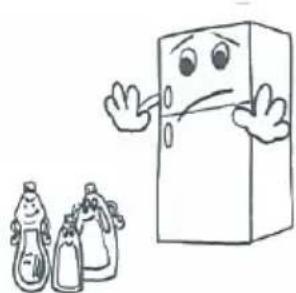
- Never use flammable, explosive or corrosive material like thinner, gas, acid for cleaning.
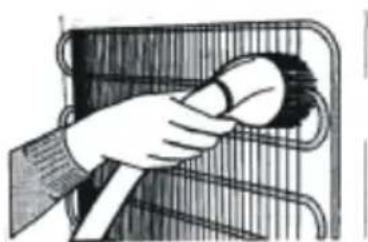
- You should clean the condenser with broom at least once a year in order to provide energy saving and increase the productivity.
Make sure that your fridge is unplugged while cleaning.
Defrosting
Refrigerator Compartment;
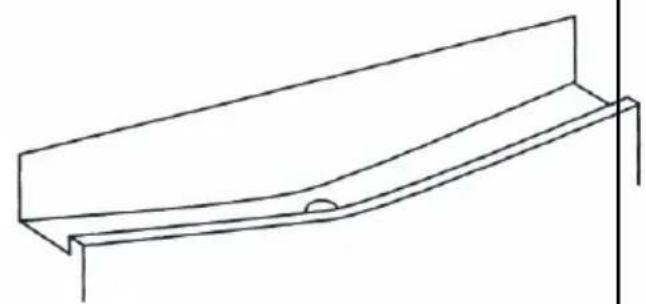
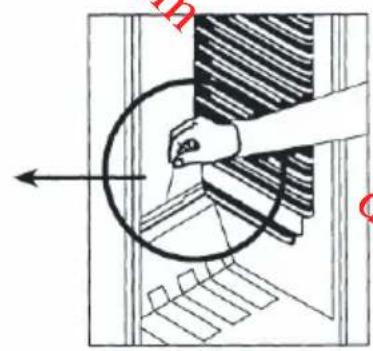
- Defrosting occurs automatically in refrigerator compartment during operation; the defrost water is collected by the evaporating tray located on top of the compressor and evaporates automatically..
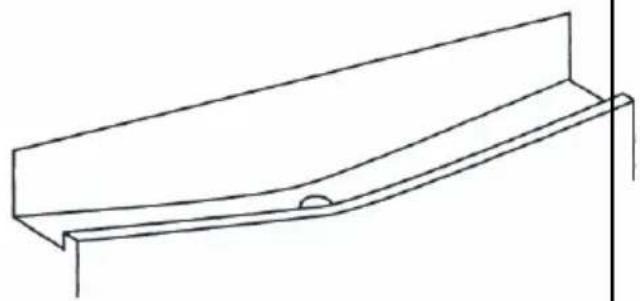
- The evaporating tray and the defrost water drain hole should be cleaned periodically with the defrost drain plug to prevent the water from collecting on the bottom of the refrigerator instead of flowing out.
- You can also pour 1/2 glass of the water to drain hole to clean inside.
Freezer Compartment;
The frost, accumulated in the freezer compartment, should be removed periodically. (Use the plastic scraper provided) The freezer compartment should be cleaned in the way as the refrigerator compartment, with the defrost operations of the compartment at least twice a year.
For this;
- The day before you defrost, set the thermostat dial to "5" position to freeze the foods completely.
- During defrosting, frozen foods should be wrapped in several layers of paper and kept in a cool place. The inevitable rise in temperature will shorten their storage life. Remember to use these foods within a relatively short period of time.
- Set thermostat knob to position « 0 » or unplug the unit; leave the door open until completely defrosted.
- To accelerate the defrosting process one or more basins of warm water can be placed in the freezer compartment.
- Dry the inside of the unit carefully and set the thermostat knob to MAX position.
Replacing The Light Bulb
The bulb is located in the rear of the thermostat refrigerator cavity (5).
housing located on the right side of the
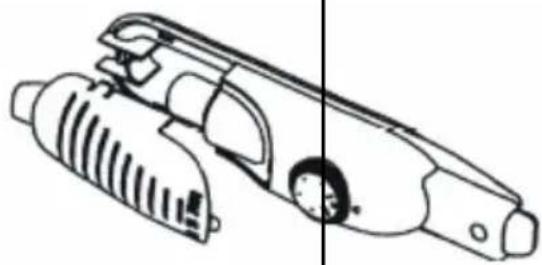
The replace the bulb
1- Unplug your refrigerator from the mains supply.
2- Remove the plastic lens from the thermostat housing using a screwdriver.
3- Replace with a bulb of maximum 15 Watts E14 Base.
4- Install the cover.
5- Wait for 5 minutes before re-plugging in, set the thermostat to its original position.
PART - 5. SHIPMENT AND REPOSITIONING
- Original package and foam may be kept for re-transportation (optionally).
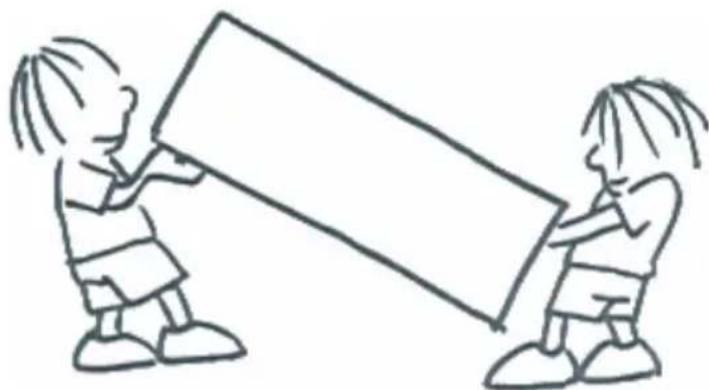
- You should fasten your fridge with thick package, bands or strong cords and follow the instructions for transportation on the package for re-transportation.
- Remove movable parts (shelves, accessories, vegetable bins etc.) or fix them into the fridge against shocks using bands during re-positioning and transportation.
- Carry your fridge in the upright positio.
Reversing the door
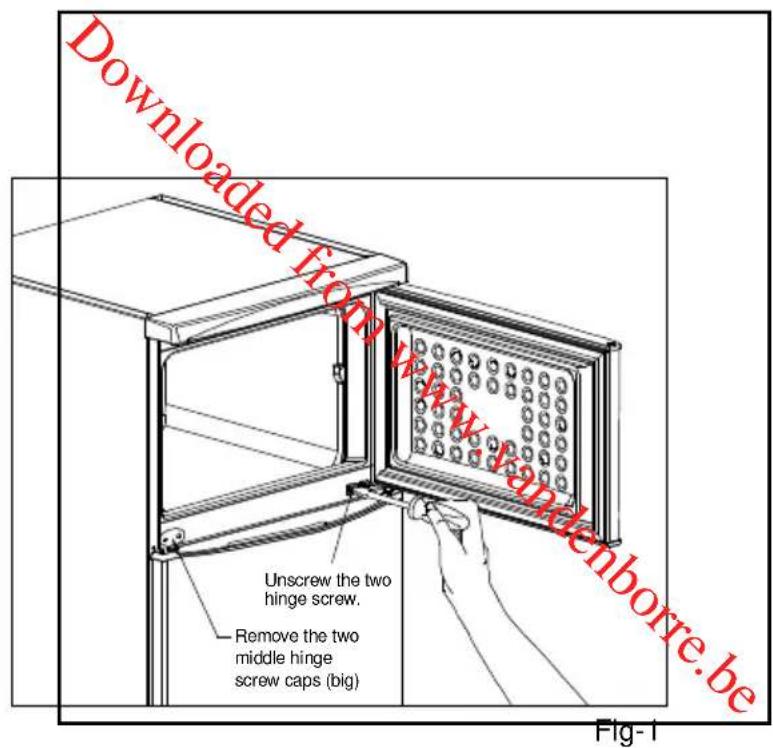
1- Unscrew the two screws which are fixing the middle hinge and remove the two middle hinge screw caps (big). (Fig-1)
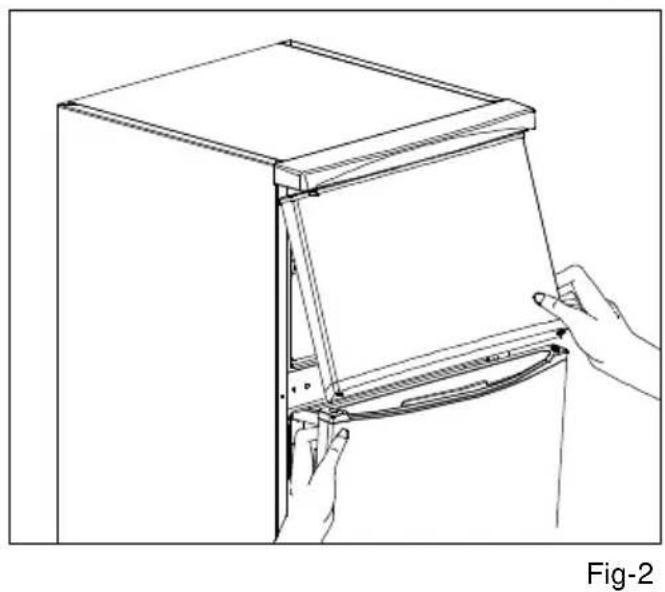
2- Dismantle the refrigerator and freezer door from cabinet by pulling towards to you together with the middle hinge. (Fig-2)
3- Lie down the appliance to the left side. Dismantle both leveling feet and unscrew the bottom hinge fixing screws and remove it. (Fig-3) Unscrew the bottom hinge pin and screw in the next hole.(Fig-4) Then screw the hinge to left side of the refrigerator. Screw the both leveling feet.
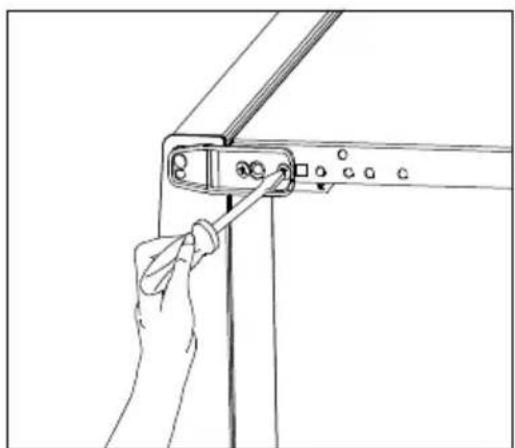
Fig-3

Fig-4
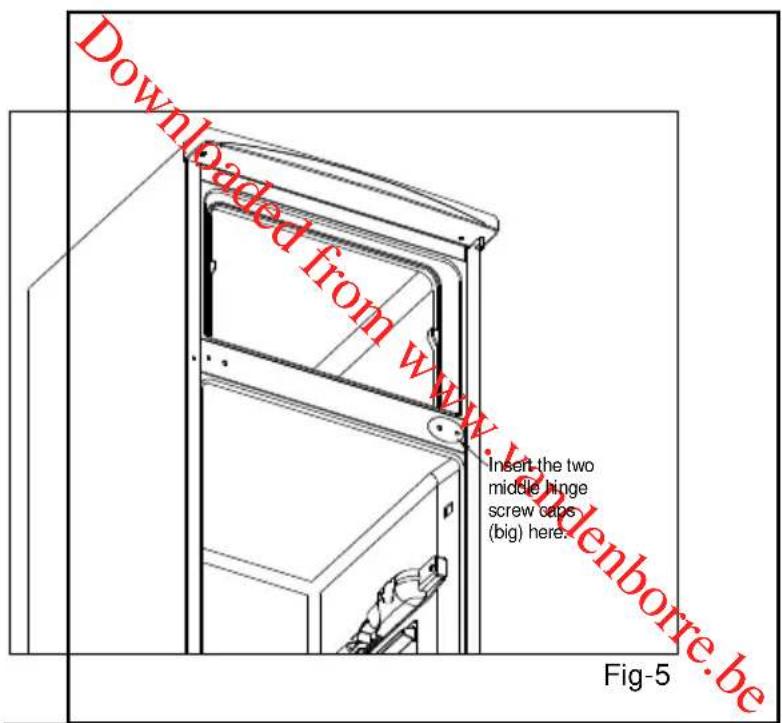
4- Place the two middle hinge screw caps (big) as shown in the figure (Fig-5). You can find the new caps in the user manuel bag.
5-Unscrew the pin on the right. (Fig-6/ Detail-A) and screw it to the left. (Fig-6/ Detail-B)
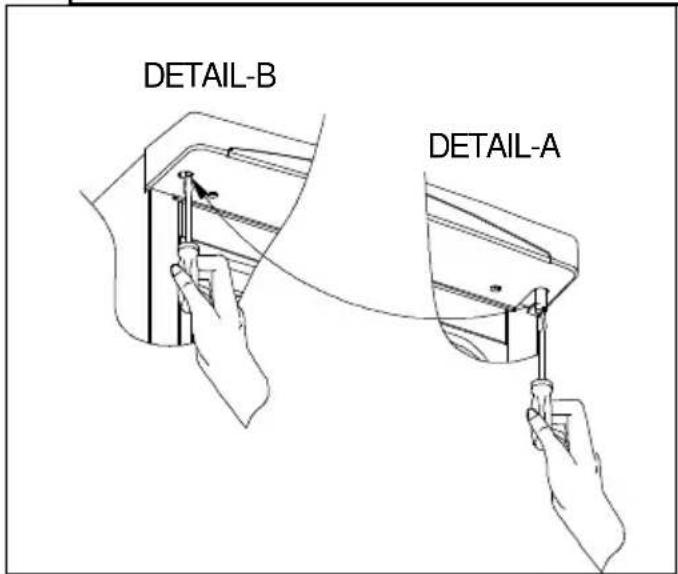
Fig-6
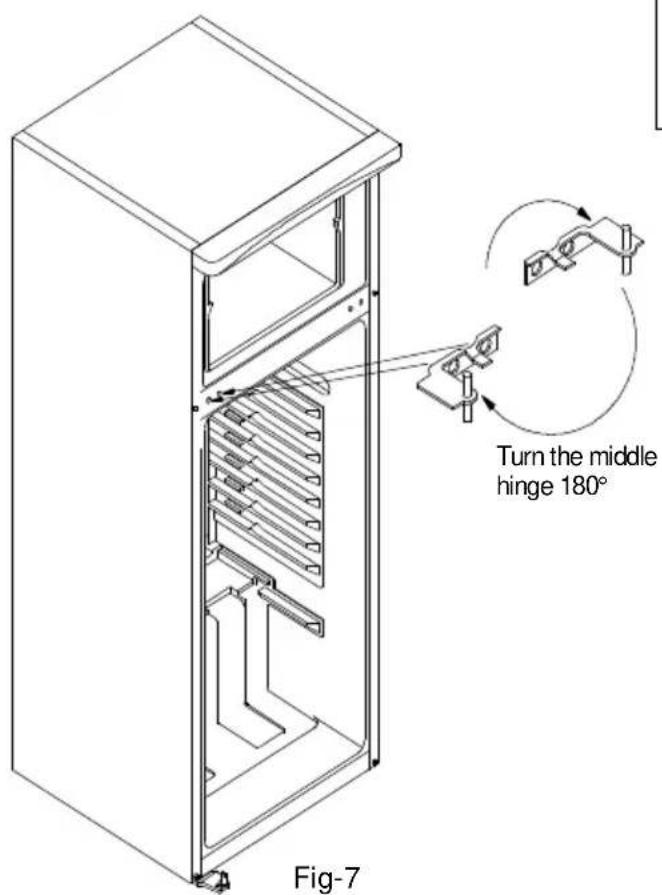
6- Replace the top bushing and top bushing cap (Fig-7). (You can use the bushing cap that is put in the user manuel) Remove the bottom bushing assemble it to the left hole. (Fig-7)
PART - 6.
BEFORE CALLING YOU
DR AFTER SALES SERVICE
If your refrigerator is not working properly, it may following, before calling an electrician to save ti
be a minor problem, therefore check the me and money.
What to do if your refrigerator does not operate ;
Check that ;
- There is no power,
- The general switch in your home is disconnected,
-
The thermostat setting is on « 0 » position,
-
The socket is not sufficient. To check this, which is working into the same socket.
plug in another appliance that you know
What to do if your refrigerator performs poorly ;
Check that ;
- You have not overloaded the appliance,
The doors are closed perfectly, -
There is no dust on the condenser,
-
There is enough place at the rear and side walls.
If there is noise ;
The cooling gas which circulates in the refrigerator circuit may make a slight noise(bubbling sound) even when the compressor is not running. Do not worry this is quite normal. If these sounds are different check that;
The appliance is well leveled
- Nothing is touching the rear.
- The stuffs on the appliance are vibrating.
If there is water in the lower part of the refrigerator;
Check that ;
The drain hole for defrost water is not clogged (Use defrost drain plug to clean the drain hole)
If your fridge is not cooling enough;
Your fridge is designed to operate in the ambient temperature intervals stated in the standards, according to the climate class stated in the information label. We do not recommend operating your fridge out of stated temperatures value limits in terms of cooling effectiveness.
| Climate Class | Ambient Temperature (℃) |
| T | Between 16 and 43 (℃) |
| ST | Between 16 and 38 (℃) |
| N | Between 16 and 32 (℃) |
| SN | Between 10 and 32 (℃) |
- Tropical Climate Class is described as between 16^ and 43^ of ambient temperatures according to EN ISO15502 standards.
- Appliance complies with EN15502, IEC60335-1 / IEC60335-2-24, 2004/108/EC standards.
Recommendations
- In order to increase space and improve the appearance, the « cooling section » of this appliance is positioned inside the back wall of the refrigerator compartment. When the appliance is running, this wall is covered with frost or water drops, according to weather the compressor is running or not. Do not worry. This is quite normal. The appliance should be defrosted only if an excessively thick layer forms on the wall.
- If the appliance is not used for long time (for example during the summer holidays) Defrost and clean the refrigerator leaving the door open to prevent the formation of midew and smell.
- To stop the appliance completely, unplug from main socket (for cleaning and when the doors are left open)
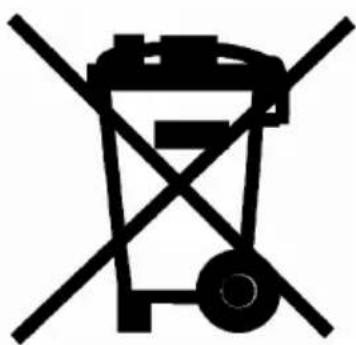
Waste electrical and electronic products must not be disposed of with household waste. Please refer to the retailer from whom you purchased this item for disposal instructions.
PART - 7.
THE PARTS OF THE APPLIANCE AND THE COMPARTMENTS
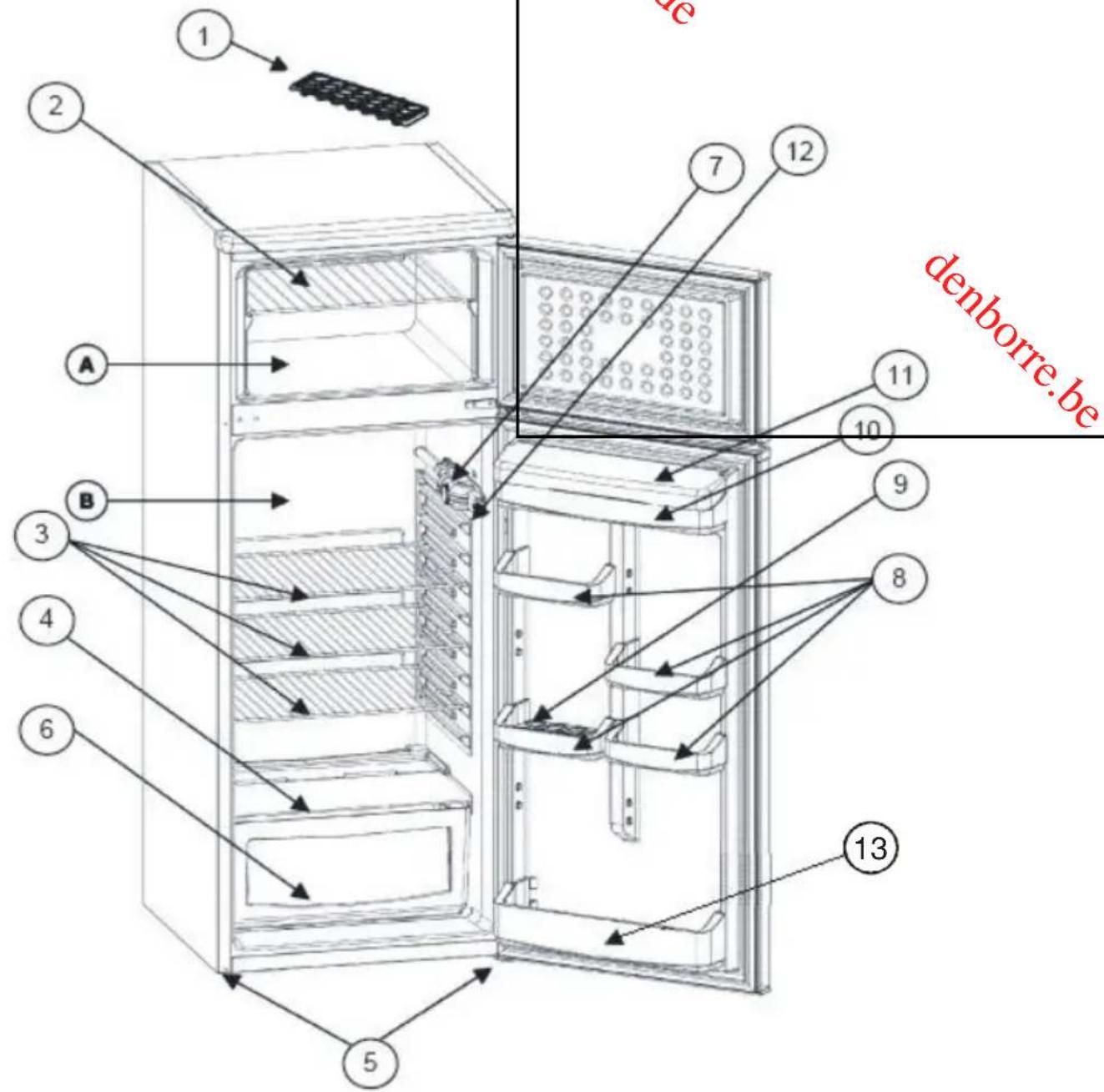
This presentation is only for information about the parts of the appliance. Parts may vary according to the appliance model.
Before calling for service please check the follow
The freezer is not working
Check the plug is inserted correctly into the wall Check there is power to the wall socket by plug other appliance works check the fuse in the freeze
The freezer is noisy when running
Check the freezer is level and it is not in corfurniture.
The freezer does not cool sufficiently
If the door has been opened too often, or it has been for the freezer to reach its set temperature.
Check the airflow over the rear of the freezer has not been reduced due to insufficient clearance.
The following characteristics should not be looked upon as a problem
A gentle trickling sound caused by coolant flowing through the pipe.
Compressor operating at high temperatures.
Prolonged idle periods
If you are going to leave the freezer idle for any period of time, proceed as follows: Disconnect the freezer from the mains supply by removing the plug from the wall socket. Clean and dry the inside as instructed under the heading of cleaning the freezer.
Leave the door open to prevent any unpleasant smells from building up while the freezer is not in use.
Maintenance
Moving your Freezer
Hold the freezer around its sides or base when moving it. Under no circumstance should it be lifted with the edges of the top surface.
Location
Do not locate your Freezer near a heat source, EG cooker, boiler or radiator. Also avoid direct sunlight in lean-to's or sun lounges.
Leveling the Freezer
Make sure the Freezer is level. Use the rotating leveling feet at the front. If the Freezer is not level, the doors and magnetic seal alignments will be affected.
Servicing
Repairs and maintenance of the appliance, should only be performed by a qualified service agent.
DO'S AND DON'TS
Do- Clean and defrost your appliance regularly (See "Defrosting")
Do- Leave lettuce, cabbage, parsley and cauliflower on the stem.
Do- Wrap raw meat and poultry loosely in polythene or aluminium foil. This prevents drying.
Do- Wrap fish and offal in polythene bags.
Do- Check contents of the compartments every often.
Do- Store commercially prepared food in accordance with the instructions given on the packets.
Do- Always choose high quality fresh food and be sure it is thoroughly clean before freezing it.
Do- Wrap all food in aluminium foil or food quality polythene bags and make sure any air is excluded.
Don't- Cover the shelves with any protective materials which may obstruct air circulation.
Don't- Store poisonous or any dangerous substances in your freezer. It has been designed for the freezing of edible foodstuffs only.
Don't- Consume food which has been frozen for an excessive length of time.
Don't- Leave the door open for long periods, as this will make the appliance more costly to run and cause excessive ice formation.
Don't- Use sharp edged objects such as knives or forks to remove the ice.
Don't- Never use hairdryers, or electrical appliances for defrosting only use item recommended by the manufacturer.
Don't- Put hot food into the appliance. Let it cool down first.
Don't- Put liquid-filled bottles or sealed cans containing carbonated liquids into the freezer as they may burst.
Don't- Give children ice-cream and water ices direct from the freezer The low temperature may cause 'freeze burns' on the lips.
Don't- Try to keep frozen food which has thawed; it should be eaten within 24 hours or cooked and re-frozen.
SPECIFICATIONS
| Brand | PROLINE |
| Appliance type | Fridge-Freezer |
| Star rating | 4 Stars |
| Frequency (Hz) | 50 Hz. |
| Light Power (Watts) | 15W |
| Net Freezer volume | 48l |
| Net Refrigerator Volume | 187l |
| Freezing capacity (kg/24h) | 2,5kg |
| Rated Voltage (V) | 220 - 240V |
| Climate Class +Ambient Range | N / Between 16 - 32°C |
| Gross Weight (Kg) | 45,4 |
| Energy consumption (kWh/24h) | 0,60 |
| Energy Consumption (kWh/year) | 219 |
| Rated Current (A) | 1,75 |
| DEFROST POWER | |
| Refrigerant/Amount | R600a / 64g |
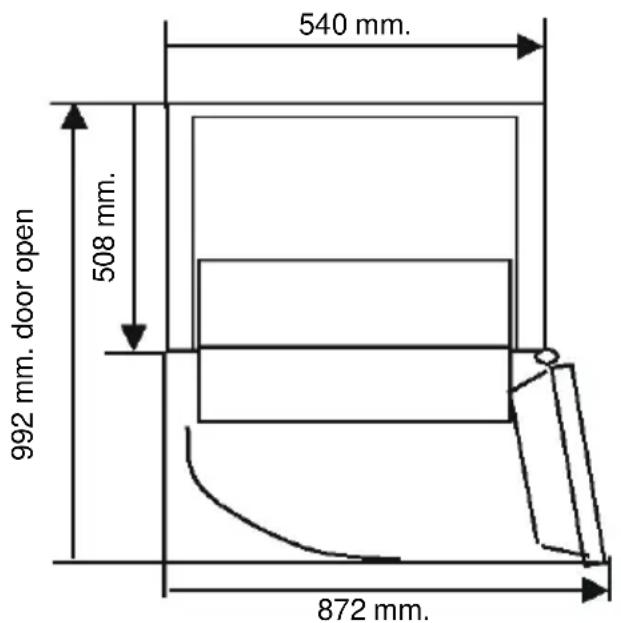
| Product dimensions (W x D x H) | 1440 X 540 X 600 |
| Insulation Blowing Gas | R600a / 64g |