MDRDS5000 - Earphones SONY - Free user manual and instructions
Find the device manual for free MDRDS5000 SONY in PDF.



| Product type | Wireless digital surround headphone system |
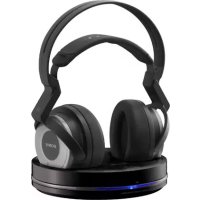
| Brand and model | Sony MDR-DS5000 |
| Transmission technology | Infrared (IR), frequency modulation |
| Audio compatibility | Dolby Digital (AC‑3), Dolby Surround (Pro Logic), PCM, analog |
| Sound functions | Virtualphones Technology, Cinema and Music modes, Virtual Front / Virtual Surround, volume and balance adjustment |
| Transmission range | Up to 10 meters |
| Headphone battery life (with supplied batteries) | Approximately 30 hours (after full 6-hour charge) |
| Processor dimensions (W x H x D) | 85 × 190 × 180 mm |
| Processor weight | Approximately 1.0 kg |
| Headphone weight (with supplied batteries) | Approximately 280 g |
| Processor power supply | 9 V DC via supplied AC adapter |
| Headphone power supply | 2 Ni‑Cd rechargeable batteries (supplied) or R6 (AA) dry batteries (sold separately) |
| Care and cleaning | Soft cloth slightly moistened with mild detergent; do not use solvents |
| Safety | Do not expose to rain or moisture; do not open; refer repairs to qualified personnel |
| Included accessories | Processor stand, AC adapter, battery charger, charger plug, optical digital connecting cable, operating instructions |
| Available replacement parts | Rechargeable batteries (NC‑AA, NC‑AAS, NH‑AA), earpads, additional headphone MDR‑IF5000 |
| Repairability | Repair by qualified technician recommended; unauthorized modifications void warranty |
Frequently Asked Questions - MDRDS5000 SONY
User questions about MDRDS5000 SONY
0 question about this device. Answer the ones you know or ask your own.
Ask a new question about this device
Download the instructions for your Earphones in PDF format for free! Find your manual MDRDS5000 - SONY and take your electronic device back in hand. On this page are published all the documents necessary for the use of your device. MDRDS5000 by SONY.
USER MANUAL MDRDS5000 SONY
Digital Surround Headphone System
Operating Instructions GB
Mode d'emploi FR
To avoid electrical shock, do not open the cabinet. Refer servicing to qualified personnel only.
WARNING
You are cautioned that any changes or modifications not expressly approved in this manual could void your authority to operate this equipment.
For the customers in the USA
Owner's Record
The model number is located on the back of the processor and on the headphone housing.
The serial number is located at the bottom of the processor and the inner side of the battery compartment.
Record these numbers in the spaces provided below. Refer to them whenever you call upon your Sony dealer regarding this product.
Model No. MDR-DS5000
Processor DP-IF5000
Headphones MDR-IF5000
Serial No.
Processor
Headphones
NOTICE FOR THE CUSTOMERS IN THE U.S.A.
NOTE
This equipment has been tested and found to comply with the limits for a Class B digital device, pursuant to Part 15 of the FCC Rules. These limits are designed to provide reasonable protection against harmful interference in a residential installation. This equipment generates, uses, and can radiate radio frequency energy and, if not installed and used in accordance with the instructions, may cause harmful interference to radio communications. However, there is no guarantee that interference will not occur in a particular installation. If this equipment does cause harmful interference to radio or television reception, which can be determined by turning the equipment off and on, the user is encouraged to try to correct the interference by one or more of the following measures:
- Reorient or relocate the receiving antenna.
- Increase the separation between the equipment and receiver.
- Connect the equipment into an outlet on a circuit different from that to which the receiver is connected.
- Consult the dealer or an experienced radio/ TV technician for help.
You are cautioned that any changes or modifications not expressly approved in this manual could void your authority to operate this equipment.
For the customers in the USA and Canada
RECYCLING NICKEL-CADMIUM BATTERIES
Nickel Cadmium batteries are recyclable. You can help preserve our environment by returning your unwanted batteries to your nearest point for collection,

recycling or proper disposal. Note: In some areas the disposal of nickel cadmium batteries in household or business trash may be prohibited.
RBRC (Rechargeable Battery Recycling Corporation) advises you about spent battery collection by the following phone number.
Call toll free number: 1-800-822-8837 (United States and Canada only)
Caution: Do not handle damaged or leaking nickel-cadmium batteries.
Table of Contents
Headphone System 5
Checking the Product and Accessories 8
Connecting the Headphone System 9
General 9
Connecting with audio and video components 9
Plugging into the wall outlet 14
Charging the batteries 14
Inserting the batteries in the headphones 17
Connecting the digital surround processor with corded headphones (sold separately).... 19
Listening to the Sound of a Connected Component 20
Troubleshooting 26
Precautions. 28
Specifications 29
Main features
The MDR-DS5000 is a digital surround headphone system using infrared transmission. You can enjoy the multichannel surround sound with headphones by simply connecting the digital surround processor to a DVD player with the supplied optical digital connecting cable.
- Compatible with Dolby* Digital (AC-3) and Dolby Surround (Pro Logic).
- Signal processing by DSP (digital signal processors) creates surround sound for the headphones that simulates a movie theater.
- Cordless headphones using infrared transmission system resistant to external noise and interference.
- Wide infrared reception range of up to 10m
- Self adjusting mechanism eliminating the need for headband adjustment.
- Auto Power On/Off Function to automatically turn on the headphones when they are put on and to turn them off when they are taken off.
VOL control for adjusting both the right and left volume of the headphones. The left and right audio output level is adjustable using the BALANCE control. - Equipped with a headphone jack to connect corded open-air headphones (such as MDR-F1 or MDR-605LP, sold separately).
- Rechargeable Ni-Cd batteries (supplied and sold separately) or R6 (size AA) dry-cell batteries (sold separately) can be used to power the headphones.
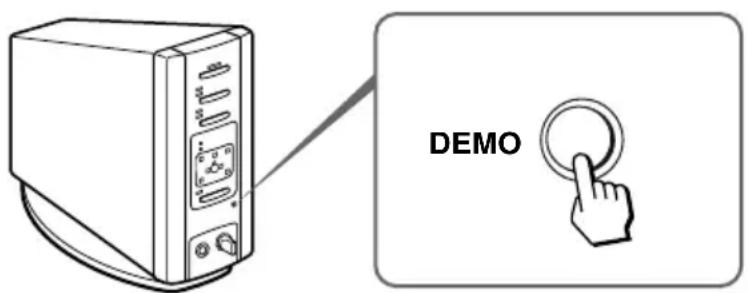
Setting to DEMO mode
Turn on the digital surround processor, and then press DEMO.
A test tone can be heard from the headphones, and the indicators for the corresponding virtual speakers light one at a time. This allows you to experience 5.1ch virtual surround sound even if a DVD player is not connected. Press DEMO again to cancel DEMO mode.
- The digital surround processor for this system incorporates the Dolby Digital (AC-3) decoder.
Manufactured under license from Dolby Laboratories Licensing Corporation.
DOLBY, the double-D symbol , "PRO LOGIC", "Dolby Digital (AC-3) ", and "VIRTUAL DOLBY DIGITAL" are trademarks of Dolby Laboratories Licensing Corporation.
CE mark
The CE mark is valid for products marketed in the European Union only.
Headphone System
The MDR-DS5000 digital surround headphone system is a headphone system incorporating a visual sound perspective. This system represents the future of audio and video technology. With this system, you can enjoy sound virtually identical to the playback from a 5.1ch surround speaker system. You can now enjoy the sound of a movie theater right in your own home.
MDR-DS5000 digital surround headphone system
This is a new type of cordless headphone system which reproduces Dolby Digital and Dolby Pro Logic multichannel sound images outside of the listener's head using "Virtualphones Technology"* developed exclusively by Sony. By simply connecting the DVD player to the system, you can enjoy virtual surround sound just like a movie theater.
The system uses a high-speed DSP for real-time digital conversion and processing of all signals to produce a clear sound with virtually no distortion.
- "Virtualphones Technology" is a trademark of Sony Corporation.
System features
Compatible with Dolby Digital and Dolby Pro Logic
The system incorporates a surround decoder and Logic 3D processor to reproduce the sound field for a room having a 5.1ch speaker system using headphones. Since the signals are processed by the digital surround processor according to the input signals, you can enjoy the surround sound field with not only DVD but also digital satellite tuners, video cassettes and other analog and digital audio and video sources.
Sound reproduction outside the listener's head
With the Logic 3D processor, headphone playback does not confine the sound to a fixed position in the listener's head, but creates the sensation of 360-degree natural sound field with spatial orientation. This allows simulation of the surround sound field from speaker playback when using not only DVD, but all audio and video sources.
3-D sound field using "Virtualphones Technology" 3-D sound field of conventional headphones
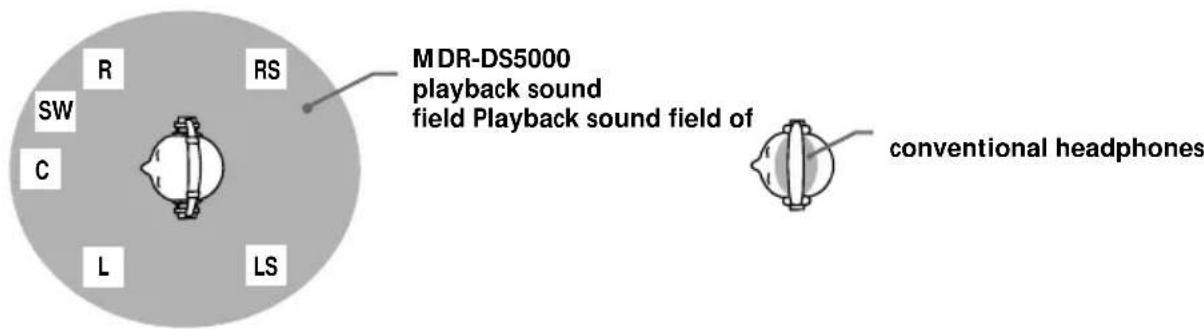
Typical sound field when listening to speakers (2 channels)
Sound field when listening to the MDR-DS5000 (2 channels)
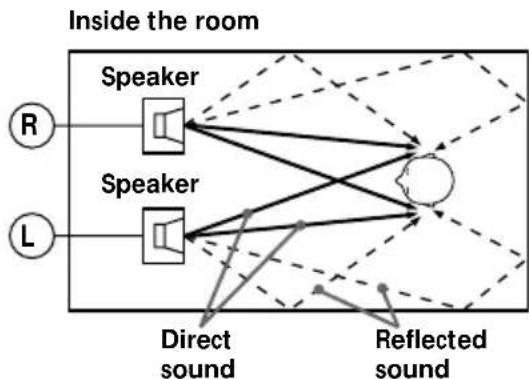
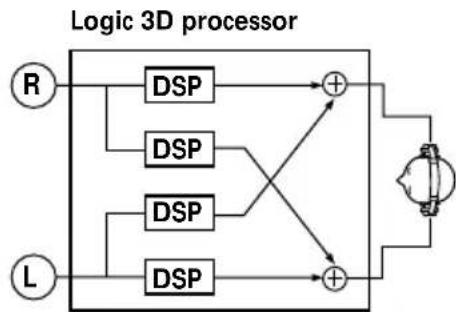
L:Left LS:Left Surround
C:Center SW:Subwoofer
R:Right RS:Right Surround
Open-air headphones with ring supports
Newly developed headphones provide comfortable listening and a natural sound field. They do not cover the ears, and allow listening without pressure or discomfort. Moreover, additional MDR-IF5000 headphones (sold separately) can be purchased, allowing more than one person to enjoy surround sound at the same time within the infrared transmission area (page 13).
Headphone system configuration
This headphone system consists of a digital surround processor which decodes and converts the multichannel input signals and infrared cordless headphones. By simply connecting the digital surround processor to a DVD player, VCR, or other audio and video component, you can enjoy Dolby Digital or Dolby Pro Logic surround sound. This system can be used with any audio and video component having an optical digital output jack, line (audio) output jack, or headphone jack. (See pages 11 and 29 for the connecting cables (sold separately).)
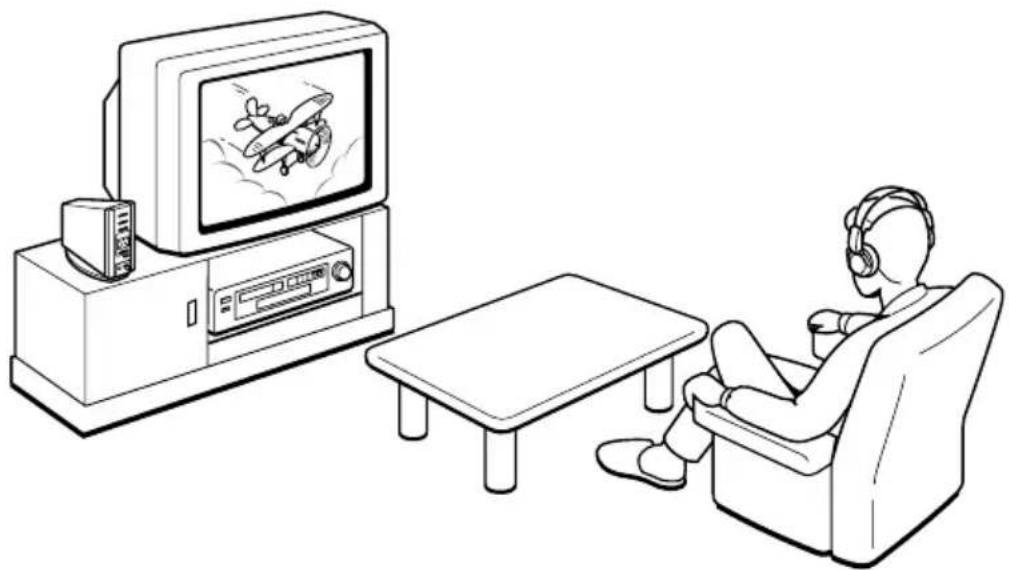
Notes
- Install the digital surround processor in a location where there are no obstructions between the processor and headphones when used.
- Do not install the digital surround processor in unstable locations, such as on top of the TV. If the processor falls down, it could cause an injury or be damaged.
Checking the Product and Accessories
Before setting up the system, check that all of the components are included.
Digital surround processor (1)
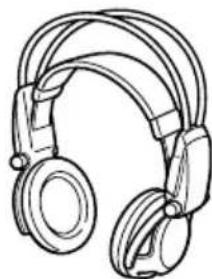
Cordless stereo headphones (1)
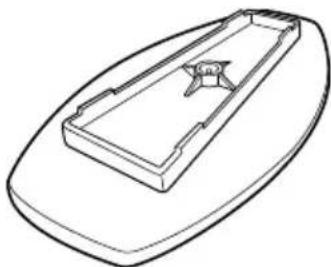
Stand (for digital surround processor, 1)
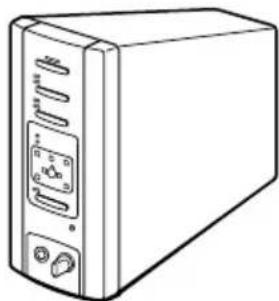
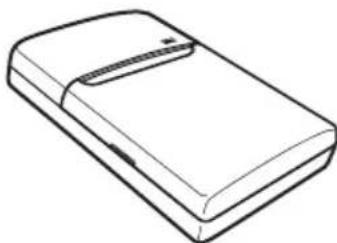
Battery charger (1) Charging plug (for battery
charger, 1)
(CEK and HK4 Versions* only)
Charging plug (for battery charger, 1)
(CED and E13 Versions* only)
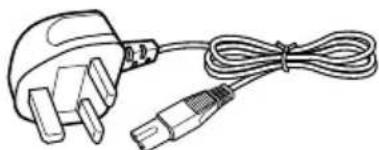
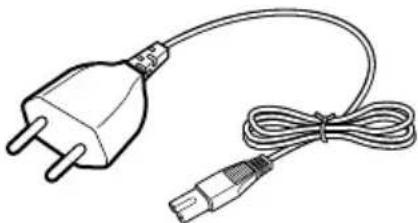
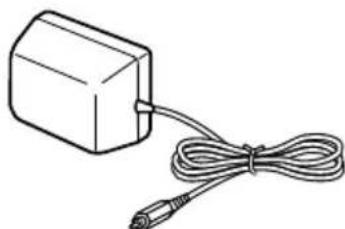
AC power adapter (1)
Rechargeable Ni-Cd batteries NC-AA (2)
Optical digital connecting cable (rectangular type, 1)
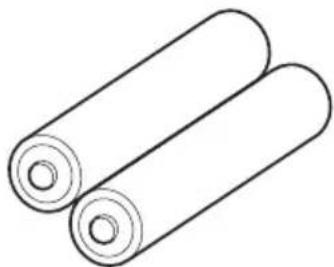
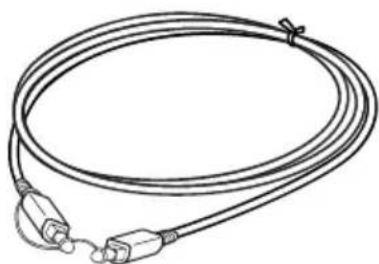
Note
Use the charging plug that matches the outlet in your home.
Connecting the Headphone System
General
Connect the headache system as shown in the illustration below.
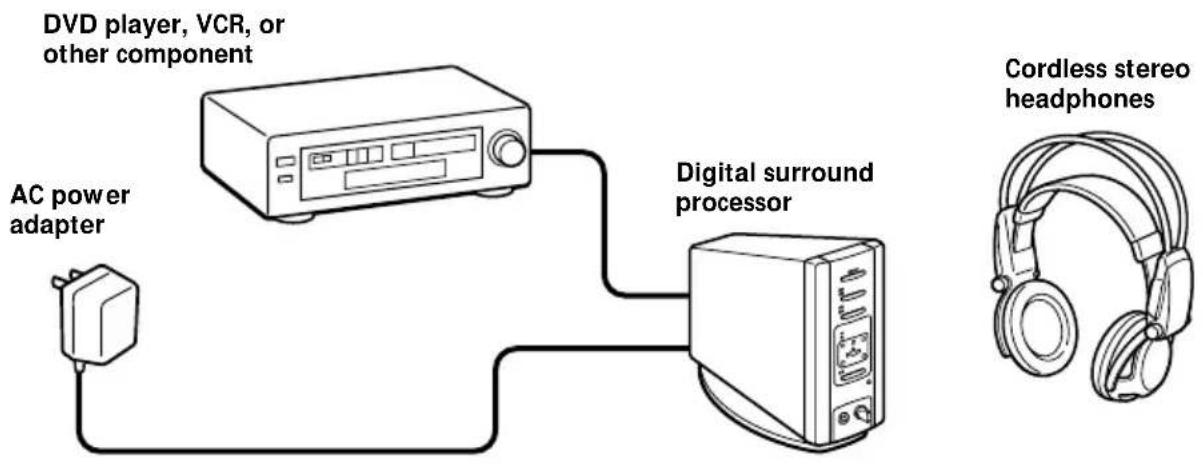
Connecting with audio and video components Setting up the digital surround processor
To use in an upright position:
Use a coin to attach the supplied stand to the bottom of the digital surround processor.
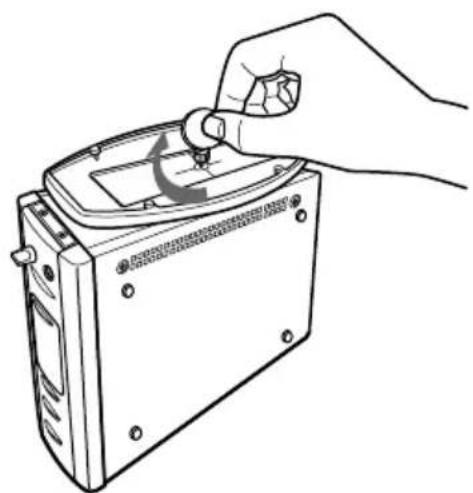
(Continued)
To use on its side:
Place the digital surround processor so that the four rubber supports are on the bottom.

Rubber supports
Notes
- If the digital surround processor is placed on its side, the full infrared transmission range may not be obtained for some installation conditions.
- Place the digital surround processor as shown in the illustration. Do not place the digital surround processor on the side not having the rubber supports.
Connecting the digital surround processor with digital components
Use the supplied optical digital connecting cable to connect the optical digital output jack on a DVD player (or LD player), digital satellite tuner, or other digital component to the DIGITAL IN jack of the digital surround processor.
Digital surround processor
DVD player, LD player, digital satellite tuner, or other digital component having an optical digital output jack
To DIGITAL IN jack
To optical digital output jack
Optical digital connecting cable (supplied)
Take off the cap on the jack, match the orientation of the plug with the jack, and then insert until the plug fits into place.
Notes
- The optical digital connecting cable is an extremely high-precision device and is sensitive to jolts and external pressure. Therefore, be careful when inserting and removing the cable plug.
- This system is not compatible with the AC-3 RF jacks on LD players.
- The digital input for the digital surround processor does not support sampling frequencies of 96kHz . Set the digital output setting for the DVD player at 48kHz when using this system. Noise may be heard when a 96kHz digital signal is input.
- The digital input for the digital surround processor is not compatible with the DTS* format. Noise may be heard when DTS-format signals are input.
Connecting cables (sold separately)
Use the POC-5AB cable (mini-plug rectangular plug) when connecting the optical digital output mini-jack on portable DVD players, portable CD players, or other digital components to the DIGITAL IN jack.
Notes on optical digital connecting cable
- Do not drop objects on the optical digital connecting cable or expose the cable to shocks.
- Grasp the plug to connect or disconnect the cable.
- Be sure that the ends of the optical digital connecting cable are kept clean. Dust at the ends of the cable can degrade performance.
- When storing the system, attach the cap to the end of the plug and be careful not to fold or bend the optical digital connecting cable with a bend radius less than 25mm .
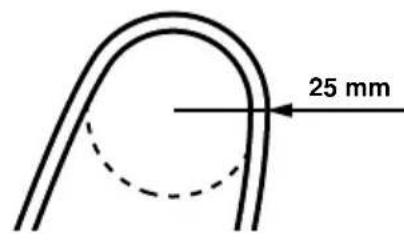
The bend radius of the optical digital connecting cable should be at least 25mm
Connecting the digital surround processor with analog components
Use an audio cord (sold separately) to connect the audio output jacks on the VCR, TV, or other component to the LINE INPUT (L / R) jacks on the digital surround processor.
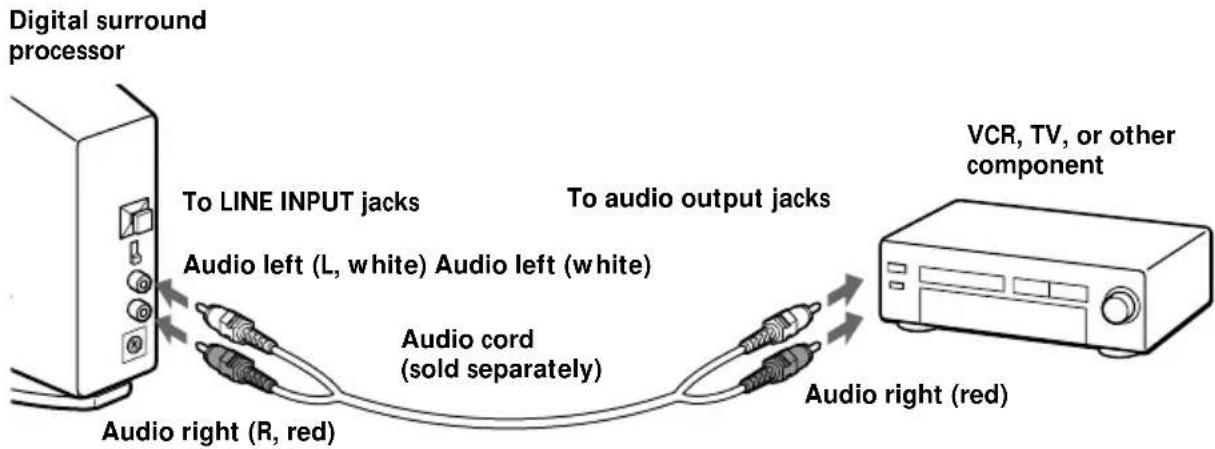
Connecting cables (sold separately)
Use the RK-G129 cable (stereo mini-plug pin plug x 2) when connecting the stereo mini-jack (line out jack or headphones jack) to the LINE INPUT jacks.
(Continued)
Setting the input level
If the volume is low using analog input, set the ATT (attenuator) switch to "0dB".
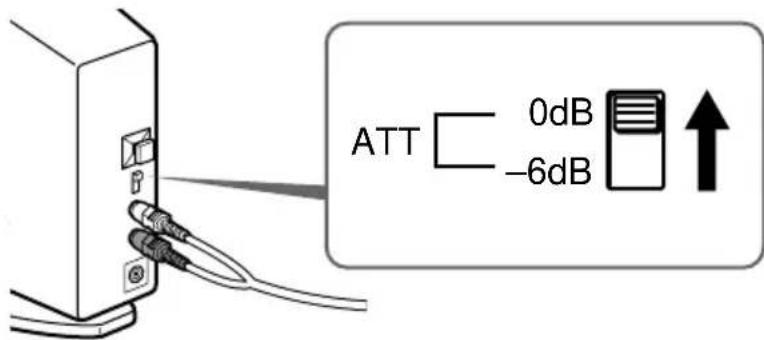
Setting Connected components
0dB TV, portable components, and other components with a low output level
-6dB Other components (initial settings)
Notes
- If the audio input to LINE INPUT jacks is distorted, set the ATT (attenuator) switch to “-6dB”.
- Be sure to lower the volume before setting the ATT (attenuator) switch.
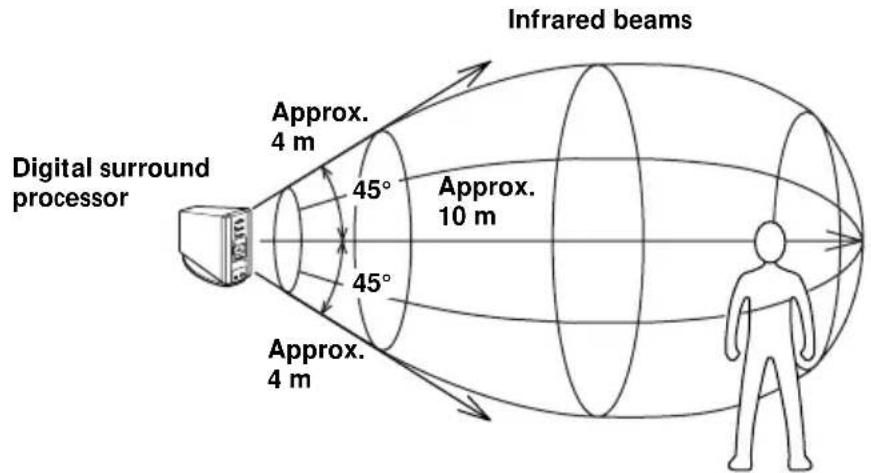
Infrared transmission area
The approximate infrared transmission area from the digital surround processor is shown in the illustration below.
Notes
- Because this system uses infrared beams, even if the headphones are within the transmission area shown above, electrical noise (hissing noises) may increase as the headphones get farther away from the digital surround processor. Also, if the infrared beams are blocked, the sound may be interrupted or noise may be heard. This is due to the infrared beam characteristics and is not a malfunction.
- Do not cover the infrared beam sensor with your hand or hair.
- As long as the headphones are in the transmission area shown in the illustration above, the headphones can have any orientation with respect to the digital surround processor (facing, turned 90^ , or turned 180^ ).
- The sound may differ depending on the digital surround processor position and conditions in the room. It is recommended that you place the digital surround processor in the location which produces the clearest sound.
- Mixed signals may result if the digital surround processor is used with other processors or transmitters.
(Continued)
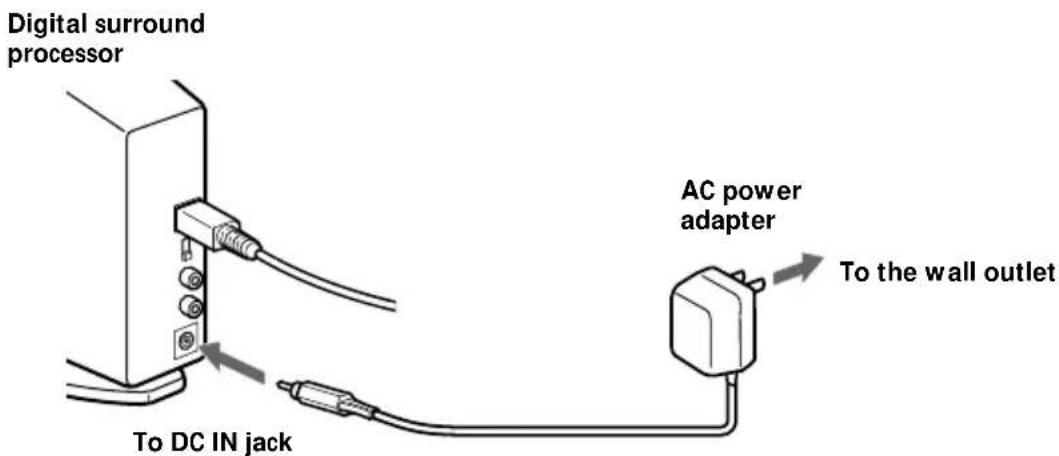
Plugging into the wall outlet
Note
Be sure to use the supplied AC power adapter. Using products with different plug polarity or other characteristics can cause product failure.
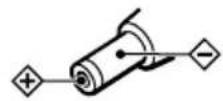
Unified polarity plug
Charging the batteries
Be sure to use the supplied battery charger. Up to four batteries can be charged at once.
Inserting the batteries into the battery charger
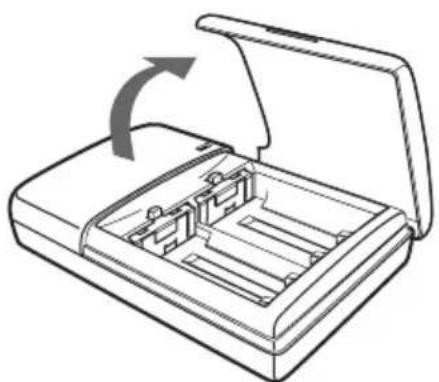
① Open the lid.
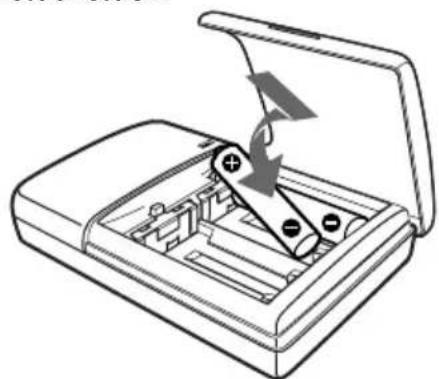
② Insert the two supplied rechargeable Ni-Cd batteries NC-AA with the and ends in the correct direction.
Note
Press the rechargeable Ni-Cd batteries into the charger until they fit into place. After inserting the batteries, close the lid firmly. The batteries will not be charged unless the lid is closed.
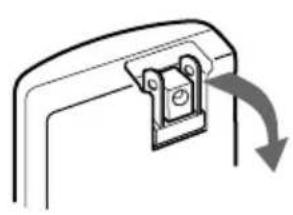
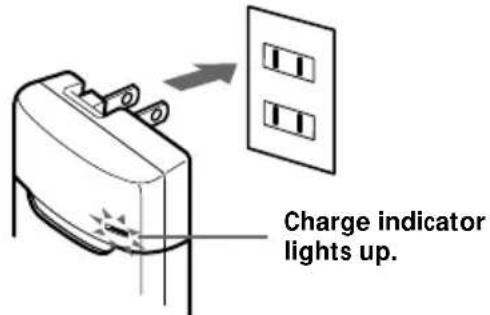
Charging (U2, CA2 and E92 Versions* only)
① Pull out the charging plug. ② Insert into the wall outlet.
Charging (CEK and HK4 Versions* only)
① Attach the charging plug to the battery charger. ② Insert into the wall outlet.
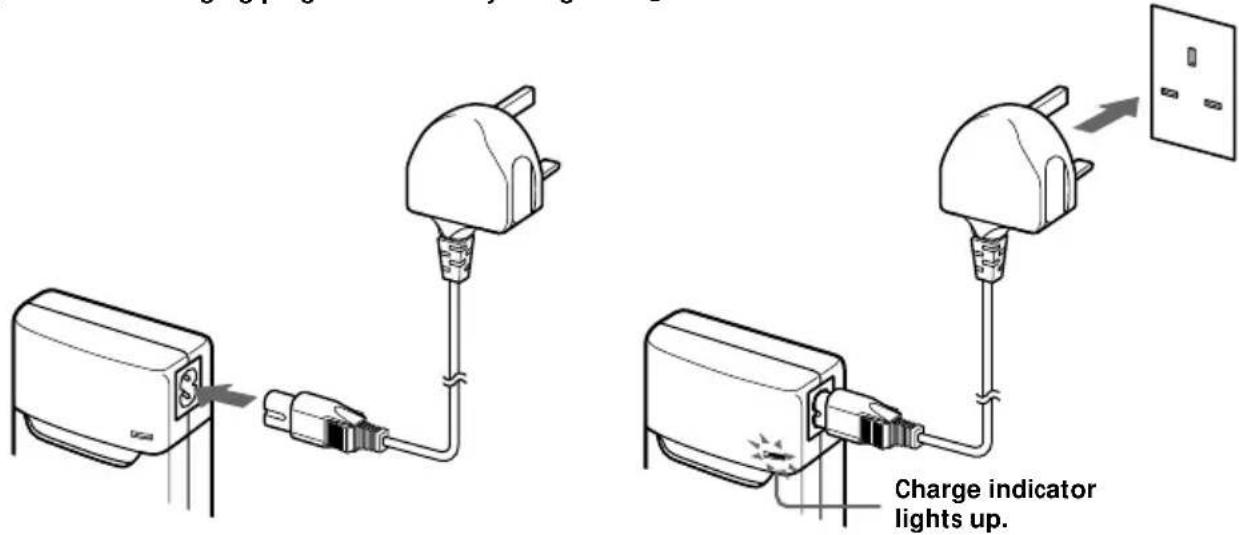
Charging (CED and E13 Versions* only)
① Attach the charging plug to the battery charger. ② Insert into the wall outlet.
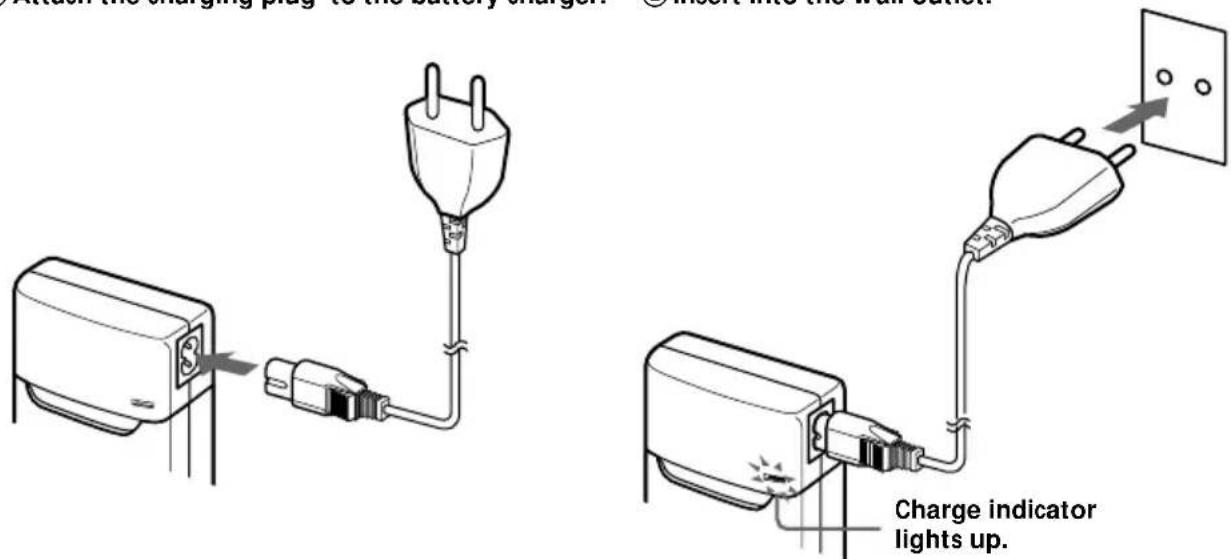
Note
Use the charging plug that matches the outlet in your home.
- The charging plug supplied with this system varies depending on the system version. To check the version, refer to the version code printed on the box.
(Continued)
When charging is finished
Unplug the charger from the outlet, and take out the rechargeable Ni-Cd batteries.
Standard charging times and usage times for the supplied rechargeable batteries
Charging time Usage time
Approx. 1 hour Approx. 6 hours
Approx. 6 hours* Approx. 30 hours
- Time to fully charge the battery when it is completely drained.
Notes
- The charging time for the batteries is the same regardless of the number of batteries.
- During charging, the charger and the batteries become slightly warm. This is not a malfunction.
- Be sure to unplug the charger when it is not being used.
- Do not use or leave the charger near heating components, hot areas exposed to direct sunlight, or damp areas.
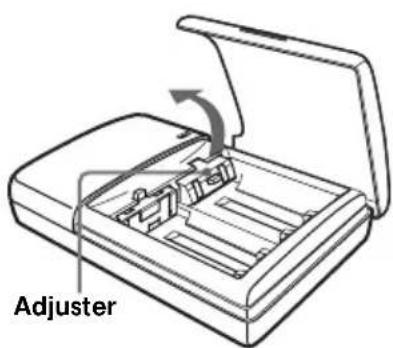
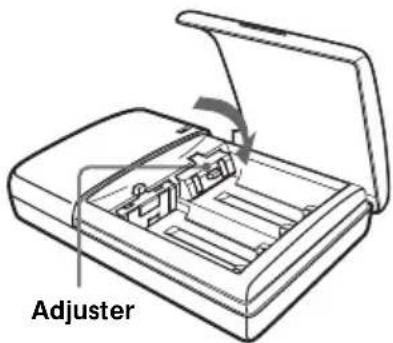
- The batteries will not be charged if the adjuster on the charger is pushed down. Set the adjuster back in the direction of the arrow shown in the illustration at the right before charging.
- If batteries which have not been completely discharged are charged, the charge indicator may go out sooner than the charging times noted above.
Inserting the batteries in the headphones
As shown in the illustration below, insert the two supplied rechargeable Ni-Cd batteries with the and ends in the correct direction.
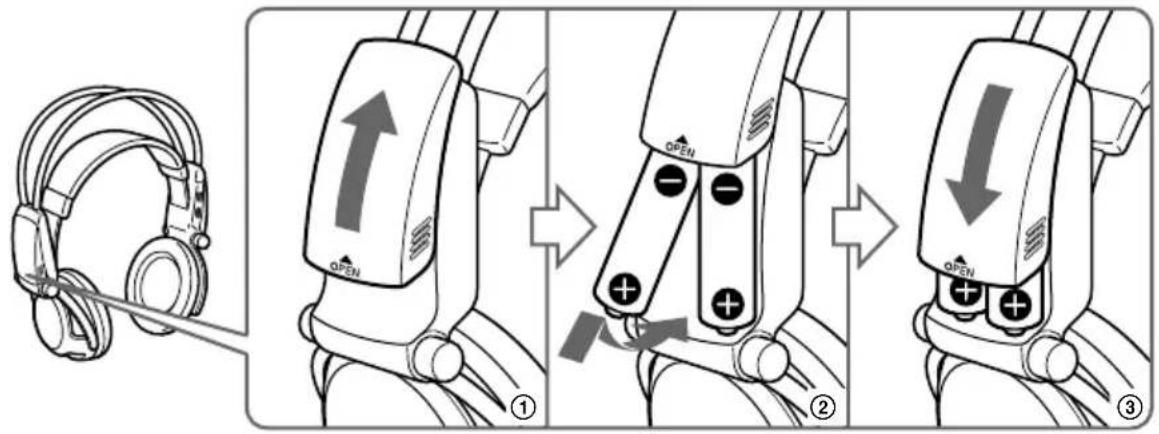
When using optional batteries
You can use R6 (size AA) dry-cell batteries, Sony R6 (size AA) Ni-Cd batteries (NC-AA, NC-AAS), and R6 (size AA) nickel-hydrium batteries (NH-AA) with the headphones. Insert the batteries as shown above.
Usage times for dry-cell batteries
| Battery type Usage time |
| Sony Alkaline Battery LR6/AM3 (N) Approx. 90 hours |
| Sony Manganese Battery R6P/SUM-3 (NS) Approx. 45 hours |
Usage times and charging times for Sony rechargeable batteries (sold separately)
| Battery type Usage time Charging time* | |
| Sony R6 (size AA) Ni-Cd Battery NC-AA (700 mAh) | Approx. 30 hours Approx. 6 hours |
| Sony R6 (size AA) Ni-Cd Battery NC-AAS (1000 mAh) | Approx. 40 hours Approx. 9 hours |
| Sony R6 (size AA) Nickel-hydrium Battery NH-AA (1450 mAh) | Approx. 60 hours Approx. 10 hours |
- Time to fully charge the battery when it is completely drained.
(Continued)
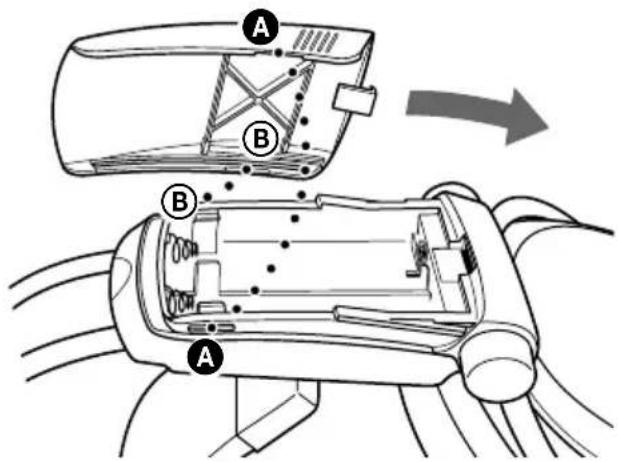
How to attach the battery cover when it has come off
As shown in the illustration, align A with A, and B with B, and then attach the cover in place.
When charging R03 (size AAA) batteries
The supplied battery charger can also charge Sony R03 (size AAA) Ni-Cd batteries (NC-AAA) and R03 (size AAA) nickel-hydrium batteries (NH-AAA). When charging R03 (size AAA) batteries, push down the adjuster on the battery charger. When charging R6 (size AA) batteries, flip up the adjuster.
Charging times for R03 (size AAA) rechargeable batteries
| Battery type Charging time* | |
| Sony R03 (size AAA) Ni-Cd Battery NC-AAA (250 mAh) | Approx. 5 hours |
| Sony R03 (size AAA) Nickel-hydrium Battery NH-AAA (650 mAh) | Approx. 10 hours |
- Time to fully charge the battery when it is completely drained.
Notes
- The supplied battery charger can charge Sony R6 (size AA) Ni-Cd batteries (NC-AA, NC-AAS) and Sony R6 (size AA) nickel-hydrium batteries (NH-AA). Never attempt to charge other types of rechargeable batteries or dry-cell batteries.
- Do not use Sony R6 (size AA) Ni-Cd batteries (NC-AA (HJ)).
- The Ni-Cd batteries should be replaced with new ones when they last only half the expected time when fully charged. Purchase either Sony R6 (size AA) Ni-Cd batteries (NC-AA, NC-AAS) or Sony R6 (size AA) nickel-hydrium batteries (NH-AA). You can order the batteries from the store where you made the purchase or at your nearest Sony dealer.
- Some battery types may not be available in certain areas.
Connecting the digital surround processor with corded headphones (sold separately)
Connect your corded open-air headphones (such as MDR-F1 or MDR-605LP) to the PHONES jack on the digital surround processor. To obtain sufficient surround sound effect, use of MDR-IF5000 cordless stereo headphones is recommended.
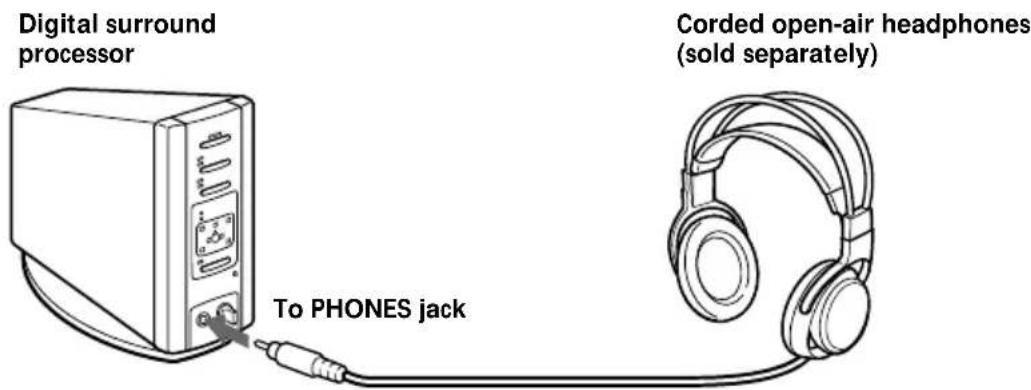
Notes
- When removing the headphones from the PHONES jack, always grip the plug. Never pull on the cord.
- This system has been designed for optimum effect when used with the supplied MDR-IF5000 cordless stereo headphones. Additional MDR-IF5000 cordless stereo headphones are also available separately. A satisfactory surround sound effect may not be obtained with other headphones.
Listening to the Sound of a Connected Component
Before starting operation, be sure to read "Preparation" and make the proper connections.
1 Turn on the component connected to the digital surround processor.
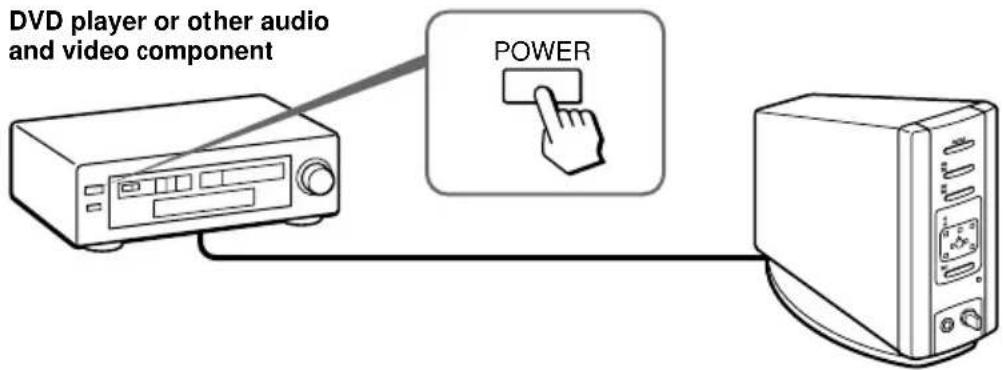
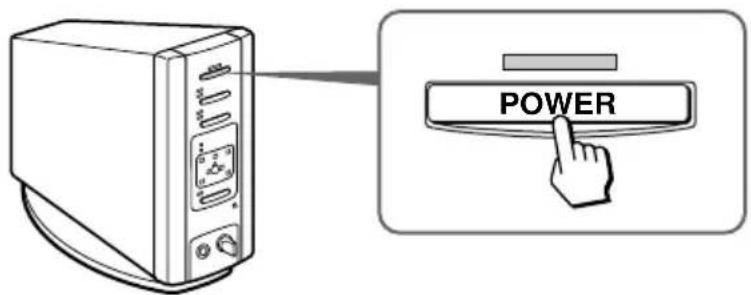
2 Press POWER to turn on the digital surround processor.
The POWER indicator lights green.
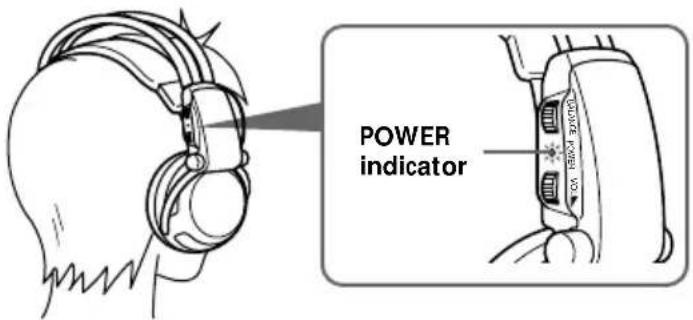
3 Put on the headphones.
The POWER indicator lights red, and the headphones automatically turn on.
4 Press INPUT to select the component you want to listen to.
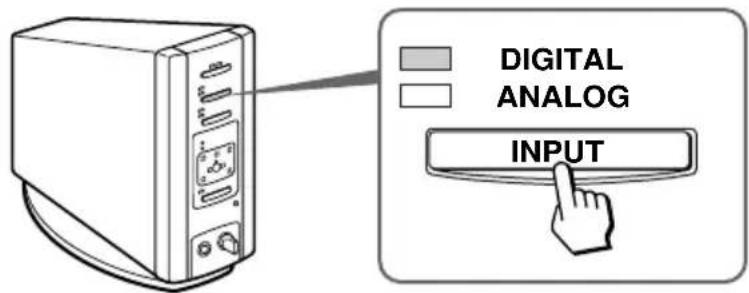
Indicator light Selected sound source
DIGITAL Sound of the component connected to DIGITAL IN jack
ANALOG Sound of the component connected to LINE INPUT jacks
Note
To listen to dual audio (MAIN/SUB) sound sources, connect to the LINE INPUT jacks, and then select the sound source you want to listen to on the player, TV, or other component.
5 Press EFFECT to select the desired sound field.
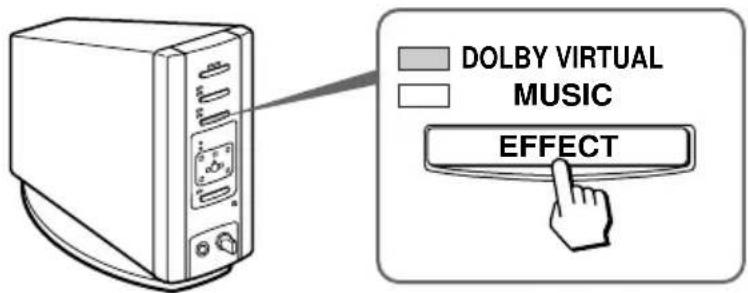
Indicator light Sound field and suitable sound source
DOLBY VIRTUAL Mode which reproduces the sound field of a movie theater. This mode is suitable for movie sound sources.
MUSIC Mode which reproduces the sound field of a listening room with good acoustic environment. This mode is suitable for music sources.
(Continued)
6 Press OUTPUT to select the output mode (surround effect).
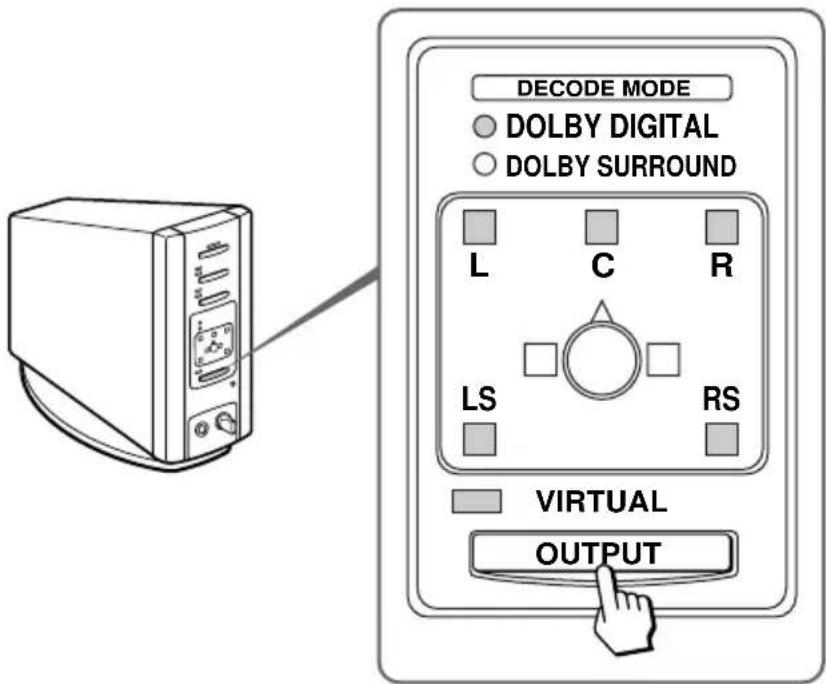
| Indicator light | Output mode (surround effect) |
| DECODE MODE ○DOLBY DIGITAL ○DOLBY SURROUND | OFF Regular headphones playback. |
| VIRTUAL | |
| DECODE MODE ○DOLBY DIGITAL ○DOLBY SURROUND | VIRTUALFRONT Virtual effect where the sound seems to be coming from two speakers (right and left) located in front of you. |
| L C R LS RS VIRTUAL | |
| DECODE MODE ○DOLBY DIGITAL ○DOLBY SURROUND | VIRTUAL SURROUND Virtual surround effect where the sound seems to be coming from not only two front speakers (right and left), but also from one center speaker, two rear speakers (right and left), and a subwoofer (when DOLBY DIGITAL is lit). The digital surround processor automatically identifies and processes according to the format of the input audio signal. When DOLBY DIGITAL indicator is on: Audio recorded in Dolby Digital 5.1ch format is being processed. When DOLBY SURROUND indicator is on: Audio recorded in Dolby Surround (Pro Logic) format is being processed. |
Note
During Dolby Digital input, monaural sound sources which cannot be processed with the surround effect are automatically identified and played back through two channels (left and right), even when VIRTUAL SURROUND mode is selected. In this case, both the DOLBY DIGITAL and DOLBY SURROUND indicators are turned off.
7 Adjust the volume.
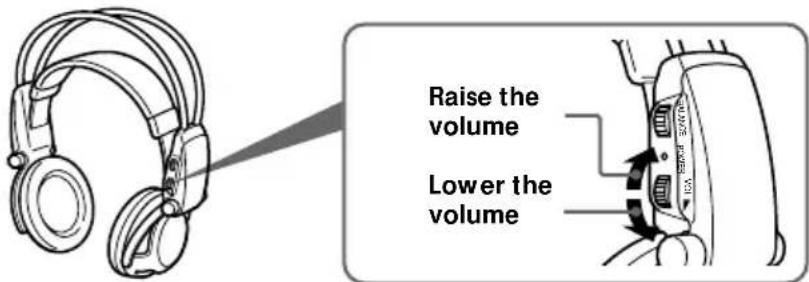
To adjust the volume of headphones (sold separately) connected to the PHONES jack
Turn PHONES—LEVEL to adjust the volume.
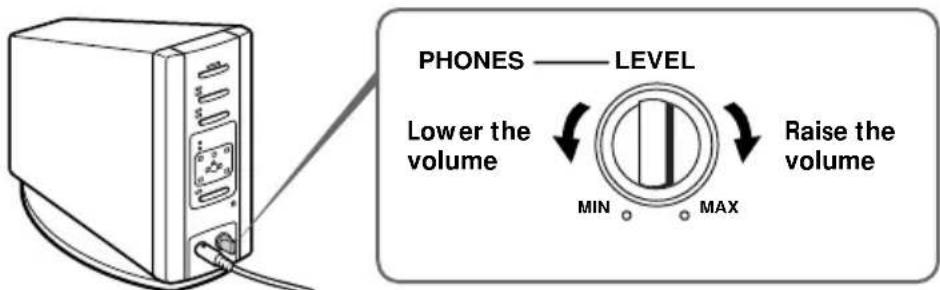
(Continued)
8 Adjust the balance.
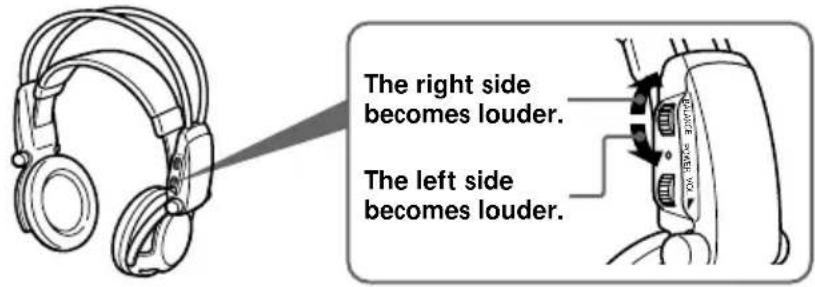
The headphones automatically turn off when they are taken off — Auto Power On/Off Function
When not using the headphones, be sure that the self-adjusting band is no longer pulled up. The power stays on when the self-adjusting band is pulled up.
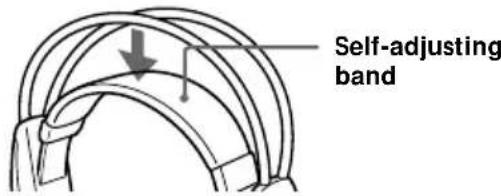
To check the remaining battery power
Pull up the self-adjusting band and check the POWER indicator. The batteries can be used when the POWER indicator lights red. Charge the batteries or use dry-cell batteries if the POWER indicator is faint, the sound is distorted, or increased noise occurs.
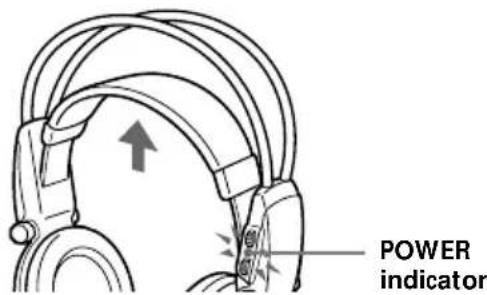
After using the headphone system
Turn off the digital surround processor first before turning off the component connected to the digital surround processor. If you turn off the connected component first, the infrared beam is cut off and noise may be emitted (this is not a malfunction). Do not hang the headphones on the digital surround processor or other components. The Auto Power On Function may be inadvertently activated, using up the batteries.
Transition time between modes
When pressing buttons on the digital surround processor to change to new modes, the transition time between modes may vary. This is due to differences in program transmission between modes.
Mute Function
The Mute Function is automatically activated so that sound output from the headphones is cut off whenever the headphones are outside the infrared transmission area, the infrared beams are interrupted, or the noise increases. The Mute Function is automatically cancelled when you get closer to the digital surround processor or there is no longer anything in the way of the infrared beams.
If an audio signal is not input for 10 minutes
Emission of the infrared beams from the infrared transmitter in the digital surround processor automatically stops when an audio signal is not input for 10 minutes. The infrared beams are automatically emitted when an audio signal is input again. In some cases, the infrared beams from the infrared transmitter may stop when an extremely low sound is emitted for about 10 minutes during analog input. If this happens, raise the volume of the connected audio and video component and lower the volume of the headphones.
Notes
-
There may be differences in brightness of the infrared transmitter on the digital surround processor. However, this does not affect the transmission area of the infrared beams.
-
The headphones should be used within the infrared transmission area (see "Infrared transmission area" on page 13).
-
Do not use the digital surround processor in areas exposed to direct sunlight or strong light. The sound may be cut off.
-
These open-type headphones are designed so that the sound also flows outside the headphones. Be careful not to turn up the volume so high that it bothers the people around you.
-
Use a suitable volume level so that you do not harm your hearing and to ensure that you can still hear surrounding sounds.
-
The surround sound effect may not be obtained for sound sources which do not incorporate video, such as music CDs.
-
This system simulates the HRTF* for an average person. However, the effect can differ from person to person since the HRTF can vary between individuals.
Troubleshooting
If you run into any problem using this headphone system, use the following checklist. Should any problem persist, consult your nearest Sony dealer.
Symptom Cause and remedy
No sound
Turn on the digital surround processor.
- Check that the AV component and AC power adapter are connected to the digital surround processor and that they are plugged into the power outlet.
Turn on the AV component connected to the digital surround processor, and start the program (playback).
Use the INPUT button to check whether the AV component you want to listen to is properly selected.
If the AV component headache jack is connected to the digital surround processor, raise the volume level on the connected AV component.
Raise the headphone volume.
Check the position of the BALANCE control on the headphones.
The Mute Function is on.
- Check that there is nothing blocking the path from the digital surround processor to the headphones.
- Try to use the headphones as close as possible to the digital surround processor.
- Change the position or angle of the digital surround processor.
The POWER indicator on the headphones is faint or out. This indicates that the battery power is low. If you are using rechargeable batteries, recharge the batteries. If you are using dry-cell batteries, replace with new ones. If the indicator is still out, consult your nearest Sony dealer.
Distorted sound
Set the ATT (attenuator) switch on the digital surround processor to -6dB .
The POWER indicator on the headphones is faint or out. This indicates that the battery power is low. If you are using rechargeable batteries, recharge the batteries. If you are using dry-cell batteries, replace with new ones. If the indicator is still out, consult your nearest Sony dealer.
If the AV component headphone jack is connected to the digital surround processor, lower the volume level on the connected AV component.
Symptom Cause and remedy
| High noise level/ Low sound | → Use the headphones near the digital surround processor. The amount of noise increases as the headphones become farther from the digital surround processor. This is due to the characteristics of the infrared beams and is not a malfunction. |
| → Check that there is nothing blocking the path from the digital surround processor to the headphones. | |
| → Check that your hand or hair is not covering the infrared sensor on the headphones. | |
| → If direct sunlight is entering the room from a window near the digital surround processor or headphones, close the curtain or blinds so that no direct sunlight is let in. Or, use in a location not exposed to direct sunlight. | |
| → Change the position or angle of the digital surround processor. | |
| → Set the ATT (attenuator) switch on the digital surround processor to "0dB". | |
| → The POWER indicator on the headphones is faint or out. This indicates that the battery power is low. If you are using rechargeable batteries, recharge the batteries. If you are using dry-cell batteries, replace with new ones. If the indicator is still out, consult your nearest Sony dealer. | |
| → If the AV component headphone jack is connected to the digital surround processor, raise the volume level on the connected AV component. | |
| The surround sound effect is not obtained | → Press the OUTPUT button to select VIRTUAL SURROUND mode (page 23). |
| → The audio for the chapter being played is not a multichannel signal. The surround effect does not work for monaural and other sound sources which have not been processed for surround sound. | |
| The DOLBY DIGITAL indicator does not turn on | → The audio digital output setting for the DVD player may be set to "PCM". Refer to the instruction manual supplied with the DVD player, and change to the setting (such as "Dolby Digital/PCM" or "Dolby Digital") for usage with components having built-in Dolby Digital (AC-3) decoders. |
| → You are trying to play DVD software not compatible with Dolby Digital 5.1ch. | |
| → The audio for the chapter being played is not a multichannel signal. | |
| The batteries cannot be charged | → Dry-cell batteries are being used. Insert the supplied or optional rechargeable batteries (page 17). |
| → Rechargeable batteries other than supplied or optional batteries are being used. Insert the supplied or optional rechargeable batteries (page 17). |
Precautions
On safety
- Do not drop, hit, or otherwise expose the digital surround processor or headphones to strong shocks of any kind. This could cause a breakdown.
- Do not disassemble or attempt to open any parts of the system.
On power sources and placement
- If you are not going to use the system for a long time, unplug the AC power adapter cord from the outlet. When removing the cord, grip the plug. Do not pull on the cord.
-
Do not place the system at any of the following locations.
-
Location exposed to direct sunlight, near a heater, or other extremely high-temperature location
Dusty location - On an unsteady or inclined surface
- Location exposed to large amounts of vibrations
Bathroom or other high-humidity locations
On headphones
To protect your ears
Listening to sounds at a high volume over long periods of time can harm your hearing. To protect your ears, do not listen with the volume raised too high.
Act considerably
When the volume is too high, the sound flows outside the headphones. Be careful not to raise the volume so high that it bothers the people around you.
There is a tendency to raise the volume when using in places with lots of noise. However, the volume should be kept at a level where you can respond if called while listening to the headphones.
On ear pads
The ear pads may become worn over long periods of use and storage. To replace the ear pads, consult your nearest Sony dealer.
On cleaning
Use a soft cloth slightly moistened with mild detergent solution. Do not use solvents such as thinner, benzene or alcohol as these may damage the surface.
When a malfunction or breakdown occurs
- If a malfunction or breakdown occurs or if a foreign object gets inside the unit, immediately turn off the power and consult your nearest Sony dealer.
- When taking the system to Sony dealer, be sure to take both the headphones and digital surround processor.
Specifications
Digital surround processor (DP-IF5000)
Modulation System Frequency modulation
Carrier wave frequency Right channel 2.8MHz
Left channel 2.3MHz
Transmission distance Approx. 10m
Frequency response 20 - 20,000Hz
Distortion rate 1% or less (1kHz)
Audio inputs Optical input
(square-type) · 1
Analog input (pin jack
left/right)·1
Power requirements DC 9 V (from the
supplied AC power
adapter)
Dimensions (w/h/d) Approx. 85 · 190 ·
180 mm (3 ^3 /8·7 ^1 /2·
7^1 / 8 inch)
Mass Approx. 1.0kg
(1,000g) (2 lb 30 oz)
Cordless stereo headphones
(MDR-IF5000)
Frequency response 12 - 24,000Hz
Power requirements Rechargeable Ni-Cd
batteries (supplied) or
R6 (size AA) batteries
(dry-cell or
rechargeable, sold
separately)
Mass Approx. 280g (10 oz)
(including the
supplied rechargeable
Ni-Cd batteries)
Supplied accessories
Stand for digital surround processor (1)
AC power adapter (1)
Rechargeable Ni-Cd batteries (2)
Battery charger (1)
Charging plug for battery
and E13 Versions* only)
Optical digital connecting cable (1)
Operating Instructions (1)
Product Information (1)
Recommended accessories
Connecting cables RK-C310, RK-C315,
RK-C320, RK-C330
(pin plug · 2 pin
plug·2)
Optical digital selector SB-D30
Optical digital connecting cable
POC-5A,POC-10A
POC-15A (optical)
rectangular plug
optical rectangular plug)
POC-5AB, POC-10AB,
POC-15AB (optical)
rectangular plug
optical mini-plug)
Design and specifications are subject to change without notice.
- The charging plug supplied with this system varies depending on the system version. To check the version, refer to the version code printed on the box.
AVENTISSEMENT
Batteries Ni-Cd rechargeable NC-AA (2)
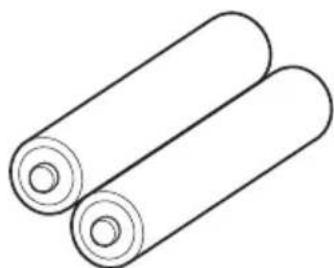
Charge de batteries R03 (format AAA)
Batteries Ni-Cd rechargeables (2)
Accessoires recommends
(Cinch-Buchse links/
rechts)·1

- Digital Surround Headphone System
- WARNING
- For the customers in the USA
- Owner's Record
- NOTICE FOR THE CUSTOMERS IN THE U.S.A.
- NOTE
- For the customers in the USA and Canada
- RECYCLING NICKEL-CADMIUM BATTERIES
- Call toll free number: 1-800-822-8837 (United States and Canada only)
- Table of Contents
- Main features
- Setting to DEMO mode
- CE mark
- Headphone System
- MDR-DS5000 digital surround headphone system
- System features
- Compatible with Dolby Digital and Dolby Pro Logic
- Sound reproduction outside the listener's head
- 3-D sound field using "Virtualphones Technology" 3-D sound field of conventional headphones
- Typical sound field when listening to speakers (2 channels)
- Sound field when listening to the MDR-DS5000 (2 channels)
- Open-air headphones with ring supports
- Headphone system configuration
- Notes
- Checking the Product and Accessories
- Digital surround processor (1)
- Cordless stereo headphones (1)
- Battery charger (1) Charging plug (for battery
- Charging plug (for battery charger, 1)
- AC power adapter (1)
- Connecting the Headphone System
- General
- Connecting with audio and video components Setting up the digital surround processor
- To use on its side:
- Rubber supports
- Connecting the digital surround processor with digital components
- Optical digital connecting cable (supplied)
- Connecting cables (sold separately)
- Notes on optical digital connecting cable
- Connecting the digital surround processor with analog components
- Setting the input level
- Setting Connected components
- Infrared transmission area
- Plugging into the wall outlet
- Charging the batteries
- Inserting the batteries into the battery charger
- Charging (U2, CA2 and E92 Versions* only)
- Charging (CEK and HK4 Versions* only)
- Charging (CED and E13 Versions* only)
- When charging is finished
- Standard charging times and usage times for the supplied rechargeable batteries
- Charging time Usage time
- Inserting the batteries in the headphones
- When using optional batteries
- Usage times for dry-cell batteries
- Usage times and charging times for Sony rechargeable batteries (sold separately)
- How to attach the battery cover when it has come off
- When charging R03 (size AAA) batteries
- Charging times for R03 (size AAA) rechargeable batteries
- Connecting the digital surround processor with corded headphones (sold separately)
- Listening to the Sound of a Connected Component
- Press INPUT to select the component you want to listen to.
- Indicator light Selected sound source
- Press EFFECT to select the desired sound field.
- Indicator light Sound field and suitable sound source
- Press OUTPUT to select the output mode (surround effect).
- Adjust the volume.
- To adjust the volume of headphones (sold separately) connected to the PHONES jack
- Adjust the balance.
- The headphones automatically turn off when they are taken off — Auto Power On/Off Function
- To check the remaining battery power
- After using the headphone system
- Transition time between modes
- Mute Function
- If an audio signal is not input for 10 minutes
- Troubleshooting
- Symptom Cause and remedy
- Precautions
- On safety
- On power sources and placement
- On headphones
- To protect your ears
- Act considerably
- On ear pads
- On cleaning
- When a malfunction or breakdown occurs
- Specifications
- Digital surround processor (DP-IF5000)
- Cordless stereo headphones
- (MDR-IF5000)
- Supplied accessories
- Recommended accessories
- AVENTISSEMENT
- Batteries Ni-Cd rechargeable NC-AA (2)
- Charge de batteries R03 (format AAA)
- Accessoires recommends
Brand : SONY
Model : MDRDS5000
Category : Earphones