
MDRDS8000 - Earphones SONY - Free user manual and instructions
Find the device manual for free MDRDS8000 SONY in PDF.
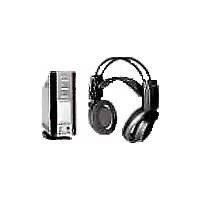


| Product Type | Digital Wireless Infrared Surround Headphones |
| Brand | Sony |
| Model | MDR-DS8000 |
| Processor (DP-IF8000) dimensions (W/H/D) | Approx. 85 × 190 × 200 mm |
| Processor weight | Approx. 1.0 kg |
| Headphone weight (with batteries) | Approx. 350 g |
| Processor power supply | 9 V DC via supplied AC adapter |
| Headphone power supply | 2 Ni-MH rechargeable NH-AA batteries (supplied) or 2 AA alkaline batteries |
| Headphone battery life (rechargeable) | Approx. 7 hours |
| Headphone battery life (alkaline) | Approx. 7 hours (with Sony LR6 alkaline batteries) |
| Infrared range | Approx. 10 m forward |
| Frequency response | 12 – 24,000 Hz |
| Harmonic distortion | 1% or less (at 1 kHz) |
| Decoded audio formats | Dolby Digital, Dolby Pro Logic II, DTS, DTS-ES 6.1, MPEG-2 AAC |
| Virtual sound modes | OFF, Virtual Front, Virtual Surround 5.1 and 6.1 |
| Sound fields | Cinema 1, Cinema 2, Music |
| Head tracking function | Yes, with HEAD TRACKING switch and RESET button |
| Automatic power on/off | Yes, by headband detection |
| Processor audio inputs | 2 optical digital inputs (rectangular), 1 analog stereo input (RCA jacks) |
| Wired headphone output | PHONES jack (mini-jack) on processor |
| Cleaning | Soft cloth moistened with mild detergent solution; avoid solvents |
| Safety | Do not expose to rain or moisture; do not open; repair by qualified technician |
| Supplied accessories | Processor, headphones, stand, charger, 2 NH-AA rechargeable batteries, optical cable, AC adapter, manual |
Frequently Asked Questions - MDRDS8000 SONY
User questions about MDRDS8000 SONY
0 question about this device. Answer the ones you know or ask your own.
Ask a new question about this device
Download the instructions for your Earphones in PDF format for free! Find your manual MDRDS8000 - SONY and take your electronic device back in hand. On this page are published all the documents necessary for the use of your device. MDRDS8000 by SONY.
USER MANUAL MDRDS8000 SONY
Digital Surround Headphone System
Operating Instructions GB Mode d'emploi FR Manual de instrucciones ES
MDR-DS8000
WARNING
To prevent fire or shock hazard, do not expose the unit to rain or moisture.
To prevent fire or shock hazard, do not place objects filled with liquids, such as vases, on the apparatus.
To avoid electrical shock, do not open the cabinet. Refer servicing to qualified personnel only.
Do not install the appliance in a confined space, such as a bookcase or built-in cabinet.
For the customers in the USA
Owner's Record
The model number is located on the back of the processor and the right inner side of the headband.
The serial number is located at the bottom of the processor and the inner side of the battery compartment.
Record these numbers in the spaces provided below. Refer to them whenever you call upon your Sony dealer regarding this product.
Model No. MDR-DS8000
Processor DP-IF8000
Headphones MDR-IF8000
Serial No.
Processor
Headphones
NOTICE FOR THE CUSTOMERS IN THE U.S.A.
NOTE
This equipment has been tested and found to comply with the limits for a Class B digital device, pursuant to Part 15 of the FCC Rules. These limits are designed to provide reasonable protection against harmful interference in a residential installation. This equipment generates, uses, and can radiate radio frequency energy and, if not installed and used in accordance with the instructions, may cause harmful interference to radio communications. However, there is no guarantee that interference will not occur in a particular installation. If this equipment does cause harmful interference to radio or television reception, which can be determined by turning the equipment off and on, the user is encouraged to try to correct the interference by one or more of the following measures:
- Reorient or relocate the receiving antenna.
- Increase the separation between the equipment and receiver.
- Connect the equipment into an outlet on a circuit different from that to which the receiver is connected.
- Consult the dealer or an experienced radio/TV technician for help.
You are cautioned that any changes or modifications not expressly approved in this manual could void your authority to operate this equipment.
RECYCLING NICKEL METAL HYDRIDE BATTERIES
Nickel Metal Hydride batteries are recyclable. You can help preserve our environment by returning your used rechargeable batteries to the collection and recycling location nearest you.

For more information regarding recycling of rechargeable batteries, call toll free 1-800-822-8837, or visit http://www.rbrc.org/
Caution: Do not handle damaged or leaking Nickel Metal Hydride batteries.
Table Of Contents
Main features. 4
Checking the Components and Accessories 5
Location and Function of Parts ... 6
Front Panel of the Processor 6
Rear Panel of the Processor 7
Headphone Parts Descriptions 8
Charging the rechargeable Batteries 9
Inserting the rechargeable batteries into the battery charger 9
Charging. 10
Connecting the Headphone System 12
Setup 12
Connecting the processor to digital components 13
Connecting the processor to analogue components. 14
Plugging into the wall outlet
Inserting the batteries in the headphones
Listening to the Sound of a Connected Component
Additional Headphones
Troubleshooting
Precautions
Specifications
Main features
The MDR-DS8000 is a digital surround headphone system using digital infrared transmission.
You can enjoy multichannel surround sound with headphones by simply connecting the digital surround processor to a DVD player or a Digital TV, a Digital Broadcasting Satellite Receiver, etc., with the supplied optical digital connecting cable.
- Compatible with Dolby Digital, Dolby Pro Logic II, DTS-ES, DTS, and MPEG-2 AAC* (Even the "Dolby Digital Surround EX" software can be fully reproduced by a unique algorithm).
- Dolby Digital/Dolby Pro Logic II and DTS Virtual certified.
- Signal processing by the Logic 3D processor creates surround sound for the headphones that simulates a movie theatre.
- Cordless headphones using a digital infrared transmission system which provides the same sound quality as compact discs, resistant to external noise and interference. (uncompressed transmission)
- Equipped with the head tracking system in the headphones to create more realistic sound.
- Wide infrared reception range of up to 10 m.
- Self-adjusting mechanism eliminating the need for headband adjustment.
- Auto Power On/Off Function to automatically turn on the headphones when they are put on and to turn them off when they are taken off. VOL control for adjusting both the right and left volume of the headphones.
- Additional MDR-IF8000 headphones (sold separately) can be used at the same time so that more than one person can enjoy the surround sound experience.
- Rechargeable nickel-metal hydride batteries (supplied and sold separately) or R6 (size AA) alkaline batteries (sold separately) can be used to power the headphones.
- The digital surround processor for this system incorporates the Dolby Digital decoder, the Dolby Pro Logic II decoder, the DTS-ES decoder, the DTS decoder, and the MPEG-2 AAC decoder.
Manufactured under license from Dolby Laboratories and Digital Theater Systems, Inc.
"Dolby", "AC-3", "Pro Logic", the "AAC" logo and the double-D symbol are trademarks of Dolby Laboratories.
"DTS" and "DTS VIRTUAL" are trademarks of Digital Theater Systems, Inc.
AAC patent marking
Pat. 5,848,391; 5,291,557; 5,451,954; 5,400,433; 5,222,189; 5,357,594; 5,752,225; 5,394,473; 5,583,962; 5,274,740; 5,633,981; 5,297,236; 4,914,701; 5,235,671; 07/640,550; 5,579,430; 08/678,666; 98/03037; 97/02875; 97/02874; 98/03036; 5,227,788; 5,285,498; 5,481,614; 5,592,584; 5,781,888; 08/039,478; 08/211,547; 5,703,999; 08/557,046; 08/894,844
CE mark
The CE mark is valid for products marketed in the European Union only.
Checking the Components and Accessories
Before setting up the system, check that all of the components are included.
Cordless stereo headphones (1) Procedural (for the processor) (1)
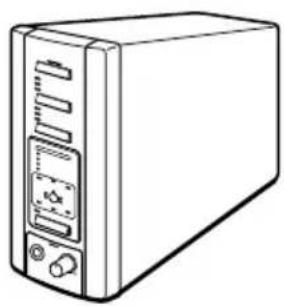
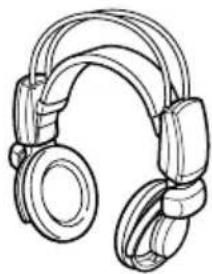
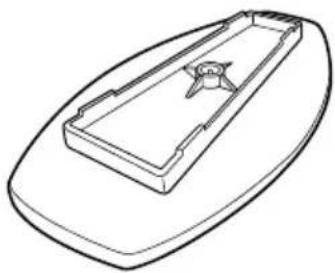
Battery charger (1) Charging plug (for battery
charger) (1)
(UK and Hong Kong model only)
Charging plug (for battery charger) (1)
(European model only)
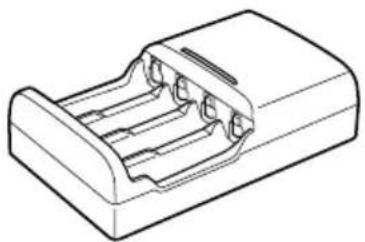
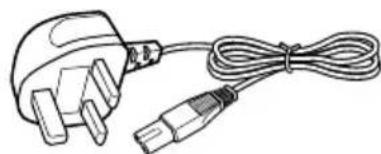
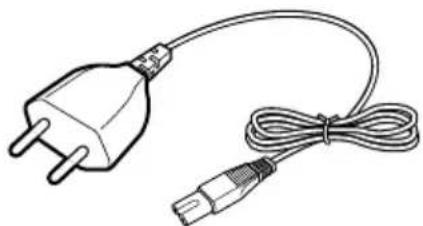
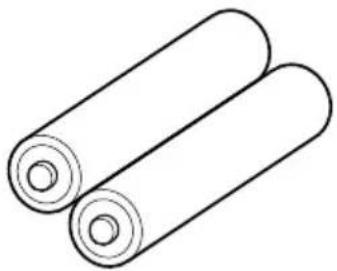
Rechargeable nickel-metal hydride batteries NH-AA (2)
Optical digital connecting cable (rectangular type ↔ rectangular type) (1)
AC power adaptor (1)
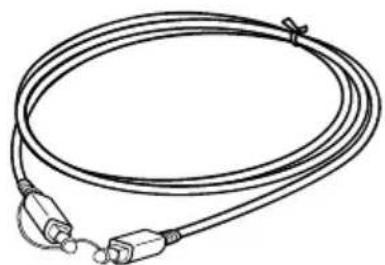
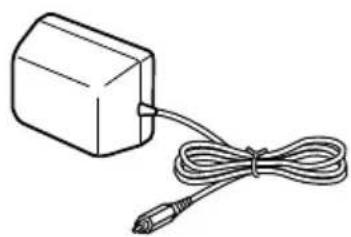
Location and Function of Parts
Front Panel of the Processor
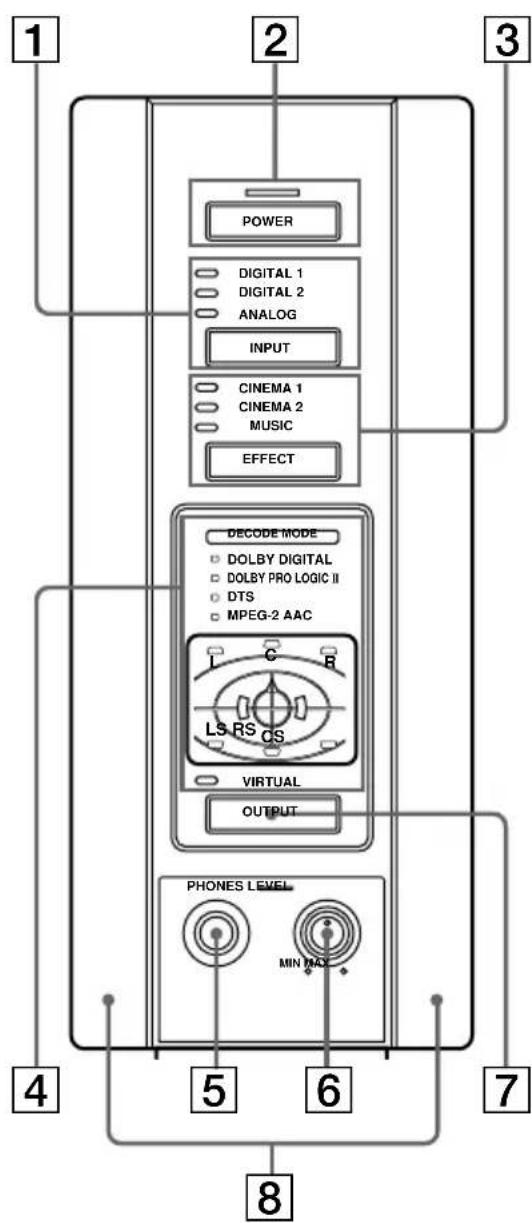
1 DIGITAL 1,2 input indicator ANALOG input indicator INPUT button
Press to select the input source (DIGITAL 1/DIGITAL 2/ANALOG).
2 POWER indicator
This indicator lights green when you turn on the processor.
POWER switch
Press to turn on and off the processor.
CINEMA 1,2 indicator
MUSIC indicator
EFFECT button (see page 20 for details)
Press to select the sound field (CINEMA 1/CINEMA 2/MUSIC).
4Decode mode indicator (see page 19 for details)
5PHONES jack (see page 20, 24 for details)
Connect your headphones to this jack. Connect the MDR-F1 headphone (sold separately) for optimum surround effect.
Turn to adjust the volume of the headphones (sold separately) connected to the PHONES jack.
7OUTPUT button
Press to select the output mode (OFF/VIRTUAL FRONT/VIRTUAL SURROUND).
8 Infrared emitter
Set the emitter in a position so that there is a straight, unobstructed path to the sensor.
Rear Panel of the Processor
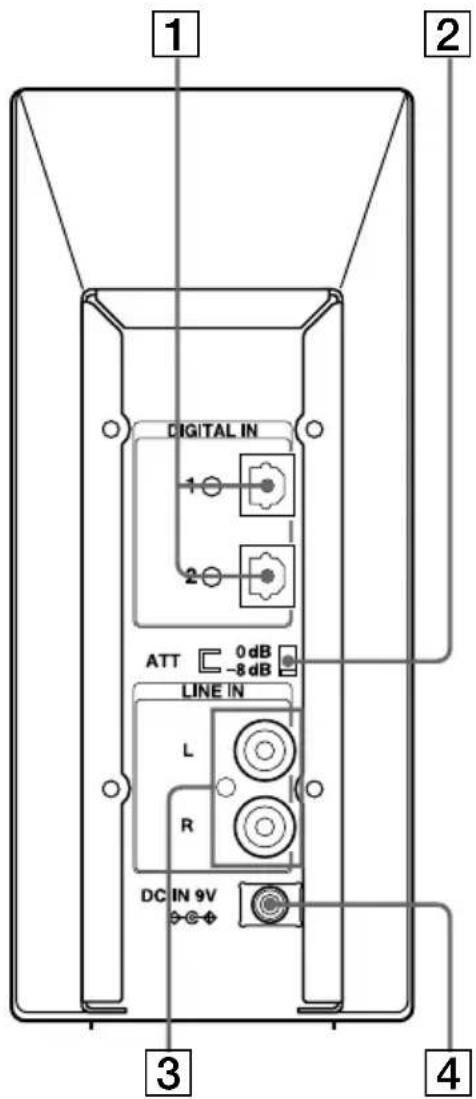
DIGITAL IN 1,2 jack (see page 13 for details) Connect a DVD player, Digital TV, Digital Broadcasting Satellite Receiver, LD player, or other digital component (sold separately) to this jack. 2ATT (attenuator) switch Set this switch to 0dB when the volume is too low at analogue input. Normally, this switch should be set to -8dB. 3 LINE IN jack (see page 14 for details) Connect the audio output jack on audio/video equipment (sold separately), such as a video cassette player or TV, to this jack. 4DC IN jack Connect the supplied AC power adaptor to this jack. (Be sure to use the supplied AC power adaptor. Using products with different plug polarity or other characteristics can cause a malfunction.)
Headphone Parts Descriptions
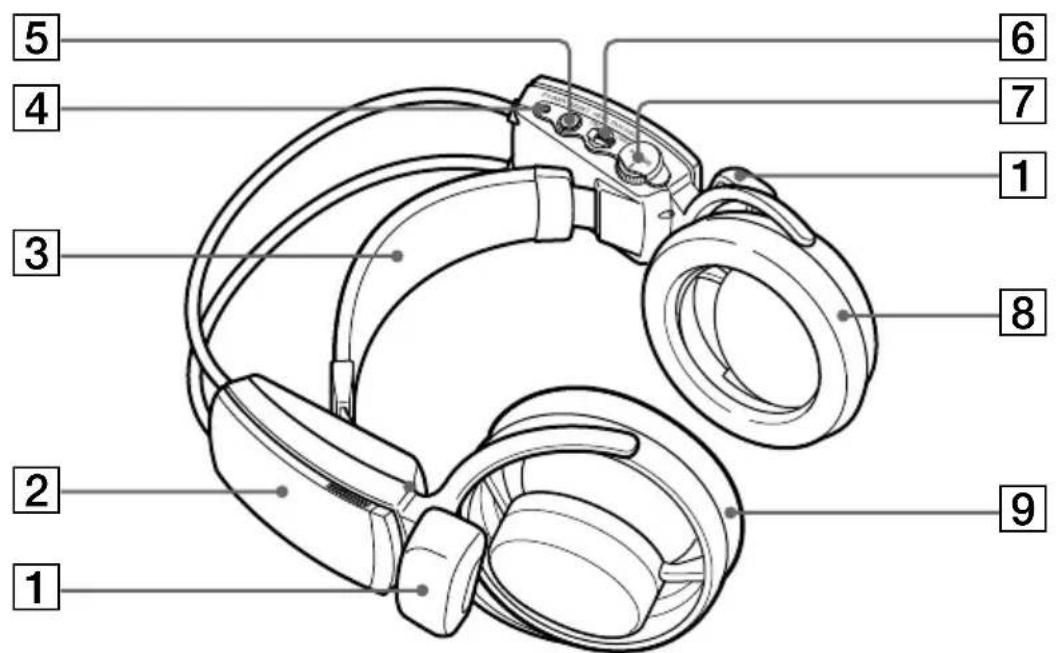
1 Infrared sensor
There are infrared sensors in two locations on both sides.
2 Battery case
Press and lift up the lid to open it. This battery case is for the supplied rechargeable batteries and R6 (size AA) alkaline batteries only.
3 Self-adjusting band
The headphones automatically turn on when you put on the headphones.
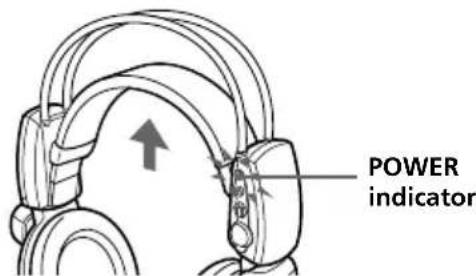
4 POWER indicator
By pulling up the self-adjusting band, the indicator lights red when battery power is sufficient.
5RESET button (See page 21 for details)
Use to reset the location information of the head tracking function.
6HEAD TRACKING switch (See page 21 for details)
To activate the head tracking function, switch it to ON when the output mode of the processor is set to VIRTUAL (other than OFF).
7 VOL (Volume) control
Use to adjust the volume.
8 Ear pad (right)
9 Ear pad (left)
Charging the Rechargeable Batteries
The supplied rechargeable batteries should be recharged before using them for the first time.
Be sure to use the supplied battery charger. Up to four batteries can be charged at once.
Inserting the rechargeable batteries into the battery charger
Insert the two supplied rechargeable nickel-metal hydride batteries with the + and - ends in the correct direction.
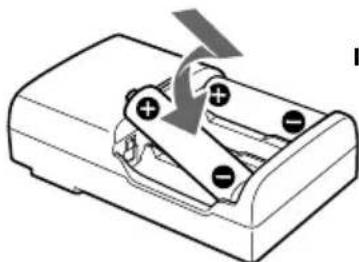
Insert the - end first.
Notes
- Press the rechargeable nickel-metal hydride batteries into the charger until they fit into place.
- When charging two batteries, the charge mode becomes high-speed and completes charging in approximately 90 minutes.
Charging
(US and Canadian model only)
① Pull out the charging plug. ② Insert into the wall outlet.
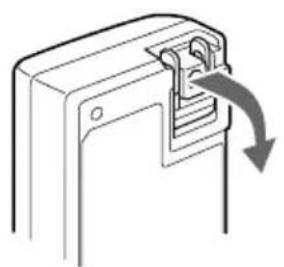
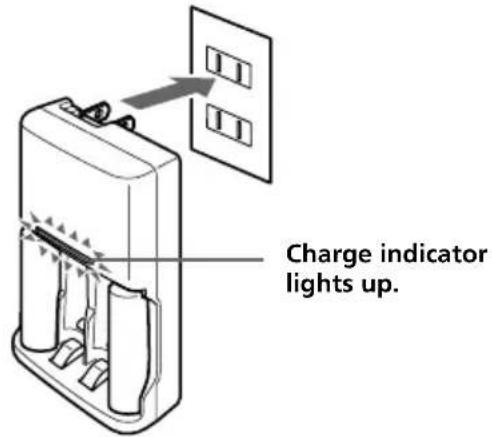
(UK, Hong Kong and European model)
① Attach the charging plug to the battery charger. ② Insert into the wall outlet.
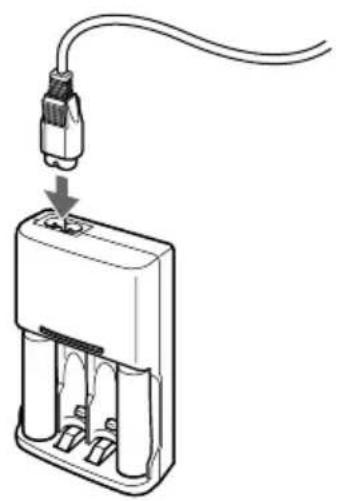
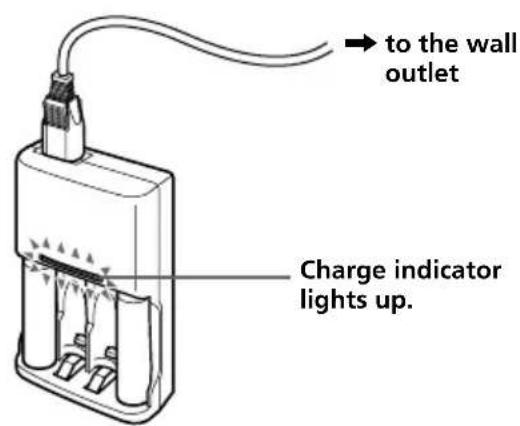
Charging is completed in about 90 minutes*.
The charge indicator goes off when charging is completed. Unplug the charger from the outlet, and take out the rechargeable batteries.
- In high-speed charging mode.
Usage time
Approx. 7 hours*
- The usage time stated above is attainable only when the fully charged batteries are used. The time may alter according to the temperature or conditions of use.
Notes
- Up to four batteries can be charged at once with the supplied battery charger. The charging time for the batteries varies according to the number of batteries at the same time.
- When charging one or two rechargeable batteries in the battery charger : Approx 90 minutes (high-speed charging mode)
- Other than above : Approx 180 minutes
- During charging, the charger and the batteries become slightly warm. This is not a malfunction.
- Be sure to unplug the charger when it is not being used.
- Do not use or leave the charger near heating components, hot areas exposed to direct sunlight, or damp areas.
- The charging indicator may turn off sooner than usual when charging batteries that have not been completely discharged.
- The rechargeable nickel-metal hydride batteries should be replaced with new ones when they last only half the expected time when fully charged. Purchase Sony R6 (size AA) rechargeable nickel-metal hydride batteries (NH-AA). You can order the batteries from the store where you purchased this unit, or at your nearest Sony dealer.
- This power unit is intended to be correctly orientated in a vertical or floor mount position.
WARNING
The supplied battery charger can charge Sony R6 (size AA), R03 (size AAA) rechargeable nickel-metal hydride batteries (NH-AA, NH-AAA). Never attempt to charge other types of rechargeable batteries or dry-cell batteries. Using them in combination with other batteries may cause leakage, overheating and explosion.
Connecting the Headphone System
Setup
You can place the processor in an upright position or on its side.
To use in an upright position:
Use a coin to attach the supplied stand to the bottom of the processor.
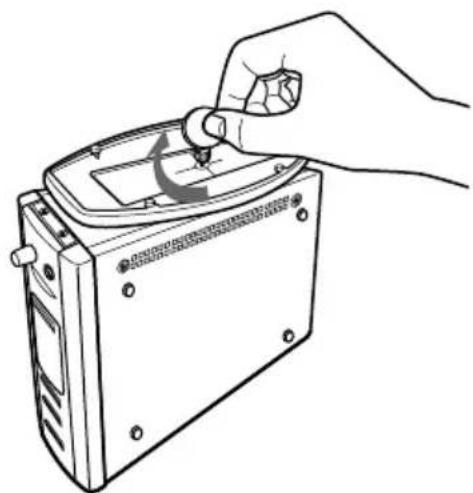
To use on its side:
Place the processor so that the four rubber supports are at the bottom.
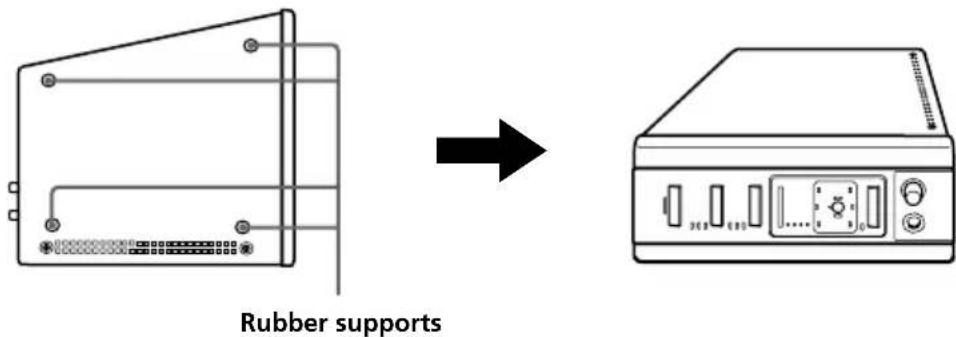
Notes
- Install the processor in a location where there are no obstructions between the processor and headphones when used.
- Do not install the processor in unstable locations, such as on top of the TV. If the processor falls down, it could cause an injury or be damaged.
- If the processor is placed in an upright position, always attach the stand for added safety.
- If the processor is placed on its side, the full infrared transmission range may not be obtained depending on installation conditions.
- If the processor is placed on its side, do not place the processor on the side not having the rubber supports.
Connecting the processor to digital components
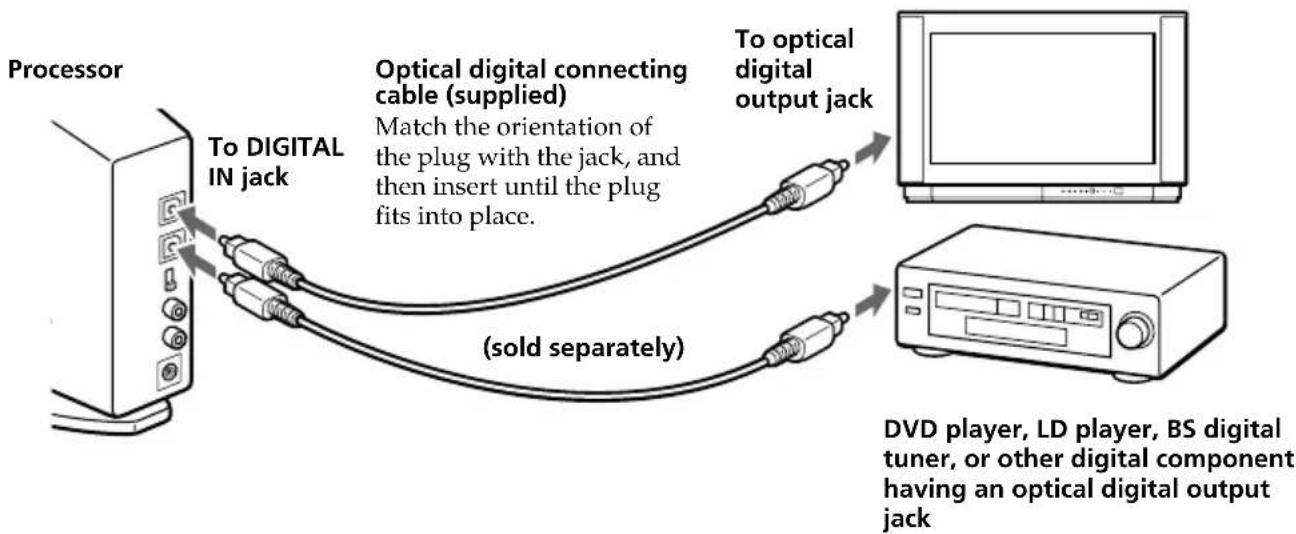
Use the supplied optical digital connecting cable to connect the optical digital output jack on a DVD player (or LD player), Digital TV, or other digital component to the DIGITAL IN 1 or 2 jack of the processor.
Notes
- The optical digital connecting cable is an extremely high-precision device and is sensitive to jolts and external pressure. Therefore, be careful when inserting and removing the cable plug.
- This system is not provided with AC-3 RF jacks, and so AC-3 RF signals from LD players cannot be directly input.
- The digital input for the processor does not support sampling frequencies of 96 kHz. Set the digital output setting for the DVD player to 48 kHz when using this system. Noise may be heard when a 96 kHz digital signal is input.
DTS
- A DTS-compatible DVD player is required for the playback of DVDs recorded in DTS audio. (For more details, see the instruction manual of the DVD player.)
- When playing LDs and CDs recorded in DTS format, noise may occur when fast forwarding or rewinding. This is not a malfunction.
- If the DTS digital output is set to "OFF" on the DVD player, no sound may be heard even if the DTS output is selected in the DVD menu.
- No sound may be heard when a DVD player and this unit are connected analogically. In this case, use a digital connection.
(Continued)
Connecting cables (sold separately)
- Use an optical cable (POC-5A, etc., sold separately) to connect more than two external components.
- Use the POC-5AB (mini-plug ↔ rectangular plug, sold separately) when connecting the digital output mini-jack on portable DVD players, portable CD players, or other digital components to the DIGITAL IN jack.
Optical digital selector (sold separately)
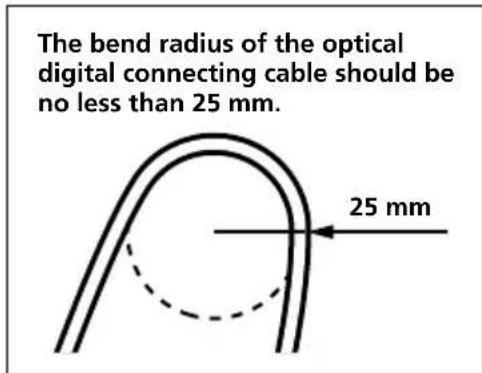
Use of the SB-RX100P (Optical digital selector (4-line input, 3-line output), sold separately) is recommended when connecting more than one digital component. The bend radius of the optical
Notes on optical digital connecting cable
- Do not drop objects on the optical digital connecting cable or expose the cable to shocks.
- Grasp the plug to connect or disconnect the cable.
- Be sure that the ends of the optical digital connecting cable are kept clean. Dust at the ends of the cable can degrade performance.
- When storing the system, attach the cap to the end of the plug and be careful not to fold or bend the optical digital connecting cable with a bend radius less than 25 mm.
Connecting the processor to analogue components
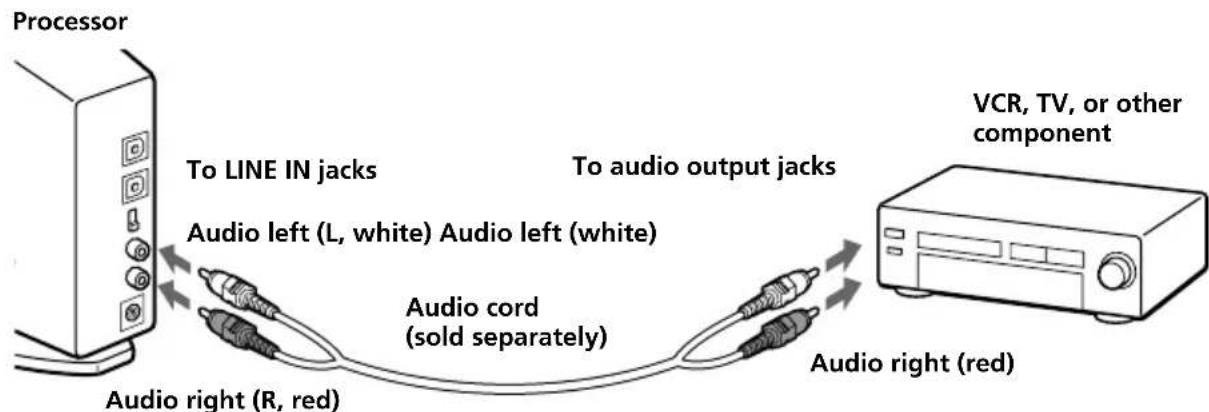
Use an audio cord (sold separately) to connect to the audio output jacks on the VCR, TV, or other component to the LINE IN (L/R) jacks on the processor.
Connecting cables (sold separately)
Use the RK-G129 cable (stereo mini-plug ↔ pin plug x 2) when connecting a stereo mini-jack (line out jack or headphones jack) to the LINE IN jacks.
In this case, set the volume on the player at a medium level. Noise can occur if the volume on the player is set too low.
See page 29 for details about other connecting cables (sold separately).
Setting the input level
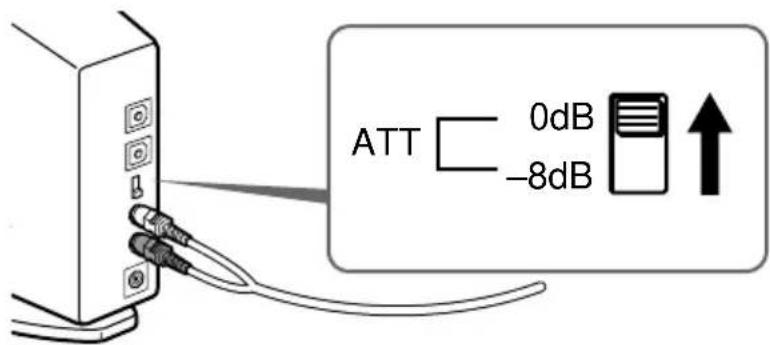
If the volume is low using analogue input, set the ATT (attenuator) switch to "0dB".
Setting Connected components
0dB TV, portable components, and other components with a low output level
-8dB Other components (initial settings)
Notes
- Be sure to lower the volume before setting the ATT switch.
- If audio input to the LINE INPUT jacks is distorted (sometimes, noise can be heard at the same time.), set the ATT switch to -8 dB.
Plugging into the wall outlet
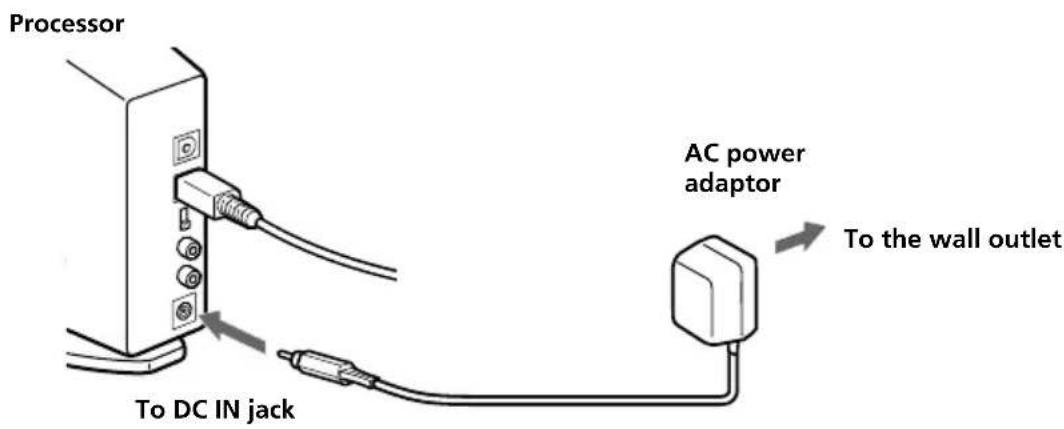
Notes
- Be sure to use the supplied AC power adaptor. Using AC adaptors with different plug polarity or other characteristics can cause product failure.
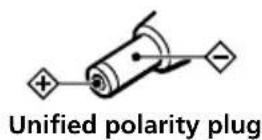
- Be sure to always use the supplied AC power adaptor. Even AC power adaptors having the same voltage and plug polarity can damage this product due to the current capacity or other factors.
Inserting the batteries in the headphones
As shown in the illustration below, insert two fully-charged (page 9) rechargeable nickel-metal hydride batteries with the and ends in the correct direction, and insert the side first.
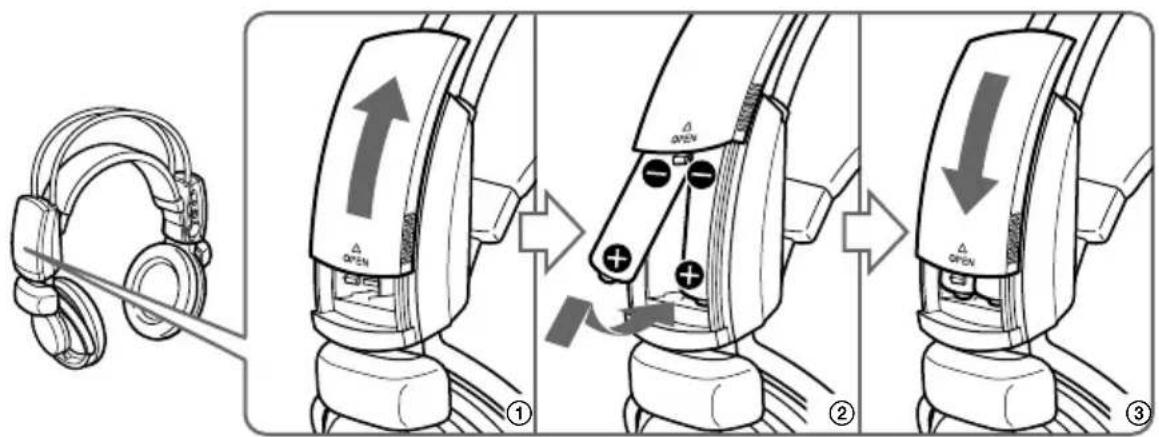
When using optional batteries
You can also use R6 (size AA) alkaline batteries. Insert the batteries as shown above.
Usage times for dry-cell batteries
Battery type Usage time
Sony alkaline battery LR6 (SG) Approx. 7 hours*
- Usage time stated above may vary according to the temperature or conditions of use.
Note
Manganese batteries cannot be used with this unit.
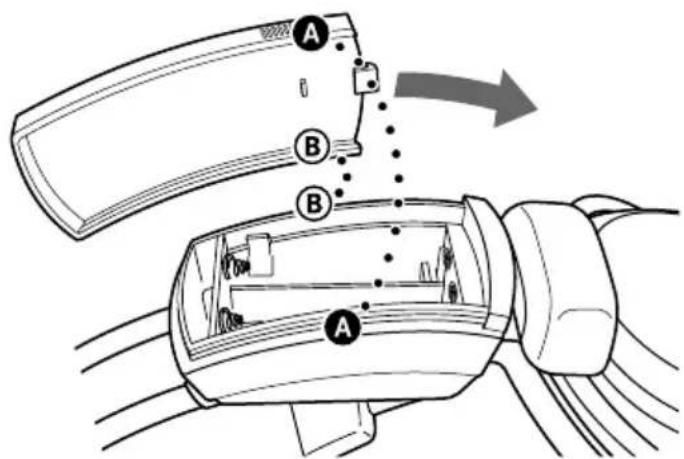
How to reattach the battery cover should it come off
As shown in the illustration, align A with A , and B with B , reattach, and then slide the cover in place.
Listening to the Sound of a Connected Component
Before starting operation, be sure to read "Connecting the Headphone System" (pages 12 to 16) and make the proper connections.
1 Turn on the component connected to the processor.
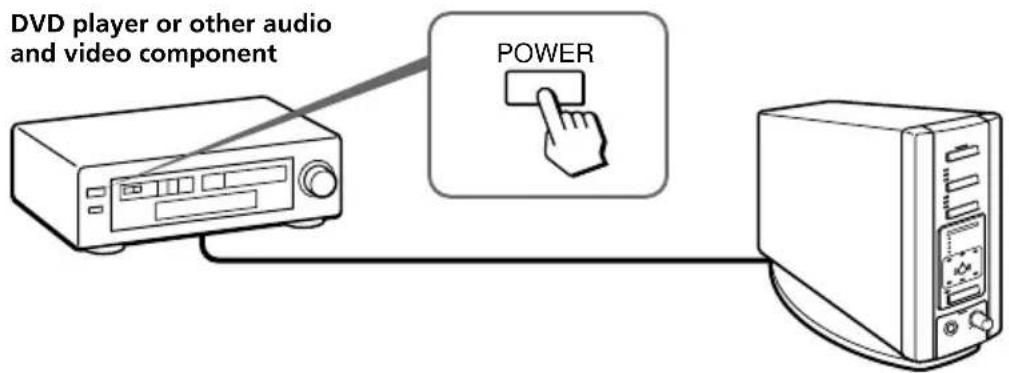
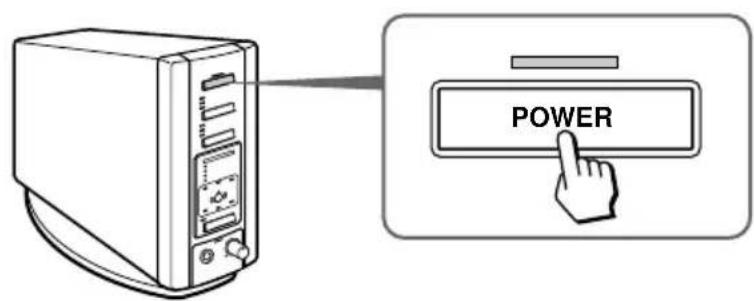
2 Press POWER to turn on the processor.
The POWER indicator lights green.
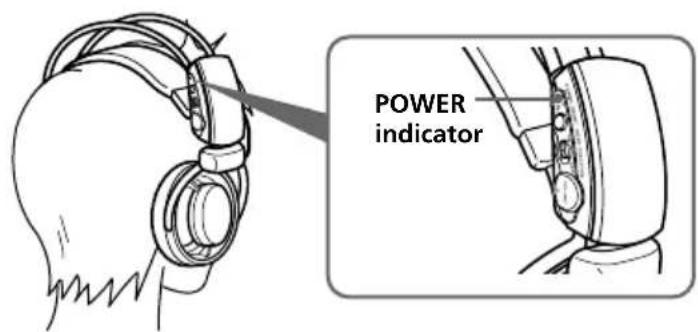
3 Put on the headphones.
The POWER indicator lights red, and the headphones automatically turn on.
(Continued)
4 Press INPUT to select the component you want to listen to.
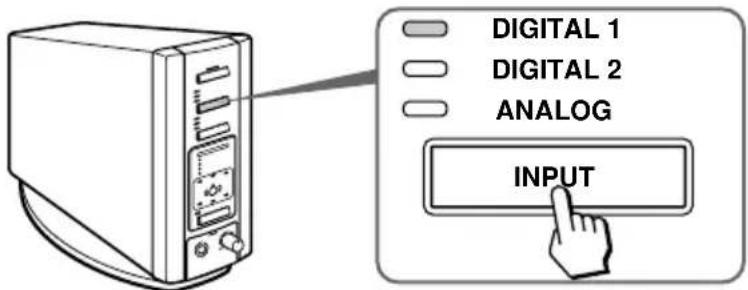
| Indicator light Selected sound source | |
| DIGITAL 1 | Sound of the component connected to DIGITAL IN 1 jack |
| DIGITAL 2 | Sound of the component connected to DIGITAL IN 2 jack |
| ANALOG | Sound of the component connected to LINE IN jacks |
Note
To listen to dual audio (MAIN/SUB) sound sources, connect to the LINE IN jacks, and then select the sound source you want to listen to on the player, TV, or other component.
5 Start playback of the component selected in step 4.
6 Press OUTPUT repeatedly to select the output mode (surround effect) (see page 19).
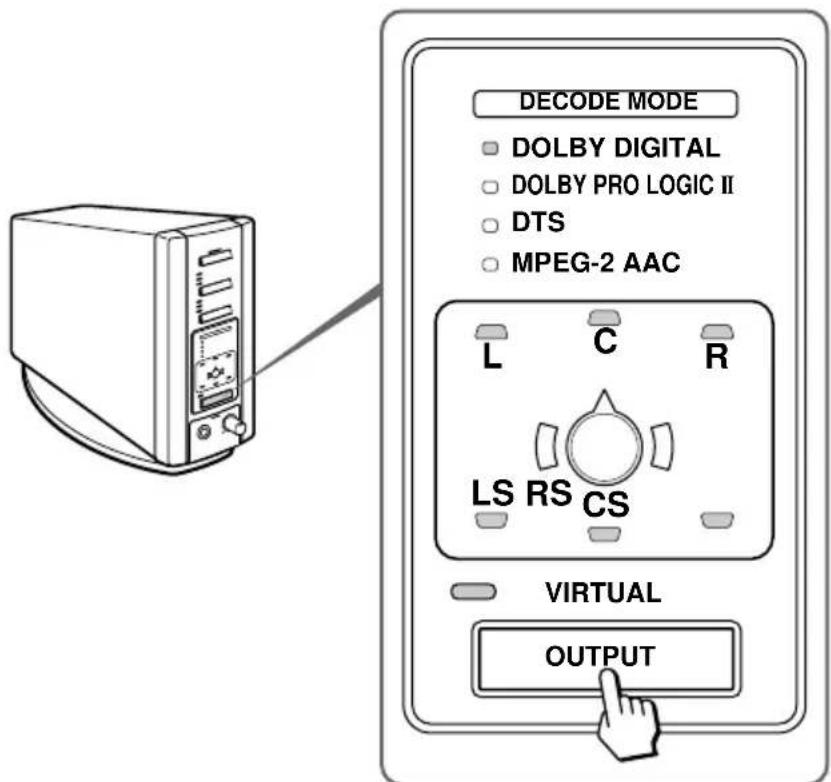
Indicator light Output mode (surround effect)
| DECODE MODE ○ DOLBY DIGITAL ○ DOLBY PRO LOGIC II ○ DTS ○ MPEG-2 AAC | OFF Regular headphone playback. |
| VIRTUAL | |
| DECODE MODE ○ DOLBY DIGITAL ○ DOLBY PRO LOGIC II ○ DTS ○ MPEG-2 AAC | VIRTUAL FRONT Virtual effect where the sound seems to be coming from two speakers (right and left) located in front of you. |
| VIRTUAL | |
| DECODE MODE ○ DOLBY DIGITAL ○ DOLBY PRO LOGIC II ○ DTS ○ MPEG-2 AAC | VIRTUAL SURROUND 5.1 Virtual surround effect where the sound seems to be coming from not only two front speakers (right and left), but also from one centre speaker, two rear speakers (right and left), and a subwoofer. |
| VIRTUAL | |
| DECODE MODE ○ DOLBY DIGITAL ○ DOLBY PRO LOGIC II ○ DTS ○ MPEG-2 AAC | VIRTUAL SURROUND 6.1 This mode can be selected only when the input signal is multi channel source of DOLBY DIGITAL or DTS. Virtual surround effect where the sound seems to be coming from three front speakers (right, left and centre), and three rear speakers (right, left and centre), and a subwoofer. |
| VIRTUAL |
DECODE MODE indication
When the output mode is set to VIRTUAL SURROUND 5.1 or VIRTUAL SURROUND 6.1, the processor automatically identifies the format of the input audio signal and the corresponding indicator lights up. Switch the audio between Dolby Digital, DTS, MPEG-2 AAC, etc., on the connected equipment (DVD player, Digital Broadcasting Satellite Receiver, etc.).
DOLBY DIGITAL: Input signal recorded in the DOLBY DIGITAL format. - DOLBY PRO LOGIC II: Input 2-channel signal (digital or analogue) processed by DOLBY PRO LOGIC II. - DTS: Input signal recorded in the DTS format. - MPEG-2 AAC: Input signal recorded in the MPEG-2 AAC format. (Continued)
7 Press EFFECT to select the desired sound field. (Only when an item other than "OFF" is selected in step 6 on page 18.)
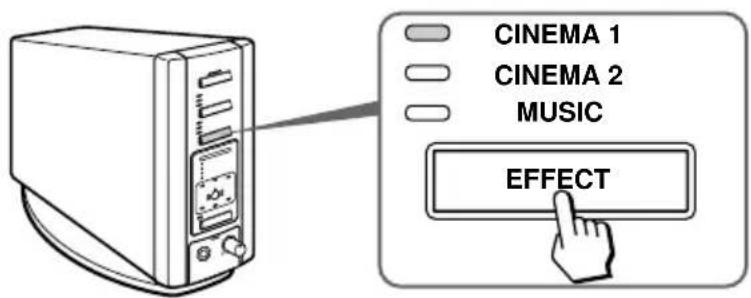
Indicator light, sound field, and suitable sound source
CINEMA 1: Mode which reproduces the sound field of a wide room like a movie theater or a concert hall.
This mode is suitable for movie sound sources.
CINEMA 2: Mode which produces more realistic sound than CINEMA 1, as if you are in the movie. This mode is suitable for movie sound sources.
CINEMA 2 Mode which produces more realistic sound than CINEMA 1, as if
This mode is suitable for music sources.
MUSIC Mode which reproduces the sound field of a listening room with a
If the output mode (sound effect) is set to "OFF" in step 6 on page 18, you cannot select a sound field, even if you press EFFECT.
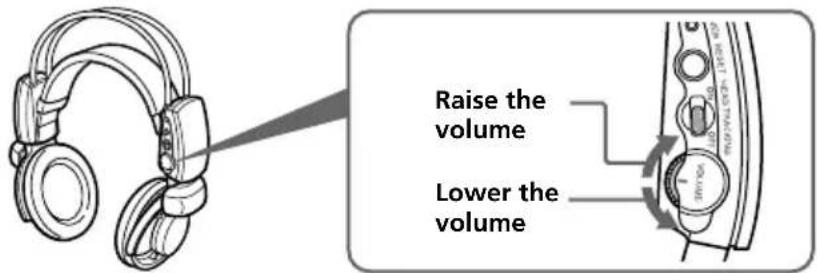
8 Adjust the volume.
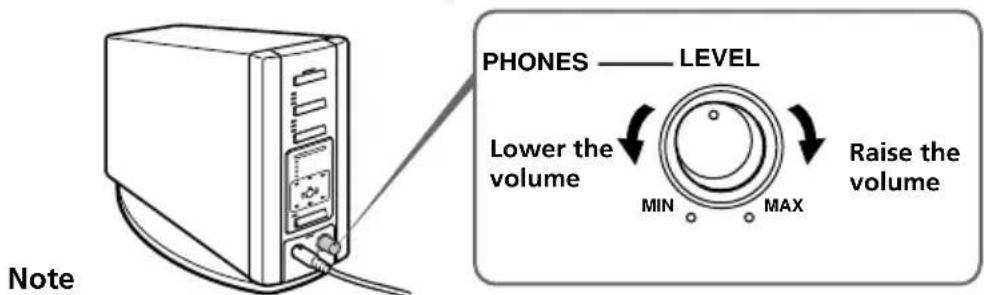
To adjust the volume of headphones (sold separately) connected to the PHONES jack:
If the output mode (sound effect) is set to "OFF" in step 6 on page 18, you cannot select a sound field, even if you press EFFECT.
When watching movies, be careful not to raise the volume too high in quiet scenes. You can hurt your ears when a loud scene is played.
To adjust the volume of headphones (sold separately) connected to the PHONES jack
Turn PHONES—LEVEL to adjust the volume.
When watching movies, be careful not to raise the volume too high in quiet scenes. You can hurt your ears when a loud scene is played.
9 Set the head tracking function to ON. (Only when an item other than "OFF" is selected in step 6 on page 19.)
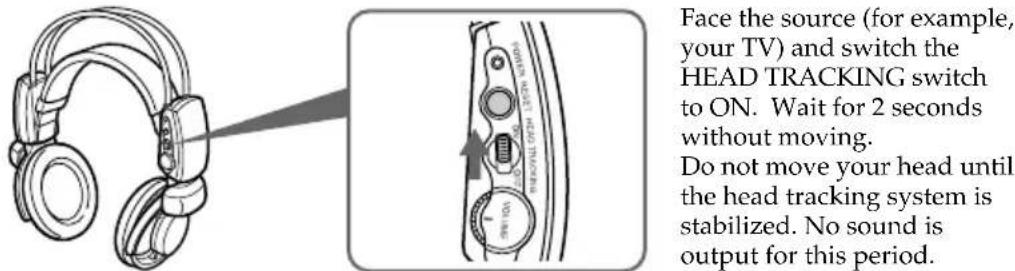
After the head tracking system stabilizes, playback sound can be heard.
After this, even if you turn your head in any directions, the sound will be heard as if from the front.
Notes
- Always wear the headphones vertically (as shown on page 17) so that the head tracking system will be stable.
- Whenever the HEAD TRACKING switch is set to ON, and whenever you put on the headphones with its power on, always wait for 2 seconds without moving your head as the head tracking system newly stabilizes each time.
- If the sound from the headphones (while facing your TV) seems to be different from the actual direction of your TV, face forwards and press the RESET button on the headphones.
The headphones automatically turn off when they are taken off — Auto Power On/Off Function
When not in use, be careful not to hang the headphones in such a way as to activate the Auto Power On function, as this will consume battery power.
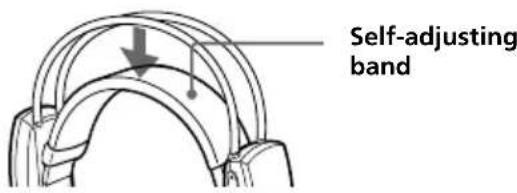
To check the remaining battery power
Pull up the self-adjusting band and check the POWER indicator. The batteries are still serviceable when the POWER indicator lights red.
Charge the rechargeable batteries or use new alkaline batteries if the POWER indicator flashes and an intermittent beep sound is heard from the headphones.
Transition time between modes
When pressing buttons on the processor to change to new modes, the transition time between modes may vary. This is due to differences in system control between modes.
(Continued)
If no sound is heard from the headphones
A short beep sound is heard repeatedly and the Muting Function is automatically activated if the sound output from the headphones is cut off when the headphones are outside the infrared transmission area, or when the infrared signals are interrupted. The Muting Function is automatically cancelled when you get closer to the processor or there is no longer anything in the way of the infrared signals.
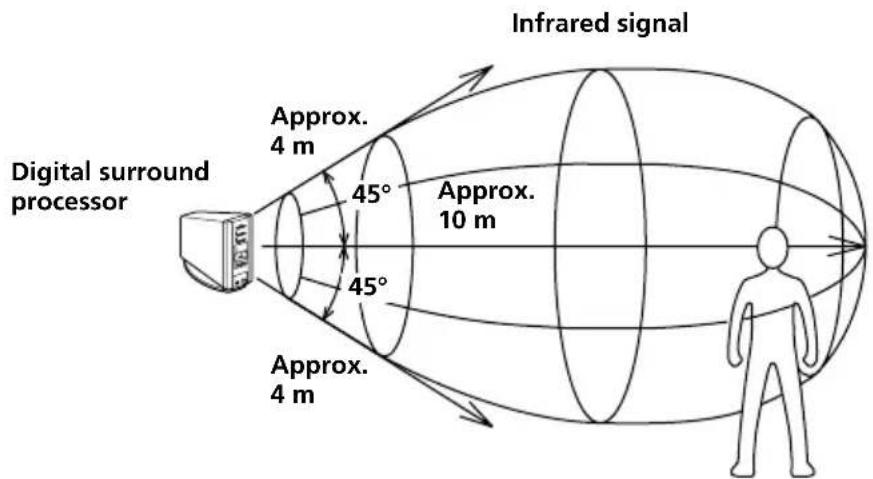
Infrared transmission area
The approximate infrared transmission area from the processor is shown in the illustration below.
Notes
- Because this system uses infrared signals, sound may be interrupted if these signals are obstructed. This is due to the infrared signal characteristics, and is not a malfunction.
- Do not cover the infrared signal sensor with your hand or hair.
- As long as the headphones are in the transmission area shown in the illustration above, the headphones can have any orientation with respect to the processor (facing, turned 90°, or turned 180°).
- The sound may differ depending on the processor position and conditions in the room. It is recommended that you place the processor in the location which produces the clearest sound.
- Mixed signals may result if the processor is used with other processors or transmitters.
If an audio signal is not input for 10 minutes
Infrared signal emission from the processor automatically stops when an audio signal is not input for 10 minutes. The infrared signals are automatically emitted when an audio signal is input again. The emission of the infrared signals may stop when an extremely low sound is emitted for about 10 minutes during analogue input. If this happens, raise the volume of the connected audio and video component and lower the volume of the headphones.
Notes
- There may be differences in brightness of the infrared emitter on the digital surround processor. However, this does not affect the transmission area.
- The headphones should be used within the infrared transmission area (see "Infrared transmission area" on page 22).
- Do not use this system in areas exposed to direct sunlight or strong light. The sound may be interrupted.
- These open-air headphones are designed so that sound may also leak outside the headphones. Be careful not to turn up the volume too high so that it bothers people around you.
- The surround sound effect may not be obtained from sound sources which do not incorporate video, such as music CDs.
- This system simulates the average HRTF* common to most people. However, the effect can differ from person to person since the HRTF can vary between individuals.
Additional Headphones
Headphones can be added to this system in one of two ways.
To enjoy surround sound using cordless headphones with more than one person
→ By using additional MDR-IF8000 cordless infrared headphones (sold separately), more than one person can enjoy the surround sound experience at the same time. * There is no limit to the number of headphones that can be used within the infrared transmission area.
Processor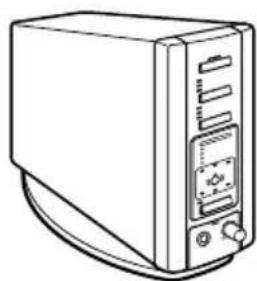
MDR-IF8000 (sold separately)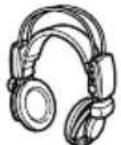
Note
Because this unit employs a digital infrared transmission system, cordless infrared analogue headphones (MDR-IF5000, etc.) cannot be used.
To connect normally wired headphones
→ The PHONES jack is adjusted for the MDR-F1 corded full-open air type headphone (sold separately), so connecting the MDR-F1 allows you to enjoy high quality surround sound. You can also use any corded open-air headphones with this system.
To obtain sufficient surround sound effect, use of MDR-IF8000 cordless stereo headphones or MDR-F1 corded full-open type headphones is recommended.
Processor MDR-F1 corded full-open air type headphones (sold separately) or other corded open-air headphones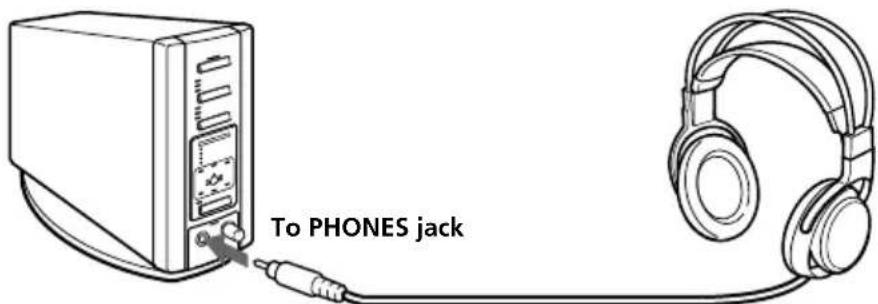
Notes
- When removing the headphones from the PHONES jack, always grip the plug. Never pull on the cord.
- The surround effect may not be obtained when using closed-type and in-ear headphones.
Troubleshooting
If you run into any problems using this headphone system, use the following checklist. Should any problem persist, consult your nearest Sony dealer.
Symptom Cause and remedy
| No sound | →Check the connection between the processor and the AV component. →Turn on the AV component connected to the processor, and start the programme (playback). →Check that you have selected the component you want to listen to. →If you connect the processor to an AV component using the headphone jacks, raise the volume level on the connected AV component. →Raise the headphones volume. →The batteries of the headphones are completely exhausted. Pull up the self-adjusting band and if the POWER indicator is turned off, charge the rechargeable batteries or replace the alkaline batteries. If the POWER indicator is still turned off, take the unit to your nearest Sony dealer. →You are trying to play a DTS audio track on a DVD player that does not support DTS. Either use a DVD player that supports DTS, or select a Dolby Digital or PCM audio track. →You are playing back a DVD disc recorded in DTS when DTS digital output setting for the DVD player (including game machines) is “OFF”. Refer to the operating instructions of the DVD player, and change the DTS digital output setting to “ON”. →You are playing back a DVD disc (including game machines) recorded in DTS when the DVD player and the processor are analogue connected. Connect them in digital. (Analogue sound may not be output from the DVD player.) →The head tracking function does not work correctly. When the HEAD TRACKING switch is set to ON after putting the headphones on your head, or when you put them on with the HEAD TRACKING switch ON, wait for 2 seconds without moving your head. If you hear no sound even after tying this, take off the headphones, and then put them on again. |
| Distorted sound (sometimes with noise) | →Set the ATT switch on the processor to “-8dB”. →If you connect the processor to an AV component using the headphone jacks, lower the volume level on the connected AV component. →When using DTS audio sources, set the processor output mode to VIRTUAL SURROUND (page 19). |
| Low sound | →Set the ATT switch on the processor to “0dB”. →If you connect the processor to an AV component using the headphone jacks, raise the volume level on the connected AV component. →Raise the headphones volume. |
(Continued)
Symptom Cause and remedy
| Short beep sound is heard. | →The headphones cannot receive infrared rays from the processor. ·Turn on the processor. ·Check the connection between the processor and the AC power adaptor, between the AC power adaptor and the AC power socket. ·Check if there is an obstacle between the processor and the headphones. ·Use the headphones nearer to the processor. ·Change the position or angle of the processor. ·Check if your hand or hair covers the infrared signal sensor of the headphones. ·If you use the headphones near a window exposed to direct sunlight, draw a curtain or a blind to block the sunlight. Or use the headphones where you are not exposed to the direct sunlight. ·If you use this system near a plasma display panel, move away from it. |
| Long beep sound is heard | →The batteries of the headphones are exhausted. Pull up the self-adjusting band and if the POWER indicator is flashing, charge the rechargeable batteries or replace the alkaline batteries. If the POWER indicator is still flashing and beep sound is still heard, take the unit to your nearest Sony dealer. |
| The surround sound effect is not obtained | →Press the OUTPUT button to select VIRTUAL SURROUND mode (page 18,19). →The audio being played is not a multichannel signal. The surround effect does not work for monaural sound sources. |
| The sound from the headphones seems to be different from the actual direction of your TV. | →Face forward (e.g. to your TV) and press the RESET button on the headphones. |
| The DOLBY DIGITAL indicator does not turn on | →The digital audio output setting for the DVD player (including game machines) may be set to “PCM”. Refer to the operating instructions supplied with the DVD player, and change the setting (such as “Dolby Digital/PCM” or “Dolby Digital”) for usage with components having built-in Dolby Digital decoders. →Playback signals are not recorded in Dolby digital format. →The audio for the chapter being played is not a Dolby Digital signal. |
| DTS indicator light does not turn on | →The DTS digital output setting on the DVD player (including game machines) is set to OFF. Refer to the operating instructions supplied with the DVD player, and set the DTS digital output setting to ON. →Playback signals are not recorded in DTS format. →The audio for the chapter being played is not a DTS signal. →The DVD player does not support DTS format. Use a DVD player that supports DTS. |
| MPEG-2 AAC indicator does not light up. | →Playback signals are not recorded in MPEG-2 AAC format. |
Symptom Cause and remedy
| CS (back surround) indicator does not light up. | →The format of input signal is other than Dolby digital (multi channel) or DTS (multi channel). ·Play a DVD software of Dolby digital (multi channel) or DTS (multi channel) format. ·Change the setting on the output component so that the correct format is input. →Dolby digital (multi channel) or DTS (multi channel) sound is not played back. First start playback on the connected component, and make sure that the DECODE MODE indicator lights up, then change the output mode. |
| The batteries cannot be charged | →Dry-cell batteries are being used. Insert the supplied or optional rechargeable batteries. →Rechargeable batteries other than supplied or specified batteries are being used. Insert the supplied or specified rechargeable batteries. |
Precautions
On safety
- Do not drop, hit, or otherwise expose the processor or headphones to strong shocks of any kind. This could damage the product.
- Do not disassemble or attempt to open any parts of the system.
On power sources and placement
- If you are not going to use the system for a long time, unplug the AC power adaptor from the outlet. When removing the plug, grip the AC power adaptor. Do not pull on the cord.
- Do not place the system in any of the following locations.
- Location exposed to direct sunlight, near a heater, or other extremely high-temperature location
Dusty location - On an unsteady or inclined surface - Location exposed to large amounts of vibrations Bathroom or other high-humidity locations
On headphones
Act considerably
When the volume is too high, the sound leaks outside the headphones. Be careful not to raise the volume too high that it bothers people around you.
There is a tendency to raise the volume when using in noisy places. However, the volume should be kept at a level where you can respond when called while listening to the headphones.
On ear pads
The ear pads are replaceable. Replace them when they are worn out. To replace the ear pads, consult your nearest Sony dealer.
On cleaning
Use a soft cloth slightly moistened with mild detergent solution. Do not use solvents such as thinner, benzene or alcohol as these may damage the surface.
When the product breaks
- When the product breaks, or if a foreign object gets inside the unit, immediately turn off the power and consult your nearest Sony dealer.
- When taking the system to a Sony dealer, be sure to take both the headphones and processor.
Specifications
Digital surround processor (DP-IF8000)
Decoder functions Dolby Digital
Dolby Pro Logic II
DTS
DTS-ES 6.1ch
MPEG-2 AAC
Virtual sound function OFF
Virtual front
Virtual surround 5.1 & 6.1
Secondary carrier wave frequency
4.5 MHz
Transmission distance Approx. 10 m to the
Transmission range 12 - 24,000 Hz
Distortion rate 1% or less (1 kHz)
Audio inputs: Optical input
(rectangular-type) x 2
Analogue input (pin
jack left/right) x 1
Power requirements: DC 9 V (from the
supplied AC power adaptor)
Dimensions (w/h/d)
Cordless stereo headphones (MDR-IF8000)
Playback frequency range
12-24,000 Hz
Power requirements: Rechargeable nickel
metal hydride
batteries (supplied or
sold separately) or R6
(size AA) alkaline
batteries
Mass Approx. 350 g (10 oz)
(including the
supplied rechargeable
nickel-metal hydride
batteries)
Supplied accessories
Stand for digital surround processor (1)
AC power adaptor (9 V) (1)
Rechargeable nickel-metal hydride
batteries NH-AA (1,700 mAh) (2)
Battery charger (1)
Charging plug for battery charger (1)
(UK, Hong Kong and European model only)
Optical digital connecting cable
(rectangular plug ↔ rectangular plug, 1.5 m)
Operating Instructions (1)
Product Information (1)
Recommended accessories
Connecting cables
RK-C310, RK-C315, RK-C320, RK-C330
(pin plug·2 ↔ pin plug·2)
RK-G129 (stereo mini-plug ↔ pin
plug 2)
Optical digital selector
SB-RX100P
Optical digital connecting cable
POC-5A, POC-10A, POC-15A (optical
rectangular plug ↔ optical
rectangular plug)
POC-5AB, POC-10AB, POC-15AB
(optical rectangular plug ↔ optical
mini-plug)
Design and specifications are subject to change without notice.
WARNING
Power supply: rechargeable
nickel-metal hydride
batteries (supplied
or sold
rechargeable nickel
metal hydride
supplied)
Supplied accessories
Recommended accessories
Connection cables
RK-C310, RK-C315, RK-C320, RK-C330
POC-5AB, POC-10AB, POC-15AB
POC-5AB, POC-10AB, POC-15AB
(rectangular optical plug mini optical plug)

- DIGITAL SURROUND HEADPHONE SYSTEM
- WARNING
- TO PREVENT FIRE OR SHOCK HAZARD, DO NOT EXPOSE THE UNIT TO RAIN OR MOISTURE
- FOR THE CUSTOMERS IN THE USA
- OWNER'S RECORD
- NOTICE FOR THE CUSTOMERS IN THE U.S.A
- NOTE
- RECYCLING NICKEL METAL HYDRIDE BATTERIES
- TABLE OF CONTENTS
- MAIN FEATURES
- AAC PATENT MARKING
- CE MARK
- CHECKING THE COMPONENTS AND ACCESSORIES
- LOCATION AND FUNCTION OF PARTS
- FRONT PANEL OF THE PROCESSOR
- REAR PANEL OF THE PROCESSOR
- HEADPHONE PARTS DESCRIPTIONS
- CHARGING THE RECHARGEABLE BATTERIES
- INSERTING THE RECHARGEABLE BATTERIES INTO THE BATTERY CHARGER
- NOTES
- CHARGING
- (US AND CANADIAN MODEL ONLY)
- (UK, HONG KONG AND EUROPEAN MODEL)
- CHARGING IS COMPLETED IN ABOUT 90 MINUTES
- USAGE TIME
- CONNECTING THE HEADPHONE SYSTEM
- SETUP
- TO USE IN AN UPRIGHT POSITION
- TO USE ON ITS SIDE
- CONNECTING THE PROCESSOR TO DIGITAL COMPONENTS
- DTS
- CONNECTING CABLES (SOLD SEPARATELY)
- OPTICAL DIGITAL SELECTOR (SOLD SEPARATELY)
- NOTES ON OPTICAL DIGITAL CONNECTING CABLE
- CONNECTING THE PROCESSOR TO ANALOGUE COMPONENTS
- SETTING THE INPUT LEVEL
- SETTING CONNECTED COMPONENTS
- PLUGGING INTO THE WALL OUTLET
- INSERTING THE BATTERIES IN THE HEADPHONES
- WHEN USING OPTIONAL BATTERIES
- USAGE TIMES FOR DRY-CELL BATTERIES
- HOW TO REATTACH THE BATTERY COVER SHOULD IT COME OFF
- LISTENING TO THE SOUND OF A CONNECTED COMPONENT
- PRESS INPUT TO SELECT THE COMPONENT YOU WANT TO LISTEN TO
- START PLAYBACK OF THE COMPONENT SELECTED IN STEP
- PRESS OUTPUT REPEATEDLY TO SELECT THE OUTPUT MODE (SURROUND EFFECT) (SEE PAGE 19)
- INDICATOR LIGHT OUTPUT MODE (SURROUND EFFECT)
- DECODE MODE INDICATION
- PRESS EFFECT TO SELECT THE DESIRED SOUND FIELD. (ONLY WHEN AN ITEM OTHER THAN "OFF" IS SELECTED IN STEP 6 ON PAGE 18.)
- INDICATOR LIGHT, SOUND FIELD, AND SUITABLE SOUND SOURCE
- TO ADJUST THE VOLUME OF HEADPHONES (SOLD SEPARATELY) CONNECTED TO THE PHONES JACK
- WHEN WATCHING MOVIES, BE CAREFUL NOT TO RAISE THE VOLUME TOO HIGH IN QUIET SCENES. YOU CAN HURT YOUR EARS WHEN A LOUD SCENE IS PLAYED
- SET THE HEAD TRACKING FUNCTION TO ON. (ONLY WHEN AN ITEM OTHER THAN "OFF" IS SELECTED IN STEP 6 ON PAGE 19.)
- THE HEADPHONES AUTOMATICALLY TURN OFF WHEN THEY ARE TAKEN OFF — AUTO POWER ON/OFF FUNCTION
- TO CHECK THE REMAINING BATTERY POWER
- TRANSITION TIME BETWEEN MODES
- IF NO SOUND IS HEARD FROM THE HEADPHONES
- INFRARED TRANSMISSION AREA
- IF AN AUDIO SIGNAL IS NOT INPUT FOR 10 MINUTES
- ADDITIONAL HEADPHONES
- TO ENJOY SURROUND SOUND USING CORDLESS HEADPHONES WITH MORE THAN ONE PERSON
- TO CONNECT NORMALLY WIRED HEADPHONES
- TROUBLESHOOTING
- SYMPTOM CAUSE AND REMEDY
- PRECAUTIONS
- ON SAFETY
- ON POWER SOURCES AND PLACEMENT
- ON HEADPHONES
- ACT CONSIDERABLY
- ON EAR PADS
- ON CLEANING
- WHEN THE PRODUCT BREAKS
- SPECIFICATIONS
- DIGITAL SURROUND PROCESSOR (DP-IF8000)
- CORDLESS STEREO HEADPHONES (MDR-IF8000)
- SUPPLIED ACCESSORIES
- RECOMMENDED ACCESSORIES
Brand : SONY
Model : MDRDS8000
Category : Earphones