ManualGo.com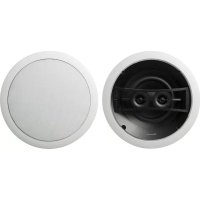
SIC821D - Haut-parleur PIONEER - Free user manual and instructions
Find the device manual for free SIC821D PIONEER in PDF.


Download the instructions for your Haut-parleur in PDF format for free! Find your manual SIC821D - PIONEER and take your electronic device back in hand. On this page are published all the documents necessary for the use of your device. SIC821D by PIONEER.
USER MANUAL SIC821D PIONEER
Register your product at
http://www.pioneerelectronics.com (US)
http://www.pioneerelectronics.ca (Canada)
SRD1383A_IC621821D.book 1 ページ 2008年8月8日 金曜日 午後2時31分2
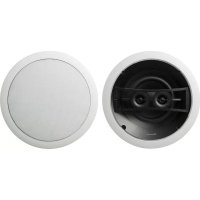
En Thank you for buying this Pioneer product. Please read through these operating instructions so you will know how to operate your model properly. After you have finished reading the instructions, put them away in a safe place for future reference. Introduction This speaker system is designed for in-ceiling installation. The design features provide for a wide range of placement and listening position options.Providing excellent sound quality, these models feature an adjustable tweeter to provide flexibility of placement in your listening area.This speaker system is also paintable so that they may be matched to your room decor. Before you start • The nominal impedance of this speaker system is 8 Ω. Connect the speaker system to an amplifier capable of driving an impedance of at least 8 Ω.This product incorporates auto-resetting overload protection technology to help avoid damage to the speakers. However, please observe the following precautions:• Do not supply amplification power to the speaker system in excess of the maximum permissible input, which could damage the speaker and cause a hazard from overheating.• If using a graphic equalizer to boost sounds in the high-frequency range, do not use excessive amplifier volume.• Do not try to force a low-powered amplifier to produce high sound levels as the amplifier’s harmonic distortion will be increased, and you may damage the speaker.Caution: installation• Pioneer is not responsible for any accidents or damage that result from improper installation, misuse, modification of the product, or natural disasters.• This speaker system must be installed by a qualified technician as it involves such tasks as selecting a location for installation, drilling holes in walls/ceiling, wiring, and painting. Have the installer carefully follow the installation instructions.• The installation technician must follow professional installation techniques to protect the speaker system against falling.• When installing the speakers, make sure that the wall/ceiling is strong enough to support the speakers.• Improper installation of the speakers could cause them to fall and cause damage or injuries to persons nearby.• Switch off and unplug your AV equipment and consult the instructions when connecting up components. Make sure you use the correct connecting cables.• Keep magnetic objects such as screwdrivers or steel parts away from the tweeter and woofer speakers. Since the speakers use strong magnets, the objects may be attracted, causing injury or damaging the diaphragm.• Do not install the speakers where they will be in direct sunlight, and avoid positioning them near heaters and air conditioners. This may cause warping and discoloration of the speaker and damage to the speakers.• Though this speaker system can be used in humid areas (such as bathrooms or kitchens), do not install it where it may be exposed to high temperatures, such as in a sauna or near a cooking area, or where water could splash on the speaker, which is not waterproof.Caution: in use• If the speakers stop emitting sound after receiving too large an input signal, turn down the volume control on the amplifier and wait a few seconds. The protection feature will be reset automatically. For U.S. model
Handling the cord on this product or
cords associated with accessories sold with the
product will expose you to chemicals listed on
proposition 65 known to the State of California and
other governmental entities to cause cancer and
birth defect or other reproductive harm.
Wash hands after handling
Sounds reproduced through speaker systems are easily
affected in subtle ways by the conditions in the listening
space. To assure optimum performance from this
speaker system, give adequate consideration to the
installation location before setup.
• This speaker system is designed to be used as a
single stereo speaker in small room (such as
bathrooms, closets, laundry rooms etc.). Usually it
should be located above the primary listening
• Keep the speaker system at least 50 cm (20 in.) away
from the edge of the wall or ceiling. If this is not
possible, adjust the sound balance by using the
speakers’ treble level control.
• This speaker system is not magnetically shielded. It
should therefore not be placed near TVs or monitors
that are sensitive to magnetic fields, as the
interaction of magnetic materials can cause
distortion of the colors on your TV screen. Magnetic
storage media (such as floppy discs and tape or video
cassettes) should also not be kept close to this
• Give adequate consideration to the location of
installation before the setup of this speaker system.
• Check the walls/ceiling to see if they are strong
enough to withstand the weight of the speaker
• Installation is possible on ceiling from 12.5 mm (
in.) to 25 mm (1 in.) thick.
• Check the walls/ceiling to confirm there is no wiring,
plumbing, beams, studs or air conditioning systems
that may interfere with installation.
• Pioneer disclaims any liability whatsoever for
damage resulting from assembly, improper
mounting, insufficient reinforcement, misuse of the
product, acts of nature, etc.
TEMPLATEGABARIT Template x 1
Operating instructions
Grille removal tool x 1
Butyl rubber tapes x 8
SRD1383A_IC621821D.book 3 ページ 2008年8月8日 金曜日 午後2時31分4
Painting the speakers
While the speaker and grille can be painted after it is
installed, painting it beforehand is much easier.
It is recommended to use spray paint, as brushed paint
may clog the holes in the grille and reduce the sound
quality significantly.
1 Remove the fabric scrim from the inside of the
Carefully peel off the fabric scrim and lay it down flat so
as not to get it wrinkled.
2 Use the supplied paint mask to cover the speaker.
If you don’t have the paint mask, use paper and masking
3 Paint the speaker and grille the desired color.
As previously mentioned, it is strongly recommended
that you paint before installation and that you use spray
4 After the speaker and grille have dried completely,
remove the paint mask and carefully replace the fabric
scrim on the back of the grille.
• Before installing the speakers, run the speaker
cables to the installation location.
• To maximize sound quality, choose the correct
speaker gauge cables from the table below.
If the resistance of the speaker cable is too high, the
signal will be attenuated and the speakers’ frequency
response will be degraded.
Make sure you have read and understood all the
information above, For the installer on page 3 and Before
1 Once you have decided on the installation location,
prepare the supplied template.
Cut out the inside of the template along the dotted line
and discard the inner section.
2 Attach the template (outer section) to the wall/
Make sure the template is aligned properly.
3 Trace a line onto the wall/ceiling, following the
inner perimeter of the template.
4 Cut a hole where you have drawn the outline.
Be careful when cutting the hole, and use a proper
5 Pull the speaker cable through the hole that has
Be careful not to apply to much force when pulling on the
speaker cable or bend the cable at sharp angles.
6 Connect the cable wire to the speaker as shown
When connecting the speakers, be careful not to touch
the diaphragms of the drivers.
• After connecting the wires, pull lightly on them to
make sure that the ends of the wires are securely
connected to the terminals. Poor connections can
create noise and interruptions in the sound.
16 or 14 less than 25 1.5 to 2.5 less than 8
14 or 12 25 to 50 2.5 to 4 8 to 16
12 or 10 50 to 75 4 to 6 16 to 24
10 more than 75 6 more than 24
Twist and pull off the protective shields on each wire.
Insert the speaker cable wires into the holes while pressing down on the terminal posts on the speaker, and then release the terminal posts. For input terminal polarity, red is positive (+) and black is negative (–).
• If the wires are pulled out of the terminal posts and
the conductors come into contact with each other or
surrounding devices, an excessive additional load
may be placed on the amplifier. This may cause the
amplifier to stop functioning, and may even cause it
• Be careful to observe the correct polarity of the
connections between the cables and the speaker. If
the polarity (+, –) of one of the speakers (left or right)
is reversed the stereo image will be severely
7 Where available, use the fixing bracket located on
the back of the speaker system and attach a reinforced
wire, such as stainless steel wire rope, to the studs or
beams of the walls/ceiling.
• It is strongly recommended that you take double safe
precautions to prevent the speaker from falling by
• Put the reinforced wire through the fixing bracket and
attach to the studs or beams. Make sure the stud/
beam that you are attaching it to is strong enough to
support the weight of the speaker system.
8 Place sound-absorbing material (such as fiberglass)
around the speakers as necessary to improve sound
Use only sound-absorbing materials that comply with
regional safety regulations.
9 Place the speaker into the hole you have cut.
Make sure the rotating clamps are turned inward.
• A Phillips screwdriver is required for loosening them.
• When using electric screwdrivers, first find out the
minimum torque required for the installation of the
speaker system. Begin by setting the electric
screwdriver to its minimum torque and gradually
raise the torque until the screw starts to rotate. Check
what torque setting you are on at this point (this will
be the minimum torque required for the setup). After
confirming the torque, return the rotating clamps
toward the inside by reversing the direction of
rotation of the screws. When doing this, take care
that the screws do not come all the way out.
10 Attach the speaker frame to the wall/ceiling, and
tighten the screws lightly (temporary attachment).
At this point the rotating clamp will rotate so that the
rotating clamp and frame are clamped on to the wall/
Gently try pulling the speaker forward and check that all
of the rotating clamps have rotated outwards and are
lightly clamping to the wall/ceiling.
11 Adjust the mounting orientation for the primary
12 Tighten the screws firmly using no more than the
maximum torque specified.
Allowable maximum torque: 1.0 N⋅m
• Screwing them in too tightly could break the rotating
clamps, twist the frames, damage the walls/ceilings
and make it difficult to attach the grille.
13 Make sure that the screws are not crooked and that
there is no gap between the wall/ceiling and frame.
CAUTION These speaker terminals carry HAZARDOUS LIVE
voltage. To prevent the risk of electric shock when
connecting or disconnecting the speaker cables,
disconnect the power cord before touching any
uninsulated parts. D3-4-2-2-3_A_En
Reinforced wire(not supplied)Fixing bracketStud/beam
14 Adjust the angle of the tweeter.
Gently press the edge of the tweeter flange to adjust the
angle of the tweeter as desired. Be careful not to touch
the diaphragm while doing this.
15 Adjust the setting of the treble control as
• The standard setting is 0.
• The treble switch located in the front of the speaker
has two positions to choose from, +/0.
16 Attach the butyl rubber tapes on the inside of the
17 Attach the grille to the speaker.
The grille is designed with a specific mounting
orientation. Gently push the grille onto the speaker, lining
up the one section of the edge of the grille to the groove
in the speaker. Then line up the entire grille to the groove
in the speaker and attach the grille by pressing in all
• Once you have pushed it in, make sure you press it
firmly against the speaker so that the grille doesn’t
fall off and cause an accident.
• To remove the grille, use the supplied tool to hook
into the holes located near the edges and pull the
grille out. When doing this, make sure to pull the
edges out evenly. Forcing the grille out from one edge
alone will cause the grille to be deformed.
Connecting to an amplifier
Make sure you have read the connection instructions in
the manual supplied with the amplifier and that all
equipment is turned off before making any connections.
• When using a set of speakers connected to an
amplifier, you won’t be able to obtain the correct
stereo effect if the polarity (+, –) of one of the
speakers (left or right) is reversed.
Additional Information
Cleaning the speaker
Use a dust brush to wipe off dust and dirt.
Never use furniture wax, cleaners, thinners, benzine,
insecticide sprays or other chemicals on or near the
speakers, since these will corrode the surfaces.
Attach the eight butyl rubber tapes
to each grille, lining up the butyl
rubber tapes to the marks on the
inside of the grille.
Then peel off the protective paper.
Make sure to press on the
edges. Pressing on the
middle of the grille will
cause it to be deformed.
Orientate the grille so that the
notch is positioned adjacent to
16 (D) in.Weight . . . . . . . . . . . . . . . . . . . . . . . . . . . . . . . 2.0 kg/4 lbs 7 oz Accessories Paint mask . . . . . . . . . . . . . . . . . . . . . . . . . . . . . . . . . . . . . . . . 1Grille . . . . . . . . . . . . . . . . . . . . . . . . . . . . . . . . . . . . . . . . . . . . . 1Template. . . . . . . . . . . . . . . . . . . . . . . . . . . . . . . . . . . . . . . . . . 1Butyl rubber tapes . . . . . . . . . . . . . . . . . . . . . . . . . . . . . . . . . . 8Grille removal tool . . . . . . . . . . . . . . . . . . . . . . . . . . . . . . . . . . 1Operating instructions• Specifications and design subject to modification without notice. SRD1383A_IC621821D.book 7 ページ 2008年8月8日 金曜日 午後2時31分8
En S001_En Selecting fine audio equipment such as the unit
you’ve just purchased is only the start of your
musical enjoyment. Now it’s time to consider how
you can maximize the fun and excitement your
equipment offers. This manufacturer and the
Electronic Industries Association’s Consumer
Electronics Group want you to get the most out of
your equipment by playing it at a safe level. One that
lets the sound come through loud and clear without
annoying blaring or distortion-and, most importantly,
without affecting your sensitive hearing.
Sound can be deceiving. Over time your hearing
“comfort level” adapts to higher volumes of sound.
So what sounds “normal” can actually be loud and
harmful to your hearing. Guard against this by
setting your equipment at a safe level BEFORE your
To establish a safe level:
• Start your volume control at a low setting.
• Slowly increase the sound until you can hear it
comfortably and clearly, and without distortion.
Once you have established a comfortable sound
• Set the dial and leave it there.
Taking a minute to do this now will help to prevent
hearing damage or loss in the future. After all, we
want you listening for a lifetime.
We Want You Listening For A Lifetime
Used wisely, your new sound equipment will
provide a lifetime of fun and enjoyment. Since
hearing damage from loud noise is often
undetectable until it is too late, this manufacturer
and the Electronic Industries Association’s
Consumer Electronics Group recommend you avoid
prolonged exposure to excessive noise. This list of
sound levels is included for your protection.
30 Quiet library, soft whispers
Living room, refrigerator, bedroom away from traffic
50 Light traffic, normal conversation, quiet office
60 Air conditioner at 20 feet, sewing machine
70 Vacuum cleaner, hair dryer, noisy restaurant
Average city traffic, garbage disposals, alarm clock
THE FOLLOWING NOISES CAN BE DANGEROUS UNDER CONSTANT EXPOSURE
Subway, motorcycle, truck traffic, lawn mower
100 Garbage truck, chain saw, pneumatic drill
120 Rock band concert in front of speakers,
140 Gunshot blast, jet plane
180 Rocket launching pad
Information courtesy of the Deafness Research Foundation.
SRD1383A_IC621821D.book 8 ページ 2008年8月8日 金曜日 午後2時31分English
Attention : installation
Published by Pioneer Corporation.
Copyright © 2008 Pioneer Corporation.
All rights reserved.
Publication de Pioneer Corporation.
© 2008 Pioneer Corporation.
PIONEER ELECTRONICS (USA) INC.
PIONEER ELECTRONICS AUSTRALIA PTY. LTD.
PIONEER ELECTRONICS DE MEXICO S.A. DE C.V.
Blvd.Manuel Avila Camacho 138 10 piso Col.Lomas de Chapultepec, Mexico,D.F. 11000 TEL: 55-9178-4270
Should this product require service in the U.S.A. and you wish to locate the nearest Pioneer
Authorized Independent Service Company, or if you wish to purchase replacement parts,
operating instructions, service manuals, or accessories, please call the number shown
1 – 8 0 0 – 4 2 1 – 1 4 0 4
Please do not ship your product to Pioneer without first calling the Customer Support at the
above listed number for assistance.
Pioneer Electronics Service, Inc.
P.O. BOX 1760, Long Beach,
CA 90801-1760, U.S.A.
For warranty information please see the Limited Warranty sheet included with your product.
Should this product require service in Canada, please contact a Pioneer
Authorized Dealer to locate the nearest Pioneer Authorized Service Company in Canada.
Alternatively, please contact the Customer Satisfaction Department at the following address:
Pioneer Electronics of Canada, Inc.
Customer Satisfaction Department
300 Allstate Parkway, Markham, Ontario L3R 0P2
For warranty information please see the Limited Warranty sheet included with your product.
300, Allstate Parkway, Markham, Ontario L3R 0P2