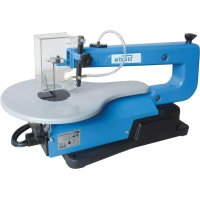
GDS16 - Saw Güde - Free user manual and instructions
Find the device manual for free GDS16 Güde in PDF.


User questions about GDS16 Güde
0 question about this device. Answer the ones you know or ask your own.
Ask a new question about this device
Download the instructions for your Saw in PDF format for free! Find your manual GDS16 - Güde and take your electronic device back in hand. On this page are published all the documents necessary for the use of your device. GDS16 by Güde.
USER MANUAL GDS16 Güde
Translation of original operating instructions Please read carefully the Operating Instructions before assembling and putting the appliance into operation!
Français
F
To enjoy your new appliance as long as possible, please read carefully the Operating Instructions and the attached safety instructions before using it. Further, we recommend keeping the Operating Instructions to recall the product features in the future.
Within the continuous product development, we reserve the right to make technical changes to improve it.
This document represents translation of the original Operating Instructions.
Supply includes
Take the appliance out of the transport package and check it whether there are the following parts:
1 fretsaw
2 adapters
2 saw blades (1 saw blade being preassembled)
1 saw blade cover
1 original Operating Instructions
Warranty Certificate
Please contact your dealer if any parts are missing or are damaged.
Appliance + accessory equipment description (pic. A-B+D)
- Strain screw
- Dust blowing hose
- Workpiece holder adjusting screw
- Saw blade cover
- Saw blade holder
- Saw blade
- Saw bench
- Feeder cable
- Dust extractor adapter
- Workpiece holder
- Copper tube for dust blowing
- Support
- Speed controller
- On/Off
- Bench adjustment scale
- Spare saw blade
- Saw blade adapter
- Mounting tool
- Saw bench stopping screw
- Saw bench insert
Technical specifications
Connection: 230 V 50 Hz
Protection type: IP 33
Max. output: 120W-S6/30%
Revolutions: 400-1,600
Saw blade length: 128/133 mm
Cutting power 90^ : 50 mm
Cutting power 45^ : 27 mm
Bench size: 410 × 250 mm
Feeder cable: 2 m
Weight: 13 kg
General instructions
- After unpacking, check all parts for any damage during transport.
- Check whether the shipment is complete.
-
Learn with the appliance functions using the Operating Instructions before using it.
-
Original accessory equipment and original wearable and spare parts to be used only.
- All covers and safety equipment must be properly installed before putting the appliance into operation. See the following points:

Appliance to be used with RCD (safety switch
against stray current) 30mA only!

Safety instructions
- Follow all safety and warning instructions on the appliance and keep them readable.
- The safety equipment on the appliance must not be disassembled or put out of operation.
- Check the feeder cables. Do not use any defective feeder cables. See Plugging.
- Be caution when working: Risk of injury for fingers and hands by the saw blade.
- Any changeover, adjustment, measurement and cleaning to be performed when the engine off only. Unplug the appliance.
- Any installation, repair and servicing of the wiring may only be performed by professionals.
- All protective and safety equipment must be immediately refitted after finishing any repair and servicing work.
- Switch the engine off after leaving the place of work. Unplug the appliance.
- Any changes to the appliance exclude the liability of the producer for any consequential damage.
Use as designated
The fretsaw may only be used to cut angular pieces of wood or wood-similar (plastic) workpieces.
Any other use will be considered a use in conflict with the designation. The manufacturer will not be liable for any consequential damage or injuries. Please be sure to know that our appliances have not been designed for industrial purposes.
Assembly
Fitting the saw to bench
To fit the saw, a massive-wood bench is better than a weak compressed board where vibrations and noise significantly affect your work.
Fixing materials necessary for assembly are not included in the supply.
Example of fixing materials:
4 M8 hex screws
4 8 mm flat gaskets
408mm washers
8 M8 hex nuts
Foam-rubber washer absorbing noise is also not included in the supply. However, we strongly recommend using such washer to reduce vibrations and noise. Rubber-foam washer specification: 450× 250× 13mm
Saw blade cover fitting
Loosen the nut on the saw blade cover and put the saw blade on the saw head. The nut is self-locking.
Changing the saw blade (original saw blades)
-
Clamping screw (pic. A/1) to be turned right to make the saw blade (pic. A/6) loosen.
Lift off the saw blade cover (pic. A/4). -
Loosen the bench insert (pic. A/20). In doing so, make sure the workpiece holder (pic. A10) is in the middle.
- By pressing the saw head, the saw blade can be released from the holder (pic. E).
Now fit a new saw blade in a reverse order and attach the disassembled parts. - By turning the strain screw (pic. A/1) to the left, the saw blade will get stretched.
The saw blade can be fitted in 2 various positions (pic. E-G)
Fitting the adapters of saw blades
- Remove the saw blade as specified under Changing the saw blade.
Just hang the adapters to the saw head (pic. H). - Now insert a laminated blade in the adapters. Tighten the adapters using an Allen key included in the supply.
Now refit the disassembled parts as specified under Changing the saw blade.
Tilting the saw bench -pic.1)
Loosen the stopping screw (pic. A/19) Tilt the saw bench (pic. A/7) to the left so that the scale (pic. B/15) shows the required angle.
Make sure the saw bench insert (pic. A/20) is fitted properly.
Before operation
- All covers and safety equipment must be properly installed before putting the appliance into operation.
The saw blade must run freely. - It is necessary to pay attention to undesirable items such as nails, screws, clamps in already processed wood. (Remove them if necessary).
- Before pressing On/Off, make sure the saw blade has been fitted properly and the saw blade tension is adjusted as appropriate and the moving parts are running smoothly.
Before connecting the appliance, make sure the details on the type label correspond to the system details.

Appliance to be used with RCD (safety switch) (stray current) 30mA only!
Installation
Please make sure the appliance is installed evenly and steadily on a solid surface with adequate lighting.
Make sure you have enough room to work safely and undisturbed.

Residual risks
The appliance has been designed according to the state of the art and recognised safety-technical regulations. However, there still may be some residual risks when working with the appliance.
- Risk of injury to fingers and hands by the saw blade.
- Risk of injury by throw-away workpieces in case of unprofessional guidance.
- Risk of electric shock when unspecified feeder cables are used.
Further, there may be some hidden residual risks despite all the preventive measures taken. - Residual risks can be minimised if Safety Instructions and Use as designated and the entire Operating Instructions are followed.
Plugging
Check regularly the feeder cables for any damage. Before that, the appliance must be unplugged! The feeder cable must be in accordance with applicable provisions of VDE and DIN. Feeder cable with H 07-RN marking to be used only. Sticking the type marking on the feeder cable is mandatory.
Defective feeder cables
Insulation gets often damaged on the electric feeder cables.
Possible causes:
Galls if feeder cables are guided in gaps under windows or doors.
Breaks as a result of unprofessional fixing or guiding of feeder cables.
Cutting-off as a result of the feeder cable being run over. Insulation damage by pulling the cable out of wall socket. Cracks as a result of insulation aging.
Feeder cables damaged in this manner must not be used - they are a risk to life due to the insulation damage!
Operation
- The saw does not cut wood automatically. The user activates cutting by guiding wood to the moving saw blade.
Teeth cut the wood only when being down.
Wood must be guided slowly to the saw blade as the saw blade teeth are very small. - Every person needs some time of training to handle the saw. During that time, several blades will certainly get broken.
- When cutting thicker pieces of wood, it is especially necessary to make sure the saw blade is not bent or turned. This will increase the life of the saw blade.
Fix the workpiece with the workpiece holder (pic. A/10) by adjusting the holder (pic. A/10) using the workpiece adjusting screw (pic. A/3) and fix the workpiece adjusting screw on the saw bench.
Best results are achieved with wood thinner than 20 mm.
The right saw blade
Small and narrow saw blades must be used for thin wood not thicker more than 6 mm.
Wider saw blades must be used to cut wood thicker than 6 mm.
With wider saw blades it is not possible to cut small and narrow curves as with thinner saw blades.
The saw blade gets worn more when processing plywood, hard wood and thick pieces of wood (from 19 mm).
Switching on/off (pic. B/14)
To switch the appliance on, press the green button (pic. B/14). To switch the appliance off, the red button (pic. B/14) must be pressed.
Caution: The appliance has been fitted with a safety switch against repeated switch-on after power failure.
Speed controller (pic. B/13)
With the stroke number controller you can set the number of strokes, depending on the cut material.
e.g. minimum setting 400min^-1 for hard materials and maximum setting 1,600min^-1 for soft materials and long-fibre materials.
Performance of inner cuts
- The fretsaw can be characterised by performing inner cuts in the board with no damage to the board outer side or circuit.
Caution: To prevent injuries due to accidental start of the appliance, the appliance must always be unplugged before removing or changing the saw blade. - To perform inner cuts in the board, remove the fretsaw blade as specified under Changing the saw blade.
- Drill a hole in the board with diameter of app. 6 mm where inner cuts are to be performed.
- Put the board with the hole on the saw bench over the inlet.
- Insert the saw blade in the board through the inlet and refit it up and down as specified under Changing the saw blade.
- After finishing the inner cut, remove the saw blade and the workpiece.
Marking
Product safety:
| CE | |
| Product corresponds to applicable EU standards |
Prohibitions:
| No pulling the plug! | Protect against rain and moisture! |
| No touching inside |
Warning:
| ! | |
| Warning/Caution | Warning against dangerous voltage |
| Warning against hand injury |
Commands:
| Read carefully the Operating Instructions. Learn carefully how the appliance is used before using it. | Wear headphones and protective glasses |
| Pull the plug out before opening. |
Environment protection:
| PAP | |
| Dispose waste professionally so as not harm the environment. | Packing cardboard material may be delivered to collecting centres for recycling. |
| Any defective and/or disposed electric or electronic devices must be delivered to respective collection centres. |
Package:
| J | |
| Protect against moisture | This side up |
| interseroh 31484 | |
| Interseroh-Recycling |
Technical specifications:
| Connection Weight | |
| Engine output | Cutting power 90°: |
| Revolutions: | Cutting power 45°: |
| Saw blade dimensions | Noise: |
Technical specifications:
| TÜV Rheinland |
EU DECLARATION OF CONFORMITY
We,
Güde GmbH & Co. KG
Birkichstrasse 6 - D-74549 Wolpertshausen
Germany
hereby declare that the design of the appliances below corresponds to the applicable requirements of the basic EU safety and hygiene directives.
In case of alternation of the appliance, not agreed upon by us, this Declaration will lose its validity.
Appliance description:
GDS 16 Electronic fretsaw
Art.No.#55014
Applicable EU Directives:
2006/42/EG
2004/108/EG
Applicable harmonised standards:
EN 61029-1:2009
ZEK01.2-08/12.08
EN 55014-1:2006+A1
EN 61000-3-2:2006+A1+A2
EN 61000-3-3:2008
EN 55014-2:1997+A1+A2
Date/authorised signature: 17.10.2011

Wolpertshausen
Title of signatory: Managing Director
Mr
Technical documentation: J. Burkle FBL; QS
Warranty
The warranty exclusively applies to material or manufacturing defects. The original proof of purchase including the date of purchase must be submitted when lodging a claim in the warranty period. The warranty does not cover any unauthorised use such as appliance overload, violent use, damage by a foreign person or an undesirable item. The failure to follow the Operating Instructions and assembly instructions and common wear and tear are also excluded from the warranty.
Behaviour in case of emergency
Provide necessary first aid treatment corresponding to the injury nature and seek qualified medical help as soon as possible. Protect the injured person from other injuries and calm him/her down.
In case of accident, first aid kit must always be available in the place of your work in accordance with DIN 13164. Material taken out of the first aid kit needs to be supplemented right away.
Please provide the following details if help is needed:
- Place of accident
- Accident nature
- Number of injured persons
- Injury type
Disposal
The disposal instructions are based on icons placed on the appliance or its package. The description of the meanings can be found in the "Marking" section.
Transport package disposal
The package protects the appliance against damage during transport. Packing materials are usually chosen depending on their environmental friendliness and disposal method and can therefore be recycled. Returning the package to material circulation saves raw materials and reduces waste disposal costs. Parts of packages (e.g. foils, styropor®) can be dangerous to children. Risk of suffocation! Keep parts of packages away from children and dispose them as soon as possible.
Operator requirements
The operator must carefully read the Operating Instructions before using the appliance.
Qualification
No special qualification is necessary for using the appliance apart from detailed instruction by an expert.
Minimum age
The appliance can only be operated by persons over 16 years of age. An exception includes youngsters operating the appliance within their professional education to achieve necessary skills under trainer's supervision.
Training
Using the appliance only requires appropriate instructions by a professional or reading the Operating Instructions. No special training necessary.
Maintenance
Do you have any technical questions? A claim? Do you need spare parts or the Operating Instructions?
You will be helped quickly and without needless bureaucracy at our webpage www.guede.com in the Services part. Please help us be able to assist you. To identify your appliance when claimed, we need to know its serial No., order No, and year of production. All these details can be found on the type label. Enter the details below for future reference.
Serial No.
Order No.
Year of production:
Tel. +49 (0) 79 04 / 700-360
Fax: +49 (0) 79 04 / 700-51999
Email: support@ts.guide.com
Treatment and servicing

The appliance must always be unplugged before any servicing/cleaning and other works on the appliance. Let the appliance cool down before any work and transport.
If feeder cables are worn out or damaged, they must be immediately replaced.
Bearings in arms need to be lubricated every 50 hours of operation.
For that purpose, put the fretsaw on side and apply a sufficient amount of SAE 20 oil on the shaft ends and brass bearings. Ideally, let oil absorb over night. Repeat the process on the other side of the saw.
Cleaning
Fallen chippings need to be regularly removed off the appliance.
Transport
The appliance must cool down before being transported.
Troubleshooting
The table shows possible failures, their causes and remedy options. If the problem still cannot be removed, contact a professional to help you.

Switch the appliance off and unplug it before any servicing and cleaning.

Risk of electric shock.
| Symptoms Possible cause Remedy | ||
| Saw blade is broken | ·Saw blade is too thin for the processed material ·Too much pressure on the saw blade ·Saw blade is too stretched ·Curve cut is too narrow | ·Use a thicker saw blade ·Move the workpiece continuously with balanced, however, not too much pressure on the saw blade. Let the saw work by itself. ·Reduce the saw blade tension ·Bigger radius or narrower saw blade |
| Saw blade not cutting straight, it is turned | ·Saw blade is too loose ·Saw blade has been subject to too intensive side loading ·Saw blade getting warm/workpiece is too thick. | ·Increase the saw blade tension ·Replace the saw blade ·Use a straight saw or thinner material |
| Engine slowing down and remaining still | ·Saw has been overloaded by the workpiece ·Saw blade is worn out ·Chippings have blocked the exhaust flue | ·Opt for higher revolutions; do not apply too much pressure on the saw blade ·Replace the saw blade ·Remove chippings from the body. Connect the exhaust equipment or increase the exhaust equipment output |
| Dust accumulating in the appliance | ·Produced as a result of standard work | ·Clean the appliance at regular intervals |
Introduction
Causes probabilities :
PROHLASENI O SHODE EU
Timo prohlasujeme my,
Güde GmbH & Co. KG
Birkichstrasse 6 - D-74549 Wolpertshausen
Nemecko
Dirittive CE applicabill:
2006/42/EG
2004/108/EG
MnTax Ha TpnoHa Bbpxy pa60THnI nIOT
perynipyemn)
3a n3no3BaHe Ha TpOHa e No-NoXoJaIpa6oTeH PnOT O MTcNBIHO BpBO OKoIKOTO Cna5a KOHCTpyKUHa Hnpecobaa PnOa, B KOrTo 3NaHTeHnHO HApuJaba B6PnPaHe N HAToBapBaHe OT yM.
3aKpEnBaunTe MaTePnAIn Heo6XoIMM 3a MoHTaX He ca CbCTaBHa YAcT OT DocTaBkata.
PnMep Ha cnncbK Ha MaTepeNajA:
4 WecToBbHn 6oJTOBe M8
4 NIOCKyNtBTHHeH 8 MM
4 NOJIOKKN 8 MM
8 WecToBbJIHraJKn M8
IopnojkaTa o npoc kayyK, kOTo noHjkaba 7yMa, cIoo He e cbTaBA hacT OT docTaBkata. Bbnpke ToBa CNHn npenopbYBaMe TaKaBa NOJIOXka, 3a da ce noHjkat b6paunite n yMa. Onncahne Ha noDnOxkaTa OT npoc T kayyK 450x250x13 MM.
MOHTAX Ha KaNaka Ha TpNOHeHnJIuCT
Pa3xna6BeTe raiKaTa Ha KaNa Ka Ha TpNoHeHnJIcT n CLOXeTe CbIaNcEe TOBa Ha IraBaTa Ha TpNoHa. RaKaTa e cAmOocrpyPraa.
CmHa Ha TpnoHHe HnCT (OpuHaJIHn TpnoHn JnCToBe)
3aBbptete 3atraunna 6oNT (kapr.A/1) HndaCHO,3a da ce ocboodtnpoHHeHHnIcT (kapr.A/6).
OTbOpTe KanaKa Ha TpnoHHeNn IInCT (KapT. A/4).
P3aXna6Te BNOxKata Ha NnToA (kapr. A/20). PnTOBa BHIMabaIte, 3a TOBa 3akpeBaNHeTo Ha o6pa6oTbAHn DeTain (kapr. A10) da ce HAMnpa no cpeTa.
CHaTnCKaHe Ha TnAbata Ha TpNOHa TpNOHeHnI MOnKe Da ce ocBo6oOn OT dBpxKaHa (KAPT.E).
Cera noctabete HOB TpnoHEn NcT NO o6paTe HnT 3akpenete demoHTnpaHnTe qactn.
C Bbptene Ha o6Traun 6oTT (kapt. A/1) HAnrBO OTHOBn3NbHete TpnoHeHHnIcT.
TpnoHeHnJI NCT MoKe Da ce MoHTnpa B 2 pa3NnHn IIOJKeHn (KapT. E-G)
MOHTAX Ha aDAnTepa Ha TpNoHEnIte JnCTOBe
I3BaTe TpnoHeHnIcT cNopeI pa3dIe CmHa Ha TPOHOHeHnIcT.
- PpocTo okahe Te aanTepeTBe rnaBata Ha TpnoHa. (KapT.H)
Cera noctabete B aadantepnte I nCT pe36bapcko TpnoHue. 3aTeHHeTe aadantepnte C uectorpamEH KInOu, KOTo E qA CT OTOcTabata.
Cera cnopepa3en CmraHa Ha TpnoHeHnI NCT OTHOBMOHTnpaTe DEMOHTPaHNTe qACTN.
N3BbPwBaHe Ha BbTpewHn PraHa
- OTINHTEEN 6eHa pe3bapckn TpnoH e N3BbpBaHe Ha BtpeuHn P3aHn B Dckata 6e3 YBpeXdAHn Ha BbHsHaTcTaPAHa INN KOHTpynte HA Dcbkata.
BnmaHne:3a da ce npedotbpaTAT 3noNonyu B peyntaT H a CnyauHIO NyckaH e HA MaunHaTa, npdei N3BaXdaHe IIN CMHa Ha TpNOeHnI NCT BnHaN N3KnOye ypeDa IN 3BaTe duencaOn O tuecenHATAkytn.
2.3a n3BbPbBaH e Ha BtpeuHN pr3aHnB Dbckata n3BaTe TPOHeHn JIcT ha pe3abcknTPOH cnopei Paed CMHa h TaPOHeHn JIcT.
3. PpO6nIte OTBOP B Dbckata C dIaMTeTp npi6n. 6 MM, B KOITpRABa Da 5bDat N3BbpuHn BBTpEHH p3aHIN.
4. NocTabete Dbckata C OTbopa Ppe3 BXOHNr OTBOP Ha IINota Ha TpnoHa.
5. MyuHHeTe TpnoHeHnI NCT ppe3 OTbopa B Dcbckata n OTHOBOMHTnpaIte OTrope IOTdOly cNopeI pa3dE CmHa Ha TpnoHeHnI NCT.
6. Cne npKIOUbaHe Ha BbTpseHHTe p3aHn H3BaTe TpnoHEHn NCT n 06pa6oTbAHn DeTaII.
0603haeHne
Be3onachocT Ha npodykTa:
CbXpaHRABaTe HaCTN OT ONAKOBKaTa HA HeIOCTbnHO 3a Deça MRCTO, I IN JIKBnDIPAaTe KOKNOTO CE MOKE N6bP3O.
N3nckBaHna 3a 06cnyXBaHe
Ipeynynoptpe6aHa ypeda 06cnyyBaunr Tp6Ba BHNMaTeHNO da npooyeYnbTBAHeTo 3a 06cnyyKaHe.
KmannФнкацьn
OcbEN NOpO6H NoyUHe 0T CneuaJInc3a n3noJ3BaHeTo Ha ypeHa He e Heo6xOIMMa HnKaKBa cneuaIIHa KBaIINΦkaU.
MHHMaJIHa Bb3paCT
Cypea moar da paobotc amo nua, konto ca habbpwnn 16 roynn.
N3knIOeHn npABn HNOJ3BaHeTo Ha HeNbIHOneTHn camo, aKO TOBA CTaba No BpeMe Ha npOceHo-HaHOTo oByueHne C eel NOCTrHa YMeHne Nd HAd3Opa H oByaBauTo nue.
06yueHne
I3no3BaHTo Ha ypeHa n3nCKBa cAmo CbOTBeTHO noyueHHe O CneuaJIaNCT, peCn. OT ynbTBAHeTO 3a o6cnykBaHe . CneuaJHo 06yueHHe He e HeoXoDIMO.
CepBn3
Imate JI TexHnueckn Bbnpocn? Peknaaun? Heo6xoJIMn JI Bu ca pe3epBn qactn IIn yTbaHe 3a o6cnykBaHe?
Ha haunte ctpanu www.guide.com B otDen CepBn3 ue Bn NOMorHem 6b30 n 6e3 n3nHna 6ipokpaun. IomorHete HN, MOnJ, 3a da moKem Da Bn nomarame. 3a da moKem Da nDeHTnCnupame Bauny ypeB v Cnyau Ha peKnamaun, Hn e Heo6xOIMO Da 3Haem HerOBn cepneH Homep,Homepa Ha npOdykTA n rOdHa Ha npOn3BOcTBO. BcnKn Te3n daHHn Ue HamePte Ha TINOBaTa Tabenka. 3a da n Imate noD pbKa NOCTOHHO, 3aNiWete rN, MoJr, TyK.
CepneH HOMep:
3aBbKa HOpE:
ToHnHa Ha npOn3BOoCTBO:
Ten.: +49 (0) 79 04 / 700-360
ΦaKc: +49 (0) 79 04 / 700-51999
E-Mail: support@ts.guide.com
TpIka n noIoppbXka

1Ppei noDpBkka/NouchTaBeHn npyRn paobTo nOe da e Heo6xOIMO cbuN BnHaR Da ce N3KIOHn OTkata.Ppei CbOTBeTHNe DeHocTn HcnpoptnPae octabeTe ypeDa na 3CTnHe.
Ako 3axpaHbauTe Ka6eNc aN3HOceH NIN NOBpeHn, TpBa BeHaRa da ce CMeHrT.
JaepnBeBpameHeTe Tpa6Ba Da ce Cma3BaT Ha BCEKu 50 pa6oTHNuca.
3a Ta3n IeI NocTaBeTe pe3bapckn TpnoH HacTpaHa n HaHeceTe DoCTaTbHc KOJIueCtBO MacNo SAE 20 Ha KpaHa Octa n Ha MeCNrObite Naepn. OctabeTe MacNoto Hau-Do6pe Da ce a6cbop6upa Pne3 HoUta. NobTopete CTbKnITe Ha dpyraTa CTPaHa Ha TpNOHa.
UHCTHe
PanaHnTe Tpeckn Tp6Ba peoBHO da ce otctpaHBAOT ypeda.
TpaHcnpOpTuPAne
Ipei npaHcnpTupane yepa Tp8Ba Da n3tne.
TbpcHe Ha nobpeDn
Tabnata NOKa3Ba Bb3MOxHn NOBpeN, TexHnte Bb3MOxHn PNChNH INb3MOxHNOCTte 3a TxAHOTO OCTpaHbaHe. Ako BbpeKn TOBa He MoXeTe Da OCTpaHnte np6bMa, NobkAaIne CneuaNICT.