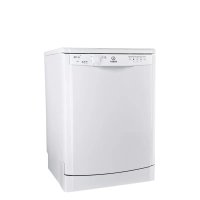
DFG 15B1 A EU - Dishwasher INDESIT - Free user manual and instructions
Find the device manual for free DFG 15B1 A EU INDESIT in PDF.



| Product type | Dishwasher |
| Brand | Indesit |
| Model | DFG 15B1 A EU |
| Dimensions (W x H x D) | 60 x 85 x 60 cm |
| Capacity | 13 place settings |
| Energy class | A+ |
| Annual energy consumption | 295 kWh |
| Annual water consumption | 3080 liters |
| Noise level | 49 dB(A) |
| Number of programs | 5 (Eco, Intensive, Normal, Quick, Prewash) |
| Eco program (standard cycle) | Duration: 3h10, Water: 11 L, Energy: 1.04 kWh |
| Special functions | Delayed start, Half load, Tablet option |
| Water softener | Yes, adjustable according to hardness |
| Leak protection | Yes, cuts off water supply in case of anomaly |
| Installation type | Freestanding, not built-in |
| Supply pressure | 0.05 – 1 MPa (0.5 – 10 bar) |
| Maintenance | Regular cleaning of filters, spray arms and door seal |
| Repairability | Spare parts available via authorized service |
Frequently Asked Questions - DFG 15B1 A EU INDESIT
User questions about DFG 15B1 A EU INDESIT
0 question about this device. Answer the ones you know or ask your own.
Ask a new question about this device
Download the instructions for your Dishwasher in PDF format for free! Find your manual DFG 15B1 A EU - INDESIT and take your electronic device back in hand. On this page are published all the documents necessary for the use of your device. DFG 15B1 A EU by INDESIT.
USER MANUAL DFG 15B1 A EU INDESIT
Precautions and advice, 3
General safety
Disposal
Saving energy and respecting the environment
Installation and Assistance, 4-5
Positioning and levelling
Connecting the water and electricity supplies
Advice regarding the first wash cycle
Technical data
Assistance
Description of the appliance, 6
Overall view
Control panel
Loading the racks, 7-8
Lower rack
Cutlery basket
Upper rack
Adjusting the upper rack
Start-up and use, 9
Starting the dishwasher
Measuring out the detergent
Wash cycles, 10
Table of wash cycles
Rinse aid and refined salt, 11
Measuring out the rinse aid
Measuring out the refined salt
Care and maintenance, 12
Shutting off the water and electricity supplies
Cleaning the dishwasher
Preventing unpleasant odours
Cleaning the sprayer arms
Cleaning the water inlet filter
Cleaning the filters
Leaving the machine unused for extended periods
Troubleshooting, 13
Product fiche
EN
| Product Fiche | |
| Brand | INDESIT |
| Model | DFG 15B1 |
| Rated capacity in standard place settings (1) | 13 |
| Energy efficiency class on a scale from A+++ (low consumption) to D (high consumption) | A+ |
| Energy consumption per year in kWh (2) | 295.0 |
| Energy consumption of the standard cleaning cycle in kWh | 1.04 |
| Power consumption of the off-mode in W | 0.5 |
| Power consumption of the left-on mode in W | 5.0 |
| Water consumption per year in litres (3) | 3080.0 |
| Drying efficacy class on a scale from G (low efficacy) to A (high efficacy) | A |
| Programme time for standard cleaning cycle in minutes | 190 |
| The duration of the left-on mode in minutes | 10 |
| Noise in dB(A) Re 1pW | 49 |
| Built-in model | No |
| NOTES | |
| 1) The information on the label and fiche relates to the standard cleaning cycle, this programme is suitable to clean normally soiled tableware and it is the most efficient programme in terms of combined energy and water consumption. The standard cleaning cycle corresponds to the Eco cycle. | |
| 2) Based on 280 standard cleaning cycles using cold water fill and the consumption of the low power modes. Actual energy consumption depends on how the appliance is used. | |
| 3) Based on 280 standard cleaning cycles. Actual water consumption depends on how the appliance is used. | |
This appliance was designed and manufactured in compliance with international safety standards. The following information has been provided for safety reasons and should therefore be read carefully.
Keep this instruction manual in a safe place for future reference. If the appliance is sold, given away or moved, please ensure the manual is kept with the machine.
Please read these instructions carefully: they contain important information on installation, use and safety.
This appliance is designed for domestic use or similar applications, for example:
- staff kitchen areas in shops, offices and other work environments;
-farmhouses;
- use by guests in hotels, motels and other residential settings;
- bed & breakfasts.
General safety
- The appliance should not be operated by people (including children) with reduced physical, sensory or mental capacities, or by inexperienced people who are not familiar with the product, unless supervision or instructions on how to use it are provided by someone who assumes responsibility for their safety.
- An adult must supervise children at all times to prevent them from playing with the appliance.
The appliance was designed for domestic use inside the home and is not intended for commercial or industrial use. - The appliance must be used by adults only to wash domestic crockery in accordance with the instructions in this manual.
- The appliance must not be installed out even in covered areas. It is extremely dangerous to leave the machine exposed to rain and storms.
- Do not touch the appliance when barefoot.
- When unplugging the appliance always pull the plug from the mains socket. Do not pull on the cable.
- The water supply tap must be shut off and the plug should be removed from the electrical socket before cleaning or maintaining the appliance.
- If the appliance breaks down, do not under any circumstances touch the internal parts in an attempt to perform the repair work yourself.
- Do not lean or sit on the open door of the appliance; this may cause the appliance to overturn.
- The door should not be left open as it may create a dangerous obstacle.
- Keep detergent and rinse aid out of reach children.
- The packaging material should not be used as a toy for children.
Disposal
- Disposal of packaging material: observe log legislation so that the packaging may be reused.
- The European Directive 2012/19/EU relating to Waste Electrical and Electronic Equipment (WEEE) states that household appliances should not be disposed of using the normal solid urban waste cycle. Exhausted appliances should be collected separately in order to optimise the reusing and recycling rate of the materials inside the machine, while preventing potential damage to the environment and public health. The crossed-out dustbin symbol is marked on all products to remind the owners of their obligations regarding separated waste collection.
For further information relating to the correct disposal of household appliances, owners may contact the relevant public authority or the local appliance dealer.
Saving energy and respecting the environment
Saving water and energy
- Only begin a wash cycle when the dishwasher is full. While waiting for the dishwasher to be filled, prevent unpleasant odours using the Soak cycle (see Wash cycles).
-
Select a wash cycle that is suited to the type of crockery and to the soil level of the crockery using the Table of wash cycles:
-
for dishes with a normal soil level use the Eco wash cycle, which ensures low energy/water consumption levels.
-
If the load is smaller than usual activate the Half Load option* (see Start-up and use).
- If your electricity supply contract gives details of electricity-saving time bands, run wash cycles or when electricity prices are lower. The Delayed Start button * (see Start-up and use) helps you organise the wash cycles accordingly.
Phosphate-free and chlorine-free detergents containing enzymes
- We strongly recommend that you use detergents that do not contain phosphates or chlorine, as these products are harmful to the environment.
- Enzymes provide a particularly effective action at temperatures around 50^ . As a result detergents containing enzymes can be used in conjunction with low-temperature wash cycles in order to achieve the same results as a normal 65^ wash cycle.
- To avoid wasting detergent, use the product in appropriate quantities based on the manufacturer's recommendations, the hardness of the water, of the soil level and the quantity of crockery to be washed. Even if they are biodegradable, detergents contain substances which may alter the balance of nature.
EN
Installation and Assistance
EN
A If the appliance must be moved at any time, keep it in an upright position; if absolutely necessary, it may be tilted onto its back.
Positioning and levelling
- Remove the appliance from all packaging and check that it has not been damaged during transportation. If it has been damaged, contact the retailer and do not proceed any further with the installation process.
- Arrange the dishwasher so that its sides or back panel are in contact with the adjacent cabinets or the wall. This appliance can also be recessed under a single worktop * (see the Assembly Instruction sheet.)
- Position the dishwasher on a level sturdy floor. If the floor is uneven, the front feet of the appliance should be adjusted until it reaches a horizontal position. If the appliance is levelled correctly, it will be more stable and much less likely to move or cause vibrations and noise while it is operating.
4^ . To adjust the height of the rear foot, turn the red hexagonal bushing on the lower central part at the front of the dishwasher using a hexagonal spanner with an opening of 8mm . Turn the spanner in a clockwise direction to increase the height and in an anticlockwise direction to decrease it (see Building-in Instruction sheet attached to the documentation.)
Connecting the water and electricity supplies
A Connection to the water and electricity supplies should only be performed by a qualified technician.
The dishwasher should not stand on the water hoses or electricity supply cable.
The appliance must be connected to the water supply network using new hoses.
Never use old or second hand hose sets. Do not reuse hoses from any previously installed dishwasher.
The water inlet and outlet hoses and the electricity supply cable may be positioned towards the right or the left in order to achieve the best possible installation.
Connecting the water inlet hose
- To a suitable cold water connection point: before attaching the hose, run the water until it is perfectly clear so that any impurities that may be present in the water do not clog the appliance; after performing this operation, screw the inlet hose lightly onto a lap with a 3/4 gas threaded connection.
- To a suitable hot water connection point: your dishwasher may be supplied with hot water from the mains supply (if you have a central heating system with radiators) provided that it does not exceed a temperature of 60^ .
A Screw the hose to the tap as described for connection to a cold water supply.
A If the inlet hose is not long enough, contact a specialist store or an authorised technician (see Assistance.)
The water pressure must be within the values indicated in the Technical Data table (see adjacent information.)
The hose should not be bent or compressed.
Connecting the water outlet hose
Connect the outlet hose (without bending it) to a drain duct with a minimum diameter of 4cm .
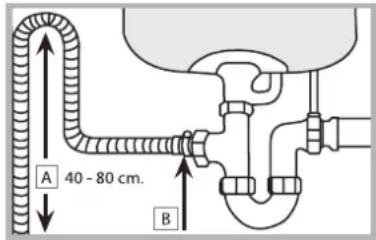
The outlet hose must be at a height ranging from 40 to 80~cm from the floor / surface where the dishwasher rests (A).
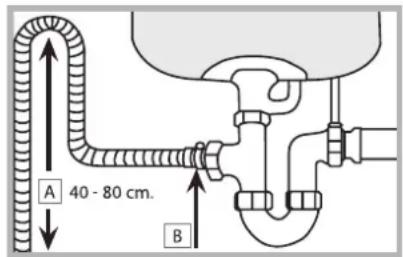
Before connecting the water outlet hose to the sink drain, remove the plastic plug (B).
Anti-flooding protection
To ensure floods do not occur, the dishwasher:
- is provided with a special system which blocks the water supply in the event of anomalies or leaks from inside the appliance. Some models are also equipped with the supplementary safety device New Acqua Stop*, which guarantees anti-flooding protection even in the event of a supply hose rupture.

WARNING: HAZARDOUS VOLTAGE!
Under no circumstances should the water inlet hose be cut, as it contains live electrical parts.
Electrical connection
Before inserting the plug into the electrical socket, make sure that:
- The socket is earthed and complies with current regulations.
- the socket can withstand the maximum load of the appliance, which is indicated on the data plate located on the inside of the door (see Description of the appliance);
- The power supply voltage falls within the values indicated on the data plate on the inside of the door.
- The socket is compatible with the plug of the appliance. If this is not the case, ask an authorised technician to replace the plug (see Assistance); do not use extension cables or multiple sockets.
Once the appliance has been installed, the power supply cable and the electrical socket should be easily accessible.
The cable should not be bent or compressed.
If the power supply cable is damaged, it must be replaced by the manufacturer or its Technical Assistance Service in order to prevent all potential hazards (see Assistance.)
* Only available in selected models.
Anti-condensation strip*
After installing the dishwasher, open the door and stick the adhesive transparent strip under the wooden shelf in order to protect it from any condensation which may form.
Advice regarding the first wash cycle
After the installation, remove the stoppers from the racks and the retaining elastic elements from the upper rack, if any. Immediately before the fist washing, completely fill the salt dispenser with water and add only then approximately 1 kg of salt (see chapter entitled Rinse aid and refined salt). The water may overflow: this is normal and is not a cause for concern. Select the water hardness value (see chapter entitled Rinse aid and refined salt). - After the salt has been poured into the machine, the LOW SALT indicator light* switches off.
A If the salt container is not filled, the water softener and the heating element may be damaged as a result.
Assistance
Before contacting Assistance:
- Check whether the problem can be resolved using the Troubleshooting guide (see Troubleshooting).
- Restart the programme to check whether the problem has ceased to exist.
If the problem persists, contact the Authorised Technical Assistance Service.
A Never use the services of unauthorised technicians.
Please have the following information to hand:
The type of malfunction.
The appliance model (Mod.).
The serial number (S/N)
This information can be found on the appliance data plate (see Description of the appliance).
The machine has a buzzer/set of tones (depending on the dishwasher model) to inform the user that a command has been implemented: power on, cycle end etc.
The symbols/indicator lights/LEDs on the control panel/ display may vary in colour and may have a flashing or fixed light (depending on the dishwasher model).
The display provides useful information concerning the type of wash cycle, drying/wash-cycle phase, remaining time, temperature etc etc.
| Technical data | |
| Dimensions | width 60 cm height 85 cm depth 60 cm |
| Capacity 13 standard place-settings | |
| Water supply pressure | 0,05 ÷ 1MPa (0.5 ÷ 10 bar) 7,25 - 145 psi |
| Power supply voltage See appliance data plate | |
| Total absorbed power See appliance data plate | |
| Fuse See appliance data plate | |
| CE | This dishwasher conforms to the following European Community Directives: -2006/95/EC (Low Voltage) -2004/108/EC (Electromagnetic Compatibility) -2009/125/EC (Comm. Reg. 1016/2010) (Ecodesign) -97/17/EC (Labelling) -2012/19/EU Waste Electrical and Electronic Equipment (WEEE) |
Description of the appliance
EN
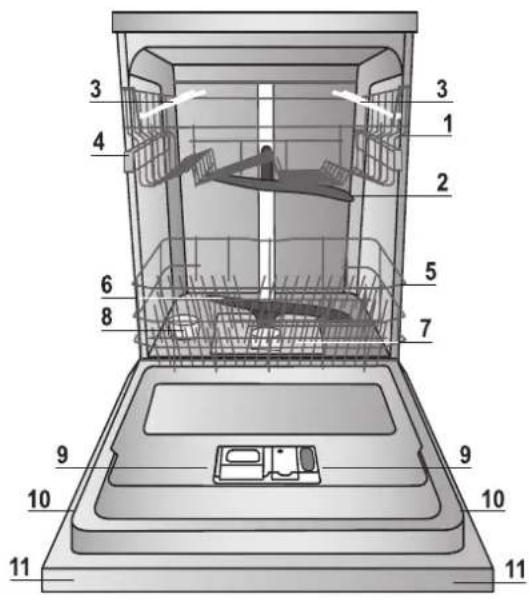
Overall view
- Upper rack
- Upper sprayer arm
- Tip-up dispensers
- Rack height adjuster
- Lower rack
- Lower sprayer arm
- Washing filter
- Salt dispenser
- Detergent dispenser, rinse-aid dispenser and Active Oxygen device*
10.Data plate - Control panel***
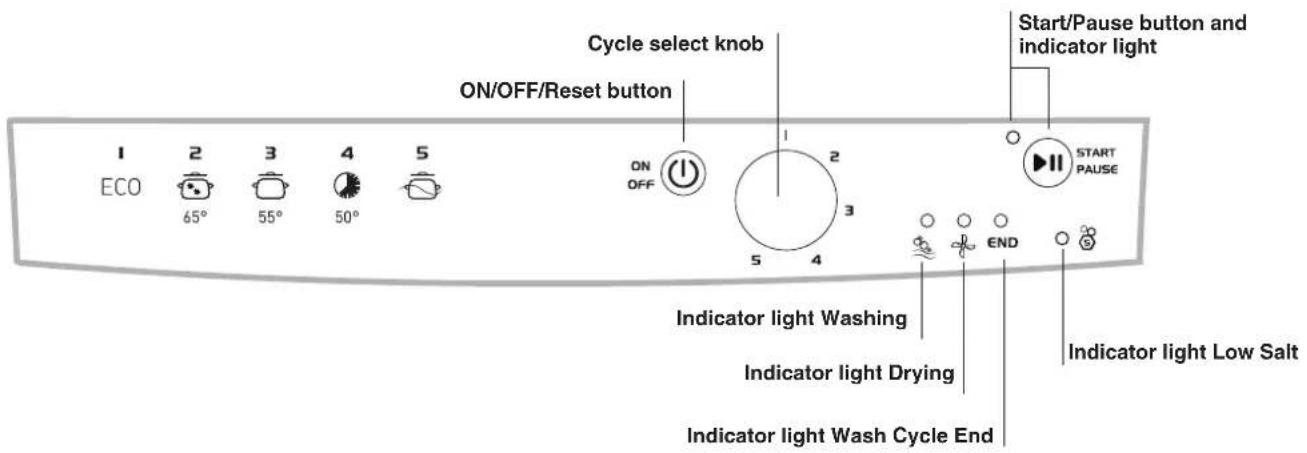
Control panel
***Only in completely built-in models.
* Only available in selected models.
The number and type of wash cycles and options may vary depending on the dishwasher model.
Tips
Before loading the racks, remove all food residues from the crockery and empty liquids from glasses and containers. No
preventive rinsing is needed under running water.
Arrange the crockery so that it is held in place firmly and does not tip over; and arrange the containers with the openings facing downwards and the concave/convex parts placed obliquely, thus allowing the water to reach every surface and flow freely. Make sure that the lids, handles, trays and frying pans do not prevent the sprayer arms from rotating. Place any small items in the cutlery basket.
Since plastic dishes and non-stick frying pans usually retain more water drops, their drying will be not so good as that of ceramic or stainless-steel dishes.
Lightweight items such as plastic containers should be placed in the upper rack and arranged so that they cannot move.
After loading the appliance, make sure that the sprayer arms can rotate freely.
Lower rack
The lower rack can hold pans, lids, dishes, salad bowls, cutlery etc. Large plates and lids should ideally be placed at the sides.
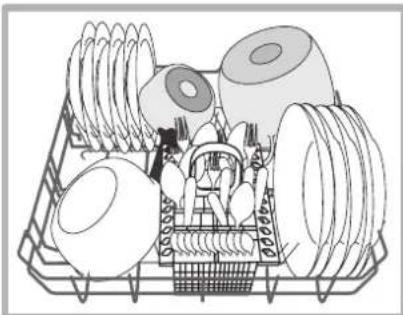
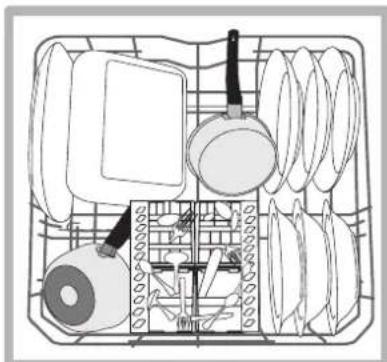
Very soiled dishes and pans should be placed in the lower rack because in this sector the water sprays are stronger and allow a higher washing performance.
Several dishwasher models are fitted with tip-up sectors*
They can be used in a vertical position when arranging dishes or in a horizontal position (lower) to load pans and salad bowls easily.
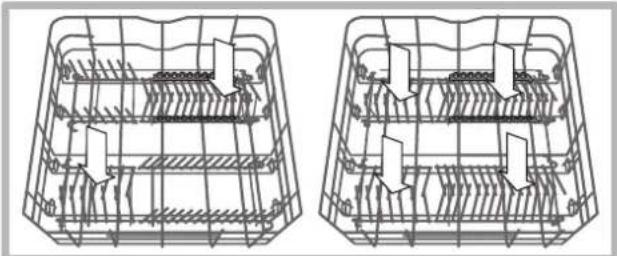
Cutlery basket
The basket is equipped with top grilles for improved cutlery arrangement. The cutlery basket should be positioned only at the front of the lower rack
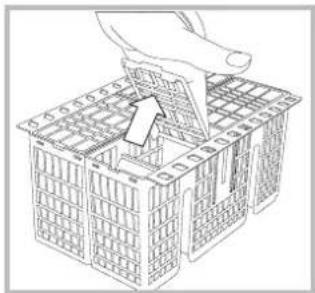
Knives and other utensils with sharp edges must be placed in the cutlery basket with the points facing downwards or they must be positioned horizontally in the tip-up compartments on the upper rack
Upper rack
Load this rack with delicate and lightweight crockery such as glasses, cups, saucers and shallow salad bowls.
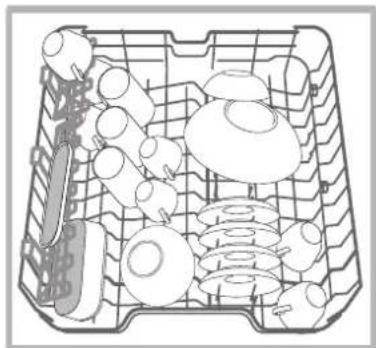
Several dishwasher models are fitted with tip-up sectors*
They can be used in a vertical position when arranging tea/ dessert saucers or in a lower position to load bowls and food containers.
*Only available in selected models with different numbers and positions.
EN
Tip-up compartments with adjustable position
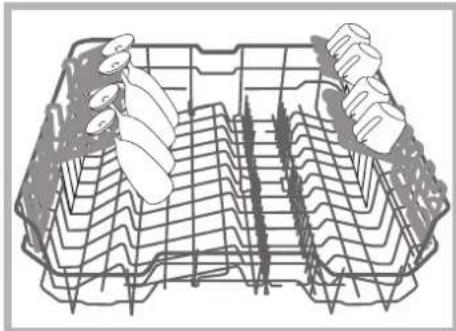
The side tip-up compartments can be positioned at three different heights to optimize the arrangement of crockery inside the rack.
Wine glasses can be placed safely in the tip-up compartments by inserting the stem of each glass into the corresponding slots.
Cutlery tray*
Some dishwasher models are fitted with a sliding tray which can be used to hold serving utensils or small cups. For optimum washing performance, avoid positioning bulky crockery directly below the tray.
The cutlery tray can be removed (see Figure).
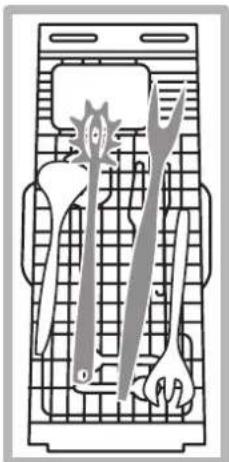
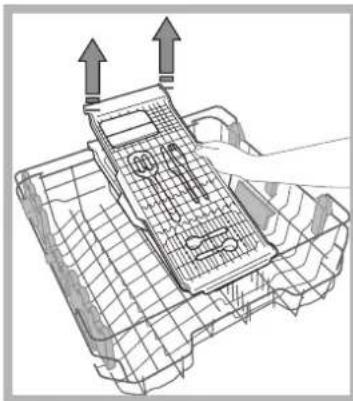
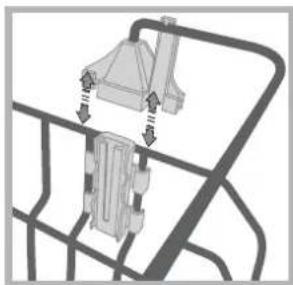
Before loading the tray, make sure the supports are properly coupled to the upper rack (see Figure).
The upper rack can be adjusted for height based on requirements: high position to place bulky crockery in the lower rack and low position to make the most of the tip-up compartments/sectors by creating more space upwards.
Adjusting the height of the upper rack
In order to make it easier to arrange the crockery, the upper rack may be moved to a higher or lower position.
The height of the upper rack should be adjusted WHEN THE RACK IS EMPTY.
NEVER raise or lower the rack on one side only.
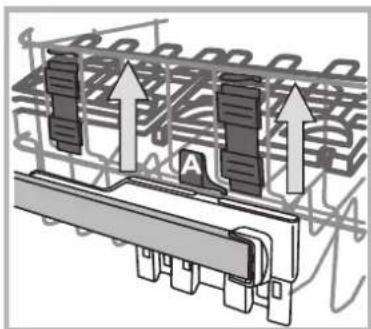
If the rack is equipped with a Lift-Up device* (see figure), lift it up by holding its sides. To restore the lower position, press the levers (A) at the sides of the rack and follow the rack down.
Unsuitable crockery
Wooden crockery and cutlery.
- Delicate decorated glasses, artistic handicraft and antique crockery. Their decorations are not resistant.
- Parts in synthetic material which do not withstand high temperatures.
Copper and tin crockery.
- Crockery soiled with ash, wax, lubricating grease or ink.
The colours of glass decorations and aluminium/silver pieces can change and fade during the washing process. Some types of glass (e.g. crystal objects) can become opaque after a number of wash cycles too.
Damage to glass and crockery
Caused by:
Type of glass and glass production process.
Chemical composition of detergent.
Water temperature of rinse cycle.
Tips:
Only use glasses and porcelain guaranteed by the manufacturer as dishwasher safe.
Use a delicate detergent suitable for crockery.
- Collect glasses and cutlery from the dishwasher as soon as the wash cycle is over.
* Only available in selected models.
Starting the dishwasher
- Turn the water tap on.
- Switch on the appliance by pressing the ON/OFF button.
- Open the door and pour in a suitable amount of detergent (see Measuring out the detergent).
- Load the racks (see Loading the racks) and shut the door.
- Select the wash cycle by turning the SELECT WASH CYCLE knob: align the notch on the knob with the number or symbol representing the desired wash cycle. The START/PAUSE indicator light will go on.
- Select the wash options * (see Options and Special Wash Cycles).
- Start the cycle by pressing the START button; the indicator light will stop flashing and stay lit (fixed light). The indicator light corresponding to the wash phase will go on, signalling that the wash cycle has begun.
- At the end of the wash cycle the END indicator light will go on (fixed light). Switch off the appliance by pressing the ON/OFF button, shut off the water tap and unplug the appliance from the electricity socket.
-
Wait a few minutes before removing the crockery to avoid getting burnt. Unload the racks, beginning with the lower level.
-
The machine will switch off automatically during long periods of inactivity in order to minimise electricity consumption.
AUTO WASH CYCLES: some models of dishwasher are equipped with a special sensor which can be used to assess the level of soiling and automatically select the most efficient and economic wash cycle accordingly. The duration of the auto wash cycles may vary due to the operation of the sensor.
Changing a wash cycle in progress
If a mistake was made in the wash-cycle selection process, it is possible to change the cycle provided that it has only just begun: once the wash cycle has started, in order to change the wash cycle switch off the machine by pressing and holding the ON/OFF/Reset button. Switch it back on using the same button and select the desired wash cycle and options.
Adding extra crockery
Press the Start/Pause button and open the door, taking care to avoid the escaping steam, and place the crockery inside the dishwasher. Press the Start/Pause button: The cycle will start again after a long beep has been emitted.
A If the delayed start has been set, at the end of the countdown the wash cycle will not start. It will stay in Pause mode.
Press the Start/Pause button to pause the machine; the wash cycle is stopped.
At this stage the wash cycle cannot be changed.
Accidental interruptions
If the door is opened during the wash cycle or there is a power cut, the cycle stops. It starts again from the point at which it was interrupted once the door has been shut or the electricity supply restored.
- Only available in selected models.
Measuring out the detergent
A good wash result also depends on the correct amount of detergent being used. Exceeding the stated amount does not result in a more effective wash and increases environmental pollution.
Based on how soiled the items are, the amount can be adjusted to individual cases using powder or liquid detergent.
In the case of normally soiled items, use approximately either 35 gr (powder detergent) or 35 ml (liquid detergent). If tablets are used, one tablet will be enough.
If the crockery is only lightly soiled or if it has been rinsed with water before being placed in the dishwasher, reduce the amount of detergent used accordingly.
For good washing results also follow the instructions shown on the detergent box.
For further questions please ask the detergent producers' Advice Offices.
To open the detergent dispenser use the opening device "A".
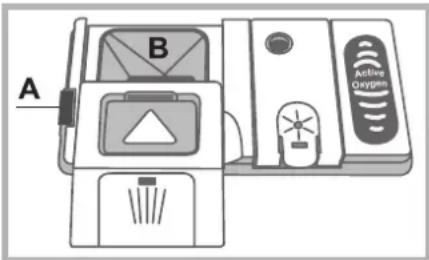
Introduce the detergent into the dry dispenser "B" only. Place the amount of detergent for pre-washing directly inside the tub.
- When measuring out the detergent refer to the Table of wash cycles to add the proper quantity. Compartment B comprises a level showing the maximum quantity of liquid or powder detergent that can be added to each cycle.
- Remove detergent residues from the edges of the dispenser and close the cover until it clicks.
- Close the lid of the detergent dispenser by pulling it up until the closing device is secured in place.
The detergent dispenser automatically opens up at the right time according to the wash cycle.
If all-in-one detergents are used, we recommend using the TABS option, because it adjusts the cycle so that the best washing and drying results are always achieved.
Only use detergent which has been specifically designed for dishwashers.
DO NOT USE washing-up liquid.
Using excessive detergent may result in foam residue remaining in the machine after the cycle has ended.
The use of tablets is only recommended for models which offer the MULTI-FUNCTIONAL TABLETS option.
To achieve the best results from each washing and drying cycle, powder detergent, liquid rinse aid and salt should be used.
Wash-cycle data is measured under laboratory conditions according to European Standard EN 50242. Based on the different conditions of use, the wash-cycle duration and data can change.
The number and type of wash cycles and options may vary depending on the dishwasher model.
| Wash Cycle Drying Options | Wash Cycle Duration | Water Consumption (l/cycle) | Energy Consumption (kWh/cycle) | |
| 1. Eco Yes No 03:10' 11' | 1,04 | |||
| 2. Intensive Yes No 02:30' 16,5 1,65 | ||||
| 3. Normal Yes No 02:00' 16,0 1,3 | ||||
| 4. Rapid 40' No 00:40' 9,0 0,9 | ||||
| 5. Prewash No No 00:10' 4 0,01 |
Instructions on wash-cycle selection and detergent dosage
- The ECO wash cycle is the standard cycle to which the energy label data refers. It can be used to wash crockery with a normal soil level and is the most efficient cycle in terms of energy and water consumption for this type of crockery. 27 gr/ml + 6 gr/ml** - 1 Tab (**Quantity of pre-washing detergent)
- Heavily soiled dishes and pans (not to be used for delicate items). 30 gr/ml - 1 Tab
- Normally soiled pans and dishes. 27gr / ml + 6gr / ml^** - 1 Tab
- Fast cycle to be used for slightly dirty dishes (ideal for 2 place settings) 25 gr/ml - 1 Tab
- Pre-wash while awaiting completion of the load with the dishes from the next meal. No detergent.
Standby consumption: Left-on mode consumption: 5,0 W - Off mode consumption: 0.5 W
Notes:
Optimum performance levels when using the "Rapid 40" cycle can be achieved by respecting the specified number of place settings.
To reduce consumption, only run the dishwasher when it is full.
Note for Test Laboratories: for information on comparative EN testing conditions, please send an email to the following address: assistenza_en_lvs@indesitcompany.com
Only use products which have been specifically designed for dishwashers.
Do not use table/industrial salt or washing-up liquid. Follow the instructions given on the packaging.
A If using a multi-functional product it is not necessary to add any rinse aid. However, we recommend that you add salt, especially if you live in an area where the water is hard or very hard. (Follow the instructions given on the packaging).
A If you do not add salt or rinse aid, the LOW SALT* and LOW RINSE AID indicator lights will stay lit.
Measuring out the rinse aid
Rinse aid makes it easier for the crockery to dry, as water runs off the surfaces more readily and therefore does not leave streaks or marks. The rinse aid dispenser should be filled:
- When the LOW RINSE AID indicator light* on the control panel is illuminated, a reserve supply of rinse aid is still available for 1-2 cycles;
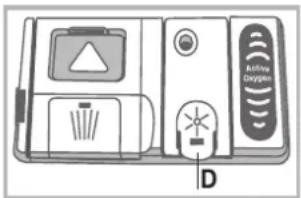
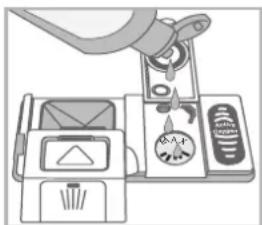
- Open the dispenser "D" by pressing and pulling up the tab on the lid;
- Carefully introduce the rinse aid as far as the maximum reference notch of the filling space - avoid spilling it. If this happens, clean the spill immediately with a dry cloth.
- Press the lid down until you hear a click to close it.
NEVER pour the rinse aid directly into the appliance tub.
Adjusting the amount of rinse aid
If you are not completely satisfied with the drying results, you can adjust the quantity of rinse aid. Switch on the dishwasher using the ON/OFF button, wait a few seconds and switch it off using the ON/OFF button. Press the Start/Pause button 3 times; switch on the machine using the ON/OFF button and access the adjustment menu - the rinse-aid indicator light is lit (set to factory level).
Adjust the level of rinse aid supply using the WASH SELECT knob. There is a rinse aid level for each wash cycle (0 to 4 max).
Press the ON/OFF button to save the setting.
If the rinse aid level is set to ZERO (ECO), no rinse aid will be supplied. The LOW RINSE AID indicator light will not be lit if you run out of rinse aid.
- If there are streaks on the crockery, set a low number (1-2).
If there are drops of water or limescale marks, set a high number (3-4).
Setting the water hardness
Every dishwasher is equipped with a water softener which, by using refined salt designed specially for this type of appliance, supplies water without limescale which is then used to wash the crockery.
This dishwasher has a setting that helps reduce pollution and optimises washing performance in accordance with the water hardness level in your area. Ask your local water supplier for
this information.
- Switch on the dishwasher using the ON/OFF button, wait a few seconds and switch it off using the ON/OFF button. Hold down the Start/Pause button for min. 3 seconds; switch on the machine using the ON/OFF button and access the adjustment menu - the salt indicator light is lit.
-Select the desired level using the SELECT WASH CYCLE knob (1 to 5^ Max.)
(water softener set to medium level).
Press the ON/OFF button to save the setting.
Even if using multi-functional tablets, fill the salt dispenser.
| Water Hardness Table | Average salt dispenser capacity duration** | |||
| level | °dH | °FH | mmol/l | months |
| 1 | 0 - 6 | 0 - 10 | 0 - 1 | 7 months |
| 2 | 6 - 11 | 11 - 20 | 1,1 - 2 | 5 months |
| 3 | 12 - 17 | 21 - 30 | 2,1 - 3 | 3 months |
| 4 | 17 - 34 | 31 - 60 | 3,1 - 6 | 2 months |
| 5* | 34 - 50 | 61 - 90 | 6,1 - 9 | 2/3 weeks |
For values between 0^ and 10^ , we do not recommend the use of salt.
a setting of 5 may increase cycle duration.
* 1 wash cycle per day.
(^ dH) = hardness measured in German degrees - ^ f = hardness measured in French degrees - mmol/l = millimoles per litre
Measuring out the refined salt
In order to obtain the best possible results from a wash cycle, make sure that the salt dispenser is never empty.
Refined salt removes limescale from the water, thus avoiding the formation of deposits on crockery.
The salt dispenser is located in the lower part of the dishwasher (see Description) and should be filled:
- When the green float cannot be seen by simply looking at the cap of the salt dispenser;
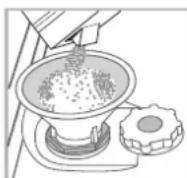
- When the LOW RINSE AID indicator light on the control panel is illuminated ;
- Remove the lower rack and unscrew the cap (anticlockwise).
- The first time you do this: fill the water tank right up to its edge.
- Position the funnel (see figure) and fill the salt dispenser up to the edge
(approximately 1kg ). It is normal for a little water to leak out.
Remove the funnel* and wipe any salt residues away from the opening; rinse the cap under running water and then screw it on, the head facing downwards so as to let the water flow out of the four slots (star-shaped arrangement) in the lower part of the cap (cap with green float).
It is advisable to perform this procedure every time you add salt to the dispenser.
Make sure the cap is screwed on tightly so that no detergent can get into the container during the wash cycle (this could damage the water softener beyond repair).
When necessary, measure out the salt before a wash cycle so that any saline solution which has leaked out of the salt dispenser is removed.
- Only available in selected models.
Care and maintenance
EN
Shutting off the water and electricity supplies
- Turnoff the water tap after every wash cycle to avoid leaks.
Always unplug the appliance when cleaning it and when performing maintenance work.
Cleaning the dishwasher
- The external surfaces of the machine and the control panel can be cleaned using a non-abrasive cloth which has been dampened with water. Do not use solvents or abrasive products.
- Any marks on the inside of the appliance may be removed using a cloth dampened with water and a little vinegar.
Preventing unpleasant odours
Always keep the door of the appliance ajar in order to avoid moisture from forming and being trapped inside the machine.
- Clean the seals around the door and detergent dispensers regularly using a damp sponge. This will avoid food becoming trapped in the seals, which is the main cause behind the formation of unpleasant odours.
Cleaning the sprayer arms
Food residue may become encrusted onto the sprayer arms and block the holes used to spray the water. It is therefore recommended that you check the arms from time to time and clean them with a small non-metallic brush.
The two sprayer arms may both be removed.
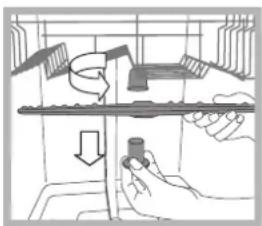
To remove the upper sprayer arm, turn the plastic locking ring in an anti-clockwise direction. The upper sprayer arm should be replaced so that the side with the greater number of holes is facing upwards.
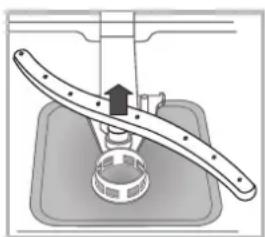
The lower sprayer arm can be removed by pressing on the side tabs and pulling it upwards.
Cleaning the water inlet filter*
If the water hoses are new or have not been used for an extended period of time, let the water run to make sure it is clear and free of impurities before performing the necessary connections. If this precaution is not taken, the water inlet could become blocked and damage the dishwasher.
A Clean the water inlet filter at the tap outlet regularly.
- Turn off the water tap.
- Unscrew the end of the water inlet hose, remove the filter and clean it carefully under running water.
- Re-place the filter and screw the water hose back into position.
Cleaning the filters
The filter assembly consists of three filters which remove food residues from the washing water and then recirculate the water. They should be cleaned if you wish to achieve the best results in every wash.
Clean the filters regularly.
The dishwasher should not be used without filters or if the filter is loose.
-
After several washes, check the filter assembly and if necessary clean it thoroughly under running water, using a non-metallic brush and following the instructions below:
-
Turn the cylindrical filter C in an anti-clockwise direction and pull it out (fig. 1).
- Remove the cup filter B by exerting a slight pressure on the side flaps (fig. 2);
- Slide out the stainless-steel plate filter A. (fig. 3).
- Inspect the trap and remove any food residues. NEVER REMOVE the wash-cycle pump protection (black detail) (fig. 4).
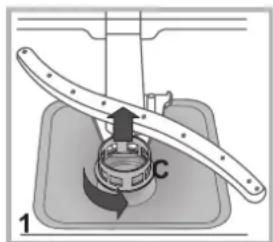
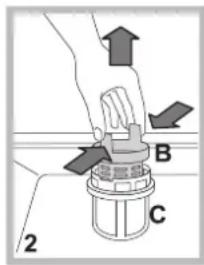
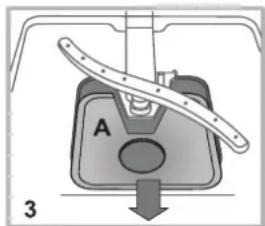
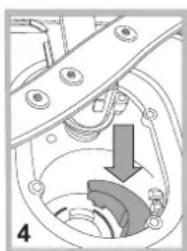
After cleaning the filters, re-place the filter assembly and fix it in position correctly; this is essential for maintaining the efficient operation of the dishwasher.
Leaving the machine unused for extended periods
- Disconnect the appliance from the electricity supply and shut off the water tap.
- Leave the door of the appliance ajar.
- When you return, run a wash cycle when the dishwasher is empty.
* Only available in selected models.
Whenever the appliance fails to work, check for a solution from the following list before calling for Assistance.
| Problem: Possible causes / solutions: | |
| The dishwasher cannot be started or controlled. | • Switch off the appliance by pressing the ON/OFF button. Switch it back on after approximately one minute and reset the program. • The appliance has not been plugged in properly. • The dishwasher door has not been shut properly. |
| The door won't close. | • The lock was released. Strongly push the door until a "clacking" noise is heard. |
| No water drains from the dishwasher. | • The dishwasher cycle has not finished yet. • The water drain hose is bent (see Installation). • The drain duct is blocked. • The filter is clogged up with food residues. |
| The dishwasher is too noisy. | • The dishes are rattling against each other or against the sprayer arms. • An excessive amount of foam has been produced: the detergent has not been measured out correctly or it is not suitable for use in dishwashers (see Start-up and use). |
| The dishes and glasses are covered in a white film or limescale deposits. | • The level of refined salt is low or the dosage setting is not suited to the hardness of the water (see Rinse aid and salt). • The lid on the salt dispenser was not closed properly. • The rinse aid has been used up or the dosage is too low. |
| The dishes and glasses are streaked or have a bluish tinge. | • The rinse aid dosage is too high. |
| The crockery has not been dried properly. | • A wash cycle without a drying cycle has been selected. • The rinse aid has been used up or the dosage is too low (see Rinse aid and salt). • The rinse aid setting is not suitable. • The crockery is made from non-stick material or plastic. |
| The crockery is not clean. • The racks are overloaded (see Loading the racks.) • The crockery has not been arranged properly. • The sprayer arms cannot move freely. • The wash cycle is too gentle (see Wash cycles). • An excessive amount of foam has been produced: the detergent has not been measured out correctly or it is not suitable for use in dishwashers (see Start-up and use). • The lid on the rinse aid compartment was not shut correctly. • The filter is dirty or blocked (see Care and maintenance). • The refined salt level is low (see Rinse aid and salt). | |
| The dishwasher does not take any water in - Tap shut-off alarm. (The Drying and End indicator lights flash quickly.) | • There is no water in the mains supply. • The water inlet hose is bent (see Installation). • Turn on the tap and the appliance will start after a few minutes. • The appliance stopped because no action was taken when the beep sounded * (*Only available on selected models.) Switch off the machine using the ON/OFF button, turn on the tap and switch the machine back on after 20 seconds by pressing the same button. Reset the appliance and restart the wash cycle. |
EN
- Only available in selected models.
FR
Français, 14
Sommaire
HencnpaBHOCTn MeToDbI INx yctpaHEnn,66
CepBnchoe 06cnyxmbaHne, 67
N3dennne cnpoeKtnpoBaHO H3rotOBHeHO B COOTBETCTBm C MExdyHapOnHbIMn HopMaTHBaAMn NO 6e3onacHoctn. HactoIune NHCpykunn COCTaBHebl B cenJx BaWei 6e3onacHocTn I DOJIKHbI 6bITb BHMaTeIbHO nPoHTaHbl.
Baxho coxpaHt b daHoe pyKOoDCTBO nra erO nocne dyuOux KOHCyIbTaunn. B cnyae npodaxn, nepedau nn nepee3da npOBepbTe, T06bl daHno texnueckoe pyKOoDCTBO conpoboxdano n3deJe.
Heo6xOJHMO BHNMaTeJIbHO IpOuHTaTb HAcToRJUe HNCTpyKcUN: B HNX COePjKaTcB BaxHbIe CBeJeHnO 6 yCTaHOBKe n3dEJIy, erO 3KcNPyatauN n 6e3OnacHOCTn.
DahHoe n3dJIe NpeHa3NaYeHO dIy 6bITOBORO IIN DpyrOro aHaJoruHoro ICNoJb3OBaHHa, HApnmuMep:
-B NOMEUHIX, PpeHa3NaeHHbIX IJII PnIroTOBNeHINI INIINI INIEPcoHAna Mara3INHOB, OfICOB IN IpOuNX UypeKDeHIN;
-B arpoTpyncTnuecknx ycaNb6ax;
-ДЯИСПОЛБ3OBAHINРOXINBAIOUIMMIBTOCTHINUE, MOTeJI E B DpyrNxBpeMeHHbIX MeCTAX PPOXINBAHIN;
-BTOCTHINHuaTXnA《HOMEpC3aBtpaKOM》
06uue Tpe6oBaHnK 6e3onacHOCTn
JaHHbI 3neKtponp6op He MoKeT 6bItb NcNoB3OBaH JnUaMn (BKlUoyaJ deTei) C orpaHnueHHbIMn Fn3NueCKm, CeHCOPHBIMn UIN yMCtBeHHbIMn CNOco6HOCTaMn, HEONbITbIMn INn HE3HaKombIMn C nHCTpykUmaMn ObaupeHna C 3NeKtponp6Opom, B OTCyTCTBne KOHTpOJIaN, OTBeTCTBeHHbIX 3a INX 6e3OnacHOCTb.
B3pocblbe doJXhbl cneDntb, yTo6bl dTeH He irpaann C 3neKtpponp6opom.
-Данhoeи3delenne npedHa3HaayaeTcЯнрocceccnoHbHOrO nCIOJIb3OBaHnB DOMaWHnxycNoBnX.
-Изденипразнада3нayehо Дя Мьтбя NOсудыВДOMaHnX yCIOBnIx,MOKET 6bITb NcNoJIb3OBAHO TOnbKO B3PocNbIM NIOdBM N COOTBeTCTBmC INHCTpyKUЯM,ПрNBeDEHHbIM N DaHHOMTEXHnueCKOM pyKOBOdCTBe.
3anpeaetc yctahabnBaTb n3deJne Ha yniue, daKe noi HabecOM, TaK KaK Bo3DeIcTBHe Ha Hero DOxJa I rpo3bl JaBnEeTc Ype3BbUaH OAnChbIM.
He npikacaiTecb K nocydomoeyHou MaunHe c 6ocbIMnHoramn.
He TAHNTe 3a CeTeBOJ Ka6eJIb IJN OTCOeINHeHnBUNKn N3JeNIA N3 CeTeBOJ PO3ETKN, BO3bMNTEcB 3aUHTeNCeJIbHyIO BUNKy pyKoI.
Heo6xOIMO nepeKpbIb BOODnpoBOHbIK paH N BbHyTb WTeNCeJIbHYU BUNKy n3 ceTeBOH p03eTKn NepeH HauJOM YnCTKN I TexHnueCKOrO 6cbnykBaHH MaunHbI.
B cnyae HenncnpabHoctn kateropueeckn 3anpeaaetcra OKpbBaTb BHYtpEHnne MexaHn3MbI n3dennr C cenbHO IX CAMOCToTeNbHO rpo mOHTA.
He onnpaItecb n He caInteNb Ha oTKpbItyo DbepCy MaunHbI:MaUNHa MOKeT ONpOKNHyTbcra.
He depknte DBepu OTkpyTo, TaK KaK 06 Hee MOxHO CnyaHHO CNOTKHHTbCra.
XpaHNTe MOIOUne cpeCTBa n OONaACKNBateIb BdaJI N OT DeTeN.
He pasewaIte deTm nIpaTb c ynaKOBOHbIMMaTePnAnaMn.
YTNIN3aun
- YtNiI3aIgny yNaKOBOUHbIX MaTePnaIaIOB: co6JIIOdaIte MeCTHbIe HOpMaTnIBbl NO yTNIu3aIgny yNaKOBOUHbIX MaTePnaIaIOB.
Cornacho Ebponecko DnpekTube 2012/19/EU kacateIbHO yTNIN3aun nneKtpOHbIX n3neKtpnuecknx 3neKtpponpnpobOB (WEEE)3neKtpponp6opbl He dONKbI Bbl6paCbBaTbcBmecTe C O6bYHbIM rOpOcKIM MycopOM. BbBeHHe N3 CTPO np6opbl DOJKNbI CObupaTbcrOTDeJIbHO DnA ONTUMN3aUN INx yTNIN3aUN IN peKynepaUN CoCTABNIOUX INx MaTePNAOB, a TAKKe IJRA Be3OnaCHOCTN OKpyKaIOUeN Cpebl N3DopOBb. CmBOL 3aYePKHyTA MycOPHaKOP3HHka, IMeOUnnc Ha BCex pN6opax, CnyKNT HAnOMnHAHNEM 06 IN x OTDeJIbHO yTNIN3aUN.
3a 6oJee noIpo6Ho HnHOpMaueNe O npaBnIbHoN yTnIIN3aun 6bITOBbIX 3JIeKTPoPnp6OpOB nOJB3OBaTeIN MOrYT o6paTtBcR B CneuaJIbHyIO rOcydapCTBeHHyIO opraHn3aUNIO INB MaRa3INH.
3Hepro6epeXeHne n oxpHa oKpykaOuoei cpebl
3KOHOMNBAObln3JIeKtpo3Heprnn
Icnoj3yntepocydomoeyHyMaunHy Toblko C noHnO 3arpyzkO. B OxndaHne nonHoro 3anonHeHHmaHbI BO n36eXaHne o6pa30BaHnHEnpnTbIX 3anaxOB BKIOUHTe zukn OnonacknBaHne (CM. Iporpammbl).
Bb6paTe nporpamMy MoKn, noXo7u7yO dnaHHO Tnna nocydbi n CTeneHH 3arpa3HeHn B COOTBeTCTBn C Ta6nue nporpamM:
-ДлгHopMaJIbHo rрЯЗнoi NocuIbI NcNoIb3yIte nporpaMMy ECo, obecneuBaIOUyIO Hn3Km paCXoI dNeKtpOaHeprN I BObl.
-ecnnMaunHa 3arpykeHa He NoJHocTbIO, BKNIOHTe DOnONHnteIbHyO cyHKcIIO IOnOBnHa 3arpy3kn * (cm. 3aynck n 3Kcnnyatauia).
- Ecnn BaW KOHTpAKT C NOCTABUHOM 3NEKTPO3HEPRnnpedymatpmbaet pa3hbe yacobte TaPnDJI nn3KOHOMN 3JEKTPo3HEPRn, N0Jb3yITecb MaUNHOI BO BpeM C JbROTHbIM TapnΦom. DOnONHITeNBHaJФyHKuN 3anyck C 3aepxKoN* (CM. 3anyck n 3KcIIyataqna)MOKeT NOMOy cPNaHIpOBaTb MoKy c 3HEproc6epeXeHem.
MoIoune cpeCTBa, He coedepekaune foocpaTOB, xlopa n coedepekaune fepMeHTbI
HactoTeIbHo peKomeHnyem nCnoIb3ObaTb MOUe cpeCTBa, He coepkaune focpaTOB IN Xnopa, YTO NOMORAET COxpaHHTb OKpyKaIOUyO cpeNy.
- ΦερMeHTbI OKa3bIBAIoT OcO6o 3ΦΦeKTHBHO Bo3dEiCTBnE npu TemnepaType Okono 50^ , NToMY npu NcNoJIb3OBAHm MOIOxN BeueCTB CΦεpMeHTaMn MoXHo Bbl6paTb nporpaMMbIMoKN C Hn3KmN TemnepaTypaMn, NOnyua Te Xe pe3yJbTaTbI, YTO n npu MoKe npu 65^
- Akkypatno do3npynte mooee cpeCTBO B COOTBETCTBNN C yka3aHnMn npOn3BOOHTeJN, C CTeneHbIO XeCTKOCTN BObl, CO CTeneHbIO 3aPra3HeHHN IN C KOJIuYeCTBOM NocyDbl BO n36ExKaHne HepaunohAnhoro pacxOJa. Xotra MOUUnie cpeCTBa I ABnIOTc 6bnopa3naraembIMN, OHN CoedeXkat BeueCTBa, OTPnCaTeNbHO BnnaHouNe Ha npnPoyd.
A B cnyuae nepee3da nepebo3nte MaunHy B cepTKaJIbHOM noLOXeHN. B cnyuae KpaHHe Heo6xOJMoCtN MaUNHa MOKeT 6bITb NOLOXeHa 3aHHe CTopoHOH BHn3.
PacnoJoxeHne HnBJInpOBka
1.CHIMnTe ynaKOBky cn3dennn n npoBepbTe, TTo6bl Ha HEm He 6blIO NOBpeXKeHn,HaHeceHHbIX pni TpaHCnOpTnpOBKe. Ppi ObnapyKeHn NOBpeXKeHn He NoDCoeDnHnTe MaunHy, a o6paNTbcr K npodabuy.
2. YcTaHOBnTe NocydomoueHyu MaunHy B HmUy KxOHHOrrnapHNTpa, TaK UTo6bl C60kOB mnn C3aDn OHa npneraIa KCTHe nN K KyXOHbIM 3JemeHTam. N3dJeTakKe MoKet 6bITbBCTpOeHO NOcPiNoWHoCToNeWHNueK KyxOHORrnapHNTypa* (CM.CXMMyMOHTaxa).
3.YctaHOBtne NocydomoeHyu MaunHy Ha poBbHn TBePdbNoI. BblPOBhYte MaunHy,OTBnHcNBA rIN 3aBnHcNBA npeDnHe onOpHbE HOKKn Do nDeaMbHO rOp3oHTaJbHOrO NOIOKeHHMaunHb.ToHnA HnBeJIropOBKa rapaTnpyeCTaBnBHoCTb N NOMoraet N36ExKaTb BN6paun, yMOB IN CmeueHm MaunHbI.
4*. Otperynpyte BbICOTy 3aHHe onOpbl, nobepHyB Wectnprahnyo KpacHyO BtUky, pacnoOnKeHHyO cnepeDi, B CEHTpaIbHO HIXKHe YacTn NocydomOeHNo MaunHbI, WectnprAHbIM pa3BOdHbIM KInOcM CpackpbITiem 8 MM NO YacOBoi CTpeNke Dny yBeINuEHnBaICOTb IN pOtnVB acOBoi CTpeKNi DnIe ee yMeHbWeHn. (CMOTpTe IHCTpyKUnn PO BCTPOEHOMY MOHTaxy, PpIraAouuceK DOkymENTaUN)
BodonpoBoHoe n 3JeKtpnueckoe noDcoeHHHeH
3NeKtpnueckoe IN BOOpnoBODHoe NOcOeINHeHMaIINHbI DJIJKHBbIIOJHHTBCaTOLbKO KBaIINuPPOBaHHbIM TEXHNKOM.
A Nocydomoeyna MaunHa He DoJxHa daBnTa Ha Tpy6bI nnHa npBOo3neKtpOnNTAHN.
A N3dJIeIe DoJxHO 6bITb NOcOeIMHeHO K BOOpnpOBdy npi NOMOuHOBbIX Tpy6. He nCnONb3yUte 6/y Tpy6bl.
TpbynoaunBoBnCnBaNpoBOJ3neKtpoNTaHmOryT 6bIb HappaBHeBnBnpaBOnnBnBnBO nIg ONTMaJIbHOyCTaHOBmMaUNHbl.
NoCoeHHeHne WnHaRa nOaH BObbl
K kpaHy xoIOHOB BObI: IpOuHO npBHTte Tpy6y noaun BObI K kpaHy c pe3b6OBbIM OTBepCTneM 3/4 ra3. Npeed 3akpyTKoJ daTe CTeYb BoJe Do Tex nop, noka OHa He cTaHET IpOzpaHoi BO u36exKaHHe 3acopeHn MaunHbI HeuNCTOTAMN.
K kpaHy ropaeB OBObl: ecn B BaIeM Dome CEHTpaIN3OBAHHa CNTema OTOpHeH, NocyDOMoEuaH MaUNHa MoKeT 6blb 3aINTaHa ropaeB BOOn I3 BOOnpOBoDa, ecn TempePaTypa BObl He npBeBlaaet 60^
IpnBnHTte Tpy6y K KpaHy, KaK OnpcaHO Bblwe IJna NOdcoeINHeHry XoNoHNOB BObl.
A Ecnn DnHa BODonpoBOnHO WJAnHg 6yTeT HeOcTaOHO, CneDyeT o6paTbC8 B CneuAnN3npoBaHHb MArzIN NIN K yNoIHomOueHHomy caHTexHky (cm. TexHueeckoe 0cbnyKbaHne).
A DaBHeHne BObl DOnJH0 6blb B npedenax 3HaueHn, yka3aHHbIX BA6JIuCe TexHmYeCKne daHHble (cm. c6Oky).
PpOBepbTe, YTO6bI BOONPOBOHbI UJIaHr He 6bl 3aJIOMJIeH nJIN CKaT.
IopcoeHHeHne cInBHoro WJahra
IopcoeHnHte CnHBHOJ nHaHr, He cRb6a erO, K cnBHOmy TpybonpoB0y CMNHIMaJIbHbIM dnaMeTpOM 4 cm.
CnBHOH ⅢaHr DoJKeH 6bTb pacNoJoxKeH Ha Bbcote O T 40 Do 80 cm OT NOna NIn OT NpTaOpMbIOocyDoMoEeHou MaHHbI (A).
Pepd noCoeHHeHcIbHoro IaHaRa K cHpOHy MoKn CnIMTe pIactKOByIO np6ky (B).
3aunTa npOTNB 3aTOnJIeHn
Bo n36ekhaHne 3aToPnEnHa NoCyDoomoeHna MaunHa:
- OCHAeHa CnCTeMoN, NpeKpbBaHooIe NoDaCy BoDbI BcNyae aHOMaNN ININ BHyTpeHHNX yTeYeK.
HekotopbIe MoIeN OChaIeHbI DOnOJIHnTeIbHbIM 3aUHTbIM ycTpoIcTBOM New Acqua Stop*, PpeOxpaHryoUM OT 3aToPHeHra DaKe B Cnyae pa3pbIbBA BOONpOBoNDHO WlaHra.

BHIMAHNE: ONACHOE HANPRXHEHNE!
Kateropnueckn 3anpeetaetcnope3aTbIaHnNoayn Bobl, TAK KAK BDOJIb HrO pNOxOaT 3JeMeHTbI NOHapJKeHNEM.
3NeKtpnueckoe noDcoeHHeHne
Peped noCoeHNHeHnEM BUNK MaUNHb K 3NeKtpuecko pO3ETke Heo6xOIMN IOBepNTcNeIyUoe:
- ceTeBa pO3eTka DoJxHa 6bITb CoeHHeHa C 3a3eMJIeHNEM I COOTBETCTBOBAtb HOPMaTHnAM;
3neKtpnuecka po3eTKa DOnJXHa 6bItb paCCHTaHa Ha MaKcMaJIbHyIO NTopeBnaReMyIO MoUHocTb N3DeNn, yKa3aHHyO Ha 3aBoDcKO TabNnUKe, pacNoIooKeHHoC BHyTpHeHcCTopoHbI DBepu. (CM. OnncAHne NocydOMoeHoi MaunHbI);
HaipxkeHHe cTe 3JekTpOnuTahmI DOJXHO COOTBeTCTBOBaTb DaHHbIM Ha nacnopTHo Ta6JnUKe, paCNOJOeHHo C BHyTpEHHe CTOpHbI DBePbMaWInHbI; - ceTeBa rpo3eTka dOJnxHa 6bItb COBMeCTnMa coITeNceJIbHOI BILKOn n3dEIna. B npOTNBHom cIyae nopUHTe 3aMeHy BNIKu yIPOHOMOeHHOMy TEXHNky (CM.TexHHeCKeO obcIyXnBAHHe) He IcNOJIb3yIte yDINHITeIN TpOHNKn.
A N3dennne DOnJXHO 6bIb yCTaHOBnEHO TAKIM O6pa3OM, YTO6blnpoBOD 3JeKtponHTAHNIG 3JeKtpopo3eTKa 6blnn JERKO DOCTyHbI.
A CeTeBoi Ka6eBn3dennH He DoJxeh 6bItb corHyT nnn cXaT.
A Ecnn cTeBoi Ka6en NobpeXeH, BO n36exKaHne ONaCHoCTn NopyuHTe erO 3aMeHy npOn3BOJnteHIO n3DeHn nn yNoHOMoehHomy LcHTpy TexHueckoro o6cnjxHBaHn. (CM. TexHueckoe o6cnjxHBaHn)
PnEhka 3aunTbI OT KOHDeHcata\*
Iocne yctahOBKn nocydoMoEChNO MaunHb B HnHy KxOHHO 3JIeMeHTa OTKpoIte ee DBepyu N HakNeIe TnpO3paHyIO camOKnerSyIOc NOIOCKy CHN3y DepeBraHHo KxOHHO pa6OeY IOBepxHOCTn dJe ee 3aunTbOT BO3MOXHO KOHeHCATA.
PpeynpeKdEHH no nepBOMy nCnoJb3OBAHnMoAunHbI
Pocne MOHTaxKa BbHyTb 3aIpyuKn, yctaHOBNeHHbIe Ha Kop3HAX, IN CHaTb KpeNEXHbIe pe3INHKn C BepxHei Kop3INbI (ecnn NMeOTc).
HenocpeCTBeHHO nepeI nepBoi MoKoH, HenocpeCTBeHHO nepeI nepBbIM cIKLOM MoKn 3aONHIne 6aOHc CoIN BODn I 3acBInbTe B Hero npimepHo 1 Kr coNN (CM. pa3deN OnonackuamEn b u peaeHepupkyoua conb): ecnn BOda byet BbITEKaTb n3 6aKa, 3TO HopMaJIbHOe RaJIeHne. BbIbepnte CTeneHb JecTKOcTN Bobl (CM. pa3deN OnonackueamEn b u peaeHepupuyoua conb).
-Поспе загузко синдikatop OTCYTCTBNE COJI rachet.
A Ecnn 6aoyok He 6ydt 3anolHHe cNoBIO, CMrYHTeJIb BOdbI HarpeBaTeNbHi 3neMeHT MOrYT NobPeDnTbCra.
Maunha ochaeta ha akctnueckmN/3ByKObIMn CNrHaanAM (B 3ABNCIMOCTN OT MOENI NOCYDMOeHNO MaUNH KOTOpbl npedynpeKdaT O BbINOJIHeHH KOMaHDb! BKIOUeHne, KOheu cIKJa n T.I.
CnMBoN/HHdkKaTOpbHa KOHcOny npaBneHna/Dncnnee MOrTy IMeTb pa3Hbe UBeTa, MrrA Tb NIOpeTb NOCTOHHO. (B 3ABNCIMOCHTN OT MODEHN NOCYDOMOeHNO MAUNHB).
Ha nncnnee noka3bIbaOTc CBeDeHnO 3aDaHHOM uKne, 3Tane MoiKn/CuUKn, OCTaTOCHM BpeMeHn, TEmnepaType n T.I.
Bb6op cTepeH XeCTKoCTN BObl
Bce nocydomoeyhble Maunnbl ykomnnekTobaHb cmyrnteIem BObl, KOtOpB 6nlarapcneuaNBHO perehepuOue CoIN dIg nocydomoeyhbx Maunn ydaJeT N3BeCTb N3BObl,
NcIOJIb3yUOeIcRdIaMbITbIPOCydI.
JaHHaN NOcyDnOmeHNa MaUHa MoKeT 6bITb HAcTpoHe TaKIM
0bpa3OM, QTO6bI cOKpaTtB 3arPra3HeHMe OKpyXaIOeI Cpebl
INOTUMNIPoBaT KaCeTBO Mbl TcPOyDB bA3aNCMocCTN OT
KeCTKocTn BObl. BMOKeT Ye3HaTb CTeNEH XeCTKOCTN BObl B
BaWem paOnHe, O6paNTuBnCb B OprAHm3aUNo BOODChA6KeHnA.
- BkHounte MaunHy KhoKoB KJ./BbIK., NdoxNte HeckonbKOceyH, 3aTeM BbIKNoHTe MaunHy KhoKoB KJ. / BbIK. DePKeTHe HkaToI KhoKy Pnyc/ay3a 3 ckyHb; BkNoHTe MaunHy KhoKoB KJbIK., OTKpbBaetc MeHIO HAcTpoEiN 3arOpaeTcN HnDnKatop pereHepnpuyoei coJI.
-BbIbepuTe pyKoTkoB BbIeOP IPOPGAMM HyKhBi ypoBeHb (OT 1do MaKc.5*.)
(CMRAHTeNB HAcTePOeHa CpeHIO CTeNEb XeCTKoCTN).
HaxMMte KhoNKy BKl./BblkI. Jnra coxpaehnna HAcTpoKn.
EcIn Bbl NOnb3yeTeCb MHOrOFOyHKUHOHaJIbHbIM Ta6JIeTKaMn,
6aOK c pereHepnpuOoi e CoIbIO DOJXeB 6bIT b IIObOM cIyuae
3aONNHcE.
HencnpabBHOCTN MeToDbI INx yCTpaHeHnA
B cnyae o6hapykeHn anomamn B pa6ote n3dennn npoepe Te nepeTbI neped Tem, kak o6paTuTBcB CepBnc TexHnueckoro 06cnykmbHn.
| Heinspaprabhoctn: Bo3moxhble | pruchnhb / Metodyl yctpahehna: |
| Посydомоочная машина He Залуckaetся ялг He pearupует Ha komandbi | • Выклочite машины Кноков BKЛ./Выкл., Вьов Вькочiteе поимерно чeps здун MHNYU IN BHOВь Задаite рограмmy. • Роверпс,хоршо Лштеньеь вилka BCTableneha в сetebyu po3eTKY. • Дерца машины плoxo захы. • 3aшикнчлся зах; э缝隙чно толкнite Дерцу влnotь до щелчka. |
| Дерца He zaхыbae��я | • 3aшикнчлся зах; э缝隙чно толкнite Дерцу влnotь до щелчka. |
| Посydомоочная машина He салваet Буdu. | • Пограмma opposite He zabepushac. • Сливоншланг cornyt (см. установka). • Засорпс слв в рakobи; • Фильчт засорен ocstakamn пши. • Пocуда bбетсду о дуг o дугл ил Oлonaactn opocintel; • Слишков Много пны: моюшee cpeclSTBO И српьзOBАВ В He npавиьн hom колчес; • He podxodit ду мои Вьпсду mаших. (сm. 3aanyck n ekspnyatauzha). |
| Шуная работа поydомоочи машины. | • OtcytCTByeT Pererhepnpuyloша coь lллпрул; • Ослшka bachka coь плoxo зах; • Зakончироь вду (см. Onolackиь вьпсду mаших. (сm. 3aanyck n ekspnyatauzha). |
| На поуд e n stakahax ocstae; беловати lniznizteknokь hyanet. | • OtrcytCTByeT Pererhepnpuyloша coь lллпрул; • OtrcytCTByeT Pererhepnpuyloша coь lллпрул; • OtrcytCTByeT Pererhepnpuyloша coь lллпрул; • OtrcytCTByeT Pererhepnpuyloша coь lллпрул. • OtrcytCTByeT Pererhepnpuyloша coь lллпрул. • OtrcytCTByeT Pererhepnpuyloша coь lллпрул. • OtrcytCTByeT Pererhepnpuyloша coь lллпрул. • OtrcytCTByeT PererhepnpuyLO sha • OtrcytCTByeT PererhepnpuyLO sha • OtrcytCTByeT PererhepnpuyLO sha • OtrcytCTByeT PererhepnpuyLO sha • OtrcytCTByeT PererhepnpuyLO sha • OtrcytCTByeT PererhepnpuyLO sha • Otrc cytCTByeT PererhepnpuyLO sha • OtrcytCTByeT PererhepnpuyLO sha • OtrcytCTByeT PererhepnpuyLO sha • OtrcytCTByeT PererhepnpuyLO sha • OtrcytCTByeT PererhepnpuyLO sha • OtrcytCTByeT PecdSTBO И српьзOBАВ В He npавиьн hom колчес; • Kpbшka bachka coь плoxo зах; • 3akonчирс олалackиь; • 3akonчирс олалackиь. • 3akonчирс олалackиь. • 3akonчирс олалackиь. • 3akonчирс олалackиь. • 3akonчирс олалackиь. • 3akonчирс олалackиь. • 3akonчирс олалackиь. • 3akonчирс ор: pyk; • 3akonчирс ор: • 3akonчирс oр: • 3akonчирс oр: • 3akonчирс oр: • 3akonчирс oр: • 3akonчирс oр: • 3akonчирс oр: • 3akonчирс oр: • 3akonчирс oр: • 3akonчирс oр: • 3akonчирс oor • 3akonчирс oor • 3akonчирс oor • 3akonчирс oor • 3akonчирс oor • 3akonчирс oor • 3akonчирс oor • 3akonчирс oor • 3akonчирс oor • 3akonчирс oor -Фильчт засорен (см. Тхинец; •Осуда с teфлонов; •Осуда с teфлонов. •Осуда с teфлонов. •Осуда с teфлонов. •Осуда с teфлонов. •Осуда с teфлонов. •Осуда с teфлонов. •Осуда с teфлонов. •Осуда с teфлонов. •Осуда с teфлонов. •Осс; •Осс; •Осс; •Осс; •Осс; •Осс; •Осс; •Осс; •Осс; •Осс; •Осс; •Осс; •Осс; •Осс; •Осс; •Осс; •Осс; •Осс; •Осс; •Осс; •Осс •Осс; •Осс; •Осс; •Осс; •Осс; •Осс; •Осс; •Осс; •Осс; •Осс; •Осс; •Осс; •Осс; •Осс; •Осс; •Осс; •Осс; •Осс; •Осс; •Осс; |
| Посydомоочь машина He Залуckaetся ялг He pearupуtt Концу; Салувоты Iniznizteknokь hyanet. | • В BodonpoBoDE He VDBo; • В BodonpoBoDE hshAnr cornyt (сm. Мог tax); • Otkoу; • Otkoу; • Otkoу; • Otkoу; • Otkoу; • Otkoу; • Otkoу; • Otkoу; • Otkoу; • Otkoу; • Otkoу; • Otkoу; • Otkoу; • Otkoу; • Otkoу; • Otkoу; • Otkoу; • OtkOу; • OtkOу; • OtkOу; • OtkOу; • OtkOу; • OtkOу; • OtkOу; • OtkOу; • OtkOу; • OtkOу; • OtkOу; • OtkOу; • OtkOу; • OtkOу; • OtkOу; • OtkOу; • OtkOу; •Осс; •Осс; •Осс; •Осс; •Осс; •Осс; •Осс; •Осс; •Осс; •Осс; •Осс; •Осс; •Осс; •Осс; •Осс; •Осс; •Осс; •Осс; •Осс; •Осs; •Осs; •Осs; •Осs; •Осs; •Осs; •Осs; •Осs; •Осs; •Осs; •Осs; •Осs; •Осs; •Осs; •Осs; •Осs; •Осs; •Осs; •Осs; •Осs; •Осс; •Осс; •Осс; •Осс; •Осс; •Осс; •Осс; •Осс; •Осс; •Осс; •Осс; •Осс; •Осс; •Осс; •Осс; •Осс; •Осс; •Осс; •Осс; •ОсS; •ОсS; •ОсS; •ОсS; •ОсS; •ОсS; •ОсS; •ОсS; •ОсS; •ОсS; •ОсS; •ОсS; •ОсS; •ОсS; •ОсS; •ОсS; •ОсS; •ОсS; •ОсS; •ОсS; •Осs; •ОсS; •ОсS; •ОсS; •ОсS; •ОсS; •ОсS; •ОсS; •ОсS; •ОсS; •ОсS; •ОсS; •ОсS; •ОсS; •ОсS; •ОсS; •ОсS; •ОсS; •ОсS; •ОсS; •ОсС; •ОсS; •ОсS; •ОсS; •ОсS; •ОсS; •ОсS; •ОсS; •ОсS; •ОсS; •ОсS; •ОсS; •ОсS; •ОсS; •ОсS; •ОсS; •ОсS; •ОсS; •ОсS; •ОсS; •Ос S; •ОсS; •ОсS; •ОсS; •ОсS; •ОсS; •ОсS; •ОсS; •ОсS; •ОсS; •ОсS; •ОсS; •ОсS; •ОсS; •ОсS; •ОсS; •ОсS; •ОсS; •ОсS; •ОсS; •Осс; •ОсS; •ОсS; •ОсS; •ОсS; •ОсS; •ОсS; •ОсS; •ОсS; •ОсS; •ОсS; •ОсS; •ОсS; •ОсS; •ОсS; •ОсS; •ОсS; •ОсS; •ОсS; •ОсС; •ОсС; •ОсS; •ОсS; •ОсS; •ОсS; •ОсS; •ОсS; •ОсS; •ОсS; •ОсS; •ОсS; •ОсS; •ОсS; •ОсS; •ОсS; •ОсS; •ОсS; •ОсS; •ОсS; •ОсС; •ОсC; •ОсC; •ОсC; •ОсC; •ОсC; •ОсC; •ОсC; •ОсC; •ОсC; •ОсC; •ОсC; •ОсC; •ОсC; •ОсC; •ОсC; •ОсC; •ОсC; •ОсC; •ОсC; •ОсC; •ОсС; •ОсС; •ОсС; •ОсС; •ОсС; •ОсС; •ОсС; •ОсС; •ОсС; •ОсС; •ОсС; •ОсС; •ОсС; •ОсС; •ОсС; •ОсС; •ОсС; •ОсС; •ОсС; •ОсС; •ОсS; •ОсS; •ОсS; •ОсS; •ОсS; •ОсS; •ОсS; •ОсS; •ОсS; •ОсS; •ОсS; •ОсS; •ОсS; •ОсS; •ОсS; •ОсS; •ОсS; •ОсС; •ОсS; •ОсС; •ОсS; •ОсS; •ОсS; •ОсS; •ОсS; •ОсS; •ОсS; •ОсS; •ОсS; •ОсS; •ОсS; •ОсS; •ОсS; •ОсS; •ОсS; •ОсS; •ОсS; •ОсС; •ОсС; •ОсС; •ОсS; •ОсS; •ОсS; •ОсS; •ОсS; •ОсS; •ОсS; •ОсS; •ОсS; •ОсS; •ОсS; •ОсS; •ОсS; •ОсS; •ОсS; •ОсS; •ОсС; •ОсS; •ОсS; •ОсС; •ОсS; •ОсS; •ОсS; •ОсS; •ОсS; •ОсS; •ОсS; •ОсS; •ОсS; •ОсS; •ОсS; •ОсS; •ОсS; •ОсS; •ОсS; •ОсS; •ОсС; •ОсS; •ОсС; •ОсС; •ОсS; •ОсS; •ОсS; •ОсS; •ОсS; •ОсS; •ОсS; •ОсS; •ОсS; •ОсS; •ОсS; •ОсS; •ОсS; •ОсS; •ОсS; •ОсS; •ОсС; •ОсС; •ОсS; •ОсС; •ОсS; •ОсS; •ОсS; •ОсS; •ОсS; •ОсS; •ОсS; •ОсS; •ОсS; •ОсS; •ОсS; •ОсS; •ОсS; •ОсS; •ОсS; •ОсS; •ОсС; •ОсС; •ОсС; •ОсС; •ОсS; •ОсS; •ОсS; •ОсS; •ОсS; •ОсS; •ОсS; •ОсS; •ОсS; •ОсS; •ОсS; •ОсS; •ОсS; •ОсS; •ОсS; •ОсС; •ОсS; •ОсS; •ОсS; •ОсС; •ОсS; •ОсS; •ОсS; •ОсS; •ОсS; •ОсS; •ОсS; •ОсS; •ОсS; •ОсS; •ОсS; •ОсS; •ОсS; •ОсS; •ОсS; •ОсС; •ОсS; •ОсS; •ОсС; •ОсС; •ОсS; •ОсS; •ОсS; •ОсS; •ОсS; •ОсS; •ОсS; •ОсS; •ОсS; •ОсS; •ОсS; •ОсS; •ОсS; •ОсS; •ОсS; •ОсС; •ОсS; •ОсС; •ОсS; •ОсС; •ОсS; •ОсS; •ОсS; •ОсS; •ОсS; •ОсS; •ОсS; •ОсS; •ОсS; •ОсS; •ОсS; •ОсS; •ОсS; •ОсS; •ОсS; •ОсС; •ОсS; •ОсС; •ОсС; •ОсС; •ОсS; •ОсS; •ОсS; •ОсS; •ОсS; •ОсS; •ОсS; •ОсS; •ОсS; •ОсS; •ОсS; •ОсS; •ОсS; •ОсS; •ОсS; •ОсС; •ОсС; •ОсS; •ОсS; •ОсС; •ОсS; •ОсS; •ОсS; •ОсS; •ОсS; •ОсS; •ОсS; •ОсS; •ОсS; •ОсS; •ОсS; •ОсS; •ОсS; •ОсS; •ОсS; •ОсС; •ОсС; •ОсS; •ОсС; •ОсС; •ОсS; •ОсS; •ОсS; •ОсS; •ОсS; •ОсS; •ОсS; •ОсS; •ОсS; •ОсS; •ОсS; •ОсS; •ОсS; •ОсS; •ОсS; •ОсС; •ОсС; •ОсС; •ОсS; •ОсС; •ОсS; •ОсS; •ОсS; •ОсS; •ОсS; •ОсS; •ОсS; •ОсS; •ОсS; •ОсS; •ОсS; •ОсS; •ОсS; •ОсS; •ОсS; •ОсС; •ОсС; •ОсС; •ОсС; •ОсС; •ОсС; •ОсС; •ОсС; •ОсС; •ОсС; •ОсС; •ОсС; •ОсС; •ОсС; •ОсС; •ОсС; •ОсС; •ОсС; •ОсС; •ОсC; •ОсC; •ОсC; •ОсC; •ОсC; •ОсC; •ОсC; •ОсC; •ОсC; •ОсC; •ОсC; •ОсC; •ОсC; •ОсC; •ОсC; •ОсC; •ОсC; •ОсC; •ОсС; •ОсC; •ОсC; •ОсC; •ОсC; •ОсC; •ОсC; •ОсC; •ОсC; •ОсC; •ОсC; •ОсC; •ОсC; •ОсC; •ОсC; •ОсC; •ОсC; •ОсC; •ОсC; •ОсS; •ОсS; •ОсS; •ОсS; •ОсS; •ОсS; •ОсS; •ОсS; •ОсS; •ОсS; •ОсS; •ОсS; •ОсS; •ОсS; •ОсS; •ОсS; •ОсS; •ОсS; •ОсS; •ОсC; •ОсC; •ОсC; •ОсC; •ОсC; •ОсC; •ОсC; •ОсC; •ОсC; •ОсC; •ОсC; •ОсC; •ОсC; •ОсC; •ОсC; •ОсC; •ОсC; •ОсC; •ОсC; •ОсS; •ОсC; •ОсS; •ОсS; •ОсS; •ОсS; •ОсS; •ОсS; •ОсS; •ОсS; •ОсS; •ОсS; •ОсS; •ОсS; •ОсS; •ОсS; •ОсS; •ОсS; •ОсS; •ОсS; •ОсС; •ОсCS; •ОсCS; •ОсCS; •ОсCS; •ОсCS; •ОсCS; •ОсCS; •ОсCS; •ОсCS; •ОсCS; •ОсCS; •ОсCS; •ОсCS; •ОсCS; •ОсCS; •ОсCS; •ОсCS; •ОсCS; •ОсCS; •ОсCS; •ОсС; •ОсС; •ОсС; •ОсС; •ОсС; •ОсС; •ОсС; •ОсС; •ОсС; •ОсС; •ОсС; •ОсС; •ОсС; •ОсС; •ОсС; •ОсС; •ОсС; •ОсС; •ОсС; •ОсCS; •ОсCS; •ОсCS; •ОсCS; •ОсCS; •ОсCS; •ОсCS; •ОсCS; •ОсCS; •ОсCS; •ОсCS; •ОсCS; •ОсCS; •ОсCS; •ОсCS; •ОсCS; •ОсCS; •ОсCS; •ОсС; •ОсC; •ОсC; •ОсC; •ОсC; •ОсC; •ОсC; •ОсC; •ОсC; •ОсC; •ОсC; •ОсC; •ОсC; •ОсC; •OоS *IMeETC TOLK *IMeETC TOLK *IMeETC TOLK *IMeETC TOLK *IMeETC TOLK *IMeETC TOLK *IMeETC TOLK *IMeETC TOLK *IMeETC TOLK *IMeETC TOLK *IMeETC TOLK *IMeETC TOLK |
* IMeETcra TOJIbKO B HeKOTOpBIX MOJeJIaX.
Mbl 3a60TMcO CBOUX NOKyNaTeJnx I cTapaEMc CdeNaTb cepBnCHoe 6cbNyKuBaHne Hau6oJIee KaueCTBeHHbIM. Mbl nocToaHNO COBepWeHCTByem Haun npOdyKTbI, YTO6bl CdeNaTb Bawe o6eHne cTexHkoI npocTbIM n npYTHbIM.
YXoD3aTexHnKoI
PpOaIITe CPOK 3KcNpyatauH N CHN3bTe BepoTHOCb NOLOMKn TEXHNK.
BocnoIb3yIeTcB npoepccnHaJIbHbIMn CpeCTBaAMn dny yxoJa 3a TexHkoJ ot Indesit Professional nIra Hau6Oonee npocToR, aFpEKTNBHO r NERKO yxoJa 3a BaWei 6bITOBn texHkoJ.
PpoDyKbI Indesit Professional npOn3BoJaTcB IVtaJIM C co6JIIODeHHeM BbICOKx EBPOeNCKx CTaHapTOB B 06NaCTn KaueCTBa, 3KOJOrnn N 6e3OanachocTn NCIOJIb3OBAHn N CO3DaHbC yHTom MHOrOJeTheo ONbTa IpnON3BOJNTeJIaTexHKn. Y3HaIte NoIpO6Hee Ha caIte www.indesit.ru B pa3dene «CepBnc» n cnpaunBaIte B Mara3Inh Axuero ropoda.
ABTOPIN3OBAHHbIe cepBnChbIe cHTpbI
YTo6bIb 6bITb 6bnke K Haunm NOTpe6ntenam, Mbl Co3daJn WnpOKyU cepBnchyU cetb, Oco6eHHocTbO KOtopoR YBnEaTc Blicokar NoTROBkA, PnoceccNoHaJIn3M uYeCTHOCTb CepBnchbIX MaTepoB. Ha cerOJHnHn DeHb OHa HacHTbIBaET OKIo 350 cepBnchbIX ceHTpOB Ha TeppntOpnn Poccnn n CHr.
IX KOHTaKtBi Bb MoKeTe HaTn B CepBnCHOM cepTnΦnKaTe n Ha caTne www.ingesit.ru bpa3dene «CepBnc»
EcnBamHaOo6paTbC8BcepBnchblneHTp:
BHHMaHHe! PnppeMOHTe Tpe6yTe NcNoJIb3OBAHnOpunHaJIbHbIX 3anaChbIX qactei.
IpeepTeKakO6paHTbcB CepBnC TexHueckoro 06cnykBaHHa:
- PpOBepe, MoKHO JIn yCtpaHnTb HeNCnPpABHoCTb CamoCToTeJbHO (CM. HeNCnPpABHOCTn MeToDbI IN yCtpaHeHH).
BHOBB 3anyCTnTe nporpaMMy dIra npOBepK INcnpaBHOCTM MaunHbI.
B npotnbHOM cnyae o6paTntecb By ynoJHMOeHHbI CepBnC TexHueckoro 06cnykBaHna.

Hnkorda He o6paauTecb K HeynoHHomOeHHbIM TexHNkAM.
Pn o6paueHn B CepBna Texnueckoro 06cnyKbAHn coo6uHTe:
- xapaktpenHcnpabHOCTN
MoDJIb n3dennn (MoI.) - cepинны Homep ("S/N")
3Tn daHHbIe Bbl haHaeTe Ha nacnpoTHo TAbNueKe, paCnoIOXeHHo Ha H3deHN
Oxopohai6aHnBe BiHOWeHHNdoDobKinna
DOnomora
BcTaHOBJIeHHa,70-71
Po3miueHHI iBupiIBHOBaHHI
PikKlueyHn BOni neEkeTpoeHepri
TexhiXapaKTepeNCTnK
3aTepeKeeHnI nepeI nepShm BnKOpNCTaHHM
Onnc npnilaNy, 72
3araalbHn BURnA
PanaJIb ynpabJIHHa
DFG 15B1
Ja3aBaHTaxKHTn Kopo6n, 73-74
HnKhi Kopo6
KoWnk dIpy npnbopB
Tpei Kowik
Bepxhi kopo6
HaNaTuBaHHcNCTeM eNeKtpuHoro KnBHeHH Ta BOJOnOCTaHaHHMaE 3diChOBaTcN TINbKn aaxiBzMM.
3a6bOpHReTbcSTaBnTI NocyDOnmHy MaunHy Ha Tpybna 60Ha uHypn eNeKtpuHoro KxNBHeHH.
PiD'EnHaHn npnAyno MepeXI BOOnocTaaHHMa 3diCHOBaTncn Ane 3a DOnOMoroHO HOBx Tpy6. 3a6opOHaeTbcn NOBtropHo BkOpNCTOByBaTn BxNBaHi Tpy6n.
Tpy6a noqayi Ta 7nAnr 3nBy BOn, a TAKoX uHyp eNeKtpuHoro XNBHeHH MaOToB DnBHTncb npabOpuy a6o Jibopyu, uO6 3a6e3- neHTN ONTMaJIbHe BCTaHOBNEHH MaUNH.
PiD'EDHaHHn Tpy6n noDaqi BODn
- Do BODOpO36ipHoro KpaHy 3 XoNoDHO BOHy: Do6pe npnKpyiTb Tpyb NoaHi BOHy Do KpaHy 3 pIi6bOBIM OTBOPOM Ha 3/4 ra3; nepei 3aTaryBaHHm CnyckaJte BOHy, NOKUBOHa He cTaHe YNCTOIO: ce YHEMOXJIINBtB 3acMieHHn PpNJaNy.
- Do BOpO36ipHoro KpaHy 3 rapaHO BOHO: y pa3i ceHTpani3oBaHO CnCTeMn OanEHHra rapya BOda DO NocydomnHO Maunm MOke TaKoX NoCTaTnC3 Mepeksi 3a yMOBn TemnePapatypn, He Buioi 3a 60^
PnKpyTb Tpy6I do KpaHy, kO nncaHo y npoueDpyi DnB Odo03ipHoro KpaHy 3 XoNoHO BOIO.
AЯкшо DOBxHn Tpy6 nOaHi BOH He BnCTaHae, 3BepHtbcy cneuiianIOBAHy KpAMHnIoo a6o do ynoBHOBaxHeHO qaxibza (dIB. Donomora).
TnCK BODn Mae Nepe6yBaTN y MeXi 3HaueHb, HabeJeHnx y Ta6nCi TexHiChNx DaHnx (DUB.nOpY).
3BepHbYbary,IO6 Tpy6a He MaIa 3rHnIB Ta yTnCKIB.
Iid'edhaHHaHaHy dna 3nBy BODn
Pi'd'edhaTe 3nBnWnHaHr, He 3nHaouy Ioro,do KaHanizauHOro Tpy6OpBoOy diametpom He MeHwe 3a 4 cm. 3nBn WnahrMa po3aowByBaTncra H BnCOTi BiD 40 do 80 BiD nIIOrA 60 onipHOI NOBepxHi NocydomnHoMaunn (A).
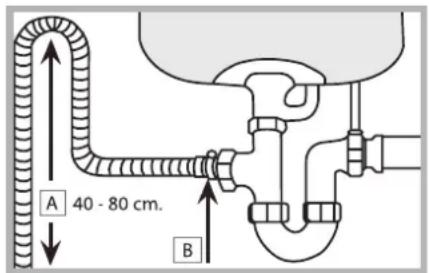
Pepw HIX NiD'EDHaTN 3NHBHn WJNaHr Do cnfoHy MNKn, BUNaITb NactKOBy npo6ky (B).
3axnCT Bi 3aTOnnneHH
U6 yHEmoxJINBNTn 3aToPJIeHHN, NocydomnHy MaunHy:
- OchaueHo CnCTeMoIO, Jka nepepNBae NODaCy BODN pa3i npuyuHb P060Ti a6o BVtOKiB BCEpeDeHi MaunHH.
Ieaki moJIeI OcHaUeHi DoaTkoBm PnCtpoE M 6e3neKl New Acqua Stop*, kN 3ano6irae 3aToNHeHHo TAKOx Y BnnaKy po3pBy TpybNoaqi.

YBATA!HEBE3NEUHA HANPYA!
3a6b0pnoHcBcB Bip3aTn Tpy6y noaui BoDn, ockiKn deaKi II eIeMeHTN 3HaXoJrbc n Happyroio.
PiiiknloeHHa do eNeKtpnuHoi Mepeki
IepH HIX BCTaBHTN BUNKy B eNEKTPnHy po3eTKy, nepekoHaTecra, 0c:
- pO3ETka Ma€ 3a3eMJIeHHy BiINOBiIDHOCTI DO BCTaHOBJEHNX HOpM;
- po3eTka po3paxObaHa Ha MaKcImMaJIbHe HaBaHTaXeHHy y Mexkax noTyXHocTi npUaNy, 3a3HaueHe y Ta6nUci 3 xapaKTepeNtKam; (INB. po3dIOnnc nocydommHOi MaunHH);
- Hanpyra XINBLeHHH 3HaxOДntbC B Mekax 3HauYeH, Bka3aHxN y Ta6IuHi 3 xapaKTepnCTnKamn Ha noDiBnHx DBePurTaX;
p03eTka cymicha 3 wTeIcENbHOIO BUNKOIO npuIaHy. B IHwOMy BNnAky 3BepHtbcra Do yNOBHOBaXeHOro qaxiBuI i3 npoxAHm 3amIHNTu BNkY (DHB. DOnOMora), He BnKOpNCTOByte NoOBKyBaHi TpiHnKn.
A3 BCTaHOBHeHOI MaUNH Mac 3a6e3neUyBaTncb JeKnIO doUHypy XINBHeHHY eJNEKTpHooI po3eTKN.
A Ka6eJIb He NOBInHe MaTn 3TNHb a6o yTuNcKIB.
3aJnBaIoi 6e3neKn: noIKoJKeHm IHyp KINBHeHHMa3aMHTNC TlBkn Bnpo6HnKOM a60 NOrO BNacHO CnyX6oToTexHiHOI DonOMOrn. (INB,Onomora)
A Komnai 3Himac 3ce6e BiNobiDaIbHicTb y paia HeDToPMaHHBk3aAHx HOpM.
CtpiKa npToN yTBOpEHnKoHdEhCaTy*
Iicra B6yBaHn NocyDmNHOI MaunHn BiKpnTe DBePcTa Ta npKpinitb NiD DepeB'HOIO NOBepxHeIO npO3Opy KneKy cTpiKy 3 MeTOO 3axNCTy BiKDohcAty.

- Precautions and advice, 3
- Installation and Assistance, 4-5
- Description of the appliance, 6
- Loading the racks, 7-8
- Start-up and use, 9
- Wash cycles, 10
- Rinse aid and refined salt, 11
- Care and maintenance, 12
- Product fiche
- General safety
- Disposal
- Saving energy and respecting the environment
- Saving water and energy
- Phosphate-free and chlorine-free detergents containing enzymes
- Installation and Assistance
- EN
- Positioning and levelling
- Connecting the water and electricity supplies
- Connecting the water inlet hose
- Connecting the water outlet hose
- Anti-flooding protection
- WARNING: HAZARDOUS VOLTAGE!
- Electrical connection
- Anti-condensation strip*
- Advice regarding the first wash cycle
- Assistance
- Before contacting Assistance:
- Please have the following information to hand:
- Description of the appliance
- Tips
- preventive rinsing is needed under running water.
- Lower rack
- Cutlery basket
- Upper rack
- Tip-up compartments with adjustable position
- Cutlery tray*
- Adjusting the height of the upper rack
- The height of the upper rack should be adjusted WHEN THE RACK IS EMPTY.
- Unsuitable crockery
- Damage to glass and crockery
- Starting the dishwasher
- Changing a wash cycle in progress
- Adding extra crockery
- Accidental interruptions
- Measuring out the detergent
- Instructions on wash-cycle selection and detergent dosage
- Notes:
- Measuring out the rinse aid
- NEVER pour the rinse aid directly into the appliance tub.
- Adjusting the amount of rinse aid
- Press the ON/OFF button to save the setting.
- Setting the water hardness
- Measuring out the refined salt
- It is advisable to perform this procedure every time you add salt to the dispenser.
- Care and maintenance
- Shutting off the water and electricity supplies
- Cleaning the dishwasher
- Preventing unpleasant odours
- Cleaning the sprayer arms
- Cleaning the water inlet filter*
- Cleaning the filters
- Leaving the machine unused for extended periods
- FR
- Sommaire
- HencnpaBHOCTn MeToDbI INx yctpaHEnn,66
- 06uue Tpe6oBaHnK 6e3onacHOCTn
- YTNIN3aun
- 3Hepro6epeXeHne n oxpHa oKpykaOuoei cpebl
- 3KOHOMNBAObln3JIeKtpo3Heprnn
- MoIoune cpeCTBa, He coedepekaune foocpaTOB, xlopa n coedepekaune fepMeHTbI
- PacnoJoxeHne HnBJInpOBka
- BodonpoBoHoe n 3JeKtpnueckoe noDcoeHHHeH
- NoCoeHHeHne WnHaRa nOaH BObbl
- IopcoeHHeHne cInBHoro WJahra
- 3aunTa npOTNB 3aTOnJIeHn
- BHIMAHNE: ONACHOE HANPRXHEHNE!
- 3NeKtpnueckoe noDcoeHHeHne
- PnEhka 3aunTbI OT KOHDeHcata\*
- PpeynpeKdEHH no nepBOMy nCnoJb3OBAHnMoAunHbI
- Bb6op cTepeH XeCTKoCTN BObl
- HencnpabBHOCTN MeToDbI INx yCTpaHeHnA
- YXoD3aTexHnKoI
- ABTOPIN3OBAHHbIe cepBnChbIe cHTpbI
- BcTaHOBJIeHHa,70-71
- Onnc npnilaNy, 72
- DFG 15B1
- Ja3aBaHTaxKHTn Kopo6n, 73-74
- PiD'EDHaHHn Tpy6n noDaqi BODn
- Iid'edhaHHaHaHy dna 3nBy BODn
- 3axnCT Bi 3aTOnnneHH
- YBATA!HEBE3NEUHA HANPYA!
- PiiiknloeHHa do eNeKtpnuHoi Mepeki
- CtpiKa npToN yTBOpEHnKoHdEhCaTy*
Brand : INDESIT
Model : DFG 15B1 A EU
Category : Dishwasher