
BO4556 - Sander MAKITA - Free user manual and instructions
Find the device manual for free BO4556 MAKITA in PDF.



User questions about BO4556 MAKITA
0 question about this device. Answer the ones you know or ask your own.
Ask a new question about this device
Download the instructions for your Sander in PDF format for free! Find your manual BO4556 - MAKITA and take your electronic device back in hand. On this page are published all the documents necessary for the use of your device. BO4556 by MAKITA.
USER MANUAL BO4556 MAKITA
GB Finishing Sander Instruction manual
natural_image
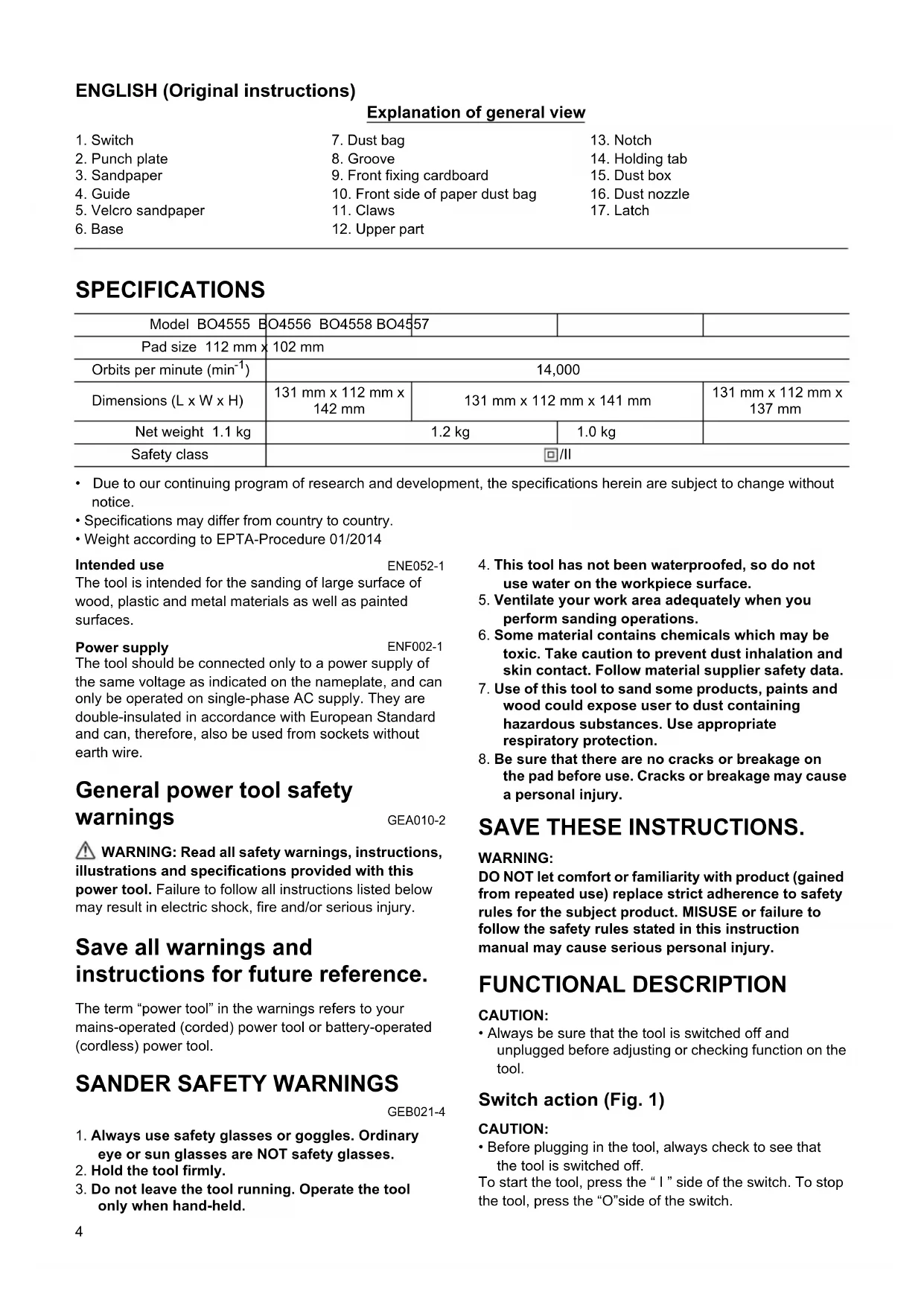
Line drawing of a manual pusher with a rectangular base labeled 'Tinakita' (no additional text or symbols)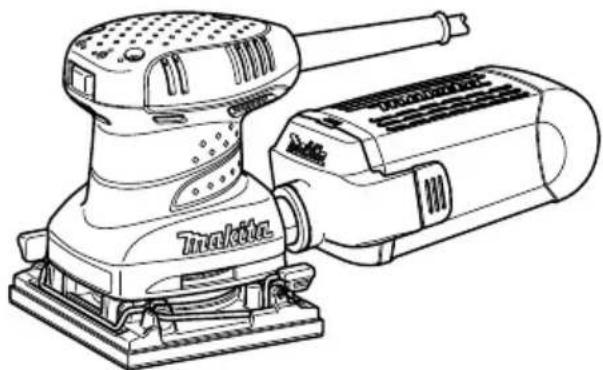
natural_image
Line drawing of a Makitz electric shaver with motor and base (no text or symbols)
text_image
11
natural_image
Line drawing of a manual power tool with directional arrows indicating motion (no text or symbols)2
natural_image
Line drawing of a manual power tool with lever and base (no text or symbols)3
text_image
2 3 44

text_image
Technical diagram showing hands operating a mechanical device with labeled parts 5 and 65
natural_image
Line drawing of hands operating a manual power tool with a labeled component (no text or symbols beyond labels)6
text_image
Diagram showing a device being held by hands, labeled with parts 8, 9, and 10.7
text_image
11 128
text_image
13 49
natural_image
Line drawing of a mechanical component with no visible text or symbols10
text_image
Thakita 1411 12
text_image
15 Tniakitta. 16[Non-Text]
text_image
17 1613 14
natural_image
Line drawing of hands holding a device with a strap (no text or symbols)[Non-Text]
natural_image
Line drawing of a hand using a power tool on a wooden surface (no text or symbols)15
ENGLISH (Original instructions)
Explanation of general view
| 1. Switch | 7. Dust bag | 13. Notch |
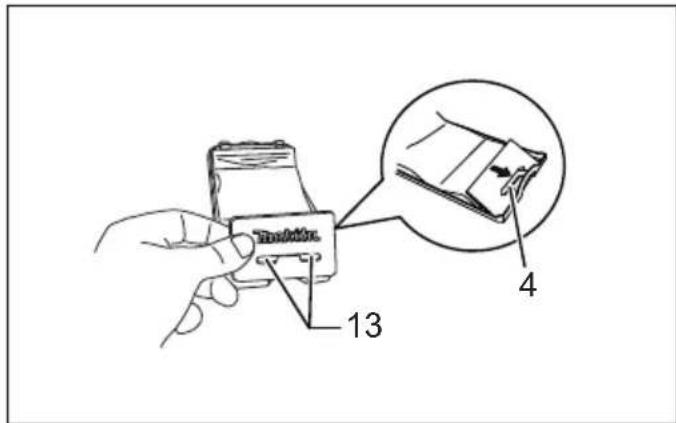
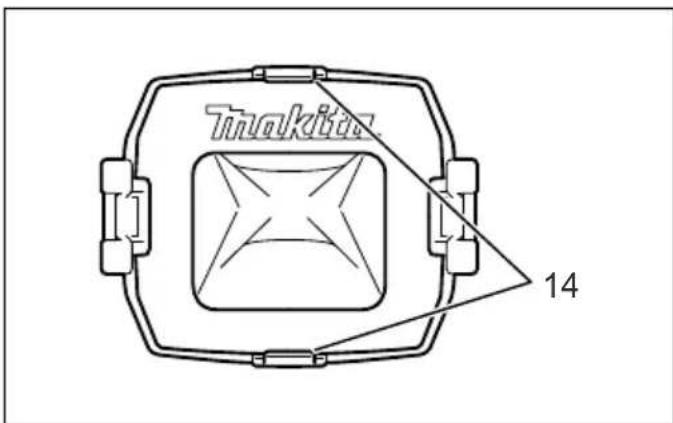
| 2. Punch plate | 8. Groove | 14. Holding tab |
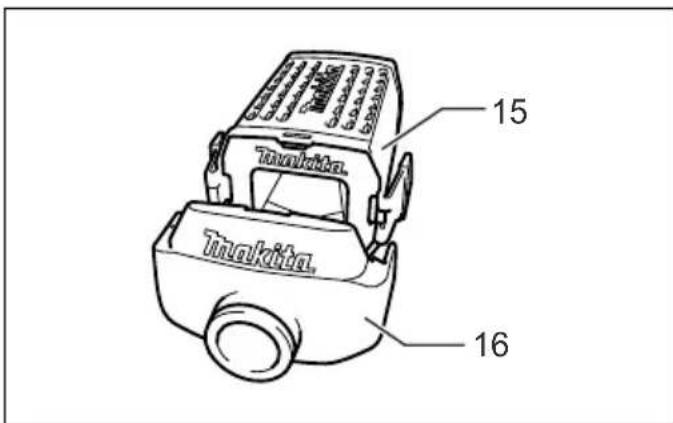
| 3. Sandpaper | 9. Front fixing cardboard | 15. Dust box |
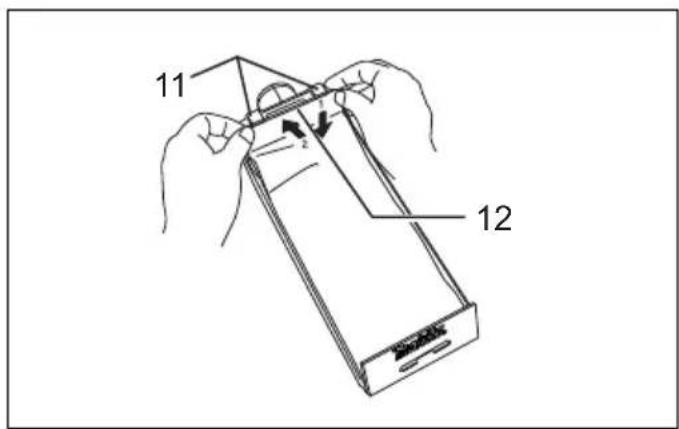
| 4. Guide | 10. Front side of paper dust bag | 16. Dust nozzle |
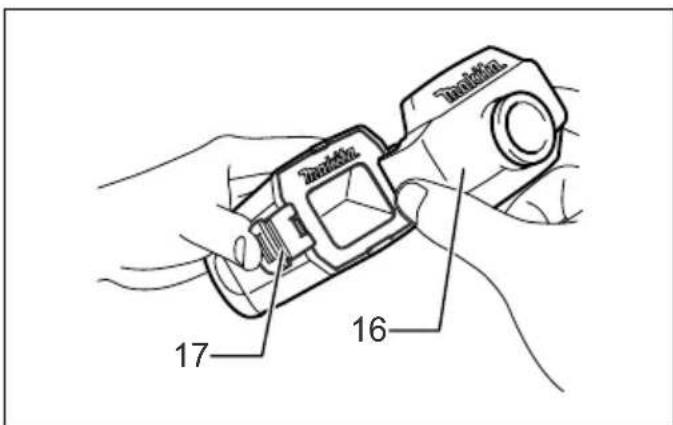
| 5. Velcro sandpaper | 11. Claws | 17. Latch |
| 6. Base | 12. Upper part |
SPECIFICATIONS
| Model BO4555 BO4556 BO4558 BO4557 | ||||
| Pad size 112 mm x 102 mm | ||||
| Orbits per minute (min ^-1 ) | 14,000 | |||
| Dimensions (L x W x H) | 131 mm x 112 mm x 142 mm | 131 mm x 112 mm x 141 mm | 131 mm x 112 mm x 137 mm | |
| Net weight 1.1 kg | 1.2 kg | 1.0 kg | ||
| Safety class | ☐/II | |||
- Due to our continuing program of research and development, the specifications herein are subject to change without notice.
- Specifications may differ from country to country.
• Weight according to EPTA-Procedure 01/2014
Intended use
ENE052-1
The tool is intended for the sanding of large surface of wood, plastic and metal materials as well as painted surfaces.
Power supply
ENF002-1
The tool should be connected only to a power supply of the same voltage as indicated on the nameplate, and can only be operated on single-phase AC supply. They are double-insulated in accordance with European Standard and can, therefore, also be used from sockets without earth wire.
General power tool safety warnings
GEA010-2

WARNING: Read all safety warnings, instructions, illustrations and specifications provided with this power tool. Failure to follow all instructions listed below may result in electric shock, fire and/or serious injury.
Save all warnings and instructions for future reference.
The term “power tool” in the warnings refers to your mains-operated (corded) power tool or battery-operated (cordless) power tool.
SANDER SAFETY WARNINGS
GEB021-4
- Always use safety glasses or goggles. Ordinary eye or sun glasses are NOT safety glasses.
- Hold the tool firmly.
-
Do not leave the tool running. Operate the tool only when hand-held.
-
This tool has not been waterproofed, so do not use water on the workpiece surface.
- Ventilate your work area adequately when you perform sanding operations.
- Some material contains chemicals which may be toxic. Take caution to prevent dust inhalation and skin contact. Follow material supplier safety data.
- Use of this tool to sand some products, paints and wood could expose user to dust containing hazardous substances. Use appropriate respiratory protection.
- Be sure that there are no cracks or breakage on the pad before use. Cracks or breakage may cause a personal injury.
SAVE THESE INSTRUCTIONS.
WARNING:
DO NOT let comfort or familiarity with product (gained from repeated use) replace strict adherence to safety rules for the subject product. MISUSE or failure to follow the safety rules stated in this instruction manual may cause serious personal injury.
FUNCTIONAL DESCRIPTION
CAUTION:
• Always be sure that the tool is switched off and unplugged before adjusting or checking function on the tool.
Switch action (Fig. 1)
CAUTION:
- Before plugging in the tool, always check to see that the tool is switched off. To start the tool, press the "I" side of the switch. To stop the tool, press the "O" side of the switch.
ASSEMBLY
CAUTION:
• Always be sure that the tool is switched off and unplugged before carrying out any work on the tool.
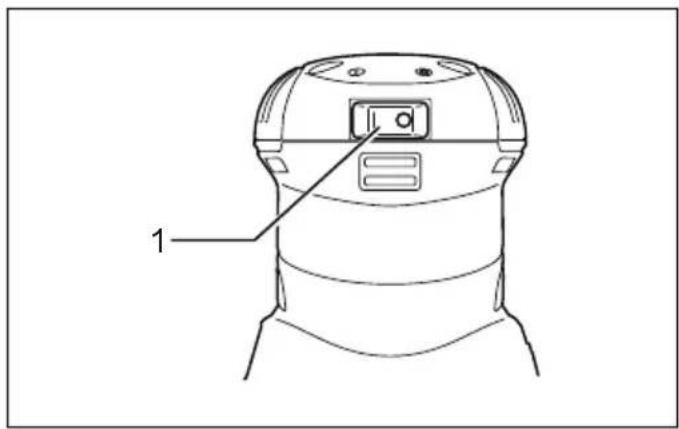
Installing or removing abrasive paper (Fig. 2)
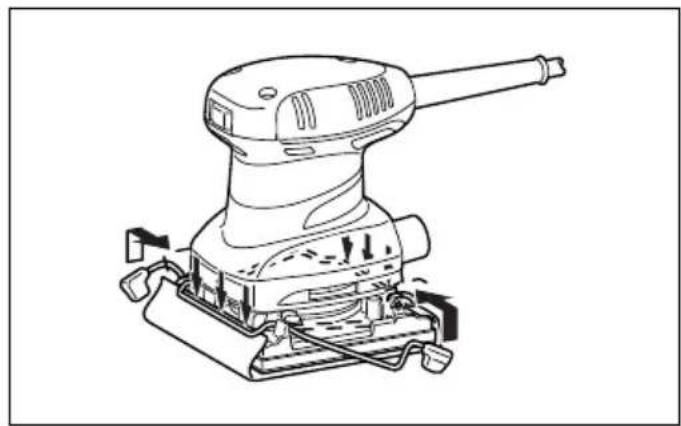
Open the paper clamp by raising on the lever to release from the locking port and then Insert the paper end into the clamping part, aligning the paper edges even and parallel with the sides of the base. (Bending the paper beforehand makes attachment easier). Once the paper is in place, return the lever to its original position. (Fig. 3) Repeat the same process for the other end of the base, maintaining the proper paper tension.
After inserting the paper, make sure the clamping part hold it securely. Otherwise the paper will be loose and subject to slippage, resulting in uneven sanding operation. (Fig. 4)
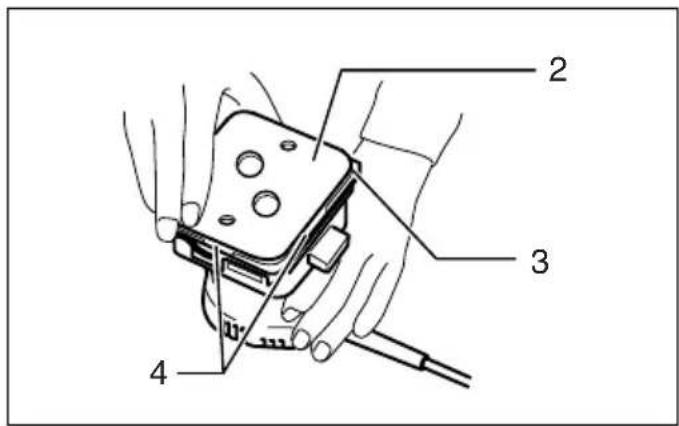
When using the dust bag, make holes in the abrasive paper using the punch plate as follows:
- Set the tool upside down.
- Place the punch plate over the abrasive paper so that the bent sides of the punch plate are flush with the paper edges.
- Press the punch plate to make holes in the abrasive paper.
CAUTION:
- Be sure to remove the punch plate before operating the tool.
Model BO4555 only
NOTE:
Use Makita hook-and-loop sandpaper with this sander. (Fig. 5)
- Set the tool upside down so that the pad is on top.
-
Position the sandpaper to fit the shape of the base. Be sure to align the holes on the sandpaper with the holes on the pad (the dust will be sucked into these holes; it is therefore important to leave them open).
-
Press the paper firmly over the pad.
To remove the sandpaper:
- Set the tool upside down so that the sandpaper is on top.
- Grasping one corner of the sandpaper, peel it from the pad.
NOTE:
- If the sandpaper is in good condition, save it for further use.
Dust bag (accessory) (Fig. 6)
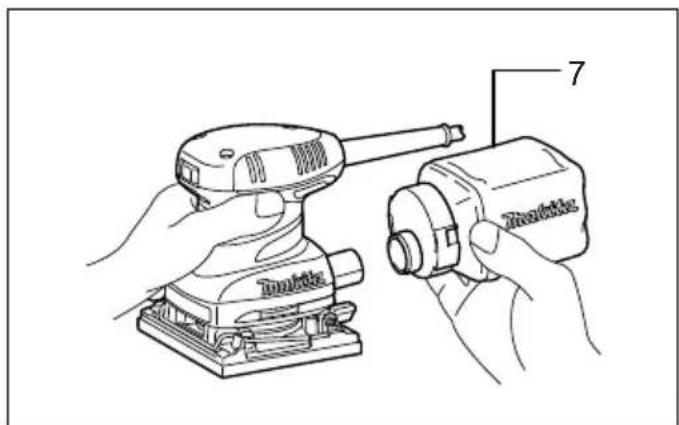
The use of the dust bag makes sanding operations clean and dust collection easy. To attach the dust bag, fit the bag's entry port onto the dust spout on the tool. Make sure that the hole in the bag's entry port is just over the pimple-like protrusion on the dust spout. For the best results, empty the dust bag when it becomes approximately half full, tapping it lightly to remove as much dust as possible.
Installing paper dust bag (accessory) (Fig. 7)
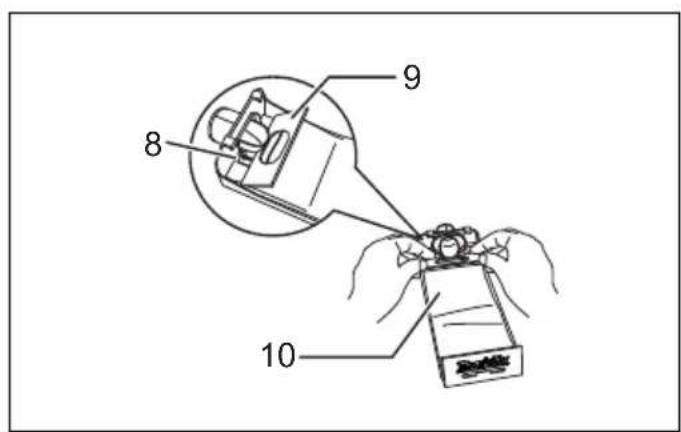
Place the paper dust bag on the paper dust bag holder with its front side upward. Insert the front fixing cardboard of the paper dust bag into the groove of the paper dust bag holder. (Fig. 8)
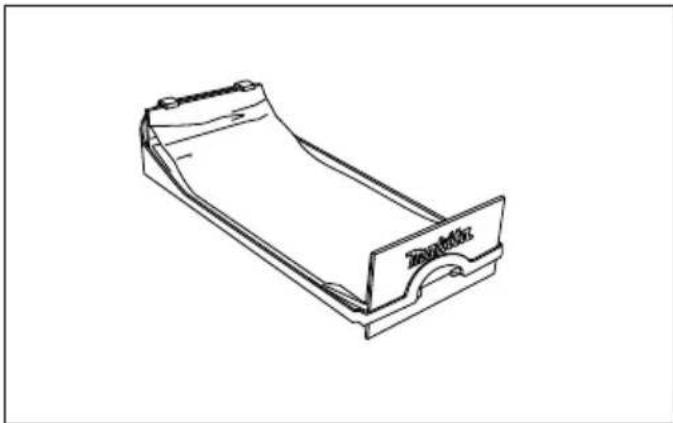
Then press the upper part of the front fixing cardboard in arrow direction to hook it onto the claws. (Fig. 9 & 10) Insert the notch of the paper dust bag into the guide of the paper dust bag holder. Then install the paper dust bag holder set on the tool.
Installing paper filter bag (Fig. 11)
Make sure that the logo on the cardboard lip and the logo on the dust box are on the same side, then install the paper filter bag by fitting the cardboard lip in the groove of each holding tab. (Fig. 12)
Make sure that the logo on the cardboard lip and the logo on the dust nozzle are on the same side, then install the dust nozzle on the dust box.
Removing dust box and paper filter bag. (Fig. 13) Remove the dust nozzle by pushing the two latches.
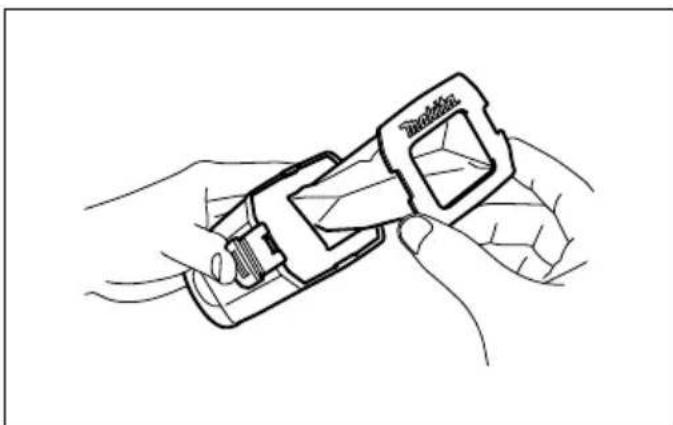
(Fig. 14)
Remove the paper filter bag first by pinching the logo side of its cardboard lip, then by pulling the cardboard lip downwards to move it out of the holding tab of the dust box.
OPERATION
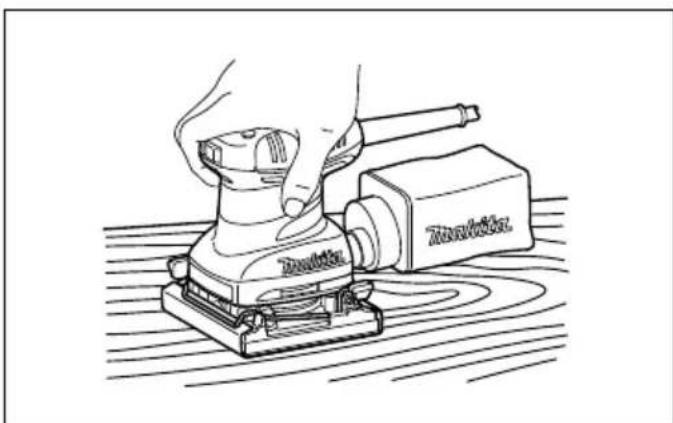
Sanding operation (Fig. 15)
CAUTION:
- Never run the tool without the abrasive paper. You may seriously damage the pad.
- Never force the tool. Excessive pressure may decrease the sanding efficiency, damage the abrasive paper and/or shorten tool life.
Hold the tool firmly. Turn the tool on and wait until it attains full speed. Then gently place the tool on the workpiece surface. A finishing sander is generally used to remove only a small amount of material at a time. Since the quality of the surface is more important than the amount of stock removed, do not bear down on the tool. Keep the base flush with the workpiece at all times.
MAINTENANCE
CAUTION:
• Always be sure that the tool is switched off and unplugged before attempting to perform inspection or maintenance.
- Never use gasoline, benzine, thinner, alcohol or the like. Discoloration, deformation or cracks may result. To maintain product SAFETY and RELIABILITY, repairs, carbon brush inspection and replacement, any other maintenance or adjustment should be performed by Makita Authorized Service Centers, always using Makita replacement parts.
OPTIONAL ACCESSORIES
CAUTION:
• These accessories or attachments are recommended for use with your Makita tool specified in this manual. The use of any other accessories or attachments might present a risk of injury to persons. Only use accessory or attachment for its stated purpose.
If you need any assistance for more details regarding these accessories, ask your local Makita Service Center.
- Abrasive paper (without pre-punched holes)
- Paper dust bag
• Paper dust bag holder
- Punch plate
- Dust bag
- Dust box
- Paper filter bag
NOTE:
- Some items in the list may be included in the tool package as standard accessories. They may differ from country to country.
Noise
The typical A-weighted noise level determined according to EN62841-2-4:
Model BO4555
Sound pressure level ( L_pA ): 83 dB (A)
Sound power level (LWA): 91 dB (A)
Uncertainty (K): 3 dB (A)
Model BO4556
Sound pressure level ( L_pA ): 85 dB (A)
Sound power level (LWA): 93 dB (A)
Uncertainty (K): 3 dB (A)
Model BO4557
Sound pressure level ( L_pA ): 79 dB (A)
Uncertainty (K): 3 dB (A)
The noise level under working may exceed 80 dB (A).
Model BO4558
Sound pressure level ( L_pA ): 82 dB (A)
Sound power level (LWA): 90 dB (A)
Uncertainty (K): 3 dB (A)
ENG907-1
- The declared noise emission value(s) has been measured in accordance with a standard test method and may be used for comparing one tool with another.
- The declared noise emission value(s) may also be used in a preliminary assessment of exposure.
WARNING:
- Wear ear protection.
- The noise emission during actual use of the power tool can differ from the declared value(s) depending on the ways in which the tool is used especially what kind of workpiece is processed.
- Be sure to identify safety measures to protect the operator that are based on an estimation of exposure in the actual conditions of use (taking account of all parts of the operating cycle such as the times when the tool is switched off and when it is running idle in addition to the trigger time).
Vibration
The vibration total value (tri-axial vector sum) determined according to EN62841-2-4:
Model BO4555
Work mode: sanding metal plate
Vibration emission ( a_h ): 2.5 m/s ^2 or less
Uncertainty (K): 1.5 m/s ^4
Model BO4556
Work mode: sanding metal plate
Vibration emission ( a_h ): 3.0 m/s ^2
Uncertainty (K): 1.5 m/s ^4
Model BO4557, BO4558
Work mode: sanding metal plate
Vibration emission ( a_h ): 3.5 m/s ^2
Uncertainty (K): 1.5 m/s ^4
ENG901-2
- The declared vibration total value(s) has been measured in accordance with a standard test method and may be used for comparing one tool with another.
- The declared vibration total value(s) may also be used in a preliminary assessment of exposure.
WARNING:
- The vibration emission during actual use of the power tool can differ from the declared value(s) depending on the ways in which the tool is used especially what kind of workpiece is processed.
- Be sure to identify safety measures to protect the operator that are based on an estimation of exposure in the actual conditions of use (taking account of all parts of the operating cycle such as the times when the tool is switched off and when it is running idle in addition to the trigger time).
Declarations of Conformity
For European countries only
The Declarations of conformity are included in Annex A to this instruction manual.