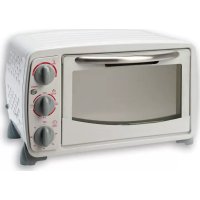
B719 - Oven Bimar - Free user manual and instructions
Find the device manual for free B719 Bimar in PDF.


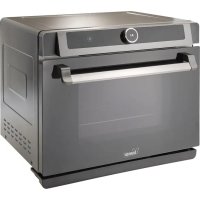
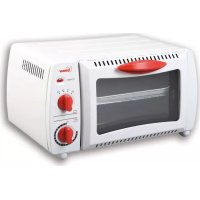
| Brand | Bimar |
| Model | B719 |
| Appliance Type | Table oven |
| Power Supply | 220-240 V ~ 50/60 Hz |
| Power | 1300 W (estimated) |
| Capacity | 20 liters (estimated) |
| Thermostat | Adjustable from 100°C to 250°C (estimated) |
| Timer | Mechanical up to 60 minutes with audible signal |
| Function Selector | Off, top heating element, bottom heating element, both |
| Heating Elements | Top and bottom |
| Included Accessories | Chrome grill, enameled roasting pan, removal handle, crumb tray |
| Door | Tempered glass |
| Interior Light | Yes |
| Cooking Functions | Bake, reheat, grill, defrost, dehydrate |
| First Use | Run empty at maximum for 20 minutes |
| Cleaning | Soft damp cloth, no abrasive products |
| Maintenance | Unplug and let cool before cleaning |
| Safety | Automatic shut-off via timer, overheat protection |
| Reparability | Replacement of power cord by qualified professional |
| Weight | Approximately 6 kg (estimated) |
Frequently Asked Questions - B719 Bimar
User questions about B719 Bimar
0 question about this device. Answer the ones you know or ask your own.
Ask a new question about this device
Download the instructions for your Oven in PDF format for free! Find your manual B719 - Bimar and take your electronic device back in hand. On this page are published all the documents necessary for the use of your device. B719 by Bimar.
USER MANUAL B719 Bimar
- Tong to remove rack and plate
- Timer
- Selector
- Thermostat
5.Pilot light - Door handle
- Rack
- Baking plate
F
Please read these instructions carefully before using the appliance, and instruct other persons using it, too, when necessary. Keep booklet handy for further use.
WARNING
-
This appliance is destined only to household use, to cook, warm, toast, defrost and dehydrate foods as indicated in this booklet.
-
Do not use outdoors.
-
Do not use food containers that could become deformed or catch fire (for example: plastic material, paper or similar).
-
Never put paper, cardboard or plastic in the appliance and do not place anything on top (utensils, racks, objects, etc...).
-
Handle the door of your oven with care: any hard shocks or excessive thermal constraints may cause the glass to break. The door is made of tempered glass to prevent any risk of glass being projected and consequently any danger for the user.
-
When you open the door to keep in mind the following:
- do not practice too much pressure with items too heavy or pulling the handle down.
- never put on the glass door open containers or heavy pans hot right out of the oven.
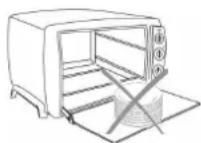
- Your oven is not designed to be built-in.
- When the appliance is operating, it becomes hot. Therefore only touch the plastic knobs and handle.
- Do not heat or use inflammable materials inside or close to the oven. The fumes could cause the danger of fire or explosions.
- Do not move the appliance when it is in function.
- This appliance is not intended for use by persons (including children) with reduced physical, sensory or mental capabilities, or lack of experience and knowledge, unless they have been given supervision or instruction concerning use of the appliance by a person responsible for their safety. Children should be supervised to ensure that they do not play with the appliance.
- The appliance must be kept out of children's reach.
- Attention: when using electric appliances, the basic safety precautions must always be observed to avoid risks of fire, electric shocks and physical injury.
- Unplug the appliance when not in use.
- Do not use the appliance as a source of heat.
- Do not touch the appliance when hands or feet are wet.
- Do not expose the appliance to the weather (sun, rain, etc.)
- Never move the appliance by pulling the cord.
- Do not pull on the power cord or the appliance to unplug the appliance from the electric socket.
- If the electric cord is damaged, it has to be replaced by the supplier or an authorized service center or a professionally qualified, to avoid any risks.

ATTENTION: do not cover the appliance when it is operating to avoid the risk of fires.
ATTENTION: This symbol show: Hot surface
ATTENTION:The temperature of the door or the outer surface may be high when the appliance is operating.
INSTALLATION
After removing the packing materials, check the integrity of the appliance; if you are unsure, do not use it and ask for qualified professional help. The packing materials (plastic bags, polystyrene foam, nails, etc.) must be kept out the reach of children because they are potential sources of danger; dispose of them according to current regulations, in dedicated containers for differentiated collection. Attention: any stickers or advertising material applied to the door must be removed before using the appliance. The manufacturer declines all responsibility in case this is not safe working practices will be respected.
- Before connecting the appliance, check that the voltage shown on the data plate matches that of your power supply and that the electric plug is grounded. In the event of incompatibility between the electric outlet and the plug of the appliance, have the outlet replaced with another more suitable type by professionally qualified personnel, who will make sure that the section of the wires of the outlet is appropriate for the absorbed power of the appliance. In general, the use of adapters or extension cords is not recommended; if their use is indispensable, they must conform to existing safety standards and their current capacity (amperes) must not be less than the maximum of the appliance.
- The power socket must be easy to reach so the plug can be removed quickly in case of emergency.
Each time before use, check that the appliance is in good condition and that the electric cord is not damaged: if in doubt, ask for professionally qualified help.
- Make sure that the cable is correctly positioned, that it is not touching hot elements or sharp edges, is not wound around the utensil, is not twisted up on itself or in the way, so the appliance cannot tip over.
- Place the appliance:
- far from other sources of heat (for example, other ovens, gas hobs, etc.), inflammable materials (wallpaper, etc.), explosive materials (spray cans) and materials that would become deformed when heated.
- on a flat and stable work top and not on delicate surfaces (painted furniture, tablecloths, etc.), in a position where it cannot be bumped, and at a suitable distance from the edge so that it cannot fall.
- far from containers of liquids, such as sinks, etc. Should it unexpectedly become wet or fall in a liquid, remove the plug immediately from the socket, leave the appliance to cool, dry carefully and make sure the electric parts are not wet; if in doubt, call qualified professional help.
The bread may burn, always check the oven during roasting or grilling. - If any part of the product should catch fire, do not attempt to extinguish with water. Smother flames with a damp cloth.
- Be careful not to obstruct the air vents. Obstruction of the grids could cause the appliance to overheat.
- Disconnect the appliance and do not open the door. To operate properly, the appliance must be sufficiently ventilated with free space of at least 35cm above, 10cm behind and 20cm at the sides.
- The appliance must not be positioned immediately under a socket.

- Do not use the appliance with a timer or a programmer or with a system that can switch on the appliance automatically, to avoid risk of fire, since a fire risk exists if the heater is covered or positioned incorrectly.
- In the case of a breakdown or fault, switch off the appliance and have it checked by a professionally qualified technician; repairs made by unqualified persons can be dangerous and render void the warranty.
OPERATION
The oven can be regulated by means of the following elements:
- Thermostat (pos.4). Regulates the temperature of the oven; turn the knob to the desired temperature: the heating element switches on, then off as soon as the temperature is reached.
Switch (pos.3). Selects the cooking mode; switches the upper and lower heating element on and off. Settings:

$$ = \text {O F F} $$
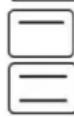
= upper heating element: heats the upper part of the oven in particular

= upper and lower heating element: heats uniformly
- Timer (pos.2) Regulates oven functions; turn the timer knob to the desired cooking time, after which the heating elements will switch off. The knob will turn gradually towards the "0" position, and when it reaches "0", a buzzer sounds.
The oven is provided also with the following accessories:
- Tong to remove rack and plate (1)
- shelf grid (7) that can be placed in one of the slots provided, removing the shelf grid by using the appropriate handle
- baking tray (8) that can be placed in one of the slots provided, removing the baking pan by using the appropriate handle
- enamel tray is properly attached underneath the lower heating element to prevent the surface under the oven from overheating.
When using for the first time
Before being used for cooking, the appliance should be switched on "empty" to eliminate the "smell of new" and any oils remaining from the production process. Insert the plug in the power socket, turn thermostat to "max", turn the timer knob to position "20", position the selector knob and leave the appliance on. When the cycle ends, remove the plug from the socket and wait until the appliance is cool before removing the accessories. These must be washed in hot water with normal dishwashing liquid, rinsed and dried before being returned to their position.
Using the oven
Generally speaking it is not necessary to preheat the oven, but for some foods (meat, pastries) it is advisable to preheat the oven as described above, making sure the door is closed properly. Put the shelf grids or/and enamel baking tray at the desired height in the slots in the oven.
- Place the enamel tray at the bottom of the oven.
- Put the food (in the plate or baking tray, etc.) and shut the door.
-
Follow these instructions:
-
Insert the plug in the power socket
- Turn the thermostat knob clockwise to the temperature required
- Turn the selector switch to desiderate position

-
Turn the timer knob to the time required: the pilot light and inside lamp come on and the oven starts to heat: if cooking time is not sufficient, restart the timer for the time still required.
-
When cooking is completed, turn the selector switch to “OFF”; the thermostat to “0” and remove the plug from the power socket.
Never leave the appliance connected to the socket if it is not in use, especially for long periods.
CLEANING AND MAINTENANCE
Attention: before cleaning the appliance, switch it off, remove the plug from the outlet and wait for it to cool.
- To clean the outer surface always use a soft cloth slightly damp with water only. For oven cleaning (shelf grids and enamelled baking tray), use a slightly moist soft cloth; do not use metal pads or abrasive products. Do not wash it under running water, submerge it in water, or place it in a dishwasher. Before using the appliance, make sure that it is perfectly dry, especially the contacts.
- Use a soft, slightly damp cloth to clean the body; do not use metal scouring pads or abrasive products.
- To replace the electrical cord a special tool is required: contact an authorised assistance centre for eventual repairs.
- If you decide to stop using the utensil, we recommend making it inoperative by cutting off the power supply cord (after first making sure that the plug is removed from the mains socket) and render harmless any parts possibly used as toys.
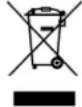
Do not dispose of non-biodegradable products in the environment but dispose of them in accordance with current law. At the end of its working life, the product must not be disposed of as urban waste. It must be taken to a special local authorised differentiated waste collection centre or to a dealer providing this service. The separate disposal of a household appliance avoids possible negative consequences for the environment and health deriving from inappropriate disposal and enables the constituent materials to be recovered, thus obtaining significant savings in energy and resources. As a reminder of the need to dispose of household appliances separately, the product is marked with a crossed-out wheeled dustbin. Bear in mind that: structure, thermostat and electric resistances are of metal. -Handles, knobs and front panel are of plastic. -Timer and selector dial are of plastic, with metal parts. -Oven door is of glass and electric wires of copper covered with rubber. -Electric motor is of iron, copper and rubber. -Shelf grids, enamel baking tray and crumb tray are of metal.
FR MODE D'EMPLOI

Brand : Bimar
Model : B719
Category : Oven