
OW250110 - Bread maker MOULINEX - Free user manual and instructions
Find the device manual for free OW250110 MOULINEX in PDF.
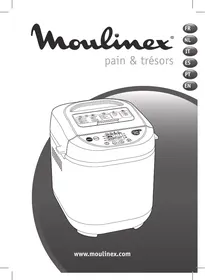



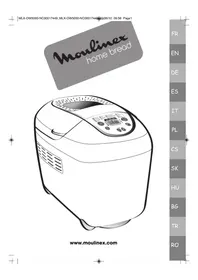
| Product type | Bread machine |
| Brand | Moulinex |
| Model | OW250110 |
| Number of programs | 20 (French bread, whole wheat, gluten-free, yogurt, jam, etc.) |
| Bread capacity | 500 g, 750 g or 1000 g (selectable) |
| Crust color | Light, Medium, Dark (adjustable) |
| Delayed timer | Up to 15 hours |
| Additional ingredient dispenser | Yes (for nuts, seeds, raisins, etc.) |
| Yeast dispenser | Yes (for instant dry yeast only) |
| Viewing window | Yes |
| Bread pan | With handle, non-stick |
| Kneading paddle | Removable, with removal hook |
| Keep warm function | 1 hour after baking |
| Special programs | Gluten-free, whole wheat, salt-free, rapid, rye, French, sweet, yeast dough, pasta, cake, bake only, porridge, grains, jam, yogurt, drinking yogurt, fresh cheese |
| Power supply | Mains, earthed plug (230 V, 50 Hz) |
| Maintenance and cleaning | Wash with warm soapy water, damp sponge; do not immerse the body; not dishwasher safe |
| Safety | Automatic stop, overheat protection, hot surface, child monitoring |
| Spare parts | Use only original Moulinex accessories |
| Repairability | Certified service center only |
Frequently Asked Questions - OW250110 MOULINEX
User questions about OW250110 MOULINEX
0 question about this device. Answer the ones you know or ask your own.
Ask a new question about this device
Download the instructions for your Bread maker in PDF format for free! Find your manual OW250110 - MOULINEX and take your electronic device back in hand. On this page are published all the documents necessary for the use of your device. OW250110 by MOULINEX.
USER MANUAL OW250110 MOULINEX
IMPORTANT SAFEGUARDS
- This appliance is not intended to be operated by means of an external timer or separate remote-control system.
- This appliance is not intended for use by persons (including children) with reduced physical, sensory or mental capabilities, or lack of experience and knowledge, unless they have been given supervision or instruction concerning use of the appliance by an adult responsible for their safety. Children should be supervised to ensure that they do not play with the appliance.
- This appliance is intended for domestic household use only. It is not intended to be used in the following applications, and the guarantee will not apply for:
– staff kitchen areas in shops, offices and other working environments; - farm houses; – by clients in hotels, motels and other residential type environments; - bed and breakfast type environments.
- If the power supply cord is damaged, it must be replaced by the manufacturer or its service agent
or a similarly qualified person in order to avoid a hazard.
- This appliance can be used by children aged from 8 years and above and persons with reduced physical, sensory or mental capabilities or lack of experience and knowledge if they have been given supervision or instruction concerning use of the appliance in a safe way and understand the hazards involved. Children shall not play with the appliance. Cleaning and user maintenance shall not be made by children unless they are older than 8 and supervised.
Keep the appliance and its cord out of reach of children less than 8 years.
- This appliance is designed for indoor household use only and at an altitude below 4000m.
- Caution: risk of injury due to improper use of the appliance.
- Caution: the surface of heating element is subject to residual heat after use.
- The appliance must not be immersed in water or any other liquid.
- Do not exceed the quantities indicated in the recipes.
For 1 KG bread machines:
Do not exceed a total of 1000 g of dough.
Do not exceed a total of 620 g of flour and 10 g of yeast.
- Use a cloth or a wet sponge to clean the parts in contact with food.
- The temperature of the accessible surfaces may be high when the appliance is in operation. Do not touch the hot surfaces of the appliance.
- Carefully read the instructions before using your appliance for the first time: the manufacturer does not accept responsibility for use that does not comply with the instructions.
- For your safety, this product conforms to all applicable standards and regulations (Low Voltage Directive, Electromagnetic Compatibility, Food Compliant Materials, Environment, ...).
- Use the appliance on a stable work surface away from water splashes and under no circumstances in a cubby-hole in a built-in kitchen.
- Make sure that the power it uses corresponds to your electrical supply system. Any error in connection will cancel the guarantee.
- It is compulsory to connect your appliance to a socket with an earth. Failure to respect this requirement can cause electric shock and possibly lead to serious injury. It is essential for your safety for the earth connection to correspond to the standards for electrical installation applicable in your country. If your installation does not have an outlet connected to earth, it is essential that before making any connection, you have a certified organisation intervene to bring your electrical installation into conformance.
- Unplug the appliance when you have finished using it and when you want to clean it.
- Do not use the appliance if:
– the supply cord is defective or damaged,
- the appliance has fallen to the floor and shows visible signs of damage or does not function correctly.
In either case, the appliance must be sent to the nearest approved service centre to eliminate any risk. See the guarantee documents.
- All interventions other than cleaning and everyday maintenance by the customer must be performed by an authorised service centre.
- Do not immerse the appliance, power cord or plug in water or any other liquid.
- Do not leave the power cord hanging within reach of children.
- The power cord must never be close to or in contact with the hot parts of your appliance, near a source of heat or over a sharp corner.
- Do not move the appliance when in use.
- Do not touch the viewing window during and just after operation. The window can reach a high temperature.
- Do not pull on the supply cord to unplug the appliance.
- Only use an extension cord that is in good condition, has an earthed socket and is suitably rated.
- Do not place the appliance on other appliances.
- Do not use the appliance as a source of heating.
- Do not use the device to cook any preparations other than those indicated in the directions for use.
- Do not place paper, card or plastic in the appliance and place nothing on it.
- Should any part of the appliance catch fire, do not attempt to extinguish it with water. Unplug the appliance. Smother flames with a damp cloth.
- For your safety, only use accessories and spare parts designed for your appliance.
- At the end of the programme, always use oven gloves to handle the pan or hot parts of the appliance. The appliance gets very hot during use.
- Never obstruct the air vents.
- Be very careful, steam can be released when you open the lid at the end of or during the programme.

Let's help to protect the environment!
① Your appliance contains many materials that can be reused or recycled. Take it to a collection point so it can be processed.
Note: These instructions are not suitable for use in the UK as the ingredients and timings may differ for UK use and therefore the performance of the breadmaker may vary and be disappointing for the UK consumer.
![graph TD A["start stop"] --> B["File Icon"] A --> C["Image Icon"] A --> D["Document Icon"] A --> E["Arrow to Start Stop"] style A fill:#f9f,stroke:#333 style B fill:#ccf,stroke:#333 style C fill:#cfc,stroke:#333 style D fill:#fcc,stroke:#333 style E fill:#cff,stroke:#333](/content/2024/12/294963/images/049e1c1691a84f9408192bea1c151f850de027bb0ee743e0d5958b403eaacc01.jpg)
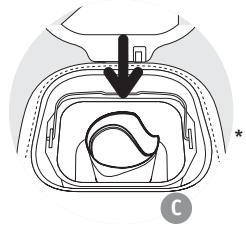
* for the yoghurt programme only
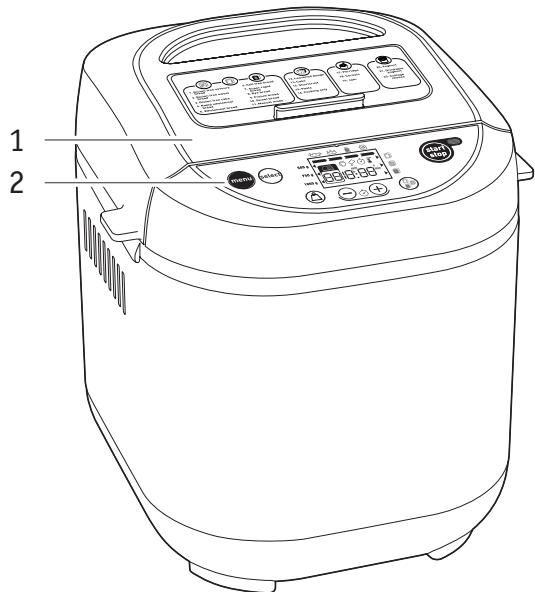
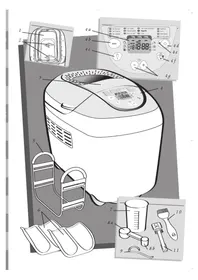
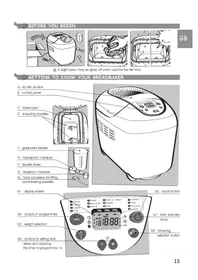
DESCRIPTION
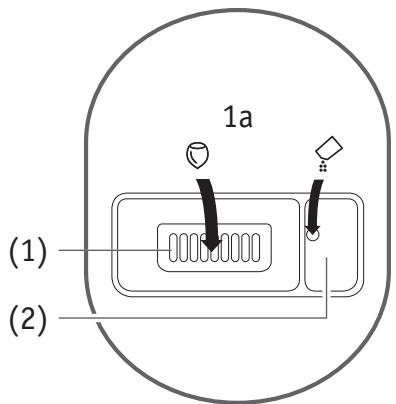
1 Lid
a Dispenser
Too liquid
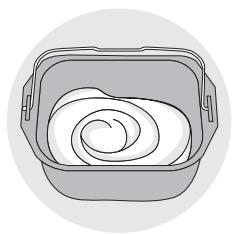
OK
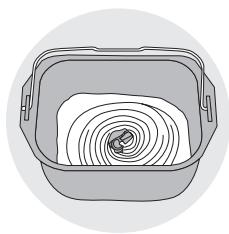
Too dry
TROUBLESHOOTING GUIDE TO IMPROVE YOUR RECIPES
Too liquid
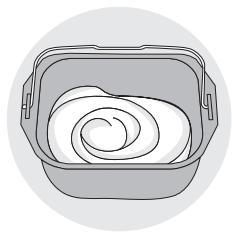
OK
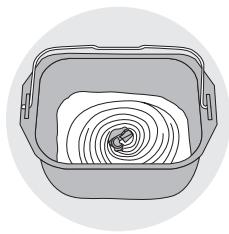
Too dry
TROUBLESHOOTING GUIDE TO MAKE YOUR RECIPES BETTER
Too liquid
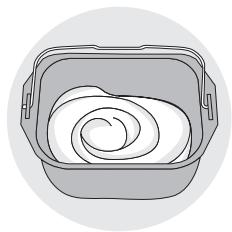
OK
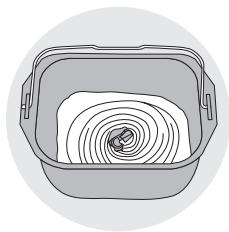
Too dry
Too liquid
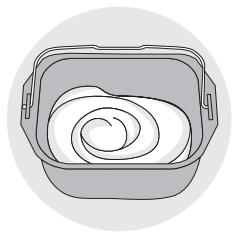
OK
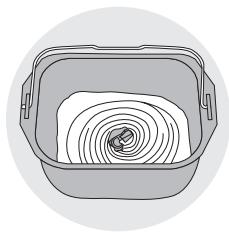
Too dry
Too liquid
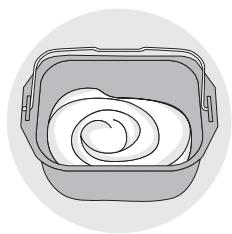
OK
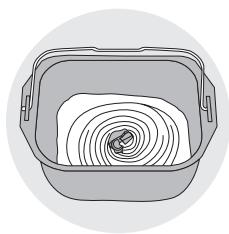
Too dry
TROUBLESHOOTING TO IMPROVE YOUR RECIPES
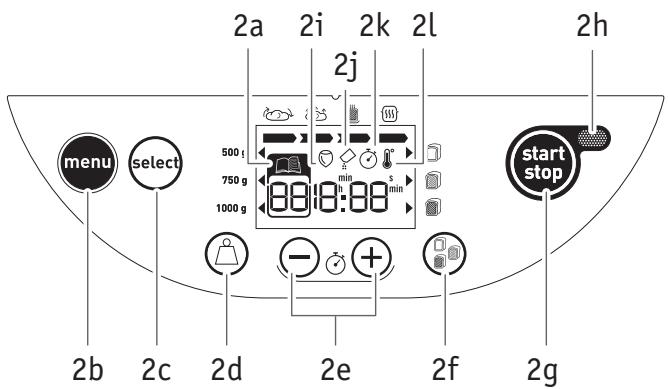
b Choice of programmes
c Settings button
d Weight selection
e Buttons for setting delayed start and adjusting the time
f Select crust colour
g Start/stop button
h Operating indicator light
i Extra ingredients activation
j Yeast dispenser activation
k Time setting
l Temperature setting
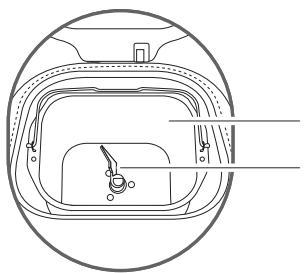
3 Bread pan
4 Kneading paddle
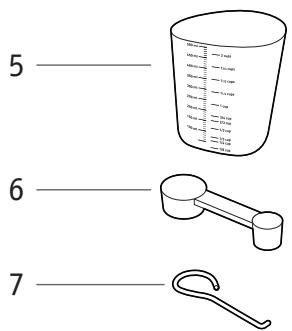
5 Graduated beaker
6 Teaspoon measure/ tablespoon measure
7 Hook accessory for lifting out kneading paddle
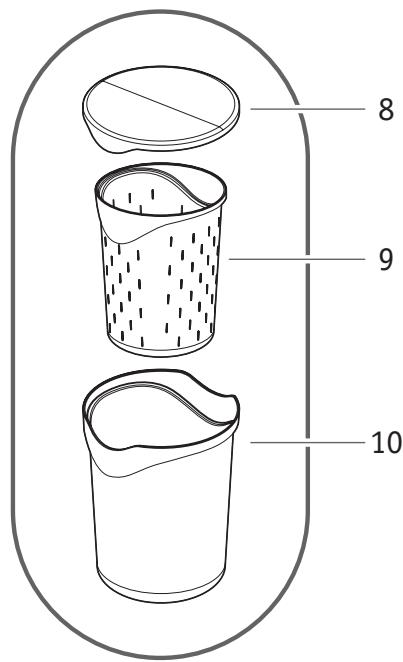
8 Storage lid
9 Cottage cheese pot
10 Yoghurt pot
The sound power level measured for this product is 66 dBa.
PRIOR TO FIRST USE
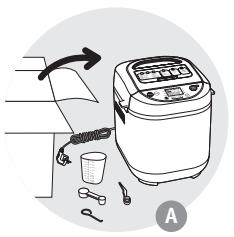
- Remove all packaging, stickers and various accessories both inside and outside the appliance - A.
- Clean all components and the appliance using a damp cloth.
QUICK START-UP
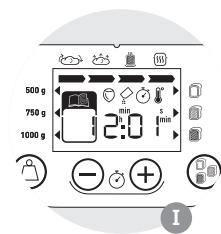
- Unwind the cord and plug it into an earthed electrical power outlet. After the audio signal plays, program 1 is displayed by default - I.
- A slight odour and smoke may be given off when the appliance is first used.
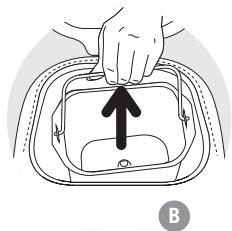
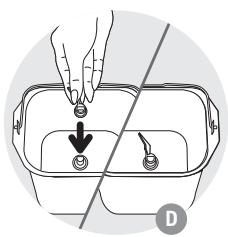
- Remove the bread pan by lifting the handle. Next install the kneading paddle - B - D.
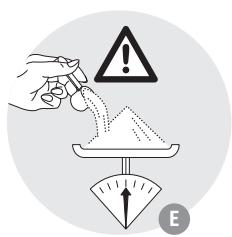
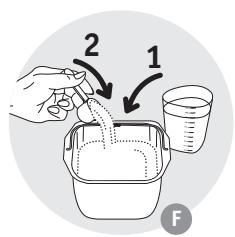
- Add the ingredients in the pan in the recommended order (see the paragraph PRACTICAL ADVICE). Add the yeast in the yeast dispenser (2) - H. Make sure that all ingredients are weighed accurately - E - F.
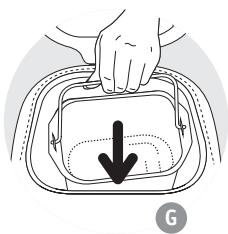
- Insert the bread pan - G.
- Close the lid.
- Select the desired program using the menu key.
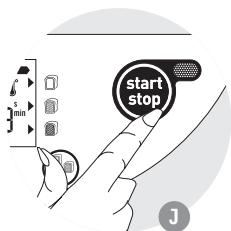
- Press the start/stop key. The 2 points of the timer flash. The operating indicator light lights up - J - K.
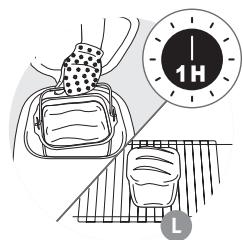
- At the end of the cooking cycle, press start/stop and unplug the bread machine. Remove the bread pan. Always use oven mitts, because both the pan's handle and the inside of the lid are hot. Turn out the bread while hot and place it on a rack for 1 hr. to allow it to cool - L.
To get acquainted with the operation of your bread machine, we suggest trying the FRENCH BREAD recipe as your first bread.
| FRENCH BREAD(program 9) | INGREDIENTS - tsp = teaspoon - tbsp = tablespoon | |
| CRUST COLOUR = MEDIUM | 1. WATER = 365 ml2. SALT = 2 tsp | 3. BREAD FLOUR (T55) = 620 g4. YEAST = 11/2 tsp |
| WEIGHT = 1000 g | ||
USING YOUR BREAD MACHINE
Selection of a program

Use the menu key to select the desired program. Each time that you press the menu key, the number on the display screen goes to the next program.
| PROGRAM | PAIN & TRESORS | |
| Gluten free savoury bread | 1 | Program used to make recipes low in sugar and fat. We recommend the use of a ready-to-use mix (see warnings for the use of gluten-free programs). |
| Gluten free sweet bread | 2 | Program used to make recipes containing sugar and fat (e.g. brioche). We recommend using a ready-to-use mix. |
| Gluten free cake | 3 | Program used to make gluten-free cakes with baking powder. We recommend using a ready-to-use mix. |
| Rapid Wholemeal bread | 4 | Use this program to make more quickly a recipe based on whole grain flour. |
| Wholemeal bread | 5 | Select this program when making recipes based on whole grain flour. |
| Salt free bread | 6 | Bread is one of the foods that provide the largest daily contribution of salt. Reducing salt consumption can help reduce the risks of cardiovascular problems. |
| Super rapid bread | 7 | Bread made using fast programmes is more compact than that made with the other programmes. |
| Rye bread | 8 | Select this program when using a large quantity of rye flour or other cereals of this type (e.g. buckwheat, spelt). |
| French bread | 9 | Use this program to make a traditional French white bread recipe with a thicker crust. |
| Sweet bread | 10 | This program is suitable for brioche type recipes that contain more fat and sugar. If you use ready-to-use preparations, do not exceed 750 g of dough in total. |
| Leavened dough | 11 | Use this program to make recipes for pizza dough, bread dough and waffle dough. This program does not cook food. |
| Pasta | 12 | Use this program to make recipes for Italian type pasta or pie crust dough. |
| Cake | 13 | Use this program to make cakes using baking powder. Only the 750 g setting is accessible for this program. |
| Cooking only | 14 | "Use this program to cook for 10 to 70 min. It can be selected on its own and be used:a) after completion of the Leavened Dough program,b) to reheat or crisp the surface of already cooked breads that have cooled,c) to finish cooking in the event of a prolonged power outage during a bread cycle. |
| Porridge | 15 | Use this program to make porridge and rice pudding recipes. Be careful of steam jets and the release of hot air when opening the lid. |
| Cereals | 16 | Use this program to make recipes for rice pudding, semolina pudding and buckwheat pudding. Be careful of steam jets and the release of hot air when opening the lid. |
| Jam | 17 | Use this program to make home-made jams. Be careful of steam jets and the release of hot air when opening the lid. |
| Yoghurt | 18 | Used to make yoghurt based on pasteurised cow's milk, goat's milk or soya milk. Place the yoghurt pot in the pan (without the lid or cottage cheese filter). Once prepared, keep in a cool place and consume within 7 days. |
| Drinkable yoghurt | 19 | Used to make drinkable yoghurt based on pasteurised milk. Place the yoghurt pot in the pan (without the lid). Shake well before drinking.Once prepared, keep in a cool place and consume within 7 days. |
| Cottage cheese | 20 | Used to make soft white cheese from curdled cow's milk or goat's milk. Place the cottage cheese pot in the yoghurt pot (without the lid) and install it in the pan. A draining phase is necessary. Once prepared, keep in a cool place and consume within 2 days. |
Selecting the bread weight
Press the ⚫ key to set the weight selected - 500 g, 750 g or 1000 g. The indicator light lights up opposite the selected setting. The weight is provided for information purposes only. For some programs, it is not possible to select the weight. Please refer to the cycle chart at the end of the instruction manual.
Selecting the crust colour
Three choices are available: light / medium / dark. If you wish to modify the default setting, press the ⚙️ key until the indicator light lights up opposite the selected setting. For some programs, it is not possible to select the crust colour. Please refer to the cycle chart at the end of the instruction manual.
Activation / deactivation of the dispensers
Press "Settings button" (2c) to activate or deactivate the dispensers.
The two dispensers pictograms will appear on the LCD screen if the dispenser option is available for the desired programs.
If dispensers are available for the desired program, you can deactivate nuts dispenser or yeast dispenser, or both.
To deactivate, press the "Settings button" (2c). The nuts dispenser pictogram will blink on the LCD screen. Press short on "settings button" to keep the nuts dispenser on or press long to deactivate the nuts dispenser. Press again the "Settings button" (2c) to activate or deactivate the yeast dispenser. The yeast pictogram will appear and blink on the LCD screen. Press short on "settings button" to keep the yeast dispenser on or press long to deactivate the yeast dispenser. Make sure you place only instant dry yeast into the yeast dispenser.
Start / Stop
Press the start step key to turn on the appliance. The countdown starts. To stop the program or cancel the programmed delayed start, press the start step key for 3 seconds.
The cycle chart (see the end of the instruction manual) indicates the breakdown of the various steps, according to the selected program. An indicator light indicates which step is currently under way.
1. Kneading
This cycle allows to form the structure of the dough and its ability to rise properly. For better rising of the dough, place the instant dry yeast into the dispenser (2).
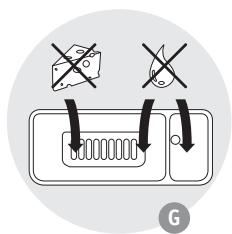
During this cycle, you may add ingredients: dried fruits, olives, etc. Some of these extra ingredients can also be placed into the dispenser (1) at the beginning of the recipe: nuts, seeds, raisins, chocolate chips, dry fruits, herbs. Be careful: some ingredients cannot be placed into the dispenser as they might stick to the sides of the dispenser: fat ingredients and wet ingredients such as cheese and ham. For these ingredients, you can place them directly into the bread pan at the beginning of the recipe.
2. Rise
Time during which the yeast works to leaven the bread and develop its aroma.
3. Cooking
Transforms the dough into a loaf and ensures the desired crust colour and crispness level.
4. Keep warm
Keeps the bread warm for 1 hour after cooking. It is nonetheless recommended to turn out the bread once cooking is done.
The display screen continues to display "0:00" during the hour-long "Keep warm" cycle. At the end of the cycle, the appliance stops automatically after producing several audio signals.
DELAYED START PROGRAM
You may program the appliance to ensure that your preparation is ready at the time of your choice, up to 15 hours in advance. Please refer to the cycle chart (see the end of the instruction manual).
This step occurs after having selected the program, the crust colour, and the weight. The program time is displayed. To adjust the delayed start time, press + and -. The machine displays the total duration prior to the end of cooking. The light turns on. Press to launch the delayed start program.
If you make a mistake or wish to modify the time setting, hold down the start step key until it emits an audio signal. The default time is displayed. Start the operation again.
Some ingredients are perishable. Do not use the delayed start program for recipes containing: raw milk, eggs, yoghurt, cheese, fresh fruit.
PRACTICAL ADVICE
- All ingredients used must be at room temperature (unless otherwise indicated), and must be weighed accurately. Measure the liquids using the graduated cup provided. Use the spoon provided to measure tablespoons on one side and teaspoons on the other. Inaccurate measurements will yield bad results. Bread preparation is very sensitive to temperature and humidity conditions. During hot weather, it is recommended to use cooler liquids than usual. Likewise, during cold weather, it may be necessary to warm the water or milk (never exceed 35°C).
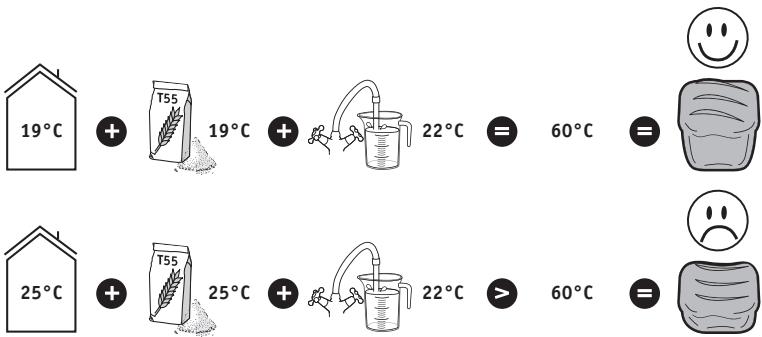
- Use ingredients prior to their best-before date and keep them in a cool, dry place.
- The flour must be weighed accurately using a kitchen scale. Use active dry baker's yeast (in pouches).
- Avoid opening the lid during use (unless otherwise indicated).
- Follow the exact order of the ingredients and the quantities indicated in the recipes. First the liquids, and then the solids. The yeast must not come into contact with the liquids or with the salt. Too much yeast weakens the dough structure, which will rise a lot and will subsequently sag during cooking.
General order to follow:
– Liquids (softened butter, oil, eggs, water, milk) - Salt - Sugar - First half of the flour - Powdered milk – Specific solid ingredients – Second half of the flour - Yeast (if not in the dispenser)
- During a power outage under 7 minutes, the machine will save its status and will resume its operation once the power comes back on.
- If you wish to have one bread cycle directly follow another, wait for approximately 1 hour between both cycles to allow the machine to cool and prevent any potential impact on bread making.
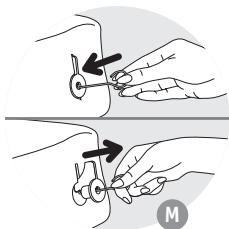
- When turning out your bread, the kneading paddle may remain stuck inside it. In this case, use the hook to gently remove it. To do so, insert the hook in the kneading paddle's shaft, and then lift to remove it.
- To turn off the bread maker, press the start/stop button for 3 seconds.
- To remove the acoustic signal, press the menu button for 3 seconds.
Warnings for the use of gluten-free programs
Menus 1, 2, and 3 must be used to make gluten-free breads or cakes. For each program, only one weight is available.
Gluten-free breads and cakes are suitable for those who have an intolerance to gluten (celiac disease sufferers) present in several cereals (wheat, barley, rye, oat, kamut, spelt, etc.).
It is important to avoid cross-contamination with flours containing gluten. Exercise special care when cleaning the pan and the kneading paddle, as well as all utensils used to make gluten-free breads and cakes. You must also ensure that the yeast used contains no gluten. Gluten-free recipes have been developed based on the use of preparations (also called ready-to-use mixes) for gluten-free bread that are either Schär or Valpiform type.
- Blends of flour types must be sifted with the yeast to prevent lumps.
- When the program is launched, it is necessary to assist the kneading process: scrape down any unmixed ingredients on the sides towards the centre of the pan using a non-metallic spatula.
- Gluten-free bread cannot rise as much as traditional bread. It will be of a denser consistency and lighter colour than normal bread.
- All premix brands do not yield the same results: the recipes may have to be adjusted. It is therefore recommended to conduct some tests (see example below).
Example: adjust the quantity of liquid.
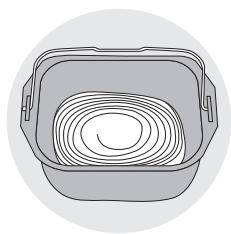
Too liquid
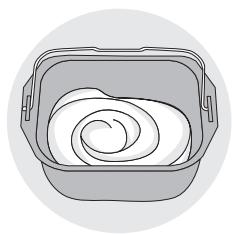
OK
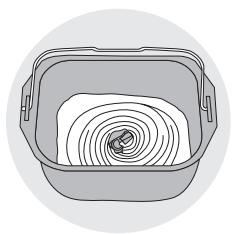
Too dry
Exception: cake batter must remain quite liquid.
CHOICE OF INGREDIENTS FOR BREAD
Yeast: Bread is made using baker's yeast. This type of yeast is sold in several forms: small cubes of compressed yeast, active dry yeast to be rehydrated, or instant dry yeast. Yeast is sold in supermarkets (bakery or fresh foods departments), but you can also buy compressed yeast from your baker.
The yeast can be directly incorporated in your machine's pan with the other ingredients or into the yeast dispenser (for instant dry yeast only). Nonetheless, consider thoroughly crumbling the compressed yeast between your fingers to facilitate its dispersion.
Follow the recommended amounts (see the equivalences chart below).
Quantity/weight equivalences between dry yeast and compressed yeast:
| Dry yeast (in tsp) | 1 | 1.5 | 2 | 2.5 | 3 | 3.5 | 4 | 4.5 | 5 |
| Compressed yeast (in g) | 9 | 13 | 18 | 22 | 25 | 31 | 36 | 40 | 45 |
Flours: Using T55 flour is recommended, unless otherwise indicated in the recipes. When using mixes of special flour types for bread, brioche, or milk bread, do not exceed 750 g of dough in total (flour + water).
Depending on the quality of the flour, the bread making results may also vary.
- Keep flour in a hermetically sealed container, since flour reacts to fluctuations in climate conditions (humidity). Adding oats, bran, wheat germ, rye, or whole grains to the bread dough will produce a bread that is denser and less fluffy.
- The more a flour is based on whole grains, that is, containing a part of the outer layers of a wheat grain (T>55), the less the dough will rise and the denser the bread will be.
- You will also find commercially available ready-to-use preparations for breads. Please refer to the manufacturer's recommendations for the use of these preparations.
Gluten-free flour: Using large quantities of these flour types to make bread calls for the use of the gluten-free bread program. There is a large number of flour types that do not contain any gluten. The best known are buckwheat flour, rice flour (either white or whole grain), quinoa flour, corn flour, chestnut flour, millet flour, and sorghum flour.
For gluten-free breads, in order to try to recreate the elasticity of gluten, it is essential to mix several types of non-bread-making flours and to add thickening agents.
Thickening agents for gluten-free breads: To obtain a proper consistency and to attempt to imitate the elasticity of gluten, you may add some xanthan gum and/or guar gum to your preparations.
Ready-to-use gluten-free preparations: They make it easier to make gluten-free bread since they contain thickeners and have the advantage of being completely guaranteed to be gluten-free — some are also organic.
All brands of ready-to-use gluten-free preparations do not yield the same results.
Sugar: Don't use sugar lumps. Sugar feeds the yeast, gives a good flavour to the bread and improves the crust colour.
Salt: It regulates the activity of the yeast and gives flavour to bread.
It must not come into contact with the yeast prior to the start of the preparation.
It also improves the structure of the dough.
Water: Water rehydrates and activates the yeast. It also hydrates the flour's starch and enables the loaf to be formed. Water may be replaced, in whole or in part, by milk or other liquids. Use
liquids at room temperature, except for gluten-free breads, which require the use of warm water (approximately 35°C).
Fats and oils: Fats make the bread fluffier. It will also keep better and longer. Too much fat slows the rise of the dough. If you use butter, crumble it into small pieces or soften it. Do not incorporate melted butter. Prevent the fat from coming into contact with the yeast, since the fat could prevent the yeast from rehydrating.
Eggs: They improve the bread's colour and favour good development of the loaf. If you use eggs, reduce the quantity of liquid accordingly. Break the egg and add the necessary liquid until you obtain the quantity of liquid indicated in the recipe.
The recipes have been designed for a medium-sized egg of 50 g. If the eggs are larger, add some flour; if the eggs are smaller, add a little less flour.
Milk: Milk has an emulsifying effect that leads to the creation of more regular cells, and therefore an attractive loaf appearance. You may use fresh milk or powdered milk. If you use powdered milk, add the quantity of water initially reserved for milk: the total volume must be equal to the volume indicated in the recipe.
Flavours and herbs: Some extra ingredients can also be placed into the dispenser (1) at the beginning of the recipe: nuts, seeds, raisins, chocolate chips, dry fruits, herbs. Be careful: some ingredients cannot be placed into the dispenser as they might stick to the sides of the dispenser: fat ingredients and wet ingredients such as cheese and ham. For these ingredients, you can place them directly into the bread pan at the beginning of the recipe.
CHOICE OF INGREDIENTS FOR YOGHURT
Milk
Which type of milk may I use?
You may use all types of milk (for example, cow's milk, goat's milk, sheep's milk, soya milk or other plant-based milks). The consistency of the yoghurt may vary according to the milk used. Raw milk, long shelf life milks and all milks described below are suitable for use in the appliance:
- Sterilised long shelf life milk: Whole UHT milk produces a firmer yoghurt. Partly skimmed milk produces a less firm yoghurt. Alternatively, you may use partly skimmed milk and add 1 or 2 tablespoons of powdered milk.
- Whole milk: this milk produces a creamier yoghurt, with a thin "skin" layer on top.
- Raw milk (farm milk): this type of milk must be boiled beforehand. We recommend boiling it for a sufficient length of time. Next, let it cool before placing it in the appliance.
- Powdered milk: this type of milk produces a very creamy yoghurt. Always follow the instructions appearing on the manufacturer's packaging.
Fermentation Agent
For the yoghurt
The fermentation agent may be:
- A plain yoghurt purchased in a store, whose expiration date is the latest one available.
- A freeze-dried fermentation agent or lactic cultures. In this case, follow the activation duration indicated in the fermentation agent's instructions for use. These agents are available in supermarkets, pharmacies and some health food stores.
- One of your recently prepared yoghurts – this must be a plain yoghurt, the most recent possible. This process is called a “culture”.
The properties of the agents may be destroyed by overly elevated temperatures.
Fermentation Time
- Depending on the basic ingredients used and the desired result, the fermentation of the yoghurt will take between 6 and 12 hours.

Once the cooking is done, put the yoghurt in the refrigerator for at least 4 hours, and consume it within 7 days.
Rennet (for soft white cheese)
To make your cheeses, you can use some rennet or an acidic liquid such as lemon juice or vinegar to curdle the milk.
CLEANING AND MAINTENANCE
- Unplug the appliance and wait for it to cool down completely.
- Wash the pan and the kneading paddle using hot soapy water. If the kneading paddle stays in the pan, soak it for 5 to 10 min.
- Clean the other components with a damp sponge. Dry thoroughly.
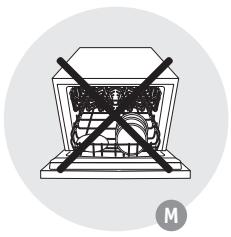
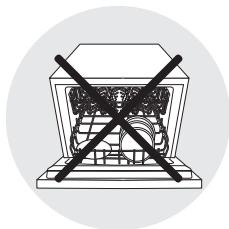
- No part whatsoever is machine washable.
- Don't use any household cleanser, abrasive pads or alcohol. Use a soft, damp cloth.
- Never submerge the appliance's body or the lid.
TROUBLESHOOTING GUIDE TO IMPROVE YOUR RECIPES
| Not getting the expected results? This table will help you. | Bread rises too much | Bread falls after rising too much | Bread does not rise enough | Crust not golden enough | Sides brown but bread not fully cooked | Top and sides floury |
| [beef] | [beef] | [beef] | [beef] | [beef] | [beef] | |
| The button was pressed during baking. | ● | |||||
| Not enough flour. | ● | |||||
| Too much flour. | ● | ● | ||||
| Not enough yeast. | ● | |||||
| Too much yeast. | ● | ● | ||||
| Not enough water. | ● | ● | ||||
| Too much water. | ● | ● | ||||
| Not enough sugar. | ● | |||||
| Poor quality flour. | ● | ● | ||||
| Wrong proportions of ingredients (too much). | ● | |||||
| Water too hot. | ● | |||||
| Water too cold. | ● | |||||
| Wrong programme. | ● | ● |
| Are you failing to obtain the desired result? This chart will help identify the solution. | Liquid yoghurt | The yoghurt is too acidic | There is water in the yoghurt | Yellowed yoghurt |
| The fermentation time is too short. | ● | |||
| The fermentation time is too long. | ● | ● | ● | |
| No enough fermentation agents or dead or non-active fermentation agents. | ● | |||
| Improperly cleaned yoghurt pot. | ● | ● | ||
| The milk used does not contain enough fat (partly skimmed instead of whole milk). | ● | |||
| Lid left on the pot. | ● | |||
| Improper programs used. | ● | ● |
TECHNICAL TROUBLESHOOTING GUIDE
| PROBLEMS | CAUSES - SOLUTIONS |
| The kneading paddle is stuck in the pan. | Let it soak before removing it. |
| After pressing on 📂, nothing happens. | E01 is displayed and flashes on the screen, the appliance beeps: the appliance is too hot. Wait 1 hour between 2 cycles.E00 is displayed and flashes on the screen, the appliance beeps: the appliance is too cold. Wait for it to reach room temperature.HHH or EEE is displayed and flashes on the screen, the appliance beeps: malfunction. The machine must be serviced by authorised personnel.A delayed start has been programmed. |
| After pressing on 📂, the motor is on but no kneading takes place. | The pan has not been correctly inserted.Kneading paddle missing or not installed properly.In the two cases cited above, stop the appliance manually with a long press on the 📂 button. Start the recipe again from the beginning. |
| After a delayed start, the bread has not risen enough or nothing happens. | You forgot to press on 📂 after programming the delayed start programme.The yeast has come into contact with salt and/or water.Kneading paddle missing. |
| Burnt smell. | Some of the ingredients have fallen outside the pan: unplug the appliance, let it cool down, then clean the inside with a damp sponge and without any cleaning product.The preparation has overflowed: the quantity of ingredients used is too great, notably liquid. Follow the proportions given in the recipe. |
| Extra ingredients stay stuck in the dispenser | There are too many ingredients into the dispenser. Do not overload the dispenser. The lid must close easily.Do not put fat, sticky and wet ingredients into the dispenser. |
EN
| FR | p. | 2 | - | 5 | p. | 30 | - | 42 |
| NL | p. | 6 | - | 9 | p. | 43 | - | 55 |
| IT | p. | 10 | - | 13 | p. | 56 | - | 68 |
| ES | p. | 14 | - | 17 | p. | 69 | - | 81 |
| PT | p. | 18 | - | 21 | p. | 82 | - | 94 |
| EN | p. | 22 | - | 25 | p. | 95 | - | 107 |
- IMPORTANT SAFEGUARDS
- FOR 1 KG BREAD MACHINES
- LET'S HELP TO PROTECT THE ENVIRONMENT
- DESCRIPTION
- LID
- PRIOR TO FIRST USE
- QUICK START-UP
- USING YOUR BREAD MACHINE
- SELECTION OF A PROGRAM
- SELECTING THE BREAD WEIGHT
- SELECTING THE CRUST COLOUR
- ACTIVATION / DEACTIVATION OF THE DISPENSERS
- START / STOP
- KNEADING
- RISE
- COOKING
- KEEP WARM
- DELAYED START PROGRAM
- PRACTICAL ADVICE
- GENERAL ORDER TO FOLLOW
- WARNINGS FOR THE USE OF GLUTEN-FREE PROGRAMS
- CHOICE OF INGREDIENTS FOR BREAD
- CHOICE OF INGREDIENTS FOR YOGHURT
- MILK
- WHICH TYPE OF MILK MAY I USE
- FERMENTATION AGENT
- FOR THE YOGHURT
- FERMENTATION TIME
- RENNET (FOR SOFT WHITE CHEESE)
- CLEANING AND MAINTENANCE
Brand : MOULINEX
Model : OW250110
Category : Bread maker