
CMCS5152S - Fridge CANDY - Free user manual and instructions
Find the device manual for free CMCS5152S CANDY in PDF.



| Product type | Combined refrigerator with freezer |
| Brand | CANDY |
| Model | CMCS5152S |
| Climate class | SN, N, ST (10°C to 38°C) |
| Refrigerant | R600a (isobutane) |
| Insulating gas | Cyclopentane |
| Quick freezing capacity | 2.5 kg max at one time |
| Water dispenser | Yes, 2.0 L tank |
| Interior lighting | Replaceable LED |
| Door opening direction reversal | Possible (detailed procedure) |
| Defrosting | Manual (recommended 2x/year or 5 mm of frost) |
| Temperature alarm | Yes (if > -12°C after 3h) |
| Temperature setting | Thermostat with 7 positions (0 = off, 7 = coldest) |
| Recommended refrigerator temperature | +2°C to +5°C |
| Recommended freezer temperature | -18°C to -25°C |
| Cleaning | Warm water and baking soda |
| Power supply | 220-240 V / 50 Hz (standard) |
Frequently Asked Questions - CMCS5152S CANDY
User questions about CMCS5152S CANDY
0 question about this device. Answer the ones you know or ask your own.
Ask a new question about this device
Download the instructions for your Fridge in PDF format for free! Find your manual CMCS5152S - CANDY and take your electronic device back in hand. On this page are published all the documents necessary for the use of your device. CMCS5152S by CANDY.
USER MANUAL CMCS5152S CANDY
Underside view of the freezer door
Adjusting temperature 35
Super Freezing Function 35
Is the Refrigerator cold enough? 35
Tips for Water dispenser 36
Tips for keeping food perfect in the Fridge 36
Where to store your foods in the fridge 37
Storing Frozen Food 38
Label everything 38
ENERGYSAVING 38
TAKE CARE 39
Defrosting 39
Cleaning and Care 39
CHANGING THE INTERNAL LIGHT 40
REVERSING THE DOOR SWING 40
TROUBLESHOOTING 43
Thankyou for purchasing this product.
Before using your refrigerator, please carefully read this instruction manual in order to maximize its performance. Store all documentation for subsequent use or for other owners. This product is intended solely for household use or similar applications such as:
- the kitchen area for personnel in shops, offices and other working environments
- on farms, by clientele of hotels, motels and other environments of a residential type
- at bed and breakfasts (B & B)
- for catering services and similar applications not for retail sale.
This appliance must be used only for purposes of storage of food, any other use is considered dangerous and the manufacturer will not be responsible for any omissions. Also, it is recommended that you take note of the warranty conditions. Please, to obtain the best possible performance and trouble free operation from your appliance it is very important to carefully read these instructions. Failure to observe these instructions may invalidate your right to free service during the guarantee period.
SAFETY INFORMATION
This guide contains many important safety information. Please, we suggest you keep these instructions in a safe place for easy reference and a good experience with the appliance.
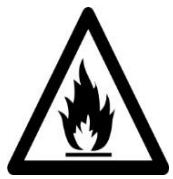
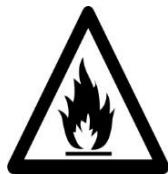
The refrigerator contains a refrigerant gas (R600a: isobutane) and insulating gas (cyclopentane), with high compatibility with the environment, that are, however, inflammable.

Caution: risk of fire
If the refrigerant circuit should be damaged:
- Avoid opening flames and sources of ignition.
Thoroughly ventilate the room in which the appliance is situated
WARNING!
- Care must be taken while cleaning/carrying the appliance to avoid touching the condenser metal wires at the back of the appliance, as you might injure your fingers and hands or damage your product.
- This appliance is not designed for stacking with any other appliance. Do not attempt to sit or stand on top of your appliance as it is not designed for such use. You could injure yourself or damage the appliance.
- Make sure that mains cable is not caught under the appliance during and after carrying/moving the appliance, to avoid the mains cable becoming cut or damaged.
- When positioning your appliance take care not to damage your flooring, pipes, wall coverings etc. Do not move the appliance by pulling by the lid or handle. Do not allow children to play with the appliance or tamper with the controls. Our company declines to accept any liability should the instructions not be followed.
- Do not install the appliance in humid, oily or dusty places, nor expose it to direct sunlight and to water.
- Do not install the appliance near heaters or inflammable materials.
- If there is a power failure do not open the lid. Frozen food should not be affected if the failure
lasts for less than 20 hours. If the failure is longer, then the food should be checked and eaten immediately or cooked and then refrozen.
- If you find that the lid of the chest freezer is difficult to open just after you have closed it, don't worry. This is due to the pressure difference which will equalize and allow the lid to be opened normally after a few minutes.
- Do not connect the appliance to the electricity supply until all packing and transit protectors have been removed.
- Leave to stand for at least 4 hours before switching on to allow compressor oil to settle if transported horizontally.
- This freezer must only be used for its intended purpose (i.e. storing and freezing of edible foodstuff).
- Do not store medicine or research materials in the Wine Coolers. When the material that requires a strict control of storage temperatures is to be stored, it is possible that it will deteriorate or an uncontrolled reaction may occur that can cause risks.
- Before performing any operation, unplug the power cord from the power socket.
-
On delivery, check to make sure that the product is not damaged and that all the parts and accessories are in perfect condition.
-
If in the refrigeration system a leak is noted, do not touch the wall outlet and do not use open flames. Open the window and let air into the room. Then call a service center to ask for repair.
- Do not use extension cords or adapters.
- Do not excessively pull or fold the power cord or touch the plug with wet hands.
- Do not damage the plug and/or the power cord; this could cause electrical shocks or fires.
- If the supply cord is damaged, it must be replaced by the manufacturer, its service agent or similarly qualified person in order to avoid a hazard.
- Do not place or store inflammable and highly volatile materials such as ether, petrol, LPG, propane gas, aerosol spray cans, adhesives, pure alcohol, etc. These materials may cause an explosion.
- Do not use or store inflammable sprays, such as spray paint, near the Wine Coolers. It could cause an explosion or fire.
- Do not place objects and/or containers filled with water on the top of the appliance.
- We do not recommend the use of extension leads and multi-way adapters.
- Do not dispose of the appliance on a fire. Take care not to damage, the cooling circuit/pipes of the appliance in transportation and in use. In case of damage do not expose the appliance to fire,
potential ignition source and immediately ventilate the room where the appliance is situated.
- The refrigeration system positioned behind and inside the Wine Coolers contains refrigerant. Therefore, avoid damaging the tubes.
- Do not use electrical appliances inside the food storage compartments of the appliance, unless they are of the type recommended by the manufacturer.
- Do not damage the refrigerant circuit.
- Do not use mechanical devices or other means to accelerate the defrosting process, other than those recommended by the manufacturer.
- Do not use electrical appliances inside the food storage compartments, unless they are of the type recommended by the manufacturer.
- Do not touch internal cooling elements, especially with wet hands, to avoid cracks or injuries.
- Maintain the ventilation openings in the appliance enclosure or in the built-in structure, free of obstruction.
- Do not use pointed or sharp-edged objects such as knives or forks to remove the frost.
- Never use hairdryers, electrical heaters or other such electrical appliances for defrosting.
- Do not scrape with a knife or sharp object to remove frost or ice that occurs. With these, the refrigerant circuit can be damaged, the spill from
which can cause a fire or damage your eyes.
- Do not use mechanical devices or other equipment to hasten the defrosting process.
- Absolutely avoid the use of open flame or electrical equipment, such as heaters, steam cleaners, candles, oil lamps and the like in order to speed up the defrosting phase.
- Never use water wash the compressor position, wipe it with a dry cloth thoroughly after cleaning to prevent rust.
- It is recommended to keep the plug clean, any excessive dust residues on the plug can be the cause fire.
- The product is designed and built for domestic household use only.
- The guarantee will be void if the product is installed or used in commercial or non-residential domestic household premises.
- The product must be correctly installed, located and operated in accordance with the instructions contained in the User Instructions Booklet provided.
- The guarantee is applicable only to new products and is not transferable if the product is resold.
- Our company disclaims any liability for incidental or consequential damages.
-
The guarantee does not in any way diminish your statutory or legal rights.
-
Do not perform repairs on this Wine Coolers. All interventions must be performed solely by qualified personnel.
- If you are discarding an old product with a lock or latch fitted to the door, ensure that it is left in a safe condition to prevent the entrapment of children.
- This appliance can be used by children aged from 8 years and above and by persons with reduced physical, sensory or mental capabilities or with a lack of experience and knowledge; provided that they have been given adequate supervision or instruction concerning how to use the appliance in a safe way and understand the hazards involved.
- Children should not play with the appliance. Cleaning and user maintenance should not be made by children without supervision.
- Locks :If your Fridge/Freeze is fitted with a lock, to prevent children being entrapped keep the key out of reach and not in the vicinity of the appliance. If disposing of an old Fridge/Freeze break off any old locks or latches as a safeguard.
COMBI REFRIGERATOR CANDY
Climate Class
The appliance is designed to operate at the limited range of ambient temperature, depending on climate zones. Do not use the appliance at the temperature out of the limit. Climate class of your appliance is indicated on the label with technical description inside the fridge compartment.
| Climate Class | Amb. T. (°C) | Amb. T. (°F) |
| SN | From 10 to 32 | From 50 to 90 |
| N | From 16 to 32 | From 61 to 90 |
| ST | From 16 to 38 | From 61 to 100 |
| T | From 16 to 43 | From 61 to 110 |
TRANSPORTATION INSTRUCTIONS
The appliance should be transported only in a vertical upright position. The packing as supplied must be intact during transportation. If during the course of transport the product has been transported horizontally, it must only be laid on its left hand side (when facing the door front) and it must not be operated for at least 4 hours to allow the system to settle after the appliance is brought back to upright position.
- Failure to comply with the above instructions could result in damage occurring to the appliance. The manufacturer will not be held responsible if these instructions are disregarded.
- The appliance must be protected against rain, moisture and other atmospheric influences.
INSTALLATION INSTRUCTIONS
- If possible avoid placing the appliance near cookers, radiators or in direct sunlight as this will cause the compressor to run for long periods. If installed next to a source of heat or refrigerator, maintain the following minimum side clearances:
| From Cookers | 4" (100 mm) |
| From Radiators | 12" (300 mm) |
| From Fridges | 4" (100 mm) |
- Make sure that sufficient room, with an average temperature of between 16^ and 32^ , is provided around the appliance to ensure free air circulation. Ideally, a space of no less than 9cm on the back and 2cm on the sides.
- The appliance should be located on a smooth surface.
- It is forbidden to use the refrigerator outdoors.
- Protection from moisture. Do not locate the freezer in moist space to avoid the metal parts rusty. And do not spray water to the freezer, otherwise it will weaken the insulation and causes current leakage.
- Refer to "Cleaning and Care" section to prepare your appliance for use.
- If the freezer is installed in unheated areas, garages etc., in cold weather condensation may form on the outer surfaces. This is quite normal and is not a fault. Remove the condensation by wiping with a dry cloth.
- Never place Refrigerator in a wall recessed or into fitted cabinets or furniture when it is working, the grille at the back may become hot and the sides warm. Do not drape the Refrigerator with any covering.
STARTING TO USE
Before you starting to use the freezer, please check that:
- The interior is dry and air can circulate freely at the rear.
- Clean the interior as recommended under "TAKE CARE" section (electric parts of the refrigerator can only be wiped by dry cloth).
- Do not switch on until 4 hours after moving the fridge/freezer. The coolant fluid needs time to settle. If the appliance is switched off at any time, wait 30 minutes before switching back on to allow the coolant fluid to settle.
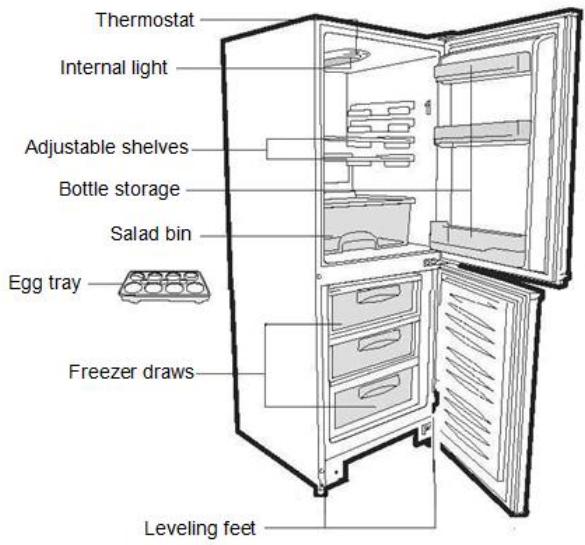
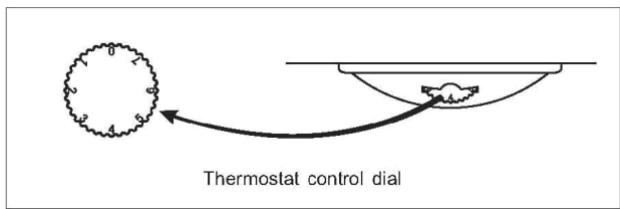
- Before connecting the Refrigerator to the mains supply position. The thermostat control diais is located inside the Fridge compartment.
- Turn the thermostat knob to the "3" position and turn on the electricity. The compressor and the light inside the refrigerator will begin to work.
- Before storing foods in your refrigerator, turn the refrigerator on and wait for 24 hours, to make sure it is working properly and to allow the Fridge/Freezer to fail to the correct temperature.
- Open the door 30 minutes later, if the temperature in the refrigerator decreased obviously, it shows that the refrigerator system works well. When the refrigerator operates for a period of time, the temperature controller will automatically set the temperature within limits it opens.
COMBI OPERATION
Adjusting temperature
Follow these points:
- The temperature in the refrigerator and freezer compartment is controlled by the temperature controller installed on the inside wall of the refrigerator compartment. We strongly recommend you use a freezer thermostat to check that the temperature is below - 18^ before loading any food. This can take 2-3 hours.
- The marks on the knob are the temperature grades, NOT the exact degree of temperature. "0" is "OFF" and "7" represents the lowest temperature.
- Please start with the knob set to position "4". Use a suitable thermometer to check the temperature after 2 hours. The refrigerator temperature should be set between +2^ and +5^ and the freezer will vary between -18 and -25^ over a typical cycle. To reduce the refrigerator temperature turns the knob towards "6" and check after one hour.
Super Freezing Function
- Quick freezing allows moisture inside foodstuffs to form fine ice-crystals which prevent the cell membrane from being damaged and the cytoplasm being lost when unfreezing, thus the original freshness and nutrition constituent of foodstuffs can be retained.
- Fresh meal and fish to be stored for long time must be done by quick freezing. To quick freeze turn the temperature knob to setting "7" before adding food (the maximum allowable capacity is 2.5kg at a time)
- After quick freezing, turn the knob back to the original position (Normally time for quick freezing shall not exceed 4 hours).
Is the Refrigerator cold enough?
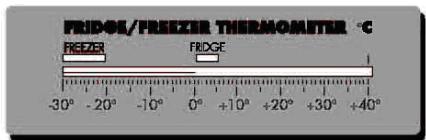
If you are at all concerned that your Fridge/Freezer is not being kept cold enough, or you occasionally wish to check the temperature, you can purchase a Fridge/Freezer thermometer. These are available from most supermarkets and hardware shops. Place the thermometer in the Fridge compartment and leave overnight. The correct temperature should read between 0^ and 10^ . Alternatively, place the thermometer in the middle basket of the Freezer compartment and leave it overnight. The correct temperature should be -18^ or lower.
Tips for Water dispenser
The refrigerator includes a water dispenser which makes it easier to fill your cup of water and have access to cold water almost immediately. The water dispenser includes one tank of 2.0 litres of water which has to be filled out. To use water dispenser follow the instructions below:
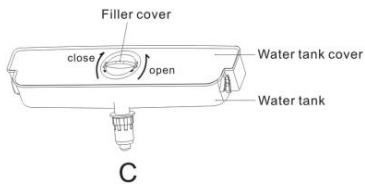
- Open the refrigerator door to ensure the water dispenser fixed well.
- Open the filler cover of the water tank, slowly fill the water tank to prevent any spills until the tank is filled. Then close the filler cover of the water tank. See image C.
- Once full, turn the thermostat knob to maximum number and come back 30 minutes later, then fill your cup on water dispenser. See image D.
- When using the water dispenser, some water may drip and accumulate at the bottom of the water dispenser. Please wipe it with a cloth when necessary.
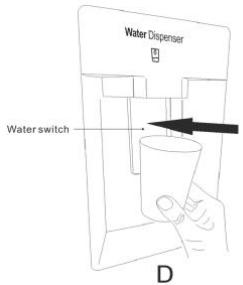
NOTE: Don't take away the cup until no waterdrop.
Tips for keeping food perfect in the Fridge
Take extra care with meat and fish: cooked meats should always be stored on a shelf above raw meats to avoid bacterial transfer. Keep raw meats on a plate which is large enough to collect juices and cover it with cling film or foil.
Leave space around food: this allows cold air to circulate around the Fridge, ensuring all parts of the Fridge are kept cool.
Wrap up food! to prevent transfer of flavors and drying out, food should be separately packed or covered. Fruit and vegetables need not be wrapped.
Pre-cooked food should be cooled properly: allow pre-cooked food to cool down before placing in the Fridge. This will help to stop the internal temperature of the Fridge from rising.
Shut the door! to prevent cold air escaping, try to limit the number of times you open the door.
When retuning from shopping, sort foods to be kept in your Fridge before opening the door. Only open the door to put food in or take it out.
Where to store your foods in the fridge
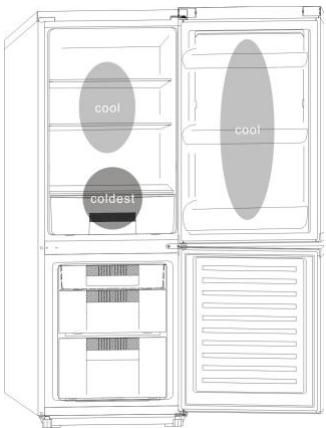
Cool area: this is where to store foods which will keep longer if they are kept cool. Milk, eggs, yogurt, fruit juices, hard cheeses eg. Cheddar. Opened jars and bottles of salad dressings, sauces and jams. Fats, eg. Butter, margarine, low-fat speads, cooking fats and lard.
Coldest area (0^ to 5^) : this is where foods which must be cold to keep them safe should be kept:
- Raw and uncooked foods should always be wrapped.
-Pre-cooked chilled foods, eg. Ready meals, meat pies, soft cheeses.
-Pre-cooked meats eg. Ham, - Prepared salads(including pre-packed mixed green salads, rice, potato salad etc).
Desserts, eg. Fromage frais, home-prepared food and leftovers or cream cakes.
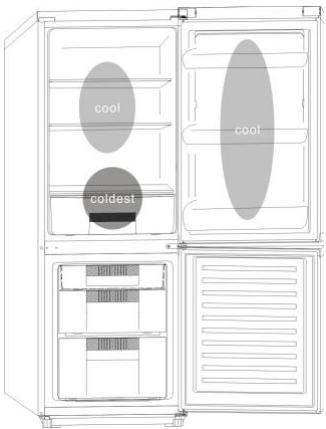
Crisper: this is the most humid part of the Fridge. Vegetables, fruit, fresh salad items eg. Unwashed whole lettuce, whole tomatoes, radishes etc can be stored here.
WE RECOMMEND THAT ALL PRODUCE KEPT IN THE SALAD BIN IS WRAPPED.
NOTE: Always wrap and store raw meat, poultry and fish on the lowest shelf at the bottom of the fridge. This will stop them dripping onto, or touching other foods. Do not store inflammable gasses or liquids in the fridge.
Electrical operation after 3h on the freezer, the temperature in the cabinet above -12^ , the alarm light is lit, and buzzer sounds.
Storing Frozen Food
Prepackaged commercially frozen food should be stored in accordance with the frozen food manufacturer's instructions for a freezer compartment.
To ensure that the high quality achieved by the frozen food manufacturer and the food retailer is maintained the following should be remembered:
- Put packets in the freezer as quickly as possible after purchase.
- Do not exceed "Use By", "Best Before" dates on the packaging.
| DO | DON'T |
| Defrost food from the freezer thoroughly in a fridge or in a microwave oven following defrosting and cooking instructions. | Use pointed sharp edged objects such as knives, forks to remove the ice. |
| Defrost frozen meat completely before cooking. | Put hot food in the freezer. Let it cool down first. |
| Store commercially frozen food in accordance with the instructions given on the packets that you buy. | Put liquid-filled bottles or sealed cans containing carbonated liquids into the freezer as they may burst. |
| Check contents of the refrigerator at regular intervals. | Remove items from the freezer with wet hands. |
| Clean and defrost your refrigerator regularly. | Freeze fizzy drinks. |
| Prepare fresh food for freezing in small portions to ensure rapid freezing. | Consume ice-cream and water ices direct from freezer. It may cause “freezer burns” on lips. |
| Always choose high quality fresh food and be sure it is thoroughly clean before you freeze it. | Store poisonous or dangerous substances in the freezer. |
| Wrap all foods in aluminum foil or freezer quality plastic bags and make sure any air is excluded. | |
| Wrap frozen food when you buy it and put it into the freezer shortly. | |
| Keep food for as short a time as possible and adhere to “Best Before”, “Use By” dates. |
For more about storing, download the App and visit "Tips & Hints".
Label everything
- Many foods look the same when frozen, so careful labeling will help avoid forgetting what an item is. Storage times being exceeded could cause food poisoning. On home cooked food add the date as you will then be able to make sure you don't eat food past the recommended storage period.
- You can buy special Fridge/Freezer labels and pens. Labels come in different colors which can help you use your Fridge/Freezer effectively. For instance you could color code meat red and vegetables green. Using a different color label for each quarter of the year will help you rotate your frozen food more efficiently.
- Write the contents and date. Add the weight and notes on cooking such as "thaw first", or "cook from frozen" and keep a separate "log-book" of what is in each drawer. This will save opening the door and searching around unnecessarily.
ENERGYSAVING
For better energy saving we suggest:
-
Installing the appliance away from heat sources and not exposed to direct sunlight and in a well-ventilated room.
-
Avoid putting hot food into the refrigerator to avoid increasing the internal temperature and therefore causing continuous functionalizing of the compressor.
- Do not excessively stuff foods so as to ensure proper air circulation.
- Defrost the appliance in case there is ice to facilitate the transfer of cold.
- In case of absence of electrical energy, it is advisable to keep the refrigerator door closed.
- Open or keep the doors of the appliance open as little as possible.
- Avoid adjusting the setting to temperatures too cold.
- Remove dust present on the rear of the appliance.
TAKE CARE
Defrosting
Defrost twice a year or when a frost layer of around 5mm has formed.
Alternatively you may switch off the freezer at the socket outlet and pull out the mains plug. Extract the water conduit and put in a water container.
As a temporary measure, this frost should be scraped away using a plastic scraper. NEVER use a metal or sharp instrument. This should be carried out if the frost build-up cannot be scraped away, or if it begins to interfere with the food storage. Chose a time when the stock of frozen food is low and proceed as follow:
- Take out the frozen food, turn the Refrigerator off at the mains supply and leave the doors open. Ideally the frozen food should be put into another Fridge/Freezer or refrigerator. If this is not possible wrap the food, firstly in several sheets of newspaper or large towels and then in a thick rug or blanket and keep it in a cool place.
- Scrape away as much frost build-up as possible using the plastic scraper. To accelerate the thawing process place bowls of hot water inside the Fridge/Freezer cabinet. As the solid frost loosens, prize it away with the plastic scraper and remove.
- When defrosting is completed, clean your Fridge/Freezeer as described.
Cleaning and Care
After defrosting you should clean the Fridge/Freezer internally with a weak solution of bicarbonate of soda. Then rinse with warm water using a damp sponge or cloth and wipe dry. Wash the baskets in warm soapy water and ensure they are completely dry before replacing in the Fridge/Freezer. Condensation will form on the back wall of the Fridge; however it will normally run down the back wall and into the drain hole behind the salad bin.
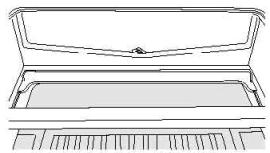
The drain hole will have a "cleaning spike" inserted into it. This ensures that small pieces off food can not enter the drain. After you have cleaned the inside of your Fridge and removed any food residues from around the whole, use the "cleaning spike" to make sure that there are no blockages. Use standard furniture polish to clean the Fridge/Freezer exterior. Make sure that the doors are closed to prevent polish getting on the magnetic door seal or inside.
The grille of the condenser at the back of the Fridge/Freezer and the adjacent components can be
vacuumed using a soft brush attachment.
Do not use harsh cleaners, scouring pads or solvents to clean any part of the Fridge/Freezer.
CHANGING THE INTERNAL LIGHT
- Before carrying out the LED replacement always press and turn the thermostat control to dial to position 0, then disconnecting the mains supply.
- Hold and lift up the LED light cover.
- Remove the old LED by unscrewing it in an anti-clockwise direction.
- Replace with a new LED light by screwing it in a clockwise direction marking sure that it is secure in the bulb holder.
- Refit the light cover and re-connect your Fridge/Freezer to the mains supply and switch on.
REVERSING THE DOOR SWING
To change the opening direction yourself, please follow these instructions:
Tools required: Philips style screwdriver / flat bladed screwdriver / Hexagonal spanner
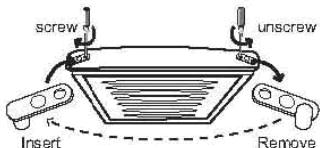
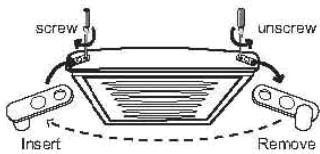
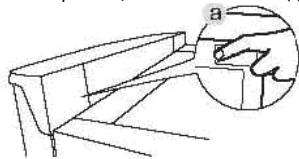
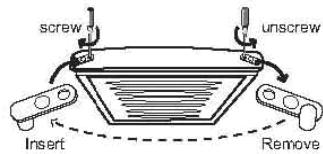
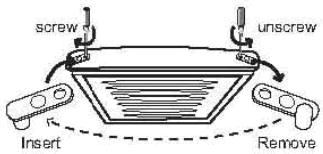
- a. Remove all the cover's screws first.
b. Lift the top cover away from the Fridge.
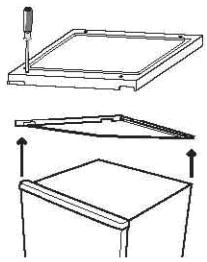
c. Remove the left hinge cover. Insert the right hinge cover.
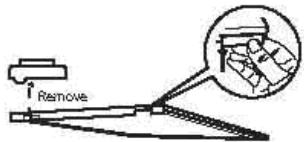
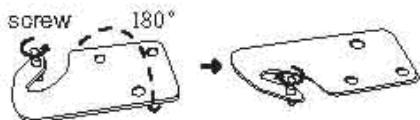
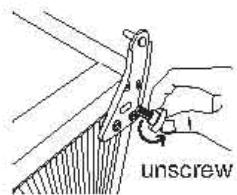
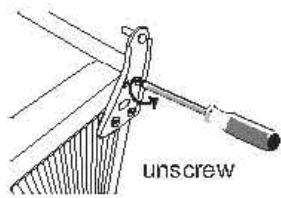
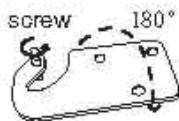
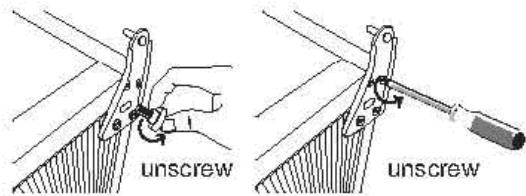
- a. Undo the screws, lift the hinge bracket up and take it off.
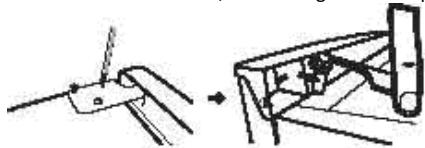
b. Remove the bolt with a screwdriver and flip the hinge bracket then reattach the bolt to the hinge bracket. Remove the fridge door.
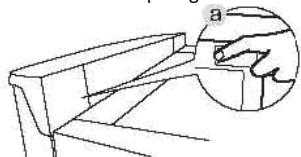
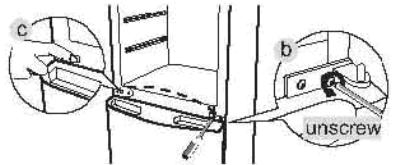
- a. Lift the top hinge cover on the fridge door and move it to the side you want to install.
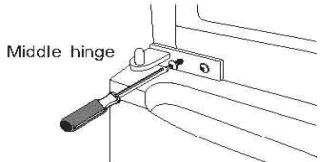
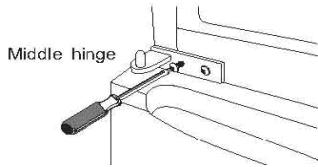
b. Take of the middle hinge by removing the screws. Lift the freezer door up and move it away.
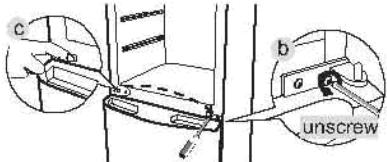
c. Remove the screws' covers and place them to the opposite side.
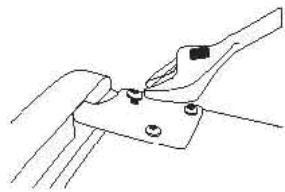
- Remove the bottom hinge adaptor from the freezer door. Move the adaptor to the opposite side. Ensure it is securely located.
Underside view of the freezer door
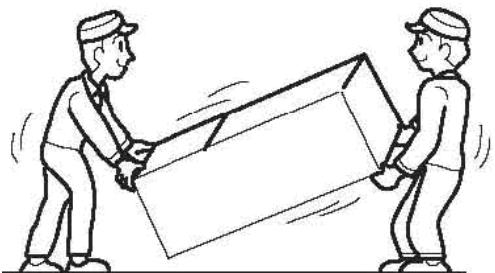
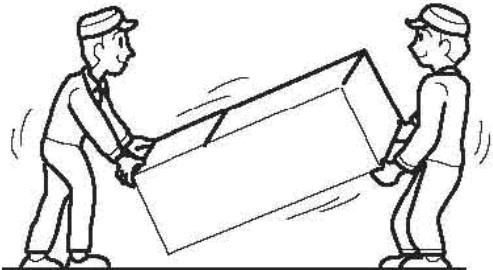
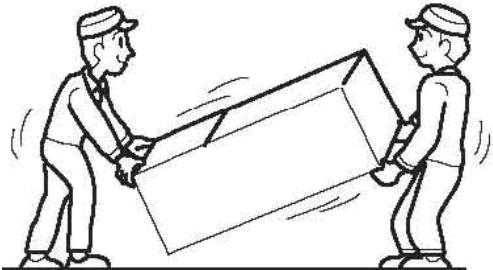
- a. Tilt the fridge carefully. 2 people are required to tilt the fridge during the door reversing process.
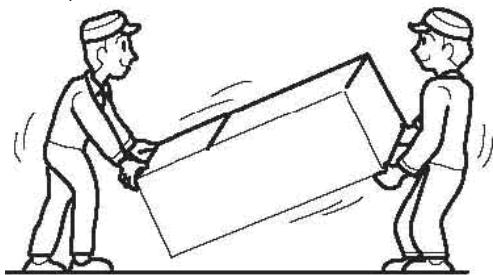
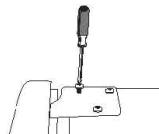
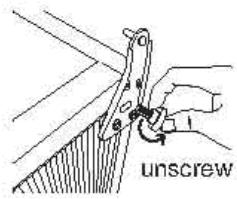
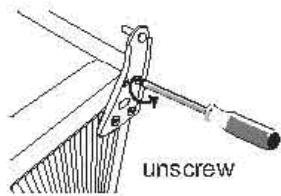
b. Remove the screws and bottom hinge. Then remove the adjustable feet from both side and reattach them to the opposite side.
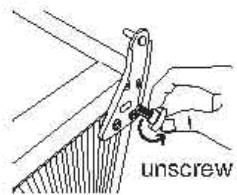
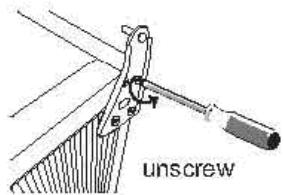
- Remove the screw from the bottom hinge and refit it to the opposite side. Place the freezer door back on.

- After placing the freezer door, screw the middle hinge back onto (the opposite side) the fridge.
Ensure the freezer door is aligned horizontally and vertically, so that the seals are closed on all sides before finally tightening the hinge.
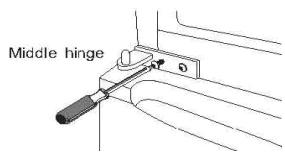
- Place the fridge door back on. Ensure the fridge door is aligned horizontally and vertically so that the seals are closed on all sides before finally tightening the top hinge.
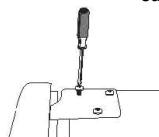
a. Insert the hinge bracket and screw it to the top of the fridge.
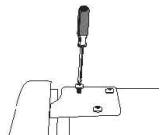
b. Use a spanner to tighten it if necessary.
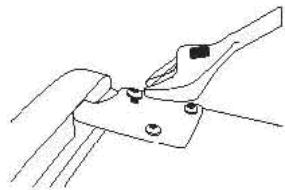
-
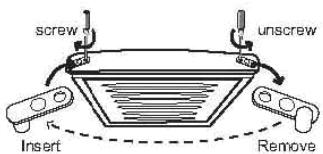
Put the top cover back and tighten it with the screws. Reverse step 1a to 1c for details
-
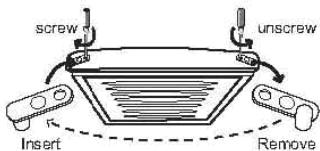
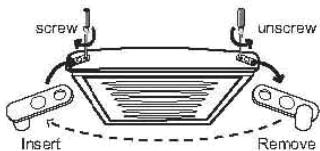
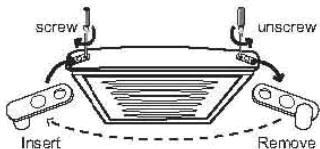
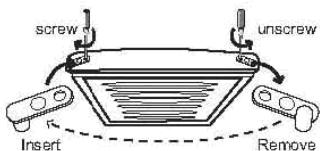
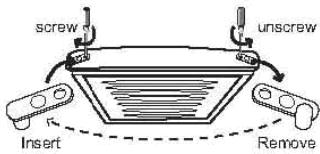
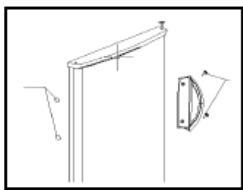
Change the handle (which is the same method for both fridge door and freezer door)
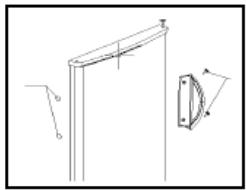
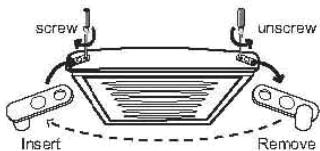
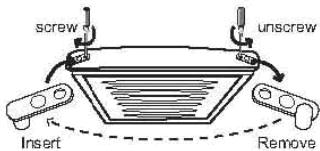
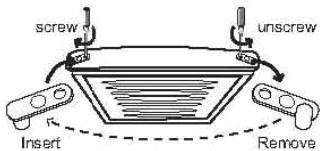
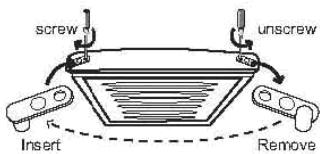
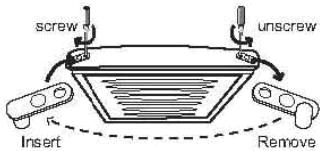
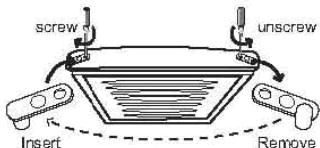
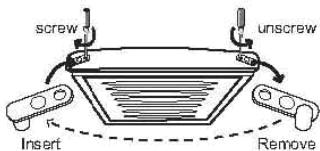
a.Remove the right bush on the upper door trim, install it to left symmetrical position.
b.Remove two side of plastic hole cover and handle with a screwdriver,
c.fix them on the opposite side. Put the plastic hole cover that were situated where the handles are presently.
Double check that the door is aligned correctly and all the seals are closed on all sides. If necessary, re-adjust the levelling feet.
NOTE: If you want to have the door swing reversed, we recommend that your contact a qualified technician. You should only try to reverse the door yourself if you believe that you are qualified to do so.
All parts removed must be saved to do the reinstallation of the door. You should rest the fridge freezer on something solid so that it will not slip during the door change process. Do not lay the fridge freezer flat as this may damage the coolant system. Ensure the fridge freezer is unplugged and empty. We recommend that 2 people handle the fridge freezer during assembly.
TROUBLE SHOOTING
If the appliance does not operate when switched on, check.
- Power cut: If the internal temperature of the Fridge/Freezer compartment is -18^ or less when the power returns, your food is safe. The food in your Fridge/Freezer will remain frozen for approx 16 hours with the door closed. Do not open the Fridge/Freezer door more than necessary.
The product is designed and built for domestic household use only.
- The plug is inserted properly in the socket and that the power supply is on. (To check the power supply to the socket, plug in another appliance).
- The fuse has blown/circuit breaker has tripped/main distribution switch has been turned off.
The temperature control has been set correctly.
- If the refrigerator is exceptionally cold, you may have accidentally adjusted the thermostat control dial to a higher position.
- If the refrigerator is exceptionally warm, the compressor may not be working. Turn the thermostat control dial to the maximum setting and wait a few minutes. If there is no humming noise, it is not working. Contact the local store where your purchase was made.
- If condensation appears outside of the Refrigerator, this may be due to a change in the room temperature. Wipe off any residue of moisture. If the problem continues contact the local store where your purchase was made.
- If the provided plug has been replaced, make sure the new plug is properly connected. If the appliance is still not operating after the above checks, please contact Customer Service.
SCRAPPING OLD APPLIANCES
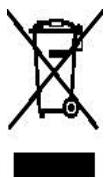
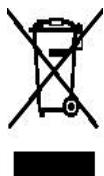
This appliance is marked according to the European directive 2012/19/EU on Waste Electrical and Electronic Equipment (WEEE).
WEEE contains both polluting substances (which can cause negative consequences for the environment) and basic components (which can be re-used). It is important to have WEEE subjected to specific treatments, in order to remove and dispose properly all pollutants, and recover and recycle all materials.
Individuals can play an important role in ensuring that WEEE does not become an environmental issue; it is essential to follow some basic rules:
WEEE should not be treated as household waste.
WEEE should be handed over to the relevant collection points managed by the municipality or by registered companies. In many countries, for large WEEE, home collection could be present.
In many countries, when you buy a new appliance, the old one may be returned to the retailer who has to collect it free of charge on a one-to-one basis, as long as the equipment is of equivalent type and has the same functions as the supplied equipment.
Conformity
By placing the CE mark on this product, we are confirming compliance to all relevant European safety, health and environmental requirements which are applicable in legislation for this product.
TABLE DES MATIÈRES
INFORMATIONS SUR LA SECURITE 46
COMBI CANDY. 54
Underside view of the freezer door
Underside view of the freezer door
Underside view of the freezer door
Underside view of the freezer door
Underside view of the freezer door
Underside view of the freezer door
Underside view of the freezer door
SKROTNING AV GAMLA APPARATER
Underside view of the freezer door
Underside view of the freezer door
SIGURNOSNE INFORMACije
Underside view of the freezer door
Underside view of the freezer door
- a. Pažljivo nagnite frižider. Potrebne su 2 osobe za naginjanje frižidera prilikom premeštanja vrata.
b. Odvrnite zavrtnje i donju šarku. Zatim odvrnite nogicu za nivelisanje s obe strane i postavite ih na suprotnu stranu.
- Odvrnite zavrtnje s donje šarke i postavite je na suprotnu stranu. Vratite vrata zamrzivača na svoje mesto.

- Nakon što postavite vrata zamrzivača, zavrnine srednu šarku na frižider (na suprotnu stranu). Vodite računa da vrata frižidera budu poravnata vodoravno i uspravno da bi zaptivne trake zaptivale svuda pre nego što gornju šarku zategnete do kraja.
- Vratite vrata friizidera na svoje mesto. Vodite raucuna da vrata friizidera budu poravnata vodoravno i uspravno da bi zaptivne trake zaptivale svuda pre nego Sto gornju sarku zategnete do kraja.
a. Ubacite nosac arke i zavrnite ga na vhr frizidera.
Underside view of the freezer door
Underside view of the freezer door

Underside view of the freezer door
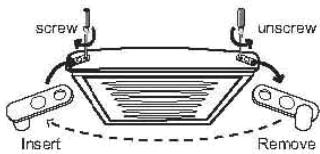
RIESENIE PROBLEMOV 381
Underside view of the freezer door
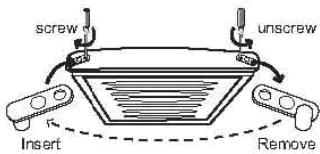
Underside view of the freezer door
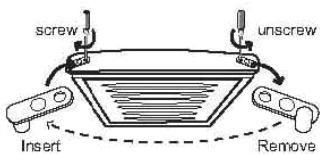
EtuketnpaTe BCnUko 419
PECTEHE HA EHEPTIa 419
ПОДРьЖKA 419
Pa3mpa3yBaHe 419
- a.Pa3BnHTe BnHTOBTe, NOBdHHeTe CkObTe NaHTaTЯ CBaIeTe.
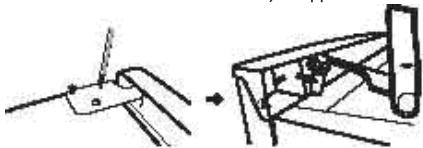
b. OtctpaheTe 6oJIa T cOTBepTKa I oBpHeTe ckOBeTHe Na nAHTaTa, CJIeT ToBa npKauHTe 6oJI T KbM NaHTaTa Ha ckObTa. CbaIeTe Bpata Ta Ha XlaDnIHnka.

- a. Повдигн elect roрнata kanaчka ha nantata ha bpaata ha XnaДиИнka и npemeceTe ot ctpaHata, OT KOЯTO keJaete da I NHCTaIInpate.
b. CbaIeTe cpeHaTa paHTa KaTo OTcPaHInTe BnHTOBeTe. NObdIrHeTe BpaTAta Ha φpnsεpaЯ npemecTeTe.
c. OTeTpaHete KaNaKIne Ha BnHTOBeTe I rI NoCTaBeTe Ha npOTIBONIOLOXHaTa CTpaHa.
- OCTpahete aanTepa Ha noJHATA naHTa OT BpaTaHa np3epa. IpeMeCTe aanTep Ha npOTBONOLOXHATA CTpHa. YbepTe ce, ye e nO3nOHHap npabINHO.
Underside view of the freezer door
- a. HakuHHeTe BHNMaTeJIHo XHaIaIIHnKa. Heo6xOaIMM ca 2-Ma duuN 3a da ce HaKIoHn XHaIaIIHnKa 3a npoueDypaT a Ha o6pbUaHe Ha bPaTata.
b. OCTpaHete BUNTOBE N DOJHATA NaHTA. CNeT TOBA OTCpAHETe peryIpyEMITE KpaHTA OT DBeTE CTpaHINrNIOCTaBeTe OTHOBO OT pOTnIBONIOJXHaTA CTpaHa.
- OToCTpaHete BnHTa OTdoJIHaTa NaHTa I ro NoCTabete Ha npOTbONIOJXHaTa CToPaHa. NocTabete OTHOBo Bpata Ta Ha φpns3epa.

-
Clez kato noctabnte bpaata Ha φpns3epa, 3aBnHTe OTHOB cpeDnata naTt (o6pahtata ctpaHa) Ha xlaIJIHnka. YbepTe ce, ye bpaTata Ha φpns3epa e npdpaBHeHa xopnOHTaJIHO i BepTKKaJIHo, Taka Ye ynlbTHeHnraTo OT BCNUKn CTpaHn Ca 3aTBOpEHN, ppeHn Da 3aTeRHeTe naHTata
-
Пoctabete OTOHO BpataHa XlaDInHnka.YbepeTe ce,Ye bpaTATA Na XlaDInHnKa e NOpDaBHeHa XOIN3OHTaIHO IN BepTKaIHo Taka,Ye YIpIbTHeHnIa Ta Da ca 3aTbOpEHN OTCBNUKc STpaHn, PpeDN KpaIHO da 3aTeHETe rohpata naHa.
a. NocTaBete CkObHTe Ha NaHTaTaN 3aBnHTeTe KbM rOpHaTa Yact H XlaDnHnKa.
b. Ako e Heo6xoJMo, n3noI3BaIe raeueH KInu 3a da rI 3aTeHHeTe.
- Пoctabete OTHOBO rOpHnI KAnak I ro 3aTeHrHe T C BInHTobete. IperJIeJaIe OT CTbNka 1a Do 1c 3a noDpo6hOCTn
- CmHa Ha dpbkkaTata (MeToDbTe eEDH n CbU 3a BpaTaT a Ha XlaDnIHHka n Ha pnp3epa)
a. OCTpnaHete Btynka ot ropnata ctpaHa Ha BpaTata, KaTo y HnctaInpate B IyBaTa CmMetpnHa N03uZna.
b.OTcpahe Te DBeTe CtpaHn Ha KaNaUkata Ha NlaCTMaCobNr OTBOp IdpbXkKaTc OTBepTkA,
c.ФИКСИРаTe rH nA npOTnBONIOJXHaTc TpHa.N.CLOKTe KanaUkTa H nIaCTMaCobNЯ O TBOP, KOITo e 6nI pa3nOIOJxH, KbTeO Ce HAMpaT B MOMeTAp bKHTe.
IpoBepe IBaIbTn, dAJIIN BpaTATA e NOpArBHeNA npABINHO IN BCUKN YIbTHENHc Ca 3aTBOpEHNOT BCUKN CTpaHn. Ako e Hno6xoDmO da perynipate NOBtropHO perynipauNTe Kpaeta
3A6EJIEXKKA: Ako Jeaete Da CMeHnte NocOKaTa Ha OTBapHe Ha BpTaT, Hne Bn npenOpbUbaMe da Ce CbpxTe C KBaIINΦuPah TexNk. Bne Tpr6Ba Da ce OnItate Da oBpHete NocOKaHa BpTaT a Camn, Camo aKO CMrTaTe, Ye IMate KBaIINΦuKauJra Ta 3a da ro HanpaBite.
BcnuKOn OTCpaHeHn ChTn Tp6BaJa 6bDat 3aana3EHn, 3a Da Ce N3BpNIO NobTOPHO INHCTaJInpAne Hn Bpata. Bn Te Tp6BaJa nocTaBnTE XlaIINHnKa Pp3eR Bpyx HeoTo TbPdo, Taka He Da He no3BOJBA pIb3rAne No Bpeme Ha npOeca Ha CmHa Na Bpata. He NocTaBnTe XlaIINHnKa Pp3eR B IeHnala No3uNna, TbKATO ToBA MoKe Da NobPeDn OXIAaJdaaata CnCTema. YBepTe Ce, Ye XlaIINHnKa Pp3eR e IzKIIIOueH n npa3Eh. Hne npenOpbYBaMe HamecaTa Ha 2-Ma YOBeKa 3a Da Ce I3BpNn CrIo6BaHaeTO.
OTCTPAHRABE HA IPIOBJEMN
Ako ypeDbT he pa6oTn, Korato e BkIouen, npObepeTe.
- Ппекьсвае на[elekntpчесво: Ако[btpeшат Temнретура на оделенeto
XlaДиИннк/Фпзэр e -18°C по-NИСКа, korATO се bьзсанови[elekntrpvceKOTO
3харазвах, xpaHа та щ ecьд Заэпашина. XpaHаТВ XlaДиИннka/Фпзэр ще octa hare
Замралени за OKОLO 16 саць сztвореша врata. И отваряпт врата на
XlaДиИннka/Фпзэр поеве OT Heo6xOdMOTO.
- Пюдунтьт e пpoектуари и пюизbereding само за домашиуnotpe6a.
- Μενκεβt e noctabEn npaBnHb B KOHTaTaN daJN 3axpaHbAHeTo e BKIoueHo. (3a da npOBepnte 3axpaHbAHeTo B KOHTaTaN BKJIoueTe dpyr ypeJ).
- Празиелгунглркьсвчт e n3KlIoHnI/rlaBHHngt pkebcbay e n3KIOUeH.
TemnepaTyphNt KOHTpOJ e HAcTpoE npabuJIHO.
Ako XlaadnHnKbTe npeKaIeHO cTyeH,MOKe CnyaHNO da cTe HaIacNl KJelIoTo Ha KOHTPOJIHHa TepMOCTaHa NO-BVCOKa N03uq.
Ako xlauiHnKbTe npekaleHoToBJI, KOMnPecOpbT MoKe Da He pa60Tu.3aBbPteTe peryIaTopa Ha TepMoCTata Ha MaKcMaJHa CToIHoCT N 3uKaaiTe HraKOJIko MmHyTu. Ako He 6bJe Uyt uym, ToH pe60Tu. Cb6pKeTe ce c MeCTHnMaRa3Hn, KbDeTo e HappaBeHa NOKynkata.
Ako ce noBn KOHdEn3 n3BbN XnaDnHnka, TOBa MoKe Da ce DJIInnHa npomraBa CtaHnata TempepaTya. N36bPwTe BCNUKc OCTaTbU ONBlaRa. Ako npo6IeMbT npOdbJnKaBA, CBpXeTe Ce C MeCTHnMa rAa3nHa, KbDeTo e HapnPabeHa nokynkata.
Ako npedoctabehnnt 6e nclcne 6bn cmehen, npobepete daHIOHOBnT e Cbbp3aH npabnIHO. Ako cIeNtBpUbaHe na npOBepKIne no-rope ypeDbT BCE oue He pa60TN, MOJcCBpKeTe ce c OTdeN O6cNyKBaHe Ha KIneHTN.
H3XBbPJIaHE HA CTAPN UPEIaN
To3n ypeE e MapknpaH B cBtOBtCTBnE C EbponeiCKaTa DnpkeKTnBa 2012/19/EC oTHocHO OtnaDbuNTe OT eJeleKtpnuecKO n eJeleKtpoHHO o6OpyDbaHe (OEEO).
OEOCbIbpJkaKaKTo 3aMbpcaBauN BeueCTBa (KoITOMorat Da npuHnT OTPuCaTeHNn NocLeiuz 3a OKoJIhata CpeDa), Taka n OCHOBn KOMIOHEHTN (KOITOMorat Da 6bDat NOBTOPOHO3N0JI3BAHN).
Baxho e OEOE Da 6bJe nOIoJxHo Ha cneuHnO TpeIpaHe, 3a Da ce OTcpanrT yHnOxoKAT npaBnHIO BCNUKn 3amBpcnteIN n Da ce cb6epaT n peuNKInpAT BCNUKn MaTePnaJI.
OTdJIHnTe rpaKaDaHmOrat Da n3nIgPaT BaxHa PoJa KaTo rapaHTnpaT, Ye OEOE Hma Da ce npBbPah T npo6Jem 3a OkolHata CpeJa; BaxHo e da Ce CneDbat HraKoN OCHOBn IpabVila:
OEEO He Tp86Ba da ce TpeTnpa KaTo 6ntOBu OTnaDbu.
OEOE Tp86Ba Da ce npedabat Ha cBtBeHTHe pYHKTOBE 3a Cb6puAne, ynpablaBAHn OT o6uHaT aIIN O ternctpnpani dpykce7Ba. 3a rolemn OEoB MHOrO DbpKABm MOKe da nMa Bb3MOxHocT 3a B3MaHe O T doma.
B M Horo DaBpKABn, KORato 3aKynite HOB ypeD, CTapnT MoKe Ja 6bJe BbpHa Na TbproBeca, KoITo Tpa6Ba da ro B3eMe 6e3nPaTH Ho aOCHOB eHNO 3a eHNO, CTna OB3aBekDaHeto da e OTe EKBVAJIeHTEN TIN N da HMa CbSHTe ΦyHKuN KaTO npedeocTabeHO To Takoba.
CbotBeTCTBHe
C noctabaryheTo hA C E MapknipobkA Bbpxy TO3n IpoIyKT NOTBpJxJaBaMe cBtBTCTBHeTO Ha BCmKu EBpOneIckn N3NcKBaHn 3a 6e3oNaChOCT, 3dpaBe I Oana3BaHe Ha OKoJIHaTa CpeDa, npInIOKIMN OT 3aKHOHaTeJICTBOTo 3a TO3n IpoIyKT.
ÖSSZEGZÉS
BIZTONSÁGINFORMÁCIÖK 427
CANDY COMBI. 434
Klimaosztaly 434
SZÁLLITÁSRA VONATKOZÓ INFORMÁCIÖK 434
TELEPITÉSRE VONATKOZÉ LÖÍRÁSK 435
A FAGYASZTOLÁSA HASZNÁLATA 435
KOMBINALT MUKÖDÉS 436
Underside view of the freezer door
He Nolb3yI TeCb OTKpbITbIM PJIaMeHem N ICTOCHNkamn BOCPJIaMeHEnH;
TüaTeJbHO npOBeTpIte NOMEuEHe, B KOTOpOM yCTaHOBJIeH 3JIeKTPoPnp6Op.
BHIMAHNE!
3aBopauHbAite npOkyTbI:HTo6bI n36eKaTb IpeeaHn 3aNaXOB u BblcIxAHnnaPiOyKTOB, INx CLeNyET pa3dJeBHO yNAKOBBaTB nIIN pNkPbIBaT.ΦpyKbI N OBOU Hne HuyHo 3aBOpauHbTaB yNAKOBY.
IOTOBbIe 6IIOda cIeNyET npaBnIbHO oxJaXdAaTb: npexJe Yem NOpMaTaB npriTOBJIeHHoe 6IIOoB XOIOJbHNIK, IOIOJxDITe, IOKa OHO OCTbIHet. 3To IO3BOJIHT N36ExKaTb NOBbIIeHINa TEMpepaTybl BHYTpN XOIOJbHNIKA.
3aKpbIbAte Dbepy!: YTO6bI N36eKaTb YTEckn XOLOHOrO BO3Dyxa, NOCTapaiTeCb peke OTKpbIBaTb DBepy XOLOHbNHka. PpeKJe Cem NOMEuTaB KYPIENHHbIe pNOyKTb B XOLOHbNHk, paccOpTyPeIx. OTKpbIbAte DBepy ToJIbKO DIA TORO, YTO6bI BbHYb INI NIOJOKHTb pNOyKTbl.
3OhbI xpaHeHHI npOyKTOB XOJOIDJIbHHKe
PpoxlaHna 30Ha: MeTo, rIe npOyKtB6dyT xpaHnTbCra DIOJIbSe, eCIn OHn 6dyT pOxlaNbIMM. MoIOKo, Rua, HOrpytB, fpyKTOBbIe cOKN, TBePbIe cbIpB, TaKHe KaK Yedep. OTKpbITbIe baHKn I 6byTbIK 3aIpaBOK dIra CAnTob, CoycOB u BapeHN. KIpOBbIe npOyKtB, HaprIMEp, CImBOHoe MaCIO, MaprapINH, MaLOXHPbIE CNpeDbl, KyINHApHbIe XkpBIs n CmaJIeLc.
XoIouHa 30Ha (ot 0^ do +5^) MeCTO, rIe CIEyET XpaHHTb npOdyKtby, TempepaTypa KOToPbIX DoJnxHa 6bITb HN3KOH:
CbIpbIe I HEnpIroTOBJIeHIIbe IpoJyKtI HeO6xOJIMo O6ra3aTeJbHO XpaHnTb ByNaKOBKe.
-ToTobBie OXnaJdeHbIe npOdyKtbl, TaKHe KaK rTOBbIe 6JIoJa, MArchBie NIpOrn, MArKMe CbIpbI.
-ITOBbIe MrcOIpOdyKtby,HaipMep,BetHnHa.
TTOBbIe cAlaTbI (B TOM YINcIe yNtKOBaHHbIe 3EJIeHbIe cAlaTbI-CMEci, PmCOBbIe N KApToΦeJIbHbIe cAlaTbI n T.D).
DecepTbI, HApnIpMep, HeKnpHbIM MAnKm CbIp, DmAmShHe 6JIOna H OCTaKN IIO60 TopTbIC Kpeom.
KonteHepIa OboeI n opykToB: 3TO camaB bIaXHaJ 3OHa XoIIOuNlbNHa. OBOU, opyKtbl, CBexKe IpoDyKtbl dIra caIata N.T.D. 3deCb MOxHO xpaHITb HeMbITb I caIaT-NAtyK, ceJIbHble TOMaTb, peINc I T.D.
PEKOMEHdyETcXPAHNTB BCE IPOdyKTbIДЯ CAJATOB B yNAKOBE.
PIMMEUHNE. Cbpoe Maco, PnTu y np6y cneuyet o63aTeIbHO 3abOpauBaTb B 06epTkU xpaHtB Ha cAmo HnKHe NpKe B HnKHe Yactn XOLOdNbHnKa. 3To npEDoTbPaTNT KOHTKT I nonaDaHne cokOB Ha dpyrne npOdykTbI. He CTabBe T B XOLOdNbHnK BocPnaMeHnoUmeCe ra3bI nII KnDkoCTN.
EcnI TeMnepaTpya B MOpOzHbNHO KaMepe nocle 3 YacOB pa6oTbI BblIe -12°C, 3aropaeTcra HnHaBbH bINDnKaTOp IN 3ByUHT 3yMMep.
XpaheHne 3amOpOjKeHHbIX IpoDyKTOB
YnaKOBaHHbIe npOdykTbI, npedBapntelbHO 3amOpoxHeHbIe B npOMbUHeHHbIX yCLOBnIX, cIeDyET XpaHINb B COOTBcTCTBm C INHCTpyKUnA Mx npOn3BOJNTeIe IpnX MOPo3NJIbHbIX OTJeHNI. TOb6bl Do6bIbCS HAnlyuWero KauchTeBa npOdyKTO, IOCTMHyTORO npOn3BOJNTeIe M 3amOpoxHeHHbIX npOdyKTOB, nIOdEepKInBaBweroCpeaJIIN3ATopOM npOdyKTOB NITaHIN, cIeDyET NOMHtB cIeDyIOUee:
- PomeuAte NaKeTb I MOpO3nIbHnK KaK MoXHO 6bICTpee NocIe INx npno6peTeHnA.
- He npebbIaIe cpoKxpaHEnH («IcnoJb3ObaTb Do...», «Cpok rOndocTn»), yka3aHHbIe Ha ynaKOBKe.
Underside view of the freezer door
- a. OctopoKHO haklonHte XoIoDnIbHnik. ДянakLoHa xoIoDnIbHnka B npOceCe CmHebl HappaBLeHnA OTKpbBaHnA Dbepeu Tpe6yIOTcra 2 chNoBeKa.
b.ИЗВЕКЛТЕ ВINTьи CBHIMITE HIXKHIIOI PeTIIIO.3aTeM CBHIMITE peryIINpyEmblc HoJKN C O6eHX CTOPOH I nepeCTaBbTe Ha npOTnBOIOnIoXHyIO CTOpOHy.
- BbIkyTIne BnHTbI NnHKeI neTIn I nepeCTaBbTe Ha npOTnbOIOJNOJHXHy O CTOpOHy. YctAHOBtE DBepu MOpO3JIbHO KAmepbI Ha MeCTO.
