CYLINDRA - Range hood FABER - Free user manual and instructions

Find the device manual for free CYLINDRA FABER in PDF.

📄 17 pages English EN 💬 AI Question
Notice FABER CYLINDRA - page 2
View the manual : Français FR English EN
Manual assistant
Powered by ChatGPT
Waiting for your message
Product information

Brand : FABER

Model : CYLINDRA

Category : Range hood

Download the instructions for your Range hood in PDF format for free! Find your manual CYLINDRA - FABER and take your electronic device back in hand. On this page are published all the documents necessary for the use of your device. CYLINDRA by FABER.
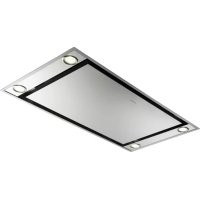
USER MANUAL CYLINDRA FABER

  • Installation Instructions
  • Use and Care Information

READ AND SAVE THESE INSTRUCTIONS

The Installer must leave these instructions with the homeowner. The homeowner must keep these instructions for future reference and for local electrical inspectors' use. READ THESE INSTRUCTIONS BEFORE YOU START INSTALLING THIS RANGEHOOD

WARNING: - TO REDUCE THE RISK OF A RANGE TOP GREASE FIRE: a) Never leave surface units unattended at high

settings. Boilovers cause smoking and greasy spillovers that may ignite. Heat oils slowly on low or medium setting. b) Always turn hood ON when cooking at high heat or when flambeing food (i.e. Crepes Suzette, Cherries Jubilee, Peppercorn Beef Flambé). c) Clean ventilating fans frequently. Grease should not be allowed to accumulate on fan or filter. d) Use proper pan size. Always use cookware appropriate for the size of the surface element.

WARNING: - TO REDUCE THE RISK OF INJURY TO PERSONS IN THE EVENT OF A RANGE TOP GREASE FIRE, OBSERVE

TO PAGE 4. WARNING - To Reduce The Risk Of Fire, Use Only Metal Ductwork. Cold Weather installations An additional back draft damper should be installed outside to minimize backward cold air flow and a nonmetallic thermal break should be installed to minimize conduction of outside temperatures as part of the vent system. The damper should be on the cold air side of the thermal break. The break should be as close as possible to where the vent system enters the heated portion of the house. ! WARNING

  • Venting system MUST terminate outside the home.
  • DO NOT terminate the ductwork in an attic or other enclosed space.
  • DO NOT use 4" laundry-type wall caps.
  • Flexible-type ductwork is not recommended.
  • DO NOT obstruct the flow of combustion and ventilation air.
  • Failure to follow venting requirements may result in a fire. ELECTRICAL REQUIREMENTS A 120 volt, 60 Hz AC-only electrical supply is required on a separate 15 amp fused circuit. A time-delay fuse or circuit breaker is recommended. The fuse must be sized per local codes in accordance with the electrical rating of this unit as specified on the serial/rating plate located inside the unit near the field wiring compartment. THIS UNIT MUST BE CONNECTED WITH COPPER WIRE ONLY. Wire sizes must conform to the requirements of the National Electrical Code, ANSI/NFPA 70 - latest edition, and all local codes and ordinances. Wire size and connections must conform with the rating of the appliance. Copies of the standard listed above may be obtained from: National Fire Protection Association Batterymarch Park Quincy, Massachusetts 02269 For residential use only. Before servicing or cleaning unit, switch power off at service panel and lock the service disconnecting means to prevent power from being switched on accidentally. When the service disconnecting means cannot be locked, securely fasten a prominent warning device, such as a tag, to the service panel. CAUTION: For General Ventilating Use Only. Do Not Use To Exhaust Hazardous or Explosive Materials and Vapors. WARNING - TO REDUCE THE RISK OF FIRE, ELECTRICAL SHOCK, OR INJURY TO PERSONS, OBSERVE THE FOLLOWING: Installation Work And Electrical Wiring Must Be Done By Qualified Person(s) In Accordance With All Applicable Codes And Standards, Including Fire-Rated Construction. Sufficient air is needed for proper combustion and exhausting of gases through the flue (chimney) of fuel burning equipment to prevent backdrafting. Follow the heating equipment manufacturer's guideline and safety standards such as those published by the National Fire Protection Association (NFPA), and the American Society for Heating, Refrigeration and Air Conditioning Engineers (ASHRAE), and the local code authorities. When cutting or drilling into wall or ceiling, do not damage electrical wiring and other hidden utilities. Ducted fans must always be vented to the outdoors.
  • Electrical ground is required on this rangehood.
  • If cold water pipe is interrupted by plastic, nonmetallic gaskets or other materials, DO NOT use for grounding.
  • DO NOT ground to a gas pipe.
  • DO NOT have a fuse in the neutral or grounding circuit. A fuse in the neutral or grounding circuit could result in electrical shock.
  • Check with a qualified electrician if you are in doubt as to whether the rangehood is properly grounded.
  • Failure to follow electrical requirements may result in a fire. Version 9/10 - Page 2
  • Phillips Screwdriver
  • Flat Blade Screwdriver
  • Wire Stripper or Utility Knife
  • Duct Tape This rangehood can be installed as either ducted or ductless. When ducting outside, the blower can be vented through the wall or ceiling. To vent through a wall, a 90° elbow is used. When installed ductless, the rangehood vents out of the top of the chimney. Ductless installations require Charcoal Filters, available from your dealer. WARNING! BEFORE MAKING ANY CUTS OR HOLES FOR INSTALLATION, DETERMINE WHICH VENTING METHOD WILL BE USED AND CAREFULLY CALCULATE ALL MEASUREMENTS. RANGEHOOD COMPONENTS

F. PVC DUCTLESS PIPE

  • Charcoal Filter Kit For non-vented installations only
  • it is highly recommended that professional style cooking always be vented to the outside part #620000041
  • CFM reduction kit For make up air environments, converts the Cfm of this hood to under 300 cfm part #CFMRED ! WARNING

PERSONAL INJURY HAZARD

Because of the weight and size of the rangehood canopy, two or more people are needed to move and safely install the rangehood canopy. Failure to properly lift rangehood could result in damage to the product or personal injury.

  • Glass Kit 20" deep by 36" wide glass "canopy" that mounts to the bottom of the Cylindra Part # GLSCYLN
  • Remote Control Use a wireless remote to operate the rangehood part #REMCTRL

The ductrun should not exceed 35 equivalent feet if ducted with the required minimum of 6" round duct. Calculate the length of the ductwork by adding the equivalent feet in FIGURE 2 for each piece of duct in the system. An example is given in FIGURE 3. 45˚ Elbow 90˚ Elbow 90˚ Flat Elbow Wall Cap FIGURE 2

9 Feet Straight Duct

FIGURE 3 For best results, use no more than three 90° elbows. Make sure that there is a minimum of 24" of straight duct between elbows if more than one is used. Do not install two elbows together. If you must elbow right away, do it as far away from the hood's exhaust opening as possible. Version 9/10 - Page 4 PRODUCT DIMENSIONS 17 1/8” FRONT 35 1/16” 21 1/4” 13 3/4” 18 5/16” 14 9/16” 5 3/4” /8” 17 1/8” 4 7/16”

OVERALL NOTE: The installation diagram in FIGURE 4 on the next page is used for the recommended installation height of 24" off the cooktop. For maximum installation heights of up to 30" off the cooktop, add onto the horizontal line of 42 5/16" in FIGURE 4. For example add 6", or 48 5/16" total, to install 30" off the cooktop. NOTE: For 8" ceilings, the Cylindra should be installed at 24" off the cooktop and the hood is mounted at the ceiling. For higher ceilings, the Cylindra is mounted at 24 - 30" off the cooktop and is installed "floating" in the middle of the wall, not at the ceiling. Version 9/10- Page 5 DUCTED INSTALLATIONS NOTE: When installing the hood in the ductless version, 1. The Cylindra hood offers flexibility in ducting. See (FIGURE leave at least 4" between the top of the hood and the 6), using 6" rigid metal ducting, the hood can be ducted straight ceiling for proper air circulation. up or with an elbow to the back of the hood at the 6 7/8" tall x

PREPARE THE WALL FOR ALL INSTALLATIONS

6 11/16" wide opening next to the wall. 1. Disconnect and move freestanding range from cabinet opening to provide easier access to rear wall. Put a thick, protective covering over cooktop, set-in range or countertop to protect from damage or dirt.

2. Determine and clearly mark with a pencil the center line on the

wall where the rangehood will be installed.

3. Draw a Horizontal line at a minimum of 42 5/16" above the

Cooktop, see (FIGURE 4 for reference)

4. Drill 2 holes at 3 15/16" to the right and left of this line. Check

that the two marks are level, before drilling.

5. Mark a reference point at 15 3/8" above the 42 5/16" line in step

#3 and drill 2 holes 3 15/16" to the right and left of this line. Check that the two marks are level, before drilling. FIGURE 6

1. If ducting out of the top of the hood, carefully remove the pre

cut metal piece at the top of the hood body (FIGURE 7).

2. Attach the Damper (G in FIGURE 1), connect rigid metal 6

inch round ducting to the damper and seal the duct with tape

3. For all ducting directions, using 4 screws (D in FIGURE 8),

to attach the hood body to the support frame on the wall, cover screws with (E screw covers in FIGURE 8). FIGURE 7 FIGURE 4

6. Attach the motor and wall support (B in FIGURE 5), using the

4 - (C) wall support screws.

FIGURE 8 FIGURE 5 Version 9/10 - Page 6 DUCTLESS INSTALLATIONS

1. Install provided PVC pipe directly on top of the motor, and

seal with tape. F in FIGURE 9.

2. Remove the pre cut piece at the top of the hood body

(FIGURE 7). Using 4 screws (D in FIGURE 8), to attach the hood body to the support frame on the wall, cover screws with (E screw covers in FIGURE 8).

3. Install the ductless grille and then the stainless ring above

it with 2 screws (H, I, J in FIGURE 10).

4. Install the charcoal filters (sold seperately) above the

perimetric comfort panel and the grease filter, see (FIGURE

11) for installation. Remove the grease filter and position the

charcoal filter with the pull tabs facing out and forward then snap into place. Place grease filter back into place.

2. Remove the cover from the Field Wiring Compartment with

a phillips screwdriver. Feed the Power Supply Cable through the electrical knockout. (See FIGURE 12) Connect the Power Supply Cable to the rangehood cable. Attach the White lead of the power supply to the White lead of the rangehood with a twist-on type wire connector. Attach the Black lead of the power supply to the Black lead of the rangehood with a twist-on type wire connector. Attach the Power Supply Cable grounding lead to the green screw provided. Using the 4 holes provided screw the Field Wiring Compartment to the wall as dictated by your Power Supply Cable location (screws not provided). Replace the cover. Next connect the control and lighting wires inside the hood above the grease filters as seen in (FIGURE 13).

3. Turn the power supply on. Turn on blower and lights. If the

rangehood does not operate, check that the circuit breaker is not tripped or the house fuse blown. If the unit still does not operate, disconnect the power supply and check that the wiring connections have been made properly.

FIGURE 10 The inside area of the perimetric comfort panel can be cleaned using a damp cloth and is opened by gently pulling the panel down on he front side. The panel can be removed from the hood by sliding the fixing pin to the side, see (FIGURE 14). FIGURE 11

FOR ALL INSTALLATIONS

1. Install the SS comfort panel as in FIGURE 14, to the bottom of

the hood. Slide the fixing pin to install the hinge into place and lock the panel into place by pushing the panel up into the slot. FIGURE 14 Version 9/10- Page 7

The hood can be operated from the control panel located on the front side of the hood or from the remote control, purchased seperately. FIGURE 15 is an illustration of the control panel and FIGURE 16 is the remote control illustration. On the remote control key E and F are controlled with one button. Press the button once for function key "F" - 30 minute shut down". Hold for 2 seconds for function key "E" - 24 hr function.

KAPATR Switches the extractor motor on and off at the latest selected speed

CFM for minutes every hour with noise right side flashes and the motor on. d¸ ş¸ r¸ r.

pişIRME DUMANLARNN TAHLIYESINE UYGUNDUR DEVRE Dş BRAKLABILIR level of just .5 sones. This setting can operate all day and - iken tuşa 3 saniye, motoru her saat baş DAKIKA SàRE ILE MÃSAAT ORANNDA HAVA EMECEK ¥ALşTRR grease BU SàRE DOLUNCA night to refresh and clean your home. After 10 minutes Indicates thatşEKILDE the metal filter MOTOR STOP EDER

24 hr - function every hour, the motor switches off automatically. Press the button again to turn off the 24 hour function. When the grease or charcoal filter saturation alarm is triggered it is possible to reset the alarm by pressing this key for 3 seconds. The indication is visible only when the motor is off.

By pressing this key the 30 minute delay shutdown mode is activated which is used to eliminate any residual odor in the kitchen for 30 minutes. After 30 minutes the hood turns off. It can be turned on at any speed, and it is turned off by pressing the key again or by switching off the motor.

Turns light on and off .

Turns the night / comfort light on and off. 24 hr - function

saturation alarm has been triggered, and 436003288_01 the filters need to be washed. The alarm is triggered after 100 hours of operation See the next page for instructions on resetting the alarm -- 060511 Indicates that the charcoal filter saturation alarm has been triggered, and the filter has to be replaced; The charcoal filter is triggered after 200 hours of operation. See the next page for instructions on resetting the alarm Indicates both the selected speed of the hood and the time left before the hood shutdown. The red dot on the right side flashes alternately displaying the speed and shutdown time. Version 9/10 - Page 8

Schema Electrisch Esquema Eléctrico Esquema Eléctrico Cleaning The mesh grease filters should be cleaned frequently in hot detergent solution or washed in the dishwasher. Stainless steel cleaner should be used on stainless rangehoods. Abrasives and scouring agents can scratch stainless steel finishes and should not be used to clean finished surfaces. Replacing the Lamps Before attempting to replace the lamps, make sure that the light switch is turned off. Remove the 2 screws (as indicated in FIGURE 18) that hold the light support and gently pull the support down from the hood. Remove the lamp from the light support and replace with new lamp. Replace the light support and fix it into place with the 2 screws. An alternative method to replace the lamps is to use a 1 1/4" suction cup (FIGURE 19). Attach the suction cup to the bulb and pull firmly down on the bulb and replace with a new lamp.

  • This rangehood uses 20 watt halogen lamps. FIGURE 17 436003384 SF5_023 rUSE AND CARE CONTINUED 436003384 SF5_023 r- This rangehood system is designed to remove smoke, cooking vapors and odors from the cooktop area. For Best Results Start the rangehood several minutes before cooking to develop proper airflow. Allow the unit to operate for several minutes after cooking is complete to clear all smoke and odors from the kitchen. Grease Filter and Charcoal Filter Alarm Reset When "FF" message appears on the LED screen, the metal grease filters need to be washed in the dishwasher (SEE FIGURE 17 for removal instructions). To reset the metal grease filter alarm and the charcoal filter saturation alarm, turn off the motor and lights. Next, press and hold the 24 hour button "E" until the filter message disappears. FIGURE 18 Charcoal Filter Information FIGURE 19 The charcoal filters should be replaced (as indicated in FIGURE 7 on page 8) when the "EF" message appears on the LED screen or at least every 4 - 6 months depending on heavy usage. The alarm only comes on when the motor is turned on. Charcoal Filter Alarm Activation The filter alarm has to be activated in order to use with ductless installations which use charcoal filters. The alarm can be activated upon installation or at a later time. To activate or deactivate the alarm turn off the motor and lights, and disconnect the hood from the power source. Press and hold the "B" button while reconnecting the power source. Two rotating rectangles will then show on the LED screen and within 3 seconds press and hold the "B" button again, the LED screen shows a confirmation of the chosen setting below: "EF" flashes twice - Charcoal filter saturation alarm ENABLED "EF" flashes once - Charcoal filter saturation alarm DISABLED Repeat the process if you want to change the chosen setting, ie if the filter alarm is disabled, repeat the above paragraph to enable. Once finished with the activation / de-activation, again unplug and plug in the power source to return to normal hood function. FIGURE 20 Remote Control The rangehood can be controlled using the optional remote control which has the control layout (indicated in FIGURE 16 on the previous page). The remote uses alkaline AAA type batteries. To replace the batteries, remove the cover by removing the screw and sliding off the cover (as indicated in FIGURE 20). Do not place the remote control close to heat sources. Version 9/10- Page 9 FABER WARRANTY & SERVICE (SAVE FOR YOUR RECORDS) All Faber products are warranteed against any defect in materials or workmanship for the original purchaser for a period of 1 year from the date of original purchase. This warranty covers labor and replacement parts. To obtain warranty service, contact the dealer from whom you purchased the rangehood, or the local Faber distributor. If you cannot identify a local Faber distributor, contact us at (508) 358-5353 for the name of a distributor in your area. The Following is not covered by Faber's warranty:

1. Service calls to correct the installation of your range hood, to instruct you how to use your

range hood, to replace or repair house fuses or to correct house wiring or plumbing.

2. Service calls to repair or replace range hood light bulbs, fuses or filters. Those

consumable parts are excluded from warranty coverage.

3. Repairs when your range hood is used for other than normal, single-family

4. Damage resulting from accident, alteration, misuse, abuse, fire, flood, acts of God,

improper installation, installation not in accordance with electrical or plumbing codes, or use of products not approved by Faber.

5. Replacement parts or repair labor costs for units operated outside the United States or

Canada, including any non-UL or C-UL approved Faber rangehoods.

6. Repairs to the hood resulting from unauthorized modifications made to the

7. Expenses for travel and transportation for product service in remote locations and pickup

and delivery charges. Faber range hoods should be serviced in the home. Record Your Information Below: Serial #: __________________________ Date of Purchase: ______________ Version 9/10- Page 10

DIMENSIONS DE PRODUIT

INSTALLATIONS SANS CONDUIT

KAPATR Switches the extractor motor on and off at the latest selected speed