AHGB450SI - Air-conditioner AIRLUX - Free user manual and instructions
Find the device manual for free AHGB450SI AIRLUX in PDF.



| Product type | Range hood |
| Brand | AIRLUX |
| Model | AHGB450SI |
| Use | Domestic |
| Minimum safety distance | 650 mm |
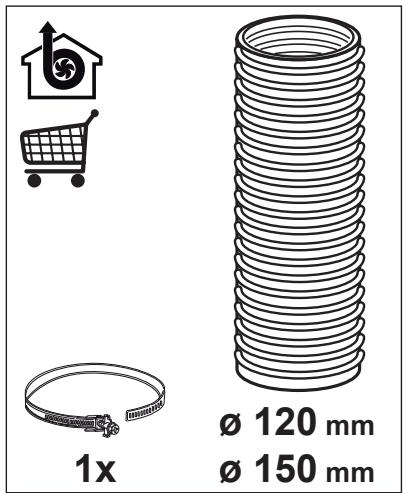
| Exhaust duct diameter | 120 mm minimum |
| Supply voltage | 220-240 V |
| Frequency | 50/60 Hz |
| Number of speeds | 3 |
| Lighting | Yes (L control) |
| Grease filter | Dishwasher safe, replace every 2 months |
| Activated carbon filter | Not washable, replace every 4 months |
| Exterior cleaning | Damp cloth and neutral detergent |
| Electrical class | Class I (grounding required) |
| Material | Stainless steel |
| Estimated net weight | 8 kg |
| Estimated dimensions (W x D x H) | 600 x 500 x 150 mm |
| Controls | 3 buttons (L: lighting, M: motor, V: speeds) |
| Use | Kitchen odor elimination |
| Safety | Do not flambé under the hood, fire risk |
Frequently Asked Questions - AHGB450SI AIRLUX
User questions about AHGB450SI AIRLUX
0 question about this device. Answer the ones you know or ask your own.
Ask a new question about this device
Download the instructions for your Air-conditioner in PDF format for free! Find your manual AHGB450SI - AIRLUX and take your electronic device back in hand. On this page are published all the documents necessary for the use of your device. AHGB450SI by AIRLUX.
USER MANUAL AHGB450SI AIRLUX
IT LIBRETTO DI USO....3
EN USER MANUAL....7
FR MANUEL D'UTILISATION....11
PT LIVRO DE INSTRUÇÕES PARA UTILIZAÇÃO 16
natural_image
Technical line drawing of a car air conditioner unit with inset view showing internal components (no text or symbols)natural_image
Technical line drawing showing three views of a device with internal components and a magnified inset of a tool (no text or symbols)| Lampada | Assorbimento (W) | Attacco | Voltaggio (V) | Dimensione (mm) | Codice ILCOS |
| trawd | 4 | E14 | 220 – 240 | 107 x 37 | DRBB/F-4-220-240-E14-35/100 |
EN 1. SAFETY INFORMATION
For your safety and correct operation of the appliance, read this manual carefully before installation and use. Always keep these instructions with the appliance even if you move or sell it. Users must fully know the operation and safety features of the appliance.
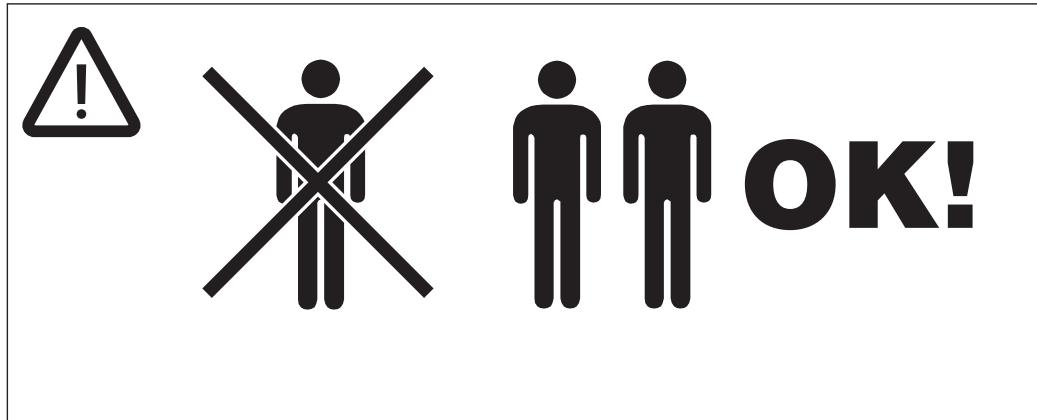
The wire connection has to be done by specialized technician.
- The manufacturer will not be held liable for any damages resulting from incorrect or improper installation.
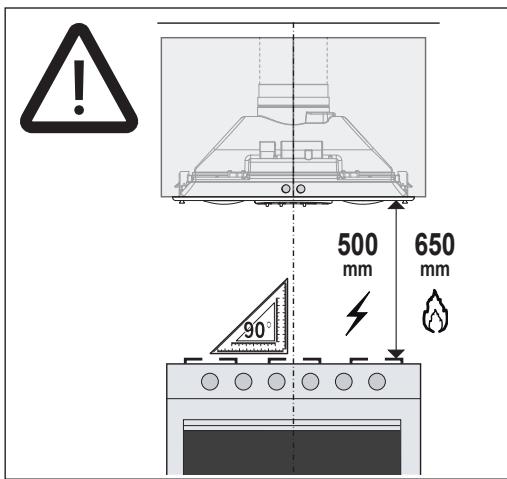
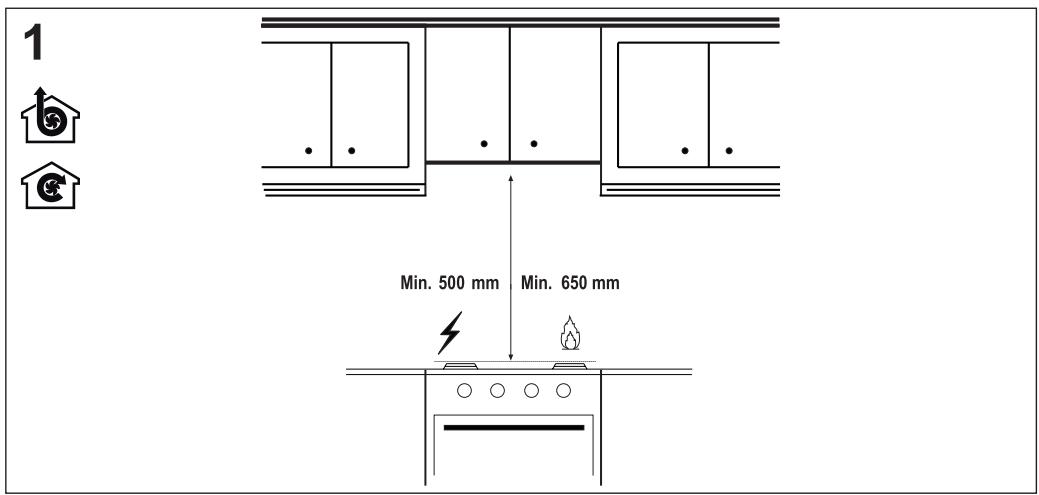
- The minimum safety distance between the cooker top and the extractor hood is 650 mm (some models can be installed at a lower height, please refer to the paragraphs on working dimensions and installation).
- If the instructions for installation for the gas hob specify a greater distance, this must be respected.
- Check that the mains voltage corresponds to that indicated on the rating plate fixed to the inside of the hood.
- Means for disconnection must be incorporated in the fixed wiring in accordance with the wiring rules.
- For Class I appliances, check
that the domestic power supply guarantees adequate earthing.
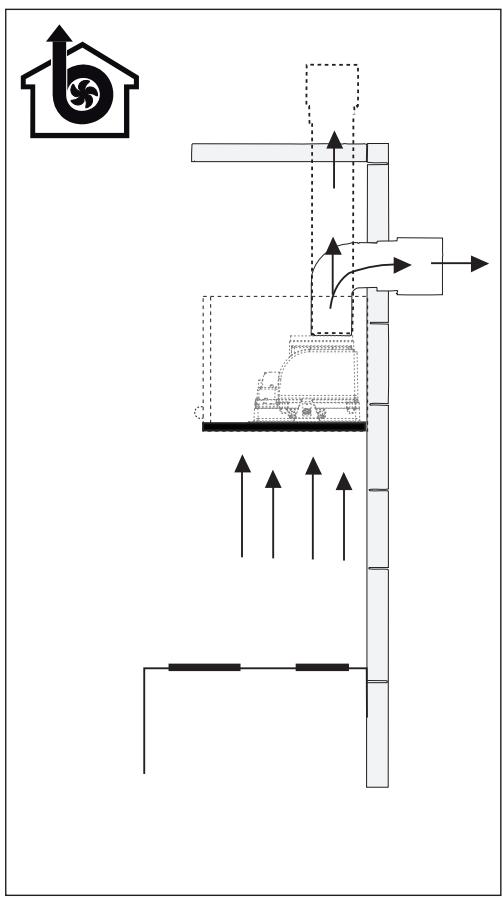
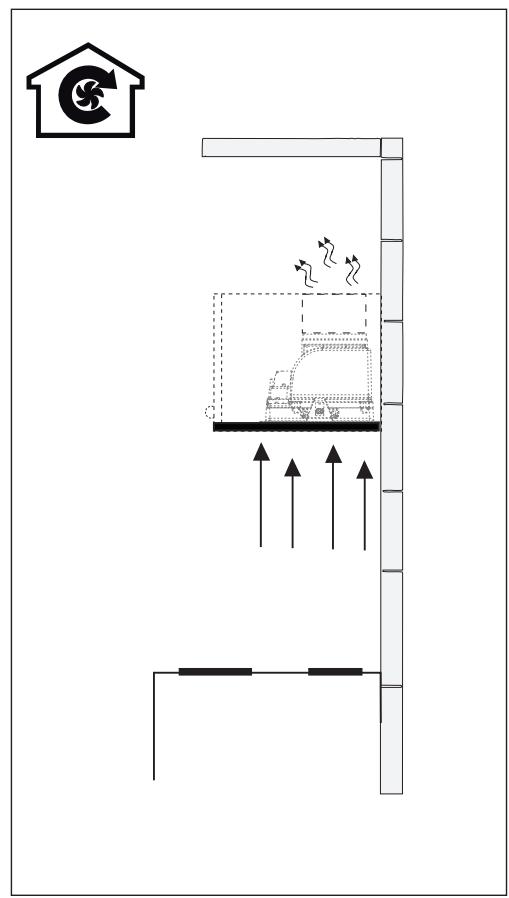
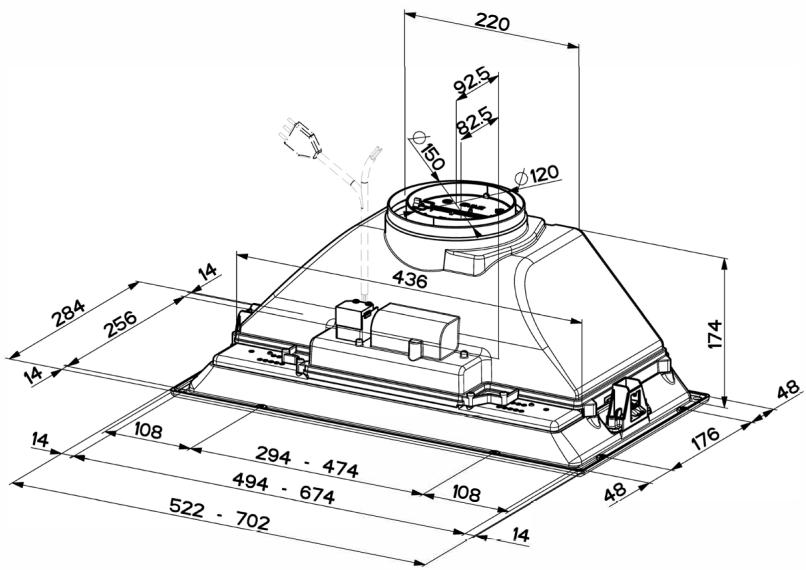
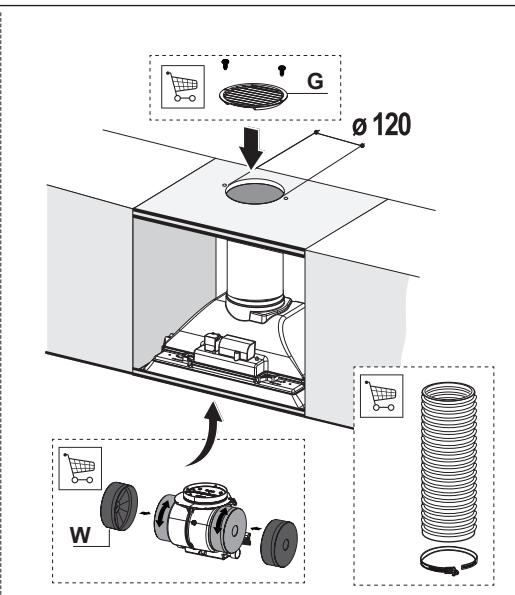
- Connect the extractor to the exhaust flue through a pipe of minimum diameter 120 mm. The route of the flue must be as short as possible.
- Regulations concerning the discharge of air have to be fulfilled.
- Do not connect the extractor hood to exhaust ducts carrying combustion fumes (boilers, fireplaces, etc.).
- If the extractor is used in conjunction with non-electrical appliances (e.g. gas burning appliances), a sufficient degree of aeration must be guaranteed in the room in order to prevent the backflow of exhaust gas. When the cooker hood is used in conjunction with appliances supplied with energy other than electric, the negative pressure in the room must not exceed 0,04 mbar to prevent fumes being drawn back into the room by the cooker hood.
- The air must not be discharged into a flue that is used for exhausting fumes from appliances burning gas or other fuels.
- If the supply cord is damaged, it must be replaced from the manufacturer or its service agent.
- Connect the plug to a socket
complying with current regulations, located in an accessible place.
- With regards to the technical and safety measures to be adopted for fume discharging it is important to closely follow the regulations provided by the local authorities.
WARNING: Before installing the Hood, remove the protective films.
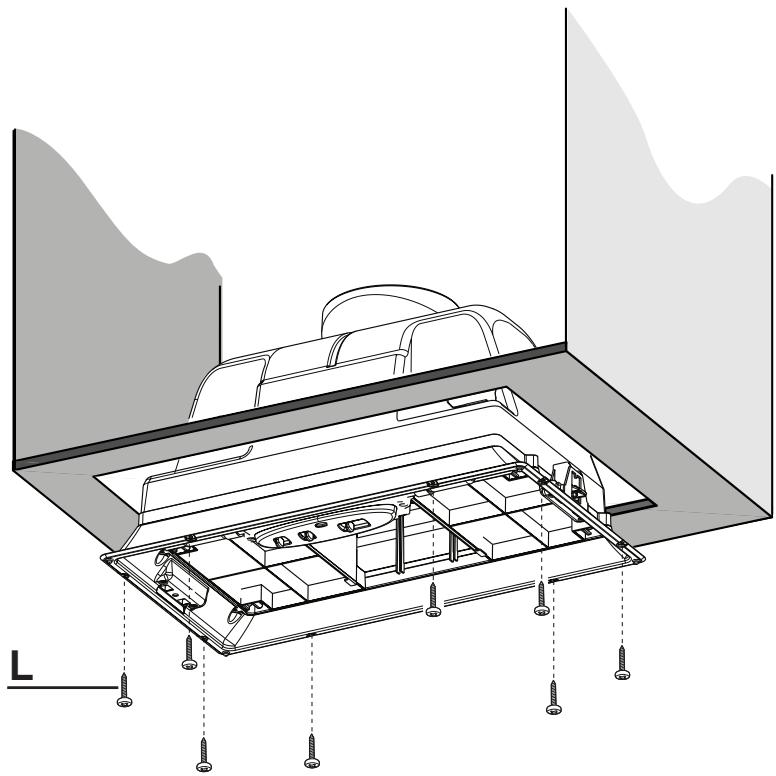
- Use only screws and small parts in support of the hood.
WARNING: Failure to install the screws or fixing device in accordance with these instructions may result in electrical hazards.
- Do not look directly at the light through optical devices (binoculars, magnifying glasses...). - Do not flambè under the range hood; risk of fire.
- This appliance can be used by children aged from 8 years and above and persons with reduced physical, sensory or mental capabilities or lack of experience and knowledge if they have been given supervision or instruction concerning use of the appliance in a safe way and understand the hazards involved. Children shall not play with the appliance. Cleaning and user maintenance shall not be made by children without supervision.
• Children should be supervised to ensure that they do not play with the appliance.
- The appliance is not to be used by persons (including children) with reduced physical, sensory or mental capabilities, or lack of experience and knowledge, unless they have been given supervision or instruction.
⚠️ Accessible parts may become hot when used with cooking appliances.
- Clean and/or replace the Filters after the specified time period (Fire hazard). See paragraph Care and Cleaning.
- There shall be adequate ventilation of the room when the range hood is used at the same time as appliances burning gas or other fuels (not applicable to appliances that only discharge the air back into the room).
- The symbol ✉ on the product or on its packaging indicates that this product may not be treated as household waste. Instead it shall be handed over to the applicable collection point for the recycling of electrical and electronic equipment. By ensuring this product is disposed of correctly, you will help prevent potential negative consequences for the environment and human health, which could otherwise be caused by inappropriate waste handling
of this product. For more detailed information about recycling of this product, please contact your local city office, your household waste disposal service or the shop where you purchased the product.
2. USE
- The extractor hood has been designed exclusively for domestic use to eliminate kitchen smells.
- Never use the hood for purposes other than for which it has been designed.
- Never leave high naked flames under the hood when it is in operation.
- Adjust the flame intensity to direct it onto the bottom of the pan only, making sure that it does not engulf the sides.
- Deep fat fryers must be continuously monitored during use: overheated oil can burst into flames.
3. CARE AND CLEANING
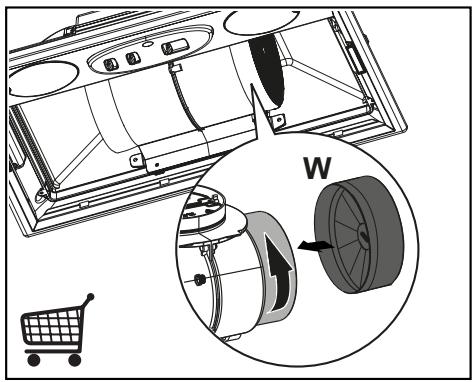
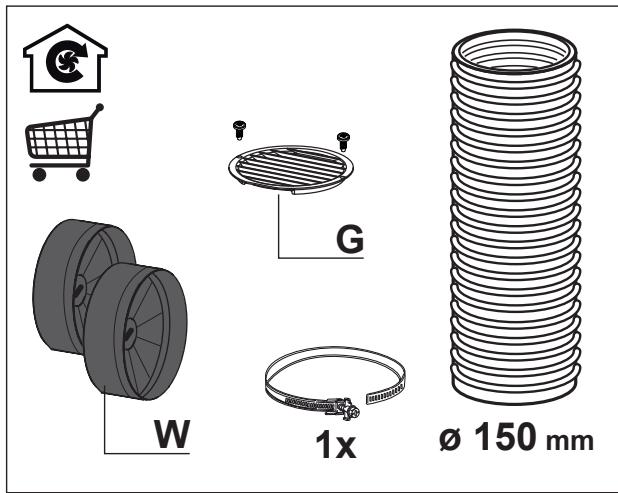
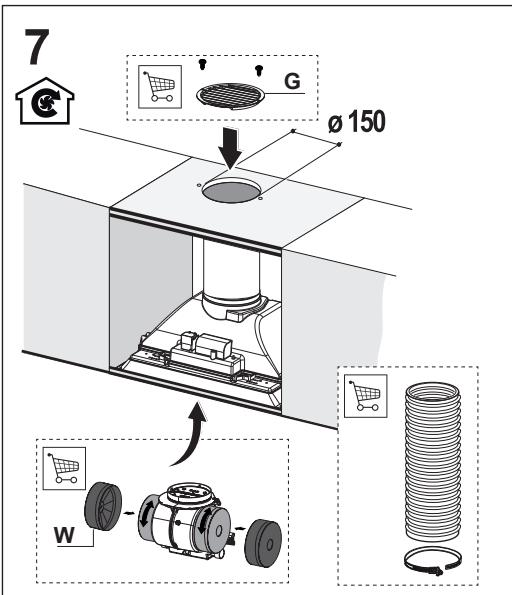
- The Activated charcoal filter is not washable and cannot be regenerated, and must be replaced approximately every 4 months of operation, or more frequently for particularly heavy usage (W).
natural_image
Technical illustration of a refrigerator interior with a close-up view showing the fan blade and wheels, plus a shopping cart (no text or symbols)- The Grease filters must be cleaned
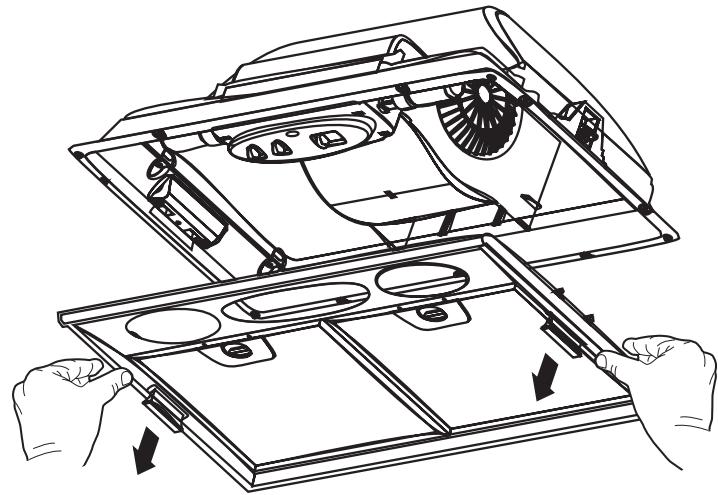
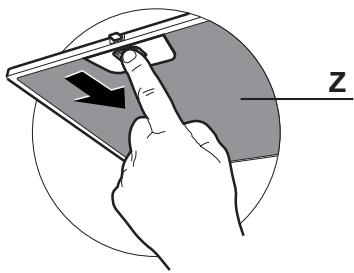
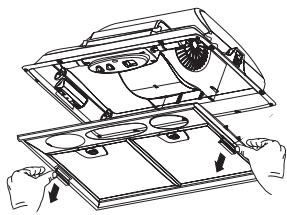
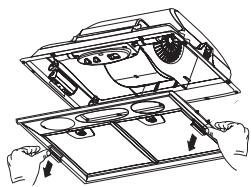
every 2 months of operation, or more frequently for particularly heavy usage, and can be washed in a dishwasher (Z).
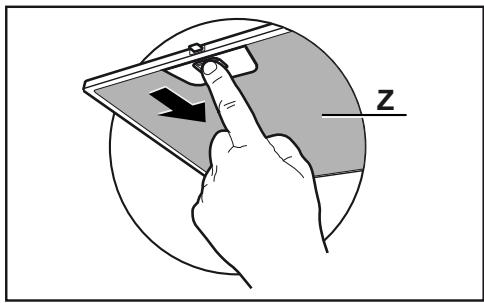
- Clean the hood using a damp cloth and a neutral liquid detergent.
4. CONTROLS
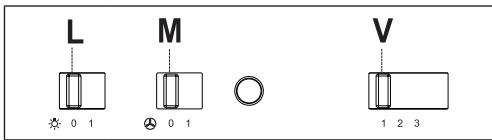
| L | Light | Switches the lighting system on and off |
| M | Motor | Switches the extractor motor on and off |
| V | Speed | Sets the operating speed of the extractor:Low speed, used for a continuous and silent air change in the presence of light cooking vapour.Medium speed, suitable for most operating conditions given the optimum treated air flow/ noise level ratio.Maximum speed, used for eliminating the highest cooking vapour emission, including long periods. |


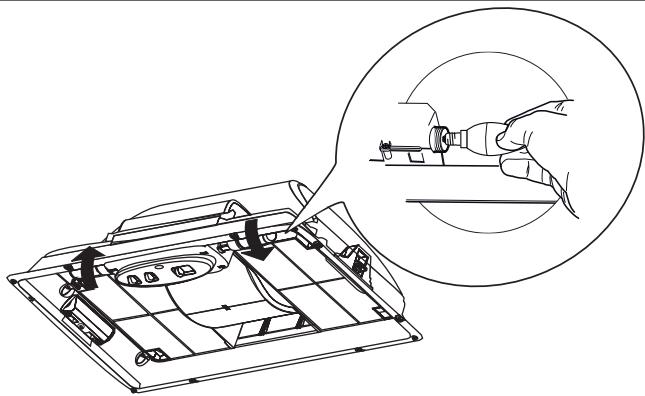
5. LIGHTING
natural_image
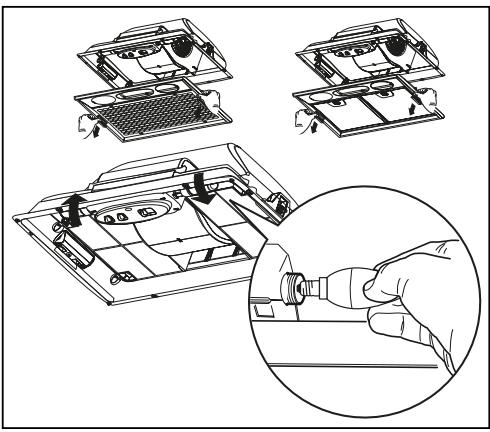
Technical line drawing showing four views of a device with internal components and a magnified inset of a hand using a tool (no text or symbols present)| Lamp | Power (W) | Socket | Voltage (V) | Dimension (mm) | ILCOS Code |
| [BYB+] | 4 | E14 | 220 – 240 | 107 x 37 | DRBB/F-4-220-240-E14-35/100 |
FR 1. CONSIGNES DE SÉCURITÉ
natural_image
Technical line drawing of a refrigerator with an inset showing a wheel and fan assembly (no text or symbols)natural_image
Technical line drawing showing exploded view of a device with internal components and a magnified inset of a hand inserting a plug into a socket (no text or symbols)| Ampoule | Absorption (W) | Culot | Voltage (V) | Dimensions (mm) | Code ILCOS |
| [2043] | 4 | E14 | 220 – 240 | 107 x 37 | DRBB/F-4-220-240-E14-35/100 |
PT 1. INFORMAÇÕES DE SEGURANÇA
natural_image
Technical line drawing of a car air conditioner unit with inset view showing internal components (no text or symbols)natural_image
Technical line drawing showing three views of a device with internal components and a magnified inset of a tool (no text or symbols)natural_image
Technical line drawing of a mechanical device with no visible text or symbols
natural_image
Simple line drawing of a wrench and screwdriver (no text or symbols)
natural_image
Simple line drawing of an open cardboard box (no text or symbols)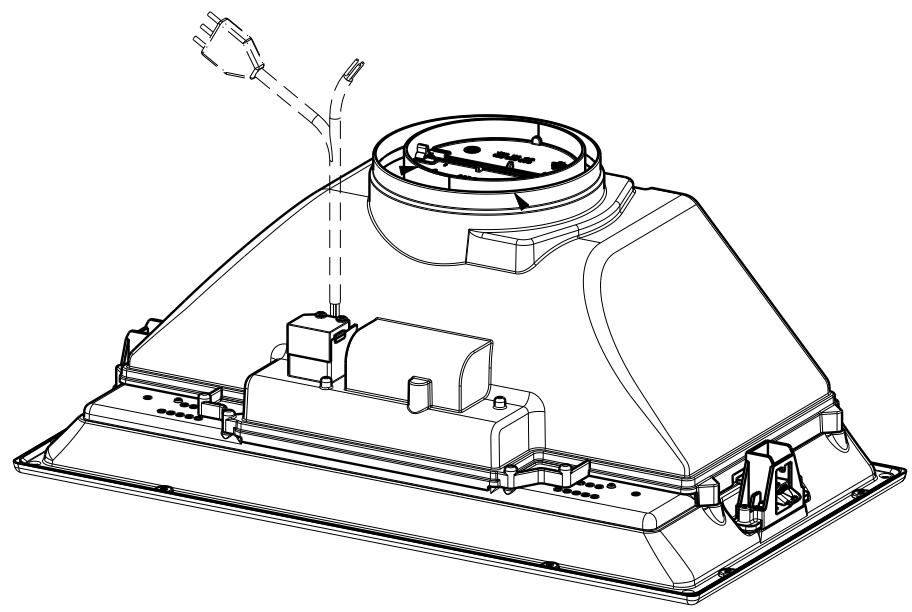
natural_image
Technical line drawing of a device casing with internal components and wiring (no text or symbols)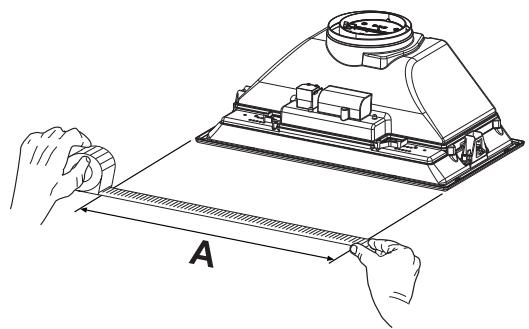
natural_image
Illustration of hands holding a sheet of paper with a mechanical device, labeled 'A' (no text or symbols on the diagram itself)
$$ L = 8 x (A = 5 2 0 \mathrm{mm}) $$
$$ L = 1 0 x (A = 7 0 0 \mathrm{mm}) $$
flowchart
graph TD
    A["House Symbol"] --> B["Flow Direction"]
    B --> C["Building Structure"]
    C --> D["Upward Arrows"]
    C --> E["Downward Arrows"]
    C --> F["Leftward Arrows"]
    C --> G["Rightward Arrows"]
    style A fill:#f9f,stroke:#333
    style B fill:#ccf,stroke:#333
    style C fill:#cfc,stroke:#333
    style D fill:#fcc,stroke:#333
    style E fill:#cff,stroke:#333
    style F fill:#ffc,stroke:#333
    style G fill:#cfc,stroke:#333
2


3


natural_image
Line drawing of a device with open lid and internal fan assembly, hands holding tray (no text or symbols)



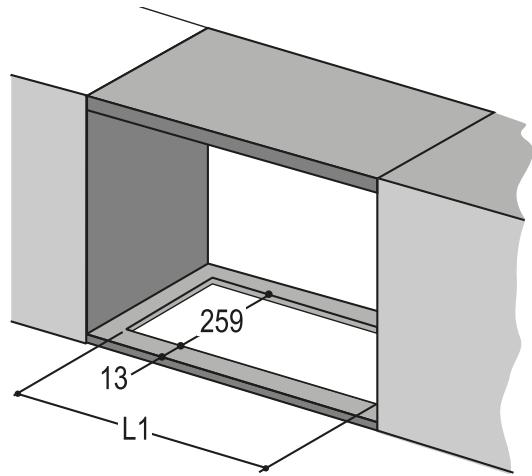
| A | 520 | 700 |
| L1 | 497 | 677 |
5


natural_image
Technical line drawing of an open refrigerator internal compartments with screw fasteners (no text or symbols)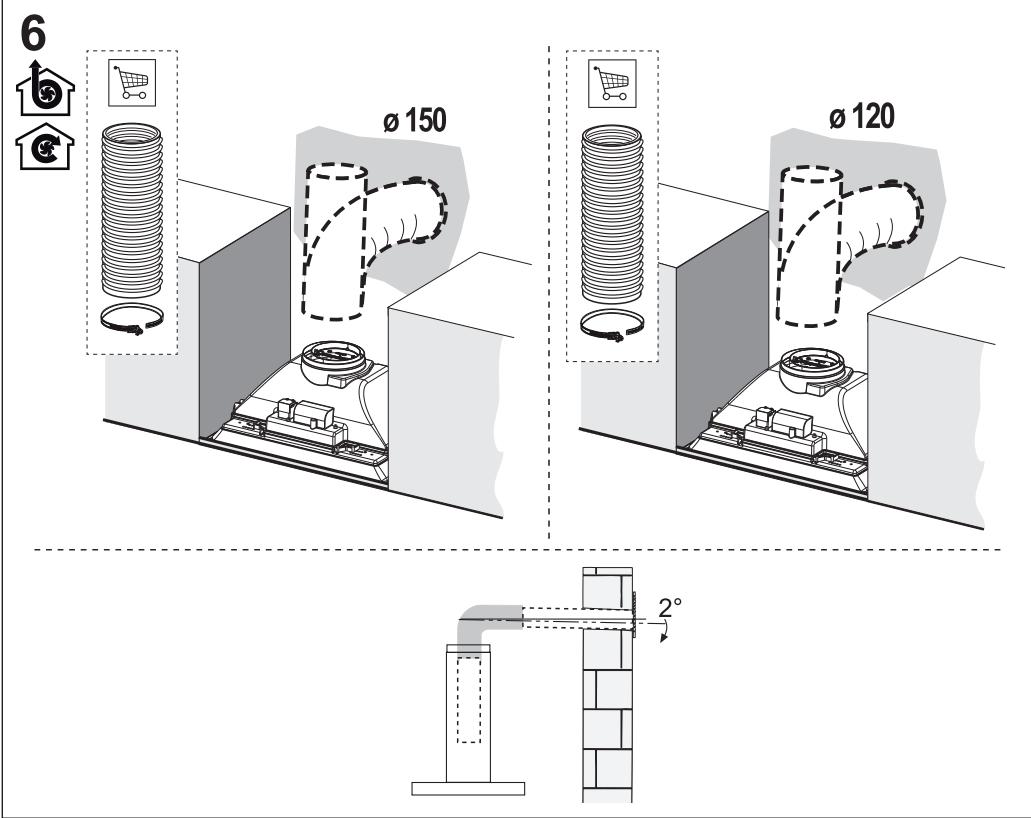
natural_image
Simple line drawing of a double-ended wrench inside a circle (no text or symbols)8


9

natural_image
Technical line drawing of a mechanical assembly with hands installing components (no text or symbols)
natural_image
Technical line drawing of a mechanical device with an inset showing a circular component labeled 'W' (no text or symbols present)10


natural_image
Technical line drawing of a mechanical assembly with hands installing components (no text or symbols)