
3600 - Sewing machine HUSQVARNA - Free user manual and instructions
Find the device manual for free 3600 HUSQVARNA in PDF.


User questions about 3600 HUSQVARNA
0 question about this device. Answer the ones you know or ask your own.
Ask a new question about this device
Download the instructions for your Sewing machine in PDF format for free! Find your manual 3600 - HUSQVARNA and take your electronic device back in hand. On this page are published all the documents necessary for the use of your device. 3600 by HUSQVARNA.
USER MANUAL 3600 HUSQVARNA
natural_image
Black-and-white abstract pattern with floral and geometric shapes, no text or symbols presentViking 3600 Operating Manual
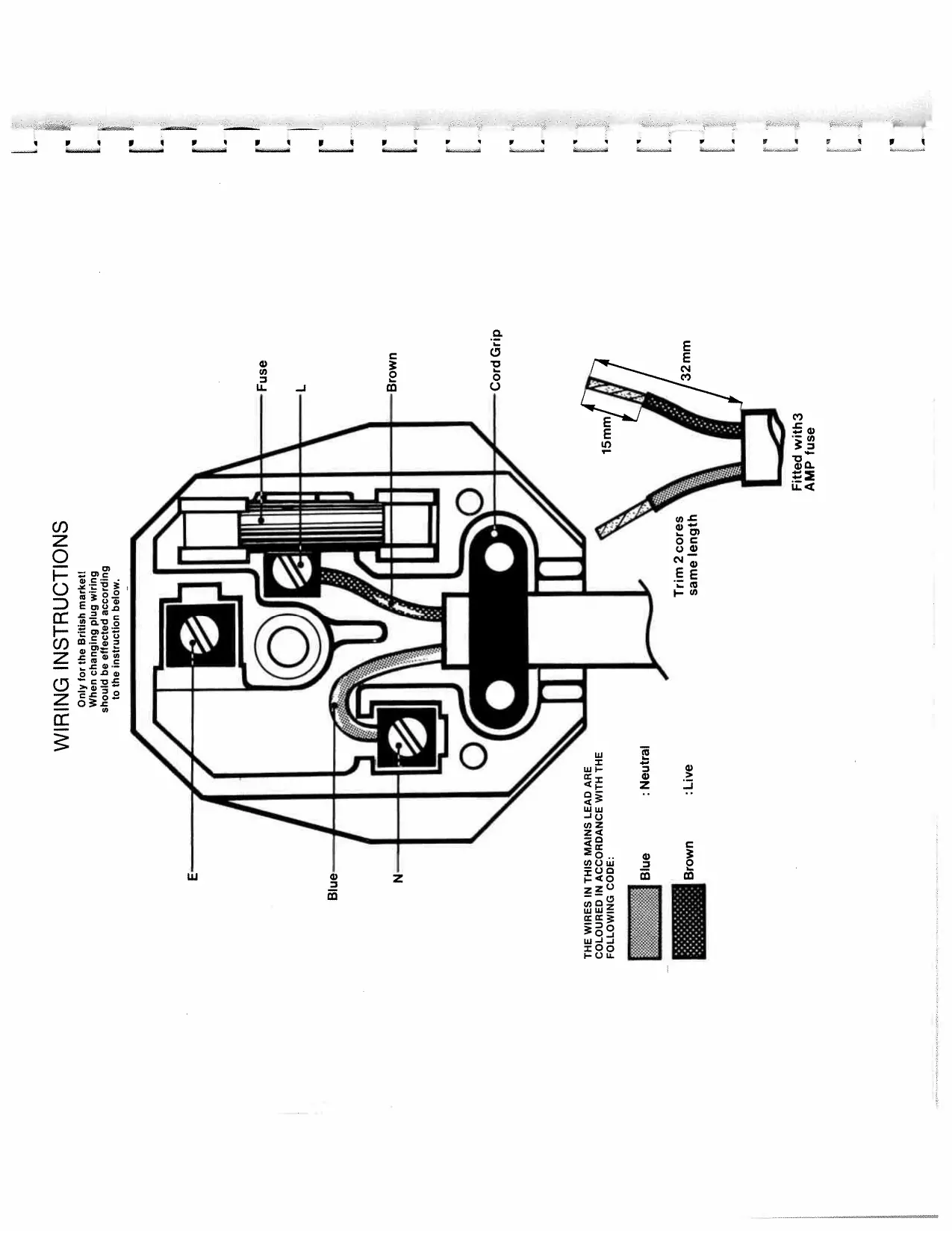
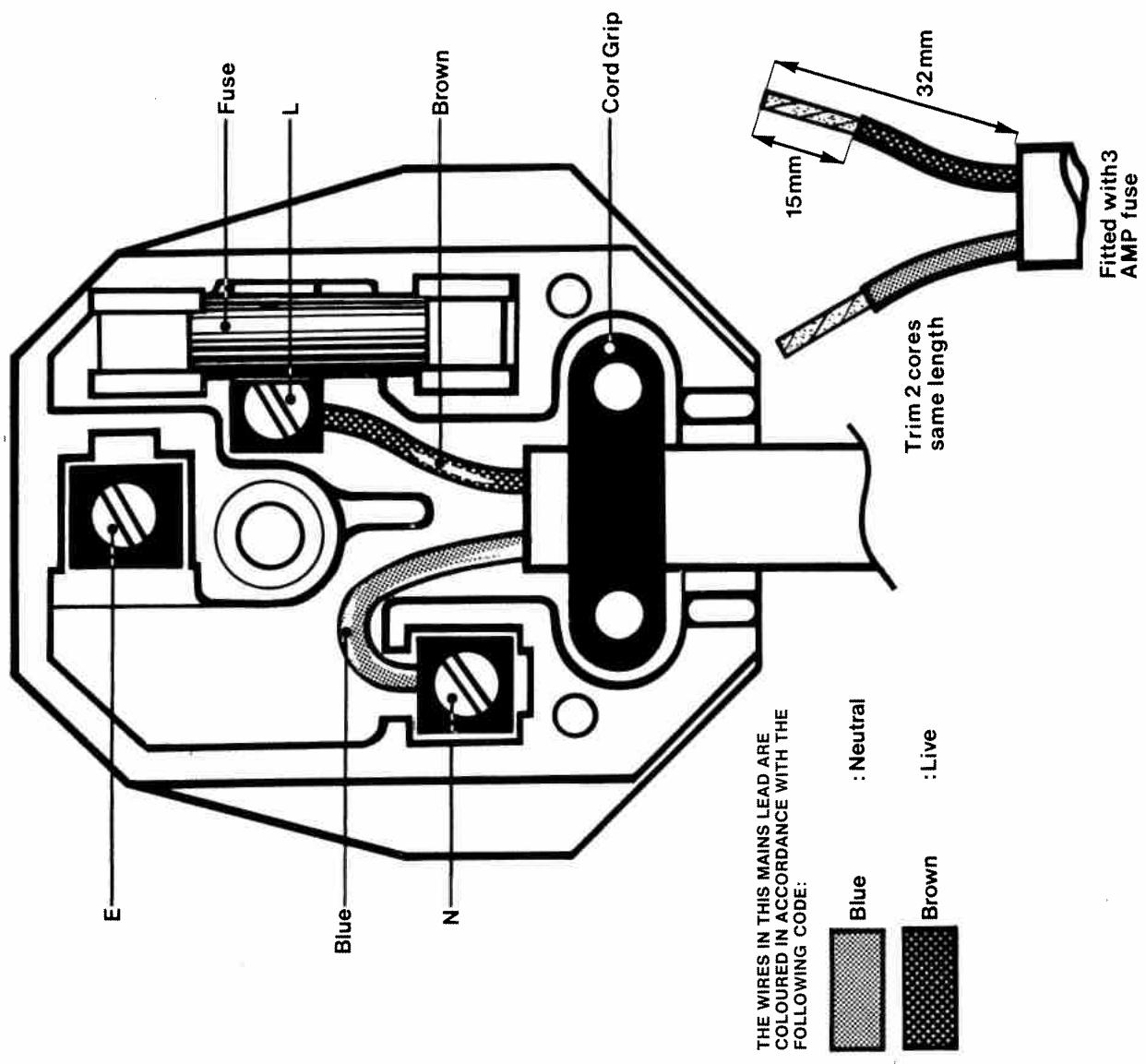
WIRING INSTRUCTIONS
Only for the British market! When changing plug wiring should be effected according to the instruction below.
text_image
E Blue N Fuse L Brown Cord Grip THE WIRES IN THIS MAINS LEAD ARE COLOURED IN ACCORDANCE WITH THE FOLLOWING CODE: Blue : Neutral Brown : Live Trim 2 cores same length 15mm 32mm Fitted with 3 AMP fuseWe have prepared this booklet, to let you know how to operate this sewing machine and how to make use of all its sewing possibilities. We are quite sure that you will get many pleasant hours with your new sewing machine and that you will be successful in obtaining many fine results.
HUSQVARNA AB
INDEX
| Accessory box, contents | 33 | Lower thread, threading | 10 |
| Blindstitching, general | 19 | Maintenance hints | 31-32 |
| Blindstitch hem | 20 | Needle, changing | 6 |
| Blindstitch, elastic | 21 | Needle and thread | 6 |
| Bobbin case | 10 | Open arm | 5 |
| Bobbin winding | 7-8 | Packing and unpacking the machine | 34 |
| Buttonholes | 24-25 | Plugging in the machine to the power outlet | 4 |
| Buttonholes, reinforced | 26-27 | Presser foot (regular) | 14 |
| Buttonhole knife | 28 | Putting the machine away | 34 |
| Care of the machine | 30 | Regular presser foot | 14 |
| Changing the light bulb | 30 | Reinforced buttonholes | 26-27 |
| Changing the needle | 6 | Reverse feeding (reverse stitching) | 16 |
| Changing the snap-on presser foot | 14 | Seam ripper | 33 |
| Choice of needle and thread | 6 | Seams, setting of | 16-27 |
| Cleaning | 30 | Selecting the stitch | 16-27 |
| Connecting the foot control | 4 | Shuttle (hook) | 9 |
| Connecting the machine to the power outlet | 4 | Snap-on presser foot, changing | 14 |
| Contents of accessory box | 33 | Stitch length dial | 15 |
| Darning | 29 | Stitch selector | 16 |
| Darning foot | 29 | Straight stitching | 16 |
| Darning stockings | 29 | Stretch stitching | 18 |
| Double-action stitch | 23 | Tensions | 12-13 |
| Elastic blindstitch (blind hem) | 21 | Thread | 6 |
| Extension table | 5 | Thread cutter | 11 |
| Feed dog, cleaning | 30 | Threading lower thread | 10 |
| Feed dog, lowering | 15 | Threading upper thread | 7 |
| Foot control | 4 | Thread tension | 12-13 |
| Free arm | 5 | Three-step zig-zag | 22 |
| Hook (shuttle) | 9 | Unpacking the machine | 34 |
| Insertion of bobbin case | 10 | Upper thread tension | 12 |
| Invisible hem (blindstitch) | 20 | Upper thread, threading | 7 |
| Light and light switch | 4 | Zig-zag stitching | 17 |
| Lowering the feed dog | 15 | Zig-zag, three-step | 22 |
| Lower thread, bringing up | 11 | Zipper foot | 15 |
| Lower thread tension | 12 |
text_image
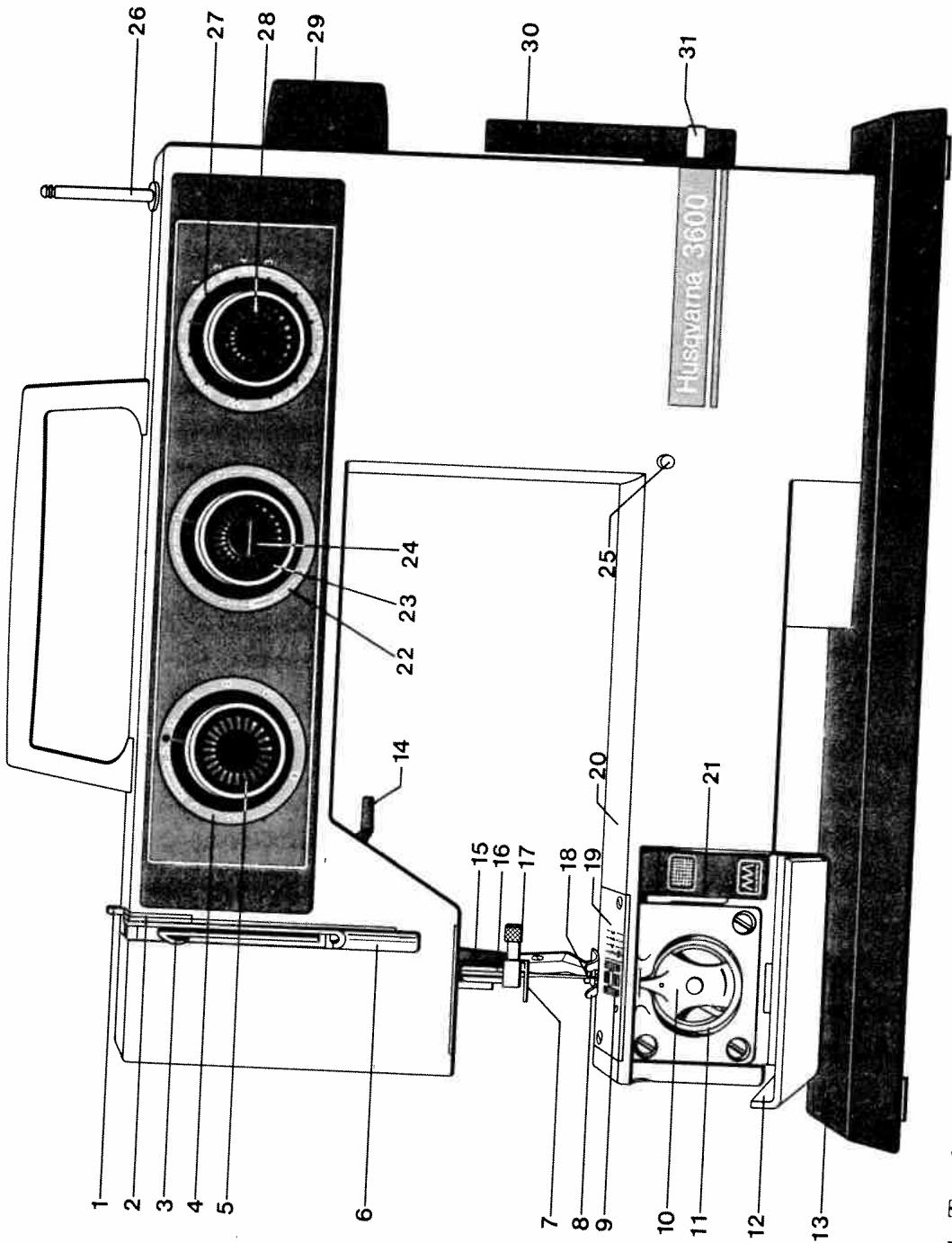
1 2 3 4 5 6 7 8 9 10 11 12 13 14 15 16 17 18 19 20 21 22 23 24 25 26 27 28 29 30 31 Husavarna 3600-
Top thread guide
-
Thread tension disc
-
Thread take-up lever
-
Thread tension scale
-
Thread tension dial
-
Thread guidance
Thread guide with thread
take-up spring
-
Front thread guide
-
Presser foot
-
Feed dog
-
Bobbin case
-
Stitch length scale
-
Stitch length dial
Connecting the foot control
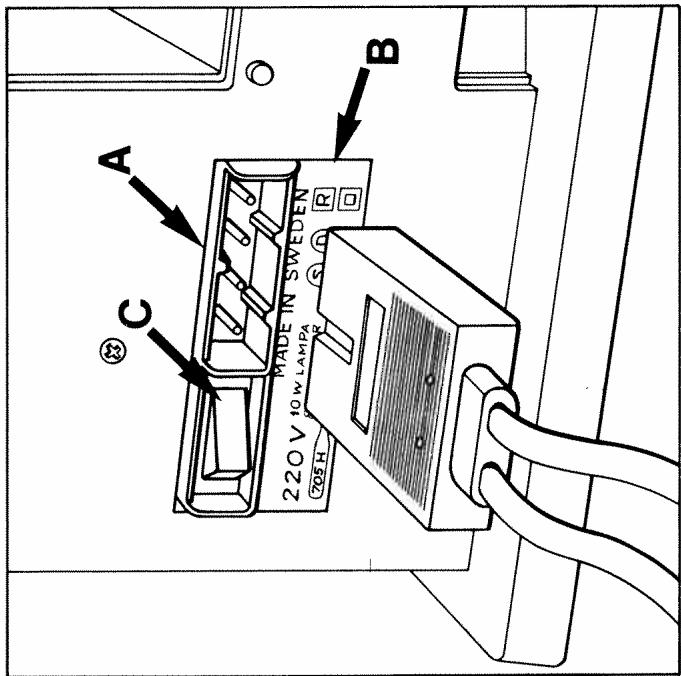
Pull the lead out of the foot control and place the control under the table. Insert the foot control plug into the socket, A, at the back of the machine.
natural_image
Technical line drawing of a mechanical device with internal wiring and a mesh top (no text or symbols)Connection to wall outlet
The machine's voltage is given on a plate, B, at the back of the machine. Ensure that the wall outlet voltage is the same as that of the machine. Then connect the machine to the proper wall outlet.
Lighting
The switch, C, for the light is also at the back of the machine. For changing the light bulb see page 30.
text_image
C A 220 V 10 W LAMPA 705 H R BFree arm
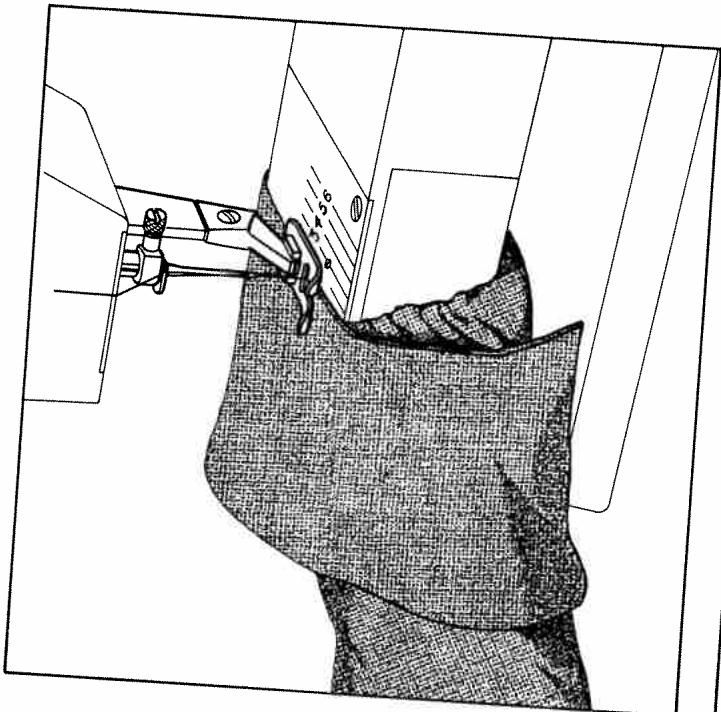
Trouser legs and sleeves can be drawn onto the free arm making it easy to sew, to mend or to patch in these parts. The free arm also makes it much easier to attach collars and cuffs as well as sew small children's clothes, or darn socks and stockings on the machine.
natural_image
Line drawing of a sewing machine stitching fabric, no text or symbols present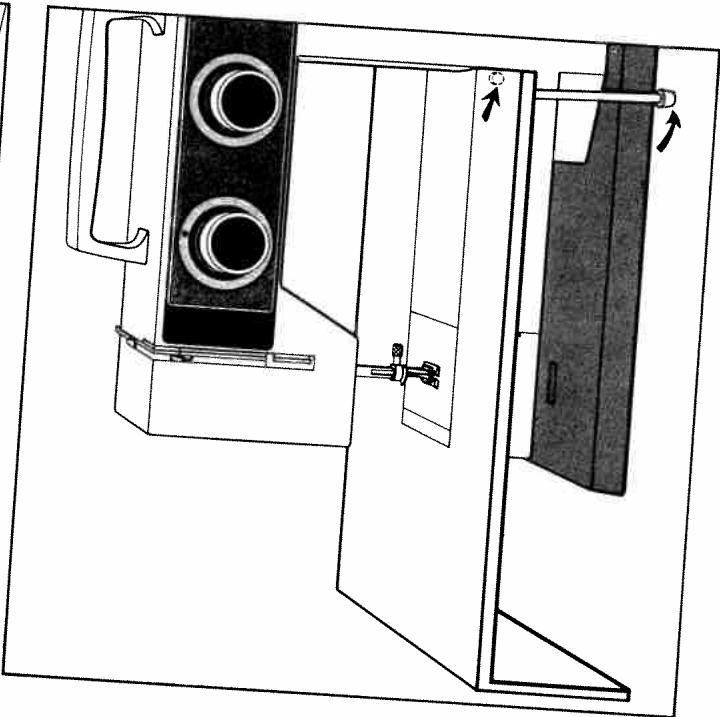
natural_image
Technical line drawing of a sewing machine with base and clasp, showing mechanical components and motion arrows (no text or symbols)Extension table
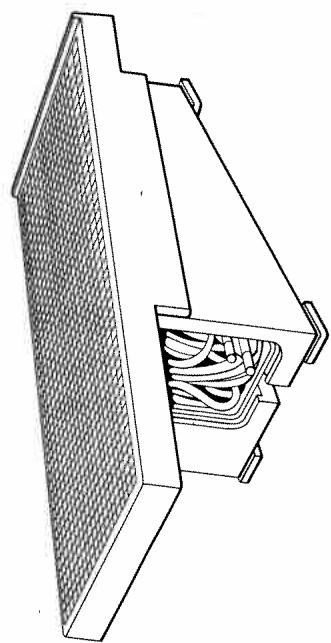
When you need a larger working surface, attach the extension table. There are two grooves underneath the extension table which should be fitted onto corresponding studs on the free arm. There is also an extra support leg which should be lowered.
Needle and thread
Mercerized cotton thread as well as synthetic thread is used for every kind of fabric.
No. 30–50 embroidery or darning thread gives among other things fine buttonholes and nice top stitching. As the name
things fine buttonholes and mice top stitching. As the name implies, it is of course also used for embroidery and darning.
You will find a picture of a needle on the inside of the shuttle door. The needle system has number 705 H. Use only needles
marked in this way. The machine is fitted with needle No. 80. You will also find a number of extra needles of various sizes
in the accessory box.
With regard to the size of needle, it may be generally said that
No. 80–90 can be used for most fabrics. For a finer thread and for sheer and tightly woven fabrics a finer needle should be
used.
For very heavy and stiff fabrics a coarse needle must be used. The higher the number, the coarser the needle. The sizes of
thread and needle to be used are shown on the table.
Changing the needle
Loosen the needle clamp screw and remove the needle which is to be changed. When you insert the new needle, turn the
flat side away from you and push the needle up into the needle socket as far as the stop. Tighten the screw so that the
needle is held firmly.
| Sewing thread English No. | Coloured sewing thread No. | Silk thread | Synthetic thread | Embroidery thread or Darning thread | Needle No. |
| 60 | 60 | 70 | |||
| 50–60 | 26 | 100/3 | ^1) | 40–50 | 80 |
| 40–50 | 26 | 100/3 | ^1) | 30–50 | 90 |
| 40 | 20 | 100 | |||
| 30 | 110 | ||||
| 30 | 120 | ||||
| ^1) Synthetic threads are not generally numbered. | |||||

natural_image
Technical line drawing of a mechanical device with a close-up inset showing two pointed tips (no text or symbols present)Threading the upper thread
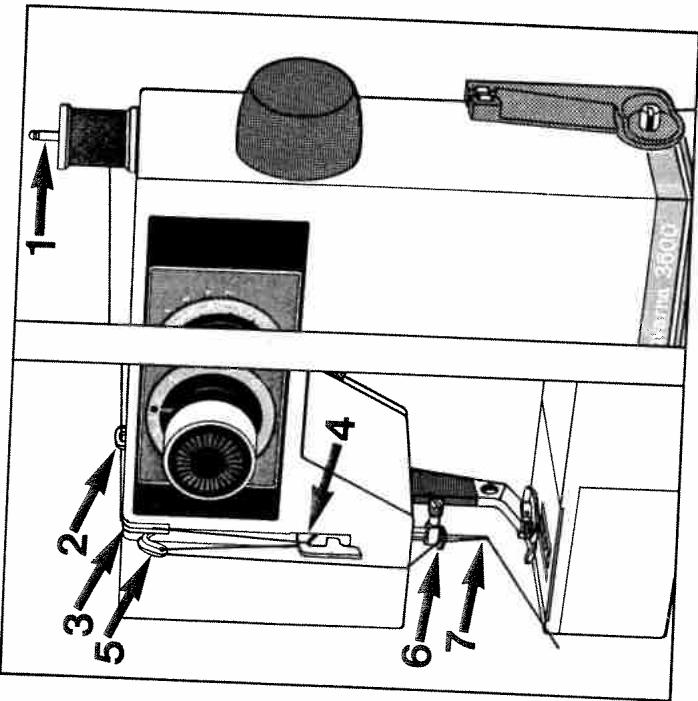
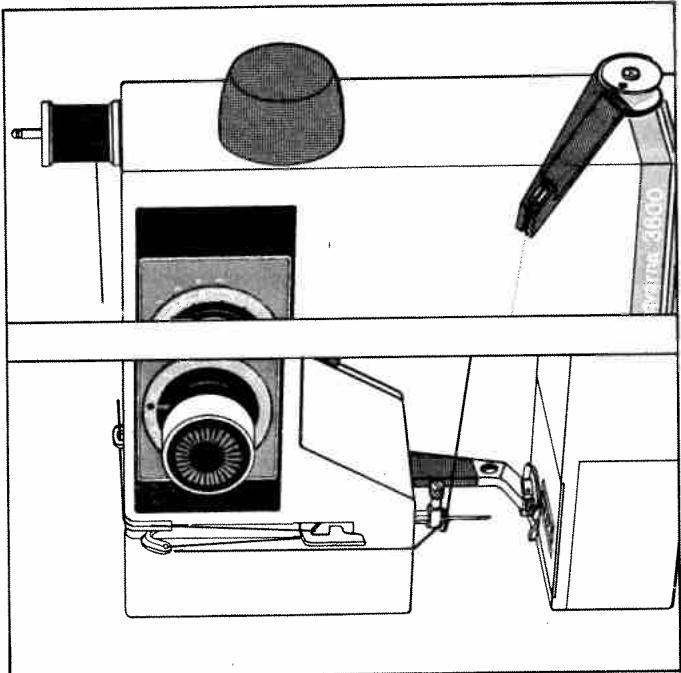
Raise the presser foot. Turn the handwheel toward you until the needle is at its highest position. Pull out the spool pin, 1, place the spool of thread on the pin. Slide the thread into the thread guide, 2, on the rear of the "upper" arm. Then draw the thread to the front between the tension discs, 3, and down around the thread guide, 4. Now continue the threading by drawing the thread from right-to-left in the slot on the thread take-up lever, 5. Draw the thread behind the black thread guide, 6. Thread the needle, 7, from the front.
text_image
1 2 3 4 5 6 7 M 2014 2600Bobbin winding
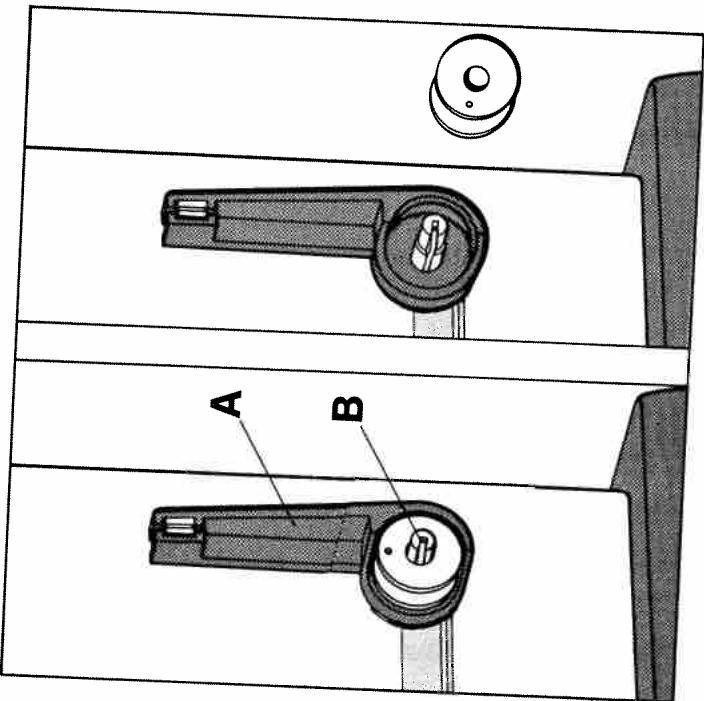
Pull the spool arm, A, towards you until it stops. Take an empty bobbin from the accessory box. In order to get the best possible result when bobbin winding, use only Husqvarna plastic bobbins, which have three grooves in the hole. Other types of bobbins cannot be used, due to the construction of the bobbin winding device. On one side of the bobbin there is a hole. Turn the bobbin with the hole outwards and slide the bobbin onto the bobbin spindle, B.
text_image
A BBobbin winding (cont.)
You can wind the bobbin directly from the black thread guide. Draw the thread through the slot and between the tension/guide discs in the top of the bobbin winding arm. It might be desirable to reduce the thread tension a little. Wind the thread a few times around the bobbin in an anticlockwise direction. Hold the end of the thread while you press down the foot control. Release the thread as soon as winding starts. Stop winding before the bobbin is completely filled, as in fig. 1 below. If the machine is winding unevenly, see Correct and incorrect bobbin winding. Remove the bobbin. Cut the thread. Return the arm to the upright position.
Correct and incorrect bobbin winding
Fig. 1 shows a correctly wound bobbin.
natural_image
Technical line drawing of a sewing machine with no visible text or symbols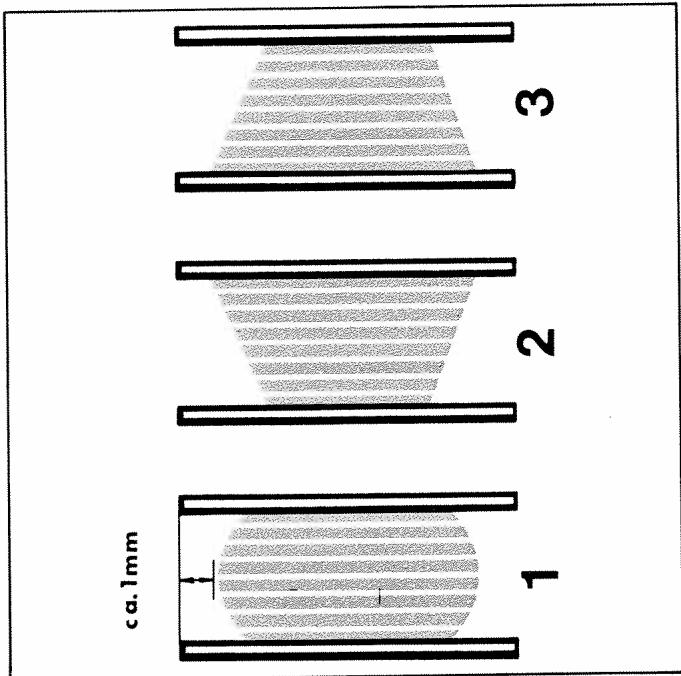
text_image
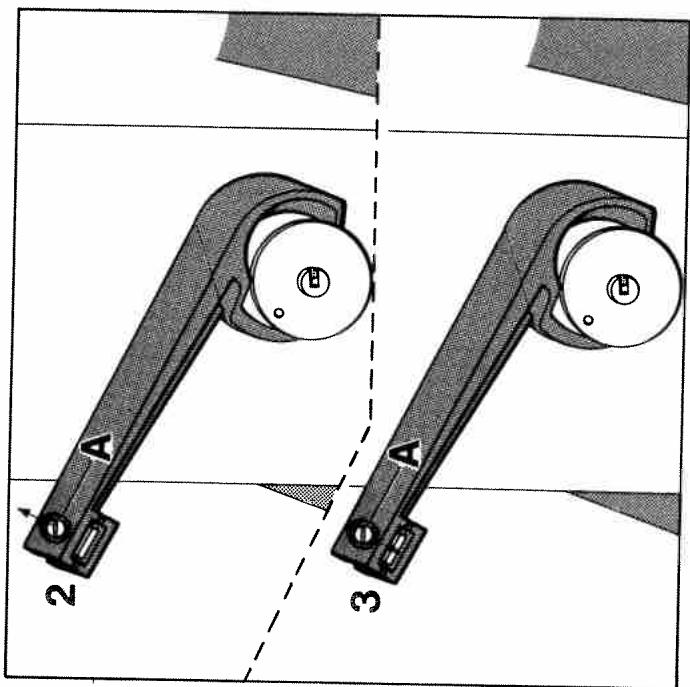
ca.1mm 1 2 3If you notice that the bobbin is winding unevenly as in fig. 2, loosen screw A with the aid of the screwdriver, move the screw slightly to the left until the winding becomes even. Tighten the screw.
text_image
2 A 3 AIf the winding looks like fig. 3, check to see if the bobbin is properly pressed in on the spindle. If this is correct, move the screw slightly to the right until the winding becomes even. Tighten the screw.
Removing the bobbin case
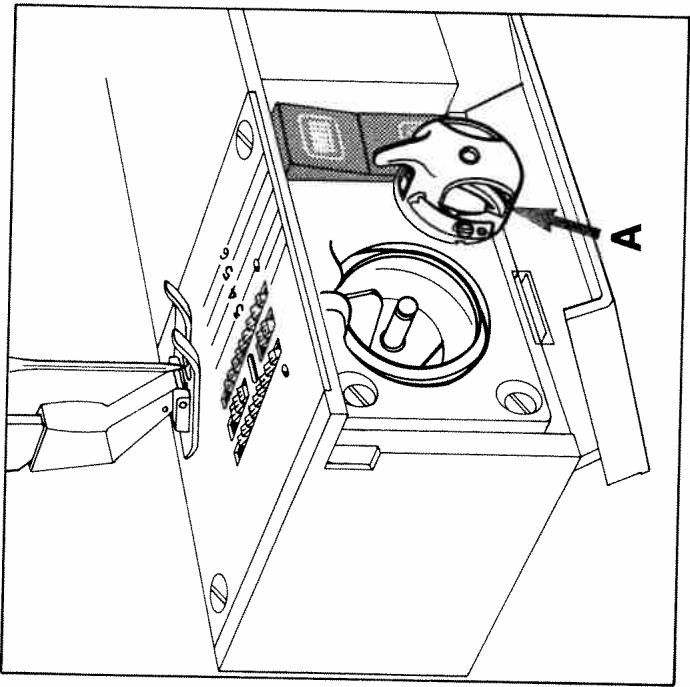
Open the shuttle cover. There is a small recess on the free arm to facilitate the opening of the shuttle cover. Grasp the bobbin case with the thumb and index finger so that the latch is depressed and draw out the bobbin case. The bobbin will remain in the case as long as the latch is depressed. When you release the catch, the bobbin will be released.
text_image
Technical diagram of a sewing machine with labeled parts and component annotationsThreading the lower thread
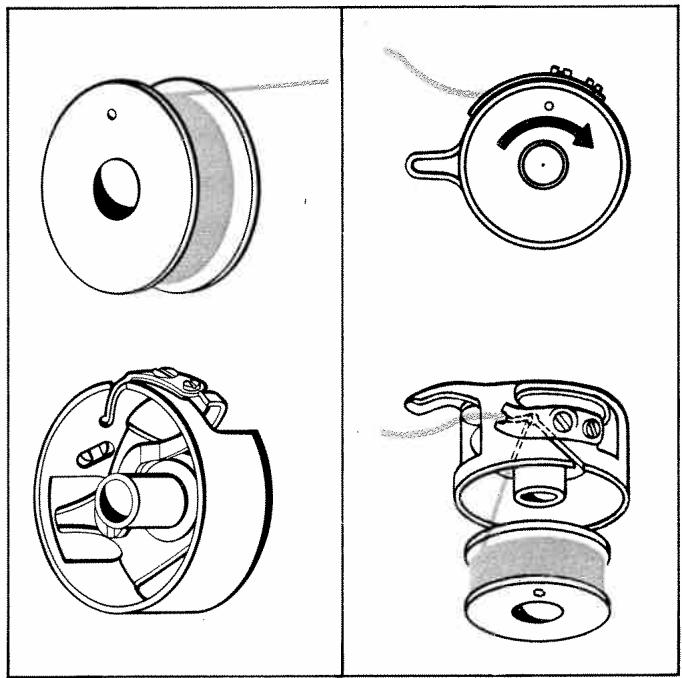
When the bobbin is wound, place it in its case with the hole upwards. The thread is then running as shown in the fig.
Slide the thread into the slot on the edge of the bobbin case. Pull the thread in under the tension spring. Check that the bobbin rotates in the direction of the arrow when the thread is pulled.
Insertion of the bobbin case
Push the bobbin case onto the spindle of the shuttle (hook) so that the projection of the bobbin case fits in the notch at the top of the shuttle cover. Press on the bobbin case slightly to be sure it is latched onto the spindle of the shuttle. Let the thread hang. Shut the door.
natural_image
Four technical illustrations of mechanical components, including a spool, rotor, and pulley (no text or labels)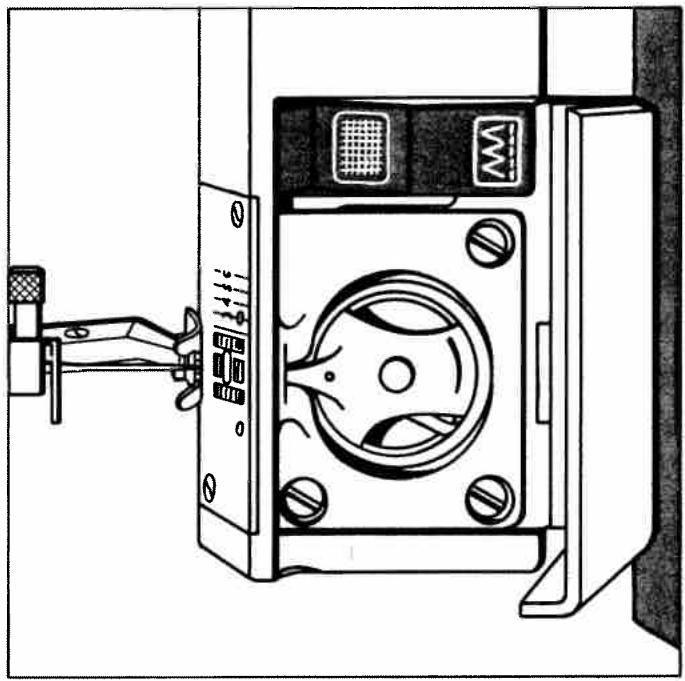
natural_image
Line drawing of a sewing machine with a rotary knob and control panel (no text or symbols)Bringing up the lower thread
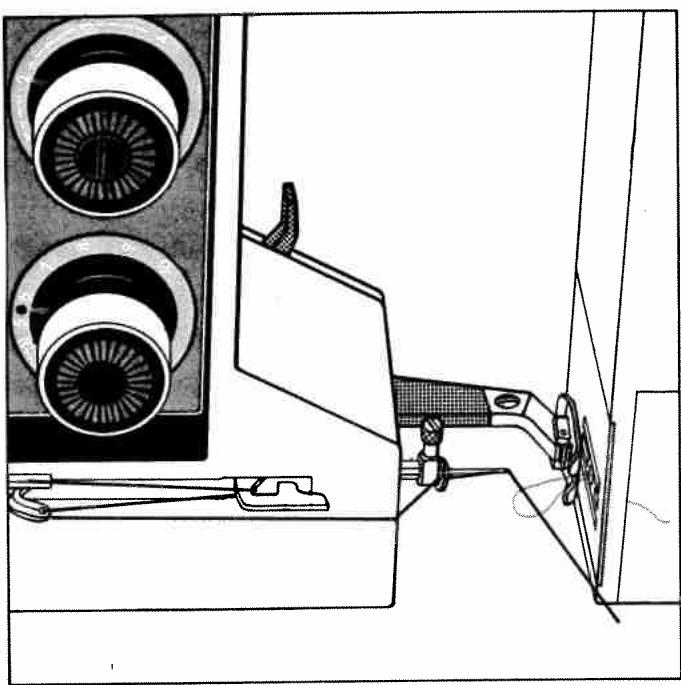
Hold the threaded upper thread and turn the handwheel toward you until the needle goes down through the needle plate, and then up again. When the needle is in its highest position, pull the upper thread and you will get a loop of the lower thread which is easy to catch. You shouldn't pull the upper thread too hard as this may damage the needle.
Pull the threads about 6" (15 cm) towards the rear. If the thread ends are too short, the thread may slide out of the eye of the needle when you begin to sew.
Thread cutter
On the back of the presser bar you will find a notch, the thread cutter, which makes it easy for you to cut off the threads.
natural_image
Technical line drawing of a sewing machine with two circular components and a base (no text or symbols)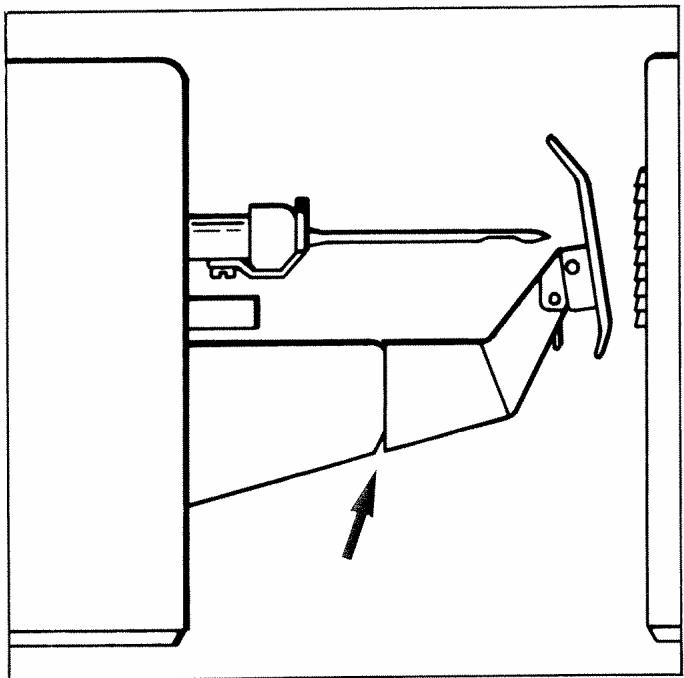
natural_image
Technical line drawing of a mechanical device with a tool and base, showing no text or symbolsTension of upper thread
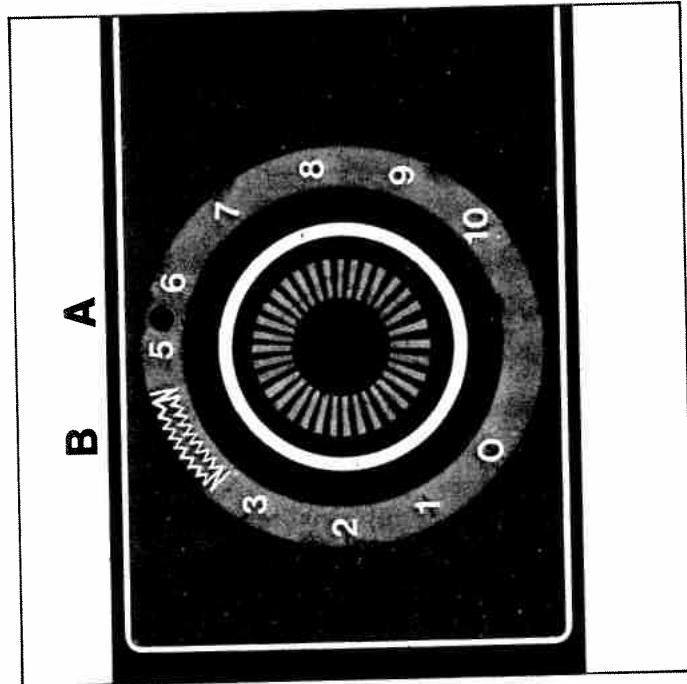
The dial which regulates the tension of the upper thread is graduated from 0 to 10. Normal thread tension is obtained by setting the indicator points opposite each other (a). The thread tension can be adjusted to suit different materials and thread thicknesses. There is also a special mark on the thread tension dial for the tension that can be used for making buttonholes (b). This setting is also suitable for darning etc.
Tension of lower thread
In most special sewing cases it is sufficient to adjust only the upper thread tension. Rarely do you need to adjust the lower thread tension. If it is necessary to adjust the tension of the lower thread, take out the small screwdriver from the accessory box. Fit it in the larger screw on the thread tension spring and turn it not more than 1/10th of a turn to the left if the thread tension is too hard, to the right if it is too loose.
text_image
B A 3 5 6 7 2 8 1 9 0 10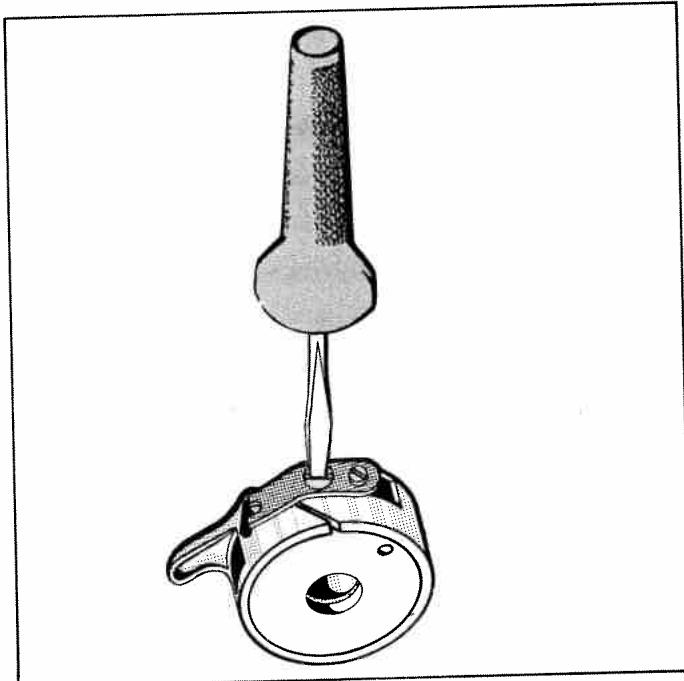
natural_image
Technical line drawing of a mechanical device with a cylindrical component and a handle (no text or symbols)Correct and incorrect thread tension
In order to get a strong seam, the thread tension should be balanced so that the threads interlock in the middle of the layers of fabric.
In order to easily understand the importance of correct thread tension, you can try different thread tensions by sewing on a scrap of fabric. Use the same fabric you intend to work with.
Begin by using a too loose tension, i.e. you turn the thread tension dial to 1. Look at the seam and you will find the lower thread lies straight and the upper thread is drawn down into the lower side of the fabric.
natural_image
Circular diagram with concentric rings and radial lines, no text or symbols present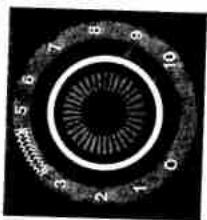
natural_image
Circular diagram with concentric rings and radial lines, no text or symbols present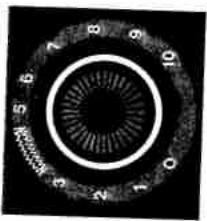
natural_image
Circular diagram with concentric rings and radial lines, no text or symbols present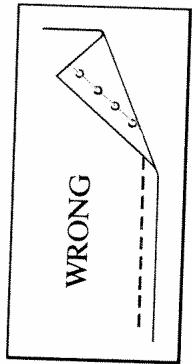
text_image
WRONG c c c c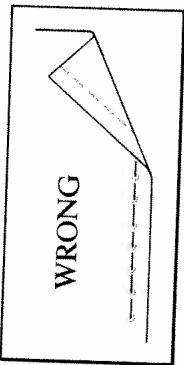
text_image
WRONG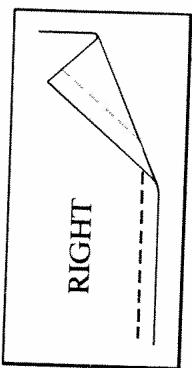
text_image
RIGHT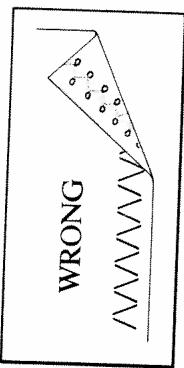
text_image
WRONG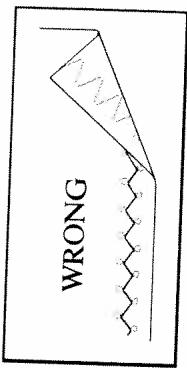
text_image
WRONG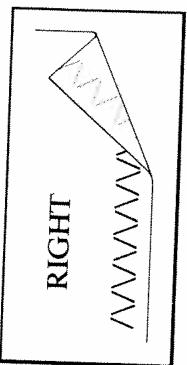
text_image
RIGHT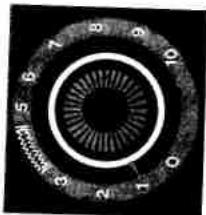
text_image
0 1 2 3 4 5 6 7 8 9 10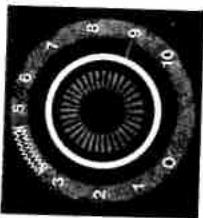
text_image
5 6 3 7 2 8 1 9 Q 10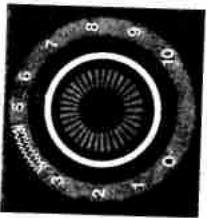
text_image
3 2 1 0 5 6 7 8 9 10When you turn the dial to the right, the opposite occurs. The upper thread lies straight and the lower thread comes up in loops on top of the fabric. The thread tension is correct when the threads interlock in the middle of the layers of fabric.
If you want to sew zig-zag, check the thread tension in the same way as for straight stitching. By using a too loose tension, the result will be as shown in the upper illustration.
A too heavy tension looks like the illustration in the middle. The lower illustration shows the correct thread tension.
Regular presser foot
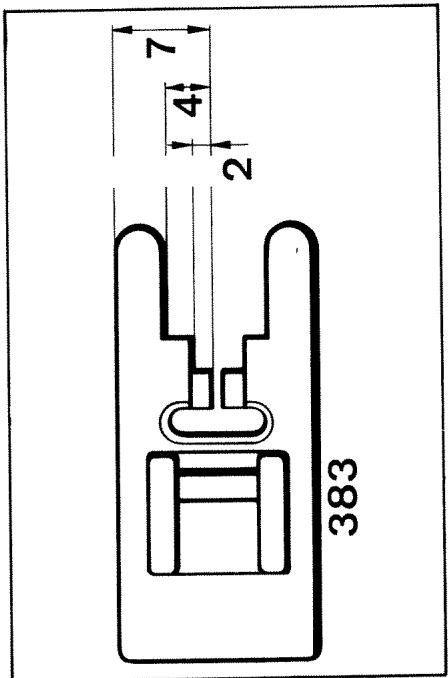
The presser foot (41 11 383) which is fitted on the machine at delivery is used for normal straight stitching, zig-zag stitching and other utility stitches. As you can see, it has different notches which can be used as guides when sewing. If you wish to have a seam allowance about 1/4" (7 mm), let the material run even with the outer edge of the presser foot. (Applies to straight stitching with the needle in the middle position). By moving one step inwards, you will have a seam allowance of about 5/32" (4 mm). The innermost notch gives a seam allowance of about 5/64" (2 mm).
Changing the snap-on presser foot
The presser feet which accompany the machine are in the form of loose soles which are held in place on the presser foot “ankle” by a spring. If you wish to change the presser foot, turn the hand wheel toward you until the needle is in the highest position. Remove the presser foot by drawing it toward you while pressing slightly downward.
There is a spring at the bottom of the ankle bracket. Slide on the presser foot so that the pin fits into the space between the bracket and the spring. Then press lightly backward and downward and the presser foot will snap into the correct position.
text_image
383 2 4 7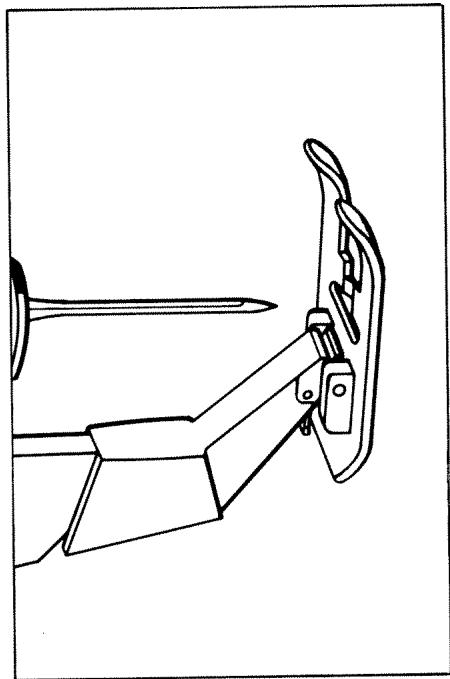
natural_image
Line drawing of a sewing machine needle and foot (no text or symbols)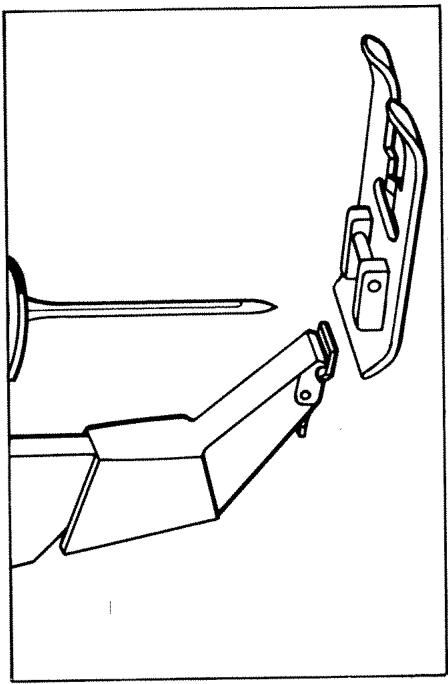
natural_image
Line drawing of a sewing machine tool and its base component (no text or symbols)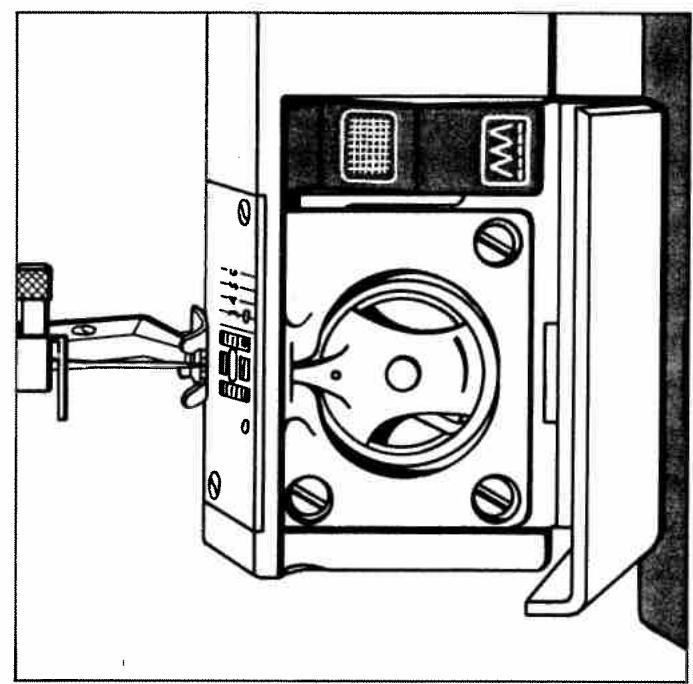
natural_image
Technical line drawing of a sewing machine with no visible text or symbols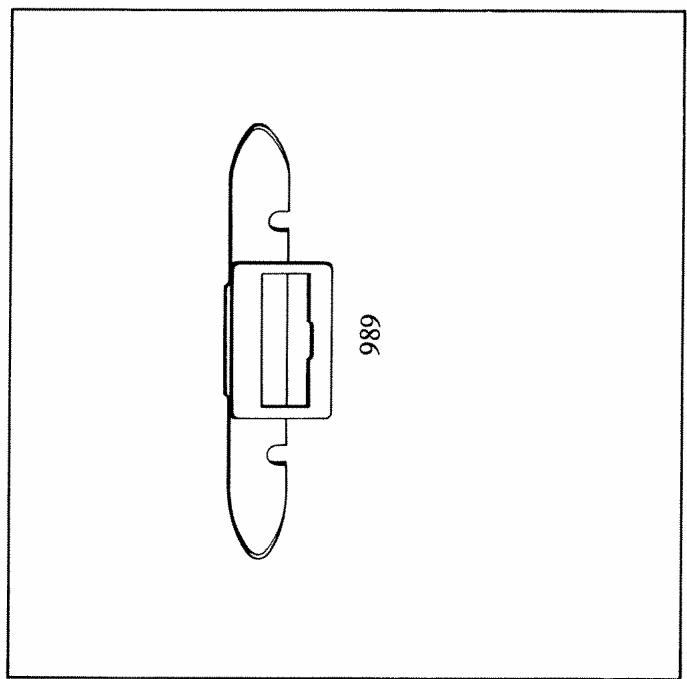
natural_image
Simple line drawing of a mechanical component with no text or symbolsLowering the feed dog
The feed dog is lowered when carrying out certain darning work. You lower the feed dog by pressing the symbol 📄 on the drop feed button. In order to raise the feed dog again, you press the symbol 🐃.
Zipper foot
The zipper foot (41 12 989) is attached in the same way as the regular presser foot. The construction of the zipper foot makes it possible to sew on both sides of the zipper without turning the work, by attaching the foot either to the left orto the right of the needle.
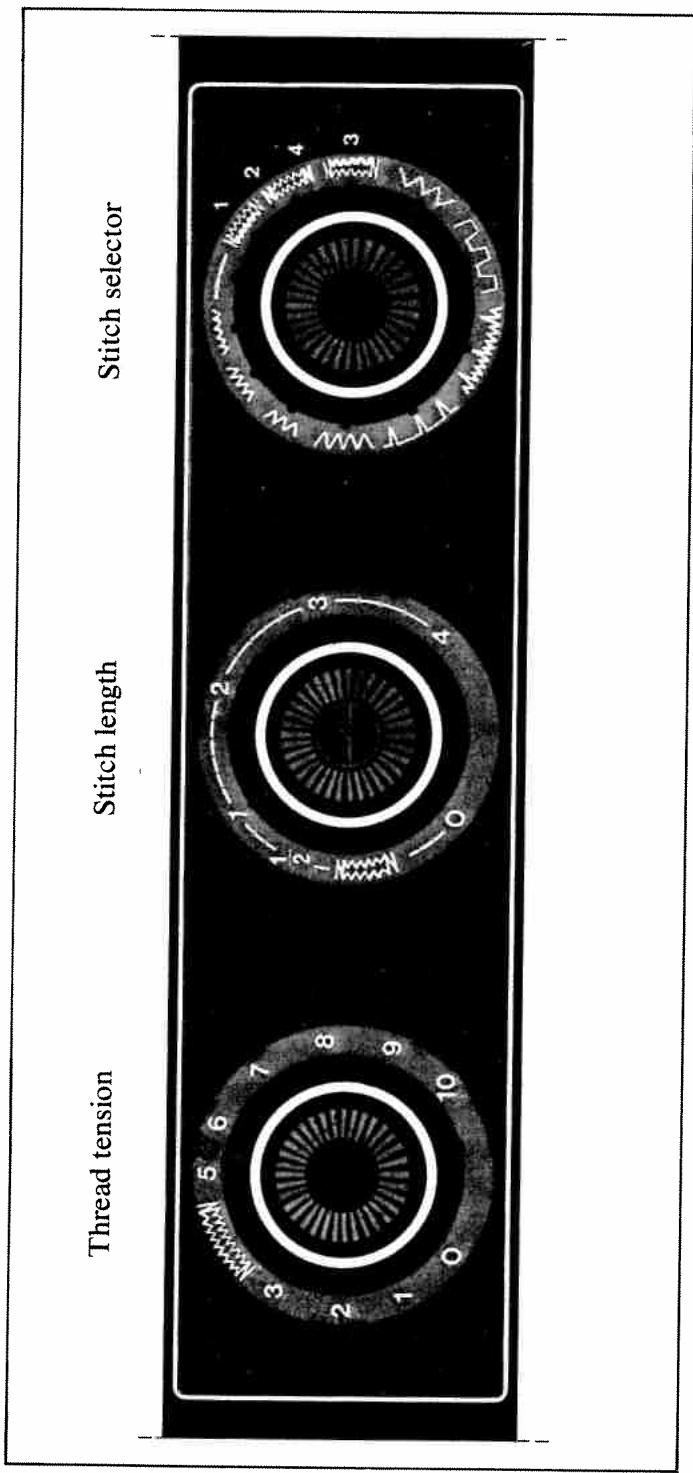
Thread tension
Stitch length
Stitch selector
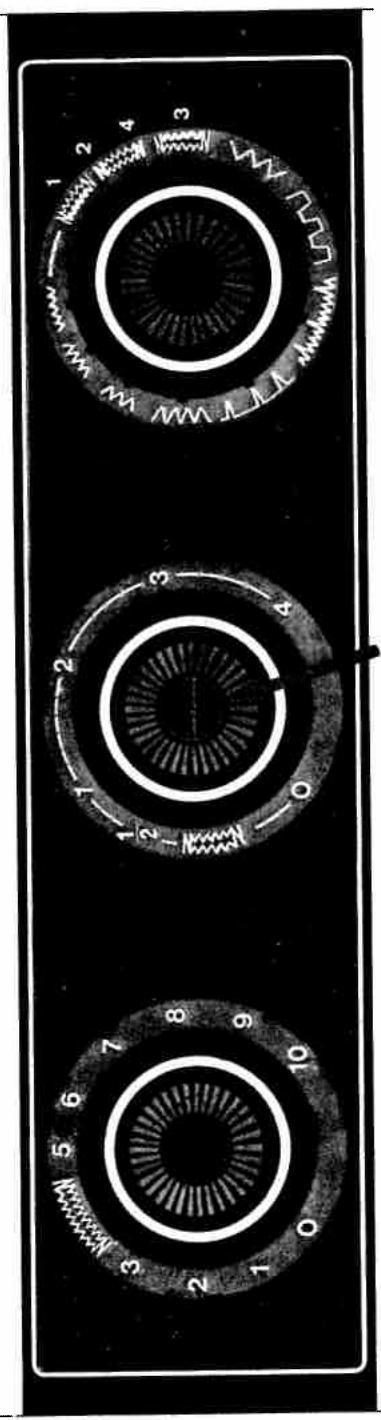
text_image
5 6 7 8 9 10 0 1 2 3 4 1 2 3 W W W W W W W W W W W W W W W W WStraight stitching
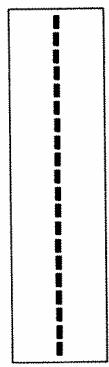
Raise the needle to its highest position.
Set the stitch selector to the straight stitching symbol
The stitch length dial is graduated from 0 to 4 and is set to the desired stitch length, normally 2.
In the center of the stitch length dial is a button for reverse sewing. By pressing this button in, the machine will sew in reverse, and will resume normal forward sewing as soon as it is released. This is very useful when, for example, backtacking at the end of a seam.
natural_image
Simple horizontal dashed line with no text or symbols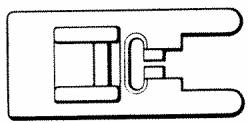
383
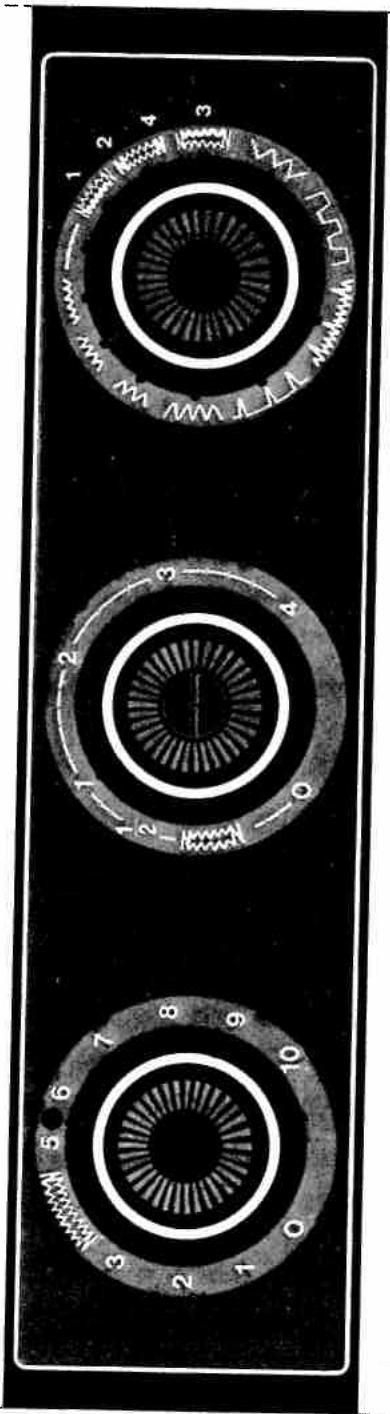
Thread tension
Stitch length
Stitch selector
natural_image
Three circular industrial control knobs with numbered terminals (0–10) showing internal components and winding patterns, no readable text or symbols.Zig-zag stitching
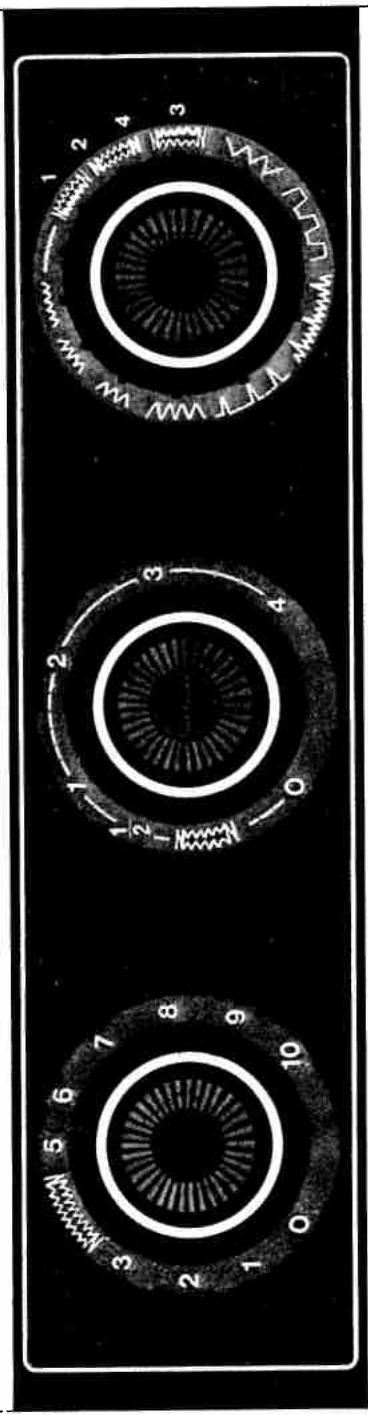
Raise the needle to its highest position.
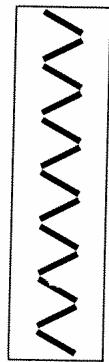
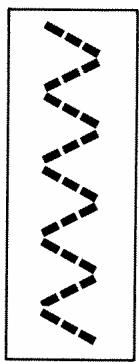
Set the stitch selector to the desired zig-zag width 2, 3 or 4 mm. (5/11, 1/11, 5/11)
iii. (5/64", 1/8" Or 3/32").
Set the stitch length dial to the desired length of stitch.
Choose a suitable combination of stitch length and stitch width.
The stitch length can be adjusted while you are sewing.
natural_image
Pure zigzag line pattern without any text, numbers, or symbols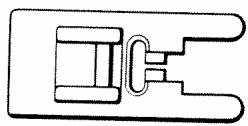
383
Thread tension
Stitch length
Stitch selector
natural_image
Three circular industrial rotary dials with numeric labels, no readable text or symbols beyond markingsStretch stitching
Raise the needle to its highest position.
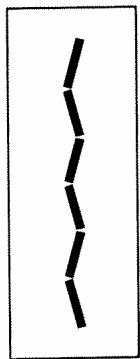
Set the stitch selector to symbol \~\~ and the stitch
length dial to 1.
This stitch has a certain amount of "stretch" and should be
used instead of ordinary straight stitch in stretchable fabrics.
chemical
Chemical structure of a linear alkane with three long alkyl chains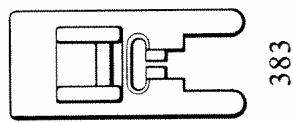
Blindstitching, general
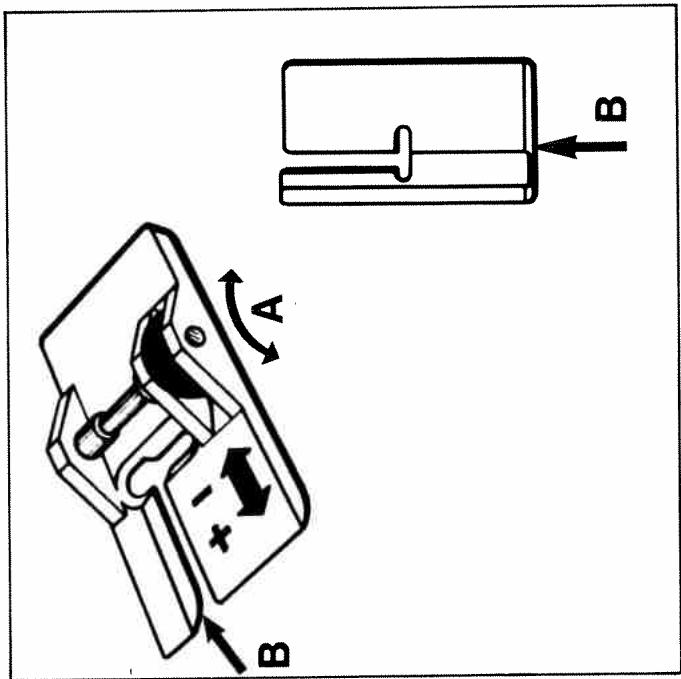
You will find the blindstitching presser foot (41 15 331) in the accessory box. Attach it in the same way as the regular presser foot.
As fabrics may differ in thickness, the presser foot can be moved sideways so that guide line B of the presser foot can be adjusted to the thickness of the fabric. The presser foot moves on the presser foot “ankle” by turning the little red wheel A forwards + or backwards -. Turn the wheel towards - when sewing in thin material and towards + when sewing in thick material. Choose a suitable setting.
text_image
Diagram showing a mechanical device with labeled components and directional arrows, including section A and B.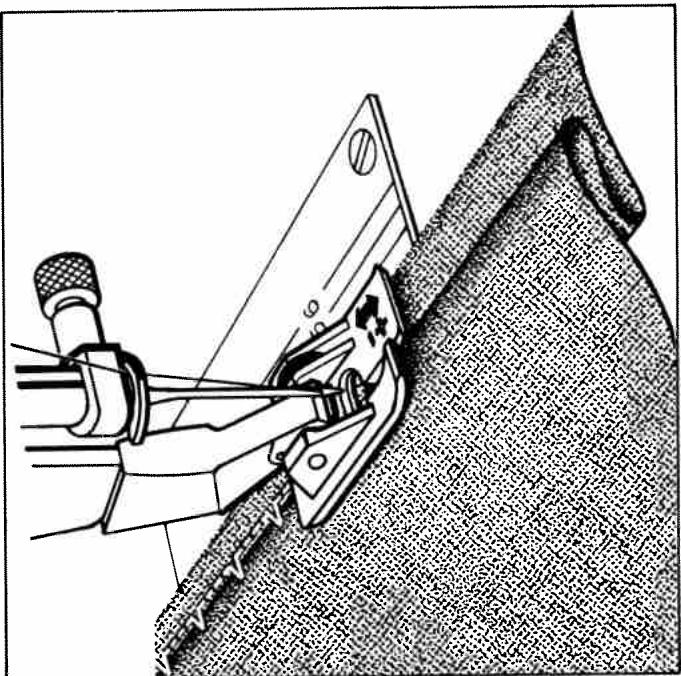
natural_image
Line drawing of a sewing machine stitching fabric (no text or symbols)Fold the fabric as shown in the illustration. Make sure that the fold line of the fabric follows guide line B of the presser foot. Invisible and elastic blindstitching is further described on pages 20 and 21.
text_image
Thread tension Stitch length Stitch selectorBlindstitching
First read page 19.
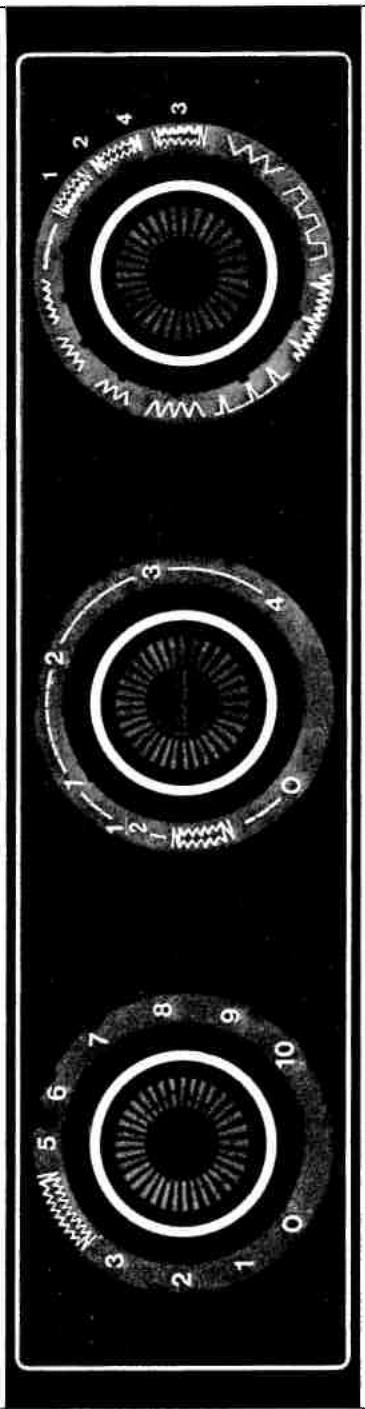
Raise the needle to its highest position.
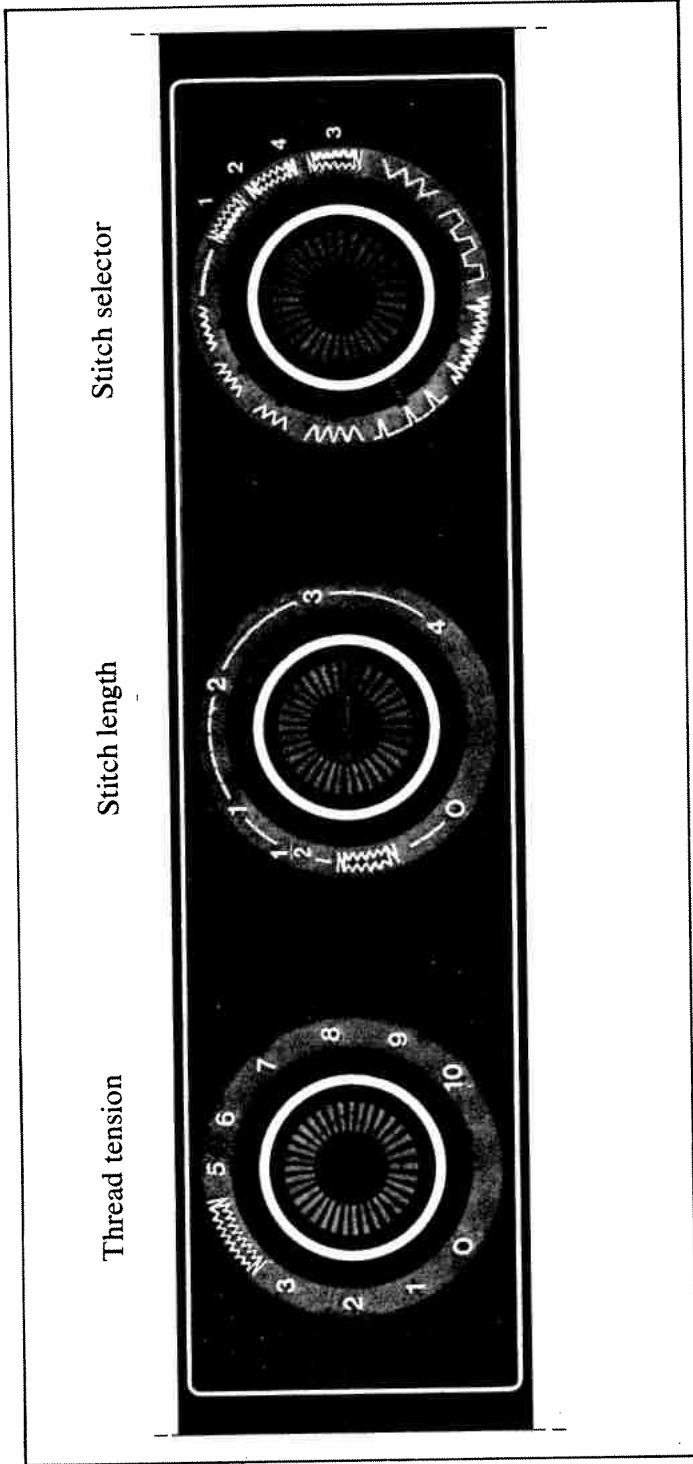
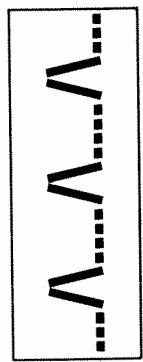
Set the stitch selector to symbol ...Λ...Λ
Turn the stitch length dial to 2–2.5, which is a recommended
basic setting.
This setting is an average setting, which means that you can either increase or decrease the stitch length to vary the dis-
either increase or decrease
tance between the catches.
Blindstitching is used for hemming skirts, for example, with-
Blimasticking is about to be a small number of stitches, out the stitches showing on the right side. I straight stitches and large zig-zag stitches.
text_image
....A....A....A...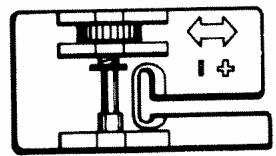
natural_image
Pure mechanical diagram showing a lever mechanism with no text or symbols331
Thread tension
Stitch length
Stitch selector
natural_image
Three circular industrial control knobs with numbered dial indicators (0–10), no visible text or symbols on the knobs themselves.Elastic blindstitch
First read page 19.
Raise the needle to its highest position.
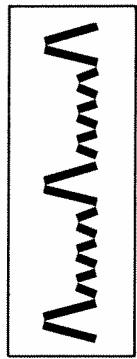
The stitch selector is set to symbol _mm_mm
Turn the stitch length dial to 1-1.5 as a recommended basic
setting.
This is an average setting, which means that you can increase
or decre
catches.
Instead of straight stitches, the elastic blindstitch has small
zig-zag stitches between the larger zig-zag stitches.
It is used for hemming elastic fabrics, particularly those that
stretch sideways a lot.
text_image
ΛΛΛΛΛΛΛΛΛΛΛΛΛΛΛΛΛΛΛΛΛΛΛΛΛΛΛΛΛΛΛΛΛΛΛΛΛΛΛΛΛΛΛΛΛΛΛΛΛΛΛΛΛΛΛΛΛΛΛΛΛΛΛΛΛΛΛΛΛΛΛΛΛΛΛΛΛΛΛΛΛΛΛΛΛΛΛΛΛΛΛΛΛΛΛΛΛΛΛΛ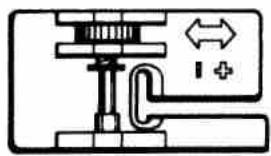
natural_image
Pure mechanical diagram showing a valve or actuator without any text, numbers, or symbols331
text_image
Thread tension Stitch length Stitch selectorThree-step zig-zag
Raise the needle to its highest position.
Set the stitch selector to symbol /\/\V\
Turn the stitch length dial to 1 as a recommended basic
setting.
Three-step zig-zag is used for sewing towelling, jersey and
knitwear, for overcasting in elastic, thin or easily frayed
fabrics and for darning and mending.
natural_image
Pure zigzag line pattern without any text, numbers, or symbols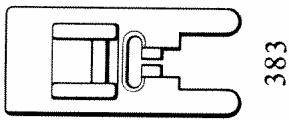
Thread tension
Stitch length
Stitch selector
natural_image
Three circular industrial control knobs with numeric labels, showing internal components (no readable text or symbols beyond markings)Double action stitch
Raise the needle to its highest position.
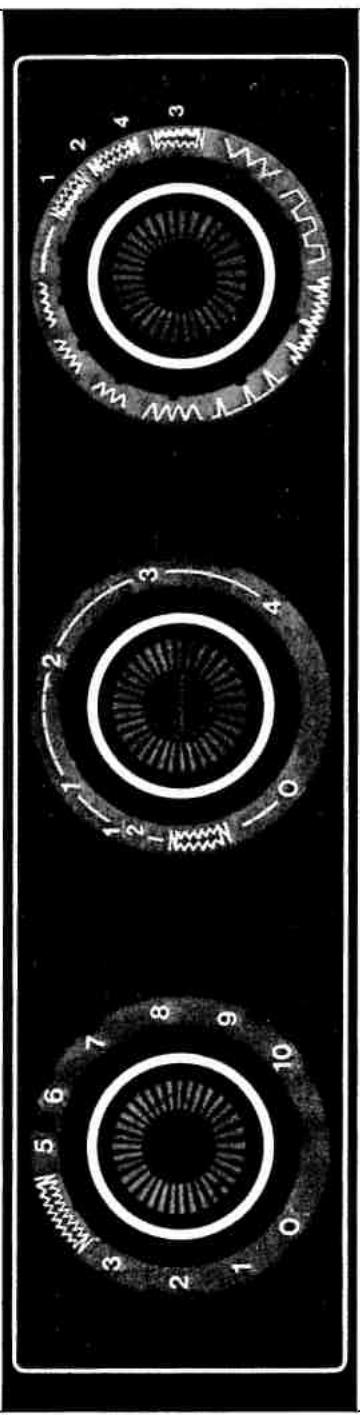
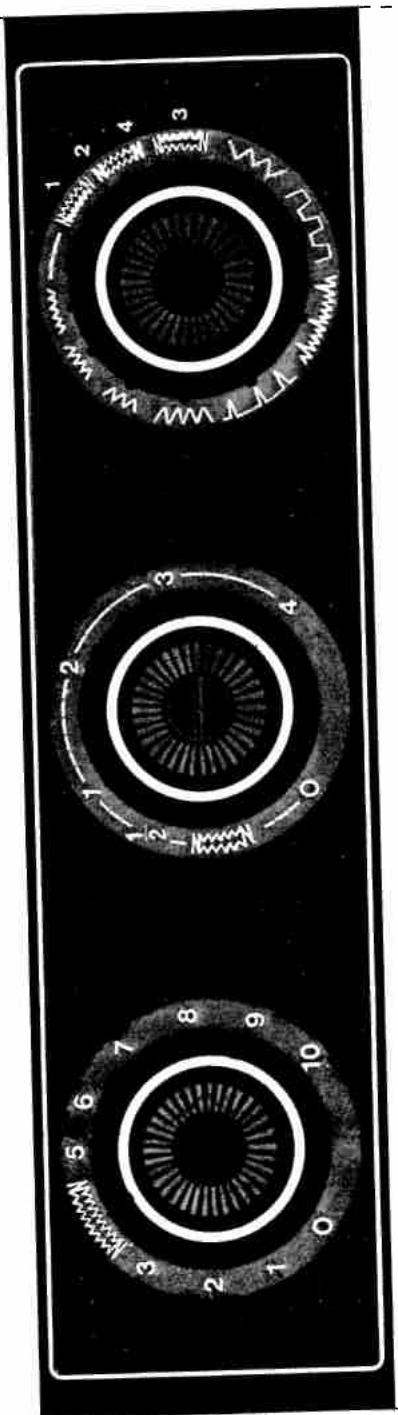
Set the stitch selector to symbol /\/\/\/\/\/\/ and the thread
tension dial between 3 and 5.
Turn the stitch length dial to 1/2 as a recommended basic
setting.
With the double action stitch you can sew seams together and
overcast s
fabric etc.
It is also used for mending seams in underwear and knitwear.
It gives a certain measure of stretchability. The double action
stitch can also be used very effectively for overlapped seams
and patching.
Thread tension
Stitch length
Stitch selector
text_image
5 6 7 8 9 10 3 2 7 1 2 3 4 O 1 2 3 W W W W W W W WButtonholes
In order to sew buttonholes, you should change over to the buttonhole foot (41 11 650). You will find it in the accessory box and it is attached in the same way as the ordinary presser foot. The buttonhole foot has graduated markings to help you
make the buttonholes the same length.
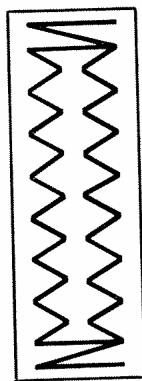
Loosen the upper thread tension by turning the thread tension dial to the buttonhole symbol.
The buttonhole will look better, if you use a fine thread. Mark on the fabric where you want to place the buttonhole. Always first test sew a buttonhole and adjust the stitch setting.
Put the fabric under the presser foot, remembering that the machine begins to sew in reverse. Raise the needle to its highest position. The buttonhole-sewing is shown step by step on the next page.
natural_image
Pure zigzag line pattern without any text, numbers, or symbols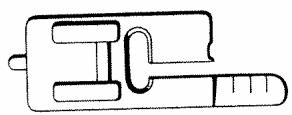
650
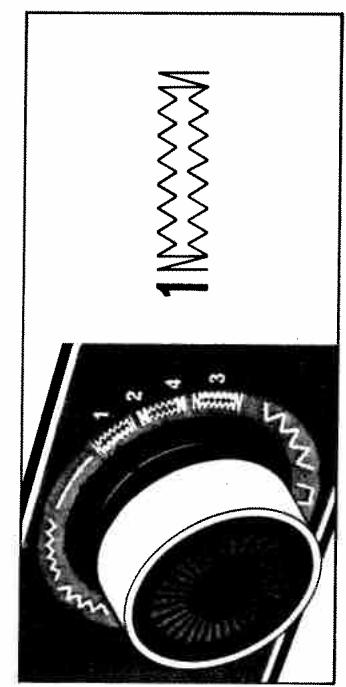
text_image
1 2 3 4 1Set the stitch selector to symbol 1. The machine sews the first column of zig-zag stitches in reverse. When the column is the right length, stop the machine with the needle raised out of the fabric and turn the dial to symbol 2/4.
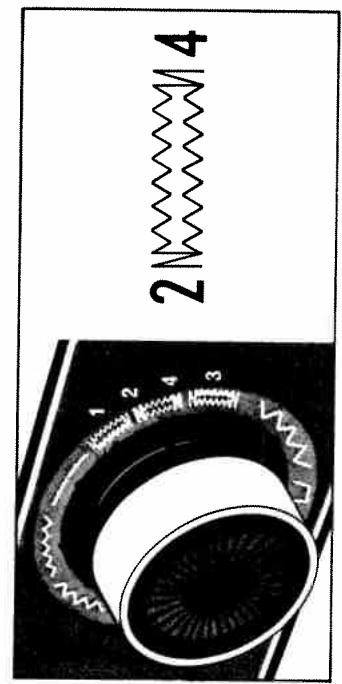
text_image
1 2 3 4 2 ∥ 4Now the machine makes the closing bar. Sew three or four stitches. Then stop the machine with the needle raised out of the fabric and turn the dial to symbol 3.
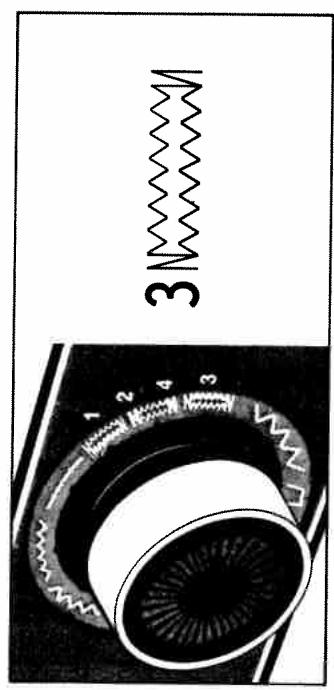
text_image
1 2 3 4 3 3Now sew the other column of zig-zag stitches the same distance as the first one. Stop with the needle in its highest position and turn the dial back to symbol 2/4.
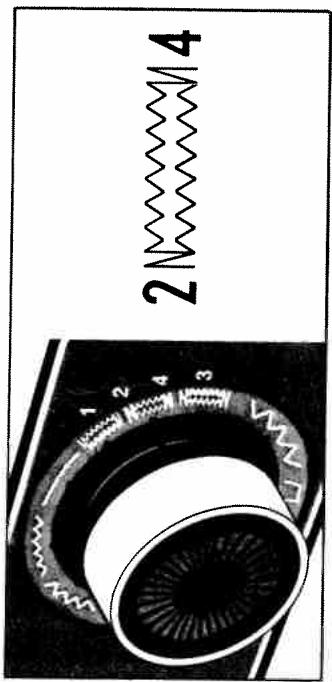
text_image
1 2 3 4 2 N 4Now the machine makes the final closing bar. Sew three or four stitches. Turn to symbol ____ and lock the threads with a few stitches while holding back the fabric. Page 28 shows how to cut buttonholes.
Reinforced buttonholes
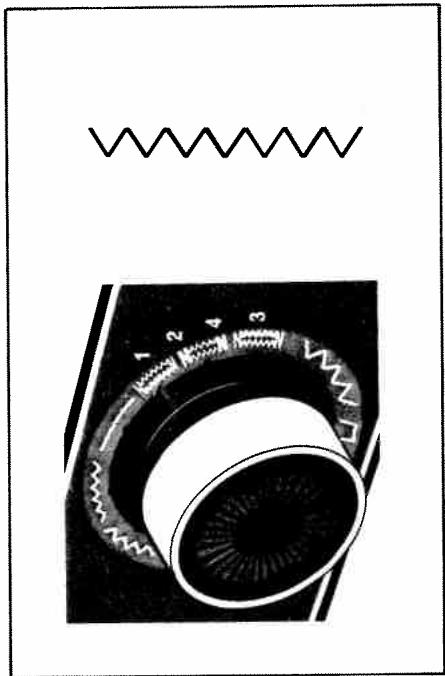
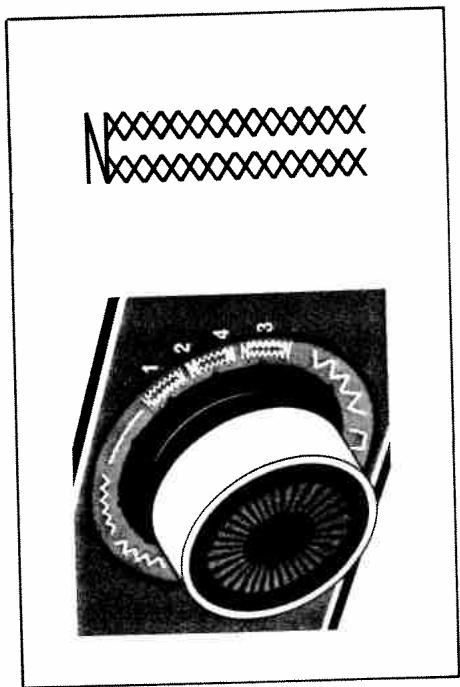
Garments subject to heavy wear or buttons subject to special strain may sometimes require even stronger buttonholes. Set the stitch selector to symbol 1 and sew the first column in exactly the same way as for an ordinary buttonhole but with slightly longer stitches.
When the column is the right length, stop the machine, with the needle raised, and turn the dial to symbol 3. Sew the second column without making any closing bar. Stop with the needle raised when the columns are the same length.
Then turn the dial to symbol 1 again and sew the first column once more. If you should have difficulty with the feed, increase the stitch length slightly.
natural_image
Close-up of a mechanical knob with numbered dial (1-4) and a zigzag line on the right side (no text or symbols)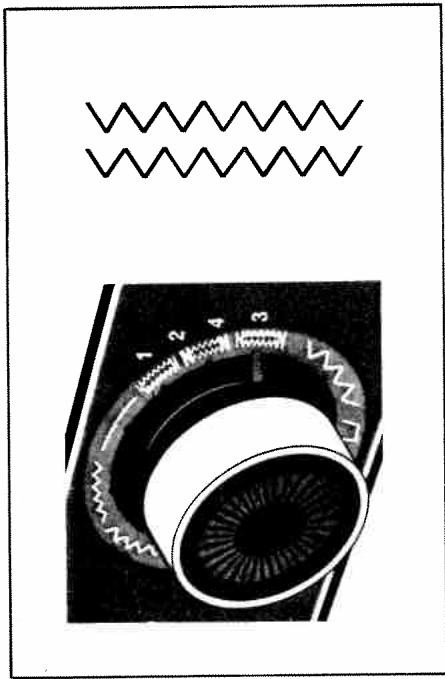
natural_image
Close-up of a mechanical component with numbered parts and two wavy line diagrams on the right (no text or symbols)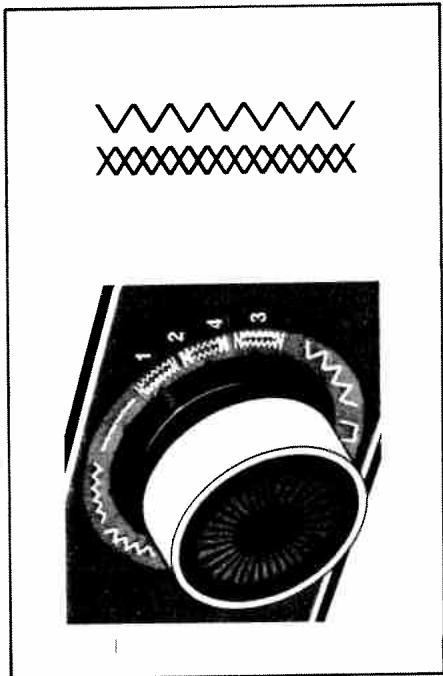
natural_image
Diagram of a mechanical component with numbered parts and two spring-like zigzag lines (no text or symbols)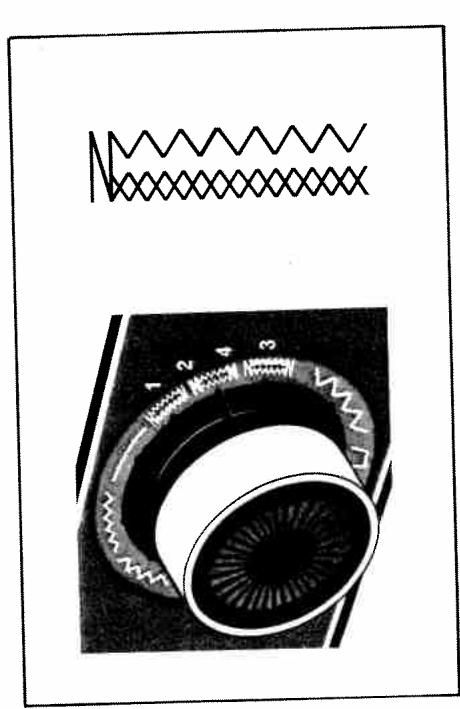
natural_image
Technical illustration of a mechanical component with numbered parts and a spring-like schematic symbol (no text or labels)Turn the dial to symbol 2/4. Make the closing bar by sewing three or four stitches. Stop with the needle raised out of the fabric.
natural_image
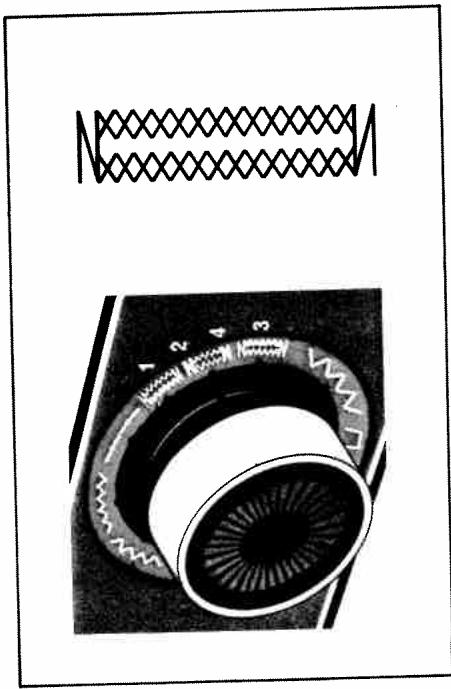
Close-up of a mechanical component with numbered parts and a separate zigzag pattern on the right (no text or symbols)Turn the dial to symbol 3 and sew the second column once more. Stop with the needle raised out of the fabric.
natural_image
Close-up of a mechanical component with numbered parts and a zigzag spring-like pattern on the right (no text or symbols)Turn the dial to symbol 2/4 again and make the second closing bar by sewing three or four stitches. Stop with the needle raised and turn the dial to symbol ---- and lock the threads with a few stitches, while holding back the fabric. The next page shows how to cut buttonholes.
Buttonhole knife
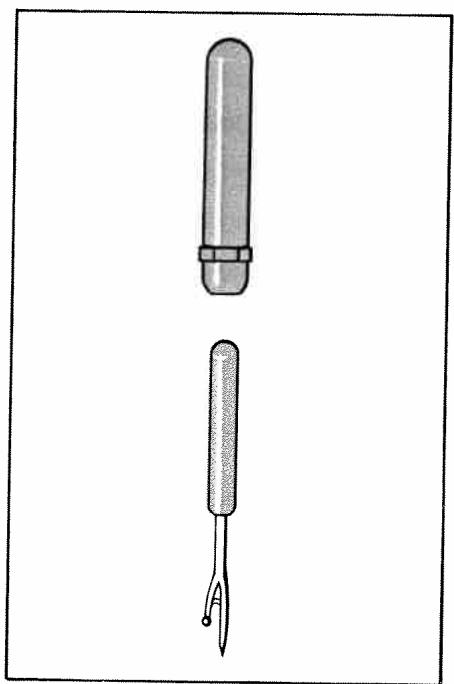
The buttonhole knife (40 15 399), which you will find in the accessory box, is equipped with a safety cap which, when taken off, can be pushed onto the back of the knife, providing a good handle.
Pierce the fabric at right angles until the curved blade edge reaches down to the buttonhole.
With the knife more or less parallel to the fabric, push forward taking care not to cut through the end of the buttonhole. The small red bead serves as a guide. Cut the buttonhole to the middle and then repeat the cut from the other direction.
natural_image
Two medical or surgical tools: a needle-like tool and a cylindrical device (no text or symbols visible)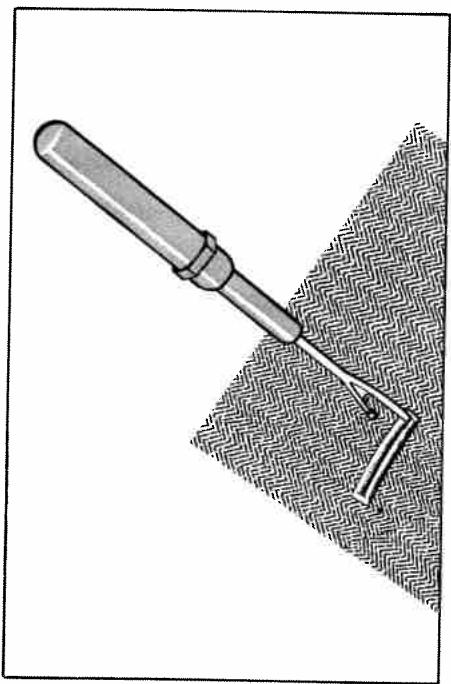
natural_image
Illustration of a tool striking a surface with a V-shaped tool (no text or symbols)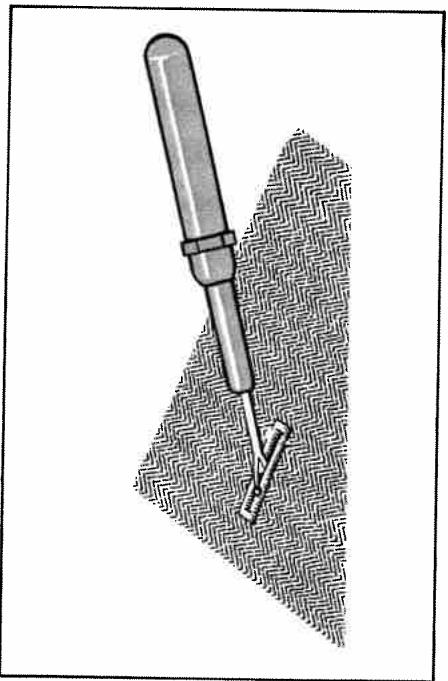
natural_image
Illustration of a tool interacting with a textured surface (no text or symbols)Darning foot
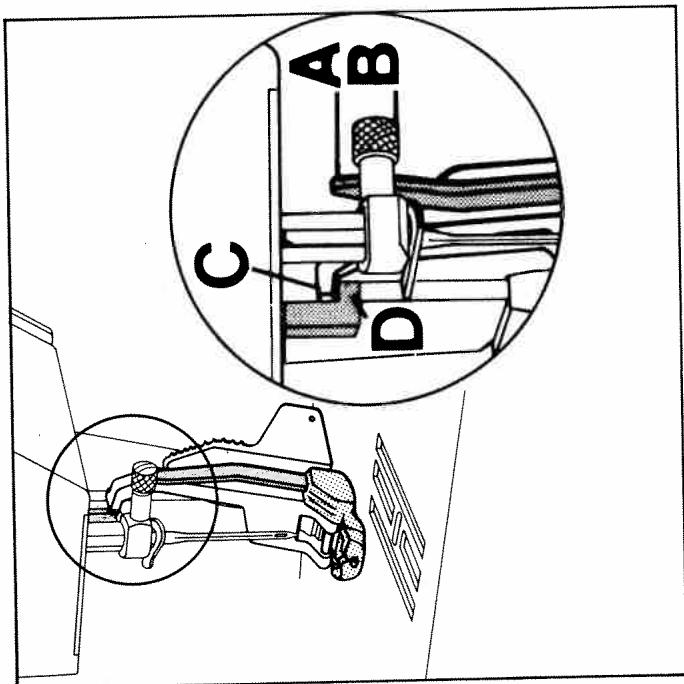
Raise the needle to the highest position. Press arms A and C together between thumb and index finger, place them behind the needle clamp, B, and attach the darning foot, 41 15 275, in the same way as the other presser feet, by pressing the pin between the spring and the presser foot “ankle”. The action of the darning foot is accomplished by the needle clamp. Make sure that hook C rests against support D. Lower presser foot lifter E. The feed dog is lowered by pressing symbol 📄 on the drop feed button.
Darning
Use darning thread No. 40–50 and set the machine to straight stitching, with the thread tension dial between 3 and 5. Stretch the work in a hoop and place it under the darning foot so that the fabric rests against the table. Lower the presser foot and bring up the lower thread. Fasten the threads with a few stitches on the edge of the fabric and begin by sewing back and forth over the hole with long stitches. Since the feed dog is disengaged, you guide the hoop back and forth yourself and thus determine the stitch length. The faster you move the hoop, the longer the stitches will be. Keep the machine speed uniform. Then turn the work 90° and darn across the hole with short stitches which are obtained by moving the hoop slowly back and forth. If the hole is large, cover it with gauze and then darn as described above. (Darning can also be done on the bias of the fabric or in circles if this would be better suited to the structure of the fabric.)
Darning socks
Set the machine to zig-zag, stitch length 3. Lower the feed dog and set the thread tension between 3 and 5. Thread the machine with darning cotton and draw the thread through the needle hole of the presser foot. Pull the sock over the free arm and place the hole under the darning foot. Lower the darning foot and bring up the lower thread. Place a strand of light yarn in the groove of the darning foot and fasten it with a few stitches on the edge of the hole. Stretch the socks with your fingers and sew the woolen yarn across the hole at slow speed, guiding the work from side to side. Cut off the yarn when the hole is filled and darn back and forth with zig-zag across the yarn. The darn becomes stiff when sewing too close.
text_image
Technical diagram of a sewing machine with labeled parts A, B, C, D and an inset view showing mechanical assembly details.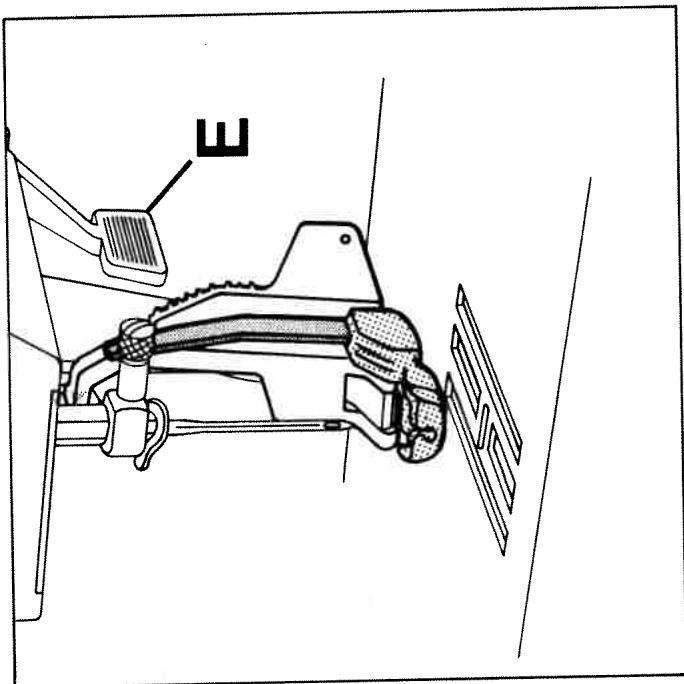
text_image
ECare of the machine
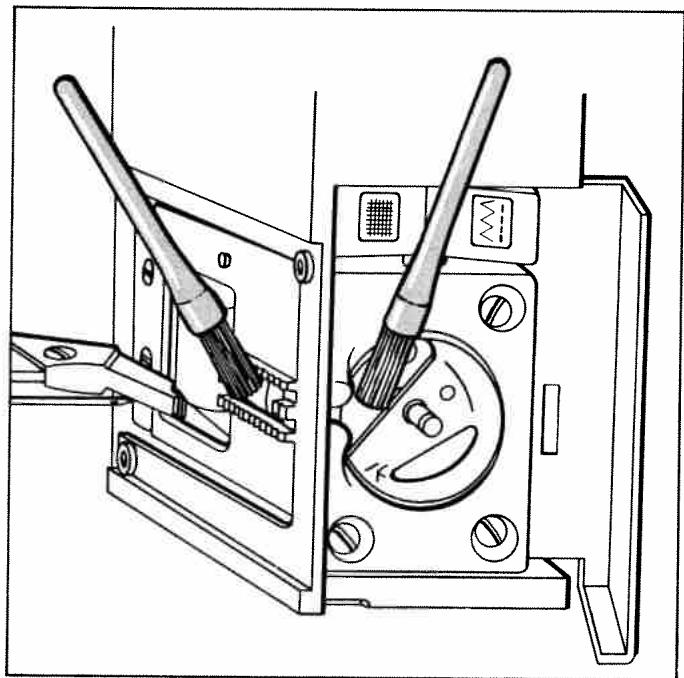
In order to serve you satisfactorily, your new sewing machine requires cleaning. The throat plate (needle plate) should occasionally be removed and the teeth of the feed dog brushed clean with the cleaning brush (40 15 555) which is in the box of accessories.
Whenever necessary, the bobbin case and shuttle (hook) should also be brushed clean. Sizing or finishing compounds from the fabric can adhere to the spindle of the shuttle and affect the machine's performance. In such a case the spindle should be cleaned with the cleaning brush. Also check that any thread remainders, wound around the spindle, are removed.
Belts
Belt adjustment not required.
natural_image
Technical line drawing of a mechanical device with a tool and a circular component, no visible text or symbolsChanging the light bulb
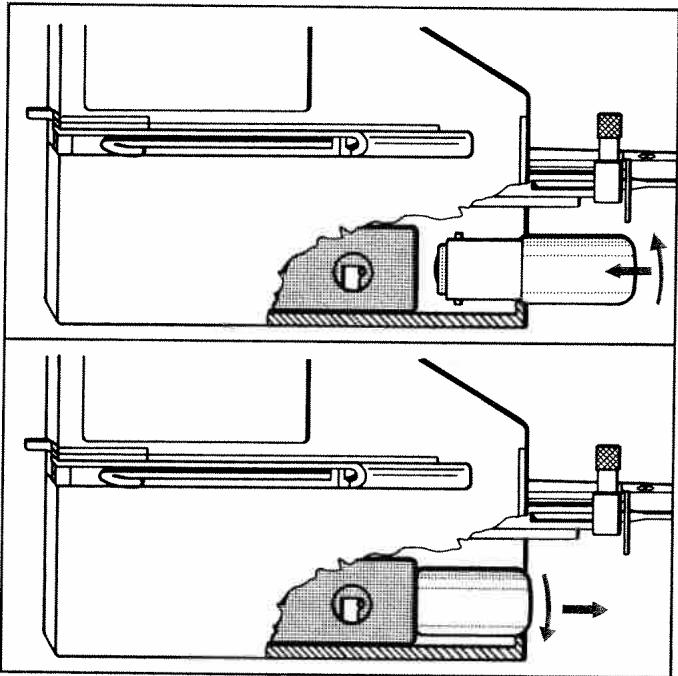
The light bulb is placed in the upper arm as shown in the illustration. Push the bulb upwards, turn it 1/4 of a turn to the left and take it out. When inserting a new bulb, put it into the socket, press it upwards and turn it 1/4 of a turn to the right. The correct wattage of the bulb is shown on the plate at the back of the machine.
natural_image
Technical diagram showing two mechanical assembly states with directional arrows indicating motion (no text or symbols present)Maintenance hints
In most cases poor sewing results are due to a blunt or damaged needle. Therefore always examine the needle first before taking any other action.
Unattractive stitches - unattractive seam
-
The needle is incorrectly inserted. See page 6.
-
The needle is bent or blunt. Change the needle.
-
The thread tension is not correct. See page 12.
-
The machine is incorrectly threaded. See pages 7–8.
-
The needle, thread and fabric do not correspond. See
table, page 6.
- The lower thread is not the same thickness as the
upper thread.
-
The lower thread is unevenly wound. See page 8-9.
-
The bobbin is incorrectly inserted in the bobbin case.
See page 10.
- Lint or thread is wrapped around the spindle of the
shuttle. See page 30.
Upper thread breaks
-
The needle is incorrectly inserted. See page 6.
-
The needle is bent or blunt. Change the needle.
-
The upper thread is incorrectly threaded. See page 7.
-
The upper thread is too tightly tensioned. See pages
12-13.
-
The thread is knotted.
-
The needle and thread do not correspond. See table.
page 6.
- The hole in the throat plate is chipped and has sharp
edges. Polish with an emery cloth or change the throat
plate. See page 30
- The needle groove or needle eye has sharp edges.
Change needle. See page 6
- Thread is entangled on the spool pin.
Lower thread breaks
-
The bobbin case is incorrectly inserted. See page 10.
-
The lower thread is incorrectly threaded. See page 10.
-
The lower thread is too tightly tensioned. See page 12.
-
The bobbin is unevenly wound. See pages 8–9.
-
The bobbin is wound too full. See page 8
-
The throat plate hole is damaged. Polish it with an
emery cloth or change the throat plate, see page 30.
- Lint or thread is wrapped around the spindle of the
shuttle. See page 30.
Needle breaks
-
Needle is incorrectly inserted. See page 6.
-
You may have helped the machine to feed through the
fabric by pulling it. The needle can then easily come
against the throat plate and be broken.
- The needle is not the right size. Use Husqvarna 705 H
needles.
Maintenance hints (cont.)
Lower thread not brought up by the upper thread The needle is incorrectly inserted. See page 6.
Uneven thread tension This may be due to poor thread quality.
Irregular bobbin winding
1. The bobbin is not pressed in far enough. See page 10.
2. The machine is not correctly threaded for bobbin winding. See page 8.
3. The thread guide for bobbin winding is not correctly adjusted. See page 9.
Fabric puckers 1. The upper thread is too tightly tensioned. See page 12. 2. The upper and lower thread tension is too tight in relation to the thickness of the fabric. See page 12. 3. The needle is damaged. Change the needle.
Stitch length varies The feed dog is choked by dust and dirt. Clean it with the special brush or small screwdriver. See page 30. 32
The seam is too loose. Fabric layers not
The thread tension is too slack. See page 12.
Machine does not feed the fabric
-
The stitch length dial is set on 0.
-
The thread guide for bobbin winding is not correctly adjusted. See page 9.
Machine runs sluggishly
1. Dirt or lint has got under the throat plate. Loosen the throat plate and brush clean between the teeth of the feed dog. See page 30.
2. Dirt or lint has got into the shuttle. Take out the bobbin and bobbin case and brush clean with special brush. See page 30.
3. The wall outlet voltage is too low.
Concents of accessory box
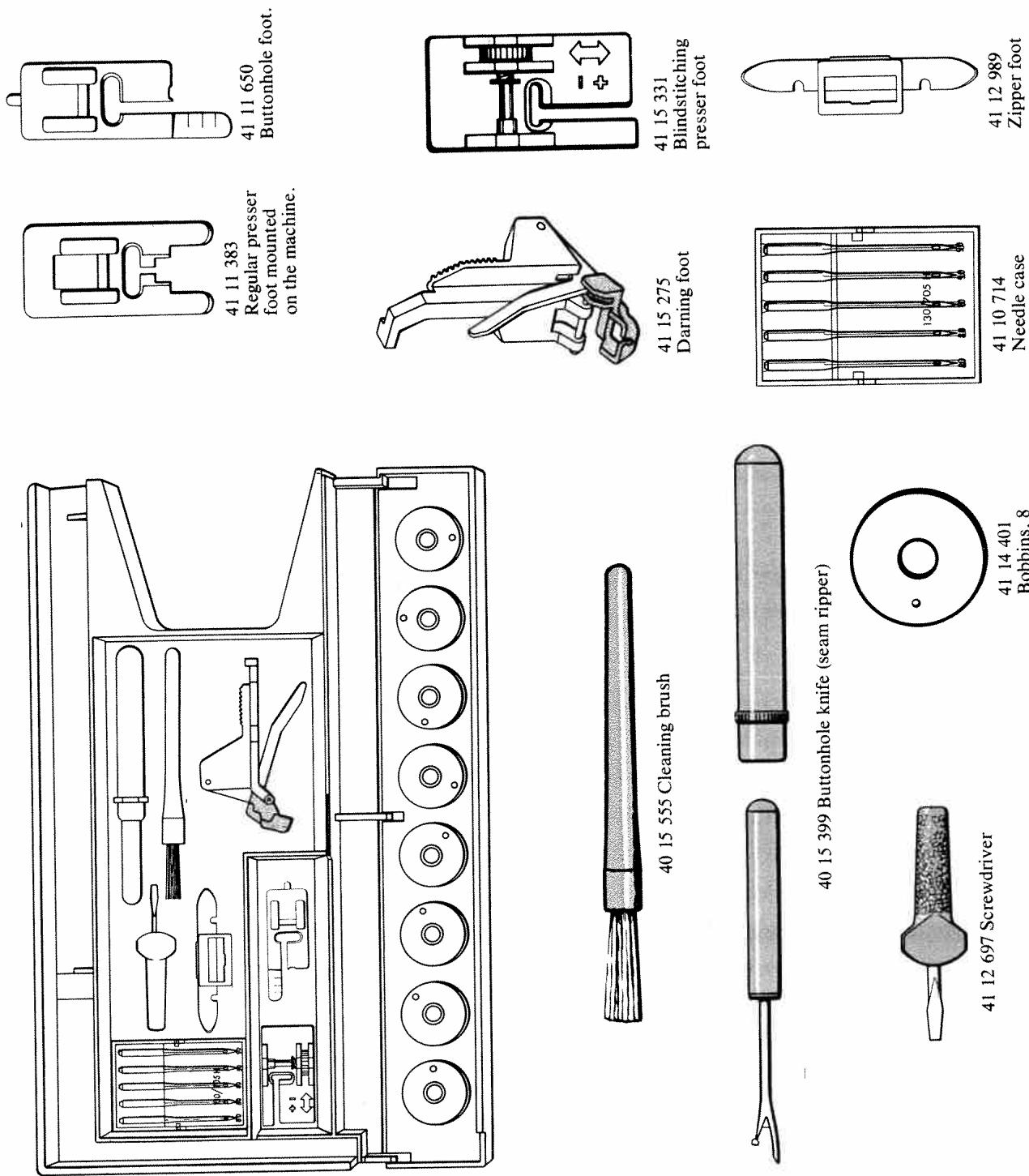
41 14 401
Bobbins, 8
Putting the machine away
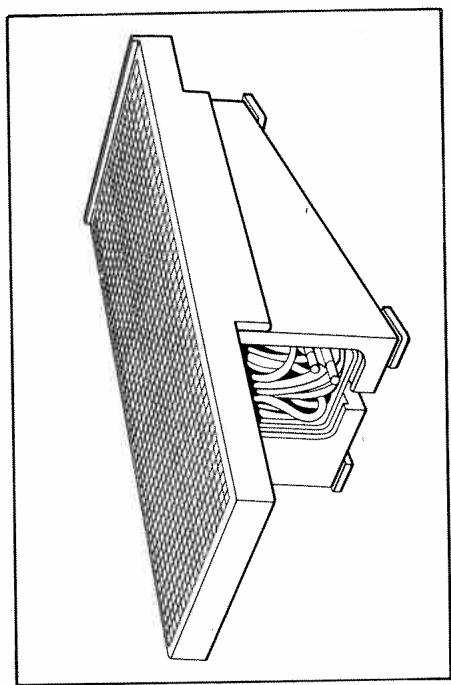
Pull the leads out of the wall outlet and the machine. Wind the leads around your hand and put them inside the foot control. Put the extension table and the operating manual into the accessory box, B. Slide the accessory box on the machine. Put the foot control, A, between the free arm and the upper arm. Put on the cover.
Unpacking the machine
Place the cover in front of you so that the little mark faces you. Pull the locking lips as shown in the illustration. Lift off the cover and put it aside. Remove the foot control A. Slide the accessory box B with the extension table to the left. For further details, see page 3.
natural_image
Technical line drawing of a mechanical device with mesh top and internal wiring (no text or symbols)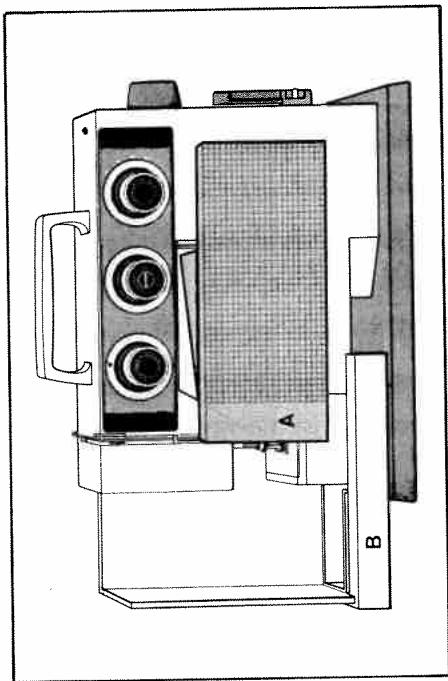
natural_image
Line drawing of a vintage flatbed machine with labeled parts A and B (no text or symbols beyond labels)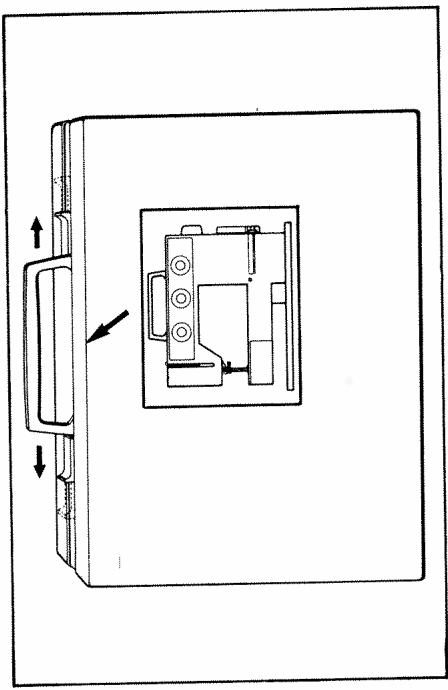
natural_image
Line drawing of a sewing machine with handle and internal mechanism (no text or symbols)VIKING Husqvarna
FÄLTHS TR., VÄRNAMO 6862
Printed in Sweden
Engelsk
41 15 242-28 2. 11-73