BFL5456GB - Fridge Freezer BRANDT - Free user manual and instructions
Find the device manual for free BFL5456GB BRANDT in PDF.



| Product type | Side-by-side refrigerator-freezer |
| Brand | BRANDT |
| Model | BFL5456GB (refrigerator) + BFU5456GB (freezer) |
| Power supply | 230 V / 50 Hz |
| Temperature adjustment | 7-position thermostat (1 = warmest, 7 = coldest) |
| Indicator lights | Green light (power), red light (temperature rise) |
| Coldest zone | Indicated by a pictogram, between the vegetable drawer and the lower shelf (temperature ≤ +4°C) |
| Quick freeze | Dedicated 'Quick Freeze' section in the freezer compartment |
| Refrigerator defrosting | Automatic (water drained through conduit to pan above compressor) |
| Freezer defrosting | Manual, to be done at least twice a year or if frost > 5 mm |
| Freezing capacity | Maximum quantity indicated on the rating plate |
| Ventilation | Built-in fan in the refrigerator compartment |
| Lighting | User-replaceable bulb (depending on model); LED lighting requires an authorized technician |
| Cleaning | Warm soapy water or baking soda; avoid alcohol, abrasives, and solvents |
| Condenser maintenance | Dust at least once a year |
| Refrigerant gas | R600a (isobutane), flammable |
| Safety instructions | Do not use an extension cord; mandatory grounded outlet; do not block ventilation openings |
| Door reversal | Possible, requires tools (8, 10 mm wrench, screwdriver) |
| Spare parts | Only use certified original parts |
| After-sales service | Contact an authorized repairer; details at www.brandt.com |
Frequently Asked Questions - BFL5456GB BRANDT
User questions about BFL5456GB BRANDT
0 question about this device. Answer the ones you know or ask your own.
Ask a new question about this device
Download the instructions for your Fridge Freezer in PDF format for free! Find your manual BFL5456GB - BRANDT and take your electronic device back in hand. On this page are published all the documents necessary for the use of your device. BFL5456GB by BRANDT.
USER MANUAL BFL5456GB BRANDT
RELATIONS CONSOMMATEURS
1 Instructions for safety, disposal, installation and maintenance
- Safety instructions and warnings
- Disposing of your appliance
- General installation conditions
Electric connections - Energy-saving measures
- Cleaning and maintenance
2 Introduction to your appliance
- Installing your appliance
Description of your appliance - Controls and use of your appliance
3 Using your fridge
- The temperature indicator in your fridge
- Adjusting your fridge
4 Using your freezer
- Adjusting your freezer
- Defrosting your freezer
5 Routine maintenance of your appliance
- Cleaning and maintaining your appliance
- Replacing the bulb (possible according to the model)
6 Troubleshooting
- Operating problems
Technical support
7 After-sales service
This installation and use guide of your fridge-freezer applies to several models. There may be minor differences between the details and fittings on your appliance and the description provided.
SAFETY GUIDELINES
For your safety and in order to use your appliance correctly, carefully read these instructions (including the warnings and useful advice), before installation and first use.
To avoid damaging the appliance and unnecessary injury, it is important that the persons who use the appliance fully understand how it works and the safety instructions.
Always keep these instructions close to the appliance so that they can accompany it in the event of resale or a change of house. In this way, the appliance will continue to function optimally and any risk of injury will be avoided.
The manufacturer shall not be held liable in the event of misuse of the appliance.
GENERAL SAFETY AND
WARNING
- This appliance is designed to be used for domestic and similar applications such as:
- kitchen areas for the staff of shops, offices and other professional premises.;
- farms and use by customers in hotels, motels and other residential environments;
- B&B-type environments;
- catering and other similar applications, excluding retail outlet
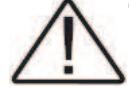
The safety of pen and other able persons:
- This appliance can be used by children aged from 8 years and above or who have no experience or knowledge, provided that they are properly supervised or that they have received the instructions for the use of the
appliance in complete safety and the risks incurred have been fully understood.
-
Children must not play with the appliance.
-
Children must not clean and maintain the appliance without supervision.
-
Keep all the packaging materials out of the reach of children, as they can cause suffocation.
-
Do not let children play with the appliance, keep pets away.
-
Used appliances must be immediately made unusable. Disconnect the power cord and cut it as close to the appliance as possible. Inhibit the closing mechanism of the door or, even better, detach the door, so that children or pets cannot remain enclosed inside the appliance when playing.
If any incidents occur and you cannot resolve them with the advice we provide (see "Troubleshooting"), then only
call our approved after-sales service centres or a qualified professional.
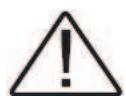
WARNING
-
Your appliance must be installed and, if necessary, secured and used in accordance with the instructions in this manual in order to avoid any risks due to poor installation.
-
Maintain clear of obstruction ventilation openings in the appliance enclosure or in the built-in structure.
-
Do not use any mechanical or other means, other than those recommended by the manufacturer, to speed up the defrosting process.
-
Do not damage the refrigerating circuit.
-
Do not use any electric appliances inside the compartment for food, unless they are of a type recommended by the manufacturer.
-
Do not store any explosive substances, such as aerosols containing inflammable propellant gases, inside the appliance.
- Never expose the appliance to a naked flame.
- Switch off and disconnect the appliance before cleaning or moving it.
- For models fitted with a water dispenser or an ice compartment, only fill or connect using a supply of drinking water.
- If the power cable is damaged, it should be replaced by the manufacturer, its after-sales service department or a similarly qualified person to avoid danger.
The refrigerating and insulating agents used in this appliance contain inflammable gases. Only dispose of the appliance in certified collection centres. Never expose the appliance
to a naked flame.
Coolant liquid
The appliance's cooling circuit contains isobutane coolant (R600a), which is a more ecological coolant gas, which is nevertheless flammable.
When transporting and installing the appliance, make sure that none of the components of the cooling circuit are damaged.
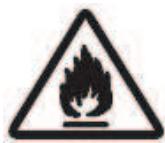
Caution: Fire risk
If the cooling circuit is damaged:
-Avoid naked flames and all sources of inflammation.
- Ventilate the room in which the appliance is installed.
It is dangerous to change the composition of this model in any way whatsoever.
Any damage to the power cord may result in a short circuit and/or electrocution.
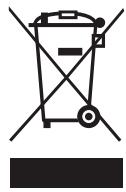
DISPOSAL
This symbol indicates
that this product should not be treated as household waste.
Your appliance also contains a great amount of recyclable material. It is marked with this label to indicate the used appliances must be disposed of in certified collection points.
Contact your town hall or your retailer for the used appliance collection points closest to your home. This way, the appliance recycling organised by your manufacturer will be done under the best possible conditions, in compliance with European Directive on Waste Electrical and Electronic Equipment.
We thank you for your help in protecting the environment.
This appliance's packing materials are also recyclable. Help recycle it and protect the environment by dropping it off in the municipal receptacles provided for this purpose.
In accordance with the most recent legislative provisions applying to the protection and respect for the environment, your appliance does not contain any CFCs, but a refrigerant called R600a. The exact type of coolant gas used in your appliance is clearly shown on the information plate inside the fridge part of your appliance, at the foot of the left-hand side panel. R600a is a non-polluting gas that does not harm the ozone layer and hardly contributes to the greenhouse effect at all.
INSTALLING YOUR APPLIANCE
Caution: You
can only keep your food in
good condition and optimise your energy consumption by following the instructions in this installation and user guide.
INSTALLATION
- If your appliance is fitted with casters, then remember that they should only be used for short movements. Do not move the appliance over long distances on its casters.
- Clean the appliance before connecting it to the mains. Always unplug your appliance before any maintenance work. Never pull on the power cord, but only on the plug itself.
- Install the appliance in a dry and well ventilated place.
- Avoid balconies, verandas and patios, because excessively high and low temperatures in the summer and the winter can prevent your appliance from functioning properly, or even damage it.
-
Do not place the appliance near a source of heat, such as an oven or a radiator.
-
Leave at least 3 and 5 ~cm clear around the sides and 10 ~cm above the appliance to allow the air to circulate freely.
-
Place the appliance at a suitable distance from the wall using the spacers contained in the bag of accessories.
-
Your appliance is designed to function optimally at a given ambient temperature. In this case, it is said to be designed for a particular "climate class". The climate class is shown on the ID plate inside the appliance, on the bottom of the left hand wall. Beyond these temperatures, the performance of your appliance may suffer.
| Class | Ambient temperature |
| SN | + 10°C to + 32°C |
| N | + 16°C to + 32°C |
| ST | + 16°C to + 38°C |
| T | + 16°C to + 43°C |
Tips:
Once the appliance is installed, adjust the feet so that it is slightly inclined rearwards. In this way, it will be easier to close the door.
Before putting any food in the fridge, clean the appliance inside and outside with bicarbonate of soda dissolved in water (1 spoon of bicarbonate of soda for 4 litres of water). Do not use alcohol, abrasive powders or detergents, which could damage the surfaces. (see "Cleaning your appliance")
ELECTRIC CONNECTIONS
The electric connections must meet the applicable standards and be capable of.
withstanding the maximum
power shown on the ID plate.
The plug must be correctly earthed.
We cannot be held liable for any incidents caused by improper electric installations.
Advice on the electric installation
- Do not use extensions, adapters or multiple plugs.
- Never remove the earth.
- The power plug must be easily accessible and out of the reach of children.
If in doubt, refer to your reseller.
Your appliance complies with the European directives and their amendments.
ENERGY-SAVING MEASURES
In order to reduce the power consumption of your appliance:
- Install it in a suitable location (see "Installing your appliance").
- Leave the doors open for the shortest time possible.
- Never put hot food in the fridge or the freezer, and in particular soups and other
preparations that release a lot of steam.
- Check that your appliance is working correctly and do not allow too much ice to accumulate in the freezer (defrost when the ice is more than 5-6 mm thick). Clean the condenser on a regular basis (see chapter "Routine maintenance of your appliance").
- Regularly check the door seals and make sure that the doors can be closed properly. If this is not the case, contact after-sales service.
- Do not adjust the temperature too low.
- Failure to install the draws, bins and shelves properly can result in increased power consumption.
Warning
If your transported the appliance horizontally, position it vertically and wait for 2 hours before connecting it. A little oil may flow into the cooling circuit. Allow enough
time for the oil to return to the motor before connecting the appliance, failing which, it could be
Always unplug your appliance before any maintenance work. Never pull on the power cord, but only on the plug itself.
CLEANING AND MAINTENANCE
Always switch off the appliance before any maintenance operations.
- Never clean the appliance with metal objects, steam systems, volatile oils, organic solvents or abrasive components.
- Do not use sharp or cutting objects to remove the ice. Use a plastic sponge.
- To replace the light bulb, if operation is possible by the user himself, please refer to the "Maintenance" of this manual. Always be sure to unplug your appliance before.
WARNING: If the appliance is equipped with a LED lighting, it can only be replaced by a qualified technician.

IF THE APPLIANCE IS OUT OF ORDER AND IT IS NOT POSSIBLE TO REPAIR IT BY MEANS OF GIVEN RECOMMENDATIONS, UNPLUG IT, OPEN THE DOORS AND CALL THE SERVICE EXPERT. ONLY A SERVICE REPRESENTATIVE CAN REMEDY ALL TECHNICAL OR CONSTRUCTION FAULTS.
DESCRIPTION OF THE APPLIANCE, BASIC PARTS (fig. 1)

IMPORTANT! THE APPLIANCE ACCESSORIES LISTED BELOW MAY DIFFER FROM THE ACCESSORIES OF THE APPLIANCE YOU HAVE BOUGHT IN QUANTITY AND IN DESIGN. This description is adapted for entire group of side by side refrigerators – freezers.
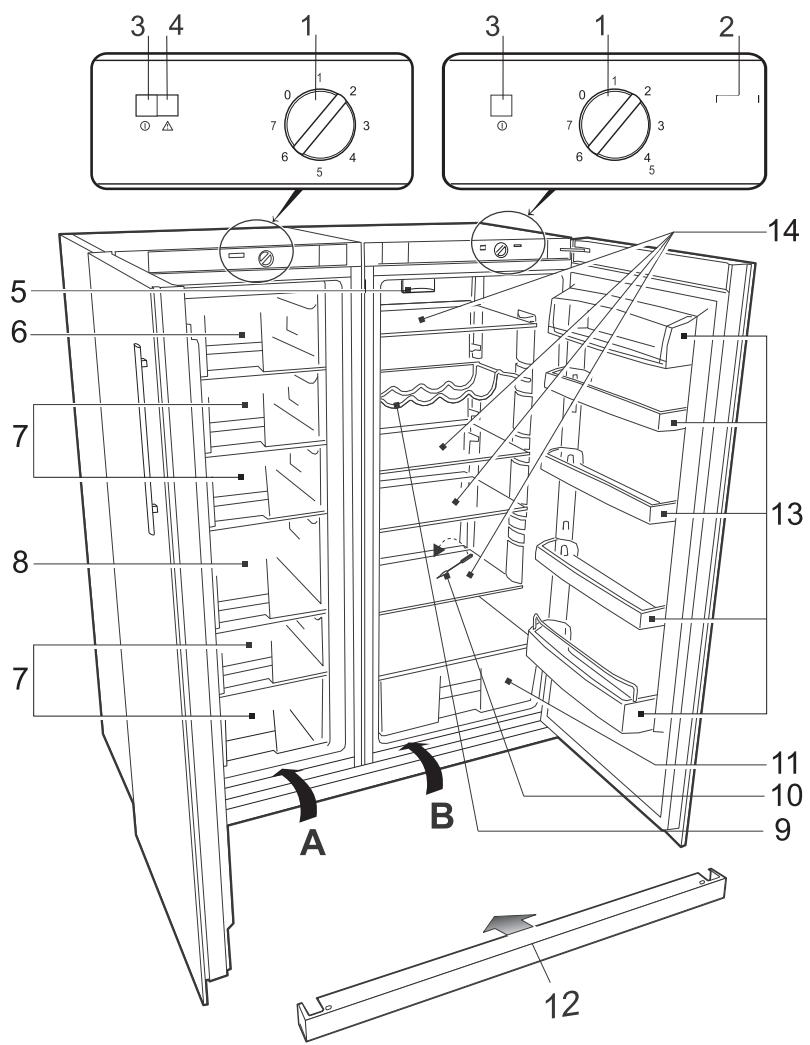
A - freezer
B - refrigerator
1 Thermostat knob - temperature regulator
2 On / off switch for interior light
3 Electric supply indicator (green light)
4 Temperature rise indicator (red light)
5 Fan
6 Section "Speed Freezer"
7 Frozen products section (s)
8 Section "Maxi Box"
9 Shelf for bottles
10 Thaw water channel cleaner
11 Fruit and vegetable box
12 Bottom cover
13 Adjustable height door trays
14 Adjustable height glass shelves
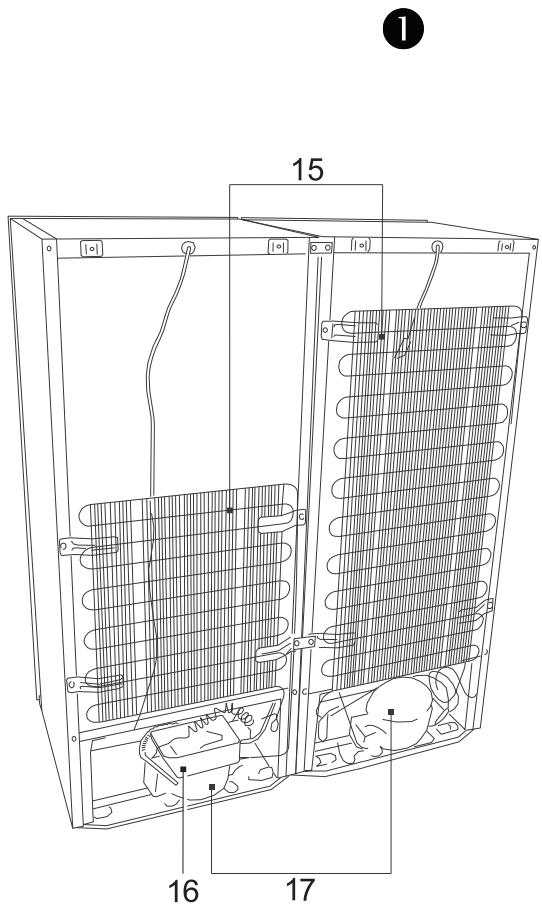
15 Condenser
16 Thaw water drip tray
17 Compressor
POSITIONING
- Place the appliance in a dry, well ventilated room.

WARNING! The appliance should not be operated in an unheated room or porch. Place the appliance away from heat sources such as kitchen stove/oven, radiators, or direct sunlight.
WARNING! The appliance must not touch any pipes for heating, gas or water supply or any other electrical devices.
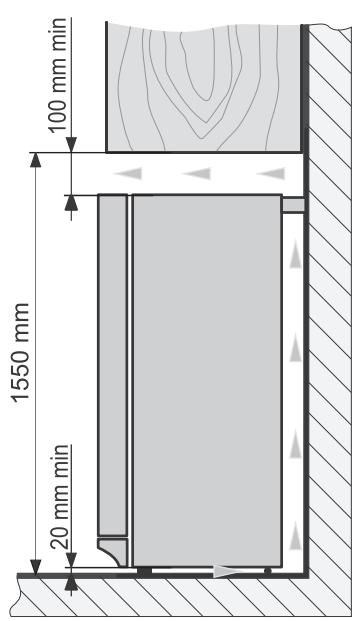
- Do not cover the ventilation holes at the top of the appliances—it must be a good air circulation around the appliance. There should be a gap of at least 10cm between the top of the appliance body and any furniture that may be above it. If this requirement is not followed, the appliance consumes more electrical energy and its compressor may overheat. If the appliance is placed in a niche, a gap of at least 1550mm must be left between the walls, furniture or other appliances (see fig.).
-
The appliance must stand on a level surface and must not touch the wall. If necessary, regulate the height of the appliance by adjusting the levelling feet: by turning them clockwise – the front of the appliance rises, by turning them counter clockwise – it comes down. If the appliance is tilted slightly backward – the doors will close by themselves.
-
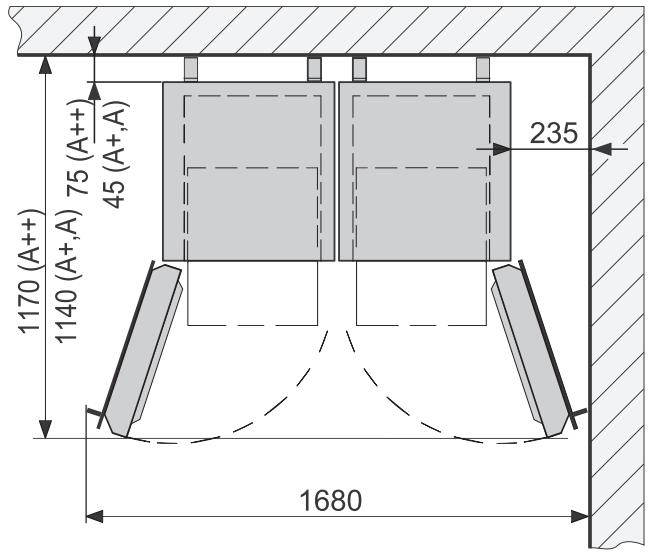
Attention! If the appliance is placed in a corner, a gap of at least 235 ~mm must be left between the appliance body and the wall so that the refrigerator or freezer door can be opened enough (see fig.).
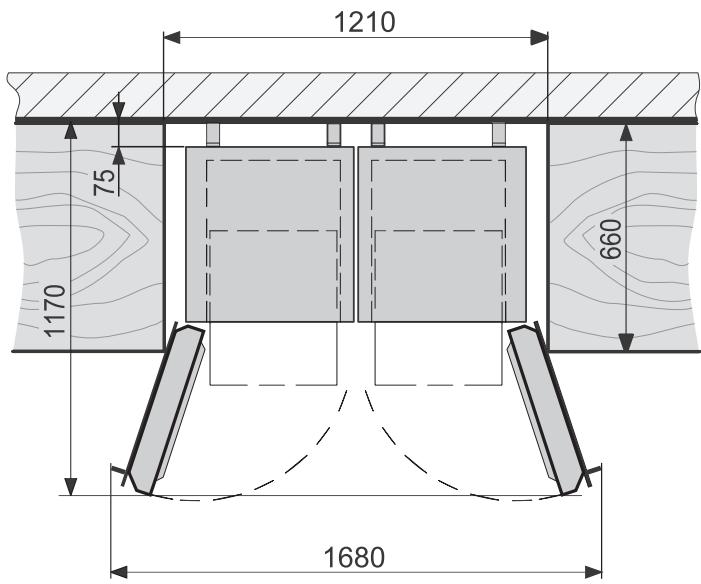
- Attention! If the appliance is placed in a niche, a gap of at least 1210mm must be left between the walls, furniture or other appliances so that the refrigerator and freezer doors can be opened enough (see fig.).
CONNECTING REFRIGERATOR AND FREEZER AND PREPARED THEM FOR OPERATION

IMPORTANT! We RECOMMEND trusting the job of connecting refrigerator BFL5456GB and freezer BFU5456GB to a service agent. But please note that this job is not included in our warranty service. If you decide to connect these appliances and prepare them for operation yourself, we recommend getting someone to help you.
You will need: a screwdriver PH2, a t-type socket wrench No.8 and a wrench No.10. Never lay the appliances horizontally when connecting them.
Preparing the appliances for connecting
- If the appliance is brought in from the cold (temperature is not higher than +12^ ), you should wait for two hours before connecting it to the mains.
- The appliance should not be connected to the mains until all packing and transport materials aren't removed.
- Unpack the appliances. Take them off the polystyrene bases. Remove all the packing tape.
- When placing the appliances into their designated place, slightly tilt them backwards: the wheels at the back will allow you to easily put them into the desired place.
Never lift or push the refrigerator and freezer holding their handles as they may break.
- Remove the red tape: it is intended for transportation only.
- Appropriately dispose of the packaging.
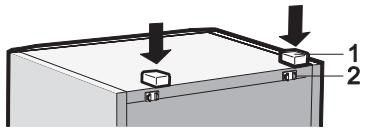
- Take supports 1 out of the bag and insert them into slots 2 at the top of the back of the appliances (see pic.).
- Place the refrigerator and freezer about 1 metre off the wall they will be placed by. Place the appliances side by side, with the freezer on the left and the refrigerator on the right.
- The component parts necessary for connecting the two appliances are packed with the freezer:
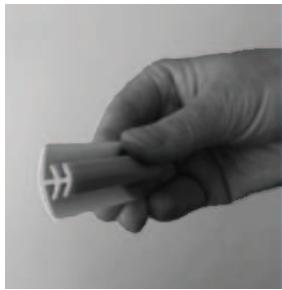
front strip 1 (Qty: 1) - attached to the back wall of the freezer, behind its condenser;
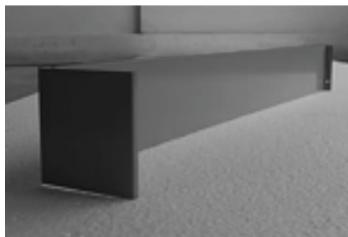
top strip-cover 2 with a sticky base (Qty: 1) (in the bag inside the freezer);
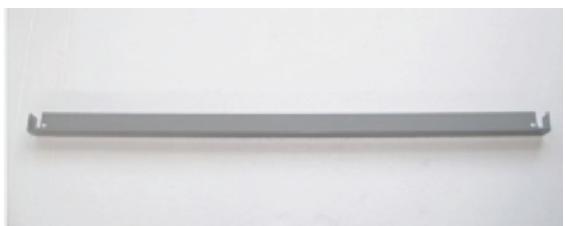
bottom cover 3 (Qty: 1) - (the bag is attached to the freezer condenser);
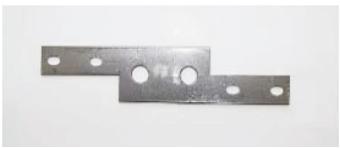
upper plate 4 (Qty: 1);
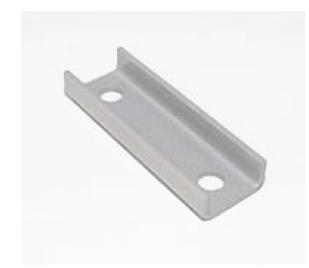
bottom plate 5 (Qty: 1);
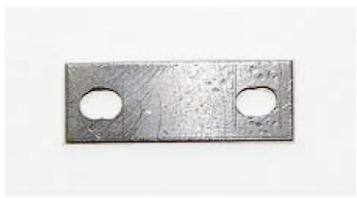
back plates 6 (Qty: 2);

bolts 7 (Qty: 2); self-tapping bolts 8 (Qty: 4); self-tapping bolts 9 (Qty: 2); (in the bag inside the freezer).

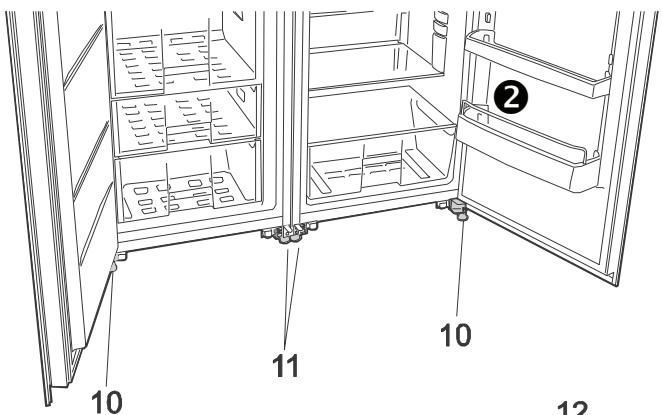
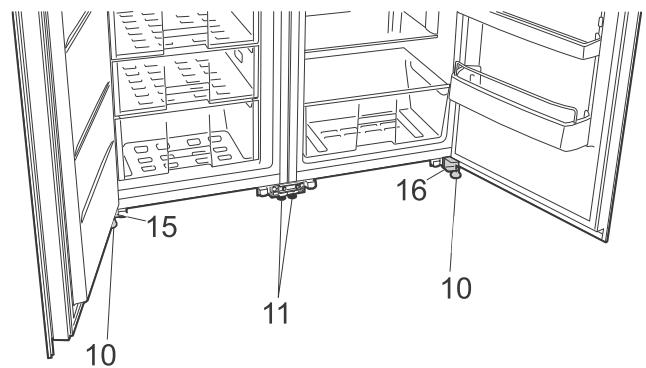
IMPORTANT! Before starting to work, adjust their height by turning the outer legs 10 and the inner legs 11 (pic. 2). When legs are turned clockwise, the front of the appliance is raised, when anti-clockwise, it is lowered. Make sure that both appliances are stable.
Connecting the appliances
Start connecting the appliances at the back.
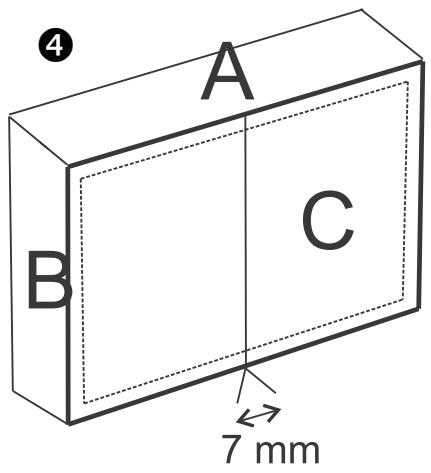
- Separate one appliance from the other, leaving a gap of 7 mm inbetween.
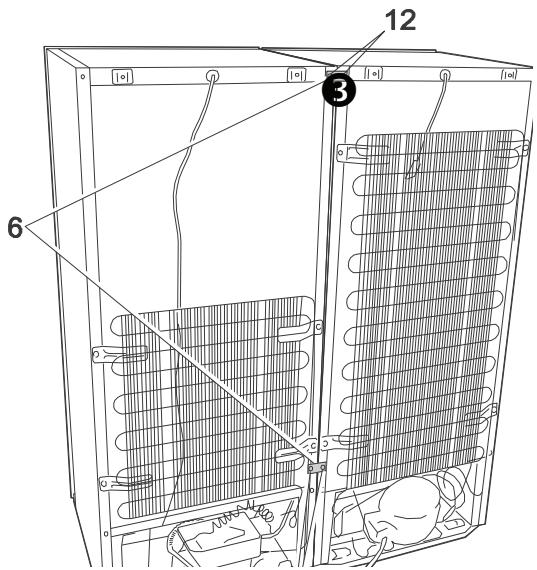
- Unscrew the screws 12 at top of the backside of the appliances (pic. 3).
- Screw back plate 6 at the back of the appliances (pic. 3). Screw the screws 12 back in.
- Attach back plate 6 using self-tapping bolts 9 (from the bag) where the designated holes are located (pic. 3).
- Carefully push the two appliances into their intended place. We recommend doing this with someone's help, slightly tilting the appliances backwards.
-
Once you have placed both appliances in the desired place, make sure again that (pic. 4):
-
the upper planes A coincide;
- there is a gap of 7 mm between appliances;
- the front planes B coincide when doors of both appliances are open;
- the front planes C of refrigerator and freezer door glass coincide.

Tip: If you struggle to connect both appliances, try turning the inner legs 11 all the way in so that they do not touch the floor. If you are struggling to adjust them, use the tips in the "Door position adjustment" section below.
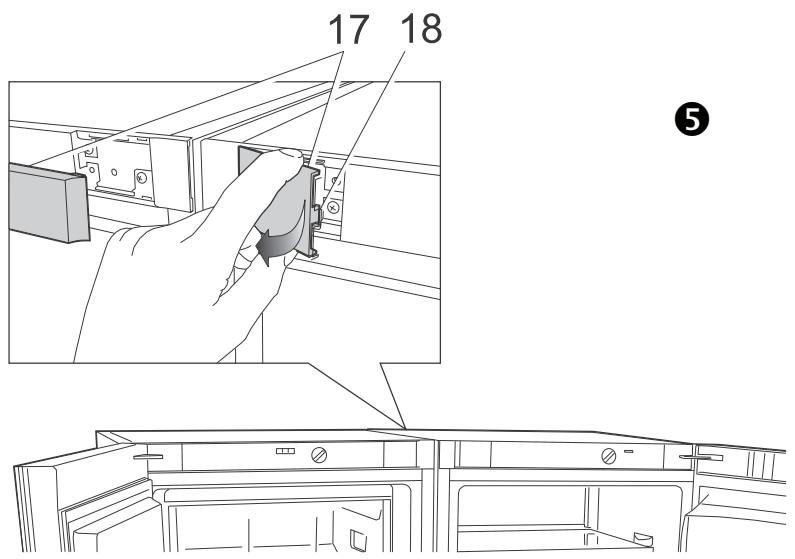
- Remove the two decorative covers 17 (pic. 5). Pull these towards you where the hooks 18 are located. If you are struggling to remove them, bend the hooks using a screwdriver.
6
-
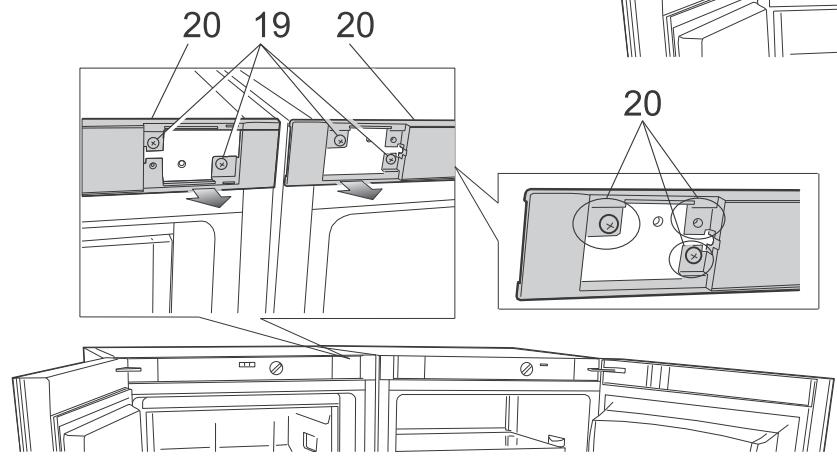
Unscrew four screws 19 and relax the clamps of the decorative panels 20 by pulling them towards you (pic. 6).
-
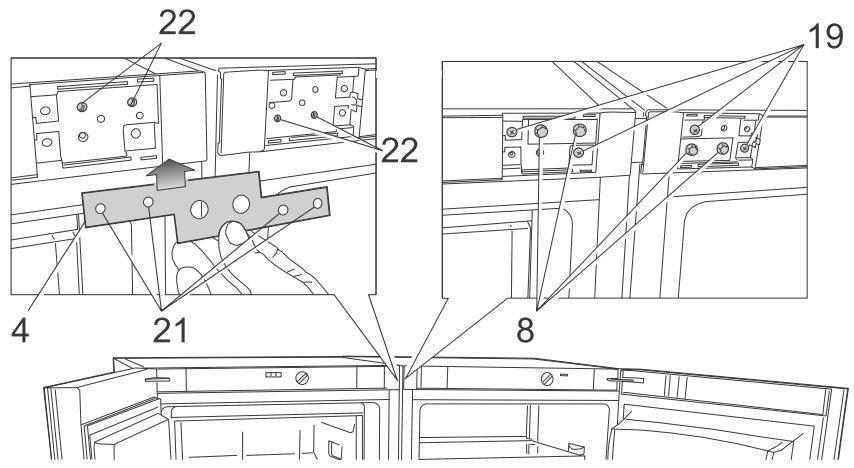
Take plate 4 and push it under the relaxed decorative panels so that its holes 21 coincide with holes 22 of the appliances (pic. 7).
- Attach the plate using four bolts 8. Reattach the decorative panels using the previously unscrewed screws 19 (pic. 7).
7
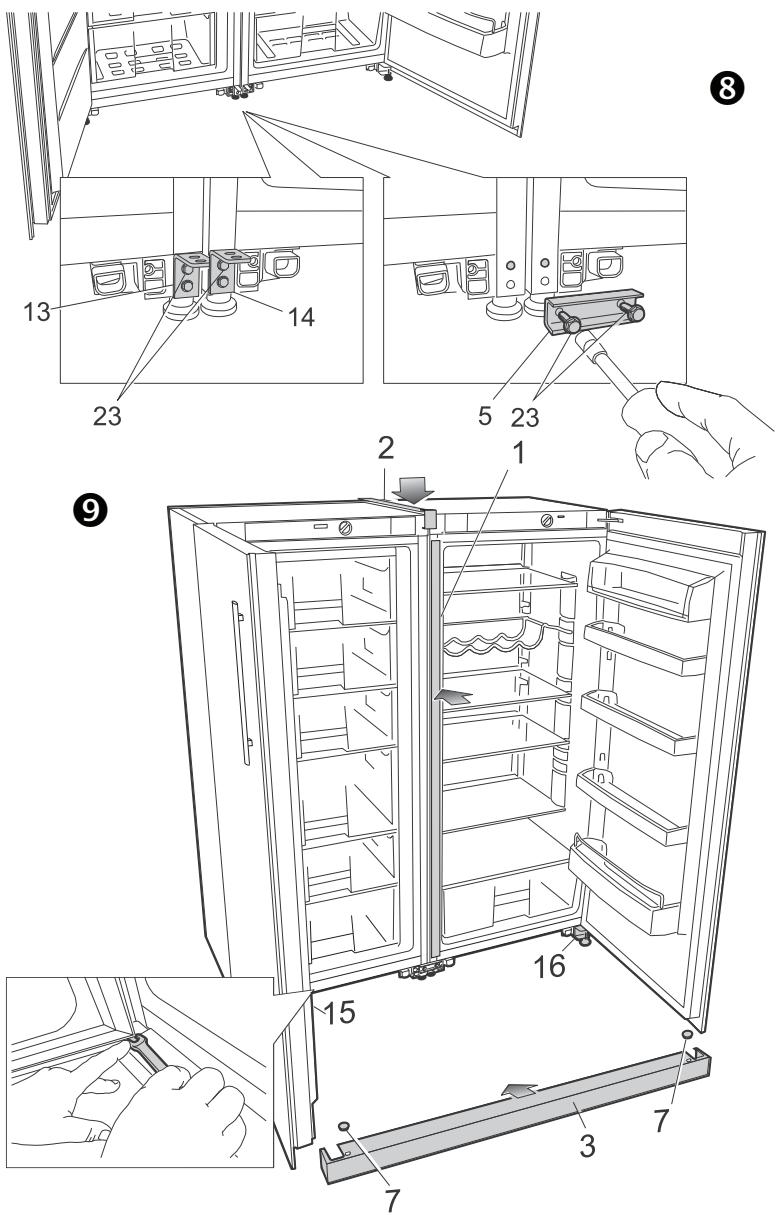
- Unscrew bolts 23, fixing bottom brackets 13 and 14 and take off the brackets (pic. 8). Fix the bottom plate 5 in places of brackets using the same bolts. Screw the bolts into the top brackets fixing holes.
- Remove the protective film from the top strip 2 (pic. 9). Attach the top strip on both appliances. Start with sticking the bent part at the front, then continuing towards the back of the appliances.
- Insert front strip 1 to the gap between fridge and freezer: slowly push it with narrow side into the gap between both appliances starting from the top (pic. 9).
- Keeping the doors of both appliances open, place bottom cover 3 on bottom brackets 15 and 16, fixing it with two bolts 7 (pic. 9). Insert the bolts into the threaded holes of brackets 15 and 16 and screw them in using a wrench No. 10, applying downward pressure with your finger.
Door position adjustment when planes A or C of the appliances are not level
-
If the upper corner(s) of one (or both) appliance(s) is somewhat lower than the appliance body's plane A or the glass of the doors do not comprise a single plane C , adjust the bottom or top brackets:
-
Start by adjusting the bottom brackets:
- Remove outer legs 10;
- Relax the bolts that fasten bottom brackets 15 and 16 and push the brackets: refrigerator bracket 15 – to the right, freezer bracket 16 – to the left.
- If the upper inner corner of the door(s) is (are) higher, adjust the brackets in the reverse manner: refrigerator bracket 15 – to
the left, freezer bracket 16 - to the right.
-
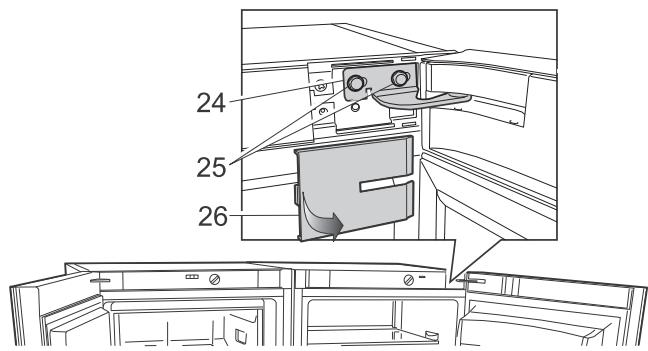
If you are unable to level the appliances by adjusting the bottom brackets, try adjusting the top brackets:
-
Remove cover 26; Relax bolts 25;
- Adjust the position of top brackets 24.
Note. The picture shows top bracket 24 of the refrigerator. The top bracket of the freezer is identical, but the bolts are at the bottom.
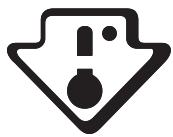
Coolest Area
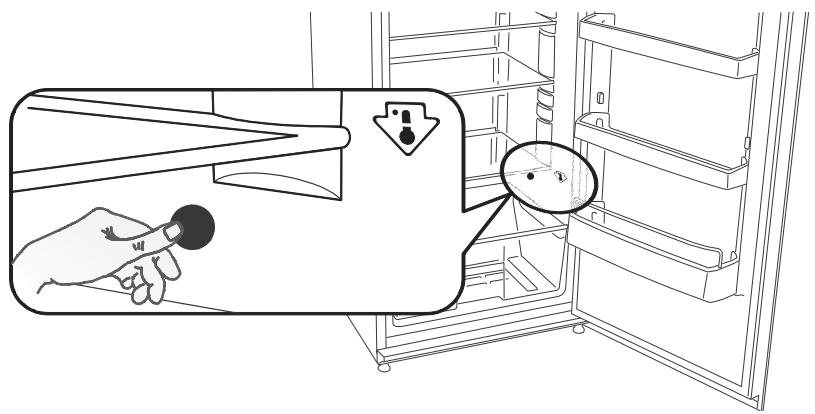
The symbol indicates the location of the coolest area of your fridge, where the temperature is of +4^ or below.
This area is located between the vegetable compartment and the bottom shelf.
As the shelves are removable, always make sure to position the cold area shelf on the same level as the sticker in order to guarantee the temperature in this area.
Temperature Indicator
In order to help you set your appliance's temperture properly, the fridge is equipped with a temperature indicator (located in the coolest area indicated by the symbol opposite).
- In order to ensure good preservation of food products in your fridge, and in particular in the cold area, check that "OK" appears in the temperature indicator.
- If "OK" does not appear, the average temperature in the area is too high. Set the thermostat to a higher setting.
- Whenever you modify the thermostat, wait for the temperature inside the appliance to stabilise before modifying its setting again, if necessary.
Only modify the thermostat's setting gradually and wait at least 12 hours before modifying it again if necessary.

Correct setting

Temperature too high, modify the thermostat
NOTE: If the door is repeatedly opened (or for a long period of time), it is normal if the indication "OK" does not appear in the temperature indicator; wait at least 12hrs before readjusting the thermostat.
If the fridge compartment evaporator (back wall of the appliance) is abnormally covered in frost (appliance too full, high room temperature, thermostat set on a high position, doors frequently opened), gradually turn the thermostat knob down to a lower position until you obtain once again periods when the compressor is not running. Indeed the fridge compartment can only defrost automatically if the compressor switches off intermittently.
REVIEW OF MECHANICAL CONTROL (fig. 1)
CONTROL PANEL — DESCRIPTION OF SYMBOLS AND OPERATIONS
1 - THERMOSTAT KNOB. The temperature in the appliance is controlled using the thermostat knob by turning it to one side or the other. Temperature values are indicated on the thermostat knob. The temperature in the appliance is reduced by turning the thermostat knob clockwise. More in "Temperature regulation".
3- ELECTRICITY SUPPLY INDICATOR marked with the symbol ①
When the appliance is connected to the electricity supply, the green indicator light is illuminated.
4 - THE TEMPERATURE RISE INDICATOR marked with the symbol

When the temperature in the freezer rises above -9^ C , the red indicator light is illuminated. It indicates that:
- The freezer was switched off for a longer time, i.e. the freezer is switched on for the first time, after defrosting or after losing of voltage.
- The door of the freezer is opened or is being opened too frequently.
- It is loaded a large amount of unfrozen foodstuffs.
- The freezing system is failed, i.e. the indicator does not go out longer 6 hours and it is heard running compressor or the compressor does not switch off. In this case you should apply to your service agent (at first make sure that three above items were taken into account).
TEMPERATURE REGULATION
Temperature set in the freezer by the manufacturer is -18 ^ C
The temperature in the appliance is controlled using the thermostat knob 1 (fig. 1) by turning it to one side or the other. The temperature indication in digits is shown beside the thermostat knob.
The temperature is regulated on the scale of seven digits.
0 = Compressor is switched off. WARNING! Electric current is not switched off.
1 = highest temperature (lowest cooling)
7 = lowest temperature (highest cooling)
If food products in the refrigerator compartment are too cold, set the thermostat knob to 1, 2 or
3. If food products in the refrigerator compartment are not being chilled sufficiently, set the thermostat knob to 4 or 5 - 7.
Please set the desired temperature in the appliance according to your own requirements!

THE TEMPERATURE IN THE REFRIGERATOR MAY VARY DEPENDING ON AMBIENT TEMPERATURE, THE AMOUNT OF FOODSTUFFS, THE TEMPERATURE OF THE FOODSTUFFS, AND HOW OFTEN THE APPLIANCE DOOR IS OPENED AND CLOSED.
Therefore we recommend:
- locate the appliance away from heat sources,
- food placed in the appliance should not be warmer than the room temperature,
- appliance door must not to be left open,
- the appliance door should not be open longer than it is necessary to take out or put in foodstuffs.
IF THE ROOM IS COOL, THE APPLIANCE COOLS LESS. THE TEMPERATURE IN THE APPLIANCE MAY THEREFORE RISE. Use the thermostat wheel to set a lower temperature.
STORAGE OF FOODSTUFFS IN THE REFRIGERATOR COMPARTMENT
The refrigerator compartment is intended for the short-term storage of fresh foodstuffs.
- Do not put hot foodstuffs in the refrigerator compartment – they must be cooled down to room temperature.
- Strictly observe the foodstuff validity time indicated by the manufacturer on the product packaging.
- If on one of the shelves you have placed a lot of liquid filled dishes, a moisture may condense and form drops, which may drip onto the shelf below. To avoid this, move some liquid filled objects to the other shelves.
FREEZING OF FOODSTUFFS IN THE FREEZER COMPARTMENT
In order to freeze fresh foodstuffs place the fresh foodstuffs in one or two rows in the fast-freeze section. When the foodstuffs are frozen should be removed from the fast-freeze section and placed in the storage section drawer(s).
-
DO NOT EXCEED THE MAXIMUM QUANTITY OF FROZEN PRODUCTS INDICATED IN THE GENERAL DATA TABLE (see page 17).
-
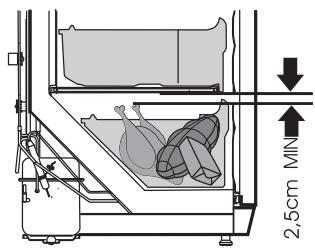
Leave a gap of not less than 2,5 ~cm between the foodstuffs being frozen and the upper partition (see fig.).
- Do not place unwrapped foodstuffs in the freezer sections.
- Fresh food for freezing should not touch already frozen foodstuffs.
- Do not freeze foodstuffs that are warmer than the room temperature.
- Do not freeze liquid foodstuffs in glass vessels or bottles. Do not freeze carbonated beverages.
- Strictly observe the frozen foodstuffs validity dates indicated by the manufacturer on the their packaging.
- WE RECOMMEND THAT FROZEN FISH AND SAUSAGE SHOULD BE STORED IN THE FREEZER COMPARTMENT NOT LONGER THAN 6 MONTHS; CHEESE, POULTRY, PORK, LAMB - NOT MORE THAN 8 MONTHS; BEEF, FRUIT AND VEGETABLES - NOT LONGER THAN 12 MONTHS.
DEFROSTING OF THE REFRIGERATOR COMPARTMENT
The refrigerator compartment defrosts automatically. Drops of ice that form on the back wall of the refrigeration compartment thaw during the time the compressor is not working and the thaw water runs down the thaw water runoff channel to the tray on top of the compressor, where it evaporates.
DEFROSTING THE FREEZER COMPARTMENT
The freezer compartment should be thawed not less than twice a year or when a layer of ice thicker than 5mm forms in it. Do the actions below in the order they are listed:
WARNING! Turn the appliance off and pull the plug out of the electrical socket.
- Remove foodstuffs from freezer compartment. The frozen foodstuffs will not warm up too much while you are thawing the freezer compartment if you cover them with a thick cloth and keep them in a cool place.
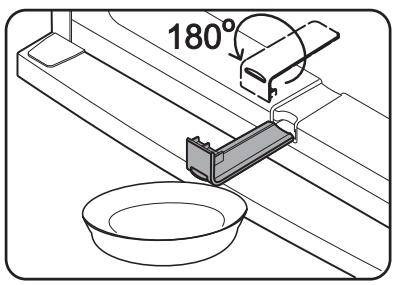
- Pull out the melt water channel, turn it by 180^ and hang it (see fig.). Place a vessel under the melt water channel.
- Place a dish under the thaw water channel. Leave door of freezer compartment open.
- When the ice melts, clean and wipe dry the surfaces and fixtures of the freezer compartment.
- Remove the melt water channel, turn it by 180^ again and put it back in its original place.
- Close the freezer compartment door. Plug in and turn on the appliance.
CLEANING AND CARE
REGULARLY CLEAN THE APPLIANCE.

Remember that before defrosting the appliance and cleaning the back part of the appliance body you must disconnect the appliance from the electrical energy supply socket by pulling the plug out of the electricity outlet.
- Protect the appliance inner surfaces and plastic parts from fats, acids and sauces. In case of accidental spills – immediately clean with warm soapy water or dishwashing detergent. Wipe dry.
- Clean the appliance inner surfaces with warm soapy water. Dishwashing detergent may also be used.
- Wipe dry inner and outer surfaces.
- Regularly clean the hermetic gaskets of the doors. Wipe dry.
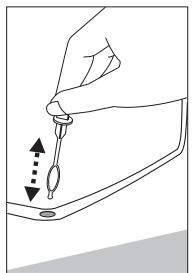
REGULARLY CLEAN THE THAW WATER CHANNEL SPACE IN THE REFRIGERATOR WITH A SPECIAL CLEANER FOR THAT PURPOSE (see fig.).
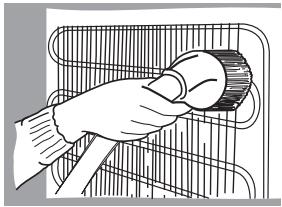
- At least once a year clean dust away from the back part of the appliance body
and the compressor. A soft brush, electrostatic cloth or vacuum cleaner may be used for cleaning (see fig.).
DO NOT use detergents containing abrasive particles, acid, alcohol or benzene for cleaning the appliance inner and outer surfaces.
- DO NOT use for cleaning cloths or sponges that have coarse surfaces intended for scrubbing.

ATTENTION! Outer of the doors - glass - clean with agents intended for glass cleaning.
PRACTICAL TIPS AND OBSERVATIONS
- Do not consume ice made in the freezer straight away.
- Products will freeze more quickly if they are divided up and packed in small portions.
- Store in an airtight container in the appliance any foodstuffs that have a strong odour (e.g. fresh fish, pâté de foie gras goose liver pâté, and cheese).
- IF THE APPLIANCE IS TO BE LEFT SWITCHED OFF FOR AN EXTENDED PERIOD, LEAVE ITS DOORS OPEN.

Remarks on the appliance operating noise. As the appliance operates and goes through the freezing cycle, various noises will be emitted. This is normal and is not a sign of any malfunction.
- As the refrigerant circulates around the refrigeration system, it causes sounds like murmuring, bubbling or rustling.
- Louder sounds like popping or clicking may be heard for a short time as the freezer compressor switches on.
CHANGING THE OPENING DIRECTION OF THE DOORS
It is recommended that changing the opening direction of the doors should be done with a helper. You will need two spanners No. 8 and No. 10 and a head screwdriver.
When changing the opening direction of the doors, YOU CAN NOT lay the refrigerator horizontally!
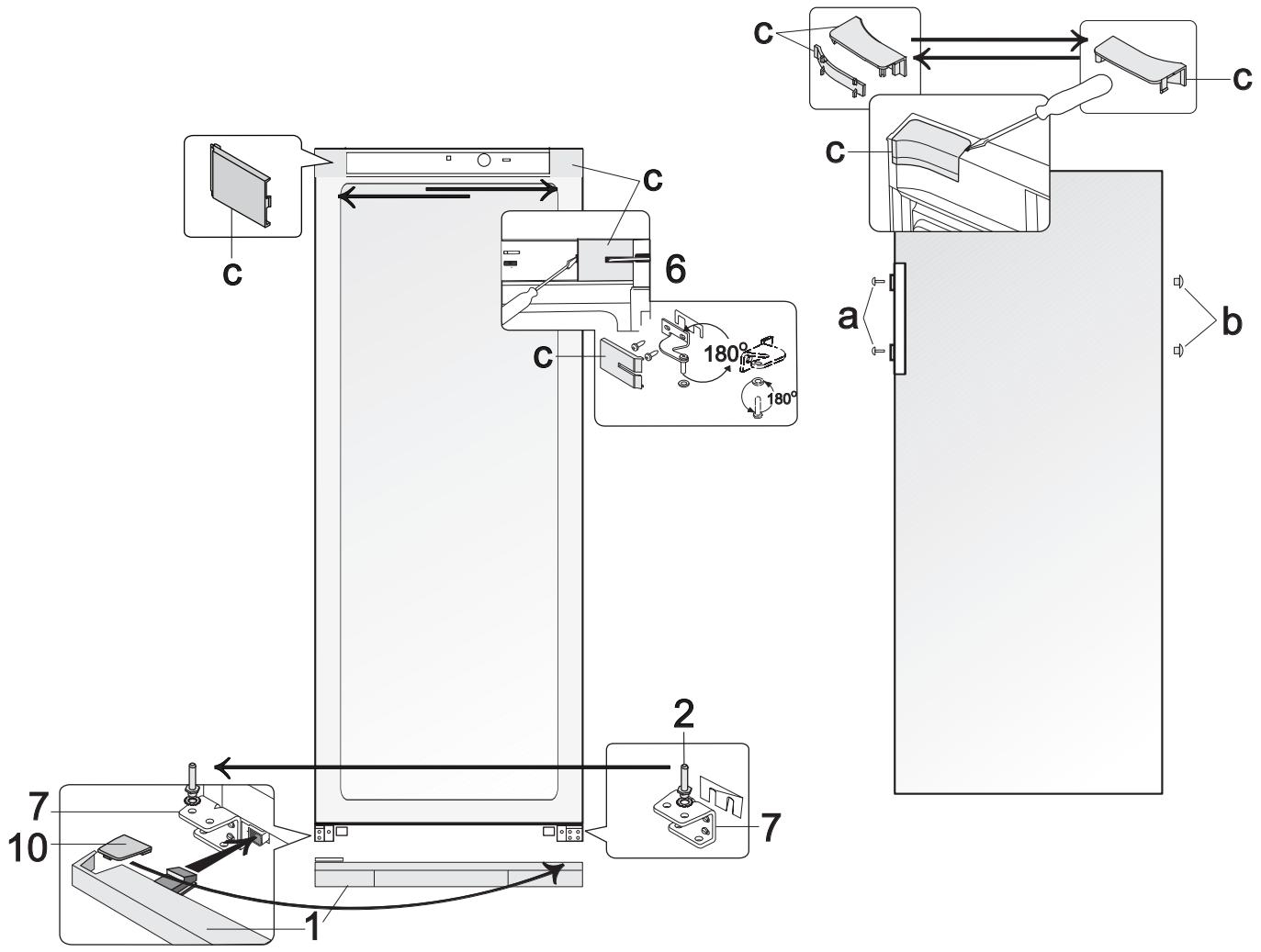
Model BFL5456GB
Do the actions below in the order they are listed (see fig. in page 13):
WARNING! Turn off the appliance and pull the plug out of the electricity supply socket.
- Remove the covers c from the body of the refrigerator and of the inner side of the door. Also remove the upper bracket 6 together with the nut and washers and the spacer under the bracket.
- Remove the door of the refrigerator compartment.
- Remove the bottom cover 1.
- Unscrew the axle 2 from the bottom bracket 7 and put it together with all washers on the other cabinet side by screwing to the bracket 7 on the opposite side symmetrically to former position.
- Hang the door on the axle 2 of bracket 7.
- Turn bracket 4 around 180^ together with the washers on the axle and the plastic spacer, transferring the washers to the axle on the other side of the bracket. Once the bracket is attached to the freezer compartment door, fix it in place on the other side of the refrigerator.
- Turn the bracket 6 around 180^ together with the washers on the axle and the plastic spacer. Remove the axle and the washers and reattach them on the other side of the bracket. Once
the bracket 6 is attached to the refrigerator compartment door, fix it in place on the other side of the refrigerator in the uppermost apertures. Use the covers c to cover the bracket and the remaining space.
- Remove the bolt covers a and the stoppers b. Remove the screws that hold the handle in place. Move the handle to the other side and screw them in place. Place the stoppers into the remaining apertures in the door, and put the screw caps in place.
- Remove the cover 10 from the bottom cover 1 and insert it to the guides on the other side of the bottom cover (symmetrically to former position). Insert left and right legs of the bottom cover 1 (see pic.) and push it until cover fixing.
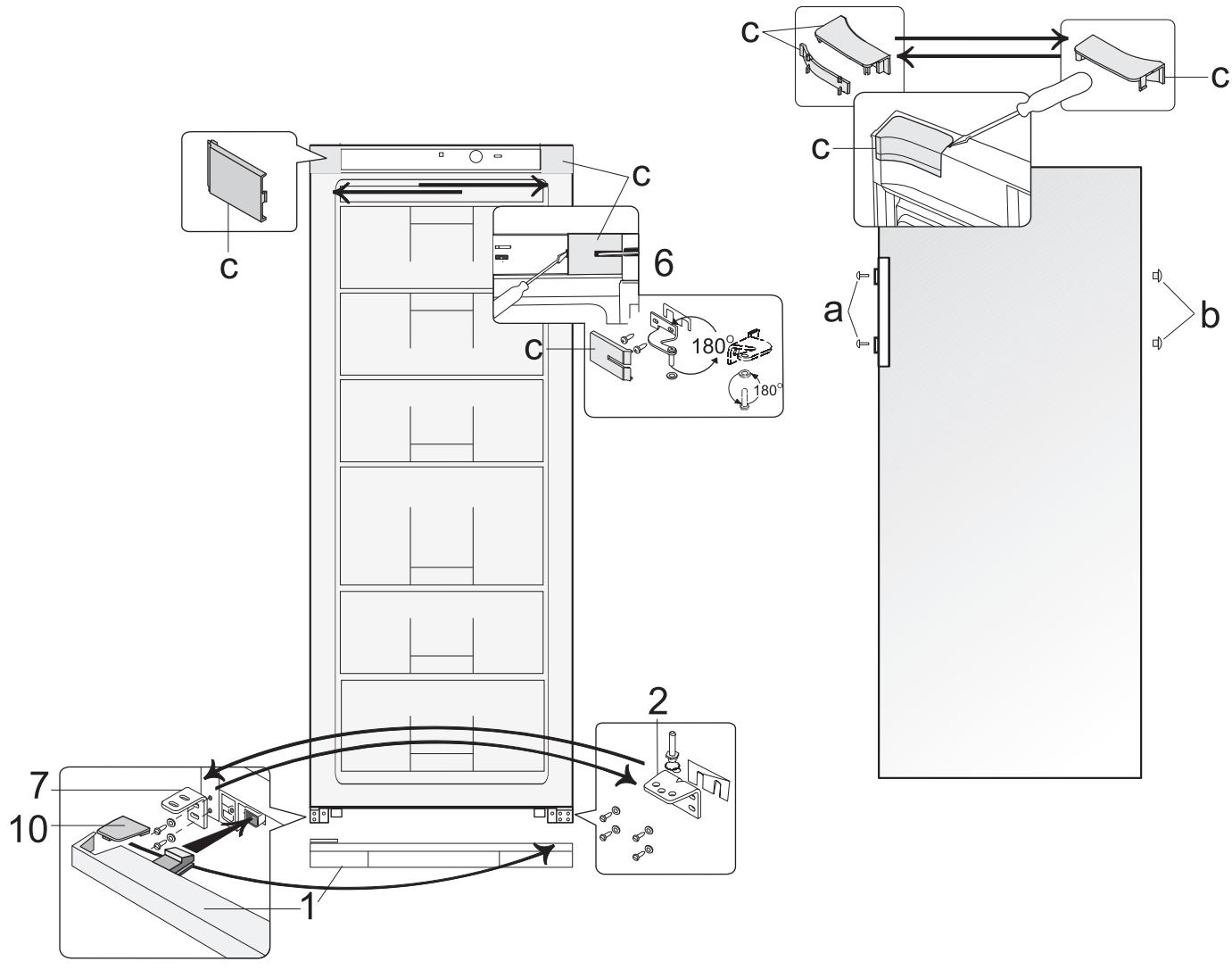
Model BFU5456GB
Do the actions below in the order they are listed (see fig. in page 14):
WARNING! Turn off the appliance and pull the plug out of the electricity supply socket.
- Remove the covers c from the body of the refrigerator and of the inner side of the door. Also remove the upper bracket 6 together with the nut and washers and the spacer under the bracket.
- Remove the door of the freezer compartment.
- Remove the bottom cover 1.
- Remove the bottom bracket 2 together with washers on the axle and the plastic spacer. Unscrew the axle together with washers from the bracket and screw them into the aperture on the opposite side of the bracket symmetrically to former position.
- Remove the bottom bracket 7 and fix the bottom bracket 2 together with washers on the axle and the plastic spacer instead of it. Screw the bracket 7 in place of the bracket 2.
- Hang the freezer compartment door on the axle of bracket 7.
- Turn the bracket 6 around by 180^ together with the washers on the axle and the plastic spacer. Unscrew the axle and the washers and screw them on the other side of the bracket.
Once the bracket 6 is attached to the freezer compartment door, fix it in place on the other side of the freezer in the uppermost apertures.
- Use the covers c to cover the bracket and the remaining space.
- Remove the bolt covers a and the stoppers b. Remove the screws that hold the handles in place. Move the handles to the other side and screw them in place. Place the stoppers into the remaining apertures in the door, and put the screw caps in place.
- Remove the cover 10 from the bottom cover 1 and insert it to the guides on the other side of the bottom cover (symmetrically to former position). Insert left and right legs of the bottom cover 1 (see pic.) and push it until cover fixing.
OPERATION PROBLEMS AND THEIR SOLUTIONS (TROUBLESHOOTING)
What if ...
- The appliance is plugged in to the mains but it does not work and the electricity supply voltage indicator is not illuminated. Check that your house electricity supply installations are in order. Check that the plug is correctly inserted into the electricity supply socket.
- The noise has become louder. Check that the appliance is standing stable on a level place. To make it level, regulate the front feet. Check if the appliance is not touching any furniture and that no part of the refrigeration system at the back part of the appliance body is touching the wall. Pull the appliance away from any furniture or walls. Check that the cause of increased noise isn't due to bottles, cans or dishes in the appliance that might be touching each other.
- When the appliance door is opened, the rubber sealing gasket pulls out. The gasket is smeared with sticky foodstuffs (fat, syrup). Clean the sealing gasket and the groove for it with
warm water containing soap or dishwashing detergent and wipe dry. Put the rubber sealing gasket back into the place.
- Water has appeared at the bottom of the refrigerator compartment. Check whether a thaw water channel space isn't blocked. Clean the thaw water channel space with a cleaner intended for that purpose.
- Water has appeared under the appliance. The thaw water collection tray has slipped off the compressor. Place the tray on top of the compressor.
- The temperature rise indicator light is illuminated red. This means the appliance is being connected to the electricity supply for the first time or it was disconnected for a significant period (for thawing or during an interruption to the electricity supply), the freezer door is not closed or is being frequently opened and closed, or a large amount of fresh food has been put in, and therefore the temperature in the compartment has risen above -9^ . When the temperature in the compartment again falls below -9^ , the indicator light will go out. ATTENTION! If the temperature indicator light does not go out (for reasons other than those listed above) for longer than six hours, the compressor is either working constantly or is not functioning. You need to consult service people.
- High temperature in appliance, the compressor operation pauses are short. Ascertain whether the appliance door are shutting tightly, whether the door wasn't kept open longer than necessary when taking out or putting in foodstuffs or whether a large amount of warm food was placed in the appliance.
- The top of the appliance has condensation on it. The ambient relative air humidity is above 70% . Ventilate the room where the appliance stands and if possible remove the cause of the humidity.
TRANSPORT

THE MANUFACTURER WILL NOT BE RESPONSIBLE FOR ANY DAMAGE OF THE APPLIANCE THAT RESULTS FROM NON-COMPLIANCE WITH THE INSTRUCTIONS FOR TRANSPORTATION.
- The appliance should be transported only in the vertical position.
- When being transported, the appliance should be protected from atmospheric conditions (rain, snow, dampness).
- The appliance should be firmly secured in place while being transported, to avoid slippage or any shocks in the transport vehicle.
- If the appliance was transported not vertically, it may be connected to the mains after 4 hours at least. If this is not done, the appliance compressor may fail.
ENVIRONMENTAL PROTECTION INFORMATION
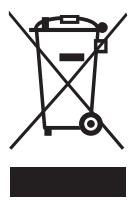
This symbol indicates that once the appliance is no longer needed, it cannot be disposed together with other miscellaneous municipal waste. It should be collected and eliminated separately, i.e. in containers specially marked with this symbol in large-dimension rubbish collection areas. Full information on where to submit the old appliance safety can be obtained from local government authorities, the shop where
you bought the appliance or the manufacturer's representatives.
If you decided to scrap the appliance, make it impossible to use in order to prevent possible misadventure. Pull out the electric plug from the electricity supply socket and then cut off the cord. Tear off the gasket. Break the door lock if any.
WARNING! Do not dismantle the appliance yourself. Pass it on to recycling companies.
WARRANTY SERVICE
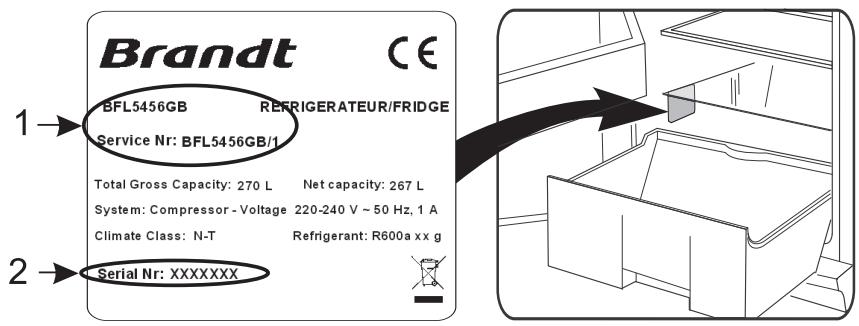
IF YOUR APPLIANCE IS NOT WORKING PROPERLY, ASCERTAIN WHETHER YOU CAN REMEDY THE CAUSE OF THE FAULTY FUNCTIONING OF THE APPLIANCE YOURSELF. If you cannot solve the problem yourself, contact the nearest refrigerator service representative by telephone or in writing. When making contact necessarily indicate the refrigerator model 1 and number 2. You will find this data on the product label, which is glued to the wall of the refrigerator/freezer compartment.
OPERATING PROBLEMS
Certain noises are quite normal when the fridge is working:
- the coolant gas can make a gurgling noise as it flows through the circuits
- the compressor may make a purring noise, especially when starting
- the fridge's materials may make a cracking noise when expanding or contracting
| PROBLEM | SOLUTION |
| The appliance does not work. | Check that the plug is properly inserted, that the fuse has not blown and that the circuit breaker has not tripped. |
| The fridge vibrates or makes a noise | Check that it is level. Adjust the feet. |
| The fridge is too cold/not cold enough | Check the setting of the thermostat and adjust to a suitable temperature. |
| The bulb does not light up | Check the bulb and replace it if necessary, if your appliance allows it (do not forget to disconnect your device first). |
| The compressor does not restart after changing the temperature | This is quite normal. The compressor only starts after a delay. |
| There is water on the floor or the racks | The hole through which the defrosting water is evacuated is blocked. Unblock it with a knitting needle. |
TECHNICAL ASSISTANCE
If the above solutions do not solve your problem, NEVER TRY TO REPAIR THE APPLIANCE YOURSELF. Contact your nearest Technical Assistance centre.

THIS APPLIANCE RESPECTS THE EU DIRECTIVES
Any repairs that are made to your appliance must be done by a qualified professional authorised to work on the brand.. When calling, give the complete reference of your appliance (model, type, serial number). You can find this information on your warranty certificate and on the ID plate.
Any work on your appliance must be performed by a Brandt-accredited quali~ ed professional. When you call, please mention the complete reference for your machine (model, type, serial number): this information is provided on your guarantee certif cate and the information plate on your appliance.
ORIGINAL SPARE PARTS: when any maintenance work is being performed, ask that only certified original spare parts be used.
Cualquier daño en el cordónSEOSEOSEOSEOSEOSEOSEOSEOSEOSEOSEOSEOSEOSEOSEOSEOSEOSEOSEOSEOSEOSEOSEOSEOSEOSEOSEOSEOSEOSEOSEOSEOSEOSEOSEOSEOSEOSEOSEOSEOSEOSEOSEOSEOSEOSEOSEOSEOSEOSEOSEOSEOSEOSEOSEOSEOSEOSEOSEOSEOSEOSEOSEOSEOSEOSEOSEOSEOSEOSEOSEOSEOSEOSEOSEOSEOSEOSEOSEOSEOSEOSEOSEOSEOSEOSEOSEOSEOSEOSEOSEOSEOSEOSEOSEOSEOSEOSEOSEOSEO SEO.
ELIMINACION
Este*simbolo indica
INSTALLATION AF APPARATET
Vigtigt:
Det er
INSTALLATIE VAN UW APPARAAT