
BFT1102 - Refrigerator-freezer BRANDT - Free user manual and instructions
Find the device manual for free BFT1102 BRANDT in PDF.


| Product type | Refrigerator-freezer |
| Brand | BRANDT |
| Model | BFT1102 |
| Climate class | SN, N, ST, T (from +10°C to +43°C) |
| Refrigerant | Isobutane (R600a) |
| Power supply | 220-240 V, 50 Hz |
| Bulb power | 10 W (220-240 V) |
| Refrigerator defrosting | Automatic |
| Freezer defrosting | Manual |
| Thermostat | Continuous adjustment (from OFF to max) |
| Temperature indicator | Cold zone with OK indicator |
| Coldest zone | Indicated by the “OK” logo (temperature ≤ +4°C) |
| Compatibility with frozen products | Freezer compartment *** |
| Fast freezing function | Yes (depending on model) |
| Ice cube tray | Yes (depending on model) |
| Casters | Yes (for small movements) |
| Interior lighting | Replaceable 10 W bulb |
| Recommended cleaning | Baking soda diluted in water |
| Refrigerant gas type | R600a (flammable) |
| Child safety | Door locking possible (door disassembly) |
Frequently Asked Questions - BFT1102 BRANDT
User questions about BFT1102 BRANDT
0 question about this device. Answer the ones you know or ask your own.
Ask a new question about this device
Download the instructions for your Refrigerator-freezer in PDF format for free! Find your manual BFT1102 - BRANDT and take your electronic device back in hand. On this page are published all the documents necessary for the use of your device. BFT1102 by BRANDT.
USER MANUAL BFT1102 BRANDT
Dear Customer,
Technical assistance
7 After-sales service
CONSUMER RELATIONS
1 Instructions for safety, disposal, installation and maintenance
- Safety instructions and warnings
- Disposing of your appliance
- General installation conditions Electric connections
- Energy-saving measures
- Cleaning and maintenance
2 Introduction to your appliance
- Installing your appliance Description of your appliance Controls and use of your appliance
3 Using your fridge
- The temperature indicator in your fridge
- Adjusting your fridge
- Preparing food before putting it in the fridge
- Arranging food in your fridge
- Automatically defrosting your fridge
4 Using your freezer
- Frozen / deep-frozen produce Preparing food before freezing
- Guide to freezing food
- Arranging food in your freezer
- Adjusting your freezer
- Quick freeze (depending on the model)
- Making ice cubes (depending on the model)
- Thawing food
- Defrosting your freezer
5 Routine maintenance of your appliance
- Cleaning and maintaining your appliance
- Replacing the bulb
6 Troubleshooting
- Operating problems Technical support
7 After-sales service

SAFETY GUIDELINES
For your safety and in order to use your appliance correctly, carefully read these instructions (including the warnings and useful advice), before installation and first use.
To avoid damaging the appliance and unnecessary injury, it is important that the persons who use the appliance fully understand how it works and the safety instructions.
Always keep these instructions close to the appliance so that they can accompany it in the event of resale or a change of house. In this way, the appliance will continue to function optimally and any risk of injury will be avoided.
The manufacturer shall not be held liable in the event of misuse of the appliance.
GENERAL SAFETY AND
WARNING
- This appliance is designed to be used for domestic and similar applications such as:
- kitchen areas for the staff of shops, offices and other professional premises.;
- farms and use by customers in hotels, motels and other residential environments;
- B&B-type environments;
- catering and other similar applications, excluding retail

The safety of
children and other vulnerable persons:
- This appliance can be used by children aged from 8 years and above or who have no experience or knowledge, provided that they are properly supervised or that they have received the instructions for the use of the
appliance in complete safety and the risks incurred have been fully understood.
Children must not play with the appliance. Children must not clean and maintain the appliance without supervision. - Keep all the packaging materials out of the reach of children, as they can cause suffocation. - Do not let children play with the appliance, keep pets away. Used appliances must be immediately made unusable. Disconnect the power cord and cut it as close to the appliance as possible. Inhibit the closing mechanism of the door or, even better, detach the door, so that children or pets cannot remain enclosed inside the appliance when playing.
If any incidents occur and you cannot resolve them with the advice we provide (see "Troubleshooting"), then only
call our approved after-sales service centres or a qualified professional.

WARNING
- Your appliance must be installed and, if necessary, secured and used in accordance with the instructions in this manual in order to avoid any risks due to poor installation.
- Maintain clear of obstruction ventilation openings in the appliance enclosure or in the built-in structure.
- Do not use any mechanical or other means, other than those recommended by the manufacturer, to speed up the defrosting process.
- Do not damage the refrigerating circuit.
- Do not use any electric appliances inside the compartment for food, unless they are of a type recommended by the manufacturer.
- Do not store any explosive substances, such as aerosols containing inflammable propellant gases, inside the appliance.
- Never expose the appliance to a naked flame.
- Switch off and disconnect the appliance before cleaning or moving it.
- For models fitted with a water dispenser or an ice compartment, only fill or connect using a supply of drinking water.
- If the power cable is damaged, it should be replaced by the manufacturer, its after-sales service department or a similarly qualified person to avoid danger.
The refrigerating and insulating agents used in this appliance contain inflammable gases. Only dispose of the appliance in certified collection centres. Never expose the appliance
to a naked flame.
Coolant liquid
The appliance's cooling circuit contains isobutane coolant (R600a), which is a more ecological coolant gas, which is nevertheless flammable.
When transporting and installing the appliance, make sure that none of the components of the cooling circuit are damaged.
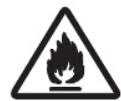
Caution: Fire risk
If the cooling circuit is damaged:
-Avoid naked flames and all sources of inflammation.
- Ventilate the room in which the appliance is installed.
It is dangerous to change the composition of this model in any way whatsoever.
Any damage to the power cord may result in a short circuit and/or electrocution.
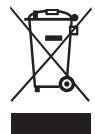
DISPOSAL
This symbol indicates that this product should not be treated as household waste.
Your appliance also contains a great amount of recyclable material. It is marked with this label to indicate the used appliances must be disposed of in certified collection points.
Contact your town hall or your retailer for the used appliance collection points closest to your home. This way, the appliance recycling organised by your manufacturer will be done under the best possible conditions, in compliance with European Directive on Waste Electrical and Electronic Equipment.
We thank you for your help in protecting the environment.
This appliance's packing materials are also recyclable. Help recycle it and protect the environment by dropping it off in the municipal receptacles provided for this purpose.
In accordance with the most recent legislative provisions applying to the protection and respect for the environment, your appliance does not contain any CFCs, but a refrigerant called R600a. The exact type of coolant gas used in your appliance is clearly shown on the information plate inside the fridge part of your appliance, at the foot of the left-hand side panel. R600a is a non-polluting gas that does not harm the ozone layer and hardly contributes to the greenhouse effect at all.
INSTALLING YOUR APPLIANCE

Caution:
You
can only keep your food in
good condition and optimise your energy consumption by following the instructions in this installation and user guide.
INSTALLATION
- If your appliance is fitted with casters, then remember that they should only be used for short movements. Do not move the appliance over long distances on its casters.
- Clean the appliance before connecting it to the mains. Always unplug your appliance before any maintenance work. Never pull on the power cord, but only on the plug itself.
- Install the appliance in a dry and well ventilated place.
- Avoid balconies, verandas and patios, because excessively high and low temperatures in the summer and the winter can prevent your appliance from functioning properly, or even damage it.
- Do not place the appliance near a source of heat, such as an oven or a radiator.
- Leave at least 3 and 5 cm clear around the sides and 10 cm above the appliance to allow the air to circulate freely.
- Place the appliance at a suitable distance from the wall using the spacers contained in the bag of accessories.
- Your appliance is designed to function optimally at a given ambient temperature. In this case, it is said to be designed for a particular "climate class". The climate class is shown on the ID plate inside the appliance, on the bottom of the left hand wall. Beyond these temperatures, the performance of your appliance may suffer.
| Class | Ambient temperature |
| SN | + 10°C to + 32°C |
| N | + 16°C to + 32°C |
| ST | + 16°C to + 38°C |
| T | + 16°C to + 43°C |
Tips:
Once the appliance is installed, adjust the feet so that it is slightly inclined rearwards. In this way, it will be easier to close the door.
Before putting any food in the fridge, clean the appliance inside and outside with bicarbonate of soda dissolved in water (1 spoon of bicarbonate of soda for 4 litres of water). Do not use alcohol, abrasive powders or detergents, which could damage the surfaces. (see "Cleaning your appliance")
ELECTRIC CONNECTIONS
The electric connections must meet the applicable standards and be capable of withstanding the maximum power shown on the ID plate.
The plug must be correctly earthed.
We cannot be held liable for any incidents caused by improper electric installations.
Advice on the electric installation
- Do not use extensions, adapters or multiple plugs.
- Never remove the earth.
- The power plug must be easily accessible and out of the reach of children.
If in doubt, refer to your reseller.
Your appliance complies with the European directives and their amendments.
ENERGY-SAVING MEASURES
In order to reduce the power consumption of your appliance:
Install it in a suitable location (see "Installing your appliance"). - Leave the doors open for the shortest time possible. - Never put hot food in the fridge or the freezer, and in particular soups and other
preparations that release a lot of steam.
- Check that your appliance is working correctly and do not allow too much ice to accumulate in the freezer (defrost when the ice is more than 5-6 mm thick). Clean the condenser on a regular basis (see chapter "Routine maintenance of your appliance").
- Regularly check the door seals and make sure that the doors can be closed properly. If this is not the case, contact after-sales service.
- Do not adjust the temperature too low.
- Failure to install the draws, bins and shelves properly can result in increased power consumption.

Warning
If you transported the appliance horizontally, position it vertically and wait for 2 hours before connecting it. A little oil may flow into the cooling circuit. Allow enough
time for the oil to return to the motor before connecting the appliance, failing which, it could be
Always unplug your appliance before any maintenance work. Never pull on the power cord, but only on the plug itself.
CLEANING AND MAINTENANCE
Always switch off the appliance before any maintenance operations. - Never clean the appliance with metal objects, steam systems, volatile oils, organic solvents or abrasive components. - Do not use sharp or cutting objects to remove the ice. Use a plastic sponge. Refer to the "Maintenance" chapter in this manual to replace the light bulb.
INSTALLING YOUR REFRIGERATOR
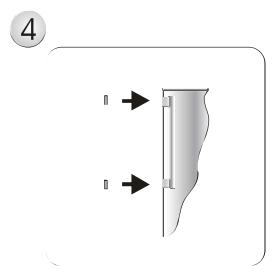
User should take out the door handle in the plastic bag, and install it into the door. Then take out the two handle stopples and cover the installed screws with them. The handle stopple and screw stopple in the plastic bag can be used when the user wants the door to be opened from left.
Handle Installation
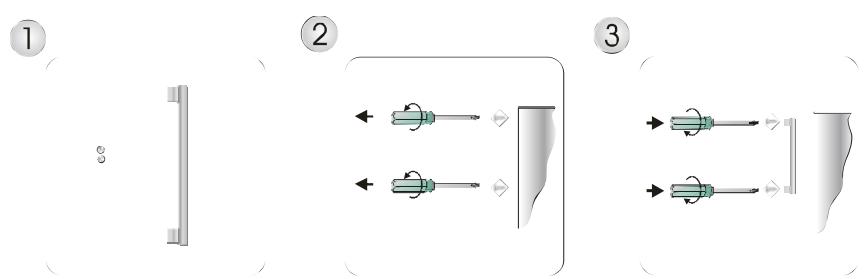
Setting the Thermostat controls
Controls for the refrigerator and freezer are located at the top shelf of the refrigerating compartment. When you first install your refrigerator, set the Thermostat knob at 3. Give your refrigerator time to cool down completely before adding food. It is best to wait 24 hours before adding food.
The thermostat knob controls the temperature. The higher the number setting, the longer the compressor will run to keep the temperature colder.
When the thermostat control knob is set to OFF, the refrigerator is not running.
NOTE: After charging the device for fresh food or after repeated or prolonged door openings, it is normal that the inscription "OK" does not appear in the temperature indicator.
Wait at least 12 hours before readjusting the thermostat.
Defrosting
Refrigerator compartment –
Defrosting process is automatic by thermostat knob. Melted frost flows into drip tray and automatically evaporates.
Freezer compartment –
Defrosting for the freezer compartment is by manual process.
- Turn the thermostat knob to set at OFF position and leave open the freezer door.
- Remove all foods, ice cube tray and shelf or transfer to refrigerating compartment. Clean and wipe out the melted frost with a cloth. After defrosting, turn thermostat knob to origin position.
Note: To avoid damaging the freezing compartment wall, do not use any sharp objects to remove the frost or separate the frozen food.
"COLD ZONE" SIGN
The sign opposite can be found in your fridge. It clearly shows the
coldest zone of your appliance, where the temperature is lower than or equal to +4°C.
A temperature gauge in this zone allows you to check the settings of your fridge.
TEMPERATURE GAUGE (depending on the model)

Adjust the thermostat

Temperature correct

Caution:
If the door of the fridge is left open for too long, the temperature inside the fridge will rise. Check the temperature gauge within 30 seconds after opening the door to make sure that the reading is correct.
Adjusting the temperature
- Set the thermostat to the middle position when starting up your appliance.
- 4 after starting up your appliance or after changing the setting of the thermostat, check the temperature gauge
- If the gauge stays black, gradually lower the temperature by selecting a higher figure around the thermostat, then check the temperature gauge again after 4 hours. Repeat the operation as many times as is necessary.
- If the gauge turns green and "OK" is visible, then the temperature of your fridge is set properly.

Tip:
the temperature inside the fridge depends highly on the ambient temperature, how often the door is opened and the quantity and temperature of the food that you put inside the fridge. Therefore, you must regularly check the temperature gauge and adjust the setting of the thermostat as shown below, if necessary.
PREPARING THE FOOD
Pack fresh food properly. In this way, it will remain tasty, moist and fresh. This also prevents the taste of one food from being transmitted to another. Only vegetables, fruit and salad can be kept in the vegetable bin. Allow hot food and drink to cool down outside the fridge. Remove the cardboard packaging from yoghurt pots. Check the best-by dates of the produce that you buy. Do not exceed the best-by date.
STORING FOOD
The temperature is not uniform inside the fridge. Some parts are colder than others. You must store different foodstuffs in the most appropriate part of the fridge, to make sure that it is properly preserved in complete safety.
Leave enough space around the food for air to circulate freely and to prevent any contamination between the different foodstuffs. Do not leave any packaging or food in contact with the sides of the appliance. This is a particularly cold and humid part of the appliance, where drops of water and ice condensate during the normal operation of your fridge.
The coldest zone, shown by the "OK" logo, should be used to store delicate, sensitive and perishable food, such as meat, poultry, fish, cooked meats, ready-to-eat meals, mixed salads, egg- or cream-based preparations and cakes, fresh pasta, pastry, pizzas and quiches, fresh produce and cheeses made with unpasteurised milk, ready-to-use vegetables sold in plastic bags and, more generally, fresh produce with a best-by date that stipulates a storage temperature of +4°C or less.
AUTOMATIC DEFROST
The defrost function of the fridge part of the appliance is fully automatic. The water flows into a collector on the motor.
The heat released by the motor allows the content of the collector to evaporate. It is quite normal that drops of water or ice may appear on the wall at the back of the fridge. This is a particularly cold and humid part of the appliance, where drops of water and ice may form while the fridge is functioning quite normally. The ice is eliminated by the fridge's automatic defrost function.
FROZEN / DEEP-FROZEN PRODUCE Your household appliance can be used to freeze food. It quickly reduces the temperature at the core, so that you can keep your food for longer.
Deep-freezing is an industrial process that is faster and more intense than domestic freezing. The produce that you buy from retailers is deep-frozen.
PREPARING FOOD BEFORE FREEZING

Caution:
freezing does not sterilise. Therefore, it is important to follow a few simple hygiene rules before freezing. Wash your hands before touching the food, clean any kitchen utensils that may be dirty before using them.
Only freeze fresh, quality produce.
Refer to the "Freezing guide" table to see which food you can freeze and how long you can keep it.
Blanch fruit and vegetables before freezing so that they keep their colour, flavour and vitamins. Put them in boiling water for a few instants. When you freeze food, prepare small individual portions of a meal for one. Smaller portions freeze more quickly.
Carefully seal the food to prevent it from losing its flavour or becoming dry. Use plastic bags, polythene film, kitchen foil or boxes designed for freezing. If you use plastic bags, squeeze all the air out before sealing them.

Caution:
Bottles or jars containing liquid must only be two-thirds full when they are put in the freezer. The liquid will expand when it freezes, and could shatter the container.
On each article, make a note of:
the date when frozen, the best-by date, the type of food, the number of portions
If you buy deep frozen products, use them last when you do your shopping. Check:
- that the packaging is not damaged
- that they are not covered with a coat of ice, as this would indicate that they have partly thawed
Put them in an insulated bag or newspaper, transport them quickly and store them immediately. Use before the best-by date shown on the packaging. Your appliance has a freezer compartment **** that can be used to preserve products under optimal conditions.
GUIDE TO FREEZING FOOD
Fresh meat
| Product | Time |
| Lamb | 8 months |
| Roasts | 5 months |
| Chops | 4 months |
| Boiled beef | 10 months |
| Beef burgers | 8 months |
| Veal burgers | 10 months |
| Minced meat | 4 months |
| Offal | 3 months |
| Sausages | 2 months |
Farmyard animals
Always pluck, skin, and gut the animals. Cut into pieces if necessary, wash and dry.
| Product | Time |
| Duck | 4 months |
| Rabbit | 6 months |
| Broilers | 7 months |
| Goose | 4 months |
| Chicken | 10 months |
| Turkey | 6 months |
| Offal | 3 months |
Game Fish
| Product | Time |
| Wild duck, pheasant | 8 months |
| Hare | 6 months |
| Partridge, Quail | 8 months |
Scale and gut, cut off the head. Wash and dry.
| Product | Time |
| Carp | 2 months |
| Pike | |
| Turbot | |
| Salmon | |
| Mackerel | |
| Tench | |
| Trout Bream | |
| Sole | 3 months |
Cooked food
| Product | Time |
| Sauces containing meat juice | 3 months |
| Tomato sauce | |
| Vegetable minestrone | 2 months |
| Lasagne | 4 months |
| Roasts | 2 months |
| Veal ham | 1 month |
| Meat in gravy | 3 months |
| Game stew | 2 months |
| Boiled or roasted fish | 2 months |
| Stuffed peppers, courgettes, aubergines | 2 months |
| Fried mushrooms, ratatouille | 2 months |
| Boiled spinach | 2 months |
| Pizza | 6 months |
FREEZING GUIDE
Fruit and vegetables: It is preferable to blanch vegetables in steam.
| Product | Time |
| Asparagus | 12 months |
| Cauliflower | 6 months |
| Artichokes | 12 months |
| Beans | |
| Green beans | |
| Mushrooms | |
| Aubergines | |
| Peppers | |
| Peas / tomatoes | |
| Parsley/ Basil | 8 months |
| Spinach | 12 months |
Fruit must be coated with sugar or syrup accordingly. Use about 250g of sugar for 1 kilo of fruit. The quantity of syrup to be used varies. Prepare the syrup by boiling sugar in water. Use the following concentrations: 30% solution, 450g of sugar per litre of water, 40% solution, 650g of sugar per litre of water, 50% solution, 800g of sugar per litre of water.
Putting the fruit in lemon juice before covering it with sugar will help the fruit to keep its colour. Alternatively, pour some lemon juice into the syrup.
The containers used to freeze fruit should be placed in the fridge for 1 hour before putting them in the freezer. The fruit must be completely covered with syrup.
| Product | Time |
| Apricots | 8 months |
| Pineapple | 10 months |
| Oranges | |
| Cherries | |
| Strawberries | 12 months |
| Melons | |
| Peaches | 8 months |
| Grapefruit | 12 months |
| Citrus fruit juice | 10 months |
| Plums | 12 months |
| Grapes | |
| Blueberries, blackberries, blackcurrants, raspberries, gooseberries | |
| 10 months | |
Bread
Bread keeps for 2 months. Thaw by putting it in the oven, then heating to 50°C.
Butter and cheese
Divide butter and cheese into portions representing 1 week's consumption before freezing. Butter and hard cheeses (e.g. Parmesan) keep for 8 months. Other cheeses keep for 4 months. Thaw them out in the fridge compartment, and remove the condensation that forms on the surface.
STORING FOOD
Do not put fresh food next to food that is already frozen or the temperature of the frozen food will rise.
Information:
The maximum weight of food that can be frozen per 24 hours is shown on the ID plate (at the bottom of the left-hand wall of the fridge compartment) next to the wording: "FREEZING CAPACITY (kg/24h)".
ADJUSTING THE FREEZER THERMOSTAT Adjusting the freezer thermostat:
- If the food is stored in the freezer compartment for average periods, set the thermostat between minimum and medium.
- If the food is kept in the freezer compartment for long periods, set the thermostat to medium.
- Set the thermostat to maximum to freeze fresh food.
The appliance will work for longer. Once the food is frozen, adjust the thermostat to a more suitable setting.
In the cold season, you can adjust the appliance to a lower setting to save energy.
QUICK FREEZE (depending on the model)
- Use the quick freeze compartment to freeze your home-made meals and fresh produce more quickly. This compartment is more powerful.
- Switch on the Super function in advance.

Information:
food must be frozen right through as quickly as possible in order to keep its vitamins, nutritional value, appearance and taste.
THAWING FOOD
There are five different ways
to thaw food:
- put it in the fridge compartment of the appliance for several hours
- leave it to thaw slowly at ambient temperature
- in a very cool traditional oven (40/50 °C) in a microwave by cooking it directly
Thawing in the fridge is the slowest, but safest method.
Caution:
never freeze food again that has already been thawed, even partially, without cooking it first. Do not put food that has just been taken out of the freezer
(ice cream, ice cubes, etc.) in your mouth, because they are extremely cold and can cause burns.
Avoid touching frozen or deep frozen food with wet hands, because they may become stuck.
It is preferable to only thaw food for immediate use.
CLEANING MAINTENANCE
AND

Caution:
Always unplug your appliance before any maintenance work. Never pull on the power cord, but only on the plug itself.
For greater hygiene and safer preservation of your food, you are advised to regularly clean and disinfect your appliance.
Remove all the products from the appliance. Put them in insulated bags or wrap them up in newspaper and keep them in a cool place.
Clean the appliance inside and outside with bicarbonate of soda dissolved in water (1 spoon
of bicarbonate of soda for 4 litres of water). Do not use alcohol, abrasive powders or detergents, which could damage the surfaces.
Rinse with water and dry off with a wiper.
Caution:
never use high-pressure steam jet cleaners. The hot steam could damage the surfaces and electric circuits. You would be exposed to a risk of electrocution.
Remember to clean the condenser at the rear of the appliance from time to time. Use a dry brush or, even better, a vacuum cleaner.
Plug in your appliance, adjust the thermostat of the fridge if necessary, as shown in the chapter "Adjusting the temperature of your fridge". Wait for 3 to 4 hours before returning the food to the fridge.

To maintain your appliance in good condition, we recommend that you use Clearit cleaning products.
Clearit offers you professional products and solutions designed for the daily care of your household appliances and kitchens.
They are on sale at your regular retailer, along with a complete line of accessories and consumable products.
REPLACING THE BULB
Caution:
Always unplug the fridge before replacing the bulb.
Changing the Light Bulbs
Unplug the refrigerator or disconnect it from the power supply before removing the bulb.
Replace the bulb with a 10-watt (220-240V) bulb.
Not all bulbs will fit your refrigerator. Be sure to replace the bulb with one of the same size and shape.
Plug in the refrigerator or reconnect it to the power supply.
OPERATING PROBLEMS
Certain noises are quite normal when the fridge is working:
- The coolant gas can make a gurgling noise as it flows through the circuits.
- The compressor may make a purring noise, especially when starting.
- The fridge's materials may make a cracking noise when expanding or contracting.
| PROBLEM | SOLUTION |
| The appliance does not work. | Check that the plug is properly inserted, that the fuse has not blown and that the circuit breaker has not tripped. |
| The fridge vibrates or makes a noise | Check that it is level. Adjust the feet. |
| The fridge is too cold/not cold enough | Check the setting of the thermostat and adjust to a suitable temperature. |
| The bulb does not light up | Check the bulb, and replace if necessary. If the problem is not solved, check that the appliance is properly connected. |
| The compressor does not restart after changing the temperature | This is quite normal. The compressor only starts after a delay. |
| There is water on the floor or the racks | The hole through which the defrosting water is evacuated is blocked. Unblock it with a knitting needle. |
TECHNICAL ASSISTANCE
If the above solutions do not solve your problem, NEVER TRY TO REPAIR THE APPLIANCE YOURSELF. Contact your nearest Technical Assistance centre.
THIS APPLIANCE RESPECTS THE EU DIRECTIVES
Any repairs that are made to your appliance must be done by a qualified professional authorised to work on the brand. When calling, give the complete reference of your appliance (model, type, serial number). You can find this information on your warranty certificate and on the ID plate.
Any work on your appliance must be performed by a Brandt-accredited qualified professional. When you call, please mention the complete reference for your machine (model, type, serial number): this information is provided on your guarantee certificate and the information plate on your appliance.
ORIGINAL SPARE PARTS: when any maintenance work is being performed, ask that only certified original spare parts be used.


- CONSUMER RELATIONS
- SAFETY GUIDELINES
- WARNING
- THE SAFETY OF
- CHILDREN AND OTHER VULNERABLE PERSONS
- COOLANT LIQUID
- CAUTION: FIRE RISK
- DISPOSAL
- INSTALLING YOUR APPLIANCE
- INSTALLATION
- TIPS
- ELECTRIC CONNECTIONS
- ADVICE ON THE ELECTRIC INSTALLATION
- ENERGY-SAVING MEASURES
- CLEANING AND MAINTENANCE
- INSTALLING YOUR REFRIGERATOR
- HANDLE INSTALLATION
- SETTING THE THERMOSTAT CONTROLS
- DEFROSTING
- COLD ZONE" SIGN
- TEMPERATURE GAUGE (DEPENDING ON THE MODEL)
- ADJUSTING THE TEMPERATURE
- PREPARING THE FOOD
- STORING FOOD
- AUTOMATIC DEFROST
- PREPARING FOOD BEFORE FREEZING
- CAUTION
- GUIDE TO FREEZING FOOD
- FARMYARD ANIMALS
- FREEZING GUIDE
- BREAD
- BUTTER AND CHEESE
- INFORMATION
- ADJUSTING THE FREEZER THERMOSTAT ADJUSTING THE FREEZER THERMOSTAT
- QUICK FREEZE (DEPENDING ON THE MODEL)
- THAWING FOOD
- THERE ARE FIVE DIFFERENT WAYS
- CLEANING MAINTENANCE
- REPLACING THE BULB
- OPERATING PROBLEMS
- TECHNICAL ASSISTANCE
Brand : BRANDT
Model : BFT1102
Category : Refrigerator-freezer