
D 88 S - Microphone LEXICON - Free user manual and instructions
Find the device manual for free D 88 S LEXICON in PDF.


| Product type | Dynamic microphone for voice with switch |
| Brand | LEXICON |
| Model | D 88 S |
| Polar pattern | Supercardioid |
| Frequency response | 40 Hz - 20 kHz |
| Sensitivity | 2.5 mV/Pa |
| Connector | XLR/XLR or XLR/6.35mm jack (depending on version) |
| Cable length | 5 m |
| Power supply | None (passive dynamic microphone) |
| Main features | Microphone for solo voice, on/off switch, adjustable proximity effect |
| Included accessories | Connection element SA 44, rigid transparent case |
| Optional accessories | Cable MK 9/10 (10 m), floor stands ST 102A/ST 200/ST 305, table stands ST 1/ST 12/ST 45 |
| Maintenance and cleaning | Surface: slightly damp cloth; removable internal windscreen, washable in soapy water |
| Safety | Turn off the microphone before connecting or disconnecting the cable |
| Spare parts | Internal windscreen, external grille, replacement cable, connection element SA 44 |
| Repairability | 2-year warranty, repair by AKG authorized network (formerly) |
| Recommended use | Solo voice (singing) in sound reinforcement |
Frequently Asked Questions - D 88 S LEXICON
User questions about D 88 S LEXICON
0 question about this device. Answer the ones you know or ask your own.
Ask a new question about this device
Download the instructions for your Microphone in PDF format for free! Find your manual D 88 S - LEXICON and take your electronic device back in hand. On this page are published all the documents necessary for the use of your device. D 88 S by LEXICON.
USER MANUAL D 88 S LEXICON
natural_image
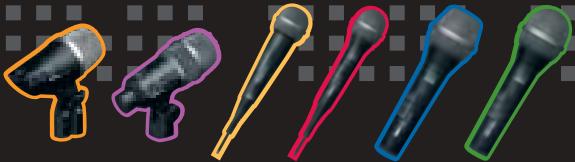
Five colorful microphone illustrations in various shapes and colors (orange, yellow, red, blue, green) against a black background with grid pattern (no text or symbols)CCS SERIES
User Instructions ..... p. 10
Please read the manual before using the equipment!
Mode d'emploi p. 18
natural_image
Black and white photo of a handheld hairdryer (no text or symbols visible)natural_image
Black microphone with a black handle and metallic body (no visible text or symbols)natural_image
Black microphone with a black handle and metallic body (no text or symbols visible)D 11, D 22, D 77 S/XLR, D 88 S/XLR
2.5 Vocals (D 77 S, D 88 S)
natural_image
Black and white photo of a handheld hairdryer (no text or symbols visible)• Dynamic instrument microphone
• Cardioid polar pattern
• 16-ft. (5-m) balanced XLR/XLR cable
• Rugged clear-plastic carrying case
- For kick drum, bass amps, wind instruments

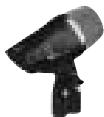
D 22

• Dynamic instrument microphone
- Cardioid polar pattern
• 16-ft. (5-m) balanced XLR/XLR cable
- H 440 bracket
• Rugged clear-plastic carrying case
- For toms, percussion, guitar amps, wind instruments

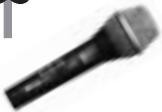
D 77 S
natural_image
Black microphone with a black handle and metallic body (no visible text or symbols)- Dynamic instrument microphone with on/off switch
• Cardioid polar pattern - 16-ft. (5-m) cable: XLR/XLR (D 77 S/XLR) or XLR/1/4" jack (D 77 S/Jack)
• SA 44 stand adapter
• Rugged clear-plastic carrying case - For instruments and backing vocals

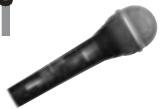
D 88 S
natural_image
Black microphone with a dark handle and metallic body (no text or symbols visible)• Dynamic vocal microphone with on/off switch
- Cardioid polar pattern
- 16-ft. (5-m) cable: XLR/XLR (D 77 S/XLR) or XLR/1/4" jack (D 77 S/Jack)
• SA 44 stand adapter
• Rugged clear-plastic carrying case
- For solo vocals
1.1 Optional Accessories
(D 11, D 22 only)
- MK 9/10 microphone cable: 10 m (30 ft.) 2-conductor shielded cable with 3-pin male and 3-contact female XLR connectors
• ST 102A, ST 200 floor stands
• ST 1, ST 12, ST 45 table stands
• W 880 windscreen
Please make sure that the piece of equipment your microphone will be connected to fulfills the safety regulations in force in your country and is fitted with a ground lead.
D 11, D 22, D 77 S/XLR, D 88 S/XLR
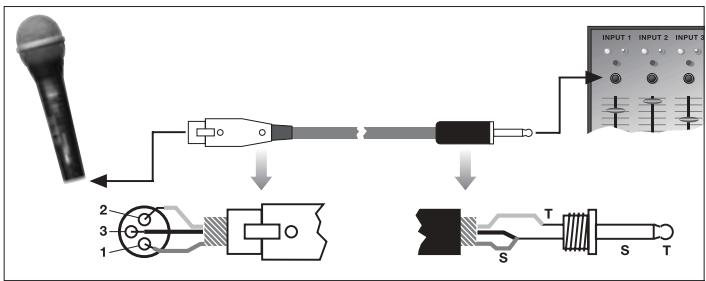
Use the supplied balanced cable to connect the microphone to the desired XLR input.
D 77 S/Jack, D 88 S/Jack
Use the supplied unbalanced cable to connect the microphone to the desired 1/4" input jack. Please note that unbalanced cables may pick up interference from stray magnetic fields near power or lighting cables, electric motors, etc. like an antenna. This may cause hum or similar noise when you use a cable that is longer than 16 feet (5 m).
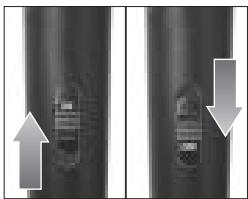
- To switch the microphone on, slide the on/off switch toward the front grill ("ON" position).
- To switch the microphone off, slide the on/off switch toward the microphone cable ("OFF" position).
To prevent unwanted bursts of noise, be sure to switch the microphone off before connecting or disconnecting the microphone cable.
2.1 Precaution
2.2 Connecting the Microphone
Refer to fig. 1.
Refer to fig. 2.
2.3 Switching the Microphone on/off (D 77 S, D 88 S)
Refer to fig. 3.
Note:

2 Using Your Microphone
2.4 Positioning the Microphone for Instruments
The following sections contain suggestions for placing the microphone optimally for a number of instruments.
Please note that moving the microphone closer to the instrument will boost the bass range. (This is known as “proximity effect”.)
2.4.1 Flute Refer to fig. 4.
Microphone: D 77 S Working distance
Jazz/pop: 1 to 2 inches. Blow a little below the microphone to avoid overemphasizing blowing and breathing noise.
Classical music: 4 to 8 inches above the instrument.
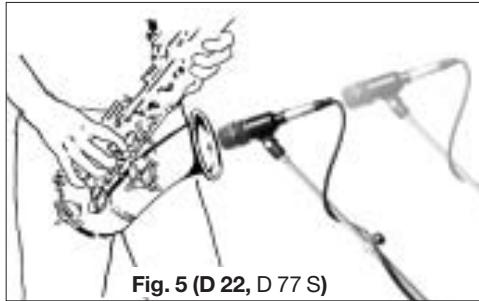
2.4.2 Saxophone Refer to fig. 5.
Microphones: D 22, D 77 S Working distance
0 to 2 inches: The microphone will pick up the bell sound only.
2 to 8 inches: The microphone will pick up both the bell sound and the sound radiated from the keys.
2.4.3 Harmonica Refer to fig. 6.
Microphone: D 77 S
Working distance: "zero" - clamp the microphone between your hands. You will get a very direct sound that you can "shape" with your hands.
2.4.4 Trumpet, Tuba, Trombone Refer to figs. 7, 8, 9.
Microphone: D 22 (trumpet), D 11 (tuba and trombone)
Working distance
0 to 2 inches: The microphone will pick up the bell sound only.
2 to 8 inches: The microphone will pick up both the bell sound and the sound radiated from the body.
Microphone: D 22
Working distance: 0 to 2 inches. Aim the microphone at a point between the center and the perimeter of (one of) the speaker diaphragm(s).
Microphone: D 11
Working distance
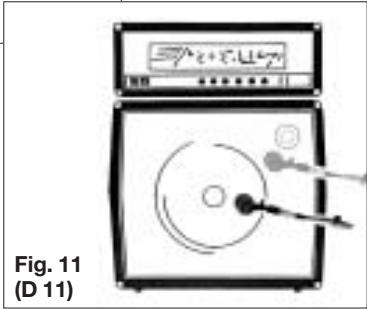
Bass amp with single speaker: 2 inches. Aim the microphone at a point between the center and the perimeter of the speaker diaphragm.
Bass amp with woofer and tweeter: 4 to 6 inches. Aim the microphone at a point halfway between the woofer and tweeter.
Microphone: D 11
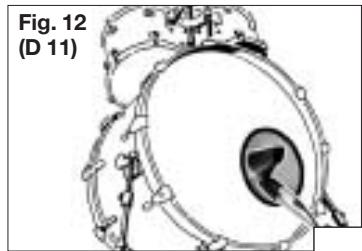
Working distance: Aim the microphone at the point where the beater hits the skin.
The sound will be the drier and harder, the closer the microphone sits to the head. Working distances around 1 inch provide the famous “click”.
If you prefer a rounder sound aim the microphone at a point between the center and the perimeter of the head.
Microphones: D 22, D 77 S
Working distance: 1/2 to 1 1/2 inches away from the top skin.
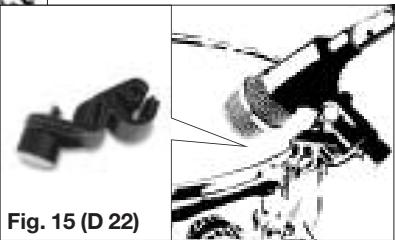
- Screw the supplied H 440 bracket to the stand adapter on the microphone using the captive knurled-head screw on the H 440 bracket.
- Engage the top groove of the H 440 bracket in the top hoop from above.
- Engage the lower arm of the H 440 bracket in the underside of the top hoop.
2.4.5 Guitar Amplifier
Refer to fig. 10.
2.4.6 Bass Amplifier
Refer to fig. 11.
2.4.7 Kick Drum
Refer to fig. 12.
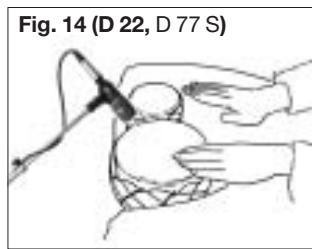
2.4.8 Toms, Snare, Percussions
Refer to figs. 13 and 14.
2.4.9 Mounting the D 22 on a Drum
Refer to fig. 15.
2.5 Vocals (D 77 S, D 88 S)
2.5.1 Working Distance and Proximity Effect
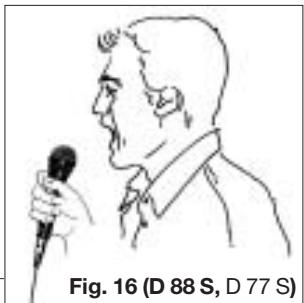
2.5.2 Angle of Incidence Refer to fig. 16.
- Align the microphone with the perimeter of the top head.
The closer you hold the microphone to your lips, the louder and darker your voice will sound. As you move away from the microphone, your voice will sound quieter and brighter.
If you hold the microphone closer than 2 inches to your lips, the proximity effect, an inherent property of any unidirectional microphone, will sharply boost the low frequencies.
Sing to one side of the microphone or above and across the microphone's top. This provides a well-balanced, natural sound.
If you sing directly into the microphone, it will not only pick up excessive breath noise but also overemphasize “sss”, “sh”, “tch”, “p”, and “t” sounds.
2.5.3 Feedback Refer to fig. 17.
Part of the sound projected by the speakers will be picked up by the microphone, amplified, and fed back to the speakers. Above a certain volume level, this "vicious circle" causes the sound system to howl and whistle.
Preventing feedback
- Never point your microphones directly at monitor or PA speakers.
- Place your monitor speakers where the microphone sensitivity is at a minimum.
With the D 88 S supercardioid microphone, these areas are behind and to the sides of the microphone. With the D 77 S cardioid, the minimum sensitivity area is right behind the microphone.
- Be sure to hold the microphone by the shaft and never cover the sound entries behind the
2 Using Your Microphone
microphone grill. If you cover the rear sound entries, the microphone will lose its directivity and its gain before feedback would drop sharply.
- Keep the maximum number of vocalists sharing a microphone to two.
- To get adequate signal level, make sure the two vocalists will remain within an angle of ±35 degrees off the microphone axis.
2.5.4 Backing Vocals
Refer to fig. 18.

3 Cleaning
To clean the microphone case, use a soft cloth moistened with water.
- Unscrew the front grill from the microphone CCW.
- Remove the windscreen from the from grill and wash the windscreen in soap suds.
- Allow the windscreen to dry overnight.
- Replace the windscreen in the front grill and screw the front grill on the microphone CW.
3.1 Microphone Case
3.2 Internal Windscreen (D 77 S, D 88 S)
| D 11 | D 22 | |
| Polar pattern | cardioid | cardioid |
| Frequency range | 20 Hz to 20 kHz | 60 Hz to 18 kHz |
| Sensitivity | 2.5 mV/Pa | 2.5 mV/Pa |
| D 77 S | D 88 S | |
| Polar pattern | cardioid | supercardioid |
| Frequency range | 40 Hz to 20 kHz | 40 Hz to 20 kHz |
| Sensitivity | 2.5 mV/Pa | 2.5 mV/Pa |
This product conforms to the standards listed in the Declaration of Conformity. To order a free copy of the Declaration of Conformity, visit http://www.akg.com or contact sales@akg.com

5 Warranty Conditions
This product carries a two-year warranty by AKG Acoustics GmbH starting from the date of purchase when new. The warranty agreement covers material and labor cost to repair proven faults and is only valid for end customers. Exemptions: Batteries, normal wear and tear, misuse, handling faults, repair by non-authorized workshops. Furthermore the relevant legal warranties apply. The details of the AKG warranty agreement and the address of the nearest AKG service center can be found on www.akg.com
For more information call AKG USA at (+1-615) 6203800
| Problem | Possible Cause | Remedy |
| No sound. | Power to mixer and/or amplifier is off.Channel or master fader on mixer, or volume control on amplifier is at zero.Microphone is not connected to mixer or amplifier.Cable connectors are seated loosely.Cable is defective.D 77 S, D 88 S: Switch in "OFF" position. | Switch power to mixer or amplifier on.Set channel or master fader on mixer or volume control on amplifier to desired level.Connect micro-phone to mixer or amplifier.Check cable connectors for secure seat.Check cable and replace if damaged.D 77 S, D 88 S: Set switch to "ON" position. |

1 Description

D 11
natural_image
Black and white photo of a handheld hairdryer (no text or symbols visible)natural_image
Black microphone with a black handle and metallic body (no visible text or symbols)natural_image
Black microphone with a black handle and metallic body (no text or symbols visible)D 11, D 22, D 77 S/XLR, D 88 S/XLR
Micros : D 22, D 77 S Distance
Micros : D 22, D 77 S
natural_image
Pixelated black-and-white image of a handheld hairdryer (no text or symbols visible)natural_image
Black microphone with a black handle and metallic body (no visible text or symbols)natural_image
Black microphone with a long handle and rounded body (no text or symbols visible)D 11, D 22, D 77 S/XLR, D 88 S/XLR
2.5 Vocals (D 77 S, D 88 S)
natural_image
Pixelated black-and-white image of a handheld hairdryer (no text or symbols visible)natural_image
Black microphone with a black handle and metallic body (no visible text or symbols)natural_image
Black microphone with a black handle and metallic body (no text or symbols visible)D 11, D 22, D 77 S/XLR, D 88 S/XLR
D 77 S/jack, D 88 S/jack
2.4.7 Bass drum (bombo)
Véase Fig. 12.
2.4.8 Tom-toms, snare (tambor afinable), baterías
Véanse Figs. 13, 14.
natural_image
Pixelated black-and-white image of a handheld hairdryer (no text or symbols visible)natural_image
Black microphone with a black handle and metallic body (no visible text or symbols)- Microfone dinâmico para instrumentos com chave liga/desliga
- Característica cardióide
- Cabo, 5 m: XLR/XLR (D 77 S/XLR) ou XLR/jack de 6,3 mm (D 77 S/Jack)
- Adaptador para tripé SA 44
• Mala compacta e transparente - Para instrumentos e coro de fundo

D 88 S
natural_image
Black microphone with a black handle and metallic body (no text or symbols visible)D 11, D 22, D 77 S/XLR, D 88 S/XLR
Fig. 1 (D 11, D 22, D 77 S/XLR, D 88 S/XLR)
flowchart
graph TD
    A["Speaker"] --> B["Switch"]
    B --> C["Component 1"]
    C --> D["Switch 2"]
    D --> E["Component 3"]
    E --> F["Output"]
    G["Device"] --> H["Input 1"]
    G --> I["Input 2"]
    G --> J["Input 3"]
Fig. 2 (D 77 S/Jack, D 88 S/Jack)
natural_image
Two vertical panels showing a cylindrical object with internal structures, each with an arrow indicating direction (no text or symbols present)Fig. 3 (D 77 S, D 88 S)

natural_image
Line drawing of a person playing a flute, no text or symbols presentFig. 4 (D 77 S)
natural_image
Medical procedure illustration showing hand positioning and catheter placement (no text or symbols on diagram)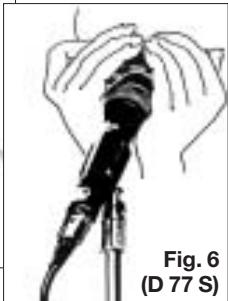
natural_image
Illustration of hands holding a medical or laboratory instrument with a labeled section (D 77 S), no text or symbols present.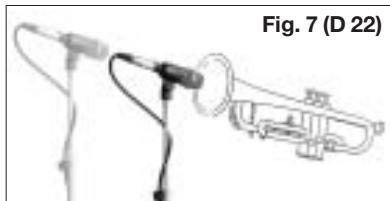
natural_image
Diagram of a handheld device labeled Fig. 7 (D 22), showing a connector and internal components (no text or symbols on the device itself)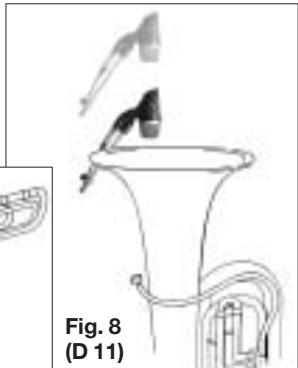
natural_image
Diagram of a laboratory apparatus with a funnel and tubing, labeled Fig. 8 (D 11), showing no readable text or symbols.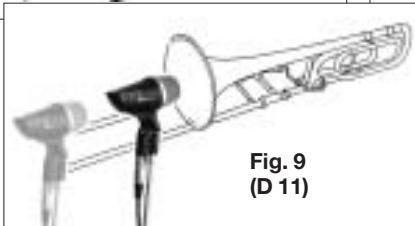
natural_image
Illustration of a trumpet with a string and two speakers (no text or symbols on the diagram itself)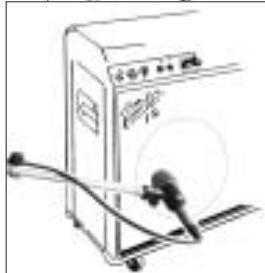
natural_image
Line drawing of a washing machine with a handle and base, no text or symbols presentFig. 10 (D 22)
natural_image
Diagram of a drum with a circular head and internal components, labeled Fig. 12 (D 11) (no text or symbols on the diagram itself)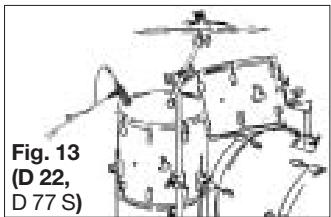
natural_image
Two-panel image showing a black plastic component and a close-up of mechanical components (no visible text or symbols)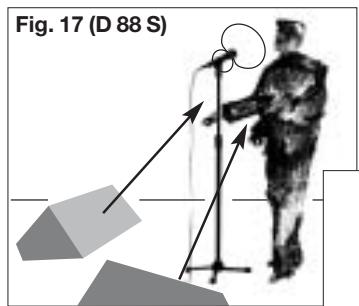
natural_image
Line drawing of a man holding a microphone, labeled as Fig. 16 (D 88 S, D 77 S) (no other text or symbols)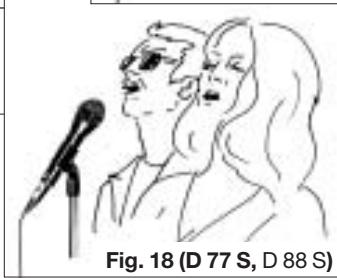
natural_image
Illustration of two people speaking at a microphone, labeled Fig. 18 (D 77 S, D 88 S), showing no text or symbols on the figures.AKG ACOUSTICS
natural_image
Five stylized microphone illustrations in different colors and outlines, arranged horizontally on a dark background (no text or symbols)Technische Änderungen vorbehalten. Specifications subject to change without notice.
Ces caractéristiques sont susceptibles de modifications. Ci riserviamo il diritto di effettuare modifiche tecniche.
H A Harman International Company
AKG Acoustics GmbH
Bodenseestraße 228, D-81243 München/GERMANY, Tel: (+49 89) 87 16-0, Fax: (+49 89) 87 16-200, www.akg.com/de, e-mail: infode@akg.com, Hotline: (+49 89) 87 16-22 50, hotlinede@akg.com
AKG ACOUSTICS, U.S.
914 Airpark Center Drive, Nashville, TN 37217, U.S.A., Tel: (+1 615) 620-3800, Fax: (+1 615) 620-3875, www.akgusa.com, e-mail: akgusa@harman.com
For other products and distributors worldwide see our website: www.akg.com