
P-2602H-D1A - Modem/Router ZYXEL - Free user manual and instructions
Find the device manual for free P-2602H-D1A ZYXEL in PDF.


| Product Type | ADSL2+ Modem/Router |
| Brand | ZYXEL |
| Model | P-2602H-D1A |
| Dimensions (L x W x H) | 180 x 120 x 30 mm |
| Weight | 0.3 kg |
| Power Supply | 12 V DC, 1 A |
| Power Consumption | 10 W max |
| ADSL Technology | ADSL2+ compatible with G.DMT and ADSL networks |
| Network Interfaces | 1 RJ11 port for telephone line, 4 RJ45 10/100 Mbps ports |
| Router Functions | NAT, DHCP client and server, built-in firewall, VPN support (IPSec/PPTP) |
| Supported Protocols | PPPoE, PPTP, IPoA, MER, bridge |
| Quality of Service (QoS) | Application-based bandwidth management |
| Security | SPI firewall, MAC and IP filtering, DoS protection, parental control |
| Configuration | Web interface (HTTP/HTTPS), telnet access |
| WAN Connection Type | ADSL2+ (can also be used in bridge mode with an external router) |
| Care and Cleaning | Unplug the device before cleaning; use a soft, dry cloth. Do not use liquid or abrasive products. |
| Operating Temperature | 0 °C to 40 °C |
| Operating Humidity | 20 % to 80 % (non-condensing) |
| Certifications | FCC, CE, NMB-003 Class B |
| Package Contents | Modem/Router, power adapter, RJ11 cable, RJ45 cable, quick start guide, documentation CD |
Frequently Asked Questions - P-2602H-D1A ZYXEL
User questions about P-2602H-D1A ZYXEL
0 question about this device. Answer the ones you know or ask your own.
Ask a new question about this device
Download the instructions for your Modem/Router in PDF format for free! Find your manual P-2602H-D1A - ZYXEL and take your electronic device back in hand. On this page are published all the documents necessary for the use of your device. P-2602H-D1A by ZYXEL.
USER MANUAL P-2602H-D1A ZYXEL
Copyright © 2006 by ZyXEL Communications Corporation.
The contents of this publication may not be reproduced in any part or as a whole, transcribed, stored in a retrieval system, translated into any language, or transmitted in any form or by any means, electronic, mechanical, magnetic, optical, chemical, photocopying, manual, or otherwise, without the prior written permission of ZyXEL Communications Corporation.
Published by ZyXEL Communications Corporation. All rights reserved.
Disclaimer
ZyXEL does not assume any liability arising out of the application or use of any products, or software described herein. Neither does it convey any license under its patent rights nor the patent rights of others. ZyXEL further reserves the right to make changes in any products described herein without notice. This publication is subject to change without notice.
Trademarks
ZyNOS (ZyXEL Network Operating System) is a registered trademark of ZyXEL Communications, Inc. Other trademarks mentioned in this publication are used for identification purposes only and may be properties of their respective owners.
Certifications
Federal Communications Commission (FCC) Interference Statement
This device complies with Part 15 of FCC rules. Operation is subject to the following two conditions:
- This device may not cause harmful interference.
- This device must accept any interference received, including interference that may cause undesired operations.
This equipment has been tested and found to comply with the limits for a Class B digital device pursuant to Part 15 of the FCC Rules. These limits are designed to provide reasonable protection against harmful interference in a commercial environment. This equipment generates, uses, and can radiate radio frequency energy, and if not installed and used in accordance with the instructions, may cause harmful interference to radio communications.
If this equipment does cause harmful interference to radio/television reception, which can be determined by turning the equipment off and on, the user is encouraged to try to correct the interference by one or more of the following measures:
- Reorient or relocate the receiving antenna.
- Increase the separation between the equipment and the receiver.
- Connect the equipment into an outlet on a circuit different from that to which the receiver is connected.
- Consult the dealer or an experienced radio/TV technician for help.
Notice 1
Changes or modifications not expressly approved by the party responsible for compliance could void the user's authority to operate the equipment.
Note: Antenna Warning! This device meets ETSI and FCC certification requirements when using the included antenna(s). Only use the included antenna(s).
This Class B digital apparatus complies with Canadian ICES-003.
Viewing Certifications
1 Go to www.zyxel.com
2 Select your product from the drop-down list box on the ZyXEL home page to go to that product's page.
3 Select the certification you wish to view from this page.
SafetyWarnings
For your safety, be sure to read and follow all warning notices and instructions.
- To reduce the risk of fire, use only No. 26 AWG (American Wire Gauge) or larger telecommunication line cord.
- Do NOT open the device or unit. Opening or removing covers can expose you to dangerous high voltage points or other risks. ONLY qualified service personnel can service the device. Please contact your vendor for further information.
- Use ONLY the dedicated power supply for your device. Connect the power cord or power adaptor to the right supply voltage (110V AC in North America or 230V AC in Europe).
- Do NOT use the device if the power supply is damaged as it might cause electrocution.
- If the power supply is damaged, remove it from the power outlet.
- Do NOT attempt to repair the power supply. Contact your local vendor to order a new power supply.
- Place connecting cables carefully so that no one will step on them or stumble over them. Do NOT allow anything to rest on the power cord and do NOT locate the product where anyone can walk on the power cord.
- Do not use the device outside, and make sure all the connections are indoors. There may be a remote risk of electric shock from lightning.
- If you wall mount your device, make sure that no electrical, gas or water pipes will be damaged.
- Do NOT install nor use your device during a thunderstorm. There may be a remote risk of electric shock from lightning.
- Do NOT expose your device to dampness, dust or corrosive liquids.
- Do NOT use this product near water, for example, in a wet basement or near a swimming pool.
- Make sure to connect the cables to the correct ports.
- Do NOT obstruct the device ventilation slots, as insufficient airflow may harm your device.
- Do NOT store things on the device.
- Connect ONLY suitable accessories to the device.
This product is recyclable. Dispose of it properly.
ZyXEL Limited Warranty
ZyXEL warrants to the original end user (purchaser) that this product is free from any defects in materials or workmanship for a period of up to two years from the date of purchase. During the warranty period, and upon proof of purchase, should the product have indications of failure due to faulty workmanship and/or materials, ZyXEL will, at its discretion, repair or replace the defective products or components without charge for either parts or labor, and to whatever extent it shall deem necessary to restore the product or components to proper operating condition. Any replacement will consist of a new or re-manufactured functionally equivalent product of equal or higher value, and will be solely at the discretion of ZyXEL. This warranty shall not apply if the product has been modified, misused, tampered with, damaged by an act of God, or subjected to abnormal working conditions.
Note
Repair or replacement, as provided under this warranty, is the exclusive remedy of the purchaser. This warranty is in lieu of all other warranties, express or implied, including any implied warranty of merchantability or fitness for a particular use or purpose. ZyXEL shall in no event be held liable for indirect or consequential damages of any kind to the purchaser.
To obtain the services of this warranty, contact ZyXEL's Service Center for your Return Material Authorization number (RMA). Products must be returned Postage Prepaid. It is recommended that the unit be insured when shipped. Any returned products without proof of purchase or those with an out-dated warranty will be repaired or replaced (at the discretion of ZyXEL) and the customer will be billed for parts and labor. All repaired or replaced products will be shipped by ZyXEL to the corresponding return address, Postage Paid. This warranty gives you specific legal rights, and you may also have other rights that vary from country to country.
Note: Register your product online to receive e-mail notices of firmware upgrades and information at www.zyxel.com for global products, or at www.us.zyxel.com for North American products.
Customer Support
Please have the following information ready when you contact customer support.
Product model and serial number.
- Warranty Information.
- Date that you received your device.
- Brief description of the problem and the steps you took to solve it.
| METHOD LOCATION | SUPPORT E-MAIL | TELEPHONE | WEB SITE | REGULAR MAIL |
| SALES E-MAIL | FAX | FTP SITE | ||
| CORPORATE HEADQUARTERS (WORLDWIDE) | support@zyxel.com.tw | +886-3-578-3942 | www.zyxel.com www.europe.zyxel.com | ZyXEL Communications Corp. 6 Innovation Road II Science Park Hsinchu 300 Taiwan |
| sales@zyxel.com.tw | +886-3-578-2439 | ftp.zyxel.com ftp.europe.zyxel.com | ||
| COSTA RICA | soporte@zyxel.co.cr | +506-2017878 | www.zyxel.co.cr | ZyXEL Costa Rica Plaza Roble Escazú Etapa El Patio, Tercer Piso San José, Costa Rica |
| sales@zyxel.co.cr | +506-2015098 | ftp.zyxel.co.cr | ||
| CZECH REPUBLIC | info@cz.zyxel.com | +420-241-091-350 | www.zyxel.cz | ZyXEL Communications Czech s.r.o. Modranská 621 143 01 Praha 4 - Modrany Ceská Republika |
| info@cz.zyxel.com | +420-241-091-359 | |||
| DENMARK | support@zyxel.dk | +45-39-55-07-00 | www.zyxel.dk | ZyXEL Communications A/S Columbusvej 2860 Soeborg Denmark |
| sales@zyxel.dk | +45-39-55-07-07 | |||
| FINLAND | support@zyxel.fi | +358-9-4780-8411 | www.zyxel.fi | ZyXEL Communications Oy Malminkaari 10 00700 Helsinki Finland |
| sales@zyxel.fi | +358-9-4780 8448 | |||
| FRANCE | info@zyxel.fr | +33-4-72-52-97-97 | www.zyxel.fr | ZyXEL France 1 rue des Vergers Bat. 1 / C 69760 Limonest France |
| +33-4-72-52-19-20 | ||||
| GERMANY | support@zyxel.de | +49-2405-6909-0 | www.zyxel.de | ZyXEL Deutschland GmbH. Adenauerstr. 20/A2 D-52146 Wuerselen Germany |
| sales@zyxel.de | +49-2405-6909-99 | |||
| HUNGARY | support@zyxel.hu | +36-1-3361649 | www.zyxel.hu | ZyXEL Hungary 48, Zoldlomb Str. H-1025, Budapest Hungary |
| info@zyxel.hu | +36-1-3259100 | |||
| KAZAKHSTAN | http://zyxel.kz/support | +7-3272-590-698 | www.zyxel.kz | ZyXEL Kazakhstan 43, Dostyk ave.,Office 414 Dostyk Business Centre 050010, Almaty Republic of Kazakhstan |
| sales@zyxel.kz | +7-3272-590-689 | |||
| NORTH AMERICA | support@zyxel.com | 1-800-255-4101 | www.us.zyxel.com | ZyXEL Communications Inc. 1130 N. Miller St. Anaheim |
| sales@zyxel.com | +1-714-632-0882 | ftp.us.zyxel.com | CA 92806-2001 U.S.A. | |
| NORWAY | support@zyxel.no | +47-22-80-61-80 | www.zyxel.no | ZyXEL Communications A/S Nils Hansens vei 13 0667 Oslo Norway |
| sales@zyxel.no | +47-22-80-61-81 | |||
| POLAND | info@pl.zyxel.com | +48 (22) 333 8250 | www.pl.zyxel.com | ZyXEL Communications ul. Okzei 1A 03-715 Warszawa Poland |
| +48 (22) 333 8251 | ||||
| RUSSIA | http://zyxel.ru/support | +7-095-542-89-29 | www.zyxel.ru | ZyXEL Russia Ostrovityanova 37a Str. Moscow, 117279 Russia |
| sales@zyxel.ru | +7-095-542-89-25 | |||
| SPAIN | support@zyxel.es | +34-902-195-420 | www.zyxel.es | ZyXEL Communications Arte, 21 5thplanta 28033 Madrid Spain |
| sales@zyxel.es | +34-913-005-345 | |||
| SWEDEN | support@zyxel.se | +46-31-744-7700 | www.zyxel.se | ZyXEL Communications A/S Sjöporten 4, 41764 Göteborg Sweden |
| sales@zyxel.se | +46-31-744-7701 | |||
| UKRAINE | support@ua.zyxel.com | +380-44-247-69-78 | www.ua.zyxel.com | ZyXEL Ukraine 13, Pimenenko Str. Kiev, 04050 Ukraine |
| sales@ua.zyxel.com | +380-44-494-49-32 | |||
| UNITED KINGDOM | support@zyxel.co.uk | +44-1344 303044 08707 555779 (UK only) | www.zyxel.co.uk | ZyXEL Communications UK Ltd.,11 The Courtyard, Eastern Road, Bracknell, Berkshire, RG12 2XB, United Kingdom (UK) |
| sales@zyxel.co.uk | +44-1344 303034 | ftp.zyxel.co.uk |
+” is the (prefix) number you enter to make an international telephone call.
Table of Contents
Copyright 3
Certifications 4
SafetyWarnings 5
ZyXEL Limited Warranty 6
Customer Support 7
Table of Contents 9
List of Figures 23
List of Tables 29
Preface 35
Chapter 1
Getting To Know the ZyXEL Device 37
1.1 Introducing the P-2602H(W)(L)-Dx Series 37
1.2 Features 38
1.3 Wireless Features ("W" models only) 42
1.4 Applications for the ZyXEL Device 44
1.4.1 Internet Access 44
1.4.1.1 Internet Single User Account 44
1.4.2 Making Calls via Internet Telephony Service Provider 44
1.4.3 Make Peer-to-peer Calls 45
1.4.4 Firewall for Secure Broadband Internet Access 45
1.4.5 LAN to LAN Application 46
1.4.6 LEDs 47
Chapter 2 Introducing the Web Configurator 49
2.1 Web Configurator Overview 49
2.1.1 Accessing the Web Configurator 49
2.1.2 The RESET Button 51
2.1.2.1 Using The Reset Button 51
2.2 Web Configurator Main Screen 52
2.2.1 Title Bar 52
2.2.2 Navigation Panel 53
2.2.3 Main Window 55
2.2.4 Status Bar 55
Chapter 3
Internet and Wireless Setup Wizard 57
3.1 Introduction 57
3.2 Internet Access Wizard Setup 57
3.2.1 Manual Configuration 59
3.3 Wireless Connection Wizard Setup 65
3.3.1 Manually Assign a WPA key 67
3.3.2 Manually Assign a WEP key 68
Chapter 4
VoIP Wizard And Example 71
4.1 Introduction 71
4.2 VoIP Wizard Setup 71
Chapter 5
Bandwidth Management Wizard 77
5.1 Introduction 77
5.2 Predefined Media Bandwidth Management Services 77
5.3 Bandwidth Management Wizard Setup 78
Chapter 6
Status Screens 83
6.1 Status Screen 83
6.2 Any IP Table 86
6.3 WLAN Status ("W" models only) 87
6.4 Packet Statistics 87
6.5 VoIP Statistics 89
Chapter 7
WAN Setup 93
7.1 WAN Overview 93
7.1.1 Encapsulation 93
7.1.1.1 ENET ENCAP 93
7.1.1.2 PPP over Ethernet 93
7.1.1.3 PPPoA 94
7.1.1.4 RFC 1483 94
7.1.2 Multiplexing 94
7.1.2.1 VC-based Multiplexing 94
7.1.2.2 LLC-based Multiplexing 94
7.1.3 VPI and VCI 94
7.1.4 IP Address Assignment 95
7.1.4.1 IP Assignment with PPPoA or PPPoE Encapsulation 95
7.1.4.2 IP Assignment with RFC 1483 Encapsulation .....95
7.1.4.3 IP Assignment with ENET ENCAP Encapsulation 95
7.1.5 Nailed-Up Connection (PPP) 95
7.1.6 NAT 95
7.2 Metric 96
7.3 Traffic Shaping 96
7.3.1 ATM Traffic Classes 97
7.3.1.1 Constant Bit Rate (CBR) 97
7.3.1.2 Variable Bit Rate (VBR) 97
7.3.1.3 Unspecified Bit Rate (UBR) 98
7.4 Zero Configuration Internet Access 98
7.5 Internet Access Setup 98
7.5.1 Advanced Internet Access Setup 101
7.6 WAN More Connections 102
7.7 Traffic Redirect 103
7.8 WAN Backup Setup 105
Chapter 8
LAN Setup 107
8.1 LAN Overview 107
8.1.1 LANs, WANs and the ZyXEL Device 107
8.1.2 DHCP Setup 108
8.1.2.1 IP Pool Setup 108
8.1.3 DNS Server Address 108
8.1.4 DNS Server Address Assignment 109
8.2 LAN TCP/IP 109
8.2.1 IP Address and Subnet Mask 109
8.2.1.1 Private IP Addresses 110
8.2.2 RIP Setup 110
8.2.3 Multicast 111
8.2.4 Any IP 111
8.2.4.1 How Any IP Works 112
8.3 Configuring LAN IP 113
8.3.1 Configuring Advanced LAN Setup 113
8.4 DHCP Setup 115
8.5 LAN Client List 116
8.6 LAN IP Alias 117
Chapter 9
Wireless LAN 121
9.1 Wireless Network Overview 121
9.2 Wireless Security Overview 122
9.2.1 SSID 122
9.2.2 MAC Address Filter 122
9.2.3UserAuthentication 123
9.2.4 Encryption 123
9.2.5 One-Touch Intelligent Security Technology (OTIST) 124
9.3 Wireless Performance Overview 124
9.3.1 Quality of Service (QoS) 124
9.4 Additional Wireless Terms 125
9.5 General WLAN Screen 125
9.5.1 No Security 126
9.5.2 WEP Encryption Screen 127
9.5.3 WPA(2)-PSK 128
9.5.4 WPA(2) Authentication Screen 130
9.5.5 Wireless LAN Advanced Setup 131
9.6 OTIST Screen 133
9.6.1 Notes on OTIST 135
9.7 MAC Filter 136
9.8 QoS Screen 137
9.8.1 Application Priority Configuration 138
Chapter 10
Network Address Translation (NAT) Screens 141
10.1 NAT Overview 141
10.1.1 NAT Definitions 141
10.1.2 What NAT Does 142
10.1.3 How NAT Works 142
10.1.4 NAT Application 143
10.1.5 NAT Mapping Types 143
10.2 SUA (Single User Account) Versus NAT 144
10.3 NAT General Setup 144
10.4 Port Forwarding 145
10.4.1 Default Server IP Address 146
10.4.2 Port Forwarding: Services and Port Numbers 146
10.4.3 Configuring Servers Behind Port Forwarding (Example) 146
10.5 Configuring Port Forwarding 147
10.5.1 Port Forwarding Rule Edit 148
10.5.2 SIP ALG 149
Chapter 11
Voice 151
11.1 Introduction to VoIP 151
11.2 SIP 151
11.2.1 SIP Identities 151
11.2.1.1 SIP Number 151
11.2.1.2 SIP Service Domain 152
11.2.2 SIP Call Progression 152
11.2.3 SIP Servers 152
11.2.3.1 SIP User Agent 153
11.2.3.2 SIP Proxy Server 153
11.2.3.3 SIP Redirect Server 154
11.2.3.4 SIP Register Server 154
11.3 SIP Settings Screen 154
11.3.1 RTP 156
11.4 Pulse Code Modulation 156
11.5 Voice Coding 156
11.5.1 G.711 156
11.5.2 G.729 156
11.6 PSTN Call Setup Signaling 157
11.7 MWI (Message Waiting Indication) 157
11.8 Custom Tones (IVR) 157
11.8.0.1 Recording Custom Tones 157
11.8.0.2 Listening to Custom Tones 158
11.8.0.3 Deleting Custom Tones 158
11.9 Advanced SIP Setup Screen 158
11.10 Quality of Service (QoS) 162
11.10.1 Type Of Service (ToS) 162
11.10.2 DiffServ 162
11.10.2.1 DSCP and Per-Hop Behavior 162
11.10.3 VLAN 163
11.10.4 SIP QoS Screen 163
11.11 Phone 164
11.12 PSTN Line ("L" models only) 164
11.12.1 Voice Activity Detection/Silence Suppression 164
11.12.2 Comfort Noise Generation 164
11.12.3 Echo Cancellation 164
11.13 Analog Phone Screen 165
11.14 Advanced Analog Phone Setup Screen 166
11.14.1 Common Phone Settings Screen 167
11.15 Supplementary Phone Services Overview 168
11.15.1 The Flash Key 168
11.15.2 Europe Type Supplementary Phone Services 168
11.15.2.1 European Call Hold 169
11.15.2.2 European Call Waiting 169
11.15.2.3 European Call Transfer 169
11.15.2.4 European Three-Way Conference 170
11.15.3 USA Type Supplementary Services 170
11.15.3.1 USA Call Hold 170
11.15.3.2 USA Call Waiting 171
11.15.3.3 USA Call Transfer 171
11.15.3.4 USA Three-Way Conference 171
11.16 Phone Region Screen 171
11.17 Speed Dial 172
11.17.1 Peer-to-Peer Calls 172
11.18 Speed Dial Screen 173
11.19 Incoming Call Policy Screen 174
11.20 PSTN Line Screen ("L" models only) 176
Chapter 12
Phone Usage 179
12.1 Dialing a Telephone Number 179
12.2 Using Speed Dial to Dial a Telephone Number 179
12.3 Internal Calls 179
12.4 Checking the Device's IP Address 179
12.5 Auto Firmware Upgrade 180
Chapter 13
Firewalls 181
13.1 Firewall Overview 181
13.2 Types of Firewalls 181
13.2.1 Packet Filtering Firewalls 181
13.2.2 Application-level Firewalls 182
13.2.3 Stateful Inspection Firewalls 182
13.3 Introduction to ZyXEL's Firewall 182
13.3.1 Denial of Service Attacks 183
13.4 Denial of Service 183
13.4.1 Basics 183
13.4.2 Types of DoS Attacks 184
13.4.2.1 ICMP Vulnerability 186
13.4.2.2 Illegal Commands (NetBIOS and SMTP) 186
13.4.2.3Traceroute 187
13.5 Stateful Inspection 187
13.5.1 Stateful Inspection Process 188
13.5.2 Stateful Inspection on Your ZyXEL Device 188
13.5.3 TCP Security 189
13.5.4 UDP/ICMP Security 189
13.5.5 Upper Layer Protocols 190
13.6 Guidelines for Enhancing Security with Your Firewall 190
13.6.1 Security In General 190
13.7 Packet Filtering Vs Firewall 191
13.7.1 Packet Filtering: 191
13.7.1.1 When To Use Filtering 192
13.7.2 Firewall 192
13.7.2.1 When To Use The Firewall 192
Chapter 14
Firewall Configuration 193
14.1 Access Methods 193
14.2 Firewall Policies Overview 193
14.3 Rule Logic Overview 194
14.3.1 Rule Checklist 194
14.3.2 Security Ramifications 194
14.3.3 Key Fields For Configuring Rules 195
14.3.3.1 Action 195
14.3.3.2 Service 195
14.3.3.3 Source Address 195
14.3.3.4 Destination Address 195
14.4 Connection Direction 195
14.4.1 LAN to WAN Rules 196
14.4.2 Alerts 196
14.5 General Firewall Policy 196
14.6 Firewall Rules Summary 197
14.6.1 Configuring Firewall Rules 199
14.6.2 Customized Services 202
14.6.3 Configuring A Customized Service 202
14.7 Example Firewall Rule 203
14.8 DoS Thresholds 207
14.8.1 Threshold Values 207
14.8.2 Half-Open Sessions 208
14.8.2.1 TCP Maximum Incomplete and Blocking Time 208
14.8.3 Configuring Firewall Thresholds 209
Chapter 15
Content Filtering 211
15.1 Content Filtering Overview 211
15.2 Configuring Keyword Blocking 211
15.3 Configuring the Schedule 212
15.4 Configuring Trusted Computers 213
Chapter 16
Introduction to IPSec 215
16.1 VPN Overview 215
16.1.1 IPSec 215
16.1.2 Security Association 215
16.1.3 Other Terminology 215
16.1.3.1 Encryption 215
16.1.3.2 Data Confidentiality 216
16.1.3.3 Data Integrity 216
16.1.3.4 Data Origin Authentication 216
16.1.4 VPN Applications 216
16.2 IPSec Architecture 216
16.2.1 IPSec Algorithms 217
16.2.2 Key Management 217
16.3 Encapsulation 217
16.3.1 Transport Mode 218
16.3.2 Tunnel Mode 218
16.4 IPSec and NAT 218
Chapter 17 VPN Screens 221
17.1 VPN/IPSec Overview 221
17.2 IPSec Algorithms 221
17.2.1 AH (Authentication Header) Protocol 221
17.2.2 ESP (Encapsulating Security Payload) Protocol 221
17.3 My IP Address 222
17.4 Secure Gateway Address 223
17.4.1 Dynamic Secure Gateway Address 223
17.5 VPN Setup Screen 223
17.6 Keep Alive 225
17.7 VPN, NAT, and NAT Traversal 226
17.8 Remote DNS Server 227
17.9 ID Type and Content 227
17.9.1 ID Type and Content Examples 229
17.10 Pre-Shared Key 229
17.11 Editing VPN Policies 229
17.12 IKE Phases 234
17.12.1 Negotiation Mode 235
17.12.2 Diffie-Hellman (DH) Key Groups 236
17.12.3 Perfect Forward Secrecy (PFS) 236
17.13 Configuring Advanced IKE Settings 236
17.14 Manual Key Setup 239
17.14.1 Security Parameter Index (SPI) 239
17.15 Configuring Manual Key 239
17.16 Viewing SA Monitor 242
17.17 Configuring Global Setting 244
17.18 Telecommuter VPN/IPSec Examples 244
17.18.1 Telecommuters Sharing One VPN Rule Example 244
17.18.2 Telecommuters Using Unique VPN Rules Example 245
17.19 VPN and Remote Management 247
Chapter 18
Static Route 249
18.1 Static Route 249
18.2 Configuring Static Route 249
18.2.1 Static Route Edit 250
Chapter 19
Bandwidth Management 253
19.1 Bandwidth Management Overview 253
19.2 Application-based Bandwidth Management 253
19.3 Subnet-based Bandwidth Management 253
19.4 Application and Subnet-based Bandwidth Management 254
19.5 Scheduler 254
19.5.1 Priority-based Scheduler 254
19.5.2 Fairness-based Scheduler 255
19.6 Maximize Bandwidth Usage 255
19.6.1 Reserving Bandwidth for Non-Bandwidth Class Traffic 255
19.6.2 Maximize Bandwidth Usage Example 256
19.6.2.1 Priority-based Allotment of Unused and Unbudgeted Bandwidth 256
19.6.2.2 Fairness-based Allotment of Unused and Unbudgeted Bandwidth ... 257
19.6.3 Bandwidth Management Priorities 257
19.7 Configuring Summary 257
19.8 Bandwidth Management Rule Setup 259
19.8.1 Rule Configuration 260
19.9 Bandwidth Monitor 262
Chapter 20
Dynamic DNS Setup 263
20.1 Dynamic DNS Overview 263
20.1.1 DYNDNS Wildcard 263
20.2 Configuring Dynamic DNS 263
Chapter 21
Remote Management Configuration 267
21.1 Remote Management Overview 267
21.1.1 Remote Management Limitations 267
21.1.2 Remote Management and NAT 268
21.1.3 System Timeout 268
21.2 WWW 268
21.3 Telnet 269
21.4 Configuring Telnet 269
21.5 Configuring FTP 270
21.6 SNMP 271
21.6.1 Supported MIBs 272
21.6.2 SNMP Traps 273
21.6.3 Configuring SNMP 273
21.7 Configuring DNS 275
21.8 Configuring ICMP 275
Chapter 22
Universal Plug-and-Play (UPnP) 277
22.1 Introducing Universal Plug and Play 277
22.1.1 How do I know if I'm using UPnP? 277
22.1.2 NAT Traversal 277
22.1.3 Cautions with UPnP 278
22.2 UPnP and ZyXEL 278
22.2.1 Configuring UPnP 278
22.3 Installing UPnP in Windows Example 279
22.4 Using UPnP in Windows XP Example 282
Chapter 23
System 289
23.1 General Setup and System Name 289
23.1.1 General Setup 289
23.2 Time Setting 291
Chapter 24
Logs 295
24.1 Logs Overview 295
24.1.1 Alerts and Logs 295
24.2 Viewing the Logs 295
24.3 Configuring Log Settings 296
24.4 SMTP Error Messages 299
24.4.1 Example E-mail Log 299
Chapter 25
Tools 301
25.1 Introduction 301
25.2 Filename Conventions 301
25.3 File Maintenance Over WAN 302
25.4 Firmware Upgrade Screen 302
25.5 Backup and Restore 304
25.5.1 Backup Configuration 305
25.5.2Restore Configuration 305
25.5.3 Reset to Factory Defaults 307
25.6 Restart 307
25.7 Using FTP or TFTP to Back Up Configuration 308
25.7.1 Using the FTP Commands to Back Up Configuration 308
25.7.2 FTP Command Configuration Backup Example 308
25.7.3 Configuration Backup Using GUI-based FTP Clients 309
25.7.4 Backup Configuration Using TFTP 309
25.7.5 TFTP Command Configuration Backup Example 310
25.7.6 Configuration Backup Using GUI-based TFTP Clients 310
25.8 Using FTP or TFTP to Restore Configuration 310
25.8.1 Restore Using FTP Session Example 311
25.9 FTP and TFTP Firmware and Configuration File Uploads 311
25.9.1 FTP File Upload Command from the DOS Prompt Example 311
25.9.2 FTP Session Example of Firmware File Upload 312
25.9.3 TFTP File Upload 312
25.9.4 TFTP Upload Command Example 313
Chapter 26
Diagnostic 315
26.1 General Diagnostic 315
26.2 DSL Line Diagnostic 315
Chapter 27
Troubleshooting 319
27.1 Problems Starting Up the ZyXEL Device 319
27.2 Problems with the LAN 319
27.3 Problems with the WAN 320
27.4 Problems Accessing the ZyXEL Device 321
27.4.1 Pop-up Windows, JavaScripts and Java Permissions 321
27.4.1.1 Internet Explorer Pop-up Blockers 322
27.4.1.2 JavaScripts 325
27.4.1.3 Java Permissions 327
27.5 Telephone Problems 329
27.6 Problems With Multiple SIP Accounts 330
27.6.1 Outgoing Calls 330
27.6.2 Incoming Calls 331
Appendix A
Product Specifications 333
P-2602HWL Series Power Adaptor Specifications 336
Appendix B
Splitters and Microfilters 339
Connecting a POTS Splitter 339
Telephone Microfilters 339
ZyXEL Device With ISDN 340
Appendix C
Setting up Your Computer's IP Address 341
Windows 95/98/Me 341
Configuring 343
Verifying Settings 344
Windows 2000/NT/XP 344
Verifying Settings 348
Macintosh OS 8/9 349
Verifying Settings 350
Macintosh OS X 350
Verifying Settings 351
Appendix D
IP Addresses and Subnetting 353
Introduction to IP Addresses 353
IP Address Classes and Hosts 353
Subnet Masks 355
Subnetting 355
Example: Two Subnets 356
Example: Four Subnets 357
Example Eight Subnets 358
Subnetting With Class A and Class B Networks 359
Appendix E
Wireless LANs 361
Wireless LAN Topologies 361
Ad-hoc Wireless LAN Configuration 361
BSS 361
ESS 362
Channel 363
RTS/CTS 363
Fragmentation Threshold 364
Preamble Type 365
IEEE 802.1x 366
RADIUS 366
Types of RADIUS Messages 366
Types of Authentication 367
EAP-MD5 (Message-Digest Algorithm 5) 367
EAP-TLS (Transport Layer Security) 368
EAP-TTLS (Tunnelled Transport Layer Service) 368
PEAP (Protected EAP) 368
LEAP 368
Dynamic WEP Key Exchange 368
WPA 369
User Authentication 369
Encryption 369
Security Parameters Summary 370
Appendix F
Services 371
Appendix G
Firewall Commands 375
Sys Firewall Commands 375
Appendix H
Triangle Route 377
The Ideal Setup 377
The "Triangle Route" Problem 377
The "Triangle Route" Solutions 378
IP Aliasing 378
Gateways on the WAN Side 379
Appendix I
Log Descriptions 381
Log Commands 390
Configuring What You Want the ZyXEL Device to Log 390
Displaying Logs 391
Log Command Example 392
Appendix J
Command Interpreter 393
Command Syntax 393
Command Usage 393
Appendix K
Internal SPTGEN 395
Internal SPTGEN Overview 395
The Configuration Text File Format 395
Internal SPTGEN File Modification - Important Points to Remember 395
Internal SPTGEN FTP Download Example 396
Internal SPTGEN FTP Upload Example 397
Command Examples 419
Index 421
List of Figures
Figure 1 Internet Access Application 44
Figure 2 Internet Telephony Service Provider Application 45
Figure 3 Peer-to-peer Calling 45
Figure 4 Firewall Application 46
Figure 5 LAN-to-LAN Application 46
Figure 6 LEDs 47
Figure 7 Password Screen 50
Figure 8 Change Password Screen 50
Figure 9 Wizard or Advanced Screen 51
Figure 10 Main Screen 52
Figure 11 Select a Mode 57
Figure 12 Wizard Welcome 58
Figure 13 Auto Detection: No DSL Connection 58
Figure 14 Auto-Detection: PPPoE 59
Figure 15 Auto Detection: Failed 59
Figure 16 Internet Access Wizard Setup: ISP Parameters 60
Figure 17 Internet Connection with PPPoE 61
Figure 18 Internet Connection with RFC 1483 62
Figure 19 Internet Connection with ENET ENCAP 62
Figure 20 Internet Connection with PPPoA 63
Figure 21 Connection Test Failed-1 64
Figure 22 Connection Test Failed-2. 64
Figure 23 Connection Test Successful 65
Figure 24 Wireless LAN Setup Wizard 1 65
Figure 25 Wireless LAN 66
Figure 26 Manually Assign a WPA key 67
Figure 27 Manually Assign a WEP key 68
Figure 28 Wireless LAN Setup 3 69
Figure 29 Internet Access and WLAN Wizard Setup Complete 70
Figure 30 VoIP Phone Calls 71
Figure 31 Select a Mode 72
Figure 32 Wizard: Welcome 72
Figure 33 VoIP Wizard Configuration 73
Figure 34 SIP Registration Test 74
Figure 35 VoIP Wizard Fail 75
Figure 36 VoIP Wizard Finish 75
Figure 37 Select a Mode 79
Figure 38 Wizard: Welcome 79
Figure 39 Bandwidth Management Wizard: General Information 80
Figure 40 Bandwidth Management Wizard: Service Configuration 80
Figure 41 Bandwidth Management Wizard: Complete 81
Figure 42 Status Screen 83
Figure 43 Any IP Table 86
Figure 44 WLAN Status 87
Figure 45 Packet Statistics 88
Figure 46 VoIP Statistics 89
Figure 47 Example of Traffic Shaping 97
Figure 48 Internet Access Setup (PPPoE) 99
Figure 49 Advanced Internet Access Setup 101
Figure 50 WAN More Connections 103
Figure 51 Traffic Redirect Example 104
Figure 52 Traffic Redirect LAN Setup 104
Figure 53 LAN and WAN IP Addresses 107
Figure 54 Any IP Example 112
Figure 55 LAN IP 113
Figure 56 Advanced LAN Setup 114
Figure 57 DHCP Setup 115
Figure 58 LAN Client List 116
Figure 59 Physical Network & Partitioned Logical Networks 118
Figure 60 LAN IP Alias 118
Figure 61 Example of a Wireless Network 121
Figure 62 Wireless LAN: General 126
Figure 63 Wireless: No Security 127
Figure 64 Wireless: Static WEP Encryption 128
Figure 65 Wireless: WPA(2)-PSK 129
Figure 66 Wireless: WPA(2) 130
Figure 67 Advanced 132
Figure 68 Network > Wireless LAN > OTIST 133
Figure 69 Example: Wireless Client OTIST Screen 134
Figure 70 OTIST: Settings 134
Figure 71 OTIST: In Progress on the ZyXEL Device 134
Figure 72 OTIST: In Progress on the Wireless Device 135
Figure 73 Start OTIST? 135
Figure 74 MAC Address Filter 136
Figure 75 Wireless LAN: QoS 137
Figure 76 Application Priority Configuration 138
Figure 77 How NAT Works 142
Figure 78 NAT Application With IP Alias 143
Figure 79 NAT General 145
Figure 80 Multiple Servers Behind NAT Example 146
Figure 81 Port Forwarding 147
Figure 82 Port Forwarding Rule Setup 148
Figure 83 Network > NAT > ALG 149
Figure 84 SIP User Agent 153
Figure 85 SIP Proxy Server 153
Figure 86 SIP Redirect Server 154
Figure 87 SIP > SIP Settings 155
Figure 88 VoIP > SIP Settings > Advanced 159
Figure 89 DiffServ: Differentiated Service Field 162
Figure 90 SIP > QoS 163
Figure 91 Phone > Analog Phone 165
Figure 92 Phone > Analog Phone > Advanced 166
Figure 93 Phone > Common 167
Figure 94 VoIP > Phone > Region 172
Figure 95 Phone Book > Speed Dial 173
Figure 96 Phone Book > Incoming Call Policy 175
Figure 97 PSTN Line > General 177
Figure 98 Firewall Application 183
Figure 99 Three-Way Handshake 184
Figure 100 SYN Flood 185
Figure 101 Smurf Attack 186
Figure 102 Stateful Inspection 187
Figure 103 Firewall: General 196
Figure 104 Firewall Rules 198
Figure 105 Firewall: Edit Rule 200
Figure 106 Firewall: Customized Services 202
Figure 107 Firewall: Configure Customized Services 203
Figure 108 Firewall Example: Rules 204
Figure 109 Edit Custom Port Example 204
Figure 110 Firewall Example: Edit Rule: Destination Address 205
Figure 111 Firewall Example: Edit Rule: Select Customized Services 206
Figure 112 Firewall Example: Rules: MyService 207
Figure 113 Firewall: Threshold 209
Figure 114 Content Filter: Keyword 211
Figure 115 Content Filter: Schedule 212
Figure 116 Content Filter: Trusted 213
Figure 117 Encryption and Decryption 216
Figure 118 IPSec Architecture 217
Figure 119 Transport and Tunnel Mode IPSec Encapsulation 218
Figure 120 IPSec Summary Fields 223
Figure 121 VPN Setup 224
Figure 122 NAT Router Between IPSec Routers 226
Figure 123 VPN Host using Intranet DNS Server Example 227
Figure 124 Edit VPN Policies 230
Figure 125 Two Phases to Set Up the IPSec SA 234
Figure 126 Advanced VPN Policies 237
Figure 127 VPN: Manual Key 240
Figure 128 VPN: SA Monitor 243
Figure 129 VPN: Global Setting 244
Figure 130 Telecommuters Sharing One VPN Rule Example 245
Figure 131 Telecommuters Using Unique VPN Rules Example 246
Figure 132 Example of Static Routing Topology 249
Figure 133 Static Route 250
Figure 134 Static Route Edit 251
Figure 135 Subnet-based Bandwidth Management Example 254
Figure 136 Bandwidth Management: Summary 258
Figure 137 Bandwidth Management: Rule Setup 259
Figure 138 Bandwidth Management Rule Configuration 260
Figure 139 Bandwidth Management: Monitor 262
Figure 140 Dynamic DNS 264
Figure 141 Remote Management: WWW 268
Figure 142 Telnet Configuration on a TCP/IP Network 269
Figure 143 Remote Management: Telnet 270
Figure 144 Remote Management: FTP 271
Figure 145 SNMP Management Model 272
Figure 146 Remote Management: SNMP 274
Figure 147 Remote Management: DNS 275
Figure 148 Remote Management: ICMP 276
Figure 149 Configuring UPnP 278
Figure 150 Add/Remove Programs: Windows Setup: Communication 280
Figure 151 Add/Remove Programs: Windows Setup: Communication: Components 280
Figure 152 Network Connections 281
Figure 153 Windows Optional Networking Components Wizard 281
Figure 154 Networking Services 282
Figure 155 Network Connections 283
Figure 156 Internet Connection Properties 283
Figure 157 Internet Connection Properties: Advanced Settings 284
Figure 158 Internet Connection Properties: Advanced Settings: Add 284
Figure 159 System Tray Icon 285
Figure 160 Internet Connection Status 285
Figure 161 Network Connections 286
Figure 162 Network Connections: My Network Places 287
Figure 163 Network Connections: My Network Places: Properties: Example 287
Figure 164 System General Setup 290
Figure 165 System Time Setting 291
Figure 166 View Log 296
Figure 167 Log Settings 297
Figure 168 E-mail Log Example 300
Figure 169 Firmware Upgrade 303
Figure 170 Firmware Upload In Progress 303
Figure 171 Network Temporarily Disconnected 304
Figure 172 Error Message 304
Figure 173 Configuration 305
Figure 174 Configuration Upload Successful 306
Figure 175 Network Temporarily Disconnected 306
Figure 176 Configuration Upload Error 306
Figure 177 Reset Warning Message 307
Figure 178 Reset In Process Message 307
Figure 179 Restart Screen 307
Figure 180 FTP Session Example 308
Figure 181 Restore Using FTP Session Example 311
Figure 182 FTP Session Example of Firmware File Upload 312
Figure 183 Diagnostic: General 315
Figure 184 Diagnostic: DSL Line 316
Figure 185 Pop-up Blocker 322
Figure 186 Internet Options 323
Figure 187 Internet Options 324
Figure 188 Pop-up Blocker Settings 325
Figure 189 Internet Options 326
Figure 190 Security Settings - Java Scripting 327
Figure 191 Security Settings - Java 328
Figure 192 Java (Sun) 329
Figure 193 Outgoing Calls: Default 330
Figure 194 Outgoing Calls: Individual Configuration 330
Figure 195 Incoming Calls: Default 331
Figure 196 Incoming Calls: Individual Configuration 331
Figure 197 Connecting a POTS Splitter 339
Figure 198 Connecting a Microfilter 340
Figure 199 ZyXEL Device with ISDN 340
Figure 200 Windows 95/98/Me: Network: Configuration 342
Figure 201 Windows 95/98/Me: TCP/IP Properties: IP Address 343
Figure 202 Windows 95/98/Me: TCP/IP Properties: DNS Configuration 344
Figure 203 Windows XP: Start Menu 345
Figure 204 Windows XP: Control Panel 345
Figure 205 Windows XP: Control Panel: Network Connections: Properties 346
Figure 206 Windows XP: Local Area Connection Properties 346
Figure 207 Windows XP: Advanced TCP/IP Settings 347
Figure 208 Windows XP: Internet Protocol (TCP/IP) Properties 348
Figure 209 Macintosh OS 8/9: Apple Menu 349
Figure 210 Macintosh OS 8/9: TCP/IP 350
Figure 211 Macintosh OS X: Apple Menu 350
Figure 212 Macintosh OS X: Network 351
Figure 213 Peer-to-Peer Communication in an Ad-hoc Network 361
Figure 214 Basic Service Set 362
Figure 215 Infrastructure WLAN 363
Figure 216 RTS/CTS 364
Figure 217 Ideal Setup 377
Figure 218 "Triangle Route" Problem 378
Figure 219 IP Alias 378
Figure 220 Gateways on the WAN Side 379
Figure 221 Displaying Log Categories Example 390
Figure 222 Displaying Log Parameters Example 391
Figure 223 Log Command Example 392
Figure 224 Configuration Text File Format: Column Descriptions 395
Figure 225 Invalid Parameter Entered: Command Line Example 396
Figure 226 Valid Parameter Entered: Command Line Example 396
Figure 227 Internal SPTGEN FTP Download Example 397
Figure 228 Internal SPTGEN FTP Upload Example 397
List of Tables
Table 1 Models Covered 37
Table 2 ADSL Standards 38
Table 3 IEEE 802.11g 42
Table 4 LEDs 47
Table 5 Web Configurator Icons in the Title Bar 53
Table 6 Navigation Panel Summary 53
Table 7 Internet Access Wizard Setup: ISP Parameters 60
Table 8 Internet Connection with PPPoE 61
Table 9 Internet Connection with RFC 1483 62
Table 10 Internet Connection with ENET ENCAP 63
Table 11 Internet Connection with PPPoA 63
Table 12 Wireless LAN Setup Wizard 1 66
Table 13 Wireless LAN Setup Wizard 2 66
Table 14 Manually Assign a WPA key 68
Table 15 Manually Assign a WEP key 69
Table 16 Sample SIP Account Information 73
Table 17 VoIP Wizard Configuration 73
Table 18 Media Bandwidth Management Setup: Services 77
Table 19 Bandwidth Management Wizard: General Information 80
Table 20 Bandwidth Management Wizard: Service Configuration 81
Table 21 Status Screen 84
Table 22 Any IP Table 87
Table 23 WLAN Status 87
Table 24 Packet Statistics 88
Table 25 VoIP Statistics 90
Table 26 Internet Access Setup 99
Table 27 Advanced Internet Access Setup 101
Table 28 Advanced Internet Access Setup 103
Table 29 WAN Backup Setup 105
Table 30 LAN IP 113
Table 31 Advanced LAN Setup 114
Table 32 DHCP Setup 115
Table 33 LAN Client List 117
Table 34 LAN IP Alias 118
Table 35 Types of Encryption for Each Type of Authentication 123
Table 36 Wireless LAN: General 126
Table 37 Wireless No Security 127
Table 38 Wireless: Static WEP Encryption 128
Table 39 Wireless: WPA(2)-PSK 129
Table 40 Wireless: WPA(2) 130
Table 41 Wireless LAN: Advanced 132
Table 42 Network > Wireless LAN > OTIST 133
Table 43 MAC Address Filter 136
Table 44 Wireless LAN: QoS 137
Table 45 Application Priority Configuration 139
Table 46 NAT Definitions 141
Table 47 NAT Mapping Types 144
Table 48 NAT General 145
Table 49 Port Forwarding 147
Table 50 Port Forwarding Rule Setup 148
Table 51 Network > NAT > ALG 149
Table 52 SIP Call Progression 152
Table 53 SIP > SIP Settings 155
Table 54 Custom Tones Details 157
Table 55 VoIP > SIP Settings > Advanced 160
Table 56 SIP > QoS 163
Table 57 Phone > Analog Phone 165
Table 58 Phone > Analog Phone > Advanced 166
Table 59 Phone > Common 167
Table 60 European Flash Key Commands 168
Table 61 USA Flash Key Commands 170
Table 62 VoIP > Phone > Region 172
Table 63 Phone Book > Speed Dial 173
Table 64 Phone Book > Incoming Call Policy 175
Table 65 PSTN Line > General 177
Table 66 Common IP Ports 184
Table 67 ICMP Commands That Trigger Alerts 186
Table 68 Legal NetBIOS Commands 186
Table 69 Legal SMTP Commands 186
Table 70 Firewall: General 197
Table 71 Firewall Rules 198
Table 72 Firewall: Edit Rule 201
Table 73 Customized Services 202
Table 74 Firewall: Configure Customized Services 203
Table 75 Firewall: Threshold 209
Table 76 Content Filter: Keyword 212
Table 77 Content Filter: Schedule 213
Table 78 Content Filter: Trusted 213
Table 79 VPN and NAT 219
Table 80 AH and ESP 222
Table 81 VPN Setup 224
Table 82 VPN and NAT 226
Table 83 Local ID Type and Content Fields 228
Table 84 Peer ID Type and Content Fields 228
Table 85 Matching ID Type and Content Configuration Example 229
Table 86 Mismatching ID Type and Content Configuration Example 229
Table 87 Edit VPN Policies 230
Table 88 Advanced VPN Policies 237
Table 89 VPN: Manual Key 240
Table 90 VPN: SA Monitor 243
Table 91 VPN: Global Setting 244
Table 92 Telecommuters Sharing One VPN Rule Example 245
Table 93 Telecommuters Using Unique VPN Rules Example 246
Table 94 Static Route 250
Table 95 Static Route Edit 251
Table 96 Application and Subnet-based Bandwidth Management Example 254
Table 97 Maximize Bandwidth Usage Example 256
Table 98 Priority-based Allotment of Unused and Unbudgeted Bandwidth Example 256
Table 99 Fairness-based Allotment of Unused and Unbudgeted Bandwidth Example 257
Table 100 Bandwidth Management Priorities 257
Table 101 Media Bandwidth Management: Summary 258
Table 102 Bandwidth Management: Rule Setup 259
Table 103 Bandwidth Management Rule Configuration 261
Table 104 Dynamic DNS 264
Table 105 Remote Management: WWW 269
Table 106 Remote Management: Telnet 270
Table 107 Remote Management: FTP 271
Table 108 SNMP Traps 273
Table 109 Remote Management: SNMP 274
Table 110 Remote Management: DNS 275
Table 111 Remote Management: ICMP 276
Table 112 Configuring UPnP 279
Table 113 System General Setup 290
Table 114 System Time Setting 291
Table 115 View Log 296
Table 116 Log Settings 297
Table 117 SMTP Error Messages 299
Table 118 Filename Conventions 302
Table 119 Firmware Upgrade 303
Table 120 Restore Configuration 305
Table 121 General Commands for GUI-based FTP Clients 309
Table 122 General Commands for GUI-based TFTP Clients 310
Table 123 Diagnostic: General 315
Table 124 Diagnostic: DSL Line 316
Table 125 Troubleshooting Starting Up Your Device 319
Table 126 Troubleshooting the LAN 319
Table 127 Troubleshooting the WAN 320
Table 128 Troubleshooting Accessing Your Device 321
Table 129 Troubleshooting Telephone 329
Table 130 Device Specifications 333
Table 131 Firmware Specifications 334
Table 132 P-2602HWL Series Power Adaptor Specifications 336
Table 133 Classes of IP Addresses 354
Table 134 Allowed IP Address Range By Class 354
Table 135 "Natural" Masks 355
Table 136 Alternative Subnet Mask Notation 355
Table 137 Two Subnets Example 356
Table 138 Subnet 1 356
Table 139 Subnet 2 357
Table 140 Subnet 1 357
Table 141 Subnet 2 358
Table 142 Subnet 3 358
Table 143 Subnet 4 358
Table 144 Eight Subnets 359
Table 145 Class C Subnet Planning 359
Table 146 Class B Subnet Planning 360
Table 147 IEEE 802.11g 365
Table 148 Comparison of EAP Authentication Types 369
Table 149 Wireless Security Relational Matrix 370
Table 150 Examples of Services 371
Table 151 Sys Firewall Commands 375
Table 152 System Maintenance Logs 381
Table 153 System Error Logs 382
Table 154 Access Control Logs 382
Table 155 TCP Reset Logs 383
Table 156 Packet Filter Logs 383
Table 157 ICMP Logs 383
Table 158 CDR Logs 384
Table 159 PPP Logs 384
Table 160 UPnP Logs 385
Table 161 Content Filtering Logs 385
Table 162 Attack Logs 385
Table 163 802.1X Logs 386
Table 164 ACL Setting Notes 387
Table 165 ICMP Notes 387
Table 166 Syslog Logs 388
Table 167 SIP Logs 388
Table 168 RTP Logs 389
Table 169 FSM Logs: Caller Side 389
Table 170 FSM Logs: Callee Side 389
Table 171 PSTN Logs 389
Table 172 RFC-2408 ISAKMP Payload Types 390
Table 173 Abbreviations Used in the Example Internal SPTGEN Screens Table 398
Table 174 Menu 1 General Setup 398
Table 175 Menu 3 398
Table 176 Menu 4 Internet Access Setup 401
Table 177 Menu 12 403
Table 178 Menu 15 SUA Server Setup 407
Table 179 Menu 21.1 Filter Set #1 409
Table 180 Menu 21.1 Filer Set #2, 413
Table 181 Menu 23 System Menus 417
Table 182 Menu 24.11 Remote Management Control 418
Table 183 Command Examples 419
Preface
Congratulations on your purchase of the P-2602H(W)(L)-DxA 802.11g Wireless ADSL 2+ VoIP IAD (the "ZyXEL Device"). Your ZyXEL Device is easy to install and configure.
About This User's Guide
This manual is designed to guide you through the configuration of your ZyXEL Device for its various applications.
Note: Use the web configurator or command interpreter interface to configure your ZyXEL Device. Not all features can be configured through all management interfaces.
Related Documentation
Supporting Disk
Refer to the included CD for support documents.
- Quick Start Guide
The Quick Start Guide is designed to help you get up and running right away. It contains connection information and instructions on getting started.
Web Configurator Online Help
Embedded web help for descriptions of individual screens and supplementary information.
ZyXEL Web Site
Please go to http://www.zyxel.com for product news, firmware, updated documents, and other support materials.
User Guide Feedback
Help us help you. E-mail all User Guide-related comments, questions or suggestions for improvement to techwriters@zyxel.com.tw or send regular mail to The Technical Writing Team, ZyXEL Communications Corp., 6 Innovation Road II, Science-Based Industrial Park, Hsinchu, 300, Taiwan. Thank you.
Syntax Conventions
- "Enter" means for you to type one or more characters. "Select" or "Choose" means for you to use one predefined choices.
-
Screen titles and labels are in Bold Times New Roman font. Predefined field choices are in Bold Arial font. Command and arrow keys are enclosed in square brackets. [ENTER] means the Enter, or carriage return key; [ESC] means the Escape key and [SPACE BAR] means the Space Bar.
-
Mouse action sequences are denoted using a right angle bracket (>) . For example, "In Windows, click Start > Settings > Control Panel" means first click the Start button, then point your mouse pointer to Settings and then click Control Panel.
- "e.g.," is a shorthand for "for instance", and "i.e.," means "that is" or "in other words".
- The P-2602H(W)(L)-DxA may be referred to as the ZyXEL Device in this user's guide.
Graphics Icons Key
| ZyXEL Device | Computer | Notebook computer |
| Server | Switch | Router |
| Telephone | DSLAM | Trunking gateway |
| Firewall | Wireless signal |
CHAPTER 1
Getting To Know the ZyXEL Device
This chapter describes the key features and applications of your device.
1.1 Introducing the P-2602H(W)(L)-Dx Series
The P-2602H(W)(L)-DxA series are Integrated Access Devices (IADs) that combine an ADSL2+ router with Voice over IP (VoIP) communication capabilities to allow you to use a traditional analog or ISDN telephone to make Internet calls. By integrating DSL and NAT, you are provided with ease of installation and high-speed, shared Internet access. The P-2602H(W)(L)-DxA series is also a complete security solution with a robust firewall and content filtering.
At the time of writing, this guide covers the following models.
Table 1 Models Covered
| P-2602HWL-D1A | P-2602HWL-D3A | P-2602HWL-D7A |
| P-2602HW-D1A | P-2602HW-D3A | P-2602HW-D7A |
| P-2602H-D1A | P-2602H-D3A | P-2602H-D7A |
Not all models include all features. Please refer to the following description of the product name format.
- “H” denotes an integrated 4-port hub (switch). The “H” models also include Virtual Private Network (VPN) capability.
- "W" denotes wireless functionality. There is an embedded mini-PCI module for IEEE 802.11g wireless LAN connectivity. All wireless features documented in this user's guide refer to the "W" models only.
- “L” denotes the PSTN (Public Switched Telephone Network) line feature. The PSTN line lets you have VoIP phone service and PSTN phone service at the same time. All PSTN line features documented in this user’s guide refer to the “L” models only.
Note: When the ZyXEL Device does not have power, only the phone connected to the PHONE 1 port can be used for making calls. Ensure you know which phone this is, so that in case of emergency you can make outgoing calls.
Models with "3" as the next to the last character (like the P-2602HWL-D3A) denote a device that works over ISDN (Integrated Services Digital Network). Models with "1" or "7" as the next to the last character (like the P-2602HWL-D1A or the P-2602HWL-D7A) denote a device that works over T-ISDN (UR-2).
Note: Only use firmware for your ZyXEL Device's specific model. Refer to the label on the bottom of your ZyXEL Device.
The web browser-based Graphical User Interface (GUI) provides easy management.
Note: All screens displayed in this user's guide are from the P-2602HWL-D1 model.
1.2 Features
The following sections introduce your device's key features.
Built-in Switch
The four 10/100 Mbps auto-negotiating Ethernet ports allow the ZyXEL Device to detect the speed of incoming transmissions and adjust appropriately without manual intervention. It allows data transfer of either 10 Mbps or 100 Mbps in either half-duplex or full-duplex mode depending on your Ethernet network. The ports are also auto-crossover (MDI/MDI-X) meaning they automatically adjust to either a crossover or straight-through Ethernet cable.
High Speed Internet Access
The ZyXEL Device is ideal for high-speed Internet browsing and making LAN-to-LAN connections to remote networks. The ZyXEL Device is compatible with the ADSL/ADSL2/ ADSL2+ standards. Maximum data rates attainable for each standard are shown in the next table.
Table 2 ADSL Standards
| DATA RATE STANDARD | UPSTREAM | DOWNSTREAM |
| ADSL | 832 kbps | 8Mbps |
| ADSL2 | 3.5Mbps | 12Mbps |
| ADSL2+ | 3.5Mbps | 24Mbps |
Note: If your ZyXEL Device does not support Annex M, the maximum ADSL2/2+ upstream data rate is 1.2 Mbps. ZyXEL Devices which work over ISDN do not support Annex M.
The standard your ISP supports determines the maximum upstream and downstream speeds attainable. Actual speeds attained also depend on the distance from your ISP, line quality, etc.
PSTN Line ("L" models only)
You can connect a PSTN line to your device. You can receive incoming PSTN phone calls even while someone else is making VoIP phone calls. You can dial a (prefix) number to make an outgoing PSTN call. You can still make PSTN phone calls if your device loses power.
Note: When the ZyXEL Device does not have power, only the phone connected to the PHONE 1 port can be used for making calls. Ensure you know which phone this is, so that in case of emergency you can make outgoing calls.
Zero Configuration Internet Access
Once you connect and turn on the device, it automatically detects the Internet connection settings (such as the VCI/VPI numbers and the encapsulation method) from the ISP and makes the necessary configuration changes. In cases where additional account information (such as an Internet account user name and password) is required or the ZyXEL Device cannot connect to the ISP, you will be redirected to web screen(s) for information input or troubleshooting.
Any IP
The Any IP feature allows a computer to access the Internet and the ZyXEL Device without changing the network settings (such as IP address and subnet mask) of the computer, when the IP addresses of the computer and the ZyXEL Device are not in the same subnet.
Auto Provisioning
Your VoIP service provider can automatically update your device's configuration via an autoprovisioning server.
Auto Firmware Upgrade
Your device gives you the option to upgrade to a newer firmware version if it finds one during auto-provisioning. Your VoIP service provider must have an auto-provisioning server and a server set up with firmware in order for this feature to work.
Firewall
Your device has a stateful inspection firewall with DoS (Denial of Service) protection. By default, when the firewall is activated, all incoming traffic from the WAN to the LAN is blocked unless it is initiated from the LAN. The firewall supports TCP/UDP inspection, DoS detection and prevention, real time alerts, reports and logs.
IPSec VPN Capability
Establish a Virtual Private Network (VPN) to connect with business partners and branch offices using data encryption and the Internet to provide secure communications without the expense of leased site-to-site lines. The ZyXEL Device VPN is based on the IPSec standard and is interoperable with other IPSec-based VPN products.
The ZyXEL Device supports up to two simultaneous IPSec connections.
Network Address Translation (NAT)
Network Address Translation (NAT) allows the translation of an Internet protocol address used within one network (for example a private IP address used in a local network) to a different IP address known within another network (for example a public IP address used on the Internet).
Content Filtering
Content filtering allows you to block access to Internet web sites that contain key words (that you specify) in the URL. You can also schedule when to perform the filtering and give trusted LAN IP addresses unfiltered Internet access.
Media Bandwidth Management
Media Bandwidth Management allows you to specify bandwidth classes based on an application and/or subnet. You can allocate specific amounts of bandwidth capacity (bandwidth budgets) to different bandwidth classes.
REN
A Ringer Equivalence Number (REN) is used to determine the number of devices (like telephones or fax machines) that may be connected to the telephone line. Your device has a REN of three, so it can support three devices per telephone port.
Dynamic Jitter Buffer
The built-in adaptive buffer helps to smooth out the variations in delay (jitter) for voice traffic. This helps ensure good voice quality for your conversations.
Multiple SIP Accounts
You can simultaneously use multiple voice (SIP) accounts and assign them to one or both telephone ports.
Multiple Voice Channels
Your device can simultaneously handle multiple voice channels (telephone calls).
Additionally you can answer an incoming phone call on a VoIP account, even while someone else is using the account for a phone call.
Voice Activity Detection/Silence Suppression
Voice Activity Detection (VAD) reduces the bandwidth that a call uses by not transmitting when you are not speaking.
Comfort Noise Generation
Your device generates background noise to fill moments of silence when the other device in a call stops transmitting because the other party is not speaking (as total silence could easily be mistaken for a lost connection).
Echo Cancellation
You device supports G.168, an ITU-T standard for eliminating the echo caused by the sound of your voice reverberating in the telephone receiver while you talk.
QoS (Quality of Service)
Quality of Service (QoS) mechanisms help to provide better service on a per-flow basis. Your device supports Type of Service (ToS) tagging and Differentiated Services (DiffServ) tagging. This allows the device to tag voice frames so they can be prioritized over the network.
SIP ALG
Your device is a SIP Application Layer Gateway (ALG). It allows VoIP calls to pass through NAT for devices behind it (such as a SIP-based VoIP software application on a computer).
Universal Plug and Play (UPnP)
Your device and other UPnP enabled devices can use the standard TCP/IP protocol to dynamically join a network, obtain an IP address and convey their capabilities to each other.
PPPoE Support (RFC2516)
PPPoE (Point-to-Point Protocol over Ethernet) emulates a dial-up connection. It allows your ISP to use their existing network configuration with newer broadband technologies such as ADSL. The PPPoE driver on your device is transparent to the computers on the LAN, which see only Ethernet and are not aware of PPPoE thus saving you from having to manage PPPoE clients on individual computers.
Other PPPoE Features
- PPPoE idle time out
- PPPoE dial on demand
Dynamic DNS Support
With Dynamic DNS support, you can have a static hostname alias for a dynamic IP address, allowing the host to be more easily accessible from various locations on the Internet. You must register for this service with a Dynamic DNS service provider.
DHCP
DHCP (Dynamic Host Configuration Protocol) allows the individual clients (computers) to obtain the TCP/IP configuration at start-up from a centralized DHCP server. Your device has built-in DHCP server capability enabled by default. It can assign IP addresses, an IP default gateway and DNS servers to DHCP clients. Your device can also act as a surrogate DHCP server (DHCP Relay) where it relays IP address assignment from the actual real DHCP server to the clients.
Multiple PVC (Permanent Virtual Circuits) Support
Your device supports up to 8 Permanent Virtual Circuits (PVC's).
IP Alias
IP alias allows you to partition a physical network into logical networks over the same Ethernet interface. Your device supports three logical LAN interfaces via its single physical Ethernet interface with the your device itself as the gateway for each LAN network.
IP Policy Routing (IPPR)
Traditionally, routing is based on the destination address only and the router takes the shortest path to forward a packet. IP Policy Routing (IPPR) provides a mechanism to override the default routing behavior and alter the packet forwarding based on the policy defined by the network administrator.
Packet Filters
Your device's packet filtering function allows added network security and management.
Ease of Installation
Your device is designed for quick, intuitive and easy installation.
Housing
Your device's compact and ventilated housing minimizes space requirements, making it easy to position anywhere in your busy office.
1.3 Wireless Features ("W" models only)
IEEE 802.11g Wireless LAN
IEEE 802.11g is fully compatible with the IEEE 802.11b standard. This means an IEEE 802.11b radio card can interface directly with an IEEE 802.11g access point (and vice versa) at 11 Mbps or lower depending on range. IEEE 802.11g has several intermediate rate steps between the maximum and minimum data rates. The IEEE 802.11g data rate and modulation are as follows:
Table 3 IEEE 802.11g
| DATA RATE (MBPS) | MODULATION |
| 1 | DBPSK (Differential Binary Phase Shift Keyed) |
| 2 | DQPSK (Differential Quadrature Phase Shift Keying) |
Table 3 IEEE 802.11g
| DATA RATE (MBPS) | MODULATION |
| 5.5 / 11 | CCK (Complementary Code Keying) |
| 6/9/12/18/24/36/48/54 | OFDM (Orthogonal Frequency Division Multiplexing) |
Note: Your device may be prone to RF (Radio Frequency) interference from other 2.4 GHz devices such as microwave ovens, wireless phones, Bluetooth enabled devices, and other wireless LANs.
IEEE 802.11g+ Wireless LAN
Your device supports IEEE 802.11g+ to allow any ZyXEL WLAN devices that also support IEEE 802.1g+ to associate with the ZyXEL Device at higher transmission speeds than with standard IEEE 802.11g .
External Antenna
The ZyXEL Device is equipped with an attached antenna to provide a clear radio signal between the wireless stations and the access points.
Wireless LAN MAC Address Filtering
Your device can check the MAC addresses of wireless stations against a list of allowed or denied MAC addresses.
WEP Encryption
WEP (Wired Equivalent Privacy) encrypts data frames before transmitting over the wireless network to help keep network communications private.
Wi-Fi Protected Access
Wi-Fi Protected Access (WPA) is a subset of the IEEE 802.11i security standard. Key differences between WPA and WEP are user authentication and improved data encryption.
WPA2
WPA 2 (IEEE 802.11i) is a wireless security standard that defines stronger encryption, authentication and key management than WPA.
WMM QoS
WMM (Wi-Fi MultiMedia) QoS (Quality of Service) allows you to prioritize wireless traffic according to the delivery requirements of individual services.
1.4 Applications for the ZyXEL Device
Here are some example uses for which the ZyXEL Device is well suited.
1.4.1 Internet Access
Your device is the ideal high-speed Internet access solution. It supports the TCP/IP protocol, which the Internet uses exclusively. It is compatible with all major ADSL DSLAM (Digital Subscriber Line Access Multiplexer) providers. A DSLAM is a rack of ADSL line cards with data multiplexed into a backbone network interface/connection (for example, T1, OC3, DS3, ATM or Frame Relay). Think of it as the equivalent of a modem rack for ADSL. In addition, your device allows wireless clients access to your network resources and the Internet. A typical Internet access application is shown below.
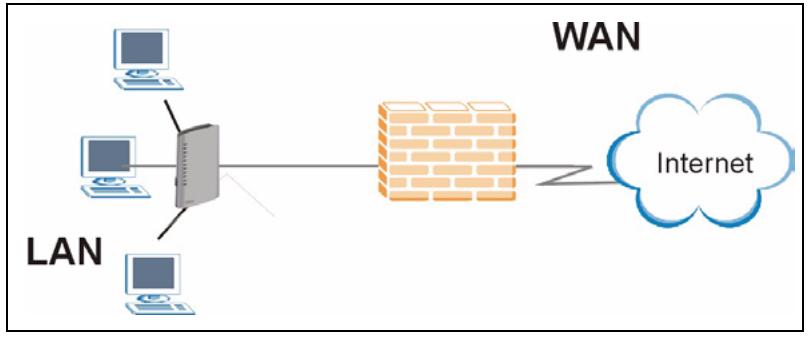
Figure 1 Internet Access Application
1.4.1.1 Internet Single User Account
For a SOHO (Small Office/Home Office) environment, your device offers the Single User Account (SUA) feature that allows multiple users on the LAN (Local Area Network) to access the Internet concurrently for the cost of a single IP address
1.4.2 Making Calls via Internet Telephony Service Provider
In a home or small office environment, you can use your device to make and receive VoIP telephone calls through an Internet Telephony Service Provider (ITSP).
The following figure shows a basic example of how you would make a VoIP call through an ITSP. You use your analog phone (A in the figure) and your device (B) changes the call into VoIP. Your device then sends your call to the Internet and the ITSP's SIP server. The VoIP call server forwards calls to PSTN phones (E) through a trunking gateway (D) to the PSTN network. The VoIP call server forwards calls to IP phones (F) through the Internet.
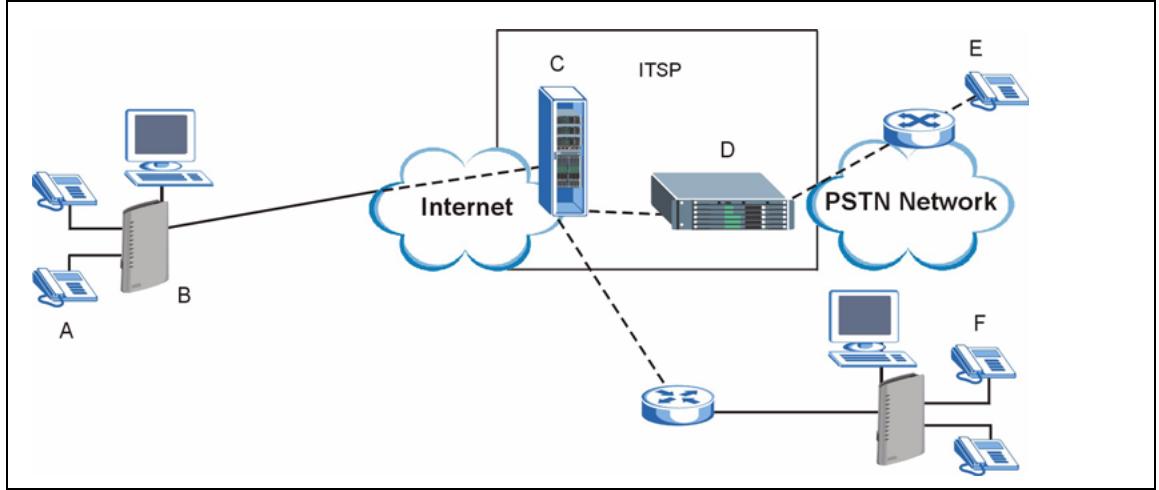
Figure 2 Internet Telephony Service Provider Application
1.4.3 Make Peer-to-peer Calls
You can call directly to someone's IP address without using a SIP proxy server. Peer-to-peer calls are also called "Point to Point" or "IP-to-IP" calls. You must know the peer's IP address in order to do this.
The following figure shows a basic example of how you would make a peer-to-peer VoIP call. You use your analog phone (A in the figure) and your device (B) changes the call into VoIP and sends the call through the Internet to the peer VoIP device (C).
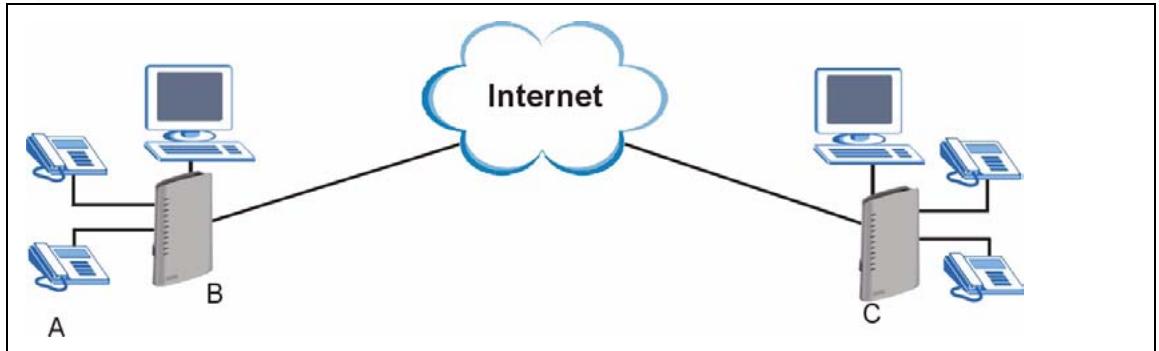
Figure 3 Peer-to-peer Calling
1.4.4 Firewall for Secure Broadband Internet Access
Your device provides protection from attacks by Internet hackers. By default, the firewall blocks all incoming traffic from the WAN. The firewall supports TCP/UDP inspection and DoS (Denial of Services) detection and prevention, as well as real time alerts, reports and logs.
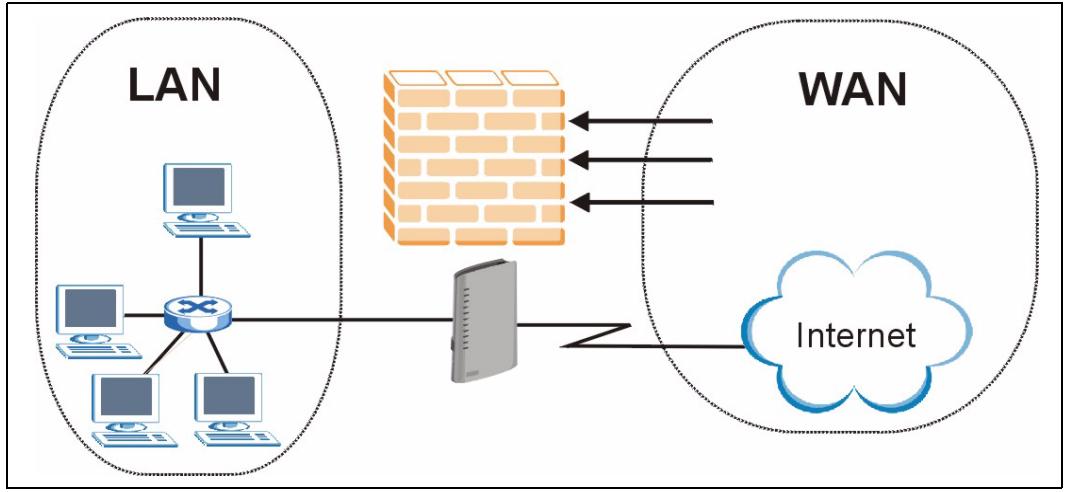
Figure 4 Firewall Application
1.4.5 LAN to LAN Application
You can use your device to connect two geographically dispersed networks over the ADSL line. A typical LAN-to-LAN application is shown as follows.
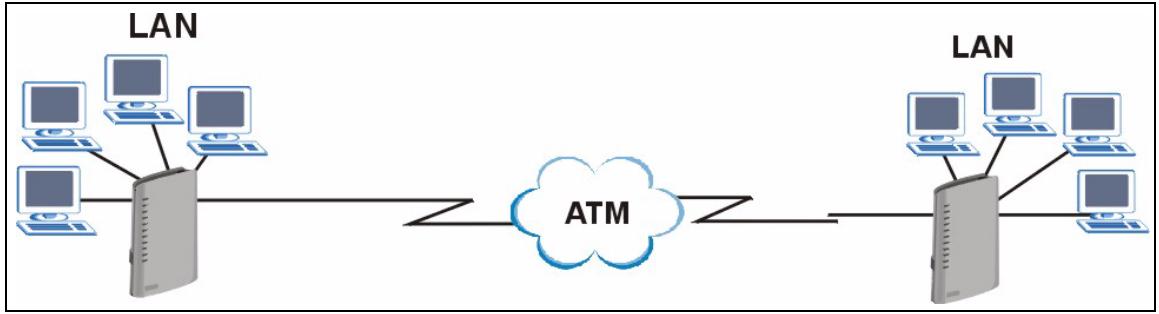
Figure 5 LAN-to-LAN Application
1.4.6 LEDs
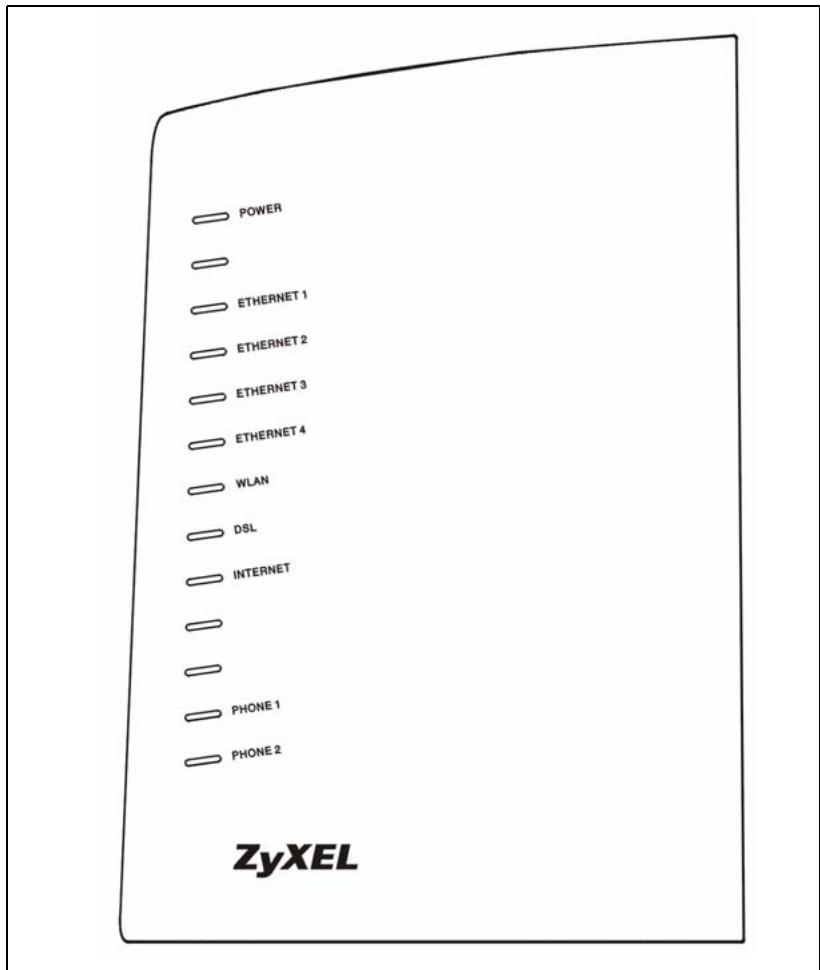
Figure 6 LEDs
The following table describes your device's LEDs.
Table 4 LEDs
| LED | COLOR | STATUS | DESCRIPTION |
| POWER | Green | On | Your device is receiving power and functioning properly. |
| Blinking | Your device is rebooting and performing a self-test. | ||
| Red | On | Your device is not ready or there is a malfunction. | |
| None | Off | Your device is not turned on. | |
| ETHERNET 1-4 | Green | On | Your device has a successful Ethernet connection. |
| Blinking | The ZyXEL Device is sending/receiving data. | ||
| None | Off | The Ethernet port is not connected. | |
| WLAN (“W” models only) | Green | On | Your device is ready, but is not sending/receiving data through the wireless LAN. |
| Blinking | Your device is sending/receiving data through the wireless LAN. | ||
| None | Off | The wireless LAN is not ready or has failed. | |
| DSL | Green | On | Your device has a DSL connection. |
| Blinking | Your device is initializing the DSL line. | ||
| None | Off | The DSL link is down. | |
| INTERNET | Green | On | Your device has an IP connection but no traffic. Your device has a WAN IP address (either static or assigned by a DHCP server), PPP negotiation was successfully completed (if used) and the DSL connection is up. |
| Blinking | Your device is sending or receiving IP traffic. | ||
| Red | On | Your device attempted to make an IP connection but failed. Possible causes are no response from a DHCP server, no PPPoE response, PPPoE authentication failed). | |
| None | Off | Your device does not have an IP connection | |
| PHONE 1, 2 | Green | On | A SIP account is registered for the phone port. |
| Blinking | A telephone connected to the phone port has its receiver off of the hook or there is an incoming call. | ||
| Orange | On | A SIP account is registered for the phone port and there is a voice message in the corresponding SIP account. | |
| Blinking | A telephone connected to the phone port has its receiver off of the hook and there is a voice message in the corresponding SIP account. | ||
| None | Off | The phone port does not have a SIP account registered. |
Refer to the Quick Start Guide for information on hardware connections.
CHAPTER 2 Introducing the Web Configurator
This chapter describes how to access and navigate the web configurator.
2.1 Web Configurator Overview
The web configurator is an HTML-based management interface that allows easy device setup and management via Internet browser. Use Internet Explorer 6.0 and later or Netscape Navigator 7.0 and later versions. The recommended screen resolution is 1024 by 768 pixels.
In order to use the web configurator you need to allow:
- Web browser pop-up windows from your device. Web pop-up blocking is enabled by default in Windows XP SP (Service Pack) 2.
- JavaScripts (enabled by default).
- Java permissions (enabled by default).
See Chapter 27 on page 319 if you need to make sure these functions are allowed in Internet Explorer.
2.1.1 Accessing the Web Configurator
1 Make sure your ZyXEL Device hardware is properly connected (refer to the Quick Start Guide).
2 Launch your web browser.
3 Type "192.168.1.1" as the URL.
4 A password screen displays. The default password ("1234") displays in non-readable characters. If you haven't changed the password yet, you can just click Login. Click Cancel to revert to the default password in the password field. If you have changed the password, enter your password and click Login.
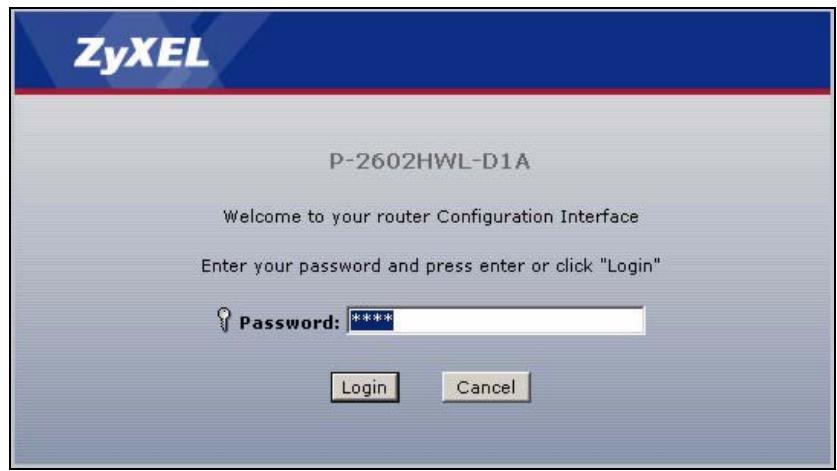
Figure 7 Password Screen
5 The following screen displays if you have not yet changed your password. It is highly recommended you change the default password. Enter a new password, retype it to confirm and click Apply; alternatively click Ignore to proceed to the main menu if you do not want to change the password now.
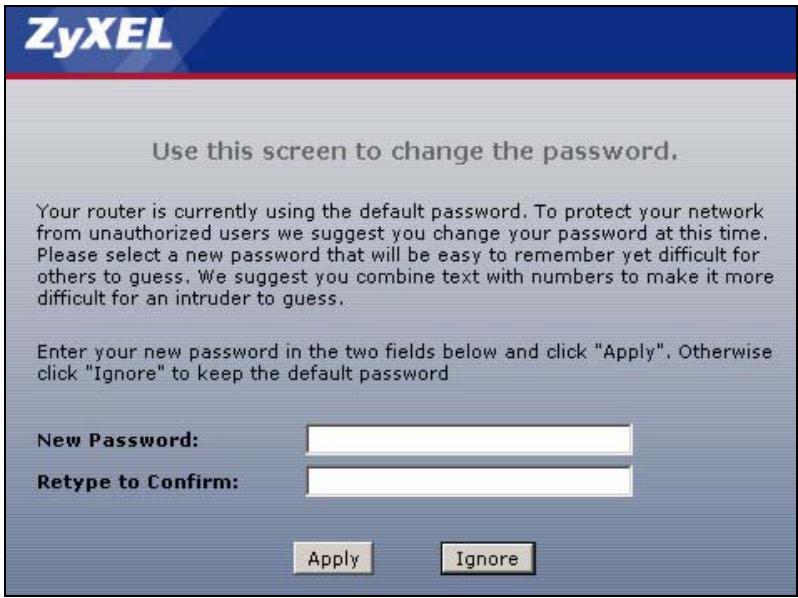
Figure 8 Change Password Screen
6 A screen displays to let you choose whether to go to the wizard or the advanced screens.
- Click Go to Wizard setup if you are logging in for the first time or if you want to make basic changes. The wizard selection screen appears after you click Apply. See Chapter 3 on page 57 for more information.
- Click Go to Advanced setup if you want to configure features that are not available in the wizards. Select the check box if you always want to go directly to the advanced screens. The main screen appears after you click Apply. See Section 2.2 on page 52 for more information.
- Click Exit if you want to log out.
Note: For security reasons, the ZyXEL Device automatically logs you out if you do not use the web configurator for five minutes. If this happens, log in again.
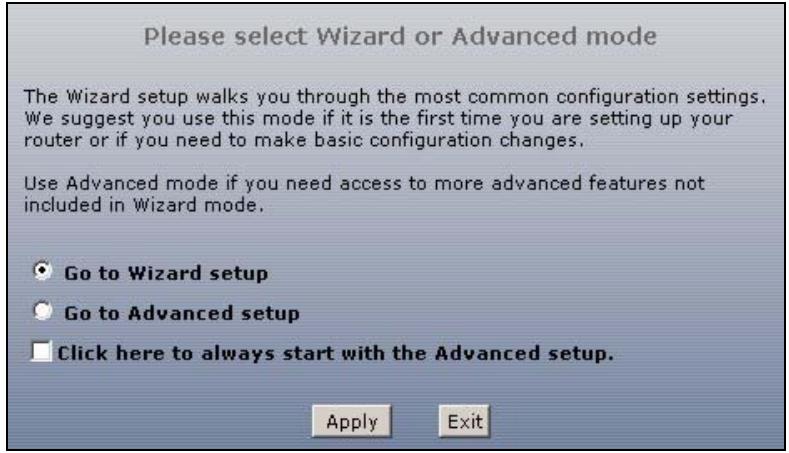
Figure 9 Wizard or Advanced Screen
2.1.2 The RESET Button
You can use the RESET button at the back of the device to turn the wireless LAN off or on. You can also use it to activate OTIST in order to assign your wireless security settings to wireless clients. If you forget your password or cannot access the web configurator, you will need to use the RESET button to reload the factory-default configuration file. This means that you will lose all configurations that you had previously and the password will be reset to "1234". You can also use the
2.1.2.1 Using The Reset Button
1 Make sure the POWER LED is on (not blinking).
2 Do one of the following.
To turn the wireless LAN off or on, press the RESET button for one second and release it. The WLAN LED should change from on to off or vice versa. ("W" models only)
To activate OTIST in order to assign your wireless security settings to wireless clients, press the RESET button for five seconds and release it. The WLAN LED should flash while the device uses OTIST to send wireless settings to OTIST clients. ("W" models only)
To set the device back to the factory default settings, press the RESET button for ten seconds or until the POWER LED begins to blink and then release it. When the POWER LED begins to blink, the defaults have been restored and the device restarts.
2.2 Web Configurator Main Screen
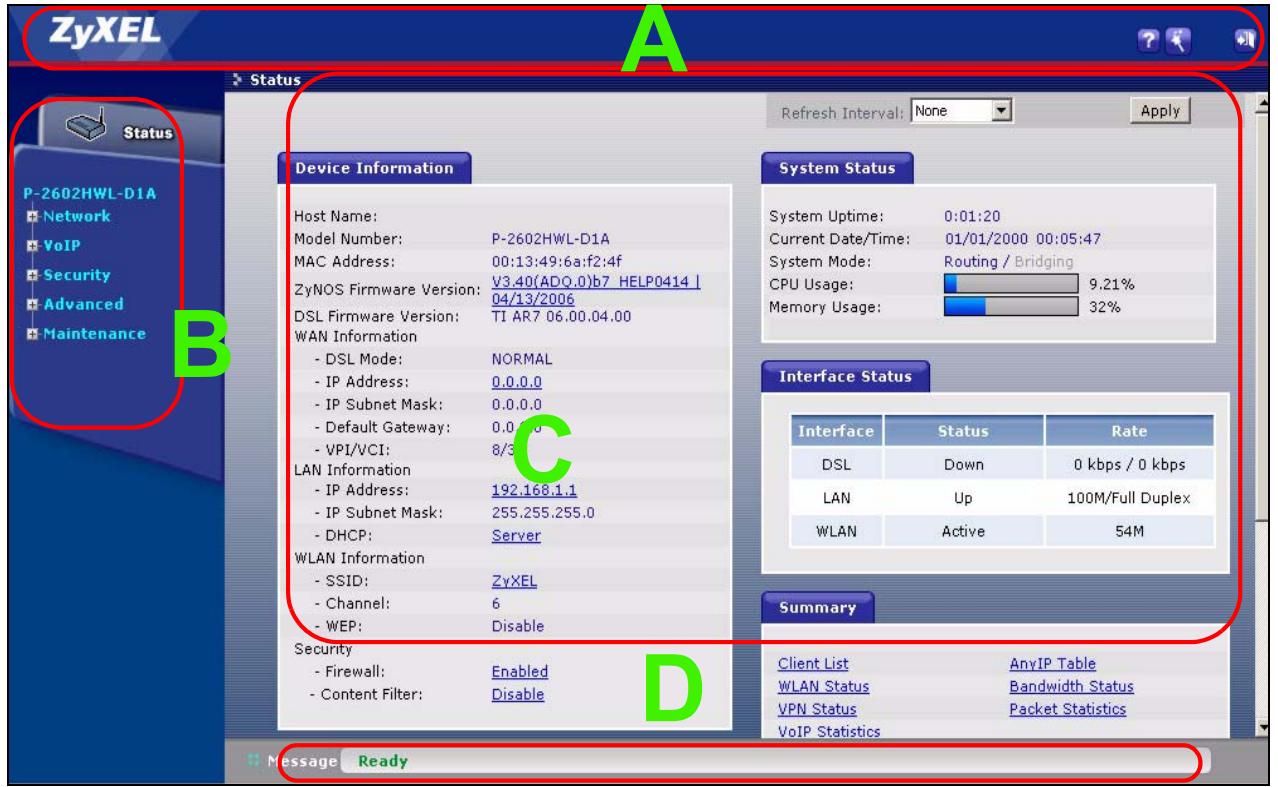
Figure 10 Main Screen
As illustrated above, the main screen is divided into these parts:
A - title bar
- B - navigation panel
C - main window
- D - status bar
2.2.1 Title Bar
The title bar allows you to change the language and provides some icons in the upper right corner.
The icons provide the following functions.
Table 5 Web Configurator Icons in the Title Bar
| ICON | DESCRIPTION |
| Help: Click this icon to open up help screens. | |
| Wizards: Click this icon to go to the configuration wizards. See Chapter 3 on page 57 for more information. | |
| Logout: Click this icon to log out of the web configurator. |
2.2.2 Navigation Panel
Use the menu items on the navigation panel to open screens to configure ZyXEL Device features. The following tables describe each menu item.
Table 6 Navigation Panel Summary
| LINK | TAB | FUNCTION |
| Status | This screen contains administrative and system-related information. | |
| Network | ||
| WAN | Internet Connection | Use this screen to configure ISP parameters, WAN IP address assignment, DNS servers and other advanced properties. |
| LAN | IP | Use this screen to configure LAN TCP/IP settings, enable Any IP and other advanced properties. |
| DHCP Setup | Use this screen to configure LAN DHCP settings. | |
| Client List | Use this screen to view current DHCP client information and to always assign specific IP addresses to individual MAC addresses (and host names). | |
| IP Alias | Use this screen to partition your LAN interface into subnets. | |
| Wireless LAN (“W” models only) | General | Use this screen to configure the wireless LAN settings and WLAN authentication/security settings. |
| OTIST | Use this screen to assign your wireless security settings to wireless clients. | |
| MAC Filter | Use this screen to configure the ZyXEL Device to give exclusive access to specific wireless clients or exclude specific wireless clients from accessing the ZyXEL Device. | |
| QoS | WMM QoS allows you to prioritize wireless traffic according to the delivery requirements of individual services. | |
| Local User Database | Use this screen to set up built-in user profiles for wireless station authentication. | |
| NAT | General | Use this screen to enable NAT. |
| Port Forwarding | Use this screen to make your local servers visible to the outside world. | |
| Address Mapping | Use this screen to configure network address translation mapping rules. | |
| VoIP | ||
| SIP | SIP Settings | Use this screen to configure your ZyXEL Device’s Voice over IP settings. |
| QoS | Use this screen to configure your ZyXEL Device’s Quality of Service settings for VoIP. |
Table 6 Navigation Panel Summary
| LINK | TAB | FUNCTION |
| Phone | Analog Phone | Use this screen to set which phone ports use which SIP accounts. |
| Common | Use this screen to configure general phone port settings. | |
| Region | Use this screen to select your location and call service mode. | |
| Phone Book | Incoming Call Policy | Use this screen to configure call-forwarding. |
| Speed Dial | Use this screen to configure speed dial for SIP phone numbers that you call often. | |
| PSTN Line ("L" models only) | General | Use this screen to configure your ZyXEL Device's settings for PSTN calls. |
| Security | ||
| Firewall | General | Use this screen to activate/deactivate the firewall and the default action to take on network traffic going in specific directions. |
| Rules | This screen shows a summary of the firewall rules, and allows you to edit/ add a firewall rule. | |
| Anti Probing | Use this screen to set whether or not your device will respond to pings and probes for services that you have not made available. | |
| Threshold | Use this screen to configure the thresholds for determining when to drop sessions that do not become fully established. | |
| Content Filter | Keyword | Use this screen to block access to web sites containing certain keywords in the URL. |
| Schedule | Use this screen to set the days and times for your device to perform content filtering. | |
| Trusted | Use this screen to exclude a range of users on the LAN from content filtering. | |
| VPN | Setup | Use this screen to configure each VPN tunnel. |
| Monitor | Use this screen to look at the current status of each VPN tunnel. | |
| VPN Global Setting | Use this screen to allow NetBIOS traffic through VPN tunnels. | |
| Advanced | ||
| Static Route | IP Static Route | Use this screen to configure IP static routes to tell your device about networks beyond the directly connected remote nodes. |
| Bandwidth MGMT | Summary | Use this screen to configure bandwidth management on an interface. |
| Rule Setup | Use this screen to define a bandwidth rule. | |
| Monitor | Use this screen to view the ZyXEL Device's bandwidth usage and allotments. | |
| Dynamic DNS | This screen allows you to use a static hostname alias for a dynamic IP address. |
Table 6 Navigation Panel Summary
| LINK | TAB | FUNCTION |
| Remote MGMT | WWW | Use this screen to configure through which interface(s) and from which IP address(es) users can use HTTP to manage the ZyXEL Device. |
| Telnet | Use this screen to configure through which interface(s) and from which IP address(es) users can use Telnet to manage the ZyXEL Device. | |
| FTP | Use this screen to configure through which interface(s) and from which IP address(es) users can use FTP to access the ZyXEL Device. | |
| SNMP | Use this screen to configure your ZyXEL Device's settings for Simple Network Management Protocol management. | |
| DNS | Use this screen to configure through which interface(s) and from which IP address(es) users can send DNS queries to the ZyXEL Device. | |
| ICMP | Use this screen to set whether or not your device will respond to pings and probes for services that you have not made available. | |
| UPnP | General | Use this screen to turn UPnP on or off. |
| Maintenance | ||
| System | General | Use this screen to configure your device's name, domain name, management inactivity timeout and password. |
| Time Setting | Use this screen to change your ZyXEL Device's time and date. | |
| Logs | View Log | Use this screen to display your device's logs. |
| Log Settings | Use this screen to select which logs and/or immediate alerts your device is to record. You can also set it to e-mail the logs to you. | |
| Tools | Firmware | Use this screen to upload firmware to your device. |
| Configuration | Use this screen to backup and restore your device's configuration (settings) or reset the factory default settings. | |
| Restart | This screen allows you to reboot the ZyXEL Device without turning the power off. | |
| Diagnostic | General | Use this screen to test the connections to other devices. |
| DSL Line | These screen displays information to help you identify problems with the DSL connection. |
2.2.3 Main Window
The main window displays information and configuration fields. It is discussed in the rest of this document.
Right after you log in, the Status screen is displayed. See Chapter 6 on page 83 for more information about the Status screen.
2.2.4 Status Bar
Check the status bar when you click Apply or OK to verify that the configuration has been updated.
CHAPTER 3
Internet and Wireless Setup Wizard
This chapter provides information on the Wizard Setup screens for Internet access in the web configurator.
3.1 Introduction
Use the wizard setup screens to configure your system for Internet access with the information given to you by your ISP.
Note: See the advanced menu chapters for background information on these fields.
3.2 Internet Access Wizard Setup
1 After you enter the password to access the web configurator, select Go to Wizard setup and click Apply. Otherwise, click the wizard icon ( ) in the top right corner of the web configurator to go to the wizards.
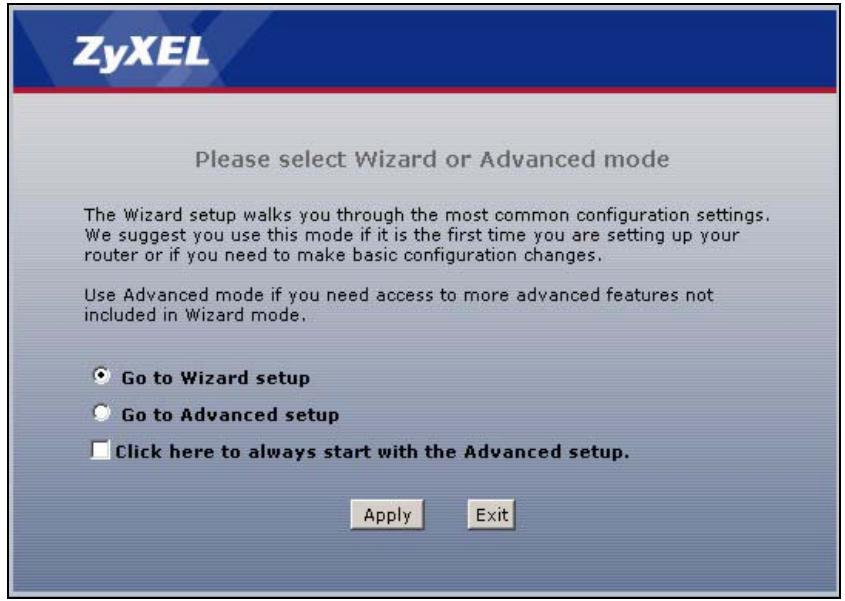
Figure 11 Select a Mode
2 Click INTERNET/WIRELESS SETUP to configure the system for Internet access and wireless connection.
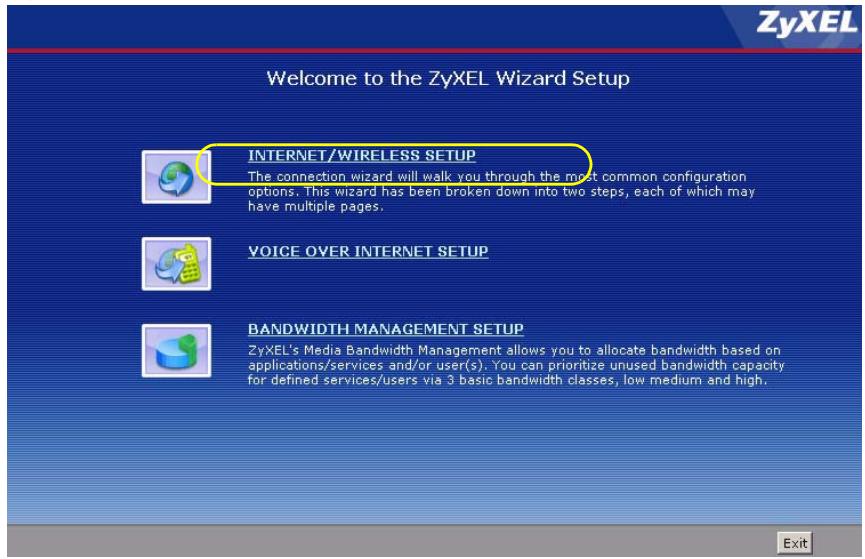
Figure 12 Wizard Welcome
3 Your ZyXEL device attempts to detect your DSL connection and your connection type.
a The following screen appears if a connection is not detected. Check your hardware connections and click Restart the Internet/Wireless Setup Wizard to return to the wizard welcome screen. If you still cannot connect, click Manually configure your Internet connection. Follow the directions in the wizard and enter your Internet setup information as provided to you by your ISP. See Section 3.2.1 on page 59 for more details. If you would like to skip your Internet setup and configure the wireless LAN settings, leave Yes selected and click Next.
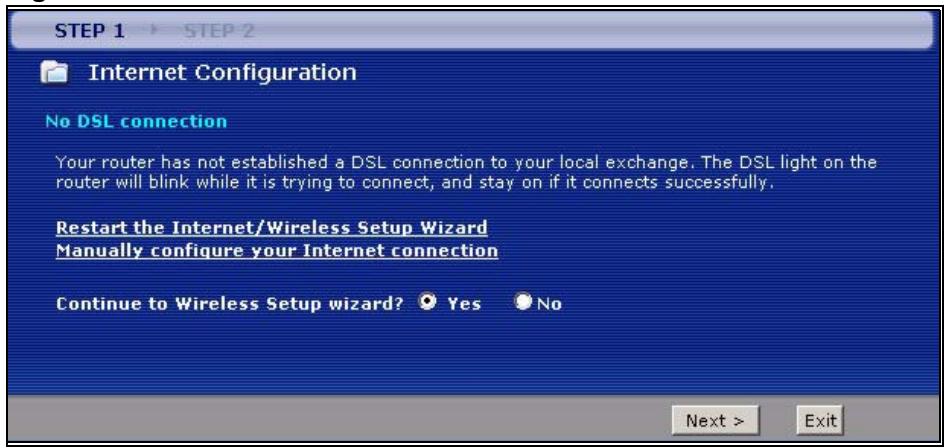
Figure 13 Auto Detection: No DSL Connection
b The following screen displays if a PPPoE or PPPoA connection is detected. Enter your Internet account information (username, password and/or service name) exactly as provided by your ISP. Then click Next and see Section 3.3 on page 65 for wireless connection wizard setup.
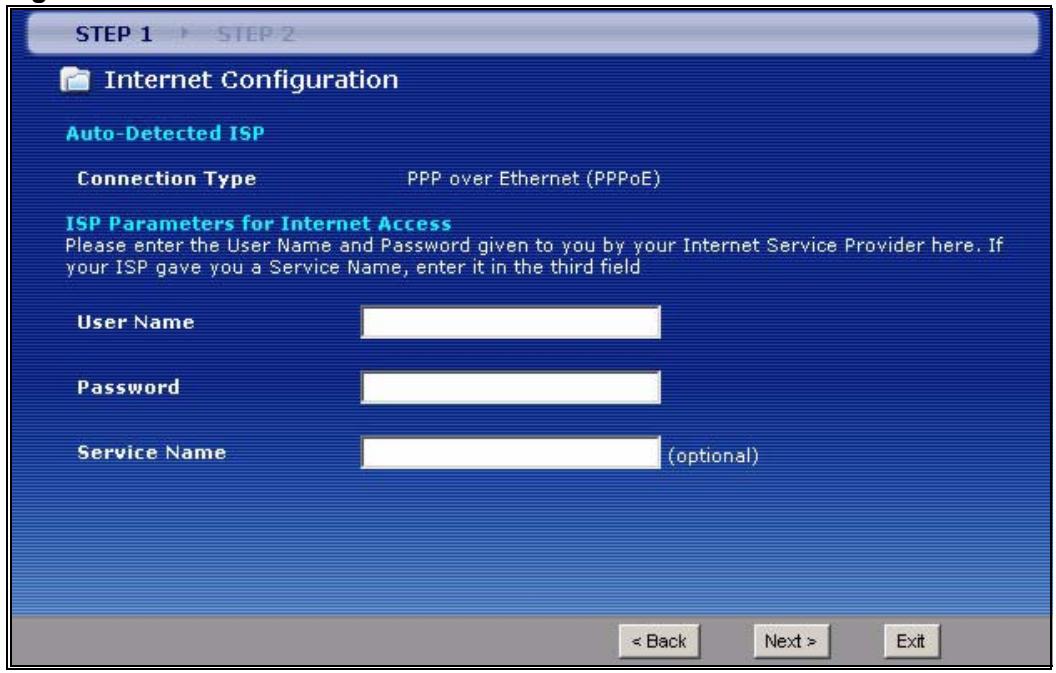
Figure 14 Auto-Detection: PPPoE
c The following screen appears if the ZyXEL device detects a connection but not the connection type. Click Next and refer to Section 3.2.1 on page 59 on how to manually configure the ZyXEL Device for Internet access.
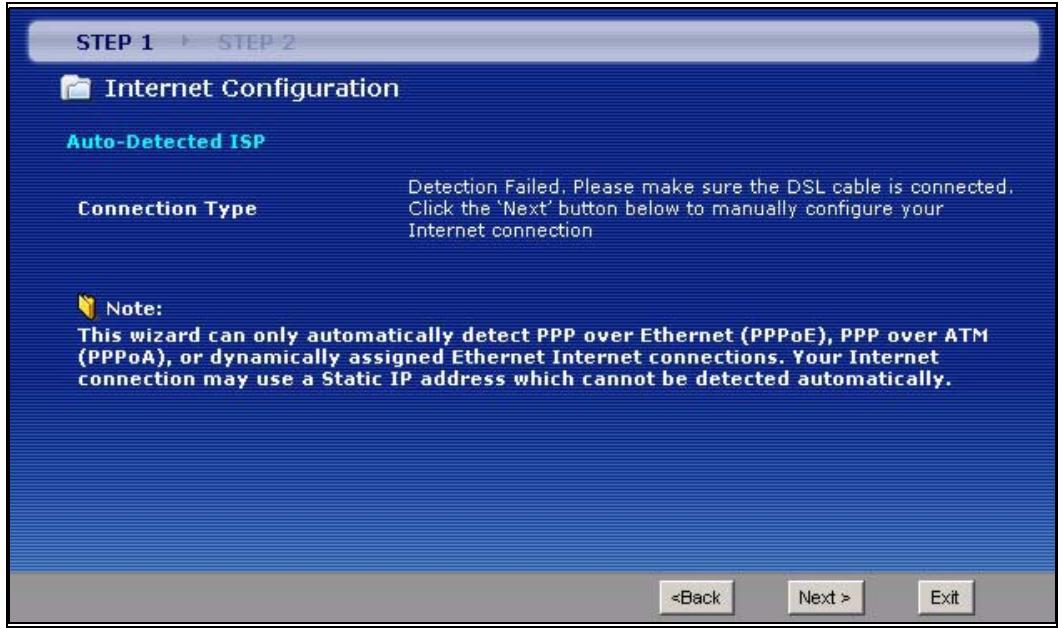
Figure 15 Auto Detection: Failed
3.2.1 Manual Configuration
1 If the ZyXEL Device fails to detect your DSL connection type but the physical line is connected, enter your Internet access information in the wizard screen exactly as your
SIP provider gave it to you. Leave the defaults in any fields for which you were not given information.
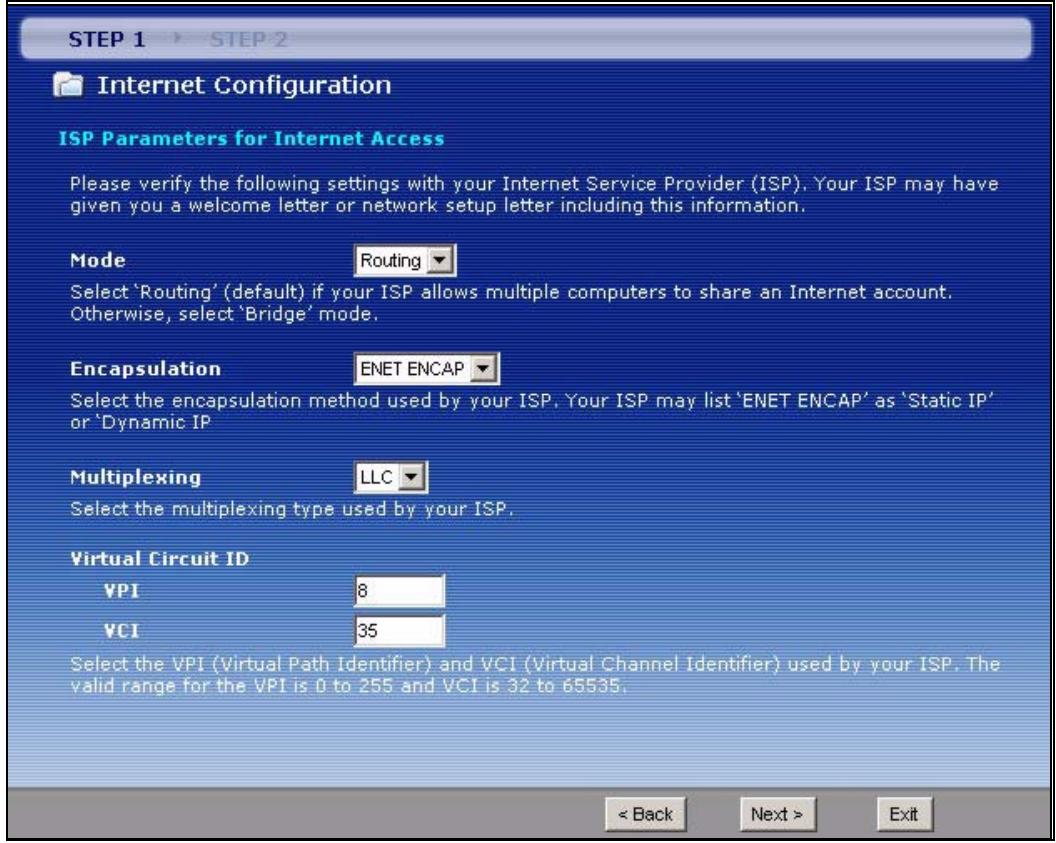
Figure 16 Internet Access Wizard Setup: ISP Parameters
The following table describes the fields in this screen.
Table 7 Internet Access Wizard Setup: ISP Parameters
| LABEL | DESCRIPTION |
| Mode | From the Mode drop-down list box, select Routing (default) if your ISP allows multiple computers to share an Internet account. Otherwise select Bridge. |
| Encapsulation | Select the encapsulation type your ISP uses from the Encapsulation drop-down list box. Choices vary depending on what you select in the Mode field. If you select Bridge in the Mode field, select either PPPoA or RFC 1483. If you select Routing in the Mode field, select PPPoA, RFC 1483, ENET ENCAP or PPPoE. |
| Multiplexing | Select the multiplexing method used by your ISP from the Multiplex drop-down list box either VC-based or LLC-based. |
| Virtual Circuit ID | VPI (Virtual Path Identifier) and VCI (Virtual Channel Identifier) define a virtual circuit. Refer to the appendix for more information. |
| VPI | Enter the VPI assigned to you. This field may already be configured. |
| VCI | Enter the VCI assigned to you. This field may already be configured. |
| Back | Click Back to go back to the previous screen. |
Table 7 Internet Access Wizard Setup: ISP Parameters
| LABEL | DESCRIPTION |
| Next | Click Next to continue to the next wizard screen. The next wizard screen you see depends on what protocol you chose above. |
| Exit | Click Exit to close the wizard screen without saving your changes. |
2 The next wizard screen varies depending on what mode and encapsulation type you use. All screens shown are with routing mode. Configure the fields and click Next to continue. See Section 3.3 on page 65 for wireless connection wizard setup
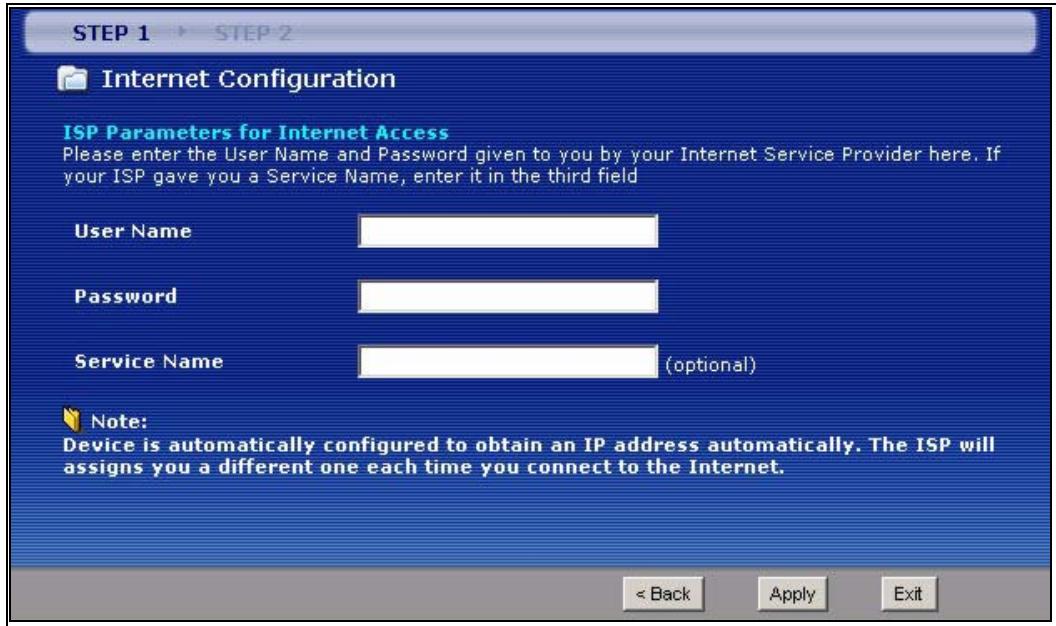
Figure 17 Internet Connection with PPPoE
The following table describes the fields in this screen.
Table 8 Internet Connection with PPPoE
| LABEL | DESCRIPTION |
| User Name | Enter the user name exactly as your ISP assigned. If assigned a name in the form user@domain where domain identifies a service name, then enter both components exactly as given. |
| Password | Enter the password associated with the user name above. |
| Service Name | Type the name of your PPPoE service here. |
| Back | Click Back to go back to the previous wizard screen. |
| Apply | Click Apply to save your changes back to the ZyXEL Device. |
| Exit | Click Exit to close the wizard screen without saving your changes. |
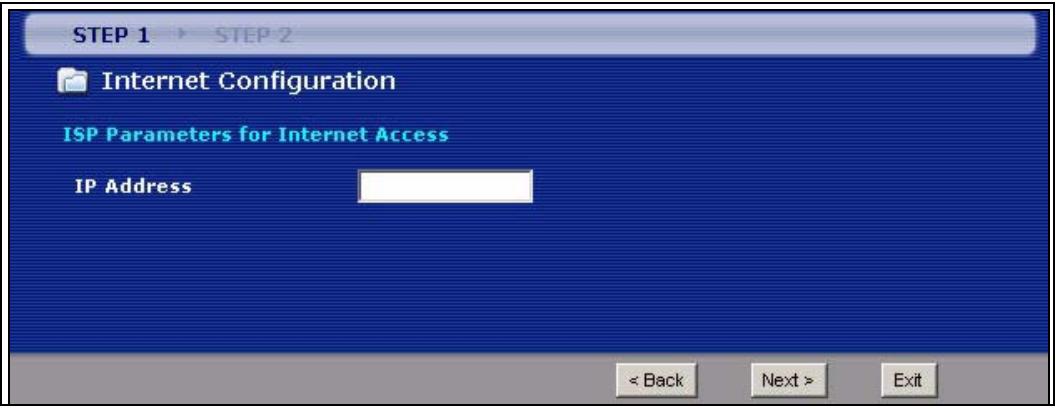
Figure 18 Internet Connection with RFC 1483
The following table describes the fields in this screen.
Table 9 Internet Connection with RFC 1483
| LABEL | DESCRIPTION |
| IP Address | This field is available if you select Routing in the Mode field. Type your ISP assigned IP address in this field. |
| Back | Click Back to go back to the previous wizard screen. |
| Next | Click Next to continue to the next wizard screen. |
| Exit | Click Exit to close the wizard screen without saving your changes. |
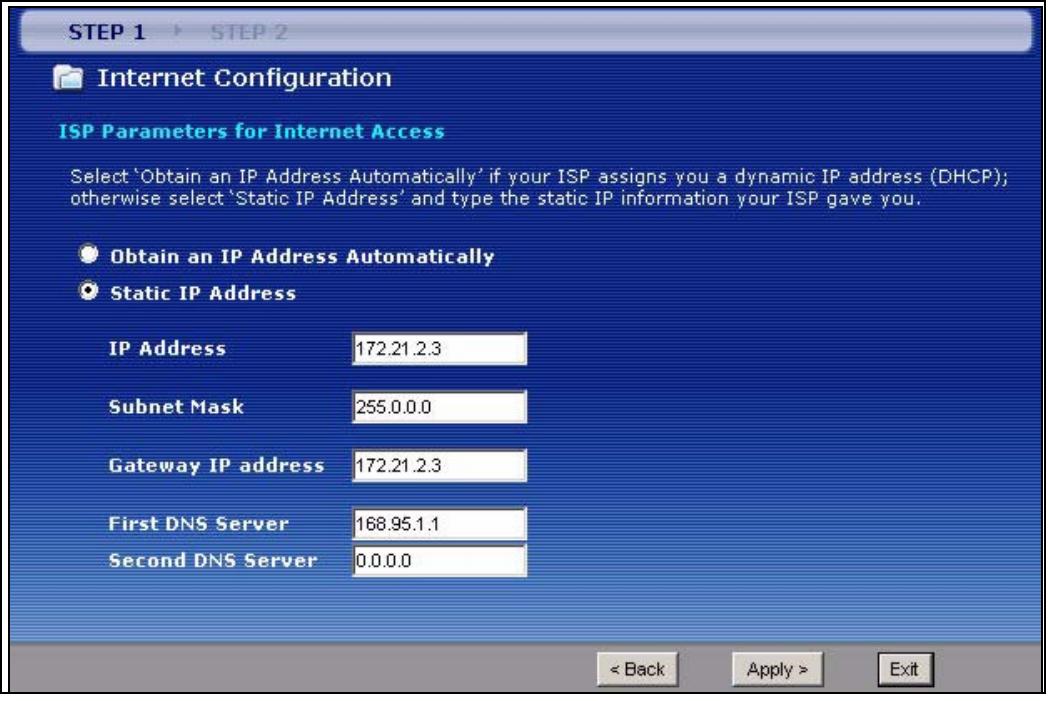
Figure 19 Internet Connection with ENET ENCAP
The following table describes the fields in this screen.
Table 10 Internet Connection with ENET ENCAP
| LABEL | DESCRIPTION |
| Obtain an IP Address Automatically | A static IP address is a fixed IP that your ISP gives you. A dynamic IP address is not fixed; the ISP assigns you a different one each time you connect to the Internet. Select Obtain an IP Address Automatically if you have a dynamic IP address. |
| Static IP Address | Select Static IP Address if your ISP gave you an IP address to use. |
| IP Address | Enter your ISP assigned IP address. |
| Subnet Mask | Enter a subnet mask in dotted decimal notation.Refer to the appendix to calculate a subnet mask If you are implementing subnetting. |
| Gateway IP address | You must specify a gateway IP address (supplied by your ISP) when you use ENET ENCAP in the Encapsulation field in the previous screen. |
| First DNS Server | Enter the IP addresses of the DNS servers. The DNS servers are passed to the DHCP clients along with the IP address and the subnet mask. |
| Second DNS Server | As above. |
| Back | Click Back to go back to the previous wizard screen. |
| Apply | Click Apply to save your changes back to the ZyXEL Device. |
| Exit | Click Exit to close the wizard screen without saving your changes. |
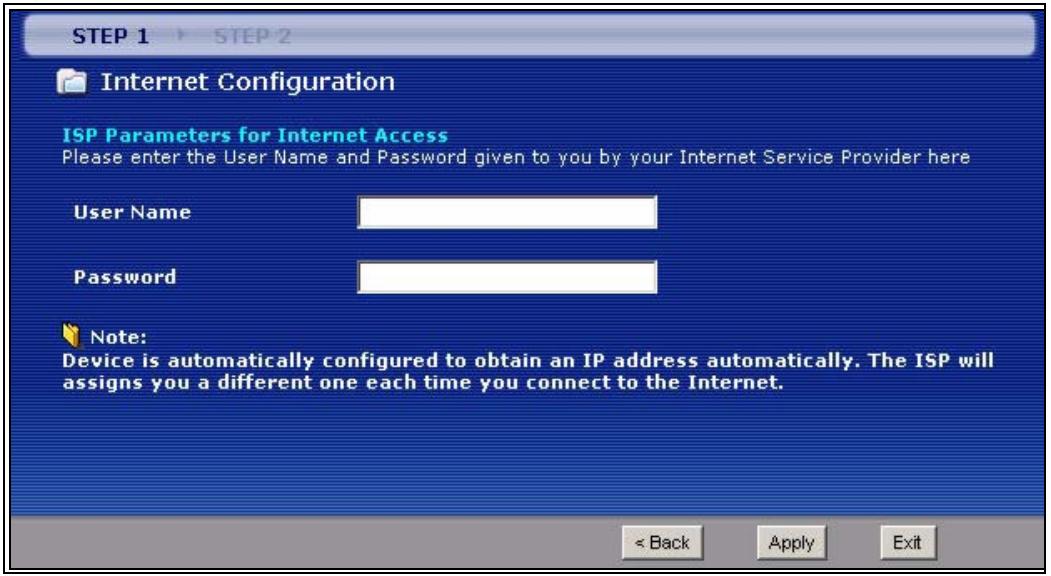
Figure 20 Internet Connection with PPPoA
The following table describes the fields in this screen.
Table 11 Internet Connection with PPPoA
| LABEL | DESCRIPTION |
| User Name | Enter the login name that your ISP gives you. |
| Password | Enter the password associated with the user name above. |
| Back | Click Back to go back to the previous wizard screen. |
| Apply | Click Apply to save your changes back to the ZyXEL Device. |
| Exit | Click Exit to close the wizard screen without saving your changes. |
- If the user name and/or password you entered for PPPoE or PPPoA connection are not correct, the screen displays as shown next. Click Back toUsername and Password setup to go back to the screen where you can modify them.
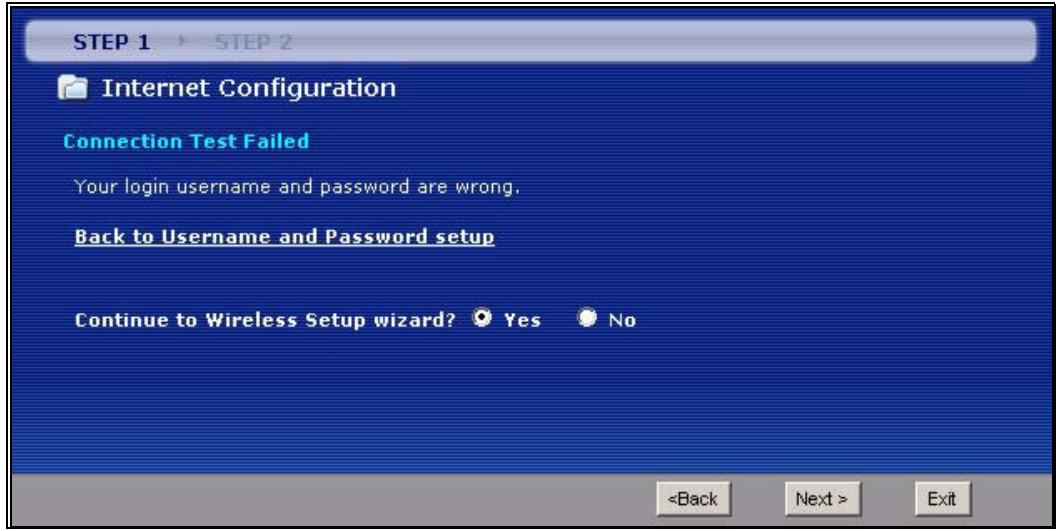
Figure 21 Connection Test Failed-1
- If the following screen displays, check if your account is activated or click Restart the Internet/Wireless Setup Wizard to verify your Internet access settings.
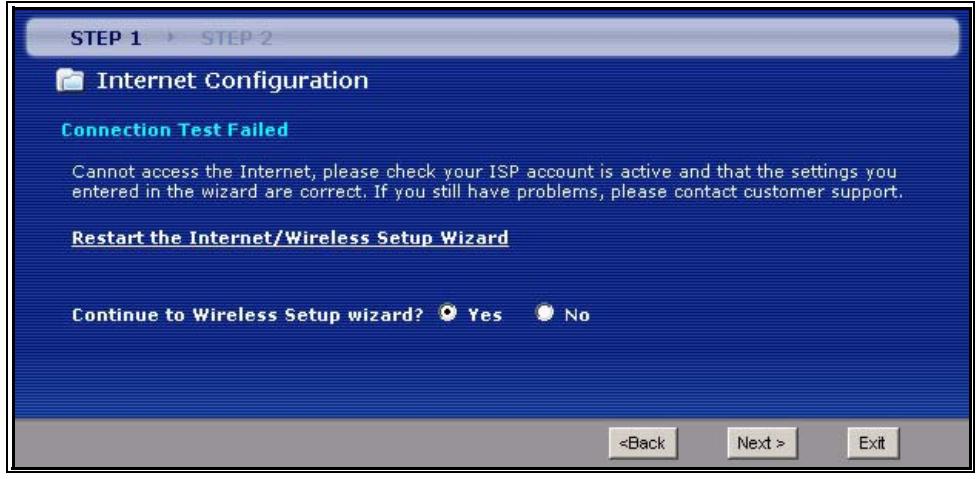
Figure 22 Connection Test Failed-2.
3.3 Wireless Connection Wizard Setup
After you configure the Internet access information, use the following screens to set up your wireless LAN.
1 Select Yes and click Next to configure wireless settings. Otherwise, select No and skip to Step 6.
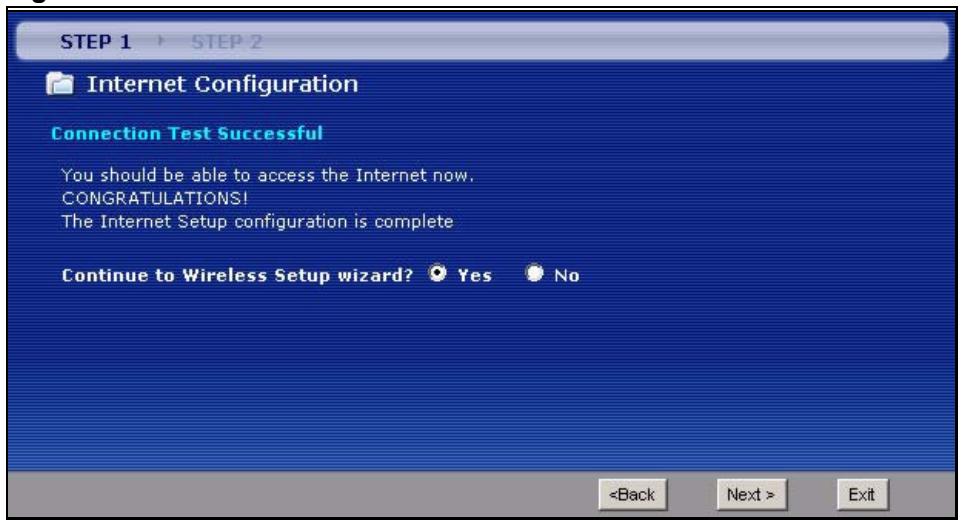
Figure 23 Connection Test Successful
2 Use this screen to activate the wireless LAN and OTIST. Click Next to continue.
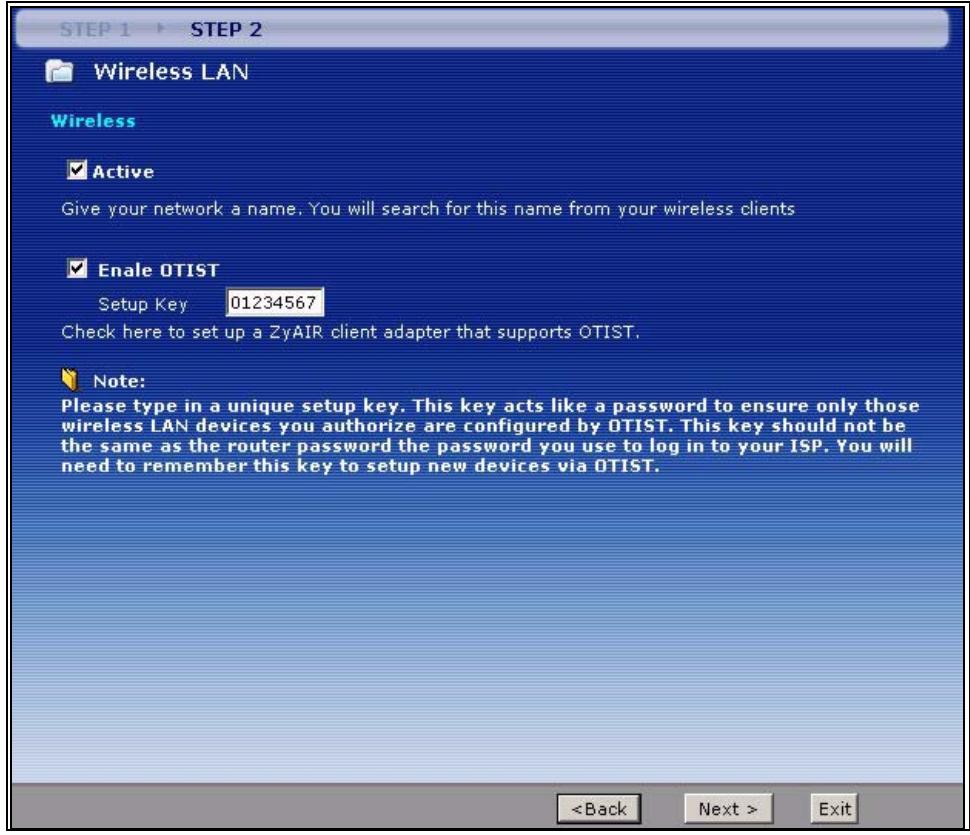
Figure 24 Wireless LAN Setup Wizard 1
The following table describes the labels in this screen.
Table 12 Wireless LAN Setup Wizard 1
| LABEL | DESCRIPTION |
| Active | Select the check box to turn on the wireless LAN. |
| Enable OTIST | Select the check box to enable OTIST if you want to transfer your ZyXEL Device's SSID and WEP or WPA-PSK security settings to wireless clients that support OTIST and are within transmission range. You must also activate and start OTIST on the wireless client at the same time. The process takes three minutes to complete. |
| Setup Key | Type an OTIST Setup Key of up to eight ASCII characters in length. Be sure to use the same OTIST Setup Key on the ZyXEL Device and wireless clients. |
| Back | Click Back to display the previous screen. |
| Next | Click Next to proceed to the next screen. |
| Exit | Click Exit to close the wizard screen without saving. |
3 Configure your wireless settings in this screen. Click Next.
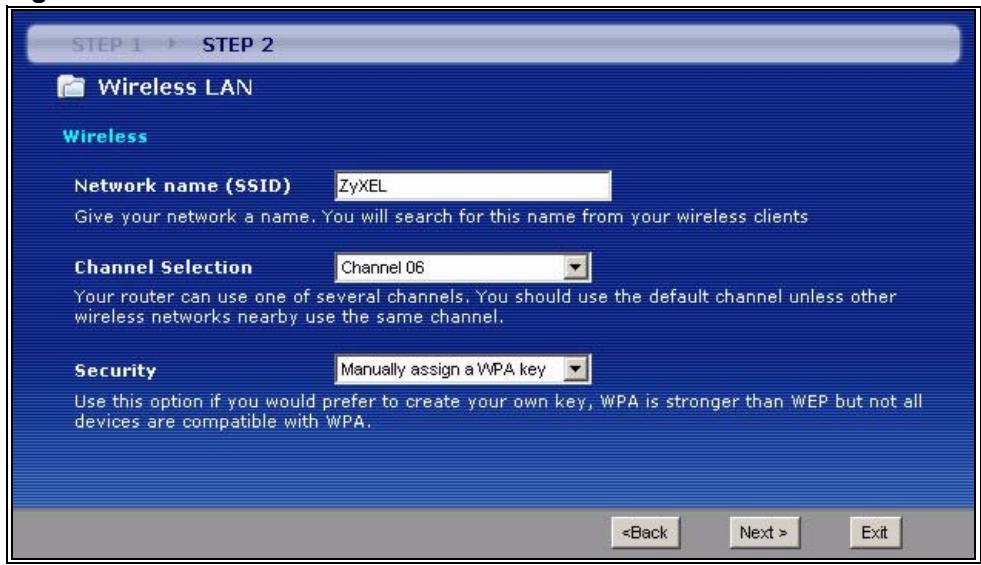
Figure 25 Wireless LAN
The following table describes the labels in this screen.
Table 13 Wireless LAN Setup Wizard 2
| LABEL | DESCRIPTION |
| Network Name(SSID) | Enter a descriptive name (up to 32 printable 7-bit ASCII characters) for the wireless LAN. If you change this field on the ZyXEL Device, make sure all wireless stations use the same SSID in order to access the network. |
| Channel Selection | The range of radio frequencies used by IEEE 802.11b/g wireless devices is called a channel. Select a channel ID that is not already in use by a neighboring device. |
Table 13 Wireless LAN Setup Wizard 2
| LABEL | DESCRIPTION |
| Security | Select Automatically assign a WPA key (only available if you enable OTIST) if you want OTIST to configure a WPA key for you. Select Manually assign a WPA-PSK key to configure a Pre-Shared Key (WPA-PSK). Choose this option only if your wireless clients support WPA. See Section 3.3.1 on page 67 for more information. Select Manually assign a WEP key to configure a WEP Key. See Section 3.3.2 on page 68 for more information. Select Disable wireless security to have no wireless LAN security configured and your network is accessible to any wireless networking device that is within range. |
| Back | Click Back to display the previous screen. |
| Next | Click Next to proceed to the next screen. |
| Exit | Click Exit to close the wizard screen without saving. |
Note: The wireless stations and ZyXEL Device must use the same SSID, channel ID and WEP encryption key (if WEP is enabled), WPA-PSK (if WPA-PSK is enabled) for wireless communication.
4 This screen varies depending on the security mode you selected in the previous screen. Fill in the field (if available) and click Next.
3.3.1 Manually Assign a WPA key
Choose Manually assign a WPA key in the Wireless LAN setup screen to set up a Pre-Shared Key.
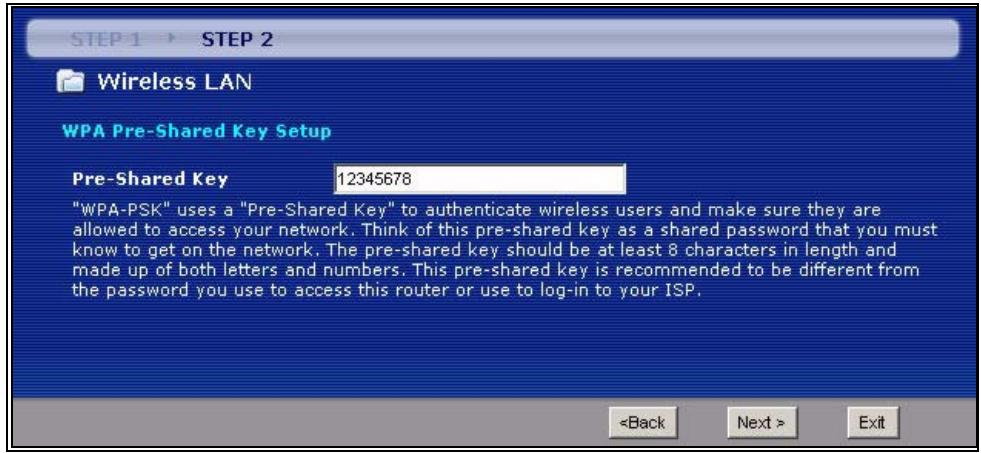
Figure 26 Manually Assign a WPA key
The following table describes the labels in this screen.
Table 14 Manually Assign a WPA key
| LABEL | DESCRIPTION |
| Pre-Shared Key | Type from 8 to 63 case-sensitive ASCII characters. You can set up the most secure wireless connection by configuring WPA in the wireless LAN screens. You need to configure an authentication server to do this. |
| Back | Click Back to display the previous screen. |
| Next | Click Next to proceed to the next screen. |
| Exit | Click Exit to close the wizard screen without saving. |
3.3.2 Manually Assign a WEP key
Choose Manually assign a WEP key to setup WEP Encryption parameters.
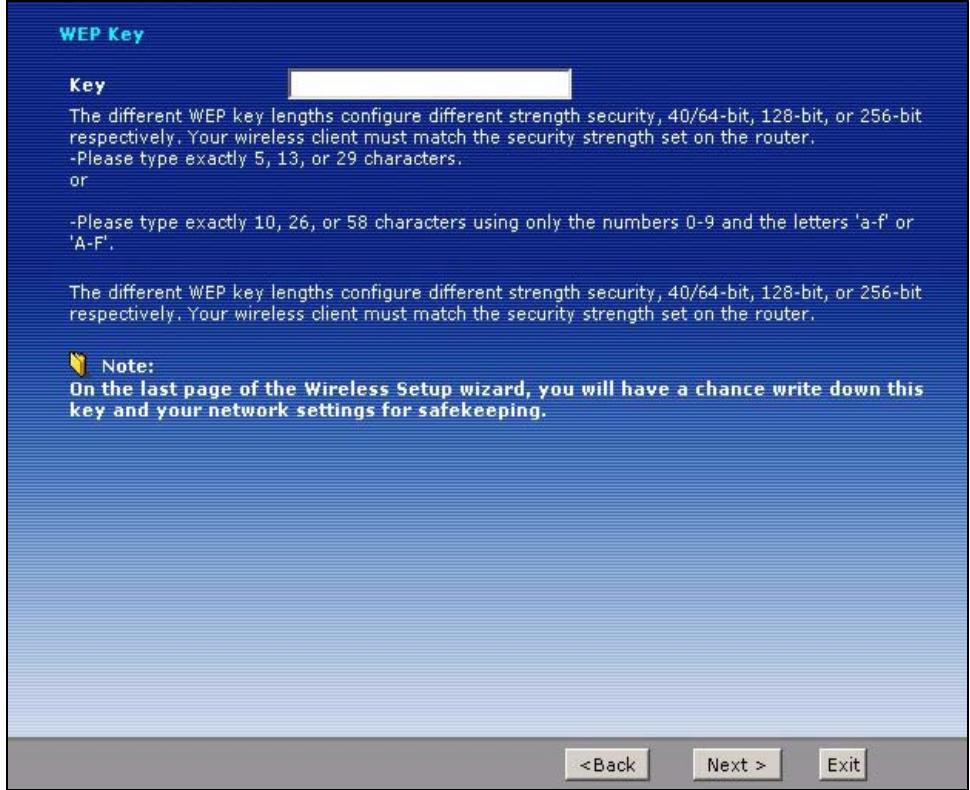
Figure 27 Manually Assign a WEP key
The following table describes the labels in this screen.
Table 15 Manually Assign a WEP key
| LABEL | DESCRIPTION |
| Key | The WEP keys are used to encrypt data. Both the ZyXEL Device and the wireless stations must use the same WEP key for data transmission. Enter any 5, 13 or 29 ASCII characters or 10, 26 or 58 hexadecimal characters ("0-9", "A-F") for a 64-bit, 128-bit or 256-bit WEP key respectively. |
| Back | Click Back to display the previous screen. |
| Next | Click Next to proceed to the next screen. |
| Exit | Click Exit to close the wizard screen without saving. |
5 Click Apply to save your wireless LAN settings.
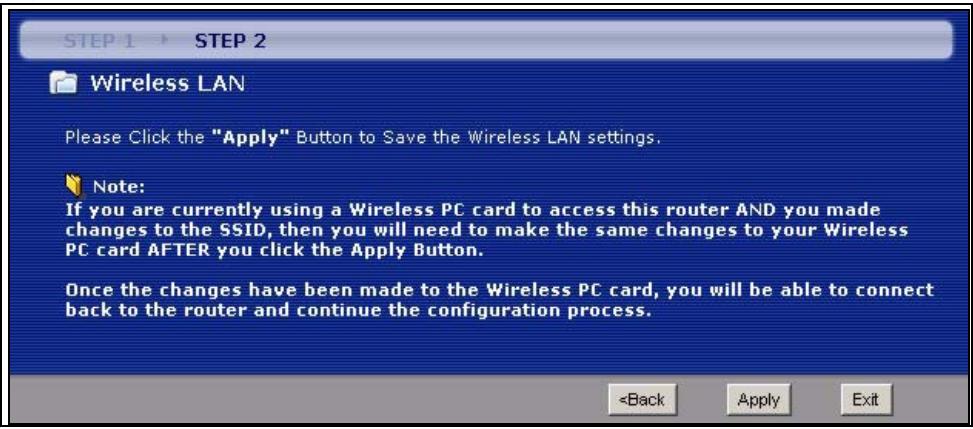
Figure 28 Wireless LAN Setup 3
6 Use the read-only summary table to check whether what you have configured is correct. Click Finish to complete and save the wizard setup.
Note: No wireless LAN settings display if you chose not to configure wireless LAN settings.
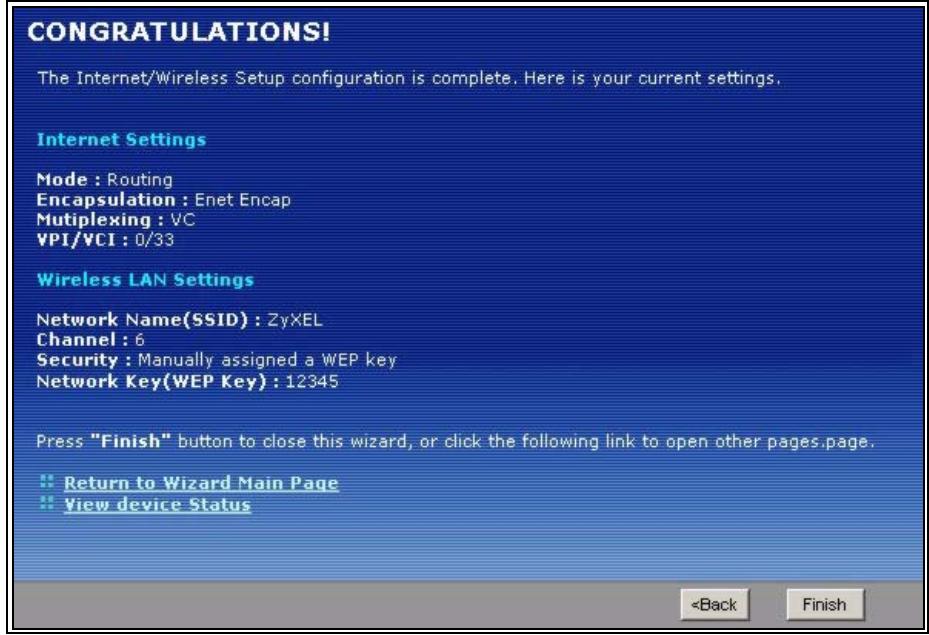
Figure 29 Internet Access and WLAN Wizard Setup Complete
7 Launch your web browser and navigate to www.zyxel.com. Internet access is just the beginning. Refer to the rest of this guide for more detailed information on the complete range of ZyxEL Device features. If you cannot access the Internet, open the web configurator again to confirm that the Internet settings you configured in the wizard setup are correct.
CHAPTER 4
VoIP Wizard And Example
This chapter shows you how to configure your SIP account(s) and make a VoIP phone call.
4.1 Introduction
The ZyXEL Device has Voice over IP (VoIP) communication capabilities that allow you to use a traditional analog telephone to make Internet calls. You can configure the ZyXEL Device to use up to two SIP based VoIP accounts.
This section describes how you can set up your ZyXEL Device to call someone who is also using a VoIP device. Make sure your telephone is connected to the Phone 1 port before you start with our example.
In the following figure, A represents your phone and B represents the phone of the person you would like to call.
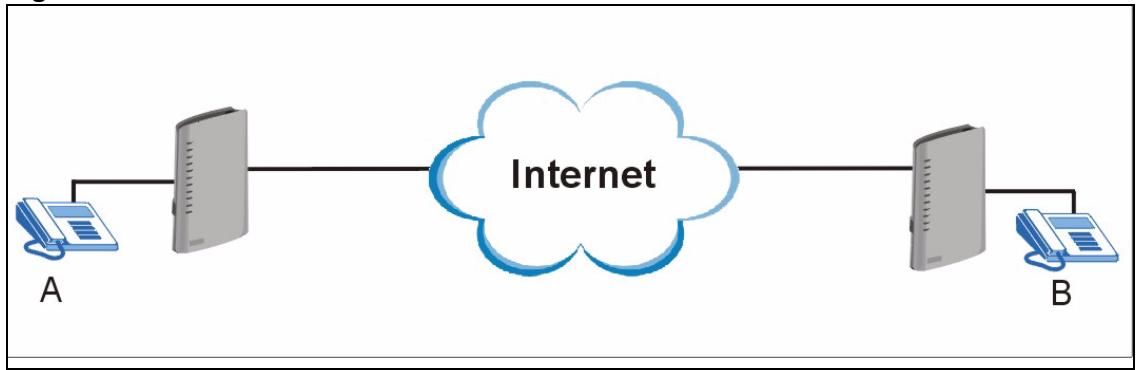
Figure 30 VoIP Phone Calls
In order to make VoIP calls you need to register at least one SIP account on your ZyXEL Device. You can register your SIP account in the VOICE OVER INTERNET SETUP wizard.
4.2 VoIP Wizard Setup
1 After you enter the password to access the web configurator, select Go to Wizard setup and click Apply. Otherwise, click the wizard icon ( ) in the top right corner of the web configurator to display the wizard main screen.
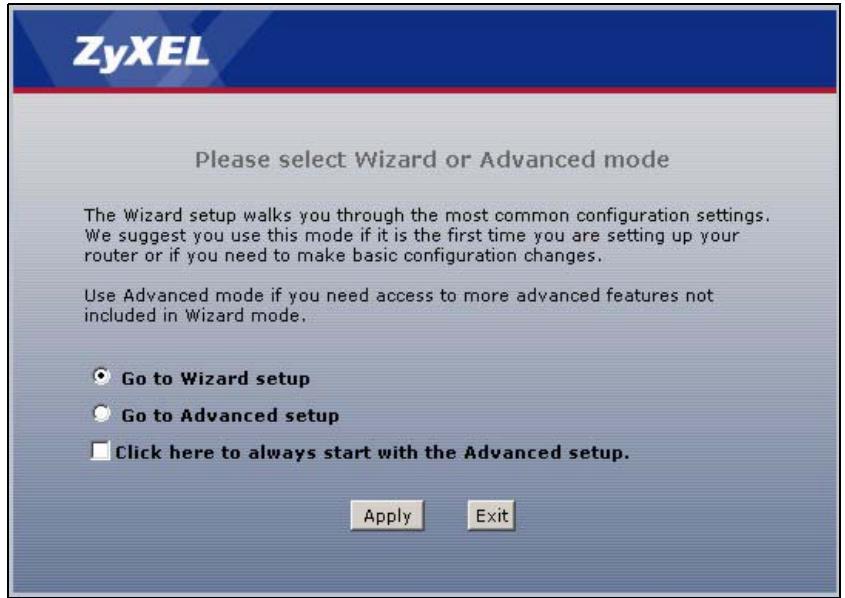
Figure 31 Select a Mode
2 Click VOICE OVER INTERNET SETUP to configure your SIP settings.
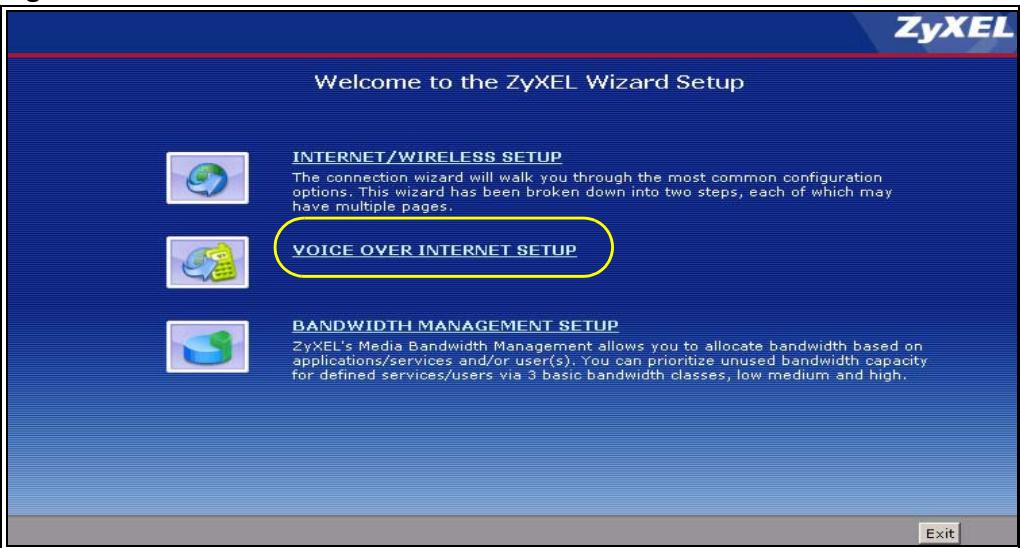
Figure 32 Wizard: Welcome
3 Fill in the VOICE OVER INTERNET SETUP wizard screen with the information provided by your VoIP service provider. Your VoIP service provider supplies you with the following information. When you are finished, click Apply.
Table 16 Sample SIP Account Information
| INFORMATION FROM VOIP SERVICE PROVIDER | EXAMPLE VALUES | DESCRIPTION |
| SIP account address | 11223344@SIPA-Account.com | 11223344 is your SIP number. This is the part that comes before the “@” symbol in your SIP account address. SIPA-Account.com is your SIP server domain. |
| SIP server address | a.b.c.d | a.b.c.d is the IP address or domain name of your SIP server. |
| Username | VoIPUser | This is the username you use to login to your SIP account. |
| Password | Password | This is the password you use to login to your SIP account. |
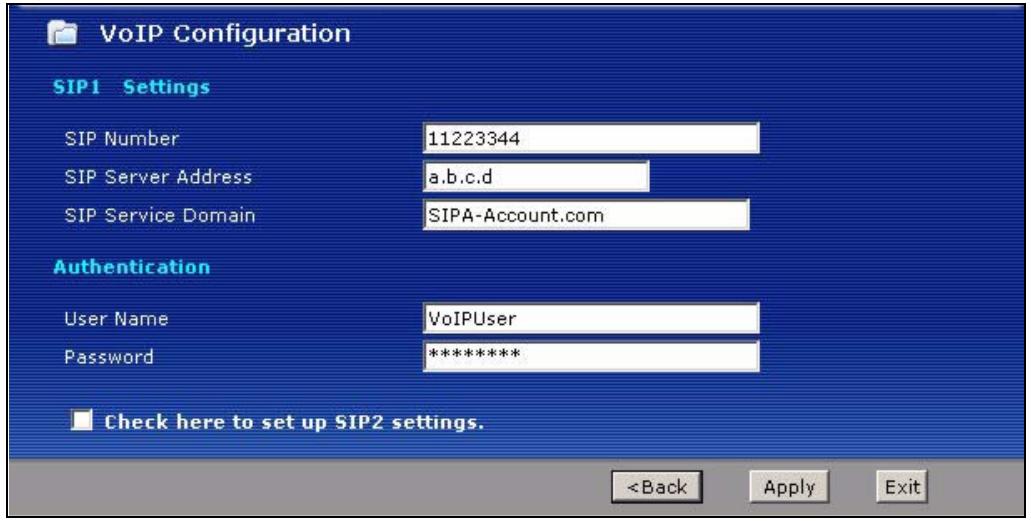
Figure 33 VoIP Wizard Configuration
The following table describes the labels in this screen.
Table 17 VoIP Wizard Configuration
| LABEL | DESCRIPTION |
| SIP Number | Enter your SIP number in this field. Use the number or text that comes before the @ symbol in a SIP account. If your SIP account is 11223344@SIPA-Account.com, your SIP number is “11223344”. You can use up to 127 ASCII characters. |
| SIP Server Address | Type the IP address or domain name of the SIP server in this field. It doesn’t matter whether the SIP server is a proxy, redirect or register server. You can use up to 95 ASCII characters. |
Table 17 VoIP Wizard Configuration
| LABEL | DESCRIPTION |
| SIP Service Domain | Enter the SIP service domain name in this field (the domain name that comes after the @ symbol in a SIP account like 11223344@SIPA-Account.com). You can use up to 127 ASCII Extended set characters. |
| User Name | This is the name used to register this SIP account with the SIP register server. Type the user name exactly as it was given to you. You can use up to 95 ASCII characters. |
| Password | Type the password associated with the user name above. You can use up to 95 ASCII Extended set characters. |
| Check here to set up SIP2 settings. | This screen configures SIP account 1. Select the check box if you have a second SIP account that you want to use. You will need to configure the same fields for the second SIP account.Note: If you configure more than one SIP account, you need to configure Analog Phone settings in Section 10.12 on page 134 to distinguish between the two accounts when you make and receive phone calls. |
| Back | Click Back to return to the previous screen. |
| Apply | Click Apply to complete the wizard setup and save your configuration. |
| Exit | Click Exit to close the wizard without saving your settings. |
4 Your ZyXEL Device will attempt to register your SIP account with your VoIP service provider. When your account is registered your PHONE 1 light will come on and you are ready to make and receive VoIP phone calls.
Figure 34 SIP Registration Test
5 This screen displays if SIP account registration fails. If your DSL cable was disconnected, you can try connecting it. Then wait a few seconds and click Register Again. If your Internet connection was already working, you can click Back and try re-entering your SIP account settings.
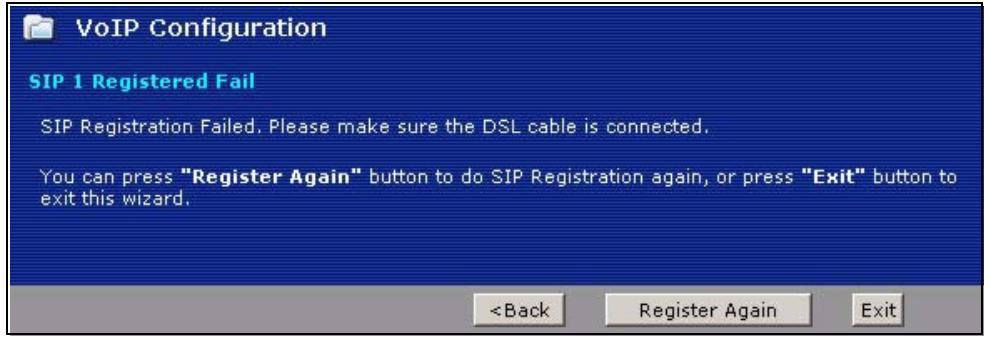
Figure 35 VoIP Wizard Fail
6 This screen displays if your SIP account registration was successful. Click Return to Wizard Main Page if you want to use another configuration wizard. Click Go to Advanced Setup page or Finish to close the wizard and go to the main web configurator screens.
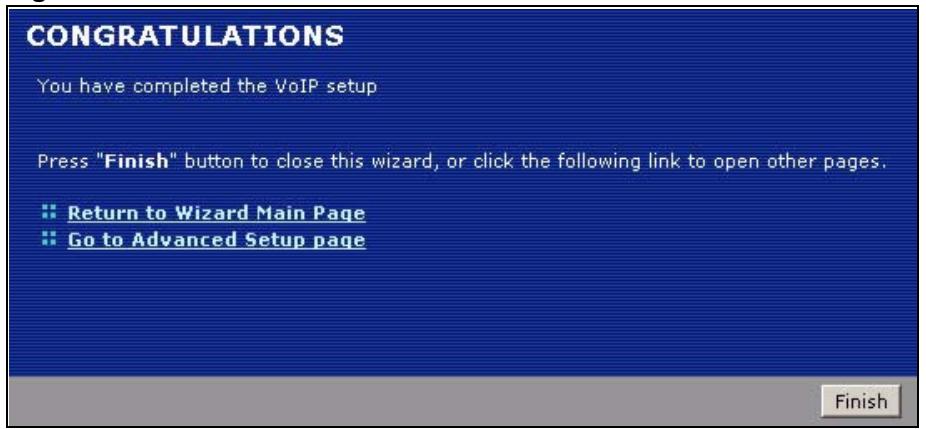
Figure 36 VolP Wizard Finish
7 To call other VoIP users, you need to follow a similar process to ensure that their SIP account is registered and active. After it is registered, they need to provide you with their SIP number. You can use your VoIP service provider's dialing plan to call SIP numbers.
You can also use your VoIP service provider's dialing plan to call regular phone numbers. You dial a prefix number, provided to you by your VoIP service provider, followed by a regular phone number.
Note: To find out more information about configuring your VoIP features and making non VoIP calls see Chapter 10 on page 119.
CHAPTER 5
Bandwidth Management Wizard
This chapter shows you how to configure basic bandwidth management using the wizard screens.
5.1 Introduction
Bandwidth management allows you to control the amount of bandwidth going out through the ZyXEL Device's WAN port and prioritize the distribution of the bandwidth according to service bandwidth requirements. This helps keep one service from using all of the available bandwidth and shutting out other users.
5.2 Predefined Media Bandwidth Management Services
The following is a description of the services that you can select and to which you can apply media bandwidth management using the wizard screens.
Table 18 Media Bandwidth Management Setup: Services
| SERVICE | DESCRIPTION |
| WWW | The World Wide Web (WWW) is an Internet system to distribute graphical, hyper-linked information, based on Hyper Text Transfer Protocol (HTTP) - a client/server protocol for the World Wide Web. The Web is not synonymous with the Internet; rather, it is just one service on the Internet. Other services on the Internet include Internet Relay Chat and Newsgroups. The Web is accessed through use of a browser. |
| FTP | File Transfer Program enables fast transfer of files, including large files that may not be possible by e-mail. FTP uses TCP (Transmission Control Protocol) port number 21. |
| Electronic mail consists of messages sent through a computer network to specific groups or individuals. Here are some default ports for e-mail: POP3 - port 110 IMAP - port 143 SMTP - port 25 HTTP - port 80 | |
| Telnet | Telnet is the login and terminal emulation protocol common on the Internet and in UNIX environments. It operates over TCP/IP networks. Its primary function is to allow users to log into remote host systems. Telnet uses TCP port 23. |
| NetMeeting (H.323) | A multimedia communications product from Microsoft that enables groups to teleconference and videoconference over the Internet. NetMeeting supports VoIP, text chat sessions, a whiteboard, and file transfers and application sharing. NetMeeting uses H.323. H.323 is a standard teleconferencing protocol suite that provides audio, data and video conferencing. It allows for real-time point-to-point and multipoint communication between client computers over a packet-based network that does not provide a guaranteed quality of service. H.323 is transported primarily over TCP, using the default port number 1720. |
| VoIP (SIP) | Sending voice signals over the Internet is called Voice over IP or VoIP. Session Initiated Protocol (SIP) is an internationally recognized standard for implementing VoIP. SIP is an application-layer control (signaling) protocol that handles the setting up, altering and tearing down of voice and multimedia sessions over the Internet. SIP is transported primarily over UDP but can also be transported over TCP, using the default port number 5060. |
| VoIP (H.323) | Sending voice signals over the Internet is called Voice over IP or VoIP. H.323 is a standard teleconferencing protocol suite that provides audio, data and video conferencing. It allows for real-time point-to-point and multipoint communication between client computers over a packet-based network that does not provide a guaranteed quality of service. H.323 is transported primarily over TCP, using the default port number 1720. |
| TFTP | Trivial File Transfer Protocol is an Internet file transfer protocol similar to FTP, but uses the UDP (User Datagram Protocol) rather than TCP (Transmission Control Protocol). |
5.3 Bandwidth Management Wizard Setup
1 After you enter the password to access the web configurator, select Go to Wizard setup and click Apply. Otherwise, click the wizard icon ( ) in the top right corner of the web configurator to display the wizard main screen.
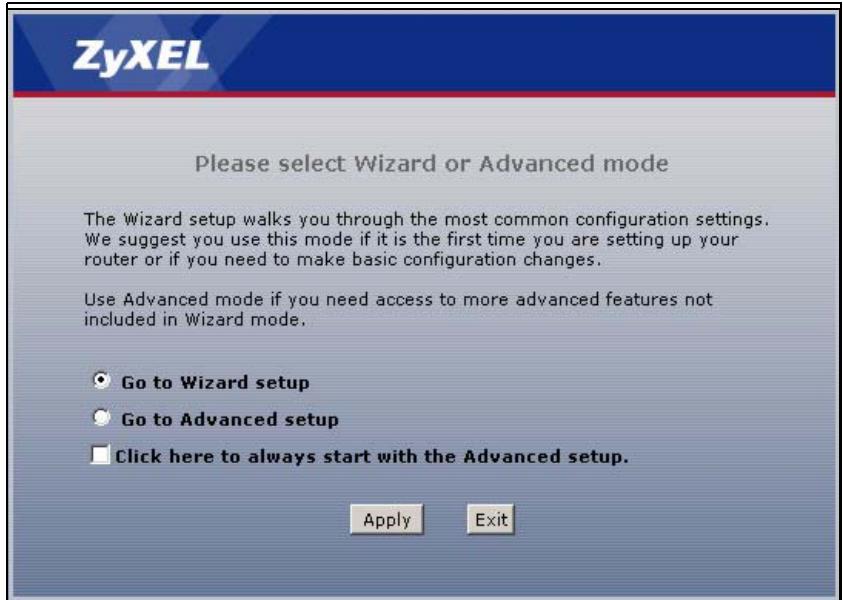
Figure 37 Select a Mode
2 Click BANDWIDTH MANAGEMENT SETUP.
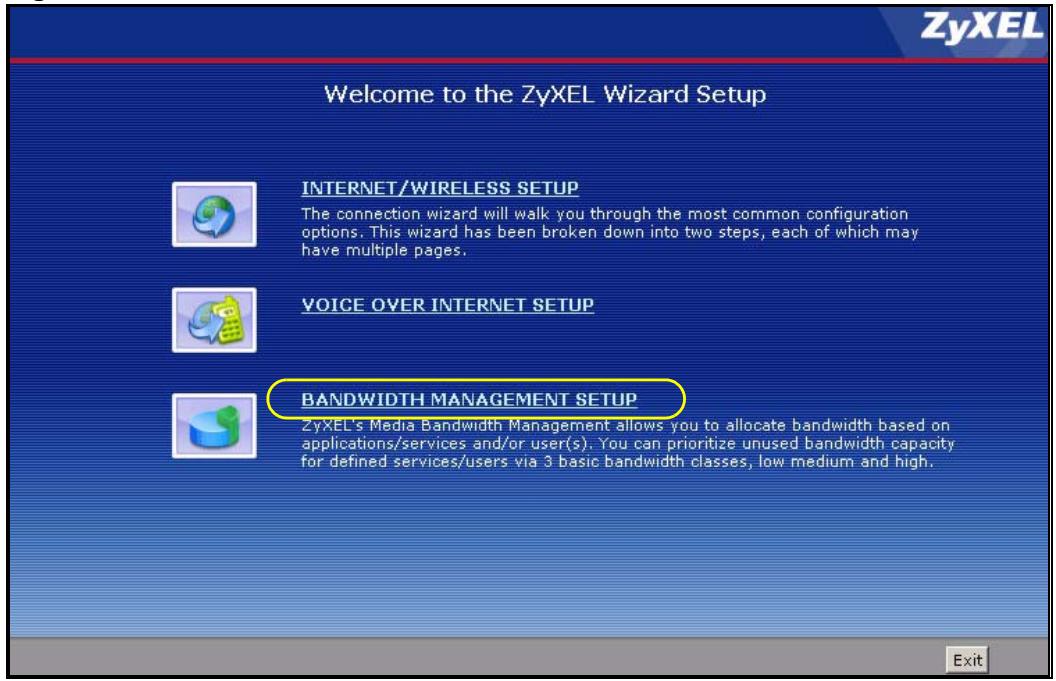
Figure 38 Wizard: Welcome
3 Activate bandwidth management and select to allocate bandwidth to packets based on the packet size or services.
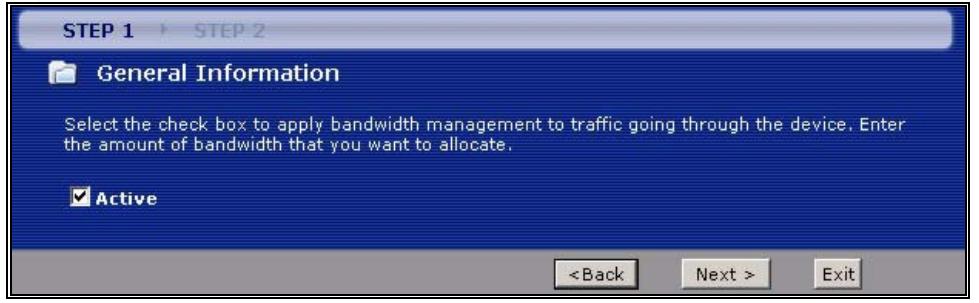
Figure 39 Bandwidth Management Wizard: General Information
The following fields describe the label in this screen.
Table 19 Bandwidth Management Wizard: General Information
| LABEL | DESCRIPTION |
| Active | Select the Active check box to have the ZyXEL Device apply bandwidth management to traffic going out through the ZyXEL Device's WAN, LAN or WLAN port. Select Auto Classifier to automatically allocate bandwidth to packets based on the packet size or Services Setup to allocate bandwidth based on the service requirements. |
| Back | Click Back to display the previous screen. |
| Next | Click Next to proceed to the next screen. |
| Exit | Click Exit to close the wizard screen without saving. |
4 If you select Service Setup, use the second wizard screen to select the services that you want to apply bandwidth management and select the priorities that you want to apply to the services listed.
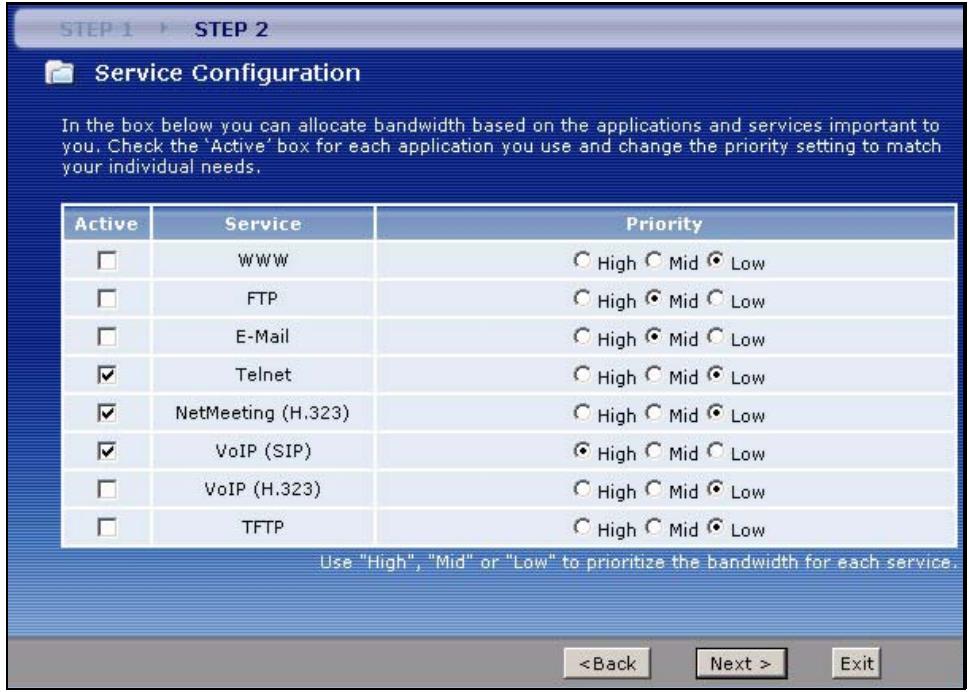
Figure 40 Bandwidth Management Wizard: Service Configuration
The following table describes the labels in this screen.
Table 20 Bandwidth Management Wizard: Service Configuration
| LABEL | DESCRIPTION |
| Active | Select Active to enable bandwidth management for service specified traffic. Select an entry's Active check box to turn on bandwidth management for the service/ application. |
| Service | These fields display the services names. |
| Priority | Select High, Mid or Low priority for each service to have your ZyXEL Device use a priority for traffic that matches that service. A service with High priority is given as much bandwidth as it needs. If you select services as having the same priority, then bandwidth is divided equally amongst those services. Services not specified in bandwidth management are allocated bandwidth after all specified services receive their bandwidth requirements. If the rules set up in this wizard are changed in Advanced, Bandwidth MGMT, Rule Setup, then the service priority radio button will be set to User Configured. The Advanced, Bandwidth MGMT, Rule Setup screen allows you to edit these rule configurations. |
| Back | Click Back to go back to the previous wizard screen. |
| Apply | Click Apply to save your changes back to the ZyXEL Device. |
| Exit | Click Exit to close the wizard screen without saving your changes. |
5 Follow the on-screen instructions and click Finish to complete the wizard setup and save your configuration.
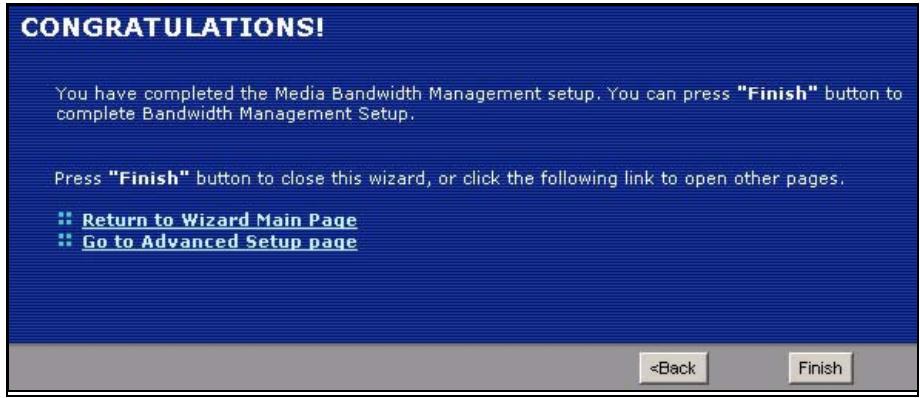
Figure 41 Bandwidth Management Wizard: Complete
CHAPTER 6 Status Screens
Use the Status screens to look at the current status of the device, system resources, interfaces (LAN and WAN), and SIP accounts. You can also register and unregister SIP accounts. The Status screen also provides detailed information from Any IP and DHCP and statistics from VoIP, bandwidth management, and traffic.
6.1 Status Screen
Click Status to open this screen.
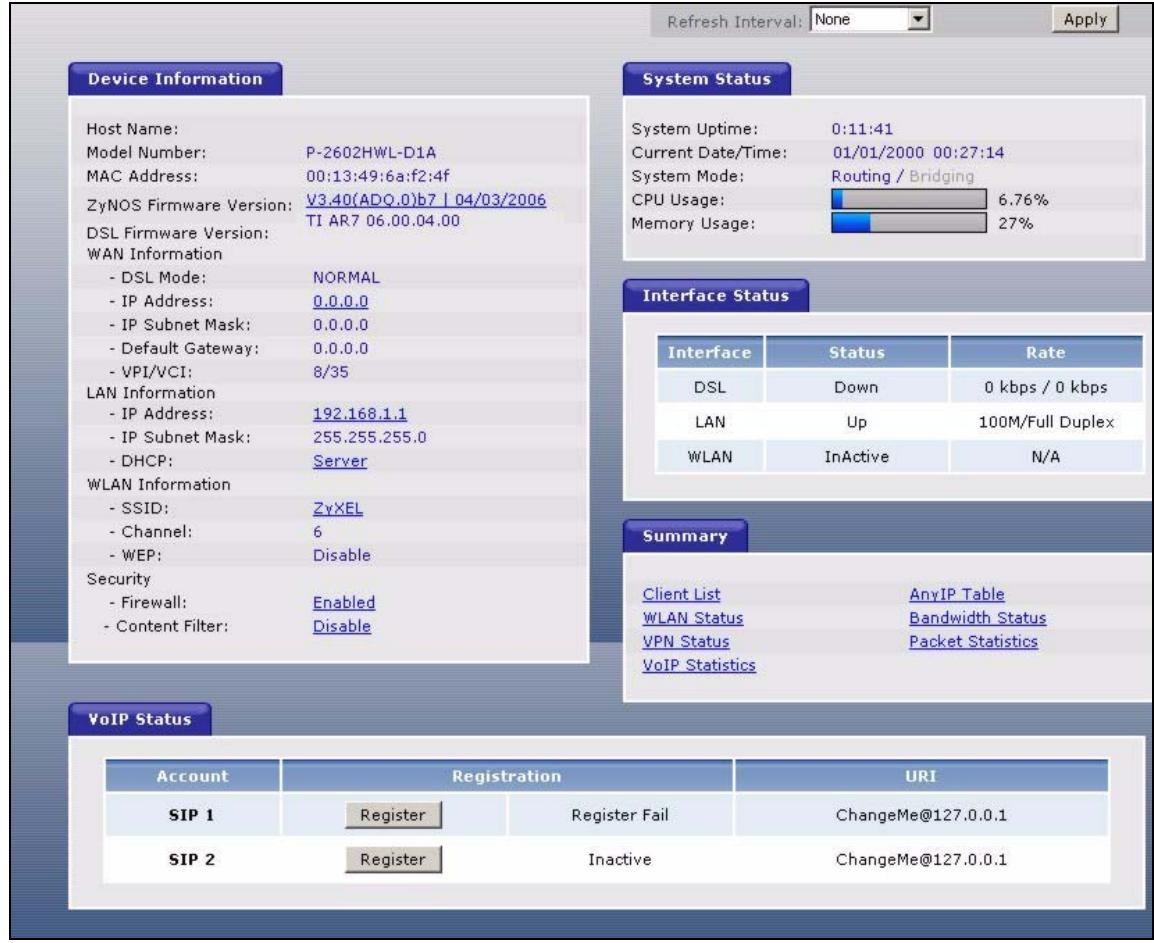
Figure 42 Status Screen
Each field is described in the following table.
Table 21 Status Screen
| LABEL | DESCRIPTION |
| Refresh Interval | Enter how often you want the ZyXEL Device to update this screen. |
| Apply | Click this to update this screen immediately. |
| Device Information | |
| Host Name | This field displays the ZyXEL Device system name. It is used for identification. You can change this in the Maintenance > System > General screen's System Name field. |
| Model Number | This is the model name of your device. |
| MAC Address | This is the MAC (Media Access Control) or Ethernet address unique to your ZyXEL Device. |
| ZyNOS Firmware Version | This field displays the current version of the firmware inside the device. It also shows the date the firmware version was created. Click this to go to the screen where you can change it. |
| DSL Firmware Version | This field displays the current version of the device's DSL modem code. |
| WAN Information | |
| DSL Mode | This is the DSL standard that your ZyXEL Device is using. |
| IP Address | This field displays the current IP address of the ZyXEL Device in the WAN. Click this to go to the screen where you can change it. |
| IP Subnet Mask | This field displays the current subnet mask in the WAN. |
| Default Gateway | This is the IP address of the default gateway, if applicable. |
| VPI/VCI | This is the Virtual Path Identifier and Virtual Channel Identifier that you entered in the wizard or WAN screen. |
| LAN Information | |
| IP Address | This field displays the current IP address of the ZyXEL Device in the LAN. Click this to go to the screen where you can change it. |
| IP Subnet Mask | This field displays the current subnet mask in the LAN. |
| DHCP | This field displays what DHCP services the ZyXEL Device is providing to the LAN. Choices are:Server - The ZyXEL Device is a DHCP server in the LAN. It assigns IP addresses to other computers in the LAN.Relay - The ZyXEL Device acts as a surrogate DHCP server and relays DHCP requests and responses between the remote server and the clients.None - The ZyXEL Device is not providing any DHCP services to the LAN. Click this to go to the screen where you can change it. |
| WLAN Information | ("W" models only) |
| SSID | This is the descriptive name used to identify the ZyXEL Device in the wireless LAN. Click this to go to the screen where you can change it. |
| Channel | This is the channel number used by the ZyXEL Device now. |
| Security | This displays the type of security mode the ZyXEL Device is using in the wireless LAN. |
Table 21 Status Screen
| LABEL | DESCRIPTION |
| Security | |
| Firewall | This displays whether or not the ZyXEL Device's firewall is activated. Click this to go to the screen where you can change it. |
| Content Filter | This displays whether or not the ZyXEL Device's content filtering is activated. Click this to go to the screen where you can change it. |
| System Status | |
| System Uptime | This field displays how long the ZyXEL Device has been running since it last started up. The ZyXEL Device starts up when you plug it in, when you restart it (Maintenance > Tools > Restart), or when you reset it (see Section 2.1.2 on page 51). |
| Current Date/Time | This field displays the current date and time in the ZyXEL Device. You can change this in Maintenance > System > Time Setting. |
| System Mode | This displays whether the ZyXEL Device is functioning as a router or a bridge. |
| CPU Usage | This field displays what percentage of the ZyXEL Device's processing ability is currently used. When this percentage is close to 100%, the ZyXEL Device is running at full load, and the throughput is not going to improve anymore. If you want some applications to have more throughput, you should turn off other applications (for example, using bandwidth management; see Chapter 19 on page 253). |
| Memory Usage | This field displays what percentage of the ZyXEL Device's memory is currently used. Usually, this percentage should not increase much. If memory usage does get close to 100%, the ZyXEL Device is probably becoming unstable, and you should restart the device. See Section 25.6 on page 307, or turn off the device (unplug the power) for a few seconds. |
| Interface Status | |
| Interface | This column displays each interface the ZyXEL Device has. |
| Status | For the DSL interface, this field displays Down (line is down), Up (line is up or connected) if you're using Ethernet encapsulation and Down (line is down), Up (line is up or connected), Idle (line (ppp) idle), Dial (starting to trigger a call) and Drop (dropping a call) if you're using PPPoE encapsulation. This field indicates whether or not the ZyXEL Device is using the interface. For the LAN interface, this field displays Up when the ZyXEL Device is using the interface and Down when the ZyXEL Device is not using the interface. For the WLAN interface, it displays Active when WLAN is enabled or Inactive when WLAN is disabled. |
| Rate | For the LAN interface, this displays the port speed and duplex setting. For the DSL interface, it displays the downstream and upstream transmission rate. For the WLAN interface, it displays the transmission rate when WLAN is enabled or N/A when WLAN is disabled. |
| Summary | |
| Client List | Click this link to view current DHCP client information. See Section 8.5 on page 116. |
| AnyIP Table | Click this link to view a list of IP addresses and MAC addresses of computers, which are not in the same subnet as the ZyXEL Device. See Section 6.2 on page 86. |
| WLAN Status | Click this link to display the MAC address(es) of the wireless stations that are currently associating with the ZyXEL Device. See Section 6.3 on page 87. |
Table 21 Status Screen
| LABEL | DESCRIPTION |
| Bandwidth Status | Click this link to view the ZyXEL Device's bandwidth usage and allotments. See Section 19.9 on page 262. |
| VPN Status | Click this link to view the ZyXEL Device's current VPN connections. See Section 17.16 on page 242. |
| Packet Statistics | Click this link to view port status and packet specific statistics. See Section 6.4 on page 87. |
| VoIP Statistics | Click this link to view statistics about your VoIP usage. See Section 6.5 on page 89. |
| VoIP Status | |
| Account | This column displays each SIP account in the ZyXEL Device. |
| Registration | This field displays the current registration status of the SIP account. You have to register SIP accounts with a SIP server to use VoIP. If the SIP account is already registered with the SIP server, • Click Unregister to delete the SIP account's registration in the SIP server. This does not cancel your SIP account, but it deletes the mapping between your SIP identity and your IP address or domain name. • The second field displays Registered. If the SIP account is not registered with the SIP server, • Click Register to have the ZyXEL Device attempt to register the SIP account with the SIP server. • The second field displays the reason the account is not registered. Inactive - The SIP account is not active. You can activate it in VoIP > SIP > SIP Settings. Register Fail - The last time the ZyXEL Device tried to register the SIP account with the SIP server, the attempt failed. The ZyXEL Device automatically tries to register the SIP account when you turn on the ZyXEL Device or when you activate it. |
| URI | This field displays the account number and service domain of the SIP account. You can change these in VoIP > SIP > SIP Settings. |
6.2 Any IP Table
Click Status > AnyIP Table to access this screen. Use this screen to view the IP address and MAC address of each computer that is using the ZyXEL Device but is in a different subnet than the ZyXEL Device.
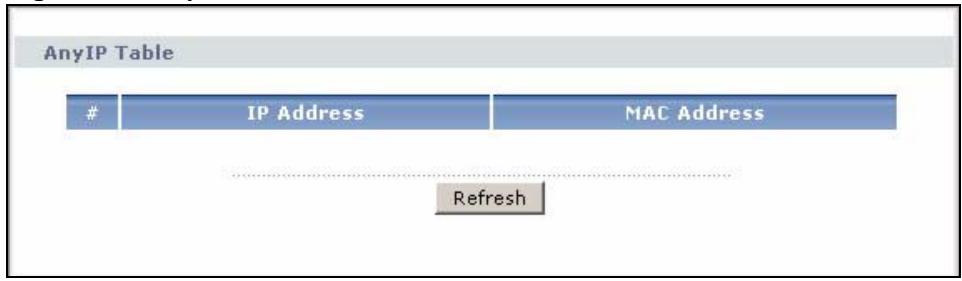
Figure 43 Any IP Table
Each field is described in the following table.
Table 22 Any IP Table
| LABEL | DESCRIPTION |
| # | This field is a sequential value. It is not associated with a specific entry. |
| IP Address | This field displays the IP address of each computer that is using the ZyXEL Device but is in a different subnet than the ZyXEL Device. |
| MAC Address | This field displays the MAC address of the computer that is using the ZyXEL Device but is in a different subnet than the ZyXEL Device. |
| Refresh | Click this to update this screen. |
6.3 WLAN Status ("W" models only)
Click Status > WLAN Status to access this screen. Use this screen to view the wireless stations that are currently associated to the ZyXEL Device.
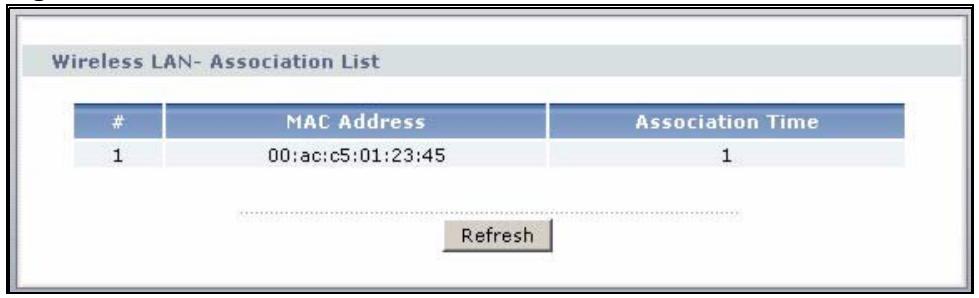
Figure 44 WLAN Status
The following table describes the labels in this screen.
Table 23 WLAN Status
| LABEL | DESCRIPTION |
| # | This is the index number of an associated wireless station. |
| MAC Address | This field displays the MAC (Media Access Control) address of an associated wireless station. |
| Association TIme | This field displays the time a wireless station first associated with the ZyXEL Device. |
| Refresh | Click Refresh to reload this screen. |
6.4 Packet Statistics
Click Status > Packet Statistics to access this screen. Read-only information here includes port status and packet specific statistics. Also provided are "system up time" and "poll interval(s)". The Poll Interval(s) field is configurable.
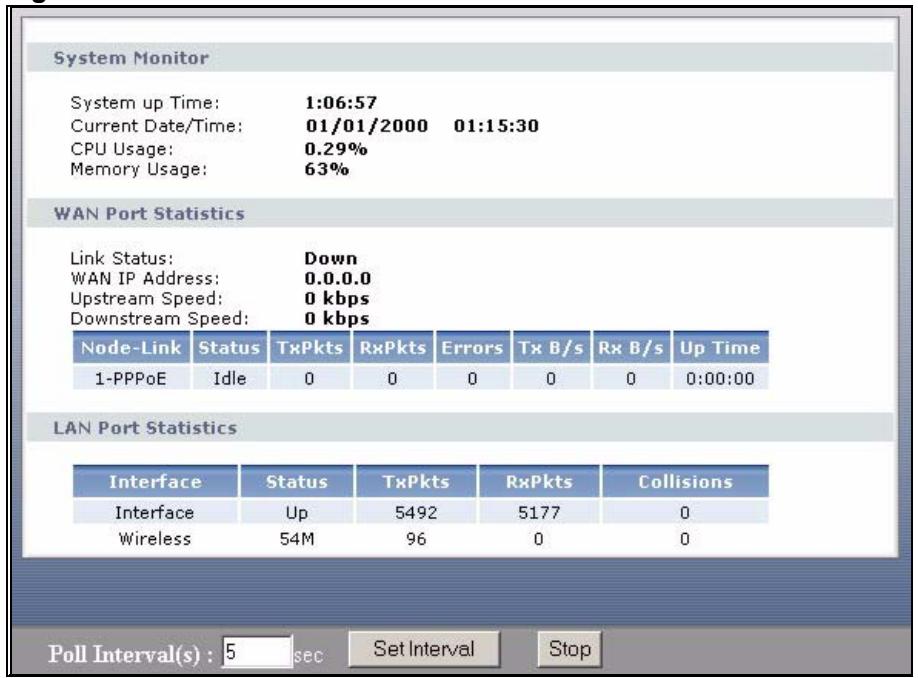
Figure 45 Packet Statistics
The following table describes the fields in this screen.
Table 24 Packet Statistics
| LABEL | DESCRIPTION |
| System Monitor | |
| System up Time | This is the elapsed time the system has been up. |
| Current Date/Time | This field displays your ZyXEL Device's present date and time. |
| CPU Usage | This field specifies the percentage of CPU utilization. |
| Memory Usage | This field specifies the percentage of memory utilization. |
| WAN Port Statistics | |
| Link Status | This is the status of your WAN link. |
| WAN IP Address | This is the IP address of the ZyXEL Device's WAN port. |
| Upstream Speed | This is the upstream speed of your ZyXEL Device. |
| Downstream Speed | This is the downstream speed of your ZyXEL Device. |
| Node-Link | This field displays the remote node index number and link type. Link types are PPPoA, ENET, RFC 1483 and PPPoE. |
| Status | This field displays Down (line is down), Up (line is up or connected) if you're using Ethernet encapsulation and Down (line is down), Up (line is up or connected), Idle (line (ppp) idle), Dial (starting to trigger a call) and Drop (dropping a call) if you're using PPPoE encapsulation. |
| TxPkts | This field displays the number of packets transmitted on this port. |
| RxPkts | This field displays the number of packets received on this port. |
| Errors | This field displays the number of error packets on this port. |
| Tx B/s | This field displays the number of bytes transmitted in the last second. |
| Rx B/s | This field displays the number of bytes received in the last second. |
| Up Time | This field displays the elapsed time this port has been up. |
| LAN Port Statistics | |
| Ethernet | This field displays either Ethernet (LAN ports) or Wireless (WLAN port). |
| Status | For the LAN ports, this field displays Down (line is down) or Up (line is up or connected).For the WLAN port, it displays the transmission rate when WLAN is enabled or N/A when WLAN is disabled. |
| TxPkts | This field displays the number of packets transmitted on this interface. |
| RxPkts | This field displays the number of packets received on this interface. |
| Collisions | This is the number of collisions on this interfaces. |
| Poll Interval(s) | Type the time interval for the browser to refresh system statistics. |
| Set Interval | Click this to apply the new poll interval you entered in the Poll Interval field above. |
| Stop | Click this button to halt the refreshing of the system statistics. |
6.5 VoIP Statistics
Click Status > VoIP Statistics to access this screen.
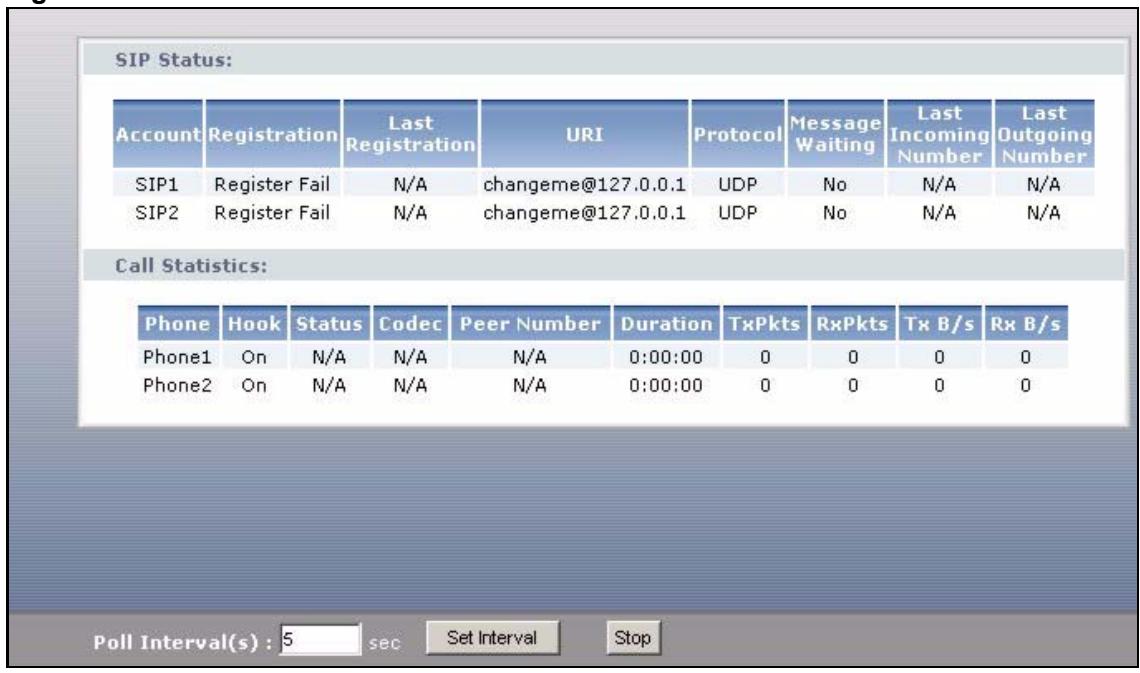
Figure 46 VoIP Statistics
Each field is described in the following table.
Table 25 VoIP Statistics
| LABEL | DESCRIPTION |
| SIP Status | |
| Account | This column displays each SIP account in the ZyXEL Device. |
| Registration | This field displays the current registration status of the SIP account. You can change this in the Status screen. Registered - The SIP account is registered with a SIP server. Register Fail - The last time the ZyXEL Device tried to register the SIP account with the SIP server, the attempt failed. The ZyXEL Device automatically tries to register the SIP account when you turn on the ZyXEL Device or when you activate it. Inactive - The SIP account is not active. You can activate it in VoIP > SIP > SIP Settings. |
| Last Registration | This field displays the last time you successfully registered the SIP account. It displays N/A if you never successfully registered this account. |
| URI | This field displays the account number and service domain of the SIP account. You can change these in VoIP > SIP > SIP Settings. |
| Protocol | This field displays the transport protocol the SIP account uses. SIP accounts always use UDP. |
| Message Waiting | This field indicates whether or not there are any messages waiting for the SIP account. |
| Last Incoming Number | This field displays the last number that called the SIP account. It displays N/A if no number has ever dialed the SIP account. |
| Last Outgoing Number | This field displays the last number the SIP account called. It displays N/A if the SIP account has never dialed a number. |
| Call Statistics | |
| Phone | This field displays each phone port in the ZyXEL Device. |
| Hook | This field indicates whether the phone is on the hook or off the hook. On - The phone is hanging up or already hung up. Off - The phone is dialing, calling, or connected. |
| Status | This field displays the current state of the phone call. N/A - There are no current VoIP calls, incoming calls or outgoing calls being made. DIAL - The callee's phone is ringing. RING - The phone is ringing for an incoming VoIP call. Process - There is a VoIP call in progress. DISC - The callee's line is busy, the callee hung up or your phone was left off the hook. |
| Codec | This field displays what voice codec is being used for a current VoIP call through a phone port. |
| Peer Number | This field displays the SIP number of the party that is currently engaged in a VoIP call through a phone port. |
| Duration | This field displays how long the current call has lasted. |
| Tx Pkts | This field displays the number of packets the ZyXEL Device has transmitted in the current call. |
| Rx Pkts | This field displays the number of packets the ZyXEL Device has received in the current call. |
Table 25 VoIP Statistics
| LABEL | DESCRIPTION |
| Tx B/s | This field displays how quickly the ZyXEL Device has transmitted packets in the current call. The rate is the average number of bytes transmitted per second. |
| Rx B/s | This field displays how quickly the ZyXEL Device has received packets in the current call. The rate is the average number of bytes transmitted per second. |
| Poll Interval(s) | Enter how often you want the ZyXEL Device to update this screen, and click Set Interval. |
| Set Interval | Click this to make the ZyXEL Device update the screen based on the amount of time you specified in Poll Interval. |
| Stop | Click this to make the ZyXEL Device stop updating the screen. |
CHAPTER 7 WAN Setup
This chapter describes how to configure WAN settings.
7.1 WAN Overview
A WAN (Wide Area Network) is an outside connection to another network or the Internet.
7.1.1 Encapsulation
Be sure to use the encapsulation method required by your ISP. The ZyXEL Device supports the following methods.
7.1.1.1 ENETENCAP
The MAC Encapsulated Routing Link Protocol (ENET ENCAP) is only implemented with the IP network protocol. IP packets are routed between the Ethernet interface and the WAN interface and then formatted so that they can be understood in a bridged environment. For instance, it encapsulates routed Ethernet frames into bridged ATM cells. ENET ENCAP requires that you specify a gateway IP address in the ENET ENCAP Gateway field in the second wizard screen. You can get this information from your ISP.
7.1.1.2 PPP over Ethernet
The ZyXEL Device supports PPPoE (Point-to-Point Protocol over Ethernet). PPPoE is an IETF Draft standard (RFC 2516) specifying how a personal computer (PC) interacts with a broadband modem (DSL, cable, wireless, etc.) connection. The PPPoE option is for a dial-up connection using PPPoE.
For the service provider, PPPoE offers an access and authentication method that works with existing access control systems (for example RADIUS).
One of the benefits of PPPoE is the ability to let you access one of multiple network services, a function known as dynamic service selection. This enables the service provider to easily create and offer new IP services for individuals.
Operationally, PPPoE saves significant effort for both you and the ISP or carrier, as it requires no specific configuration of the broadband modem at the customer site.
By implementing PPPoE directly on the ZyXEL Device (rather than individual computers), the computers on the LAN do not need PPPoE software installed, since the ZyXEL Device does that part of the task. Furthermore, with NAT, all of the LANs' computers will have access.
7.1.1.3 PPPoA
PPPoA stands for Point to Point Protocol over ATM Adaptation Layer 5 (AAL5). A PPPoA connection functions like a dial-up Internet connection. The ZyXEL Device encapsulates the PPP session based on RFC1483 and sends it through an ATM PVC (Permanent Virtual Circuit) to the Internet Service Provider's (ISP) DSLAM (digital access multiplexer). Please refer to RFC 2364 for more information on PPPoA. Refer to RFC 1661 for more information on PPP.
7.1.1.4 RFC 1483
RFC 1483 describes two methods for Multiprotocol Encapsulation over ATM Adaptation Layer 5 (AAL5). The first method allows multiplexing of multiple protocols over a single ATM virtual circuit (LLC-based multiplexing) and the second method assumes that each protocol is carried over a separate ATM virtual circuit (VC-based multiplexing). Please refer to RFC 1483 for more detailed information.
7.1.2 Multiplexing
There are two conventions to identify what protocols the virtual circuit (VC) is carrying. Be sure to use the multiplexing method required by your ISP.
7.1.2.1 VC-based Multiplexing
In this case, by prior mutual agreement, each protocol is assigned to a specific virtual circuit; for example, VC1 carries IP, etc. VC-based multiplexing may be dominant in environments where dynamic creation of large numbers of ATM VCs is fast and economical.
7.1.2.2 LLC-based Multiplexing
In this case one VC carries multiple protocols with protocol identifying information being contained in each packet header. Despite the extra bandwidth and processing overhead, this method may be advantageous if it is not practical to have a separate VC for each carried protocol, for example, if charging heavily depends on the number of simultaneous VCs.
7.1.3 VPI and VCI
Be sure to use the correct Virtual Path Identifier (VPI) and Virtual Channel Identifier (VCI) numbers assigned to you. The valid range for the VPI is 0 to 255 and for the VCI is 32 to 65535 (0 to 31 is reserved for local management of ATM traffic). Please see the appendix for more information.
7.1.4 IP Address Assignment
A static IP is a fixed IP that your ISP gives you. A dynamic IP is not fixed; the ISP assigns you a different one each time. The Single User Account feature can be enabled or disabled if you have either a dynamic or static IP. However the encapsulation method assigned influences your choices for IP address and ENET ENCAP gateway.
7.1.4.1 IP Assignment with PPPoA or PPPoE Encapsulation
If you have a dynamic IP, then the IP Address and ENET ENCAP Gateway fields are not applicable (N/A). If you have a static IP, then you only need to fill in the IP Address field and not the ENET ENCAP Gateway field.
7.1.4.2 IP Assignment with RFC 1483 Encapsulation
In this case the IP Address Assignment must be static with the same requirements for the IP Address and ENET ENCAP Gateway fields as stated above.
7.1.4.3 IP Assignment with ENET Encapsulation
In this case you can have either a static or dynamic IP. For a static IP you must fill in all the IP Address and ENET ENCAP Gateway fields as supplied by your ISP. However for a dynamic IP, the ZyXEL Device acts as a DHCP client on the WAN port and so the IP Address and ENET ENCAP Gateway fields are not applicable (N/A) as the DHCP server assigns them to the ZyXEL Device.
7.1.5 Nailed-Up Connection (PPP)
A nailed-up connection is a dial-up line where the connection is always up regardless of traffic demand. The ZyXEL Device does two things when you specify a nailed-up connection. The first is that idle timeout is disabled. The second is that the ZyXEL Device will try to bring up the connection when turned on and whenever the connection is down. A nailed-up connection can be very expensive for obvious reasons.
Do not specify a nailed-up connection unless your telephone company offers flat-rate service or you need a constant connection and the cost is of no concern.
7.1.6 NAT
NAT (Network Address Translation - NAT, RFC 1631) is the translation of the IP address of a host in a packet, for example, the source address of an outgoing packet, used within one network to a different IP address known within another network.
7.2 Metric
The metric represents the "cost of transmission". A router determines the best route for transmission by choosing a path with the lowest "cost". RIP routing uses hop count as the measurement of cost, with a minimum of "1" for directly connected networks. The number must be between "1" and "15"; a number greater than "15" means the link is down. The smaller the number, the lower the "cost".
The metric sets the priority for the ZyXEL Device's routes to the Internet. If any two of the default routes have the same metric, the ZyXEL Device uses the following pre-defined priorities:
- Normal route: designated by the ISP (see Section 7.5 on page 98)
Traffic-direct route (see Section 7.7 on page 103) - WAN-backup route, also called dial-backup (see Section 7.8 on page 105)
For example, if the normal route has a metric of "1" and the traffic-direct route has a metric of "2" and dial-backup route has a metric of "3", then the normal route acts as the primary default route. If the normal route fails to connect to the Internet, the ZyXEL Device tries the traffic-direct route next. In the same manner, the ZyXEL Device uses the dial-backup route if the traffic-direct route also fails.
If you want the dial-backup route to take first priority over the traffic-direct route or even the normal route, all you need to do is set the dial-backup route's metric to "1" and the others to "2" (or greater).
IP Policy Routing overrides the default routing behavior and takes priority over all of the routes mentioned above.
7.3 Traffic Shaping
Traffic Shaping is an agreement between the carrier and the subscriber to regulate the average rate and fluctuations of data transmission over an ATM network. This agreement helps eliminate congestion, which is important for transmission of real time data such as audio and video connections.
Peak Cell Rate (PCR) is the maximum rate at which the sender can send cells. This parameter may be lower (but not higher) than the maximum line speed. 1 ATM cell is 53 bytes (424 bits), so a maximum speed of 832Kbps gives a maximum PCR of 1962 cells/sec. This rate is not guaranteed because it is dependent on the line speed.
Sustained Cell Rate (SCR) is the mean cell rate of each bursty traffic source. It specifies the maximum average rate at which cells can be sent over the virtual connection. SCR may not be greater than the PCR.
Maximum Burst Size (MBS) is the maximum number of cells that can be sent at the PCR. After MBS is reached, cell rates fall below SCR until cell rate averages to the SCR again. At this time, more cells (up to the MBS) can be sent at the PCR again.
If the PCR, SCR or MBS is set to the default of "0", the system will assign a maximum value that correlates to your upstream line rate.
The following figure illustrates the relationship between PCR, SCR and MBS.
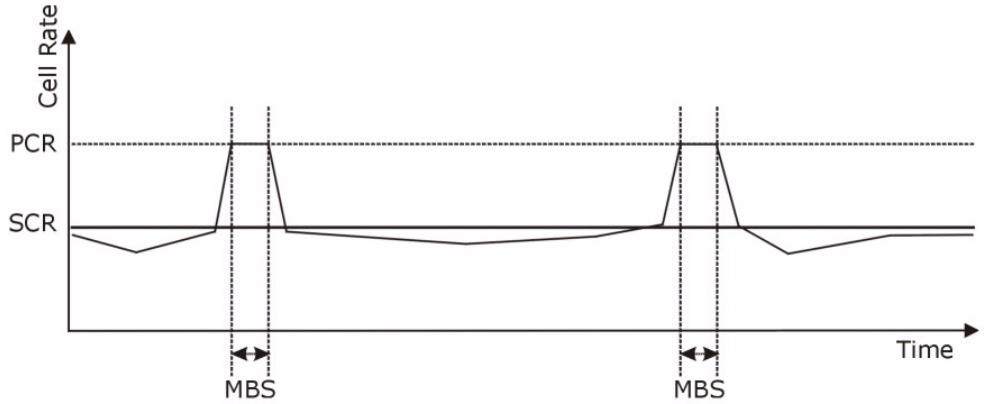
Figure 47 Example of Traffic Shaping
7.3.1 ATM Traffic Classes
These are the basic ATM traffic classes defined by the ATM Forum Traffic Management 4.0 Specification.
7.3.1.1 Constant Bit Rate (CBR)
Constant Bit Rate (CBR) provides fixed bandwidth that is always available even if no data is being sent. CBR traffic is generally time-sensitive (doesn't tolerate delay). CBR is used for connections that continuously require a specific amount of bandwidth. A PCR is specified and if traffic exceeds this rate, cells may be dropped. Examples of connections that need CBR would be high-resolution video and voice.
7.3.1.2 Variable Bit Rate (VBR)
The Variable Bit Rate (VBR) ATM traffic class is used with bursty connections. Connections that use the Variable Bit Rate (VBR) traffic class can be grouped into real time (VBR-RT) or non-real time (VBR-nRT) connections.
The VBR-RT (real-time Variable Bit Rate) type is used with bursty connections that require closely controlled delay and delay variation. It also provides a fixed amount of bandwidth (a PCR is specified) but is only available when data is being sent. An example of an VBR-RT connection would be video conferencing. Video conferencing requires real-time data transfers and the bandwidth requirement varies in proportion to the video image's changing dynamics.
The VBR-nRT (non real-time Variable Bit Rate) type is used with bursty connections that do not require closely controlled delay and delay variation. It is commonly used for "bursty" traffic typical on LANs. PCR and MBS define the burst levels, SCR defines the minimum level. An example of an VBR-nRT connection would be non-time sensitive data file transfers.
7.3.1.3 Unspecified Bit Rate (UBR)
The Unspecified Bit Rate (UBR) ATM traffic class is for bursty data transfers. However, UBR doesn't guarantee any bandwidth and only delivers traffic when the network has spare bandwidth. An example application is background file transfer.
7.4 Zero Configuration Internet Access
Once you turn on and connect the ZyXEL Device to a telephone jack, it automatically detects the Internet connection settings (such as the VCI/VPI numbers and the encapsulation method) from the ISP and makes the necessary configuration changes. In cases where additional account information (such as an Internet account user name and password) is required or the ZyXEL Device cannot connect to the ISP, you will be redirected to web screen(s) for information input or troubleshooting.
Zero configuration for Internet access is disabled when
- the ZyXEL Device is in bridge mode
- you set the ZyXEL Device to use a static (fixed) WAN IP address.
7.5 Internet Access Setup
To change your ZyXEL Device's WAN remote node settings, click Network > WAN > Internet Access Setup. The screen differs by the encapsulation.
See Section 7.1 on page 93 for more information.
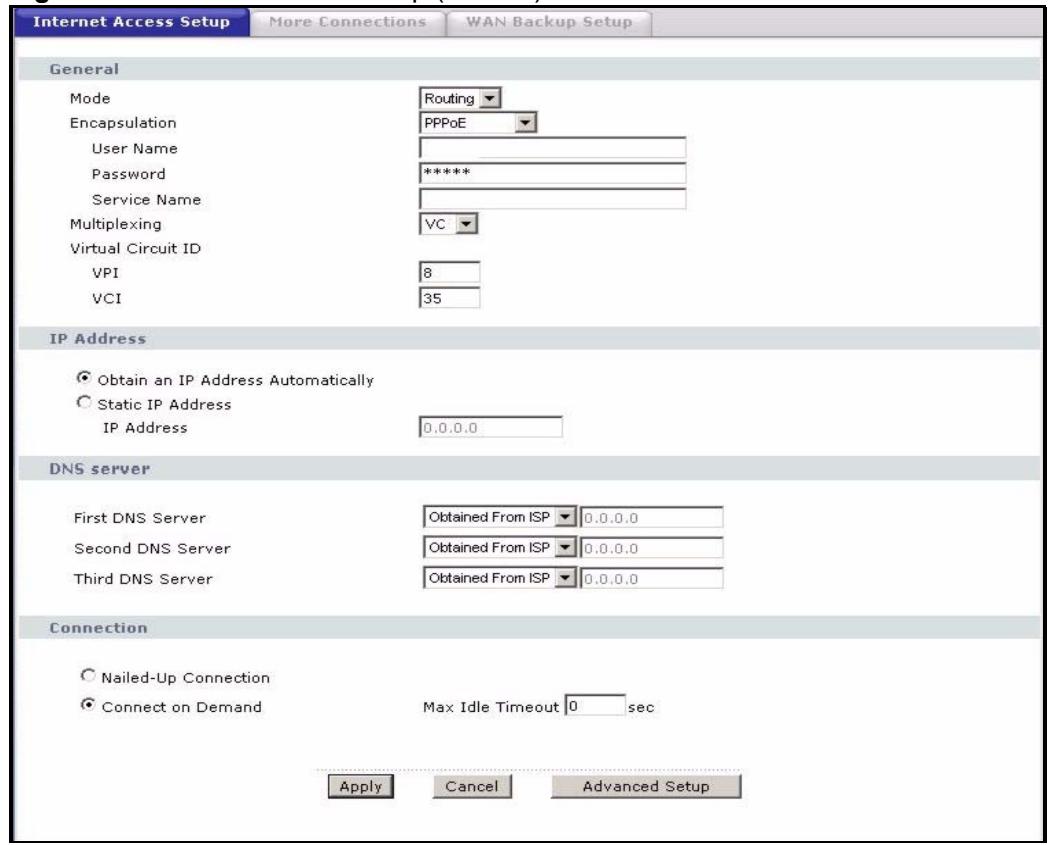
Figure 48 Internet Access Setup (PPPoE)
The following table describes the labels in this screen.
Table 26 Internet Access Setup
| LABEL | DESCRIPTION |
| General | |
| Mode | Select Routing (default) from the drop-down list box if your ISP allows multiple computers to share an Internet account. Otherwise select Bridge. |
| Encapsulation | Select the method of encapsulation used by your ISP from the drop-down list box. Choices vary depending on the mode you select in the Mode field. If you select Bridge in the Mode field, select either PPPoA or RFC 1483. If you select Routing in the Mode field, select PPPoA, RFC 1483, ENET ENCAP or PPPoE. |
| UserID | (PPPoA and PPPoE encapsulation only) Enter the user name exactly as your ISP assigned. If assigned a name in the form user@domain where domain identifies a service name, then enter both components exactly as given. |
| Password | (PPPoA and PPPoE encapsulation only) Enter the password associated with the user name above. |
| Service Name | (PPPoE only) Type the name of your PPPoE service here. |
| Multiplexing | Select the method of multiplexing used by your ISP from the drop-down list. Choices are VC or LLC. |
| Virtual Circuit ID | VPI (Virtual Path Identifier) and VCI (Virtual Channel Identifier) define a virtual circuit. Refer to the appendix for more information. |
| VPI | The valid range for the VPI is 0 to 255. Enter the VPI assigned to you. |
| VCI | The valid range for the VCI is 32 to 65535 (0 to 31 is reserved for local management of ATM traffic). Enter the VCI assigned to you. |
| IP Address | |
| IP Address | This option is available if you select Routing in the Mode field.A static IP address is a fixed IP that your ISP gives you. A dynamic IP address is not fixed; the ISP assigns you a different one each time you connect to the Internet.Select Obtain an IP Address Automatically if you have a dynamic IP address; otherwise select Static IP Address and type your ISP assigned IP address in the IP Address field below. |
| Subnet Mask(ENET ENCAP encapsulation only) | Enter a subnet mask in dotted decimal notation.Refer to the appendix to calculate a subnet mask If you are implementing subnetting. |
| Gateway IP address(ENET ENCAP encapsulation only) | You must specify a gateway IP address (supplied by your ISP) when you select ENET ENCAP in the Encapsulation field |
| DNS Server | |
| First DNS ServerSecond DNS ServerThird DNS Server | Select Obtained From ISP if your ISP dynamically assigns DNS server information (and the ZyXEL Device's WAN IP address).Select User-Defined if you have the IP address of a DNS server. Enter the DNS server's IP address in the field to the right. If you chose User-Defined, but leave the IP address set to 0.0.0.0,User-Defined changes to None after you click Apply. If you set a second choice to User-Defined, and enter the same IP address, the second User-Defined changes to None after you click Apply SELECT DNS Relay to have the ZyXEL Device act as a DNS proxy only when the ISP uses IPCP DNS server extensions. The ZyXEL Device's LAN IP address displays in the field to the right (read-only). The ZyXEL Device tells the DHCP clients on the LAN that the ZyXEL Device itself is the DNS server. When a computer on the LAN sends a DNS query to the ZyXEL Device, the ZyXEL Device forwards the query to the real DNS server learned through IPCP and relays the response back to the computer. You can only select DNS Relay for one of the three servers; if you select DNS Relay for a second or third DNS server, that choice changes to None after you click ApplySELECT None if you do not want to configure DNS servers. You must have another DNS server on your LAN, or else the computers must have their DNS server addresses manually configured. If you do not configure a DNS server, you must know the IP address of a computer in order to access it. |
| Connection(PPPoA and PPPoE encapsulation only) | |
| Nailed-UpConnection | Select Nailed-Up Connection when you want your connection up all the time.The ZyXEL Device will try to bring up the connection automatically if it is disconnected. |
| Connect on Demand | Select Connect on Demand when you don't want the connection up all the time and specify an idle time-out in the Max Idle Timeout field. |
| Max Idle Timeout | Specify an idle time-out in the Max Idle Timeout field when you select Connect on Demand. The default setting is 0, which means the Internet session will not timeout. |
| Apply | Click Apply to save the changes. |
| Cancel | Click Cancel to begin configuring this screen afresh. |
| Advanced Setup | Click this button to display the Advanced WAN Setup screen and edit more details of your WAN setup. |
7.5.1 Advanced Internet Access Setup
To edit your ZyXEL Device's advanced WAN settings, click the Advanced Setup button in the Internet Access Setup screen. The screen appears as shown.
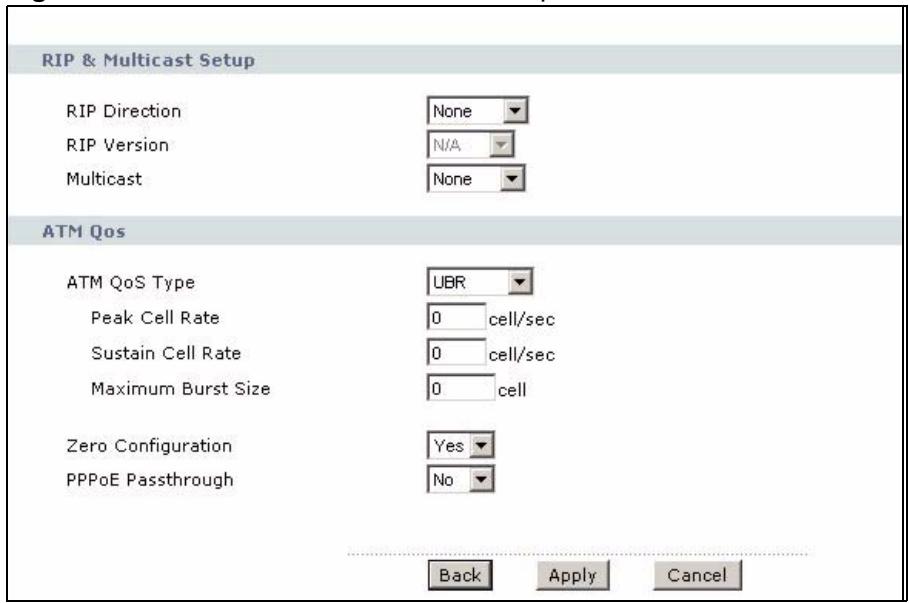
Figure 49 Advanced Internet Access Setup
The following table describes the labels in this screen.
Table 27 Advanced Internet Access Setup
| LABEL | DESCRIPTION |
| RIP & Multicast Setup | |
| RIP Direction | Select the RIP direction from None, Both, In Only and Out Only. |
| RIP Version | Select the RIP version from RIP-1, RIP-2B and RIP-2M. |
| Multicast | IGMP (Internet Group Multicast Protocol) is a network-layer protocol used to establish membership in a multicast group. The ZyXEL Device supports both IGMP version 1 (IGMP-v1) and IGMP-v2. Select None to disable it. |
| ATM QoS | |
| ATM QoS Type | Select CBR (Continuous Bit Rate) to specify fixed (always-on) bandwidth for voice or data traffic. Select UBR (Unspecified Bit Rate) for applications that are non-time sensitive, such as e-mail. Select VBR-RT (real-time Variable Bit Rate) type for applications with bursty connections that require closely controlled delay and delay variation. Select VBR-nRT (non real-time Variable Bit Rate) type for connections that do not require closely controlled delay and delay variation. |
| Peak Cell Rate | Divide the DSL line rate (bps) by 424 (the size of an ATM cell) to find the Peak Cell Rate (PCR). This is the maximum rate at which the sender can send cells. Type the PCR here. |
| Sustain Cell Rate | The Sustain Cell Rate (SCR) sets the average cell rate (long-term) that can be transmitted. Type the SCR, which must be less than the PCR. Note that system default is 0 cells/sec. |
| Maximum Burst Size | Maximum Burst Size (MBS) refers to the maximum number of cells that can be sent at the peak rate. Type the MBS, which is less than 65535. |
| Zero Configuration | This feature is not applicable/available when you configure the ZyXEL Device to use a static WAN IP address or in bridge mode. Select Yes to set the ZyXEL Device to automatically detect the Internet connection settings (such as the VCI/VPI numbers and the encapsulation method) from the ISP and make the necessary configuration changes. Select No to disable this feature. You must manually configure the ZyXEL Device for Internet access. |
| PPPoE Passthrough (PPPoE encapsulation only) | This field is available when you select PPPoE encapsulation. In addition to the ZyXEL Device's built-in PPPoE client, you can enable PPPoE pass through to allow up to ten hosts on the LAN to use PPPoE client software on their computers to connect to the ISP via the ZyXEL Device. Each host can have a separate account and a public WAN IP address. PPPoE pass through is an alternative to NAT for application where NAT is not appropriate. Disable PPPoE pass through if you do not need to allow hosts on the LAN to use PPPoE client software on their computers to connect to the ISP. |
| Back | Click Back to return to the previous screen. |
| Apply | Click Apply to save the changes. |
| Cancel | Click Cancel to begin configuring this screen afresh. |
7.6 WAN More Connections
The ZyXEL Device allows you to configure more than one Internet access connection. To configure additional Internet access connections click Network > WAN > More
Connections. The screen differs by the encapsulation.
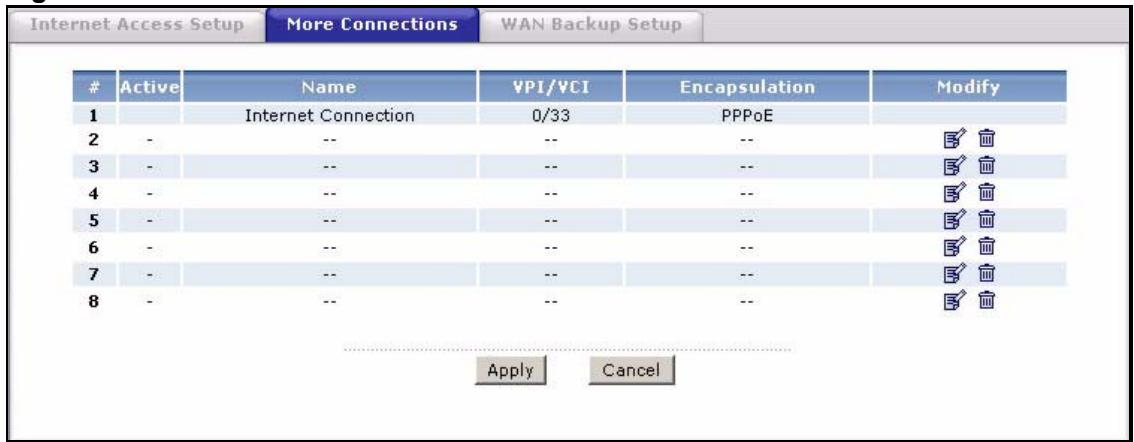
Figure 50 WAN More Connections
The following table describes the labels in this screen.
Table 28 Advanced Internet Access Setup
| LABEL | DESCRIPTION |
| # | This is an index number indicating the number of the corresponding connection. |
| Active | This field indicates whether the connection is active or not. |
| Name | This is the name you gave to the Internet connection. |
| VPI/VCI | This field displays the Virtual Path Identifier (VPI) and Virtual Channel Identifier (VCI) numbers configured for this WAN connection. |
| Encapsulation | This field indicates the encapsulation method of the Internet connection. |
| Modify | Click the modify icon to edit the Internet connection settings. Click this icon on an empty configuration to add a new Internet access setup. Click the delete icon to remove the Internet access setup from your connection list. |
| Apply | Click Apply to save the changes. |
| Cancel | Click Cancel to begin configuring this screen afresh. |
7.7 Traffic Redirect
Traffic redirect forwards traffic to a backup gateway when the ZyXEL Device cannot connect to the Internet. An example is shown in the figure below.
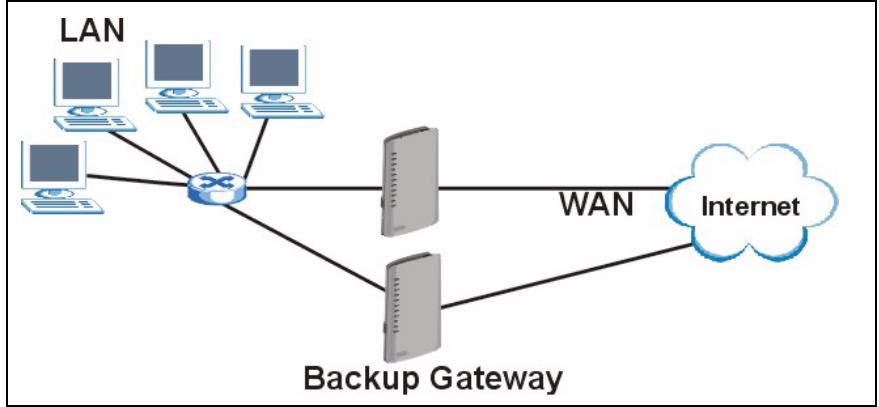
Figure 51 Traffic Redirect Example
The following network topology allows you to avoid triangle route security issues when the backup gateway is connected to the LAN. Use IP alias to configure the LAN into two or three logical networks with the ZyXEL Device itself as the gateway for each LAN network. Put the protected LAN in one subnet (Subnet 1 in the following figure) and the backup gateway in another subnet (Subnet 2). Configure filters that allow packets from the protected LAN (Subnet 1) to the backup gateway (Subnet 2).
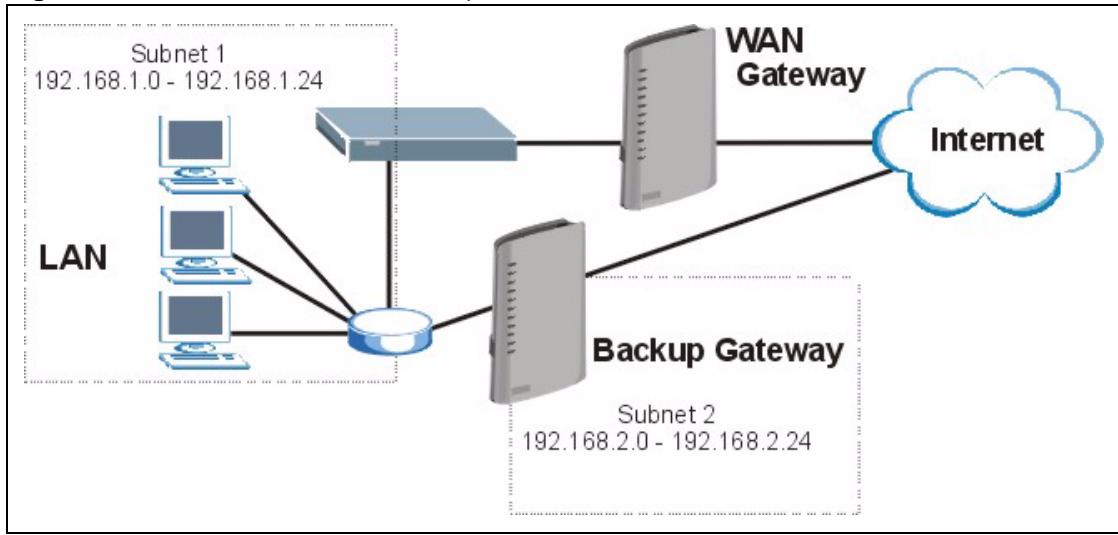
Figure 52 Traffic Redirect LAN Setup
7.8 WAN Backup Setup
To configure your ZyXEL Device's WAN backup, click Network > WAN > WAN Backup Setup.
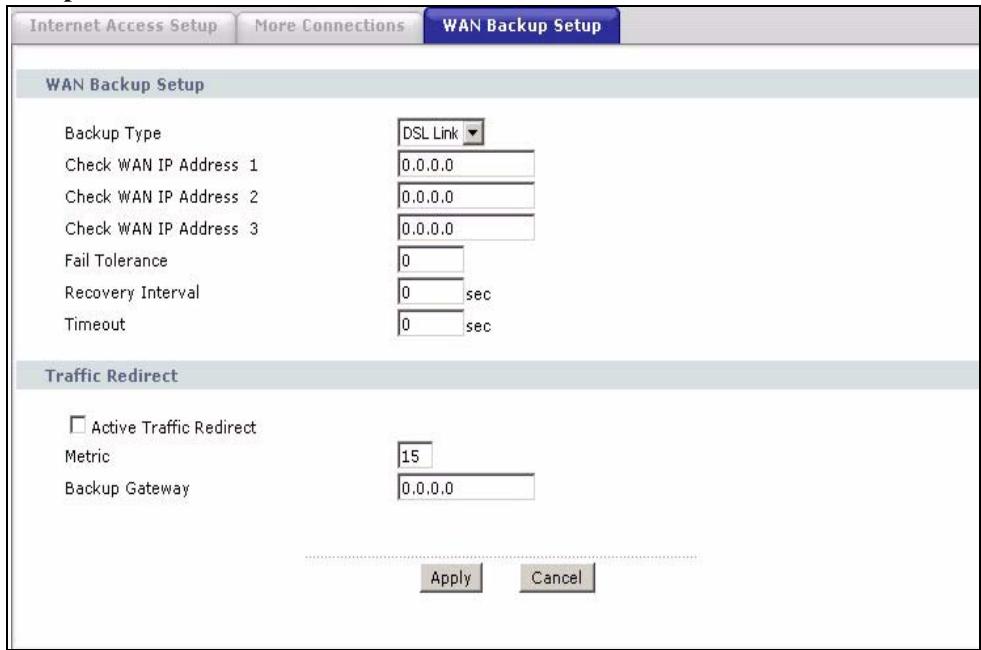
The following table describes the labels in this screen.
Table 29 WAN Backup Setup
| LABEL | DESCRIPTION |
| Backup Type | Select the method that the ZyXEL Device uses to check the DSL connection. Select DSL Link to have the ZyXEL Device check if the connection to the DSLAM is up. Select ICMP to have the ZyXEL Device periodically ping the IP addresses configured in the Check WAN IP Address fields. |
| Check WAN IP Address1-3 | Configure this field to test your ZyXEL Device's WAN accessibility. Type the IP address of a reliable nearby computer (for example, your ISP's DNS server address).Note: If you activate either traffic redirect or dial backup, you must configure at least one IP address here.When using a WAN backup connection, the ZyXEL Device periodically pings the addresses configured here and uses the other WAN backup connection (if configured) if there is no response. |
| Fail Tolerance | Type the number of times (2 recommended) that your ZyXEL Device may ping the IP addresses configured in the Check WAN IP Address field without getting a response before switching to a WAN backup connection (or a different WAN backup connection). |
| Recovery Interval | When the ZyXEL Device is using a lower priority connection (usually a WAN backup connection), it periodically checks whether or not it can use a higher priority connection.Type the number of seconds (30 recommended) for the ZyXEL Device to wait between checks. Allow more time if your destination IP address handles lots of traffic. |
| Timeout | Type the number of seconds (3 recommended) for your ZyXEL Device to wait for a ping response from one of the IP addresses in the Check WAN IP Address field before timing out the request. The WAN connection is considered "down" after the ZyXEL Device times out the number of times specified in the Fail Tolerance field. Use a higher value in this field if your network is busy or congested. |
| Traffic Redirect | Traffic redirect forwards traffic to a backup gateway when the ZyXEL Device cannot connect to the Internet. |
| Active Traffic Redirect | Select this check box to have the ZyXEL Device use traffic redirect if the normal WAN connection goes down.Note: If you activate traffic redirect, you must configure at least one Check WAN IP Address. |
| Metric | This field sets this route's priority among the routes the ZyXEL Device uses.The metric represents the "cost of transmission". A router determines the best route for transmission by choosing a path with the lowest "cost". RIP routing uses hop count as the measurement of cost, with a minimum of "1" for directly connected networks. The number must be between "1" and "15"; a number greater than "15" means the link is down. The smaller the number, the lower the "cost". |
| Backup Gateway | Type the IP address of your backup gateway in dotted decimal notation. The ZyXEL Device automatically forwards traffic to this IP address if the ZyXEL Device's Internet connection terminates. |
| Apply | Click Apply to save the changes. |
| Cancel | Click Cancel to begin configuring this screen afresh. |
CHAPTER 8 LAN Setup
This chapter describes how to configure LAN settings.
8.1 LAN Overview
A Local Area Network (LAN) is a shared communication system to which many computers are attached. A LAN is a computer network limited to the immediate area, usually the same building or floor of a building. The LAN screens can help you configure a LAN DHCP server and manage IP addresses.
See Section 8.3 on page 113 to configure the LAN screens.
8.1.1 LANs, WANs and the ZyXEL Device
The actual physical connection determines whether the ZyXEL Device ports are LAN or WAN ports. There are two separate IP networks, one inside the LAN network and the other outside the WAN network as shown next.
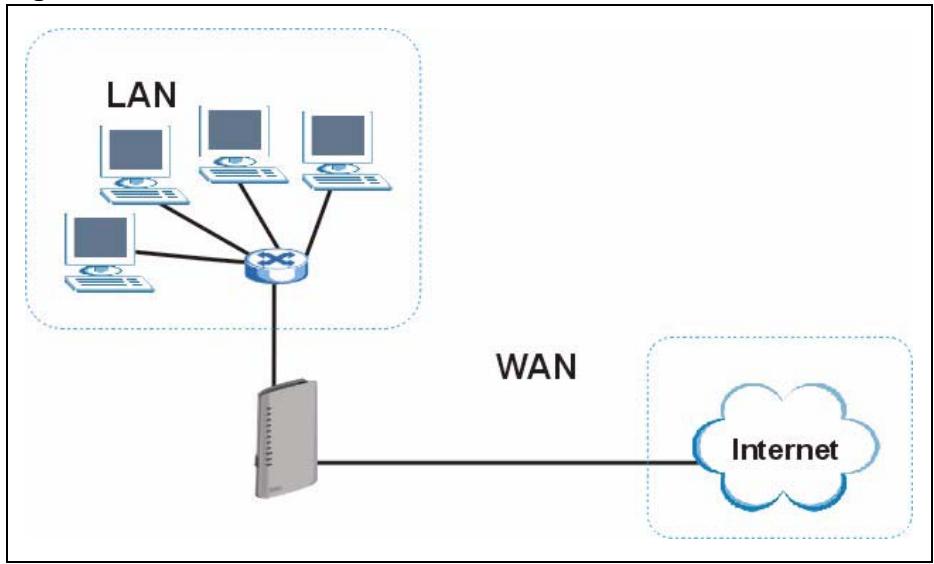
Figure 53 LAN and WAN IP Addresses
8.1.2 DHCP Setup
DHCP (Dynamic Host Configuration Protocol, RFC 2131 and RFC 2132) allows individual clients to obtain TCP/IP configuration at start-up from a server. You can configure the ZyXEL Device as a DHCP server or disable it. When configured as a server, the ZyXEL Device provides the TCP/IP configuration for the clients. If you turn DHCP service off, you must have another DHCP server on your LAN, or else the computer must be manually configured.
8.1.2.1 IP Pool Setup
The ZyXEL Device is pre-configured with a pool of IP addresses for the DHCP clients (DHCP Pool). See the product specifications in the appendices. Do not assign static IP addresses from the DHCP pool to your LAN computers.
8.1.3 DNS Server Address
DNS (Domain Name System) is for mapping a domain name to its corresponding IP address and vice versa. The DNS server is extremely important because without it, you must know the IP address of a machine before you can access it. The DNS server addresses that you enter in the DHCP setup are passed to the client machines along with the assigned IP address and subnet mask.
There are two ways that an ISP disseminates the DNS server addresses. The first is for an ISP to tell a customer the DNS server addresses, usually in the form of an information sheet, when s/he signs up. If your ISP gives you the DNS server addresses, enter them in the DNS Server fields in DHCP Setup, otherwise, leave them blank.
Some ISP's choose to pass the DNS servers using the DNS server extensions of PPP IPCP (IP Control Protocol) after the connection is up. If your ISP did not give you explicit DNS servers, chances are the DNS servers are conveyed through IPCP negotiation. The ZyXEL Device supports the IPCP DNS server extensions through the DNS proxy feature.
If you set the router to be a DNS relay, it tells the DHCP clients that the device itself is the DNS server. When a computer sends a DNS query to the ZyXEL Device, the ZyXEL Device forwards the query to the real DNS server learned through IPCP and relays the response back to the computer.
Please note that DNS proxy works only when the ISP uses IPCP DNS server extensions. It does not mean you can leave the DNS servers out of the DHCP setup under all circumstances. If your ISP gives you explicit DNS servers, make sure that you enter their IP addresses in the DHCP Setup screen. This way, the ZyXEL Device can pass the DNS servers to the computers and the computers can query the DNS server directly without the ZyXEL Device's intervention.
8.1.4 DNS Server Address Assignment
Use DNS (Domain Name System) to map a domain name to its corresponding IP address and vice versa. The DNS server is extremely important because without it, you must know the IP address of a computer before you can access it.
There are two ways that an ISP disseminates the DNS server addresses.
- The ISP tells you the DNS server addresses, usually in the form of an information sheet, when you sign up. If your ISP gives you DNS server addresses, enter them in the DNS Server fields in the DHCP Setup screen.
- The ZyXEL Device acts as a DNS proxy when the DNS Server field is set to DNS Relay in the DHCP Setup screen.
8.2 LAN TCP/IP
The ZyXEL Device has built-in DHCP server capability that assigns IP addresses and DNS servers to systems that support DHCP client capability.
8.2.1 IP Address and Subnet Mask
Similar to the way houses on a street share a common street name, so too do computers on a LAN share one common network number.
Where you obtain your network number depends on your particular situation. If the ISP or your network administrator assigns you a block of registered IP addresses, follow their instructions in selecting the IP addresses and the subnet mask.
If the ISP did not explicitly give you an IP network number, then most likely you have a single user account and the ISP will assign you a dynamic IP address when the connection is established. If this is the case, it is recommended that you select a network number from 192.168.0.0 to 192.168.255.0 and you must enable the Network Address Translation (NAT) feature of the ZyXEL Device. The Internet Assigned Number Authority (IANA) reserved this block of addresses specifically for private use; please do not use any other number unless you are told otherwise. Let's say you select 192.168.1.0 as the network number; which covers 254 individual addresses, from 192.168.1.1 to 192.168.1.254 (zero and 255 are reserved). In other words, the first three numbers specify the network number while the last number identifies an individual computer on that network.
Once you have decided on the network number, pick an IP address that is easy to remember, for instance, 192.168.1.1, for your ZyXEL Device, but make sure that no other device on your network is using that IP address.
The subnet mask specifies the network number portion of an IP address. Your ZyXEL Device will compute the subnet mask automatically based on the IP address that you entered. You don't need to change the subnet mask computed by the ZyXEL Device unless you are instructed to do otherwise.
8.2.1.1 Private IP Addresses
Every machine on the Internet must have a unique address. If your networks are isolated from the Internet, for example, only between your two branch offices, you can assign any IP addresses to the hosts without problems. However, the Internet Assigned Numbers Authority (IANA) has reserved the following three blocks of IP addresses specifically for private networks:
10.0.0.0 10.255.255.255
172.16.0.0 — 172.31.255.255
192.168.0.0—192.168.255.255
You can obtain your IP address from the IANA, from an ISP or it can be assigned from a private network. If you belong to a small organization and your Internet access is through an ISP, the ISP can provide you with the Internet addresses for your local networks. On the other hand, if you are part of a much larger organization, you should consult your network administrator for the appropriate IP addresses.
Note: Regardless of your particular situation, do not create an arbitrary IP address; always follow the guidelines above. For more information on address assignment, please refer to RFC 1597, Address Allocation for Private Internets and RFC 1466, Guidelines for Management of IP Address Space.
8.2.2 RIP Setup
RIP (Routing Information Protocol) allows a router to exchange routing information with other routers. The RIP Direction field controls the sending and receiving of RIP packets. When set to:
- Both - the ZyXEL Device will broadcast its routing table periodically and incorporate the RIP information that it receives.
- In Only - the ZyXEL Device will not send any RIP packets but will accept all RIP packets received.
- Out Only - the ZyXEL Device will send out RIP packets but will not accept any RIP packets received.
- None - the ZyXEL Device will not send any RIP packets and will ignore any RIP packets received.
The Version field controls the format and the broadcasting method of the RIP packets that the ZyXEL Device sends (it recognizes both formats when receiving). RIP-1 is universally supported; but RIP-2 carries more information. RIP-1 is probably adequate for most networks, unless you have an unusual network topology.
Both RIP-2B and RIP-2M sends the routing data in RIP-2 format; the difference being that RIP-2B uses subnet broadcasting while RIP-2M uses multicasting.
8.2.3 Multicast
Traditionally, IP packets are transmitted in one of either two ways - Unicast (1 sender - 1 recipient) or Broadcast (1 sender - everybody on the network). Multicast delivers IP packets to a group of hosts on the network - not everybody and not just 1.
IGMP (Internet Group Multicast Protocol) is a network-layer protocol used to establish membership in a Multicast group - it is not used to carry user data. IGMP version 2 (RFC 2236) is an improvement over version 1 (RFC 1112) but IGMP version 1 is still in wide use. If you would like to read more detailed information about interoperability between IGMP version 2 and version 1, please see sections 4 and 5 of RFC 2236. The class D IP address is used to identify host groups and can be in the range 224.0.0.0 to 239.255.255.255. The address 224.0.0.0 is not assigned to any group and is used by IP multicast computers. The address 224.0.0.1 is used for query messages and is assigned to the permanent group of all IP hosts (including gateways). All hosts must join the 224.0.0.1 group in order to participate in IGMP. The address 224.0.0.2 is assigned to the multicast routers group.
The ZyXEL Device supports both IGMP version 1 (IGMP-v1) and IGMP version 2 (IGMP-v2). At start up, the ZyXEL Device queries all directly connected networks to gather group membership. After that, the ZyXEL Device periodically updates this information. IP multicasting can be enabled/disabled on the ZyXEL Device LAN and/or WAN interfaces in the web configurator (LAN; WAN). Select None to disable IP multicasting on these interfaces.
8.2.4 Any IP
Traditionally, you must set the IP addresses and the subnet masks of a computer and the ZyXEL Device to be in the same subnet to allow the computer to access the Internet (through the ZyXEL Device). In cases where your computer is required to use a static IP address in another network, you may need to manually configure the network settings of the computer every time you want to access the Internet via the ZyXEL Device.
With the Any IP feature and NAT enabled, the ZyXEL Device allows a computer to access the Internet without changing the network settings (such as IP address and subnet mask) of the computer, when the IP addresses of the computer and the ZyXEL Device are not in the same subnet. Whether a computer is set to use a dynamic or static (fixed) IP address, you can simply connect the computer to the ZyXEL Device and access the Internet.
The following figure depicts a scenario where a computer is set to use a static private IP address in the corporate environment. In a residential house where a ZyXEL Device is installed, you can still use the computer to access the Internet without changing the network settings, even when the IP addresses of the computer and the ZyXEL Device are not in the same subnet.
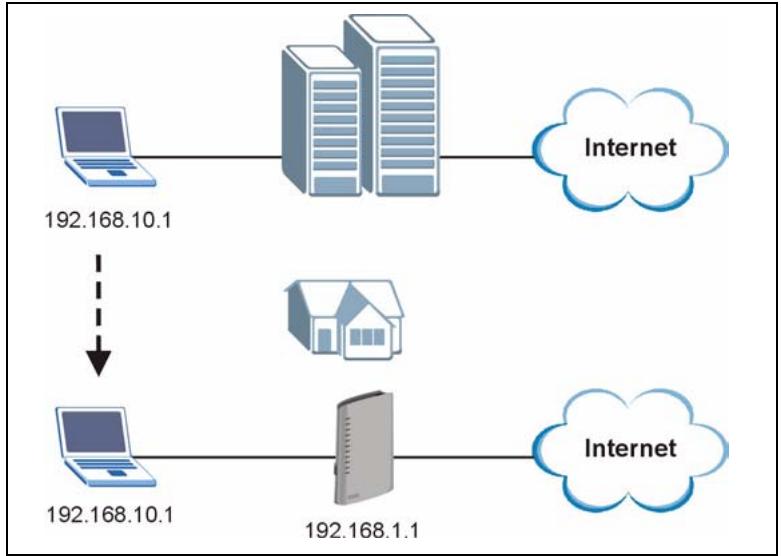
Figure 54 Any IP Example
The Any IP feature does not apply to a computer using either a dynamic IP address or a static IP address that is in the same subnet as the ZyXEL Device's IP address.
Note: You must enable NAT/SUA to use the Any IP feature on the ZyXEL Device.
8.2.4.1 How Any IP Works
Address Resolution Protocol (ARP) is a protocol for mapping an Internet Protocol address (IP address) to a physical machine address, also known as a Media Access Control or MAC address, on the local area network. IP routing table is defined on IP Ethernet devices (the ZyXEL Device) to decide which hop to use, to help forward data along to its specified destination.
The following lists out the steps taken, when a computer tries to access the Internet for the first time through the ZyXEL Device.
1 When a computer (which is in a different subnet) first attempts to access the Internet, it sends packets to its default gateway (which is not the ZyXEL Device) by looking at the MAC address in its ARP table.
2 When the computer cannot locate the default gateway, an ARP request is broadcast on the LAN
3 The ZyXEL Device receives the ARP request and replies to the computer with its own MAC address
4 The computer updates the MAC address for the default gateway to the ARP table. Once the ARP table is updated, the computer is able to access the Internet through the ZyXEL Device.
5 When the ZyXEL Device receives packets from the computer, it creates an entry in the IP routing table so it can properly forward packets intended for the computer.
After all the routing information is updated, the computer can access the ZyXEL Device and the Internet as if it is in the same subnet as the ZyXEL Device.
8.3 Configuring LAN IP
Click Network > LAN to open the IP screen. See Section 8.1 on page 107 for background information.
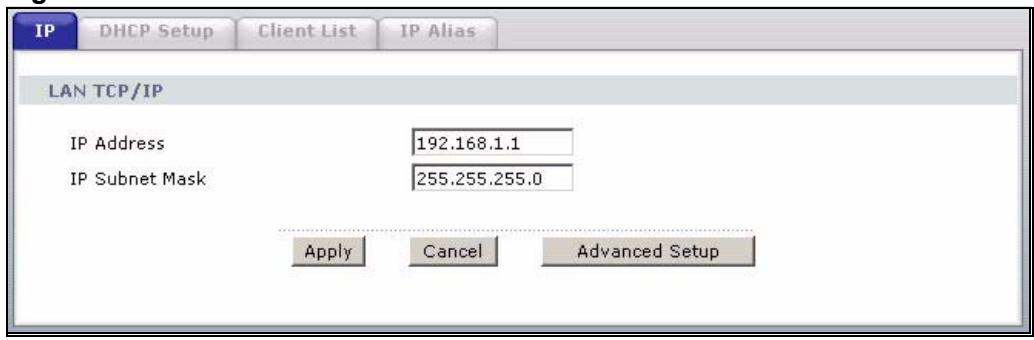
Figure 55 LAN IP
The following table describes the fields in this screen.
Table 30 LAN IP
| LABEL | DESCRIPTION |
| LAN TCP/IP | |
| IP Address | Enter the IP address of your ZyXEL Device in dotted decimal notation, for example, 192.168.1.1 (factory default). |
| IP Subnet Mask | Type the subnet mask assigned to you by your ISP (if given). |
| Apply | Click Apply to save your changes back to the ZyXEL Device. |
| Cancel | Click Cancel to begin configuring this screen afresh. |
| Advanced Setup | Click this button to display the Advanced LAN Setup screen and edit more details of your LAN setup. |
8.3.1 Configuring Advanced LAN Setup
To edit your ZyXEL Device's advanced LAN settings, click the Advanced Setup button in the LAN IP screen. The screen appears as shown.
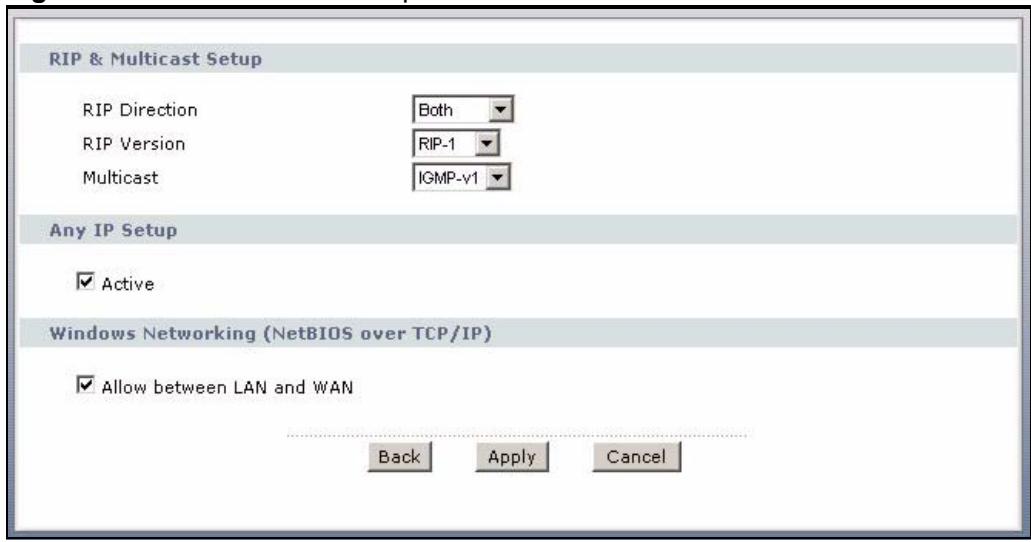
Figure 56 Advanced LAN Setup
The following table describes the labels in this screen.
Table 31 Advanced LAN Setup
| LABEL | DESCRIPTION |
| RIP & Multicast Setup | |
| RIP Direction | Select the RIP direction from None, Both, In Only and Out Only. |
| RIP Version | Select the RIP version from RIP-1, RIP-2B and RIP-2M. |
| Multicast | IGMP (Internet Group Multicast Protocol) is a network-layer protocol used to establish membership in a multicast group. The ZyXEL Device supports both IGMP version 1 (IGMP-v1) and IGMP-v2. Select None to disable it. |
| Any IP Setup | Select the Active check box to enable the Any IP feature. This allows a computer to access the Internet without changing the network settings (such as IP address and subnet mask) of the computer, even when the IP addresses of the computer and the ZyXEL Device are not in the same subnet.When you disable the Any IP feature, only computers with dynamic IP addresses or static IP addresses in the same subnet as the ZyXEL Device's LAN IP address can connect to the ZyXEL Device or access the Internet through the ZyXEL Device. |
| Windows Networking (NetBIOS over TCP/IP) | NetBIOS (Network Basic Input/Output System) are TCP or UDP packets that enable a computer to connect to and communicate with a LAN. For some dial-up services such as PPPoE or PPTP, NetBIOS packets cause unwanted calls.However it may sometimes be necessary to allow NetBIOS packets to pass through to the WAN in order to find a computer on the WAN. |
| Allow between LAN and WAN | Select this check box to forward NetBIOS packets from the LAN to the WAN and from the WAN to the LAN. If your firewall is enabled with the default policy set to block WAN to LAN traffic, you also need to enable the default WAN to LAN firewall rule that forwards NetBIOS traffic.Clear this check box to block all NetBIOS packets going from the LAN to the WAN and from the WAN to the LAN. |
| Back | Click Back to return to the previous screen. |
| Apply | Click Apply to save the changes. |
| Cancel | Click Cancel to begin configuring this screen afresh. |
8.4 DHCP Setup
Click Network > DHCP Setup to open this screen. Use this screen to configure the DNS server information that the ZyXEL Device sends to the DHCP client devices on the LAN.
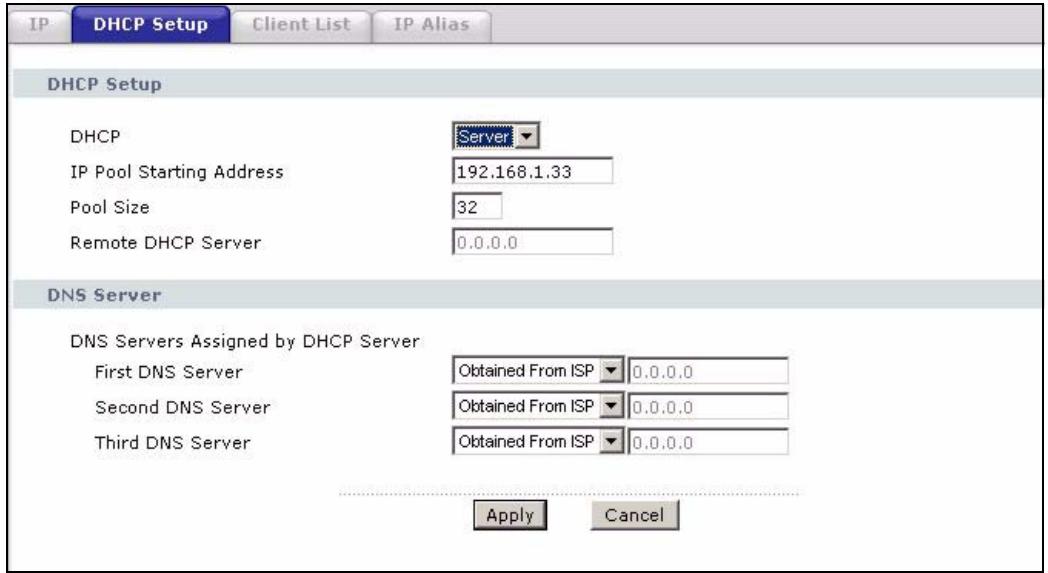
Figure 57 DHCP Setup
The following table describes the labels in this screen.
Table 32 DHCP Setup
| LABEL | DESCRIPTION |
| DHCP Setup | |
| DHCP | If set to Server, your ZyXEL Device can assign IP addresses, an IP default gateway and DNS servers to Windows 95, Windows NT and other systems that support the DHCP client. If set to None, the DHCP server will be disabled. If set to Relay, the ZyXEL Device acts as a surrogate DHCP server and relays DHCP requests and responses between the remote server and the clients. Enter the IP address of the actual, remote DHCP server in the Remote DHCP Server field in this case. When DHCP is used, the following items need to be set: |
| IP Pool Starting Address | This field specifies the first of the contiguous addresses in the IP address pool. |
| Pool Size | This field specifies the size, or count of the IP address pool. |
| Remote DHCP Server | If Relay is selected in the DHCP field above then enter the IP address of the actual remote DHCP server here. |
| DNS Server | |
| DNS Servers Assigned by DHCP Server | The ZyXEL Device passes a DNS (Domain Name System) server IP address to the DHCP clients. |
Table 32 DHCP Setup
| LABEL | DESCRIPTION |
| First DNS Server | Select Obtained From ISP if your ISP dynamically assigns DNS server information (and the ZyXEL Device's WAN IP address). |
| Second DNS Server | Select User-Defined if you have the IP address of a DNS server. Enter the DNS server's IP address in the field to the right. If you chose User-Defined, but leave the IP address set to 0.0.0.0, User-Defined changes to None after you click Apply. If you set a second choice to User-Defined, and enter the same IP address, the second User-Defined changes to None after you click Apply. |
| Third DNS Server | Select DNS Relay to have the ZyXEL Device act as a DNS proxy only when the ISP uses IPCP DNS server extensions. The ZyXEL Device's LAN IP address displays in the field to the right (read-only). The ZyXEL Device tells the DHCP clients on the LAN that the ZyXEL Device itself is the DNS server. When a computer on the LAN sends a DNS query to the ZyXEL Device, the ZyXEL Device forwards the query to the real DNS server learned through IPCP and relays the response back to the computer. You can only select DNS Relay for one of the three servers; if you select DNS Relay for a second or third DNS server, that choice changes to None after you click Apply. |
| Select None if you do not want to configure DNS servers. You must have another DHCP sever on your LAN, or else the computers must have their DNS server addresses manually configured. If you do not configure a DNS server, you must know the IP address of a computer in order to access it. | |
| Apply | Click Apply to save your changes back to the ZyXEL Device. |
| Cancel | Click Cancel to begin configuring this screen afresh. |
8.5 LAN Client List
This table allows you to assign IP addresses on the LAN to specific individual computers based on their MAC Addresses.
Every Ethernet device has a unique MAC (Media Access Control) address. The MAC address is assigned at the factory and consists of six pairs of hexadecimal characters, for example, 00:A0:C5:00:00:02.
Click Network > LAN > Client List to open the following screen. Use this screen to change your ZyXEL Device's static DHCP settings.
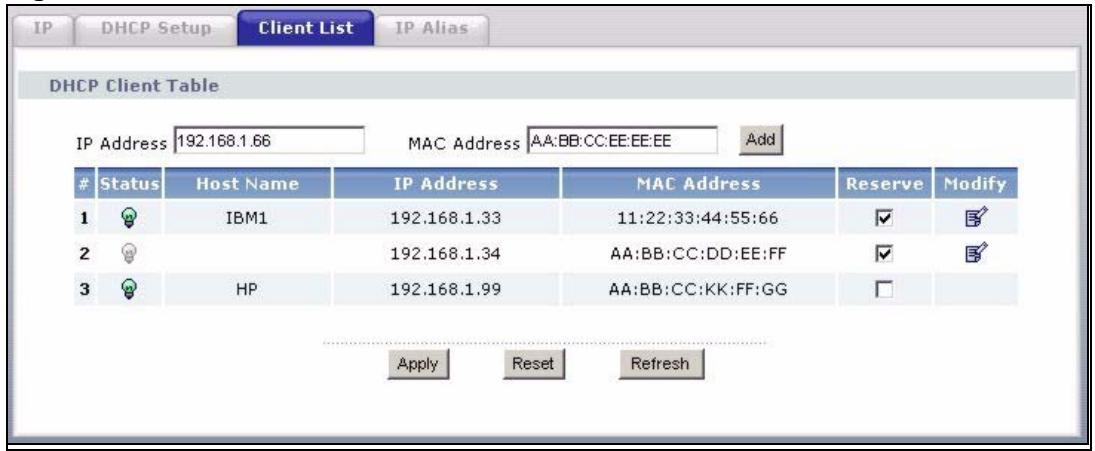
Figure 58 LAN Client List
The following table describes the labels in this screen.
Table 33 LAN Client List
| LABEL | DESCRIPTION |
| IP Address | Enter the IP address that you want to assign to the computer on your LAN with the MAC address that you will also specify. |
| MAC Address | Enter the MAC address of a computer on your LAN. |
| Add | Click Add to add a static DHCP entry. |
| # | This is the index number of the static IP table entry (row). |
| Status | This field displays whether the client is connected to the ZyXEL Device. |
| Host Name | This field displays the computer host name. |
| IP Address | This field displays the IP address relative to the # field listed above. |
| MAC Address | The MAC (Media Access Control) or Ethernet address on a LAN (Local Area Network) is unique to your computer (six pairs of hexadecimal notation). A network interface card such as an Ethernet adapter has a hardwired address that is assigned at the factory. This address follows an industry standard that ensures no other adapter has a similar address. |
| Reserve | Select the check box in the heading row to automatically select all check boxes or select the check box(es) in each entry to have the ZyXEL Device always assign the selected entry(ies)'s IP address(es) to the corresponding MAC address(es) (and host name(s)). You can select up to 128 entries in this table. After you click Apply, the MAC address and IP address also display in the LAN Static DHCP screen (where you can edit them). |
| Modify | Click the modify icon to have the IP address field editable and change it. |
| Apply | Click Apply to save your changes back to the ZyXEL Device. |
| Cancel | Click Cancel to begin configuring this screen afresh. |
| Refresh | Click Refresh to reload the DHCP table. |
8.6 LAN IP Alias
IP alias allows you to partition a physical network into different logical networks over the same Ethernet interface. The ZyXEL Device supports three logical LAN interfaces via its single physical Ethernet interface with the ZyXEL Device itself as the gateway for each LAN network.
When you use IP alias, you can also configure firewall rules to control access between the LAN's logical networks (subnets).
Note: Make sure that the subnets of the logical networks do not overlap.
The following figure shows a LAN divided into subnets A, B, and C.
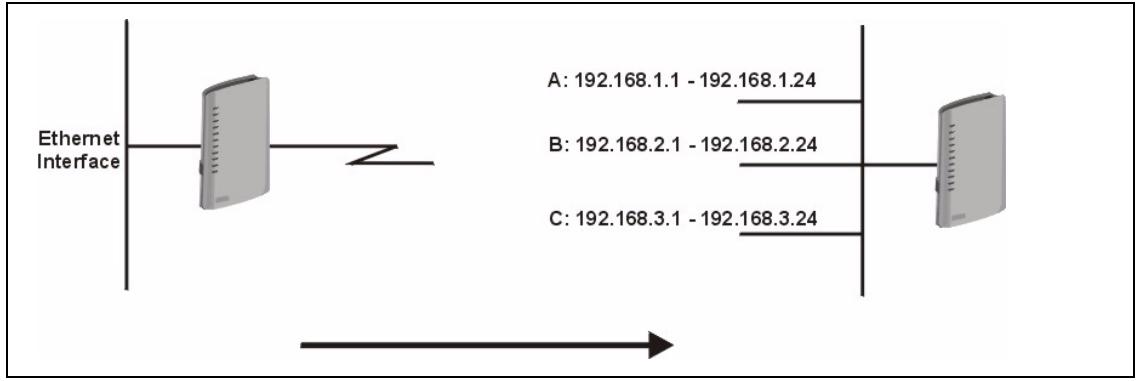
Figure 59 Physical Network & Partitioned Logical Networks
Click Network > LAN > IP Alias to open the following screen. Use this screen to change your ZyXEL Device's IP alias settings.
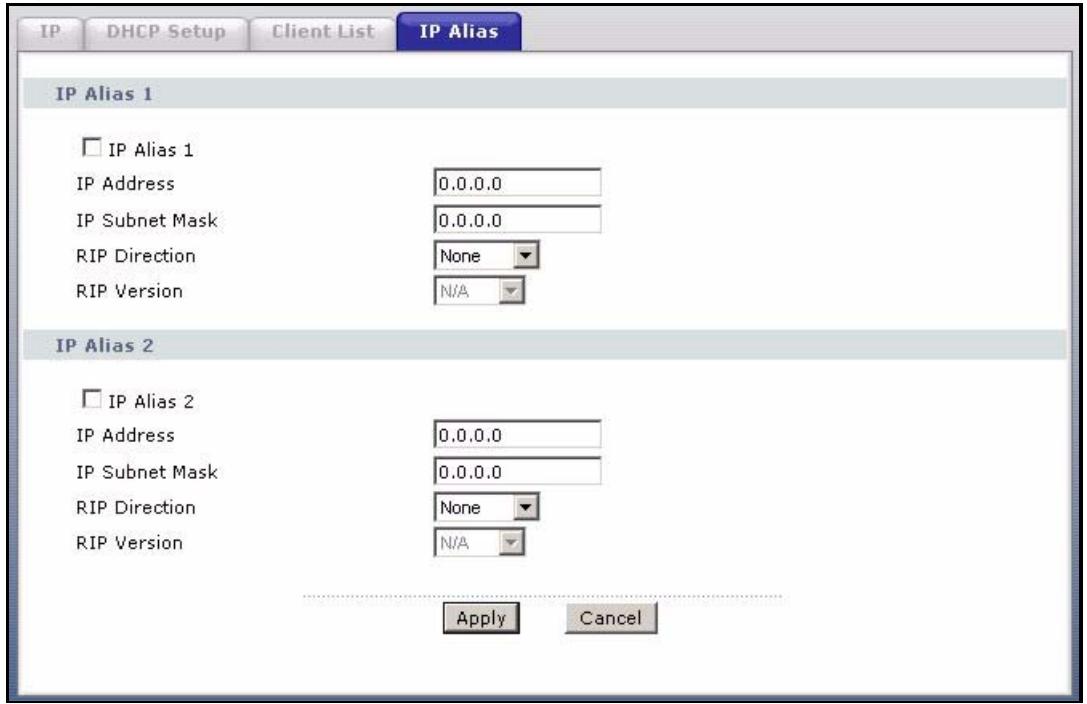
Figure 60 LAN IP Alias
The following table describes the labels in this screen.
Table 34 LAN IP Alias
| LABEL | DESCRIPTION |
| IP Alias 1, 2 | Select the check box to configure another LAN network for the ZyXEL Device. |
| IP Address | Enter the IP address of your ZyXEL Device in dotted decimal notation. Alternatively, click the right mouse button to copy and/or paste the IP address. |
| IP Subnet Mask | Your ZyXEL Device will automatically calculate the subnet mask based on the IP address that you assign. Unless you are implementing subnetting, use the subnet mask computed by the ZyXEL Device. |
Table 34 LAN IP Alias
| LABEL | DESCRIPTION |
| RIP Direction | RIP (Routing Information Protocol, RFC 1058 and RFC 1389) allows a router to exchange routing information with other routers. The RIP Direction field controls the sending and receiving of RIP packets. Select the RIP direction from Both/In Only/Out Only/None. When set to Both or Out Only, the ZyXEL Device will broadcast its routing table periodically. When set to Both or In Only, it will incorporate the RIP information that it receives; when set to None, it will not send any RIP packets and will ignore any RIP packets received. |
| RIP Version | The RIP Version field controls the format and the broadcasting method of the RIP packets that the ZyXEL Device sends (it recognizes both formats when receiving). RIP-1 is universally supported but RIP-2 carries more information. RIP-1 is probably adequate for most networks, unless you have an unusual network topology. Both RIP-2B and RIP-2M sends the routing data in RIP-2 format; the difference being that RIP-2B uses subnet broadcasting while RIP-2M uses multicast. Multicasting can reduce the load on non-router machines since they generally do not listen to the RIP multicast address and so will not receive the RIP packets. However, if one router uses multicast, then all routers on your network must use multicast, also. By default, RIP direction is set to Both and the Version set to RIP-1. |
| Apply | Click Apply to save your changes back to the ZyXEL Device. |
| Cancel | Click Cancel to begin configuring this screen afresh. |
CHAPTER 9
Wireless LAN
This chapter discusses how to configure the wireless network settings in your ZyXEL Device. See the appendices for more detailed information about wireless networks. This chapter applies to the "W" models only.
9.1 Wireless Network Overview
The following figure provides an example of a wireless network.
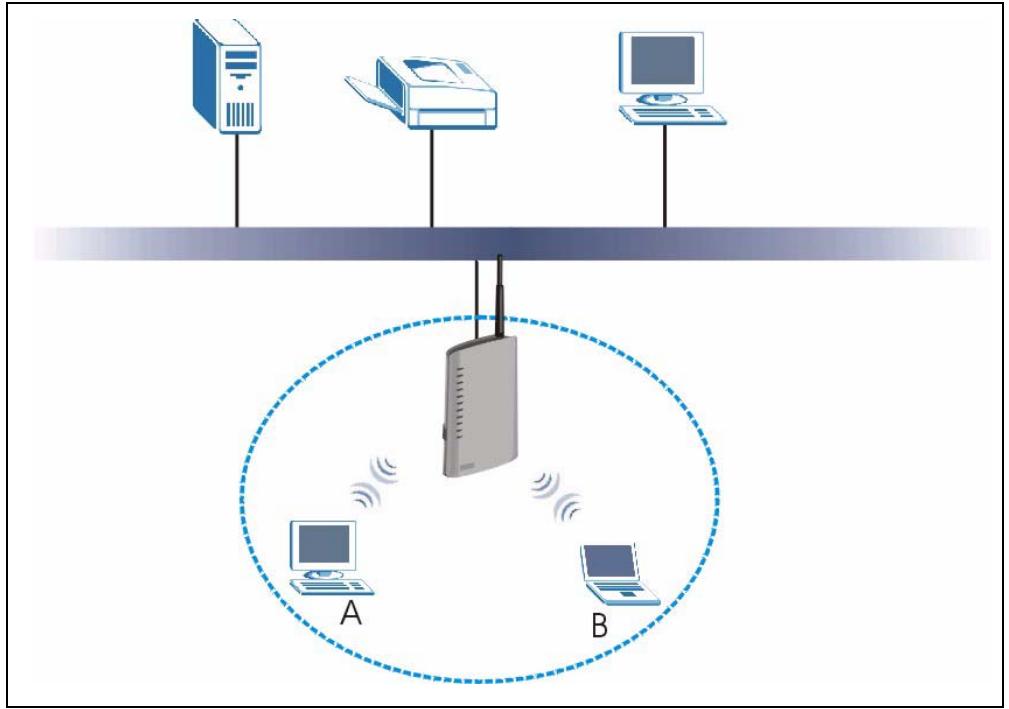
Figure 61 Example of a Wireless Network
The wireless network is the part in the blue circle. In this wireless network, devices A and B use the access point (AP) to interact with the other devices (such as the printer) or with the Internet. Your ZyXEL Device is the AP.
Every wireless network must follow these basic guidelines.
- Every device in the same wireless network must use the same SSID.
The SSID is the name of the wireless network. It stands for Service Set IDentity.
- If two wireless networks overlap, they should use a different channel.
Like radio stations or television channels, each wireless network uses a specific channel, or frequency, to send and receive information.
- Every device in the same wireless network must use security compatible with the AP.
Security stops unauthorized devices from using the wireless network. It can also protect the information that is sent in the wireless network.
9.2 Wireless Security Overview
The following sections introduce different types of wireless security you can set up in the wireless network.
9.2.1 SSD
Normally, the ZyXEL Device acts like a beacon and regularly broadcasts the SSID in the area. You can hide the SSID instead, in which case the ZyXEL Device does not broadcast the SSID. In addition, you should change the default SSID to something that is difficult to guess.
This type of security is fairly weak, however, because there are ways for unauthorized wireless devices to get the SSID. In addition, unauthorized wireless devices can still see the information that is sent in the wireless network.
9.2.2 MAC Address Filter
Every device that can use a wireless network has a unique identification number, called a MAC address. A MAC address is usually written using twelve hexadecimal characters; for example, 00A0C5000002 or 00:A0:C5:00:00:02. To get the MAC address for each device in the wireless network, see the device's User's Guide or other documentation.
You can use the MAC address filter to tell the ZyXEL Device which devices are allowed or not allowed to use the wireless network. If a device is allowed to use the wireless network, it still has to have the correct information (SSID, channel, and security). If a device is not allowed to use the wireless network, it does not matter if it has the correct information.
This type of security does not protect the information that is sent in the wireless network. Furthermore, there are ways for unauthorized wireless devices to get the MAC address of an authorized device. Then, they can use that MAC address to use the wireless network.
9.2.3 User Authentication
Authentication is the process of verifying whether a wireless device is allowed to use the wireless network. You can make every user log in to the wireless network before they can use it. However, every device in the wireless network has to support IEEE 802.1x to do this.
For wireless networks, you can store the user names and passwords for each user in a RADIUS server. This is a server used in businesses more than in homes. If you do not have a RADIUS server, you cannot set up user names and passwords for your users.
Unauthorized wireless devices can still see the information that is sent in the wireless network, even if they cannot use the wireless network. Furthermore, there are ways for unauthorized wireless users to get a valid user name and password. Then, they can use that user name and password to use the wireless network.
9.2.4 Encryption
Wireless networks can use encryption to protect the information that is sent in the wireless network. Encryption is like a secret code. If you do not know the secret code, you cannot understand the message.
The types of encryption you can choose depend on the type of authentication. (See section 9.2.3 on page 123 for information about this.)
Table 35 Types of Encryption for Each Type of Authentication
| Weakest Strongest | No Authentication | RADIUS Server |
| No Security | WPA | |
| Static WEP | ||
| WPA-PSK | ||
| WPA2-PSK | WPA2 |
For example, if the wireless network has a RADIUS server, you can choose WPA or WPA2. If users do not log in to the wireless network, you can choose no encryption, Static WEP, WPA-PSK, or WPA2-PSK.
Usually, you should set up the strongest encryption that every device in the wireless network supports. For example, suppose you have a wireless network with the ZyXEL Device and you do not have a RADIUS server. Therefore, there is no authentication. Suppose the wireless network has two devices. Device A only supports WEP, and device B supports WEP and WPA. Therefore, you should set up Static WEP in the wireless network.
Note: It is recommended that wireless networks use WPA-PSK, WPA, or stronger encryption. The other types of encryption are better than none at all, but it is still possible for unauthorized wireless devices to figure out the original information pretty quickly.
When you select WPA2 or WPA2-PSK in your ZyXEL Device, you can also select an option (WPA compatible) to support WPA as well. In this case, if some of the devices support WPA and some support WPA2, you should set up WPA2-PSK or WPA2 (depending on the type of wireless network login) and select the WPA compatible option in the ZyXEL Device.
Many types of encryption use a key to protect the information in the wireless network. The longer the key, the stronger the encryption. Every device in the wireless network must have the same key.
9.2.5 One-Touch Intelligent Security Technology (OTIST)
With ZyXEL's OTIST, you set up the SSID and the encryption (WEP or WPA-PSK) on the ZyXEL Device. Then, the ZyXEL Device transfers them to the devices in the wireless networks. As a result, you do not have to set up the SSID and encryption on every device in the wireless network.
The devices in the wireless network have to support OTIST, and they have to be in range of the ZyXEL Device when you activate it. See section 9.6 on page 133 for more details.
9.3 Wireless Performance Overview
The following sections introduce different ways to improve the performance of the wireless network.
9.3.1 Quality of Service (QoS)
You can turn on Wi-Fi MultiMedia (WMM) QoS to improve the performance of voice and video applications in the wireless network. QoS gives high priority to voice and video, which makes them run more smoothly. Similarly, it gives low priority to many large file downloads so that they do not reduce the quality of other applications.
9.4 Additional Wireless Terms
The following table describes wireless network terms and acronyms used in the ZyXEL Device.
| TERM | DESCRIPTION |
| Intra-BSS Traffic | This describes direct communication (not through the ZyXEL Device) between two wireless devices within a wireless network. You might disable this kind of communication to enhance security within your wireless network. |
| RTS/CTS Threshold | In a wireless network which covers a large area, wireless devices are sometimes not aware of each other's presence. This may cause them to send information to the AP at the same time and result in information colliding and not getting through. By setting this value lower than the default value, the wireless devices must sometimes get permission to send information to the ZyXEL Device. The lower the value, the more often the devices must get permission. If this value is greater than the fragmentation threshold value (see below), then wireless devices never have to get permission to send information to the ZyXEL Device. |
| Preamble | A preamble affects the timing in your wireless network. There are two preamble modes: long and short. If a device uses a different preamble mode than the ZyXEL Device does, it cannot communicate with the ZyXEL Device. |
| Authentication | The process of verifying whether a wireless device is allowed to use the wireless network. |
| Max. Frame Burst | Enable this to improve the performance of both pure IEEE 802.11g and mixed IEEE 802.11b/g networks. Maximum Frame Burst sets the maximum time that the ZyXEL Device transmits IEEE 802.11g wireless traffic only. |
| Fragmentation Threshold | A small fragmentation threshold is recommended for busy networks, while a larger threshold provides faster performance if the network is not very busy. |
| Roaming | If you have two or more ZyXEL Devices (or other wireless access points) on your wireless network, you can enable this option so that wireless devices can change locations without having to log in again. This is useful for devices, such as notebooks, that move around a lot. |
9.5 General WLAN Screen
Note: If you are configuring the ZyXEL Device from a computer connected to the wireless LAN and you change the ZyXEL Device's SSID or WEP settings, you will lose your wireless connection when you press Apply to confirm. You must then change the wireless settings of your computer to match the ZyXEL Device's new settings.
Click Network > Wireless LAN to open the Wireless LAN General screen.
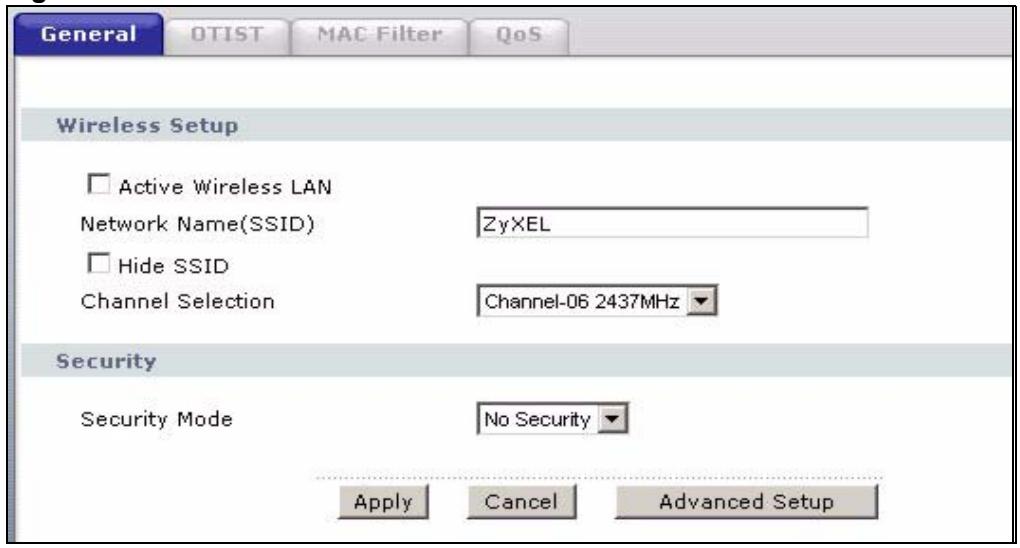
Figure 62 Wireless LAN: General
The following table describes the general wireless LAN labels in this screen.
Table 36 Wireless LAN: General
| LABEL | DESCRIPTION |
| Active Wireless LAN | Click the check box to activate wireless LAN. |
| Network Name(SSID) | (Service Set IDentity) The SSID identifies the Service Set with which a wireless station is associated. Wireless stations associating to the access point (AP) must have the same SSID. Enter a descriptive name (up to 32 printable 7-bit ASCII characters) for the wireless LAN.Note: If you are configuring the ZyXEL Device from a computer connected to the wireless LAN and you change the ZyXEL Device's SSID or WEP settings, you will lose your wireless connection when you press Apply to confirm. You must then change the wireless settings of your computer to match the ZyXEL Device's new settings. |
| Hide SSID | Select this check box to hide the SSID in the outgoing beacon frame so a station cannot obtain the SSID through scanning using a site survey tool. |
| Channel Selection | Set the operating frequency/channel depending on your particular region.Select a channel from the drop-down list box. |
| Security Mode | See the following sections for more details about this field. |
| Apply | Click Apply to save your changes back to the ZyXEL Device. |
| Cancel | Click Cancel to reload the previous configuration for this screen. |
| Advanced Setup | Click Advanced Setup to display the Wireless Advanced Setup screen and edit more details of your WLAN setup. |
9.5.1 No Security
Select No Security to allow wireless stations to communicate with the access points without any data encryption.
Note: If you do not enable any wireless security on your ZyXEL Device, your network is accessible to any wireless networking device that is within range.
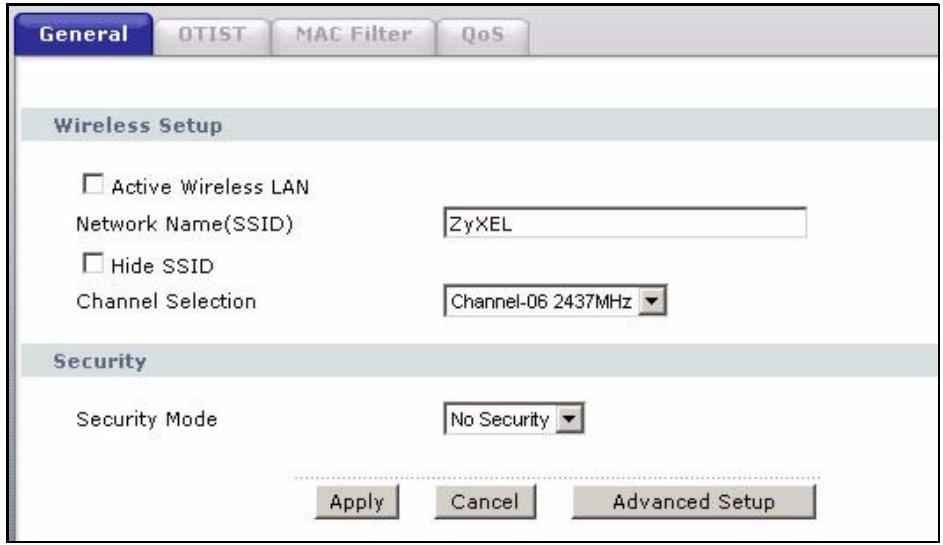
Figure 63 Wireless: No Security
The following table describes the labels in this screen.
Table 37 Wireless No Security
| LABEL | DESCRIPTION |
| Security Mode | Choose No Security from the drop-down list box. |
9.5.2 WEP Encryption Screen
In order to configure and enable WEP encryption; click Network > Wireless LAN to display the General screen. Select Static WEP from the Security Mode list.
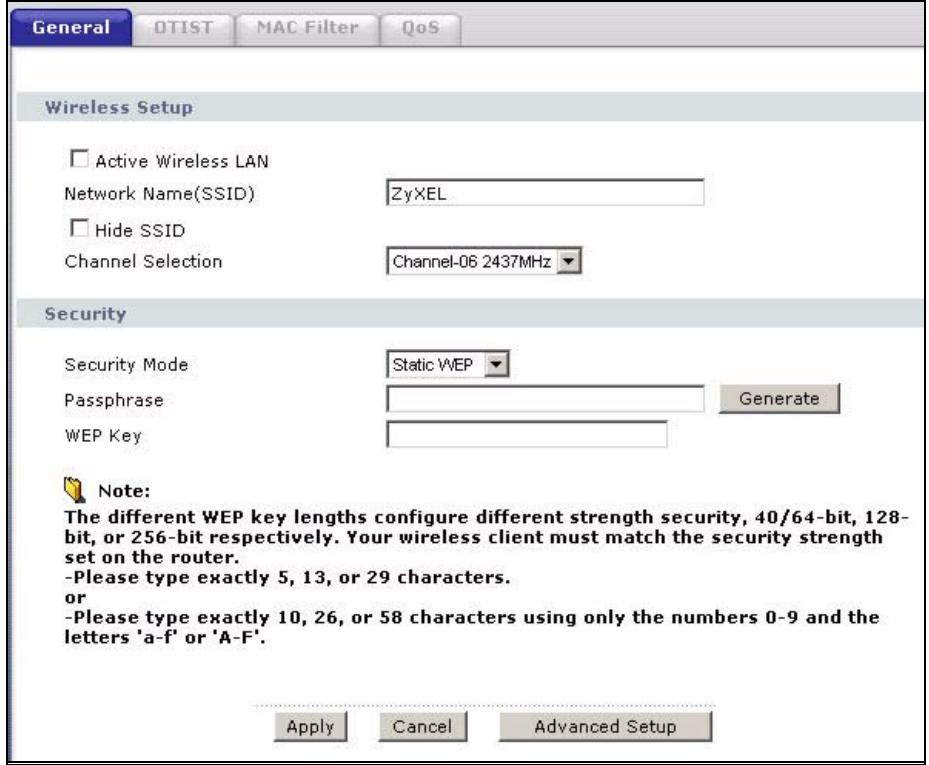
Figure 64 Wireless: Static WEP Encryption
The following table describes the wireless LAN security labels in this screen.
Table 38 Wireless: Static WEP Encryption
| LABEL | DESCRIPTION |
| Security Mode | Choose Static WEP from the drop-down list box. |
| Passphrase | Enter a Passphrase (up to 32 printable characters) and clicking Generate. The ZyXEL Device automatically generates a WEP key. |
| WEP Key | The WEP key is used to encrypt data. Both the ZyXEL Device and the wireless stations must use the same WEP key for data transmission. If you want to manually set the WEP key, enter any 5, 13 or 29 characters (ASCII string) or 10, 26 or 58 hexadecimal characters ("0-9", "A-F") for a 64-bit, 128-bit or 256-bit WEP key respectively. |
9.5.3 WPA(2)-PSK
In order to configure and enable WPA-PSK authentication; click Network > Wireless LAN to display the General screen. Select WPA-PSK or WPA2-PSK from the Security Mode list.
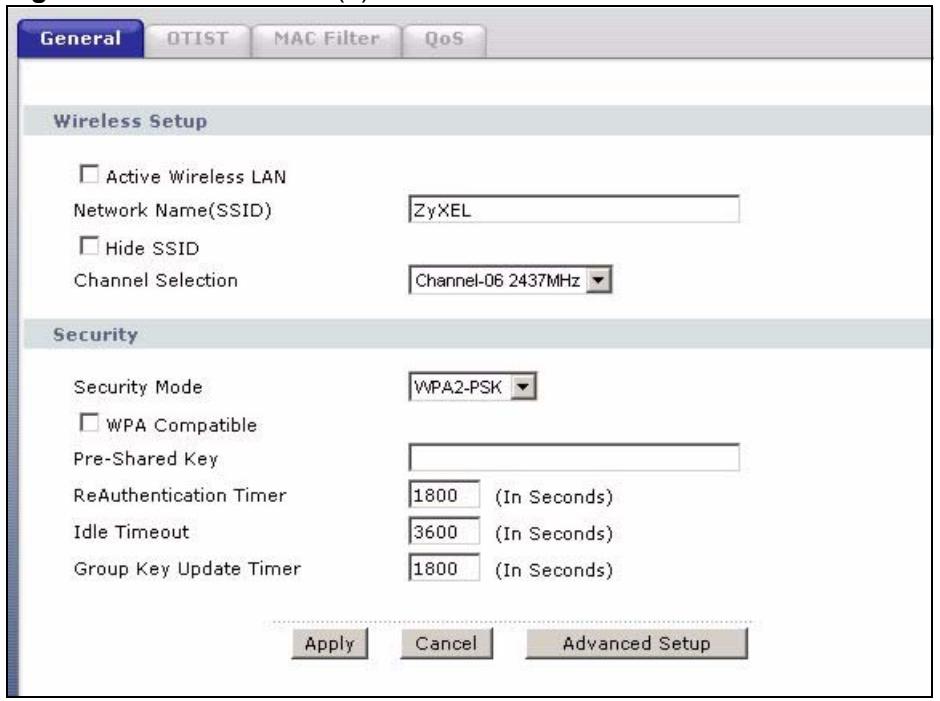
Figure 65 Wireless: WPA(2)-PSK
The following table describes the wireless LAN security labels in this screen.
Table 39 Wireless: WPA(2)-PSK
| LABEL | DESCRIPTION |
| Security Mode | Choose WPA-PSK or WPA2-PSK from the drop-down list box. |
| WPA Compatible | This field is only available for WPA2-PSK. Select this if you want the ZyXEL Device to support WPA-PSK and WPA2-PSK simultaneously. |
| Pre-Shared Key | The encryption mechanisms used for WPA(2) and WPA(2)-PSK are the same. The only difference between the two is that WPA(2)-PSK uses a simple common password, instead of user-specific credentials.Type a pre-shared key from 8 to 63 case-sensitive ASCII characters (including spaces and symbols). |
| ReAuthentication Timer (in seconds) | Specify how often wireless stations have to resend usernames and passwords in order to stay connected. Enter a time interval between 10 and 9999 seconds. The default time interval is 1800 seconds (30 minutes).Note: If wireless station authentication is done using a RADIUS server, the reauthentication timer on the RADIUS server has priority. |
| Idle Timeout | The ZyXEL Device automatically disconnects a wireless station from the wired network after a period of inactivity. The wireless station needs to enter the username and password again before access to the wired network is allowed. The default time interval is 3600 seconds (or 1 hour). |
| Group Key Update Timer | The Group Key Update Timer is the rate at which the AP (if using WPA(2)-PSK key management) or RADIUS server (if using WPA key management) sends a new group key out to all clients. The re-keying process is the WPA equivalent of automatically changing the WEP key for an AP and all stations in a WLAN on a periodic basis. Setting of the Group Key Update Timer is also supported in WPA-PSK mode. The ZyXEL Device default is 1800 seconds (30 minutes). |
9.5.4 WPA(2) Authentication Screen
In order to configure and enable WPA Authentication; click the Wireless LAN link under Network to display the Wireless screen. Select WPA or WPA2 from the Security list.
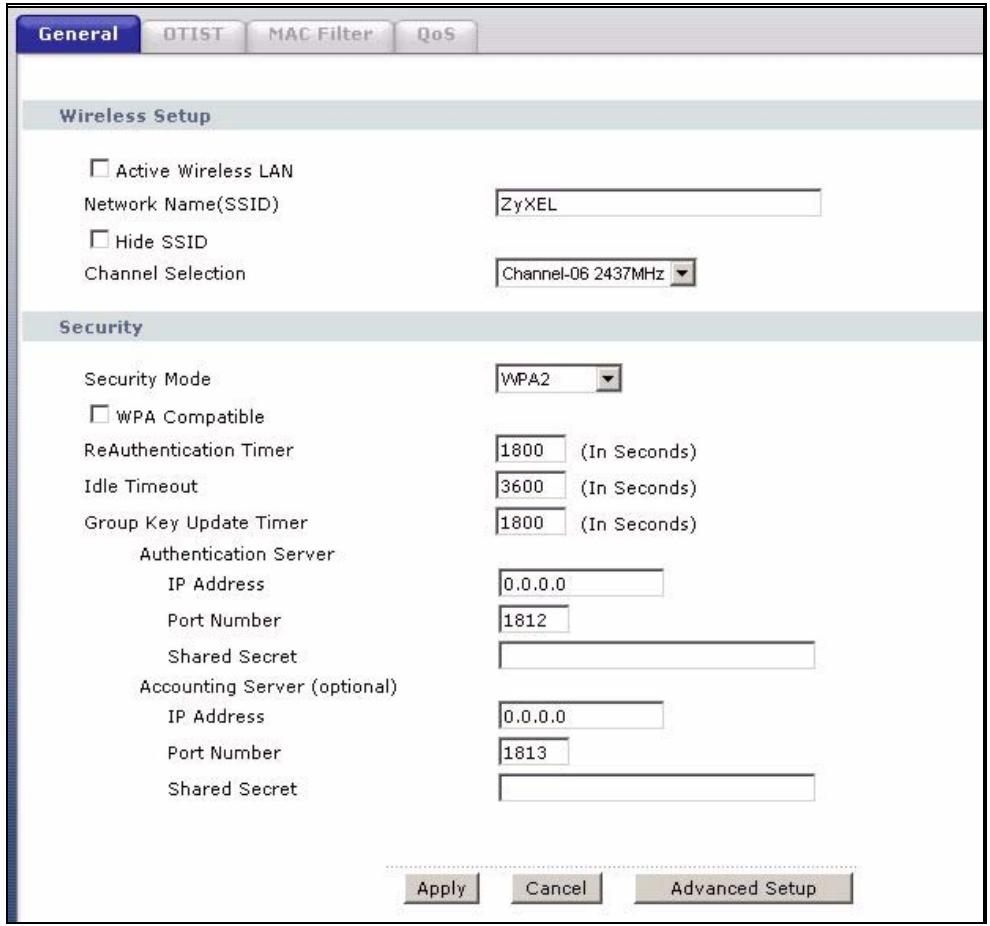
Figure 66 Wireless: WPA(2)
The following table describes the wireless LAN security labels in this screen.
Table 40 Wireless: WPA(2)
| LABEL | DESCRIPTION |
| Security Mode | Choose WPA or WPA2 from the drop-down list box. |
| WPA Compatible | This field is only available for WPA2. Select this if you want the ZyXEL Device to support WPA and WPA2 simultaneously. |
| ReAuthentication Timer (in seconds) | Specify how often wireless stations have to resend usernames and passwords in order to stay connected. Enter a time interval between 10 and 9999 seconds. The default time interval is 1800 seconds (30 minutes).Note: If wireless station authentication is done using a RADIUS server, the reauthentication timer on the RADIUS server has priority. |
Table 40 Wireless: WPA(2)
| LABEL | DESCRIPTION |
| Idle Timeout | The ZyXEL Device automatically disconnects a wireless station from the wired network after a period of inactivity. The wireless station needs to enter the username and password again before access to the wired network is allowed. The default time interval is 3600 seconds (or 1 hour). |
| WPA Group Key Update Timer | The WPA Group Key Update Timer is the rate at which the AP (if using WPA-PSK key management) or RADIUS server (if using WPA key management) sends a new group key out to all clients. The re-keying process is the WPA equivalent of automatically changing the WEP key for an AP and all stations in a WLAN on a periodic basis. Setting of the WPA Group Key Update Timer is also supported in WPA-PSK mode. The ZyXEL Device default is 1800 seconds (30 minutes). |
| Authentication Server | |
| IP Address | Enter the IP address of the external authentication server in dotted decimal notation. |
| Port Number | Enter the port number of the external authentication server. The default port number is 1812.You need not change this value unless your network administrator instructs you to do so with additional information. |
| Shared Secret | Enter a password (up to 31 alphanumeric characters) as the key to be shared between the external authentication server and the ZyXEL Device.The key must be the same on the external authentication server and your ZyXEL Device. The key is not sent over the network. |
| Accounting Server (optional) | |
| IP Address | Enter the IP address of the external accounting server in dotted decimal notation. |
| Port Number | Enter the port number of the external accounting server. The default port number is 1813.You need not change this value unless your network administrator instructs you to do so with additional information. |
| Shared Secret | Enter a password (up to 31 alphanumeric characters) as the key to be shared between the external accounting server and the ZyXEL Device.The key must be the same on the external accounting server and your ZyXEL Device. The key is not sent over the network. |
9.5.5 Wireless LAN Advanced Setup
To configure advanced wireless settings, click the Advanced Setup button in the General screen. The screen appears as shown.

Figure 67 Advanced
The following table describes the labels in this screen.
Table 41 Wireless LAN: Advanced
| LABEL | DESCRIPTION |
| Wireless Advanced Setup | |
| RTS/CTS Threshold | Enter a value between 0 and 2432. If you select the G+ Enhanced checkbox a value of 4096 is displayed. |
| Fragmentation Threshold | It is the maximum data fragment size that can be sent. Enter a value between 256 and 2432. If you select the G+ Enhanced checkbox a value of 4096 is displayed. |
| Preamble | Select a preamble type from the drop-down list menu. Choices are Long, Short or Dynamic. The default setting is Long. See the appendix for more information. |
| 802.11 Mode | Select 802.11b Only to allow only IEEE 802.11b compliant WLAN devices to associate with the ZyXEL Device. Select 802.11g Only to allow only IEEE 802.11g compliant WLAN devices to associate with the ZyXEL Device. Select Mixed to allow either IEEE 802.11b or IEEE 802.11g compliant WLAN devices to associate with the ZyXEL Device. The transmission rate of your ZyXEL Device might be reduced. |
| Enable 802.11g+ mode | Select Enable 802.11g+ mode checkbox to allow any ZyXEL WLAN devices that support this feature to associate with the ZyXEL Device at higher transmission speeds. This permits the ZyXEL Device to transmit at a higher speed than the 802.11g Only mode. |
| Back | Click this to return to the previous screen without saving changes. |
| Apply | Click Apply to save your changes back to the ZyXEL Device. |
| Cancel | Click Cancel to reload the previous configuration for this screen. |
9.6 OTIST Screen
Use this screen to set up and start OTIST on the ZyXEL Device in your wireless network. To open this screen, click Network > Wireless LAN > OTIST.
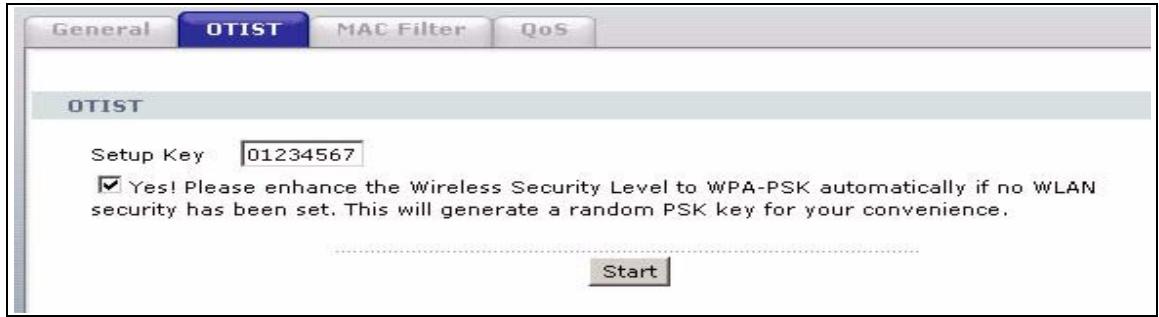
Figure 68 Network > Wireless LAN > OTIST
The following table describes the labels in this screen.
Table 42 Network > Wireless LAN > OTIST
| LABEL | DESCRIPTION |
| Setup Key | Type a key (password) 8 ASCII characters long. |
| Note: If you change the OTIST setup key in the ZyXEL Device, you must change it on the wireless devices too. | |
| Yes! | Select this if you want the ZyXEL Device to automatically generate a pre-shared key for the wireless network. Before you do this, click Network > Wireless LAN > General and set the Security Mode to No Security. Clear this if you want the ZyXEL Device to use a pre-shared key that you enter. Before you do this, click Network > Wireless LAN > General, set the Security Mode to WPA-PSK, and enter the Pre-Shared Key. |
| Start | Click Start to activate OTIST and transfer settings. The process takes three minutes to complete. |
| Note: You must click Start in the ZyXEL Device and in the wireless device(s) within three minutes of each other. You can start OTIST in the wireless devices and the ZyXEL Device in any order. |
Before you click Start, you should enable OTIST on all the OTIST-enabled devices in the wireless network. For most devices, follow these steps.
1 Start the ZyXEL utility
2 Click the Adapter tab.
3 Select the OTIST check box, and enter the same Setup Key as the ZyXEL Device.
4 Click Save.
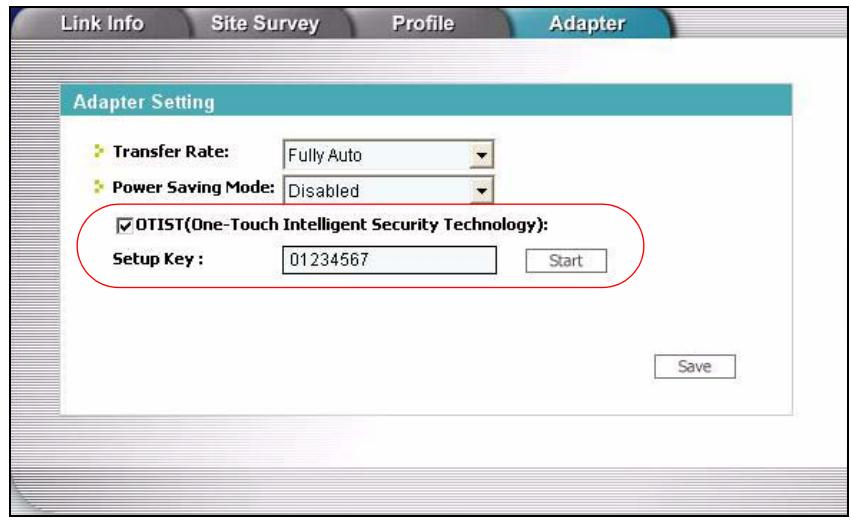
Figure 69 Example: Wireless Client OTIST Screen
To start OTIST in the device, click Start in this screen.
Note: You must click Start in the ZyXEL Device and in the wireless device(s) within three minutes of each other. You can start OTIST in the wireless devices and the ZyXEL Device in any order.
After you click Start in the ZyXEL Device, the following screen appears (in the ZyXEL Device).
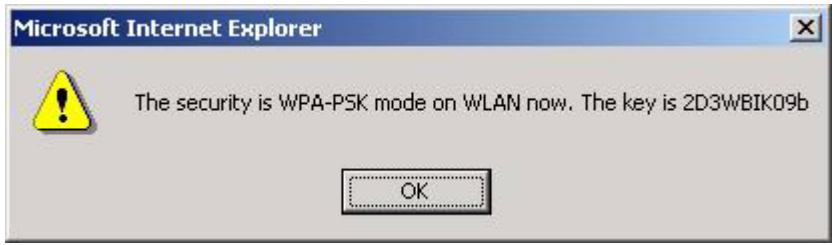
Figure 70 OTIST: Settings
You can use the key in this screen to set up WPA-PSK encryption manually for non-OTIST devices in the wireless network.
Review the settings, and click OK. The ZyXEL Device begins transferring OTIST settings. The following screens appear in the ZyXEL Device and in the wireless devices.
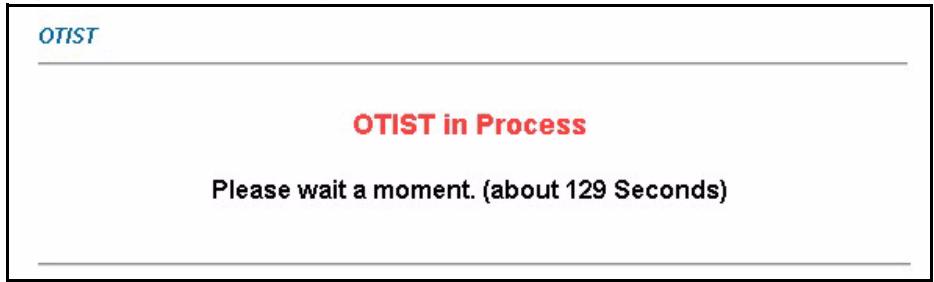
Figure 71 OTIST: In Progress on the ZyXEL Device
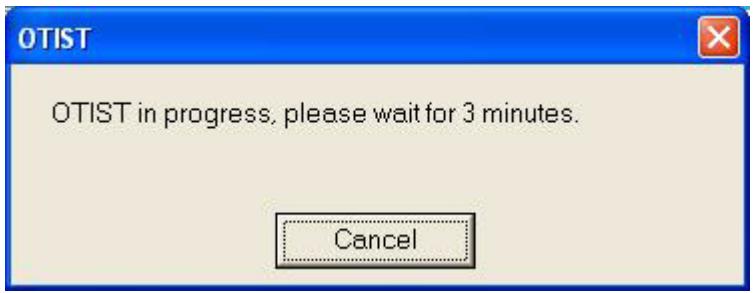
Figure 72 OTIST: In Progress on the Wireless Device
These screens close when the transfer is complete.
9.6.1 Notes on OTIST
1 If you enable OTIST in a wireless device, you see this screen each time you start the utility. Click Yes to search for an OTIST-enabled AP (in other words, the ZyXEL Device).
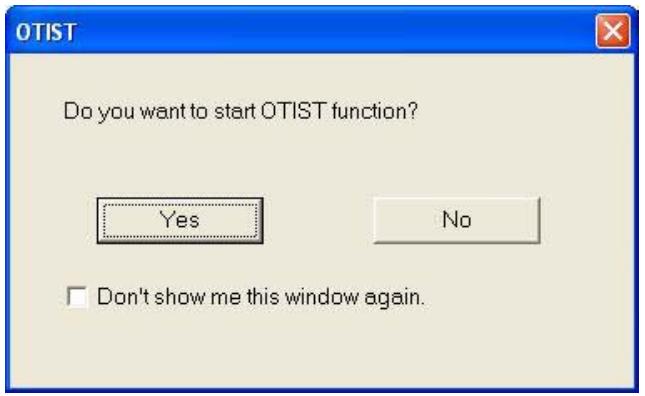
Figure 73 Start OTIST?
2 If an OTIST-enabled wireless device loses its wireless connection for more than ten seconds, it will search for an OTIST-enabled AP for up to one minute. (If you manually have the wireless device search for an OTIST-enabled AP, there is no timeout; click Cancel in the OTIST progress screen to stop the search.)
3 After the wireless device finds an OTIST-enabled AP, you must click Start in the ZyXEL Device's Network > Wireless LAN > OTIST screen or hold in the Reset button on the ZyXEL Device for one or two seconds to transfer the settings again.
4 If you change the SSID or the keys on the ZyXEL Devices after using OTIST, you need to run OTIST again or enter them manually in the wireless device(s).
5 If you configure OTIST to generate a WPA-PSK key, this key changes each time you run OTIST. Therefore, if a new wireless device joins your wireless network, you need to run OTIST on the AP and ALL wireless devices again.
9.7 MAC Filter
To change your ZyXEL Device's MAC filter settings, click Network > Wireless LAN > MAC Filter. The screen appears as shown.
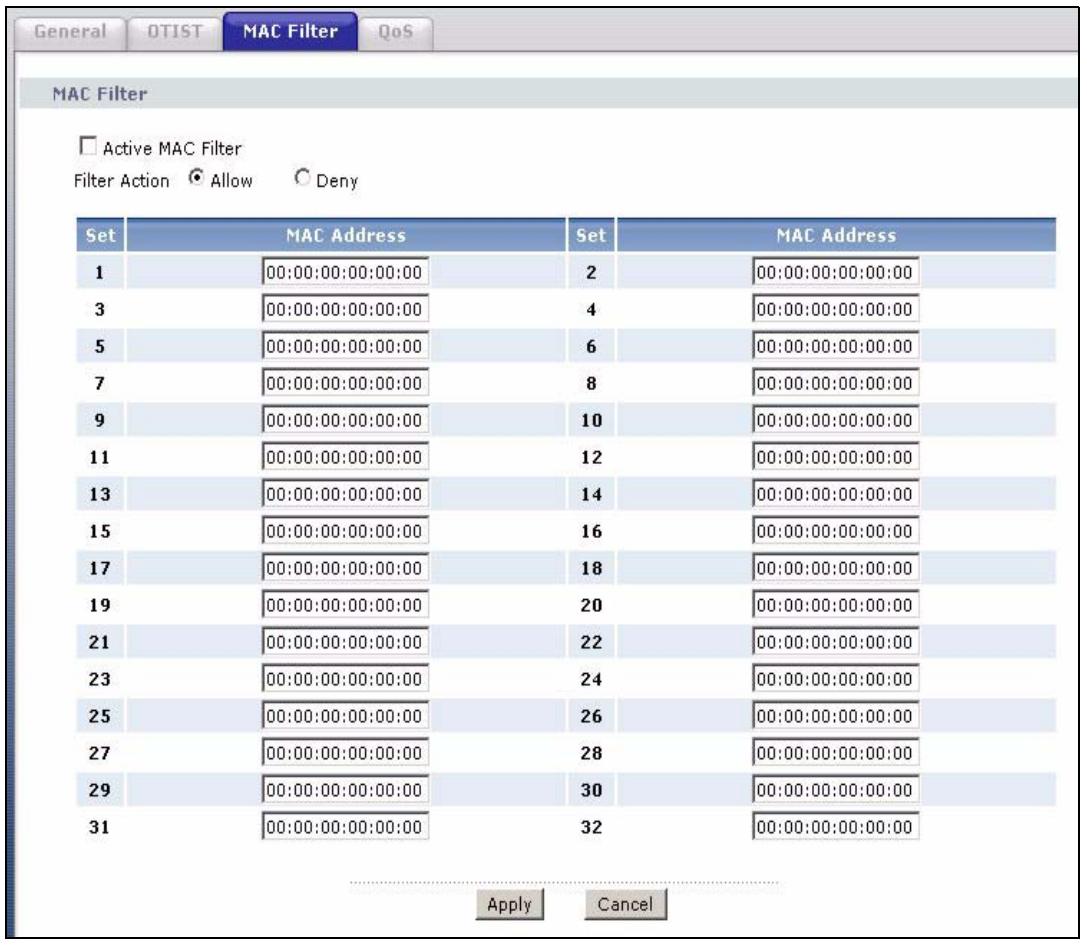
Figure 74 MAC Address Filter
The following table describes the labels in this menu.
Table 43 MAC Address Filter
| LABEL | DESCRIPTION |
| Active MAC Filter | Select the check box to enable MAC address filtering. |
| Filter Action | Define the filter action for the list of MAC addresses in the MAC Address table. Select Deny to block access to the ZyXEL Device, MAC addresses not listed will be allowed to access the ZyXEL Device Select Allow to permit access to the ZyXEL Device, MAC addresses not listed will be denied access to the ZyXEL Device. |
| Set | This is the index number of the MAC address. |
Table 43 MAC Address Filter
| LABEL | DESCRIPTION |
| MAC Address | Enter the MAC addresses of the wireless station that are allowed or denied access to the ZyXEL Device in these address fields. Enter the MAC addresses in a valid MAC address format, that is, six hexadecimal character pairs, for example, 12:34:56:78:9a:bc. |
| Apply | Click Apply to save your changes back to the ZyXEL Device. |
| Cancel | Click Cancel to reload the previous configuration for this screen. |
9.8 QoS Screen
The QoS screen by default allows you to automatically give a service a priority level.
Click Network > Wireless LAN > QoS. The following screen displays.
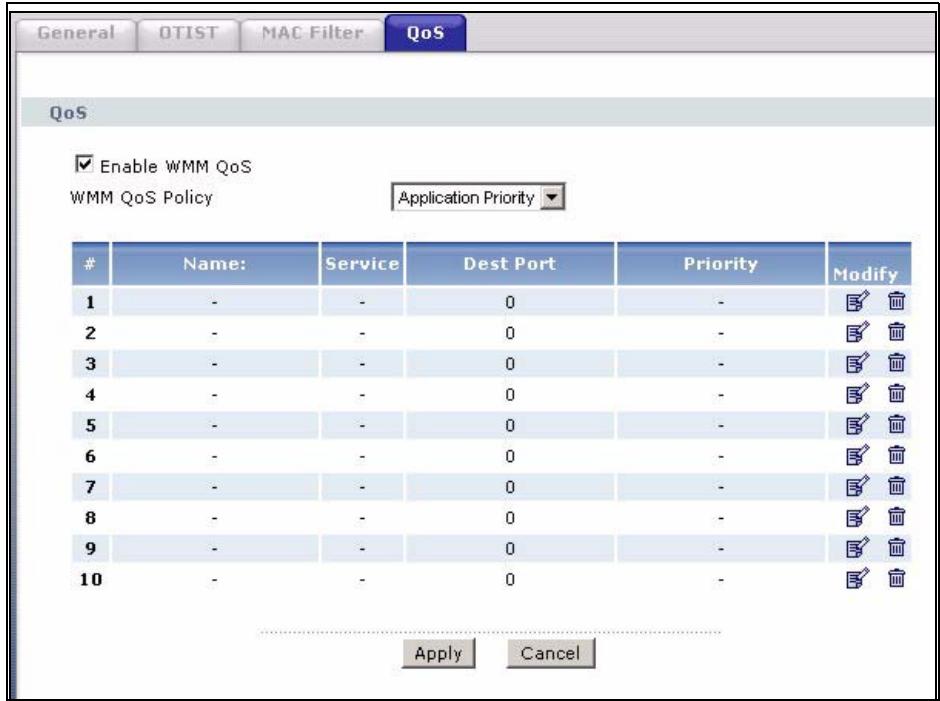
Figure 75 Wireless LAN: QoS
The following table describes the fields in this screen.
Table 44 Wireless LAN: QoS
| LABEL | DESCRIPTION |
| QoS Setup | |
| Enable WMM QoS | Select the check box to enable WMM QoS on the ZyXEL Device. |
Table 44 Wireless LAN: QoS
| LABEL | DESCRIPTION |
| WMM QoS Policy | Select Default to have the ZyXEL Device automatically give a service a priority level according to the ToS value in the IP header of packets it sends. Select Application Priority from the drop-down list box to display a table of application names, services, ports and priorities to which you want to apply WMM QoS. |
| This table only appears if you select Application Priority in WMM QoS Policy. | |
| # | This is the number of an individual application entry. |
| Name | This field displays a description given to an application entry. |
| Service | This field displays either FTP, WWW, E-mail or a User Defined service to which you want to apply WMM QoS. |
| Dest Port | This field displays the destination port number to which the application sends traffic. |
| Priority | Select the priority of the application. Highest - Typically used for voice or video that should be high-quality. High - Typically used for voice or video that can be medium-quality. Mid - Typically used for applications that do not fit into another priority. For example, Internet surfing. Low - Typically used for non-critical “background” applications, such as large file transfers and print jobs that should not affect other applications. |
| Modify | Click the Edit icon to open the Application Priority Configuration screen. Modify an existing application entry or create a application entry in the Application Priority Configuration screen. Click the Remove icon to delete an application entry. |
| Apply | Click Apply to save your changes back to the ZyXEL Device. |
9.8.1 Application Priority Configuration
To edit a WMM QoS application entry, click the edit icon under Modify. The following screen displays.
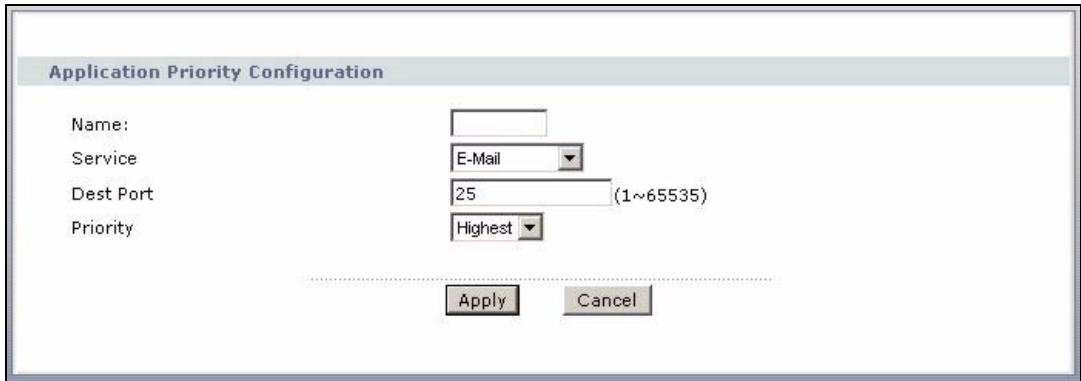
Figure 76 Application Priority Configuration
See Appendix 31 on page 371 for a list of commonly-used services and destination ports. The following table describes the fields in this screen.
Table 45 Application Priority Configuration
| LABEL | DESCRIPTION |
| Application Priority Configuration | |
| Name | Type a description of the application priority. |
| Service | The following is a description of the applications you can prioritize with WMM QoS. Select a service from the drop-down list box. • FTP File Transfer Program enables fast transfer of files, including large files that may not be possible by e-mail. FTP uses port number 21. • E-Mail Electronic mail consists of messages sent through a computer network to specific groups or individuals. Here are some default ports for e-mail: POP3 - port 110 IMAP - port 143 SMTP - port 25 HTTP - port 80 • WWW The World Wide Web is an Internet system to distribute graphical, hyper-linked information, based on Hyper Text Transfer Protocol (HTTP) - a client/server protocol for the World Wide Web. The Web is not synonymous with the Internet; rather, it is just one service on the Internet. Other services on the Internet include Internet Relay Chat and Newsgroups. The Web is accessed through use of a browser. • User-Defined User-defined services are user specific services configured using known ports and applications. |
| Dest Port | This displays the port the selected service uses. Type a port number in the field provided if you want to use a different port to the default port. |
| Priority | Select a priority from the drop-down list box. |
| Apply | Click Apply to save your changes back to the ZyXEL Device. |
| Cancel | Click Cancel to return to the previous screen. |
CHAPTER 10
Network Address Translation (NAT) Screens
This chapter discusses how to configure NAT on the ZyXEL Device.
10.1 NAT Overview
NAT (Network Address Translation - NAT, RFC 1631) is the translation of the IP address of a host in a packet, for example, the source address of an outgoing packet, used within one network to a different IP address known within another network.
10.1.1 NAT Definitions
Inside/outside denotes where a host is located relative to the ZyXEL Device, for example, the computers of your subscribers are the inside hosts, while the web servers on the Internet are the outside hosts.
Global/local denotes the IP address of a host in a packet as the packet traverses a router, for example, the local address refers to the IP address of a host when the packet is in the local network, while the global address refers to the IP address of the host when the same packet is traveling in the WAN side.
Note that inside/outside refers to the location of a host, while global/local refers to the IP address of a host used in a packet. Thus, an inside local address (ILA) is the IP address of an inside host in a packet when the packet is still in the local network, while an inside global address (IGA) is the IP address of the same inside host when the packet is on the WAN side. The following table summarizes this information.
Table 46 NAT Definitions
| ITEM | DESCRIPTION |
| Inside | This refers to the host on the LAN. |
| Outside | This refers to the host on the WAN. |
| Local | This refers to the packet address (source or destination) as the packet travels on the LAN. |
| Global | This refers to the packet address (source or destination) as the packet travels on the WAN. |
NAT never changes the IP address (either local or global) of an outside host.
10.1.2 What NAT Does
In the simplest form, NAT changes the source IP address in a packet received from a subscriber (the inside local address) to another (the inside global address) before forwarding the packet to the WAN side. When the response comes back, NAT translates the destination address (the inside global address) back to the inside local address before forwarding it to the original inside host. Note that the IP address (either local or global) of an outside host is never changed.
The global IP addresses for the inside hosts can be either static or dynamically assigned by the ISP. In addition, you can designate servers, for example, a web server and a telnet server, on your local network and make them accessible to the outside world. If you do not define any servers (for Many-to-One and Many-to-Many Overload mapping – see Table 47 on page 144), NAT offers the additional benefit of firewall protection. With no servers defined, your ZyXEL Device filters out all incoming inquiries, thus preventing intruders from probing your network. For more information on IP address translation, refer to RFC 1631, The IP Network Address Translator (NAT).
10.1.3 How NAT Works
Each packet has two addresses - a source address and a destination address. For outgoing packets, the ILA (Inside Local Address) is the source address on the LAN, and the IGA (Inside Global Address) is the source address on the WAN. For incoming packets, the ILA is the destination address on the LAN, and the IGA is the destination address on the WAN. NAT maps private (local) IP addresses to globally unique ones required for communication with hosts on other networks. It replaces the original IP source address (and TCP or UDP source port numbers for Many-to-One and Many-to-Many Overload NAT mapping) in each packet and then forwards it to the Internet. The ZyXEL Device keeps track of the original addresses and port numbers so incoming reply packets can have their original values restored. The following figure illustrates this.
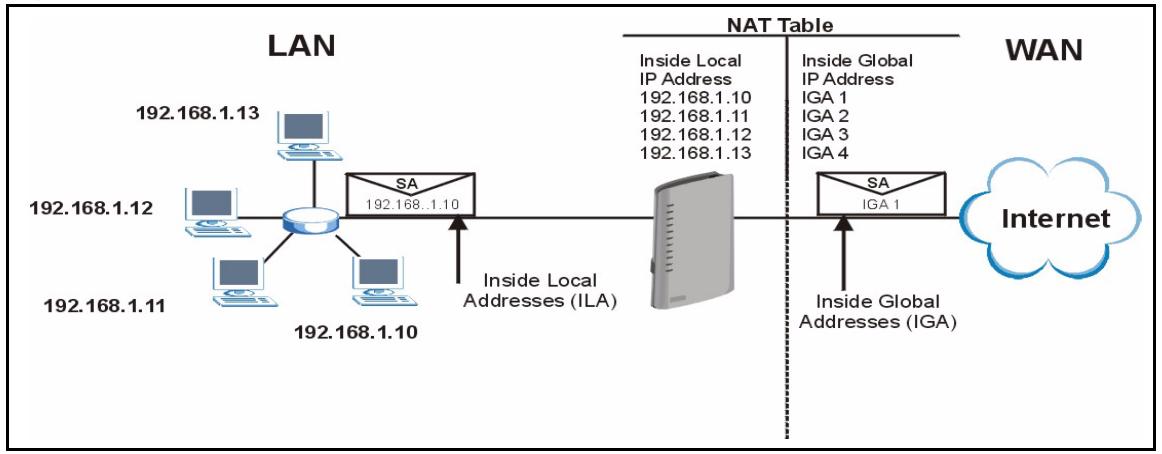
Figure 77 How NAT Works
10.1.4 NAT Application
The following figure illustrates a possible NAT application, where three inside LANs (logical LANs using IP Alias) behind the ZyXEL Device can communicate with three distinct WAN networks.
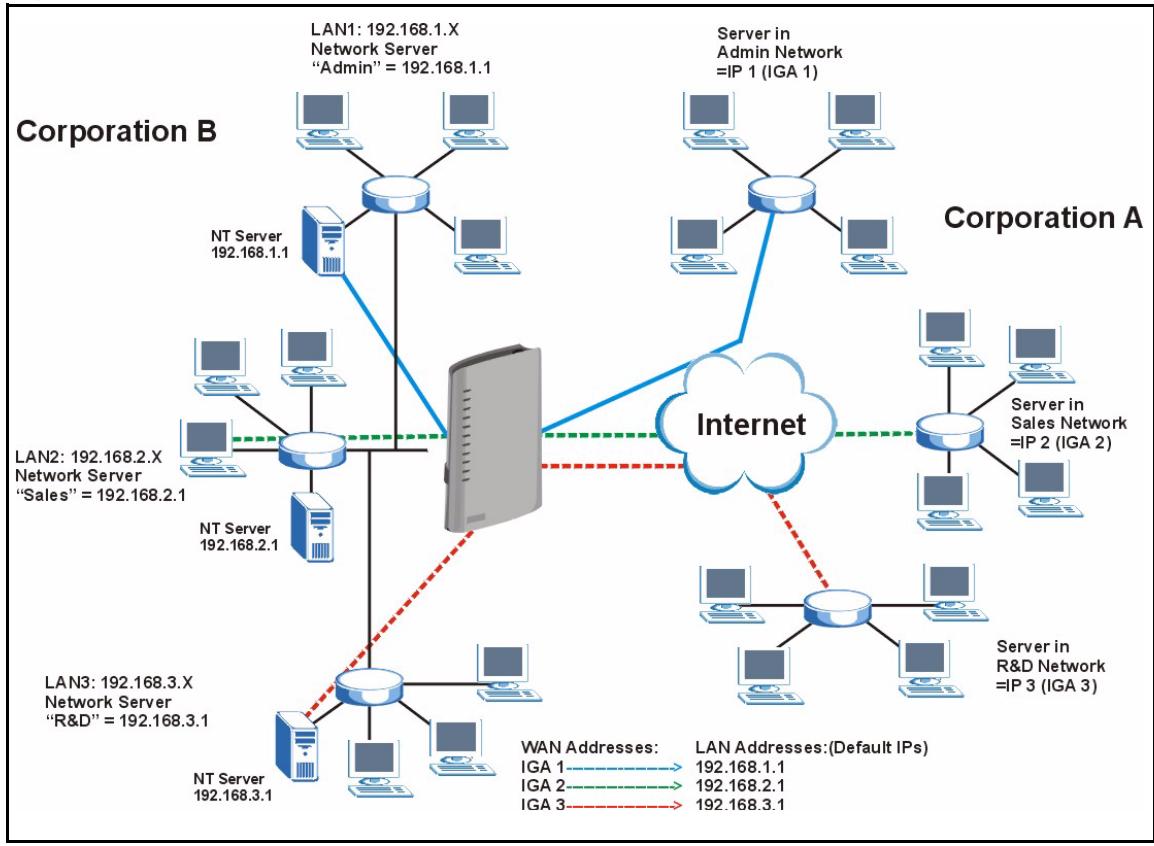
Figure 78 NAT Application With IP Alias
NAT supports five types of IP/port mapping. They are:
- One to One: In One-to-One mode, the ZyXEL Device maps one local IP address to one global IP address.
- Many to One: In Many-to-One mode, the ZyXEL Device maps multiple local IP addresses to one global IP address. This is equivalent to SUA (for instance, PAT, port address translation), ZyXEL's Single User Account feature that previous ZyXEL routers supported (the SUA Only option in today's routers).
- Many to Many Overload: In Many-to-Many Overload mode, the ZyXEL Device maps the multiple local IP addresses to shared global IP addresses.
- Many-to-Many No Overload: In Many-to-Many No Overload mode, the ZyXEL Device maps each local IP address to a unique global IP address.
- Server: This type allows you to specify inside servers of different services behind the NAT to be accessible to the outside world.
Port numbers do NOT change for One-to-One and Many-to-Many No Overload NAT mapping types.
The following table summarizes these types.
Table 47 NAT Mapping Types
| TYPE | IP MAPPING |
| One-to-One | ILA1←→ IGA1 |
| Many-to-One (SUA/PAT) | ILA1←→ IGA1 |
| ILA2←→ IGA1 | |
| ... | |
| Many-to-Many Overload | ILA1←→ IGA1 |
| ILA2←→ IGA2 | |
| ILA3←→ IGA1 | |
| ILA4←→ IGA2 | |
| ... | |
| Many-to-Many No Overload | ILA1←→ IGA1 |
| ILA2←→ IGA2 | |
| ILA3←→ IGA3 | |
| ... | |
| Server | Server 1 IP←→ IGA1 |
| Server 2 IP←→ IGA1 | |
| Server 3 IP←→ IGA1 |
10.2 SUA (Single User Account) Versus NAT
SUA (Single User Account) is a ZyNOS implementation of a subset of NAT that supports two types of mapping, Many-to-One and Server. The ZyXEL Device also supports Full Feature NAT to map multiple global IP addresses to multiple private LAN IP addresses of clients or servers using mapping types as outlined in Table 47 on page 144.
- Choose SUA Only if you have just one public WAN IP address for your ZyXEL Device.
- Choose Full Feature if you have multiple public WAN IP addresses for your ZyXEL Device.
10.3 NAT General Setup
You must create a firewall rule in addition to setting up SUA/NAT, to allow traffic from the WAN to be forwarded through the ZyXEL Device. Click Network > NAT to open the following screen.
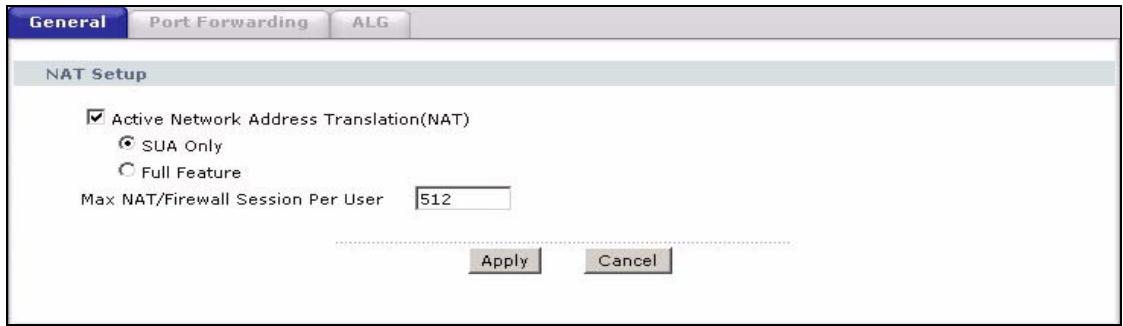
Figure 79 NAT General
The following table describes the labels in this screen.
Table 48 NAT General
| LABEL | DESCRIPTION |
| Active Network Address Translation (NAT) | Select this check box to enable NAT. |
| SUA Only | Select this radio button if you have just one public WAN IP address for your ZyXEL Device. |
| Full Feature | Select this radio button if you have multiple public WAN IP addresses for your ZyXEL Device. |
| Max NAT/ Firewall Session Per User | When computers use peer to peer applications, such as file sharing applications, they need to establish NAT sessions. If you do not limit the number of NAT sessions a single client can establish, this can result in all of the available NAT sessions being used. In this case, no additional NAT sessions can be established, and users may not be able to access the Internet. Each NAT session establishes a corresponding firewall session. Use this field to limit the number of NAT/ Firewall sessions client computers can establish through the ZyXEL Device. If your network has a small number of clients using peer to peer applications, you can raise this number to ensure that their performance is not degraded by the number of NAT sessions they can establish. If your network has a large number of users using peer to peer applications, you can lower this number to ensure no single client is exhausting all of the available NAT sessions. |
| Apply | Click Apply to save your changes back to the ZyXEL Device. |
| Cancel | Click Cancel to reload the previous configuration for this screen. |
10.4 Port Forwarding
A port forwarding set is a list of inside (behind NAT on the LAN) servers, for example, web or FTP, that you can make visible to the outside world even though NAT makes your whole inside network appear as a single computer to the outside world.
You may enter a single port number or a range of port numbers to be forwarded, and the local IP address of the desired server. The port number identifies a service; for example, web service is on port 80 and FTP on port 21. In some cases, such as for unknown services or where one server can support more than one service (for example both FTP and web service), it might be better to specify a range of port numbers. You can allocate a server IP address that corresponds to a port or a range of ports.
Many residential broadband ISP accounts do not allow you to run any server processes (such as a Web or FTP server) from your location. Your ISP may periodically check for servers and may suspend your account if it discovers any active services at your location. If you are unsure, refer to your ISP.
10.4.1 Default Server IP Address
In addition to the servers for specified services, NAT supports a default server IP address. A default server receives packets from ports that are not specified in this screen.
Note: If you do not assign a Default Server IP address, the ZyXEL Device discards all packets received for ports that are not specified here or in the remote management setup.
10.4.2 Port Forwarding: Services and Port Numbers
Use the Port Forwarding screen to forward incoming service requests to the server(s) on your local network.
The most often used port numbers and services are shown in Appendix F on page 371. Please refer to RFC 1700 for further information about port numbers.
10.4.3 Configuring Servers Behind Port Forwarding (Example)
Let's say you want to assign ports 21-25 to one FTP, Telnet and SMTP server (A in the example), port 80 to another (B in the example) and assign a default server IP address of 192.168.1.35 to a third (C in the example). You assign the LAN IP addresses and the ISP assigns the WAN IP address. The NAT network appears as a single host on the Internet.
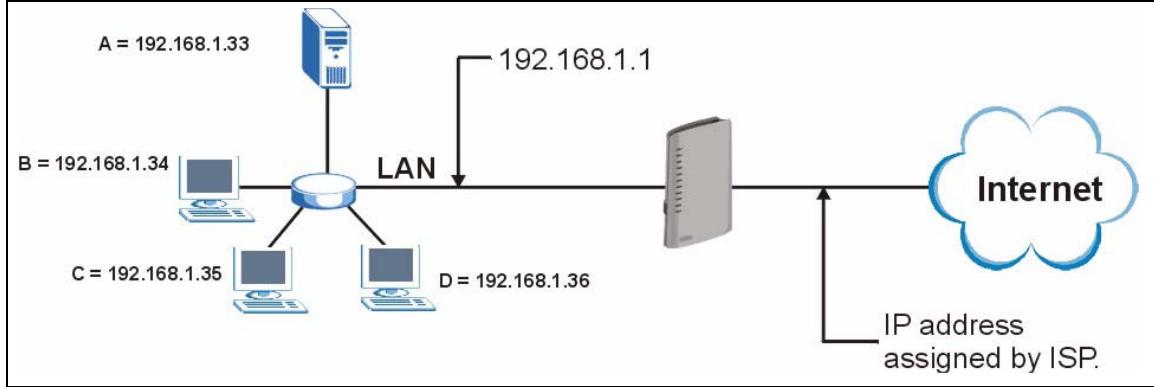
Figure 80 Multiple Servers Behind NAT Example
10.5 Configuring Port Forwarding
Note: If you do not assign a Default Server IP address, the ZyXEL Device discards all packets received for ports that are not specified here or in the remote management setup.
Click Network > NAT > Port Forwarding to open the following screen.
See Appendix F on page 371 for port numbers commonly used for particular services.
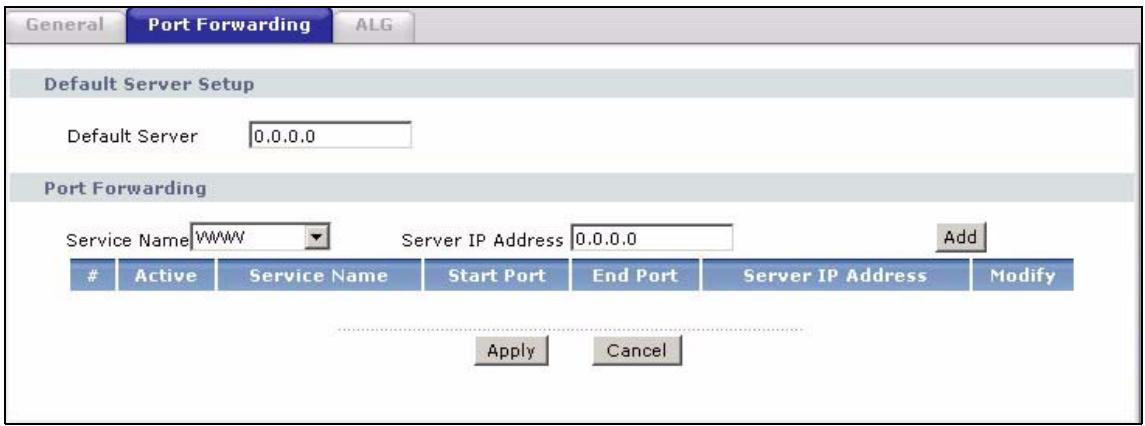
Figure 81 Port Forwarding
The following table describes the fields in this screen.
Table 49 Port Forwarding
| LABEL | DESCRIPTION |
| Default Server Setup | |
| Default Server | In addition to the servers for specified services, NAT supports a default server. A default server receives packets from ports that are not specified in this screen. If you do not assign a Default Server IP address, the ZyXEL Device discards all packets received for ports that are not specified here or in the remote management setup. |
| Port Forwarding | |
| Service Name | Select a service from the drop-down list box. |
| Server IP Address | Enter the IP address of the server for the specified service. |
| Add | Click this button to add a rule to the table below. |
| # | This is the rule index number (read-only). |
| Active | Click this check box to enable the rule. |
| Service Name | This is a service's name. |
| Start Port | This is the first port number that identifies a service. |
| End Port | This is the last port number that identifies a service. |
| Server IP Address | This is the server's IP address. |
Table 49 Port Forwarding
| LABEL | DESCRIPTION |
| Modify | Click the edit icon to go to the screen where you can edit the port forwarding rule. Click the delete icon to delete an existing port forwarding rule. Note that subsequent address mapping rules move up by one when you take this action. |
| Apply | Click Apply to save your changes back to the ZyXEL Device. |
| Cancel | Click Cancel to return to the previous configuration. |
10.5.1 Port Forwarding Rule Edit
To edit a port forwarding rule, click the rule's edit icon in the Port Forwarding screen to display the screen shown next.
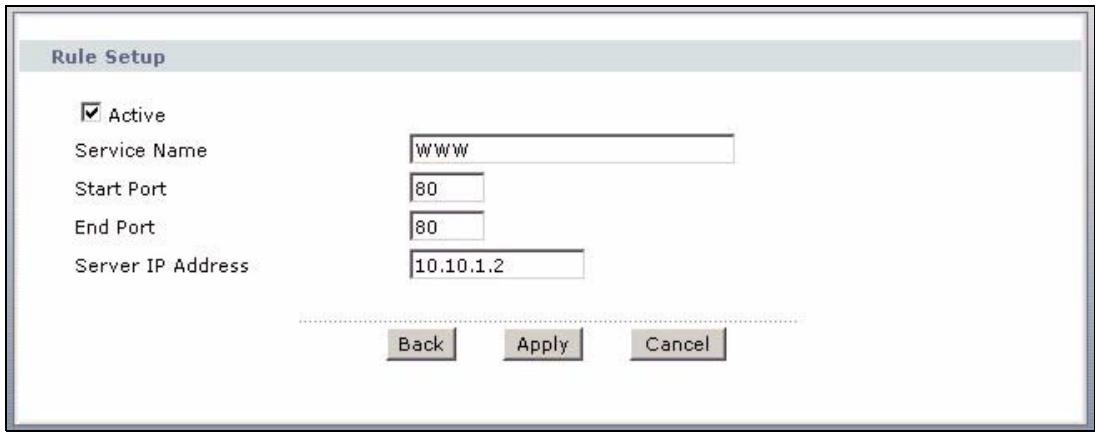
Figure 82 Port Forwarding Rule Setup
The following table describes the fields in this screen.
Table 50 Port Forwarding Rule Setup
| LABEL | DESCRIPTION |
| Active | Click this check box to enable the rule. |
| Service Name | Enter a name to identify this port-forwarding rule. |
| Start Port | Enter a port number in this field. To forward only one port, enter the port number again in the End Port field. To forward a series of ports, enter the start port number here and the end port number in the End Port field. |
| End Port | Enter a port number in this field. To forward only one port, enter the port number again in the Start Port field above and then enter it again in this field. To forward a series of ports, enter the last port number in a series that begins with the port number in the Start Port field above. |
| Server IP Address | Enter the inside IP address of the server here. |
| Back | Click Back to return to the previous screen. |
| Apply | Click Apply to save your changes back to the ZyXEL Device. |
| Cancel | Click Cancel to begin configuring this screen afresh. |
10.5.2 SIP ALG
Some NAT routers may include a SIP Application Layer Gateway (ALG). A SIP ALG allows SIP calls to pass through NAT by examining and translating IP addresses embedded in the data stream. When the ZyXEL Device registers with the SIP register server, the SIP ALG translates the ZyXEL Device's private IP address inside the SIP data stream to a public IP address. You do not need to use STUN or an outbound proxy if your ZyXEL Device is behind a SIP ALG.
Use this screen to enable and disable the SIP (VoIP) ALG in the ZyXEL Device. To access this screen, click Network > NAT > ALG.
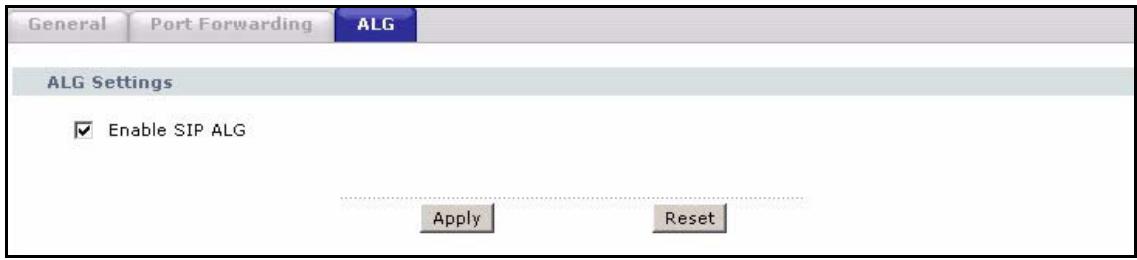
Figure 83 Network > NAT > ALG
Each field is described in the following table.
Table 51 Network > NAT > ALG
| LABEL | DESCRIPTION |
| Enable SIP ALG | Select this to make sure SIP (VoIP) works correctly with port-forwarding and address-mapping rules. |
| Apply | Click this to save your changes and to apply them to the ZyXEL Device. |
| Reset | Click this to return to previously saved configuration. |
CHAPTER 11 Voice
This chapter provides background information on VoIP and SIP and explains how to configure your device's voice settings.
11.1 Introduction to VoIP
VoIP is the sending of voice signals over the Internet Protocol. This allows you to make phone calls and send faxes over the Internet at a fraction of the cost of using the traditional circuit-switched telephone network. You can also use servers to run telephone service applications like PBX services and voice mail. Internet Telephony Service Provider (ITSP) companies provide VoIP service.
Circuit-switched telephone networks require 64 kilobits per second (Kbps) in each direction to handle a telephone call. VoIP can use advanced voice coding techniques with compression to reduce the required bandwidth.
11.2 SIP
The Session Initiation Protocol (SIP) is an application-layer control (signaling) protocol that handles the setting up, altering and tearing down of voice and multimedia sessions over the Internet.
SIP signaling is separate from the media for which it handles sessions. The media that is exchanged during the session can use a different path from that of the signaling. SIP handles telephone calls and can interface with traditional circuit-switched telephone networks.
11.2.1 SIP Identities
A SIP account uses an identity (sometimes referred to as a SIP address). A complete SIP identity is called a SIP URI (Uniform Resource Identifier). A SIP account's URI identifies the SIP account in a way similar to the way an e-mail address identifies an e-mail account. The format of a SIP identity is SIP-Number@SIP-Service-Domain.
11.2.1.1 SIP Number
The SIP number is the part of the SIP URI that comes before the "@” symbol. A SIP number can use letters like in an e-mail address (johndoe@your-ITSP.com for example) or numbers like a telephone number (1122334455@VoIP-provider.com for example).
11.2.1.2 SIP Service Domain
The SIP service domain of the VoIP service provider is the domain name in a SIP URI. For example, if the SIP address is 1122334455@VoIP-provider.com, then “VoIP-provider.com” is the SIP service domain.
11.2.2 SIP Call Progression
The following figure displays the basic steps in the setup and tear down of a SIP call. A calls B.
Table 52 SIP Call Progression
| A | B | |
| 1. INVITE | ||
| 2. Ringing | ||
| 3. OK | ||
| 4. ACK | ||
| 5. Dialogue (voice traffic) | ||
| 6. BYE | ||
| 7. OK |
A sends a SIP INVITE request to B. This message is an invitation for B to participate in a SIP telephone call.
6 B sends a response indicating that the telephone is ringing.
7 B sends an OK response after the call is answered.
8 A then sends an ACK message to acknowledge that B has answered the call.
9 Now A and B exchange voice media (talk).
10 After talking, A hangs up and sends a BYE request.
11B replies with an OK response confirming receipt of the BYE request and the call is terminated.
11.2.3 SIP Servers
SIP is a client-server protocol. A SIP client is an application program or device that sends SIP requests. A SIP server responds to the SIP requests.
When you use SIP to make a VoIP call, it originates at a client and terminates at a server. A SIP client could be a computer or a SIP phone. One device can act as both a SIP client and a SIP server.
11.2.3.1 SIP User Agent
A SIP user agent can make and receive VoIP telephone calls. This means that SIP can be used for peer-to-peer communications even though it is a client-server protocol. In the following figure, either A or B can act as a SIP user agent client to initiate a call. A and B can also both act as a SIP user agent to receive the call.

Figure 84 SIP User Agent
11.2.3.2 SIP Proxy Server
A SIP proxy server receives requests from clients and forwards them to another server.
In the following example, you want to use client device A to call someone who is using client device C.
1 The client device (A in the figure) sends a call invitation to the SIP proxy server (B).
2 The SIP proxy server forwards the call invitation to C.
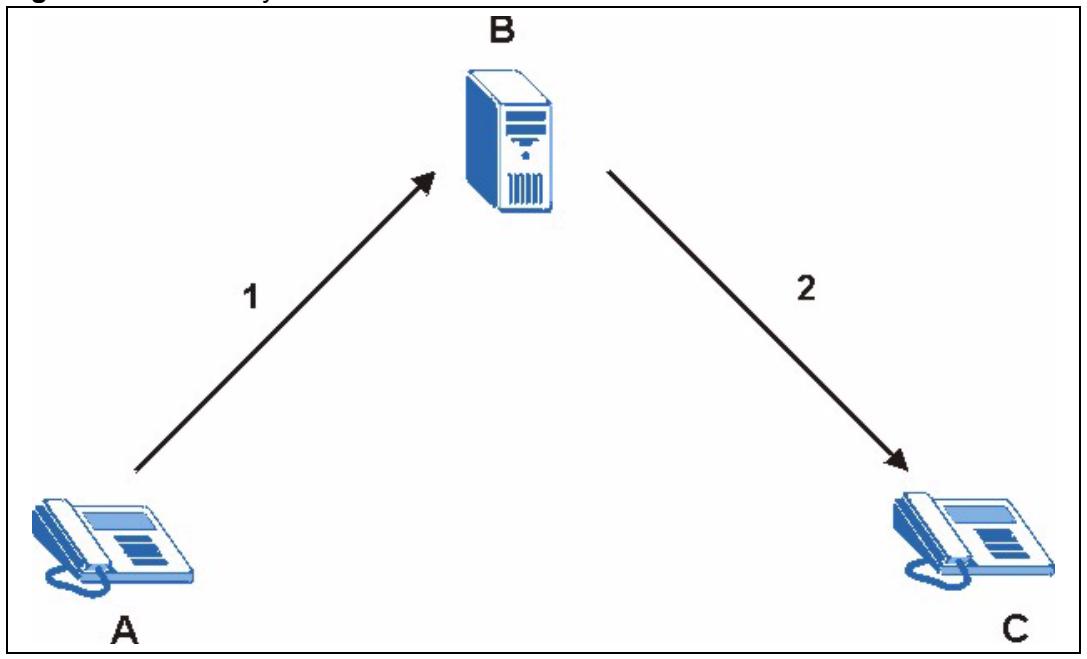
Figure 85 SIP Proxy Server
11.2.3.3 SIP Redirect Server
A SIP redirect server accepts SIP requests, translates the destination address to an IP address and sends the translated IP address back to the device that sent the request. Then the client device that originally sent the request can send requests to the IP address that it received back from the redirect server. Redirect servers do not initiate SIP requests.
In the following example, you want to use client device A to call someone who is using client device C.
1 Client device A sends a call invitation for C to the SIP redirect server (B).
2 The SIP redirect server sends the invitation back to A with C's IP address (or domain name).
3 Client device A then sends the call invitation to client device C.
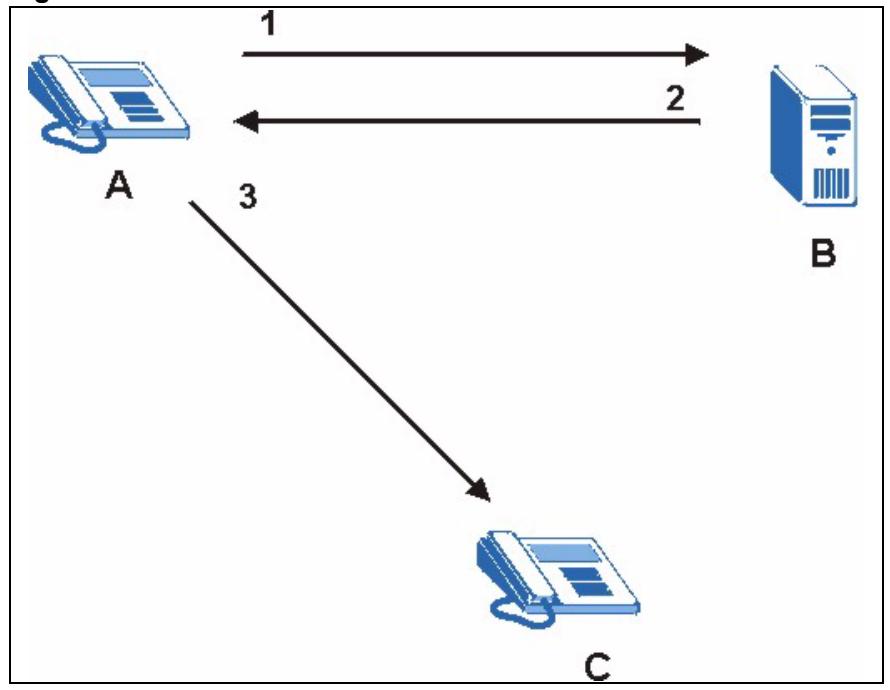
Figure 86 SIP Redirect Server
11.2.3.4 SIP Register Server
A SIP register server maintains a database of SIP identity-to-IP address (or domain name) mapping. The register server checks your user name and password when you register.
11.3 SIP Settings Screen
Use this screen to maintain basic information about each SIP account. You can also enable and disable each SIP account. To access this screen, click VoIP > SIP > SIP Settings.
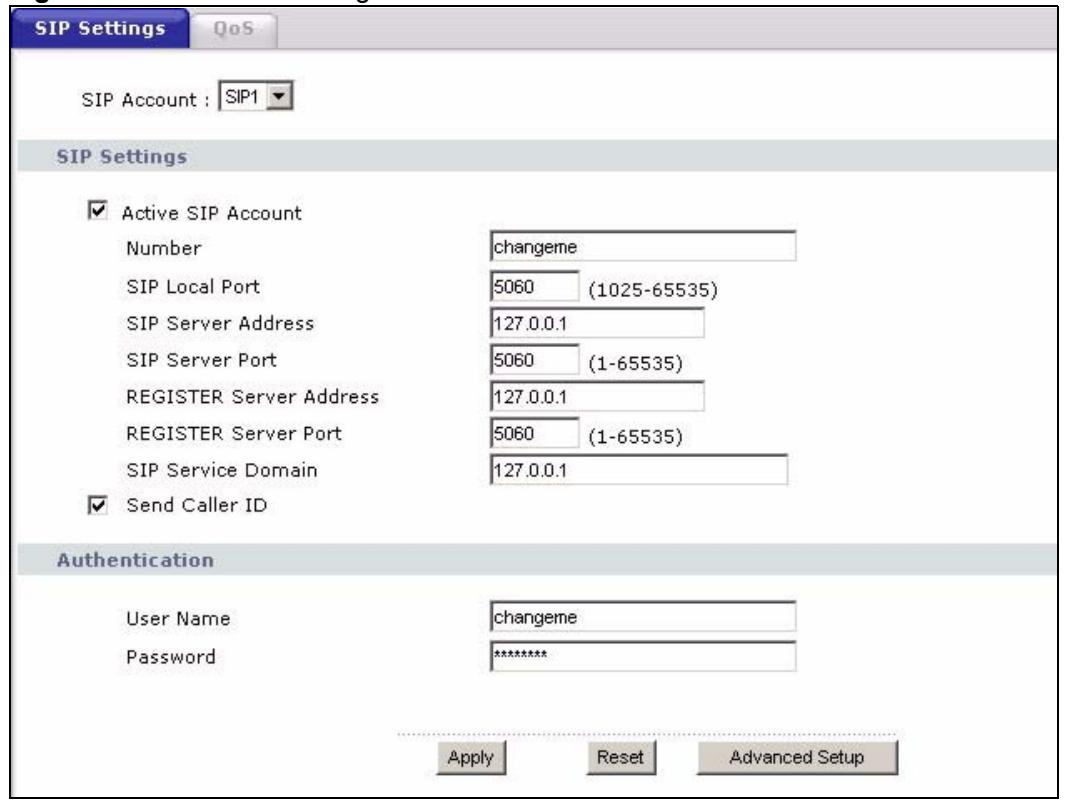
Figure 87 SIP > SIP Settings
Each field is described in the following table.
Table 53 SIP > SIP Settings
| LABEL | DESCRIPTION |
| SIP Account | Select the SIP account you want to see in this screen. If you change this field, the screen automatically refreshes. |
| SIP Settings | |
| Active SIP Account | Select this if you want the ZyXEL Device to use this account. Clear it if you do not want the ZyXEL Device to use this account. |
| Number | Enter your SIP number. In the full SIP URI, this is the part before the @ symbol. You can use up to 127 printable ASCII characters. |
| SIP Local Port | Enter the ZyXEL Device's listening port number, if your VoIP service provider gave you one. Otherwise, keep the default value. |
| SIP Server Address | Enter the IP address or domain name of the SIP server provided by your VoIP service provider. You can use up to 95 printable ASCII characters. It does not matter whether the SIP server is a proxy, redirect or register server. |
| SIP Server Port | Enter the SIP server's listening port number, if your VoIP service provider gave you one. Otherwise, keep the default value. |
| REGISTER Server Address | Enter the IP address or domain name of the SIP register server, if your VoIP service provider gave you one. Otherwise, enter the same address you entered in the SIP Server Address field. You can use up to 95 printable ASCII characters. |
| REGISTER Server Port | Enter the SIP register server's listening port number, if your VoIP service provider gave you one. Otherwise, enter the same port number you entered in the SIP Server Port field. |
Table 53 SIP > SIP Settings
| LABEL | DESCRIPTION |
| SIP Service Domain | Enter the SIP service domain name. In the full SIP URI, this is the part after the @ symbol. You can use up to 127 printable ASCII Extended set characters. |
| Send Caller ID | Select this if you want to send identification when you make VoIP phone calls. Clear this if you do not want to send identification. |
| Authentication | |
| UserID | Enter the user name for registering this SIP account, exactly as it was given to you. You can use up to 95 printable ASCII characters. |
| Password | Enter the user name for registering this SIP account, exactly as it was given to you. You can use up to 95 printable ASCII Extended set characters. |
| Apply | Click this to save your changes and to apply them to the ZyXEL Device. |
| Cancel | Click this to set every field in this screen to its last-saved value. |
| Advanced Setup | Click this to edit the advanced settings for this SIP account. The Advanced SIP Setup screen appears. |
11.3.1 RTP
When you make a VoIP call using SIP, the RTP (Real time Transport Protocol) is used to handle voice data transfer. See RFC 1889 for details on RTP.
11.4 Pulse Code Modulation
Pulse Code Modulation (PCM) measures analog signal amplitudes at regular time intervals and converts them into bits.
11.5 Voice Coding
A codec (coder/decoder) codes analog voice signals into digital signals and decodes the digital signals back into analog voice signals. The ZyXEL Device supports the following codecs.
11.5.1 G.711
G.711 is a Pulse Code Modulation (PCM) waveform codec. G.711 provides very good sound quality but requires 64kbps of bandwidth.
11.5.2 G.729
G.729 is an Analysis-by-Synthesis (AbS) hybrid waveform codec that uses a filter based on information about how the human vocal tract produces sounds. G.729 provides good sound quality and reduces the required bandwidth to 8kbps.
11.6 PSTN Call Setup Signaling
Dual-Tone MultiFrequency (DTMF) signaling uses pairs of frequencies (one lower frequency and one higher frequency) to set up calls. It is also known as Touch Tone®. Each of the keys on a DTMF telephone corresponds to a different pair of frequencies.
Pulse dialing sends a series of clicks to the local phone office in order to dial numbers.
11.7 MWI (Message Waiting Indication)
Enable Message Waiting Indication (MWI) enables your phone to give you a message—waiting (beeping) dial tone when you have a voice message(s). Your VoIP service provider must have a messaging system that sends message waiting status SIP packets as defined in RFC 3842.
11.8 Custom Tones (IVR)
IVR (Interactive Voice Response) is a feature that allows you to use your telephone to interact with the ZyXEL Device. The ZyXEL Device allows you to record custom tones for the Caller Ringing Tone and On Hold Tone functions. The same recordings apply to both the caller ringing and on hold tones.
Table 54 Custom Tones Details
| LABEL | DESCRIPTION |
| Total Time for All Tones | 120 seconds for all custom tones combined |
| Time per Individual Tone | 20 seconds |
| Total Number of Tones Recordable | Ten You can record up to ten different custom tones but the total time must be 120 seconds or less. For example you could record up to ten 12-second tones or up to six 20-second tones. |
11.8.0.1 Recording Custom Tones
Use the following steps if you would like to create new tones or change your tones:
1 Pick up the phone and press "**" on your phone's keypad and wait for the message that says you are in the configuration menu.
2 Press a number from 1101~1108 on your phone followed by the “#” key.
3 Play your desired music or voice recording into the receiver's mouthpiece. Press the “#” key.
4 You can continue to add, listen to, or delete tones, or you can hang up the receiver when you are done.
11.8.0.2 Listening to Custom Tones
Do the following to listen to a custom tone:
1 Pick up the phone and press "**" on your phone's keypad and wait for the message that says you are in the configuration menu.
2 Press a number from 1201~1208 followed by the “#” key to listen to the tone.
3 You can continue to add, listen to, or delete tones, or you can hang up the receiver when you are done.
11.8.0.3 Deleting Custom Tones
Do the following to delete a custom tone:
1 Pick up the phone and press "**" on your phone's keypad and wait for the message that says you are in the configuration menu.
2 Press a number from 1301~1308 followed by the “#” key to delete the tone of your choice. Press 14 followed by the “#” key if you wish to clear all your custom tones.
You can continue to add, listen to, or delete tones, or you can hang up the receiver when you are done.
11.9 Advanced SIP Setup Screen
Click VoIP > SIP > SIP Settings to open the SIP Settings screen. Select a SIP account and click Advanced Setup to open the Advanced SIP Setup screen. Use this screen to maintain advanced settings for each SIP account.
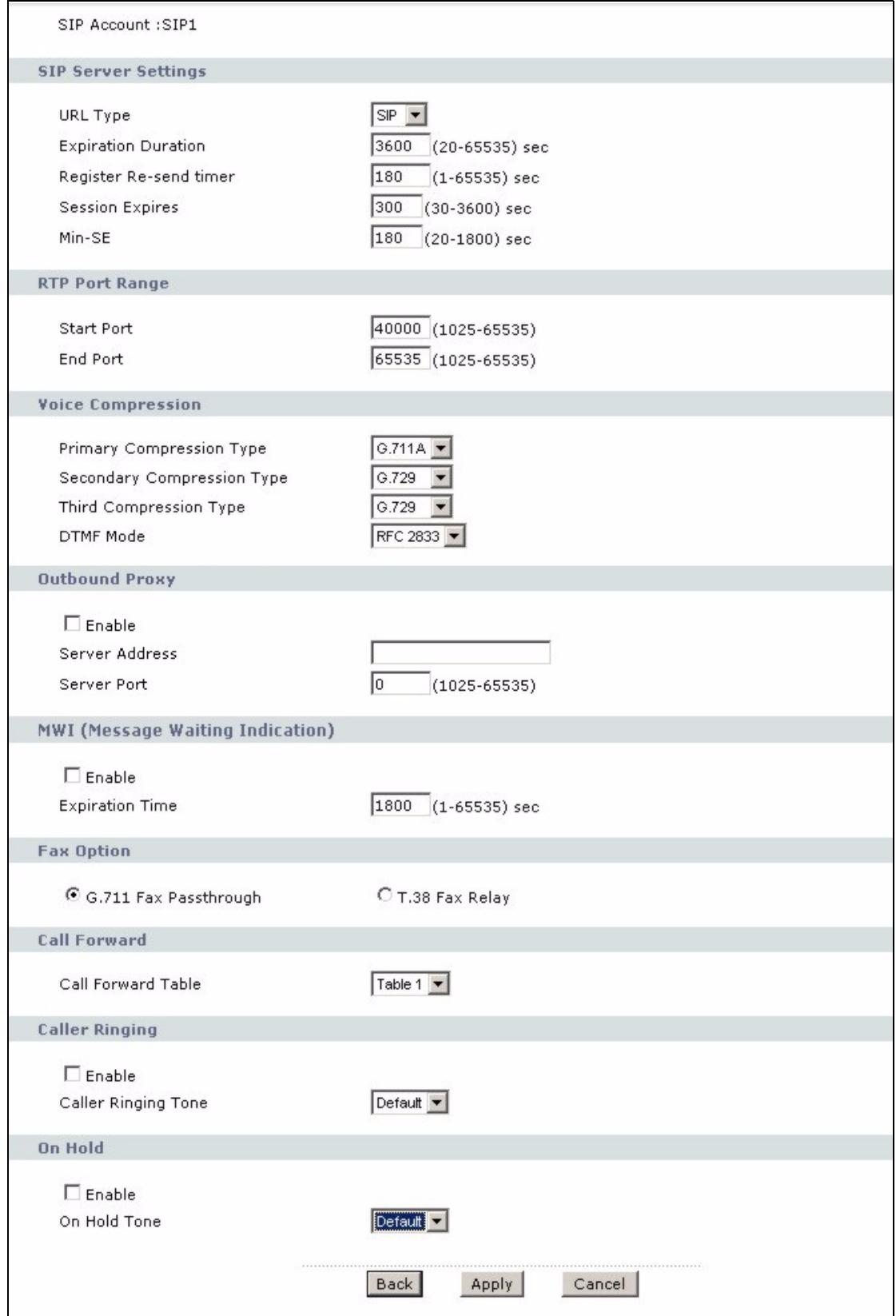
Figure 88 VoIP > SIP Settings > Advanced
Each field is described in the following table.
Table 55 VoIP > SIP Settings > Advanced
| LABEL | DESCRIPTION |
| SIP Account | This field displays the SIP account you see in this screen. |
| SIP Server Settings | |
| URL Type | Select whether or not to include the SIP service domain name when the ZyXEL Device sends the SIP number.SIP - include the SIP service domain name.TEL - do not include the SIP service domain name. |
| Expiration Duration | Enter the number of seconds your SIP account is registered with the SIP register server before it is deleted. The ZyXEL Device automatically tries to re-register your SIP account when one-half of this time has passed. (The SIP register server might have a different expiration.) |
| Register Re-send timer | Enter the number of seconds the ZyXEL Device waits before it tries again to register the SIP account, if the first try failed or if there is no response. |
| Session Expires | Enter the number of seconds the ZyXEL Device lets a SIP session remain idle (without traffic) before it automatically disconnects the session. |
| Min-SE | Enter the minimum number of seconds the ZyXEL Device lets a SIP session remain idle (without traffic) before it automatically disconnects the session. When two SIP devices start a SIP session, they must agree on an expiration time for idle sessions. This field is the shortest expiration time that the ZyXEL Device accepts. |
| RTP Port Range | |
| Start Port End Port | Enter the listening port number(s) for RTP traffic, if your VoIP service provider gave you this information. Otherwise, keep the default values.To enter one port number, enter the port number in the Start Port and End Port fields.To enter a range of ports, • enter the port number at the beginning of the range in the Start Port field. • enter the port number at the end of the range in the End Port field. |
| Voice Compressi-sion | Select the type of voice coder/decoder (codec) that you want the ZyXEL Device to use. G.711 provides higher voice quality but requires more bandwidth (64 kbps).• G.711A is typically used in Europe.• G.711u is typically used in North America and Japan.In contrast, G.729 only requires 8 kbps.The ZyXEL Device must use the same codec as the peer. When two SIP devices start a SIP session, they must agree on a codec. |
| Primary Compressi-sion Type | Select the ZyXEL Device's first choice for voice coder/decoder. |
| Secondary Compressi-sion Type | Select the ZyXEL Device's second choice for voice coder/decoder. Select None if you only want the ZyXEL Device to accept the first choice. |
| Third Compressi-sion Type | Select the ZyXEL Device's third choice for voice coder/decoder. Select None if you only want the ZyXEL Device to accept the first or second choice. |
Table 55 VoIP > SIP Settings > Advanced
| LABEL | DESCRIPTION |
| DTMF Mode | Control how the ZyXEL Device handles the tones that your telephone makes when you push its buttons. You should use the same mode your VoIP service provider uses.RFC 2833 - send the DTMF tones in RTP packets.PCM - send the DTMF tones in the voice data stream. This method works best when you are using a codec that does not use compression (like G.711). Codecsthat use compression (like G.729) can distort the tones.SIP INFO - send the DTMF tones in SIP messages. |
| Outbound Proxy | |
| Active | Select this if your VoIP service provider has a SIP outbound server to handle voice calls. This allows the ZyXEL Device to work with any type of NAT router and eliminates the need for STUN or a SIP ALG. Turn off any SIP ALG on a NAT router in front of the ZyXEL Device to keep it from retranslating the IP address (since this is already handled by the outbound proxy server). |
| Server Address | Enter the IP address or domain name of the SIP outbound proxy server. |
| Server Port | Enter the SIP outbound proxy server's listening port, if your VoIP service provider gave you one. Otherwise, keep the default value. |
| MWI (Message Waiting Indication) | |
| Enable | Select this if you want to hear a waiting (beeping) dial tone on your phone when you have at least one voice message. Your VoIP service provider must support this feature. |
| Expiration Time | Keep the default value, unless your VoIP service provider tells you to change it.Enter the number of seconds the SIP server should provide the message waiting service each time the ZyXEL Device subscribes to the service. Before this time passes, the ZyXEL Device automatically subscribes again. |
| Fax Option | This field controls how the ZyXEL Device handles fax messages. |
| G.711 Fax Passthrough | Select this if the ZyXEL Device should use G.711 to send fax messages. The peer devices must also use G.711. |
| T.38 Fax Relay | Select this if the ZyXEL Device should send fax messages as UDP or TCP/IP packets through IP networks. This provides better quality, but it may have inter-operability problems. The peer devices must also use T.38. |
| Call Forward | |
| Call Forward Table | Select which call forwarding table you want the ZyXEL Device to use for incoming calls. You set up these tables in VoIP > Phone Book > Incoming Call Policy. |
| Caller Ringing | |
| Enable | Select the check box if you want to specify what tone people hear when they call you. The ZyXEL Device provides a default tone, but you can add additional tones using IVR. See Section 11.8 on page 157 for more information. |
| Caller Ringing Tone | Select the tone you want people to hear when they call you. You should setup these tones using IVR first. See Section 11.8 on page 157 for more information. |
| On Hold | |
| Enable | Select the check box if you want to specify what tone people hear when you put them on hold. The ZyXEL Device provides a default tone, but you can add additional tones using IVR. See Section 11.8 on page 157 for more information. |
| On Hold Tone | Select the tone you want people to hear when you put them on hold. You should setup these tones using IVR first. See Section 11.8 on page 157 for more information. |
Table 55 VoIP > SIP Settings > Advanced
| LABEL | DESCRIPTION |
| Back | Click this to return to the SIP Settings screen without saving your changes. |
| Apply | Click this to save your changes and to apply them to the ZyXEL Device. |
| Cancel | Click this to set every field in this screen to its last-saved value. |
11.10 Quality of Service (QoS)
Quality of Service (QoS) refers to both a network's ability to deliver data with minimum delay, and the networking methods used to provide bandwidth for real-time multimedia applications.
11.10.1 Type Of Service (ToS)
Network traffic can be classified by setting the ToS (Type Of Service) values at the data source (for example, at the ZyXEL Device) so a server can decide the best method of delivery, that is the least cost, fastest route and so on.
11.10.2 DiffServ
DiffServ is a class of service (CoS) model that marks packets so that they receive specific per-hop treatment at DiffServ-compliant network devices along the route based on the application types and traffic flow. Packets are marked with DiffServ Code Points (DSCPs) indicating the level of service desired. This allows the intermediary DiffServ-compliant network devices to handle the packets differently depending on the code points without the need to negotiate paths or remember state information for every flow. In addition, applications do not have to request a particular service or give advanced notice of where the traffic is going.1
11.10.2.1 DSCP and Per-Hop Behavior
DiffServ defines a new DS (Differentiated Services) field to replace the Type of Service (TOS) field in the IP header. The DS field contains a 2-bit unused field and a 6-bit DSCP field which can define up to 64 service levels. The following figure illustrates the DS field.
DSCP is backward compatible with the three precedence bits in the ToS octet so that non-DiffServ compliant, ToS-enabled network device will not conflict with the DSCP mapping.
Figure 89 DiffServ: Differentiated Service Field
| DSCP (6-bit) | Unused (2-bit) |
The DSCP value determines the forwarding behavior, the PHB (Per-Hop Behavior), that each packet gets across the DiffServ network. Based on the marking rule, different kinds of traffic can be marked for different priorities of forwarding. Resources can then be allocated according to the DSCP values and the configured policies.
11.10.3 VLAN
Virtual Local Area Network (VLAN) allows a physical network to be partitioned into multiple logical networks. Only stations within the same group can communicate with each other.
Your ZyXEL Device can add IEEE 802.1Q VLAN ID tags to voice frames that it sends to the network. This allows the ZyXEL Device to communicate with a SIP server that is a member of the same VLAN group. Some ISPs use the VLAN tag to identify voice traffic and give it priority over other traffic.
11.10.4 SIP QoS Screen
Use this screen to maintain ToS and VLAN settings for the ZyXEL Device. To access this screen, click VoIP > SIP > QoS.
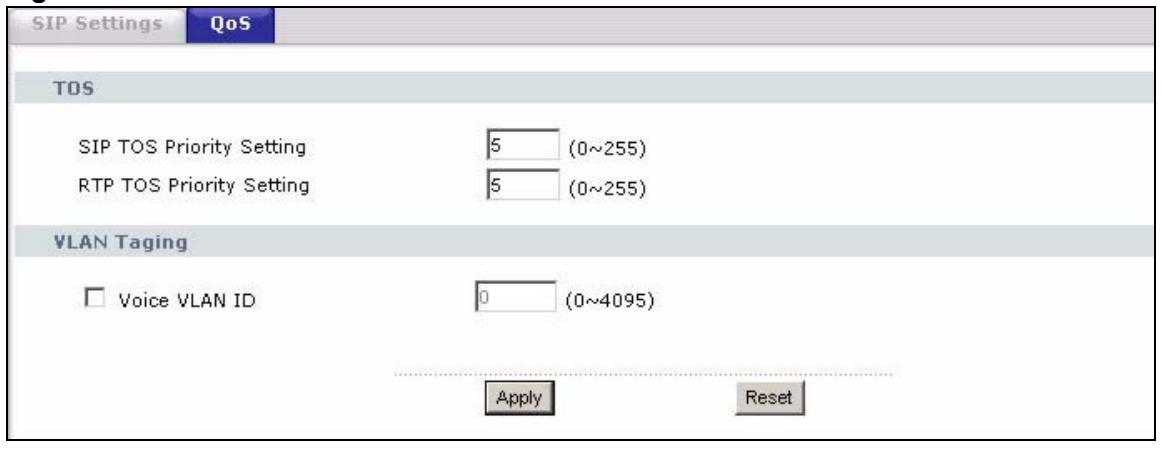
Figure 90 SIP > QoS
Each field is described in the following table.
Table 56 SIP > QoS
| LABEL | DESCRIPTION |
| SIP TOS Priority Setting | Enter the priority for SIP voice transmissions. The ZyXEL Device creates Type of Service priority tags with this priority to voice traffic that it transmits. |
| RTP TOS Priority Setting | Enter the priority for RTP voice transmissions. The ZyXEL Device creates Type of Service priority tags with this priority to RTP traffic that it transmits. |
| Voice VLAN ID | Select this if the ZyXEL Device has to be a member of a VLAN to communicate with the SIP server. Ask your network administrator, if you are not sure. Enter the VLAN ID provided by your network administrator in the field on the right. Your LAN and gateway must be configured to use VLAN tags. Otherwise, clear this field. |
Table 56 SIP > QoS
| LABEL | DESCRIPTION |
| Apply | Click this to save your changes and to apply them to the ZyXEL Device. |
| Cancel | Click this to set every field in this screen to its last-saved value. |
11.11 Phone
You can configure the volume, echo cancellation and VAD settings for each individual phone port on the ZyXEL Device. You can also select which SIP account to use for making outgoing calls.
11.12 PSTN Line ("L" models only)
With PSTN line you can make and receive regular PSTN phone calls. Use a prefix number to make a regular call. When the device does not have power, you can make regular calls without dialing a prefix number.
Note: When the ZyXEL Device does not have power, only the phone connected to the PHONE 1 port can be used for making calls. Ensure you know which phone this is, so that in case of emergency you can make outgoing calls.
You can also use the PSTN Line screen to specify phone numbers that should always use the regular phone service (without having to dial a prefix number). Do this for emergency numbers (like those for contacting police, fire or emergency medical services).
11.12.1 Voice Activity Detection/Silence Suppression
Voice Activity Detection (VAD) detects whether or not speech is present. This lets the ZyXEL Device reduce the bandwidth that a call uses by not transmitting "silent packets" when you are not speaking.
11.12.2 Comfort Noise Generation
When using VAD, the ZyXEL Device generates comfort noise when the other party is not speaking. The comfort noise lets you know that the line is still connected as total silence could easily be mistaken for a lost connection.
11.12.3 Echo Cancellation
G.168 is an ITU-T standard for eliminating the echo caused by the sound of your voice reverberating in the telephone receiver while you talk.
11.13 Analog Phone Screen
Use this screen to control which SIP accounts and PSTN line each phone uses. To access this screen, click VoIP > Phone > Analog Phone.

Figure 91 Phone > Analog Phone
Each field is described in the following table.
Table 57 Phone > Analog Phone
| LABEL | DESCRIPTION |
| Phone Port Settings | Select the phone port you want to see in this screen. If you change this field, the screen automatically refreshes. |
| Outgoing Call Use | |
| SIP1 | Select this if you want this phone port to use the SIP1 account when it makes calls. If you select both SIP accounts, the ZyXEL Device tries to use SIP2 first. |
| SIP2 | Select this if you want this phone port to use the SIP2 account when it makes calls. If you select both SIP accounts, the ZyXEL Device tries to use SIP2 first. |
| Incoming Call apply to | |
| SIP1 | Select this if you want to receive phone calls for the SIP1 account on this phone port. If you select more than one source for incoming calls, there is no way to distinguish between them when you receive phone calls. |
| SIP2 | Select this if you want to receive phone calls for the SIP2 account on this phone port. If you select more than one source for incoming calls, there is no way to distinguish between them when you receive phone calls. |
| PSTN Line ("L" models only) | Select this if you want to receive phone calls from the PSTN line (that do not use the Internet) on this phone port. If you select more than one source for incoming calls, there is no way to distinguish between them when you receive phone calls.Note: When the ZyXEL Device does not have power, regardless of the settings you configure, only the phone connected to the PHONE 1 port can be used for making calls. Ensure you know which phone this is, so that in case of emergency you can make outgoing calls. |
Table 57 Phone > Analog Phone
| LABEL | DESCRIPTION |
| Apply | Click this to save your changes and to apply them to the ZyXEL Device. |
| Cancel | Click this to set every field in this screen to its last-saved value. |
| Advanced Setup | Click this to edit the advanced settings for this phone port. The Advanced Analog Phone Setup screen appears. |
11.14 Advanced Analog Phone Setup Screen
Use this screen to edit advanced settings for each phone port. To access this screen, click Advanced Setup in VoIP > Phone > Analog Phone.
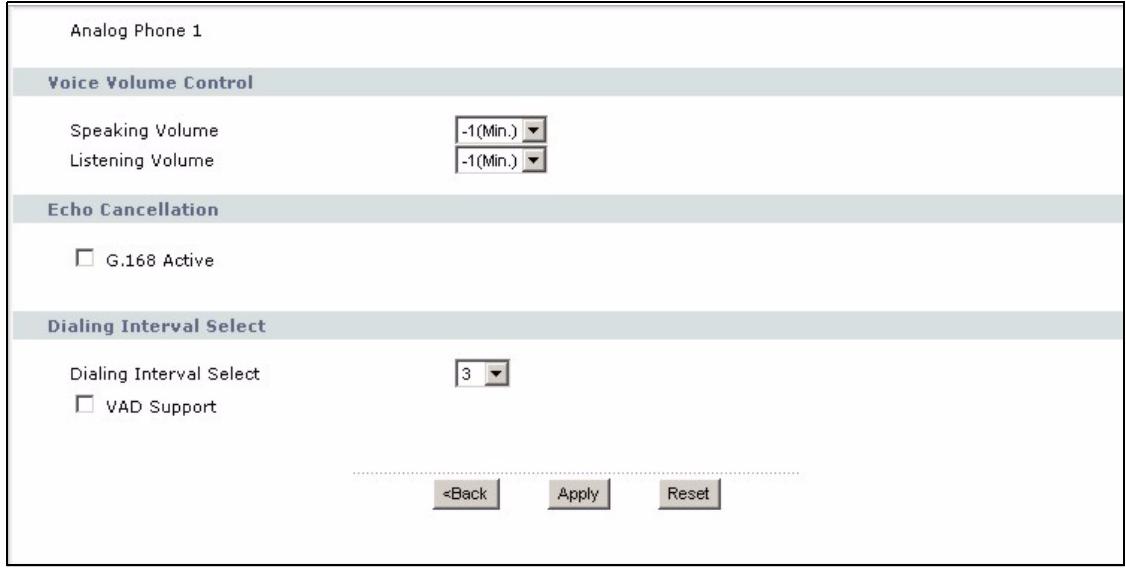
Figure 92 Phone > Analog Phone > Advanced
Each field is described in the following table.
Table 58 Phone > Analog Phone > Advanced
| LABEL | DESCRIPTION |
| Analog Phone | This field displays the phone port you see in this screen. |
| Voice Volume Control | |
| Speaking Volume | Enter the loudness that the ZyXEL Device uses for speech that it sends to the peer device. -1 is the quietest, and 1 is the loudest. |
| Listening Volume | Enter the loudness that the ZyXEL Device uses for speech that it receives from the peer device. -1 is the quietest, and 1 is the loudest. |
| Echo Cancellation | |
| G.168 Active | Select this if you want to eliminate the echo caused by the sound of your voice reverberating in the telephone receiver while you talk. |
Table 58 Phone > Analog Phone > Advanced
| LABEL | DESCRIPTION |
| Dialing Interval Select | |
| Dialing Interval Select | Enter the number of seconds the ZyXEL Device should wait after you stop dialing numbers before it makes the phone call. The value depends on how quickly you dial phone numbers. If you select Active Immediate Dial in VoIP > Phone > Common, you can press the pound key (#) to tell the ZyXEL Device to make the phone call immediately, regardless of this setting. |
| VAD Support | Select this if the ZyXEL Device should stop transmitting when you are not speaking. This reduces the bandwidth the ZyXEL Device uses. |
| Back | Click this to return to the Analog Phone screen without saving your changes. |
| Apply | Click this to save your changes and to apply them to the ZyXEL Device. |
| Cancel | Click this to set every field in this screen to its last-saved value. |
11.14.1 Common Phone Settings Screen
Use this screen to activate and deactivate immediate dialing. To access this screen, click VoIP > Phone > Common.
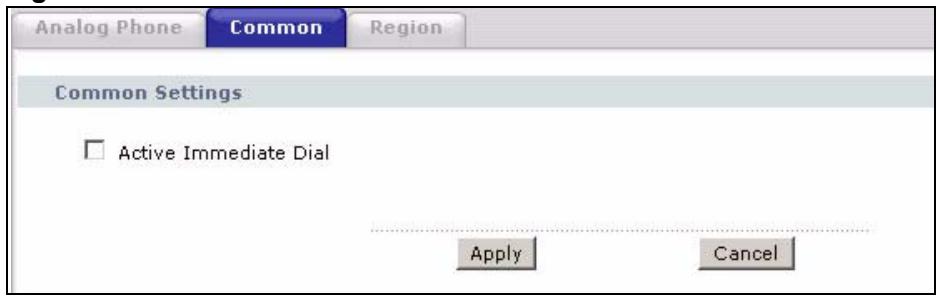
Figure 93 Phone > Common
Each field is described in the following table.
Table 59 Phone > Common
| LABEL | DESCRIPTION |
| Active Immediate Dial | Select this if you want to use the pound key (#) to tell the ZyXEL Device to make the phone call immediately, instead of waiting the number of seconds you selected in the Dialing Interval Select in VoIP > Phone > Analog Phone. If you select this, dial the phone number, and then press the pound key. The ZyXEL Device makes the call immediately, instead of waiting. You can still wait, if you want. |
| Apply | Click this to save your changes and to apply them to the ZyXEL Device. |
| Cancel | Click this to set every field in this screen to its last-saved value. |
11.15 Supplementary Phone Services Overview
Supplementary services such as call hold, call waiting, call transfer, ... are generally available from your VoIP service provider. The ZyXEL Device supports the following services:
Call Hold
- Call Waiting
- Making a Second Call
Call Transfer
- Call Forwarding (see Section 11.19 on page 174)
Three-Way Conference
- Internal Calls (see Section 12.3 on page 179)
Note: To take full advantage of the supplementary phone services available through the ZyXEL Device's phone ports, you may need to subscribe to the services from your VoIP service provider.
11.15.1 The Flash Key
Flashing means to press the hook for a short period of time (a few hundred milliseconds) before releasing it. On newer telephones, there should be a "flash" key (button) that generates the signal electronically. If the flash key is not available, you can tap (press and immediately release) the hook by hand to achieve the same effect. However, using the flash key is preferred since the timing is much more precise. With manual tapping, if the duration is too long, it may be interpreted as hanging up by the ZyXEL Device.
You can invoke all the supplementary services by using the flash key.
11.15.2 Europe Type Supplementary Phone Services
This section describes how to use supplementary phone services with the Europe Type Call Service Mode. Commands for supplementary services are listed in the table below.
After pressing the flash key, if you do not issue the sub-command before the default sub-command timeout (2 seconds) expires or issue an invalid sub-command, the current operation will be aborted.
Table 60 European Flash Key Commands
| COMMAND | SUB-COMMAND | DESCRIPTION |
| Flash | Put a current call on hold to place a second call. Switch back to the call (if there is no second call). | |
| Flash | 0 | Drop the call presently on hold or reject an incoming call which is waiting for answer. |
| Flash | 1 | Disconnect the current phone connection and answer the incoming call or resume with caller presently on hold. |
Table 60 European Flash Key Commands
| COMMAND | SUB-COMMAND | DESCRIPTION |
| Flash | 2 | 1. Switch back and forth between two calls. 2. Put a current call on hold to answer an incoming call. 3. Separate the current three-way conference call into two individual calls (one is on-line, the other is on hold). |
| Flash | 3 | Create three-way conference connection. |
| Flash | *98# | Transfer the call to another phone. |
11.15.2.1 European Call Hold
Call hold allows you to put a call (A) on hold by pressing the flash key.
If you have another call, press the flash key and then “2” to switch back and forth between caller A and B by putting either one on hold.
Press the flash key and then "0" to disconnect the call presently on hold and keep the current call on line.
Press the flash key and then "1" to disconnect the current call and resume the call on hold.
If you hang up the phone but a caller is still on hold, there will be a remind ring.
11.15.2.2 European Call Waiting
This allows you to place a call on hold while you answer another incoming call on the same telephone (directory) number.
If there is a second call to a telephone number, you will hear a call waiting tone. Take one of the following actions.
- Reject the second call.
Press the flash key and then press "0".
- Disconnect the first call and answer the second call.
Either press the flash key and press "1", or just hang up the phone and then answer the phone after it rings.
- Put the first call on hold and answer the second call.
Press the flash key and then "2".
11.15.2.3 European Call Transfer
Do the following to transfer an incoming call (that you have answered) to another phone.
1 Press the flash key to put the caller on hold.
2 When you hear the dial tone, dial " 98# ” followed by the number to which you want to transfer the call. to operate the Intercom.
3 After you hear the ring signal or the second party answers it, hang up the phone.
11.15.2.4 European Three-Way Conference
Use the following steps to make three-way conference calls.
1 When you are on the phone talking to someone, press the flash key to put the caller on hold and get a dial tone.
2 Dial a phone number directly to make another call.
3 When the second call is answered, press the flash key and press "3" to create a three-way conversation.
4 Hang up the phone to drop the connection.
5 If you want to separate the activated three-way conference into two individual connections (one is on-line, the other is on hold), press the flash key and press “2”.
11.15.3 USA Type Supplementary Services
This section describes how to use supplementary phone services with the USA Type Call Service Mode. Commands for supplementary services are listed in the table below.
After pressing the flash key, if you do not issue the sub-command before the default sub-command timeout (2 seconds) expires or issue an invalid sub-command, the current operation will be aborted.
Table 61 USA Flash Key Commands
| COMMAND | SUB-COMMAND | DESCRIPTION |
| Flash | Put a current call on hold to place a second call. After the second call is successful, press the flash key again to have a three-way conference call. Put a current call on hold to answer an incoming call. | |
| Flash | *98# | Transfer the call to another phone. |
11.15.3.1 USA Call Hold
Call hold allows you to put a call (A) on hold by pressing the flash key.
If you have another call, press the flash key to switch back and forth between caller A and B by putting either one on hold.
If you hang up the phone but a caller is still on hold, there will be a remind ring.
11.15.3.2 USA Call Waiting
This allows you to place a call on hold while you answer another incoming call on the same telephone (directory) number.
If there is a second call to your telephone number, you will hear a call waiting tone.
Press the flash key to put the first call on hold and answer the second call.
11.15.3.3 USA Call Transfer
Do the following to transfer an incoming call (that you have answered) to another phone.
1 Press the flash key to put the caller on hold.
2 When you hear the dial tone, dial " 98# ” followed by the number to which you want to transfer the call. to operate the Intercom.
3 After you hear the ring signal or the second party answers it, hang up the phone.
11.15.3.4 USA Three-Way Conference
Use the following steps to make three-way conference calls.
1 When you are on the phone talking to someone (party A), press the flash key to put the caller on hold and get a dial tone.
2 Dial a phone number directly to make another call (to party B).
3 When party B answers the second call, press the flash key to create a three-way conversation
4 Hang up the phone to drop the connection.
5 If you want to separate the activated three-way conference into two individual connections (with party A on-line and party B on hold), press the flash key.
6 If you want to go back to the three-way conversation, press the flash key again.
7 If you want to separate the activated three-way conference into two individual connections again, press the flash key. This time the party B is on-line and party A is on hold
11.16 Phone Region Screen
Use this screen to maintain settings that often depend on which region of the world the ZyXEL Device is in. To access this screen, click VoIP > Phone > Region.
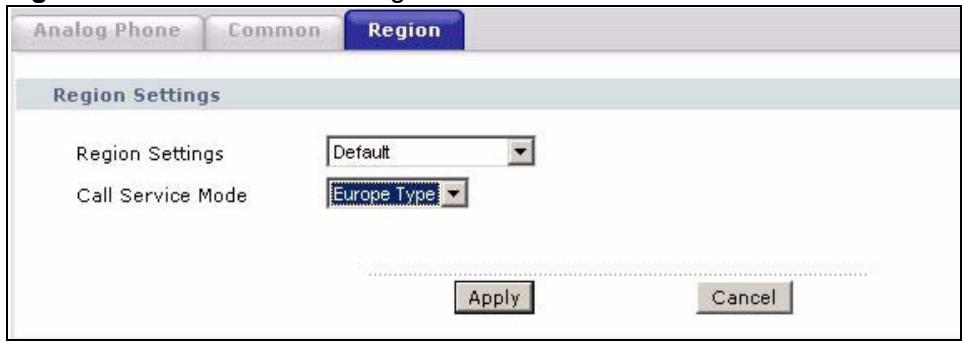
Figure 94 VolP > Phone > Region
Each field is described in the following table.
Table 62 VoIP > Phone > Region
| LABEL | DESCRIPTION |
| Region Settings | Select the place in which the ZyXEL Device is located. |
| Call Service Mode | Select the mode for supplementary phone services (call hold, call waiting, call transfer and three-way conference calls) that your VoIP service provider supports. Europe Type - use supplementary phone services in European mode USA Type - use supplementary phone services American mode You might have to subscribe to these services to use them. Contact your VoIP service provider. |
| Apply | Click this to save your changes and to apply them to the ZyXEL Device. |
| Cancel | Click this to set every field in this screen to its last-saved value. |
11.17 Speed Dial
Speed dial provides shortcuts for dialing frequently used (VoIP) phone numbers.
11.17.1 Peer-to-Peer Calls
You can call another VoIP device directly without going through a SIP server. You must set up a speed dial entry in the phone book in order to do this. Select Non-Proxy (Use IP or URL) in the Type column and enter the callee's IP address or domain name. The ZyXEL Device sends SIP INVITE requests to the peer VoIP device when you use the speed dial entry.
You do not need to configure a SIP account on the ZyXEL Device 2602HW in order to make a peer-to-peer VoIP call.
11.18 Speed Dial Screen
You have to create speed-dial entries if you want to make peer-to-peer calls or call SIP numbers that use letters. You can also create speed-dial entries for frequently-used SIP phone numbers. Use this screen to add, edit, or remove speed-dial numbers for outgoing calls. To access this screen, click VoIP > Phone Book > Speed Dial.
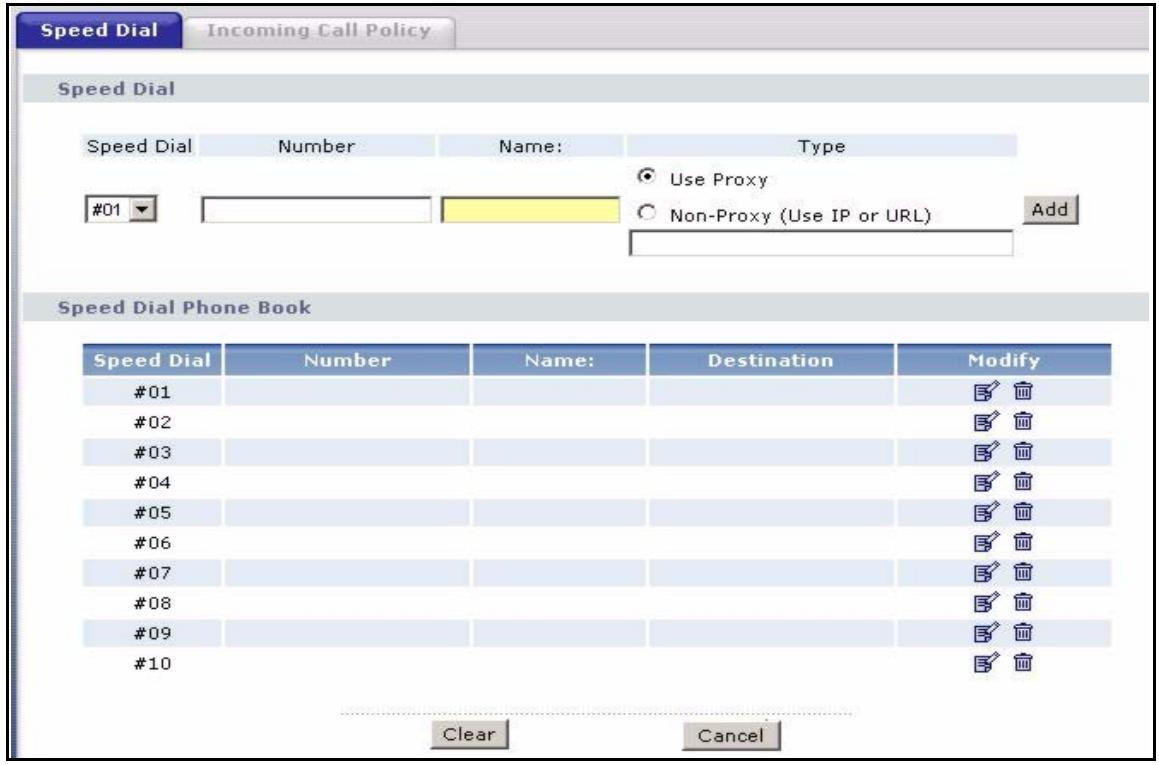
Figure 95 Phone Book > Speed Dial
Each field is described in the following table.
Table 63 Phone Book > Speed Dial
| LABEL | DESCRIPTION |
| Speed Dial | Use this section to create or edit speed-dial entries. |
| Speed Dial | Select the speed-dial number you want to use for this phone number. |
| Number | Enter the SIP number you want the ZyXEL Device to call when you dial the speed-dial number. |
| Name | Enter a name to identify the party you call when you dial the speed-dial number. You can use up to 127 printable ASCII characters. |
| Type | Select Use Proxy if you want to use one of your SIP accounts to call this phone number. Select Non-Proxy (Use IP or URL) if you want to use a different SIP server or if you want to make a peer-to-peer call. In this case, enter the IP address or domain name of the SIP server or the other party in the field below. |
| Add | Click this to use the information in the Speed Dial section to update the Speed Dial Phone Book section. |
Table 63 Phone Book > Speed Dial
| LABEL | DESCRIPTION |
| Speed Dial Phone Book | Use this section to look at all the speed-dial entries and to erase them. |
| Speed Dial | This field displays the speed-dial number you should dial to use this entry. |
| Number | This field displays the SIP number the ZyXEL Device calls when you dial the speed-dial number. |
| Name | This field displays the name of the party you call when you dial the speed-dial number. |
| Destination | This field is blank, if the speed-dial entry uses one of your SIP accounts. Otherwise, this field shows the IP address or domain name of the SIP server or other party. (This field corresponds with the Type field in the Speed Dial section.) |
| Modify | Use this field to edit or erase the speed-dial entry. Click the Edit icon to copy the information for this speed-dial entry into the Speed Dial section, where you can change it. Click the Remove icon to erase this speed-dial entry. |
| Clear | Click this to erase all the speed-dial entries. |
| Cancel | Click this to set every field in this screen to its last-saved value. |
11.19 Incoming Call Policy Screen
Use this screen to maintain rules for handling incoming calls. You can block, redirect, or accept them. To access this screen, click VoIP > Phone Book > Incoming Call Policy.
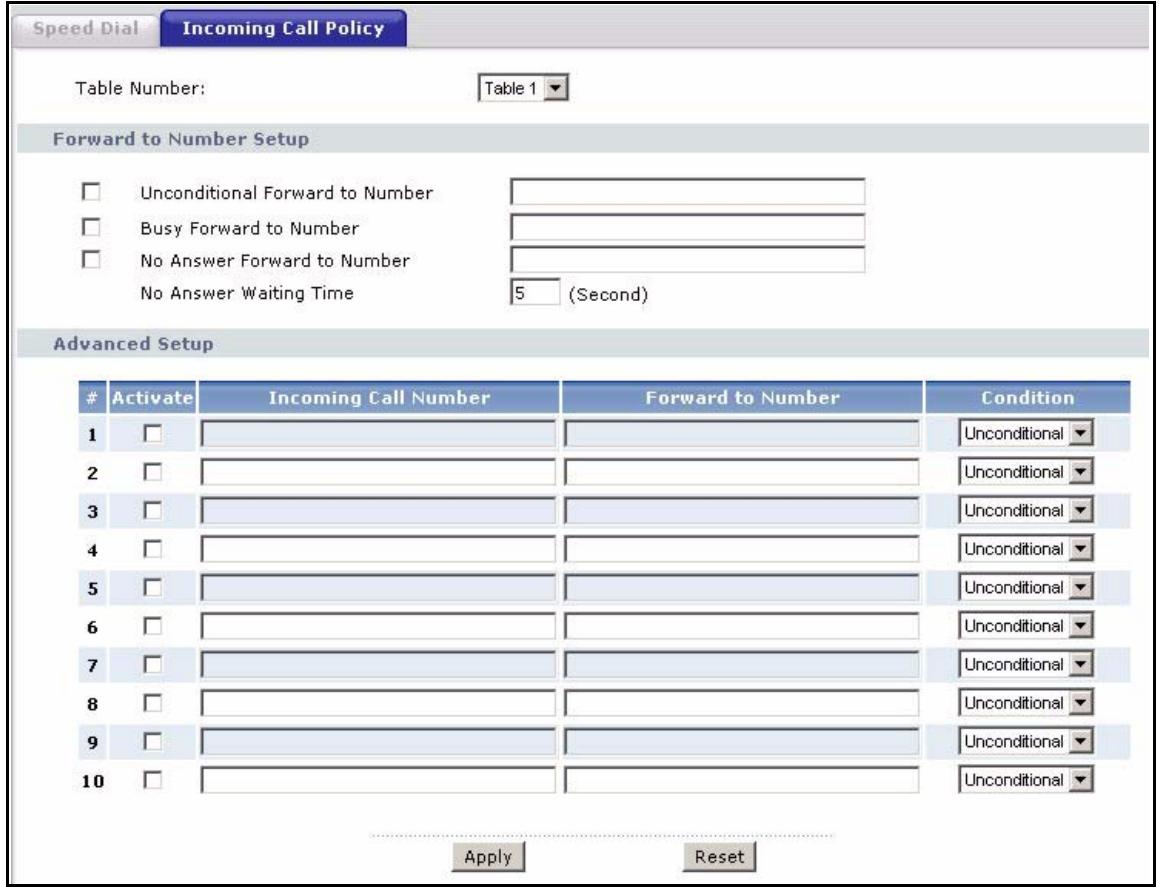
Figure 96 Phone Book > Incoming Call Policy
You can create two sets of call-forwarding rules. Each one is stored in a call-forwarding table. Each field is described in the following table.
Table 64 Phone Book > Incoming Call Policy
| LABEL | DESCRIPTION |
| Table Number | Select the call-forwarding table you want to see in this screen. If you change this field, the screen automatically refreshes. |
| Forward to Number Setup | The ZyXEL Device checks these rules, in the order in which they appear, after it checks the rules in the Advanced Setup section. |
| Unconditional Forward to Number | Select this if you want the ZyXEL Device to forward all incoming calls to the specified phone number, regardless of other rules in the Forward to Number section. Specify the phone number in the field on the right. |
| Busy Forward to Number | Select this if you want the ZyXEL Device to forward incoming calls to the specified phone number if the phone port is busy. Specify the phone number in the field on the right. If you have call waiting, the incoming call is forwarded to the specified phone number if you reject or ignore the second incoming call. |
| No Answer Forward to Number | Select this if you want the ZyXEL Device to forward incoming calls to the specified phone number if the call is unanswered. (See No Answer Waiting Time.) Specify the phone number in the field on the right. |
| No Answer Waiting Time | This field is used by the No Answer Forward to Number feature and No Answer conditions below. Enter the number of seconds the ZyXEL Device should wait for you to answer an incoming call before it considers the call is unanswered. |
Table 64 Phone Book > Incoming Call Policy
| LABEL | DESCRIPTION |
| Advanced Setup | The ZyXEL Device checks these rules before it checks the rules in the Forward to Number section. |
| # | This field is a sequential value, and it is not associated with a specific rule. The sequence is important, however. The ZyXEL Device checks each rule in order, and it only follows the first one that applies. |
| Activate | Select this to enable this rule. Clear this to disable this rule. |
| Incoming Call Number | Enter the phone number to which this rule applies. |
| Forward to Number | Enter the phone number to which you want to forward incoming calls from the Incoming Call Number. You may leave this field blank, depending on the Condition. |
| Condition | Select the situations in which you want to forward incoming calls from the Incoming Call Number, or select an alternative action. Unconditional - The ZyXEL Device immediately forwards any calls from the Incoming Call Number to the Forward to Number. Busy - The ZyXEL Device forwards any calls from the Incoming Call Number to the Forward to Number when your SIP account already has a call connected. No Answer - The ZyXEL Device forwards any calls from the Incoming Call Number to the Forward to Number when the call is unanswered. (See No Answer Waiting Time.) Block - The ZyXEL Device rejects calls from the Incoming Call Number. Accept - The ZyXEL Device allows calls from the Incoming Call Number. You might create a rule with this condition if you do not want incoming calls from someone to be forwarded by rules in the Forward to Number section. |
| Apply | Click this to save your changes and to apply them to the ZyXEL Device. |
| Cancel | Click this to set every field in this screen to its last-saved value. |
11.20 PSTN Line Screen ("L" models only)
Use this screen to set up the PSTN line you use to make regular phone calls. To access this screen, click VoIP > PSTN Line > General.
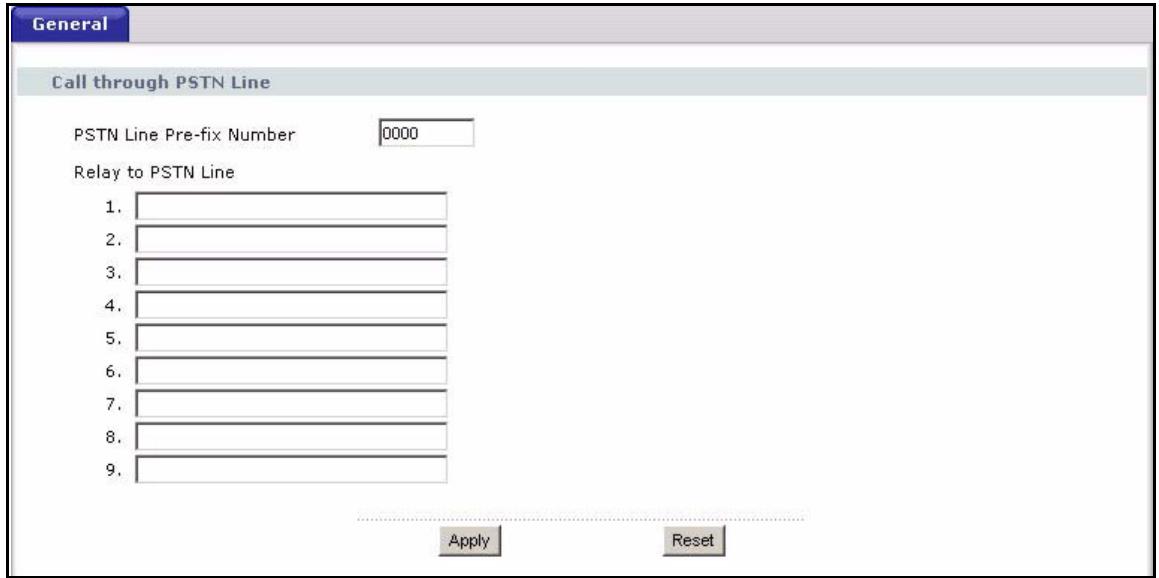
Figure 97 PSTN Line > General
Each field is described in the following table.
Table 65 PSTN Line > General
| LABEL | DESCRIPTION |
| PSTN Line Pre-fix Number | Enter 1 - 7 numbers you dial before you dial the phone number, if you want to make a regular phone call while one of your SIP accounts is registered. These numbers tell the ZyXEL Device that you want to make a regular phone call. |
| Relay to PSTN Line | Enter phone numbers (for regular calls, not VoIP calls) that you want to dial without the prefix number. For example, you should enter emergency numbers. The number (1 - 9) is not a speed-dial number. It is just a sequential value that is not associated with any phone number. |
| Apply | Click this to save your changes and to apply them to the ZyXEL Device. |
| Cancel | Click this to set every field in this screen to its last-saved value. |
CHAPTER 12 Phone Usage
This chapter describes how to use a phone connected to your ZyXEL Device for basic tasks.
12.1 Dialog a Telephone Number
The PHONE LED turns green when your SIP account is registered. Dial a SIP number like "12345" on your phone's keypad.
Use speed dial entries (see Section 11.17 on page 172) for peer-to-peer calls or SIP numbers that use letters. Dial the speed dial entry on your telephone's keypad.
Use your VoIP service provider's dialing plan to call regular telephone numbers.
12.2 Using Speed Dial to Dial a Telephone Number
After configuring the speed dial entry and adding it to the phonebook, press the speed dial entry's key combination on your phone's keypad.
12.3 Internal Calls
Press "########" on your phone's keypad to call the ZyXEL Device's other phone port.
12.4 Checking the Device's IP Address
Do the following to listen to the ZyXEL Device's current IP address.
1 Pick up your phone's receiver.
2 Press "**" on your phone's keypad and wait for the message that says you are in the configuration menu.
3 Press "5" followed by the # key.
4 Listen to the IP address and make a note of it.
5 Hang up the receiver.
12.5 Auto Firmware Upgrade
During auto-provisioning, the ZyXEL Device checks to see if there is a newer firmware version. If newer firmware is available, the ZyXEL Device plays a recording when you pick up your phone's handset.
Press " 99# " to upgrade the ZyXEL Device's firmware.
Press "#99#" to not upgrade the ZyXEL Device's firmware.
CHAPTER 13 Firewalls
This chapter gives some background information on firewalls and introduces the ZyXEL Device firewall.
13.1 Firewall Overview
Originally, the term firewall referred to a construction technique designed to prevent the spread of fire from one room to another. The networking term "firewall" is a system or group of systems that enforces an access-control policy between two networks. It may also be defined as a mechanism used to protect a trusted network from an untrusted network. Of course, firewalls cannot solve every security problem. A firewall is one of the mechanisms used to establish a network security perimeter in support of a network security policy. It should never be the only mechanism or method employed. For a firewall to guard effectively, you must design and deploy it appropriately. This requires integrating the firewall into a broad information-security policy. In addition, specific policies must be implemented within the firewall itself.
Refer to Section 14.5 on page 196 to configure default firewall settings.
Refer to Section 14.6 on page 197 to view firewall rules.
Refer to Section 14.6.1 on page 199 to configure firewall rules.
Refer to Section 14.6.2 on page 202 to configure a custom service.
Refer to Section 14.8.3 on page 209 to configure firewall thresholds.
13.2 Types of Firewalls
There are three main types of firewalls:
- Packet Filtering Firewalls
- Application-level Firewalls
- Stateful Inspection Firewalls
13.2.1 Packet Filtering Firewalls
Packet filtering firewalls restrict access based on the source/destination computer network address of a packet and the type of application.
13.2.2 Application-level Firewalls
Application-level firewalls restrict access by serving as proxies for external servers. Since they use programs written for specific Internet services, such as HTTP, FTP and telnet, they can evaluate network packets for valid application-specific data. Application-level gateways have a number of general advantages over the default mode of permitting application traffic directly to internal hosts:
Information hiding prevents the names of internal systems from being made known via DNS to outside systems, since the application gateway is the only host whose name must be made known to outside systems.
Robust authentication and logging pre-authENTICates application traffic before it reaches internal hosts and causes it to be logged more effectively than if it were logged with standard host logging. Filtering rules at the packet filtering router can be less complex than they would be if the router needed to filter application traffic and direct it to a number of specific systems. The router need only allow application traffic destined for the application gateway and reject the rest.
13.2.3 Stateful Inspection Firewalls
Stateful inspection firewalls restrict access by screening data packets against defined access rules. They make access control decisions based on IP address and protocol. They also "inspect" the session data to assure the integrity of the connection and to adapt to dynamic protocols. These firewalls generally provide the best speed and transparency, however, they may lack the granular application level access control or caching that some proxies support. See Section 13.5 on page 187 for more information on stateful inspection.
Firewalls, of one type or another, have become an integral part of standard security solutions for enterprises.
13.3 Introduction to ZyXEL's Firewall
The ZyXEL Device firewall is a stateful inspection firewall and is designed to protect against Denial of Service attacks when activated. The ZyXEL Device's purpose is to allow a private Local Area Network (LAN) to be securely connected to the Internet. The ZyXEL Device can be used to prevent theft, destruction and modification of data, as well as log events, which may be important to the security of your network. The ZyXEL Device also has packet filtering capabilities.
The ZyXEL Device is installed between the LAN and the Internet. This allows it to act as a secure gateway for all data passing between the Internet and the LAN.
The ZyXEL Device has one DSL/ISDN port and one Ethernet LAN port, which physically separate the network into two areas.
-
The DSL/ISDN port connects to the Internet.
-
The LAN (Local Area Network) port attaches to a network of computers, which needs security from the outside world. These computers will have access to Internet services such as e-mail, FTP, and the World Wide Web. However, "inbound access" will not be allowed unless you configure remote management or create a firewall rule to allow a remote host to use a specific service.
13.3.1 Denial of Service Attacks
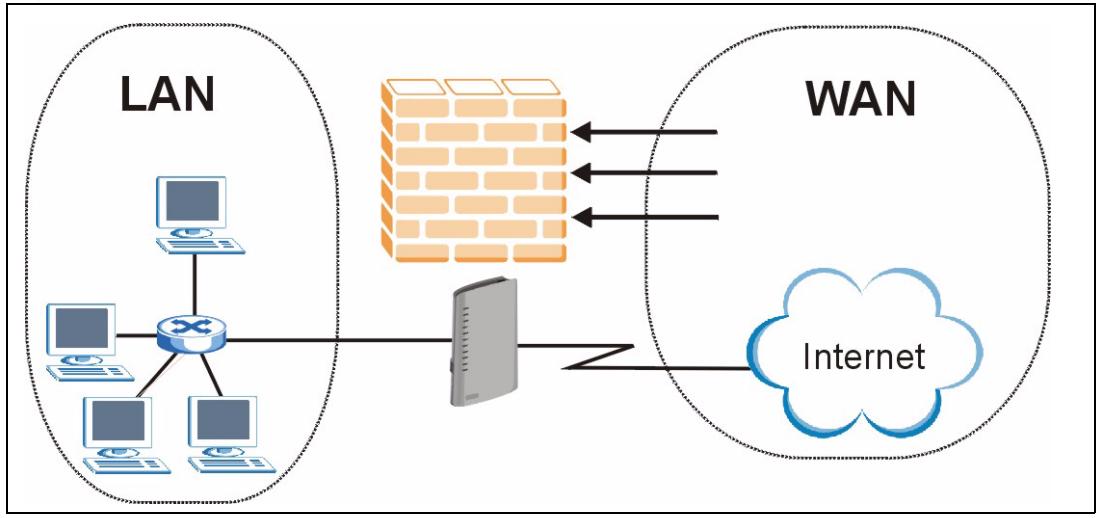
Figure 98 Firewall Application
13.4 Denial of Service
Denials of Service (DoS) attacks are aimed at devices and networks with a connection to the Internet. Their goal is not to steal information, but to disable a device or network so users no longer have access to network resources. The ZyXEL Device is pre-configured to automatically detect and thwart all known DoS attacks.
13.4.1 Basics
Computers share information over the Internet using a common language called TCP/IP. TCP/IP, in turn, is a set of application protocols that perform specific functions. An "extension number", called the "TCP port" or "UDP port" identifies these protocols, such as HTTP (Web), FTP (File Transfer Protocol), POP3 (E-mail), etc. For example, Web traffic by default uses TCP port 80.
When computers communicate on the Internet, they are using the client/server model, where the server "listens" on a specific TCP/UDP port for information requests from remote client computers on the network. For example, a Web server typically listens on port 80. Please note that while a computer may be intended for use over a single port, such as Web on port 80, other ports are also active. If the person configuring or managing the computer is not careful, a hacker could attack it over an unprotected port.
Some of the most common IP ports are:
Table 66 Common IP Ports
| 21 | FTP | 53 | DNS |
| 23 | Telnet | 80 | HTTP |
| 25 | SMTP | 110 | POP3 |
13.4.2 Types of DoS Attacks
There are four types of DoS attacks:
1 Those that exploit bugs in a TCP/IP implementation.
2 Those that exploit weaknesses in the TCP/IP specification.
3 Brute-force attacks that flood a network with useless data.
4 IP Spoofing.
5 "Ping of Death" and "Teardrop" attacks exploit bugs in the TCP/IP implementations of various computer and host systems.
-
Ping of Death uses a "ping" utility to create an IP packet that exceeds the maximum 65,536 bytes of data allowed by the IP specification. The oversize packet is then sent to an unsuspecting system. Systems may crash, hang or reboot.
-
Teardrop attack exploits weaknesses in the re-assembly of IP packet fragments. As data is transmitted through a network, IP packets are often broken up into smaller chunks. Each fragment looks like the original IP packet except that it contains an offset field that says, for instance, "This fragment is carrying bytes 200 through 400 of the original (non fragmented) IP packet." The Teardrop program creates a series of IP fragments with overlapping offset fields. When these fragments are reassembled at the destination, some systems will crash, hang, or reboot.
6 Weaknesses in the TCP/IP specification leave it open to "SYN Flood" and "LAND" attacks. These attacks are executed during the handshake that initiates a communication session between two applications.
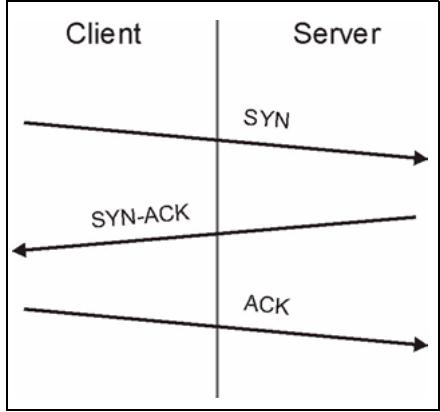
Figure 99 Three-Way Handshake
Under normal circumstances, the application that initiates a session sends a SYN (synchronize) packet to the receiving server. The receiver sends back an ACK (acknowledgment) packet and its own SYN, and then the initiator responds with an ACK (acknowledgment). After this handshake, a connection is established.
- SYN Attack floods a targeted system with a series of SYN packets. Each packet causes the targeted system to issue a SYN-ACK response. While the targeted system waits for the ACK that follows the SYN-ACK, it queues up all outstanding SYN-ACK responses on what is known as a backlog queue. SYN-ACKs are moved off the queue only when an ACK comes back or when an internal timer (which is set at relatively long intervals) terminates the three-way handshake. Once the queue is full, the system will ignore all incoming SYN requests, making the system unavailable for legitimate users.
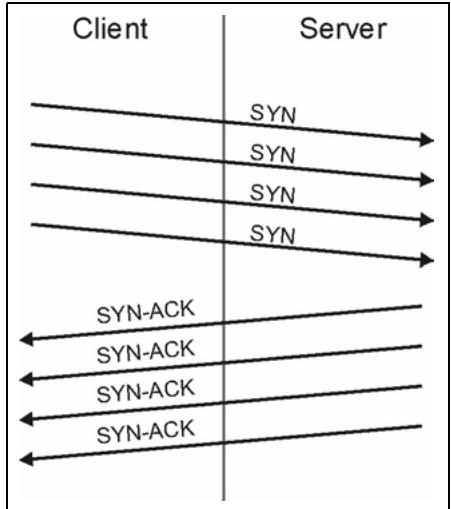
Figure 100 SYN Flood
- In a LAND Attack, hackers flood SYN packets into the network with a spoofed source IP address of the targeted system. This makes it appear as if the host computer sent the packets to itself, making the system unavailable while the target system tries to respond to itself.
7 A brute-force attack, such as a "Smurf" attack, targets a feature in the IP specification known as directed or subnet broadcasting, to quickly flood the target network with useless data. A Smurf hacker floods a router with Internet Control Message Protocol (ICMP) echo request packets (pings). Since the destination IP address of each packet is the broadcast address of the network, the router will broadcast the ICMP echo request packet to all hosts on the network. If there are numerous hosts, this will create a large amount of ICMP echo request and response traffic. If a hacker chooses to spoof the source IP address of the ICMP echo request packet, the resulting ICMP traffic will not only clog up the "intermediary" network, but will also congest the network of the spoofed source IP address, known as the "victim" network. This flood of broadcast traffic consumes all available bandwidth, making communications impossible.
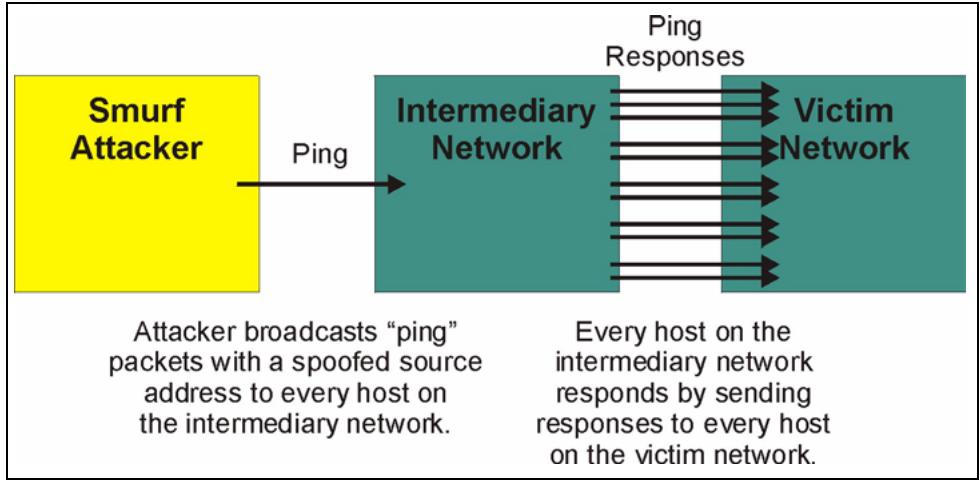
Figure 101 Smurf Attack
13.4.2.1 ICMP Vulnerability
ICMP is an error-reporting protocol that works in concert with IP. The following ICMP types trigger an alert:
Table 67 ICMP Commands That Trigger Alerts
| 5 | REDIRECT |
| 13 | TIMESTAMP_REQUEST |
| 14 | TIMESTAMPReply |
| 17 | ADDRESS_MASK_REQUEST |
| 18 | ADDRESS_MASKReply |
13.4.2.2 Illegal Commands (NetBIOS and SMTP)
The only legal NetBIOS commands are the following - all others are illegal.
Table 68 Legal NetBIOS Commands
| MESSAGE: |
| REQUEST: |
| POSITIVE: |
| VE: |
| RETARGET: |
| KEEPALIVE: |
All SMTP commands are illegal except for those displayed in the following tables.
Table 69 Legal SMTP Commands
| AUTH | DATA | EHLO | ETRN | EXPN | HELO | HELP | NOOP | |
| QUIT | RCPT | RSET | SAML | SEND | SOML | TURN | VRFY |
13.4.2.3 Traceroute
Traceroute is a utility used to determine the path a packet takes between two endpoints. Sometimes when a packet filter firewall is configured incorrectly an attacker can traceroute the firewall gaining knowledge of the network topology inside the firewall.
Often, many DoS attacks also employ a technique known as "IP Spoofing" as part of their attack. IP Spoofing may be used to break into systems, to hide the hacker's identity, or to magnify the effect of the DoS attack. IP Spoofing is a technique used to gain unauthorized access to computers by tricking a router or firewall into thinking that the communications are coming from within the trusted network. To engage in IP spoofing, a hacker must modify the packet headers so that it appears that the packets originate from a trusted host and should be allowed through the router or firewall. The ZyXEL Device blocks all IP Spoofing attempts.
13.5 Stateful Inspection
With stateful inspection, fields of the packets are compared to packets that are already known to be trusted. For example, if you access some outside service, the proxy server remembers things about your original request, like the port number and source and destination addresses. This "remembering" is called saving the state. When the outside system responds to your request, the firewall compares the received packets with the saved state to determine if they are allowed in. The ZyXEL Device uses stateful packet inspection to protect the private LAN from hackers and scandals on the Internet. By default, the ZyXEL Device's stateful inspection allows all communications to the Internet that originate from the LAN, and blocks all traffic to the LAN that originates from the Internet. In summary, stateful inspection:
- Allows all sessions originating from the LAN (local network) to the WAN (Internet).
- Denies all sessions originating from the WAN to the LAN.
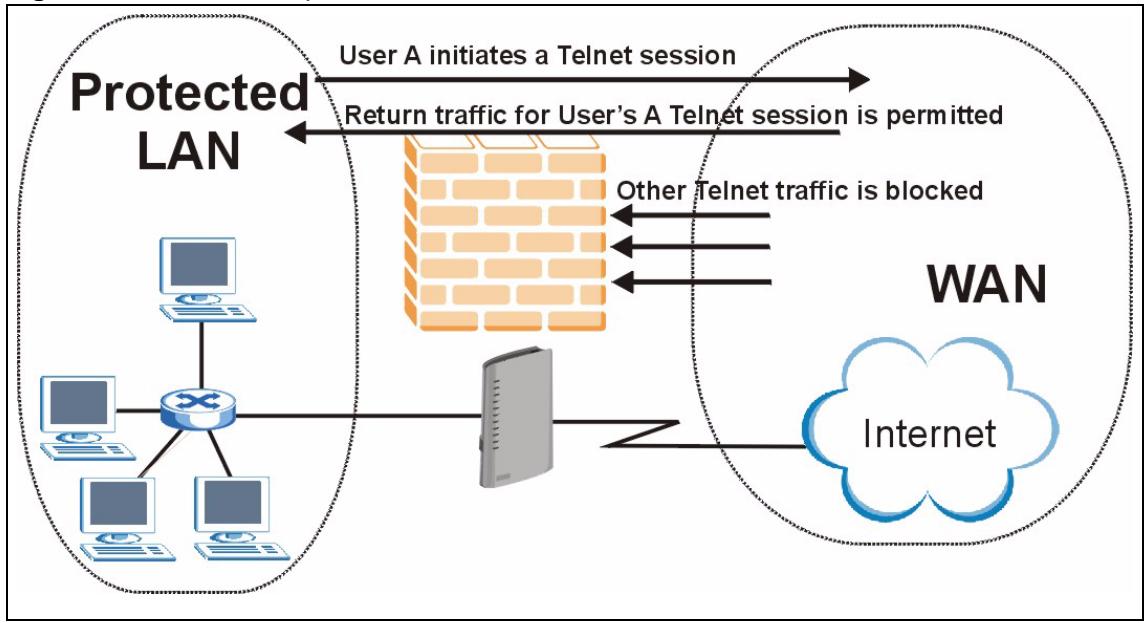
Figure 102 Stateful Inspection
The previous figure shows the ZyXEL Device's default firewall rules in action as well as demonstrates how stateful inspection works. User A can initiate a Telnet session from within the LAN and responses to this request are allowed. However other Telnet traffic initiated from the WAN is blocked.
13.5.1 Stateful Inspection Process
In this example, the following sequence of events occurs when a TCP packet leaves the LAN network through the firewall's WAN interface. The TCP packet is the first in a session, and the packet's application layer protocol is configured for a firewall rule inspection:
1 The packet travels from the firewall's LAN to the WAN.
2 The packet is evaluated against the interface's existing outbound access list, and the packet is permitted (a denied packet would simply be dropped at this point).
3 The packet is inspected by a firewall rule to determine and record information about the state of the packet's connection. This information is recorded in a new state table entry created for the new connection. If there is not a firewall rule for this packet and it is not an attack, then the settings in the Firewall General screen determine the action for this packet.
4 Based on the obtained state information, a firewall rule creates a temporary access list entry that is inserted at the beginning of the WAN interface's inbound extended access list. This temporary access list entry is designed to permit inbound packets of the same connection as the outbound packet just inspected.
5 The outbound packet is forwarded out through the interface.
6 Later, an inbound packet reaches the interface. This packet is part of the connection previously established with the outbound packet. The inbound packet is evaluated against the inbound access list, and is permitted because of the temporary access list entry previously created.
7 The packet is inspected by a firewall rule, and the connection's state table entry is updated as necessary. Based on the updated state information, the inbound extended access list temporary entries might be modified, in order to permit only packets that are valid for the current state of the connection.
8 Any additional inbound or outbound packets that belong to the connection are inspected to update the state table entry and to modify the temporary inbound access list entries as required, and are forwarded through the interface.
9 When the connection terminates or times out, the connection's state table entry is deleted and the connection's temporary inbound access list entries are deleted.
13.5.2 Stateful Inspection on Your ZyXEL Device
Additional rules may be defined to extend or override the default rules. For example, a rule may be created which will:
-
Block all traffic of a certain type, such as IRC (Internet Relay Chat), from the LAN to the Internet.
-
Allow certain types of traffic from the Internet to specific hosts on the LAN.
- Allow access to a Web server to everyone but competitors.
- Restrict use of certain protocols, such as Telnet, to authorized users on the LAN.
These custom rules work by evaluating the network traffic's Source IP address, Destination IP address, IP protocol type, and comparing these to rules set by the administrator.
Note: The ability to define firewall rules is a very powerful tool. Using custom rules, it is possible to disable all firewall protection or block all access to the Internet. Use extreme caution when creating or deleting firewall rules. Test changes after creating them to make sure they work correctly.
Below is a brief technical description of how these connections are tracked. Connections may either be defined by the upper protocols (for instance, TCP), or by the ZyXEL Device itself (as with the "virtual connections" created for UDP and ICMP).
13.5.3 TCP Security
The ZyXEL Device uses state information embedded in TCP packets. The first packet of any new connection has its SYN flag set and its ACK flag cleared; these are "initiation" packets. All packets that do not have this flag structure are called "subsequent" packets, since they represent data that occurs later in the TCP stream.
If an initiation packet originates on the WAN, this means that someone is trying to make a connection from the Internet into the LAN. Except in a few special cases (see "Upper Layer Protocols" shown next), these packets are dropped and logged.
If an initiation packet originates on the LAN, this means that someone is trying to make a connection from the LAN to the Internet. Assuming that this is an acceptable part of the security policy (as is the case with the default policy), the connection will be allowed. A cache entry is added which includes connection information such as IP addresses, TCP ports, sequence numbers, etc.
When the ZyXEL Device receives any subsequent packet (from the Internet or from the LAN), its connection information is extracted and checked against the cache. A packet is only allowed to pass through if it corresponds to a valid connection (that is, if it is a response to a connection which originated on the LAN).
13.5.4 UDP/ICMP Security
UDP and ICMP do not themselves contain any connection information (such as sequence numbers). However, at the very minimum, they contain an IP address pair (source and destination). UDP also contains port pairs, and ICMP has type and code information. All of this data can be analyzed in order to build "virtual connections" in the cache.
For instance, any UDP packet that originates on the LAN will create a cache entry. Its IP address and port pairs will be stored. For a short period of time, UDP packets from the WAN that have matching IP and UDP information will be allowed back in through the firewall.
A similar situation exists for ICMP, except that the ZyXEL Device is even more restrictive. Specifically, only outgoing echoes will allow incoming echo replies, outgoing address mask requests will allow incoming address mask replies, and outgoing timestamp requests will allow incoming timestamp replies. No other ICMP packets are allowed in through the firewall, simply because they are too dangerous and contain too little tracking information. For instance, ICMP redirect packets are never allowed in, since they could be used to reroute traffic through attacking machines.
13.5.5 Upper Layer Protocols
Some higher layer protocols (such as FTP and RealAudio) utilize multiple network connections simultaneously. In general terms, they usually have a "control connection" which is used for sending commands between endpoints, and then "data connections" which are used for transmitting bulk information.
Consider the FTP protocol. A user on the LAN opens a control connection to a server on the Internet and requests a file. At this point, the remote server will open a data connection from the Internet. For FTP to work properly, this connection must be allowed to pass through even though a connection from the Internet would normally be rejected.
In order to achieve this, the ZyXEL Device inspects the application-level FTP data. Specifically, it searches for outgoing "PORT" commands, and when it sees these, it adds a cache entry for the anticipated data connection. This can be done safely, since the PORT command contains address and port information, which can be used to uniquely identify the connection.
Any protocol that operates in this way must be supported on a case-by-case basis. You can use the web configurator's Custom Ports feature to do this.
13.6 Guidelines for Enhancing Security with Your Firewall
- Change the default password.
- Limit who can telnet into your router.
- Don't enable any local service (such as SNMP or NTP) that you don't use. Any enabled service could present a potential security risk. A determined hacker might be able to find creative ways to misuse the enabled services to access the firewall or the network.
- For local services that are enabled, protect against misuse. Protect by configuring the services to communicate only with specific peers, and protect by configuring rules to block packets for the services at specific interfaces.
- Protect against IP spoofing by making sure the firewall is active.
- Keep the firewall in a secured (locked) room.
13.6.1 Security In General
You can never be too careful! Factors outside your firewall, filtering or NAT can cause security breaches. Below are some generalizations about what you can do to minimize them.
- Encourage your company or organization to develop a comprehensive security plan. Good network administration takes into account what hackers can do and prepares against attacks. The best defense against hackers and crackers is information. Educate all employees about the importance of security and how to minimize risk. Produce lists like this one!
- DSL or cable modem connections are "always-on" connections and are particularly vulnerable because they provide more opportunities for hackers to crack your system. Turn your computer off when not in use.
- Never give out a password or any sensitive information to an unsolicited telephone call or e-mail.
- Never e-mail sensitive information such as passwords, credit card information, etc., without encrypting the information first.
- Never submit sensitive information via a web page unless the web site uses secure connections. You can identify a secure connection by looking for a small "key" icon on the bottom of your browser (Internet Explorer 3.02 or better or Netscape 3.0 or better). If a web site uses a secure connection, it is safe to submit information. Secure web transactions are quite difficult to crack.
- Never reveal your IP address or other system networking information to people outside your company. Be careful of files e-mailed to you from strangers. One common way of getting BackOrifice on a system is to include it as a Trojan horse with other files.
- Change your passwords regularly. Also, use passwords that are not easy to figure out. The most difficult passwords to crack are those with upper and lower case letters, numbers and a symbol such as % or#.
- Upgrade your software regularly. Many older versions of software, especially web browsers, have well known security deficiencies. When you upgrade to the latest versions, you get the latest patches and fixes.
- If you use "chat rooms" or IRC sessions, be careful with any information you reveal to strangers.
- If your system starts exhibiting odd behavior, contact your ISP. Some hackers will set off hacks that cause your system to slowly become unstable or unusable.
- Always shred confidential information, particularly about your computer, before throwing it away. Some hackers dig through the trash of companies or individuals for information that might help them in an attack.
13.7 Packet Filtering Vs Firewall
Below are some comparisons between the ZyXEL Device's filtering and firewall functions.
13.7.1 Packet Filtering:
- The router filters packets as they pass through the router's interface according to the filter rules you designed.
- Packet filtering is a powerful tool, yet can be complex to configure and maintain, especially if you need a chain of rules to filter a service.
- Packet filtering only checks the header portion of an IP packet.
13.7.1.1 When To Use Filtering
- To block/allow LAN packets by their MAC addresses.
- To block/allow special IP packets which are neither TCP nor UDP, nor ICMP packets.
- To block/allow both inbound (WAN to LAN) and outbound (LAN to WAN) traffic between the specific inside host/network "A" and outside host/network "B". If the filter blocks the traffic from A to B, it also blocks the traffic from B to A. Filters can not distinguish traffic originating from an inside host or an outside host by IP address.
- To block/allow IP trace route.
13.7.2 Firewall
- The firewall inspects packet contents as well as their source and destination addresses. Firewalls of this type employ an inspection module, applicable to all protocols, that understands data in the packet is intended for other layers, from the network layer (IP headers) up to the application layer.
- The firewall performs stateful inspection. It takes into account the state of connections it handles so that, for example, a legitimate incoming packet can be matched with the outbound request for that packet and allowed in. Conversely, an incoming packet masquerading as a response to a nonexistent outbound request can be blocked.
- The firewall uses session filtering, i.e.,smart rules, that enhance the filtering process and control the network session rather than control individual packets in a session.
- The firewall provides e-mail service to notify you of routine reports and when alerts occur.
13.7.2.1 When To Use The Firewall
- To prevent DoS attacks and prevent hackers cracking your network.
- A range of source and destination IP addresses as well as port numbers can be specified within one firewall rule making the firewall a better choice when complex rules are required.
- To selectively block/allow inbound or outbound traffic between inside host/networks and outside host/networks. Remember that filters can not distinguish traffic originating from an inside host or an outside host by IP address.
- The firewall performs better than filtering if you need to check many rules.
- Use the firewall if you need routine e-mail reports about your system or need to be alerted when attacks occur.
- The firewall can block specific URL traffic that might occur in the future. The URL can be saved in an Access Control List (ACL) database.
CHAPTER 14
Firewall Configuration
This chapter shows you how to enable and configure the ZyXEL Device firewall.
14.1 Access Methods
The web configurator is, by far, the most comprehensive firewall configuration tool your ZyXEL Device has to offer. For this reason, it is recommended that you configure your firewall using the web configurator. CLI commands provide limited configuration options and are only recommended for advanced users.
14.2 Firewall Policies Overview
Firewall rules are grouped based on the direction of travel of packets to which they apply:
LAN to LAN/ Router
WAN to LAN
LAN to WAN
- WAN to WAN/ Router
Note: The LAN includes both the LAN port and the WLAN.
By default, the ZyXEL Device's stateful packet inspection allows packets traveling in the following directions:
- LAN to LAN/ Router
This allows computers on the LAN to manage the ZyXEL Device and communicate between networks or subnets connected to the LAN interface.
LAN to WAN
By default, the ZyXEL Device's stateful packet inspection drops packets traveling in the following directions:
-
WAN to LAN
-
WAN to WAN/ Router
This prevents computers on the WAN from using the ZyXEL Device as a gateway to communicate with other computers on the WAN and/or managing the ZyXEL Device.
You may define additional rules and sets or modify existing ones but please exercise extreme caution in doing so.
Note: If you configure firewall rules without a good understanding of how they work, you might inadvertently introduce security risks to the firewall and to the protected network. Make sure you test your rules after you configure them.
For example, you may create rules to:
- Block certain types of traffic, such as IRC (Internet Relay Chat), from the LAN to the Internet.
- Allow certain types of traffic, such as Lotus Notes database synchronization, from specific hosts on the Internet to specific hosts on the LAN.
- Allow everyone except your competitors to access a Web server.
- Restrict use of certain protocols, such as Telnet, to authorized users on the LAN.
These custom rules work by comparing the Source IP address, Destination IP address and IP protocol type of network traffic to rules set by the administrator. Your customized rules take precedence and override the ZyXEL Device's default rules.
14.3 Rule Logic Overview
Note: Study these points carefully before configuring rules.
14.3.1 Rule Checklist
State the intent of the rule. For example, "This restricts all IRC access from the LAN to the Internet." Or, "This allows a remote Lotus Notes server to synchronize over the Internet to an inside Notes server."
1 Is the intent of the rule to forward or block traffic?
2 What direction of traffic does the rule apply to?
3 What IP services will be affected?
4 What computers on the LAN are to be affected (if any)?
5 What computers on the Internet will be affected? The more specific, the better. For example, if traffic is being allowed from the Internet to the LAN, it is better to allow only certain machines on the Internet to access the LAN.
14.3.2 Security Ramifications
1 Once the logic of the rule has been defined, it is critical to consider the security ramifications created by the rule:
2 Does this rule stop LAN users from accessing critical resources on the Internet? For example, if IRC is blocked, are there users that require this service?
3 Is it possible to modify the rule to be more specific? For example, if IRC is blocked for all users, will a rule that blocks just certain users be more effective?
4 Does a rule that allows Internet users access to resources on the LAN create a security vulnerability? For example, if FTP ports (TCP 20, 21) are allowed from the Internet to the LAN, Internet users may be able to connect to computers with running FTP servers.
5 Does this rule conflict with any existing rules?
6 Once these questions have been answered, adding rules is simply a matter of plugging the information into the correct fields in the web configurator screens.
14.3.3 Key Fields For Configuring Rules
14.3.3.1 Action
Should the action be to Drop, Reject or Permit?
Note: “Drop” means the firewall silently discards the packet. “Reject” means thefirewall discards packets and sends an ICMP destination-unreachablemessage to the sender.
14.3.3.2 Service
Select the service from the Service scrolling list box. If the service is not listed, it is necessary to first define it. See Appendix F on page 371 for more information on predefined services.
14.3.3.3 Source Address
What is the connection's source address; is it on the LAN or WAN? Is it a single IP, a range of IPs or a subnet?
14.3.3.4 Destination Address
What is the connection's destination address; is it on the LAN or WAN? Is it a single IP, a range of IPs or a subnet?
14.4 Connection Direction
This section describes examples for firewall rules for connections going from LAN to WAN and from WAN to LAN.
LAN to LAN/ Router, WAN to WAN/Router and DMZ to DMZ/Router rules apply to packets coming in on the associated interface (LAN, WAN or DMZ respectively). LAN to LAN/Router means policies for LAN-to-ZyXEL Device (the policies for managing the ZyXEL Device through the LAN interface) and policies for LAN-to-LAN (the policies that control routing between two subnets on the LAN). Similarly, WAN to WAN/Router and DMZ to DMZ/Router polices apply in the same way to the WAN and DMZ ports.
14.4.1 LAN to WAN Rules
The default rule for LAN to WAN traffic is that all users on the LAN are allowed non-restricted access to the WAN. When you configure a LAN to WAN rule, you in essence want to limit some or all users from accessing certain services on the WAN. WAN to LAN Rules
The default rule for WAN to LAN traffic blocks all incoming connections (WAN to LAN). If you wish to allow certain WAN users to have access to your LAN, you will need to create custom rules to allow it.
14.4.2 Alerts
Alerts are reports on events, such as attacks, that you may want to know about right away. You can choose to generate an alert when a rule is matched in the Edit Rule screen (see Figure 105 on page 200). When an event generates an alert, a message can be immediately sent to an email account that you specify in the Log Settings screen. Refer to Chapter 24 on page 295 for details.
14.5 General Firewall Policy
Click Security > Firewall to display the following screen. Activate the firewall by selecting the Active Firewall check box as seen in the following screen.
Refer to Section 13.1 on page 181 for more information.
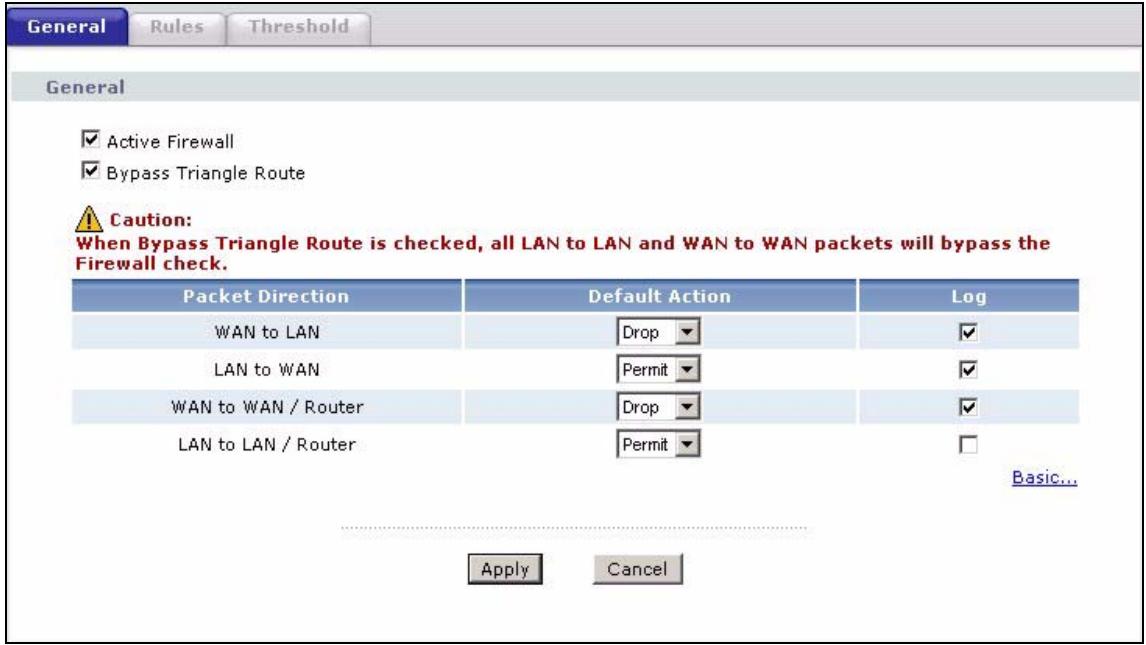
Figure 103 Firewall: General
The following table describes the labels in this screen.
Table 70 Firewall: General
| LABEL | DESCRIPTION |
| Active Firewall | Select this check box to activate the firewall. TheZyXEL Device performs access control and protects against Denial of Service (DoS) attacks when the firewall is activated. |
| Bypass Triangle Route | Select this check box to have theZyXEL Device firewall permit the use of triangle route topology on the network. See the appendix for more on triangle route topology.Note:Allowing asymmetrical routes may let traffic from the WAN go directly to a LAN computer without passing through the router. See Appendix H on page 377 for more on triangle route topology and how to deal with this problem. |
| Packet Direction | This is the direction of travel of packets (LAN to LAN / Router, LAN to WAN, WAN to WAN /Router, WAN to LAN).Firewall rules are grouped based on the direction of travel of packets to which they apply. For example, LAN to LAN /Router means packets traveling from a computer/subnet on the LAN to either another computer/subnet on the LAN interface of theZyXEL Device or theZyXEL Device itself. |
| Default Action | Use the drop-down list boxes to select the default action that the firewall is take on packets that are traveling in the selected direction and do not match any of the firewall rules.Select Drop to silently discard the packets without sending a TCP reset packet or an ICMP destination-unreachable message to the sender.Select Reject to deny the packets and send a TCP reset packet (for a TCP packet) or an ICMP destination-unreachable message (for a UDP packet) to the sender.Select Permit to allow the passage of the packets. |
| Log | Select the check box to create a log (when the above action is taken) for packets that are traveling in the selected direction and do not match any of your customized rules. |
| Expand... | Click this button to display more information. |
| Basic... | Click this button to display less information. |
| Apply | Click Apply to save your changes back to theZyXEL Device. |
| Cancel | Click Cancel to begin configuring this screen afresh. |
14.6 Firewall Rules Summary
Note: The ordering of your rules is very important as rules are applied in turn.
Refer to Section 13.1 on page 181 for more information.
Click Security > Firewall > Rules to bring up the following screen. This screen displays a list of the configured firewall rules. Note the order in which the rules are listed.
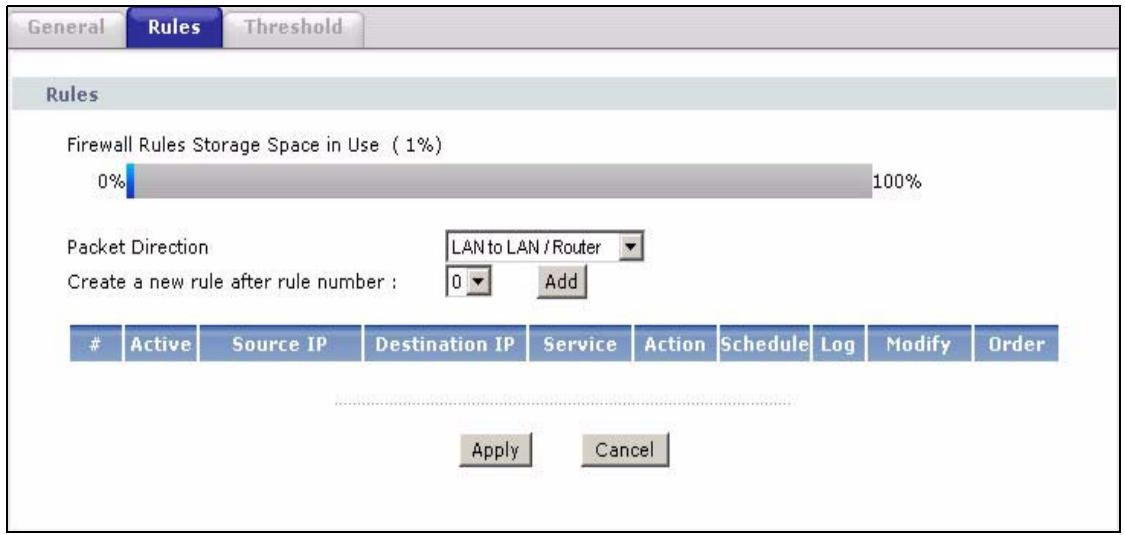
Figure 104 Firewall Rules
The following table describes the labels in this screen.
Table 71 Firewall Rules
| LABEL | DESCRIPTION |
| Firewall Rules Storage Space in Use | This read-only bar shows how much of the ZyXEL Device's memory for recording firewall rules it is currently using. When you are using 80% or less of the storage space, the bar is green. When the amount of space used is over 80%, the bar is red. |
| Packet Direction | Use the drop-down list box to select a direction of travel of packets for which you want to configure firewall rules. |
| Create a new rule after rule number | Select an index number and click Add to add a new firewall rule after the selectedindex number. For example, if you select “6”, your new rule becomes number 7 and the previous rule 7 (if there is one) becomes rule 8. |
| The following read-only fields summarize the rules you have created that apply totraffic traveling in the selected packet direction. The firewall rules that you configure( summarized below) take priority over the general firewall action settings in theGeneral screen. | |
| # | This is your firewall rule number. The ordering of your rules is important as rules are applied in turn. |
| Active | This field displays whether a firewall is turned on or not. Select the check box to enable the rule. Clear the check box to disable the rule. |
| Source IP | This drop-down list box displays the source addresses or ranges of addresses towhich this firewall rule applies. Please note that a blank source or destinationaddress is equivalent to Any. |
| Destination IP | This drop-down list box displays the destination addresses or ranges of addresses towhich this firewall rule applies. Please note that a blank source or destinationaddress is equivalent to Any. |
| Service | This drop-down list box displays the services to which this firewall rule applies. SeeAppendix 31 on page 371 for more information. |
| Action | This field displays whether the firewall silently discards packets (Drop), discardspackets and sends a TCP reset packet or an ICMPdestination-unreachablemessage to the sender (Reject) or allows the passage of packets (Permit). |
| Schedule | This field tells you whether a schedule is specified (Yes) or not (No). |
| Log | This field shows you whether a log is created when packets match this rule (Yes) or not (No). |
| Modify | Click the Edit icon to go to the screen where you can edit the rule. Click the Remove icon to delete an existing firewall rule. A window displays asking you to confirm that you want to delete the firewall rule. Note that subsequent firewall rules move up by one when you take this action. |
| Order | Click the Move icon to display theMove the rule to field. Type a number in the Move the rule to field and click theMove button to move the rule to the number that you typed. The ordering of your rules is important as they are applied in order of their numbering. |
| Apply | Click Apply to save your changes back to the ZyXEL Device. |
| Cancel | Click Cancel to begin configuring this screen afresh. |
14.6.1 Configuring Firewall Rules
Refer to Section 13.1 on page 181 for more information.
In the Rules screen, select an index number and click Add or click a rule's Edit icon to display this screen and refer to the following table for information on the labels.
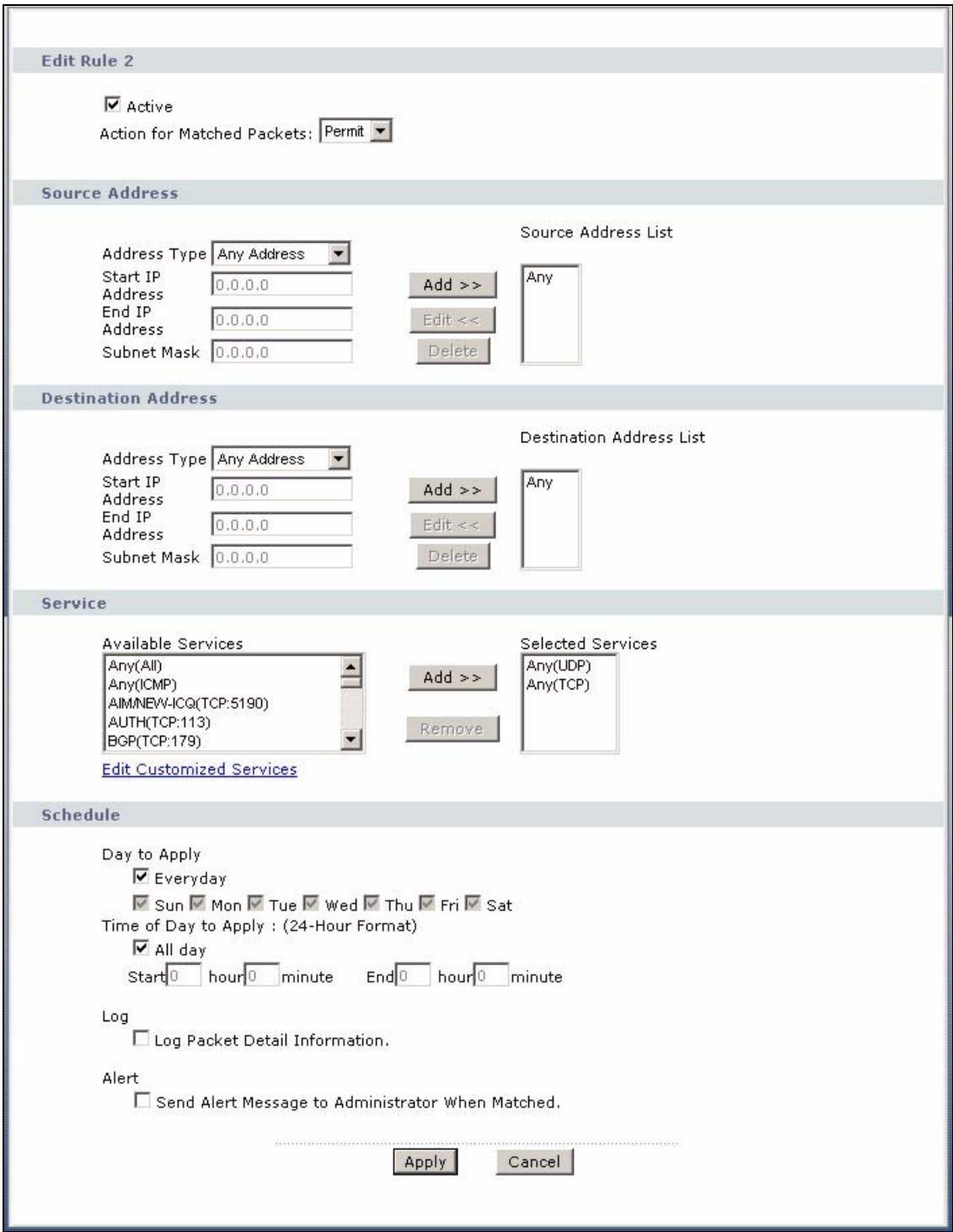
Figure 105 Firewall: Edit Rule
The following table describes the labels in this screen.
Table 72 Firewall: Edit Rule
| LABEL | DESCRIPTION |
| Active | Select this option to enable this firewall rule. |
| Action for Matched Packet | Use the drop-down list box to select whether to discard (Drop), deny and send an ICMP destination-unreachable message to the sender of (Reject) or allow the passage of (Permit) packets that match this rule. |
| Source/Destination Address | |
| Address Type | Do you want your rule to apply to packets with a particular (single) IP, a range of IP addresses (e.g., 192.168.1.10 to 192.169.1.50), a subnet or any IP address? Select an option from the drop-down list box that includes: Single Address, Range Address, Subnet Address and Any Address. |
| Start IP Address | Enter the single IP address or the starting IP address in a range here. |
| End IP Address | Enter the ending IP address in a range here. |
| Subnet Mask | Enter the subnet mask here, if applicable. |
| Add >> | Click Add >> to add a new address to the Source or Destination Address box. You can add multiple addresses, ranges of addresses, and/or subnets. |
| Edit << | To edit an existing source or destination address, select it from the box and click Edit <<. |
| Delete | Highlight an existing source or destination address from the Source or Destination Address box above and click Delete to remove it. |
| Services | |
| Available/ Selected Services | Please see Appendix F on page 371 for more information on services available. Highlight a service from the Available Services box on the left, then click Add >> to add it to the Selected Services box on the right. To remove a service, highlight it in the Selected Services box on the right, then click Remove. |
| Edit Customized Service | Click the Edit Customized Services link to bring up the screen that you use to configure a new custom service that is not in the predefined list of services. |
| Schedule | |
| Day to Apply | Select everyday or the day(s) of the week to apply the rule. |
| Time of Day to Apply (24-Hour Format) | Select All Day or enter the start and end times in the hour-minute format to apply the rule. |
| Log | |
| Log Packet Detail Information | This field determines if a log for packets that match the rule is created or not. Go to the Log Settings page and select the Access Control logs category to have the ZyXEL Device record these logs. |
| Alert | |
| Send Alert Message to Administrator When Matched | Select the check box to have the ZyXEL Device generate an alert when the rule is matched. |
| Back | Click Back to return to the previous screen. |
| Apply | Click Apply to save your customized settings and exit this screen. |
| Cancel | Click Cancel to exit this screen without saving. |
14.6.2 Customized Services
Configure customized services and port numbers not predefined by the ZyXEL Device. For a comprehensive list of port numbers and services, visit the IANA (Internet Assigned Number Authority) website. See Appendix F on page 371 for some examples. Click the Edit Customized Services link while editing a firewall rule to configure a custom service port. This displays the following screen.
Refer to Section 13.1 on page 181 for more information.
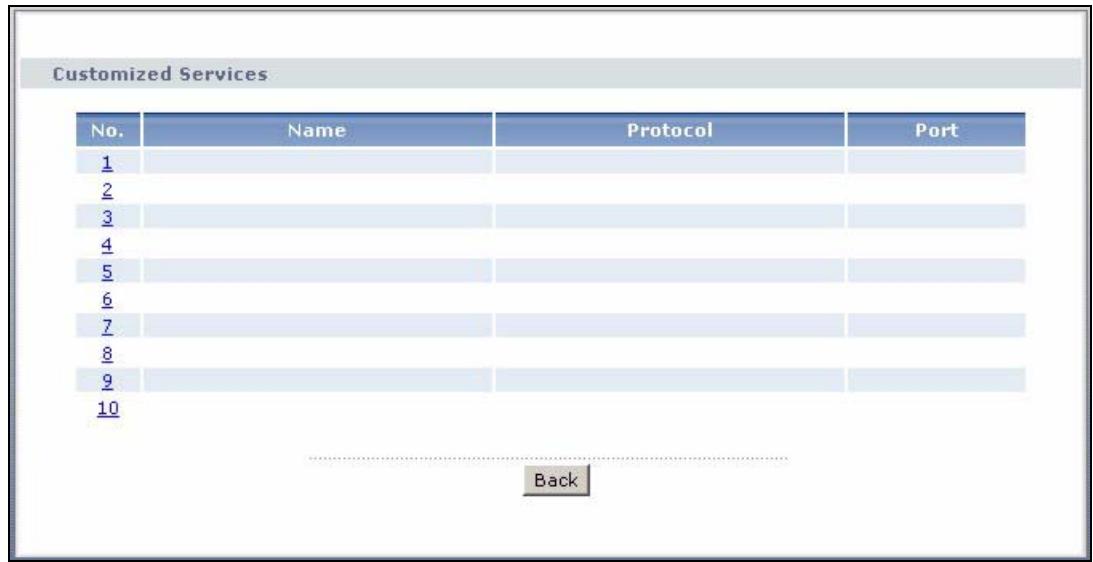
Figure 106 Firewall: Customized Services
The following table describes the labels in this screen.
Table 73 Customized Services
| LABEL | DESCRIPTION |
| No. | This is the number of your customized port. Click a rule's number of a service to go to the Firewall Customized Services Config screen to configure or edit a customized service. |
| Name | This is the name of your customized service. |
| Protocol | This shows the IP protocol (TCP, UDP or TCP/UDP) that defines your customized service. |
| Port | This is the port number or range that defines your customized service. |
| Back | Click Back to return the Firewall Edit Rule screen. |
14.6.3 Configuring A Customized Service
Click a rule number in the Firewall Customized Services screen to create a new custom port or edit an existing one. This action displays the following screen.
Refer to Section 13.1 on page 181 for more information.
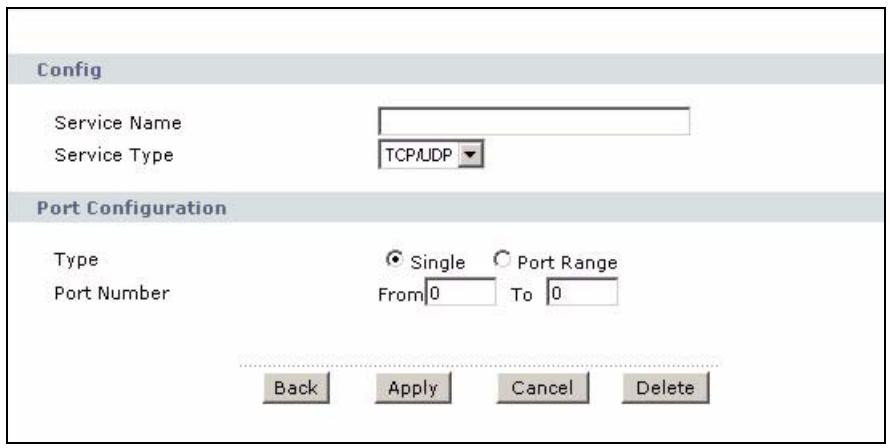
Figure 107 Firewall: Configure Customized Services
The following table describes the labels in this screen.
Table 74 Firewall: Configure Customized Services
| LABEL | DESCRIPTION |
| Service Name | Type a unique name for your custom port. |
| Service Type | Choose the IP port (TCP, UDP or TCP/UDP) that defines your customized port from the drop down list box. |
| Port Configuration | |
| Type | Click Single to specify one port only or Range to specify a span of ports that define your customized service. |
| Port Number | Type a single port number or the range of port numbers that define your customized service. |
| Apply | Click Apply to save your customized settings and exit this screen. |
| Cancel | Click Cancel to return to the previously saved settings. |
| Delete | Click Delete to delete the current rule. |
14.7 Example Firewall Rule
The following Internet firewall rule example allows a hypothetical "MyService" connection from the Internet.
1 Click Security > Firewall > Rules.
2 Select WAN to LAN in the Packet Direction field.
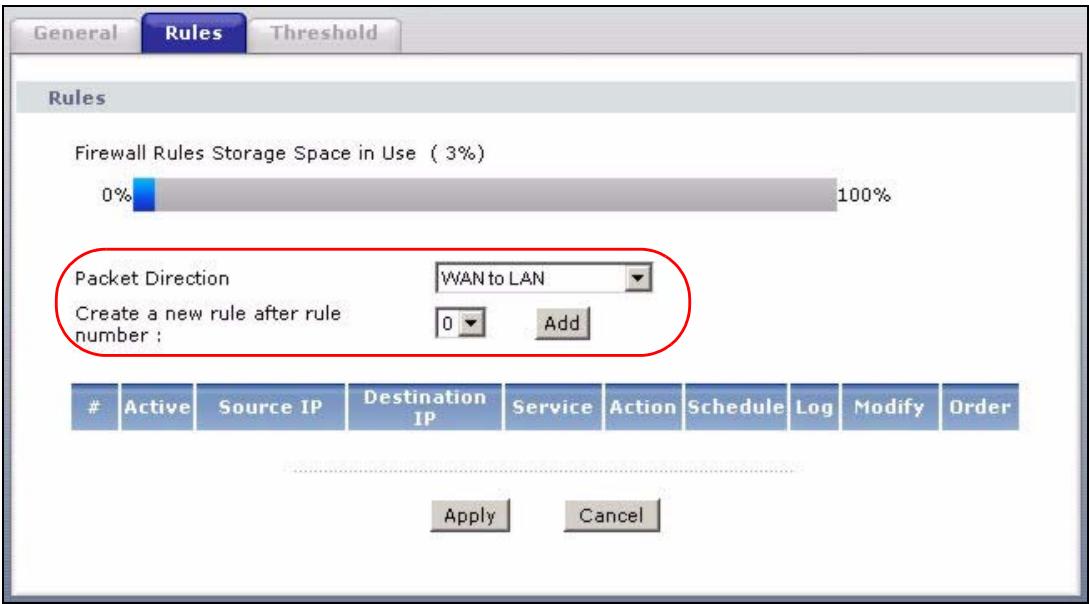
Figure 108 Firewall Example: Rules
3 In the Rules screen, select the index number after that you want to add the rule. For example, if you select "6", your new rule becomes number 7 and the previous rule 7 (if there is one) becomes rule 8.
4 Click Add to display the firewall rule configuration screen.
5 In the Edit Rule screen, click the Edit Customized Services link to open the Customized Service screen.
6 Click an index number to display the Customized Services Config screen and configure the screen as follows and click Apply.
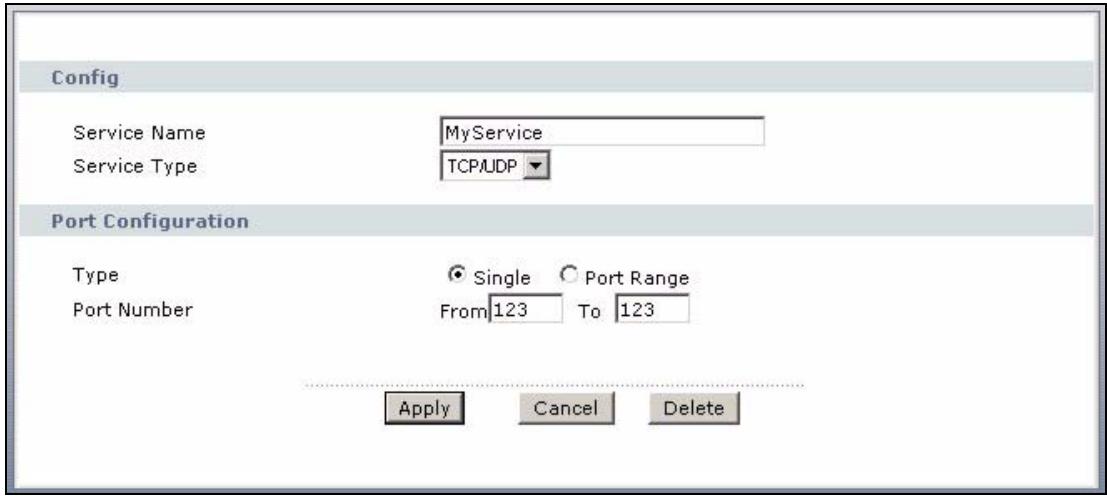
Figure 109 Edit Custom Port Example
7 Select Any in the Destination Address box and then click Delete.
8 Configure the destination address screen as follows and click Add.
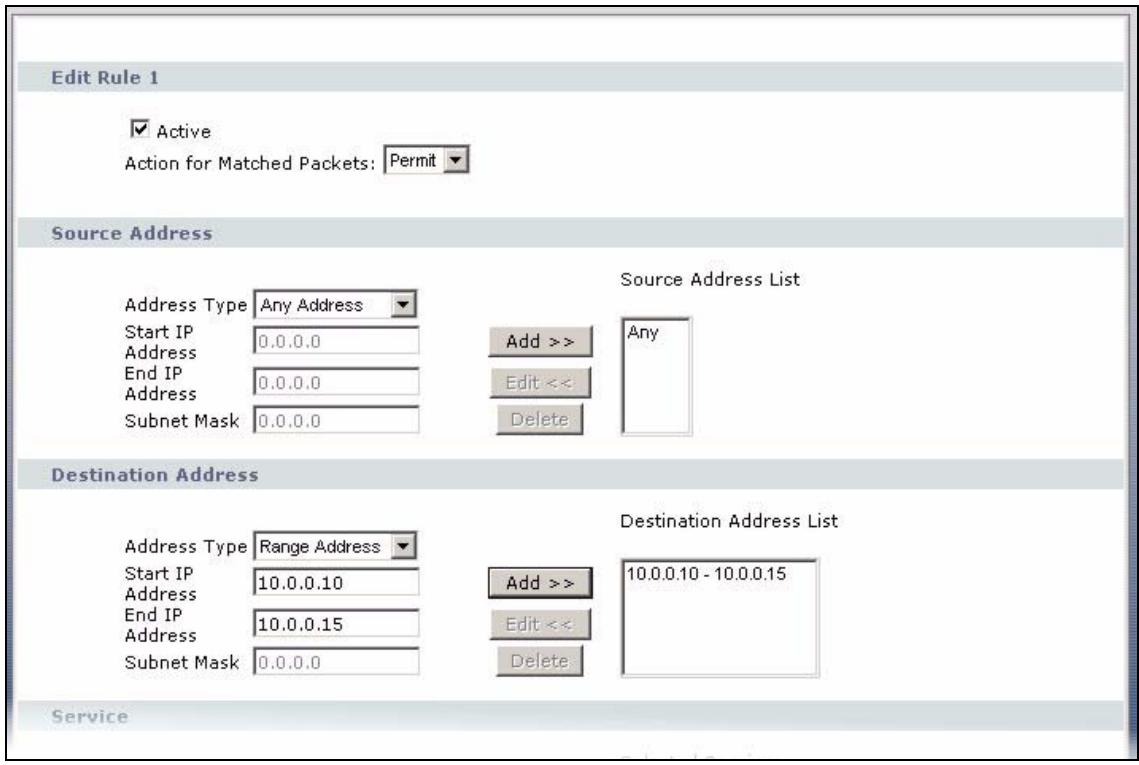
Figure 110 Firewall Example: Edit Rule: Destination Address
9 Use the Add >> and Remove buttons between Available Services and Selected Services list boxes to configure it as follows. Click Apply when you are done.
Note: Custom services show up with an “*” before their names in the Services list box and the Rules list box.
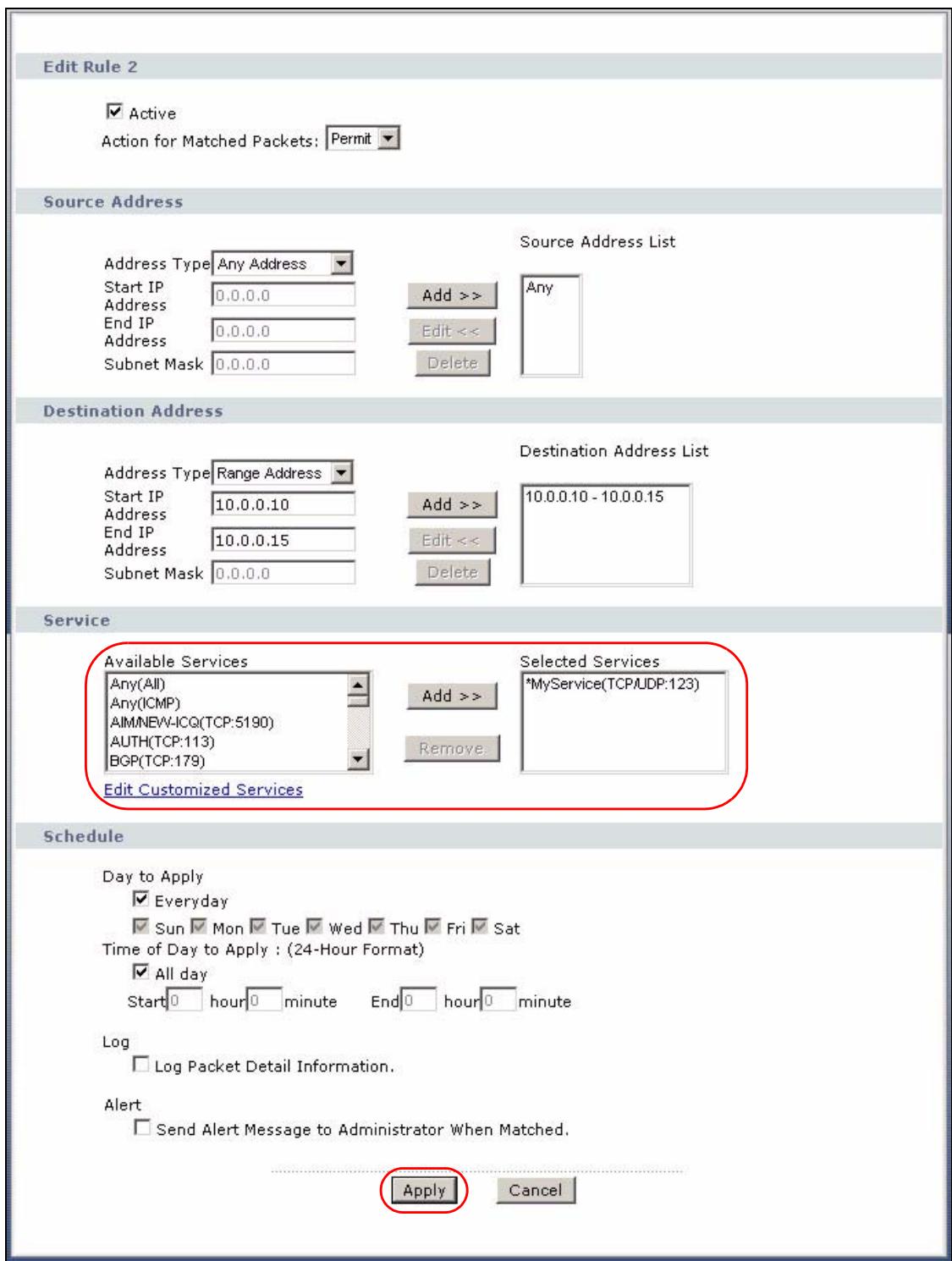
Figure 111 Firewall Example: Edit Rule: Select Customized Services
On completing the configuration procedure for this Internet firewall rule, the Rules screen should look like the following.
Rule 1 allows a "MyService" connection from the WAN to IP addresses 10.0.0.10 through 10.0.0.15 on the LAN.
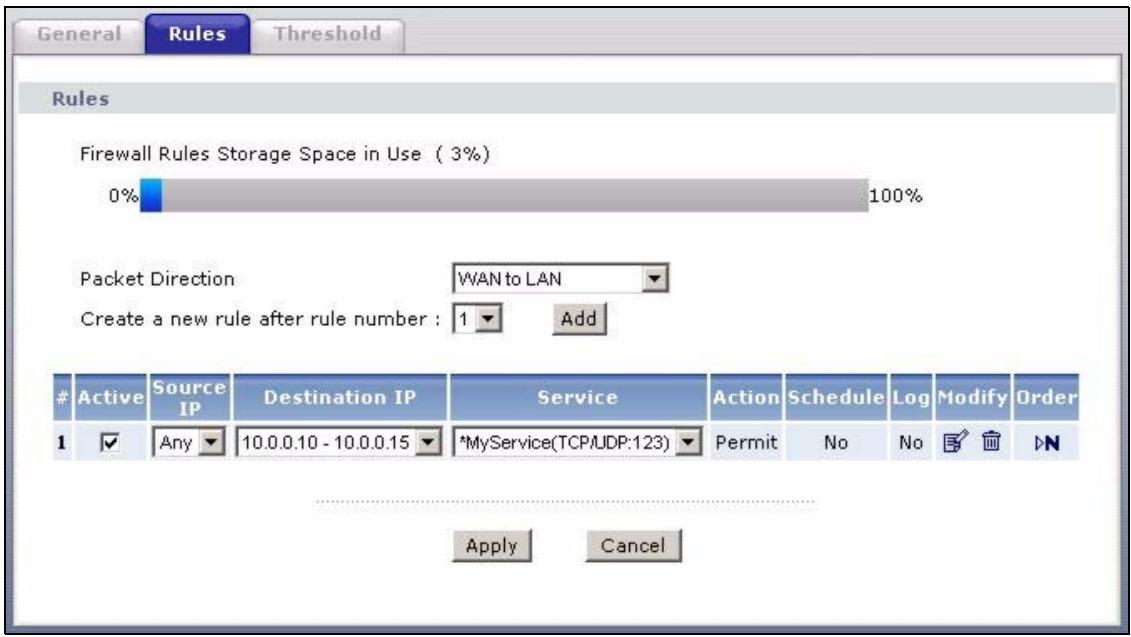
Figure 112 Firewall Example: Rules: MyService
14.8 DoS Thresholds
For DoS attacks, the ZyXEL Device uses thresholds to determine when to drop sessions that do not become fully established. These thresholds apply globally to all sessions.
You can use the default threshold values, or you can change them to values more suitable to your security requirements.
Refer to Section 14.8.3 on page 209 to configure thresholds.
14.8.1 Threshold Values
Tune these parameters when something is not working and after you have checked the firewall counters. These default values should work fine for most small offices. Factors influencing choices for threshold values are:
- The maximum number of opened sessions.
- The minimum capacity of server backlog in your LAN network.
- The CPU power of servers in your LAN network.
Network bandwidth. - Type of traffic for certain servers.
If your network is slower than average for any of these factors (especially if you have servers that are slow or handle many tasks and are often busy), then the default values should be reduced.
You should make any changes to the threshold values before you continue configuring firewall rules.
14.8.2 Half-Open Sessions
An unusually high number of half-open sessions (either an absolute number or measured as the arrival rate) could indicate that a Denial of Service attack is occurring. For TCP, "half-open" means that the session has not reached the established state-the TCP three-way handshake has not yet been completed (see Figure 99 on page 184). For UDP, "half-open" means that the firewall has detected no return traffic.
The ZyXEL Device measures both the total number of existing half-open sessions and the rate of session establishment attempts. Both TCP and UDP half-open sessions are counted in the total number and rate measurements. Measurements are made once a minute.
When the number of existing half-open sessions rises above a threshold (max-incomplete high), the ZyXEL Device starts deleting half-open sessions as required to accommodate new connection requests. The ZyXEL Device continues to delete half-open requests as necessary, until the number of existing half-open sessions drops below another threshold (max-incomplete low).
When the rate of new connection attempts rises above a threshold (one-minute high), the ZyXEL Device starts deleting half-open sessions as required to accommodate new connection requests. The ZyXEL Device continues to delete half-open sessions as necessary, until the rate of new connection attempts drops below another threshold (one-minute low). The rate is the number of new attempts detected in the last one-minute sample period.
14.8.2.1 TCP Maximum Incomplete and Blocking Time
An unusually high number of half-open sessions with the same destination host address could indicate that a Denial of Service attack is being launched against the host.
Whenever the number of half-open sessions with the same destination host address rises above a threshold (TCP Maximum Incomplete), the ZyXEL Device starts deleting half-open sessions according to one of the following methods:
- If the Blocking Time timeout is 0 (the default), then the ZyXEL Device deletes the oldest existing half-open session for the host for every new connection request to the host. This ensures that the number of half-open sessions to a given host will never exceed the threshold.
- If the Blocking Time timeout is greater than 0, then the ZyXEL Device blocks all new connection requests to the host giving the server time to handle the present connections. The ZyXEL Device continues to block all new connection requests until the Blocking Time expires.
14.8.3 Configuring Firewall Thresholds
The ZyXEL Device also sends alerts whenever TCP Maximum Incomplete is exceeded. The global values specified for the threshold and timeout apply to all TCP connections.
Click Firewall, and Threshold to bring up the next screen.
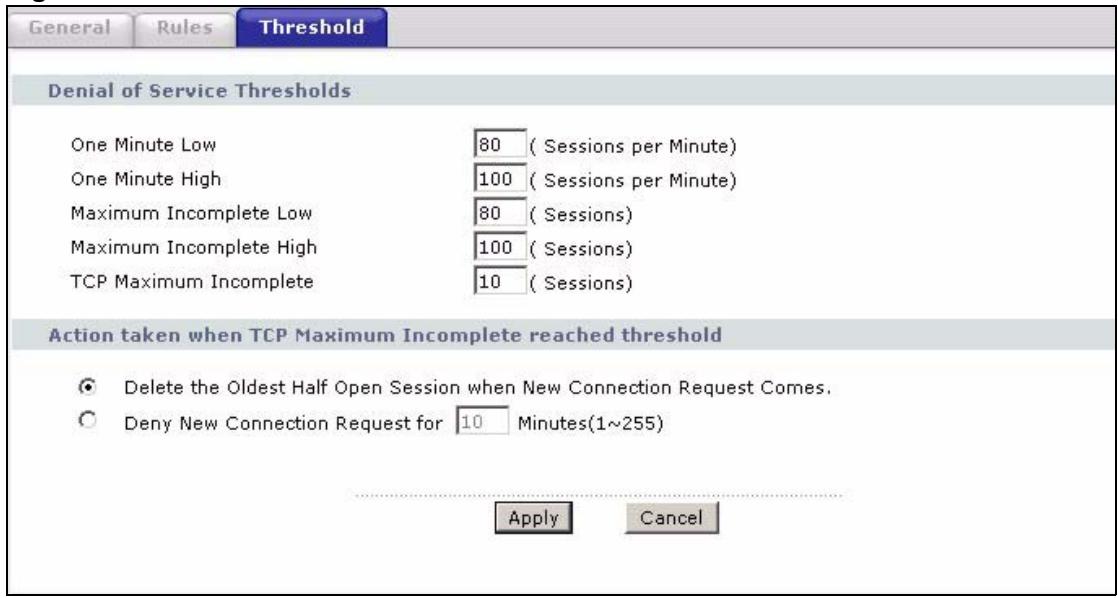
Figure 113 Firewall: Threshold
The following table describes the labels in this screen.
Table 75 Firewall: Threshold
| LABEL | DESCRIPTION | DEFAULT VALUES |
| Denial of Service Thresholds | ||
| One Minute Low | This is the rate of new half-open sessions that causes the firewall to stop deleting half-open sessions. The ZyXEL Device continues to delete half-open sessions as necessary, until the rate of new connection attempts drops below this number. | 80 existing half-open sessions. |
| One Minute High | This is the rate of new half-open sessions that causes the firewall to start deleting half-open sessions. When the rate of new connection attempts rises above this number, the ZyXEL Device deletes half-open sessions as required to accommodate new connection attempts. | 100 half-open sessions per minute. The above numbers cause the ZyXEL Device to start deleting half-open sessions when more than 100 session establishment attempts have been detected in the last minute, and to stop deleting half-open sessions when fewer than 80 session establishment attempts have been detected in the last minute. |
| Maximum Incomplete Low | This is the number of existing half-open sessions that causes the firewall to stop deleting half-open sessions. The ZyXEL Device continues to delete half-open requests as necessary, until the number of existing half-open sessions drops below this number. | 80 existing half-open sessions. |
| Maximum Incomplete High | This is the number of existing half-open sessions that causes the firewall to start deleting half-open sessions. When the number of existing half-open sessions rises above this number, the ZyXEL Device deletes half-open sessions as required to accommodate new connection requests. Do not set Maximum Incomplete High to lower than the current Maximum Incomplete Low number. | 100 existing half-open sessions. The above values causes the ZyXEL Device to start deleting half-open sessions when the number of existing half-open sessions rises above 100, and to stop deleting half-open sessions with the number of existing half-open sessions drops below 80. |
| TCP Maximum Incomplete | This is the number of existing half-open TCP sessions with the same destination host IP address that causes the firewall to start dropping half-open sessions to that same destination host IP address. Enter a number between 1 and 256. As a general rule, you should choose a smaller number for a smaller network, a slower system or limited bandwidth. | 30 existing half-open TCP sessions. |
| Action taken when the TCP Maximum Incomplete reached threshold | ||
| Delete the Oldest Half Open Session when New Connection Request Comes. | Select this radio button to clear the oldest half open session when a new connection request comes. | |
| Deny New Connection Request for | Select this radio button and specify for how long the ZyXEL Device should block new connection requests when TCP Maximum Incomplete is reached. Enter the length of blocking time in minutes (between 1 and 256). | |
| Apply | Click Apply to save your changes back to the ZyXEL Device. | |
| Cancel | Click Cancel to begin configuring this screen afresh. | |
CHAPTER 15 Content Filtering
This chapter covers how to configure content filtering.
15.1 Content Filtering Overview
Internet content filtering allows you to create and enforce Internet access policies tailored to your needs. Content filtering gives you the ability to block web sites that contain key words (that you specify) in the URL. You can set a schedule for when the ZyXEL Device performs content filtering. You can also specify trusted IP addresses on the LAN for which the ZyXEL Device will not perform content filtering.
15.2 Configuring Keyword Blocking
Use this screen to block sites containing certain keywords in the URL. For example, if you enable the keyword "bad", the ZyXEL Device blocks all sites containing this keyword including the URL http://www.websites.com/bad.html, even if it is not included in the Filter List.
To have your ZyXEL Device block Web sites containing keywords in their URLs, click Security > Content Filter. The screen appears as shown.
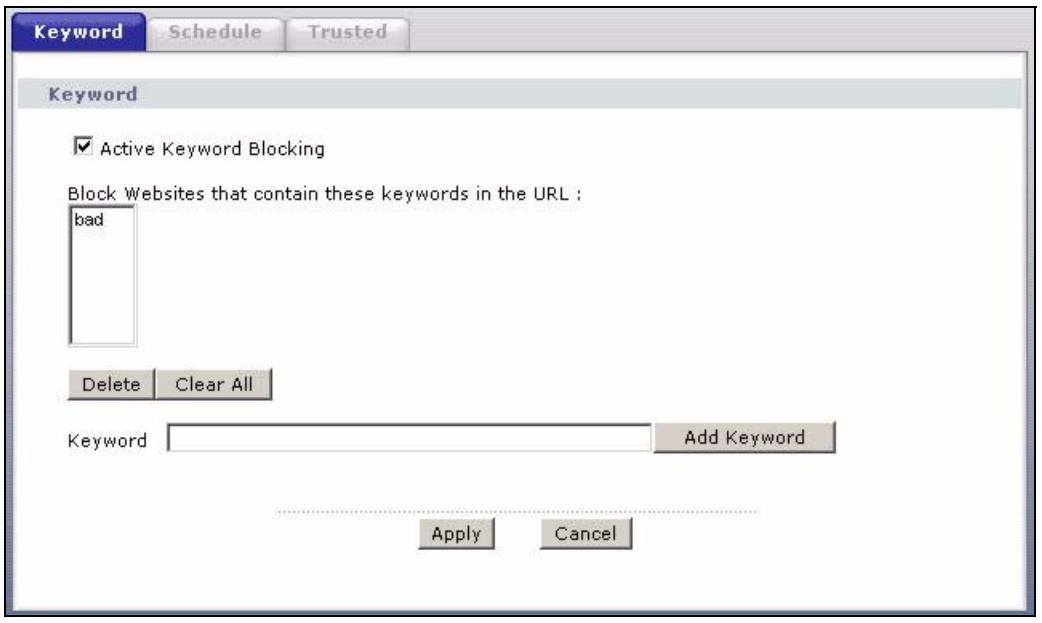
Figure 114 Content Filter: Keyword
The following table describes the labels in this screen.
Table 76 Content Filter: Keyword
| LABEL | DESCRIPTION |
| Active Keyword Blocking | Select this check box to enable this feature. |
| Block Websites that contain these keywords in the URL: | This box contains the list of all the keywords that you have configured the ZyXEL Device to block. |
| Delete | Highlight a keyword in the box and click Delete to remove it. |
| Clear All | Click Clear All to remove all of the keywords from the list. |
| Keyword | Type a keyword in this field. You may use any character (up to 127 characters). Wildcards are not allowed. |
| Add Keyword | Click Add Keyword after you have typed a keyword.Repeat this procedure to add other keywords. Up to 64 keywords are allowed.When you try to access a web page containing a keyword, you will get a message telling you that the content filter is blocking this request. |
| Apply | Click Apply to save your changes back to the ZyXEL Device. |
| Cancel | Click Cancel to return to the previously saved settings. |
15.3 Configuring the Schedule
To set the days and times for the ZyXEL Device to perform content filtering, click Security > Content Filter > Schedule. The screen appears as shown.
Figure 115 Content Filter: Schedule
| Keyword | Schedule | Trusted | |
| Schedule | |||
| □ Block Everyday Edit Daily to Block | |||
| Active | Start Time | End Time | |
| Monday | 0 hr 0 min | 0 hr 0 min | |
| Tuesday | 0 hr 0 min | 0 hr 0 min | |
| Wednesday | 0 hr 0 min | 0 hr 0 min | |
| Thursday | 0 hr 0 min | 0 hr 0 min | |
| Friday | 0 hr 0 min | 0 hr 0 min | |
| Saturday | 0 hr 0 min | 0 hr 0 min | |
| Sunday | 0 hr 0 min | 0 hr 0 min | |
| Apply | Cancel | ||
The following table describes the labels in this screen.
Table 77 Content Filter: Schedule
| LABEL | DESCRIPTION |
| Schedule | Select Block Everyday to make the content filtering active everyday. Otherwise, select Edit Daily to Block and configure which days of the week (or everyday) and which time of the day you want the content filtering to be active. |
| Active | Select the check box to have the content filtering to be active on the selected day. |
| Start TIme | Enter the time when you want the content filtering to take effect in hour-minute format. |
| End Time | Enter the time when you want the content filtering to stop in hour-minute format. |
| Apply | Click Apply to save your changes. |
| Cancel | Click Cancel to return to the previously saved settings. |
15.4 Configuring Trusted Computers
To exclude a range of users on the LAN from content filtering on your ZyXEL Device, click Security > Content Filter > Trusted. The screen appears as shown.
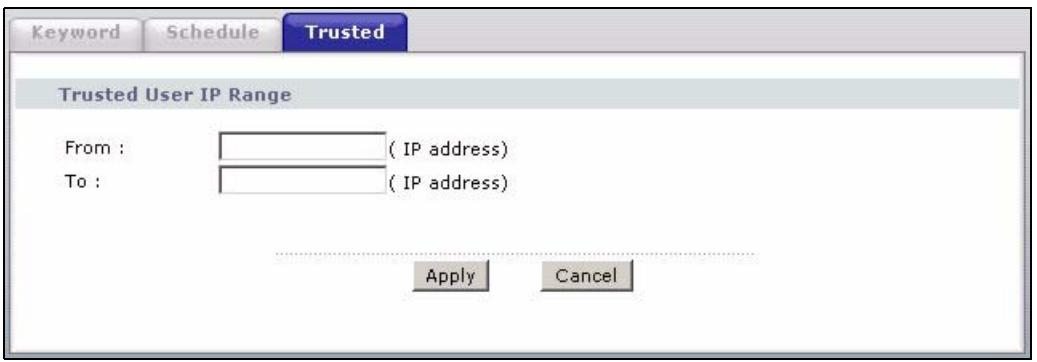
Figure 116 Content Filter: Trusted
The following table describes the labels in this screen.
Table 78 Content Filter: Trusted
| LABEL | DESCRIPTION |
| Trusted User IP Range | |
| From | Type the IP address of a computer (or the beginning IP address of a specific range of computers) on the LAN that you want to exclude from content filtering. |
| To | Type the ending IP address of a specific range of users on your LAN that you want to exclude from content filtering. Leave this field blank if you want to exclude an individual computer. |
| Apply | Click Apply to save your changes back to the ZyXEL Device. |
| Cancel | Click Cancel to return to the previously saved settings. |
CHAPTER 16 Introduction to IPSec
This chapter introduces the basics of IPSec VPNs.
16.1 VPN Overview
A VPN (Virtual Private Network) provides secure communications between sites without the expense of leased site-to-site lines. A secure VPN is a combination of tunneling, encryption, authentication, access control and auditing technologies/services used to transport traffic over the Internet or any insecure network that uses the TCP/IP protocol suite for communication.
16.1.1 IPSec
Internet Protocol Security (IPSec) is a standards-based VPN that offers flexible solutions for secure data communications across a public network like the Internet. IPSec is built around a number of standardized cryptographic techniques to provide confidentiality, data integrity and authentication at the IP layer.
16.1.2 Security Association
A Security Association (SA) is a contract between two parties indicating what security parameters, such as keys and algorithms they will use.
16.1.3 Other Terminology
16.1.3.1 Encryption
Encryption is a mathematical operation that transforms data from " plaintext" (readable) to "ciphertext" (scrambled text) using a "key". The key and clear text are processed by the encryption operation, which leads to the data scrambling that makes encryption secure. Decryption is the opposite of encryption: it is a mathematical operation that transforms "ciphertext" to plaintext. Decryption also requires a key.
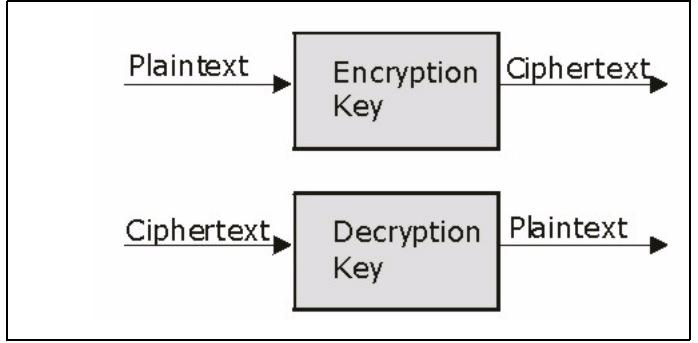
Figure 117 Encryption and Decryption
16.1.3.2 Data Confidentiality
The IPSec sender can encrypt packets before transmitting them across a network.
16.1.3.3 Data Integrity
The IPSec receiver can validate packets sent by the IPSec sender to ensure that the data has not been altered during transmission.
16.1.3.4 Data Origin Authentication
The IPSec receiver can verify the source of IPSec packets. This service depends on the data integrity service.
16.1.4 VPN Applications
The ZyXEL Device supports the following VPN applications.
- Linking Two or More Private Networks Together
Connect branch offices and business partners over the Internet with significant cost savings and improved performance when compared to leased lines between sites.
- Accessing Network Resources When NAT Is Enabled
When NAT is enabled, remote users are not able to access hosts on the LAN unless the host is designated a public LAN server for that specific protocol. Since the VPN tunnel terminates inside the LAN, remote users will be able to access all computers that use private IP addresses on the LAN.
-Unsupported IP Applications
A VPN tunnel may be created to add support for unsupported emerging IP applications. See Chapter 1 on page 37 for an example of a VPN application.
16.2 IPSec Architecture
The overall IPSec architecture is shown as follows.
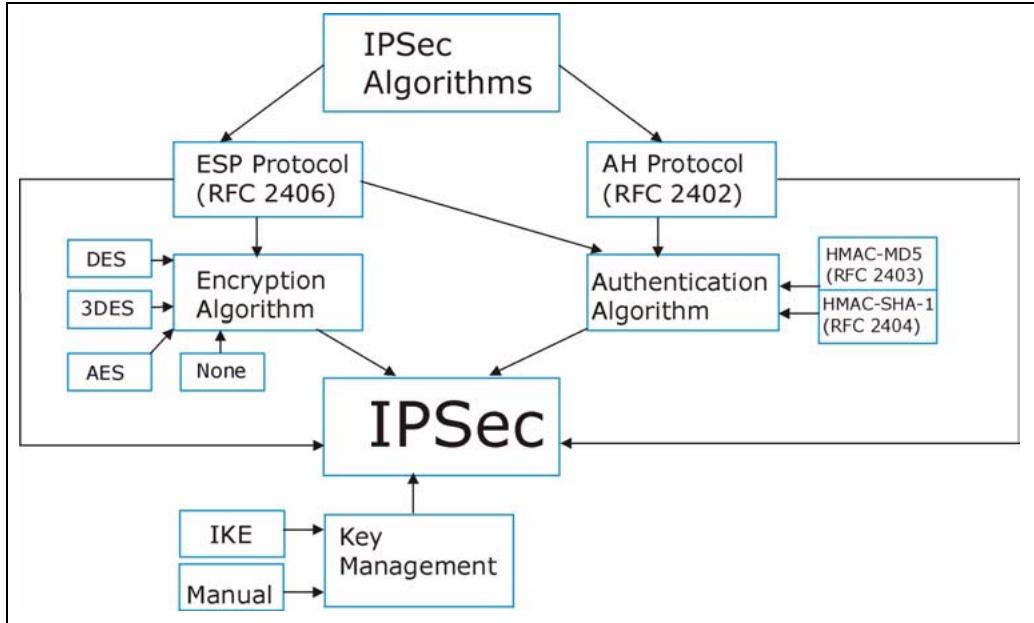
Figure 118 IPSec Architecture
16.2.1 IPSec Algorithms
The ESP (Encapsulating Security Payload) Protocol (RFC 2406) and AH (Authentication Header) protocol (RFC 2402) describe the packet formats and the default standards for packet structure (including implementation algorithms).
The Encryption Algorithm describes the use of encryption techniques such as DES (Data Encryption Standard) and Triple DES algorithms.
The Authentication Algorithms, HMAC-MD5 (RFC 2403) and HMAC-SHA-1 (RFC 2404, provide an authentication mechanism for the AH and ESP protocols. Please seeSection 17.2 on page 221 for more information.
16.2.2 Key Management
Key management allows you to determine whether to use IKE (ISAKMP) or manual key configuration in order to set up a VPN.
16.3 Encapsulation
The two modes of operation for IPSec VPNs are Transport mode and Tunnel mode.
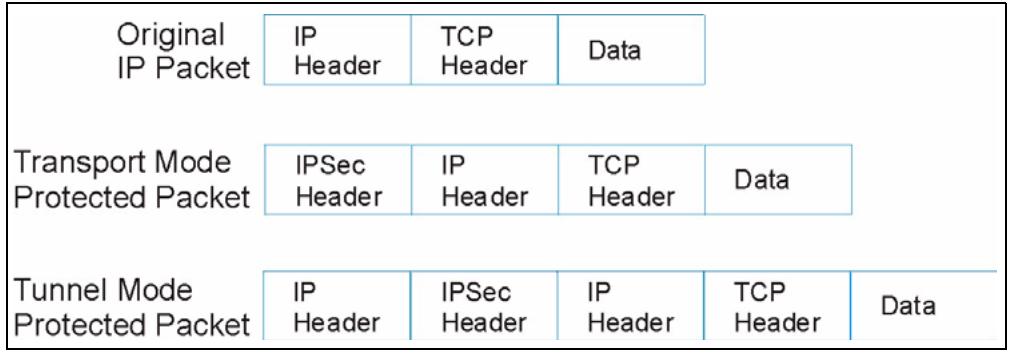
Figure 119 Transport and Tunnel Mode IPSec Encapsulation
16.3.1 Transport Mode
Transport mode is used to protect upper layer protocols and only affects the data in the IP packet. In Transport mode, the IP packet contains the security protocol (AH or ESP) located after the original IP header and options, but before any upper layer protocols contained in the packet (such as TCP and UDP).
With ESP, protection is applied only to the upper layer protocols contained in the packet. The IP header information and options are not used in the authentication process. Therefore, the originating IP address cannot be verified for integrity against the data.
With the use of AH as the security protocol, protection is extended forward into the IP header to verify the integrity of the entire packet by use of portions of the original IP header in the hashing process.
16.3.2 Tunnel Mode
Tunnel mode encapsulates the entire IP packet to transmit it securely. A Tunnel mode is required for gateway services to provide access to internal systems. Tunnel mode is fundamentally an IP tunnel with authentication and encryption. This is the most common mode of operation. Tunnel mode is required for gateway to gateway and host to gateway communications. Tunnel mode communications have two sets of IP headers:
- Outside header: The outside IP header contains the destination IP address of the VPN gateway.
- Inside header: The inside IP header contains the destination IP address of the final system behind the VPN gateway. The security protocol appears after the outer IP header and before the inside IP header
16.4 IPSec and NAT
Read this section if you are running IPSec on a host computer behind the ZyXEL Device.
NAT is incompatible with the AH protocol in both Transport and Tunnel mode. An IPSec VPN using the AH protocol digitally signs the outbound packet, both data payload and headers, with a hash value appended to the packet. When using AH protocol, packet contents (the data payload) are not encrypted.
A NAT device in between the IPSec endpoints will rewrite either the source or destination address with one of its own choosing. The VPN device at the receiving end will verify the integrity of the incoming packet by computing its own hash value, and complain that the hash value appended to the received packet doesn't match. The VPN device at the receiving end doesn't know about the NAT in the middle, so it assumes that the data has been maliciously altered.
IPSec using ESP in Tunnel mode encapsulates the entire original packet (including headers) in a new IP packet. The new IP packet's source address is the outbound address of the sending VPN gateway, and its destination address is the inbound address of the VPN device at the receiving end. When using ESP protocol with authentication, the packet contents (in this case, the entire original packet) are encrypted. The encrypted contents, but not the new headers, are signed with a hash value appended to the packet.
Tunnel mode ESP with authentication is compatible with NAT because integrity checks are performed over the combination of the "original header plus original payload," which is unchanged by a NAT device.
Transport mode ESP with authentication is not compatible with NAT.
Table 79 VPN and NAT
| SECURITY PROTOCOL | MODE | NAT |
| AH | Transport | N |
| AH | Tunnel | N |
| ESP | Transport | N |
| ESP | Tunnel | Y |
CHAPTER 17 VPN Screens
This chapter introduces the VPN screens. See Chapter 24 on page 295 for information on viewing logs and the appendix for IPSec log descriptions.
17.1 VPN/IPSec Overview
Use the screens documented in this chapter to configure rules for VPN connections and manage VPN connections.
17.2 IPSec Algorithms
The ESP and AH protocols are necessary to create a Security Association (SA), the foundation of an IPSec VPN. An SA is built from the authentication provided by the AH and ESP protocols. The primary function of key management is to establish and maintain the SA between systems. Once the SA is established, the transport of data may commence.
17.2.1 AH (Authentication Header) Protocol
AH protocol (RFC 2402) was designed for integrity, authentication, sequence integrity (replay resistance), and non-repudiation but not for confidentiality, for which the ESP was designed.
In applications where confidentiality is not required or not sanctioned by government encryption restrictions, an AH can be employed to ensure integrity. This type of implementation does not protect the information from dissemination but will allow for verification of the integrity of the information and authentication of the originator.
17.2.2 ESP (Encapsulating Security Payload) Protocol
The ESP protocol (RFC 2406) provides encryption as well as the services offered by AH. ESP authenticating properties are limited compared to the AH due to the non-inclusion of the IP header information during the authentication process. However, ESP is sufficient if only the upper layer protocols need to be authenticated.
An added feature of the ESP is payload padding, which further protects communications by concealing the size of the packet being transmitted.
Table 80 AH and ESP
| ESP | AH | |
| ENCRYPTION | ||
| DES (default)Data Encryption Standard (DES) is a widely used method of data encryption using a private (secret) key. DES applies a 56-bit key to each 64-bit block of data. | MD5 (default)MD5 (Message Digest 5) produces a 128-bit digest to authenticate packet data. | |
| 3DESTriple DES (3DES) is a variant of DES, which iterates three times with three separate keys (3 x 56 = 168 bits), effectively doubling the strength of DES. | SHA1SHA1 (Secure Hash Algorithm) produces a 160-bit digest to authenticate packet data. | |
| AESAdvanced Encryption Standard is a newer method of data encryption that also uses a secret key. This implementation of AES applies a 128-bit key to 128-bit blocks of data. AES is faster than 3DES. | ||
| Select NULL to set up a phase 2 tunnel without encryption. | ||
| AUTHENTICATION | MD5 (default)MD5 (Message Digest 5) produces a 128-bit digest to authenticate packet data. | MD5 (default)MD5 (Message Digest 5) produces a 128-bit digest to authenticate packet data. |
| SHA1SHA1 (Secure Hash Algorithm) produces a 160-bit digest to authenticate packet data. | SHA1SHA1 (Secure Hash Algorithm) produces a 160-bit digest to authenticate packet data. | |
| Select MD5 for minimal security and SHA1 for maximum security. | ||
17.3 My IP Address
My IP Address is the WAN IP address of the ZyXEL Device. The ZyXEL Device has to rebuild the VPN tunnel if the My IP Address changes after setup.
The following applies if this field is configured as 0.0.0.0 :
- The ZyXEL Device uses the current ZyXEL Device WAN IP address (static or dynamic) to set up the VPN tunnel.
- If the WAN connection goes down, the ZyXEL Device uses the dial backup IP address for the VPN tunnel when using dial backup or the LAN IP address when using traffic redirect. See Chapter 7 on page 93 for details on dial backup and traffic redirect.
17.4 Secure Gateway Address
Secure Gateway Address is the WAN IP address or domain name of the remote IPSec router (secure gateway).
If the remote secure gateway has a static WAN IP address, enter it in the Secure Gateway Address field. You may alternatively enter the remote secure gateway's domain name (if it has one) in the Secure Gateway Address field.
You can also enter a remote secure gateway's domain name in the Secure Gateway Address field if the remote secure gateway has a dynamic WAN IP address and is using DDNS. The ZyXEL Device has to rebuild the VPN tunnel each time the remote secure gateway's WAN IP address changes (there may be a delay until the DDNS servers are updated with the remote gateway's new WAN IP address).
17.4.1 Dynamic Secure Gateway Address
If the remote secure gateway has a dynamic WAN IP address and does not use DDNS, enter 0.0.0.0 as the secure gateway's address. In this case only the remote secure gateway can initiate SAs. This may be useful for telecommuters initiating a VPN tunnel to the company network (seeSection 17.18 on page 244for configuration examples).
The Secure Gateway IP Address may be configured as 0.0.0.0 only when using IKE key management and not Manual key management.
17.5 VPN Setup Screen
The following figure helps explain the main fields in the web configurator.
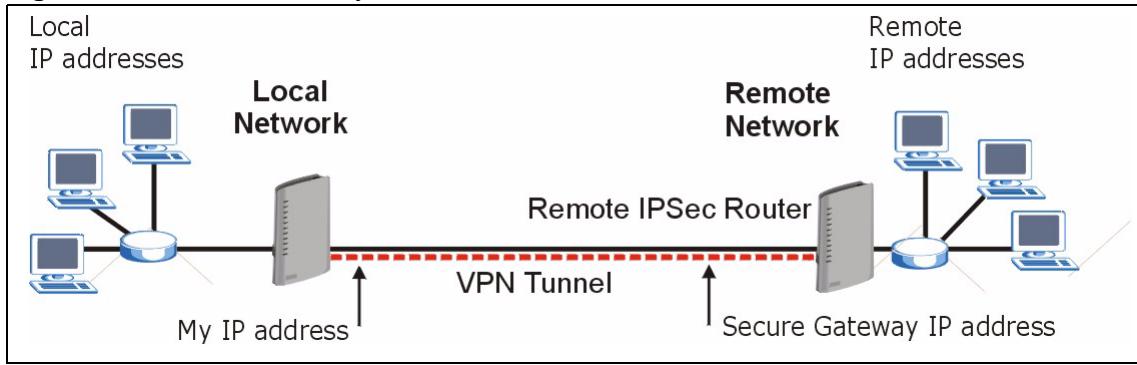
Figure 120 IPSec Summary Fields
Local and remote IP addresses must be static.
Click Security and VPN to open the VPN Setup screen. This is a read-only menu of your IPSec rules (tunnels). The IPSec summary menu is read-only. Edit a VPN by selecting an index number and then configuring its associated submenus.
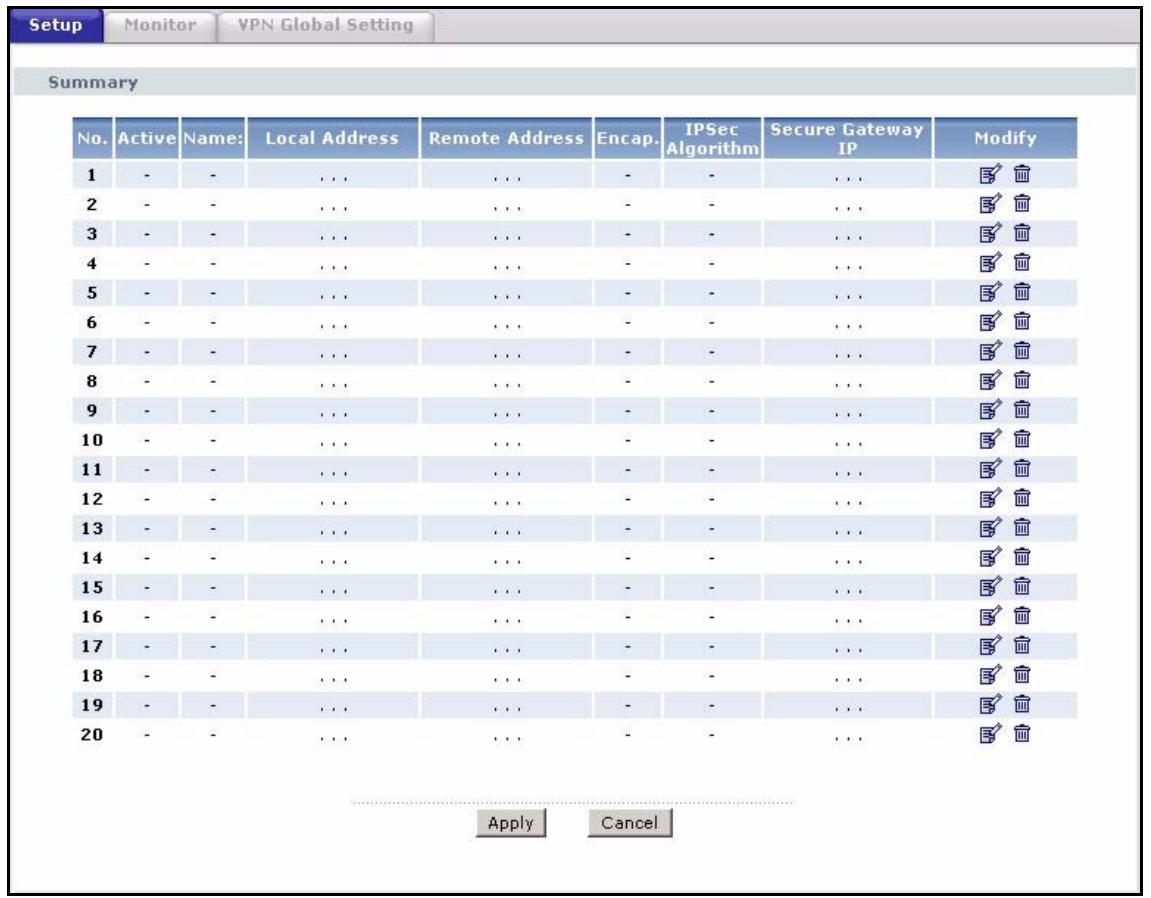
Figure 121 VPN Setup
The following table describes the fields in this screen.
Table 81 VPN Setup
| LABEL | DESCRIPTION |
| No. | This is the VPN policy index number. Click a number to edit VPN policies. |
| Active | This field displays whether the VPN policy is active or not. A Yes signifies that this VPN policy is active. No signifies that this VPN policy is not active. |
| Name | This field displays the identification name for this VPN policy. |
| Local Address | This is the IP address(es) of computer(s) on your local network behind your ZyXEL Device. The same (static) IP address is displayed twice when the Local Address Type field in the VPN-IKE (or VPN-Manual Key) screen is configured to Single. The beginning and ending (static) IP addresses, in a range of computers are displayed when the Local Address Type field in the VPN-IKE (or VPN-Manual Key) screen is configured to Range. A (static) IP address and a subnet mask are displayed when the Local Address Type field in the VPN-IKE (or VPN-Manual Key) screen is configured to Subnet. |
Table 81 VPN Setup
| LABEL | DESCRIPTION |
| Remote Address | This is the IP address(es) of computer(s) on the remote network behind the remote IPSec router. This field displays N/A when the Secure Gateway Address field displays 0.0.0.0. In this case only the remote IPSec router can initiate the VPN. The same (static) IP address is displayed twice when the Remote Address Type field in the VPN-IKE (or VPN-Manual Key) screen is configured to Single. The beginning and ending (static) IP addresses, in a range of computers are displayed when the Remote Address Type field in the VPN-IKE (or VPN-Manual Key) screen is configured to Range. A (static) IP address and a subnet mask are displayed when the Remote Address Type field in the VPN-IKE (or VPN-Manual Key) screen is configured to Subnet. |
| Encap. | This field displays Tunnel or Transport mode (Tunnel is the default selection). |
| IPSec Algorithm | This field displays the security protocols used for an SA. Both AH and ESP increase ZyXEL Device processing requirements and communications latency (delay). |
| Secure Gateway IP | This is the static WAN IP address or URL of the remote IPSec router. This field displays 0.0.0.0 when you configure the Secure Gateway Address field in the VPN-IKE screen to 0.0.0.0. |
| Modify | Click the Edit icon to go to the screen where you can edit the VPN configuration. Click the Remove icon to remove an existing VPN configuration. |
| Apply | Click this to save your changes and apply them to the ZyXEL Device. |
| Cancel | Click this return your settings to their last saved values. |
17.6 Keep Alive
When you initiate an IPSec tunnel with keep alive enabled, the ZyXEL Device automatically renegotiates the tunnel when the IPSec SA lifetime period expires (see Section 17.12 on page 234 for more on the IPSec SA lifetime). In effect, the IPSec tunnel becomes an "always on" connection after you initiate it. Both IPSec routers must have a ZyXEL Device-compatible keep alive feature enabled in order for this feature to work.
If the ZyXEL Device has its maximum number of simultaneous IPSec tunnels connected to it and they all have keep alive enabled, then no other tunnels can take a turn connecting to the ZyXEL Device because the ZyXEL Device never drops the tunnels that are already connected.
When there is outbound traffic with no inbound traffic, the ZyXEL Device automatically drops the tunnel after two minutes.
17.7 VPN, NAT, and NAT Traversal
NAT is incompatible with the AH protocol in both transport and tunnel mode. An IPSec VPN using the AH protocol digitally signs the outbound packet, both data payload and headers, with a hash value appended to the packet, but a NAT device between the IPSec endpoints rewrites the source or destination address. As a result, the VPN device at the receiving end finds a mismatch between the hash value and the data and assumes that the data has been maliciously altered.
NAT is not normally compatible with ESP in transport mode either, but the ZyXEL Device's NAT Traversal feature provides a way to handle this. NAT traversal allows you to set up an IKE SA when there are NAT routers between the two IPSec routers.

Figure 122 NAT Router Between IPSec Routers
Normally you cannot set up an IKE SA with a NAT router between the two IPSec routers because the NAT router changes the header of the IPSec packet. NAT traversal solves the problem by adding a UDP port 500 header to the IPSec packet. The NAT router forwards the IPSec packet with the UDP port 500 header unchanged. In Figure 122 on page 226, when IPSec router A tries to establish an IKE SA, IPSec router B checks the UDP port 500 header, and IPSec routers A and B build the IKE SA.
For NAT traversal to work, you must:
- Use ESP security protocol (in either transport or tunnel mode).
- Use IKE keying mode.
- Enable NAT traversal on both IPSec endpoints.
- Set the NAT router to forward UDP port 500 to IPSec router A.
Finally, NAT is compatible with ESP in tunnel mode because integrity checks are performed over the combination of the "original header plus original payload," which is unchanged by a NAT device. The compatibility of AH and ESP with NAT in tunnel and transport modes is summarized in the following table.
Table 82 VPN and NAT
| SECURITY PROTOCOL | MODE | NAT |
| AH | Transport | N |
| AH | Tunnel | N |
| ESP | Transport | Y* |
| ESP | Tunnel | Y |
Y* - This is supported in the ZyXEL Device if you enable NAT traversal.
17.8 Remote DNS Server
In cases where you want to use domain names to access Intranet servers on a remote network that has a DNS server, you must identify that DNS server. You cannot use DNS servers on the LAN or from the ISP since these DNS servers cannot resolve domain names to private IP addresses on the remote network
The following figure depicts an example where three VPN tunnels are created from ZyXEL Device A; one to branch office 2, one to branch office 3 and another to headquarters. In order to access computers that use private domain names on the headquarters (HQ) network, the ZyXEL Device at branch office 1 uses the Intranet DNS server in headquarters. The DNS server feature for VPN does not work with Windows 2000 or Windows XP.
Figure 123 VPN Host using Intranet DNS Server Example
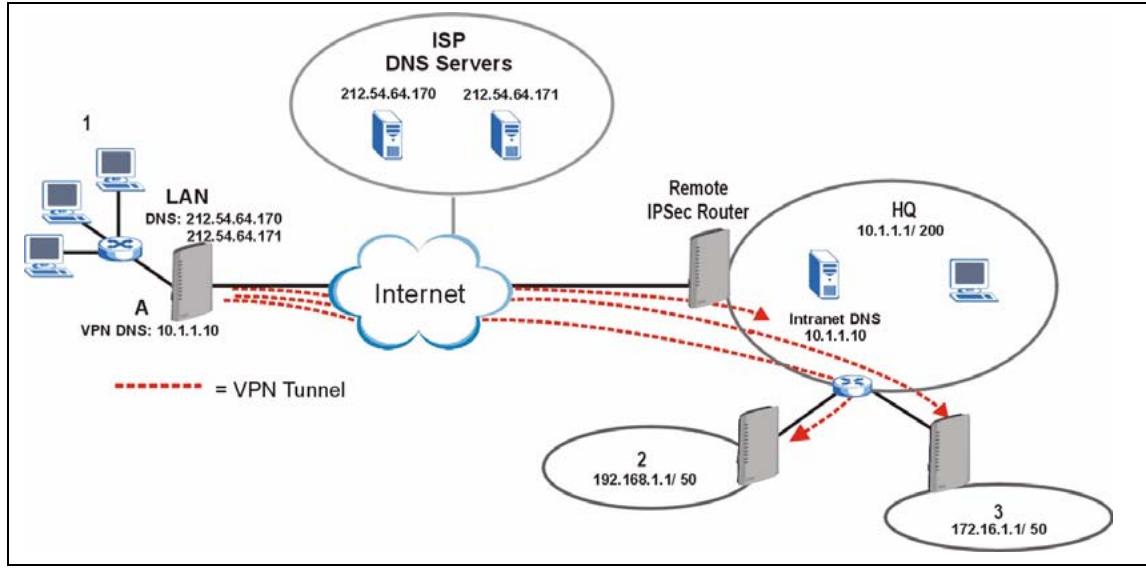
If you do not specify an Intranet DNS server on the remote network, then the VPN host must use IP addresses to access the computers on the remote network.
17.9 ID Type and Content
With aggressive negotiation mode (seeSection 17.12.1 on page 235), the ZyXEL Device identifies incoming SAs by ID type and content since this identifying information is not encrypted. This enables the ZyXEL Device to distinguish between multiple rules for SAs that connect from remote IPSec routers that have dynamic WAN IP addresses. Telecommuters can use separate passwords to simultaneously connect to the ZyXEL Device from IPSec routers with dynamic IP addresses (seeSection 17.18 on page 244 for a telecommuter configuration example).
Regardless of the ID type and content configuration, the ZyXEL Device does not allow you to save multiple active rules with overlapping local and remote IP addresses.
With main mode (seeSection 17.12.1 on page 235), the ID type and content are encrypted to provide identity protection. In this case the ZyXEL Device can only distinguish between up to 12 different incoming SAs that connect from remote IPSec routers that have dynamic WAN IP addresses. The ZyXEL Device can distinguish up to 12 incoming SAs because you can select between three encryption algorithms (DES, 3DES and AES), two authentication algorithms (MD5 and SHA1) and two key groups (DH1 and DH2) when you configure a VPN rule (seeSection 17.13 on page 236). The ID type and content act as an extra level of identification for incoming SAs.
The type of ID can be a domain name, an IP address or an e-mail address. The content is the IP address, domain name, or e-mail address.
Table 83 Local ID Type and Content Fields
| LOCAL ID TYPE= | CONTENT= |
| IP | Type the IP address of your computer or leave the field blank to have the ZyXEL Device automatically use its own IP address. |
| DNS | Type a domain name (up to 31 characters) by which to identify this ZyXEL Device. |
| Type an e-mail address (up to 31 characters) by which to identify this ZyXEL Device. | |
| The domain name or e-mail address that you use in the Content field is used for identification purposes only and does not need to be a real domain name or e-mail address. |
Table 84 Peer ID Type and Content Fields
| PEER ID TYPE= | CONTENT= |
| IP | Type the IP address of the computer with which you will make the VPN connection or leave the field blank to have the ZyXEL Device automatically use the address in the Secure Gateway field. |
| DNS | Type a domain name (up to 31 characters) by which to identify the remote IPSec router. |
| Type an e-mail address (up to 31 characters) by which to identify the remote IPSec router. | |
| The domain name or e-mail address that you use in the Content field is used for identification purposes only and does not need to be a real domain name or e-mail address. The domain name also does not have to match the remote router's IP address or what you configure in the Secure Gateway Addr field below. |
17.9.1 ID Type and Content Examples
Two IPSec routers must have matching ID type and content configuration in order to set up a VPN tunnel.
The two ZyXEL Devices in this example can complete negotiation and establish a VPN tunnel.
Table 85 Matching ID Type and Content Configuration Example
| ZYXEL DEVICE A | ZYXEL DEVICE B |
| Local ID type: E-mail | Local ID type: IP |
| Local ID content: tom@yourcompany.com | Local ID content: 1.1.1.2 |
| Peer ID type: IP | Peer ID type: E-mail |
| Peer ID content: 1.1.1.2 | Peer ID content: tom@yourcompany.com |
The two ZyXEL Devices in this example cannot complete their negotiation because ZyXEL Device B's Local ID type is IP, but ZyXEL Device A's Peer ID type is set to E-mail. An "ID mismatched" message displays in the IPSEC LOG.
Table 86 Mismatching ID Type and Content Configuration Example
| ZYXEL DEVICE A | ZYXEL DEVICE B |
| Local ID type: IP | Local ID type: IP |
| Local ID content: 1.1.1.10 | Local ID content: 1.1.1.10 |
| Peer ID type: E-mail | Peer ID type: IP |
| Peer ID content: aa@yahoo.com | Peer ID content: N/A |
17.10 Pre-Shared Key
A pre-shared key identifies a communicating party during a phase 1 IKE negotiation (seeSection 17.12 on page 234for more on IKE phases). It is called "pre-shared" because you have to share it with another party before you can communicate with them over a secure connection.
17.11 Editing VPN Policies
Click an Edit icon in the VPN Setup Screen to edit VPN policies.
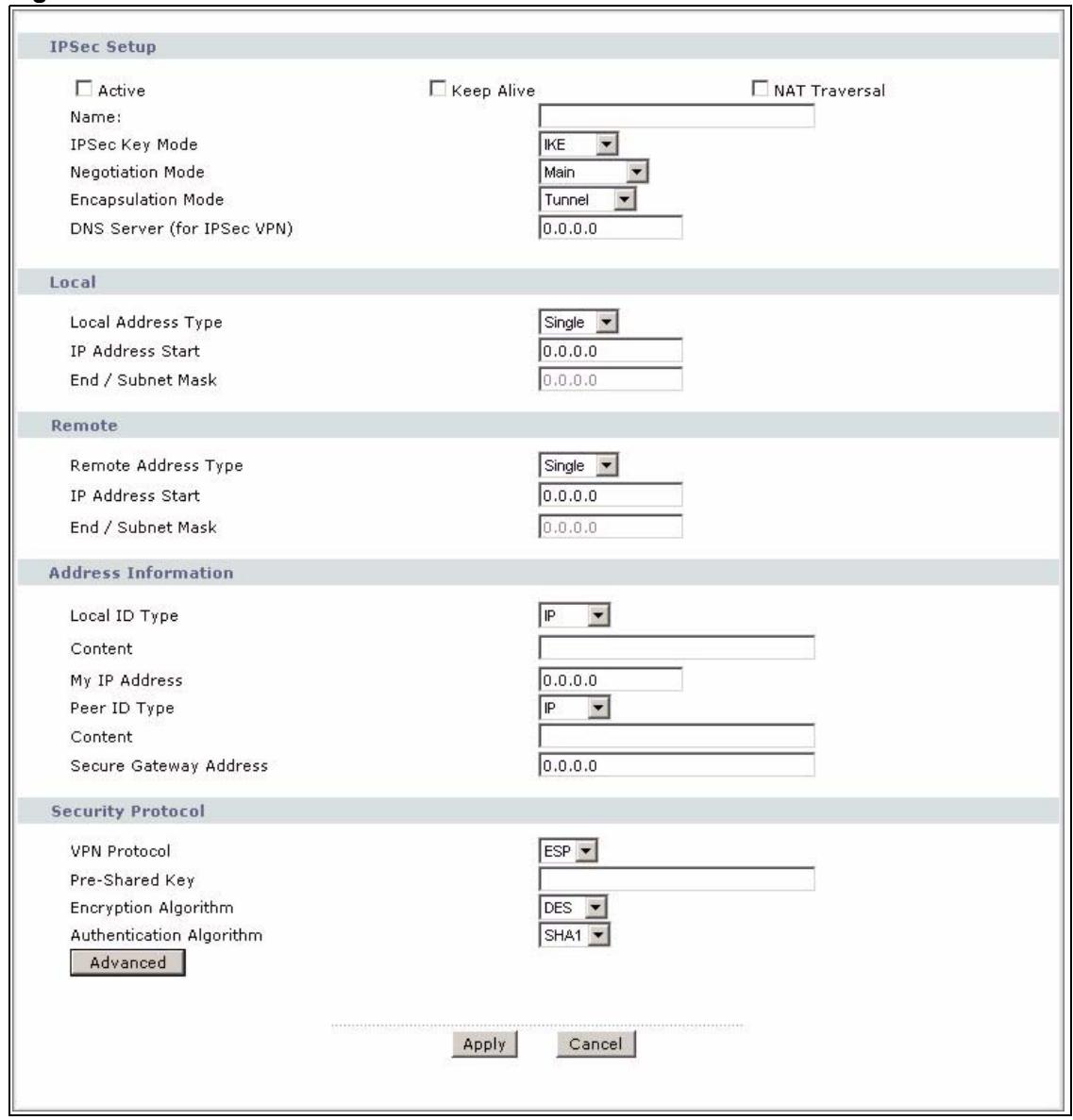
Figure 124 Edit VPN Policies
The following table describes the fields in this screen.
Table 87 Edit VPN Policies
| LABEL | DESCRIPTION |
| IPSec Setup | |
| Active | Select this check box to activate this VPN policy. This option determines whether a VPN rule is applied before a packet leaves the firewall. |
| Keep Alive | Select either Yes or No from the drop-down list box. Select Yes to have the ZyXEL Device automatically reinitiate the SA after the SA lifetime times out, even if there is no traffic. The remote IPSec router must also have keep alive enabled in order for this feature to work. |
Table 87 Edit VPN Policies
| LABEL | DESCRIPTION |
| NAT Traversal | This function is available if the VPN protocol is ESP. Select this check box if you want to set up a VPN tunnel when there are NAT routers between the ZyXEL Device and remote IPSec router. The remote IPSec router must also enable NAT traversal, and the NAT routers have to forward UDP port 500 packets to the remote IPSec router behind the NAT router. |
| Name | Type up to 32 characters to identify this VPN policy. You may use any character, including spaces, but the ZyXEL Device drops trailing spaces. |
| IPSec Key Mode | Select IKE or Manual from the drop-down list box. IKE provides more protection so it is generally recommended. Manual is a useful option for troubleshooting if you have problems using IKE key management. |
| Negotiation Mode | Select Main or Aggressive from the drop-down list box. Multiple SAs connecting through a secure gateway must have the same negotiation mode. |
| Encapsulation Mode | Select Tunnel mode or Transport mode from the drop-down list box. |
| DNS Server (for IPSec VPN) | If there is a private DNS server that services the VPN, type its IP address here. The ZyXEL Device assigns this additional DNS server to the ZyXEL Device's DHCP clients that have IP addresses in this IPSec rule's range of local addresses. A DNS server allows clients on the VPN to find other computers and servers on the VPN by their (private) domain names. |
| Local | Local IP addresses must be static and correspond to the remote IPSec router's configured remote IP addresses. Two active SAs can have the same configured local or remote IP address, but not both. You can configure multiple SAs between the same local and remote IP addresses, as long as only one is active at any time. In order to have more than one active rule with the Secure Gateway Address field set to 0.0.0.0, the ranges of the local IP addresses cannot overlap between rules. If you configure an active rule with 0.0.0.0 in the Secure Gateway Address field and the LAN's full IP address range as the local IP address, then you cannot configure any other active rules with the Secure Gateway Address field set to 0.0.0.0. |
| Local Address Type | Use the drop-down menu to choose Single, Range, or Subnet. Select Single for a single IP address. Select Range for a specific range of IP addresses. Select Subnet to specify IP addresses on a network by their subnet mask. |
| IP Address Start | When the Local Address Type field is configured to Single, enter a (static) IP address on the LAN behind your ZyXEL Device. When the Local Address Type field is configured to Range, enter the beginning (static) IP address, in a range of computers on your LAN behind your ZyXEL Device. When the Local Address Type field is configured to Subnet, this is a (static) IP address on the LAN behind your ZyXEL Device. |
| End / Subnet Mask | When the Local Address Type field is configured to Single, this field is N/A. When the Local Address Type field is configured to Range, enter the end (static) IP address, in a range of computers on the LAN behind your ZyXEL Device. When the Local Address Type field is configured to Subnet, this is a subnet mask on the LAN behind your ZyXEL Device. |
Table 87 Edit VPN Policies
| LABEL | DESCRIPTION |
| Remote | Remote IP addresses must be static and correspond to the remote IPSec router's configured local IP addresses. The remote fields do not apply when the Secure Gateway IP Address field is configured to 0.0.0.0. In this case only the remote IPSec router can initiate the VPN.Two active SAs cannot have the local and remote IP address(es) both the same.Two active SAs can have the same local or remote IP address, but not both. You can configure multiple SAs between the same local and remote IP addresses, as long as only one is active at any time. |
| Remote Address Type | Use the drop-down menu to choose Single, Range, or Subnet. Select Single with a single IP address. Select Range for a specific range of IP addresses SELECT Subnet to specify IP addresses on a network by their subnet mask. |
| IP Address Start | When the Remote Address Type field is configured to Single, enter a (static) IP address on the network behind the remote IPSec router. When the Remote Address Type field is configured to Range, enter the beginning (static) IP address, in a range of computers on the network behind the remote IPSec router.When the Remote Address Type field is configured to Subnet, enter a (static) IP address on the network behind the remote IPSec router. |
| End / Subnet Mask | When the Remote Address Type field is configured to Single, this field is N/A. When the Remote Address Type field is configured to Range, enter the end (static) IP address, in a range of computers on the network behind the remote IPSec router. When the Remote Address Type field is configured to Subnet, enter a subnet mask on the network behind the remote IPSec router. |
| Address Information | |
| Local ID Type | Select IP to identify this ZyXEL Device by its IP address.Select DNS to identify this ZyXEL Device by a domain name.Select E-mail to identify this ZyXEL Device by an e-mail address. |
| Content | When you select IP in the Local ID Type field, type the IP address of your computer in the local Content field. The ZyXEL Device automatically uses the IP address in the My IP Address field (refer to the My IP Address field description) if you configure the local Content field to 0.0.0.0 or leave it blank.It is recommended that you type an IP address other than 0.0.0.0 in the local Content field or use the DNS or E-mail ID type in the following situations.When there is a NAT router between the two IPSec routers.When you want the remote IPSec router to be able to distinguish between VPN connection requests that come in from IPSec routers with dynamic WAN IP addresses.When you select DNS or E-mail in the Local ID Type field, type a domain name or e-mail address by which to identify this ZyXEL Device in the local Content field.Use up to 31 ASCII characters including spaces, although trailing spaces are truncated. The domain name or e-mail address is for identification purposes only and can be any string. |
| My IP Address | Enter the WAN IP address of your ZyXEL Device. The VPN tunnel has to be rebuilt if this IP address changes.The following applies if this field is configured as 0.0.0.0:The ZyXEL Device uses the current ZyXEL Device WAN IP address (static or dynamic) to set up the VPN tunnel.If the WAN connection goes down, the ZyXEL Device uses the dial backup IP address for the VPN tunnel when using dial backup or the LAN IP address when using traffic redirect. See Chapter 7 on page 93 for details on dial backup and traffic redirect. |
Table 87 Edit VPN Policies
| LABEL | DESCRIPTION |
| Peer ID Type | Select IP to identify the remote IPSec router by its IP address. Select DNS to identify the remote IPSec router by a domain name. Select E-mail to identify the remote IPSec router by an e-mail address. |
| Content | The configuration of the peer content depends on the peer ID type. For IP, type the IP address of the computer with which you will make the VPN connection. If you configure this field to 0.0.0.0 or leave it blank, the ZyXEL Device will use the address in the Secure Gateway Address field (refer to the Secure Gateway Address field description). For DNS or E-mail, type a domain name or e-mail address by which to identify the remote IPSec router. Use up to 31 ASCII characters including spaces, although trailing spaces are truncated. The domain name or e-mail address is for identification purposes only and can be any string. It is recommended that you type an IP address other than 0.0.0.0 or use the DNS or E-mail ID type in the following situations: When there is a NAT router between the two IPSec routers. When you want the ZyXEL Device to distinguish between VPN connection requests that come in from remote IPSec routers with dynamic WAN IP addresses. |
| Secure Gateway Address | Type the WAN IP address or the URL (up to 31 characters) of the IPSec router with which you're making the VPN connection. Set this field to 0.0.0.0 if the remote IPSec router has a dynamic WAN IP address (the Key Management field must be set to IKE). In order to have more than one active rule with the Secure Gateway Address field set to 0.0.0.0, the ranges of the local IP addresses cannot overlap between rules. If you configure an active rule with 0.0.0.0 in the Secure Gateway Address field and the LAN's full IP address range as the local IP address, then you cannot configure any other active rules with the Secure Gateway Address field set to 0.0.0.0. |
| Security Protocol | |
| VPN Protocol | Select ESP if you want to use ESP (Encapsulation Security Payload). The ESP protocol (RFC 2406) provides encryption as well as some of the services offered by AH. If you select ESP here, you must select options from the Encryption Algorithm and Authentication Algorithm fields (described below). |
| Pre-Shared Key | Type your pre-shared key in this field. A pre-shared key identifies a communicating party during a phase 1 IKE negotiation. It is called "pre-shared" because you have to share it with another party before you can communicate with them over a secure connection. Type from 8 to 31 case-sensitive ASCII characters or from 16 to 62 hexadecimal ("0-9", "A-F") characters. You must precede a hexadecimal key with a "0x" (zero x), which is not counted as part of the 16 to 62 character range for the key. For example, in "0x0123456789ABCDEF", "0x" denotes that the key is hexadecimal and "0123456789ABCDEF" is the key itself. Both ends of the VPN tunnel must use the same pre-shared key. You will receive a "PYLD_MALFORMED" (payload malformed) packet if the same pre-shared key is not used on both ends. |
Table 87 Edit VPN Policies
| LABEL | DESCRIPTION |
| Encryption Algorithm | Select DES, 3DES, AES or NULL from the drop-down list box. When you use one of these encryption algorithms for data communications, both the sending device and the receiving device must use the same secret key, which can be used to encrypt and decrypt the message or to generate and verify a message authentication code. The DES encryption algorithm uses a 56-bit key. Triple DES (3DES) is a variation on DES that uses a 168-bit key. As a result, 3DES is more secure than DES. It also requires more processing power, resulting in increased latency and decreased throughput. This implementation of AES uses a 128-bit key. AES is faster than 3DES. Select NULL to set up a tunnel without encryption. When you select NULL, you do not enter an encryption key. |
| Authentication Algorithm | Select SHA1 or MD5 from the drop-down list box. MD5 (Message Digest 5) and SHA1 (Secure Hash Algorithm) are hash algorithms used to authenticate packet data. The SHA1 algorithm is generally considered stronger than MD5, but is slower. Select MD5 for minimal security and SHA-1 for maximum security. |
| Advanced | Click Advanced to configure more detailed settings of your IKE key management. |
| Back | Click Back to return to the previous screen. |
| Apply | Click Apply to save your changes back to the ZyXEL Device. |
| Cancel | Click Cancel to begin configuring this screen afresh. |
17.12 IKE Phases
There are two phases to every IKE (Internet Key Exchange) negotiation – phase 1 (Authentication) and phase 2 (Key Exchange). A phase 1 exchange establishes an IKE SA and the second one uses that SA to negotiate SAs for IPSec.
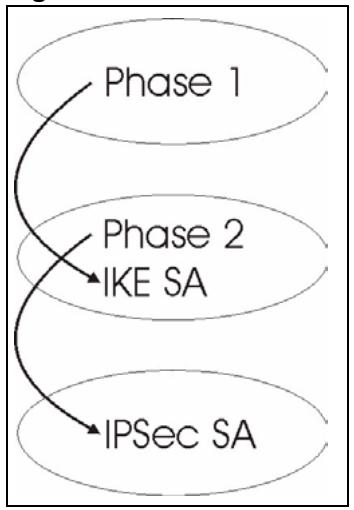
Figure 125 Two Phases to Set Up the IPSec SA
In phase 1 you must:
- Choose a negotiation mode.
-
Invalidate the connection by entering a pre-shared key.
-
Choose an encryption algorithm.
- Choose an authentication algorithm.
- Choose a Diffie-Hellman public-key cryptography key group (DH1 or DH2).
- Set the IKE SA lifetime. This field allows you to determine how long an IKE SA should stay up before it times out. An IKE SA times out when the IKE SA lifetime period expires. If an IKE SA times out when an IPSec SA is already established, the IPSec SA stays connected.
In phase 2 you must:
- Choose which protocol to use (ESP or AH) for the IKE key exchange.
- Choose an encryption algorithm.
- Choose an authentication algorithm
- Choose whether to enable Perfect Forward Secrecy (PFS) using Diffie-Hellman publickey cryptography – see Section 17.12.3 on page 236. Select None (the default) to disable PFS
- Choose Tunnel mode or Transport mode.
- Set the IPSec SA lifetime. This field allows you to determine how long the IPSec SA should stay up before it times out. The ZyXEL Device automatically renegotiates the IPSec SA if there is traffic when the IPSec SA lifetime period expires. The ZyXEL Device also automatically renegotiates the IPSec SA if both IPSec routers have keep alive enabled, even if there is no traffic. If an IPSec SA times out, then the IPSec router must renegotiate the SA the next time someone attempts to send traffic.
17.12.1 Negotiation Mode
The phase 1 Negotiation Mode you select determines how the Security Association (SA) will be established for each connection through IKE negotiations.
- Main Mode ensures the highest level of security when the communicating parties are negotiating authentication (phase 1). It uses 6 messages in three round trips: SA negotiation, Diffie-Hellman exchange and an exchange of nonces (a nonce is a random number). This mode features identity protection (your identity is not revealed in the negotiation).
- Aggressive Mode is quicker than Main Mode because it eliminates several steps when the communicating parties are negotiating authentication (phase 1). However the trade-off is that faster speed limits its negotiating power and it also does not provide identity protection. It is useful in remote access situations where the address of the initiator is not known by the responder and both parties want to use pre-shared key authentication.
17.12.2 Diffie-Hellman (DH) Key Groups
Diffie-Hellman (DH) is a public-key cryptography protocol that allows two parties to establish a shared secret over an unsecured communications channel. Diffie-Hellman is used within IKE SA setup to establish session keys. 768-bit (Group 1 - DH1) and 1024-bit (Group 2 - DH2) Diffie-Hellman groups are supported. Upon completion of the Diffie-Hellman exchange, the two peers have a shared secret, but the IKE SA is not authenticated. For authentication, use pre-shared keys.
17.12.3 Perfect Forward Secrecy (PFS)
Enabling PFS means that the key is transient. The key is thrown away and replaced by a brand new key using a new Diffie-Hellman exchange for each new IPSec SA setup. With PFS enabled, if one key is compromised, previous and subsequent keys are not compromised, because subsequent keys are not derived from previous keys. The (time-consuming) Diffie-Hellman exchange is the trade-off for this extra security.
This may be unnecessary for data that does not require such security, so PFS is disabled (None) by default in the ZyXEL Device. Disabling PFS means new authentication and encryption keys are derived from the same root secret (which may have security implications in the long run) but allows faster SA setup (by bypassing the Diffie-Hellman key exchange).
17.13 Configuring Advanced IKE Settings
Click Advanced in the Edit VPN Policies screen to open this screen.
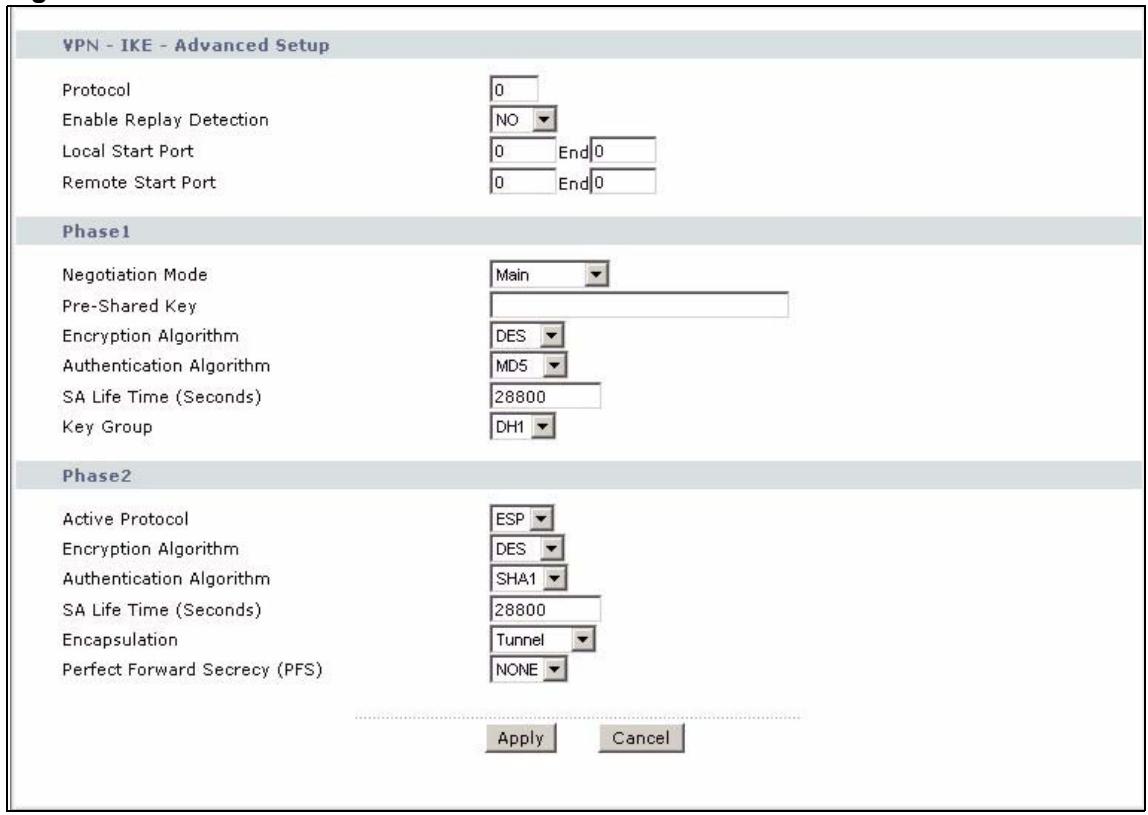
Figure 126 Advanced VPN Policies
The following table describes the fields in this screen.
Table 88 Advanced VPN Policies
| LABEL | DESCRIPTION |
| VPN - IKE | |
| Protocol | Enter 1 for ICMP, 6 for TCP, 17 for UDP, etc. 0 is the default and signifies any protocol. |
| Enable Replay Detection | As a VPN setup is processing intensive, the system is vulnerable to Denial of Service (DoS) attacks The IPSec receiver can detect and reject old or duplicate packets to protect against replay attacks. Select YES from the drop-down menu to enable replay detection, or select NO to disable it. |
| Local Start Port | 0 is the default and signifies any port. Type a port number from 0 to 65535. Some of the most common IP ports are: 21, FTP; 53, DNS; 23, Telnet; 80, HTTP; 25, SMTP; 110, POP3. |
| End | Enter a port number in this field to define a port range. This port number must be greater than that specified in the previous field. If Local Start Port is left at 0, End will also remain at 0. |
| Remote Start Port | 0 is the default and signifies any port. Type a port number from 0 to 65535. Some of the most common IP ports are: 21, FTP; 53, DNS; 23, Telnet; 80, HTTP; 25, SMTP; 110, POP3. |
| End | Enter a port number in this field to define a port range. This port number must be greater then that specified in the previous field. If Remote Start Port is left at 0, End will also remain at 0. |
| Phase 1 |
Table 88 Advanced VPN Policies
| LABEL | DESCRIPTION |
| Negotiation Mode | Select Main or Aggressive from the drop-down list box. Multiple SAs connecting through a secure gateway must have the same negotiation mode. |
| Pre-Shared Key | Type your pre-shared key in this field. A pre-shared key identifies a communicating party during a phase 1 IKE negotiation. It is called "pre-shared" because you have to share it with another party before you can communicate with them over a secure connection. Type from 8 to 31 case-sensitive ASCII characters or from 16 to 62 hexadecimal ("0-9", "A-F") characters. You must precede a hexadecimal key with a "0x" (zero x), which is not counted as part of the 16 to 62-character range for the key. For example, in "0x0123456789ABCDEF", "0x" denotes that the key is hexadecimal and "0123456789ABCDEF" is the key itself. Both ends of the VPN tunnel must use the same pre-shared key. You will receive a "PYLD_MALFORMED" (payload malformed) packet if the same pre-shared key is not used on both ends. |
| Encryption Algorithm | Select DES, 3DES or AES from the drop-down list box. When you use one of these encryption algorithms for data communications, both the sending device and the receiving device must use the same secret key, which can be used to encrypt and decrypt the message or to generate and verify a message authentication code. The DES encryption algorithm uses a 56-bit key. Triple DES (3DES) is a variation on DES that uses a 168-bit key. As a result, 3DES is more secure than DES. It also requires more processing power, resulting in increased latency and decreased throughput. This implementation of AES uses a 128-bit key. AES is faster than 3DES. |
| Authentication Algorithm | Select SHA1 or MD5 from the drop-down list box. MD5 (Message Digest 5) and SHA1 (Secure Hash Algorithm) are hash algorithms used to authenticate packet data. The SHA1 algorithm is generally considered stronger than MD5, but is slower. Select MD5 for minimal security and SHA-1 for maximum security. |
| SA Life Time (Seconds) | Define the length of time before an IKE SA automatically renegotiates in this field. It may range from 60 to 3,000,000 seconds (almost 35 days). A short SA Life Time increases security by forcing the two VPN gateways to update the encryption and authentication keys. However, every time the VPN tunnel renegotiates, all users accessing remote resources are temporarily disconnected. |
| Key Group | You must choose a key group for phase 1 IKE setup. DH1 (default) refers to Diffie-Hellman Group 1 a 768 bit random number. DH2 refers to Diffie-Hellman Group 2 a 1024 bit (1Kb) random number. |
| Phase 2 | |
| Active Protocol | Use the drop-down list box to choose from ESP or AH. |
| Encryption Algorithm | This field is available when you select ESP in the Active Protocol field. Select DES, 3DES, AES or NULL from the drop-down list box. When you use one of these encryption algorithms for data communications, both the sending device and the receiving device must use the same secret key, which can be used to encrypt and decrypt the message or to generate and verify a message authentication code. The DES encryption algorithm uses a 56-bit key. Triple DES (3DES) is a variation on DES that uses a 168-bit key. As a result, 3DES is more secure than DES, It also requires more processing power, resulting in increased latency and decreased throughput. This implementation of AES uses a 128-bit key. AES is faster than 3DES. Select NULL to set up a tunnel without encryption. When you select NULL, you do not enter an encryption key. |
Table 88 Advanced VPN Policies
| LABEL | DESCRIPTION |
| Authentication Algorithm | Select SHA1 or MD5 from the drop-down list box. MD5 (Message Digest 5) and SHA1 (Secure Hash Algorithm) are hash algorithms used to authenticate packet data. The SHA1 algorithm is generally considered stronger than MD5, but is slower. Select MD5 for minimal security and SHA-1 for maximum security. |
| SA Life Time (Seconds) | Define the length of time before an IKE SA automatically renegotiates in this field. It may range from 60 to 3,000,000 seconds (almost 35 days).A short SA Life Time increases security by forcing the two VPN gateways to update the encryption and authentication keys. However, every time the VPN tunnel renegotiates, all users accessing remote resources are temporarily disconnected. |
| Encapsulation | Select Tunnel mode or Transport mode from the drop-down list box. |
| Perfect Forward Secrecy (PFS) | Perfect Forward Secrecy (PFS) is disabled (NONE) by default in phase 2 IPSec SA setup. This allows faster IPSec setup, but is not so secure. Choose DH1 or DH2 from the drop-down list box to enable PFS. DH1 refers to Diffie-Hellman Group 1 a 768 bit random number. DH2 refers to Diffie-Hellman Group 2 a 1024 bit (1Kb) random number (more secure, yet slower). |
| Back | Click Back to return to the previous screen. |
| Apply | Click Apply to save your changes back to the ZyXEL Device and return to the VPN-IKE screen. |
| Cancel | Click Cancel to return to the VPN-IKE screen without saving your changes. |
17.14 Manual Key Setup
Manual key management is useful if you have problems with IKE key management.
17.14.1 Security Parameter Index (SPI)
An SPI is used to distinguish different SAs terminating at the same destination and using the same IPSec protocol. This data allows for the multiplexing of SAs to a single gateway. The SPI (Security Parameter Index) along with a destination IP address uniquely identify a particular Security Association (SA). The SPI is transmitted from the remote VPN gateway to the local VPN gateway. The local VPN gateway then uses the network, encryption and key values that the administrator associated with the SPI to establish the tunnel.
Current ZyXEL implementation assumes identical outgoing and incoming SPIs.
17.15 Configuring Manual Key
You only configure VPN Manual Key when you select Manual in the IPSec Key Mode field on the VPN IKE screen. This is the VPN Manual Key screen as shown next.
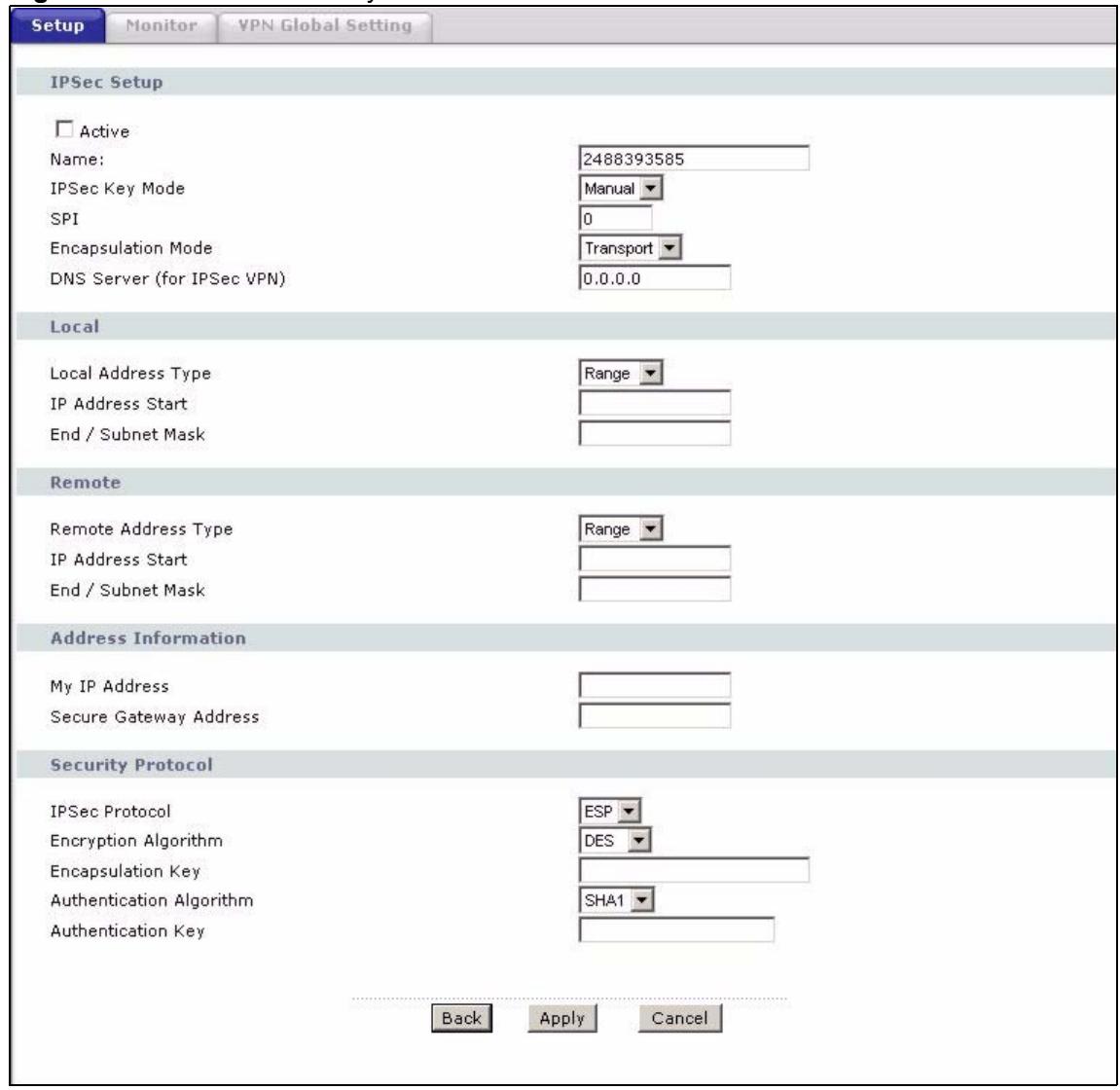
Figure 127 VPN: Manual Key
The following table describes the fields in this screen.
Table 89 VPN: Manual Key
| LABEL | DESCRIPTION |
| IPSec Setup | |
| Active | Select this check box to activate this VPN policy. |
| Name | Type up to 32 characters to identify this VPN policy. You may use any character, including spaces, but the ZyXEL Device drops trailing spaces. |
| IPSec Key Mode | Select IKE or Manual from the drop-down list box. Manual is a useful option for troubleshooting if you have problems using IKE key management. |
| SPI | Type a number (base 10) from 1 to 999999 for the Security Parameter Index. |
| Encapsulation Mode | Select Tunnel mode or Transport mode from the drop-down list box. |
| DNS Server (for IPSec VPN) | If there is a private DNS server that services the VPN, type its IP address here. The ZyXEL Device assigns this additional DNS server to the ZyXEL Device 's DHCP clients that have IP addresses in this IPSec rule's range of local addresses. A DNS server allows clients on the VPN to find other computers and servers on the VPN by their (private) domain names. |
| Local | Local IP addresses must be static and correspond to the remote IPSec router's configured remote IP addresses. Two active SAs cannot have the local and remote IP address(es) both the same. Two active SAs can have the same local or remote IP address, but not both. You can configure multiple SAs between the same local and remote IP addresses, as long as only one is active at any time. |
| Local Address Type | Use the drop-down menu to choose Single, Range, or Subnet. Select Single for a single IP address. Select Range for a specific range of IP addresses. Select Subnet to specify IP addresses on a network by their subnet mask. |
| IP Address Start | When the Local Address Type field is configured to Single, enter a (static) IP address on the LAN behind your ZyXEL Device. When the Local Address Type field is configured to Range, enter the beginning (static) IP address, in a range of computers on your LAN behind your ZyXEL Device. When the Local Address Type field is configured to Subnet, this is a (static) IP address on the LAN behind your ZyXEL Device. |
| End / Subnet Mask | When the Local Address Type field is configured to Single, this field is N/A. When the Local Address Type field is configured to Range, enter the end (static) IP address, in a range of computers on the LAN behind your ZyXEL Device. When the Local Address Type field is configured to Subnet, this is a subnet mask on the LAN behind your ZyXEL Device. |
| Remote | Remote IP addresses must be static and correspond to the remote IPSec router's configured local IP addresses. Two active SAs cannot have the local and remote IP address(es) both the same. Two active SAs can have the same local or remote IP address, but not both. You can configure multiple SAs between the same local and remote IP addresses, as long as only one is active at any time. |
| Remote Address Type | Use the drop-down menu to choose Single, Range, or Subnet. Select Single with a single IP address. Select Range for a specific range of IP addresses. Select Subnet to specify IP addresses on a network by their subnet mask. |
| IP Address Start | When the Remote Address Type field is configured to Single, enter a (static) IP address on the network behind the remote IPSec router. When the Remote Address Type field is configured to Range, enter the beginning (static) IP address, in a range of computers on the network behind the remote IPSec router. When the Remote Address Type field is configured to Subnet, enter a (static) IP address on the network behind the remote IPSec router. |
| End / Subnet Mask | When the Remote Address Type field is configured to Single, this field is N/A. When the Remote Address Type field is configured to Range, enter the end (static) IP address, in a range of computers on the network behind the remote IPSec router. When the Remote Address Type field is configured to Subnet, enter a subnet mask on the network behind the remote IPSec router. |
| Address Information | |
| My IP Address | Enter the WAN IP address of your ZyXEL Device. The VPN tunnel has to be rebuilt if this IP address changes.The following applies if this field is configured as 0.0.0.0:The ZyXEL Device uses the current ZyXEL Device WAN IP address (static or dynamic) to set up the VPN tunnel.If the WAN connection goes down, the ZyXEL Device uses the dial backup IP address for the VPN tunnel when using dial backup or the LAN IP address when using traffic redirect. See Chapter 7 on page 93 for details on dial backup and traffic redirect. |
| Secure Gateway Address | Type the WAN IP address or the URL (up to 31 characters) of the IPSec router with which you're making the VPN connection. |
| Security Protocol | |
| IPSec Protocol | Select ESP if you want to use ESP (Encapsulation Security Payload). The ESP protocol (RFC 2406) provides encryption as well as some of the services offered by AH. If you select ESP here, you must select options from the Encryption Algorithm and Authentication Algorithm fields (described next). |
| Encryption Algorithm | Select DES, 3DES or NULL from the drop-down list box.When DES is used for data communications, both sender and receiver must know the same secret key, which can be used to encrypt and decrypt the message or to generate and verify a message authentication code. The DES encryption algorithm uses a 56-bit key. Triple DES (3DES) is a variation on DES that uses a 168-bit key. As a result, 3DES is more secure than DES. It also requires more processing power, resulting in increased latency and decreased throughput SELECT NULL to set up a tunnel without encryption. When you select NULL, you do not enter an encryption key. |
| Encapsulation Key (only with ESP) | With DES, type a unique key 8 characters long. With 3DES, type a unique key 24 characters long. Any characters may be used, including spaces, but trailing spaces are truncated. |
| Authentication Algorithm | Select SHA1 or MD5 from the drop-down list box. MD5 (Message Digest 5) and SHA1 (Secure Hash Algorithm) are hash algorithms used to authenticate packet data. The SHA1 algorithm is generally considered stronger than MD5, but is slower. Select MD5 for minimal security and SHA-1 for maximum security. |
| Authentication Key | Type a unique authentication key to be used by IPSec if applicable. Enter 16 characters for MD5 authentication or 20 characters for SHA-1 authentication. Any characters may be used, including spaces, but trailing spaces are truncated. |
| Back | Click Back to return to the previous screen. |
| Apply | Click Apply to save your changes back to the ZyXEL Device. |
17.16 Viewing SA Monitor
Click Security, VPN and Monitor to open the SA Monitor screen as shown. Use this screen to display and manage active VPN connections.
A Security Association (SA) is the group of security settings related to a specific VPN tunnel. This screen displays active VPN connections. Use Refresh to display active VPN connections. This screen is read-only. The following table describes the fields in this tab.
When there is outbound traffic but no inbound traffic, the SA times out automatically after two minutes. A tunnel with no outbound or inbound traffic is "idle" and does not timeout until the SA lifetime period expires. SeeSection 17.6 on page 225on keep alive to have the ZyXEL Device renegotiate an IPSec SA when the SA lifetime expires, even if there is no traffic.
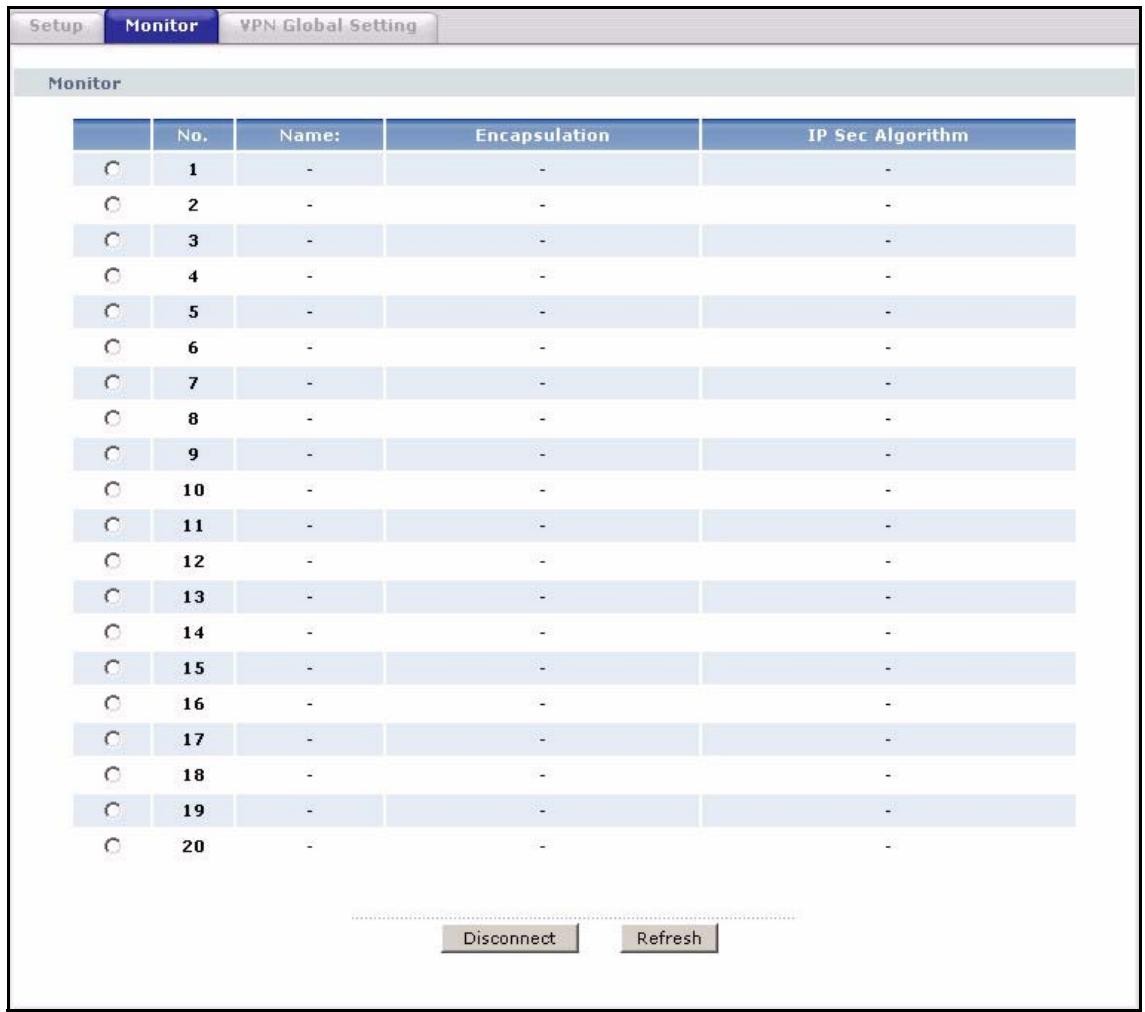
Figure 128 VPN: SA Monitor
The following table describes the fields in this screen.
Table 90 VPN: SA Monitor
| LABEL | DESCRIPTION |
| No | This is the security association index number. |
| Name | This field displays the identification name for this VPN policy. |
| Encapsulation | This field displays Tunnel or Transport mode. |
| IPSec Algorithm | This field displays the security protocol, encryption algorithm, and authentication algorithm used in each VPN tunnel. |
| Disconnect | Select one of the security associations, and then click Disconnect to stop that security association. |
| Refresh | Click Refresh to display the current active VPN connection(s). |
17.17 Configuring Global Setting
To change your ZyXEL Device's global settings, click VPN and then Global Setting. The screen appears as shown.
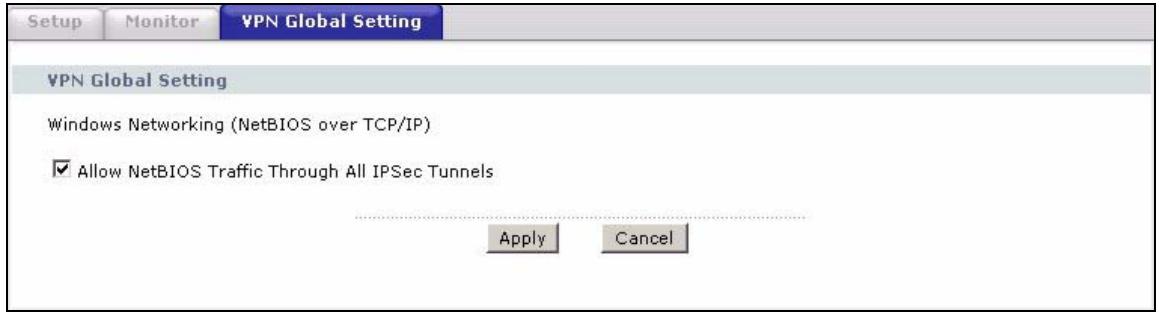
Figure 129 VPN: Global Setting
The following table describes the fields in this screen.
Table 91 VPN: Global Setting
| LABEL | DESCRIPTION |
| Windows Networking (NetBIOS over TCP/IP) | NetBIOS (Network Basic Input/Output System) are TCP or UDP packets that enable a computer to find other computers. It may sometimes be necessary to allow NetBIOS packets to pass through VPN tunnels in order to allow local computers to find computers on the remote network and vice versa. |
| Allow NetBIOS Traffic Through All IPSec Tunnels | Select this check box to send NetBIOS packets through the VPN connection. |
| Apply | Click Apply to save your changes back to the ZyXEL Device. |
| Cancel | Click Cancel to begin configuring this screen afresh. |
17.18 Telecommuter VPN/IPSec Examples
The following examples show how multiple telecommuters can make VPN connections to a single ZyXEL Device at headquarters. The telecommuters use IPSec routers with dynamic WAN IP addresses. The ZyXEL Device at headquarters has a static public IP address.
17.18.1 Telecommuters Sharing One VPN Rule Example
See the following figure and table for an example configuration that allows multiple telecommuters (A, B and C in the figure) to use one VPN rule to simultaneously access a ZyXEL Device at headquarters (HQ in the figure). The telecommuters do not have domain names mapped to the WAN IP addresses of their IPSec routers. The telecommuters must all use the same IPSec parameters but the local IP addresses (or ranges of addresses) should not overlap.
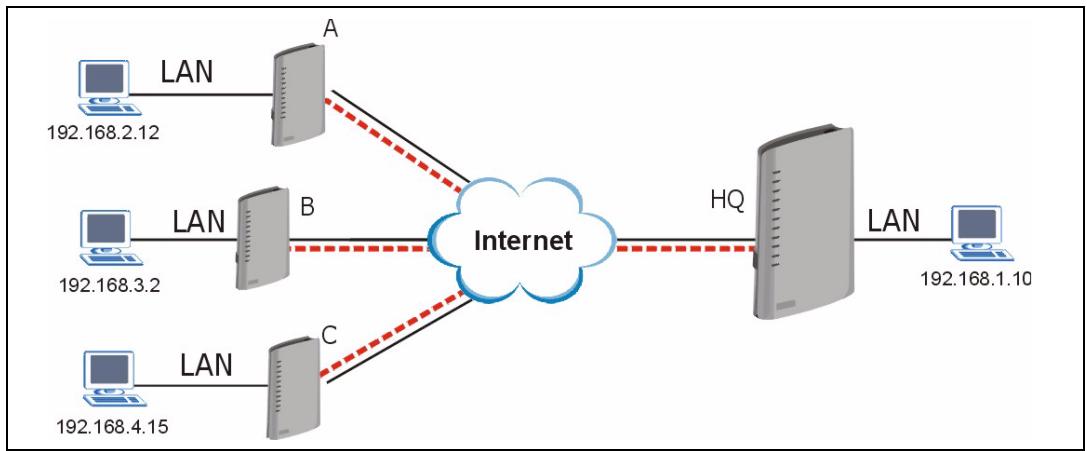
Figure 130 Telecommuters Sharing One VPN Rule Example
Table 92 Telecommuters Sharing One VPN Rule Example
| FIELDS | TELECOMMUTERS | HEADQUARTERS |
| My IP Address: | 0.0.0.0 (dynamic IP address assigned by the ISP) | Public static IP address |
| Secure Gateway IP Address: | Public static IP address | 0.0.0.0 With this IP address only the telecommuter can initiate the IPSec tunnel. |
| Local IP Address: | Telecommuter A: 192.168.2.12 Telecommuter B: 192.168.3.2 Telecommuter C: 192.168.4.15 | 192.168.1.10 |
| Remote IP Address: | 192.168.1.10 | 0.0.0.0 (N/A) |
17.18.2 Telecommuters Using Unique VPN Rules Example
In this example the telecommuters (A, B and C in the figure) use IPSec routers with domain names that are mapped to their dynamic WAN IP addresses (use Dynamic DNS to do this).
With aggressive negotiation mode (see Section 17.12.1 on page 235), the ZyXEL Device can use the ID types and contents to distinguish between VPN rules. Telecommuters can each use a separate VPN rule to simultaneously access a ZyXEL Device at headquarters. They can use different IPSec parameters. The local IP addresses (or ranges of addresses) of the rules configured on the ZyXEL Device at headquarters can overlap. The local IP addresses of the rules configured on the telecommuters' IPSec routers should not overlap.
See the following table and figure for an example where three telecommuters each use a different VPN rule for a VPN connection with a ZyXEL Device located at headquarters. The ZyXEL Device at headquarters (HQ in the figure) identifies each incoming SA by its ID type and content and uses the appropriate VPN rule to establish the VPN connection.
The ZyXEL Device at headquarters can also initiate VPN connections to the telecommuters since it can find the telecommuters by resolving their domain names.
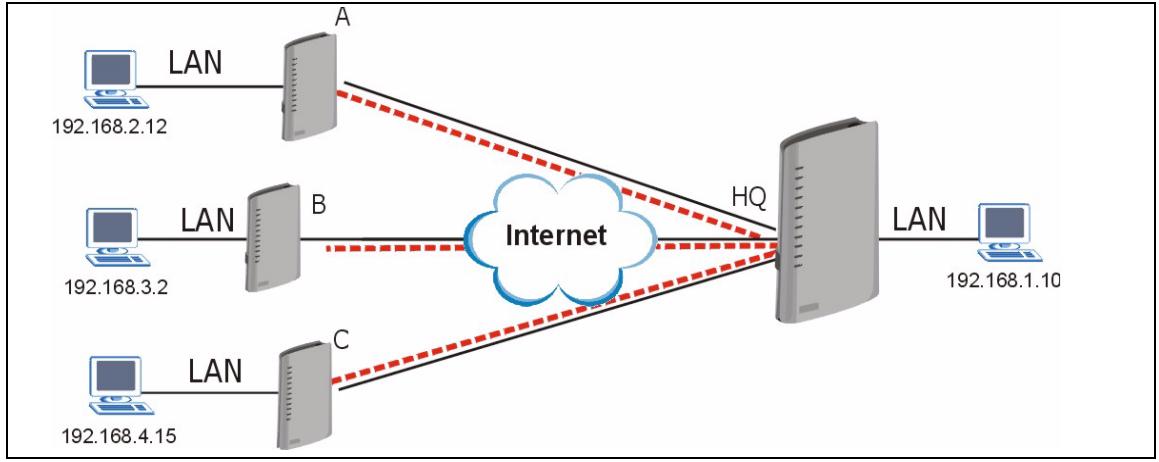
Figure 131 Telecommuters Using Unique VPN Rules Example
Table 93 Telecommuters Using Unique VPN Rules Example
| TELECOMMUTERS | HEADQUARTERS |
| All Telecommuter Rules: | All Headquarters Rules: |
| My IP Address 0.0.0.0 | My IP Address: bigcompanyhq.com |
| Secure Gateway Address: bigcompanyhq.com | Local IP Address: 192.168.1.10 |
| Remote IP Address: 192.168.1.10 | Local ID Type: E-mail |
| Peer ID Type: E-mail | Local ID Content: bob@bigcompanyhq.com |
| Peer ID Content: bob@bigcompanyhq.com | |
| Telecommuter A (telecommutera.dydns.org) | Headquarters ZyXEL Device Rule 1: |
| Local ID Type: IP | Peer ID Type: IP |
| Local ID Content: 192.168.2.12 | Peer ID Content: 192.168.2.12 |
| Local IP Address: 192.168.2.12 | Secure Gateway Address: telecommuter1.com |
| Remote Address 192.168.2.12 | |
| Telecommuter B (telecommuterb.dydns.org) | Headquarters ZyXEL Device Rule 2: |
| Local ID Type: DNS | Peer ID Type: DNS |
| Local ID Content: telecommuterb.com | Peer ID Content: telecommuterb.com |
| Local IP Address: 192.168.3.2 | Secure Gateway Address: telecommuterb.com |
| Remote Address 192.168.3.2 | |
| Telecommuter C (telecommuterc.dydns.org) | Headquarters ZyXEL Device Rule 3: |
| Local ID Type: E-mail | Peer ID Type: E-mail |
| Local ID Content: myVPN@myplace.com | Peer ID Content: myVPN@myplace.com |
| Local IP Address: 192.168.4.15 | Secure Gateway Address: telecommuterc.com |
| Remote Address 192.168.4.15 |
17.19 VPN and Remote Management
If a VPN tunnel uses Telnet, FTP, WWW, then you should configure remote management (Remote Management) to allow access for that service.
CHAPTER 18 Static Route
This chapter shows you how to configure static routes for your ZyXEL Device.
18.1 Static Route
Each remote node specifies only the network to which the gateway is directly connected, and the ZyXEL Device has no knowledge of the networks beyond. For instance, the ZyXEL Device knows about network N2 in the following figure through remote node Router 1. However, the ZyXEL Device is unable to route a packet to network N3 because it doesn't know that there is a route through the same remote node Router 1 (via gateway Router 2). The static routes are for you to tell the ZyXEL Device about the networks beyond the remote nodes.
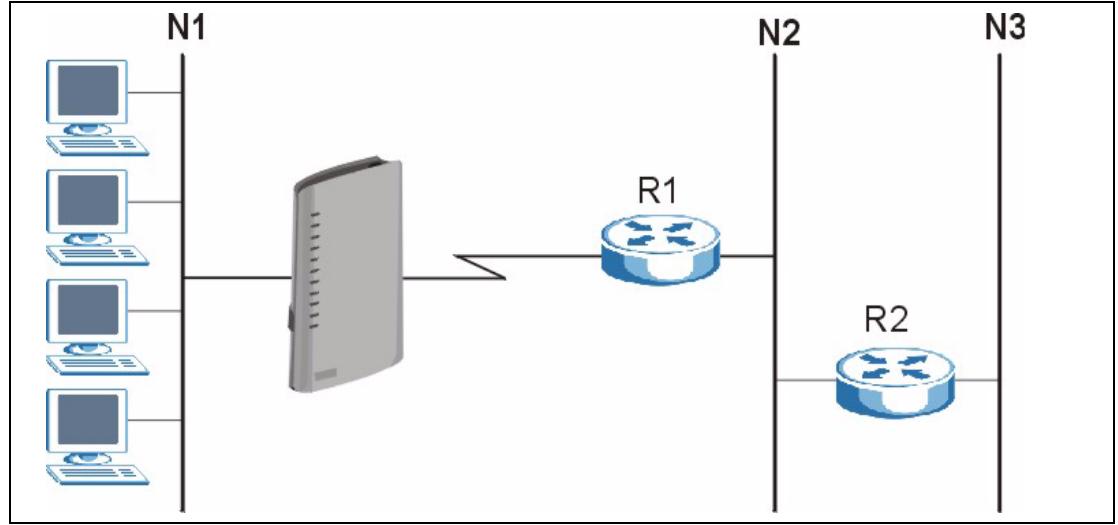
Figure 132 Example of Static Routing Topology
18.2 Configuring Static Route
Click Advanced > Static Route to open the Static Route screen.
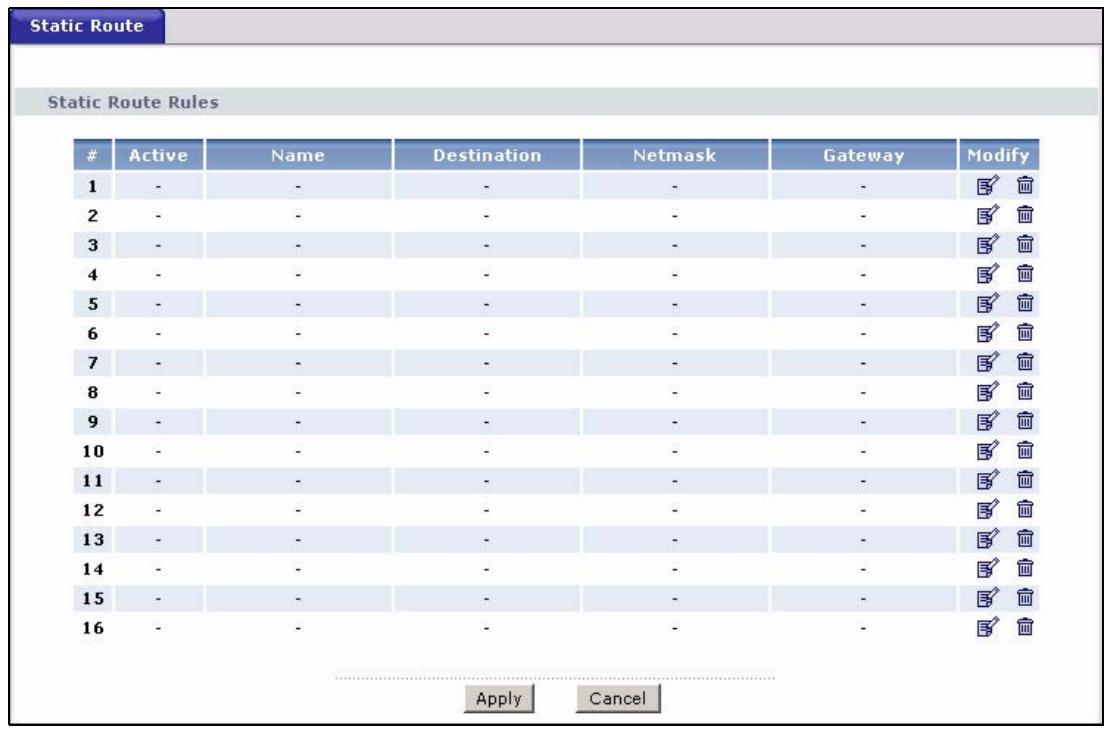
Figure 133 Static Route
The following table describes the labels in this screen.
Table 94 Static Route
| LABEL | DESCRIPTION |
| # | This is the number of an individual static route. |
| Active | This field shows whether this static route is active (Yes) or not (No). |
| Name | This is the name that describes or identifies this route. |
| Destination | This parameter specifies the IP network address of the final destination. Routing is always based on network number. |
| Netmask | This parameter specifies the IP network subnet mask of the final destination. |
| Gateway | This is the IP address of the gateway. The gateway is a router or switch on the same network segment as the device's LAN or WAN port. The gateway helps forward packets to their destinations. |
| Modify | Click the edit icon to go to the screen where you can set up a static route on the ZyXEL Device. Click the delete icon to remove a static route from the ZyXEL Device. A window displays asking you to confirm that you want to delete the route. |
| Apply | Click this to apply your changes to the ZyXEL Device. |
| Cancel | Click this to return to the previously saved configuration. |
18.2.1 Static Route Edit
Select a static route index number and click Edit. The screen shown next appears. Use this screen to configure the required information for a static route.
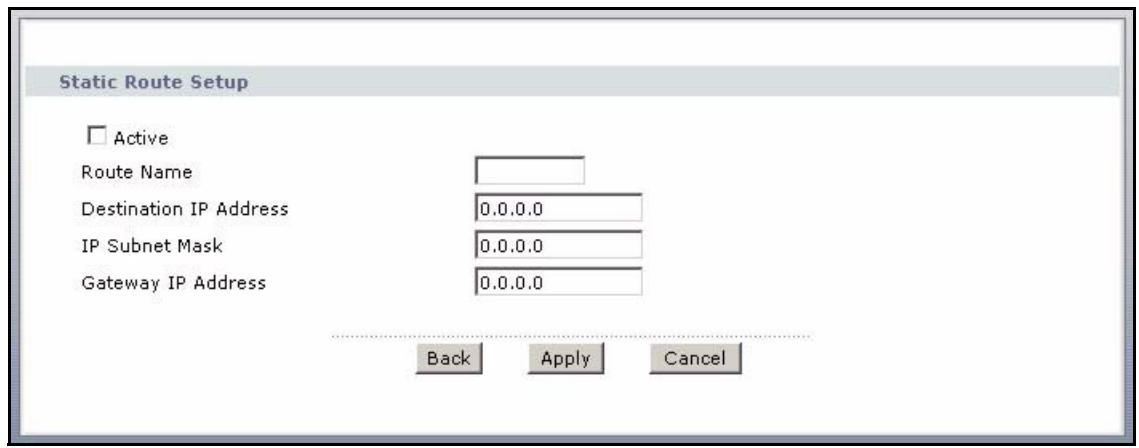
Figure 134 Static Route Edit
The following table describes the labels in this screen.
Table 95 Static Route Edit
| LABEL | DESCRIPTION |
| Active | This field allows you to activate/deactivate this static route. |
| Route Name | Enter the name of the IP static route. Leave this field blank to delete this static route. |
| Destination IP Address | This parameter specifies the IP network address of the final destination. Routing is always based on network number. If you need to specify a route to a single host, use a subnet mask of 255.255.255.255 in the subnet mask field to force the network number to be identical to the host ID. |
| IP Subnet Mask | Enter the IP subnet mask here. |
| Gateway IP Address | Enter the IP address of the gateway. The gateway is a router or switch on the same network segment as the device's LAN or WAN port. The gateway helps forward packets to their destinations. |
| Back | Click Back to return to the previous screen without saving. |
| Apply | Click Apply to save your changes back to the ZyXEL Device. |
| Cancel | Click Cancel to begin configuring this screen afresh. |
CHAPTER 19
Bandwidth Management
This chapter contains information about configuring bandwidth management, editing rules and viewing the ZyXEL Device's bandwidth management logs.
19.1 Bandwidth Management Overview
ZyXEL's Bandwidth Management allows you to specify bandwidth management rules based on an application and/or subnet. You can allocate specific amounts of bandwidth capacity (bandwidth budgets) to different bandwidth rules.
The ZyXEL Device applies bandwidth management to traffic that it forwards out through an interface. The ZyXEL Device does not control the bandwidth of traffic that comes into an interface.
Bandwidth management applies to all traffic flowing out of the router, regardless of the traffic's source.
Traffic redirect or IP alias may cause LAN-to-LAN traffic to pass through the ZyXEL Device and be managed by bandwidth management.
- The sum of the bandwidth allotments that apply to the WAN interface (LAN to WAN, WLAN to WAN) must be less than or equal to the WAN speed that you configure in the Bandwidth Management Summary screen.
- The sum of the bandwidth allotments that apply to the LAN port (WAN to LAN, WLAN to LAN) must be less than or equal to the LAN speed that you configure in the Bandwidth Management Summary screen.
- The sum of the bandwidth allotments that apply to the WLAN port (LAN to WLAN, WAN to WLAN) must be less than or equal to the WLAN speed that you configure in the Bandwidth Management Summary screen.
19.2 Application-based Bandwidth Management
You can create bandwidth classes based on individual applications (like VoIP, Web, FTP, E-mail and Video for example).
19.3 Subnet-based Bandwidth Management
You can create bandwidth classes based on subnets.
The following figure shows LAN subnets. You could configure one bandwidth class for subnet A and another for subnet B.
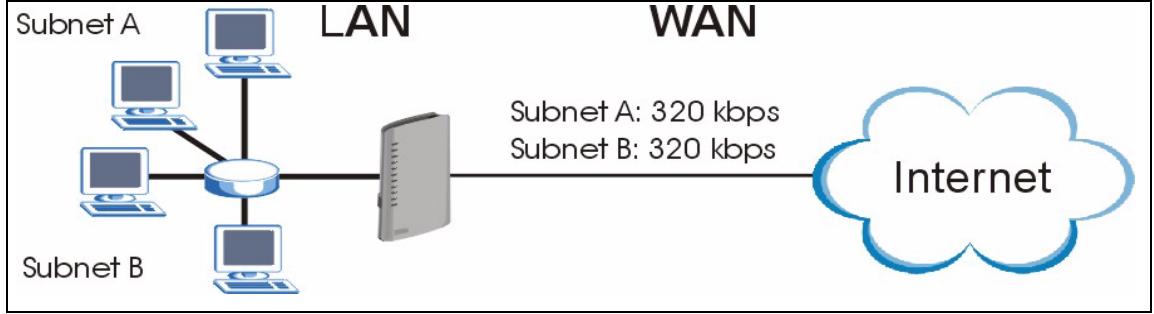
Figure 135 Subnet-based Bandwidth Management Example
19.4 Application and Subnet-based Bandwidth Management
You could also create bandwidth classes based on a combination of a subnet and an application. The following example table shows bandwidth allocations for application specific traffic from separate LAN subnets.
Table 96 Application and Subnet-based Bandwidth Management Example
| TRAFFIC TYPE | FROM SUBNET A | FROM SUBNET B |
| VoIP | 64 Kbps | 64 Kbps |
| Web | 64 Kbps | 64 Kbps |
| FTP | 64 Kbps | 64 Kbps |
| 64 Kbps | 64 Kbps | |
| Video | 64 Kbps | 64 Kbps |
19.5 Scheduler
The scheduler divides up an interface's bandwidth among the bandwidth classes. The ZyXEL Device has two types of scheduler: fairness-based and priority-based.
19.5.1 Priority-based Scheduler
With the priority-based scheduler, the ZyXEL Device forwards traffic from bandwidth classes according to the priorities that you assign to the bandwidth classes. The larger a bandwidth class's priority number is, the higher the priority. Assign real-time applications (like those using audio or video) a higher priority number to provide smoother operation.
19.5.2 Fairness-based Scheduler
The ZyXEL Device divides bandwidth equally among bandwidth classes when using the fairness-based scheduler; thus preventing one bandwidth class from using all of the interface's bandwidth.
19.6 Maximize Bandwidth Usage
The maximize bandwidth usage option (see Figure 136 on page 258) allows the ZyXEL Device to divide up any available bandwidth on the interface (including unallocated bandwidth and any allocated bandwidth that a class is not using) among the bandwidth classes that require more bandwidth.
When you enable maximize bandwidth usage, the ZyXEL Device first makes sure that each bandwidth class gets up to its bandwidth allotment. Next, the ZyXEL Device divides up an interface's available bandwidth (bandwidth that is unbudgeted or unused by the classes) depending on how many bandwidth classes require more bandwidth and on their priority levels. When only one class requires more bandwidth, the ZyXEL Device gives extra bandwidth to that class.
When multiple classes require more bandwidth, the ZyXEL Device gives the highest priority classes the available bandwidth first (as much as they require, if there is enough available bandwidth), and then to lower priority classes if there is still bandwidth available. The ZyXEL Device distributes the available bandwidth equally among classes with the same priority level.
19.6.1 Reserving Bandwidth for Non-Bandwidth Class Traffic
Do the following to configure the ZyXEL Device to allow bandwidth for traffic that is not defined in a bandwidth filter.
1 Do not enable the interface's Maximize Bandwidth Usage option.
2 Leave some of the interface's bandwidth unbudgeted. Make sure that the interface's root class has more bandwidth than the sum of the bandwidths of the interface's bandwidth management rules.
19.6.2 Maximize Bandwidth Usage Example
Here is an example of a ZyXEL Device that has maximize bandwidth usage enabled on an interface. The following table shows each bandwidth class's bandwidth budget. The classes are set up based on subnets. The interface is set to 10240 kbps. Each subnet is allocated 2048 kbps. The unbudgeted 2048 kbps allows traffic not defined in any of the bandwidth filters to go out when you do not select the maximize bandwidth option.
Table 97 Maximize Bandwidth Usage Example
| BANDWIDTH CLASSES AND ALLOTMENTS | |
| Root Class: 10240 kbps | Administration: 2048 kbps |
| Sales: 2048 kbps | |
| Marketing: 2048 kbps | |
| Research: 2048 kbps | |
The ZyXEL Device divides up the unbudgeted 2048 kbps among the classes that require more bandwidth. If the administration department only uses 1024 kbps of the budgeted 2048 kbps, the ZyXEL Device also divides the remaining 1024 kbps among the classes that require more bandwidth. Therefore, the ZyXEL Device divides a total of 3072 kbps of unbudgeted and unused bandwidth among the classes that require more bandwidth.
19.6.2.1 Priority-based Allotment of Unused and Unbudgeted Bandwidth
The following table shows the priorities of the bandwidth classes and the amount of bandwidth that each class gets.
Table 98 Priority-based Allotment of Unused and Unbudgeted Bandwidth Example
| BANDWIDTH CLASSES, PRIORITIES AND ALLOTMENTS | |
| Root Class: 10240 kbps | Administration: Priority 4, 1024 kbps |
| Sales: Priority 6, 3584 kbps | |
| Marketing: Priority 6, 3584 kbps | |
| Research: Priority 5, 2048 kbps | |
Suppose that all of the classes except for the administration class need more bandwidth.
- Each class gets up to its budgeted bandwidth. The administration class only uses 1024 kbps of its budgeted 2048 kbps.
-
The sales and marketing are first to get extra bandwidth because they have the highest priority (6). If they each require 1536 kbps or more of extra bandwidth, the ZyXEL Device divides the total 3072 kbps total of unbudgeted and unused bandwidth equally between the sales and marketing departments (1536 kbps extra to each for a total of 3584 kbps for each) because they both have the highest priority level.
-
Research requires more bandwidth but only gets its budgeted 2048 kbps because all of the unbudgeted and unused bandwidth goes to the higher priority sales and marketing classes.
19.6.2.2 Fairness-based Allotment of Unused and Unbudgeted Bandwidth
The following table shows the amount of bandwidth that each class gets.
Table 99 Fairness-based Allotment of Unused and Unbudgeted Bandwidth Example
| BANDWIDTH CLASSES AND ALLOTMENTS | |
| Root Class: 10240 kbps | Administration: 1024 kbps |
| Sales: 3072 kbps | |
| Marketing: 3072 kbps | |
| Research: 3072 kbps | |
Suppose that all of the classes except for the administration class need more bandwidth.
- Each class gets up to its budgeted bandwidth. The administration class only uses 1024 kbps of its budgeted 2048 kbps.
- The ZyXEL Device divides the total 3072 kbps total of unbudgeted and unused bandwidth equally among the other classes. 1024 kbps extra goes to each so the other classes each get a total of 3072 kbps.
19.6.3 Bandwidth Management Priorities
Traffic with a higher priority gets through faster while traffic with a lower priority is dropped if the network is congested. The following table describes the priorities that you can apply to traffic that the ZyXEL Device forwards out through an interface.
Table 100 Bandwidth Management Priorities
| PRIORITY | DESCRIPTION |
| High | Typically used for voice traffic or video that is especially sensitive to jitter (jitter is the variations in delay). |
| Mid | Typically used for “excellent effort” or better than best effort and would include important business traffic that can tolerate some delay. |
| Low | This is typically used for non-critical “background” traffic such as bulk transfers that are allowed but that should not affect other applications and users. |
19.7 Configuring Summary
Click Advanced > Bandwidth MGMT to open the screen as shown next.
Enable bandwidth management on an interface and set the maximum allowed bandwidth for that interface.
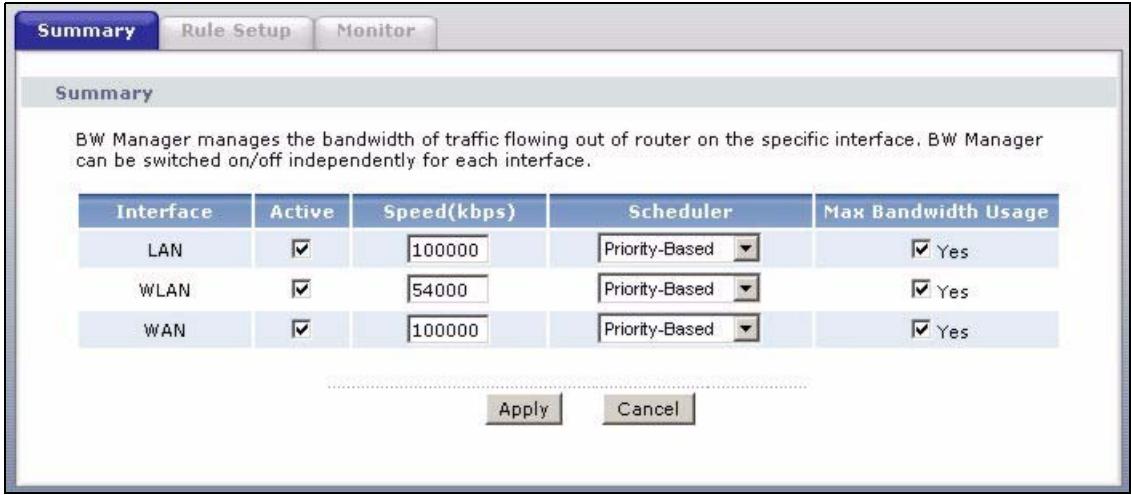
Figure 136 Bandwidth Management: Summary
The following table describes the labels in this screen.
Table 101 Media Bandwidth Management: Summary
| LABEL | DESCRIPTION |
| Interface | These read-only labels represent the physical interfaces. Select an interface's check box to enable bandwidth management on that interface. Bandwidth management applies to all traffic flowing out of the router through the interface, regardless of the traffic's source.Traffic redirect or IP alias may cause LAN-to-LAN traffic to pass through the ZyXEL Device and be managed by bandwidth management. |
| Active | Select an interface's check box to enable bandwidth management on that interface. |
| Speed (kbps) | Enter the amount of bandwidth for this interface that you want to allocate using bandwidth management.This appears as the bandwidth budget of the interface's root class. The recommendation is to set this speed to match the interface's actual transmission speed. For example, set the WAN interface speed to 1000 kbps if your Internet connection has an upstream transmission speed of 1 Mbps.If this number is higher than the interface's actual transmission speed, and you configure bandwidth rules for all of the bandwidth, higher priority traffic could use all of the bandwidth so lower priority traffic does not get through.Note: Unless you enable Max Bandwidth Usage, the ZyXEL Device only uses up to the amount of bandwidth that you configure here.The ZyXEL Device does not use any more bandwidth for the interface's connections, even if the interface has more outgoing bandwidth. |
| Scheduler | Select either Priority-Based or Fairness-Based from the drop-down menu to control the traffic flow.Select Priority-Based to give preference to bandwidth classes with higher priorities SELECT Fairness-Based to treat all bandwidth classes equally. |
| Max Bandwidth Usage | Select this check box to have the ZyXEL Device divide up all of the interface's unallocated and/or unused bandwidth among the bandwidth classes that require bandwidth. Do not select this if you want to reserve bandwidth for traffic that does not match a bandwidth class or you want to limit the transmission speed of this interface (see the Speed field description). |
| Apply | Click Apply to save your settings back to the ZyXEL Device. |
| Cancel | Click Cancel to begin configuring this screen afresh. |
19.8 Bandwidth Management Rule Setup
You must use the Bandwidth Management Summary screen to enable bandwidth management on an interface before you can configure rules for that interface.
Click Advanced > Bandwidth MGMT > Rule Setup to open the following screen.
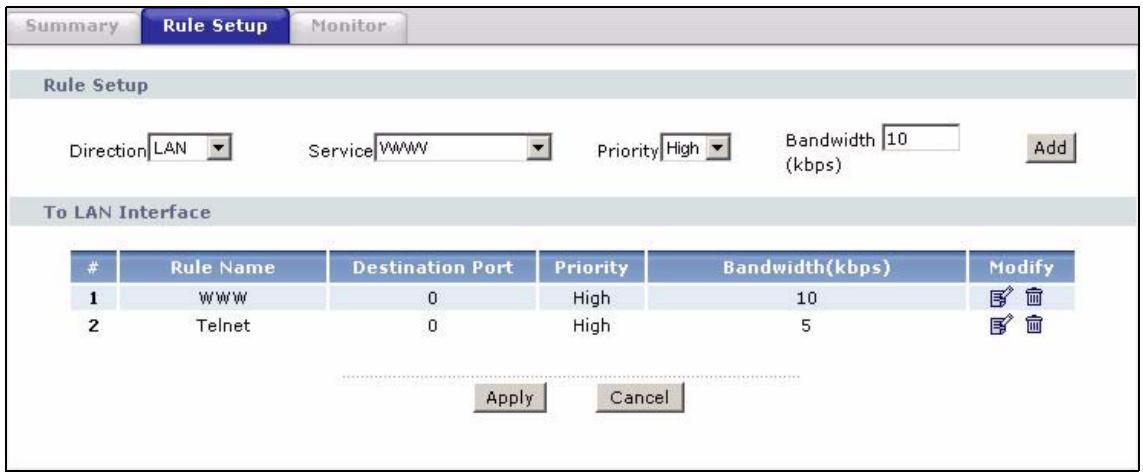
Figure 137 Bandwidth Management: Rule Setup
The following table describes the labels in this screen.
Table 102 Bandwidth Management: Rule Setup
| LABEL | DESCRIPTION |
| Direction | Select LAN to apply bandwidth management to traffic that the ZyXEL Device forwards to the LAN. Select WAN to apply bandwidth management to traffic that the ZyXEL Device forwards to the WAN. Select WLAN to apply bandwidth management to traffic that the ZyXEL Device forwards to the WLAN. |
| Service | Select a service for your rule or you can select User define to go to the screen where you can define your own. |
| Priority | Select a priority from the drop down list box. Choose High, Mid or Low. |
| Bandwidth (kbps) | Specify the maximum bandwidth allowed for the rule in kbps. The recommendation is a setting between 20 kbps and 20000 kbps for an individual rule. If you want to leave some bandwidth for traffic that does not match a bandwidth filter, make sure that the interface's root class has more bandwidth than the sum of the bandwidths of the interface's bandwidth management rules. |
| Add | Click this button to save your rule. It displays in the following table. |
| # | This is the number of an individual bandwidth management rule. |
| Rule Name | This is the name of the rule. |
| Destination Port | This is the port number of the destination. 0 means any destination port. |
| Priority | This is the priority of this rule. |
| Bandwidth (kbps) | This is the maximum bandwidth allowed for the rule in kbps. |
| Modify | Click the Edit icon to go to the screen where you can edit the rule. Click the Remove icon to delete an existing rule. |
| Apply | Click Apply to save your changes back to the ZyXEL Device. |
| Cancel | Click Cancel to begin configuring this screen afresh. |
19.8.1 Rule Configuration
Click the Edit icon or User define in the Service field to configure a bandwidth management rule. Use bandwidth rules to allocate specific amounts of bandwidth capacity (bandwidth budgets) to specific applications and/or subnets.
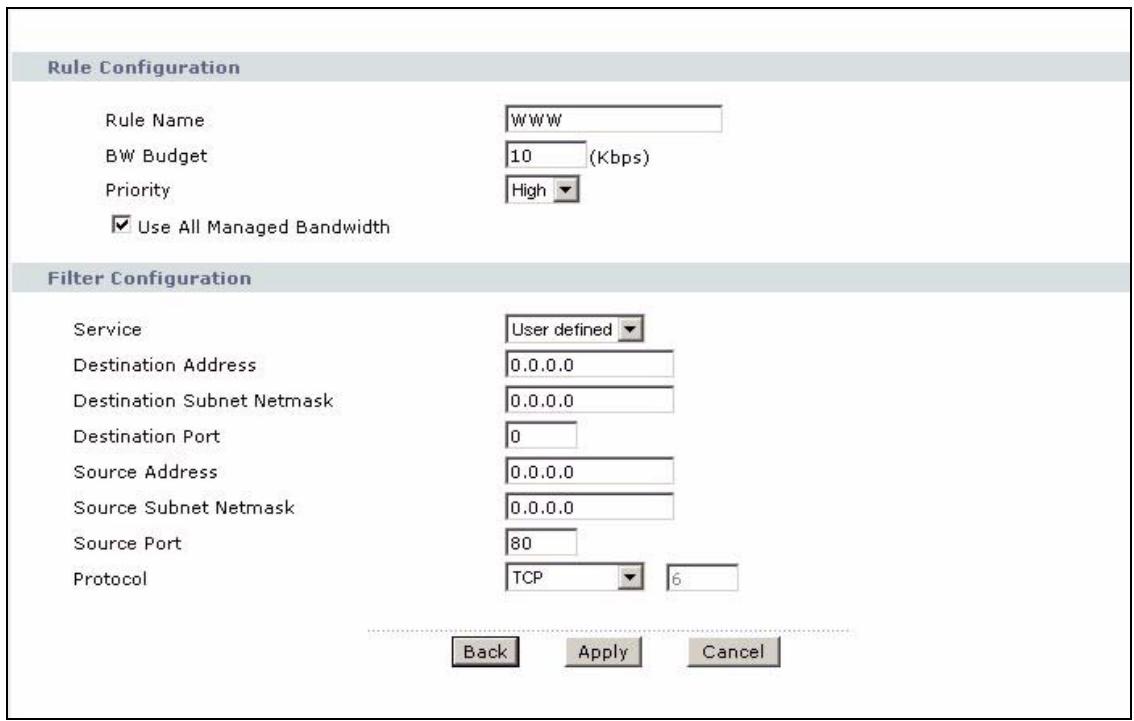
Figure 138 Bandwidth Management Rule Configuration
See Appendix F on page 371 for a list of commonly-used services. The following table describes the labels in this screen.
Table 103 Bandwidth Management Rule Configuration
| LABEL | DESCRIPTION |
| Rule Configuration | |
| Rule Name | Use the auto-generated name or enter a descriptive name of up to 20 alphanumeric characters, including spaces. |
| BW Budget | Specify the maximum bandwidth allowed for the rule in kbps. The recommendation is a setting between 20 kbps and 20000 kbps for an individual rule. |
| Priority | Select a priority from the drop down list box. Choose High, Mid or Low. |
| Use All Managed Bandwidth | Select this option to allow a rule to borrow unused bandwidth on the interface. Bandwidth borrowing is governed by the priority of the rules. That is, a rule with the highest priority is the first to borrow bandwidth. Do not select this if you want to leave bandwidth available for other traffic types or if you want to restrict the amount of bandwidth that can be used for the traffic that matches this rule. |
| Filter Configuration | |
| Service | This field simplifies bandwidth class configuration by allowing you to select a predefined application. When you select a predefined application, you do not configure the rest of the bandwidth filter fields (other than enabling or disabling the filter). SIP (Session Initiation Protocol) is a signaling protocol used in Internet telephony, instant messaging and other VoIP (Voice over IP) applications. Select SIP from the drop-down list box to configure this bandwidth filter for traffic that uses SIP. File Transfer Protocol (FTP) is an Internet file transfer service that operates on the Internet and over TCP/IP networks. A system running the FTP server accepts commands from a system running an FTP client. The service allows users to send commands to the server for uploading and downloading files. Select FTP from the drop-down list box to configure this bandwidth filter for FTP traffic. H.323 is a standard teleconferencing protocol suite that provides audio, data and video conferencing. It allows for real-time point-to-point and multipoint communication between client computers over a packet-based network that does not provide a guaranteed quality of service. Select H.323 from the drop-down list box to configure this bandwidth filter for traffic that uses H.323. Select User defined from the drop-down list box if you do not want to use a predefined application for the bandwidth class. When you select User defined, you need to configure at least one of the following fields (other than the Subnet Mask fields which you only enter if you also enter a corresponding destination or source IP address). |
| Destination Address | Enter the destination IP address in dotted decimal notation. |
| Destination Subnet Netmask | Enter the destination subnet mask. This field is N/A if you do not specify a Destination Address. Refer to the appendix for more information on IP subnetting. |
| Destination Port | Enter the port number of the destination. See Appendix 31 on page 371 for some common services and port numbers. A blank destination IP address means any destination IP address. |
| Source Address | Enter the source IP address in dotted decimal notation. A blank source IP address means any source IP address. |
| Source Subnet Netmask | Enter the destination subnet mask. This field is N/A if you do not specify a Source Address. Refer to the appendix for more information on IP subnetting. A blank source port means any source port number. |
| Source Port | Enter the port number of the source. See Appendix 31 on page 371 for some common services and port numbers. |
| Protocol | Select the protocol (TCP or UDP) or select User defined and enter the protocol (service type) number. 0 means any protocol number. |
| Back | Click Back to go to the previous screen. |
| Apply | Click Apply to save your changes back to the ZyXEL Device. |
| Cancel | Click Cancel to begin configuring this screen afresh. |
19.9 Bandwidth Monitor
To view the ZyXEL Device's bandwidth usage, click Advanced > Bandwidth MGMT > Monitor. The screen appears as shown. Select an interface from the drop-down list box to view the bandwidth usage of its bandwidth rules. The gray section of the bar represents the percentage of unused bandwidth and the blue color represents the percentage of bandwidth in use.
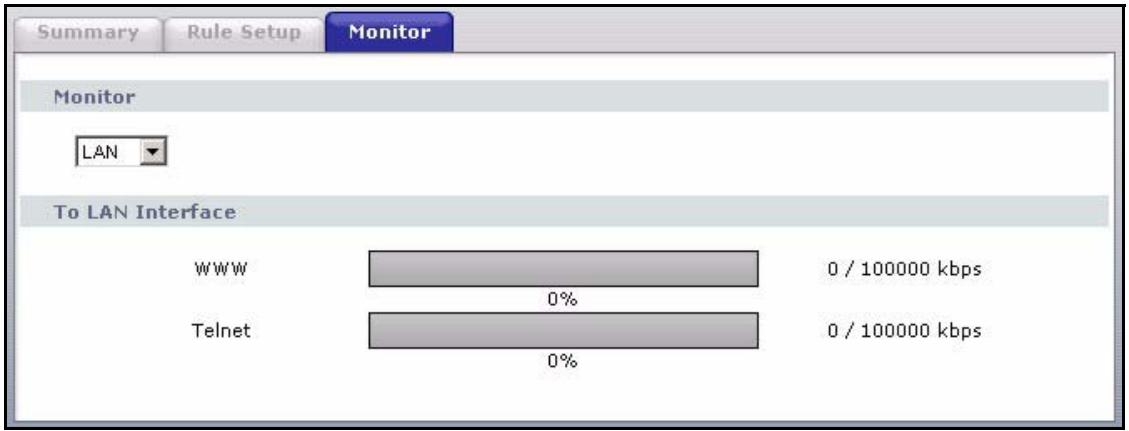
Figure 139 Bandwidth Management: Monitor
CHAPTER 20 Dynamic DNS Setup
This chapter discusses how to configure your ZyXEL Device to use Dynamic DNS.
20.1 Dynamic DNS Overview
Dynamic DNS allows you to update your current dynamic IP address with one or many dynamic DNS services so that anyone can contact you (in NetMeeting, CU-SeeMe, etc.). You can also access your FTP server or Web site on your own computer using a domain name (for instance myhost.dhs.org, where myhost is a name of your choice) that will never change instead of using an IP address that changes each time you reconnect. Your friends or relatives will always be able to call you even if they don't know your IP address.
First of all, you need to have registered a dynamic DNS account with www.dyndns.org. This is for people with a dynamic IP from their ISP or DHCP server that would still like to have a domain name. The Dynamic DNS service provider will give you a password or key.
20.1.1 DYNDNS Wildcard
Enabling the wildcard feature for your host causes *.yourhost.dyndns.org to be aliased to the same IP address as yourhost.dyndns.org. This feature is useful if you want to be able to use, for example, www.yourhost.dyndns.org and still reach your hostname.
If you have a private WAN IP address, then you cannot use Dynamic DNS.
See Section 20.2 on page 263 for configuration instruction.
20.2 Configuring Dynamic DNS
To change your ZyXEL Device's DDNS, click Advanced > Dynamic DNS. The screen appears as shown.
See Section 20.1 on page 263 for more information.
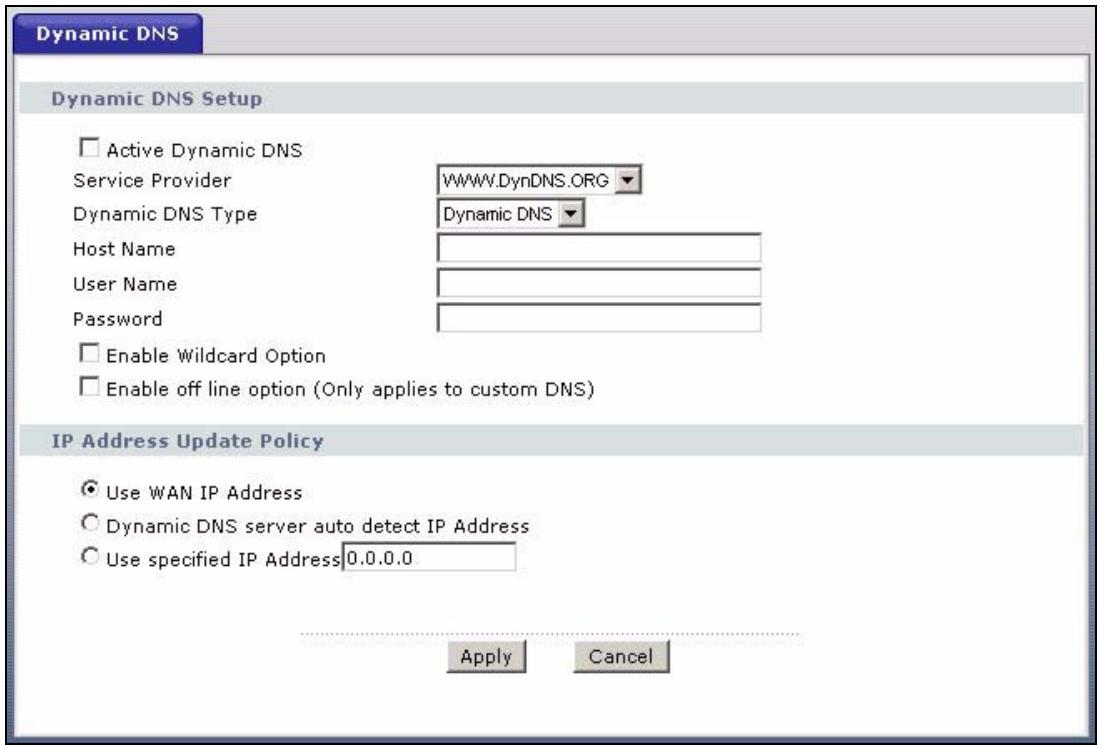
Figure 140 Dynamic DNS
The following table describes the fields in this screen.
Table 104 Dynamic DNS
| LABEL | DESCRIPTION |
| Dynamic DNS Setup | |
| Active Dynamic DNS | Select this check box to use dynamic DNS. |
| Service Provider | This is the name of your Dynamic DNS service provider. |
| Dynamic DNS Type | Select the type of service that you are registered for from your Dynamic DNS service provider. |
| Host Name | Type the domain name assigned to your ZyXEL Device by your Dynamic DNS provider. You can specify up to two host names in the field separated by a comma ("","). |
| User Name | Type your user name. |
| Password | Type the password assigned to you. |
| Enable Wildcard Option | Select the check box to enable DynDNS Wildcard. |
| Enable off line option | This option is available when CustomDNS is selected in the DDNS Type field. Check with your Dynamic DNS service provider to have traffic redirected to a URL (that you can specify) while you are off line. |
| IP Address Update Policy | |
| Use WAN IP Address | Select this option to update the IP address of the host name(s) to the WAN IP address. |
| Dynamic DNS server auto detect IP Address | Select this option only when there are one or more NAT routers between the ZyXEL Device and the DDNS server. This feature has the DDNS server automatically detect and use the IP address of the NAT router that has a public IP address. Note: The DDNS server may not be able to detect the proper IP address if there is an HTTP proxy server between the ZyXEL Device and the DDNS server. |
| Use specified IP Address | Type the IP address of the host name(s). Use this if you have a static IP address. |
| Apply | Click Apply to save your changes back to the ZyXEL Device. |
| Cancel | Click Cancel to begin configuring this screen afresh. |
CHAPTER 21
Remote Management
Configuration
This chapter provides information on configuring remote management.
21.1 Remote Management Overview
Remote management allows you to determine which services/protocols can access which ZyXEL Device interface (if any) from which computers.
Note: When you configure remote management to allow management from the WAN, you still need to configure a firewall rule to allow access.
You may manage your ZyXEL Device from a remote location via:
- Internet (WAN only)
- ALL (LAN and WAN)
LAN only, - Neither (Disable).
Note: When you choose WAN only or LAN & WAN, you still need to configure a firewall rule to allow access.
To disable remote management of a service, select Disable in the corresponding Access Status field.
You may only have one remote management session running at a time. The ZyXEL Device automatically disconnects a remote management session of lower priority when another remote management session of higher priority starts. The priorities for the different types of remote management sessions are as follows.
1 Telnet
2 HTTP
21.1.1 Remote Management Limitations
Remote management over LAN or WAN will not work when:
-
You have disabled that service in one of the remote management screens.
-
The IP address in the Secured Client IP field does not match the client IP address. If it does not match, the ZyXEL Device will disconnect the session immediately.
- There is already another remote management session with an equal or higher priority running. You may only have one remote management session running at one time.
- There is a firewall rule that blocks it.
21.1.2 Remote Management and NAT
When NAT is enabled:
- Use the ZyXEL Device's WAN IP address when configuring from the WAN.
- Use the ZyXEL Device's LAN IP address when configuring from the LAN.
21.1.3 System Timeout
There is a default system management idle timeout of five minutes (three hundred seconds). The ZyXEL Device automatically logs you out if the management session remains idle for longer than this timeout period. The management session does not time out when a statistics screen is polling.
21.2 WWW
To change your ZyXEL Device's World Wide Web settings, click Advanced > Remote MGMT to display the WWW screen.
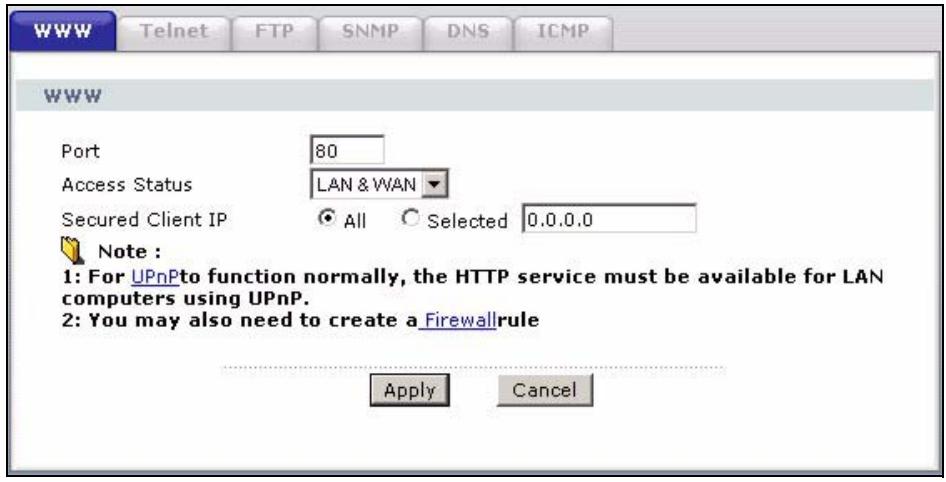
Figure 141 Remote Management: WWW
The following table describes the labels in this screen.
Table 105 Remote Management: WWW
| LABEL | DESCRIPTION |
| Port | You may change the server port number for a service if needed, however you must use the same port number in order to use that service for remote management. |
| Access Status | Select the interface(s) through which a computer may access the ZyXEL Device using this service. |
| Secured Client IP | A secured client is a “trusted” computer that is allowed to communicate with the ZyXEL Device using this service. Select All to allow any computer to access the ZyXEL Device using this service. Choose Selected to just allow the computer with the IP address that you specify to access the ZyXEL Device using this service. |
| Apply | Click Apply to save your settings back to the ZyXEL Device. |
| Cancel | Click Cancel to begin configuring this screen afresh. |
21.3 Telnet
You can configure your ZyXEL Device for remote Telnet access as shown next. The administrator uses Telnet from a computer on a remote network to access the ZyXEL Device.
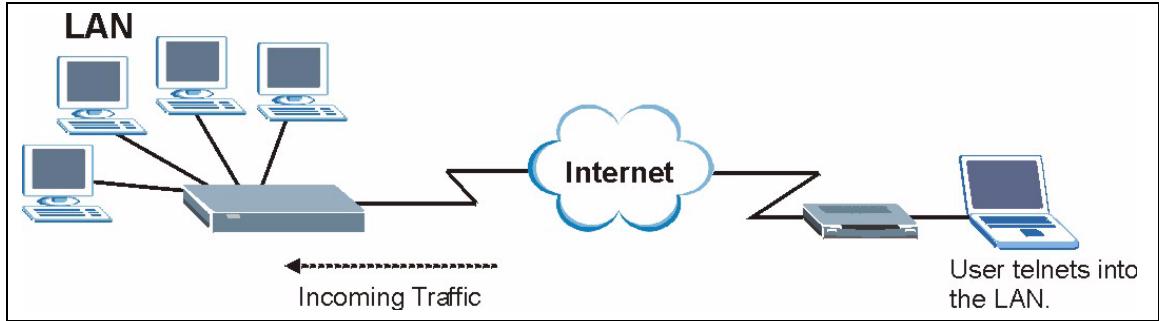
Figure 142 Telnet Configuration on a TCP/IP Network
21.4 Configuring Telnet
Click Advanced > Remote MGMT > Telnet tab to display the screen as shown.
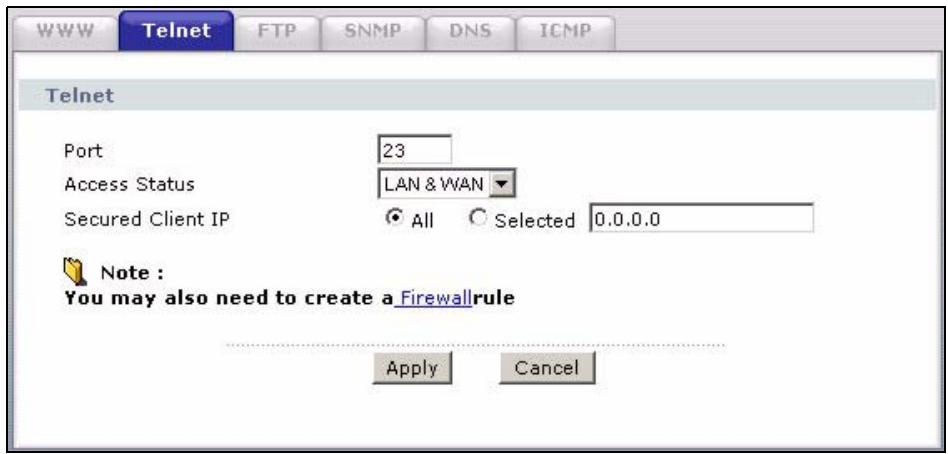
Figure 143 Remote Management: Telnet
The following table describes the labels in this screen.
Table 106 Remote Management: Telnet
| LABEL | DESCRIPTION |
| Port | You may change the server port number for a service if needed, however you must use the same port number in order to use that service for remote management. |
| Access Status | Select the interface(s) through which a computer may access the ZyXEL Device using this service. |
| Secured Client IP | A secured client is a “trusted” computer that is allowed to communicate with the ZyXEL Device using this service. Select All to allow any computer to access the ZyXEL Device using this service. Choose Selected to just allow the computer with the IP address that you specify to access the ZyXEL Device using this service. |
| Apply | Click Apply to save your customized settings and exit this screen. |
| Cancel | Click Cancel to begin configuring this screen afresh. |
21.5 Configuring FTP
You can upload and download the ZyXEL Device's firmware and configuration files using FTP, please see Section 25.7 on page 308 for details. To use this feature, your computer must have an FTP client.
To change your ZyXEL Device's FTP settings, click Advanced > Remote MGMT > FTP tab. The screen appears as shown.
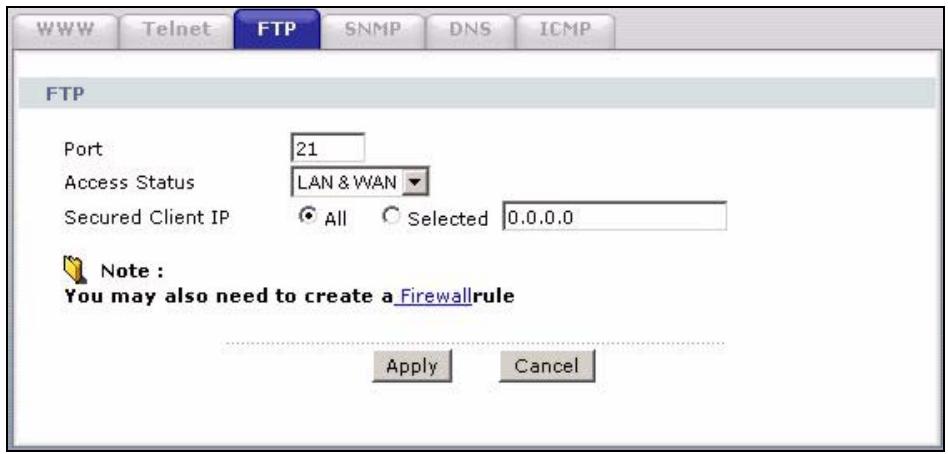
Figure 144 Remote Management: FTP
The following table describes the labels in this screen.
Table 107 Remote Management: FTP
| LABEL | DESCRIPTION |
| Port | You may change the server port number for a service if needed, however you must use the same port number in order to use that service for remote management. |
| Access Status | Select the interface(s) through which a computer may access the ZyXEL Device using this service. |
| Secured Client IP | A secured client is a “trusted” computer that is allowed to communicate with the ZyXEL Device using this service. Select All to allow any computer to access the ZyXEL Device using this service. Choose Selected to just allow the computer with the IP address that you specify to access the ZyXEL Device using this service. |
| Apply | Click Apply to save your customized settings and exit this screen. |
| Cancel | Click Cancel to begin configuring this screen afresh. |
21.6 SNMP
Simple Network Management Protocol (SNMP) is a protocol used for exchanging management information between network devices. SNMP is a member of the TCP/IP protocol suite. Your ZyXEL Device supports SNMP agent functionality, which allows a manager station to manage and monitor the ZyXEL Device through the network. The ZyXEL Device supports SNMP version one (SNMPv1) and version two (SNMPv2). The next figure illustrates an SNMP management operation.
Note: SNMP is only available if TCP/IP is configured.
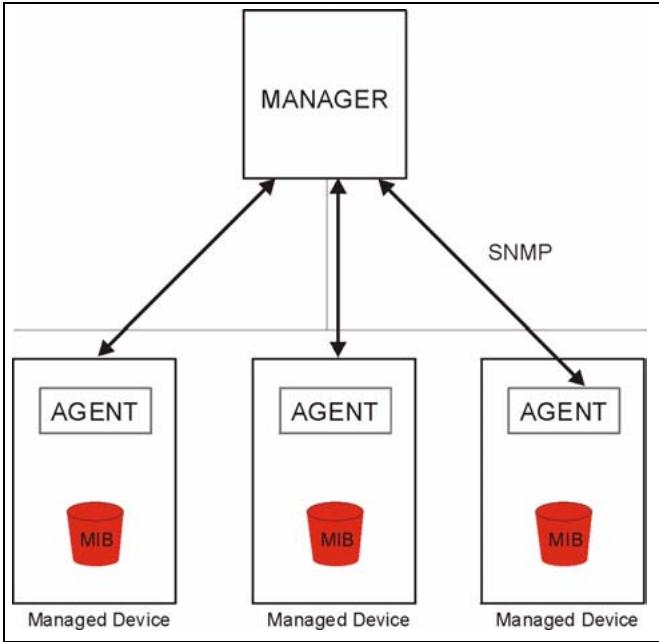
Figure 145 SNMP Management Model
An SNMP managed network consists of two main types of component: agents and a manager.
An agent is a management software module that resides in a managed device (the ZyXEL Device). An agent translates the local management information from the managed device into a form compatible with SNMP. The manager is the console through which network administrators perform network management functions. It executes applications that control and monitor managed devices.
The managed devices contain object variables/managed objects that define each piece of information to be collected about a device. Examples of variables include such as number of packets received, node port status etc. A Management Information Base (MIB) is a collection of managed objects. SNMP allows a manager and agents to communicate for the purpose of accessing these objects.
SNMP itself is a simple request/response protocol based on the manager/agent model. The manager issues a request and the agent returns responses using the following protocol operations:
- Get - Allows the manager to retrieve an object variable from the agent.
- GetNext - Allows the manager to retrieve the next object variable from a table or list within an agent. In SNMPv1, when a manager wants to retrieve all elements of a table from an agent, it initiates a Get operation, followed by a series of GetNext operations.
- Set - Allows the manager to set values for object variables within an agent.
- Trap - Used by the agent to inform the manager of some events.
21.6.1 Supported MIBs
The ZyXEL Device supports MIB II that is defined in RFC-1213 and RFC-1215. The focus of the MIBs is to let administrators collect statistical data and monitor status and performance.
21.6.2 SNMP Traps
The ZyXEL Device will send traps to the SNMP manager when any one of the following events occurs:
Table 108 SNMP Traps
| TRAP # | TRAP NAME | DESCRIPTION |
| 0 | coldStart (defined in RFC-1215) | A trap is sent after booting (power on). |
| 1 | warmStart (defined in RFC-1215) | A trap is sent after booting (software reboot). |
| 4 | authenticationFailure (defined in RFC-1215) | A trap is sent to the manager when receiving any SNMP get or set requirements with the wrong community (password). |
| 6 | whyReboot (defined in ZYXEL-MIB) | A trap is sent with the reason of restart before rebooting when the system is going to restart (warm start). |
| 6a | For intentional reboot: | A trap is sent with the message "System reboot by user!" if reboot is done intentionally, (for example, download new files, Cl command "sys reboot", etc.). |
| 6b | For fatal error: | A trap is sent with the message of the fatal code if the system reboots because of fatal errors. |
21.6.3 Configuring SNMP
To change your ZyXEL Device's SNMP settings, click Advanced > Remote MGMT > SNMP. The screen appears as shown.
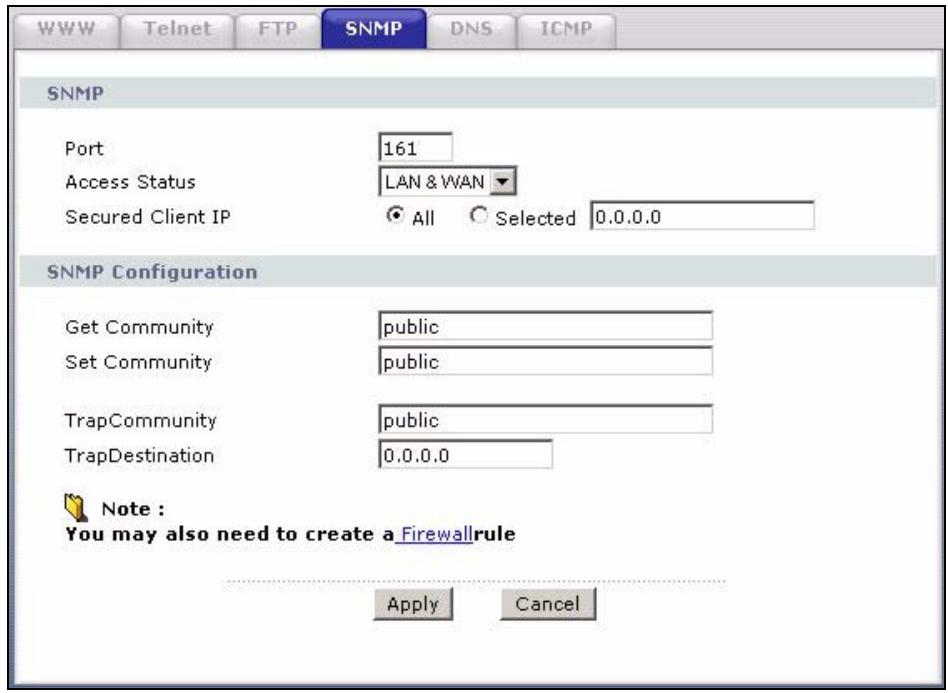
Figure 146 Remote Management: SNMP
The following table describes the labels in this screen.
Table 109 Remote Management: SNMP
| LABEL | DESCRIPTION |
| SNMP | |
| Port | You may change the server port number for a service if needed, however you must use the same port number in order to use that service for remote management. |
| Access Status | Select the interface(s) through which a computer may access the ZyXEL Device using this service. |
| Secured Client IP | A secured client is a “trusted” computer that is allowed to communicate with the ZyXEL Device using this service. Select All to allow any computer to access the ZyXEL Device using this service. Choose Selected to just allow the computer with the IP address that you specify to access the ZyXEL Device using this service. |
| SNMP Configuration | |
| Get Community | Enter the Get Community, which is the password for the incoming Get and GetNext requests from the management station. The default is public and allows all requests. |
| Set Community | Enter the Set community, which is the password for incoming Set requests from the management station. The default is public and allows all requests. |
| Trap | |
| Community | Type the trap community, which is the password sent with each trap to the SNMP manager. The default is public and allows all requests. |
| Destination | Type the IP address of the station to send your SNMP traps to. |
| Apply | Click Apply to save your customized settings and exit this screen. |
| Cancel | Click Cancel to begin configuring this screen afresh. |
21.7 Configuring DNS
Use DNS (Domain Name System) to map a domain name to its corresponding IP address and vice versa. Refer to Chapter 8 on page 107 for background information.
To change your ZyXEL Device's DNS settings, click Advanced > Remote MGMT > DNS. The screen appears as shown. Use this screen to set from which IP address the ZyXEL Device will accept DNS queries and on which interface it can send them your ZyXEL Device's DNS settings.
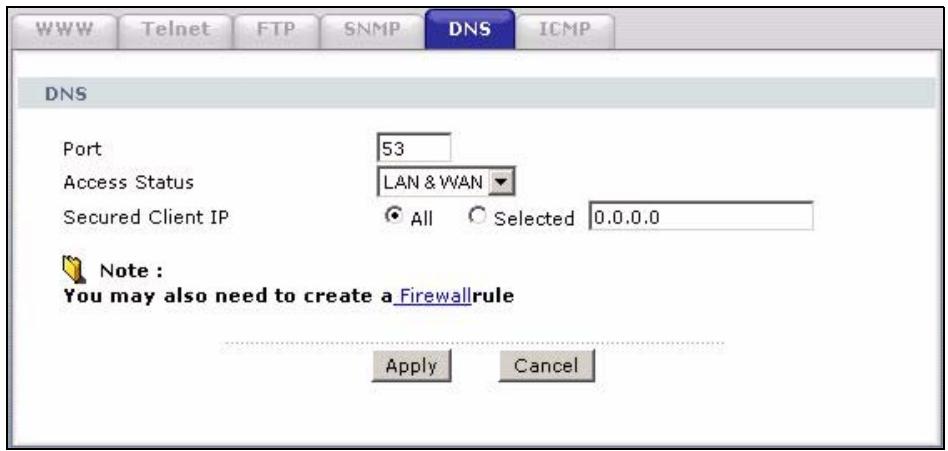
Figure 147 Remote Management: DNS
The following table describes the labels in this screen.
Table 110 Remote Management: DNS
| LABEL | DESCRIPTION |
| Port | The DNS service port number is 53 and cannot be changed here. |
| Access Status | Select the interface(s) through which a computer may send DNS queries to the ZyXEL Device. |
| Secured Client IP | A secured client is a “trusted” computer that is allowed to send DNS queries to the ZyXEL Device. Select All to allow any computer to send DNS queries to the ZyXEL Device. Choose Selected to just allow the computer with the IP address that you specify to send DNS queries to the ZyXEL Device. |
| Apply | Click Apply to save your customized settings and exit this screen. |
| Cancel | Click Cancel to begin configuring this screen afresh. |
21.8 Configuring ICMP
To change your ZyXEL Device's security settings, click Advanced > Remote MGMT > ICMP. The screen appears as shown.
If an outside user attempts to probe an unsupported port on your ZyXEL Device, an ICMP response packet is automatically returned. This allows the outside user to know the ZyXEL Device exists. Your ZyXEL Device supports anti-probing, which prevents the ICMP response packet from being sent. This keeps outsiders from discovering your ZyXEL Device when unsupported ports are probed.
Note: If you want your device to respond to pings and requests for unauthorized services, you may also need to configure the firewall anti probing settings to match.
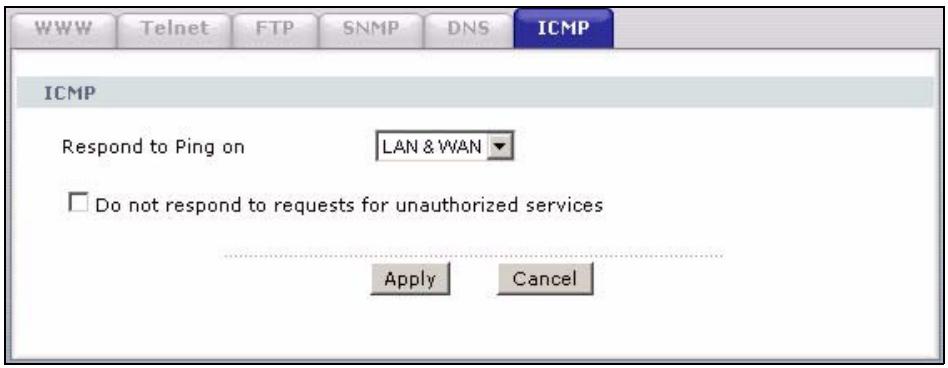
Figure 148 Remote Management:ICMP
The following table describes the labels in this screen.
Table 111 Remote Management: ICMP
| LABEL | DESCRIPTION |
| ICMP | Internet Control Message Protocol is a message control and error-reporting protocol between a host server and a gateway to the Internet. ICMP uses Internet Protocol (IP) datagrams, but the messages are processed by the TCP/IP software and directly apparent to the application user. |
| Respond to Ping on | The ZyXEL Device will not respond to any incoming Ping requests when Disable is selected. Select LAN to reply to incoming LAN Ping requests. Select WAN to reply to incoming WAN Ping requests. Otherwise select LAN & WAN to reply to both incoming LAN and WAN Ping requests. |
| Do not respond to requests for unauthorized services | Select this option to prevent hackers from finding the ZyXEL Device by probing for unused ports. If you select this option, the ZyXEL Device will not respond to port request(s) for unused ports, thus leaving the unused ports and the ZyXEL Device unseen. By default this option is not selected and the ZyXEL Device will reply with an ICMP Port Unreachable packet for a port probe on its unused UDP ports, and a TCP Reset packet for a port probe on its unused TCP ports.Note that the probing packets must first traverse the ZyXEL Device's firewall mechanism before reaching this anti-probing mechanism. Therefore if the firewall mechanism blocks a probing packet, the ZyXEL Device reacts based on the corresponding firewall policy to send a TCP reset packet for a blocked TCP packet or an ICMP port-unreachable packet for a blocked UDP packets or just drop the packets without sending a response packet. |
| Apply | Click Apply to save your customized settings and exit this screen. |
| Cancel | Click Cancel to begin configuring this screen afresh. |
CHAPTER 22 Universal Plug-and-Play (UPnP)
This chapter introduces the UPnP feature in the web configurator.
22.1 Introducing Universal Plug and Play
Universal Plug and Play (UPnP) is a distributed, open networking standard that uses TCP/IP for simple peer-to-peer network connectivity between devices. A UPnP device can dynamically join a network, obtain an IP address, convey its capabilities and learn about other devices on the network. In turn, a device can leave a network smoothly and automatically when it is no longer in use.
See Section 22.2.1 on page 278 for configuration instructions.
22.1.1 How do I know if I'm using UPnP?
UPnP hardware is identified as an icon in the Network Connections folder (Windows XP). Each UPnP compatible device installed on your network will appear as a separate icon. Selecting the icon of a UPnP device will allow you to access the information and properties of that device.
22.1.2 NAT Traversal
UPnP NAT traversal automates the process of allowing an application to operate through NAT. UPnP network devices can automatically configure network addressing, announce their presence in the network to other UPnP devices and enable exchange of simple product and service descriptions. NAT traversal allows the following:
- Dynamic port mapping
- Learning public IP addresses
- Assigning lease times to mappings
Windows Messenger is an example of an application that supports NAT traversal and UPnP.
See the NAT chapter for more information on NAT.
22.1.3 Cautions with UPnP
The automated nature of NAT traversal applications in establishing their own services and opening firewall ports may present network security issues. Network information and configuration may also be obtained and modified by users in some network environments.
When a UPnP device joins a network, it announces its presence with a multicast message. For security reasons, the ZyXEL Device allows multicast messages on the LAN only.
All UPnP-enabled devices may communicate freely with each other without additional configuration. Disable UPnP if this is not your intention.
22.2 UPnP and ZyXEL
ZyXEL has achieved UPnP certification from the Universal Plug and Play Forum UPnP™ Implementers Corp. (UIC). ZyXEL's UPnP implementation supports Internet Gateway Device (IGD) 1.0.
See the following sections for examples of installing and using UPnP.
22.2.1 Configuring UPnP
Click Advanced > UPnP to display the screen shown next.
See Section 22.1 on page 277 for more information.

Figure 149 Configuring UPnP
The following table describes the fields in this screen.
Table 112 Configuring UPnP
| LABEL | DESCRIPTION |
| Active the Universal Plug and Play (UPnP) Feature | Select this check box to activate UPnP. Be aware that anyone could use a UPnP application to open the web configurator's login screen without entering the ZyXEL Device's IP address (although you must still enter the password to access the web configurator). |
| Allow users to make configuration changes through UPnP | Select this check box to allow UPnP-enabled applications to automatically configure the ZyXEL Device so that they can communicate through the ZyXEL Device, for example by using NAT traversal, UPnP applications automatically reserve a NAT forwarding port in order to communicate with another UPnP enabled device; this eliminates the need to manually configure port forwarding for the UPnP enabled application. |
| Allow UPnP to pass through Firewall | Select this check box to allow traffic from UPnP-enabled applications to bypass the firewall.Clear this check box to have the firewall block all UPnP application packets (for example, MSN packets). |
| Apply | Click Apply to save the setting to the ZyXEL Device. |
| Cancel | Click Cancel to return to the previously saved settings. |
22.3 Installing UPnP in Windows Example
This section shows how to install UPnP in Windows Me and Windows XP.
Installing UPnP in Windows Me
Follow the steps below to install the UPnP in Windows Me.
1 Click Start and Control Panel. Double-click Add/Remove Programs.
2 Click on the Windows Setup tab and select Communication in the Components selection box. Click Details.
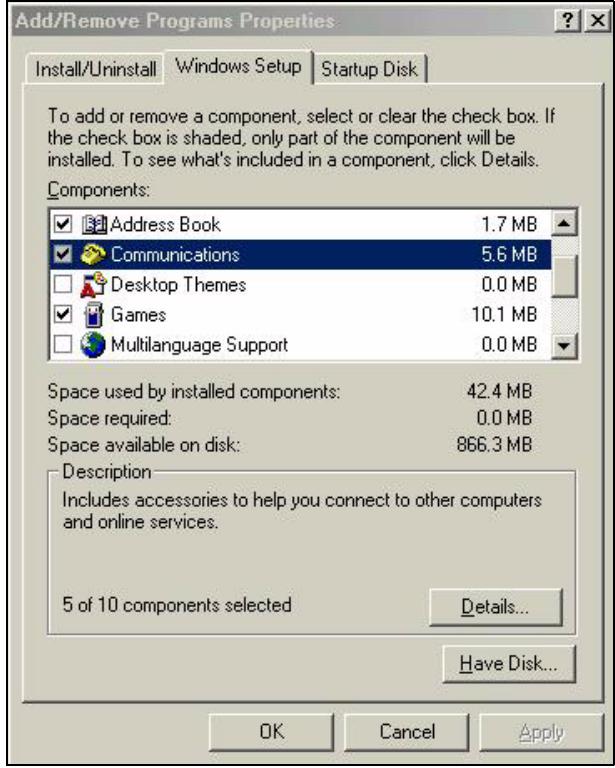
Figure 150 Add/Remove Programs: Windows Setup: Communication
3 In the Communications window, select the Universal Plug and Play check box in the Components selection box.
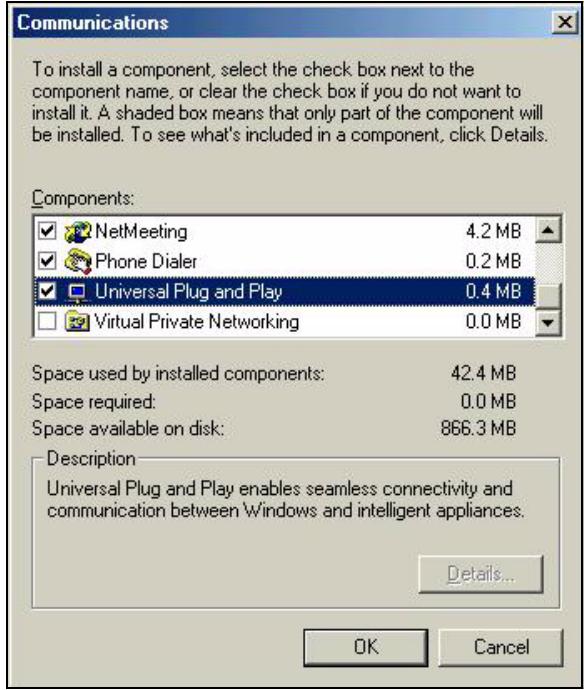
Figure 151 Add/Remove Programs: Windows Setup: Communication: Components
4 Click OK to go back to the Add/Remove Programs Properties window and click Next.
5 Restart the computer when prompted.
Installing UPnP in Windows XP
Follow the steps below to install the UPnP in Windows XP.
1 Click Start and Control Panel.
2 Double-click Network Connections.
3 In the Network Connections window, click Advanced in the main menu and select Optional Networking Components ...
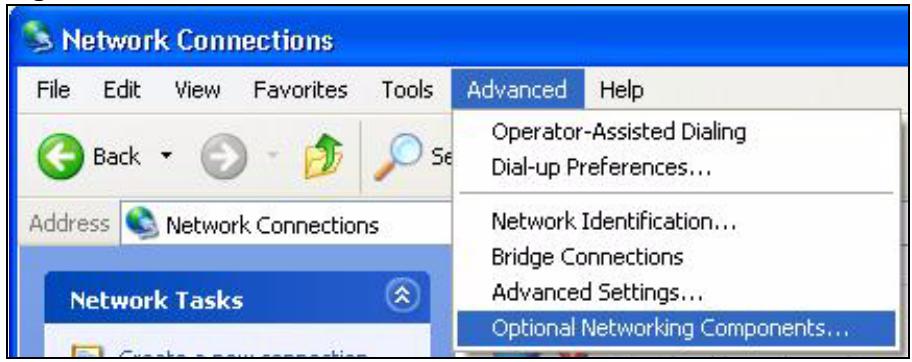
Figure 152 Network Connections
4 The Windows Optional Networking Components Wizard window displays. Select Networking Service in the Components selection box and click Details.
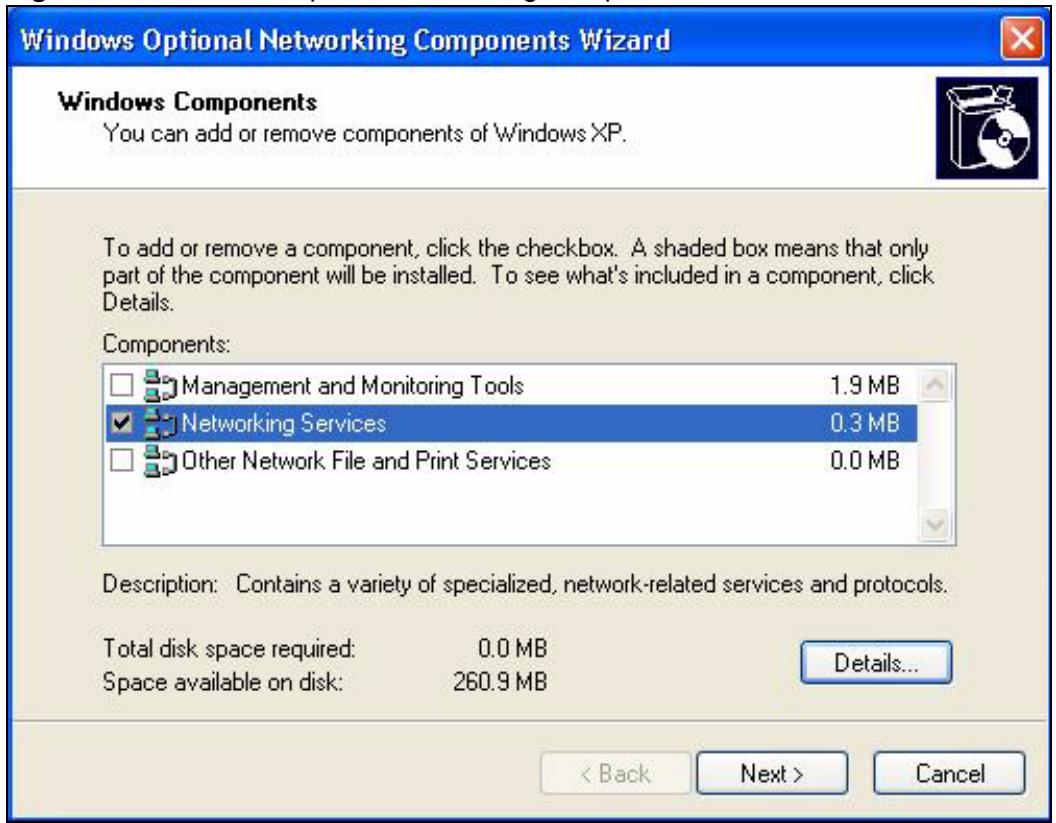
Figure 153 Windows Optional Networking Components Wizard
5 In the Networking Services window, select the Universal Plug and Play check box.
Figure 154 Networking Services
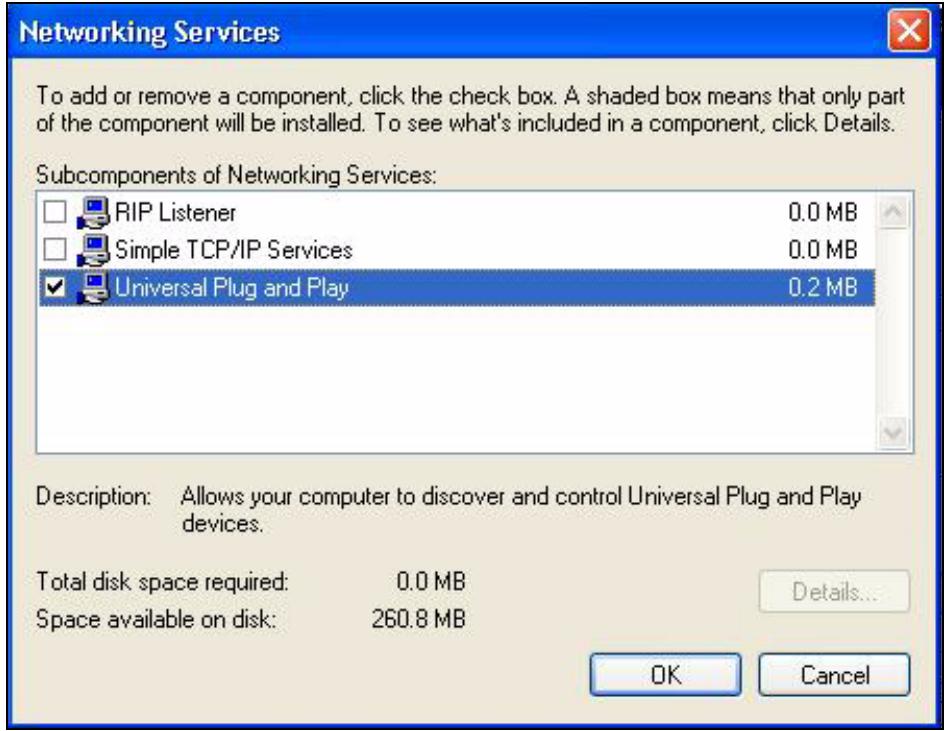
6 Click OK to go back to the Windows Optional Networking Component Wizard window and click Next.
22.4 Using UPnP in Windows XP Example
This section shows you how to use the UPnP feature in Windows XP. You must already have UPnP installed in Windows XP and UPnP activated on the ZyXEL Device.
Make sure the computer is connected to a LAN port of the ZyXEL Device. Turn on your computer and the ZyXEL Device.
Auto-discover Your UPnP-enabled Network Device
1 Click Start and Control Panel. Double-click Network Connections. An icon displays under Internet Gateway.
2 Right-click the icon and select Properties.
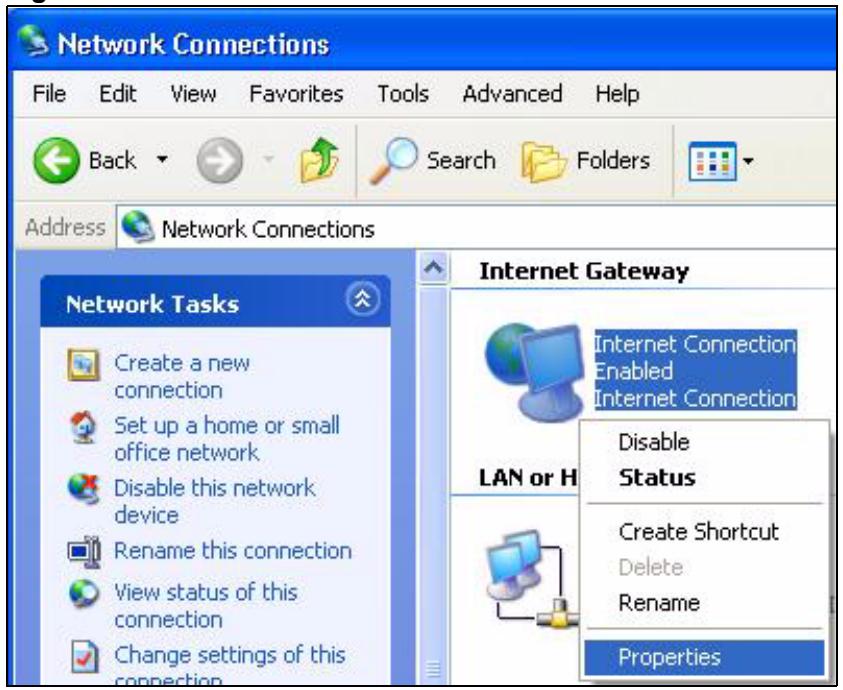
Figure 155 Network Connections
3 In the Internet Connection Properties window, click Settings to see the port mappings there were automatically created.
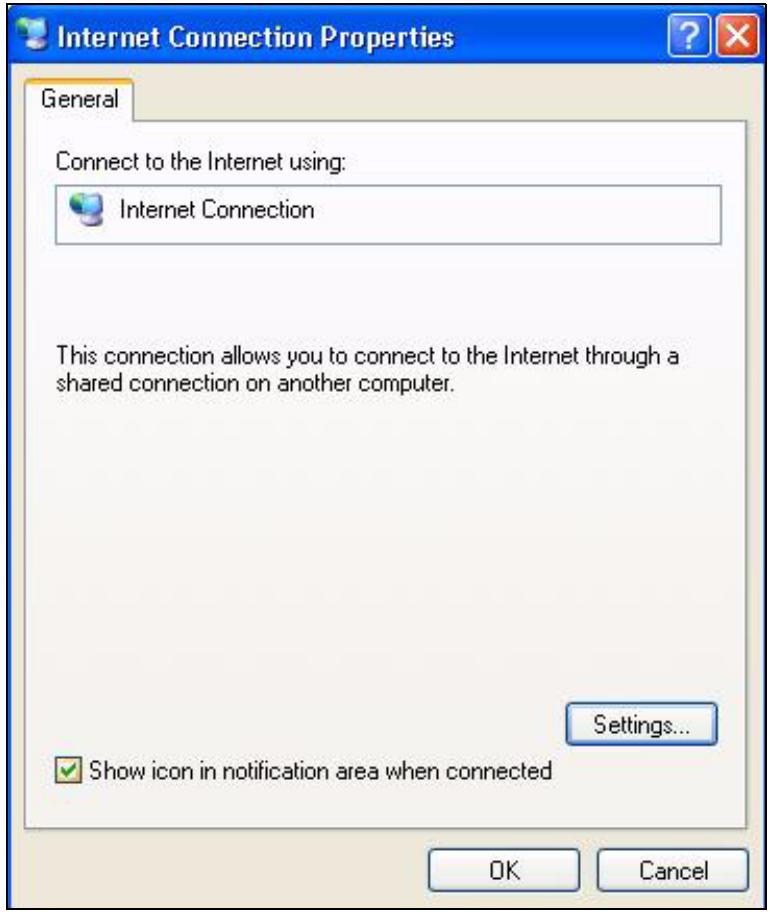
Figure 156 Internet Connection Properties
4 You may edit or delete the port mappings or click Add to manually add port mappings.
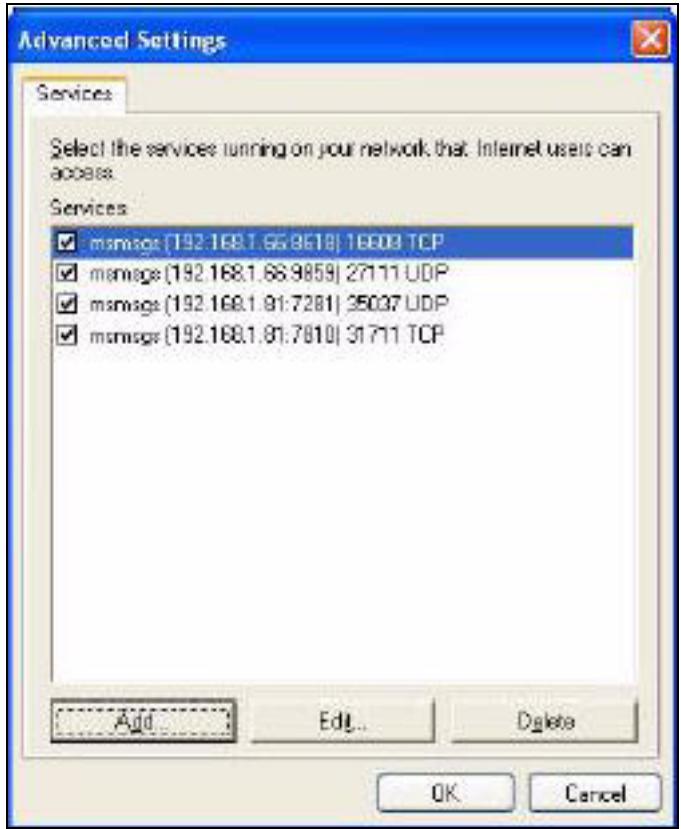
Figure 157 Internet Connection Properties: Advanced Settings
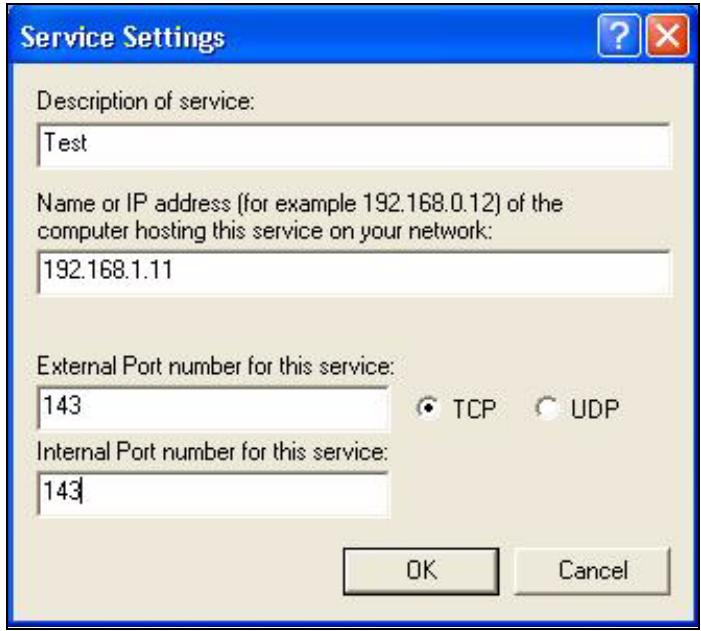
Figure 158 Internet Connection Properties: Advanced Settings: Add
5 When the UPnP-enabled device is disconnected from your computer, all port mappings will be deleted automatically.
6 Select Show icon in notification area when connected option and click OK. An icon displays in the system tray.
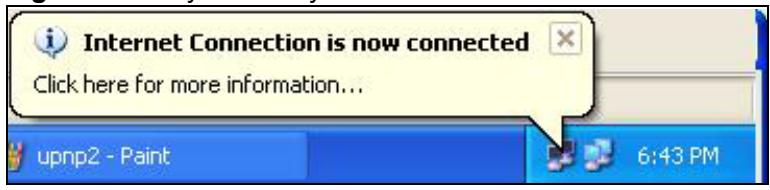
Figure 159 System Tray Icon
7 Double-click on the icon to display your current Internet connection status.
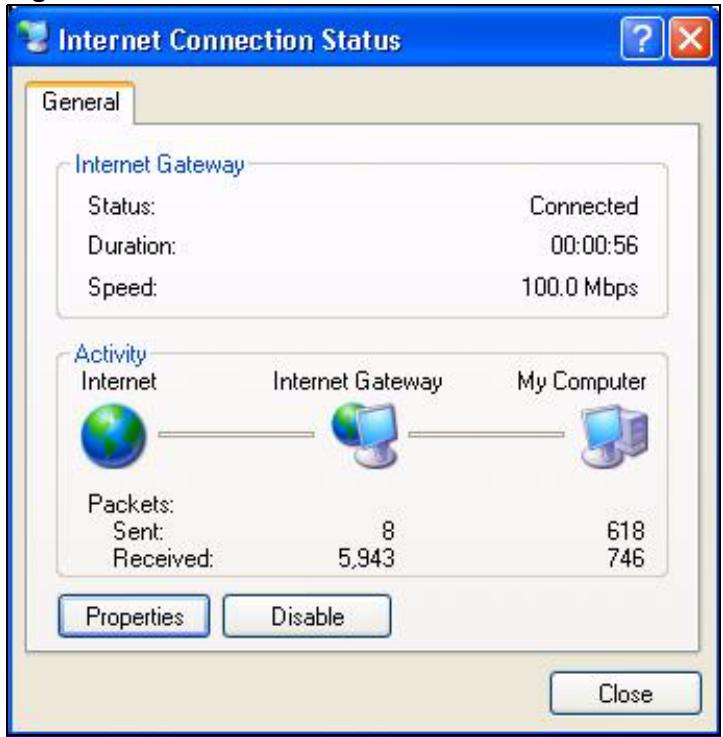
Figure 160 Internet Connection Status
Web Configurator Easy Access
With UPnP, you can access the web-based configurator on the ZyXEL Device without finding out the IP address of the ZyXEL Device first. This comes helpful if you do not know the IP address of the ZyXEL Device.
Follow the steps below to access the web configurator.
1 Click Start and then Control Panel.
2 Double-click Network Connections.
3 Select My Network Places under Other Places.
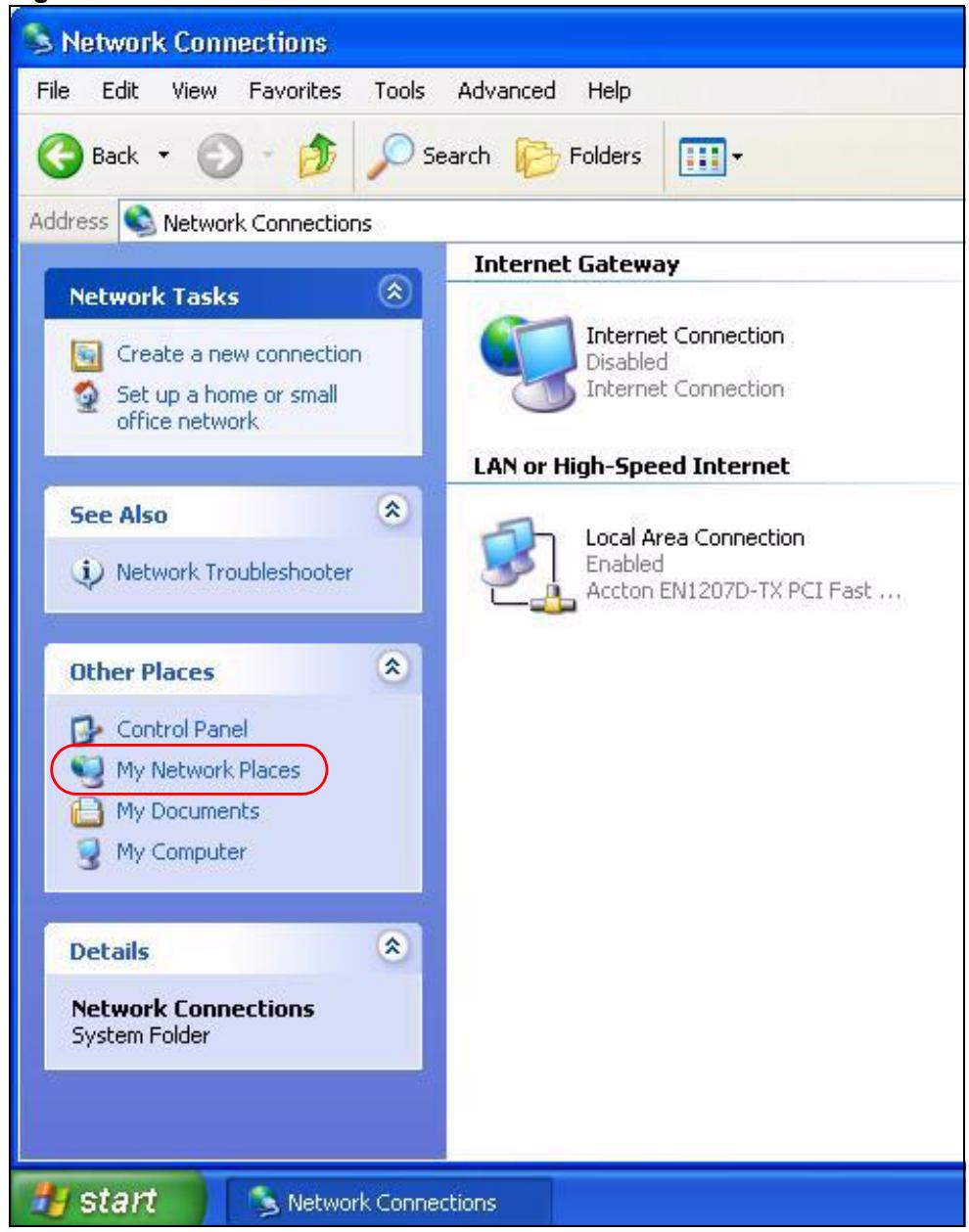
Figure 161 Network Connections
4 An icon with the description for each UPnP-enabled device displays under Local Network.
5 Right-click on the icon for your ZyXEL Device and select Invoke. The web configurator login screen displays.
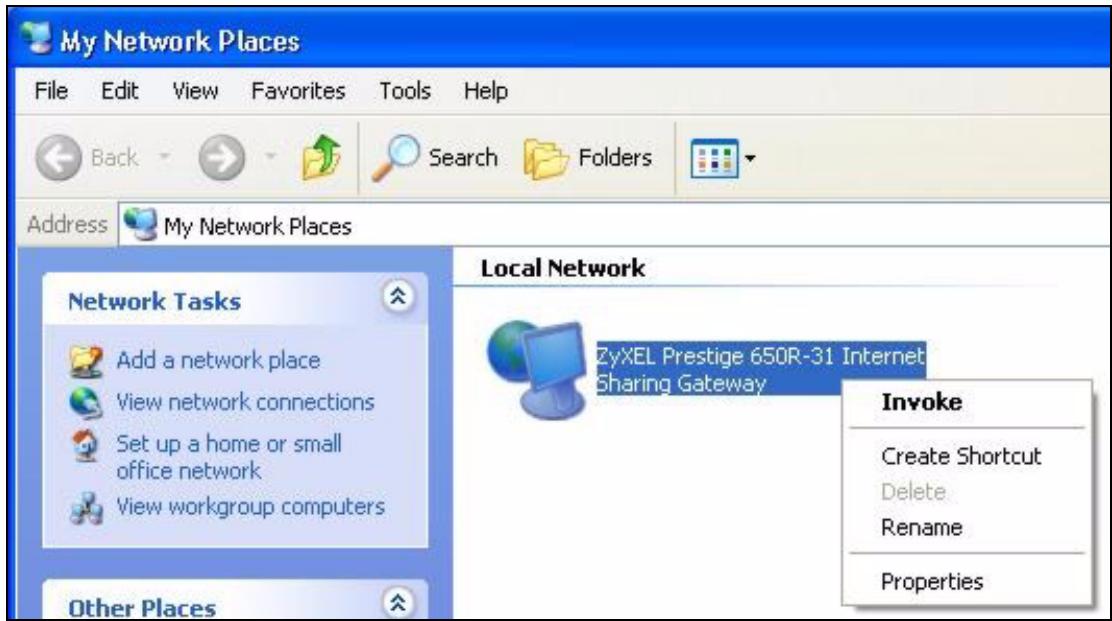
Figure 162 Network Connections: My Network Places
6 Right-click on the icon for your ZyXEL Device and select Properties. A properties window displays with basic information about the ZyXEL Device.
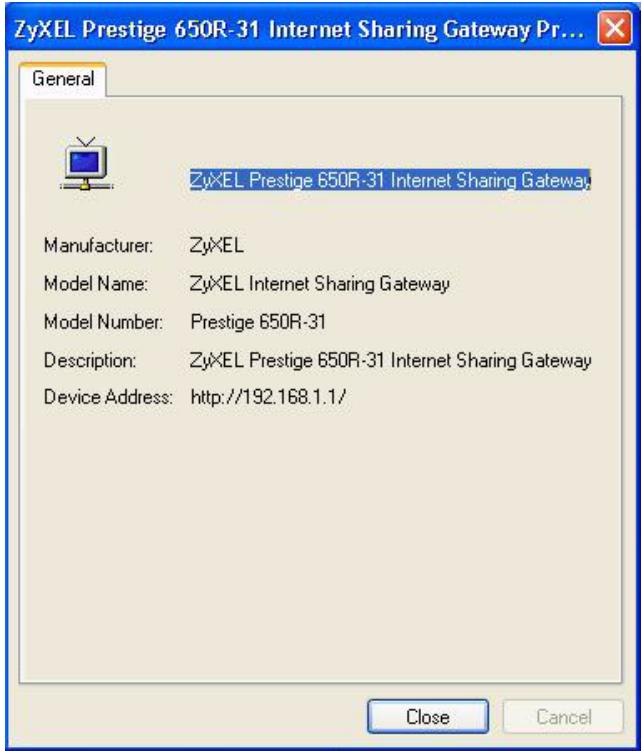
Figure 163 Network Connections: My Network Places: Properties: Example
CHAPTER 23 System
Use this screen to configure the ZyXEL Device's time and date settings.
23.1 General Setup and System Name
General Setup contains administrative and system-related information. System Name is for identification purposes. However, because some ISPs check this name you should enter your computer's "Computer Name".
- In Windows 95/98 click Start, Settings, Control Panel, Network. Click the Identification tab, note the entry for the Computer Name field and enter it as the System Name.
- In Windows 2000, click Start, Settings, Control Panel and then double-click System. Click the Network Identification tab and then the Properties button. Note the entry for the Computer name field and enter it as the System Name.
- In Windows XP, click start, My Computer, View system information and then click the Computer Name tab. Note the entry in the Full computer name field and enter it as the ZyXEL Device System Name.
23.1.1 General Setup
The Domain Name entry is what is propagated to the DHCP clients on the LAN. If you leave this blank, the domain name obtained by DHCP from the ISP is used. While you must enter the host name (System Name), the domain name can be assigned from the ZyXEL Device via DHCP.
Click Maintenance > System to open the General screen.
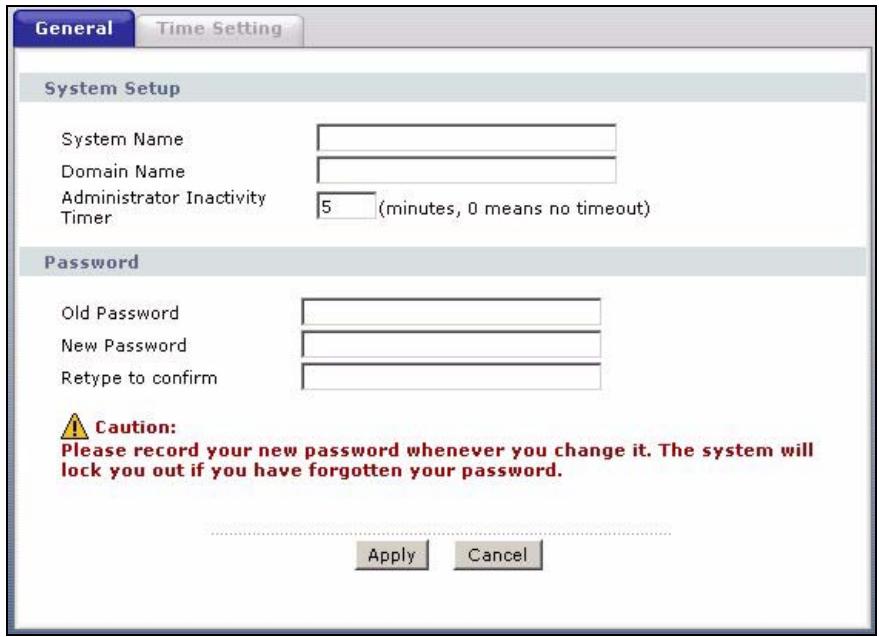
Figure 164 System General Setup
The following table describes the labels in this screen.
Table 113 System General Setup
| LABEL | DESCRIPTION |
| General Setup | |
| System Name | Choose a descriptive name for identification purposes. It is recommended you enter your computer's "Computer name" in this field. This name can be up to 30 alphanumeric characters long. Spaces are not allowed, but dashes “-” and underscores “_” are accepted. |
| Domain Name | Enter the domain name (if you know it) here. If you leave this field blank, the ISP may assign a domain name via DHCP. The domain name entered by you is given priority over the ISP assigned domain name. |
| Administrator Inactivity Timer | Type how many minutes a management session (either via the web configurator or telnet) can be left idle before the session times out. The default is 5 minutes. After it times out you have to log in with your password again. Very long idle timeouts may have security risks. A value of "0" means a management session never times out, no matter how long it has been left idle (not recommended). |
| Password | |
| Old Password | Type the default password or the existing password you use to access the system in this field. |
| New Password | Type your new system password (up to 30 characters). Note that as you type a password, the screen displays a (*) for each character you type. After you change the password, use the new password to access the ZyXEL Device. |
| Retype to Confirm | Type the new password again for confirmation. |
| Apply | Click Apply to save your changes back to the ZyXEL Device. |
| Cancel | Click Cancel to begin configuring this screen afresh. |
23.2 Time Setting
To change your ZyXEL Device's time and date, click Maintenance > System > Time Setting. The screen appears as shown. Use this screen to configure the ZyXEL Device's time based on your local time zone.
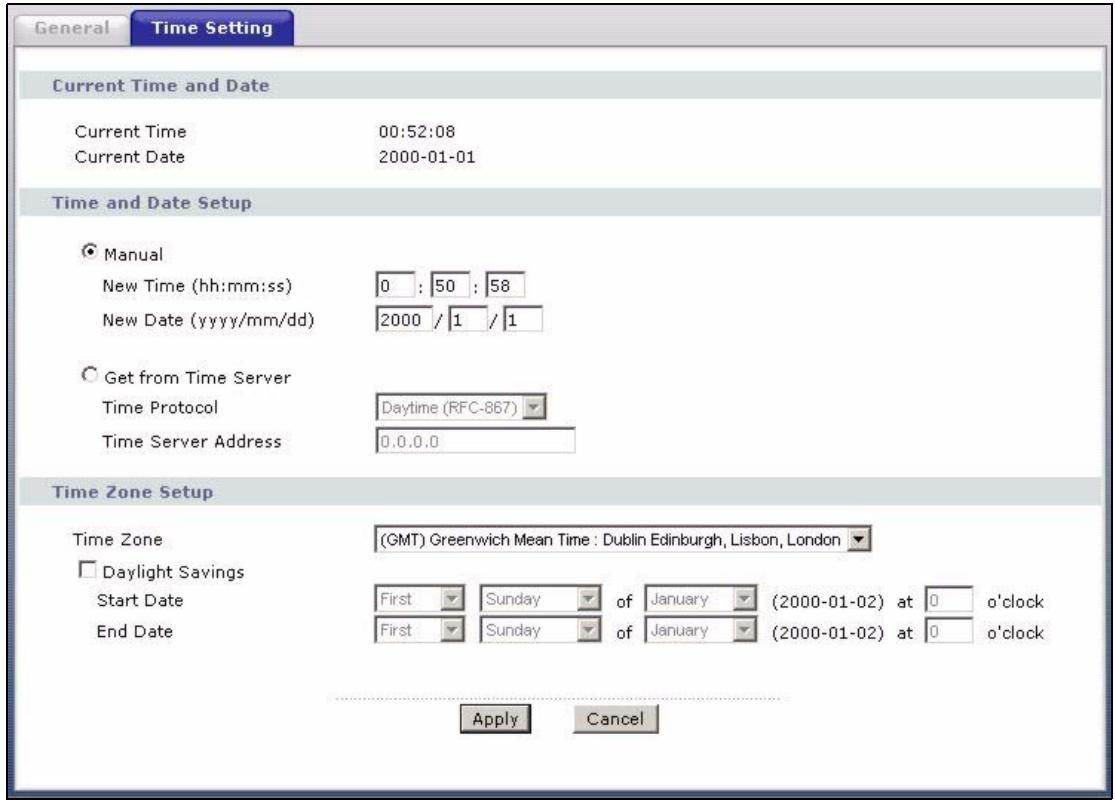
Figure 165 System Time Setting
The following table describes the fields in this screen.
Table 114 System Time Setting
| LABEL | DESCRIPTION |
| Current Time and Date | |
| Current Time | This field displays the time of your ZyXEL Device. Each time you reload this page, the ZyXEL Device synchronizes the time with the time server. |
| Current Date | This field displays the date of your ZyXEL Device. Each time you reload this page, the ZyXEL Device synchronizes the date with the time server. |
| Time and Date Setup | |
| Manual | Select this radio button to enter the time and date manually. If you configure a new time and date, Time Zone and Daylight Saving at the same time, the new time and date you entered has priority and the Time Zone and Daylight Saving settings do not affect it. |
| New Time (hh:mm:ss) | This field displays the last updated time from the time server or the last time configured manually. When you set Time and Date Setup to Manual, enter the new time in this field and then click Apply. |
| New Date (yyyy/mm/dd) | This field displays the last updated date from the time server or the last date configured manually. When you set Time and Date Setup to Manual, enter the new date in this field and then click Apply. |
| Get from Time Server | Select this radio button to have the ZyXEL Device get the time and date from the time server you specified below. |
| Time Protocol | Select the time service protocol that your time server sends when you turn on the ZyXEL Device. Not all time servers support all protocols, so you may have to check with your ISP/network administrator or use trial and error to find a protocol that works. The main difference between them is the format. Daytime (RFC 867) format is day/month/year/time zone of the server. Time (RFC 868) format displays a 4-byte integer giving the total number of seconds since 1970/1/1 at 0:0:0. The default, NTP (RFC 1305), is similar to Time (RFC 868). |
| Time Server Address | Enter the IP address or URL (up to 20 extended ASCII characters in length) of your time server. Check with your ISP/network administrator if you are unsure of this information. |
| Time Zone Setup | |
| Time Zone | Choose the time zone of your location. This will set the time difference between your time zone and Greenwich Mean Time (GMT). |
| Daylight Saving | Daylight saving is a period from late spring to early fall when many countries set their clocks ahead of normal local time by one hour to give more daytime light in the evening. Select this option if you use Daylight Saving Time. |
| Start Date | Configure the day and time when Daylight Saving Time starts if you selected Enable Daylight Saving. The o'clock field uses the 24 hour format. Here are a couple of examples: Daylight Saving Time starts in most parts of the United States on the first Sunday of April. Each time zone in the United States starts using Daylight Saving Time at 2 A.M. local time. So in the United States you would select First, Sunday, April and type 2 in the o'clock field. Daylight Saving Time starts in the European Union on the last Sunday of March. All of the time zones in the European Union start using Daylight Saving Time at the same moment (1 A.M. GMT or UTC). So in the European Union you would select Last, Sunday, March. The time you type in the o'clock field depends on your time zone. In Germany for instance, you would type 2 because Germany's time zone is one hour ahead of GMT or UTC (GMT+1). |
| End Date | Configure the day and time when Daylight Saving Time ends if you selected Enable Daylight Saving. The o'clock field uses the 24 hour format. Here are a couple of examples:Daylight Saving Time ends in the United States on the last Sunday of October. Each time zone in the United States stops using Daylight Saving Time at 2 A.M. local time. So in the United States you would select Last, Sunday, October and type 2 in the o'clock field.Daylight Saving Time ends in the European Union on the last Sunday of October. All of the time zones in the European Union stop using Daylight Saving Time at the same moment (1 A.M. GMT or UTC). So in the European Union you would select Last, Sunday, October. The time you type in the o'clock field depends on your time zone. In Germany for instance, you would type 2 because Germany's time zone is one hour ahead of GMT or UTC (GMT+1). |
| Apply | Click Apply to save your changes back to the ZyXEL Device. |
| Cancel | Click Cancel to begin configuring this screen afresh. |
CHAPTER 24
Logs
This chapter contains information about configuring general log settings and viewing the ZyXEL Device's logs. Refer to the appendix for example log message explanations.
24.1 Logs Overview
The web configurator allows you to choose which categories of events and/or alerts to have the ZyXEL Device log and then display the logs or have the ZyXEL Device send them to an administrator (as e-mail) or to a syslog server.
24.1.1 Alerts and Logs
An alert is a type of log that warrants more serious attention. They include system errors, attacks (access control) and attempted access to blocked web sites. Some categories such as System Errors consist of both logs and alerts. You may differentiate them by their color in the View Log screen. Alerts display in red and logs display in black.
24.2 Viewing the Logs
Click Maintenance > Logs to open the View Log screen. Use the View Log screen to see the logs for the categories that you selected in the Log Settings screen (see Section 24.3 on page 296).
Log entries in red indicate alerts. The log wraps around and deletes the old entries after it fills. Click a column heading to sort the entries. A triangle indicates ascending or descending sort order.
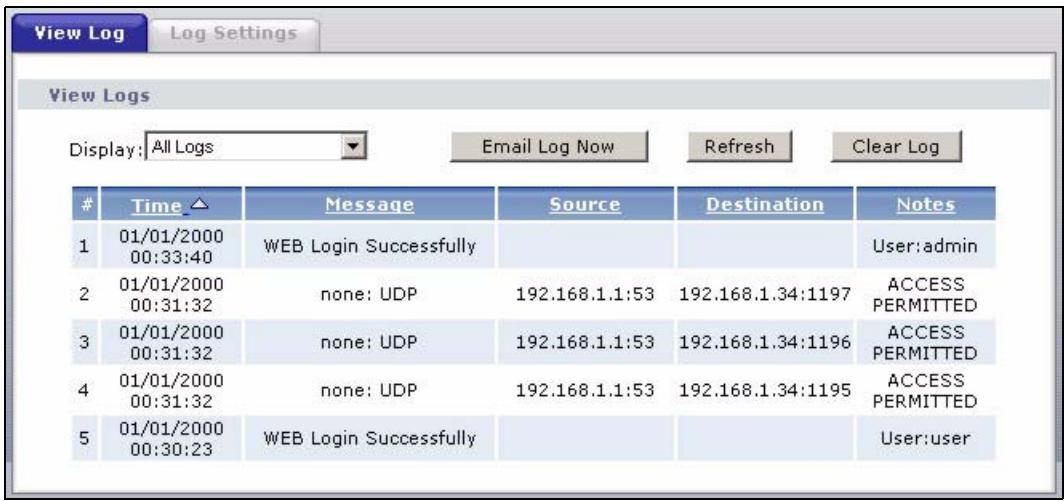
Figure 166 View Log
The following table describes the fields in this screen.
Table 115 View Log
| LABEL | DESCRIPTION |
| Display | The categories that you select in the Log Settings screen display in the drop-down list box. Select a category of logs to view; select All Logs to view logs from all of the log categories that you selected in the Log Settings page. |
| Email Log Now | Click Email Log Now to send the log screen to the e-mail address specified in the Log Settings page (make sure that you have first filled in the E-mail Log Settings fields in Log Settings). |
| Refresh | Click Refresh to renew the log screen. |
| Clear Log | Click Clear Log to delete all the logs. |
| # | This field is a sequential value and is not associated with a specific entry. |
| Time | This field displays the time the log was recorded. |
| Message | This field states the reason for the log. |
| Source | This field lists the source IP address and the port number of the incoming packet. |
| Destination | This field lists the destination IP address and the port number of the incoming packet. |
| Notes | This field displays additional information about the log entry. |
24.3 Configuring Log Settings
Use the Log Settings screen to configure to where the ZyXEL Device is to send logs; the schedule for when the ZyXEL Device is to send the logs and which logs and/or immediate alerts the ZyXEL Device is to record. See Section 24.1 on page 295 for more information.
To change your ZyXEL Device's log settings, click Maintenance > Logs > Log Settings. The screen appears as shown.
Alerts are e-mailed as soon as they happen. Logs may be e-mailed as soon as the log is full. Selecting many alert and/or log categories (especially Access Control) may result in many e-mails being sent.
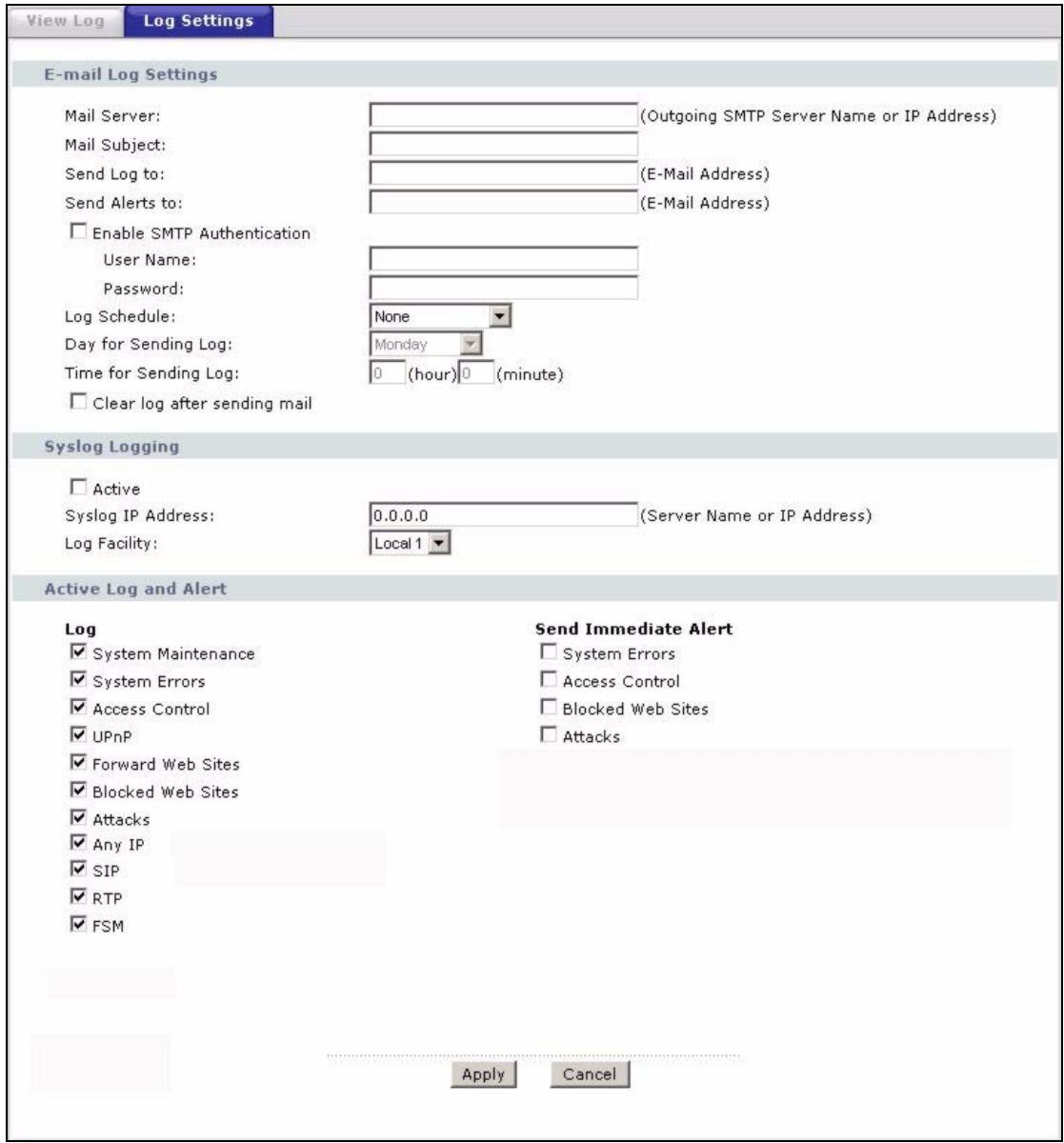
Figure 167 Log Settings
The following table describes the fields in this screen.
Table 116 Log Settings
| LABEL | DESCRIPTION |
| E-mail Log Settings | |
| Mail Server | Enter the server name or the IP address of the mail server for the e-mail addresses specified below. If this field is left blank, logs and alert messages will not be sent via E-mail. |
Table 116 Log Settings
| LABEL | DESCRIPTION |
| Mail Subject | Type a title that you want to be in the subject line of the log e-mail message that the ZyXEL Device sends. Not all ZyXEL Device models have this field. |
| Send Log to | The ZyXEL Device sends logs to the e-mail address specified in this field. If this field is left blank, the ZyXEL Device does not send logs via e-mail. |
| Send Alerts to | Alerts are real-time notifications that are sent as soon as an event, such as a DoS attack, system error, or forbidden web access attempt occurs. Enter the E-mail address where the alert messages will be sent. Alerts include system errors, attacks and attempted access to blocked web sites. If this field is left blank, alert messages will not be sent via E-mail. |
| Enable SMTP Authentication | SMTP (Simple Mail Transfer Protocol) is the message-exchange standard for the Internet. SMTP enables you to move messages from one e-mail server to another. Select the check box to activate SMTP authentication. If mail server authentication is needed but this feature is disabled, you will not receive the e-mail logs. |
| User Name | Enter the user name (up to 31 characters) (usually the user name of a mail account). |
| Password | Enter the password associated with the user name above. |
| Log Schedule | This drop-down menu is used to configure the frequency of log messages being sent as E-mail: • Daily • Weekly • Hourly • When Log is Full • None. If you select Weekly or Daily, specify a time of day when the E-mail should be sent. If you select Weekly, then also specify which day of the week the E-mail should be sent. If you select When Log is Full, an alert is sent when the log fills up. If you select None, no log messages are sent. |
| Day for Sending Log | Use the drop down list box to select which day of the week to send the logs. |
| Time for Sending Log | Enter the time of the day in 24-hour format (for example 23:00 equals 11:00 pm) to send the logs. |
| Clear log after sending mail | Select the checkbox to delete all the logs after the ZyXEL Device sends an E-mail of the logs. |
| Syslog Logging | The ZyXEL Device sends a log to an external syslog server. |
| Active | Click Active to enable syslog logging. |
| Syslog IP Address | Enter the server name or IP address of the syslog server that will log the selected categories of logs. |
| Log Facility | Select a location from the drop down list box. The log facility allows you to log the messages to different files in the syslog server. Refer to the syslog server manual for more information. |
| Active Log and Alert | |
| Log | Select the categories of logs that you want to record. |
| Send Immediate Alert | Select log categories for which you want the ZyXEL Device to send E-mail alerts immediately. |
| Apply | Click Apply to save your customized settings and exit this screen. |
| Cancel | Click Cancel to return to the previously saved settings. |
24.4 SMTP Error Messages
If there are difficulties in sending e-mail the following error message appears.
"SMTP action request failed. ret= ???". The "????"are described in the following table.
Table 117 SMTP Error Messages
| -1 means ZyXEL Device out of socket |
| -2 means tcp SYN fail |
| -3 means smtp server OK fail |
| -4 means HELO fail |
| -5 means MAIL FROM fail |
| -6 means RCPT TO fail |
| -7 means DATA fail |
| -8 means mail data send fail |
24.4.1 Example E-mail Log
An "End of Log" message displays for each mail in which a complete log has been sent. The following is an example of a log sent by e-mail.
- You may edit the subject title.
- The date format here is Day-Month-Year.
- The date format here is Month-Day-Year. The time format is Hour-Minute-Second.
- "End of Log" message shows that a complete log has been sent.
Figure 168 E-mail Log Example
Subject: Firewall Alert From Date: Fri, 07 Apr 2000 10:05:42 From: user@zyxel.com To: user@zyxel.com 1|Apr 7 00 |From:192.168.1.1 To:192.168.1.255 default policy forward | 09:54:03 UDP src port:00520 dest port:00520 <1,00> 2|Apr 7 00 |From:192.168.1.131 To:192.168.1.255 default policy forward | 09:54:17 UDP src port:00520 dest port:00520 <1,00> 3|Apr 7 00 |From:192.168.1.6 To:10.10.10.10 |match forward | 09:54:19 UDP src port:03516 dest port:00053 <1,01> ..{snip}..... .{snip}..... 126|Apr 7 00 |From:192.168.1.1 To:192.168.1.255 match forward | 10:05:00 UDP src port:00520 dest port:00520 <1,02> 127|Apr 7 00 |From:192.168.1.131 To:192.168.1.255 match forward | 10:05:17 UDP src port:00520 dest port:00520 <1,02> 128|Apr 7 00 |From:192.168.1.1 To:192.168.1.255 match forward | 10:05:30 UDP src port:00520 dest port:00520 <1,02> End of Firewall Log
CHAPTER 25 Tools
This chapter explains how to upload new firmware, manage configuration files and restart your ZyXEL Device.
Note: Do not interrupt the file transfer process as this may PERMANENTLY DAMAGE YOUR ZyXEL Device.
25.1 Introduction
Use the instructions in this chapter to change the device's configuration file or upgrade its firmware. After you configure your device, you can backup the configuration file to a computer. That way if you later misconfigure the device, you can upload the backed up configuration file to return to your previous settings. You can alternately upload the factory default configuration file if you want to return the device to the original default settings. The firmware determines the device's available features and functionality. You can download new firmware releases from your nearest ZyXEL FTP site (or www.zyxel.com) to use to upgrade your device's performance.
Note: Only use firmware for your device's specific model. Refer to the label on the bottom of your ZyXEL Device.
25.2 Filename Conventions
The configuration file (often called the romfile or rom-0) contains the factory default settings in the menus such as password, DHCP Setup, TCP/IP Setup, etc. It arrives from ZyXEL with a "rom" filename extension. Once you have customized the ZyXEL Device's settings, they can be saved back to your computer under a filename of your choosing.
ZyNOS (ZyXEL Network Operating System sometimes referred to as the "ras" file) is the system firmware and has a "bin" filename extension. Find this firmware at www.zyxel.com. With many FTP and TFTP clients, the filenames are similar to those seen next.
ftp> put firmware.bin ras
This is a sample FTP session showing the transfer of the computer file "firmware.bin" to the ZyXEL Device.
ftp> get rom-0 config.cfg
This is a sample FTP session saving the current configuration to the computer file "config.cfg".
If your (T)FTP client does not allow you to have a destination filename different than the source, you will need to rename them as the ZyXEL Device only recognizes "rom-0" and "ras". Be sure you keep unaltered copies of both files for later use.
The following table is a summary. Please note that the internal filename refers to the filename on the ZyXEL Device and the external filename refers to the filename not on the ZyXEL Device, that is, on your computer, local network or FTP site and so the name (but not the extension) may vary. After uploading new firmware, see the Status screen to confirm that you have uploaded the correct firmware version.
Table 118 Filename Conventions
| FILE TYPE | INTERNAL NAME | EXTERNAL NAME | DESCRIPTION |
| Configuration File | Rom-0 | This is the configuration filename on the ZyXEL Device. Uploading the rom-0 file replaces the entire ROM file system, including your ZyXEL Device configurations, system-related data (including the default password), the error log and the trace log. | *.rom |
| Firmware | Ras | This is the generic name for the ZyNOS firmware on the ZyXEL Device. | *.bin |
25.3 File Maintenance Over WAN
TFTP, FTP and Telnet over the WAN will not work when:
1 The firewall is active (turn the firewall off or create a firewall rule to allow access from the WAN).
2 You have disabled Telnet service in menu 24.11.
3 You have applied a filter in menu 3.1 (LAN) or in menu 11.5 (WAN) to block Telnet service.
4 The IP you entered in the Secured Client IP field in menu 24.11 does not match the client IP. If it does not match, the device will disconnect the Telnet session immediately.
25.4 Firmware Upgrade Screen
Click Maintenance > Tools to open the Firmware screen. Follow the instructions in this screen to upload firmware to your ZyXEL Device. The upload process uses HTTP (Hypertext Transfer Protocol) and may take up to two minutes. After a successful upload, the system will reboot. See Section 25.9 on page 311 for upgrading firmware using FTP/TFTP commands.
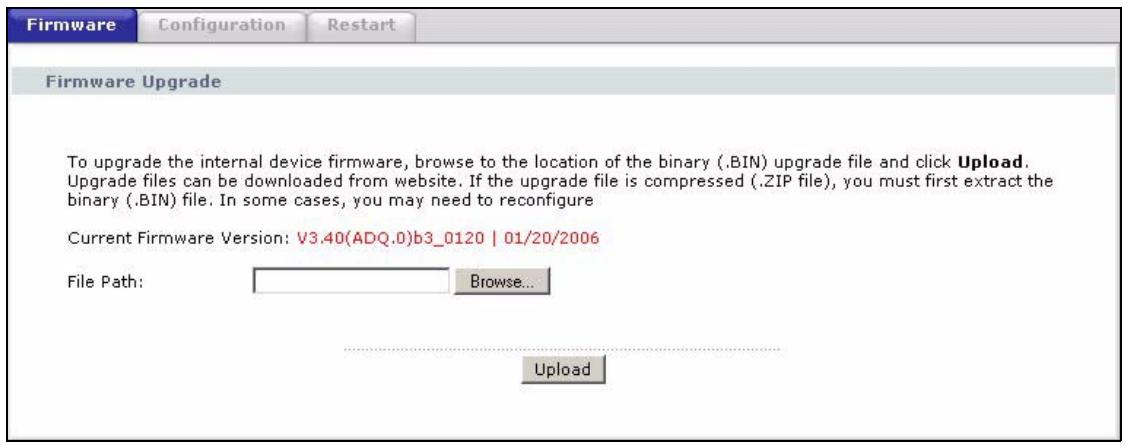
Figure 169 Firmware Upgrade
The following table describes the labels in this screen.
Table 119 Firmware Upgrade
| LABEL | DESCRIPTION |
| Current Firmware Version | This is the present Firmware version and the date created. |
| File Path | Type in the location of the file you want to upload in this field or click Browse ... to find it. |
| Browse... | Click Browse... to find the .bin file you want to upload. Remember that you must decompress compressed (.zip) files before you can upload them. |
| Upload | Click Upload to begin the upload process. This process may take up to two minutes. |
Note: Do NOT turn off the ZyXEL Device while firmware upload is in progress!
After you see the Firmware Upload in Progress screen, wait two minutes before logging into the ZyXEL Device again.
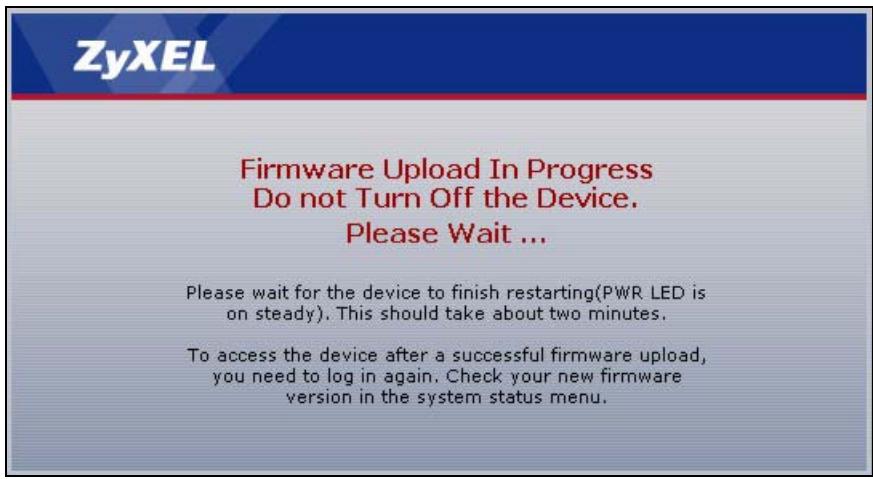
Figure 170 Firmware Upload In Progress
The ZyXEL Device automatically restarts in this time causing a temporary network disconnect. In some operating systems, you may see the following icon on your desktop.
Figure 171 Network Temporarily Disconnected
After two minutes, log in again and check your new firmware version in the Status screen.
If the upload was not successful, the following screen will appear. Click Return to go back to the Firmware screen.
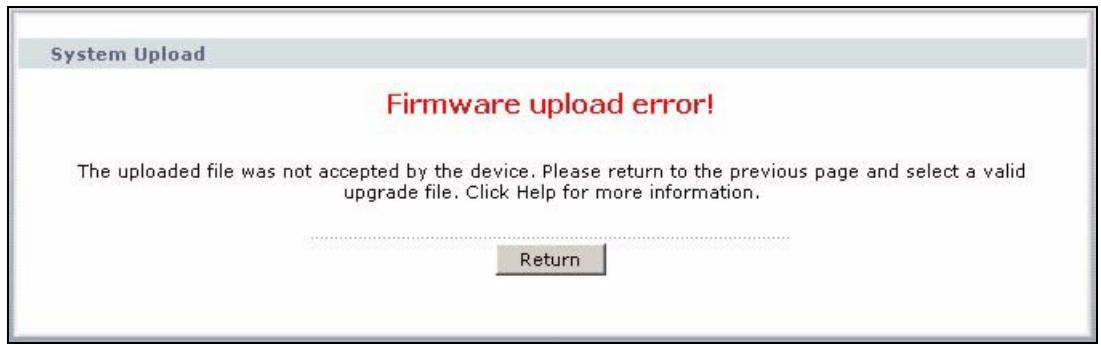
Figure 172 Error Message
25.5 Backup and Restore
See Section 25.7 on page 308 and Section 25.8 on page 310 for transferring configuration files using FTP/TFTP commands.
Click Maintenance > Tools > Configuration. Information related to factory defaults, backup configuration, and restoring configuration appears as shown next.
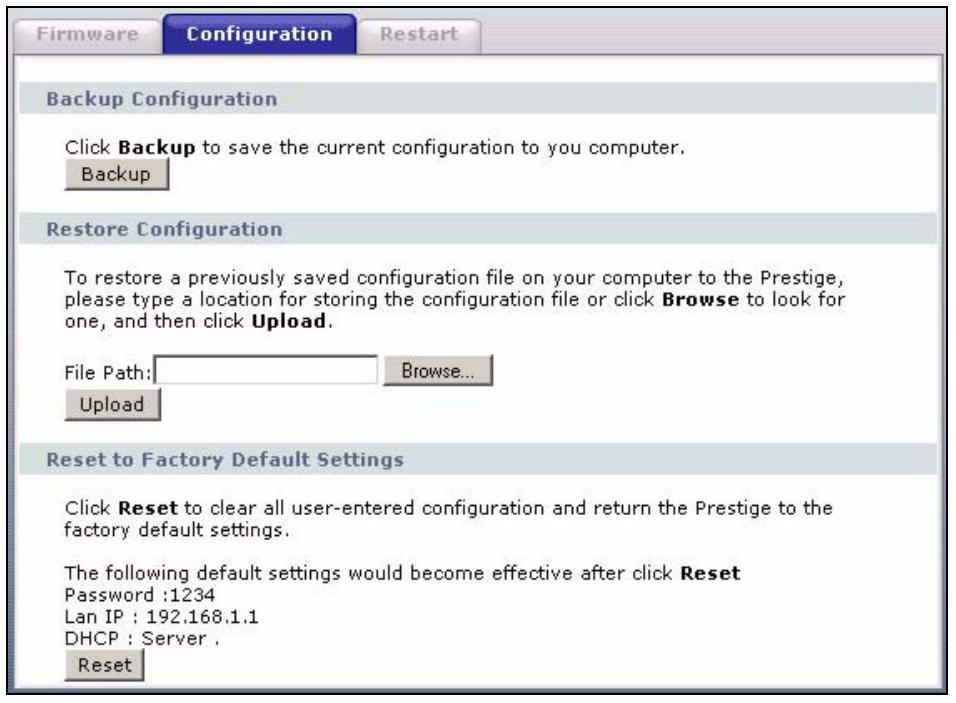
Figure 173 Configuration
25.5.1 Backup Configuration
Backup Configuration allows you to back up (save) the ZyXEL Device's current configuration to a file on your computer. Once your ZyXEL Device is configured and functioning properly, it is highly recommended that you back up your configuration file before making configuration changes. The backup configuration file will be useful in case you need to return to your previous settings.
Click Backup to save the ZyXEL Device's current configuration to your computer.
25.5.2 Restore Configuration
Restore Configuration allows you to upload a new or previously saved configuration file from your computer to your ZyXEL Device.
Table 120 Restore Configuration
| LABEL | DESCRIPTION |
| File Path | Type in the location of the file you want to upload in this field or click Browse ... to find it. |
| Browse... | Click Browse... to find the file you want to upload. Remember that you must decompress compressed (.ZIP) files before you can upload them. |
| Upload | Click Upload to begin the upload process. |
Note: Do not turn off the ZyXEL Device while configuration file upload is in progress.
After you see a "restore configuration successful" screen, you must then wait one minute before logging into the ZyXEL Device again.
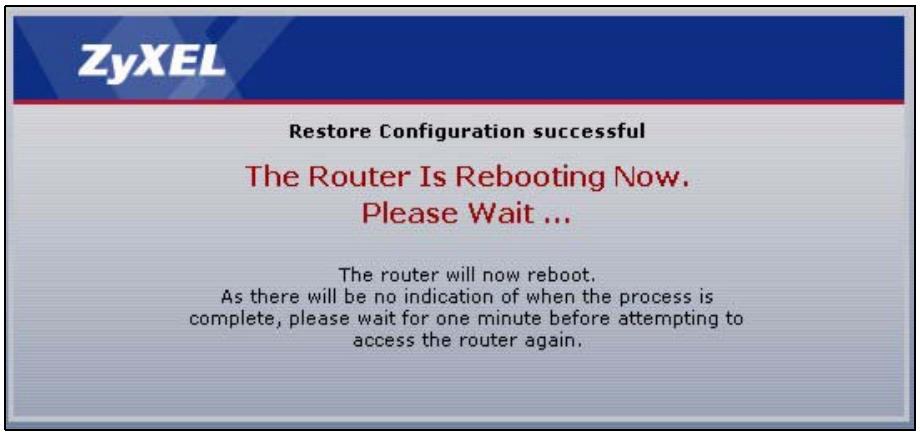
Figure 174 Configuration Upload Successful
The ZyXEL Device automatically restarts in this time causing a temporary network disconnect. In some operating systems, you may see the following icon on your desktop.
Figure 175 Network Temporarily Disconnected
If you uploaded the default configuration file you may need to change the IP address of your computer to be in the same subnet as that of the default device IP address (192.168.1.1). See Appendix C on page 341 for details on how to set up your computer's IP address.
If the upload was not successful, the following screen will appear. Click Return to go back to the Configuration screen.
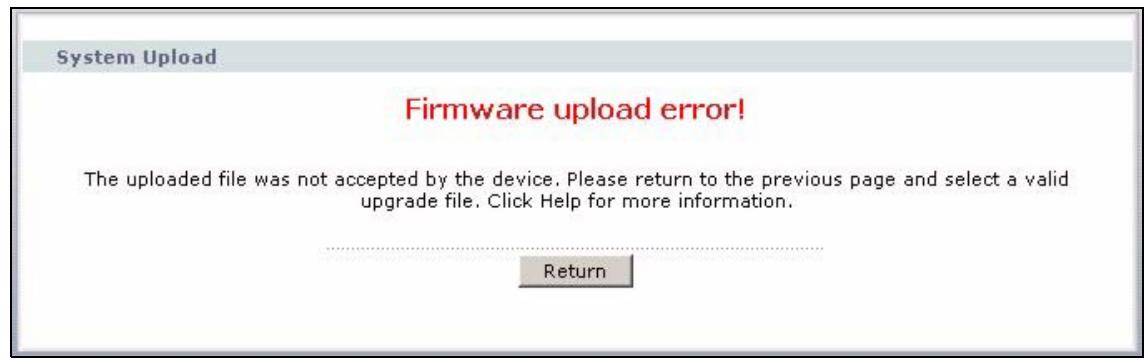
Figure 176 Configuration Upload Error
25.5.3 Reset to Factory Defaults
Click the Reset button to clear all user-entered configuration information and return the ZyXEL Device to its factory defaults. The following warning screen appears.
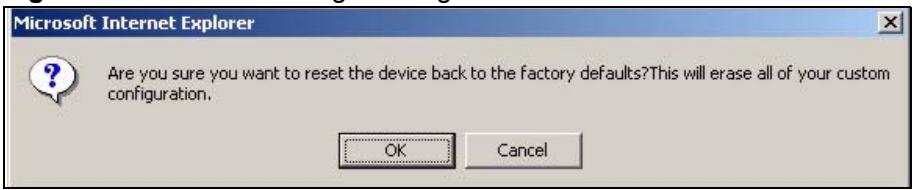
Figure 177 Reset Warning Message
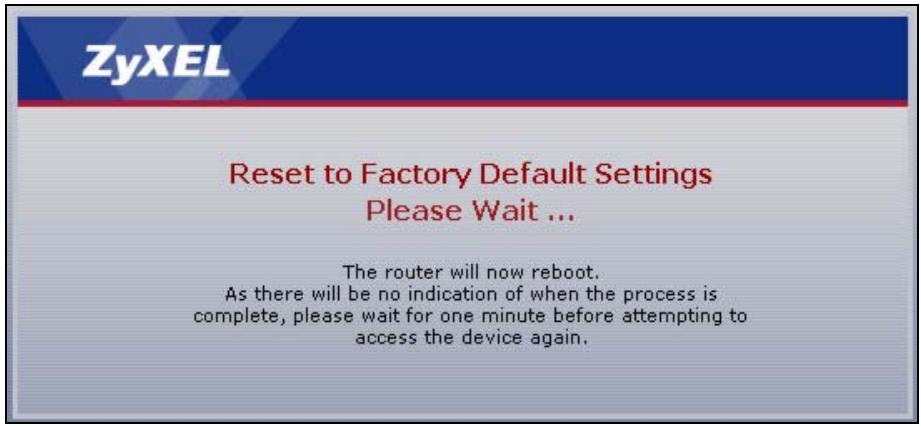
Figure 178 Reset In Process Message
You can also press the RESET button on the rear panel to reset the factory defaults of your ZyXEL Device. Refer to Section 2.1.2 on page 51 for more information on the RESET button.
25.6 Restart
System restart allows you to reboot the ZyXEL Device without turning the power off.
Click Maintenance > Tools > Restart. Click Restart to have the ZyXEL Device reboot. This does not affect the ZyXEL Device's configuration.
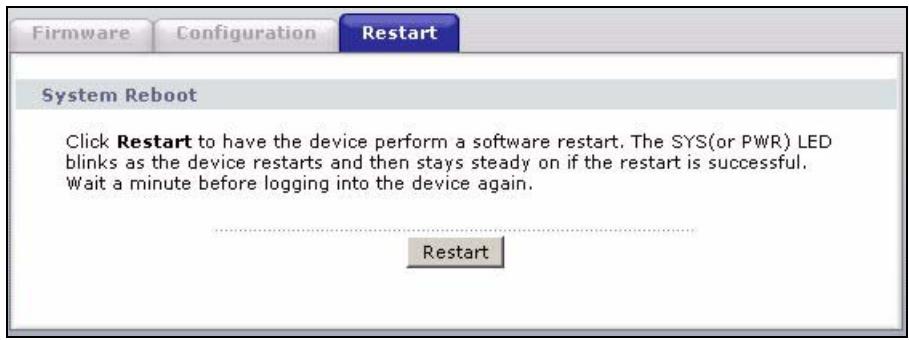
Figure 179 Restart Screen
25.7 Using FTP or TFTP to Back Up Configuration
This section covers how to use FTP or TFTP to save your device's configuration file to your computer.
25.7.1 Using the FTP Commands to Back Up Configuration
1 Launch the FTP client on your computer.
2 Enter "open", followed by a space and the IP address of your ZyXEL Device.
3 Press [ENTER] when prompted for a username.
4 Enter your password as requested (the default is "1234").
5 Enter "bin" to set transfer mode to binary.
6 Use "get" to transfer files from the ZyXEL Device to the computer, for example, "get rom-0 config.rom" transfers the configuration file on the ZyXEL Device to your computer and renames it "config.rom". See earlier in this chapter for more information on filename conventions.
7 Enter "quit" to exit the ftp prompt.
25.7.2 FTP Command Configuration Backup Example
This figure gives an example of using FTP commands from the DOS command prompt to save your device's configuration onto your computer.
Figure 180 FTP Session Example
331 Enter PASS command
Password:
230 Logged in
ftp> bin
200 Type I OK
ftp> get rom-0 zyxel.rom
200 Port command okay
150 Opening data connection for STOR ras
226 File received OK
ftp: 16384 bytes sent in 1.10Seconds 297.89Kbytes/sec.
ftp> quit
25.7.3 Configuration Backup Using GUI-based FTP Clients
The following table describes some of the commands that you may see in GUI-based FTP clients.
Table 121 General Commands for GUI-based FTP Clients
| COMMAND | DESCRIPTION |
| Host Address | Enter the address of the host server. |
| Login Type | Anonymous.This is when a user I.D. and password is automatically supplied to the server for anonymous access. Anonymous logins will work only if your ISP or service administrator has enabled this option.Normal.The server requires a unique User ID and Password to login. |
| Transfer Type | Transfer files in either ASCII (plain text format) or in binary mode. |
| Initial Remote Directory | Specify the default remote directory (path). |
| Initial Local Directory | Specify the default local directory (path). |
25.7.4 Backup Configuration Using TFTP
The ZyXEL Device supports the up/downloading of the firmware and the configuration file using TFTP (Trivial File Transfer Protocol) over LAN. Although TFTP should work over WAN as well, it is not recommended.
To use TFTP, your computer must have both telnet and TFTP clients. To backup the configuration file, follow the procedure shown next.
1 Use telnet from your computer to connect to the ZyXEL Device and log in. Because TFTP does not have any security checks, the ZyXEL Device records the IP address of the telnet client and accepts TFTP requests only from this address.
2 Enter command "sys stdio 0" to disable the management idle timeout, so the TFTP transfer will not be interrupted. Enter command "sys stdio 5" to restore the five-minute management idle timeout (default) when the file transfer is complete.
3 Launch the TFTP client on your computer and connect to the ZyXEL Device. Set the transfer mode to binary before starting data transfer.
4 Use the TFTP client (see the example below) to transfer files between the ZyXEL Device and the computer. The file name for the configuration file is “rom-0” (rom-zero, not capital o).
Note that the telnet connection must be active before and during the TFTP transfer. For details on TFTP commands (see following example), please consult the documentation of your TFTP client program. For UNIX, use "get" to transfer from the ZyXEL Device to the computer and "binary" to set binary transfer mode.
25.7.5 TFTP Command Configuration Backup Example
The following is an example TFTP command:
tftp [-i] host get rom-0 config.rom
where “i” specifies binary image transfer mode (use this mode when transferring binary files), “host” is the ZyXEL Device IP address, “get” transfers the file source on the ZyXEL Device (rom-0, name of the configuration file on the ZyXEL Device) to the file destination on the computer and renames it config.rom.
25.7.6 Configuration Backup Using GUI-based TFTP Clients
The following table describes some of the fields that you may see in GUI-based TFTP clients.
Table 122 General Commands for GUI-based TFTP Clients
| COMMAND | DESCRIPTION |
| Host | Enter the IP address of the ZyXEL Device. 192.168.1.1 is the ZyXEL Device's default IP address when shipped. |
| Send/Fetch | Use “Send” to upload the file to the ZyXEL Device and “Fetch” to back up the file on your computer. |
| Local File | Enter the path and name of the firmware file (.*.bin extension) or configuration file (.*.rom extension) on your computer. |
| Remote File | This is the filename on the ZyXEL Device. The filename for the firmware is “ras” and for the configuration file, is “rom-0”. |
| Binary | Transfer the file in binary mode. |
| Abort | Stop transfer of the file. |
Refer to Section 25.3 on page 302 to read about configurations that disallow TFTP and FTP over WAN.
25.8 Using FTP or TFTP to Restore Configuration
This section shows you how to restore a previously saved configuration. Note that this function erases the current configuration before restoring a previous back up configuration; please do not attempt to restore unless you have a backup configuration file stored on disk.
FTP is the preferred method for restoring your current computer configuration to your device since FTP is faster. Please note that you must wait for the system to automatically restart after the file transfer is complete.
Note: WARNING!
Do not interrupt the file transfer process as this may PERMANENTLY DAMAGE YOUR device. When the Restore Configuration process is complete, the device will automatically restart.
25.8.1 Restore Using FTP Session Example
Figure 181 Restore Using FTP Session Example
ftp> put config.rom rom-0
200 Port command okay
150 Opening data connection for STOR rom-0
226 File received OK
221 Goodbye for writing flash
ftp: 16384 bytes sent in 0.06Seconds 273.07Kbytes/sec.
ftp>quit
Refer to Section 25.3 on page 302 to read about configurations that disallow TFTP and FTP over WAN.
25.9 FTP and TFTP Firmware and Configuration File Uploads
This section shows you how to upload firmware and configuration files.
Note: WARNING!
Do not interrupt the file transfer process as this may PERMANENTLY DAMAGE YOUR device.
FTP is the preferred method for uploading the firmware and configuration. To use this feature, your computer must have an FTP client. The following sections give examples of how to upload the firmware and the configuration files.
25.9.1 FTP File Upload Command from the DOS Prompt Example
1 Launch the FTP client on your computer.
2 Enter "open", followed by a space and the IP address of your device.
3 Press [ENTER] when prompted for a username.
4 Enter your password as requested (the default is "1234").
5 Enter "bin" to set transfer mode to binary.
6 Use "put" to transfer files from the computer to the device, for example, "put firmware.bin ras" transfers the firmware on your computer (firmware.bin) to the device and renames it "ras". Similarly, "put config.rom rom-0" transfers the configuration file on your computer (config.rom) to the device and renames it "rom-0". Likewise "get rom
0 config.rom" transfers the configuration file on the device to your computer and renames it "config.rom." See earlier in this chapter for more information on filename conventions.
7 Enter "quit" to exit the ftp prompt.
25.9.2 FTP Session Example of Firmware File Upload
Figure 182 FTP Session Example of Firmware File Upload
331 Enter PASS command
Password:
230 Logged in
ftp> bin
200 Type I OK
ftp> put firmware.bin ras
200 Port command okay
150 Opening data connection for STOR ras
226 File received OK
ftp: 1103936 bytes sent in 1.10Seconds
297.89Kbytes/sec.
ftp> quit
More commands (found in GUI-based FTP clients) are listed earlier in this chapter.
Refer to Section 25.3 on page 302 to read about configurations that disallow TFTP and FTP over WAN.
25.9.3 TFTP File Upload
The device also supports the uploading of firmware files using TFTP (Trivial File Transfer Protocol) over LAN. Although TFTP should work over WAN as well, it is not recommended.
To use TFTP, your computer must have both telnet and TFTP clients. To transfer the firmware and the configuration file, follow the procedure shown next.
1 Use telnet from your computer to connect to the device and log in. Because TFTP does not have any security checks, the device records the IP address of the telnet client and accepts TFTP requests only from this address.
2 Enter the command "sys stdio 0" to disable the management idle timeout, so the TFTP transfer will not be interrupted. Enter "command sys stdio 5" to restore the five-minute management idle timeout (default) when the file transfer is complete.
3 Launch the TFTP client on your computer and connect to the device. Set the transfer mode to binary before starting data transfer.
4 Use the TFTP client (see the example below) to transfer files between the device and the computer. The file name for the firmware is "ras".
Note that the telnet connection must be active and the device in CI mode before and during the TFTP transfer. For details on TFTP commands (see following example), please consult the documentation of your TFTP client program. For UNIX, use "get" to transfer from the device to the computer, "put" the other way around, and "binary" to set binary transfer mode.
25.9.4 TFTP Upload Command Example
The following is an example TFTP command:
fttp [-i] host put firmware.bin ras
Where "i" specifies binary image transfer mode (use this mode when transferring binary files), "host" is the device's IP address, "put" transfers the file source on the computer (firmware.bin - name of the firmware on the computer) to the file destination on the remote host (ras - name of the firmware on the device).
Commands that you may see in GUI-based TFTP clients are listed earlier in this chapter.
CHAPTER 26
Diagnostic
These read-only screens display information to help you identify problems with the ZyXEL Device.
26.1 General Diagnostic
Click Maintenance > Diagnostic to open the screen shown next.
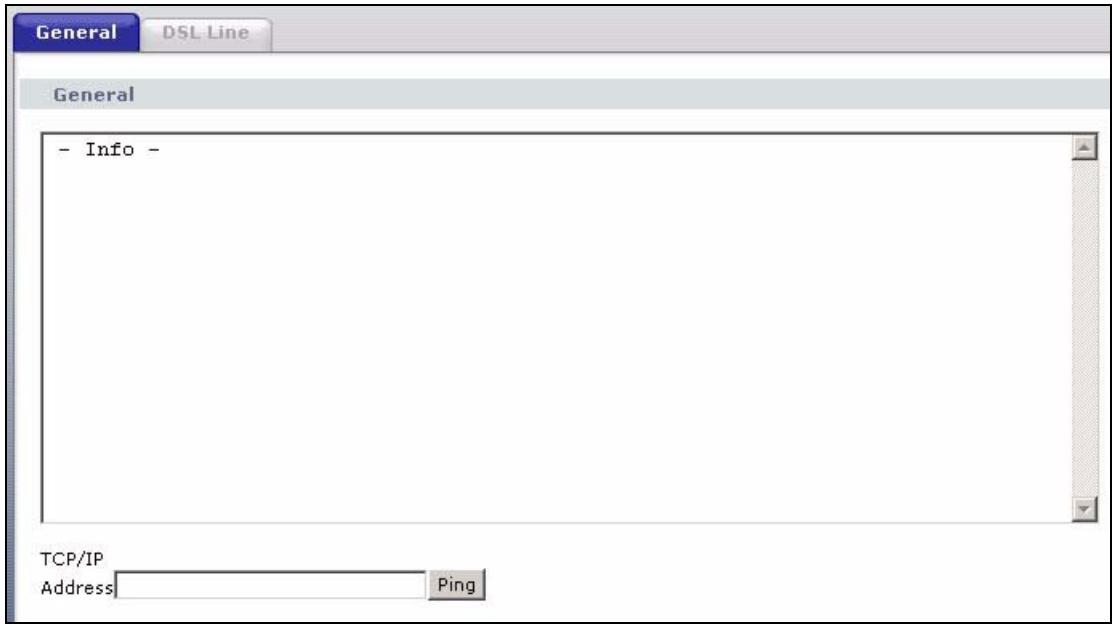
Figure 183 Diagnostic: General
The following table describes the fields in this screen.
Table 123 Diagnostic: General
| LABEL | DESCRIPTION |
| TCP/IP Address | Type the IP address of a computer that you want to ping in order to test a connection. |
| Ping | Click this button to ping the IP address that you entered. |
26.2 DSL Line Diagnostic
Click Maintenance > Diagnostic > DSL Line to open the screen shown next.
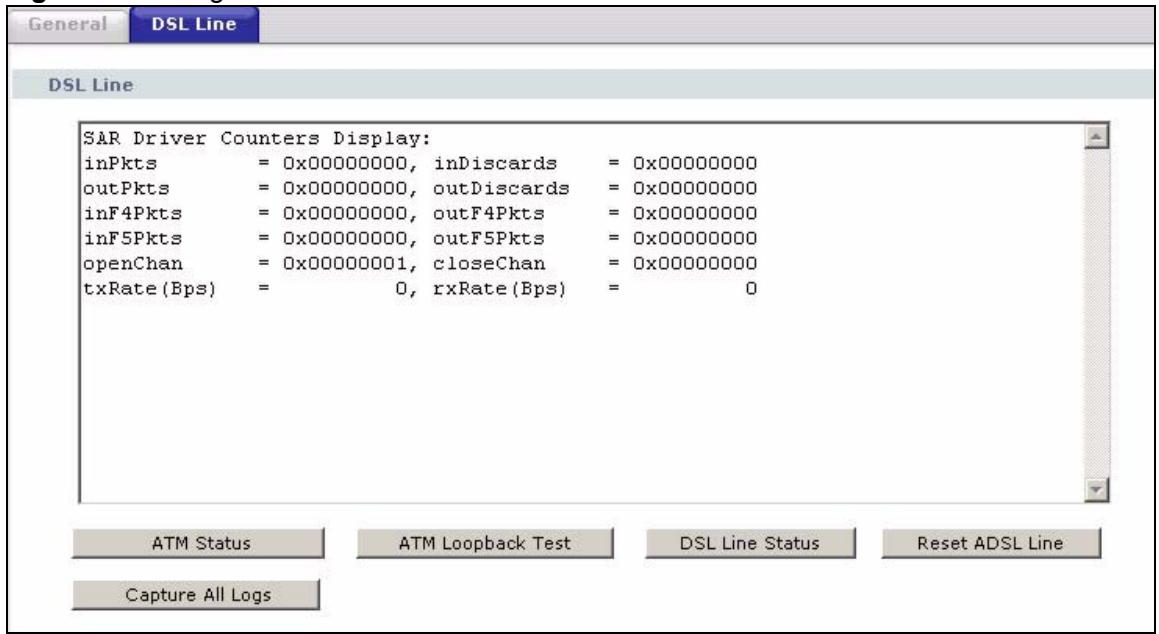
Figure 184 Diagnostic: DSL Line
The following table describes the fields in this screen.
Table 124 Diagnostic: DSL Line
| LABEL | DESCRIPTION |
| ATM Status | Click this button to view your DSL connection's Asynchronous Transfer Mode (ATM) statistics. ATM is a networking technology that provides high-speed data transfer. ATM uses fixed-size packets of information called cells. With ATM, a high QoS (Quality of Service) can be guaranteed.The (Segmentation and Reassembly) SAR driver translates packets into ATM cells. It also receives ATM cells and reassembles them into packets.These counters are set back to zero whenever the device starts up.inPkts is the number of good ATM cells that have been received.inDiscards is the number of received ATM cells that were rejected.outPkts is the number of ATM cells that have been sent.outDiscards is the number of ATM cells sent that were rejected.inF4Pkts is the number of ATM Operations, Administration, and Management (OAM) F4 cells that have been received. See ITU recommendation I.610 for more on OAM for ATM.outF4Pkts is the number of ATM OAM F4 cells that have been sent.inF5Pkts is the number of ATM OAM F5 cells that have been received.outF5Pkts is the number of ATM OAM F5 cells that have been sent.openChan is the number of times that the ZyXEL Device has opened a logical DSL channel.closeChan is the number of times that the ZyXEL Device has closed a logical DSL channel.txRate is the number of bytes transmitted per second.rxRate is the number of bytes received per second. |
| ATM Loopback Test | Click this button to start the ATM loopback test. Make sure you have configured at least one PVC with proper VPIs/VCIs before you begin this test. The ZyXEL Device sends an OAM F5 packet to the DSLAM/ATM switch and then returns it (loops it back) to the ZyXEL Device. The ATM loopback test is useful for troubleshooting problems with the DSLAM and ATM network. |
| DSL Line Status | Click this button to view statistics about the DSL connections. noise margin downstream is the signal to noise ratio for the downstream part of the connection (coming into the ZyXEL Device from the ISP). It is measured in decibels. The higher the number the more signal and less noise there is. output power upstream is the amount of power (in decibels) that the ZyXEL Device is using to transmit to the ISP. attentuation downstream is the reduction in amplitude (in decibels) of the DSL signal coming into the ZyXEL Device from the ISP. Discrete Multi-Tone (DMT) modulation divides up a line's bandwidth into sub-carriers (sub-channels) of 4.3125 KHz each called tones. The rest of the display is the line's bit allocation. This is displayed as the number (in hexadecimal format) of bits transmitted for each tone. This can be used to determine the quality of the connection, whether a given sub-carrier loop has sufficient margins to support certain ADSL transmission rates, and possibly to determine whether particular specific types of interference or line attenuation exist. Refer to the ITU-T G.992.1 recommendation for more information on DMT. The better (or shorter) the line, the higher the number of bits transmitted for a DMT tone. The maximum number of bits that can be transmitted per DMT tone is 15. There will be some tones without any bits as there has to be space between the upstream and downstream channels. |
| Reset ADSL Line | Click this button to reinitialize the ADSL line. The large text box above then displays the progress and results of this operation, for example: "Start to reset ADSL Loading ADSL modem F/W... Reset ADSL Line Successfully!" |
| Capture All Logs | Click this button to display information and statistics about your ZyXEL Device's ATM statistics, DSL connection statistics, DHCP settings, firmware version, WAN and gateway IP address, VPI/VCI and LAN IP address. |
CHAPTER 27 Troubleshooting
This chapter covers potential problems and the corresponding remedies.
27.1 Problems Starting Up the ZyXEL Device
Table 125 Troubleshooting Starting Up Your Device
| PROBLEM | CORRECTIVE ACTION |
| None of the lights turn on when I turn on the ZyXEL Device. | Make sure that the ZyXEL Device's power adaptor is connected to the ZyXEL Device and plugged in to an appropriate power source. Make sure that the ZyXEL Device and the power source are both turned on. Turn the ZyXEL Device off and on. If the error persists, you may have a hardware problem. In this case, you should contact your vendor. |
27.2 Problems with the LAN
Table 126 Troubleshooting the LAN
| PROBLEM | CORRECTIVE ACTION |
| The ETHERNET lights do not turn on. | Check your Ethernet cable connections (refer to the Quick Start Guide for details). Check for faulty Ethernet cables. |
| Make sure your computer's Ethernet Card is working properly. | |
| I cannot access the ZyXEL Device from the LAN. | If Any IP is disabled, make sure that the IP address and the subnet mask of the ZyXEL Device and your computer(s) are on the same subnet. |
27.3 Problems with the WAN
Table 127 Troubleshooting the WAN
| PROBLEM | CORRECTIVE ACTION |
| The DSL light is off. | Check the telephone wire and connections between the ZyXEL Device DSL port and the wall jack. |
| Make sure that the telephone company has checked your phone line and set it up for DSL service. | |
| Reset your DSL line to reinitialize your link to the DSLAM. For details, refer to Section 26.2 on page 315. | |
| I cannot get a WAN IP address from the ISP. (The INTERNET light is red.) | The ISP provides the WAN IP address after authenticating you. Authentication may be through the user name and password, the MAC address or the host name. The username and password apply to PPPoE and PPPoA encapsulation only. Make sure that you have entered the correct Service Type, User Name and Password (be sure to use the correct case). Refer to Section 7.5 on page 98. |
| I cannot access the Internet. | Make sure the ZyXEL Device is turned on and connected to the network. Verify your WAN settings. Refer to Chapter 7 on page 93. Make sure you entered the correct user name and password. If you use PPPoE pass through, make sure that bridge mode is turned on. |
| The Internet connection disconnects. | If you use PPPoA or PPPoE encapsulation, check the idle time-out setting. Refer to Section 7.5 on page 98. Contact your ISP. |
27.4 Problems Accessing the ZyXEL Device
Table 128 Troubleshooting Accessing Your Device
| PROBLEM | CORRECTIVE ACTION |
| I cannot access the ZyXEL Device. | The username is “admin”. The default password is “1234”. The Password andUsername fields are case-sensitive. Make sure that you enter the correct passwordand username using the proper casing.If you have changed the password and have now forgotten it, you will need to upload the default configuration file. This restores all of the factory defaults including thepassword. |
| I cannotaccess theweb configurator. | Make sure that there is not a telnet session running.Use the ZyXEL Device’s WAN IP address when configuring from the WAN. Refer to the instructions on checking your WAN connection.Use the ZyXEL Device’s LAN IP address when configuring from the LAN. Refer to for instructions on checking your LAN connection.Check that you have enabled web service access. If you have configured a secured client IP address, your computer’s IP address must match it. Refer to Chapter 21 on page 267 for details.Your computer’s and the ZyXEL Device’s IP addresses must be on the same subnet for LAN access.If you changed the ZyXEL Device’s LAN IP address, then enter the new one as theURL.See the following section to check that pop-up windows, JavaScripts and Java permissions are allowed. |
| You may also need to clear your Internet browser’s cache.In Internet Explorer, click Tools and then Internet Options to open the InternetOptions screen.In the General tab, click Delete Files. In the pop-up window, select the Delete all offline content check box and click OK. Click OK in the Internet Options screen to close it.If you disconnect your computer from one device and connect it to another device that has the same IP address, your computer’s ARP (Address Resolution Protocol) table may contain an entry that maps the management IP address to the previous device’s MAC address).In Windows, use arp -d at the command prompt to delete all entries in your computer’s ARP table. | |
| I cannotremotelymanage theZyXEL Devicefrom the LANor WAN. | Refer to Chapter 21 on page 267 for scenarios when remote management may not be possible.Use the ZyXEL Device’s WAN IP address when configuring from the WAN.Use the ZyXEL Device’s LAN IP address when configuring from the LAN. |
27.4.1 Pop-up Windows, JavaScripts and Java Permissions
In order to use the web configurator you need to allow:
- Web browser pop-up windows from your device.
-
JavaScripts (enabled by default).
-
Java permissions (enabled by default).
Note: Internet Explorer 6 screens are used here. Screens for other Internet Explorer versions may vary.
27.4.1.1 Internet Explorer Pop-up Blockers
You may have to disable pop-up blocking to log into your device.
Either disable pop-up blocking (enabled by default in Windows XP SP (Service Pack) 2) or allow pop-up blocking and create an exception for your device's IP address.
27.4.1.1.1 Disable pop-up Blockers
1 In Internet Explorer, select Tools, Pop-up Blocker and then select Turn Off Pop-up Blocker.
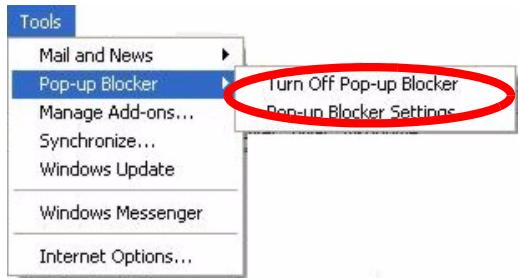
Figure 185 Pop-up Blocker
You can also check if pop-up blocking is disabled in the Pop-up Blocker section in the Privacy tab.
1 In Internet Explorer, select Tools, Internet Options, Privacy.
2 Clear the Block pop-ups check box in the Pop-up Blocker section of the screen. This disables any web pop-up blockers you may have enabled.
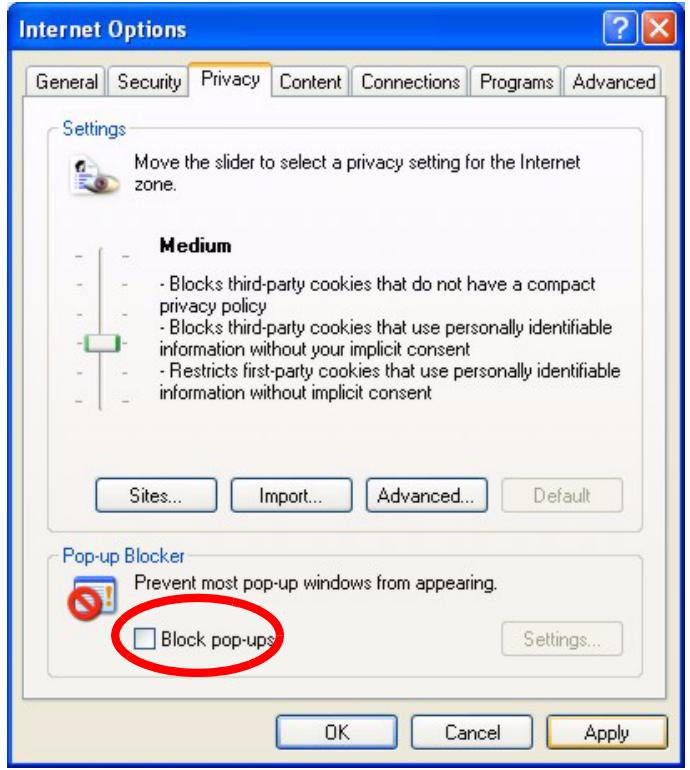
Figure 186 Internet Options
3 Click Apply to save this setting.
27.4.1.1.2 Enable pop-up Blockers with Exceptions
Alternatively, if you only want to allow pop-up windows from your device, see the following steps.
1 In Internet Explorer, select Tools, Internet Options and then the Privacy tab.
2 Select Settings...to open the Pop-up Blocker Settings screen.
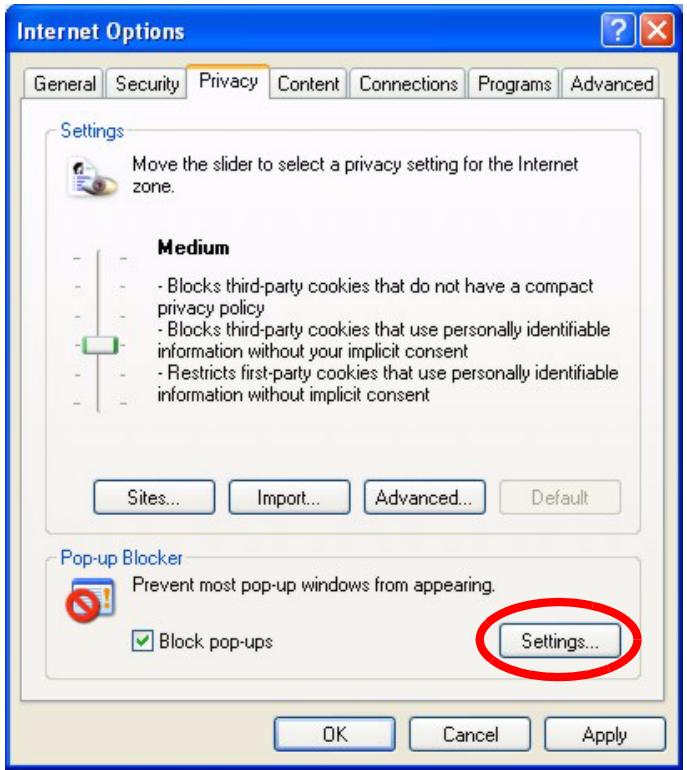
Figure 187 Internet Options
3 Type the IP address of your device (the web page that you do not want to have blocked) with the prefix "http://". For example, http://192.168.1.1.
4 Click Add to move the IP address to the list of Allowed sites.
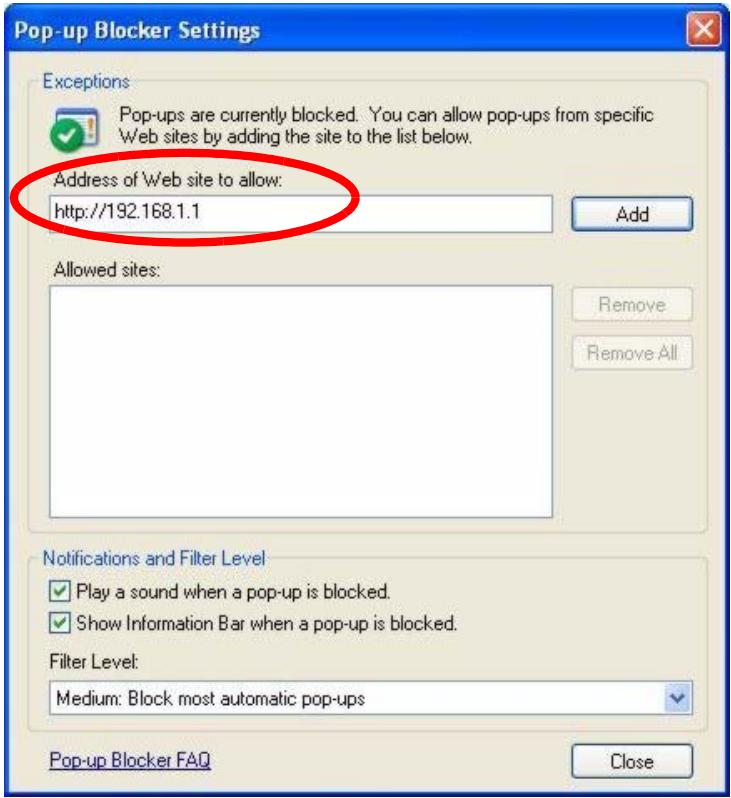
Figure 188 Pop-up Blocker Settings
5 Click Close to return to the Privacy screen.
6 Click Apply to save this setting.
If pages of the web configurator do not display properly in Internet Explorer, check that JavaScripts are allowed.
1 In Internet Explorer, click Tools, Internet Options and then the Security tab.
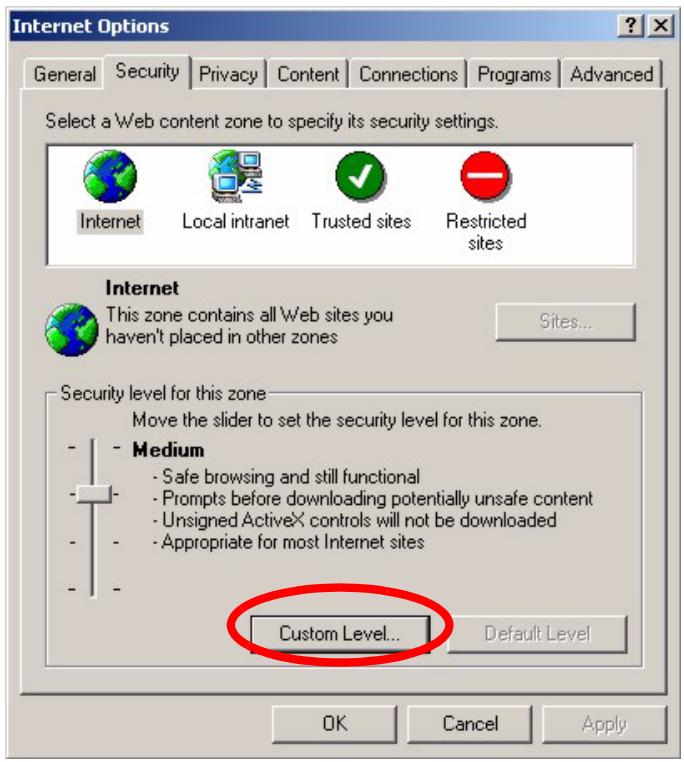
Figure 189 Internet Options
2 Click the Custom Level... button.
3 Scroll down to Scripting.
4 Under Active scripting make sure that Enable is selected (the default).
5 Under Scripting of Java applets make sure that Enable is selected (the default).
6 Click OK to close the window.
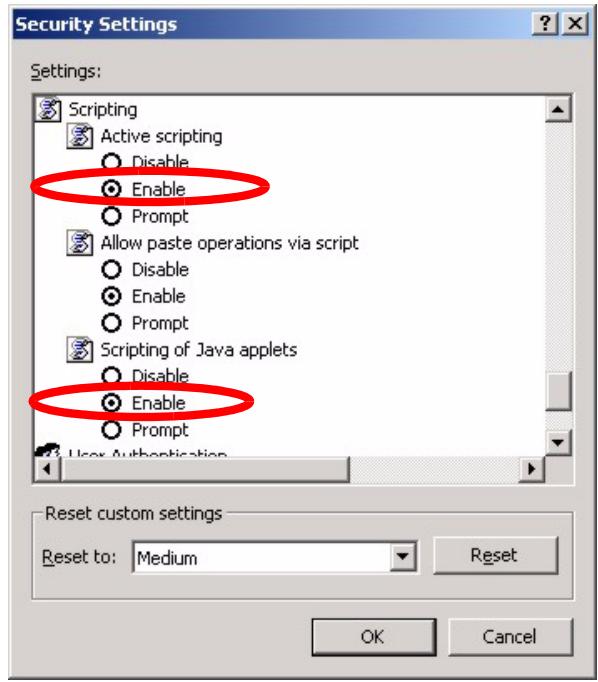
Figure 190 Security Settings - Java Scripting
27.4.1.3 Java Permissions
1 From Internet Explorer, click Tools, Internet Options and then the Security tab.
2 Click the Custom Level... button.
3 Scroll down to Microsoft VM.
4 Under Java permissions make sure that a safety level is selected.
5 Click OK to close the window.
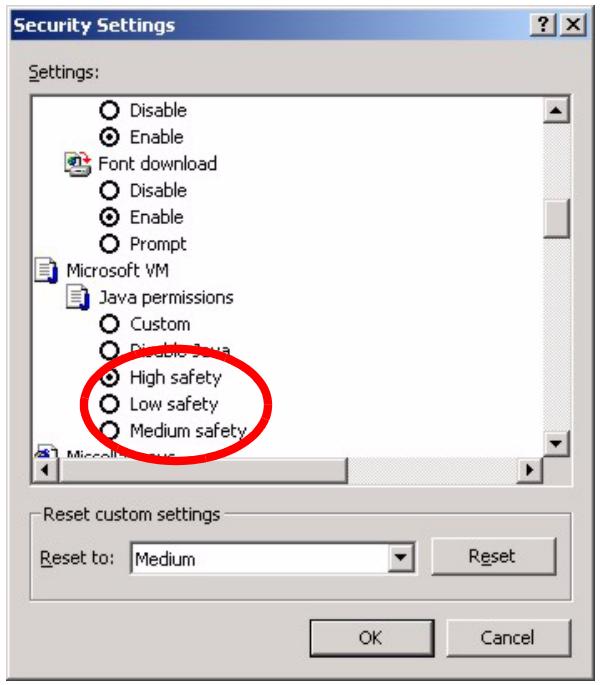
Figure 191 Security Settings - Java
1 From Internet Explorer, click Tools, Internet Options and then the Advanced tab.
2 make sure that Use Java 2 for
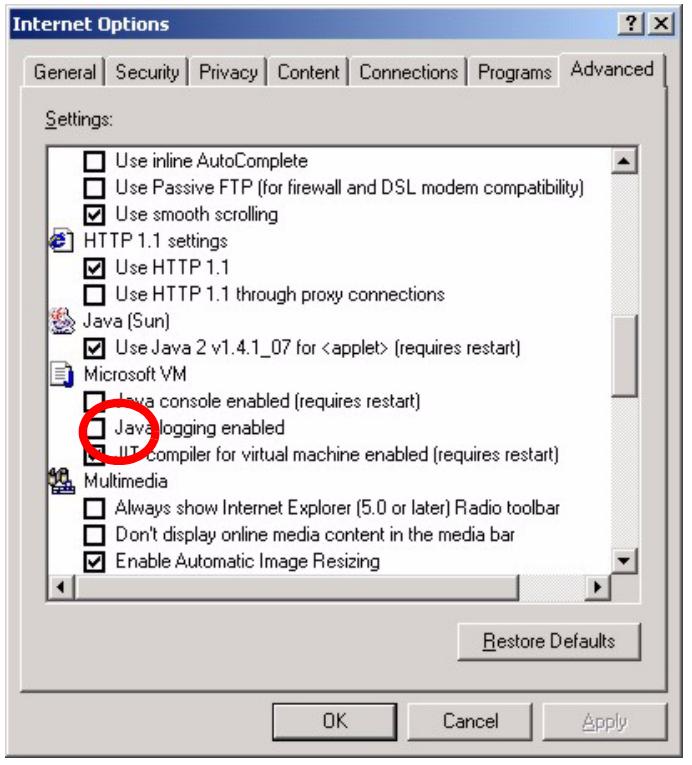
Figure 192 Java (Sun)
27.5 Telephone Problems
Table 129 Troubleshooting Telephone
| PROBLEM | CORRECTIVE ACTION |
| The telephone port won't work or the telephone lacks a dial tone. | Check the telephone connections and telephone wire. Make sure you have the VoIP SIP Settings screen properly configured. |
| I can access the Internet, but cannot make VoIP calls. | Make sure you have the VoIP SIP Settings screen properly configured. One of the PHONE lights should come on. Make sure that your telephone is connected to the corresponding PHONE port. You can also check the VoIP status in the Status screen. If the VoIP settings are correct, use speed dial to make peer-to-peer calls. If you can make a call using speed dial, there may be something wrong with the SIP server, contact your VoIP service provider. |
| I cannot call from one of the ZyXEL Device's phone ports to the other phone port. | You cannot call the SIP number of the SIP account that you are using to make a call. The ZyXEL Device generates a busy tone and does not attempt to establish a call if the SIP number you dial matches the outgoing SIP number of the phone port you are using. For example, if you set Phone 1 to use SIP account 1 and set Phone 2 to use SIP account 2, then you can use Phone 1 to call to SIP account 2's SIP number or Phone 2 to call to SIP account 1's SIP number. |
27.6 Problems With Multiple SIP Accounts
You can set up two SIP accounts on your ZyXEL Device and your ZyXEL Device is equipped with two phone ports. By default your ZyXEL Device uses SIP account 1 with both phone ports for outgoing calls, and it uses SIP accounts 1 and 2 for incoming calls. With this setting, you always use SIP account 1 for your outgoing calls and you cannot distinguish which SIP account the calls are coming in through. If you want to control the use of different dialing plans for accounting purposes or other reasons, you need to configure your phone ports in order to control which SIP account you are using when placing or receiving calls.
27.6.1 Outgoing Calls
The following figure represents the default behavior of your ZyXEL Device when two SIP accounts are configured and you are using two phones. When you place a call from phone 1 or phone 2, the ZyXEL Device will use SIP account 1.
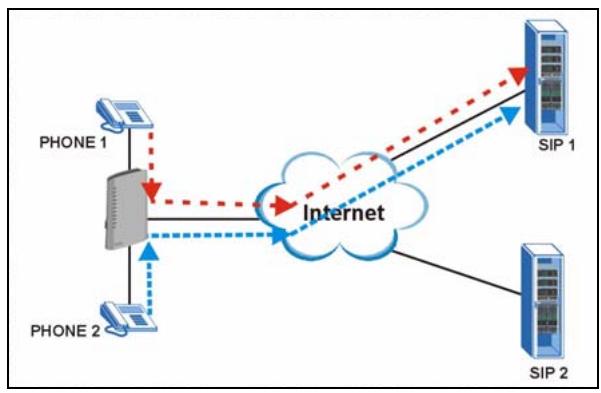
Figure 193 Outgoing Calls: Default
In the next example, phone port 1 is configured to use SIP account 1 and phone port 2 is configured to use SIP account 2. In this case, every time you place a call through phone port 1, you are using your SIP account 1. Similarly, every time you place a call through phone port 2, you are using your SIP account 2. To apply these configuration changes you need to configure the Analog Phone screen. See Section 11.3 on page 154.
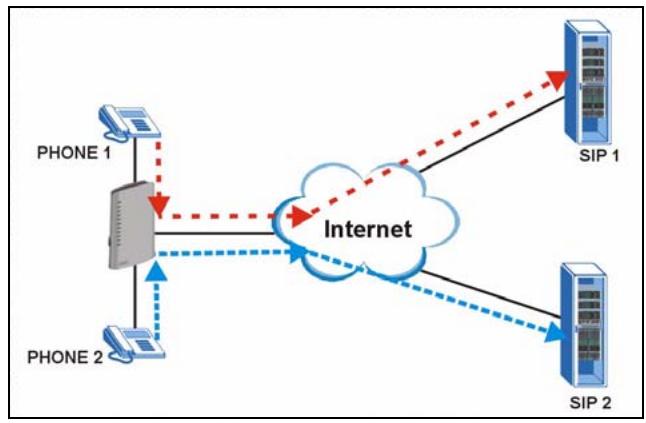
Figure 194 Outgoing Calls: Individual Configuration
27.6.2 Incoming Calls
The following example shows the default behavior of your ZyXEL Device for incoming calls when two SIP accounts are configured and you are using two phones. When a call comes in from your SIP account 1, the phones connected to both phone port 1 and phone port 2 ring. Similarly, when a call comes in from your SIP account 2, the phones connected to both phone port 1 and phone port 2 ring. In either case you are not sure which SIP account the call is coming from.
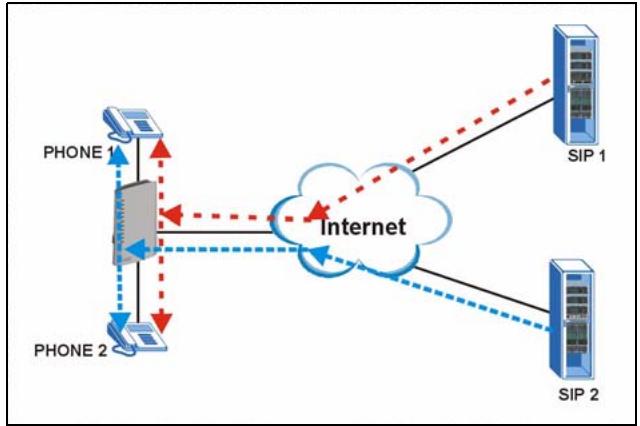
Figure 195 Incoming Calls: Default
In the next example, phone port 1 is configured to use SIP account 1 and phone port 2 is configured to use SIP account 2 for incoming calls. In this case, every time you receive a call from your SIP account 1, the phone connected to phone port 1 rings. Similarly, every time you receive a call from your SIP account 2, the phone connected to phone port 2 rings. To apply these configuration changes you need to configure the Analog Phone screen. See Section 11.3 on page 154.
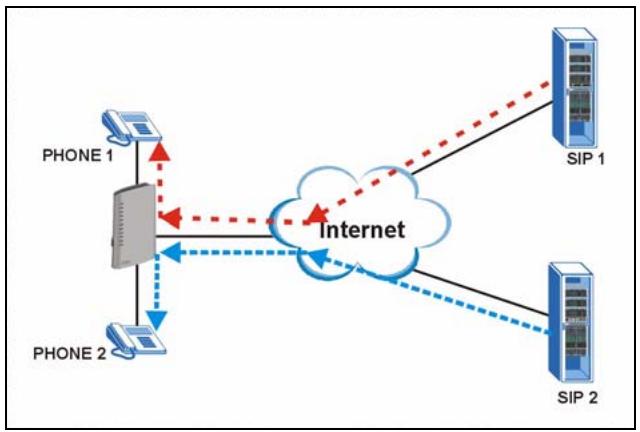
Figure 196 Incoming Calls: Individual Configuration
APPENDIX A
Product Specifications
See also Chapter 1 on page 37 for a general overview of the key features.
Specification Tables
Table 130 Device Specifications
| Default IP Address | 192.168.1.1 |
| Default Subnet Mask | 255.255.255.0 (24 bits) |
| Default Password | 1234 |
| DHCP Server IP Pool | 192.168.1.32 to 192.168.1.64 |
| Static DHCP Addresses | 10 |
| Dimensions | (168 W) x (37 D) x (248 H) mm |
| Weight | 390g |
| Power Specification | 18VAC 1A |
| Built-in Switch | Four auto-negotiating, auto MDI/MDI-X 10/100 Mbps RJ-45 Ethernet ports |
| PHONE Ports | 2 RJ-11 FXS POTS ports. |
| PSTN Line port (“L” models only) | 1 RJ-11 FXS POTS port for making calls over the PSTN line. |
| RESET Button | Restores factory defaults |
| Antenna | One attached external dipole antenna, 2dBi |
| Operation Temperature | 0° C ~ 50° C |
| Storage Temperature | -30° ~ 60° C |
| Operation Humidity | 10% ~ 85% RH |
| Storage Humidity | 10% ~ 90% RH |
Table 131 Firmware Specifications
| ADSL Standards | Support ITU G.992.1 G.dmt (Annex B, U-R2)EOC specified in ITU-T G.992.1ADSL2 G.dmt.bis (G.992.3)ADSL2 G.lite.bis (G.992.4)ADSL 2/2+ AnnexMADSL2+ (G.992.5)Reach-Extended ADSL (RE ADSL)SRA (Seamless Rate Adaptation)Auto-negotiating rate adaptationADSL physical connection ATM AAL5 (ATM Adaptation Layer type 5)Multi-protocol over AAL5 (RFC 2684/1483)PPP over ATM AAL5 (RFC 2364)PPP over Ethernet (RFC 2516)Multiple PPPoEVC-based and LLC-based multiplexingUp to 8 PVCs (Permanent Virtual Circuits)I.610 F4/F5 OAMZero configuration |
| Other Protocol Support | PPP (Point-to-Point Protocol) link layer protocolTransparent bridging for unsupported network layer protocolsDHCP Server/Client/RelYRIP I/RIP IIICMPATM QoSSNMP v1 and v2c with MIB II support (RFC 1213)IP Multicastig IGMP v1 and v2IGMP ProxyUPnP |
| Management | Embedded Web ConfiguratorCLI (Command Line Interpreter)SNMP v1 & v2c with MIB IIEmbedded FTP/TFTP Server for firmware upgrade and configuration filebackup and restoreTelnet for remote managementRemote Management Control: Telnet, FTP, Web, SNMP and DNS VoIP Auto-provisioning via TFTP / HTTP / HTTPSRemote Firmware UpgradeSyslog |
| Wireless (“W” models only) | IEEE 802.11g Compliance Frequency Range: 2.4 GHz ISM Band Advanced Orthogonal Frequency Division Multiplexing (OFDM) Data Rates: 54Mbps, 11Mbps, 5.5Mbps, 2Mbps, and 1 Mbps Auto Fallback Turn on-off WLAN by reset button (press 1s on reset button to turn on or turn off the WLAN; 5s for OTIST; 10s to reset back to factory default) WPA2 WMM IEEE 802.11i IEEE 802.11e Wired Equivalent Privacy (WEP) Data Encryption 64/128/256 bit. WLAN bridge to LAN Up to 32 MAC Address filters IEEE 802.1x Store up to 32 built-in user profiles using EAP-MD5 (Local User Database) External RADIUS server using EAP-MD5, TLS, TTLS OTIST (ZyXEL's One-Touch Intelligent Security Technology) Antenna: 2dBi, non-detachable |
| Firewall | Stateful Packet Inspection Prevent Denial of Service attacks such as Ping of Death, SYN Flood, LAND, Smurf etc. Access Control of Service Content Filtering IP & Generic Packet Filtering Real time Attack Alerts and Logs Reports and logs SIP ALG passthrough |
| NAT/SUA | Port Forwarding 1024 NAT sessions Multimedia application PPTP under NAT/SUA IPSec passthrough SIP ALG passthrough |
| VPN | 20 IPSec tunnels IKE and Manual Key Management AH and ESP Protocol DES, 3DES and AES Encryption SHA-1 and MD5 Authentication Tunnel and Transport Mode Encapsulation IPSec NAT Traversal NETBIOS pass-through for IPSec |
| Content Filtering | Web page blocking by URL keyword. |
| Static Routes | 16 IP |
| Voice Features | SIP version 2 (Session Initiating Protocol RFC 3261)SDP (Session Description Protocol RFC 2327)RTP (RFC 1889)RTCP (RFC 1890)VoiceCodec (coder/decoders) G.711, G.729G.168 echo cancellation (8ms ~ 16ms)Fax and data modem discriminationSilence Suppression / Voice Activity Detection (VAD)Comfort Noise Generation (CNG)Dynamic Jitter Buffer (Adaptive)DTMF Detection and GenerationDTMF: In-band and Out-band traffic (RFC 2833),(PCM), (SIP INFO)Point-to-point call establishment between two IADsQuick dialing through predefined phone book, which maps the phone dialing number and destination URL.Multiple SIP number registration and multiple signaling handling capability.(per POTS port)Caller ID supportFlexible Dial Plan (RFC3525 section 7.1.14)Multiple SIP Accounts / Phone Numbers- Freely assignable Numbers to Each Phone Port |
| Other Features | Any IPZero Configuration (VC auto-hunting)Traffic RedirectDynamic DNSIP AliasIP Policy RoutingSPTGENQoS |
P-2602HWL Series Power Adaptor Specifications
Table 132 P-2602HWL Series Power Adaptor Specifications
| NORTH AMERICAN PLUG STANDARDS | OEM (Original Equipment Manufacturer) | LEI (LEADER ELECTRONICS INC.) |
| AC Power Adapter Model | ADS18B-W 180100 | MU18-2180100-A1 |
| Input Power | AC 100~240Volts/50/60Hz/0.5A | AC 100~240Volts/50/60Hz/0.6A |
| Output Power | DC 18Volts/1A | DC 18Volts/1A |
| Power Consumption | 12 Watt max | 12 Watt max |
| Safety Standards | UL,CUL(UL 60950-1) | UL,CUL(UL 60950-1) |
| EUROPEAN PLUG STANDARDS | ||
| AC Power Adapter Model | ADS18B-B 180100 | MU18-2180100-C5 |
| Input Power | AC 100~240Volts/50/60Hz/0.5A | AC 100~240Volts/50/60Hz/0.6A |
| Output Power | DC 18Volts/1A | DC 18Volts/1A |
| Power Consumption | 12 Watt max | 12 Watt max |
| Safety Standards | TUV, CE(EN 60950 -1) | TUV, CE(EN 60950-1) |
| UNITED KINGDOM PLUG STANDARDS | ||
| AC Power Adapter Model | ADS18B-D 180100 | MU18-2180100-B2 |
| Input Power | AC 100~240Volts/50/60Hz/0.5A | AC 100~240Volts/50/60Hz/0.6A |
| Output Power | DC 18Volts/1A | DC 18Volts/1A |
| Power Consumption | 12 Watt max | 12 Watt max |
| Safety Standards | TUV. CE(EN 60950 -1) | TUV, CE(EN 60950-1) |
APPENDIX B
Splitters and Microfilters
This appendix tells you how to install a POTS splitter or a telephone microfilter.
Connecting a POTS Splitter
When you use the Full Rate (G.dmt) ADSL standard, you can use a POTS (Plain Old Telephone Service) splitter to separate the telephone and ADSL signals. This allows simultaneous Internet access and telephone service on the same line. A splitter also eliminates the destructive interference conditions caused by telephone sets.
Install the POTS splitter at the point where the telephone line enters your residence, as shown in the following figure.
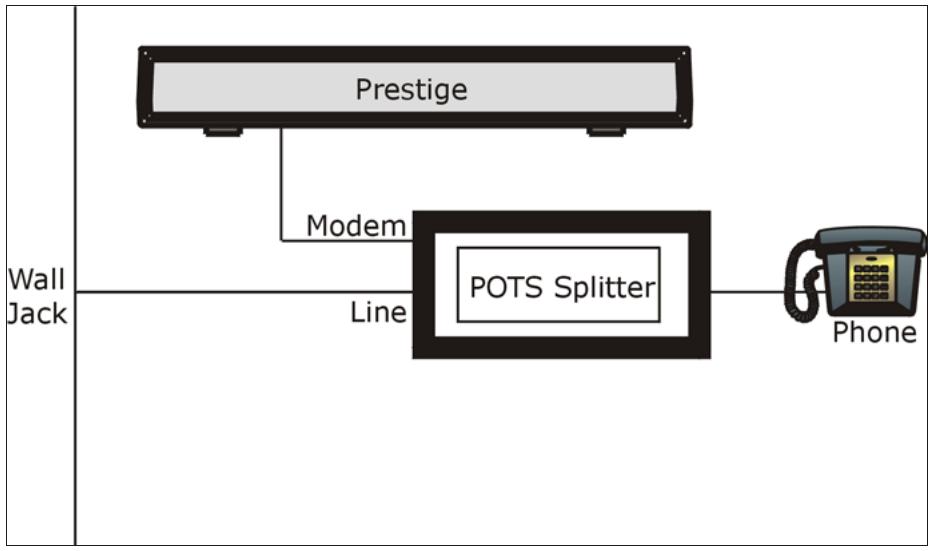
Figure 197 Connecting a POTS Splitter
1 Connect the side labeled "Phone" to your telephone.
2 Connect the side labeled "Modem" or "DSL" to your ZyXEL Device.
3 Connect the side labeled "Line" to the telephone wall jack.
Telephone Microfilters
Telephone voice transmissions take place in the lower frequency range, 0 - 4KHz, while ADSL transmissions take place in the higher bandwidth range, above 4KHz. A microfilter acts as a low-pass filter, for your telephone, to ensure that ADSL transmissions do not interfere with your telephone voice transmissions. The use of a telephone microfilter is optional.
1 Connect a phone cable from the wall jack to the single jack end of the Y- Connector.
2 Connect a cable from the double jack end of the Y-Connector to the "wall side" of the microfilter.
3 Connect another cable from the double jack end of the Y-Connector to the ZyXEL Device.
4 Connect the "phone side" of the microfilter to your telephone as shown in the following figure.
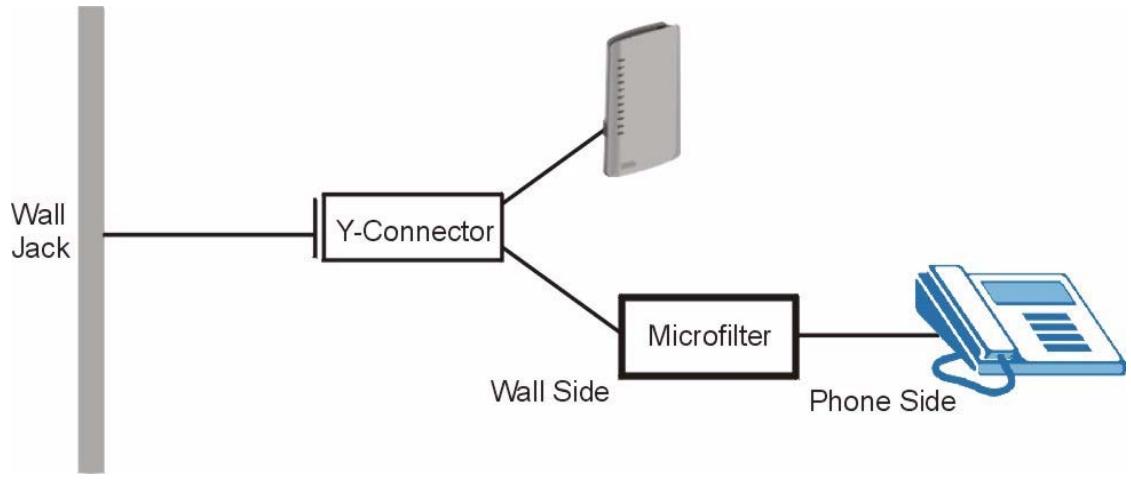
Figure 198 Connecting a Microfilter
ZyXEL Device With ISDN
This section relates to people who use their ZyXEL Device with ADSL over ISDN (digital telephone service) only. The following is an example installation for the ZyXEL Device with ISDN.
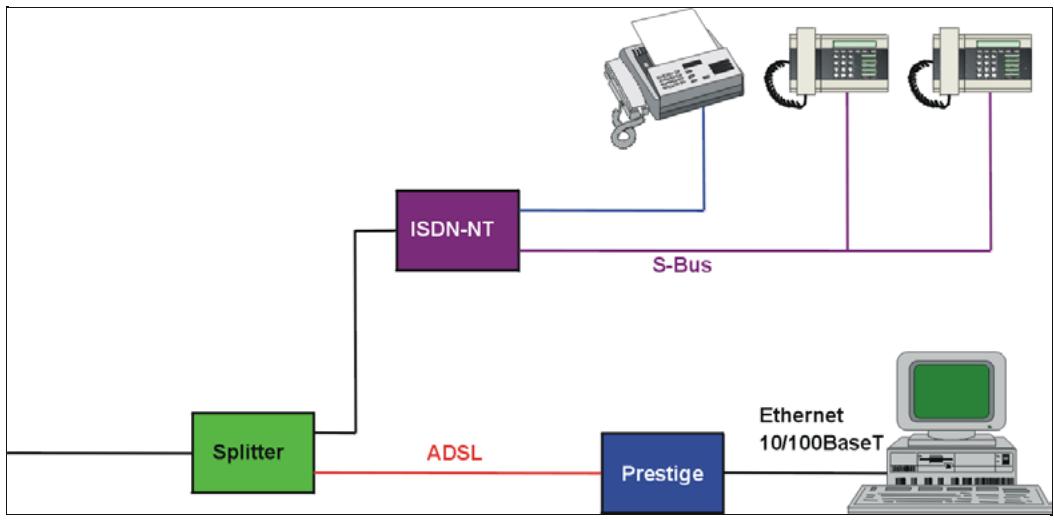
Figure 199 ZyXEL Device with ISDN
APPENDIX C Setting up Your Computer's IP Address
All computers must have a 10M or 100M Ethernet adapter card and TCP/IP installed.
Windows 95/98/Me/NT/2000/XP, Macintosh OS 7 and later operating systems and all versions of UNIX/LINUX include the software components you need to install and use TCP/IP on your computer. Windows 3.1 requires the purchase of a third-party TCP/IP application package.
TCP/IP should already be installed on computers using Windows NT/2000/XP, Macintosh OS 7 and later operating systems.
After the appropriate TCP/IP components are installed, configure the TCP/IP settings in order to "communicate" with your network.
If you manually assign IP information instead of using dynamic assignment, make sure that your computers have IP addresses that place them in the same subnet as the ZyXEL Device's LAN port.
Windows 95/98/Me
Click Start, Settings, Control Panel and double-click the Network icon to open the Network window
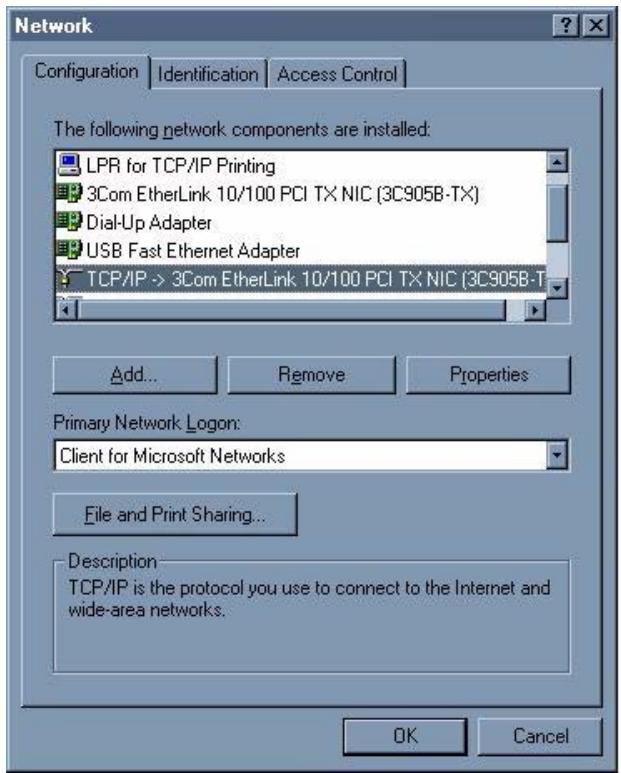
Figure 200 Windows 95/98/Me: Network: Configuration
Installing Components
The Network window Configuration tab displays a list of installed components. You need a network adapter, the TCP/IP protocol and Client for Microsoft Networks.
If you need the adapter:
1 In the Network window, click Add.
2 Select Adapter and then click Add.
3 Select the manufacturer and model of your network adapter and then click OK.
If you need TCP/IP:
1 In the Network window, click Add.
2 Select Protocol and then click Add.
3 Select Microsoft from the list of manufacturers.
4 Select TCP/IP from the list of network protocols and then click OK.
If you need Client for Microsoft Networks:
1 Click Add.
2 Select Client and then click Add.
3 Select Microsoft from the list of manufacturers.
4 Select Client for Microsoft Networks from the list of network clients and then click OK.
5 Restart your computer so the changes you made take effect.
Configuring
1 In the Network window Configuration tab, select your network adapter's TCP/IP entry and click Properties
2 Click the IP Address tab.
- If your IP address is dynamic, select Obtain an IP address automatically.
- If you have a static IP address, select Specify an IP address and type your information into the IP Address and Subnet Mask fields.
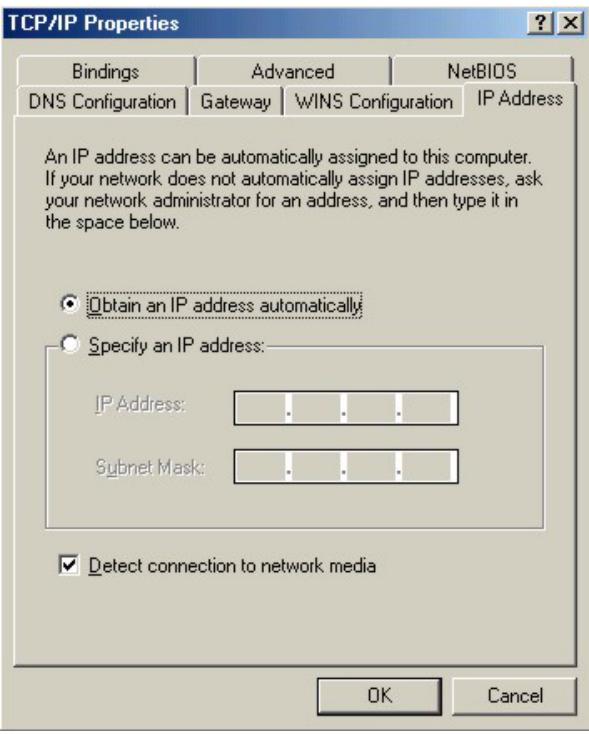
Figure 201 Windows 95/98/Me: TCP/IP Properties: IP Address
3 Click the DNS Configuration tab.
If you do not know your DNS information, select Disable DNS.
- If you know your DNS information, select Enable DNS and type the information in the fields below (you may not need to fill them all in).
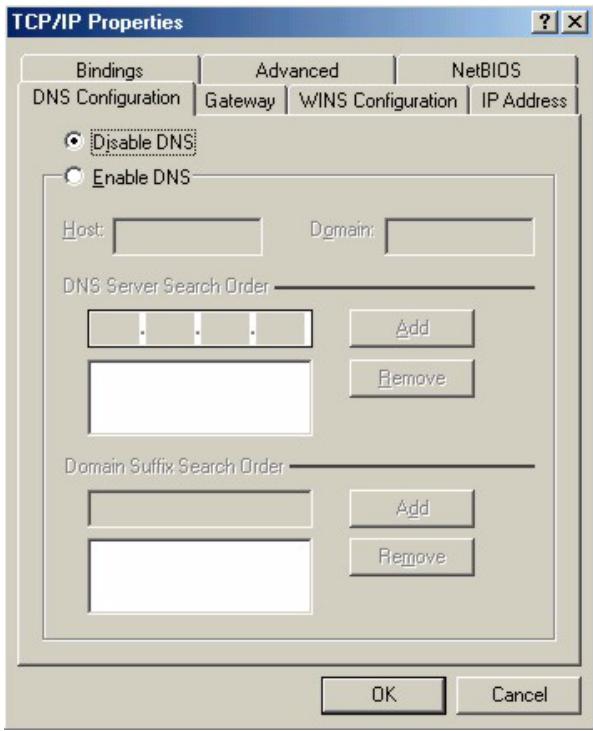
Figure 202 Windows 95/98/Me: TCP/IP Properties: DNS Configuration
4 Click the Gateway tab.
- If you do not know your gateway's IP address, remove previously installed gateways.
- If you have a gateway IP address, type it in the New gateway field and click Add.
5 Click OK to save and close the TCP/IP Properties window.
6 Click OK to close the Network window. Insert the Windows CD if prompted.
7 Turn on your ZyXEL Device and restart your computer when prompted.
Verifying Settings
1 Click Start and then Run.
2 In the Run window, type "winipcfg" and then click OK to open the IP Configuration window.
3 Select your network adapter. You should see your computer's IP address, subnet mask and default gateway.
Windows 2000/NT/XP
1 For Windows XP, click start, Control Panel. In Windows 2000/NT, click Start, Settings, Control Panel.
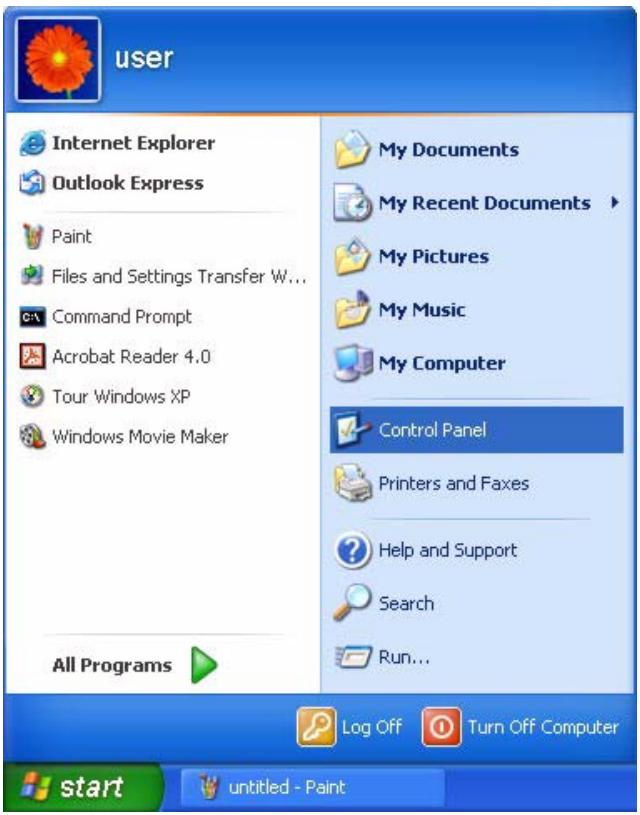
Figure 203 Windows XP: Start Menu
2 For Windows XP, click Network Connections. For Windows 2000/NT, click Network and Dial-up Connections.
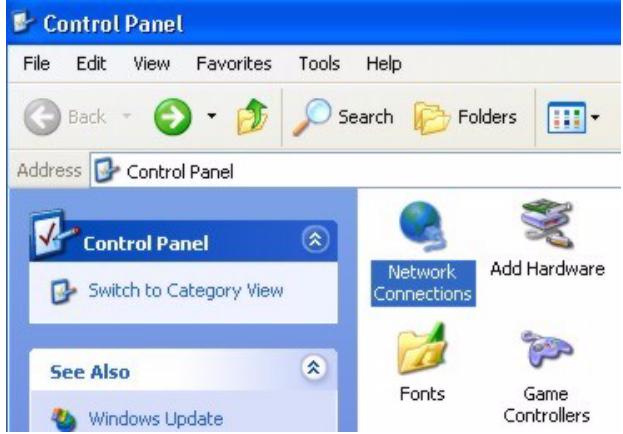
Figure 204 Windows XP: Control Panel
3 Right-click Local Area Connection and then click Properties.
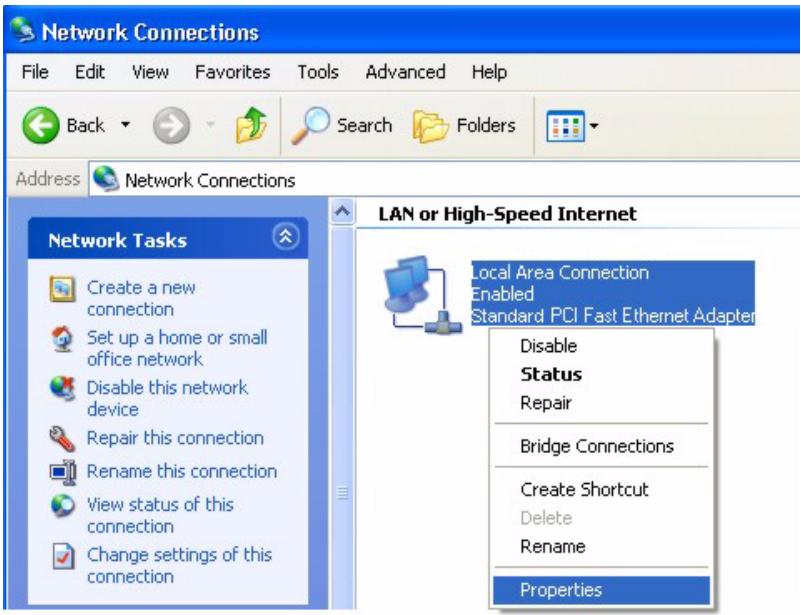
Figure 205 Windows XP: Control Panel: Network Connections: Properties
4 Select Internet Protocol (TCP/IP) (under the General tab in Win XP) and click Properties.
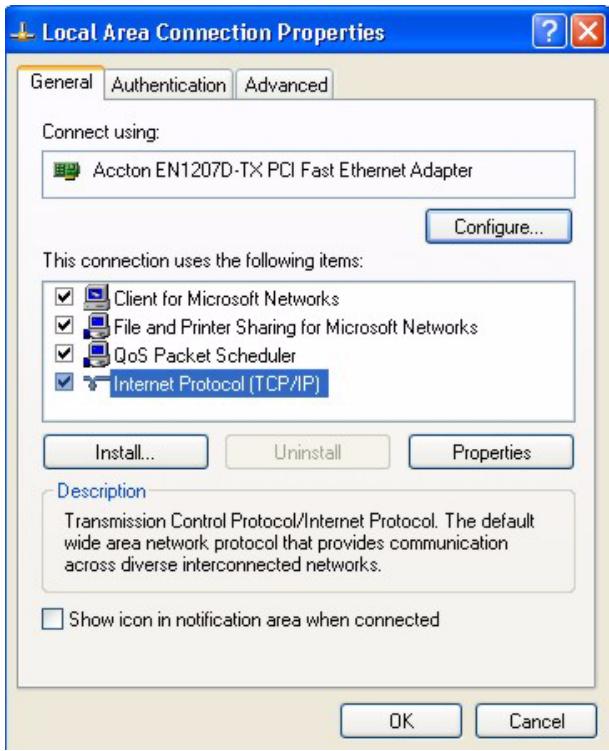
Figure 206 Windows XP: Local Area Connection Properties
5 The Internet Protocol TCP/IP Properties window opens (the General tab in Windows XP).
If you have a dynamic IP address click Obtain an IP address automatically.
- If you have a static IP address click Use the following IP Address and fill in the IP address, Subnet mask, and Default gateway fields. Click Advanced.
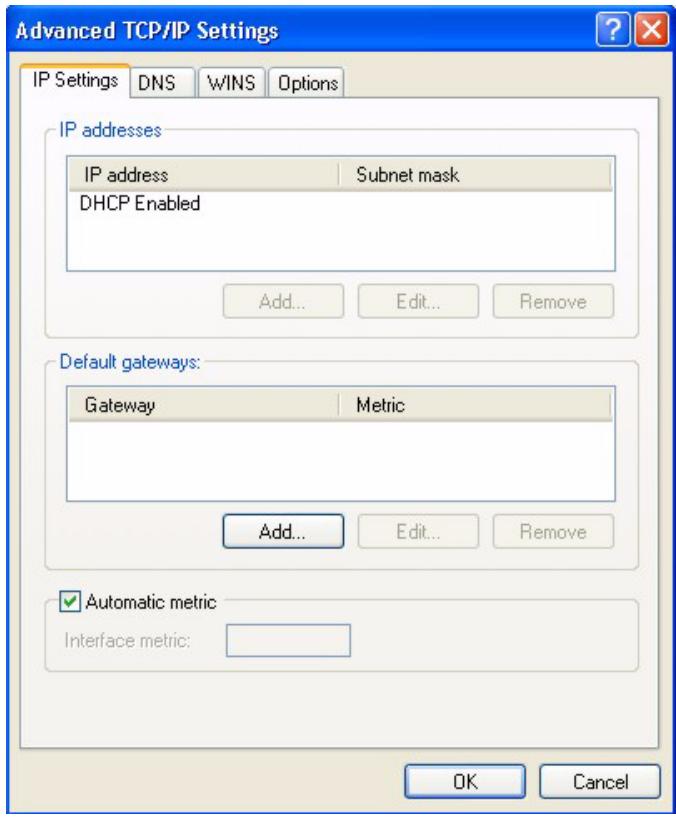
Figure 207 Windows XP: Advanced TCP/IP Settings
6 If you do not know your gateway's IP address, remove any previously installed gateways in the IP Settings tab and click OK.
Do one or more of the following if you want to configure additional IP addresses:
In the IP Settings tab, in IP addresses, click Add.
- In TCP/IP Address, type an IP address in IP address and a subnet mask in Subnet mask, and then click Add.
- Repeat the above two steps for each IP address you want to add.
- Configure additional default gateways in the IP Settings tab by clicking Add in Default gateways.
- In TCP/IP Gateway Address, type the IP address of the default gateway in Gateway. To manually configure a default metric (the number of transmission hops), clear the Automatic metric check box and type a metric in Metric.
- Click Add.
- Repeat the previous three steps for each default gateway you want to add.
- Click OK when finished.
7 In the Internet Protocol TCP/IP Properties window (the General tab in Windows XP):
- Click Obtain DNS server address automatically if you do not know your DNS server IP address(es).
- If you know your DNS server IP address(es), click Use the following DNS server addresses, and type them in the Preferred DNS server and Alternate DNS server fields.
If you have previously configured DNS servers, click Advanced and then the DNS tab to order them.
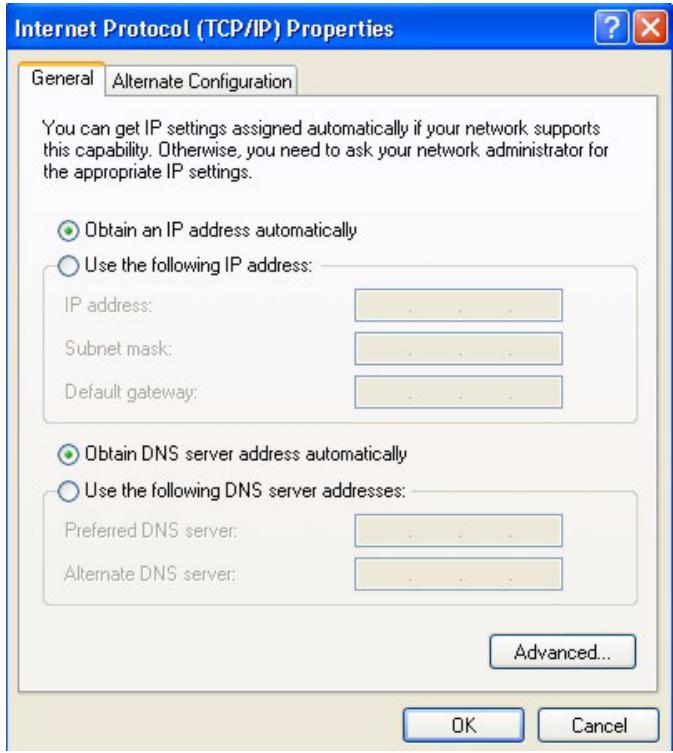
Figure 208 Windows XP: Internet Protocol (TCP/IP) Properties
8 Click OK to close the Internet Protocol (TCP/IP) Properties window.
9 Click OK to close the Local Area Connection Properties window.
10Turn on your ZyXEL Device and restart your computer (if prompted).
Verifying Settings
1 Click Start, All Programs, Accessories and then Command Prompt.
2 In the Command Prompt window, type "ipconfig" and then press [ENTER]. You can also open Network Connections, right-click a network connection, click Status and then click the Support tab.
Macintosh OS 8/9
1 Click the Apple menu, Control Panel and double-click TCP/IP to open the TCP/IP Control Panel.
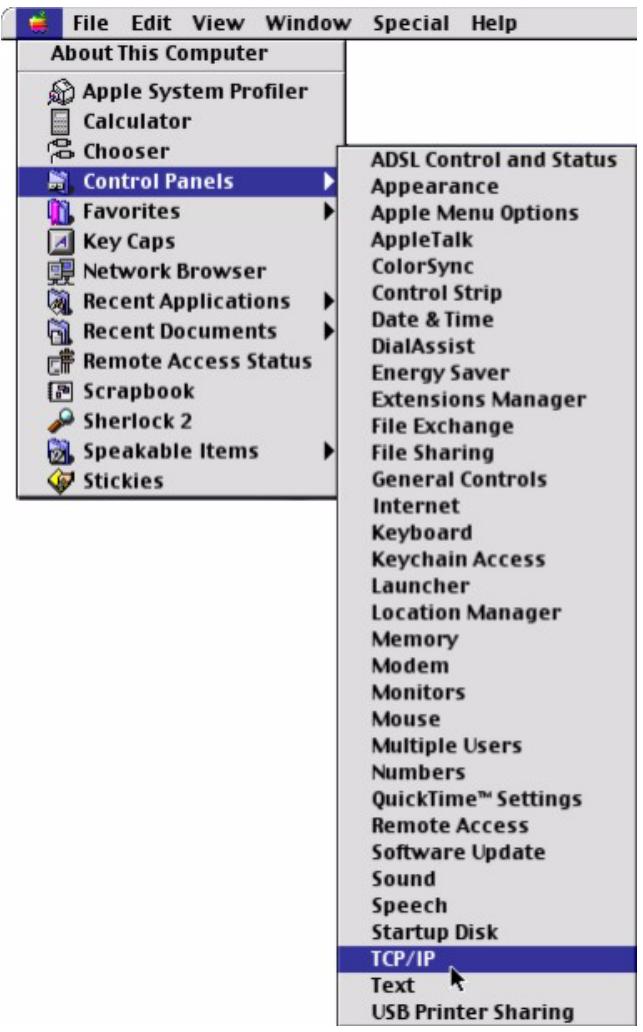
Figure 209 Macintosh OS 8/9: Apple Menu
2 Select Ethernet built-in from the Connect via list.
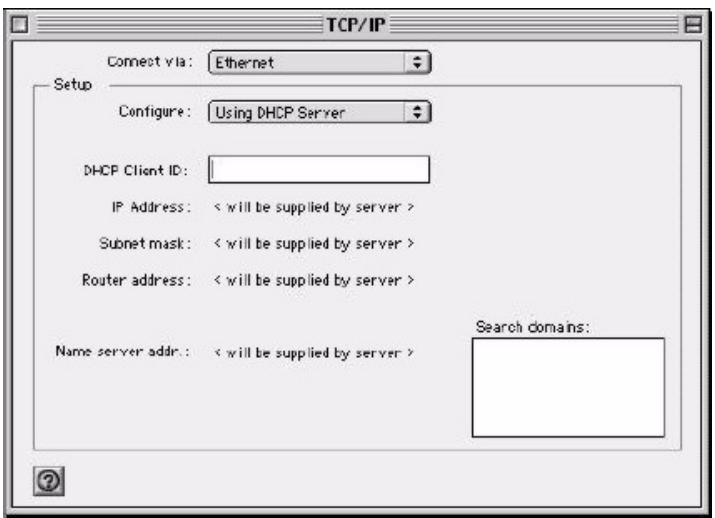
Figure 210 Macintosh OS 8/9: TCP/IP
3 For dynamically assigned settings, select Using DHCP Server from the Configure: list.
4 For statically assigned settings, do the following:
From the Configure box, select Manually.
Type your IP address in the IP Address box.
- Type your subnet mask in the Subnet mask box.
- Type the IP address of your ZyXEL Device in the Router address box.
5 Close the TCP/IP Control Panel.
6 Click Save if prompted, to save changes to your configuration.
7 Turn on your ZyXEL Device and restart your computer (if prompted).
Verifying Settings
Check your TCP/IP properties in the TCP/IP Control Panel window.
Macintosh OS X
1 Click the Apple menu, and click System Preferences to open the System Preferences window.
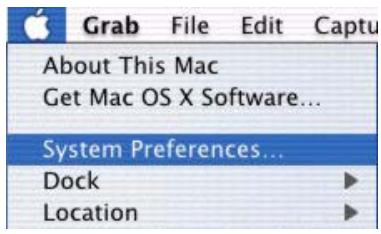
Figure 211 Macintosh OS X:Apple Menu
2 Click Network in the icon bar.
- Select Automatic from the Location list.
- Select Built-in Ethernet from the Show list.
- Click the TCP/IP tab.
3 For dynamically assigned settings, select Using DHCP from the Configure list.
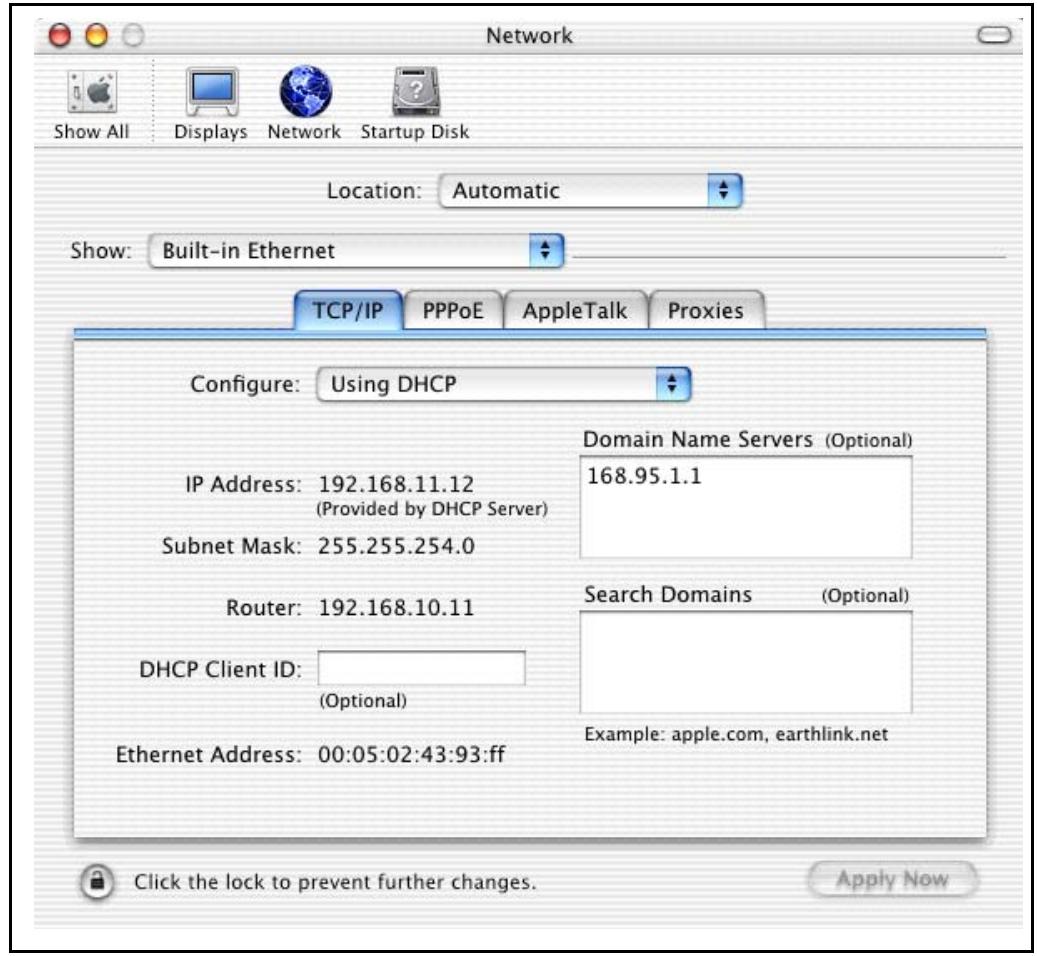
Figure 212 Macintosh OS X: Network
4 For statically assigned settings, do the following:
From the Configure box, select Manually.
Type your IP address in the IP Address box.
- Type your subnet mask in the Subnet mask box.
- Type the IP address of your ZyXEL Device in the Router address box.
5 Click Apply Now and close the window.
6 Turn on your ZyXEL Device and restart your computer (if prompted).
Verifying Settings
Check your TCP/IP properties in the Network window.
APPENDIX D
IP Addresses and Subnetting
This appendix introduces IP addresses, IP address classes and subnet masks. You use subnet masks to subdivide a network into smaller logical networks.
Introduction to IP Addresses
An IP address has two parts: the network number and the host ID. Routers use the network number to send packets to the correct network, while the host ID identifies a single device on the network.
An IP address is made up of four octets, written in dotted decimal notation, for example, 192.168.1.1. (An octet is an 8-digit binary number. Therefore, each octet has a possible range of 00000000 to 11111111 in binary, or 0 to 255 in decimal.)
There are several classes of IP addresses. The first network number (192 in the above example) defines the class of IP address. These are defined as follows:
Class A: 0 to 127
Class B: 128 to 191
Class C: 192 to 223
Class D: 224 to 239
Class E: 240 to 255
IP Address Classes and Hosts
The class of an IP address determines the number of hosts you can have on your network.
- In a class A address the first octet is the network number, and the remaining three octets are the host ID.
- In a class B address the first two octets make up the network number, and the two remaining octets make up the host ID.
- In a class C address the first three octets make up the network number, and the last octet is the host ID.
The following table shows the network number and host ID arrangement for classes A, B and C.
Table 133 Classes of IP Addresses
| IP ADDRESS | OCTET 1 | OCTET 2 | OCTET 3 | OCTET 4 |
| Class A | Network number | Host ID | Host ID | Host ID |
| Class B | Network number | Network number | Host ID | Host ID |
| Class C | Network number | Network number | Network number | Host ID |
An IP address with host IDs of all zeros is the IP address of the network (192.168.1.0 for example). An IP address with host IDs of all ones is the broadcast address for that network (192.168.1.255 for example). Therefore, to determine the total number of hosts allowed in a network, deduct two as shown next:
- A class C address (1 host octet: 8 host bits) can have 2^8 - 2 , or 254 hosts.
- A class B address (2 host octets: 16 host bits) can have 2^16 - 2 , or 65534 hosts.
A class A address (3 host octets: 24 host bits) can have 2^24 - 2 hosts, or approximately 16 million hosts.
IP Address Classes and Network ID
The value of the first octet of an IP address determines the class of an address.
Class A addresses have a 0 in the leftmost bit.
Class B addresses have a 1 in the leftmost bit and a 0 in the next leftmost bit.
Class C addresses start with 1 1 0 in the first three leftmost bits.
- Class D addresses begin with 1 1 1 0. Class D addresses are used for multicasting, which is used to send information to groups of computers.
- There is also a class E. It is reserved for future use.
The following table shows the allowed ranges for the first octet of each class. This range determines the number of subnets you can have in a network.
Table 134 Allowed IP Address Range By Class
| CLASS | ALLOWED RANGE OF FIRST OCTET (BINARY) | ALLOWED RANGE OF FIRST OCTET (DECIMAL) |
| Class A | 00000000 to 01111111 | 0 to 127 |
| Class B | 10000000 to 10111111 | 128 to 191 |
| Class C | 11000000 to 11011111 | 192 to 223 |
| Class D | 11100000 to 11101111 | 224 to 239 |
| Class E(reserved) | 11110000 to 11111111 | 240 to 255 |
Subnet Masks
A subnet mask is used to determine which bits are part of the network number, and which bits are part of the host ID (using a logical AND operation).
A subnet mask has 32 bits. If a bit in the subnet mask is a "1" then the corresponding bit in the IP address is part of the network number. If a bit in the subnet mask is "0" then the corresponding bit in the IP address is part of the host ID.
Subnet masks are expressed in dotted decimal notation just like IP addresses. The "natural" masks for class A, B and C IP addresses are as follows.
Table 135 "Natural" Masks
| CLASS | NATURAL MASK |
| A | 255.0.0.0 |
| B | 255.255.0.0 |
| C | 255.255.255.0 |
Subnetting
With subnetting, the class arrangement of an IP address is ignored. For example, a class C address no longer has to have 24 bits of network number and 8 bits of host ID. With subnetting, some of the host ID bits are converted into network number bits.
By convention, subnet masks always consist of a continuous sequence of ones beginning from the leftmost bit of the mask, followed by a continuous sequence of zeros, for a total number of 32 bits.
Since the mask is always a continuous number of ones beginning from the left, followed by a continuous number of zeros for the remainder of the 32 bit mask, you can simply specify the number of ones instead of writing the value of each octet. This is usually specified by writing a “/” followed by the number of bits in the mask after the address.
For example, 192.1.1.0 /25 is equivalent to saying 192.1.1.0 with mask 255.255.255.128.
The following table shows all possible subnet masks for a class "C" address using both notations.
Table 136 Alternative Subnet Mask Notation
| SUBNET MASK | SUBNET MASK “1” BITS | LAST OCTET BIT VALUE | DECIMAL |
| 255.255.255.0 | /24 | 0000 0000 | 0 |
| 255.255.255.128 | /25 | 1000 0000 | 128 |
| 255.255.255.192 | /26 | 1100 0000 | 192 |
| 255.255.255.224 | /27 | 1110 0000 | 224 |
| 255.255.255.240 | /28 | 1111 0000 | 240 |
| 255.255.255.248 | /29 | 1111 1000 | 248 |
| 255.255.255.252 | /30 | 1111 1100 | 252 |
The first mask shown is the class "C" natural mask. Normally if no mask is specified it is understood that the natural mask is being used.
Example: Two Subnets
As an example, you have a class "C" address 192.168.1.0 with subnet mask of 255.255.255.0.
Table 137 Two Subnets Example
| IP/SUBNET MASK | NETWORK NUMBER | HOST ID |
| IP Address | 192.168.1. | 0 |
| IP Address (Binary) | 11000000.10101000.00000001. | 00000000 |
| Subnet Mask | 255.255.255. | 0 |
| Subnet Mask (Binary) | 11111111.11111111.11111111. | 00000000 |
The first three octets of the address make up the network number (class "C").
To make two networks, divide the network 192.168.1.0 into two separate subnets by converting one of the host ID bits of the IP address to a network number bit. The "borrowed" host ID bit can be either "0" or "1" thus giving two subnets; 192.168.1.0 with mask 255.255.255.128 and 192.168.1.128 with mask 255.255.255.128.
Note: In the following charts, shaded/bolded last octet bit values indicate host ID bits "borrowed" to make network ID bits. The number of "borrowed" host ID bits determines the number of subnets you can have. The remaining number of host ID bits (after "borrowing") determines the number of hosts you can have on each subnet.
Table 138 Subnet 1
| IP/SUBNET MASK | NETWORK NUMBER | LAST OCTET BIT VALUE |
| IP Address | 192.168.1. | 0 |
| IP Address (Binary) | 11000000.10101000.00000001. | 00000000 |
| Subnet Mask | 255.255.255. | 128 |
| Subnet Mask (Binary) | 11111111.11111111.11111111. | 10000000 |
| Subnet Address: 192.168.1.0 | Lowest Host ID: 192.168.1.1 | |
| Broadcast Address: 192.168.1.127 | Highest Host ID: 192.168.1.126 | |
Table 139 Subnet 2
| IP/SUBNET MASK | NETWORK NUMBER | LAST OCTET BIT VALUE |
| IP Address | 192.168.1. | 128 |
| IP Address (Binary) | 11000000.10101000.00000001. | 10000000 |
| Subnet Mask | 255.255.255. | 128 |
| Subnet Mask (Binary) | 11111111.11111111.11111111. | 10000000 |
| Subnet Address: 192.168.1.128 | Lowest Host ID: 192.168.1.129 | |
| Broadcast Address: 192.168.1.255 | Highest Host ID: 192.168.1.254 | |
Host IDs of all zeros represent the subnet itself and host IDs of all ones are the broadcast address for that subnet, so the actual number of hosts available on each subnet in the example above is 2^7 - 2 or 126 hosts for each subnet.
192.168.1.0 with mask 255.255.255.128 is the subnet itself, and 192.168.1.127 with mask 255.255.255.128 is the directed broadcast address for the first subnet. Therefore, the lowest IP address that can be assigned to an actual host for the first subnet is 192.168.1.1 and the highest is 192.168.1.126. Similarly the host ID range for the second subnet is 192.168.1.129 to 192.168.1.254.
Example: Four Subnets
The above example illustrated using a 25-bit subnet mask to divide a class "C" address space into two subnets. Similarly to divide a class "C" address into four subnets, you need to "borrow" two host ID bits to give four possible combinations (00, 01, 10 and 11). The subnet mask is 26 bits (1111111.1111111.1111111.1100000) or 255.255.255.192. Each subnet contains 6 host ID bits, giving 2^6-2 or 62 hosts for each subnet (all zeroes is the subnet itself, all ones is the broadcast address on the subnet).
Table 140 Subnet 1
| IP/SUBNET MASK | NETWORK NUMBER | LAST OCTET BIT VALUE |
| IP Address | 192.168.1. | 0 |
| IP Address (Binary) | 11000000.10101000.00000001. | 00000000 |
| Subnet Mask (Binary) | 11111111.11111111.11111111. | 11000000 |
| Subnet Address: 192.168.1.0 | Lowest Host ID: 192.168.1.1 | |
| Broadcast Address: 192.168.1.63 | Highest Host ID: 192.168.1.62 | |
Table 141 Subnet 2
| IP/SUBNET MASK | NETWORK NUMBER | LAST OCTET BIT VALUE |
| IP Address | 192.168.1. | 64 |
| IP Address (Binary) | 11000000.10101000.00000001. | 01000000 |
| Subnet Mask (Binary) | 11111111.11111111.11111111. | 11000000 |
| Subnet Address: 192.168.1.64 | Lowest Host ID: 192.168.1.65 | |
| Broadcast Address: 192.168.1.127 | Highest Host ID: 192.168.1.126 | |
Table 142 Subnet 3
| IP/SUBNET MASK | NETWORK NUMBER | LAST OCTET BIT VALUE |
| IP Address | 192.168.1. | 128 |
| IP Address (Binary) | 11000000.10101000.00000001. | 10000000 |
| Subnet Mask (Binary) | 11111111.11111111.11111111. | 11000000 |
| Subnet Address: 192.168.1.128 | Lowest Host ID: 192.168.1.129 | |
| Broadcast Address: 192.168.1.191 | Highest Host ID: 192.168.1.190 | |
Table 143 Subnet 4
| IP/SUBNET MASK | NETWORK NUMBER | LAST OCTET BIT VALUE |
| IP Address | 192.168.1. | 192 |
| IP Address (Binary) | 11000000.10101000.00000001. | 11000000 |
| Subnet Mask (Binary) | 11111111.11111111.11111111. | 11000000 |
| Subnet Address: 192.168.1.192 | Lowest Host ID: 192.168.1.193 | |
| Broadcast Address: 192.168.1.255 | Highest Host ID: 192.168.1.254 | |
Example Eight Subnets
Similarly use a 27-bit mask to create eight subnets (000, 001, 010, 011, 100, 101, 110 and 111).
The following table shows class C IP address last octet values for each subnet.
Table 144 Eight Subnets
| SUBNET | SUBNET ADDRESS | FIRST ADDRESS | LAST ADDRESS | BROADCAST ADDRESS |
| 1 | 0 | 1 | 30 | 31 |
| 2 | 32 | 33 | 62 | 63 |
| 3 | 64 | 65 | 94 | 95 |
| 4 | 96 | 97 | 126 | 127 |
| 5 | 128 | 129 | 158 | 159 |
| 6 | 160 | 161 | 190 | 191 |
| 7 | 192 | 193 | 222 | 223 |
| 8 | 224 | 225 | 254 | 255 |
The following table is a summary for class "C" subnet planning.
Table 145 Class C Subnet Planning
| NO. “BORROWED” HOST BITS | SUBNET MASK | NO. SUBNETS | NO. HOSTS PER SUBNET |
| 1 | 255.255.255.128 (/25) | 2 | 126 |
| 2 | 255.255.255.192 (/26) | 4 | 62 |
| 3 | 255.255.255.224 (/27) | 8 | 30 |
| 4 | 255.255.255.240 (/28) | 16 | 14 |
| 5 | 255.255.255.248 (/29) | 32 | 6 |
| 6 | 255.255.255.252 (/30) | 64 | 2 |
| 7 | 255.255.255.254 (/31) | 128 | 1 |
Subnetting With Class A and Class B Networks.
For class "A" and class "B" addresses the subnet mask also determines which bits are part of the network number and which are part of the host ID.
A class “B” address has two host ID octets available for subnetting and a class “A” address has three host ID octets (see Table 133 on page 354) available for subnetting.
The following table is a summary for class "B" subnet planning.
Table 146 Class B Subnet Planning
| NO. “BORROWED” HOST BITS | SUBNET MASK | NO. SUBNETS | NO. HOSTS PER SUBNET |
| 1 | 255.255.128.0 (/17) | 2 | 32766 |
| 2 | 255.255.192.0 (/18) | 4 | 16382 |
| 3 | 255.255.224.0 (/19) | 8 | 8190 |
| 4 | 255.255.240.0 (/20) | 16 | 4094 |
| 5 | 255.255.248.0 (/21) | 32 | 2046 |
| 6 | 255.255.252.0 (/22) | 64 | 1022 |
| 7 | 255.255.254.0 (/23) | 128 | 510 |
| 8 | 255.255.255.0 (/24) | 256 | 254 |
| 9 | 255.255.255.128 (/25) | 512 | 126 |
| 10 | 255.255.255.192 (/26) | 1024 | 62 |
| 11 | 255.255.255.224 (/27) | 2048 | 30 |
| 12 | 255.255.255.240 (/28) | 4096 | 14 |
| 13 | 255.255.255.248 (/29) | 8192 | 6 |
| 14 | 255.255.255.252 (/30) | 16384 | 2 |
| 15 | 255.255.255.254 (/31) | 32768 | 1 |
APPENDIX E
Wireless LANs
Wireless LAN Topologies
This section discusses ad-hoc and infrastructure wireless LAN topologies.
Ad-hoc Wireless LAN Configuration
The simplest WLAN configuration is an independent (Ad-hoc) WLAN that connects a set of computers with wireless stations (A, B, C). Any time two or more wireless adapters are within range of each other, they can set up an independent network, which is commonly referred to as an Ad-hoc network or Independent Basic Service Set (IBSS). The following diagram shows an example of notebook computers using wireless adapters to form an Ad-hoc wireless LAN.
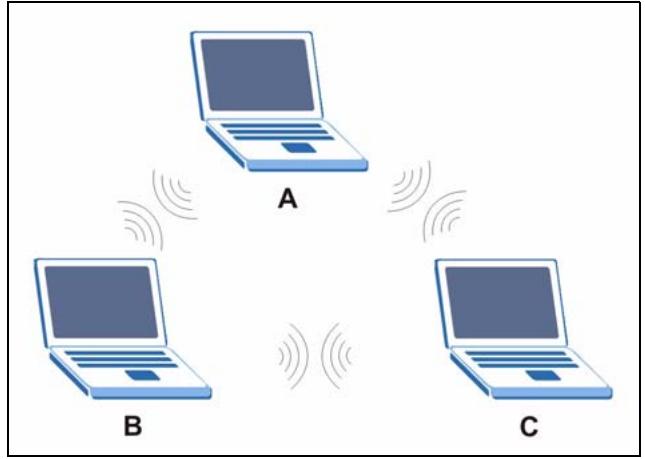
Figure 213 Peer-to-Peer Communication in an Ad-hoc Network
BSS
A Basic Service Set (BSS) exists when all communications between wireless stations or between a wireless station and a wired network client go through one access point (AP).
Intra-BSS traffic is traffic between wireless stations in the BSS. When Intra-BSS is enabled, wireless station A and B can access the wired network and communicate with each other. When Intra-BSS is disabled, wireless station A and B can still access the wired network but cannot communicate with each other.
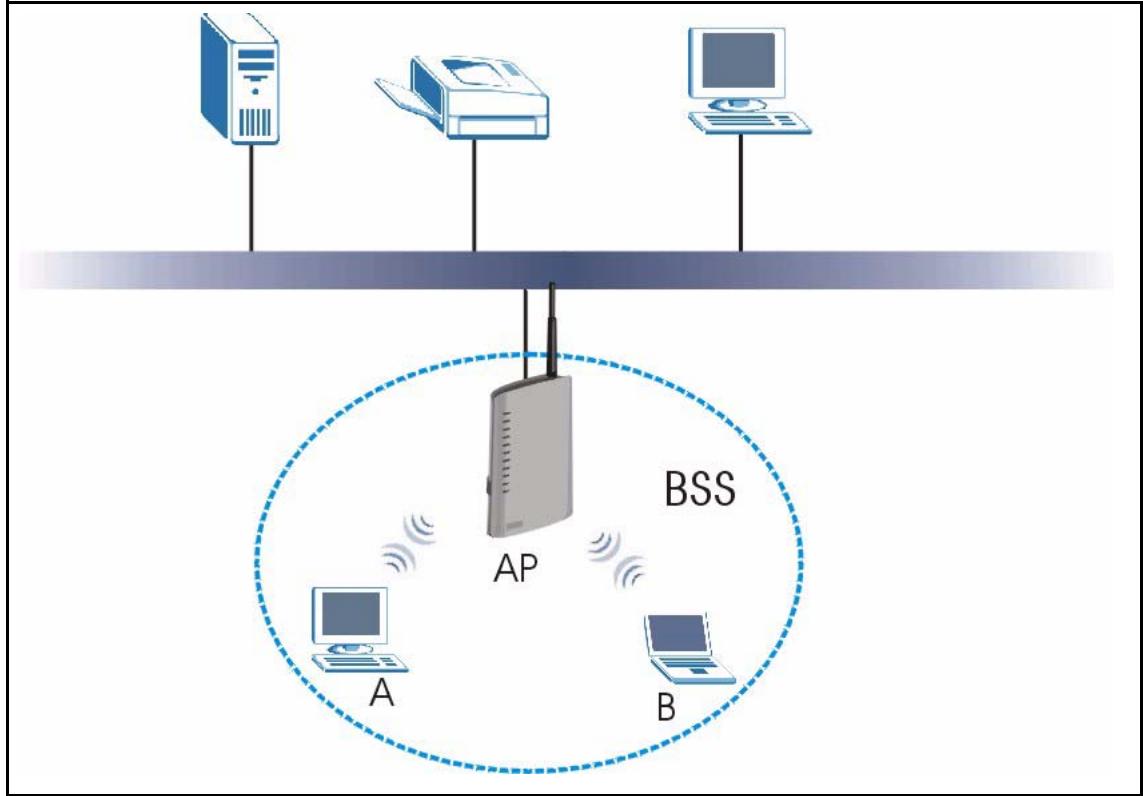
Figure 214 Basic Service Set
ESS
An Extended Service Set (ESS) consists of a series of overlapping BSSs, each containing an access point, with each access point connected together by a wired network. This wired connection between APs is called a Distribution System (DS).
This type of wireless LAN topology is called an Infrastructure WLAN. The Access Points not only provide communication with the wired network but also mediate wireless network traffic in the immediate neighborhood.
An ESSID (ESS IDentification) uniquely identifies each ESS. All access points and their associated wireless stations within the same ESS must have the same ESSID in order to communicate.
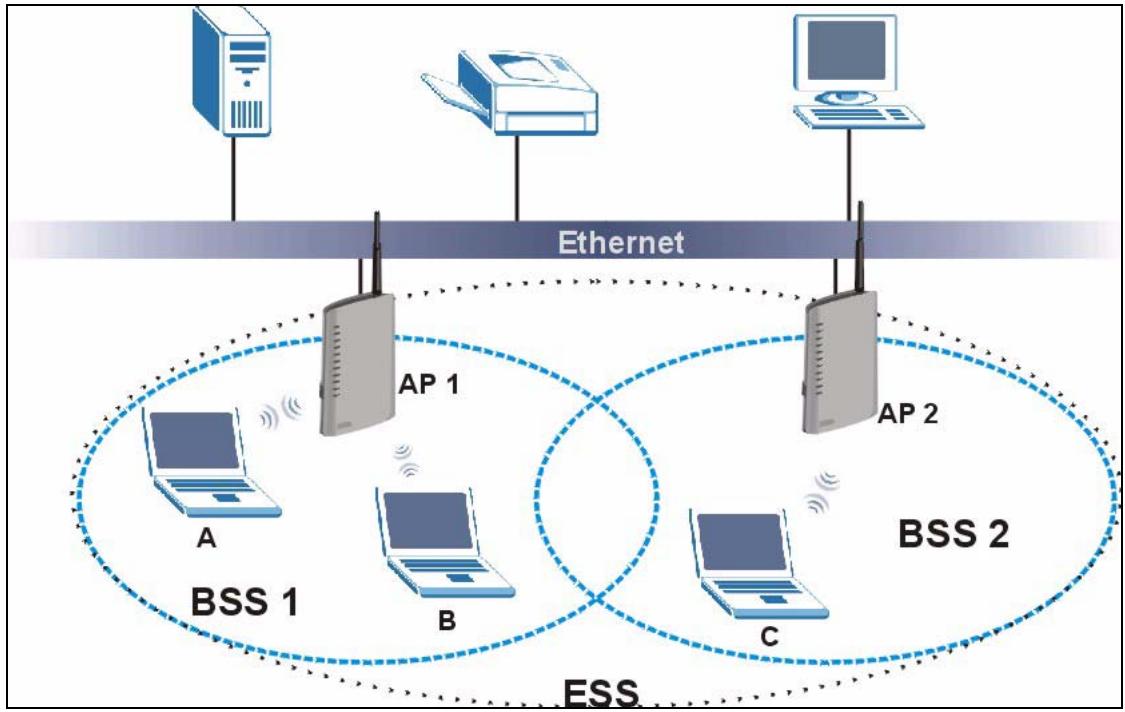
Figure 215 Infrastructure WLAN
Channel
A channel is the radio frequency(ies) used by IEEE 802.11a/b/g wireless devices. Channels available depend on your geographical area. You may have a choice of channels (for your region) so you should use a different channel than an adjacent AP (access point) to reduce interference. Interference occurs when radio signals from different access points overlap causing interference and degrading performance.
Adjacent channels partially overlap however. To avoid interference due to overlap, your AP should be on a channel at least five channels away from a channel that an adjacent AP is using. For example, if your region has 11 channels and an adjacent AP is using channel 1, then you need to select a channel between 6 or 11.
RTS/CTS
A hidden node occurs when two stations are within range of the same access point, but are not within range of each other. The following figure illustrates a hidden node. Both stations (STA) are within range of the access point (AP) or wireless gateway, but out-of-range of each other, so they cannot "hear" each other, that is they do not know if the channel is currently being used. Therefore, they are considered hidden from each other.
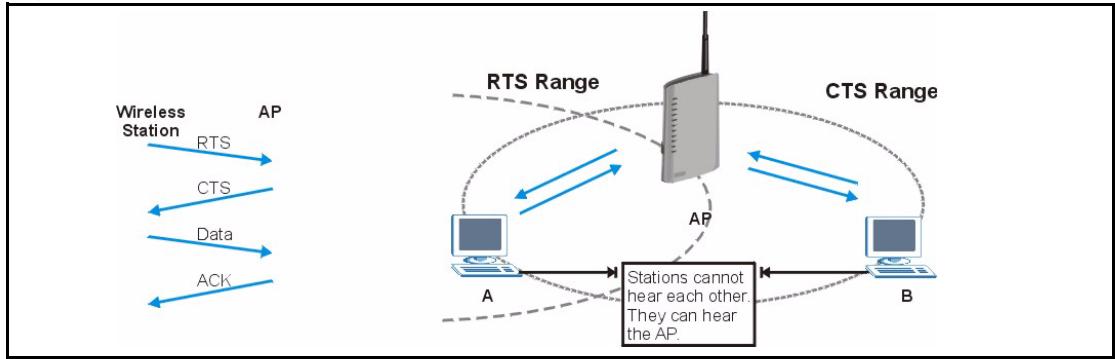
Figure 216 RTS/CTS
When station A sends data to the AP, it might not know that the station B is already using the channel. If these two stations send data at the same time, collisions may occur when both sets of data arrive at the AP at the same time, resulting in a loss of messages for both stations.
RTS/CTS is designed to prevent collisions due to hidden nodes. An RTS/CTS defines the biggest size data frame you can send before an RTS (Request To Send)/CTS (Clear to Send) handshake is invoked.
When a data frame exceeds the RTS/CTS value you set (between 0 to 2432 bytes), the station that wants to transmit this frame must first send an RTS (Request To Send) message to the AP for permission to send it. The AP then responds with a CTS (Clear to Send) message to all other stations within its range to notify them to defer their transmission. It also reserves and confirms with the requesting station the time frame for the requested transmission.
Stations can send frames smaller than the specified RTS/CTS directly to the AP without the RTS (Request To Send)/CTS (Clear to Send) handshake.
You should only configure RTS/CTS if the possibility of hidden nodes exists on your network and the "cost" of resending large frames is more than the extra network overhead involved in the RTS (Request To Send)/CTS (Clear to Send) handshake.
If the RTS/CTS value is greater than the Fragmentation Threshold value (see next), then the RTS (Request To Send)/CTS (Clear to Send) handshake will never occur as data frames will be fragmented before they reach RTS/CTS size.
Note: Enabling the RTS Threshold causes redundant network overhead that could negatively affect the throughput performance instead of providing a remedy.
Fragmentation Threshold
A Fragmentation Threshold is the maximum data fragment size (between 256 and 2432 bytes) that can be sent in the wireless network before the AP will fragment the packet into smaller data frames.
A large Fragmentation Threshold is recommended for networks not prone to interference while you should set a smaller threshold for busy networks or networks that are prone to interference.
If the Fragmentation Threshold value is smaller than the RTS/CTS value (see previously) you set then the RTS (Request To Send)/CTS (Clear to Send) handshake will never occur as data frames will be fragmented before they reach RTS/CTS size.
Preamble Type
A preamble is used to synchronize the transmission timing in your wireless network. There are two preamble modes: Long and Short.
Short preamble takes less time to process and minimizes overhead, so it should be used in a good wireless network environment when all wireless stations support it.
Select Long if you have a 'noisy' network or are unsure of what preamble mode your wireless stations support as all IEEE 802.11b compliant wireless adapters must support long preamble. However, not all wireless adapters support short preamble. Use long preamble if you are unsure what preamble mode the wireless adapters support, to ensure interpretability between the AP and the wireless stations and to provide more reliable communication in 'noisy' networks.
Select Dynamic to have the AP automatically use short preamble when all wireless stations support it, otherwise the AP uses long preamble.
Note: The AP and the wireless stations MUST use the same preamble mode in order to communicate.
IEEE 802.11g Wireless LAN
IEEE 802.11g is fully compatible with the IEEE 802.11b standard. This means an IEEE 802.11b adapter can interface directly with an IEEE 802.11g access point (and vice versa) at 11 Mbps or lower depending on range. IEEE 802.11g has several intermediate rate steps between the maximum and minimum data rates. The IEEE 802.11g data rate and modulation are as follows:
Table 147 IEEE 802.11g
| DATA RATE (MBPS) | MODULATION |
| 1 | DBPSK (Differential Binary Phase Shift Keyed) |
| 2 | DQPSK (Differential Quadrature Phase Shift Keying) |
| 5.5 / 11 | CCK (Complementary Code Keying) |
| 6/9/12/18/24/36/48/54 | OFDM (Orthogonal Frequency Division Multiplexing) |
IEEE 802.1x
In June 2001, the IEEE 802.1x standard was designed to extend the features of IEEE 802.11 to support extended authentication as well as providing additional accounting and control features. It is supported by Windows XP and a number of network devices. Some advantages of IEEE 802.1x are:
- User based identification that allows for roaming.
- Support for RADIUS (Remote Authentication Dial In User Service, RFC 2138, 2139) for centralized user profile and accounting management on a network RADIUS server.
- Support for EAP (Extensible Authentication Protocol, RFC 2486) that allows additional authentication methods to be deployed with no changes to the access point or the wireless stations.
RADIUS
RADIUS is based on a client-server model that supports authentication, authorization and accounting. The access point is the client and the server is the RADIUS server. The RADIUS server handles the following tasks:
Authentication
Determines the identity of the users.
- Authorization
Determines the network services available to authenticated users once they are connected to the network.
- Accounting
Keeps track of the client's network activity.
RADIUS is a simple package exchange in which your AP acts as a message relay between the wireless station and the network RADIUS server.
Types of RADIUS Messages
The following types of RADIUS messages are exchanged between the access point and the RADIUS server for user authentication:
- Access-Request
Sent by an access point requesting authentication.
- Access-Reject
Sent by a RADIUS server rejecting access.
- Access-Accept
Sent by a RADIUS server allowing access.
- Access-Challenge
Sent by a RADIUS server requesting more information in order to allow access. The access point sends a proper response from the user and then sends another Access-Request message.
The following types of RADIUS messages are exchanged between the access point and the RADIUS server for user accounting:
Accounting-Request
Sent by the access point requesting accounting.
- Accounting-Response
Sent by the RADIUS server to indicate that it has started or stopped accounting.
In order to ensure network security, the access point and the RADIUS server use a shared secret key, which is a password, they both know. The key is not sent over the network. In addition to the shared key, password information exchanged is also encrypted to protect the network from unauthorized access.
Types of Authentication
This appendix discusses some popular authentication types: EAP-MD5, EAP-TLS, EAP-TTLS, PEAP and LEAP.
The type of authentication you use depends on the RADIUS server or the AP. Consult your network administrator for more information.
EAP-MD5 (Message-Digest Algorithm 5)
MD5 authentication is the simplest one-way authentication method. The authentication server sends a challenge to the wireless station. The wireless station 'proves' that it knows the password by encrypting the password with the challenge and sends back the information. Password is not sent in plain text.
However, MD5 authentication has some weaknesses. Since the authentication server needs to get the plaintext passwords, the passwords must be stored. Thus someone other than the authentication server may access the password file. In addition, it is possible to impersonate an authentication server as MD5 authentication method does not perform mutual authentication. Finally, MD5 authentication method does not support data encryption with dynamic session key. You must configure WEP encryption keys for data encryption.
EAP-TLS (Transport Layer Security)
With EAP-TLS, digital certifications are needed by both the server and the wireless stations for mutual authentication. The server presents a certificate to the client. After validating the identity of the server, the client sends a different certificate to the server. The exchange of certificates is done in the open before a secured tunnel is created. This makes user identity vulnerable to passive attacks. A digital certificate is an electronic ID card that authenticates the sender's identity. However, to implement EAP-TLS, you need a Certificate Authority (CA) to handle certificates, which imposes a management overhead.
EAP-TTLS (Tunnelled Transport Layer Service)
EAP-TTLS is an extension of the EAP-TLS authentication that uses certificates for only the server-side authentications to establish a secure connection. Client authentication is then done by sending username and password through the secure connection, thus client identity is protected. For client authentication, EAP-TTLS supports EAP methods and legacy authentication methods such as PAP, CHAP, MS-CHAP and MS-CHAP v2.
PEAP (Protected EAP)
Like EAP-TTLS, server-side certificate authentication is used to establish a secure connection, then use simple username and password methods through the secured connection to authenticate the clients, thus hiding client identity. However, PEAP only supports EAP methods, such as EAP-MD5, EAP-MSCHAPv2 and EAP-GTC (EAP-Generic Token Card), for client authentication. EAP-GTC is implemented only by Cisco.
LEAP
LEAP (Lightweight Extensible Authentication Protocol) is a Cisco implementation of IEEE 802.1x.
Dynamic WEP Key Exchange
The AP maps a unique key that is generated with the RADIUS server. This key expires when the wireless connection times out, disconnects or reauthentication times out. A new WEP key is generated each time reauthentication is performed.
If this feature is enabled, it is not necessary to configure a default encryption key in the Wireless screen. You may still configure and store keys here, but they will not be used while Dynamic WEP is enabled.
Note: EAP-MD5 cannot be used with Dynamic WEP Key Exchange
For added security, certificate-based authentications (EAP-TLS, EAP-TTLS and PEAP) use dynamic keys for data encryption. They are often deployed in corporate environments, but for public deployment, a simple user name and password pair is more practical. The following table is a comparison of the features of authentication types.
Table 148 Comparison of EAP Authentication Types
| EAP-MD5 | EAP-TLS | EAP-TTLS | PEAP | LEAP | |
| Mutual Authentication | No | Yes | Yes | Yes | Yes |
| Certificate – Client | No | Yes | Optional | Optional | No |
| Certificate – Server | No | Yes | Yes | Yes | No |
| Dynamic Key Exchange | No | Yes | Yes | Yes | Yes |
| Credential Integrity | None | Strong | Strong | Strong | Moderate |
| Deployment Difficulty | Easy | Hard | Moderate | Moderate | Moderate |
| Client Identity Protection | No | No | Yes | Yes | No |
WPA
User Authentication
WPA applies IEEE 802.1x and Extensible Authentication Protocol (EAP) to authenticate wireless stations using an external RADIUS database.
Encryption
WPA improves data encryption by using Temporal Key Integrity Protocol (TKIP) or Advanced Encryption Standard (AES), Message Integrity Check (MIC) and IEEE 802.1x.
TKIP uses 128-bit keys that are dynamically generated and distributed by the authentication server. It includes a per-packet key mixing function, a Message Integrity Check (MIC) named Michael, an extended initialization vector (IV) with sequencing rules, and a re-keying mechanism.
TKIP regularly changes and rotates the encryption keys so that the same encryption key is never used twice.
The RADIUS server distributes a Pairwise Master Key (PMK) key to the AP that then sets up a key hierarchy and management system, using the PMK to dynamically generate unique data encryption keys to encrypt every data packet that is wirelessly communicated between the AP and the wireless stations. This all happens in the background automatically.
AES (Advanced Encryption Standard) also uses a secret key. This implementation of AES applies a 128-bit key to 128-bit blocks of data.
The Message Integrity Check (MIC) is designed to prevent an attacker from capturing data packets, altering them and resending them. The MIC provides a strong mathematical function in which the receiver and the transmitter each compute and then compare the MIC. If they do not match, it is assumed that the data has been tampered with and the packet is dropped.
By generating unique data encryption keys for every data packet and by creating an integrity checking mechanism (MIC), TKIP makes it much more difficult to decrypt data on a Wi-Fi network than WEP, making it difficult for an intruder to break into the network.
The encryption mechanisms used for WPA and WPA-PSK are the same. The only difference between the two is that WPA-PSK uses a simple common password, instead of user-specific credentials. The common-password approach makes WPA-PSK susceptible to brute-force password-guessing attacks but it's still an improvement over WEP as it employs an easier-to-use, consistent, single, alphanumeric password.
Security Parameters Summary
Refer to this table to see what other security parameters you should configure for each Authentication Method/ key management protocol type. MAC address filters are not dependent on how you configure these security features.
Table 149 Wireless Security Relational Matrix
| AUTHENTICATION METHOD/ KEYMANAGEMENT PROTOCOL | ENCRYPTIONMETHOD | ENTERMANUAL KEY | ENABLE IEEE 802.1X |
| Open | None | No | No |
| Open | WEP | No | Enable with Dynamic WEP Key |
| Yes | Enable without Dynamic WEP Key | ||
| Yes | Disable | ||
| Shared | WEP | No | Enable with Dynamic WEP Key |
| Yes | Enable without Dynamic WEP Key | ||
| Yes | Disable | ||
| WPA | WEP | No | Yes |
| WPA | TKIP | No | Yes |
| WPA-PSK | WEP | Yes | Yes |
| WPA-PSK | TKIP | Yes | Yes |
APPENDIX F
Services
The following table lists some commonly-used services and their associated protocols and port numbers.
- Name: This is a short, descriptive name for the service. You can use this one or create a different one, if you like.
- Protocol: This is the type of IP protocol used by the service. If this is TCP/UDP, then the service uses the same port number with TCP and UDP. If this is USER-DEFINED, the Port(s) is the IP protocol number, not the port number.
-
Port(s): This value depends on the Protocol.
-
If the Protocol is TCP, UDP, or TCP/UDP, this is the IP port number.
If the Protocol is USER, this is the IP protocol number. -
Description: This is a brief explanation of the applications that use this service or the situations in which this service is used.
Table 150 Examples of Services
| NAME | PROTOCOL | PORT(S) | DESCRIPTION |
| AH(IPSEC_TUNNEL) | User-Defined | 51 | The IPSEC AH (Authentication Header) tunneling protocol uses this service. |
| AIM | TCP | 5190 | AOL's Internet Messenger service. |
| AUTH | TCP | 113 | Authentication protocol used by some servers. |
| BGP | TCP | 179 | Border Gateway Protocol. |
| BOOTP_CLIENT | UDP | 68 | DHCP Client. |
| BOOTP_SERVER | UDP | 67 | DHCP Server. |
| CU-SEEME | TCP/UDP | 7648 | A popular videoconferencing solution from White Pines Software. |
| TCP/UDP | 24032 | ||
| DNS | TCP/UDP | 53 | Domain Name Server, a service that matches web names (e.g. www.zyxel.com) to IP numbers. |
| ESP(IPSEC_TUNNEL) | User-Defined | 50 | The IPSEC ESP (Encapsulation Security Protocol) tunneling protocol uses this service. |
| FINGER | TCP | 79 | Finger is a UNIX or Internet related command that can be used to find out if a user is logged on. |
| FTP | TCP | 20 | File Transfer Program, a program to enable fast transfer of files, including large files that may not be possible by e-mail. |
| TCP | 21 | ||
| H.323 | TCP | 1720 | NetMeeting uses this protocol. |
| HTTP | TCP | 80 | Hyper Text Transfer Protocol - a client/server protocol for the world wide web. |
| HTTPS | TCP | 443 | HTTPS is a secured http session often used in e-commerce. |
| ICMP | User-Defined | 1 | Internet Control Message Protocol is often used for diagnostic purposes. |
| ICQ | UDP | 4000 | This is a popular Internet chat program. |
| IGMP (MULTICAST) | User-Defined | 2 | Internet Group Multicast Protocol is used when sending packets to a specific group of hosts. |
| IKE | UDP | 500 | The Internet Key Exchange algorithm is used for key distribution and management. |
| IMAP4 | TCP | 143 | The Internet Message Access Protocol is used for e-mail. |
| IMAP4S | TCP | 993 | This is a more secure version of IMAP4 that runs over SSL. |
| IRC | TCP/UDP | 6667 | This is another popular Internet chat program. |
| MSN Messenger | TCP | 1863 | Microsoft Networks' messenger service uses this protocol. |
| NetBIOS | TCP/UDP | 137 | The Network Basic Input/Output System is used for communication between computers in a LAN. |
| TCP/UDP | 138 | ||
| TCP/UDP | 139 | ||
| TCP/UDP | 445 | ||
| NEW-ICQ | TCP | 5190 | An Internet chat program. |
| NEWS | TCP | 144 | A protocol for news groups. |
| NFS | UDP | 2049 | Network File System - NFS is a client/server distributed file service that provides transparent file sharing for network environments. |
| NNTP | TCP | 119 | Network News Transport Protocol is the delivery mechanism for the USENET newsgroup service. |
| PING | User-Defined | 1 | Packet INternet Groper is a protocol that sends out ICMP echo requests to test whether or not a remote host is reachable. |
| POP3 | TCP | 110 | Post Office Protocol version 3 lets a client computer get e-mail from a POP3 server through a temporary connection (TCP/IP or other). |
| POP3S | TCP | 995 | This is a more secure version of POP3 that runs over SSL. |
| PPTP | TCP | 1723 | Point-to-Point Tunneling Protocol enables secure transfer of data over public networks. This is the control channel. |
| PPTP_TUNNEL (GRE) | User-Defined | 47 | PPTP (Point-to-Point Tunneling Protocol) enables secure transfer of data over public networks. This is the data channel. |
| RCMD | TCP | 512 | Remote Command Service. |
| REAL=AUDIO | TCP | 7070 | A streaming audio service that enables real time sound over the web. |
| REXEC | TCP | 514 | Remote Execution Daemon. |
| RLOGIN | TCP | 513 | Remote Login. |
| ROADRUNNER | TCP/UDP | 1026 | This is an ISP that provides services mainly for cable modems. |
| RTELNET | TCP | 107 | Remote Telnet. |
| RTSP | TCP/UDP | 554 | The Real Time Streaming (media control) Protocol (RTSP) is a remote control for multimedia on the Internet. |
| SFTP | TCP | 115 | The Simple File Transfer Protocol is an old way of transferring files between computers. |
| SMTP | TCP | 25 | Simple Mail Transfer Protocol is the message-exchange standard for the Internet. SMTP enables you to move messages from one e-mail server to another. |
| SMTPS | TCP | 465 | This is a more secure version of SMTP that runs over SSL. |
| SNMP | TCP/UDP | 161 | Simple Network Management Program. |
| SNMP-TRAPS | TCP/UDP | 162 | Traps for use with the SNMP (RFC:1215). |
| SQL-NET | TCP | 1521 | Structured Query Language is an interface to access data on many different types of database systems, including mainframes, midrange systems, UNIX systems and network servers. |
| SSDP | UDP | 1900 | The Simple Service Discovery Protocol supports Universal Plug-and-Play (UPnP). |
| SSH | TCP/UDP | 22 | Secure Shell Remote Login Program. |
| STRM WORKS | UDP | 1558 | Stream Works Protocol. |
| SYSLOG | UDP | 514 | Syslog allows you to send system logs to a UNIX server. |
| TACACS | UDP | 49 | Login Host Protocol used for (Terminal Access Controller Access Control System). |
| TELNET | TCP | 23 | Telnet is the login and terminal emulation protocol common on the Internet and in UNIX environments. It operates over TCP/IP networks. Its primary function is to allow users to log into remote host systems. |
| TFTP | UDP | 69 | Trivial File Transfer Protocol is an Internet file transfer protocol similar to FTP, but uses the UDP (User Datagram Protocol) rather than TCP (Transmission Control Protocol). |
| VDOLIVE | TCP | 7000 | A videoconferencing solution. The UDP port number is specified in the application. |
| UDP | user-defined |
APPENDIX G
Firewall Commands
Sys Firewall Commands
The following describes the firewall commands. See the Command Interpreter appendix for information on the command structure. Each of these commands must be preceded by sys firewall when you use them. For example, type sys firewall active yes to turn on the firewall.
Table 151 Sys Firewall Commands
| Command | Description | |
| acl | ||
| disp | Displays ACLs or a specific ACL set # and rule#. | |
| active | Active firewall or deactivate firewallEnables/disables the firewall. | |
| cnt | ||
| disp | Displays the firewall log type and count. | |
| clear | Clearsthe firewall log count. | |
| pktdump | Dumps the last 64 bytes of packets that the firewall has dropped. | |
| dynamicrule | display | Displays the firewall's dynamic rules. |
| tcprst | ||
| rst | Turns TCP reset sending on/off. | |
| rst113 | Turns TCP reset sending for port 113 on/off. | |
| display | Displays the TCP reset sending settings. | |
| icmp | This rule is not in use. | |
| dos | ||
| smtp | Enables/disables the SMTP DoS defender. | |
| display | Displays the SMTP DoS defender setting. | |
| ignore | Sets if the firewall will ignore DoS attacks on the lan/wan. | |
| ignore | ||
| dos | Sets if the firewall will ignore DoS attacks on the lan/wan. | |
| triangle | Sets if the firewall will ignore triangle route packets on the lan/wan. | |
APPENDIX H Triangle Route
The Ideal Setup
When the firewall is on, your ZyXEL Device acts as a secure gateway between your LAN and the Internet. In an ideal network topology, all incoming and outgoing network traffic passes through the ZyXEL Device to protect your LAN against attacks.
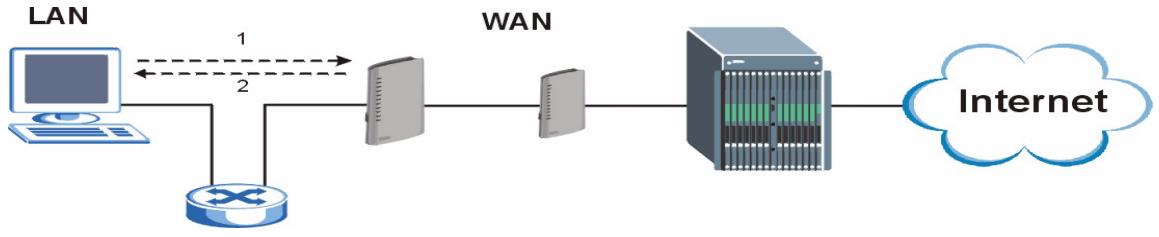
Figure 217 Ideal Setup
The "Triangle Route" Problem
A traffic route is a path for sending or receiving data packets between two Ethernet devices. Some companies have more than one alternate route to one or more ISPs. If the LAN and ISP(s) are in the same subnet, the "triangle route" problem may occur. The steps below describe the "triangle route" problem.
1 A computer on the LAN initiates a connection by sending out a SYN packet to a receiving server on the WAN.
2 The ZyXEL Device reroutes the SYN packet through Gateway B on the LAN to the WAN.
3 The reply from the WAN goes directly to the computer on the LAN without going through the ZyXEL Device.
As a result, the ZyXEL Device resets the connection, as the connection has not been acknowledged.
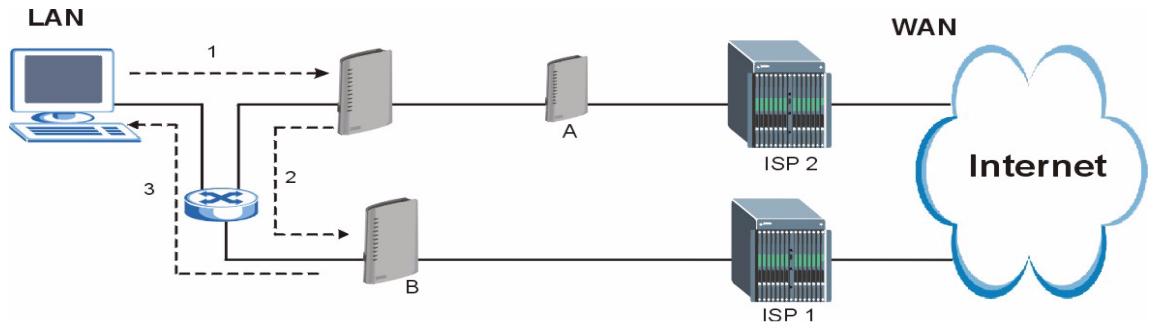
Figure 218 "Triangle Route" Problem
The "Triangle Route" Solutions
This section presents you two solutions to the "triangle route" problem.
IP Aliasing
IP alias allows you to partition your network into logical sections over the same Ethernet interface. Your ZyXEL Device supports up to three logical LAN interfaces with the ZyXEL Device being the gateway for each logical network. By putting your LAN and Gateway B in different subnets, all returning network traffic must pass through the ZyXEL Device to your LAN. The following steps describe such a scenario.
1 A computer on the LAN initiates a connection by sending a SYN packet to a receiving server on the WAN.
2 The ZyXEL Device reroutes the packet to Gateway B, which is in Subnet 2.
3 The reply from WAN goes through the ZyXEL Device to the computer on the LAN in Subnet 1.
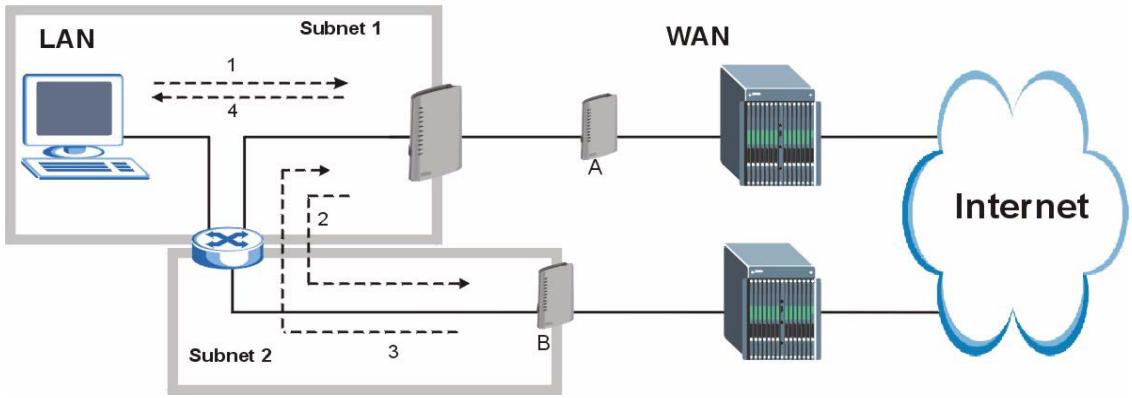
Figure 219 IP Alias
Gateways on the WAN Side
A second solution to the "triangle route" problem is to put all of your network gateways on the WAN side as the following figure shows. This ensures that all incoming network traffic passes through your ZyXEL Device to your LAN. Therefore your LAN is protected.
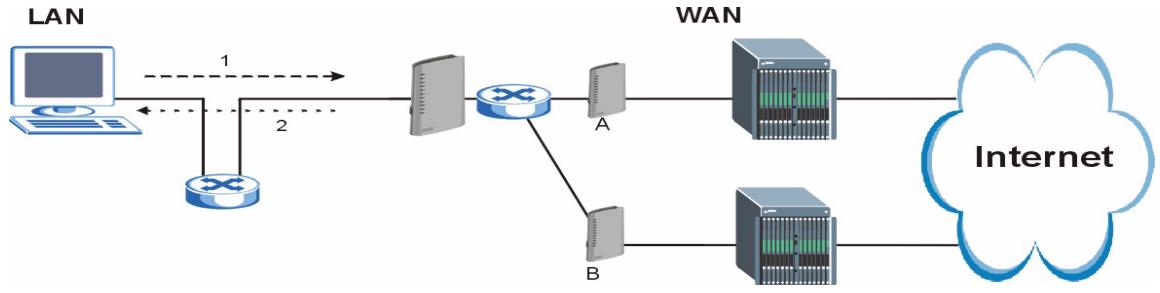
Figure 220 Gateways on the WAN Side
APPENDIX I
Log Descriptions
This appendix provides descriptions of example log messages.
Table 152 System Maintenance Logs
| LOGMESSAGE | DESCRIPTION |
| Time calibration is successful | The router has adjusted its time based on information from the time server. |
| Time calibration failed | The router failed to get information from the time server. |
| WAN interface gets IP: %s | A WAN interface got a new IP address from the DHCP, PPPoE, PPTP or dial-up server. |
| DHCP client IP expired | A DHCP client's IP address has expired. |
| DHCP server assigns %s | The DHCP server assigned an IP address to a client. |
| Successful WEB login | Someone has logged on to the router's web configurator interface. |
| WEB login failed | Someone has failed to log on to the router's web configurator interface. |
| Successful TELNET login | Someone has logged on to the router via telnet. |
| TELNET login failed | Someone has failed to log on to the router via telnet. |
| Successful FTP login | Someone has logged on to the router via ftp. |
| FTP login failed | Someone has failed to log on to the router via ftp. |
| NAT Session Table is Full! | The maximum number of NAT session table entries has been exceeded and the table is full. |
| Starting Connectivity Monitor | Starting Connectivity Monitor. |
| Time initialized by Daytime Server | The router got the time and date from the Daytime server. |
| Time initialized by Time server | The router got the time and date from the time server. |
| Time initialized by NTP server | The router got the time and date from the NTP server. |
| Connect to Daytime server fail | The router was not able to connect to the Daytime server. |
| Connect to Time server fail | The router was not able to connect to the Time server. |
| Connect to NTP server fail | The router was not able to connect to the NTP server. |
| Too large ICMP packet has been dropped | The router dropped an ICMP packet that was too large. |
| Configuration Change: PC = 0x%x, Task ID = 0x%x | The router is saving configuration changes. |
| Successful SSH login | Someone has logged on to the router's SSH server. |
| SSH login failed | Someone has failed to log on to the router's SSH server. |
| Successful HTTPS login | Someone has logged on to the router's web configurator interface using HTTPS protocol. |
| HTTPS login failed | Someone has failed to log on to the router's web configurator interface using HTTPS protocol. |
Table 153 System Error Logs
| LOGMESSAGE | DESCRIPTION |
| %s exceeds the max. number of session per host! | This attempt to create a NAT session exceeds the maximum number of NAT session table entries allowed to be created per host. |
| setNetBIOSFilter:%X | The router failed to allocate memory for the NetBIOS filter settings. |
| readNetBIOSFilter:%X | The router failed to allocate memory for the NetBIOS filter settings. |
| WAN connection is down. | A WAN connection is down. You cannot access the network through this interface. |
Table 154 Access Control Logs
| LOGMESSAGE | DESCRIPTION |
| Firewall default policy: [ TCP | UDP | IGMP | ESP | GRE | OSPF ] <Packet Direction> | Attempted TCP/UDP/IGMP/ESP/GRE/OSPF access matched the default policy and was blocked or forwarded according to the default policy's setting. |
| Firewall rule [NOT] match: [ TCP | UDP | IGMP | ESP | GRE | OSPF ] <Packet Direction>, <rule:%d> | Attempted TCP/UDP/IGMP/ESP/GRE/OSPF access matched (or did not match) a configured firewall rule (denoted by its number) and was blocked or forwarded according to the rule. |
| Triangle route packet forwarded: [ TCP | UDP | IGMP | ESP | GRE | OSPF ] | The firewall allowed a triangle route session to pass through. |
| Packet without a NAT table entry blocked: [ TCP | UDP | IGMP | ESP | GRE | OSPF ] | The router blocked a packet that didn't have a corresponding NAT table entry. |
| Router sent blocked web site message: TCP | The router sent a message to notify a user that the router blocked access to a web site that the user requested. |
Table 155 TCP Reset Logs
| LOGMESSAGE | DESCRIPTION |
| Under SYN flood attack, sent TCP RST | The router sent a TCP reset packet when a host was under a SYN flood attack (the TCP incomplete count is per destination host.) |
| Exceed TCP MAX incomplete, sent TCP RST | The router sent a TCP reset packet when the number of TCP incomplete connections exceeded the user configured threshold. (the TCP incomplete count is per destination host.) Note: Refer to TCP Maximum Incomplete in the Firewall Attack Alerts screen. |
| Peer TCP state out of order, sent TCP RST | The router sent a TCP reset packet when a TCP connection state was out of order.Note: The firewall refers to RFC793 Figure 6 to check the TCP state. |
| Firewall session time out, sent TCP RST | The router sent a TCP reset packet when a dynamic firewall session timed out.Default timeout values:ICMP idle timeout (s): 60UDP idle timeout (s): 60TCP connection (three way handshaking) timeout (s): 30TCP FIN-wait timeout (s): 60TCP idle (established) timeout (s): 3600 |
| Exceed MAX incomplete, sent TCP RST | The router sent a TCP reset packet when the number of incomplete connections (TCP and UDP) exceeded the user-configured threshold. (Incomplete count is for all TCP and UDP connections through the firewall.)Note: When the number of incomplete connections (TCP + UDP) > “Maximum Incomplete High”, the router sends TCP RST packets for TCP connections and destroys TOS (firewall dynamic sessions) until incomplete connections < “Maximum Incomplete Low”. |
| Access block, sent TCP RST | The router sends a TCP RST packet and generates this log if you turn on the firewall TCP reset mechanism (via Cl command: "sys firewall tcprst"). |
Table 156 Packet Filter Logs
| LOGMESSAGE | DESCRIPTION |
| [TCP | UDP | ICMP | IGMP | Generic ] packet filter matched (set: %d, rule: %d) | Attempted access matched a configured filter rule (denoted by its set and rule number) and was blocked or forwarded according to the rule. |
For type and code details, see Table 165 on page 387.
Table 157 ICMP Logs
| LOGMESSAGE | DESCRIPTION |
| Firewall default policy: ICMP <Packet Direction>, <type:%d>, <code:%d> | ICMP access matched the default policy and was blocked or forwarded according to the user's setting. |
| Firewall rule [NOT] match: ICMP <Packet Direction>, <rule:%d>, <type:%d>, <code:%d> | ICMP access matched (or didn't match) a firewall rule (denoted by its number) and was blocked or forwarded according to the rule. |
| Triangle route packet forwarded: ICMP | The firewall allowed a triangle route session to pass through. |
| Packet without a NAT table entry blocked: ICMP | The router blocked a packet that didn't have a corresponding NAT table entry. |
| Unsupported/out-of-order ICMP: ICMP | The firewall does not support this kind of ICMP packets or the ICMP packets are out of order. |
| Router reply ICMP packet: ICMP | The router sent an ICMP reply packet to the sender. |
Table 158 CDR Logs
| LOGMESSAGE | DESCRIPTION |
| board %d line %d channel %d, call %d, %s C01 Outgoing Call dev=%x ch=%x %s | The router received the setup requirements for a call. "call" is the reference (count) number of the call. "dev" is the device type (3 is for dial-up, 6 is for PPPoE, 10 is for PPTP). "channel" or "ch" is the call channel ID. For example, "board 0 line 0 channel 0, call 3, C01 Outgoing Call dev=6 ch=0 "Means the router has dialed to the PPPoE server 3 times. |
| board %d line %d channel %d, call %d, %s C02 OutCall Connected %d %s | The PPPoE, PPTP or dial-up call is connected. |
| board %d line %d channel %d, call %d, %s C02 Call Terminated | The PPPoE, PPTP or dial-up call was disconnected. |
Table 159 PPP Logs
| LOGMESSAGE | DESCRIPTION |
| ppp:LCP Starting | The PPP connection's Link Control Protocol stage has started. |
| ppp:LCP Opening | The PPP connection's Link Control Protocol stage is opening. |
| ppp:CHAP Opening | The PPP connection's Challenge Handshake Authentication Protocol stage is opening. |
| ppp:IPCP Starting | The PPP connection's Internet Protocol Control Protocol stage is starting. |
| ppp:IPCP Opening | The PPP connection's Internet Protocol Control Protocol stage is opening. |
| ppp:LCP Closing | The PPP connection's Link Control Protocol stage is closing. |
| ppp:IPCP Closing | The PPP connection's Internet Protocol Control Protocol stage is closing. |
Table 160 UPnP Logs
| LOGMESSAGE | DESCRIPTION |
| UPnP pass through Firewall | UPnP packets can pass through the firewall. |
Table 161 Content Filtering Logs
| LOGMESSAGE | DESCRIPTION |
| %s: block keyword | The content of a requested web page matched a user defined keyword. |
| %s | The system forwarded web content. |
For type and code details, see Table 165 on page 387.
Table 162 Attack Logs
| LOGMESSAGE | DESCRIPTION |
| attack [ TCP | UDP | IGMP | ESP | GRE | OSPF ] | The firewall detected a TCP/UDP/IGMP/ESP/GRE/OSPF attack. |
| attack ICMP (type:%d, code:%d) | The firewall detected an ICMP attack. |
| land [ TCP | UDP | IGMP | ESP | GRE | OSPF ] | The firewall detected a TCP/UDP/IGMP/ESP/GRE/OSPF land attack. |
| land ICMP (type:%d, code:%d) | The firewall detected an ICMP land attack. |
| ip spoofing - WAN [ TCP | UDP | IGMP | ESP | GRE | OSPF ] | The firewall detected an IP spoofing attack on the WAN port. |
| ip spoofing - WAN ICMP (type:%d, code:%d) | The firewall detected an ICMP IP spoofing attack on the WAN port. |
| icmp echo : ICMP (type:%d, code:%d) | The firewall detected an ICMP echo attack. |
| syn flood TCP | The firewall detected a TCP syn flood attack. |
| ports scan TCP | The firewall detected a TCP port scan attack. |
| teardrop TCP | The firewall detected a TCP teardrop attack. |
| teardrop UDP | The firewall detected an UDP teardrop attack. |
| teardrop ICMP (type:%d, code:%d) | The firewall detected an ICMP teardrop attack. |
| illegal command TCP | Thefirewall detected a TCP illegal command attack. |
| NetBIOS TCP | Thefirewall detected a TCP NetBIOS attack. |
| ip spoofing - no routing entry [ TCP | UDP | IGMP | ESP | GRE | OSPF ] | Thefirewall classified a packet with no source routing entry as an IP spoofing attack. |
| ip spoofing - no routing entry ICMP (type:%d, code:%d) | The firewall classified an ICMP packet with no source routing entry as an IP spoofing attack. |
| vulnerability ICMP (type:%d, code:%d) | The firewall detected an ICMP vulnerability attack. |
| traceroute ICMP (type:%d, code:%d) | The firewall detected an ICMP traceroute attack. |
Table 163 802.1X Logs
| LOGMESSAGE | DESCRIPTION |
| LocalUserDatabaseacceptsuser. | A user was authenticated by the local user database. |
| LocalUserDatabase reportscusercredential error. | A user was not authenticated by the local user database because of an incorrect user password. |
| LocalUserDatabase does notfind user's credential. | A user was not authenticated by the local user database because the user is not listed in the local user database. |
| RADIUSaccepts user. | A user was authenticated by the RADIUS Server. |
| RADIUS rejects user.Pls checkRADIUSServer. | A user was not authenticated by the RADIUS Server.Please check the RADIUS Server. |
| LocalUserDatabase does notsupport authentication method. | The local user database only supports the EAP-MD5method. A user tried to use another authentication method and was not authenticated. |
| Userlogout because of sessiontimeout expired. | The router logged out a user whose session expired. |
| Userlogout because of userdeassociation. | The router logged out a user who ended the session. |
| Userlogout because of noauthentication response fromuser. | The router logged out a user from which there was noauthentication response. |
| Userlogout because of idletimeout expired. | The router logged out a user whose idle timeout periodexpired. |
| User logout because of userrequest. | A user logged out. |
| LocalUserDatabase does notsupport authentication method. | A user tried to use an authentication method that the localuser database does not support (it only supports EAP-MD5). |
| No response from RADIUS.Plscheck RADIUSServer. | There is no response message from the RADIUS server,please check the RADIUS server. |
| UseLocalUserDatabase to authenticate user. | The local user database is operating as theauthentication server. |
| UseRADIUS to authenticate user. | The RADIUS server is operating as the authenticationserver. |
| No Server to authenticate user. | There is no authentication server to authenticate a user. |
| LocalUserDatabase does not finduser's credential. | A user was not authenticated by the local user database because the user is not listed in the local user database. |
Table 164 ACL Setting Notes
| PACKET DIRECTION | DIRECTION | DESCRIPTION |
| (L to W) | LAN to WAN | ACL set for packets traveling from the LAN to the WAN. |
| (W to L) | WAN to LAN | ACL set for packets traveling from the WAN to the LAN. |
| (L to L/ZyXEL Device) | LAN to LAN/ZyXEL Device | ACL set for packets traveling from the LAN to the LAN or the ZyXEL Device. |
| (W to W/ZyXEL Device) | WAN to WAN/ZyXEL Device | ACL set for packets traveling from the WAN to the WAN or the ZyXEL Device. |
Table 165 ICMP Notes
| TYPE | CODE | DESCRIPTION |
| 0 | Echo Reply | |
| 0 | Echo reply message | |
| 3 | Destination Unreachable | |
| 0 | Net unreachable | |
| 1 | Host unreachable | |
| 2 | Protocol unreachable | |
| 3 | Port unreachable | |
| 4 | A packet that needed fragmentation was dropped because it was set to Don't Fragment (DF) | |
| 5 | Source route failed | |
| 4 | Source Quench | |
| 0 | A gateway may discard internet datagrams if it does not have the buffer space needed to queue the datagrams for output to the next network on the route to the destination network. | |
| 5 | Redirect | |
| 0 | Redirect datagrams for the Network | |
| 1 | Redirect datagrams for the Host | |
| 2 | Redirect datagrams for the Type of Service and Network | |
| 3 | Redirect datagrams for the Type of Service and Host | |
| 8 | Echo | |
| 0 | Echo message | |
| 11 | Time Exceeded | |
| 0 | Time to live exceeded in transit | |
| 1 | Fragment reassembly time exceeded | |
| 12 | Parameter Problem | |
| 0 | Pointer indicates the error | |
| 13 | Timestamp | |
| 0 | Timestamp request message | |
| 14 | Timestamp Reply | |
| 0 | Timestamp reply message | |
| 15 | Information Request | |
| 0 | Information request message | |
| 16 | Information Reply | |
| 0 | Information reply message |
Table 166 Syslog Logs
| LOGMESSAGE | DESCRIPTION |
| <Facility*8 + Severity>Mon dd hr:mm:ss hostname src="<srcIP:srcPort>" dst="<dstIP:dstPort>" msg="<msg>" note="<note>" devID="<mac address last three numbers>" cat="<category> | "This message is sent by the system ("RAS" displays as the system name if you haven't configured one) when the router generates a syslog. The facility is defined in the web MAIN MENU->LOGS->Log Settings page. The severity is the log's syslog class. The definition of messages and notes are defined in the various log charts throughout this appendix. The "devID" is the last three characters of the MAC address of the router's LAN port. The "cat" is the same as the category in the router's logs. |
Table 167 SIP Logs
| LOGMESSAGE | DESCRIPTION |
| SIP Registration Success by SIP:SIP Phone Number | The listed SIP account was successfully registered with a SIP register server. |
| SIP Registration Fail by SIP:SIP Phone Number | An attempt to register the listed SIP account with a SIP register server was not successful. |
| SIP UnRegistration Success by SIP:SIP Phone Number | The listed SIP account's registration was deleted from the SIP register server. |
| SIP UnRegistration Fail by SIP:SIP Phone Number | An attempt to delete the listed SIP account's registration from the SIP register server failed. |
Table 168 RTP Logs
| LOGMESSAGE | DESCRIPTION |
| Error, RTP init fail | The initialization of an RTP session failed. |
| Error, Call fail: RTP connect fail | A VoIP phone call failed because the RTP session could not be established. |
| Error, RTP connection cannot close | The termination of an RTP session failed. |
Table 169 FSM Logs: Caller Side
| LOGMESSAGE | DESCRIPTION |
| VoIP Call Start Ph[Phone Port Number]<-Outgoing Call Number | Someone used a phone connected to the listed phone port to initiate a VoIP call to the listed destination. |
| VoIP Call Established Ph[Phone Port] ->Outgoing Call Number | Someone used a phone connected to the listed phone port to make a VoIP call to the listed destination. |
| VoIP Call End Phone[Phone Port] | A VoIP phone call made from a phone connected to the listed phone port has terminated. |
Table 170 FSM Logs: Callee Side
| LOGMESSAGE | DESCRIPTION |
| VoIP Call Start from SIP[SIP Port Number] | A VoIP phone call came to the ZyXEL Device from the listed SIP number. |
| VoIP Call Established Ph[Phone Port]<-Outgoing Call Number | A VoIP phone call was set up from the listed SIP number to the ZyXEL Device. |
| VoIP Call End Phone[Phone Port] | A VoIP phone call that came into the ZyXEL Device has terminated. |
Table 171 PSTN Logs
| LOGMESSAGE | DESCRIPTION |
| PSTN Call Start | A PSTN call has been initiated. |
| PSTN Call End | A PSTN call has terminated. |
| PSTN Call Established | A PSTN call has been set up. |
The following table shows RFC-2408 ISAKMP payload types that the log displays. Please refer to RFC 2408 for detailed information on each type.
Table 172 RFC-2408 ISAKMP Payload Types
| LOG DISPLAY | PAYLOAD TYPE |
| SA | Security Association |
| PROP | Proposal |
| TRANS | Transform |
| KE | Key Exchange |
| ID | Identification |
| CER | Certificate |
| CER_REQ | Certificate Request |
| HASH | Hash |
| SIG | Signature |
| NONCE | Nonce |
| NOTFY | Notification |
| DEL | Delete |
| VID | Vendor ID |
Log Commands
Go to the command interpreter interface (Appendix J on page 393 explains how to access and use the commands).
Configuring What You Want the ZyXEL Device to Log
1 Use the sys logs load command to load the log setting buffer that allows you to configure which logs the ZyXEL Device is to record.
2 Use sys logs category to view a list of the log categories.
Figure 221 Displaying Log Categories Example
Copyright (c) 1994 - 2004 ZyXEL Communications Corp.
ras> ?
Valid commands are:
sys exit ether wan
wlan ip bridge lan
radius 8021x spi voiceradius 8021x
ras>
3 Use sys logs category followed by a log category to display the parameters that are available for the category.
Figure 222 Displaying Log Parameters Example
ras>sys logs category access Usage:[0:none/1:log/2:alert/3:both] ras>
4 Use sys logs category followed by a log category and a parameter to decide what to record.
Use 0 to not record logs for that category, 1 to record only logs for that category, 2 to record only alerts for that category, and 3 to record both logs and alerts for that category. Not every parameter is available with every category.
5 Use the sys logs save command to store the settings in the ZyXEL Device (you must do this in order to record logs).
Displaying Logs
- Use the sys logs display command to show all of the logs in the ZyXEL Device's log.
- Use the sys logs category display command to show the log settings for all of the log categories.
- Use the sys logs display [log category] command to show the logs in an individual ZyXEL Device log category.
- Use the sys logs clear command to erase all of the ZyXEL Device's logs.
Log Command Example
This example shows how to set the ZyXEL Device to record the access logs and alerts and then view the results.
Figure 223 Log Command Example
ras>sys logs load
ras>sys logs category access 3
ras>sys logs save
ras>sys logs display access
<h1 id="time-source-destination-notes">.time source destination notes</h1>
message
7|01/01/2000 09:40:13 |192.168.1.1:3 |192.168.1.33:1 |ACCESS FO
RWARD
Router reply ICMP packet: ICMP(type:3, code:1)
8|01/01/2000 09:40:07 |192.168.1.1:3 |192.168.1.33:1 |ACCESS FO
RWARD
Router reply ICMP packet: ICMP(type:3, code:1)
9|01/01/2000 09:40:04 |192.168.1.1:3 |192.168.1.33:1 |ACCESS FO
RWARD
Router reply ICMP packet: ICMP(type:3, code:1)
10|01/01/2000 09:40:04 |192.168.1.33:1199 |207.69.188.186:110 |ACCESS FO
RWARD
Firewall default policy: TCP (L to W)
11|01/01/2000 09:40:04 |192.168.1.1:53 |192.168.1.33:1200 |ACCESS FO
RWARD
none: UDP
APPENDIX J
Command Interpreter
The following describes how to use the command interpreter. Telnet to the ZyXEL Device and enter the password to use the commands. See the included disk or zyxel.com for more detailed information on these commands.
Note: Use of undocumented commands or misconfiguration can damage the unit and possibly render it unusable.
Command Syntax
- The command keywords are in courier new font.
- Enter the command keywords exactly as shown, do not abbreviate.
- The required fields in a command are enclosed in angle brackets .
- The optional fields in a command are enclosed in square brackets [ ] .
- The | symbol means or.
For example,
sys filter netbios config
means that you must specify the type of netbios filter and whether to turn it on or off.
Command Usage
A list of valid commands can be found by typing help or ? at the command prompt. Always type the full command. Type exit to leave the commands when finished.
APPENDIX K Internal SPTGEN
Internal SPTGEN Overview
Internal SPTGEN (System Parameter Table Generator) is a configuration text file useful for efficient configuration of multiple ZyXEL Devices. Internal SPTGEN lets you configure, save and upload multiple menus at the same time using just one configuration text file - eliminating the need to navigate and configure individual screens for each ZyXEL Device.
The Configuration Text File Format
All Internal SPTGEN text files conform to the following format:
<field identification number = field name = parameter values allowed = input>,
where (<\mathrm{input}>) is your input conforming to (<\mathrm{parameter}> values allowed>.
The figure shown next is an example of an Internal SPTGEN text file.
Figure 224 Configuration Text File Format: Column Descriptions
/Menu1General Setup
10000000 = Configured <0(No) | 1(Yes)> = 1
10000001 = System Name
10000002 = Location
10000005 = Route IPX <0 (No) | 1 (Yes)> = 0
10000006 = Bridge <0 (No) | 1 (Yes)> = 0
Note: DO NOT alter or delete any field except parameters in the Input column.
This appendix introduces Internal SPTGEN. All menus shown in this appendix are example menus meant to show SPTGEN usage. Actual menus for your product may differ.
Internal SPTGEN File Modification - Important Points to Remember
Each parameter you enter must be preceded by one “=” sign and one space.
Some parameters are dependent on others. For example, if you disable the Configured field in menu 1 (see Figure 224 on page 395), then you disable every field in this menu.
If you enter a parameter that is invalid in the Input column, the ZyXEL Device will not save the configuration and the command line will display the Field Identification Number. Figure 225 on page 396, shown next, is an example of what the ZyXEL Device displays if you enter a value other than "0" or "1" in the Input column of Field Identification Number 1000000 (refer to Figure 224 on page 395).
Figure 225 Invalid Parameter Entered: Command Line Example
field value is not legal error:-1
ROM-t is not saved, error Line ID:10000000
reboot to get the original configuration
Bootbase Version: V2.02 | 2/22/2001 13:33:11
RAM: Size = 8192 Kbytes
FLASH: Intel 8M *2
The ZyXEL Device will display the following if you enter parameter(s) that are valid.
Figure 226 Valid Parameter Entered: Command Line Example
Please wait for the system to write SPT text file(ROM-t)... Bootbase Version: V2.02 | 2/22/2001 13:33:11 RAM: Size = 8192 Kbytes FLASH: Intel 8M *2
Internal SPTGEN FTP Download Example
1 Launch your FTP application.
2 Enter "bin". The command "bin" sets the transfer mode to binary.
3 Get "rom-t" file. The command "get" transfers files from the ZyXEL Device to your computer. The name "rom-t" is the configuration filename on the ZyXEL Device.
4 Edit the "rom-t" file using a text editor (do not use a word processor). You must leave this FTP screen to edit.
Figure 227 Internal SPTGEN FTP Download Example
c:\ftp 192.168.1.1
220 PPP FTP version 1.0 ready at Sat Jan 1 03:22:12 2000
User (192.168.1.1:(none)):
331 Enter PASS command
Password:
230 Logged in
ftp>bin
200 Type I OK
ftp> get rom-t
ftp>bye
c:\edit rom-t
edit the rom-t text file by a text editor and save it)
Note: You can rename your "rom-t" file when you save it to your computer but it must be named "rom-t" when you upload it to your ZyXEL Device.
Internal SPTGEN FTP Upload Example
1 Launch your FTP application.
2 Enter "bin". The command "bin" sets the transfer mode to binary.
3 Upload your "rom-t" file from your computer to the ZyXEL Device using the "put" command. computer to the ZyXEL Device.
4 Exit this FTP application.
Figure 228 Internal SPTGEN FTP Upload Example
c:\ftp 192.168.1.1
220 PPP FTP version 1.0 ready at Sat Jan 1 03:22:12 2000
User (192.168.1.1:(none)):
331 Enter PASS command
Password:
230 Logged in
ftp>bin
200 Type I OK
ftp> put rom-t
ftp>bye
Example Internal SPTGEN Screens
This section covers ZyXEL Device Internal SPTGEN screens.
Table 173 Abbreviations Used in the Example Internal SPTGEN Screens Table
| ABBREVIATION | MEANING |
| FIN | Field Identification Number |
| FN | Field Name |
| PVA | Parameter Values Allowed |
| INPUT | An example of what you may enter |
| * | Applies to the ZyXEL Device. |
The following are the Internal SPTGEN menus.
Table 174 Menu 1 General Setup
| / Menu 1 General Setup | |||
| FIN | FN | PVA | INPUT |
| 10000000 = | Configured | <0 (No) | 1 (Yes)> | = 0 |
| 10000001 = | System Name | <Str> | = Your Device |
| 10000002 = | Location | <Str> | = |
| 10000003 = | Contact Person's Name | <Str> | = |
| 10000004 = | Route IP | <0 (No) | 1 (Yes)> | = 1 |
| 10000006 = | Bridge | <0 (No) | 1 (Yes)> | = 0 |
Table 175 Menu 3
| / Menu 3.1 General Ethernet Setup | |||
| FIN | FN | PVA | INPUT |
| 30100001 = | Input Protocol filters Set 1 | = 2 | |
| 30100002 = | Input Protocol filters Set 2 | = 256 | |
| 30100003 = | Input Protocol filters Set 3 | = 256 | |
| 30100004 = | Input Protocol filters Set 4 | = 256 | |
| 30100005 = | Input device filters Set 1 | = 256 | |
| 30100006 = | Input device filters Set 2 | = 256 | |
| 30100007 = | Input device filters Set 3 | = 256 | |
| 30100008 = | Input device filters Set 4 | = 256 | |
| 30100009 = | Output protocol filters Set 1 | = 256 | |
| 30100010 = | Output protocol filters Set 2 | = 256 | |
| 30100011 = | Output protocol filters Set 3 | = 256 | |
| 30100012 = | Output protocol filters Set 4 | = 256 | |
| 30100013 = | Output device filters Set 1 | = 256 | |
Table 175 Menu 3
| 30100014 = | Output device filters Set 2 | = 256 | |
| 30100015 = | Output device filters Set 3 | = 256 | |
| 30100016 = | Output device filters Set 4 | = 256 | |
| / Menu 3.2 TCP/IP and DHCP Ethernet Setup | |||
| FIN | FN | PVA | INPUT |
| 30200001 = | DHCP | <0 (None) | 1 (Server) | 2 (Relay)> | = 0 |
| 30200002 = | Client IP Pool Starting Address | = 192.168.1.33 | |
| 30200003 = | Size of Client IP Pool | = 32 | |
| 30200004 = | Primary DNS Server | = 0.0.0.0 | |
| 30200005 = | Secondary DNS Server | = 0.0.0.0 | |
| 30200006 = | Remote DHCP Server | = 0.0.0.0 | |
| 30200008 = | IP Address | = 172.21.2.200 | |
| 30200009 = | IP Subnet Mask | = 16 | |
| 30200010 = | RIP Direction | <0 (None) | 1 (Both) | 2 (In Only) | 3 (Out Only)> | = 0 |
| 30200011 = | Version | <0 (Rip-1) | 1 (Rip-2B) | 2 (Rip-2M)> | = 0 |
| 30200012 = | Multicast | <0 (IGMP-v2) | 1 (IGMP-v1) | 2 (None)> | = 2 |
| 30200013 = | IP Policies Set 1 (1~12) | = 256 | |
| 30200014 = | IP Policies Set 2 (1~12) | = 256 | |
| 30200015 = | IP Policies Set 3 (1~12) | = 256 | |
| 30200016 = | IP Policies Set 4 (1~12) | = 256 | |
| / Menu 3.2.1 IP Alias Setup | |||
| FIN | FN | PVA | INPUT |
| 30201001 = | IP Alias 1 | <0 (No) | 1 (Yes)> | = 0 |
| 30201002 = | IP Address | = 0.0.0.0 | |
| 30201003 = | IP Subnet Mask | = 0 | |
| 30201004 = | RIP Direction | <0 (None) | 1 (Both) | 2 (In Only) | 3 (Out Only)> | = 0 |
| 30201005 = | Version | <0 (Rip-1) | 1 (Rip-2B) | 2 (Rip-2M)> | = 0 |
Table 175 Menu 3
| 30201006 = | IP Alias #1 Incoming protocol filters Set 1 | = 256 | |
| 30201007 = | IP Alias #1 Incoming protocol filters Set 2 | = 256 | |
| 30201008 = | IP Alias #1 Incoming protocol filters Set 3 | = 256 | |
| 30201009 = | IP Alias #1 Incoming protocol filters Set 4 | = 256 | |
| 30201010 = | IP Alias #1 Outgoing protocol filters Set 1 | = 256 | |
| 30201011 = | IP Alias #1 Outgoing protocol filters Set 2 | = 256 | |
| 30201012 = | IP Alias #1 Outgoing protocol filters Set 3 | = 256 | |
| 30201013 = | IP Alias #1 Outgoing protocol filters Set 4 | = 256 | |
| 30201014 = | IP Alias 2 <0 (No) | 1 (Yes)> | = 0 | |
| 30201015 = | IP Address | = 0.0.0.0 | |
| 30201016 = | IP Subnet Mask | = 0 | |
| 30201017 = | RIP Direction | <0 (None) | 1 (Both) | 2 (In Only) | 3 (Out Only)> | = 0 |
| 30201018 = | Version | <0 (Rip-1) | 1 (Rip-2B) |2 (Rip-2M)> | = 0 |
| 30201019 = | IP Alias #2 Incoming protocol filters Set 1 | = 256 | |
| 30201020 = | IP Alias #2 Incoming protocol filters Set 2 | = 256 | |
| 30201021 = | IP Alias #2 Incoming protocol filters Set 3 | = 256 | |
| 30201022 = | IP Alias #2 Incoming protocol filters Set 4 | = 256 | |
| 30201023 = | IP Alias #2 Outgoing protocol filters Set 1 | = 256 | |
| 30201024 = | IP Alias #2 Outgoing protocol filters Set 2 | = 256 | |
| 30201025 = | IP Alias #2 Outgoing protocol filters Set 3 | = 256 | |
| 30201026 = | IP Alias #2 Outgoing protocol filters Set 4 | = 256 | |
| */ Menu 3.5 Wireless LAN Setup | |||
| FIN | FN | PVA | INPUT |
| 30500001 = | ESSID | Wireless | |
Table 175 Menu 3
| 30500002 = | Hide ESSID | <0 (No) |1 (Yes)> | = 0 |
| 30500003 = | Channel ID | <1|2|3|4|5|6|7|8|9|10|11|12|13> | = 1 |
| 30500004 = | RTS Threshold | <0 ~ 2432> | = 2432 |
| 30500005 = | FRAG. Threshold | <256 ~ 2432> | = 2432 |
| 30500006 = | WEP | <0 (DISABLE) |1 (64-bit WEP)| 2 (128-bit WEP)> | = 0 |
| 30500007 = | Default Key | <1|2|3|4> | = 0 |
| 30500008 = | WEP Key1 | = | |
| 30500009 = | WEP Key2 | = | |
| 30500010 = | WEP Key3 | = | |
| 30500011 = | WEP Key4 | = | |
| 30500012 = | Wlan Active | <0 (Disable) |1 (Enable)> | = 0 |
| */ MENU 3.5.1 WLAN MAC ADDRESS FILTER | |||
| FIN | FN | PVA | INPUT |
| 30501001 = | Mac Filter Active | <0 (No) |1 (Yes)> | = 0 |
| 30501002 = | Filter Action | <0 (Allow) |1 (Deny)> | = 0 |
| 30501003 = | Address 1 | = 00:00:00:00:00:00 | |
| 30501004 = | Address 2 | = 00:00:00:00:00:00 | |
| 30501005 = | Address 3 | = 00:00:00:00:00:00 | |
| Continued | ... | ... | |
| 30501034 = | Address 32 | = 00:00:00:00:00:00 | |
Table 176 Menu 4 Internet Access Setup
| / Menu 4 Internet Access Setup | |||
| FIN | FN | PVA | INPUT |
| 40000000 = | Configured | <0 (No) |1 (Yes)> | = 1 |
| 40000001 = | ISP | <0 (No) |1 (Yes)> | = 1 |
| 40000002 = | Active | <0 (No) |1 (Yes)> | = 1 |
| 40000003 = | ISP's Name | = ChangeMe | |
| 40000004 = | Encapsulation | <2 (PPPOE) |3 (RFC 1483) |4 (PPPoA) |5 (ENET ENCAP)> | = 2 |
| 40000005 = | Multiplexing | <1 (LLC-based)|2 (VC-based) | = 1 |
| 40000006 = | VPI # | = 0 | |
| 40000007 = | VCI # | = 35 | |
| 40000008 = | Service Name | <Str> | = any |
| 40000009 = | My Login | <Str> | = test@pqa |
| 40000010 = | My Password | <Str> | = 1234 |
| 40000011 = | Single User Account | <0 (No) |1 (Yes)> | = 1 |
| 40000012 = | IP Address Assignment | <0 (Static) |1 (Dynamic)> | = 1 |
| 40000013 = | IP Address | = 0.0.0.0 | |
| 40000014 = | Remote IP address | = 0.0.0.0 | |
| 40000015 = | Remote IP subnet mask | = 0 | |
| 40000016 = | ISP incoming protocol filter set 1 | = 6 | |
| 40000017 = | ISP incoming protocol filter set 2 | = 256 | |
| 40000018 = | ISP incoming protocol filter set 3 | = 256 | |
| 40000019 = | ISP incoming protocol filter set 4 | = 256 | |
| 40000020 = | ISP outgoing protocol filter set 1 | = 256 | |
| 40000021 = | ISP outgoing protocol filter set 2 | = 256 | |
| 40000022 = | ISP outgoing protocol filter set 3 | = 256 | |
| 40000023 = | ISP outgoing protocol filter set 4 | = 256 | |
| 40000024 = | ISP PPPoE idle timeout | = 0 | |
| 40000025 = | Route IP | <0 (No) |1 (Yes)> | = 1 |
| 40000026 = | Bridge | <0 (No) |1 (Yes)> | = 0 |
| 40000027 = | ATM QoS Type | <0 (CBR) | (1 (UBR)> | = 1 |
| 40000028 = | Peak Cell Rate (PCR) | = 0 | |
| 40000029 = | Sustain Cell Rate (SCR) | = 0 | |
| 40000030 = | Maximum Burst Size(MBS) | = 0 | |
| 40000031= | RIP Direction | <0 (None) | 1 (Both) | 2 (In Only) | 3 (Out Only)> | = 0 |
| 40000032= | RIP Version | <0 (Rip-1) | 1 (Rip-2B) | 2 (Rip-2M)> | = 0 |
| 40000033= | Nailed-up Connection | <0 (No) | 1 (Yes)> | = 0 |
Table 177 Menu 12
| / Menu 12.1.1 IP Static Route Setup | |||
| FIN | FN | PVA | INPUT |
| 120101001 = | IP Static Route set #1, Name | ||
| 120101002 = | IP Static Route set #1, Active | ||
| 120101003 = | IP Static Route set #1, Destination | ||
| 120101004 = | IP Static Route set #1, Destination | ||
| 120101005 = | IP Static Route set #1, Gateway | ||
| 120101006 = | IP Static Route set #1, Metric | ||
| 120101007 = | IP Static Route set #1, Private | ||
| / Menu 12.1.2 IP Static Route Setup | |||
| FIN | FN | PVA | INPUT |
| 120102001 = | IP Static Route set #2, Name | ||
| 120102002 = | IP Static Route set #2, Active | ||
| 120102003 = | IP Static Route set #2, Destination | ||
| 120102004 = | IP Static Route set #2, Destination | ||
| 120102005 = | IP Static Route set #2, Gateway | ||
| 120102006 = | IP Static Route set #2, Metric | ||
| 120102007 = | IP Static Route set #2, Private | ||
| / Menu 12.1.3 IP Static Route Setup | |||
| FIN | FN | PVA | INPUT |
| 120103001 = | IP Static Route set #3, Name | ||
| 120103002 = | IP Static Route set #3, Active | ||
| 120103003 = | IP Static Route set #3, Destination | ||
| 120103004 = | IP Static Route set #3, Destination | ||
| 120103005 = | IP Static Route set #3, Gateway | = 0.0.0.0 | |
| 120103006 = | IP Static Route set #3, Metric | = 0 | |
| 120103007 = | IP Static Route set #3, Private | <0 (No) |1 (Yes)> | = 0 |
| / Menu 12.1.4 IP Static Route Setup | |||
| FIN | FN | PVA | INPUT |
| 120104001 = | IP Static Route set #4, Name | = | |
| 120104002 = | IP Static Route set #4, Active | <0 (No) |1 (Yes)> | = 0 |
| 120104003 = | IP Static Route set #4, Destination IP address | = 0.0.0.0 | |
| 120104004 = | IP Static Route set #4, Destination IP subnetmask | = 0 | |
| 120104005 = | IP Static Route set #4, Gateway | = 0.0.0.0 | |
| 120104006 = | IP Static Route set #4, Metric | = 0 | |
| 120104007 = | IP Static Route set #4, Private | <0 (No) |1 (Yes)> | = 0 |
| / Menu 12.1.5 IP Static Route Setup | |||
| FIN | FN | PVA | INPUT |
| 120105001 = | IP Static Route set #5, Name | = | |
| 120105002 = | IP Static Route set #5, Active | <0 (No) |1 (Yes)> | = 0 |
| 120105003 = | IP Static Route set #5, Destination IP address | = 0.0.0.0 | |
| 120105004 = | IP Static Route set #5, Destination IP subnetmask | = 0 | |
| 120105005 = | IP Static Route set #5, Gateway | = 0.0.0.0 | |
| 120105006 = | IP Static Route set #5, Metric | = 0 | |
| 120105007 = | IP Static Route set #5, Private | <0 (No) |1 (Yes)> | = 0 |
| / Menu 12.1.6 IP Static Route Setup | |||
| FIN | FN | PVA | INPUT |
| 120106001 = | IP Static Route set #6, Name | = | |
| 120106002 = | IP Static Route set #6, Active | <0 (No) |1 (Yes)> | = 0 |
| 120106003 = | IP Static Route set #6, Destination IP address | = 0.0.0.0 | |
| 120106004 = | IP Static Route set #6, Destination IP subnetmask | = 0 | |
| 120106005 = | IP Static Route set #6, Gateway | = 0.0.0.0 | |
| 120106006 = | IP Static Route set #6, Metric | = 0 | |
| 120106007 = | IP Static Route set #6, Private | <0 (No) |1 (Yes)> | = 0 |
| / Menu 12.1.7 IP Static Route Setup | |||
| FIN | FN | PVA | INPUT |
| 120107001 = | IP Static Route set #7, Name | = | |
| 120107002 = | IP Static Route set #7, Active | <0 (No) |1 (Yes)> | = 0 |
| 120107003 = | IP Static Route set #7, Destination IP address | = 0.0.0.0 | |
| 120107004 = | IP Static Route set #7, Destination IP subnetmask | = 0 | |
| 120107005 = | IP Static Route set #7, Gateway | = 0.0.0.0 | |
| 120107006 = | IP Static Route set #7, Metric | = 0 | |
| 120107007 = | IP Static Route set #7, Private | <0 (No) |1 (Yes)> | = 0 |
| / Menu 12.1.8 IP Static Route Setup | |||
| FIN | FN | PVA | INPUT |
| 120108001 = | IP Static Route set #8, Name | <Str> | = |
| 120108002 = | IP Static Route set #8, Active | <0 (No) |1 (Yes)> | = 0 |
| 120108003 = | IP Static Route set #8, Destination IP address | = 0.0.0.0 | |
| 120108004 = | IP Static Route set #8, Destination IP subnetmask | = 0 | |
| 120108005 = | IP Static Route set #8, Gateway | = 0.0.0.0 | |
| 120108006 = | IP Static Route set #8, Metric | = 0 | |
| 120108007 = | IP Static Route set #8, Private | <0 (No) |1 (Yes)> | = 0 |
| */ Menu 12.1.9 IP Static Route Setup | |||
| FIN | FN | PVA | INPUT |
| 120109001 = | IP Static Route set #9, Name | <Str> | = |
| 120109002 = | IP Static Route set #9, Active | <0 (No) |1 (Yes)> | = 0 |
| 120109003 = | IP Static Route set #9, Destination IP address | = 0.0.0.0 | |
| 120109004 = | IP Static Route set #9, Destination IP subnetmask | = 0 | |
| 120109005 = | IP Static Route set #9, Gateway | = 0.0.0.0 | |
| 120109006 = | IP Static Route set #9, Metric | = 0 | |
| 120109007 = | IP Static Route set #9, Private | <0 (No) |1 (Yes)> | = 0 |
| */ Menu 12.1.10 IP Static Route Setup | |||
| FIN | FN | PVA | INPUT |
| 120110001 = | IP Static Route set #10, Name | = | |
| 120110002 = | IP Static Route set #10, Active | <0 (No) |1 (Yes)> | = 0 |
| 120110003 = | IP Static Route set #10, Destination IP address | = 0.0.0.0 | |
| 120110004 = | IP Static Route set #10, Destination IP subnetmask | = 0 | |
| 120110005 = | IP Static Route set #10, Gateway | = 0.0.0.0 | |
| 120110006 = | IP Static Route set #10, Metric | = 0 | |
| 120110007 = | IP Static Route set #10, Private | <0 (No) |1 (Yes)> | = 0 |
| */ Menu 12.1.11 IP Static Route Setup | |||
| FIN | FN | PVA | INPUT |
| 120111001 = | IP Static Route set #11, Name | ||
| 120111002 = | IP Static Route set #11, Active | <0 (No) | 1 (Yes)> | = 0 |
| 120111003 = | IP Static Route set #11, Destination IP address | = 0.0.0.0 | |
| 120111004 = | IP Static Route set #11, Destination IP subnetmask | = 0 | |
| 120111005 = | IP Static Route set #11, Gateway | = 0.0.0.0 | |
| 120111006 = | IP Static Route set #11, Metric | = 0 | |
| 120111007 = | IP Static Route set #11, Private | <0 (No) | 1 (Yes)> | = 0 |
| */ Menu 12.1.12 IP Static Route Setup | |||
| FIN | FN | PVA | INPUT |
| 120112001 = | IP Static Route set #12, Name | ||
| 120112002 = | IP Static Route set #12, Active | <0 (No) | 1 (Yes)> | = 0 |
| 120112003 = | IP Static Route set #12, Destination IP address | = 0.0.0.0 | |
| 120112004 = | IP Static Route set #12, Destination IP subnetmask | = 0 | |
| 120112005 = | IP Static Route set #12, Gateway | = 0.0.0.0 | |
| 120112006 = | IP Static Route set #12, Metric | = 0 | |
| 120112007 = | IP Static Route set #12, Private | <0 (No) | 1 (Yes)> | = 0 |
| */ Menu 12.1.13 IP Static Route Setup | |||
| FIN | FN | PVA | INPUT |
| 120113001 = | IP Static Route set #13, Name | ||
| 120113002 = | IP Static Route set #13, Active | <0 (No) | 1 (Yes)> | = 0 |
| 120113003 = | IP Static Route set #13, Destination IP address | = 0.0.0.0 | |
| 120113004 = | IP Static Route set #13, Destination IP subnetmask | = 0 | |
| 120113005 = | IP Static Route set #13, Gateway | = 0.0.0.0 | |
| 120113006 = | IP Static Route set #13, Metric | = 0 | |
| 120113007 = | IP Static Route set #13, Private | <0 (No) | 1 (Yes)> | = 0 |
| */ Menu 12.1.14 IP Static Route Setup | |||
| FIN | FN | PVA | INPUT |
| 120114001 = | IP Static Route set #14, Name | ||
| 120114002 = | IP Static Route set #14, Active | <0 (No) | 1 (Yes)> | = 0 |
| 120114003 = | IP Static Route set #14, Destination IP address | = 0.0.0.0 | |
| 120114004 = | IP Static Route set #14, Destination IP subnetmask | = 0 | |
| 120114005 = | IP Static Route set #14, Gateway | = 0.0.0.0 | |
| 120114006 = | IP Static Route set #14, Metric | = 0 | |
| 120114007 = | IP Static Route set #14, Private | <0 (No) | 1 (Yes)> | = 0 |
| */ Menu 12.1.15 IP Static Route Setup | |||
| FIN | FN | PVA | INPUT |
| 120115001 = | IP Static Route set #15, Name | = | |
| 120115002 = | IP Static Route set #15, Active | <0 (No) |1 (Yes)> | = 0 |
| 120115003 = | IP Static Route set #15, Destination IP address | = 0.0.0.0 | |
| 120115004 = | IP Static Route set #15, Destination IP subnetmask | = 0 | |
| 120115005 = | IP Static Route set #15, Gateway | = 0.0.0.0 | |
| 120115006 = | IP Static Route set #15, Metric | = 0 | |
| 120115007 = | IP Static Route set #15, Private | <0 (No) |1 (Yes)> | = 0 |
| */ Menu 12.1.16 IP Static Route Setup | |||
| FIN | FN | PVA | INPUT |
| 120116001 = | IP Static Route set #16, Name | = | |
| 120116002 = | IP Static Route set #16, Active | <0 (No) |1 (Yes)> | = 0 |
| 120116003 = | IP Static Route set #16, Destination IP address | = 0.0.0.0 | |
| 120116004 = | IP Static Route set #16, Destination IP subnetmask | = 0 | |
| 120116005 = | IP Static Route set #16, Gateway | = 0.0.0.0 | |
| 120116006 = | IP Static Route set #16, Metric | = 0 | |
| 120116007 = | IP Static Route set #16, Private | <0 (No) |1 (Yes)> | = 0 |
Table 178 Menu 15 SUA Server Setup
| / Menu 15 SUA Server Setup | |||
| FIN | FN | PVA | INPUT |
| 150000001 = | SUA Server IP address for default port | = 0.0.0.0 | |
| 150000002 = | SUA Server #2 Active | <0 (No) | 1 (Yes)> | = 0 |
| 150000003 = | SUA Server #2 Protocol | <0 (All) | 6 (TCP) | 17 (UDP)> | = 0 |
| 150000004 = | SUA Server #2 Port Start | = 0 | |
| 150000005 = | SUA Server #2 Port End | = 0 | |
| 150000006 = | SUA Server #2 Local IP address | = 0.0.0.0 | |
| 150000007 = | SUA Server #3 Active | <0 (No) | 1 (Yes)> | = 0 |
| 150000008 = | SUA Server #3 Protocol | <0 (All) | 6 (TCP) | 17 (UDP)> | = 0 |
| 150000009 = | SUA Server #3 Port Start | = 0 | |
| 150000010 = | SUA Server #3 Port End | = 0 | |
| 150000011 = | SUA Server #3 Local IP address | = 0.0.0.0 | |
| 150000012 = | SUA Server #4 Active | <0 (No) | 1 (Yes)> | = 0 |
| 150000013 = | SUA Server #4 Protocol | <0 (All) | 6 (TCP) | 17 (UDP)> | = 0 |
| 150000014 = | SUA Server #4 Port Start | = 0 | |
| 150000015 = | SUA Server #4 Port End | = 0 | |
| 150000016 = | SUA Server #4 Local IP address | = 0.0.0.0 | |
| 150000017 = | SUA Server #5 Active | <0 (No) | 1 (Yes)> | = 0 |
| 150000018 = | SUA Server #5 Protocol | <0 (All) | 6 (TCP) | 17 (UDP)> | = 0 |
| 150000019 = | SUA Server #5 Port Start | = 0 | |
| 150000020 = | SUA Server #5 Port End | = 0 | |
| 150000021 = | SUA Server #5 Local IP address | = 0.0.0.0 | |
| 150000022 = | SUA Server #6 Active | <0 (No) | 1 (Yes)> = 0 | = 0 |
| 150000023 = | SUA Server #6 Protocol | <0 (All) | 6 (TCP) | 17 (UDP)> | = 0 |
| 150000024 = | SUA Server #6 Port Start | = 0 | |
| 150000025 = | SUA Server #6 Port End | = 0 | |
| 150000026 = | SUA Server #6 Local IP address | = 0.0.0.0 | |
| 150000027 = | SUA Server #7 Active | <0 (No) | 1 (Yes)> | = 0 |
| 150000028 = | SUA Server #7 Protocol | <0 (All) | 6 (TCP) | 17 (UDP)> | = 0.0.0.0 |
| 150000029 = | SUA Server #7 Port Start | = 0 | |
| 150000030 = | SUA Server #7 Port End | = 0 | |
| 150000031 = | SUA Server #7 Local IP address | = 0.0.0.0 | |
| 150000032 = | SUA Server #8 Active | <0 (No) | 1 (Yes)> | = 0 |
| 150000033 = | SUA Server #8 Protocol | <0 (All) | 6 (TCP) | 17 (UDP)> | = 0 |
| 150000034 = | SUA Server #8 Port Start | = 0 | |
| 150000035 = | SUA Server #8 Port End | = 0 | |
| 150000036 = | SUA Server #8 Local IP address | = 0.0.0.0 | |
| 150000037 = | SUA Server #9 Active | <0 (No) | 1 (Yes)> | = 0 |
| 150000038 = | SUA Server #9 Protocol | <0 (All) | 6 (TCP) | 17 (UDP)> | = 0 |
| 150000039 = | SUA Server #9 Port Start | = 0 | |
| 150000040 = | SUA Server #9 Port End | = 0 | |
| 150000041 = | SUA Server #9 Local IP address | = 0.0.0.0 | |
| 150000042 = | SUA Server #10 Active | <0 (No) | 1 (Yes)> | = 0 |
| 150000043 = | SUA Server #10 Protocol | <0 (All) | 6 (TCP) | 17 (UDP)> | = 0 |
| 150000044 = | SUA Server #10 Port Start | = 0 | |
| 150000045 = | SUA Server #10 Port End | = 0 | |
| 150000046 = | SUA Server #10 Local IP address | = 0.0.0.0 | |
| 150000047 = | SUA Server #11 Active | <0 (No) | 1 (Yes)> | = 0 |
| 150000048 = | SUA Server #11 Protocol | <0 (All) | 6 (TCP) | 17 (UDP)> | = 0 |
| 150000049 = | SUA Server #11 Port Start | = 0 | |
| 150000050 = | SUA Server #11 Port End | = 0 | |
| 150000051 = | SUA Server #11 Local IP address | = 0.0.0.0 | |
| 150000052 = | SUA Server #12 Active | <0 (No) | 1 (Yes)> | = 0 |
| 150000053 = | SUA Server #12 Protocol | <0 (All) | 6 (TCP) | 17 (UDP)> | = 0 |
| 150000054 = | SUA Server #12 Port Start | = 0 | |
| 150000055 = | SUA Server #12 Port End | = 0 | |
| 150000056 = | SUA Server #12 Local IP address | = 0.0.0.0 | |
Table 179 Menu 21.1 Filter Set #1
| / Menu 21 Filter set #1 | |||
| FIN | FN | PVA | INPUT |
| 210100001 = | Filter Set 1, Name | ||
| / Menu 21.1.1.1 set #1, rule #1 | |||
| FIN | FN | PVA | INPUT |
| 210101001 = | IP Filter Set 1, Rule 1 Type | <2 (TCP/IP)> | = 2 |
| 210101002 = | IP Filter Set 1, Rule 1 Active | <0 (No) | 1 (Yes)> | = 1 |
| 210101003 = | IP Filter Set 1, Rule 1 Protocol | = 6 | |
| 210101004 = | IP Filter Set 1, Rule 1 Dest IP address | = 0.0.0.0 | |
| 210101005 = | IP Filter Set 1, Rule 1 Dest Subnet Mask | = 0 | |
| 210101006 = | IP Filter Set 1, Rule 1 Dest Port | = 137 | |
| 210101007 = | IP Filter Set 1, Rule 1 Dest Port Comp | <0 (none) | 1 (equal) | 2 (not equal) | 3 (less) | 4 (greater)> | = 1 |
| 210101008 = | IP Filter Set 1, Rule 1 Src IP address | = 0.0.0.0 | |
| 210101009 = | IP Filter Set 1, Rule 1 Src Subnet Mask | = 0 | |
| 210101010 = | IP Filter Set 1, Rule 1 Src Port | = 0 | |
| 210101011 = | IP Filter Set 1, Rule 1 Src Port Comp | <0 (none) | 1 (equal) | 2 (not equal) | 3 (less) | 4 (greater)> | = 0 |
| 210101013 = | IP Filter Set 1,Rule 1 Act Match | <1(check next) | 2 (forward) | 3 (drop)> | = 3 |
| 210101014 = | IP Filter Set 1,Rule 1 Act Not Match | <1(check next) | 2 (forward) | 3 (drop)> | = 1 |
| / Menu 21.1.1.2 set #1, rule #2 | |||
| FIN | FN | PVA | INPUT |
| 210102001 = | IP Filter Set 1,Rule 2 Type | <2 (TCP/IP)> | = 2 |
| 210102002 = | IP Filter Set 1,Rule 2 Active | <0 (No) | 1 (Yes)> | = 1 |
| 210102003 = | IP Filter Set 1,Rule 2 Protocol | = 6 | |
| 210102004 = | IP Filter Set 1,Rule 2 Dest IP address | = 0.0.0.0 | |
| 210102005 = | IP Filter Set 1,Rule 2 Dest Subnet Mask | = 0 | |
| 210102006 = | IP Filter Set 1,Rule 2 Dest Port | = 138 | |
| 210102007 = | IP Filter Set 1,Rule 2 Dest Port Comp | <0 (none) | 1 (equal) | 2 (not equal) | 3 (less) | 4 (greater)> | = 1 |
| 210102008 = | IP Filter Set 1,Rule 2 Src IP address | = 0.0.0.0 | |
| 210102009 = | IP Filter Set 1,Rule 2 Src Subnet Mask | = 0 | |
| 210102010 = | IP Filter Set 1,Rule 2 Src Port | = 0 | |
| 210102011 = | IP Filter Set 1,Rule 2 Src Port Comp | <0 (none) | 1 (equal) | 2 (not equal) | 3 (less) | 4 (greater)> | = 0 |
| 210102013 = | IP Filter Set 1,Rule 2 Act Match | <1 (check next) | 2 (forward) | 3 (drop)> | = 3 |
| 210102014 = | IP Filter Set 1,Rule 2 Act Not Match | <1 (check next) | 2 (forward) | 3 (drop)> | = 1 |
| / Menu 21.1.1.3 set #1, rule #3 | |||
| FIN | FN | PVA | INPUT |
| 210103001 = | IP Filter Set 1,Rule 3 Type | <2 (TCP/IP)> | = 2 |
| 210103002 = | IP Filter Set 1,Rule 3 Active | <0 (No) | 1 (Yes)> | = 1 |
| 210103003 = | IP Filter Set 1,Rule 3 Protocol | = 6 | |
| 210103004 = | IP Filter Set 1,Rule 3 Dest IP address | = 0.0.0.0 | |
| 210103005 = | IP Filter Set 1,Rule 3 Dest Subnet Mask | = 0 | |
| 210103006 = | IP Filter Set 1,Rule 3 Dest Port | = 139 | |
| 210103007 = | IP Filter Set 1,Rule 3 Dest Port Comp | <0 (none) | 1 (equal) | 2 (not equal) | 3 (less) | 4 (greater)> | = 1 |
| 210103008 = | IP Filter Set 1,Rule 3 Src IP address | = 0.0.0.0 | |
| 210103009 = | IP Filter Set 1,Rule 3 Src Subnet Mask | = 0 | |
| 210103010 = | IP Filter Set 1,Rule 3 Src Port | = 0 | |
| 210103011 = | IP Filter Set 1,Rule 3 Src Port Comp | <0 (none) | 1 (equal) | 2 (not equal) | 3 (less) | 4 (greater)> | = 0 |
| 210103013 = | IP Filter Set 1,Rule 3 Act Match | <1 (check next) | 2 (forward) | 3 (drop) | = 3 |
| 210103014 = | IP Filter Set 1,Rule 3 Act Not Match | <1 (check next) | 2 (forward) | 3 (drop) | = 1 |
| / Menu 21.1.1.4 set #1, rule #4 | |||
| FIN | FN | PVA | INPUT |
| 210104001 = | IP Filter Set 1,Rule 4 Type | <2 (TCP/IP)> | = 2 |
| 210104002 = | IP Filter Set 1,Rule 4 Active | <0 (No) | 1 (Yes)> | = 1 |
| 210104003 = | IP Filter Set 1,Rule 4 Protocol | = 17 | |
| 210104004 = | IP Filter Set 1,Rule 4 Dest IP address | = 0.0.0.0 | |
| 210104005 = | IP Filter Set 1,Rule 4 Dest Subnet Mask | = 0 | |
| 210104006 = | IP Filter Set 1,Rule 4 Dest Port | = 137 | |
| 210104007 = | IP Filter Set 1,Rule 4 Dest Port Comp | <0 (none) | 1 (equal) | 2 (not equal) | 3 (less) | 4 (greater)> | = 1 |
| 210104008 = | IP Filter Set 1,Rule 4 Src IP address | = 0.0.0.0 | |
| 210104009 = | IP Filter Set 1,Rule 4 Src Subnet Mask | = 0 | |
| 210104010 = | IP Filter Set 1,Rule 4 Src Port | = 0 | |
| 210104011 = | IP Filter Set 1,Rule 4 Src Port Comp | <0 (none) | 1 (equal) | 2 (not equal) | 3 (less) | 4 (greater)> | = 0 |
| 210104013 = | IP Filter Set 1,Rule 4 Act Match | <1 (check next) | 2 (forward) | 3 (drop) | = 3 |
| 210104014 = | IP Filter Set 1,Rule 4 Act Not Match | <1 (check next) | 2 (forward) | 3 (drop) | = 1 |
| / Menu 21.1.1.5 set #1, rule #5 | |||
| FIN | FN | PVA | INPUT |
| 210105001 = | IP Filter Set 1,Rule 5 Type | <2 (TCP/IP)> | = 2 |
| 210105002 = | IP Filter Set 1,Rule 5 Active | <0 (No) | 1 (Yes)> | = 1 |
| 210105003 = | IP Filter Set 1,Rule 5 Protocol | = 17 | |
| 210105004 = | IP Filter Set 1,Rule 5 Dest IP address | = 0.0.0.0 | |
| 210105005 = | IP Filter Set 1,Rule 5 Dest Subnet Mask | = 0 | |
| 210105006 = | IP Filter Set 1,Rule 5 Dest Port | = 138 | |
| 210105007 = | IP Filter Set 1,Rule 5 Dest Port Comp | <0 (none) | 1 (equal) | 2 (not equal) | 3 (less) | 4 (greater)> | = 1 |
| 210105008 = | IP Filter Set 1,Rule 5 Src IP Address | = 0.0.0.0 | |
| 210105009 = | IP Filter Set 1,Rule 5 Src Subnet Mask | = 0 | |
| 210105010 = | IP Filter Set 1,Rule 5 Src Port | = 0 | |
| 210105011 = | IP Filter Set 1,Rule 5 Src Port Comp | <0 (none) | 1 (equal) | 2 (not equal) | 3 (less) | 4 (greater)> | = 0 |
| 210105013 = | IP Filter Set 1,Rule 5 Act Match | <1 (check next) | 2 (forward) | 3 (drop)> | = 3 |
| 210105014 = | IP Filter Set 1,Rule 5 Act Not Match | <1 (Check Next) | 2 (Forward) | 3 (Drop)> | = 1 |
| / Menu 21.1.1.6 set #1, rule #6 | |||
| FIN | FN | PVA | INPUT |
| 210106001 = | IP Filter Set 1,Rule 6 Type | <2 (TCP/IP)> | = 2 |
| 210106002 = | IP Filter Set 1,Rule 6 Active | <0 (No) | 1 (Yes)> | = 1 |
| 210106003 = | IP Filter Set 1,Rule 6 Protocol | = 17 | |
| 210106004 = | IP Filter Set 1,Rule 6 Dest IP address | = 0.0.0.0 | |
| 210106005 = | IP Filter Set 1,Rule 6 Dest Subnet Mask | = 0 | |
| 210106006 = | IP Filter Set 1,Rule 6 Dest Port | = 139 | |
| 210106007 = | IP Filter Set 1,Rule 6 Dest Port Comp | <0 (none) | 1 (equal) | 2 (not equal) | 3 (less) | 4 (greater)> | = 1 |
| 210106008 = | IP Filter Set 1,Rule 6 Src IP address | = 0.0.0.0 | |
| 210106009 = | IP Filter Set 1,Rule 6 Src Subnet Mask | = 0 | |
| 210106010 = | IP Filter Set 1,Rule 6 Src Port | = 0 | |
| 210106011 = | IP Filter Set 1,Rule 6 Src Port Comp | <0 (none) | 1 (equal) | 2 (not equal) | 3 (less) | 4 (greater)> | = 0 |
| 210106013 = | IP Filter Set 1,Rule 6 Act Match | <1 (check next) | 2 (forward) | 3 (drop)> | = 3 |
| 210106014 = | IP Filter Set 1,Rule 6 Act Not Match | <1 (check next) | 2 (forward) | 3 (drop)> | = 2 |
Table 180 Menu 21.1 Filer Set #2,
| / Menu 21.1 filter set #2, | |||
| FIN | FN | PVA | INPUT |
| 210200001 = | Filter Set 2, Nam | = NetBIOS WAN | |
| / Menu 21.1.2.1 Filter set #2, rule #1 | |||
| FIN | FN | PVA | INPUT |
| 210201001 = | IP Filter Set 2, Rule 1 Type | <0 (none) | 2 (TCP/IP)> | = 2 |
| 210201002 = | IP Filter Set 2, Rule 1 Active | <0 (No) | 1 (Yes)> | = 1 |
| 210201003 = | IP Filter Set 2, Rule 1 Protocol | = 6 | |
| 210201004 = | IP Filter Set 2, Rule 1 Dest IP address | = 0.0.0.0 | |
| 210201005 = | IP Filter Set 2, Rule 1 Dest Subnet Mask | = 0 | |
| 210201006 = | IP Filter Set 2, Rule 1 Dest Port | = 137 | |
| 210201007 = | IP Filter Set 2, Rule 1 Dest Port Comp | <0 (none) | 1 (equal) | 2 (not equal) | 3 (less) | 4 (gr eater)> | = 1 |
| 210201008 = | IP Filter Set 2, Rule 1 Src IP address | = 0.0.0.0 | |
| 210201009 = | IP Filter Set 2, Rule 1 Src Subnet Mask | = 0 | |
| 210201010 = | IP Filter Set 2, Rule 1 Src Port | = 0 | |
| 210201011 = | IP Filter Set 2, Rule 1 Src Port Comp | <0 (none) | 1 (equal) | 2 (not equal) | 3 (less) | 4 (gr eater)> | = 0 |
| 210201013 = | IP Filter Set 2, Rule 1 Act Match | <1 (check next) | 2 (forward) | 3 (drop)> | = 3 |
| 210201014 = | IP Filter Set 2, Rule 1 Act Not Match | <1 (check next) | 2 (forward) | 3 (drop)> | = 1 |
| / Menu 21.1.2.2 Filter set #2, rule #2 | |||
| FIN | FN | PVA | INPUT |
| 210202001 = | IP Filter Set 2, Rule 2 Type | <0 (none) | 2 (TCP/IP)> | = 2 |
| 210202002 = | IP Filter Set 2, Rule 2 Active | <0 (No) | 1 (Yes)> | = 1 |
| 210202003 = | IP Filter Set 2, Rule 2 Protocol | = 6 | |
| 210202004 = | IP Filter Set 2, Rule 2 Dest IP address | = 0.0.0.0 | |
| 210202005 = | IP Filter Set 2, Rule 2 Dest Subnet Mask | = 0 | |
| 210202006 = | IP Filter Set 2, Rule 2 Dest Port | = 138 | |
| 210202007 = | IP Filter Set 2, Rule 2 Dest Port Comp | <0 (none) | 1 (equal) | 2 (not equal) | 3 (less) | 4 (greater) > | = 1 |
| 210202008 = | IP Filter Set 2, Rule 2 Src IP address | = 0.0.0.0 | |
| 210202009 = | IP Filter Set 2, Rule 2 Src Subnet Mask | = 0 | |
| 210202010 = | IP Filter Set 2, Rule 2 Src Port | = 0 | |
| 210202011 = | IP Filter Set 2, Rule 2 Src Port Comp | <0 (none) | 1 (equal) | 2 (not equal) | 3 (less) | 4 (greater) > | = 0 |
| 210202013 = | IP Filter Set 2, Rule 2 Act Match | <1 (check next) | 2 (forward) | 3 (drop) > | = 3 |
| 210202014 = | IP Filter Set 2, Rule 2 Act Not Match | <1 (check next) | 2 (forward) | 3 (drop) > | = 1 |
| / Menu 21.1.2.3 Filter set #2, rule #3 | |||
| FIN | FN | PVA | INPUT |
| 210203001 = | IP Filter Set 2, Rule 3 Type | <0 (none) | 2 (TCP/IP) > | = 2 |
| 210203002 = | IP Filter Set 2, Rule 3 Active | <0 (No) | 1 (Yes) > | = 1 |
| 210203003 = | IP Filter Set 2, Rule 3 Protocol | = 6 | |
| 210203004 = | IP Filter Set 2, Rule 3 Dest IP address | = 0.0.0.0 | |
| 210203005 = | IP Filter Set 2, Rule 3 Dest Subnet Mask | = 0 | |
| 210203006 = | IP Filter Set 2, Rule 3 Dest Port | = 139 | |
| 210203007 = | IP Filter Set 2, Rule 3 Dest Port Comp | <0 (none) | 1 (equal) | 2 (not equal) | 3 (less) | 4 (greater) > | = 1 |
| 210203008 = | IP Filter Set 2, Rule 3 Src IP address | = 0.0.0.0 | |
| 210203009 = | IP Filter Set 2, Rule 3 Src Subnet Mask | = 0 | |
| 210203010 = | IP Filter Set 2, Rule 3 Src Port | = 0 | |
| 210203011 = | IP Filter Set 2, Rule 3 Src Port Comp | <0 (none) | 1 (equal) | 2 (not equal) | 3 (less) | 4 (greater) > | = 0 |
| 210203013 = | IP Filter Set 2, Rule 3 Act Match | <1 (check next) | 2 (forward) | 3 (drop) > | = 3 |
| 210203014 = | IP Filter Set 2, Rule 3 Act Not Match | <1(check next) | 2 (forward) | 3 (drop)> | = 1 |
| / Menu 21.1.2.4 Filter set #2, rule #4 | |||
| FIN | FN | PVA | INPUT |
| 210204001 = | IP Filter Set 2, Rule 4 Type | <0 (none) | 2 (TCP/IP)> | = 2 |
| 210204002 = | IP Filter Set 2, Rule 4 Active | <0 (No) | 1 (Yes)> = 1 | |
| 210204003 = | IP Filter Set 2, Rule 4 Protocol | = 17 | |
| 210204004 = | IP Filter Set 2, Rule 4 Dest IP address | = 0.0.0.0 | |
| 210204005 = | IP Filter Set 2, Rule 4 Dest Subnet Mask | = 0 | |
| 210204006 = | IP Filter Set 2, Rule 4 Dest Port | = 137 | |
| 210204007 = | IP Filter Set 2, Rule 4 Dest Port Comp | <0 (none) | 1 (equal) | 2 (not equal) | 3 (less) | 4 (greater)> | = 1 |
| 210204008 = | IP Filter Set 2, Rule 4 Src IP address | = 0.0.0.0 | |
| 210204009 = | IP Filter Set 2, Rule 4 Src Subnet Mask | = 0 | |
| 210204010 = | IP Filter Set 2, Rule 4 Src Port | = 0 | |
| 210204011 = | IP Filter Set 2, Rule 4 Src Port Comp | <0 (none) | 1 (equal) | 2 (not equal) | 3 (less) | 4 (greater)> | = 0 |
| 210204013 = | IP Filter Set 2, Rule 4 Act Match | <1 (check next) | 2 (forward) | 3 (drop)> | = 3 |
| 210204014 = | IP Filter Set 2, Rule 4 Act Not Match | <1 (check next) | 2 (forward) | 3 (drop)> | = 1 |
| / Menu 21.1.2.5 Filter set #2, rule #5 | |||
| FIN | FN | PVA | INPUT |
| 210205001 = | IP Filter Set 2, Rule 5 Type | <0 (none) | 2 (TCP/IP)> | = 2 |
| 210205002 = | IP Filter Set 2, Rule 5 Active | <0 (No) | 1 (Yes)> | = 1 |
| 210205003 = | IP Filter Set 2,Rule 5 Protocol | = 17 | |
| 210205004 = | IP Filter Set 2, Rule 5 Dest IP address | = 0.0.0.0 | |
| 210205005 = | IP Filter Set 2, Rule 5 Dest Subnet Mask | = 0 | |
| 210205006 = | IP Filter Set 2, Rule 5 Dest Port | = 138 | |
| 210205007 = | IP Filter Set 2, Rule 5 Dest Port Comp | <0 (none) | 1 (equal) | 2 (not equal) | 3 (less) | 4 (greater) > | = 1 |
| 210205008 = | IP Filter Set 2, Rule 5 Src IP address | = 0.0.0.0 | |
| 210205009 = | IP Filter Set 2, Rule 5 Src Subnet Mask | = 0 | |
| 210205010 = | IP Filter Set 2, Rule 5 Src Port | = 0 | |
| 210205011 = | IP Filter Set 2, Rule 5 Src Port Comp | <0 (none) | 1 (equal) | 2 (not equal) | 3 (less) | 4 (greater) > | = 0 |
| 210205013 = | IP Filter Set 2, Rule 5 Act Match | <1 (check next) | 2 (forward) | 3 (drop) > | = 3 |
| 210205014 = | IP Filter Set 2, Rule 5 Act Not Match | <1 (check next) | 2 (forward) | 3 (drop) > | = 1 |
| / Menu 21.1.2.6 Filter set #2, rule #6 | |||
| FIN | FN | PVA | INPUT |
| 210206001 = | IP Filter Set 2, Rule 6 Type | <0 (none) | 2 (TCP/IP) > | = 2 |
| 210206002 = | IP Filter Set 2, Rule 6 Active | <0 (No) | 1 (Yes) > | = 1 |
| 210206003 = | IP Filter Set 2, Rule 6 Protocol | = 17 | |
| 210206004 = | IP Filter Set 2, Rule 6 Dest IP address | = 0.0.0.0 | |
| 210206005 = | IP Filter Set 2, Rule 6 Dest Subnet Mask | = 0 | |
| 210206006 = | IP Filter Set 2, Rule 6 Dest Port | = 139 | |
| 210206007 = | IP Filter Set 2, Rule 6 Dest Port Comp | <0 (none) | 1 (equal) | 2 (not equal) | 3 (less) | 4 (greater) > | = 1 |
| 210206008 = | IP Filter Set 2, Rule 6 Src IP address | = 0.0.0.0 | |
| 210206009 = | IP Filter Set 2, Rule 6 Src Subnet Mask | = 0 | |
| 210206010 = | IP Filter Set 2, Rule 6 Src Port | = 0 | |
| 210206011 = | IP Filter Set 2, Rule 6 Src Port Comp | <0 (none) | 1 (equal) | 2 (not equal) | 3 (less) | 4 (greater) > | = 0 |
| 210206013 = | IP Filter Set 2, Rule 6 Act Match | <1 (check next) | 2 (forward) | 3 (drop) > | = 3 |
| 210206014 = | IP Filter Set 2,Rule 6 Act Not Match | <1(check next) | 2 (forward) | 3 (drop)> | = 2 |
| 241100005 = | FTP Server Access | <0 (all) | 1 (none) | 2 (Lan) | 3 (Wan)> | = 0 |
| 241100006 = | FTP Server Secured IP address | = 0.0.0.0 | |
| 241100007 = | WEB Server Port | = 80 | |
| 241100008 = | WEB Server Access | <0 (all) | 1 (none) | 2 (Lan) | 3 (Wan)> | = 0 |
| 241100009 = | WEB Server Secured IP address | = 0.0.0.0 | |
Table 181 Menu 23 System Menus
| */ Menu 23.1 System Password Setup | |||
| FIN | FN | PVA | INPUT |
| 23000000 = | System Password | = 1234 | |
| */ Menu 23.2 System security: radius server | |||
| FIN | FN | PVA | INPUT |
| 230200001 = | Authentication Server Configured | <0 (No) | 1 (Yes)> | = 1 |
| 230200002 = | Authentication Server Active | <0 (No) | 1 (Yes)> | = 1 |
| 230200003 = | Authentication Server IP Address | = 192.168.1.32 | |
| 230200004 = | Authentication Server Port | = 1822 | |
| 230200005 = | Authentication Server Shared Secret | = 1111111111111111111111111111111111 | |
| 230200006 = | Accounting Server Configured | <0 (No) | 1 (Yes)> | = 1 |
| 230200007 = | Accounting Server Active | <0 (No) | 1 (Yes)> | = 1 |
| 230200008 = | Accounting Server IP Address | = 192.168.1.44 | |
| 230200009 = | Accounting Server Port | = 1823 | |
| 230200010 = | Accounting Server Shared Secret | = 1234 | |
| */ Menu 23.4 System security: IEEE802.1x | |||
| FIN | FN | PVA | INPUT |
| 230400001 = | Wireless Port Control | <0 (Authentication Required) |1 (No Access Allowed) |2 (No Authentication Required)> | = 2 |
| 230400002 = | ReAuthentication Timer (in second) | = 555 | |
| 230400003 = | Idle Timeout (in second) | = 999 | |
| 230400004 = | Authentication Databases | <0(Local User Database Only) |1(RADIUS Only) |2(Local,RADIUS) |3(RADIUS,Local)> | = 1 |
| 230400005 = | Key Management Protocol | <0(8021x) |1(WPA) |2(WPAPSK)> | = 0 |
| 230400006 = | Dynamic WEP Key Exchange | <0(Bit WEP) |2(128-bit WEP)> | = 0 |
| 230400007 = | PSK = | = | |
| 230400008 = | WPA Mixed Mode | <0(Bit) |1(Enable)> | = 0 |
| 230400009 = | Data Privacy for Broadcast/Multicast packets | <0(TKIP) |1(WEP)> | = 0 |
| 230400010 = | WPA Broadcast/Multicast Key Update Timer | = 0 | |
Table 182 Menu 24.11 Remote Management Control
| / Menu 24.11 Remote Management Control | |||
| FIN | FN | PVA | INPUT |
| 241100001 = | TELNET Server Port | = 23 | |
| 241100002 = | TELNET Server Access | <0 (all) | 1 (none) | 2 (Lan) | 3 (Wan)> | = 0 |
| 241100003 = | TELNET Server Secured IP address | = 0.0.0.0 | |
| 241100004 = | FTP Server Port | = 21 | |
| 241100005 = | FTP Server Access | <0 (all) | 1 (none) | 2 (Lan) | 3 (Wan)> | = 0 |
| 241100006 = | FTP Server Secured IP address | = 0.0.0.0 | |
| 241100007 = | WEB Server Port | = 80 | |
| 241100008 = | WEB Server Access | <0 (all) | 1 (none) | 2 (Lan) | 3 (Wan)> | = 0 |
| 241100009 = | WEB Server Secured IP address | = 0.0.0.0 | |
Command Examples
The following are example Internal SPTGEN screens associated with the ZyXEL Device's command interpreter commands.
Table 183 Command Examples
| FIN | FN | PVA | INPUT | |
| /ci command (for annex a): wan adsl opencmd | ||||
| FIN | FN | PVA | INPUT | |
| 99000001 = | ADSL OPMD | <0 (glite) |1 (t1.413) |2 (gdmt) |3 (multimode)> | = 3 | |
| /ci command (for annex B): wan adsl opencmd | ||||
| FIN | FN | PVA | INPUT | |
| 99000001 = | ADSL OPMD | <0 (etsi) |1 (normal) |2 (gdmt) |3 (multimode)> | = 3 | |
Index
A
AAL5334
AbS 156
ACK Message 152
Address Assignment 109
Address Resolution Protocol (ARP) 112
ADSL standards 38
ADSL2 334
AH 217
AH Protocol 221
ALG 41, 149
alternative subnet mask notation 355
AP (Access Point) 363
Application Layer Gateway 41, 149
Application-level Firewalls 182
Applications
Internet access 44
Asynchronous Transfer Mode 316
ATMAAL5334
ATM Adaptation Layer 5 (AAL5) 94
ATM Adaptation Layer type 5 334
Attack Alert 209
Attack Types 186
Authentication Header 221
Auto Firmware Upgrade 39, 180
Automatic Log Out 51
Auto-negotiating Rate Adaptation 334
Auto-negotiation 38
Auto-provisioning 39, 180
B
Backup 305
Backup Type 105
Bandwidth Management 253
Bandwidth Manager Class Configuration 259
Bandwidth Manager Monitor 262
Bandwidth Manager Summary 257
Basic wireless security 68
Blocking Time 208
Brute-force Attack, 185
BSS 361
BW Budget 260
BYE Request 152
C
CA 368
Call Hold 169, 170
Call Service Mode 168,170
Call Transfer 169, 171
Call Waiting 169, 171
Caller ID 336
CBR (Continuous Bit Rate) 101
CCK 43
Certificate Authority 368
Change Password at Login 50
Channel 363
Interference 363
Channel ID 126
Checking the Device's IP Address 179
Class of Service 162
Class of Service (CoS) 162
Client-server Protocol 152
CNG 336
Codec 156
Codes 336
Coder/Decoder 156
Comfort Noise Generation 40, 164, 336
Complementary Code Keying Modulation 43
Configuration 108
Configuration File 301
Content Filtering 40, 211
Categories 211
Schedule 212
Trusted computers 213
URL keyword blocking 211
Content filtering 211
Copyright 3
CoS 162
CTS (Clear to Send) 364
Custom Ports
Creating/Editing 202
Customized Services 202
Customized services 202
Dual-Tone MultiFrequency 157
DynamicDNS41,263
Dynamic Host Configuration Protocol 41
Dynamic Jitter Buffer 40, 336
Dynamic Secure Gateway Address 223
Dynamic WEP Key Exchange 368
DYNDNS Wildcard 263
D
Data Confidentiality 216
Data Integrity 216
Data Origin Authentication 216
DBPSK 42
Default 307
Default LAN IP Address 49
Denial of Service 182, 183, 208
Destination Address 195
DH 236
DHCP 41, 108, 109, 263, 289
DHCP Client 41
DHCP Relay 41
DHCP Server 41
diagnostic 315
Differential Binary Phase Shift Keyed Modulation 42
Differential Quadrature Phase Shift Keying Modulation 42
Differentiated Services 162
Diffie-Hellman Key Groups 236
DiffServ 162
DiffServ Code Point (DSCP) 162
DiffServ Code Points 162
DiffServ Marking Rule 163
DNS 275
DNS Server
For VPN Host 227
Domain Name 109, 289
Domain Name System 108
DoS 183
Basics 183
Types 184
DoS (Denial of Service) 39
DoS attacks, types of 184
DQPSK 42
DSField162
DSCPs 162
DSL line, reinitialize 317
DSLAM (Digital Subscriber Line Access Multiplexer) 44
DTMF 157
DTMF Detection and Generation 336
E
EAP Authentication 367
EAP-MD5 335
Echo Cancellation 41, 164, 336
E-Mail 139
Log Example 299
Emergency Numbers 164
Encapsulated Routing Link Protocol (ENET ENCAP) 93
Encapsulation 93, 217
ENET ENCAP 93
PPP over Ethernet 93
PPP0A 94
RFC 1483 94
Encapsulation Security Payload 221
Encryption 215, 369
ESP 217
ESP Protocol 221
ESS 362
Europe Type Call Service Mode 168
Extended Service Set 362
Extended Service Set IDentification 126
Extended wireless security 67
External Antenna 43
External RADIUS 335
F
F4/F5 OAM 334
Fairness-based Scheduler 255
FCC4
Federal Communications Commission 4
Filename Conventions 301, 302
Firewall
Access Methods 193
Address Type 201
Alerts 196
Anti-Probing 207
Creating/Editing Rules 199
Custom Ports 202
Enabling 196
Firewall Vs Filters 191
Guidelines For Enhancing Security 190
Introduction 182
LAN to WAN Rules 196
Policies 193
Rule Checklist 194
Rule Logic 194
Rule Security Ramifications 194
Types 181
When To Use 192
Firmware 301
firmware 301
upload 302
upload error 304
Flash Key 168
Flashing 168
Fragmentation Threshold 364
Frame Relay 44
Frequency Range 335
FTP 146,267,270
File Upload 311
FTP Restrictions 267, 302
Full Rate 339
G
G.168 41, 164, 336
G.711 156,336
G.729 156,336
G.992.1 334
G.992.3 334
G.992.4 334
G.992.5 334
General Setup 289
Graphical User Interface (GUI) 38
GraphicsIcons36
H
Half-Open Sessions 208
Hidden Node 363
Host 290
Housing 42
HTTP 182, 183, 184
HTTP (Hypertext Transfer Protocol) 302
Humidity 333

IANA 110
IANA (Internet Assigned Number Authority) 202
IBSS 361
ICMP echo 185
ID Type and Content 227
IEEE 802.11g 42, 43, 365
IEEE 802.11g Data Rates 42
IEEE 802.11g Modulation 42
IEEE 802.11g Wireless LAN 42, 43
IEEE 802.11i 43
IEEE 802.1Q VLAN 163
IGMP 111
IGMP Proxy 334
IGMP v1 334
IGMP v2 334
IKE Phases 234
Independent Basic Service Set 361
Initialization Vector (IV) 369
Inside Header 218
Install UPnP 279
Windows Me 279
Windows XP 281
Integrated Access Device 37
Internal Calls 179
Internal SPTGEN 395
FTP Upload Example 397
Points to Remember 395
Text File 395
Internet Access 38, 44
Internet access 57
Internet Access Setup 320
Internet access wizard setup 57
Internet Assigned Numbers AuthoritySee IANA 110
Internet Control Message Protocol (ICMP) 185
Internet Key Exchange 234
Internet Protocol Security 215
Internet Telephony Service Provider 44
IP Address 109, 146, 147
IP Address Assignment 95
ENET ENCAP 95
PPPoA or PPPoE 95
RFC 1483 95
IP Alias 42
IP Multicast 334
IP Policy Routing (IPPR) 42
IP Pool 115
IP Pool Setup 108
IP Spoofing 184, 187
IP to IP Calls 45
IPSec 215
IPSec Algorithms 217, 221
IPSec and NAT 218
IPSec Architecture 216
IPSec Passthrough 335
IPSec Standard 39
IPSec VPN Capability 39
ISDN (Integrated Services Digital Network) 38
ITSP 44
ITU-T 164
ITU-T G.992.1 317
J
Jitter Buffer 40
K
Keep Alive 225
Key Fields For Configuring Rules 195
L
LAN Setup 93, 107
LAN TCP/IP 109
LAN to WAN Rules 196
LAND 184, 185
Listening Port 161
Log Out 51
Logs 295
M
MAC Address Filter Action 136
MAC Filter 136
Management Information Base (MIB) 272
Maximize Bandwidth Usage 255
Maximum Burst Size (MBS) 97, 102
Max-incomplete High 208
Max-incomplete Low 208
Media Bandwidth Management 40
Message Integrity Check (MIC) 369
Metric 96
Modem 36
Multicast 111
Multimedia 151
Multiple PVC Support 42
Multiple SIP Accounts 40
Multiple Voice Channels 40
Multiplexing 94
multiplexing 94
LLC-based 94
VC-based 94
Multiprotocol Encapsulation 94
My IP Address 222
N
Nailed-Up Connection 95
NAT 109, 146
Application 143
Definitions 141
How it works 142
Mapping Types 143
What it does 142
What NAT does 142
NAT (Network Address Translation) 141
NAT mode 145
NAT Sessions 335
NATTraversal 277
NAT traversal 226
Negotiation Mode 235
NetBIOS commands 186
Network Address Translation (NAT) 40
0
OAM 334
OFDM 43
OK Response 152
One-Minute High 208
Operation Humidity 333
Operation Temperature 333
Orthogonal Frequency Division Multiplexing Modulation 43
Outside Header 218
P
Packet Filtering 191
Packet filtering
When to use 192
Packet Filtering Firewalls 181
Pairwise Master Key (PMK) 369
PCM 156
Peak Cell Rate (PCR) 96, 102
Peer to Peer Calls 45
Peer-to-peer Calls 45
Perfect Forward Secrecy 236
Per-Hop Behavior 162
Permanent Virtual Circuits 334
PFS 236
PHB (Per-Hop Behavior) 163
Phone 164
Ping of Death 184
Point to Point Calls 45
Point to Point Protocol over ATM Adaptation Layer 5 (AAL5) 94
Point-to-point Calls 336
POP3 183, 184
Port Forwarding 335
Power Adaptor 336
Power Adaptor Specifications 336
Power Specification 333
PPP (Point-to-Point Protocol) Link Layer Protocol 334
PPP over ATM AAL5 334
PPP over Ethernet 334
PPPoe 93
Benefits 93
PPPoE (Point-to-Point Protocol over Ethernet) 41, 93
Preamble Mode 365
Pre-Shared Key 229
Priorities 257
Priority 260
Priority-based Scheduler 254
PSTN Call Setup Signaling 157
Public Switched Telephone Network 37
Pulse Code Modulation 156
Pulse Dialing 157
PVCs 334
Q
QoS 41, 162
Quality of Service 41, 162
Quality of Service (QOS) 41
Quick Dialing 336
Quick Start Guide 35, 49
R
RADIUS 335, 366
Shared Secret Key 367
RADIUS Message Types 366
RADIUS Messages 366
Reach-Extended ADSL 334
Real Time E-mail Alerts 335
Real time Transport Protocol 156
reinitialize the ADSL line 317
Related Documentation 35
Remote Management and NAT 268
Remote Management Limitations 267
REN 40
Reports and Logs 335
Reset Button 51
Resetting Your Device 51
Restore 305
Restore Configuration 310
RF (Radio Frequency) 43
RFC 1483 94, 334
RFC 1631 141
RFC1889156,336
RFC1890336
RFC2327336
RFC2364334
RFC251641,334
RFC2684334
RFC3261336
Ringer Equivalence Number 40
RIPSee Routing Information Protocol 110
Romfile 301
Router 36
Routing Information Protocol 110
Direction 110
Version 110
RTCP 336
RTP 156,336
RTS (Request To Send) 364
RTS Threshold 363, 364
Rules 196
Checklist 194
Key Fields 195
LAN to WAN 196
Logic 194
s
SA 215
SafetyWarnings5
Saving the State 187
Scheduler 254
SDP 336
Seamless Rate Adaptation 334
Secure Gateway Address 223
Security Association 215
Security In General 190
Security Parameter Index 239
Security Parameters 370
Security Ramifications 194
Server 143, 144, 292
Service 195
Service Set 126
Service Type 203, 320
Services 146
Session Description Protocol 336
Session Initiating Protocol 336
Session Initiation Protocol 151
Silence Suppression 40, 164, 336
Single User Account (SUA) 44
SIP 151
SIP Account 151
SIP Accounts 40
SIP ALG 41, 149
SIP ALG Passthrough 335
SIP Application Layer Gateway 41, 149
SIP Call Progression 152
SIP Client 152
SIP Identities 151
SIP INVITE Request 152
SIP Number 73, 151
SIP Proxy Server 153
SIP Redirect Server 154
SIP Register Server 154
SIP Server Address 73
SIP Servers 152
SIP Service Domain 74, 152
SIP URI 151
SIP User Agent 153
SIP Version 2 336
SIP, Authentication Password 74
SIP, Authentication User ID 74
SMTP Error Messages 299
Smurf 185, 186
SNMP 271,334
Manager 272
MIBs 272
SOHO (Small Office/Home Office) 44
Source Address 195
Speed Dial 172, 179
SPI 239
Splitters 339
SRA 334
Stateful Inspection 39, 181, 182, 187
on Your ZyXEL Device 188
Process 188
Stateful Packet Inspection 335
Static Route 249
Storage Humidity 333
Storage Temperature 333
SUA 144
SUA (Single User Account) 144
SUA vs NAT 144
subset 353
Subnet Mask 109, 201
subset mask 355
subsetting 355
Supplementary Phone Services 168
Supplementary Services 168
Supporting Disk 35
Sustain Cell Rate (SCR) 102
Sustained Cell Rate (SCR) 96
SYN Flood 184, 185
SYN-ACK 185
Syntax Conventions 35
Syslog 206
System Name 290
System Parameter Table Generator 395
System Timeout 268
T
TCP Maximum Incomplete 208, 209
TCP Security 189
TCP/IP 183, 184
Teardrop 184
Telephone 36
Telnet 269
Temperature 333
Temporal Key Integrity Protocol (TKIP) 369
Text File Format 395
TFTP
File Upload 312
TFTP and FTP over WAN 302
TFTP Restrictions 267, 302
Three-Way Conference 170, 171
Three-Way Handshake 184
Threshold Values 207
TLS 335
ToS 162
Traceroute 187
Traffic Redirect 103, 104
Traffic redirect 103, 106
Traffic shaping 96
Transparent Bridging 334
Transport Mode 218
Triangle 377
Triangle Route Solutions 378
TTLS 335
Tunnel Mode 218
Type Of Service 162
U
UBR (Unspecified Bit Rate) 101
UDP/ICMP Security 189
Uniform Resource Identifier 151
Universal Plug and Play 277
Application 277
Universal Plug and Play (UPnP) 41
Upload Firmware 311
UPnP 277
Forum 278
security issues 278
Upper Layer Protocols 189, 190
USA Type Call Service Mode 170
User Authentication 369
UserID 264
Using Speed Dial 179
V
VAD 40,164,336
VBR-nRT 101
VBR-RT 101
Virtual Channel Identifier (VCI) 94
virtual circuit (VC) 94
Virtual Local Area Network 163
Virtual Path Identifier (VPI) 94
Virtual Private Network 37, 39, 215
VLAN 163
VLAN Group 163
VLAN ID 163
VLAN ID Tags 163
Voice Activity Detection 40, 164, 336
Voice Channels 40
Voice Coding 156
VoIP 151
VoIP Standards Compliance 40
VPI & VCI 94
VPN 215
VPN Applications 216
W
WAN (Wide Area Network) 93
WAN to LAN Rules 196
Warranty Period 6
Web 268
Web Configurator 49, 190, 195
WEP (Wired Equivalent Privacy) 43
WEP Encryption 129
Wi-Fi Protected Access (WPA) 43
Wireless LAN MAC Address Filtering 43
WLAN
Interference 363
Security Parameters 370
WWW 139
Z
Zero Configuration Internet Access 39
Zero configuration Internet access 98
ZyNOS 3, 302
ZyNOS (ZyXEL Network Operating System) 301
ZyNOS F/W Version 302
ZyXEL Network Operating System 3
ZyXEL_s Firewall
Introduction 182