USER MANUAL PEBS 900 -2003 PARKSIDE
Please read carefully through the following information concerning safety and proper use. Before reading, fold out the page with the illustrations and make yourself familiar with all the functions of the equipment. Please read the operating instructions below and the accompanying safety advice carefully. Use the equipment only as described and for the indicated purposes. By doing this you will be able to work in complete safety and produce better results. Be careful to keep these advice notes and if necessary pass them on to a third party.
PROPER USE
The belt sander is intended for dry-sanding and polishing wood, metal and paint. Always use a sanding belt and grade of grit suitable for the particular surface you are sanding. The speed selected should also be appropriate for the material. Any other use or modification to the belt sander shall be considered as improper use and could give rise to considerable dangers. The manufacturer will not accept liability for loss or damage arising from improper use.
FEATURES OF THE PEBS 900
Auxiliary handle
2 Ventilation slots
3 Belt speed selector wheel
Locking knob
ON/OFF switch
6 Protective cover
Dust extraction spout
Belt adjuster screw
Tensioning lever
Dust collection bag
Rated consumption: 900 W
Nominal voltage: 230V 50Hz
Belt no load speed: n 650 rpm
Belt /sanding speed
at maximum speed: 350 m/min
Abrasive surface: 75 × 150 ~mm
Belt: 75 × 533 ~mm
Protection class: II/回
Weight: 3.8kg
Sound pressure level: Lp = 87 dB (A)
Sound output level: Lw = 100dB (pw)
Vibration: < 2.5m / s^2 (Hand
arm vibration)
The PEBS 900 belt sander has full-wave electronics with additional control electronics, overload control, soft start and power control.

Soft start with inrush current limiting.
IMPORTANT SAFETY ADVICE
- In addition, please read the advice in the accompanying booklet called "Safety advice" before using the equipment for the first time.
- The PEBS 900 belt sander is designed for dry sanding of large surfaces of wood, plastic, metal and – with increased removal rate – plaster and painted surfaces. The belt sander is only to be used for dry sanding.
- If the mains cable becomes damaged or cut through whilst you are working, never touch the cable - pull the plug out of the mains socket immediately. Never use electrical equipment with a damaged mains cable.
- When working always keep the cable running away from the back of the machine.
- The belt sander should be connected to a suitable external vacuum suction device when sanding wood for long periods and in particular when sanding materials that give rise to dusts that may be hazardous to health. Wear a breathing mask, ear protectors and protective glasses.
The sander is not to be used on materials containing asbestos.
- Secure the workpiece to be sanded if it is not stable under its own weight.
Always make sure that the machine is switched off before you pull the socket out of the mains socket.
- Switch on the belt sander first before you bring it into contact with the workpiece and lift the sander off the workpiece before you switch it off.
- Do not continue to use a sanding belt if it is worn out or ripped.
- Avoid touching the moving sanding belt - danger of injury.
- Switch off the machine and let the belt come to a standstill before you place the sander down.
- Attention: sparks may be generated during use - danger of fire. Sparks may be generated when metals are being sanded. You should therefore always be careful to ensure that no one is placed in danger and no inflammable materials are kept near the working area.
Use original spare parts and accessories to ensure the best performance from your sander.
USING THE SANDER FOR THE FIRST TIME
Note the mains voltage. The mains voltage must correspond with that shown on the sander rating plate.
Equipment labelled as 230V may also be used with 220V .
SWITCHING ON AND OFF
You can select intermittent or continuous operation mode. For short busts of sanding use the intermittent setting. For normal or longer periods of sanding we recommend the continuous setting. Operation in your selected mode is as follows:
SWITCH ON INTERMITTENT MODE: Press the ON/OFF switch ⑤
SWITCH OFF INTERMITTENT MODE: Release the ON/OFF switch ⑥
SWITCH ON CONTINUOUS MODE: Press the ON/OFF switch 5 and secure it in the pressed position with the locking knob 4
SWITCH OFF CONTINUOUS MODE: Press the ON/OFF switch 5 and then release it
TENSIONING/CHANGING THE SANDING BELT
ATTENTION: Before you carry out any work on the belt sander always pull the plug out of the mains socket.
1) Release the tensioner for the sanding belt by turning the tensioning lever fully outwards (see figure ①). The belt holder is now open and sanding belt can be removed.
2) Next insert a new sanding belt or change the belt for one suitable for a different material or one with a different grit.
IMPORTANT: The direction of the arrow on the inside of the sanding belt must agree with that on sander housing (see Fig. ②).
3) Fully tension the sanding belt - turn the tensioning lever I back into its initial position.
4) Lift up the sander and switch it on. Adjust the belt tracking by turning the adjuster screw ③ until the edge of the sanding belt is flush with and runs parallel to the slider plate.
Always make sure that the sanding belt does not cut into the housing. Check the sanding belt regularly and re-adjust if necessary using the adjuster screw ③.
ADVICE ON SANDING
Always switch on the belt sander before making contact with the material and only then guide the sander on to the workpiece.
USE LIGHT SANDING PRESSURE ONLY
Use the lightest possible pressure when sanding. The self-weight of the belt sander alone is quite sufficient for good sanding performance.
In addition, by working this way you will achieve a smoother surface and use less energy.
MATERIAL REMOVED AND SURFACE FINISH
The amount of material removed by sanding and the quality of the surface finish achieved depend on the belt speed and the grit size of the sanding belt (see section on "Belt speed and sanding sheet"). The following basic rules apply: the higher the rpm/belt speed you use, the more material is removed and the finer is the sanded surface.
SANDING PROCEDURE
With the sander switched on, bring it into contact with the workpiece and move it forward carefully. Continue sanding using overlapping strokes parallel to the belt track. Always work in the direction of the grain to avoid undesirable transverse sanding marks.

Wear a dust mask! Vacuum extraction of dust makes disposal easier, prevents the build up of stubborn dust deposits and keeps dust out of the air you are breathing. It will also prevent sanding debris from getting on to the workpiece surface and leaving grease or burn marks.
Pull the dust collection bag over the supplied adapter and attach it to the dust extraction spout 7.
The stirrup-shaped adapter ensures that the dust collection bag is fully opened out to accept the sanding dust (see Fig. ③). Empty the dust collection bag regularly.
You can also attach a domestic vacuum cleaner to the dust extraction spout (see Fig. ④). Do not use the domestic vacuum cylinder to extract an explosive mixture of dust and air.
If there is an explosive mixture of dust and air you must use a vacuum device especially intended for that purpose.
ATTENTION - DANGER OF FIRE: Do not use vacuum dust extraction (dust bag or vacuum cleaner) when sanding metals (flying sparks).
NOTE
- Always move the belt sander over the workpiece surface with both hands using even movements.
- The auxiliary handle ① can be adjusted or removed to allow you to sand those difficult-to-reach places.
SELECTING BELT SPEED AND SANDING SHEET
You can select the belt speed using the belt speed selector wheel , even whilst the sander is running. The optimum belt speed depends on the workpiece and the workpiece material. Always confirm the best speed by carrying out a small test. The following table lists some recommended values to help you determine the optimum speed.
| Material / type of work | Coarse sanding (grit) | Fine sanding (grit) | Speed |
| Softwood | 60 | 240 | high (5-6) |
| Hardwood | 60 | 180 | high (5-6) |
| Plywood | 60 | 150 | high (5-6) |
| Removing paint/varnish | 60 | — | high (5-6) |
| Smoothing varnish | 150 | 320 | low (1-2) |
| Removing rust | 40 | 120 | medium/high (3-4) |
| Plastic | 120 | 240 | low/medium (2-3) |
| Non-ferrous metals
(e.g. aluminium) | 80 | 150 | medium/high (3-4) |
CARE AND MAINTENANCE
ATTENTION: Before you carry out any work on the belt sander always pull the plug out of the mains socket.
1) Clean the belt sander regularly. The best time is immediately after you have finished working with it.
2) Do not use any sharp objects to clean the belt sander. Do not allow any liquids to enter the belt sander. Use a moist cloth to clean the housing - never use petrol, solvents or cleaners that attack plastic.
3) Always keep the ventilation slots clear.
4) Remove any adhered sanding dust using a narrow paint brush. Unscrew the protective cover ⑥ from time to time and carefully clean out the dust channels to ensure optimum dust extraction.
DISPOSAL
The packaging is wholly composed of environmentally-friendly materials that can be disposed of at a local recycling centre.
Please contact your local council office to find out about disposal facilities for your worn-out electrical tools.
TIPS AND TRICKS
- Never use the same sanding belt to sand wood and metal.
- Worn or ripped sanding belts can damage the workpiece. Make sure you change the sanding belt at the appropriate time.
- Keep the sanding belt properly tensioned so that it does not hang down too much and become unusable due to knicks, creases etc.
You can find further practical tips in the accompanying booklet "Safety Advice".
We reserve the right to make technical modifications in the course of further development.
We, Kompernaß Handelsgesellschaft mbH, Burgstr. 21, D-44867 Bochum, hereby declare that this product complies with the following EU directives:
Machinery directive: 98/37 EC
Low voltage directive: 73/23 EEC
Electromagnetic compatibility: 89/336 EEC
Applicable harmonised standards: EN 55014-1, EN 61000-3-2, EN 61000-3-3, EN 55014-2
Brand, description of the machine: PARKSIDE PEBS 900 BELT SANDER
Bochum, 31.10.2003
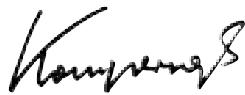
Hans Kompernaβ
PARKSIDE
PONCEUSE A BANDE PEBS 900
Ponçage de surfaces de grandes dimensions.
INDICATIONS DE TRAVAIL
ACCENSIONE ESERCIZIO CONTINUO:
H (\lambda \varepsilon \lambda \varepsilon \nu \tau \kappa \kappa \kappa \kappa \kappa \kappa \kappa \kappa \kappa \kappa \kappa \kappa \kappa \kappa \kappa \kappa \kappa \kappa \kappa \kappa \kappa \kappa \kappa \kappa \kappa \kappa \kappa \kappa \kappa \kappa \kappa \kappa \kappa \kappa
EONAIIMO2PEBS900
1 Ppóσθετm λaβn
2 Στόμο aπoppóφησς
Tpoxocpuoianctaxutntac iavta iavta
KoupiouoepiEe
⑤ IaKoTnC ENTOZ / EKTOZ
6 PnooTaTeutiko KaUmu
Eykonec aepioou
Koxliaq puthetaionyia kivnon
Moxlaoc ouoepiEns
10 ŠaKouλa σκόνης
TEXNIKA ΣTOIXEIA
Ovoaotikn 1oXuc: 900 W
Ovoaotikn Taon: 230 V~ 50 Hz
IaVtac iavoc/
apioosptpovpavt: n650 min-1
TaxuTetaivTa/λeiaovc
Iμavtauεiavonc: 75x533mm
O taivioeiaavnpac PEBS 900 diahei nEktpvik ooutna oumuayoc aEova e npo0eTo nEktpvik ooutna puthetaionc, ouotnua eEyxou ueppoptwnc, oaln Ekkivonkai e tapuohon ioxuc.

Maakn Ekkivonm e Npiopioo puaotc Evpytooinoc.
WLACZANIE I WYLACZANIE
WLACZANIE TRYBU PRACY CIAGJEJ:
WYLAGZANIE TRYBU PRACY CIAGLEJ:
Przy pomocy kolarska do regulacci prędkosci taśmy ©romaticity is a good idea for us to use it. It's easy to see that the formulae are equivalent to the following:
UBER A POVRCHOVÁ PLOCHA
Vi, Kompernaß Handelsgesellschaft mbH, Burgstr. 21, D-44867 Bochum, Tyskland, fürklarar hamed attenna Produkt overensstämmer med foljande EU-riktlinjer:
This piece of equipment is covered by a 3-year warranty as of the date of purchase. The equipment was produced with the greatest of care and underwent thorough testing before delivery. In the unlikely event of detecting a functional defect, please return the equipment in its original packaging with the proof of purchase to the closest service address. Damage caused due to improper handling as well as regular wear of the parts are not covered by this warranty.
Beaver Electronic Services · The Lodge, Premier Business Park · Long Street, Walsall · West Midlands, WS2 9DY
Tel.: 08707/876177·Fax: 01922/725417
e-mail: support.uk@kompernass.com
WARRANTY
This piece of equipment is covered by a 3-year warranty as of the date of purchase. The equipment was produced with the greatest of care and underwent thorough testing before delivery. In the unlikely event of detecting a functional defect, please return the equipment in its original packaging with the proof of purchase to the closest service address. Damage caused due to improper handling as well as regular wear of the parts are not covered by this warranty.
Irish Connection Ltd · 8 St Mary's Place · Howth, Co. Dublin
Tel 087-9962077·Fax:18398056
e-mail: support.ie@kompernass.com
GARANTIE
manual design, photos, translations
by ORFGEN Marketing & Communication
Essen - Germany