
INCREMENT BORERS - Measuring instrument SUUNTO - Free user manual and instructions
Find the device manual for free INCREMENT BORERS SUUNTO in PDF.


| Brand | Suunto |
| Model | INCREMENT BORERS |
| Product type | Increment borer |
| Main use | Determining tree age, measuring growth, checking damage, controlling chemical penetration, testing condition of wooden structures |
| Composition | Handle, drill bit, extractor, locking system |
| Core diameter | 5.0 mm or 12.0 mm (depending on bit) |
| Material | High-quality steel |
| Threading | Double or triple depending on bit |
| Thread protection | Plastic cap |
| Power source | Manual |
| Main functions | Taking wood cores for analysis |
| Maintenance and cleaning | Clean with an oiled cloth after each use; apply beeswax before use |
| Sharpening | Have the threading blades sharpened by a professional |
| Usage precautions | Manual use only; do not drill into metal objects; do not use an electric drill; do not drill into leaning or hollow trees |
| Storage | Store the bit and extractor in the handle with the protective cap |
| Spare parts and repairability | Sharpening possible by a supplier; no other spare parts specified |
| Customer service (Europe) | +358 2 284 11 60 |
| Customer service (USA) | 1 (800) 543-9124 |
| Website | www.suunto.com |
Frequently Asked Questions - INCREMENT BORERS SUUNTO
User questions about INCREMENT BORERS SUUNTO
0 question about this device. Answer the ones you know or ask your own.
Ask a new question about this device
Download the instructions for your Measuring instrument in PDF format for free! Find your manual INCREMENT BORERS - SUUNTO and take your electronic device back in hand. On this page are published all the documents necessary for the use of your device. INCREMENT BORERS by SUUNTO.
USER MANUAL INCREMENT BORERS SUUNTO
Congratulations on your purchase of a Suunto increment borer. The borer design is the result of years of experience and it has been made of the finest steel. If handled and maintained properly it will remain in good shape for many years.
This increment borer consists of three parts:
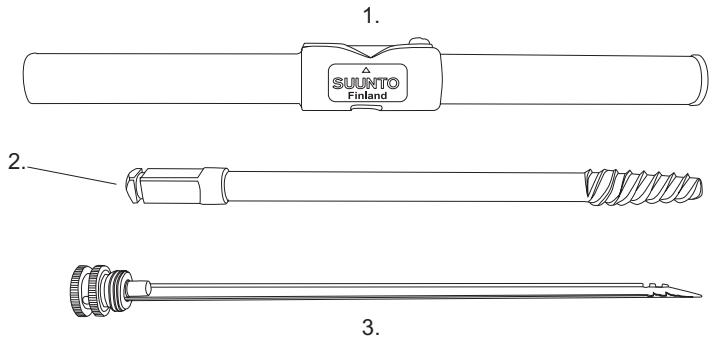
- The handle
- The bit
- The extractor
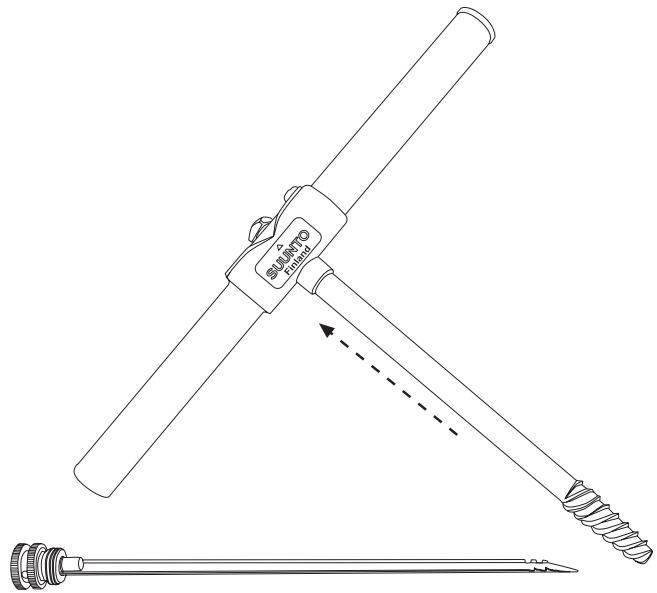
Locking mechanism

Borer bit length.
5.0 mm
(0.197")

12.0 mm
(0.472")

Core diameter of the wood sample is determined by the inside diameter of the opening at the threaded end of the bit.
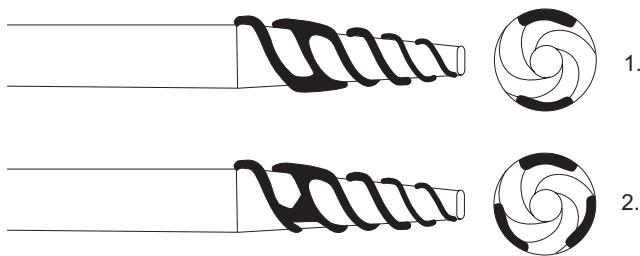
Thread style:
1.2-thread
2.3-thread
Increment borers are used for
- determining the age of standing trees
- measuring the growth rate of a tree
- checking for defects inside a tree
- checking chemical penetration for quality control of treated wood products
- testing the condition of wooden structures in buildings, bridges, etc... (see Important, number 3)
OPERATING INSTRUCTIONS
- Open the end cap at the end of the handle. Remove the extractor and the bit from the handle.
- Open the locking mechanism. Insert the bit into the handle and close the locking mechanism.
- Push the bit threads against the tree at a 90^ angle and start turning the handle while at the same time exerting moderate forward pressure on the handle. This can best be done by "leansing" against the handle while turning it. The bit threads should be kept steady to prevent sway. After about a 2-3 cm (1 inch) penetration of the threads, you can stop the forward "leansing" pressure. Continue turning the handle, with palms open, until the threads reach the desired depth. Avoid applying pressure to the handle up, down or laterally as this may result in bit breakage.
- If the bit does not start to penetrate the wood after a few turns, move the bit to another spot and try again. Continue to apply "leansing" pressure while turning. Placing the bit in the deeper bark fissures will aid in starting the bit. (NOTE: The threads on the bit do not extend to the cutting edge of the bit to allow good centering and resharpening of the bit.)
After the desired depth is reached, insert the extractor into the bit "upside down" i.e., with the edges turned down () , at a slight angle, applying upward pressure. Push the extractor in the full length. Turn the handle a half turn backwards to break the core loose from inside the tree. The edge of the extractor should now be pointed upwards () . Remove the extractor from the bit by pulling the end cap. The core sample should be in the extractor, held in place by the serrated tip.
Note! If the wood is very hard, it is possible that the core does not break loose properly. In this case, move the bit to another spot, start again, and when the desired depth is reached, turn the handle one and a half turns backwards to make sure the core breaks loose from inside the tree.
- Remove the bit immediately from the tree. This should be done before analyzing the core sample. If left in the tree, even for a short period of time, the bit might become "locked" in the tree.
- Clean the bit and extractor at the end of each day with light machine oil. Never store a dirty or wet borer. It is recommended that beeswax be applied before each use.
- Put the plastic cap on the tip of the bit to protect the threads, and store the bit and extractor inside the handle.
IMPORTANT
- Never bore a tree with the extractor inserted in the bit. The extractor should be inserted only after you have finished the drilling and are ready to extract the core. The extractor will twist if inside the bit while drilling, resulting in damage.
- Never extend the handle length by attaching a pipe or similar apparatus to it, nor use a power drill. The bit has been designed for manual use only. Applying larger forces may cause failure of the bit or possible injury.
- Never bore any object which may contain metal objects such as nails of fencing, as this will cause severe damage to the bit's cutting edge.
- Always transport and store the bit and extractor inside the handle with the plastic protection cap in place.
- Always keep the cutting edges of the bit sharp. Contact your dealer for this service or to obtain the sharpening stones and accessories.
- Avoid boring trees which are leaning or suspected to be hollow or decayed.
REMEMBER: The increment borer you purchased is a high quality, precision made tool. By following these few basic guidelines for its care and use, you should enjoy many years of quality service from your increment borer.
COORDONNEES DU SERVICE CLIENTELE
Suunto Oy
Tél. +358 9 875870
FR
Fax +358 9 87587301
Suunto USA
Tél. 1 (800) 543-9124
Canada
Tel.1 (800)776-7770
- Mango
- Broca
- Extractor
This publication and its contents are proprietary to Suunto Oy.
Suunto, Wristop Computer, Suunto Increment Borsers, Replacing Luck and their logos are registered or unregistered trademarks of Suunto Oy. All rights reserved.
While we have taken great care to ensure that information contained in this documentation is both comprehensive and accurate, no warranty of accuracy is expressed or implied. Its content is subject to change at any time without notice.
www.suunto.com
Brand : SUUNTO
Model : INCREMENT BORERS
Category : Measuring instrument