KOG-875T - Microwave Oven DAEWOO - Free user manual and instructions
Find the device manual for free KOG-875T DAEWOO in PDF.


User questions about KOG-875T DAEWOO
0 question about this device. Answer the ones you know or ask your own.
Ask a new question about this device
Download the instructions for your Microwave Oven in PDF format for free! Find your manual KOG-875T - DAEWOO and take your electronic device back in hand. On this page are published all the documents necessary for the use of your device. KOG-875T by DAEWOO.
USER MANUAL KOG-875T DAEWOO
(a) Do not attempt to operate this oven with the door open since open-door operation can result in harmful exposure to microwave energy. It is important not to defeat or tamper with the safety interlocks.
(b) Do not place any object between the oven front face and the door or allow soil or cleaner residue to accumulate on sealing surfaces.
(c) WARNING : If the door or door seals are damaged, the oven must not be operated until it has been repaired by a trained person : (1) door (bent), (2) hinges and latches(broken or loosened), (3) door seals and sealing surfaces.
(d) WARNING : It is hazardous for anyone other than a trained person to carry out any service or repair operation which involves the removal of any cover which gives protection against exposure to microwave energy.
(e) WARNING : Liquids or other foods must not be heated in sealed containers since they are liable to explode.
(f) WARNING : Only allow children to use the oven without supervision when adequate instructions have been given so that the child is able to use the oven in a safe way and understands the hazards of improper use.
CONTENTS
| INSTALLATION AND EARTHING INSTRUCTIONS | 2 |
| IMPORTANT SAFETY INSTRUCTIONS | 3 |
| WHICH UTENSILS CAN BE USED IN THE OVEN? | 4 |
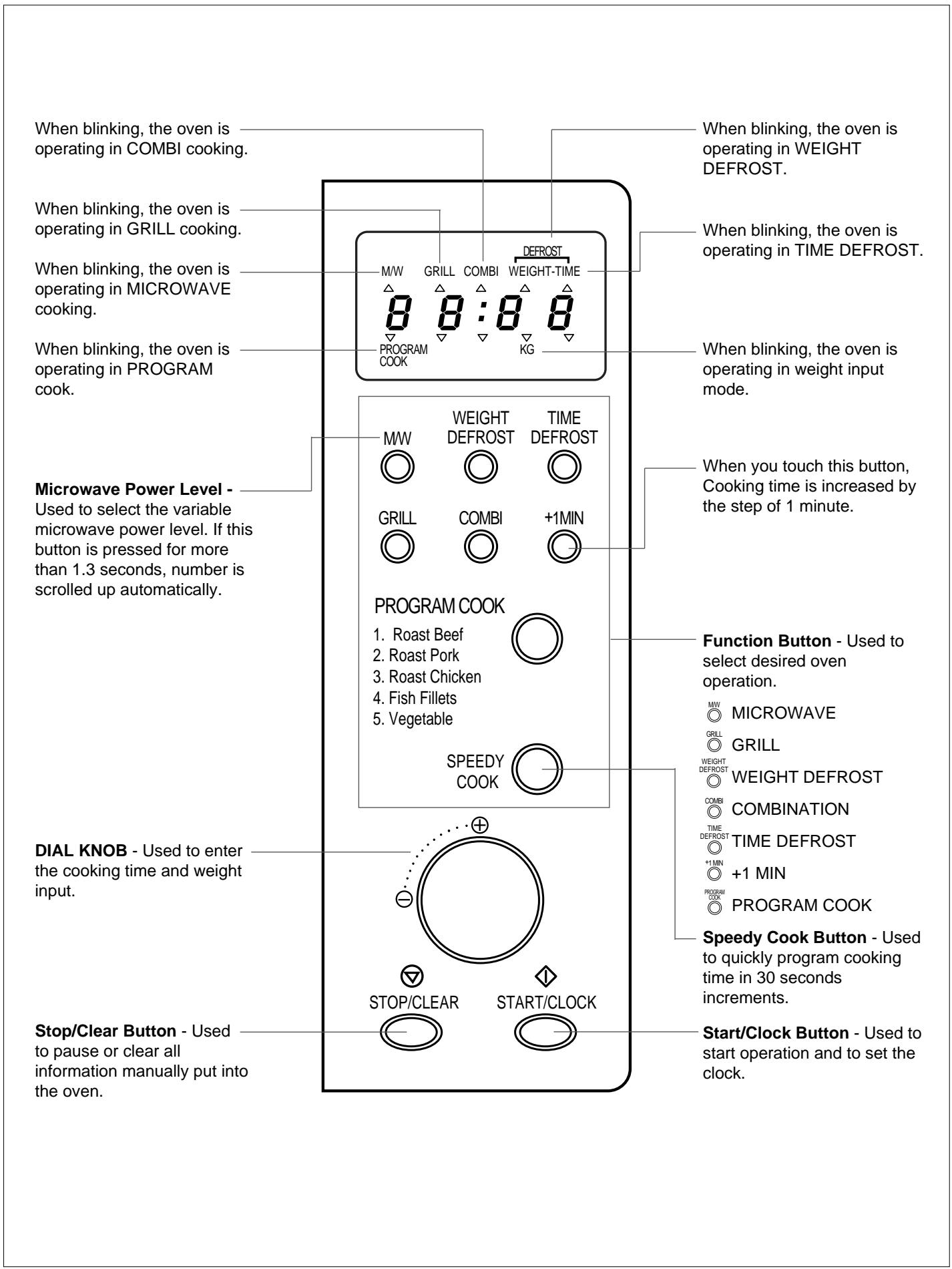
| CONTROL PANEL | 5 |
| ACCESSORIES | 6 |
| HOW TO SET THE OVEN CONTROLS | 7 |
| GENERAL GUIDELINES | 10 |
| KEEP THE OVEN CLEAN | 11 |
| BEFORE CALLING FOR SERVICE | 12 |
| QUESTIONS AND ANSWERS | 13 |
| SPECIFICATIONS | 13 |
This appliance must be earthed. In the event of an electrical short circuit, earthing reduces the risk of electric shock by providing an escape wire for the electric current. This appliance is equipped with a cord having a earthing wire with a earthing plug. The plug must be plugged into an outlet that is properly installed and earthed.
WARNING : Improper use of the earthing plug can result in a risk of electric shock. Consult a qualified electrician or serviceman if the earthing instructions are not completely understood, or if doubt exists as to whether the appliance is properly earthed. If it is necessary to use an extension cord, use only a 3-wire extension cord that has a 3-blade earthing plug, and a 3-slot receptacle that will accept the plug on the appliance. The marked rating of the extension cord should be equal to or greater than the electrical rating of the appliance.
INSTALLATION
1 Steady, flat location
This oven should be set on a steady, flat surface. This oven is designed for counter top use only.
2 Leave space behind and side
All air vents should be kept a clearance. If all vents are covered during operation, the oven may overheat and, eventually, oven failure.
3 Away from radio and TV sets
Poor television reception and radio interference may result if the oven is located close to a TV, Radio antenna, feeder and so on. Position the oven as far from them as possible.
4 Away from heating appliance and water taps
Keep the oven away from hot air, steam or splash when choosing a place to position it, or the insulation might be adversely affected and breakdowns occur.
5 Power supply
- Check your local power source. This oven requires a current of approximately 6 amperes, 230V50Hz .
- Power supply cord is about 0.8 meters long.
- The voltage used must be the same as specified on this oven. Using a higher voltage may result in a fire or other accident causing oven damage. Using low voltage will cause slow cooking. We are not responsible for damage resulting from use of this oven with a voltage of ampere fuse other than those specified.
- If the supply cord is damaged, it must be replaced by the manufacturer or its service agent or a similarly qualified person in order to avoid a hazard.
6 Examine the oven after unpacking for any damage such as:
A misaligned door, Broken door, A dent in cavity. If any of the above are visible, DO NOT INSTALL, and notify dealer immediately.
7 Do not operate the oven if it is colder than room temperature.
(This may occur during delivery in cold weather.) Allow the oven to become room temperature before operating.
8 The minimum height of free space necessary above the top surface of the oven is 100mm
WARNING : To prevent fire, burns, electric shock and other warnings:
Listed below are, as with all appliances, certain rules to follow and safeguards to assure high performance from this oven:
- Do not use the oven for any reason other than food preparation, such as for drying clothes, paper, or any other nonfood items or for sterilizing purposes.
- Do not use the oven when empty, this could damage the oven.
- Do not use the oven cavity for any type of storage, such as papers, cookbook, cookware, etc.
- Do not operate the oven without the glass tray in place. Be sure it is properly sitting on the rotating base.
- Make sure you remove caps or lids prior to cooking when you cook food sealed in bottles.
- Do not put foreign material between the oven surface and door. It could result in excessive leakage of microwave energy.
- Do not use recycled paper products for cooking. They may contain impurities which could cause sparks and/or fires when used during cooking.
- Do not pop popcorn unless popped in a microwave approved popcorn popper or unless it's commercially packaged and recommended especially for microwave ovens. Microwave popped corn produces a lower yield than conventional popping; there will be a number of unpopped kernels. Do not use oil unless specified by the manufacturer.
- Do not cook any food surrounded by a membrane, such as egg yolks, potatoes, chicken livers, etc., without first piercing them several times with a fork.
- Do not pop popcorn longer than the manufacturer's directions. (popping time is generally below 3 minutes). Longer cooking does not yield more popped corn, it can cause scorchings and fire. Also, the cooking tray can become too hot to handle or may break.
- If smoke is observed, switch off or unplug the appliance and keep the door closed in order to stifle any flames.
- When heating food in plastic or paper containers, check the oven frequently due to the possibility of ignition.
- The contents of feeding bottles and baby food jars are to be stirred or shaken and the temperature is to be checked before consumption, in order to avoid burns.
- Always test the temperature of food or drink which has been heated in a microwave oven before you give it to somebody, especially to children or elderly people. This is important because things which have been heated in a microwave oven carry on getting hotter even though the microwave oven cooking has stopped.
- Eggs in their shell and whole hard-boiled eggs shall not be heated in microwave ovens since they may explode.
- Keep the waveguide cover clean at all times. Wipe the oven interior with a soft damp cloth after each use. If you leave grease or fat anywhere in the cavity it may overheat, smoke or even catch fire when next using the oven.
- Never heat oil or fat for deep frying as you cannot control the temperature and doing so may lead to overheating and fire.
- Microwave heating of beverages can result in delayed eruptive boiling, therefore care has to be taken when handling the container.
TO AVOID EXPLOSION AND SUDDEN BOILIING
WARNING
When heating liquids, e.g. soups, sauces and beverages in your microwave oven, overheating the liquid beyond boiling point can occur without evidence of bubbling: This could result in a sudden boil over of the not liquid. To prevent this possibility the following steps should be taken:
a. Avoid using straight sided containers with narrow necks.
b. Do not overheat.
c. Stir the liquid before placing the container in the oven and again halfway through the heating time.
d. After heating, allow to stand in the oven for a short time, stir or shake them again carefully and check the temperature of them before consumption to avoid burns (especially, contents of feeding bottles and baby food jars).
1. Eggs
Never cook eggs in their shells. Steam will build up inside the shell during cooking and the egg will explode.
If you want to cook or reheat eggs which have not been broken up by scrambling or mixing, you must always pierce the yolks or these will also explode. You should slice shelled hard boiled eggs before you reheat them in your microwave oven.
2. Piercing
Always pierce food which has a skin or membrane, for example, potatoes, tomatoes, apples, sausages etc. If you don't pierce them, steam will build up inside and they may explode.
3. Lids
Always remove the lids of jars and containers and take away food containers, before you cook using your microwave oven. If you don't, then steam and pressure might build up inside and cause an explosion even after the microwave cooking has stopped.
WHICH UTENSIL CAN BE USED IN THE OVEN?
Before use, the user should check that tensils are suitable for use in microwave ovens.
| Material | Grill & Convection cooking | Microwave cooking | Combined cooking |
| Glass (general) | No | Yes (1) | No |
| Glass (heat resistant) | Yes | Yes | Yes |
| Glass-ceramic and ceramic (heat resistant) | Yes | Yes (1) | Yes (1) |
| Earthenware | Yes | Yes | Yes |
| China (heat resistant) | Yes | Yes | Yes |
| Plastic (general) | No | Yes (2) | No |
| Plastic (heat resistant) | Yes (2) | Yes (2) | Yes (2) |
| Aluminium foil containers /aluminium foil | Yes | Yes (3) | Yes |
| Metal baking tins | Yes (4) | No | Yes (4) |
| Metal (pots.pans, etc) | Yes | No | No |
| Paper | No | Yes | No |
- Without metal parts or metal trims.
- Some plastics are heat-proof only to certain temperatures. Check carefully!
- It is possible to use aluminium foil to shield deliate areas of food (this prevents over-cooking).
- Metal tins can be used in the combination methods, however if these are very deep, they will greatly reduce the efficiency, as metal shields the microwave energy from the food.
Microwave function only
Utensils and cooking containers used in a microwave oven should be of a material that does not act as a barrier to microwave energy. Generally this means that you should cook in either (paper), plastic, glass or ceramic. Metal pans reflect microwave energy and inhibit cooking, and should not be used. In addition to material, the shape of the container should also be considered. Round oval shapes give the most even cooking. Square or rectangular containers may over-cook foods in the corners because more energy is absorbed there. Shallow containers give more even cooking results.
Utensils made of china and ceramic excellent to use in your microwave oven. Most types of glass are also very good. Lead crystal glass can crack and should therefore, not be used. Plastics and paper can also be used, provided they can withstand the temperature of the heated food. For cooking only use plastics, which will withstand a temperature of over 120^ , e.g. polypropene and polyamide. Some plastic materials, e.g. melamine, will be heated by the microwave, and be damaged. To find out if a certain container is suitable, the following simple test can be made:
Place the empty container and a glass of water inside the microwave oven. The water is needed because the oven must not be operated empty or with empty containers only. Let the oven work on full power for one minute. A suitable container will only be lukewarm.
Metal containers, e.g. saucepans or frying pans should not be used in microwave ovens. Nor should plates or vessels with decorations be used since metal e.g. gold, might be part of the decoration and such decorations will be damaged.
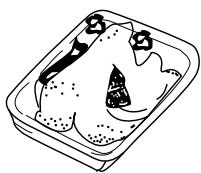
Small pieces of aluminium foil can be used, but only to shield the areas that would over-cook (e.g. for covering chicken
wings, leg tips and fish tails) but the foil must not touch the side of the oven as damage may occur.
Caution:
- There are a number of accessories available on the market. Before you buy, make sure they are suitable for microwave use.
- When you put food in the microwave oven, make sure that food, food supports or covering do not come in direct contact with any of the internal walls or the ceiling of the cavity since discolouration may take place.
This oven comes equipped with several accessories. They can be used in various ways to facilitate cooking. Be sure to follow specific directions for their use when given in charts or recipes in the cookbook.
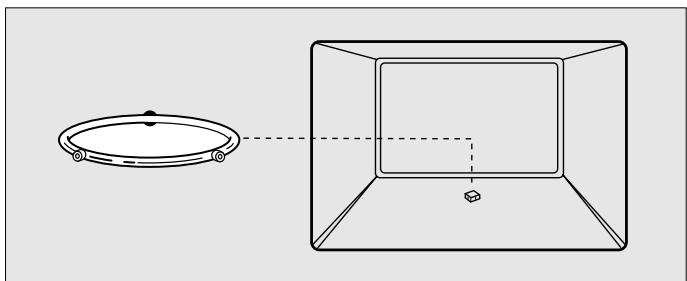
Rotating base
This fits over the shaft in the center of the oven's cavity floor. This is to remain in the oven for all cooking. It should only be removed for cleaning.
Important:
- The rotating base must be placed in the center of the oven's cavity and fitted in the rotating shaft exactly. In case the rotating base does not fit in the rotating shaft, the rotating base might become as tray and sparks can occur.
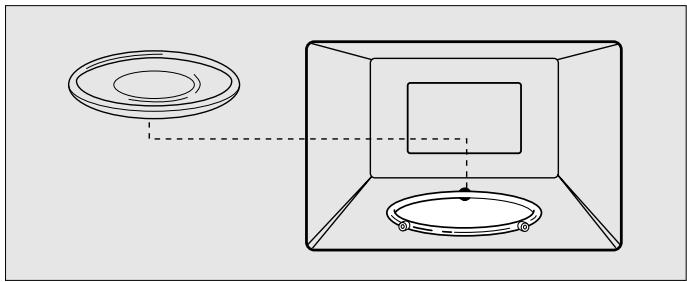
Turntable tray or turntable
This metal tray fits over the rotating base and locks into place. This is to be used in the oven for all cooking. It rotates clockwise or counterclockwise during cooking. It is easily removable for cooking and cleaning needs.
■ ACCESSORIES FOR COOKING
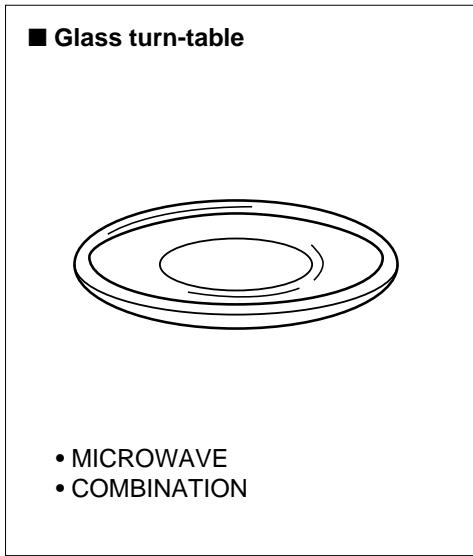
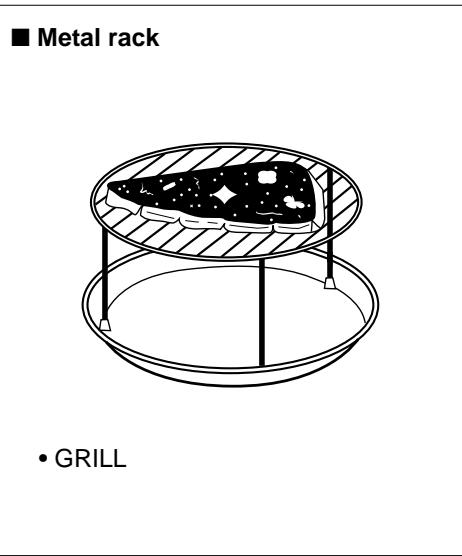
Metal rack
This metal rack is used with the Turntable for grilling/combination heating.
When used with the Turntable, if facilitates cooking for many food dishes.
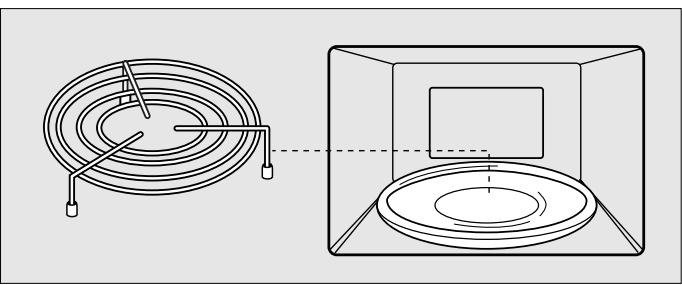
Note:
Metal rack is not to be used together when turntable tray during microwave only cooking.
Tips:
- Be sure to read the cookbook's introduction before operating the oven.
- Also remember to read this operating instruction for proper safety information and instruction before using the oven.
- See the cookbook for specific recipes.
- Prior to setting the controls, place one cup of water in the oven, on a heat-proof glass measuring cup, for testing purposes.
- When setting the controls, every time a pad is pressed, a beep can be heard.
MICROWAVE COOKING

Note:
- To insure the best microwave and defrost results, be sure to start with a cool oven. This is important if grill, or combination was used prior to microwave cooking. The cooling fan wil run for five minutes after the end of cooking.
- The variable power Level settings equal the following wattage.
| DISPLAY | POWER LEVEL | DISPLAY | POWER LEVEL |
| P-HI | 100% | P-90 | 90% |
| P-80 | 80% | P-70 | 70% |
| P-60 | 60% | P-50 | 50% |
| P-40 | 40% | P-30 | 30% |
| P-20 | 20% | P-10 | 10% |
SETTING THE CONTROLS
- Press MW button. The display will show "P-HI".
This oven has 10 power levels from P-HI to P-10.
- Press the MW button to select the desired microwave power level.
For example: power level 80
Press MW button two times more.
- Turn the DIAL KNOB for the desired cooking time.
For example: 18 minutes Turn right or left the DIAL KNOB.
Then, 18:00 will show in the dispensy.
Time can be set up from 10 seconds to 60 minutes.
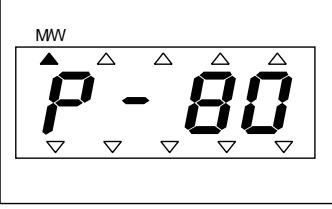
Note:
-
If step 2 is omitted, the oven will cook at full power.
-
Press

button.
The oven will now start microwave cook for 18 minutes at power level P-80.
- Four beeps will sound at the end of the cooking time.
The indicator light will go off. The display panel will return to the "0". The oven light will turn off and the turntable will stop turning.
Note:
- After the end of microwave cooking, the cooling fan will run for five minutes.
- It is displayed after an interval of 10 seconds from 10 seconds to 5 minutes, 30 seconds from 5 minutes to 15 minutes, 1 minute from 15 minutes to 30 minutes, 2 minutes from 30 minutes to 60 minutes.
Note:
CHANGING THE CONTROLS DURING THE OVEN OPERATION.
- Press MW button. The display will show the current power level.
- Press MW button again to change the power level.
(If MW button is not pressed within 3 seconds, the display will show the operation mode.)
TIME DEFROST

Note:
- During the defrosting operation, turn the food over after you hear 4 times of 4 beeps for complete defrost.
SETTING THE CONTROLS
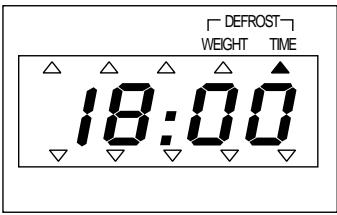
TIME 1. Press DEFROST button.
2. Ium the DIAL KNOB for the desired defrosting time.
For example: 18 minutes
Time can be set up from 10 seconds to 60 minutes.
-
Press STARTCLOCK button
-
Four beeps will sound at the end of the cooking time. The indicator light will go off. The display panel will return to the "0". The oven light will turn off and the turntable will stop turning.
Note:
- When the selected operation is over, a cooling fan will run for five minutes.
WEIGHT DEFROST WEIGHT DEFROST
Note:
- This mode allows you to set weight from 0.1kg to 2.9kg
- During the defrosting operation turn over the food after 4 beeps sound 4 times for complete defrosting.
SETTING THE CONTROLS
- Press WEIGHT DEFROST button.
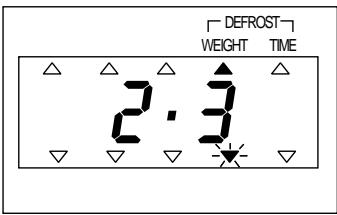
- Turn the DIAL KNOB for the desired defrosting weight.
For example: 2.3kg
- Press STARTICLOCK button.
- The display will show the defrosting time.
- Four beeps will sound at the end of the cooking time.
The indicator lights will go off. The display panel will return to the "0". The oven light will turn off and the turntable will stop turning.
Note:
- When the selected operation is over, a cooling fan will run for five minutes.
- Grilling in this oven is similar to conventional grilling. The heting element is located in the top of the oven.
SETTING THE CONTROLS
- Press GRILL button.
- Turn the dial knob for the desired cooking time.
For example: 25 minutes
Time can be set up from 10 seconds to 60 minutes.
- Press STARTCLOCK button.
- Four beeps will sound at the end of the cooking time.
The indicator light will go off. The display panel will return to the "0". The oven light will turn off and the turntable will stop turning.
Note:
- When the selected operation is over, a cooling fan will run for five minutes.
COMBI COOKING COMBI
Note:
- Microwave and convection operate simultaneously (or sequentially) in this mode.
| DISPLAY | POWER LEVEL |
| C-0 | 50% |
| C-Hi | 70% |
| C-Lo | 30% |
(Above percentage in the power level indicates power level of microwave output)
SETTING THE CONTROLS
- Press COMBI button.
"C-0" will show in the display.
- Select the desired power level.
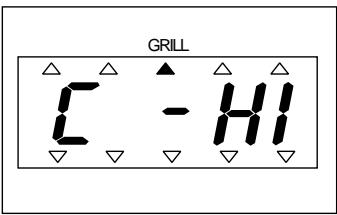
For example: C-HI
Press COMBI button once again.
"C-HI" Will show in the display.
- Tum the DIAL KNOB for the desired cooking time.
- Press STARTLECK button.
Four beeps will sound at the end of the cooking time. The indicator light will go off. The display panel will return to the "0". The oven light will turn off and the turntable will stop turning.
Note:
- When the selected operation is over, a cooling fan run for five minutes.
Note:
- When using COMBI mode, please refer to cooking guide.
- When cook a large piece of food (e.g. Chicken, roast pork, etc.) steam or water droplets may leak from the door surround.
- This emissions do not mean that the oven is faulty.
PROGRAM COOK

Note:
- There is preprogrammed cooking of five menu. (1-5)
- Don't need to set cooking time, power or function.
SETTING THE CONTROLS
- Press

button
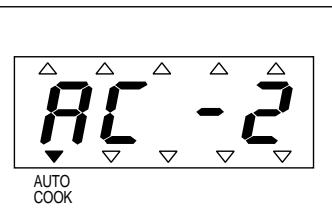
Then, "AC-1" will show in the display.
- Select the desired cooking menu.
For example: roast pork.
Press

button once
again then "AC-2" will show in the display.
- If you want to select other
cooking, touch the pad again, until display shows your desired menu.
4.P
button.
The oven will now start programmed cook for menu 2. The cooking time of the menu 2, roast pork, is 37 minutes.
- The display will show the cooking time
- Four beeps will sound at the end of the cooking time. The indicator light will go off. The display panel will return to the "0". The oven light will turn off and thruntable will stop turning.
Note:
- The menu of pre-programmed cooks equal to the following
AC-1 ROAST BEEF (1.3Kg)
AC-2 ROAST PORK (1.3Kg)
AC-3 ROAST CHICKEN (1.3Kg)
AC-4 FISH FILLETS (450g)
AC-5 VEGETABLE (450g)
- See the cooking guide for specific recipes.
TO INTERRUPT THE COOKING CYCLE DURING OPERATION-open the door.
- The oven will immediately stop.
- The cooling fan will run for five minutes.
- If no further cooking required, press STOP/CLEAR button.
- The "0" is displayed.
- To continue cooking, close the oven door and Press button. The oven will restart.
GENERAL COOKING HINTS
- When cooking a roast with an excess amount of fat, it is helpful to remove the fat at turnove times to prevent pattering.
- Prick the meats, fish or poultry with a fork to prevent bursting. Steam builds up pressure in meals, fish or poultry which is tightly covered by a skin or membrane.
- Reduce suggested cooking times. It is always better to undercook foods rather than to overcook them. If a range of times is stated in a recipe, cook the food at the minimum suggested time, check for doneness, and then cook slightly longer if necessary.
SPEEDY COOK

Note:
- The cooking time increases from 30 seconds to 5 minutes.
SETTING THE CONTROLS
- Press
SPEEDY COOK button

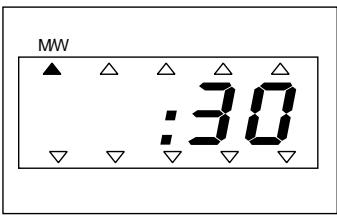
- " :30" will appear in the display window.
- Whenever this pad is pressed, cooking time is increased by 30 seconds.
- Four beeps will sound at the end of the cooking time. The indicator light will go off. The display panel will return to the "0". The oven light will turn off and the turntable will stop turning.
TIME PLUS
Note:
- The cooking time can be increased during the oven operation by pressing buttons.
- This function is not vaild in speedy cook mode.
SETTING THE CONTROLS
- Press


Cooking time is increased by the step of 1 minute.
Note:
- The time to set before operating and additional time must be less than 60 minutes.
Since microwave cooking to some extent is different from traditional cooking, the following general guidelines should be considered whenever you use your microwave oven
If the food is undercooked
Check if:
- You have selected the correct power level.
- The selected time is sufficient-the times given in the recipes are approximate. They depend on initial temperature, weight and density of the food etc.
- The container is appropriate.
If the food is overcooked, i.e. dried out or burnt
Before you cook again, consider whether:
The power level was too high.
- The set time was too long-the times in the recipes are approximate. They depend on initial temperature, weight and density of the food etc.
Points to remember when defrosting
- The shape of the package alters the defrosting time. Shallow rectangular packets defrost more quickly than a deep block. Separate pieces as they begin to defrost; freef low slices defrost more easily.
- Shield areas of food with small pieces of foil if they start to become warm.
- When defrosting, it is better to under thaw the food slightly and allow the process to finish during the standing time.
The amount of food
The more food you want to prepare the longer it takes. A rule of thumb is that double amount of food requires almost double the time. If one potato takes four minutes to cook, approximately seven minutes are required to cook two potatoes.
Starting temperature of food
The lower the temperature of the food which is being put into the microwave oven, the longer time it takes. Food at room temperature will be reheated more quickly than food at refrigerator temperature.
Composition of the food
Food with a lot of fat and sugar will be heated faster than food containing a lot of water. fat and sugar will also reach a higher temperature than water in the cooking process.
The more dense the food, the longer it takes to heat. "Very dense" food like meat takes longer time to reheat than lighter, more porous food like sponge cakes.
Size and shape
Smaller pieces of food will cook more quickly than larger pieces and uniform pieces of food cook more evenly than irregularly shaped foods.
With unevenly shaped food, the thinner parts will cook faster than the thicker areas. Place the thinner chicken wings and legs to the centre of the dish.
Stirring, turning of foods
Stirring and turning of foods are techniques used in conventional and well as in microwave cooking to distribute the heat quickly to the centre of the dish and avoid overcooking at the outer edges of the food.
Covering food helps:
To reduce spattering
- To shorten cooking times
- To retain food moisture
All covering, which will allow microwaves to pass through are suitable-See above "Which utensils can be used in the oven?"
Releasing pressure in foods
Several foods are tightly covered by a skin or membrane. These foods should be pricked with a fork or cocktail stick to release the pressure and to prevent bursting, as steam builds up within them during cooking. This applies to potatoes, chicken livers, sausages, egg yolks and some fruits.
Standing time
Always allow the food to stand for some time after using the oven. standing time after defrosting, cooking/reheating always improves the result since the temperature will then be evenly distributed through out the food. In a microwave oven foods continue to cook even when the microwave energy is turned off. They are no longer cooking by microwaves, but they are still being cooked by the conduction of the high residual heat to the centre of the food. The length of standing time depends on the volume and density of the food. Sometimes it can be as short as the time it takes you to remove the food from the oven and take it to the serving table. However, with larger, denser foods, the standing time may be as long as 10 minutes. During 'standing', the internal temperature of the food will rise by as much as 8^ and the food will finish cooking in this time.
Arranging food
This is done in several ways in microwave cooking to give more even cooking results.
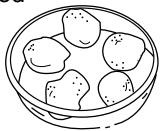
If you are cooking several items of the same food such as jacket potatoes, place them in a ring pattern for uniform cooking. When cooking foods of uneven shapes or thickness, place the smaller or thinner area of the food towards the centre of the dish where it will be heated last.
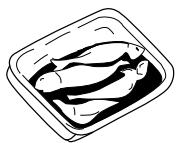
Uneven foods such as fish should be arranged in the oven with the tails to the centre.
If you are saving a meal in the refrigerator or 'plating' a meal for reheating, arrange the thicker, denser foods to the outside of the plate and the thinner or less dense foods in the middle.
Place thin slices of meat on top of each other or interlace them.

Thicker slices such as meat loaf and sausages have to be placed close to each other. Gravy or sauce should be reheated in a separate container.
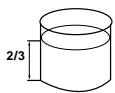
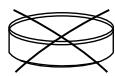
Choose a tall, narrow container rather than a low and wide container. When reheating gravy, sauce or soup, do not fill the container more than 2/3.
When you cook or reheat whole fish, score the skin this prevents cracking.
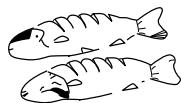
Shield the tail and head with small pieces of foil to prevent over-cooking but ensure the foil does not touch the sides of the oven.
INSIDE THE OVEN
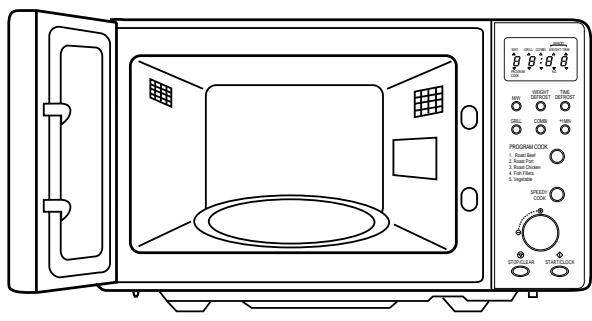
The interior three side walls and floor are stainless steel. For easy cleaning, wipe spills and spatters as they occur with a damp cloth or sponge with water and a mild detergent. Rinse the cavity of any cleaning residue with a clean damp or sponge after cleaning. Dry with a soft cloth.
These areas can also cleaned by using plastic or nylon scouring pads recommended for use of Teflon and Silverstone*.
For hard to remove soil, use a mild non-abrasive cleaner. Use on the stainless steel areas, turntable and rotating base only.
Warning
Just as your traditional oven becomes hot also this oven will become hot during use of the grill functions or in combination with microwaves. Children should be supervised at all times when using the oven.
TURNTABLE AND ROTATING BASE
These two parts are easily removable for cleaning. The turntable should be cleaned frequently and is dishwasher proof. If food spills are accumulated under the rotating base, the oven will not operate efficiently. Be sure to wipe up any spills as they occur in this area.
Clean these parts as described in by the same method of cleaning inside the oven. Be sure to properly reinstall these parts into the cavity after cleaning.
Note:
Do not use any other Turntable in the oven. Do not operate the oven without the Turntable and Rotating Base Properly in place.
DOOR
While the oven door is still warm, any spatters or food soils should be wiped off with a damp sudsy cloth or sponge. Rinse with water and wipe dry with a cloth.
If steam or condensation appears around this area, wipe with a cloth. This may occur when the oven is operating under high humidity and with foods containing lots of moisture. This is a normal part of microwave cooking.
EXTERIOR
CONTROL PANEL
Exercise care when cleaning this area. To clean, wipe the panel with a slightly dampened cloth, using only water. Wipe dry. Do not scrub this area or use any sort of chemical cleaner. Avoid use of excess water.
OUTSIDE SURFACE
The outside surfaces should be cleaned with soap and water, rinsed and dried with a soft cloth. Do not use any type of household or abrasive cleanser.
Note:
DO NOT USE ANY TYPE OF OVEN CLEANER ON ANY PART OF THE OVEN. It will damage some of the interior and exterior surfaces of the oven.
You can often correct operating problems yourself. If your microwave/grill oven fails to work properly, locate the operating problem in the chart below and try the solutions marked for each problems.
If the microwave/grill oven still does not work properly, contact the nearest Service Center.
Note:
It is quite normal for steam to be emitted around the door during the cooking cycle. The door is not intended to seal the oven cavity completely but its special design contributes to the complete safety of the appliance.
Caution:
- Do not attempt to operate the oven while empty as this will cause damage.
- As an exhaust is located in the rear of the oven, install the oven so as not to block the outlet.
If the microwave/grill oven still does not work properly, contact the nearest Service Center.
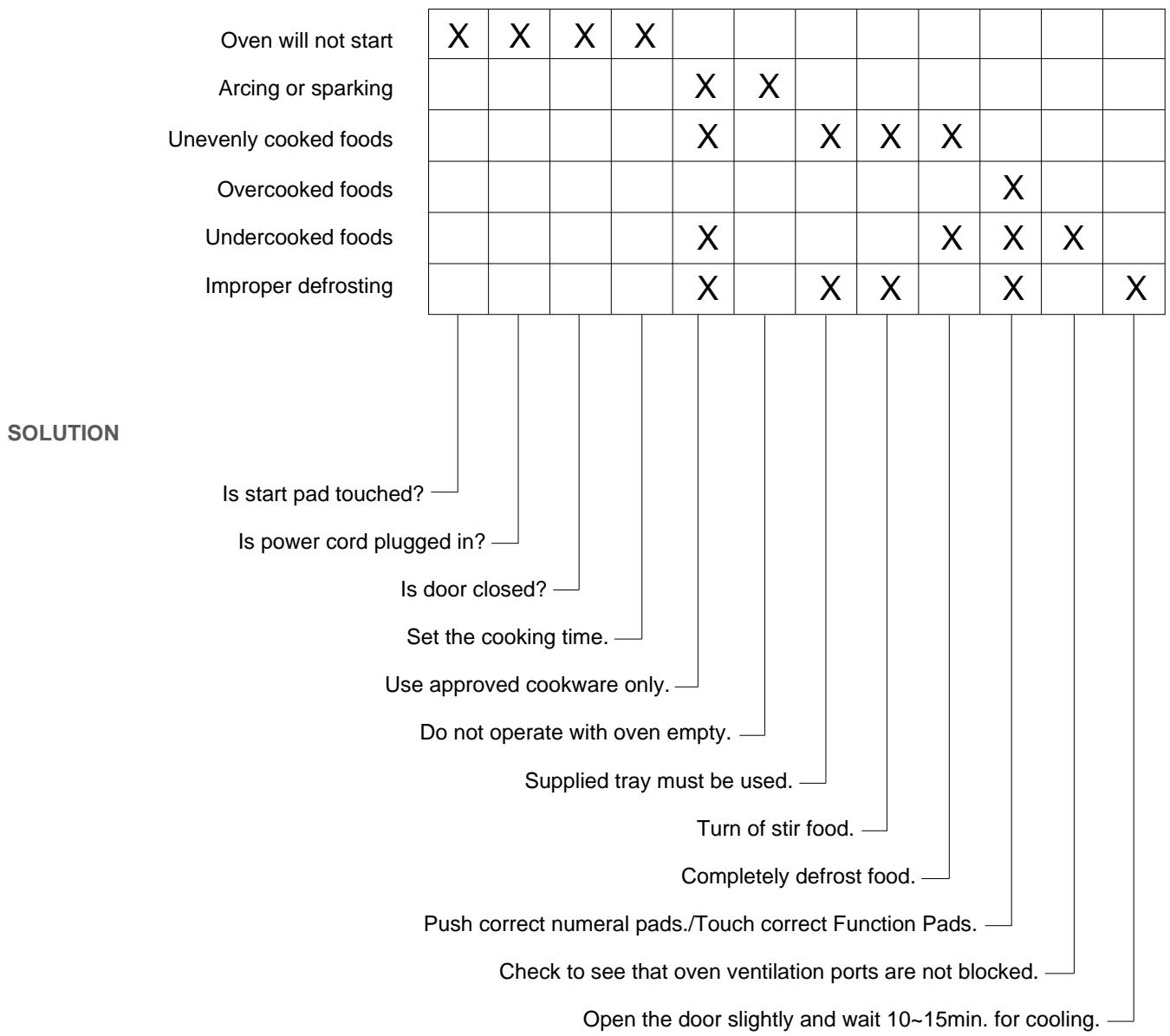
PROBLEM
Q: I accidentally ran my microwave oven without any food in it. is it damaged?
A: We do not recommend to operating the microwave oven without any food. However, running the oven empty for a SHORT time will not damage the oven.
Q: Can I open the door when the oven is operating?
A: The door can be opened anytime during the oven operation. Microwave energy will be instantly switched off and the time setting will maintain until the door is closed.
Q: Does microwave energy pass through the viewing screen in the door?
A: No. The metal screen bounces back the energy to the oven cavity. The holes are made to allow light to pass through. They do not let microwave energy pass through.
Q: My microwave oven causes interference with my TV. is this normal?
A: Some radio and TV interference might occur when you cook with the microwave oven. This interference is similar to the interference caused by small appliances such as mixers, vacuums, blow dryers, etc. It does not indicate a problem with your oven.
Q: How can we know whether the oven is operating or not?
A: Oven is operating only when the door is closed. After the end of oven cooking, the cooling fan will run for two minutes.
Q: Why does my oven light dim?
A: When cooking at reduced power level, the oven must cycle to obtain the selected power levels. The oven light, dims and clicking noises can be heard when the oven cycles.
Q: When is the oven light on and off?
A: The oven light is on during the cooking time and when the door is opened.
Q: Why does steam accumulate on the oven door?
A: During cooking, steam is given off from the food. Most of the steam is removed from the oven by the air which circulates in the oven cavity. However, some steam will condense on cooler surfaces such as the oven door. This is normal.
Q: Sometimes warm air comes from the oven vents. Why?
A: The heat given off from the cooking food warms the air in the oven cavity. This warmed air is carried out of the oven by the air flow pattern in the oven. There are no microwave in the air. The oven vents should never be blocked during cooking.
Q: Why does the smoke come out of the exhaust vent at the back of oven?
A: It is normal for smoke to come out of the vents during cooking. Smoke may be produced when food is overcooked.
SPECIFICATIONS
| Power supply | 230V~,50Hz | |
| Microwave | Power consumption | 1,400 W |
| Output power | 900 W (IEC 705) | |
| Frequency | 2,450 MHz | |
| Grill Power Consumption | 1,150 W | |
| Simultaneous Heating Power Consumption | 2,500 W | |
| Outside Dimensions (W x H x D) | 501 (19.7) x 413 (16.2) x 320 (12.6) mm (inch) | |
| Cavity Dimensions (W x H x D) | 310 (12.2) x 320 (12.6) x 229 (9.0) mm (inch) | |
| Net Weight | 17.3 kg (38.1 lbs) | |
| Timer | 60 minutes | |
| Select function | Microwave/Grill/Combination | |
| Microwave power level | 10 stages | |
- Specifications are subject to change without notice.