
SFB 2000 A1 - Deep fryer SILVERCREST - Free user manual and instructions
Find the device manual for free SFB 2000 A1 SILVERCREST in PDF.
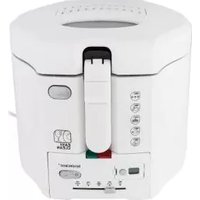


| Product Type | Deep Fryer |
| Model | SFB 2000 A1 |
| Brand | SilverCrest |
| Power Consumption | 2000 W |
| Voltage | 220-240 V ~ 50/60 Hz |
| Oil Capacity | 2.0 L |
| Temperature Range | 150 °C - 190 °C (adjustable thermostat) |
| Basket Capacity | Approx. 1.0 kg of food |
| Housing Material | Stainless steel and plastic |
| Safety Features | Overheating protection, automatic shut-off, cool-touch handles |
| Filtration | Integrated anti-odor filter |
| Viewing Window | Yes, on lid |
| Dishwasher Safe Parts | Removable oil container and basket |
| Dimensions (L x W x H) | Approx. 30.0 x 25.0 x 30.0 cm |
| Weight | Approx. 2.5 kg |
| Cord Length | Approx. 0.9 m |
| Spare Parts | Available (basket, lid, filter) |
| Repairability Index | Good (common parts) |
| Cleaning | Wipe exterior with damp cloth; removable parts dishwasher safe |
Frequently Asked Questions - SFB 2000 A1 SILVERCREST
User questions about SFB 2000 A1 SILVERCREST
0 question about this device. Answer the ones you know or ask your own.
Ask a new question about this device
Download the instructions for your Deep fryer in PDF format for free! Find your manual SFB 2000 A1 - SILVERCREST and take your electronic device back in hand. On this page are published all the documents necessary for the use of your device. SFB 2000 A1 by SILVERCREST.
USER MANUAL SFB 2000 A1 SILVERCREST
FREIDORA SFB 2000 A1 FRIGGITRICE SFB 2000 A1
HOYER Handel GmbH
Tasköprüstraße 3
DE-22761 Hamburg
GERMANY
Operating instructions
DE CH
FRITTEUSE
Bedienungsanleitung
IAN 329316_1910 IAN 329316_1910
IT PT
Italiano 2
Português 22
English...... 42
Deutsch....62
Panoramica / Vista geral / Overview / Übersicht


Indice
- Overview 43
- Intended purpose 44
- Safety information 44
- Items supplied 48
- The basics of frying 48
- How to use 50
- Operation 51
7.1 Setting up 51
7.2 Operating the timer.... 51
7.3 Filling with frying oil.... 51
7.4 Heating up the frying oil/fat.... 52
7.5 Frying.... 53
7.6 Overheating protection.... 54
- Cleaning and storage 54
8.1 Filtering and storage of frying fat/oil.... 54
8.2 Disposal of frying fat/oil.... 55
8.3 Cleaning.... 55
8.4 Re-using used frying fat.... 55
8.5 Storage 56
-
Replacing the battery 56
-
Disposal 56
- Home-made fresh French-fried potatoes 57
- Trouble-shooting 57
- Technical specifications 58
- Warranty of the HOYER Handel GmbH 58
1. Overview
1 Lid with lid bracket
2 M A X marking in frying basket (maximum filling level)
3 Frying basket
4 Button for adjusting the handle
5 Handle
6 Marking
7 Oil container (integrated into deep fryer)
8 Button for opening the lid
9 Deep fryer
10 Electrical unit
11 Reset button (is released after overheating)
12 Carrying recesses of the deep fryer
13 Storage compartment for power cable with mains plug
14 Power cable with mains plug
15 MIN/MAX markings in oil container (minimum/maximum filling level)
16 Recess for the lid bracket
17 Openings in the lid
18 Oil filter (inserted in lid)
19 Window in lid
20 orange LED: operation control light (is lit when the device is switched on)
21 green LED: temperature control light (is lit when the set temperature has been reached)
22 O/I on/off switch
23 Temperature specifications for food
24 Temperature control
25 Display Timer
26 Timer
27 Timer button
Thank you for your trust!
We congratulate you on your new deep fryer.
For safe handling of the product and in order to get to know the entire range of features:
- Read these user instructions thoroughly prior to initial use.
- Above all, observe the safety information!
- The device should only be used as described in this copy of the user instructions.
- Keep these user instructions for information purposes.
- If you pass the device on to someone else, please include this copy of the user instructions. The user instructions are a part of the product.
We hope you enjoy using your new deep fryer!
2. Intended purpose
The deep fryer is intended for cooking food in hot oil or fat at a temperature of up to max. 190 °C.
The deep fryer is designed for private, domestic use. The deep fryer must only be used indoors.
This device must not be used for commercial purposes.
3. Safety information
Warnings
If necessary, the following warnings are used in this copy of the user instructions:

DANGER! High risk: failure to observe this warning may result in injury to life and limb.
WARNING! Moderate risk: failure to observe this warning may result in injury or serious material damage.
CAUTION: low risk: failure to observe this warning may result in minor injury or material damage.
NOTE: circumstances and specifics that must be observed when handling the device.
Symbols on the device

This symbol warns you against touching the hot surface.

The food-safe material of devices with this symbol will not change the taste or smell of food.
Instructions for safe operation
- This device must not be used by children aged between 0 and 8 years. This device may be used by children aged 8 years or above if they are permanently supervised. This device can be used by people with restricted physical, sensory or intellectual abilities or people without adequate experience and/or understanding if they are supervised or instructed on how to use this device safely and if they are aware of the resulting dangers.
- Keep children under the age of 8 away from the device and the power cable.
- Children must be supervised to ensure that they do not play with the device.
- The cleaning and maintenance by the user may not be performed by children.
- Place the device in a stable position by using the handles, in order to prevent the hot liquid from spilling.
- The deep fryer, the power cable and the mains plug must not be immersed in water or other liquids.

- Do not touch the hot parts of the device, e.g. the openings in the lid. The frying basket should only be touched at the handle.
- During frying, hot steam escapes from the openings in the lid. Be careful not to put your hands into the steam.
- This device is intended for use in households and in applications similar to households, such as ...
... in kitchens for staff in shops, offices and other commercial settings;
... on agricultural properties;
... by customers in hotels, motels and other residential facilities; ... in bed-and-breakfast establishments.
- This device is not intended to be operated using an external timer or a separate remote control system.
- If the power cable of this device should become damaged, it must be replaced by the manufacturer, the manufacturer's customer service department or a similarly qualified specialist in order to avoid any hazards.
- Please take note of the chapter on cleaning (see “Cleaning and storage” on page 54).

DANGER for children
- Ensure that the hot deep fryer can never be pulled down by children (e.g. on the power cable). In cases of scalding from hot oil there is danger of death!
- Packing materials are not children's toys. Children should not be allowed to play with the plastic bags. There is a risk of suffocation.

DANGER to and from pets and livestock
Electrical devices can represent a danger to pets and livestock. In addition, animals can also cause damage to the device. For this reason you should keep animals away from electrical devices at all times.

FIRE HAZARD
- The deep fryer must never be used empty! Before switching on the device, the oil container must always be filled at least up to the MIN marking and it must not exceed the MAX marking.
- Old or dirty frying fats and oils, as well as unsuitable fats and oils (e.g. margarine, butter or olive oil) can even ignite when heated. Only use suitable oils and fats. Make sure to clean and store the device carefully and to replace the frying fat/oil in good time (see "The basics of frying" on page 48).
- Never mix different fats/oils or old and new fat/oil.
- If fat or oil catches fire, it must never be extinguished with water, because this would lead to a fat explosion. Extinguish the fire by putting the lid onto the
deep fryer, or with a fire blanket or a woollen blanket.
- Never leave the deep fryer unattended during operation. You will thus be able to detect possible problems early on due to unusual smells or noises.
- Do not use the deep fryer under wall units and not near to any curtains, paper or any similar flammable objects.
- The device must never be placed directly under a wall socket, as the arising heat may lead to damage to the electric system.
- Keep a distance of at least 50 cm to any other objects so that they cannot catch fire.
- The deep fryer should only be operated on a stable, flat, non-slip, dry and non-flammable work surface, in order to prevent it from tipping over or slipping away.

DANGER! Risk of injury through burning
Hot fat and oil results in serious burns because it is significantly hotter than boiling water.
- If water drips into hot fat or oil, then this will lead to explosive deflagrations.
- Avoid any contact with hot fat/oil or splashes of fat or oil.
- Never move or transport the deep fryer when containing hot fat/oil.
- Never let water drip into the hot fat/oil.
- The frying basket and the food to be fried must be dry when they are put into the hot fat/oil. In particular in the case of deep-frozen food, any ice or melt water should be removed.
- The deep fryer should only be operated with dry hands.
- The frying basket and the lid should not be immersed in water or any other liquids before use.
- Make sure that all parts of the deep fryer are absolutely dry before they are used. In combination with the heated fat/oil, even small amounts of residual water may lead to explosive deflagra-tions.
- The lid should be kept closed during heating up and frying.
- Hot steam escapes from the oil filter during frying. Be careful not to put your hands into the steam.
- Do not touch the hot parts of the device, e.g. the openings in the lid. The frying basket should only be touched at the handle.
- After frying, the deep fryer should cool down for at least 1 to 2 hours before you empty the oil container and clean the device.

DANGER of slipping
- Avoid any splashes of oil/fat on the floor. There is a danger of slipping!

DANGER! Risk of electric shock due to moisture
- Protect the device from moisture, water drops and water splashes.
- Do not use the device in the open air or near vessels filled with water, e.g. sinks.
- If the device has fallen into water, pull out the mains plug immediately, and only then remove the device from the water. Do not use the device again, and have it checked by a specialist workshop.

DANGER! Risk of electric shock
- Do not use the device if the device or the power cable has any visible damage, or if the device has previously been dropped.
- Extension cables must be designed for a minimum of 10 ampere.
- Lay the power cable and any extension cable such that nobody can step on them, get caught on them, or trip over them.
Before connecting the device, check that the on/off switch is set to ☐.
- Connect the mains plug only to a correctly installed, easily accessible earthed wall socket with voltage corresponding to the rating plate. The wall socket must still be easily accessible after connection.
- Ensure that the power cable cannot be damaged by sharp edges or hot spots. Do not wrap the power cable around the device. Use the cable spool on the back of the device.
- Even after it has been switched off, the device is not completely disconnected from the mains. In order to fully disconnect it, pull out the mains plug.
- When setting up the device, make sure that the power cable is not trapped or crushed.
- To pull the mains plug out of the wall socket, always pull on the mains plug, and never on the power cable.
- Disconnect the mains plug from the wall socket ...
... if there is a fault, ... if the device or the power cable is damaged, ... when you are not using the device, ... before you clean the device and ... during thunderstorms.
- Do not connect another device with a high power consumption to a wall socket on the same electrical circuit. This way you will avoid overloading the mains power supply.
- Do not connect the device by using a multiple socket. By doing so the socket might be overloaded.
- In order to avoid any hazards, do not make modifications to the device.

DANGER from the battery
- Be sure to observe the correct polarity when inserting the battery. Replace only with the same or an equivalent type.
- Batteries can be life-threatening if swallowed. Therefore you should store batteries out of the reach of young children. If a battery has been swallowed, medical assistance must be sought immediately.
- DANGER OF EXPLOSION! Batteries must not be charged or reactivated by other means, nor must they be dismantled, thrown into a fire or short-circuited.
- Always remove a used battery immediately from the device as it may leak and cause damage.
- Remove the battery from the device if you intend not to use it for an extended period of time. The battery may leak and damage the device.
- Do not subject batteries to extreme conditions, place them on radiators or expose them to direct sunlight. Otherwise, there is an increased danger of batteries leaking.
- If battery acid has leaked, avoid contact with the skin, eyes and mucous membranes. In case of contact with the acid, rinse the affected area at once with plenty of clean water and seek medical assistance immediately.
- Batteries must be properly disposed of after use.
WARNING! Risk of material damage
- Only use original accessories.
- Always use a frying basket when frying.
- The device is fitted with non-slip plastic feet. As furniture is coated with a variety of different varnishes and acrylics, and treated with different cleaning agents, it cannot be completely ruled out that components are contained in some of
these substances that could damage and soften the plastic feet. If necessary, place a non-slip mat under the device.
- Splashes of fat may occur during operation. You should therefore place the device on a surface that is resistant to both heat and grease.
- Frying oil and fat should not be disposed of into drains or the toilet! The oil or fat solidifies and can block the drains.
- Make sure that the surface under the device is dry.
- Never place the device on hot surfaces (e.g. hot plates) or near to heat sources or open fire.
- Do not clean using sharp objects or abrasive cleaning agents.
4. Items supplied
1 deep fryer 9 including lid 1 and electrical unit 10
1 frying basket 3
1 copy of the user instructions
5. The basics of frying
Preparation of the food
- All food must be as dry as possible when used for frying, because water will deflagrate explosively if it comes into contact with hot oil. Dry the food to be fried and remove any ice from frozen food.
- Deep-frozen food should be partially thawed before frying so that the food absorbs less oil. Remove as much water and ice as possible before you put the food into the deep fryer.
- Meat, fish, and vegetables should be cut into small pieces.
- In case of breaded food, please make sure that the breading sticks as tightly as possible to the food to be fried. Any breading falling off the food during frying contaminates the oil.
Frying time and frying temperature
- For a tasty and healthy result, the information on the packaging should be observed very carefully when selecting the temperature and the frying time.
- Only small quantities should be fried at a time.
- The frying basket 3 must not be filled more than up to the MAX marking 2. If more food to be fried is put into the basket, the temperature of the fat will drop too much, the frying process will take longer, and more fat will be absorbed by the food to be fried.
- Acrylamide can form when frying foods that contain starch (e.g. potato and cereal products). Acrylamide may be carcinogenic. In order to reduce the formation of acrylamide as much as possible, both high temperatures (of more than 170 °C) and browning the food too much should be avoided. With temperatures of more than 175 °C, significantly more acrylamide will be formed.
Which types of oil and fat are suitable?
There is a wide range of different types of oil. But not all types of fat and oil are suitable for frying.
- Figure C: for this deep fryer, we recommend using liquid frying oil. If you would like to use solid frying fat, you should first melt it slowly in a pan at a lower temperature and then pour it into the deep fryer. By doing so, you prevent the device from overheating and the fat from splashing.
- The fat or oil needs to tolerate high temperatures during frying. Be careful that the fat/oil may be heated at least up to 200 °C.
-
The fats should only have a very low water content. The water evaporates when heated, and the fat starts spattering.
-
Oils that are rich in polyunsaturated fatty acids are very healthy when used in salads, but they are not suitable for frying, because they do not have the thermal stability required.
- Butter, margarine, and olive oil are not suitable.
- Rapeseed oil and sunflower oil for example are highly suitable.
- Different types of fat or oil should never be mixed!
Storage of used oil
- Contamination of the oil caused by frying reduces its useful life. In order to remove any coarse dirt, pour the melted fat through a sieve covered with a paper towel after each frying process before storing the oil.
- Light and oxygen damage the oil. It should therefore be stored in a tightly closed container in a dark, cool, and dry place.
- Under proper conditions, the fat can be stored for a few weeks.
Frying table
| Food | Temperature (ap-prox.) | Time (ap-prox. minutes) |
| Mushrooms 150 °C 5 - 7 | ||
| Fish fillet (fresh) 160 °C 3 - 4 | ||
| French fries (fresh) | 170 °C 1 | 1 - 16 |
| Chicken legs 180 °C 14 - 16 | ||
| French fries (deep frozen) | according to the manufacturer's specifications | |
| Fish fillet (deep-frozen) | 190 °C 5 | - 7 |
| Chicken Nuggets (deep-frozen) | 190 °C 4 | - 5 |
Getting rid of unwanted flavours from the oil/fat
Some food, e.g. fish, loses liquid during frying. This gets into the oil/fat and alters its smell and flavour. This flavour is then passed on to the next food that gets fried in this oil/fat.
With a simple trick, you can reduce or even completely remove such unwanted flavours.
- Heat the oil/fat to a temperature of approx. 150° C.
- Put 2 thin slices of bread or a bit of parsley into the frying basket.
- Put the frying basket 3 into the deep fryer and close the lid 1.
- Wait until the oil/fat no longer stops spitting, and then take out the frying basket. The oil/fat should now have its own flavour again.
How to recognise bad oil
- If you identify one of the following features in the oil you are using, you should replace it completely:
- pungent, bad smell;
- fried food tastes bad;
- brown, hard deposits;
- foam formation during heating;
- thick smoke formation even at low temperatures.
What to do with the old oil?
WARNING! Risk of material damage!
- Frying oil and fat should not be disposed of into drains or the toilet! The oil or fat solidifies and can block the drains.
- Fat and oil can be disposed of as household waste in the customary household quantities.
- Do not put the fat/oil directly into the wheelie bin, but first place it into the original packaging or a plastic bag.
- You can also take the fat/oil to a designated collection point for used oil.
6. How to use
- Remove all packing material.
- Remove the protective film from the display 25.
-
Remove the battery contact strip from the timer 26.
-
Pry up the timer 26 at the recess and remove it from the electrical unit 10.
- Remove the battery contact strip.
- Insert the timer 26 into the electrical unit 10.
- Check that all accessories are present and undamaged.
- Clean the device prior to first use! (see "Cleaning and storage" on page 54).
- Place the device on a dry, level, non-slip surface. This surface should also be heat-resistant and not be damaged by splashes of hot fat.
NOTE: when in operation for the first time, some smoke and odour may be generated by the device. This is due to the assembly materials used for the heating element and is not a fault in the product. Ensure adequate ventilation.
7. Operation
7.1 Setting up

FIRE HAZARD / DANGER of burns!
- The mains plug 14 should only be put into the wall socket after the oil container 7 has been filled with oil or melted fat at least up to the MIN 15 marking.
- All parts of the deep fryer must be completely dry, when you use the device.
- Put the deep fryer on a stable, flat, non-slip, dry, and non-flammable work surface.
- Do not use the deep fryer under wall units and not near to any curtains, paper or any similar flammable objects.
- Do not place the device directly under a wall socket.
- Keep a distance of at least 50 cm on all sides.
7.2 Operating the timer
The timer 26 is used to set the specified frying time. When the elapsed time is reached, the timer alarm sounds.
Setting the frying time
- Press button 27 once: turn on the timer, 00 appears in the display
- Press the button 27 quickly and repeatedly: set the minutes
- Keep the button 27 pressed: fast forward
Countdown
The timer 26 is activated about 3 seconds after the button is pressed the last time. The activated timer can be recognised by the flashing display. Initially minutes are displayed; when the last minute begins, seconds are displayed.
- Keep button 27 pressed: reset alarm time
- Briefly press the button 27 after the alarm goes off: the alarm switches off
After the set time has expired, an alarm sounds and 00 flashes on the display 25. The alarm is repeated after a short time. About 30 seconds after the alarm ends, the timer 26 goes off.
7.3 Filling with frying oil

FIRE HAZARD / DANGER of burns!
- The filling level of the frying fat/oil in its liquid state must be between the MIN and MAX 15 markings on the inside of the oil container 7.
-
Only fats and oils that are suitable for frying should be used (see "The basics of frying" on page 48).
-
Approx. 1.7 (MIN) to 2.3 (MAX) litres of frying oil or approx. 1.4 (MIN) to 1.7 (MAX) litres of solid frying fat are required.
- Solid frying fat should first be put into a pan and melted slowly at a low temperature. Only then should it be poured carefully into the oil container 7 of the deep fryer 9.
7.4 Heating up the frying oil/fat

DANGER of burns!
- Do not touch the hot parts of the device.
- Close the lid 1. It must click into place firmly.
- Insert the mains plug 14 into an easily accessible earthed wall socket whose voltage matches the voltage stated on the rating plate.
- Set the temperature control 24 to the lowest temperature setting.
- Switch the on/off switch O/I 22 of the device to I to switch on the device. The operating control light 20 lights up.
- Set the desired temperature by using the temperature control 24.
- On the packaging of the food, you will find recommendations for the temperature and frying time.
- The temperature control light 21 will be lit when the set temperature is reached.
NOTE: we recommend heating up the frying fat/oil for approx. 10 to 15 minutes in order to ensure that it is heated evenly.
As for the details of the temperature, please refer to the packaging of the food, the frying table (see "Frying table" on page 49) or to the temperature specifications 23 on the device.
| Symbol on the device / temperature | Food |
 | Mushrooms |
 | Fish fillet (fresh) |
 | French fries(fresh and frozen) |
 | Chicken legs |
 | Frozen products(except French fries) |
NOTES:
- The temperature specifications are approximate values. The temperature may vary depending on the texture, size, and quantity of the food, as well as your taste.
- Only place the frying basket 3 into the deep fryer 9 when you want to place the food into the hot oil for frying.
7.5 Frying

FIRE HAZARD / DANGER of burns!
- Never let water drip into the hot frying fat/oil.
- The frying basket 3 and the food to be fried must be dry.
- The device should only be operated with dry hands.
During frying, hot steam escapes from the openings in the lid 17. Be careful not to put your hands into the steam.
Do not put the food to be fried into the frying basket 3 while it is hanging over the hot oil. Small pieces might fall into the oil and lead to splashes. -
Never move the deep fryer 9 while it is still hot!
-
Flip the handle 5 upwards if necessary.
- Fill the food to be fried into the frying basket 3. The frying basket 3 must not be filled above the MAX 2 marking.
- When the temperature control light 21 is lit, press the button for opening the lid 8, and open the lid 1.
- Place the frying basket 3 on the rim of the oil container 7.

- Close the lid 1. It must click into place firmly.
-
Unlock the handle 5 by pulling the button 4 away from the deep fryer with your thumb.
-
Then fold the handle 5 down. The frying basket 3 sinks into the hot frying fat/oil in the oil container 7.
- If necessary, now set the timer 26 with the specified frying time.
- The food cooks very quickly when being fried. Please observe the recommended frying times as precisely as possible.
- When the alarm sounds and the fried food is completely cooked, fold the handle 5 upwards. This lifts the frying basket 3 out of the frying fat/oil.
- Press the button for opening the lid 8 and open the lid 1.
- When the fat/oil has dripped off, put the food into a bowl or similar.
- For additional frying processes, another temperature must be set, if applicable.
- Prior to each frying process, the device should be given time to heat up until the temperature control light 21 is lit again.
- When you finish frying, switch the temperature control 24 to the lowest temperature setting.
- Switch the on/off switch O/I 22 of the device to O to switch the device off. The operation control light 20 and the temperature control light 21 will go out.
- Pull out the mains plug 14 and allow the device to cool.
7.6 Overheating protection

DANGER of burns!
- Let the deep fryer 9 cool down for approx. 2 hours before you move, empty, or clean it.
The deep fryer is equipped with an overheating protection, which automatically switches the device off in the event of overheating. In this case the button Reset 11 on the underside of the device is released.
- Turn down the temperature and pull out the mains plug 14.
- Allow the device to cool down to room temperature.
- Pull the electrical unit 10 out of the device.
- Completely press in the reset button Reset 11 on the underside of the electrical unit 10 again.

-
Push the electrical unit 10 into the device until it clicks into place.
-
Wait a few minutes before you plug the mains plug 14 back into the mains and set the desired temperature.
8. Cleaning and storage

DANGER of burns!
- Let the deep fryer 9 cool down for approx. 2 hours before you move, empty, or clean it.

DANGER! Risk of electric shock!
- Pull out the mains plug 14 from the wall socket before cleaning the deep fryer 9. WARNING! Risk of material damage!
- Do not clean using sharp objects or abrasive cleaning agents.
8.1 Filtering and storage of frying fat/oil
- The quality of the frying fat/oil should be checked after each frying process (see "The basics of frying" on page 48).
- If the quality is still good, you should filter the fat/oil before storing it: pour the lukewarm fat/oil through a sieve covered with a paper towel.
- For storage it would be best to fill the frying oil into the original bottle and to store it in a tightly closed container in a dark and cool place.
- Frying fat can be put back into the oil container, which has been previously cleaned, or you can let the fat solidify in the closed deep fryer and store it in a place as dark and cool as possible.
8.2 Disposal of frying fat/oil
WARNING! Risk of material damage!
- Frying oil and fat should not be disposed of into drains or the toilet! The oil or fat solidifies and can block the drains.
Any fat/oil with quality defects must immediately be disposed of (see "The basics of frying" on page 48).
8.3 Cleaning
The deep fryer 9 (without electrical unit 10), the oil container 7, the frying basket 3, the oil filter 18 and the lid 1 can be cleaned in the dishwasher.
- Figure B: pull the lid 1 upwards out of the device.
- Pry up the oil filter 18 at the recess in the lid and lift it off.
- Pull the electrical unit 10 out of the device and disconnect it from the device. Clean the electrical unit 10 with a damp cloth.
- Pull the emptied oil container 7 upwards out of the deep fryer 9.
- Use paper towels to remove as much oil/fat as possible from the oil container 7.
- Put the deep fryer 9 (without electrical unit 10), the oil container 7, the lid 1, the oil filter 18 and the frying basket 3 into the dishwasher.
NOTE: you can also clean these parts by hand with warm water and detergent. Then rinse thoroughly with clean water.
- Let all parts dry completely before you put them away or use the device again.
- Put the oil container 7 into the deep fryer 9. Align the marking 6 on the back
of the oil container with the positioning guide.

- Push the electrical unit 10 into the device until it clicks into place.
8.4 Re-using used frying fat
- If you stored the frying fat outside of the deep fryer 9, it should be melted first (as with fresh fat) in a pan, before you fill it into the fryer.
- If you stored the frying fat in the deep fryer 9, it must now be heated slowly and carefully in order to avoid any splashes. Let the deep fryer and the fat stand for a while at room temperature, until the fat has reached room temperature.
- A fork should carefully be punched several times into the surface.
- Put the mains plug 14 into the wall socket and move the temperature control 24 to 150 °C.
- Wait until the fat is melted completely. Only then should the temperature control 24 be set to the frying temperature.
8.5 Storage

DANGER for children!
- Keep the device out of the reach of children.
- Let all parts dry completely before you put them away or use the device again.
- If you store solid frying fat in the oil container 7, close the lid 1 and place the deep fryer 9 in a cool, dark place (see "Filtering and storage of frying fat/oil" on page 54).
- Unlock the handle 5 by pulling the button 4 away from the deep fryer with your thumb. Then fold the handle 5 down.
- Store all accessories in a dry, dust-free place.
- Wind up the power cable with mains plug 14 and insert it into the storage compartment 13 on the back of the device.
9. Replacing the battery
WARNING! Risk of material damage!
- Be sure to observe the correct polarity when inserting the battery.
You need a LR1130 1.5 V battery (inserted on delivery).
- Pry up the timer 26 at the recess and remove it from the electrical unit 10.
- Loosen the 4 screws on the back and remove the battery cover.
- Replace the battery. Be sure to observe the correct polarity when inserting the battery (+-pole pointing upwards).
- Screw on the battery cover.
- Insert the timer 26 into the electrical unit 10.
10. Disposal
This product is subject to the provisions of European Directive 2012/19/EC. The symbol showing a wheelie bin crossed through indicates that the product requires separate refuse collection in the European Union. This applies to the product and all accessories marked with this symbol. Products identified with this symbol may not be discarded with normal household waste, but must be taken to a collection point for recycling electric and electronic appliances.

Batteries must not be discarded with your household waste. Spent batteries must be disposed of properly. Special containers are available for this purpose in shops selling batteries and at municipal collection points. (Rechargeable) batteries marked with the following letters contain harmful substances such as: Cd (cadmium), Hg (mercury), Pb (lead).
This recycling symbol marks e.g. an object or parts of the material as valuable for recycling. Recycling helps to reduce the consumption of raw materials and protect the envi

Packaging
When disposing of the packaging, make sure you comply with the environmental regulations applicable in your country.
11. Home-made fresh French-fried potatoes
That's how the potatoes should be
- The potatoes should have a firm skin and not yet have sprouted.
- Floury or mainly waxy potatoes should be used.
-
The potatoes should not be too small and be of approximately the same size. This facilitates the processing.
-
Peel the potatoes.
- Cut the potatoes into strips or slices, depending on your wishes.
- Soak the potatoes in water for approx. 1 hour before frying.
- Dry the potatoes, e.g. with a paper towel.
- First frying process: fry the potatoes for approx. 10 - 14 minutes at approx. 150 °C.
- Take the frying basket 3 out of the oil/fat and hang it to drip-dry with the bracket under the handle 5 on the front edge of the oil container 7.
- Heat the oil/fat to approx. 170 °C.
- Second frying process: now fry the potatoes again for approx. 3 - 4 minutes at approx. 170 °C.
- Finish the frying process as soon as the desired browning level has been reached.
NOTE: deep-frozen French fries need only be fried once.
12. Trouble-shooting
If your device fails to function as required, please try this checklist first. Perhaps there is only a minor problem, and you can solve it yourself.

DANGER! Risk of electric shock!
- Do not attempt to repair the device yourself under any circumstances.
| Fault | Possible causes /Actions |
| No function | Has the device been connected to the power supply?Check the connection.Is the electrical unit 10 correctly seated in the deep fryer 9? |
| The device switched off by itself. | Has the overheating protection been triggered (see “Overheating protection” on page 54)?Is the electrical unit 10 correctly seated in the deep fryer 9? |
| The food to be fried is not yet ready after the recommended frying time | Have you tried to fry a larger quantity all at once?Had the fat not been heated sufficiently so that the recommended temperature has not been reached? |
| Fried food tastes bad | Is the fat/oil old?Has food with a strong flavour been fried before in the same oil (e.g. fish)? Replace the fat/oil or clean it (see “The basics of frying” on page 48). |
| Formation of thick smoke and strong smell | Is the fat/oil old or dirty, or has moisture gotten into the fat/oil?Replace the fat/oil. |
13. Technical specifications
| Model: SFB 2000 A1 | |
| Mains voltage: 230 V ~ 50 Hz | |
| Protection class: I | |
| Power rating: 2000 W | |
| Filling level of oil container: | MIN: approx. 1.7 litresMAX: approx. 2.3 litres |
| Battery timer: 1x | LR1130 1.5 V === |
Symbols used
 | Geprüfte Sicherheit (certified safety). Devices must comply with the generally acknowledged rules of technology and the German Product Safety Act (Produkt-sicherheitsgesetz - ProdSG). |
 | With the CE marking, HOYER Handel GmbH declares the conformity with EU guidelines. |
 | This symbol reminds you to dispose of the packaging in an environmentally friendly manner. |
 | Recyclable materials: cardboard (except corrugated cardboard) |
| === | Direct current |
| ~ | AC voltage |
| The symbol identifies parts that can be cleaned in the dishwasher. | |
| EASY CLEAN | Easy to clean |
Subject to technical modifications.
14. Warranty of the HOYER Handel GmbH
Dear Customer, your device is provided with a 3 year warranty starting with the purchase date. In the event of product defects, you are entitled to statutory rights against the vendor. These statutory rights are not restricted by our warranty presented in the following.
Warranty conditions
The warranty period starts with the purchase date. Please keep the original purchase receipt in a safe place. This document is required to verify the purchase.
If within three years from the purchase date of this product a material or factory defect occurs, the product will be repaired or replaced by us – at our discretion – free of charge to you, or the purchase price will be refunded. This warranty implies that within the period of three years the defective device and the purchase receipt are presented, including a brief written description of the defect and the time it occurred.
If the defect is covered by our warranty, the repaired or a new product will be returned to you. No new warranty period starts with a repair or replacement of the product.
Warranty period and statutory claims for defects
The warranty period is not extended when the warranty has been claimed. This also applies to replaced and repaired parts. Any damages and defects already existing at the time of purchase must be reported immediately upon unpacking. Repairs arising after the expiration of the warranty period are subject to a charge.
Warranty coverage
The device was produced carefully according to strict quality guidelines and tested diligently prior to delivery.
The warranty applies to material or factory defects.
Excluded from the warranty are wear parts subject to normal wear and damages to fragile parts, e.g. switches, batteries, lamps or other parts manufactured from glass.
This warranty expires if the product is damaged, not used as intended or not serviced. For the proper operation of the product, all instructions listed in the operating instructions must be observed carefully. Any form of use and handling that is advised against in the operating instructions or warned against must always be avoided.
The product is only intended for private and not for commercial use. In the case of incorrect and improper treatment, use of force and interventions not performed by our authorised Service Centre, the warranty shall cease.
Handling in case of a warranty claim
In order to ensure prompt processing of your matter, please observe the following notes:
- Please keep the article number
IAN: 329316_1910 and the purchase receipt as a purchase verification for all inquiries.
- The article number can be found on the rating plate, an engraving, the title page of your instructions (in the bottom left), or as a label on the rear or underside of the device.
- If faulty operation or other defects occur, first contact the Service Centre listed in the following by telephone or email.
- Then, you are able to send a product reported as defective free of charge to the service address specified to you, including the purchase receipt and the information on the defect and when it occurred.
At www.lidl-service.com you can download this and many other manuals, product videos and installation software.

This QR code takes you directly to the Lidl Service website (www.lidl-service.com), where you can enter the article number (IAN)
329316_1910 to open your user instructions.

Service Centre
GB Service Great Britain
Tel.: 0800 404 7657
E-Mail: hoyer@lidl.co.uk
IE Service Ireland
Tel.: 1890 930 034
(0,08 EUR/Min., (peak))
(0,06 EUR/Min., (off peak))
E-Mail: hoyer@lidl.ie
MT Service Malta
Tel.: 80062230
E-Mail: hoyer@lidl.com.mt
CY Service Cyprus
Tel.: 8009 4409
E-Mail: hoyer@lidl.com.cy
IAN: 329316_1910

Supplier
Please note that the following address is no service address. First contact the aforementioned Service Centre.


- FREIDORA SFB 2000 A1 FRIGGITRICE SFB 2000 A
- INDICE
- OVERVIEW
- THANK YOU FOR YOUR TRUST
- INTENDED PURPOSE
- SAFETY INFORMATION
- WARNINGS
- SYMBOLS ON THE DEVICE
- INSTRUCTIONS FOR SAFE OPERATION
- DANGER FOR CHILDREN
- DANGER TO AND FROM PETS AND LIVESTOCK
- FIRE HAZARD
- DANGER! RISK OF INJURY THROUGH BURNING
- DANGER OF SLIPPING
- DANGER! RISK OF ELECTRIC SHOCK DUE TO MOISTURE
- DANGER! RISK OF ELECTRIC SHOCK
- DANGER FROM THE BATTERY
- WARNING! RISK OF MATERIAL DAMAGE
- ITEMS SUPPLIED
- THE BASICS OF FRYING
- PREPARATION OF THE FOOD
- FRYING TIME AND FRYING TEMPERATURE
- WHICH TYPES OF OIL AND FAT ARE SUITABLE
- STORAGE OF USED OIL
- GETTING RID OF UNWANTED FLAVOURS FROM THE OIL/FAT
- HOW TO RECOGNISE BAD OIL
- WHAT TO DO WITH THE OLD OIL
- HOW TO USE
- OPERATION
- SETTING UP
- FIRE HAZARD / DANGER OF BURNS
- OPERATING THE TIMER
- SETTING THE FRYING TIME
- COUNTDOWN
- FILLING WITH FRYING OIL
- HEATING UP THE FRYING OIL/FAT
- DANGER OF BURNS
- NOTES
- FRYING
- OVERHEATING PROTECTION
- CLEANING AND STORAGE
- FILTERING AND STORAGE OF FRYING FAT/OIL
- DISPOSAL OF FRYING FAT/OIL
- CLEANING
- RE-USING USED FRYING FAT
- STORAGE
- REPLACING THE BATTERY
- DISPOSAL
- PACKAGING
- HOME-MADE FRESH FRENCH-FRIED POTATOES
- THAT'S HOW THE POTATOES SHOULD BE
- TROUBLE-SHOOTING
- TECHNICAL SPECIFICATIONS
- SYMBOLS USED
- WARRANTY OF THE HOYER HANDEL GMBH
- WARRANTY CONDITIONS
- WARRANTY PERIOD AND STATUTORY CLAIMS FOR DEFECTS
- WARRANTY COVERAGE
- EXCLUDED FROM THE WARRANTY ARE WEAR PARTS SUBJECT TO NORMAL WEAR AND DAMAGES TO FRAGILE PARTS, E.G. SWITCHES, BATTERIES, LAMPS OR OTHER PARTS MANUFACTURED FROM GLASS
- HANDLING IN CASE OF A WARRANTY CLAIM
- SERVICE CENTRE
- SUPPLIER
Brand : SILVERCREST
Model : SFB 2000 A1
Category : Deep fryer