USER MANUAL MS-7623 760GM-P33 MSI
FCC-B RADIO FREQUENCY INTERFERENCE STATEMENT
This equipment has been tested and found to comply with the limits for a class B digital device, pursuant to part 15 of the FCC rules. These limits are designed to

provide reasonable protection against harmful interference in a residential installation. This equipment generates, uses and can radiate radio frequency energy and, if not installed and used in accordance with the instruction manual, may cause harmful interference to radio communications. However, there is no guarantee that interference will occur in a particular installation. If this equipment does cause harmful interference to radio or television reception, which can be determined by turning the equipment off and on, the user is encouraged to try to correct the interference by one or more of the measures listed below.
Reorient or relocate the receiving antenna.
Increase the separation between the equipment and receiver.
Connect the equipment into an outlet on a circuit different from that to which the receiver is connected.
Consult the dealer or an experienced radio/ television technician for help.
Notice 1
The changes or modifications not expressly approved by the party responsible for compliance could void the user's authority to operate the equipment.
Notice 2
Shielded interface cables and A.C. power cord, if any, must be used in order to comply with the emission limits.
SEE THE INSTALLATION NOTICE BEFORE CONNECTING TO THE NETWORK.

Micro-Star International
MS-7623
This device complies with Part 15 of the FCC Rules. Operation is subject to the following two conditions:
(1) this device may not cause harmful interference, and (2) this device must accept any interference received, including interference that may cause undesired operation.
PART NUMBER
G52-76231X1
COPYRIGHT NOTICE
The material in this document is the intellectual property of MICRO-STAR INTERNATIONAL. We take every care in the preparation of this document, but no guarantee is given as to the correctness of its contents. Our products are under continual improvement and we reserve the right to make changes without notice.
TRADEMARKS
All trademarks are the properties of their respective owners.
■ MSI® is a registered trademark of Micro-Star Int'l Co., Ltd. ■ NVIDIA® is a registered trademark of NVIDIA Corporation. ■ ATI® is a registered trademark of ATI Technologies, Inc. ■ AMD® is a registered trademark of AMD Corporation. ■ Intel® is a registered trademark of Intel Corporation. ■ Windows® is a registered trademark of Microsoft Corporation. ■ AMI® is a registered trademark of American Megatrends Inc. ■ Award® is a registered trademark of Phoenix Technologies Ltd. ■ Sound Blaster® is a registered trademark of Creative Technology Ltd. ■ Realtek® is a registered trademark of Realtek Semiconductor Corporation. ■ JMicron® is a registered trademark of JMicron Technology Corporation. ■ Netware® is a registered trademark of Novell, Inc.
REVISION HISTORY
| Revision | Revision History | Date |
| V1.0 | First Release | November 2009 |
SAFETY INSTRUCTIONS
■ Always read the safety instructions carefully. - Keep this User Manual for future reference. - Keep this equipment away from humidity. ■ Lay this equipment on a reliable flat surface before setting it up. ■ The openings on the enclosure are for air convection hence protects the equipment from overheating. Do not cover the openings. ■ Make sure the voltage of the power source and adjust properly 110/220V before connecting the equipment to the power inlet. ■ Place the power cord such a way that people can not step on it. Do not place anything over the power cord. ■ Always Unplug the Power Cord before inserting any add-on card or module. ■ All cautions and warnings on the equipment should be noted. ■ Never pour any liquid into the opening that could damage or cause electrical shock. ■ If any of the following situations arises, get the equipment checked by a service personnel:
- The power cord or plug is damaged.
- Liquid has penetrated into the equipment.
- The equipment has been exposed to moisture.
- The equipment has dropped and damaged.
- The equipment has obvious sign of breakage.
The equipment does not work well or you can not get it work according to User Manual.
■ Do not leave this equipment in an environment unconditioned, storage temperature above 60° C ( 140° F), it may damage the equipment.
CAUTION
Danger of explosion if battery is incorrectly replaced. Replace only with the same or equivalent type recommended by the manufacturer.
警告使用者
For better environmental protection, waste batteries should be collected separately for recycling or special disposal.
ENGLISH
To protect the global environment and as an environmentalist, MSI must remind you that...
Under the European Union (“EU”) Directive on Waste Electrical and Electronic Equipment, Directive 2002/96/EC, which takes effect on August 13, 2005, products of “electrical and electronic equipment” cannot be discarded as municipal waste anymore and manufacturers of covered electronic equipment will be obligated to take back such products at the end of their useful life. MSI will comply with the product take back requirements at the end of life of MSI-branded products that are sold into the EU. You can return these products to local collection points.

DEUTSCH
Thank you for choosing the 740GM-P21/ 740GM-P25/ 760GM-P33 series (MS-7623 v1.X) Micro-ATX mainboard. The 740GM-P21/ 740GM-P25/ 760GM-P33 series is design based on AMD® 740G/ 760G & SB710 chipset for optimal system efficiency. Designed to fit the advanced AMD® processor in AM3 package, the 740GM-P21/ 740GM-P25/ 760GM-P33 series deliver a high performance and professional desktop platform solution.
Layout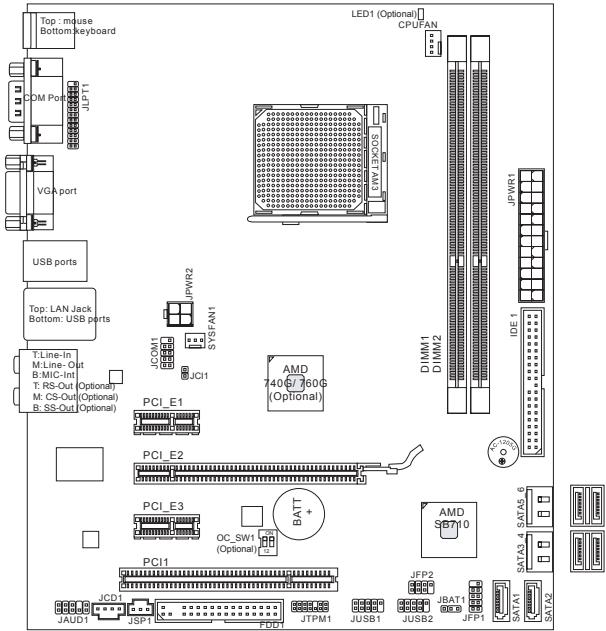
SPECIFICATIONS
Processor Support
■ AMD® Phenom II/ Athlon II/ Sempron processors in the AM3 package (For the latest information about CPU, please visit http://www.msi.com/index.php?func=cpuform2)
HyperTransport
■ Supports Hyper Transport (HT) 1.0 Technology up to 1000MHz (Optional) ■ Supports Hyper Transport (HT) 3.0 Technology up to 2600MHz (Optional)
Chipset
■ North Bridge: AMD® 740G/ 760G chipset (Optional) ■ South Bridge: AMD® SB710 chipset
Memory Support
■ DDR3 800/1066/1333 (1600 OC) SDRAM (8GB Max) ■ 2 DDR3 DIMMs (240pin / 1.5V)
(For more information on compatible components, please visit http://www.msi.com/index.php?func=testreport)
LAN
■ Supports LAN 10/100/1000 Fast Ethernet by ATHEROS® AR8131M (Optional) ■ Supports LAN 10/100 Fast Ethernet by ATHEROS® AR8132M (Optional)
Audio
■ Chip integrated by VIA® VT1708S ■ Flexible 8-channel audio with jack sensing (Optional) ■ Compliant with Azalia 1.0 Spec
IDE
■ 1 IDE port by AMD® SB710 ■ Supports Ultra DMA 33/66/100/133, PIO & Bus Master operation mode
SATA
■ 6 SATA 3Gb/s (SATA1~6) ports by AMD® SB710
RAID
■ Supports RAID 0/1/0+1/JBOD mode by AMD® SB710
Floppy
■ 1 floppy port ■ Supports 1 FDD with 360KB, 720KB, 1.2MB, 1.44MB and 2.88MB
Connectors
■ Back panel - 1 PS/2 mouse port - 1 PS/2 keyboard port - 1 Serial port - 1 VGA port - 4 USB 2.0 Ports - 1 LAN jack - 6 flexible audio jacks (Optional) - 3 flexible audio jacks (Optional) ■ On-Board Connectors
- 2 USB 2.0 connectors
- 1 Serial port connector
- 1 CD-In connector
- 1 Front Panel Audio connector
- 1 SPDIF-Out connector
- 1 Chassis Intrusion connector
- 1 TPM connector (Optional)
- 1 Parallel port connector
- 1 OC switch (Optional)
Slots
■ 1 PCI Express x16 slot ■ 2 PCI Express x1 slots ■ 1 PCI slot, support 3.3V/ 5V PCI bus Interface
■ Micro-ATX (24.4cm X 20.5 cm)
Mounting
■ 6 mounting holes
(If you need to purchase accessories and request the part numbers, you could search the product web page and find details on our web address below http://www.msi.com/index.php)
The 740GM-P21 rear panel provides the following connectors:
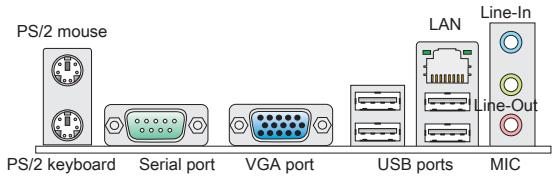
The 740GM-P25/760GM-P33 rear panel provides the following connectors:
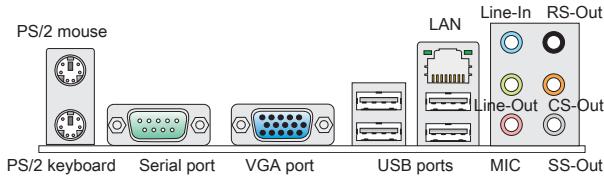
Note: To reach the 8-channel sound effect, the 7th and 8th channels must be output from front panel if you purchase the mainboard with 3 audio jacks
HARDWARE SETUP
This chapter tells you how to install the CPU, memory modules, and expansion cards, as well as how to setup the jumpers on the mainboard. It also provides the instructions on connecting the peripheral devices, such as the mouse, keyboard, etc. While doing the installation, be careful in holding the components and follow the installation procedures.
CPU & Cooler Installation for AM3
When you are installing the CPU, make sure the CPU has a cooler attached on the top to prevent overheating. Meanwhile, do not forget to apply some thermal paste on CPU before installing the heat sink/cooler fan for better heat dispersion.
Follow the steps below to install the CPU & cooler correctly. Wrong installation will cause the damage of your CPU & mainboard.
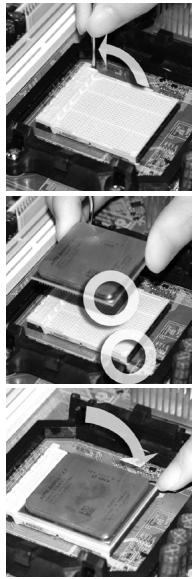
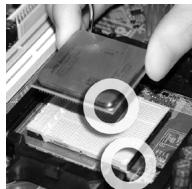
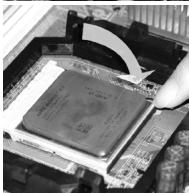
- Pull the lever sideways away from the socket. Make sure to raise the lever up to a 90-degree angle.
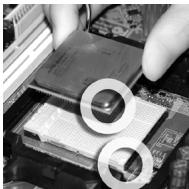
- Look for the gold arrow of the CPU. The gold arrow should point as shown in the picture. The CPU can only fit in the correct orientation.
- If the CPU is correctly installed, the pins should be completely embedded into the socket and can not be seen. Please note that any violation of the correct installation procedures may cause permanent damages to your mainboard.
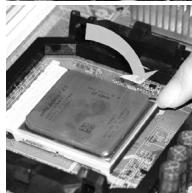
- Press the CPU down firmly into the socket and close the lever. As the CPU is likely to move while the lever is being closed, always close the lever with your fingers pressing tightly on top of the CPU to make sure the CPU is properly and completely embedded into the socket.
- Position the cooling set onto the retention mechanism. Hook one end of the clip to hook first.
- Then press down the other end of the clip to fasten the cooling set on the top of the retention mechanism. Locate the Fix Lever and lift it up.
- Fasten down the lever.
- Attach the CPU Fan cable to the CPU fan connector on the mainboard.
IMPORTANT
* Mainboard photos shown in this section are for demonstration of the cooler installation for Socket AM3 CPU only. The appearance of your mainboard may vary depending on the model you purchase. * While disconnecting the hook from the fixed bolt, it is necessary to keep an eye on your fingers, because once the hook is disconnected from the fixed bolt, the fixed lever will spring back instantly.
Installing Memory Modules
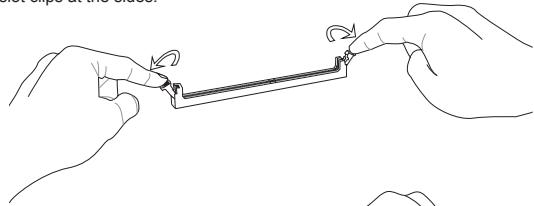
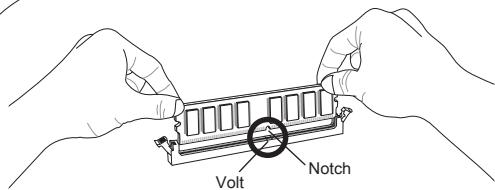
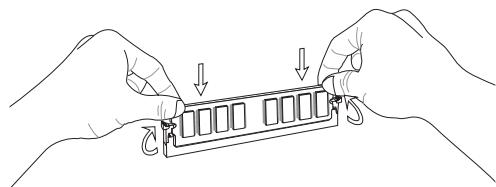
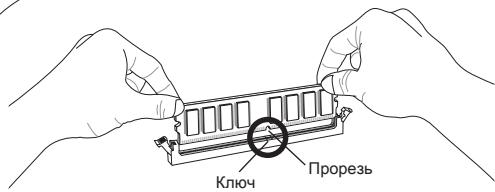
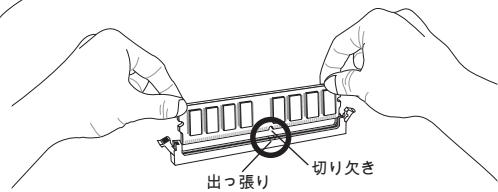
- The memory module has only one notch on the center and will only fit in the right orientation.
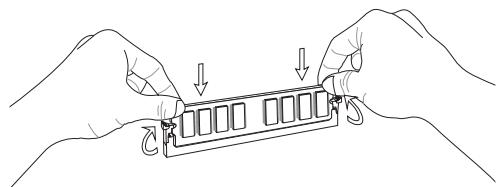
- Insert the memory module vertically into the DIMM slot. Then push it in until the golden finger on the memory module is deeply inserted in the DIMM slot. The plastic clip at each side of the DIMM slot will automatically close when the memory module is properly seated. You can barely see the golden finger if the memory module is properly inserted in the DIMM slot.
- Manually check if the memory module has been locked in place by the DIMM slot clips at the sides.
IMPORTANT
* DDR3 memory modules are not interchangeable with DDR2, and the DDR3 standard is not backwards compatible. You should always install DDR3 memory modules in the DDR3 DIMM slots. * In Dual-Channel mode, make sure that you install memory modules of the same type and density in different channel DIMM slots. * To enable successful system boot-up, always insert the memory modules into the DIMM1 first.
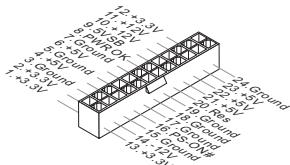
ATX 24-Pin Power Connector: JPWR1
This connector allows you to connect an ATX 24-pin power supply. To connect the ATX 24-pin power supply, make sure the plug of the power supply is inserted in the proper orientation and the pins are aligned. Then push down the power supply firmly into the connector.
ATX 4-Pin Power Connector: JPWR2
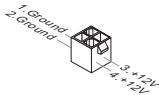
This 4-Pin power connector is used to provide power to the CPU.
IMPORTANT
* Make sure that all the connectors are connected to proper ATX power supplies to ensure stable operation of the mainboard. * Power supply of 350 watts (and above) is highly recommended for system stability.
Floppy Disk Drive Connector: FDD1
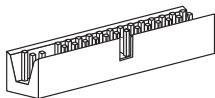
This connector supports 360KB, 720KB, 1.2MB, 1.44MB or 2.88MB floppy disk drive.
IDE Connector: IDE1
This connector supports IDE hard disk drives, optical disk drives and other IDE devices.
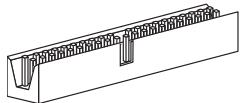
IMPORTANT
If you install two IDE devices on the same cable, you must configure the drives to cable select mode or separately to master / slave mode by setting jumpers. Refer to IDE device documentation supplied by the vendors for jumper setting instructions.
Serial ATA Connector: SATA1 \~ 6
This connector is a high-speed Serial ATA interface port. Each connector can connect to one Serial ATA device.
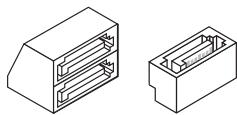
IMPORTANT
Please do not fold the Serial ATA cable into a 90-degree angle. Otherwise, data loss may occur during transmission.
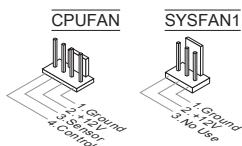
Fan Power Connectors: CPUFAN, SYSFAN1
The fan power connectors support system cooling fan with +12V. When connecting the wire to the connectors, always note that the red wire is the positive and should be connected to the +12V; the black wire is Ground and should be connected to GND. If the mainboard has a System Hardware Monitor chipset onboard, you must use a specially designed fan with speed sensor to take advantage of the CPU fan control.
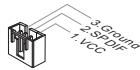
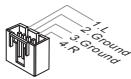
S/PDIF-Out Connector: JSP1
This connector is used to connect S/PDIF (Sony & Philips Digital Interconnect Format) interface for digital audio transmission.
CD-In Connector: JCD1
This connector is provided for external audio input.
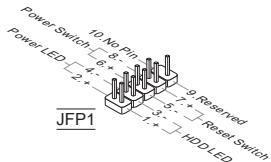
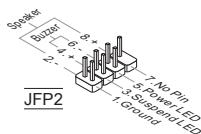
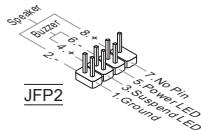
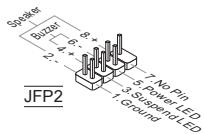
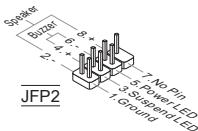
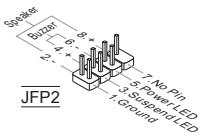
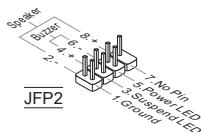
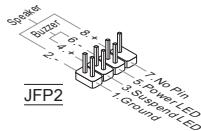
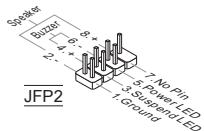
Front Panel Connectors: JFP1, JFP2
These connectors are for electrical connection to the front panel switches and LEDs. The JFP1 is compliant with Intel® Front Panel I/O Connectivity Design Guide.
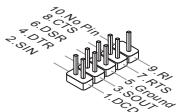
Serial Port Connector: JCOM1
This connector is a 16550A high speed communication port that sends/receives 16 bytes FIFOs. You can attach a serial device.
Front Panel Audio Connector: JAUD1
This connector allows you to connect the front panel audio and is compliant with Intel® Front Panel I/O Connectivity Design Guide.
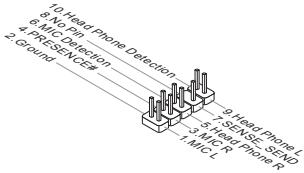
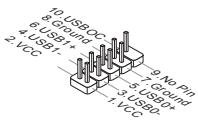
Front USB Connector: JUSB1, JUSB2
This connector, compliant with Intel® I/O Connectivity Design Guide, is ideal for connecting high-speed USB interface peripherals such as USB HDD, digital cameras, MP3 players, printers, modems and the like.
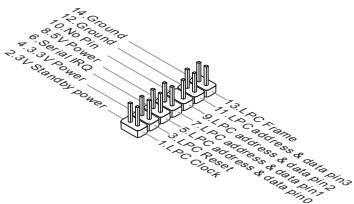
TPM Module connector: JTPM1 (Optional)
This connector connects to a TPM (Trusted Platform Module) module. Please refer to the TPM security platform manual for more details and usages.
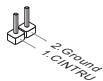
Chassis Intrusion Connector: JCI1
This connector connects to the chassis intrusion switch cable. If the chassis is opened, the chassis intrusion mechanism will be activated. The system will record this status and show a warning message on the screen. To clear the warning, you must enter the BIOS utility and clear the record.
Clear CMOS Jumper: JBAT1
There is a CMOS RAM onboard that has a power supply from an external battery to keep the data of system configuration. With the CMOS RAM, the system can automatically boot OS every time it is turned on. If you want to clear the system configuration, set the jumper to clear data.


Keep Data
Clear Data
IMPORTANT
You can clear CMOS by shorting 2-3 pin while the system is off. Then return to 1-2 pin position. Avoid clearing the CMOS while the system is on; it will damage the mainboard.
This connector is used to connect an optional parallel port bracket. The parallel port is a standard printer port that supports Enhanced Parallel Port (EPP) and Extended Capabilities Parallel Port (ECP) mode.
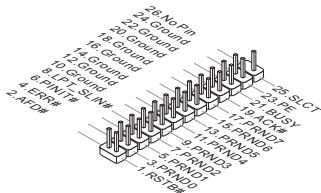
APS LED Status Indicator: LED1 (Optional)
These APS (Active Phase Switching) LED indicates the current CPU power phase mode. Follow the instructions below to read.
LED1

| ON | The LED will light when CPU is in 3 phase power mode. |
| OFF | The LED will go off when CPU is in 1 phase power mode. |
Overclock FSB Switch: OC_SW1 (Optional)
You can overclock the FSB to increase the processor frequency by changing the switch. Follow the instructions below to set the FSB.
Default
Increase 10% speed of FSB
Increase 15% speed of FSB
Increase 20% speed of FSB
IMPORTANT
* Make sure that you power off the system before setting the switch. * When overclocking cause system instability or crash during boot, please set the switch to default setting.
PCI Express Slot
The PCI Express slot supports the PCI Express interface expansion card.
PCI Express x16 slot. PCI Express x1 slot.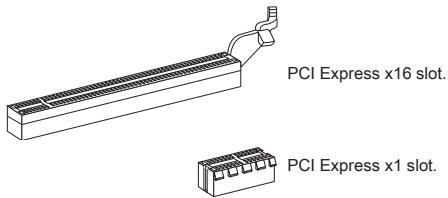
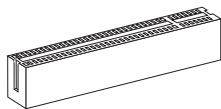
PCI Slot
The PCI slot supports LAN card, SCSI card, USB card, and other add-on cards that comply with PCI specifications.
IMPORTANT
Make sure that you unplug the power supply first. Meanwhile, read the documentation for the expansion card to configure any necessary hardware or software settings for the expansion card, such as jumpers, switches or BIOS configuration.
PCI Interrupt Request Routing
When adding or removing expansion cards, make sure that the IRQ (acronym for interrupt request line, pronounced I-R-Q) are hardware lines over which devices can send interrupt signals to the microprocessor. The PCI IRQ pins are typically connected to the PCI bus pins as follows:
| Slot\Order | 1 | 2 | 3 | 4 |
| PCI 1 | INT A# | INT B# | INT C# | INT D# |
BIOS SETUP
Power on the computer and the system will start POST (Power On Self Test) process. When the message below appears on the screen, press key to enter Setup.
Press DEL to enter SETUP
If the message disappears before you respond and you still wish to enter Setup, restart the system by turning it OFF and On or pressing the RESET button. You may also restart the system by simultaneously pressing , , and keys.
Main Page
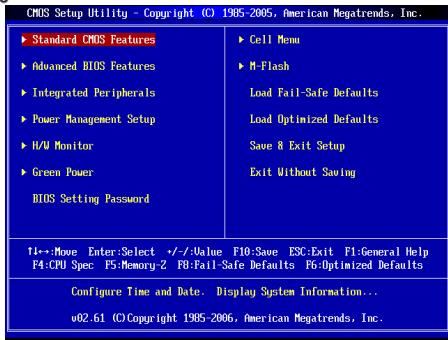
Standard CMOS Features
Use this menu for basic system configurations, such as time, date etc.
Advanced BIOS Features
Use this menu to setup the items of special enhanced features.
Integrated Peripherals
Use this menu to specify your settings for integrated peripherals.
Power Management Setup
Use this menu to specify your settings for power management.
H/W Monitor
This entry shows the status of your CPU, fan, and warning for overall system status.
Green Power (Optional)
Use this menu to specify the power phase.
BIOS Setting Password
Use this menu to set BIOS setting password.
Use this menu to specify your settings for frequency/voltage control.
M-Flash
Use this menu to read/flash the BIOS from storage drive (FAT/FAT32 format only).
Load Fail-Safe Defaults
Use this menu to load the BIOS default values that are factory settings for system operations.
Load Optimized Defaults
Use this menu to load factory default settings into the BIOS for stable system performance operations.
Save & Exit Setup
Save changes to CMOS and exit setup.
Exit Without Saving
Abandon all changes and exit setup.
![CMOS Setup Utility - Copyright (C) 1985-2005, American Megatrends, Inc. Cell Menu Current CPU Frequency 2.20GHz (200x11) Current DRAM Frequency 800MHz ▶ CPU Specifications [Press Enter] AMD Cool'n'Quiet [Intol] Adjust CPU FSB Frequency (MHz) [200] Adjust CPU Ratio [Intol] Adjusted CPU Frequency (MHz…](/content/2020/04/138111/images/f6c33aab858f1a4760df268ed65b666f635d1d31eaa003a71482ce8a44e51f2f.jpg)
Current CPU/DRAM Frequency
It shows the current frequency of CPU/Memory. Read-only.
CPU Specifications
Press to enter the sub-menu and it displays the informations of installed CPU.
AMD Cool'n'Quiet
The Cool'n'Quiet technology can effectively and dynamically lower CPU speed and power consumption.
IMPORTANT
To ensure that Cool'n'Quiet function is activated and will be working properly, it is required to double confirm that:
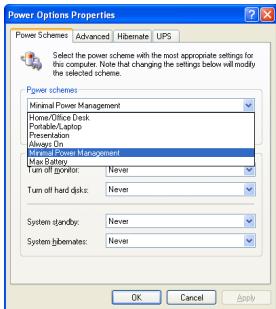
* Run BIOS Setup, and select Cell Menu. Under Cell Menu, find AMD Cool'n'Quiet, and set this item to "Enabled". * Enter Windows, and select [Start]->[Settings]->[Control Panel]->[Power Options]. Enter Power Options Properties tag, and select Minimal Power Management under Power schemes.
Adjust CPU FSB Frequency (MHz)
This item allows you to adjust the CPU FSB frequency.
Adjust CPU Ratio
This item is used to adjust the CPU clock multiplier (ratio). It is available only when the processor supports this function.
Adjusted CPU Frequency (MHz)
It shows the adjusted CPU frequency. Read-only.
Adjust CPU-NB Ratio
This item is used to adjust the CPU-NB ratio.
Adjusted CPU-NB Frequency (MHz)
It shows the adjusted CPU-NB frequency. Read-only.
EC Firmware
This item allows you to select the EC Firmware for Advanced Clock Calibration. For unlocking the additional cores, you could set it to [Special] and then set Advanced Clock Calibration to [Auto] in order to be able to activate the processor cores.
Advanced Clock Calibration
This item is for overclocking. Setting to [Enabled] allows you to set the CPU Ratio higher. It is available only when the processor supports this function.
MultiStep OC Booster
This item is used to avoid the BIOS crashing with overclocking. Setting to [Disabled] disables this item, applying OC settings during POST. [Mode 1] Slight OC during POST and then apply full OC when loading the OS. [Mode 2] Load the OS then apply the OC settings.
MEMORY-Z
Press to enter the sub-menu, select an item from the DIMM list, and press Enter to read the memory SPD information.
Advanced DRAM Configuration
Press to enter the sub-menu.
DRAM Timing Mode
Selects whether DRAM timing is controlled by the SPD (Serial Presence Detect) EEPROM on the DRAM module. Setting to [Auto By SPD] enables DRAM timings and the following related items to be determined by BIOS based on the configurations on the SPD. Selecting [Manual] allows users to configure the DRAM timings and the following related items manually.
CAS Latency (CL)
When the DRAM Timing Mode is set to [Manual], this field is adjustable. This controls the CAS latency, which determines the timing delay (in clock cycles) before SDRAM starts a read command after receiving it.
tRCD
When the DRAM Timing Mode is set to [Manual], this field is adjustable. When DRAM is refreshed, both rows and columns are addressed separately. This setup item allows you to determine the timing of the transition from RAS (row address strobe) to CAS (column address strobe). The fewer the clock cycles, the
faster the DRAM performance.
tRP
When the DRAM Timing Mode is set to [Manual], this field is adjustable. This setting controls the number of cycles for Row Address Strobe (RAS) to be allowed to precharge. If insufficient time is allowed for the RAS to accumulate its charge before DRAM refresh, refresh may be incomplete and DRAM may fail to retain data. This item applies only when synchronous DRAM is installed in the system.
tRAS
When the DRAM Timing Mode is set to [Manual], this field is adjustable. This setting determines the time RAS takes to read from and write to a memory cell.
When the DRAM Timing Mode sets to [Manual], the field is adjustable. This setting controls the time interval between a read and a precharge command.
When the DRAM Timing Mode sets to [Manual], the field is adjustable. The row cycle time determines the minimum number of clock cycles a memory row takes to complete a full cycle, from row activation up to the precharging of the active row.
When the DRAM Timing Mode sets to [Manual], the field is adjustable. It specifies the amount of delay (in clock cycles) that must elapse after the completion of a valid write operation, before an active bank can be precharged. This delay is required to guarantee that data in the write buffers can be written to the memory cells before precharge occurs.
When the DRAM Timing Mode sets to [Manual], the field is adjustable. Specifies the active-to-active delay of different banks.
When the DRAM Timing Mode sets to [Manual], the field is adjustable. This item controls the Write Data In to Read Command Delay memory timing. This constitutes the minimum number of clock cycles that must occur between the last valid write operation and the next read command to the same internal bank of the DDR device.
When the DRAM Timing Mode sets to [Manual], the field is adjustable. This field controls the SDRAM command rate. Selecting [1T] makes SDRAM signal controller to run at 1T (T=clock cycles) rate. Selecting [2T] makes SDRAM signal controller run at 2T rate.
When the DRAM Timing Mode sets to [Manual], the field is adjustable. This field allows you to enable or disable SoftWare Memory Hole.
This item allows you to set the FSB/DRAM ratio.
Adjusted DRAM Frequency (MHz)
It shows the adjusted DDR memory frequency. Read-only.
HT Link Speed
This item allows you to set the Hyper-Transport Link speed. Setting to [Auto], the system will detect the HT link speed automatically.
Adjust PCI-E Frequency (MHz)
This item allows you to set the PCI-E frequency (in MHz).
CPU Voltage (V)
This item will allow you to adjust the CPU voltage.
DRAM Voltage (V)
This item will allow you to adjust the Memory voltage.
NB Voltage (V)
This item will allow you to adjust the North Bridge voltage.
Spread Spectrum
When the motherboard's clock generator pulses, the extreme values (spikes) of the pulses create EMI (Electromagnetic Interference). The Spread Spectrum function reduces the EMI generated by modulating the pulses so that the spikes of the pulses are reduced to flatter curves. If you do not have any EMI problem, leave the setting at Disabled for optimal system stability and performance. But if you are plagued by EMI, set to Enabled for EMI reduction. Remember to disable Spread Spectrum if you are overclocking because even a slight jitter can introduce a temporary boost in clock speed which may just cause your overclocked processor to lock up.
IMPORTANT
* If you do not have any EMI problem, leave the setting at [Disabled] for optimal system stability and performance. But if you are plagued by EMI, select the value of Spread Spectrum for EMI reduction. * The greater the Spread Spectrum value is, the greater the EMI is reduced, and the system will become less stable. For the most suitable Spread Spectrum value, please consult your local EMI regulation. * Remember to disable Spread Spectrum if you are overclocking because even a slight jitter can introduce a temporary boost in clock speed which may just cause your overclocked processor to lock up.
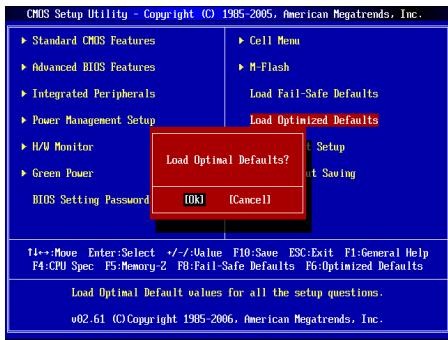
Load Optimized Defaults
You can load the default values provided by the mainboard manufacturer for the stable performance.
Korean
Getting Started
IDE Connector: IDE1
Important Notes
Important Notes
Serial Port Connector: JCOM1
Front Panel Audio Connector: JAUD1
PCI Express x16 Slot.
PCI Express x1 Slot.
PCI Slot
Important Notes
| 순서슬롯 | 1 | 2 | 3 | 4 |
| PCI 1 | INT A# | INT B# | INT C# | INT D# |
Press DEL to enter SETUP
Current CPU/DRAM Frequency
Adjusted CPU Frequency (MHz)
Adjusted CPU-NB Frequency (MHz)
EC Firmware
Adjusted DRAM Frequency (MHz)
CPU Voltage (V)
DRAM Voltage (V)
NB Voltage (V)
IMPORTANT
IMPORTANT
PCI Express x16 slot.

PCI Express x1 slot
PCI slot
IMPORTANT
Press DEL to enter SETUP
Advanced BIOS Features
Integrated Peripherals
BIOS Setting Password
Current CPU/DRAM Frequency
Adjust CPU FSB Frequency (MHz)
Adjusted CPU Frequency (MHz)
Adjusted CPU-NB Frequency (MHz)
Advanced Clock Calibration
Adjusted DRAM Frequency (MHz)
Adjust PCI-E Frequency (MHz)
On-Board Connectors
IMPORTANT
IMPORTANT
ATX 4-pin Power Connector: JPWR2
IDE connector: IDE1
IMPORTANT
IMPORTANT
Front panel connectors: JFP1, JFP2
IMPORTANT
Press DEL to enter SETUP
Advanced BIOS Features
Integrated Peripherals
BIOS Setting Password
Current CPU/DRAM Frequency
Adjust CPU FSB Frequency (MHz)
Adjusted CPU Frequency (MHz)
Adjusted CPU-NB Frequency (MHz)
Advanced Clock Calibration
When the DRAM Timing Mode sets to [Manual], the field is adjustable. It specifies the amount of delay (in clock cycles) that must elapse after the completion of a valid write operation, before an active bank can be precharged. This delay is required to guarantee that data in the write buffers can be written to the memory cells before precharge occurs.
Adjusted DRAM Frequency (MHz)
Adjust PCI-E Frequency (MHz)
WARNING
KEY WARNING
WARNING
IDE connector: IDE1
WARNING
WARNING
PCI Express x16 slot.
PCI Express x1 slot.
PCI slot
WARNING
Current CPU/DRAM Frequency
Adjust CPU FSB Frequency (MHz)
Adjusted CPU Frequency (MHz)
Adjusted CPU-NB Frequency (MHz)
Advanced Clock Calibration
Adjusted DRAM Frequency (MHz)
Adjust PCI-E Frequency (MHz)
IDE Connector: IDE1
Note
Note
Serial Port Connector: JCOM1
Front Panel Audio Connector: JAUD1
APS LED Status Indicator: LED1 (Optional)
Note
Press DEL to enter SETUP
Integrated Peripherals
Use this menu to configure special settings for peripheral devices.
Current CPU/DRAM Frequency
Adjust CPU FSB Frequency (MHz)
Adjust CPU Ratio
Advanced Clock Calibration
IDE Power Connector: IDE1
Notes
Notes
Serial Port Connector: JCOM1
Front Panel Audio Connector: JAUD1
TPM Connector: JTPM1 (Optional)
Notes
Press DEL to enter SETUP
(Press DEL to enter SETUP)
Integrated Peripherals
Use this menu to configure integrated peripherals.
CPU Specifications
Adjust CPU FSB Frequency (MHz)
This item allows manual adjustment of the CPU FSB frequency.
Adjust CPU Ratio
This item adjusts the CPU ratio.
Adjusted CPU Frequency (MHz)
Advanced Clock Calibration
CPU Voltage (V)
This item allows adjustment of the CPU voltage.
DRAM Voltage (V)
This item allows adjustment of the memory voltage.
NB Voltage (V)
This item allows adjustment of the northbridge chip voltage.
Spread Spectrum
Note
IDE connector: IDE1
Note
Note
Serial port connector: JCOM1
PCI Express x16 slot
PCI Express x1 slot
PCI slot
Note
Press DEL to enter SETUP
(Press the key to enter the setup screen)
Integrated Peripherals (Settings for built-in functions)
Current CPU/DRAM Frequency (Current CPU/DRAM frequency)
Adjust CPU FSB Frequency (MHz) (Adjust CPU FSB frequency)
Adjust the CPU FSB frequency.
CPU Voltage (V) (CPU voltage)
Adjusts the CPU voltage.
DRAM Voltage (V)
Adjusts the memory voltage.
NB Voltage (V)
Adjusts the northbridge voltage.
Spread Spectrum