
Avance Collection HR2356 - Pasta machine PHILIPS - Free user manual and instructions
Find the device manual for free Avance Collection HR2356 PHILIPS in PDF.


| Brand | Philips |
| Model | Avance Collection HR2356 |
| Product Type | Electric Pasta Maker |
| Power Consumption | 200 W |
| Voltage | 220-240 V |
| Frequency | 50-60 Hz |
| Dimensions (W x D x H) | 24 x 22 x 37 cm |
| Weight | 5.5 kg |
| Material | Plastic and stainless steel |
| Capacity | Up to 500 g of flour |
| Number of Shape Discs | 8 |
| Included Disc Shapes | Spaghetti, Fettuccine, Penne, Lasagna, Tagliatelle, Angel Hair, Macaroni, Rigatoni |
| Kneading Type | Automatic mixing and extrusion |
| Dishwasher Safe Parts | Yes (mixing chamber, discs, etc.) |
| Safety Features | Auto shut-off, overheating protection |
| Warranty | 2 years |
| Cleaning | Removable parts are dishwasher safe; wipe main body with damp cloth |
| Noise Level | < 70 dB |
| Accessories | Measuring cup, cleaning tool, pasta cutter |
Frequently Asked Questions - Avance Collection HR2356 PHILIPS
User questions about Avance Collection HR2356 PHILIPS
0 question about this device. Answer the ones you know or ask your own.
Ask a new question about this device
Download the instructions for your Pasta machine in PDF format for free! Find your manual Avance Collection HR2356 - PHILIPS and take your electronic device back in hand. On this page are published all the documents necessary for the use of your device. Avance Collection HR2356 by PHILIPS.
USER MANUAL Avance Collection HR2356 PHILIPS
natural_image
White Philips kitchen appliance with a circular vent and side handles (no visible text or symbols)User manual 3
使用手册 19



Contents
1 Important 4
Safety 4
EMF 4
2 Your noodle maker 5
3 Overview 5
Noodle maker overview 6
Control panel overview 6
4 Disassemble and cleaning before first use 7
5 Assemble 8
6 Use the noodle maker 8
7 Cleaning 11
8 Recipes 12
Noodle making recipes 12
Cooking recipes 13
9 Troubleshooting 16
10 Product information 18
11 Recycling 18
12 Guarantee and service 18
1 Important
Safety
Read this user manual carefully before you use the appliance, and save it for future reference.

Warnings
- Before you connect the appliance to the power, make sure that the voltage indicated on the bottom of the appliance corresponds to the local power voltage.
• Make sure that the plug is firmly inserted into the power outlet.
• Make sure that your hands are dry before you insert the plug into the power outlet. - Never connect this appliance to a timer switch, to avoid a hazardous situation.
- Before you insert the plug into the power outlet, make sure that the appliance is assembled correctly.
- If the power cord, the plug, or other parts are damaged, do not use the appliance.
• If the power cord is damaged, you must have it replaced by Philips, a service center authorized by Philips or similarly qualified persons to avoid a hazard. - Do not replace parts of the appliance yourself.
• This appliance is not intended for use by persons (including children) with reduced physical, sensory or mental capabilities, or lack of experience and knowledge, unless they have been given supervision or instructions concerning use of the appliance by a person responsible for their safety. - For their safety, do not allow children to play with the appliance. Keep the appliance and its power cord out of the reach of children.
• To prevent any accidents, do not use the appliance if it is damaged for any reasons. - Do not insert any objects into the device.
- Do not pour any liquids into the safety switch hole.

Cautions
- Before using the appliance for the first time, disassemble and wash the accessories thoroughly (see "Disassemble and cleaning before first use" section.)
- The appliance is intended for household use only.
- Do not use this appliance on an unstable or uneven surface.
- Keep the appliance and its power cord out of the reach of children.
- Do not disconnect the power cord before processing is complete. If you have to stop processing, disconnect the power cord before you perform other operations.
• To better protect the lifetime of the appliance, we recommend the continuous working time to be less than 45 minutes. You can restart using the appliance after 15 minutes.
• If you intend to use the appliance continuously, clean the shaping disc with the supplied cleaning tool each time after use. For cleaning ease, do not soak the shaping disc into the water directly. - Disconnect the power and remove the power cord before cleaning or disassembling this appliance.
• Do not immerse the main unit in water. - Place the appliance to a dry and well ventilated place after use.
• To prevent a short circuit or an electric shock, do not pour water or any liquid into the safety switch.
EMF
This Philips appliance complies with all applicable standards and regulations regarding exposure to electromagnetic fields.
2 Your noodle maker
Congratulations on your purchase, and welcome to Philips!
To fully benefit from the support that Philips offers, register your product at www.Philips.com/welcome.
Read this user manual carefully before you install and use the unit. Save it for future reference.
3 Overview
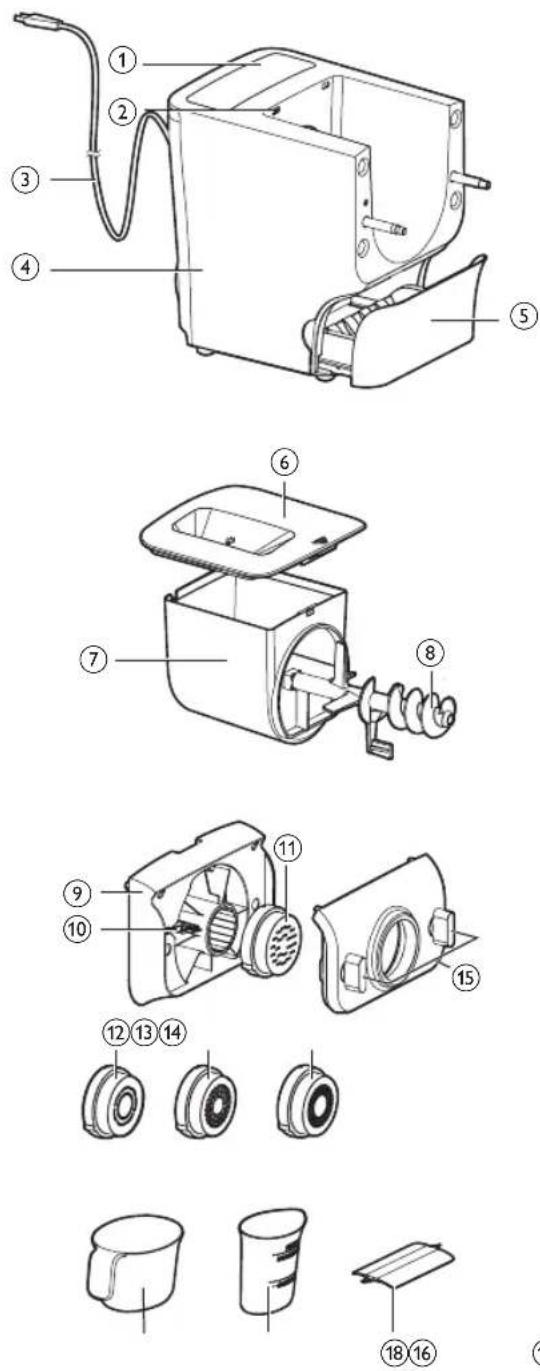
⑱⑯ ⑰
Noodle maker overview
| 1 Control panel | ||
| 2 | Safety switch hole of the mixing chamber lid | |
| 3 Power cord | ||
| 4 Main unit | ||
| 5 Shaping discs storage | ||
| 6 Mixing chamber lid | ||
| 7 | Mixing chamber | |
| 8 | Mixing paddle | |
| 9 Disc holder | ||
| 10 Disc holder safety switch | ||
| 11 | Shaping discs | Flat thin noodle |
| 12 | Flat thick noodle | |
| 13 | Round thick noodle | |
| 14 | Round thin noodle | |
| 15 | Front panel knob | |
| 16 | Flour cup | |
| 17 | Water cup | |
| 18 | Disc cleaning tool | Scrape off excessive flour while measuring flour. |
| Use as a noodle cutting knife. | ||
| Use the pointed end to remove the leftover dough from the holes of the shaping disc. | ||
Control panel overview

4 Disassemble and cleaning before first use

Cautions
- Before using the noodle maker, make sure all parts and accessories are completely dry.
- Do not use water to rinse nor soak the main unit.
- Do not use a scourer or similar cleaners as these will scratch the plastic surface and affect the lifetime of the noodle maker.

Notes
• Take out all the parts and accessories.
- Clean the parts and accessories before first use (see "Cleaning" section).

natural_image
Line drawing of a kitchen machine with control panel and buttons (no text or symbols)
natural_image
Diagram of a car front panel with a lid and air vent, showing airflow direction (no text or symbols)
natural_image
Diagram of a car air vent with directional arrows indicating airflow or movement (no text or symbols)

natural_image
Illustration of a kitchen appliance with a faucet and fire extinguisher (no text or symbols)
natural_image
Illustration of a mechanical device with a numbered label '6' (no text or symbols on the device itself)5 Assemble
Follow the assembling steps below to install the noodle maker.
Caution
• Make sure to tighten the front panel knob during assembling.

natural_image
Diagram of a mechanical component with a numbered label (1) and internal structure, no readable text or symbols present.
natural_image
Mechanical assembly diagram showing a motor or gear mechanism with no visible text or symbols
natural_image
Diagram of a mechanical device with a fan and housing (no text or symbols visible)
natural_image
Diagram of a camera module with arrows indicating internal components (no text or symbols)

natural_image
Line drawing of a kitchen machine with a circular badge showing number 8 (no text or symbols on the device itself)6 Use the noodle maker
Cautions
- Never put in excessive ingredients in the noodle maker. Otherwise, it will damage the appliance.
- Do not put in any ingredients that are 60°C or above to the noodle maker, nor place the noodle maker in surroundings with high temperature (60°C), for instance in a high temperature sterilization. This will deform the appliance.
- Follow the operating instructions completely. Put in the flour into the chamber first, then place the chamber lid onto the chamber. Start the noodle maker, and then slowly pour water along the entire length of the opening in the lid.
- Never pour in water before you place the chamber lid onto the chamber. Do not pour in any liquids into the safety switch hole.
Notes
- During processing, if the chamber lid is open or loose, the noodle maker will automatically stop processing.
- Use the supplied flour cup and water cup for accurate measure of flour and water ratio. This is very important to the noodle texture.
• After processing, it is normal to find some leftover dough inside the chamber.
1 Measure one full cup of flour. Scrap off any excessive flour from the cup edge with the supplied cleaning tool. One full cup is equivalent to 1-2 servings (\~250g).
Caution
- Do not shake nor hit the flour cup to remove excessive flour. This will affect the flour weight.
2 Open the chamber lid, and pour the flour into the chamber. If you want to make 3-4 servings (\~500g), repeat step 1 as you will need 2 cups of flour.
3 Close the chamber lid.

natural_image
Illustration of a cooking pot with a lid and handle, no text or symbols present
natural_image
Diagram of a refrigerator interior showing air vent and fan (no text or symbols)
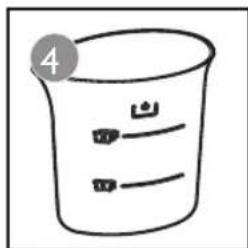
4 Based on the "Flour/water proportion table" to measure the required amount of water. (Figure 4-5)


Note
• There are 2 sets of water markings on the supplied water cup. One set is for normal noodle making, and the other set is for egg noodle and other flavors noodle making.
5 Connect to the power. The noodle maker will sound once (Figure 6), and all indicators will flash once.
Press the power on/off button Ⓞ to start the noodle maker.
→ Automatic indicator( ) and the start/pause indicator (▶) will light up.
The serving indicators (1/1) will flash in cycle. (Figure 7-9)


- By default, the program is set as automatic program. If this is not the case, press the programs button ( ) to re-select.
6 Based on the amount of flour, press the servings button (to select or for the respective servings. (Figure 10)
7 Press the start/pause button ( ) to start processing. (Figure 11)
→ The processing time starts t countdown.
8 During processing, slowly pour in the water or other ingredients, which you measure with the supplied water cup, along the entire length of the opening in the lid. (Figure 12)

natural_image
Illustration of a hand pouring liquid into a container with a label '12' (no text or symbols on the diagram itself)
Cautions
- During dough mixing, do not add in other ingredients after you pour in the water. Otherwise, it will affect the results of the noodle texture.
- If you notice the program is not set as the automatic program while noodle is extruding, press the start/pause button (→) to stop the program. Then, press the power on/off button (→) to disconnect the noodle maker from the power. After cleaning the shaping discs, you can restart the process by pressing the power on/off button (→)
9
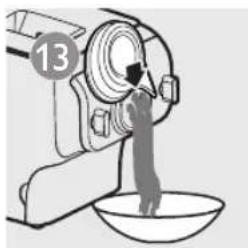
The noodles will start extruding out after a few minutes. Place a container right under the outlet. Cut the noodles to the desired length with the supplied disc cleaning tool. (Figure 13)
natural_image
Illustration of a hand pouring liquid into a bowl using a lathe machine (no text or symbols)
Notes
• After the noodle making is complete, if you notice there are some leftover doughs inside the chamber, you can press the program button (☐) to select the extrusion-only program.
• The countdown timer of the extrusion-only program is 3 minutes.
- You may find some fine noodle threads on the noodle's surface. This is normal.

Caution
- Do not select the extrusion-only program before the dough mixing is complete. Otherwise, this will damage the noodle maker and its lifetime.
Flour/water ratio table
| Flour | Normal noodle | Egg noodle | Processing time |
| Water (marking) | Egg+Water mixture (marking) | ||
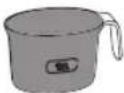 1 cup (-250g) 1 cup (-250g) | 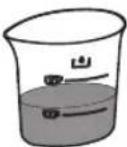 Amount of water needed for a cup of flour (-85ml) Amount of water needed for a cup of flour (-85ml) | 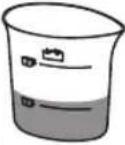 Amount of egg mixture needed for a cup of flour (~95ml) Amount of egg mixture needed for a cup of flour (~95ml) | 10 minutes |
 2 cups (~500g) 2 cups (~500g) | 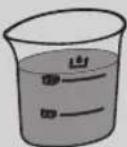 Amount of water needed for 2 cups of flour (~170ml) Amount of water needed for 2 cups of flour (~170ml) | 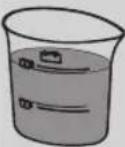 Amount of egg mixture needed for 2 cups of flour (~190ml) Amount of egg mixture needed for 2 cups of flour (~190ml) | 15 minutes |
7 Cleaning
Cautions
- Disconnect the power and remove the power cord before cleaning or disassembling this appliance.
- Do not immerse the main unit in water.
- Do not use a scourer, caustic cleaners, or abrasive cleaners (for examples, gasoline, alcohol, and propanol) to clean the appliance.

Tip
• It is easier for you to clean the chamber after the dough residues dry up.
1 Press the power on/off button
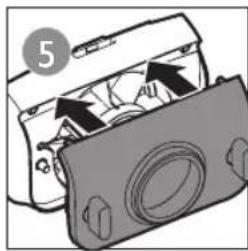
( )to turn off the noodle maker. Disconnect from the power outlet. Loosen the front panel control knob. Then, disassemble the front panel, the shaping disc, the shaping disc holder, the mixing paddle, and others in order. (Figure 1-4)
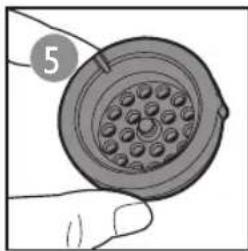
2 Clean the shaping disc with the supplied cleaning tool to remove the dough residues. After that, you can clean it with water. (Figure 5-6)
- Put the shaping disc aside and allow it to completely dry up for about 20 minutes. It will be easier for you to clean later on.
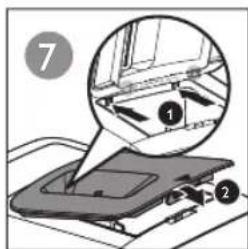
3 Clean all parts. (Figure 7) Use a dry cloth to clean the main unit, control panel, and the exterior of the noodle maker.


natural_image
Diagram of a car air vent with directional arrows indicating airflow or movement (no text or symbols)

natural_image
Illustration showing two steps of a hand holding a circular object with internal components, labeled 5 and 6 (no text or symbols on the objects themselves)

Tip
• After cleaning, make sure all parts and the shaping disc storage are dry. Assemble the noodle maker back for next use.
8 Recipes
For more recipes, you can visit Philips MyKitchen websites www.philips.com.tw/mykitchen.

Notes
• To guarantee the quality of the noodle, use gluten flour to make noodle. Follow the recommended proportion to add the ingredients.
- Seasonal changes and using ingredients from different regions may affect the flour/water ratio. You may adjust based on the recommended proportion.
- When making the egg noodle or vegetable noodle, make sure you whisk the egg mixture or vegetable juice evenly before pouring into the chamber.
Noodle making recipes
Pour the flour into the chamber first, then select the corresponding servings, and the noodle maker will start. Slowly pour the water or ingredients mixture in through the opening of the chamber lid. Place a container right under the outlet. Cut the noodle to the desired length with the supplied cleaning tool. The appliance will sound to indicate the noodle making is complete. After finished cooking in the boiling water, the noodles are ready to serve.

Tip
- The cooking time of the noodle varies depending on personal preferences, noodle shapes, and number of servings.
| Recipes Flour (g) Ingredients | |
| Plain noodle | 1 cup of flour (~250g) |
| 2 cups of flour (~500g) | |
| Egg noodle | 1 cup of flour (~250g) |
| 2 cups of flour (~500g) |
| Recipes Flour (g) Ingredients | ||
| Spinach noodle | 1 cup of flour (~250g) | Spinach juice (Use a juicer to freshly extract the juice, then use the water cup to measure it to the water marking of total volume is around 95ml. |
| 2 cups of flour (~500g) | Spinach juice (Use a juicer to freshly extract the juice, then use the water cup to measure it to the water marking of total volume is around 190ml. | |
| Tomato noodle | 1 cup of flour (~250g) | Tomato juice (Use a juicer to freshly extract the juice, then use the water cup to measure it to the water marking of total volume is around 95ml. |
| 2 cups of flour (~500g) | Tomato juice (Use a juicer to freshly extract the juice, then use the water cup to measure it to the water marking of total volume is around 190ml. | |
| Carrot noodle | 1 cup of flour (~250g) | Carrot juice (Use a juicer to freshly extract the juice, then use the water cup to measure it to the water marking of total volume is around 95ml. |
| 2 cups of flour (~500g) | Carrot juice (Use a juicer to freshly extract the juice, then use the water cup to measure it to the water marking of total volume is around 190ml. | |
Cooking recipes
| Recipes Ingredients Cooking | |
| Taiwanese Dan Zai Noodles | 1 whole pack of fresh noodles1 pound pork tenderloin (minced or ground)6 cloves garlic (minced)1 medium size red onion (thinly sliced)500ml chicken broth (optional)1⁄2 stalk spring onionsOil |
| 1 In a pot, boil water. Add noodles and simmer for half a minute.Remove the noodles and drain then set aside.In a pan, heat oil and add red onion and garlic. Stir-fry until the garlic turns brown.Add the meat and stir-fry until the meat is almost cooked.Add the chicken broth and bring to a boil.Add the noodles and simmer for 1 minute.Add some salt according to your taste.Top with spring onions when serving. |
| Recipes Ingredients Cooking | ||
| Taiwanese Beef Noodle Soup | 2 pounds boneless beef shank, cut into 1-inch pieces5 cups water2 cups beef broth1/2 cup soy sauce1/3 cup cooking rice wine1/4 cup tomato paste1 piece (1 1/2 inches) fresh ginger, peeled, cut into matchstick-size strips2 tablespoons spicy bean paste1 1/2 teaspoons sugar1 1/2 teaspoons five spice powder4 green onions, thinly sliced1 pound Chinese broccoli1 package (11.2 ounces) dried Taiwanese wheat noodles | 1 In a 4- to 5-quart slow cooker, combine beef, water, broth, soy sauce, rice wine, tomato paste, ginger, spicy bean paste, sugar, five spice powder and half of the sliced green onions.2 Cover; cook on Low heat setting for 8 to 9 hours (or on High setting for 4 to 5 hours).3 Separate thin Chinese broccoli stems from large stalk; discard large stalks. Cut small stems, florets and leaves into 2-inch pieces.4 Stir chopped Chinese broccoli into beef mixture in slow cooker. Cover; cook about 10 minutes longer or until broccoli is crisp tender.5 Cook and drain noodles. Rinse with cold water; drain.6 Divide noodles among bowls; ladle soup mixture over the noodles. Top with remaining sliced green onions.Tip:For more traditional flavor, use a tablespoon of Chinese rock sugar or yellow sugar instead of granulated sugar and let it slowly dissolve by itself in the slow cooker. |
| Recipes Ingredients Cooking | |
| TaiwaneseColdSesameNoodles | 1 lb. Chinese egg noodles, fresh or frozen1⁄4 cup toasted sesame oil31⁄2 tbsp. soy sauce2 tbsp. rice wine vinegar2 tbsp. sesame paste2 tbsp. smooth peanut butter1 tbsp. sugar21⁄2 tsp. chile-garlic paste, such as sambal oelek2 tsp. toasted sesame seeds2 cloves garlic, finely chopped2 scallions, thinly sliced1 (11⁄2") piece ginger, peeled and finely chopped1 small cucumber, peeled, seeded, and julienned1 carrot, peeled and juliennedChopped roasted peanuts, to garnish |
| 1 Bring a large pot of water to a boil. Add noodles, and cook until barely tender, about 5 minutes; drain in a colander, rinse with cold water, and drain again. Transfer to a bowl and add 3 tbsp. sesame oil; toss until evenly coated and set aside.2 In another bowl, whisk together remaining sesame oil, soy sauce, vinegar, sesame paste, peanut butter, sugar, chili-garlic paste, sesame seeds, garlic, scallions, and ginger. Pour over noodles along with cucumber and carrot, and toss until evenly combined. Transfer to a serving bowl, and garnish with peanuts. |
9 Troubleshooting
This chapter summarizes the most common problems you could encounter with the appliance. If you are unable to solve the problem with the information below, contact the Consumer Care Center in your country.
| Problem Cause Possible solution | ||
| The indicators do not light up. | The power plug is connected incorrectly. | Check whether the power plug is plugged correctly. |
| The power button is not pressed. | Press the power on/off button ⓟ | |
| After pressing the start/pause button Ⓞthe appliance sounds but it does not work. | The chamber is assembled incorrectly. | Make sure you follow the user manual to assemble all parts correctly. |
| The shaping disc, or the front panel is assembled incorrectly. | ||
| The preferred servings is not selected. | Make sure you have selected the servings before pressing the start/pause button Ⓦ | |
| During processing, the appliance suddenly stop, and then suddenly restart again. The safety switch of the shaping disc holder is triggered. | The front panel knob is loosen. | Make sure the front panel is securely assembled. |
| The ratio of the flour and water is incorrect. | Follow the flour/water ratio table to measure the amount of flour and water needed. | |
| During processing, the appliance stops working when you open the lid. | For safety reasons, the appliance always stops working when the lid is opened during processing. | If you need to resume the previous operation, close the lid properly, and press the start/pause button. |
| During processing, the appliance stops. There is no alarm sound or flashes. | The noodle maker is overheat due to long continuous working time. | Disconnect from the power, and allow the noodle maker to cool down. |
| The appliance stops during processing, then the indicators are flashing quickly, and the alarm sounds. | The mixing paddle can be blocked by some foreign objects. | Disconnect from the power, clean the noodle maker, and follow the user manual again to restart the noodle making. |
| The dough can be too dry. | ||
| The wrong program is selected. | ||
| Too much leftover dough inside the chamber. | The flour is either exposed to moisture before use, or the dough is too wet. | Keep your flour dry during storage. Follow the user manual to restart the noodle making. |
| The chamber, the mixing paddle, the shaping disc are not cleaned properly before use. | Make sure all parts are clean before use. | |
| The mixing paddle or the chamber is still wet. | Make sure all parts are dry before use. | |
| The water is not pour in the right time. | Follow the user manual to make noodle. | |
| The flour type is not suitable. | ||
| Incorrect servings was selected. | Select the extrusion-only program. | |
| Small amount of water is leaking out from the appliance. | The method to pour water is incorrect. | Follow the user manual to make noodle. |
| The mixing paddle is running idle, and there is no noddle coming out. | The ratio of the flour and water is incorrect. | Disconnect from the power, clean the noodle maker, and follow the user manual again to restart the noodle making. |
10 Product information
Motor power: 200W
Dimensions (L x W x H):
343mm × 215mm × 300mm
Capacity: 500g (for 1-4 servings)
For rated voltage and frequency information, refer to the typeplate on the product. Product information is subjected to change without prior notice.
12 Guarantee and service
If you have a problem, need
service or need information, see
www.philips.com/support or contact the
Philips Consumer Care Center in your country.
11 Recycling
Do not throw away the product with the normal household waste at the end of its life, but hand it in at an official collection point for recycling.
By doing this, you help to preserve the environment.
Follow your country's rules for the separate collection of electrical and electronic products. Correct disposal helps prevent negative consequences for the environment and human health.
目錄
1 重要事項 20
安全 20
EMF 20
2 您的愛麵機 21
3 概覽 21
愛麵機概覽 22
控制面板概覽 22
4 第一次使用前的拆卸與清潔 23
5 組裝 24
6 使用愛麵機 24
7 清潔 27
8 食譜 28
麵條製作食譜 28
烹煮食譜 29
9 疑難排解 31
10 產品資訊 33
11 回收 33
12 保固與服務 34
1 重要事項
安全
natural_image
Illustration of a kitchen sink with a faucet and waste pipe (no text or symbols)
natural_image
Illustration of a mechanical component with a numbered label (6) and no visible text or symbols on the object itself.
注意
natural_image
Line drawing of a mechanical device with a circular label and control knob (no text or symbols)
natural_image
Diagram of a car's front panel with a lid and vent, showing no text or symbols
natural_image
Diagram of a car air vent with directional arrows indicating airflow or movement (no text or symbols)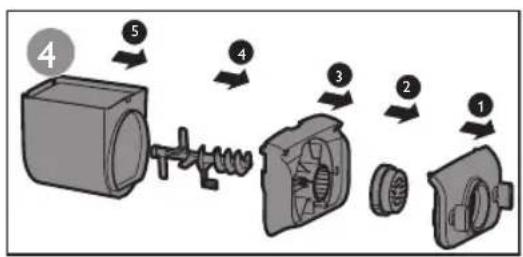
5 組裝
請依照下列組裝步驟安裝愛麵機。

注意
- 組裝時請確實將前面板旋鈕轉緊。

natural_image
Mechanical assembly diagram showing a component with a labeled part (1), no visible text or symbols
natural_image
Mechanical assembly diagram showing a motor or gear mechanism with no visible text or symbols
natural_image
Technical illustration of a mechanical device with a fan or vent component (no text or symbols visible)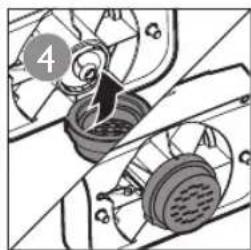
natural_image
Diagram of a mechanical device with two circular components and a numbered label (4), no readable text or symbols present.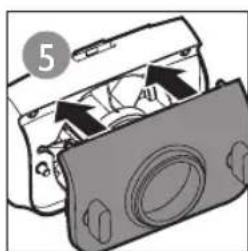
natural_image
Diagram of a camera module with arrows indicating internal components (no text or symbols)
natural_image
Diagram of a car interior with ventilation grilles and directional arrows indicating rotation (no text or symbols)

natural_image
Line drawing of a kitchen appliance with a numbered label (8) and no visible text or symbols on the device itself.6 使用愛麵機

注意
natural_image
Diagram of a device interior showing a fan or vent with a handle and label '2' (no text or symbols on the diagram itself)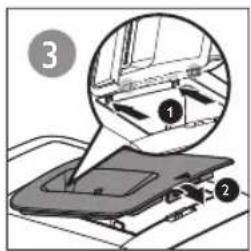
natural_image
Line drawing of a mechanical component with a pouring funnel and base, no text or symbols present
注意
natural_image
Illustration of a hand pouring liquid into a bowl using a mixing machine (no text or symbols)
備註
natural_image
Diagram of a car interior showing a lid and vent, with no visible text or symbols
natural_image
Diagram of a car air vent with directional arrows indicating airflow or movement (no text or symbols)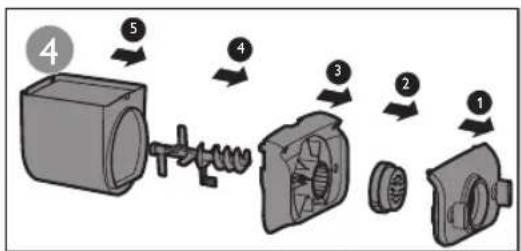
natural_image
Illustration of a hand holding a circular mechanical component with a numbered label (5), no text or symbols present.
natural_image
Illustration of a hand holding a circular object with internal patterns, no text or symbols present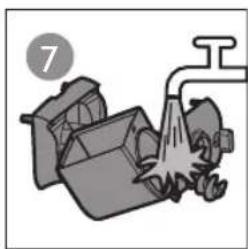
natural_image
Illustration of a trash bin with a pipe and water drop (no text or symbols)
natural_image
Mechanical component diagram showing a valve assembly with a numbered label (8) and no visible text or symbols.
秘訣
Specifications are subject to change without notice
All rights reserved.

4241 210 14823 B


- Contents
- Important
- Safety
- Warnings
- Cautions
- EMF
- Your noodle maker
- Overview
- Noodle maker overview
- Control panel overview
- Disassemble and cleaning before first use
- Notes
- Assemble
- Caution
- Use the noodle maker
- Note
- 9
- Cleaning
- Tip
- Recipes
- Noodle making recipes
- Troubleshooting
- Product information
- Guarantee and service
- Recycling
- 目錄
- 重要事項
- 安全
- 注意
- 組裝
- 使用愛麵機
- 備註
- 秘訣
Brand : PHILIPS
Model : Avance Collection HR2356
Category : Pasta machine