CDE 129 - Washing machine HOTPOINT - Free user manual and instructions
Find the device manual for free CDE 129 HOTPOINT in PDF.


User questions about CDE 129 HOTPOINT
0 question about this device. Answer the ones you know or ask your own.
Ask a new question about this device
Download the instructions for your Washing machine in PDF format for free! Find your manual CDE 129 - HOTPOINT and take your electronic device back in hand. On this page are published all the documents necessary for the use of your device. CDE 129 by HOTPOINT.
USER MANUAL CDE 129 HOTPOINT
natural_image
Technical line drawing of a mechanical assembly with no visible text or symbolsnatural_image
Technical line drawing of a mechanical component with circular features and an arrow indicating rotation (no text or symbols)natural_image
Line drawing of a mechanical component with a valve and handle (no text or symbols)natural_image
Diagram of a pipe connection with a magnified inset showing a connector (no text or symbols)natural_image
Simple line drawing of a box with a handle, no text or symbols presentA
natural_image
Line drawing of a front-loading washing machine with open lid and side panel (no text or symbols)B
natural_image
Line drawing of a front-loading washing machine with cooling fins and ventilation slots (no text or symbols)C
natural_image
Diagram of a washing machine with open door and control panel, showing internal mechanism (no text or symbols)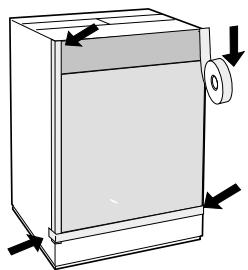
natural_image
Simple line drawing of a rectangular box with a side panel and directional arrows indicating movement (no text or symbols)E
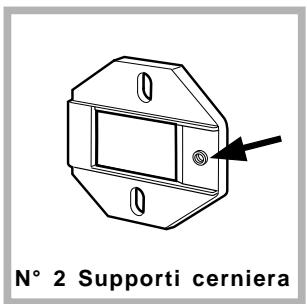
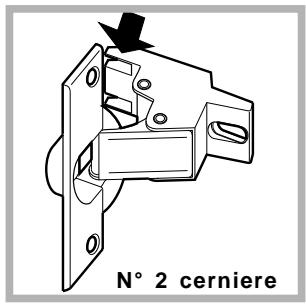
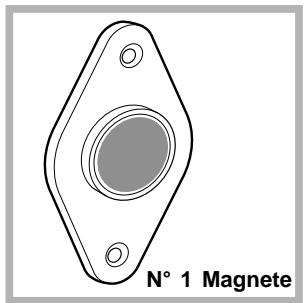
Accessori montaggio portina (Fig. 1-2-3-4-5).
text_image
N° 2 Supporti cernieraFig. 1
text_image
N° 2 cerniereFig. 2
natural_image
Technical drawing of a mechanical flange component with concentric circular features and mounting holes (no text or symbols)Fig. 3
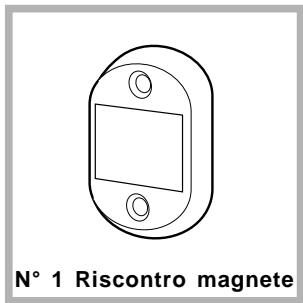
text_image
N° 1 Riscontro magneteFig. 4
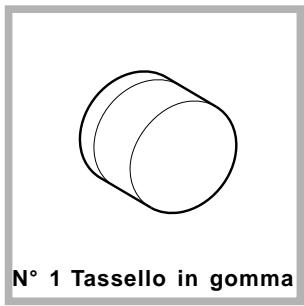
text_image
N° 1 Tassello in gommaFig. 5
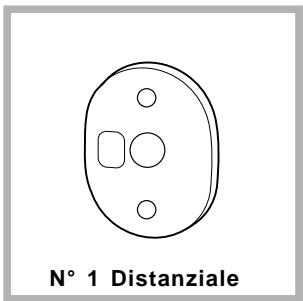
text_image
N° 1 DistanzialeFig. 4/B
natural_image
Pure technical diagram of a mechanical component with no text, numbers, or symbolsFig. 9
Spia ACCENSIONE/OBLÒ BLOCCATO:
text_image
Technical diagram of a mechanical component with numbered parts, likely for assembly or identification reference.text_image
Technical diagram of a vehicle air intake system with labeled components and directional arrowsnatural_image
Pure technical line drawing of a mechanical component with no text or symbolsInstallation, 16-17-18-19
Unpacking and levelling
Electric and water connections
The first wash cycle
Technical details
Instructions for the fitter
Washer-dryer description, 20-21
Control panel
Leds
Starting and Programmes, 22
Briefly: how to start a programme
Programme table
Personalisations, 23
Setting the temperature
Set the drying cycle
Functions
Detergents and laundry, 24
Detergent dispenser
Preparing your laundry
Special items
Woolmark Platinum Care
Precautions and advice, 25
General safety
Disposal
Saving energy and respecting the environment
Care and maintenance, 26
Cutting off the water or electricity supply
Cleaning your appliance
Cleaning the detergent dispenser
Caring for your appliance door and drum
Cleaning the pump
Checking the water inlet hose
Troubleshooting, 27
Service, 28
Before calling for Assistance

Hotpoint
ARISTON
GB
! Keep this instruction manual in a safe place for future reference. Should the appliance be sold, transferred or moved, make sure the instruction manual accompanies the Washer-dryer to inform the new owner as to its operation and features.
! Read these instructions carefully: they contain vital information on installation, use and safety.
Unpacking and levelling
Unpacking
- Unpack the Washer-dryer.
- Check whether the Washer-dryer has been damaged during transport. If this is the case, do not install it and contact your retailer.
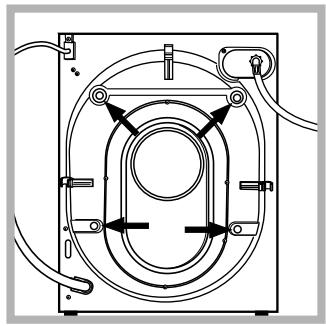
natural_image
Technical line drawing of a mechanical assembly with no visible text or symbols-
Remove the four protective screws and the rubber washer with the respective spacer, situated on the rear of the appliance (see figure).
-
Seal the gaps using the plastic plugs provided.
- Keep all the parts: you will need them again if the Washer-dryer needs to be moved to another location.
!Packaging materials are not children's toys.
Levelling
- Install the Washer-dryer on a flat sturdy floor, without resting it up against walls, furniture cabinets or other.
natural_image
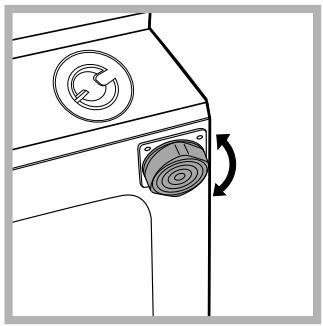
Line drawing of a door with circular vent and scroll button, no text or symbols present- If the floor is not perfectly level, compensate for any unevenness by tightening or loosening the adjustable front feet (see figure); the angle of inclination, measured according to the worktop, must not exceed 2^ .
Levelling your appliance correctly will provide it with stability and avoid any vibrations, noise and shifting during operation. If it is placed on a fitted or loose carpet, adjust the feet in such a way as to allow enough room for ventilation beneath the Washer-dryer.
Electric and water connections
Connecting the water inlet hose
text_image
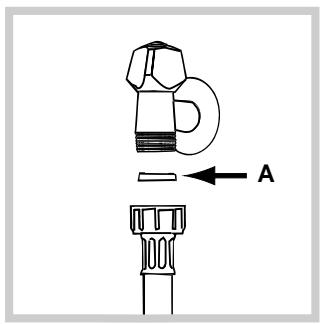
A- Insert seal A into the end of the inlet hose and screw the latter onto a cold water tap with a 3/4 gas threaded mouth (see figure). Before making the connection, allow the water to run freely until it is perfectly clear.
natural_image
Line drawing of a mechanical switch or valve mechanism (no text or symbols)-
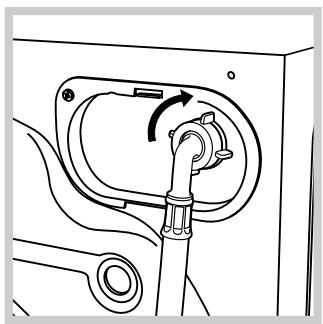
Connect the other end of the water inlet hose to the Washer-dryer, screwing it onto the appliance's cold water inlet, situated on the top right-hand side on the rear of the appliance (see figure).
-
Make sure there are no kinks or bends in the hose.
! The water pressure at the tap must be within the values indicated in the Technical details table (on the next page).
! If the water inlet hose is not long enough, contact a specialist store or an authorised serviceman.
Connecting the drain hose
text_image
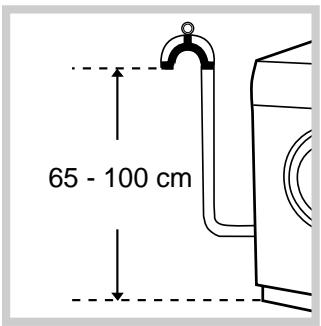
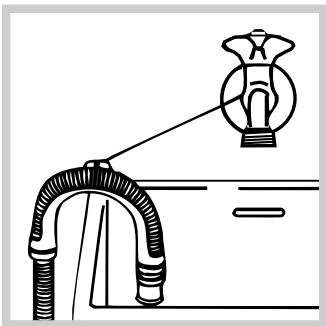
65 - 100 cmConnect the drain hose, without bending it, to a draining duct or a wall drain situated between 65 and 100 cm from the floor;
natural_image
Diagram of a pipe connection with a magnified inset showing a connector or component (no text or symbols present)alternatively, place it over the edge of a basin, sink or tub, fastening the duct supplied to the tap (see figure). The free end of the hose should not be underwater.
! We advise against the use of hose extensions; in case of absolute need, the extension must have the same diameter as the original hose and must not exceed 150 cm in length.
Electric connection
Before plugging the appliance into the mains socket, make sure that:
- the socket is earthed and in compliance with the applicable law;
- the socket is able to sustain the appliance's maximum power load indicated in the Technical details table (on the right);
- the supply voltage is included within the values indicated on the Technical details table (on the right);
- the socket is compatible with the washer dryer's plug. If this is not the case, replace the socket or the plug.
! The Washer-dryer should not be installed in an outdoor environment, not even when the area is sheltered, because it may be very dangerous to leave it exposed to rain and thunderstorms.
! When the Washer-dryer is installed, the mains socket must be within easy reach.
! Do not use extensions or multiple sockets.
! The power supply cable must never be bent or dangerously compressed.
! The power supply cable must only be replaced by an authorised serviceman.
Warning! The company denies all liability if and when these norms are not respected.
The first wash cycle
Once the appliance has been installed, and before you use it for the first time, run a wash cycle with detergent and no laundry, setting the 90^ C programme without a pre-wash cycle.
| Technical details | |
| Model | CDE 129 |
| Dimensions | 59.5 cm wide81,5 cm high54 cm deep |
| Capacity | from 1 to 5 kg for the wash programme; from 1 to 4 kg for the drying programme |
| Electric connections | please refer to the technical data plate fixed to the machine |
| Water connections | maximum pressure 1 MPa (10 bar)minimum pressure 0.05 MPa (0.5 bar)drum capacity 46 litres |
| Spin speed | up to 1200 rpm |
| Control programmes according to EN 50229 directive | Wash:programme 3; temperature 60°C; run with a load of 5 kg.Drying:first drying cycle performed with a 1 kg load, by selecting a drying time of 40 min;Second drying cycle performed with a 4 kg load and the DRYING knob on the [+] setting. |
| This appliance is compliant with the following European Community Directives:- 73/23/CEE of 19/02/73 (Low Voltage) and subsequent amendments- 89/336/CEE of 03/05/89(Electromagnetic Compatibility) and subsequent amendments- 2002/96/CE | |
Instructions for the fitter
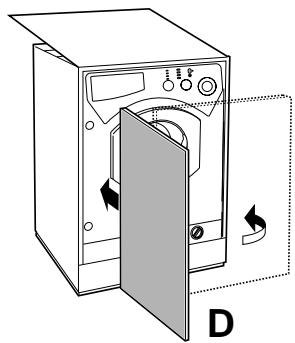
Mounting the wooden panel onto the door and inserting the machine into cabinets:
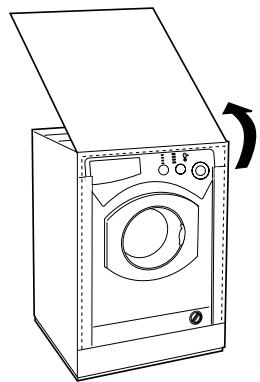
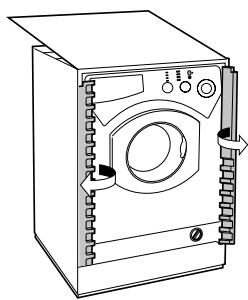
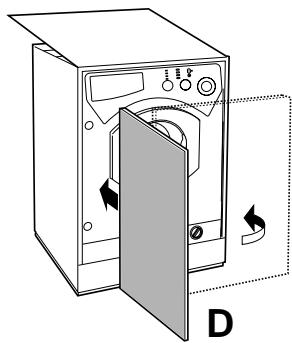
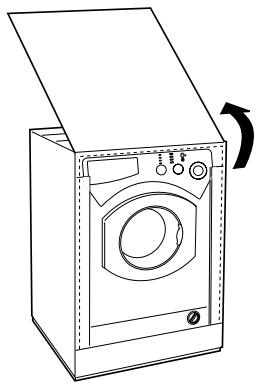
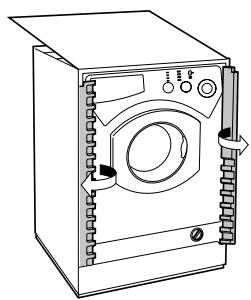
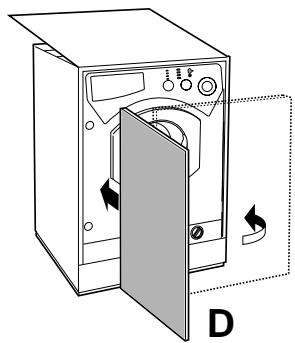
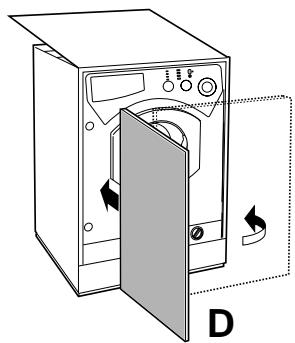
In the case where the machine must be shipped for final installation after the wooden panel has been mounted, we suggest leaving it in its original packaging. The packaging was designed to make it possible to mount the wooden panel onto the machine without removing it completely (see figures below).
The wooden panel that covers the face of the machine must not be less than 18 mm in thickness and can be hinged on either the right or left. For the sake of practicality when using the machine, we recommend that the panel be hinged on the same side as the door for the machine itself - the left.
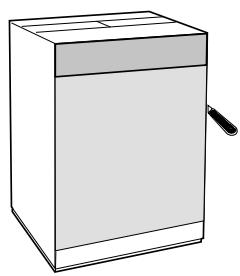
natural_image
Simple line drawing of a box with a handle, no text or symbols presentA
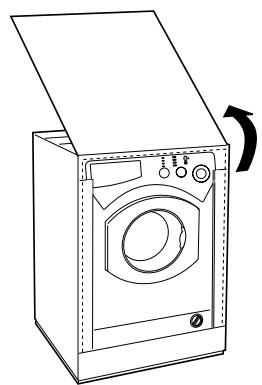
natural_image
Line drawing of a front-loading washing machine with open lid and side panel (no text or symbols)B
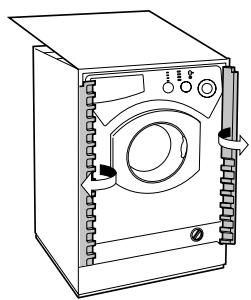
natural_image
Line drawing of a front-loading washing machine with control panel and side buttons (no text or symbols)C
natural_image
Diagram of a washing machine with a door open, showing internal components and airflow direction (no text or symbols)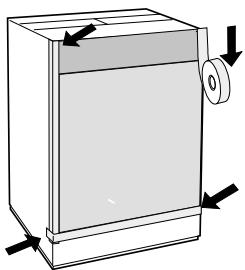
natural_image
Simple line drawing of a rectangular box with a side panel and directional arrows indicating flow or movement (no text or symbols)E
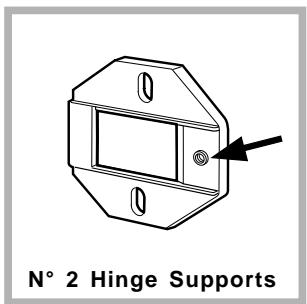
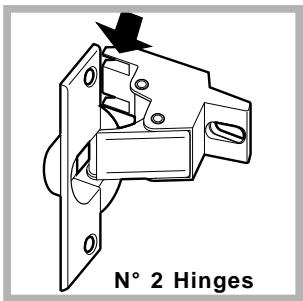
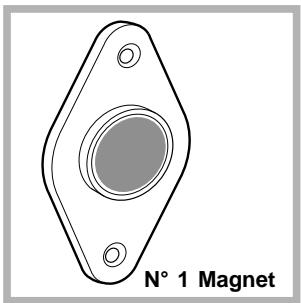
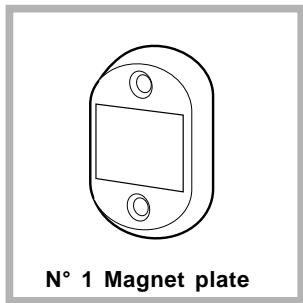
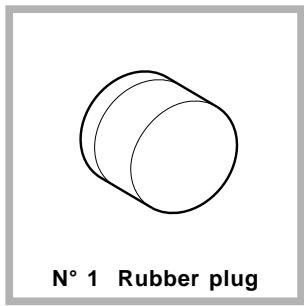
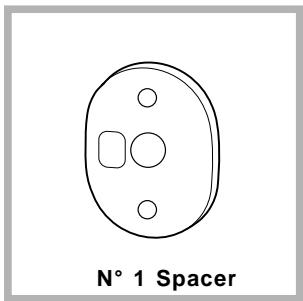
Door Mounting Accessories (Fig. 1-2-3-4-5).
text_image
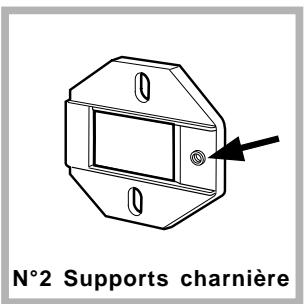
N° 2 Hinge SupportsFig. 1
text_image
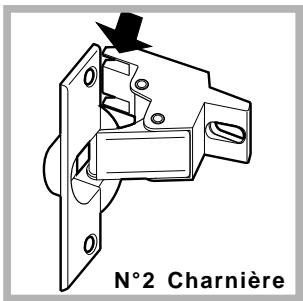
N° 2 HingesFig. 2
natural_image
Technical drawing of a flange component with concentric circular features and mounting holes (no text or symbols)Fig. 3
text_image
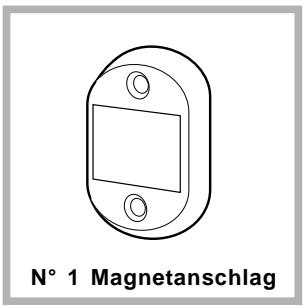
N° 1 Magnet plateFig. 4
text_image
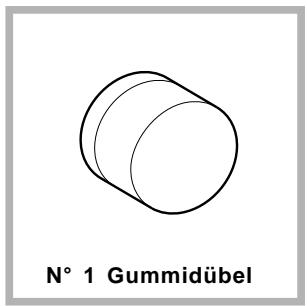
N° 1 Rubber plugFig. 5
text_image
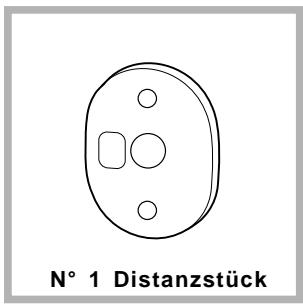
N° 1 SpacerFig. 4/B
- No. 6 type A self-threading screws, l = 13 mm.
- No. 2 type B metric, countersunk screws, l=25; for fastening the magnet plate to the cabinet.
- No. 4 type C metric screws, l = 15 mm; for mounting the hinge supports to the cabinet.
- No. 4 type D metric screws, l = 7 mm; for mounting the hinges on the supports.
Mounting the Parts onto the Face of the Machine.
- Mount the hinge supports onto the face of the machine, positioning the hole indicated by the arrow in fig. 1 towards the inside of the face and using the type C screws.
- Mount the magnetic plate on the opposite side, at the top, using the two type B screws.
- Place the spacer illustrated in fig. 4/B between the appliance front and the magnet receiver.
Using the Drilling Template.
- To trace the positions of the holes on the left-hand side of the panel, align the drilling template to the top left side of the panel using the lines traced on the extremities as a reference.
- To trace the positions of the holes on the right-hand side of the panel, align the drilling template to the top right side of the panel.
- Use an appropriately sized router to mill the holes for the two hinges, the rubber plug and the magnet.
Mounding the Parts onto the Wooden Panel (Door).
- Insert the hinges into the holes (the movable part of the hinge must be positioned facing away from the panel) and fasten them with the 4 type A screws.
- Insert the magnet into the top hole on the opposite side of the hinges and fasten it with the two type B screws.
- Insert the rubber plug into the bottom hole.
The panel is now ready to be mounted onto the machine.
Mounting the Panel into the machine.
Insert the nib of the hinge (indicated by the arrow in fig. 2) into the hole for the hinge and push the panel towards the front of the machine. Fasten the two hinges with the type D screws.
Fastening the plinth guide.
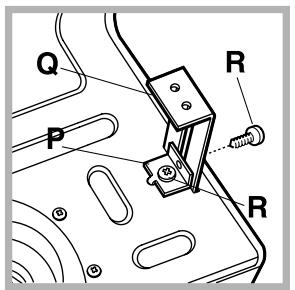
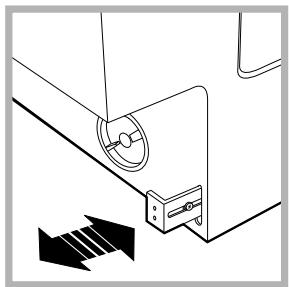
If the machine is installed at the end of a set of modular cabinets, mount either one or both of the guides for the base molding (as shown in fig. 8). Adjust them for depth based on the position of the base molding, and, if necessary, fasten the base to the guides (fig. 9).
This is how to assemble the plinth guide (fig. 8):
Fasten angle P using screw R, insert plinth guide Q into the special slot and once it is in the desired position, lock it in place using angle P and screw R.
Inserting the machine into the Cabinet.
- Push the machine into the opening, aligning it with the cabinets (fig. 6).
- Regulate the adjustable feet to raise the machine to the appropriate height.
- To adjust the position of the wooden panel in both the vertical and horizontal directions, use the C and D screws, as shown in fig. 7.
Important: close the lower part of the appliance front by ensuring that the plinth rests against the floor.
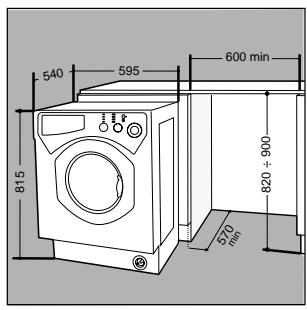
text_image
540 595 600 min 815 820 ÷ 900 570 minFig. 6
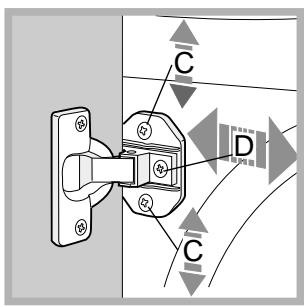
text_image
C D CFig. 7
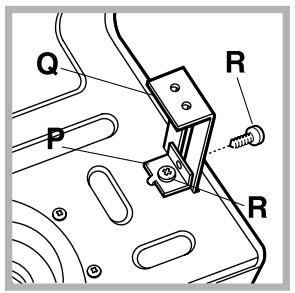
text_image
Q P R RFig. 8
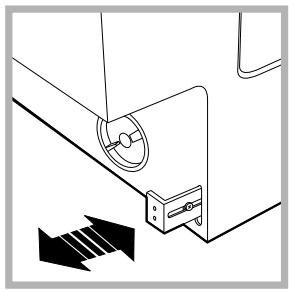
natural_image
Pure mechanical diagram showing a lever and bracket assembly without any text, numbers, or symbolsFig. 9
Accessories provided for the height adjustment.
The following can be found inside the polystyrene lid (fig. 10): 2 crossbars (G), 1 strip (M)
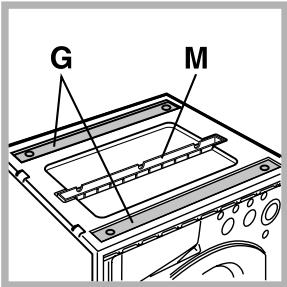
text_image
G Mthe following can be found inside the appliance drum:
4 additional feet (H),
4 screws (I),
4 screws (R),
4 nuts (L),
2 plinth guides (Q)
Fig. 10
Adjusting the appliance height.
The height of the appliance can be adjusted (from 815 mm to 835 mm), by turning the 4 feet.
Should you require the appliance to be placed higher than the above height, you need to use the following accessories to raise it to up to 870 mm:
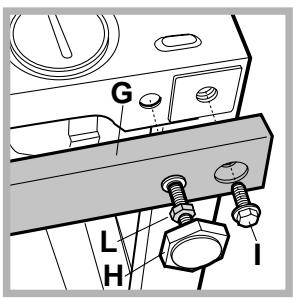
the two crossbars (G); the 4 feet (H); the 4 screws (I); the 4 nuts (L) then perform the following operations (fig. 11):
remove the 4 original feet, place a crossbar G at the front of the appliance, fastening it in place using screws I (screwing them in where the original feet were) then insert the new feet H.
Repeat the same operation at the back of the appliance.
Now adjust feet H to raise or lower the appliance from 835 mm to 870 mm.
Once you have reached the desired height, lock nuts L onto crossbar G.
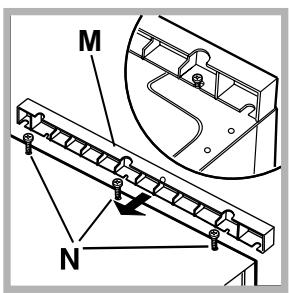
To adjust the appliance to a height between 870 mm and 900 mm, you need to mount strip M, adjusting feet H to the required height.
Insert the strip as follows:
loosen the three screws N situated at the front of the Top cover of the appliance, insert strip M as shown in fig. 12, then fasten screws N.
text_image
G L H IFig. 11
text_image
M NFig. 12
text_image
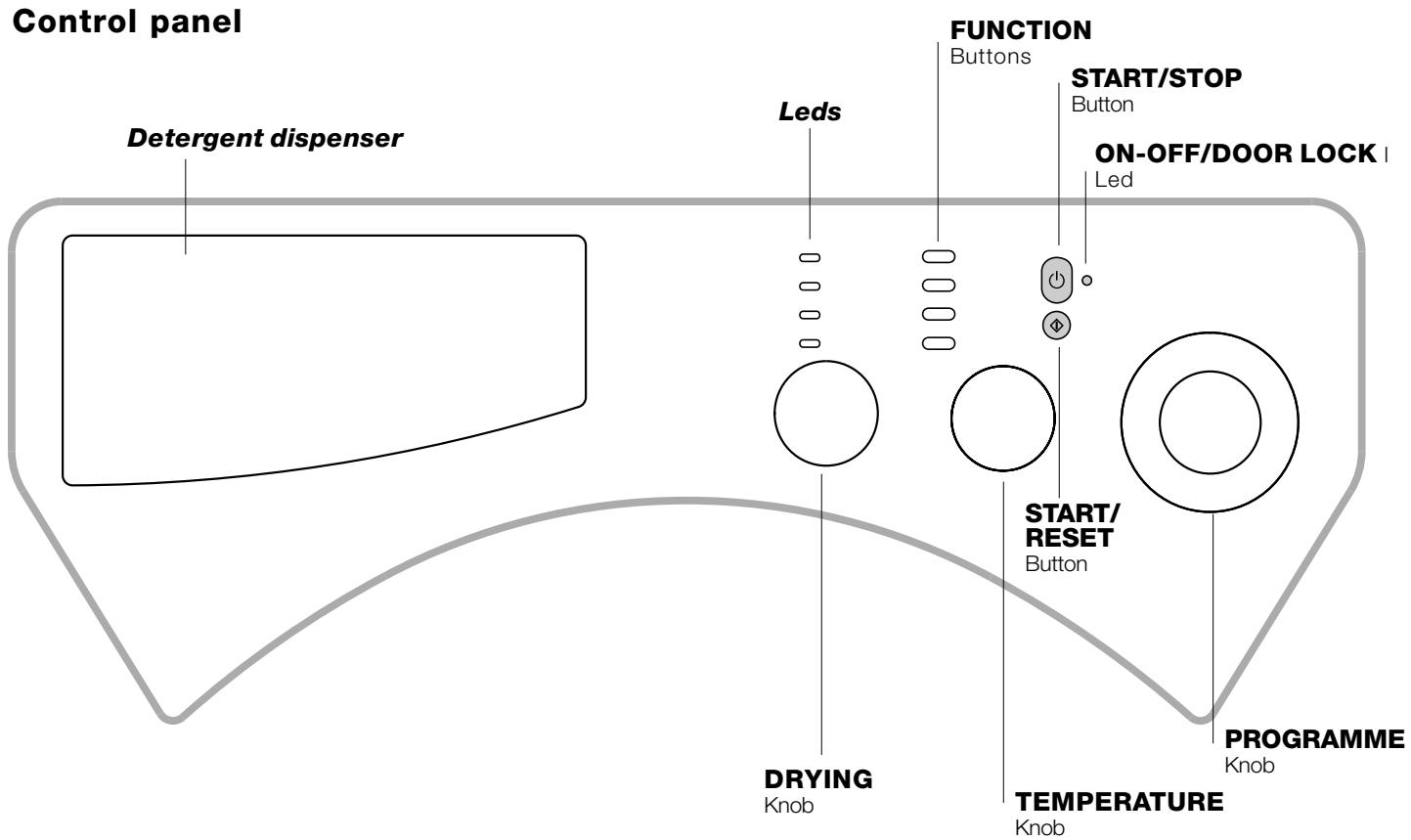
Control panel Detergent dispenser Leds FUNCTION Buttons START/STOP Button ON-OFF/DOOR LOCK I Led START/ RESET Button DRYING Knob TEMPERATURE Knob PROGRAMME KnobDetergent dispenser: to add detergent and fabric softener (see page 24).
LEDS: to find out which wash cycle phase is under way.
If the Delay Timer function has been set, the time left until the programme starts will be indicated (see page 21).
DRYING knob: to set the desired drying cycle (see page 23).
FUNCTION buttons: to select the functions available. The button corresponding to the function selected will remain on.
TEMPERATURE knob: to set the temperature or the cold wash cycle (see page 23).
START/STOP button: to turn the Washer-dryer on and off.
START/RESET button: to start the programmes or cancel any incorrect settings.
ON-OFF/DOOR LOCK Led: to find out whether the Washer-dryer is on and if the appliance door can be opened (see page 21).
PROGRAMME knob: to select the wash programmes. The retractable control knob: press the centre of the knob for it to pop out. The knob stays still during the cycle.
Note: to avoid excessive vibrations, before every spin cycle the machine distributes the load in a uniform manner by continuously rotating the drum at a speed which is slightly faster than the normal washing speed.
When, despite repeated attempts, the load is still not evenly distributed, the machine spins at a lower speed than the set frequency.
If the load is excessively unbalanced, the machine attempts to distribute it instead of spinning.
The balancing attempts may extend the total duration of the cycle, up to a maximum of 10 minutes.
Leds
The LEDS provide important information.
This is what they can tell you:
Delay set:
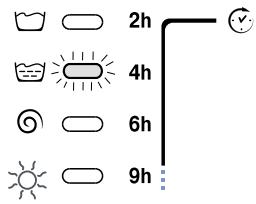
If the Delay Timer function has been enabled (see page. 23), once you have started the programme, the LED corresponding to the delay set will begin to flash:
text_image
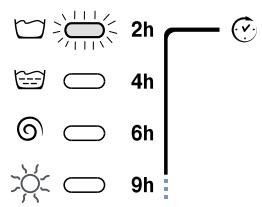
2h 4h 6h 9hAs time passes, the remaining delay will be displayed, and the corresponding LED will flash:
text_image
2h 4h 6h 9hOnce the set delay is complete, the flashing LED will turn off and the programme set will start.
Cycle phase under way:
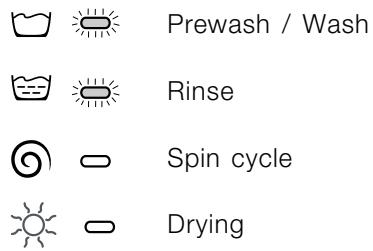
During the wash cycle, the LEDs gradually illuminate on to indicate the cycle phase under way:
text_image
Prewash / Wash Rinse Spin cycle DryingNote:
- during draining, the LED corresponding to the Spin cycle phase will be turned on.
- when the drying cycle is complete, the indicator light relative to phase 🙏 will flash, to indicate that the DRYING knob needs to be set back to the 0 setting.
Function buttons
The FUNCTION BUTTONS also act like LEDS. When a function is selected, the corresponding button is illuminated.
If the function selected is incompatible with the programme set, the button will flash and the function will not be enabled.
If you set a function that is incompatible with another function you selected previously, only the last one selected will be enabled.
ON-OFF/DOOR LOCK led:
If this LED is on, the appliance door is locked to prevent it from being opened accidentally; to avoid any damages, wait for the LED to flash before you open the appliance door.
! The rapid flashing of the ON-OFF/DOOR LOCK Led together with the flashing of at least one other LED indicates there is an abnormality (see page 27).
Starting and Programmes
Briefly: starting a programme
- Switch the Washer-dryer on by pressing button ⏻. All the LEDS will light up for a few seconds and the ON-OFF/DOOR LOCK Led will begin to flash.
- Load your laundry into the Washer-dryer and shut the appliance door.
- Set the PROGRAMME knob to the programme required.
- Set the wash temperature (see page 23).
- Set the drying cycle if necessary (see page 23).
Programme table
- Add the detergent and any fabric softener (see page 24).
- Start he programme by pressing the START/RESET button. To cancel it, keep the START/RESET button pressed for at least 2 seconds.
- When the programme is finished, the ON-OFF/DOOR LOCK Led will flash to indicate that the appliance door can be opened. Take out your laundry and leave the appliance door ajar to allow the drum to dry thoroughly. Turn the Washer-dryer off by pressing button ⏻.
| Type of fabric and degree of soil | Program-mes | Wash temp. | Drying cycle | Detergent | Fabric softener | Cycle length (minutes) | Description of wash cycle | |
| Pre-wash | Wash | |||||||
Cottons
| Extremely soiled whites (sheets, tablecloths, etc.) | 1 | 90°C | • | • | • | • | 137 | Pre-wash, wash cycle, rinse cycles, intermediate and final spin cycles |
| Extremely soiled whites (sheets, tablecloths, etc.) | 2 | 90°C | • | • | • | 120 | Wash cycle, rinse cycles, intermediate and final spin cycles | |
| Heavily soiled whites and fast colours | 3 | 60°C | • | • | • | 105 | Wash cycle, rinse cycles, intermediate and final spin cycles | |
| Heavily soiled whites and delicate colours | 3 | 40°C | • | • | • | 93 | Wash cycle, rinse cycles, intermediate and final spin cycles | |
| Slightly soiled whites and delicate colours (shirts, jumpers, etc.) | 4 | 40°C | • | • | • | 72 | Wash cycle, rinse cycles, intermediate and final spin cycles | |
| Drying cycle for cotton fabrics | • |
Synthetics
| Heavily soiled fast colours (baby linen, etc.) | 5 | 60°C | • | • | • | 77 | Wash cycle, rinse cycles, anti-crease or delicate spin cycle | |
| Fast colours (all types of slightly soiled garments) | 5 | 40°C | • | • | • | 62 | Wash cycle, rinse cycles, anti-crease or delicate spin cycle | |
| Heavily soiled fast colours (baby linen, etc.) | 6 | 50°C | • | • | • | 73 | Wash cycle, rinse cycles, anti-crease or delicate spin cycle | |
| Delicate colours (all types of slightly soiled garments) | 7 | 40°C | • | • | • | 58 | Wash cycle, rinse cycles, anti-crease or delicate spin cycle | |
| Delicate colours (all types of slightly soiled garments) | 8 | 30°C | • | • | • | 30 | Wash cycle, rinse cycles and delicate spin cycl | |
| Drying cycle for synthetic fabrics | • |
Delicates
| Wool | 9 | 40°C | • | • | • | 50 | Wash cycle, rinse cycles and delicate spin cycle | |
| Very delicate fabrics (curtains, silk, viscose, etc.) | 10 | 30°C | • | • | 45 | Wash cycle, rinse cycles, anti-crease or draining cycle | ||
| Drying cycle for delicate fabrics | • |
PARTIAL PROGRAMMES
| Delicate rinse cycle | • | • | Rinse cycles, anti-crease or draining | |||||
| Delicate spin cycle | • | Draining and delicate spin cycle | ||||||
| Draining | Draining |
Notes
For the anti-crease function, please see page 24. The information contained in the table is purely indicative.
Special programme
Daily 30' (programme 8 for Synthetics) is designed to wash lightly soiled garments in a short amount of time: it only lasts 30 minutes and allows you to save on both time and energy. By setting this programme (8 at 30°C), you can wash different fabrics together (except for woollen and silk items), with a maximum load of 3 kg.
We recommend the use of liquid detergent.
Setting the temperature
Turn the TEMPERATURE knob to set the wash temperature (see Programme table on page 22).
The temperature can be lowered, or even set to a cold wash ( ).

Set the drying cycle
Turn the DRYING knob to set the desired drying type.
Two options are available:
A - Based on time: From 40 minutes to 150.
B - Based on the damp level of the dry clothes:
Iron 📄: slightly damp clothes, easy to iron.
Wardrobe ☐: dry clothes to put away.
Extra dry 📄: very dry clothes, recommended for towelling and bathrobes.
A cooling stage is foreseen at the end of the drying cycle.
If your laundry load to wash and dry is exceptionally in excess of the maximum load foreseen (see table opposite), perform
the wash cycle, and when the programme is complete, divide up the garments and put part of them back in the drum. Now follow the instructions provided for a dry only cycle. Repeat this procedure for the remainder of the load.
Table of drying times
The data contained in the table are purely indicative.
| Fabric type | Load type | Max. load (kg) | Extra dry | Wardrobe | Iron |
| Cotton, Linen | Clothing of different sizes | 4 | 130 | 120 | 110 |
| Cotton | Terry towels | 4 | 130 | 120 | 110 |
| Terital, Cotton | Sheets, Shirts | 2,5 | 90 | 80 | 70 |
| Acrylics | Pyjamas, socks, etc. | 1 | 65 | 60 | 60 |
| Nylon | Slips, tights, stockings, etc. | 1 | 65 | 60 | 60 |
Dry only
Turn the PROGRAMME knob to one of the drying settings ⚙️ depending on the type of fabric, then select the desired drying type using the DRYING knob.
Important: - A spin cycle is carried out during the drying if you have set a cotton programme and a level of dryness (Extra dry ☐, Wardrobe ☐, Iron ☐).
- The woollen garments drying cycle should only and exclusively be run together with the selection of a specific cycle time (150 - 100 - 60 - 40 minutes). We recommend a 60 minute drying cycle for a 1 kg load.
If one of the three levels (Extra dry 📄, Wardrobe 📄, Iron 📄) is selected by mistake, the appliance will run a drying cycle lasting the MAX time foreseen (150 minutes).
- For cotton loads of less than 1 Kg, use the drying programme designed for synthetic fabrics.
Functions
To enable a function:
-
press the button corresponding to the desired function, according to the table below;
-
the function is enabled when the corresponding button is illuminated.
Note: The rapid flashing of the button indicates that the corresponding function cannot be selected for the programme set.
| Function | Effect | Comments | Enabled with programmes: |
| Delay Timer | Delays the start of the wash by up to 9 hours. | Press the button repeatedly until the LED corresponding to the desired delay is turned on.The fifth time the button is pressed, the function will be disabled.N.B.: Once you have pressed the Start/Reset button, the delay can only be decreased if you wish to modify it. | All |
| Super Wash | Allows for an impeccable wash, visibly whiter than a standard Class A wash. | This function is incompatible with the RAPID function. | 1, 2, 3, 4,5, 6, 7 |
| Rapid | Cuts the duration of the wash cycle by 30%. | This function is incompatible with the SUPER WASH function. | 1, 2, 3, 4,5, 6, 7 |
| 1200-600 | Reduces the spin speed. | All programmes except for 10 and draining. |
Detergent dispenser
Good washing results also depend on the correct dose of detergent: adding too much detergent won't necessarily make for a more efficient wash, and may in fact cause build up on the interior of your appliance and even pollute the environment.
text_image
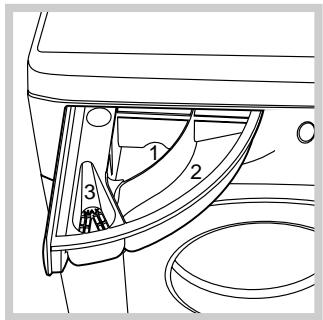
Technical diagram of a mechanical component with numbered parts, likely for assembly or identification.Open up the detergent dispenser and pour in the detergent and fabric softener, as follows.
compartment 1: Detergent for pre-wash (powder)
compartment 2: Detergent for the wash cycle (powder or liquid)
Liquid detergent should only be poured in immediately prior to the wash cycle start.
compartment 3: Additives (fabric softeners, etc.) The fabric softener should not overflow from the grid
! Do not use hand wash detergent because it may form too much foam.
Preparing your laundry
- Divide your laundry according to:
- the type of fabric/the symbol on the label.
- the colours: separate coloured garments from whites.
- Empty all pockets and check for loose buttons.
- Do not exceed the weight limits stated below, which refer to the weight when dry:
Sturdy fabrics: max 5 kg
Synthetic fabrics: max 2.5 kg
Delicate fabrics: max 2 kg
Wool: max 1 kg
How much does your laundry weigh?
1 sheet 400-500 g
1 pillow case 150-200 g
1 tablecloth 400-500 g
1 bathrobe 900-1,200 g
1 towel 150-250 g
Special items
Curtains: fold curtains and place them in a pillow case or mesh bag. Wash them separately without exceeding half the appliance load. Use programme 10 which excludes the spin cycle automatically.
Quilted coats and windbreakers: if they are padded with goose or duck down, they can be machine-washed. Turn the garments inside out and load a maximum of 2-3 kg, repeating the rinse cycle once or twice and using the delicate spin cycle.
Trainers: remove any mud. They can be washed together with jeans and other tough garments, but not with whites.
Wool: for best results, use a specific detergent, taking care not to exceed a load of 1 kg.
Woolmark Platinum Care

WOOLMARK PLATINUM CARE
As gentle as a hand wash.
Hotpoint/Ariston is the only washer-dryer to have obtained the prestigious Woolmark
Platinum Care mark of recognition (M.0303) from The Woolmark Company, which certifies the machine washing of all woollen garments, even those whose label states "hand wash only" (kg max.). The "Wool" programme therefore offers you complete peace of mind when washing all woollen garments, with great performance guaranteed every time.
Anti-crease
This function interrupts the wash programme, and the washing is left to soak in water before the appliance is drained. It is enabled in programmes 5 - 6 - 7 - 10 and Delicate rinse cycle.
To conclude the cycle, press the START/RESET button.
To run the draining cycle alone, set the knob to the relative symbol Lp and press the START/RESET button.
! The Washer-dryer was designed and built in compliance with the applicable international safety regulations. The following information is provided for your safety and should consequently be read carefully.
General safety
- This appliance has been designed for non-professional, household use and its functions must not be changed.
- This Washer-dryer should only be used by adults and in accordance with the instructions provided in this manual.
- Never touch the Washer-dryer when barefoot or with wet or damp hands or feet.
- Do not pull on the power supply cable to unplug the appliance from the electricity socket. Pull the plug out yourself.
- Do not open the detergent dispenser while the appliance is in operation.
- Do not touch the drain water as it could reach very high temperatures.
- Never force the Washer-dryer door: this could damage the safety lock mechanism designed to prevent any accidental openings.
- In the event of a malfunction, do not under any circumstances touch internal parts in order to attempt repairs.
- Always keep children well away from the appliance while in operation.
- The appliance door tends to get quite hot during the wash cycle.
- Should it have to be moved, proceed with the help of two or three people and handle it with the utmost care. Never try to do this alone, because the appliance is very heavy.
- Before loading your laundry into the washing machine, make sure the drum is empty.
- During the drying phase, the door tends to get quite hot.
- Do not use the appliance to dry clothes that have been washed with flammable solvents (e.g. trichlorethylene).
- Do not use the appliance to dry foam rubber or similar elastomers.
- Make sure that the water tap is turned on during the drying cycles.
- This washer-dryer can only be used to dry clothes which have been pre-washed in water.
Disposal
- Disposing of the packaging material: observe local regulations, so the packaging can be re-used.
- The European Directive 2002/96/EC on Waste Electrical and Electronic Equipment, requires that old household electrical appliances must not be disposed of in the normal unsorted municipal waste
stream. Old appliances must be collected separately in order to optimise the recovery and recycling of the materials they contain and reduce the impact on human health and the environment. The crossed out "wheeled bin" symbol on the product reminds you of your obligation, that when you dispose of the appliance it must be separately collected.
Consumers should contact their local authority or retailer for information concerning the correct disposal of their old appliance.
Saving energy and respecting the environment
Environmentally-friendly technology
If you only see a little water through your appliance door, this is because thanks to the latest Hotpoint/Ariston technology, your Washer-dryer only needs less than half the amount of water to get the best results: an objective reached to respect the environment.
Saving on detergent, water, energy and time
- To avoid wasting resources, the Washer-dryer should be used with a full load. A full load instead of two half loads allows you to save up to 50% on energy.
- The pre-wash cycle is only necessary on extremely soiled garments. Avoiding it will save on detergent, time, water and between 5 and 15% energy.
- Treating stains with a stain remover or leaving them to soak before washing will cut down the need to wash them at high temperatures. A programme at 60^ C instead of 90^ C or one at 40^ C instead of 60^ C will save up to 50% on energy.
- Use the correct quantity of detergent depending on the water hardness, how soiled the garments are and the amount of laundry you have, to avoid wastage and to protect the environment: despite being biodegradable, detergents do contain ingredients that alter the natural balance of the environment. In addition, avoid using fabric softener as much as possible.
- If you use your Washer-dryer from late in the afternoon until the early hours of the morning, you will help reduce the electricity board's peak load. The Delay Timer option (see page 23) helps to organise your wash cycles accordingly.
- If your laundry has to be dried in a tumble dryer, select a high spin speed. Having the least water possible in your laundry will save you time and energy in the drying process.
Cutting off the water or electricity supply
- Turn off the water tap after every wash. This will limit the wear of your appliance's water system and also prevent leaks.
- Unplug your appliance when cleaning it and during all maintenance operations.
Cleaning your appliance
The exterior and rubber parts of your appliance can be cleaned with a soft cloth soaked in lukewarm soapy water. Do not use solvents or abrasives.
Cleaning the detergent dispenser
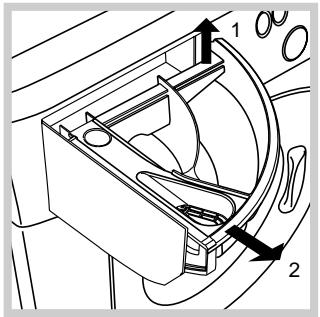
text_image
Technical diagram of a mechanical component with labeled parts 1 and 2, showing internal structure and directional arrows.Remove the dispenser by raising it and pulling it out (see figure).
Wash it under running water; this operation should be repeated frequently.
Caring for your appliance door and drum
- Always leave the appliance door ajar to prevent unpleasant odours from forming.
Cleaning the pump
The Washer-dryer is fitted with a self-cleaning pump that does not require any maintenance. Sometimes, small items (such as coins or buttons) may fall into the pre-chamber that protects the pump, situated in the lower part of the same.
! Make sure the wash cycle has ended and unplug the appliance.
To access the pre-chamber:
natural_image
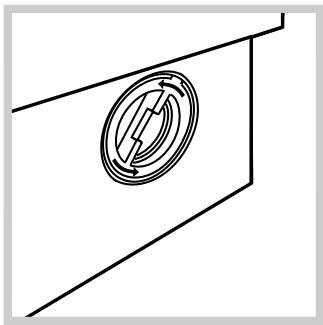
Pure technical line drawing of a mechanical component with no text or symbols-
unscrew the lid rotating it anti-clockwise (see figure): a little water may trickle out. This is perfectly normal;
-
clean the interior thoroughly;
- screw the lid back on.
Checking the water inlet hose
Check the water inlet hose at least once a year. If you see any cracks, replace it immediately: during the wash cycles, water pressure is very strong and a cracked hose could easily split open.
! Never use hoses that have already been used.
Your Washer-dryer could fail to work. Before calling for Assistance (see page 28), make sure the problem can't easily be solved by consulting the following list.
Problem
The Washer-dryer won't start.
The wash cycle won't start.
The Washer-dryer fails to load water.
The Washer-dryer continuously loads and unloads water.
The Washer-dryer does not drain or spin.
The Washer-dryer vibrates too much during the spin cycle.
The Washer-dryer leaks.
The ON-OFF/DOOR LOCK Led flashes rapidly at the same time as at least one other LED.
There is too much foam.
The washer-dryer does not dry.
Possible causes/Solution:
- The appliance is not plugged into the socket, or not enough to make contact.
- There has been a power failure.
- The appliance door is not shut properly.
- The ⏻ button has not been pressed.
- The START/RESET button has not been pressed.
- The water tap is not turned on.
- A delayed start has been set (using the Delay Timer, see page 23).
- The water inlet hose is not connected to the tap.
- The hose is bent.
- The water tap is not turned on.
- There is a water shortage.
- The water pressure is insufficient.
- The START/RESET button has not been pressed.
- The drain hose is not fitted between 65 and 100 cm from the floor (see page 17).
- The free end of the hose is underwater (see page 17).
- The wall drainage system doesn't have a breather pipe.
If the problem persists even after these checks, turn off the water tap, switch the appliance off and call for Assistance. If the dwelling is on one of the upper floors of a building, there may be drain trap problems causing the Washer-dryer to load and unload water continuously. In order to avoid such an inconvenience, special anti-drain trap valves are available in shops.
- The programme does not foresee the draining: some programmes require enabling the draining manually (see page 22).
- The “Anti-crease” option is enabled: to complete the programme, press the START/RESET button (see page 23).
- The drain hose is bent (see page 17).
-
The drain duct is clogged.
-
The drum was not unblocked correctly during installation (see page 16).
- The Washer-dryer is not level (see page 16).
- The Washer-dryer is closed in between furniture cabinets and the wall (see page 16).
- The water inlet hose is not screwed on correctly (see page 16).
- The detergent dispenser is obstructed (to clean it, see page 26).
- The drain hose is not secured properly (see page 17).
-
Switch off the machine and unplug the appliance; wait for approximately 1 minute then switch it on again. If the problem persists, contact Assistance.
-
The detergent is not suitable for machine washing (it should bear the definition "for Washing-machine" or "hand and machine wash", or the like).
- You used too much detergent.
- The appliance is not plugged into the socket, or not enough to make contact.
- There has been a power failure.
- The appliance door is not shut properly.
- A delayed start has been set (using the Delay Timer, see page 23).
- the DRYING knob is on the 0 setting.
Before calling for Assistance:
- Check whether you can solve the problem on your own (see page 27);
- Restart the programme to check whether the problem has been solved;
- If this is not the case, contact an authorised Technical Service Centre on the telephone number provided on the guarantee certificate.
! Always request the assistance of authorised servicemen.
Notify the operator of:
• the type of problem;
• the appliance model (Mod.);
• the serial number (S/N);
This information can be found on the data plate situated on the rear of the Washer-dryer.

Français
Sommaire
Installation, 30-31-32-33
natural_image
Technical line drawing of a mechanical device with internal components and directional arrows (no text or symbols)natural_image
Technical line drawing of a mechanical component with circular features and an arrow indicating rotation (no text or symbols)natural_image
Line drawing of a mechanical component with a valve and handle (no text or symbols)natural_image
Diagram of a pipe connection with a magnified inset showing a connector (no text or symbols)natural_image
Simple line drawing of a rectangular box with a handle, no text or symbols presentA
natural_image
Line drawing of a front-loading washing machine with a door open, showing the lid and side panel (no text or symbols)B
natural_image
Line drawing of a front-loading washing machine with control panel and side buttons (no text or symbols)C
natural_image
Diagram of a washing machine with a door open, showing internal components and airflow direction (no text or symbols)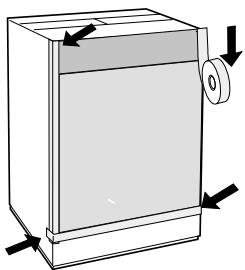
natural_image
Simple line drawing of a rectangular box with a side panel and directional arrows indicating flow or movement (no text or symbols)E
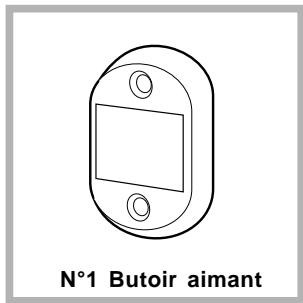
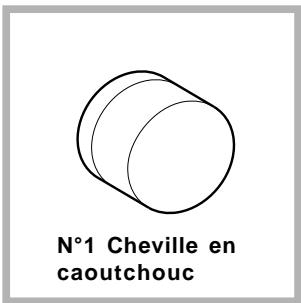
Accessoires montage porte (Fig.1-2-3-4-5).
text_image
N°2 Supports charnièreFig. 1
natural_image
Technical drawing of a mechanical flange component with circular center and four mounting holes (no text or symbols)Fig. 3
text_image
N°1 Butoir aimantFig. 4
natural_image
Pure mechanical diagram showing a valve and lock assembly without any text, numbers, or symbolsFig. 9
purement indicative.
text_image
Technical diagram of a vehicle's rearview structure with numbered componentstext_image
Technical diagram of a car intake system with labeled components and directional arrowsnatural_image
Pure technical line drawing of a mechanical component with no text or symbolsCauses / Solutions possibles:
Installation, 44-45-46-47
natural_image
Technical line drawing of a mechanical assembly with no visible text or symbolsnatural_image
Technical line drawing of a door handle with circular vent and scroll button (no text or symbols)natural_image
Line drawing of a mechanical component with a valve and handle, no text or symbols presentnatural_image
Diagram of a pipe connection with a magnified inset showing a connector (no text or symbols)natural_image
Line drawing of a front-loading washing machine with visible door, buttons, and ventilation slots (no text or labels)C
natural_image
Diagram of a washing machine with open door and control panel, showing internal mechanism (no text or symbols)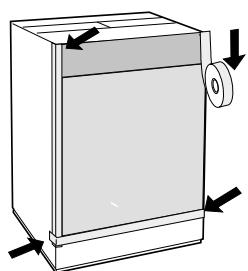
natural_image
Simple line drawing of a rectangular box with a side panel and directional arrows indicating forces or movement (no text or symbols)E
natural_image
Technical drawing of a flange component with concentric circular features and mounting holes (no text or symbols)Abb. 3
text_image
N° 1 MagnetanschlagAbb. 4
text_image
N° 1 GummidübelAbb. 5
text_image
Technical diagram showing a mechanical assembly with labeled components C and D, likely illustrating a valve or connector assembly.Abb. 7
text_image
Q P R RAbb. 8
natural_image
Pure mechanical diagram showing a lever and bracket assembly without any text, numbers, or symbolsAbb. 9