Sydney Opera House (TM) - Toys LEGO - Free user manual and instructions
Find the device manual for free Sydney Opera House (TM) LEGO in PDF.


User questions about Sydney Opera House (TM) LEGO
0 question about this device. Answer the ones you know or ask your own.
Ask a new question about this device
Download the instructions for your Toys in PDF format for free! Find your manual Sydney Opera House (TM) - LEGO and take your electronic device back in hand. On this page are published all the documents necessary for the use of your device. Sydney Opera House (TM) by LEGO.
USER MANUAL Sydney Opera House (TM) LEGO
Sydney, New South Wales, Australia
Booklet available in English on
Heft in deutscher Sprache erhältlich auf
Livret disponible en français sur
Folleto disponible en español en
Folheto disponível em português em
A füzet magyarul ezen a honlapon olvasható: Architecture.LEGO.com

SYDNEY OPERA HOUSE
www.sydneyoperahouse.com
SYDNEY OPERA HOUSE™
Sydney Opera House is a masterpiece of late modern architecture and an iconic building of the 20th century. It is admired internationally and proudly treasured by the people of Australia. It was created by a young Danish architect, Jørn Utzon (1918-2008), who understood the potential provided by the site against the stunning backdrop of Sydney Harbour.

natural_image
Nighttime exterior view of the Sydney Opera House illuminated with blue lights and illuminated structures, reflected in water below (no visible text or signage)Sydney Opera House projects into the harbour, with the central business district of the city behind. © Michael Moy Idea to Icon
natural_image
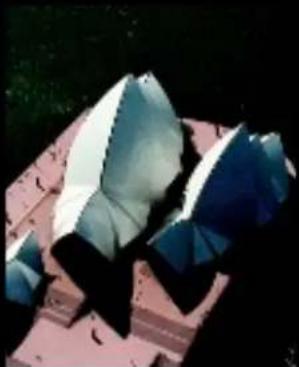
Abstract geometric shapes in blue and white against a dark background (no text or symbols)The three groups of interlocking shells are set on a vast terraced platform. © Michael Moy Idea to Icon
The massive concrete sculptural shells that form the roof of Sydney Opera House appear like billowing sails filled by the sea winds with the sunlight and cloud shadows playing across their shining white surfaces. Utzon envisaged it as being like to a Gothic cathedral that people would never tire of and never be finished with.
Today Sydney Opera House does not operate solely as a venue for opera or symphony, but also hosts a wide range of performing arts and community activities. These include classical and contemporary music, ballet, opera, theatre, dance, cabaret, talks and large scale public programs.
Since its opening in 1973 over 45 million people have attended more than 100 000 performances, and it is estimated that well over 100 million people have visited the site. It is one of Australia's most visited tourist attractions, being the most internationally recognized symbol of the nation. Today Sydney Opera House welcomes more than 8 million visitors and presents around 2400 events a year.
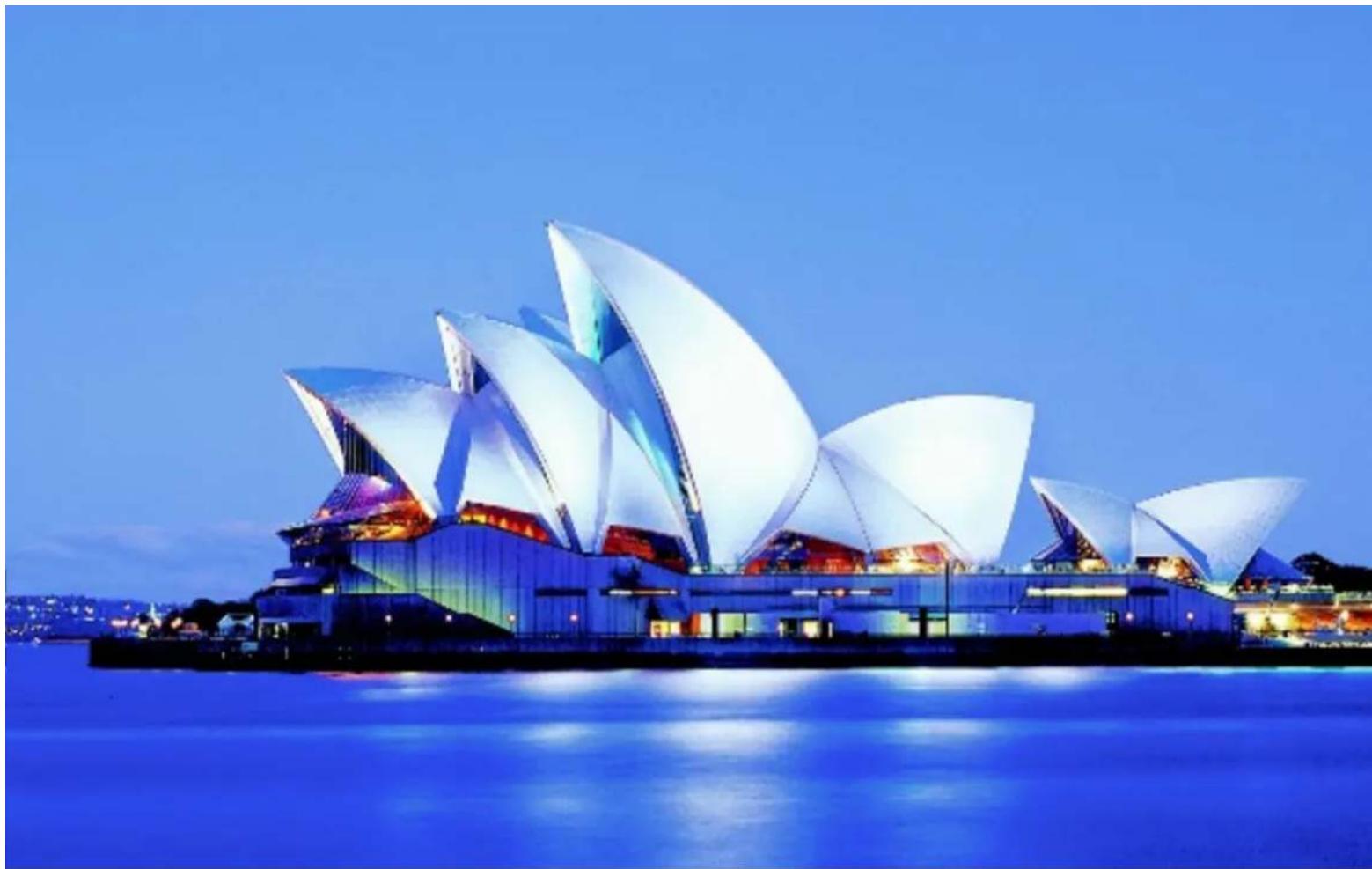
Opposite page: Sydney Opera House on Bennelong Point. © WE-EF LIGHTING 2011 Photo Ralph Alfonso
natural_image
Exterior view of the Sydney Opera House at dusk, illuminated with white and blue facades against a clear blue sky (no signage or text visible)History
The history of Sydney Opera House is as extraordinary and complex as the building itself. It is a story of vision, courage, dedication, challenge, controversy and triumph.
Its many remarkable elements include the submission of a visionary design that the judges courageously selected as the winner; the collaborative partnership of architect and engineer that produced ground-breaking construction solutions; the breach created by Jørn Utzon's departure from the project in 1966; and his re-engagement in 1999 to provide design principles to guide Sydney Opera House into the future.
It began in 1956 when the New South Wales (NSW) Government announced an international design competition and appointed an independent jury. The competition brief did not specify design parameters or
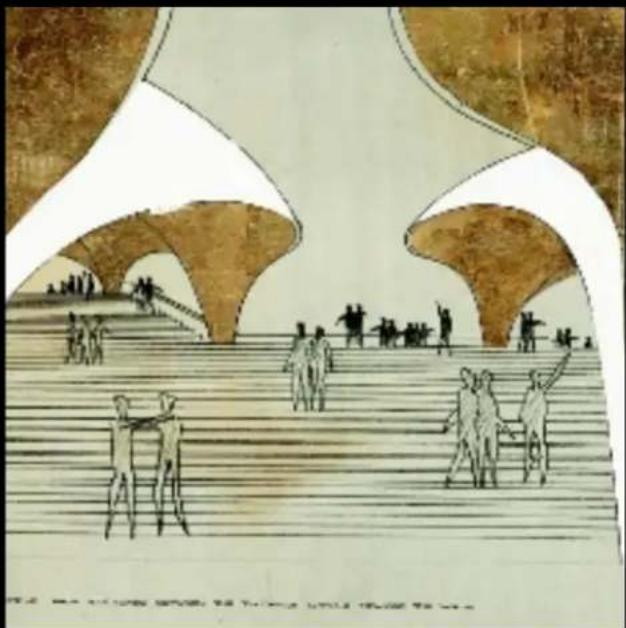
Competition drawings submitted by Jørn Utzon to the Opera House Committee; Perspective from the staircase between the two halls looking towards the north, 1956. © State Records NSW
natural_image
Illustration of a modern architectural structure with arched windows and human figures on stairs (no text or symbols)set a cost limit. The only requirement was for a design of two performance halls: a Major Hall for grand opera and symphony; and a Minor Hall for drama. There was to be additional space for experimental theatre and rehearsals.
The combination of site and brief proved irresistible: 933 competitors from all over the world registered and 233 entries were received from 28 countries. Judging took place in January 1957 and the entry of the relatively unknown architect, Jørn Utzon, was the unanimous winner. Both the architectural fraternity and the public were amazed by the design and found it to be a spectacular response to the brief and the site.
natural_image
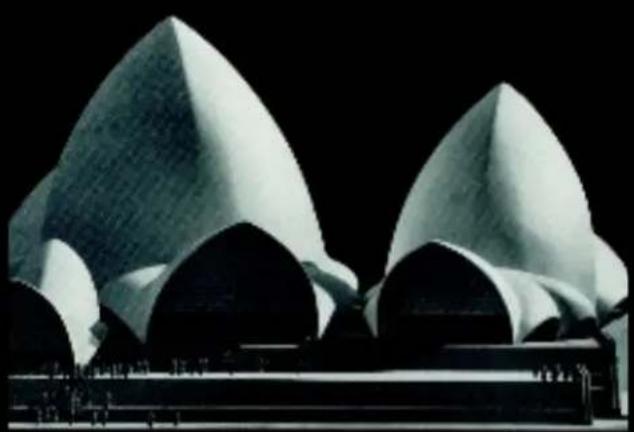
Exterior view of the Sydney Opera House with distinctive curved facades (no signage or text visible)Model of Sydney Opera House. © State Records NSW
Construction
Utzon's distinct design was comprised of sets of interlocking vaulted 'shells' based upon a podium. Over three years Utzon gradually made changes from his original concept drawings in order to develop a way to construct the large roof shells. While the Podium was under construction, the geometry of the shells had not yet been resolved from an engineering perspective. Many options were explored, culminating in Utzon's 'spherical
solution', developed in collaboration with Ove Arup, using segments of a single sphere. This allowed cost effective prefabrication from a single set of moulds.
The scale of construction of Sydney Opera House was enormous. Over 30 000 cubic metres of rock and soil had to be removed from the site and the construction of the shell structure required the world's largest crane.

natural_image
Close-up of a textured, layered object with diagonal ridges and a tapered base (no visible text or symbols)Models of shells. © State Records NSW

natural_image
Abstract grayscale image of curved, layered structures against a black background (no text or symbols)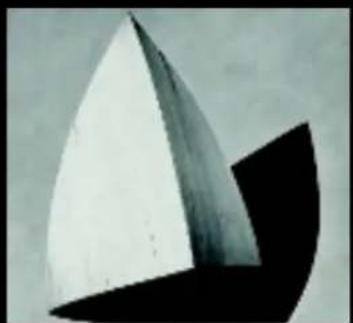
natural_image
Abstract geometric sculpture with curved and angular forms (no text or symbols)From 1964 the pre-cast rib vaults of the shells began to be erected on the completed podium. The construction of the roof brought together some of the world's best construction engineers and craftsmen for one of the most difficult engineering tasks ever attempted. It was also the first time computers were used to resolve some of the engineering/design problems.
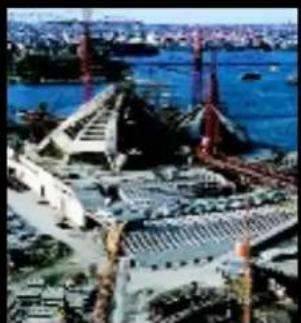
natural_image
Aerial view of a coastal industrial complex with distinctive triangular structures and adjacent waterways (no visible text or symbols)The Podlum takes shape at Bennelong Point. Photograph by Max Dupain and Associates

natural_image
Exterior view of the Sydney Opera House under construction with cranes and scaffolding (no signage or text visible)Sydney Opera house during construction. Photograph by Max Dupain and Associates

natural_image
Construction site with multiple red cranes and a large ship docked, under clear blue sky (no visible text or symbols)Sydney Opera House Is a significant feat of engineering and technology involving ingenuity and creativity in many aspects of its design and construction. Photograph by Max Dupain and Associates
Although Utzon had spectacular plans for the interior of the shells, he would be unable to realize this part of his design. A change of government and growing criticism at cost overruns led to Utzon's withdrawal in February 1966. By April he had left Sydney, never to return.
The NSW Government appointed a team of local architects to complete the glass walls and interiors. The use of the main halls was revised. The Major Hall was dedicated to symphony and renamed the Concert Hall. The Minor Hall was dedicated to opera and dance and renamed the Opera Theatre. Three previously unplanned venues were added underneath the Concert Hall on the western side.
Sydney Opera House was formally opened by Her Majesty Queen Elizabeth II on 20 October 1973 in front of a large crowd. The opening was also televised and included fireworks and a performance of Beethoven's Symphony No. 9.

natural_image
Exterior view of the Sydney Opera House in Sydney, with modern skyscrapers and boats on the water (no signage)The opening of Sydney Opera House in 1973. Photograph by Max Dupain and Associates
It would be over 30 years before the architect would be reunited with his masterpiece. After a number of approaches, conversations and meetings, Utzon agreed in 1999 to be re-engaged to develop a set of Design Principles that would act as a guide for all future changes to the building.
The work as he saw it would be to “articulate the overall vision and detailed design principles for the site, and for the form of the building and its interior”.
His first major project was the refurbishment of the Reception Hall into a stunning, light filled space which highlights the original concrete 'beams' and a wall-length tapestry designed by him which hangs opposite the harbour outlook. The room was renamed the Utzon Room in his honour in 2004.
Utzon, in collaboration with his architect son Jan and Sydney-based architect Richard Johnson, would continue to work on a series of modern alterations right up to his death in 2008.
natural_image
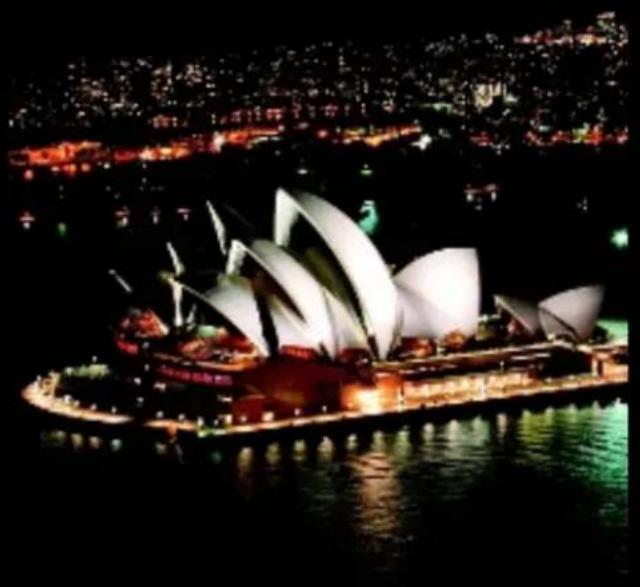
Nighttime aerial view of the Sydney Opera House illuminated with white daisies, surrounded by city lights and reflections on water (no visible text or symbols)© Michael Moy Idea to Icon
Design
Sydney Opera House is an exceptional building. Its architectural form comprises three groups of interlocking vaulted 'shells', set upon a vast terraced podium and surrounded by flat broadwalks that function as pedestrian promenades.
The shells are clad in glazed off-white tiles while the podium is clad in earth-toned, reconstituted granite panels. The two main halls are arranged side by side, oriented North-South with their axes slightly inclined.

natural_image
Exterior view of the Sydney Opera House with white facades and blue sky (no signage)The matt and glossy roof tiles took three years to develop with the manufacturer. © Michael Moy Idea to Icon
The auditoria are carved out of the high north end of the podium so that they face south, towards the city, with the stage areas positioned between them and the entrance foyers.
The north and south ends of the shells are hung with topaz coloured glass walls that project diagonally outwards to form foyers, offering views from inside and outside. The tallest shell reaches the height of a 20-storey building above the water. The shell structures cover nearly two hectares and the whole site is nearly six hectares.

natural_image
Exterior view of the Sydney Opera House with distinctive curved roof panels and surrounding urban buildings (no signage visible)The podium is clad in earth-toned panels © Michael Moy Idea to Icon
In 2007 Sydney Opera House was inscribed in the World Heritage List: "List, described as "a great" architectural work of the 20th century. It represents multiple strands of creativity, both in architectural form and structural design, a great urban sculpture carefully set in a remarkable waterscape and a world famous iconic building." The expert evaluation report to the World Heritage Committee stated: "...it stands by itself as one of the indisputable masterpieces of human creativity, not only in the 20th century but in the history of humankind."
natural_image
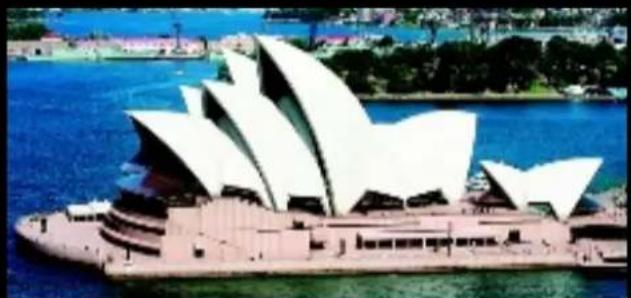
Exterior view of the Sydney Opera House with distinctive white facades on its facade, situated in a harbor with blue water and greenery (no signage or text visible)The powerful geometric forms of Sydney Opera House. © Michael Moy Idea to Icon

natural_image
Exterior view of a modern building corner with exposed steel framework and red structural elements against a clear blue sky (no signage or text visible)Glass walls projecting diagonally outwards. © Michael Moy Idea to Icon
Jørn Utzon

natural_image
Portrait of an elderly man with white hair wearing a light-colored shirt, outdoors with blurred green foliage background (no text or symbols visible)[ I like to be on the edgeof the possible. ]
Jørn Utzon
Jørn Utzon was born on April 9 1918 in Copenhagen, Denmark. He grew up in the town of Aalborg, where his father was a naval architect and engineer and director of the local shipyard. A keen sailor, Utzon originally intended to follow his father as a naval engineer, but opted to study Architecture at the Copenhagen Royal Academy of Arts.
On graduating in 1942, he worked in Sweden until the end of World War II. He was influenced by Gunnar Asplund and later Alvar Aalto, with whom he worked in Finland for a short period after the war. In 1949 he received a grant that enabled him and his wife Lis to travel extensively in USA and Mexico, coming into contact with some of the most influential architects of his day, including members of Frank Lloyd Wright's school at Taliesin, Mies van der Rohe, Ray and Charles Eames and Richard Neutra. He was also in Paris meeting with Le Corbusier and the sculptor Henri Laurens, whose influence taught him much about form.
A major project took him to Morocco; unfortunately the project was not realized, but he used the opportunity to walk along the Atlas mountain range, where he was very inspired by the indigenous adobe architecture. He returned to Copenhagen in 1950 to open his own architectural practice.
In 1956, after wining a number of smaller architectural competitions, Utzon submitted his vision for Sydney Opera House to the New South Wales Government. He was as surprised as anyone when he actually won the competition.
His competition entry was a schematic design, clearly explaining the concept for the building. The sketches and 'geometrically undefined' curves of course needed to be developed for the building to be built. This is quite normal for competition projects. Utzon himself was sure it could be built and in the pioneering spirit present in Sydney at the time, construction went ahead.
It was Utzon's life and travels that had shaped his ideas for Sydney Opera House. Though he had never visited the site, he used his maritime background to study naval charts of Sydney harbour. His early exposure to shipbuilding provided the inspiration for the Sydney Opera House 'sails' and would also help him solve the challenges of their construction. From his travels to Mexico, he had the idea of placing his building on a wide horizontal platform.
After he was forced from the project by a new client in 1966, Utzon continued to push modern architecture
toward an era of freer experimentation. The principles behind his renowned Bagsværd Church (1976) in the suburbs of Copenhagen and his parliament building in Kuwait (1983) can be traced directly back to his original vision for Sydney Opera House.
The reconciliation with Sydney Opera House in 1999 brought Utzon great pleasure. In 2003, the same year the Opera House celebrated its 30th birthday, Jørn Utzon was awarded the Pritzker Prize for Architecture, the highest award in its field. A year later in 2004, the newly refurbished Reception Hall was renamed the Utzon Room in his honour. With its wide, bare spaces, its colourful tapestry (designed by himself), pale timbered floor and a ceiling of folded concrete beams, it was exactly as he had dreamed it.
Jørn Utzon passed away peacefully in his sleep in Copenhagen on 29 November 2008 aged 90. His legacy lives on through the World Heritage listed Sydney Opera House and his Design Principles as a permanent record of his vision for the place, as well as the many other magnificent structures he designed around the world.
![LEGO Sydney Opera House (TM) - [ I like to be on the edgeof the possible. ] - 1](/content/2026/06/1238224/images/402ff2762ac09e843e692fc00698280725e89889f5f284a6583f63d5ad5edd34.jpg)
natural_image
Nighttime exterior view of the Sydney Opera House with illuminated domes and a stone walkway along the waterfront (no visible text or signage)© Michael Moy Idea to Icon
Facts about SYDNEY OPERA HOUSE™
Location:...... Bennelong Point, Sydney, New South Wales, Australia
Architect:...... Jørn Utzon
Style:..... Expressionist
Materials:...... Concrete, ceramic, granite, bronze and glass
Construction:...... Concrete frame & precast concrete ribbed roof with ceramic tiles and reconstituted granite cladding to the base
Date: From 1959 to 1973
Footprint: 1.8 hectares (4.5 acres)
Height: 67 m. (220 ft.)
Sydney Opera House sits on Bennelong Point, where, for thousands of years prior to European settlement, local Aboriginal people of the group known as the Cadigal people occupied the land. The site was named Bennelong Point after a local Aboriginal man known as Bennelong, was captured and subsequently befriended by Governor Arthur Philip.
Sydney Opera House acknowledges the important history of the Bennelong Point site and the rich contribution Aboriginal

natural_image
Exterior view of the Sydney Opera House under a steel truss bridge over water (no signage or text visible)Sydney Opera House and the Harbour Bridge. © Michael Moy Idea to Icon
and Torres Strait Islander cultures make to the diversity of the Australian community.
Sydney Opera House has developed a Reconciliation Action Plan which sets measurable targets to work towards closing the gap between Aboriginal and Torres Strait Islander Australians and their fellow Australians. For more information please see www.sydneyoperahouse.com/rap
text_image
1x 1x 16
natural_image
Two LEGO bricks with grid patterns, one labeled '1x' (no text or symbols on the bricks themselves)2

text_image
"The architect's gift to society is to bring joy to the people from the surroundings he creates" Jørn Utzon"The architect's gift to society is to bring joy to the people from the surroundings he creates" Jørn Utzon

© Michael Moy, Idea to Icon
natural_image
Two LEGO-shaped objects with circular indentations, one labeled '1x' (no text or symbols on the objects themselves)3
natural_image
3D diagram of a LEGO structure with two blocks, one showing a grid pattern and the other a rectangular opening (no text or symbols)
natural_image
3D rendered rectangular object with grid pattern and '1x' label, no readable text or symbols4

natural_image
3D diagram of a LEGO structure with multiple circular holes and a rectangular base, showing directional arrows (no text or symbols)
natural_image
3D rendering of a LEGO brick with rounded corners and a 1x label (no other text or symbols)5
natural_image
3D rendering of a LEGO floor planter with circular indentations and rectangular base (no text or symbols)20
natural_image
Two 3D-rendered rectangular blocks with repeating patterns, labeled '1x' on the left (no text or symbols on the blocks themselves)6

text_image
"The people of Sydney have made the Opera House a signature for Sydney, which you see everywhere in the world in different editions... but no one is ever in any doubt that this means"The people of Sydney have made the Opera House a signature for Sydney, which you see everywhere in the world in different editions... but no one is ever in any doubt that this means Sydney and this means Australia... in my opinion, a situation such as this, where a building is having a great impact on a city is a rare thing"
Jørn Utzon
© Michael Moy, Idea to Icon
natural_image
3D rendering of a LEGO-printed rectangular base with uniform circular indentations (no text or symbols)7
natural_image
3D rendering of a LEGO-printed rectangular base with uniform dot pattern (no text or symbols)22
natural_image
Simple 3D wireframe rectangular prism labeled '8x' on black background (no other text or symbols)8
natural_image
3D architectural rendering of a rectangular building with a grid of circular indentations on its surface (no text or symbols)
natural_image
Two rectangular electronic components with no visible text or symbols on the parts themselves.9

natural_image
3D rendering of a LEGO-printed tray with a grid of circular holes, labeled 'BYDNEY OPERA HOJSE' at the base (no other text or symbols)24
natural_image
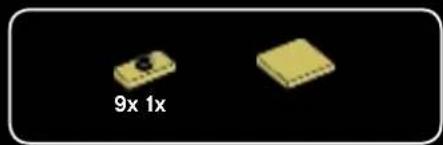
Two yellow electronic components with a black top, labeled '9x 1x' below (no other text or symbols)10

text_image
"Sydney Opera House has shown that architecture can have an impact greater than just 50 feet away from it. It can be emotional. It can engage a world. And I"Sydney Opera House has shown that architecture can have an impact greater than just 50 feet away from it. It can be emotional. It can engage a world. And I think we should all be grateful for that example in our time."
- Frank Gehry, architect of Walt Disney Concert Hall, Los Angeles

© Michael Moy, Idea to Icon

natural_image
Two yellow rectangular electronic components labeled '6x 2x' on black background (no other text or symbols)11

natural_image
3D architectural model of a modern office building (no text or symbols visible)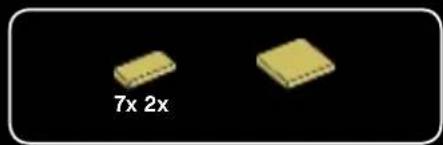
natural_image
Two yellow rectangular electronic components labeled '7x 2x' on black background (no additional text or symbols)12
natural_image
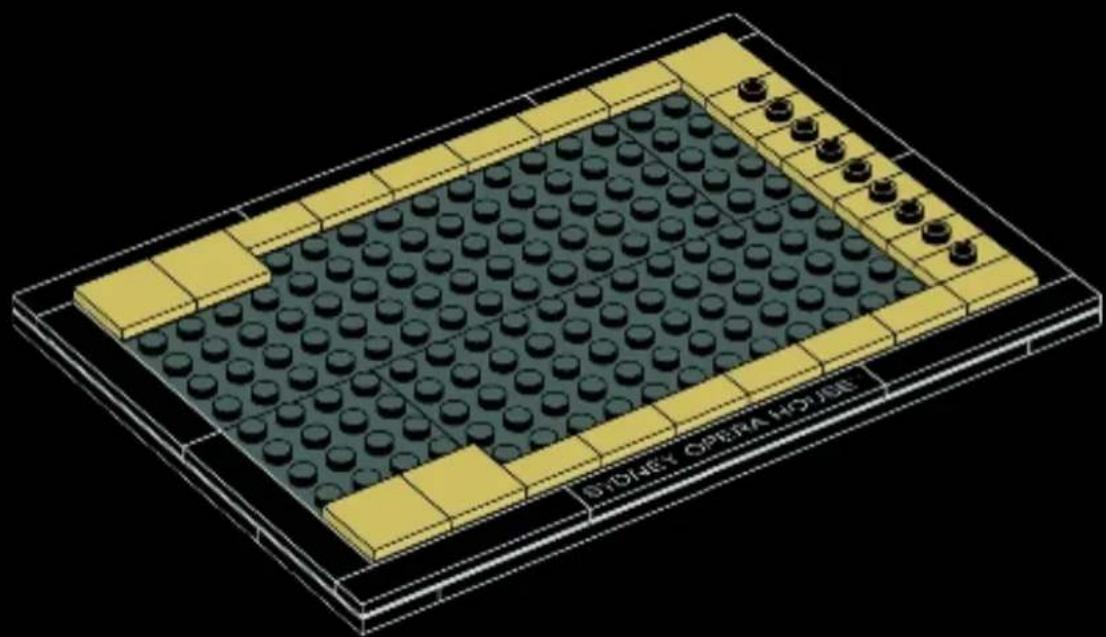
3D architectural rendering of a DIPHEY OPERA HOJSE industrial space with LEGO-like building grid and yellow supports (no text or symbols on the diagram itself)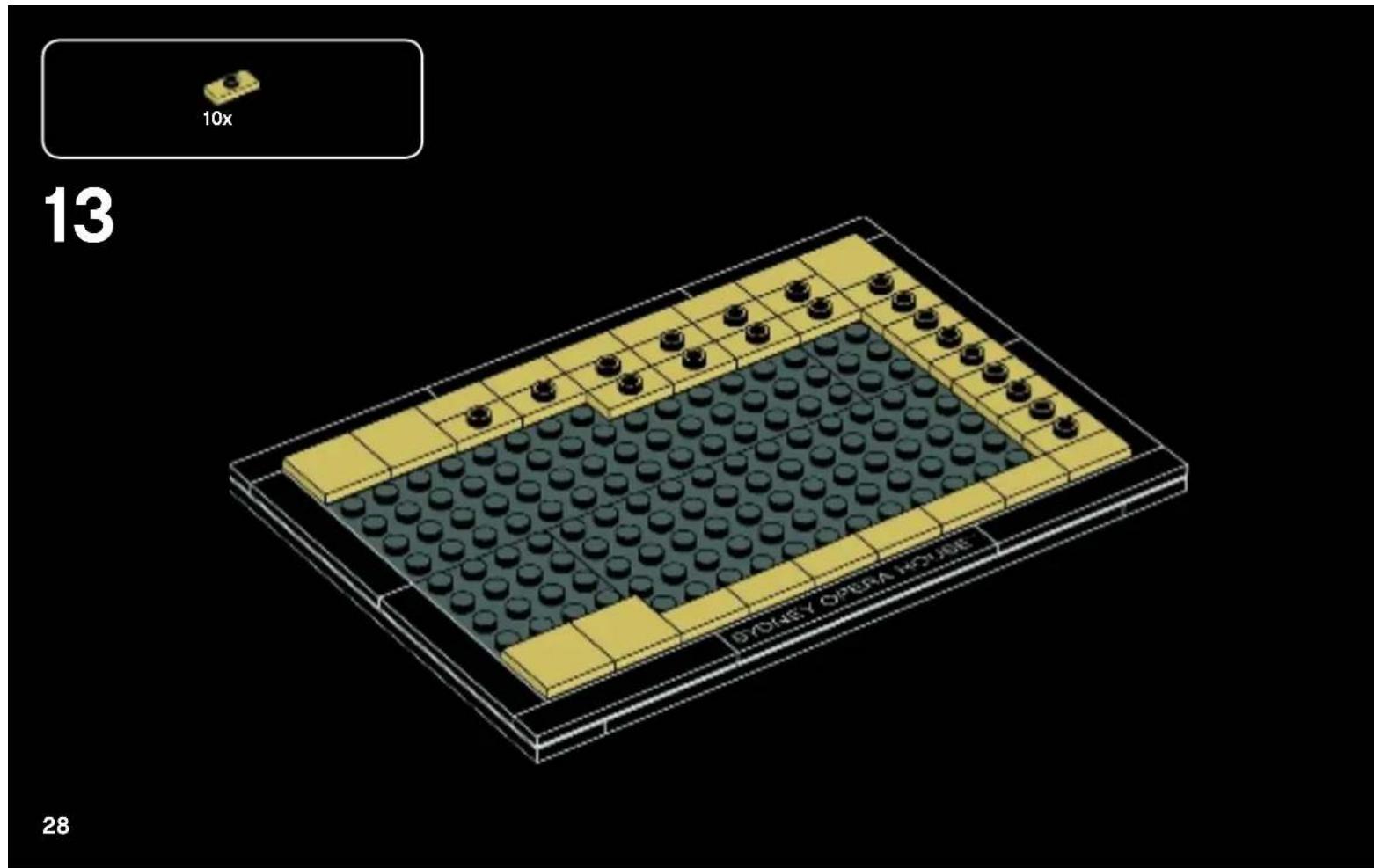
natural_image
3D architectural model of a modern office building (no text or symbols visible)
10x

1x
14
text_image
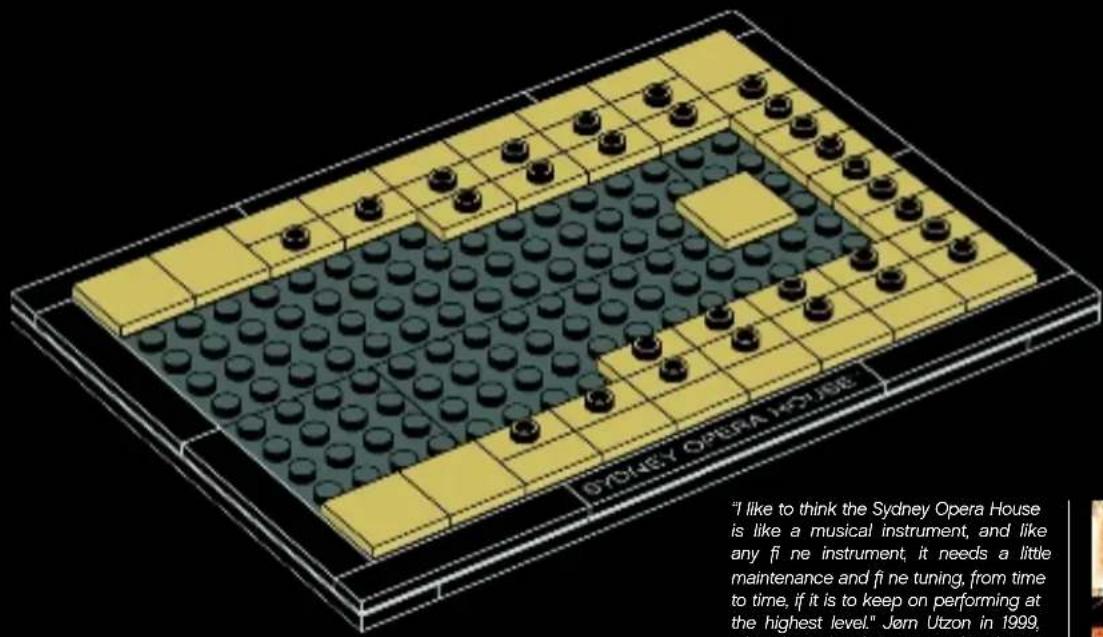
"I like to think the Sydney Opera House is like a musical instrument, and like any fi ne instrument, it needs a little maintenance and fi ne tuning, from time to time, if it is to keep on performing at the highest level." Jørn Utzon in 1999,"I like to think the Sydney Opera House is like a musical instrument, and like any fi ne instrument, it needs a little maintenance and fi ne tuning, from time to time, if it is to keep on performing at the highest level." Jørn Utzon in 1999, when he agreed to act as the design guardian for the building.

© Michael Moy, Idea to Icon

1x 1x 2x


15

natural_image
Isometric view of a 3D layout with LEGO-like blocks and a central dark area, labeled 'DODNEY OPERA HOUSE' at the bottom (no other text or symbols)
natural_image
Three yellow electronic components on black background, labeled '6x 1x 1x' (no other text or symbols)16
natural_image
Isometric view of a 3D layout with LEGO-like blocks and a central dark square, labeled 'SODHEY OPERA HOUSE' at the bottom (no other text or symbols)
text_image
2x 2x 17 CYKLEY OPERA HOUSES 32
natural_image
Simple 3D-rendered yellow cube labeled '9x' on black background, no other text or symbols18

text_image
SYGNEY OPERA HOUSE
natural_image
Four LEGO base blocks with different sizes and patterns, labeled 1x and 2x (no text or symbols on the blocks themselves)20

text_image
20 SIDHEY OPERA HOUSE The building covers 1.8 hect (4.5 acres) of land and is meters (605 ft) long and 120 me (388 ft) wide at its widest point. supported on concrete plers s as much as 25 meters (82 fi) b sea level.The building covers 1.8 hectares (4.5 acres) of land and is 183 meters (605 ft) long and 120 meters (388 ft) wide at its widest point. It is supported on concrete piers sunk as much as 25 meters (82 fi) below sea level.

© Michael Moy, Idea to Icon

natural_image
Three yellow 3D blocks on black background, labeled '1x 2x 1x' (no other text or symbols)21
natural_image
Isometric view of a 3D LEGO building layout with labeled floor and central space (no text or symbols on the structure itself)
natural_image
Two 3D-rendered objects on a black background, one gray and one yellow, labeled '1x 2x' (no other text or symbols)22
natural_image
Isometric architectural layout of a building with LEGO-like blocks and a central space, labeled 'CORNIE OPERA HOUSE' at the base (no other text or symbols)
1x 2x

23

natural_image
Isometric architectural layout of a 3D building with LEGO-like blocks and a central space, labeled 'DOMEY OPERA HOUSE' at the base (no other text or symbols)
natural_image
Three yellow LEGO blocks labeled 1x, 2x, and 3x on a black background (no additional text or symbols)24

text_image
24 SYDNEY OPERA HOUSE
natural_image
Two 3D blocks of varying sizes on a black background, labeled '2x 1x' below (no other text or symbols)25

natural_image
Isometric architectural layout of a 3D building with LEGO-like blocks and central courtyard (no text or symbols)
natural_image
Four electronic component icons on a black background, no text or symbols visible26
text_image
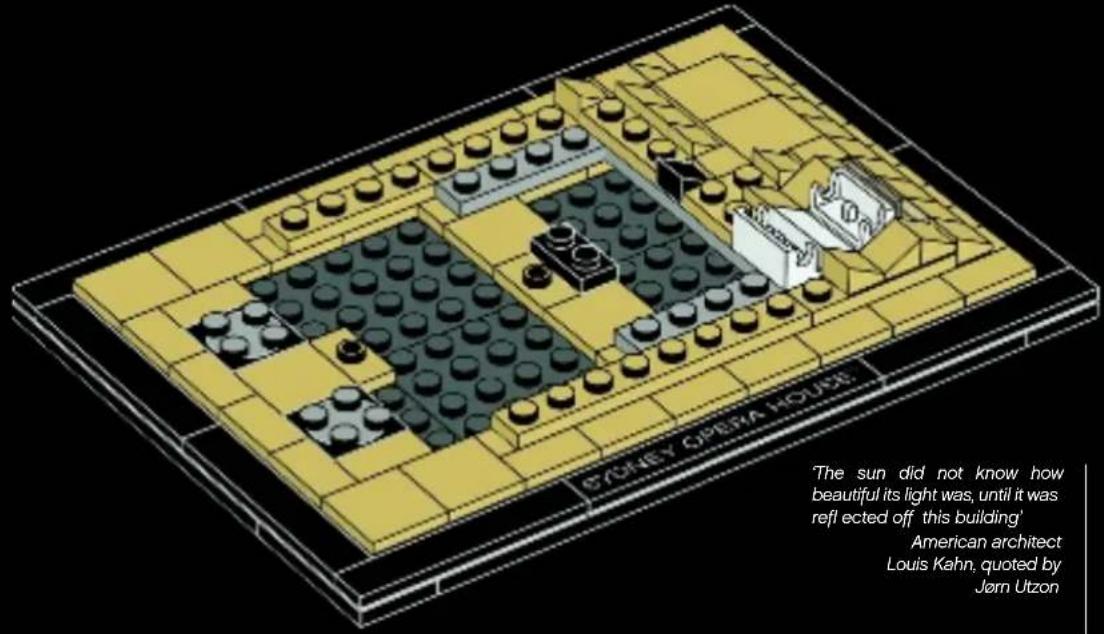
THE SUN DID NOT KNOW HOW beautiful its light was, until it was ref! ected off this building' American architect Louis Kahn, quoted by Jørn Utzon'The sun did not know how beautiful its light was, until it was reflected off this building'
American architect
Louis Kahn, quoted by
Jørn Utzon

© Michael Moy, Idea to Icon
natural_image
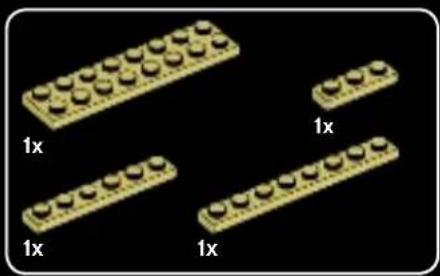
Four LEGO brick blocks arranged in a row, each labeled '1x' (no additional text or symbols)27
text_image
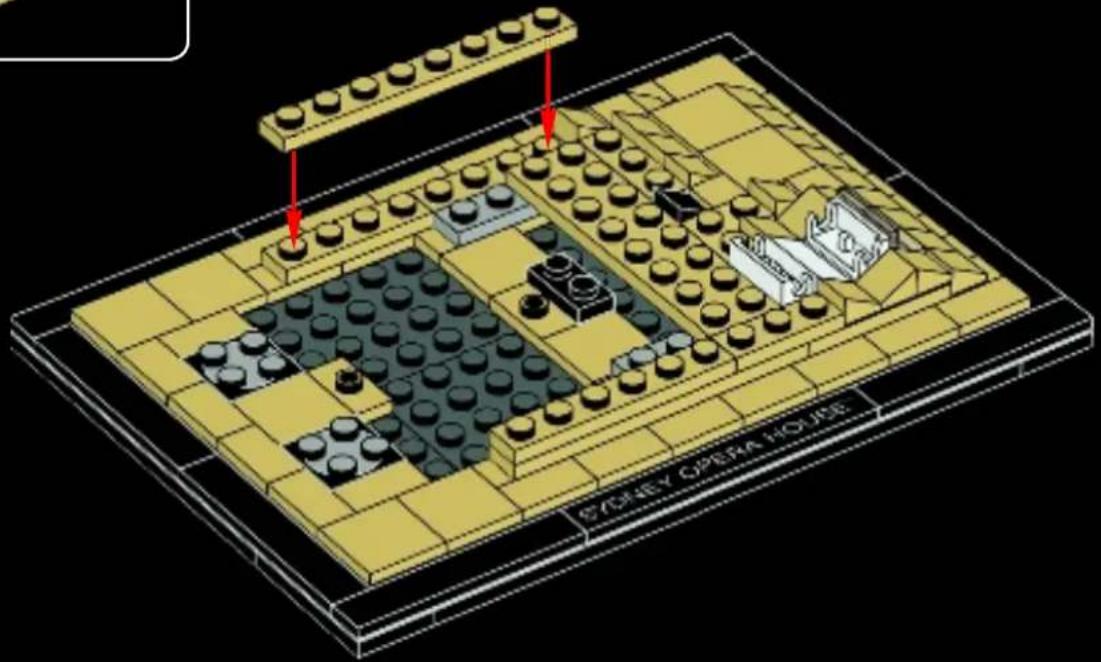
SCHERRY OPERA HOUSE
natural_image
Two small electronic components on a black background, labeled '2x 1x' (no other text or symbols visible)28
text_image
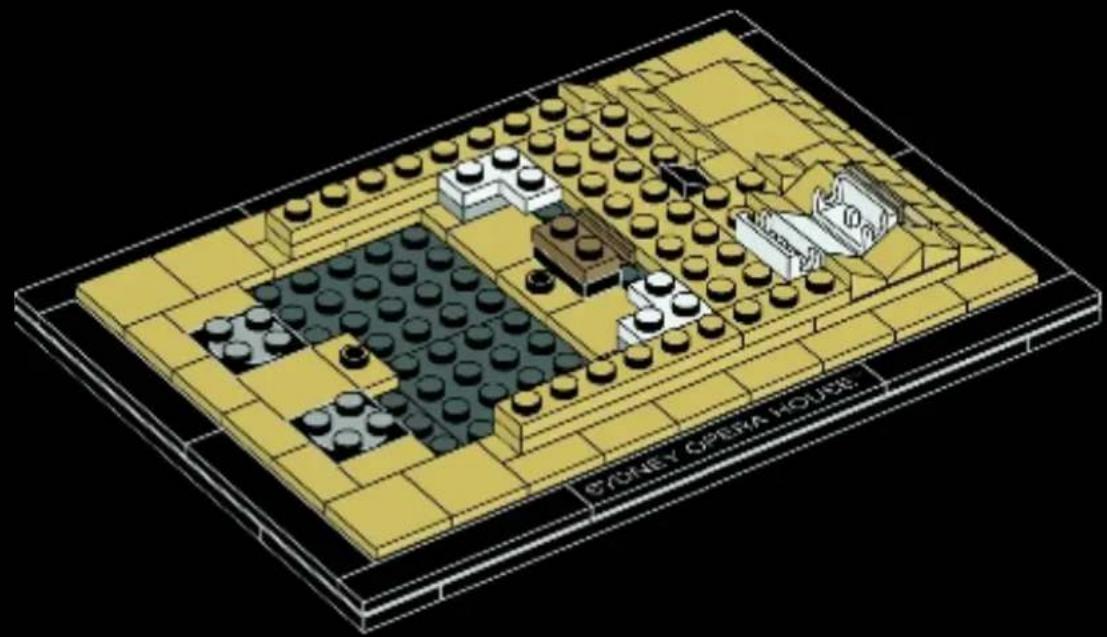
CONEY OPERA HOUSE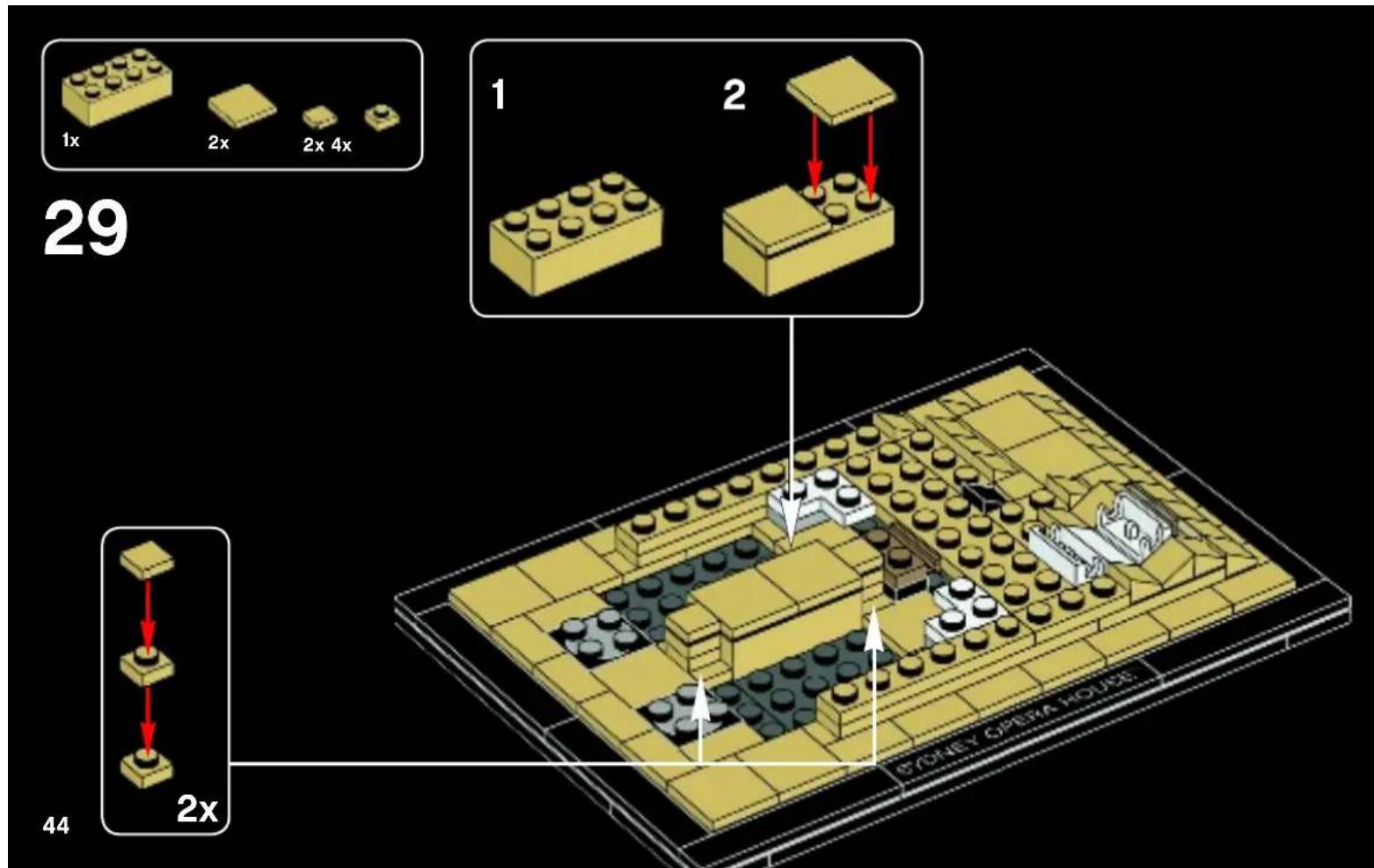
text_image
29 1 2 44 2x MCHESY OPERA HOUSE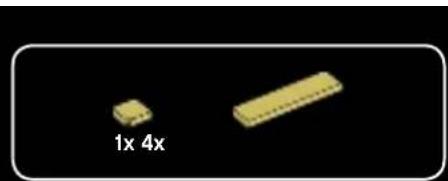
natural_image
Two small electronic components on a black background, one labeled '1x 4x' (no other text or symbols visible)30
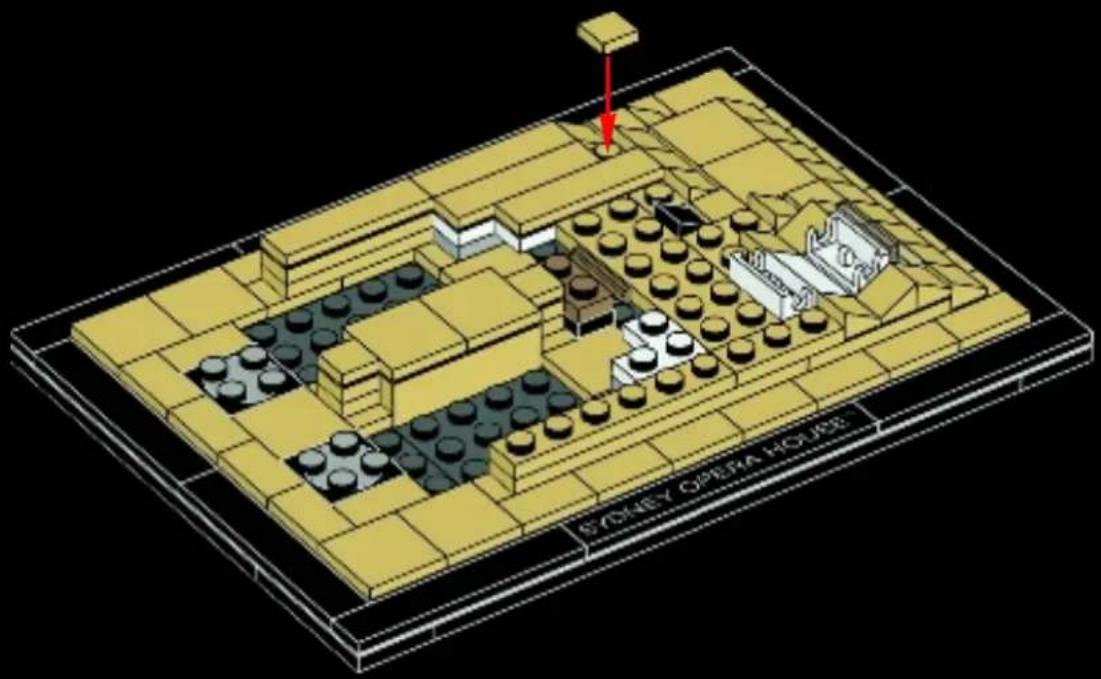
natural_image
Three yellow rectangular electronic components on a black background, labeled '2x 1x 2x' below (no other text or symbols)31

text_image
CONEY OPERA HOUSE
natural_image
Three yellow rectangular electronic components on a black background, labeled '1x 2x 3x' (no other text or symbols)32

text_image
SYDNEY OPERA HOUSE Sydney Opera House provides a venue for many performing arts companies including its fi ve key resident companies Sydney Symphony Orchestra, Opera Australia, the Australian Ballet, the and Australia's Centre, Australia.Sydney Opera House provides a venue for many performing arts companies including its fi ve key resident companies Sydney Symphony Orchestra, Opera Australia, the Australian Ballet, the Sydney Theatre Company and Bell Shakespeare Company.
© Michael Moy. Idea to Icon

1x 1x

33
text_image
COWEY OPERA HOUSE
natural_image
Illustration of various LEGO blocks with varying sizes and configurations (no text or symbols)34

natural_image
Diagram of two stacked blocks with red arrows indicating movement or force, no text or symbols present2
natural_image
Illustration of a yellow LEGO brick with multiple circular components (no text or symbols)3
natural_image
3D illustration of a yellow LEGO base with black circular indentations (no text or symbols)
4
natural_image
3D diagram of a mechanical assembly with two yellow components and mounting holes (no text or symbols)
5

natural_image
3D illustration of a yellow LEGO base with black circular indentations (no text or symbols)
natural_image
Isometric architectural diagram of a 3D building layout with LEGO columns and a central room, labeled 'STOKEY OPERA HOUSE' (no text or symbols beyond labels)
1x 1x 1x


35

natural_image
Two abstract 3D shapes on black background, one labeled '2x 2x' (no other text or symbols)36

text_image
Sydney OPERA HOUSE "To me it is a great joy to know how much the building is loved, by Australians in general and by Sydneysiders in particular""To me it is a great joy to know how much the building is loved, by Australians in general and by Sydneysiders in particular"
Jørn Utzon
© Michael Moy, Idea to Icon

natural_image
Two white 3D blocks on a black background, one labeled '1x 2x' (no other text or symbols)37
natural_image
Three 3D-rendered electronic components on black background, no visible text or symbols38
text_image
DADLEY OPERA HOUSE
natural_image
Three white electronic component blocks on a black background, labeled 1x 2x 2x (no additional text or symbols)39
text_image
CORNIE OPERA HOUSE
natural_image
Two 3D geometric shapes on a black background, one labeled '2x 1x' (no other text or symbols)40
text_image
SADLEY OPERA HOUSE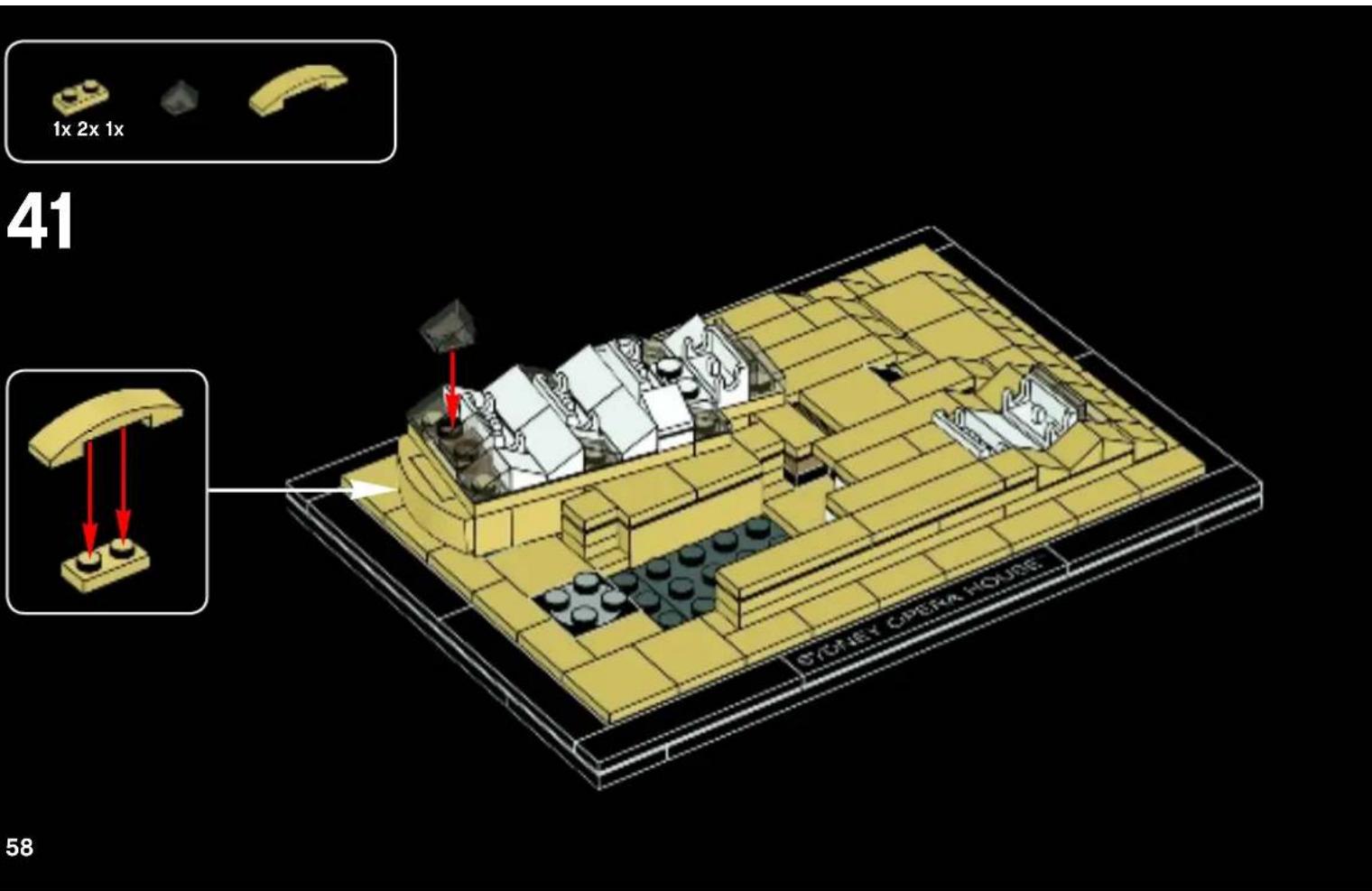
text_image
1x 2x 1x 41 CYCHRY OPERA HOUSE 58
natural_image
3D rendered mechanical component with grid pattern, no visible text or symbols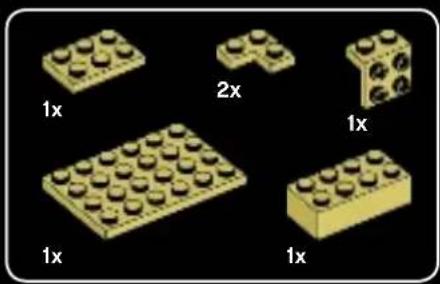
natural_image
Five LEGO brick models of varying sizes and bases, labeled 1x and 2x (no text or symbols on bricks)43

natural_image
Diagram of two LEGO blocks with black circular bases and red arrows indicating movement or force (no text or symbols)2
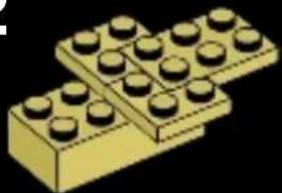
natural_image
3D illustration of a yellow LEGO brick with multiple black circular components (no text or symbols)3
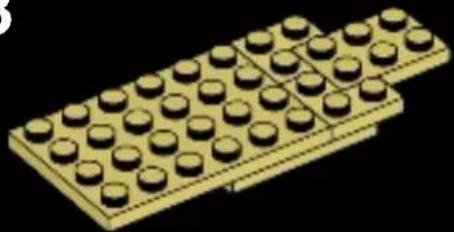
natural_image
3D illustration of a yellow LEGO base with black circular indentations (no text or symbols)
4
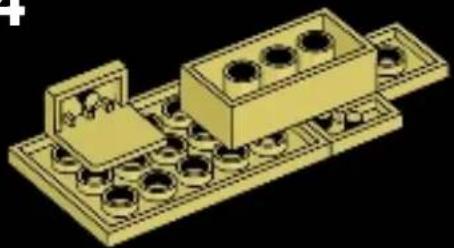
natural_image
Isometric illustration of a mechanical assembly with two yellow blocks and circular components on a base plate (no text or symbols)
5
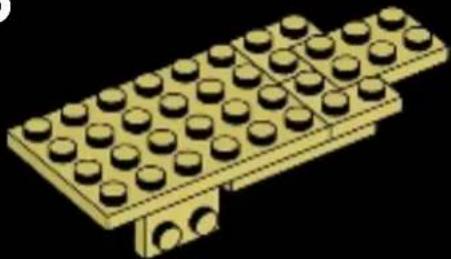
natural_image
3D illustration of a yellow LEGO base with black circular holes (no text or symbols)
natural_image
3D architectural rendering of a Sydney Opera House with LEGO structure and surrounding buildings (no text or symbols)
1x 1x

44

text_image
"You never get tired, you will never be fi nished with it—when you pass around it or see it against the sky... something new goes on all the SKONY OPERA HOUSE"You never get tired, you will never be fi nished with it—when you pass around it or see it against the sky... something new goes on all the time... together with the sun, the light and the clouds, it makes a living thing."
Jørn

© Michael Moy. Idea to Icon
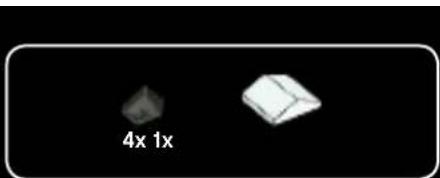
natural_image
Two 3D geometric shapes on a black background, one labeled '4x 1x' (no other text or symbols)45
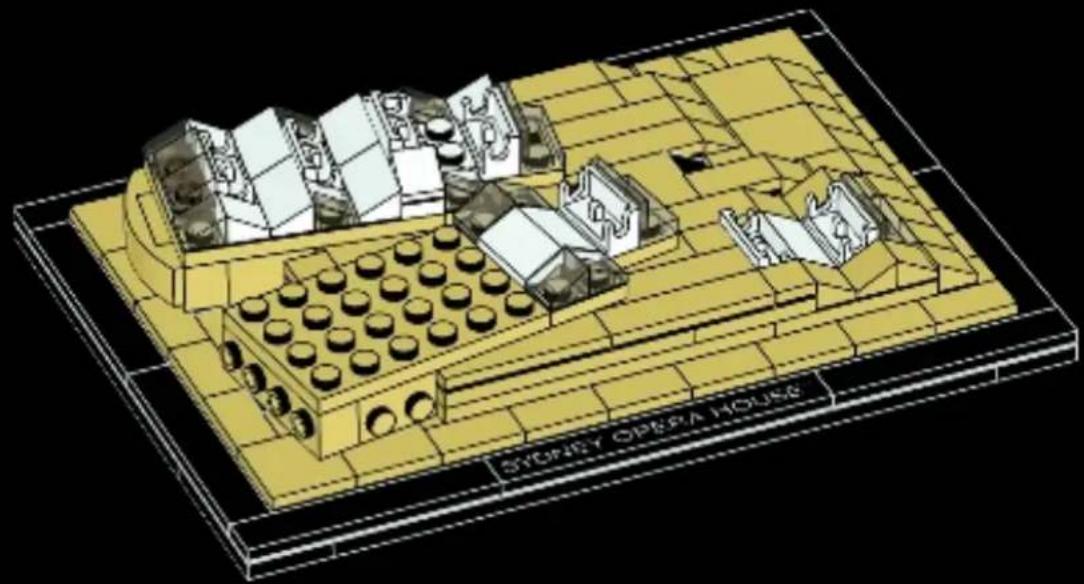
natural_image
3D architectural rendering of a LEGO structure with labeled 'STONEY OPERA HOUSE' at the base (no other text or symbols)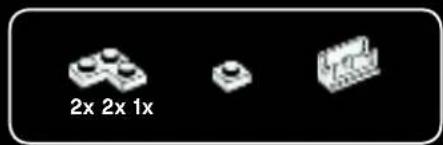
natural_image
Three LEGO-shaped electronic components on a black background, labeled '2x 2x 1x' (no additional text or symbols)46
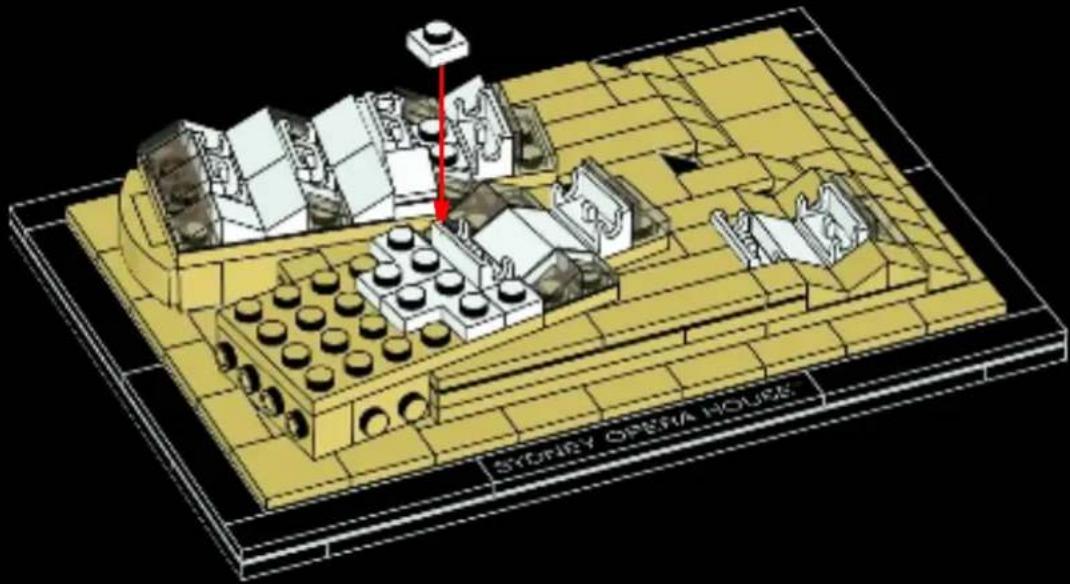
natural_image
3D architectural model of a LEGO building complex with multiple brick structures and a central tower, labeled 'STONNEY OPERA HOUSE' at the base (no readable text beyond label)
natural_image
Two white 3D blocks on a black background, labeled '2x 2x' below (no other text or symbols)47
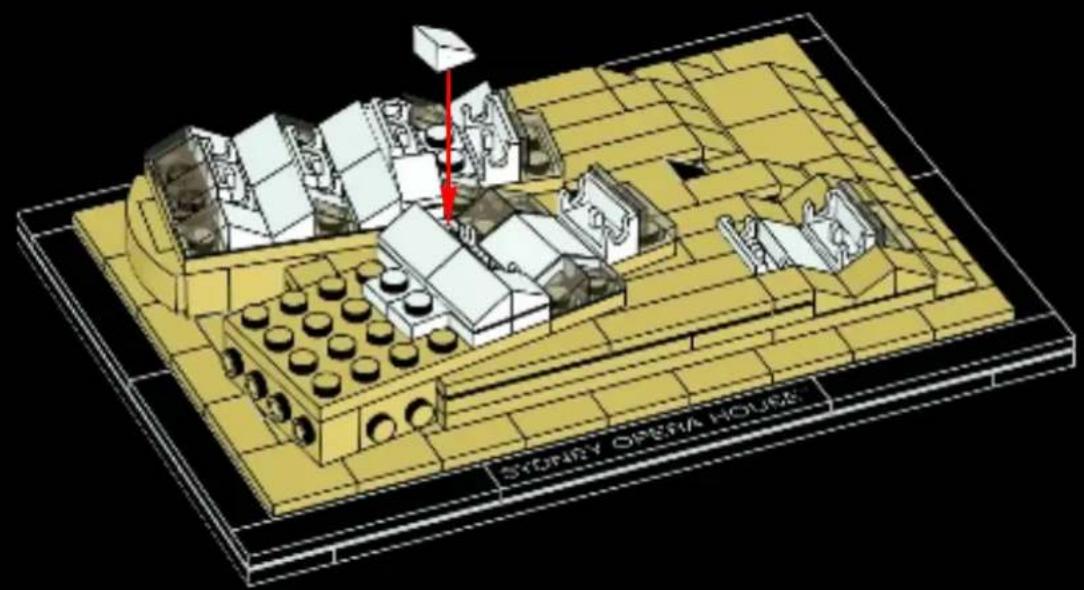
natural_image
3D architectural model of a miniature building complex with LEGO-like structures and a red arrow indicating a location (no text or symbols on the structure itself)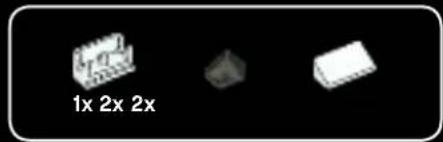
natural_image
Three 3D-rendered electronic components on a black background, labeled '1x 2x 2x' (no other text or symbols)48

text_image
"The structure and strict geometry expresses the logic of the building." Jørn Utzon"The structure and strict geometry expresses the logic of the building." Jørn Utzon
© State Records NSW

1x 2x 2x 1x


49
text_image
SYNDY OPEHA HOUSE
natural_image
Three 3D-rendered objects on a black background: two yellow blocks and one gray cube, labeled '1x 2x 1x' (no other text or symbols)50
natural_image
Two 3D geometric shapes on black background, one with rounded corners and one with triangular cutout (no text or symbols)52


natural_image
3D diagram of a mechanical assembly with red arrows indicating force or movement, labeled '4x' (no text or symbols on the diagram itself)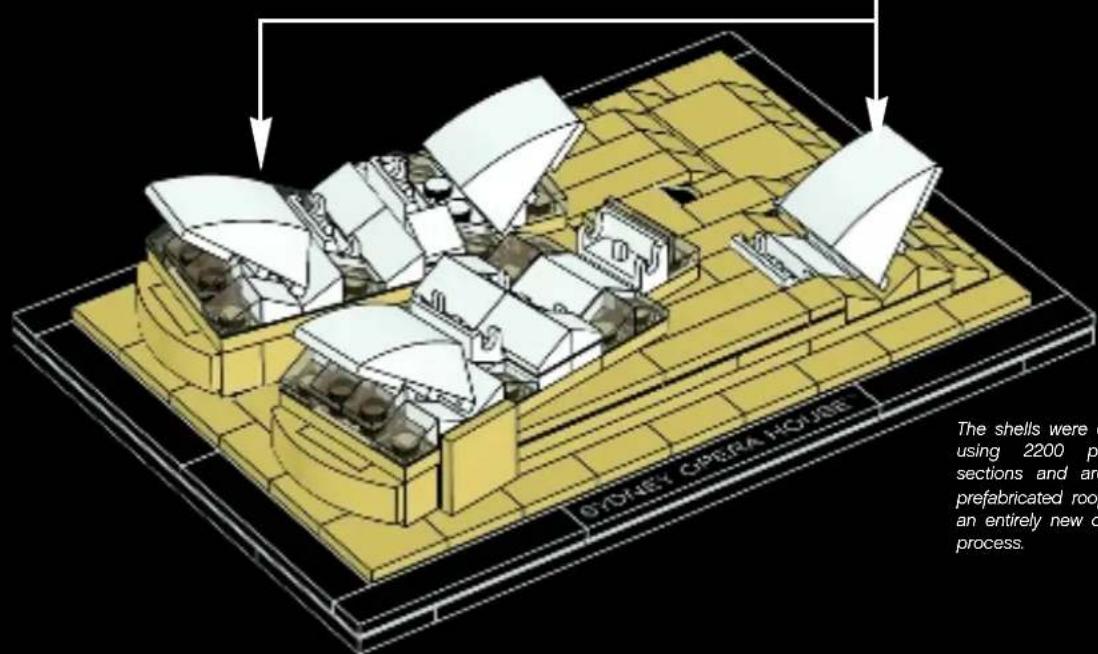
text_image
STONEY OPERA PROCEDURE The shells were c using 2200 p sections and arc prefabricated roof an entirely new c process.The shells were constructed using 2200 precast rib sections and around 4000 prefabricated roof panels in an entirely new construction process.
© Michael Moy, Idea to Icon

text_image
1x 1x 53 72 SYDNEY OPERA OPERA
natural_image
Three electronic components on a black background, one white and two gray, with no visible text or symbols.54
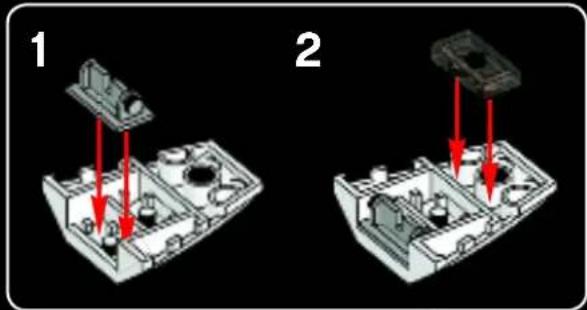
natural_image
Two 3D mechanical assembly diagrams showing component placement with red arrows indicating movement (no text or symbols present)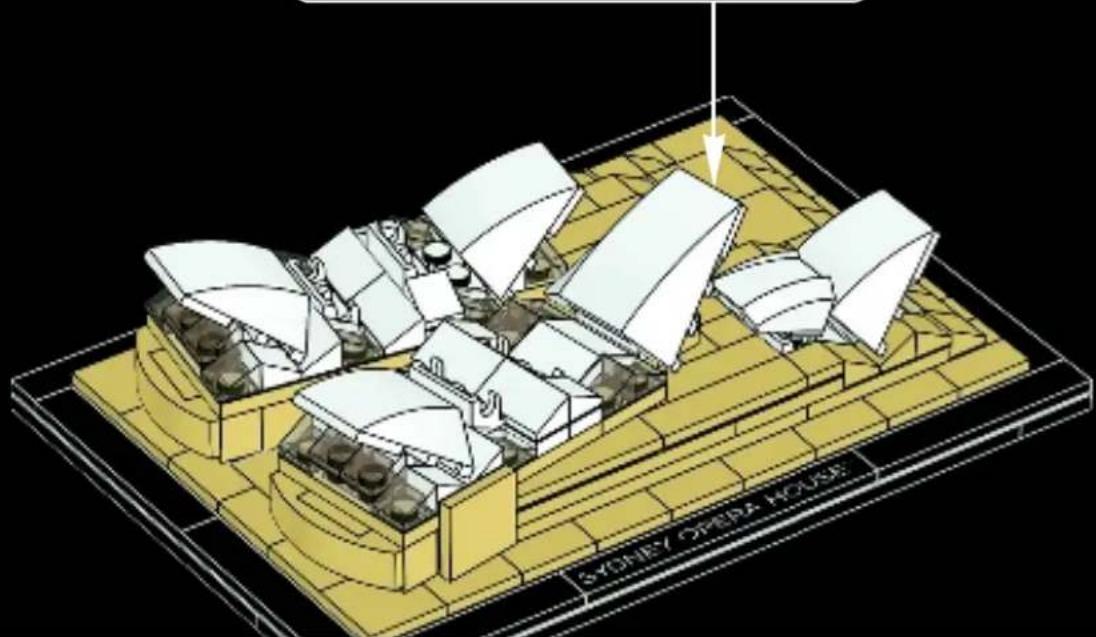
natural_image
3D architectural model of Sydney Opera House with white walls and wooden structures on a grid base (no text or symbols)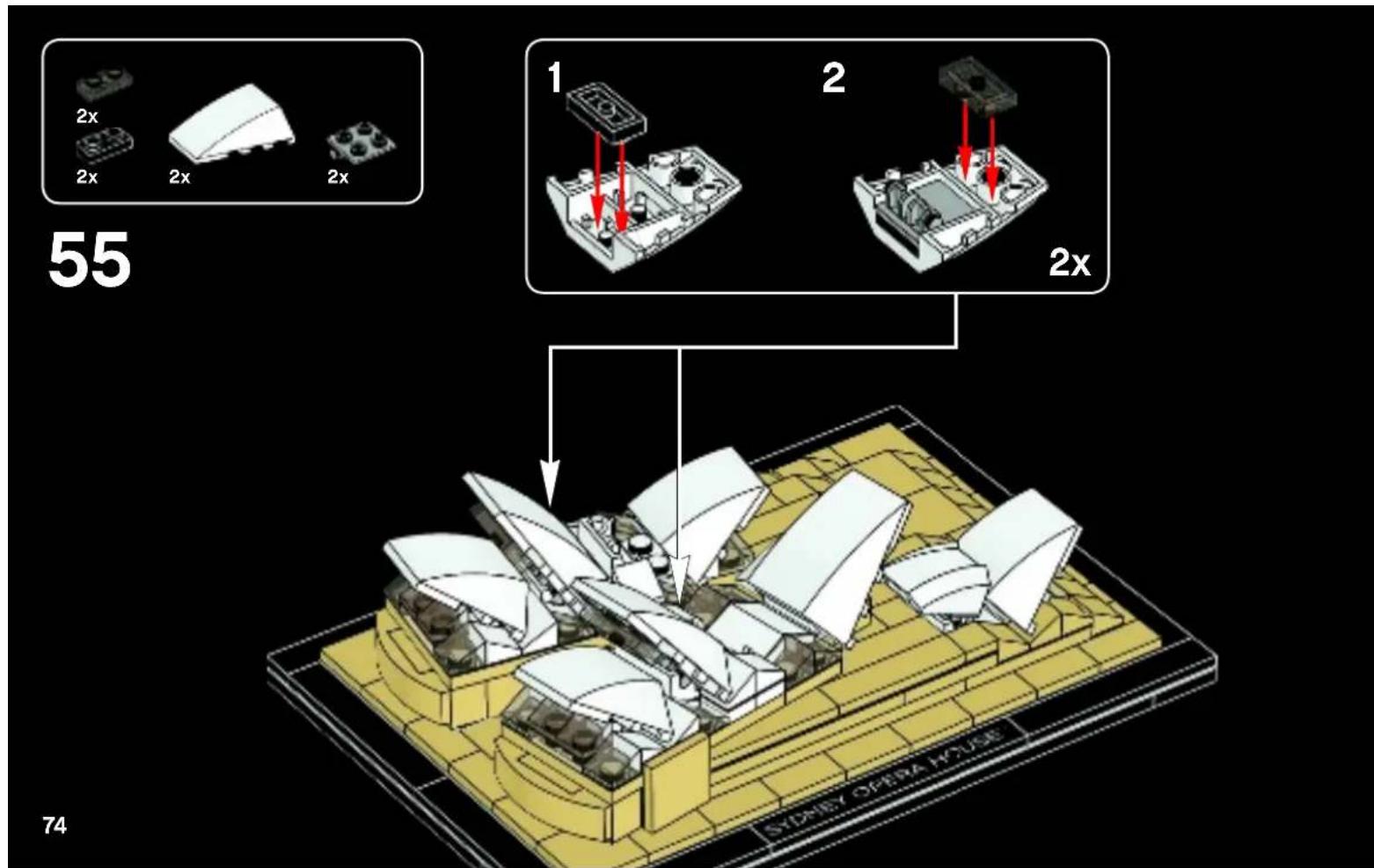
text_image
55 1 2 2x 2x 2x 2x SYNDY opera house 74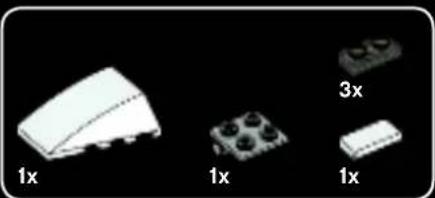
natural_image
Three electronic components with labeled sizes (1x, 3x) shown in separate panels against a black background56

text_image
1 2 3 4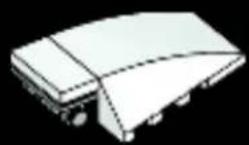


natural_image
Isometric view of a mechanical component with red arrows pointing to features (no text or symbols)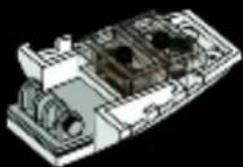
natural_image
3D technical illustration of a mechanical assembly with gears and housing (no text or symbols)"and in the roofs, the large amount of white tiles subdivided into segments are like the structure of a leaf which, with its ribs and infi ll have an organic beauty of its own" Jørn Utzon

© Michael Moy, Idea to Icon

text_image
SYNDREY OPERA HOUSE 76
natural_image
Black-and-white illustration of various LEGO blocks with labeled sizes (3x, 1x, 1x, 1x 1x 1x), no text or symbols on the blocks themselves.57
1 2 3
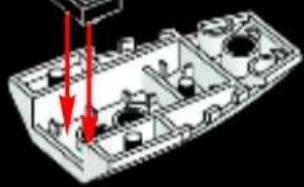
natural_image
3D diagram of a mechanical assembly with internal components and red arrows indicating force or movement (no text or symbols)
natural_image
Isometric technical drawing of a mechanical housing or enclosure with multiple circular components (no text or symbols)
natural_image
3D diagram of a vehicle chassis with red arrows pointing to components (no text or symbols)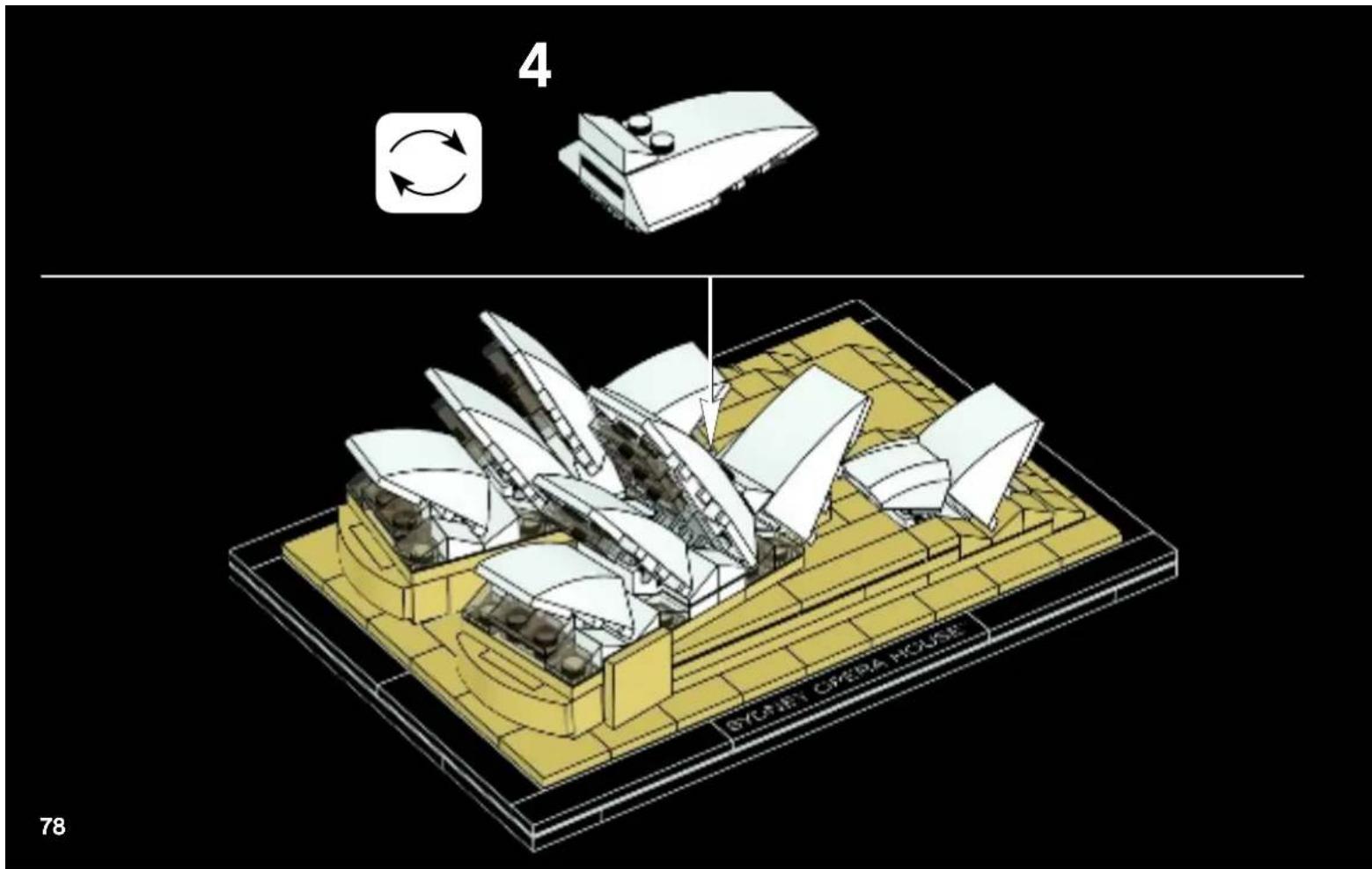
text_image
4 78
9x
4504369

10x
4547489

1x
4578606

4x
4567878
4x
6002767

1x
4179869

2x
302401

1x
302301

6x
242001

1x
302001

1x
306901

1x
4195869

10x
393701

2x
4114306
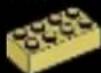
3x
4114319

2x
4201062

21x
4516055

2x
4666611

4x
4114077

4
4114084

2x
4121921

1x
4118750

4113233
2x
4124067
The image is too blurry to recognize any text content.
2x
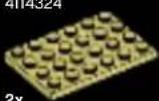
4114001
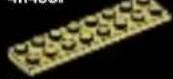
2x
4113988

8x
4125253

4159553

3x
4113917

31x
4155708

22x
4114026

2x
4278046

16x
4185177

5x
4550324
4
18x
4244368

11x
6001197

3x
4200798

1x
4504382

4x
302326

O
368026

2x
302026

By
663626

1x
416226

The image is too blurry to recognize any text content.
1x
6001533

2x
383226

3x
428226

1x
4616711

2x
4540203

6x
4211470

4x
4211881

2v
2x 4211445
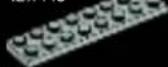
1x
4211406
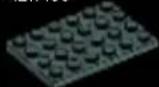
2x
4211115

2x
4210720
A Word from the Artist
As an Architectural Artist my desire is to capture the essence of a particular architectural landmark in its pure sculptural form. I fi rst and foremost do not view my models as literal replicas, but rather my own artistic interpretations through the use of LEGO® bricks as a medium. The LEGO brick is not initially thought of as a material typically used in creating art or used as an artist's medium. However, I quickly discovered the LEGO brick was lending itself as naturally to my applications as paint to a painter or metal to a blacksmith. As I explore how to capture these buildings with the basic shapes of the bricks and plates, I fi nd the possibilities and challenges they offer almost magical.
Sydney Opera House
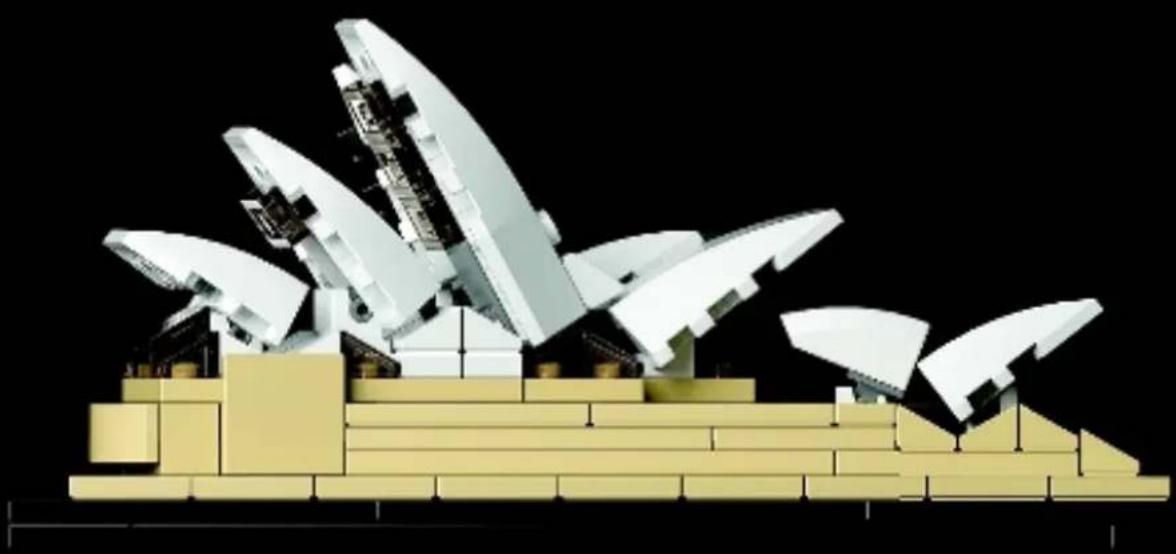
The powerful form this iconic structure possesses creates unique and difficult challenges. With this being the 13th LEGO Architecture model I have designed in the series one would think that most every type of design situation would have been uncovered. Obviously not so since this structure's fluid form is truly one-of-a-kind. In previous models I was equally concerned with the form, proportions, scale, color, texture, site transitions and overall composition. However, with this challenge I was solely concerned with those peaks, everything else could be a bit off here and there, but get those peaks wrong and the entire essence of the poetic form is compromised. Believe it or not the idea for capturing the form came to me while building a model of Buzz Lightyear™. His boots used these specialized curved elements which just happened to be white, requiring even less imagination to see these replicating those very identifiable peaks. A few hinges later, some creative staggering here & there and soon the model just built itself. This is a valuable example of how sometimes relying less on your pure imagination and utilizing
something to generate inspiration instead can be just as successful.

text_image
Adam Reed Tucker
text_image
Man writing on a document with visible printed image, likely a photo or photo albumThe ‘Scale Model’ line – LEGO Architecture in the 1960s
The history of the current LEGO Architecture series can be traced back to the beginning of the 1960s when the LEGO brick's popularity was still steadily increasing. Godtfred Kirk Christiansen, the then owner of the company, began looking for ways to further expand the LEGO system, and asked his designers to come up with a set of new components that would add a new dimension to LEGO building.
Their answer was as simple as it was revolutionary: five elements that matched the existing bricks, but were only one third the height. These new building ‘plates’ made it possible to construct more detailed models than before.
This greater LEGO flexibility seemed to match the spirit of the age; where modernist architects were redefining how houses looked, and people were taking an active interest in the design of their dream home. It was from these trends that the LEGO 'Scale Model' line was born in early 1962.
The name itself was a direct link to the way architects and engineers worked, and it was hoped that they and others would build their projects 'to scale' in LEGO elements. As with LEGO Architecture today, the original sets were designed to be different from the normal brightly coloured LEGO boxes, and also included 'An Architectural Book' for inspiration.
Though the five elements remain an integral part of the LEGO building system today, the 'Scale Model'
line was phased out in 1965 – it would be over 40 years before its principles would be revived in the LEGO Architecture series we know today.

natural_image
Architectural rendering of a modern house with trees and a LEGO building, no visible text or symbolsarchitecture series
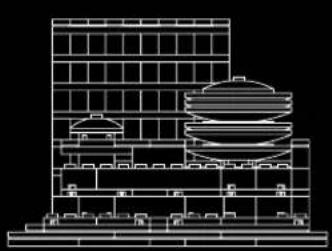
natural_image
Architectural line drawing of a multi-story building facade with structural elements (no text or symbols)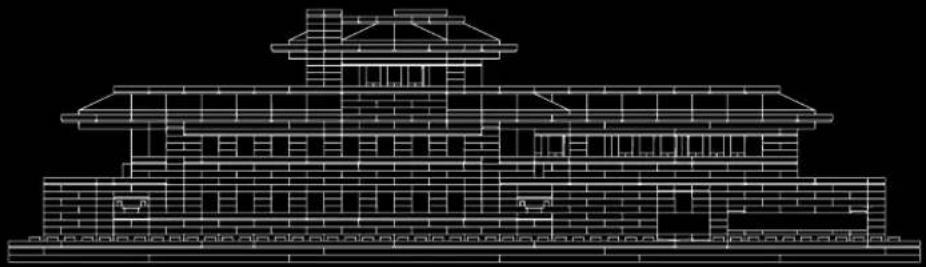
natural_image
Architectural line drawing of a multi-story building with exposed structural elements and windows (no text or symbols)
natural_image
Architectural line drawing of a multi-story building complex with tiered roof and staircase (no text or symbols)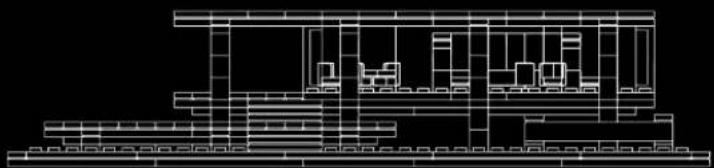
natural_image
Architectural floor plan showing room layouts and staircases (no text or labels)Landmark series
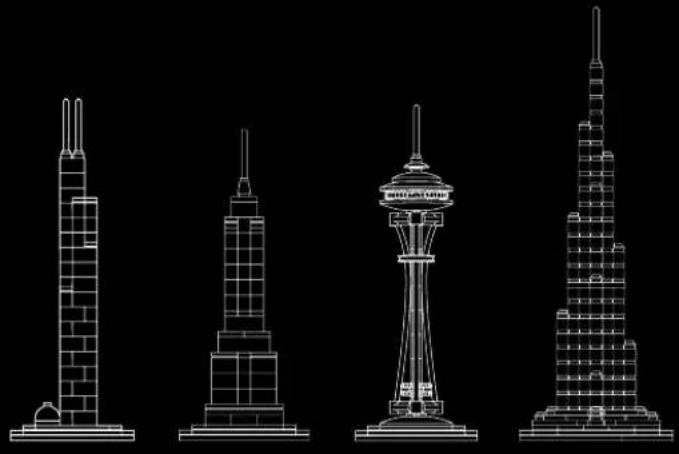
natural_image
Line drawing of a city skyline with multiple buildings (no text or symbols)
natural_image
Architectural line drawing of a grand building with columns and symmetrical wings (no text or symbols)References
Text credits:
SYDNEY OPERA HOUSE™
Photo credits:
SYDNEY OPERA HOUSE™
Michael Moy
State Records NSW
Max Dupain and Associates
Ralph Alfonso
Customer Service
Kundenservice
www.lego.com/service or dial

00800 5346 5555 :
1-800-422-5346
LEGO
Architecture
natural_image
3D architectural model of the Sydney Opera House with white structural elements and golden base (no text or symbols)www.LEGO.com

LEGO and the LEGO logo are trademarks of the LEGO Group. ©2012 The LEGO Group. 6005712