4CMI-4GLST X - Oven Mastercook - Free user manual and instructions
Find the device manual for free 4CMI-4GLST X Mastercook in PDF.


| Product Type | Built-in Electric Oven |
| Brand | Mastercook |
| Model | 4CMI-4GLST X |
| Color | Stainless Steel |
| Energy Source | Electric |
| Voltage / Frequency | 230 V / 50 Hz |
| Total Power Consumption | 2.7 kW |
| Oven Capacity | 70 Liters |
| Number of Functions | 8+ Cooking Modes |
| Cooking Modes | Convection, Fan, Grill, Fan Grill, Pizza, Defrost, Eco, Top/Bottom Heat |
| Temperature Range | 50°C – 250°C |
| Thermostat Control | Mechanical / Electronic (Dual) |
| Timer | Up to 120 min with Auto Shut-Off |
| Display | LED Digital |
| Interior Material | Easy-Clean Enamel with Catalytic Panels |
| Door Type | Triple Glazed Cool Door |
| Child Lock | Yes |
| Safety Features | Automatic Shut-Off, Overheat Protection |
| Accessories Included | Oven Rack, Baking Tray, Grill Grid, Rotisserie Kit |
| Installation Type | Built-in Under Counter or Column |
| Product Dimensions (HxWxD) | 595 x 595 x 568 mm |
| Recess Dimensions (HxWxD) | 590 x 560 x 550 mm |
| Net Weight | 35 kg |
| Energy Class | A |
Frequently Asked Questions - 4CMI-4GLST X Mastercook
User questions about 4CMI-4GLST X Mastercook
0 question about this device. Answer the ones you know or ask your own.
Ask a new question about this device
Download the instructions for your Oven in PDF format for free! Find your manual 4CMI-4GLST X - Mastercook and take your electronic device back in hand. On this page are published all the documents necessary for the use of your device. 4CMI-4GLST X by Mastercook.
USER MANUAL 4CMI-4GLST X Mastercook
natural_image
Modern kitchen interior with stainless steel appliances, a microwave oven, and a dining table (no visible text or symbols)Mastercook

1
2CMI-4GLST; 4MI-4GLST X

text_image
3,0 kW 1,75 kW 3,8 kW 1,0 kW 1.1.1 1.1.24CMK-4GLS

text_image
1,75 kW 3,0 kW 3,0 kW 1,0 kW

pie
| Category | Power (kW) | |---|---| | 1,75 kW | 3,0 | | 3,8 kW | 3,8 | | 1,75 kW | 1,0 | | 1,0 kW | 1.1 | The chart contains six circular segments labeled with values: 1,75 kW, 3,0 kW, 1,75 kW, and 1,0 kW. The central label '2/5mm' appears below the chart as a reference point. The top labels are '1,75 kW' and '3,0 kW'.
6

text_image
Min 650 mm Min 100 mm Min 30 mm Min 60mm 6.1.1
pie
4CMD-5GLS | Category | Power (kW) | |---|---| | Top Left | 1,75 | | Top Right | 3,0 | | Bottom Left | 1,1.4 | | Bottom Right | 1,75 | | Bottom Right | 1,0 | The diagram shows four circular components with cross symbols indicating their respective power levels. The bottom label '20Vrms' is shown below the center. The top labels are '30 kW'.
text_image
Min 50mm 6.1.2
text_image
594(700°) 520(530°) 48 560° 490° 1 2 3 4 5 *) Dot. 2CMI-5GLST 6.2.1
natural_image
Simple line drawing of a rectangular frame with no text or symbols on the frame itself
text_image
A 150 mm
text_image
1 2 3 4 5 6.3.1
text_image
1 2 3 4 5 6.3.2
natural_image
Technical line drawing of a mechanical assembly with a tool inserted into a circular component (no text or symbols)4CMK-4GLS

text_image
A 3mm 75mm 6.5.12CMI-5GLST; 2CMI-4GLST
4MI-4GLST X; 4CMD-5GLS

text_image
A 6.5.2
natural_image
Hand inserting a socket into an electrical outlet (no text or symbols visible)

text_image
7
text_image
B A 7.1.1
text_image
2CMI-4GLST 4MI-4GLST X 2 3 1 4 1 2 3 4 4CMK-4GLS 2 3 1 4 2 3 4 1 2 3 2 CMI-5GLST 4CMD-5GLS 2 3 1 5 1 2 3 4 5 7.1.2
text_image
7.2.1 7.2.2 7.2.3
natural_image
Simple line drawing of a geometric object inside a circle with droplets and a lightning bolt, labeled '7.2.4' (no text or symbols on the diagram itself)
natural_image
Line drawing of a kitchen appliance with a hand holding a tool, showing no text or symbols
text_image
7.6.1 7.6.2
text_image
8
natural_image
Illustration of a kitchen appliance on a stove with a hand applying material (no text or symbols)
text_image
1 2 4 3 5 6 8.2.1
natural_image
Technical line drawing of a mechanical component with a lever and base, labeled 8.2.2 (no text or symbols on the diagram itself)
natural_image
Technical illustration of a mechanical component with two views, one showing internal structure and the other showing a cutaway view (no text or symbols)natural_image
Simple line drawing of an open book with no text or symbols visible on pagesWAŻNE!
natural_image
Simple line drawing of an open book with no text or symbols visible on pagesВАЖНО!
The appliances comply with the following Directives:
2006/95/WE – The Low Voltage Directive
2004/108/WE - 2004/108/EC Electromagnetic Compatibility
90/396/EEC – The Gas Appliances Directive

natural_image
Simple line drawing of an open book with no text or symbols visible on pagesNOTE!
Before installing and operating the appliance, please read this instruction manual carefully. All graphic illustrations contained in this instruction manual are numbered. The numbers appearing on illustrations correspond to the numbers in the text.

1 Identification of the appliance
Please compare the hob drawings (1.1.1 - 1.1.4) found at the beginning of the instruction manual with the appliance you have purchased to identify the model of your hob.
| Total power bur-ners ΣQn [kW] | Gas flow G30 | |
| 2CMI-4GLST | 9,55 | 678g/h |
| 4MI-4GLSTX 9 | 55 | 678g/h |
| 4CMK-4GLS | 8,75 | 621g/h |
| 2CMI-5GLST | 11,30 | 802g/h |
| 4CMD-5GLS | 10,5 | 745g/h |

2 Product specifications
2.1 Intended use
Gas hobs are equipped with an integrated control system and are designed to be fitted in a kitchen worktop. They are designed for the preparation of meals only in a household. They must not be used for other purposes!
2.2 Hob's overall dimensions
| width[mm] | depth[mm] | height[mm] | |
| 2CMI-4GLST 594 520 48 | |||
| 4MI-4GLSTX 594 520 48 | |||
| 4CMK-4GLS 594 520 48 | |||
| 2CMI-5GLST 700 530 48 | |||
| 4CMD-5GLS | 700 530 | 48 |
2.3 Gas type - II 2H+3B/P
2.4 Supply voltage - 230V \~ 50Hz
2.5 Power of gasburners
Small AUX
45mm 1,0 kW
Medium SR
φ 65mm 1,75 kW
Large R
91mm 3,0kW
Triple crown burner TC 125mm 3,8kW

3 Important information!
-
This appliance is not intended for use by individuals (including children) with impaired physical, mental or sensory functions or individuals with insufficient experience or knowledge of the appliance, unless the use of the appliance by such persons takes place under proper supervision or in accordance with the instruction manual supplied to them by persons responsible for their safety. Never let children play with the appliance.
-
The appliance must be installed in accordance with the regulations in force and should be used only in well ventilated rooms.
-
Packaging materials should be kept away from children as they might be very dangerous for them.
-
The product should be installed 8 hours after it has been placed in the kitchen.
-
Prior to installation, ensure that the local supply conditions (type of gas and gas pressure) and the adjustment conditions are compatible with the specifications indicated in the nameplate.
-
The appliance is suitable for connecting to a flue gas outlet. It must be installed and connected in accordance with the valid installation regulations. Particular attention must be given to the relevant requirements regarding ventilation.
-
The appliance should be connected to the gas supply system or LPG cylinder and adjusted only by a certified fitter of gas appliances or a techni-
EN
cian of an authorised service centre, which should be indicated on the product's warranty card. The lack of such confirmation will render the warranty null and void.
- In the event of failure, particularly gas leaks or short-circuits, turn the appliance off and contact your authorized service centre immediately. A faulty appliance must not be used until repaired.
- The manufacturer declines any responsibility for injury or damage due to the improper installation, connection to a faulty gas supply system or improper use of the appliance.
- No unauthorized repairs are allowed on pain of voiding the warranty rights.
- In order to upgrade the appliance and to continually improve its quality, the manufacturer reserves the right to introduce changes in the appliance, without prior notification to the users. However, such modifications will not cause any difficulties in using the appliance.

4 Safety recommendations
Overheated fats and oils may easily catch fire, therefore the dishes prepared with fat or oil should only be cooked under supervision. Never leave the appliance unattended with gas burners turned on. Connection leads of other household electrical equipment used while the hob is being operated should be kept away from its hot elements.
- Use dry protective gloves when moving the dishes off the gas hob.
Inflammable items should be kept well away from the burners.
Never place pots on gas burners if they protrude • outside the gas hob. - Heat and humidity are generated in rooms where cooking or baking appliances are installed and used. Ensure good ventilation in the kitchen – make sure that ventilation grates are open or install mechanical ventilation devices (a hood with mechanical absorption of odours).
- Intensive and log-term use of the appliance may require additional ventilation, e.g. opening the windows or increasing the effectiveness of ventilation system by setting the hood control to a higher level, if available.
Never make any unauthorized adjustments to the appliance, e.g. converting it to a different type of gas or modifying the gas or power supply system.
- Do not use the appliance for heating rooms.
In the event of an escape of gas, immediately close the valve on the gas supply line or a gas cylinder, ventilate the room thoroughly and call gas emergency service. During that time you must not light matches, smoke cigarettes, turn on or off any electrical appliances (radio, electric bell, light switch, etc) or mechanical appliances which produce sparks.
Should there be a leak on the gas cylinder valve and flames appear, throw a wet blanket over the cylinder so that it cools down, and shut off the cylinder valve. Never use damaged gas cylinders!

5 Important tips
- Never place deformed or unstable cookware on pan supports as they may turn over and spill the burners.
– Never place empty cookware over a lit burner. - Before taking a dish off the burner, reduce the flame or put it out completely.
- Keep the burners clean; prevent the dishes from overflowing and flooding the burners.

6 Installation
6.1 General tips
After removing the packaging, check the appliance • for any visible damage. Do not install the hob if the appliance has been damaged during transport.
Remove all stickers from the appliance. Clean all parts of the hobs thoroughly to remove the remaining glue.
In order to limit the negative influence of draughts • on the operation of burners, do not install the co-oker on a window-door axis.
The room where the cooker is to be installed should be dry and well ventilated.
- The appliance should be installed in a kitchen worktop not higher than 850 mm. The room wall adjacent to the hob should be made of non-flammable materials (6.1.1 and 6.1.2).
There should be an open space above the hob to allow kitchen odours to disperse. Installation of a hob hood is recommended to either absorb or extract the odours. The distance between the hob and the hood should not be shorter than 650 mm (fig. 6.1.1).
This hob may be installed on a worktop that is at least 30mm thick (Fig. 6.1.1). The worktop must be heat-resistant.
A minimum distance of 100mm must be maintained between the side edges of the hob and any adjacent furniture.(Fig. 6.1.1).
Do not fit kitchen cabinets directly over the hob. The distance between the hob's side edges and the side edges of hanging cabinets should not be shorter than 50 mm (fig. 6.1.2).
6.2 Installation of the gas hob
Before the installation, please check the measures of the hob and the opening in the worktop where the hob is going to be installed.
Cut out a rectangular 490 x 560 mm hole in the • worktop 1 (fig. 6.2.1).
The hob is equipped with a seal with tape-protec-•ted adhesive surface. Remove the tape from the seal.
Turn the hob upside down and stick the seal around the internal edge
Place the hob face down and affix the sealing ga-•sket 2 all around the hob (fig. 6.2.1 and 6.2.2)
After affixing the gasket place the hob in the cavity • in the worktop 1 and press down tightly so that sealing joint is perfectly closed
Fix the hob underneath to the worktop 1 with clamps 3 and screws 4 supplied in the accessory bag
Shelf «• A» (fig. 6.2.3) should be installed under the worktop to protect the user from accidentally touching the hot hob from beneath. The shelf should be fitted after installing the hob in the worktop.
6.3 Connection plate for the gas
After installation in furniture, appliance have up to an internal system to the natural gas or liquefied petroleum gas cylinder.
Before proceeding with the connecting activities, make sure that the gas tap is closed.
6.3.1 Connecting the hob to natural gas supply
Gas hob is pre-adapted to the gas and the pressure indicated on the nameplate.
The hob may be connected to the gas supply sys-tem using a rigid pipe or a flexible metal hose conforming to the requirements of national standards.
Connection method is shown in fig. 6.3.1.
1 - Hob
2 - Hob's connection tip
3 - Gasket
4 - Flexible metal tube
5 - Gas supply system coupling
6.3.2 Connecting the hob to an lpg cylinder
Do not install the appliance in the basement or in • any other room whose floor is below the ground level as LPG is heavier than air and accumulates at the floor level.
- The cylinder should be located in an easily accessible place, positioned vertically and secured against falling over.
When connecting the appliance to the cylinder use • a flexible tube.
To connect the appliance use the LPG tip with a gasket as shown in fig. 6.3.2
1 - Hob's connection tip
2 - Gasket
3 - Tip G-1/2
4 - Flexible tube
5 - Hoe clamp
Each time after connecting the hob to LPG cylin-• der check the soundness on high pressure side, check the cylinder valve for soundness and the connection of regulator with the cylinder and its operation.
The soundness of all connections and the cylinder valve may be pre-checked by applying soap solution on the said points with the normal working pressure. Appearing bubbles signal the escape of gas.
Leaky cable should be replaced immediately. It is • forbidden to repair a leaky pipe.

WARNING!
- Under no circumstances can the air tightness be checked by means of a naked flame (e.g. with a match or candle). Danger of explosion! Use soapy water to check the air tightness.
- The condition of the hose and the tightness of the connection should be checked periodically in accordance with the applicable regulations.
6.4 Replacing the nozzles

WARNING!
- Before replacing the nozzles and adjusting gas taps remove the cable plug from the mains supply.
- When adjusting the taps do not unscrew the needle completely.
If it is required to change the type of gas supplied to the hob, it is necessary to replace the nozzles and fill in the "Gas Conversion" sticker supplied with the appliance in a plastic seal containing the warranty card and the instruction manual. Upon specifying what type of gas the appliance was converted to, put the
EN
sticker on the appliance.
Replacing the nozzles
shut down the cock shutting off the gas supply – system or cylinder from the hob, shut down all the taps in the hob, – disconnect the hob from the mains. – remove the burners' lids and rings, – remove the nozzles with socket wrench no.7 and replace them with new ones in accordance with table 2, put burners' rings and lids back, – adjust the taps and check the connections for soundness.
6.5 Adjusting the taps
The adjustment of a gas tap consists in setting the burner flame in the simmering position.
Then:
open the gas flow with a knob and light the adjusted burner, set the knob in the simmering position ◆- and then, without changing that position, remove it from the tap's mandrel
- turn the screw „A” (6.5.1; 6.5.2), observing the flame, to achieve such a size of the flame that will prevent it from being extinguished in a slight draught or during the operation of quick switching from the full ⬆ to the simmering position ♠ of the flame and back;
- the adjustment is correct when the core of the flame is cone-shaped in green and blue colour and is ca. 2 - 4mm high.
- if there are perceptible changes of gas pressure in the gas supply system, the simmering flame should be set at the low pressure in the system to prevent the burner from extinguishing during, after adjusting the taps put the knob back in its position and turn off the flame.
6.6 Connecting the hob to the mains
The appliance is supplied with the mains cable without a plug. Fig. 6.6.1.
Electrical socket should be fitted with a safety contact. Socket can not be located directly above the hob.
Note:
- The plug should be connected to the mains cable only by a properly certified installer-electrician.
- The mains socket should be easily accessible to the user.
- Please make sure that feed cable does not touch hot burners when the hob is working.

7 Using the gas hob
7.1 The use of the burners (7.1.1)
A - Spark ignition
B - Thermocouple tip
- Before switching on a burner make sure that the knob you are going to use corresponds to the burner (7.1.2).
- Do not remove pan supports and place pans directly on burners.
- Do not open the gas supply system valve or cylinder valve without making sure that all taps are closed.
- The tips of ignitors and thermocouples should always be kept clean and dry to ensure their correct functioning.
- Do not touch hot burners or hotplate, pan supports or pans placed on them.
- Do not hit the taps, burners, hotplate, ignitors or thermocouple tips.
- Prevent spillage and the flooding of burners and hotplate.
- In the case of hobs with flame failure device please remember to keep the knob pressed ca. 10s longer after lighting the burner for the device to become activated.
- Do not overload the pan supports.
- Correct and power-efficient use of burners can be ensured by:
setting a proper size of the flame
– correct choice of utensils. Fig. 7.6.1 and 7.6.2. - The flow of gas in individual burners is opened by means of gas taps' knobs.
• The flame should not lick around from the bottom
7.2 Selecting the flame
Table 2
| Type of gas | Smal burner AUX | Medium burner SR | Large burner R | Three crown burner |
| 2H (G20 20mbar) | X072 | Z097 | Y118 | T139 |
| LPG G30 29/37mbar | 050 | 065 | 085 | 098 |
of a pan but cover only 2/3 of its surface. This will reduce the gas consumption and prevent the flame from soiling the utensils.
The size of the flame depends on the position of the knob (fig. 7.2.1, 7.2.2, 7.2.3). The full flame should be used until the dish begins to boil, then it is better to use the simmering flame. The size of the flame should be regulated only within the range between and Fig. 7.2.5.
- Burner switched off
- Large flame
- Small flame (simmering)
7.3 Turning the burners on
- The cookers are equipped with a flame failure safety device which cuts off the gas flow to the burners when the flame is extinguished, e.g. by overflowing food.
push in the knob of selected burner to the maxi-mum, turn it in the counter-clockwise direction,
set it in position and keep it pressed until the flame appears,
after the burner lights release the press on the – knob; the burner should remain lit,
when the burner has lit keep the knob pressed – for ca. 5s more for the flame failure device to become activated,
if the flame goes out repeat the activities descri- bed above but keep the knob pressed for ca. 5s longer,
set the required size of the flame.
If the flame has accidentally extinguished, close the gas flow and wait for at least 1 minute before retrying to reignite the burner.
7.4 Turning the burners off
- to turn off the burners, turn the knobs clockwise to zero position.
7.5 Hobs supplied from a LPG cylinder
Before lighting the first burner, open the valve on the LPG cylinder. Then light the burner using the method described above.
When closing the flow of gas before turning off the last burner:
-close the valve on the LPG cylinder,
- when the flame has gone out, close the tap of that burner.
When the hob is not used the valve of the LPG cylinder should be closed.
7.6 Choice of utensils
Pots used for cooking on the hob should not be too tall, ideally their height should equal 2/3 of the diameter of their bottom.
Utensils should be always clean and dry as they will then conduct and retain heat well.
During cooking, pan lids should be used, which will prevent the excess of odours from accumulating in the kitchen.
- Minimum diameters of pans for each type of burner:
for a small burner - 90 mm
for a medium burner - φ 120 mm
for a large burner - 140 mm
for a three crown burner - φ 180 mm

8 Cleaning and maintenance
Warning!
Before cleaning the appliance switch off the hob at the mains supply.
8.1 Cleaning glass hobs
Before cleaning the hob remove pan supports and • top elements of burners.
- Put dirty pan supports in warm soapy water for some time, then wash and dry them.
- Knobs cleaning with mild liquid, not containing abrasives.
Glass hob cleaned regularly, after each use. Use • only the funds allocated to the glass ceramic. Observe the manufacturer's instructions, given on the package.
- Universal lotions and milks are unsuitable for cleaning glass hob, it leaves streaks and spots.
- To clean the glass plate of coarse not use abrasive surfaces, wire sponges, harsh chemicals and sharp objects, cleaning equipment or steam under pressure, and products intended for use in a dishwasher or oven cleaners.
Do not clean glass surfaces using any abrasive agents or metal items, as they may scratch the surface and cause the glass to break.
- If the glass surface is not singed, it should be wiped with a soft damp microfibre cloth. However, you can clean the burnt disc special plastic or metal scraper to the ceramic plates. Then wipe the surface with a damp cloth.
The hob surface around burners should always be clean as dirt deteriorates the combustion of gas.
EN
When cleaning the hob do not allow water to get beneath the hob.
Belong record maintained by the means of protection and maintenance for the glass ceramics. This prevents dirt from sticking and to facilitate and make it easier daily care record.
8.2 Cleaning the burners
NOTE!
Gas burners, ignitors and thermocouple tips should be cleaned after each spillage and regularly to remove cooking residuals and dirt.
Elements of the burners (fig. 8.2.1)
1 – lid 4 – nozzle
2-ring 5-sparker
3 - body 6 - thermocouple
To clean the burners remove the lid and the ring of the burners, put them in warm soapy water for some time and then wash each part of the burner separately.
Clean the burner elements using a sponge or a soft brush and remove dirt from burner ports with a steel wire. After cleaning check if the burner ports are clear.
To avoid permanent stains, rings should be washed each time after they become soiled.
The hob surface around the burner should be kept • clean at all times. Dirt may clog the nozzle, which results in reduced gas flow or stoppage.
The nozzle should be cleaned with a small paint-• brush dipped in a solvent (8.2.2).
- Dry all the elements of the burners carefully as wet elements may not light or cause the gas to combust improperly. Assemble clean and dry burners carrying out the disassembling steps in the reverse order, taking care not to damage the sparkers (8.2.3).


Troubleshooting

NOTE!
Before proceeding with the troubleshooting, disconnect the hob from the power supply to avoid being electrocuted.
- In the warranty period all repairs except for the ones specified below should be carried out by the authorised Servicing Point.
- If there are some disturbances during the use of - the appliance, follow the guidelines below to check if you can repair the defect yourself.
| Problem | Solution |
Igniters fail to ignite or not always ignithe gas 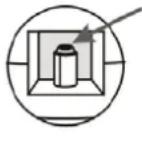 9.1.1 9.1.2 9.1.1 9.1.2 | - Check to make sure the cooker is connected to the electrical mains.- Clean and dry the igniters and burner components.- Check to make sure the burner caps and heads are placed correctly.- Press on the burner cap and rub it against the head by turning right and left (fig. 9.1.1).- Rub the igniter electrode with the use of hard brush or smooth file (fig. 9.1.2). |
Gas burners fail to ignite o not floocith water o not floocith water | - Check to make sure the rubber hose supplying gas from the gas cylinder is not squeezed.- Check to make sure the gas main valve is open.- Check to make sure the gas cylinder is not empty.- In case a new hob has been installed or the gas cylinder has been replaced with a new one, then it is necessary to repeat the ignition procedure until the gas reaches the burner.- Check to make sure the nozzle or burner flame holes are not clogged or flooded. If so, un-clog the nozzle hole using a pin or needle. Clean the burner flame holes with the use of brush, and then dry all components. |
| After setting the knob to simmering flame position ⬆ - the flame dies or is too high | - Avoid draughts in the kitchen,- Call the fitter to adjust simmering flame position ⬆ . |
| Flame is unstable | - Check to make sure that the burner components are clean, dry and placed correctly. |
| Problem Solution | |
While igniting one of the burners all the hob burner igniters spark | It is normalWhen pressing the selected knob are re-leased at all the burners . |
Flame dies after releasing the knob Your hob is equipped with a flame failure safety device | – Where the ignition device is built in the knob set the knob to large flame press the knob and when the gas has ignited keep it pressed all the way in for another few seconds. . |
On a glass hob appear discoloration | – Clean your glass hob after each cooking, with the use of special ceramic hob cleaner.Immediately remove any burnt food, with the use of wooden spatula – or special scraper, and then wash with the use of special ceramic hob cleaners.Remove sugar containing food immediately, with the use of special – scraper. |
| Damaged power lead In order to avoid hazards, damaged power lead should be exchanged at the manufacturer's or by a specialist servicing point, or by a qualified person. | |
| NOTE !If after completing the above steps the appliance is still inoperative contact your local service centre. | |
EN

10 Environment

This device is labelled, in accordance with Council Directive 2002/96/EC, with a symbol of a crossed garbage container.
This labelling means that the device, upon end of its life cycle, should not be disposed of together with other household waste.
The user is responsible for having the device collected by appropriate entities responsible for disposal of used electrical and electronic devices.
Appropriate disposal of used electrical and electronic devices allows to avoid hazards to the humans and the environment connected with inappropriate storage and processing of such devices.