
DTX550K - Batterie électronique YAMAHA - Notice d'utilisation et mode d'emploi gratuit
Retrouvez gratuitement la notice de l'appareil DTX550K YAMAHA au format PDF.


| Type de produit | Batterie électronique |
| Marque | YAMAHA |
| Modèle | DTX550K |
| Module de déclenchement | DTX500 |
| Pads de tambour | 3 x TP65 (drum pads), 1 x XP100SD (3 zones), 1 x KP65 (kick pad) |
| Pads de cymbale | 1 x PCY135 (3 zones), 1 x PCY155 (3 zones), 1 x RHH135 (hi-hat réel) |
| Support | RS85A (rack électronique) avec pieds réglables |
| Stand hi-hat | HS650A |
| Alimentation | Adaptateur secteur (12V DC) |
| Câblage | Câble serpent à 9 canaux |
| Nombre de pads | 7 (3 toms, 1 snare, 1 kick, 2 cymbales, 1 hi-hat) |
| Zones par pad | XP100SD : 3 zones, PCY135/155 : 3 zones, RHH135 : 2 zones |
| Entretien et nettoyage | Chiffon doux ou légèrement humide ; éviter benzène, diluant, alcool |
| Sécurité | Ne pas laisser les enfants assembler seuls ; serrer tous les boulons ; ne pas s'asseoir sur le rack |
| Pièces détachées et réparabilité | Se référer au manuel du propriétaire ou contacter Yamaha |
| Informations générales | Notice d'utilisation et d'assemblage disponible au format PDF |
FOIRE AUX QUESTIONS - DTX550K YAMAHA
Questions des utilisateurs sur DTX550K YAMAHA
0 question sur cet appareil. Repondez a celles que vous connaissez ou posez la votre.
Poser une nouvelle question sur cet appareil
Téléchargez la notice de votre Batterie électronique au format PDF gratuitement ! Retrouvez votre notice DTX550K - YAMAHA et reprennez votre appareil électronique en main. Sur cette page sont publiés tous les documents nécessaires à l'utilisation de votre appareil DTX550K de la marque YAMAHA.
MODE D'EMPLOI DTX550K YAMAHA
This manual describes the standard assembly of the DTX550K.
After assembling the parts and connecting the cords as shown in Figure 1, the unit is ready to be turned on.
-
To assemble the unit, make sure you have the following four packages: - RS85A (Electronic Drum Rack)
-
DTP502 (Pad Set)
- DTX500 (Trigger Module)
- XP100SD (3-zone Drum Pad)
NOTICE Before assembling the unit, lay a drum mat (sold separately).
Before assembling the unit, lay a drum mat on the floor. Alternately, to prevent damaging your floor, lay the cardboard of the included packages, etc. on the floor before assembling the two parts shown in the circles in Figure 1.
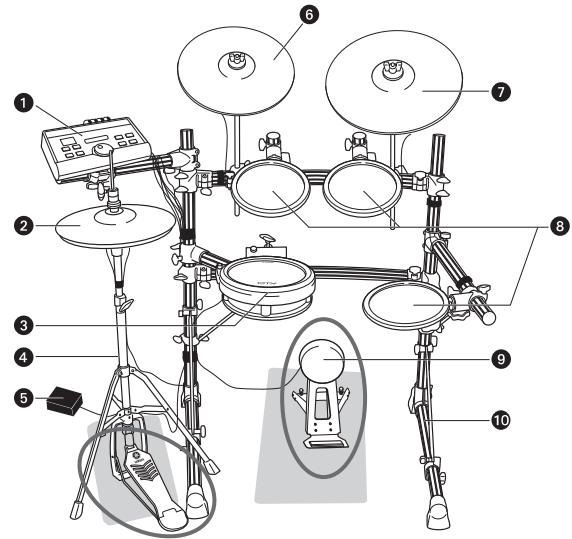
Figure 1: Unit Standard Assembly
1 DTX500 (Drum Trigger Module)
2 RHH135 (Real Hi-Hat Pad)
3 XP100SD (3-zone Drum Pad)
HS650A (Hi-Hat Stand)
5 AC Adaptor
PCY135 (3-zone Cymbal Pad)
PCY155 (3-zone Cymbal Pad)
8 TP65 (Drum Pad)
KP65 (Kick Pad)
RS85A (Electronic Drum Rack)
PRECAUTIONS
Before using, please read this assembly manual, and use this product in a safe and proper manner. Particularly in the case of children and young users, parents or an instructor should teach the children the proper manner in which to use the device.

WARNING
If this symbol is ignored and the equipment is used
improperly, fatal injury to persons or serious damage could
occur.
- Do not let small children assemble or set up this product by themselves, or they may be injured. Always assemble this product with adult supervision.
- Be careful with the edges of the cymbal holders and the tom holders. The sharp holder ends may result in injury.
- Be careful with the edges of the spurs attached to the base. The sharp spur ends may result in injury.
- If this product is used with the electronic drum rack or a cymbal stand, make sure all bolts are tightened firmly. Also, when adjusting the height or angle, do not suddenly loosen the bolts. Loose bolts may result in the rack overturning or parts dropping, causing injury.
- Always set the product on a flat and solid surface. Placement on a sloping, unstable surface or on steps may result in the product being unstable and subject to overturning.
- When setting the product, please pay close attention to the handling and setting of cables. Carelessly placed cables may cause the user and others to trip and fall.
- Do not alter the product. Doing so may result in injury or damage/deterioration to the product.
- Do not sit or step on the rack. The rack may overturn or be damaged, resulting in injury.

CAUTION
If this symbol is ignored and the equipment is used improperly, there is a danger or injury to persons handling the equipment, and material damage could occur.
-
Watch your fingers when adjusting clamps. They may become pinched, resulting in injury.
-
Be careful around pipe ends, inside the pipe and screw ends. Metal shavings, etc. may injure your fingers.
- Do not put your hands or feet under the foot pedal or foot switch. They may be pinched, resulting in injury.
- Do not attach acoustic drums to the electronic drum rack. Clamps may be damaged and drums may drop, causing injury.
NOTICE
- Make sure you hold onto the plug, not the cable, when connecting or disconnecting the cable. Also, never place any heavy or sharp objects on the cable. Applying excessive force to the cable may result in damage to the cable, such as the wires being severed, etc.
- Do not step on or place heavy objects on the product. It may result in damage.
- Do not use or keep the product in places with extremely high temperature (places in direct sunlight, close to a heater, in a closed car, etc.) or high humidity (bathroom, outside on a rainy day, etc.). Doing so may result in deformation, discoloration, damage or deterioration.
- When cleaning the product, do not use benzine, thinner or alcohol as it may result in discoloration or deformation. Please wipe with a soft cloth or a damp cloth that has been wrung out thoroughly. If the product is soiled or sticky, use a neutral detergent on a cloth then wipe with a damp cloth that has been wrung out thoroughly to remove any remaining detergent. Also pay close attention so as not to let the water and detergent come into contact with the cushions used in the product; doing so may result in deterioration.

Checking the contents of RS85A
Open the RS85A (Electronic Drum Rack) package and confirm the contents.
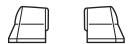
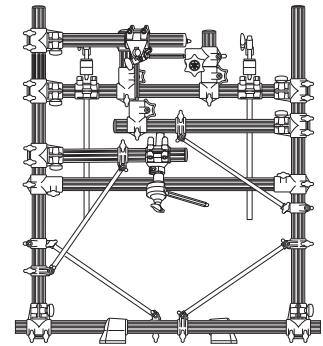
Figure 2: Electronic Drum Rack RS85A
RS85A (1)
Rubber Foot (2)
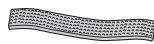
Cable Band (6) *1
Assembly Manual (1)*2
1 Use cable cables to bind cables to pipes in "⑧ Connecting to a power source". (Spare bands are included.)
2 Not this manual.

Assembling the Electronic Drum Rack
1 Take out the electronic drum rack from the package and remove all the cushioning. Remove the bubble wrap on the pipes while assembling the electronic drum rack.
CAUTION The pipe ends may injure your fingers.
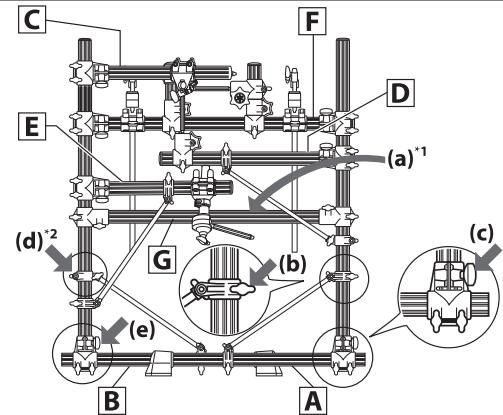
Figure 3: Rack Assembly-1
*1 YAMAHA logo label on the curved pipe is facing the opposite side.
*2 The knob is on the opposite side of the pipe.
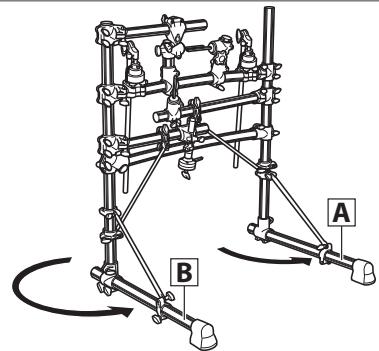
Figure 4: Rack Assembly-2
2 See Figure 3. Set up the electronic drum rack, with the YAMAHA logo label (a) on the curved pipe (c) facing the opposite side from you. Support the electronic drum rack with your left hand, and loosen the two knobs (b) and (c) on your right.
3 See Figure 4. Move the leg on your right (pipe A) in a counterclockwise direction until it is about 90 degrees from the curved pipe with the YAMAHA logo label. Tighten the two knobs loosened in step 2 and fix the position of pipe A.
4 See Figure 3 again. Loosen the two knobs (d) and (e) on your left. The knob (d) is on the opposite side of the pipe.
5 See Figure 4 again. Move the leg on your left (pipe B) all the way around the standing vertical pipe in a counterclockwise direction until it is parallel with pipe A. Tighten the two knobs loosened and fix the position of pipe B.
NOTICE Be sure to move pipe B in a counterclockwise direction. If you move it in a clockwise direction, the slim pipes may collide and bend.
- In the following steps, loosen the knobs first, decide the position of the pipe, and then tighten the knobs. Be careful not to tighten the knobs excessively. For better performance, make minor adjustments for each part of the unit with the knobs after the assembly is completed.
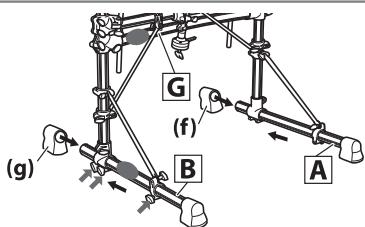
Figure 5: Rack Assembly-3
See Figure 5. Loosen the three knobs of pipe , which are on the left bottom and opposite side from you (shown with ). Hold the area of pipe and shown with , and slide pipe so the further end of pipe will slide outward about 7cm from the joint part with the standing vertical pipe. In the same manner, loosen the three knobs of pipe , which are on the right bottom and opposite side from you. Slide pipe so the further end of pipe will slide outward about 7cm from the joint part with the standing vertical pipe. Tighten the six knobs loosened and fix the position of pipes and .
7 Insert the rubber foot on each further end of pipe A and B
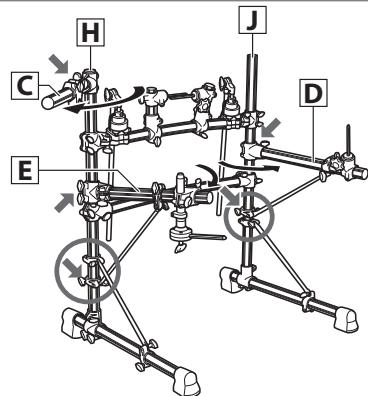
Figure 6: Rack Assembly-4
8 See Figure 6. Loosen the two knobs (h) on the upper left) aligned at the base of pipe C, and move pipe C slightly outward in a clockwise direction. Tighten the two knobs loosened and fix the position of pipe C.
9 Loosen the two knobs ((j) on the middle right) aligned at the base of pipe and the knob ((k) on the lower right) of the slim pipe supporting pipe . Move pipe in a counterclockwise direction until it is about 90 degrees from the curved pipe with the YAMAHA logo label. Tighten the three knobs loosened and fix the position of pipe and the slim pipe supporting it.
10 Loosen the two knobs ((m) on the middle left) aligned at the base of pipe and the knob ((n) on the lower left) on the slim pipe supporting pipe , and move pipe in a clockwise direction until it is about 45 degrees from the curved pipe with the YAMAHA logo label. Tighten the three knobs loosened and fix the position of pipe and the slim pipe supporting it.

The pipes may bend when the area shown in collides.
11 Check that the entire electronic drum rack is stable. Hold the upper area of the vertical pipe and , and shake them. If the electronic drum rack is unstable, retighten the knobs tightened in steps 2 to 5.
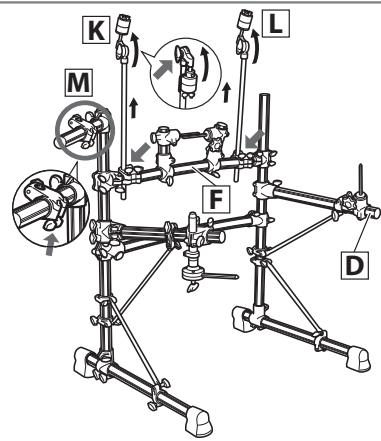
Figure 7: Rack Assembly-5
12 See Figure 7. Loosen the knobs of the cymbal holders and on the right and left (shown with on the opposite side of pipe ) and pull up the cymbal holders vertically to the height illustrated. Tighten the knobs loosened and fix the positions of the cymbal holders.
13 Loosen the wing bolt (p) of the cymbal holder and set up the upper part of the cymbal holder. Tighten the wing bolt loosened and fix the position of the cymbal holder . Set up the upper part of the cymbal holder in the same manner.
14 Loosen the two knobs (q) aligned along the pipe with the Trigger Module attachment part
Adjust the Trigger Module attachment part so the operating panel will face upward diagonally to your side when set. Hold the Trigger Module attachment part firmly and turn it gradually. Tighten the two knobs loosened and fix the position of the Trigger Module attachment part .

Checking the contents of the Pad Set, the Trigger Module, and the Drum Pad
Open the DTP502 (Pad Set), the Trigger Module, and the Drum Pad package and confirm the contents.
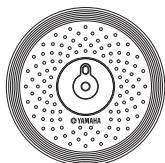
Figure 8: Pad Set DTP502
TP65 (Drum Pad) (3)
PCY135 (Cymbal Pad) (1)

Clamp Bolt (3)
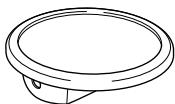
Felt (Large) (2)
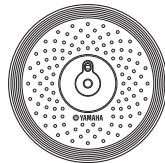
PCY155 (Cymbal Pad) (1)
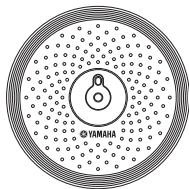
0
Stopper (2)
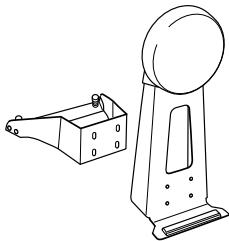
Stand Base (1)
KP65 (Kick Pad) (1)

HS650A (Hi-Hat Stand) (1)
Owner's Manual (4)
-TP65/65S/100/120SD
-PCY65/65S/135/155
- KP65
-RHH135
Cable Band (1)
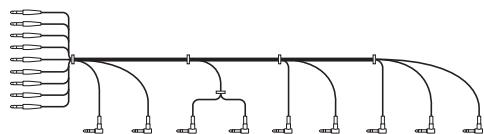
9-Channel Snake Cable(1)
2)
Figure 9: Trigger Module

DTX500 (1)

Module Stand (1)
DTX5
Manual(1)
Figure 10: 3-zone Drum Pad XP100SD
XP100SD(1)
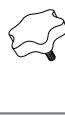
Clamp Bolt(1)
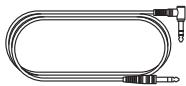
XP series Owner's
Manual(1)

Mounting the pads and the trigger module on the electronic drum rack
Mount the pads and the trigger module on the electronic drum rack. Then position the kick pad and the hi-hat.
Mounting the TP65 (Drum pads) and XP100SD (3-zone Drum pad) on the electronic drum rack
Figure 11: Pads Assembly-1
Figure 12: TP65 and XP100SD
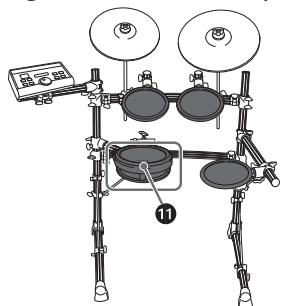
XP100SD
12 TP65 (Rear side)
XP100SD (Rear side)
14 Clamp bolt
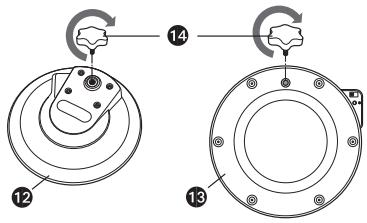
1 See Figure 12.
Attach the clamp bolts (14) on TP65s (12) and XP100SD (13). Tighten the clamp bolts five to six turns each.
Figure 13: Pads Assembly-2
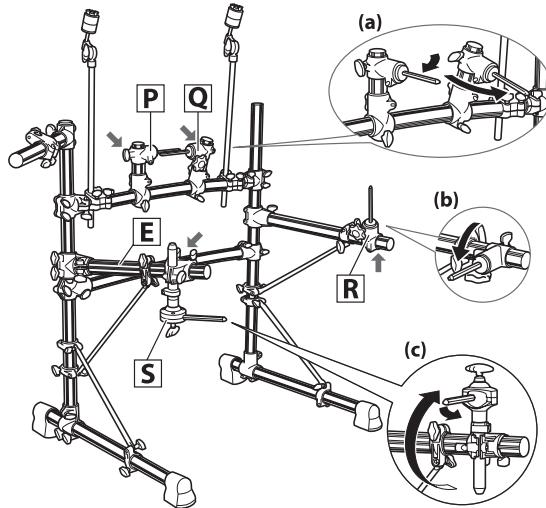
2 See Figure 13. Loosen the knobs of the tom holders and at the center of the electronic drum rack (shown with ). Move the tom holders as shown in Figure 13-(a). Then tighten the knobs and fix the position of the tom holders and .
3 Loosen the knob of the tom holder on the right (shown with ). Move the tom holder inward as shown in Figure 13-(b). Tighten the knobs and attach the tom holder firmly at a position where it points slightly downward.
Figure 14: Tom Holder and Drum Pad
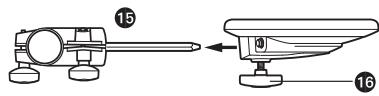
15 Tom holder
16 Clamp bolt
4 Attach the TP65 (Drum pad) to the tom holder as shown in Figure 14. Tighten the clamp bolt and attach the drum pad TP65 firmly.
5 See Figure 13 again. Repeat step 3 and 4 in the same manner for tom holder at the center of the electronic drum rack and for tom holder on the right, and attach the TP65 (Drum pad) to each tom holder.
6 Loosen the knobs of the snare holder on the left (shown with ). Turn the snare holder as shown with the big arrow in Figure 13-(c) and set it up vertically. Turn the metal stick on the upper part of as shown with the small arrow in Figure 13-(c) until it is pointing slightly outward than pipe .
7 Attach the 3-zone drum pad XP100SD to the snare holder [S] set up in step 6. Tighten the clamp bolt and attach the 3-zone drum pad XP100SD firmly.
Mounting the PCY135 and PCY155 (Cymbal pads) on the electronic drum rack
Figure 15: Pads Assembly-3
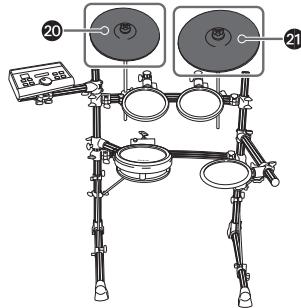
PCY135
PCY155
Cymbal holder
23 Wing nut
Felt washer
Figure 16: Cymbal holder-1
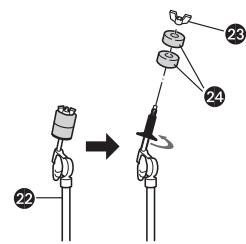
1 See Figure 16.
Remove the wing nut (23) and the two felt washers (24) from the cymbal holder (2). Then turn the black plastic part in a counterclockwise direction and remove it.
Figure 17: Cymbal holder-2
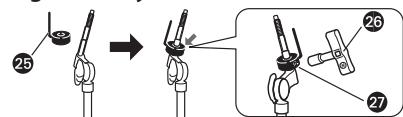
Stopper
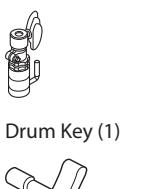
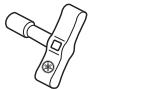
26 Drum key
27 Key bolt
Figure 18: Cymbal holder-3
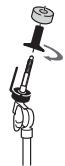
2 See Figure 17. Attach the stopper to the cymbal holder, and fix at a position where the L-shaped part of the stopper is on the opposite side from you. To fix the position of the stopper (25), use the drum key (26) and tighten the key bolt (27) firmly.
3 See Figure 18. Attach the black plastic part removed in step 1 to the cymbal holder, and tighten it in a clockwise direction.
4 Attach one of the felt washers removed in step 1 to the cymbal holder. The other felt washer will not be used within the standard assembly described in this manual.
Figure 19: Cymbal holder and Cymbal pad
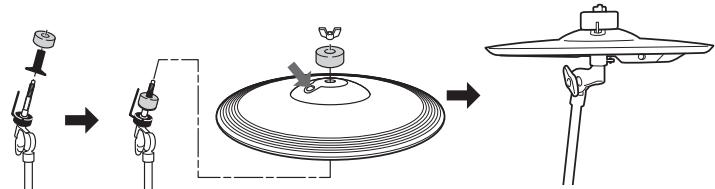
See Figure 19. Insert the end of the L-shaped part of the stopper into the oval-shaped hole on the cymbal pad (shown with ) to set the cymbal pad on the cymbal holder.
* Cymbal pad PCY135 is very similar to Real High-Hat Pad RHH135. Check the part number on the reverse side.
6 Attach the included round-shaped felt with a large hole-diameter to the cymbal holder, then attach the wing nut removed in step 1 and tighten it. Turn the wing nut until you are certain that the cymbal pad is attached. The cymbal pad is designed to shake when you hit the surface, even when the wing nut is tightened securely.
Mounting the DTX500 (Trigger module)
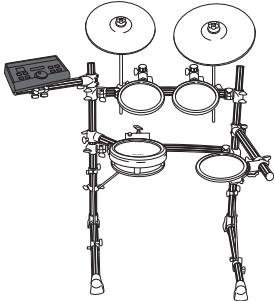
Figure 20: Pads Assembly-4
Figure 21: Module stand
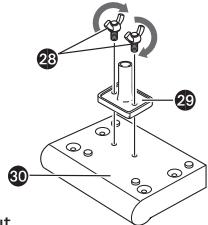
28 Wing nut
29 Module stand
DTX500 (Rear side)
1 Attach the module stand (29) onto the rear side of the DTX500 (30) using the wing nuts (28).
Figure 22: Module stand and clamp
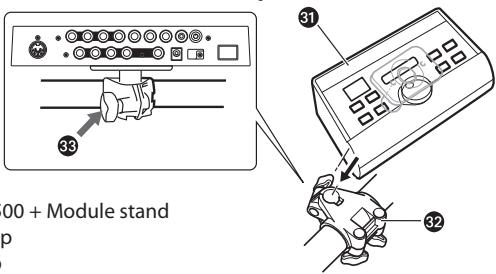
2 Attach the module stand (31) onto the clamp (32). Tighten the knob (33) and fix the position.
Assembling the KP65 (Kick pad)
1 If a drum mat (sold separately) is not available, lay a cardboard on the floor to prevent scratching the surface.
Figure 23: KP65 Assembly
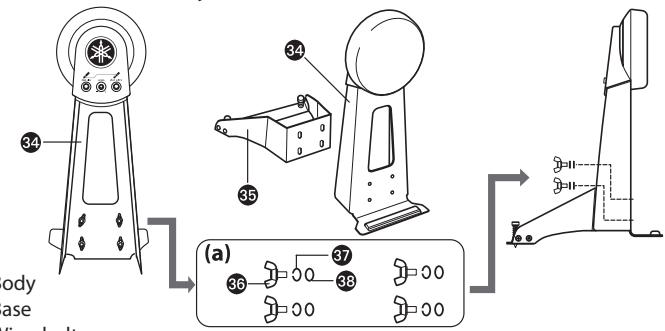
wing bolt
Spring washer
Washer
2 Remove the wing bolt (36), the spring washer (37) and the washer (38) from the body (34), and keep the four sets nearby in the order removed.
* If the wing bolt, the spring washer and/or the washer are separated from each other, set them as illustrated in Figure 23-(a).
3 Set the base (35) on the body (34), and attach them using the wing bolt, the spring washer and the washer removed in step 2.
Assembling the HS650A (Hi-Hat stand)
1 If a drum mat (sold separately) is not available, lay a cardboard on the floor to prevent scratching the surface.
Figure 24: HS650A Assembly
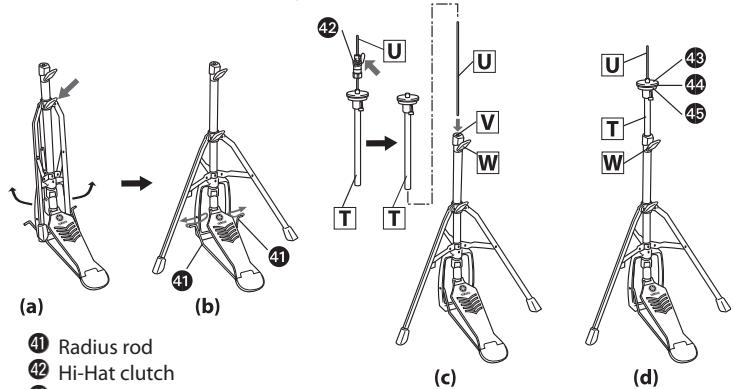
Feit washer
Cymbal support plate
45 Cymbal support
2 Loosen the wing bolt of the hi-hat stand (shown with in Figure 24-(a)).
Spread out the legs of the tripod part of the hi-hat stand until it stands stable. Tighten the wing bolt loosened in step 2.
4 Insert the radius rod (41) into the hole of the frame as shown in Figure 24-(b).
5 Loosen the wing bolt of the hi-hat clutch (42) (shown with in Figure 24-(c))
- The hi-hat clutch is not used within the standard assembly described in this manual. Use the hi-hat clutch included in RHH135.
6 Pull out the hi-hat shaft from pipe T.
7 Insert the hi-hat shaft removed in step 6 into the nut shown in Figure 24-(c).
Insert pipe into the hi-hat shaft from above. Tighten the wing bolt at the position where the cymbal support plate will be positioned at the middle area of the hi-hat shaft .
9 Remove the felt washer (43) attached above the cymbal support plate. They are not used within the standard assembly described in this manual.
10 Set the real hi-hat pad RHH135
- For the next step, see "Setting Up" in the RHH135 Owner's manual.
Installing the Hi-Hat and KP65 (Kick pad)
Figure 25: Hi-Hat and KP65
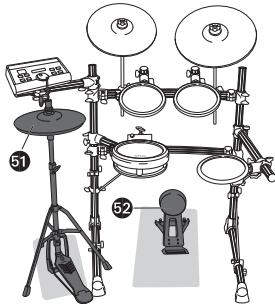
5 Hi-Hat
52 KP65
1 If a drum mat (sold separately) is not available, lay a cardboard on the floor to prevent scratching the surface.
2 Place the hi-hat (51) on the left side of the RS85A (electronic drum rack).
3 Place the KP65 (Kick pad) (52) at the bottom center of the electronic drum rack.
5 Connecting the pads to the Trigger Module
Connect the output jacks of the pad and the input jacks of the trigger module with the 9-channel snake cable.
Figure 26:DTX500 (Rear panel)
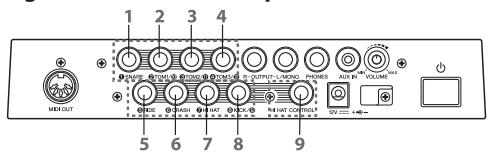
1 SNARE 2 TOM-1
2 TOM 1
3 TOM 2
4 TOM 3
3 RIDE 6 CRASH
7 HI HA
8 RICK 9 HH CO
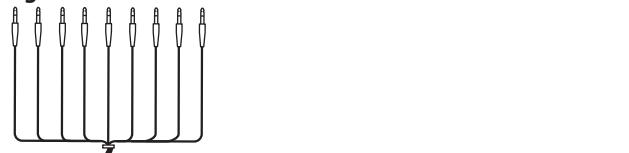
Figure 27: 9-channel Snake Cable
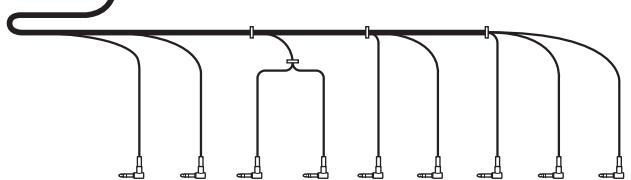
Each straight plug is labeled indicating the input jacks to which they are to be connected.
1 Insert the straight plugs (Figure 27-(a)) of the 9-channel snake cable into the input jacks on the rear panel of the trigger module. For standard assembly, connect the straight plugs to the input jacks in accordance with the indication on each label.
The stereo phone cable that comes with the XP100SD will not be used within the standard assembly described in this manual.
Figure 28: Diagram of standard connection
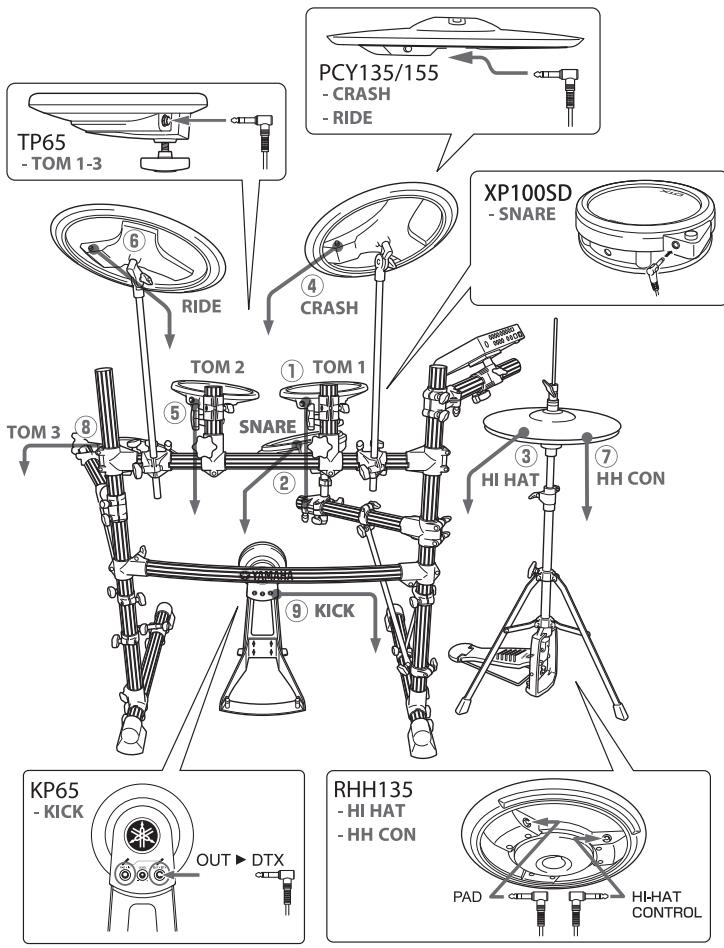
2 Insert the L-shaped plugs (Figure 27-(b)) of the 9-channel snake cable into each corresponding pad. It is recommended to connect the cables in order from numbers ① to ⑨ shown in Figure 28 (from the shortest cable to the longest cable).

Connecting to a power source
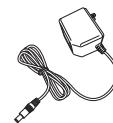
Connect the AC adaptor to the DTX500.
Figure 29: Power switch (DTX500 rear panel)
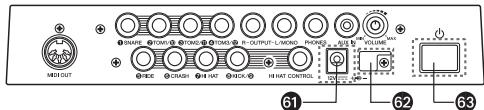
DC IN terminal (12V)
62 Cable clip
Standby/On Switch
1 Make sure to turn the power off. Standby/ On Switch (63) is set to the standby position (■).
Figure 30: Cable clip (DTX500 rear panel)
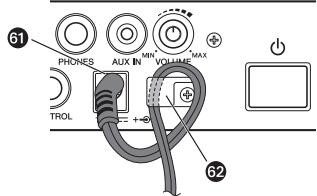
2 Attach the AC adaptor to connect to a power source. Insert the DC plug into the DC IN terminal (61) and twist the cable around the cable clip (62) to prevent the DC plug from falling out.
Figure 31: Using Cable Band
The assembly is now completed.
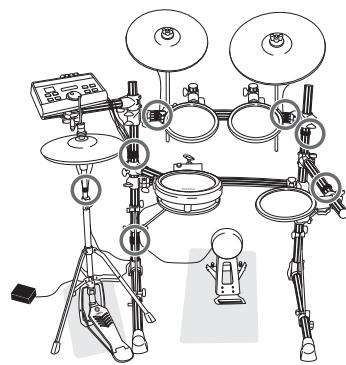
* For information about the next steps such as turning the power on/off and checking the actual sound, refer to "Setting Up" in the Owner's Manual of the Drum Trigger Module.
- PRECAUTIONS
- NOTICE
- Checking the contents of RS85A
- Assembling the Electronic Drum Rack
- Checking the contents of the Pad Set, the Trigger Module, and the Drum Pad
- Mounting the pads and the trigger module on the electronic drum rack
- Mounting the PCY135 and PCY155 (Cymbal pads) on the electronic drum rack
- Figure 17: Cymbal holder-2
- Mounting the DTX500 (Trigger module)
- Assembling the KP65 (Kick pad)
- Assembling the HS650A (Hi-Hat stand)
- Installing the Hi-Hat and KP65 (Kick pad)
- Connecting the pads to the Trigger Module
- Connecting to a power source
Marque : YAMAHA
Modèle : DTX550K
Catégorie : Batterie électronique