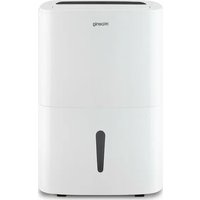
DSH520 - Deshumidificador H.KOENIG - Manual de uso y guía de instrucciones gratis
Encuentra gratis el manual del aparato DSH520 H.KOENIG en formato PDF.


Elija su idioma y proporcione su correo: le enviaremos una version traducida especificamente para usted.
| Tipo de producto | Deshumidificador |
| Marca | H.Koenig |
| Modelo | DSH520 |
| Capacidad de deshumidificación | 20 L/día (a 30°C, 80% HR) |
| Capacidad del depósito de agua | 5 L |
| Dimensiones (Al x An x Pr) | 498 x 343 x 240 mm |
| Peso neto | 13,5 kg |
| Alimentación eléctrica | 220-240 V ~ 50 Hz |
| Potencia nominal | 400 W |
| Refrigerante | R290 (gas inflamable) |
| Rango de temperatura de funcionamiento | 5 °C a 32 °C |
| Rango de humedad relativa | 30 % a 80 % |
| Funciones principales | Modo AUTO, CONTINUO, SECADO; Temporizador 24 h; Velocidad del aire Alta/Baja; Ionización negativa; Air-swing; Función secado interior |
| Conectividad | Wi-Fi (2,4 GHz) a través de la aplicación Tuya Smart |
| Nivel sonoro | No especificado, pero requiere una superficie plana para reducir las vibraciones |
| Mantenimiento y limpieza | Limpiar el depósito de agua regularmente; lavar el filtro PP cada 2 semanas con agua fría/tibia; limpiar la superficie con un paño húmedo |
| Seguridad | No usar en exteriores; no sumergir; no obstruir las rejillas; no usar disolventes; apagado automático si el depósito está lleno |
| Piezas de repuesto y reparabilidad | Filtro PP, depósito de agua, tubo de drenaje (diámetro interior 9 mm); accesorios disponibles en sav.hkoenig.com |
| Garantía | 2 años (excluyendo piezas de desgaste y accesorios) |
| Información general | Uso doméstico y similar; no inclinar más de 45°; espacio mínimo: 50 cm arriba, 20 cm alrededor |
Preguntas frecuentes - DSH520 H.KOENIG
¿Por qué no funciona el deshumidificador?
Verifique que el enchufe esté bien conectado y que el depósito de agua no esté lleno o mal instalado. Si la temperatura ambiente es inferior a 5°C o superior a 32°C, el aparato puede no encenderse por seguridad.
¿Por qué el depósito de agua no se llena tanto en invierno?
En invierno, el aire es más seco, lo que reduce naturalmente la capacidad de deshumidificación. No es un defecto.
¿Por qué sale aire caliente por la salida de aire?
El aire deshumidificado se calienta mediante la unidad de retorno de temperatura para reducir el consumo de energía y acelerar la deshumidificación. Es normal.
¿Cómo vaciar el depósito de agua?
Coloque ambas manos a los lados de la tapa trasera, retire el depósito, abra la tapa en el lado derecho y vierta el agua. Luego vuelva a colocar el depósito empujando firmemente.
¿Puedo usar un drenaje continuo?
Sí, puede conectar un tubo de desagüe (diámetro interior 9 mm, no incluido) a la salida de agua en la parte trasera. Asegúrese de que el tubo esté bien fijado y que su altura no supere la salida.
¿Cómo limpiar el filtro?
Retire el filtro PP y lávelo con agua fría o tibia (sin disolvente) cada dos semanas. Vuelva a colocarlo después del secado.
¿Cómo conectar el deshumidificador al Wi-Fi?
Descargue la aplicación Tuya Smart, ponga el aparato en modo de espera, presione el botón Power durante 3 segundos para entrar en modo de emparejamiento, y luego siga las instrucciones en la aplicación. La red debe ser de 2,4 GHz.
¿Qué hacer si el aparato hace un ruido anormal?
Verifique que esté colocado sobre una superficie plana y estable. Limpie el filtro de aire. Un ligero ruido de flujo del refrigerante es normal.
¿Cómo usar la función de secado interior?
Presione la tecla 'Inside Drying' durante más de 2 segundos. El aparato funciona a velocidad alta durante 30 minutos y luego a velocidad baja durante 15 minutos para prevenir el moho.
¿Dónde puedo encontrar piezas de repuesto o accesorios?
Vaya a sav.hkoenig.com, introduzca la referencia DSH520 para acceder a las piezas de repuesto (filtro, depósito, etc.) y accesorios.
Preguntas de los usuarios sobre DSH520 H.KOENIG
0 pregunta sobre este aparato. Responde a las que conoces o haz la tuya.
Hacer una nueva pregunta sobre este aparato
Aún no hay preguntas. Sé el primero en hacer una.
Descarga las instrucciones para tu Deshumidificador en formato PDF gratis! Encuentra tus instrucciones DSH520 - H.KOENIG y toma tu dispositivo electrónico nuevamente en la mano. En esta página están publicados todos los documentos necesarios para el uso de su dispositivo. DSH520 de la marca H.KOENIG.
MANUAL DE USUARIO DSH520 H.KOENIG
H
Instruction Manual
Manuel d'instructions
Bedienungsanleitung
Gebruiksaanwijzing
Manual de instrucciones
Manuale d'uso
Manual de instruções
Instrukcja obsługi

natural_image
Exterior view of a white Hkoenig air purifier device (no visible text or symbols on body)
Dehumidifier
Déshumidificateur
Luftentfeuchter
Luchtontvochtiger
Deshumidificador
Deumidificatore
Desumidificador
Osuszacz powietrza

ENGLISH
Safety Warning
For your safety, please read the following contents carefully before using this dehumidifier:
Requirements:
◆ Install this humidifier in smooth place to reduce vibration and noise.
◆ Do not place this dehumidifier in water or other liquids.
◆ To prevent accidents, please do not use this dehumidifier if wires or other connections are damaged.
◆ This appliance must not be used by persons with reduced physical, sensory, or mental capabilities or who lack experience and knowledge, provided they have been supervised or instructed in the safe use of the appliance and understand the risks involved.
◆ Children shall not play with the appliance
◆ This appliance should not be used by children of at least 8 years of age, provided they are supervised and instructed in its safe use and are fully aware of the hazards involved.
◆ Cleaning and maintenance should not be carried out by children unless they are at least 8 years of age and are supervised by an adult.
◆ Keep the appliance and its power cord out of reach of children under 8 years of age
◆ When stop, reset or clean this dehumidifier, please cut off the power.
◆ Please use at the specified voltage.
◆ This dehumidifier can only be used indoor, please do not use for other purposes.
◆ Please do not place heavy objects on this dehumidifier.
◆ Please empty water tank to prevent overflow and spill before restarting this dehumidifier.
◆ Please do not incline in case that the spilled water damages this dehumidifier.
◆ Please do not place waste rods and hard objects into the dehumidifier in case that error and damageoccur.
◆ If the supply cord is damaged, it must be replaced by the manufacturer, its service agent or similarly qualified persons in order to avoid a hazard.
When this dehumidifier is not used for long time, please unplug the electric cord.
◆ Power supply of the Dehumidifier shall comply with the safety regulations where it is used and ensure reliable grounding.
When using electrical equipment, safety precautions must always be taken to prevent the risk of fire, electric shock and/or injury in the event of misuse.
◆ Make sure that the voltage rating on the type plate corresponds to your main voltage of your installation. If this is not the case, contact the dealer and do not connect the
unit.
◆ The device must not be used if it has been dropped, it obvious signs of damage are visible or if it has leaks.
◆ Do not operate this appliance if it has a damaged cord or plug, if it is not working properly or if it has been damaged or dropped. If the supply cord is damaged, it must be replaced by the manufacturer or its service agent or a similarly qualified person to avoid a hazard.
◆ This appliance is intended for use in domestic and similar applications such as:
- Kitchens in shops, offices and other work environments
- Farms
- Hotels, motels and other residential environments
- Guest rooms
◆ Never insert your fingers, pencils or any other object into the ventilation grilles.
◆ Read the operating instructions carefully before using the appliance and keep the operating instructions, including the guarantee, the receipt and, if possible, the box with the inner packaging. If you give this appliance to other people, please also pass on the operating instructions.
Prohibition:
◆ Please do not place this dehumidifier close to heating devices (flame or heaters, etc.).
◆ Please do not turn on or turn off this dehumidifier by plugging in or pulling out the plug.
◆ Do not use insecticide spray or other flammable substances in the vicinity of this dehumidifier.
◆ Do not scratch appearance of this dehumidifier with sharp matters.
◆ Do not splash oil or water into this dehumidifier.
◆ Do not clean this dehumidifier with water, pleasewipe it with subhumid soft cloth.
Do not wipe this dehumidifier with chemicalsolvents such as benzene, gasoline and alcohol, etc. If this dehumidifier is indeed dirty, please wipe withneutral detergent.
◆ Please do not incline this dehumidifier over 45° or place this dehumidifier upside down.
Frequent enquiries
Q: Why is less water stored in water tank of the dehumidifier in winter?
—> In winter temperature is low and air is dry. In comparison with summer, the dehumidification ability of the dehumidifier decreases remarkably, this is not a fault.
Q: Why the dehumidifier can't run or stops running suddenly?
—> This dehumidifier may be full of water or water tank is not installed properly, drain the water in water tank, or re-install water tank in correct way.
—> At the moment the dehumidifier may be in the “dehumidification mode”, the ambient temperature is lower or higher (dehumidification cannot be performed when the ambient temperature is <5^ or >32^ ).
The ambient temperature for operation of the dehumidifier is 5-32 °C, and the relative humidity is 30%-80%. The optimal temperature for use is 16-32°C.
Q: Why is hot air blown out from air supply outlet?
—> This dehumidifier extracts the air in the room, and the dehumidification unit cools the air, the temperature decreases below the condensation point, the air condenses into water drops, which falls into water tank finally, and the dehumidified air is heated by the temperature returning unit. This can reduce energy consumption and also accelerate dehumidification, therefore, hot air is blown out, and this not a fault.
Installation
- Please drain the water from water tank before running.
● During running please do not open doors and windows as much as possible since this can save energy resources.
- When the dehumidifier is installed, a certain space must be reserved around this dehumidifier, the minimum distance above is 50cm, and the minimum distance in front/rear and left/right is 20cm as required, as shown in figure below.
- When big noise is found during operation of this dehumidifier:
It is recommended inserting pads or damping rubber sheets, etc. below this dehumidifier, this can reduce vibration and noise, and can also reduce sinking of wood floor or carpet.

Components

Back side

Control panel with negative ion function
Timer
24h timer setup, press this key to set on/off time of the dehumidifier, and the setting range is 1-24h. If you cancel timer setup, press twice continuously after confirmation of setting time.
Dry key in dehumidifier
Press this key for more than 2s to start drying procedure in the dehumidifier, this can prevent mold inside the dehumidifier due to damp. The whole drying procedure needs approximate 1h. Press this key again for more than 2s to cancel the drying function in the dehumidifier, and to recover to running state before starting drying.
Air speed
In AUTO or CONTINUOUS mode air speed, HIGH and LOW can be circularly selected.

LCD Display
In AUTO, CONTINUOUS AND DRYING modes, etc., this figure displays room humidity. When humidity is set in AUTO mode, this figure shows the set humidity; and displays the set time in timer state, %represents percentage of humidity.
Humidity setting
Once this key is pressed, the humidity is displayed circularly in the range of 30% - 35% - 40% - 45% - 50% - 55% - 60% - 65% - 70% - 75% - 80% , and the humidity setting is only valid in AUTO mode.
Mode
During startup or timer startup press this key to select AUTO, CONTINUOUS and DRYING modes, etc., and the indicator lamp corresponding to the selected mode is on.
On/off key
Press this key to turn on or turn off the dehumidifier.
Operating methods
Description of functions
Setting of timer off
\- When the dehumidifier is running, press the [Timer key] to adjust time from 1h to 24h, pressing the key once to increase the setting time by 1h, after the setting time exceeds 24h, the figure returns to 1 to start cycle. The Timer key can also be pressed all the time, the time increases and changes circularly, when the set time expires, the dehumidifier turns off automatically. After the setting is completed, if the Timer key does not act at all within 5s, the set time is confirmed. In timer off state the key lamp on the [Timer key] is normally on.
Setting of timer on
\- When the dehumidifier is in standby state, the method for adjustment of setting time by the [Timer key] is the same as timer off. After the setting is completed, if the Timer key does not act at all within 5s, the set time is confirmed. In timer on state the key lamp on the [Timer key] is normally on, and the set time is displayed on control panel.
AUTO mode
\- Select AUTO dehumidification, if the room humidity is high than the set humidity or is between +5% or -5% of the set humidity, the compressor will starts and the fan will run at the set speed. If the room humidity is lower than the set humidity by -5%, then the compressor will stop but the fan will run at the set speed. The default set humidity value is 50%.
CONTINUOUS mode
\- Select CONTINUOUS dehumidification, no matter how the relative humidity in the room is, the compressor starts, the fan runs at high speed in default, and the air speed can be regulated via the air speed key.
DRYING function in dehumidifier
◆ Press the [Drying key in dehumidifier] for over 2s to start drying in the dehumidifier, and the whole drying procedure needs approximate 1h:
1. The dehumidifier starts at HIGH air speed and releases air continuously for 30min;
2. The dehumidifier turns to run at LOW air speed and lasts for 15min;
◆ How to stop:
1. Press the Mode key again for over 2s to cancel drying in dehumidifier, and recover to the running state before start of drying.
2. Press the [Power key] to stop drying in dehumidifier and recover to the standby state.
Air-swing function
press the Timer button and the Drying button at the same time for more than 2 seconds to start or end the Air-swing function.
Drainage
1. Use of water tank
When the water tank is full of water, the full water icon on LCD flashes (the compressor, fan and negative ion will stop running), the BUZZER sounds for 10 times to remind the user till water is drained.

Place both hands on the side of the rear cover, carefully remove the water tank and open the tank cover on the right-hand side of the body, then pour the water through the gap between the water tank and the cover.

natural_image
Technical line drawing of a portable air purifier with internal components and wheels (no text or symbols)

Close the tank and turn the water tank handle downwards, then carefully replace the water tank to restart the dehumidifier.

natural_image
Line drawing of a portable air purifier with internal components and wheels (no text or symbols)
Warning: when the water tank is full of water, please empty it. Before putting the water tank into the dehumidifier, please confirm whether the floater rotates flexibly or not, and then push it in position with both hands.
2. Continuous drainage
If you do not want to drain water in the water tank frequently, you can connect a drainage pipe (with inner diameter 9mm) on the back of this dehumidifier to drain water, and this pipe shall be bought by the user.


Attention: the level height of externally connected water pipe shall not be higher than the water outlet, and the water pipe at rear-end shall transit smoothly, otherwise, the leakage risk exists since drainage is not smooth.
Maintenance
Precautions:
- Please disconnect power supply before maintenance or repair to prevent electric shock.
- If the dehumidifier is not used for long time, please disconnect power supply.
- Please do not clean the dehumidifier body with chemical solvents such as alcohol, gasoline and benzene, etc.
◆ Please clean the water tank and its cover with soft cloth dipped in cold or warm water at regular time to prevent mould inside the dehumidifier.

natural_image
Line drawing of a rectangular electronic device casing with a recessed lid (no text or symbols)
◆ Wipe the surface of the dehumidifier slightly with wet cloth, and do not use detergent or abrasive in case the plastic surface is damaged.

natural_image
Line drawing of a portable air purifier with open lid and wheels (no text or symbols)
◆ Clean the washable PP strainer at least once per two weeks simply with cold or warm water, do not use chemical solvents or hot water.

natural_image
Grid-patterned rectangular panel with small circular elements on the right side (no text or symbols)
SMART HOME WI-FI CONNECTION GUIDE
Install App
Download the "Tuya Smart" app from the Play Store (Android) or App Store (iOS).
Register
If you do not have a Tuya account, register or sign in with a verification code sent by email.
To register:
1. Tap to enter registration page
2. The system automatically recognizes your country / area. You can also select your country code manually. Enter your email address and tap "Next".
3. Then enter the verification code in the message sent to you by email. Set a password as prompted and press "Confirm" to finish your registration.

Add device through network
1. Power dehumidifier on, when dehumidifier under standby mode, press the "POWER" button for 3 seconds to enter Wifi-connect mode.
2. Open Tuya Smart app and tap "+" in the upper right to add a new device through the network.
3. Select Wi-Fi network (note: network must be 2.4Ghz band) and enter the password. The device will start the pairing process and connect to the app.


4. After successfully configuring the devices, the smart dehumidifier will be shown on the home page. Tap to enter its control page.


Note:
When device is online, it can be controlled.
When device is offline, it displays "Offline" and can be remotely powered on.
Troubleshooting
If the following problems occur to the dehumidifier, the following solutions can be adopted.
Symptoms Possible reasons Solutions The dehumidifier does not run Does power plug fall? Insert power plug into socket. Is the water tank full of water? (the water tank is full of water or is placed at incorrect position) Drain water from the water tank, and then install the water tank again. The ambient temperature is lower than 5°C or higher than 32°C Normal phenomenon The dehumidification function is not effective Is the room temperature or humidity too low? In dry season the dehumidification ability will reduce. Are the air outlet and inlet blocked? Clean up the objects blocking the air outlet and inlet. Air is not blown out Is the air strainer blocked? Clean the air strainer according to the above method. Noise is abnormal during operation Is the dehumidifier placed improperly so that it is inclined or unstable? Please place the dehumidifier in smooth place. Is the air strainer blocked? Clean the air strainer according to the above method. There is “tittering” sound The flowing sound of refrigerant, which is a normal phenomenon. Water leaks Connection of drainage pipe becomes loose Fasten drainage pipe. Drainage system is blocked Remove obstacles and straighten out water pipe. Frosting occurs The ambient temperature is low, and it is in the state waiting for defrost. It is a normal phenomenon, and the dehumidifier has the automatic defrosting function.
Technical Parameters
Model DSH520 Operating voltage 220-240V/50Hz Dehumidification ability 20L/day @ 30°C 80%RH Rated power 400W Capacity of water tank 5L Weight (net) 13.5kg Dimensions (mm)(HxWxD) 498 x 343 x 240
All data are for reference only and are modified for improvement of product functions or technology without notice.
Before starting up
To prevent damage, place the appliance in an upright position for at least 24 hours before use.
Make sure that the air outlet and inlet are never blocked.
Only operate the appliance on a level surface to avoid water leaks.
Warning
\- Do not exceed an impedance of less than 0.236ohm in the supply to which the device is connected. Failure to comply with these rules may result in the supply authority imposing restrictions on the connection. Please consult your energy supplier if use of the equipment exceeds 0.236 ohm.
● Anyone required to work on or enter a refrigeration circuit must hold
a valid certificate issued by an industry-accredited assessment authority. This authorises their ability to handle refrigerants safely, in accordance with industry-recognised assessment specifications.
\- Don't forget the environment when you dispose of the appliance packaging and when the appliance has reached its use-by date.
\- The appliance must be stored in a well-ventilated area, the size of which corresponds to that of the appliance.
\- The appliance must be stored in such a way as to prevent mechanical damage.
● Information for areas where refrigeration pipes are permitted :
- pipework installation should be kept to a minimum;
- Piping must be protected against physical damage and, in the case of flammable refrigerants, must not be installed in an unventilated space;
- compliance with national gas regulations must be observed;
- mechanical connections must be accessible for maintenance;
- for appliances containing flammable refrigerants, the minimum surface area of the room must be given in the form of a table or a single figure without reference to a formula;
- Ventilation openings must not be obstructed;
- Maintenance should only be carried out in accordance with the manufacturer's recommendations;
- Ducts connected to an appliance must not contain any potential source of ignition;
- When the portable air conditioner or dehumidifier is running, the fan can operate stably and continuously under normal conditions to supply the minimum air volume of 100m3/h even when the compressor is shut down due to the temperature regulator.
\- Do not pierce or burn.
\- Only use the tools recommended by the manufacturer for defrosting or cleaning.
\- Do not puncture refrigerant circuit components. Refrigerant gas may be odourless
• Take care when storing the appliance to avoid mechanical failure.
\- Only people who have been authorised by an accredited body to handle refrigerants in accordance with sector-specific legislation should work on the refrigerant circuit.
\- All repairs must be carried out in accordance with the
manufacturer's recommendations.
\- Maintenance and repairs requiring the assistance of other qualified persons must be carried out under the supervision of specialists in the use of flammable refrigerants.
Additional warning for appliances using R290 refrigerant gas (see nameplate for type of refrigerant gas used)

CAUTION IN THE EVENT OF FIRE
READ THE MANUAL CAREFULLY BEFORE USING THE APPLIANCE
R290 refrigerant gas complies with European environmental directives.
This appliance contains approximately X g of R290 refrigerant gas.
The appliance must be installed, used and stored in a room with a floor area greater than 4 m ^2
Instructions for repairing appliances containing R 290
Checking the repair area
Before starting work on systems containing flammable refrigerants, safety checks must be carried out to ensure that the risk of ignition is reduced to a minimum. If the refrigeration system is being repaired, the following precautions must be taken before working on the system.
Work procedure
The work is undertaken according to a controlled procedure to minimise the risk of the presence of flammable gases or vapours during the execution of the work.
General work area
All maintenance staff and others working in the local area must be made aware of the nature of the work being carried out. Work in confined spaces should be avoided.
Checking for the presence of refrigerant
The area should be checked with an appropriate refrigerant detector before and during work, to ensure that the technician is aware of the existence of potentially toxic or flammable atmospheres. Ensure that the leak detection equipment used is suitable for all applicable refrigerants, i.e. non-sparking, properly sealed or intrinsically safe.
Presence of a fire extinguisher
If hot work is to be carried out on refrigeration equipment or any associated parts, suitable fire extinguishing equipment must be readily available. A powder or CO_2 extinguisher should be located close to the work area.
No ignition sources
No person carrying out work in connection with a refrigeration system which involves exposing piping must use ignition sources in such a way as to cause a fire or explosion hazard. All possible sources of ignition, including cigarettes, must be sufficiently distant from the site of installation, repair, removal and disposal, during which refrigerant may possibly be released into the surrounding space. Before work begins, the area around the equipment must be examined to ensure that there is no risk of flammability or ignition. No smoking" signs must be posted.
Ventilated area
Ensure that the area is open to the air or properly ventilated before entering the system or carrying out hot work. Some ventilation must be maintained throughout the work. Ventilation must allow any refrigerant released to be dispersed safely and, preferably, expelled into the atmosphere.
Checks on refrigeration equipment
When electrical components are replaced, they must be suitable for their intended use and meet the correct specifications. The manufacturer's care and maintenance instructions must be followed at all times. If in doubt, consult the manufacturer's technical service for assistance.
The following controls apply to installations using flammable refrigerants:
- the actual refrigerant charge is consistent with the size of the room in which the parts containing refrigerant are installed;
- Ventilation devices and outlets are working properly and are not obstructed;
- If an indirect refrigerant circuit is used, the presence of refrigerant must be checked in the secondary circuit;
- the equipment markings remain visible and legible. Illegible markings and signs must be corrected;
- The refrigerant pipes or components are installed in a place where they are not likely to be exposed to a substance likely to corrode the components containing the refrigerant, unless these components are made of intrinsically corrosion-resistant materials or are adequately protected against corrosion.
Checks on electrical equipment
Repair and maintenance of electrical components should include initial safety checks and component inspection procedures. If there is a fault that could compromise safety, no power should be connected to the circuit until the problem has been satisfactorily resolved. If the fault cannot be rectified immediately but continued operation is necessary, a suitable temporary solution must be used. This solution must be reported to the equipment owner so that all parties are informed.
Initial security checks include
- the capacitors are discharged: this operation must be carried out in complete safety to avoid any risk of sparking;
- no live electrical components or wiring are exposed when charging, recovering or purging the system;
• there is continuity of the earth connection.
Repair of sealed components
When carrying out repairs to sealed components, all power supplies must be disconnected from the equipment being worked on before removing sealed covers, etc. If it is absolutely necessary to maintain the power supply to the equipment during servicing, a continuously operating leak detection device should be placed at the most critical point to warn of a potentially hazardous situation.
Particular attention must be paid to the following points to ensure that, when working on electrical components, the enclosure is not
modified in such a way as to affect the level of protection. These include damage to cables, excessive number of connections, terminals not conforming to original specifications, damage to seals, incorrect assembly of cable glands, etc.
Make sure that the appliance is securely fastened.
Ensure that seals or sealing materials are not so degraded that they can no longer prevent the ingress of flammable atmospheres. Spare parts must comply with the manufacturer's specifications.
Repair of intrinsically safe components
Do not apply permanent inductive or capacitive loads to the circuit without ensuring that they do not exceed the permitted voltage and current for the equipment used.
Intrinsically safe components are the only types of component that can be worked on under voltage in the presence of a flammable atmosphere. The test equipment must be of an appropriate rating.
Replace components only with parts specified by the manufacturer. Other parts may cause refrigerant to ignite in the atmosphere in the event of a leak.
Wiring
Check that the cabling will not be subjected to wear, corrosion, excessive pressure, vibration, sharp edges or any other adverse environmental effects. The check should also take into account the effects of ageing or continuous vibration from sources such as compressors or fans.
Detection of flammable refrigerants
Under no circumstances should potential sources of ignition be used to search for or detect refrigerant leaks. A halide torch (or any other detector using an open flame) must not be used.
Removal and disposal
When entering the refrigeration circuit to carry out repairs - or for any other reason - conventional procedures should be used. However, for flammable refrigerants, it is important to follow best practice as flammability is a factor to be considered. The following procedure should be followed:
- remove the refrigerant ;
• purge the circuit with inert gas ;
- evacuate ;
- purge with inert gas ;
- open the circuit by cutting or soldering.
The refrigerant charge must be recovered in the appropriate recovery bottles. For appliances containing flammable refrigerants, the system must be purged with oxygen-free nitrogen to make the appliance safe for flammable refrigerants. This process may be repeated several times. Compressed air or oxygen must not be used to purge refrigeration systems.
For appliances containing flammable refrigerants, the refrigerants should be purged by breaking the vacuum in the system with oxygen-free nitrogen and continuing to fill until the working pressure is reached, then venting to atmosphere and finally pulling down to vacuum. This process should be repeated until there is no refrigerant left in the system. When the last charge of oxygen-free nitrogen is used, the system must be purged to atmospheric pressure to allow work to proceed. This operation is absolutely vital if brazing operations are to be carried out on the pipework.
Ensure that the vacuum pump outlet is not close to a potential source of ignition and that ventilation is available.
Charging procedures
In addition to conventional charging procedures, the following requirements must be met.
- Ensure that there is no contamination of the various refrigerants when using the charging equipment. Hoses or pipes should be as short as possible to minimise the amount of refrigerant they contain.
- Cylinders must be held in the correct position in accordance with the instructions.
• Make sure the refrigeration system is earthed before charging the system with refrigerant.
- Label the system when charging is complete (if not already done).
- Be very careful not to overfill the refrigeration system.
Before recharging, the system must be pressure tested with the appropriate purge gas. The system should be leak tested at the end of charging but before commissioning. A follow-up leak test should be carried out before leaving the site
Dismantling
Before carrying out this procedure, it is essential that the technician is fully familiar with the equipment and all its details. It is advisable to ensure that all refrigerants are recovered safely. Before carrying out the task, a sample of oil and refrigerant should be taken in case analysis is required before the recovered refrigerant is reused. It is essential that the power supply is available before the start of the job.
a) Familiarise yourself with the equipment and how it works.
b) Electrically isolate the system.
c) Before starting the procedure, make sure that
- mechanical handling equipment is available, if necessary, to handle refrigerant cylinders;
- all personal protective equipment is available and used correctly;
- the recovery process is supervised at all times by a competent person;
- recovery equipment and cylinders comply with the appropriate standards.
d) Pump the refrigeration system, if possible.
e) If it is not possible to create a vacuum, a manifold must be made so that the refrigerant can be removed from the various parts of the system.
f) Make sure the cylinder is on the scale before recovery takes place.
g) Start the recovery machine and use it as instructed.
h) Do not overfill the bottles (no more than 80% of the liquid volume).
i) Do not exceed the cylinder's maximum working pressure, even temporarily.
j) When the cylinders have been correctly filled and the process is complete, ensure that the cylinders and equipment are quickly removed from the site and that all equipment isolation valves are closed.
k) Recovered refrigerant must not be charged to another refrigeration system until it has been cleaned and checked.
Labelling
The equipment must bear a label indicating that it has been taken out of service and emptied of its refrigerant. The label must be dated and signed. For appliances containing flammable refrigerants, it must be ensured that the equipment bears a label indicating that it contains flammable refrigerants.
Recovery
When removing refrigerant from a system, whether for servicing or decommissioning purposes, it is advisable to ensure that all refrigerants are removed safely.
When transferring refrigerant to cylinders, ensure that only suitable refrigerant recovery cylinders are used. Ensure that the correct number of cylinders to contain the total system charge are available. All cylinders to be used are designated for the refrigerant being recovered and labelled for that refrigerant (i.e. special refrigerant recovery cylinders). The cylinders must be equipped with a pressure relief valve and the corresponding shut-off valves in good working order. Empty recovery cylinders must be evacuated and, if possible, cooled before recovery.
The recovery equipment must be in good working order, accompanied by a set of instructions for the equipment available and must be suitable for the recovery of all appropriate refrigerants, including flammable refrigerants where appropriate. In addition, a set of calibrated scales must be available and in good working order. The hoses must be complete, fitted with watertight connections and in good condition. Before using the recovery machine, check that it is in good working order, that it has been properly maintained and that all associated electrical components are sealed to prevent ignition in the event of a refrigerant leak. If in doubt, consult the manufacturer.
The recovered refrigerant must be returned to the refrigerant supplier in the correct recovery cylinder and the corresponding waste transfer note drawn up. Do not mix refrigerants in the recovery units and especially not in the cylinders.
If compressors or compressor oils are to be removed, care must be taken to ensure that they have been evacuated to an acceptable
level to ensure that no flammable refrigerant remains in the lubricant. The evacuation process must be carried out before the compressor is returned to the suppliers. Only electric heating of the compressor body should be used to speed up this process. Draining the oil from a system must be carried out in complete safety.
WARRANTY
The warranty period for our products is 2 years, unless otherwise stated, starting from the date of initial purchase or the date of delivery.
If you have any problems or questions, you can easily access our help pages, troubleshooting tips, FAQ, and user manuals on our service site: https://sav.hkoenig.com.
By typing the reference name of your device in the search bar, you can access all available online support, designed to best meet your needs.
If you still cannot find an answer to your question or problem, then click on "Did the answer solve your problem?". This will direct you to the Customer Support Request Form, which you can fill out to validate your request and get help.
WARRANTY CONDITIONS
The warranty covers all failures occurring under normal use, in accordance with the usage and specifications in the user's manual.
This warranty does not apply to packaging or transportation problems during shipment of the product by the owner. It also does not include normal wear and tear of the product, nor maintenance or replacement of consumable parts.
EXCLUSION OF WARRANTY
\- Accessories and wearing parts (\*).
\- Normal maintenance of the device.
\- All breakdowns resulting from improper use (shocks, failure to comply with power supply recommendations, poor conditions of use, etc.), insufficient maintenance or misuse of the device, as well as the use of unsuitable accessories.
\- Damage of external origin: fire, water damage, electrical surge, etc.
- Any equipment that has been disassembled, even partially, by persons other than those authorized to do so (notably the user).
- The products whose serial number would be missing, deteriorated or illegible that would not allow its identification.
- The products subjected to leasing, demonstration, or exhibition.
(\*) Some parts of your device, called wear parts or consumables, deteriorate with time and frequency of use of your device. This wear and tear are normal but can be accentuated by poor conditions of use or maintenance of your device. These parts are therefore not covered by the warranty.
The accessories supplied with the device are also excluded from the warranty. They cannot be exchanged or refunded. However, some accessories can be purchased directly through our website: https://sav.hkoenig.com/.
ENVIRONMENT
CAUTION:

Meaning of crossed –out wheeled dustbin: Do not dispose of electrical appliances as unsorted municipal waste, use separate collection facilities. Contact your local government for information regarding the collection systems available. If electrical appliances are disposed of in landfills or dumps, hazardous substances can leak into the groundwater and get into the food chain, damaging your health and well-being. When replacing old appliances with new ones, the retailer is legally obligated to take back your old appliance for disposals at least free of charge
Adeva SAS / H.Koenig Europe - 8 rue Marc Seguin, 77290 Mitry-Mory, France www.hkoenig.com - https://en.hkoenig.com - Tél: +33 1 64 67 00 05
FRANCAIS
Avertissement de sécurité
Pour votre sécurité, veuillez lire attentivement le contenu suivant avant d'utiliser ce déshumidificateur :
Exigences :
◆ Installez l'humidificateur dans un endroit lisse pour réduire les vibrations et le bruit.
◆ Ne placez pas ce déshumidificateur dans de l'eau ou d'autres liquides.
◆ Afin d'éviter les accidents, n'utilisez pas ce déshumidificateur si les fils ou autres connexions sont endommagés.
Cet appareil ne peut pas être utilisé par des personnes dont les capacités physiques, sensorielles ou mentales sont réduites ou qui manquent d'expérience et de connaissances, à condition qu'elles aient reçu une surveillance ou des instructions concernant l'utilisation de l'appareil en toute sécurité et qu'elles comprennent les risques encourus.
Les enfants ne doivent pas jouer avec l'appareil.
◆ Cet appareil peut être utilisé par des enfants âgés d'au moins 8 ans, à condition qu'ils soient surveillés et qu'ils aient reçu des instructions concernant l'utilisation de l'appareil en toute sécurité et qu'ils soient pleinement conscients des dangers encourus.
◆ Le nettoyage et l'entretien ne doivent pas être
effectués par des enfants s'ils n'ont pas au moins 8 ans et s'ils ne sont pas surveillés par un adulte.
◆ Conservez l'appareil et son cordon d'alimentation hors de portée des enfants de moins de 8 ans.
Lorsque vous arrêtez, réinitialisez ou nettoyez le déshumidificateur, coupez l'alimentation électrique.
◆ Veuillez utiliser la tension spécifiée.
◆ Ce déshumidificateur ne peut être utilisé qu'à l'intérieur, ne pas l'utiliser à d'autres fins.
◆ Ne placez pas d'objets lourds sur ce déshumidificateur
◆ Veuillez vider le réservoir d'eau pour éviter tout débordement et toute fuite avant de redémarrer le déshumidificateur.
◆ N'inclinez pas l'appareil au cas où l'eau renversée endommagerait le déshumidificateur.
◆ Ne placez pas de déchets ou d'objets durs dans le déshumidificateur afin d'éviter tout risque d'erreur ou d'endommagement.
Si le cordon d'alimentation est endommagé, il doit être remplacé par le fabricant, son agent de service ou des personnes de qualification similaire afin d'éviter tout danger.
Lorsque ce déshumidificateur n'est pas utilisé pendant une longue période, veuillez débrancher le cordon électrique.
◆ L'alimentation électrique du déshumidificateur doit être conforme aux règles de sécurité en vigueur dans le
pays où il est utilisé et garantir une mise à la terre fiable.
Lors de l'utilisation d'équipements électriques, des précautions de sécurité doivent toujours être prises afin d'éviter tout risque d'incendie, d'électrocution et/ou de blessure en cas de mauvaise utilisation.
Assurez-vous que la tension indiquée sur la plaque signalétique correspond à la tension principale de votre installation. Si ce n'est pas le cas, contactez le revendeur et ne branchez pas l'appareil.
◆ L'appareil ne doit pas être utilisé s'il est tombé, s'il présente des signes évidents de dommages ou s'il a des fuites.
◆ Ne pas utiliser cet appareil si le cordon ou la fiche est endommagé, s'il ne fonctionne pas correctement, s'il a été endommagé ou s'il est tombé. Si le cordon d'alimentation est endommagé, il doit être remplacé par le fabricant, son agent de service ou une personne de qualification similaire afin d'éviter tout danger.
◆ Cet appareil est destiné à une utilisation domestique et à des applications similaires telles que :
\- les cuisines de magasins, de bureaux et d'autres environnements de travail
\- les fermes
\- dans les hôtels, les motels et autres environnements résidentiels
\- les chambres d'hôtes
◆ N'introduisez jamais vos doigts, des crayons ou tout
autre objet dans les grilles d'aération.
◆ Lisez attentivement le mode d'emploi avant de mettre l'appareil en service et conservez le mode d'emploi, la garantie, le ticket de caisse et, si possible, la boîte avec l'emballage intérieur. Si vous donnez cet appareil à d'autres personnes, veuillez également leur transmettre le mode d'emploi.
Interdiction :
◆ Ne placez pas ce déshumidificateur à proximité d'appareils de chauffage (flammes, radiateurs, etc.).
◆ Ne mettez pas ce déshumidificateur en marche ou à l'arrêt en le branchant ou en le débranchant.
◆ Ne pas utiliser d'insecticide en aérosol ou d'autres substances inflammables à proximité de ce déshumidificateur.
◆ Ne pas rayer l'apparence de ce déshumidificateur avec des objets pointus.
◆ Ne pas projeter d'huile ou d'eau dans ce déshumidificateur.
◆ Ne pas nettoyer ce déshumidificateur avec de l'eau, mais avec un chiffon doux subhumide.
◆ Ne pas nettoyer ce déshumidificateur avec des solvants chimiques tels que le benzène, l'essence et
l'alcool, etc. Si ce déshumidificateur est effectivement sale, veuillez l'essuyer avec un détergent neutre.
◆ Ne pas incliner ce déshumidificateur à plus de 45° ni le placer à l'envers.
Demandes de renseignements fréquentes
Q: Pourquoi y a-t-il moins d'eau dans le réservoir du déshumidificateur en hiver ?
—> En hiver, la température est basse et l'air est sec. Par rapport à l'été, la capacité de déshumidification du déshumidificateur diminue considérablement, ce qui n'est pas un défaut
Q: Pourquoi le déshumidificateur ne peut pas fonctionner ou s'arrête soudainement?
—> Ce déshumidificateur peut être plein d'eau ou le réservoir d'eau n'est pas installé correctement, vidanger l'eau du réservoir d'eau, ou réinstaller leréservoir d'eau de manière correcte.
—> Au moment où le déshumidificateur peut être en "mode déshumidification", la température ambiante est plus basse ou plus élevée (la déshumidification ne peut pas être effectuée lorsque la température ambiante est <5^ ou >32^ ).
Q: Pourquoi l'air chaud est-il expulsé par la sortie d'air ?
—> Ce déshumidificateur extrait l'air de la pièce, l'unité de déshumidification refroidit l'air, la température diminue en dessous du point de condensation, l'air se condense en gouttes d'eau, qui tombent finalement dans le réservoir d'eau, et l'air déshumidifié est chauffé par l'unité de retour de la température. Celapermet de réduire la consommation d'énergie et d'accélérer la déshumidification ; l'air chaud est donc expulsé, ce qui n'est pas un défaut.
Installation
\- Veuillez vider le réservoir d'eau avant de l'utiliser.
- Pendant le fonctionnement, évitez autant que possible d'ouvrir les portes et les fenêtres, car cela permet d'économiser les ressources énergétiques.
- Lorsque le déshumidificateur est installé, un certain espace doit être réservé autour du déshumidificateur, la distance minimale au-dessus est de 50 cm, et la distance minimale avant/arrière et gauche/droite est de 20 cm, comme indiqué dans la figure ci-dessous.
- En cas de bruit important pendant le fonctionnement de ce déshumidificateur :
Il est recommandé d'insérer des coussins ou des feuilles de caoutchouc amortissant, etc. sous le déshumidificateur, afin de réduire les vibrations et lebruit, ainsi que l'affaissement du plancher en bois ou de la moquette.

Composants

Face arrière

Panneau de contrôle avec fonction d'ionisation
négative
Minuterie
Réglage de la minuterie de 24 heures : appuyer sur cette touche pour régler l'heure de mise en marche et d'arrêt du déshumidificateur ; la plage de réglage est de 1 à 24 heures. Pour annuler le réglage de la minuterie, appuyez deux fois en continu sur cette touche après confirmation du réglage del'heure.
Clé sèche dans le déshumidificateur
Appuyez sur cette touche pendant plus de 2 secondes pour lancer la procédure de séchage dans le déshumidificateur, ce qui permet d'éviter les moisissures dues à l'humidité à l'intérieur du déshumidificateur. L'ensemble de la procédure de séchage dure environ 1 heure. Appuyez à nouveau sur cette touche pendant plus de 2 secondes pour annuler la fonction de séchage du déshumidificateur et revenir à l'état de marche avant de commencer le séchage.
Vitesse de l'air
En mode AUTO ou CONTINU, la vitesse de l'air, HIGH et LOW, peut être sélectionnée de façon circulaire.

Écran LCD
En modes AUTO, CONTINU et SÉCHAGE,
etc., cette figure affiche l'humidité ambiante. Lorsque l'humidité est réglée en mode AUTO, cette figure affiche l'humidité réglée ; et affiche le temps réglé en mode minuterie, % représente le pourcentage d'humidité.
Réglage de l'humidité
Une fois cette touche enfoncée, l'humidité est affichée de façon circulaire dans la plage 30%-35%-40%-45%-50%-55%-60%-65%-70%-75%-80%, et le réglage de l'humidité n'est valable qu'en mode AUTO.
Mode
Pendant la mise en route ou le démarrage de la minuterie, appuyez sur cette touche pour sélectionner les modes AUTO, CONTINU, SÉCHAGE, etc. et le témoin correspondant au mode sélectionné s'allume.
Touche marche/arrêt
Appuyez sur cette touche pour mettre en marche ou arrêter le déshumidificateur.
Méthodes d'exploitation
Description des fonctions
Réglage de la minuterie d'arrêt
\- Lorsque le déshumidificateur est en marche, appuyez sur la [touche Timer] pour régler le temps de 1h à 24h, en appuyant une fois sur la touche pour augmenter le temps de réglage de 1h, une fois que le temps de réglage dépasse 24h, le chiffre revient à 1 pour démarrer le cycle. Il est également
possible d'appuyer en permanence sur la touche Timer, le temps augmente et change de façon circulaire, lorsque le temps réglé est écoulé, le déshumidificateur s'éteint automatiquement. Une fois le réglage terminé, si la touche Timer n'est pas actionnée dans les 5 secondes, la durée réglée est confirmée. Lorsque la minuterie est désactivée, la lampe-témoin de la [Touche minuterie] est normalement allumée.
Réglage de la minuterie sur
\- Lorsque le déshumidificateur est en état de veille, la méthode de réglage de l'heure à l'aide de la [touche Timer] est la même que pour l'arrêt de la minuterie. Une fois le réglage terminé, si la touche Timer n'est pas actionnée dans les 5 secondes, la durée réglée est confirmée. Lorsque la minuterie est activée, le témoin de la [touche de minuterie] est normalement allumé et l'heure réglée est affichée sur le panneau de commande.
Mode AUTO
\- Si l'humidité de la pièce est supérieure à l'humidité réglée ou se situe entre +5% ou -5% de l'humidité réglée, le compresseur démarre et le ventilateur tourne à la vitesse réglée. Si l'humidité de la pièce est inférieure à l'humidité réglée de -5%, le compresseur s'arrête mais le ventilateur tourne à la vitesse réglée. La valeur d'humidité réglée par défaut est de 50 %.
Mode CONTINU
\- En sélectionnant la déshumidification CONTINUE, quelle que soit l'humiditérelative de la pièce, le compresseur démarre, le ventilateur tourne à grande vitesse par défaut et la vitesse de l'air peut être réglée à l'aide de la touche de vitesse de l'air.
Fonction de séchage du déshumidificateur
◆ Appuyez sur la [touche de séchage dans le déshumidificateur] pendant plus de 2 secondes pour lancer le séchage dans le déshumidificateur, et la procédure de séchage complète dure environ 1 heure :
1. Le déshumidificateur démarre à une vitesse d'air élevée et libère de l'air en continu pendant 30 minutes ;
2. Le déshumidificateur se met à fonctionner en vitesse d'air BASSE et dure 15 minutes ;
◆ Comment arrêter :
1. Appuyez à nouveau sur la touche Mode pendant plus de 2 secondes pour annuler le séchage du déshumidificateur et revenir à l'état de marche avant le début du séchage.
2. Appuyez sur la [touche Marche/Arrêt] pour arrêter le séchage du déshumidificateur et revenir à l'état de veille.
Fonction air-swing
\- Appuyez simultanément sur la touche Timer et sur la touche Drying pendant plus de 2 secondes pour démarrer ou arrêter la fonction Air-swing.
Drainage
1. Utilisation du réservoir d'eau
Lorsque le réservoir d'eau est plein, l'icône d'eau pleine clignote sur l'écran LCD (le compresseur, le ventilateur et l'ion négatif s'arrêtent de fonctionner), le BUZZER retentit 10 fois pour rappeler à l'utilisateur qu'il doit vider le réservoir d'eau.
Placez les deux mains sur le côté du couvercle arrière, retirez avec précaution le réservoir d'eau et ouvrez le couvercle du réservoir sur le côté droit du corps, puis versez l'eau par l'interstice entre le réservoir d'eau et le couvercle.

natural_image
Line drawing of a portable air purifier with internal components and housing (no text or symbols)
◆ Fermez le réservoir et tournez la poignée du réservoir d'eau vers le bas, puis remettez soigneusement le réservoir d'eau en place pour redémarrer le déshumidificateur.

natural_image
Line drawing of a portable air purifier with internal components and mounting base (no text or symbols)
Attention : lorsque le réservoir d'eau est plein, veuillez le vider. Avant de placer le réservoir d'eau dans le déshumidificateur, vérifiez que le flotteur tourne de manière flexible ou non, puis poussez-le en position avec les deux mains.
2. Drainage continu
Si vous ne souhaitez pas vider fréquemment le réservoir d'eau, vous pouvez raccorder un tuyau de drainage (d'un diamètre intérieur de 9 mm) à l'arrière du déshumidificateur pour évacuer l'eau ; ce tuyau doit être acheté par l'utilisateur.
Trouvez l'endroit où la sortie d'eau est bloquée à l'arrière, comme indiqué dans la figure ci-dessous :

natural_image
Front view line drawing of a large industrial machine with a grid-patterned vent and control panel (no text or symbols)
◆ Retirer le bouchon d'eau.

natural_image
Line drawing of a portable industrial machine with ventilation grilles and control panel (no text or symbols)
◆ Raccorder un tuyau d'évacuation de longueur appropriée à la sortie d'eau.

natural_image
Line drawing of a portable air purifier with ventilation grilles and control panel (no text or symbols)
Avant de l'utiliser, vérifiez si le tuyau d'évacuation est bien raccordé au cas où il y aurait des fuites d'eau.

natural_image
Line drawing of a portable air conditioner unit with cooling fins and ventilation duct (no text or symbols)
Attention : la hauteur de la conduite d'eau raccordée à l'extérieur ne doit pas être supérieure à celle de la sortie d'eau, et la conduite d'eau à l'arrière doit transiter en douceur, sinon il y a un risque de fuite car le drainage n'est pas régulier.
Maintenance
Précautions :
- Débranchez l'alimentation électrique avant toute opération de maintenance ou de réparation afin d'éviter tout risque d'électrocution.
- Si le déshumidificateur n'est pas utilisé pendant une longue période, veuillez débrancher l'alimentation électrique.
- Ne nettoyez pas le corps du déshumidificateur avec des solvants chimiques tels que l'alcool, l'essence et le benzène, etc.
Nettoyez régulièrement le réservoir d'eau et son couvercle avec un chiffon doux trempé dans de l'eau froide ou tiède afin d'éviter la formation de moisissures à l'intérieur du déshumidificateur.

natural_image
Line drawing of a rectangular electronic device casing with a recessed lid (no text or symbols)
Essuyez légèrement la surface du déshumidificateur avec un chiffon humide. N'utilisez pas de détergent ou d'abrasif pour ne pas endommager la surface en plastique.

natural_image
Line drawing of a portable air purifier with open lid and internal compartments (no text or symbols)
Nettoyez le filtre en PP lavable au moins une fois toutes les deux semaines, simplement avec de l'eau froide ou tiède, sans utiliser de solvants chimiques ou d'eau chaude.

natural_image
Grid-patterned surface with small rectangular dark spots, no text or symbols visible
GUIDE DE CONNEXION WI-FI
Installer l'application
Télécharger l'application "Tuya Smart" sur le Play Store (Android) ou l'App Store (iOS)
S'inscrire
Si vous n'avez pas de compte Tuya, enregistrez-vous ou connectez-vous avec un code de vérification envoyé par email.
Pour vous inscrire :
1. Tapez pour accéder à la page d'enregistrement
2. Le système reconnaît automatiquement votre pays/région. Vous pouvez également sélectionner votre code de pays manuellement. Saisissez votre adresse électronique et appuyez sur "Suivant".
3. Saisissez ensuite le code de vérification figurant dans le message qui vous a été envoyé par courrier électronique. Définissez un mot de passe comme demandé et appuyez sur "Confirmer" pour terminer votre enregistrement.

Ajouter un appareil via le réseau
1. Allumez le déshumidificateur, lorsque le déshumidificateur est en mode veille, appuyez sur le bouton "POWER" pendant 3 secondes pour entrer en mode de connexion Wifi.
2. Ouvrez l'application Tuya Smart et appuyez sur "+" en haut à droite pour ajouter un nouvel appareil via le réseau.
3. Sélectionnez le réseau Wi-Fi (note : le réseau doit être sur la bande 2.4Ghz) et entrez le mot de passe.
L'appareil commencera le processus d'appairage et se connectera à l'application.


4. Après avoir configuré avec succès les appareils, le déshumidificateur intelligent s'affiche sur la page d'accueil. Tapez sur pour accéder à sa page de contrôle.


Remarque :
- Lorsque l'appareil est en ligne, il peut être contrôlé.
- Lorsque l'appareil est hors ligne, il affiche "Offline" et peut être mis sous tension à distance.
Dépannage
Si les problèmes suivants surviennent avec le déshumidificateur, les solutions suivantes peuvent être adoptées.
Symptômes Raisons possibles Solutions Le déshumidificateur ne fonctionne pas La prise de courant tombe-t-elle ? Insérer la fiche d'alimentation dans la prise. Le réservoir d'eau est-il plein d'eau ? (le réservoir d'eau est plein d'eau ou est placé dans une position incorrecte) Vidangez l'eau du réservoir d'eau, puis réinstallez le réservoir d'eau. La température ambiante est inférieure à 5°C ou supérieure à 32°C. Phénomène normal La fonction de déshumidification n'est pas efficace La température ou l'humidité de la pièce est-elle trop basse ? En saison sèche, la capacité de déshumidification est réduite. La sortie et l'entrée d'air sont-elles bloquées ? Nettoyer les objets qui bloquent la sortie et l'entrée d'air. L'air n'est pas expulsé Le filtre à air est-il bloqué ? Nettoyer le filtre à air selon la méthode décrite ci-dessus. Le bruit est anormal pendant le fonctionnement Le déshumidificateur est-il mal placé, de sorte qu'il est incliné ou instable ? Veuillez placer le déshumidificateur dans un endroit lisse. Le filtre à air est-il bloqué ? Nettoyer le filtre à air selon la méthode décrite ci-dessus. Il y a un bruit de "titrage". Le bruit d'écoulement du réfrigérant, qui est un phénomène normal. Fuites d'eau Le raccordement du tuyau d'évacuation se desserre Fixer le tuyau de drainage. Le système de drainage est bloqué Enlever les obstacles et redresser la conduite d' eau. Le glaçage se produit La température ambiante est basse et l'appareil est en attente de dégivrage. Il s'agit d'un phénomène normal et le déshumidificateur est doté d'une fonction de dégivrage automatique.
Paramètres techniques
Modèle DSH520 Tension de fonctionnement 220-240V/50Hz Capacité de déshumidification 20L/jour @ 30°C 80%RH Puissance nominale 400W Capacité du réservoir d'eau 5L Poids (net) 13, 5 kg Dimensions (mm) (HxLxP) 498 x 343 x 240
Toutes les données sont fournies à titre indicatif et peuvent être modifiées sans préavis pour améliorer les fonctions ou la technologie du produit.
Avant le démarrage
Pour éviter tout dommage, placez l'appareil en position verticale pendant au moins 24 heures avant de l'utiliser.
Veillez à ce que la sortie et l'entrée d'air ne soient jamais obstruées.
Ne faites fonctionner l'appareil que sur une surface horizontale afin d'éviter toute fuite d'eau.
Avertissement
- Ne pas dépasser une impédance inférieure à 0,236ohm dans l'alimentation à laquelle l'appareil est connecté. Le non-respect de ces règles peut conduire l'autorité chargée de l'approvisionnement à imposer des restrictions au raccordement. Veuillez consulter votre fournisseur d'énergie si l'utilisation de l'équipement dépasse 0,236 ohm.
- Toute personne amenée à travailler sur un circuit de réfrigération ou à s'y introduire doit être titulaire d'un certificat en cours de validité délivré par
une autorité d'évaluation accréditée par l'industrie. Ce qui autorise leur aptitude à manipuler les fluides frigorigènes en toute sécurité, conformément à des spécifications d'évaluation reconnues par l'industrie.
\- N'oubliez pas l'environnement lorsque vous vous débarrassez de l'emballage de l'appareil et lorsque l'appareil a atteint sa date limite d'utilisation.
\- L'appareil doit être stocké dans un endroit bien ventilé, dont la taille correspond à celle de l'appareil.
\- L'appareil doit être stocké de manière à éviter tout dommage mécanique.
\- Informations pour les espaces où les tuyaux de réfrigération sont autorisés :
\- l'installation de la tuyauterie doit être réduite au minimum ;
\- les tuyauteries doivent être protégées contre les dommages physiques et, dans le cas des réfrigérants inflammables, ne doivent pas être installé dans un espace non ventilé ;
\- la conformité avec les réglementations nationales en matière de gaz doit être respectée ;
\- les connexions mécaniques doivent être accessibles à des fins d'entretien ;
\- pour les appareils contenant des réfrigérants inflammables, la surface minimale du local doit être mentionnée sous la forme d'un tableau ou d'un chiffre unique sans référence à une formule ;
\- Les ouvertures de ventilation ne doivent pas être obstruées ;
\- L'entretien ne doit être effectué que selon les recommandations du fabricant ;
\- Les conduits raccordés à un appareil ne doivent pas contenir de source d'inflammation potentielle ;
\- Lorsque le climatiseur ou le déshumidificateur portable est en marche, le ventilateur peut fonctionner de manière stable et continue dans des conditions normales pour fournir le volume d'air minimum de 100m3/h même lorsque le compresseur est fermé en raison du régulateur de température.
\- Ne pas percer ou brûler.
\- N'utilisez que les outils recommandés par le fabricant pour le dégivrage ou le nettoyage.
\- Ne pas perforer les composants du circuit frigorifique. Le gaz réfrigérant peut être inodore
\- Soyez prudent lorsque vous rangez l'appareil afin d'éviter toute défaillance mécanique.
\- Seules les personnes autorisées par un organisme accrédité certifiant leur
compétence à manipuler des fluides frigorigènes conformément à la législation sectorielle doivent travailler sur le circuit des fluides frigorigènes.
- Toutes les réparations doivent être effectuées conformément aux recommandations du fabricant.
- L'entretien et les réparations nécessitant l'assistance d'autres personnes qualifiées doivent être effectués sous la supervision de spécialistes de l'utilisation de réfrigérants inflammables
Avertissement supplémentaire pour les appareils utilisant le gaz réfrigérant R290 (voir la plaque signalétique pour le type de gaz réfrigérant utilisé)

PRUDENCE EN CAS D'INCENDIE
LIRE ATTENTIVEMENT LE MANUEL AVANT D'UTILISER L'APPAREIL
Le gaz réfrigérant R290 est conforme aux directives environnementales européennes.
Cet appareil contient environ X g de gaz réfrigérant R290.
L'appareil doit être installé, utilisé et stocké dans une pièce dont la surface au sol est supérieure à 4 m ^2 .
Instructions pour réparation d'appareils contenant du R 290
Contrôle de la zone de réparation
Avant de commencer à travailler sur des systèmes contenant des réfrigérants inflammables, des contrôles de sécurité sont nécessaires pour s'assurer que le risque d'inflammation est réduit au minimum. En cas de réparation du système frigorifique, les précautions suivantes doivent être prises avant d'intervenir sur le système.
Procédure de travail
Les travaux sont entrepris selon une procédure contrôlée de manière à réduire au minimum le risque de présence de gaz ou de vapeurs inflammables pendant l'exécution des travaux.
Zone de travail générale
Tout le personnel d'entretien et les autres personnes travaillant dans la zone locale doivent être informés de la nature du travail effectué. Le travail dans des espaces confinés doit être évité.
Vérification de la présence de fluide frigorigène
La zone doit être contrôlée à l'aide d'un détecteur de réfrigérant approprié avant et pendant les travaux, afin de s'assurer que le technicien est conscient de l'existence d'atmosphères potentiellement toxiques ou inflammables. Assurez-vous que l'équipement de détection des fuites utilisé est adapté à tous les réfrigérants applicables, c'est-à-dire qu'il ne produit pas d'étincelles, qu'il est correctement scellé ou qu'il est intrinsèquement sûr.
Présence d'un extincteur
Si un travail à chaud doit être effectué sur l'équipement frigorifique ou toute pièce associée, un équipement d'extinction d'incendie approprié doit être disponible à portée de main. Un extincteur à poudre ou à _CO_2 doit se trouver à proximité de la zone de travail.
Pas de sources d'inflammation
Aucune personne effectuant des travaux en rapport avec un système frigorifique qui implique la mise à nu d'une tuyauterie ne doit utiliser de sources d'inflammation de manière à entraîner un risque d'incendie ou d'explosion. Toutes les sources d'inflammation possibles, y compris la cigarette, doivent être suffisamment éloignées du site d'installation, de réparation, d'enlèvement et d'élimination, au cours desquels du réfrigérant peut éventuellement être libéré dans l'espace environnant. Avant le début d e s travaux, la zone autour de l'équipement doit être examinée pour s'assurer qu'il n'y a pas de risques d'inflammabilité ou d'inflammation. Des panneaux "Défense de fumer" doivent être affichés.
Zone ventilée
Assurez-vous que la zone est à l'air libre ou qu'elle est correctement ventilée avant de pénétrer dans le système ou d'effectuer un travail à chaud. Une certaine ventilation doit être maintenue pendant la durée des travaux. La ventilation doit permettre de disperser en toute sécurité tout réfrigérant libéré et, de préférence, de l'expulser
dans l'atmosphère.
Contrôles de l'équipement frigorifique
Lorsque des composants électriques sont remplacés, ils doivent être adaptés à l'usage prévu et répondre aux spécifications correctes. Les directives d'entretien et de maintenance du fabricant doivent être respectées à tout moment. En cas de doute, consultez le service technique du fabricant pour obtenir de l'aide.
Les contrôles suivants sont appliqués aux installations utilisant des réfrigérants inflammables :
- la charge réelle de réfrigérant est conforme à la taille de la pièce dans laquelle les pièces contenant du réfrigérant sont installées ;
- les dispositifs de ventilation et les sorties fonctionnent correctement et ne sont pas obstrués ;
- si un circuit frigorifique indirect est utilisé, la présence de fluide frigorigène doit être vérifiée dans le circuit secondaire ;
- le marquage de l'équipement reste visible et lisible. Les marquages et les panneaux illisibles doivent être corrigés ;
- Les tuyaux ou composants frigorifiques sont installés dans un endroit où ils ne risquent pas d'être exposés à une substance susceptible de corrosioner les composants contenant du réfrigérant, à moins que ces composants ne soient constitués de matériaux intrinsèquement résistants à la corrosion ou qu'ils ne soient protégés de manière appropriée contre la corrosion.
Contrôles des appareils électriques
La réparation et l'entretien des composants électriques doivent inclure des contrôles de sécurité initiaux et des procédures d'inspection des composants. S'il existe un défaut susceptible de compromettre la sécurité, aucune alimentation électrique ne doit être connectée au circuit jusqu'à ce que le problème soit résolu de manière satisfaisante. Si le défaut ne peut être corrigé immédiatement mais qu'il est nécessaire de poursuivre l'exploitation, une solution temporaire adéquate doit être utilisée. Cette solution doit être signalée au propriétaire de l'équipement afin que toutes les parties soient informées.
Les contrôles de sécurité initiaux comprennent
- que les condensateurs sont déchargés : cette opération doit être effectuée en toute sécurité afin d'éviter tout risque d'étincelle ;
- qu'aucun composant ou câblage électrique sous tension n'est exposé lors de la charge, de la récupération ou de la purge du système ;
• qu'il y a continuité de la mise à la terre.
Réparation des composants scellés
Lors des réparations de composants scellés, toutes les alimentations électriques doivent être déconnectées de l'équipement sur lequel on travaille avant d'enlever les couvercles scellés, etc. S'il est absolument nécessaire de maintenir l'alimentation électrique de l'équipement pendant l'entretien, un dispositif de détection des fuites fonctionnant en permanence doit être placé à l'endroit le plus critique pour avertir d'une situation potentiellement dangereuse.
Une attention particulière doit être accordée aux points suivants afin de s'assurer qu'en travaillant sur les composants électriques, l'enveloppe n'est pas modifiée de manière à affecter le niveau de protection. Il s'agit notamment des dommages causés aux câbles, du nombre excessif de connexions, des bornes non conformes aux spécifications d'origine, des dommages causés aux joints d'étanchéité, du montage incorrect des presse-étoupes, etc.
Veillez à ce que l'appareil soit solidement fixé.
S'assurer que les joints ou les matériaux d'étanchéité ne sont pas dégradés au point de ne plus pouvoir empêcher la pénétration d'atmosphères inflammables. Les pièces de rechange doivent être conformes aux spécifications du fabricant.
Réparation des composants à sécurité intrinsèque
N'appliquez pas de charges inductives ou capacitives permanentes au circuit sans vous assurer qu'elles ne dépassent pas la tension et le courant autorisés pour l'équipement utilisé.
Les composants à sécurité intrinsèque sont les seuls types de composants sur lesquels on peut travailler sous tension en présence d'une atmosphère inflammable. L'appareil d'essai doit être d'un calibre approprié.
Remplacer les composants uniquement par des pièces spécifiées par le fabricant. D'autres pièces peuvent entraîner l'inflammation du réfrigérant dans l'atmosphère en cas de fuite.
Câblage
Vérifier que le câblage ne sera pas soumis à l'usure, à la corrosion, à une pression excessive, à des vibrations, à des arêtes vives ou à tout autre effet environnemental négatif. La vérification doit également tenir compte des effets du vieillissement ou des vibrations continues provenant de sources telles que les compresseurs ou les ventilateurs.
Détection des réfrigérants inflammables
En aucun cas, des sources potentielles d'inflammation ne doivent être utilisées pour rechercher ou détecter des fuites de réfrigérant. Un chalumeau aux halogénures (ou tout autre détecteur utilisant une flamme nue) ne doit pas être utilisé.
Enlèvement et évacuation
Lorsque l'on pénètre dans le circuit de réfrigération pour effectuer des réparations - ou pour toute autre raison - les procédures conventionnelles doivent être utilisées. Toutefois, pour les réfrigérants inflammables, il est important de suivre les meilleures pratiques car l'inflammabilité est un facteur à prendre en considération. La procédure suivante doit être respectée :
- éliminer le réfrigérant ;
- purger le circuit avec du gaz inerte ;
- évacuer ;
• purger avec du gaz inerte ;
- ouvrir le circuit en le coupant ou en le brasant.
La charge de réfrigérant doit être récupérée dans les bouteilles de récupération appropriées. Pour les appareils contenant des réfrigérants inflammables, le système doit être purgé avec de l'azote sans oxygène afin de rendre l'appareil sûr pour les réfrigérants inflammables. Ce processus peut être répété plusieurs fois. L'air comprimé ou l'oxygène ne doivent pas être utilisés pour purger les systèmes de réfrigération.
Pour les appareils contenant des réfrigérants inflammables, la purge des réfrigérants doit être réalisée en brisant le vide dans le système avec de l'azote exempt d'oxygène et en continuant à remplir jusqu'à ce que la pression de travail soit atteinte, puis en ventilant dans l'atmosphère et enfin en tirant vers le bas jusqu'au vide. Ce processus doit être répété jusqu'à ce qu'il n'y ait plus de réfrigérant dans le système. Lorsque la dernière charge d'azote sans oxygène est utilisée, le système doit être purgé jusqu'à la pression atmosphérique pour permettre le travail. Cette opération est absolument vitale si l'on veut effectuer des opérations de brasage sur la tuyauterie.
Veillez à ce que la sortie de la pompe à vide ne soit pas proche d'une source d'inflammation potentielle et à ce que une ventilation soit disponible.
Procédures de charge
Outre les procédures de charge conventionnelles, les exigences suivantes doivent être respectées.
- Veillez à ce qu'il n'y ait pas de contamination des différents réfrigérants lors de l'utilisation de l'équipement de charge. Les tuyaux ou conduites doivent être aussi courts que possible pour minimiser la quantité de réfrigérant qu'ils contiennent.
- Les bouteilles doivent être maintenues dans une position appropriée conformément aux instructions.
- Assurez-vous que le système de réfrigération est mis à la terre avant de charger le système en réfrigérant.
- Étiqueter le système lorsque la charge est terminée (si ce n'est pas déjà fait).
- Il faut faire très attention à ne pas trop remplir le système de réfrigération.
Avant de recharger le système, celui-ci doit être soumis à un essai de pression avec le gaz de purge approprié. Le système doit faire l'objet d'un essai d'étanchéité à la fin de la charge, mais avant la mise en service. Un essai d'étanchéité de suivi doit être effectué avant de quitter le site.
Démantèlement
Avant d'effectuer cette procédure, il est essentiel que le technicien connaisse parfaitement l'équipement et tous ses détails. Il est recommandé de veiller à ce que tous les réfrigérants soient récupérés en toute sécurité. Avant l'exécution de la tâche, un échantillon d'huile et de réfrigérant doit être prélevé au cas où une analyse serait nécessaire avant la réutilisation du réfrigérant récupéré. Il est essentiel que l'alimentation électrique soit disponible avant le début de la tâche.
a) Se familiariser avec l'équipement et son fonctionnement.
b) Isoler électriquement le système.
c) Avant d'entamer la procédure, assurez-vous que
\- un équipement de manutention mécanique est disponible, si nécessaire, pour manipuler les bouteilles de réfrigérant ;
- tous les équipements de protection individuelle sont disponibles et utilisés correctement ;
- le processus de récupération est supervisé à tout moment par une personne compétente ;
- les équipements de récupération et les bouteilles sont conformes aux normes appropriées.
d) Pomper le système de réfrigération, si possible.
e) S'il n'est pas possible de faire le vide, il faut fabriquer un collecteur pour que le réfrigérant puisse être retiré des différentes parties du système.
f) Assurez-vous que le cylindre est situé sur la balance avant que la récupération n'ait lieu.
g) Démarrer la machine de récupération et l'utiliser conformément aux instructions.
h) Ne pas trop remplir les bouteilles (pas plus de 80 % du volume de liquide).
i) Ne pas dépasser la pression de service maximale de la bouteille, même temporairement.
j) Lorsque les bouteilles ont été correctement remplies et que le processus est terminé, assurez-vous que les bouteilles et l'équipement sont rapidement retirés du site et que toutes les vannes d'isolation de l'équipement sont fermées.
k) Le réfrigérant récupéré ne doit pas être chargé dans un autre système frigorifique avant d'avoir été nettoyé et contrôlé.
Étiquetage
L'équipement doit porter une étiquette indiquant qu'il a été mis hors service et vidé de son fluide frigorigène. L'étiquette doit être datée et signée. Pour les appareils contenant des réfrigérants inflammables, il convient de s'assurer que l'équipement porte une étiquette indiquant qu'il contient des réfrigérants inflammables.
Récupération
Lorsque l'on retire le réfrigérant d'un système, que ce soit à des fins d'entretien ou de mise hors service, il est recommandé de veiller à ce que tous les réfrigérants soient retirés en toute sécurité.
Lors du transfert du réfrigérant dans les bouteilles, veillez à n'utiliser que des bouteilles de récupération du réfrigérant appropriées. Veiller
à ce que le nombre correct de bouteilles pour contenir la charge totale du système soit disponible. Toutes les bouteilles à utiliser sont désignées pour le fluide frigorigène récupéré et étiquetées pour ce fluide (c'est-à-dire des bouteilles spéciales pour la récupération du fluide frigorigène). Les bouteilles doivent être équipées d'une soupape de décompression et des vannes d'arrêt correspondantes en bon état de fonctionnement. Les bouteilles de récupération vides sont évacuées et, si possible, refroidies avant la récupération.
L'équipement de récupération doit être en bon état de fonctionnement, accompagné d'un ensemble d'instructions concernant l'équipement disponible et doit être adapté à la récupération de tous les réfrigérants appropriés, y compris, le cas échéant, les réfrigérants inflammables. En outre, un jeu de balances étalonnées doit être disponible et en bon état de fonctionnement. Les tuyaux doivent être complets, munis de raccords étanches et en bon état. Avant d'utiliser la machine de récupération, vérifiez qu'elle est en bon état de fonctionnement, qu'elle a été correctement entretenue et que tous les composants électriques associés sont scellés afin d'éviter toute inflammation en cas de fuite de réfrigérant. En cas de doute, consulter le fabricant.
Le fluide frigorigène récupéré doit être renvoyé au fournisseur de fluide frigorigène dans le bon cylindre de récupération et le bordereau de transfert de déchets correspondant doit être établi. Ne pas mélanger les réfrigérants dans les unités de récupération et surtout pas dans les bouteilles.
Si les compresseurs ou les huiles de compresseur doivent être retirés, il faut s'assurer qu'ils ont été évacués à un niveau acceptable pour garantir qu'il ne reste pas de réfrigérant inflammable dans le lubrifiant. Le processus d'évacuation doit être effectué avant de renvoyer le compresseur aux fournisseurs. Seul le chauffage électrique du corps du compresseur doit être utilisé pour accélérer ce processus. La vidange de l'huile d'un système doit être effectuée en toute sécurité.
GARANTIE
La durée de garantie de nos produits est de 2 ans, sauf décret en vigueur, à compter de la date d'achat initiale ou la date de livraison.
En cas de problèmes ou d'interrogations, vous pouvez facilement accéder à nos pages d'aides, conseils de dépannage, FAQ et modes d'emplois sur notre site SAV : https://sav.hkoenig.com.
En tapant le nom de référence de votre appareil dans la barre de recherche, vous accédez à tous les supports en ligne disponibles, conçus pour vous répondre au mieux à vos besoins.
Si vous ne trouvez toujours pas de réponse à votre question ou votre problème, alors cliquez sur « Est-ce que la réponse a résolu votre problème ? ». Vous accéderez alors au formulaire de demande d'assistance
SAV, qu'il vous suffira de compléter pour valider votre demande et obtenir de l'aide.
CONDITIONS DE GARANTIE
La garantie couvre l'ensemble des pannes survenant dans le cadre d'une utilisation normale, conforme aux usages et spécifications présentes sur le manuel d'utilisation.
Cette garantie ne s'applique pas aux problèmes d'emballage ou de transport pendant l'expédition du produit par son propriétaire. Elle n'inclut également pas l'usure normale du produit, ni la maintenance ou le remplacement de pièces consommables.
EXCLUSION DE GARANTIE
- Les accessoires et les pièces d'usure (\*).
- L'entretien normal de l'appareil.
- Toutes pannes survenant par suite d'une mauvaise utilisation (chocs, non-respect des préconisations d'alimentation électrique, mauvaises conditions d'utilisation, etc.), d'un entretien insuffisant ou d'un détournement de fonction de l'appareil, ainsi que l'usage d'accessoires non appropriés.
- Les dommages d'origine externe : incendie, dégâts des eaux, surtension électrique, etc.
- Tout matériel qui aura été démonté même partiellement par des personnes autres que celles habilitées (notamment l'utilisateur).
- Les produits dont le numéro de série serait absent, détérioré ou illisible que ne permettrait pas son identification.
\- Les produits soumis à la location, à la démonstration ou à l'exposition.
(\*) Certaines pièces de votre appareil dites pièces d'usure ou consommables se détériorent avec le temps et la fréquence d'usage de votre appareil. Cette usure est normale, mais peut être accentuée par des mauvaises conditions d'utilisation ou entretien de votre appareil. Ces pièces ne sont donc pas couvertes par la garantie.
Les accessoires fournis avec l'appareil sont également exclus du champ de la garantie. Ils ne peuvent donc être ni échangés, ni remboursés. Toutefois, certains accessoires peuvent être directement achetés via notre site : https://sav.hkoenig.com/.
ENVIRONNEMENT
ATTENTION :

Signification de "poubelle à roulettes" : Ne pas jeter les appareils électriques avec les déchets municipaux non triés, utiliser les installations de collecte séparée. Contactez votre administration locale pour obtenir des informations sur les systèmes de collecte disponibles. Si les appareils électriques sont jetés dans des décharges, des substances dangereuses peuvent s'infiltrer dans les eaux souterraines et entrer dans la chaîne alimentaire, nuisant ainsi à votre santé et à votre bien-être. Lors du remplacement d'un ancien appareil par un nouveau, le détaillant est légalement tenu de reprendre gratuitement votre ancien appareil pour qu'il soit mis au rebut.
Adeva SAS / H.Koenig Europe - 8 rue Marc Seguin, 77290 Mitry-Mory, France www.hkoenig.com - https://sav.hkoenig.com - Tél: +33 1 64 67 00 05
DEUTCH
Sicherheitswarnung
Bitte lesen Sie zu Ihrer Sicherheit den folgenden Inhalt sorgfältig durch, bevor Sie diesen Luftentfeuchter benutzen:
Anforderungen:
◆ Stellen Sie diesen Luftbefeuchter an einem ruhigen Ort auf, um Vibrationen und Geräusche zu vermeiden.
◆ Stellen Sie diesen Luftentfeuchter nicht in Wasser oder andere Flüssigkeiten.
◆ Um Unfälle zu vermeiden, verwenden Sie diesen Luftentfeuchter bitte nicht, wenn Kabel oder andere Anschlüsse beschädigt sind.
◆ Dieses Gerät kann von Personen mit eingeschränkten physischen, sensorischen oder geistigen Fähigkeiten oder mangelnder Erfahrung und Kenntnis benutzt werden, wenn sie beaufsichtigt oder bezüglich des sicheren Gebrauchs des Geräts unterwiesen wurden und die daraus resultierenden Gefahren verstehen. Kinder dürfen nicht mit dem Gerät spielen.
Dieses Gerät darf von Kindern ab 8 Jahren benutzt werden, sofern sie beaufsichtigt werden und eine Einweisung in die sichere Benutzung des Gerätes erhalten haben und sich der damit verbundenen Gefahren voll bewusst sind.
◆ Reinigung und Wartung sollten nicht von Kindern durchgeführt werden, es sei denn, sie sind mindestens 8
Jahre alt und werden von einem Erwachsenen beaufsichtigt.
◆ Bewahren Sie das Gerät und sein Netzkabel außerhalb der Reichweite von Kindern unter 8 Jahren auf.
- Wenn Sie den Luftentfeuchter anhalten, zurücksetzen oder reinigen, schalten Sie bitte den Strom ab.
◆ Bitte verwenden Sie die angegebene Spannung.
- Dieser Luftentfeuchter kann nur in Innenräumen verwendet werden, bitte verwenden Sie ihn nicht für andere Zwecke.
◆ Bitte stellen Sie keine schweren Gegenstände auf diesen Luftentfeuchter.
◆ Bitte leeren Sie den Wassertank, um ein Überlaufen und Verschütten zu vermeiden, bevor Sie den Luftentfeuchter wieder in Betrieb nehmen.
◆ Bitte neigen Sie sich nicht, falls das verschüttete Wasser den Luftentfeuchter beschädigt.
◆ Bitte legen Sie keine Abfallstangen und harten Gegenstände in den Luftentfeuchter, da es sonst zu Fehlern und Schäden kommen kann.
Wenn das Netzkabel beschädigt ist, muss es durch den Hersteller, seinen Kundendienst oder ähnlich qualifizierte Personen ersetzt werden, um eine Gefährdung zu vermeiden.
Wenn dieser Luftentfeuchter für längere Zeit nicht benutzt wird, ziehen Sie bitte den Netzstecker.
◆ Die Stromversorgung des Luftentfeuchters muss den Sicherheitsvorschriften am Einsatzort entsprechen und eine zuverlässige Erdung gewährleisten.
\- Bei der Verwendung elektrischer Geräte müssen stets Sicherheitsvorkehrungen getroffen werden, um die Gefahr eines Brandes, eines elektrischen Schlages und/oder von Verletzungen im Falle eines Missbrauchs zu vermeiden.
♦ Vergewissern Sie sich, dass die Spannungsangabe auf dem Typenschild mit der Netzspannung Ihrer Anlage übereinstimmt. Sollte dies nicht der Fall sein, wenden Sie sich an den Händler und schließen Sie das Gerät nicht an.
Das Gerät darf nicht verwendet werden, wenn es heruntergefallen ist, offensichtliche Anzeichen von Beschädigungen aufweist oder wenn es undicht ist.
Nehmen Sie das Gerät nicht in Betrieb, wenn das Netzkabel oder der Netzstecker beschädigt ist, wenn es nicht richtig funktioniert oder wenn es beschädigt wurde oder heruntergefallen ist. Wenn das Netzkabel beschädigt ist, muss es vom Hersteller, seinem Kundendienst oder einer ähnlich qualifizierten Person ersetzt werden, um eine Gefährdung zu vermeiden.
◆ Dieses Gerät ist für die Verwendung in Haushalten und ähnlichen Bereichen vorgesehen, wie z. B.:
-Küchenbereiche in Geschäften, Büros und anderen Arbeitsumgebungen
\- in Bauernhöfen
\- in Hotels, Motels und anderen Wohnbereichen
\- Gästezimmern
◆ Stecken Sie niemals Ihre Finger, Bleistifte oder
andere Gegenstände durch die Lüftungsgitter.
Lesen Sie die Bedienungsanleitung vor der Inbetriebnahme des Geräts sorgfältig durch und bewahren Sie die Anleitung einschließlich der Garantie, die Quittung und, wenn möglich, den Karton mit der inneren Verpackung auf. Wenn Sie dieses Gerät an andere Personen weitergeben, geben Sie bitte auch die Bedienungsanleitung weiter.
Verbot:
◆ Bitte stellen Sie diesen Luftentfeuchter nicht in der Nähe von Heizgeräten (Flammen, Heizungen usw.) auf.
◆ Bitte schalten Sie diesen Luftentfeuchter nicht durch Einstecken oder Ziehen des Steckers ein oder aus.
◆ Verwenden Sie in der Nähe dieses Luftentfeuchters keine Insektizide oder andere brennbare Stoffe.
◆ Zerkratzen Sie die Oberfläche des Luftentfeuchters nicht mit scharfen Gegenständen.
◆ Spritzen Sie kein Öl oder Wasser in diesen Luftentfeuchter.
◆ Reinigen Sie diesen Luftentfeuchter nicht mit Wasser, sondern wischen Sie ihn mit einem weichen, feuchten Tuch ab.
◆ Wischen Sie diesen Luftentfeuchter nicht mit chemischen Lösungsmitteln wie Benzol, Benzin, Alkohol uswab. Wenn dieser Luftentfeuchter tatsächlich verschmutzt ist, wischen Sie ihn bitte mit einem neutralen
Reinigungsmittel ab.
◆ Bitte neigen Sie diesen Luftentfeuchter nicht über 45° und stellen Sie ihn nicht auf den Kopf.
Häufige Nachfragen
F: Warum wird im Winter weniger Wasser im Wassertank des Luftentfeuchters gespeichert?
—> Im Winter sind die Temperaturen niedrig und die Luft ist trocken. Im Vergleich zum Sommer nimmt die Entfeuchtungsleistung des Luftentfeuchters merklich ab, was kein Fehler ist.
F: Warum der Luftentfeuchter nicht funktionieren kann oder plötzlich aufhört?
—> Der Luftentfeuchter ist möglicherweise voll Wasser oder der Wassertank ist nicht richtig installiert,
Lassen Sie das Wasser im Wassertank ab, oder setzen Sie den Wassertank wieder richtig ein.
—> Zu dem Zeitpunkt, an dem sich der Luftentfeuchter im "Entfeuchtungsmodus" befindet, ist die Umgebungstemperatur niedriger oder höher (die Entfeuchtung kann nicht durchgeführt werden, wenn die
Umgebungstemperatur <5°C oder >32°C beträgt).
F: Warum wird heiße Luft aus dem Luftauslass ausgeblasen?
—> Dieser Luftentfeuchter saugt die Luft im Raum ab, und die Entfeuchtungseinheit kühlt die Luft ab, die Temperatur sinkt unter den Kondensationspunkt, die Luft kondensiert zu Wassertropfen, die schließlich in den Wassertank fallen, und die entfeuchtete Luft wird durch die Temperaturrückführungseinheit erwärmt. Auf diese Weise kann der Energieverbrauch gesenkt und die Entfeuchtung beschleunigt werden, so dass heiße Luft herausgeblasen wird, was kein Fehler ist.
Einrichtung
- Bitte lassen Sie vor dem Betrieb das Wasser aus dem Wassertank ab.
- Bitte öffnen Sie während des Betriebs Türen und Fenster so wenig wie möglich, da dies Energie sparen kann.
- Bei der Installation des Luftentfeuchters muss ein gewisser Platz um den Luftentfeuchter herum reserviert werden. Der Mindestabstand nach oben beträgt 50 cm, und der Mindestabstand nach vorne/hinten und links/rechts beträgt 20 cm, wie in der Abbildung unten dargestellt.
\- Wenn während des Betriebs dieses Luftentfeuchters starke Geräusche auftreten: Es wird empfohlen, unter dem Luftentfeuchter Polster oder dämpfende Gummiplatten usw. anzubringen, um Vibrationen und Geräusche zu reduzieren und das Einsinken des Holzbodens oder Teppichs zu verhindern.

Komponenten

Hintere Seite

Bedienfeld mit Negativ-Ionen-Funktion
Zeitschaltuhr
24-Stunden-Timer: Drücken Sie diese Taste, um die Ein- und Ausschaltzeit des Luftentfeuchters einzustellen; der Einstellbereich beträgt 1-24 Stunden. Wenn Sie die Timer-Einstellung abbrechen möchten, drücken Sie nach der Bestätigung der Zeiteinstellung zweimal kontinuierlich.
Schlüssel im Luftentfeuchter trocknen
Drücken Sie diese Taste länger als 2 Sekunden, um den Trocknungsvorgang im Luftentfeuchter zu starten, um Schimmelbildung im Inneren des Luftentfeuchters durch Feuchtigkeit zu verhindern. Der gesamte Trocknungsvorgang dauert ca. 1h. Drücken Sie diese Taste erneut für mehr als 2 Sekunden, um die Trocknungsfunktion im Luftentfeuchter abzubrechen und vor dem Start der Trocknung in den Betriebszustand zurückzukehren.
Luftgeschwindigkeit
Im AUTO- oder CONTINUOUS-Modus können die Luftgeschwindigkeiten HIGH und LOW kreisförmig ausgewählt werden.

LCD-Anzeige
In den Modi AUTO, KONTINUIERLICH und TROCKNEN,
usw., zeigt diese Zahl die Raumfeuchtigkeit an. Wenn die Luftfeuchtigkeit im AUTO-Modus eingestellt ist, zeigt diese Zahl die eingestellte Luftfeuchtigkeit und die eingestellte Zeit im Timer-Status an; % steht für den Prozentsatz der Luftfeuchtigkeit.
Einstellung der Luftfeuchtigkeit
Sobald diese Taste gedrückt wird, wird die Luftfeuchtigkeit kreisförmig im Bereich von 30%-35%-40%-45%-50%-55%-60%-65%-70%-75%-80% angezeigt, und die Einstellung der Luftfeuchtigkeit ist nur im AUTO-Modus gültig.
Modus
Drücken Sie diese Taste bei der Inbetriebnahme oder beim Start des Timers, um die Modi AUTO, KONTINUIERLICH, TROCKNEN usw. auszuwählen, und die dem ausgewählten Modus entsprechende Kontrollleuchte leuchtet auf.
Ein/Aus-Taste
Drücken Sie diese Taste, um den Luftentfeuchter ein- oder auszuschalten.
Arbeitsmethoden
Beschreibung der Funktionen
Einstellung des Timers aus
\- Wenn der Luftentfeuchter in Betrieb ist, drücken Sie die [Timer-Taste], um die Zeit von 1 bis 24 Stunden einzustellen. Drücken Sie die Taste einmal, um
die eingestellte Zeit um 1 Stunde zu erhöhen, nachdem die eingestellte Zeit 24 Stunden überschritten hat, kehrt die Zahl auf 1 zurück und der Zyklus beginnt. Die Timer-Taste kann auch die ganze Zeit gedrückt werden, die Zeit erhöht und ändert sich kreisförmig, wenn die eingestellte Zeit abgelaufen ist, schaltet sich der Luftentfeuchter automatisch aus. Nach Abschluss der Einstellung, wenn die Taste Timer innerhalb von 5 Sekunden nicht betätigt wird, wird die eingestellte Zeit bestätigt. Wenn der Timer ausgeschaltet ist, leuchtet die Lampe der Taste [Timer] normalerweise auf.
Einstellung des Timers auf
\- Wenn sich der Luftentfeuchter im Standby-Modus befindet, ist die Methode zur Einstellung der Zeit mit der [Timer-Taste] dieselbe wie die des ausgeschalteten Timers. Wenn nach Abschluss der Einstellung die Taste Timer innerhalb von 5 Sekunden nicht betätigt wird, wird die eingestellte Zeit bestätigt. Wenn der Timer eingeschaltet ist, leuchtet die Lampe der Taste [Timer] normalerweise auf, und die eingestellte Zeit wird auf dem Bedienfeld angezeigt.
AUTO-Modus
\- Wählen Sie AUTO Entfeuchtung, wenn die Raumfeuchtigkeit höher als die eingestellte Luftfeuchtigkeit ist oder zwischen +5% oder -5% der eingestellten Luftfeuchtigkeit liegt, startet der Kompressor und der Ventilator läuft mit der eingestellten Geschwindigkeit. Liegt die Raumluftfeuchtigkeit um -5% unter der eingestellten Luftfeuchtigkeit, schaltet sich der Kompressor ab, der Ventilator läuft jedoch mit der eingestellten Geschwindigkeit weiter. Der Standardwert für die eingestellte Luftfeuchtigkeit ist 50%.
Modus CONTINUOUS
\- Wählen Sie KONTINUIERLICHE Entfeuchtung, egal wie hoch die relative Luftfeuchtigkeit im Raum ist, der Kompressor startet, der Ventilator läuft standardmäßig mit hoher Geschwindigkeit, und die Luftgeschwindigkeit kann über die Luftgeschwindigkeitstaste reguliert werden.
DRYING-Funktion im Luftentfeuchter
\- Drücken Sie die Taste [Trocknen im Luftentfeuchter] länger als 2 Sekunden, um mit dem Trocknen im Luftentfeuchter zu beginnen, und der gesamte Trocknungsvorgang dauert etwa 1 Stunde:
1. Der Luftentfeuchter startet mit hoher Luftgeschwindigkeit und gibt 30 Minuten lang kontinuierlich Luft ab;
2. Der Luftentfeuchter schaltet auf eine niedrige Luftgeschwindigkeit und läuft 15 Minuten lang;
◆ Wie man aufhört:
1. Drücken Sie die Modustaste erneut für mehr als 2 Sekunden, um die Trocknung im Luftentfeuchter abzubrechen und den Betriebszustand vor Beginn der Trocknung wiederherzustellen.
2. Drücken Sie die [Power-Taste], um die Trocknung im Luftentfeuchter zu beenden und in den Standby-Modus zurückzukehren.
Air-Swing-Funktion
Drücken Sie die Timer-Taste und die Trocknen-Taste gleichzeitig länger als 2 Sekunden, um die Luftschwingungsfunktion zu starten oder zu beenden.
Entwässerung
1. Verwendung des Wassertanks
Wenn der Wassertank voll ist, blinkt das Symbol für den vollen Wassertank auf der LCD-Anzeige (der Kompressor, das Gebläse und das Negativ-Ion hören auf zu laufen), der SUMMER ertönt 10 Mal, um den Benutzer daran zu erinnern, bis das Wasser abgelassen ist.
◆
Legen Sie beide Hände seitlich auf die hintere Abdeckung, nehmen Sie den Wassertank vorsichtig heraus und öffnen Sie die Tankabdeckung auf der rechten Seite des Gehäuses, dann gießen Sie das Wasser durch den Spalt zwischen Wassertank und Abdeckung.

natural_image
Line drawing of a portable air purifier with internal components and housing (no text or symbols)
◆
Schließen Sie den Tank und drehen Sie den Wassertankgriff nach unten. Setzen Sie dann den Wassertank vorsichtig wieder ein, um den Luftentfeuchter neu zu starten.

natural_image
Line drawing of a portable air purifier with internal components and wheels (no text or symbols)
Achtung: Wenn der Wassertank voll Wasser ist, leeren Sie ihn bitte. Bevor Sie den Wassertank in den Luftentfeuchter einsetzen, vergewissern Sie sich bitte, ob sich der Schwimmer flexibel dreht oder nicht, und drücken Sie ihn dann mit beiden Händen in Position.
2. Kontinuierliche Entwässerung
Wenn Sie das Wasser im Wassertank nicht häufig ablassen möchten, können Sie ein Abflussrohr (mit einem Innendurchmesser von 9 mm) an der Rückseite des Luftentfeuchters anschließen, um das Wasser abzulassen; dieses Rohr muss vom Benutzer gekauft werden.
Achtung: Die Höhe der extern angeschlossenen Wasserleitung darf nicht höher sein als der Wasserauslass, und die Wasserleitung am hinteren Ende muss gleichmäßig durchlaufen, da sonst die Gefahr von Leckagen besteht, da der Abfluss nicht gleichmäßig erfolgt.
Wartung
Vorsichtsmaßnahmen:
- Bitte unterbrechen Sie vor der Wartung oder Reparatur die Stromzufuhr, um einen elektrischen Schlag zu vermeiden.
- Wenn der Luftentfeuchter für längere Zeit nicht benutzt wird, unterbrechen Sie bitte die Stromzufuhr.
- Reinigen Sie das Gehäuse des Luftentfeuchters bitte nicht mit chemischen Lösungsmitteln wie Alkohol, Benzin, Benzol usw.
◆ Reinigen Sie den Wassertank und seine Abdeckung regelmäßig mit einem weichen, in kaltes oder warmes Wasser getauchten Tuch, um Schimmel im Inneren des Luftentfeuchters zu vermeiden.

natural_image
Line drawing of a white rectangular device with a recessed top and side panel (no text or symbols)
\- Wischen Sie die Oberfläche des Luftentfeuchters leicht mit einem feuchten Tuch ab und verwenden Sie keine Reinigungs- oder Scheuermittel, da sonst die Kunststoffoberfläche beschädigt wird.
◆ Reinigen Sie das abwaschbare PP-Sieb mindestens einmal alle zwei Wochen einfach mit kaltem oder warmem Wasser, verwenden Sie keine chemischen Lösungsmittel oder heißes Wasser.

natural_image
Grid-patterned grid panel with no visible text or symbols
Anleitung für Wi-Fi-Verbindungen
App installieren
Laden Sie die App "Tuya Smart" aus dem Play Store (Android) oder App Store (iOS) herunter.
Registrieren
Wenn Sie noch kein Tuya-Konto haben, registrieren Sie sich oder melden Sie sich mit einem per E-Mail zugesandten Verifizierungscode an.
Zum Registrieren:
1. Tippen Sie auf, um die Registrierungsseite aufzurufen
2. Das System erkennt automatisch Ihr Land / Ihre Region. Sie können den Ihren Ländercode manuell auswählen. Geben Sie Ihre E-Mail-Adresse ein und tippen Sie auf "Weiter".
3. Geben Sie dann den Verifizierungscode ein, der Ihnen per E-Mail zugesandt wurde. Legen Sie nach Aufforderung ein Passwort fest und drücken Sie auf "Bestätigen", um Ihre Registrierung abzuschließen.

Gerät über das Netzwerk hinzufügen
1. Schalten Sie den Luftentfeuchter ein. Wenn sich der Luftentfeuchter im Standby-Modus befindet, drücken Sie die "POWER"-Taste 3 Sekunden lang drücken, um in den Wifi-connect-Modus zu gelangen.
2. Öffnen Sie die Tuya Smart App und tippen Sie auf "+" in der oberen rechten Ecke, um ein neues Gerät über das Netzwerk hinzuzufügen.
3. Wählen Sie das Wi-Fi-Netzwerk aus (Hinweis: Das Netzwerk muss im 2,4-GHz-Band sein) und geben Sie das Passwort ein.
Das Gerät startet den Kopplungsprozess und verbindet sich mit der App.
4. Nachdem Sie die Geräte erfolgreich konfiguriert haben, wird der intelligente Luftentfeuchter auf der
Startseite angezeigt. Tippen Sie auf, um die Steuerungsseite aufzurufen.


Anmerkung:
- Wenn das Gerät online ist, kann es gesteuert werden.
- Wenn das Gerät offline ist, zeigt es "Offline" an und kann aus der Ferne eingeschaltet werden.
Fehlersuche
Wenn die folgenden Probleme mit dem Luftentfeuchter auftreten, können die folgenden Lösungen angenommen werden.
Symptome Mögliche Gründe Lösung Der Luftentfeuchter läuft nicht Fällt der Stromstecker? Stecken Sie den Netzstecker in die Steckdose. Ist der Wassertank voll Wasser? (der Wassertank ist voll Wasser oder an der falschen Stelle platziert) Lassen Sie das Wasser aus dem Wassertank ab, und setzen Sie den Wassertank wieder ein. Die Umgebungstemperatur ist niedriger als 5°C oder höher als 32°C. Normales Phänomen Die Entfeuchtungsfunktion ist nicht wirksam Ist die Raumtemperatur oder die Luftfeuchtigkeit zu niedrig? In der Trockenzeit verringert sich die Entfeuchtungsleistung. Sind der Luftauslass und der Lufteinlass blockiert? Entfernen Sie die Gegenstände, die den Luftauslass und -einlass blockieren. Luft wird nicht ausgeblasen Ist das Luftsieb verstopft? Reinigen Sie das Luftsieb nach der oben beschriebenen Methode. Ungewöhnliche Geräuschentwicklung während des Betriebs Ist der Luftentfeuchter falsch aufgestellt, so dass er schief oder instabil ist? Bitte stellen Sie den Luftentfeuchter an einem ebenen Ort auf. Ist das Luftsieb verstopft? Reinigen Sie das Luftsieb nach der oben beschriebenen Methode. Es gibt ein "kribbelndes" Geräusch Das Fließgeräusch des Kältemittels ist ein normales Phänomen. Wasserlecks Anschluss des Abflussrohrs wird locker Drainagerohr befestigen. Das Abflusssystem ist verstopft Beseitigen Sie Hindernisse und richten Sie die Wasserleitung gerade. Vereisung tritt auf Die Umgebungstemperatur ist niedrig und das Gerät befindet sich im Zustand "Warten auf Abtauen". Das ist ein normales Phänomen, und der Luftentfeuchter verfügt über eine automatische Abtaufunktion.
Technische Parameter
Model1 DSH520 Betriebsspannung 220-240V/50Hz Fähigkeit zur Entfeuchtung 20L/Tag @ 30°C 80%RH Nennleistung 400W Fassungsvermögen des Wassertanks 5L Gewicht (netto) 13,5 kg Abmessungen (mm)(HxBxT) 498 x 343 x 240
Alle Daten dienen nur als Referenz und werden zur Verbesserung der Produktfunktionen oder der Technologie ohne vorherige Ankündigung geändert.
Vor dem Start
Um Schäden zu vermeiden, stellen Sie das Gerät vor dem Gebrauch mindestens 24 Stunden lang in eine aufrechte Position.
Achten Sie darauf, dass der Luftauslass und der Lufteinlass niemals blockiert werden.
Betreiben Sie das Gerät nur auf einer waagerechten Fläche, um ein Auslaufen von Wasser zu vermeiden.
Warnung
\- Die Impedanz der Stromversorgung, an die das Gerät angeschlossen ist, darf nicht weniger als 0,236 Ohm betragen. Die Nichteinhaltung dieser Regeln kann dazu führen, dass die für die Versorgung zuständige Behörde Beschränkungen für den Anschluss auferlegt. Bitte wenden Sie sich an
Ihren Energieversorger, wenn die Nutzung des Geräts 0,236 Ohm überschreitet.
\- Jede Person, die an einem Kältemittelkreislauf arbeitet oder in diesen eindringt, muss über ein gültiges Zertifikat verfügen, das von einer von der Industrie anerkannten Bewertungsbehörde ausgestellt wurde. Dieses autorisiert ihre Fähigkeit zum sicheren Umgang mit Kältemitteln gemäß den von der Industrie anerkannten Bewertungsspezifikationen.
\- Denken Sie an die Umwelt, wenn Sie die Verpackung des Geräts entsorgen und wenn das Gerät das Haltbarkeitsdatum erreicht hat.
\- Das Gerät sollte an einem gut belüfteten Ort aufbewahrt werden, dessen Größe der Größe des Geräts entspricht.
\- Das Gerät muss so gelagert werden, dass mechanische Schäden vermieden werden.
\- Informationen für Räume, in denen Kühlrohre erlaubt sind :
\- sollte die Installation der Rohrleitungen auf ein Minimum reduziert werden;
\- Rohrleitungen müssen vor physischen Schäden geschützt werden und dürfen im Fall von brennbaren Kältemitteln nicht in einem unbelüfteten Raum installiert werden;
\- die Einhaltung der nationalen Gasvorschriften muss beachtet werden ;
\- mechanische Verbindungen müssen für Wartungszwecke zugänglich sein ;
\- bei Geräten, die brennbare Kältemittel enthalten, muss die Mindestfläche des Raumes in Form einer Tabelle oder einer einzelnen Zahl ohne Bezug auf eine Formel angegeben werden;
\- Die Lüftungsöffnungen dürfen nicht blockiert werden;
● Die Wartung sollte nur gemäß den Empfehlungen des Herstellers durchgeführt werden;
\- Die an ein Gerät angeschlossenen Leitungen dürfen keine potenziellen Zündquellen enthalten;
\- Wenn die tragbare Klimaanlage oder der tragbare Luftentfeuchter eingeschaltet ist, kann der Ventilator unter normalen Bedingungen stabil und kontinuierlich laufen, um das Mindestluftvolumen von 100 m3/h zu liefern, selbst wenn der Kompressor aufgrund des Temperaturreglers geschlossen ist.
\- Nicht durchstechen oder verbrennen.
\- Verwenden Sie zum Abtauen oder Reinigen nur die vom Hersteller empfohlenen Werkzeuge.
● Perforieren Sie nicht die Komponenten des Kühlkreislaufs. Das Kühlgas kann geruchlos sein
\- Seien Sie vorsichtig, wenn Sie das Gerät aufbewahren, um mechanisches Versagen zu vermeiden.
\- Am Kältemittelkreislauf dürfen nur Personen arbeiten, die von einer akkreditierten Stelle, die ihre Kompetenz im Umgang mit Kältemitteln gemäß den sektoralen Rechtsvorschriften bescheinigt, autorisiert sind.
\- Alle Reparaturen sollten gemäß den Empfehlungen des Herstellers durchgeführt werden.
\- Wartungs- und Reparaturarbeiten, die die Hilfe anderer qualifizierter Personen erfordern, sollten unter der Aufsicht von Fachleuten für den Umgang mit entflammbaren Kältemitteln durchgeführt werden
Zusätzlicher Warnhinweis für Geräte, die das Kühlgas R290 verwenden (siehe Typenschild für die Art des verwendeten Kühlgases)

VORSICHT IM BRANDFALL
LESEN SIE DIE ANLEITUNG VOR DER VERWENDUNG DES GERÄTS AUFMERKSAM DURCH
Das Kühlgas R290 entspricht den europäischen Umweltrichtlinien.
Dieses Gerät enthält etwa X g des Kühlgases R290.
Das Gerät muss in einem Raum mit einer Grundfläche von mehr als 4m aufgestellt, benutzt und gelagert werden. ^2
Anleitung zur Reparatur von Geräten, die R 290 enthalten
Kontrolle des Reparaturbereichs
Bevor du mit der Arbeit an Systemen mit brennbaren Kältemitteln beginnst, sind Sicherheitsüberprüfungen erforderlich, um sicherzustellen, dass das Risiko einer Entzündung auf ein Minimum reduziert wird. Bei einer Reparatur des Kühlsystems sollten vor dem Arbeiten am System die folgenden Vorsichtsmaßnahmen getroffen werden.
Arbeitsverfahren
Die Arbeiten werden nach einem kontrollierten Verfahren durchgeführt, um das Risiko des Auftretens von entzündlichen Gasen oder Dämpfen während der Durchführung der Arbeiten auf ein Minimum zu reduzieren.
Allgemeiner Arbeitsbereich
Alle Reinigungskräfte und andere Personen, die in dem lokalen Bereich arbeiten, müssen über die Art der Arbeit informiert werden. Die Arbeit in engen Räumen sollte vermieden werden.
Überprüfung des Vorhandenseins von Kältemittel
Der Bereich sollte vor und während der Arbeiten mit einem geeigneten Kältemitteldetektor überprüft werden, um sicherzustellen, dass sich der Techniker der Existenz potenziell giftiger oder entflammbarer Atmosphären bewusst ist. Stellen Sie sicher, dass die verwendete Ausrüstung zum Aufspüren von Lecks für alle anwendbaren Kältemittel geeignet ist, d. h. dass sie keine Funken erzeugt, ordnungsgemäß versiegelt oder eigensicher ist.
Vorhandensein eines Feuerlöschers
Wenn Heißarbeiten an der Kühlanlage oder einem zugehörigen Teil durchgeführt werden müssen, muss eine geeignete Feuerlöschausrüstung in Reichweite sein. Ein Pulver- oder sollte sich in der Nähe des Arbeitsbereichs befinden. CO2-Feuerlös
CO2-Feuerlöscher
Keine Entzündungsquellen
Keine Person, die Arbeiten im Zusammenhang mit einem Kühlsystem durchführt, die das Freilegen von Rohrleitungen beinhalten, darf Zündquellen so verwenden, dass Brand- oder Explosionsgefahr entsteht. Alle möglichen Zündquellen, einschließlich Zigaretten, müssen ausreichend weit vom Ort der Installation, Reparatur, Entfernung und Entsorgung entfernt sein, bei denen möglicherweise Kältemittel in den umgebenden Raum freigesetzt werden kann. Vor Beginn der Arbeiten ist der Bereich um das Gerät herum zu überprüfen, um sicherzustellen, dass keine Entflammbarkeits- oder Entzündungsgefahr besteht. Es sollten Schilder mit der Aufschrift "Rauchen verboten" aufgestellt werden.
Belüfteter Bereich
Stellen Sie sicher, dass sich der Bereich im Freien befindet oder ausreichend belüftet ist, bevor Sie in das System eindringen oder heiße Arbeiten ausführen. Während der Arbeiten muss eine gewisse Belüftung aufrechterhalten werden. Die Belüftung sollte sicherstellen, dass freigesetztes Kältemittel sicher verteilt und vorzugsweise in die Atmosphäre abgeleitet werden kann.
Kontrollen der Kühlgeräte
Wenn elektrische Bauteile ausgetauscht werden, müssen sie für den
vorgesehenen Zweck geeignet sein und die korrekten
Spezifikationen erfüllen. Die Pflege- und Wartungsrichtlinien des Herstellers müssen jederzeit befolgt werden. Wenden Sie sich im Zweifelsfall an den technischen Kundendienst des Herstellers, um Hilfe zu erhalten.
Für Anlagen mit entflammbaren Kältemitteln gelten die folgenden Kontrollen:
- die tatsächliche Kältemittelfüllung mit der Größe des Raumes übereinstimmt, in dem die kältemittelhaltigen Teile installiert sind ;
- Lüftungsvorrichtungen und Ausgänge ordnungsgemäß funktionieren und nicht verstopft sind ;
- wenn ein indirekter Kühlkreislauf verwendet wird, muss das Vorhandensein von Kältemittel im Sekundärkreislauf überprüft werden;
- die Kennzeichnung der Ausrüstung bleibt sichtbar und lesbar. Unleserliche Markierungen und Schilder müssen korrigiert werden;
- Die Kältemittelleitungen oder -bauteile werden an einem Ort installiert, an dem sie nicht Gefahr laufen, einer Substanz ausgesetzt zu werden, die die kältemittelhaltigen Bauteile korrodieren könnte, es sei denn, die Bauteile bestehen aus inhärent korrosionsbeständigem Material oder sind angemessen gegen Korrosion geschützt.
Kontrollen von Elektrogeräten
Die Reparatur und Wartung elektrischer Komponenten sollte anfängliche Sicherheitsprüfungen und Verfahren zur Inspektion der Komponenten beinhalten. Wenn ein Fehler vorliegt, der die Sicherheit gefährden könnte, darf keine Stromversorgung an den Stromkreis angeschlossen werden, bis das Problem zufriedenstellend gelöst ist. Wenn der Fehler nicht sofort behoben werden kann, der Betrieb aber fortgesetzt werden muss, sollte eine angemessene vorübergehende Lösung verwendet werden. Diese Lösung sollte dem Eigentümer der Ausrüstung mitgeteilt werden, damit alle Parteien informiert sind.
Zu den anfänglichen Sicherheitsüberprüfungen gehören
- dass die Kondensatoren entladen sind: Dieser Vorgang muss sicher durchgeführt werden, um Funkenbildung zu vermeiden;
- dass beim Laden, Wiederherstellen oder Spülen des Systems keine spannungsführenden Komponenten oder elektrischen Leitungen freigelegt werden;
• dass die Erdung durchgängig ist.
•
Reparatur von versiegelten Komponenten
Bei der Reparatur von versiegelten Bauteilen müssen alle Stromversorgungen von der Ausrüstung, an der gearbeitet wird, getrennt werden, bevor versiegelte Deckel usw. entfernt werden. Wenn es absolut notwendig ist, die Stromversorgung der Ausrüstung während der Wartung aufrechtzuerhalten, sollte an der kritischsten Stelle ein ständig funktionierendes Lecksuchgerät angebracht werden, um vor einer potenziell gefährlichen Situation zu warnen.
Besondere Aufmerksamkeit sollte den folgenden Punkten gewidmet werden, um sicherzustellen, dass bei Arbeiten an elektrischen Bauteilen die Hülle nicht so verändert wird, dass das Schutzniveau beeinträchtigt wird. Dazu gehören Schäden an Kabeln, zu viele Anschlüsse, Anschlüsse, die nicht den Originalspezifikationen entsprechen, Schäden an Dichtungen, falsche Montage von Kabelverschraubungen usw.
Achten Sie darauf, dass das Gerät sicher befestigt ist.
Stellen Sie sicher, dass die Dichtungen oder Dichtungsmaterialien nicht so beschädigt sind, dass sie das Eindringen von entflammbaren Atmosphären nicht mehr verhindern können. Ersatzteile müssen den Spezifikationen des Herstellers entsprechen.
Reparatur von eigensicheren Komponenten
Legen Sie keine dauerhaften induktiven oder kapazitiven Lasten an den Stromkreis an, ohne sicherzustellen, dass sie die für das verwendete Gerät zulässige Spannung und den zulässigen Strom nicht überschreiten.
Eigensichere Komponenten sind die einzigen Arten von Komponenten, an denen unter Spannung gearbeitet werden darf, wenn eine entflammbare Atmosphäre vorhanden ist. Das Prüfgerät muss eine geeignete Größe haben.
Ersetzen Sie die Komponenten nur durch vom Hersteller angegebene Teile. Andere Teile können dazu führen, dass sich das Kältemittel in der Atmosphäre entzündet, wenn es ausläuft.
Verdrahtung
Überprüfen Sie, dass die Verkabelung nicht durch Verschleiß, Korrosion, übermäßigen Druck, Vibrationen, scharfe Kanten oder andere negative Umwelteinflüsse beeinträchtigt wird. Bei der Überprüfung sollten auch Alterungseffekte oder anhaltende Vibrationen von Quellen wie Kompressoren oder Ventilatoren berücksichtigt werden.
Erkennung von entflammbaren Kühlmitteln
Unter keinen Umständen dürfen potenzielle Zündquellen zur Suche oder Feststellung von Kühlmittellecks verwendet werden. Ein Halogenidbrenner (oder ein anderer Detektor, der mit einer offenen Flamme arbeitet) darf nicht verwendet werden.
Abholung und Entsorgung
Wenn man zu Reparaturzwecken - oder aus anderen Gründen - in den Kühlkreislauf eindringt, sollten die herkömmlichen Verfahren angewendet werden. Bei entflammbaren Kältemitteln ist es jedoch wichtig, die besten Verfahren zu befolgen, da die Entflammbarkeit ein Faktor ist, der berücksichtigt werden muss. Das folgende Verfahren sollte befolgt werden:
• das Kühlmittel entsorgen ;
• den Kreislauf mit Inertgas spülen ;
- evakuieren ;
• mit Inertgas spülen ;
- den Schaltkreis durch Abschneiden oder Löten öffnen.
Die Kältemittelfüllung muss in den entsprechenden Auffangflaschen gesammelt werden. Bei Geräten mit brennbaren Kältemitteln muss das System mit sauerstofffreiem Stickstoff gespült werden, um das Gerät sicher für brennbare Kältemittel zu machen. Dieser Vorgang kann mehrmals wiederholt werden. Druckluft oder Sauerstoff sollten nicht zum Spülen von Kältesystemen verwendet werden.
Bei Geräten, die brennbare Kältemittel enthalten, muss das Kältemittel entlüftet werden, indem das Vakuum im System mit sauerstofffreiem Stickstoff gebrochen und weiter gefüllt wird, bis der Arbeitsdruck erreicht ist, dann in die Atmosphäre geblasen und schließlich nach unten gezogen wird, bis das Vakuum erreicht ist.
Dieser Vorgang muss so lange wiederholt werden, bis sich kein Kältemittel mehr im System befindet. Wenn die letzte Ladung sauerstofffreien Stickstoffs verbraucht ist, muss das System bis auf Atmosphärendruck entlüftet werden, um die Arbeit zu ermöglichen. Dieser Vorgang ist absolut lebenswichtig, wenn man Lötarbeiten an den Rohrleitungen durchführen will.
Achten Sie darauf, dass sich der Auslass der Vakuumpumpe nicht in der Nähe einer potenziellen Zündquelle befindet und dass eine Belüftung vorhanden ist.
Ladeverfahren
Zusätzlich zu den herkömmlichen Ladeverfahren müssen die folgenden Anforderungen erfüllt werden.
- Achten Sie darauf, dass es bei der Verwendung der Ladeausrüstung nicht zu einer Verunreinigung der verschiedenen Kältemittel kommt. Die Schläuche oder Leitungen sollten so kurz wie möglich sein, um die Menge des enthaltenen Kältemittels möglichst gering zu halten.
- Die Flaschen müssen gemäß den Anweisungen in einer geeigneten Position gehalten werden.
- Stellen Sie sicher, dass das Kühlsystem geerdet ist, bevor Sie das System mit Kältemittel befüllen.
- Beschriften Sie das System, wenn der Ladevorgang abgeschlossen ist (falls noch nicht geschehen).
- Du musst sehr vorsichtig sein, damit du das Kühlsystem nicht überfüllst.
Bevor das System wieder aufgeladen wird, muss es einer Druckprüfung mit dem geeigneten Spülgas unterzogen werden. Das System muss nach Abschluss des Ladevorgangs, aber vor der Inbetriebnahme einer Dichtheitsprüfung unterzogen werden. Eine anschließende Dichtheitsprüfung muss vor Verlassen des Standorts durchgeführt werden.
Abbau
Bevor Sie dieses Verfahren durchführen, muss der Techniker unbedingt mit dem Gerät und allen Details vertraut sein. Es wird empfohlen, darauf zu achten, dass alle Kältemittel sicher zurückgewonnen werden. Vor der Durchführung der Aufgabe sollte eine Öl- und Kältemittelprobe entnommen werden, falls vor der Wiederverwendung des zurückgewonnenen Kältemittels eine
Analyse erforderlich ist. Vor Beginn der Aufgabe muss unbedingt Strom verfügbar sein.
a) Machen Sie sich mit der Ausrüstung und ihrer Funktionsweise vertraut.
b) Isolieren Sie das System elektrisch.
c) Bevor Sie mit dem Verfahren beginnen, vergewissern Sie sich, dass
- bei Bedarf eine mechanische Handhabungsausrüstung zur Verfügung steht, um die Kältemittelflaschen zu handhaben;
- alle persönlichen Schutzausrüstungen vorhanden sind und ordnungsgemäß verwendet werden;
- der Wiederherstellungsprozess jederzeit von einer kompetenten Person beaufsichtigt wird ;
- die Rückgewinnungsausrüstung und die Flaschen den entsprechenden Standards entsprechen.
d) Pumpen Sie das Kühlsystem aus, wenn möglich.
e) Wenn es nicht möglich ist, ein Vakuum zu erzeugen, muss ein Sammler hergestellt werden, damit das Kältemittel aus den verschiedenen Teilen des Systems entfernt werden kann.
f) Achten Sie darauf, dass sich der Zylinder auf der Waage befindet, bevor die Bergung stattfindet.
g) Starten Sie die Wiederherstellungsmaschine und verwenden Sie sie gemäß den Anweisungen.
h) Fülle die Flaschen nicht zu voll (nicht mehr als 80 % des Flüssigkeitsvolumens).
i) Überschreiten Sie den maximalen Betriebsdruck der Flasche nicht, auch nicht vorübergehend.
j) Wenn die Flaschen ordnungsgemäß gefüllt wurden und der Prozess abgeschlossen ist, stellen Sie sicher, dass die Flaschen und die Ausrüstung schnell vom Standort entfernt werden und dass alle Isolationsventile der Ausrüstung geschlossen sind.
k) Das zurückgewonnene Kältemittel darf nicht in ein anderes Kühlsystem gefüllt werden, bevor es gereinigt und überprüft wurde.
Kennzeichnung
Das Gerät muss ein Etikett tragen, das angibt, dass es außer Betrieb genommen und das Kältemittel abgelassen wurde. Das Etikett muss mit Datum und Unterschrift versehen sein. Bei Geräten, die entflammbare Kältemittel enthalten, muss sichergestellt werden, dass das Gerät ein Etikett trägt, das angibt, dass es entflammbare
Kältemittel enthält.
Wiederherstellen
Wenn Kältemittel aus einem System entfernt wird, sei es zu Wartungszwecken oder zur Außerbetriebnahme, sollten Sie darauf achten, dass alle Kältemittel sicher entfernt werden.
Achten Sie beim Umfüllen des Kältemittels in die Flaschen darauf, dass Sie nur geeignete Flaschen zur Rückgewinnung des Kältemittels verwenden. Achten Sie darauf, dass die richtige Anzahl von Flaschen zur Aufnahme der Gesamtfüllung des Systems vorhanden ist. Alle zu verwendenden Flaschen sind für das rückgewonnene Kältemittel bestimmt und entsprechend gekennzeichnet (d. h. spezielle Flaschen für die Rückgewinnung von Kältemittel). Die Flaschen müssen mit einem Druckentlastungsventil und den entsprechenden Absperrventilen ausgestattet sein, die sich in einem guten Betriebszustand befinden. Leere Sammelflaschen sind vor der Rückgewinnung zu evakuieren und, wenn möglich, zu kühlen.
Die Rückgewinnungsausrüstung muss sich in einem guten Betriebszustand befinden, von einer Reihe von Anweisungen für die verfügbare Ausrüstung begleitet werden und für die Rückgewinnung aller geeigneten Kältemittel geeignet sein, gegebenenfalls auch für entflammbare Kältemittel. Darüber hinaus muss ein Satz geeichter Waagen verfügbar und in gutem Betriebszustand sein. Die Schläuche müssen vollständig, mit dichten Anschlüssen versehen und in gutem Zustand sein. Vergewissern Sie sich vor der Verwendung der Rückgewinnungsmaschine, dass sie sich in einem guten Betriebszustand befindet, ordnungsgemäß gewartet wurde und dass alle zugehörigen elektrischen Bauteile versiegelt sind, um eine Entzündung zu verhindern, falls Kältemittel austritt. Wenden Sie sich im Zweifelsfall an den Hersteller.
Das zurückgewonnene Kältemittel muss im richtigen Rückgewinnungszymlinder an den Kältemittellieferanten zurückgeschickt und der entsprechende Abfallübertragungsschein ausgestellt werden. Mischen Sie die Kältemittel nicht in den Rückgewinnungseinheiten und vor allem nicht in den Zylindern.
Wenn Kompressoren oder Kompressoröle entfernt werden müssen, muss sichergestellt werden, dass sie auf einem akzeptablen Niveau evakuiert wurden, um zu gewährleisten, dass kein entflammbares
Kältemittel im Schmiermittel verbleibt. Der Evakuierungsprozess muss durchgeführt werden, bevor der Kompressor an die Lieferanten zurückgeschickt wird. Zur Beschleunigung dieses Prozesses sollte nur die elektrische Heizung des Kompressorgehäuses verwendet werden. Das Ablassen des Öls aus einem System muss auf sichere Weise erfolgen.
GARANTIE
Die Garantiezeit für unsere Produkte beträgt 2 Jahre, sofern keine anderen Bestimmungen gelten, ab dem Datum des ursprünglichen Kaufs oder ab dem Lieferdatum.
Bei Problemen oder Fragen können Sie sich an unsere Hilfeseiten, Tipps zur Fehlerbehebung, FAQs und Bedienungsanleitungen auf unserer Kundendienst-Website wenden: https://sav.hkoenig.com.
Wenn Sie den Referenznamen Ihres Geräts in die Suchleiste eingeben, erhalten Sie Zugang zu allen verfügbaren Online-Supports.
Wenn Sie immer noch keine Antwort auf Ihre Frage oder Ihr Problem finden, dann klicken Sie auf "Hat die Antwort Ihr Problem gelöst?". Sie können dieses Formular ausfüllen, um Ihre Anfrage zu bestätigen und Hilfe zu erhalten.
GARANTIEBEDINGUNGEN
Die Garantie deckt alle Defekte ab, die bei normalem, bestimmungsgemäßem Gebrauch und den in der Bedienungsanleitung enthaltenen Spezifikationen auftreten.
Diese Garantie gilt nicht für Probleme mit der Verpackung oder dem Transport während des Versands des Produkts durch den Eigentümer. Sie umfasst auch nicht den normalen Verschleiß des Produkts, die Wartung oder den Austausch von Verschleißteilen.
AUSSCHLUSS DER GARANTIE
- Zubehör und Verschleißteile (\*).
- Die normale Wartung des Geräts.
- Alle Defekte, die durch unsachgemäßen Gebrauch (Stöße, Nichteinhaltung der
empfohlenen Stromzufuhr, schlechte Nutzungsbedingungen usw.), unzureichende Wartung oder Zweckentfremdung des Geräts auftreten, sowie die Verwendung von ungeeignetem Zubehör.
- Schäden durch äußere Einflüsse: Brand, Wasserschäden, elektrische Überspannung usw.
- Alle Geräte, die von anderen als den befugten Personen (insbesondere dem Nutzer) auch nur teilweise auseinandergebaut wurden.
- Produkte, deren Seriennummer fehlt, beschädigt oder unleserlich ist, sodass sie nicht identifiziert werden können.
- Produkte, die vermietet, vorgeführt oder ausgestellt werden.
(\*) Einige Teile Ihres Geräts, die als Verschleißteile oder Verbrauchsmaterialien bezeichnet werden, verschleßen mit der Zeit und der Häufigkeit der Nutzung Ihres Geräts. Diese Abnutzung ist normal, kann aber durch falsche Nutzung oder Pflege Ihres Geräts noch verstärkt werden. Diese Teile sind daher nicht durch die Garantie abgedeckt.
Das mit dem Gerät gelieferte Zubehör ist ebenfalls von der Garantie ausgeschlossen. Sie können daher weder umgetauscht noch erstattet werden. Einige Zubehörteile können jedoch direkt über unsere Website https://sav.hkoenig.com/ erworben werden.
UMWELT
ACHTUNG:

Bedeutung der durchgestrichenen Mülltonne auf Rädern: Entsorgen Sie Elektrogeräte nicht als unsortierten Siedlungsabfall, sondern nutzen Sie getrennte Sammelstellen. Wenden Sie sich an Ihre Gemeindeverwaltung für Informationen über die verfügbaren Sammelsysteme. Wenn Elektrogeräte auf Mülldeponien oder Müllkippen entsorgt werden, können gefährliche Stoffe ins Grundwasser und in die Nahrungskette gelangen und so Ihre Gesundheit und Ihr Wohlbefinden beeinträchtigen. Beim Austausch alter gegen neue Geräte ist der Händler gesetzlich verpflichtet, Ihr altes Gerät zumindest kostenlos zur Entsorgung zurückzunehmen
Adeva SAS / H.Koenig Europe - 8 rue Marc Seguin, 77290 Mitry-Mory, France www.hkoenig.com - https://kundenservice.hkoenig.com - Tél: +33 1 64 67 00 05
NEDERLANDS
Veiligheidswaarschuwing
Lees voor uw veiligheid de volgende inhoud zorgvuldig door voordat u deze luchtontvochtiger gebruikt:
Vereisten:
◆ Installeer deze luchtbevochtiger op een gladde plek om trillingen en geluid te verminderen.
◆ Plaats deze luchtontvochtiger niet in water of andere vloeistoffen.
◆ Om ongelukken te voorkomen, dient u deze luchtontvochtiger niet te gebruiken als de draden of andere aansluitingen beschadigd zijn.
◆ Dit apparaat kan worden gebruikt door personen met beperkte fysieke, zintuiglijke of mentale capaciteiten of met een gebrek aan ervaring en kennis, als zij onder toezicht staan of instructies hebben gekregen over het veilige gebruik van het apparaat en de gevaren begrijpen.
◆ Kinderen mogen niet met het apparaat spelen.
◆ Dit apparaat mag worden gebruikt door kinderen van ten minste 8 jaar oud, mits ze onder toezicht staan en instructies hebben gekregen over het veilige gebruik van het apparaat en zich volledig bewust zijn van de gevaren.
◆ Reiniging en onderhoud mogen alleen worden uitgevoerd door kinderen die minstens 8 jaar oud zijn en onder toezicht staan van een volwassene.
◆ Houd het apparaat en het netsnoer buiten bereik van kinderen jonger dan 8 jaar.
◆ Wanneer u de luchtontvochtiger stopt, reset of reinigt, schakel dan de stroom uit.
◆ Gebruik bij de aangegeven spanning.
◆ Deze luchtontvochtiger kan alleen binnenshuis gebruikt worden, gebruik hem niet voor andere doeleinden.
◆ Plaats geen zware voorwerpen op deze luchtontvochtiger.
◆ Leeg het water reservoir om overlopen en morsen te voorkomen voordat u de luchtontvochtiger weer opstart.
◆ Kantel de luchtontvochtiger niet als het gemorste water de luchtontvochtiger beschadigt.
◆ Plaats geen afvalstaven en harde voorwerpen in de luchtontvochtiger voor het geval er fouten en schade optreden.
Als het netsnoer beschadigd is, moet het worden vervangen door de fabrikant, zijn serviceagent of gelijk gekwalificeerde personen om gevaar te voorkomen.
Als deze luchtontvochtiger lange tijd niet gebruikt wordt, haal dan de stekker uit het stopcontact.
◆ De stroomvoorziening van de luchtontvochtiger moet voldoen aan de veiligheidsvoorschriften waar het apparaat wordt gebruikt en moet een betrouwbare
aarding garanderen.
\- Bij het gebruik van elektrische apparatuur moeten altijd veiligheidsmaatregelen worden genomen om het risico van brand, elektrische schokken en/of letsel bij verkeerd gebruik te voorkomen.
◆ Controleer of de spanningswaarde op het typeplaatje overeenkomt met de hoofdspanning van uw installatie. Als dit niet het geval is, neem dan contact op met de dealer en sluit het apparaat niet aan.
◆ Het apparaat mag niet worden gebruikt als het is gevallen, als er duidelijke tekenen van schade zichtbaar zijn of als het lekt.
Gebruik dit apparaat niet als het snoer of de stekker beschadigd is, als het niet goed werkt of als het beschadigd is of gevallen. Als het netsnoer beschadigd is, moet het worden vervangen door de fabrikant, diens serviceagent of een vergelijkbaar gekwalificeerd persoon om gevaar te voorkomen.
◆ Dit apparaat is bedoeld voor gebruik in huishoudelijke en soortgelijke toepassingen zoals
- keukens in winkels, kantoren en andere werkomgevingen
- boerderijen
-in hotels, motels en andere residentiële omgevingen
- gastenkamers
◆ Steek nooit uw vingers, potloden of andere voorwerpen in de ventilatieroosters.
◆ Lees de gebruiksaanwijzing zorgvuldig door voordat u het apparaat in gebruik neemt en bewaar de gebruiksaanwijzing, de garantie, het aankoopbewijs en, indien mogelijk, de doos met de binnenverpakking. Als u dit apparaat doorgeeft aan anderen, geef dan ook de gebruiksaanwijzing aan hen door.
Verbod:
◆ Plaats deze luchtontvochtiger niet in de buurt van verwarmingsapparatuur (vlammen, kachels etc.).
◆ Zet deze luchtontvochtiger niet aan of uit door de stekker in het stopcontact te steken of eruit te trekken.
◆ Gebruik geen insecticide spray of andere brandbar e stof fen in de buurt van deze luchtontvochtiger.
◆ Maak geen krassen op het uiterlijk van deze luchtontvochtiger met scherpe voorwerpen.
◆ Spat geen olie of water in deze luchtontvochtiger.
◆ Reinig deze luchtontvochtiger niet met water, maar veeg hem af met een vochtige, zachte doek.
◆ Veeg deze luchtontvochtiger niet af met chemische oplosmiddelen zoals benzeen, benzine en alcohol etc. Als deze luchtontvochtiger toch vuil is, veeg hem dan af met een neutraal schoonmaakmiddel.
◆ Houd de luchtontvochtiger niet schuiner dan 45° of plaats de luchtontvochtiger niet ondersteboven.
Frequente vragen
V: Waarom wordt er in de winter minder water opgeslagen in het waterreservoir van de luchtontvochtiger?
—> In de winter is de temperatuur laag en de lucht droog. In vergelijking met de zom er neemt het ontvochtigingsvermogen van de luchtontvochtiger opmerkelijk af, dit is geen fout.
V: Waarom werkt de luchtontvochtiger niet of stopt het plotseling?
—> Deze luchtontvochtiger kan vol water zitten of het water reservoir is niet goed geïnstalleerd,
Laat het water in de watertank weglopen of installeer de watertank opnieuw op de juiste manier.
—> Op het moment dat de luchtontvochtiger in de "ontvochtigingsmodus" staat, is de omgevingstemperatuur lager of hoger (er kan niet ontvochtigd worden als de omgevingstemperatuur <5°C of >32°C is).
De omgevingstemperatuur voor gebruik van de luchtontvochtiger is 5 - 32 °C, en de relatieve vochtigheid is 30%-80%. De optimale gebruikstemperatuur is 16-32°C;
V: Waarom wordt hete lucht uit de luchttoevoeruitlaat geblazen?
—> Deze luchtontvochtiger zuigt de lucht in de kamer af en de ontvochtigingsunit koelt de lucht af, de temperatuur daalt tot onder het condensatiepunt, de lucht condenseert tot waterdruppels, die uiteindelijk in een watertank vallen, en de ontvochtigde lucht wordt verwarmd door de temperatuurterugvoereenheid. Dit kan het energieverbruik verminderen en ook de ontvochtiging versnellen, daarom wordt er warme lucht uitgeblazen en dit is geen fout.
Installatie
- Laat het water uit de watertank lopen voordat u het gebruikt.
- Open deuren en ramen niet zoveel mogelijk tijdens het draaien, omdat dit energie kan besparen.
- Wanneer de luchtontvochtiger wordt geïnstalleerd, moet er een bepaalde ruimte rondom de luchtontvochtiger worden gereserveerd, de minimale afstand boven is 50cm, en de minimale afstand voor/achter en links/rechts is 20cm, zoals aangegeven in onderstaande figuur.
- Wanneer er veel lawaai wordt aangetroffen tijdens het gebruik van deze luchtontvochtiger:
Het is aan te raden om kussentjes of dempende rubberen platen etc. onder de luchtontvochtiger te leggen, dit kan trillingen en geluid verminderen en kan ook het wegzakken van een houten vloer of tapijt verminderen.

Onderdelen

Achterkant

Bedieningspaneel met negatieve ionenfunctie
Timer
24h timer setup, druk op deze toets om de aan/uit tijd van de luchtontvochtiger in te stellen, het instelbereik is 1-24h. Als u het instellen vande timer wilt annuleren, druk dan twee keer op deze toets nadat u de instelling van de tijd heeft bevestigd.
Droge sleutel in luchtontvochtiger
Druk langer dan 2 seconden op deze toets om het droogproces in de luchtontvochtiger te starten, dit voorkomt schimmel in de luchtontvochtiger door vocht. Het gehele droogproces duurt ongeveer 1 uur. Druk nogmaals langer dan 2s op deze toets om de droogfunctie van het apparaat te annuleren en terug te keren naar de werkstatus voordat het drogen wordt gestart.
Luchtsnelheid
In de modus AUTO of CONTINUOUS kan de luchtsnelheid, HIGH en LOW cirkelvormig worden geselecteerd.

LCD-scherm
In de modi AUTO, CONTINUOUS EN DROGEN,
enz. geeft deze figuur de luchtvochtigheid in de ruimte weer. Wanneer de vochtigheid is ingesteld op AUTO-modus, toont deze figuur de ingestelde vochtigheid; en toont de ingestelde tijd in de timerstatus, % staat voor percentage vochtigheid.
Vochtigheidsinstelling
Zodra deze toets wordt ingedrukt, wordt de vochtigheid cirkelvormig
weergegeven in het bereik van
30%-35%-40%-45%-50%-55%-60%-65%-70%-75%-80%, en de vochtigheidsinstelling is alleen geldig in AUTO-modus.
Modus
Druk tijdens het opstarten of tijdens het opstarten van de timer op deze toets om de modi AUTO, CONTINUOUS en DRYING enz. te selecteren en het indicatorlampje dat overeenkomt met de geselecteerde modus gaat branden.
On/off toets
Druk op deze toets om de luchtontvochtiger aan of uit te zetten.
Werkmethoden
Beschrijving van functies
Instellen van timer uit
\- Als de luchtontvochtiger aan staat, druk dan op de [Timer toets] om de tijd in te stellen van 1 tot 24 uur, door een keer op de toets te drukken zal de ingestelde tijd met 1 uur toenemen, als de ingestelde tijd meer dan 24 uur is, zal het cijfer terugkeren naar 1 om de cyclus te starten. De Timer toets kan ook de hele tijd worden ingedrukt, de tijd neemt toe en verandert cirkelvormig, wanneer de ingestelde tijd is verstreken schakelt de luchtontvochtiger automatisch uit. Als na het instellen de Timer toets niet binnen 5s wordt ingedrukt wordt de ingestelde tijd bevestigd. In de timer uit stand brandt het lampje op de [Timer toets] normaal.
Instellen van timer op
\- Wanneer de luchtontvochtiger in standby staat is de methode voor het instellen van de tijd met de [Timer toets] hetzelfde als de timer uit. Nadat de instelling is voltooid, wordt de ingestelde tijd bevestigd als de Timer toets niet binnen 5s reageert. In de timer aan-stand brandt het lampje op de [Timer toets] normaal en wordt de ingestelde tijd op het bedieningspaneel weergegeven.
AUTO-modus
\- Als de luchtvochtigheid in de kamer hoger is dan de ingestelde luchtvochtigheid of tussen +5% of -5% van de ingestelde luchtvochtigheid liegt, start de compressor en draait de ventilator op de ingestelde snelheid. Als de luchtvochtigheid in de kamer 5% lager is dan de ingestelde luchtvochtigheid, stopt de compressor maar draait de ventilator op de ingestelde snelheid. De standaard ingestelde vochtigheidswaarde is 50%.
CONTINUOUS modus
\- Selecteer CONTINUOUS ontvochtiging, ongeacht de relatieve vochtigheid in de kamer, de compressor start, de ventilator draait standaard op hoge
snelheid en de l uchtsnelheid kan worden geregeld met de luchtsnelheidstoets.
DROGEN functie in luchtontvochtiger
◆ Druk langer dan 2 seconden op de [Droogtoets in luchtontvochtiger] om het drogen in de luchtontvochtiger te starten, en de hele droogprocedure duurt ongeveer 1 uur:
1. De luchtontvochtiger start op HOGE luchtsnelheid en laat 30 minuten lang continu lucht ontsnappen;
2. De luchtontvochtiger draait op LAGE luchtsnelheid en duurt 15min;
◆ Hoe te stoppen:
1. Druk nogmaals langer dan 2s op de Mode toets om het drogen in de luchtontvochtiger te annuleren en terug te keren naar de werkstand voor het begin van het drogen.
2. Druk op de [Aan/uit toets] om het drogen in de luchtontvochtiger te stoppen en terug te keren naar de standby stand.
Luchtzwenkfunctie
Druk tegelijkertijd langer dan 2 seconden op de knop Timer en de knop Drogen om de functie Luchtzwenken te starten of te beëindigen.
Afvoer
1. Gebruik van watertank
Als het waterreservoir vol is, knippert het pictogram voor vol water op het LCD-scherm (de compressor, ventilator en negatieve ionen stoppen met draaien) en klinkt de ZOEMER 10 keer om de gebruiker eraan te herinneren dat het water is afgetapt.
Plaats beide handen aan de
zijkant van het achterdeksel,
verwijder voorzichtig het
waterreservoir en open het
tankdeksel aan de rechterkant
van de behuizing, giet
vervolgens het water door de
opening tussen het
waterreservoir en het deksel.
Sluit het reservoir en draai de hendel van het waterreservoir naar beneden, plaats dan voorzichtig het waterreservoir terug om de luchtontvochtiger weer op te starten.
Let op: leeg het waterreservoir als het vol is. Controleer voordat u het waterreservoir in de luchtontvochtiger plaatst of de vlotter soepel draait en duw het reservoir vervolgens met beide handen op zijn plaats.
2. Continue drainage
Als u het water in het waterreservoir niet vaak wilt afvoeren, kunt u een afvoerpijp (met binnendiameter 9mm) aan de achterkant van deze luchtontvochtiger aansluiten om water af te voeren.
◆ Zoek de positie waar de wateruitlaat aan de achterkant geblokkeerd is, zoals op de onderstaande afbeelding:

natural_image
Line drawing of a mechanical device with a grid-patterned panel and mounting bracket (no text or symbols)
◆ Trek de waterplug naar beneden.

natural_image
Line drawing of a portable industrial machine with ventilation grilles and control panel (no text or symbols)
◆ Sluit een afvoerpijp van de juiste lengte aan op de waterafvoer.

natural_image
Diagram of a portable air purifier with ventilation grilles and control panel, showing airflow direction (no text or symbols)
\- Controleer voor gebruik of de afvoerpijp goed is aangesloten in geval van waterlekkage.

natural_image
Diagram of a portable air purifier with cooling unit and ventilation grilles (no text or labels)
Let op: de hoogte van de extern aangesloten waterleiding mag niet hoger zijn dan de waterafvoer en de waterleiding aan het uiteinde moet soepel lopen, anders bestaat het risico op lekkage omdat de afvoer niet soepel loopt.
Onderhoud
Voorzorgsmaatregelen:
- Haal de stekker uit het stopcontact voor onderhoud of reparatie om elektrische schokken te voorkomen.
- Als de luchtontvochtiger lange tijd niet gebruikt wordt, haal dan de stekker uit het stopcontact.
- Maak de behuizing van de luchtontvochtiger niet schoon met chemische oplosmiddelen zoals alcohol, benzine, benzeen enz.
SMART HOME WI-FI VERBINDINGSGIDS
App installeren
Download de "Tuya Smart"-app van Play Store (Android) of App Store (iOS)
Registreer
Als u geen Tuya-account hebt, registreer u dan of meld u aan met een verificatiecode die u per e-mail is toegestuurd.
Om te registreren:
1. Tik om de registratiepagina te openen
2. Het systeem herkent automatisch uw land/gebied. U kunt ook uw landcode handmatig selecteren. Voer uw e-mailadres in en tik op "Volgende".
3. Voer vervolgens de verificatiecode in in het bericht dat u per e-mail is toegestuurd. Stel een wachtwoord in zoals wordt gevraagd en druk op "Bevestigen" om je registratie te voltooien.

Apparaat toevoegen via network
1. Zet de luchtontvochtiger aan, wanneer de luchtontvochtiger in standby modus staat, druk op de "POWER" knop voor 3 seconden om naar de Wifi-connect modus te gaan.
2. Open Tuya Smart app en tik op "+" in de rechterbovenhoek om een nieuw apparaat via het netwerk toe te voegen.
3. Selecteer het Wi-Fi-netwerk (let op: het netwerk moet een 2,4Ghz band hebben) en voer het wachtwoord in.
Het apparaat zal het koppelproces starten en verbinding maken met de app.

4. Na het succesvol configureren van de apparaten zal de slimme luchtontvochtiger worden getoond op de startpagina. Tik om naar de bedieningspagina te gaan.


Opmerking:
- Wanneer het apparaat online is, kan het worden bediend.
- Als het apparaat offline is, wordt "Offline" weergegeven en kan het op afstand worden ingeschakeld.
Problemen oplossen
Als zich de volgende problemen met de luchtontvochtiger voordoen, kunnen de volgende oplossingen worden toegepast.
Symptomen Mogelijke redenen Oplossin De luchtontvochtiger werkt niet Valt de stekker uit? Steek de stekker in het stopcontact. Is de watertank vol water? (de watertank is vol water of staat op de verkeerde plaats) Laat het water uit de watertank lopen en installeer de watertank opnieuw. De omgevingstemperatuur is lager dan 5°C of hoger dan 32°C Normaal verschijnsel De ontvochtigingsfunctie is niet effectief Is de kamertemperatuur of luchtvochtigheid te laag? In het droge seizoen zal het ontvochtigingsvermogen afnemen. Zijn de luchtuitlaat en luchtinlaat geblokkeerd ? Ruim de voorwerpen op die de luchtuitlaat en luchtinlaat blokkeren. Lucht wordt niet uitgeblazen Is de luchtfilter verstopt? Reinig het luchtfilter volgens bovenstaande methode. Het geluid is abnormaal tijdens de werking Is de luchtontvochtiger niet goed geplaatst zodat deze schuin of onstabiel staat? Plaats de luchtontvochtiger op een gladde plaats. Is de luchtfilter verstopt? Reinig het luchtfilter volgens bovenstaande methode. Er is een "tetterend" geluid Het stromende geluid van koelmiddel, wat een normaal verschijnsel is. Waterlekken Aansluiting van afvoerpijp raakt los Maak de afvoerbuis vast. Afvoersysteem is verstopt Verwijder obstakels en maak de waterleiding recht. Vorst komt voor De omgevingstemperatuur is laag en er wordt gewacht op ontdooien. Dit is een normaal verschijnsel en de luchtontvochtiger heeft een automatische ontdooifunctie.
Technische parameters
Model DSH520 Bedrijfsspanning 220-240V/50Hz Ontvochtigingsvermogen 20L/dag @ 30°C 80%RH Nominaal vermogen 400W Capaciteit watertank 5L Gewicht (netto) 13, 5kg Afmetingen (mm) (HxBxD) 498 x 343 x 240
Alle gegevens dienen alleen ter referentie en worden zonder voorafgaande kennisgeving gewijzigd om de productfuncties of -technologie te verbeteren.
Voor het opstarten
Zet het apparaat minstens 24 uur rechtop voor gebruik om schade te voorkomen.
Zorg ervoor dat de luchtuitlaat en luchtinlaat nooit geblokkeerd zijn.
Gebruik het apparaat alleen op een vlakke ondergrond om waterlekken te voorkomen.
Waarschuwing
- De impedantie van de voeding waarop het apparaat wordt aangesloten, mag niet hoger zijn dan 0,236 ohm. Als u zich niet aan deze regels houdt, kan de energiemaatschappij beperkingen opleggen aan de aansluiting.
Neem contact op met uw energieleverancier als het gebruik van het apparaat de 0,236 ohm overschrijdt.
- Iedereen die aan een koelcircuit moet werken of een dergelijk circuit moet
betreden, moet in het bezit zijn van een geldig certificaat dat is afgegeven door een door de industrie erkende beoordelingsinstantie. Dit geeft toestemming om veilig met koudemiddelen om te gaan, in overeenstemming met de door de industrie erkende beoordelingsspecificaties.
\- Vergeet het milieu niet wanneer u de verpakking van het apparaat weggooit en wanneer het apparaat de houdbaarheidsdatum heeft bereikt.
\- Het apparaat moet worden opgeslagen in een goed geventileerde ruimte, waarvan de grootte overeenkomt met die van het apparaat.
\- Het apparaat moet zo worden opgeborgen dat mechanische schade wordt voorkomen.
\- Informatie voor gebieden waar koelleidingen zijn toegestaan :
- De installatie van leidingen moet tot een minimum worden beperkt;
- Leidingen moeten worden beschermd tegen fysieke schade en mogen, in het geval van ontvlambare koelmiddelen, niet worden geïnstalleerd in een ongeventileerde ruimte;
- De nationale gasvoorschriften moeten worden nageleefd;
- mechanische verbindingen moeten toegankelijk zijn voor onderhoud;
- voor apparaten die ontvlambare koelmiddelen bevatten, moet de minimumoppervlakte van de ruimte worden aangegeven in de vorm van een tabel of een enkel cijfer zonder verwijzing naar een formule;
- Ventilatieopeningen mogen niet worden geblokkeerd;
- Onderhoud mag alleen worden uitgevoerd volgens de aanbevelingen van de fabrikant;
- Kanalen die zijn aangesloten op een apparaat mogen geen potentiële ontstekingsbron bevatten;
- Als de draagbare airconditioner of ontvochtiger draait, kan de ventilator stabiel en continu werken onder normale omstandigheden om het minimale luchtvolume van 100 m3/u te leveren, zelfs als de compressor wordt uitgeschakeld vanwege de temperatuurregelaar.
\- Niet doorboren of verbranden.
\- Gebruik voor het ontdooien of reinigen alleen gereedschap dat door de fabrikant wordt aanbevolen.
\- Prik geen onderdelen van het koelmiddelcircuit door. Koelgas kan geurloos zijn
\- Wees voorzichtig bij het opbergen van het apparaat om mechanische defecten te voorkomen.
\- Alleen personen die gemachtigd zijn door een erkende instantie om met koudemiddelen om te gaan in overeenstemming met de sectorspecifieke wetgeving, mogen aan het koudemiddelcircuit werken.
\- Alle reparaties moeten worden uitgevoerd in overeenstemming met de
aanbevelingen van de fabrikant.
\- Onderhoud en reparaties waarvoor de hulp van andere gekwalificeerde personen nodig is, moeten worden uitgevoerd onder toezicht van specialisten in het gebruik van ontvlambare koelmiddelen.
Extra waarschuwing voor apparaten die R290-koelgas gebruiken (zie typeplaatje voor het gebruikte koelgas)

LET OP BIJ BRAND
LEES DE HANDLEIDING ZORGVULDIG DOOR VOORDAT U HET APPARAAT GEBRUIKT
R290 koelgas voldoet aan de Europese milieurichtlijnen.
Dit apparaat bevat ongeveer X g R290 koelgas.
Het apparaat moet worden geïnstalleerd, gebruikt en opgeslagen in een ruimte met een vloeroppervlak van meer dan 4 m ^2 .
Instructies voor het repareren van apparaten met R 290
Het reparatiegebied controleren
Voordat met werkzaamheden aan systemen met ontvlambare koelmiddelen wordt begonnen, moeten veiligheidscontroles worden uitgevoerd om ervoor te zorgen dat het ontstekingsgevaar tot een minimum wordt beperkt. Als het koelsysteem wordt gerepareerd, moeten de volgende voorzorgsmaatregelen worden genomen voordat aan het systeem wordt gewerkt.
Werkprocedure
Het werk wordt uitgevoerd volgens een gecontroleerde procedure om het risico op de aanwezigheid van ontvlambare gassen of dampen tijdens de uitvoering van het werk tot een minimum te beperken.
Algemeen werkgebied
Al het onderhoudspersoneel en anderen die in de omgeving werken, moeten op de hoogte worden gebracht van de aard van het werk dat wordt uitgevoerd. Werk in kleine ruimtes moet worden
vermeden.
Controleren op de aanwezigheid van koelmiddel
De omgeving moet voor en tijdens het werk worden gecontroleerd met een geschikte koudemiddeldetector, zodat de technicus zich bewust is van het bestaan van potentieel giftige of ontvlambare atmosferen. Zorg ervoor dat de gebruikte lekdetectieapparatuur geschikt is voor alle toepasselijke koelmiddelen, d.w.z. vonkvrij, goed afgedicht of intrinsiek veilig.
Aanwezigheid van een brandblusser
Als er heet werk moet worden uitgevoerd aan koelapparatuur of bijbehorende onderdelen, moet er geschikte brandblusapparatuur beschikbaar zijn. Een poeder- of CO2-blusser moet dicht bij het werkgebied worden geplaatst.
Geen ontstekingsbronnen
Niemand die werkzaamheden aan een koelsysteem uitvoert waarbij leidingen bloot komen te liggen, mag ontstekingsbronnen zo gebruiken dat er brand- of explosiegevaar ontstaat. Alle mogelijke ontstekingsbronnen, inclusief sigaretten, moeten zich op voldoende afstand bevinden van de plaats van installatie, reparatie, verwijdering en afvoer, waarbij mogelijk koudemiddel in de omringende ruimte kan vrijkomen. Voordat het werk begint, moet het gebied rond de apparatuur worden onderzocht om er zeker van te zijn dat er geen risico van ontvlambaarheid of ontsteking is. Er moeten "Verboden te roken"-borden worden opgehangen.
Geventileerde ruimte
Zorg ervoor dat de ruimte open staat voor de lucht of goed geventileerd is voordat u het systeem betreedt of heet werk uitvoert. Tijdens de hele duur van de werkzaamheden moet er enige ventilatie zijn. Ventilatie moet ervoor zorgen dat eventueel vrijkomend koelmiddel veilig wordt verspreid en bij voorkeur in de atmosfeer wordt afgevoerd.
Controles van koelapparatuur
Wanneer elektrische onderdelen worden vervangen, moeten ze geschikt zijn voor het beoogde gebruik en voldoen aan de juiste specificaties. De onderhoudsinstructies van de fabrikant moeten te
allen tijde worden opgevolgd. Raadpleeg in geval van twijfel de technische dienst van de fabrikant voor hulp.
De volgende controles zijn van toepassing op installaties die ontvlambare koelmiddelen gebruiken:
- de werkelijke koudemiddelvulling overeenkomt met de grootte van de ruimte waarin de koudemiddel bevattende onderdelen zijn geïnstalleerd;
- Ventilatie-apparaten en -uitlaten werken naar behoren en worden niet geblokkeerd;
- Als een indirect koudemiddelcircuit wordt gebruikt, moet de aanwezigheid van koudemiddel in het secundaire circuit worden gecontroleerd;
- de markeringen op de apparatuur zichtbaar en leesbaar blijven. Onleesbare markeringen en borden moeten worden gecorrigeerd;
- De koudemiddelleidingen of onderdelen daarvan zijn geïnstalleerd op een plaats waar ze niet kunnen worden blootgesteld aan een stof die het koudemiddel bevat, tenzij deze onderdelen zijn gemaakt van intrinsiek corrosiebestendige materialen of afdoende tegen corrosie zijn beschermd.
Controles op elektrische apparatuur
Reparatie en onderhoud van elektrische componenten moet gepaard gaan met initiele veiligheidscontroles en inspectieprocedures voor componenten. Als er een storing is die de veiligheid in gevaar kan brengen, mag er geen stroom op het circuit worden aangesloten totdat het probleem naar tevredenheid is opgelost. Als de storing niet onmiddellijk kan worden verholpen, maar blijvende werking noodzakelijk is, moet een geschikte tijdelijke oplossing worden gebruikt. Deze oplossing moet worden gemeld aan de eigenaar van de apparatuur zodat alle partijen op de hoogte zijn.
De eerste veiligheidscontroles omvatten
- de condensatoren worden ontladen: deze handeling moet in alle veiligheid worden uitgevoerd om elk risico op vonken te vermijden;
- er geen elektrische onderdelen of bedrading onder spanning worden blootgesteld bij het opladen, herstellen of doorspoelen van het systeem;
- er continuïteit is van de aardverbinding.
Reparatie van afgedichte onderdelen
Bij het repareren van afgedichte onderdelen moeten alle stroomvoorzieningen worden losgekoppeld van de apparatuur
waaraan wordt gewerkt voordat de afgedichte afdekkingen enz. worden verwijderd. Als het absoluut noodzakelijk is om de stroomtoevoer naar de apparatuur tijdens het onderhoud in stand te houden, moet een continu werkend lekdetectieapparaat op het meest kritieke punt worden geplaatst om te waarschuwen voor een potentieel gevaarlijke situatie.
Er moet bijzondere aandacht worden besteed aan de volgende punten om ervoor te zorgen dat bij werkzaamheden aan elektrische componenten de behuizing niet zodanig wordt gewijzigd dat het beschermingsniveau wordt beïnvloed. Denk hierbij aan beschadiging van kabels, te veel aansluitingen, klemmen die niet voldoen aan de originele specificaties, beschadiging van afdichtingen, onjuiste montage van kabelwartels, enz.
Zorg ervoor dat het apparaat goed vastzit.
Zorg ervoor dat afdichtingen of afdichtingsmaterialen niet zodanig zijn aangetast dat ze het binnendringen van ontvlambare atmosferen niet meer kunnen voorkomen. Reserveonderdelen moeten voldoen aan de specificaties van de fabrikant.
Reparatie van intrinsiek veilige componenten
Breng geen permanente inductieve of capacitieve belastingen aan op het circuit zonder ervoor te zorgen dat ze de toegestane spanning en stroom voor de gebruikte apparatuur niet overschrijden.
Intrinsiek veilige componenten zijn de enige typen componenten waaraan gewerkt mag worden onder spanning in de aanwezigheid van een ontvlambare atmosfeer. De testapparatuur moet de juiste classificatie hebben.
Vervang onderdelen alleen door onderdelen die door de fabrikant zijn gespecificeerd. Andere onderdelen kunnen bij een lek koelmiddel in de atmosfeer doen ontbranden.
Bedrading
Controleer of de bekabeling niet wordt blootgesteld aan slijtage, corrosie, overmatige druk, trillingen, scherpe randen of andere nadelige omgevingsinvloeden. De controle moet ook rekening houden
met de effecten van veroudering of voortdurende trillingen van bronnen zoals compressoren of ventilatoren.
Detectie van ontvlambare koelmiddelen
In geen geval mogen potentiële ontstekingsbronnen worden gebruikt om koudemiddellekken te zoeken of op te sporen. Een halogeenbrander (of een andere detector met open vlam) mag niet worden gebruikt.
Verwijdering en afvoer
Bij het betreden van het koelcircuit om reparaties uit te voeren - of om welke andere reden dan ook - moeten conventionele procedures worden gebruikt. Voor ontvlambare koudemiddelen is het echter belangrijk om de beste praktijken te volgen, omdat ontvlambaarheid een factor is waarmee rekening moet worden gehouden. De volgende procedure moet worden gevolgd:
• verwijder het koelmiddel ;
- Spoel het circuit met inert gas ;
- evacueren ;
• spoelen met inert gas ;
\- open het circuit door te knippen of te solderen.
De koudemiddelvulling moet worden teruggewonnen in de daarvoor bestemde opvangflessen. Bij apparaten die ontvlambare koelmiddelen bevatten, moet het systeem worden doorgeblazen met zuurstofvrije stikstof om het apparaat veilig te maken voor ontvlambare koelmiddelen. Dit proces kan meerdere keren worden herhaald. Perslucht of zuurstof mag niet worden gebruikt voor het doorspoelen van koelsystemen.
Bij apparaten die ontvlambare koelmiddelen bevatten, moeten de koelmiddelen worden doorgeblazen door het vacuum in het systeem te verbreken met zuurstofvrije stikstof en te blijven vullen tot de werkdruk is bereikt, vervolgens te ontluchten naar de atmosfeer en ten slotte vacuum te trekken. Dit proces moet worden herhaald totdat er geen koelmiddel meer in het systeem zit. Wanneer de laatste lading zuurstofvrije stikstof is gebruikt, moet het systeem worden doorgeblazen tot de atmosferische druk om verder te kunnen werken. Deze handeling is absoluut noodzakelijk als er soldeerwerkzaamheden aan het leidingwerk moeten worden uitgevoerd.
Zorg ervoor dat de uitlaat van de vacuümpomp zich niet in de
buurt van een potentiële ontstekingsbron bevindt en dat er ventilatie is.
Oplaadprocedures
Naast de conventionele laadprocedures moet aan de volgende eisen worden voldaan.
- Zorg ervoor dat er geen verontreiniging van de verschillende koudemiddelen optreedt bij het gebruik van de laadapparatuur. Slangen of leidingen moeten zo kort mogelijk zijn om de hoeveelheid koudemiddel die ze bevatten tot een minimum te beperken.
- Cilinders moeten in de juiste positie worden gehouden volgens de instructies.
- Zorg ervoor dat het koelsysteem geaard is voordat je het systeem met koelmiddel vult.
- Label het systeem als het opladen klaar is (als dat nog niet gebeurd is).
• Zorg ervoor dat het koelsysteem niet te vol is.
Voordat er wordt bijgevuld, moet het systeem aan een druktest worden onderworpen met het juiste spoelgas. Het systeem moet een lektest ondergaan aan het einde van het laden, maar vóór de inbedrijfstelling. Er moet een vervolglektest worden uitgevoerd voordat het systeem de locatie verlaat.
Ontmanteling
Voordat deze procedure wordt uitgevoerd, is het essentieel dat de technicus volledig bekend is met de apparatuur en alle details. Het is raadzaam om ervoor te zorgen dat alle koudemiddelen veilig worden teruggewonnen. Voordat de taak wordt uitgevoerd, moet er een monster van de olie en het koudemiddel worden genomen voor het geval er een analyse nodig is voordat het teruggewonnen koudemiddel opnieuw wordt gebruikt. Het is essentieel dat de stroomvoorziening beschikbaar is voordat de klus begint.
a) Maak jezelf vertrouwd met de apparatuur en hoe het werkt.
b) Isoleer het systeem elektrisch.
c) Controleer voordat u de procedure start of
\- indien nodig is er mechanische hanteringsapparatuur beschikbaar voor het hanteren van koelmiddelcilinders;
\- alle persoonlijke beschermingsmiddelen beschikbaar zijn en correct worden gebruikt;
- het terugwinningsproces te allen tijde onder toezicht staat van een deskundig persoon ;
- terugwinningsapparatuur en cilinders voldoen aan de juiste normen.
d) Pomp het koelsysteem af, indien mogelijk.
e) Als het niet mogelijk is om een vacuum te creëren, moet een verdeelstuk worden gemaakt zodat het koudemiddel uit de verschillende delen van het systeem kan worden verwijderd.
f) Zorg ervoor dat de cilinder op de weegschaal staat voordat de terugwinning plaatsvindt.
g) Start de herstelmachine en gebruik deze volgens de instructies.
h) Vul de flessen niet te vol (niet meer dan 80% van het vloeistofvolume).
i) Overschrijd de maximale werkdruk van de cilinder niet, zelfs niet tijdelijk.
j) Wanneer de cilinders correct zijn gevuld en het proces is voltooid, moet u ervoor zorgen dat de cilinders en apparatuur snel van de locatie worden verwijderd en dat alle isolatiekleppen van de apparatuur worden gesloten.
k) Teruggewonnen koudemiddel mag pas in een ander koelsysteem worden geladen nadat het is gereinigd en gecontroleerd.
Etikettering
De apparatuur moet voorzien zijn van een label dat aangeeft dat het buiten gebruik is gesteld en dat het koelmiddel eruit is gehaald. Het label moet gedateerd en ondertekend zijn. Voor apparaten die ontvlambare koelmiddelen bevatten, moet ervoor worden gezorgd dat de apparatuur een etiket draagt waarop staat dat het ontvlambare koelmiddelen bevat.
Herstel
Bij het verwijderen van koudemiddel uit een systeem, voor onderhoud of buitenbedrijfstelling, is het raadzaam om ervoor te zorgen dat alle koudemiddelen veilig worden verwijderd.
Zorg ervoor dat bij het overbrengen van koudemiddel naar cilinders alleen geschikte koudemiddelterugwinningscilinders worden gebruikt. Zorg dat het juiste aantal cilinders voor de totale systeemvulling beschikbaar is. Alle te gebruiken cilinders zijn bestemd voor het koudemiddel dat wordt teruggewonnen en
gelabeld voor dat koudemiddel (d.w.z. speciale koudemiddelterugwinningscilinders). De cilinders moeten voorzien zijn van een overdrukventiel en de bijbehorende afsluiters moeten goed werken. Lege terugwinningscilinders moeten worden geëvacueerd en, indien mogelijk, gekoeld voordat ze worden teruggewonnen.
De terugwinningsapparatuur moet in goede staat verkeren, vergezeld gaan van een gebruiksaanwijzing voor de beschikbare apparatuur en geschikt zijn voor de terugwinning van alle relevante koelmiddelen, inclusief ontvlambare koelmiddelen indien van toepassing. Daarnaast moet er een set geijkte weegschalen beschikbaar zijn die in goede staat verkeren. De slangen moeten compleet zijn, voorzien van waterdichte verbindingen en in goede staat verkeren. Voordat het terugwinningsapparaat wordt gebruikt, moet worden gecontroleerd of het in goede staat verkeert, of het goed is onderhouden en of alle bijbehorende elektrische componenten zijn verzegeld om ontsteking te voorkomen in het geval van een koudemiddellek. Raadpleeg bij twijfel de fabrikant.
Het teruggewonnen koudemiddel moet worden geretourneerd naar de koudemiddelleverancier in de juiste terugwinningscilinder en de bijbehorende afvaloverdrachtbon moet worden opgesteld. Meng geen koudemiddelen in de terugwinningsunits en vooral niet in de cilinders.
Als compressoren of compressoroliën moeten worden verwijderd, moet ervoor worden gezorgd dat ze tot een aanvaardbaar niveau zijn geëvacueerd om ervoor te zorgen dat er geen ontvlambaar koelmiddel in het smeermiddel achterblijft. Het evacuatieproces moet worden uitgevoerd voordat de compressor wordt teruggebracht naar de leveranciers. Alleen elektrische verwarming van de compressorbehuizing mag worden gebruikt om dit proces te versnellen. Het aftappen van de olie uit een systeem moet in alle veiligheid gebeuren.
GARANTIE
De garantieperiode op onze producten is 2 jaar, tenzij anders vermeld, beginnend vanaf de datum van de initiële aankoop of bezorgdatum.
Als u problemen of vragen heeft, kunt u eenvoudig onze hulppagina's bezoeken voor tips om problemen op te lossen, de FAQ's en andere
gebruikershandleidingen op onze website: https://sav.hkoenig.com.
Door de referentienaam van uw apparaat in de zoekbalk te typen, krijgt u toegang tot alle beschikbare online hulpmiddelen, ontworpen om aan uw behoeften te voldoen.
Als u toch niet geen antwoord op uw vraag kunt vinden, klik dan op "Heeft het antwoord uw probleem opgelost? Hierdoor gaat u naar het Aanvraagformulier voor Klantenondersteuning, dat u in kunt vullen om uw verzoek te valideren en hulp te ontvangen.
GARANTIEVOORWAARDEN
De garantie dekt alle mankementen die voortkomen uit normaal gebruik, volgens de sectie gebruik en specificaties in de gebruikershandleiding.
Deze garantie omvat niet verpakkings- of transportproblemen tijdens het vervoer van het product door de eigenaar. Het omvat ook niet de normale slijtage van het product, noch het onderhoud of vervangen van verbruiksartikelen.
UITSLUITINGEN VAN DE GARANTIE
- Accessoires en verbruiksartikelen (\*).
- Normaal onderhoud van het apparaat.
- Alle mankementen veroorzaakt door verkeerd gebruik (schokken, het niet opvolgen van de aanbevolen stroomvoorziening, in slechte omstandigheden gebruiken, etc.), onvoldoende onderhoud of ondeugdelijk gebruik van het apparaat, alsook het gebruik van ongeschikte accessoires.
- Schade van buitenaf: vuur, waterschade, elektrische stroompiek, etc.
- Apparaten die uit elkaar zijn gehaald, ook gedeeltelijk, door personen die niet er niet gekwalificeerd voor zijn (zoals de gebruiker).
- Producten waarvan het serienummer verdwenen, beschadigd of onleesbaar is, waardoor we het niet kunnen identificeren.
- Producten die verhuurd werden of ter demonstratie of showmodel waren.
(\*) Sommige onderdelen van uw apparaat, genaamd verbruiksartikelen, slijten naar verloop van tijd en bij veel gebruik van uw apparaat. Deze slijtage is normaal, maar kan verergerd worden door slechte omstandigheden of onderhoud van uw apparaat. Deze onderdelen worden daarom niet gedekt door
de garantie.
De accessoires meegeleverd met het apparaat zijn ook uitgesloten van de garantie. Ze kunnen niet vervangen of gerestitueerd worden. Echter, sommige accessoires zijn te koop via onze website: https://sav.hkoenig.com/.
MILIEU
ATTENTIE:

Betekenis van doorkruiste vuilnisbak op wielen: Gooi elektrische apparaten niet weg a l s ongesorteerd huishoudelijk afval, gebruik gescheiden
inzamelingsfaciliteiten. Neem contact op met uw gemeente voor informatie over de beschikbare inzamelsystemen.
Als elektrische apparaten op vuilnisbelten of stortplaatsen terechtkomen, kunnen gevaarlijke stoffen in het grondwater lekken en in de voedselketen terechtkomen, wat schadelijk is voor je gezondheid en welzijn. Bij het vervangen van oude apparaten door nieuwe, is de winkelier wettelijk verplicht om uw oude apparaat ten minste gratis terug te nemen voor verwijdering.
Adeva SAS / H.Koenig Europe - 8 rue Marc Seguin, 77290 Mitry-Mory, France www.hkoenig.com - https://kundenservice.hkoenig.com - Tél: +33 1 64 67 00 05
ESPAÑOL
Advertencia de seguridad
Por su seguridad, lea atentamente el siguiente contenido antes de utilizar este deshumidificador:
Requisitos:
◆ Instale este humidificador en un lugar liso para reducir las vibraciones y el ruido.
◆ No coloque este deshumidificador en agua u otros líquidos.
Para evitar accidentes, no utilice este deshumidificador si los cables u otras conexiones están dañados.
Este aparato no debe ser utilizado por personas con capacidades físicas, sensoriales o mentales reducidas o que carezcan de experiencia y conocimientos, siempre que hayan recibido supervisión o instrucciones relativas al uso seguro del aparato y que comprendan los riesgos que conlleva.
◆ Los niños no deben jugar con el aparato.
Este aparato puede ser utilizado por niños de al menos 8 años de edad, siempre que estén supervisados y hayan recibido instrucciones sobre el uso seguro del aparato y sean plenamente conscientes de los riesgos que conlleva.
◆ La limpieza y el mantenimiento no deben ser realizados por niños menores de 8 años a menos que
estén supervisados por un adulto.
◆ Mantenga el aparato y su cable de alimentación fuera del alcance de los niños menores de 8 años.
◆ Cuando detenga, reinicie o limpie este deshumidificador, corte la corriente.
◆ Utilícelo con el voltaje especificado.
Este deshumidificador sólo se puede utilizar en interiores, por favor no lo utilice para otros fines.
◆ No coloque objetos pesados sobre este deshumidificador.
◆ Por favor, vacíe el depósito de agua para evitar desbordamientos y derrames antes de volver a poner en marcha este deshumidificador.
◆ Por favor, no incline en caso de que el agua derramada dañe este deshumidificador.
◆ Por favor, no coloque varillas de residuos y objetos duros en el deshumidificador en caso de que se produzcan errores y daños.
◆ Si el cable de alimentación está dañado, debe ser sustituido por el fabricante, su agente de servicio o personas con cualificación similar con el fin de evitar un peligro.
◆ Cuando este deshumidificador no se utilice durante mucho tiempo, desenchufe el cable eléctrico.
◆ El suministro eléctrico del deshumidificador deberá cumplir las normas de seguridad del lugar donde se utilice y garantizar una conexión a tierra fiable.
◆ Al utilizar equipos eléctricos, deben tomarse siempre precauciones de seguridad para evitar cualquier riesgo de incendio, electrocución y/o lesiones en caso de uso indebido.
Asegúrese de que el voltaje indicado en la placa de características se corresponde con el voltaje principal de su instalación. En caso contrario, póngase en contacto con su distribuidor y no conecte el aparato.
◆ No utilice el aparato si se ha caído, si presenta daños evidentes o si tiene fugas.
No utilice este aparato si el cable o el enchufe están dañados, si no funciona correctamente, si se ha dañado o si se ha caído. Si el cable de alimentación está dañado, debe ser sustituido por el fabricante, su agente de servicio o una persona con cualificación similar para evitar cualquier peligro.
Este aparato está destinado a un uso doméstico y aplicaciones similares como:
- Cocinas de tiendas, oficinas y otros entornos de trabajo
- Granjas
- En hoteles, moteles y otros entornos residenciales
- Habitaciones de huéspedes
◆ No introduzca nunca los dedos, lápices o cualquier otro objeto en las rejillas de ventilación.
◆ Lea atentamente el manual de instrucciones antes de utilizar el aparato y conserve el manual de
instrucciones, la garantía, el recibo y, si es posible, la caja con el embalaje interior. Si cede este aparato a otras personas, entrégueles también el manual de instrucciones.
Prohibición:
◆ No coloque este deshumidificador cerca de aparatos de calefacción (llama o calefactores, etc.).
◆ Por favor, no enciendani apague este deshumidificador enchufándolo o desenchufándolo.
◆ No utilice insecticidas en aerosol ni otras sustancias inflamables cerca de este deshumidificador.
◆ No raye la apariencia de este deshumidificador con materias afiladas.
◆ No salpique aceite ni agua en este deshumidificador.
◆ No limpie este deshumidificador con agua, por favor límpielo con un paño suave subhúmedo.
◆ No limpie este deshumidificador con disolventes químicos como benceno, gasolina y alcohol, etc. Si el deshumidificador está sucio, límpielo con un detergente neutro.
◆ No incline este deshumidificador a más de 45° ni lo coloque boca abajo.
Consultas frecuentes
P: ¿Por qué se almacena menos agua en el depósito del deshumidificador en invierno?
—> En invierno la temperatura es baja y el aire es seco. En comparación con verano, la capacidad de deshumidificación del deshumidificador disminuye notablemente, esto no es un fallo.
el
P: ¿Por qué el deshumidificador no puede trabajar o de repente sedetiene ?
—> Este deshumidificador puede estar lleno de agua o el depósito de agua no está instalado correctamente,
vacíe el agua del depósito de agua o vuelva a instalarlo correctamente.
—> En el momento en que el deshumidificador puede estar en el "modo de deshumidificación", la temperatura ambiente es más baja o más alta (la deshumidificación no se puede realizar cuando la temperatura ambiente es < 5°C o >32°C).
La temperatura ambiente para el funcionamiento del deshumidificador es de 5-32 °C, y la humedad relativa es del 30%-80%. La temperatura óptima para su uso es 16-32°C;
P: ¿Por qué sale aire caliente por la salida de aire?
—> Este deshumidificador extrae el aire de la habitación, y la unidad de deshumidificación enfría el aire, la temperatura disminuye por debajo del punto de condensación, el aire se condensa en gotas de agua, que caen en el tanque de agua finalmente, y el aire deshumidificado es calentado por la unidad de retorno de temperatura. Esto puede reducir el consumo de energía y también acelerar la deshumidificación, por lo tanto, el aire caliente se expulsa, y esto no es un fallo.
Instalación
- Por favor, vacíe el agua del depósito antes de ponerlo en marcha.
- Durante el funcionamiento, no abra puertas y ventanas en la medida de lo
posible, ya que así ahorrará recursos energéticos.
- Cuando se instala el deshumidificador, se debe reservar un cierto espacio alrededor de este deshumidificador, la distancia mínima arriba es de 50cm, y la distancia mínima en frente/atrás e izquierda/derecha es de 20cm como se requiere, como se muestra en la figura de abajo.
- Cuando se encuentra un gran ruido durante el funcionamiento de este deshumidificador:
Se recomienda insertar almohadillas o láminas de goma amortiguadoras, etc. debajo de este deshumidificador, esto puede reducir la vibración y el ruido, y también puede reducir el hundimiento del piso de madera o alfombra.

Componentes
Panel de control con función de iones negativos
Temporizador
Ajuste del temporizador 24h, pulse esta tecla para ajustar el tiempo de encendido/apagado del deshumidificador, y el rango de ajuste es de 1-24h. Si cancela la configuración del temporizador, pulse dos veces de forma continua después de confirmar la hora de configuración.
Llave seca en deshumidificador
Pulse esta tecla durante más de 2 segundos para iniciar el procedimiento de secado en el deshumidificador, esto puede evitar el moho dentro del deshumidificador debido a la humedad. El proceso de secado completo dura aproximadamente 1 hora. Pulse esta tecla de nuevo durante más de 2s para cancelar la función de secado en el deshumidificador, y para recuperar el estado de funcionamiento antes de iniciar el secado.
Velocidad del aire
En modo AUTO o CONTINUO se puede seleccionar circularmente la velocidad del aire, ALTA y BAJA.

Pantalla LCD
En los modos AUTO, CONTINUO Y SECADO,
etc., esta cifra muestra la humedad ambiente. Cuando la humedad estáajustada en modo AUTO, esta figura muestra la humedad ajustada; y muestra el tiempo ajustado en estado temporizador, % representa el porcentaje de humedad.
Ajuste de la humedad
Una vez pulsada esta tecla, la humedad se muestra circularmente en el rango de 30%-35%-40%-45%-50%-55%-60%-65%-70%-75%-80%, y el ajuste de humedad sólo es válido en modo AUTO.
Modo
Durante la puesta en marcha o el inicio del temporizador, pulse esta tecla para seleccionar los modos AUTO, CONTINUO, SECADO, etc., y se encenderá el indicador luminoso correspondiente al modo seleccionado.
Tecla de encendido/apagado
Pulse esta tecla para encender o apagar el deshumidificador.
Métodos operativos
Descripción de las funciones
Ajuste del temporizador de apagado
\- Cuando el deshumidificador está funcionando, pulse la tecla [Timer] para ajustar el tiempo de 1h a 24h, pulsando la tecla una vez se incrementa el tiempo ajustado en 1h, una vez el tiempo ajustado supera las 24h, la cifra vuelve a 1 para iniciar el ciclo. La tecla Timer también puede ser presionada
todo el tiempo, el tiempo aumenta y cambia circularmente, cuando el tiempo ajustado expira, el deshumidificador se apaga automáticamente. Una vez finalizado el ajuste, si la tecla Timer no actúa en absoluto en 5s, se confirma el tiempo ajustado. En el estado de apagado del temporizador, la lámpara de la tecla [Timer key] está normalmente encendida.
Activación del temporizador
\- Cuando el deshumidificador se encuentra en estado de espera, el método para ajustar el tiempo mediante la [Tecla del temporizador] es el mismo que el del temporizador apagado. Una vez finalizado el ajuste, si la tecla del temporizador no actúa en absoluto en 5 segundos, se confirma el tiempo ajustado. En el estado de temporizador activado, el indicador luminoso de la tecla [Temporizador] se enciende normalmente y la hora ajustada se muestra en el panel de control.
Modo AUTO
\- Seleccione deshumidificación AUTO, si la humedad de la habitación es superior a la humedad ajustada o está entre +5% o -5% de la humedad ajustada, el compresor se pondrá en marcha y el ventilador funcionará a la velocidad ajustada. Si la humedad ambiente es inferior a la humedad ajustada en un -5%, el compresor se detendrá pero el ventilador funcionará a la velocidad ajustada. El valor de humedad ajustado por defecto es del 50%.
Modo CONTINUO
\- Seleccione deshumidificación CONTINUA, independientemente de la humedad relativa de la habitación, el compresor se pone en marcha, el ventilador funciona a alta velocidad por defecto y la velocidad del aire se puede regular mediante la tecla de velocidad del aire.
Función de SECADO en el deshumidificador
◆ Pulse la tecla [Secado en deshumidificador] durante más de 2s para iniciar el secado en el deshumidificador, y todo el procedimiento de secado necesita aproximadamente 1h:
1. El deshumidificador arranca a velocidad de aire ALTA y libera aire de forma continua durante 30min;
2. El deshumidificador gira para funcionar a velocidad de aire BAJA y dura 15min;
\- Cómo parar:
1. Pulse de nuevo la tecla Modo durante más de 2s para cancelar el secado en el deshumidificador, y recupere el estado de funcionamiento antes de iniciar el secado.
2. Pulse la [tecla Encendido] para detener el secado en el deshumidificador y recuperar el estado de espera.
Función Air-swing
pulse el botón Temporizador y el botón Secado al mismo tiempo durante más de 2 segundos para iniciar o finalizar la función Aire-oscilación.
Drenaje
1. Uso del depósito de agua
Cuando el depósito de agua está lleno de agua, el icono de agua llena parpadea en la pantalla LCD (el compresor, el ventilador y el ion negativo dejarán de funcionar), el BUZZER suena durante 10 veces para recordar al usuario hasta que se vacía el agua.

Coloque ambas manos en el lateral de la tapa trasera, retire con cuidado el depósito de agua y abra la tapa del depósito situada en el lado derecho del cuerpo; a continuación, vierta el agua a través del hueco entre el depósito de agua y la tapa.

natural_image
Line drawing of a portable air purifier with internal components and wheels (no text or symbols)

Coloque ambas manos en el lateral de la tapa trasera, retire con cuidado el depósito de agua y abra la tapa del depósito situada en el lado derecho del cuerpo; a continuación, vierta el agua a través del hueco entre el depósito de agua y la tapa.

natural_image
Line drawing of a portable air purifier with internal components and directional arrows indicating flow (no text or symbols)
Atención: cuando el depósito de agua esté lleno de agua, vacíelo. Antes de colocar el depósito de agua en el deshumidificador, compruebe si el flotador gira con flexibilidad o no y, a continuación, empújelo con ambas manos.
2. Drenaje continuo
Si no desea drenar el agua del depósito de agua con frecuencia, puede conectar un tubo de drenaje (con un diámetro interior de 9 mm) en la parte posterior de este deshumidificador para drenar el agua, y este tubo deberá ser comprado por el usuario.
Busque la posición en la que la salida de agua está bloqueada en la parte posterior, como se muestra en la figura siguiente:

natural_image
Front view line drawing of a large industrial machine with a grid-patterned vent and control panel (no text or symbols)
◆ Baja el tapón del agua.

natural_image
Line drawing of a portable air conditioner unit with cooling fan and side panel (no text or symbols)
◆ Conecte un tubo de desagüe de la longitud adecuada a la salida de agua.

natural_image
Diagram of a portable air purifier with ventilation grilles and control panel (no text or symbols)
Antes de utilizarlo, compruebe si el tubo de desagüe está bien conectado en caso de que se produzcan fugas de agua.

natural_image
Diagram of a portable air purifier with cooling unit and ventilation grilles (no text or labels)
Atención: la altura de nivel de la tubería de agua conectada externamente no debe ser superior a la salida de agua, y la tubería de agua en el extremo posterior debe transitar suavemente, de lo contrario, existe el riesgo de fugas ya que el drenaje no es suave.
Mantenimiento
Precauciones:
- Desconecte la fuente de alimentación antes de realizar tareas de mantenimiento o reparación para evitar descargas eléctricas.
- Si el deshumidificador no se utiliza durante mucho tiempo, desconecte la fuente de alimentación.
- Por favor, no limpie el cuerpo del deshumidificador con disolventes químicos como alcohol, gasolina y benceno, etc.
Limpie periódicamente el depósito de agua y la tapa con un paño suave humedecido en agua fría o templada para evitar la formación de moho en el interior del deshumidificador.

natural_image
Line drawing of a white rectangular electronic device casing with a recessed lid (no text or symbols)
◆ Limpie ligeramente la superficie del deshumidificador con un paño húmedo, y no utilice detergente o abrasivo por si se daña la superficie de plástico.

Limpie el colador lavable de PP al menos una vez cada dos semanas simplemente con agua fría o templada, no utilice disolventes químicos ni agua caliente.

natural_image
Grid-patterned rectangular panel with no visible text, numbers, or symbols
GUÍA DE CONEXIÓN WI-FI
Instalar aplicación
Descarga la aplicación "Tuya Smart" de Play Store (Android) o App Store (iOS).
Regístrese en
Si no tiene una cuenta en Tuya, regístrese o inicie sesión con un código de verificación enviado por correo electrónico.
Para registrarse:
1. Pulse para entrar en la página de registro
2. El sistema reconoce automáticamente su país / zona. También puede seleccionar manualmente el código de su país. Introduzca su dirección de correo electrónico y pulse "Siguiente".
3. A continuación, introduzca el código de verificación que aparece en el mensaje que le enviamos por correo electrónico. Establezca una contraseña según se le pida y pulse "Confirmar" para finalizar su registro.

Añadir dispositivo a través de la red
1. Encienda el deshumidificador, cuando esté en modo de espera, pulse el botón "POWER" durante 3 segundos para entrar en el modo de conexión Wifi.
2. Abra la aplicación Tuya Smart y pulse "+" en la parte superior derecha para añadir un nuevo dispositivo a través de la red.
3. Seleccione la red Wi-Fi (nota: la red debe ser de banda 2.4Ghz) e introduzca la contraseña.
El dispositivo iniciará el proceso de emparejamiento y se conectará a la app.


4. Tras configurar correctamente los dispositivos, el deshumidificador inteligente se mostrará en la página de inicio. Pulse para entrar en su página de control.


Nota:
- Cuando el dispositivo está en línea, se puede controlar.
- Cuando el dispositivo está desconectado, muestra "Desconectado" y se puede encender de forma remota.
Solución de problemas
Si el deshumidificador presenta los siguientes problemas, se pueden adoptar las siguientes soluciones.
Síntomas Motivos posibles Solucione El deshumidificador no funciona ¿Se cae el enchufe? Inserte el enchufe en la toma de corriente. ¿Está lleno de agua el depósito de agua ? (el depósito de agua está lleno de agua o está colocado en una posición incorrecta) Vacíe el agua del depósito de agua y vuelva a instalarlo. La temperatura ambiente es inferior a 5°C o superior a 32°C. Fenómeno normal La función de deshumidificación no es eficaz ¿La temperatura o la humedad ambiente son demasiado bajas ? En la estación seca, la capacidad de deshumidificación se reducirá. ¿Están bloqueadas la salida y la entrada de aire ? Limpie los objetos que bloquean la salida y entrada de aire. El aire no sale ¿Está obstruido el filtro de aire ? Limpie el filtro de aire según el método anterior. El ruido es anormal durante el funcionamiento ¿Está el deshumidificador mal colocado, de modo que está inclinado o inestable ? Coloque el deshumidificador en un lugar liso. ¿Está obstruido el filtro de aire ? Limpie el filtro de aire según el método anterior. Hay sonido de "tittering El sonido de flujo del refrigerante, que es un fenómeno normal. Fugas de agua La conexión del tubo de desagüe se afloja Fijar el tubo de desagüe. El sistema de drenaje está bloqueado Retire los obstáculos y enderece la tubería de agua. Se produce escarcha La temperatura ambiente es baja y está en estado de espera de desescarche. Es un fenómeno normal, y el deshumidificador tiene la función de descongelación automática.
Parámetros técnicos
Modelo DSH520 Tensión de funcionamiento 220-240V/50Hz Capacidad de deshumidificación 20L/dia @ 30°C 80%RH Potencia nominal 400W Capacidad del depósito de agua 5L Peso (neto) 13,5 kg Dimensiones (mm) (Al x An x Fo) 498 x 343 x 240
Todos los datos son sólo de referencia y se modifican para mejorar las funciones o la tecnología del producto sin previo aviso.
Antes de la puesta en marcha
Para evitar daños, coloque el aparato en posición vertical durante al menos 24 horas antes de utilizarlo.
Asegúrese de que la salida y la entrada de aire no estén nunca bloqueadas.
Utilice el aparato únicamente sobre una superficie plana para evitar fugas de agua.
Advertencia
- No supere una impedancia inferior a 0,236 ohmios en la alimentación a la que está conectado el aparato. El incumplimiento de estas normas puede dar lugar a que la autoridad de suministro imponga restricciones a la conexión. Consulte a su proveedor de energía si el uso del aparato supera los 0,236 ohmios.
- Toda persona que deba trabajar o entrar en un circuito de refrigeración debe estar en posesión de un certificado válido expedido por una autoridad
de evaluación acreditada por el sector. Esto autoriza su capacidad para manipular refrigerantes de forma segura, de acuerdo con las especificaciones de evaluación reconocidas por la industria.
- No olvide el medio ambiente cuando se deshaga del embalaje del aparato y cuando éste haya alcanzado su fecha de caducidad.
- El aparato debe almacenarse en un lugar bien ventilado, cuyas dimensiones correspondan a las del aparato.
- El aparato debe almacenarse de forma que se eviten daños mecánicos.
- Información para zonas en las que están permitidas las tuberías frigoríficas :
- La instalación de tuberías debe reducirse al mínimo;
- Las tuberías deben estar protegidas contra daños físicos y, en el caso de refrigerantes inflamables, no deben instalarse en un espacio sin ventilación;
- Debe respetarse la normativa nacional sobre gases;
- las conexiones mecánicas deben ser accesibles para su mantenimiento;
- para los aparatos que contengan refrigerantes inflamables, la superficie mínima del local deberá indicarse en forma de cuadro o de cifra única sin referencia a una fórmula;
\- Las aberturas de ventilación no deben estar obstruidas;
\- El mantenimiento sólo debe realizarse de acuerdo con las recomendaciones del fabricante;
\- Los conductos conectados a un aparato no deben contener ninguna fuente potencial de ignición;
\- Cuando el acondicionador de aire portátil o deshumidificador está en funcionamiento, el ventilador puede funcionar de forma estable y continua en condiciones normales para suministrar el volumen de aire mínimo de 100m3/h incluso cuando el compresor está apagado debido al regulador de temperatura.
\- No perforar ni quemar.
\- Utilice únicamente las herramientas recomendadas por el fabricante para la descongelación o la limpieza.
\- No perfore los componentes del circuito de refrigerante. El gas refrigerante puede ser inodoro
\- Tenga cuidado al guardar el aparato para evitar averías mecánicas.
\- Sólo deben trabajar en el circuito de refrigerante las personas que hayan sido autorizadas por un organismo acreditado para manipular refrigerantes de acuerdo con la legislación específica del sector.
\- Todas las reparaciones deben realizarse de acuerdo con las recomendaciones del fabricante.
\- El mantenimiento y las reparaciones que requieran la asistencia de otras personas cualificadas deben realizarse bajo la supervisión de especialistas en el uso de refrigerantes inflamables.
Advertencia adicional para aparatos que utilizan gas refrigerante R290 (consulte la placa de características para conocer el tipo de gas refrigerante utilizado).

PRECAUCIÓN EN CASO DE INCENDIO
LEA ATENTAMENTE EL MANUAL ANTES DE UTILIZAR EL APARATO
El gas refrigerante R290 cumple las directivas medioambientales europeas.
Este aparato contiene aproximadamente X g de gas refrigerante R290.
El aparato debe instalarse, utilizarse y almacenarse en un local con una superficie superior a 4m^2 .
Instrucciones para la reparación de aparatos que contienen R 290
Comprobación de la zona de reparación
Antes de empezar a trabajar en sistemas que contengan refrigerantes inflamables, deben realizarse comprobaciones de seguridad para garantizar que el riesgo de ignición se reduce al mínimo. Si se va a reparar el sistema de refrigeración, deben tomarse las siguientes precauciones antes de trabajar en el sistema.
Procedimiento de trabajo
El trabajo se realiza según un procedimiento controlado para minimizar el riesgo de presencia de gases o vapores inflamables durante la ejecución del trabajo.
Área de trabajo general
Todo el personal de mantenimiento y otras personas que trabajen en la zona deben conocer la naturaleza del trabajo que se está realizando. Deben evitarse los trabajos en espacios confinados.
Comprobación de la presencia de refrigerante
La zona debe comprobarse con un detector de refrigerante adecuado
antes y durante el trabajo, para garantizar que el técnico es consciente de la existencia de atmósferas potencialmente tóxicas o inflamables. Asegúrese de que el equipo de detección de fugas utilizado sea adecuado para todos los refrigerantes aplicables, es decir, que no produzca chispas, esté debidamente sellado o sea intrínsecamente seguro.
Presencia de un extintor
Si se van a realizar trabajos en caliente en equipos de refrigeración o en cualquiera de sus partes asociadas, debe disponerse fácilmente de un equipo de extinción de incendios adecuado. Debe haber un extintor de polvo o CO2 cerca de la zona de trabajo.
Sin fuentes de ignición
Ninguna persona que realice trabajos en relación con un sistema de refrigeración que impliquen la exposición de tuberías debe utilizar fuentes de ignición de forma que puedan provocar un riesgo de incendio o explosión. Todas las posibles fuentes de ignición, incluidos los cigarrillos, deben estar suficientemente alejadas del lugar de instalación, reparación, desmontaje y eliminación, durante las cuales es posible que se libere refrigerante al espacio circundante. Antes de comenzar los trabajos, debe examinarse la zona alrededor del equipo para asegurarse de que no existe riesgo de inflamabilidad o ignición. Deben colocarse señales de "prohibido fumar".
Área ventilada
Asegúrese de que la zona está abierta al aire o debidamente ventilada antes de entrar en el sistema o realizar trabajos en caliente. Debe mantenerse cierta ventilación durante todo el trabajo. La ventilación debe permitir que cualquier refrigerante liberado se disperse de forma segura y, preferiblemente, se expulse a la atmósfera.
Controles de los equipos de refrigeración
Cuando se sustituyan componentes eléctricos, éstos deben ser adecuados para el uso previsto y cumplir las especificaciones correctas. Deben seguirse en todo momento las instrucciones de cuidado y mantenimiento del fabricante. En caso de duda, consulte al servicio técnico del fabricante.
Los siguientes controles se aplican a las instalaciones que utilizan refrigerantes
inflamables:
- la carga real de refrigerante es coherente con el tamaño de la sala en la que están instaladas las piezas que contienen refrigerante;
- los dispositivos de ventilación y las tomas de corriente funcionan correctamente y no están obstruidos;
- Si se utiliza un circuito de refrigerante indirecto, debe comprobarse la presencia de refrigerante en el circuito secundario;
- las marcas del equipo permanezcan visibles y legibles. Las marcas y señales ilegibles deben corregirse;
- Las tuberías o componentes del refrigerante están instalados en un lugar donde no es probable que estén expuestos a una sustancia que pueda corroer los componentes que contienen el refrigerante, a menos que estos componentes estén fabricados con materiales intrínsecamente resistentes a la corrosión o estén adecuadamente protegidos contra la corrosión.
Controles de los equipos eléctricos
La reparación y el mantenimiento de los componentes eléctricos deben incluir comprobaciones iniciales de seguridad y procedimientos de inspección de los componentes. Si hay un fallo que pueda comprometer la seguridad, no debe conectarse alimentación al circuito hasta que el problema se haya resuelto satisfactoriamente. Si el fallo no puede rectificarse inmediatamente pero es necesario continuar el funcionamiento, debe utilizarse una solución temporal adecuada. Esta solución debe comunicarse al propietario del equipo para que todas las partes estén informadas.
Los controles de seguridad iniciales incluyen
- los condensadores se descargan: esta operación debe realizarse con total seguridad para evitar cualquier riesgo de chispas;
- al cargar, recuperar o purgar el sistema no se exponen componentes eléctricos ni cableado bajo tensión;
- hay continuidad de la conexión a tierra.
Reparación de componentes sellados
Cuando se realicen reparaciones en componentes sellados, deben desconectarse todas las fuentes de alimentación del equipo en el que se esté trabajando antes de retirar las cubiertas selladas, etc. Si es absolutamente necesario mantener la alimentación eléctrica del equipo durante las tareas de mantenimiento, debe colocarse un dispositivo de detección de fugas de funcionamiento continuo en el
punto más crítico para advertir de una situación potencialmente
peligrosa.
Debe prestarse especial atención a los siguientes puntos para garantizar que, al trabajar con componentes eléctricos, no se modifique la envolvente de forma que se vea afectado el nivel de protección. Por ejemplo, daños en los cables, número excesivo de conexiones, terminales no conformes a las especificaciones originales, daños en las juntas, montaje incorrecto de los prensaestopas, etc.
Asegúrese de que el aparato está bien sujeto.
Asegúrese de que las juntas o los materiales de sellado no estén tan degradados que ya no puedan impedir la entrada de atmósferas inflamables. Las piezas de repuesto deben cumplir las especificaciones del fabricante.
Reparación de componentes de seguridad intrínseca
No aplique cargas inductivas o capacitivas permanentes al circuito sin asegurarse de que no superan la tensión y la corriente permitidas para el equipo utilizado.
Los componentes intrínsecamente seguros son los únicos tipos de componentes en los que se puede trabajar bajo tensión en presencia de una atmósfera inflamable. El equipo de prueba debe tener la clasificación adecuada.
Sustituya los componentes únicamente por piezas especificadas por el fabricante. Otras piezas pueden provocar la inflamación del refrigerante en la atmósfera en caso de fuga.
Cableado
Compruebe que el cableado no estará sometido a desgaste, corrosión, presión excesiva, vibraciones, bordes afilados o cualquier otro efecto ambiental adverso. La comprobación también debe tener en cuenta los efectos del envejecimiento o las vibraciones continuas procedentes de fuentes como compresores o ventiladores.
Detección de refrigerantes inflamables
En ningún caso deben utilizarse fuentes potenciales de ignición para buscar o detectar fugas de refrigerante. No debe utilizarse un soplete de halogenuros (o cualquier otro detector que utilice una llama abierta).
Retirada y eliminación
Al entrar en el circuito de refrigeración para realizar reparaciones -o por cualquier otro motivo- deben utilizarse los procedimientos convencionales. Sin embargo, en el caso de los refrigerantes inflamables, es importante seguir las mejores prácticas, ya que la inflamabilidad es un factor a tener en cuenta. Debe seguirse el siguiente procedimiento:
• retire el refrigerante ;
- purgar el circuito con gas inerte ;
- evacuar ;
- purga con gas inerte ;
• abrir el circuito cortando o soldando.
La carga de refrigerante debe recuperarse en las botellas de recuperación adecuadas. En el caso de aparatos que contengan refrigerantes inflamables, el sistema debe purgarse con nitrógeno libre de oxígeno para que el aparato sea seguro para refrigerantes inflamables. Este proceso puede repetirse varias veces. No debe utilizarse aire comprimido ni oxígeno para purgar los sistemas de refrigeración.
En el caso de aparatos que contengan refrigerantes inflamables, éstos deben purgarse rompiendo el vacío en el sistema con nitrógeno libre de oxígeno y continuando el llenado hasta alcanzar la presión de trabajo, ventilando entonces a la atmósfera y, finalmente, bajando al vacío. Este proceso debe repetirse hasta que no quede refrigerante en el sistema. Cuando se utiliza la última carga de nitrógeno libre de oxígeno, el sistema debe purgarse hasta alcanzar la presión atmosférica para poder continuar con el trabajo. Esta operación es absolutamente vital si se van a realizar operaciones de soldadura fuerte en las tuberías.
Asegúrese de que la salida de la bomba de vacío no está cerca de una fuente potencial de ignición y de que se dispone de ventilación.
Procedimientos de cobro
Además de los procedimientos de carga convencionales, deben cumplirse los siguientes requisitos.
- Asegúrese de que no haya contaminación de los distintos refrigerantes al utilizar el equipo de carga. Las mangueras o tuberías deben ser lo más cortas posible para minimizar la cantidad de refrigerante que contienen.
- Los cilindros deben mantenerse en la posición correcta de acuerdo con las instrucciones.
- Asegúrese de que el sistema de refrigeración está conectado a tierra antes de cargar el sistema con refrigerante.
- Etiquete el sistema una vez finalizada la carga (si no lo ha hecho ya).
- Tenga mucho cuidado de no llenar en exceso el sistema de refrigeración.
Antes de la recarga, el sistema debe someterse a una prueba de presión con el gas de purga adecuado. El sistema debe someterse a una prueba de estanqueidad al final de la carga pero antes de la puesta en servicio. Debe realizarse una prueba de fugas de seguimiento antes de abandonar el emplazamiento.
Desmontaje
Antes de llevar a cabo este procedimiento, es esencial que el técnico esté plenamente familiarizado con el equipo y todos sus detalles. Es aconsejable asegurarse de que todos los refrigerantes se recuperan de forma segura. Antes de llevar a cabo la tarea, debe tomarse una muestra de aceite y refrigerante por si fuera necesario realizar un análisis antes de reutilizar el refrigerante recuperado. Es esencial que el suministro eléctrico esté disponible antes de iniciar el trabajo.
a) Familiarícese con el equipo y su funcionamiento.
b) Aísle eléctricamente el sistema.
c) Antes de iniciar el procedimiento, asegúrese de que
- se disponga de equipos de manipulación mecánica, en caso necesario, para manipular los cilindros de refrigerante;
- todos los equipos de protección individual estén disponibles y se utilicen correctamente;
- el proceso de recuperación esté supervisado en todo momento por una persona competente;
- los equipos de recuperación y los cilindros cumplen las normas correspondientes.
d) Bombear el sistema de refrigeración, si es posible.
e) Si no es posible crear un vacío, se debe hacer un colector para poder extraer el refrigerante de las distintas partes del sistema.
f) Asegúrese de que el cilindro está en la báscula antes de proceder a la recuperación.
g) Inicie la máquina de recuperación y utilícela según las instrucciones.
h) No llene en exceso las botellas (no más del 80% del volumen del líquido).
i) No supere la presión máxima de trabajo de la botella, ni siquiera temporalmente.
j) Cuando los cilindros se hayan llenado correctamente y el proceso haya finalizado, asegúrese de que los cilindros y el equipo se retiren rápidamente del lugar y de que todas las válvulas de aislamiento del equipo estén cerradas.
k) El refrigerante recuperado no debe cargarse en otro sistema de refrigeración hasta que se haya limpiado y comprobado.
Etiquetado
El equipo debe llevar una etiqueta que indique que ha sido puesto fuera de servicio y vaciado de su refrigerante. La etiqueta debe estar fechada y firmada. En el caso de aparatos que contengan refrigerantes inflamables, debe garantizarse que el equipo lleve una etiqueta que indique que contiene refrigerantes inflamables.
Recuperación
Al retirar el refrigerante de un sistema, ya sea con fines de mantenimiento o de desmantelamiento, es aconsejable asegurarse de que todos los refrigerantes se retiran de forma segura.
Al trasvasar refrigerante a las botellas, asegúrese de que sólo se utilizan botellas de recuperación de refrigerante adecuadas. Asegúrese de que se dispone del número correcto de botellas para contener la carga total del sistema. Todos los cilindros que se utilicen estén designados para el refrigerante que se está recuperando y etiquetados para ese refrigerante (es decir, cilindros especiales de recuperación de refrigerante). Los cilindros deben estar equipados con una válvula de alivio de presión y las correspondientes válvulas
de cierre en buen estado de funcionamiento. Los cilindros de recuperación vacíos deben evacuarse y, si es posible, enfriarse antes de la recuperación.
El equipo de recuperación debe estar en buen estado de funcionamiento, ir acompañado de un conjunto de instrucciones para el equipo disponible y ser adecuado para la recuperación de todos los refrigerantes apropiados, incluidos los refrigerantes inflamables cuando proceda. Además, deberá disponerse de un juego de básculas calibradas en buen estado de funcionamiento. Las mangueras deben estar completas, provistas de conexiones estancas y en buen estado. Antes de utilizar la máquina de recuperación, compruebe que está en buen estado de funcionamiento, que se ha mantenido correctamente y que todos los componentes eléctricos asociados están sellados para evitar la ignición en caso de fuga de refrigerante. En caso de duda, consulte al fabricante.
El refrigerante recuperado debe devolverse al proveedor de refrigerantes en el cilindro de recuperación correcto y debe redactarse la correspondiente nota de transferencia de residuos. No mezcle refrigerantes en las unidades de recuperación y especialmente en los cilindros.
Si se van a retirar compresores o aceites de compresores, hay que asegurarse de que se han evacuado hasta un nivel aceptable para garantizar que no queda refrigerante inflamable en el lubricante. El proceso de evacuación debe realizarse antes de devolver el compresor a los proveedores. Para acelerar este proceso sólo debe utilizarse el calentamiento eléctrico del cuerpo del compresor. El vaciado del aceite de un sistema debe realizarse con total seguridad.
GARANTÍA
El periodo de garantía de nuestros productos es de 2 años, salvo que la ley estipule lo contrario, a partir de la fecha de la compra inicial o de la fecha de entrega.
Si tiene algún problema o pregunta, puede acceder fácilmente a nuestras páginas de ayuda, consejos para solucionar problemas, preguntas frecuentes y manuales de usuario en nuestro sitio de servicio: https://sav.hkoenig.com.
Al escribir el nombre de referencia de su dispositivo en la barra de búsqueda,
puede acceder a toda la asistencia en línea disponible, diseñada para satisfacer mejor sus necesidades.
Si sigue sin encontrar una respuesta a su pregunta o problema, haga clic en "¿La respuesta ha resuelto su problema? Esto le llevará al formulario de solicitud de asistencia posventa, que puede rellenar para validar su solicitud y obtener ayuda.
CONDICIONES DE GARANTÍA
La garantía cubre todos los fallos que se produzcan en el contexto de un uso normal, de acuerdo con los usos y especificaciones del manual de usuario.
Esta garantía no se aplica a los problemas de embalaje o transporte durante el envío del producto por parte del propietario. Tampoco incluye el desgaste normal del producto, ni el mantenimiento o la sustitución de piezas consumibles.
EXCLUSIÓN DE GARANTÍA
\- Accesorios y piezas de desgaste (\*).
\- Mantenimiento normal del aparato.
\- Todas las averías derivadas de un uso incorrecto (golpes, incumplimiento de las recomendaciones de alimentación eléctrica, malas condiciones de uso, etc.), de un mantenimiento insuficiente o de un mal uso del aparato, así como del uso de accesorios inadecuados.
\- Daños de origen externo: incendio, daños por agua, sobrecarga eléctrica, etc.
\- Cualquier equipo que haya sido desmontado, incluso parcialmente, por personas que no estén autorizadas a hacerlo (en particular el usuario).
\- Productos cuyo número de serie falte, esté dañado o sea ilegible, lo que no permitiría su identificación.
\- Productos sujetos a alquiler, demostración o exposición.
(\*) Algunas piezas de su aparato, conocidas como piezas de desgaste o consumibles, se deterioran con el tiempo y la frecuencia de uso de su aparato. Este desgaste es normal, pero puede acentuarse por las malas condiciones de uso o de mantenimiento de su aparato. Por lo tanto, estas piezas no están cubiertas por la garantía.
Los accesorios suministrados con el aparato también están excluidos de la garantía. No se pueden cambiar ni reembolsar. No obstante, algunos accesorios pueden adquirirse directamente en nuestro sitio web: https://sav.hkoenig.com/
MEDIO AMBIENTE
ATENCIÓN:

Significado de cubo de basura con ruedas tachado: No elimine los aparatos eléctricos como residuos urbanos sin clasificar, utilice instalaciones de recogida selectiva. Póngase en contacto con su administración local para obtener información sobre los sistemas de recogida disponibles. Si los aparatos eléctricos se eliminan en vertederos o escombreras, las sustancias peligrosas pueden filtrarse a las aguas subterráneas e introducirse en la cadena alimentaria, perjudicando su salud y bienestar. Cuando se sustituyen aparatos viejos por otros nuevos, el minorista está legalmente obligado a recuperar el aparato viejo para su eliminación, al menos gratuitamente.
Adeva SAS / H.Koenig Europe - 8 rue Marc Seguin, 77290 Mitry-Mory, France www.hkoenig.com - https://kundenservice.hkoenig.com - Tél: +33 1 64 67 00 05
ITALIANO
Avviso di sicurezza
Per la vostra sicurezza, prima di utilizzare questo deumidificatore, leggete attentamente i seguenti contenuti:
Requisiti:
◆ Installare l'umidificatore in un luogo agevole per ridurre le vibrazioni e il rumore.
◆ Non collocare il deumidificatore in acqua o altri liquidi.
◆ Per evitare incidenti, non utilizzare il deumidificatore se i cavi o altri collegamenti sono danneggiati.
◆ Questo apparecchio non deve essere utilizzato da persone con ridotte capacità fisiche, sensoriali o mentali o che non hanno esperienza e conoscenza, a condizione che abbiano ricevuto la supervisione o le istruzioni per l'uso sicuro dell'apparecchio e che abbiano compreso i rischi connessi.
◆ I bambini non devono giocare con l'apparecchio.
◆ Questo apparecchio può essere utilizzato da bambini di almeno 8 anni di età, a condizione che siano sorvegliati e istruiti sull'uso sicuro dell'apparecchio e che siano pienamente consapevoli dei rischi connessi.
◆ La pulizia e la manutenzione non devono essere eseguite da bambini di età inferiore agli 8 anni se non sotto la supervisione di un adulto.
◆ Tenere l'apparecchio e il cavo di alimentazione fuori
dalla portata dei bambini di età inferiore a 8 anni.
◆ Quando si arresta, si ripristina o si pulisce il de umidificatore, si prega di interromper e l'alimentazione.
◆ Utilizzare la tensione specificata.
◆ Questo deumidificatore può essere utilizzato solo in ambienti interni, non utilizzarlo per altri scopi.
◆ Non collocare oggetti pesanti sul deumidificatore.
◆ Prima di riavviare il deumidificatore, svuotare il serbatoio dell'acqua per evitare che trabocchi e si rovesci.
◆ Non inclinarsi nel caso in cui l'acqua versata danneggi il deumidificatore.
◆ Non inserire nel deumidificatore barre di scarto e oggetti duri per evitare errori e danni.
◆ Se il cavo di alimentazione è danneggiato, deveessere sostituito dal produttore, dal suo agente di assistenza o da persone analogamente qualificate, al fine di evitare un pericolo.
◆ Quando il deumidificatore non viene utilizzato per lungo tempo, scollegare il cavo elettrico.
◆ L'alimentazione del deumidificatore deve essere conforme alle norme di sicurezza del luogo in cui viene utilizzato e deve garantire una messa a terra affidabile.
◆ Quando si utilizza un'apparecchiatura elettrica, è
necessario prendere sempre le dovute precauzioni di sicurezza per evitare rischi di incendio, folgorazione e/o lesioni in caso di uso improprio.
Assicurarsi che la tensione indicata sulla targhetta corrisponda alla tensione principale dell'impianto. In caso contrario, contattare il rivenditore e non collegare l'apparecchio.
◆ L'apparecchio non deve essere utilizzato se è caduto, se presenta segni evidenti di danneggiamento o se perde.
Non utilizzare l'apparecchio se il cavo o la spina sono danneggiati, se non funzionano correttamente, se sono stati danneggiati o se sono caduti. Se il cavo di alimentazione è danneggiato, deve essere sostituito dal produttore, dal suo agente di assistenza o da una persona altrettanto qualificata, per evitare qualsiasi pericolo.
◆ Questo apparecchio è destinato all'uso domestico e ad applicazioni simili, quali :
\- cucine di negozi, uffici e altri ambienti di lavoro
\- aziende agricole
\- in alberghi, motel e altri ambienti residenziali
\- camere degli ospiti
◆ Non inserire mai dita, matite o altri oggetti nelle griglie di ventilazione.
◆ Leggere attentamente le istruzioni per l'uso prima di utilizzare l'apparecchio e conservare le istruzioni per l'uso,
la garanzia, la ricevuta e, se possibile, la scatola con l'imballaggio interno. Se cedete l'apparecchio ad altre persone, consegnate loro anche le istruzioni per l'uso.
Divieto:
◆ Non collocare il deumidificatore in prossimità di dispositivi di riscaldamento (fiamme, stufe, ecc.).
Non accendere o spegnere il deumidificatore inserendo o togliendo la spina.
◆ Non utilizzare spray insetticida o altre sostanze infiammabili in prossimità del deumidificatore.
◆ Non graffiare l'aspetto di questo deumidificatore con oggetti appuntiti.
◆ Non spruzzare olio o acqua nel deumidificatore.
◆ Non pulire il deumidificatore con acqua, ma con un panno morbido subumido.
Non pulire il deumidificatore con solventi chimici come benzene, benzina, alcol, ecc. Se il deumidificatore è sporco, pulirlo con un detergente neutro.
◆ Non inclinare il deumidificatore oltre i 45° ometterlo a testa in giù.
Richieste frequenti
D: Perché in inverno il serbatoio del deumidificatore contiene meno acqua?
—> In inverno la temperatura è bassa e l'aria è secca. Rispetto all'estate, la capacità di deumidificazione del deumidificatore diminuisce notevolmente.
D: Perché il deumidificatore non funziona o si ferma improvvisamente?
—> Il deumidificatore potrebbe essere pieno d'acqua o il serbatoio dell'acqua non è installato correttamente,
scaricare l'acqua nel serbatoio dell'acqua o reinstallare il serbatoio dell'acqua nel modo corretto.
→ Nel momento in cui il deumidificatore può essere in "modalità deumidificazione", la temperatura ambiente è più bassa o più alta (la deumidificazione non può essere eseguita quando la temperatura ambiente è <5°C o >32°C).
D: Perché l'aria calda viene espulsa dall'uscita di alimentazione dell'aria?
—> Questo deumidificatore estrae l'aria nella stanza e l'unità di deumidificazione raffredda l'aria, la temperatura scende al di sotto del punto di condensazione, l'aria si condensa in gocce d'acqua, che cadono infine nel serbatoio dell'acqua, e l'aria deumidificata viene riscaldata dall'unità di ritorno della temperatura. In questo modo è possibile ridurre il consumo energetico e accelerare la deumidificazione, quindi l'aria calda viene espulsa e questo non è un difetto.
Installazione
- Scaricare l'acqua dal serbatoio prima del funzionamento.
- Durante il funzionamento si prega di non aprire il più possibile porte e finestre, per risparmiare risorse energetiche.
- Quando si installa il deumidificatore, è necessario riservare un certospazio intorno al deumidificatore; la distanza minima in alto è di 50 cm e la distanza minima davanti/dietro e a sinistra/destra è di 20 cm, come indicato nella figura seguente.
\- Quando si riscontra un forte rumore durante il funzionamento del deumidificatore:
Si consiglia di inserire al di sotto del deumidificatore cuscinetti o fogli di gomma smorzanti, ecc. per ridurre le vibrazioni e il rumore e per ridurre l'affossamento del pavimento in legno o della moquette.

Componenti

Lato posteriore

Pannello di controllo con funzione di ioni negativi
Timer
Impostazione del timer 24 ore, premere questo tasto per impostare l'orario di accensione e spegnimento del deumidificatore; l'intervallo di impostazione è 1-24 ore. Per annullare l'impostazione del timer, premere due volte in modo continuo dopo la conferma dell'ora impostata.
Chiave di asciugatura nel deumidificatore
Premendo questo tasto per più di 2 secondi si avvia la procedura di asciugatura nel deumidificatore, in modo da evitare la formazione di muffe all'interno del deumidificatore a causa dell'umidità. L'intera procedura di asciugatura richiede circa 1 ora. Premere nuovamente questo tasto per più di
2 secondi per annullare la funzione di asciugatura nel deumidificatore e ripristinare lo stato di funzionamento prima di iniziare l'asciugatura.
Velocità dell'aria
In modalità AUTO o CONTINUA è possibile selezionare circolarmente la velocità dell'aria, ALTA e BASSA.

Display LCD
Nelle modalità AUTO, CONTINUA E ASCIUGATURA,
ecc. questa figura visualizza l'umidità ambientale. Quando l'umidità è impostata in modalità AUTO, questa figura mostra l'umidità impostata; e visualizza il tempo impostato in stato di timer, % rappresenta la percentuale di umidità.
Impostazione dell'umidità
Una volta premuto questo tasto, l'umidità viene visualizzata circolarmente nell'intervallo 30%-35%-40%-45%-50%-55%-60%-65%-70%-75%-80%; l'impostazione dell'umidità è valida solo in modalità AUTO.
Modalità
Durante l'avvio o l'avvio del timer, premere questo tasto per selezionare le modalità AUTO, CONTINUA, ASCIUGATURA, ecc. e la spia corrispondente alla modalità selezionata si accende.
Tasto On/Off Premere questo tasto per accendere o spegnere il deumidificatore.
Metodi operativi
Descrizione delle funzioni
Imposttazione del timer di spegnimento
\- Quando il deumidificatore è in funzione, premere il [tasto Timer] per regolare il tempo da 1h a 24h; premendo una volta il tasto si aumenta il tempo di impostazione di 1h; quando il tempo di impostazione supera le 24h, la cifra
torna a 1 per avviare il ciclo. Il tasto Timer può anche essere premuto per tutto il tempo, il tempo aumenta e cambia circolarmente; allo scadere del tempo impostato, il deumidificatore si spegne automaticamente. Al termine dell'impostazione, se il tasto Timer non agisce entro 5 secondi, il tempo impostato viene confermato. Nello stato di spegnimento del timer, la spia del [tasto Timer] è normalmente accesa.
Impostazione del timer su
\- Quando il deumidificatore è in stato di standby, il metodo di regolazione del tempo di impostazione tramite il [tasto Timer] è lo stesso del timer spento. Al termine dell'impostazione, se il tasto Timer non agisce entro 5 secondi, il tempo impostato viene confermato. Nello stato di attivazione del timer, la spia del [tasto Timer] è normalmente accesa e l'ora impostata viene visualizzata sul pannello di controllo.
Modalità AUTO
\- Se l'umidità della stanza è superiore all'umidità impostata o è compresa tra +5% e -5% dell'umidità impostata, il compressore si avvia e il ventilatore funziona alla velocità impostata. Se l'umidità della stanza è inferiore all'umidità impostata del -5%, il compressore si arresta ma il ventilatorefunziona alla velocità impostata. Il valore predefinito dell'umidità impostata è 50%.
Modalità CONTINUA
\- Selezionando la deumidificazione CONTINUA, indipendentemente dall'umidità relativa della stanza, il compressore si avvia, il ventilatore funziona ad alta velocità e la velocità dell'aria può essere regolata tramite il tasto della velocità dell'aria.
Funzione di deumidificazione in deumidificatore
◆ Premere il tasto [Asciugatura nel deumidificatore] per oltre 2 secondi per avviare l'asciugatura nel deumidificatore; l'intera procedura di asciugatura richiede circa 1 ora:
1. Il deumidificatore si avvia ad ALTA velocità dell'aria e rilascia aria in modo continuo per 30 minuti;
2. Il deumidificatore gira a velocità bassa e dura 15 minuti;
◆ Come smettere:
1. Premere nuovamente il tasto Mode per oltre 2 secondi per annullare l'asciugatura nel deumidificatore e ripristinare lo stato di funzionamento prima dell'inizio dell'asciugatura.
2. Premere il [tasto di accensione] per interrompere l'asciugatura del deumidificatore e tornare allo stato di standby.
Funzione air-swing
premere contemporaneamente il tasto Timer e il tasto Asciugatura per più di 2 secondi per avviare o terminare la funzione di oscillazione dell'aria.
Drenaggio
1. Utilizzo del serbatoio dell'acqua
Quando il serbatoio dell'acqua è pieno, l'icona dell'acqua piena sul display LCD lampeggia (il compressore, la ventola e gli ioni negativi smettono di funzionare), il BUZZER suona per 10 volte per ricordare all'utente che l'acqua è stata scaricata.

Posizionare entrambe le mani sul lato del coperchio posteriore, rimuovere con cautela il serbatoio dell'acqua e aprire il coperchio del serbatoio sul lato destro del corpo, quindi versare l'acqua attraverso lo spazio tra il serbatoio dell'acqua e il coperchio.

natural_image
Line drawing of a portable air purifier with internal components and wheels (no text or symbols)

Chiudere il serbatoio e ruotare la maniglia del serbatoio dell'acqua verso il basso, quindi riposizionare con cautela il serbatoio dell'acqua per riavviare il deumidificatore.

natural_image
Line drawing of a portable air purifier with open lid and wheels, showing internal components (no text or symbols)
Attenzione: quando il serbatoio dell'acqua è pieno d'acqua, svuotarlo. Prima di inserire il serbatoio dell'acqua nel deumidificatore, verificare se il galleggiante ruota in modo flessibile o meno, quindi spingerlo in posizione con entrambe le mani.
2. Drenaggio continuo
Se non si desidera scaricare frequentemente l'acqua nel serbatoio, è possibile collegare un tubo di drenaggio (con diametro interno di 9 mm) sul retro del deumidificatore per scaricare l'acqua; tale tubo deve essere acquistato dall'utente.
\- Individuare la posizione in cui l'uscita dell'acqua è bloccata sul retro, come mostrato nella figura seguente:

natural_image
Line drawing of a mechanical device with a grid-patterned panel and a small vehicle (no text or symbols)
◆ Estrarre il tappo dell'acqua.

natural_image
Line drawing of a portable industrial machine with ventilation grilles and control panel (no text or symbols)
Collegare un tubo di drenaggio di lunghezza adeguata all'uscita dell'acqua.

natural_image
Diagram of a portable air purifier with ventilation grilles and control panel (no text or symbols)
Prima dell'uso, verificare se il tubo di drenaggio è collegato saldamente o meno, in caso di perdite d'acqua.

natural_image
Line drawing of a portable air purifier with cooling unit and ventilation grilles (no text or symbols)
Attenzione: l'altezza del livello del tubo dell'acqua collegato esternamente non deve essere superiore all'uscita dell'acqua e il tubo dell'acqua all'estremità posteriore deve transitare senza problemi, altrimenti esiste il rischio di perdite poiché il drenaggio non è regolare.
Manutenzione
Precauzioni:
- Prima di effettuare interventi di manutenzione o riparazione, scollegare l'alimentazione per evitare scosse elettriche.
- Se il deumidificatore non viene utilizzato per lungo tempo, scollegare l'alimentazione.
- Non pulire il corpo del deumidificatore con solventi chimici come alcol, benzina, benzene, ecc.

Per evitare la formazione di muffa all'interno del deumidificatore, pulire regolarmente il serbatoio dell'acqua e il suo coperchio con un panno morbido immerso in acqua fredda o calda.

natural_image
Technical line drawing of a rectangular electronic device casing with a recessed lid (no text or symbols)

Pulire leggermente la superficie del deumidificatore con un panno umido e non utilizzare detergenti o abrasivi per non danneggiare la superficie in plastica.

natural_image
Line drawing of a portable air purifier with internal components and housing (no text or symbols)

Pulire il filtro lavabile in PP almeno una volta ogni due settimane semplicemente con acqua fredda o tiepida, senza usare solventi chimici o acqua calda.

natural_image
Grid-patterned square grid with no text or symbols, featuring a small dark square in the center (no readable labels or symbols)
GUIDA ALLA CONNESSIONE WI-FI
Installare l'applicazione
Scaricare l'applicazione "Tuya Smart" dal Play Store (Android) o dall'App Store (iOS).
Registro
Se non si dispone di un account Tuya, registrarsi o accedere con un codice di verifica inviato via e-mail.
Per registrarsi:
1. Toccare per accedere alla pagina di registrazione
2. Il sistema riconosce automaticamente il vostro paese/area. È anche possibile selezionare il codice del Paese manualmente. Inserire l'indirizzo e-mail e toccare "Avanti".
3. Inserire il codice di verifica contenuto nel messaggio di posta elettronica. Impostare una password come richiesto e premere "Conferma" per completare la registrazione.

Aggiunta di un dispositivo attraverso la rete
1. Accendere il deumidificatore; quando il deumidificatore è in modalità standby, premere il pulsante "POWER" per 3 secondi per accedere alla modalità di connessione Wifi. "POWER" per 3 secondi per accedere alla modalità di connessione Wifi.
2. Aprire l'app Tuya Smart e toccare "+" in alto a destra per aggiungere un nuovo dispositivo attraverso la rete.
3. Selezionare la rete Wi-Fi (nota: la rete deve essere a banda 2,4Ghz) e inserire la password.
Il dispositivo avvierà il processo di accoppiamento e si connetterà all'app.


4. Dopo aver configurato correttamente i dispositivi, il deumidificatore intelligente verrà visualizzato nella pagina iniziale. pagina iniziale. Toccare per accedere alla pagina di controllo.


Nota:
- Quando il dispositivo è online, può essere controllato.
- Quando il dispositivo è offline, viene visualizzato "Offline" e può essere acceso da remoto.
Risoluzione dei problemi
Se il deumidificatore presenta i seguenti problemi, è possibile adottare seguenti soluzioni.
le
Sintomi Possibili ragioni Soluzioni La spina di alimentazione cade? Inserire la spina di alimentazione nella presa. Il deumidificatore non funziona Il serbatoio dell'acqua è pieno d'acqua?(il serbatoio dell'acqua è pieno d'acqua o è posizionato in modo errato) Scaricare l'acqua dal serbatoio dell'acqua, quindi installare nuovamente il serbatoio dell'acqua. La temperatura ambiente è inferiore a 5°C o superiore a 32°C. Fenomeno normale La temperatura o l'umidità dell'ambiente sono troppo basse? Nella stagione secca la capacità di deumidificazione si riduce. La funzione di deumidificazione non è efficace L'uscita e l'ingresso dell'aria sono bloccati? Pulire gli oggetti che bloccano l'uscita e l'ingresso dell'aria. Pulire il filtro dell'aria secondo il metodo sopra descritto. L'aria non viene espulsa Il filtro dell'aria è bloccato? Posizionare il deumidificatore in un luogo sicuro. Il deumidificatore è posizionato in modo improprio e quindi inclinato o instabile? Il rumore è anomalo durante il funzionamento Il filtro dell'aria è bloccato? Pulire il filtro dell'aria secondo il metodo sopra descritto. C'è un suono di "tintinnio" Il rumore del fluire del refrigerante, che è un fenomeno normale. Il collegamento del tubo di drenaggio si allenta Fissare il tubo di drenaggio. Perdite d'acqua Il sistema di drenaggio è bloccato Rimuovere gli ostacoli e La temperatura ambiente è bassa e il sistema è in attesa di sbrinamento. Si tratta di un fenomeno normale e il deumidificatore dispone della funzione di La glassa si verifica
Parametri tecnici
Modello DSH520 Tensione di esercizio 220-240V/50Hz Capacità di deum idificazione 20L/giorno a 30°C 80%RH Potenza nominale 400W Capacità del serbatoio dell'acqua 5L Peso (netto) 13, 5 kg Dimensioni (mm) (HxLxP) 498 x 343 x 240
Tutti i dati sono solo di riferimento e vengono modificati senza preavviso per migliorare le funzioni o la tecnologia del prodotto.
Prima dell'avvio
Per evitare danni, posizionare l'apparecchio in posizione verticale per almeno 24 ore prima dell'uso.
Assicurarsi che l'uscita e l'ingresso dell'aria non siano mai bloccati.
Far funzionare l'apparecchio solo su una superficie piana per evitare perdite d'acqua.
Avvertenze
- Non superare un'impedenza inferiore a 0,236ohm nell'alimentazione a cui è collegato il dispositivo. La mancata osservanza di queste regole può comportare l'imposizione di restrizioni al collegamento da parte dell'ente erogatore. Consultare il fornitore di energia se l'utilizzo dell'apparecchio supera i 0,236 ohm.
- Chiunque debba lavorare o entrare in un circuito di refrigerazione deve essere in possesso di un certificato valido rilasciato da un'autorità di
valutazione accreditata dal settore. Ciò autorizza la capacità di manipolare i refrigeranti in modo sicuro, in conformità alle specifiche di valutazione riconosciute dal settore.
\- Non dimenticate l'ambiente quando smaltite l'imballaggio dell'apparecchio e quando l'apparecchio ha raggiunto la data di scadenza.
\- L'apparecchio deve essere conservato in uno spazio ben ventilato, di dimensioni corrispondenti a quelle dell'apparecchio.
\- L'apparecchio deve essere conservato in modo da evitare danni meccanici.
\- Informazioni per le aree in cui sono consentite le tubazioni di refrigerazione :
\- L'installazione delle tubature deve essere ridotta al minimo;
\- Le tubazioni devono essere protette da danni fisici e, nel caso di refrigeranti infiammabili, non devono essere installate in uno spazio non ventilato;
\- è necessario rispettare le normative nazionali in materia di gas;
\- i collegamenti meccanici devono essere accessibili per la manutenzione;
\- per le apparecchiature contenenti refrigeranti infiammabili, la superficie minima del locale deve essere indicata sotto forma di tabella o di singola cifra senza riferimento a una formula;
\- Le aperture di ventilazione non devono essere ostruite;
\- La manutenzione deve essere eseguita solo in conformità alle raccomandazioni del produttore;
\- I condotti collegati a un apparecchio non devono contenere alcuna potenziale fonte di accensione;
\- Quando il condizionatore o il deumidificatore portatile è in funzione, la ventola può funzionare in modo stabile e continuo in condizioni normali per fornire il volume d'aria minimo di 100m3/h anche quando il compressore è spento a causa del regolatore di temperatura.
\- Non perforare o bruciare.
\- Per lo sbrinamento o la pulizia utilizzare esclusivamente gli strumenti raccomandati dal produttore.
\- Non forare i componenti del circuito del refrigerante. Il gas refrigerante può essere inodore
\- Fare attenzione quando si ripone l'apparecchio per evitare guasti meccanici.
\- Solo le persone autorizzate da un organismo accreditato a manipolare i refrigeranti in conformità alla legislazione specifica del settore possono lavorare sul circuito del refrigerante.
\- Tutte le riparazioni devono essere eseguite in conformità alle raccomandazioni del produttore.
\- La manutenzione e le riparazioni che richiedono l'assistenza di altre persone qualificate devono essere eseguite sotto la supervisione di specialisti nell'uso di refrigeranti infiammabili.
Avvertenza supplementare per gli apparecchi che utilizzano il gas refrigerante R290 (vedere la targhetta per il tipo di gas refrigerante utilizzato)

natural_image
Warning symbol of a flame inside a triangle (no text or numbers)
ATTENZIONE IN CASO DI INCENDIO
LEGGERE ATTENTAMENTE IL MANUALE PRIMA DI UTILIZZARE L'APPARECCHIO
Il gas refrigerante R290 è conforme alle direttive ambientali europee.
Questo apparecchio contiene circa X g di gas refrigerante R290.
L'apparecchio deve essere installato, utilizzato e conservato in un locale con una superficie superiore a 4 m ^2 .
Istruzioni per la riparazione di apparecchi contenenti R 290
Controllo dell'area di riparazione
Prima di iniziare i lavori sugli impianti contenenti refrigeranti infiammabili, è necessario effettuare controlli di sicurezza per garantire che il rischio di accensione sia ridotto al minimo. Se l'impianto di refrigerazione deve essere riparato, prima di intervenire sull'impianto è necessario prendere le seguenti precauzioni.
Procedura di lavoro
Il lavoro viene svolto secondo una procedura controllata in modo da ridurre al minimo il rischio di presenza di gas o vapori infiammabili durante l'esecuzione del lavoro.
Area di lavoro generale
Tutto il personale addetto alla manutenzione e le altre persone che lavorano nell'area locale devono essere informati della natura del lavoro che si sta svolgendo. Si deve evitare di lavorare in spazi ristretti.
Controllo della presenza di refrigerante
L'area deve essere controllata con un rilevatore di refrigeranti appropriato prima e durante il lavoro, per garantire che il tecnico sia consapevole dell'esistenza di atmosfere potenzialmente tossiche o infiammabili. Assicurarsi che l'apparecchiatura di rilevamento delle perdite utilizzata sia adatta a tutti i refrigeranti applicabili, ossia non scintillante, correttamente sigillata o intrinsecamente sicura.
Presenza di un estintore
Se si eseguono lavori a caldo su apparecchiature di refrigerazione o parti associate, è necessario disporre di un'attrezzatura antincendio adeguata. Un estintore a polvere o a CO2 deve essere posizionato vicino all'area di lavoro.
Nessuna fonte di accensione
Chiunque esegua lavori relativi a un sistema di refrigerazione che comportano l'esposizione di tubazioni non deve utilizzare fonti di accensione in modo tale da causare un rischio di incendio o di esplosione. Tutte le possibili fonti di accensione, comprese le sigarette, devono essere sufficientemente distanti dal luogo di installazione, riparazione, rimozione e smaltimento, durante il quale il refrigerante può essere rilasciato nello spazio circostante. Prima dell'inizio dei lavori, l'area intorno all'apparecchiatura deve essere esaminata per verificare che non vi siano rischi di infiammabilità o di accensione. Devono essere affissi cartelli "Vietato fumare".
Area ventilata
Assicurarsi che l'area sia aperta all'aria o adeguatamente ventilata prima di accedere al sistema o di eseguire lavori a caldo. La ventilazione deve essere mantenuta per tutta la durata del lavoro. La ventilazione deve permettere di disperdere il refrigerante rilasciato in modo sicuro e, preferibilmente, di espellerlo nell'atmosfera.
Controlli sulle apparecchiature di refrigerazione
Quando si sostituiscono i componenti elettrici, questi devono essere adatti all'uso previsto e soddisfare le specifiche corrette. È necessario seguire sempre le istruzioni di cura e manutenzione del produttore. In caso di dubbio, consultare il servizio tecnico del produttore per
ottenere assistenza.
I seguenti controlli si applicano agli impianti che utilizzano refrigeranti infiammabili:
- la carica effettiva di refrigerante sia coerente con le dimensioni del locale in cui sono installate le parti contenenti refrigerante;
- i dispositivi e le prese di ventilazione funzionino correttamente e non siano ostruiti;
- Se si utilizza un circuito frigorifero indiretto, è necessario verificare la presenza di refrigerante nel circuito secondario;
- le marcature dell'attrezzatura rimangano visibili e leggibili. Le marcature e i segnali illeggibili devono essere corretti;
- Le tubazioni o i componenti del refrigerante sono installati in un luogo in cui non possono essere esposti a sostanze in grado di corrodere i componenti contenenti il refrigerante, a meno che tali componenti non siano realizzati con materiali intrinsecamente resistenti alla corrosione o siano adeguatamente protetti contro la corrosione.
Controlli sulle apparecchiature elettriche
La riparazione e la manutenzione dei componenti elettrici devono includere controlli di sicurezza iniziali e procedure di ispezione dei componenti. In presenza di un guasto che potrebbe compromettere la sicurezza, non si deve collegare l'alimentazione al circuito finché il problema non è stato risolto in modo soddisfacente. Se il guasto non può essere eliminato immediatamente ma è necessario continuare a funzionare, è necessario utilizzare una soluzione temporanea adeguata. Questa soluzione deve essere comunicata al proprietario dell'apparecchiatura in modo che tutte le parti siano informate.
I controlli di sicurezza iniziali comprendono
- i condensatori vengono scaricati: questa operazione deve essere eseguita in totale sicurezza per evitare il rischio di scintille;
- durante la carica, il recupero o lo spurgo del sistema, non siano esposti componenti o cablaggi elettrici sotto tensione;
- la continuità del collegamento a terra.
Riparazione di componenti sigillati
Quando si riparano componenti sigillati, tutte le alimentazioni devono essere scollegate dall'apparecchiatura su cui si lavora prima di rimuovere le coperture sigillate, ecc. Se è assolutamente necessario mantenere l'alimentazione dell'apparecchiatura durante la manutenzione, è necessario collocare un dispositivo di rilevamento
delle perdite in funzione continua nel punto più critico per segnalare
una situazione potenzialmente pericolosa.
È necessario prestare particolare attenzione ai seguenti punti per garantire che, durante gli interventi sui componenti elettrici, l'involucro non venga modificato in modo tale da compromettere il livello di protezione. Tra questi, danni ai cavi, numero eccessivo di connessioni, terminali non conformi alle specifiche originali, danni alle guarnizioni, montaggio errato dei pressacavi, ecc.
Assicurarsi che l'apparecchio sia fissato saldamente.
Assicurarsi che le guarnizioni o i materiali di tenuta non siano così degradati da non poter più impedire l'ingresso di atmosfere infiammabili. Le parti di ricambio devono essere conformi alle specifiche del produttore.
Riparazione di componenti a sicurezza intrinseca
Non applicare carichi induttivi o capacitivi permanenti al circuito senza assicurarsi che non superino la tensione e la corrente consentite per l'apparecchiatura utilizzata.
I componenti a sicurezza intrinseca sono gli unici che possono essere lavorati sotto tensione in presenza di un'atmosfera infiammabile. L'apparecchiatura di prova deve avere un grado di protezione adeguato.
Sostituire i componenti solo con quelli specificati dal produttore. Altri componenti possono provocare l'accensione del refrigerante nell'atmosfera in caso di perdita.
Cablaggio
Verificare che il cablaggio non sia soggetto a usura, corrosione, pressione eccessiva, vibrazioni, bordi taglienti o altri effetti ambientali negativi. La verifica deve tenere conto anche degli effetti dell'invecchiamento o delle vibrazioni continue provenienti da fonti quali compressori o ventilatori.
Rilevamento di refrigeranti infiammabili
Per la ricerca o il rilevamento di perdite di refrigerante non si devono utilizzare in nessun caso potenziali fonti di accensione. Non si deve utilizzare una torcia ad alogenuri (o qualsiasi altro rilevatore che utilizzi una fiamma libera).
Rimozione e smaltimento
Quando si accede al circuito di refrigerazione per effettuare riparazioni o per qualsiasi altro motivo, si devono utilizzare le procedure convenzionali. Tuttavia, nel caso di refrigeranti infiammabili, è importante seguire le migliori pratiche, poiché l'infiammabilità è un fattore da tenere in considerazione. Si consiglia di seguire la seguente procedura:
- rimuovere il refrigerante ;
- spurgare il circuito con gas inerte ;
- evacuare ;
- spurgo con gas inerte ;
- aprire il circuito tagliando o saldando.
La carica di refrigerante deve essere recuperata nelle apposite bombole di recupero. Per gli apparecchi contenenti refrigeranti infiammabili, il sistema deve essere spurgato con azoto privo di ossigeno per rendere l'apparecchio sicuro per i refrigeranti infiammabili. Questo processo può essere ripetuto più volte. L'aria compressa o l'ossigeno non devono essere utilizzati per spurgare i sistemi di refrigerazione.
Per le apparecchiature contenenti refrigeranti infiammabili, i refrigeranti devono essere spurgati interrompendo il vuoto nel sistema con azoto privo di ossigeno e continuando a riempire fino a raggiungere la pressione di esercizio, quindi sfiatando nell'atmosfera e infine riducendo il vuoto. Questo processo deve essere ripetuto fino a quando non c'è più refrigerante nel sistema. Una volta esaurita l'ultima carica di azoto privo di ossigeno, il sistema deve essere spurgato alla pressione atmosferica per consentire il lavoro. Questa operazione è assolutamente indispensabile se si devono effettuare operazioni di brasatura sulle tubazioni.
Assicurarsi che l'uscita della pompa del vuoto non sia vicina a una
potenziale fonte di accensione e che sia disponibile una
ventilazione.
Procedure di ricarica
Oltre alle procedure di ricarica convenzionali, devono essere soddisfatti i seguenti requisiti.
- Assicurarsi che non vi sia contaminazione dei vari refrigeranti quando si utilizza l'attrezzatura di carica. I tubi o le tubazioni devono essere il più corti possibile per ridurre al minimo la quantità di refrigerante che contengono.
• Le bombole devono essere tenute nella posizione corretta secondo le istruzioni.
- Assicurarsi che il sistema di refrigerazione sia collegato a terra prima di caricare il sistema con il refrigerante.
- Etichettare il sistema al termine della carica (se non è già stato fatto).
- È necessario prestare molta attenzione a non riempire eccessivamente il sistema di refrigerazione.
Prima della ricarica, il sistema deve essere sottoposto a prova di pressione con il gas di spurgo appropriato. Il sistema deve essere sottoposto a una prova di tenuta al termine della ricarica, ma prima della messa in funzione. Prima di lasciare il sito è necessario eseguire una prova di tenuta di controllo.
Smontaggio
Prima di eseguire questa procedura, è essenziale che il tecnico conosca a fondo l'apparecchiatura e tutti i suoi dettagli. È consigliabile assicurarsi che tutti i refrigeranti siano recuperati in modo sicuro. Prima di eseguire l'operazione, è necessario prelevare un campione di olio e di refrigerante, nel caso in cui sia necessaria un'analisi prima del riutilizzo del refrigerante recuperato. È essenziale che l'alimentazione elettrica sia disponibile prima dell'inizio del lavoro.
a) Familiarizzare con l'attrezzatura e il suo funzionamento.
b) Isolare elettricamente il sistema.
c) Prima di iniziare la procedura, accertarsi che
\- se necessario, sono disponibili attrezzature per la movimentazione meccanica delle bombole di refrigerante;
\- tutti i dispositivi di protezione individuale siano disponibili e utilizzati correttamente;
\- il processo di recupero è supervisionato in ogni momento da una
persona competente ;
\- le attrezzature di recupero e le bombole sono conformi agli standard appropriati.
d) Se possibile, pompare il sistema di refrigerazione.
e) Se non è possibile creare il vuoto, è necessario realizzare un collettore che consenta di rimuovere il refrigerante dalle varie parti dell'impianto.
f) Assicurarsi che la bombola sia sulla bilancia prima di effettuare il recupero.
g) Avviare la macchina di ripristino e utilizzarla come indicato.
h) Non riempire eccessivamente i flaconi (non più dell'80% del volume del liquido).
i) Non superare la pressione massima di esercizio della bombola, nemmeno temporaneamente.
j) Quando le bombole sono state riempite correttamente e il processo è terminato, assicurarsi che le bombole e le attrezzature siano rapidamente rimosse dal sito e che tutte le valvole di isolamento delle attrezzature siano chiuse.
k) Il refrigerante recuperato non deve essere caricato in un altro sistema di refrigerazione prima di essere stato pulito e controllato.
Etichettatura
L'apparecchiatura deve recare un'etichetta che indichi che è stata messa fuori servizio e svuotata del suo refrigerante. L'etichetta deve essere datata e firmata. Per le apparecchiature contenenti refrigeranti infiammabili, è necessario assicurarsi che l'apparecchiatura rechi un'etichetta che indichi che contiene refrigeranti infiammabili.
Recupero
Quando si rimuove il refrigerante da un sistema, a scopo di manutenzione o di smantellamento, è consigliabile assicurarsi che tutti i refrigeranti siano rimossi in modo sicuro.
Quando si trasferisce il refrigerante nelle bombole, assicurarsi che vengano utilizzate solo bombole di recupero del refrigerante idonee. Assicurarsi che sia disponibile il numero corretto di bombole per contenere la carica totale del sistema. Tutte le bombole da utilizzare
sono designate per il refrigerante da recuperare ed etichettate per tale refrigerante (ad es. bombole speciali per il recupero del refrigerante). Le bombole devono essere dotate di una valvola di sovrapressione e delle relative valvole di intercettazione in buono stato di funzionamento. Le bombole di recupero vuote devono essere evacuate e, se possibile, raffreddate prima del recupero.
L'apparecchiatura di recupero deve essere in buono stato di funzionamento, accompagnata da una serie di istruzioni per l'apparecchiatura disponibile e deve essere adatta al recupero di tutti i refrigeranti appropriati, compresi i refrigeranti infiammabili, se del caso. Inoltre, deve essere disponibile una serie di bilance calibrate e in buono stato di funzionamento. I tubi flessibili devono essere completi, dotati di connessioni a tenuta stagna e in buone condizioni. Prima di utilizzare la macchina di recupero, verificare che sia in buono stato di funzionamento, che sia stata sottoposta a una corretta manutenzione e che tutti i componenti elettrici associati siano sigillati per evitare l'accensione in caso di perdita di refrigerante. In caso di dubbio, consultare il produttore.
Il refrigerante recuperato deve essere restituito al fornitore di refrigerante nella corretta bombola di recupero e deve essere redatta la relativa nota di trasferimento dei rifiuti. Non mescolare i refrigeranti nelle unità di recupero e soprattutto nelle bombole.
Se i compressori o gli oli per compressori devono essere rimossi, è necessario assicurarsi che siano stati evacuati a un livello accettabile per garantire che non rimanga refrigerante infiammabile nel lubrificante. Il processo di evacuazione deve essere eseguito prima che il compressore venga restituito ai fornitori. Per accelerare questo processo si deve ricorrere esclusivamente al riscaldamento elettrico del corpo del compressore. Lo svuotamento dell'olio da un sistema deve essere effettuato in totale sicurezza.
GARANZIA
Il periodo di garanzia per i nostri prodotti è di 2 anni, se non diversamente stabilito dalla legge, a partire dalla data di acquisto iniziale o di consegna.
Se avete problemi o domande, potete facilmente accedere alle nostre pagine di aiuto, consigli per la risoluzione dei problemi, FAQ e manuali d'uso sul nostro sito post-vendita: https://sav.hkoenig.com.
Digitando il nome di riferimento del tuo dispositivo nella barra di ricerca, puoi accedere a tutto il supporto online disponibile, progettato per soddisfare al meglio le tue esigenze.
Se ancora non riesci a trovare una risposta alla tua domanda o al tuoproblema, allora clicca su "La risposta ha risolto il tuo problema? Questo vi porterà al modulo di richiesta di supporto post-vendita, che potete completare per convalidare la vostra richiesta e ottenere aiuto.
CONDIZIONI DI GARANZIA
La garanzia copre tutti i guasti derivanti da un uso normale, in conformità con gli usi e le specifiche del manuale utente.
Questa garanzia non si applica a problemi di imballaggio o di trasporto durante la spedizione del prodotto da parte del proprietario. Non include inoltre la normale usura del prodotto, né la manutenzione o la sostituzione delle parti di consumo.
ESCLUSIONE DELLA GARANZIA
- Accessori e parti soggette a usura (\*).
- Normale manutenzione dell'apparecchio.
- Tutti i guasti derivanti da un uso improprio (urti, mancato rispetto delle raccomandazioni sull'alimentazione, cattive condizioni d'uso, ecc.), da una manutenzione inadeguata o da un uso improprio dell'apparecchio, nonché dall'uso di accessori inadeguati.
- Danni di origine esterna: incendio, danni d'acqua, sovratensione elettrica, ecc.
- Qualsiasi attrezzatura che sia stata smontata, anche parzialmente, da persone diverse da quelle autorizzate a farlo (in particolare l'utente).
- Prodotti per i quali il numero di serie è mancante, danneggiato o illeggibile, il che non permetterebbe la sua identificazione.
- Prodotti soggetti a noleggio, dimostrazione o esposizione.
(\*) Alcune parti del suo apparecchio, note come parti soggette a usura o materiali di consumo, si deteriorano con il tempo e la frequenza d'uso del suo apparecchio. Questa usura è normale, ma può essere accentuata da cattive condizioni d'uso o di manutenzione del vostro apparecchio. Queste parti non sono quindi coperte dalla garanzia.
Anche gli accessori forniti con l'apparecchio sono esclusi dalla garanzia. Non
possono essere scambiati o rimborsati. Tuttavia, alcuni accessori possono essere acquistati direttamente dal nostro sito web: https://sav.hkoenig.com/.
AMBIENTE
ATTENZIONE:

Significato di pattumiera a ruote incrociate: Non smaltire gli apparecchi elettrici come rifiuti urbani indifferenziati, ma utilizzare i centri di raccolta differenziata. Contattare l'amministrazione locale per informazioni su i sistemi di raccolta disponibili. Se gli apparecchi elettrici vengono smaltiti in discarica, le sostanze
pericolose possono disperdersi nelle falde acquifere ed entrare nella catena alimentare, danneggiando la salute e il benessere dei cittadini. In caso di sostituzione di vecchi elettrodomestici con altri nuovi, il rivenditore è obbligato per legge a ritirare il vecchio apparecchio per lo smaltimento almeno gratuitamente
Adeva SAS / H.Koenig Europe - 8 rue Marc Seguin, 77290 Mitry-Mory, France www.hkoenig.com - https://kundenservice.hkoenig.com - Tél: +33 1 64 67 00 05
PORTUGUÊS
Aviso de segurança
Para sua segurança, leia atentamente o seguinte conteúdo antes de utilizar este desumidificador:
Requisitos:
◆ Instale este humidificador num local suave para reduzir a vibração e o ruído.
◆ Não coloque este desumidificador dentro de água ou de outros líquidos.
◆ Para evitar acidentes, não utilize este desumidificador se os fios ou outras ligações estiverem danificados.
Este aparelho não deve ser utilizado por pessoas com capacidades físicas, sensoriais ou mentais reduzidas ou com falta de experiência e conhecimentos, desde que tenham recebido supervisão ou instruções relativas à utilização segura do aparelho e que compreendam os riscos envolvidos.
◆ As crianças não devem brincar com o aparelho.
Este aparelho pode ser utilizado por crianças de, pelo menos, 8 anos de idade, desde que sejam vigiadas e instruídas sobre a utilização segura do aparelho e estejam perfeitamente conscientes dos riscos envolvidos.
◆ A limpeza e a manutenção não devem ser efectuadas por crianças com menos de 8 anos, a menos que sejam supervisionadas por um adulto.
◆ Manter o aparelho e o seu cabo de alimentação fora do alcance de crianças com menos de 8 anos.
◆ Quando parar, repor ou limpar este desumidificador, desligue a alimentação.
◆ Utilizar com a tensão especificada.
◆ Este desumidificador só pode ser utilizado em interiores, não deve ser utilizado para outros fins.
◆ Não coloque objectos pesados em cima deste desumidificador.
◆ Evvazie o depósito de água para evitar transbordamentos e derrames antes de voltar a ligar este desumidificador.
◆ Não inclinar, caso a água derramada danifique o desumidificador.
◆ Por favor, não coloque varas de lixo e objectos duros no desumidificador, para evitar erros e danos.
◆ Se o cabo de alimentação estiver danificado, deve ser substituído pelo fabricante, pelo seu agente de assistência técnica ou por pessoas com qualificações semelhantes, de modo a evitar qualquer perigo.
◆ Quando este desumidificador não for utilizado durante muito tempo, desligue o cabo elétrico.
◆ A alimentação eléctrica do desumidificador deve estar em conformidade com as normas de segurança local onde é utilizado e garantir uma ligação à terra fiável.
◆ Ao utilizar equipamento elétrico, devem ser sempre tomadas precauções de segurança para evitar qualquer
risco de incêndio, eletrocussão e/ou ferimentos em caso de utilização indevida.
◆ Certifique-se de que a tensão indicada na placa de identificação corresponde à tensão principal da sua instalação. Se não for esse o caso, contacte o seu revendedor e não ligue o aparelho.
◆ O aparelho não deve ser utilizado se tiver caído, se apresentar sinais evidentes de danos ou se tiver fugas.
◆ Não utilize este aparelho se o cabo ou a ficha estiverem danificados, se não estiver a funcionar corretamente, se tiver sido danificado ou se tiver caído. Se o cabo de alimentação estiver danificado, deve ser substituído pelo fabricante, pelo seu agente de assistência ou por uma pessoa com qualificações semelhantes, de modo a evitar qualquer perigo.
◆ Este aparelho destina-se a uso doméstico e a aplicações semelhantes, tais como :
- cozinhas de lojas, escritórios e outros ambientes de trabalho
- quintas
- em hotéis, motéis e outros ambientes residenciais
- quartos de hóspedes
◆ Nunca introduzir os dedos, lápis ou qualquer outro objeto nas grelhas de ventilação.
◆ Leia atentamente o manual de instruções antes de utilizar o aparelho e guarde o manual de instruções, a garantia, o recibo e, se possível, a caixa com a embalagem interior. Se entregar este aparelho a outras
pessoas, é favor transmitir-lhes também o manual de instruções.
Proibição:
◆ Por favor, não coloque este desumidificador perto de dispositivos de aquecimento (chama ou aquecedores, etc.).
◆ Por favor, não ligue ou desligue este desumidificador ligando ou retirando a ficha da tomada.
- Não utilize inseticida em spray ou outras substâncias inflamáveis nas proximidades deste desumidificador.
- Não risque a aparência deste desumidificador com assuntos afiados.
♦ Não salpique óleo ou água para dentro deste desumidificador.
♦ Não limpe este desumidificador com água, por favor limpe-o com um pano macio sub-húmido.
- Não limpe este desumidificador com solventes químicos, tais como benzeno, gasolina e álcool, etc. Se este desumidificador estiver efetivamente sujo, limpe-o com detergente neutro.
◆ Por favor, não incline este desumidificador mais de 45° nem o coloque de cabeça para baixo.
◆
Pedidos de informação frequentes
P: Porque é que no inverno há menos água armazenada no depósito de
água do desumidificador?
—> No inverno, a temperatura é baixa e o ar é seco. Em comparação com o verão, a capacidade de desumidificação do desumidificador diminui consideravelmente, o que não é uma falha.
P: Porque é que o desumidificador não funciona ou pára subitamente?
—> Este desumidificador pode estar cheio de água ou o depósito de água não está corretamente instalado,
drenar a água do depósito de água ou reinstalar o depósito de água da forma correcta.
—> No momento em que o desumidificador pode estar no "modo de desumidificação", a temperatura ambiente é mais baixa ou mais alta (a desumidificação não pode ser realizada quando a temperatura ambiente é < 5°C ou >32°C).
A temperatura ambiente para operação do desumidificador é de 5 a 32 °C e a umidade relativa é de 30% a 80%. A temperatura ideal para uso é 16-32°C;
P: Porque é que o ar quente é expelido pela saída de fornecimentode ar?
—> Este desumidificador extrai o ar da divisão e a unidade de desumidificação arrefece o ar, a temperatura diminui abaixo do ponto de condensação, o ar condensa-se em gotas de água, que caem finalmente no depósito de água, e o ar desumidificado é aquecido pela unidade de retorno de temperatura. Isto pode reduzir o consumo de energia e também acelerar a desumidificação, portanto, o ar quente é expelido, e isto não é uma falha.
Instalação
- Evvazie a água do depósito de água antes de a pôr a funcionar.
- Durante o funcionamento, não abra as portas e as janelas o mais possível, uma vez que isso pode poupar recursos energéticos.
- Quando o desumidificador é instalado, deve ser reservado umdeterminado
espaço à volta do desumidificador, a distância mínima acima é de 50 cm e a distância mínima à frente/atrás e à esquerda/direita é de 20 cm, conforme necessário, como mostra a figura abaixo.
\- Quando se verifica um grande ruído durante o funcionamento deste desumidificador:
Recomenda-se a inserção de almofadas ou folhas de borracha amortecedora, etc. por baixo deste desumidificador, o que pode reduzir a vibração e o ruído, e pode também reduzir o afundamento do chão de madeira ou da alcatifa.

Componentes

Verso

Painel de controlo com função de iões negativos
Temporizador
Configuração do temporizador de 24 horas, prima esta tecla para definir a hora de ligar/desligar o desumidificador e o intervalo de definição é de 1-24 horas. Se cancelar a configuração do temporizador, prima duas vezes continuamente após a confirmação da definição da hora.
Chave seca no desumidificador
Premir esta tecla durante mais de 2s para iniciar o processo de secagem no desumidificador, o que pode evitar a formação de dolor no interior do desumidificador devido à humidade. Todo o processo de secagem demora cerca de 1h. Prima novamente esta tecla durante mais de 2s para cancelar a função de secagem no desumidificador e para recuperar o estado de funcionamento antes de iniciar a secagem.
Velocidade do ar
No modo AUTO ou CONTINUOUS, a velocidade do ar, HIGH e LOW podem ser seleccionadas circularmente.

Ecrã LCD
Nos modos AUTO, CONTÍNUO E SECAGEM,
etc., esta figura apresenta a humidade ambiente. Quando a humidade é definida no modo AUTO, esta figura apresenta a humidade definida; e apresenta o tempo definido no estado de temporizador, % representa a percentagem de humidade.
Regulação da humidade
Quando esta tecla é premida, a humidade é apresentada de forma circular na gama de 30%-35%-40%-45%-50%-55%-60%-65%-70%-75%-80%, e a definição da humidade só é válida no modo AUTO.
Modo
Durante o arranque ou o arranque do temporizador, prima esta tecla para selecionar os modos AUTO, CONTÍNUO e SECAGEM, etc., e a luz indicadora correspondente ao modo selecionado acende-se.
Tecla ligar/desligar Prima esta tecla para ligar ou desligar o desumidificador.
Métodos de funcionamento
Descrição das funções
Definição do temporizador desligado
\- Quando o desumidificador estiver a funcionar, prima a [tecla Temporizador] para ajustar o tempo de 1h a 24h, premindo a tecla uma vez para aumentar o tempo definido em 1h, depois de o tempo definido exceder 24h, o número
volta a 1 para iniciar o ciclo. A tecla Temporizador também pode ser premida durante todo o tempo, o tempo aumenta e muda circularmente, quando o tempo definido expira, o desumidificador desliga-se automaticamente.
Depois de concluída a regulação, se a tecla Temporizador não atuar de todo no espaço de 5s, o tempo regulado é confirmado. No estado de desativação do temporizador, a luz da tecla [Tecla do temporizador] está normalmente acesa.
Definição do temporizador em
\- Quando o desumidificador está no estado de espera, o método de ajuste do tempo de regulação pela [tecla Temporizador] é o mesmo que o do temporizador desligado. Depois de concluída a definição, se a tecla Temporizador não atuar de todo no espaço de 5s, a hora definida é confirmada. No estado de temporizador ligado, a luz da tecla [Tecla temporizador] está normalmente acesa e a hora definida é apresentada no painel de controlo.
Modo AUTO
\- Seleccione a desumidificação AUTOMÁTICA, se a humidade ambiente for superior à humidade definida ou estiver entre +5% ou -5% da humidade definida, o compressor arranca e a ventoinha funciona à velocidade definida. Se a humidade ambiente for inferior à humidade definida em -5%, o compressor pára, mas a ventoinha funciona à velocidade definida. O valor de humidade definido por defeito é de 50%.
Modo CONTÍNUO
\- Se selecionar a desumidificação CONTÍNUA, independentemente da humidade relativa da divisão, o compressor arranca, o ventilador funciona a alta velocidade por defeito e a velocidade do ar pode ser regulada através da tecla de velocidade do ar.
Função DRYING no desumidificador
◆ Prima a [Tecla de secagem no desumidificador] durante mais de 2s para iniciar a secagem no desumidificador, e todo o processo de secagem demora cerca de 1h:
1. O desumidificador arranca a uma velocidade de ar ALTA e liberta ar continuamente durante 30 minutos;
2. O desumidificador passa a funcionar a uma velocidade de ar BAIXA
e tem uma duração de 15 minutos;
◆ Como parar:
1. Premir novamente a tecla Modo durante mais de 2s para cancelar a secagem no desumidificador e recuperar o estado de funcionamento antes do início da secagem.
2. Prima a [Tecla ligar/desligar] para parar a secagem no desumidificador e voltar ao estado de espera.
Função de oscilação de ar
prima o botão do temporizador e o botão de secagem ao mesmo tempo durante mais de 2 segundos para iniciar ou terminar a função de oscilação de ar.
Drenagem
1. Utilização do reservatório de água
Quando o depósito de água está cheio de água, o ícone de água cheia no LCD pisca (o compressor, a ventoinha e o ião negativo deixam de funcionar), o BUZZER soa 10 vezes para lembrar o utilizador até a água ser drenada.
Colocar as duas mãos na parte lateral da tampa traseira, retirar cuidadosamente o reservatório de água e abrir a tampa do reservatório no lado direito do corpo, depois deitar a água através do espaço entre o reservatório de água e a tampa.
Fecha o depósito e rode o manípulo do depósito de água para baixo e, em seguida, volte a colocar cuidadosamente o depósito de água para reiniciar o desumidificador.
Atenção: quando o depósito de água estiver cheio de água, esvaziá-lo. Antes de colocar o depósito de água no desumidificador, confirmar se o flutuador roda de forma flexível ou não e, em seguida, empurrá-lo para a posição correcta com as duas mãos.
2. Drenagem contínua
Se não quiser drenar a água do depósito de água com frequência, pode ligar um tubo de drenagem (com um diâmetro interior de 9 mm) na parte de trás deste desumidificador para drenar a água, e este tubo deve ser comprado pelo utilizador.


Atenção: a altura do nível do tubo de água ligado externamente não deve ser superior à saída de água, e o tubo de água na extremidade traseira deve transitar suavemente, caso contrário, existe o risco de fugas, uma vez que a drenagem não é suave.
Manutenção
Precauções:
- Desligue a alimentação eléctrica antes da manutenção ou reparação para evitar choques eléctricos.
- Se o desumidificador não for utilizado durante muito tempo, desligue a alimentação eléctrica.
- Por favor, não limpe o corpo do desumidificador com solventes químicos, como álcool, gasolina e benzeno, etc.
Limpe regularmente o depósito de água e a respectiva tampa com um pano macio embebido em água fria ou morna para evitar a formação de dolor no interior do desumidificador.

natural_image
Line drawing of a rectangular electronic device casing (no text or symbols)
Limpe ligeiramente a superfície do desumidificador com um pano húmido e não utilize detergente ou abrasivo, caso a superfície de plástico fique danificada.

natural_image
Line drawing of a portable air purifier with internal components and housing (no text or symbols)
Limpar o filtro PP lavável, pelo menos uma vez em cada duas semanas, simplesmente com água fria ou morna, não utilizar solventes químicos ou água quente.

natural_image
Grid-patterned square grid with no visible text, numbers, or symbols
GUIA DE LIGAÇÃO WI-FI
Instalar a aplicação
Descarregar a aplicação "Tuya Smart" da Play Store (Android) ou da App Store (iOS)
Registo
Se não tiver uma conta Tuya, registe-se ou inicie sessão com um código de verificação enviado por correio eletrónico.
Para se registar:
1. Toque em para entrar na página de registo
2. O sistema reconhece automaticamente o seu país / área. Também pode selecionar o código do seu país manualmente. Introduza o seu endereço de correio eletrónico e toque em "Seguinte".
3. Em seguida, introduza o código de verificação que consta da mensagem que lhe foi enviada por correio eletrónico. Defina uma palavra-passe conforme solicitado e prima "Confirmar" para concluir o registo.

Adicionar dispositivo através da rede
1. Ligar o desumidificador, quando o desumidificador estiver no modo de espera, premir o botão "POWER" durante 3 segundos para entrar no modo de ligação Wi-Fi.
2. Abra a aplicação Tuya Smart e toque em "+" no canto superior direito para adicionar um novo dispositivo através da rede.
3. Seleccionar a rede Wi-Fi (nota: a rede deve ser de banda 2.4Ghz) e introduzir a palavra-passe.
O dispositivo iniciará o processo de emparelhamento e ligar-se-á à aplicação.

4. Depois de configurar os dispositivos com êxito, o desumidificador inteligente será apresentado na página inicial. Toque em para aceder à sua página de controlo.


Nota:
- Quando o dispositivo está online, pode ser controlado.
- Quando o dispositivo está offline, apresenta a indicação "Offline" e pode ser ligado remotamente.
Resolução de problemas
Se ocorrerem os seguintes problemas com o desumidificador, podem ser adoptadas as seguintes soluções
Sintomas Razões possíveis Soluções O desumidificador não funciona A ficha eléctrica cai? Introduzir a ficha de alimentação na tomada. O reservatório de água está cheio de água ? (o reservatório de água está cheio de água ou está colocado numa posição incorrecta) Esvazie a água do depósito de água e volte a instalar o depósito de água. A temperatura ambiente é inferior a 5 °C ou superior a 32 °C Fenómeno normal A função de desumidificação não é eficaz A temperatura ou a humidade ambiente são demasiado baixas? Na estação seca, a capacidade de desumidificação diminui. A saída e a entrada de ar estão bloqueadas ? Limpar os objectos que bloqueiam a saída e a entrada de ar. O ar não é expelido O filtro de ar está bloqueado ? Limpar o filtro de ar de acordo com o método acima descrito. O ruído é anormal durante o funcionamento O desumidificador está colocado de forma incorrecta, de modo a ficar inclinado ou instável ? O desumidificador deve ser colocado num local sem problemas. O filtro de ar está bloqueado ? Limpar o filtro de ar de acordo com o método acima descrito. Há um som de "tittering" O som de fluxo do refrigerante, que é um fenómeno normal. Fugas de água A ligação do tubo de drenagem fica solta Fixar o tubo de drenagem. O sistema de drenagem está bloqueado Remover os obstáculos e endireitar o tubo de água. A geada ocorre A temperatura ambiente é baixa e está no estado à espera de descongelação. Trata-se de um fenómeno normal e o desumidificador tem a função de descongelação automática.
Parâmetros técnicos
Modelo DSH520 Tensão de funcionamento 220-240V/50Hz Capacidade de desum idifica çã o 20L/dia a 30°C 80% RH Potência nominal 400W Capacidade do depósito de água 5L Peso (líquido) 13,5 kg Dimensões (mm) (HxWxD) 498 x 343 x 240
Todos os dados são apenas para referência e podem ser modificados para melhorar as funções ou a tecnologia do produto sem aviso prévio.
Antes de arrancar
Para evitar danos, coloque o aparelho na posição vertical durante pelo menos 24 horas antes de o utilizar.
Certifique-se de que a saída e a entrada de ar nunca estão bloqueadas.
Utilizar o aparelho apenas numa superfície plana para evitar fugas de água.
Aviso
- Não exceder uma impedância inferior a 0,236ohm na alimentação à qual o dispositivo está ligado. O não cumprimento destas regras pode levar a que a autoridade de fornecimento imponha restrições à ligação. Consulte o seu fornecedor de energia se a utilização do equipamento exceder 0,236 ohm.
- Qualquer pessoa que tenha de trabalhar ou entrar num circuito de refrigeração deve possuir um certificado válido emitido por uma autoridade de avaliação acreditada pela indústria. Este certificado autoriza a sua capacidade de manusear refrigerantes em segurança, de acordo com as especificações de avaliação reconhecidas pela indústria.
\- Não se esqueça do ambiente quando deitar fora a embalagem do aparelho e quando o aparelho tiver atingido o prazo de validade.
\- O aparelho deve ser armazenado num local bem ventilado e com dimensões correspondentes às do aparelho.
\- O aparelho deve ser armazenado de forma a evitar danos mecânicos.
\- Informações para as zonas onde são permitidos tubos de refrigeração :
- a instalação de tubagens deve ser reduzida ao mínimo;
- As tubagens devem ser protegidas contra danos físicos e, no caso de refrigerantes inflamáveis, não devem ser instaladas num espaço não ventilado;
- deve ser respeitada a regulamentação nacional relativa ao gás;
- as ligações mecânicas devem ser acessíveis para efeitos de manutenção;
- para os aparelhos que contenham fluidos refrigerantes inflamáveis, a superfície mínima do local deve ser indicada sob a forma de um quadro ou de um número único sem referência a uma fórmula;
- As aberturas de ventilação não devem ser obstruídas;
- A manutenção só deve ser efectuada de acordo com as recomendações do fabricante;
- As condutas ligadas a um aparelho não devem conter qualquer fonte potencial de ignição;
- Quando o ar condicionado portátil ou o desumidificador está a funcionar, a ventoinha pode funcionar de forma estável e contínua em condições normais para fornecer o volume de ar mínimo de 100m3/h, mesmo quando o compressor é desligado devido ao regulador de temperatura.
- Não furar ou queimar.
- Utilizar apenas os utensílios recomendados pelo fabricante para a descongelação ou a limpeza.
- Não perfurar os componentes do circuito do refrigerante. O gás refrigerante pode ser inodoro
- Tenha cuidado ao guardar o aparelho para evitar falhas mecânicas.
- Apenas as pessoas que tenham sido autorizadas por um organismo acreditado a manusear refrigerantes, de acordo com a legislação específica do sector, devem trabalhar no circuito do refrigerante.
- Todas as reparações devem ser efectuadas de acordo com as recomendações do fabricante.
- A manutenção e as reparações que exijam a assistência de outras pessoas qualificadas devem ser efectuadas sob a supervisão de especialistas na utilização de refrigerantes inflamáveis.

PRECAUÇÃO EM CASO DE INCÊNDIO
LER ATENTAMENTE O MANUAL ANTES DE UTILIZAR O APARELHO
O gás refrigerante R290 está em conformidade com as directivas ambientais europeias.
Este aparelho contém aproximadamente X g de gás refrigerante R290.
O aparelho deve ser instalado, utilizado e armazenado num local com uma área de chão superior a 4 m ^2 .
Instruções para a reparação de aparelhos que contenham R 290
Verificação da área de reparação
Antes de começar a trabalhar em sistemas que contenham refrigerantes inflamáveis, devem ser efectuadas verificações de segurança para garantir que o risco de ignição é reduzido ao mínimo.
Se o sistema de refrigeração estiver a ser reparado, devem ser tomadas as seguintes precauções antes de trabalhar no sistema.
Procedimento de trabalho
O trabalho é efectuado de acordo com um procedimento controlado para minimizar o risco da presença de gases ou vapores inflamáveis durante a execução do trabalho.
Área de trabalho geral
Todo o pessoal de manutenção e outras pessoas que trabalhem na área local devem ser informados da natureza do trabalho que está a ser realizado. Devem ser evitados trabalhos em espaços confinados.
Verificação da presença de refrigerante
A área deve ser verificada com um detetor de refrigerante adequado antes e durante o trabalho, para garantir que o técnico está ciente da existência de atmosferas potencialmente tóxicas ou inflamáveis. Certificar-se de que o equipamento de detecção de fugas utilizado é adequado para todos os fluidos frigorigéneos aplicáveis, ou seja, não produz faíscas, está devidamente selado ou é intrinsecamente seguro.
Presença de um extintor de incêndio
Se for necessário efetuar trabalhos a quente em equipamentos de refrigeração ou em quaisquer peças associadas, deve estar imediatamente disponível equipamento adequado de extinção de incêndios. Um extintor de pó ou CO_2 deve estar localizado perto da área de trabalho.
Sem fontes de ignição
Nenhuma pessoa que efectue trabalhos relacionados com um sistema de refrigeração que impliquem a exposição de tubagens deve utilizar fontes de ignição de modo a provocar um risco de incêndio ou de explosão. Todas as fontes de ignição possíveis, incluindo os cigarros, devem estar suficientemente afastadas do local de instalação, reparação, remoção e eliminação, durante as quais o refrigerante pode eventualmente ser libertado para o espaço circundante. Antes do início dos trabalhos, a área em redor do equipamento deve ser examinada para garantir que não existe qualquer risco de inflamabilidade ou de ignição. Devem ser afixados sinais de "proibido fumar".
Área ventilada
Certifique-se de que a área está aberta ao ar ou devidamente ventilada antes de entrar no sistema ou de efetuar trabalhos a quente. Deve ser mantida alguma ventilação durante todo o trabalho. A ventilação deve permitir que qualquer refrigerante libertado seja disperso em segurança e, de preferência, expelido para a atmosfera.
Controlo dos equipamentos de refrigeração
Quando os componentes eléctricos são substituídos, devem ser adequados à utilização a que se destinam e cumprir as especificações correctas. As instruções de conservação e manutenção do fabricante devem ser sempre respeitadas. Em caso de dúvida, consultar o serviço técnico do fabricante para obter assistência.
Os controlos que se seguem aplicam-se às instalações que utilizam fluidos frigorigéneos inflamáveis:
\- a carga real de fluido frigorigéneo é coerente com a dimensão do compartimento onde estão instaladas as peças que contêm o fluido
frigorigéneo;
\- Os dispositivos de ventilação e as saídas de ar estão a funcionar corretamente e não estão obstruídos;
\- Se for utilizado um circuito de refrigerante indireto, a presença de refrigerante deve ser verificada no circuito secundário;
\- as marcações do equipamento permaneçam visíveis e legíveis. As marcações e sinais ilegíveis devem ser corrigidos;
\- Os tubos ou componentes do fluido frigorigéneo estão instalados num local onde não são susceptíveis de serem expostos a uma substância suscetível de corroer os componentes que contêm o fluido frigorigéneo, a menos que estes componentes sejam feitos de materiais intrinsecamente resistentes à corrosão ou estejam adequadamente protegidos contra a corrosão.
Verificações do equipamento elétrico
A reparação e a manutenção dos componentes eléctricos devem incluir verificações de segurança iniciais e procedimentos de inspeção dos componentes. Se houver uma avaria que possa comprometer a segurança, não deve ser ligada qualquer corrente ao circuito até que o problema tenha sido resolvido de forma satisfatória. Se a avaria não puder ser rectificada imediatamente, mas for necessário continuar a funcionar, deve ser utilizada uma solução temporária adequada. Esta solução deve ser comunicada ao proprietário do equipamento para que todas as partes sejam informadas.
Os controlos de segurança iniciais incluem
- os condensadores são descarregados: esta operação deve ser efectuada com toda a segurança para evitar qualquer risco de faísca;
- não há componentes eléctricos ou cabos sob tensão expostos durante o carregamento, a recuperação ou a purga do sistema;
- há continuidade da ligação à terra.
Reparação de componentes selados
Ao efetuar reparações em componentes selados, todas as fontes de alimentação devem ser desligadas do equipamento que está a ser trabalhado antes de remover as tampas seladas, etc. Se for absolutamente necessário manter a alimentação eléctrica do equipamento durante a assistência, deve ser colocado um dispositivo de detecção de fugas em funcionamento contínuo no ponto mais crítico para avisar de uma situação potencialmente perigosa.
Deve ser dada especial atenção aos seguintes pontos para garantir que, ao trabalhar em componentes eléctricos, o armário não é modificado de forma a afetar o nível de proteção. Entre estes, incluem-se danos nos cabos, número excessivo de ligações, terminais não conformes com as especificações originais, danos nas juntas, montagem incorrecta dos bucins, etc.
Certificar-se de que o aparelho está bem fixado.
Assegurar-se de que as juntas ou os materiais de vedação não estão tão degradados que já não possam impedir a entrada de atmosferas inflamáveis. As peças sobressalentes devem estar em conformidade com as especificações do fabricante.
Reparação de componentes intrinsecamente seguros
Não aplique cargas indutivas ou capacitivas permanentes ao circuito sem se certificar de que não excedem a tensão e a corrente permitidas para o equipamento utilizado.
Os componentes intrinsecamente seguros são os únicos tipos de componentes que podem ser trabalhados sob tensão na presença de uma atmosfera inflamável. O equipamento de teste deve ter uma classificação adequada.
Substitua os componentes apenas por peças especificadas pelo fabricante. Outras peças podem provocar a ignição do refrigerante na atmosfera em caso de fuga.
Cablagem
Verificar se a cablagem não será sujeita a desgaste, corrosão, pressão excessiva, vibração, arestas vivas ou quaisquer outros efeitos ambientais adversos. A verificação deve também ter em conta os efeitos do envelhecimento ou da vibração contínua de fontes como compressores ou ventiladores.
Deteção de refrigerantes inflamáveis
Em nenhuma circunstância devem ser utilizadas fontes potenciais de ignição para procurar ou detetar fugas de refrigerante. Não deve ser utilizado um maçarico de halogenetos (ou qualquer outro detetor que utilize uma chama aberta).
Remoção e eliminação
Ao entrar no circuito de refrigeração para efetuar reparações - ou por qualquer outro motivo - devem ser utilizados os procedimentos convencionais. No entanto, no caso dos refrigerantes inflamáveis, é importante seguir as melhores práticas, uma vez que a inflamabilidade é um fator a ter em conta. Deve ser seguido o seguinte procedimento:
• retirar o refrigerante ;
- purgar o circuito com gás inerte;
- evacuar ;
- purgar com gás inerte ;
- abrir o circuito por corte ou soldadura.
A carga de refrigerante deve ser recuperada nas garrafas de recuperação adequadas. Para os aparelhos que contêm refrigerantes inflamáveis, o sistema deve ser purgado com azoto isento de oxigénio para tornar o aparelho seguro para os refrigerantes inflamáveis. Este processo pode ser repetido várias vezes. O ar comprimido ou o oxigénio não devem ser utilizados para purgar os sistemas de refrigeração.
No caso de aparelhos que contenham refrigerantes inflamáveis, os refrigerantes devem ser purgados quebrando o vácuo no sistema com azoto isento de oxigénio e continuando a encher até ser atingida a pressão de trabalho, ventilando depois para a atmosfera e, finalmente, puxando para baixo até ao vácuo. Este processo deve ser repetido até não restar qualquer refrigerante no sistema. Quando a última carga de azoto isento de oxigénio for utilizada, o sistema deve ser purgado até à pressão atmosférica para permitir a continuação do trabalho. Esta operação é absolutamente vital se for necessário efetuar operações de brasagem na tubagem. Assegurar que a saída da bomba de vácuo não está próxima de uma potencial fonte de ignição e que existe ventilação.
Procedimentos de cobrança
Para além dos procedimentos de carregamento convencionais, devem ser cumpridos os seguintes requisitos.
\- Assegurar-se de que não há contaminação dos vários fluidos frigorigéneos quando se utiliza o equipamento de carga. As mangueiras
ou tubos devem ser tão curtos quanto possível para minimizar a quantidade de refrigerante que contêm.
- Os cilindros devem ser mantidos na posição correcta, de acordo com as instruções.
- Certifique-se de que o sistema de refrigeração está ligado à terra antes de carregar o sistema com refrigerante.
- Etiquetar o sistema quando o carregamento estiver concluído (se ainda não o tiver feito).
- Tenha muito cuidado para não encher demasiado o sistema de refrigeração.
Antes da recarga, o sistema deve ser testado à pressão com o gás de purga adequado. O sistema deve ser testado quanto a fugas no final do carregamento, mas antes da entrada em funcionamento. Deve ser efectuado um teste de fugas de acompanhamento antes de deixar o local.
Desmantelamento
Antes de efetuar este procedimento, é essencial que o técnico esteja totalmente familiarizado com o equipamento e todos os seus pormenores. É aconselhável garantir que todos os fluidos frigorigéneos são recuperados em segurança. Antes de efetuar a tarefa, deve ser recolhida uma amostra de óleo e de fluido frigorigéneo para o caso de ser necessária uma análise antes da reutilização do fluido frigorigéneo recuperado. É essencial que a alimentação eléctrica esteja disponível antes do início do trabalho.
a) Familiarizar-se com o equipamento e o seu funcionamento.
b) Isolar eletricamente o sistema.
c) Antes de iniciar o procedimento, certifique-se de que
- se necessário, está disponível equipamento de manuseamento mecânico para manusear cilindros de refrigerante;
- todos os equipamentos de proteção individual estão disponíveis e são utilizados corretamente;
- o processo de recuperação é supervisionado em permanência por uma pessoa competente;
- o equipamento de recuperação e os cilindros cumprem as normas adequadas.
d) Bombear o sistema de refrigeração, se possível.
e) Se não for possível criar um vácuo, deve ser feito um coletor para que o refrigerante possa ser removido das várias partes do sistema.
f) Verificar se o cilindro está na balança antes da recuperação.
g) Inicie a máquina de recuperação e utilize-a conforme as instruções.
h) Não encher demasiado os frascos (não mais de 80% do volume do líquido).
i) Não ultrapassar, mesmo que temporariamente, a pressão máxima de funcionamento da garrafa.
j) Quando as garrafas tiverem sido corretamente enchidas e o processo estiver concluído, assegurar que as garrafas e o equipamento são rapidamente retirados do local e que todas as válvulas de isolamento do equipamento estão fechadas.
k) O refrigerante recuperado não deve ser carregado noutro sistema de refrigeração enquanto não tiver sido limpo e verificado.
Rotulagem
O equipamento deve ostentar uma etiqueta indicando que foi retirado de serviço e esvaziado do seu fluido frigorigéneo. A etiqueta deve ser datada e assinada. Para os aparelhos que contenham fluidos refrigerantes inflamáveis, deve ser assegurado que o equipamento ostenta uma etiqueta indicando que contém fluidos refrigerantes inflamáveis.
Recuperação
Ao remover o fluido frigorigéneo de um sistema, seja para fins de manutenção ou de desativação, é aconselhável garantir que todos os fluidos frigorigéneos são removidos em segurança.
Ao transferir refrigerante para as garrafas, certifique-se de que apenas são utilizadas garrafas de recuperação de refrigerante adequadas. Certifique-se de que está disponível o número correto de garrafas para conter a carga total do sistema. Todas as garrafas a utilizar são designadas para o refrigerante que está a ser recuperado e rotuladas para esse refrigerante (ou seja, garrafas especiais de recuperação de refrigerante). As garrafas devem estar equipadas com uma válvula de descompressão e as respectivas válvulas de fecho em bom estado de funcionamento. As garrafas de recuperação vazias devem ser evacuadas e, se possível, arrefecidas antes da recuperação.
O equipamento de recuperação deve estar em bom estado de funcionamento, acompanhado de um conjunto de instruções para o equipamento disponível e deve ser adequado para a recuperação de todos os fluidos refrigerantes apropriados, incluindo, se for caso
disso, os fluidos refrigerantes inflamáveis. Além disso, deve estar disponível um conjunto de balanças calibradas e em bom estado de funcionamento. As mangueiras devem estar completas, equipadas com ligações estanques e em bom estado. Antes de utilizar a máquina de recuperação, verificar se está em bom estado de funcionamento, se foi objeto de uma manutenção adequada e se todos os componentes eléctricos associados estão selados para evitar a ignição em caso de fuga de refrigerante. Em caso de dúvida, consulte o fabricante.
O fluido frigorigéneo recuperado deve ser devolvido ao fornecedor de fluido frigorigéneo no cilindro de recuperação correto e deve ser emitida a nota de transferência de resíduos correspondente. Não misture refrigerantes nas unidades de recuperação e, especialmente, não nos cilindros.
Se os compressores ou os óleos dos compressores tiverem de ser removidos, deve ter-se o cuidado de assegurar que foram evacuados até um nível aceitável, para garantir que não fica qualquer refrigerante inflamável no lubrificante. O processo de evacuação deve ser efectuado antes de o compressor ser devolvido aos fornecedores. Só deve ser utilizado o aquecimento elétrico do corpo do compressor para acelerar este processo. A drenagem do óleo de um sistema deve ser efectuada com toda a segurança.
GARANTIA
O período de garantia dos nossos produtos é de 2 anos, salvo disposição legal em contrário, a contar da data da compra inicial ou da entrega.
Se tiver algum problema ou dúvida, pode aceder facilmente às nossas páginas de ajuda, dicas de resolução de problemas, perguntas frequentes e manuais de utilizador no nosso site pós-venda: https://sav.hkoenig.com.
Ao escrever o nome de referência do seu dispositivo na barra de pesquisa, pode aceder a todo o suporte online disponível, concebido para melhor se adaptar às suas necessidades.
Se, mesmo assim, não conseguir encontrar uma resposta para a sua pergunta ou problema, clique em "A resposta resolveu o seu problema? Isto conduzi-lo-á ao formulário de pedido de assistência pós-venda, que pode preencher para validar o seu pedido e obter ajuda.
CONDIÇÕES DE GARANTIA
A garantia cobre todos os defeitos resultantes de uma utilização normal, de acordo com as utilizações e especificações do manual do utilizador.
Esta garantia não se aplica a problemas de embalagem ou de transporte aquando da expedição do produto pelo proprietário. Também não inclui o desgaste normal do produto, nem a manutenção ou substituição de peças consumíveis.
EXCLUSÃO DA GARANTIA
\- Acessórios e peças de desgaste (\*).
\- Manutenção normal do aparelho.
\- Todos os defeitos resultantes de uma utilização incorrecta (choques, inobservância das recomendações relativas à alimentação eléctrica, más condições de funcionamento, etc.), de uma manutenção inadequada ou de uma utilização incorrecta do aparelho, bem como da utilização de acessórios inadequados.
\- Danos de origem externa: incêndio, danos causados pela água, sobretensão eléctrica, etc.
\- Qualquer equipamento que tenha sido desmontado, mesmo parcialmente, por pessoas não autorizadas a fazê-lo (nomeadamente o utilizador).
\- Produtos cujo número de série esteja ausente, danificado ou ilegível, o que não permitiria a sua identificação.
\- Produtos sujeitos a aluguer, demonstração ou exposição.
(\*) Algumas peças do seu aparelho, designadas por peças de desgaste ou consumíveis, deterioram-se com o tempo e a frequência de utilização do seu aparelho. Este desgaste é normal, mas pode ser acentuado por más condições de utilização ou de manutenção do seu aparelho. Por conseguinte, estas peças não estão cobertas pela garantia.
Os acessórios fornecidos com o aparelho estão igualmente excluídos da garantia. Não podem ser trocados ou reembolsados. No entanto, alguns acessórios podem ser adquiridos diretamente no nosso sítio Web: https://sav.hkoenig.com/.
AMBIENTE
AVISO:

Significado de caixote do lixo com rodas cruzadas: Não elimine os aparelhos eléctricos como resíduos urbanos indiferenciados, utilize instalações de recolha selectiva. Contacte o seu governo local para obter informações sobre os sistemas de recolha disponíveis. Se os aparelhos eléctricos forem eliminados em aterros ou lixeiras, as substâncias perigosas podem infiltrar-se nas águas subterrâneas e entrar na cadeia alimentar, prejudicando a sua saúde e bem-estar. Ao substituir aparelhos antigos por novos, o retalhista é legalmente obrigado a recolher o seu aparelho antigo para eliminação, pelo menos gratuitamente.
Adeva SAS / H.Koenig Europe - 8 rue Marc Seguin, 77290 Mitry-Mory, France www.hkoenig.com - https://kundenservice.hkoenig.com - Tél: +33 1 64 67 00 05
POLSKI
Ostrzeżenie dotyczące bezpieczeństwa
Ze względów bezpieczeństwa, przed rozpoczęciem korzystania z osuszacza należy uważnie przeczytać poniższą instrukcję:
Wymagania:
◆ Nawilżacz należy zainstalować w spokojnym miejscu, aby ograniczyć wibracje i hałas.
◆ Nie należy umieszczać osuszacza w wodzie lub innych płynach.
◆ Aby zapobiec wypadkom, nie należy używać osuszacza, jeśli przewody lub inne połączenia są uszkodzone.
◆ To urządzenie nie może być używane przez osoby o ograniczonych zdolnościach fizycznych, sensorycznych lub umysłowych lub osoby nieposiadające doświadczenia i wiedzy, pod warunkiem, że otrzymały one nadzór lub instrukcje dotyczące bezpiecznego korzystania z urządzenia i rozumieją związane z tym ryzyko.
◆ Dzieci nie mogą bawić się urządzeniem.
◆ To urządzenie może być używane przez dzieci w wieku co najmniej 8 lat, pod warunkiem, że są one nadzorowane i poinstruowane w zakresie bezpiecznego korzystania z urządzenia i są w pełni świadome związanych z tym zagrożeń.
◆ Czyszczenie i konserwacja nie mogą być
wykonywane przez dzieci w wieku poniżej 8 lat, chyba że są one nadzorowane przez osobę dorosłą.
◆ Urządzenie i jego przewód zasilający należy przechowywać w miejscu niedostępnym dla dzieci poniżej 8 roku życia.
Podczas zatrzymywania, resetowania lub czyszczenia osuszacza należy odłączyć zasilanie.
◆ Należy używać przy określonym napięciu.
Ten osuszacz może być używany tylko w pomieszczeniach, nie należy go używać do innych celów.
◆ Na osuszaczu nie należy umieszczać ciężkich przedmiotów.
◆ Przed ponownym uruchomieniem osuszacza należy opróżnić zbiornik na wodę, aby zapobiec jej przelaniu i rozlaniu.
◆ Nie należy pochylac urządzenia na wypadek, gdyby rozlana woda uszkodziła osuszacz.
Nie należy umieszczać zużytych prętów i twardych przedmiotów w osuszaczu, ponieważ może to spowodować błąd i uszkodzenie.
♦ Jeśli przewód zasilający jest uszkodzony, musi zostać wymieniony przez producenta, jego przedstawiciela serwisowego lub podobnie wykwalifikowane osoby w celu uniknięcia zagrożenia.
♦ Jeśli osuszacz nie jest używany przez dłuższy czas, należy odłączyć przewód elektryczny.
◆ Zasilanie osuszacza musi być zgodne z przepisami
bezpieczeństwa obowiązującymi w miejscu jego użytkowania i zapewniać niezawodne uziemienie.
Podczas korzystania ze sprzętu elektrycznego należy zawsze przestrzegać środków ostrożności, aby uniknąć ryzyka pożaru, porażenia prądem i/lub obrażeń w przypadku niewłaściwego użycia.
♦ Należy upewnić się, że napięcie wskazane na tabliczce znamionowej odpowiada głównemu napięciu instalacji. Jeśli tak nie jest, należy skontaktować się ze sprzedawcą i nie podłączać urządzenia.
◆ Urządzenia nie wolno używać, jeśli zostało upuszczone, nosi wyraźne ślady uszkodzenia lub przecieka.
Nie wolno używać urządzenia, jeśli przewód lub wtyczka są uszkodzone, nie działają prawidłowo, zostały uszkodzone lub zostały upuszczone. Jeśli przewód zasilający jest uszkodzony, musi zostać wymieniony przez producenta, jego przedstawiciela serwisowego lub podobnie wykwalifikowaną osobę w celu uniknięcia zagrożenia.
◆ To urządzenie jest przeznaczone do użytku domowego i podobnych zastosowań, takich jak :
- kuchnie w sklepach, biurach i innych miejscach pracy
- gospodarstwa rolne
- w hotelach, motelach i innych środowiskach mieszkalnych
- pokoje gościnne
◆ Nie wolno wkładać palców, ołówków ani innych przedmiotów do kratek wentylacyjnych.
\- Przed rozpoczęciem użytkowania urządzenia należy
uważnie przeczytać instrukcję obsługi i zachować instrukcję obsługi, gwarancję, paragon oraz, jeśli to możliwe, pudełko z opakowaniem wewnętrznym. W przypadku przekazania urządzenia innym osobom, należy im również przekazać instrukcję obsługi.
Zakaz:
◆ Nie należy umieszczać osuszacza w pobliżu urządzeń grzewczych (płomieni, grzejników itp.).
◆ Nie należy włączać ani wyłączać osuszacza poprzez podłączenie lub wyciągnięcie wtyczki.
◆ W pobliżu osuszacza nie należy używać środków owadobójczych ani innych łatwopalnych substancji.
◆ Nie zarysuj wyglądu osuszacza ostrymi przedmiotami.
◆ Nie rozlewać oleju ani wody do wnętrza osuszacza.
Nie czyść osuszacza wodą, przetrzyj go miękką ściereczką o niskiej wilgotności.
◆ Nie należy przecierać osuszacza rozpuszczalnikami chemicznymi, takimi jak benzen, benzyna, alkohol itp. Jeśli osuszacz jest zabrudzony, należy go przetrzeć neutralnym detergentem.
◆ Nie należy przechylac osuszacza pod kątem większym niż 45° ani umieszczać go do góry nogami.
Częste zapytania
P: Dlaczego zimą w zbiorniku osuszacza gromadzi się mniej wody?
—> Zimą temperatura jest niska, a powietrze suche. W porównaniu z latem, zdolność osuszania osuszacza znacznie spada, nie jest to wadą.
P: Dlaczego osuszacz nie działa lub nagle się zatrzymuje?
—> Osuszacz może być pełen wody lub zbiornik na wodę nie jest prawidłowo zainstalowany, spuścić wodę ze zbiornika lub ponownie zainstalować zbiornik w prawidłowy sposób.
—> W momencie, gdy osuszacz może znajdować się w "trybie osuszania", temperatura otoczenia jest niższa lub wyższa (osuszanie nie może być wykonywane, gdy temperatura otoczenia wynosi <5°C lub >32°C).
Temperatura otoczenia do pracy osuszacza wynosi 5-32 °C, a wilgotność względna 30%-80%. Optymalna temperatura użytkowania to 16-32°C;
P: Dlaczego z wylotu powietrza wydmuchiwane jest gorące powietrze?
—> Ten osuszacz wyciąga powietrze z pomieszczenia, a jednostka osuszająca chłodzi powietrze, temperatura spada poniżej punktu kondensacji, powietrze skrapla się w krople wody, które ostatecznie wpadają do zbiornikana wodę, a osuszone powietrze jest podgrzewane przez jednostkę przywracającą temperaturę. Może to zmniejszyć zużycie energii, a także przyspieszyć osuszanie, dlatego gorące powietrze jest wydmuchiwane, a to nie jest wada.
Instalacja
- Przed uruchomieniem należy spuścić wodę ze zbiornika.
- Podczas pracy nie otwieraj drzwi i okien tak często, jak to możliwe, ponieważ może to zaoszczędzić zasoby energii.
- Po zainstalowaniu osuszacza należy zarezerwować pewną przestrzeń wokół niego, minimalna odległość powyżej wynosi 50 cm, a minimalna odległość z przodu / z tyłu oraz z lewej / z prawej strony wynosi 20 cm, jak pokazano na poniższym rysunku.
\- Podczas pracy osuszacza występuje duży hałas:
Zaleca się umieszczenie pod osuszaczem podkładek lub gumowych arkuszy tłumiących itp., co może zmniejszyć wibracje i hałas, a także może zmniejszyć zapadanie się drewnianej podłogi lub dywanu.

Komponenty

Tylna strona

Panel sterowania z funkcją jonów ujemnych
Timer
Ustawienie timera 24h, naciśnij ten przycisk, aby ustawić czas włączenia/wyłączenia osuszacza, zakres ustawień to 1-24h. Aby anulować konfigurację timera, należy nacisnąć dwukrotnie przycisk w sposób ciągły po potwierdzeniu ustawienia czasu.
Suchy klucz w osuszaczu powietrza
Naciśnij ten przycisk przez ponad 2 sekundy, aby rozpocząć procedurę osuszania w osuszaczu, co może zapobiec pleśni wewnątrz osuszacza z powodu wilgoci. Cała procedura osuszania trwa około 1 godziny. Naciśnij ten przycisk ponownie przez ponad 2 sekundy, aby anulować funkcję osuszania w osuszaczu i powrócić do stanu pracy przed rozpoczęciem osuszania.
Prędkość powietrza
W trybie AUTO lub CONTINUOUS prędkość powietrza, HIGH i LOW mogą być wybierane cyklicznie.

Wyświetlacz LCD
W trybach AUTO, CIĄGŁY i OSUSZANIE,
itp., ta wartość wyświetla wilgotność w pomieszczeniu. Gdy wilgotność jest ustawiona w trybie AUTO, ten rysunek pokazuje ustawioną wilgotność; i wyświetla ustawiony czas w stanie timera, % oznacza procent wilgotności.
Ustawienie wilgotności
Po naciśnięciu tego przycisku wilgotność jest wyświetlana kołowo w zakresie 30%-35%-40%-45%-50%-55%-60%-65%-70%-75%-80%, a ustawienie wilgotności jest ważne tylko w trybie AUTO.
Tryb
Podczas uruchamiania lub uruchamiania timera naciśnij ten przycisk, aby wybrać tryby AUTO, CIĄGŁY, SUSZENIE itp. i zaświeci się lampka kontrolna odpowiadająca wybranemu trybowi.
Przycisk włączania/wyłączania Naciśnij ten przycisk, aby włączyć lub wyłączyć osuszacz.
Metody operacyjne
Opis funkcji
Ustawienie wyłącznika czasowego
\- Gdy osuszacz jest uruchomiony, naciśnij przycisk [Timer], aby ustawić czas od 1h do 24h, naciskając przycisk raz, aby zwiększyć czas ustawienia o 1h, po ustawieniu czasu przekraczającego 24h, liczba powróci do 1, aby rozpocząć cykl. Przycisk timera można również naciskać przez cały czas,
czas zwiększa się i zmienia cyklicznie, po upływie ustawionego czasu osuszacz wyłącza się automatycznie. Po zakończeniu ustawiania, jeśli przycisk timera nie zadziała w ciągu 5 sekund, ustawiony czas zostanie potwierdzony. W stanie wyłączonego timera lampka przycisku [Timer key] jestnormalnie włączona.
Ustawienie włącznika czasowego
\- Gdy osuszacz znajduje się w trybie gotowości, metoda regulacji czasu za pomocą przycisku [Timer] jest taka sama jak w przypadku wyłączenia timera. Po zakończeniu ustawiania, jeśli przycisk timera nie zadziała w ciągu 5 sekund, ustawiony czas zostanie potwierdzony. W stanie włączonego timera lampka przycisku [Timer key] jest normalnie włączona, a ustawiony czas jest wyświetlany na panelu sterowania.
Tryb AUTO
\- Jeśli wilgotność w pomieszczeniu jest wyższa niż ustawiona wilgotność lub mieści się w zakresie +5% lub -5% ustawionej wilgotności, sprężarka uruchomi się, a wentylator b ędzie pracował z ustawion ą prędkością. Jeśli wilgotność w pomieszczeniu jest ni ższa od ustawionej wilgotno ści o -5%, sprężarka zatrzyma się, ale wentylator b ędzie pracował z ustawion ą prędkością. Domyślnie ustawiona wartość wilgotności wynosi 50%.
Tryb CIĄGŁY
\- Po wybraniu opcji osuszania CIĄGŁEGO, niezależnie od wilgotności względnej w pomieszczeniu, sprężarka uruchamia się, wentylator pracuje domyślnie z dużą prędkością, a prędkość powietrza można regulować za pomocą przycisku prędkości powietrza.
Funkcja osuszania w osuszaczu powietrza
◆ Naciśnij przycisk [Suszenie w osuszaczu] przez ponad 2 sekundy, aby rozpocząć suszenie w osuszaczu, a cała procedura suszenia trwa około 1 godziny:
1. Osuszacz uruchamia się przy WYSOKIEJ prędkości powietrza i wypuszcza powietrze w sposób ciągły przez 30 minut;
2. Osuszacz pracuje z NISKĄ prędkością powietrza przez 15 minut;
♦ Jak przestać:
1. Ponownie naciśnij przycisk trybu przez ponad 2 sekundy, aby anulować osuszanie w osuszaczu i powrócić do stanu pracy przed rozpoczęciem osuszania.
2. Naciśnij przycisk [Zasilanie], aby zatrzymać osuszanie w osuszaczu i powrócić do stanu gotowości.
Funkcja Air-swing
naciśnij jednocześnie przycisk timera i przycisk suszenia przez ponad 2 sekundy, aby uruchomić lub zakończyć funkcję Air-swing.
Drenaž
1. Korzystanie ze zbiornika na wodę
Gdy zbiornik na wodę jest pełny, ikona pełnego zbiornika na wyświetlaczu LCD miga (kompresor, wentylator i jony ujemne przestaną działać), BUZZER emituje dźwięk 10 razy, aby przypomnieć użytkownikowi o spuszczeniu wody.
Umieść obie ręce z boku tylnej pokrywy, ostrożnie wyjmij zbiornik na wodę i otwórz pokrywę zbiornika po prawej stronie korpusu, a następnie wlej wodę przez szczelinę między zbiornikiem na wodę a pokrywą.

natural_image
Line drawing of a portable air purifier with internal components and wheels (no text or symbols)
Zamknij zbiornik i obróć uchwyt zbiornika wody w dół, a następnie ostrożnie założ zbiornik wody, aby ponownie uruchomić osuszacz.

natural_image
Line drawing of a portable air purifier with internal components and a closed lid (no text or symbols)
Uwaga: gdy zbiornik na wodę jest pełny, należy go opróżnić. Przed włożeniem zbiornika na wodę do osuszacza należy sprawdzić, czy pływak obraca się elastycznie, a następnie wcisnąć go obiema rękami.
2. Ciągły drenaż
Jeśli użytkownik nie chce często spuszczać wody ze zbiornika, może podłączyć z tyłu osuszacza rurkę odpływową (o średnicy wewnętrznej 9 mm) w celu odprowadzania wody.


Uwaga: wysokość poziomu zewnętrznie podłączonej rury wodnej nie może być wyższa niż wylot wody, a rura wodna na tylnym końcu musi przechodzić płynnie, w przeciwnym razie istnieje ryzyko wycieku, ponieważ drenaż nie jest płynny.
Konserwacja
Środki ostrożności:
- Przed przystąpieniem do konserwacji lub naprawy należy odłączyć zasilanie, aby uniknąć porażenia prądem.
- Jeśli osuszacz nie jest używany przez dłuższy czas, należy odłączyć zasilanie.
- Nie należy czyścić korpusu osuszacza rozpuszczalnikami chemicznymi, takimi jak alkohol, benzyna, benzen itp.
Należy regularnie czyścić zbiornik na wodę i jego pokrywę miękką szmatką zamoczona w zimnej lub ciepłej wodzie, aby zapobiec powstawaniu pleśni wewnątrz osuszacza.

natural_image
Line drawing of a rectangular electronic device casing with a slot, no text or symbols present
Powierzchnię osuszacza należy delikatnie przetrzeć wilgotną szmatką i nie używać detergentów ani środków ściernych, aby nie uszkodzić plastikowej powierzchni.

natural_image
Line drawing of a portable air conditioner unit with internal components and housing (no text or symbols)
◆ Czyść zmywalne sitko PP raz na dwa tygodnie zimną lub ciepłą wodą, nie używaj rozpuszczalników chemicznych ani gorącej wody.

natural_image
Grid-patterned rectangular grid with no visible text, numbers, or symbols
PRZEWODNIK PO POŁĄCZENIACH WI-FI
Zainstaluj aplikację
Pobierz aplikację "Tuya Smart" ze Sklepu Play (Android) lub App Store (iOS).
Rejestr
Jeśli nie masz konta Tuya, zarejestruj się lub zaloguj za pomocą kodu weryfikacyjnego wysłanego pocztą elektroniczną.
Aby się zarejestrować:
1. Stuknij, aby przejść do strony rejestracji
2. System automatycznie rozpozna kraj/region użytkownika. Można również wybrać kod kraju ręcznie. Wprowadź swój adres e-mail i dotknij "Dalej".
3. Następnie wprowadź kod weryfikacyjny znajdujący się w wiadomości e-mail. Ustaw hasło zgodnie z monitem i naciśnij "Potwierdź", aby zakończyć rejestrację.

Dodawanie urządzenia przez sieć
1. Włącz osuszacz, gdy osuszacz jest w trybie czuwania, naciśnij przycisk "POWER" przez 3 sekundy, aby przejść do trybu połączenia Wi-Fi.
2. Otwórz aplikację Tuya Smart i dotknij "+" w prawym górnym rogu, aby dodać nowe urządzenie przez sieć.
3. Wybierz sieć Wi-Fi (uwaga: sieć musi działać w paśmie 2,4 GHz) i wprowadź hasło.
Urządzenie rozpocznie proces parowania i połączy się z aplikacją


4. Po pomyślnym skonfigurowaniu urządzeń inteligentny osuszacz zostanie wyświetlony na stronie głównej. Dotknij, aby przejść do strony sterowania.


Uwaga:
- Gdy urządzenie jest w trybie online, można nim sterować.
- Gdy urządzenie jest w trybie offline, wyświetlany jest komunikat "Offline" i można je włączyć zdalnie.
Rozwiązywanie problemów
Jeśli wystąpią następujące problemy z osuszaczem, można zastosować następujące rozwiązania.
Objawy Możliwe przyczyny Rozwiąza Osuszacz nie działa Czy wtyczka zasilania spada? Włóż wtyczkę zasilania do Czy zbiornik na wodę jest pełen wody?(zbiornik na wodę jest pełen wody lub jest umieszczony w niewłaściwym miejscu). Spuść wodę ze zbiornika wody, a następnie zainstaluj go ponownie. Temperatura otoczenia jest niższa niż 5 °C lub wyższa niż 32 °C. Normalne zjawisko Funkcja osuszania nie jest skuteczna Czy temperatura lub wilgotność w pomieszczeniu jest zbyt niska? W porze suchej zdolność osuszania zmniejsza się. Czy wlot i wylot powietrza są zablokowane? Oczyć przedmioty blokujące wylot i wlot powietrza. Powietrze nie jest wydmuchiwane Czy filtr powietrza jest zablokowany? Wyczyść filtr powietrza zgodnie z powyższą metodą. Hałas jest nienormalny podczas pracy Czy osuszacz jest nieprawidłowo ustawiony, tak że jest pochylony lub niestabilny? Osuszacz należy umieścić w bezpiecznym miejscu. Czy filtr powietrza jest zablokowany? Wyczyść filtr powietrza zgodnie z powyższą metodą. Pojawia się dźwięk "mruczenia" Dźwięk przepływającego czynnika chłodniczego, który jest zjawiskiem normalnym. Wycieki wody Poluzowanie połączenia rury drenażowej Przymocować rurę drenażową. System odprowadzania wody jest zablokowany Usunąć przeszkody i wyprostować Występuje oszronienie Temperatura otoczenia jest niska i urządzenie znajduje się w stanie oczekiwania na odszranianie. Jest to normalne zjawisko, a osuszacz posiada funkcję automatycznego odszraniania.
Parametry techniczne
Model DSH520 Napięcie robocze 220-240V/50Hz Zd o ln o ść o su sz a nia 20L/dzień @ 30°C 80% RH Moc znamionowa 400W Pojemność zbiornika na wodę 5L Waga (netto) 13, 5 kg Wymiary (mm) (wys. x szer. x gl.) 498 x 343 x 240
Wszystkie dane mają charakter wyłącznie informacyjny i mogą być modyfikowane w celu ulepszenia funkcji produktu lub technologii bez powiadomienia.
Przed uruchomieniem
Aby zapobiec uszkodzeniom, należy umieścić urządzenie w pozycji pionowej na co najmniej 24 godziny przed użyciem.
Upewnij się, że wylot i wlot powietrza nie są zablokowane.
Urządzenie należy obsługiwać wyłącznie na równej powierzchni, aby uniknąć wycieków wody.
Ostrzeżenie
- Nie należy przekraczać impedancji mniejszej niż 0,236 oma w zasilaniu, do którego podłączone jest urządzenie. Nieprzestrzeganie tych zasad może skutkować nałożeniem ograniczeń na podłączenie przez dostawcę energii. W przypadku korzystania z urządzenia o impedancji przekraczającej 0,236 oma należy skonsultować się z dostawcą energii.
- Każda osoba, od której wymaga się pracy przy obiegu chłodniczym lub
wchodzenia do niego, musi posiadać ważny certyfikat wydany przez akredytowany w branży organ oceniający. Upoważnia to do bezpiecznego obchodzenia się z czynnikami chłodniczymi zgodnie ze specyfikacjami oceny uznanymi przez branzę.
\- Nie zapominaj o środowisku, gdy pozbywasz się opakowania urządzenia i gdy upływa termin jego przydatności do użycia.
\- Urządzenie musi być przechowywane w dobrze wentylowanym miejscu, którego wielkość odpowiada wielkości urządzenia.
\- Urządzenie musi być przechowywane w sposób zapobiegający uszkodzeniom mechanicznym.
\- Informacje dla obszarów, w których dozwolone jest stosowanie przewodów chłodniczych:
- Instalacja rur powinna być ograniczona do minimum;
- Przewody rurowe muszą być chronione przed uszkodzeniami fizycznymi, a w przypadku łatwopalnych czynników chłodniczych nie mogą być instalowane w niewentylowanej przestrzeni;
- należy przestrzegać krajowych przepisów dotyczących gazu;
- połączenia mechaniczne muszą być dostępne w celu konserwacji;
- w przypadku urządzeń zawierających palne czynniki chłodnicze minimalna powierzchnia pomieszczenia musi być podana w formie tabeli lub pojedynczej liczby bez odniesienia do wzoru;
\- Otwory wentylacyjne nie mogą być zasłonięte;
\- Konserwacja powinna być przeprowadzana wyłącznie zgodnie z zaleceniami producenta;
\- Kanały podłączone do urządzenia nie mogą zawierać żadnych potencjalnych źródeł zapłonu;
\- Gdy przenośny klimatyzator lub osuszacz powietrza jest uruchomiony, wentylator może pracować stabilnie i nieprzerwanie w normalnych warunkach, aby zapewnić minimalną objętość powietrza 100 m3/h, nawet gdy sprężarka jest wyłączona z powodu regulatora temperatury.
\- Nie przekłuwać ani nie spalać.
\- Do rozmrażania lub czyszczenia należy używać wyłącznie narzędzi zalecanych przez producenta.
\- Nie dziurawić elementów obiegu czynnika chłodniczego. Gazowy czynnik chłodniczy może być bezwonny
\- Zachowaj ostrożność podczas przechowywania urządzenia, aby uniknąć awarii mechanicznej.
\- Tylko osoby upoważnione przez akredytowany organ do obsługi czynników chłodniczych zgodnie z przepisami sektorowymi mogą pracować przy obiegu czynnika chłodniczego.
- Wszystkie naprawy muszą być przeprowadzane zgodnie z zaleceniami producenta.
- Konserwacja i naprawy wymagające pomocy innych wykwalifikowanych osób muszą być przeprowadzane pod nadzorem specjalistów w zakresie stosowania łatwopalnych czynników chłodniczych.

Dodatkowe ostrzeżenie dla urządzeń wykorzystujących gazowy czynnik chłodniczy R290 (patrz tabliczka znamionowa używanego czynnika chłodniczego)

OSTROŻNOŚĆ W PRZYPADKU POŻARU
PRZECZYTAJ UWAŻNIE INSTRUKCJĘ PRZED UŻYCIEM URZĄDZENIA
Gaz chłodniczy R290 jest zgodny z europejskimi dyrektywami środowiskowymi.
To urządzenie zawiera około X g czynnika chłodniczego R290.
Urządzenie musi być zainstalowane, używane i przechowywane w pomieszczeniu o powierzchni podłogi większej niż 4 m ^2 .
Instrukcje dotyczące naprawy urządzeń zawierających R 290
Sprawdzanie obszaru naprawy
Przed rozpoczęciem prac przy układach zawierających łatwopalne czynniki chłodnicze konieczne jest przeprowadzenie kontroli bezpieczeństwa w celu zapewnienia, że ryzyko zapłonu jest ograniczone do minimum. Jeśli układ chłodniczy ma zostać naprawiony, przed przystąpieniem do prac przy układzie należy podjąć następujące środki ostrożności.
Procedura pracy
Prace są wykonywane zgodnie z kontrolowaną procedurą, aby zminimalizować ryzyko obecności łatwopalnych gazów lub oparów podczas wykonywania prac.
Ogólny obszar roboczy
Cały personel konserwacyjny i inne osoby pracujące w okolicy muszą zostać poinformowane o charakterze prowadzonych prac. Należy unikać pracy w przestrzeniach zamkniętych.
Sprawdzanie obecności czynnika chłodniczego
Przed rozpoczęciem prac i w ich trakcie należy sprawdzić obszar za pomocą odpowiedniego detektora czynnika chłodniczego, aby upewnić się, że technik jest świadomy istnienia potencjalnie toksycznej lub łatwopalnej atmosfery. Należy upewnić się, że używany sprzęt do wykrywania wycieków jest odpowiedni dla wszystkich stosowanych czynników chłodniczych, tj. nieiskrzący, odpowiednio uszczelniony lub iskrobezpieczny.
Obecność gaśnicy
Jeśli na urządzeniach chłodniczych lub powiązanych z nimi częściach mają być wykonywane prace gorące, należy zapewnić łatwy dostęp do odpowiedniego sprzętu gaśniczego. Gaśnica proszkowa lub CO_2 powinna znajdować się w pobliżu miejsca pracy.
Brak źródeł zapłonu
Żadna osoba wykonująca prace związane z układem chłodniczym, które obejmują odsłonięcie przewodów rurowych, nie może używać źródeł zapłonu w sposób powodujący zagrożenie pożarem lub wybuchem. Wszystkie możliwe źródła zapłonu, w tym papierosy, muszą znajdować się w wystarczającej odległości od miejsca instalacji, naprawy, demontażu i utylizacji, podczas których może dojść do uwolnienia czynnika chłodniczego do otaczającej przestrzeni. Przed rozpoczęciem prac należy sprawdzić obszar wokół urządzenia, aby upewnić się, że nie występuje ryzyko zapłonu lub łatwopalności. Należy umieścić znaki "Zakaz palenia".
Obszar wentylowany
Przed wejściem do systemu lub wykonaniem prac gorących należy upewnić się, że obszar jest otwarty na powietrze lub odpowiednio wentylowany. Wentylacja musi być utrzymywana przez cały czas trwania prac. Wentylacja musi umożliwiać bezpieczne rozproszenie uwolnionego czynnika chłodniczego, a najlepiej wydalenie go do atmosfery.
Kontrole urządzeń chłodniczych
W przypadku wymiany podzespołów elektrycznych muszą one być odpowiednie do zamierzonego zastosowania i zgodne z prawidłowymi specyfikacjami. Należy zawsze przestrzegać instrukcji producenta dotyczących pielęgnacji i konserwacji. W razie wątpliwości należy skontaktować się z serwisem technicznym producenta w celu uzyskania pomocy.
Poniższe kontrole mają zastosowanie do instalacji wykorzystujących łatwopalne czynniki chłodnicze:
– rzeczywista ilość czynnika chłodniczego jest zgodna z wielkością pomieszczenia, w którym zainstalowane są części zawierające czynnik chłodniczy;
– Urządzenia wentylacyjne i wyloty działają prawidłowo i nie są zatkane;
- Jeśli używany jest pośredni obieg czynnika chłodniczego, należy sprawdzić obecność czynnika chłodniczego w obiegu wtórnym;
- oznaczenia sprzętu pozostaną widoczne i czytelne. Nieczytelne oznaczenia i znaki muszą zostać poprawione;
- Przewody lub podzespoły czynnika chłodniczego są zainstalowane w miejscu, w którym nie są narażone na działanie substancji mogących powodować korozję podzespołów zawierających czynnik chłodniczy, chyba że podzespoły te są wykonane z materiałów odpornych na korozję lub są odpowiednio zabezpieczone przed korozją.
Kontrole sprzętu elektrycznego
Naprawa i konserwacja komponentów elektrycznych powinna obejmować wstępne kontrole bezpieczeństwa i procedury kontroli komponentów. W przypadku wystąpienia usterki, która może zagrażać bezpieczeństwu, nie należy podłączać zasilania do obwodu, dopóki problem nie zostanie rozwiązany w zadowalający sposób. Jeśli usterki nie można usunąć natychmiast, ale konieczne jest kontynuowanie pracy, należy zastosować odpowiednie rozwiązanie tymczasowe. Rozwiązanie to musi zostać zgłoszone właścicielowi sprzętu, aby wszystkie strony zostały o nim poinformowane.
Wstępne kontrole bezpieczeństwa obejmują
\- kondensatory są rozładowywane: operacja ta musi być przeprowadzona w sposób całkowicie bezpieczny, aby uniknąć
ryzyka iskrzenia;
\- podczas ładowania, odzyskiwania lub przedmuchiwania układu nie są narażone żadne elementy ani przewody elektryczne pod napięciem;
\- istnieje ciągłość połączenia uziemienia.
Naprawa uszczelnionych komponentów
Podczas naprawy zaplombowanych podzespołów, przed zdjęciem zaplombowanych pokryw itp. należy odłączyć wszystkie źródła zasilania od pracującego urządzenia. Jeśli bez względune konieczne jest utrzymanie zasilania urządzenia podczas serwisowania, w najbardziej krytycznym punkcie należy umieścić stale działające urządzenie do wykrywania wycieków, ostrzegające o potencjalnie niebezpiecznej sytuacji.
Należy zwrócić szczególną uwagę na następujące punkty, aby upewnić się, że podczas pracy z komponentami elektrycznymi obudowa nie zostanie zmodyfikowana w sposób, który wpłynie na poziom ochrony. Obejmuje to uszkodzenia kabli, nadmierną liczbę połączeń, zaciski niezgodne z oryginalnymi specyfikacjami, uszkodzenia uszczelek, nieprawidłowy montaż dławików kablowych itp.
Upewnij się, że urządzenie jest dobrze zamocowane.
Należy upewnić się, że uszczelki lub materiały uszczelniające nie są tak zniszczone, że nie mogą już zapobiegać przedostawaniu się łatwopalnej atmosfery. Części zamienne muszą być zgodne ze specyfikacjami producenta.
Naprawa komponentów iskrobezpiecznych
Nie wolno podłącać do obwodu stałych obciążeń indukcyjnych lub pojemnościowych bez upewnienia się, że nie przekraczają one dopuszczalnego napięcia i natężenia prądu dla używanego sprzętu.
Komponenty iskrobezpieczne są jedynymi typami komponentów, które mogą pracować pod napięciem w obecności łatwopalnej atmosfery. Sprzęt testowy musi mieć odpowiednie parametry znamionowe.
Komponenty należy wymieniać wyłącznie na części określone przez producenta. Inne części mogą spowodować zapłon czynnika chłodniczego w atmosferze w przypadku wycieku.
Okablowanie
Należy sprawdzić, czy okablowanie nie będzie narażone na zużycie, korozję, nadmierne ciśnienie, wibracje, ostre krawędzie lub inne niekorzystne czynniki środowiskowe. Kontrola powinna również uwzględniać skutki starzenia się lub ciągłych wibracji pochodzących ze źródeł takich jak sprężarki lub wentylatory.
Wykrywanie łatwopalnych czynników chłodniczych
W żadnym wypadku nie należy używać potencjalnych źródeł zapłonu do wyszukiwania lub wykrywania wycieków czynnika chłodniczego. Nie wolno używać palnika halogenkowego (ani żadnego innego detektora wykorzystującego otwarty płomień).
Usuwanie i utylizacja
Podczas wchodzenia do obiegu chłodniczego w celu przeprowadzenia naprawy - lub z jakiegokolwiek innego powodu - należy stosować konwencjonalne procedury. Jednak w przypadku łatwopalnych czynników chłodniczych ważne jest przestrzeganie najlepszych praktyk, ponieważ łatwopalność jest czynnikiem, który należy wziąć pod uwagę. Należy przestrzegać następującej procedury:
• usunąć czynnik chłodniczy;
- przedmuchać obwód gazem obojętnym;
- ewakuacja ;
- przedmuchiwanie gazem obojętnym;
- otworzyć obwód poprzez cięcie lub lutowanie.
Czynnik chłodniczy należy odzyskać w odpowiednich butlach do odzysku. W przypadku urządzeń zawierających łatwopalne czynniki chłodnicze układ należy przedmuchać beztlenowym azotem, aby urządzenie było bezpieczne dla łatwopalnych czynników chłodniczych. Proces ten można powtórzyć kilka razy. Do przedmuchiwania układów chłodniczych nie wolno używać
sprężonego powietrza ani tlenu.
W przypadku urządzeń zawierających łatwopalne czynniki chłodnicze należy je przedmuchać, przerywając próżnię w układzie za pomocą azotu beztlenowego i kontynuując napełnianie aż do osiągnięcia ciśnienia roboczego, a następnie odpowietrzając do atmosfery i ostatecznie obniżając próżnię. Proces ten należy powtarzać do momentu, gdy w układzie nie będzie już czynnika chłodniczego. Gdy ostatni ładunek azotu beztlenowego zostanie zużyty, system musi zostać przedmuchany do ciśnienia atmosferycznego, aby umożliwiać kontynuowanie pracy. Operacja ta jest absolutnie niezbędna w przypadku lutowania przewodów rurowych.
Upewnić się, że wylot pompy próżniowej nie znajduje się w pobliżu potencjalnego źródła zapłonu i że dostępna jest wentylacja.
Procedury naliczania opłat
Oprócz konwencjonalnych procedur ładowania należy spełnić następujące wymagania.
- Podczas korzystania ze sprzętu do napełniania należy upewnić się, że nie doszło do zanieczyszczenia różnych czynników chłodniczych. Węże lub rury powinny być jak najkrótsze, aby zminimalizować ilość zawartego w nich czynnika chłodniczego.
- Siłowniki muszą być utrzymywane w prawidłowej pozycji zgodnie z instrukcjami.
- Przed napełnieniem układu czynnikiem chłodniczym należy upewnić się, że układ chłodniczy jest uziemiony.
- Oznaczyć system po zakończeniu ładowania (jeśli nie zostało to jeszcze zrobione).
- Należy bardzo uważać, aby nie przepełnić układu chłodzenia.
Przed ponownym napełnieniem układ musi zostać poddany próbie ciśnieniowej z użyciem odpowiedniego gazu przedmuchującego. System powinien zostać poddany próbie szczelności po zakończeniu ładowania, ale przed uruchomieniem. Kolejna próba szczelności powinna zostać przeprowadzona przed opuszczeniem miejsca instalacji.
Demontaż
Przed wykonaniem tej procedury konieczne jest, aby technik był w pełni zaznajomiony ze sprzętem i wszystkimi jego szczegółami. Zaleca się upewnienie się, że wszystkie czynniki chłodnicze są odzyskiwane w bezpieczny sposób. Przed wykonaniem zadania należy pobrać próbkę oleju i czynnika chłodniczego na wypadek konieczności przeprowadzenia analizy przed ponownym użyciem odzyskanego czynnika chłodniczego. Istotne jest, aby zasilanie było dostępne przed rozpoczęciem pracy.
a) Zapoznaj się ze sprzętem i jego działaniem.
b) Odizolować elektrycznie system.
c) Przed rozpoczęciem procedury upewnij się, że
- w razie potrzeby dostępny jest mechaniczny sprzęt do obsługi butli z czynnikiem chłodniczym;
- wszystkie środki ochrony osobistej są dostępne i prawidłowo używane;
- proces odzyskiwania jest przez cały czas nadzorowany przez kompetentną osobę;
- sprzęt do odzysku i butle są zgodne z odpowiednimi normami.
d) Jeśli to możliwe, przepompować układ chłodniczy.
e) Jeśli wytworzenie próżni nie jest możliwe, należy wykonać kolektor, aby umożliwiać usunięcie czynnika chłodniczego z różnych części układu.
f) Upewnij się, że butla znajduje się na wadze przed rozpoczęciem odzyskiwania.
g) Uruchom urządzenie do odzyskiwania danych i używaj go zgodnie z instrukcjami.
h) Nie przepelniać butelek (nie więcej niż 80% objętości płynu).
i) Nie należy przekraczać maksymalnego ciśnienia roboczego butli, nawet tymczasowo.
j) Po prawidłowym napełnieniu butli i zakończeniu procesu należy upewnić się, że butle i sprzęt zostały szybko usunięte z miejsca zdarzenia, a wszystkie zawory odcinające sprzętu zostały zamknięte.
k) Odzyskany czynnik chłodniczy nie może być ładowany do innego układu chłodniczego, dopóki nie zostanie oczyszczony i sprawdzony.
Etykietowanie
Urządzenie musi być opatrzone etykietą wskazującą, że zostało wycofane z eksploatacji i opróżnione z czynnika chłodniczego. Etykieta musi być opatrzona datą i podpisem. W przypadku urządzeń zawierających łatwopalne czynniki chłodnicze należy upewnić się, że na urządzeniu znajduje się etykieta informująca o tym, że zawiera ono łatwopalne czynniki chłodnicze.
Odzyskiwanie
Podczas usuwania czynnika chłodniczego z systemu, czy to w celu serwisowania, czy wycofania z eksploatacji, zaleca się zapewnienie bezpiecznego usunięcia wszystkich czynników chłodniczych.
Podczas przelewania czynnika chłodniczego do butli należy używać wyłącznie odpowiednich butli do odzyskiwania czynnika chłodniczego. Należy upewnić się, że dostępna jest odpowiednia liczba butli do całkowitego napełnienia układu. Wszystkie używane butle muszą być przeznaczone do odzyskiwanego czynnika chłodniczego i oznaczone dla tego czynnika (tj. specjalne butle do odzyskiwania czynnika chłodniczego). Butle muszą być wyposażone w ciśnieniowy zawór nadmiarowy i odpowiednie zawory odcinające w dobrym stanie technicznym. Puste butle do odzysku muszą zostać opróżnione i, jeśli to możliwe, schłodzone przed odzyskiem.
Sprzęt do odzysku musi być w dobrym stanie technicznym, wraz z zestawem instrukcji dotyczących dostępnego sprzętu i musi być odpowiedni do odzysku wszystkich odpowiednich czynników chłodniczych, w tym łatwopalnych czynników chłodniczych, w stosownych przypadkach. Ponadto musi być dostępny i sprawny zestaw skalibrowanych wag. Węże muszą być kompletne, wyposażone w wodoszczelne złącza i w dobrym stanie. Przed użyciem urządzenia do odzysku należy sprawdzić, czy jest ono w dobrym stanie technicznym, czy było prawidłowo konserwowane i czy wszystkie powiązane elementy elektryczne są uszczelnione, aby zapobiec zapłonowi w przypadku wycieku czynnika chłodniczego. W razie wątpliwości należy skonsultować się z producentem.
Odzyskany czynnik chłodniczy należy zwrócić do dostawcy czynnika chłodniczego w odpowiedniej butli do odzysku i sporządzić odpowiednią kartę przekazania odpadu. Nie wolno mieszać czynników chłodniczych w jednostkach odzysku, a zwłaszcza w
butlach.
Jeśli sprężarki lub oleje sprężarkowe mają zostać usunięte, należy upewnić się, że zostały one opróżnione do dopuszczalnego poziomu, aby zapewnić, że w smarze nie pozostał żaden łatwopalny czynnik chłodniczy. Proces opróżniania należy przeprowadzić przed zwróceniem sprężarki dostawcom. W celu przyspieszenia tego procesu należy stosować wyłącznie elektryczne ogrzewanie korpusu sprężarki. Spuszczanie oleju z układu musi być przeprowadzane z zachowaniem pełnego bezpieczeństwa
GWARANCJA
O ile przepisy prawa nie stanowią inaczej, okres gwarancji na nasze produkty wynosi 2 lata od daty zakupu lub dostawy.
W przypadku jakichkolwiek problemów lub pytań można łatwo uzyskać dostęp do naszych stron pomocy, wskazówek dotyczących rozwiązywaniaproblemów, często zadawanych pytań i instrukcji obsługi na naszej stronie internetowej: https://sav.hkoenig.com.
Wpisując nazwę referencyjną swojego urządzenia w pasku wyszukiwania, można uzyskać dostęp do całej dostępnej pomocy online, zaprojektowanejtak, aby jak najlepiej odpowiadała Twoim potrzebom.
Jeśli nadal nie możesz znaleźć odpowiedzi na swoje pytanie lub problem, kliknij "Czy odpowiedź rozwiązała Twój problem? Spowoduje to przejście do formularza wniosku o pomoc posprzedażną, który można wypełnić w celu potwierdzenia wniosku i uzyskania pomocy.
WARUNKI GWARANCJI
Gwarancja obejmuje wszystkie wady wynikające z normalnego użytkowania, zgodnie z przeznaczeniem i specyfikacjami zawartymi w instrukcji obsługi.
Gwarancja nie obejmuje problemów związanych z opakowaniem lub transportem, gdy produkt jest wysyłany przez właściciela. Nie obejmuje również normalnego zużycia produktu, konserwacji lub wymiany części eksploatacyjnych.
WYŁĄCZENIE GWARANCJI
- Akcesoria i części zużywalne (\*).
- Normalna konserwacja urządzenia.
\- Wszelkie usterki wynikające z niewłaściwego użytkowania (wstrząsy, nieprzestrzeganie zaleceń dotyczących zasilania, złę warunki pracy itp.), niewłaściwej konserwacji lub nieprawidłowego użytkowania urządzenia, a także korzystania z nieodpowiednich akcesoriów.
- Uszkodzenia zewnętrzne: pożar, zalanie woda, przepięcie elektryczne itp.
- Wszelkie urządzenia, które zostały zdemontowane, nawet częściowo, przez osoby do tego nieupoważnione (tj. użytkownika).
- Produkty, których numer seryjny zaginał, jest uszkodzony lub nieczytelny, co uniemożliwia ich identyfikację.
- Produkty podlegające wynajmowi, demonstracji lub wystawie.
(\*) Niektóre części urządzenia, zwane częściami zużywalnymi lub materiałami eksploatacyjnymi, ulegają zużyciu wraz z upływem czasu i częstotliwością korzystania z urządzenia. Zużycie to jest zjawiskiem normalnym, ale może być spotęgowane złymi warunkami użytkowania lub konserwacji urządzenia. Części te nie są zatem objęte gwarancją.
Akcesoria dostarczone wraz z urządzeniem również nie są objęte gwarancją. Nie podlegają one wymianie ani zwrotowi. Niektóre akcesoria można jednak zakupić bezpośrednio na naszej stronie internetowej: https://sav.hkoenig.com/.
ŚRODOWISKO
OSTRZEŻENIE:

Znaczenie przekreślonego kosza na śmieci na kółkach: Nie należy wyrzucać urządzeń elektrycznych jako niesegregowanych odpadów komunalnych, należy korzystać z oddzielnych punktów zbiórki. Skontaktuj się z lokalnymi władzami w celu uzyskania informacji dotyczących dostępne systemy zbierania danych. Jeśli urządzenia elektryczne są wyrzucane na wysypiska śmieci, niebezpieczne substancje mogą przedostać się do wód gruntowych i łańcucha pokarmowego, szkodząc zdrowiu i dobremu samopoczuciu. W przypadku wymiany starych urządzeń na nowe, sprzedawca jest prawnie zobowiązany do odebrania starego urządzenia w celu jego utylizacji co najmniej bezpłatnie
Adeva SAS / H.Koenig Europe - 8 rue Marc Seguin, 77290 Mitry-Mory, France www.hkoenig.com - https://kundenservice.hkoenig.com - Tél: +33 1 64 67 00 05
Instruction Manual
Manuel d'instructions Bedienungsanleitung Gebruiksaanwijzing Manual de instrucciones Manuale d'uso Manual de instruções Instrukcja obsługi natural_image
Exterior view of a white Hkoenig air purifier device (no visible text or symbols on body)Dehumidifier
Déshumidificateur Luftentfeuchter Luchtontvochtiger Deshumidificador Deumidificatore Desumidificador Osuszacz powietrza ENGLISH
Safety Warning
For your safety, please read the following contents carefully before using this dehumidifier:Requirements:
◆ Install this humidifier in smooth place to reduce vibration and noise. ◆ Do not place this dehumidifier in water or other liquids. ◆ To prevent accidents, please do not use this dehumidifier if wires or other connections are damaged. ◆ This appliance must not be used by persons with reduced physical, sensory, or mental capabilities or who lack experience and knowledge, provided they have been supervised or instructed in the safe use of the appliance and understand the risks involved. ◆ Children shall not play with the appliance ◆ This appliance should not be used by children of at least 8 years of age, provided they are supervised and instructed in its safe use and are fully aware of the hazards involved. ◆ Cleaning and maintenance should not be carried out by children unless they are at least 8 years of age and are supervised by an adult. ◆ Keep the appliance and its power cord out of reach of children under 8 years of age ◆ When stop, reset or clean this dehumidifier, please cut off the power. ◆ Please use at the specified voltage. ◆ This dehumidifier can only be used indoor, please do not use for other purposes. ◆ Please do not place heavy objects on this dehumidifier. ◆ Please empty water tank to prevent overflow and spill before restarting this dehumidifier. ◆ Please do not incline in case that the spilled water damages this dehumidifier. ◆ Please do not place waste rods and hard objects into the dehumidifier in case that error and damageoccur. ◆ If the supply cord is damaged, it must be replaced by the manufacturer, its service agent or similarly qualified persons in order to avoid a hazard. When this dehumidifier is not used for long time, please unplug the electric cord. ◆ Power supply of the Dehumidifier shall comply with the safety regulations where it is used and ensure reliable grounding. When using electrical equipment, safety precautions must always be taken to prevent the risk of fire, electric shock and/or injury in the event of misuse. ◆ Make sure that the voltage rating on the type plate corresponds to your main voltage of your installation. If this is not the case, contact the dealer and do not connect theunit.
◆ The device must not be used if it has been dropped, it obvious signs of damage are visible or if it has leaks. ◆ Do not operate this appliance if it has a damaged cord or plug, if it is not working properly or if it has been damaged or dropped. If the supply cord is damaged, it must be replaced by the manufacturer or its service agent or a similarly qualified person to avoid a hazard. ◆ This appliance is intended for use in domestic and similar applications such as: - Kitchens in shops, offices and other work environments - Farms - Hotels, motels and other residential environments - Guest rooms ◆ Never insert your fingers, pencils or any other object into the ventilation grilles. ◆ Read the operating instructions carefully before using the appliance and keep the operating instructions, including the guarantee, the receipt and, if possible, the box with the inner packaging. If you give this appliance to other people, please also pass on the operating instructions.Prohibition:
◆ Please do not place this dehumidifier close to heating devices (flame or heaters, etc.). ◆ Please do not turn on or turn off this dehumidifier by plugging in or pulling out the plug. ◆ Do not use insecticide spray or other flammable substances in the vicinity of this dehumidifier. ◆ Do not scratch appearance of this dehumidifier with sharp matters. ◆ Do not splash oil or water into this dehumidifier. ◆ Do not clean this dehumidifier with water, pleasewipe it with subhumid soft cloth. Do not wipe this dehumidifier with chemicalsolvents such as benzene, gasoline and alcohol, etc. If this dehumidifier is indeed dirty, please wipe withneutral detergent. ◆ Please do not incline this dehumidifier over 45° or place this dehumidifier upside down.Frequent enquiries
Q: Why is less water stored in water tank of the dehumidifier in winter? —> In winter temperature is low and air is dry. In comparison with summer, the dehumidification ability of the dehumidifier decreases remarkably, this is not a fault. Q: Why the dehumidifier can't run or stops running suddenly? —> This dehumidifier may be full of water or water tank is not installed properly, drain the water in water tank, or re-install water tank in correct way. —> At the moment the dehumidifier may be in the “dehumidification mode”, the ambient temperature is lower or higher (dehumidification cannot be performed when the ambient temperature is <5^ or >32^ ). The ambient temperature for operation of the dehumidifier is 5-32 °C, and the relative humidity is 30%-80%. The optimal temperature for use is 16-32°C. Q: Why is hot air blown out from air supply outlet? —> This dehumidifier extracts the air in the room, and the dehumidification unit cools the air, the temperature decreases below the condensation point, the air condenses into water drops, which falls into water tank finally, and the dehumidified air is heated by the temperature returning unit. This can reduce energy consumption and also accelerate dehumidification, therefore, hot air is blown out, and this not a fault.Installation
- Please drain the water from water tank before running. ● During running please do not open doors and windows as much as possible since this can save energy resources. - When the dehumidifier is installed, a certain space must be reserved around this dehumidifier, the minimum distance above is 50cm, and the minimum distance in front/rear and left/right is 20cm as required, as shown in figure below. - When big noise is found during operation of this dehumidifier: It is recommended inserting pads or damping rubber sheets, etc. below this dehumidifier, this can reduce vibration and noise, and can also reduce sinking of wood floor or carpet. Components
Back side
Control panel with negative ion function
Timer
24h timer setup, press this key to set on/off time of the dehumidifier, and the setting range is 1-24h. If you cancel timer setup, press twice continuously after confirmation of setting time.Dry key in dehumidifier
Press this key for more than 2s to start drying procedure in the dehumidifier, this can prevent mold inside the dehumidifier due to damp. The whole drying procedure needs approximate 1h. Press this key again for more than 2s to cancel the drying function in the dehumidifier, and to recover to running state before starting drying.Air speed
In AUTO or CONTINUOUS mode air speed, HIGH and LOW can be circularly selected. LCD Display
In AUTO, CONTINUOUS AND DRYING modes, etc., this figure displays room humidity. When humidity is set in AUTO mode, this figure shows the set humidity; and displays the set time in timer state, %represents percentage of humidity.Humidity setting
Once this key is pressed, the humidity is displayed circularly in the range of 30% - 35% - 40% - 45% - 50% - 55% - 60% - 65% - 70% - 75% - 80% , and the humidity setting is only valid in AUTO mode.Mode
During startup or timer startup press this key to select AUTO, CONTINUOUS and DRYING modes, etc., and the indicator lamp corresponding to the selected mode is on.On/off key
Press this key to turn on or turn off the dehumidifier.Operating methods
Description of functions
Setting of timer off
\- When the dehumidifier is running, press the [Timer key] to adjust time from 1h to 24h, pressing the key once to increase the setting time by 1h, after the setting time exceeds 24h, the figure returns to 1 to start cycle. The Timer key can also be pressed all the time, the time increases and changes circularly, when the set time expires, the dehumidifier turns off automatically. After the setting is completed, if the Timer key does not act at all within 5s, the set time is confirmed. In timer off state the key lamp on the [Timer key] is normally on.Setting of timer on
\- When the dehumidifier is in standby state, the method for adjustment of setting time by the [Timer key] is the same as timer off. After the setting is completed, if the Timer key does not act at all within 5s, the set time is confirmed. In timer on state the key lamp on the [Timer key] is normally on, and the set time is displayed on control panel.AUTO mode
\- Select AUTO dehumidification, if the room humidity is high than the set humidity or is between +5% or -5% of the set humidity, the compressor will starts and the fan will run at the set speed. If the room humidity is lower than the set humidity by -5%, then the compressor will stop but the fan will run at the set speed. The default set humidity value is 50%.CONTINUOUS mode
\- Select CONTINUOUS dehumidification, no matter how the relative humidity in the room is, the compressor starts, the fan runs at high speed in default, and the air speed can be regulated via the air speed key.DRYING function in dehumidifier
◆ Press the [Drying key in dehumidifier] for over 2s to start drying in the dehumidifier, and the whole drying procedure needs approximate 1h: 1. The dehumidifier starts at HIGH air speed and releases air continuously for 30min; 2. The dehumidifier turns to run at LOW air speed and lasts for 15min; ◆ How to stop: 1. Press the Mode key again for over 2s to cancel drying in dehumidifier, and recover to the running state before start of drying. 2. Press the [Power key] to stop drying in dehumidifier and recover to the standby state.Air-swing function
press the Timer button and the Drying button at the same time for more than 2 seconds to start or end the Air-swing function.Drainage
1. Use of water tank
When the water tank is full of water, the full water icon on LCD flashes (the compressor, fan and negative ion will stop running), the BUZZER sounds for 10 times to remind the user till water is drained.  Place both hands on the side of the rear cover, carefully remove the water tank and open the tank cover on the right-hand side of the body, then pour the water through the gap between the water tank and the cover. natural_image
Technical line drawing of a portable air purifier with internal components and wheels (no text or symbols)natural_image
Line drawing of a portable air purifier with internal components and wheels (no text or symbols)2. Continuous drainage
If you do not want to drain water in the water tank frequently, you can connect a drainage pipe (with inner diameter 9mm) on the back of this dehumidifier to drain water, and this pipe shall be bought by the user.     Attention: the level height of externally connected water pipe shall not be higher than the water outlet, and the water pipe at rear-end shall transit smoothly, otherwise, the leakage risk exists since drainage is not smooth.Maintenance
Precautions:
- Please disconnect power supply before maintenance or repair to prevent electric shock. - If the dehumidifier is not used for long time, please disconnect power supply. - Please do not clean the dehumidifier body with chemical solvents such as alcohol, gasoline and benzene, etc. ◆ Please clean the water tank and its cover with soft cloth dipped in cold or warm water at regular time to prevent mould inside the dehumidifier. natural_image
Line drawing of a rectangular electronic device casing with a recessed lid (no text or symbols)natural_image
Line drawing of a portable air purifier with open lid and wheels (no text or symbols)natural_image
Grid-patterned rectangular panel with small circular elements on the right side (no text or symbols)SMART HOME WI-FI CONNECTION GUIDE
Install App
Download the "Tuya Smart" app from the Play Store (Android) or App Store (iOS).Register
If you do not have a Tuya account, register or sign in with a verification code sent by email.To register:
1. Tap to enter registration page 2. The system automatically recognizes your country / area. You can also select your country code manually. Enter your email address and tap "Next". 3. Then enter the verification code in the message sent to you by email. Set a password as prompted and press "Confirm" to finish your registration. Add device through network
1. Power dehumidifier on, when dehumidifier under standby mode, press the "POWER" button for 3 seconds to enter Wifi-connect mode. 2. Open Tuya Smart app and tap "+" in the upper right to add a new device through the network. 3. Select Wi-Fi network (note: network must be 2.4Ghz band) and enter the password. The device will start the pairing process and connect to the app.      4. After successfully configuring the devices, the smart dehumidifier will be shown on the home page. Tap to enter its control page.    Note: When device is online, it can be controlled. When device is offline, it displays "Offline" and can be remotely powered on.Troubleshooting
If the following problems occur to the dehumidifier, the following solutions can be adopted.| Symptoms | Possible reasons | Solutions |
| The dehumidifier does not run | Does power plug fall? | Insert power plug into socket. |
| Is the water tank full of water? (the water tank is full of water or is placed at incorrect position) | Drain water from the water tank, and then install the water tank again. | |
| The ambient temperature is lower than 5°C or higher than 32°C | Normal phenomenon | |
| The dehumidification function is not effective | Is the room temperature or humidity too low? | In dry season the dehumidification ability will reduce. |
| Are the air outlet and inlet blocked? | Clean up the objects blocking the air outlet and inlet. | |
| Air is not blown out | Is the air strainer blocked? | Clean the air strainer according to the above method. |
| Noise is abnormal during operation | Is the dehumidifier placed improperly so that it is inclined or unstable? | Please place the dehumidifier in smooth place. |
| Is the air strainer blocked? | Clean the air strainer according to the above method. | |
| There is “tittering” sound | The flowing sound of refrigerant, which is a normal phenomenon. | |
| Water leaks | Connection of drainage pipe becomes loose | Fasten drainage pipe. |
| Drainage system is blocked | Remove obstacles and straighten out water pipe. | |
| Frosting occurs | The ambient temperature is low, and it is in the state waiting for defrost. | It is a normal phenomenon, and the dehumidifier has the automatic defrosting function. |
Technical Parameters
| Model | DSH520 |
| Operating voltage | 220-240V/50Hz |
| Dehumidification ability | 20L/day @ 30°C 80%RH |
| Rated power | 400W |
| Capacity of water tank | 5L |
| Weight (net) | 13.5kg |
| Dimensions (mm)(HxWxD) | 498 x 343 x 240 |
Before starting up
To prevent damage, place the appliance in an upright position for at least 24 hours before use. Make sure that the air outlet and inlet are never blocked. Only operate the appliance on a level surface to avoid water leaks.Warning
\- Do not exceed an impedance of less than 0.236ohm in the supply to which the device is connected. Failure to comply with these rules may result in the supply authority imposing restrictions on the connection. Please consult your energy supplier if use of the equipment exceeds 0.236 ohm. ● Anyone required to work on or enter a refrigeration circuit must hold a valid certificate issued by an industry-accredited assessment authority. This authorises their ability to handle refrigerants safely, in accordance with industry-recognised assessment specifications. \- Don't forget the environment when you dispose of the appliance packaging and when the appliance has reached its use-by date. \- The appliance must be stored in a well-ventilated area, the size of which corresponds to that of the appliance. \- The appliance must be stored in such a way as to prevent mechanical damage. ● Information for areas where refrigeration pipes are permitted : - pipework installation should be kept to a minimum; - Piping must be protected against physical damage and, in the case of flammable refrigerants, must not be installed in an unventilated space; - compliance with national gas regulations must be observed; - mechanical connections must be accessible for maintenance; - for appliances containing flammable refrigerants, the minimum surface area of the room must be given in the form of a table or a single figure without reference to a formula; - Ventilation openings must not be obstructed; - Maintenance should only be carried out in accordance with the manufacturer's recommendations; - Ducts connected to an appliance must not contain any potential source of ignition; - When the portable air conditioner or dehumidifier is running, the fan can operate stably and continuously under normal conditions to supply the minimum air volume of 100m3/h even when the compressor is shut down due to the temperature regulator. \- Do not pierce or burn. \- Only use the tools recommended by the manufacturer for defrosting or cleaning. \- Do not puncture refrigerant circuit components. Refrigerant gas may be odourless • Take care when storing the appliance to avoid mechanical failure. \- Only people who have been authorised by an accredited body to handle refrigerants in accordance with sector-specific legislation should work on the refrigerant circuit. \- All repairs must be carried out in accordance with the manufacturer's recommendations. \- Maintenance and repairs requiring the assistance of other qualified persons must be carried out under the supervision of specialists in the use of flammable refrigerants. Additional warning for appliances using R290 refrigerant gas (see nameplate for type of refrigerant gas used) CAUTION IN THE EVENT OF FIRE
READ THE MANUAL CAREFULLY BEFORE USING THE APPLIANCE R290 refrigerant gas complies with European environmental directives. This appliance contains approximately X g of R290 refrigerant gas. The appliance must be installed, used and stored in a room with a floor area greater than 4 m ^2Instructions for repairing appliances containing R 290
Checking the repair area
Before starting work on systems containing flammable refrigerants, safety checks must be carried out to ensure that the risk of ignition is reduced to a minimum. If the refrigeration system is being repaired, the following precautions must be taken before working on the system.Work procedure
The work is undertaken according to a controlled procedure to minimise the risk of the presence of flammable gases or vapours during the execution of the work.General work area
All maintenance staff and others working in the local area must be made aware of the nature of the work being carried out. Work in confined spaces should be avoided.Checking for the presence of refrigerant
The area should be checked with an appropriate refrigerant detector before and during work, to ensure that the technician is aware of the existence of potentially toxic or flammable atmospheres. Ensure that the leak detection equipment used is suitable for all applicable refrigerants, i.e. non-sparking, properly sealed or intrinsically safe.Presence of a fire extinguisher
If hot work is to be carried out on refrigeration equipment or any associated parts, suitable fire extinguishing equipment must be readily available. A powder or CO_2 extinguisher should be located close to the work area.No ignition sources
No person carrying out work in connection with a refrigeration system which involves exposing piping must use ignition sources in such a way as to cause a fire or explosion hazard. All possible sources of ignition, including cigarettes, must be sufficiently distant from the site of installation, repair, removal and disposal, during which refrigerant may possibly be released into the surrounding space. Before work begins, the area around the equipment must be examined to ensure that there is no risk of flammability or ignition. No smoking" signs must be posted.Ventilated area
Ensure that the area is open to the air or properly ventilated before entering the system or carrying out hot work. Some ventilation must be maintained throughout the work. Ventilation must allow any refrigerant released to be dispersed safely and, preferably, expelled into the atmosphere.Checks on refrigeration equipment
When electrical components are replaced, they must be suitable for their intended use and meet the correct specifications. The manufacturer's care and maintenance instructions must be followed at all times. If in doubt, consult the manufacturer's technical service for assistance. The following controls apply to installations using flammable refrigerants: - the actual refrigerant charge is consistent with the size of the room in which the parts containing refrigerant are installed; - Ventilation devices and outlets are working properly and are not obstructed; - If an indirect refrigerant circuit is used, the presence of refrigerant must be checked in the secondary circuit; - the equipment markings remain visible and legible. Illegible markings and signs must be corrected; - The refrigerant pipes or components are installed in a place where they are not likely to be exposed to a substance likely to corrode the components containing the refrigerant, unless these components are made of intrinsically corrosion-resistant materials or are adequately protected against corrosion.Checks on electrical equipment
Repair and maintenance of electrical components should include initial safety checks and component inspection procedures. If there is a fault that could compromise safety, no power should be connected to the circuit until the problem has been satisfactorily resolved. If the fault cannot be rectified immediately but continued operation is necessary, a suitable temporary solution must be used. This solution must be reported to the equipment owner so that all parties are informed.Initial security checks include
- the capacitors are discharged: this operation must be carried out in complete safety to avoid any risk of sparking; - no live electrical components or wiring are exposed when charging, recovering or purging the system; • there is continuity of the earth connection.Repair of sealed components
When carrying out repairs to sealed components, all power supplies must be disconnected from the equipment being worked on before removing sealed covers, etc. If it is absolutely necessary to maintain the power supply to the equipment during servicing, a continuously operating leak detection device should be placed at the most critical point to warn of a potentially hazardous situation. Particular attention must be paid to the following points to ensure that, when working on electrical components, the enclosure is not modified in such a way as to affect the level of protection. These include damage to cables, excessive number of connections, terminals not conforming to original specifications, damage to seals, incorrect assembly of cable glands, etc. Make sure that the appliance is securely fastened. Ensure that seals or sealing materials are not so degraded that they can no longer prevent the ingress of flammable atmospheres. Spare parts must comply with the manufacturer's specifications.Repair of intrinsically safe components
Do not apply permanent inductive or capacitive loads to the circuit without ensuring that they do not exceed the permitted voltage and current for the equipment used. Intrinsically safe components are the only types of component that can be worked on under voltage in the presence of a flammable atmosphere. The test equipment must be of an appropriate rating. Replace components only with parts specified by the manufacturer. Other parts may cause refrigerant to ignite in the atmosphere in the event of a leak.Wiring
Check that the cabling will not be subjected to wear, corrosion, excessive pressure, vibration, sharp edges or any other adverse environmental effects. The check should also take into account the effects of ageing or continuous vibration from sources such as compressors or fans.Detection of flammable refrigerants
Under no circumstances should potential sources of ignition be used to search for or detect refrigerant leaks. A halide torch (or any other detector using an open flame) must not be used.Removal and disposal
When entering the refrigeration circuit to carry out repairs - or for any other reason - conventional procedures should be used. However, for flammable refrigerants, it is important to follow best practice as flammability is a factor to be considered. The following procedure should be followed: - remove the refrigerant ; • purge the circuit with inert gas ; - evacuate ; - purge with inert gas ; - open the circuit by cutting or soldering. The refrigerant charge must be recovered in the appropriate recovery bottles. For appliances containing flammable refrigerants, the system must be purged with oxygen-free nitrogen to make the appliance safe for flammable refrigerants. This process may be repeated several times. Compressed air or oxygen must not be used to purge refrigeration systems. For appliances containing flammable refrigerants, the refrigerants should be purged by breaking the vacuum in the system with oxygen-free nitrogen and continuing to fill until the working pressure is reached, then venting to atmosphere and finally pulling down to vacuum. This process should be repeated until there is no refrigerant left in the system. When the last charge of oxygen-free nitrogen is used, the system must be purged to atmospheric pressure to allow work to proceed. This operation is absolutely vital if brazing operations are to be carried out on the pipework. Ensure that the vacuum pump outlet is not close to a potential source of ignition and that ventilation is available.Charging procedures
In addition to conventional charging procedures, the following requirements must be met. - Ensure that there is no contamination of the various refrigerants when using the charging equipment. Hoses or pipes should be as short as possible to minimise the amount of refrigerant they contain. - Cylinders must be held in the correct position in accordance with the instructions. • Make sure the refrigeration system is earthed before charging the system with refrigerant. - Label the system when charging is complete (if not already done). - Be very careful not to overfill the refrigeration system. Before recharging, the system must be pressure tested with the appropriate purge gas. The system should be leak tested at the end of charging but before commissioning. A follow-up leak test should be carried out before leaving the siteDismantling
Before carrying out this procedure, it is essential that the technician is fully familiar with the equipment and all its details. It is advisable to ensure that all refrigerants are recovered safely. Before carrying out the task, a sample of oil and refrigerant should be taken in case analysis is required before the recovered refrigerant is reused. It is essential that the power supply is available before the start of the job. a) Familiarise yourself with the equipment and how it works. b) Electrically isolate the system. c) Before starting the procedure, make sure that - mechanical handling equipment is available, if necessary, to handle refrigerant cylinders; - all personal protective equipment is available and used correctly; - the recovery process is supervised at all times by a competent person; - recovery equipment and cylinders comply with the appropriate standards. d) Pump the refrigeration system, if possible. e) If it is not possible to create a vacuum, a manifold must be made so that the refrigerant can be removed from the various parts of the system. f) Make sure the cylinder is on the scale before recovery takes place. g) Start the recovery machine and use it as instructed. h) Do not overfill the bottles (no more than 80% of the liquid volume). i) Do not exceed the cylinder's maximum working pressure, even temporarily. j) When the cylinders have been correctly filled and the process is complete, ensure that the cylinders and equipment are quickly removed from the site and that all equipment isolation valves are closed. k) Recovered refrigerant must not be charged to another refrigeration system until it has been cleaned and checked.Labelling
The equipment must bear a label indicating that it has been taken out of service and emptied of its refrigerant. The label must be dated and signed. For appliances containing flammable refrigerants, it must be ensured that the equipment bears a label indicating that it contains flammable refrigerants.Recovery
When removing refrigerant from a system, whether for servicing or decommissioning purposes, it is advisable to ensure that all refrigerants are removed safely. When transferring refrigerant to cylinders, ensure that only suitable refrigerant recovery cylinders are used. Ensure that the correct number of cylinders to contain the total system charge are available. All cylinders to be used are designated for the refrigerant being recovered and labelled for that refrigerant (i.e. special refrigerant recovery cylinders). The cylinders must be equipped with a pressure relief valve and the corresponding shut-off valves in good working order. Empty recovery cylinders must be evacuated and, if possible, cooled before recovery. The recovery equipment must be in good working order, accompanied by a set of instructions for the equipment available and must be suitable for the recovery of all appropriate refrigerants, including flammable refrigerants where appropriate. In addition, a set of calibrated scales must be available and in good working order. The hoses must be complete, fitted with watertight connections and in good condition. Before using the recovery machine, check that it is in good working order, that it has been properly maintained and that all associated electrical components are sealed to prevent ignition in the event of a refrigerant leak. If in doubt, consult the manufacturer. The recovered refrigerant must be returned to the refrigerant supplier in the correct recovery cylinder and the corresponding waste transfer note drawn up. Do not mix refrigerants in the recovery units and especially not in the cylinders. If compressors or compressor oils are to be removed, care must be taken to ensure that they have been evacuated to an acceptable level to ensure that no flammable refrigerant remains in the lubricant. The evacuation process must be carried out before the compressor is returned to the suppliers. Only electric heating of the compressor body should be used to speed up this process. Draining the oil from a system must be carried out in complete safety.WARRANTY
The warranty period for our products is 2 years, unless otherwise stated, starting from the date of initial purchase or the date of delivery. If you have any problems or questions, you can easily access our help pages, troubleshooting tips, FAQ, and user manuals on our service site: https://sav.hkoenig.com. By typing the reference name of your device in the search bar, you can access all available online support, designed to best meet your needs. If you still cannot find an answer to your question or problem, then click on "Did the answer solve your problem?". This will direct you to the Customer Support Request Form, which you can fill out to validate your request and get help.WARRANTY CONDITIONS
The warranty covers all failures occurring under normal use, in accordance with the usage and specifications in the user's manual. This warranty does not apply to packaging or transportation problems during shipment of the product by the owner. It also does not include normal wear and tear of the product, nor maintenance or replacement of consumable parts.EXCLUSION OF WARRANTY
\- Accessories and wearing parts (\*). \- Normal maintenance of the device. \- All breakdowns resulting from improper use (shocks, failure to comply with power supply recommendations, poor conditions of use, etc.), insufficient maintenance or misuse of the device, as well as the use of unsuitable accessories. \- Damage of external origin: fire, water damage, electrical surge, etc. - Any equipment that has been disassembled, even partially, by persons other than those authorized to do so (notably the user). - The products whose serial number would be missing, deteriorated or illegible that would not allow its identification. - The products subjected to leasing, demonstration, or exhibition. (\*) Some parts of your device, called wear parts or consumables, deteriorate with time and frequency of use of your device. This wear and tear are normal but can be accentuated by poor conditions of use or maintenance of your device. These parts are therefore not covered by the warranty. The accessories supplied with the device are also excluded from the warranty. They cannot be exchanged or refunded. However, some accessories can be purchased directly through our website: https://sav.hkoenig.com/.ENVIRONMENT
CAUTION:
 Meaning of crossed –out wheeled dustbin: Do not dispose of electrical appliances as unsorted municipal waste, use separate collection facilities. Contact your local government for information regarding the collection systems available. If electrical appliances are disposed of in landfills or dumps, hazardous substances can leak into the groundwater and get into the food chain, damaging your health and well-being. When replacing old appliances with new ones, the retailer is legally obligated to take back your old appliance for disposals at least free of charge Adeva SAS / H.Koenig Europe - 8 rue Marc Seguin, 77290 Mitry-Mory, France www.hkoenig.com - https://en.hkoenig.com - Tél: +33 1 64 67 00 05FRANCAIS
Avertissement de sécurité
Pour votre sécurité, veuillez lire attentivement le contenu suivant avant d'utiliser ce déshumidificateur :Exigences :
◆ Installez l'humidificateur dans un endroit lisse pour réduire les vibrations et le bruit. ◆ Ne placez pas ce déshumidificateur dans de l'eau ou d'autres liquides. ◆ Afin d'éviter les accidents, n'utilisez pas ce déshumidificateur si les fils ou autres connexions sont endommagés. Cet appareil ne peut pas être utilisé par des personnes dont les capacités physiques, sensorielles ou mentales sont réduites ou qui manquent d'expérience et de connaissances, à condition qu'elles aient reçu une surveillance ou des instructions concernant l'utilisation de l'appareil en toute sécurité et qu'elles comprennent les risques encourus. Les enfants ne doivent pas jouer avec l'appareil. ◆ Cet appareil peut être utilisé par des enfants âgés d'au moins 8 ans, à condition qu'ils soient surveillés et qu'ils aient reçu des instructions concernant l'utilisation de l'appareil en toute sécurité et qu'ils soient pleinement conscients des dangers encourus. ◆ Le nettoyage et l'entretien ne doivent pas être effectués par des enfants s'ils n'ont pas au moins 8 ans et s'ils ne sont pas surveillés par un adulte. ◆ Conservez l'appareil et son cordon d'alimentation hors de portée des enfants de moins de 8 ans. Lorsque vous arrêtez, réinitialisez ou nettoyez le déshumidificateur, coupez l'alimentation électrique. ◆ Veuillez utiliser la tension spécifiée. ◆ Ce déshumidificateur ne peut être utilisé qu'à l'intérieur, ne pas l'utiliser à d'autres fins. ◆ Ne placez pas d'objets lourds sur ce déshumidificateur ◆ Veuillez vider le réservoir d'eau pour éviter tout débordement et toute fuite avant de redémarrer le déshumidificateur. ◆ N'inclinez pas l'appareil au cas où l'eau renversée endommagerait le déshumidificateur. ◆ Ne placez pas de déchets ou d'objets durs dans le déshumidificateur afin d'éviter tout risque d'erreur ou d'endommagement. Si le cordon d'alimentation est endommagé, il doit être remplacé par le fabricant, son agent de service ou des personnes de qualification similaire afin d'éviter tout danger. Lorsque ce déshumidificateur n'est pas utilisé pendant une longue période, veuillez débrancher le cordon électrique. ◆ L'alimentation électrique du déshumidificateur doit être conforme aux règles de sécurité en vigueur dans le pays où il est utilisé et garantir une mise à la terre fiable. Lors de l'utilisation d'équipements électriques, des précautions de sécurité doivent toujours être prises afin d'éviter tout risque d'incendie, d'électrocution et/ou de blessure en cas de mauvaise utilisation. Assurez-vous que la tension indiquée sur la plaque signalétique correspond à la tension principale de votre installation. Si ce n'est pas le cas, contactez le revendeur et ne branchez pas l'appareil. ◆ L'appareil ne doit pas être utilisé s'il est tombé, s'il présente des signes évidents de dommages ou s'il a des fuites. ◆ Ne pas utiliser cet appareil si le cordon ou la fiche est endommagé, s'il ne fonctionne pas correctement, s'il a été endommagé ou s'il est tombé. Si le cordon d'alimentation est endommagé, il doit être remplacé par le fabricant, son agent de service ou une personne de qualification similaire afin d'éviter tout danger. ◆ Cet appareil est destiné à une utilisation domestique et à des applications similaires telles que : \- les cuisines de magasins, de bureaux et d'autres environnements de travail \- les fermes \- dans les hôtels, les motels et autres environnements résidentiels \- les chambres d'hôtes ◆ N'introduisez jamais vos doigts, des crayons ou tout autre objet dans les grilles d'aération. ◆ Lisez attentivement le mode d'emploi avant de mettre l'appareil en service et conservez le mode d'emploi, la garantie, le ticket de caisse et, si possible, la boîte avec l'emballage intérieur. Si vous donnez cet appareil à d'autres personnes, veuillez également leur transmettre le mode d'emploi.Interdiction :
◆ Ne placez pas ce déshumidificateur à proximité d'appareils de chauffage (flammes, radiateurs, etc.). ◆ Ne mettez pas ce déshumidificateur en marche ou à l'arrêt en le branchant ou en le débranchant. ◆ Ne pas utiliser d'insecticide en aérosol ou d'autres substances inflammables à proximité de ce déshumidificateur. ◆ Ne pas rayer l'apparence de ce déshumidificateur avec des objets pointus. ◆ Ne pas projeter d'huile ou d'eau dans ce déshumidificateur. ◆ Ne pas nettoyer ce déshumidificateur avec de l'eau, mais avec un chiffon doux subhumide. ◆ Ne pas nettoyer ce déshumidificateur avec des solvants chimiques tels que le benzène, l'essence et l'alcool, etc. Si ce déshumidificateur est effectivement sale, veuillez l'essuyer avec un détergent neutre. ◆ Ne pas incliner ce déshumidificateur à plus de 45° ni le placer à l'envers.Demandes de renseignements fréquentes
Q: Pourquoi y a-t-il moins d'eau dans le réservoir du déshumidificateur en hiver ? —> En hiver, la température est basse et l'air est sec. Par rapport à l'été, la capacité de déshumidification du déshumidificateur diminue considérablement, ce qui n'est pas un défaut Q: Pourquoi le déshumidificateur ne peut pas fonctionner ou s'arrête soudainement? —> Ce déshumidificateur peut être plein d'eau ou le réservoir d'eau n'est pas installé correctement, vidanger l'eau du réservoir d'eau, ou réinstaller leréservoir d'eau de manière correcte. —> Au moment où le déshumidificateur peut être en "mode déshumidification", la température ambiante est plus basse ou plus élevée (la déshumidification ne peut pas être effectuée lorsque la température ambiante est <5^ ou >32^ ). Q: Pourquoi l'air chaud est-il expulsé par la sortie d'air ? —> Ce déshumidificateur extrait l'air de la pièce, l'unité de déshumidification refroidit l'air, la température diminue en dessous du point de condensation, l'air se condense en gouttes d'eau, qui tombent finalement dans le réservoir d'eau, et l'air déshumidifié est chauffé par l'unité de retour de la température. Celapermet de réduire la consommation d'énergie et d'accélérer la déshumidification ; l'air chaud est donc expulsé, ce qui n'est pas un défaut.Installation
\- Veuillez vider le réservoir d'eau avant de l'utiliser. - Pendant le fonctionnement, évitez autant que possible d'ouvrir les portes et les fenêtres, car cela permet d'économiser les ressources énergétiques. - Lorsque le déshumidificateur est installé, un certain espace doit être réservé autour du déshumidificateur, la distance minimale au-dessus est de 50 cm, et la distance minimale avant/arrière et gauche/droite est de 20 cm, comme indiqué dans la figure ci-dessous. - En cas de bruit important pendant le fonctionnement de ce déshumidificateur : Il est recommandé d'insérer des coussins ou des feuilles de caoutchouc amortissant, etc. sous le déshumidificateur, afin de réduire les vibrations et lebruit, ainsi que l'affaissement du plancher en bois ou de la moquette. Composants
 Face arrière Panneau de contrôle avec fonction d'ionisation
négative
Minuterie
Réglage de la minuterie de 24 heures : appuyer sur cette touche pour régler l'heure de mise en marche et d'arrêt du déshumidificateur ; la plage de réglage est de 1 à 24 heures. Pour annuler le réglage de la minuterie, appuyez deux fois en continu sur cette touche après confirmation du réglage del'heure.Clé sèche dans le déshumidificateur
Appuyez sur cette touche pendant plus de 2 secondes pour lancer la procédure de séchage dans le déshumidificateur, ce qui permet d'éviter les moisissures dues à l'humidité à l'intérieur du déshumidificateur. L'ensemble de la procédure de séchage dure environ 1 heure. Appuyez à nouveau sur cette touche pendant plus de 2 secondes pour annuler la fonction de séchage du déshumidificateur et revenir à l'état de marche avant de commencer le séchage.Vitesse de l'air
En mode AUTO ou CONTINU, la vitesse de l'air, HIGH et LOW, peut être sélectionnée de façon circulaire. Écran LCD
En modes AUTO, CONTINU et SÉCHAGE, etc., cette figure affiche l'humidité ambiante. Lorsque l'humidité est réglée en mode AUTO, cette figure affiche l'humidité réglée ; et affiche le temps réglé en mode minuterie, % représente le pourcentage d'humidité.Réglage de l'humidité
Une fois cette touche enfoncée, l'humidité est affichée de façon circulaire dans la plage 30%-35%-40%-45%-50%-55%-60%-65%-70%-75%-80%, et le réglage de l'humidité n'est valable qu'en mode AUTO.Mode
Pendant la mise en route ou le démarrage de la minuterie, appuyez sur cette touche pour sélectionner les modes AUTO, CONTINU, SÉCHAGE, etc. et le témoin correspondant au mode sélectionné s'allume.Touche marche/arrêt
Appuyez sur cette touche pour mettre en marche ou arrêter le déshumidificateur.Méthodes d'exploitation
Description des fonctions
Réglage de la minuterie d'arrêt
\- Lorsque le déshumidificateur est en marche, appuyez sur la [touche Timer] pour régler le temps de 1h à 24h, en appuyant une fois sur la touche pour augmenter le temps de réglage de 1h, une fois que le temps de réglage dépasse 24h, le chiffre revient à 1 pour démarrer le cycle. Il est également possible d'appuyer en permanence sur la touche Timer, le temps augmente et change de façon circulaire, lorsque le temps réglé est écoulé, le déshumidificateur s'éteint automatiquement. Une fois le réglage terminé, si la touche Timer n'est pas actionnée dans les 5 secondes, la durée réglée est confirmée. Lorsque la minuterie est désactivée, la lampe-témoin de la [Touche minuterie] est normalement allumée.Réglage de la minuterie sur
\- Lorsque le déshumidificateur est en état de veille, la méthode de réglage de l'heure à l'aide de la [touche Timer] est la même que pour l'arrêt de la minuterie. Une fois le réglage terminé, si la touche Timer n'est pas actionnée dans les 5 secondes, la durée réglée est confirmée. Lorsque la minuterie est activée, le témoin de la [touche de minuterie] est normalement allumé et l'heure réglée est affichée sur le panneau de commande.Mode AUTO
\- Si l'humidité de la pièce est supérieure à l'humidité réglée ou se situe entre +5% ou -5% de l'humidité réglée, le compresseur démarre et le ventilateur tourne à la vitesse réglée. Si l'humidité de la pièce est inférieure à l'humidité réglée de -5%, le compresseur s'arrête mais le ventilateur tourne à la vitesse réglée. La valeur d'humidité réglée par défaut est de 50 %.Mode CONTINU
\- En sélectionnant la déshumidification CONTINUE, quelle que soit l'humiditérelative de la pièce, le compresseur démarre, le ventilateur tourne à grande vitesse par défaut et la vitesse de l'air peut être réglée à l'aide de la touche de vitesse de l'air.Fonction de séchage du déshumidificateur
◆ Appuyez sur la [touche de séchage dans le déshumidificateur] pendant plus de 2 secondes pour lancer le séchage dans le déshumidificateur, et la procédure de séchage complète dure environ 1 heure : 1. Le déshumidificateur démarre à une vitesse d'air élevée et libère de l'air en continu pendant 30 minutes ; 2. Le déshumidificateur se met à fonctionner en vitesse d'air BASSE et dure 15 minutes ; ◆ Comment arrêter : 1. Appuyez à nouveau sur la touche Mode pendant plus de 2 secondes pour annuler le séchage du déshumidificateur et revenir à l'état de marche avant le début du séchage. 2. Appuyez sur la [touche Marche/Arrêt] pour arrêter le séchage du déshumidificateur et revenir à l'état de veille.Fonction air-swing
\- Appuyez simultanément sur la touche Timer et sur la touche Drying pendant plus de 2 secondes pour démarrer ou arrêter la fonction Air-swing.Drainage
1. Utilisation du réservoir d'eau
Lorsque le réservoir d'eau est plein, l'icône d'eau pleine clignote sur l'écran LCD (le compresseur, le ventilateur et l'ion négatif s'arrêtent de fonctionner), le BUZZER retentit 10 fois pour rappeler à l'utilisateur qu'il doit vider le réservoir d'eau. Placez les deux mains sur le côté du couvercle arrière, retirez avec précaution le réservoir d'eau et ouvrez le couvercle du réservoir sur le côté droit du corps, puis versez l'eau par l'interstice entre le réservoir d'eau et le couvercle. natural_image
Line drawing of a portable air purifier with internal components and housing (no text or symbols)natural_image
Line drawing of a portable air purifier with internal components and mounting base (no text or symbols)2. Drainage continu
Si vous ne souhaitez pas vider fréquemment le réservoir d'eau, vous pouvez raccorder un tuyau de drainage (d'un diamètre intérieur de 9 mm) à l'arrière du déshumidificateur pour évacuer l'eau ; ce tuyau doit être acheté par l'utilisateur. Trouvez l'endroit où la sortie d'eau est bloquée à l'arrière, comme indiqué dans la figure ci-dessous : natural_image
Front view line drawing of a large industrial machine with a grid-patterned vent and control panel (no text or symbols)natural_image
Line drawing of a portable industrial machine with ventilation grilles and control panel (no text or symbols)natural_image
Line drawing of a portable air purifier with ventilation grilles and control panel (no text or symbols)natural_image
Line drawing of a portable air conditioner unit with cooling fins and ventilation duct (no text or symbols)Maintenance
Précautions :
- Débranchez l'alimentation électrique avant toute opération de maintenance ou de réparation afin d'éviter tout risque d'électrocution. - Si le déshumidificateur n'est pas utilisé pendant une longue période, veuillez débrancher l'alimentation électrique. - Ne nettoyez pas le corps du déshumidificateur avec des solvants chimiques tels que l'alcool, l'essence et le benzène, etc. Nettoyez régulièrement le réservoir d'eau et son couvercle avec un chiffon doux trempé dans de l'eau froide ou tiède afin d'éviter la formation de moisissures à l'intérieur du déshumidificateur. natural_image
Line drawing of a rectangular electronic device casing with a recessed lid (no text or symbols)natural_image
Line drawing of a portable air purifier with open lid and internal compartments (no text or symbols)natural_image
Grid-patterned surface with small rectangular dark spots, no text or symbols visibleGUIDE DE CONNEXION WI-FI
Installer l'application
Télécharger l'application "Tuya Smart" sur le Play Store (Android) ou l'App Store (iOS)S'inscrire
Si vous n'avez pas de compte Tuya, enregistrez-vous ou connectez-vous avec un code de vérification envoyé par email. Pour vous inscrire : 1. Tapez pour accéder à la page d'enregistrement 2. Le système reconnaît automatiquement votre pays/région. Vous pouvez également sélectionner votre code de pays manuellement. Saisissez votre adresse électronique et appuyez sur "Suivant". 3. Saisissez ensuite le code de vérification figurant dans le message qui vous a été envoyé par courrier électronique. Définissez un mot de passe comme demandé et appuyez sur "Confirmer" pour terminer votre enregistrement. Ajouter un appareil via le réseau
1. Allumez le déshumidificateur, lorsque le déshumidificateur est en mode veille, appuyez sur le bouton "POWER" pendant 3 secondes pour entrer en mode de connexion Wifi. 2. Ouvrez l'application Tuya Smart et appuyez sur "+" en haut à droite pour ajouter un nouvel appareil via le réseau. 3. Sélectionnez le réseau Wi-Fi (note : le réseau doit être sur la bande 2.4Ghz) et entrez le mot de passe. L'appareil commencera le processus d'appairage et se connectera à l'application.    4. Après avoir configuré avec succès les appareils, le déshumidificateur intelligent s'affiche sur la page d'accueil. Tapez sur pour accéder à sa page de contrôle.    Remarque : - Lorsque l'appareil est en ligne, il peut être contrôlé. - Lorsque l'appareil est hors ligne, il affiche "Offline" et peut être mis sous tension à distance.Dépannage
Si les problèmes suivants surviennent avec le déshumidificateur, les solutions suivantes peuvent être adoptées.| Symptômes | Raisons possibles | Solutions |
| Le déshumidificateur ne fonctionne pas | La prise de courant tombe-t-elle ? | Insérer la fiche d'alimentation dans la prise. |
| Le réservoir d'eau est-il plein d'eau ? (le réservoir d'eau est plein d'eau ou est placé dans une position incorrecte) | Vidangez l'eau du réservoir d'eau, puis réinstallez le réservoir d'eau. | |
| La température ambiante est inférieure à 5°C ou supérieure à 32°C. | Phénomène normal | |
| La fonction de déshumidification n'est pas efficace | La température ou l'humidité de la pièce est-elle trop basse ? | En saison sèche, la capacité de déshumidification est réduite. |
| La sortie et l'entrée d'air sont-elles bloquées ? | Nettoyer les objets qui bloquent la sortie et l'entrée d'air. | |
| L'air n'est pas expulsé | Le filtre à air est-il bloqué ? | Nettoyer le filtre à air selon la méthode décrite ci-dessus. |
| Le bruit est anormal pendant le fonctionnement | Le déshumidificateur est-il mal placé, de sorte qu'il est incliné ou instable ? | Veuillez placer le déshumidificateur dans un endroit lisse. |
| Le filtre à air est-il bloqué ? | Nettoyer le filtre à air selon la méthode décrite ci-dessus. | |
| Il y a un bruit de "titrage". | Le bruit d'écoulement du réfrigérant, qui est un phénomène normal. | |
| Fuites d'eau | Le raccordement du tuyau d'évacuation se desserre | Fixer le tuyau de drainage. |
| Le système de drainage est bloqué | Enlever les obstacles et redresser la conduite d' eau. | |
| Le glaçage se produit | La température ambiante est basse et l'appareil est en attente de dégivrage. | Il s'agit d'un phénomène normal et le déshumidificateur est doté d'une fonction de dégivrage automatique. |
| Modèle | DSH520 |
| Tension de fonctionnement | 220-240V/50Hz |
| Capacité de déshumidification | 20L/jour @ 30°C 80%RH |
| Puissance nominale | 400W |
| Capacité du réservoir d'eau | 5L |
| Poids (net) | 13, 5 kg |
| Dimensions (mm) (HxLxP) | 498 x 343 x 240 |
Avant le démarrage
Pour éviter tout dommage, placez l'appareil en position verticale pendant au moins 24 heures avant de l'utiliser. Veillez à ce que la sortie et l'entrée d'air ne soient jamais obstruées. Ne faites fonctionner l'appareil que sur une surface horizontale afin d'éviter toute fuite d'eau.Avertissement
- Ne pas dépasser une impédance inférieure à 0,236ohm dans l'alimentation à laquelle l'appareil est connecté. Le non-respect de ces règles peut conduire l'autorité chargée de l'approvisionnement à imposer des restrictions au raccordement. Veuillez consulter votre fournisseur d'énergie si l'utilisation de l'équipement dépasse 0,236 ohm. - Toute personne amenée à travailler sur un circuit de réfrigération ou à s'y introduire doit être titulaire d'un certificat en cours de validité délivré par une autorité d'évaluation accréditée par l'industrie. Ce qui autorise leur aptitude à manipuler les fluides frigorigènes en toute sécurité, conformément à des spécifications d'évaluation reconnues par l'industrie. \- N'oubliez pas l'environnement lorsque vous vous débarrassez de l'emballage de l'appareil et lorsque l'appareil a atteint sa date limite d'utilisation. \- L'appareil doit être stocké dans un endroit bien ventilé, dont la taille correspond à celle de l'appareil. \- L'appareil doit être stocké de manière à éviter tout dommage mécanique. \- Informations pour les espaces où les tuyaux de réfrigération sont autorisés : \- l'installation de la tuyauterie doit être réduite au minimum ; \- les tuyauteries doivent être protégées contre les dommages physiques et, dans le cas des réfrigérants inflammables, ne doivent pas être installé dans un espace non ventilé ; \- la conformité avec les réglementations nationales en matière de gaz doit être respectée ; \- les connexions mécaniques doivent être accessibles à des fins d'entretien ; \- pour les appareils contenant des réfrigérants inflammables, la surface minimale du local doit être mentionnée sous la forme d'un tableau ou d'un chiffre unique sans référence à une formule ; \- Les ouvertures de ventilation ne doivent pas être obstruées ; \- L'entretien ne doit être effectué que selon les recommandations du fabricant ; \- Les conduits raccordés à un appareil ne doivent pas contenir de source d'inflammation potentielle ; \- Lorsque le climatiseur ou le déshumidificateur portable est en marche, le ventilateur peut fonctionner de manière stable et continue dans des conditions normales pour fournir le volume d'air minimum de 100m3/h même lorsque le compresseur est fermé en raison du régulateur de température. \- Ne pas percer ou brûler. \- N'utilisez que les outils recommandés par le fabricant pour le dégivrage ou le nettoyage. \- Ne pas perforer les composants du circuit frigorifique. Le gaz réfrigérant peut être inodore \- Soyez prudent lorsque vous rangez l'appareil afin d'éviter toute défaillance mécanique. \- Seules les personnes autorisées par un organisme accrédité certifiant leur compétence à manipuler des fluides frigorigènes conformément à la législation sectorielle doivent travailler sur le circuit des fluides frigorigènes. - Toutes les réparations doivent être effectuées conformément aux recommandations du fabricant. - L'entretien et les réparations nécessitant l'assistance d'autres personnes qualifiées doivent être effectués sous la supervision de spécialistes de l'utilisation de réfrigérants inflammables Avertissement supplémentaire pour les appareils utilisant le gaz réfrigérant R290 (voir la plaque signalétique pour le type de gaz réfrigérant utilisé) PRUDENCE EN CAS D'INCENDIE
LIRE ATTENTIVEMENT LE MANUEL AVANT D'UTILISER L'APPAREIL Le gaz réfrigérant R290 est conforme aux directives environnementales européennes. Cet appareil contient environ X g de gaz réfrigérant R290. L'appareil doit être installé, utilisé et stocké dans une pièce dont la surface au sol est supérieure à 4 m ^2 .Instructions pour réparation d'appareils contenant du R 290
Contrôle de la zone de réparation
Avant de commencer à travailler sur des systèmes contenant des réfrigérants inflammables, des contrôles de sécurité sont nécessaires pour s'assurer que le risque d'inflammation est réduit au minimum. En cas de réparation du système frigorifique, les précautions suivantes doivent être prises avant d'intervenir sur le système.Procédure de travail
Les travaux sont entrepris selon une procédure contrôlée de manière à réduire au minimum le risque de présence de gaz ou de vapeurs inflammables pendant l'exécution des travaux.Zone de travail générale
Tout le personnel d'entretien et les autres personnes travaillant dans la zone locale doivent être informés de la nature du travail effectué. Le travail dans des espaces confinés doit être évité.Vérification de la présence de fluide frigorigène
La zone doit être contrôlée à l'aide d'un détecteur de réfrigérant approprié avant et pendant les travaux, afin de s'assurer que le technicien est conscient de l'existence d'atmosphères potentiellement toxiques ou inflammables. Assurez-vous que l'équipement de détection des fuites utilisé est adapté à tous les réfrigérants applicables, c'est-à-dire qu'il ne produit pas d'étincelles, qu'il est correctement scellé ou qu'il est intrinsèquement sûr.Présence d'un extincteur
Si un travail à chaud doit être effectué sur l'équipement frigorifique ou toute pièce associée, un équipement d'extinction d'incendie approprié doit être disponible à portée de main. Un extincteur à poudre ou à _CO_2 doit se trouver à proximité de la zone de travail.Pas de sources d'inflammation
Aucune personne effectuant des travaux en rapport avec un système frigorifique qui implique la mise à nu d'une tuyauterie ne doit utiliser de sources d'inflammation de manière à entraîner un risque d'incendie ou d'explosion. Toutes les sources d'inflammation possibles, y compris la cigarette, doivent être suffisamment éloignées du site d'installation, de réparation, d'enlèvement et d'élimination, au cours desquels du réfrigérant peut éventuellement être libéré dans l'espace environnant. Avant le début d e s travaux, la zone autour de l'équipement doit être examinée pour s'assurer qu'il n'y a pas de risques d'inflammabilité ou d'inflammation. Des panneaux "Défense de fumer" doivent être affichés.Zone ventilée
Assurez-vous que la zone est à l'air libre ou qu'elle est correctement ventilée avant de pénétrer dans le système ou d'effectuer un travail à chaud. Une certaine ventilation doit être maintenue pendant la durée des travaux. La ventilation doit permettre de disperser en toute sécurité tout réfrigérant libéré et, de préférence, de l'expulser dans l'atmosphère.Contrôles de l'équipement frigorifique
Lorsque des composants électriques sont remplacés, ils doivent être adaptés à l'usage prévu et répondre aux spécifications correctes. Les directives d'entretien et de maintenance du fabricant doivent être respectées à tout moment. En cas de doute, consultez le service technique du fabricant pour obtenir de l'aide. Les contrôles suivants sont appliqués aux installations utilisant des réfrigérants inflammables : - la charge réelle de réfrigérant est conforme à la taille de la pièce dans laquelle les pièces contenant du réfrigérant sont installées ; - les dispositifs de ventilation et les sorties fonctionnent correctement et ne sont pas obstrués ; - si un circuit frigorifique indirect est utilisé, la présence de fluide frigorigène doit être vérifiée dans le circuit secondaire ; - le marquage de l'équipement reste visible et lisible. Les marquages et les panneaux illisibles doivent être corrigés ; - Les tuyaux ou composants frigorifiques sont installés dans un endroit où ils ne risquent pas d'être exposés à une substance susceptible de corrosioner les composants contenant du réfrigérant, à moins que ces composants ne soient constitués de matériaux intrinsèquement résistants à la corrosion ou qu'ils ne soient protégés de manière appropriée contre la corrosion.Contrôles des appareils électriques
La réparation et l'entretien des composants électriques doivent inclure des contrôles de sécurité initiaux et des procédures d'inspection des composants. S'il existe un défaut susceptible de compromettre la sécurité, aucune alimentation électrique ne doit être connectée au circuit jusqu'à ce que le problème soit résolu de manière satisfaisante. Si le défaut ne peut être corrigé immédiatement mais qu'il est nécessaire de poursuivre l'exploitation, une solution temporaire adéquate doit être utilisée. Cette solution doit être signalée au propriétaire de l'équipement afin que toutes les parties soient informées.Les contrôles de sécurité initiaux comprennent
- que les condensateurs sont déchargés : cette opération doit être effectuée en toute sécurité afin d'éviter tout risque d'étincelle ; - qu'aucun composant ou câblage électrique sous tension n'est exposé lors de la charge, de la récupération ou de la purge du système ; • qu'il y a continuité de la mise à la terre.Réparation des composants scellés
Lors des réparations de composants scellés, toutes les alimentations électriques doivent être déconnectées de l'équipement sur lequel on travaille avant d'enlever les couvercles scellés, etc. S'il est absolument nécessaire de maintenir l'alimentation électrique de l'équipement pendant l'entretien, un dispositif de détection des fuites fonctionnant en permanence doit être placé à l'endroit le plus critique pour avertir d'une situation potentiellement dangereuse. Une attention particulière doit être accordée aux points suivants afin de s'assurer qu'en travaillant sur les composants électriques, l'enveloppe n'est pas modifiée de manière à affecter le niveau de protection. Il s'agit notamment des dommages causés aux câbles, du nombre excessif de connexions, des bornes non conformes aux spécifications d'origine, des dommages causés aux joints d'étanchéité, du montage incorrect des presse-étoupes, etc. Veillez à ce que l'appareil soit solidement fixé. S'assurer que les joints ou les matériaux d'étanchéité ne sont pas dégradés au point de ne plus pouvoir empêcher la pénétration d'atmosphères inflammables. Les pièces de rechange doivent être conformes aux spécifications du fabricant.Réparation des composants à sécurité intrinsèque
N'appliquez pas de charges inductives ou capacitives permanentes au circuit sans vous assurer qu'elles ne dépassent pas la tension et le courant autorisés pour l'équipement utilisé. Les composants à sécurité intrinsèque sont les seuls types de composants sur lesquels on peut travailler sous tension en présence d'une atmosphère inflammable. L'appareil d'essai doit être d'un calibre approprié. Remplacer les composants uniquement par des pièces spécifiées par le fabricant. D'autres pièces peuvent entraîner l'inflammation du réfrigérant dans l'atmosphère en cas de fuite.Câblage
Vérifier que le câblage ne sera pas soumis à l'usure, à la corrosion, à une pression excessive, à des vibrations, à des arêtes vives ou à tout autre effet environnemental négatif. La vérification doit également tenir compte des effets du vieillissement ou des vibrations continues provenant de sources telles que les compresseurs ou les ventilateurs.Détection des réfrigérants inflammables
En aucun cas, des sources potentielles d'inflammation ne doivent être utilisées pour rechercher ou détecter des fuites de réfrigérant. Un chalumeau aux halogénures (ou tout autre détecteur utilisant une flamme nue) ne doit pas être utilisé.Enlèvement et évacuation
Lorsque l'on pénètre dans le circuit de réfrigération pour effectuer des réparations - ou pour toute autre raison - les procédures conventionnelles doivent être utilisées. Toutefois, pour les réfrigérants inflammables, il est important de suivre les meilleures pratiques car l'inflammabilité est un facteur à prendre en considération. La procédure suivante doit être respectée : - éliminer le réfrigérant ; - purger le circuit avec du gaz inerte ; - évacuer ; • purger avec du gaz inerte ; - ouvrir le circuit en le coupant ou en le brasant. La charge de réfrigérant doit être récupérée dans les bouteilles de récupération appropriées. Pour les appareils contenant des réfrigérants inflammables, le système doit être purgé avec de l'azote sans oxygène afin de rendre l'appareil sûr pour les réfrigérants inflammables. Ce processus peut être répété plusieurs fois. L'air comprimé ou l'oxygène ne doivent pas être utilisés pour purger les systèmes de réfrigération. Pour les appareils contenant des réfrigérants inflammables, la purge des réfrigérants doit être réalisée en brisant le vide dans le système avec de l'azote exempt d'oxygène et en continuant à remplir jusqu'à ce que la pression de travail soit atteinte, puis en ventilant dans l'atmosphère et enfin en tirant vers le bas jusqu'au vide. Ce processus doit être répété jusqu'à ce qu'il n'y ait plus de réfrigérant dans le système. Lorsque la dernière charge d'azote sans oxygène est utilisée, le système doit être purgé jusqu'à la pression atmosphérique pour permettre le travail. Cette opération est absolument vitale si l'on veut effectuer des opérations de brasage sur la tuyauterie. Veillez à ce que la sortie de la pompe à vide ne soit pas proche d'une source d'inflammation potentielle et à ce que une ventilation soit disponible.Procédures de charge
Outre les procédures de charge conventionnelles, les exigences suivantes doivent être respectées. - Veillez à ce qu'il n'y ait pas de contamination des différents réfrigérants lors de l'utilisation de l'équipement de charge. Les tuyaux ou conduites doivent être aussi courts que possible pour minimiser la quantité de réfrigérant qu'ils contiennent. - Les bouteilles doivent être maintenues dans une position appropriée conformément aux instructions. - Assurez-vous que le système de réfrigération est mis à la terre avant de charger le système en réfrigérant. - Étiqueter le système lorsque la charge est terminée (si ce n'est pas déjà fait). - Il faut faire très attention à ne pas trop remplir le système de réfrigération. Avant de recharger le système, celui-ci doit être soumis à un essai de pression avec le gaz de purge approprié. Le système doit faire l'objet d'un essai d'étanchéité à la fin de la charge, mais avant la mise en service. Un essai d'étanchéité de suivi doit être effectué avant de quitter le site.Démantèlement
Avant d'effectuer cette procédure, il est essentiel que le technicien connaisse parfaitement l'équipement et tous ses détails. Il est recommandé de veiller à ce que tous les réfrigérants soient récupérés en toute sécurité. Avant l'exécution de la tâche, un échantillon d'huile et de réfrigérant doit être prélevé au cas où une analyse serait nécessaire avant la réutilisation du réfrigérant récupéré. Il est essentiel que l'alimentation électrique soit disponible avant le début de la tâche. a) Se familiariser avec l'équipement et son fonctionnement. b) Isoler électriquement le système. c) Avant d'entamer la procédure, assurez-vous que \- un équipement de manutention mécanique est disponible, si nécessaire, pour manipuler les bouteilles de réfrigérant ; - tous les équipements de protection individuelle sont disponibles et utilisés correctement ; - le processus de récupération est supervisé à tout moment par une personne compétente ; - les équipements de récupération et les bouteilles sont conformes aux normes appropriées. d) Pomper le système de réfrigération, si possible. e) S'il n'est pas possible de faire le vide, il faut fabriquer un collecteur pour que le réfrigérant puisse être retiré des différentes parties du système. f) Assurez-vous que le cylindre est situé sur la balance avant que la récupération n'ait lieu. g) Démarrer la machine de récupération et l'utiliser conformément aux instructions. h) Ne pas trop remplir les bouteilles (pas plus de 80 % du volume de liquide). i) Ne pas dépasser la pression de service maximale de la bouteille, même temporairement. j) Lorsque les bouteilles ont été correctement remplies et que le processus est terminé, assurez-vous que les bouteilles et l'équipement sont rapidement retirés du site et que toutes les vannes d'isolation de l'équipement sont fermées. k) Le réfrigérant récupéré ne doit pas être chargé dans un autre système frigorifique avant d'avoir été nettoyé et contrôlé.Étiquetage
L'équipement doit porter une étiquette indiquant qu'il a été mis hors service et vidé de son fluide frigorigène. L'étiquette doit être datée et signée. Pour les appareils contenant des réfrigérants inflammables, il convient de s'assurer que l'équipement porte une étiquette indiquant qu'il contient des réfrigérants inflammables.Récupération
Lorsque l'on retire le réfrigérant d'un système, que ce soit à des fins d'entretien ou de mise hors service, il est recommandé de veiller à ce que tous les réfrigérants soient retirés en toute sécurité. Lors du transfert du réfrigérant dans les bouteilles, veillez à n'utiliser que des bouteilles de récupération du réfrigérant appropriées. Veiller à ce que le nombre correct de bouteilles pour contenir la charge totale du système soit disponible. Toutes les bouteilles à utiliser sont désignées pour le fluide frigorigène récupéré et étiquetées pour ce fluide (c'est-à-dire des bouteilles spéciales pour la récupération du fluide frigorigène). Les bouteilles doivent être équipées d'une soupape de décompression et des vannes d'arrêt correspondantes en bon état de fonctionnement. Les bouteilles de récupération vides sont évacuées et, si possible, refroidies avant la récupération. L'équipement de récupération doit être en bon état de fonctionnement, accompagné d'un ensemble d'instructions concernant l'équipement disponible et doit être adapté à la récupération de tous les réfrigérants appropriés, y compris, le cas échéant, les réfrigérants inflammables. En outre, un jeu de balances étalonnées doit être disponible et en bon état de fonctionnement. Les tuyaux doivent être complets, munis de raccords étanches et en bon état. Avant d'utiliser la machine de récupération, vérifiez qu'elle est en bon état de fonctionnement, qu'elle a été correctement entretenue et que tous les composants électriques associés sont scellés afin d'éviter toute inflammation en cas de fuite de réfrigérant. En cas de doute, consulter le fabricant. Le fluide frigorigène récupéré doit être renvoyé au fournisseur de fluide frigorigène dans le bon cylindre de récupération et le bordereau de transfert de déchets correspondant doit être établi. Ne pas mélanger les réfrigérants dans les unités de récupération et surtout pas dans les bouteilles. Si les compresseurs ou les huiles de compresseur doivent être retirés, il faut s'assurer qu'ils ont été évacués à un niveau acceptable pour garantir qu'il ne reste pas de réfrigérant inflammable dans le lubrifiant. Le processus d'évacuation doit être effectué avant de renvoyer le compresseur aux fournisseurs. Seul le chauffage électrique du corps du compresseur doit être utilisé pour accélérer ce processus. La vidange de l'huile d'un système doit être effectuée en toute sécurité.GARANTIE
La durée de garantie de nos produits est de 2 ans, sauf décret en vigueur, à compter de la date d'achat initiale ou la date de livraison. En cas de problèmes ou d'interrogations, vous pouvez facilement accéder à nos pages d'aides, conseils de dépannage, FAQ et modes d'emplois sur notre site SAV : https://sav.hkoenig.com. En tapant le nom de référence de votre appareil dans la barre de recherche, vous accédez à tous les supports en ligne disponibles, conçus pour vous répondre au mieux à vos besoins. Si vous ne trouvez toujours pas de réponse à votre question ou votre problème, alors cliquez sur « Est-ce que la réponse a résolu votre problème ? ». Vous accéderez alors au formulaire de demande d'assistance SAV, qu'il vous suffira de compléter pour valider votre demande et obtenir de l'aide.CONDITIONS DE GARANTIE
La garantie couvre l'ensemble des pannes survenant dans le cadre d'une utilisation normale, conforme aux usages et spécifications présentes sur le manuel d'utilisation. Cette garantie ne s'applique pas aux problèmes d'emballage ou de transport pendant l'expédition du produit par son propriétaire. Elle n'inclut également pas l'usure normale du produit, ni la maintenance ou le remplacement de pièces consommables.EXCLUSION DE GARANTIE
- Les accessoires et les pièces d'usure (\*). - L'entretien normal de l'appareil. - Toutes pannes survenant par suite d'une mauvaise utilisation (chocs, non-respect des préconisations d'alimentation électrique, mauvaises conditions d'utilisation, etc.), d'un entretien insuffisant ou d'un détournement de fonction de l'appareil, ainsi que l'usage d'accessoires non appropriés. - Les dommages d'origine externe : incendie, dégâts des eaux, surtension électrique, etc. - Tout matériel qui aura été démonté même partiellement par des personnes autres que celles habilitées (notamment l'utilisateur). - Les produits dont le numéro de série serait absent, détérioré ou illisible que ne permettrait pas son identification. \- Les produits soumis à la location, à la démonstration ou à l'exposition. (\*) Certaines pièces de votre appareil dites pièces d'usure ou consommables se détériorent avec le temps et la fréquence d'usage de votre appareil. Cette usure est normale, mais peut être accentuée par des mauvaises conditions d'utilisation ou entretien de votre appareil. Ces pièces ne sont donc pas couvertes par la garantie. Les accessoires fournis avec l'appareil sont également exclus du champ de la garantie. Ils ne peuvent donc être ni échangés, ni remboursés. Toutefois, certains accessoires peuvent être directement achetés via notre site : https://sav.hkoenig.com/.ENVIRONNEMENT
ATTENTION :
 Signification de "poubelle à roulettes" : Ne pas jeter les appareils électriques avec les déchets municipaux non triés, utiliser les installations de collecte séparée. Contactez votre administration locale pour obtenir des informations sur les systèmes de collecte disponibles. Si les appareils électriques sont jetés dans des décharges, des substances dangereuses peuvent s'infiltrer dans les eaux souterraines et entrer dans la chaîne alimentaire, nuisant ainsi à votre santé et à votre bien-être. Lors du remplacement d'un ancien appareil par un nouveau, le détaillant est légalement tenu de reprendre gratuitement votre ancien appareil pour qu'il soit mis au rebut. Adeva SAS / H.Koenig Europe - 8 rue Marc Seguin, 77290 Mitry-Mory, France www.hkoenig.com - https://sav.hkoenig.com - Tél: +33 1 64 67 00 05DEUTCH
Sicherheitswarnung
Bitte lesen Sie zu Ihrer Sicherheit den folgenden Inhalt sorgfältig durch, bevor Sie diesen Luftentfeuchter benutzen:Anforderungen:
◆ Stellen Sie diesen Luftbefeuchter an einem ruhigen Ort auf, um Vibrationen und Geräusche zu vermeiden. ◆ Stellen Sie diesen Luftentfeuchter nicht in Wasser oder andere Flüssigkeiten. ◆ Um Unfälle zu vermeiden, verwenden Sie diesen Luftentfeuchter bitte nicht, wenn Kabel oder andere Anschlüsse beschädigt sind. ◆ Dieses Gerät kann von Personen mit eingeschränkten physischen, sensorischen oder geistigen Fähigkeiten oder mangelnder Erfahrung und Kenntnis benutzt werden, wenn sie beaufsichtigt oder bezüglich des sicheren Gebrauchs des Geräts unterwiesen wurden und die daraus resultierenden Gefahren verstehen. Kinder dürfen nicht mit dem Gerät spielen. Dieses Gerät darf von Kindern ab 8 Jahren benutzt werden, sofern sie beaufsichtigt werden und eine Einweisung in die sichere Benutzung des Gerätes erhalten haben und sich der damit verbundenen Gefahren voll bewusst sind. ◆ Reinigung und Wartung sollten nicht von Kindern durchgeführt werden, es sei denn, sie sind mindestens 8 Jahre alt und werden von einem Erwachsenen beaufsichtigt. ◆ Bewahren Sie das Gerät und sein Netzkabel außerhalb der Reichweite von Kindern unter 8 Jahren auf. - Wenn Sie den Luftentfeuchter anhalten, zurücksetzen oder reinigen, schalten Sie bitte den Strom ab. ◆ Bitte verwenden Sie die angegebene Spannung. - Dieser Luftentfeuchter kann nur in Innenräumen verwendet werden, bitte verwenden Sie ihn nicht für andere Zwecke. ◆ Bitte stellen Sie keine schweren Gegenstände auf diesen Luftentfeuchter. ◆ Bitte leeren Sie den Wassertank, um ein Überlaufen und Verschütten zu vermeiden, bevor Sie den Luftentfeuchter wieder in Betrieb nehmen. ◆ Bitte neigen Sie sich nicht, falls das verschüttete Wasser den Luftentfeuchter beschädigt. ◆ Bitte legen Sie keine Abfallstangen und harten Gegenstände in den Luftentfeuchter, da es sonst zu Fehlern und Schäden kommen kann. Wenn das Netzkabel beschädigt ist, muss es durch den Hersteller, seinen Kundendienst oder ähnlich qualifizierte Personen ersetzt werden, um eine Gefährdung zu vermeiden. Wenn dieser Luftentfeuchter für längere Zeit nicht benutzt wird, ziehen Sie bitte den Netzstecker. ◆ Die Stromversorgung des Luftentfeuchters muss den Sicherheitsvorschriften am Einsatzort entsprechen und eine zuverlässige Erdung gewährleisten. \- Bei der Verwendung elektrischer Geräte müssen stets Sicherheitsvorkehrungen getroffen werden, um die Gefahr eines Brandes, eines elektrischen Schlages und/oder von Verletzungen im Falle eines Missbrauchs zu vermeiden. ♦ Vergewissern Sie sich, dass die Spannungsangabe auf dem Typenschild mit der Netzspannung Ihrer Anlage übereinstimmt. Sollte dies nicht der Fall sein, wenden Sie sich an den Händler und schließen Sie das Gerät nicht an. Das Gerät darf nicht verwendet werden, wenn es heruntergefallen ist, offensichtliche Anzeichen von Beschädigungen aufweist oder wenn es undicht ist. Nehmen Sie das Gerät nicht in Betrieb, wenn das Netzkabel oder der Netzstecker beschädigt ist, wenn es nicht richtig funktioniert oder wenn es beschädigt wurde oder heruntergefallen ist. Wenn das Netzkabel beschädigt ist, muss es vom Hersteller, seinem Kundendienst oder einer ähnlich qualifizierten Person ersetzt werden, um eine Gefährdung zu vermeiden. ◆ Dieses Gerät ist für die Verwendung in Haushalten und ähnlichen Bereichen vorgesehen, wie z. B.: -Küchenbereiche in Geschäften, Büros und anderen Arbeitsumgebungen \- in Bauernhöfen \- in Hotels, Motels und anderen Wohnbereichen \- Gästezimmern ◆ Stecken Sie niemals Ihre Finger, Bleistifte oder andere Gegenstände durch die Lüftungsgitter. Lesen Sie die Bedienungsanleitung vor der Inbetriebnahme des Geräts sorgfältig durch und bewahren Sie die Anleitung einschließlich der Garantie, die Quittung und, wenn möglich, den Karton mit der inneren Verpackung auf. Wenn Sie dieses Gerät an andere Personen weitergeben, geben Sie bitte auch die Bedienungsanleitung weiter.Verbot:
◆ Bitte stellen Sie diesen Luftentfeuchter nicht in der Nähe von Heizgeräten (Flammen, Heizungen usw.) auf. ◆ Bitte schalten Sie diesen Luftentfeuchter nicht durch Einstecken oder Ziehen des Steckers ein oder aus. ◆ Verwenden Sie in der Nähe dieses Luftentfeuchters keine Insektizide oder andere brennbare Stoffe. ◆ Zerkratzen Sie die Oberfläche des Luftentfeuchters nicht mit scharfen Gegenständen. ◆ Spritzen Sie kein Öl oder Wasser in diesen Luftentfeuchter. ◆ Reinigen Sie diesen Luftentfeuchter nicht mit Wasser, sondern wischen Sie ihn mit einem weichen, feuchten Tuch ab. ◆ Wischen Sie diesen Luftentfeuchter nicht mit chemischen Lösungsmitteln wie Benzol, Benzin, Alkohol uswab. Wenn dieser Luftentfeuchter tatsächlich verschmutzt ist, wischen Sie ihn bitte mit einem neutralen Reinigungsmittel ab. ◆ Bitte neigen Sie diesen Luftentfeuchter nicht über 45° und stellen Sie ihn nicht auf den Kopf.Häufige Nachfragen
F: Warum wird im Winter weniger Wasser im Wassertank des Luftentfeuchters gespeichert? —> Im Winter sind die Temperaturen niedrig und die Luft ist trocken. Im Vergleich zum Sommer nimmt die Entfeuchtungsleistung des Luftentfeuchters merklich ab, was kein Fehler ist. F: Warum der Luftentfeuchter nicht funktionieren kann oder plötzlich aufhört? —> Der Luftentfeuchter ist möglicherweise voll Wasser oder der Wassertank ist nicht richtig installiert, Lassen Sie das Wasser im Wassertank ab, oder setzen Sie den Wassertank wieder richtig ein. —> Zu dem Zeitpunkt, an dem sich der Luftentfeuchter im "Entfeuchtungsmodus" befindet, ist die Umgebungstemperatur niedriger oder höher (die Entfeuchtung kann nicht durchgeführt werden, wenn die Umgebungstemperatur <5°C oder >32°C beträgt). F: Warum wird heiße Luft aus dem Luftauslass ausgeblasen? —> Dieser Luftentfeuchter saugt die Luft im Raum ab, und die Entfeuchtungseinheit kühlt die Luft ab, die Temperatur sinkt unter den Kondensationspunkt, die Luft kondensiert zu Wassertropfen, die schließlich in den Wassertank fallen, und die entfeuchtete Luft wird durch die Temperaturrückführungseinheit erwärmt. Auf diese Weise kann der Energieverbrauch gesenkt und die Entfeuchtung beschleunigt werden, so dass heiße Luft herausgeblasen wird, was kein Fehler ist.Einrichtung
- Bitte lassen Sie vor dem Betrieb das Wasser aus dem Wassertank ab. - Bitte öffnen Sie während des Betriebs Türen und Fenster so wenig wie möglich, da dies Energie sparen kann. - Bei der Installation des Luftentfeuchters muss ein gewisser Platz um den Luftentfeuchter herum reserviert werden. Der Mindestabstand nach oben beträgt 50 cm, und der Mindestabstand nach vorne/hinten und links/rechts beträgt 20 cm, wie in der Abbildung unten dargestellt. \- Wenn während des Betriebs dieses Luftentfeuchters starke Geräusche auftreten: Es wird empfohlen, unter dem Luftentfeuchter Polster oder dämpfende Gummiplatten usw. anzubringen, um Vibrationen und Geräusche zu reduzieren und das Einsinken des Holzbodens oder Teppichs zu verhindern. Komponenten
 Hintere Seite Bedienfeld mit Negativ-Ionen-Funktion
Zeitschaltuhr
24-Stunden-Timer: Drücken Sie diese Taste, um die Ein- und Ausschaltzeit des Luftentfeuchters einzustellen; der Einstellbereich beträgt 1-24 Stunden. Wenn Sie die Timer-Einstellung abbrechen möchten, drücken Sie nach der Bestätigung der Zeiteinstellung zweimal kontinuierlich.Schlüssel im Luftentfeuchter trocknen
Drücken Sie diese Taste länger als 2 Sekunden, um den Trocknungsvorgang im Luftentfeuchter zu starten, um Schimmelbildung im Inneren des Luftentfeuchters durch Feuchtigkeit zu verhindern. Der gesamte Trocknungsvorgang dauert ca. 1h. Drücken Sie diese Taste erneut für mehr als 2 Sekunden, um die Trocknungsfunktion im Luftentfeuchter abzubrechen und vor dem Start der Trocknung in den Betriebszustand zurückzukehren.Luftgeschwindigkeit
Im AUTO- oder CONTINUOUS-Modus können die Luftgeschwindigkeiten HIGH und LOW kreisförmig ausgewählt werden. LCD-Anzeige
In den Modi AUTO, KONTINUIERLICH und TROCKNEN, usw., zeigt diese Zahl die Raumfeuchtigkeit an. Wenn die Luftfeuchtigkeit im AUTO-Modus eingestellt ist, zeigt diese Zahl die eingestellte Luftfeuchtigkeit und die eingestellte Zeit im Timer-Status an; % steht für den Prozentsatz der Luftfeuchtigkeit.Einstellung der Luftfeuchtigkeit
Sobald diese Taste gedrückt wird, wird die Luftfeuchtigkeit kreisförmig im Bereich von 30%-35%-40%-45%-50%-55%-60%-65%-70%-75%-80% angezeigt, und die Einstellung der Luftfeuchtigkeit ist nur im AUTO-Modus gültig.Modus
Drücken Sie diese Taste bei der Inbetriebnahme oder beim Start des Timers, um die Modi AUTO, KONTINUIERLICH, TROCKNEN usw. auszuwählen, und die dem ausgewählten Modus entsprechende Kontrollleuchte leuchtet auf.Ein/Aus-Taste
Drücken Sie diese Taste, um den Luftentfeuchter ein- oder auszuschalten.Arbeitsmethoden
Beschreibung der Funktionen
Einstellung des Timers aus
\- Wenn der Luftentfeuchter in Betrieb ist, drücken Sie die [Timer-Taste], um die Zeit von 1 bis 24 Stunden einzustellen. Drücken Sie die Taste einmal, um die eingestellte Zeit um 1 Stunde zu erhöhen, nachdem die eingestellte Zeit 24 Stunden überschritten hat, kehrt die Zahl auf 1 zurück und der Zyklus beginnt. Die Timer-Taste kann auch die ganze Zeit gedrückt werden, die Zeit erhöht und ändert sich kreisförmig, wenn die eingestellte Zeit abgelaufen ist, schaltet sich der Luftentfeuchter automatisch aus. Nach Abschluss der Einstellung, wenn die Taste Timer innerhalb von 5 Sekunden nicht betätigt wird, wird die eingestellte Zeit bestätigt. Wenn der Timer ausgeschaltet ist, leuchtet die Lampe der Taste [Timer] normalerweise auf.Einstellung des Timers auf
\- Wenn sich der Luftentfeuchter im Standby-Modus befindet, ist die Methode zur Einstellung der Zeit mit der [Timer-Taste] dieselbe wie die des ausgeschalteten Timers. Wenn nach Abschluss der Einstellung die Taste Timer innerhalb von 5 Sekunden nicht betätigt wird, wird die eingestellte Zeit bestätigt. Wenn der Timer eingeschaltet ist, leuchtet die Lampe der Taste [Timer] normalerweise auf, und die eingestellte Zeit wird auf dem Bedienfeld angezeigt.AUTO-Modus
\- Wählen Sie AUTO Entfeuchtung, wenn die Raumfeuchtigkeit höher als die eingestellte Luftfeuchtigkeit ist oder zwischen +5% oder -5% der eingestellten Luftfeuchtigkeit liegt, startet der Kompressor und der Ventilator läuft mit der eingestellten Geschwindigkeit. Liegt die Raumluftfeuchtigkeit um -5% unter der eingestellten Luftfeuchtigkeit, schaltet sich der Kompressor ab, der Ventilator läuft jedoch mit der eingestellten Geschwindigkeit weiter. Der Standardwert für die eingestellte Luftfeuchtigkeit ist 50%.Modus CONTINUOUS
\- Wählen Sie KONTINUIERLICHE Entfeuchtung, egal wie hoch die relative Luftfeuchtigkeit im Raum ist, der Kompressor startet, der Ventilator läuft standardmäßig mit hoher Geschwindigkeit, und die Luftgeschwindigkeit kann über die Luftgeschwindigkeitstaste reguliert werden.DRYING-Funktion im Luftentfeuchter
\- Drücken Sie die Taste [Trocknen im Luftentfeuchter] länger als 2 Sekunden, um mit dem Trocknen im Luftentfeuchter zu beginnen, und der gesamte Trocknungsvorgang dauert etwa 1 Stunde: 1. Der Luftentfeuchter startet mit hoher Luftgeschwindigkeit und gibt 30 Minuten lang kontinuierlich Luft ab; 2. Der Luftentfeuchter schaltet auf eine niedrige Luftgeschwindigkeit und läuft 15 Minuten lang; ◆ Wie man aufhört: 1. Drücken Sie die Modustaste erneut für mehr als 2 Sekunden, um die Trocknung im Luftentfeuchter abzubrechen und den Betriebszustand vor Beginn der Trocknung wiederherzustellen. 2. Drücken Sie die [Power-Taste], um die Trocknung im Luftentfeuchter zu beenden und in den Standby-Modus zurückzukehren.Air-Swing-Funktion
Drücken Sie die Timer-Taste und die Trocknen-Taste gleichzeitig länger als 2 Sekunden, um die Luftschwingungsfunktion zu starten oder zu beenden.Entwässerung
1. Verwendung des Wassertanks
Wenn der Wassertank voll ist, blinkt das Symbol für den vollen Wassertank auf der LCD-Anzeige (der Kompressor, das Gebläse und das Negativ-Ion hören auf zu laufen), der SUMMER ertönt 10 Mal, um den Benutzer daran zu erinnern, bis das Wasser abgelassen ist. ◆ Legen Sie beide Hände seitlich auf die hintere Abdeckung, nehmen Sie den Wassertank vorsichtig heraus und öffnen Sie die Tankabdeckung auf der rechten Seite des Gehäuses, dann gießen Sie das Wasser durch den Spalt zwischen Wassertank und Abdeckung. natural_image
Line drawing of a portable air purifier with internal components and housing (no text or symbols)natural_image
Line drawing of a portable air purifier with internal components and wheels (no text or symbols)2. Kontinuierliche Entwässerung
Wenn Sie das Wasser im Wassertank nicht häufig ablassen möchten, können Sie ein Abflussrohr (mit einem Innendurchmesser von 9 mm) an der Rückseite des Luftentfeuchters anschließen, um das Wasser abzulassen; dieses Rohr muss vom Benutzer gekauft werden. Achtung: Die Höhe der extern angeschlossenen Wasserleitung darf nicht höher sein als der Wasserauslass, und die Wasserleitung am hinteren Ende muss gleichmäßig durchlaufen, da sonst die Gefahr von Leckagen besteht, da der Abfluss nicht gleichmäßig erfolgt.Wartung
Vorsichtsmaßnahmen: - Bitte unterbrechen Sie vor der Wartung oder Reparatur die Stromzufuhr, um einen elektrischen Schlag zu vermeiden. - Wenn der Luftentfeuchter für längere Zeit nicht benutzt wird, unterbrechen Sie bitte die Stromzufuhr. - Reinigen Sie das Gehäuse des Luftentfeuchters bitte nicht mit chemischen Lösungsmitteln wie Alkohol, Benzin, Benzol usw. ◆ Reinigen Sie den Wassertank und seine Abdeckung regelmäßig mit einem weichen, in kaltes oder warmes Wasser getauchten Tuch, um Schimmel im Inneren des Luftentfeuchters zu vermeiden. natural_image
Line drawing of a white rectangular device with a recessed top and side panel (no text or symbols)natural_image
Grid-patterned grid panel with no visible text or symbolsAnleitung für Wi-Fi-Verbindungen
App installieren
Laden Sie die App "Tuya Smart" aus dem Play Store (Android) oder App Store (iOS) herunter.Registrieren
Wenn Sie noch kein Tuya-Konto haben, registrieren Sie sich oder melden Sie sich mit einem per E-Mail zugesandten Verifizierungscode an. Zum Registrieren: 1. Tippen Sie auf, um die Registrierungsseite aufzurufen 2. Das System erkennt automatisch Ihr Land / Ihre Region. Sie können den Ihren Ländercode manuell auswählen. Geben Sie Ihre E-Mail-Adresse ein und tippen Sie auf "Weiter". 3. Geben Sie dann den Verifizierungscode ein, der Ihnen per E-Mail zugesandt wurde. Legen Sie nach Aufforderung ein Passwort fest und drücken Sie auf "Bestätigen", um Ihre Registrierung abzuschließen. Gerät über das Netzwerk hinzufügen
1. Schalten Sie den Luftentfeuchter ein. Wenn sich der Luftentfeuchter im Standby-Modus befindet, drücken Sie die "POWER"-Taste 3 Sekunden lang drücken, um in den Wifi-connect-Modus zu gelangen. 2. Öffnen Sie die Tuya Smart App und tippen Sie auf "+" in der oberen rechten Ecke, um ein neues Gerät über das Netzwerk hinzuzufügen. 3. Wählen Sie das Wi-Fi-Netzwerk aus (Hinweis: Das Netzwerk muss im 2,4-GHz-Band sein) und geben Sie das Passwort ein. Das Gerät startet den Kopplungsprozess und verbindet sich mit der App. 4. Nachdem Sie die Geräte erfolgreich konfiguriert haben, wird der intelligente Luftentfeuchter auf der Startseite angezeigt. Tippen Sie auf, um die Steuerungsseite aufzurufen.   Anmerkung:
- Wenn das Gerät online ist, kann es gesteuert werden. - Wenn das Gerät offline ist, zeigt es "Offline" an und kann aus der Ferne eingeschaltet werden.Fehlersuche
Wenn die folgenden Probleme mit dem Luftentfeuchter auftreten, können die folgenden Lösungen angenommen werden.| Symptome | Mögliche Gründe | Lösung |
| Der Luftentfeuchter läuft nicht | Fällt der Stromstecker? | Stecken Sie den Netzstecker in die Steckdose. |
| Ist der Wassertank voll Wasser? (der Wassertank ist voll Wasser oder an der falschen Stelle platziert) | Lassen Sie das Wasser aus dem Wassertank ab, und setzen Sie den Wassertank wieder ein. | |
| Die Umgebungstemperatur ist niedriger als 5°C oder höher als 32°C. | Normales Phänomen | |
| Die Entfeuchtungsfunktion ist nicht wirksam | Ist die Raumtemperatur oder die Luftfeuchtigkeit zu niedrig? | In der Trockenzeit verringert sich die Entfeuchtungsleistung. |
| Sind der Luftauslass und der Lufteinlass blockiert? | Entfernen Sie die Gegenstände, die den Luftauslass und -einlass blockieren. | |
| Luft wird nicht ausgeblasen | Ist das Luftsieb verstopft? | Reinigen Sie das Luftsieb nach der oben beschriebenen Methode. |
| Ungewöhnliche Geräuschentwicklung während des Betriebs | Ist der Luftentfeuchter falsch aufgestellt, so dass er schief oder instabil ist? | Bitte stellen Sie den Luftentfeuchter an einem ebenen Ort auf. |
| Ist das Luftsieb verstopft? | Reinigen Sie das Luftsieb nach der oben beschriebenen Methode. | |
| Es gibt ein "kribbelndes" Geräusch | Das Fließgeräusch des Kältemittels ist ein normales Phänomen. | |
| Wasserlecks | Anschluss des Abflussrohrs wird locker | Drainagerohr befestigen. |
| Das Abflusssystem ist verstopft | Beseitigen Sie Hindernisse und richten Sie die Wasserleitung gerade. | |
| Vereisung tritt auf | Die Umgebungstemperatur ist niedrig und das Gerät befindet sich im Zustand "Warten auf Abtauen". | Das ist ein normales Phänomen, und der Luftentfeuchter verfügt über eine automatische Abtaufunktion. |
Technische Parameter
| Model1 | DSH520 |
| Betriebsspannung | 220-240V/50Hz |
| Fähigkeit zur Entfeuchtung | 20L/Tag @ 30°C 80%RH |
| Nennleistung | 400W |
| Fassungsvermögen des Wassertanks | 5L |
| Gewicht (netto) | 13,5 kg |
| Abmessungen (mm)(HxBxT) | 498 x 343 x 240 |
Vor dem Start
Um Schäden zu vermeiden, stellen Sie das Gerät vor dem Gebrauch mindestens 24 Stunden lang in eine aufrechte Position. Achten Sie darauf, dass der Luftauslass und der Lufteinlass niemals blockiert werden. Betreiben Sie das Gerät nur auf einer waagerechten Fläche, um ein Auslaufen von Wasser zu vermeiden.Warnung
\- Die Impedanz der Stromversorgung, an die das Gerät angeschlossen ist, darf nicht weniger als 0,236 Ohm betragen. Die Nichteinhaltung dieser Regeln kann dazu führen, dass die für die Versorgung zuständige Behörde Beschränkungen für den Anschluss auferlegt. Bitte wenden Sie sich an Ihren Energieversorger, wenn die Nutzung des Geräts 0,236 Ohm überschreitet. \- Jede Person, die an einem Kältemittelkreislauf arbeitet oder in diesen eindringt, muss über ein gültiges Zertifikat verfügen, das von einer von der Industrie anerkannten Bewertungsbehörde ausgestellt wurde. Dieses autorisiert ihre Fähigkeit zum sicheren Umgang mit Kältemitteln gemäß den von der Industrie anerkannten Bewertungsspezifikationen. \- Denken Sie an die Umwelt, wenn Sie die Verpackung des Geräts entsorgen und wenn das Gerät das Haltbarkeitsdatum erreicht hat. \- Das Gerät sollte an einem gut belüfteten Ort aufbewahrt werden, dessen Größe der Größe des Geräts entspricht. \- Das Gerät muss so gelagert werden, dass mechanische Schäden vermieden werden. \- Informationen für Räume, in denen Kühlrohre erlaubt sind : \- sollte die Installation der Rohrleitungen auf ein Minimum reduziert werden; \- Rohrleitungen müssen vor physischen Schäden geschützt werden und dürfen im Fall von brennbaren Kältemitteln nicht in einem unbelüfteten Raum installiert werden; \- die Einhaltung der nationalen Gasvorschriften muss beachtet werden ; \- mechanische Verbindungen müssen für Wartungszwecke zugänglich sein ; \- bei Geräten, die brennbare Kältemittel enthalten, muss die Mindestfläche des Raumes in Form einer Tabelle oder einer einzelnen Zahl ohne Bezug auf eine Formel angegeben werden; \- Die Lüftungsöffnungen dürfen nicht blockiert werden; ● Die Wartung sollte nur gemäß den Empfehlungen des Herstellers durchgeführt werden; \- Die an ein Gerät angeschlossenen Leitungen dürfen keine potenziellen Zündquellen enthalten; \- Wenn die tragbare Klimaanlage oder der tragbare Luftentfeuchter eingeschaltet ist, kann der Ventilator unter normalen Bedingungen stabil und kontinuierlich laufen, um das Mindestluftvolumen von 100 m3/h zu liefern, selbst wenn der Kompressor aufgrund des Temperaturreglers geschlossen ist. \- Nicht durchstechen oder verbrennen. \- Verwenden Sie zum Abtauen oder Reinigen nur die vom Hersteller empfohlenen Werkzeuge. ● Perforieren Sie nicht die Komponenten des Kühlkreislaufs. Das Kühlgas kann geruchlos sein \- Seien Sie vorsichtig, wenn Sie das Gerät aufbewahren, um mechanisches Versagen zu vermeiden. \- Am Kältemittelkreislauf dürfen nur Personen arbeiten, die von einer akkreditierten Stelle, die ihre Kompetenz im Umgang mit Kältemitteln gemäß den sektoralen Rechtsvorschriften bescheinigt, autorisiert sind. \- Alle Reparaturen sollten gemäß den Empfehlungen des Herstellers durchgeführt werden. \- Wartungs- und Reparaturarbeiten, die die Hilfe anderer qualifizierter Personen erfordern, sollten unter der Aufsicht von Fachleuten für den Umgang mit entflammbaren Kältemitteln durchgeführt werden Zusätzlicher Warnhinweis für Geräte, die das Kühlgas R290 verwenden (siehe Typenschild für die Art des verwendeten Kühlgases) VORSICHT IM BRANDFALL
LESEN SIE DIE ANLEITUNG VOR DER VERWENDUNG DES GERÄTS AUFMERKSAM DURCH Das Kühlgas R290 entspricht den europäischen Umweltrichtlinien. Dieses Gerät enthält etwa X g des Kühlgases R290. Das Gerät muss in einem Raum mit einer Grundfläche von mehr als 4m aufgestellt, benutzt und gelagert werden. ^2Anleitung zur Reparatur von Geräten, die R 290 enthalten
Kontrolle des Reparaturbereichs
Bevor du mit der Arbeit an Systemen mit brennbaren Kältemitteln beginnst, sind Sicherheitsüberprüfungen erforderlich, um sicherzustellen, dass das Risiko einer Entzündung auf ein Minimum reduziert wird. Bei einer Reparatur des Kühlsystems sollten vor dem Arbeiten am System die folgenden Vorsichtsmaßnahmen getroffen werden.Arbeitsverfahren
Die Arbeiten werden nach einem kontrollierten Verfahren durchgeführt, um das Risiko des Auftretens von entzündlichen Gasen oder Dämpfen während der Durchführung der Arbeiten auf ein Minimum zu reduzieren.Allgemeiner Arbeitsbereich
Alle Reinigungskräfte und andere Personen, die in dem lokalen Bereich arbeiten, müssen über die Art der Arbeit informiert werden. Die Arbeit in engen Räumen sollte vermieden werden.Überprüfung des Vorhandenseins von Kältemittel
Der Bereich sollte vor und während der Arbeiten mit einem geeigneten Kältemitteldetektor überprüft werden, um sicherzustellen, dass sich der Techniker der Existenz potenziell giftiger oder entflammbarer Atmosphären bewusst ist. Stellen Sie sicher, dass die verwendete Ausrüstung zum Aufspüren von Lecks für alle anwendbaren Kältemittel geeignet ist, d. h. dass sie keine Funken erzeugt, ordnungsgemäß versiegelt oder eigensicher ist.Vorhandensein eines Feuerlöschers
Wenn Heißarbeiten an der Kühlanlage oder einem zugehörigen Teil durchgeführt werden müssen, muss eine geeignete Feuerlöschausrüstung in Reichweite sein. Ein Pulver- oder sollte sich in der Nähe des Arbeitsbereichs befinden. CO2-Feuerlös CO2-FeuerlöscherKeine Entzündungsquellen
Keine Person, die Arbeiten im Zusammenhang mit einem Kühlsystem durchführt, die das Freilegen von Rohrleitungen beinhalten, darf Zündquellen so verwenden, dass Brand- oder Explosionsgefahr entsteht. Alle möglichen Zündquellen, einschließlich Zigaretten, müssen ausreichend weit vom Ort der Installation, Reparatur, Entfernung und Entsorgung entfernt sein, bei denen möglicherweise Kältemittel in den umgebenden Raum freigesetzt werden kann. Vor Beginn der Arbeiten ist der Bereich um das Gerät herum zu überprüfen, um sicherzustellen, dass keine Entflammbarkeits- oder Entzündungsgefahr besteht. Es sollten Schilder mit der Aufschrift "Rauchen verboten" aufgestellt werden.Belüfteter Bereich
Stellen Sie sicher, dass sich der Bereich im Freien befindet oder ausreichend belüftet ist, bevor Sie in das System eindringen oder heiße Arbeiten ausführen. Während der Arbeiten muss eine gewisse Belüftung aufrechterhalten werden. Die Belüftung sollte sicherstellen, dass freigesetztes Kältemittel sicher verteilt und vorzugsweise in die Atmosphäre abgeleitet werden kann.Kontrollen der Kühlgeräte
Wenn elektrische Bauteile ausgetauscht werden, müssen sie für den vorgesehenen Zweck geeignet sein und die korrekten Spezifikationen erfüllen. Die Pflege- und Wartungsrichtlinien des Herstellers müssen jederzeit befolgt werden. Wenden Sie sich im Zweifelsfall an den technischen Kundendienst des Herstellers, um Hilfe zu erhalten. Für Anlagen mit entflammbaren Kältemitteln gelten die folgenden Kontrollen: - die tatsächliche Kältemittelfüllung mit der Größe des Raumes übereinstimmt, in dem die kältemittelhaltigen Teile installiert sind ; - Lüftungsvorrichtungen und Ausgänge ordnungsgemäß funktionieren und nicht verstopft sind ; - wenn ein indirekter Kühlkreislauf verwendet wird, muss das Vorhandensein von Kältemittel im Sekundärkreislauf überprüft werden; - die Kennzeichnung der Ausrüstung bleibt sichtbar und lesbar. Unleserliche Markierungen und Schilder müssen korrigiert werden; - Die Kältemittelleitungen oder -bauteile werden an einem Ort installiert, an dem sie nicht Gefahr laufen, einer Substanz ausgesetzt zu werden, die die kältemittelhaltigen Bauteile korrodieren könnte, es sei denn, die Bauteile bestehen aus inhärent korrosionsbeständigem Material oder sind angemessen gegen Korrosion geschützt.Kontrollen von Elektrogeräten
Die Reparatur und Wartung elektrischer Komponenten sollte anfängliche Sicherheitsprüfungen und Verfahren zur Inspektion der Komponenten beinhalten. Wenn ein Fehler vorliegt, der die Sicherheit gefährden könnte, darf keine Stromversorgung an den Stromkreis angeschlossen werden, bis das Problem zufriedenstellend gelöst ist. Wenn der Fehler nicht sofort behoben werden kann, der Betrieb aber fortgesetzt werden muss, sollte eine angemessene vorübergehende Lösung verwendet werden. Diese Lösung sollte dem Eigentümer der Ausrüstung mitgeteilt werden, damit alle Parteien informiert sind. Zu den anfänglichen Sicherheitsüberprüfungen gehören - dass die Kondensatoren entladen sind: Dieser Vorgang muss sicher durchgeführt werden, um Funkenbildung zu vermeiden; - dass beim Laden, Wiederherstellen oder Spülen des Systems keine spannungsführenden Komponenten oder elektrischen Leitungen freigelegt werden; • dass die Erdung durchgängig ist. •Reparatur von versiegelten Komponenten
Bei der Reparatur von versiegelten Bauteilen müssen alle Stromversorgungen von der Ausrüstung, an der gearbeitet wird, getrennt werden, bevor versiegelte Deckel usw. entfernt werden. Wenn es absolut notwendig ist, die Stromversorgung der Ausrüstung während der Wartung aufrechtzuerhalten, sollte an der kritischsten Stelle ein ständig funktionierendes Lecksuchgerät angebracht werden, um vor einer potenziell gefährlichen Situation zu warnen. Besondere Aufmerksamkeit sollte den folgenden Punkten gewidmet werden, um sicherzustellen, dass bei Arbeiten an elektrischen Bauteilen die Hülle nicht so verändert wird, dass das Schutzniveau beeinträchtigt wird. Dazu gehören Schäden an Kabeln, zu viele Anschlüsse, Anschlüsse, die nicht den Originalspezifikationen entsprechen, Schäden an Dichtungen, falsche Montage von Kabelverschraubungen usw. Achten Sie darauf, dass das Gerät sicher befestigt ist. Stellen Sie sicher, dass die Dichtungen oder Dichtungsmaterialien nicht so beschädigt sind, dass sie das Eindringen von entflammbaren Atmosphären nicht mehr verhindern können. Ersatzteile müssen den Spezifikationen des Herstellers entsprechen.Reparatur von eigensicheren Komponenten
Legen Sie keine dauerhaften induktiven oder kapazitiven Lasten an den Stromkreis an, ohne sicherzustellen, dass sie die für das verwendete Gerät zulässige Spannung und den zulässigen Strom nicht überschreiten. Eigensichere Komponenten sind die einzigen Arten von Komponenten, an denen unter Spannung gearbeitet werden darf, wenn eine entflammbare Atmosphäre vorhanden ist. Das Prüfgerät muss eine geeignete Größe haben. Ersetzen Sie die Komponenten nur durch vom Hersteller angegebene Teile. Andere Teile können dazu führen, dass sich das Kältemittel in der Atmosphäre entzündet, wenn es ausläuft.Verdrahtung
Überprüfen Sie, dass die Verkabelung nicht durch Verschleiß, Korrosion, übermäßigen Druck, Vibrationen, scharfe Kanten oder andere negative Umwelteinflüsse beeinträchtigt wird. Bei der Überprüfung sollten auch Alterungseffekte oder anhaltende Vibrationen von Quellen wie Kompressoren oder Ventilatoren berücksichtigt werden.Erkennung von entflammbaren Kühlmitteln
Unter keinen Umständen dürfen potenzielle Zündquellen zur Suche oder Feststellung von Kühlmittellecks verwendet werden. Ein Halogenidbrenner (oder ein anderer Detektor, der mit einer offenen Flamme arbeitet) darf nicht verwendet werden.Abholung und Entsorgung
Wenn man zu Reparaturzwecken - oder aus anderen Gründen - in den Kühlkreislauf eindringt, sollten die herkömmlichen Verfahren angewendet werden. Bei entflammbaren Kältemitteln ist es jedoch wichtig, die besten Verfahren zu befolgen, da die Entflammbarkeit ein Faktor ist, der berücksichtigt werden muss. Das folgende Verfahren sollte befolgt werden: • das Kühlmittel entsorgen ; • den Kreislauf mit Inertgas spülen ; - evakuieren ; • mit Inertgas spülen ; - den Schaltkreis durch Abschneiden oder Löten öffnen. Die Kältemittelfüllung muss in den entsprechenden Auffangflaschen gesammelt werden. Bei Geräten mit brennbaren Kältemitteln muss das System mit sauerstofffreiem Stickstoff gespült werden, um das Gerät sicher für brennbare Kältemittel zu machen. Dieser Vorgang kann mehrmals wiederholt werden. Druckluft oder Sauerstoff sollten nicht zum Spülen von Kältesystemen verwendet werden. Bei Geräten, die brennbare Kältemittel enthalten, muss das Kältemittel entlüftet werden, indem das Vakuum im System mit sauerstofffreiem Stickstoff gebrochen und weiter gefüllt wird, bis der Arbeitsdruck erreicht ist, dann in die Atmosphäre geblasen und schließlich nach unten gezogen wird, bis das Vakuum erreicht ist. Dieser Vorgang muss so lange wiederholt werden, bis sich kein Kältemittel mehr im System befindet. Wenn die letzte Ladung sauerstofffreien Stickstoffs verbraucht ist, muss das System bis auf Atmosphärendruck entlüftet werden, um die Arbeit zu ermöglichen. Dieser Vorgang ist absolut lebenswichtig, wenn man Lötarbeiten an den Rohrleitungen durchführen will. Achten Sie darauf, dass sich der Auslass der Vakuumpumpe nicht in der Nähe einer potenziellen Zündquelle befindet und dass eine Belüftung vorhanden ist.Ladeverfahren
Zusätzlich zu den herkömmlichen Ladeverfahren müssen die folgenden Anforderungen erfüllt werden. - Achten Sie darauf, dass es bei der Verwendung der Ladeausrüstung nicht zu einer Verunreinigung der verschiedenen Kältemittel kommt. Die Schläuche oder Leitungen sollten so kurz wie möglich sein, um die Menge des enthaltenen Kältemittels möglichst gering zu halten. - Die Flaschen müssen gemäß den Anweisungen in einer geeigneten Position gehalten werden. - Stellen Sie sicher, dass das Kühlsystem geerdet ist, bevor Sie das System mit Kältemittel befüllen. - Beschriften Sie das System, wenn der Ladevorgang abgeschlossen ist (falls noch nicht geschehen). - Du musst sehr vorsichtig sein, damit du das Kühlsystem nicht überfüllst. Bevor das System wieder aufgeladen wird, muss es einer Druckprüfung mit dem geeigneten Spülgas unterzogen werden. Das System muss nach Abschluss des Ladevorgangs, aber vor der Inbetriebnahme einer Dichtheitsprüfung unterzogen werden. Eine anschließende Dichtheitsprüfung muss vor Verlassen des Standorts durchgeführt werden.Abbau
Bevor Sie dieses Verfahren durchführen, muss der Techniker unbedingt mit dem Gerät und allen Details vertraut sein. Es wird empfohlen, darauf zu achten, dass alle Kältemittel sicher zurückgewonnen werden. Vor der Durchführung der Aufgabe sollte eine Öl- und Kältemittelprobe entnommen werden, falls vor der Wiederverwendung des zurückgewonnenen Kältemittels eine Analyse erforderlich ist. Vor Beginn der Aufgabe muss unbedingt Strom verfügbar sein. a) Machen Sie sich mit der Ausrüstung und ihrer Funktionsweise vertraut. b) Isolieren Sie das System elektrisch. c) Bevor Sie mit dem Verfahren beginnen, vergewissern Sie sich, dass - bei Bedarf eine mechanische Handhabungsausrüstung zur Verfügung steht, um die Kältemittelflaschen zu handhaben; - alle persönlichen Schutzausrüstungen vorhanden sind und ordnungsgemäß verwendet werden; - der Wiederherstellungsprozess jederzeit von einer kompetenten Person beaufsichtigt wird ; - die Rückgewinnungsausrüstung und die Flaschen den entsprechenden Standards entsprechen. d) Pumpen Sie das Kühlsystem aus, wenn möglich. e) Wenn es nicht möglich ist, ein Vakuum zu erzeugen, muss ein Sammler hergestellt werden, damit das Kältemittel aus den verschiedenen Teilen des Systems entfernt werden kann. f) Achten Sie darauf, dass sich der Zylinder auf der Waage befindet, bevor die Bergung stattfindet. g) Starten Sie die Wiederherstellungsmaschine und verwenden Sie sie gemäß den Anweisungen. h) Fülle die Flaschen nicht zu voll (nicht mehr als 80 % des Flüssigkeitsvolumens). i) Überschreiten Sie den maximalen Betriebsdruck der Flasche nicht, auch nicht vorübergehend. j) Wenn die Flaschen ordnungsgemäß gefüllt wurden und der Prozess abgeschlossen ist, stellen Sie sicher, dass die Flaschen und die Ausrüstung schnell vom Standort entfernt werden und dass alle Isolationsventile der Ausrüstung geschlossen sind. k) Das zurückgewonnene Kältemittel darf nicht in ein anderes Kühlsystem gefüllt werden, bevor es gereinigt und überprüft wurde.Kennzeichnung
Das Gerät muss ein Etikett tragen, das angibt, dass es außer Betrieb genommen und das Kältemittel abgelassen wurde. Das Etikett muss mit Datum und Unterschrift versehen sein. Bei Geräten, die entflammbare Kältemittel enthalten, muss sichergestellt werden, dass das Gerät ein Etikett trägt, das angibt, dass es entflammbareKältemittel enthält.
Wiederherstellen
Wenn Kältemittel aus einem System entfernt wird, sei es zu Wartungszwecken oder zur Außerbetriebnahme, sollten Sie darauf achten, dass alle Kältemittel sicher entfernt werden. Achten Sie beim Umfüllen des Kältemittels in die Flaschen darauf, dass Sie nur geeignete Flaschen zur Rückgewinnung des Kältemittels verwenden. Achten Sie darauf, dass die richtige Anzahl von Flaschen zur Aufnahme der Gesamtfüllung des Systems vorhanden ist. Alle zu verwendenden Flaschen sind für das rückgewonnene Kältemittel bestimmt und entsprechend gekennzeichnet (d. h. spezielle Flaschen für die Rückgewinnung von Kältemittel). Die Flaschen müssen mit einem Druckentlastungsventil und den entsprechenden Absperrventilen ausgestattet sein, die sich in einem guten Betriebszustand befinden. Leere Sammelflaschen sind vor der Rückgewinnung zu evakuieren und, wenn möglich, zu kühlen. Die Rückgewinnungsausrüstung muss sich in einem guten Betriebszustand befinden, von einer Reihe von Anweisungen für die verfügbare Ausrüstung begleitet werden und für die Rückgewinnung aller geeigneten Kältemittel geeignet sein, gegebenenfalls auch für entflammbare Kältemittel. Darüber hinaus muss ein Satz geeichter Waagen verfügbar und in gutem Betriebszustand sein. Die Schläuche müssen vollständig, mit dichten Anschlüssen versehen und in gutem Zustand sein. Vergewissern Sie sich vor der Verwendung der Rückgewinnungsmaschine, dass sie sich in einem guten Betriebszustand befindet, ordnungsgemäß gewartet wurde und dass alle zugehörigen elektrischen Bauteile versiegelt sind, um eine Entzündung zu verhindern, falls Kältemittel austritt. Wenden Sie sich im Zweifelsfall an den Hersteller. Das zurückgewonnene Kältemittel muss im richtigen Rückgewinnungszymlinder an den Kältemittellieferanten zurückgeschickt und der entsprechende Abfallübertragungsschein ausgestellt werden. Mischen Sie die Kältemittel nicht in den Rückgewinnungseinheiten und vor allem nicht in den Zylindern. Wenn Kompressoren oder Kompressoröle entfernt werden müssen, muss sichergestellt werden, dass sie auf einem akzeptablen Niveau evakuiert wurden, um zu gewährleisten, dass kein entflammbares Kältemittel im Schmiermittel verbleibt. Der Evakuierungsprozess muss durchgeführt werden, bevor der Kompressor an die Lieferanten zurückgeschickt wird. Zur Beschleunigung dieses Prozesses sollte nur die elektrische Heizung des Kompressorgehäuses verwendet werden. Das Ablassen des Öls aus einem System muss auf sichere Weise erfolgen.GARANTIE
Die Garantiezeit für unsere Produkte beträgt 2 Jahre, sofern keine anderen Bestimmungen gelten, ab dem Datum des ursprünglichen Kaufs oder ab dem Lieferdatum. Bei Problemen oder Fragen können Sie sich an unsere Hilfeseiten, Tipps zur Fehlerbehebung, FAQs und Bedienungsanleitungen auf unserer Kundendienst-Website wenden: https://sav.hkoenig.com. Wenn Sie den Referenznamen Ihres Geräts in die Suchleiste eingeben, erhalten Sie Zugang zu allen verfügbaren Online-Supports. Wenn Sie immer noch keine Antwort auf Ihre Frage oder Ihr Problem finden, dann klicken Sie auf "Hat die Antwort Ihr Problem gelöst?". Sie können dieses Formular ausfüllen, um Ihre Anfrage zu bestätigen und Hilfe zu erhalten.GARANTIEBEDINGUNGEN
Die Garantie deckt alle Defekte ab, die bei normalem, bestimmungsgemäßem Gebrauch und den in der Bedienungsanleitung enthaltenen Spezifikationen auftreten. Diese Garantie gilt nicht für Probleme mit der Verpackung oder dem Transport während des Versands des Produkts durch den Eigentümer. Sie umfasst auch nicht den normalen Verschleiß des Produkts, die Wartung oder den Austausch von Verschleißteilen.AUSSCHLUSS DER GARANTIE
- Zubehör und Verschleißteile (\*). - Die normale Wartung des Geräts. - Alle Defekte, die durch unsachgemäßen Gebrauch (Stöße, Nichteinhaltung der empfohlenen Stromzufuhr, schlechte Nutzungsbedingungen usw.), unzureichende Wartung oder Zweckentfremdung des Geräts auftreten, sowie die Verwendung von ungeeignetem Zubehör. - Schäden durch äußere Einflüsse: Brand, Wasserschäden, elektrische Überspannung usw. - Alle Geräte, die von anderen als den befugten Personen (insbesondere dem Nutzer) auch nur teilweise auseinandergebaut wurden. - Produkte, deren Seriennummer fehlt, beschädigt oder unleserlich ist, sodass sie nicht identifiziert werden können. - Produkte, die vermietet, vorgeführt oder ausgestellt werden. (\*) Einige Teile Ihres Geräts, die als Verschleißteile oder Verbrauchsmaterialien bezeichnet werden, verschleßen mit der Zeit und der Häufigkeit der Nutzung Ihres Geräts. Diese Abnutzung ist normal, kann aber durch falsche Nutzung oder Pflege Ihres Geräts noch verstärkt werden. Diese Teile sind daher nicht durch die Garantie abgedeckt. Das mit dem Gerät gelieferte Zubehör ist ebenfalls von der Garantie ausgeschlossen. Sie können daher weder umgetauscht noch erstattet werden. Einige Zubehörteile können jedoch direkt über unsere Website https://sav.hkoenig.com/ erworben werden.UMWELT
ACHTUNG:
 Bedeutung der durchgestrichenen Mülltonne auf Rädern: Entsorgen Sie Elektrogeräte nicht als unsortierten Siedlungsabfall, sondern nutzen Sie getrennte Sammelstellen. Wenden Sie sich an Ihre Gemeindeverwaltung für Informationen über die verfügbaren Sammelsysteme. Wenn Elektrogeräte auf Mülldeponien oder Müllkippen entsorgt werden, können gefährliche Stoffe ins Grundwasser und in die Nahrungskette gelangen und so Ihre Gesundheit und Ihr Wohlbefinden beeinträchtigen. Beim Austausch alter gegen neue Geräte ist der Händler gesetzlich verpflichtet, Ihr altes Gerät zumindest kostenlos zur Entsorgung zurückzunehmen Adeva SAS / H.Koenig Europe - 8 rue Marc Seguin, 77290 Mitry-Mory, France www.hkoenig.com - https://kundenservice.hkoenig.com - Tél: +33 1 64 67 00 05NEDERLANDS
Veiligheidswaarschuwing
Lees voor uw veiligheid de volgende inhoud zorgvuldig door voordat u deze luchtontvochtiger gebruikt:Vereisten:
◆ Installeer deze luchtbevochtiger op een gladde plek om trillingen en geluid te verminderen. ◆ Plaats deze luchtontvochtiger niet in water of andere vloeistoffen. ◆ Om ongelukken te voorkomen, dient u deze luchtontvochtiger niet te gebruiken als de draden of andere aansluitingen beschadigd zijn. ◆ Dit apparaat kan worden gebruikt door personen met beperkte fysieke, zintuiglijke of mentale capaciteiten of met een gebrek aan ervaring en kennis, als zij onder toezicht staan of instructies hebben gekregen over het veilige gebruik van het apparaat en de gevaren begrijpen. ◆ Kinderen mogen niet met het apparaat spelen. ◆ Dit apparaat mag worden gebruikt door kinderen van ten minste 8 jaar oud, mits ze onder toezicht staan en instructies hebben gekregen over het veilige gebruik van het apparaat en zich volledig bewust zijn van de gevaren. ◆ Reiniging en onderhoud mogen alleen worden uitgevoerd door kinderen die minstens 8 jaar oud zijn en onder toezicht staan van een volwassene. ◆ Houd het apparaat en het netsnoer buiten bereik van kinderen jonger dan 8 jaar. ◆ Wanneer u de luchtontvochtiger stopt, reset of reinigt, schakel dan de stroom uit. ◆ Gebruik bij de aangegeven spanning. ◆ Deze luchtontvochtiger kan alleen binnenshuis gebruikt worden, gebruik hem niet voor andere doeleinden. ◆ Plaats geen zware voorwerpen op deze luchtontvochtiger. ◆ Leeg het water reservoir om overlopen en morsen te voorkomen voordat u de luchtontvochtiger weer opstart. ◆ Kantel de luchtontvochtiger niet als het gemorste water de luchtontvochtiger beschadigt. ◆ Plaats geen afvalstaven en harde voorwerpen in de luchtontvochtiger voor het geval er fouten en schade optreden. Als het netsnoer beschadigd is, moet het worden vervangen door de fabrikant, zijn serviceagent of gelijk gekwalificeerde personen om gevaar te voorkomen. Als deze luchtontvochtiger lange tijd niet gebruikt wordt, haal dan de stekker uit het stopcontact. ◆ De stroomvoorziening van de luchtontvochtiger moet voldoen aan de veiligheidsvoorschriften waar het apparaat wordt gebruikt en moet een betrouwbare aarding garanderen. \- Bij het gebruik van elektrische apparatuur moeten altijd veiligheidsmaatregelen worden genomen om het risico van brand, elektrische schokken en/of letsel bij verkeerd gebruik te voorkomen. ◆ Controleer of de spanningswaarde op het typeplaatje overeenkomt met de hoofdspanning van uw installatie. Als dit niet het geval is, neem dan contact op met de dealer en sluit het apparaat niet aan. ◆ Het apparaat mag niet worden gebruikt als het is gevallen, als er duidelijke tekenen van schade zichtbaar zijn of als het lekt. Gebruik dit apparaat niet als het snoer of de stekker beschadigd is, als het niet goed werkt of als het beschadigd is of gevallen. Als het netsnoer beschadigd is, moet het worden vervangen door de fabrikant, diens serviceagent of een vergelijkbaar gekwalificeerd persoon om gevaar te voorkomen. ◆ Dit apparaat is bedoeld voor gebruik in huishoudelijke en soortgelijke toepassingen zoals - keukens in winkels, kantoren en andere werkomgevingen - boerderijen -in hotels, motels en andere residentiële omgevingen - gastenkamers ◆ Steek nooit uw vingers, potloden of andere voorwerpen in de ventilatieroosters. ◆ Lees de gebruiksaanwijzing zorgvuldig door voordat u het apparaat in gebruik neemt en bewaar de gebruiksaanwijzing, de garantie, het aankoopbewijs en, indien mogelijk, de doos met de binnenverpakking. Als u dit apparaat doorgeeft aan anderen, geef dan ook de gebruiksaanwijzing aan hen door.Verbod:
◆ Plaats deze luchtontvochtiger niet in de buurt van verwarmingsapparatuur (vlammen, kachels etc.). ◆ Zet deze luchtontvochtiger niet aan of uit door de stekker in het stopcontact te steken of eruit te trekken. ◆ Gebruik geen insecticide spray of andere brandbar e stof fen in de buurt van deze luchtontvochtiger. ◆ Maak geen krassen op het uiterlijk van deze luchtontvochtiger met scherpe voorwerpen. ◆ Spat geen olie of water in deze luchtontvochtiger. ◆ Reinig deze luchtontvochtiger niet met water, maar veeg hem af met een vochtige, zachte doek. ◆ Veeg deze luchtontvochtiger niet af met chemische oplosmiddelen zoals benzeen, benzine en alcohol etc. Als deze luchtontvochtiger toch vuil is, veeg hem dan af met een neutraal schoonmaakmiddel. ◆ Houd de luchtontvochtiger niet schuiner dan 45° of plaats de luchtontvochtiger niet ondersteboven.Frequente vragen
V: Waarom wordt er in de winter minder water opgeslagen in het waterreservoir van de luchtontvochtiger? —> In de winter is de temperatuur laag en de lucht droog. In vergelijking met de zom er neemt het ontvochtigingsvermogen van de luchtontvochtiger opmerkelijk af, dit is geen fout. V: Waarom werkt de luchtontvochtiger niet of stopt het plotseling? —> Deze luchtontvochtiger kan vol water zitten of het water reservoir is niet goed geïnstalleerd, Laat het water in de watertank weglopen of installeer de watertank opnieuw op de juiste manier. —> Op het moment dat de luchtontvochtiger in de "ontvochtigingsmodus" staat, is de omgevingstemperatuur lager of hoger (er kan niet ontvochtigd worden als de omgevingstemperatuur <5°C of >32°C is). De omgevingstemperatuur voor gebruik van de luchtontvochtiger is 5 - 32 °C, en de relatieve vochtigheid is 30%-80%. De optimale gebruikstemperatuur is 16-32°C; V: Waarom wordt hete lucht uit de luchttoevoeruitlaat geblazen? —> Deze luchtontvochtiger zuigt de lucht in de kamer af en de ontvochtigingsunit koelt de lucht af, de temperatuur daalt tot onder het condensatiepunt, de lucht condenseert tot waterdruppels, die uiteindelijk in een watertank vallen, en de ontvochtigde lucht wordt verwarmd door de temperatuurterugvoereenheid. Dit kan het energieverbruik verminderen en ook de ontvochtiging versnellen, daarom wordt er warme lucht uitgeblazen en dit is geen fout.Installatie
- Laat het water uit de watertank lopen voordat u het gebruikt. - Open deuren en ramen niet zoveel mogelijk tijdens het draaien, omdat dit energie kan besparen. - Wanneer de luchtontvochtiger wordt geïnstalleerd, moet er een bepaalde ruimte rondom de luchtontvochtiger worden gereserveerd, de minimale afstand boven is 50cm, en de minimale afstand voor/achter en links/rechts is 20cm, zoals aangegeven in onderstaande figuur. - Wanneer er veel lawaai wordt aangetroffen tijdens het gebruik van deze luchtontvochtiger: Het is aan te raden om kussentjes of dempende rubberen platen etc. onder de luchtontvochtiger te leggen, dit kan trillingen en geluid verminderen en kan ook het wegzakken van een houten vloer of tapijt verminderen. Onderdelen
Achterkant
Bedieningspaneel met negatieve ionenfunctie
Timer
24h timer setup, druk op deze toets om de aan/uit tijd van de luchtontvochtiger in te stellen, het instelbereik is 1-24h. Als u het instellen vande timer wilt annuleren, druk dan twee keer op deze toets nadat u de instelling van de tijd heeft bevestigd.Droge sleutel in luchtontvochtiger
Druk langer dan 2 seconden op deze toets om het droogproces in de luchtontvochtiger te starten, dit voorkomt schimmel in de luchtontvochtiger door vocht. Het gehele droogproces duurt ongeveer 1 uur. Druk nogmaals langer dan 2s op deze toets om de droogfunctie van het apparaat te annuleren en terug te keren naar de werkstatus voordat het drogen wordt gestart.Luchtsnelheid
In de modus AUTO of CONTINUOUS kan de luchtsnelheid, HIGH en LOW cirkelvormig worden geselecteerd. LCD-scherm
In de modi AUTO, CONTINUOUS EN DROGEN, enz. geeft deze figuur de luchtvochtigheid in de ruimte weer. Wanneer de vochtigheid is ingesteld op AUTO-modus, toont deze figuur de ingestelde vochtigheid; en toont de ingestelde tijd in de timerstatus, % staat voor percentage vochtigheid.Vochtigheidsinstelling
Zodra deze toets wordt ingedrukt, wordt de vochtigheid cirkelvormig weergegeven in het bereik van 30%-35%-40%-45%-50%-55%-60%-65%-70%-75%-80%, en de vochtigheidsinstelling is alleen geldig in AUTO-modus.Modus
Druk tijdens het opstarten of tijdens het opstarten van de timer op deze toets om de modi AUTO, CONTINUOUS en DRYING enz. te selecteren en het indicatorlampje dat overeenkomt met de geselecteerde modus gaat branden.On/off toets
Druk op deze toets om de luchtontvochtiger aan of uit te zetten.Werkmethoden
Beschrijving van functies
Instellen van timer uit
\- Als de luchtontvochtiger aan staat, druk dan op de [Timer toets] om de tijd in te stellen van 1 tot 24 uur, door een keer op de toets te drukken zal de ingestelde tijd met 1 uur toenemen, als de ingestelde tijd meer dan 24 uur is, zal het cijfer terugkeren naar 1 om de cyclus te starten. De Timer toets kan ook de hele tijd worden ingedrukt, de tijd neemt toe en verandert cirkelvormig, wanneer de ingestelde tijd is verstreken schakelt de luchtontvochtiger automatisch uit. Als na het instellen de Timer toets niet binnen 5s wordt ingedrukt wordt de ingestelde tijd bevestigd. In de timer uit stand brandt het lampje op de [Timer toets] normaal.Instellen van timer op
\- Wanneer de luchtontvochtiger in standby staat is de methode voor het instellen van de tijd met de [Timer toets] hetzelfde als de timer uit. Nadat de instelling is voltooid, wordt de ingestelde tijd bevestigd als de Timer toets niet binnen 5s reageert. In de timer aan-stand brandt het lampje op de [Timer toets] normaal en wordt de ingestelde tijd op het bedieningspaneel weergegeven.AUTO-modus
\- Als de luchtvochtigheid in de kamer hoger is dan de ingestelde luchtvochtigheid of tussen +5% of -5% van de ingestelde luchtvochtigheid liegt, start de compressor en draait de ventilator op de ingestelde snelheid. Als de luchtvochtigheid in de kamer 5% lager is dan de ingestelde luchtvochtigheid, stopt de compressor maar draait de ventilator op de ingestelde snelheid. De standaard ingestelde vochtigheidswaarde is 50%.CONTINUOUS modus
\- Selecteer CONTINUOUS ontvochtiging, ongeacht de relatieve vochtigheid in de kamer, de compressor start, de ventilator draait standaard op hoge snelheid en de l uchtsnelheid kan worden geregeld met de luchtsnelheidstoets.DROGEN functie in luchtontvochtiger
◆ Druk langer dan 2 seconden op de [Droogtoets in luchtontvochtiger] om het drogen in de luchtontvochtiger te starten, en de hele droogprocedure duurt ongeveer 1 uur: 1. De luchtontvochtiger start op HOGE luchtsnelheid en laat 30 minuten lang continu lucht ontsnappen; 2. De luchtontvochtiger draait op LAGE luchtsnelheid en duurt 15min; ◆ Hoe te stoppen: 1. Druk nogmaals langer dan 2s op de Mode toets om het drogen in de luchtontvochtiger te annuleren en terug te keren naar de werkstand voor het begin van het drogen. 2. Druk op de [Aan/uit toets] om het drogen in de luchtontvochtiger te stoppen en terug te keren naar de standby stand.Luchtzwenkfunctie
Druk tegelijkertijd langer dan 2 seconden op de knop Timer en de knop Drogen om de functie Luchtzwenken te starten of te beëindigen.Afvoer
1. Gebruik van watertank
Als het waterreservoir vol is, knippert het pictogram voor vol water op het LCD-scherm (de compressor, ventilator en negatieve ionen stoppen met draaien) en klinkt de ZOEMER 10 keer om de gebruiker eraan te herinneren dat het water is afgetapt. Plaats beide handen aan de zijkant van het achterdeksel, verwijder voorzichtig het waterreservoir en open het tankdeksel aan de rechterkant van de behuizing, giet vervolgens het water door de opening tussen het waterreservoir en het deksel. Sluit het reservoir en draai de hendel van het waterreservoir naar beneden, plaats dan voorzichtig het waterreservoir terug om de luchtontvochtiger weer op te starten. Let op: leeg het waterreservoir als het vol is. Controleer voordat u het waterreservoir in de luchtontvochtiger plaatst of de vlotter soepel draait en duw het reservoir vervolgens met beide handen op zijn plaats.2. Continue drainage
Als u het water in het waterreservoir niet vaak wilt afvoeren, kunt u een afvoerpijp (met binnendiameter 9mm) aan de achterkant van deze luchtontvochtiger aansluiten om water af te voeren. ◆ Zoek de positie waar de wateruitlaat aan de achterkant geblokkeerd is, zoals op de onderstaande afbeelding: natural_image
Line drawing of a mechanical device with a grid-patterned panel and mounting bracket (no text or symbols)natural_image
Line drawing of a portable industrial machine with ventilation grilles and control panel (no text or symbols)natural_image
Diagram of a portable air purifier with ventilation grilles and control panel, showing airflow direction (no text or symbols)natural_image
Diagram of a portable air purifier with cooling unit and ventilation grilles (no text or labels)Onderhoud
Voorzorgsmaatregelen: - Haal de stekker uit het stopcontact voor onderhoud of reparatie om elektrische schokken te voorkomen. - Als de luchtontvochtiger lange tijd niet gebruikt wordt, haal dan de stekker uit het stopcontact. - Maak de behuizing van de luchtontvochtiger niet schoon met chemische oplosmiddelen zoals alcohol, benzine, benzeen enz.SMART HOME WI-FI VERBINDINGSGIDS
App installeren
Download de "Tuya Smart"-app van Play Store (Android) of App Store (iOS)Registreer
Als u geen Tuya-account hebt, registreer u dan of meld u aan met een verificatiecode die u per e-mail is toegestuurd. Om te registreren: 1. Tik om de registratiepagina te openen 2. Het systeem herkent automatisch uw land/gebied. U kunt ook uw landcode handmatig selecteren. Voer uw e-mailadres in en tik op "Volgende". 3. Voer vervolgens de verificatiecode in in het bericht dat u per e-mail is toegestuurd. Stel een wachtwoord in zoals wordt gevraagd en druk op "Bevestigen" om je registratie te voltooien. Apparaat toevoegen via network
1. Zet de luchtontvochtiger aan, wanneer de luchtontvochtiger in standby modus staat, druk op de "POWER" knop voor 3 seconden om naar de Wifi-connect modus te gaan. 2. Open Tuya Smart app en tik op "+" in de rechterbovenhoek om een nieuw apparaat via het netwerk toe te voegen. 3. Selecteer het Wi-Fi-netwerk (let op: het netwerk moet een 2,4Ghz band hebben) en voer het wachtwoord in. Het apparaat zal het koppelproces starten en verbinding maken met de app.  4. Na het succesvol configureren van de apparaten zal de slimme luchtontvochtiger worden getoond op de startpagina. Tik om naar de bedieningspagina te gaan.   Opmerking:
- Wanneer het apparaat online is, kan het worden bediend. - Als het apparaat offline is, wordt "Offline" weergegeven en kan het op afstand worden ingeschakeld.Problemen oplossen
Als zich de volgende problemen met de luchtontvochtiger voordoen, kunnen de volgende oplossingen worden toegepast.| Symptomen | Mogelijke redenen | Oplossin |
| De luchtontvochtiger werkt niet | Valt de stekker uit? | Steek de stekker in het stopcontact. |
| Is de watertank vol water? (de watertank is vol water of staat op de verkeerde plaats) | Laat het water uit de watertank lopen en installeer de watertank opnieuw. | |
| De omgevingstemperatuur is lager dan 5°C of hoger dan 32°C | Normaal verschijnsel | |
| De ontvochtigingsfunctie is niet effectief | Is de kamertemperatuur of luchtvochtigheid te laag? | In het droge seizoen zal het ontvochtigingsvermogen afnemen. |
| Zijn de luchtuitlaat en luchtinlaat geblokkeerd ? | Ruim de voorwerpen op die de luchtuitlaat en luchtinlaat blokkeren. | |
| Lucht wordt niet uitgeblazen | Is de luchtfilter verstopt? | Reinig het luchtfilter volgens bovenstaande methode. |
| Het geluid is abnormaal tijdens de werking | Is de luchtontvochtiger niet goed geplaatst zodat deze schuin of onstabiel staat? | Plaats de luchtontvochtiger op een gladde plaats. |
| Is de luchtfilter verstopt? | Reinig het luchtfilter volgens bovenstaande methode. | |
| Er is een "tetterend" geluid | Het stromende geluid van koelmiddel, wat een normaal verschijnsel is. | |
| Waterlekken | Aansluiting van afvoerpijp raakt los | Maak de afvoerbuis vast. |
| Afvoersysteem is verstopt | Verwijder obstakels en maak de waterleiding recht. | |
| Vorst komt voor | De omgevingstemperatuur is laag en er wordt gewacht op ontdooien. | Dit is een normaal verschijnsel en de luchtontvochtiger heeft een automatische ontdooifunctie. |
Technische parameters
| Model | DSH520 |
| Bedrijfsspanning | 220-240V/50Hz |
| Ontvochtigingsvermogen | 20L/dag @ 30°C 80%RH |
| Nominaal vermogen | 400W |
| Capaciteit watertank | 5L |
| Gewicht (netto) | 13, 5kg |
| Afmetingen (mm) (HxBxD) | 498 x 343 x 240 |
Voor het opstarten
Zet het apparaat minstens 24 uur rechtop voor gebruik om schade te voorkomen. Zorg ervoor dat de luchtuitlaat en luchtinlaat nooit geblokkeerd zijn. Gebruik het apparaat alleen op een vlakke ondergrond om waterlekken te voorkomen.Waarschuwing
- De impedantie van de voeding waarop het apparaat wordt aangesloten, mag niet hoger zijn dan 0,236 ohm. Als u zich niet aan deze regels houdt, kan de energiemaatschappij beperkingen opleggen aan de aansluiting. Neem contact op met uw energieleverancier als het gebruik van het apparaat de 0,236 ohm overschrijdt. - Iedereen die aan een koelcircuit moet werken of een dergelijk circuit moet betreden, moet in het bezit zijn van een geldig certificaat dat is afgegeven door een door de industrie erkende beoordelingsinstantie. Dit geeft toestemming om veilig met koudemiddelen om te gaan, in overeenstemming met de door de industrie erkende beoordelingsspecificaties. \- Vergeet het milieu niet wanneer u de verpakking van het apparaat weggooit en wanneer het apparaat de houdbaarheidsdatum heeft bereikt. \- Het apparaat moet worden opgeslagen in een goed geventileerde ruimte, waarvan de grootte overeenkomt met die van het apparaat. \- Het apparaat moet zo worden opgeborgen dat mechanische schade wordt voorkomen. \- Informatie voor gebieden waar koelleidingen zijn toegestaan : - De installatie van leidingen moet tot een minimum worden beperkt; - Leidingen moeten worden beschermd tegen fysieke schade en mogen, in het geval van ontvlambare koelmiddelen, niet worden geïnstalleerd in een ongeventileerde ruimte; - De nationale gasvoorschriften moeten worden nageleefd; - mechanische verbindingen moeten toegankelijk zijn voor onderhoud; - voor apparaten die ontvlambare koelmiddelen bevatten, moet de minimumoppervlakte van de ruimte worden aangegeven in de vorm van een tabel of een enkel cijfer zonder verwijzing naar een formule; - Ventilatieopeningen mogen niet worden geblokkeerd; - Onderhoud mag alleen worden uitgevoerd volgens de aanbevelingen van de fabrikant; - Kanalen die zijn aangesloten op een apparaat mogen geen potentiële ontstekingsbron bevatten; - Als de draagbare airconditioner of ontvochtiger draait, kan de ventilator stabiel en continu werken onder normale omstandigheden om het minimale luchtvolume van 100 m3/u te leveren, zelfs als de compressor wordt uitgeschakeld vanwege de temperatuurregelaar. \- Niet doorboren of verbranden. \- Gebruik voor het ontdooien of reinigen alleen gereedschap dat door de fabrikant wordt aanbevolen. \- Prik geen onderdelen van het koelmiddelcircuit door. Koelgas kan geurloos zijn \- Wees voorzichtig bij het opbergen van het apparaat om mechanische defecten te voorkomen. \- Alleen personen die gemachtigd zijn door een erkende instantie om met koudemiddelen om te gaan in overeenstemming met de sectorspecifieke wetgeving, mogen aan het koudemiddelcircuit werken. \- Alle reparaties moeten worden uitgevoerd in overeenstemming met de aanbevelingen van de fabrikant. \- Onderhoud en reparaties waarvoor de hulp van andere gekwalificeerde personen nodig is, moeten worden uitgevoerd onder toezicht van specialisten in het gebruik van ontvlambare koelmiddelen. Extra waarschuwing voor apparaten die R290-koelgas gebruiken (zie typeplaatje voor het gebruikte koelgas) LET OP BIJ BRAND
LEES DE HANDLEIDING ZORGVULDIG DOOR VOORDAT U HET APPARAAT GEBRUIKT R290 koelgas voldoet aan de Europese milieurichtlijnen. Dit apparaat bevat ongeveer X g R290 koelgas. Het apparaat moet worden geïnstalleerd, gebruikt en opgeslagen in een ruimte met een vloeroppervlak van meer dan 4 m ^2 .Instructies voor het repareren van apparaten met R 290
Het reparatiegebied controleren
Voordat met werkzaamheden aan systemen met ontvlambare koelmiddelen wordt begonnen, moeten veiligheidscontroles worden uitgevoerd om ervoor te zorgen dat het ontstekingsgevaar tot een minimum wordt beperkt. Als het koelsysteem wordt gerepareerd, moeten de volgende voorzorgsmaatregelen worden genomen voordat aan het systeem wordt gewerkt.Werkprocedure
Het werk wordt uitgevoerd volgens een gecontroleerde procedure om het risico op de aanwezigheid van ontvlambare gassen of dampen tijdens de uitvoering van het werk tot een minimum te beperken.Algemeen werkgebied
Al het onderhoudspersoneel en anderen die in de omgeving werken, moeten op de hoogte worden gebracht van de aard van het werk dat wordt uitgevoerd. Werk in kleine ruimtes moet worden vermeden.Controleren op de aanwezigheid van koelmiddel
De omgeving moet voor en tijdens het werk worden gecontroleerd met een geschikte koudemiddeldetector, zodat de technicus zich bewust is van het bestaan van potentieel giftige of ontvlambare atmosferen. Zorg ervoor dat de gebruikte lekdetectieapparatuur geschikt is voor alle toepasselijke koelmiddelen, d.w.z. vonkvrij, goed afgedicht of intrinsiek veilig.Aanwezigheid van een brandblusser
Als er heet werk moet worden uitgevoerd aan koelapparatuur of bijbehorende onderdelen, moet er geschikte brandblusapparatuur beschikbaar zijn. Een poeder- of CO2-blusser moet dicht bij het werkgebied worden geplaatst.Geen ontstekingsbronnen
Niemand die werkzaamheden aan een koelsysteem uitvoert waarbij leidingen bloot komen te liggen, mag ontstekingsbronnen zo gebruiken dat er brand- of explosiegevaar ontstaat. Alle mogelijke ontstekingsbronnen, inclusief sigaretten, moeten zich op voldoende afstand bevinden van de plaats van installatie, reparatie, verwijdering en afvoer, waarbij mogelijk koudemiddel in de omringende ruimte kan vrijkomen. Voordat het werk begint, moet het gebied rond de apparatuur worden onderzocht om er zeker van te zijn dat er geen risico van ontvlambaarheid of ontsteking is. Er moeten "Verboden te roken"-borden worden opgehangen.Geventileerde ruimte
Zorg ervoor dat de ruimte open staat voor de lucht of goed geventileerd is voordat u het systeem betreedt of heet werk uitvoert. Tijdens de hele duur van de werkzaamheden moet er enige ventilatie zijn. Ventilatie moet ervoor zorgen dat eventueel vrijkomend koelmiddel veilig wordt verspreid en bij voorkeur in de atmosfeer wordt afgevoerd.Controles van koelapparatuur
Wanneer elektrische onderdelen worden vervangen, moeten ze geschikt zijn voor het beoogde gebruik en voldoen aan de juiste specificaties. De onderhoudsinstructies van de fabrikant moeten te allen tijde worden opgevolgd. Raadpleeg in geval van twijfel de technische dienst van de fabrikant voor hulp. De volgende controles zijn van toepassing op installaties die ontvlambare koelmiddelen gebruiken: - de werkelijke koudemiddelvulling overeenkomt met de grootte van de ruimte waarin de koudemiddel bevattende onderdelen zijn geïnstalleerd; - Ventilatie-apparaten en -uitlaten werken naar behoren en worden niet geblokkeerd; - Als een indirect koudemiddelcircuit wordt gebruikt, moet de aanwezigheid van koudemiddel in het secundaire circuit worden gecontroleerd; - de markeringen op de apparatuur zichtbaar en leesbaar blijven. Onleesbare markeringen en borden moeten worden gecorrigeerd; - De koudemiddelleidingen of onderdelen daarvan zijn geïnstalleerd op een plaats waar ze niet kunnen worden blootgesteld aan een stof die het koudemiddel bevat, tenzij deze onderdelen zijn gemaakt van intrinsiek corrosiebestendige materialen of afdoende tegen corrosie zijn beschermd.Controles op elektrische apparatuur
Reparatie en onderhoud van elektrische componenten moet gepaard gaan met initiele veiligheidscontroles en inspectieprocedures voor componenten. Als er een storing is die de veiligheid in gevaar kan brengen, mag er geen stroom op het circuit worden aangesloten totdat het probleem naar tevredenheid is opgelost. Als de storing niet onmiddellijk kan worden verholpen, maar blijvende werking noodzakelijk is, moet een geschikte tijdelijke oplossing worden gebruikt. Deze oplossing moet worden gemeld aan de eigenaar van de apparatuur zodat alle partijen op de hoogte zijn.De eerste veiligheidscontroles omvatten
- de condensatoren worden ontladen: deze handeling moet in alle veiligheid worden uitgevoerd om elk risico op vonken te vermijden; - er geen elektrische onderdelen of bedrading onder spanning worden blootgesteld bij het opladen, herstellen of doorspoelen van het systeem; - er continuïteit is van de aardverbinding.Reparatie van afgedichte onderdelen
Bij het repareren van afgedichte onderdelen moeten alle stroomvoorzieningen worden losgekoppeld van de apparatuur waaraan wordt gewerkt voordat de afgedichte afdekkingen enz. worden verwijderd. Als het absoluut noodzakelijk is om de stroomtoevoer naar de apparatuur tijdens het onderhoud in stand te houden, moet een continu werkend lekdetectieapparaat op het meest kritieke punt worden geplaatst om te waarschuwen voor een potentieel gevaarlijke situatie. Er moet bijzondere aandacht worden besteed aan de volgende punten om ervoor te zorgen dat bij werkzaamheden aan elektrische componenten de behuizing niet zodanig wordt gewijzigd dat het beschermingsniveau wordt beïnvloed. Denk hierbij aan beschadiging van kabels, te veel aansluitingen, klemmen die niet voldoen aan de originele specificaties, beschadiging van afdichtingen, onjuiste montage van kabelwartels, enz. Zorg ervoor dat het apparaat goed vastzit. Zorg ervoor dat afdichtingen of afdichtingsmaterialen niet zodanig zijn aangetast dat ze het binnendringen van ontvlambare atmosferen niet meer kunnen voorkomen. Reserveonderdelen moeten voldoen aan de specificaties van de fabrikant.Reparatie van intrinsiek veilige componenten
Breng geen permanente inductieve of capacitieve belastingen aan op het circuit zonder ervoor te zorgen dat ze de toegestane spanning en stroom voor de gebruikte apparatuur niet overschrijden. Intrinsiek veilige componenten zijn de enige typen componenten waaraan gewerkt mag worden onder spanning in de aanwezigheid van een ontvlambare atmosfeer. De testapparatuur moet de juiste classificatie hebben. Vervang onderdelen alleen door onderdelen die door de fabrikant zijn gespecificeerd. Andere onderdelen kunnen bij een lek koelmiddel in de atmosfeer doen ontbranden.Bedrading
Controleer of de bekabeling niet wordt blootgesteld aan slijtage, corrosie, overmatige druk, trillingen, scherpe randen of andere nadelige omgevingsinvloeden. De controle moet ook rekening houden met de effecten van veroudering of voortdurende trillingen van bronnen zoals compressoren of ventilatoren.Detectie van ontvlambare koelmiddelen
In geen geval mogen potentiële ontstekingsbronnen worden gebruikt om koudemiddellekken te zoeken of op te sporen. Een halogeenbrander (of een andere detector met open vlam) mag niet worden gebruikt.Verwijdering en afvoer
Bij het betreden van het koelcircuit om reparaties uit te voeren - of om welke andere reden dan ook - moeten conventionele procedures worden gebruikt. Voor ontvlambare koudemiddelen is het echter belangrijk om de beste praktijken te volgen, omdat ontvlambaarheid een factor is waarmee rekening moet worden gehouden. De volgende procedure moet worden gevolgd: • verwijder het koelmiddel ; - Spoel het circuit met inert gas ; - evacueren ; • spoelen met inert gas ; \- open het circuit door te knippen of te solderen. De koudemiddelvulling moet worden teruggewonnen in de daarvoor bestemde opvangflessen. Bij apparaten die ontvlambare koelmiddelen bevatten, moet het systeem worden doorgeblazen met zuurstofvrije stikstof om het apparaat veilig te maken voor ontvlambare koelmiddelen. Dit proces kan meerdere keren worden herhaald. Perslucht of zuurstof mag niet worden gebruikt voor het doorspoelen van koelsystemen. Bij apparaten die ontvlambare koelmiddelen bevatten, moeten de koelmiddelen worden doorgeblazen door het vacuum in het systeem te verbreken met zuurstofvrije stikstof en te blijven vullen tot de werkdruk is bereikt, vervolgens te ontluchten naar de atmosfeer en ten slotte vacuum te trekken. Dit proces moet worden herhaald totdat er geen koelmiddel meer in het systeem zit. Wanneer de laatste lading zuurstofvrije stikstof is gebruikt, moet het systeem worden doorgeblazen tot de atmosferische druk om verder te kunnen werken. Deze handeling is absoluut noodzakelijk als er soldeerwerkzaamheden aan het leidingwerk moeten worden uitgevoerd. Zorg ervoor dat de uitlaat van de vacuümpomp zich niet in de buurt van een potentiële ontstekingsbron bevindt en dat er ventilatie is.Oplaadprocedures
Naast de conventionele laadprocedures moet aan de volgende eisen worden voldaan. - Zorg ervoor dat er geen verontreiniging van de verschillende koudemiddelen optreedt bij het gebruik van de laadapparatuur. Slangen of leidingen moeten zo kort mogelijk zijn om de hoeveelheid koudemiddel die ze bevatten tot een minimum te beperken. - Cilinders moeten in de juiste positie worden gehouden volgens de instructies. - Zorg ervoor dat het koelsysteem geaard is voordat je het systeem met koelmiddel vult. - Label het systeem als het opladen klaar is (als dat nog niet gebeurd is). • Zorg ervoor dat het koelsysteem niet te vol is. Voordat er wordt bijgevuld, moet het systeem aan een druktest worden onderworpen met het juiste spoelgas. Het systeem moet een lektest ondergaan aan het einde van het laden, maar vóór de inbedrijfstelling. Er moet een vervolglektest worden uitgevoerd voordat het systeem de locatie verlaat.Ontmanteling
Voordat deze procedure wordt uitgevoerd, is het essentieel dat de technicus volledig bekend is met de apparatuur en alle details. Het is raadzaam om ervoor te zorgen dat alle koudemiddelen veilig worden teruggewonnen. Voordat de taak wordt uitgevoerd, moet er een monster van de olie en het koudemiddel worden genomen voor het geval er een analyse nodig is voordat het teruggewonnen koudemiddel opnieuw wordt gebruikt. Het is essentieel dat de stroomvoorziening beschikbaar is voordat de klus begint. a) Maak jezelf vertrouwd met de apparatuur en hoe het werkt. b) Isoleer het systeem elektrisch. c) Controleer voordat u de procedure start of \- indien nodig is er mechanische hanteringsapparatuur beschikbaar voor het hanteren van koelmiddelcilinders; \- alle persoonlijke beschermingsmiddelen beschikbaar zijn en correct worden gebruikt; - het terugwinningsproces te allen tijde onder toezicht staat van een deskundig persoon ; - terugwinningsapparatuur en cilinders voldoen aan de juiste normen. d) Pomp het koelsysteem af, indien mogelijk. e) Als het niet mogelijk is om een vacuum te creëren, moet een verdeelstuk worden gemaakt zodat het koudemiddel uit de verschillende delen van het systeem kan worden verwijderd. f) Zorg ervoor dat de cilinder op de weegschaal staat voordat de terugwinning plaatsvindt. g) Start de herstelmachine en gebruik deze volgens de instructies. h) Vul de flessen niet te vol (niet meer dan 80% van het vloeistofvolume). i) Overschrijd de maximale werkdruk van de cilinder niet, zelfs niet tijdelijk. j) Wanneer de cilinders correct zijn gevuld en het proces is voltooid, moet u ervoor zorgen dat de cilinders en apparatuur snel van de locatie worden verwijderd en dat alle isolatiekleppen van de apparatuur worden gesloten. k) Teruggewonnen koudemiddel mag pas in een ander koelsysteem worden geladen nadat het is gereinigd en gecontroleerd.Etikettering
De apparatuur moet voorzien zijn van een label dat aangeeft dat het buiten gebruik is gesteld en dat het koelmiddel eruit is gehaald. Het label moet gedateerd en ondertekend zijn. Voor apparaten die ontvlambare koelmiddelen bevatten, moet ervoor worden gezorgd dat de apparatuur een etiket draagt waarop staat dat het ontvlambare koelmiddelen bevat.Herstel
Bij het verwijderen van koudemiddel uit een systeem, voor onderhoud of buitenbedrijfstelling, is het raadzaam om ervoor te zorgen dat alle koudemiddelen veilig worden verwijderd. Zorg ervoor dat bij het overbrengen van koudemiddel naar cilinders alleen geschikte koudemiddelterugwinningscilinders worden gebruikt. Zorg dat het juiste aantal cilinders voor de totale systeemvulling beschikbaar is. Alle te gebruiken cilinders zijn bestemd voor het koudemiddel dat wordt teruggewonnen en gelabeld voor dat koudemiddel (d.w.z. speciale koudemiddelterugwinningscilinders). De cilinders moeten voorzien zijn van een overdrukventiel en de bijbehorende afsluiters moeten goed werken. Lege terugwinningscilinders moeten worden geëvacueerd en, indien mogelijk, gekoeld voordat ze worden teruggewonnen. De terugwinningsapparatuur moet in goede staat verkeren, vergezeld gaan van een gebruiksaanwijzing voor de beschikbare apparatuur en geschikt zijn voor de terugwinning van alle relevante koelmiddelen, inclusief ontvlambare koelmiddelen indien van toepassing. Daarnaast moet er een set geijkte weegschalen beschikbaar zijn die in goede staat verkeren. De slangen moeten compleet zijn, voorzien van waterdichte verbindingen en in goede staat verkeren. Voordat het terugwinningsapparaat wordt gebruikt, moet worden gecontroleerd of het in goede staat verkeert, of het goed is onderhouden en of alle bijbehorende elektrische componenten zijn verzegeld om ontsteking te voorkomen in het geval van een koudemiddellek. Raadpleeg bij twijfel de fabrikant. Het teruggewonnen koudemiddel moet worden geretourneerd naar de koudemiddelleverancier in de juiste terugwinningscilinder en de bijbehorende afvaloverdrachtbon moet worden opgesteld. Meng geen koudemiddelen in de terugwinningsunits en vooral niet in de cilinders. Als compressoren of compressoroliën moeten worden verwijderd, moet ervoor worden gezorgd dat ze tot een aanvaardbaar niveau zijn geëvacueerd om ervoor te zorgen dat er geen ontvlambaar koelmiddel in het smeermiddel achterblijft. Het evacuatieproces moet worden uitgevoerd voordat de compressor wordt teruggebracht naar de leveranciers. Alleen elektrische verwarming van de compressorbehuizing mag worden gebruikt om dit proces te versnellen. Het aftappen van de olie uit een systeem moet in alle veiligheid gebeuren.GARANTIE
De garantieperiode op onze producten is 2 jaar, tenzij anders vermeld, beginnend vanaf de datum van de initiële aankoop of bezorgdatum. Als u problemen of vragen heeft, kunt u eenvoudig onze hulppagina's bezoeken voor tips om problemen op te lossen, de FAQ's en andere gebruikershandleidingen op onze website: https://sav.hkoenig.com. Door de referentienaam van uw apparaat in de zoekbalk te typen, krijgt u toegang tot alle beschikbare online hulpmiddelen, ontworpen om aan uw behoeften te voldoen. Als u toch niet geen antwoord op uw vraag kunt vinden, klik dan op "Heeft het antwoord uw probleem opgelost? Hierdoor gaat u naar het Aanvraagformulier voor Klantenondersteuning, dat u in kunt vullen om uw verzoek te valideren en hulp te ontvangen.GARANTIEVOORWAARDEN
De garantie dekt alle mankementen die voortkomen uit normaal gebruik, volgens de sectie gebruik en specificaties in de gebruikershandleiding. Deze garantie omvat niet verpakkings- of transportproblemen tijdens het vervoer van het product door de eigenaar. Het omvat ook niet de normale slijtage van het product, noch het onderhoud of vervangen van verbruiksartikelen.UITSLUITINGEN VAN DE GARANTIE
- Accessoires en verbruiksartikelen (\*). - Normaal onderhoud van het apparaat. - Alle mankementen veroorzaakt door verkeerd gebruik (schokken, het niet opvolgen van de aanbevolen stroomvoorziening, in slechte omstandigheden gebruiken, etc.), onvoldoende onderhoud of ondeugdelijk gebruik van het apparaat, alsook het gebruik van ongeschikte accessoires. - Schade van buitenaf: vuur, waterschade, elektrische stroompiek, etc. - Apparaten die uit elkaar zijn gehaald, ook gedeeltelijk, door personen die niet er niet gekwalificeerd voor zijn (zoals de gebruiker). - Producten waarvan het serienummer verdwenen, beschadigd of onleesbaar is, waardoor we het niet kunnen identificeren. - Producten die verhuurd werden of ter demonstratie of showmodel waren. (\*) Sommige onderdelen van uw apparaat, genaamd verbruiksartikelen, slijten naar verloop van tijd en bij veel gebruik van uw apparaat. Deze slijtage is normaal, maar kan verergerd worden door slechte omstandigheden of onderhoud van uw apparaat. Deze onderdelen worden daarom niet gedekt door de garantie. De accessoires meegeleverd met het apparaat zijn ook uitgesloten van de garantie. Ze kunnen niet vervangen of gerestitueerd worden. Echter, sommige accessoires zijn te koop via onze website: https://sav.hkoenig.com/.MILIEU
ATTENTIE:
 Betekenis van doorkruiste vuilnisbak op wielen: Gooi elektrische apparaten niet weg a l s ongesorteerd huishoudelijk afval, gebruik gescheiden inzamelingsfaciliteiten. Neem contact op met uw gemeente voor informatie over de beschikbare inzamelsystemen. Als elektrische apparaten op vuilnisbelten of stortplaatsen terechtkomen, kunnen gevaarlijke stoffen in het grondwater lekken en in de voedselketen terechtkomen, wat schadelijk is voor je gezondheid en welzijn. Bij het vervangen van oude apparaten door nieuwe, is de winkelier wettelijk verplicht om uw oude apparaat ten minste gratis terug te nemen voor verwijdering. Adeva SAS / H.Koenig Europe - 8 rue Marc Seguin, 77290 Mitry-Mory, France www.hkoenig.com - https://kundenservice.hkoenig.com - Tél: +33 1 64 67 00 05ESPAÑOL
Advertencia de seguridad
Por su seguridad, lea atentamente el siguiente contenido antes de utilizar este deshumidificador:Requisitos:
◆ Instale este humidificador en un lugar liso para reducir las vibraciones y el ruido. ◆ No coloque este deshumidificador en agua u otros líquidos. Para evitar accidentes, no utilice este deshumidificador si los cables u otras conexiones están dañados. Este aparato no debe ser utilizado por personas con capacidades físicas, sensoriales o mentales reducidas o que carezcan de experiencia y conocimientos, siempre que hayan recibido supervisión o instrucciones relativas al uso seguro del aparato y que comprendan los riesgos que conlleva. ◆ Los niños no deben jugar con el aparato. Este aparato puede ser utilizado por niños de al menos 8 años de edad, siempre que estén supervisados y hayan recibido instrucciones sobre el uso seguro del aparato y sean plenamente conscientes de los riesgos que conlleva. ◆ La limpieza y el mantenimiento no deben ser realizados por niños menores de 8 años a menos que estén supervisados por un adulto. ◆ Mantenga el aparato y su cable de alimentación fuera del alcance de los niños menores de 8 años. ◆ Cuando detenga, reinicie o limpie este deshumidificador, corte la corriente. ◆ Utilícelo con el voltaje especificado. Este deshumidificador sólo se puede utilizar en interiores, por favor no lo utilice para otros fines. ◆ No coloque objetos pesados sobre este deshumidificador. ◆ Por favor, vacíe el depósito de agua para evitar desbordamientos y derrames antes de volver a poner en marcha este deshumidificador. ◆ Por favor, no incline en caso de que el agua derramada dañe este deshumidificador. ◆ Por favor, no coloque varillas de residuos y objetos duros en el deshumidificador en caso de que se produzcan errores y daños. ◆ Si el cable de alimentación está dañado, debe ser sustituido por el fabricante, su agente de servicio o personas con cualificación similar con el fin de evitar un peligro. ◆ Cuando este deshumidificador no se utilice durante mucho tiempo, desenchufe el cable eléctrico. ◆ El suministro eléctrico del deshumidificador deberá cumplir las normas de seguridad del lugar donde se utilice y garantizar una conexión a tierra fiable. ◆ Al utilizar equipos eléctricos, deben tomarse siempre precauciones de seguridad para evitar cualquier riesgo de incendio, electrocución y/o lesiones en caso de uso indebido. Asegúrese de que el voltaje indicado en la placa de características se corresponde con el voltaje principal de su instalación. En caso contrario, póngase en contacto con su distribuidor y no conecte el aparato. ◆ No utilice el aparato si se ha caído, si presenta daños evidentes o si tiene fugas. No utilice este aparato si el cable o el enchufe están dañados, si no funciona correctamente, si se ha dañado o si se ha caído. Si el cable de alimentación está dañado, debe ser sustituido por el fabricante, su agente de servicio o una persona con cualificación similar para evitar cualquier peligro. Este aparato está destinado a un uso doméstico y aplicaciones similares como: - Cocinas de tiendas, oficinas y otros entornos de trabajo - Granjas - En hoteles, moteles y otros entornos residenciales - Habitaciones de huéspedes ◆ No introduzca nunca los dedos, lápices o cualquier otro objeto en las rejillas de ventilación. ◆ Lea atentamente el manual de instrucciones antes de utilizar el aparato y conserve el manual de instrucciones, la garantía, el recibo y, si es posible, la caja con el embalaje interior. Si cede este aparato a otras personas, entrégueles también el manual de instrucciones.Prohibición:
◆ No coloque este deshumidificador cerca de aparatos de calefacción (llama o calefactores, etc.). ◆ Por favor, no enciendani apague este deshumidificador enchufándolo o desenchufándolo. ◆ No utilice insecticidas en aerosol ni otras sustancias inflamables cerca de este deshumidificador. ◆ No raye la apariencia de este deshumidificador con materias afiladas. ◆ No salpique aceite ni agua en este deshumidificador. ◆ No limpie este deshumidificador con agua, por favor límpielo con un paño suave subhúmedo. ◆ No limpie este deshumidificador con disolventes químicos como benceno, gasolina y alcohol, etc. Si el deshumidificador está sucio, límpielo con un detergente neutro. ◆ No incline este deshumidificador a más de 45° ni lo coloque boca abajo.Consultas frecuentes
P: ¿Por qué se almacena menos agua en el depósito del deshumidificador en invierno?
—> En invierno la temperatura es baja y el aire es seco. En comparación con verano, la capacidad de deshumidificación del deshumidificador disminuye notablemente, esto no es un fallo. elP: ¿Por qué el deshumidificador no puede trabajar o de repente sedetiene ?
—> Este deshumidificador puede estar lleno de agua o el depósito de agua no está instalado correctamente, vacíe el agua del depósito de agua o vuelva a instalarlo correctamente. —> En el momento en que el deshumidificador puede estar en el "modo de deshumidificación", la temperatura ambiente es más baja o más alta (la deshumidificación no se puede realizar cuando la temperatura ambiente es < 5°C o >32°C). La temperatura ambiente para el funcionamiento del deshumidificador es de 5-32 °C, y la humedad relativa es del 30%-80%. La temperatura óptima para su uso es 16-32°C;P: ¿Por qué sale aire caliente por la salida de aire?
—> Este deshumidificador extrae el aire de la habitación, y la unidad de deshumidificación enfría el aire, la temperatura disminuye por debajo del punto de condensación, el aire se condensa en gotas de agua, que caen en el tanque de agua finalmente, y el aire deshumidificado es calentado por la unidad de retorno de temperatura. Esto puede reducir el consumo de energía y también acelerar la deshumidificación, por lo tanto, el aire caliente se expulsa, y esto no es un fallo.Instalación
- Por favor, vacíe el agua del depósito antes de ponerlo en marcha. - Durante el funcionamiento, no abra puertas y ventanas en la medida de lo posible, ya que así ahorrará recursos energéticos. - Cuando se instala el deshumidificador, se debe reservar un cierto espacio alrededor de este deshumidificador, la distancia mínima arriba es de 50cm, y la distancia mínima en frente/atrás e izquierda/derecha es de 20cm como se requiere, como se muestra en la figura de abajo. - Cuando se encuentra un gran ruido durante el funcionamiento de este deshumidificador: Se recomienda insertar almohadillas o láminas de goma amortiguadoras, etc. debajo de este deshumidificador, esto puede reducir la vibración y el ruido, y también puede reducir el hundimiento del piso de madera o alfombra. Componentes
Panel de control con función de iones negativos
Temporizador
Ajuste del temporizador 24h, pulse esta tecla para ajustar el tiempo de encendido/apagado del deshumidificador, y el rango de ajuste es de 1-24h. Si cancela la configuración del temporizador, pulse dos veces de forma continua después de confirmar la hora de configuración.Llave seca en deshumidificador
Pulse esta tecla durante más de 2 segundos para iniciar el procedimiento de secado en el deshumidificador, esto puede evitar el moho dentro del deshumidificador debido a la humedad. El proceso de secado completo dura aproximadamente 1 hora. Pulse esta tecla de nuevo durante más de 2s para cancelar la función de secado en el deshumidificador, y para recuperar el estado de funcionamiento antes de iniciar el secado.Velocidad del aire
En modo AUTO o CONTINUO se puede seleccionar circularmente la velocidad del aire, ALTA y BAJA. Pantalla LCD
En los modos AUTO, CONTINUO Y SECADO, etc., esta cifra muestra la humedad ambiente. Cuando la humedad estáajustada en modo AUTO, esta figura muestra la humedad ajustada; y muestra el tiempo ajustado en estado temporizador, % representa el porcentaje de humedad.Ajuste de la humedad
Una vez pulsada esta tecla, la humedad se muestra circularmente en el rango de 30%-35%-40%-45%-50%-55%-60%-65%-70%-75%-80%, y el ajuste de humedad sólo es válido en modo AUTO.Modo
Durante la puesta en marcha o el inicio del temporizador, pulse esta tecla para seleccionar los modos AUTO, CONTINUO, SECADO, etc., y se encenderá el indicador luminoso correspondiente al modo seleccionado.Tecla de encendido/apagado
Pulse esta tecla para encender o apagar el deshumidificador.Métodos operativos
Descripción de las funciones
Ajuste del temporizador de apagado
\- Cuando el deshumidificador está funcionando, pulse la tecla [Timer] para ajustar el tiempo de 1h a 24h, pulsando la tecla una vez se incrementa el tiempo ajustado en 1h, una vez el tiempo ajustado supera las 24h, la cifra vuelve a 1 para iniciar el ciclo. La tecla Timer también puede ser presionada todo el tiempo, el tiempo aumenta y cambia circularmente, cuando el tiempo ajustado expira, el deshumidificador se apaga automáticamente. Una vez finalizado el ajuste, si la tecla Timer no actúa en absoluto en 5s, se confirma el tiempo ajustado. En el estado de apagado del temporizador, la lámpara de la tecla [Timer key] está normalmente encendida.Activación del temporizador
\- Cuando el deshumidificador se encuentra en estado de espera, el método para ajustar el tiempo mediante la [Tecla del temporizador] es el mismo que el del temporizador apagado. Una vez finalizado el ajuste, si la tecla del temporizador no actúa en absoluto en 5 segundos, se confirma el tiempo ajustado. En el estado de temporizador activado, el indicador luminoso de la tecla [Temporizador] se enciende normalmente y la hora ajustada se muestra en el panel de control.Modo AUTO
\- Seleccione deshumidificación AUTO, si la humedad de la habitación es superior a la humedad ajustada o está entre +5% o -5% de la humedad ajustada, el compresor se pondrá en marcha y el ventilador funcionará a la velocidad ajustada. Si la humedad ambiente es inferior a la humedad ajustada en un -5%, el compresor se detendrá pero el ventilador funcionará a la velocidad ajustada. El valor de humedad ajustado por defecto es del 50%.Modo CONTINUO
\- Seleccione deshumidificación CONTINUA, independientemente de la humedad relativa de la habitación, el compresor se pone en marcha, el ventilador funciona a alta velocidad por defecto y la velocidad del aire se puede regular mediante la tecla de velocidad del aire. Función de SECADO en el deshumidificador ◆ Pulse la tecla [Secado en deshumidificador] durante más de 2s para iniciar el secado en el deshumidificador, y todo el procedimiento de secado necesita aproximadamente 1h: 1. El deshumidificador arranca a velocidad de aire ALTA y libera aire de forma continua durante 30min; 2. El deshumidificador gira para funcionar a velocidad de aire BAJA y dura 15min; \- Cómo parar: 1. Pulse de nuevo la tecla Modo durante más de 2s para cancelar el secado en el deshumidificador, y recupere el estado de funcionamiento antes de iniciar el secado. 2. Pulse la [tecla Encendido] para detener el secado en el deshumidificador y recuperar el estado de espera.Función Air-swing
pulse el botón Temporizador y el botón Secado al mismo tiempo durante más de 2 segundos para iniciar o finalizar la función Aire-oscilación.Drenaje
1. Uso del depósito de agua
Cuando el depósito de agua está lleno de agua, el icono de agua llena parpadea en la pantalla LCD (el compresor, el ventilador y el ion negativo dejarán de funcionar), el BUZZER suena durante 10 veces para recordar al usuario hasta que se vacía el agua.  Coloque ambas manos en el lateral de la tapa trasera, retire con cuidado el depósito de agua y abra la tapa del depósito situada en el lado derecho del cuerpo; a continuación, vierta el agua a través del hueco entre el depósito de agua y la tapa. natural_image
Line drawing of a portable air purifier with internal components and wheels (no text or symbols)natural_image
Line drawing of a portable air purifier with internal components and directional arrows indicating flow (no text or symbols)2. Drenaje continuo
Si no desea drenar el agua del depósito de agua con frecuencia, puede conectar un tubo de drenaje (con un diámetro interior de 9 mm) en la parte posterior de este deshumidificador para drenar el agua, y este tubo deberá ser comprado por el usuario. Busque la posición en la que la salida de agua está bloqueada en la parte posterior, como se muestra en la figura siguiente: natural_image
Front view line drawing of a large industrial machine with a grid-patterned vent and control panel (no text or symbols)natural_image
Line drawing of a portable air conditioner unit with cooling fan and side panel (no text or symbols)natural_image
Diagram of a portable air purifier with ventilation grilles and control panel (no text or symbols)natural_image
Diagram of a portable air purifier with cooling unit and ventilation grilles (no text or labels)Mantenimiento
Precauciones:
- Desconecte la fuente de alimentación antes de realizar tareas de mantenimiento o reparación para evitar descargas eléctricas. - Si el deshumidificador no se utiliza durante mucho tiempo, desconecte la fuente de alimentación. - Por favor, no limpie el cuerpo del deshumidificador con disolventes químicos como alcohol, gasolina y benceno, etc. Limpie periódicamente el depósito de agua y la tapa con un paño suave humedecido en agua fría o templada para evitar la formación de moho en el interior del deshumidificador. natural_image
Line drawing of a white rectangular electronic device casing with a recessed lid (no text or symbols)natural_image
Grid-patterned rectangular panel with no visible text, numbers, or symbolsGUÍA DE CONEXIÓN WI-FI
Instalar aplicación
Descarga la aplicación "Tuya Smart" de Play Store (Android) o App Store (iOS).Regístrese en
Si no tiene una cuenta en Tuya, regístrese o inicie sesión con un código de verificación enviado por correo electrónico.Para registrarse:
1. Pulse para entrar en la página de registro 2. El sistema reconoce automáticamente su país / zona. También puede seleccionar manualmente el código de su país. Introduzca su dirección de correo electrónico y pulse "Siguiente". 3. A continuación, introduzca el código de verificación que aparece en el mensaje que le enviamos por correo electrónico. Establezca una contraseña según se le pida y pulse "Confirmar" para finalizar su registro. Añadir dispositivo a través de la red
1. Encienda el deshumidificador, cuando esté en modo de espera, pulse el botón "POWER" durante 3 segundos para entrar en el modo de conexión Wifi. 2. Abra la aplicación Tuya Smart y pulse "+" en la parte superior derecha para añadir un nuevo dispositivo a través de la red. 3. Seleccione la red Wi-Fi (nota: la red debe ser de banda 2.4Ghz) e introduzca la contraseña. El dispositivo iniciará el proceso de emparejamiento y se conectará a la app.   4. Tras configurar correctamente los dispositivos, el deshumidificador inteligente se mostrará en la página de inicio. Pulse para entrar en su página de control.   Nota:
- Cuando el dispositivo está en línea, se puede controlar. - Cuando el dispositivo está desconectado, muestra "Desconectado" y se puede encender de forma remota.Solución de problemas
Si el deshumidificador presenta los siguientes problemas, se pueden adoptar las siguientes soluciones.| Síntomas | Motivos posibles | Solucione |
| El deshumidificador no funciona | ¿Se cae el enchufe? | Inserte el enchufe en la toma de corriente. |
| ¿Está lleno de agua el depósito de agua ? (el depósito de agua está lleno de agua o está colocado en una posición incorrecta) | Vacíe el agua del depósito de agua y vuelva a instalarlo. | |
| La temperatura ambiente es inferior a 5°C o superior a 32°C. | Fenómeno normal | |
| La función de deshumidificación no es eficaz | ¿La temperatura o la humedad ambiente son demasiado bajas ? | En la estación seca, la capacidad de deshumidificación se reducirá. |
| ¿Están bloqueadas la salida y la entrada de aire ? | Limpie los objetos que bloquean la salida y entrada de aire. | |
| El aire no sale | ¿Está obstruido el filtro de aire ? | Limpie el filtro de aire según el método anterior. |
| El ruido es anormal durante el funcionamiento | ¿Está el deshumidificador mal colocado, de modo que está inclinado o inestable ? | Coloque el deshumidificador en un lugar liso. |
| ¿Está obstruido el filtro de aire ? | Limpie el filtro de aire según el método anterior. | |
| Hay sonido de "tittering | El sonido de flujo del refrigerante, que es un fenómeno normal. | |
| Fugas de agua | La conexión del tubo de desagüe se afloja | Fijar el tubo de desagüe. |
| El sistema de drenaje está bloqueado | Retire los obstáculos y enderece la tubería de agua. | |
| Se produce escarcha | La temperatura ambiente es baja y está en estado de espera de desescarche. | Es un fenómeno normal, y el deshumidificador tiene la función de descongelación automática. |
Parámetros técnicos
| Modelo | DSH520 |
| Tensión de funcionamiento | 220-240V/50Hz |
| Capacidad de deshumidificación | 20L/dia @ 30°C 80%RH |
| Potencia nominal | 400W |
| Capacidad del depósito de agua | 5L |
| Peso (neto) | 13,5 kg |
| Dimensiones (mm) (Al x An x Fo) | 498 x 343 x 240 |
Antes de la puesta en marcha
Para evitar daños, coloque el aparato en posición vertical durante al menos 24 horas antes de utilizarlo. Asegúrese de que la salida y la entrada de aire no estén nunca bloqueadas. Utilice el aparato únicamente sobre una superficie plana para evitar fugas de agua.Advertencia
- No supere una impedancia inferior a 0,236 ohmios en la alimentación a la que está conectado el aparato. El incumplimiento de estas normas puede dar lugar a que la autoridad de suministro imponga restricciones a la conexión. Consulte a su proveedor de energía si el uso del aparato supera los 0,236 ohmios. - Toda persona que deba trabajar o entrar en un circuito de refrigeración debe estar en posesión de un certificado válido expedido por una autoridad de evaluación acreditada por el sector. Esto autoriza su capacidad para manipular refrigerantes de forma segura, de acuerdo con las especificaciones de evaluación reconocidas por la industria. - No olvide el medio ambiente cuando se deshaga del embalaje del aparato y cuando éste haya alcanzado su fecha de caducidad. - El aparato debe almacenarse en un lugar bien ventilado, cuyas dimensiones correspondan a las del aparato. - El aparato debe almacenarse de forma que se eviten daños mecánicos. - Información para zonas en las que están permitidas las tuberías frigoríficas : - La instalación de tuberías debe reducirse al mínimo; - Las tuberías deben estar protegidas contra daños físicos y, en el caso de refrigerantes inflamables, no deben instalarse en un espacio sin ventilación; - Debe respetarse la normativa nacional sobre gases; - las conexiones mecánicas deben ser accesibles para su mantenimiento; - para los aparatos que contengan refrigerantes inflamables, la superficie mínima del local deberá indicarse en forma de cuadro o de cifra única sin referencia a una fórmula; \- Las aberturas de ventilación no deben estar obstruidas; \- El mantenimiento sólo debe realizarse de acuerdo con las recomendaciones del fabricante; \- Los conductos conectados a un aparato no deben contener ninguna fuente potencial de ignición; \- Cuando el acondicionador de aire portátil o deshumidificador está en funcionamiento, el ventilador puede funcionar de forma estable y continua en condiciones normales para suministrar el volumen de aire mínimo de 100m3/h incluso cuando el compresor está apagado debido al regulador de temperatura. \- No perforar ni quemar. \- Utilice únicamente las herramientas recomendadas por el fabricante para la descongelación o la limpieza. \- No perfore los componentes del circuito de refrigerante. El gas refrigerante puede ser inodoro \- Tenga cuidado al guardar el aparato para evitar averías mecánicas. \- Sólo deben trabajar en el circuito de refrigerante las personas que hayan sido autorizadas por un organismo acreditado para manipular refrigerantes de acuerdo con la legislación específica del sector. \- Todas las reparaciones deben realizarse de acuerdo con las recomendaciones del fabricante. \- El mantenimiento y las reparaciones que requieran la asistencia de otras personas cualificadas deben realizarse bajo la supervisión de especialistas en el uso de refrigerantes inflamables. Advertencia adicional para aparatos que utilizan gas refrigerante R290 (consulte la placa de características para conocer el tipo de gas refrigerante utilizado). PRECAUCIÓN EN CASO DE INCENDIO
LEA ATENTAMENTE EL MANUAL ANTES DE UTILIZAR EL APARATO El gas refrigerante R290 cumple las directivas medioambientales europeas. Este aparato contiene aproximadamente X g de gas refrigerante R290. El aparato debe instalarse, utilizarse y almacenarse en un local con una superficie superior a 4m^2 .Instrucciones para la reparación de aparatos que contienen R 290
Comprobación de la zona de reparación
Antes de empezar a trabajar en sistemas que contengan refrigerantes inflamables, deben realizarse comprobaciones de seguridad para garantizar que el riesgo de ignición se reduce al mínimo. Si se va a reparar el sistema de refrigeración, deben tomarse las siguientes precauciones antes de trabajar en el sistema.Procedimiento de trabajo
El trabajo se realiza según un procedimiento controlado para minimizar el riesgo de presencia de gases o vapores inflamables durante la ejecución del trabajo.Área de trabajo general
Todo el personal de mantenimiento y otras personas que trabajen en la zona deben conocer la naturaleza del trabajo que se está realizando. Deben evitarse los trabajos en espacios confinados.Comprobación de la presencia de refrigerante
La zona debe comprobarse con un detector de refrigerante adecuado antes y durante el trabajo, para garantizar que el técnico es consciente de la existencia de atmósferas potencialmente tóxicas o inflamables. Asegúrese de que el equipo de detección de fugas utilizado sea adecuado para todos los refrigerantes aplicables, es decir, que no produzca chispas, esté debidamente sellado o sea intrínsecamente seguro.Presencia de un extintor
Si se van a realizar trabajos en caliente en equipos de refrigeración o en cualquiera de sus partes asociadas, debe disponerse fácilmente de un equipo de extinción de incendios adecuado. Debe haber un extintor de polvo o CO2 cerca de la zona de trabajo.Sin fuentes de ignición
Ninguna persona que realice trabajos en relación con un sistema de refrigeración que impliquen la exposición de tuberías debe utilizar fuentes de ignición de forma que puedan provocar un riesgo de incendio o explosión. Todas las posibles fuentes de ignición, incluidos los cigarrillos, deben estar suficientemente alejadas del lugar de instalación, reparación, desmontaje y eliminación, durante las cuales es posible que se libere refrigerante al espacio circundante. Antes de comenzar los trabajos, debe examinarse la zona alrededor del equipo para asegurarse de que no existe riesgo de inflamabilidad o ignición. Deben colocarse señales de "prohibido fumar".Área ventilada
Asegúrese de que la zona está abierta al aire o debidamente ventilada antes de entrar en el sistema o realizar trabajos en caliente. Debe mantenerse cierta ventilación durante todo el trabajo. La ventilación debe permitir que cualquier refrigerante liberado se disperse de forma segura y, preferiblemente, se expulse a la atmósfera.Controles de los equipos de refrigeración
Cuando se sustituyan componentes eléctricos, éstos deben ser adecuados para el uso previsto y cumplir las especificaciones correctas. Deben seguirse en todo momento las instrucciones de cuidado y mantenimiento del fabricante. En caso de duda, consulte al servicio técnico del fabricante. Los siguientes controles se aplican a las instalaciones que utilizan refrigerantesinflamables:
- la carga real de refrigerante es coherente con el tamaño de la sala en la que están instaladas las piezas que contienen refrigerante; - los dispositivos de ventilación y las tomas de corriente funcionan correctamente y no están obstruidos; - Si se utiliza un circuito de refrigerante indirecto, debe comprobarse la presencia de refrigerante en el circuito secundario; - las marcas del equipo permanezcan visibles y legibles. Las marcas y señales ilegibles deben corregirse; - Las tuberías o componentes del refrigerante están instalados en un lugar donde no es probable que estén expuestos a una sustancia que pueda corroer los componentes que contienen el refrigerante, a menos que estos componentes estén fabricados con materiales intrínsecamente resistentes a la corrosión o estén adecuadamente protegidos contra la corrosión.Controles de los equipos eléctricos
La reparación y el mantenimiento de los componentes eléctricos deben incluir comprobaciones iniciales de seguridad y procedimientos de inspección de los componentes. Si hay un fallo que pueda comprometer la seguridad, no debe conectarse alimentación al circuito hasta que el problema se haya resuelto satisfactoriamente. Si el fallo no puede rectificarse inmediatamente pero es necesario continuar el funcionamiento, debe utilizarse una solución temporal adecuada. Esta solución debe comunicarse al propietario del equipo para que todas las partes estén informadas.Los controles de seguridad iniciales incluyen
- los condensadores se descargan: esta operación debe realizarse con total seguridad para evitar cualquier riesgo de chispas; - al cargar, recuperar o purgar el sistema no se exponen componentes eléctricos ni cableado bajo tensión; - hay continuidad de la conexión a tierra.Reparación de componentes sellados
Cuando se realicen reparaciones en componentes sellados, deben desconectarse todas las fuentes de alimentación del equipo en el que se esté trabajando antes de retirar las cubiertas selladas, etc. Si es absolutamente necesario mantener la alimentación eléctrica del equipo durante las tareas de mantenimiento, debe colocarse un dispositivo de detección de fugas de funcionamiento continuo en el punto más crítico para advertir de una situación potencialmente peligrosa. Debe prestarse especial atención a los siguientes puntos para garantizar que, al trabajar con componentes eléctricos, no se modifique la envolvente de forma que se vea afectado el nivel de protección. Por ejemplo, daños en los cables, número excesivo de conexiones, terminales no conformes a las especificaciones originales, daños en las juntas, montaje incorrecto de los prensaestopas, etc. Asegúrese de que el aparato está bien sujeto. Asegúrese de que las juntas o los materiales de sellado no estén tan degradados que ya no puedan impedir la entrada de atmósferas inflamables. Las piezas de repuesto deben cumplir las especificaciones del fabricante.Reparación de componentes de seguridad intrínseca
No aplique cargas inductivas o capacitivas permanentes al circuito sin asegurarse de que no superan la tensión y la corriente permitidas para el equipo utilizado. Los componentes intrínsecamente seguros son los únicos tipos de componentes en los que se puede trabajar bajo tensión en presencia de una atmósfera inflamable. El equipo de prueba debe tener la clasificación adecuada. Sustituya los componentes únicamente por piezas especificadas por el fabricante. Otras piezas pueden provocar la inflamación del refrigerante en la atmósfera en caso de fuga.Cableado
Compruebe que el cableado no estará sometido a desgaste, corrosión, presión excesiva, vibraciones, bordes afilados o cualquier otro efecto ambiental adverso. La comprobación también debe tener en cuenta los efectos del envejecimiento o las vibraciones continuas procedentes de fuentes como compresores o ventiladores.Detección de refrigerantes inflamables
En ningún caso deben utilizarse fuentes potenciales de ignición para buscar o detectar fugas de refrigerante. No debe utilizarse un soplete de halogenuros (o cualquier otro detector que utilice una llama abierta).Retirada y eliminación
Al entrar en el circuito de refrigeración para realizar reparaciones -o por cualquier otro motivo- deben utilizarse los procedimientos convencionales. Sin embargo, en el caso de los refrigerantes inflamables, es importante seguir las mejores prácticas, ya que la inflamabilidad es un factor a tener en cuenta. Debe seguirse el siguiente procedimiento: • retire el refrigerante ; - purgar el circuito con gas inerte ; - evacuar ; - purga con gas inerte ; • abrir el circuito cortando o soldando. La carga de refrigerante debe recuperarse en las botellas de recuperación adecuadas. En el caso de aparatos que contengan refrigerantes inflamables, el sistema debe purgarse con nitrógeno libre de oxígeno para que el aparato sea seguro para refrigerantes inflamables. Este proceso puede repetirse varias veces. No debe utilizarse aire comprimido ni oxígeno para purgar los sistemas de refrigeración. En el caso de aparatos que contengan refrigerantes inflamables, éstos deben purgarse rompiendo el vacío en el sistema con nitrógeno libre de oxígeno y continuando el llenado hasta alcanzar la presión de trabajo, ventilando entonces a la atmósfera y, finalmente, bajando al vacío. Este proceso debe repetirse hasta que no quede refrigerante en el sistema. Cuando se utiliza la última carga de nitrógeno libre de oxígeno, el sistema debe purgarse hasta alcanzar la presión atmosférica para poder continuar con el trabajo. Esta operación es absolutamente vital si se van a realizar operaciones de soldadura fuerte en las tuberías. Asegúrese de que la salida de la bomba de vacío no está cerca de una fuente potencial de ignición y de que se dispone de ventilación.Procedimientos de cobro
Además de los procedimientos de carga convencionales, deben cumplirse los siguientes requisitos. - Asegúrese de que no haya contaminación de los distintos refrigerantes al utilizar el equipo de carga. Las mangueras o tuberías deben ser lo más cortas posible para minimizar la cantidad de refrigerante que contienen. - Los cilindros deben mantenerse en la posición correcta de acuerdo con las instrucciones. - Asegúrese de que el sistema de refrigeración está conectado a tierra antes de cargar el sistema con refrigerante. - Etiquete el sistema una vez finalizada la carga (si no lo ha hecho ya). - Tenga mucho cuidado de no llenar en exceso el sistema de refrigeración. Antes de la recarga, el sistema debe someterse a una prueba de presión con el gas de purga adecuado. El sistema debe someterse a una prueba de estanqueidad al final de la carga pero antes de la puesta en servicio. Debe realizarse una prueba de fugas de seguimiento antes de abandonar el emplazamiento.Desmontaje
Antes de llevar a cabo este procedimiento, es esencial que el técnico esté plenamente familiarizado con el equipo y todos sus detalles. Es aconsejable asegurarse de que todos los refrigerantes se recuperan de forma segura. Antes de llevar a cabo la tarea, debe tomarse una muestra de aceite y refrigerante por si fuera necesario realizar un análisis antes de reutilizar el refrigerante recuperado. Es esencial que el suministro eléctrico esté disponible antes de iniciar el trabajo. a) Familiarícese con el equipo y su funcionamiento. b) Aísle eléctricamente el sistema. c) Antes de iniciar el procedimiento, asegúrese de que - se disponga de equipos de manipulación mecánica, en caso necesario, para manipular los cilindros de refrigerante; - todos los equipos de protección individual estén disponibles y se utilicen correctamente; - el proceso de recuperación esté supervisado en todo momento por una persona competente; - los equipos de recuperación y los cilindros cumplen las normas correspondientes. d) Bombear el sistema de refrigeración, si es posible. e) Si no es posible crear un vacío, se debe hacer un colector para poder extraer el refrigerante de las distintas partes del sistema. f) Asegúrese de que el cilindro está en la báscula antes de proceder a la recuperación. g) Inicie la máquina de recuperación y utilícela según las instrucciones. h) No llene en exceso las botellas (no más del 80% del volumen del líquido). i) No supere la presión máxima de trabajo de la botella, ni siquiera temporalmente. j) Cuando los cilindros se hayan llenado correctamente y el proceso haya finalizado, asegúrese de que los cilindros y el equipo se retiren rápidamente del lugar y de que todas las válvulas de aislamiento del equipo estén cerradas. k) El refrigerante recuperado no debe cargarse en otro sistema de refrigeración hasta que se haya limpiado y comprobado.Etiquetado
El equipo debe llevar una etiqueta que indique que ha sido puesto fuera de servicio y vaciado de su refrigerante. La etiqueta debe estar fechada y firmada. En el caso de aparatos que contengan refrigerantes inflamables, debe garantizarse que el equipo lleve una etiqueta que indique que contiene refrigerantes inflamables.Recuperación
Al retirar el refrigerante de un sistema, ya sea con fines de mantenimiento o de desmantelamiento, es aconsejable asegurarse de que todos los refrigerantes se retiran de forma segura. Al trasvasar refrigerante a las botellas, asegúrese de que sólo se utilizan botellas de recuperación de refrigerante adecuadas. Asegúrese de que se dispone del número correcto de botellas para contener la carga total del sistema. Todos los cilindros que se utilicen estén designados para el refrigerante que se está recuperando y etiquetados para ese refrigerante (es decir, cilindros especiales de recuperación de refrigerante). Los cilindros deben estar equipados con una válvula de alivio de presión y las correspondientes válvulas de cierre en buen estado de funcionamiento. Los cilindros de recuperación vacíos deben evacuarse y, si es posible, enfriarse antes de la recuperación. El equipo de recuperación debe estar en buen estado de funcionamiento, ir acompañado de un conjunto de instrucciones para el equipo disponible y ser adecuado para la recuperación de todos los refrigerantes apropiados, incluidos los refrigerantes inflamables cuando proceda. Además, deberá disponerse de un juego de básculas calibradas en buen estado de funcionamiento. Las mangueras deben estar completas, provistas de conexiones estancas y en buen estado. Antes de utilizar la máquina de recuperación, compruebe que está en buen estado de funcionamiento, que se ha mantenido correctamente y que todos los componentes eléctricos asociados están sellados para evitar la ignición en caso de fuga de refrigerante. En caso de duda, consulte al fabricante. El refrigerante recuperado debe devolverse al proveedor de refrigerantes en el cilindro de recuperación correcto y debe redactarse la correspondiente nota de transferencia de residuos. No mezcle refrigerantes en las unidades de recuperación y especialmente en los cilindros. Si se van a retirar compresores o aceites de compresores, hay que asegurarse de que se han evacuado hasta un nivel aceptable para garantizar que no queda refrigerante inflamable en el lubricante. El proceso de evacuación debe realizarse antes de devolver el compresor a los proveedores. Para acelerar este proceso sólo debe utilizarse el calentamiento eléctrico del cuerpo del compresor. El vaciado del aceite de un sistema debe realizarse con total seguridad.GARANTÍA
El periodo de garantía de nuestros productos es de 2 años, salvo que la ley estipule lo contrario, a partir de la fecha de la compra inicial o de la fecha de entrega. Si tiene algún problema o pregunta, puede acceder fácilmente a nuestras páginas de ayuda, consejos para solucionar problemas, preguntas frecuentes y manuales de usuario en nuestro sitio de servicio: https://sav.hkoenig.com. Al escribir el nombre de referencia de su dispositivo en la barra de búsqueda, puede acceder a toda la asistencia en línea disponible, diseñada para satisfacer mejor sus necesidades. Si sigue sin encontrar una respuesta a su pregunta o problema, haga clic en "¿La respuesta ha resuelto su problema? Esto le llevará al formulario de solicitud de asistencia posventa, que puede rellenar para validar su solicitud y obtener ayuda.CONDICIONES DE GARANTÍA
La garantía cubre todos los fallos que se produzcan en el contexto de un uso normal, de acuerdo con los usos y especificaciones del manual de usuario. Esta garantía no se aplica a los problemas de embalaje o transporte durante el envío del producto por parte del propietario. Tampoco incluye el desgaste normal del producto, ni el mantenimiento o la sustitución de piezas consumibles.EXCLUSIÓN DE GARANTÍA
\- Accesorios y piezas de desgaste (\*). \- Mantenimiento normal del aparato. \- Todas las averías derivadas de un uso incorrecto (golpes, incumplimiento de las recomendaciones de alimentación eléctrica, malas condiciones de uso, etc.), de un mantenimiento insuficiente o de un mal uso del aparato, así como del uso de accesorios inadecuados. \- Daños de origen externo: incendio, daños por agua, sobrecarga eléctrica, etc. \- Cualquier equipo que haya sido desmontado, incluso parcialmente, por personas que no estén autorizadas a hacerlo (en particular el usuario). \- Productos cuyo número de serie falte, esté dañado o sea ilegible, lo que no permitiría su identificación. \- Productos sujetos a alquiler, demostración o exposición. (\*) Algunas piezas de su aparato, conocidas como piezas de desgaste o consumibles, se deterioran con el tiempo y la frecuencia de uso de su aparato. Este desgaste es normal, pero puede acentuarse por las malas condiciones de uso o de mantenimiento de su aparato. Por lo tanto, estas piezas no están cubiertas por la garantía. Los accesorios suministrados con el aparato también están excluidos de la garantía. No se pueden cambiar ni reembolsar. No obstante, algunos accesorios pueden adquirirse directamente en nuestro sitio web: https://sav.hkoenig.com/MEDIO AMBIENTE
ATENCIÓN:  Significado de cubo de basura con ruedas tachado: No elimine los aparatos eléctricos como residuos urbanos sin clasificar, utilice instalaciones de recogida selectiva. Póngase en contacto con su administración local para obtener información sobre los sistemas de recogida disponibles. Si los aparatos eléctricos se eliminan en vertederos o escombreras, las sustancias peligrosas pueden filtrarse a las aguas subterráneas e introducirse en la cadena alimentaria, perjudicando su salud y bienestar. Cuando se sustituyen aparatos viejos por otros nuevos, el minorista está legalmente obligado a recuperar el aparato viejo para su eliminación, al menos gratuitamente. Adeva SAS / H.Koenig Europe - 8 rue Marc Seguin, 77290 Mitry-Mory, France www.hkoenig.com - https://kundenservice.hkoenig.com - Tél: +33 1 64 67 00 05ITALIANO
Avviso di sicurezza
Per la vostra sicurezza, prima di utilizzare questo deumidificatore, leggete attentamente i seguenti contenuti:Requisiti:
◆ Installare l'umidificatore in un luogo agevole per ridurre le vibrazioni e il rumore. ◆ Non collocare il deumidificatore in acqua o altri liquidi. ◆ Per evitare incidenti, non utilizzare il deumidificatore se i cavi o altri collegamenti sono danneggiati. ◆ Questo apparecchio non deve essere utilizzato da persone con ridotte capacità fisiche, sensoriali o mentali o che non hanno esperienza e conoscenza, a condizione che abbiano ricevuto la supervisione o le istruzioni per l'uso sicuro dell'apparecchio e che abbiano compreso i rischi connessi. ◆ I bambini non devono giocare con l'apparecchio. ◆ Questo apparecchio può essere utilizzato da bambini di almeno 8 anni di età, a condizione che siano sorvegliati e istruiti sull'uso sicuro dell'apparecchio e che siano pienamente consapevoli dei rischi connessi. ◆ La pulizia e la manutenzione non devono essere eseguite da bambini di età inferiore agli 8 anni se non sotto la supervisione di un adulto. ◆ Tenere l'apparecchio e il cavo di alimentazione fuori dalla portata dei bambini di età inferiore a 8 anni. ◆ Quando si arresta, si ripristina o si pulisce il de umidificatore, si prega di interromper e l'alimentazione. ◆ Utilizzare la tensione specificata. ◆ Questo deumidificatore può essere utilizzato solo in ambienti interni, non utilizzarlo per altri scopi. ◆ Non collocare oggetti pesanti sul deumidificatore. ◆ Prima di riavviare il deumidificatore, svuotare il serbatoio dell'acqua per evitare che trabocchi e si rovesci. ◆ Non inclinarsi nel caso in cui l'acqua versata danneggi il deumidificatore. ◆ Non inserire nel deumidificatore barre di scarto e oggetti duri per evitare errori e danni. ◆ Se il cavo di alimentazione è danneggiato, deveessere sostituito dal produttore, dal suo agente di assistenza o da persone analogamente qualificate, al fine di evitare un pericolo. ◆ Quando il deumidificatore non viene utilizzato per lungo tempo, scollegare il cavo elettrico. ◆ L'alimentazione del deumidificatore deve essere conforme alle norme di sicurezza del luogo in cui viene utilizzato e deve garantire una messa a terra affidabile. ◆ Quando si utilizza un'apparecchiatura elettrica, è necessario prendere sempre le dovute precauzioni di sicurezza per evitare rischi di incendio, folgorazione e/o lesioni in caso di uso improprio. Assicurarsi che la tensione indicata sulla targhetta corrisponda alla tensione principale dell'impianto. In caso contrario, contattare il rivenditore e non collegare l'apparecchio. ◆ L'apparecchio non deve essere utilizzato se è caduto, se presenta segni evidenti di danneggiamento o se perde. Non utilizzare l'apparecchio se il cavo o la spina sono danneggiati, se non funzionano correttamente, se sono stati danneggiati o se sono caduti. Se il cavo di alimentazione è danneggiato, deve essere sostituito dal produttore, dal suo agente di assistenza o da una persona altrettanto qualificata, per evitare qualsiasi pericolo. ◆ Questo apparecchio è destinato all'uso domestico e ad applicazioni simili, quali : \- cucine di negozi, uffici e altri ambienti di lavoro \- aziende agricole \- in alberghi, motel e altri ambienti residenziali \- camere degli ospiti ◆ Non inserire mai dita, matite o altri oggetti nelle griglie di ventilazione. ◆ Leggere attentamente le istruzioni per l'uso prima di utilizzare l'apparecchio e conservare le istruzioni per l'uso, la garanzia, la ricevuta e, se possibile, la scatola con l'imballaggio interno. Se cedete l'apparecchio ad altre persone, consegnate loro anche le istruzioni per l'uso.Divieto:
◆ Non collocare il deumidificatore in prossimità di dispositivi di riscaldamento (fiamme, stufe, ecc.). Non accendere o spegnere il deumidificatore inserendo o togliendo la spina. ◆ Non utilizzare spray insetticida o altre sostanze infiammabili in prossimità del deumidificatore. ◆ Non graffiare l'aspetto di questo deumidificatore con oggetti appuntiti. ◆ Non spruzzare olio o acqua nel deumidificatore. ◆ Non pulire il deumidificatore con acqua, ma con un panno morbido subumido. Non pulire il deumidificatore con solventi chimici come benzene, benzina, alcol, ecc. Se il deumidificatore è sporco, pulirlo con un detergente neutro. ◆ Non inclinare il deumidificatore oltre i 45° ometterlo a testa in giù.Richieste frequenti
D: Perché in inverno il serbatoio del deumidificatore contiene meno acqua? —> In inverno la temperatura è bassa e l'aria è secca. Rispetto all'estate, la capacità di deumidificazione del deumidificatore diminuisce notevolmente.D: Perché il deumidificatore non funziona o si ferma improvvisamente?
—> Il deumidificatore potrebbe essere pieno d'acqua o il serbatoio dell'acqua non è installato correttamente, scaricare l'acqua nel serbatoio dell'acqua o reinstallare il serbatoio dell'acqua nel modo corretto. → Nel momento in cui il deumidificatore può essere in "modalità deumidificazione", la temperatura ambiente è più bassa o più alta (la deumidificazione non può essere eseguita quando la temperatura ambiente è <5°C o >32°C).D: Perché l'aria calda viene espulsa dall'uscita di alimentazione dell'aria?
—> Questo deumidificatore estrae l'aria nella stanza e l'unità di deumidificazione raffredda l'aria, la temperatura scende al di sotto del punto di condensazione, l'aria si condensa in gocce d'acqua, che cadono infine nel serbatoio dell'acqua, e l'aria deumidificata viene riscaldata dall'unità di ritorno della temperatura. In questo modo è possibile ridurre il consumo energetico e accelerare la deumidificazione, quindi l'aria calda viene espulsa e questo non è un difetto.Installazione
- Scaricare l'acqua dal serbatoio prima del funzionamento. - Durante il funzionamento si prega di non aprire il più possibile porte e finestre, per risparmiare risorse energetiche. - Quando si installa il deumidificatore, è necessario riservare un certospazio intorno al deumidificatore; la distanza minima in alto è di 50 cm e la distanza minima davanti/dietro e a sinistra/destra è di 20 cm, come indicato nella figura seguente. \- Quando si riscontra un forte rumore durante il funzionamento del deumidificatore: Si consiglia di inserire al di sotto del deumidificatore cuscinetti o fogli di gomma smorzanti, ecc. per ridurre le vibrazioni e il rumore e per ridurre l'affossamento del pavimento in legno o della moquette. Componenti
Lato posteriore
Pannello di controllo con funzione di ioni negativi
Timer
Impostazione del timer 24 ore, premere questo tasto per impostare l'orario di accensione e spegnimento del deumidificatore; l'intervallo di impostazione è 1-24 ore. Per annullare l'impostazione del timer, premere due volte in modo continuo dopo la conferma dell'ora impostata.Chiave di asciugatura nel deumidificatore
Premendo questo tasto per più di 2 secondi si avvia la procedura di asciugatura nel deumidificatore, in modo da evitare la formazione di muffe all'interno del deumidificatore a causa dell'umidità. L'intera procedura di asciugatura richiede circa 1 ora. Premere nuovamente questo tasto per più di 2 secondi per annullare la funzione di asciugatura nel deumidificatore e ripristinare lo stato di funzionamento prima di iniziare l'asciugatura.Velocità dell'aria
In modalità AUTO o CONTINUA è possibile selezionare circolarmente la velocità dell'aria, ALTA e BASSA. Display LCD
Nelle modalità AUTO, CONTINUA E ASCIUGATURA, ecc. questa figura visualizza l'umidità ambientale. Quando l'umidità è impostata in modalità AUTO, questa figura mostra l'umidità impostata; e visualizza il tempo impostato in stato di timer, % rappresenta la percentuale di umidità.Impostazione dell'umidità
Una volta premuto questo tasto, l'umidità viene visualizzata circolarmente nell'intervallo 30%-35%-40%-45%-50%-55%-60%-65%-70%-75%-80%; l'impostazione dell'umidità è valida solo in modalità AUTO.Modalità
Durante l'avvio o l'avvio del timer, premere questo tasto per selezionare le modalità AUTO, CONTINUA, ASCIUGATURA, ecc. e la spia corrispondente alla modalità selezionata si accende. Tasto On/Off Premere questo tasto per accendere o spegnere il deumidificatore.Metodi operativi
Descrizione delle funzioni
Imposttazione del timer di spegnimento
\- Quando il deumidificatore è in funzione, premere il [tasto Timer] per regolare il tempo da 1h a 24h; premendo una volta il tasto si aumenta il tempo di impostazione di 1h; quando il tempo di impostazione supera le 24h, la cifra torna a 1 per avviare il ciclo. Il tasto Timer può anche essere premuto per tutto il tempo, il tempo aumenta e cambia circolarmente; allo scadere del tempo impostato, il deumidificatore si spegne automaticamente. Al termine dell'impostazione, se il tasto Timer non agisce entro 5 secondi, il tempo impostato viene confermato. Nello stato di spegnimento del timer, la spia del [tasto Timer] è normalmente accesa.Impostazione del timer su
\- Quando il deumidificatore è in stato di standby, il metodo di regolazione del tempo di impostazione tramite il [tasto Timer] è lo stesso del timer spento. Al termine dell'impostazione, se il tasto Timer non agisce entro 5 secondi, il tempo impostato viene confermato. Nello stato di attivazione del timer, la spia del [tasto Timer] è normalmente accesa e l'ora impostata viene visualizzata sul pannello di controllo.Modalità AUTO
\- Se l'umidità della stanza è superiore all'umidità impostata o è compresa tra +5% e -5% dell'umidità impostata, il compressore si avvia e il ventilatore funziona alla velocità impostata. Se l'umidità della stanza è inferiore all'umidità impostata del -5%, il compressore si arresta ma il ventilatorefunziona alla velocità impostata. Il valore predefinito dell'umidità impostata è 50%.Modalità CONTINUA
\- Selezionando la deumidificazione CONTINUA, indipendentemente dall'umidità relativa della stanza, il compressore si avvia, il ventilatore funziona ad alta velocità e la velocità dell'aria può essere regolata tramite il tasto della velocità dell'aria.Funzione di deumidificazione in deumidificatore
◆ Premere il tasto [Asciugatura nel deumidificatore] per oltre 2 secondi per avviare l'asciugatura nel deumidificatore; l'intera procedura di asciugatura richiede circa 1 ora: 1. Il deumidificatore si avvia ad ALTA velocità dell'aria e rilascia aria in modo continuo per 30 minuti; 2. Il deumidificatore gira a velocità bassa e dura 15 minuti; ◆ Come smettere: 1. Premere nuovamente il tasto Mode per oltre 2 secondi per annullare l'asciugatura nel deumidificatore e ripristinare lo stato di funzionamento prima dell'inizio dell'asciugatura. 2. Premere il [tasto di accensione] per interrompere l'asciugatura del deumidificatore e tornare allo stato di standby.Funzione air-swing
premere contemporaneamente il tasto Timer e il tasto Asciugatura per più di 2 secondi per avviare o terminare la funzione di oscillazione dell'aria.Drenaggio
1. Utilizzo del serbatoio dell'acqua
Quando il serbatoio dell'acqua è pieno, l'icona dell'acqua piena sul display LCD lampeggia (il compressore, la ventola e gli ioni negativi smettono di funzionare), il BUZZER suona per 10 volte per ricordare all'utente che l'acqua è stata scaricata.  Posizionare entrambe le mani sul lato del coperchio posteriore, rimuovere con cautela il serbatoio dell'acqua e aprire il coperchio del serbatoio sul lato destro del corpo, quindi versare l'acqua attraverso lo spazio tra il serbatoio dell'acqua e il coperchio. natural_image
Line drawing of a portable air purifier with internal components and wheels (no text or symbols)natural_image
Line drawing of a portable air purifier with open lid and wheels, showing internal components (no text or symbols)2. Drenaggio continuo
Se non si desidera scaricare frequentemente l'acqua nel serbatoio, è possibile collegare un tubo di drenaggio (con diametro interno di 9 mm) sul retro del deumidificatore per scaricare l'acqua; tale tubo deve essere acquistato dall'utente. \- Individuare la posizione in cui l'uscita dell'acqua è bloccata sul retro, come mostrato nella figura seguente: natural_image
Line drawing of a mechanical device with a grid-patterned panel and a small vehicle (no text or symbols)natural_image
Line drawing of a portable industrial machine with ventilation grilles and control panel (no text or symbols)natural_image
Diagram of a portable air purifier with ventilation grilles and control panel (no text or symbols)natural_image
Line drawing of a portable air purifier with cooling unit and ventilation grilles (no text or symbols)Manutenzione
Precauzioni:
- Prima di effettuare interventi di manutenzione o riparazione, scollegare l'alimentazione per evitare scosse elettriche. - Se il deumidificatore non viene utilizzato per lungo tempo, scollegare l'alimentazione. - Non pulire il corpo del deumidificatore con solventi chimici come alcol, benzina, benzene, ecc.  Per evitare la formazione di muffa all'interno del deumidificatore, pulire regolarmente il serbatoio dell'acqua e il suo coperchio con un panno morbido immerso in acqua fredda o calda. natural_image
Technical line drawing of a rectangular electronic device casing with a recessed lid (no text or symbols)natural_image
Line drawing of a portable air purifier with internal components and housing (no text or symbols)natural_image
Grid-patterned square grid with no text or symbols, featuring a small dark square in the center (no readable labels or symbols)GUIDA ALLA CONNESSIONE WI-FI
Installare l'applicazione
Scaricare l'applicazione "Tuya Smart" dal Play Store (Android) o dall'App Store (iOS).Registro
Se non si dispone di un account Tuya, registrarsi o accedere con un codice di verifica inviato via e-mail.Per registrarsi:
1. Toccare per accedere alla pagina di registrazione 2. Il sistema riconosce automaticamente il vostro paese/area. È anche possibile selezionare il codice del Paese manualmente. Inserire l'indirizzo e-mail e toccare "Avanti". 3. Inserire il codice di verifica contenuto nel messaggio di posta elettronica. Impostare una password come richiesto e premere "Conferma" per completare la registrazione. Aggiunta di un dispositivo attraverso la rete
1. Accendere il deumidificatore; quando il deumidificatore è in modalità standby, premere il pulsante "POWER" per 3 secondi per accedere alla modalità di connessione Wifi. "POWER" per 3 secondi per accedere alla modalità di connessione Wifi. 2. Aprire l'app Tuya Smart e toccare "+" in alto a destra per aggiungere un nuovo dispositivo attraverso la rete. 3. Selezionare la rete Wi-Fi (nota: la rete deve essere a banda 2,4Ghz) e inserire la password. Il dispositivo avvierà il processo di accoppiamento e si connetterà all'app.    4. Dopo aver configurato correttamente i dispositivi, il deumidificatore intelligente verrà visualizzato nella pagina iniziale. pagina iniziale. Toccare per accedere alla pagina di controllo.   Nota:
- Quando il dispositivo è online, può essere controllato. - Quando il dispositivo è offline, viene visualizzato "Offline" e può essere acceso da remoto.Risoluzione dei problemi
Se il deumidificatore presenta i seguenti problemi, è possibile adottare seguenti soluzioni. le| Sintomi | Possibili ragioni | Soluzioni |
| La spina di alimentazione cade? | Inserire la spina di alimentazione nella presa. | |
| Il deumidificatore non funziona | Il serbatoio dell'acqua è pieno d'acqua?(il serbatoio dell'acqua è pieno d'acqua o è posizionato in modo errato) | Scaricare l'acqua dal serbatoio dell'acqua, quindi installare nuovamente il serbatoio dell'acqua. |
| La temperatura ambiente è inferiore a 5°C o superiore a 32°C. | Fenomeno normale | |
| La temperatura o l'umidità dell'ambiente sono troppo basse? | Nella stagione secca la capacità di deumidificazione si riduce. | |
| La funzione di deumidificazione non è efficace | L'uscita e l'ingresso dell'aria sono bloccati? | Pulire gli oggetti che bloccano l'uscita e l'ingresso dell'aria. |
| Pulire il filtro dell'aria secondo il metodo sopra descritto. | ||
| L'aria non viene espulsa | Il filtro dell'aria è bloccato? | Posizionare il deumidificatore in un luogo sicuro. |
| Il deumidificatore è posizionato in modo improprio e quindi inclinato o instabile? | ||
| Il rumore è anomalo durante il funzionamento | Il filtro dell'aria è bloccato? | Pulire il filtro dell'aria secondo il metodo sopra descritto. |
| C'è un suono di "tintinnio" | Il rumore del fluire del refrigerante, che è un fenomeno normale. | |
| Il collegamento del tubo di drenaggio si allenta | Fissare il tubo di drenaggio. | |
| Perdite d'acqua | Il sistema di drenaggio è bloccato | Rimuovere gli ostacoli e |
| La temperatura ambiente è bassa e il sistema è in attesa di sbrinamento. | Si tratta di un fenomeno normale e il deumidificatore dispone della funzione di | |
| La glassa si verifica |
Parametri tecnici
| Modello | DSH520 |
| Tensione di esercizio | 220-240V/50Hz |
| Capacità di deum idificazione | 20L/giorno a 30°C 80%RH |
| Potenza nominale | 400W |
| Capacità del serbatoio dell'acqua | 5L |
| Peso (netto) | 13, 5 kg |
| Dimensioni (mm) (HxLxP) | 498 x 343 x 240 |
Prima dell'avvio
Per evitare danni, posizionare l'apparecchio in posizione verticale per almeno 24 ore prima dell'uso. Assicurarsi che l'uscita e l'ingresso dell'aria non siano mai bloccati. Far funzionare l'apparecchio solo su una superficie piana per evitare perdite d'acqua.Avvertenze
- Non superare un'impedenza inferiore a 0,236ohm nell'alimentazione a cui è collegato il dispositivo. La mancata osservanza di queste regole può comportare l'imposizione di restrizioni al collegamento da parte dell'ente erogatore. Consultare il fornitore di energia se l'utilizzo dell'apparecchio supera i 0,236 ohm. - Chiunque debba lavorare o entrare in un circuito di refrigerazione deve essere in possesso di un certificato valido rilasciato da un'autorità di valutazione accreditata dal settore. Ciò autorizza la capacità di manipolare i refrigeranti in modo sicuro, in conformità alle specifiche di valutazione riconosciute dal settore. \- Non dimenticate l'ambiente quando smaltite l'imballaggio dell'apparecchio e quando l'apparecchio ha raggiunto la data di scadenza. \- L'apparecchio deve essere conservato in uno spazio ben ventilato, di dimensioni corrispondenti a quelle dell'apparecchio. \- L'apparecchio deve essere conservato in modo da evitare danni meccanici. \- Informazioni per le aree in cui sono consentite le tubazioni di refrigerazione : \- L'installazione delle tubature deve essere ridotta al minimo; \- Le tubazioni devono essere protette da danni fisici e, nel caso di refrigeranti infiammabili, non devono essere installate in uno spazio non ventilato; \- è necessario rispettare le normative nazionali in materia di gas; \- i collegamenti meccanici devono essere accessibili per la manutenzione; \- per le apparecchiature contenenti refrigeranti infiammabili, la superficie minima del locale deve essere indicata sotto forma di tabella o di singola cifra senza riferimento a una formula; \- Le aperture di ventilazione non devono essere ostruite; \- La manutenzione deve essere eseguita solo in conformità alle raccomandazioni del produttore; \- I condotti collegati a un apparecchio non devono contenere alcuna potenziale fonte di accensione; \- Quando il condizionatore o il deumidificatore portatile è in funzione, la ventola può funzionare in modo stabile e continuo in condizioni normali per fornire il volume d'aria minimo di 100m3/h anche quando il compressore è spento a causa del regolatore di temperatura. \- Non perforare o bruciare. \- Per lo sbrinamento o la pulizia utilizzare esclusivamente gli strumenti raccomandati dal produttore. \- Non forare i componenti del circuito del refrigerante. Il gas refrigerante può essere inodore \- Fare attenzione quando si ripone l'apparecchio per evitare guasti meccanici. \- Solo le persone autorizzate da un organismo accreditato a manipolare i refrigeranti in conformità alla legislazione specifica del settore possono lavorare sul circuito del refrigerante. \- Tutte le riparazioni devono essere eseguite in conformità alle raccomandazioni del produttore. \- La manutenzione e le riparazioni che richiedono l'assistenza di altre persone qualificate devono essere eseguite sotto la supervisione di specialisti nell'uso di refrigeranti infiammabili. Avvertenza supplementare per gli apparecchi che utilizzano il gas refrigerante R290 (vedere la targhetta per il tipo di gas refrigerante utilizzato) natural_image
Warning symbol of a flame inside a triangle (no text or numbers)ATTENZIONE IN CASO DI INCENDIO
LEGGERE ATTENTAMENTE IL MANUALE PRIMA DI UTILIZZARE L'APPARECCHIO Il gas refrigerante R290 è conforme alle direttive ambientali europee. Questo apparecchio contiene circa X g di gas refrigerante R290. L'apparecchio deve essere installato, utilizzato e conservato in un locale con una superficie superiore a 4 m ^2 .Istruzioni per la riparazione di apparecchi contenenti R 290
Controllo dell'area di riparazione
Prima di iniziare i lavori sugli impianti contenenti refrigeranti infiammabili, è necessario effettuare controlli di sicurezza per garantire che il rischio di accensione sia ridotto al minimo. Se l'impianto di refrigerazione deve essere riparato, prima di intervenire sull'impianto è necessario prendere le seguenti precauzioni.Procedura di lavoro
Il lavoro viene svolto secondo una procedura controllata in modo da ridurre al minimo il rischio di presenza di gas o vapori infiammabili durante l'esecuzione del lavoro.Area di lavoro generale
Tutto il personale addetto alla manutenzione e le altre persone che lavorano nell'area locale devono essere informati della natura del lavoro che si sta svolgendo. Si deve evitare di lavorare in spazi ristretti.Controllo della presenza di refrigerante
L'area deve essere controllata con un rilevatore di refrigeranti appropriato prima e durante il lavoro, per garantire che il tecnico sia consapevole dell'esistenza di atmosfere potenzialmente tossiche o infiammabili. Assicurarsi che l'apparecchiatura di rilevamento delle perdite utilizzata sia adatta a tutti i refrigeranti applicabili, ossia non scintillante, correttamente sigillata o intrinsecamente sicura.Presenza di un estintore
Se si eseguono lavori a caldo su apparecchiature di refrigerazione o parti associate, è necessario disporre di un'attrezzatura antincendio adeguata. Un estintore a polvere o a CO2 deve essere posizionato vicino all'area di lavoro.Nessuna fonte di accensione
Chiunque esegua lavori relativi a un sistema di refrigerazione che comportano l'esposizione di tubazioni non deve utilizzare fonti di accensione in modo tale da causare un rischio di incendio o di esplosione. Tutte le possibili fonti di accensione, comprese le sigarette, devono essere sufficientemente distanti dal luogo di installazione, riparazione, rimozione e smaltimento, durante il quale il refrigerante può essere rilasciato nello spazio circostante. Prima dell'inizio dei lavori, l'area intorno all'apparecchiatura deve essere esaminata per verificare che non vi siano rischi di infiammabilità o di accensione. Devono essere affissi cartelli "Vietato fumare".Area ventilata
Assicurarsi che l'area sia aperta all'aria o adeguatamente ventilata prima di accedere al sistema o di eseguire lavori a caldo. La ventilazione deve essere mantenuta per tutta la durata del lavoro. La ventilazione deve permettere di disperdere il refrigerante rilasciato in modo sicuro e, preferibilmente, di espellerlo nell'atmosfera.Controlli sulle apparecchiature di refrigerazione
Quando si sostituiscono i componenti elettrici, questi devono essere adatti all'uso previsto e soddisfare le specifiche corrette. È necessario seguire sempre le istruzioni di cura e manutenzione del produttore. In caso di dubbio, consultare il servizio tecnico del produttore per ottenere assistenza. I seguenti controlli si applicano agli impianti che utilizzano refrigeranti infiammabili: - la carica effettiva di refrigerante sia coerente con le dimensioni del locale in cui sono installate le parti contenenti refrigerante; - i dispositivi e le prese di ventilazione funzionino correttamente e non siano ostruiti; - Se si utilizza un circuito frigorifero indiretto, è necessario verificare la presenza di refrigerante nel circuito secondario; - le marcature dell'attrezzatura rimangano visibili e leggibili. Le marcature e i segnali illeggibili devono essere corretti; - Le tubazioni o i componenti del refrigerante sono installati in un luogo in cui non possono essere esposti a sostanze in grado di corrodere i componenti contenenti il refrigerante, a meno che tali componenti non siano realizzati con materiali intrinsecamente resistenti alla corrosione o siano adeguatamente protetti contro la corrosione.Controlli sulle apparecchiature elettriche
La riparazione e la manutenzione dei componenti elettrici devono includere controlli di sicurezza iniziali e procedure di ispezione dei componenti. In presenza di un guasto che potrebbe compromettere la sicurezza, non si deve collegare l'alimentazione al circuito finché il problema non è stato risolto in modo soddisfacente. Se il guasto non può essere eliminato immediatamente ma è necessario continuare a funzionare, è necessario utilizzare una soluzione temporanea adeguata. Questa soluzione deve essere comunicata al proprietario dell'apparecchiatura in modo che tutte le parti siano informate.I controlli di sicurezza iniziali comprendono
- i condensatori vengono scaricati: questa operazione deve essere eseguita in totale sicurezza per evitare il rischio di scintille; - durante la carica, il recupero o lo spurgo del sistema, non siano esposti componenti o cablaggi elettrici sotto tensione; - la continuità del collegamento a terra.Riparazione di componenti sigillati
Quando si riparano componenti sigillati, tutte le alimentazioni devono essere scollegate dall'apparecchiatura su cui si lavora prima di rimuovere le coperture sigillate, ecc. Se è assolutamente necessario mantenere l'alimentazione dell'apparecchiatura durante la manutenzione, è necessario collocare un dispositivo di rilevamento delle perdite in funzione continua nel punto più critico per segnalare una situazione potenzialmente pericolosa. È necessario prestare particolare attenzione ai seguenti punti per garantire che, durante gli interventi sui componenti elettrici, l'involucro non venga modificato in modo tale da compromettere il livello di protezione. Tra questi, danni ai cavi, numero eccessivo di connessioni, terminali non conformi alle specifiche originali, danni alle guarnizioni, montaggio errato dei pressacavi, ecc. Assicurarsi che l'apparecchio sia fissato saldamente. Assicurarsi che le guarnizioni o i materiali di tenuta non siano così degradati da non poter più impedire l'ingresso di atmosfere infiammabili. Le parti di ricambio devono essere conformi alle specifiche del produttore.Riparazione di componenti a sicurezza intrinseca
Non applicare carichi induttivi o capacitivi permanenti al circuito senza assicurarsi che non superino la tensione e la corrente consentite per l'apparecchiatura utilizzata. I componenti a sicurezza intrinseca sono gli unici che possono essere lavorati sotto tensione in presenza di un'atmosfera infiammabile. L'apparecchiatura di prova deve avere un grado di protezione adeguato. Sostituire i componenti solo con quelli specificati dal produttore. Altri componenti possono provocare l'accensione del refrigerante nell'atmosfera in caso di perdita.Cablaggio
Verificare che il cablaggio non sia soggetto a usura, corrosione, pressione eccessiva, vibrazioni, bordi taglienti o altri effetti ambientali negativi. La verifica deve tenere conto anche degli effetti dell'invecchiamento o delle vibrazioni continue provenienti da fonti quali compressori o ventilatori.Rilevamento di refrigeranti infiammabili
Per la ricerca o il rilevamento di perdite di refrigerante non si devono utilizzare in nessun caso potenziali fonti di accensione. Non si deve utilizzare una torcia ad alogenuri (o qualsiasi altro rilevatore che utilizzi una fiamma libera).Rimozione e smaltimento
Quando si accede al circuito di refrigerazione per effettuare riparazioni o per qualsiasi altro motivo, si devono utilizzare le procedure convenzionali. Tuttavia, nel caso di refrigeranti infiammabili, è importante seguire le migliori pratiche, poiché l'infiammabilità è un fattore da tenere in considerazione. Si consiglia di seguire la seguente procedura: - rimuovere il refrigerante ; - spurgare il circuito con gas inerte ; - evacuare ; - spurgo con gas inerte ; - aprire il circuito tagliando o saldando. La carica di refrigerante deve essere recuperata nelle apposite bombole di recupero. Per gli apparecchi contenenti refrigeranti infiammabili, il sistema deve essere spurgato con azoto privo di ossigeno per rendere l'apparecchio sicuro per i refrigeranti infiammabili. Questo processo può essere ripetuto più volte. L'aria compressa o l'ossigeno non devono essere utilizzati per spurgare i sistemi di refrigerazione. Per le apparecchiature contenenti refrigeranti infiammabili, i refrigeranti devono essere spurgati interrompendo il vuoto nel sistema con azoto privo di ossigeno e continuando a riempire fino a raggiungere la pressione di esercizio, quindi sfiatando nell'atmosfera e infine riducendo il vuoto. Questo processo deve essere ripetuto fino a quando non c'è più refrigerante nel sistema. Una volta esaurita l'ultima carica di azoto privo di ossigeno, il sistema deve essere spurgato alla pressione atmosferica per consentire il lavoro. Questa operazione è assolutamente indispensabile se si devono effettuare operazioni di brasatura sulle tubazioni. Assicurarsi che l'uscita della pompa del vuoto non sia vicina a una potenziale fonte di accensione e che sia disponibile una ventilazione.Procedure di ricarica
Oltre alle procedure di ricarica convenzionali, devono essere soddisfatti i seguenti requisiti. - Assicurarsi che non vi sia contaminazione dei vari refrigeranti quando si utilizza l'attrezzatura di carica. I tubi o le tubazioni devono essere il più corti possibile per ridurre al minimo la quantità di refrigerante che contengono. • Le bombole devono essere tenute nella posizione corretta secondo le istruzioni. - Assicurarsi che il sistema di refrigerazione sia collegato a terra prima di caricare il sistema con il refrigerante. - Etichettare il sistema al termine della carica (se non è già stato fatto). - È necessario prestare molta attenzione a non riempire eccessivamente il sistema di refrigerazione. Prima della ricarica, il sistema deve essere sottoposto a prova di pressione con il gas di spurgo appropriato. Il sistema deve essere sottoposto a una prova di tenuta al termine della ricarica, ma prima della messa in funzione. Prima di lasciare il sito è necessario eseguire una prova di tenuta di controllo.Smontaggio
Prima di eseguire questa procedura, è essenziale che il tecnico conosca a fondo l'apparecchiatura e tutti i suoi dettagli. È consigliabile assicurarsi che tutti i refrigeranti siano recuperati in modo sicuro. Prima di eseguire l'operazione, è necessario prelevare un campione di olio e di refrigerante, nel caso in cui sia necessaria un'analisi prima del riutilizzo del refrigerante recuperato. È essenziale che l'alimentazione elettrica sia disponibile prima dell'inizio del lavoro. a) Familiarizzare con l'attrezzatura e il suo funzionamento. b) Isolare elettricamente il sistema. c) Prima di iniziare la procedura, accertarsi che \- se necessario, sono disponibili attrezzature per la movimentazione meccanica delle bombole di refrigerante; \- tutti i dispositivi di protezione individuale siano disponibili e utilizzati correttamente; \- il processo di recupero è supervisionato in ogni momento da una persona competente ; \- le attrezzature di recupero e le bombole sono conformi agli standard appropriati. d) Se possibile, pompare il sistema di refrigerazione. e) Se non è possibile creare il vuoto, è necessario realizzare un collettore che consenta di rimuovere il refrigerante dalle varie parti dell'impianto. f) Assicurarsi che la bombola sia sulla bilancia prima di effettuare il recupero. g) Avviare la macchina di ripristino e utilizzarla come indicato. h) Non riempire eccessivamente i flaconi (non più dell'80% del volume del liquido). i) Non superare la pressione massima di esercizio della bombola, nemmeno temporaneamente. j) Quando le bombole sono state riempite correttamente e il processo è terminato, assicurarsi che le bombole e le attrezzature siano rapidamente rimosse dal sito e che tutte le valvole di isolamento delle attrezzature siano chiuse. k) Il refrigerante recuperato non deve essere caricato in un altro sistema di refrigerazione prima di essere stato pulito e controllato.Etichettatura
L'apparecchiatura deve recare un'etichetta che indichi che è stata messa fuori servizio e svuotata del suo refrigerante. L'etichetta deve essere datata e firmata. Per le apparecchiature contenenti refrigeranti infiammabili, è necessario assicurarsi che l'apparecchiatura rechi un'etichetta che indichi che contiene refrigeranti infiammabili.Recupero
Quando si rimuove il refrigerante da un sistema, a scopo di manutenzione o di smantellamento, è consigliabile assicurarsi che tutti i refrigeranti siano rimossi in modo sicuro. Quando si trasferisce il refrigerante nelle bombole, assicurarsi che vengano utilizzate solo bombole di recupero del refrigerante idonee. Assicurarsi che sia disponibile il numero corretto di bombole per contenere la carica totale del sistema. Tutte le bombole da utilizzare sono designate per il refrigerante da recuperare ed etichettate per tale refrigerante (ad es. bombole speciali per il recupero del refrigerante). Le bombole devono essere dotate di una valvola di sovrapressione e delle relative valvole di intercettazione in buono stato di funzionamento. Le bombole di recupero vuote devono essere evacuate e, se possibile, raffreddate prima del recupero. L'apparecchiatura di recupero deve essere in buono stato di funzionamento, accompagnata da una serie di istruzioni per l'apparecchiatura disponibile e deve essere adatta al recupero di tutti i refrigeranti appropriati, compresi i refrigeranti infiammabili, se del caso. Inoltre, deve essere disponibile una serie di bilance calibrate e in buono stato di funzionamento. I tubi flessibili devono essere completi, dotati di connessioni a tenuta stagna e in buone condizioni. Prima di utilizzare la macchina di recupero, verificare che sia in buono stato di funzionamento, che sia stata sottoposta a una corretta manutenzione e che tutti i componenti elettrici associati siano sigillati per evitare l'accensione in caso di perdita di refrigerante. In caso di dubbio, consultare il produttore. Il refrigerante recuperato deve essere restituito al fornitore di refrigerante nella corretta bombola di recupero e deve essere redatta la relativa nota di trasferimento dei rifiuti. Non mescolare i refrigeranti nelle unità di recupero e soprattutto nelle bombole. Se i compressori o gli oli per compressori devono essere rimossi, è necessario assicurarsi che siano stati evacuati a un livello accettabile per garantire che non rimanga refrigerante infiammabile nel lubrificante. Il processo di evacuazione deve essere eseguito prima che il compressore venga restituito ai fornitori. Per accelerare questo processo si deve ricorrere esclusivamente al riscaldamento elettrico del corpo del compressore. Lo svuotamento dell'olio da un sistema deve essere effettuato in totale sicurezza.GARANZIA
Il periodo di garanzia per i nostri prodotti è di 2 anni, se non diversamente stabilito dalla legge, a partire dalla data di acquisto iniziale o di consegna. Se avete problemi o domande, potete facilmente accedere alle nostre pagine di aiuto, consigli per la risoluzione dei problemi, FAQ e manuali d'uso sul nostro sito post-vendita: https://sav.hkoenig.com. Digitando il nome di riferimento del tuo dispositivo nella barra di ricerca, puoi accedere a tutto il supporto online disponibile, progettato per soddisfare al meglio le tue esigenze. Se ancora non riesci a trovare una risposta alla tua domanda o al tuoproblema, allora clicca su "La risposta ha risolto il tuo problema? Questo vi porterà al modulo di richiesta di supporto post-vendita, che potete completare per convalidare la vostra richiesta e ottenere aiuto.CONDIZIONI DI GARANZIA
La garanzia copre tutti i guasti derivanti da un uso normale, in conformità con gli usi e le specifiche del manuale utente. Questa garanzia non si applica a problemi di imballaggio o di trasporto durante la spedizione del prodotto da parte del proprietario. Non include inoltre la normale usura del prodotto, né la manutenzione o la sostituzione delle parti di consumo.ESCLUSIONE DELLA GARANZIA
- Accessori e parti soggette a usura (\*). - Normale manutenzione dell'apparecchio. - Tutti i guasti derivanti da un uso improprio (urti, mancato rispetto delle raccomandazioni sull'alimentazione, cattive condizioni d'uso, ecc.), da una manutenzione inadeguata o da un uso improprio dell'apparecchio, nonché dall'uso di accessori inadeguati. - Danni di origine esterna: incendio, danni d'acqua, sovratensione elettrica, ecc. - Qualsiasi attrezzatura che sia stata smontata, anche parzialmente, da persone diverse da quelle autorizzate a farlo (in particolare l'utente). - Prodotti per i quali il numero di serie è mancante, danneggiato o illeggibile, il che non permetterebbe la sua identificazione. - Prodotti soggetti a noleggio, dimostrazione o esposizione. (\*) Alcune parti del suo apparecchio, note come parti soggette a usura o materiali di consumo, si deteriorano con il tempo e la frequenza d'uso del suo apparecchio. Questa usura è normale, ma può essere accentuata da cattive condizioni d'uso o di manutenzione del vostro apparecchio. Queste parti non sono quindi coperte dalla garanzia. Anche gli accessori forniti con l'apparecchio sono esclusi dalla garanzia. Non possono essere scambiati o rimborsati. Tuttavia, alcuni accessori possono essere acquistati direttamente dal nostro sito web: https://sav.hkoenig.com/.AMBIENTE
ATTENZIONE:
 Significato di pattumiera a ruote incrociate: Non smaltire gli apparecchi elettrici come rifiuti urbani indifferenziati, ma utilizzare i centri di raccolta differenziata. Contattare l'amministrazione locale per informazioni su i sistemi di raccolta disponibili. Se gli apparecchi elettrici vengono smaltiti in discarica, le sostanze pericolose possono disperdersi nelle falde acquifere ed entrare nella catena alimentare, danneggiando la salute e il benessere dei cittadini. In caso di sostituzione di vecchi elettrodomestici con altri nuovi, il rivenditore è obbligato per legge a ritirare il vecchio apparecchio per lo smaltimento almeno gratuitamente Adeva SAS / H.Koenig Europe - 8 rue Marc Seguin, 77290 Mitry-Mory, France www.hkoenig.com - https://kundenservice.hkoenig.com - Tél: +33 1 64 67 00 05PORTUGUÊS
Aviso de segurança
Para sua segurança, leia atentamente o seguinte conteúdo antes de utilizar este desumidificador:Requisitos:
◆ Instale este humidificador num local suave para reduzir a vibração e o ruído. ◆ Não coloque este desumidificador dentro de água ou de outros líquidos. ◆ Para evitar acidentes, não utilize este desumidificador se os fios ou outras ligações estiverem danificados. Este aparelho não deve ser utilizado por pessoas com capacidades físicas, sensoriais ou mentais reduzidas ou com falta de experiência e conhecimentos, desde que tenham recebido supervisão ou instruções relativas à utilização segura do aparelho e que compreendam os riscos envolvidos. ◆ As crianças não devem brincar com o aparelho. Este aparelho pode ser utilizado por crianças de, pelo menos, 8 anos de idade, desde que sejam vigiadas e instruídas sobre a utilização segura do aparelho e estejam perfeitamente conscientes dos riscos envolvidos. ◆ A limpeza e a manutenção não devem ser efectuadas por crianças com menos de 8 anos, a menos que sejam supervisionadas por um adulto. ◆ Manter o aparelho e o seu cabo de alimentação fora do alcance de crianças com menos de 8 anos. ◆ Quando parar, repor ou limpar este desumidificador, desligue a alimentação. ◆ Utilizar com a tensão especificada. ◆ Este desumidificador só pode ser utilizado em interiores, não deve ser utilizado para outros fins. ◆ Não coloque objectos pesados em cima deste desumidificador. ◆ Evvazie o depósito de água para evitar transbordamentos e derrames antes de voltar a ligar este desumidificador. ◆ Não inclinar, caso a água derramada danifique o desumidificador. ◆ Por favor, não coloque varas de lixo e objectos duros no desumidificador, para evitar erros e danos. ◆ Se o cabo de alimentação estiver danificado, deve ser substituído pelo fabricante, pelo seu agente de assistência técnica ou por pessoas com qualificações semelhantes, de modo a evitar qualquer perigo. ◆ Quando este desumidificador não for utilizado durante muito tempo, desligue o cabo elétrico. ◆ A alimentação eléctrica do desumidificador deve estar em conformidade com as normas de segurança local onde é utilizado e garantir uma ligação à terra fiável. ◆ Ao utilizar equipamento elétrico, devem ser sempre tomadas precauções de segurança para evitar qualquer risco de incêndio, eletrocussão e/ou ferimentos em caso de utilização indevida. ◆ Certifique-se de que a tensão indicada na placa de identificação corresponde à tensão principal da sua instalação. Se não for esse o caso, contacte o seu revendedor e não ligue o aparelho. ◆ O aparelho não deve ser utilizado se tiver caído, se apresentar sinais evidentes de danos ou se tiver fugas. ◆ Não utilize este aparelho se o cabo ou a ficha estiverem danificados, se não estiver a funcionar corretamente, se tiver sido danificado ou se tiver caído. Se o cabo de alimentação estiver danificado, deve ser substituído pelo fabricante, pelo seu agente de assistência ou por uma pessoa com qualificações semelhantes, de modo a evitar qualquer perigo. ◆ Este aparelho destina-se a uso doméstico e a aplicações semelhantes, tais como : - cozinhas de lojas, escritórios e outros ambientes de trabalho - quintas - em hotéis, motéis e outros ambientes residenciais - quartos de hóspedes ◆ Nunca introduzir os dedos, lápis ou qualquer outro objeto nas grelhas de ventilação. ◆ Leia atentamente o manual de instruções antes de utilizar o aparelho e guarde o manual de instruções, a garantia, o recibo e, se possível, a caixa com a embalagem interior. Se entregar este aparelho a outras pessoas, é favor transmitir-lhes também o manual de instruções.Proibição:
◆ Por favor, não coloque este desumidificador perto de dispositivos de aquecimento (chama ou aquecedores, etc.). ◆ Por favor, não ligue ou desligue este desumidificador ligando ou retirando a ficha da tomada. - Não utilize inseticida em spray ou outras substâncias inflamáveis nas proximidades deste desumidificador. - Não risque a aparência deste desumidificador com assuntos afiados. ♦ Não salpique óleo ou água para dentro deste desumidificador. ♦ Não limpe este desumidificador com água, por favor limpe-o com um pano macio sub-húmido. - Não limpe este desumidificador com solventes químicos, tais como benzeno, gasolina e álcool, etc. Se este desumidificador estiver efetivamente sujo, limpe-o com detergente neutro. ◆ Por favor, não incline este desumidificador mais de 45° nem o coloque de cabeça para baixo. ◆Pedidos de informação frequentes
P: Porque é que no inverno há menos água armazenada no depósito deágua do desumidificador?
—> No inverno, a temperatura é baixa e o ar é seco. Em comparação com o verão, a capacidade de desumidificação do desumidificador diminui consideravelmente, o que não é uma falha.P: Porque é que o desumidificador não funciona ou pára subitamente?
—> Este desumidificador pode estar cheio de água ou o depósito de água não está corretamente instalado, drenar a água do depósito de água ou reinstalar o depósito de água da forma correcta. —> No momento em que o desumidificador pode estar no "modo de desumidificação", a temperatura ambiente é mais baixa ou mais alta (a desumidificação não pode ser realizada quando a temperatura ambiente é < 5°C ou >32°C). A temperatura ambiente para operação do desumidificador é de 5 a 32 °C e a umidade relativa é de 30% a 80%. A temperatura ideal para uso é 16-32°C;P: Porque é que o ar quente é expelido pela saída de fornecimentode ar?
—> Este desumidificador extrai o ar da divisão e a unidade de desumidificação arrefece o ar, a temperatura diminui abaixo do ponto de condensação, o ar condensa-se em gotas de água, que caem finalmente no depósito de água, e o ar desumidificado é aquecido pela unidade de retorno de temperatura. Isto pode reduzir o consumo de energia e também acelerar a desumidificação, portanto, o ar quente é expelido, e isto não é uma falha.Instalação
- Evvazie a água do depósito de água antes de a pôr a funcionar. - Durante o funcionamento, não abra as portas e as janelas o mais possível, uma vez que isso pode poupar recursos energéticos. - Quando o desumidificador é instalado, deve ser reservado umdeterminado espaço à volta do desumidificador, a distância mínima acima é de 50 cm e a distância mínima à frente/atrás e à esquerda/direita é de 20 cm, conforme necessário, como mostra a figura abaixo. \- Quando se verifica um grande ruído durante o funcionamento deste desumidificador: Recomenda-se a inserção de almofadas ou folhas de borracha amortecedora, etc. por baixo deste desumidificador, o que pode reduzir a vibração e o ruído, e pode também reduzir o afundamento do chão de madeira ou da alcatifa. Componentes
 Verso Painel de controlo com função de iões negativos
Temporizador
Configuração do temporizador de 24 horas, prima esta tecla para definir a hora de ligar/desligar o desumidificador e o intervalo de definição é de 1-24 horas. Se cancelar a configuração do temporizador, prima duas vezes continuamente após a confirmação da definição da hora.Chave seca no desumidificador
Premir esta tecla durante mais de 2s para iniciar o processo de secagem no desumidificador, o que pode evitar a formação de dolor no interior do desumidificador devido à humidade. Todo o processo de secagem demora cerca de 1h. Prima novamente esta tecla durante mais de 2s para cancelar a função de secagem no desumidificador e para recuperar o estado de funcionamento antes de iniciar a secagem.Velocidade do ar
No modo AUTO ou CONTINUOUS, a velocidade do ar, HIGH e LOW podem ser seleccionadas circularmente. Ecrã LCD
Nos modos AUTO, CONTÍNUO E SECAGEM, etc., esta figura apresenta a humidade ambiente. Quando a humidade é definida no modo AUTO, esta figura apresenta a humidade definida; e apresenta o tempo definido no estado de temporizador, % representa a percentagem de humidade.Regulação da humidade
Quando esta tecla é premida, a humidade é apresentada de forma circular na gama de 30%-35%-40%-45%-50%-55%-60%-65%-70%-75%-80%, e a definição da humidade só é válida no modo AUTO.Modo
Durante o arranque ou o arranque do temporizador, prima esta tecla para selecionar os modos AUTO, CONTÍNUO e SECAGEM, etc., e a luz indicadora correspondente ao modo selecionado acende-se. Tecla ligar/desligar Prima esta tecla para ligar ou desligar o desumidificador.Métodos de funcionamento
Descrição das funções
Definição do temporizador desligado
\- Quando o desumidificador estiver a funcionar, prima a [tecla Temporizador] para ajustar o tempo de 1h a 24h, premindo a tecla uma vez para aumentar o tempo definido em 1h, depois de o tempo definido exceder 24h, o número volta a 1 para iniciar o ciclo. A tecla Temporizador também pode ser premida durante todo o tempo, o tempo aumenta e muda circularmente, quando o tempo definido expira, o desumidificador desliga-se automaticamente. Depois de concluída a regulação, se a tecla Temporizador não atuar de todo no espaço de 5s, o tempo regulado é confirmado. No estado de desativação do temporizador, a luz da tecla [Tecla do temporizador] está normalmente acesa.Definição do temporizador em
\- Quando o desumidificador está no estado de espera, o método de ajuste do tempo de regulação pela [tecla Temporizador] é o mesmo que o do temporizador desligado. Depois de concluída a definição, se a tecla Temporizador não atuar de todo no espaço de 5s, a hora definida é confirmada. No estado de temporizador ligado, a luz da tecla [Tecla temporizador] está normalmente acesa e a hora definida é apresentada no painel de controlo.Modo AUTO
\- Seleccione a desumidificação AUTOMÁTICA, se a humidade ambiente for superior à humidade definida ou estiver entre +5% ou -5% da humidade definida, o compressor arranca e a ventoinha funciona à velocidade definida. Se a humidade ambiente for inferior à humidade definida em -5%, o compressor pára, mas a ventoinha funciona à velocidade definida. O valor de humidade definido por defeito é de 50%.Modo CONTÍNUO
\- Se selecionar a desumidificação CONTÍNUA, independentemente da humidade relativa da divisão, o compressor arranca, o ventilador funciona a alta velocidade por defeito e a velocidade do ar pode ser regulada através da tecla de velocidade do ar.Função DRYING no desumidificador
◆ Prima a [Tecla de secagem no desumidificador] durante mais de 2s para iniciar a secagem no desumidificador, e todo o processo de secagem demora cerca de 1h: 1. O desumidificador arranca a uma velocidade de ar ALTA e liberta ar continuamente durante 30 minutos; 2. O desumidificador passa a funcionar a uma velocidade de ar BAIXA e tem uma duração de 15 minutos; ◆ Como parar: 1. Premir novamente a tecla Modo durante mais de 2s para cancelar a secagem no desumidificador e recuperar o estado de funcionamento antes do início da secagem. 2. Prima a [Tecla ligar/desligar] para parar a secagem no desumidificador e voltar ao estado de espera.Função de oscilação de ar
prima o botão do temporizador e o botão de secagem ao mesmo tempo durante mais de 2 segundos para iniciar ou terminar a função de oscilação de ar.Drenagem
1. Utilização do reservatório de água
Quando o depósito de água está cheio de água, o ícone de água cheia no LCD pisca (o compressor, a ventoinha e o ião negativo deixam de funcionar), o BUZZER soa 10 vezes para lembrar o utilizador até a água ser drenada. Colocar as duas mãos na parte lateral da tampa traseira, retirar cuidadosamente o reservatório de água e abrir a tampa do reservatório no lado direito do corpo, depois deitar a água através do espaço entre o reservatório de água e a tampa. Fecha o depósito e rode o manípulo do depósito de água para baixo e, em seguida, volte a colocar cuidadosamente o depósito de água para reiniciar o desumidificador. Atenção: quando o depósito de água estiver cheio de água, esvaziá-lo. Antes de colocar o depósito de água no desumidificador, confirmar se o flutuador roda de forma flexível ou não e, em seguida, empurrá-lo para a posição correcta com as duas mãos.2. Drenagem contínua
Se não quiser drenar a água do depósito de água com frequência, pode ligar um tubo de drenagem (com um diâmetro interior de 9 mm) na parte de trás deste desumidificador para drenar a água, e este tubo deve ser comprado pelo utilizador.     Atenção: a altura do nível do tubo de água ligado externamente não deve ser superior à saída de água, e o tubo de água na extremidade traseira deve transitar suavemente, caso contrário, existe o risco de fugas, uma vez que a drenagem não é suave.Manutenção
Precauções:
- Desligue a alimentação eléctrica antes da manutenção ou reparação para evitar choques eléctricos. - Se o desumidificador não for utilizado durante muito tempo, desligue a alimentação eléctrica. - Por favor, não limpe o corpo do desumidificador com solventes químicos, como álcool, gasolina e benzeno, etc. Limpe regularmente o depósito de água e a respectiva tampa com um pano macio embebido em água fria ou morna para evitar a formação de dolor no interior do desumidificador. natural_image
Line drawing of a rectangular electronic device casing (no text or symbols)natural_image
Line drawing of a portable air purifier with internal components and housing (no text or symbols)natural_image
Grid-patterned square grid with no visible text, numbers, or symbolsGUIA DE LIGAÇÃO WI-FI
Instalar a aplicação
Descarregar a aplicação "Tuya Smart" da Play Store (Android) ou da App Store (iOS)Registo
Se não tiver uma conta Tuya, registe-se ou inicie sessão com um código de verificação enviado por correio eletrónico. Para se registar: 1. Toque em para entrar na página de registo 2. O sistema reconhece automaticamente o seu país / área. Também pode selecionar o código do seu país manualmente. Introduza o seu endereço de correio eletrónico e toque em "Seguinte". 3. Em seguida, introduza o código de verificação que consta da mensagem que lhe foi enviada por correio eletrónico. Defina uma palavra-passe conforme solicitado e prima "Confirmar" para concluir o registo. Adicionar dispositivo através da rede
1. Ligar o desumidificador, quando o desumidificador estiver no modo de espera, premir o botão "POWER" durante 3 segundos para entrar no modo de ligação Wi-Fi. 2. Abra a aplicação Tuya Smart e toque em "+" no canto superior direito para adicionar um novo dispositivo através da rede. 3. Seleccionar a rede Wi-Fi (nota: a rede deve ser de banda 2.4Ghz) e introduzir a palavra-passe. O dispositivo iniciará o processo de emparelhamento e ligar-se-á à aplicação.  4. Depois de configurar os dispositivos com êxito, o desumidificador inteligente será apresentado na página inicial. Toque em para aceder à sua página de controlo.   Nota:
- Quando o dispositivo está online, pode ser controlado. - Quando o dispositivo está offline, apresenta a indicação "Offline" e pode ser ligado remotamente.Resolução de problemas
Se ocorrerem os seguintes problemas com o desumidificador, podem ser adoptadas as seguintes soluções| Sintomas | Razões possíveis | Soluções |
| O desumidificador não funciona | A ficha eléctrica cai? | Introduzir a ficha de alimentação na tomada. |
| O reservatório de água está cheio de água ? (o reservatório de água está cheio de água ou está colocado numa posição incorrecta) | Esvazie a água do depósito de água e volte a instalar o depósito de água. | |
| A temperatura ambiente é inferior a 5 °C ou superior a 32 °C | Fenómeno normal | |
| A função de desumidificação não é eficaz | A temperatura ou a humidade ambiente são demasiado baixas? | Na estação seca, a capacidade de desumidificação diminui. |
| A saída e a entrada de ar estão bloqueadas ? | Limpar os objectos que bloqueiam a saída e a entrada de ar. | |
| O ar não é expelido | O filtro de ar está bloqueado ? | Limpar o filtro de ar de acordo com o método acima descrito. |
| O ruído é anormal durante o funcionamento | O desumidificador está colocado de forma incorrecta, de modo a ficar inclinado ou instável ? | O desumidificador deve ser colocado num local sem problemas. |
| O filtro de ar está bloqueado ? | Limpar o filtro de ar de acordo com o método acima descrito. | |
| Há um som de "tittering" | O som de fluxo do refrigerante, que é um fenómeno normal. | |
| Fugas de água | A ligação do tubo de drenagem fica solta | Fixar o tubo de drenagem. |
| O sistema de drenagem está bloqueado | Remover os obstáculos e endireitar o tubo de água. | |
| A geada ocorre | A temperatura ambiente é baixa e está no estado à espera de descongelação. | Trata-se de um fenómeno normal e o desumidificador tem a função de descongelação automática. |
Parâmetros técnicos
| Modelo | DSH520 |
| Tensão de funcionamento | 220-240V/50Hz |
| Capacidade de desum idifica çã o | 20L/dia a 30°C 80% RH |
| Potência nominal | 400W |
| Capacidade do depósito de água | 5L |
| Peso (líquido) | 13,5 kg |
| Dimensões (mm) (HxWxD) | 498 x 343 x 240 |
Antes de arrancar
Para evitar danos, coloque o aparelho na posição vertical durante pelo menos 24 horas antes de o utilizar. Certifique-se de que a saída e a entrada de ar nunca estão bloqueadas. Utilizar o aparelho apenas numa superfície plana para evitar fugas de água.Aviso
- Não exceder uma impedância inferior a 0,236ohm na alimentação à qual o dispositivo está ligado. O não cumprimento destas regras pode levar a que a autoridade de fornecimento imponha restrições à ligação. Consulte o seu fornecedor de energia se a utilização do equipamento exceder 0,236 ohm. - Qualquer pessoa que tenha de trabalhar ou entrar num circuito de refrigeração deve possuir um certificado válido emitido por uma autoridade de avaliação acreditada pela indústria. Este certificado autoriza a sua capacidade de manusear refrigerantes em segurança, de acordo com as especificações de avaliação reconhecidas pela indústria. \- Não se esqueça do ambiente quando deitar fora a embalagem do aparelho e quando o aparelho tiver atingido o prazo de validade. \- O aparelho deve ser armazenado num local bem ventilado e com dimensões correspondentes às do aparelho. \- O aparelho deve ser armazenado de forma a evitar danos mecânicos. \- Informações para as zonas onde são permitidos tubos de refrigeração : - a instalação de tubagens deve ser reduzida ao mínimo; - As tubagens devem ser protegidas contra danos físicos e, no caso de refrigerantes inflamáveis, não devem ser instaladas num espaço não ventilado; - deve ser respeitada a regulamentação nacional relativa ao gás; - as ligações mecânicas devem ser acessíveis para efeitos de manutenção; - para os aparelhos que contenham fluidos refrigerantes inflamáveis, a superfície mínima do local deve ser indicada sob a forma de um quadro ou de um número único sem referência a uma fórmula; - As aberturas de ventilação não devem ser obstruídas; - A manutenção só deve ser efectuada de acordo com as recomendações do fabricante; - As condutas ligadas a um aparelho não devem conter qualquer fonte potencial de ignição; - Quando o ar condicionado portátil ou o desumidificador está a funcionar, a ventoinha pode funcionar de forma estável e contínua em condições normais para fornecer o volume de ar mínimo de 100m3/h, mesmo quando o compressor é desligado devido ao regulador de temperatura. - Não furar ou queimar. - Utilizar apenas os utensílios recomendados pelo fabricante para a descongelação ou a limpeza. - Não perfurar os componentes do circuito do refrigerante. O gás refrigerante pode ser inodoro - Tenha cuidado ao guardar o aparelho para evitar falhas mecânicas. - Apenas as pessoas que tenham sido autorizadas por um organismo acreditado a manusear refrigerantes, de acordo com a legislação específica do sector, devem trabalhar no circuito do refrigerante. - Todas as reparações devem ser efectuadas de acordo com as recomendações do fabricante. - A manutenção e as reparações que exijam a assistência de outras pessoas qualificadas devem ser efectuadas sob a supervisão de especialistas na utilização de refrigerantes inflamáveis. PRECAUÇÃO EM CASO DE INCÊNDIO
LER ATENTAMENTE O MANUAL ANTES DE UTILIZAR O APARELHO O gás refrigerante R290 está em conformidade com as directivas ambientais europeias. Este aparelho contém aproximadamente X g de gás refrigerante R290. O aparelho deve ser instalado, utilizado e armazenado num local com uma área de chão superior a 4 m ^2 .Instruções para a reparação de aparelhos que contenham R 290
Verificação da área de reparação
Antes de começar a trabalhar em sistemas que contenham refrigerantes inflamáveis, devem ser efectuadas verificações de segurança para garantir que o risco de ignição é reduzido ao mínimo. Se o sistema de refrigeração estiver a ser reparado, devem ser tomadas as seguintes precauções antes de trabalhar no sistema.Procedimento de trabalho
O trabalho é efectuado de acordo com um procedimento controlado para minimizar o risco da presença de gases ou vapores inflamáveis durante a execução do trabalho.Área de trabalho geral
Todo o pessoal de manutenção e outras pessoas que trabalhem na área local devem ser informados da natureza do trabalho que está a ser realizado. Devem ser evitados trabalhos em espaços confinados.Verificação da presença de refrigerante
A área deve ser verificada com um detetor de refrigerante adequado antes e durante o trabalho, para garantir que o técnico está ciente da existência de atmosferas potencialmente tóxicas ou inflamáveis. Certificar-se de que o equipamento de detecção de fugas utilizado é adequado para todos os fluidos frigorigéneos aplicáveis, ou seja, não produz faíscas, está devidamente selado ou é intrinsecamente seguro.Presença de um extintor de incêndio
Se for necessário efetuar trabalhos a quente em equipamentos de refrigeração ou em quaisquer peças associadas, deve estar imediatamente disponível equipamento adequado de extinção de incêndios. Um extintor de pó ou CO_2 deve estar localizado perto da área de trabalho.Sem fontes de ignição
Nenhuma pessoa que efectue trabalhos relacionados com um sistema de refrigeração que impliquem a exposição de tubagens deve utilizar fontes de ignição de modo a provocar um risco de incêndio ou de explosão. Todas as fontes de ignição possíveis, incluindo os cigarros, devem estar suficientemente afastadas do local de instalação, reparação, remoção e eliminação, durante as quais o refrigerante pode eventualmente ser libertado para o espaço circundante. Antes do início dos trabalhos, a área em redor do equipamento deve ser examinada para garantir que não existe qualquer risco de inflamabilidade ou de ignição. Devem ser afixados sinais de "proibido fumar".Área ventilada
Certifique-se de que a área está aberta ao ar ou devidamente ventilada antes de entrar no sistema ou de efetuar trabalhos a quente. Deve ser mantida alguma ventilação durante todo o trabalho. A ventilação deve permitir que qualquer refrigerante libertado seja disperso em segurança e, de preferência, expelido para a atmosfera.Controlo dos equipamentos de refrigeração
Quando os componentes eléctricos são substituídos, devem ser adequados à utilização a que se destinam e cumprir as especificações correctas. As instruções de conservação e manutenção do fabricante devem ser sempre respeitadas. Em caso de dúvida, consultar o serviço técnico do fabricante para obter assistência. Os controlos que se seguem aplicam-se às instalações que utilizam fluidos frigorigéneos inflamáveis: \- a carga real de fluido frigorigéneo é coerente com a dimensão do compartimento onde estão instaladas as peças que contêm o fluido frigorigéneo; \- Os dispositivos de ventilação e as saídas de ar estão a funcionar corretamente e não estão obstruídos; \- Se for utilizado um circuito de refrigerante indireto, a presença de refrigerante deve ser verificada no circuito secundário; \- as marcações do equipamento permaneçam visíveis e legíveis. As marcações e sinais ilegíveis devem ser corrigidos; \- Os tubos ou componentes do fluido frigorigéneo estão instalados num local onde não são susceptíveis de serem expostos a uma substância suscetível de corroer os componentes que contêm o fluido frigorigéneo, a menos que estes componentes sejam feitos de materiais intrinsecamente resistentes à corrosão ou estejam adequadamente protegidos contra a corrosão.Verificações do equipamento elétrico
A reparação e a manutenção dos componentes eléctricos devem incluir verificações de segurança iniciais e procedimentos de inspeção dos componentes. Se houver uma avaria que possa comprometer a segurança, não deve ser ligada qualquer corrente ao circuito até que o problema tenha sido resolvido de forma satisfatória. Se a avaria não puder ser rectificada imediatamente, mas for necessário continuar a funcionar, deve ser utilizada uma solução temporária adequada. Esta solução deve ser comunicada ao proprietário do equipamento para que todas as partes sejam informadas. Os controlos de segurança iniciais incluem - os condensadores são descarregados: esta operação deve ser efectuada com toda a segurança para evitar qualquer risco de faísca; - não há componentes eléctricos ou cabos sob tensão expostos durante o carregamento, a recuperação ou a purga do sistema; - há continuidade da ligação à terra.Reparação de componentes selados
Ao efetuar reparações em componentes selados, todas as fontes de alimentação devem ser desligadas do equipamento que está a ser trabalhado antes de remover as tampas seladas, etc. Se for absolutamente necessário manter a alimentação eléctrica do equipamento durante a assistência, deve ser colocado um dispositivo de detecção de fugas em funcionamento contínuo no ponto mais crítico para avisar de uma situação potencialmente perigosa. Deve ser dada especial atenção aos seguintes pontos para garantir que, ao trabalhar em componentes eléctricos, o armário não é modificado de forma a afetar o nível de proteção. Entre estes, incluem-se danos nos cabos, número excessivo de ligações, terminais não conformes com as especificações originais, danos nas juntas, montagem incorrecta dos bucins, etc. Certificar-se de que o aparelho está bem fixado. Assegurar-se de que as juntas ou os materiais de vedação não estão tão degradados que já não possam impedir a entrada de atmosferas inflamáveis. As peças sobressalentes devem estar em conformidade com as especificações do fabricante.Reparação de componentes intrinsecamente seguros
Não aplique cargas indutivas ou capacitivas permanentes ao circuito sem se certificar de que não excedem a tensão e a corrente permitidas para o equipamento utilizado. Os componentes intrinsecamente seguros são os únicos tipos de componentes que podem ser trabalhados sob tensão na presença de uma atmosfera inflamável. O equipamento de teste deve ter uma classificação adequada. Substitua os componentes apenas por peças especificadas pelo fabricante. Outras peças podem provocar a ignição do refrigerante na atmosfera em caso de fuga.Cablagem
Verificar se a cablagem não será sujeita a desgaste, corrosão, pressão excessiva, vibração, arestas vivas ou quaisquer outros efeitos ambientais adversos. A verificação deve também ter em conta os efeitos do envelhecimento ou da vibração contínua de fontes como compressores ou ventiladores.Deteção de refrigerantes inflamáveis
Em nenhuma circunstância devem ser utilizadas fontes potenciais de ignição para procurar ou detetar fugas de refrigerante. Não deve ser utilizado um maçarico de halogenetos (ou qualquer outro detetor que utilize uma chama aberta).Remoção e eliminação
Ao entrar no circuito de refrigeração para efetuar reparações - ou por qualquer outro motivo - devem ser utilizados os procedimentos convencionais. No entanto, no caso dos refrigerantes inflamáveis, é importante seguir as melhores práticas, uma vez que a inflamabilidade é um fator a ter em conta. Deve ser seguido o seguinte procedimento: • retirar o refrigerante ; - purgar o circuito com gás inerte; - evacuar ; - purgar com gás inerte ; - abrir o circuito por corte ou soldadura. A carga de refrigerante deve ser recuperada nas garrafas de recuperação adequadas. Para os aparelhos que contêm refrigerantes inflamáveis, o sistema deve ser purgado com azoto isento de oxigénio para tornar o aparelho seguro para os refrigerantes inflamáveis. Este processo pode ser repetido várias vezes. O ar comprimido ou o oxigénio não devem ser utilizados para purgar os sistemas de refrigeração. No caso de aparelhos que contenham refrigerantes inflamáveis, os refrigerantes devem ser purgados quebrando o vácuo no sistema com azoto isento de oxigénio e continuando a encher até ser atingida a pressão de trabalho, ventilando depois para a atmosfera e, finalmente, puxando para baixo até ao vácuo. Este processo deve ser repetido até não restar qualquer refrigerante no sistema. Quando a última carga de azoto isento de oxigénio for utilizada, o sistema deve ser purgado até à pressão atmosférica para permitir a continuação do trabalho. Esta operação é absolutamente vital se for necessário efetuar operações de brasagem na tubagem. Assegurar que a saída da bomba de vácuo não está próxima de uma potencial fonte de ignição e que existe ventilação.Procedimentos de cobrança
Para além dos procedimentos de carregamento convencionais, devem ser cumpridos os seguintes requisitos. \- Assegurar-se de que não há contaminação dos vários fluidos frigorigéneos quando se utiliza o equipamento de carga. As mangueiras ou tubos devem ser tão curtos quanto possível para minimizar a quantidade de refrigerante que contêm. - Os cilindros devem ser mantidos na posição correcta, de acordo com as instruções. - Certifique-se de que o sistema de refrigeração está ligado à terra antes de carregar o sistema com refrigerante. - Etiquetar o sistema quando o carregamento estiver concluído (se ainda não o tiver feito). - Tenha muito cuidado para não encher demasiado o sistema de refrigeração. Antes da recarga, o sistema deve ser testado à pressão com o gás de purga adequado. O sistema deve ser testado quanto a fugas no final do carregamento, mas antes da entrada em funcionamento. Deve ser efectuado um teste de fugas de acompanhamento antes de deixar o local.Desmantelamento
Antes de efetuar este procedimento, é essencial que o técnico esteja totalmente familiarizado com o equipamento e todos os seus pormenores. É aconselhável garantir que todos os fluidos frigorigéneos são recuperados em segurança. Antes de efetuar a tarefa, deve ser recolhida uma amostra de óleo e de fluido frigorigéneo para o caso de ser necessária uma análise antes da reutilização do fluido frigorigéneo recuperado. É essencial que a alimentação eléctrica esteja disponível antes do início do trabalho. a) Familiarizar-se com o equipamento e o seu funcionamento. b) Isolar eletricamente o sistema. c) Antes de iniciar o procedimento, certifique-se de que - se necessário, está disponível equipamento de manuseamento mecânico para manusear cilindros de refrigerante; - todos os equipamentos de proteção individual estão disponíveis e são utilizados corretamente; - o processo de recuperação é supervisionado em permanência por uma pessoa competente; - o equipamento de recuperação e os cilindros cumprem as normas adequadas. d) Bombear o sistema de refrigeração, se possível. e) Se não for possível criar um vácuo, deve ser feito um coletor para que o refrigerante possa ser removido das várias partes do sistema. f) Verificar se o cilindro está na balança antes da recuperação. g) Inicie a máquina de recuperação e utilize-a conforme as instruções. h) Não encher demasiado os frascos (não mais de 80% do volume do líquido). i) Não ultrapassar, mesmo que temporariamente, a pressão máxima de funcionamento da garrafa. j) Quando as garrafas tiverem sido corretamente enchidas e o processo estiver concluído, assegurar que as garrafas e o equipamento são rapidamente retirados do local e que todas as válvulas de isolamento do equipamento estão fechadas. k) O refrigerante recuperado não deve ser carregado noutro sistema de refrigeração enquanto não tiver sido limpo e verificado.Rotulagem
O equipamento deve ostentar uma etiqueta indicando que foi retirado de serviço e esvaziado do seu fluido frigorigéneo. A etiqueta deve ser datada e assinada. Para os aparelhos que contenham fluidos refrigerantes inflamáveis, deve ser assegurado que o equipamento ostenta uma etiqueta indicando que contém fluidos refrigerantes inflamáveis.Recuperação
Ao remover o fluido frigorigéneo de um sistema, seja para fins de manutenção ou de desativação, é aconselhável garantir que todos os fluidos frigorigéneos são removidos em segurança. Ao transferir refrigerante para as garrafas, certifique-se de que apenas são utilizadas garrafas de recuperação de refrigerante adequadas. Certifique-se de que está disponível o número correto de garrafas para conter a carga total do sistema. Todas as garrafas a utilizar são designadas para o refrigerante que está a ser recuperado e rotuladas para esse refrigerante (ou seja, garrafas especiais de recuperação de refrigerante). As garrafas devem estar equipadas com uma válvula de descompressão e as respectivas válvulas de fecho em bom estado de funcionamento. As garrafas de recuperação vazias devem ser evacuadas e, se possível, arrefecidas antes da recuperação. O equipamento de recuperação deve estar em bom estado de funcionamento, acompanhado de um conjunto de instruções para o equipamento disponível e deve ser adequado para a recuperação de todos os fluidos refrigerantes apropriados, incluindo, se for caso disso, os fluidos refrigerantes inflamáveis. Além disso, deve estar disponível um conjunto de balanças calibradas e em bom estado de funcionamento. As mangueiras devem estar completas, equipadas com ligações estanques e em bom estado. Antes de utilizar a máquina de recuperação, verificar se está em bom estado de funcionamento, se foi objeto de uma manutenção adequada e se todos os componentes eléctricos associados estão selados para evitar a ignição em caso de fuga de refrigerante. Em caso de dúvida, consulte o fabricante. O fluido frigorigéneo recuperado deve ser devolvido ao fornecedor de fluido frigorigéneo no cilindro de recuperação correto e deve ser emitida a nota de transferência de resíduos correspondente. Não misture refrigerantes nas unidades de recuperação e, especialmente, não nos cilindros. Se os compressores ou os óleos dos compressores tiverem de ser removidos, deve ter-se o cuidado de assegurar que foram evacuados até um nível aceitável, para garantir que não fica qualquer refrigerante inflamável no lubrificante. O processo de evacuação deve ser efectuado antes de o compressor ser devolvido aos fornecedores. Só deve ser utilizado o aquecimento elétrico do corpo do compressor para acelerar este processo. A drenagem do óleo de um sistema deve ser efectuada com toda a segurança.GARANTIA
O período de garantia dos nossos produtos é de 2 anos, salvo disposição legal em contrário, a contar da data da compra inicial ou da entrega. Se tiver algum problema ou dúvida, pode aceder facilmente às nossas páginas de ajuda, dicas de resolução de problemas, perguntas frequentes e manuais de utilizador no nosso site pós-venda: https://sav.hkoenig.com. Ao escrever o nome de referência do seu dispositivo na barra de pesquisa, pode aceder a todo o suporte online disponível, concebido para melhor se adaptar às suas necessidades. Se, mesmo assim, não conseguir encontrar uma resposta para a sua pergunta ou problema, clique em "A resposta resolveu o seu problema? Isto conduzi-lo-á ao formulário de pedido de assistência pós-venda, que pode preencher para validar o seu pedido e obter ajuda.CONDIÇÕES DE GARANTIA
A garantia cobre todos os defeitos resultantes de uma utilização normal, de acordo com as utilizações e especificações do manual do utilizador. Esta garantia não se aplica a problemas de embalagem ou de transporte aquando da expedição do produto pelo proprietário. Também não inclui o desgaste normal do produto, nem a manutenção ou substituição de peças consumíveis.EXCLUSÃO DA GARANTIA
\- Acessórios e peças de desgaste (\*). \- Manutenção normal do aparelho. \- Todos os defeitos resultantes de uma utilização incorrecta (choques, inobservância das recomendações relativas à alimentação eléctrica, más condições de funcionamento, etc.), de uma manutenção inadequada ou de uma utilização incorrecta do aparelho, bem como da utilização de acessórios inadequados. \- Danos de origem externa: incêndio, danos causados pela água, sobretensão eléctrica, etc. \- Qualquer equipamento que tenha sido desmontado, mesmo parcialmente, por pessoas não autorizadas a fazê-lo (nomeadamente o utilizador). \- Produtos cujo número de série esteja ausente, danificado ou ilegível, o que não permitiria a sua identificação. \- Produtos sujeitos a aluguer, demonstração ou exposição. (\*) Algumas peças do seu aparelho, designadas por peças de desgaste ou consumíveis, deterioram-se com o tempo e a frequência de utilização do seu aparelho. Este desgaste é normal, mas pode ser acentuado por más condições de utilização ou de manutenção do seu aparelho. Por conseguinte, estas peças não estão cobertas pela garantia. Os acessórios fornecidos com o aparelho estão igualmente excluídos da garantia. Não podem ser trocados ou reembolsados. No entanto, alguns acessórios podem ser adquiridos diretamente no nosso sítio Web: https://sav.hkoenig.com/.AMBIENTE
AVISO:
 Significado de caixote do lixo com rodas cruzadas: Não elimine os aparelhos eléctricos como resíduos urbanos indiferenciados, utilize instalações de recolha selectiva. Contacte o seu governo local para obter informações sobre os sistemas de recolha disponíveis. Se os aparelhos eléctricos forem eliminados em aterros ou lixeiras, as substâncias perigosas podem infiltrar-se nas águas subterrâneas e entrar na cadeia alimentar, prejudicando a sua saúde e bem-estar. Ao substituir aparelhos antigos por novos, o retalhista é legalmente obrigado a recolher o seu aparelho antigo para eliminação, pelo menos gratuitamente. Adeva SAS / H.Koenig Europe - 8 rue Marc Seguin, 77290 Mitry-Mory, France www.hkoenig.com - https://kundenservice.hkoenig.com - Tél: +33 1 64 67 00 05POLSKI
Ostrzeżenie dotyczące bezpieczeństwa
Ze względów bezpieczeństwa, przed rozpoczęciem korzystania z osuszacza należy uważnie przeczytać poniższą instrukcję:Wymagania:
◆ Nawilżacz należy zainstalować w spokojnym miejscu, aby ograniczyć wibracje i hałas. ◆ Nie należy umieszczać osuszacza w wodzie lub innych płynach. ◆ Aby zapobiec wypadkom, nie należy używać osuszacza, jeśli przewody lub inne połączenia są uszkodzone. ◆ To urządzenie nie może być używane przez osoby o ograniczonych zdolnościach fizycznych, sensorycznych lub umysłowych lub osoby nieposiadające doświadczenia i wiedzy, pod warunkiem, że otrzymały one nadzór lub instrukcje dotyczące bezpiecznego korzystania z urządzenia i rozumieją związane z tym ryzyko. ◆ Dzieci nie mogą bawić się urządzeniem. ◆ To urządzenie może być używane przez dzieci w wieku co najmniej 8 lat, pod warunkiem, że są one nadzorowane i poinstruowane w zakresie bezpiecznego korzystania z urządzenia i są w pełni świadome związanych z tym zagrożeń. ◆ Czyszczenie i konserwacja nie mogą być wykonywane przez dzieci w wieku poniżej 8 lat, chyba że są one nadzorowane przez osobę dorosłą. ◆ Urządzenie i jego przewód zasilający należy przechowywać w miejscu niedostępnym dla dzieci poniżej 8 roku życia. Podczas zatrzymywania, resetowania lub czyszczenia osuszacza należy odłączyć zasilanie. ◆ Należy używać przy określonym napięciu. Ten osuszacz może być używany tylko w pomieszczeniach, nie należy go używać do innych celów. ◆ Na osuszaczu nie należy umieszczać ciężkich przedmiotów. ◆ Przed ponownym uruchomieniem osuszacza należy opróżnić zbiornik na wodę, aby zapobiec jej przelaniu i rozlaniu. ◆ Nie należy pochylac urządzenia na wypadek, gdyby rozlana woda uszkodziła osuszacz. Nie należy umieszczać zużytych prętów i twardych przedmiotów w osuszaczu, ponieważ może to spowodować błąd i uszkodzenie. ♦ Jeśli przewód zasilający jest uszkodzony, musi zostać wymieniony przez producenta, jego przedstawiciela serwisowego lub podobnie wykwalifikowane osoby w celu uniknięcia zagrożenia. ♦ Jeśli osuszacz nie jest używany przez dłuższy czas, należy odłączyć przewód elektryczny. ◆ Zasilanie osuszacza musi być zgodne z przepisami bezpieczeństwa obowiązującymi w miejscu jego użytkowania i zapewniać niezawodne uziemienie. Podczas korzystania ze sprzętu elektrycznego należy zawsze przestrzegać środków ostrożności, aby uniknąć ryzyka pożaru, porażenia prądem i/lub obrażeń w przypadku niewłaściwego użycia. ♦ Należy upewnić się, że napięcie wskazane na tabliczce znamionowej odpowiada głównemu napięciu instalacji. Jeśli tak nie jest, należy skontaktować się ze sprzedawcą i nie podłączać urządzenia. ◆ Urządzenia nie wolno używać, jeśli zostało upuszczone, nosi wyraźne ślady uszkodzenia lub przecieka. Nie wolno używać urządzenia, jeśli przewód lub wtyczka są uszkodzone, nie działają prawidłowo, zostały uszkodzone lub zostały upuszczone. Jeśli przewód zasilający jest uszkodzony, musi zostać wymieniony przez producenta, jego przedstawiciela serwisowego lub podobnie wykwalifikowaną osobę w celu uniknięcia zagrożenia. ◆ To urządzenie jest przeznaczone do użytku domowego i podobnych zastosowań, takich jak : - kuchnie w sklepach, biurach i innych miejscach pracy - gospodarstwa rolne - w hotelach, motelach i innych środowiskach mieszkalnych - pokoje gościnne ◆ Nie wolno wkładać palców, ołówków ani innych przedmiotów do kratek wentylacyjnych. \- Przed rozpoczęciem użytkowania urządzenia należy uważnie przeczytać instrukcję obsługi i zachować instrukcję obsługi, gwarancję, paragon oraz, jeśli to możliwe, pudełko z opakowaniem wewnętrznym. W przypadku przekazania urządzenia innym osobom, należy im również przekazać instrukcję obsługi.Zakaz:
◆ Nie należy umieszczać osuszacza w pobliżu urządzeń grzewczych (płomieni, grzejników itp.). ◆ Nie należy włączać ani wyłączać osuszacza poprzez podłączenie lub wyciągnięcie wtyczki. ◆ W pobliżu osuszacza nie należy używać środków owadobójczych ani innych łatwopalnych substancji. ◆ Nie zarysuj wyglądu osuszacza ostrymi przedmiotami. ◆ Nie rozlewać oleju ani wody do wnętrza osuszacza. Nie czyść osuszacza wodą, przetrzyj go miękką ściereczką o niskiej wilgotności. ◆ Nie należy przecierać osuszacza rozpuszczalnikami chemicznymi, takimi jak benzen, benzyna, alkohol itp. Jeśli osuszacz jest zabrudzony, należy go przetrzeć neutralnym detergentem. ◆ Nie należy przechylac osuszacza pod kątem większym niż 45° ani umieszczać go do góry nogami.Częste zapytania
P: Dlaczego zimą w zbiorniku osuszacza gromadzi się mniej wody? —> Zimą temperatura jest niska, a powietrze suche. W porównaniu z latem, zdolność osuszania osuszacza znacznie spada, nie jest to wadą. P: Dlaczego osuszacz nie działa lub nagle się zatrzymuje? —> Osuszacz może być pełen wody lub zbiornik na wodę nie jest prawidłowo zainstalowany, spuścić wodę ze zbiornika lub ponownie zainstalować zbiornik w prawidłowy sposób. —> W momencie, gdy osuszacz może znajdować się w "trybie osuszania", temperatura otoczenia jest niższa lub wyższa (osuszanie nie może być wykonywane, gdy temperatura otoczenia wynosi <5°C lub >32°C). Temperatura otoczenia do pracy osuszacza wynosi 5-32 °C, a wilgotność względna 30%-80%. Optymalna temperatura użytkowania to 16-32°C; P: Dlaczego z wylotu powietrza wydmuchiwane jest gorące powietrze? —> Ten osuszacz wyciąga powietrze z pomieszczenia, a jednostka osuszająca chłodzi powietrze, temperatura spada poniżej punktu kondensacji, powietrze skrapla się w krople wody, które ostatecznie wpadają do zbiornikana wodę, a osuszone powietrze jest podgrzewane przez jednostkę przywracającą temperaturę. Może to zmniejszyć zużycie energii, a także przyspieszyć osuszanie, dlatego gorące powietrze jest wydmuchiwane, a to nie jest wada.Instalacja
- Przed uruchomieniem należy spuścić wodę ze zbiornika. - Podczas pracy nie otwieraj drzwi i okien tak często, jak to możliwe, ponieważ może to zaoszczędzić zasoby energii. - Po zainstalowaniu osuszacza należy zarezerwować pewną przestrzeń wokół niego, minimalna odległość powyżej wynosi 50 cm, a minimalna odległość z przodu / z tyłu oraz z lewej / z prawej strony wynosi 20 cm, jak pokazano na poniższym rysunku. \- Podczas pracy osuszacza występuje duży hałas: Zaleca się umieszczenie pod osuszaczem podkładek lub gumowych arkuszy tłumiących itp., co może zmniejszyć wibracje i hałas, a także może zmniejszyć zapadanie się drewnianej podłogi lub dywanu. Komponenty
Tylna strona
Panel sterowania z funkcją jonów ujemnych
Timer
Ustawienie timera 24h, naciśnij ten przycisk, aby ustawić czas włączenia/wyłączenia osuszacza, zakres ustawień to 1-24h. Aby anulować konfigurację timera, należy nacisnąć dwukrotnie przycisk w sposób ciągły po potwierdzeniu ustawienia czasu.Suchy klucz w osuszaczu powietrza
Naciśnij ten przycisk przez ponad 2 sekundy, aby rozpocząć procedurę osuszania w osuszaczu, co może zapobiec pleśni wewnątrz osuszacza z powodu wilgoci. Cała procedura osuszania trwa około 1 godziny. Naciśnij ten przycisk ponownie przez ponad 2 sekundy, aby anulować funkcję osuszania w osuszaczu i powrócić do stanu pracy przed rozpoczęciem osuszania.Prędkość powietrza
W trybie AUTO lub CONTINUOUS prędkość powietrza, HIGH i LOW mogą być wybierane cyklicznie. Wyświetlacz LCD
W trybach AUTO, CIĄGŁY i OSUSZANIE, itp., ta wartość wyświetla wilgotność w pomieszczeniu. Gdy wilgotność jest ustawiona w trybie AUTO, ten rysunek pokazuje ustawioną wilgotność; i wyświetla ustawiony czas w stanie timera, % oznacza procent wilgotności.Ustawienie wilgotności
Po naciśnięciu tego przycisku wilgotność jest wyświetlana kołowo w zakresie 30%-35%-40%-45%-50%-55%-60%-65%-70%-75%-80%, a ustawienie wilgotności jest ważne tylko w trybie AUTO.Tryb
Podczas uruchamiania lub uruchamiania timera naciśnij ten przycisk, aby wybrać tryby AUTO, CIĄGŁY, SUSZENIE itp. i zaświeci się lampka kontrolna odpowiadająca wybranemu trybowi. Przycisk włączania/wyłączania Naciśnij ten przycisk, aby włączyć lub wyłączyć osuszacz.Metody operacyjne
Opis funkcji
Ustawienie wyłącznika czasowego
\- Gdy osuszacz jest uruchomiony, naciśnij przycisk [Timer], aby ustawić czas od 1h do 24h, naciskając przycisk raz, aby zwiększyć czas ustawienia o 1h, po ustawieniu czasu przekraczającego 24h, liczba powróci do 1, aby rozpocząć cykl. Przycisk timera można również naciskać przez cały czas, czas zwiększa się i zmienia cyklicznie, po upływie ustawionego czasu osuszacz wyłącza się automatycznie. Po zakończeniu ustawiania, jeśli przycisk timera nie zadziała w ciągu 5 sekund, ustawiony czas zostanie potwierdzony. W stanie wyłączonego timera lampka przycisku [Timer key] jestnormalnie włączona.Ustawienie włącznika czasowego
\- Gdy osuszacz znajduje się w trybie gotowości, metoda regulacji czasu za pomocą przycisku [Timer] jest taka sama jak w przypadku wyłączenia timera. Po zakończeniu ustawiania, jeśli przycisk timera nie zadziała w ciągu 5 sekund, ustawiony czas zostanie potwierdzony. W stanie włączonego timera lampka przycisku [Timer key] jest normalnie włączona, a ustawiony czas jest wyświetlany na panelu sterowania.Tryb AUTO
\- Jeśli wilgotność w pomieszczeniu jest wyższa niż ustawiona wilgotność lub mieści się w zakresie +5% lub -5% ustawionej wilgotności, sprężarka uruchomi się, a wentylator b ędzie pracował z ustawion ą prędkością. Jeśli wilgotność w pomieszczeniu jest ni ższa od ustawionej wilgotno ści o -5%, sprężarka zatrzyma się, ale wentylator b ędzie pracował z ustawion ą prędkością. Domyślnie ustawiona wartość wilgotności wynosi 50%.Tryb CIĄGŁY
\- Po wybraniu opcji osuszania CIĄGŁEGO, niezależnie od wilgotności względnej w pomieszczeniu, sprężarka uruchamia się, wentylator pracuje domyślnie z dużą prędkością, a prędkość powietrza można regulować za pomocą przycisku prędkości powietrza.Funkcja osuszania w osuszaczu powietrza
◆ Naciśnij przycisk [Suszenie w osuszaczu] przez ponad 2 sekundy, aby rozpocząć suszenie w osuszaczu, a cała procedura suszenia trwa około 1 godziny: 1. Osuszacz uruchamia się przy WYSOKIEJ prędkości powietrza i wypuszcza powietrze w sposób ciągły przez 30 minut; 2. Osuszacz pracuje z NISKĄ prędkością powietrza przez 15 minut; ♦ Jak przestać: 1. Ponownie naciśnij przycisk trybu przez ponad 2 sekundy, aby anulować osuszanie w osuszaczu i powrócić do stanu pracy przed rozpoczęciem osuszania. 2. Naciśnij przycisk [Zasilanie], aby zatrzymać osuszanie w osuszaczu i powrócić do stanu gotowości.Funkcja Air-swing
naciśnij jednocześnie przycisk timera i przycisk suszenia przez ponad 2 sekundy, aby uruchomić lub zakończyć funkcję Air-swing.Drenaž
1. Korzystanie ze zbiornika na wodę
Gdy zbiornik na wodę jest pełny, ikona pełnego zbiornika na wyświetlaczu LCD miga (kompresor, wentylator i jony ujemne przestaną działać), BUZZER emituje dźwięk 10 razy, aby przypomnieć użytkownikowi o spuszczeniu wody. Umieść obie ręce z boku tylnej pokrywy, ostrożnie wyjmij zbiornik na wodę i otwórz pokrywę zbiornika po prawej stronie korpusu, a następnie wlej wodę przez szczelinę między zbiornikiem na wodę a pokrywą. natural_image
Line drawing of a portable air purifier with internal components and wheels (no text or symbols)natural_image
Line drawing of a portable air purifier with internal components and a closed lid (no text or symbols)2. Ciągły drenaż
Jeśli użytkownik nie chce często spuszczać wody ze zbiornika, może podłączyć z tyłu osuszacza rurkę odpływową (o średnicy wewnętrznej 9 mm) w celu odprowadzania wody.     Uwaga: wysokość poziomu zewnętrznie podłączonej rury wodnej nie może być wyższa niż wylot wody, a rura wodna na tylnym końcu musi przechodzić płynnie, w przeciwnym razie istnieje ryzyko wycieku, ponieważ drenaż nie jest płynny.Konserwacja
Środki ostrożności:
- Przed przystąpieniem do konserwacji lub naprawy należy odłączyć zasilanie, aby uniknąć porażenia prądem. - Jeśli osuszacz nie jest używany przez dłuższy czas, należy odłączyć zasilanie. - Nie należy czyścić korpusu osuszacza rozpuszczalnikami chemicznymi, takimi jak alkohol, benzyna, benzen itp. Należy regularnie czyścić zbiornik na wodę i jego pokrywę miękką szmatką zamoczona w zimnej lub ciepłej wodzie, aby zapobiec powstawaniu pleśni wewnątrz osuszacza. natural_image
Line drawing of a rectangular electronic device casing with a slot, no text or symbols presentnatural_image
Line drawing of a portable air conditioner unit with internal components and housing (no text or symbols)natural_image
Grid-patterned rectangular grid with no visible text, numbers, or symbolsPRZEWODNIK PO POŁĄCZENIACH WI-FI
Zainstaluj aplikację
Pobierz aplikację "Tuya Smart" ze Sklepu Play (Android) lub App Store (iOS).Rejestr
Jeśli nie masz konta Tuya, zarejestruj się lub zaloguj za pomocą kodu weryfikacyjnego wysłanego pocztą elektroniczną. Aby się zarejestrować: 1. Stuknij, aby przejść do strony rejestracji 2. System automatycznie rozpozna kraj/region użytkownika. Można również wybrać kod kraju ręcznie. Wprowadź swój adres e-mail i dotknij "Dalej". 3. Następnie wprowadź kod weryfikacyjny znajdujący się w wiadomości e-mail. Ustaw hasło zgodnie z monitem i naciśnij "Potwierdź", aby zakończyć rejestrację. Dodawanie urządzenia przez sieć
1. Włącz osuszacz, gdy osuszacz jest w trybie czuwania, naciśnij przycisk "POWER" przez 3 sekundy, aby przejść do trybu połączenia Wi-Fi. 2. Otwórz aplikację Tuya Smart i dotknij "+" w prawym górnym rogu, aby dodać nowe urządzenie przez sieć. 3. Wybierz sieć Wi-Fi (uwaga: sieć musi działać w paśmie 2,4 GHz) i wprowadź hasło. Urządzenie rozpocznie proces parowania i połączy się z aplikacją   4. Po pomyślnym skonfigurowaniu urządzeń inteligentny osuszacz zostanie wyświetlony na stronie głównej. Dotknij, aby przejść do strony sterowania.   Uwaga:
- Gdy urządzenie jest w trybie online, można nim sterować. - Gdy urządzenie jest w trybie offline, wyświetlany jest komunikat "Offline" i można je włączyć zdalnie.Rozwiązywanie problemów
Jeśli wystąpią następujące problemy z osuszaczem, można zastosować następujące rozwiązania.| Objawy | Możliwe przyczyny | Rozwiąza |
| Osuszacz nie działa | Czy wtyczka zasilania spada? | Włóż wtyczkę zasilania do |
| Czy zbiornik na wodę jest pełen wody?(zbiornik na wodę jest pełen wody lub jest umieszczony w niewłaściwym miejscu). | Spuść wodę ze zbiornika wody, a następnie zainstaluj go ponownie. | |
| Temperatura otoczenia jest niższa niż 5 °C lub wyższa niż 32 °C. | Normalne zjawisko | |
| Funkcja osuszania nie jest skuteczna | Czy temperatura lub wilgotność w pomieszczeniu jest zbyt niska? | W porze suchej zdolność osuszania zmniejsza się. |
| Czy wlot i wylot powietrza są zablokowane? | Oczyć przedmioty blokujące wylot i wlot powietrza. | |
| Powietrze nie jest wydmuchiwane | Czy filtr powietrza jest zablokowany? | Wyczyść filtr powietrza zgodnie z powyższą metodą. |
| Hałas jest nienormalny podczas pracy | Czy osuszacz jest nieprawidłowo ustawiony, tak że jest pochylony lub niestabilny? | Osuszacz należy umieścić w bezpiecznym miejscu. |
| Czy filtr powietrza jest zablokowany? | Wyczyść filtr powietrza zgodnie z powyższą metodą. | |
| Pojawia się dźwięk "mruczenia" | Dźwięk przepływającego czynnika chłodniczego, który jest zjawiskiem normalnym. | |
| Wycieki wody | Poluzowanie połączenia rury drenażowej | Przymocować rurę drenażową. |
| System odprowadzania wody jest zablokowany | Usunąć przeszkody i wyprostować | |
| Występuje oszronienie | Temperatura otoczenia jest niska i urządzenie znajduje się w stanie oczekiwania na odszranianie. | Jest to normalne zjawisko, a osuszacz posiada funkcję automatycznego odszraniania. |
Parametry techniczne
| Model | DSH520 |
| Napięcie robocze | 220-240V/50Hz |
| Zd o ln o ść o su sz a nia | 20L/dzień @ 30°C 80% RH |
| Moc znamionowa | 400W |
| Pojemność zbiornika na wodę | 5L |
| Waga (netto) | 13, 5 kg |
| Wymiary (mm) (wys. x szer. x gl.) | 498 x 343 x 240 |