005018 - Electric bike Kayoba - Free user manual and instructions
Find the device manual for free 005018 Kayoba in PDF.


| Product type | Electric bike |
| Wheel diameter | 622 mm |
| Wheelbase | 1100 mm |
| Tyre size | 700 x 38C |
| Weight | 21 kg |
| Max load (rider + baggage) | 120 kg |
| Frame material | Aluminium |
| Gears | Shimano Nexus, 3-speed |
| Front brake | V-brake |
| Rear brake | Foot brake |
| Motor type | Brushless hub motor |
| Motor rated output | 250 W |
| Motor rated voltage | 36 V DC |
| Battery capacity | 10.4 Ah |
| Battery charging time | 6–8 hours |
| Battery range (max) | 60 km |
| Assistance speed limit | 25 km/h |
| Walk assist speed | 6 km/h |
| Charger input voltage | 230 V ~ 50 Hz |
| Charger output voltage | 42 V DC |
| Lights power | 2 x AA batteries |
| Operating temperature (charging) | 0 to 45°C |
| Operating temperature (discharging) | -20 to 45°C |
| Storage temperature | -20 to 35°C |
Frequently Asked Questions - 005018 Kayoba
User questions about 005018 Kayoba
0 question about this device. Answer the ones you know or ask your own.
Ask a new question about this device
Download the instructions for your Electric bike in PDF format for free! Find your manual 005018 - Kayoba and take your electronic device back in hand. On this page are published all the documents necessary for the use of your device. 005018 by Kayoba.
USER MANUAL 005018 Kayoba
natural_image
Black bicycle with front basket and side rear seat, no visible text or symbols
SE ELCYKEL
Operating instructions (Translation of the original instructions) Important! Read the user instructions carefully before use. Save them for future reference.
Värna om miljön!
Care for the environment!
Must not be discarded with household waste! This product contains electrical or electronic components that should be recycled. Leave the product for recycling at the designated station e.g. the local authority's recycling station.
Jula reserves the right to make changes. In the event of problems, please contact our customer service.
www.jula.com

Tillverkare/ Produsent/ Producenci/ Manufacturer
Jula AB, Box 363, 532 24 SKARA
Distributör/ Distributør/ Dystrybutor/ Distributor
Jula Poland Sp. z o.o., ul.
natural_image
Black bicycle rear panel with labeled parts (1, 2, 3), no visible text or symbols beyond labels4

natural_image
Close-up of a black bicycle seat with a circular arrow indicating the wheel (no text or symbols)5

natural_image
Close-up of a black bicycle handle with a circular annotation highlighting the lever (no text or symbols present)6

natural_image
Close-up of a car head panel with visible brand name 'Nexus' and a black circular annotation highlighting a connector detail (no text beyond label)7

natural_image
Close-up of a motorcycle's front wheel assembly with a circular inset highlighting the lens (no text or symbols visible)
natural_image
Close-up of a black bicycle rear pack with visible structural components and a circular inset detail (no text or symbols)SÄKERHETSANVISNINGAR
WARNING!
VEDLIKEHOLD AV KJEDE
Smøring av kjede
REGELMESSIG VEDLIKEHOLD
A bike is exposed to wear, like all mechanical equipment, when you use it. Different materials and components react in different ways to wear and stress. If the life span of any part of the bike (including the frame, forks and components) has been exceeded there is a risk of the part suddenly breaking, and that you lose control and fall off. Cracks, scratching or changes in colour in areas exposed to high levels of stress indicate that the component has reached the end of its useful life and should be replaced.
• The electric bike is a vehicle.
- Always follow local traffic regulations. Passengers are not allowed to ride on the electric bike. Reduce your speed and increase the distance to other road users in rain, snow or slippery conditions.
- You should not attempt to dismantle parts from the bike for maintenance. Contact a qualified service technician.
- Do not ride through pools of water or other accumulations of water. Water can penetrate into the hub motor and cause short-circuiting and irreparable damage.
- The two metal connector plates on the back of the battery box are the battery's positive and negative terminals. Do not touch the battery terminals, especially with wet hands. Make sure that metal objects do not come into contact with the battery terminals as this can cause short-circuiting and result in electric shock, severe burn injuries and damage to the battery.
- Never allow persons who are not familiar with electric bikes, or who have not read these instructions, to use this product.
- Do not make any modifications to the product.
CHECK BEFORE USE
- The tyres are in good condition and have the correct tyre pressure. See side of tyre for recommended pressure.
- The battery is charged.
- The stem, handlebars and saddle post are correctly fitted and tightened.
- The axle nuts are correctly tightened.
- The bell is working.
- The rims are in good condition and undamaged. A worn rim is a safety risk and should be replaced.
- Screw unions and components are properly tightened and not worn or damaged.
• The seat is comfortably adjusted.
• The brakes work properly.
- The steering does not jam, or has too much play.
- The wheels are not warped and the wheel bearings are correctly adjusted.
- The wheels are properly attached in the back/front forks.
- The pedals fit properly in the crank arms.
• The gears are correctly adjusted.
- All the reflectors are fitted.
- After adjusting, check that all screw unions are correctly tightened and that the wires are undamaged and correctly drawn along the frame.
- The maximum load including cyclist and baggage is 120 kg.
- Check the function of the brakes. Use the brake handle on the left side of the handlebars to brake the front wheel, and use the brake handle on the right side to brake the back wheel.
BATTERY AND CHARGER
WARNING!
The electric bike has a lithium-ion battery. Never charge the battery with any other charger than the one supplied with the battery. Using another charger to charge the battery can cause it to catch fire, or explode. If your charger is damaged or lost, contact the nearest Julia store for a replacement charger.
- The battery is half-charged when new. Charge the battery for 10-12 hours the first three times.
- Charge the battery when the battery charge is low.
• Make sure the charger voltage corresponds to the mains voltage. - Do not open the charger, the charger is a high-voltage unit.
- Never touch the two battery terminals at the same time this can cause an electric shock.
- Never take the battery out of the electric bike when charging.
- Charge the battery for at least 2 hours every third month, otherwise the warranty will be invalidated.
- Protect the battery from liquids or metal objects.
- Never charge the battery when small children or babies are nearby.
- Never use the charger in dirty, wet or damp conditions. Avoid charging the battery in direct sunlight.
- Do not use the charger during thunderstorms.
- Only use the charger in cool and well-ventilated areas.
- Do not expose the battery to heavy vibrations or knocks.
-
Opening the battery will invalidate the warranty.
-
Never short-circuit the battery's charging or discharging terminals.
- Never attempt to charge the battery via the discharging terminals or discharge the battery via the charging terminals.
- Do not expose the battery to excessive heat or naked flames. Do not burn the battery.
- Do not expose the battery to water or moisture. Protect the battery's charging and discharging terminals from rain, flooding or immersion in water.
- Operating temperature when charging the battery: 0 to 45^ C .
- Operating temperature when discharging: -20 to +45°C.
- Relative humidity when discharging: ≤ 80% .
- Store the battery out of the reach of children and animals.
- If the battery is not going to be used for some time, remove it from the battery holder and store separately.
- Contact your dealer if you have any questions concerning the battery.
- Never disassemble the batteries or cells.
- Follow the markings on the battery.
- The charger should be placed at least 1 m from computers, television receivers, whitegoods and other electrical equipment while charging is in progress.
- The charger is only intended for indoor use. It must only be used in a dry and well-ventilated area with a maximum temperature of 45^ C.
- Disconnect the charger immediately if it emits an abnormal smell during charging, and take it to your dealer.
- The battery must only be charged with the charger recommended by the manufacturer. The charger must only be used for the battery for which it is intended, not for other batteries from other manufacturers.
- Do not use the charger in dusty or damp conditions, or where it cannot remain
stable.
- When the battery is fully charged, first disconnect the charger from the mains and then disconnect it from the battery.
• Make sure that nobody, especially children, touches the charger while charging is in progress.
- Do not place any objects on the charger.
- Make sure your hands are not wet when connecting or disconnecting the charger.
- Do not turn or move the charger or battery while charging is in progress.
- Do not use the charger in direct sunlight.
- Do not disconnect the charger from the battery while charging is in progress.
- Do not carry out any maintenance on the bike while charging is in progress.
- Do not connect the charger to the mains if it is not connected to the battery.
- The electric bike works reliably in all kinds of weather, but the electrical components and/or motor can be damaged during prolonged or excessive exposure to water.
- Do not touch the electrical components with wet hands, or touch the positive and negative terminals on the battery at the same time; short circuiting can result in personal injury.
- If there is a fault on any of the electrical components, consult a specialist. Do not attempt to repair the fault yourself.
- Do not use the battery when the temperature drops below 10^ .
- Never use the electric bike for riding on extreme terrain, jumping, or carrying heavy loads. This can damage the electric bike and result in personal injury.
SERVICE
- Only use identical spare parts when replacing parts that are essential for safety. Check Julia's department store for original parts. This will guarantee that the bike remains safe to use.
ROAD SAFETY
• Always wear an approved bike helmet.
- Follow local traffic regulations.
- Follow the laws and regulations that apply in your country when riding an electric bike.
- The electric bike is designed for normal roads and traffic, and for one person.
- Note that the safe braking distance in slippery conditions is longer than normal.
- Do not put anything on the bike that can get caught up and obstruct the functions of the bike.
- Use lights and reflectors when cycling in the dark.
- Do not ride on the same side as oncoming traffic.
- Do not ride alongside another bike.
- Do not give rides on bikes not intended for this.
- Do not swing out into traffic.
- Do not hang anything from the handlebars that makes it difficult to steer, or which could fasten in the front wheel.
- Do not hang onto another vehicle.
- Do not ride too close to a vehicle in front.
- The braking power is reduced by water and ice.
- Cycle more slowly in wet weather and brake earlier than in dry weather.
- Follow local regulations when cycling in the dark: The bike must have a front lamp with a white light and a back lamp with a red light, plus the necessary reflectors.
- Wear bright clothes and a high-visibility jacket if possible.
- Check that the bike's reflectors are correctly positioned, properly attached, clean and not obscured. Replace damaged reflectors immediately.
SYMBOLS
 | Read the instructions. |
 | Approved as per applicable directives. |
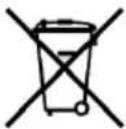 | Recycle discarded product in accordance with local regulations. |
TECHNICAL DATA
| Wheel diameter 622 mm | |
| Wheelbase 1100 mm | |
| Tyre size 700 x 38C | |
| Weight 21 kg | |
| Max total weight 120 kg | |
| Frame | Aluminium |
| Gears Shimano Nexus, 3 gears | |
| Rims | Aluminium |
| Front brake V-brake | |
| Back brake Foot brake | |
| Battery type, lights 2 x AA | |
Motor
| Type Brushless hub motor | |
| Rated output 250 W | |
| Rated speed 170 rpm | |
| Speed | 0 |
| Rated voltage | 36 V DC |
| Rated current | 10.4 Ah |
| Rated torque | 13 Nm |
Battery
| Capacity | 10.4 Ah |
| Charging time 6 – 8 h | |
| Battery range | ≤ 60 km |
Battery charger
| Input voltage | 230 V ~ 50 Hz |
| Output voltage | 42 V DC |
Control unit
| Undervoltage limit | 32 ± 1 V |
| Overcurrent limit | 12 ± 1 V |
DESCRIPTION
| 1. | Frame |
| 2. | Saddle post |
| 3. | Saddle |
| 4. | Adjustable head |
| 5. | Brake handle |
| 6. | Gear selector |
| 7. | Control panel |
| 8. | Bell |
| 9. | Bicycle basket |
| 10. | V-brake |
| 11. | Front lamp |
| 12. | Front wheel with hub motor |
| 13. | Front mudguard |
| 14. | Pedal |
| 15. | Crank section |
| 16. | Chain |
| 17. | Hub gear -25 km/h |
| 18. | Hub brake |
| 19. | Back mudguard |
| 20. | Back lamp |
| 21. | Battery, ON/OFF |
- Carrier rack
- Battery
FIG. 1
CONTROL PANEL
- ON/OFF button
- Walk assist 6 km/h
- Button to select assistance level
- Battery indicator
FIG. 2
BATTERY
- Battery indicator
- Battery, ON/OFF
- Key lock, battery
FIG. 3
ASSEMBLY
SADDLE
Open the quick-release for the saddle post and put the saddle post in the hole in the frame. Lock the saddle post at the required height with the quick-release.
WARNING!
Do not put the saddle over the marking for the max height on the saddle post. The marking means that at least one third of the saddle post must be inserted in the frame.
FIG. 4
FRONT WHEEL
Fit the front wheel by aligning the wheel's centre bolt in the bottom part of the front fork, making sure that the wheel goes through the V-brake all the way. Put the nuts on the centre bolt, and tighten the nuts. Connect the cord from the motor with the cord on the front fork.
HANDLEBARS
Fit the handlebars in the recess on the column. Put the clamp over the handlebars and tighten the two screws.
PEDALS
Screw the pedals onto the pedal arms and make sure to fit them the right way round. The pedals are marked with L for Left and R for Right.
BATTERY
Fit the battery by putting it in the battery holder on the carrier rack. Lock it in place with the key lock.
USE
BEFORE USING FOR THE FIRST TIME
- The battery is half-charged on delivery. Charge the battery for 10-12 hours before using for the first time the next two or three times.
- Be careful when using the power assistance the first time because the electric bike accelerates faster than a normal bike.
- Ride the bike on a smooth surface first to get used to the acceleration.
TO BEAR IN MIND WHEN RIDING
- Follow local traffic regulations.
- Wear a bike helmet.
- Be careful when braking, brake first with the more gentle back brake.
- The power assistance works up to max 25 km/h and then switches off. When the speed drops below 25 km/h and the rider
continues to pedal the power assistance starts again.
- Do not use the power assistance in slippery conditions, or on loose gravel or clay.
- Switch off the power assistance if the electric bike behaves "unusually" to avoid damaging the electrical system.
- The front and back lights have two modes: flashing and constant. Press the light button once for constant and twice to flash.
- Remember to switch off the bike and the lights after use
WARNING!
- Check that the front and back brakes are working properly.
- Check that the front and back wheels are properly screwed on and that there is no play.
- Check that the pedals, saddle and handlebars are properly screwed on and that there is no play.
- Check that the quick-release on the saddle is properly tensioned and that there is no play.
RIDING THE BIKE
- Start the battery and press ON on the control panel.
- The motor is activated when you start pedalling and assists all the time while the battery lasts, switches off during braking, or as soon as you stop pedalling.
- Adjust the assistance level of the electric motor by pressing the MODE button. The power assistance stops at 25 km/h and resumes when the speed drops below 25 km/h, assuming that you continue pedalling and the battery is not flat.
TOTAL DISTANCE
- The total distance per full charge is measured on the horizontal at 20^ C, in calm conditions, at a speed of 25 km/h and with the bike loaded with a total weight of 75 kg.
- The actual real distance varies with the load, road conditions, wind speed, temperature, biking behaviour (number of starts etc.), tyre pressure and correct battery charging routines.
- To obtain the longest possible distance all the above factors should be checked and adjusted as far as is possible – avoid overloading, pedal smoothly and with the correct tyre pressure, and charge the battery regularly.
BRAKES
WARNING!
It is very important to understand how the brakes work on the bike. If the brakes are not used properly you could loose control of the bike and seriously injure yourself. Note that different bikes can behave differently when braking.
Safe braking
- Brake a bit sooner with the back brake than with the front brake.
- Never brake with the front brake when turning. It is especially important to remember this on sharp curves, or on slippery surfaces such as clay, sand and snow.
WARNING!
- Braking too hard with the front brake can brake the bike so suddenly that the rider can be thrown off the bike.
- The braking power is reduced on wet roads. Bike more slowly and brake earlier in wet conditions.
- Check that the brakes are working properly. Do not ride the bike if the brakes are not working properly.
- Check that the brake pads are not worn down and that they are properly in place.
• Make sure that the brake cables are properly in place.
Adjusting the front brake
The tension for the front brake is adjusted with the adjuster screw on the brake handle.
FIG. 5
GEARS
Change gear (1, 2 or 3) by turning the inner part of the right handle on the handlebars.
FIG. 6
CHARGING THE BATTERY
The electrical system on the bike has a low voltage protection that switches off the power if the battery drops below a specific level.
Mounted on the bike
To charge the battery on the bike, connect the charger as shown in the diagram.
FIG. 7
Removed from the bike
- Switch off the bike on the control panel and with the battery's ON/OFF button.
- Turn the key (marked with a ring) to
unlock the battery.
FIG. 8
- Pull back the battery to release it from the bike.
Charge indicator
- The charger light turns red while charging is in progress.
- When the battery is fully charged the charger light turns green.
- A flashing red and green light indicates a fault. Contact an authorised service centre.
MAINTENANCE
SPOKES
Spoke tension
The spokes should be equally tensioned round the wheel.
- Check the spoke tension by squeezing two adjacent spokes together.
- Go round the wheel to check if any spokes are loose.
- Check that the rim is not warped by turning the wheel and using the brake pad as a reference point.
Broken spoke
Note that a warped rim or broken spoke indicates that the wheel is damaged. Take the bike/wheel to a workshop to be repaired.
HUB BEARINGS
Check for play in the hub bearings by holding the wheel on the bike and moving it back and forwards. Adjust any play immediately, otherwise there is a risk of damaging the hub
bearings and the wheel.
CHAIN
The chain should be well-tensioned, and move 1-2 cm "up and down" when pressed with a finger
- Use a damp sponge with a mild detergent when cleaning. Do not use acidic detergents, they can damage the bike.
- Avoid leaving the bike unprotected in the rain or snow.
- If the bike gets wet, wipe it with a towel after use.
- If the bike is used on a salted surface, clean it after use with fresh water.
- Do not clean the bike with a high-pressure washer – risk of water and moisture penetrating into the electrical components and motor.
MAINTENANCE OF BATTERY AND CHARGER
- If the battery is not going to be used for some time it should be kept charged to about 50% (takes about 2–3 hours of charging for a fully discharged battery) and stored in a dry and well-ventilated place. Charge the battery for 2–3 hours every other month for maintenance.
- The battery and charger should be stored in a clean, dry and well-ventilated place, protected from corrosive substances, excessive heat and naked flames.
- Storage conditions for battery: temperature -20 to +35°C, relative humidity 5 to 65%.
- Do not immerse the battery in water. When transported the battery should be packed in its original packaging and protected from knocks and blows, vibration and direct sunlight.
- Disconnect the charger from the battery for storage.
REPLACING THE BACK LIGHT
- Unscrew the screw holding the red plastic glass on the back light and remove it.
- Insert two AA batteries with the correct polarity.
- Replace the glass and screw on.
MAINTAINING THE CHAIN
Lubricating the chain
The chain should be lubricated regularly; use a suitable chain oil. Check that the chain does not knock when cycling, or is damaged. Always keep the chain oiled.
- Lubricate the chain.
- Pedal a few turns so that the oil comes in the links.
- Wipe the chain with a cloth or sponge.
Tensioning the chain
A chain that is not properly tensioned can be dangerous. If the chain can be moved more than 1 cm "up or down" it must be tensioned.
- Undo the nuts on the back wheel and pull the back wheel backwards.
- Tighten the nuts. Make sure the wheel is fitted straight.
- Check that the chain is properly tensioned.
- Check that the wheel is properly tightened.
ADJUSTING THE GEARS
The gear cable tensions is adjusted with the screw on the hub of the back wheel.
LUBRICATION
Lubricate regularly as instructed below to keep the electric bike in good working condition.
NOTE:
Make sure not to use too much lubricant, otherwise there is a risk of it accumulating on the brakes and reducing the braking power. The speed control, brake pads and rims should be kept free of grease and other lubricants.
- Lubricate the chain and derailleur with transmission lubricant at 1 to 2 month intervals, or more often if necessary.
- Grease the saddle post and lubricate the eccentric brake screw, the front hub and pedals with grease at 1 to 2 month intervals, or more often if necessary, to avoid unnecessary friction and to prevent the saddle post fastening.
REGULAR MAINTENANCE
Run the following checks at intervals of 1 to 2 months.
- Check that the stem, handlebars and saddle post are correctly fitted and tightened.
- Check that the axle nuts on the wheels are correctly tightened.
- Check that the rims are not cracked and that the spokes are in good condition and well tensioned.
- Check that the tyres are not worn or damaged.
- Check that the tyre pressure is correct.
- Check that the battery contactors on the frame are clean and free from oxide.
- Check that the battery is sufficiently charged.
- Check that the lights are working properly.
-
Check that the front and back brakes are working properly.
-
Check that the wires are well lubricated and that the brake pads are in good condition.
- Check that the welds on the frame are in good condition and free from rust.
- SE ELCYKEL
- SÄKERHETSANVISNINGAR
- WARNING!
- VEDLIKEHOLD AV KJEDE
- Smøring av kjede
- REGELMESSIG VEDLIKEHOLD
- CHECK BEFORE USE
- BATTERY AND CHARGER
- SERVICE
- ROAD SAFETY
- CONTROL PANEL
- BATTERY
- ASSEMBLY
- SADDLE
- FRONT WHEEL
- HANDLEBARS
- PEDALS
- USE
- BEFORE USING FOR THE FIRST TIME
- TO BEAR IN MIND WHEN RIDING
- RIDING THE BIKE
- TOTAL DISTANCE
- BRAKES
- Safe braking
- Adjusting the front brake
- GEARS
- CHARGING THE BATTERY
- Mounted on the bike
- Removed from the bike
- 8
- Charge indicator
- MAINTENANCE
- SPOKES
- Spoke tension
- Broken spoke
- HUB BEARINGS
- CHAIN
- MAINTENANCE OF BATTERY AND CHARGER
- REPLACING THE BACK LIGHT
- MAINTAINING THE CHAIN
- Lubricating the chain
- Tensioning the chain
- ADJUSTING THE GEARS
- LUBRICATION
- NOTE:
- REGULAR MAINTENANCE
Brand : Kayoba
Model : 005018
Category : Electric bike