
CG 18DL - Brush cutter HITACHI - Free user manual and instructions
Find the device manual for free CG 18DL HITACHI in PDF.


| Product Type | Cordless Brush Cutter |
| Model | CG 18DL (also CG 18DAL variant) |
| Cutting Capacity Diameter | 425 mm |
| No-Load Speed | 0 – 4500 min⁻¹ |
| Battery | BSL1830, Li-ion 18V, 3.0 Ah, 10 cells |
| Charger | UC18YRSL, charging voltage 14.4 V / 18 V |
| Charging Time (BSL1830 at 20°C) | Approx. 45 min |
| Weight (without cutting head and shoulder belt) | 5.4 kg (CG18DL), 5.2 kg (CG18DAL) |
| Operating Time per Charge | Approx. 5 min (full speed, 425 mm nylon line) |
| Sound Power Level (Measured) | 95 dB(A) |
| Sound Power Level (Guaranteed) | 96 dB(A) |
| Vibration Emission (triax vector sum) | 7.5 m/s² |
| Cutting Head Type | Nylon head (Sure-Tap) with automatic line feed |
| Cutting Line Length Adjustment | 110 – 140 mm before operation; tap on ground to extend |
| Safety Features | Lock lever, start button, safety cover, shoulder belt with quick-release |
| Included Accessories | Hex bar wrench (4 mm), box wrench (17/19 mm), protective glasses, shoulder belt, battery (BSL1830), charger (UC18YRSL) |
| Maintenance Interval (Gear Case Lubrication) | Every 50 hours of use |
| Carbon Brush Replacement | When worn to wear limit (use Hitachi Code No. 999054) |
| Applications | Trimming, scaling, and mowing of weeds |
| Compliance | EC Directive 2000/14/EC; Conformity assessed per Annex VI |
Frequently Asked Questions - CG 18DL HITACHI
User questions about CG 18DL HITACHI
0 question about this device. Answer the ones you know or ask your own.
Ask a new question about this device
Download the instructions for your Brush cutter in PDF format for free! Find your manual CG 18DL - HITACHI and take your electronic device back in hand. On this page are published all the documents necessary for the use of your device. CG 18DL by HITACHI.
USER MANUAL CG 18DL HITACHI
natural_image
Two identical mechanical linkage systems labeled CG18DL and CG18DAL, shown from different angles (no additional text or symbols)Read through carefully and understand these instructions before use.
Bruksanvisning
Brugsanvisning
Bruksanvisning
Käyttöohjeet
Handling Instructions
natural_image
Line drawing of a hand holding a small device with a circular base and cable, labeled with number 41 (no text or symbols on the device itself)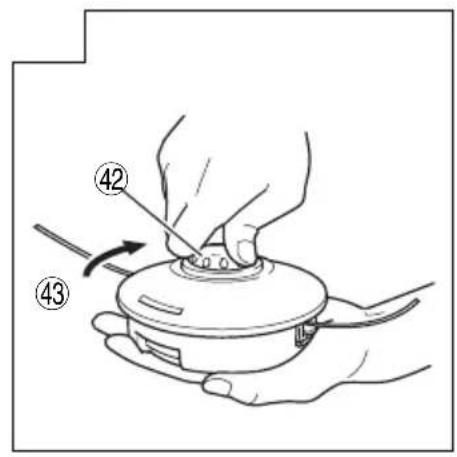
| Svenska Dansk | Norsk Suomi English | ||||
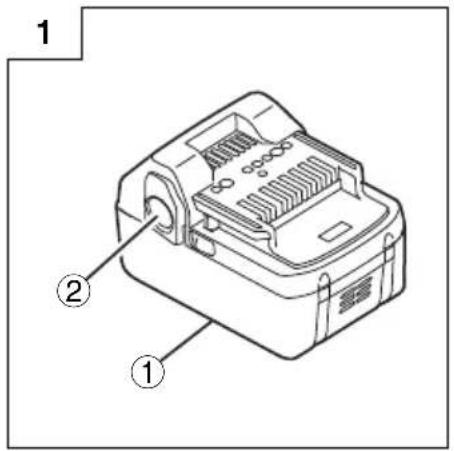
| 1 | Uppladdningsbart batteri | Genopladeligt batteri | Oppladbart batteri Ladattava paristo | Rechargeable battery | |
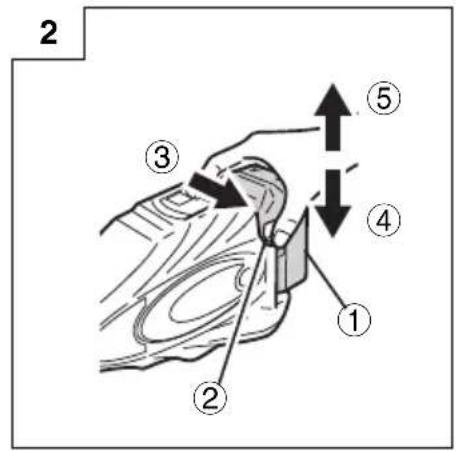
| 2 | Lås Smæklås Sperrehake Salpa Latch | ||||
| 3 | Tryck Tryk Trykk Pa | na Push | |||
| 4 | Tryck inåt Læg i Setti | Paina sisää Insert | |||
| 5 | Dra ut | Træk ud | Dra ut | Vedä | Pull out |
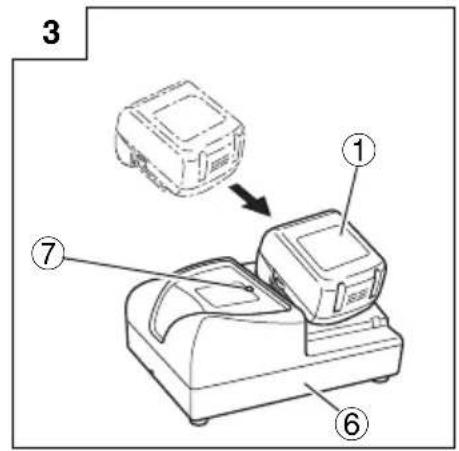
| 6 | Laddare | Opladeapparat | Lader Laturi Charger | ||
| 7 | Signallampa | Kontrollampe | Pilot-lys | Markkivalo | Pilot lamp |
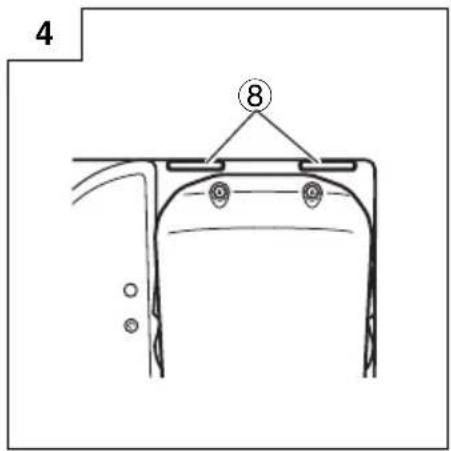
| 8 | Ledning | Linje | Linje | Viiva | Line |
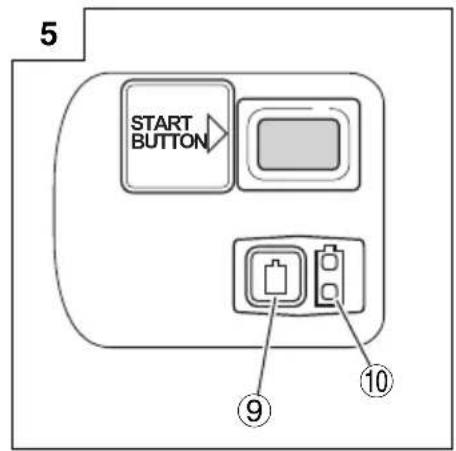
| 9 | Knapp för kvarvarande batteri | Indikatorkontakt for resterende batteri | Indikatorbryter for gjenværende batterinivå | Jäljellä olevan latauksen merkkikytkin | Remaining battery indicator switch |
| 10 | Indikeringslampa för kvarvarande batteri | Indikatorlampe for resterende batteri | Indikatorlampe for gjenværende batterinivå | Jäljellä olevan latauksen merkkivalo | Remaining battery indicator lamp |
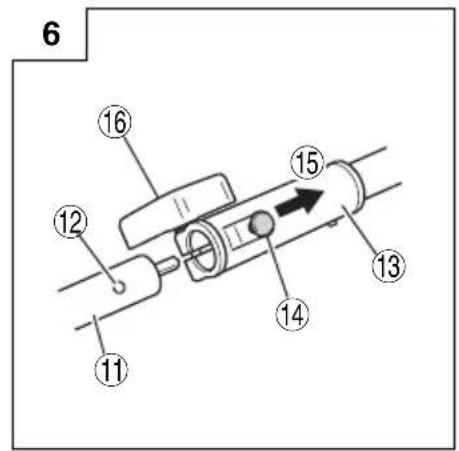
| 11 | Huvudrör Hovedrør | Hovedrør Pääputki | Main pipe | ||
| 12 | Låshål | Låsehul | Låsehull | Lukitusreikä | Locking hole |
| 13 | Ledhus | Drejeledshus | Sammenføyningsboks | Liitososa | Joint case |
| 14 | Låspinne | Låsestift | Låsepinne | Lukitussauva | Lock pin |
| 15 | Dra Træk | Dra Vedä | Pull | ||
| 16 | Handtagsknapp | Skruehåndtag | Betjeningsknapp | Kahvanuppi | Handle knob |
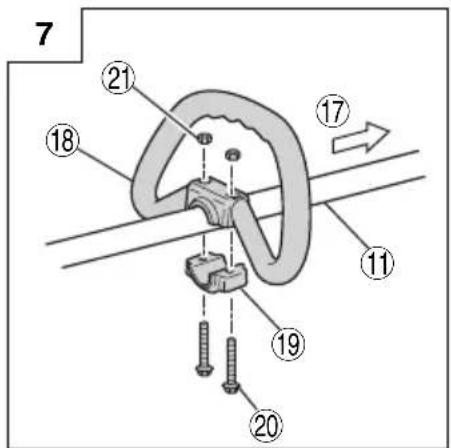
| 17 | Motorsida | Motorside | Motorside | Moottorin sivu | Motor side |
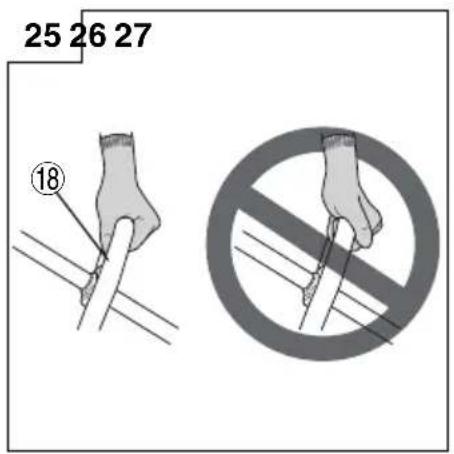
| 18 | Remhandtag | Loophåndtag | løkkehåndtak | Silmukkakahva | Loop handle |
| 19 | Handtagsfäste | Håndtagsfastgørelse | Håndtakets festeanordning | Kahvankiinnitin | Handle fixture |
| 20 | M6×43-bultar | M6×43-bolte | M6×43 bolter | M6×43-pultit | M6×43 bolts |
| 21 | M6-muttrar | M6-møtrikker | M6 mutter | M6-mutterit | M6 nuts |
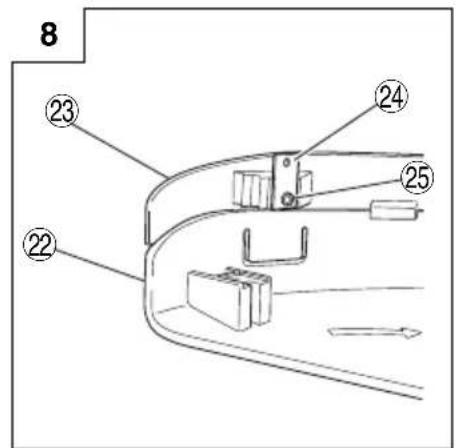
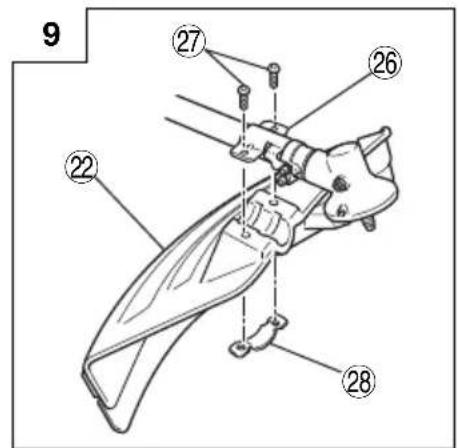
| 22 | Säkerhetskåpa | Sikkerhedsdæksel | Sikkerhetsdeksel | Turvakansi | Safety cover |
| 23 | Skydd till käpa | Dækselafskærmning | Dekningsbeskytter | Kansisuojain | Cover guard |
| 24 | Kniv | Kniv | Kniv | Veitsi | Knife |
| 25 | D4 gångskärande skruv | D4-skrue | D4 selvgjengede skrue | D4-kierreruuvi | D4 tapping screw |
| 26 | Kåpans fäste | Dækselbeslag | Dekkeklamme | Kannensalpa | Cover bracket |
| 27 | M6×25 sexkantbultartill fästet | M6×25-unbrakobolte | M6×25 hex. knapphylse bolter | M6×25-kuusiokolonappipultit | M6×25 hex. socket button bolts |
| 28 | Kåpans hållare | Dækselholder | Overtrekksholder | Kannenpidin | Cover holder |
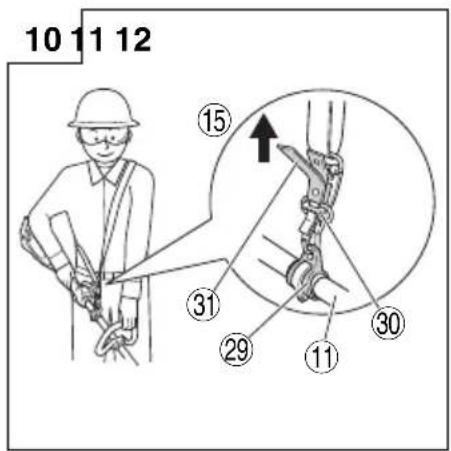
| 29 | Hångare | Bøjle | Bærejern | Ripustin | Hanger |
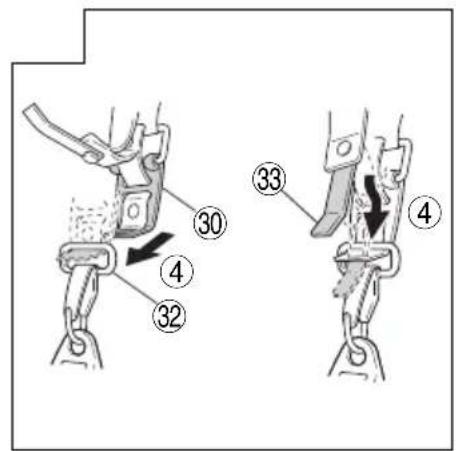
| 30 | Fäste Beslag | Klemme | Salpa Bracket | ||
| 31 | Snabbutlösande rem | Hurtigudlöserrem | Hurtigutløsningsbelte | Pikavapautushihna | Quick-release belt |
| 32 | Krok | Krog | Krok | Koukku Hook | |
| 33 | Snabbutlösande fäste | Hurtigudlöserbeslag | Hurtigutløsningsklemme | Pikavapautussalpa | Quick-release bracket |
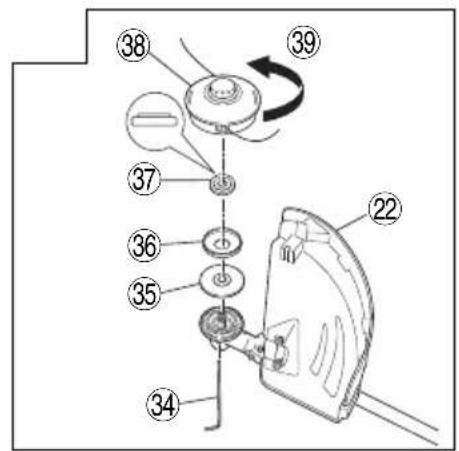
| 34 | Sexkantnyckel | Unbrakonøgle | Sekskantet skiftnøkkel | Kuusiotankoavain | Hexagonal bar wrench |
| 35 | Klinghållare | Skæreholder | Skjæreholder | Leikkurinpidin | Cutter holder |
| 36 | Lindningsskydd | Viklingsbeskytter | Opptrekksbeskytter | Kiertymissuojain | Winding protector |
| 37 | Klingans stödbricka | Skæreholderdæksel | Skjæreholder topp | Leikkurinpitimen suojus | Cutter holder cap |
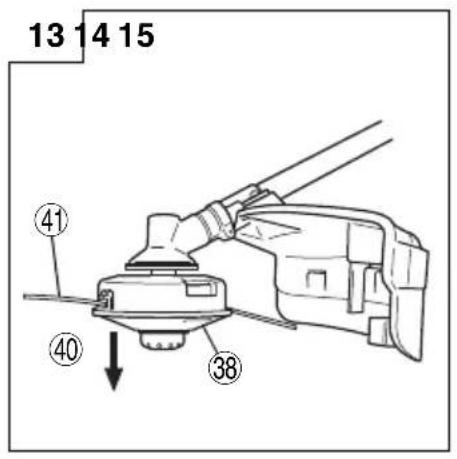
| 38 | Grästrimmarhuvud | Skærehoved | Skjærehode | Leikkauspää | Cutting head |
| 39 | Dra åt | Spænd | Stramme | Kiristä | Tighten |
| 40 | Slå | Bank | Tappe | Kopauta | Tap |
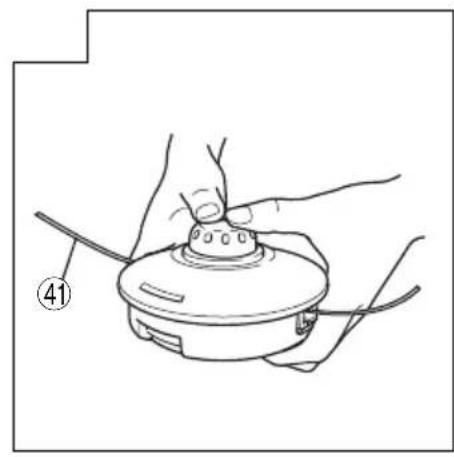
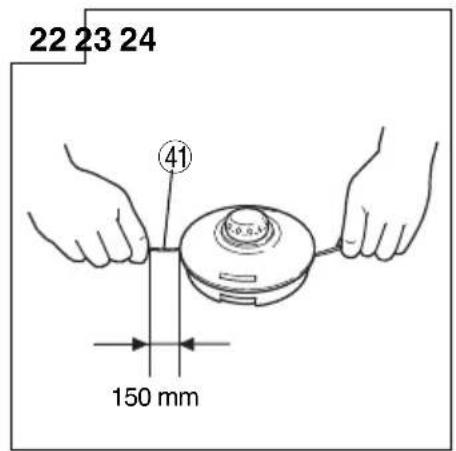
| 41 | Nylonlina | Nylonsnor | Nylontråd | Nylonlanka | Nylon line |
| 42 | Styrkula Styrekugle Veiledningsball Ohjainpallo Guide ball | ||||
| 43 | Vrid (medurs) Drejning (højre) Svinge(Høyre) | Kääntäminen (oikealle) | Turning (Right) | ||
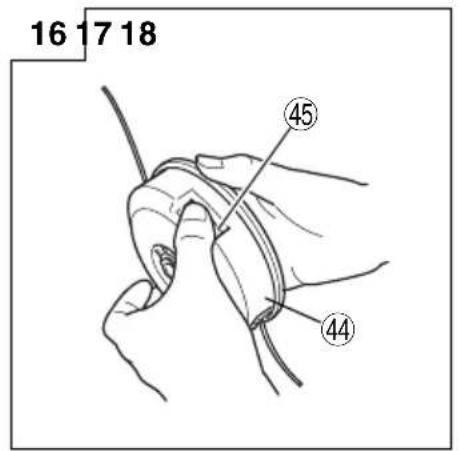
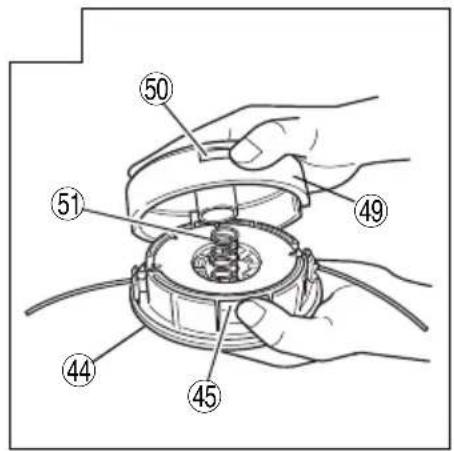
| 44 | Klingans stödbricka Dæksel til skærehus Skjærekropp topp | Leikkausrungon suojus | Cutting body cap | ||
| 45 | Låsflik | Låseflig | Låsesplint | Lukitussalpa | Locking tab |
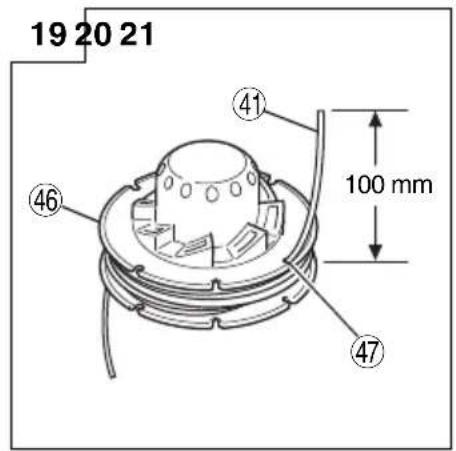
| 46 | Spole | Spole | Spole | Puola | Spool |
| 47 | Hål till stoppare | Stopperhul | Stopperhull | Pysäytinreikä | Stopper hole |
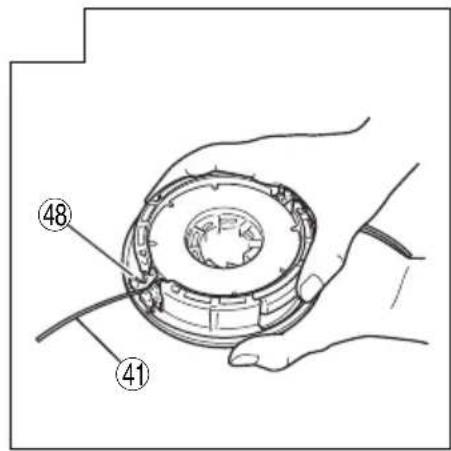
| 48 | Ögla | ∅je | Snørehull | Puolan keskireikä | Eyelet |
| 49 | Klinga | Skærehus | Skjærekropp | Leikkausrunko | Cutting body |
| 50 | Långt hål | Aflangt hul | Langt hull | Pitkä reikä | Long hole |
| 51 | Rullens fjäder | Spolefjeder | Spolerull | Kelajousi | Reel spring |
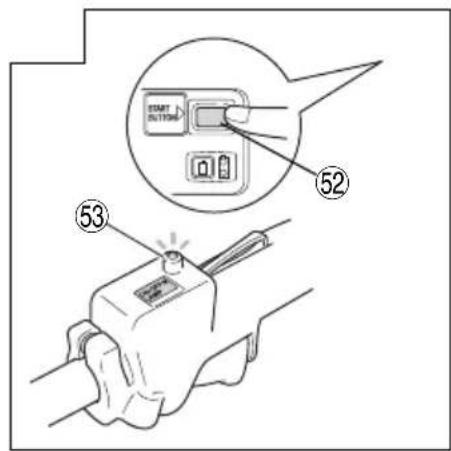
| 52 | Startknapp | Startknap | Startknapp | Aloituspainike | Start button |
| 53 | Strömindikator | Tændt-lampe | Strømlys | Virtalamppu | Power lamp |
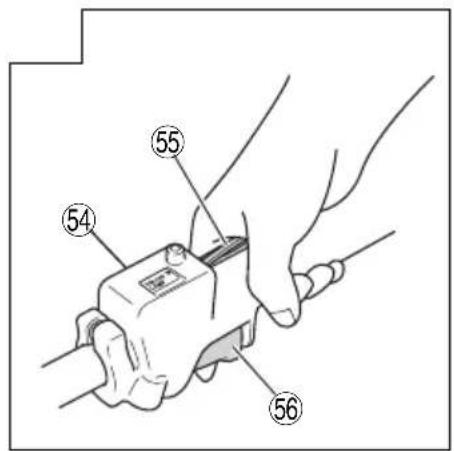
| 54 | Handtag | Håndtag | Håndtak | Kahva | Handle |
| 55 | Låsspak | Låsearm | Låsespake | Lukitusvipu | Lock lever |
| 56 | Spak | Arm | Spake Vipu | Lever | |
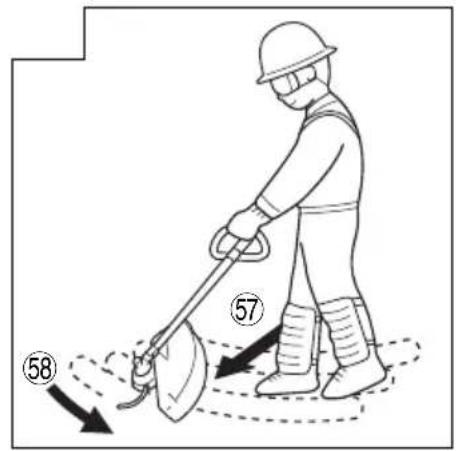
| 57 | Framåt | Fremad | Fremover | Eteenpäin | Forward |
| 58 | Vänstra sidan | Venstre side | Venstre side | Vasen sivu | Left side |
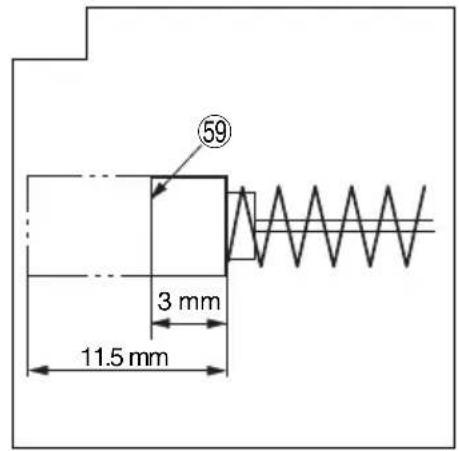
| 59 | Avnötningsgräns | Slidgrænse | Slitasjegrense | Kulutusraja | Wear limit |
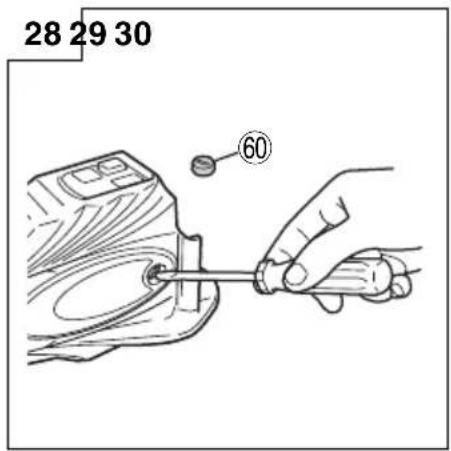
| 60 | Borstskruv | Børstedæksel | Børstehode | Harjansuojus | Brush cap |
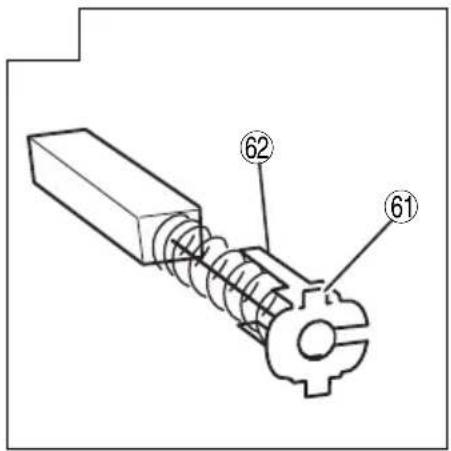
| 61 | Utbuktning på kolborste | Fremspring på kulbørste | Utstikkende del på kullbørsten | Hiiliharjan ulkonema | Protrusion of carbon brush |
| 62 | Nagel på kolborste | Kulbørstes som | Stift på kullbørste | Hiiliharjan kynsi | Nail of carbon brush |
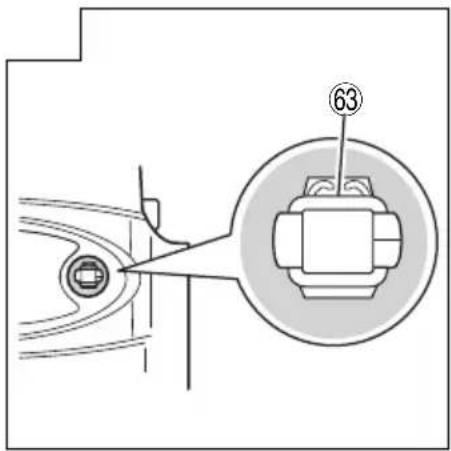
| 63 | Kontaktdel på borstmunstyckets utsidaSymboler ▲WARNINGNedan visas de symboler som används för maskinen. Se till att du förstår vad de betyder innan verktyget används. | Kontaktdel på udvendigt børsterørSymboler ▲ADVARSELDet fölgende viser symboler, som anvendes for maskinen.Vær sikker på, at du forstår deres betydning, inden du begynder at bruge maskinen. | Kontaktpunkt utfenfor børsterøretSymboler ▲ADVARSELFølgende symboler brukes for maskinen.Sørg for å forstå betydningen av disse symbolene før maskinen tas i bruk. | Harjaputken ulkokontaktiosaSymbolit ▲VAROITUSSeuraavassa on näytetty koneessa käytetyt symbolit.Varmista, että ymmärrät niiden merkityksen ennen kuin aloitat koneen käytön. | Contact portion outside brush tubeSymbols ▲WARNINGThe following show symbols used for the machine. Be sure that you understand their meaning before use. |
 | Läs alla säkerhetsvarningar och alla instruktioner.Underlåtenhet att följa varningarna och instruktionerna nedan kan resultera i elstötar, brand och/eller allvarliga skador. | Læs alle sikkerhedsadvarsler og instruktioner.Det kan medføre elektrisk stød, brand og/eller alvorlig personskade, hvis alle adverslerne og instruktionerne nedenfor ikke overholdes. | Les alle advarsler og sikkerhetsinstruksjoner.Hvis du ikke følger alle advarsler og instruksjoner kan bruk av utstyret resultere i elektrisk støt, brann og/ eller alvorlig personskade. | Lue kaikki turvallisuutta koskevat varoitukset ja kaikki ohjeet.Jos varoituksia ja ohjeita ei noudateta, on olemassa sähköiskun, tulipalon ja/tai vakavan henkilövahingon vaara. | Read all safety warnings and all instructions.Failure to follow the warnings and instructions may result in electric shock, fi re and/or serious injury. |
 | Ha alltid ögonskydd. | Brug altid beskyttelsesbriller. | Ha alltid på deg vernebriller. | Käytä aina suojalaseja. | Always wear eye protection. |
 | Bär alltid hörselskydd. | Brug altid høreværn. | Bruk hørselsvern. | Käytä aina kuulosuojaimia | Always wear hearing protection. |
 | Utsätt inte för fukt. | Må ikke udsættes for fugt. | Må ikke utsettes for fuktighet. | Älä altista kosteudelle. | Do not expose to moisture. |
  | Håll åskådare på avständ. | Hold tilskuere på afstand. | Hold tilskuere unna. | Pidä sivustakatsojat poissa. | Keep bystanders away. |
 | Ta ut batteriet före justering eller rengöring och om redskapet lämnas utan tillsyn under en tid. | Tag batteriet ud inden justering eller rengöring, og inden du forlader maskinen selv for korte tidsrum. | Fjern batteri før justering eller rensing og før maskinen forlates uten tilsyn for uansett periode. | Poista akku ennen säätöä tai puhdistamista tai ennen koneen jättämistä ilman valvontaa lyhyeksikin ajaksi. | Remove battery before adjusting or cleaning and before leaving the machine unattended for any period. |
 | Gäller endast EU-länderElektriska verktyg får inte kastas i hushållssoporna!Enligt direktivet 2002/96/EG som avser äldre elektrisk och elektronisk utrustning och dess tillämpning enligt nationell lagstiftning ska uttjänta elektriska verktyg sorteras separat och lämnas till miljövänlig återvinning. | Kun for EU-lande Elværktøj må ikke bortskaff es som almindeligt aff ald! I henhold til det europæiske direktiv 2002/96/EF om bortskaff else af elektriske og elektroniske produkter og gældende national lovgivning skal brugt elværktøj indsamles separat og bortskaff es på en måde, der skåner miljøet mest muligt. | Kun for EU-land Kast aldri elektroverktøy i husholdningsavfallet! I henhold til EU-direktiv 2002/96/EF om kasserte elektriske og elektroniske produkter og direktivets iverksetting i nasjonal rett, må elektroverktøy som ikke lenger skal brukes, samles separat og returneres til et miljøvennlig gjenvinningsanlegg. | Koskee vain EU-maita Älä hävitä sähkötyökalua tavallisen kotitalousjätteen mukana!Vanhoja sähkö- ja elektronikkalaitteita koskevan EU-direktiivin 2002/96/ETY ja sen maakohtaisten sovellusten mukaisesti käytetyt sähkötyökalut on toimitettava ongelmajätteen keräyspisteeseen ja ohjattava ympäristöystävälliseen kierrätykseen. | Only for EU countries Do not dispose of electric tools together with household waste material!In observance of European Directive 2002/96/EC on waste electrical and electronic equipment and its implementation in accordance with national law, electric tools that have reached the end of their life must be collected separately and returned to an environmentally compatible recycling facility. |
ALLMÄNNA SÄKERHETSVARNINGAR FÖR ELEKTRISKA VERKTYG
WARNING
natural_image
Simple line drawing of two coiled, ribbed objects with no text or symbolsnatural_image
Line drawing of a portable electronic device with ports and casing (no text or symbols)- Batteridæksel
natural_image
Simple line drawing of two coiled cylindrical objects with no text or symbolsBEHOLD FOR FREMTIDIG REFERANSE
Sikker bruksmåte
- Trening
natural_image
Simple line drawing of two coiled, ribbed objects with no text or symbolsVEDLIKEHOLD OG INSPEKSJON
FORSIKTIG
natural_image
Simple line drawing of two coiled cylindrical objects with no text or symbolsRead all safety warnings and all instructions.
Failure to follow the warnings and instructions may result in electric shock, fire and/or serious injury.
Save all warnings and instructions for future reference.
The term "power tool" in the warnings refers to your mains-operated (corded) power tool or battery-operated (cordless) power tool.
1) Work area safety
a) Keep work area clean and well lit. Cluttered or dark areas invite accidents.
b) Do not operate power tools in explosive atmospheres, such as in the presence of flammable liquids, gases or dust.
Power tools create sparks which may ignite the dust or fumes.
c) Keep children and bystanders away while operating a power tool.
Distractions can cause you to lose control.
2) Electrical safety
a) Power tool plugs must match the outlet.
Never modify the plug in any way.
Do not use any adapter plugs with earthed (grounded) power tools.
Unmodifi ed plugs and matching outlets will reduce risk of electric shock.
b) Avoid body contact with earthed or grounded surfaces, such as pipes, radiators, ranges and refrigerators.
There is an increased risk of electric shock if your body is earthed or grounded.
c) Do not expose power tools to rain or wet conditions.
Water entering a power tool will increase the risk of electric shock.
d) Do not abuse the cord. Never use the cord for carrying, pulling or unplugging the power tool. Keep cord away from heat, oil, sharp edges or moving parts.
Damaged or entangled cords increase the risk of electric shock.
e) When operating a power tool outdoors, use an extension cord suitable for outdoor use.
Use of a cord suitable for outdoor use reduces the risk of electric shock.
f) If operating a power tool in a damp location is unavoidable, use a residual current device (RCD) protected supply.
Use of an RCD reduces the risk of electric shock.
3) Personal safety
a) Stay alert, watch what you are doing and use common sense when operating a power tool. Do not use a power tool while you are tired or under the influence of drugs, alcohol or medication.
A moment of inattention while operating power tools may result in serious personal injury.
b) Use personal protective equipment. Always wear eye protection.
Protective equipment such as dust mask, non-skid safety shoes, hard hat, or hearing protection used for appropriate conditions will reduce personal injuries.
c) Prevent unintentional starting. Ensure the switch is in the off position before connecting to power source and/or battery pack, picking up or carrying the tool.
Carrying power tools with your finger on the switch or energising power tools that have the switch on invites accidents.
d) Remove any adjusting key or wrench before turning the power tool on.
A wrench or a key left attached to a rotating part of the power tool may result in personal injury.
e) Do not overreach. Keep proper footing and balance at all times.
This enables better control of the power tool in unexpected situations.
f) Dress properly. Do not wear loose clothing or jewellery. Keep your hair, clothing and gloves away from moving parts.
Loose clothes, jewellery or long hair can be caught in moving parts.
g) If devices are provided for the connection of dust extraction and collection facilities, ensure these are connected and properly used.
Use of dust collection can reduce dust related hazards.
4) Power tool use and care
a) Do not force the power tool. Use the correct power tool for your application.
The correct power tool will do the job better and safer at the rate for which it was designed.
b) Do not use the power tool if the switch does not turn it on and off.
Any power tool that cannot be controlled with the switch is dangerous and must be repaired.
c) Disconnect the plug from the power source and/or the battery pack from the power tool before making any adjustments, changing accessories, or storing power tools.
Such preventive safety measures reduce the risk of starting the power tool accidentally.
d) Store idle power tools out of the reach of children and do not allow persons unfamiliar with the power tool or these instructions to operate the power tool.
Power tools are dangerous in the hands of untrained users.
e) Maintain power tools. Check for misalignment or binding of moving parts, breakage of parts and any other condition that may affect the power tools' operation.
If damaged, have the power tool repaired before use.
Many accidents are caused by poorly maintained power tools.
f) Keep cutting tools sharp and clean.
Properly maintained cutting tools with sharp cutting edges are less likely to bind and are easier to control.
g) Use the power tool, accessories and tool bits etc. in accordance with these instructions, taking into account the working conditions and the work to be performed.
Use of the power tool for operations different from those intended could result in a hazardous situation.
5) Battery tool use and care
a) Recharge only with the charger specified by the manufacturer.
A charger that is suitable for one type of battery pack may create a risk of fi re when used with another battery pack.
b) Use power tools only with specifically designated battery packs.
Use of any other battery packs may create a risk of injury and fire.
c) When battery pack is not in use, keep it away from other metal objects like paper clips, coins, keys, nails, screws, or other small metal objects that can make a connection from one terminal to another.
Shorting the battery terminals together may cause burns or a fire.
d) Under abusive conditions, liquid may be ejected from the battery; avoid contact. If contact accidentally occurs, flush with water. If liquid contacts eyes, additionally seek medical help.
Liquid ejected from the battery may cause irritation or burns.
6) Service
a) Have your power tool serviced by a qualified repair person using only identical replacement parts.
This will ensure that the safety of the power tool is maintained.
PRECAUTION
Keep children and infirm persons away.
When not in use, tools should be stored out of reach of children and infirm persons.
GRASS TRIMMER SAFETY WARNINGS
IMPORTANT
READ CAREFULLY BEFORE USE
KEEP FOR FUTURE REFERENCE
Safe operation practices
● Training
a) Read the instructions carefully. Be familiar with the controls and the proper use of the machine.
b) Never allow people unfamiliar with these instructions or children to use the machine. Local regulations can restrict the age of the operator.
c) Keep in mind that the operator or user is responsible for accidents or hazards occurring to other people or their property.
● Preparation
a) Never operate the machine while people, especially children, or pets are nearby.
b) Wear eye protection and stout shoes at all times while operating the machine.
Operation
a) Use the machine only in daylight or good artificial light.
b) Never operate the machine with damaged guards or shields or without guards or shields in place.
c) Switch on the motor only when the hands and feet are away from the cutting means.
d) Always disconnect the machine from the power supply (i.e. remove the plug from the mains or remove the disabling device)
– whenever leaving the machine unattended;
– before clearing a blockage;
- before checking, cleaning or working on the machine;
– after striking a foreign object;
– whenever the machine starts vibrating abnormally.
● Maintenance and storage
e) Take care against injury to feet and hands from the cutting means.
f) Always ensure that the ventilation openings are kept clear of debris.
a) Disconnect the machine from the power supply (i.e. remove the plug from the mains or remove the disabling device) before carrying out maintenance or cleaning work.
b) Use only the manufacturer's recommended replacement parts and accessories.
c) Inspect and maintain the machine regularly. Have the machine repaired only by an authorized repairer.
d) When not in use, store the machine out of the reach of children.
PRECAUTIONS FOR CORDLESS GRASS TRIMMER
WARNING
- Exercise patience in all work with the tool. And dress properly to keep warm.
- Plan all work ahead to prevent accidents.
- Do not operate the tool at night or under bad weather conditions when visibility is poor. And do not operate the tool when it is raining or right after it has been raining.
Working on slippery ground could lead to an accident if you lose your balance.
- Inspect the cutting head before starting work.
Do not use the tool if the cutting head is cracked, scarred or bent.
Make sure the cutting head is properly attached. A cutting head that falls apart or comes loose during operation could cause an accident.
- Be sure to attach the safety cover and the shoulder belt before starting work.
Operating the tool without these parts could lead to injury.
-
Be sure to attach the loop handle before starting work. Make sure it is not loose but properly attached before starting work. Hold the loop handle firmly during work and do not swing the tool around, but use the correct posture and maintain your balance. Losing your balance during work could lead to an injury.
-
Take care when starting the motor.
Place the tool on level ground.
Do not operate the tool within 15 m of people or animals.
Make sure that the cutting head does not come into contact with the ground or trees and plants.
A careless start could lead to injury.
- Do not secure the lock lever.
Accidentally pulling back the lever could lead to unexpected injury. - Before leaving the tool, press the start button to turn it off.
- Operate the tool with care near electric cables, gas pipes and similar installations.
- Look out for and remove empty cans, wire, stones or other obstacles before starting work. And do not work near tree roots or rocks.
Working in such areas could damage the cutting head or lead to injury.
- Do not raise the rotation speed excessively.
Raise the speed gradually and not abruptly.
Adjust lever position to suit the work load.
Objects that fly out of the tool could cause unexpected injury.
- Never touch the cutting head during operation.
Also make sure it does not come into contact with your hair, clothes, etc.
- In the following situations, turn off the motor and check that the cutting head has stopped rotating.
To move to another work area.
To remove rubbish or grass that has become stuck in the tool.
To remove from the work area obstacles or the rubbish, grass and chips generated by trimming.
To lay down the tool.
Doing this with the cutting head still rotating could lead to unexpected accidents.
- Do not use the tool within 15 m of another person.
When you work with someone else, maintain a distance of more than 15 m.
Flying chips could lead to unexpected accidents.
When working on unstable make sure that your co-worker is not exposed to any hazards.
Use whistles or other means for calling the attention of your co-workers.
- When grass and other objects become entangled in the cutting head, turn off the motor and make sure the cutting head has stopped rotating before removing them.
Removing objects from the cutting head when it is still rotating will lead to injury.
Continuing operation when foreign matter is stuck in the cutting head may lead to damage.
- If the tool is operating poorly and produces strange noise or vibrations, turn off the motor immediately and ask your dealer to have it inspected and repaired.
Continued use under these conditions could lead to injury or tool damage.
- If you drop or bump the tool, inspect it carefully to check there is no damage, cracks or deformation.
Using a tool that is damaged, cracked or deformed could result in injury.
- Secure the tool during vehicle transport to ensure that it lies still.
Failure to heed this warning may result in an accident.
CAUTION
-
Do not turn on the cutting head for cutting objects other than grass. Do not operate the tool in water puddles and make sure that soil does not come into contact with the cutting head.
-
The tool contains precision parts and should not be dropped, exposed to strong impact or water.
The tool could be damaged or malfunction.
-
When the tool is to be stored after use or be transported, remove the cutting head.
-
Do not expose the tool to insecticide and other chemicals.
Such chemicals could cause cracking and other damage.
- Replace warning labels with new labels when they become difficult to recognize or illegible and when they start to peel.
Ask your dealer to provide the warning labels.
PRECAUTIONS FOR BATTERY AND CHARGER
- Always charge the battery at a temperature of 0^ C – 40^ C. A temperature of less than 0^ C will result in over charging which is dangerous. The battery cannot be charged at a temperature higher than 40^ C.
The most suitable temperature for charging is that of 20^ C – 25^ C.
- When one charging is completed, leave the charger for about 15 minutes before the next charging of battery.
Do not charge the battery more than 2 hours.
-
Do not allow foreign matter to enter the hole for connecting the rechargeable battery.
-
Do not insert object into the air ventilation slots of the charger. Inserting metal objects or inflammables into the charger air ventilation slots will result in electrical shock hazard or damaged charger.
-
Using an exhausted battery will damage the charger.
-
Bring the battery to the shop from which it was purchased as soon as the post-charging battery life becomes too short for practical use. Do not dispose of the exhausted battery.
-
Never disassemble the rechargeable battery and charger.
s 8. r Never short-biickitethes rechargeable battery. Short-circuiting the battery will cause a great electric current and overheat. It results in burn or damage to the battery.
- Do not dispose of the battery in fire. If the battery is burnt, it may explode.
CAUTION ON LITHIUM-ION BATTERY
To extend the lifetime, the lithium-ion battery equips with the protection function to stop the output.
In the cases of 1 to 3 described below, when using this product, even if you are pulling the switch, the motor may stop. This is not the trouble but the result of protection function.
- When the battery power remaining runs out, the motor stops.
In such case, charge it up immediately.
-
If the tool is overloaded, the motor may stop. In this case, release the switch of tool and eliminate causes of overloading. After that, you can use it again.
-
If the battery is overheated under overload work, the battery power may stop.
In this case, stop using the battery and let the battery cool. After that, you can use it again.
Furthermore, please heed the following warning and caution.
WARNING
In order to prevent any battery leakage, heat generation, smoke emission, explosion and ignition beforehand, please be sure to heed the following precautions.
- Make sure that swarf and dust do not collect on the battery.
During work make sure that swarf and dust do not fall on the battery.
○ Make sure that any swarf and dust falling on the power tool during work do not collect on the battery.
○ Do not store an unused battery in a location exposed to swarf and dust.
Before storing a battery, remove any swarf and dust that may adhere to it and do not store it together with metal parts (screws, nails, etc.).
-
Do not pierce battery with a sharp object such as a nail, strike with a hammer, step on, throw or subject the battery to severe physical shock.
-
Do not use an apparently damaged or deformed battery.
-
Do not use the battery in reverse polarity.
-
Do not connect directly to an electrical outlets or car cigarette lighter sockets.
-
Do not use the battery for a purpose other than those specified.
-
If the battery charging fails to complete even when a specified recharging time has elapsed, immediately stop further recharging.
- Do not put or subject the battery to high temperatures or high pressure such as into a microwave oven, dryer, or high pressure container.
- Keep away from fire immediately when leakage or foul odor are detected.
- Do not use in a location where strong static electricity generates.
- If there is battery leakage, foul odor, heat generated, discolored or deformed, or in any way appears abnormal during use, recharging or storage, immediately remove it from the equipment or battery charger, and stop use.
CAUTION
- If liquid leaking from the battery gets into your eyes, do not rub your eyes and wash them well with fresh clean water such as tap water and contact a doctor immediately.
If left untreated, the liquid may cause eye-problems.
- If liquid leaks onto your skin or clothes, wash well with clean water such as tap water immediately.
There is a possibility that this can cause skin irritation.
- If you find rust, foul odor, overheating, discolor, deformation, and/or other irregularities when using the battery for the first time, do not use and return it to your supplier or vendor.
SPECIFICATIONS
POWER TOOL
| Model CG18DL CG18DAL | ||
| Pole type Attachment type Straight type | ||
| Cutting capacity diameter | 425 mm | |
| Rotation direction | Counterclockwise as seen from gear case | |
| No-load speed | 0–4500 min ^-1 | |
| Operating time on one charge * 1(When supplied rechargeable battery is fully charged) | 5 min*2 | |
| Battery | BSL1830: Li-ion 18 V (3.0 Ah 10 cells) | |
| Weight (without cutting head and shoulder belt) | 5.4 kg | 5.2 kg |
*1 The data in the above table is provided only as an example. Since type of grass, knife sharpness, cutting head rpm, ambient temperature, rechargeable battery characteristics, work methods, etc. can vary widely the above should only be used as a rough guideline.
*2 Conditions: Outer diameter of nylon cord cutter 425 mm, switch set to full speed.
CHARGER
| Model | UC18YRSL |
| Charging voltage | 14.4 V 18 V |
| Weight | 0.6 kg |
STANDARD ACCESSORIES
| CG18DLCG18DAL(LSC) | 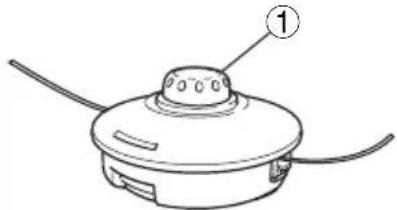 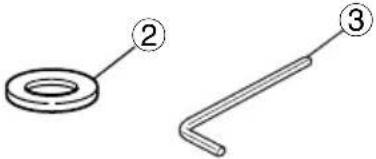 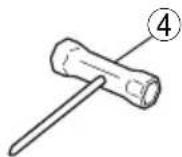 |
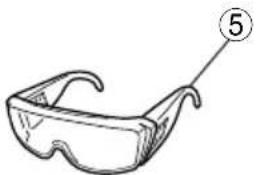 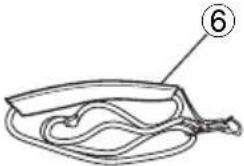  | |
 | |
| 1 Nylon head (Sure tap) ........12 Winding protector .......13 Hexagonal bar wrench 4 mm .......14 Box wrench (Hex. socket 17/19) .......15 Protective glasses .......16 Shoulder belt .......17 Battery (BSL1830) .......18 Charger (UC18YRSL) .......1 |
Standard accessories are subject to change without notice.
OPTIONAL ACCESSORIES (sold separately)
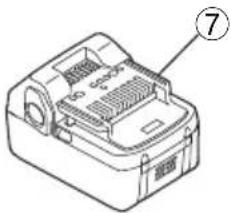
- Battery (BSL1830)
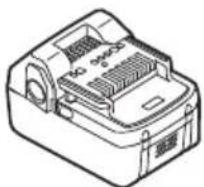
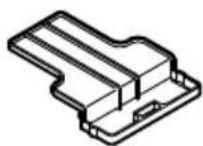
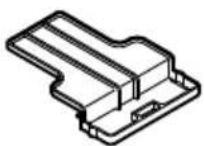
- Battery cover
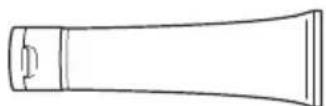
- Grease (100 g tube)
Lubricate the gear case once every 50 hours of work.
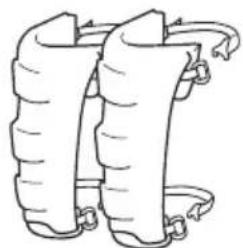
- Shin guard (1 kit with 2 guards)
Protects feet from fl ying debris.
natural_image
Line drawing of two coiled, ribbed or mechanical components (no text or symbols)Optional accessories are subject to change without notice.
APPLICATIONS
Trimming, scaling and mowing of weed.
BATTERY REMOVAL/INSTALLATION
- Battery removal
Hold the housing tightly and push the battery latches to remove the battery (see Fig. 2).
CAUTION
Never short-circuit the battery.
- Battery installation
Insert the battery while observing its polarities (see Fig. 2).
CHARGING
Before using the power tool, charge the battery as follows.
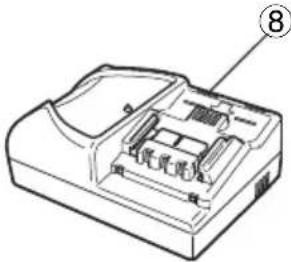
1. Connect the charger's power cord to a receptacle.
When the power cord is connected, the charger's pilot lamp will blink in red. (At 1-second intervals)
2. Insert the battery into the charger.
Firmly insert the battery into the charger until the line is visible, as shown in Fig. 3 and 4.
3. Charging
When inserting a battery in the charger, charging will commence and the pilot lamp will light continuously in red.
When the battery becomes fully recharged, the pilot lamp will blink in red. (At 1-second intervals) (See Table 1)
(1) Pilot lamp indication
The indications of the pilot lamp will be as shown in Table 1, according to the condition of the charger or the rechargeable battery.
Table 1
| Indications of the pilot lamp | |||
| The pilot lamp lights or blinks in red. | Before charging | Blinks Lights for 0.5 seconds. Does not light for 0.5 seconds. (off for 0.5 seconds) | |
| While charging | Lights Lights continuously | ||
| Charging complete | Blinks Lights for 0.5 seconds. Does not light for 0.5 seconds. (off for 0.5 seconds) | ||
| Charging impossible | Flickers Lights for 0.1 seconds. Does not light for 0.1 seconds. (off for 0.1 seconds) | Malfunction in the battery or the charger | |
| The pilot lamp lights in green. | Overheat standby | Lights Lights continuously | Battery overheated. Unable to charge (Charging will commence when battery cools). |
(2) Regarding the temperatures of the rechargeable battery
The temperatures for rechargeable batteries are as shown in Table 2, and batteries that have become hot should be cooled for a while before being recharged.
Table 2 Recharging ranges of batteries
| Rechargeable batteries | Temperatures at which the battery can be recharged |
| BSL1830 0°C – 50°C |
(3) Regarding recharging time
Depending on the combination of the charger and batteries, the charging time will become as shown in Table 3.
Table 3 Charging time (At 20°C)
| Battery\Charger | UC18YRSL |
| BSL1830 | Approx. 45 min. |
NOTE
The charging time may vary according to temperature and power source voltage.
-
Disconnect the charger's power cord from the receptacle.
-
Hold the charger firmly and pull out the battery. NOTE
After operation, pull out batteries from the charger first, and then keep the batteries properly.
How to make the batteries perform longer
(1) Recharge the batteries before they become completely exhausted.
When you feel that the power of the tool becomes weaker, stop using the tool and recharge its battery. If you continue to use the tool and exhaust the electric current, the battery may be damaged and its life will become shorter.
(2) Avoid recharging at high temperatures.
A rechargeable battery will be hot immediately after use. If such a battery is recharged immediately after use, its internal chemical substance will deteriorate, and the battery life will be shortened. Leave the battery and recharge it after it has cooled for a while.
CAUTION
When the battery charger has been continuously used, the battery charger will be heated, thus constituting the cause of the failures. Once the charging has been completed, give 15 minutes rest until the next charging.
○ If the battery is recharged when it is warm due to battery use or exposure to sunlight, the pilot lamp map light in green.
The battery will not be recharged. In such a case, let the battery cool before charging.
When the pilot lamp flickers in red (at 0.2-second intervals), check for and take out any foreign objects in the charger's battery installation hole. If there are no foreign objects, it is probable that the battery or charger is malfunctioning. Take it to your authorized Service Center.
ABOUT REMAINING BATTERY INDICATOR
When pressing the remaining battery indicator switch, the remaining battery indicator lamp lights and the battery remaining power can be checked. (Fig. 5) When releasing your finger from the remaining battery indicator switch, the remaining battery indicator lamp goes off. The Table 4 shows the state of remaining battery indicator lamp and the battery remaining power.
Table 4
| State of lamp Battery Remaining Power | |
| [DC68] | The battery remaining power is enough. |
| [1640] | The battery remaining power is a half. |
| [STBW] | The battery remaining power is nearly empty.Re-charge the battery soonest possible. |
As the remaining battery indicator shows somewhat differently depending on ambient temperature and battery characteristics, read it as a reference.
NOTE
○ Do not give a strong shock to the switch panel or break it. It may lead to a trouble.
To save the battery power consumption, the remaining battery indicator lamp lights while pressing the remaining battery indicator switch.
PRIOR TO OPERATION
CAUTION
Pull out battery before doing any assembly.
- Assembling attachments [CG18DL only] (Fig. 6)
(1) Insert the lock pin in the main pipe locking hole of the trimmer attachment and make sure the main pipe cannot come loose.
(2) Tighten the handle knob to firmly secure it.
2. Installing the loop handle (Fig. 7)
(1) Remove the M6 × 43 bolts (2).
(2) Install the loop handle on the main pipe so that it leans against the motor.
(3) Place the handle fi xture at the lower end of the main pipe and secure it fi rmly using M6 × 43 bolts (2) and M6 nuts (2).
NOTE
Secure the loop handle in a location that good grip.
- Installing safety cover (See Fig. 8 and 9)
WARNING
Be sure to install the safety cover in its designated location.
Failure to heed this warning may result in injury from fl ying stones.
NOTÉ
Use the supplied hexagonal bar wrench for installation.
(1) Use the supplied D4 tapping screw to install the knife in the cover guard. (Fig. 8)
Attach the cover guard to the safety cover.
(2) Align the two holes in the cover bracket and the safety cover and insert M6 × 25 hex. socket button bolts. (The cover bracket is installed in the gear case.)
(3) Place the cover holder on the underside of the safety cover and use the supplied Allen wrench to alternately tighten the M6 × 25 hex. socket button bolts until they are properly tightened.
CAUTION
Take care to avoid cutting yourself on the knife inside the safety cover.
- Installing the shoulder belt
WARNING
○ Be sure to attach the shoulder belt so that the grass trimmer can be carried correctly.
☐ If you get the feeling the tool is not operating normally, turn off the motor immediately, remove the quick-release bracket of the shoulder belt and remove the tool.
CAUTION
○ If you do not support the tool when you pull the quick-release belt, it may fall causing injury or damage.
Hold the main pipe with one hand while you pull with the other hand.
○ Make sure the quick-release function operates normally before you start working.
(1) Place the shoulder belt on the shoulder as shown in Fig. 10 and engage it with the hanger on the tool. Adjust the shoulder belt to suitable length.
(2) To remove the tool from the shoulder belt, support the tool by holding the main pipe with one hand and use the other hand to pull the quick-release belt as shown in Fig. 10 to free it from the bracket.
(3) To strap on the tool, insert the bracket in the hook and insert the quick-release bracket over the hook and into the wide opening of the bracket. (Fig. 11)
Gently pull the shoulder belt to make sure properly attached.
CUTTING HEAD
1. Function
The "SURE-TAP" Cutting Head
○ Automatically feeds more nylon cutting line when it is tapped at low rpm (not greater than 4500 min ^-1 ).
CAUTION
○ The cutting body cap must be securely attached to the cutting body.
○ Check the cutting body, cutting body cap and other components for cracks or other damage.
○ The cutting head must be securely mounted to the unit's gear case.
☐ For outstanding performance and reliability, always use HITACHI nylon cutting line. Never use wire or other material which can become a dangerous missile.
☐ If the Cutting Head does not feed cutting line properly, check that the nylon line and all components are properly installed. Contact HITACHI dealer if you need assistance.
- Installation (Fig. 12)
(1) Insert a Hexagonal bar wrench into the hole of the gear case in order to lock the cutter holder.
(2) Install cutter holder, winding protector, cutter holder cap, cutting head on gear case of grass trimmer. The mounting nut is left-hand-threaded. Turn clockwise to loosen/counterclockwise to tighten.
- Adjustment of line length
(1) Set the motor speed as low as possible and tap the cutting head on the ground. Nylon line is drawn out about, 30 mm by one tapping. (Fig. 13)
Also, you can extend nylon line with hands but the motor must be completely stopped. (Fig. 14)
(2) Adjust nylon line to proper length 110 mm – 140 mm before each operation.
(3) When nylon line is drawn out too long, rewind long line outside by pushing and turning the guide ball with hand. (Fig. 15)
- Nylon line replacement
(1) Remove cutting body cap by firmly pushing inward the locking tabs with your thumbs (Fig. 16).
(2) After removing cutting body cap, take out spool, and discard the left line.
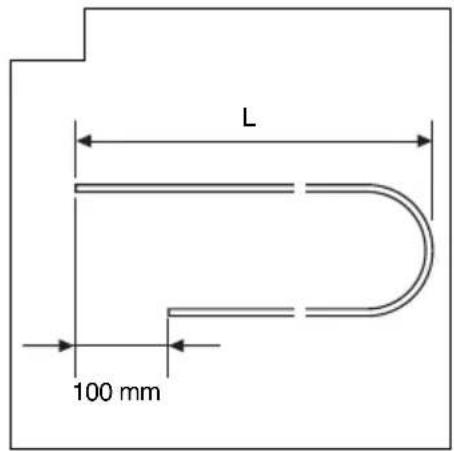
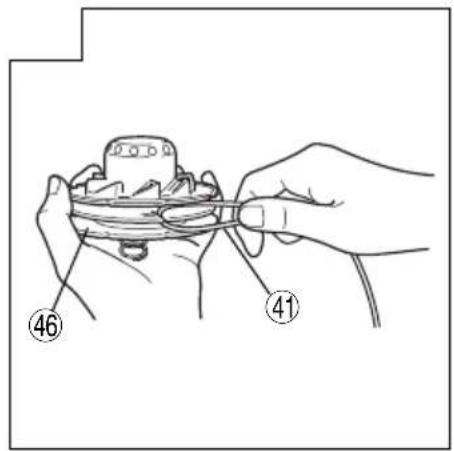
(3) Fold the new nylon line half unevenly. (Fig. 17)
(4) Hook the "U" bent end of the nylon line into the groove on the center partition of the spool.
Wind both halves of the line on the spool in the same direction, keeping each half of the line on its own side of the partition. (Fig. 18)
(5) Push each line into stopper holes, leaving the loose ends approx. 100 mm in length. (Fig. 19)
(6) Insert both loose ends of the line through the eyelet when placing the spool in the cutting body cap. (Fig. 20)
NOTE
When placing spool in the cutting body cap, try to line up stopper holes (3) with eyelet (4) for easier line release later.
(7) Place reel spring into the spool. (Fig. 21)
(8) Place the cutting body over the cutting body cap so that the locking tabs on the cutting body meet the long holes on the cutting body. Then push the cutting body cap securely until it clicks into place. (Fig. 21)
(9) Pull loose ends of line to release them from the stopper holes. If the lines happen to come out too long (over 100 mm), rewind them to be approx. 100 mm by pushing and turning guide ball. (Fig. 15)
(10) The initial cutting line length should be approx. 150 mm and should be equal on both sides. (Fig. 22)
OPERATION
Trimming grass WARNING
○ Do not operate the tool at night or under bad weather conditions when visibility is poor.
○ Do not operate the tool when it is raining or right after it has been raining.
○ Wear proper footwear to prevent slipping cause you to lose your balance and fall.
○ Do not use the tool on steep slopes.
When trimming grass on slopes that are not so steep, trim by moving towards the ridge.
○ Place the tool on the shoulder belt, place the right hand on the handle and the left hand on the loop handle and hold it firmly.
○ Take care not to move the cutting head too close to your feet.
○ Do not raise the cutting head above your knee during cutting.
○ Do not use the tool where the cutting head may come into contact with stones, tree and other obstacles.
○ A cutting attachment can injure while it continues to spin after the motor is stopped. When the unit is turned off, make sure the cutting attachment has stopped before the unit is set down.
☐ Do not use the tool within 15 m of another person. When you work with someone else, maintain a distance of more than 15 m.
1. Insert the battery while observing its polarities
2. Turn on the tool (Fig. 23)
○ Press the Start button on the housing, the power goes on and the power lamp on the handle lights red.
○ Pressing the start button a second time turns the power off and the red lamp on the handle goes off.
[Auto power off]
When the power is turned on but the lever is not used for one minute, the tool is automatically turned off. To turn the tool on again, press the start button a second time.
WARNING
Never leave the tool with the power on. This could result in an accident.
3. Trimming grass
☐ Grip the handle from above, press the lock lever and pull the lever to start cutting head rotation. (Fig. 24)
○ Release the lever when you finish trimming and stop the motor.
○ Place your thumb on the loop handle and grip the handle with your other fingers. (Fig. 25)
○ Take a posture that makes it easy to move.
[Grass trimming techniques]
When the motor is turning slowly, it is weak and grass tends to get caught in the knife. When it turns too fast, the vibrations and noise are loud and battery power consumption goes up.
○ At excessive speed, the battery will wear down faster.
Do not swing the pipe, but use the hips to move the cutting head horizontally from right to left in an arc while going forward and use the left side of the cutting head for cutting grass. (Fig. 26)
OPERATIONAL CAUTIONS
Continuous work
This tool comes with an over-heat protection circuit that protects the electronic parts that control the rechargeable battery. In continuous trimming work, tool temperature will rise and eventually trigger the over-heat protection circuit, which will shut down the tool. If this happens, let the tool cool for a length of time. When the temperature drops, it will again become possible to use the tool. When the rechargeable battery has to be exchanged during continuous operation, let the tool rest for about 15 minutes.
Speed switch
Equipped with an electronic circuit, this switch enables step-ness speed changes.
If the switch trigger is set too low (low rpm range) and the motor is continuously overworked, the electronic circuits will become hot and could break down. Do only light work at low motor speeds.
MAINTENANCE AND INSPECTION
CAUTION
○ Pull out battery before doing any inspection or maintenance.
1. Checking the condition of the cutting head
The cutting head should be checked regularly. If worn or broken cutting head can slip or decrease the efficiency of the motor and burn it out. Replace worn cutting head with new ones.
CAUTION
☐ If you use a cutting head of which point is worn or broken, it will be dangerous. So replace it with a new one.
2. Check the Screws
Loose screws are dangerous. Regularly inspect them and make sure they are tight.
CAUTION
○ Using this power tool with loosened screws is extremely dangerous.
3. Maintenance of the motor
The motor unit winding is the very “heart” of the power tool. Exercise due care to ensure the winding does not become damaged and/or wet with oil or water.
4. Gear case lubrication
○ Maintenance interval
The gear case should be checked for lubrication after each 50 hours of use.
○ Lubrication
Remove the cutting head. Clean any dirt and debris from the area between the gear case. Remove the M6 bolt from the side of the gear case. While rotating the attaching shaft, inject lithium-base bearing lube (P/N 682975) through the hole until the gear case is full. Reinstall M6 bolt.
5. Inspecting the carbon brushes (Fig. 27)
The motor employs carbon brushes which are consumable parts. Since and excessively worn carbon brush can result in motor trouble, replace the carbon brush with new ones when it becomes worn to or near the “wear limit”. In addition, always keep carbon brushes clean and ensure that they slide freely within the brush holders.
NOTE
When replacing the carbon brush with a new one, be sure to use the Hitachi Carbon Brush Code No. 999054.
6. Replacing carbon brushes
Take out the carbon brush by first removing the brush cap and then hooking the protrusion of the carbon brush with a slotted head screw driver, etc., as shown in Fig. 28.
When installing the carbon brush, choose the direction so that the nail of the carbon brush (see Fig. 29) agrees with the contact portion outside the brush tube. Then push it in with a finger as illustrated in Fig. 30. Lastly, install the brush cap.
CAUTION
○ Be absolutely sure to insert the nail of the carbon brush into the contact portion outside the brush tube. (You can insert whichever one of the two nails provided.)
○ Caution must be exercised since any error in this operation can result in the deformed nail of the carbon brush and may cause motor trouble at an early stage.
7. Cleaning of the outside
When the grass trimmer is stained, wipe with a soft dry cloth or a cloth moistened with soapy water. Do not use chloric solvents, gasoline or paint thinner, as they melt plastics.
8. Storage
Store grass trimmer in a place in which the temperature is less than 40^ C and out of reach of children.
9. Service parts list
CAUTION
Repair, modification and inspection of Hitachi Power Tools must be carried out by a Hitachi Authorized Service Center. This Parts List will be helpful if presented with the tool to the Hitachi Authorized Service Center when requesting repair or other maintenance. In the operation and maintenance of power tools, the safety regulations and standards prescribed in each country must be observed.
MODIFICATIONS
Hitachi Power Tools are constantly being improved and modified to incorporate the latest technological advancements.
Accordingly, some parts may be changed without prior notice.
Important notice on the batteries for the Hitachi cordless power tools
Please always use one of our designated genuine batteries. We cannot guarantee the safety and performance of our cordless power tool when used with batteries other than these designated by us, or when the battery is disassembled and modified (such as disassembly and replacement of cells or other internal parts).
TROUBLESHOOTING
Use the inspections in the table below if the tool does not operate normally. If this does not remedy the problem, consult your dealer or the Hitachi Authorized Service Center.
| Symptom Possible cause Remedy | |||
| Charger The Charge lamp does not go on. | The power plug is not connected to an AC outlet. | Connect the power plug to an AC outlet. | |
| The battery is not properly connected to the charger. | Insert the battery so that it is properly seated in the charger. | ||
| The battery or charger electrodes are soiled. | Use a cotton swab or other tool to clean the electrodes. | ||
| The battery is extremely hot. Allow the battery to properly cool before charging. | |||
| The battery or charger is faulty. Disconnect the power plug and consult your dealer or the Hitachi Authorized Service Center. | |||
| Tool Does not operate. The rechargeable battery is depleted. Charge the rechargeable battery. | |||
| The rechargeable battery has not been properly installed. | Remove the rechargeable battery from the battery compartment in the tool and check for and remove any foreign matter. Also check the battery electrodes for soiling, water or other foreign matter. Use a cotton swab for cleaning. Make sure that the rechargeable battery is pressed in until it clicks into place. | ||
| The power has not been turned on. Press the start button on the housing to start the tool. This tool comes with an auto power off function. The power is automatically turned off if nobody pulls the lever during a one minute period after power on. To turn the tool on again, press the start button a second time. Pressing the start button a second time turns the power off . | |||
| The lock lever was not pressed when the lever was pulled back. | To prevent accidents from incorrect operation, the lock lever must be pressed while the lever is pulled back to start the motor. Hold the handle from above and press the lock lever while pulling the handle. | ||
| The tool pulls in large volumes of grass that are caught between the safety cover and the nylon head, the tool is overloaded. | This is the effect of a function that protects the rechargeable battery by turning off the motor when the tool is exposed to an excessive load. Turn off the tool and remove the cause of the overload. Press the start button once again to continue operation. | ||
| Goes on, but soon stops. | The rechargeable battery power is low. Charge the rechargeable battery. | ||
| The rechargeable battery is overheated. Stop using the rechargeable battery, remove it from the tool and let it cool in a well-ventilated location not exposed to sunlight. | |||
| Strong vibrations The loop handle is not properly attached to the main pipe. | Secure properly. | ||
| Secure properly. | |||
| Strange noise from the gear case | The gear case has run out of grease. Lubricate using grease. | ||
NOTE
Due to HITACHI's continuing program of research and development, the specifications herein are subject to change without prior notice.
Information concerning airborne noise and vibration
The measured values were determined according to IEC60335 and declared in accordance with ISO 4871.
Measured A-weighted sound power level: 95 dB (A). Measured A-weighted sound pressure level: 86 dB (A). Uncertainty KpA: 3 dB (A).
Wear ear protection.
Vibration total values (triax vector sum) determined according to IEC60335.
Vibration emission value a_h , w = 7.5 m/s ^2
WARNING
☐ The vibration emission value during actual use of the power tool can differ from the declared value depending on the ways in which the tool is used.
To identify the safety measures to protect the operator that are based on an estimation of exposure in the actual conditions of use (taking account of all parts of the operating cycle such as the times when the tool is switched off and when it is running idle in addition to the trigger time).
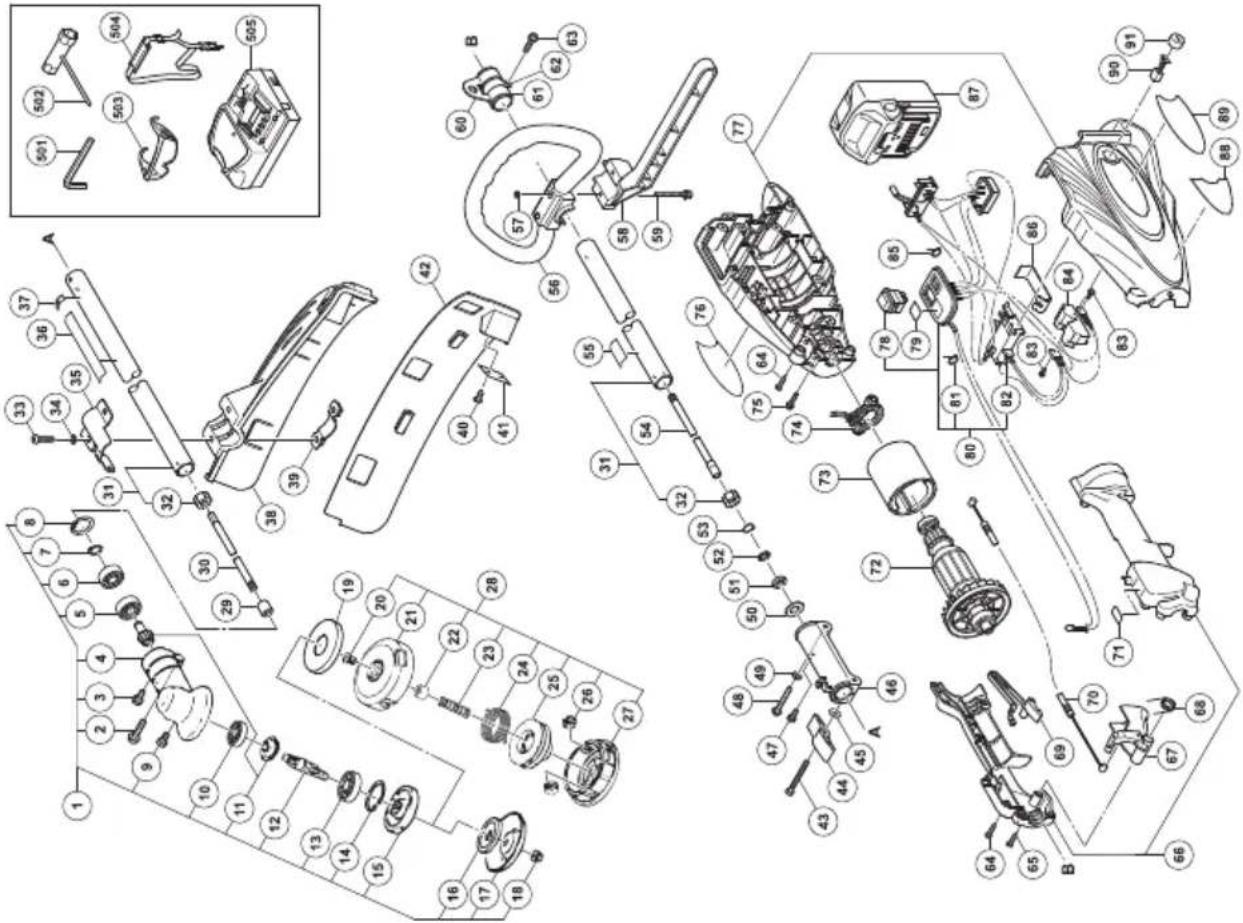
CG18DL
| Item No. | Part Name Q'TY | |
| 51 | SPACER | 1 |
| 52 | PULLEY WASHER | 1 |
| 53 | RETAINING RING FOR D10 SHAFT | 1 |
| 54 | DRIVE SHAFT A | 1 |
| 55 | LEVEL MARK (B) | 1 |
| 56 | HANDLE | 1 |
| 57 | NUT M6 | 2 |
| 58 | BARRIER | 1 |
| 59 | BOLT 6 x 43/P | 2 |
| 60 | HANGER | 1 |
| 61 | HANGER COLLAR 1 | |
| 62 | HANGER FIXING BRACKET 1 | |
| 63 | HEX. HOLE BOLT M5 x 25/S | 1 |
| 64 | TAPPING SCREW(W/FLANGE) D4 x 20 | 19 |
| 65 | TAPPING SCREW D4 x 20 | 1 |
| 66 | HANDLE (A), (B) SET | 1 |
| 67 | LEVER | 1 |
| 68 | SPRING | 1 |
| 69 | LOCK LEVER | 1 |
| 70 | WIRE | 1 |
| 71 | LABEL (D) | 1 |
| 72 | ARMATURE (A) DC 18V | 1 |
| 73 | MAGNET | 1 |
| 74 | BRUSH BLOCK | 1 |
| 75 | HEX. SOCKET HD. BOLT(W/WASHERS) M5 x 16 | 1 |
| 76 | NAME PLATE | 1 |
| 77 | HOUSING (A), (B) SET | 1 |
| 78 | SWITCH | 1 |
| 79 | LABEL (B) | 1 |
| 80 | PCB ASS'Y | 1 |
| 81 | WIRE BAND | 1 |
| 82 | DC-SPEED CONTROL SWITCH | 1 |
| 83 | MACHINE SCREW(W/WASHERS) M3 x 12 | 2 |
| 84 | HEAT SINK | 1 |
| 85 | WIRE BAND | 1 |
| 86 | PLATE | 1 |
| 87 | BATTERY (BCL1830) | 1 |
| 88 | POP LABEL (A) | 1 |
| 89 | HITACHI LABEL | 1 |
| 90 | CARBON BRUSH | 2 |
| 91 | BRUSH CAP | 2 |
| 501 | HEX. BAR WRENCH 4MM | 1 |
| 502 | BOX WRENCH(HEX. SOCKET 17/19) | 1 |
| 503 | SAFETY GLASSES 1 | |
| 504 | SHOULDER BELT | 1 |
| 505 | CHARGER (UC18YRSL) | 1 |
| Item No. | Part Name Q'TY | |
| 1 | GEAR CASE ASS'Y 1 | |
| 2 | HEX. HOLE BOLT M5 × 30/WS 1 | |
| 3 | HEX. HOLE BOLT M5 × 12/S 1 | |
| 4 | GEAR CASE 24 1 | |
| 5 | BALL BEARING 609 1 | |
| 6 | BALL BEARING 609Z ST 1 | |
| 7 | STOP RING 9 1 | |
| 8 | STOP RING C-24, INNER 1 | |
| 9 | BOLT (W/PLUS) M6 × 8 1 | |
| 10 | BALL BEARING #608, 22MM/OD | 1 |
| 11 | GEAR PINION SET 1 | |
| 12 | GEAR SHAFT | 1 |
| 13 | BALL BEARING 6001DD, 28MM/OD | 1 |
| 14 | STOP RING C-28, INNER | 1 |
| 15 | CUTTER HOLDER | 1 |
| 16 | CUTTER HOLDER CAP | 1 |
| 17 | PROTECTION COVER | 1 |
| 18 | NYLON NUT (LEFT HAND) M10 | 1 |
| 19 | WINDING PROTECTOR | 1 |
| 20 | MOUNTING NUT L-M10 × 1.25 | 1 |
| 21 | CUTTING BODY | 1 |
| 22 | SPECIAL NUT | 1 |
| 23 | REEL SPRING | 1 |
| 24 | NYLON CORD | 1 |
| 25 | SPOOL | 1 |
| 26 | EYELET | 2 |
| 27 | CUTTING BODY CAP | 1 |
| 28 | NYLON HEAD ASS'Y | 1 |
| 29 | BUSHING | 1 |
| 30 | DRIVE SHAFT B 783L | 1 |
| 31 | MAIN PIPE COMP. | 2 |
| 32 | BUSHING ASS'Y | 6 |
| 33 | HEX. SOCKET HD. BOLT(W/BUTTON) M6 × 25 | 2 |
| 34 | SPRING WASHER M6 | 2 |
| 35 | COVER BRACKET | 1 |
| 36 | CAUTION LABEL (B) | 1 |
| 37 | LEVEL MARK 1 | |
| 38 | SAFETY COVER | 1 |
| 39 | SAFETY COVER HOLDER | 1 |
| 40 | TAPPING SCREW D4 × 4 | 1 |
| 41 | KNIFE | 1 |
| 42 | COVER GUARD | 1 |
| 43 | BOLT M6 × 40 | 1 |
| 44 | HANDLE KNOB | 1 |
| 45 | BOLT WASHER M6 | 1 |
| 46 | JOINT CASE | 1 |
| 47 | HEX. SOCKET HD. BOLT(W/SP.WASHER) M5 × 12 | 1 |
| 48 | MACHINE SCREW M6 × 40 | 1 |
| 49 | SPRING WASHER M6 | 1 |
| 50 | SPACER 1.6 | 1 |
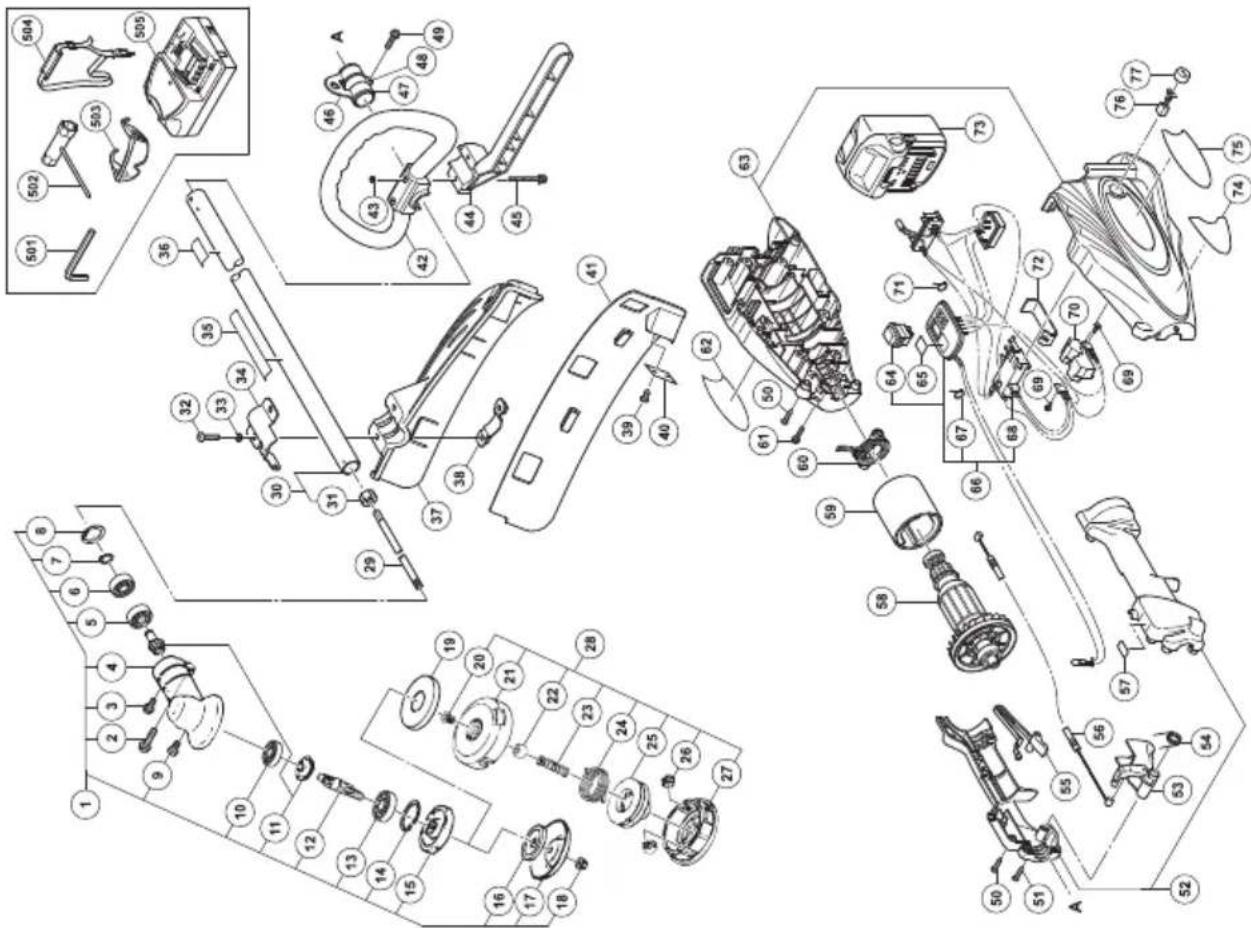
CG18DAL
| Item No. | Part Name Q'TY | |
| 51 | TAPPING SCREW D4 × 20 | 1 |
| 52 | HANDLE (A), (B) SET | 1 |
| 53 | LEVER | 1 |
| 54 | SPRING | 1 |
| 55 | LOCK LEVER | 1 |
| 56 | WIRE | 1 |
| 57 | LABEL (D) | 1 |
| 58 | ARMATURE (A) DC 18V | 1 |
| 59 | MAGNET | 1 |
| 60 | BRUSH BLOCK | 1 |
| 61 | HEX. SOCKET HD. BOLT(W/WASHERS) M5 × 16 | 1 |
| 62 | NAME PLATE | 1 |
| 63 | HOUSING (A), (B) SET | 1 |
| 64 | SWITCH | 1 |
| 65 | LABEL (B) | 1 |
| 66 | PCB ASS'Y | 1 |
| 67 | WIRE BAND | 1 |
| 68 | DC-SPEED CONTROL SWITCH | 1 |
| 69 | MACHINE SCREW(W/WASHERS) M3 × 12 | 2 |
| 70 | HEAT SINK | 1 |
| 71 | WIRE BAND | 1 |
| 72 | PLATE | 1 |
| 73 | BATTERY (BCL1830) | 1 |
| 74 | POP LABEL (A) | 1 |
| 75 | HITACHI LABEL | 1 |
| 76 | CARBON BRUSH | 2 |
| 77 | BRUSH CAP | 2 |
| 501 | HEX. BAR WRENCH 4MM | 1 |
| 502 | BOX WRENCH(HEX. SOCKET 17/19) | 1 |
| 503 | SAFETY GLASSES 1 | |
| 504 | SHOULDER BELT | 1 |
| 505 | CHARGER (UC18YRSI) | 1 |
| Item No. | Part Name Q'TY | |
| 1 | GEAR CASE ASS'Y 1 | |
| 2 | HEX. HOLE BOLT M5 × 30/WS 1 | |
| 3 | HEX. HOLE BOLT M5 × 12/S 1 | |
| 4 | GEAR CASE 24 1 | |
| 5 | BALL BEARING 609 1 | |
| 6 | BALL BEARING 609Z ST 1 | |
| 7 | STOP RING 9 1 | |
| 8 | STOP RING C-24, INNER 1 | |
| 9 | BOLT (W/PLUS) M6 × 8 1 | |
| 10 | BALL BEARING #608, 22MM/OD 1 | |
| 11 | GEAR PINION SET | 1 |
| 12 | GEAR SHAFT | 1 |
| 13 | BALL BEARING 6001DD. 28MM/OD | 1 |
| 14 | STOP RING C-28, INNER 1 | |
| 15 | CUTTER HOLDER | 1 |
| 16 | CUTTER HOLDER CAP | 1 |
| 17 | PROTECTION COVER | 1 |
| 18 | NYLON NUT (LEFT HAND) M10 | 1 |
| 19 | WINDING PROTECTOR | 1 |
| 20 | MOUNTING NUT L-M10 × 1.25 | 1 |
| 21 | CUTTING BODY | 1 |
| 22 | SPECIAL NUT | 1 |
| 23 | REEL SPRING | 1 |
| 24 | NYLON CORD | 1 |
| 25 | SPOOL | 1 |
| 26 | EYELET | 2 |
| 27 | CUTTING BODY CAP | 1 |
| 28 | NYLON HEAD ASS'Y | 1 |
| 29 | DRIVE SHAFT | 1 |
| 30 | DRIVE SHAFT PIPE COMP. 1500L | 1 |
| 31 | BUSHING | 1 |
| 32 | HEX. SOCKET HD. BOLT(W/BUTTON) M6 × 25 | 2 |
| 33 | SPRING WASHER M6 | 2 |
| 34 | COVER BRACKET | 1 |
| 35 | CAUTION LABEL (B) | 1 |
| 36 | LEVEL MARK (B) | 1 |
| 37 | SAFETY COVER | 1 |
| 38 | SAFETY COVER HOLDER | 1 |
| 39 | TAPPING SCREW D4 × 4 | 1 |
| 40 | KNIFE | 1 |
| 41 | COVER GUARD | 1 |
| 42 | HANDLE | 1 |
| 43 | HEX. NUT M6 | 2 |
| 44 | BARRIER | 1 |
| 45 | BOLT 6 × 43/P | 2 |
| 46 | HANGER | 1 |
| 47 | HANGER COLLAR | 1 |
| 48 | HANGER FIXING BRACKET 1 | |
| 49 | HEX. HOLE BOLT M5 × 25/S 1 | |
| 50 | TAPPING SCREW(W/FLANGE) D4 × 20 | 19 |
natural_image
Line drawing of a quill pen with inkwell (no text or symbols)
natural_image
Line drawing of a quill pen with inkwell (no text or symbols)Hitachi Power Tools Norway AS
Kjeller Vest 7
Postboks 124, 2007 Kjeller, Norway
Tel: (+47) 6692 6600
Fax: (+47) 6692 6650
URL: http://www.markt.no
Hitachi Power Tools Sweden AB
Rotebergsvagen 2B
SE-192 78 Sollentuna, Sweden
Tel: (+46) 8 598 999 00
Fax: (+46) 8 598 999 40
URL: http://www.markt.se
Hitachi Power Tools Denmark AS
Lillebaeltsvej 90
DK-6715 Esbjerg N, Denmark
Tel: (+45) 75 14 32 00
Fax: (+45) 75 14 36 66
URL: http://www.markt.dk
Hitachi Power Tools Finland OY
Tupalankatu 9
FIN-15680 Lahti, Finland
Tel: (+358) 20 7431 530
Fax: (+358) 20 7431 531
URL: http://www.markt.fi
| Svenska | EF-DEKLARATION BETRÄFFANDE LIKFORMIGHET | Suomi | EY-ILMOITUS YHDENMUKAISUUDESTA |
| Vi förklarar härmed att denna produkt överensstämmer med följande standarder: N60745, EN60335, EN55014 och EN61000 enligt direktivens 2004/108/EF, 2006/95/EF och 98/37/EF (till 28 dec 2009), 2000/14/EF (från 29 dec 2009).2000/14/EFTyp av utrustning: GrästrimmerTypnamn: CG18DL, CG18DALSkärbredd: 42 cmKonformitetsbedömningsmetod: Annex VIUnderrättat europeiskt organ: CE 0044 TÜV NORD CERT Am TÜV 1, 30519 Hannover, TysklandUppmätt ljudstyrkenivå: 94 dGBaranterad ljudstyrkenivå: 96 dBDen europeiska standardansvarige på Hitachi Koki Europe Ltd. är auktoriserad att utarbeta den tekniska fi len.Denna deklaration gäller för CE-märkningen på produkten. | Yksinomaisella vastuulla vakuutamme, että tämä tuote vastaanormeja ja normitettuja dokumentteja EN60745, EN60335, EN55014 ja EN6100 yhteisön ohjeiden 2004/108/EY, 2006/95/EY ja 98/37/EY (28. joulukuuta 2009 saakka), 200 joulukuuta 2009 alkaen) mukaisesti.2000/14/EYLaitteen tyyppi: Nurmikon viimeistelijäTyppinimi: CG18DL, CG18DALLeikkausleveys: 42 cmYhdenmukaisuuden määritystoimenpiteet: Annex VIIlmoitettu elin Euroopassa: CE 0044 TÜV NORD CERT Am TÜV 1, 30519 Hannover, GermanyMitattu äänenpainetas: 94 dBTaattu äämempanetas: 96 dBHitachi Koki Europe Ltd.:n eurooppalaisten standardien johtaja on valtuutettu laatimaan tekniset asiakirjat.Tämä ilmoitus sovelletaan tuotekohtaiseen CE-merkintään. | ||
| Dansk | EF-OVERENSS TEMMELSESERKLÆRING | English | EC DECLARATION OF CONFORMITY |
| Vi påtager os det fulde ansvar for, at dette produkt modsvarer gældende standarder eller standardiserede dokumenter EN60745, EN60335, EN55014 og EN61000 i overensstemmelse med Direktiv 2004/108/EF, 2006/95/EF og 98/37/EF (indtil 28. dec. 2009), 2000/14/EF (fra 29. dec. 2009).2000/14/EFUdstyrstype: PlænetrimmerTypenavn: CG18DL, CG18DALKlippebredde: 42 cmProcedure for fastsættelse af ensartethed: Bilag VIAnmeldt europæisk organisation: CE 0044 TÜV NORD CERT Am TÜV 1, 30519, Hannover, TysklandMålt lydstyrkeniveau: 94 dBGaranteret lydstyrkeniveau: 96 dBChefen for europæiske standarder hos Hitachi Koki Europe Ltd. er autoriseret til at kompilere den tekniske fi I.Denne erklæring qælder produkter, der er mærket med CE. | We declare under our sole responsibility that this product is in conformity with standards or standardisation EN60745, EN60335, EN55014 and EN61000 in accordance with Directives 2004/108/EC, 2006/95/EC and 98/37/EC (until 28 Dec. 2009), 2000/14/EC (from 29 Dec. 2009).2000/14/ECType of equipment: Lawn TrimmerType name: CG18DL, CG18DALCutting width: 42 cmConformity assessment procedure: Annex VIEuropean Notifi ed Body: CE 0044 TÜV NORD CERT Am TÜV 1, 30519 Hannover, GermanyMeasured sound power level: 94 dBGuaranteed sound power level: 96 dBThe European Standards Manager at Hitachi Koki Europe Ltd. is authorized to compile the technical fi le.This declaration is applicable to the product affixed CE marking. | ||
| Norsk | EF'S ERKLÆRING OM OVERENSSTEMMELSE | 14/EF (fra 29 | |
| Vi erklærer under vårt eneansvar at dette produktet er i samsvar med standarder eller standardiseringene EN60745, EN60335, EN55014 og EN61000 i samsvar med direktivene 2004/108/EF, 2006/95/EF og 98/37/EF (til 28 Des. 2009), 2000/Des. 2009).2000/14/EUFstyrstype: PlenklipperTypenavn: CG18DL, CG18DALKuttebredde: 42 cmProsedyre for konformitetsvurdering: Annex VIEuropeisk underrettet organ: CE 0044 TÜV NORD CERT Am TÜV 1, 30519 Hannover, TysklandMålt lydeff ektnivå: 94 dBGarantert lydeff ektnivå: 96 dBLederen for europeiske standarder ved Hitachi Koki Europe Ltd. har fullmakt til å utarbeide det tekniske dokumentet.Denne erklæringen gjelder produktets påklistrede CE-merking. | |||
| Representative office in EuropeHitachi Power Tools Europe GmbHSiemensring 34, 47877 Willich 1, F. R. GermanyTechnical file at:Hitachi Koki Europe Ltd.Clonshaugh Business & Technology Park, Dublin 17, IrelandHead office in JapanHitachi Koki Co., Ltd.Shinagawa Intercity Tower A, 15-1, Konan 2-chome, Minato-ku, Tokyo, Japan | |||