
K17MSB14E - Microwave KENWOOD - Free user manual and instructions
Find the device manual for free K17MSB14E KENWOOD in PDF.


| Product Type | Countertop Microwave Oven |
| Model Number | K17MSB14E |
| Brand | Kenwood |
| Power Supply | 230V~ 50Hz, 1050W input |
| Microwave Output Power | 700W (IEC 60705) |
| Microwave Frequency | 2450 MHz |
| Heating Category | D |
| Outside Dimensions (WxDxH) | 435 x 360 x 258 mm |
| Weight (approx.) | 12 kg |
| Capacity | 20 liters (approx.) |
| Control Type | Rotary dials: Power and Timer/Defrost |
| Power Levels | 5 levels: Low (17%), M.Low/Defrost (33%), Med (55%), M.High (77%), High (100%) |
| Defrost Function | Weight-based defrost (M.Low power) |
| Turntable | Glass turntable plate with support ring |
| Interior Light | Yes |
| Door Safety Interlocks | Yes (prevents operation when open) |
| Child Safety | Suitable for ages 8+ with supervision |
| Cleaning Requirements | Wipe with damp cloth; do not use abrasive cleaners |
| Replacement Parts Available | Glass Turntable Plate (262100500004), Turntable Support (262200200024) |
| Compliance | EC directives 2004/108/EC and 2006/95/EC |
Frequently Asked Questions - K17MSB14E KENWOOD
User questions about K17MSB14E KENWOOD
0 question about this device. Answer the ones you know or ask your own.
Ask a new question about this device
Download the instructions for your Microwave in PDF format for free! Find your manual K17MSB14E - KENWOOD and take your electronic device back in hand. On this page are published all the documents necessary for the use of your device. K17MSB14E by KENWOOD.
USER MANUAL K17MSB14E KENWOOD
natural_image
Exterior view of a Kenwood microwave oven with control knobs and a digital display (no visible text or symbols on the device body)Contents
GB
safety warnings....5
unpacking....30
getting ready 31
introducing microwave cooking....32
cooking with a microwave 32
checking your cooking utensils.... 33
using aluminium foil in your microwave....33
materials that can be used in the microwave 34
microwave heating categories....35
steam....36
condensation....36
product overview 37
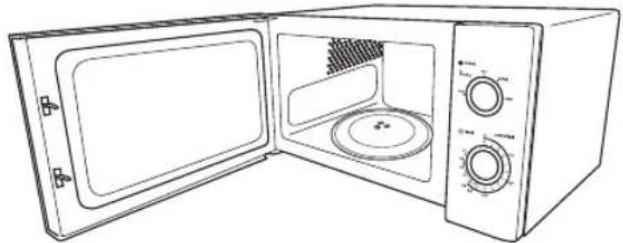
the main unit....37
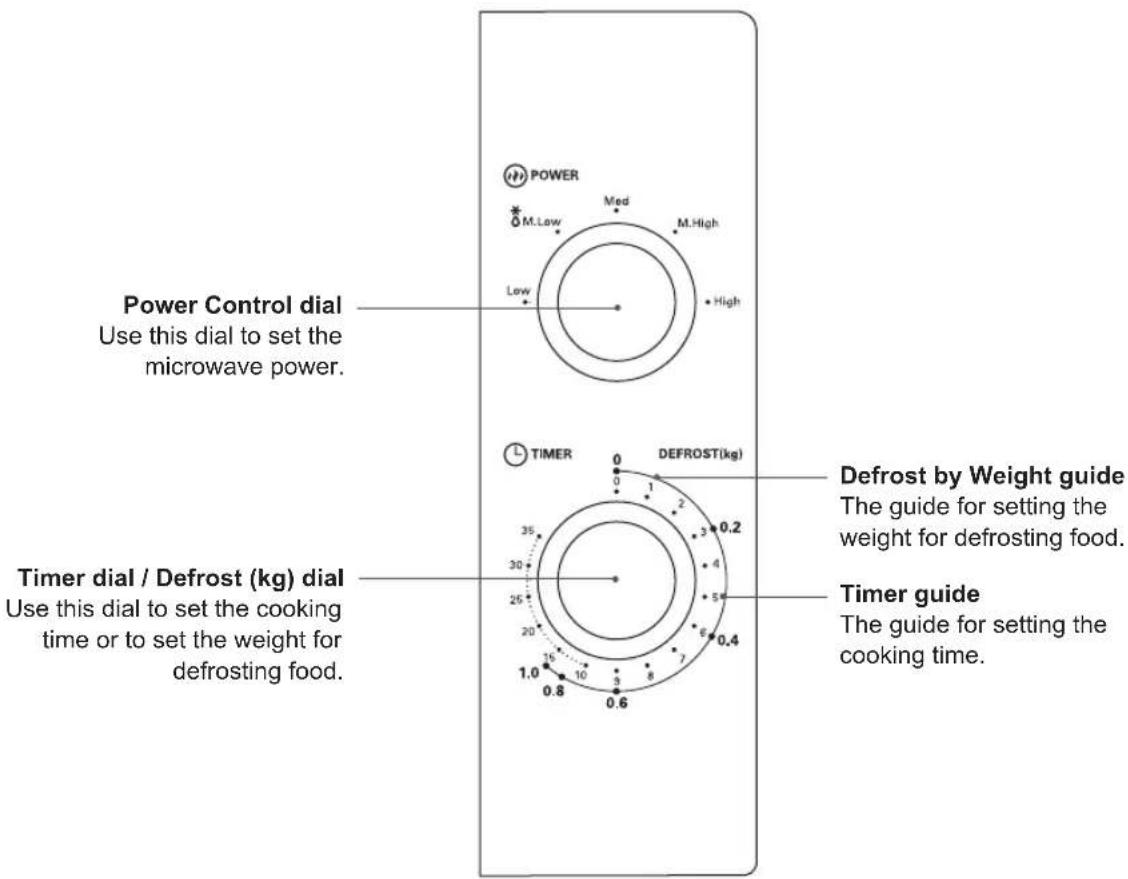
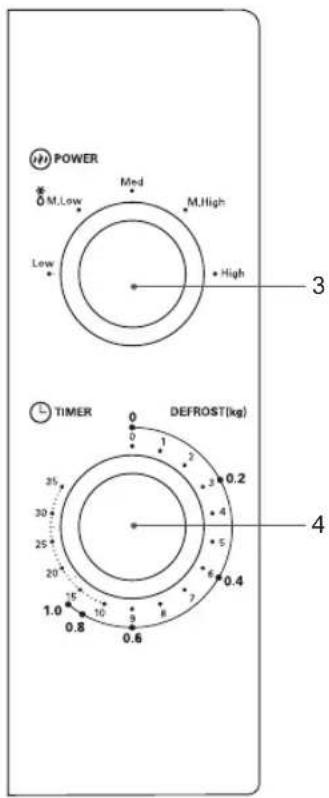
the control panel....37
checking your microwave 38
microwave cooking....39
defrosting 40
cleaning your microwave....41
frequently asked questions....42
specifications 43
IMPORTANT SAFETY INSTRUCTIONS READ CAREFULLY AND KEEP FOR FUTURE REFERENCE
general safety
- Switch off and unplug before fitting or removing parts/attachments, after use and before cleaning.
- Keep your fingers away from moving parts and fitted attachments.
• Never use a damaged appliance.
• Never operate the appliance when it is empty.
- Keep the unit, mains cord and plug away from water.
• Never exceed the maximum capacities.
- When using an attachment, read the accompanying safety instructions.
• Take care when lifting this appliance as it is heavy.
- You should always have your appliance checked by a qualified service agent if it has been dropped or damaged to ensure it is safe to use.
- This appliance can be used by children aged from 8 years and above and persons with reduced physical, sensory or mental capabilities or lack of experience and knowledge if they have been given supervision or instruction concerning use of the appliance in a safe way and understand the hazards involved. Children shall not play with the appliance. Cleaning and user maintenance shall not be made by children without supervision.
- Keep the appliance and its cord out of reach of children less than 8 years old.
- Only use the appliance for its intended indoor, household, domestic use.
- This appliance is intended for indoor household use and similar applications such as:
- farm houses and by clients in hotels, motels and other residential type environment;
- bed and breakfast type environment;
- staff kitchen areas in shops, offices and other working environments.
- Do not place anything on top of the microwave.
- The appliance should be placed against a wall. Leave a minimum clearance of 30cm above the oven and 10cm on each side.
warning: The appliance must be used and maintained in accordance with the instructions provided.
maintenance of your microwave
warning : It is hazardous for anyone other than a qualified service agent to carry out any service or repair operation which involves the removal of a cover that gives protection against exposure to microwave energy.
warning : If the door or door seals are damaged, the microwave must not be operated until it has been repaired by a qualified service agent.
- If smoke is emitted, switch off and unplug the microwave and keep the door closed in order to stifle any flames.
- If the mains cord is damaged, it must be replaced by a qualified service agent.
- If you have a pacemaker, please contact your doctor before using a microwave.
microwave use
• This microwave is not intended for commercial use.
- The microwave oven is intended for heating food and beverages. Drying of food or clothing and heating of warming pads, slippers, sponges, damp cloth and similar may lead to risk of injury, ignition or fire.
- This microwave can only be used indoors in a dry, well-ventilated, domestic, indoor area.
- Do not place the microwave in a cabinet.
• Install or locate this oven only in accordance with the installation instructions provided.
- The appliance is not intended to be operated by means of an external timer or separate remote-control system.
• The microwave should not be left unattended when in use.
- The temperature of accessible surfaces may be high when the microwave is operating.
- To prevent high moisture content gathering inside the microwave cavity, open the door immediately after the cooking function has stopped to allow steam to escape.
- Only use utensils that are suitable for microwave use.
- Care should be taken when using paper, plastic, wooden or other combustible materials in the microwave as they can catch fire.
- Oil & fat for deep frying should not be heated in the microwave.
- Only use cling film designed for microwave use and take extra care when removing the film to avoid steam burns.
• Only heat popcorn that has been designed for microwave use. - Do not operate the microwave empty as this could damage the product.
- Do not attempt to operate this unit with the door open since this can result in harmful exposure to microwave energy. It is important not to break or tamper with the safety interlocks.
- Do not obstruct the unit's front or door, or allow soiling or cleaner residue to accumulate on sealing surfaces.
cooking use
- As the power of different microwaves can vary considerably, care must be taken when first using this microwave as it may cook faster than expected.
- Do not leave the microwave unattended during use.
• Take care when cooking food with a high sugar or fat content, such as Christmas pudding or fruitcake. The sugar or fat can overheat and in some cases catch fire.
• Do not overcook food. - Remove wire twist-ties and metal handles from paper or plastic containers/bags before placing them in the oven.
hazardous materials
- Keep combustible materials, such as: curtains, drapes, furniture, pillows, clothing, linens, bedding, paper, etc., at least 3 feet (0.9 metres) from the front sides and rear of the oven. Do not use this unit in areas where gasoline, paint or other flammable liquids or their associated vapours may be present.
- Make sure that if using cling film or plastic or similar materials in the unit, that they are microwave-safe and suitable for the chosen function. If in doubt, do NOT use such materials.
warning : DO NOT assume that because a child has mastered one cooking skill he/she can cook everything without close supervision.
fire!
In the event of fire:
- Keep the microwave door closed.
- Turn off the power.
• Unplug the microwave from the mains power.
first aid
Treat scalding by:
- Quickly placing the scald under cold running water for at least 10 minutes.
• Cover with a clean dry dressing. Do not use creams, oils or lotions.
cleaning your microwave
- The microwave should be cleaned regularly and food deposits removed. Failure to maintain the microwave in a clean condition can affect the life of the microwave and possibly result in a hazardous situation. (See cleaning your microwave.)
- Do not use a steam cleaner to clean the unit.
do not use these in your microwave
• Metal objects are not to be used in the microwave. These include:
- Metal cooking utensils
- Metal plates or trays
- Wire twist ties
- Crockery with metal trims
-
Meat thermometer
-
Never use equipment made of metal, except aluminium foil in your microwave. The microwave energy cannot pass through metal so it bounces off and sparks against the inside of the microwave.
- Stop the microwave straight away if any equipment is causing sparks.
- Remember that some crockery has a metal trim around the edge. Even this trim can cause sparks.
containers
warning : Pressure will build up in sealed containers and can cause them to explode. Therefore, do not use the following in your microwave:
- Sealed containers - Capped bottles - Vacuum containers
- Sealed jars - Hard-boiled eggs - Eggs in their shells
• Always pierce the skin of fruit and vegetables, such as potatoes.
- Never use scratched, cracked or damaged glass in a microwave. Damaged glass can explode.
- Caution should be used when using combustible containers, never leave the microwave unattended when in use.
delayed boiling
Heating of beverages in a microwave can result in delayed eruptive boiling, therefore care must be taken when handling the container.
Take the following precautions:
• Always stir liquids, before and after cooking.
- Allow them to stand.
• Use containers that are wider at the top than at the bottom.
preparing food for babies
Extra care must be taken when preparing food or drink for babies and small children.
• Always test the food or liquid temperature before feeding it to the baby.
- When using a baby bottle, ensure the teat is removed before heating.
- When warming baby food or milk ensure the food is thoroughly stirred and at a safe consumable temperature.
caution!

hot surface
During cooking the outer surface will become hot. Do not touch the outer casing of the microwave. Care should be taken not to store any items on top of your microwave.
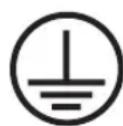
earthing instructions
warning: THIS APPLIANCE MUST BE EARTHED.
- This appliance is equipped with a mains cord having an earthed plug.
- The plug must be plugged into an appropriate mains socket that is installed and earthed in accordance with all local standards and requirements.
VIKTIGE SIKKERHETSANVISNINGER LESES N∅YE OG BEHOLDES FOR FREMTIDIG OPPSLAG
generell sikkerhet
- t.ex. bed and breakfast;
- bed and breakfast type miljøer;
- personalekøkken i butikker, kontorer og andre erhvervsmiljøer.
Thank you for purchasing your new Kenwood Microwave.
We recommend that you spend some time reading this instruction manual so that you fully understand all the operational features it offers. You will also find some hints and tips to help you resolve any issues.
Read all the safety instructions carefully before use and keep this instruction manual for future reference.
GB
unpacking
Remove all items from the packaging. Retain the packaging. If you dispose of it please do so according to local regulations.
The following items are included:

natural_image
Front view of a microwave oven with two rotary dials (no text or symbols visible)The Main Unit

natural_image
Simple line drawing of concentric ovals with small circles at the center (no text or symbols)
Glass Turntable Plate Turntable Support Instruction Manual
getting ready
This microwave is designed for home use only. It should not be used for commercial catering.
- After unpacking your microwave, check that it has not been damaged whilst in the box. Make sure there are no dents, and the door closes properly. A damaged microwave could allow microwave energy to escape. Make sure that you have taken out all the packaging from the inside of the microwave. Please dispose of the plastic wrappings / bags safely and keep out of the reach of babies and young children.
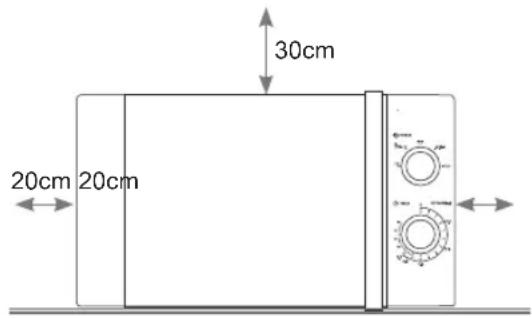
- Choose a flat, stable work surface for your microwave away from heat sources such as radiators or fires and away from cold areas. The surface should be at least 85cm above the floor. You should allow a 20 cm space all around the microwave and 30 cm above so that warm air can escape from the vents during cooking. This microwave is not designed to be built in. Do not block any intake or outlet openings as this can damage the unit.
- Plug your microwave into a standard household electrical socket (230V\~, 13 amp rated). Avoid using a socket that also has an adapter and other equipment plugged in. Do not use a multi-adapter.
- Put the turntable support inside the microwave and place the glass turntable plate on top of the support. The turntable support is shaped to sit securely on the spindle. You must always use the turntable plate and support whenever you use the microwave.
- To protect your work surface, we recommend that you fix some non-slip cushion buttons (not included) to the underside of the microwave.

- Remove the turntable plate and turntable support before turning the microwave upside down.
- Do not remove the unit's feet.
GB

natural_image
Line drawing of a microwave oven with open door and lid, showing internal components (no text or symbols)
natural_image
Simple line drawing of a rectangular block with a diagonal line and circular holes, no text or symbols present.Underside View
introducing microwave cooking
Always remember the basic safeguards you would follow when using any cooking equipment or handling hot food.
This page gives some of the basic guidelines for microwave cooking.
cooking with a microwave

Cooking with a microwave is much faster than conventional cooking and, whilst you should make sure that food is fully cooked, you should be careful not to overcook it. Food can catch fire if excessive cooking times are used.
- Microwave energy can heat unevenly so stirring to distribute heat is very important. Always stir from the outside, inwards.
- If you are cooking a number of individual foods at the same time, such as baked potatoes or small cakes, arrange them evenly on the turntable plate so that they cook evenly. Never stack food in the microwave.
- Turn larger foods such as meat roasts and poultry during cooking so that the top and bottom cook evenly. It is also recommended to turn pieces of meat or poultry, especially if they have not been deboned.
- Meat and poultry which is cooked for 15 minutes or more will brown lightly in its own fat. Anything cooked for a shorter time can be brushed with a browning sauce to give an appetising colour.

If you are unsure how long the food should cook, begin cooking at the lowest recommended time, then add more time if necessary. The moisture content of food can vary. Ensure food is thoroughly cooked all the way to the centre before serving.
- Strips of aluminium foil can be used to cover the thinner pieces of food to stop them from overcooking before the thicker parts of the food have had the chance to cook. Use the aluminium foil sparingly and wrap around the food or container carefully to stop it from touching the inside of the microwave which could cause sparks.
- Microwaves cook food using microwave energy that is similar to naturally occurring radio waves. Normally, these “waves” would fade as they disappear into the atmosphere but in a microwave they are concentrated on the food causing it to heat up.
- Microwave energy cannot pass through metal – so it cannot escape from the inside of your microwave – but it can pass through materials like glass, porcelain, plastic, and paper. These are the things used to make microwave-safe cooking equipment.
- Microwave-safe cooking equipment will still get hot as the food it contains heats up.
- The microwave energy focuses on the moisture in the food causing lots of tiny vibrations. The vibrations get so great that the moisture – and the food – heat up.

natural_image
Simple line drawing of a bowl with steam rising from its side, no text or symbols presentchecking your cooking utensils
Most heat-resistant, non-metallic cooking utensils are safe to use in your microwave. If made of plastic or glass, utensils will be marked as “microwave safe” or similar.

If you are not sure and/or there is no “microwave safe” marking on the utensil, do NOT use it in the microwave.
For the types of utensils you can use in the microwave, please see the “Materials That Can Be Used” section.

- Never use equipment made of metal, except aluminium foil in your microwave oven.
- The microwave energy cannot pass through the metal so it bounces off and sparks against the inside of the oven.
- Stop the microwave immediately if any equipment or utensils causes sparks.
- Remember that some crockery has a metal trim around the edge. Even this trim can cause sparks.
- Never use scratched, cracked or damaged glass in a microwave. Damaged glass can explode.
using aluminium foil in your microwave
It is safe to use aluminium foil in your microwave as long as you follow these safety guidelines.
As with all metals, microwave energy cannot pass through aluminium foil, but provided you keep the aluminium foil away from the inside walls of the microwave it will not cause sparks and there will not be any damage to your microwave.
Using aluminium foil is a good way of shielding parts of the food that you do not want to cook as quickly as others – perhaps where the food is narrower and would otherwise overcook.
Place the aluminium foil over the area you want to shield, taking care that the aluminium foil will not touch the inside walls of the microwave when the turntable plate rotates. Only use one piece of aluminium foil at a time so that you do not get sparks between the separate pieces.
Follow these guidelines when using aluminium foil in your microwave:
- Remove aluminium foil lids from containers before using in the microwave. Some lids are made of card with an aluminium foil covering – these should be removed too. Use a microwave-safe transparent lid if possible.
• Stir food during cooking if the container has a lid or film cover.
• Always use the glass turntable plate. - Use shallow containers with a large surface area. Do not use containers that are more than 1.25in (3.5cm) deep.
• Use gloves when handling any aluminium foil. - Do not completely cover food with aluminium foil. The microwave energy cannot pass through the aluminium foil so the food will not cook.
- Do not let aluminium foil touch the inside of the microwave.
- Do not use more than one piece of aluminium foil in the microwave at the same time.

| utensils remarks | |
| Aluminium foil Shielding | only. Small smooth pieces can be used to cover thin parts of meat or poultry to prevent overcooking. Arcing can occur if the foil is too close to oven walls. The foil should be at least 1 inch (2.5cm) away from oven walls. |
| Browning dish Follow the | manufacturer's instructions. The bottom of a browning dish must be at least 3/16 inch (5mm) above the turntable. Incorrect usage may cause the turntable to break. |
| Dinnerware Microwave-safe only. Follow the manufacturer's instructions. Do not use cracked or chipped dishes. | |
| Glassware Heat-resistant oven glassware only. Make sure there is no metallic trim.Do not use cracked or chipped dishes. | |
| Oven cooking bags Follow the manufacturer's instructions. Do not close with metal tie. Make slits to allow steam to escape. | |
| Paper plates and cups Use for short-term cooking/warming only. Do not leave oven unattended while cooking. | |
| Paper towels Use to cover food for reheating and absorbing fat. Use with supervision for short-term cooking only. | |
| Greaseproof paper Use as a cover to prevent splattering or a wrap for steaming. | |
| Plastic Microwave-safe only. Follow the manufacturer's instructions. Should be labelled "Microwave Safe". Some plastic containers soften, as the food inside gets hot. "Boiling bags" and tightly closed plastic bags should be slit, pierced or vented as directed by the instructions on their packaging. | |
| Plastic wrap Microwave-safe only. Use to cover food during cooking to retain moisture.Do not allow plastic wrap to touch food. | |
| Thermometers Microwave-safe only (meat and candy thermometers). | |
| Wax paper Use as a cover to prevent splattering and retain moisture. | |
microwave heating categories
Your oven has been tested and labelled to meet the UK government's voluntary agreement on the reheating of pre-cooked food.
The heating characteristics and output power levels of microwave ovens are usually calculated using a relatively large portion of food (a 1000 gram load, IEC 60705) but many packs of pre-cooked food are sold in smaller packs, often about 350 grams.
The UK government, in partnership with food companies and microwave manufacturers, have set up a system of heating categories to help you choose the reheating time for pre-cooked food.

(IEC 60705) 700W is the output power of the oven.
D is the heating category for your oven.
Check the cooking times for category D on the food's packaging to see how long it should be cooked.
Please see below example for reference.
GB
To Microwave:
Remove outer packaging.
Pierce film lid SEVERAL TIMES.
Place on a microwaveable plate.
Heat on full power.
Stir or turn halfway through heating.
| Heating Category | Wattage (IEC 60705) | |||
| B D | 650W 750W | |||
| Full power (in minutes) | 2 2 2 | 2 | ||
| Stir / Turn Stir / | Turn Stir / Turn | |||
| Full power (in minutes) | 2 1.5 | 2 1.5 | ||
| Standing time (in minutes) | 1 1 1 | 1 | ||
To Microwave from frozen:
Remove outer packaging.
Pierce film lid SEVERAL TIMES.
Place on a microwaveable plate.
Heat on full power.
Stir or turn halfway through heating.
| Heating Category | Wattage (IEC 60705) | |||
| B D | 650W 750W | |||
| Full power (in minutes) | 3 2.5 | 3 2.5 | ||
| Stir / Turn Stir / | Turn Stir / Turn | |||
| Full power (in minutes) | 4 3.5 | 4 3.5 | ||
| Standing time (in minutes) | 1 1 1 | 1 | ||

Power input varies according to local voltage supply. The density, thickness and moisture content of food can affect its cooking time. Ensure all food is piping hot and cooked thoroughly before serving.
steam
When you microwave food, steam is created as water in the food heats up and evaporates.
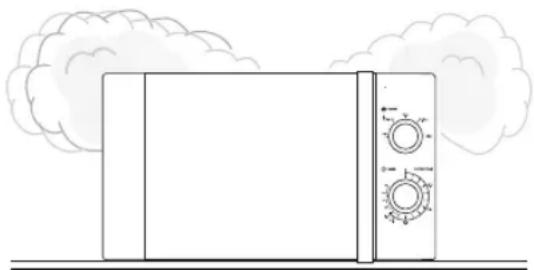
The steam formed during microwave cooking is entirely safe. It has to escape from the microwave to prevent pressure from building up inside the microwave. It does this through the vents on the back of the microwave and from around the door.
condensation
As the steam cools, you may find that condensation gathers in small pools inside your microwave and on the work surface beneath the door and vents. Always dry the microwave after cooking foods with a high moisture content.
Your microwave is designed to let steam escape from the vents and around the door without microwave energy escaping. There is no danger of microwave energy escaping with the steam.
natural_image
Line drawing of a microwave oven with two rotary gauges and cloud-shaped background (no text or symbols)GB
product overview
the main unit

the control panel
checking your microwave
Check your microwave after unpacking.

For your safety, the microwave stops if the door is opened during cooking.
natural_image
Line drawing of a microwave oven with open door and side outlets (no text or symbols)GB
- Pull handle to open the door.
Put the turntable ring inside the oven and place the glass turntable on top of the ring. The turntable is shaped to sit securely on the spindle.
You must always use the glass turntable and turntable ring whenever you use the microwave.
Place a cup of water on the glass turntable. Make sure the cup is microwave-safe - it should not have any decorative metal trim.
- Close the oven door.
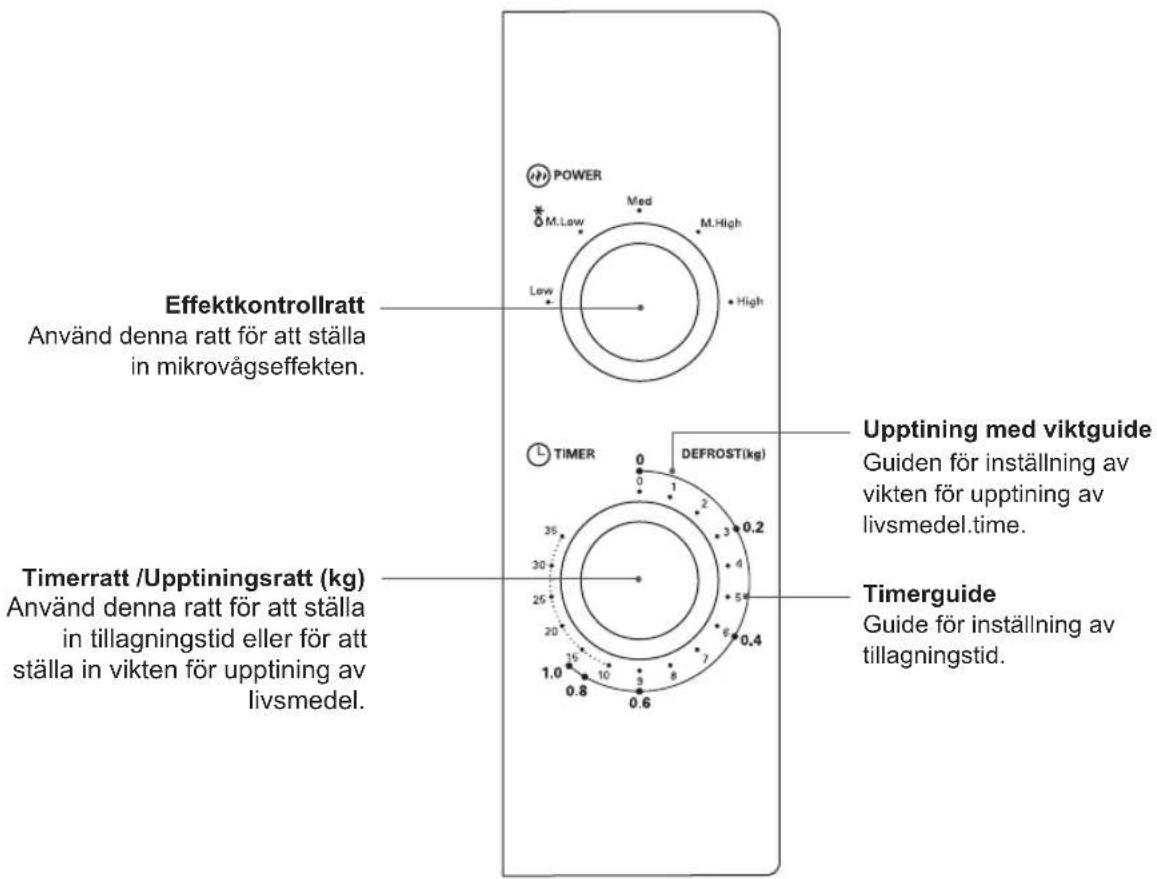
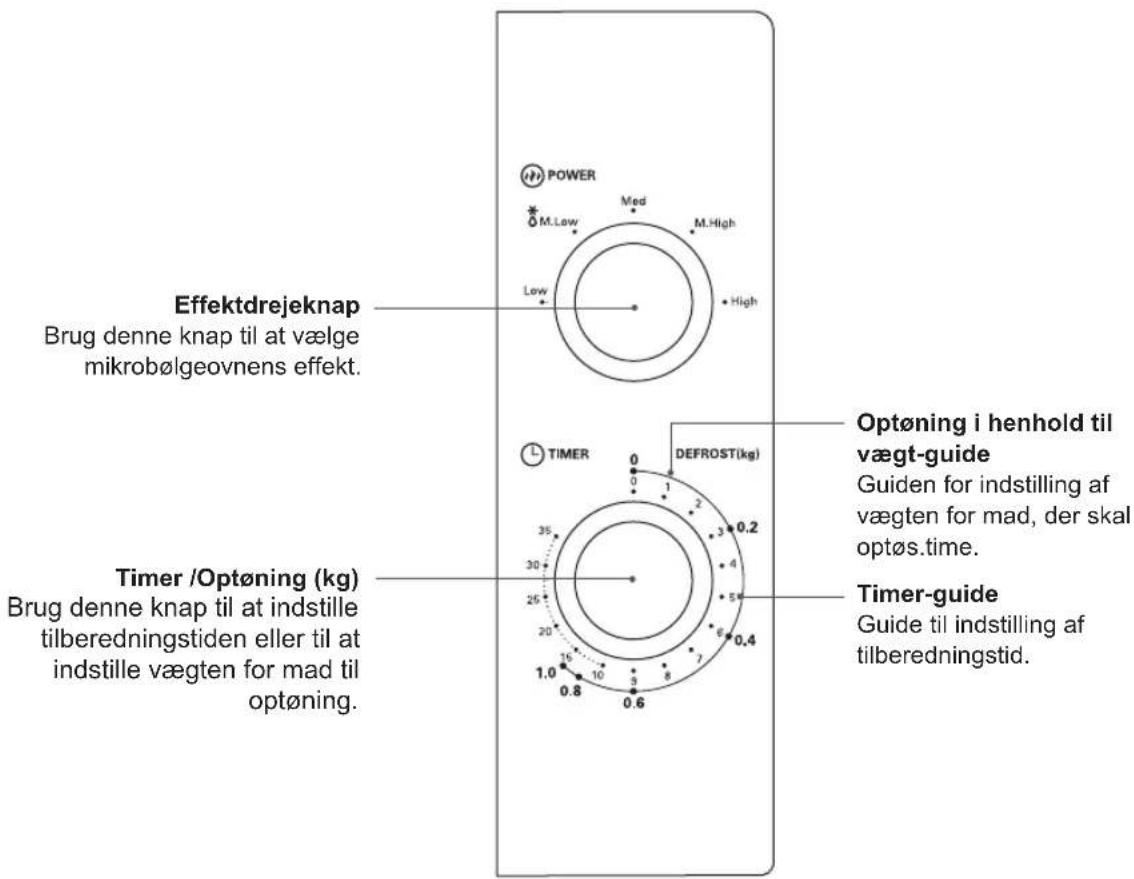
- Turn the POWER dial to the desired power settings.
- Turn the TIMER dial half way between 0 and 1 to start a simple 30-second microwave cooking cycle that allows you to check the operation of the microwave oven.
microwave cooking
For simple Microwave Cooking, follow the steps below.
- Turn the POWER dial to the desired power settings.
- Turn the TIMER dial to the desired cooking time as stated in the food cooking guide.
- The microwave oven will automatically start the cooking.
- The microwave will sound once the cooking is completed.

Always set the TIMER dial to 0 when the microwave is not in use.
| Power Level | Microwave Power Output (%) | Function |
| Low 17 Soften ice-cream | ||
| M.Low / Defrost | 33 Reheat soup stew, soften butter and defrost | |
| Med 55 Heat up stew or fish | ||
| M.High 77 Reheat rice, chicken and ground meat | ||
| High 100 Reheat food, heat up milk and beverage, boil water, cook vegetables | ||

defrosting
- Turn the POWER dial to M.Low
- Turn the DEFROST (kg) dial to the desired weight of defrost food as stated in the food cooking guide.
- The microwave oven will automatically start the defrosting.
- The microwave will sound once the defrosting is completed.

GB
cleaning your microwave
Unplug your microwave from the mains and wait for it to completely cool down before cleaning.
Cleaning your microwave each time you use it will help to prevent a build up of stubborn marks that can be difficult to clean.
On the right hand side wall of the cavity is the wave guide cover. Microwaves are passed through this to enable your food to cook. It is important that this wave guide cover is kept clean at all times. Wipe it with mild detergent and water and leave to dry.

The microwave walls have a special enamel coating which makes cleaning very easy. Use a soft damp cloth to wipe off any splashes or a paper towel to mop up any spills. Wipe off grease with a damp cloth and a little detergent. Dry thoroughly. If grease is left to accumulate, it can smoke and even catch fire.
2 Make sure you keep the outlet grids clean.
3 Keep the front of the microwave clean so that the door can close properly.
4 Be careful not to spill water into the vents.
5 Do not remove the wave guide cover: It is important to keep the cover clean in the same manner as the inside of the microwave. If grease is left to accumulate, it can smoke and even catch fire.
6 Keep the inside of the door clean with a damp cloth. Use warm soapy water for stubborn marks and dry thoroughly. The inside of the door has a special coating and must not be cleaned with abrasive pads or cleaning powders.
7 Clean behind the door ledge.
8 Wipe with a damp cloth to clean the outside of the microwave. Do not use abrasive cleaners, pads or powders that could scratch the surface. Dry thoroughly.
9 Unplug the microwave before cleaning the power cord. Wipe with a damp cloth and leave to dry before plugging it back in.
10 Treat the glass turntable plate as you would any glass plate. After you have used it for more than 15 minutes, allow it to cool down before you use it again. Do not wash the glass turntable plate in very hot water, doing so could crack it. Wash the turntable support in warm water. Make sure the glass turntable plate and turntable support are dry before you put them back in the microwave.

Do not remove any fixed parts from the inside of your microwave during cleaning or at any other time.
frequently asked questions
If a problem does occur, it may often be due to something very minor. The following Q & A may be able to resolve the issue.
| questions answers | |
| Why doesn't the food seem to cook? | Check that:·the cooking time has been set.·the door is closed.·the mains socket is not overloaded causing the fuse to blow. |
| Why does the food seem undercooked or overcooked? | Check that:·the correct cooking time has been set.·the correct power setting has been used. |
| How can I stop eggs from popping? | When you bake or poach eggs in the microwave, the yolk can sometimes pop as steam builds up inside it. You can stop the egg from popping by piercing the yolk with a toothpick before cooking.Never cook eggs that are still in their shells. |
| Why is it so important that I allow standing time after cooking? | With microwave cooking, many foods build up enough heat inside them to continue cooking even after they've been taken out of the microwave. For a short time after cooking the heated product will continue to cook, leaving products to stand will allow for even cooking and heat distribution. |
| Why does my microwave sometimes take longer to cook than it says in the recipe? | First check that the microwave was set just as the recipe said. Cooking times and heat settings are suggestions to help prevent overcooking but differences in the weight, size, shape and starting temperature of food will all affect how long it takes to cook – just as it does with a conventional oven. Use your judgement along with the recipe to check whether the food has been cooked properly. |
| Why do I get condensation on the inside of the door? | Condensation is perfectly normal, especially when you are cooking food with a high moisture content such as potatoes. |
| Does the microwave energy get through the window on the door? | No. The door has a special metal screen with holes that lets you see inside but stops microwave energy from getting out. |
| Steam comes out of the side of the door and vents. Can microwave energy get out too? | No. The door and vents are carefully designed to let steam out during cooking but keep microwave energy in. |
| What happens if the microwave is switched on while the microwave is empty? | The microwave will be damaged. Do not switch the microwave on when there's nothing inside the microwave. It is a good idea to keep a cup of water in the microwave just in case someone accidentally starts the microwave. |
| Why doesn't the microwave's light illuminate? | Open the door. If the light does not illuminate, the bulb has probably blown. Call a qualified technician – do not try to change the bulb yourself. |
| There are sparks inside the microwave when I use the microwave. Will this cause any damage? | Yes. Make sure that you are not using any metal utensils and that your containers don't have a metal trim. You must not use metal in your microwave when you cook (except aluminium foil). |
| Light is showing through the vents and door. Does this mean the microwave energy can escape? | No. It is normal for the light to be visible and is nothing to be concerned about. |
| Why do I get interference on my TV and radio when I use the microwave? | Microwaves use radio waves similar to those received by TVs and radios. You can lessen the interference by moving your microwave further away from the TV or radio. |
specifications
| model | K17MSB14E |
| input | 230V~ 50Hz |
| microwave output | 700 Watts |
| microwave frequency | 2450 MHz |
| outside dimensions(width x depth x height) | 435 mm x 360 mm x 258 mm |
| power consumption | |
| microwave input | 1050 Watts |
Complies with EC directives 2004/108/EC and 2006/95/EC.
We continually strive to improve our products. Features and specifications may change without prior notice.
Takk for at du kjøpte ny Kenwood Mikrobølge.
natural_image
Front view of a microwave oven with two rotary dials (no text or symbols visible)Hovedenheten

natural_image
Simple line drawing of a circular tray with three small objects at the center (no text or symbols)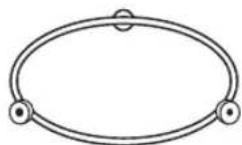
natural_image
Line drawing of a microwave oven with open door and lid, showing internal components (no text or symbols)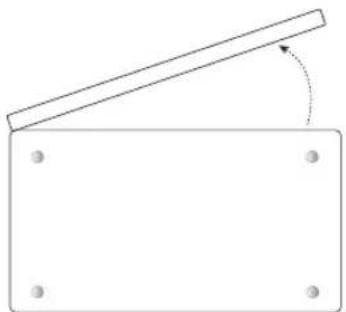
natural_image
Simple line drawing of a rectangular frame with a diagonal line and circular holes, no text or symbols present.Sett fra undersiden
natural_image
Simple line drawing of a bowl with steam rising from its side, no text or symbols presentnatural_image
Line drawing of a microwave oven with two rotary gauges and cloud-shaped background (no text or symbols)produktoversikt
hovedenheten

natural_image
Line drawing of a microwave oven with open door and side outlets (no text or symbols)natural_image
Front view of a microwave oven with two rotary dials (no text or symbols visible)Huvudenheten

natural_image
Simple line drawing of concentric ovals with small circular spots at the center (no text or symbols)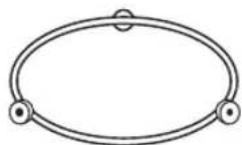
natural_image
Line drawing of a microwave oven with open door and lid, showing internal components (no text or symbols)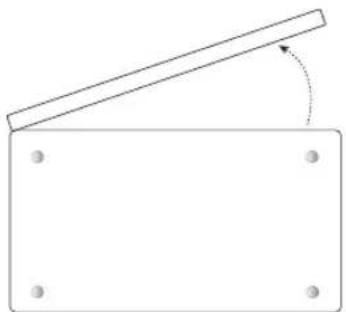
natural_image
Simple line drawing of a rectangular frame with a diagonal line and corner dots, no text or symbols present.Vy undersida
introduktion till matlagning i mikrovågsugn
natural_image
Simple line drawing of a bowl with steam rising from its side, no text or symbols presentkontrollera matlagningsutrustningen
natural_image
Line drawing of a microwave oven with front-mounted control panel and cloud background (no text or symbols)SE
produktöversikt
huvudenheten

kontrollpanelen
SE
natural_image
Line drawing of a microwave oven with open door and side outlets (no text or symbols)
natural_image
Diagram of two circular components with internal holes and a connecting line labeled '10' (no text or symbols beyond basic lines)natural_image
Front view of a microwave oven with two rotary dials (no text or symbols visible)Laite

natural_image
Simple line drawing of concentric ovals with small circular elements at the center (no text or symbols)natural_image
Line drawing of a microwave oven with open door and lid, showing control knobs and a circular vent (no text or symbols)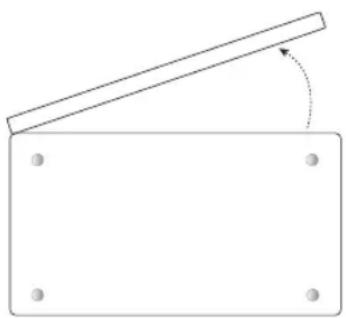
natural_image
Simple line drawing of a rectangular block with a diagonal line and a rotation arrow, no text or symbols present.Näkymä alta
natural_image
Simple line drawing of a bowl with steam rising from its side, no text or symbols presentnatural_image
Line drawing of a microwave oven with two rotary gauges and cloud-shaped background (no text or symbols)natural_image
Line drawing of a microwave oven with open door and side outlets (no text or symbols)natural_image
Front view of a microwave oven with two rotary dials (no text or symbols visible)Hovedenheden

natural_image
Simple line drawing of concentric ovals with small oval shapes at center (no text or symbols)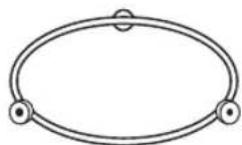
natural_image
Line drawing of a microwave oven with open door and lid, showing internal components (no text or symbols)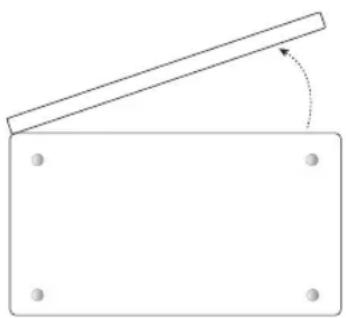
natural_image
Simple line drawing of a rectangular block with a diagonal line and circular holes, no text or symbols present.Set nedefra
natural_image
Simple line drawing of a bowl with steam rising from its side, no text or symbols presentFjern ydre emballage.
Prik ADSKILLIGE HULLER i filmlåget.
Fjern ydre emballage.
Prik ADSKILLIGE HULLER i filmlåget.
natural_image
Line drawing of a microwave oven with two rotary gauges and cloud-shaped background (no text or symbols)DK
produktoversigt
hovedenheden

kontrolpanelet
natural_image
Line drawing of a microwave oven with open door and side outlets (no text or symbols)| NOTE: If you require a replacement for any of the items listed below, please quote their corresponding part numbers: | |
| Replacement Part Part Number | |
| Glass Turntable Plate 262100500004 | |
| Turntable Support 262200200024 | |
Need Help with your product?
Your product is supported by Knowhow
under a Trademark Licence from Kenwood Limited.
For help or spare parts please call us on:
0344 561 1234
Manufactured for DSG Retail Limited under a Trademark License from Kenwood Limited DSG Retail Limited is responsible for after sales service.

The symbol on the product or its packaging indicates that this product must not be disposed of with your other household waste. Instead, it is your responsibility to dispose of your waste equipment by handing it over to a designated collection point for the recycling of waste electrical and electronic equipment. The separate collection and recycling of your waste equipment at the time of disposal will help conserve natural resources and ensure that it is recycled in a manner that protects human health and the environment.
For more information about where you can drop off your waste for recycling, please contact your local authority, or where you purchased your product.
DSG Retail Ltd. (co. no. 504877)
Maylands Avenue, Hemel Hempstead, Herts., HP2 7TG, UK
KENWOOD
CREATE MORE
- Contents
- IMPORTANT SAFETY INSTRUCTIONS READ CAREFULLY AND KEEP FOR FUTURE REFERENCE
- general safety
- maintenance of your microwave
- microwave use
- cooking use
- hazardous materials
- fire!
- first aid
- cleaning your microwave
- do not use these in your microwave
- containers
- delayed boiling
- preparing food for babies
- caution!
- hot surface
- earthing instructions
- warning: THIS APPLIANCE MUST BE EARTHED.
- VIKTIGE SIKKERHETSANVISNINGER LESES N∅YE OG BEHOLDES FOR FREMTIDIG OPPSLAG
- generell sikkerhet
- GB
- unpacking
- getting ready
- introducing microwave cooking
- cooking with a microwave
- checking your cooking utensils
- using aluminium foil in your microwave
- microwave heating categories
- To Microwave:
- To Microwave from frozen:
- steam
- condensation
- product overview
- checking your microwave
- microwave cooking
- defrosting
- Unplug your microwave from the mains and wait for it to completely cool down before cleaning.
- frequently asked questions
- produktoversikt
- introduktion till matlagning i mikrovågsugn
- kontrollera matlagningsutrustningen
- produktöversikt
- produktoversigt
- Need Help with your product?
Brand : KENWOOD
Model : K17MSB14E
Category : Microwave