
KS 9265 - Refrigerator TECHWOOD - Free user manual and instructions
Find the device manual for free KS 9265 TECHWOOD in PDF.


| Product Type | Refrigerator (Larder/Cooler, no freezer compartment) |
| Brand | Techwood |
| Model | KS 9265 |
| Energy Supply | 220-240 V ~ 50 Hz |
| Power Cord | Grounded plug, 16 A fuse minimum |
| Refrigerant | R600a (isobutane), flammable |
| Climate Class | T (16-43°C), ST (16-38°C), N (16-32°C), SN (10-32°C) |
| Temperature Control | Thermostat knob (0-5), 0=off, 5=coldest |
| Cooling Type | Static (no fan); automatic defrost in refrigerator compartment |
| Interior Light | Max 15 W bulb, replaceable |
| Door Reversal | Yes, manual (instructions provided) |
| Adjustable Legs | Yes, front leveling feet |
| Shelves | Refrigerator shelf, bottle shelf, top shelf, egg shelf |
| Crisper | Yes, with cover |
| Egg Holder | Egg older and egg shelf |
| Defrost Water Drain | Drain hole with plug, clean periodically |
| Condenser | Rear, clean with broom twice a year |
| Clearance | Min 15 cm above, 5 cm from heat sources, 2 cm from sides |
| Weight | Approximately 40 kg (estimated) |
| Dimensions (HxWxD) | Approximately 1450 x 550 x 600 mm (estimated) |
Frequently Asked Questions - KS 9265 TECHWOOD
User questions about KS 9265 TECHWOOD
0 question about this device. Answer the ones you know or ask your own.
Ask a new question about this device
Download the instructions for your Refrigerator in PDF format for free! Find your manual KS 9265 - TECHWOOD and take your electronic device back in hand. On this page are published all the documents necessary for the use of your device. KS 9265 by TECHWOOD.
USER MANUAL KS 9265 TECHWOOD
natural_image
Interior view of a white refrigerator with open doors showing shelves and compartments (no visible text or symbols)Inhalt
BEVOR SIE DAS GERÄT BENUTZEN 2
natural_image
Illustration of three hands performing rope knotting or wire manipulation (no text or symbols)natural_image
Cartoon character peeking over a rectangular box, no text or symbols present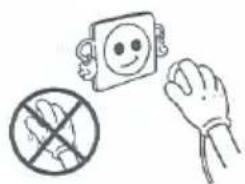
natural_image
Simple line drawing of a hand holding a crossed-out prohibition symbol, a smiling face with a square, and a waving hand (no text or labels)
natural_image
Technical line drawing of a mechanical component with internal gear and housing (no text or symbols)natural_image
Cartoon illustration of a smiling refrigerator with hands and a cup nearby (no text or symbols)
natural_image
Cartoon illustration of a smiling refrigerator with sunglasses and a bowl of food (no text or symbols)
natural_image
Cartoon illustration of a smiling rectangular character with arms and legs, accompanied by two smaller figures (no text or symbols)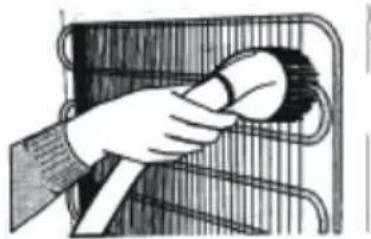
natural_image
Illustration of a hand holding a baby near a metal rack (no text or symbols)natural_image
Line drawing of a structural beam or support with a notch and base (no text or symbols)
natural_image
Diagram showing a hand holding a circular object with an arrow pointing to a textured surface (no text or symbols)natural_image
Line drawing of a mechanical device with internal components and a circular component (no text or symbols)natural_image
Simple line drawing of two children playing a board game (no text or symbols)natural_image
Line drawing of a hand using a screwdriver to adjust or install a mechanical component (no text or symbols present)Abb-1

natural_image
Line drawing of a hand using a screwdriver to adjust or install a mechanical component (no text or symbols present)Abb-2
Abb. 3
natural_image
Illustration of three hands performing a cable or wire manipulation technique (no text or symbols present)natural_image
Simple line drawing of a hand holding a smiling square character (no text or symbols)natural_image
Technical line drawing of a mechanical component with internal gear and housing (no text or symbols)natural_image
Simple line drawing of a hand holding a small object near a box, with no text or symbols present.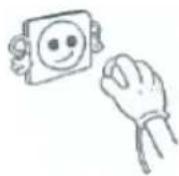

natural_image
Cartoon illustration of a smiling refrigerator with hands reaching toward a cup (no text or symbols)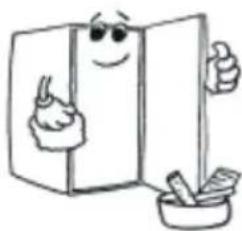
natural_image
Cartoon illustration of a smiling refrigerator with sunglasses and pointing gestures, next to a mortar and bowl (no text or symbols)
natural_image
Cartoon illustration of a smiling rectangular character waving, with two smaller bottles nearby (no text or symbols)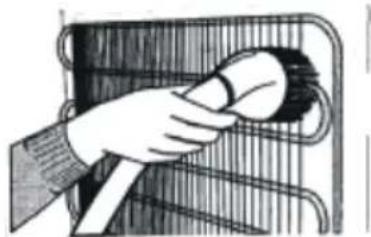
natural_image
Illustration of a hand holding a cylindrical object over a rack (no text or symbols visible)Ontdooien
natural_image
Simple line drawing of a structural beam or support with a small circular hole at one end (no text or symbols)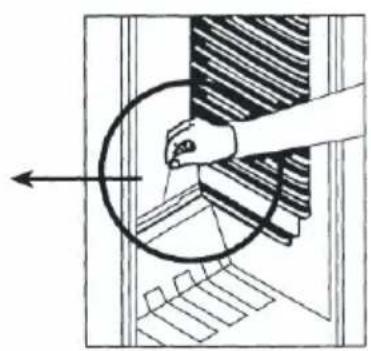
natural_image
Diagram showing a hand holding a circular object with an arrow pointing to a textured surface (no text or symbols)natural_image
Line drawing of a mechanical device with internal components and a circular feature (no text or symbols)natural_image
Simple line drawing of two children playing a board game (no text or symbols)natural_image
Line drawing of a hand using a screwdriver to adjust or install a mechanical component (no text or symbols present)Fig-1
natural_image
Line drawing of a hand using a screwdriver to adjust or install a mechanical component (no text or symbols present)Fig-2
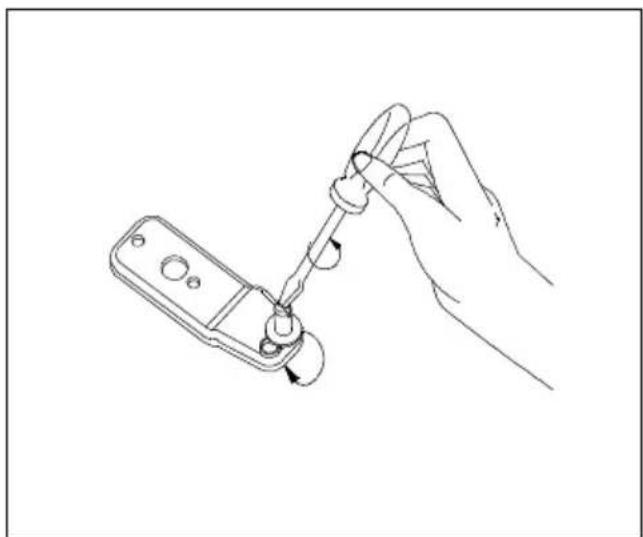
2- Schroef de pen van de bovenste scharnier los (Fig-3/Detail-B) en schroef ze in de linker scharnier. (Fig-3/Detail-A)

Fig. 3
3- Vervang de bovenste bus an buskap. (Fig-4)
Safety Instructions 22
Safety warnings....23
Installing and Operating your Fridge 24
Before Using your Fridge 24
USAGE INFORMATION 25
Thermostat Setting 25
CLEANING AND MAINTENANCE 26
Defrosting 27
Replacing The Bulb 27
SHIPMENT AND REPOSITIONING 28
Changing The Door 28
BEFORE CALLING SERVICE .... 30
THE PARTS OF THE APPLIANCE AND THE COMPARTMENTS ......32
CHAPTER 1. BEFORE USING YOUR FRIDGE
Safety Instructions
- If the model contains R600a-see name plate under refrigerant (the coolant isobutane), naturals gas that, is very environmentally friendly but also combustible. When transporting and installing the unit care must be taken to ensure that none of the refrigeration circuit components become damaged. In the event of damage avoid naked flames or ignition sources and ventilate the room in which the unit is placed for a few minutes.
Warning: Keep ventilation openings in appliance enclosure or in structure for building in, clear of obstruction.
- Do not use mechanical devices or other artificial means to accelerate the defrosting process.
- Do not use electrical appliances in the refrigerator or freezer compartment of the appliance.
- If this appliance is to replace an old refrigerator with a lock; break or remove the lock as a safety measure before storing it, to protect children while playing might lock themselves inside.
- Old refrigerators and freezers contain insulation gases and refrigerant, which must be disposed of properly. Entrust the disposal of a scrap unit categorically to competence of your local waste disposal service and contact your local authority or your dealer if you have any questions. Please ensure that the pipe of work of your refrigerating unit does not get damaged prior to being picked-up by the relevant waste disposal service.
Important note:
Please read this booklet before installing and switching on this appliance. The manufacturer assumes no responsibility for incorrect installation and usage as described in this booklet.
Conformity Information
- Tropical Class is defined for the environment temperatures between 16^ and 43^ in accordance with the TS EN ISO 15502 Standards.
- The appliance is designed in compliance with the EN15502, IEC60335-1 / IEC60335-2-24, 2004/108/EC standards.
Safety warnings
Notice: Do not use mechanical devices or other artificial methods to quicken to the defrosting. Do not use electrical devices on the food storage areas of your appliance. Keep the ventilation areas of your appliance open. Do not damage your fridge's refrigerant circuit.
- Do not use multiple receptacles or extension cord.
- Do not plug in damaged, torn or old plugs.

natural_image
Illustration of three hands performing rope knotting techniques (no text or symbols)
- Do not pull, bend or damage the cord.
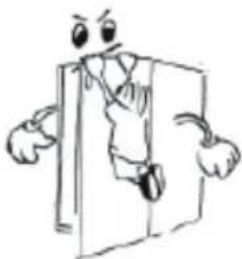
- This appliance is designed for use by adults, do not allow children to play with the appliance or let them to hang over the door.
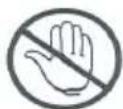
- Do not plug-in or out the plug from the receptacle with wet hands to prevent electrocution!
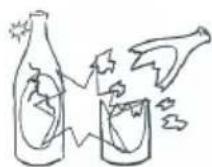
- Do not place explosive or flammable material in your fridge for your safety. Place drinks with higher alcohol amount vertically and by closing their necks tightly in the fridge department.
- Do not cover the body or top of fridge with lace. This effects the performance of your fridge.
- Fix the accessories in the fridge during transportation to prevent damage to accessories.
- Your fridge is not intended for use by physically, mentally or sensibly handicapped people or by people with less experience and knowledge (including children). These people may be allowed to use the appliance under the supervision of a responsible person giving necessary instructions. You should supervise children to prevent them playing with the appliance.
- Power cord should be replaced by an authorized technician when it is damaged.
natural_image
Cartoon character holding a large open book, no text or symbols present
Installing and Operating your Fridge
- Operating voltage for your fridge is 220-240 V at 50Hz.
- Before starting to use your fridge, please call the nearest authorized service, and get free help on the installation, operation and usage of your fridge.
- Mains cord of your fridge has a grounded plug. This plug should be used with a grounded receptacle that has a 16 amper fuse minimum. If you don't have a receptacle confirming with this, please have it done by a qualified electrician.
- We do not take the responsibility of the damages that occur due to ungrounded usage.
- Place your fridge in a place that it would not be exposed to direct sunlight.
- Your appliance should be at least 50 cm away from stoves, ovens and heater cores, and should be at least 5 cm away from electrical ovens.
- It should never be used outdoors or left under the rain.
- When your fridge is placed next to a deep freezer, there should be at least 2 ~cm between them to prevent humidity on the outer surface.
- Do not place anything on your fridge, and install your fridge in a suitable place so that at least 15 ~cm is available on the upper side.
- Fit the plastic wall spacers to the condenser at the back of the refrigerator in order to prevent leaning to the wall for good performance.
- If you will place your fridge next to your kitchen cabinets, leave a space of 2 cm between them.
• Install the distance adjustment plastic (the part with black vanes at the rear) by turning it 90° to prevent the condenser from touching the wall.

natural_image
Cartoon illustration of a smiling book character, broken books, and a closed book with a smiling face (no text or symbols)- The adjustable front legs should stabilized in an appropriate height to allow your fridge operate in a stable and proper way. You can adjust the legs by turning them clockwise (or in the opposite direction). This should be done before placing food in the fridge.
- Before using your fridge, wipe all parts with warm water added with a tea spoonful of sodium bicarbonate, and then rinse with clean water and dry. Place all parts after cleaning.
Before Using your Fridge
- When it is operated for the first time or after transportation, keep your fridge in the upright position for 3 hours and plug it on to allow efficient operation. Otherwise, you may damage the compressor.

- Your fridge may have a smell when it is operated for the first time; the smell will fade away when your fridge starts to cool.
CHAPTER 2. USAGE INFORMATION
Thermostat Setting

natural_image
Technical line drawing of a mechanical component with internal gears and housing (no text or symbols)Larders (coolers) have not any freezer compartment but can cool below 5°C.
- Thermostat automatically regulates the inside temperature of the refrigerator compartment. By rotating the knob from position « 1 » to « 5 », colder temperatures can be obtained.
- « 0 » position shows thermostat is closed and no cooling is available.
- For short-term storage of food in the refrigerator compartment, you can set the knob between minimum and medium position.(1-3)
- For long-term storage of food in the refrigerator compartment, you can set knob to medium position.(3-4)
- Note that; the ambient temperature, temperature of the freshly stored food and how often the door is opened, affects the temperature in the refrigerator compartment. If required, change the temperature setting.
• Larders (coolers) have not any freezer compartment but can below 5°C.
- When you first switch on the appliance, for starting a suitable cooling, the appliance should work 24 hours continuously until it cools down to sufficient temperature.
• In this time do not open the door so often and place a lot of food inside the appliance.
- If the unit is switched off or unplugged, you must allow at least 5 minutes before restarting or re-plugged the unit in order not to damage the compressor.
CHAPTER 3. CLEANING AND MAINTENANCE
- Make sure to unplug the fridge before starting to clean it.
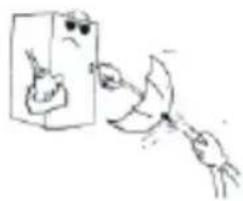
- Do not wash your fridge by pouring water.
- You can wipe the inner and outer sides with a soft cloth or a sponge using warm and soapy water.
- Remove the parts individually and clean with soapy water. Do not wash in washing machine.
- Never use flammable, explosive or corrosive material like thinner, gas, acid for cleaning.
- You should clean the condenser with broom at least twice a year in order to provide energy saving and increase the productivity.
- Make sure that your fridge is unplugged while cleaning.

natural_image
Simple line drawing of a hand reaching toward a box with a surprised face (no text or symbols)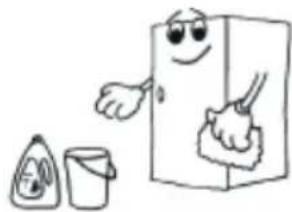
natural_image
Cartoon illustration of a smiling refrigerator with gloves and a bucket nearby (no text or symbols)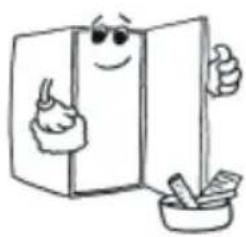
natural_image
Cartoon illustration of a smiling refrigerator with sunglasses and a bowl of food (no text or symbols)
natural_image
Cartoon illustration of a smiling rectangular character with arms and legs, accompanied by two smaller bottles (no text or symbols)
natural_image
Illustration of a hand holding a tool over a rack (no text or symbols visible)Defrosting

natural_image
Technical line drawing of a mechanical component with an inset showing a hand holding a circular component (no text or symbols present)- Defrosting occurs automatically in refrigerator compartment during operation; the defrost water is collected by the evaporating tray and evaporates automatically.
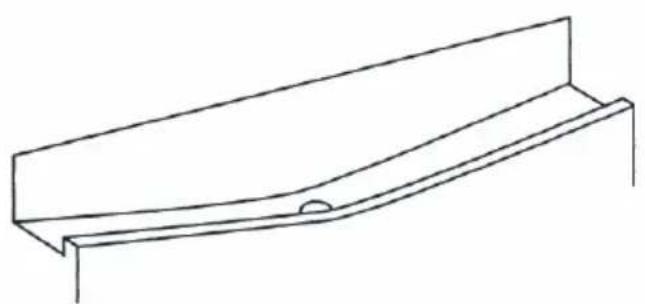
- The evaporating tray and the defrost water drain hole should be cleaned periodically with defrost drain plug to prevent the water from collecting on the bottom of the refrigerator instead of flowing out.
- You can also pour 12 glass of the water to drain hole to clean inside.
Replacing The Bulb
natural_image
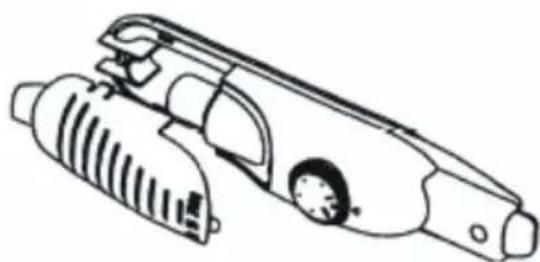
Technical line drawing of a mechanical device with internal components (no text or symbols)To replace the bulb in freezer and fridge departments;
1- Unplug your fridge.
2- Remove the cover of the box from the claws using a screwdriver.
3- Replace with a bulb of maximum 15 Watts.
4- Install the cover.
5- Wait for 5 minutes before re-plugging and bring the thermostat to its original position.
CHAPTER 4. SHIPMENT AND REPOSITIONING
- Original package and foam may be kept for re-transportation (optionally).
- You should fasten your fridge with thick package, bands or strong cords and follow the instructions for transportation on the package for re-transportation.
- Remove movable parts (shelves, accessories, vegetable bins etc.) or fix them into the fridge against shocks using bands during re-positioning and transportation.
- Carry your fridge in the upright position.

natural_image
Simple line drawing of two children playing a board game (no text or symbols)Changing The Door
1- Lie down the appliance to the left side. Dismantle both leveling feet and unscrew the bottom hinge fixing screws and remove it. (Fig-1) Unscrew the bottom hinge pin and screw in the next hole.(Fig-2)

natural_image
Line drawing of a hand using a screwdriver to adjust or install a mechanical bracket (no text or symbols present)Fig-1

natural_image
Line drawing of a hand using a screwdriver to adjust or install a mechanical component (no text or symbols present)Fig-2
2- Unscrew the pin of the top hinge (Fig-3/Detail-B) and screw it to the left hinge.
(Fig-3/Detail-A)

Fig.3
3- Replace the top bushing and top bushing cap. (Fig-4)
(You can use the bushing cap that is put in the user manual)
Remove the bottom bush and reassemble it to the left side. (Fig-4)
3.1- Remove the door handle caps. Unscrew the screws that are fixing the door handle.
Assemble door handle to the right side by doing the reverse operation.(Fig-4/Detail-A)
4- Assemble the door together with bottom hinge. Then screw the bottom hinge to the left hole of the refrigerator. Screw the both leveling feet.

CHAPTER 5. BEFORE CALLING SERVICE
If your refrigerator is not working properly, it may be a minor problem, therefore check the following, before calling an electrician to save time and money.
What to do if your refrigerator does not operate ;
Check that ;
- There is no power,
- The general switch in your home is not disconnected,
- The thermostat setting is on « 0 » position,
- The socket is not sufficient. To check this, plug in another appliance that you know which is working into the same socket.
What to do if your refrigerator performs poorly ;
Check that ;
- You have not overloaded the appliance,
• The doors are closed perfectly, - There is no dust on the condenser,
- There is enough place at the rear and side walls.
If there is noise ;
The cooling gas which circulates in the refrigerator circuit may make a slight noise(bubbling sound) even when the compressor is not running. Do not worry this is quite normal. If these sounds are different check that;
• The appliance is well leveled,
- Nothing is touching the rear,
- The stuffs on the appliance are vibrating.
If there is water in the lower part of the refrigerator
Check that ;
The drain hole for defrost water is not clogged(Use defrost drain plug to clean the drain hole)
If your fridge is not cooling enough;
Your fridge is designed to operate in the ambient temperature intervals stated in the standards, according to the climate class stated in the information label. We do not recommend operating your fridge out of stated temperatures value limits in terms of cooling effectiveness.
| Climate Class | Ambient Temperature (°C) |
| T | Between 16 and 43 (°C) |
| ST | Between 16 and 38 (°C) |
| N | Between 16 and 32 (°C) |
| SN | Between 10 and 32 (°C) |
Recommendations
- In order to increase space and improve the appearance, the « cooling section » of refrigerators is positioned inside the back wall of the refrigerator compartment. When the appliance is running, this wall is covered with frost or water drops, when the compressor is running. Do not worry. This is quite normal. The appliance should be defrosted only if an excessively thick ice layer forms on the back wall.
- If the appliance is not used for a long time (for example during the summer holidays). Set the thermostat knob to « 0 » position. Defrost and clean the refrigerator leaving the door open to prevent the formation of mildew and smell.
THE PARTS OF THE APPLIANCE AND THE COMPARTMENTS

This presentation is only for information about the parts of the appliance. Parts may vary according to the appliance model.
1) THERMOSTAT BOX
2) REFRIGERATOR SHELF
3) CRISPER COVER
4) CRISPER
5) LEVELING FEET
6) BOTTLE SHELF
7) EGG OLDER
8) EGG SHELF
9) TOP SHELF
- Inhalt
- BEVOR SIE DAS GERÄT BENUTZEN 2
- Ontdooien
- USAGE INFORMATION 25
- CLEANING AND MAINTENANCE 26
- SHIPMENT AND REPOSITIONING 28
- BEFORE CALLING SERVICE .... 30
- THE PARTS OF THE APPLIANCE AND THE COMPARTMENTS ......32
- CHAPTER 1. BEFORE USING YOUR FRIDGE
- Safety Instructions
- Important note:
- Conformity Information
- Safety warnings
- Installing and Operating your Fridge
- Before Using your Fridge
- CHAPTER 2. USAGE INFORMATION
- Thermostat Setting
- Larders (coolers) have not any freezer compartment but can cool below 5°C.
- CHAPTER 3. CLEANING AND MAINTENANCE
- Defrosting
- Replacing The Bulb
- CHAPTER 4. SHIPMENT AND REPOSITIONING
- Changing The Door
- CHAPTER 5. BEFORE CALLING SERVICE
- What to do if your refrigerator does not operate ;
- Check that ;
- What to do if your refrigerator performs poorly ;
- If there is noise ;
- If there is water in the lower part of the refrigerator
- If your fridge is not cooling enough;
- Recommendations
- THE PARTS OF THE APPLIANCE AND THE COMPARTMENTS
Brand : TECHWOOD
Model : KS 9265
Category : Refrigerator